Constructors in Java
Mrs.S.KAVITHA
ASSISTANT PROFESSOR
DEPARTMENT OF COMPUTER
SCIENCE
SRI SARADA NIKETAN COLLEGE OF
SCIENCE FOR WOMEN,KARUR
• A constructor in Java is a special method that is used
to initialize objects.
• The constructor is called when an object of a class is
created.
• It can be used to set initial values for object
attributes.
• At the time of calling the constructor, memory for the
object is allocated in the memory.
• It is a special type of method which is used to
initialize the object.
• Every time an object is created using the new()
keyword, at least one constructor is called.
how Constructors are Different From Methods in
Java?
• Constructors must have the same name as the
class within which it is defined it is not
necessary for the method in Java.
• Constructors do not return any type while
method(s) have the return type or void if does
not return any value.
• Constructors are called only once at the time
of Object creation while method(s) can be
called any number of times.
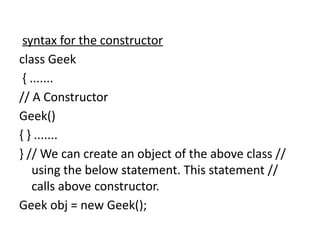
syntax for the constructor
class Geek
{ .......
// A Constructor
Geek()
{ } .......
} // We can create an object of the above class //
using the below statement. This statement //
calls above constructor.
Geek obj = new Geek();
• Each time an object is created using
a new() keyword, at least one constructor (it could
be the default constructor) is invoked to assign initial
values to the data members of the same class.
Rules for writing constructors are as follows:
• The constructor(s) of a class must have the same
name as the class name in which it resides.
• A constructor in Java can not be abstract, final, static,
or Synchronized.
• Access modifiers can be used in constructor
declaration to control its access i.e which other class
can call the constructor.
Types of Constructors in Java
Now is the correct time to discuss the types of
the constructor, so primarily there are two
types of constructors in java:
• No-argument constructor
• Parameterized Constructor
• Default Constructor
No-argument constructor:
• A constructor that has no parameter is
known as the No-argument or Zero argument
constructor.
• If we don’t define a constructor in a class,
then the compiler creates a constructor(with
no arguments) for the class.
• And if we write a constructor with arguments
or no arguments then the compiler does not
create a default constructor.
// no-argument constructor
import java.io.*;
class Geek {
int num;
String name;
// this would be invoked while an object
// of that class is created.
Geek() { System.out.println("Constructor called"); }}
class GFG {
public static void main(String[] args)
{
// this would invoke default constructor.
Geek geek1 = new Geek();
// Default constructor provides the default
// values to the object like 0, null
System.out.println(geek1.name);
System.out.println(geek1.num);
}}
Output
Constructor called
null 0
Parameterized Constructor
• A constructor that has parameters is known as
parameterized constructor.
• If we want to initialize fields of the class with
our own values, then use a parameterized
constructor.
import java.io.*;
class Geek {
// data members of the class.
String name;
int id;
Geek(String name, int id)
{
this.name = name;
this.id = id;
}
}
class GFG {
public static void main(String[] args)
{
// This would invoke the parameterized constructor.
Geek geek1 = new Geek("avinash", 68);
System.out.println("GeekName :" + geek1.name + " and GeekId :" + geek1.id);
}
}
Output
GeekName :avinash and GeekId :68
Default Constructor
• A constructor that has no parameters is known as
default the constructor.
• A default constructor is invisible. And if we write a
constructor with arguments or no arguments then the
compiler does not create a default constructor. It is
taken out.
• It is being overloaded and called a parameterized
constructor.
• The default constructor changed into the
parameterized constructor.
• But Parameterized constructor can’t change the
default constructor.
import java.io.*;
class GFG {
GFG() { System.out.println("Default constructor"); }
public static void main(String[] args)
{
GFG hello = new GFG();
}
}
Output
Default constructor
Constructor overloading in Java
• In Java, we can overload constructors like
methods.
• The constructor overloading can be defined
as the concept of having more than one
constructor with different parameters so that
every constructor can perform a different task.
public class Student {
//instance variables of the class
int id;
String name;
Student(){
System.out.println("this a default constructor");
}
Student(int i, String n){
id = i;
name = n;
}
public static void main(String[] args) {
//object creation
Student s = new Student();
System.out.println("nDefault Constructor values: n");
System.out.println("Student Id : "+s.id + "nStudent Name : "+s.name);
System.out.println("nParameterized Constructor values: n");
Student student = new Student(10, "David");
System.out.println("Student Id : "+student.id + "nStudent Name : "+student.name);
}
}
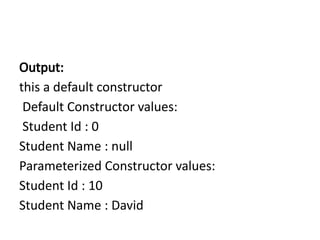
Output:
this a default constructor
Default Constructor values:
Student Id : 0
Student Name : null
Parameterized Constructor values:
Student Id : 10
Student Name : David

A constructor in Java is a special method that is used to initialize objects

  • 1.
    Constructors in Java Mrs.S.KAVITHA ASSISTANTPROFESSOR DEPARTMENT OF COMPUTER SCIENCE SRI SARADA NIKETAN COLLEGE OF SCIENCE FOR WOMEN,KARUR
  • 2.
    • A constructorin Java is a special method that is used to initialize objects. • The constructor is called when an object of a class is created. • It can be used to set initial values for object attributes. • At the time of calling the constructor, memory for the object is allocated in the memory. • It is a special type of method which is used to initialize the object. • Every time an object is created using the new() keyword, at least one constructor is called.
  • 3.
    how Constructors areDifferent From Methods in Java? • Constructors must have the same name as the class within which it is defined it is not necessary for the method in Java. • Constructors do not return any type while method(s) have the return type or void if does not return any value. • Constructors are called only once at the time of Object creation while method(s) can be called any number of times.
  • 4.
    syntax for theconstructor class Geek { ....... // A Constructor Geek() { } ....... } // We can create an object of the above class // using the below statement. This statement // calls above constructor. Geek obj = new Geek();
  • 5.
    • Each timean object is created using a new() keyword, at least one constructor (it could be the default constructor) is invoked to assign initial values to the data members of the same class. Rules for writing constructors are as follows: • The constructor(s) of a class must have the same name as the class name in which it resides. • A constructor in Java can not be abstract, final, static, or Synchronized. • Access modifiers can be used in constructor declaration to control its access i.e which other class can call the constructor.
  • 6.
    Types of Constructorsin Java Now is the correct time to discuss the types of the constructor, so primarily there are two types of constructors in java: • No-argument constructor • Parameterized Constructor • Default Constructor
  • 7.
    No-argument constructor: • Aconstructor that has no parameter is known as the No-argument or Zero argument constructor. • If we don’t define a constructor in a class, then the compiler creates a constructor(with no arguments) for the class. • And if we write a constructor with arguments or no arguments then the compiler does not create a default constructor.
  • 8.
    // no-argument constructor importjava.io.*; class Geek { int num; String name; // this would be invoked while an object // of that class is created. Geek() { System.out.println("Constructor called"); }} class GFG { public static void main(String[] args) { // this would invoke default constructor. Geek geek1 = new Geek(); // Default constructor provides the default // values to the object like 0, null System.out.println(geek1.name); System.out.println(geek1.num); }} Output Constructor called null 0
  • 9.
    Parameterized Constructor • Aconstructor that has parameters is known as parameterized constructor. • If we want to initialize fields of the class with our own values, then use a parameterized constructor.
  • 10.
    import java.io.*; class Geek{ // data members of the class. String name; int id; Geek(String name, int id) { this.name = name; this.id = id; } } class GFG { public static void main(String[] args) { // This would invoke the parameterized constructor. Geek geek1 = new Geek("avinash", 68); System.out.println("GeekName :" + geek1.name + " and GeekId :" + geek1.id); } } Output GeekName :avinash and GeekId :68
  • 11.
    Default Constructor • Aconstructor that has no parameters is known as default the constructor. • A default constructor is invisible. And if we write a constructor with arguments or no arguments then the compiler does not create a default constructor. It is taken out. • It is being overloaded and called a parameterized constructor. • The default constructor changed into the parameterized constructor. • But Parameterized constructor can’t change the default constructor.
  • 12.
    import java.io.*; class GFG{ GFG() { System.out.println("Default constructor"); } public static void main(String[] args) { GFG hello = new GFG(); } } Output Default constructor
  • 13.
    Constructor overloading inJava • In Java, we can overload constructors like methods. • The constructor overloading can be defined as the concept of having more than one constructor with different parameters so that every constructor can perform a different task.
  • 14.
    public class Student{ //instance variables of the class int id; String name; Student(){ System.out.println("this a default constructor"); } Student(int i, String n){ id = i; name = n; } public static void main(String[] args) { //object creation Student s = new Student(); System.out.println("nDefault Constructor values: n"); System.out.println("Student Id : "+s.id + "nStudent Name : "+s.name); System.out.println("nParameterized Constructor values: n"); Student student = new Student(10, "David"); System.out.println("Student Id : "+student.id + "nStudent Name : "+student.name); } }
  • 15.
    Output: this a defaultconstructor Default Constructor values: Student Id : 0 Student Name : null Parameterized Constructor values: Student Id : 10 Student Name : David