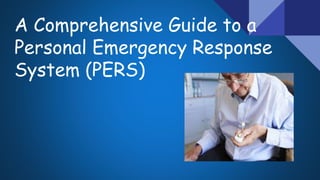
A Comprehensive Guide to a
Personal Emergency Response
System (PERS)
Table of Content
● What is a PERS?
● Benefits of a PERS
● Why not cell phones?
● How a PERS works
● Components of a PERS
● GPS monitoring
● Who should own a PERS device?
● References
What is a PERS?
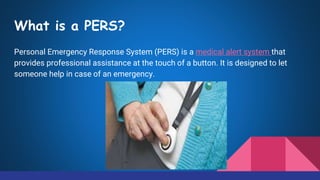
Personal Emergency Response System (PERS) is a medical alert system that
provides professional assistance at the touch of a button. It is designed to let
someone help in case of an emergency.
Benefits of a PERS
● More affordable than any other in-person monitoring system
● Allows older adults to retain their independence
● Provides an immediate response if a problem occurs
● Offers greater peace of mind
● Simple to use
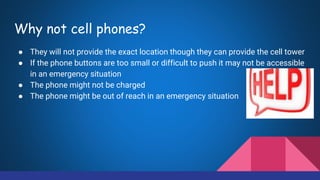
Why not cell phones?
● They will not provide the exact location though they can provide the cell tower
● If the phone buttons are too small or difficult to push it may not be accessible
in an emergency situation
● The phone might not be charged
● The phone might be out of reach in an emergency situation
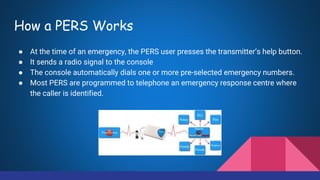
How a PERS Works
● At the time of an emergency, the PERS user presses the transmitter’s help button.
● It sends a radio signal to the console
● The console automatically dials one or more pre-selected emergency numbers.
● Most PERS are programmed to telephone an emergency response centre where
the caller is identified.
Types of Personal Response Systems
● Two-way personal emergency response system with 24/7 monitoring
● Two-way personal emergency response system, unmonitored, but calls 911 or
another number
● Two-way personal emergency response system with speakerphone pendant,
monitored or unmonitored
● Cellular personal emergency response systems, unmonitored, calls 911
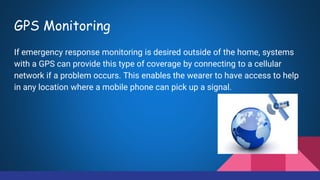
GPS Monitoring
If emergency response monitoring is desired outside of the home, systems
with a GPS can provide this type of coverage by connecting to a cellular
network if a problem occurs. This enables the wearer to have access to help
in any location where a mobile phone can pick up a signal.
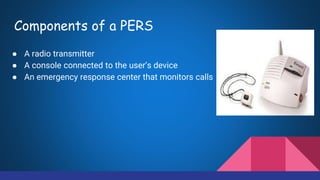
Components of a PERS
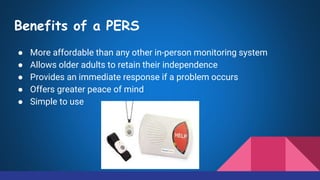
● A radio transmitter
● A console connected to the user’s device
● An emergency response center that monitors calls
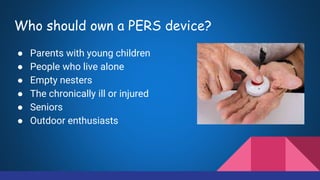
Who should own a PERS device?
● Parents with young children
● People who live alone
● Empty nesters
● The chronically ill or injured
● Seniors
● Outdoor enthusiasts
References
● https://aginginplace.org/comprehensive-guide-to-personal-emergency-
response-systems/
● https://seniorsresourceguide.com/articles/art00450.html
THANK YOU

A comprehensive guide to personal emergency response system (pers)

  • 1.
    A Comprehensive Guideto a Personal Emergency Response System (PERS)
  • 2.
    Table of Content ●What is a PERS? ● Benefits of a PERS ● Why not cell phones? ● How a PERS works ● Components of a PERS ● GPS monitoring ● Who should own a PERS device? ● References
  • 3.
    What is aPERS? Personal Emergency Response System (PERS) is a medical alert system that provides professional assistance at the touch of a button. It is designed to let someone help in case of an emergency.
  • 4.
    Benefits of aPERS ● More affordable than any other in-person monitoring system ● Allows older adults to retain their independence ● Provides an immediate response if a problem occurs ● Offers greater peace of mind ● Simple to use
  • 5.
    Why not cellphones? ● They will not provide the exact location though they can provide the cell tower ● If the phone buttons are too small or difficult to push it may not be accessible in an emergency situation ● The phone might not be charged ● The phone might be out of reach in an emergency situation
  • 6.
    How a PERSWorks ● At the time of an emergency, the PERS user presses the transmitter’s help button. ● It sends a radio signal to the console ● The console automatically dials one or more pre-selected emergency numbers. ● Most PERS are programmed to telephone an emergency response centre where the caller is identified.
  • 7.
    Types of PersonalResponse Systems ● Two-way personal emergency response system with 24/7 monitoring ● Two-way personal emergency response system, unmonitored, but calls 911 or another number ● Two-way personal emergency response system with speakerphone pendant, monitored or unmonitored ● Cellular personal emergency response systems, unmonitored, calls 911
  • 8.
    GPS Monitoring If emergencyresponse monitoring is desired outside of the home, systems with a GPS can provide this type of coverage by connecting to a cellular network if a problem occurs. This enables the wearer to have access to help in any location where a mobile phone can pick up a signal.
  • 9.
    Components of aPERS ● A radio transmitter ● A console connected to the user’s device ● An emergency response center that monitors calls
  • 10.
    Who should owna PERS device? ● Parents with young children ● People who live alone ● Empty nesters ● The chronically ill or injured ● Seniors ● Outdoor enthusiasts
  • 11.
  • 12.