Management
of Snakebite:
A clinical
perspective
12/04/2025 2
12/04/2025 3
12/04/2025 4
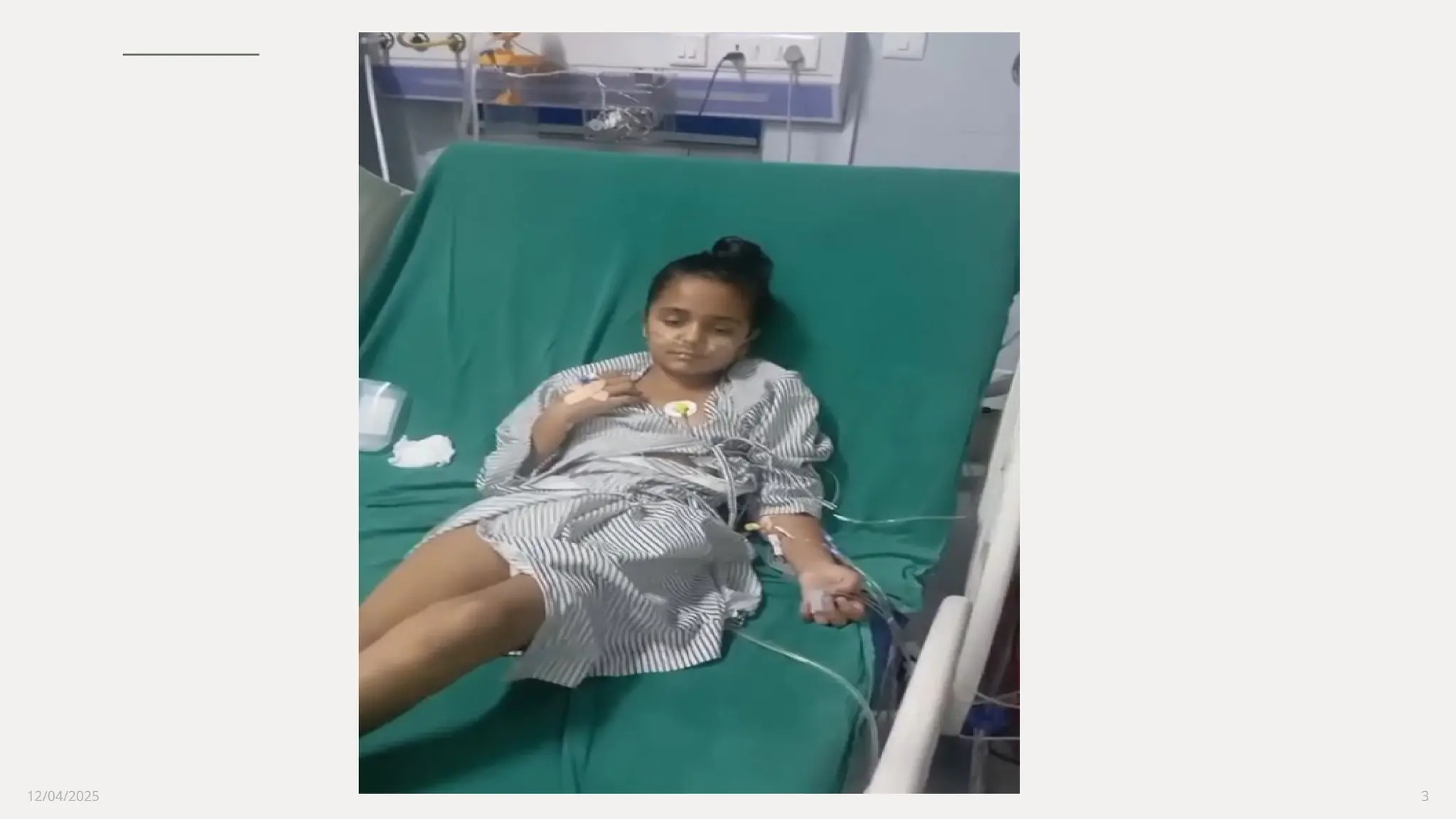
General condition: intubated
Vitals: HR: 170/min. RR: 20/min BP: 110/80 mm of hg
Shifted to PICU
Kept under MV at PAC mode with PIP 16, PEEP 7, Fio2 60%
Spo2: 98%, GRBS: 124mg/dl
On Examination at ER
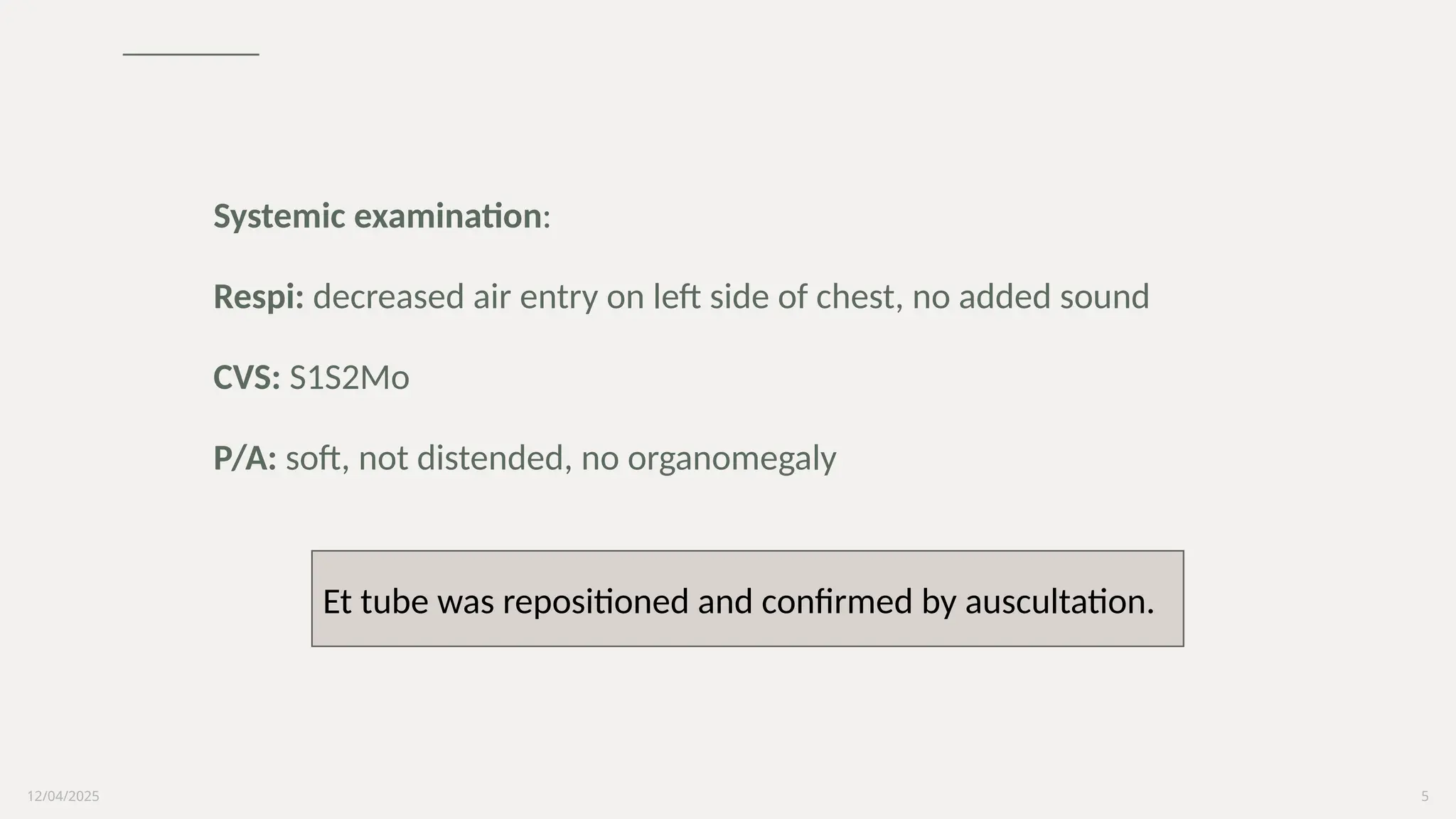
12/04/2025 5
Systemic examination:
Respi: decreased air entry on left side of chest, no added sound
CVS: S1S2Mo
P/A: soft, not distended, no organomegaly
Et tube was repositioned and confirmed by auscultation.
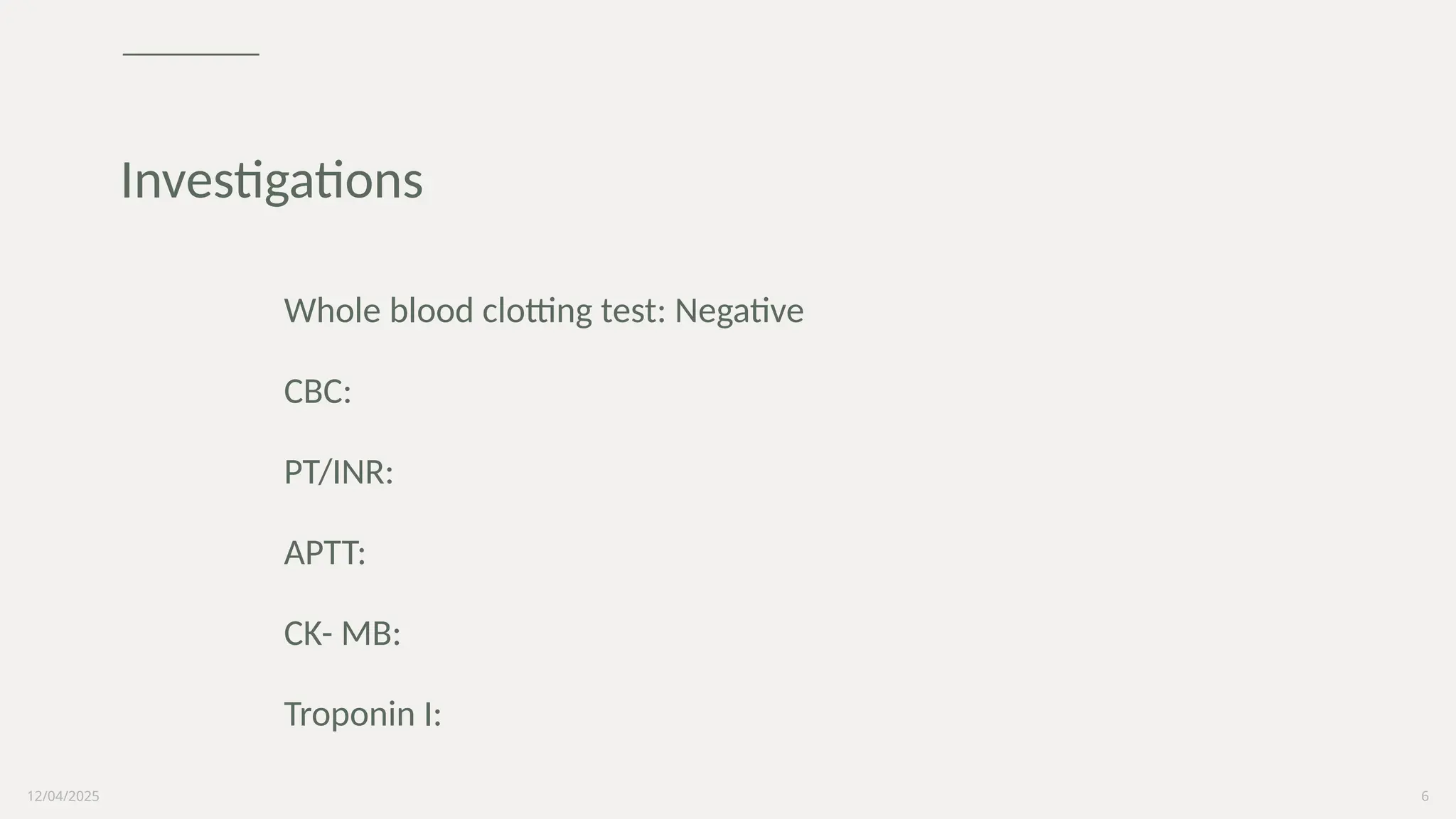
12/04/2025 6
Whole blood clotting test: Negative
CBC:
PT/INR:
APTT:
CK- MB:
Troponin I:
Investigations
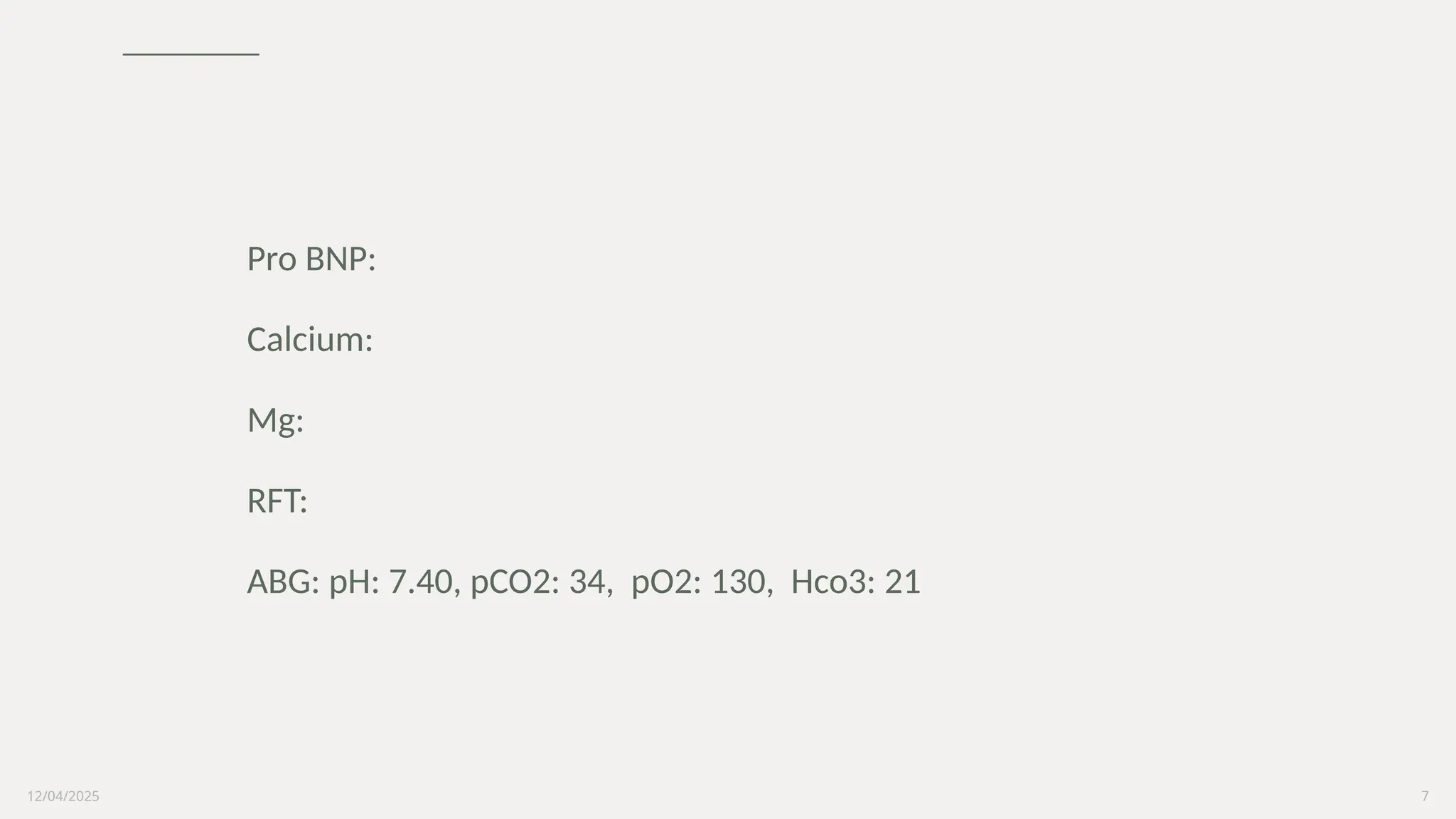
12/04/2025 7
Pro BNP:
Calcium:
Mg:
RFT:
ABG: pH: 7.40, pCO2: 34, pO2: 130, Hco3: 21
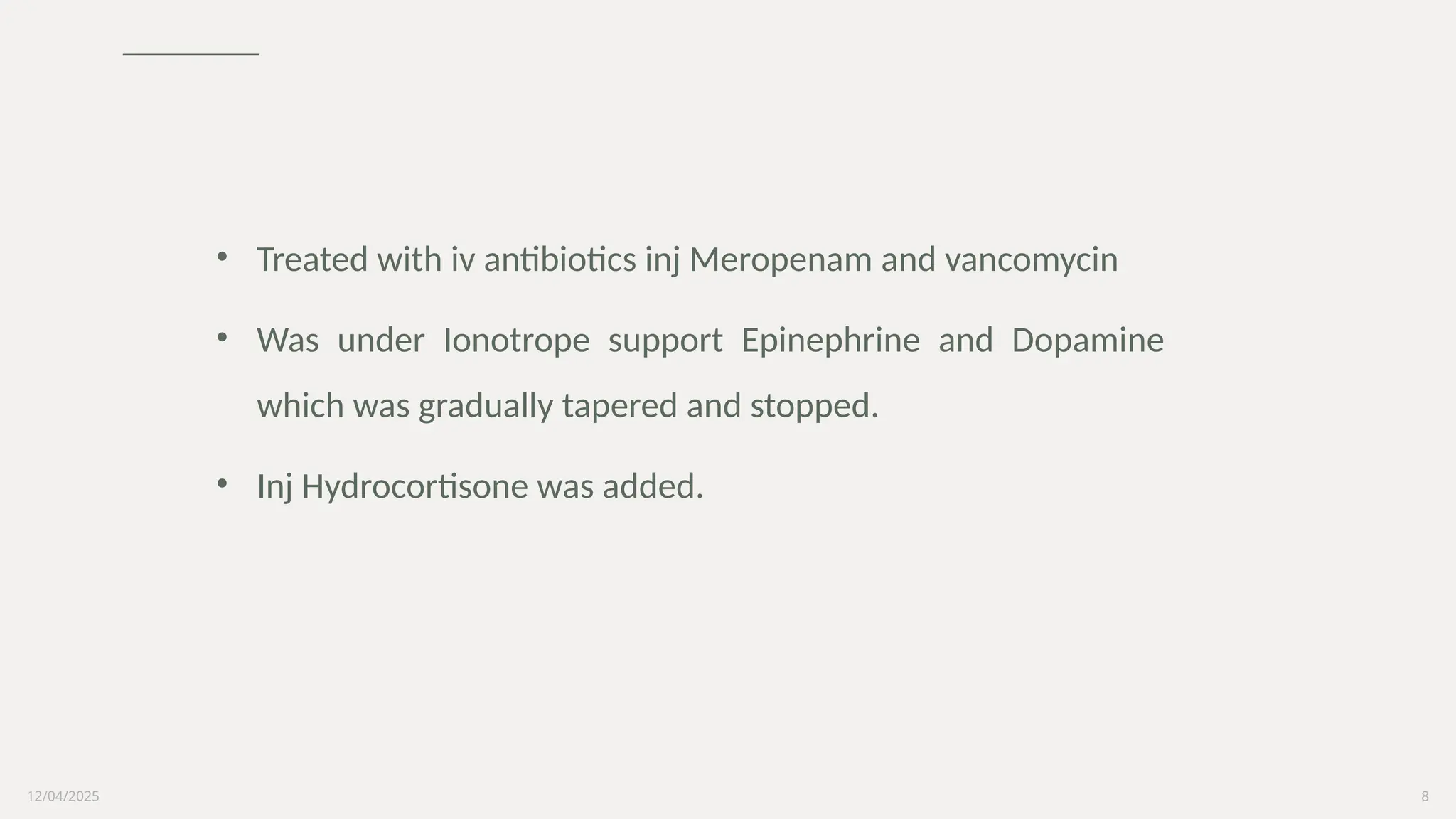
12/04/2025 8
• Treated with iv antibiotics inj Meropenam and vancomycin
• Was under Ionotrope support Epinephrine and Dopamine
which was gradually tapered and stopped.
• Inj Hydrocortisone was added.
12/04/2025 9
• On 3rd
day of admission: GCS: E4VtM6
• She was extubated and kept under HFNC> CPAP> Nasal Prongs
• Proximal muscle weakness gradually improved
Discharged on 7th
day of admission
12/04/2025 10
How common is this scenario?
12/04/2025 11
• Globally, snakebite results in 1.8 to 2.7 million envenomings and 81,000 to
138,000 deaths annually.
• The highest incidence of snakebite envenomings and deaths occurs in South
Asia, particularly in India and Pakistan.
• In Nepal, 20,000 to 37,661 people are bitten by snakes resulting in 1,000 to
3,225 deaths annually.
Source: 1. World Health Organization (1987) Zoonotic disease control: baseline epidemiological study
on snakebite treatment and management. Weekly Epidemiological Record 42: 319–320.
2. Alcoba G, Sharma SK, Bolon I, Ochoa C, Martins SB, et al. (2022) Snakebite epidemiology in humans
and domestic animals across the Terai region in Nepal: a multicluster random survey. Lancet Global
Health 10: e398–e408.
12/04/2025 12
Source: Analysis of News Media-Reported Snakebite Envenoming in Nepal during 2010–2022. PLoS
Negl Trop Dis 17(8): e0011572.
12/04/2025 13
Total- 89 species
Poisonous- 17 species
Subdivided into two groups: Elapidae and Viperidae
Medically Important snakes in Nepal
12/04/2025 14
1. Cobra species
Elapidae
12/04/2025 15
12/04/2025 16
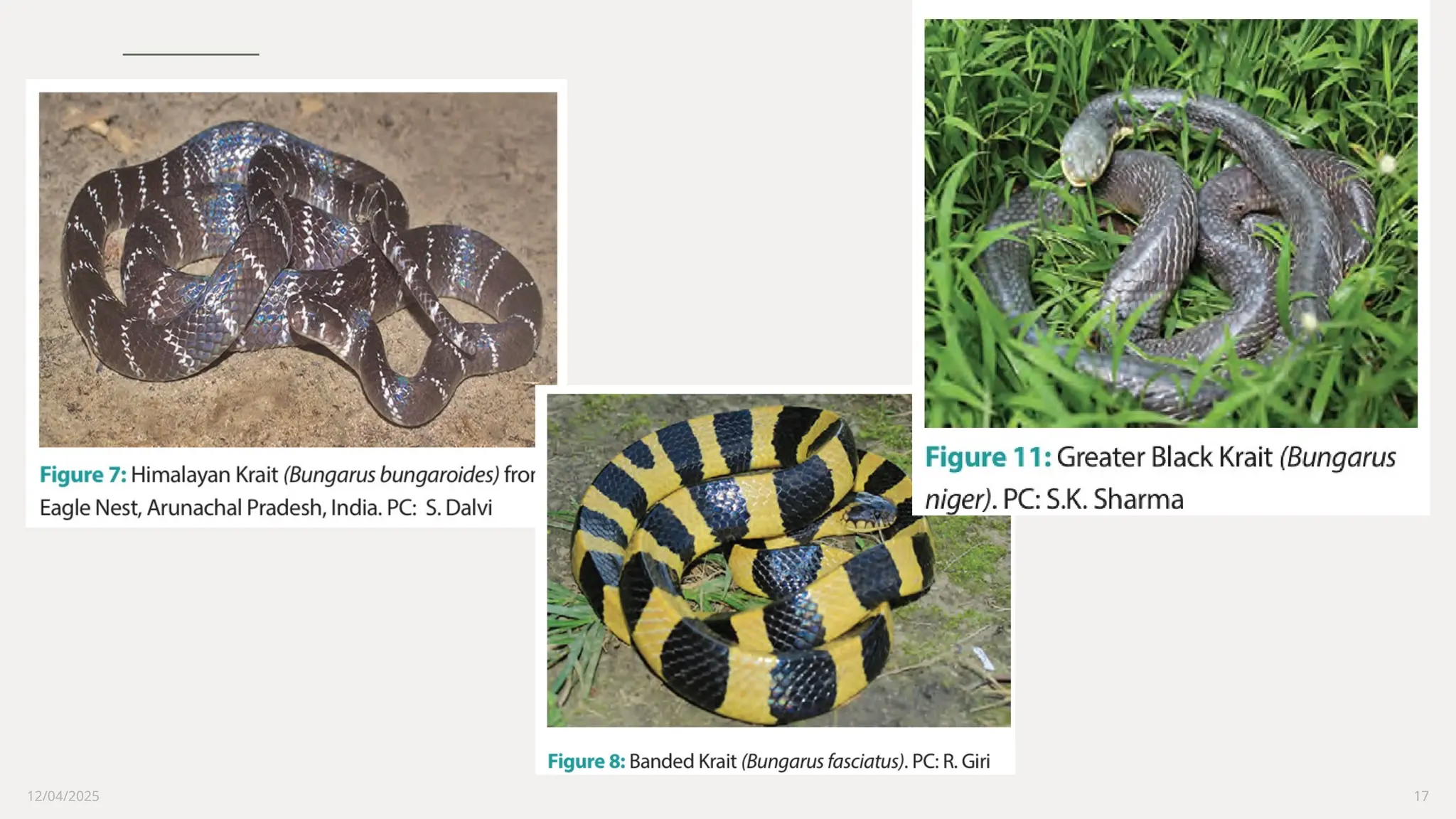
2. Krait species
12/04/2025 17
12/04/2025 18
Other species
12/04/2025 19
12/04/2025 20
Venum composition and its action
• A complex mixture of enzymes, low molecular wt. polypeptides, glycoproteins
and metal ions.
• Enzymes: Proteases, Phospholipase A, amino acid esterases, Hyaluronidase
12/04/2025 21
1. Hemotoxic venoms act on the heart and cardiovascular system: vascular
leaking, local and systemic bleeding
2. Neurotoxic venom acts on the nervous system and brain, pre or post
synaptically to inhibit nerve impulse
3. Cytotoxic venom has a localized action at the site of the bite: local tissue
necrosis
12/04/2025 22
No clinical manifestation except bite mark. (Dry bite)
Due to bite by non-venomous snakes or bite by venomous snake without
injection of venom.
Consequences of snake bite
12/04/2025 23
Local signs and symptoms
• Fang mark may be obvious as single puncture, dual puncture or marks of
multiple tooth marks.
• Bite in the arm or lower limb occurs to victim who unintentionally steps on or
otherwise disturbs a snake while working in the filed or walking.
12/04/2025 24
Cobra- swelling and local pain with or without erythema or discoloration at the
bite site.
Krait- Usually do not cause signs of local envenoming and can be virtually
painless.
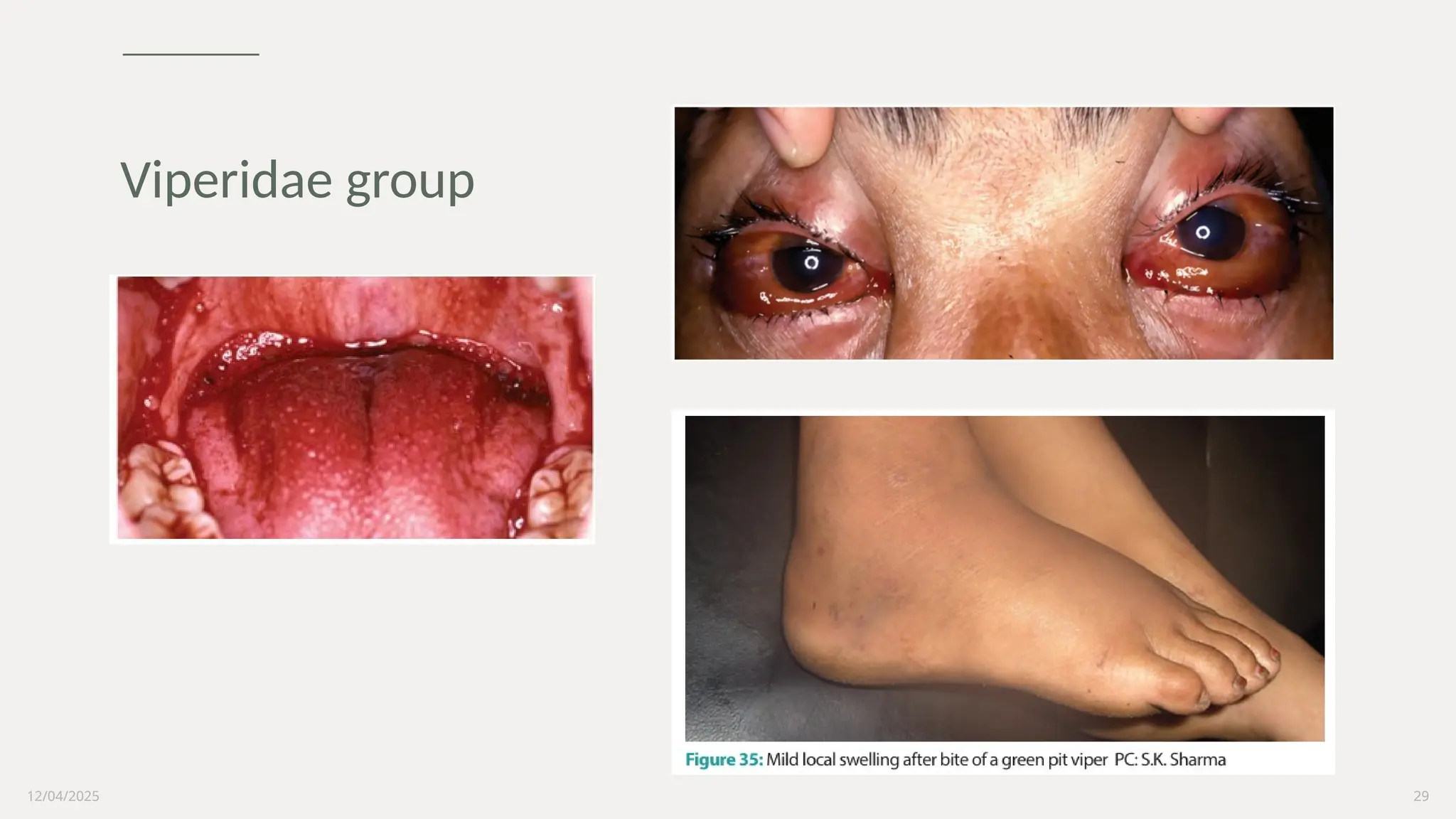
Viper- persistent bleeding from fang marks, wounds or any injured parts of the
body due to venom induced coagulopathy.
Swelling or tenderness of regional lymph node denotes venom spread.
12/04/2025 25
General manifestation of snake envenoming are:
nausea, and vomiting pain abdomen malaise weakness drowsiness
prostration excessive salivation, etc.
Systemic Manifestations
12/04/2025 26
Elapidae group
Neurotoxic features
12/04/2025 27
12/04/2025 28
• Ophthalmoplegia
• Pupillary dilatation
• Skeletal muscle weakness
• Loss of gag reflex
• Paradoxical breathing
• Respiratory failure
12/04/2025 29
Viperidae group
12/04/2025 30
1. ELISA tests: to identify species based on Ag in venom,expensive,not
freely available and thus have limited value in diagnosis.
2. Neurotoxic envenoming: no lab investigation in Nepal that can help
diagnose neurotoxic manifestation.
Diagnosis
12/04/2025 31
3. Hematotoxic envenoming due to vipers:
• BT and CT : Prolonged.
• PT and INR: Increased.
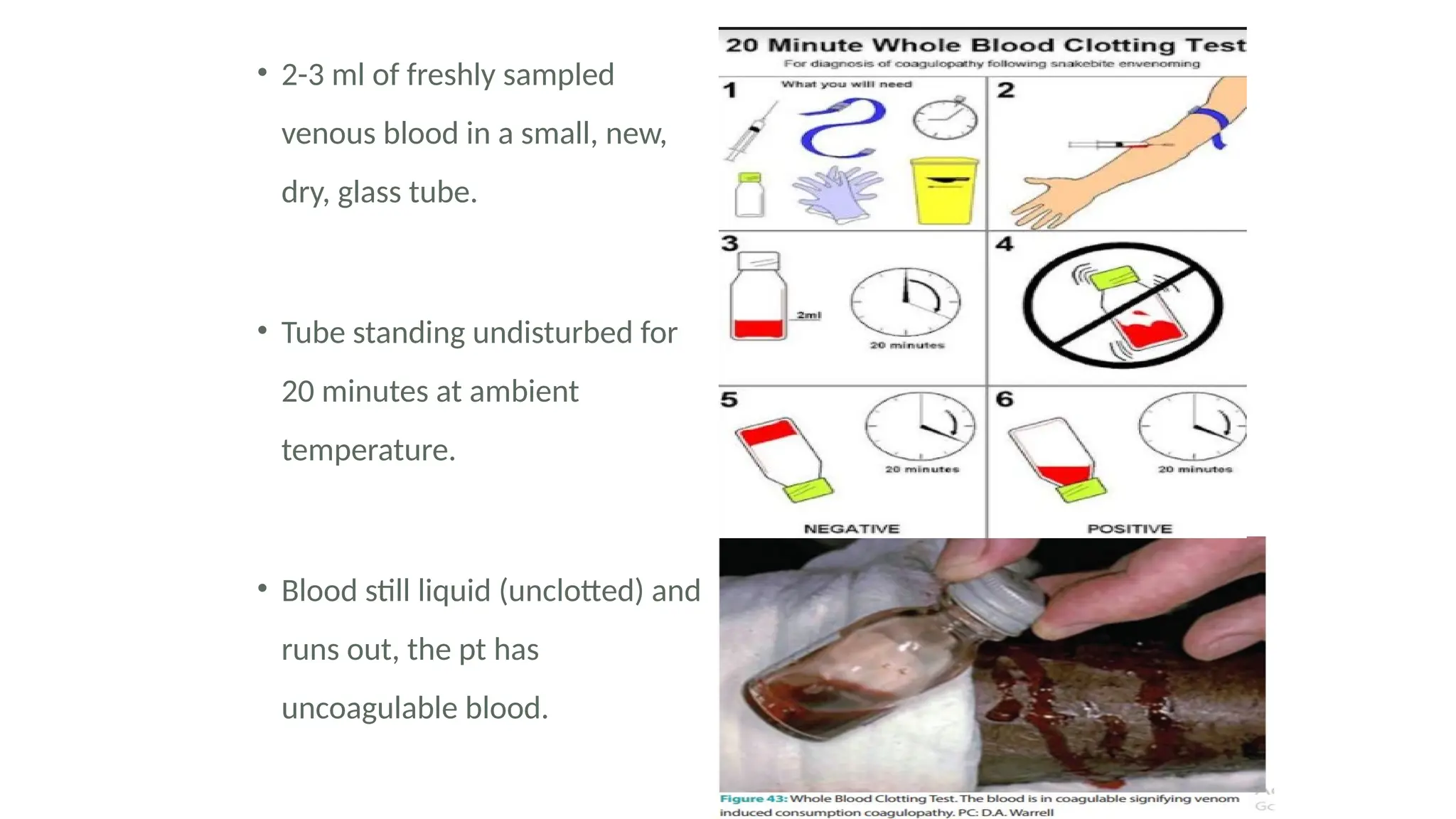
• 20-minute whole blood clotting test (20WBCT): Positive (Bedside test to see
the incoagulability of the blood to detect venom induced coagulopathy.)
• 2-3 ml of freshly sampled
venous blood in a small, new,
dry, glass tube.
• Tube standing undisturbed for
20 minutes at ambient
temperature.
• Blood still liquid (unclotted) and
runs out, the pt has
uncoagulable blood.
12/04/2025 33
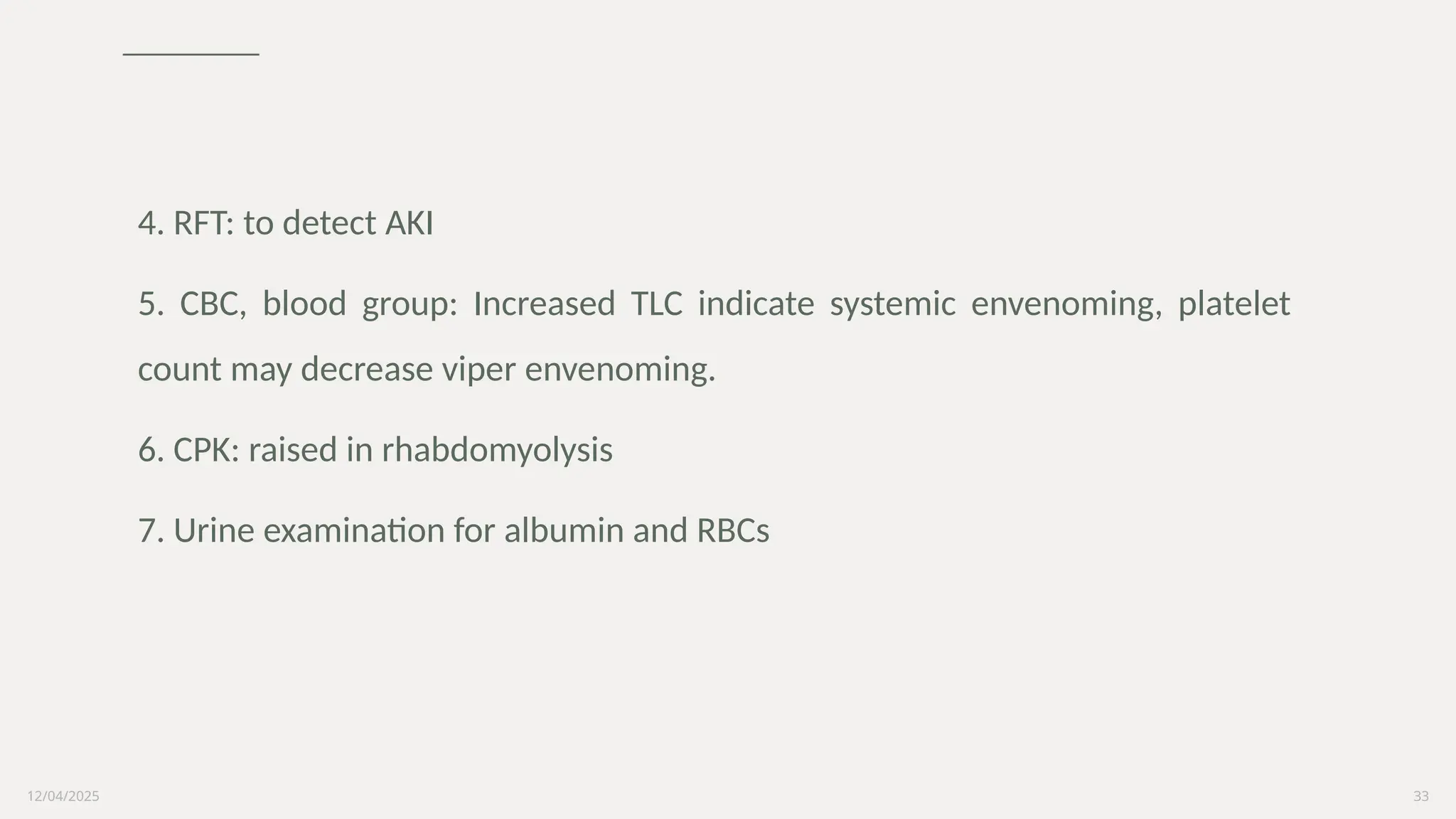
4. RFT: to detect AKI
5. CBC, blood group: Increased TLC indicate systemic envenoming, platelet
count may decrease viper envenoming.
6. CPK: raised in rhabdomyolysis
7. Urine examination for albumin and RBCs
12/04/2025 34
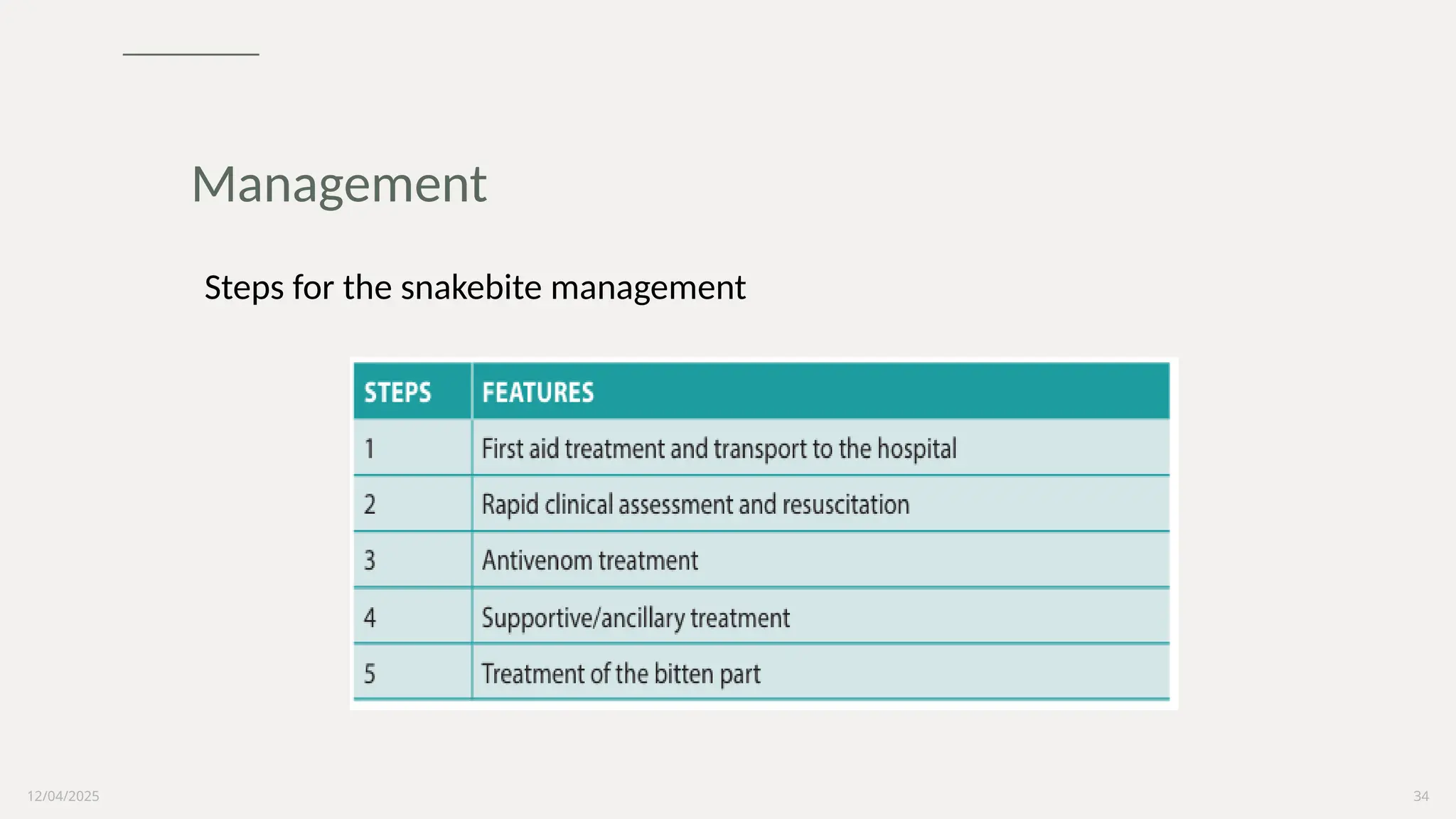
Management
Steps for the snakebite management
12/04/2025 35
First Aid Treatment
• Do ‘s
R= Reassure the patient. Only 50% of bites by venomous species actually envenomate the patient
I= Immobilise the limb in the same way as for a fracture, not to block the blood supply or apply pressure.
G. H.= Get to Hospital Immediately. Traditional remedies have NO PROVEN benefit in treating snakebite.
T=Tell the doctor of any systemic symptoms that manifest on the way.
Remove tight clothing, shoes, watch, rings
Keep affected limb as low level as possible
Identification of snake
12/04/2025 36
Interfere with bitten area
Suck by mouth
Apply chemicals or electricity
Use arterial tourniquets
Cooling agents on the bitten area
Make incision on the wound
Walking of patient is contraindicated
Don’t’s
12/04/2025 37
• Secure ABC
• Assess vitals and secure I.V. Line: large bore cannula inserted on an
unaffected limb
• History should be quickly obtained
• Rapid, thorough physical examination
• Look for signs of envenomation
• Even if absent- admit and observe for 24 hours,
Rapid clinical assessment and resuscitation
12/04/2025 38
• Close monitoring ~ hourly for vital signs, cardiac rhythm, oxygen
saturation, urine output, ptosis, local swelling, diplopia, bleeding.
• Fluid resuscitation with isotonic saline if clinical shock.
• Species diagnosis
• Investigation and laboratory tests
12/04/2025 39
1. A critical moment for the patient, doctor and attendants. Possibility of sudden collapse
2. Do not take the bandages off until IV is established, other resuscitation facilities and
ASV are ready to use.
3. If an arterial tourniquet: first apply another bandage or tourniquet at venous
obstructing pressure above the arterial tourniquet. Release it for a few moments at a
time.
4. If rapid deterioration, re-apply a pressure immobilisation bandage until the situation
stabilizes.
Removal of torniquets
12/04/2025 40
• The bitten limb may be swollen and painful
 nursed in the most comfortable position.
• Elevation of limb with rest.
• Simple washing with antiseptic solution - chlorhexidine, povidone iodine
• Broad-spectrum antibiotic - if features of infection.
Treatment of the bitten part
12/04/2025 41
• Local necrosis and gangrene: surgical debridement, skin grafting
 Broad spectrum antibiotic is indicated if there is feature of
infection.
• Tetanus toxoid IM injection should be given.
 If coagulopathy postponed until after resolution of coagulopathy.
12/04/2025 42
Indication of Antivenom, Nepal
12/04/2025 43
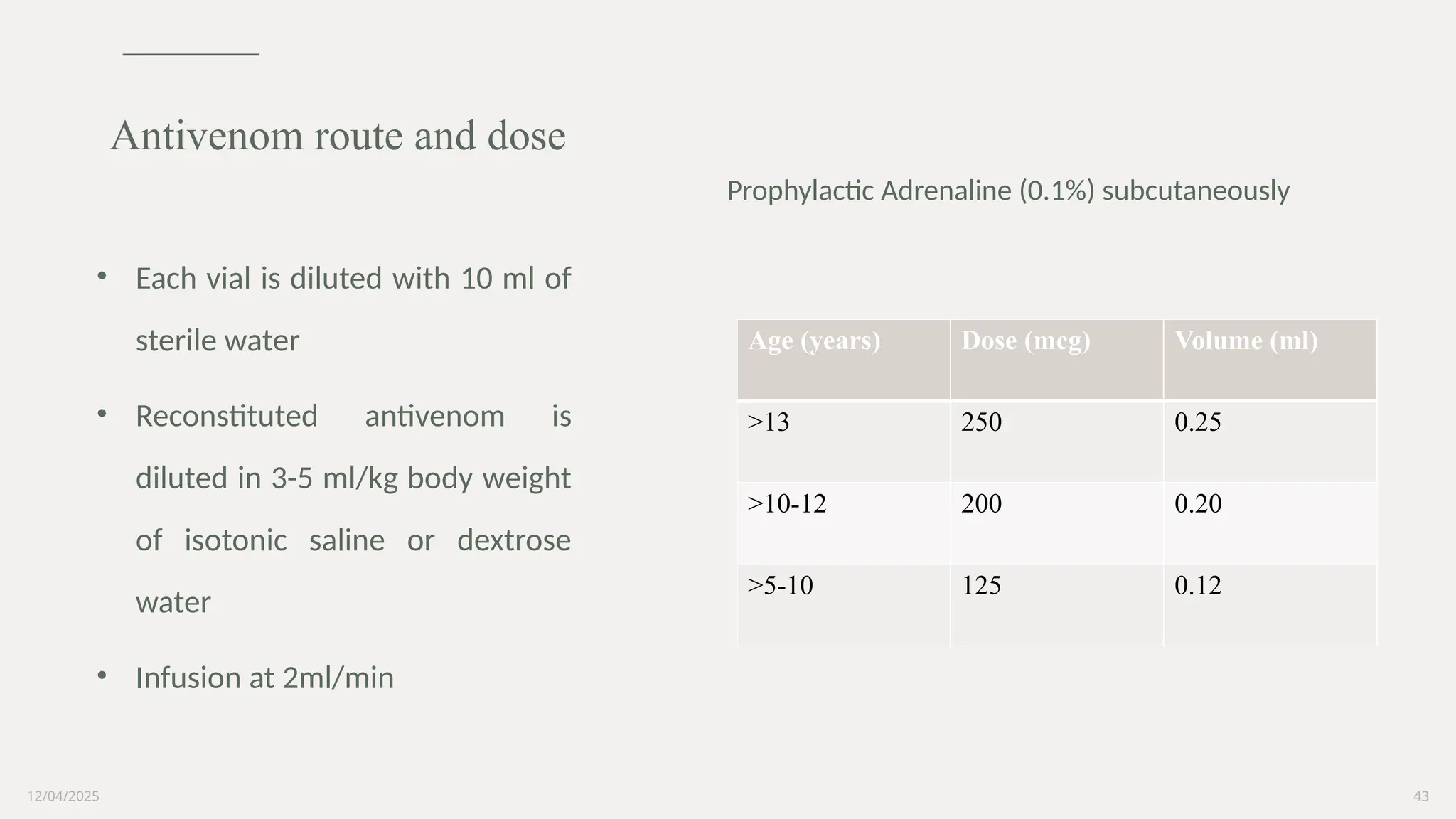
• Each vial is diluted with 10 ml of
sterile water
• Reconstituted antivenom is
diluted in 3-5 ml/kg body weight
of isotonic saline or dextrose
water
• Infusion at 2ml/min
Antivenom route and dose
Prophylactic Adrenaline (0.1%) subcutaneously
Age (years) Dose (mcg) Volume (ml)
>13 250 0.25
>10-12 200 0.20
>5-10 125 0.12
12/04/2025 44
Initial dose
 10 vials(100ml) is further diluted or mixed with dextrose water or saline
(100-400ml)
 Administered at rate of 2ml/min(40-60 min at 70 drops/min)
Repetition of dose
 If neurological signs deteriorate (DO NOT REPEAT IF PERSIST)
Neurotoxic envenoming
12/04/2025 45
Initial dose
 Same as dose for neurotoxic envenoming
Repetition of dose
 Persistence or recurrence of blood incoagulability afer every 6 hours of
antivenom dose.
 Repeat 20 WBCT is abnormal or other coagulation test are abnormal repeat 5
vials of antivenom at 2ml/min
Hematotoxic envenoming
12/04/2025 46
All patients with features of envenoming may not respond to antivenom administered.
• Excessive delay in administration of antivenom – esp karaits.
• Patient with established respiratory failure.
• need artificial ventilation and antivenom alone will not suffice.
• If antivenom administered does not contain neutralizing antibodies against
biting species.
• Insufficient dose of antivenom.
• Inactive or poor quality antivenom.
Reasons for failure to respond to antivenom
12/04/2025 47
• Mean dose of antivenom for treat neurotoxic envenoming -12.5 ± 3.9
vials.
• May range from five vials to 20 vials, rarely, as high as 30 vials.
• Do not use more than 20 vials of antivenom.
• Administration of higher dose antivenom is unlikely to be useful, not
responding to initial bolus or around 20 vials of antivenom.
Clinical trial in Nepal
12/04/2025 48
•Clinical assessment for appearance of signs and symptoms of antivenom
reaction should be performed.
•The anaphylaxis reaction may be life threatening.
• no time may be available to draw adrenaline from ampule.
• adrenaline (epinephrine) must be ready, drawn up in a syringe, prior
to antivenom.
Observation and monitoring
12/04/2025 49
•Antivenom reactions
• Significant number of patients develops reaction to antivenom.
• Around 80% developed some reactions to antivenom in clinical
trial conducted in Nepal
• Rarely IgE-mediated Type I reaction person previously exposed
to animal serum (e.g. Tetanus toxoid injection)- dose related.
12/04/2025 50
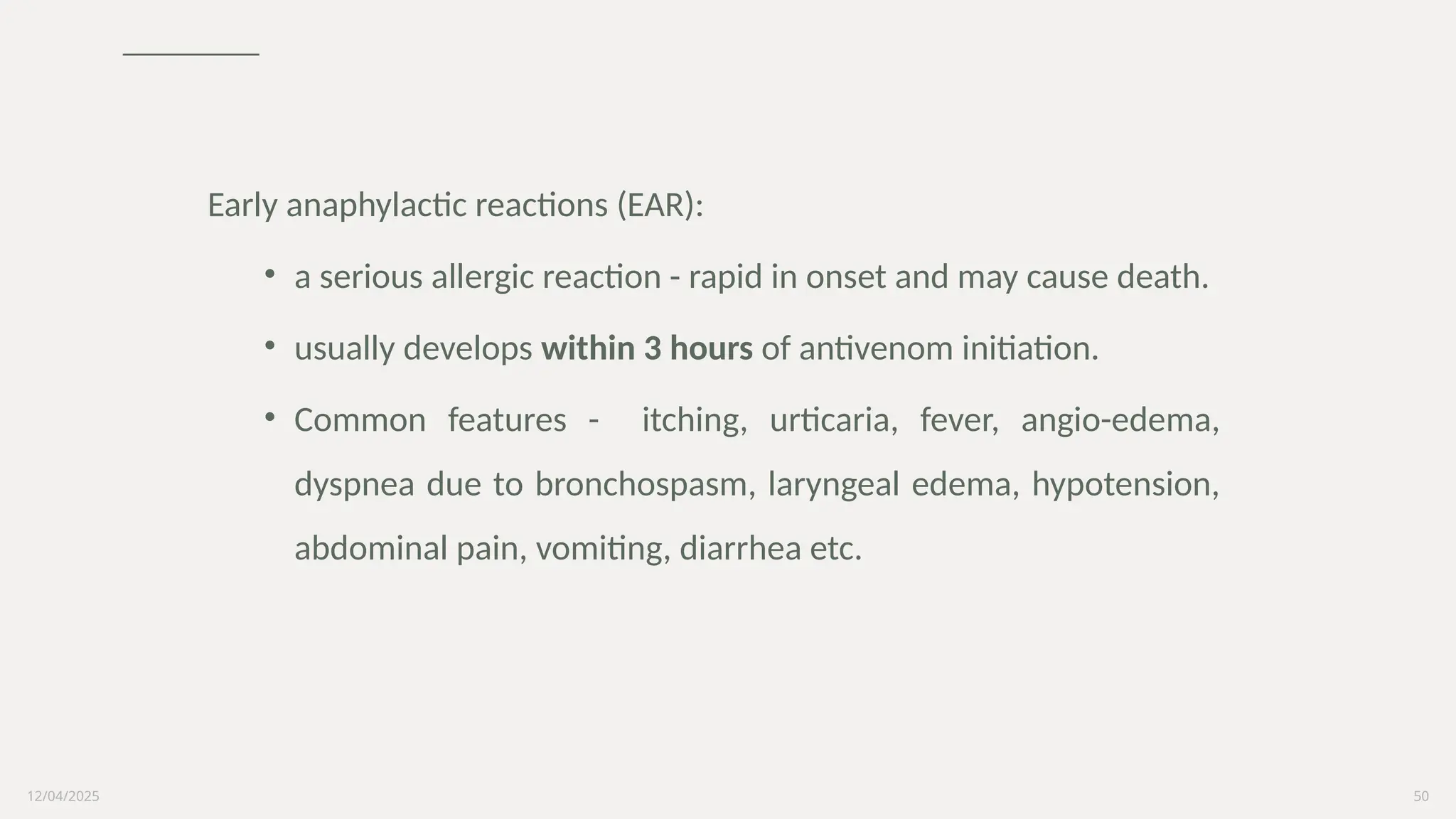
Early anaphylactic reactions (EAR):
• a serious allergic reaction - rapid in onset and may cause death.
• usually develops within 3 hours of antivenom initiation.
• Common features - itching, urticaria, fever, angio-edema,
dyspnea due to bronchospasm, laryngeal edema, hypotension,
abdominal pain, vomiting, diarrhea etc.
12/04/2025 51
Pyrogenic reaction:
• Usually develops 1-2 hrs. after treatment initiation.
• chills, rigors, fever, hypotension, febrile convulsion - children.
Late reaction (serum sickness type):
• May develop 1- 12 (mean 7) days after treatment.
• fever, itching, recurrent urticaria, arthralgia, myalgia, lymphadenopathy,
proteinuria etc.
12/04/2025 52
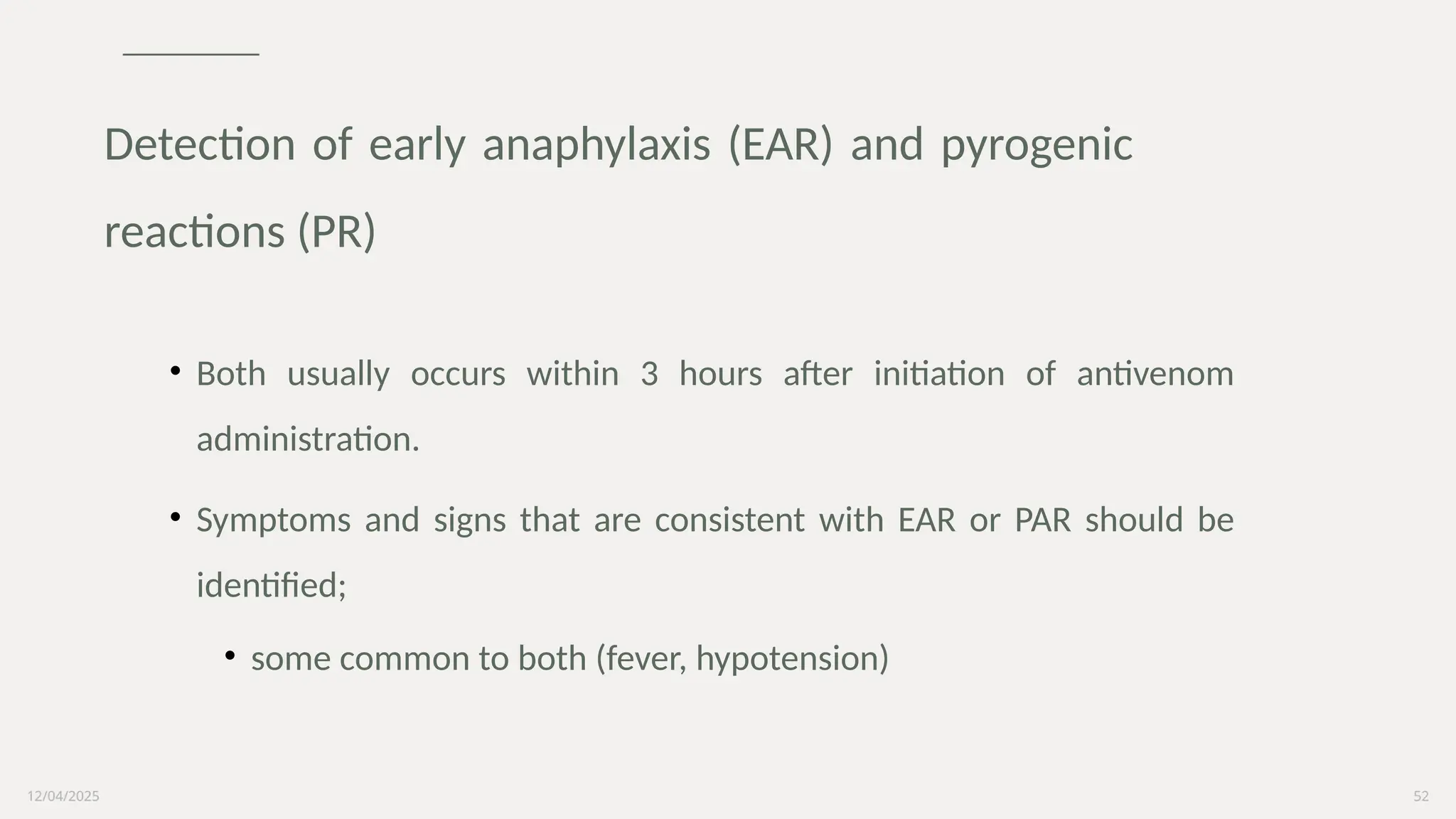
• Both usually occurs within 3 hours after initiation of antivenom
administration.
• Symptoms and signs that are consistent with EAR or PAR should be
identified;
• some common to both (fever, hypotension)
Detection of early anaphylaxis (EAR) and pyrogenic
reactions (PR)
12/04/2025 53
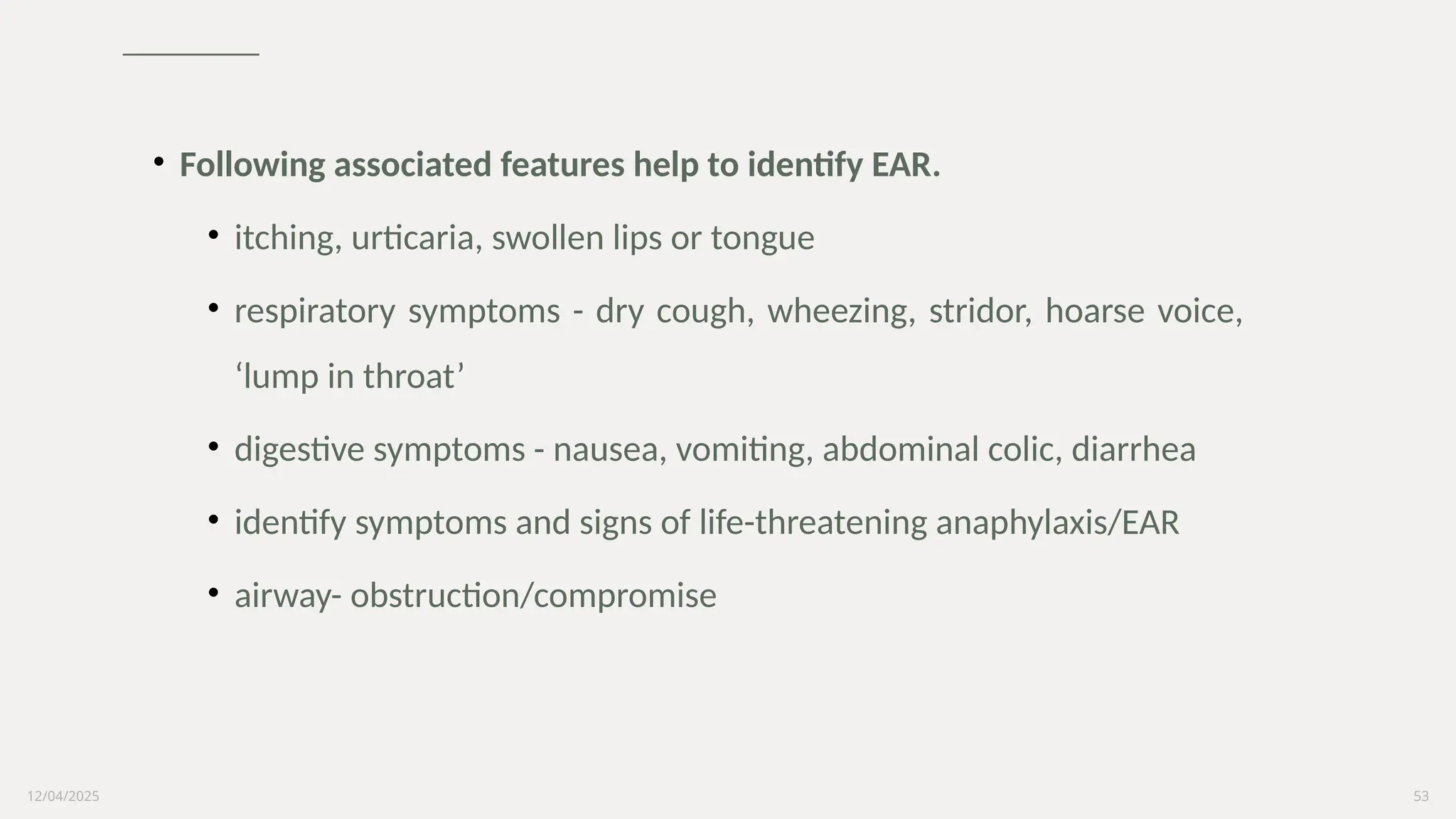
• Following associated features help to identify EAR.
• itching, urticaria, swollen lips or tongue
• respiratory symptoms - dry cough, wheezing, stridor, hoarse voice,
‘lump in throat’
• digestive symptoms - nausea, vomiting, abdominal colic, diarrhea
• identify symptoms and signs of life-threatening anaphylaxis/EAR
• airway- obstruction/compromise
12/04/2025 54
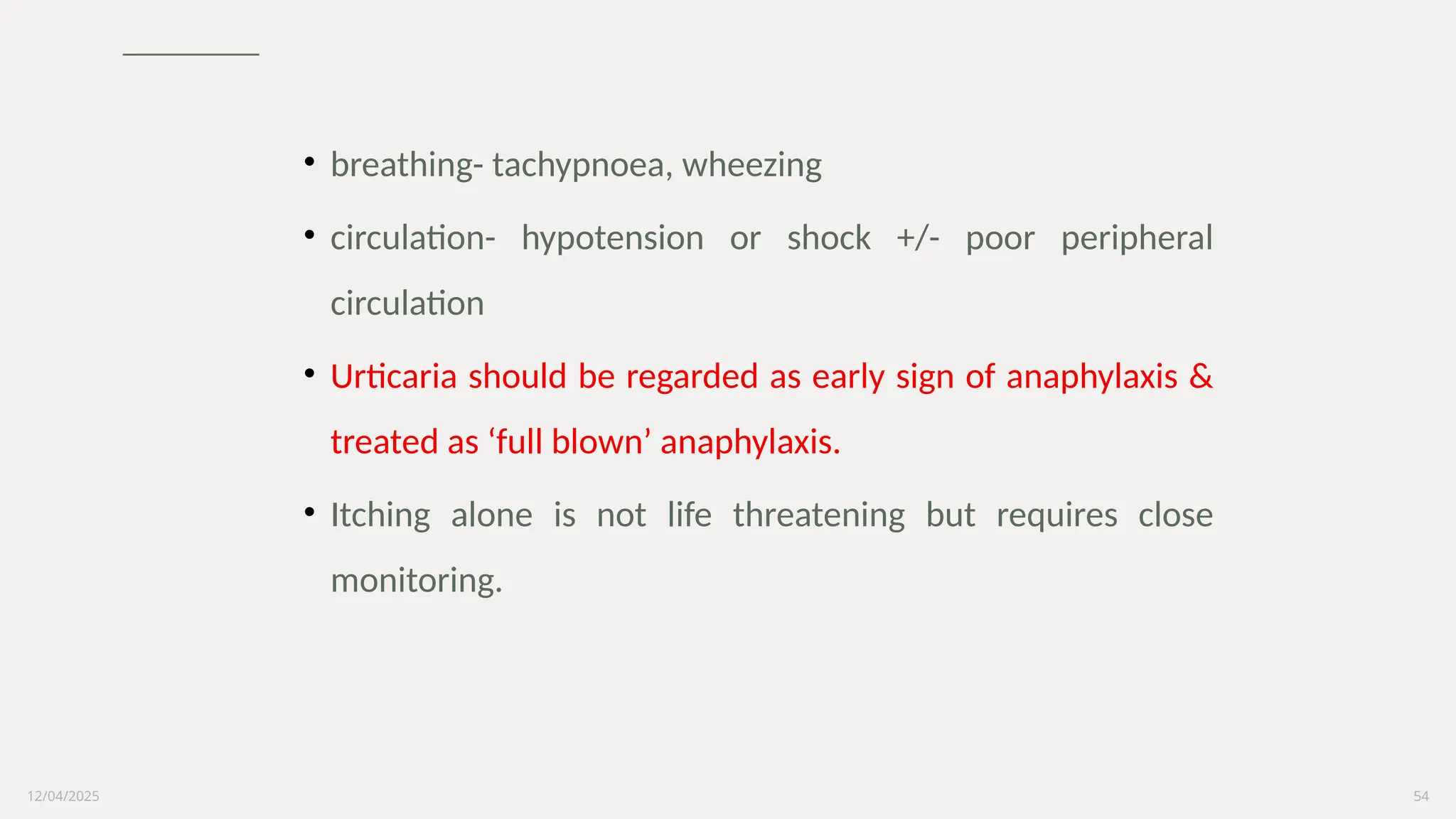
• breathing- tachypnoea, wheezing
• circulation- hypotension or shock +/- poor peripheral
circulation
• Urticaria should be regarded as early sign of anaphylaxis &
treated as ‘full blown’ anaphylaxis.
• Itching alone is not life threatening but requires close
monitoring.
12/04/2025 55
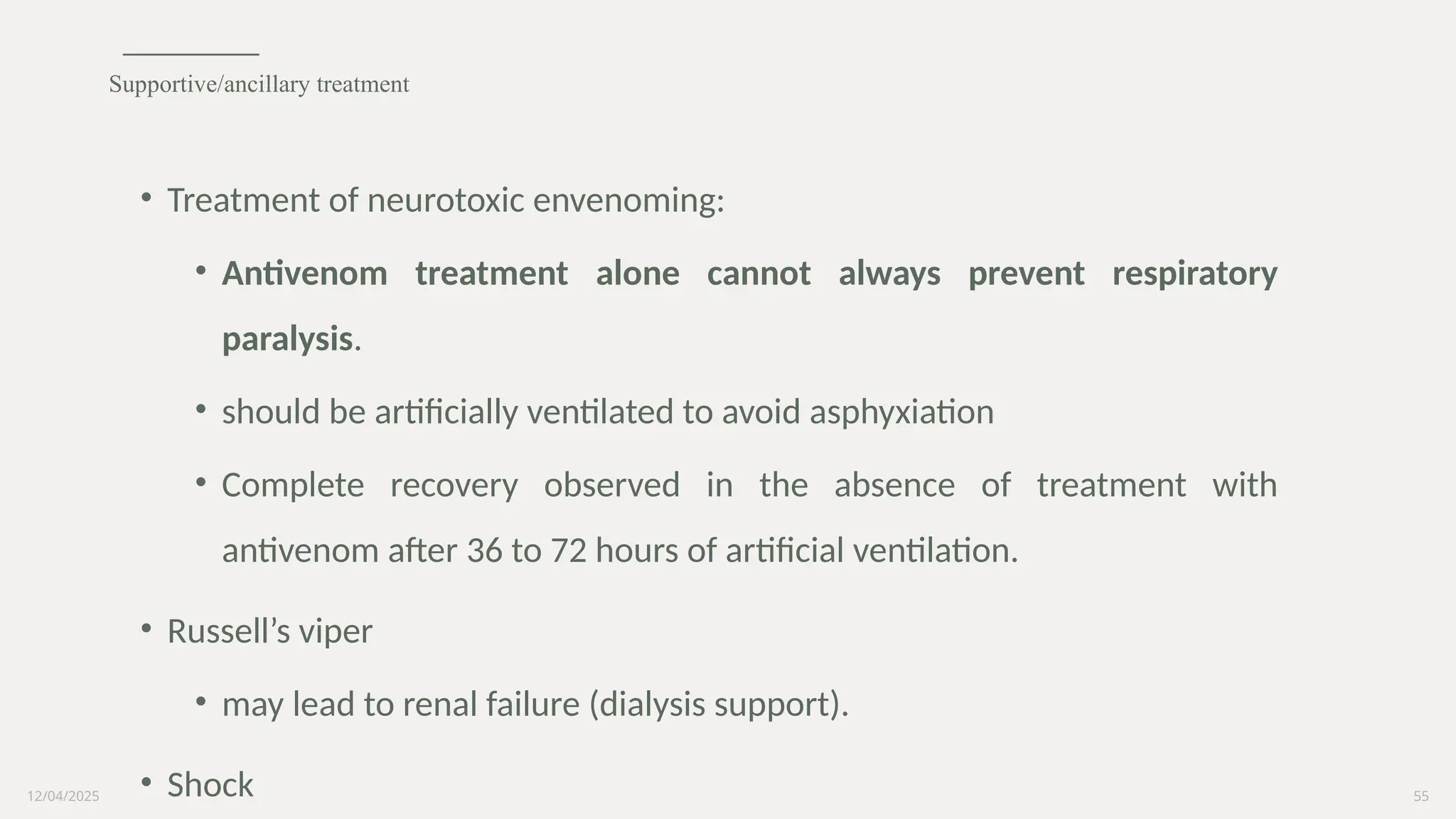
• Treatment of neurotoxic envenoming:
• Antivenom treatment alone cannot always prevent respiratory
paralysis.
• should be artificially ventilated to avoid asphyxiation
• Complete recovery observed in the absence of treatment with
antivenom after 36 to 72 hours of artificial ventilation.
• Russell’s viper
• may lead to renal failure (dialysis support).
• Shock
Supportive/ancillary treatment
12/04/2025 56
Management of snakebite envenoming when no
antivenom is available
12/04/2025 57
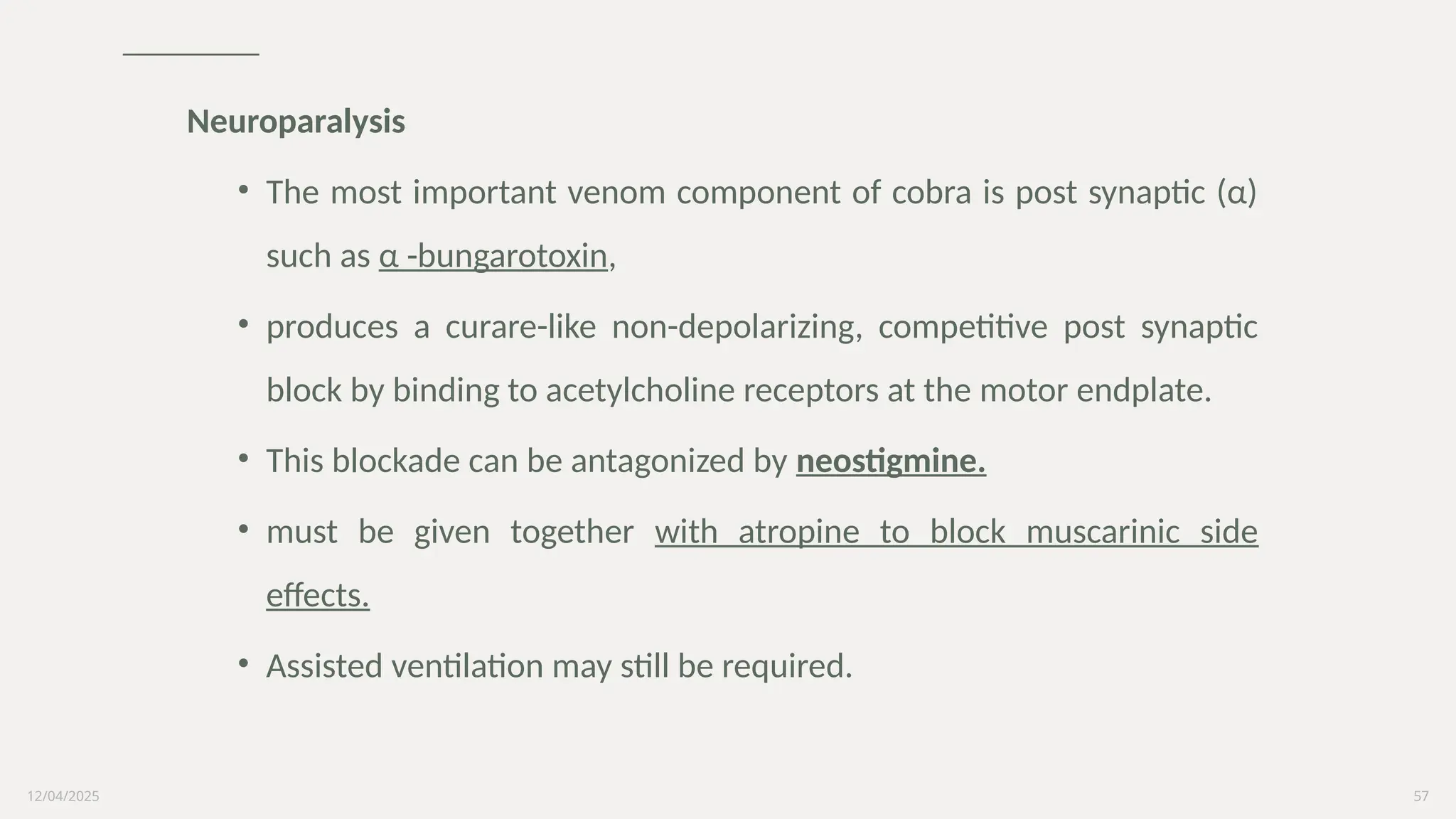
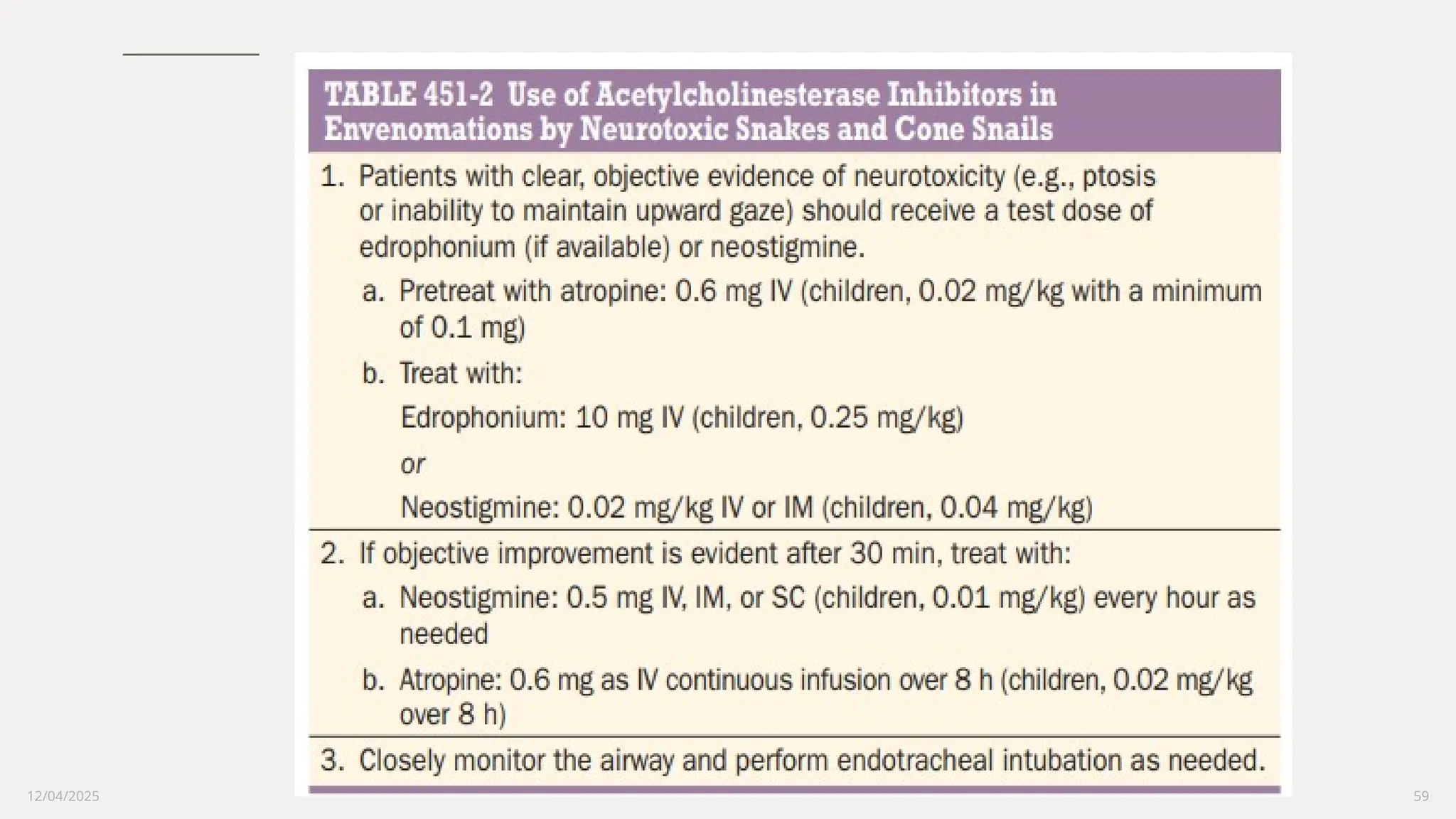
Neuroparalysis
• The most important venom component of cobra is post synaptic (α)
such as α -bungarotoxin,
• produces a curare-like non-depolarizing, competitive post synaptic
block by binding to acetylcholine receptors at the motor endplate.
• This blockade can be antagonized by neostigmine.
• must be given together with atropine to block muscarinic side
effects.
• Assisted ventilation may still be required.
12/04/2025 58
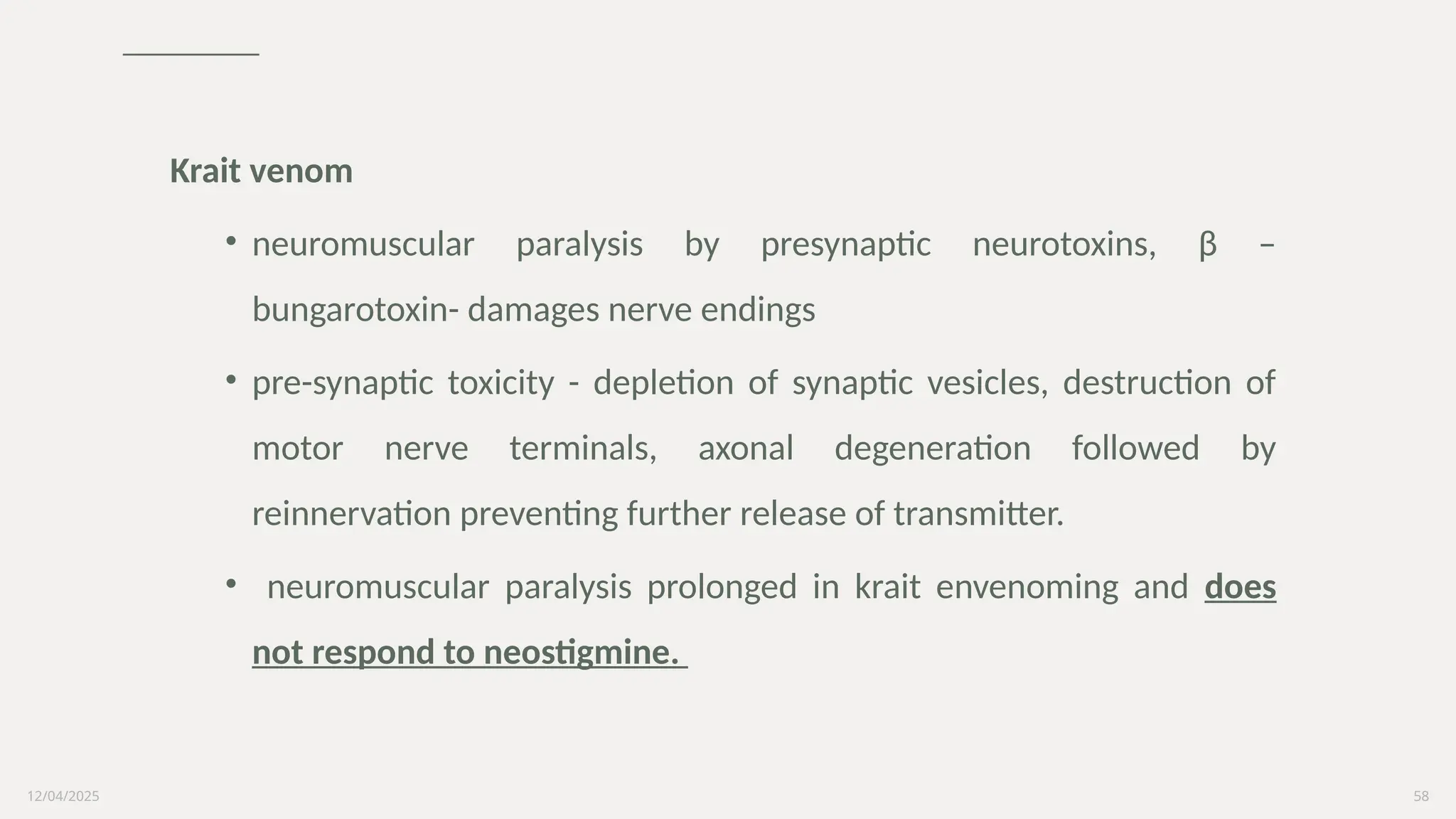
Krait venom
• neuromuscular paralysis by presynaptic neurotoxins, β –
bungarotoxin- damages nerve endings
• pre-synaptic toxicity - depletion of synaptic vesicles, destruction of
motor nerve terminals, axonal degeneration followed by
reinnervation preventing further release of transmitter.
• neuromuscular paralysis prolonged in krait envenoming and does
not respond to neostigmine.
12/04/2025 59
12/04/2025 60
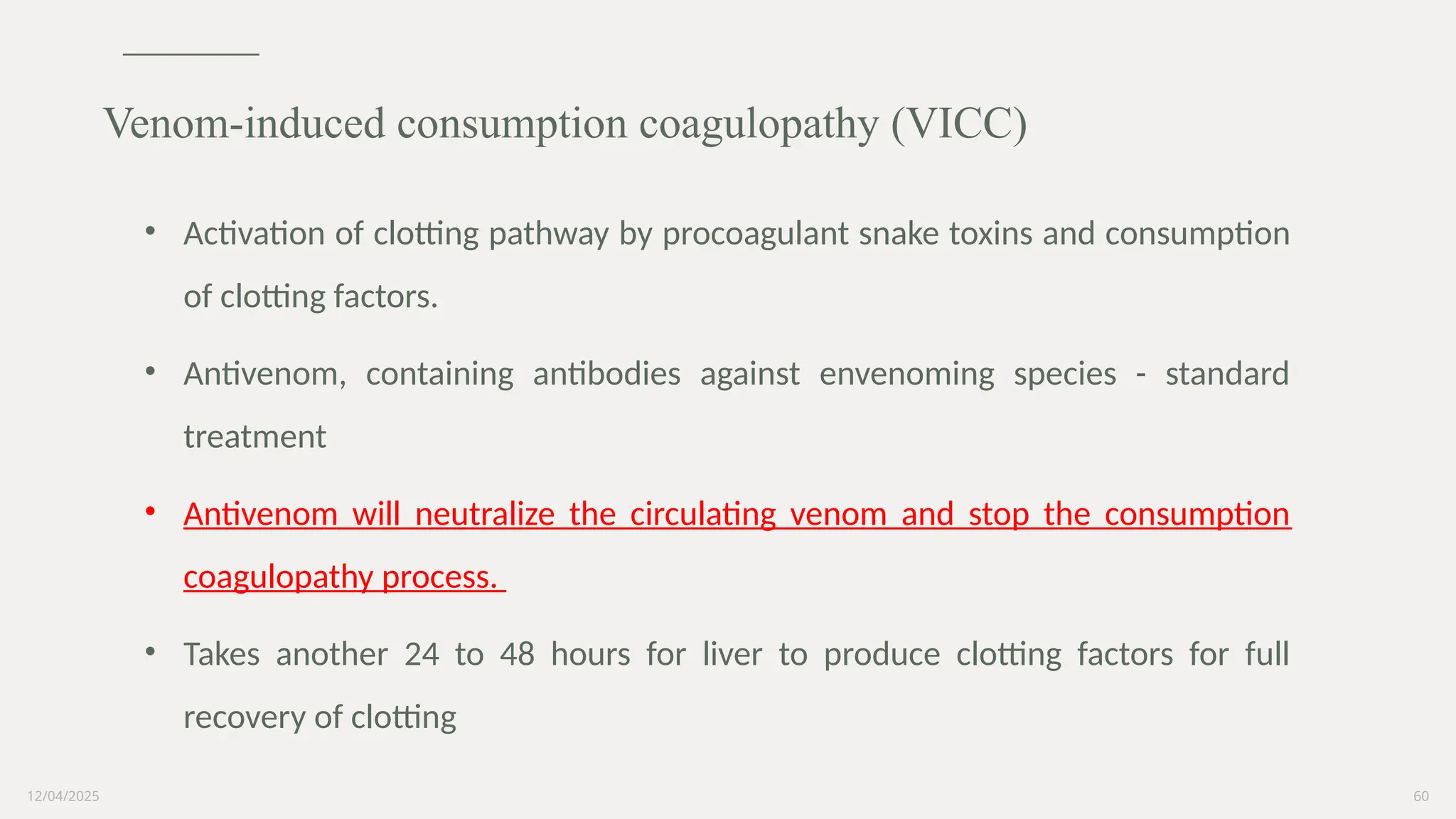
• Activation of clotting pathway by procoagulant snake toxins and consumption
of clotting factors.
• Antivenom, containing antibodies against envenoming species - standard
treatment
• Antivenom will neutralize the circulating venom and stop the consumption
coagulopathy process.
• Takes another 24 to 48 hours for liver to produce clotting factors for full
recovery of clotting
Venom-induced consumption coagulopathy (VICC)
12/04/2025 61
Transfusion of fresh frozen plasma (FFP) or cryoprecipitate with platelet
concentrates
• only indicated in cases of life-threatening hemorrhage with antivenom
administration,
• in absence of neutralizing antivenom and in presence of circulating
venom procoagulant toxins,
• clotting factors administered is rapidly consumed and
• may lead to formation of microthrombi in the circulation.
• when antivenom not available and the patient has major bleeding.
12/04/2025 62
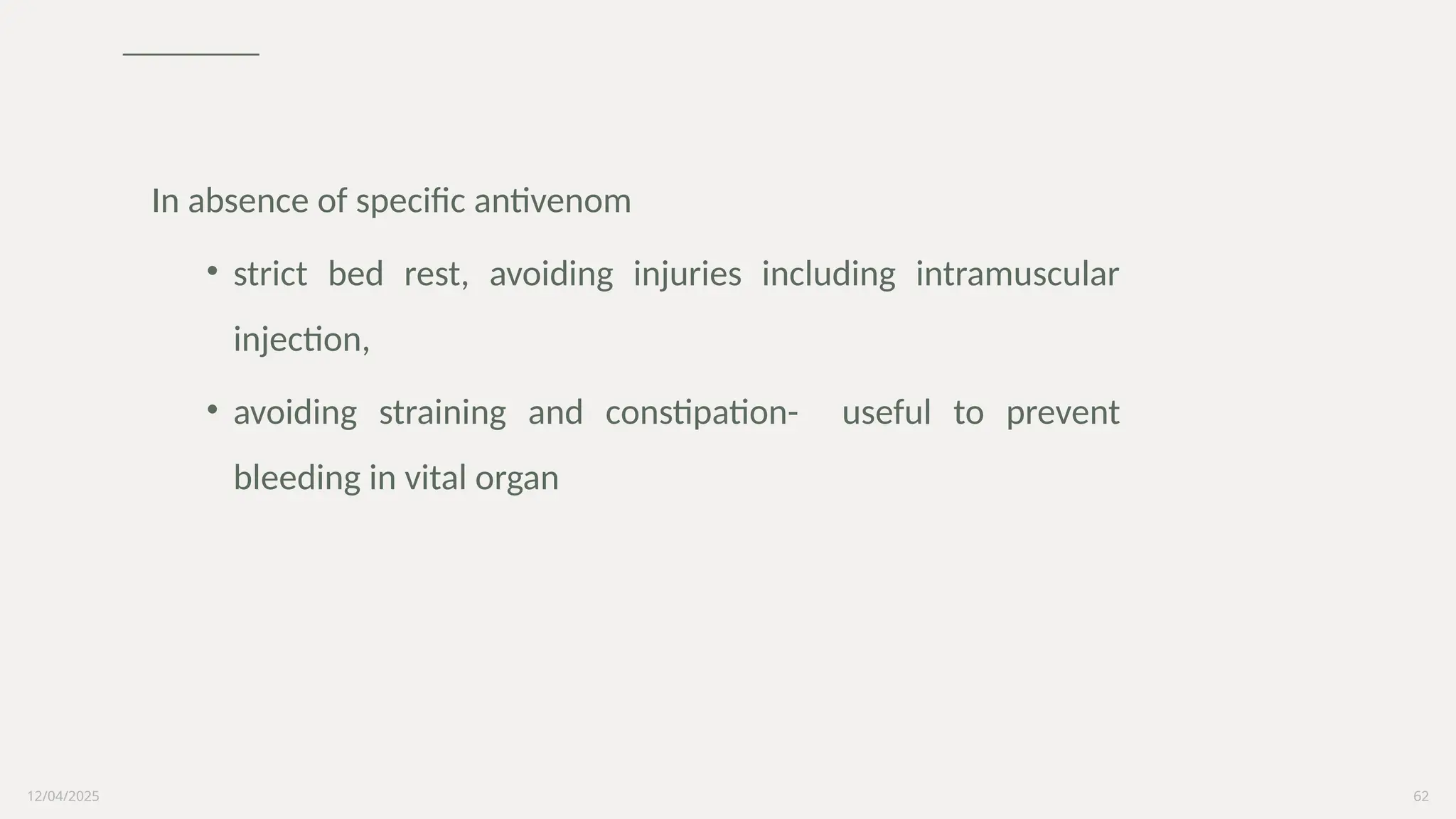
In absence of specific antivenom
• strict bed rest, avoiding injuries including intramuscular
injection,
• avoiding straining and constipation- useful to prevent
bleeding in vital organ
12/04/2025 63
The pediatric management of
snakebite
12/04/2025 64
• Bite marks to determine whether species was venomous or non venomous
are of no use
• Cobras or kraits donot cause antihemostatic symptoms
• Each vial of polyvalent ASV neutralizes 6 mg of Russel vipers venom
• Initial dose is 8-10 vials for both adults and children
• There is no good evidence to suggest children should receive either more
ASV because of body mass or less in order to avoid adverse reactions
12/04/2025 65
• ASV should be administered over 1hour.
• At the first sign of any of symptoms i,e urticaria, itching, fever, shaking chills,
nausea, vomiting, diarrhea, abdominal pain,tachycardia, hypotension,
bronchospasm and angioedema  ASV will be discontinued
• 0.5 mg of 1:1000 adrenaline given IM (0.01mg/kg)
• To provide longer protection, 0.2 mg/kg of antihistamine IV and 2mg/kg of
hydrocortisone will be administered
• If adverse reaction persists 10-15 minutes , second dose give, can be repeated.
Usually 2 doses will suffice
12/04/2025 66
• In anti- hemostatic bites, once the initial dose is administered over1 hour, no further
ASV is given for 6 hours.
• 20-WBCT every 6 hours will determine if additional ASV required
• In case of neurotoxic bites, once the first dose has been administered and a
Neostigmine test given,the victim is closely monitored . If after 1-2 hours the victim
has not improved or has worsened then the second and final dose should be given At
this point, the victim will have received suffiecient neutralizing capacity from the ASV,
and will either recover or require MV, in either event further ASV will achieve
nothing.
Repeat doses of ASV
12/04/2025 67
Updates
12/04/2025 68
12/04/2025 69
12/04/2025 70
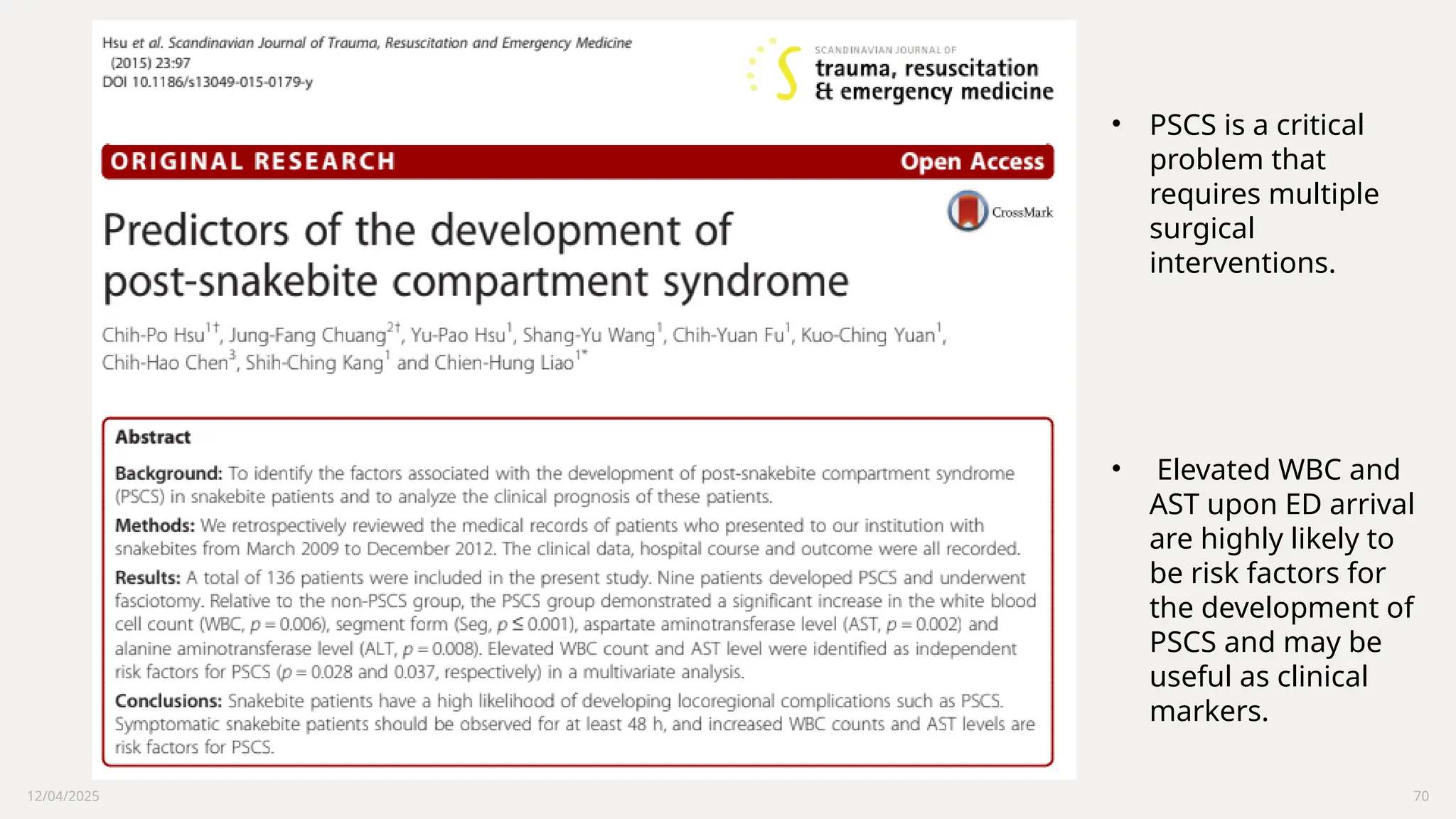
• PSCS is a critical
problem that
requires multiple
surgical
interventions.
• Elevated WBC and
AST upon ED arrival
are highly likely to
be risk factors for
the development of
PSCS and may be
useful as clinical
markers.
12/04/2025 71

A case of snake bite in Dang-1_35020aad-f49e-4fae-8bb2-f0525282d34a.pptx

  • 1.
  • 2.
  • 3.
  • 4.
    12/04/2025 4 General condition:intubated Vitals: HR: 170/min. RR: 20/min BP: 110/80 mm of hg Shifted to PICU Kept under MV at PAC mode with PIP 16, PEEP 7, Fio2 60% Spo2: 98%, GRBS: 124mg/dl On Examination at ER
  • 5.
    12/04/2025 5 Systemic examination: Respi:decreased air entry on left side of chest, no added sound CVS: S1S2Mo P/A: soft, not distended, no organomegaly Et tube was repositioned and confirmed by auscultation.
  • 6.
    12/04/2025 6 Whole bloodclotting test: Negative CBC: PT/INR: APTT: CK- MB: Troponin I: Investigations
  • 7.
    12/04/2025 7 Pro BNP: Calcium: Mg: RFT: ABG:pH: 7.40, pCO2: 34, pO2: 130, Hco3: 21
  • 8.
    12/04/2025 8 • Treatedwith iv antibiotics inj Meropenam and vancomycin • Was under Ionotrope support Epinephrine and Dopamine which was gradually tapered and stopped. • Inj Hydrocortisone was added.
  • 9.
    12/04/2025 9 • On3rd day of admission: GCS: E4VtM6 • She was extubated and kept under HFNC> CPAP> Nasal Prongs • Proximal muscle weakness gradually improved Discharged on 7th day of admission
  • 10.
    12/04/2025 10 How commonis this scenario?
  • 11.
    12/04/2025 11 • Globally,snakebite results in 1.8 to 2.7 million envenomings and 81,000 to 138,000 deaths annually. • The highest incidence of snakebite envenomings and deaths occurs in South Asia, particularly in India and Pakistan. • In Nepal, 20,000 to 37,661 people are bitten by snakes resulting in 1,000 to 3,225 deaths annually. Source: 1. World Health Organization (1987) Zoonotic disease control: baseline epidemiological study on snakebite treatment and management. Weekly Epidemiological Record 42: 319–320. 2. Alcoba G, Sharma SK, Bolon I, Ochoa C, Martins SB, et al. (2022) Snakebite epidemiology in humans and domestic animals across the Terai region in Nepal: a multicluster random survey. Lancet Global Health 10: e398–e408.
  • 12.
    12/04/2025 12 Source: Analysisof News Media-Reported Snakebite Envenoming in Nepal during 2010–2022. PLoS Negl Trop Dis 17(8): e0011572.
  • 13.
    12/04/2025 13 Total- 89species Poisonous- 17 species Subdivided into two groups: Elapidae and Viperidae Medically Important snakes in Nepal
  • 14.
    12/04/2025 14 1. Cobraspecies Elapidae
  • 15.
  • 16.
  • 17.
  • 18.
  • 19.
  • 20.
    12/04/2025 20 Venum compositionand its action • A complex mixture of enzymes, low molecular wt. polypeptides, glycoproteins and metal ions. • Enzymes: Proteases, Phospholipase A, amino acid esterases, Hyaluronidase
  • 21.
    12/04/2025 21 1. Hemotoxicvenoms act on the heart and cardiovascular system: vascular leaking, local and systemic bleeding 2. Neurotoxic venom acts on the nervous system and brain, pre or post synaptically to inhibit nerve impulse 3. Cytotoxic venom has a localized action at the site of the bite: local tissue necrosis
  • 22.
    12/04/2025 22 No clinicalmanifestation except bite mark. (Dry bite) Due to bite by non-venomous snakes or bite by venomous snake without injection of venom. Consequences of snake bite
  • 23.
    12/04/2025 23 Local signsand symptoms • Fang mark may be obvious as single puncture, dual puncture or marks of multiple tooth marks. • Bite in the arm or lower limb occurs to victim who unintentionally steps on or otherwise disturbs a snake while working in the filed or walking.
  • 24.
    12/04/2025 24 Cobra- swellingand local pain with or without erythema or discoloration at the bite site. Krait- Usually do not cause signs of local envenoming and can be virtually painless. Viper- persistent bleeding from fang marks, wounds or any injured parts of the body due to venom induced coagulopathy. Swelling or tenderness of regional lymph node denotes venom spread.
  • 25.
    12/04/2025 25 General manifestationof snake envenoming are: nausea, and vomiting pain abdomen malaise weakness drowsiness prostration excessive salivation, etc. Systemic Manifestations
  • 26.
  • 27.
  • 28.
    12/04/2025 28 • Ophthalmoplegia •Pupillary dilatation • Skeletal muscle weakness • Loss of gag reflex • Paradoxical breathing • Respiratory failure
  • 29.
  • 30.
    12/04/2025 30 1. ELISAtests: to identify species based on Ag in venom,expensive,not freely available and thus have limited value in diagnosis. 2. Neurotoxic envenoming: no lab investigation in Nepal that can help diagnose neurotoxic manifestation. Diagnosis
  • 31.
    12/04/2025 31 3. Hematotoxicenvenoming due to vipers: • BT and CT : Prolonged. • PT and INR: Increased. • 20-minute whole blood clotting test (20WBCT): Positive (Bedside test to see the incoagulability of the blood to detect venom induced coagulopathy.)
  • 32.
    • 2-3 mlof freshly sampled venous blood in a small, new, dry, glass tube. • Tube standing undisturbed for 20 minutes at ambient temperature. • Blood still liquid (unclotted) and runs out, the pt has uncoagulable blood.
  • 33.
    12/04/2025 33 4. RFT:to detect AKI 5. CBC, blood group: Increased TLC indicate systemic envenoming, platelet count may decrease viper envenoming. 6. CPK: raised in rhabdomyolysis 7. Urine examination for albumin and RBCs
  • 34.
    12/04/2025 34 Management Steps forthe snakebite management
  • 35.
    12/04/2025 35 First AidTreatment • Do ‘s R= Reassure the patient. Only 50% of bites by venomous species actually envenomate the patient I= Immobilise the limb in the same way as for a fracture, not to block the blood supply or apply pressure. G. H.= Get to Hospital Immediately. Traditional remedies have NO PROVEN benefit in treating snakebite. T=Tell the doctor of any systemic symptoms that manifest on the way. Remove tight clothing, shoes, watch, rings Keep affected limb as low level as possible Identification of snake
  • 36.
    12/04/2025 36 Interfere withbitten area Suck by mouth Apply chemicals or electricity Use arterial tourniquets Cooling agents on the bitten area Make incision on the wound Walking of patient is contraindicated Don’t’s
  • 37.
    12/04/2025 37 • SecureABC • Assess vitals and secure I.V. Line: large bore cannula inserted on an unaffected limb • History should be quickly obtained • Rapid, thorough physical examination • Look for signs of envenomation • Even if absent- admit and observe for 24 hours, Rapid clinical assessment and resuscitation
  • 38.
    12/04/2025 38 • Closemonitoring ~ hourly for vital signs, cardiac rhythm, oxygen saturation, urine output, ptosis, local swelling, diplopia, bleeding. • Fluid resuscitation with isotonic saline if clinical shock. • Species diagnosis • Investigation and laboratory tests
  • 39.
    12/04/2025 39 1. Acritical moment for the patient, doctor and attendants. Possibility of sudden collapse 2. Do not take the bandages off until IV is established, other resuscitation facilities and ASV are ready to use. 3. If an arterial tourniquet: first apply another bandage or tourniquet at venous obstructing pressure above the arterial tourniquet. Release it for a few moments at a time. 4. If rapid deterioration, re-apply a pressure immobilisation bandage until the situation stabilizes. Removal of torniquets
  • 40.
    12/04/2025 40 • Thebitten limb may be swollen and painful  nursed in the most comfortable position. • Elevation of limb with rest. • Simple washing with antiseptic solution - chlorhexidine, povidone iodine • Broad-spectrum antibiotic - if features of infection. Treatment of the bitten part
  • 41.
    12/04/2025 41 • Localnecrosis and gangrene: surgical debridement, skin grafting  Broad spectrum antibiotic is indicated if there is feature of infection. • Tetanus toxoid IM injection should be given.  If coagulopathy postponed until after resolution of coagulopathy.
  • 42.
  • 43.
    12/04/2025 43 • Eachvial is diluted with 10 ml of sterile water • Reconstituted antivenom is diluted in 3-5 ml/kg body weight of isotonic saline or dextrose water • Infusion at 2ml/min Antivenom route and dose Prophylactic Adrenaline (0.1%) subcutaneously Age (years) Dose (mcg) Volume (ml) >13 250 0.25 >10-12 200 0.20 >5-10 125 0.12
  • 44.
    12/04/2025 44 Initial dose 10 vials(100ml) is further diluted or mixed with dextrose water or saline (100-400ml)  Administered at rate of 2ml/min(40-60 min at 70 drops/min) Repetition of dose  If neurological signs deteriorate (DO NOT REPEAT IF PERSIST) Neurotoxic envenoming
  • 45.
    12/04/2025 45 Initial dose Same as dose for neurotoxic envenoming Repetition of dose  Persistence or recurrence of blood incoagulability afer every 6 hours of antivenom dose.  Repeat 20 WBCT is abnormal or other coagulation test are abnormal repeat 5 vials of antivenom at 2ml/min Hematotoxic envenoming
  • 46.
    12/04/2025 46 All patientswith features of envenoming may not respond to antivenom administered. • Excessive delay in administration of antivenom – esp karaits. • Patient with established respiratory failure. • need artificial ventilation and antivenom alone will not suffice. • If antivenom administered does not contain neutralizing antibodies against biting species. • Insufficient dose of antivenom. • Inactive or poor quality antivenom. Reasons for failure to respond to antivenom
  • 47.
    12/04/2025 47 • Meandose of antivenom for treat neurotoxic envenoming -12.5 ± 3.9 vials. • May range from five vials to 20 vials, rarely, as high as 30 vials. • Do not use more than 20 vials of antivenom. • Administration of higher dose antivenom is unlikely to be useful, not responding to initial bolus or around 20 vials of antivenom. Clinical trial in Nepal
  • 48.
    12/04/2025 48 •Clinical assessmentfor appearance of signs and symptoms of antivenom reaction should be performed. •The anaphylaxis reaction may be life threatening. • no time may be available to draw adrenaline from ampule. • adrenaline (epinephrine) must be ready, drawn up in a syringe, prior to antivenom. Observation and monitoring
  • 49.
    12/04/2025 49 •Antivenom reactions •Significant number of patients develops reaction to antivenom. • Around 80% developed some reactions to antivenom in clinical trial conducted in Nepal • Rarely IgE-mediated Type I reaction person previously exposed to animal serum (e.g. Tetanus toxoid injection)- dose related.
  • 50.
    12/04/2025 50 Early anaphylacticreactions (EAR): • a serious allergic reaction - rapid in onset and may cause death. • usually develops within 3 hours of antivenom initiation. • Common features - itching, urticaria, fever, angio-edema, dyspnea due to bronchospasm, laryngeal edema, hypotension, abdominal pain, vomiting, diarrhea etc.
  • 51.
    12/04/2025 51 Pyrogenic reaction: •Usually develops 1-2 hrs. after treatment initiation. • chills, rigors, fever, hypotension, febrile convulsion - children. Late reaction (serum sickness type): • May develop 1- 12 (mean 7) days after treatment. • fever, itching, recurrent urticaria, arthralgia, myalgia, lymphadenopathy, proteinuria etc.
  • 52.
    12/04/2025 52 • Bothusually occurs within 3 hours after initiation of antivenom administration. • Symptoms and signs that are consistent with EAR or PAR should be identified; • some common to both (fever, hypotension) Detection of early anaphylaxis (EAR) and pyrogenic reactions (PR)
  • 53.
    12/04/2025 53 • Followingassociated features help to identify EAR. • itching, urticaria, swollen lips or tongue • respiratory symptoms - dry cough, wheezing, stridor, hoarse voice, ‘lump in throat’ • digestive symptoms - nausea, vomiting, abdominal colic, diarrhea • identify symptoms and signs of life-threatening anaphylaxis/EAR • airway- obstruction/compromise
  • 54.
    12/04/2025 54 • breathing-tachypnoea, wheezing • circulation- hypotension or shock +/- poor peripheral circulation • Urticaria should be regarded as early sign of anaphylaxis & treated as ‘full blown’ anaphylaxis. • Itching alone is not life threatening but requires close monitoring.
  • 55.
    12/04/2025 55 • Treatmentof neurotoxic envenoming: • Antivenom treatment alone cannot always prevent respiratory paralysis. • should be artificially ventilated to avoid asphyxiation • Complete recovery observed in the absence of treatment with antivenom after 36 to 72 hours of artificial ventilation. • Russell’s viper • may lead to renal failure (dialysis support). • Shock Supportive/ancillary treatment
  • 56.
    12/04/2025 56 Management ofsnakebite envenoming when no antivenom is available
  • 57.
    12/04/2025 57 Neuroparalysis • Themost important venom component of cobra is post synaptic (α) such as α -bungarotoxin, • produces a curare-like non-depolarizing, competitive post synaptic block by binding to acetylcholine receptors at the motor endplate. • This blockade can be antagonized by neostigmine. • must be given together with atropine to block muscarinic side effects. • Assisted ventilation may still be required.
  • 58.
    12/04/2025 58 Krait venom •neuromuscular paralysis by presynaptic neurotoxins, β – bungarotoxin- damages nerve endings • pre-synaptic toxicity - depletion of synaptic vesicles, destruction of motor nerve terminals, axonal degeneration followed by reinnervation preventing further release of transmitter. • neuromuscular paralysis prolonged in krait envenoming and does not respond to neostigmine.
  • 59.
  • 60.
    12/04/2025 60 • Activationof clotting pathway by procoagulant snake toxins and consumption of clotting factors. • Antivenom, containing antibodies against envenoming species - standard treatment • Antivenom will neutralize the circulating venom and stop the consumption coagulopathy process. • Takes another 24 to 48 hours for liver to produce clotting factors for full recovery of clotting Venom-induced consumption coagulopathy (VICC)
  • 61.
    12/04/2025 61 Transfusion offresh frozen plasma (FFP) or cryoprecipitate with platelet concentrates • only indicated in cases of life-threatening hemorrhage with antivenom administration, • in absence of neutralizing antivenom and in presence of circulating venom procoagulant toxins, • clotting factors administered is rapidly consumed and • may lead to formation of microthrombi in the circulation. • when antivenom not available and the patient has major bleeding.
  • 62.
    12/04/2025 62 In absenceof specific antivenom • strict bed rest, avoiding injuries including intramuscular injection, • avoiding straining and constipation- useful to prevent bleeding in vital organ
  • 63.
    12/04/2025 63 The pediatricmanagement of snakebite
  • 64.
    12/04/2025 64 • Bitemarks to determine whether species was venomous or non venomous are of no use • Cobras or kraits donot cause antihemostatic symptoms • Each vial of polyvalent ASV neutralizes 6 mg of Russel vipers venom • Initial dose is 8-10 vials for both adults and children • There is no good evidence to suggest children should receive either more ASV because of body mass or less in order to avoid adverse reactions
  • 65.
    12/04/2025 65 • ASVshould be administered over 1hour. • At the first sign of any of symptoms i,e urticaria, itching, fever, shaking chills, nausea, vomiting, diarrhea, abdominal pain,tachycardia, hypotension, bronchospasm and angioedema  ASV will be discontinued • 0.5 mg of 1:1000 adrenaline given IM (0.01mg/kg) • To provide longer protection, 0.2 mg/kg of antihistamine IV and 2mg/kg of hydrocortisone will be administered • If adverse reaction persists 10-15 minutes , second dose give, can be repeated. Usually 2 doses will suffice
  • 66.
    12/04/2025 66 • Inanti- hemostatic bites, once the initial dose is administered over1 hour, no further ASV is given for 6 hours. • 20-WBCT every 6 hours will determine if additional ASV required • In case of neurotoxic bites, once the first dose has been administered and a Neostigmine test given,the victim is closely monitored . If after 1-2 hours the victim has not improved or has worsened then the second and final dose should be given At this point, the victim will have received suffiecient neutralizing capacity from the ASV, and will either recover or require MV, in either event further ASV will achieve nothing. Repeat doses of ASV
  • 67.
  • 68.
  • 69.
  • 70.
    12/04/2025 70 • PSCSis a critical problem that requires multiple surgical interventions. • Elevated WBC and AST upon ED arrival are highly likely to be risk factors for the development of PSCS and may be useful as clinical markers.
  • 71.

Editor's Notes

  • #1 Line spacing + Page numbers