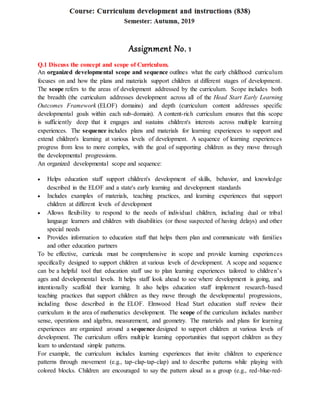
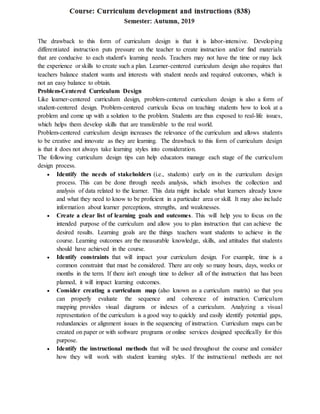
The document discusses different types of curriculum design:
1. Subject-centered design focuses on specific subjects and standardized learning goals. It is common but not student-centered.
2. Learner-centered design considers individual student needs and interests through differentiated instruction. However, it is labor intensive for teachers.
3. Problem-centered design focuses on real-world problems to develop transferable skills. While more engaging, it does not always account for learning styles.
Overall, the key elements and sources of curriculum design discussed are ensuring alignment across grade levels, considering the needs of students versus just subjects, and balancing engagement with standardized outcomes. Different designs have benefits but also drawbacks to manage.