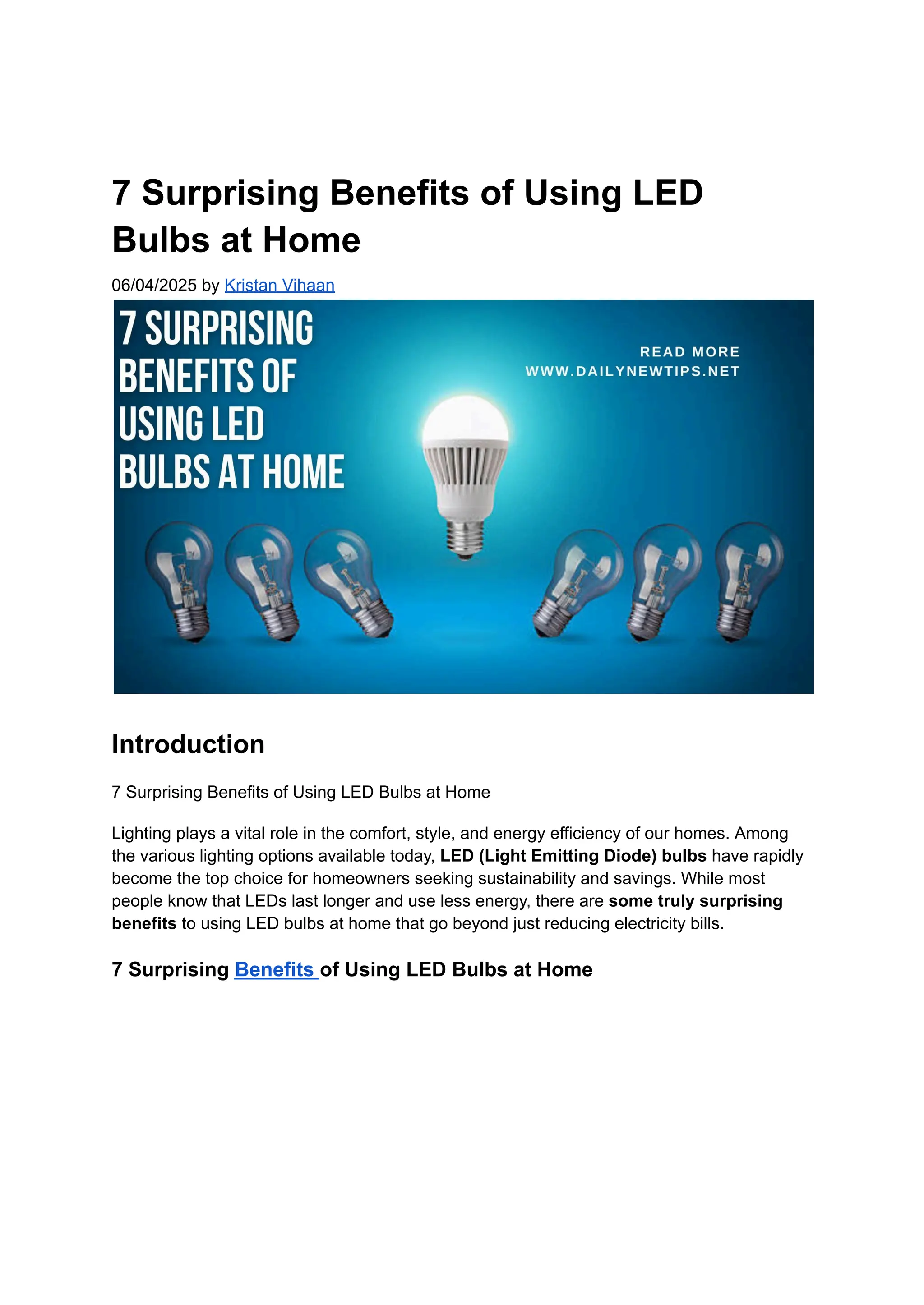
7 Surprising Benefits of Using LED
Bulbs at Home
06/04/2025 by Kristan Vihaan
Introduction
7 Surprising Benefits of Using LED Bulbs at Home
Lighting plays a vital role in the comfort, style, and energy efficiency of our homes. Among
the various lighting options available today, LED (Light Emitting Diode) bulbs have rapidly
become the top choice for homeowners seeking sustainability and savings. While most
people know that LEDs last longer and use less energy, there are some truly surprising
benefits to using LED bulbs at home that go beyond just reducing electricity bills.
7 Surprising Benefits of Using LED Bulbs at Home
source:pixabay
1. Instant Brightness with No Warm-Up Time
Unlike CFLs or older light bulbs that take a few seconds or minutes to reach full brightness,
LED bulbs light up immediately. This instant-on feature is especially useful in spaces like
bathrooms, closets, or outdoor areas where immediate visibility is essential.
2. Lower Heat Emission – A Cooler Home
Traditional incandescent bulbs convert most of their energy into heat, not light. LEDs, on the
other hand, remain cool to the touch even after hours of use. This not only makes them safer
(especially around kids and pets) but also helps keep your home cooler, reducing the load
on air conditioners in warmer climates.
3. Eco-Friendly and Mercury-Free
LED bulbs are made without harmful substances like mercury, which is commonly found in
fluorescent lights. They’re safer to use and dispose of and are often fully recyclable, making
them a perfect choice for eco-conscious households.
4. Improved Lighting Quality for Better Mood and Focus
LEDs come in a wide range of color temperatures and brightness levels. From warm, cozy
tones for living rooms to bright, daylight-mimicking bulbs for workspaces, LEDs help create
the perfect atmosphere for every room. Studies suggest better lighting can improve mood,
focus, and even sleep quality.
5. Customizable and Smart-Home Ready
Many LED lights are compatible with smart home systems and apps. You can schedule
lighting, dim or brighten bulbs, and even change colors with voice control or a tap on your
phone—enhancing both convenience and ambiance.
6. Durability in Tough Conditions
LED bulbs are more durable than traditional bulbs. They’re resistant to shock, vibration, and
temperature fluctuations. This makes them ideal for outdoor use, garages, basements,
and other rugged spaces.
7. Significant Cost Savings Over Time
Though slightly more expensive upfront, LED bulbs last up to 25 times longer than
incandescent bulbs and use up to 80% less energy. Over time, this means huge savings
on electricity bills and fewer bulb replacements.
Expert Tips for Choosing LED Bulbs
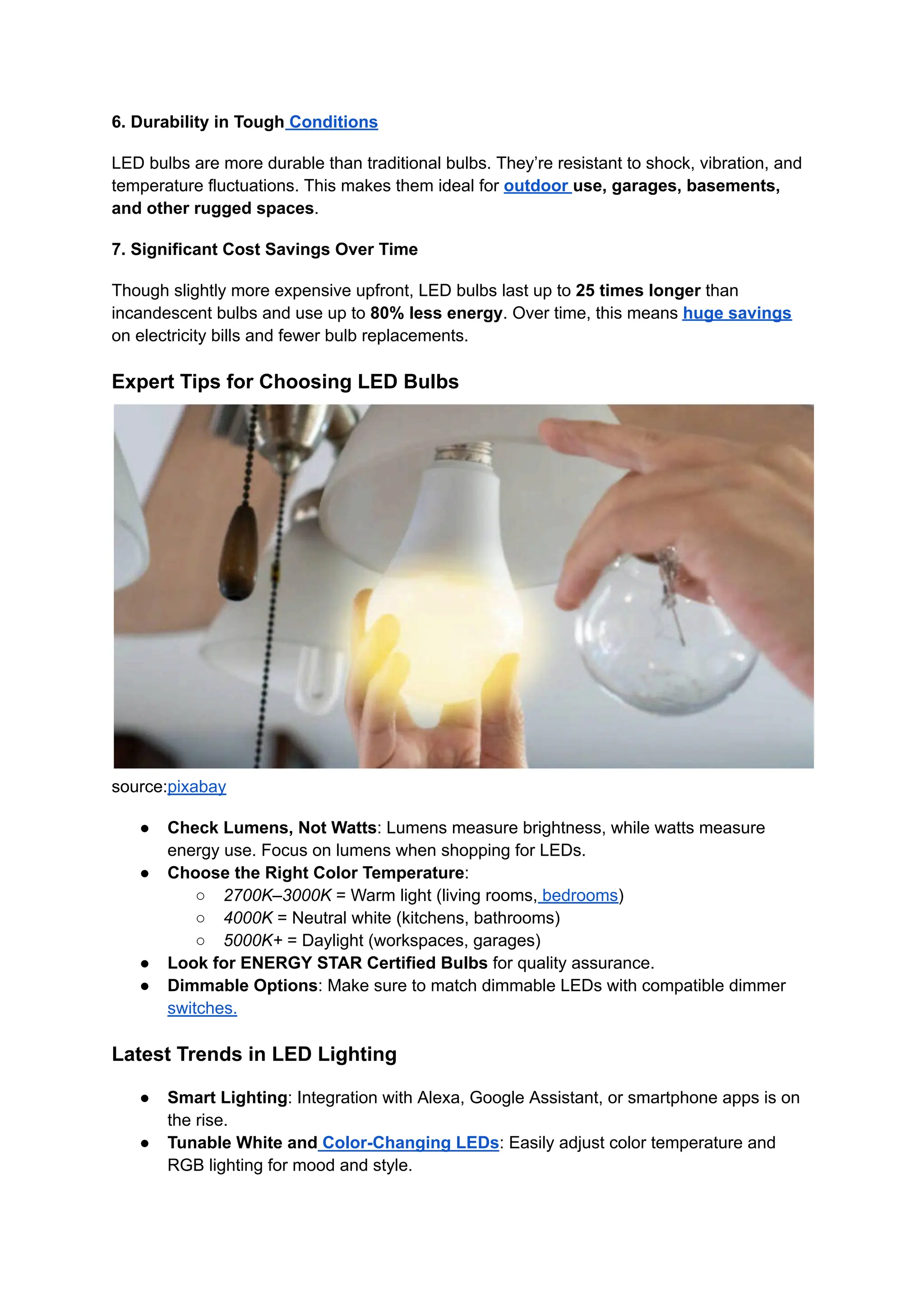
source:pixabay
●​ Check Lumens, Not Watts: Lumens measure brightness, while watts measure
energy use. Focus on lumens when shopping for LEDs.
●​ Choose the Right Color Temperature:
○​ 2700K–3000K = Warm light (living rooms, bedrooms)
○​ 4000K = Neutral white (kitchens, bathrooms)
○​ 5000K+ = Daylight (workspaces, garages)
●​ Look for ENERGY STAR Certified Bulbs for quality assurance.
●​ Dimmable Options: Make sure to match dimmable LEDs with compatible dimmer
switches.
Latest Trends in LED Lighting
●​ Smart Lighting: Integration with Alexa, Google Assistant, or smartphone apps is on
the rise.
●​ Tunable White and Color-Changing LEDs: Easily adjust color temperature and
RGB lighting for mood and style.
●​ Minimalist and Integrated Fixtures: Sleek, energy-efficient LED fixtures are
trending in modern interior design.
●​ Solar-Powered LED Outdoor Lights: Eco-friendly and perfect for garden paths,
patios, and security lighting.
Suggestions for Every Room
source:pixabay
●​ Living Room: Use dimmable warm white LEDs for cozy evenings.
●​ Kitchen: Bright daylight LEDs under cabinets improve visibility for cooking.
●​ Bathroom: Neutral white LEDs offer clarity without being too harsh.
●​ Bedroom: Soft warm LEDs for relaxation and reading.
●​ Outdoor: Motion-activated or solar-powered LEDs enhance safety and curb appeal.
Expert Advice
If you’re transitioning to LEDs, start with the most-used lights in your home. Over time, swap
out older bulbs to maximize savings and efficiency. Don’t forget to recycle old bulbs
responsibly, especially those containing mercury like CFLs.
Conclusion
LED bulbs offer much more than just lower energy bills. From improved safety and
lighting quality to smart home integration and environmental benefits, they’re a brilliant
upgrade for any home. By understanding their full range of benefits and how to choose the
right ones, you can light your home more efficiently, stylishly, and sustainably.
References
1.​ U.S. Department of Energy – Energy Saver: LED Lighting
2.​ ENERGY STAR – Lighting Tips and Information
3.​ Consumer Reports – Best LED Light Bulbs
FAQs
Q1: Are LED bulbs safe to use in enclosed fixtures?​
A1: Some LEDs are specifically designed for enclosed fixtures—look for this detail on the
packaging.
Q2: Can I use LED bulbs with a dimmer switch?​
A2: Yes, but ensure the LED is labeled “dimmable” and compatible with your dimmer switch.
Q3: Do LED bulbs flicker or buzz like CFLs?​
A3 High-quality LED bulbs generally do not flicker or buzz like CFLs or older
incandescent bulbs—but it can happen in some cases, and here’s why:
Why LEDs Are Usually Flicker-Free and Silent:
●​ No gas or filament like CFLs or incandescents that cause buzzing or flickering.
●​ Instant full brightness with steady light output.
●​ Modern technology in quality LEDs minimizes electrical interference and hum.
When Flickering or Buzzing Can Happen:
1.​ Using a Non-Compatible Dimmer Switch
○​ If your LED bulb isn’t labeled dimmable, or your dimmer switch isn’t
LED-compatible, you might get flickering or buzzing.
○​ Fix: Use dimmable LEDs and a compatible LED-rated dimmer switch.
2.​ Low-Quality or Cheap LEDs
○​ Budget bulbs might lack proper internal drivers, causing instability.
○​ Fix: Stick with trusted brands or ENERGY STAR certified LEDs.
3.​ Voltage Fluctuations
○​ Inconsistent power supply or poor wiring can cause LED flickering.
○​ Fix: Have an electrician inspect if the issue persists across multiple bulbs or
fixtures.
Q4: How long do LED bulbs last?​
A4: LED bulbs typically last between 15,000 and 50,000 hours, depending on the brand,
quality, and usage environment.
To put it in perspective:
●​ If you use an LED bulb for 3 hours per day, a 25,000-hour bulb could last over 22
years.
●​ Higher-end, commercial-grade LEDs may last even longer—closer to the
50,000-hour mark.
Factors That Affect LED Lifespan:
●​ Heat: Excessive heat can shorten lifespan. That’s why proper ventilation or heat
sinks in fixtures are important.
●​ Quality: Cheaper, low-quality LEDs may fail sooner.
●​ Usage Patterns: Frequent on/off cycling can reduce life for non-dimmable or
low-quality LEDs.
●​ Power Supply: Using a stable power source or compatible dimmers helps maximize
longevity.
Want help choosing long-lasting LED brands or products?
Q5: Do LED bulbs attract bugs?​
A5: LED bulbs attract fewer bugs compared to traditional incandescent or fluorescent
lights.
Here’s why:
1.​ Low UV Emission:​
Most insects are attracted to ultraviolet (UV) light, which LEDs emit very little of.
Incandescent and CFL bulbs, on the other hand, emit more UV rays and therefore
attract more bugs.
2.​ Cooler Temperature:​
LEDs stay cooler than traditional bulbs, so they don’t radiate as much heat. Bugs are
also drawn to heat sources, which makes LEDs less appealing.
3.​ Color Temperature Matters:​
Bugs are more attracted to cool white or blue-tinted light (4000K–6500K). To
reduce bug attraction even more, use warm white LEDs (2700K–3000K), especially
in outdoor areas.
Pro Tip for Outdoor Lighting:
Use yellow “bug light” LED bulbs or amber-colored LEDs on patios and decks. They
provide light for humans without drawing a swarm of insects.
Want suggestions on the best bug-resistant LED bulbs for outdoor use?
Categories Technology Tags HOME AND KITCHEN, TECHNOLOGY, TIPS, TRENDING,
TRENDS
11 Camera Settings for a Perfect Studio Ghibli Vibe

7 Surprising Benefits of Using LED Bulbs at Home

  • 1.
    7 Surprising Benefitsof Using LED Bulbs at Home 06/04/2025 by Kristan Vihaan Introduction 7 Surprising Benefits of Using LED Bulbs at Home Lighting plays a vital role in the comfort, style, and energy efficiency of our homes. Among the various lighting options available today, LED (Light Emitting Diode) bulbs have rapidly become the top choice for homeowners seeking sustainability and savings. While most people know that LEDs last longer and use less energy, there are some truly surprising benefits to using LED bulbs at home that go beyond just reducing electricity bills. 7 Surprising Benefits of Using LED Bulbs at Home
  • 2.
    source:pixabay 1. Instant Brightnesswith No Warm-Up Time Unlike CFLs or older light bulbs that take a few seconds or minutes to reach full brightness, LED bulbs light up immediately. This instant-on feature is especially useful in spaces like bathrooms, closets, or outdoor areas where immediate visibility is essential. 2. Lower Heat Emission – A Cooler Home Traditional incandescent bulbs convert most of their energy into heat, not light. LEDs, on the other hand, remain cool to the touch even after hours of use. This not only makes them safer (especially around kids and pets) but also helps keep your home cooler, reducing the load on air conditioners in warmer climates. 3. Eco-Friendly and Mercury-Free LED bulbs are made without harmful substances like mercury, which is commonly found in fluorescent lights. They’re safer to use and dispose of and are often fully recyclable, making them a perfect choice for eco-conscious households. 4. Improved Lighting Quality for Better Mood and Focus LEDs come in a wide range of color temperatures and brightness levels. From warm, cozy tones for living rooms to bright, daylight-mimicking bulbs for workspaces, LEDs help create the perfect atmosphere for every room. Studies suggest better lighting can improve mood, focus, and even sleep quality. 5. Customizable and Smart-Home Ready Many LED lights are compatible with smart home systems and apps. You can schedule lighting, dim or brighten bulbs, and even change colors with voice control or a tap on your phone—enhancing both convenience and ambiance.
  • 3.
    6. Durability inTough Conditions LED bulbs are more durable than traditional bulbs. They’re resistant to shock, vibration, and temperature fluctuations. This makes them ideal for outdoor use, garages, basements, and other rugged spaces. 7. Significant Cost Savings Over Time Though slightly more expensive upfront, LED bulbs last up to 25 times longer than incandescent bulbs and use up to 80% less energy. Over time, this means huge savings on electricity bills and fewer bulb replacements. Expert Tips for Choosing LED Bulbs source:pixabay ●​ Check Lumens, Not Watts: Lumens measure brightness, while watts measure energy use. Focus on lumens when shopping for LEDs. ●​ Choose the Right Color Temperature: ○​ 2700K–3000K = Warm light (living rooms, bedrooms) ○​ 4000K = Neutral white (kitchens, bathrooms) ○​ 5000K+ = Daylight (workspaces, garages) ●​ Look for ENERGY STAR Certified Bulbs for quality assurance. ●​ Dimmable Options: Make sure to match dimmable LEDs with compatible dimmer switches. Latest Trends in LED Lighting ●​ Smart Lighting: Integration with Alexa, Google Assistant, or smartphone apps is on the rise. ●​ Tunable White and Color-Changing LEDs: Easily adjust color temperature and RGB lighting for mood and style.
  • 4.
    ●​ Minimalist andIntegrated Fixtures: Sleek, energy-efficient LED fixtures are trending in modern interior design. ●​ Solar-Powered LED Outdoor Lights: Eco-friendly and perfect for garden paths, patios, and security lighting. Suggestions for Every Room source:pixabay ●​ Living Room: Use dimmable warm white LEDs for cozy evenings. ●​ Kitchen: Bright daylight LEDs under cabinets improve visibility for cooking. ●​ Bathroom: Neutral white LEDs offer clarity without being too harsh. ●​ Bedroom: Soft warm LEDs for relaxation and reading. ●​ Outdoor: Motion-activated or solar-powered LEDs enhance safety and curb appeal. Expert Advice If you’re transitioning to LEDs, start with the most-used lights in your home. Over time, swap out older bulbs to maximize savings and efficiency. Don’t forget to recycle old bulbs responsibly, especially those containing mercury like CFLs. Conclusion LED bulbs offer much more than just lower energy bills. From improved safety and lighting quality to smart home integration and environmental benefits, they’re a brilliant upgrade for any home. By understanding their full range of benefits and how to choose the right ones, you can light your home more efficiently, stylishly, and sustainably. References 1.​ U.S. Department of Energy – Energy Saver: LED Lighting 2.​ ENERGY STAR – Lighting Tips and Information
  • 5.
    3.​ Consumer Reports– Best LED Light Bulbs FAQs Q1: Are LED bulbs safe to use in enclosed fixtures?​ A1: Some LEDs are specifically designed for enclosed fixtures—look for this detail on the packaging. Q2: Can I use LED bulbs with a dimmer switch?​ A2: Yes, but ensure the LED is labeled “dimmable” and compatible with your dimmer switch. Q3: Do LED bulbs flicker or buzz like CFLs?​ A3 High-quality LED bulbs generally do not flicker or buzz like CFLs or older incandescent bulbs—but it can happen in some cases, and here’s why: Why LEDs Are Usually Flicker-Free and Silent: ●​ No gas or filament like CFLs or incandescents that cause buzzing or flickering. ●​ Instant full brightness with steady light output. ●​ Modern technology in quality LEDs minimizes electrical interference and hum. When Flickering or Buzzing Can Happen: 1.​ Using a Non-Compatible Dimmer Switch ○​ If your LED bulb isn’t labeled dimmable, or your dimmer switch isn’t LED-compatible, you might get flickering or buzzing. ○​ Fix: Use dimmable LEDs and a compatible LED-rated dimmer switch. 2.​ Low-Quality or Cheap LEDs ○​ Budget bulbs might lack proper internal drivers, causing instability. ○​ Fix: Stick with trusted brands or ENERGY STAR certified LEDs. 3.​ Voltage Fluctuations ○​ Inconsistent power supply or poor wiring can cause LED flickering. ○​ Fix: Have an electrician inspect if the issue persists across multiple bulbs or fixtures. Q4: How long do LED bulbs last?​ A4: LED bulbs typically last between 15,000 and 50,000 hours, depending on the brand, quality, and usage environment. To put it in perspective: ●​ If you use an LED bulb for 3 hours per day, a 25,000-hour bulb could last over 22 years. ●​ Higher-end, commercial-grade LEDs may last even longer—closer to the 50,000-hour mark. Factors That Affect LED Lifespan: ●​ Heat: Excessive heat can shorten lifespan. That’s why proper ventilation or heat sinks in fixtures are important.
  • 6.
    ●​ Quality: Cheaper,low-quality LEDs may fail sooner. ●​ Usage Patterns: Frequent on/off cycling can reduce life for non-dimmable or low-quality LEDs. ●​ Power Supply: Using a stable power source or compatible dimmers helps maximize longevity. Want help choosing long-lasting LED brands or products? Q5: Do LED bulbs attract bugs?​ A5: LED bulbs attract fewer bugs compared to traditional incandescent or fluorescent lights. Here’s why: 1.​ Low UV Emission:​ Most insects are attracted to ultraviolet (UV) light, which LEDs emit very little of. Incandescent and CFL bulbs, on the other hand, emit more UV rays and therefore attract more bugs. 2.​ Cooler Temperature:​ LEDs stay cooler than traditional bulbs, so they don’t radiate as much heat. Bugs are also drawn to heat sources, which makes LEDs less appealing. 3.​ Color Temperature Matters:​ Bugs are more attracted to cool white or blue-tinted light (4000K–6500K). To reduce bug attraction even more, use warm white LEDs (2700K–3000K), especially in outdoor areas. Pro Tip for Outdoor Lighting: Use yellow “bug light” LED bulbs or amber-colored LEDs on patios and decks. They provide light for humans without drawing a swarm of insects. Want suggestions on the best bug-resistant LED bulbs for outdoor use? Categories Technology Tags HOME AND KITCHEN, TECHNOLOGY, TIPS, TRENDING, TRENDS 11 Camera Settings for a Perfect Studio Ghibli Vibe