7 Steps to Effective Project-Based Learning in
the Classroom
​
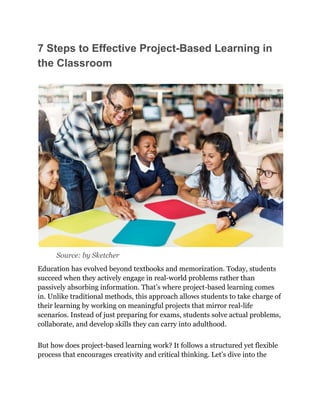
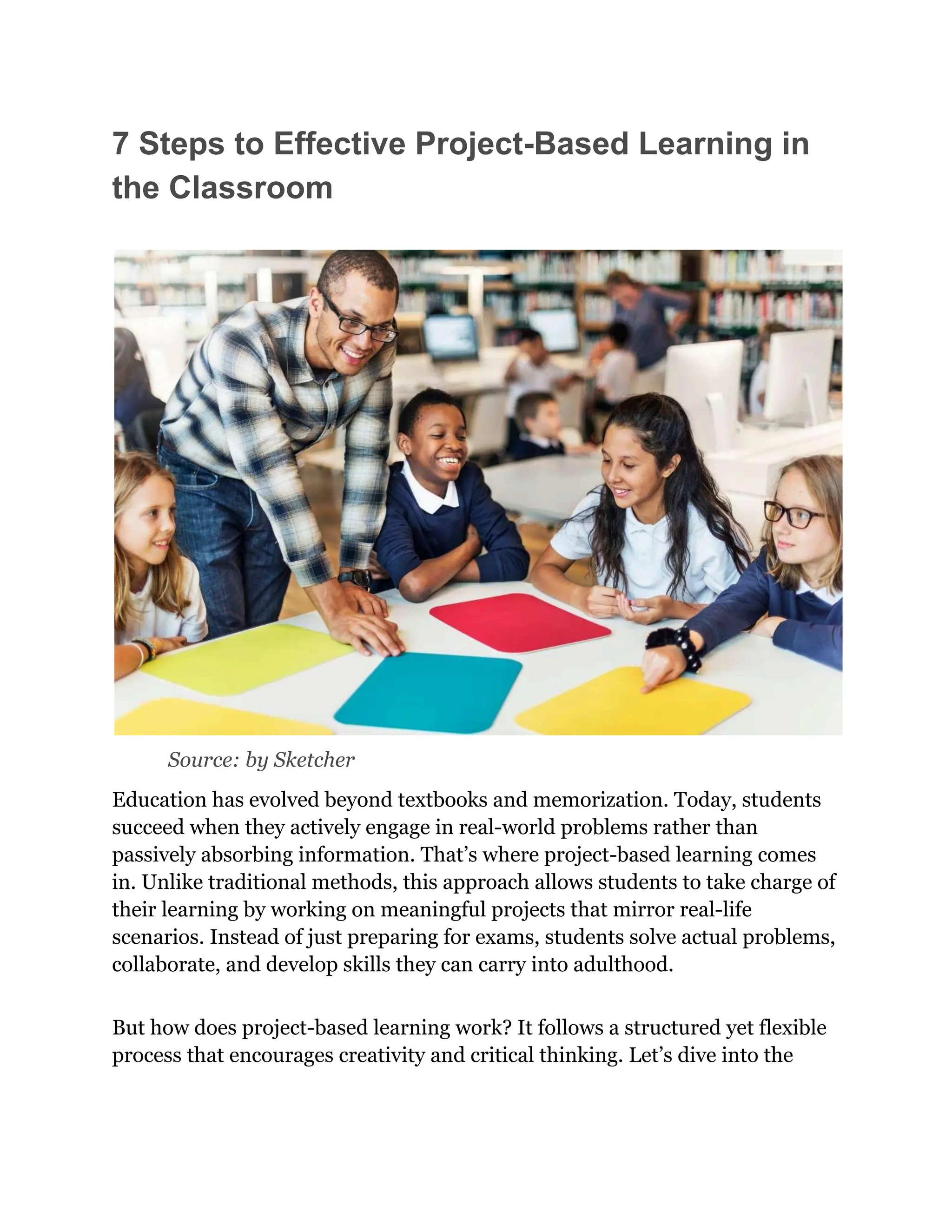
​ Source: by Sketcher
Education has evolved beyond textbooks and memorization. Today, students
succeed when they actively engage in real-world problems rather than
passively absorbing information. That’s where project-based learning comes
in. Unlike traditional methods, this approach allows students to take charge of
their learning by working on meaningful projects that mirror real-life
scenarios. Instead of just preparing for exams, students solve actual problems,
collaborate, and develop skills they can carry into adulthood.
But how does project-based learning work? It follows a structured yet flexible
process that encourages creativity and critical thinking. Let’s dive into the
seven essential steps of project-based learning and see why this method is
reshaping education.
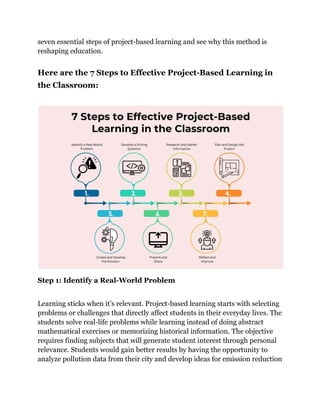
Here are the 7 Steps to Effective Project-Based Learning in
the Classroom:
Step 1: Identify a Real-World Problem
Learning sticks when it’s relevant. Project-based learning starts with selecting
problems or challenges that directly affect students in their everyday lives. The
students solve real-life problems while learning instead of doing abstract
mathematical exercises or memorizing historical information. The objective
requires finding subjects that will generate student interest through personal
relevance. Students would gain better results by having the opportunity to
analyze pollution data from their city and develop ideas for emission reduction
programs. The concrete applications in real life help students immerse
themselves and attain greater motivation levels.
Step 2: Develop a Driving Question
The initial process requires identifying the problem followed by creating an
important project-guiding question. Students need to ask an open-ended
challenging relevant question. The selection of an effective driving question
assists students in remaining focused throughout their projects.
The students focusing on food insecurity research should ask their main
questions as follows:​
“How can we create a community garden that provides fresh produce to
local families in need?”
A well-crafted question ensures that learning remains purposeful, guiding
students toward meaningful discoveries rather than vague discussions.
Step 3: Research and Gather Information
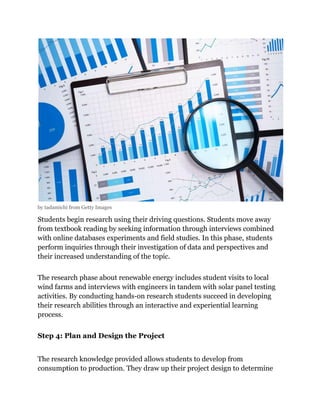
by tadamichi from Getty Images
Students begin research using their driving questions. Students move away
from textbook reading by seeking information through interviews combined
with online databases experiments and field studies. In this phase, students
perform inquiries through their investigation of data and perspectives and
their increased understanding of the topic.
The research phase about renewable energy includes student visits to local
wind farms and interviews with engineers in tandem with solar panel testing
activities. By conducting hands-on research students succeed in developing
their research abilities through an interactive and experiential learning
process.
Step 4: Plan and Design the Project
The research knowledge provided allows students to develop from
consumption to production. They draw up their project design to determine
the final product between either documentary creation prototype development
business proposal or public awareness creation. Problem-solving combined
with decision-making and effective time management takes place during this
phase.
People studying homelessness can create a mobile application that functions
as a connection between individuals in need and shelter facilities and food
distribution centers. Student preparation for their project requires them to
develop strategic thinking which leads to dividing work tasks between
multiple team members.
Step 5: Create and Develop the Solution
Now comes the execution phase. The students translate their ideas through
practical implementation while using their acquired knowledge in meaningful
projects. This stage requires participants to apply their acquired knowledge
through work that includes model building and video production alongside an
awareness campaign launch.
Students implementing ocean conservation studies can create educational
websites that display interactive plastic pollution material. Creating authentic
work stands as the essential factor in this process because students need to
generate meaningful objects instead of limited classroom work.
Step 6: Present and Share
by DragonImages
Student learning reaches its most powerful form through work-sharing
activities. The students showcase their work through public presentations to
different audiences which range from their peers to educators and community
leaders along with industrial professionals. The process of presentation helps
develop self-assurance as well as interpersonal abilities and creates more
purposeful learning.
A group focusing on sustainable fashion creates an entire school charitable
event centered on showcasing recycled apparel in a fashion showcase. The
process of project presentation enables students to obtain feedback which
helps them improve their concepts while experiencing firsthand how their
work shapes significant discussions.
Step 7: Reflect and Improve
The process of reflection represents the essential conclusion for project-based
learning. Students evaluate their project outcomes by determining successful
aspects and unsuccessful aspects and planning different actions for future
attempts. Through self-evaluation, students strengthen their learning
experience by also improving their future practices.
A group designing an eco-friendly water filter would discover through
reflection that specific materials did not work as predicted. The students use
their evaluation results to update their strategy which makes them more
capable when facing future problems.
Why Project-Based Learning Works
The process of reflection represents the essential conclusion for project-based
learning. Students evaluate their project outcomes by determining successful
aspects and unsuccessful aspects and planning different actions for future
attempts. Through self-evaluation, students strengthen their learning
experience by also improving their future practices. A group designing an
eco-friendly water filter would discover through reflection that specific
materials did not work as predicted. The students use their evaluation results
to update their strategy which makes them more capable when facing future
problems.
Note:
By following these seven steps, educators can transform classrooms into hubs
of creativity and inquiry, ensuring that learning isn’t just about passing exams
but about building skills that last a lifetime.
Effective project-based learning strategies align with the experiential
education models adopted by top business schools to foster critical thinking
and problem-solving skills.

7 Steps to Effective Project-Based Learning in the Classroom.pdf

  • 1.
    7 Steps toEffective Project-Based Learning in the Classroom ​ ​ Source: by Sketcher Education has evolved beyond textbooks and memorization. Today, students succeed when they actively engage in real-world problems rather than passively absorbing information. That’s where project-based learning comes in. Unlike traditional methods, this approach allows students to take charge of their learning by working on meaningful projects that mirror real-life scenarios. Instead of just preparing for exams, students solve actual problems, collaborate, and develop skills they can carry into adulthood. But how does project-based learning work? It follows a structured yet flexible process that encourages creativity and critical thinking. Let’s dive into the
  • 2.
    seven essential stepsof project-based learning and see why this method is reshaping education. Here are the 7 Steps to Effective Project-Based Learning in the Classroom: Step 1: Identify a Real-World Problem Learning sticks when it’s relevant. Project-based learning starts with selecting problems or challenges that directly affect students in their everyday lives. The students solve real-life problems while learning instead of doing abstract mathematical exercises or memorizing historical information. The objective requires finding subjects that will generate student interest through personal relevance. Students would gain better results by having the opportunity to analyze pollution data from their city and develop ideas for emission reduction
  • 3.
    programs. The concreteapplications in real life help students immerse themselves and attain greater motivation levels. Step 2: Develop a Driving Question The initial process requires identifying the problem followed by creating an important project-guiding question. Students need to ask an open-ended challenging relevant question. The selection of an effective driving question assists students in remaining focused throughout their projects. The students focusing on food insecurity research should ask their main questions as follows:​ “How can we create a community garden that provides fresh produce to local families in need?” A well-crafted question ensures that learning remains purposeful, guiding students toward meaningful discoveries rather than vague discussions. Step 3: Research and Gather Information
  • 4.
    by tadamichi fromGetty Images Students begin research using their driving questions. Students move away from textbook reading by seeking information through interviews combined with online databases experiments and field studies. In this phase, students perform inquiries through their investigation of data and perspectives and their increased understanding of the topic. The research phase about renewable energy includes student visits to local wind farms and interviews with engineers in tandem with solar panel testing activities. By conducting hands-on research students succeed in developing their research abilities through an interactive and experiential learning process. Step 4: Plan and Design the Project The research knowledge provided allows students to develop from consumption to production. They draw up their project design to determine
  • 5.
    the final productbetween either documentary creation prototype development business proposal or public awareness creation. Problem-solving combined with decision-making and effective time management takes place during this phase. People studying homelessness can create a mobile application that functions as a connection between individuals in need and shelter facilities and food distribution centers. Student preparation for their project requires them to develop strategic thinking which leads to dividing work tasks between multiple team members. Step 5: Create and Develop the Solution Now comes the execution phase. The students translate their ideas through practical implementation while using their acquired knowledge in meaningful projects. This stage requires participants to apply their acquired knowledge through work that includes model building and video production alongside an awareness campaign launch. Students implementing ocean conservation studies can create educational websites that display interactive plastic pollution material. Creating authentic work stands as the essential factor in this process because students need to generate meaningful objects instead of limited classroom work. Step 6: Present and Share
  • 6.
    by DragonImages Student learningreaches its most powerful form through work-sharing activities. The students showcase their work through public presentations to different audiences which range from their peers to educators and community leaders along with industrial professionals. The process of presentation helps develop self-assurance as well as interpersonal abilities and creates more purposeful learning. A group focusing on sustainable fashion creates an entire school charitable event centered on showcasing recycled apparel in a fashion showcase. The process of project presentation enables students to obtain feedback which helps them improve their concepts while experiencing firsthand how their work shapes significant discussions. Step 7: Reflect and Improve
  • 7.
    The process ofreflection represents the essential conclusion for project-based learning. Students evaluate their project outcomes by determining successful aspects and unsuccessful aspects and planning different actions for future attempts. Through self-evaluation, students strengthen their learning experience by also improving their future practices. A group designing an eco-friendly water filter would discover through reflection that specific materials did not work as predicted. The students use their evaluation results to update their strategy which makes them more capable when facing future problems. Why Project-Based Learning Works The process of reflection represents the essential conclusion for project-based learning. Students evaluate their project outcomes by determining successful aspects and unsuccessful aspects and planning different actions for future attempts. Through self-evaluation, students strengthen their learning experience by also improving their future practices. A group designing an eco-friendly water filter would discover through reflection that specific materials did not work as predicted. The students use their evaluation results to update their strategy which makes them more capable when facing future problems. Note: By following these seven steps, educators can transform classrooms into hubs of creativity and inquiry, ensuring that learning isn’t just about passing exams but about building skills that last a lifetime. Effective project-based learning strategies align with the experiential education models adopted by top business schools to foster critical thinking and problem-solving skills.