Post-operative care
Dr. Yonas G.(MD)
OR Set Up
Post-operative care
• Aims: Comfortable, pain free recovery from operation
with an emphasis on early rehabilitation and expedition
of discharge.
1. Immediate/ post-anesthetic recovery sites/ICU
2. Intermediate recovery / regular wards
3. Long term recovery / home
.
Care in the PACU
What should be included in the following
assessments?
1. Respiratory Assessment
2. Cardiovascular Assessment
3. Neurological Assessment
Role of the physician
1. Monitoring
– Vital signs (Pulse, BP, Temperature, Respiratory Rate)
– Urine Output
– Level of consciousness
2. Analgesia
– Improve sleep and psychological well being- faster
recovery
– Decrease psychological and physiological stress
– Reduce hospital stay and costs incurred
– Promotes easy wound healing
Role of the physician
3. Fluid Balance
– Effects of fluid balance monitored with regular FBC,
U&Es
– Remember activation of Vasopressin/ ADH axis during
surgery
4. Awareness of Complications
5. Mobilization
– In association with physiotherapists and nursing staff
6. Respiratory Measures
Sample Post-operative Orders
1. Diet (NPO, sips/chips, soft).
2. Activity (Respiratory therapy, physiotherapy,
occupational therapy).
3. Vitals (frequency, alerts, treatment of extremes).
4. Investigations (labs/frequency, imaging, ECG,
alerts).
5. Drugs (IV, antibiotics, heparin, pain control,
maintenance meds and substitutes).
Sample Post-operative Orders
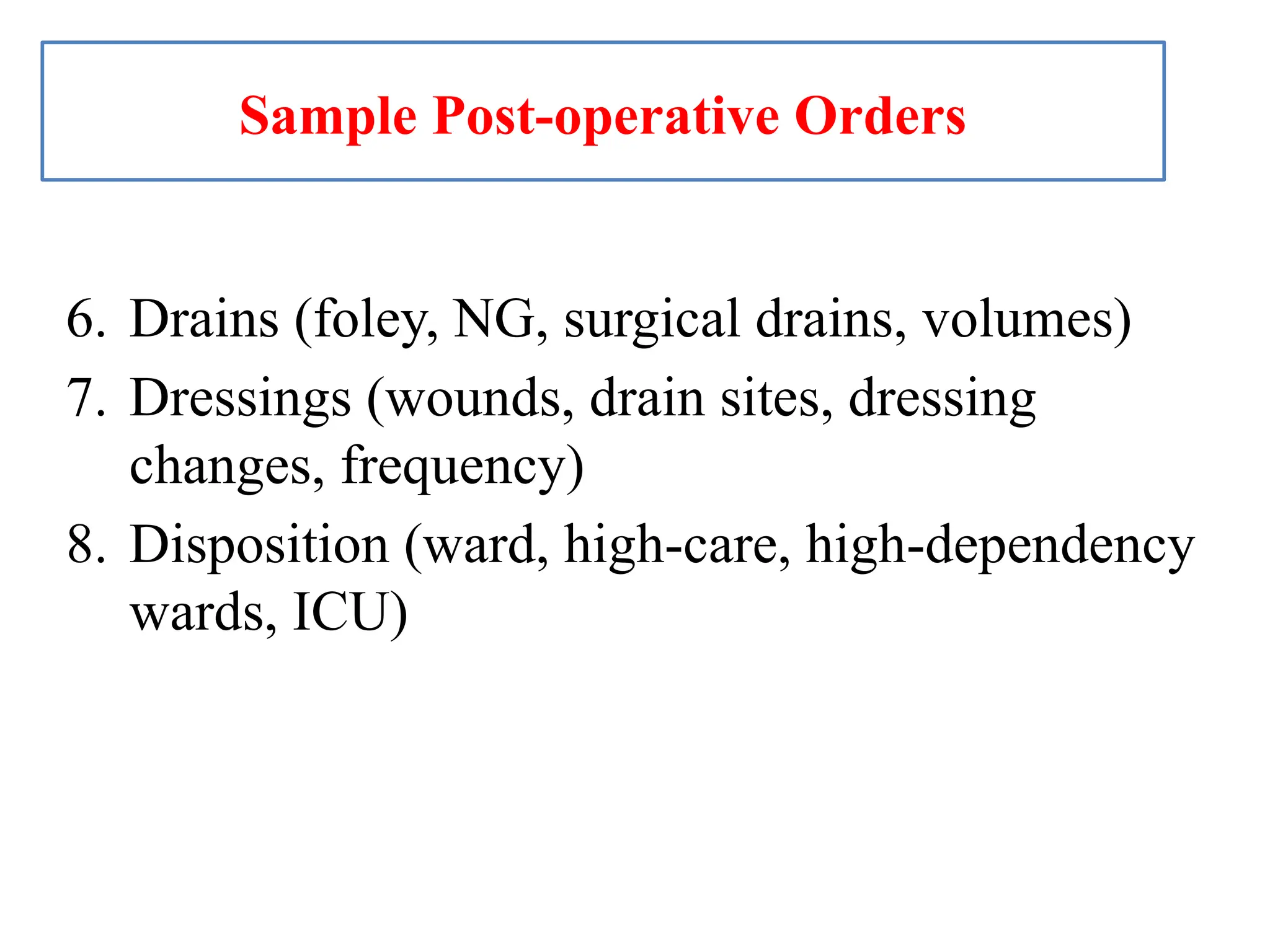
6. Drains (foley, NG, surgical drains, volumes)
7. Dressings (wounds, drain sites, dressing
changes, frequency)
8. Disposition (ward, high-care, high-dependency
wards, ICU)
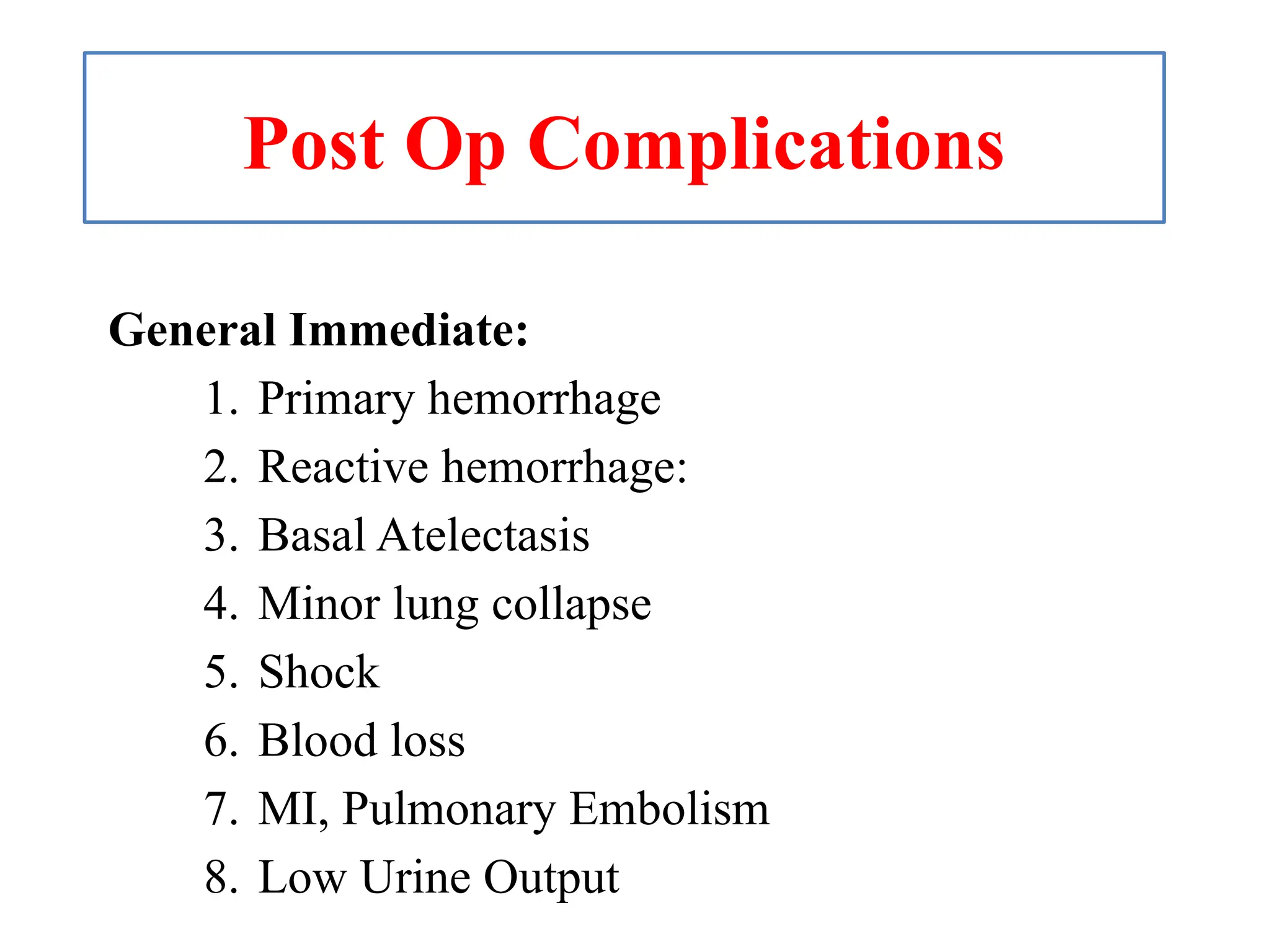
Post Op Complications
General Immediate:
1. Primary hemorrhage
2. Reactive hemorrhage:
3. Basal Atelectasis
4. Minor lung collapse
5. Shock
6. Blood loss
7. MI, Pulmonary Embolism
8. Low Urine Output
Post-op complications: General Early
1. Acute confusion
2. Nausea and vomiting
3. Analgesia or anaesthetic related
4. Pyrexia
5. Secondary Hemorrhage
6. Pneumonia
7. Wound or Anastomosis Dehiscence
Complications: General Early
8) DVT
9) Acute Urinary Retention
10) Urinary Tract Infection
11) Postoperative Wound Infection
12) Bowel Obstruction: due to
fibrinous adhesions
13) Paralytic Ileus
Complications: General Late
• Obstruction: due to fibrous adhesions
• Incisional Hernia
• Persistent Sinus
• Recurrence of Malignancy
Days 0 to 2
• Mild fever (T<38) (Common)
– Tissue damage and necrosis at operation site
– Hematoma
• Persistent Fever (T> 38)
– Atelectasis:
– Specific infections related to the surgery
– Biliary infection post biliary surgery
– UTI post urological surgery
– Blood Transfusion/ Drug Reaction:
Days 3-5
• Bronchopneumonia
• Sepsis
• Wound infection
• Drip site infection/ phlebitis
• Abscess formation (e.g. subphrenic or
pelvic)
Days 5-7
• DVT
• Specific complications related to surgery
– bowel anastomosis breakdown
– fistula formation
• After the first week (less likely related to the
specific operation)
– Wound infection
– Distant sites of sepsis
– DVT
• Wound: examined daily:
Seroma
Hematoma
Infection
Non-healing
Dehiscence
Post Op Complications
Urinary and renal complications
• Urinary retention
• Acute renal failure
• Urinary tract infection
Respiratory complications
1. Atelectasis
2. Aspiration pneumonitis/Pneumonia
3. Pulmonary edema
4. Pneumonia
5. Respiratory failure
Cardiac complications
1.Abnormal ECG
2.Acute MI
3.Arrhythmia
4.Pulmonary embolus
Others
1.Paralytic ileus
2.Post-op delirium
3.Intra abdominal abscess
4.Sleep deprivation
Post operative check list
• Post-operative day number 1:
– Assess the patient’s level of pain, lungs, cardiac
status, flatulence and bowel movement.
– Examine the distention, tenderness, bowel sounds,
wound discharge, bleeding from incision.
– Discontinue IV infusion when taking adequate PO
fluids. Discontinue Foley catheter.
– Ambulate as tolerated, incentive spirometry,
hematocrit.
– Post operative pain control
Post operative check list
• Post-operative day number 2
–If passing gas or if bowel movement,
advance to regular diet unless bowel
resection
–Milder analgesia
–Remove drains if dry
Post operative check list
• Post-operative day number 3-7
–Check pathology result
–Remove stitches
–Consider discharge home with
appropriate medication
–Write discharge note
Surgical Nutrition
Impact on Outcome
• For well nourished or mildly malnourished general surgery
patients, peri-operative nutritional support did not improve
outcome and actually is associated with increased septic
complications after surgery both pulmonary and intra-
abdominal.
• For severely malnourished patients before a major surgical
procedure, peri-operative nutritional support reduced
postoperative complications (wound complications, wound
failure, prolonged hospital stay, ICU days, use of hospital
resources) by about 10%, without significant increase in
infectious complications.
Who will need it?
• Well nourished and mildly malnourished patients who cannot
take oral food for more than one week post operatively to
avoid prolonged starvation.
• Severely malnourished patients undergoing general surgery
procedures.
• All critically ill patients (Sepsis patients, Multiple Injury
patients Burn patients, etc).
• Patients whom you predict cannot use their gut for prolonged
period of time (Short gut syndrome, EC fistula, etc).
When to Start?
• Preoperatively in severely malnourished patient undergoing a
major surgical operation.
• Immediately postoperatively in severely malnourished
patients.
• Immediately after major trauma, sepsis, major burns.
• Normal or mildly malnourished patient who is unable to eat
on his own by 7 days after surgery.
Assessment of Nutritional Status
• Weight loss is a significant indicator
• More than 10% unintentional loss in 6 month period.
• 5% loss in 1 month.
• Anorexia, persistent nausea, vomiting, diarrhea, malaise.
• Loss of subcutaneous fat, muscle wasting, edema, ascites.
Assessment
• Signs of specific nutritional deficiencies.
• Skin rash
• Pallor
• Glossitis
• Gingival lesions, hepatomegaly,
neuropathy, dementia.
Evaluation of Body Composition
• Ideal body weight (IBW)
• Men 106lb+ 6lb for each inch over 5 feet
• Women 100lb + 5lb for each inch over 5 ft.
• IBW depends on patient age, body habitus.
• Other measurements include triceps skin fold,
arm circumference.
Body Composition
• BMI characterizes degree of obesity.
• BMI = weight(kg)/total body surface area.
• BMI over 40 or over 35 with co-morbid
conditions are considered candidates for
surgical treatment.
• Severe obesity is associated with
significant increase in morbidity and
mortality.
Laboratory Markers
• Serum proteins
• Albumin half life 20 days
• Transferrin half life 8.5 days
• Prealbumin half life 1.3 days
• Severe hypoalbuminemia <2 poor
outcomes
Nutritional Requirements
• Total energy requirements.
• Total protein requirements.
• The relative distribution of calories between
carbohydrates, fats, and protein.
Energy Requirements
• Harris-Benedict equation estimates BEE at rest.
(BEE = basic energy expenditure).
• Men= 66 + (13.7x weight) + (5x height) –(6.8 x age).
• Women= 65+(9.6 x weight)+(1.7 x height)–(4.7 x age)
• Most require 25-35 kcal/kg/day.
• Stress increases these values.
Carbohydrate (30-60% of Total)
• Each gram releases 4 kcal.
• Also important in membranes as
glycoproteins, glycolipids, carbon backbone
of essential amino acids.
• CHO are stored as glycogen in liver (40%),
muscle (60%), cardiac muscle.
• Stores depleted in 48hrs (starve), 24 hrs
(stress).
Protein
• Essential components of all living cells,
involved in virtually all bodily functions.
• Total protein in a healthy male is 15-18%
of body weight.
• 2.5% of total body protein is broken
down and re-synthesized every 24hrs.
• Protein yields 4 kcal per gram.
Protein Requirements
• Most healthy individuals require 0.8-1.0 g
protein/kg/day.
• Mild stress = 1-1.2 g/kg/day.
• Moderate stress = 1.3-1.5 g/kg/day.
• Severe stress = 1.5-2.5 g/kg/day.
• Renal failure (more)
• Hepatic encephalopathy (less)
Nitrogen Balance
• A crude measurement of protein
consumption.
• Difference between net nitrogen intake and
excretion.
• Positive balance indicates more protein
ingested than excreted.
• Negative balance is catabolism.
• Protein excretion in urine = nitrogen x 6.25g.
Lipids
• Provide 25-40% of total calories.
• Fatty acids a major source of fuel for heart,
liver, skeletal muscle.
• Liver oxidation of fatty acids yields ketones
which are used by the heart, brain, muscle
during starvation.
• During the fed state, insulin stimulates
lipogenesis and fat storage, inhibits lipolysis
in adipocytes.
Vitamins
• Deficiencies can occur in severely
malnourished patients, chronic nutritional
support.
• Impaired wound healing can be a direct result
of deficiencies in Vitamin A, C, and zinc.
Deficiencies
• Vitamin A- Wound healing
• Vitamin D- Rickets, osteomalacia
• Vitamin E- Anemia, ataxia, nystagmus, edema,
myopathy.
• Vitamin C- Wound healing
• Thiamine- Encephalopathy
• Vit -B6 - Neuropathy
Stress
• The same events as starvation.
• Much more accentuated tissue protein breakdown in
order to:
– Supply increased demands of energy
– Supply building blocks for acute phase reactant proteins by
the liver.
• This accentuated protein breakdown is stimulated by
– Increased steroid production
– Cytokines associated with acute stress response
• Nitrogen loss:
– 5-8 gm/d normally
– 2-4 gm/d after several days of unstressed starvation
– 30-50 gm/d under severe stress (multiple trauma, sepsis,
burns)
Critical Illness
• Metabolic rate is increased
• While patients are in negative nitrogen
balance, protein synthesis is active centrally
• Fat not as available as energetic substrate
– Cortisol and catecholamines block lipolysis and
oxidation of fatty acids to ketone bodies
Protein Synthesis in Critical Illness
Reprioritization
Albumin
Retinol binding protein
Transferrin
Acute phase proteins
Immune proteins
Nutritional Supplementation
• Benefits high risk patients such as severely
malnourished, critically ill, burns, severe trauma.
• Delayed oral intake 7-10 days.
• Enteral route is indicated in all patients with an
intact, functioning GI tract.
• Prevents intestinal atrophy, gut immune function,
inhibition of stress induced increase in intestinal
permeability.
Nutritional Supplementation
• Oro-enteric, naso-enteric, gastrostomy,
jejunostomy.
• Small bore NG tubes can be use for short
period of time.
• Gastrostomy and jejunostomy for long term.
• Complications in placement, organ injury,
aspiration, malfunction, leaks, sinusitis,
erosion.
Parenteral Feeds
• TPN- indicated when GI tract is unavailable or
nonfunctional.
• Via Central catheter due to hyperosmolarity
of the solutions.
• Complications related to catheters frequent.
• Severe metabolic complications can occur.
• Hyperglycemia, hypoNatremia, hypoKalemia,
hypoMagnesemia, hypoPhosphatemia.
….
Thank you!

7. POST OP CARE.pptxxxxxxxxxxxxxxxxxxxxxxxxxxxxxxxxxxxxxxx

  • 1.
  • 2.
  • 3.
    Post-operative care • Aims:Comfortable, pain free recovery from operation with an emphasis on early rehabilitation and expedition of discharge. 1. Immediate/ post-anesthetic recovery sites/ICU 2. Intermediate recovery / regular wards 3. Long term recovery / home .
  • 4.
    Care in thePACU What should be included in the following assessments? 1. Respiratory Assessment 2. Cardiovascular Assessment 3. Neurological Assessment
  • 5.
    Role of thephysician 1. Monitoring – Vital signs (Pulse, BP, Temperature, Respiratory Rate) – Urine Output – Level of consciousness 2. Analgesia – Improve sleep and psychological well being- faster recovery – Decrease psychological and physiological stress – Reduce hospital stay and costs incurred – Promotes easy wound healing
  • 6.
    Role of thephysician 3. Fluid Balance – Effects of fluid balance monitored with regular FBC, U&Es – Remember activation of Vasopressin/ ADH axis during surgery 4. Awareness of Complications 5. Mobilization – In association with physiotherapists and nursing staff 6. Respiratory Measures
  • 7.
    Sample Post-operative Orders 1.Diet (NPO, sips/chips, soft). 2. Activity (Respiratory therapy, physiotherapy, occupational therapy). 3. Vitals (frequency, alerts, treatment of extremes). 4. Investigations (labs/frequency, imaging, ECG, alerts). 5. Drugs (IV, antibiotics, heparin, pain control, maintenance meds and substitutes).
  • 8.
    Sample Post-operative Orders 6.Drains (foley, NG, surgical drains, volumes) 7. Dressings (wounds, drain sites, dressing changes, frequency) 8. Disposition (ward, high-care, high-dependency wards, ICU)
  • 9.
    Post Op Complications GeneralImmediate: 1. Primary hemorrhage 2. Reactive hemorrhage: 3. Basal Atelectasis 4. Minor lung collapse 5. Shock 6. Blood loss 7. MI, Pulmonary Embolism 8. Low Urine Output
  • 10.
    Post-op complications: GeneralEarly 1. Acute confusion 2. Nausea and vomiting 3. Analgesia or anaesthetic related 4. Pyrexia 5. Secondary Hemorrhage 6. Pneumonia 7. Wound or Anastomosis Dehiscence
  • 11.
    Complications: General Early 8)DVT 9) Acute Urinary Retention 10) Urinary Tract Infection 11) Postoperative Wound Infection 12) Bowel Obstruction: due to fibrinous adhesions 13) Paralytic Ileus
  • 12.
    Complications: General Late •Obstruction: due to fibrous adhesions • Incisional Hernia • Persistent Sinus • Recurrence of Malignancy
  • 13.
    Days 0 to2 • Mild fever (T<38) (Common) – Tissue damage and necrosis at operation site – Hematoma • Persistent Fever (T> 38) – Atelectasis: – Specific infections related to the surgery – Biliary infection post biliary surgery – UTI post urological surgery – Blood Transfusion/ Drug Reaction:
  • 14.
    Days 3-5 • Bronchopneumonia •Sepsis • Wound infection • Drip site infection/ phlebitis • Abscess formation (e.g. subphrenic or pelvic)
  • 15.
    Days 5-7 • DVT •Specific complications related to surgery – bowel anastomosis breakdown – fistula formation • After the first week (less likely related to the specific operation) – Wound infection – Distant sites of sepsis – DVT
  • 16.
    • Wound: examineddaily: Seroma Hematoma Infection Non-healing Dehiscence Post Op Complications
  • 17.
    Urinary and renalcomplications • Urinary retention • Acute renal failure • Urinary tract infection
  • 18.
    Respiratory complications 1. Atelectasis 2.Aspiration pneumonitis/Pneumonia 3. Pulmonary edema 4. Pneumonia 5. Respiratory failure
  • 19.
    Cardiac complications 1.Abnormal ECG 2.AcuteMI 3.Arrhythmia 4.Pulmonary embolus
  • 20.
    Others 1.Paralytic ileus 2.Post-op delirium 3.Intraabdominal abscess 4.Sleep deprivation
  • 21.
    Post operative checklist • Post-operative day number 1: – Assess the patient’s level of pain, lungs, cardiac status, flatulence and bowel movement. – Examine the distention, tenderness, bowel sounds, wound discharge, bleeding from incision. – Discontinue IV infusion when taking adequate PO fluids. Discontinue Foley catheter. – Ambulate as tolerated, incentive spirometry, hematocrit. – Post operative pain control
  • 22.
    Post operative checklist • Post-operative day number 2 –If passing gas or if bowel movement, advance to regular diet unless bowel resection –Milder analgesia –Remove drains if dry
  • 23.
    Post operative checklist • Post-operative day number 3-7 –Check pathology result –Remove stitches –Consider discharge home with appropriate medication –Write discharge note
  • 24.
  • 25.
    Impact on Outcome •For well nourished or mildly malnourished general surgery patients, peri-operative nutritional support did not improve outcome and actually is associated with increased septic complications after surgery both pulmonary and intra- abdominal. • For severely malnourished patients before a major surgical procedure, peri-operative nutritional support reduced postoperative complications (wound complications, wound failure, prolonged hospital stay, ICU days, use of hospital resources) by about 10%, without significant increase in infectious complications.
  • 26.
    Who will needit? • Well nourished and mildly malnourished patients who cannot take oral food for more than one week post operatively to avoid prolonged starvation. • Severely malnourished patients undergoing general surgery procedures. • All critically ill patients (Sepsis patients, Multiple Injury patients Burn patients, etc). • Patients whom you predict cannot use their gut for prolonged period of time (Short gut syndrome, EC fistula, etc).
  • 27.
    When to Start? •Preoperatively in severely malnourished patient undergoing a major surgical operation. • Immediately postoperatively in severely malnourished patients. • Immediately after major trauma, sepsis, major burns. • Normal or mildly malnourished patient who is unable to eat on his own by 7 days after surgery.
  • 28.
    Assessment of NutritionalStatus • Weight loss is a significant indicator • More than 10% unintentional loss in 6 month period. • 5% loss in 1 month. • Anorexia, persistent nausea, vomiting, diarrhea, malaise. • Loss of subcutaneous fat, muscle wasting, edema, ascites.
  • 29.
    Assessment • Signs ofspecific nutritional deficiencies. • Skin rash • Pallor • Glossitis • Gingival lesions, hepatomegaly, neuropathy, dementia.
  • 30.
    Evaluation of BodyComposition • Ideal body weight (IBW) • Men 106lb+ 6lb for each inch over 5 feet • Women 100lb + 5lb for each inch over 5 ft. • IBW depends on patient age, body habitus. • Other measurements include triceps skin fold, arm circumference.
  • 31.
    Body Composition • BMIcharacterizes degree of obesity. • BMI = weight(kg)/total body surface area. • BMI over 40 or over 35 with co-morbid conditions are considered candidates for surgical treatment. • Severe obesity is associated with significant increase in morbidity and mortality.
  • 32.
    Laboratory Markers • Serumproteins • Albumin half life 20 days • Transferrin half life 8.5 days • Prealbumin half life 1.3 days • Severe hypoalbuminemia <2 poor outcomes
  • 33.
    Nutritional Requirements • Totalenergy requirements. • Total protein requirements. • The relative distribution of calories between carbohydrates, fats, and protein.
  • 34.
    Energy Requirements • Harris-Benedictequation estimates BEE at rest. (BEE = basic energy expenditure). • Men= 66 + (13.7x weight) + (5x height) –(6.8 x age). • Women= 65+(9.6 x weight)+(1.7 x height)–(4.7 x age) • Most require 25-35 kcal/kg/day. • Stress increases these values.
  • 35.
    Carbohydrate (30-60% ofTotal) • Each gram releases 4 kcal. • Also important in membranes as glycoproteins, glycolipids, carbon backbone of essential amino acids. • CHO are stored as glycogen in liver (40%), muscle (60%), cardiac muscle. • Stores depleted in 48hrs (starve), 24 hrs (stress).
  • 36.
    Protein • Essential componentsof all living cells, involved in virtually all bodily functions. • Total protein in a healthy male is 15-18% of body weight. • 2.5% of total body protein is broken down and re-synthesized every 24hrs. • Protein yields 4 kcal per gram.
  • 37.
    Protein Requirements • Mosthealthy individuals require 0.8-1.0 g protein/kg/day. • Mild stress = 1-1.2 g/kg/day. • Moderate stress = 1.3-1.5 g/kg/day. • Severe stress = 1.5-2.5 g/kg/day. • Renal failure (more) • Hepatic encephalopathy (less)
  • 38.
    Nitrogen Balance • Acrude measurement of protein consumption. • Difference between net nitrogen intake and excretion. • Positive balance indicates more protein ingested than excreted. • Negative balance is catabolism. • Protein excretion in urine = nitrogen x 6.25g.
  • 39.
    Lipids • Provide 25-40%of total calories. • Fatty acids a major source of fuel for heart, liver, skeletal muscle. • Liver oxidation of fatty acids yields ketones which are used by the heart, brain, muscle during starvation. • During the fed state, insulin stimulates lipogenesis and fat storage, inhibits lipolysis in adipocytes.
  • 40.
    Vitamins • Deficiencies canoccur in severely malnourished patients, chronic nutritional support. • Impaired wound healing can be a direct result of deficiencies in Vitamin A, C, and zinc.
  • 41.
    Deficiencies • Vitamin A-Wound healing • Vitamin D- Rickets, osteomalacia • Vitamin E- Anemia, ataxia, nystagmus, edema, myopathy. • Vitamin C- Wound healing • Thiamine- Encephalopathy • Vit -B6 - Neuropathy
  • 42.
    Stress • The sameevents as starvation. • Much more accentuated tissue protein breakdown in order to: – Supply increased demands of energy – Supply building blocks for acute phase reactant proteins by the liver. • This accentuated protein breakdown is stimulated by – Increased steroid production – Cytokines associated with acute stress response • Nitrogen loss: – 5-8 gm/d normally – 2-4 gm/d after several days of unstressed starvation – 30-50 gm/d under severe stress (multiple trauma, sepsis, burns)
  • 43.
    Critical Illness • Metabolicrate is increased • While patients are in negative nitrogen balance, protein synthesis is active centrally • Fat not as available as energetic substrate – Cortisol and catecholamines block lipolysis and oxidation of fatty acids to ketone bodies
  • 44.
    Protein Synthesis inCritical Illness Reprioritization Albumin Retinol binding protein Transferrin Acute phase proteins Immune proteins
  • 45.
    Nutritional Supplementation • Benefitshigh risk patients such as severely malnourished, critically ill, burns, severe trauma. • Delayed oral intake 7-10 days. • Enteral route is indicated in all patients with an intact, functioning GI tract. • Prevents intestinal atrophy, gut immune function, inhibition of stress induced increase in intestinal permeability.
  • 46.
    Nutritional Supplementation • Oro-enteric,naso-enteric, gastrostomy, jejunostomy. • Small bore NG tubes can be use for short period of time. • Gastrostomy and jejunostomy for long term. • Complications in placement, organ injury, aspiration, malfunction, leaks, sinusitis, erosion.
  • 47.
    Parenteral Feeds • TPN-indicated when GI tract is unavailable or nonfunctional. • Via Central catheter due to hyperosmolarity of the solutions. • Complications related to catheters frequent. • Severe metabolic complications can occur. • Hyperglycemia, hypoNatremia, hypoKalemia, hypoMagnesemia, hypoPhosphatemia.
  • 48.