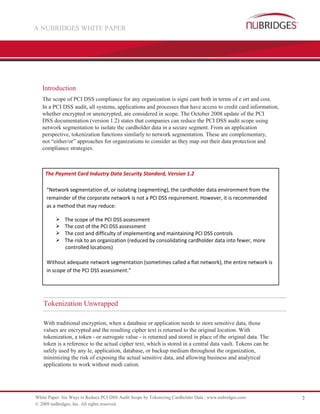
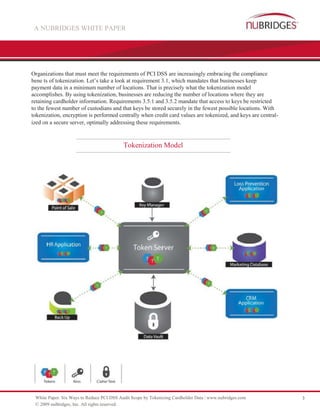
This document discusses how tokenization can help organizations reduce the scope of their PCI DSS audits. It explains that tokenization involves replacing sensitive cardholder data with surrogate values called tokens. When tokenization is implemented, the original values are encrypted and stored in a centralized data vault, while the tokens replace the values in applications and databases. This reduction in scope lowers the cost and effort of PCI compliance and audits by shrinking the size of the environment that needs to be assessed. The document provides examples of how tokenization helps satisfy requirements around having cardholder data in fewer locations and restricting access to keys. It also explains how tokens can be designed to maintain parts of the original values to support use cases across various systems and applications