5 Ways to Develop
Metacognitive
Skills
Metacognitive skills involve self-awareness, self-regulation, and
self-reflection during learning. Developing these skills through
reflection, goal setting, monitoring, self-explanation, and
awareness of cognitive processes leads to better learning
outcomes. They are crucial for academic and professional
success.
Introduction
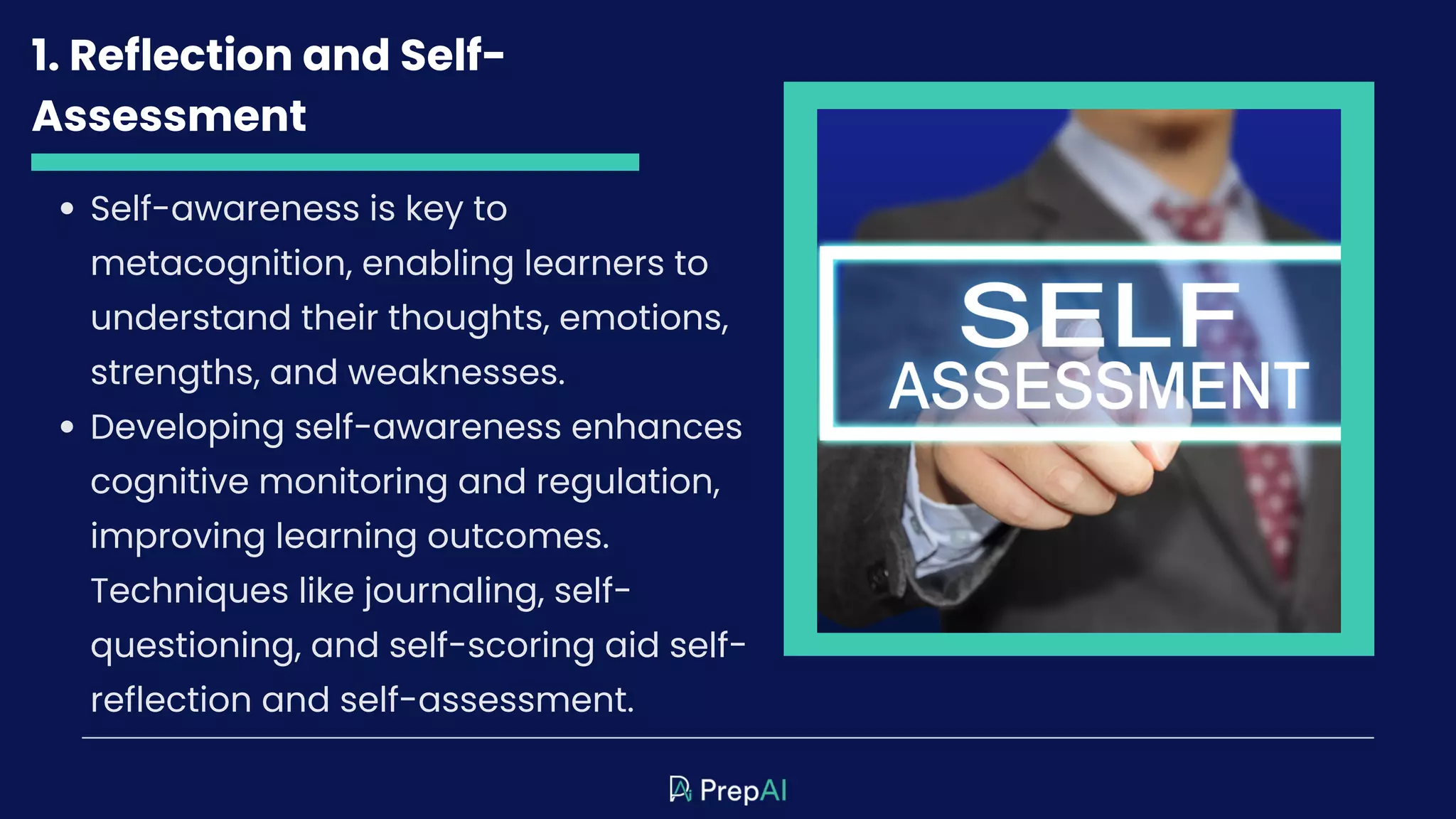
1. Reflection and Self-
Assessment
Self-awareness is key to
metacognition, enabling learners to
understand their thoughts, emotions,
strengths, and weaknesses.
Developing self-awareness enhances
cognitive monitoring and regulation,
improving learning outcomes.
Techniques like journaling, self-
questioning, and self-scoring aid self-
reflection and self-assessment.
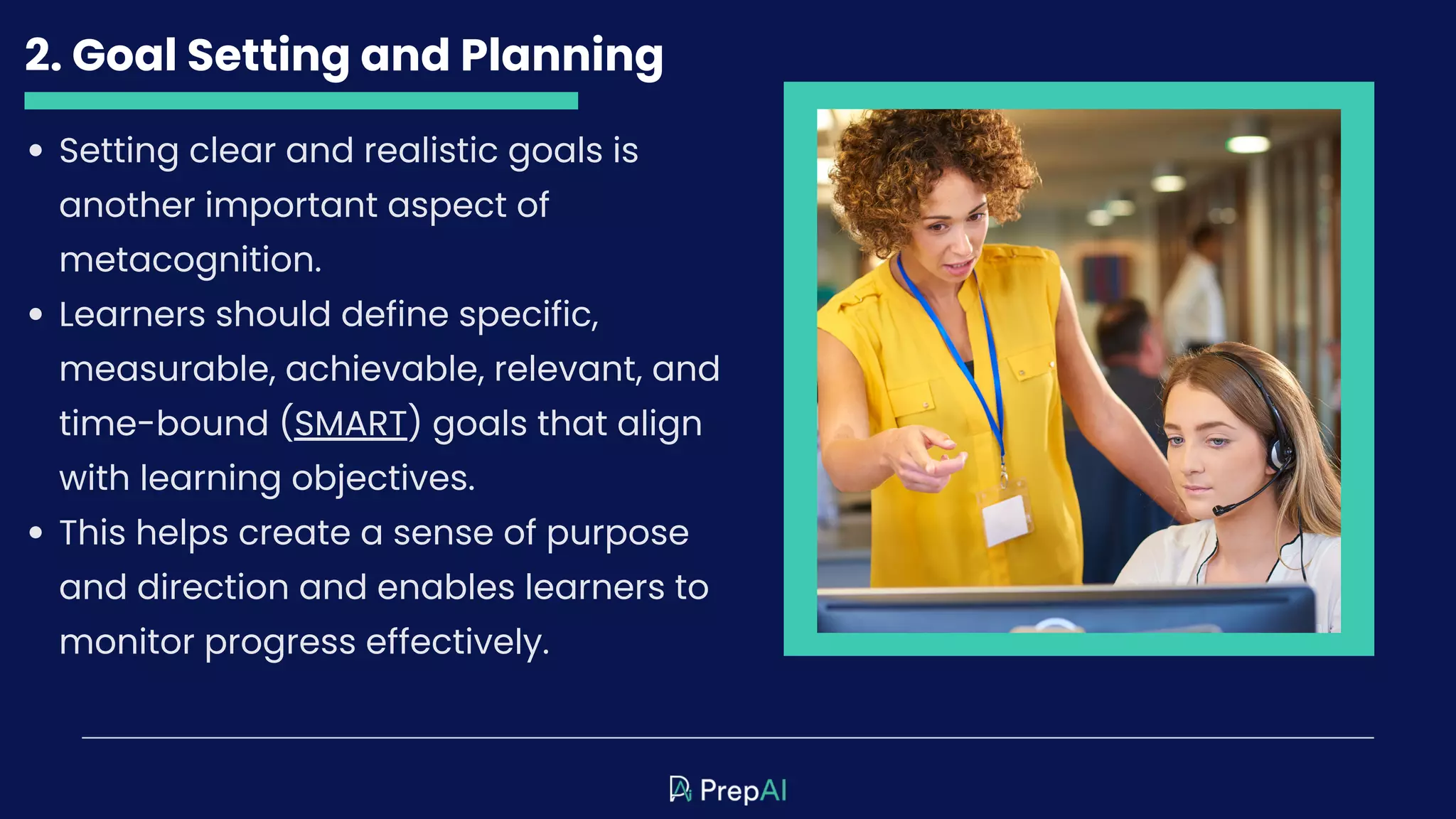
2. Goal Setting and Planning
Setting clear and realistic goals is
another important aspect of
metacognition.
Learners should define specific,
measurable, achievable, relevant, and
time-bound (SMART) goals that align
with learning objectives.
This helps create a sense of purpose
and direction and enables learners to
monitor progress effectively.
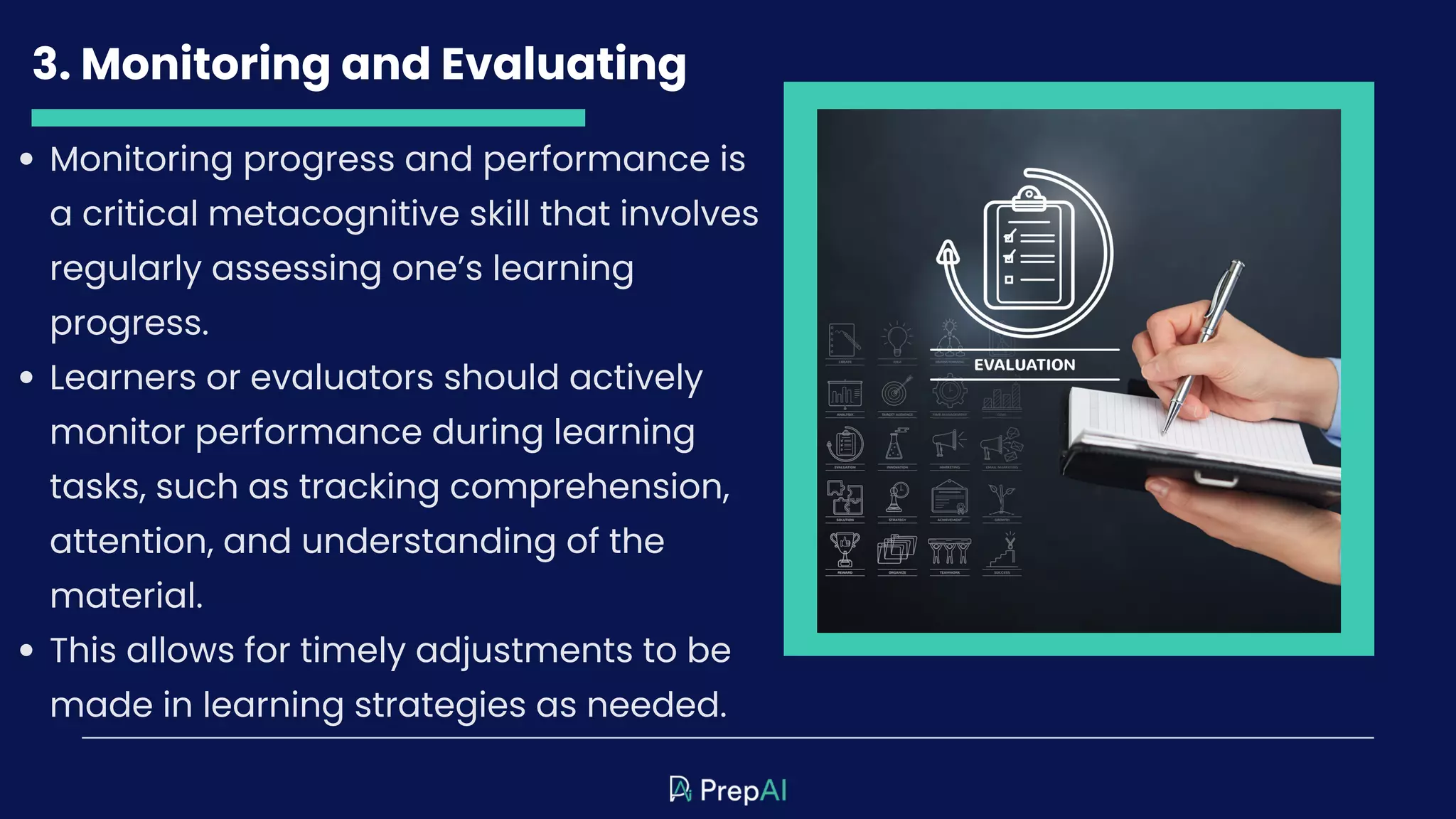
3. Monitoring and Evaluating
Monitoring progress and performance is
a critical metacognitive skill that involves
regularly assessing one’s learning
progress.
Learners or evaluators should actively
monitor performance during learning
tasks, such as tracking comprehension,
attention, and understanding of the
material.
This allows for timely adjustments to be
made in learning strategies as needed.
4. Problem-Solving Strategies
and Critical Thinking
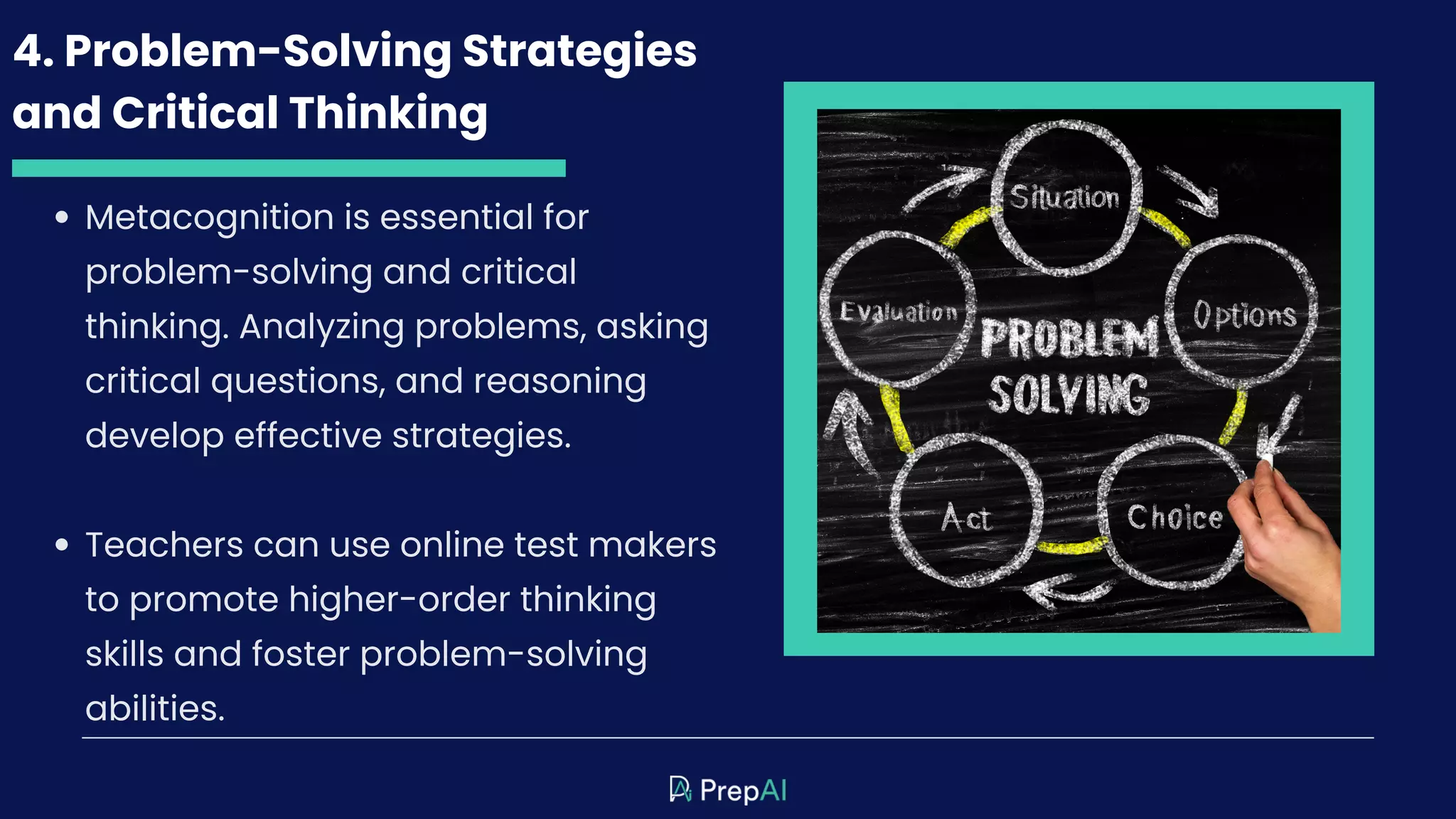
Metacognition is essential for
problem-solving and critical
thinking. Analyzing problems, asking
critical questions, and reasoning
develop effective strategies.
Teachers can use online test makers
to promote higher-order thinking
skills and foster problem-solving
abilities.
5. Utilizing Metacognitive
Strategies During Learning
During the learning process, learners can
actively engage in metacognition
through techniques such as active
reading and note-taking.
Active reading involves actively
monitoring comprehension, evaluating
the relevance of information, and
making connections between ideas.
Metacognitive skills benefit careers, personal life, and learning.
They empower learners to be active, strategic, and reflective.
Develop these skills for improved performance and success in
various areas of life.
Start today and use tools like PrepAI for structured learning.
Conclusion
Thank You For
Reading!
Check out more articles on: www.prepai.io

5 Ways to Develop Metacognitive Skills - By PrepAI

  • 1.
    5 Ways toDevelop Metacognitive Skills
  • 2.
    Metacognitive skills involveself-awareness, self-regulation, and self-reflection during learning. Developing these skills through reflection, goal setting, monitoring, self-explanation, and awareness of cognitive processes leads to better learning outcomes. They are crucial for academic and professional success. Introduction
  • 3.
    1. Reflection andSelf- Assessment Self-awareness is key to metacognition, enabling learners to understand their thoughts, emotions, strengths, and weaknesses. Developing self-awareness enhances cognitive monitoring and regulation, improving learning outcomes. Techniques like journaling, self- questioning, and self-scoring aid self- reflection and self-assessment.
  • 4.
    2. Goal Settingand Planning Setting clear and realistic goals is another important aspect of metacognition. Learners should define specific, measurable, achievable, relevant, and time-bound (SMART) goals that align with learning objectives. This helps create a sense of purpose and direction and enables learners to monitor progress effectively.
  • 5.
    3. Monitoring andEvaluating Monitoring progress and performance is a critical metacognitive skill that involves regularly assessing one’s learning progress. Learners or evaluators should actively monitor performance during learning tasks, such as tracking comprehension, attention, and understanding of the material. This allows for timely adjustments to be made in learning strategies as needed.
  • 6.
    4. Problem-Solving Strategies andCritical Thinking Metacognition is essential for problem-solving and critical thinking. Analyzing problems, asking critical questions, and reasoning develop effective strategies. Teachers can use online test makers to promote higher-order thinking skills and foster problem-solving abilities.
  • 7.
    5. Utilizing Metacognitive StrategiesDuring Learning During the learning process, learners can actively engage in metacognition through techniques such as active reading and note-taking. Active reading involves actively monitoring comprehension, evaluating the relevance of information, and making connections between ideas.
  • 8.
    Metacognitive skills benefitcareers, personal life, and learning. They empower learners to be active, strategic, and reflective. Develop these skills for improved performance and success in various areas of life. Start today and use tools like PrepAI for structured learning. Conclusion
  • 9.
    Thank You For Reading! Checkout more articles on: www.prepai.io