4.0 THEORIES AND MODELS OF HEALTH PROMOTION
4.1 Introduction
In this section, we are interested in discussing theories and models to facilitate behavior change.
4.2 Objectives of the topic
By the end of this topic, you should be able to:
Apply key health promotion theories and models to facilitate behavior change.
4.3 Definition of theory and model
A theory; a plausible or scientifically acceptable general principle or body of principles offered to
explain phenomena. A supposition or a system of ideas intended to explain something, especially one
based on general principles independent of the thing to be explained.
A theory can also be defined as a -System of ideas intended to explain something, usually based
on evidence and assumptions that are generalisable to a population
A model is: Simplified description that can be used to preduct something
Theories and models in health promotion are used to plan interventions.
4 main levels of health promotion:
Intrapersonal (individual)
Interpersonal
Community
Multidimensional
4.3.1 Intrapersonal Level
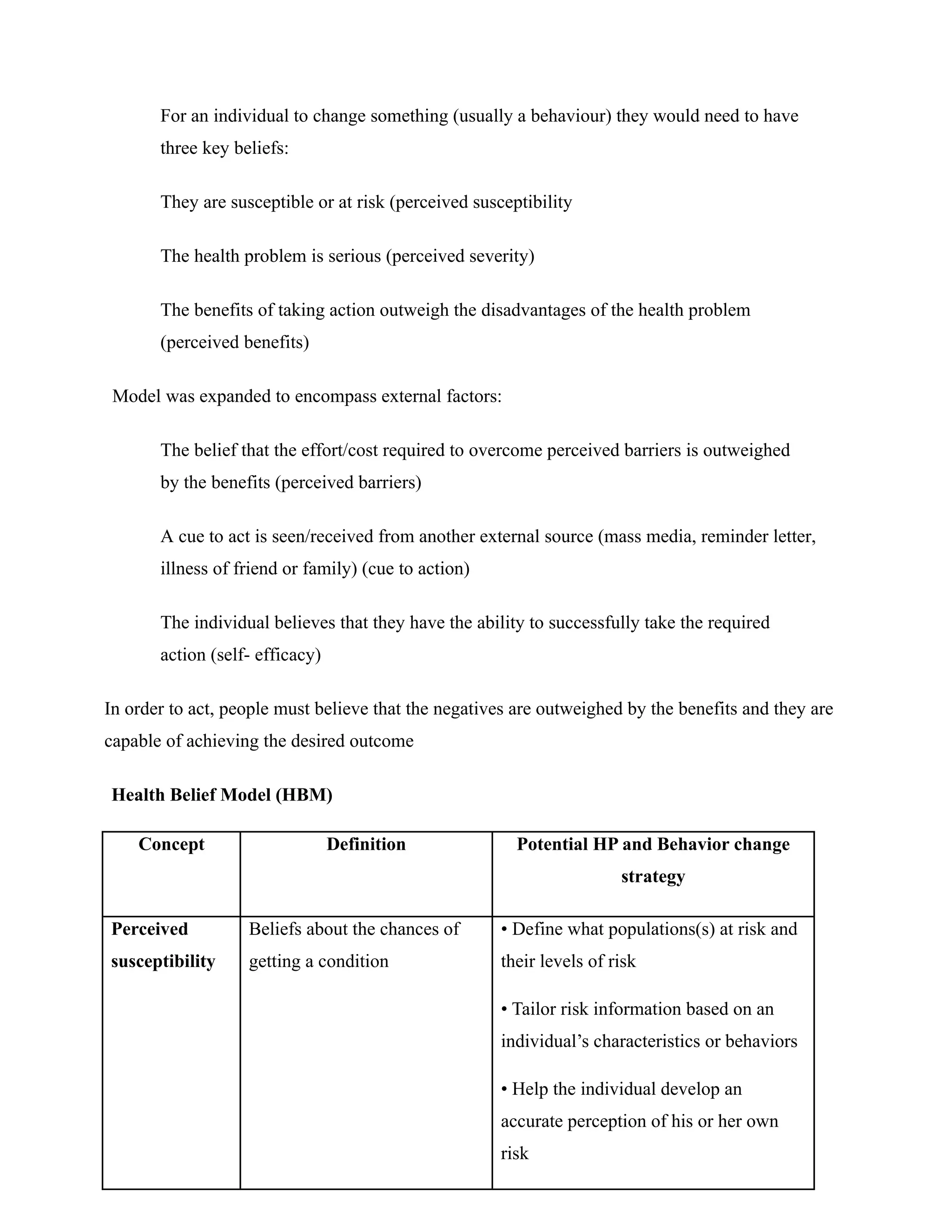
Health Belief model
Evolved from United States Public Health Service
For an individual to change something (usually a behaviour) they would need to have
three key beliefs:
They are susceptible or at risk (perceived susceptibility
The health problem is serious (perceived severity)
The benefits of taking action outweigh the disadvantages of the health problem
(perceived benefits)
Model was expanded to encompass external factors:
The belief that the effort/cost required to overcome perceived barriers is outweighed
by the benefits (perceived barriers)
A cue to act is seen/received from another external source (mass media, reminder letter,
illness of friend or family) (cue to action)
The individual believes that they have the ability to successfully take the required
action (self- efficacy)
In order to act, people must believe that the negatives are outweighed by the benefits and they are
capable of achieving the desired outcome
Health Belief Model (HBM)
Concept Definition Potential HP and Behavior change
strategy
Perceived
susceptibility
Beliefs about the chances of
getting a condition
• Define what populations(s) at risk and
their levels of risk
• Tailor risk information based on an
individual’s characteristics or behaviors
• Help the individual develop an
accurate perception of his or her own
risk
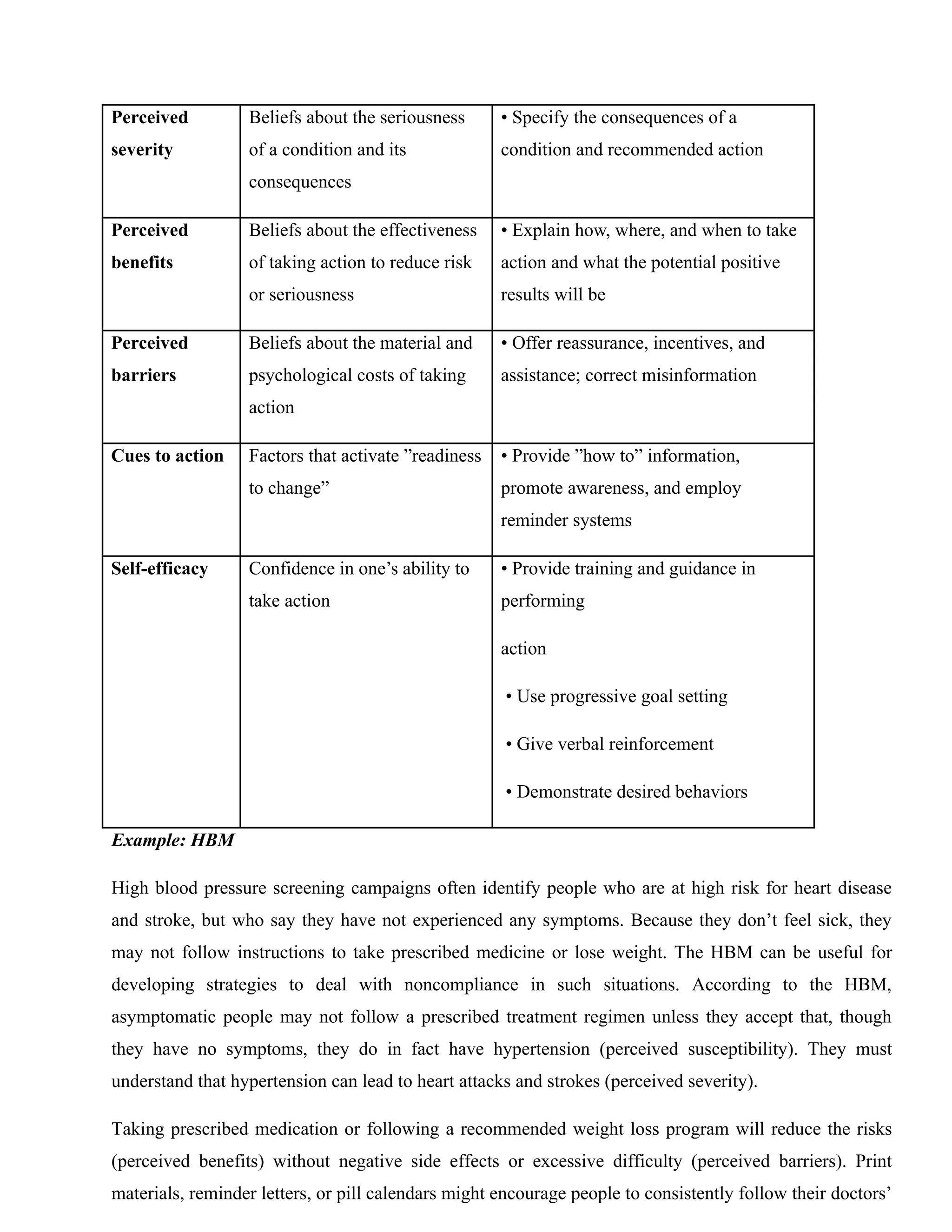
Perceived
severity
Beliefs about the seriousness
of a condition and its
consequences
• Specify the consequences of a
condition and recommended action
Perceived
benefits
Beliefs about the effectiveness
of taking action to reduce risk
or seriousness
• Explain how, where, and when to take
action and what the potential positive
results will be
Perceived
barriers
Beliefs about the material and
psychological costs of taking
action
• Offer reassurance, incentives, and
assistance; correct misinformation
Cues to action Factors that activate ”readiness
to change”
• Provide ”how to” information,
promote awareness, and employ
reminder systems
Self-efficacy Confidence in one’s ability to
take action
• Provide training and guidance in
performing
action
• Use progressive goal setting
• Give verbal reinforcement
• Demonstrate desired behaviors
Example: HBM
High blood pressure screening campaigns often identify people who are at high risk for heart disease
and stroke, but who say they have not experienced any symptoms. Because they don’t feel sick, they
may not follow instructions to take prescribed medicine or lose weight. The HBM can be useful for
developing strategies to deal with noncompliance in such situations. According to the HBM,
asymptomatic people may not follow a prescribed treatment regimen unless they accept that, though
they have no symptoms, they do in fact have hypertension (perceived susceptibility). They must
understand that hypertension can lead to heart attacks and strokes (perceived severity).
Taking prescribed medication or following a recommended weight loss program will reduce the risks
(perceived benefits) without negative side effects or excessive difficulty (perceived barriers). Print
materials, reminder letters, or pill calendars might encourage people to consistently follow their doctors’
recommendations (cues to action). For those who have, in the past, had a hard time losing weight or
maintaining weight loss, a behavioral contract might help establish achievable, short-term goals to build
confidence (self-efficacy).
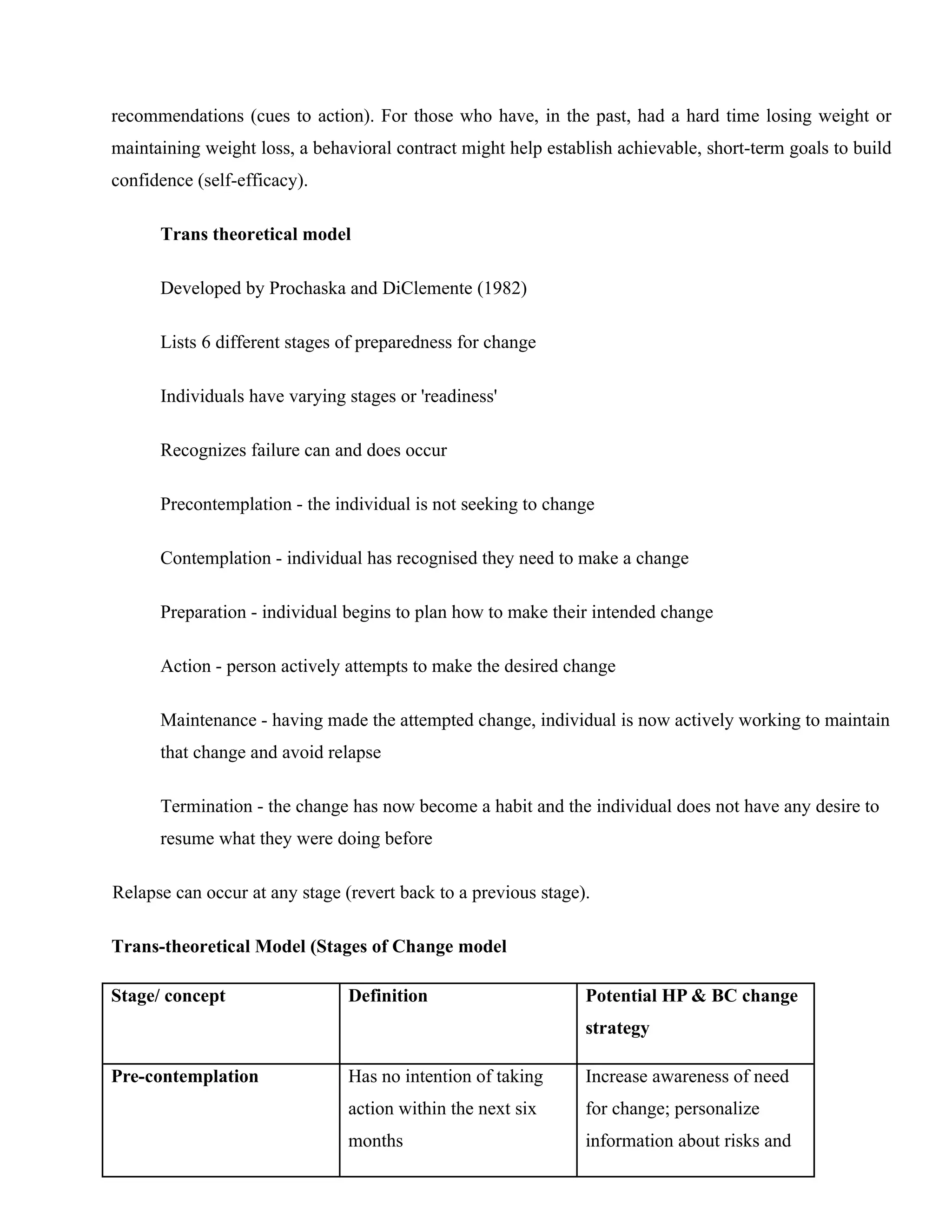
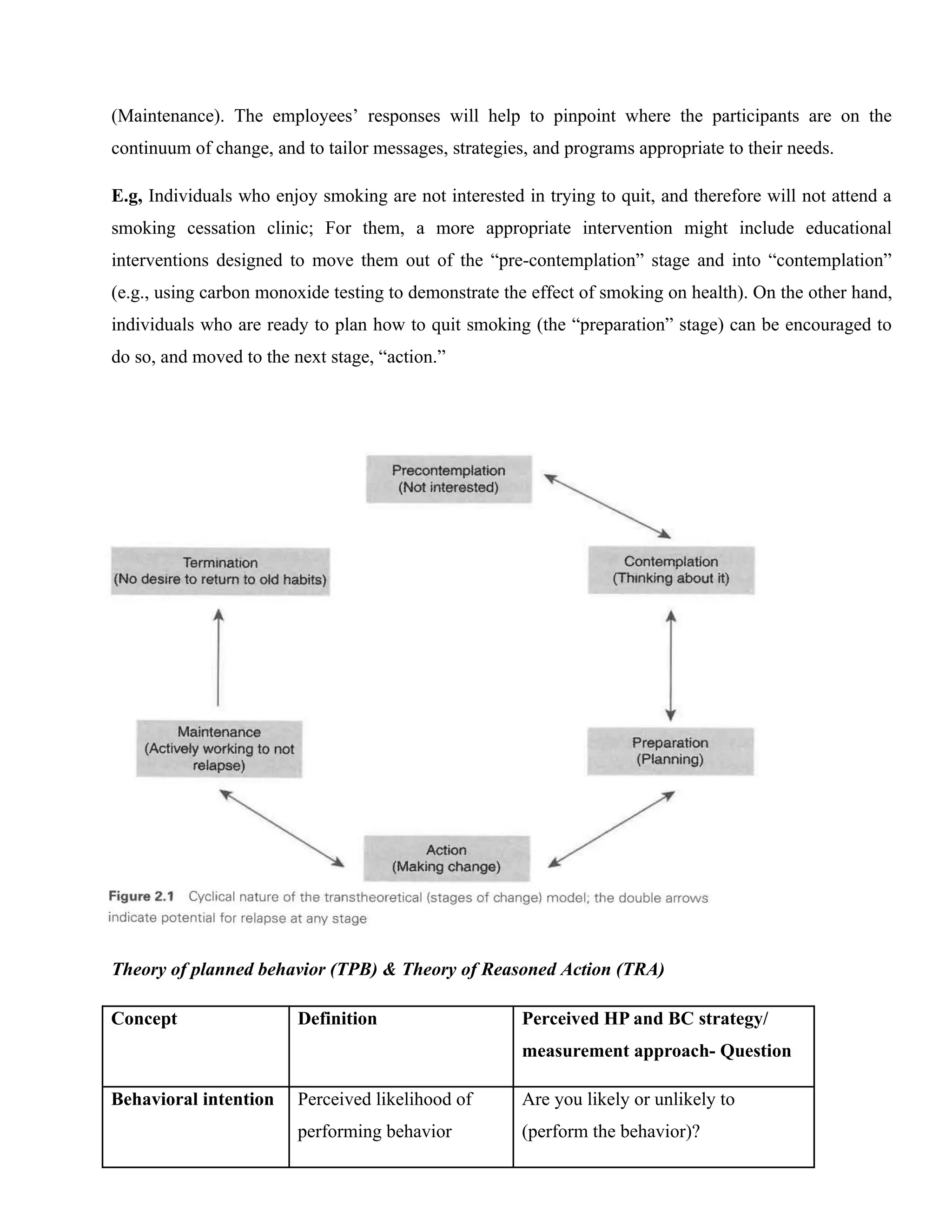
Trans theoretical model
Developed by Prochaska and DiClemente (1982)
Lists 6 different stages of preparedness for change
Individuals have varying stages or 'readiness'
Recognizes failure can and does occur
Precontemplation - the individual is not seeking to change
Contemplation - individual has recognised they need to make a change
Preparation - individual begins to plan how to make their intended change
Action - person actively attempts to make the desired change
Maintenance - having made the attempted change, individual is now actively working to maintain
that change and avoid relapse
Termination - the change has now become a habit and the individual does not have any desire to
resume what they were doing before
Relapse can occur at any stage (revert back to a previous stage).
Trans-theoretical Model (Stages of Change model
Stage/ concept Definition Potential HP & BC change
strategy
Pre-contemplation Has no intention of taking
action within the next six
months
Increase awareness of need
for change; personalize
information about risks and
benefits
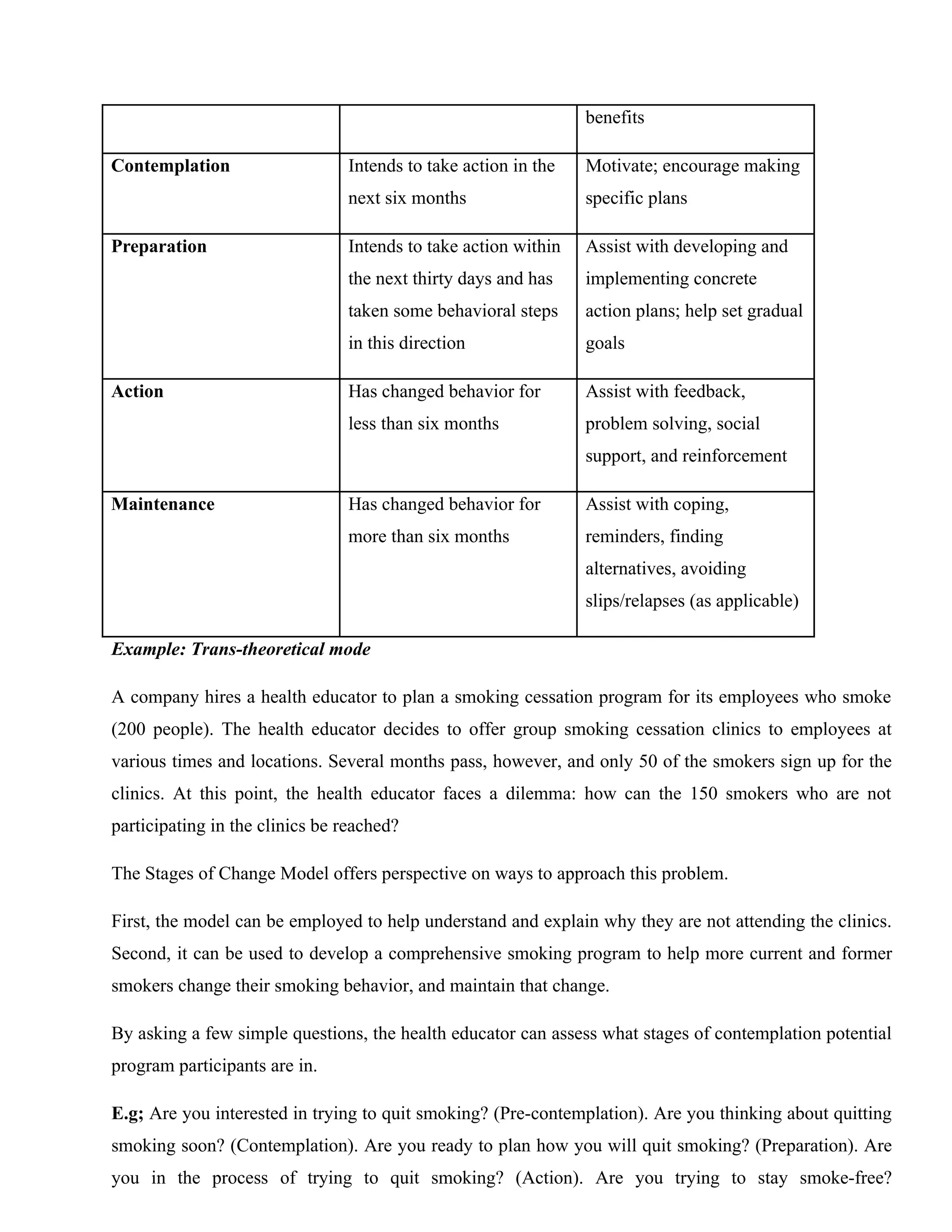
Contemplation Intends to take action in the
next six months
Motivate; encourage making
specific plans
Preparation Intends to take action within
the next thirty days and has
taken some behavioral steps
in this direction
Assist with developing and
implementing concrete
action plans; help set gradual
goals
Action Has changed behavior for
less than six months
Assist with feedback,
problem solving, social
support, and reinforcement
Maintenance Has changed behavior for
more than six months
Assist with coping,
reminders, finding
alternatives, avoiding
slips/relapses (as applicable)
Example: Trans-theoretical mode
A company hires a health educator to plan a smoking cessation program for its employees who smoke
(200 people). The health educator decides to offer group smoking cessation clinics to employees at
various times and locations. Several months pass, however, and only 50 of the smokers sign up for the
clinics. At this point, the health educator faces a dilemma: how can the 150 smokers who are not
participating in the clinics be reached?
The Stages of Change Model offers perspective on ways to approach this problem.
First, the model can be employed to help understand and explain why they are not attending the clinics.
Second, it can be used to develop a comprehensive smoking program to help more current and former
smokers change their smoking behavior, and maintain that change.
By asking a few simple questions, the health educator can assess what stages of contemplation potential
program participants are in.
E.g; Are you interested in trying to quit smoking? (Pre-contemplation). Are you thinking about quitting
smoking soon? (Contemplation). Are you ready to plan how you will quit smoking? (Preparation). Are
you in the process of trying to quit smoking? (Action). Are you trying to stay smoke-free?
(Maintenance). The employees’ responses will help to pinpoint where the participants are on the
continuum of change, and to tailor messages, strategies, and programs appropriate to their needs.
E.g, Individuals who enjoy smoking are not interested in trying to quit, and therefore will not attend a
smoking cessation clinic; For them, a more appropriate intervention might include educational
interventions designed to move them out of the “pre-contemplation” stage and into “contemplation”
(e.g., using carbon monoxide testing to demonstrate the effect of smoking on health). On the other hand,
individuals who are ready to plan how to quit smoking (the “preparation” stage) can be encouraged to
do so, and moved to the next stage, “action.”
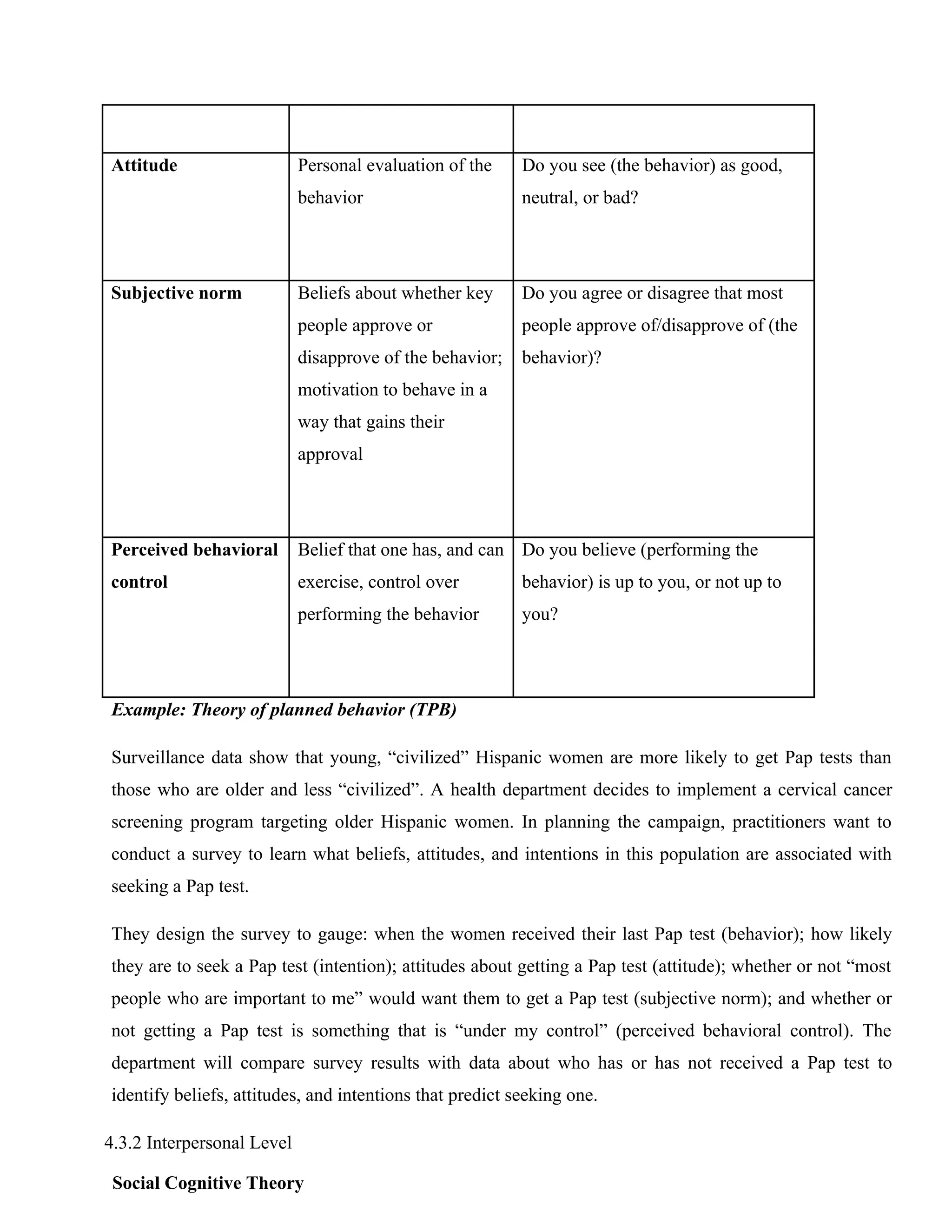
Theory of planned behavior (TPB) & Theory of Reasoned Action (TRA)
Concept Definition Perceived HP and BC strategy/
measurement approach- Question
Behavioral intention Perceived likelihood of
performing behavior
Are you likely or unlikely to
(perform the behavior)?
Attitude Personal evaluation of the
behavior
Do you see (the behavior) as good,
neutral, or bad?
Subjective norm Beliefs about whether key
people approve or
disapprove of the behavior;
motivation to behave in a
way that gains their
approval
Do you agree or disagree that most
people approve of/disapprove of (the
behavior)?
Perceived behavioral
control
Belief that one has, and can
exercise, control over
performing the behavior
Do you believe (performing the
behavior) is up to you, or not up to
you?
Example: Theory of planned behavior (TPB)
Surveillance data show that young, “civilized” Hispanic women are more likely to get Pap tests than
those who are older and less “civilized”. A health department decides to implement a cervical cancer
screening program targeting older Hispanic women. In planning the campaign, practitioners want to
conduct a survey to learn what beliefs, attitudes, and intentions in this population are associated with
seeking a Pap test.
They design the survey to gauge: when the women received their last Pap test (behavior); how likely
they are to seek a Pap test (intention); attitudes about getting a Pap test (attitude); whether or not “most
people who are important to me” would want them to get a Pap test (subjective norm); and whether or
not getting a Pap test is something that is “under my control” (perceived behavioral control). The
department will compare survey results with data about who has or has not received a Pap test to
identify beliefs, attitudes, and intentions that predict seeking one.
4.3.2 Interpersonal Level
Social Cognitive Theory
Includes environmental and social influences on individual decision-making
Developed by Bandura (1986)
Person's decision to act or not is determined by their beliefs about the world including their own
Experiences, self-efficacy, observations of the actions of others and the perceived
benefits of those actions
High self-esteem people more likely to resist negative influences -> useful for school groups
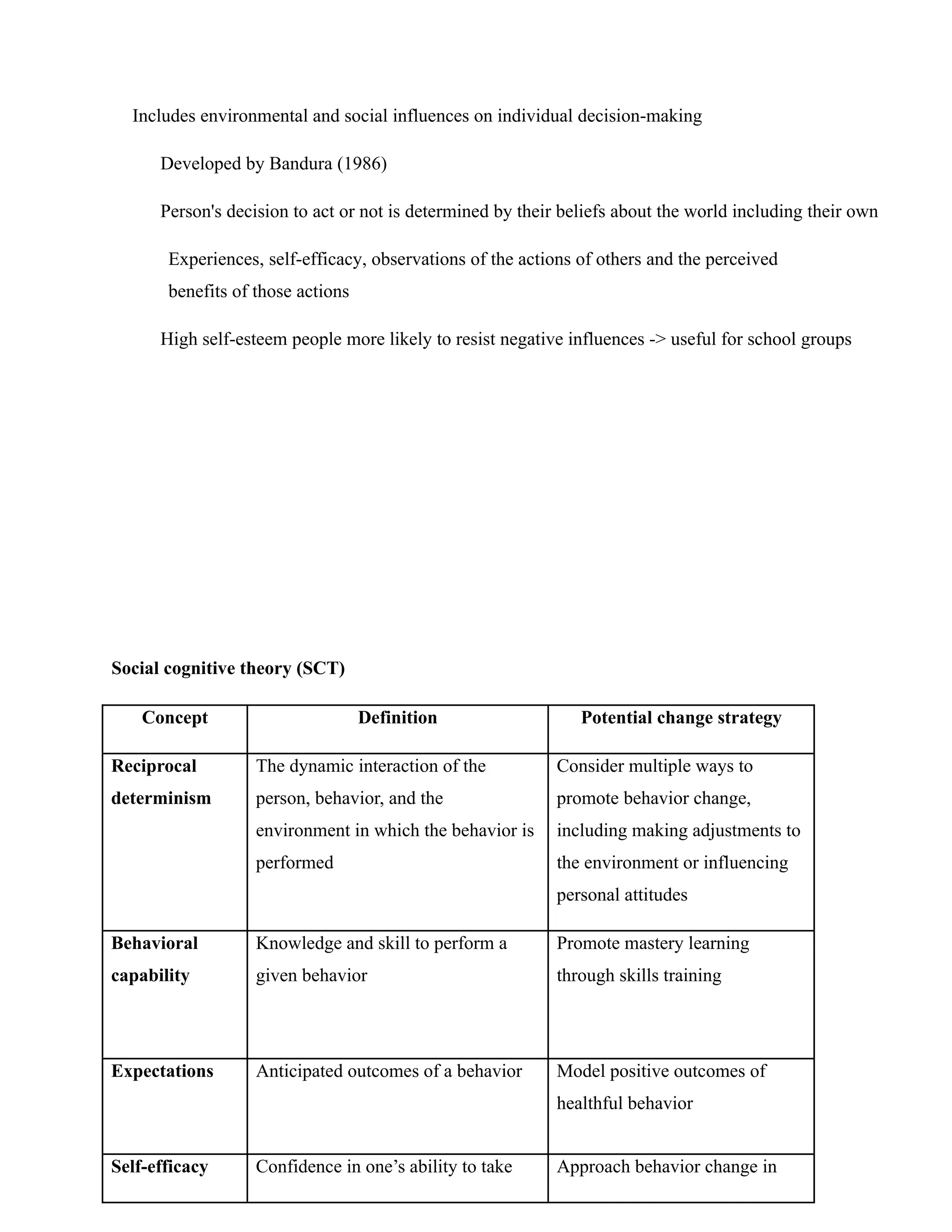
Social cognitive theory (SCT)
Concept Definition Potential change strategy
Reciprocal
determinism
The dynamic interaction of the
person, behavior, and the
environment in which the behavior is
performed
Consider multiple ways to
promote behavior change,
including making adjustments to
the environment or influencing
personal attitudes
Behavioral
capability
Knowledge and skill to perform a
given behavior
Promote mastery learning
through skills training
Expectations Anticipated outcomes of a behavior Model positive outcomes of
healthful behavior
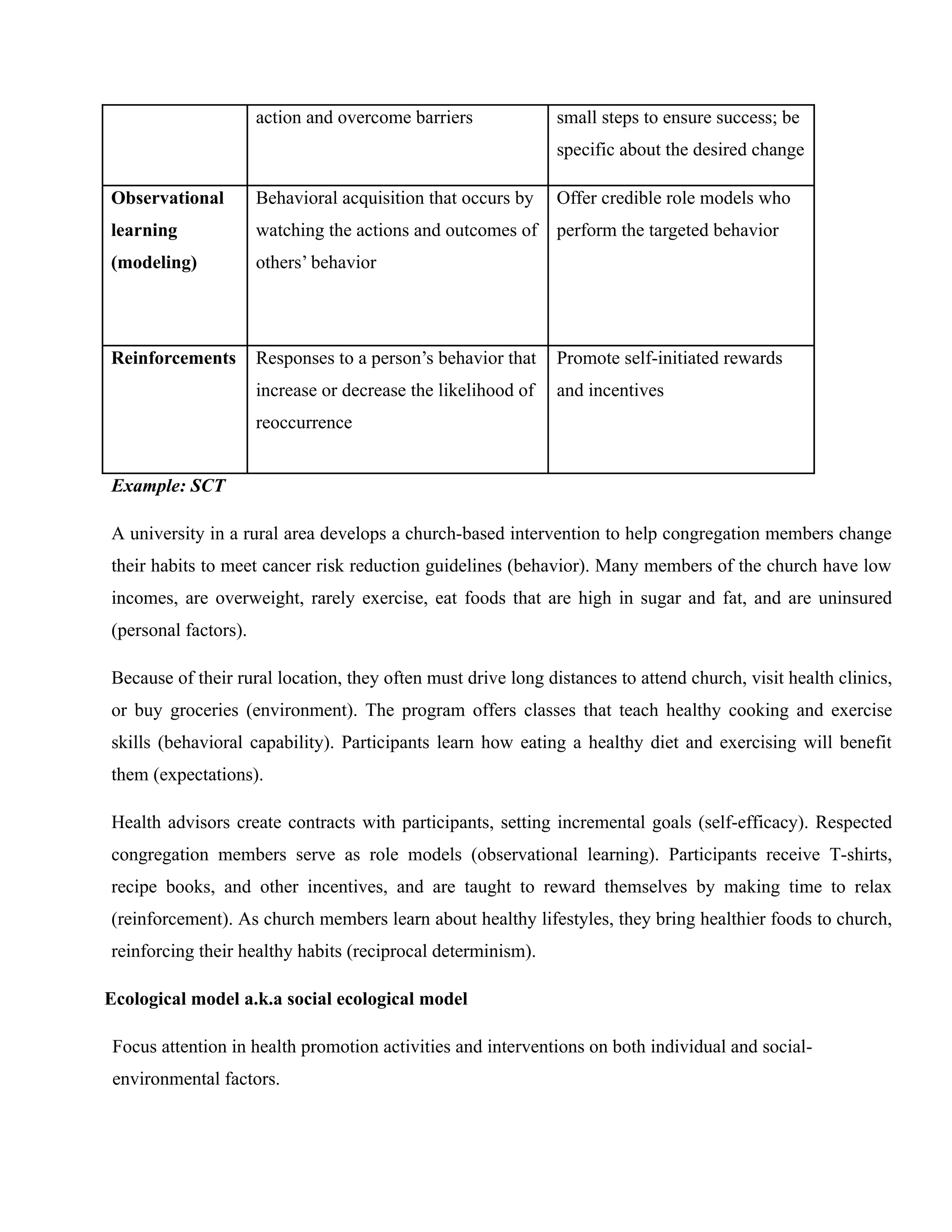
Self-efficacy Confidence in one’s ability to take Approach behavior change in
action and overcome barriers small steps to ensure success; be
specific about the desired change
Observational
learning
(modeling)
Behavioral acquisition that occurs by
watching the actions and outcomes of
others’ behavior
Offer credible role models who
perform the targeted behavior
Reinforcements Responses to a person’s behavior that
increase or decrease the likelihood of
reoccurrence
Promote self-initiated rewards
and incentives
Example: SCT
A university in a rural area develops a church-based intervention to help congregation members change
their habits to meet cancer risk reduction guidelines (behavior). Many members of the church have low
incomes, are overweight, rarely exercise, eat foods that are high in sugar and fat, and are uninsured
(personal factors).
Because of their rural location, they often must drive long distances to attend church, visit health clinics,
or buy groceries (environment). The program offers classes that teach healthy cooking and exercise
skills (behavioral capability). Participants learn how eating a healthy diet and exercising will benefit
them (expectations).
Health advisors create contracts with participants, setting incremental goals (self-efficacy). Respected
congregation members serve as role models (observational learning). Participants receive T-shirts,
recipe books, and other incentives, and are taught to reward themselves by making time to relax
(reinforcement). As church members learn about healthy lifestyles, they bring healthier foods to church,
reinforcing their healthy habits (reciprocal determinism).
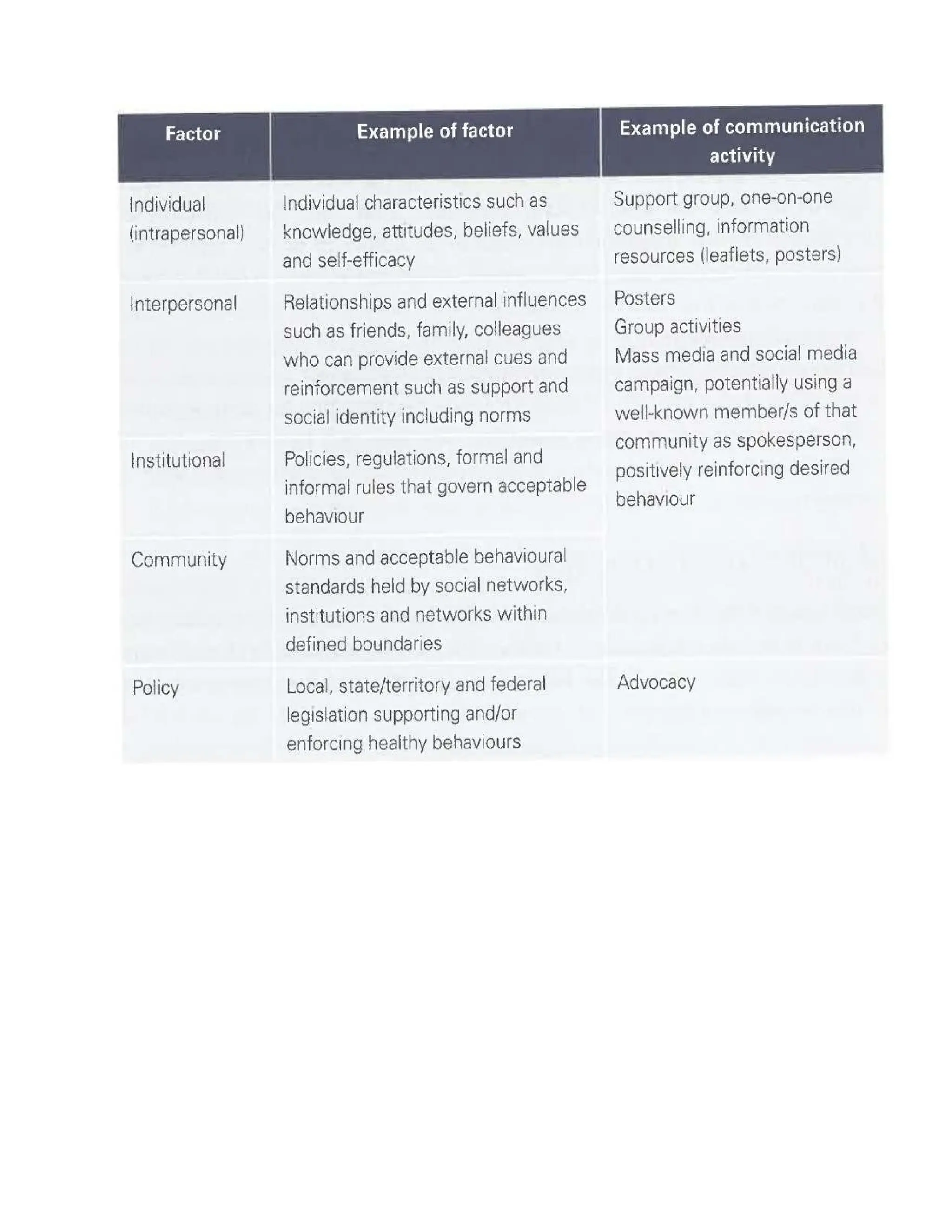
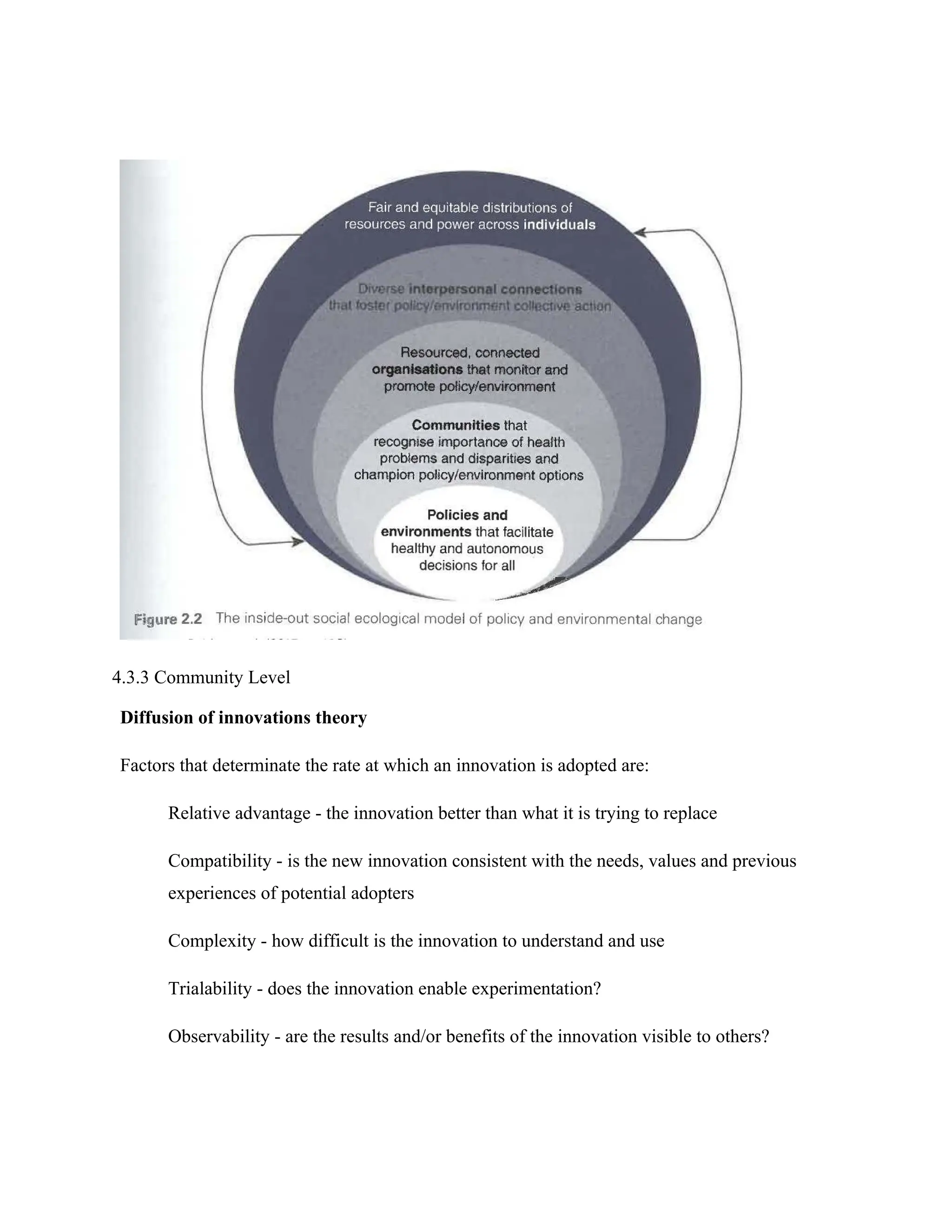
Ecological model a.k.a social ecological model
Focus attention in health promotion activities and interventions on both individual and social-
environmental factors.
Those more likely to adopt are considered innovators (2.5% of
population) early adopters next likely (13.5% pop)
Potential adopters
4.3.3 Community Level
Diffusion of innovations theory
Factors that determinate the rate at which an innovation is adopted are:
Relative advantage - the innovation better than what it is trying to replace
Compatibility - is the new innovation consistent with the needs, values and previous
experiences of potential adopters
Complexity - how difficult is the innovation to understand and use
Trialability - does the innovation enable experimentation?
Observability - are the results and/or benefits of the innovation visible to others?
If an innovation has ^relative advantage, compatibility, trialability and observability and
complexity are more likely to be quickly adopted.
Those more likely to adopt are considered innovators (2.5% of population) early adopters next
likely (13.5% pop)
Potential adopters
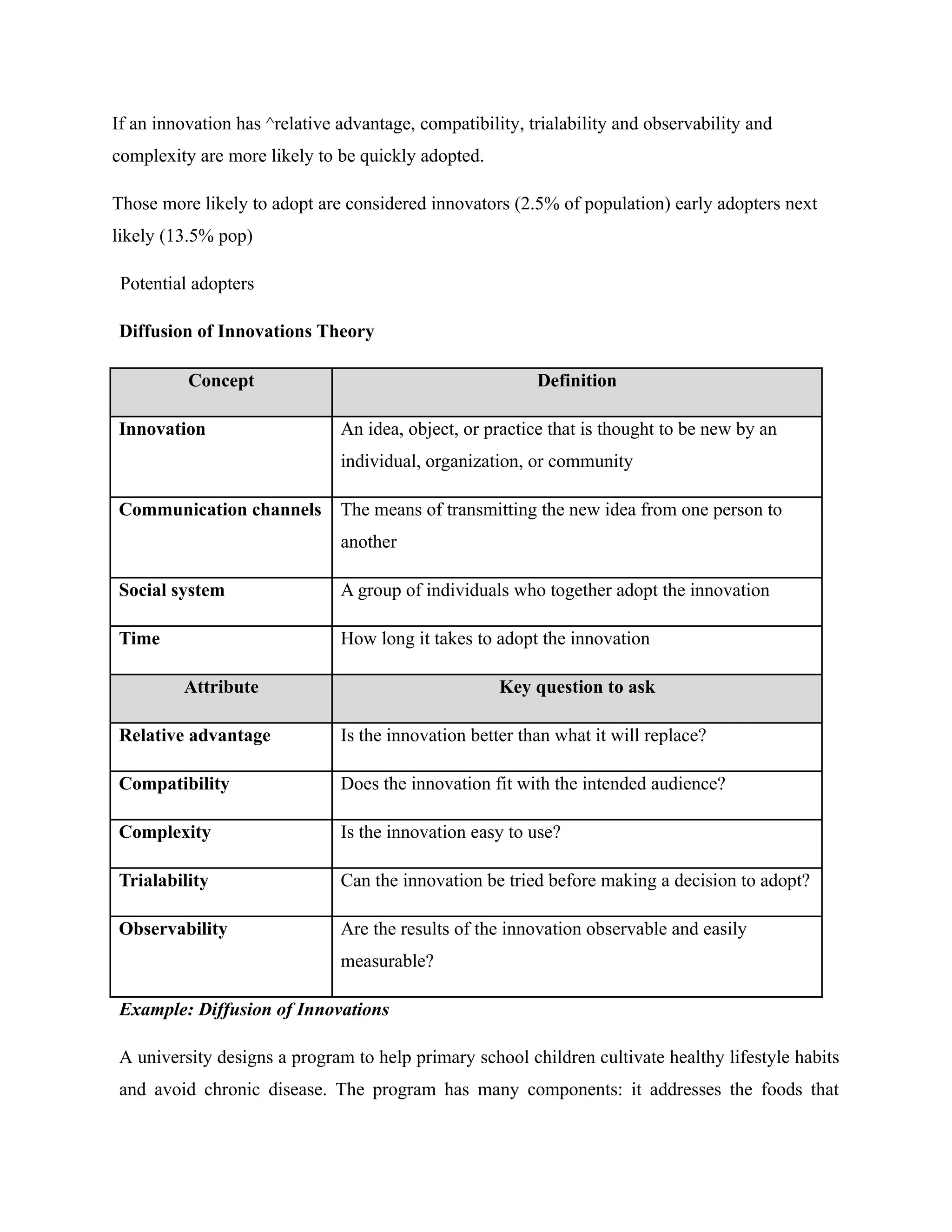
Diffusion of Innovations Theory
Concept Definition
Innovation An idea, object, or practice that is thought to be new by an
individual, organization, or community
Communication channels The means of transmitting the new idea from one person to
another
Social system A group of individuals who together adopt the innovation
Time How long it takes to adopt the innovation
Attribute Key question to ask
Relative advantage Is the innovation better than what it will replace?
Compatibility Does the innovation fit with the intended audience?
Complexity Is the innovation easy to use?
Trialability Can the innovation be tried before making a decision to adopt?
Observability Are the results of the innovation observable and easily
measurable?
Example: Diffusion of Innovations
A university designs a program to help primary school children cultivate healthy lifestyle habits
and avoid chronic disease. The program has many components: it addresses the foods that
children eat by modifying the fat and sugar content of school lunches, it teaches important
health information through a classroom-based health education curriculum, and it encourages
physical activity through a physical education component.
It is highly successful; follow-up studies show that children who went through the program in
primary school continue to have healthier habits in their adolescence than those who did not go
through the program. The fact that the program is successful is not enough to ensure it will
change primary school practices. To achieve a broader impact, the program must diffuse to
other sites.
Program planners may seek to demonstrate the relative advantage of the program by
emphasizing its positive outcomes. They may try to show its compatibility by demonstrating
that state policy-makers (e.g., the Ministry of Education) have approved its materials. The
program’s complexity can be limited by creating user-friendly materials for teachers and
cafeteria workers. By making the materials available on a Web site, they can enhance its
trialability. Professional demonstrations of the program components can create an element of
observability
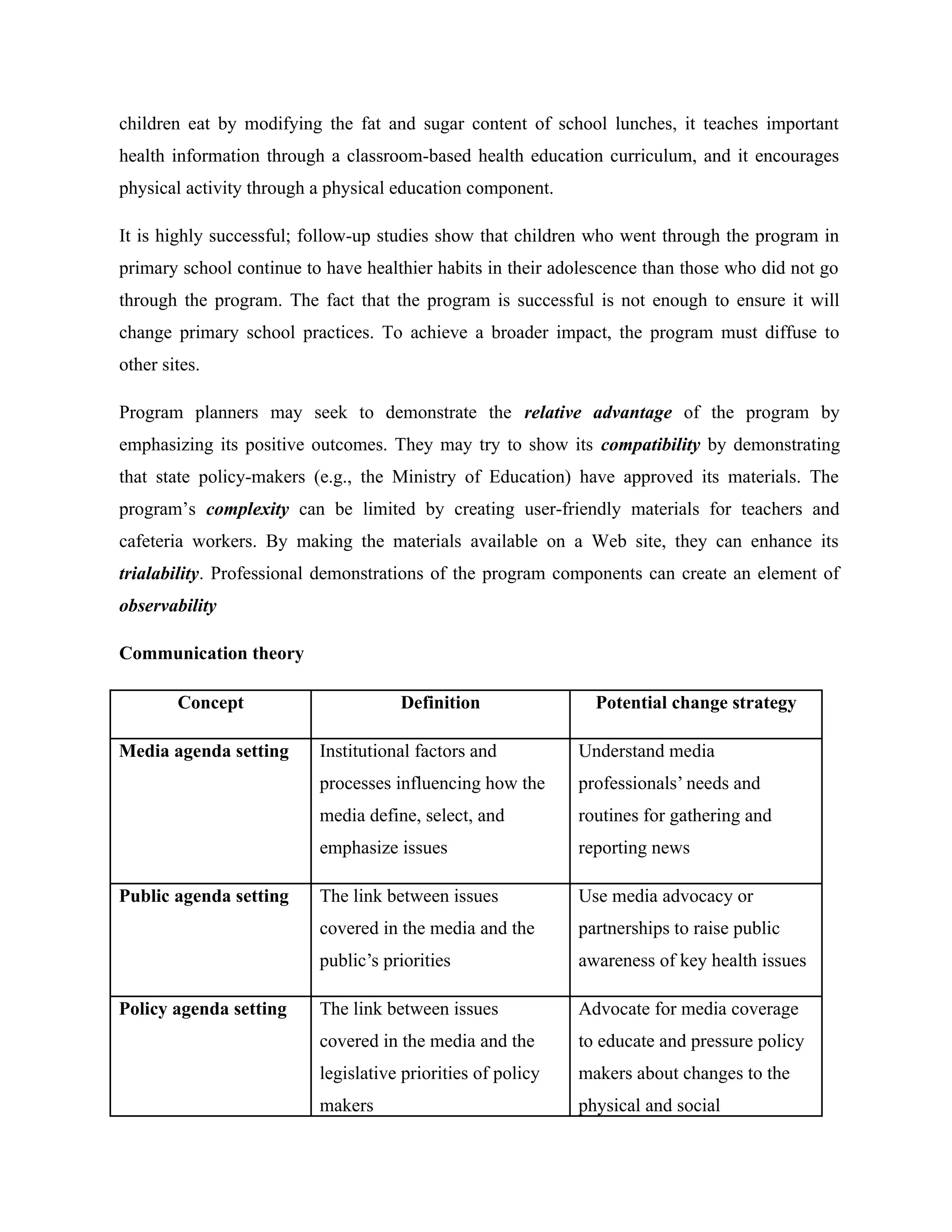
Communication theory
Concept Definition Potential change strategy
Media agenda setting Institutional factors and
processes influencing how the
media define, select, and
emphasize issues
Understand media
professionals’ needs and
routines for gathering and
reporting news
Public agenda setting The link between issues
covered in the media and the
public’s priorities
Use media advocacy or
partnerships to raise public
awareness of key health issues
Policy agenda setting The link between issues
covered in the media and the
legislative priorities of policy
makers
Advocate for media coverage
to educate and pressure policy
makers about changes to the
physical and social
environment needed to
promote health
Problem definition Factors and process leading to
the identification of an issue as
a “problem” by social
institutions
Community leaders, advocacy
groups, and organizations
define an issue for the media
and offer solutions
Framing Selecting and emphasizing
certain aspects of a story and
excluding others
Advocacy groups “package”
an important health issue for
the media and the public
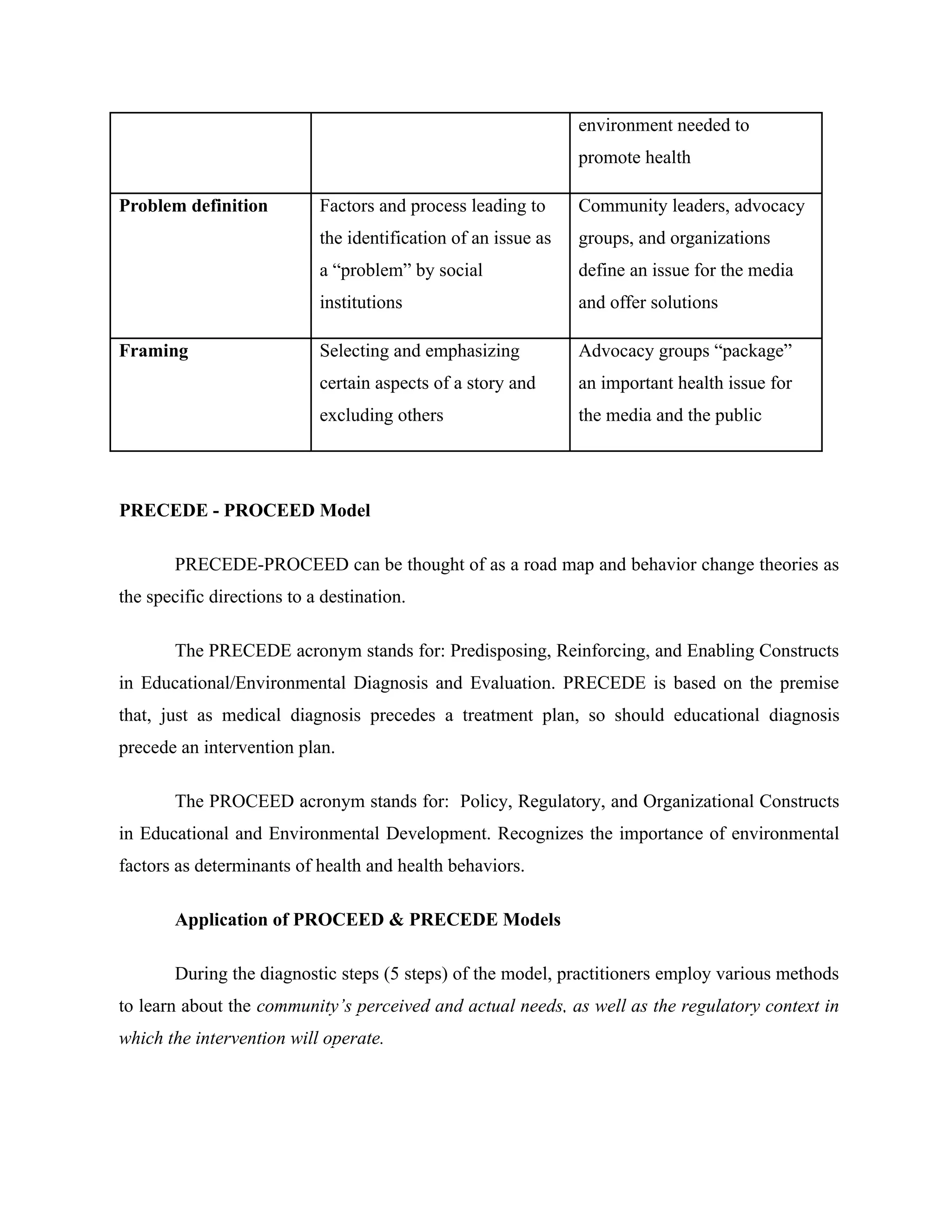
PRECEDE - PROCEED Model
PRECEDE-PROCEED can be thought of as a road map and behavior change theories as
the specific directions to a destination.
The PRECEDE acronym stands for: Predisposing, Reinforcing, and Enabling Constructs
in Educational/Environmental Diagnosis and Evaluation. PRECEDE is based on the premise
that, just as medical diagnosis precedes a treatment plan, so should educational diagnosis
precede an intervention plan.
The PROCEED acronym stands for: Policy, Regulatory, and Organizational Constructs
in Educational and Environmental Development. Recognizes the importance of environmental
factors as determinants of health and health behaviors.
Application of PROCEED & PRECEDE Models
During the diagnostic steps (5 steps) of the model, practitioners employ various methods
to learn about the community’s perceived and actual needs, as well as the regulatory context in
which the intervention will operate.
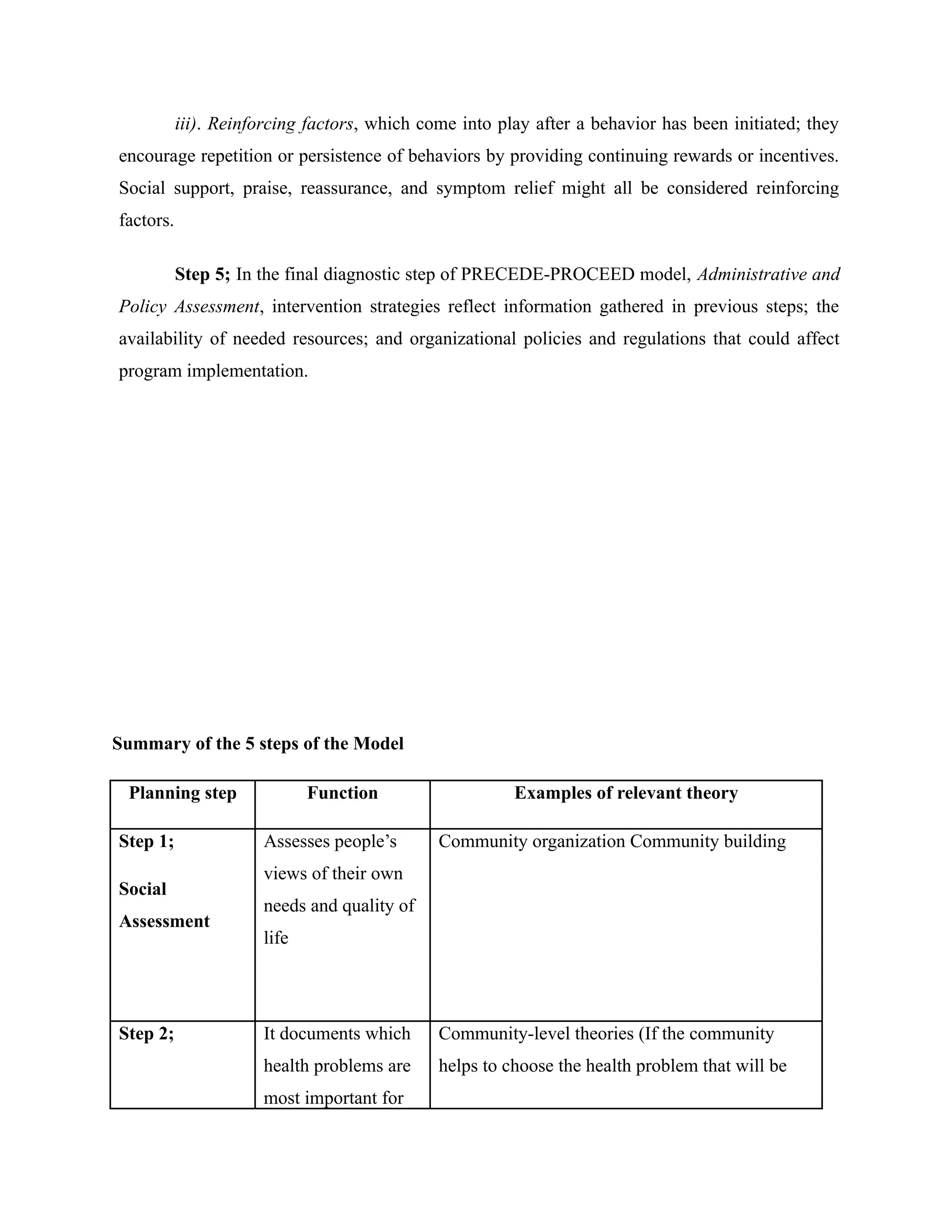
Step 1; To conduct social assessment, the practitioner may use multiple data collection
activities (e.g., key informant interviews, focus groups, participant observation, surveys) to
understand the community’s perceived needs.
Step 2; Epidemiological assessment may include secondary data analysis or original
data collection to prioritize the community’s health needs and establish program goals and
objectives.
Step 3; Behavioral and Environmental Assessment identifies factors, both internal and
external to the individual, that affect the health problem. Reviewing the literature and applying
theory are two ways to map out these factors.
Step 4; In Educational and Ecological Assessment, the practitioner identifies
antecedent/precursor/forerunner and reinforcing factors that must be in place to initiate and
sustain change.
Behavior, e.g. reducing intake of dietary fat, engaging in routine physical activity, and
obtaining annual mammograms, is shaped by predisposing, reinforcing, and enabling factors.
Practitioners can use individual, interpersonal, or community-level change theories to
classify determinants of behavior into one of these three categories and rank their importance.
Because each type of factor requires different intervention strategies, classifying them
helps practitioners consider how to address community needs.
The three types of influencing factors include:
i). Predisposing factors, which motivate or provide a reason for behavior; they include
knowledge, attitudes, cultural beliefs, and readiness to change.
ii). Enabling factors, which enable persons to act on their predispositions; these factors
include available resources, supportive policies, assistance, and services.
iii). Reinforcing factors, which come into play after a behavior has been initiated; they
encourage repetition or persistence of behaviors by providing continuing rewards or incentives.
Social support, praise, reassurance, and symptom relief might all be considered reinforcing
factors.
Step 5; In the final diagnostic step of PRECEDE-PROCEED model, Administrative and
Policy Assessment, intervention strategies reflect information gathered in previous steps; the
availability of needed resources; and organizational policies and regulations that could affect
program implementation.
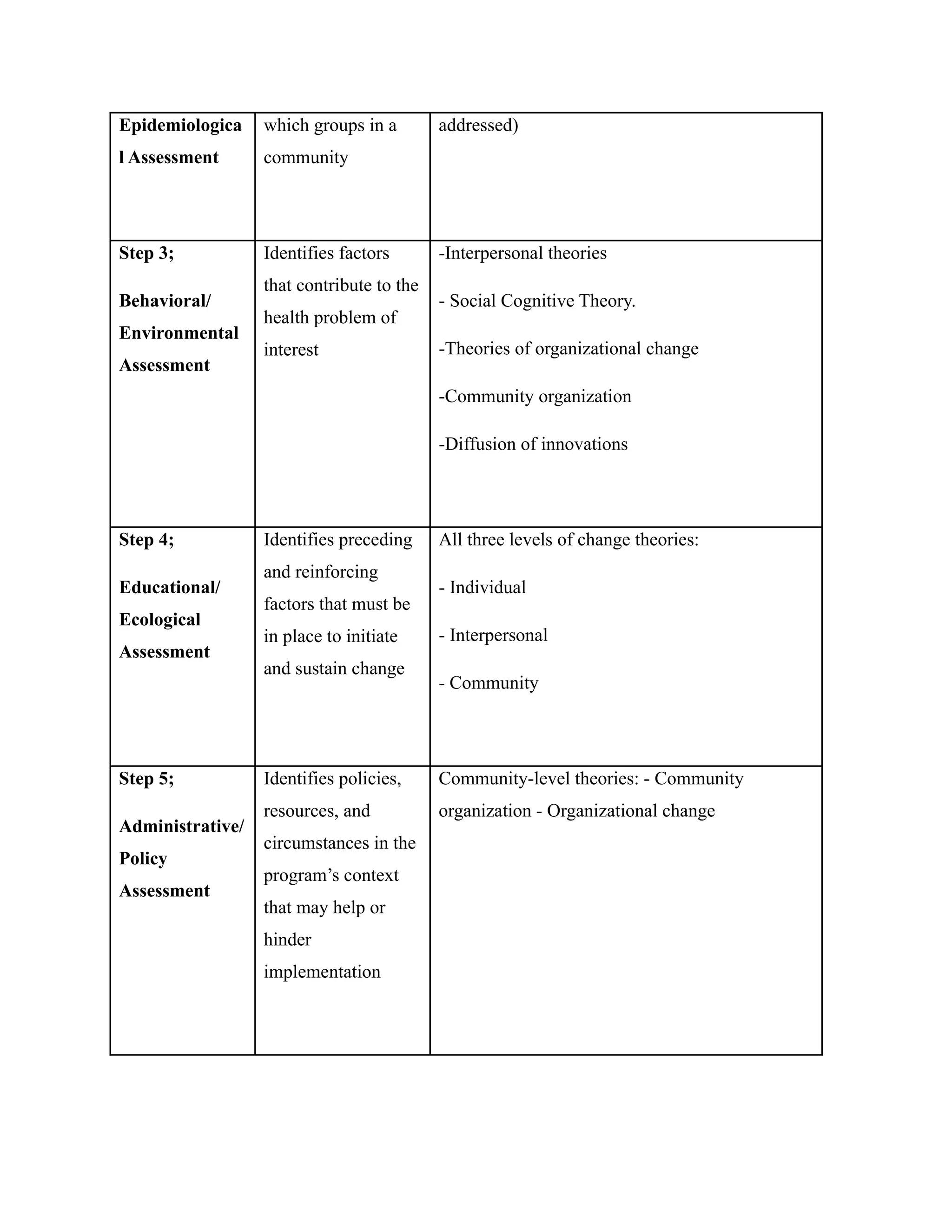
Summary of the 5 steps of the Model
Planning step Function Examples of relevant theory
Step 1;
Social
Assessment
Assesses people’s
views of their own
needs and quality of
life
Community organization Community building
Step 2; It documents which
health problems are
most important for
Community-level theories (If the community
helps to choose the health problem that will be
Epidemiologica
l Assessment
which groups in a
community
addressed)
Step 3;
Behavioral/
Environmental
Assessment
Identifies factors
that contribute to the
health problem of
interest
-Interpersonal theories
- Social Cognitive Theory.
-Theories of organizational change
-Community organization
-Diffusion of innovations
Step 4;
Educational/
Ecological
Assessment
Identifies preceding
and reinforcing
factors that must be
in place to initiate
and sustain change
All three levels of change theories:
- Individual
- Interpersonal
- Community
Step 5;
Administrative/
Policy
Assessment
Identifies policies,
resources, and
circumstances in the
program’s context
that may help or
hinder
implementation
Community-level theories: - Community
organization - Organizational change
The four remaining steps of the model Comprise program implementation and
evaluation;
Before Implementation (Step 6) begins, practitioners should prepare plans for evaluating
the process (Step 7), evaluating the impact (Step 8), and evaluating the outcome (Step 9) of the
intervention.
Step 7: Process Evaluation gauges the extent to which a program is being carried out
according to plan.
Step 8: Impact Evaluation looks at changes in factors (i.e., predisposing, enabling, and
reinforcing factors) that influence the likelihood that behavioral and environmental change will
occur.
Step 9: Lastly, outcome evaluation looks at whether the intervention has affected health
and quality-of-life indicators.
4.0 THEORIES AND MODELS-WPS Oooffice.docx

4.0 THEORIES AND MODELS-WPS Oooffice.docx

  • 1.
    4.0 THEORIES ANDMODELS OF HEALTH PROMOTION 4.1 Introduction In this section, we are interested in discussing theories and models to facilitate behavior change. 4.2 Objectives of the topic By the end of this topic, you should be able to: Apply key health promotion theories and models to facilitate behavior change. 4.3 Definition of theory and model A theory; a plausible or scientifically acceptable general principle or body of principles offered to explain phenomena. A supposition or a system of ideas intended to explain something, especially one based on general principles independent of the thing to be explained. A theory can also be defined as a -System of ideas intended to explain something, usually based on evidence and assumptions that are generalisable to a population A model is: Simplified description that can be used to preduct something Theories and models in health promotion are used to plan interventions. 4 main levels of health promotion: Intrapersonal (individual) Interpersonal Community Multidimensional 4.3.1 Intrapersonal Level Health Belief model Evolved from United States Public Health Service
  • 2.
    For an individualto change something (usually a behaviour) they would need to have three key beliefs: They are susceptible or at risk (perceived susceptibility The health problem is serious (perceived severity) The benefits of taking action outweigh the disadvantages of the health problem (perceived benefits) Model was expanded to encompass external factors: The belief that the effort/cost required to overcome perceived barriers is outweighed by the benefits (perceived barriers) A cue to act is seen/received from another external source (mass media, reminder letter, illness of friend or family) (cue to action) The individual believes that they have the ability to successfully take the required action (self- efficacy) In order to act, people must believe that the negatives are outweighed by the benefits and they are capable of achieving the desired outcome Health Belief Model (HBM) Concept Definition Potential HP and Behavior change strategy Perceived susceptibility Beliefs about the chances of getting a condition • Define what populations(s) at risk and their levels of risk • Tailor risk information based on an individual’s characteristics or behaviors • Help the individual develop an accurate perception of his or her own risk
  • 3.
    Perceived severity Beliefs about theseriousness of a condition and its consequences • Specify the consequences of a condition and recommended action Perceived benefits Beliefs about the effectiveness of taking action to reduce risk or seriousness • Explain how, where, and when to take action and what the potential positive results will be Perceived barriers Beliefs about the material and psychological costs of taking action • Offer reassurance, incentives, and assistance; correct misinformation Cues to action Factors that activate ”readiness to change” • Provide ”how to” information, promote awareness, and employ reminder systems Self-efficacy Confidence in one’s ability to take action • Provide training and guidance in performing action • Use progressive goal setting • Give verbal reinforcement • Demonstrate desired behaviors Example: HBM High blood pressure screening campaigns often identify people who are at high risk for heart disease and stroke, but who say they have not experienced any symptoms. Because they don’t feel sick, they may not follow instructions to take prescribed medicine or lose weight. The HBM can be useful for developing strategies to deal with noncompliance in such situations. According to the HBM, asymptomatic people may not follow a prescribed treatment regimen unless they accept that, though they have no symptoms, they do in fact have hypertension (perceived susceptibility). They must understand that hypertension can lead to heart attacks and strokes (perceived severity). Taking prescribed medication or following a recommended weight loss program will reduce the risks (perceived benefits) without negative side effects or excessive difficulty (perceived barriers). Print materials, reminder letters, or pill calendars might encourage people to consistently follow their doctors’
  • 4.
    recommendations (cues toaction). For those who have, in the past, had a hard time losing weight or maintaining weight loss, a behavioral contract might help establish achievable, short-term goals to build confidence (self-efficacy). Trans theoretical model Developed by Prochaska and DiClemente (1982) Lists 6 different stages of preparedness for change Individuals have varying stages or 'readiness' Recognizes failure can and does occur Precontemplation - the individual is not seeking to change Contemplation - individual has recognised they need to make a change Preparation - individual begins to plan how to make their intended change Action - person actively attempts to make the desired change Maintenance - having made the attempted change, individual is now actively working to maintain that change and avoid relapse Termination - the change has now become a habit and the individual does not have any desire to resume what they were doing before Relapse can occur at any stage (revert back to a previous stage). Trans-theoretical Model (Stages of Change model Stage/ concept Definition Potential HP & BC change strategy Pre-contemplation Has no intention of taking action within the next six months Increase awareness of need for change; personalize information about risks and
  • 5.
    benefits Contemplation Intends totake action in the next six months Motivate; encourage making specific plans Preparation Intends to take action within the next thirty days and has taken some behavioral steps in this direction Assist with developing and implementing concrete action plans; help set gradual goals Action Has changed behavior for less than six months Assist with feedback, problem solving, social support, and reinforcement Maintenance Has changed behavior for more than six months Assist with coping, reminders, finding alternatives, avoiding slips/relapses (as applicable) Example: Trans-theoretical mode A company hires a health educator to plan a smoking cessation program for its employees who smoke (200 people). The health educator decides to offer group smoking cessation clinics to employees at various times and locations. Several months pass, however, and only 50 of the smokers sign up for the clinics. At this point, the health educator faces a dilemma: how can the 150 smokers who are not participating in the clinics be reached? The Stages of Change Model offers perspective on ways to approach this problem. First, the model can be employed to help understand and explain why they are not attending the clinics. Second, it can be used to develop a comprehensive smoking program to help more current and former smokers change their smoking behavior, and maintain that change. By asking a few simple questions, the health educator can assess what stages of contemplation potential program participants are in. E.g; Are you interested in trying to quit smoking? (Pre-contemplation). Are you thinking about quitting smoking soon? (Contemplation). Are you ready to plan how you will quit smoking? (Preparation). Are you in the process of trying to quit smoking? (Action). Are you trying to stay smoke-free?
  • 6.
    (Maintenance). The employees’responses will help to pinpoint where the participants are on the continuum of change, and to tailor messages, strategies, and programs appropriate to their needs. E.g, Individuals who enjoy smoking are not interested in trying to quit, and therefore will not attend a smoking cessation clinic; For them, a more appropriate intervention might include educational interventions designed to move them out of the “pre-contemplation” stage and into “contemplation” (e.g., using carbon monoxide testing to demonstrate the effect of smoking on health). On the other hand, individuals who are ready to plan how to quit smoking (the “preparation” stage) can be encouraged to do so, and moved to the next stage, “action.” Theory of planned behavior (TPB) & Theory of Reasoned Action (TRA) Concept Definition Perceived HP and BC strategy/ measurement approach- Question Behavioral intention Perceived likelihood of performing behavior Are you likely or unlikely to (perform the behavior)?
  • 7.
    Attitude Personal evaluationof the behavior Do you see (the behavior) as good, neutral, or bad? Subjective norm Beliefs about whether key people approve or disapprove of the behavior; motivation to behave in a way that gains their approval Do you agree or disagree that most people approve of/disapprove of (the behavior)? Perceived behavioral control Belief that one has, and can exercise, control over performing the behavior Do you believe (performing the behavior) is up to you, or not up to you? Example: Theory of planned behavior (TPB) Surveillance data show that young, “civilized” Hispanic women are more likely to get Pap tests than those who are older and less “civilized”. A health department decides to implement a cervical cancer screening program targeting older Hispanic women. In planning the campaign, practitioners want to conduct a survey to learn what beliefs, attitudes, and intentions in this population are associated with seeking a Pap test. They design the survey to gauge: when the women received their last Pap test (behavior); how likely they are to seek a Pap test (intention); attitudes about getting a Pap test (attitude); whether or not “most people who are important to me” would want them to get a Pap test (subjective norm); and whether or not getting a Pap test is something that is “under my control” (perceived behavioral control). The department will compare survey results with data about who has or has not received a Pap test to identify beliefs, attitudes, and intentions that predict seeking one. 4.3.2 Interpersonal Level Social Cognitive Theory
  • 8.
    Includes environmental andsocial influences on individual decision-making Developed by Bandura (1986) Person's decision to act or not is determined by their beliefs about the world including their own Experiences, self-efficacy, observations of the actions of others and the perceived benefits of those actions High self-esteem people more likely to resist negative influences -> useful for school groups Social cognitive theory (SCT) Concept Definition Potential change strategy Reciprocal determinism The dynamic interaction of the person, behavior, and the environment in which the behavior is performed Consider multiple ways to promote behavior change, including making adjustments to the environment or influencing personal attitudes Behavioral capability Knowledge and skill to perform a given behavior Promote mastery learning through skills training Expectations Anticipated outcomes of a behavior Model positive outcomes of healthful behavior Self-efficacy Confidence in one’s ability to take Approach behavior change in
  • 9.
    action and overcomebarriers small steps to ensure success; be specific about the desired change Observational learning (modeling) Behavioral acquisition that occurs by watching the actions and outcomes of others’ behavior Offer credible role models who perform the targeted behavior Reinforcements Responses to a person’s behavior that increase or decrease the likelihood of reoccurrence Promote self-initiated rewards and incentives Example: SCT A university in a rural area develops a church-based intervention to help congregation members change their habits to meet cancer risk reduction guidelines (behavior). Many members of the church have low incomes, are overweight, rarely exercise, eat foods that are high in sugar and fat, and are uninsured (personal factors). Because of their rural location, they often must drive long distances to attend church, visit health clinics, or buy groceries (environment). The program offers classes that teach healthy cooking and exercise skills (behavioral capability). Participants learn how eating a healthy diet and exercising will benefit them (expectations). Health advisors create contracts with participants, setting incremental goals (self-efficacy). Respected congregation members serve as role models (observational learning). Participants receive T-shirts, recipe books, and other incentives, and are taught to reward themselves by making time to relax (reinforcement). As church members learn about healthy lifestyles, they bring healthier foods to church, reinforcing their healthy habits (reciprocal determinism). Ecological model a.k.a social ecological model Focus attention in health promotion activities and interventions on both individual and social- environmental factors.
  • 11.
    Those more likelyto adopt are considered innovators (2.5% of population) early adopters next likely (13.5% pop) Potential adopters
  • 12.
    4.3.3 Community Level Diffusionof innovations theory Factors that determinate the rate at which an innovation is adopted are: Relative advantage - the innovation better than what it is trying to replace Compatibility - is the new innovation consistent with the needs, values and previous experiences of potential adopters Complexity - how difficult is the innovation to understand and use Trialability - does the innovation enable experimentation? Observability - are the results and/or benefits of the innovation visible to others?
  • 13.
    If an innovationhas ^relative advantage, compatibility, trialability and observability and complexity are more likely to be quickly adopted. Those more likely to adopt are considered innovators (2.5% of population) early adopters next likely (13.5% pop) Potential adopters Diffusion of Innovations Theory Concept Definition Innovation An idea, object, or practice that is thought to be new by an individual, organization, or community Communication channels The means of transmitting the new idea from one person to another Social system A group of individuals who together adopt the innovation Time How long it takes to adopt the innovation Attribute Key question to ask Relative advantage Is the innovation better than what it will replace? Compatibility Does the innovation fit with the intended audience? Complexity Is the innovation easy to use? Trialability Can the innovation be tried before making a decision to adopt? Observability Are the results of the innovation observable and easily measurable? Example: Diffusion of Innovations A university designs a program to help primary school children cultivate healthy lifestyle habits and avoid chronic disease. The program has many components: it addresses the foods that
  • 14.
    children eat bymodifying the fat and sugar content of school lunches, it teaches important health information through a classroom-based health education curriculum, and it encourages physical activity through a physical education component. It is highly successful; follow-up studies show that children who went through the program in primary school continue to have healthier habits in their adolescence than those who did not go through the program. The fact that the program is successful is not enough to ensure it will change primary school practices. To achieve a broader impact, the program must diffuse to other sites. Program planners may seek to demonstrate the relative advantage of the program by emphasizing its positive outcomes. They may try to show its compatibility by demonstrating that state policy-makers (e.g., the Ministry of Education) have approved its materials. The program’s complexity can be limited by creating user-friendly materials for teachers and cafeteria workers. By making the materials available on a Web site, they can enhance its trialability. Professional demonstrations of the program components can create an element of observability Communication theory Concept Definition Potential change strategy Media agenda setting Institutional factors and processes influencing how the media define, select, and emphasize issues Understand media professionals’ needs and routines for gathering and reporting news Public agenda setting The link between issues covered in the media and the public’s priorities Use media advocacy or partnerships to raise public awareness of key health issues Policy agenda setting The link between issues covered in the media and the legislative priorities of policy makers Advocate for media coverage to educate and pressure policy makers about changes to the physical and social
  • 15.
    environment needed to promotehealth Problem definition Factors and process leading to the identification of an issue as a “problem” by social institutions Community leaders, advocacy groups, and organizations define an issue for the media and offer solutions Framing Selecting and emphasizing certain aspects of a story and excluding others Advocacy groups “package” an important health issue for the media and the public PRECEDE - PROCEED Model PRECEDE-PROCEED can be thought of as a road map and behavior change theories as the specific directions to a destination. The PRECEDE acronym stands for: Predisposing, Reinforcing, and Enabling Constructs in Educational/Environmental Diagnosis and Evaluation. PRECEDE is based on the premise that, just as medical diagnosis precedes a treatment plan, so should educational diagnosis precede an intervention plan. The PROCEED acronym stands for: Policy, Regulatory, and Organizational Constructs in Educational and Environmental Development. Recognizes the importance of environmental factors as determinants of health and health behaviors. Application of PROCEED & PRECEDE Models During the diagnostic steps (5 steps) of the model, practitioners employ various methods to learn about the community’s perceived and actual needs, as well as the regulatory context in which the intervention will operate.
  • 16.
    Step 1; Toconduct social assessment, the practitioner may use multiple data collection activities (e.g., key informant interviews, focus groups, participant observation, surveys) to understand the community’s perceived needs. Step 2; Epidemiological assessment may include secondary data analysis or original data collection to prioritize the community’s health needs and establish program goals and objectives. Step 3; Behavioral and Environmental Assessment identifies factors, both internal and external to the individual, that affect the health problem. Reviewing the literature and applying theory are two ways to map out these factors. Step 4; In Educational and Ecological Assessment, the practitioner identifies antecedent/precursor/forerunner and reinforcing factors that must be in place to initiate and sustain change. Behavior, e.g. reducing intake of dietary fat, engaging in routine physical activity, and obtaining annual mammograms, is shaped by predisposing, reinforcing, and enabling factors. Practitioners can use individual, interpersonal, or community-level change theories to classify determinants of behavior into one of these three categories and rank their importance. Because each type of factor requires different intervention strategies, classifying them helps practitioners consider how to address community needs. The three types of influencing factors include: i). Predisposing factors, which motivate or provide a reason for behavior; they include knowledge, attitudes, cultural beliefs, and readiness to change. ii). Enabling factors, which enable persons to act on their predispositions; these factors include available resources, supportive policies, assistance, and services.
  • 17.
    iii). Reinforcing factors,which come into play after a behavior has been initiated; they encourage repetition or persistence of behaviors by providing continuing rewards or incentives. Social support, praise, reassurance, and symptom relief might all be considered reinforcing factors. Step 5; In the final diagnostic step of PRECEDE-PROCEED model, Administrative and Policy Assessment, intervention strategies reflect information gathered in previous steps; the availability of needed resources; and organizational policies and regulations that could affect program implementation. Summary of the 5 steps of the Model Planning step Function Examples of relevant theory Step 1; Social Assessment Assesses people’s views of their own needs and quality of life Community organization Community building Step 2; It documents which health problems are most important for Community-level theories (If the community helps to choose the health problem that will be
  • 18.
    Epidemiologica l Assessment which groupsin a community addressed) Step 3; Behavioral/ Environmental Assessment Identifies factors that contribute to the health problem of interest -Interpersonal theories - Social Cognitive Theory. -Theories of organizational change -Community organization -Diffusion of innovations Step 4; Educational/ Ecological Assessment Identifies preceding and reinforcing factors that must be in place to initiate and sustain change All three levels of change theories: - Individual - Interpersonal - Community Step 5; Administrative/ Policy Assessment Identifies policies, resources, and circumstances in the program’s context that may help or hinder implementation Community-level theories: - Community organization - Organizational change
  • 19.
    The four remainingsteps of the model Comprise program implementation and evaluation; Before Implementation (Step 6) begins, practitioners should prepare plans for evaluating the process (Step 7), evaluating the impact (Step 8), and evaluating the outcome (Step 9) of the intervention. Step 7: Process Evaluation gauges the extent to which a program is being carried out according to plan. Step 8: Impact Evaluation looks at changes in factors (i.e., predisposing, enabling, and reinforcing factors) that influence the likelihood that behavioral and environmental change will occur. Step 9: Lastly, outcome evaluation looks at whether the intervention has affected health and quality-of-life indicators.