CHS AP Psychology
Unit 3: Biological Psychology
Essential Task 3-1:
• Identify the basic parts of the neuron (dendrites, cell
body, axon, terminal buttons, synaptic vesicles, and
receptor sites)
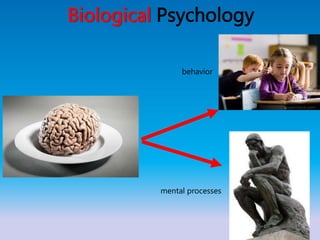
Biological Psychology
behavior
mental processes
Principles of Biological
Psychology
 Everything psychological is simultaneously
biological.
 The nervous system is complexity built from
simplicity.
 The brain is both specialized and
integrated.
 The nervous system is “plastic,” especially
at early ages of development.
Neurons: The Messengers
• About 100 billion neurons (nerve cells) in the
human brain. Recent estimates put it at about
86 billion.
• About 100 trillion connections amongst these
neurons.
• Neurons have many of the same features as
other cells
– Nucleus
– Cytoplasm
– Cell membrane
• What makes neurons unique is their shape
and function
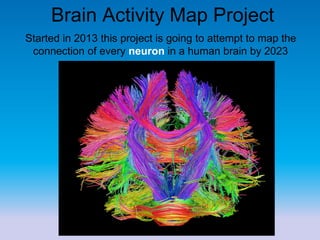
Brain Activity Map Project
Started in 2013 this project is going to attempt to map the
connection of every neuron in a human brain by 2023
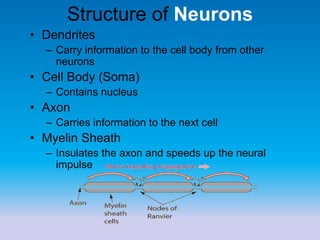
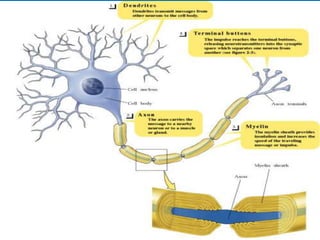
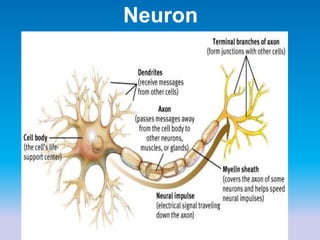
Structure of Neurons
• Dendrites
– Carry information to the cell body from other
neurons
• Cell Body (Soma)
– Contains nucleus
• Axon
– Carries information to the next cell
• Myelin Sheath
– Insulates the axon and speeds up the neural
impulse
Neuron
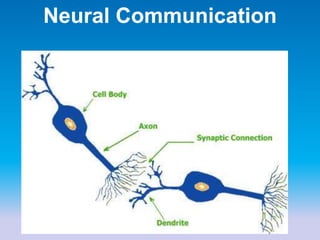
Neural Communication
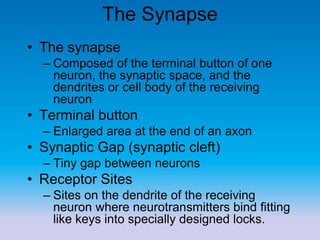
The Synapse
• The synapse
– Composed of the terminal button of one
neuron, the synaptic space, and the
dendrites or cell body of the receiving
neuron
• Terminal button
– Enlarged area at the end of an axon
• Synaptic Gap (synaptic cleft)
– Tiny gap between neurons
• Receptor Sites
– Sites on the dendrite of the receiving
neuron where neurotransmitters bind fitting
like keys into specially designed locks.
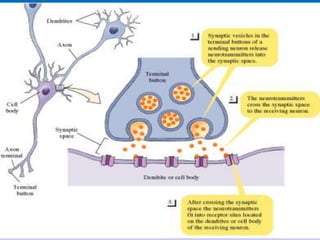
Chemical Transmission Between
Neurons
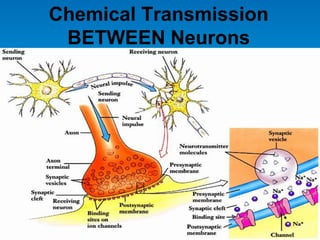
• Synaptic vesicles release
neurotransmitters that bind to
receptor sites.
– Sacs in terminal button that release
chemicals into synaptic space
– Chemicals released by synaptic
vesicles
– Sites on the dendrite of the receiving
neuron where neurotransmitters bind
fitting like keys into specially designed
locks.
Chemical Transmission
BETWEEN Neurons
Types of Neurons
• Sensory neurons
– Carry information from sensory systems to
the brain
– Also referred to as afferent
• Motor neurons
– Carry information from the brain to muscles
and glands
– Also referred to as efferent
• Interneurons (located in the spinal
cord)
– Carry information between other neurons
Glial Cells
• Cells that insulate and support
neurons
• Creates the myelin sheath
• Remove waste products
• Provide nourishment
• Prevent harmful substances from
entering the brain
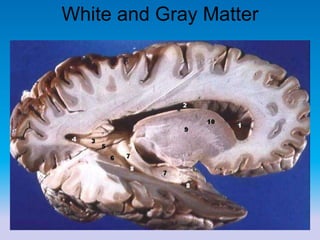
• Forms white matter in the brain helping
communication across the brain
• Gray matter is un myelinated brain
tissue.
White and Gray Matter

3-1-Neuron Powerpoint.ppt

  • 1.
    CHS AP Psychology Unit3: Biological Psychology Essential Task 3-1: • Identify the basic parts of the neuron (dendrites, cell body, axon, terminal buttons, synaptic vesicles, and receptor sites)
  • 2.
  • 3.
    Principles of Biological Psychology Everything psychological is simultaneously biological.  The nervous system is complexity built from simplicity.  The brain is both specialized and integrated.  The nervous system is “plastic,” especially at early ages of development.
  • 4.
    Neurons: The Messengers •About 100 billion neurons (nerve cells) in the human brain. Recent estimates put it at about 86 billion. • About 100 trillion connections amongst these neurons. • Neurons have many of the same features as other cells – Nucleus – Cytoplasm – Cell membrane • What makes neurons unique is their shape and function
  • 5.
    Brain Activity MapProject Started in 2013 this project is going to attempt to map the connection of every neuron in a human brain by 2023
  • 6.
    Structure of Neurons •Dendrites – Carry information to the cell body from other neurons • Cell Body (Soma) – Contains nucleus • Axon – Carries information to the next cell • Myelin Sheath – Insulates the axon and speeds up the neural impulse
  • 8.
  • 9.
  • 10.
    The Synapse • Thesynapse – Composed of the terminal button of one neuron, the synaptic space, and the dendrites or cell body of the receiving neuron • Terminal button – Enlarged area at the end of an axon • Synaptic Gap (synaptic cleft) – Tiny gap between neurons • Receptor Sites – Sites on the dendrite of the receiving neuron where neurotransmitters bind fitting like keys into specially designed locks.
  • 12.
    Chemical Transmission Between Neurons •Synaptic vesicles release neurotransmitters that bind to receptor sites. – Sacs in terminal button that release chemicals into synaptic space – Chemicals released by synaptic vesicles – Sites on the dendrite of the receiving neuron where neurotransmitters bind fitting like keys into specially designed locks.
  • 13.
  • 14.
    Types of Neurons •Sensory neurons – Carry information from sensory systems to the brain – Also referred to as afferent • Motor neurons – Carry information from the brain to muscles and glands – Also referred to as efferent • Interneurons (located in the spinal cord) – Carry information between other neurons
  • 15.
    Glial Cells • Cellsthat insulate and support neurons • Creates the myelin sheath • Remove waste products • Provide nourishment • Prevent harmful substances from entering the brain • Forms white matter in the brain helping communication across the brain • Gray matter is un myelinated brain tissue.
  • 16.