Download to read offline


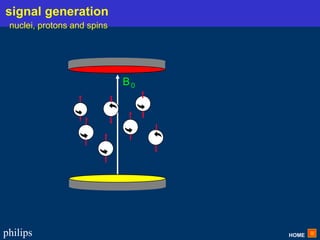


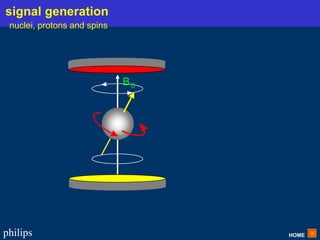


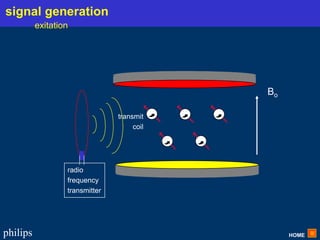
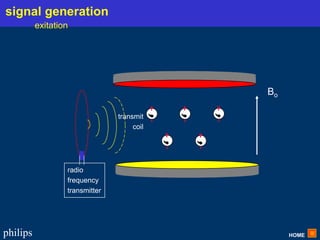
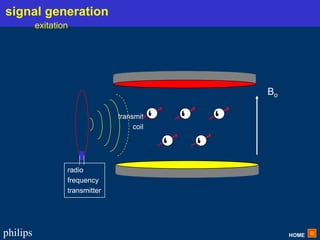
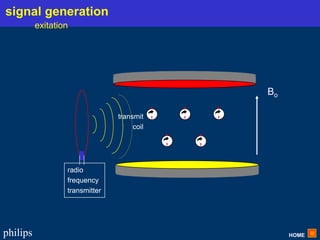


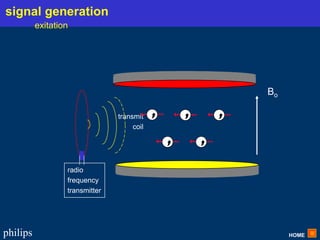


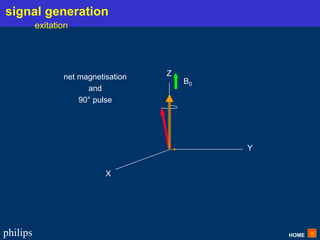


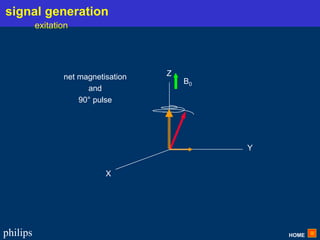


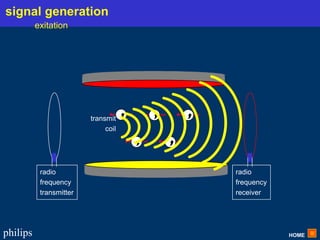


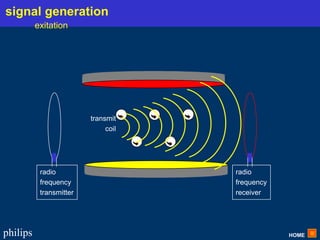


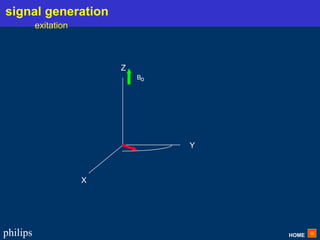


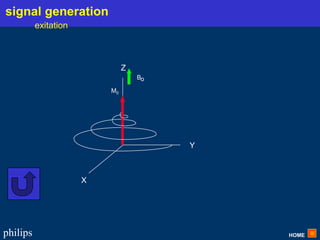


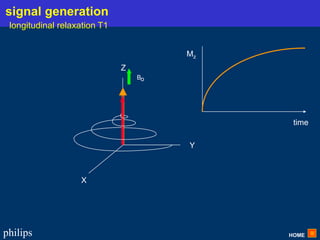

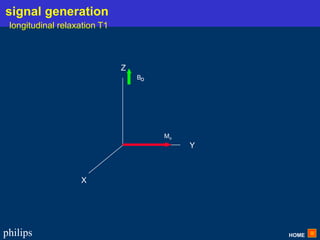
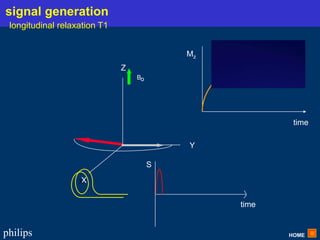


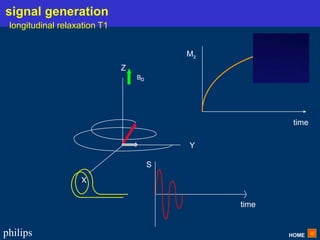


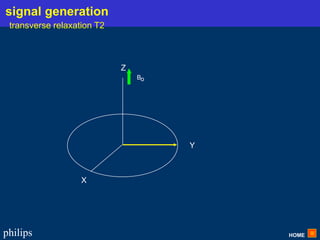


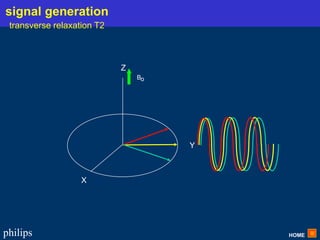


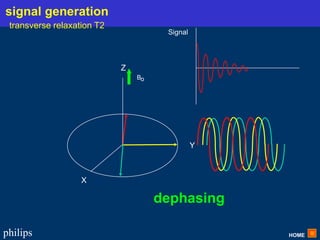


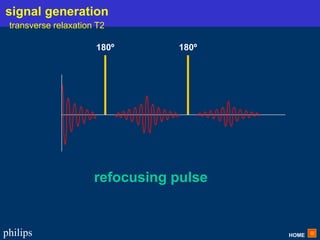
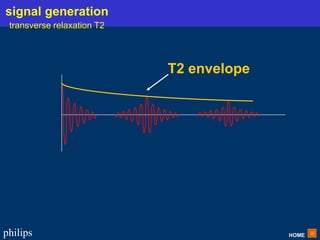


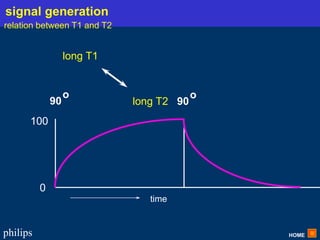


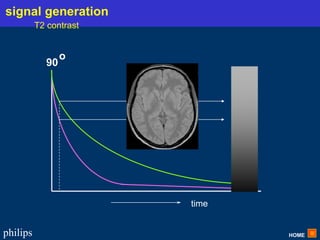


The document discusses the physical principles behind signal generation in magnetic resonance imaging (MRI). It describes how hydrogen protons generate a signal when placed in a strong magnetic field. The protons precess around the field at their Larmor frequency. A radiofrequency pulse excites the protons, which then relax back to equilibrium and emit a magnetic resonance signal that is detected by a receiver coil. The signal decays over time according to the T1 longitudinal relaxation time and T2* transverse relaxation time, which are tissue properties that can provide contrast for MRI.


