Meal Management
& Catering (NUT 214)
Table Appointments
Asc. Dietetics and Nutritions
TAMCC
Kizzy Rennie
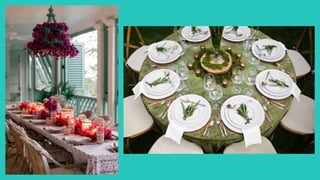
Theme
The idea that you center your table setting
around
● Formal/Elegant
● Casual
● Rustic
● Feminine
Occasion
The event determines how you theme will be
executed
● Wedding
● Independence Dinner
● Picnic
● Beach Party
● Birthday
Table Appointments
All the items needed at the table to serve
and eat a meal
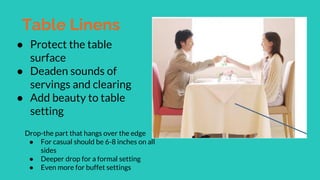
Table Linens
● Protect the table
surface
● Deaden sounds of
servings and clearing
● Add beauty to table
setting
Drop-the part that hangs over the edge
● For casual should be 6-8 inches on all
sides
● Deeper drop for a formal setting
● Even more for buffet settings
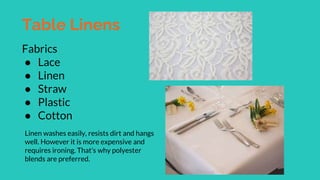
Table Linens
Fabrics
● Lace
● Linen
● Straw
● Plastic
● Cotton
Linen washes easily, resists dirt and hangs
well. However it is more expensive and
requires ironing. That’s why polyester
blends are preferred.
Table Linens
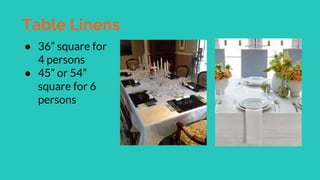
● 36” square for
4 persons
● 45” or 54”
square for 6
persons
Table Linens
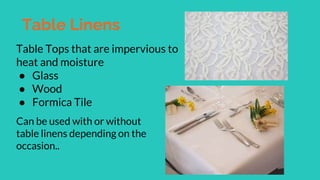
Table Tops that are impervious to
heat and moisture
● Glass
● Wood
● Formica Tile
Can be used with or without
table linens depending on the
occasion..
Mats, Runners and Napkins
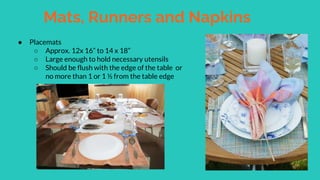
● Placemats
○ Approx. 12x 16” to 14 x 18”
○ Large enough to hold necessary utensils
○ Should be flush with the edge of the table or
no more than 1 or 1 ½ from the table edge
Mats, Runners and Napkins
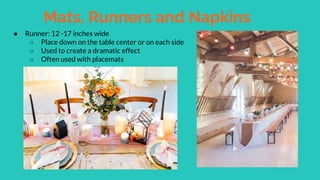
● Runner: 12 -17 inches wide
○ Place down on the table center or on each side
○ Used to create a dramatic effect
○ Often used with placemats
Mats, Runners and Napkins
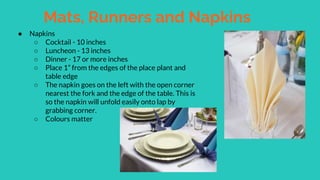
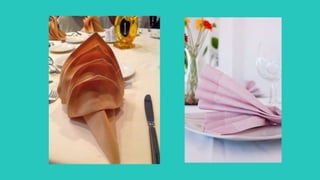
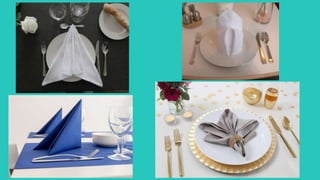
● Napkins
○ Cocktail - 10 inches
○ Luncheon - 13 inches
○ Dinner - 17 or more inches
○ Place 1” from the edges of the place plant and
table edge
○ The napkin goes on the left with the open corner
nearest the fork and the edge of the table. This is
so the napkin will unfold easily onto lap by
grabbing corner.
○ Colours matter
Care and Storage
● Stains should be removed before laundering or
they may become permanently set. Many food
stains can easily be removed by soaking them in
cool water. Meat juices, tea, coffee, lipstick, and
fruit stains may be more persistent, requiring
special handling
● Tablecloths should be stored with as few crease as
possible. By carefully rolling them, creases can be
avoided.
● Placemats should be stored flat and unfolded in
drawers or shelves convenient to the dining area.
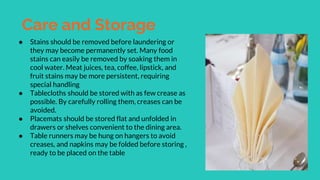
● Table runners may be hung on hangers to avoid
creases, and napkins may be folded before storing ,
ready to be placed on the table
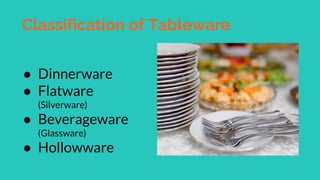
Classification of Tableware
● Dinnerware
● Flatware
(Silverware)
● Beverageware
(Glassware)
● Hollowware
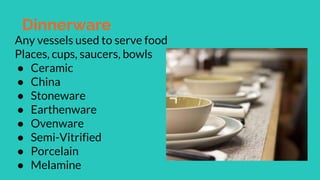
Dinnerware
Any vessels used to serve food
Places, cups, saucers, bowls
● Ceramic
● China
● Stoneware
● Earthenware
● Ovenware
● Semi-Vitrified
● Porcelain
● Melamine
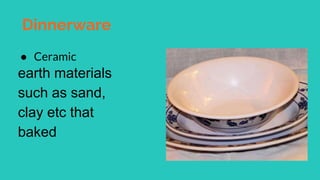
Dinnerware
● Ceramic
earth materials
such as sand,
clay etc that
baked
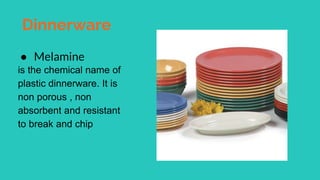
Dinnerware
● Melamine
is the chemical name of
plastic dinnerware. It is
non porous , non
absorbent and resistant
to break and chip
Dinnerware
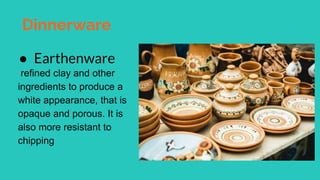
● Earthenware
refined clay and other
ingredients to produce a
white appearance, that is
opaque and porous. It is
also more resistant to
chipping
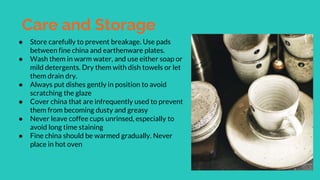
Care and Storage
● Store carefully to prevent breakage. Use pads
between fine china and earthenware plates.
● Wash them in warm water, and use either soap or
mild detergents. Dry them with dish towels or let
them drain dry.
● Always put dishes gently in position to avoid
scratching the glaze
● Cover china that are infrequently used to prevent
them from becoming dusty and greasy
● Never leave coffee cups unrinsed, especially to
avoid long time staining
● Fine china should be warmed gradually. Never
place in hot oven
Flatware
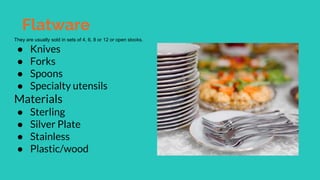
They are usually sold in sets of 4, 6, 8 or 12 or open stocks.
● Knives
● Forks
● Spoons
● Specialty utensils
Materials
● Sterling
● Silver Plate
● Stainless
● Plastic/wood
Flatware
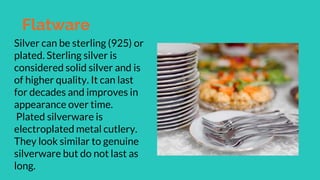
Silver can be sterling (925) or
plated. Sterling silver is
considered solid silver and is
of higher quality. It can last
for decades and improves in
appearance over time.
Plated silverware is
electroplated metal cutlery.
They look similar to genuine
silverware but do not last as
long.
Beverageware
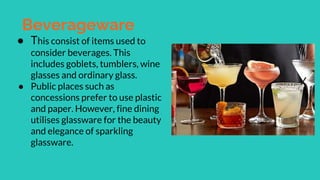
● This consist of items used to
consider beverages. This
includes goblets, tumblers, wine
glasses and ordinary glass.
● Public places such as
concessions prefer to use plastic
and paper. However, fine dining
utilises glassware for the beauty
and elegance of sparkling
glassware.
Beverageware
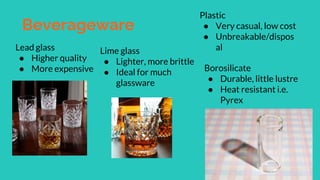
Lead glass
● Higher quality
● More expensive
Lime glass
● Lighter, more brittle
● Ideal for much
glassware
Plastic
● Very casual, low cost
● Unbreakable/dispos
al
Borosilicate
● Durable, little lustre
● Heat resistant i.e.
Pyrex
Care and Storage
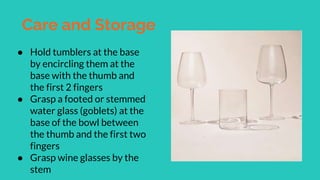
● Hold tumblers at the base
by encircling them at the
base with the thumb and
the first 2 fingers
● Grasp a footed or stemmed
water glass (goblets) at the
base of the bowl between
the thumb and the first two
fingers
● Grasp wine glasses by the
stem
Care and Storage
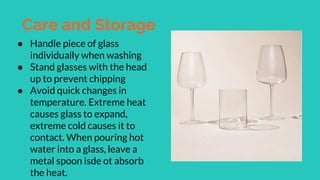
● Handle piece of glass
individually when washing
● Stand glasses with the head
up to prevent chipping
● Avoid quick changes in
temperature. Extreme heat
causes glass to expand,
extreme cold causes it to
contact. When pouring hot
water into a glass, leave a
metal spoon isde ot absorb
the heat.
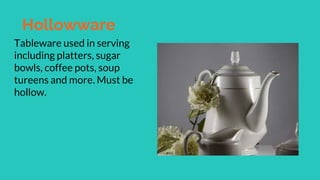
Hollowware
Tableware used in serving
including platters, sugar
bowls, coffee pots, soup
tureens and more. Must be
hollow.
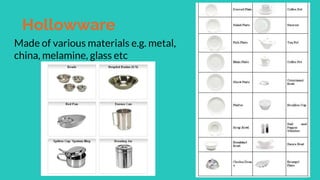
Hollowware
Made of various materials e.g. metal,
china, melamine, glass etc
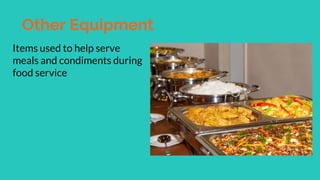
Other Equipment
Items used to help serve
meals and condiments during
food service
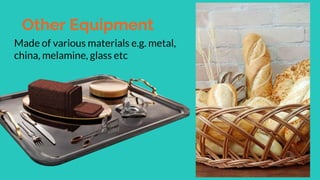
Other Equipment
Made of various materials e.g. metal,
china, melamine, glass etc
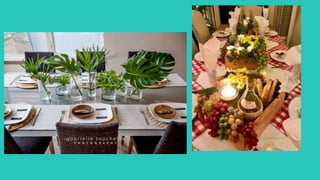
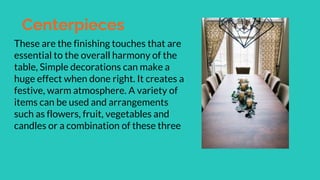
Centerpieces
These are the finishing touches that are
essential to the overall harmony of the
table, Simple decorations can make a
huge effect when done right. It creates a
festive, warm atmosphere. A variety of
items can be used and arrangements
such as flowers, fruit, vegetables and
candles or a combination of these three
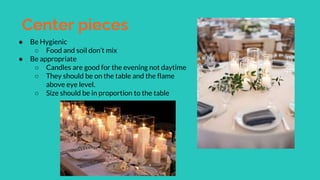
Center pieces
● Be Hygienic
○ Food and soil don’t mix
● Be appropriate
○ Candles are good for the evening not daytime
○ They should be on the table and the flame
above eye level.
○ Size should be in proportion to the table
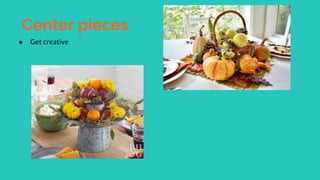
Center pieces
● Get creative
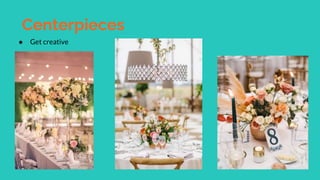
Centerpieces
● Get creative

3 Table Appointments (NUT 214) .pptx

  • 1.
    Meal Management & Catering(NUT 214) Table Appointments Asc. Dietetics and Nutritions TAMCC Kizzy Rennie
  • 2.
    Theme The idea thatyou center your table setting around ● Formal/Elegant ● Casual ● Rustic ● Feminine
  • 3.
    Occasion The event determineshow you theme will be executed ● Wedding ● Independence Dinner ● Picnic ● Beach Party ● Birthday
  • 6.
    Table Appointments All theitems needed at the table to serve and eat a meal
  • 7.
    Table Linens ● Protectthe table surface ● Deaden sounds of servings and clearing ● Add beauty to table setting Drop-the part that hangs over the edge ● For casual should be 6-8 inches on all sides ● Deeper drop for a formal setting ● Even more for buffet settings
  • 8.
    Table Linens Fabrics ● Lace ●Linen ● Straw ● Plastic ● Cotton Linen washes easily, resists dirt and hangs well. However it is more expensive and requires ironing. That’s why polyester blends are preferred.
  • 9.
    Table Linens ● 36”square for 4 persons ● 45” or 54” square for 6 persons
  • 10.
    Table Linens Table Topsthat are impervious to heat and moisture ● Glass ● Wood ● Formica Tile Can be used with or without table linens depending on the occasion..
  • 11.
    Mats, Runners andNapkins ● Placemats ○ Approx. 12x 16” to 14 x 18” ○ Large enough to hold necessary utensils ○ Should be flush with the edge of the table or no more than 1 or 1 ½ from the table edge
  • 12.
    Mats, Runners andNapkins ● Runner: 12 -17 inches wide ○ Place down on the table center or on each side ○ Used to create a dramatic effect ○ Often used with placemats
  • 13.
    Mats, Runners andNapkins ● Napkins ○ Cocktail - 10 inches ○ Luncheon - 13 inches ○ Dinner - 17 or more inches ○ Place 1” from the edges of the place plant and table edge ○ The napkin goes on the left with the open corner nearest the fork and the edge of the table. This is so the napkin will unfold easily onto lap by grabbing corner. ○ Colours matter
  • 16.
    Care and Storage ●Stains should be removed before laundering or they may become permanently set. Many food stains can easily be removed by soaking them in cool water. Meat juices, tea, coffee, lipstick, and fruit stains may be more persistent, requiring special handling ● Tablecloths should be stored with as few crease as possible. By carefully rolling them, creases can be avoided. ● Placemats should be stored flat and unfolded in drawers or shelves convenient to the dining area. ● Table runners may be hung on hangers to avoid creases, and napkins may be folded before storing , ready to be placed on the table
  • 17.
    Classification of Tableware ●Dinnerware ● Flatware (Silverware) ● Beverageware (Glassware) ● Hollowware
  • 18.
    Dinnerware Any vessels usedto serve food Places, cups, saucers, bowls ● Ceramic ● China ● Stoneware ● Earthenware ● Ovenware ● Semi-Vitrified ● Porcelain ● Melamine
  • 19.
    Dinnerware ● Ceramic earth materials suchas sand, clay etc that baked
  • 20.
    Dinnerware ● Melamine is thechemical name of plastic dinnerware. It is non porous , non absorbent and resistant to break and chip
  • 21.
    Dinnerware ● Earthenware refined clayand other ingredients to produce a white appearance, that is opaque and porous. It is also more resistant to chipping
  • 22.
    Care and Storage ●Store carefully to prevent breakage. Use pads between fine china and earthenware plates. ● Wash them in warm water, and use either soap or mild detergents. Dry them with dish towels or let them drain dry. ● Always put dishes gently in position to avoid scratching the glaze ● Cover china that are infrequently used to prevent them from becoming dusty and greasy ● Never leave coffee cups unrinsed, especially to avoid long time staining ● Fine china should be warmed gradually. Never place in hot oven
  • 23.
    Flatware They are usuallysold in sets of 4, 6, 8 or 12 or open stocks. ● Knives ● Forks ● Spoons ● Specialty utensils Materials ● Sterling ● Silver Plate ● Stainless ● Plastic/wood
  • 24.
    Flatware Silver can besterling (925) or plated. Sterling silver is considered solid silver and is of higher quality. It can last for decades and improves in appearance over time. Plated silverware is electroplated metal cutlery. They look similar to genuine silverware but do not last as long.
  • 25.
    Beverageware ● This consistof items used to consider beverages. This includes goblets, tumblers, wine glasses and ordinary glass. ● Public places such as concessions prefer to use plastic and paper. However, fine dining utilises glassware for the beauty and elegance of sparkling glassware.
  • 26.
    Beverageware Lead glass ● Higherquality ● More expensive Lime glass ● Lighter, more brittle ● Ideal for much glassware Plastic ● Very casual, low cost ● Unbreakable/dispos al Borosilicate ● Durable, little lustre ● Heat resistant i.e. Pyrex
  • 27.
    Care and Storage ●Hold tumblers at the base by encircling them at the base with the thumb and the first 2 fingers ● Grasp a footed or stemmed water glass (goblets) at the base of the bowl between the thumb and the first two fingers ● Grasp wine glasses by the stem
  • 28.
    Care and Storage ●Handle piece of glass individually when washing ● Stand glasses with the head up to prevent chipping ● Avoid quick changes in temperature. Extreme heat causes glass to expand, extreme cold causes it to contact. When pouring hot water into a glass, leave a metal spoon isde ot absorb the heat.
  • 29.
    Hollowware Tableware used inserving including platters, sugar bowls, coffee pots, soup tureens and more. Must be hollow.
  • 30.
    Hollowware Made of variousmaterials e.g. metal, china, melamine, glass etc
  • 31.
    Other Equipment Items usedto help serve meals and condiments during food service
  • 32.
    Other Equipment Made ofvarious materials e.g. metal, china, melamine, glass etc
  • 33.
    Centerpieces These are thefinishing touches that are essential to the overall harmony of the table, Simple decorations can make a huge effect when done right. It creates a festive, warm atmosphere. A variety of items can be used and arrangements such as flowers, fruit, vegetables and candles or a combination of these three
  • 34.
    Center pieces ● BeHygienic ○ Food and soil don’t mix ● Be appropriate ○ Candles are good for the evening not daytime ○ They should be on the table and the flame above eye level. ○ Size should be in proportion to the table
  • 35.
  • 36.