 Protocols are rules used by anyone who communicates
with another.
 Protocols make communication successful.
 The need for protocols also applies to network devices.
 Rules for communication that must be strictly followed
for successful host-to-host communication.
 Protocols define / provide:
◦ The process to initiate and terminate
communications between hosts.
◦ Message format.
◦ The way of intermediary devices share the information
about the path to the destination.
◦ The method to handle update messages between
intermediary devices.
◦ Technology Independence
◦ Standardization
 Rules or protocols that work together to ensure
successful communication are grouped into what is
known as a protocol suite.
 Example: TCP / IP
 Networking professionals use two networking models to
communicate within the industry:
1. Protocol Models:
◦ A model that that closely matches the structure of a
particular protocol suite. Example: TCP/IP Model
2. Reference Model:
◦ A model that provides a common reference for
maintaining consistency within all types of network
protocols and services.
 Reference Models:
◦ Not intended to be implementation specification
◦ Aims to provide clearer understanding of the
processes and function involved in communication.
 Example: OSI Model / Internetwork Reference Model
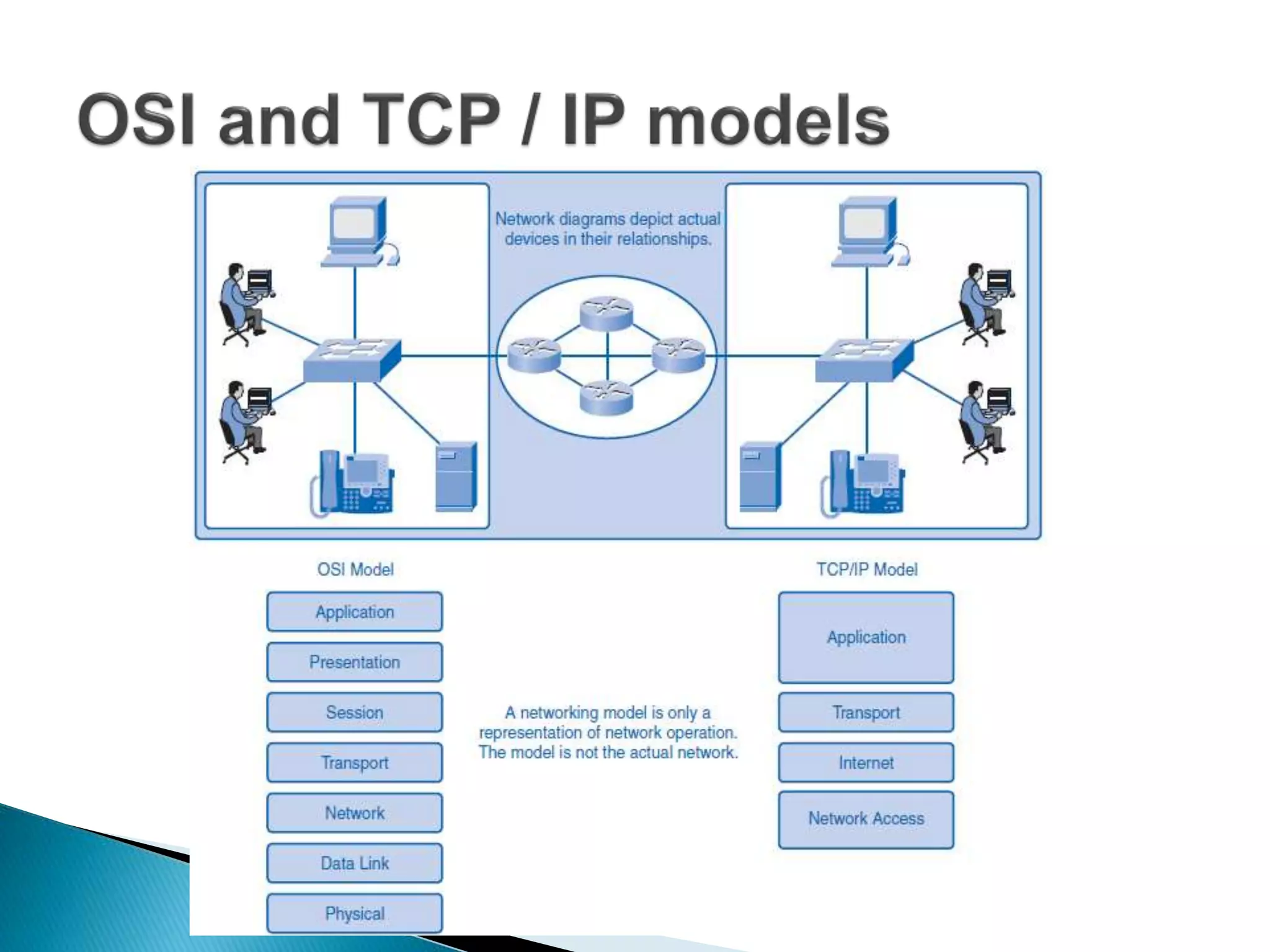
 OSI vs TCP /IP Model
 OSI model, provides an abstract description of the
network communication process.
 Important to know to understand the entire network
communication process.
 TCP / IP describes the functionality of the protocols that make up
the TCP/IP protocol suite.
 Important to understand how the process is implemented in current
networks.
3 Network Protocol Suit, Reference Models.pptx

3 Network Protocol Suit, Reference Models.pptx

  • 2.
     Protocols arerules used by anyone who communicates with another.  Protocols make communication successful.  The need for protocols also applies to network devices.  Rules for communication that must be strictly followed for successful host-to-host communication.
  • 3.
     Protocols define/ provide: ◦ The process to initiate and terminate communications between hosts. ◦ Message format. ◦ The way of intermediary devices share the information about the path to the destination. ◦ The method to handle update messages between intermediary devices. ◦ Technology Independence ◦ Standardization
  • 4.
     Rules orprotocols that work together to ensure successful communication are grouped into what is known as a protocol suite.  Example: TCP / IP
  • 5.
     Networking professionalsuse two networking models to communicate within the industry: 1. Protocol Models: ◦ A model that that closely matches the structure of a particular protocol suite. Example: TCP/IP Model 2. Reference Model: ◦ A model that provides a common reference for maintaining consistency within all types of network protocols and services.
  • 6.
     Reference Models: ◦Not intended to be implementation specification ◦ Aims to provide clearer understanding of the processes and function involved in communication.  Example: OSI Model / Internetwork Reference Model  OSI vs TCP /IP Model  OSI model, provides an abstract description of the network communication process.  Important to know to understand the entire network communication process.
  • 7.
     TCP /IP describes the functionality of the protocols that make up the TCP/IP protocol suite.  Important to understand how the process is implemented in current networks.