Customary Tenure Documentation and Inclusive PA
Zoning Practices: Case of CWS and PRWS
By Phann Sithan
WCS Northern Plains Community Technical Adviser
Content
• Introduction
• Objective of CT documentations
• Zoning and CT documentation
process
• Methodologies
• Conclusion
Introduction
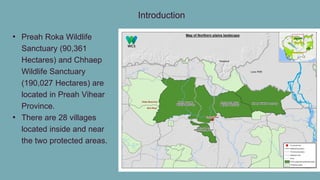
• Preah Roka Wildlife
Sanctuary (90,361
Hectares) and Chhaep
Wildlife Sanctuary
(190,027 Hectares) are
located in Preah Vihear
Province.
• There are 28 villages
located inside and near
the two protected areas.
Objective of CTD
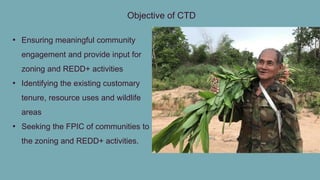
• Ensuring meaningful community
engagement and provide input for
zoning and REDD+ activities
• Identifying the existing customary
tenure, resource uses and wildlife
areas
• Seeking the FPIC of communities to
the zoning and REDD+ activities.
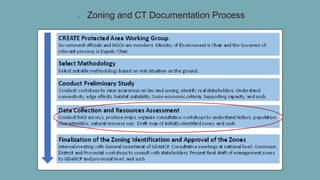
• Zoning and CT Documentation Process
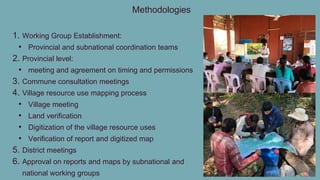
Methodologies
1. Working Group Establishment:
• Provincial and subnational coordination teams
2. Provincial level:
• meeting and agreement on timing and permissions
3. Commune consultation meetings
4. Village resource use mapping process
• Village meeting
• Land verification
• Digitization of the village resource uses
• Verification of report and digitized map
5. District meetings
6. Approval on reports and maps by subnational and
national working groups
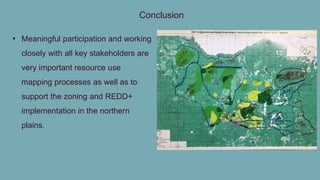
Conclusion
• Meaningful participation and working
closely with all key stakeholders are
very important resource use
mapping processes as well as to
support the zoning and REDD+
implementation in the northern
plains.
Thank You!

26 1115 cambodia 2 ct documentation by wcs

  • 1.
    Customary Tenure Documentationand Inclusive PA Zoning Practices: Case of CWS and PRWS By Phann Sithan WCS Northern Plains Community Technical Adviser
  • 2.
    Content • Introduction • Objectiveof CT documentations • Zoning and CT documentation process • Methodologies • Conclusion
  • 3.
    Introduction • Preah RokaWildlife Sanctuary (90,361 Hectares) and Chhaep Wildlife Sanctuary (190,027 Hectares) are located in Preah Vihear Province. • There are 28 villages located inside and near the two protected areas.
  • 4.
    Objective of CTD •Ensuring meaningful community engagement and provide input for zoning and REDD+ activities • Identifying the existing customary tenure, resource uses and wildlife areas • Seeking the FPIC of communities to the zoning and REDD+ activities.
  • 5.
    • Zoning andCT Documentation Process
  • 6.
    Methodologies 1. Working GroupEstablishment: • Provincial and subnational coordination teams 2. Provincial level: • meeting and agreement on timing and permissions 3. Commune consultation meetings 4. Village resource use mapping process • Village meeting • Land verification • Digitization of the village resource uses • Verification of report and digitized map 5. District meetings 6. Approval on reports and maps by subnational and national working groups
  • 7.
    Conclusion • Meaningful participationand working closely with all key stakeholders are very important resource use mapping processes as well as to support the zoning and REDD+ implementation in the northern plains.
  • 8.