Chapter 2.1.
MORAL RESPONSIBILITY
TRUST BETWEEN ENGINEERS AND SOCIETY
Prof. Dr. Günay Kocasoy
MEF UNIVERSITY
Tel : (0212) 359 44 76
(0532) 546 28 08
e-mail : kocasoyg@mef.edu.
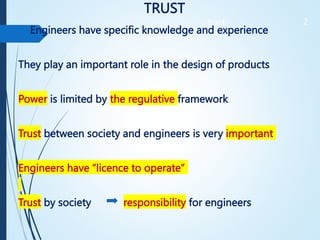
Engineers have specific knowledge and experience
They play an important role in the design of products
Power is limited by the regulative framework
Trust between society and engineers is very important
Engineers have “licence to operate”
Trust by society responsibility for engineers
TRUST
trust 2
3
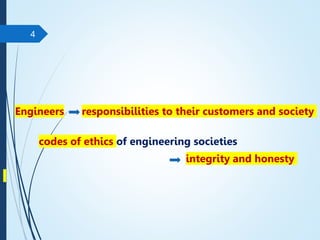
Engineers responsibilities to their customers and society
codes of ethics of engineering societies
integrity and honesty
4
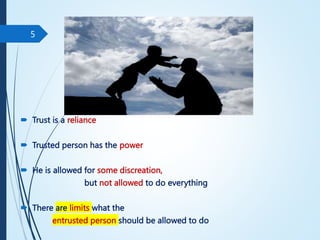
 Trust is a reliance
 Trusted person has the power
 He is allowed for some discreation,
but not allowed to do everything
 There are limits what the
entrusted person should be allowed to do
5
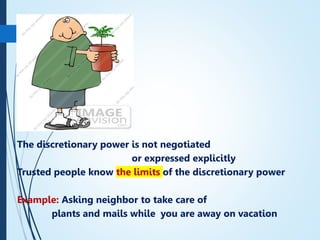
The discretionary power is not negotiated
or expressed explicitly
Trusted people know the limits of the discretionary power
Example: Asking neighbor to take care of
plants and mails while you are away on vacation
6
Trust can be:
a) trust to someone (or something)
b) trust in some respect
c) trust-depending on conditions such as context of action
You trust someone to do things to a degree
If he can not influence or change the situation for good
then he is trustworthy
7
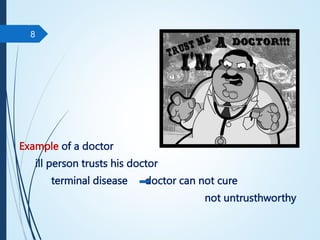
Example of a doctor
ill person trusts his doctor
terminal disease doctor can not cure
not untrusthworthy
8
Trusting an organization
Organization does not have intention
It has interests
Organization regulates intentions of its workers to
serve these interests
9
Trust should be developed and learned
Blind trust is not wise
Trustworthiness is not assessed continuously
There are tolerance limits for trustworthiness
If trusted person trespass these limits, then
trust should be reconsidered
Trust can be morally indecent if
directed at a morally bad end
10
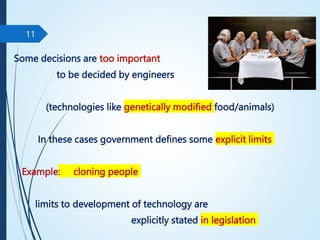
Some decisions are too important
to be decided by engineers
(technologies like genetically modified food/animals)
In these cases government defines some explicit limits
Example: cloning people
limits to development of technology are
explicitly stated in legislation
11
Trust can be;
 characteristics-based
 institutions-based
 process-based
12
Characteristics-based trust - from membership community
Institutions-based trust - from rules, codes of ethics
and professional standards of the institution
(company with ISO 9000 certificate)
Regulative framework produces institutions-based trust
Process-based trust - from developing relationship
between people
13
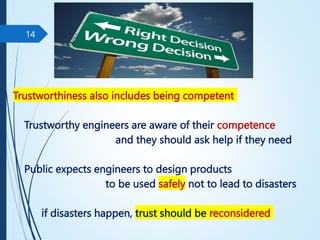
Trustworthiness also includes being competent
Trustworthy engineers are aware of their competence
and they should ask help if they need
Public expects engineers to design products
to be used safely not to lead to disasters
if disasters happen, trust should be reconsidered
14
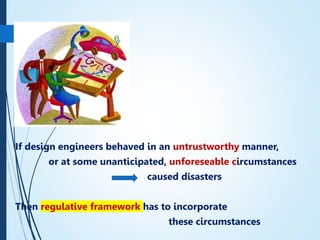
If design engineers behaved in an untrustworthy manner,
or at some unanticipated, unforeseable circumstances
caused disasters
Then regulative framework has to incorporate
these circumstances
15
If
If the regulative framework is not adequate,
trust in engineers is misplaced
Trustworthy and experienced engineers follow
the regulations
Trust in engineers is approved
16
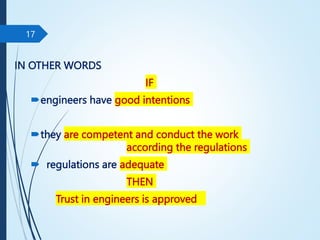
IN OTHER WORDS
IF
engineers have good intentions
they are competent and conduct the work
according the regulations
 regulations are adequate
THEN
Trust in engineers is approved
17
18

2.1 Moral Responsibility Engineering Ethics

  • 1.
    Chapter 2.1. MORAL RESPONSIBILITY TRUSTBETWEEN ENGINEERS AND SOCIETY Prof. Dr. Günay Kocasoy MEF UNIVERSITY Tel : (0212) 359 44 76 (0532) 546 28 08 e-mail : kocasoyg@mef.edu.
  • 2.
    Engineers have specificknowledge and experience They play an important role in the design of products Power is limited by the regulative framework Trust between society and engineers is very important Engineers have “licence to operate” Trust by society responsibility for engineers TRUST trust 2
  • 3.
  • 4.
    Engineers responsibilities totheir customers and society codes of ethics of engineering societies integrity and honesty 4
  • 5.
     Trust isa reliance  Trusted person has the power  He is allowed for some discreation, but not allowed to do everything  There are limits what the entrusted person should be allowed to do 5
  • 6.
    The discretionary poweris not negotiated or expressed explicitly Trusted people know the limits of the discretionary power Example: Asking neighbor to take care of plants and mails while you are away on vacation 6
  • 7.
    Trust can be: a)trust to someone (or something) b) trust in some respect c) trust-depending on conditions such as context of action You trust someone to do things to a degree If he can not influence or change the situation for good then he is trustworthy 7
  • 8.
    Example of adoctor ill person trusts his doctor terminal disease doctor can not cure not untrusthworthy 8
  • 9.
    Trusting an organization Organizationdoes not have intention It has interests Organization regulates intentions of its workers to serve these interests 9
  • 10.
    Trust should bedeveloped and learned Blind trust is not wise Trustworthiness is not assessed continuously There are tolerance limits for trustworthiness If trusted person trespass these limits, then trust should be reconsidered Trust can be morally indecent if directed at a morally bad end 10
  • 11.
    Some decisions aretoo important to be decided by engineers (technologies like genetically modified food/animals) In these cases government defines some explicit limits Example: cloning people limits to development of technology are explicitly stated in legislation 11
  • 12.
    Trust can be; characteristics-based  institutions-based  process-based 12
  • 13.
    Characteristics-based trust -from membership community Institutions-based trust - from rules, codes of ethics and professional standards of the institution (company with ISO 9000 certificate) Regulative framework produces institutions-based trust Process-based trust - from developing relationship between people 13
  • 14.
    Trustworthiness also includesbeing competent Trustworthy engineers are aware of their competence and they should ask help if they need Public expects engineers to design products to be used safely not to lead to disasters if disasters happen, trust should be reconsidered 14
  • 15.
    If design engineersbehaved in an untrustworthy manner, or at some unanticipated, unforeseable circumstances caused disasters Then regulative framework has to incorporate these circumstances 15
  • 16.
    If If the regulativeframework is not adequate, trust in engineers is misplaced Trustworthy and experienced engineers follow the regulations Trust in engineers is approved 16
  • 17.
    IN OTHER WORDS IF engineershave good intentions they are competent and conduct the work according the regulations  regulations are adequate THEN Trust in engineers is approved 17
  • 18.