IMMUNITY PARASITES MULTIPLE RESPONSES AGAINST PARASITE
eg. cattle responses to Boophilus tick
!
AVOIDANCE
GROOMING
ANTIBODY
EOSINOPHILS
GRANULOMA
PUSTULE
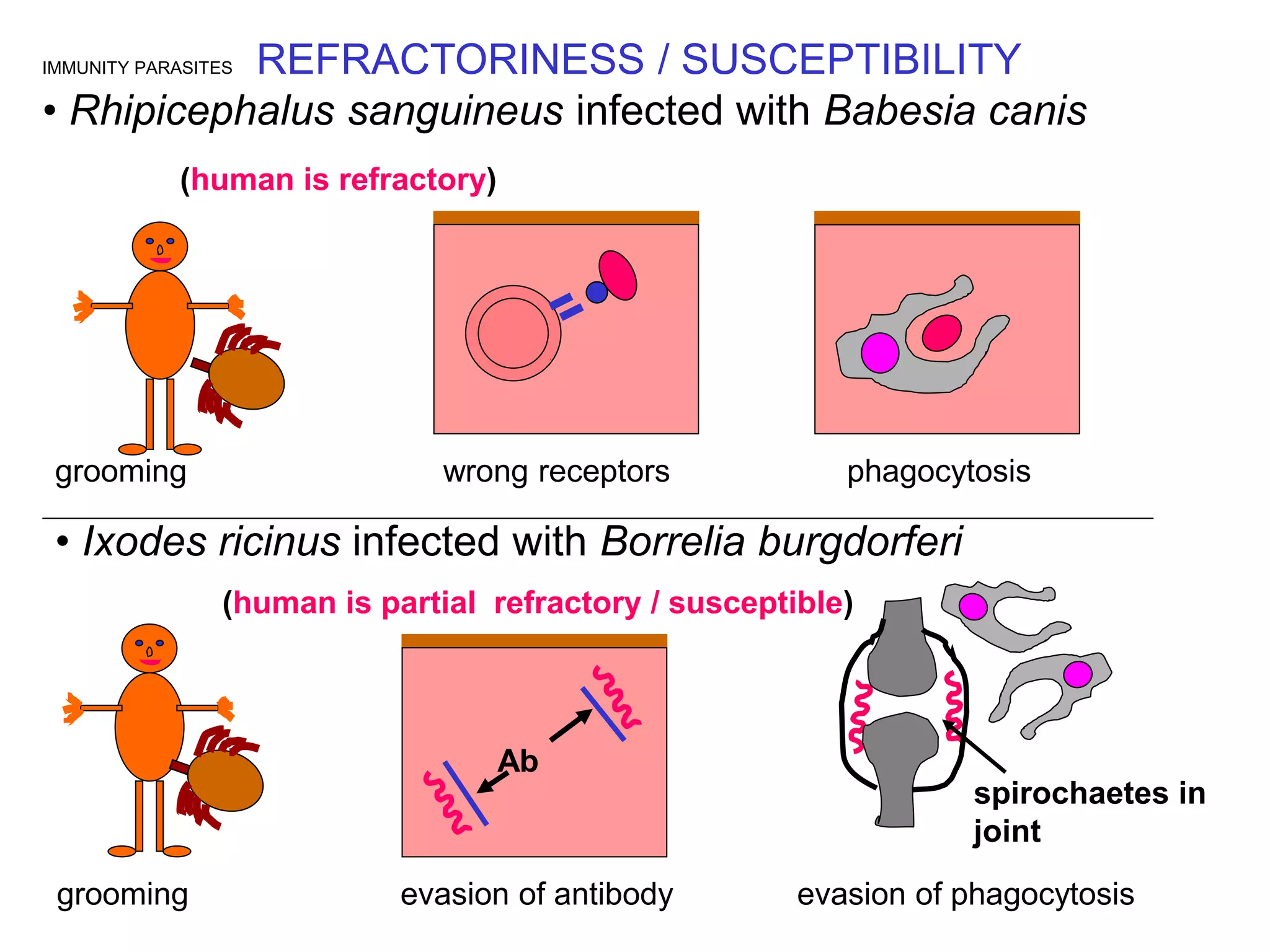
IMMUNITY PARASITES REFRACTORINESS / SUSCEPTIBILITY
• Rhipicephalus sanguineus infected with Babesia canis
grooming evasion of antibody evasion of phagocytosis
• Ixodes ricinus infected with Borrelia burgdorferi
Ab
grooming wrong receptors phagocytosis
(human is refractory)
(human is partial refractory / susceptible)
spirochaetes in
joint
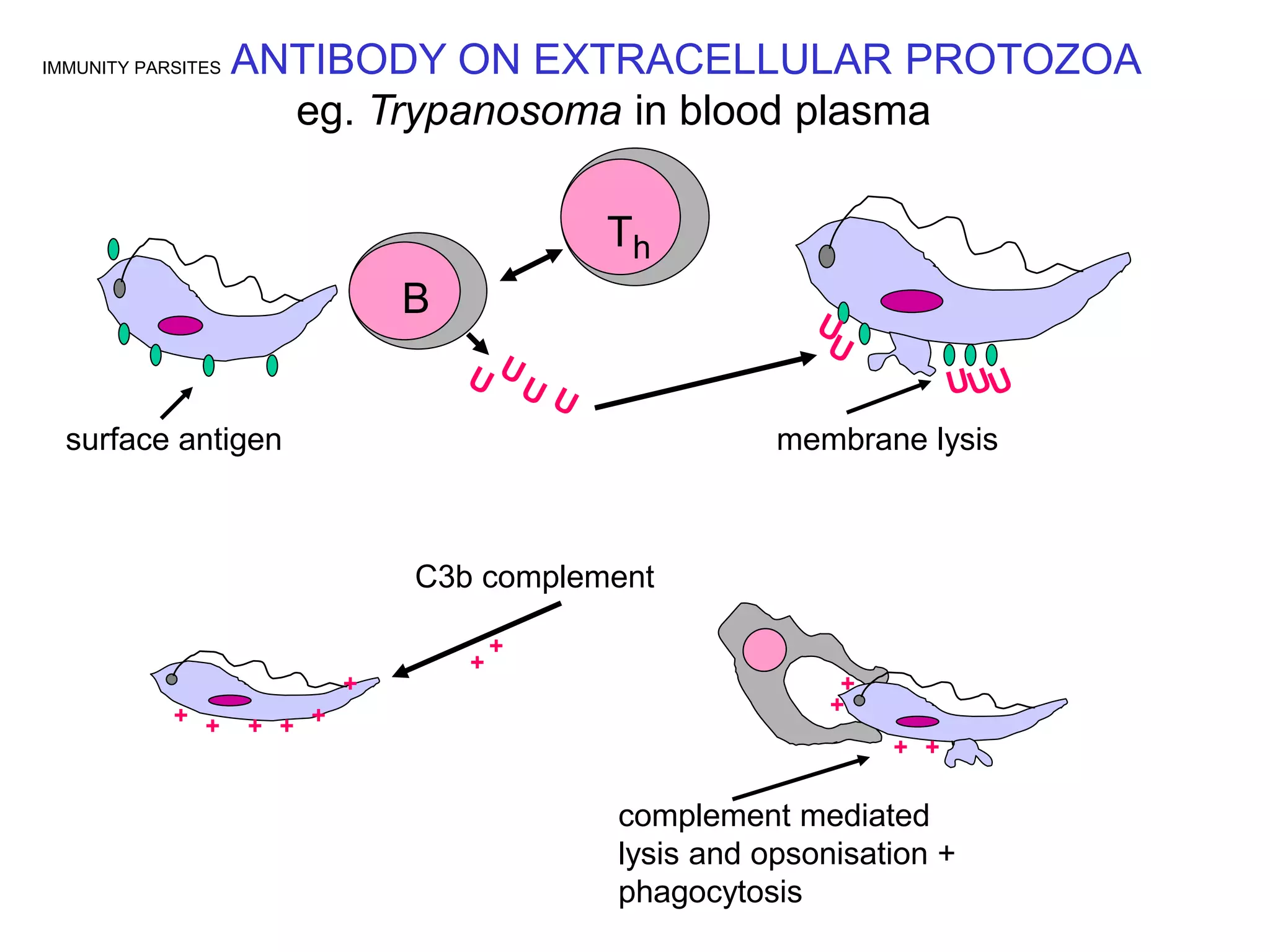
IMMUNITY PARSITES ANTIBODY ON EXTRACELLULAR PROTOZOA
eg. Trypanosoma in blood plasma
surface antigen membrane lysis
+
+
+
+
+
+
+
+
+
+
+
+
C3b complement
complement mediated
lysis and opsonisation +
phagocytosis
Th
B
IMMUNITY PARASITES IMMUNE EXPULSION OF GUT NEMATODES
U
U
B
Th
U U
secretory
antigen antibody
nematode inactivation nematode expulsion
stimulation of goblet cells
+ type 1 hypersensitivity
releasing mast cell amines
aid expulsion of inactive
worms
stimulatory factors
gut with goblet cells
IMMUNITY PARASITES CUTANEOUS HYPERSENSITIVITY - TYPE 1
Types 1 and 4 are both active against mites, ticks, fleas
• TYPE 1 produces amines leading to eosinophil
degranulation protein which is toxic to macro-parasites.
IgE antibody
antigen
histamine
serotonin
eosinophils basophils neutrophils
sensitised mast cell
degranulates when
exposed to antigen
attraction of granulocytes
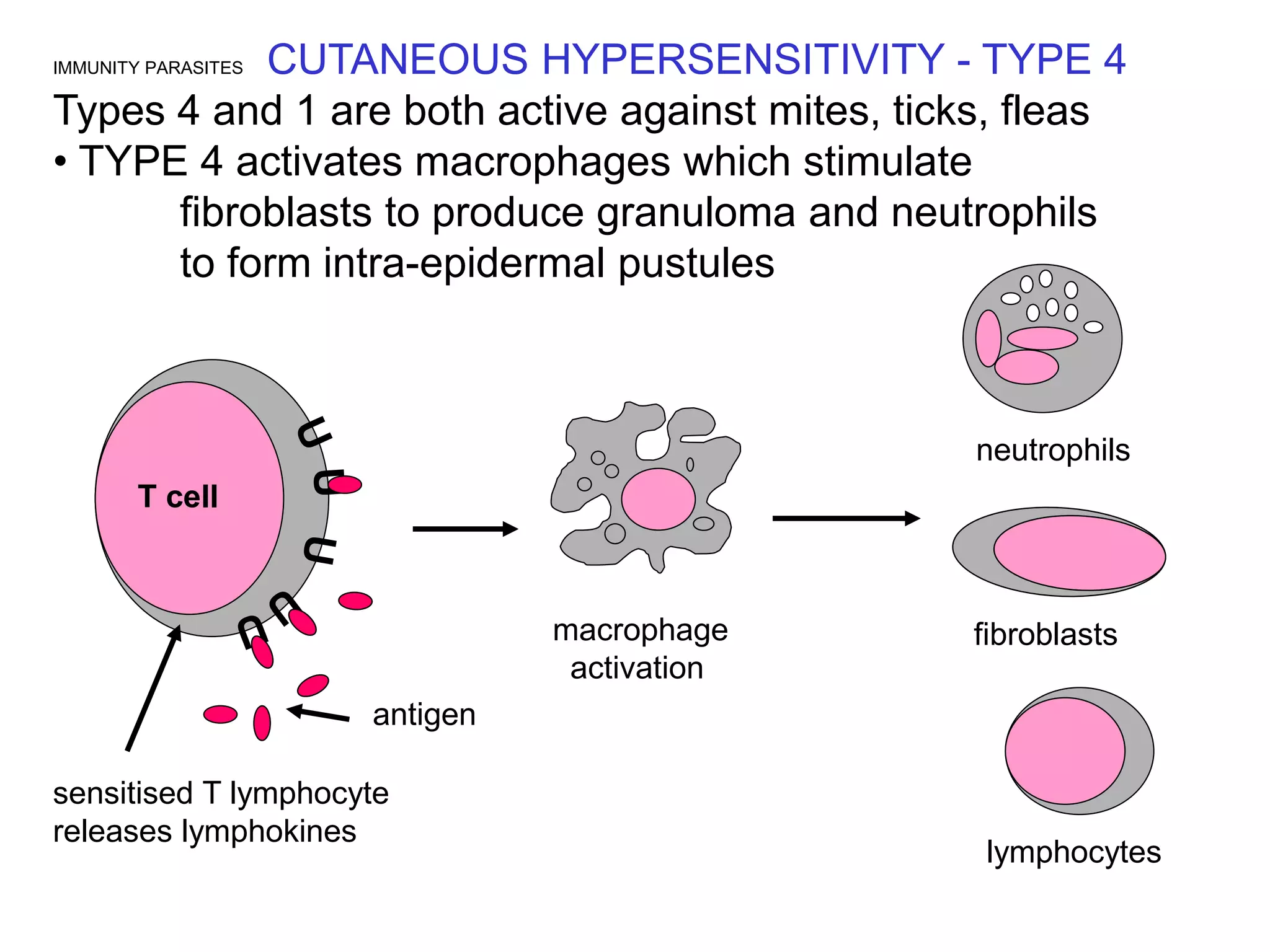
IMMUNITY PARASITES CUTANEOUS HYPERSENSITIVITY - TYPE 4
Types 4 and 1 are both active against mites, ticks, fleas
• TYPE 4 activates macrophages which stimulate
fibroblasts to produce granuloma and neutrophils
to form intra-epidermal pustules
T cell
sensitised T lymphocyte
releases lymphokines
macrophage
activation
neutrophils
lymphocytes
antigen
fibroblasts
IMMUNITY PARASITES EOSINOPHILS AGAINST HELMINTHS IN TISSUE
Antibody mediated cytotoxicity against Schistosoma,
Fasciola etc
• Secretory / excretory antigens stimulate production of
antibody from B lymphocytes and eosinophil
stimulation promoter from T lymphocytes.
• Antibody opsonises helminth larva, eosinophils
degranulate around it and kill it.
B
Th
antigen
Y
Y
Y Y
Y Fc
Fc Fc
antibody
eosinophil stimulation
degranulation
opsonisation
IMMUNITY PARASITES MACROPHAGE ACTIVATION AGAINST
INTRACELLULAR PROTOZOA (eg Leishmania)
• Type 4 hypersensitivity: antigen stimulates T
lymphocytes to produce interferon gamma. This activates
infected macrophages to produce NO and H2O2 and
extra lysosomal enzymes, all toxic to Leishmania
APC T cell
activated macrophage kills Leishmania
antigen
Leishmania in
parasitophorous
vesicle within
macrophage
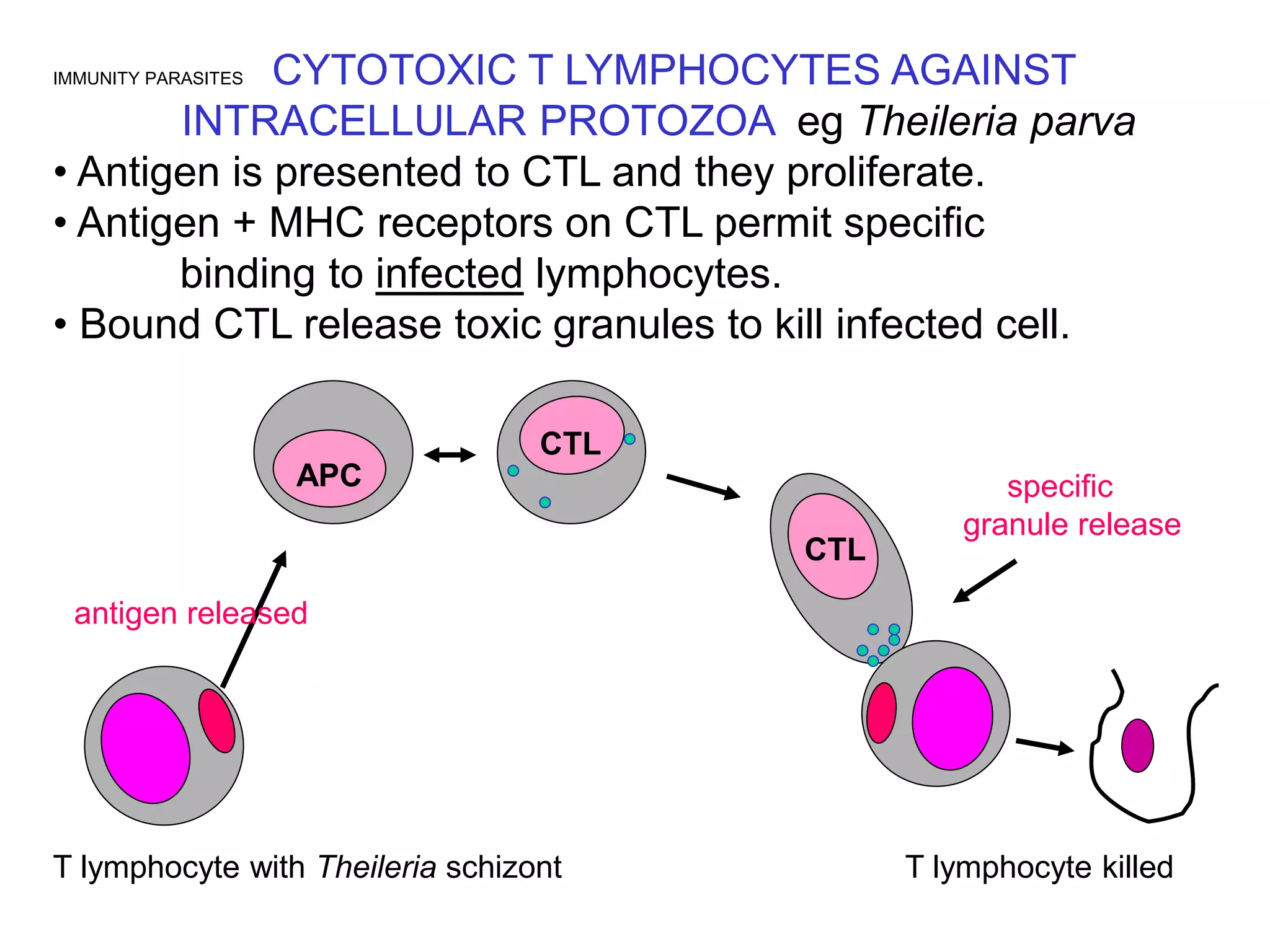
IMMUNITY PARASITES CYTOTOXIC T LYMPHOCYTES AGAINST
INTRACELLULAR PROTOZOA eg Theileria parva
• Antigen is presented to CTL and they proliferate.
• Antigen + MHC receptors on CTL permit specific
binding to infected lymphocytes.
• Bound CTL release toxic granules to kill infected cell.
T lymphocyte with Theileria schizont T lymphocyte killed
APC
CTL
CTL
antigen released
specific
granule release
IMMUNITY PARASITES EVASION OF ANTIBODY BY ANTIGENIC
VARIATION in Trypanosoma
• Trypanosoma antigens stimulate antibody production.
• These antigens can vary in successive generations of
Trypanosoma.
• Each new variant can evade the preceding antibody
response until new antibody is produced.
a
b
c
d
a b c d
Trypanosoma per
mm3 of blood,
variants a - d
Titre of antibody to
variants a - d
Time (each peak takes several weeks)

20-immunity-parasites.ppt

  • 1.
    IMMUNITY PARASITES MULTIPLERESPONSES AGAINST PARASITE eg. cattle responses to Boophilus tick ! AVOIDANCE GROOMING ANTIBODY EOSINOPHILS GRANULOMA PUSTULE
  • 2.
    IMMUNITY PARASITES REFRACTORINESS/ SUSCEPTIBILITY • Rhipicephalus sanguineus infected with Babesia canis grooming evasion of antibody evasion of phagocytosis • Ixodes ricinus infected with Borrelia burgdorferi Ab grooming wrong receptors phagocytosis (human is refractory) (human is partial refractory / susceptible) spirochaetes in joint
  • 3.
    IMMUNITY PARSITES ANTIBODYON EXTRACELLULAR PROTOZOA eg. Trypanosoma in blood plasma surface antigen membrane lysis + + + + + + + + + + + + C3b complement complement mediated lysis and opsonisation + phagocytosis Th B
  • 4.
    IMMUNITY PARASITES IMMUNEEXPULSION OF GUT NEMATODES U U B Th U U secretory antigen antibody nematode inactivation nematode expulsion stimulation of goblet cells + type 1 hypersensitivity releasing mast cell amines aid expulsion of inactive worms stimulatory factors gut with goblet cells
  • 5.
    IMMUNITY PARASITES CUTANEOUSHYPERSENSITIVITY - TYPE 1 Types 1 and 4 are both active against mites, ticks, fleas • TYPE 1 produces amines leading to eosinophil degranulation protein which is toxic to macro-parasites. IgE antibody antigen histamine serotonin eosinophils basophils neutrophils sensitised mast cell degranulates when exposed to antigen attraction of granulocytes
  • 6.
    IMMUNITY PARASITES CUTANEOUSHYPERSENSITIVITY - TYPE 4 Types 4 and 1 are both active against mites, ticks, fleas • TYPE 4 activates macrophages which stimulate fibroblasts to produce granuloma and neutrophils to form intra-epidermal pustules T cell sensitised T lymphocyte releases lymphokines macrophage activation neutrophils lymphocytes antigen fibroblasts
  • 7.
    IMMUNITY PARASITES EOSINOPHILSAGAINST HELMINTHS IN TISSUE Antibody mediated cytotoxicity against Schistosoma, Fasciola etc • Secretory / excretory antigens stimulate production of antibody from B lymphocytes and eosinophil stimulation promoter from T lymphocytes. • Antibody opsonises helminth larva, eosinophils degranulate around it and kill it. B Th antigen Y Y Y Y Y Fc Fc Fc antibody eosinophil stimulation degranulation opsonisation
  • 8.
    IMMUNITY PARASITES MACROPHAGEACTIVATION AGAINST INTRACELLULAR PROTOZOA (eg Leishmania) • Type 4 hypersensitivity: antigen stimulates T lymphocytes to produce interferon gamma. This activates infected macrophages to produce NO and H2O2 and extra lysosomal enzymes, all toxic to Leishmania APC T cell activated macrophage kills Leishmania antigen Leishmania in parasitophorous vesicle within macrophage
  • 9.
    IMMUNITY PARASITES CYTOTOXICT LYMPHOCYTES AGAINST INTRACELLULAR PROTOZOA eg Theileria parva • Antigen is presented to CTL and they proliferate. • Antigen + MHC receptors on CTL permit specific binding to infected lymphocytes. • Bound CTL release toxic granules to kill infected cell. T lymphocyte with Theileria schizont T lymphocyte killed APC CTL CTL antigen released specific granule release
  • 10.
    IMMUNITY PARASITES EVASIONOF ANTIBODY BY ANTIGENIC VARIATION in Trypanosoma • Trypanosoma antigens stimulate antibody production. • These antigens can vary in successive generations of Trypanosoma. • Each new variant can evade the preceding antibody response until new antibody is produced. a b c d a b c d Trypanosoma per mm3 of blood, variants a - d Titre of antibody to variants a - d Time (each peak takes several weeks)