Q-Centrix conducted an anonymous survey of 320 C-suite, senior-level and quality professionals from hospitals
around the country to learn their perceptions of the current state of readmissions at their hospitals and their
strategies for readmission reduction.
Most commonly-used strategies
55%Expect to
be penalized
Completing a medication
reconciliation process
Educating patients and patient
caregivers pre-discharge
Conducting phone calls or other
communication post-discharge
Less than 1 in 5 use
technology specifically
designed to manage
readmission risk.
Conducting in-home visits post-discharge92%
87%
84%
26%
Using technology specifically designed
to manage readmission risk
No formal strategy
18%
3%
Least commonly-used strategies
Penalty
of <1%
47%
40%
Penalty
of 1-1.9%
9%
Penalty
of 2-2.9%
4%
Penalty
of 3%
Anticipated Penalty
Percentage*
*Of non-exempt hospitals expecting a penalty
23%15%
and, on average, are employing 4.5 different reduction strategies...
of C-Suites
= Extremely Confident
of Quality Professionals
= Extremely Confident
}
Visit www.q-centrix.com/readmission-reduction for
readmission reduction resources and best practices.
linkedin.com/company/q-centrix
twitter.com/qcentrix
FY 13 FY 14 FY 15 Survey
64%
66%
78%
55%
Hospitals are confident in their ability to reduce readmissions...
but the percentage expecting penalties may be too low.
Nearly three-quarters of
hospitals describe themselves
as “somewhat” or “extremely”
confident in their ability to
reduce readmissions.
74%
VS
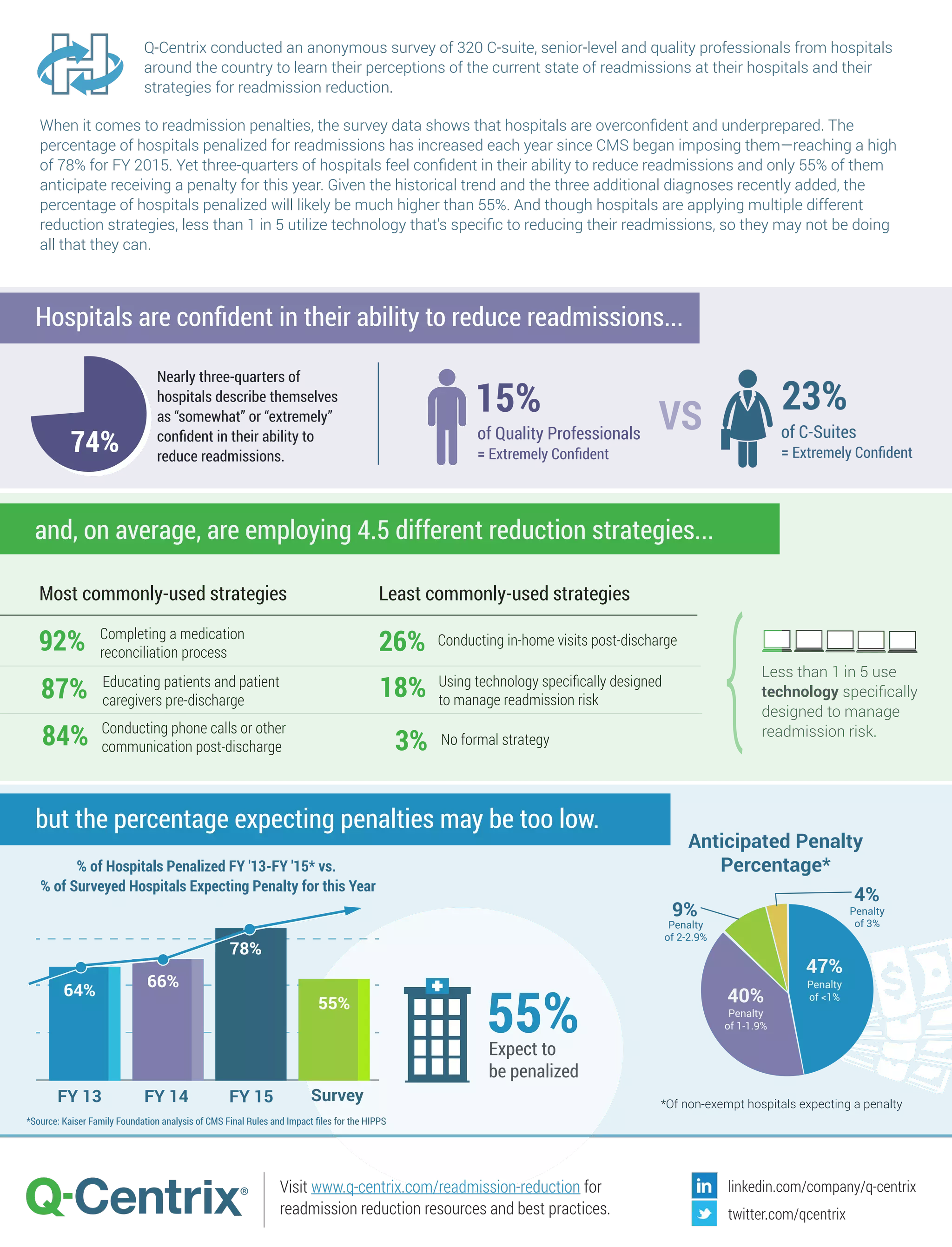
When it comes to readmission penalties, the survey data shows that hospitals are overconfident and underprepared. The
percentage of hospitals penalized for readmissions has increased each year since CMS began imposing them—reaching a high
of 78% for FY 2015. Yet three-quarters of hospitals feel confident in their ability to reduce readmissions and only 55% of them
anticipate receiving a penalty for this year. Given the historical trend and the three additional diagnoses recently added, the
percentage of hospitals penalized will likely be much higher than 55%. And though hospitals are applying multiple different
reduction strategies, less than 1 in 5 utilize technology that's specific to reducing their readmissions, so they may not be doing
all that they can.
% of Hospitals Penalized FY '13-FY '15* vs.
% of Surveyed Hospitals Expecting Penalty for this Year
*Source: Kaiser Family Foundation analysis of CMS Final Rules and Impact files for the HIPPS

Infographic: 2015 Hospital Readmission Survey

  • 1.
    Q-Centrix conducted ananonymous survey of 320 C-suite, senior-level and quality professionals from hospitals around the country to learn their perceptions of the current state of readmissions at their hospitals and their strategies for readmission reduction. Most commonly-used strategies 55%Expect to be penalized Completing a medication reconciliation process Educating patients and patient caregivers pre-discharge Conducting phone calls or other communication post-discharge Less than 1 in 5 use technology specifically designed to manage readmission risk. Conducting in-home visits post-discharge92% 87% 84% 26% Using technology specifically designed to manage readmission risk No formal strategy 18% 3% Least commonly-used strategies Penalty of <1% 47% 40% Penalty of 1-1.9% 9% Penalty of 2-2.9% 4% Penalty of 3% Anticipated Penalty Percentage* *Of non-exempt hospitals expecting a penalty 23%15% and, on average, are employing 4.5 different reduction strategies... of C-Suites = Extremely Confident of Quality Professionals = Extremely Confident } Visit www.q-centrix.com/readmission-reduction for readmission reduction resources and best practices. linkedin.com/company/q-centrix twitter.com/qcentrix FY 13 FY 14 FY 15 Survey 64% 66% 78% 55% Hospitals are confident in their ability to reduce readmissions... but the percentage expecting penalties may be too low. Nearly three-quarters of hospitals describe themselves as “somewhat” or “extremely” confident in their ability to reduce readmissions. 74% VS When it comes to readmission penalties, the survey data shows that hospitals are overconfident and underprepared. The percentage of hospitals penalized for readmissions has increased each year since CMS began imposing them—reaching a high of 78% for FY 2015. Yet three-quarters of hospitals feel confident in their ability to reduce readmissions and only 55% of them anticipate receiving a penalty for this year. Given the historical trend and the three additional diagnoses recently added, the percentage of hospitals penalized will likely be much higher than 55%. And though hospitals are applying multiple different reduction strategies, less than 1 in 5 utilize technology that's specific to reducing their readmissions, so they may not be doing all that they can. % of Hospitals Penalized FY '13-FY '15* vs. % of Surveyed Hospitals Expecting Penalty for this Year *Source: Kaiser Family Foundation analysis of CMS Final Rules and Impact files for the HIPPS