The 2014 Avoca Report “Intelligent” Approaches to Clinical Development Executive Summary 
September 2014
2 
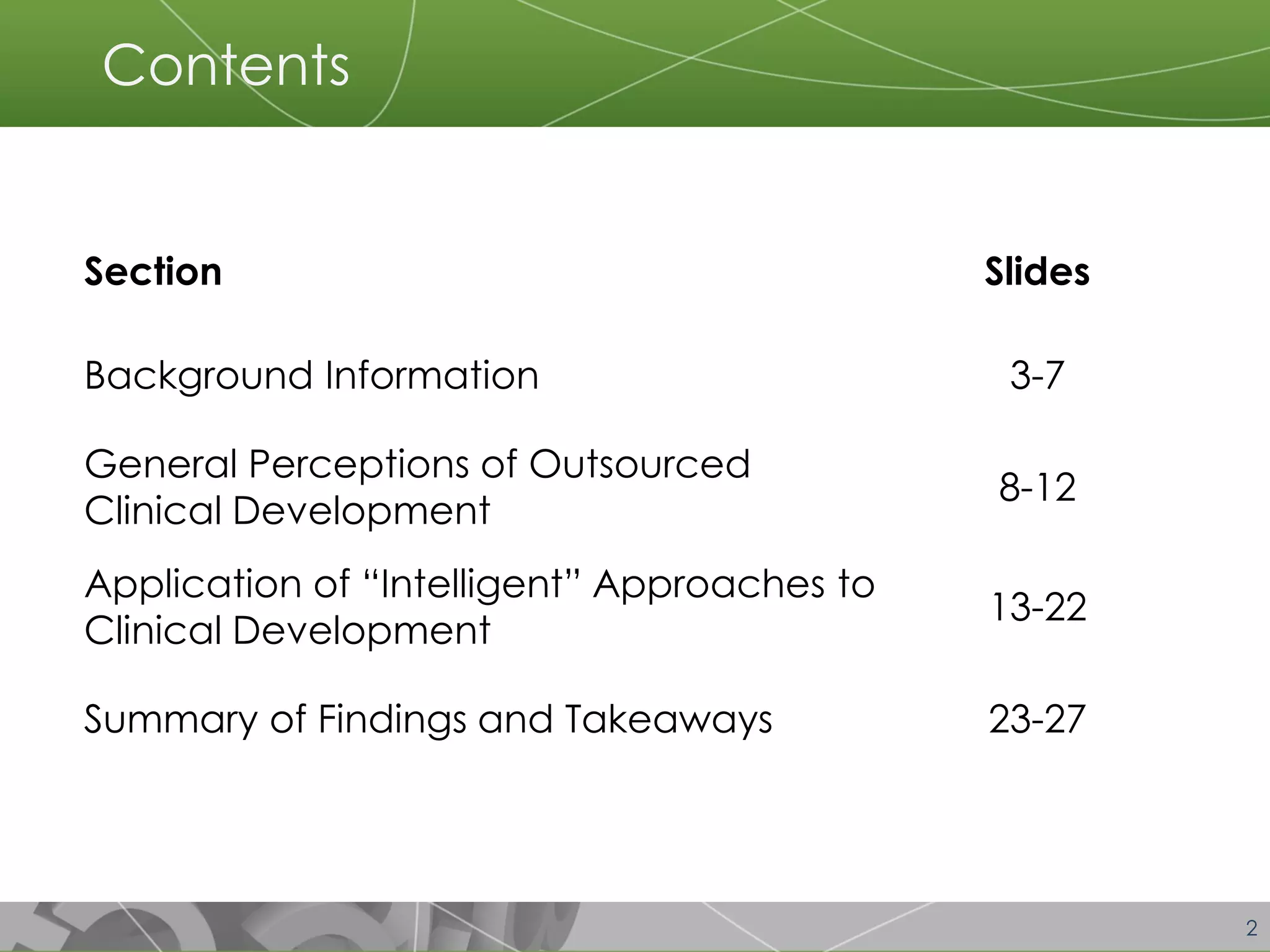
Contents 
Section 
Slides 
Background Information 
3-7 
General Perceptions of Outsourced Clinical Development 
8-12 
Application of “Intelligent” Approaches to Clinical Development 
13-22 
Summary of Findings and Takeaways 
23-27
3 
2014 Avoca Research Overview 
Introduction 
Each year The Avoca Group surveys industry executives and managers to understand trends in clinical development, with a particular focus on outsourcing dynamics and relationships between research sponsors and providers. 
One of the recurring themes that Avoca has heard via discussions and engagements with biopharmaceutical companies and providers over the past several years relates to the trend towards utilizing more “intelligent” approaches to clinical development to enhance R&D efficiency and effectiveness. Consequently, in this year’s industry review, Avoca chose to perform a comprehensive assessment of how “intelligent,” data-driven approaches are being utilized in outsourced clinical development today, from the perspective of both sponsor organizations as well as the service providers that support them. 
This report serves as an Executive Summary of key findings from the research.
4 
2014 Avoca Research Overview 
Areas Explored 
●Application of “Intelligent” Approaches: Frequency of use in key areas of interest; rate of advancement in these areas over the past two years 
●Contributing Forces: Extent to which Sponsors and Providers positively or negatively contribute to the usage of “intelligent” approaches 
●Satisfaction with “Intelligent” Approaches: Level of satisfaction with application in key areas of interest; variability in Provider application 
●Engagement with CROs: Early engagement of partners in protocol and development planning 
●Change Management Initiatives: Experience with technology, training, and other implementation and change management solutions
5 
2014 Avoca Research Overview 
Definitions 
Respondents were provided with the following definition of “intelligent” clinical development at the beginning of the survey: 
For the purposes of this survey, “intelligent” clinical development approaches are defined as those that make use of operational (e.g. performance) and/or clinical data, along with appropriate analytical techniques, in order to optimize aspects of clinical development such as protocol design, Investigator selection, patient recruitment approaches, resource allocation (e.g. risk-based monitoring), etc. For example: 
–“Intelligent” approaches to overall protocol design might include adaptive study designs, i.e. those adjusted during the course of a study based on biomarker or clinical study data gathered during the study. 
–“Intelligent” approaches to procedural or eligibility aspects of protocols might include examination of data from previous studies to identify procedures/criteria associated with high levels of protocol violations, cost, screen failures, etc. compared to the value of the data received. 
–“Intelligent” approaches to selecting sites, regions, providers, or patient recruitment approaches might use performance databases to identify suitability for particular types of studies. 
–“Intelligent” approaches to project management/oversight might include data-based identification of areas/periods of low/high risk, in order to allocate oversight resources accordingly.
6 
Respondent Demographics: Sponsors 
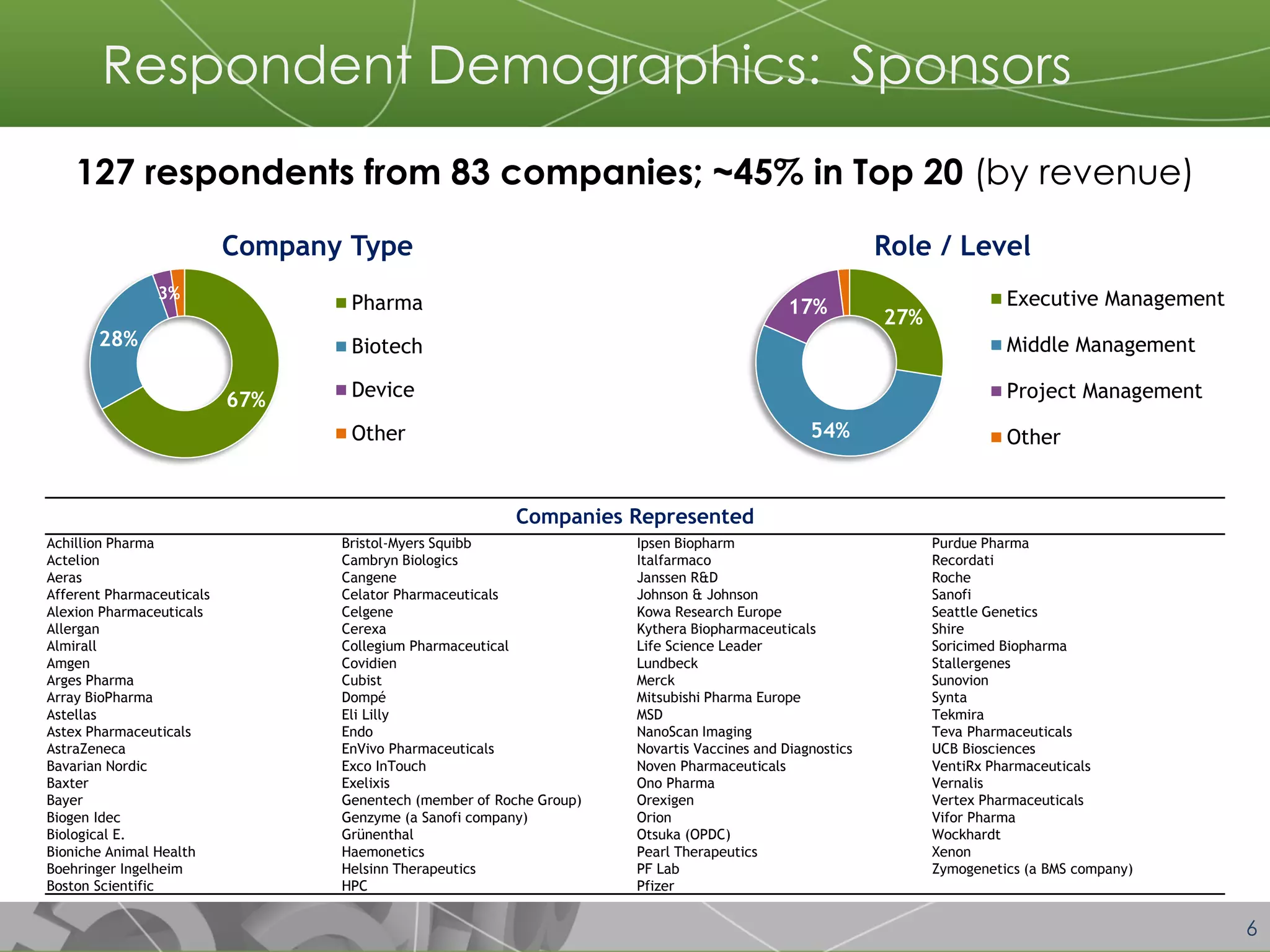
127 respondents from 83 companies; ~45% in Top 20 (by revenue) 
67% 
28% 
3% 
Pharma 
Biotech 
Device 
Other 
Company Type 
27% 
54% 
17% 
Executive Management 
Middle Management 
Project Management 
Other 
Role / Level 
Achillion Pharma 
Bristol-Myers Squibb 
Ipsen Biopharm 
Purdue Pharma 
Actelion 
Cambryn Biologics 
Italfarmaco 
Recordati 
Aeras 
Cangene 
Janssen R&D 
Roche 
Afferent Pharmaceuticals 
Celator Pharmaceuticals 
Johnson & Johnson 
Sanofi 
Alexion Pharmaceuticals 
Celgene 
Kowa Research Europe 
Seattle Genetics 
Allergan 
Cerexa 
Kythera Biopharmaceuticals 
Shire 
Almirall 
Collegium Pharmaceutical 
Life Science Leader 
Soricimed Biopharma 
Amgen 
Covidien 
Lundbeck 
Stallergenes 
Arges Pharma 
Cubist 
Merck 
Sunovion 
Array BioPharma 
Dompé 
Mitsubishi Pharma Europe 
Synta 
Astellas 
Eli Lilly 
MSD 
Tekmira 
Astex Pharmaceuticals 
Endo 
NanoScan Imaging 
Teva Pharmaceuticals 
AstraZeneca 
EnVivo Pharmaceuticals 
Novartis Vaccines and Diagnostics 
UCB Biosciences 
Bavarian Nordic 
Exco InTouch 
Noven Pharmaceuticals 
VentiRx Pharmaceuticals 
Baxter 
Exelixis 
Ono Pharma 
Vernalis 
Bayer 
Genentech (member of Roche Group) 
Orexigen 
Vertex Pharmaceuticals 
Biogen Idec 
Genzyme (a Sanofi company) 
Orion 
Vifor Pharma 
Biological E. 
Grünenthal 
Otsuka (OPDC) 
Wockhardt 
Bioniche Animal Health 
Haemonetics 
Pearl Therapeutics 
Xenon 
Boehringer Ingelheim 
Helsinn Therapeutics 
PF Lab 
Zymogenetics (a BMS company) 
Boston Scientific 
HPC 
Pfizer 
Companies Represented
7 
Respondent Demographics: Providers 
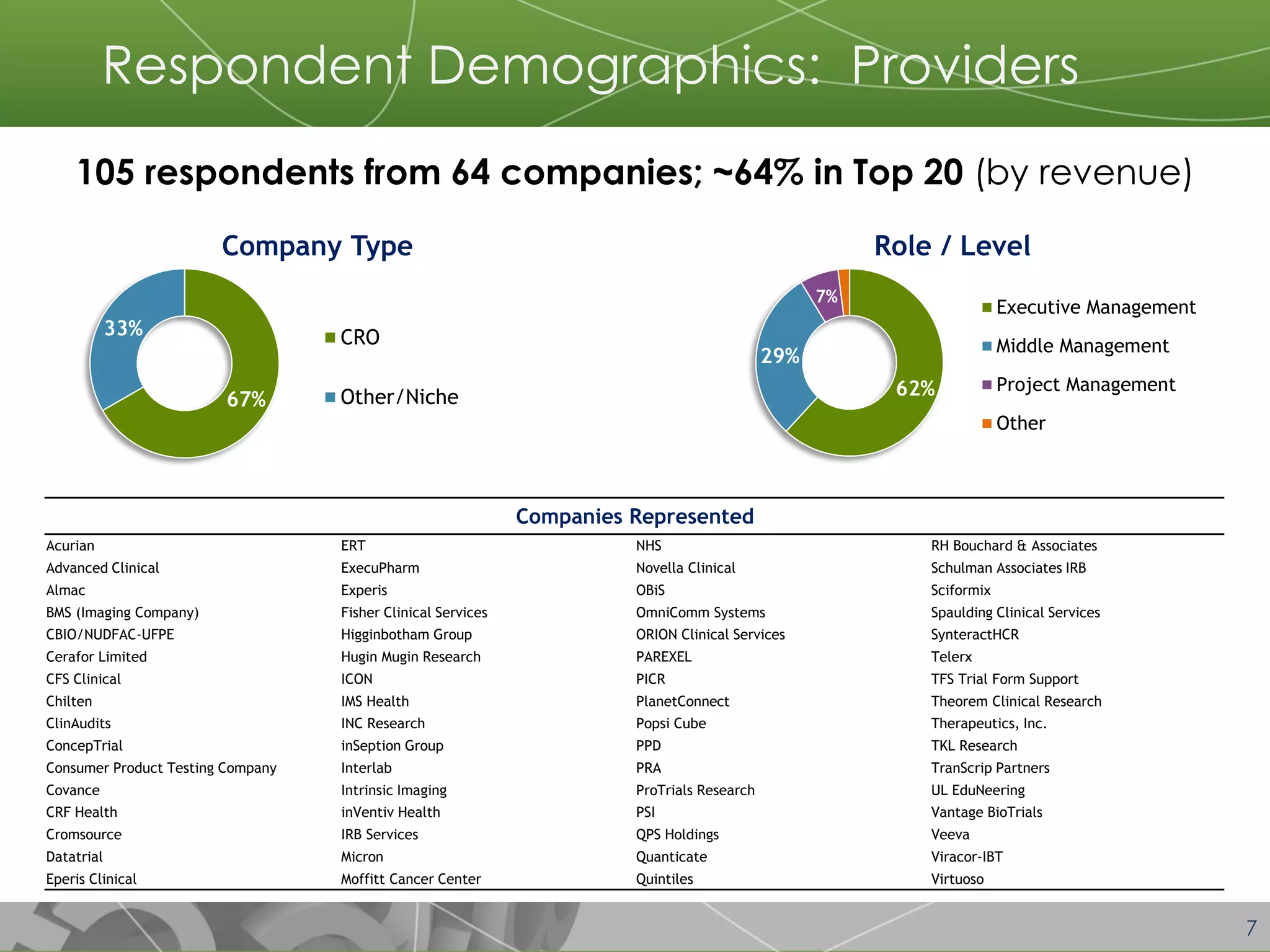
105 respondents from 64 companies; ~64% in Top 20 (by revenue) 
67% 
33% 
CRO 
Other/Niche 
62% 
29% 
7% 
Executive Management 
Middle Management 
Project Management 
Other 
Acurian 
ERT 
NHS 
RH Bouchard & Associates 
Advanced Clinical 
ExecuPharm 
Novella Clinical 
Schulman Associates IRB 
Almac 
Experis 
OBiS 
Sciformix 
BMS (Imaging Company) 
Fisher Clinical Services 
OmniComm Systems 
Spaulding Clinical Services 
CBIO/NUDFAC-UFPE 
Higginbotham Group 
ORION Clinical Services 
SynteractHCR 
Cerafor Limited 
Hugin Mugin Research 
PAREXEL 
Telerx 
CFS Clinical 
ICON 
PICR 
TFS Trial Form Support 
Chilten 
IMS Health 
PlanetConnect 
Theorem Clinical Research 
ClinAudits 
INC Research 
Popsi Cube 
Therapeutics, Inc. 
ConcepTrial 
inSeption Group 
PPD 
TKL Research 
Consumer Product Testing Company 
Interlab 
PRA 
TranScrip Partners 
Covance 
Intrinsic Imaging 
ProTrials Research 
UL EduNeering 
CRF Health 
inVentiv Health 
PSI 
Vantage BioTrials 
Cromsource 
IRB Services 
QPS Holdings 
Veeva 
Datatrial 
Micron 
Quanticate 
Viracor-IBT 
Eperis Clinical 
Moffitt Cancer Center 
Quintiles 
Virtuoso 
Companies Represented 
Company Type 
Role / Level
General Perceptions of Outsourced Clinical Development
9 
4% 
44% 
12% 
67% 
41% 
55% 
52% 
71% 
21% 
35% 
23% 
4% 
15% 
10% 
20% 
17% 
The work that has been done for you by Clinical Service Providers (including but not limited to CROs)? 
The value that you have received for the money spent on your Clinical Service Providers (including but not limited to CROs)? 
The quality delivered by your Clinical Service Providers (including but not limited to CROs)? 
The quality that your company has delivered for its sponsors in the last 3 years? 
Your relationships with the sponsors with which you work? 
SPONSORS 
PROVIDERS 
N 
126 
123 
126 
102 
101 
Very Satisfied 
Generally Satisfied 
Neither Satisfied Nor Dissatisfied 
Generally Dissatisfied 
Very Dissatisfied 
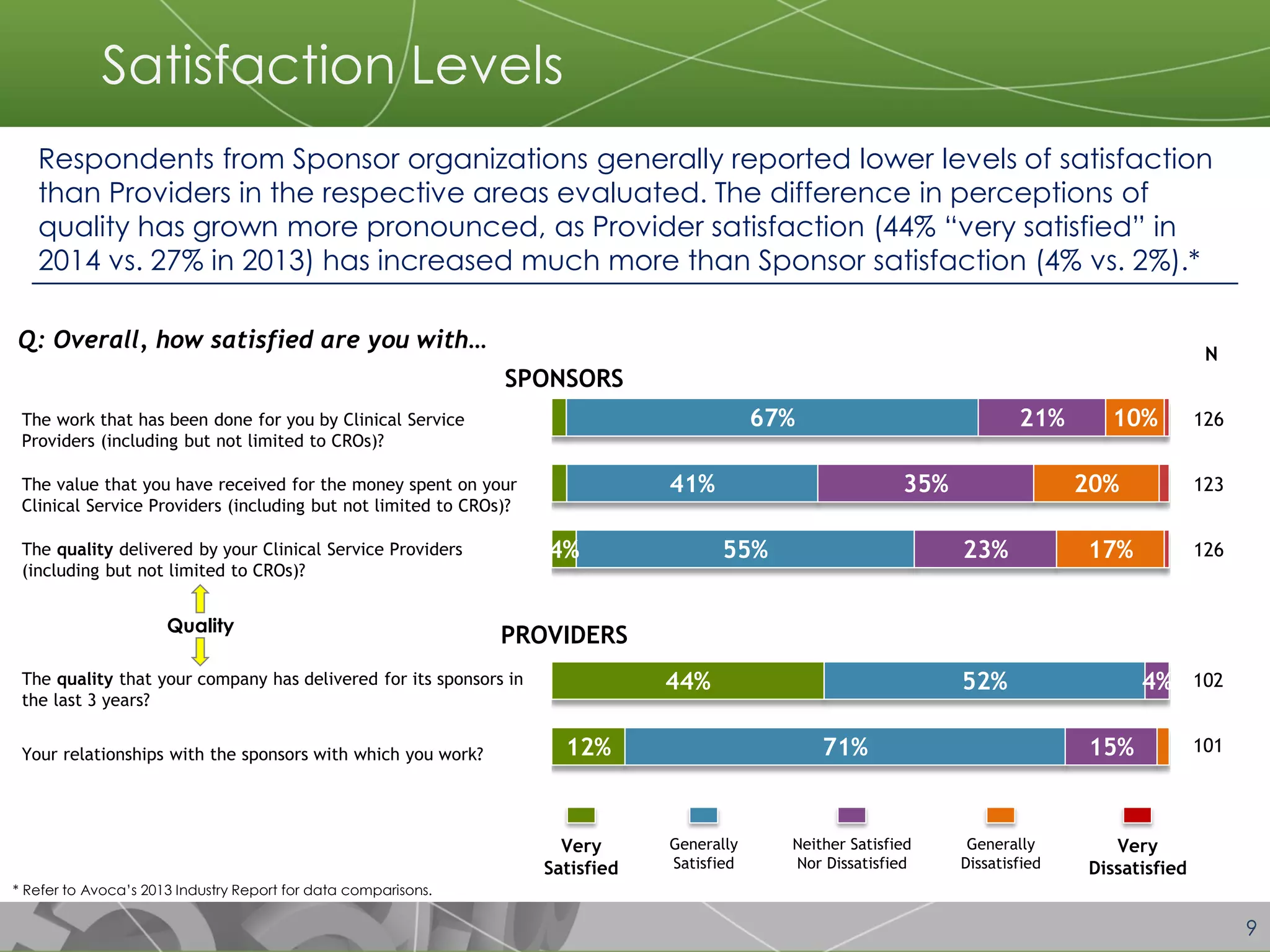
Respondents from Sponsor organizations generally reported lower levels of satisfaction than Providers in the respective areas evaluated. The difference in perceptions of quality has grown more pronounced, as Provider satisfaction (44% “very satisfied” in 2014 vs. 27% in 2013) has increased much more than Sponsor satisfaction (4% vs. 2%).* 
Quality 
Q: Overall, how satisfied are you with… 
Satisfaction Levels 
* Refer to Avoca’s 2013 Industry Report for data comparisons.
10 
9% 
9% 
19% 
32% 
43% 
51% 
25% 
5% 
4% 
4% 
Sponsors 
Providers 
We are optimally efficient 
We could theoretically improve our efficiency by 1-10% 
We could theoretically improve our efficiency by 11-25% 
We could theoretically improve our efficiency by 26-50% 
We could theoretically improve our efficiency by >50% 
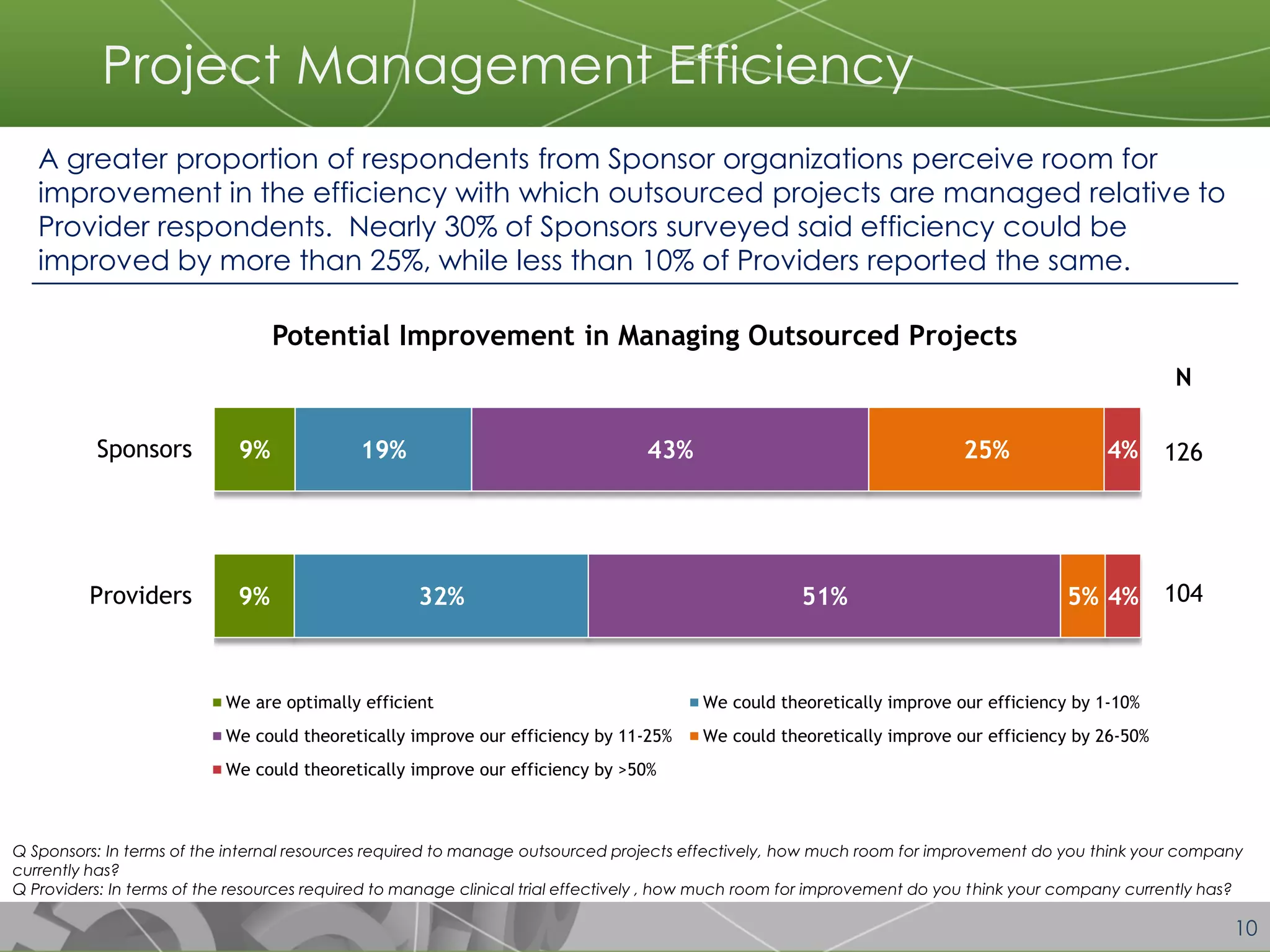
Q Sponsors: In terms of the internal resources required to manage outsourced projects effectively, how much room for improvement do you think your company currently has? Q Providers: In terms of the resources required to manage clinical trial effectively , how much room for improvement do you think your company currently has? 
Potential Improvement in Managing Outsourced Projects 
N 
126 
104 
A greater proportion of respondents from Sponsor organizations perceive room for improvement in the efficiency with which outsourced projects are managed relative to Provider respondents. Nearly 30% of Sponsors surveyed said efficiency could be improved by more than 25%, while less than 10% of Providers reported the same. 
Project Management Efficiency
11 
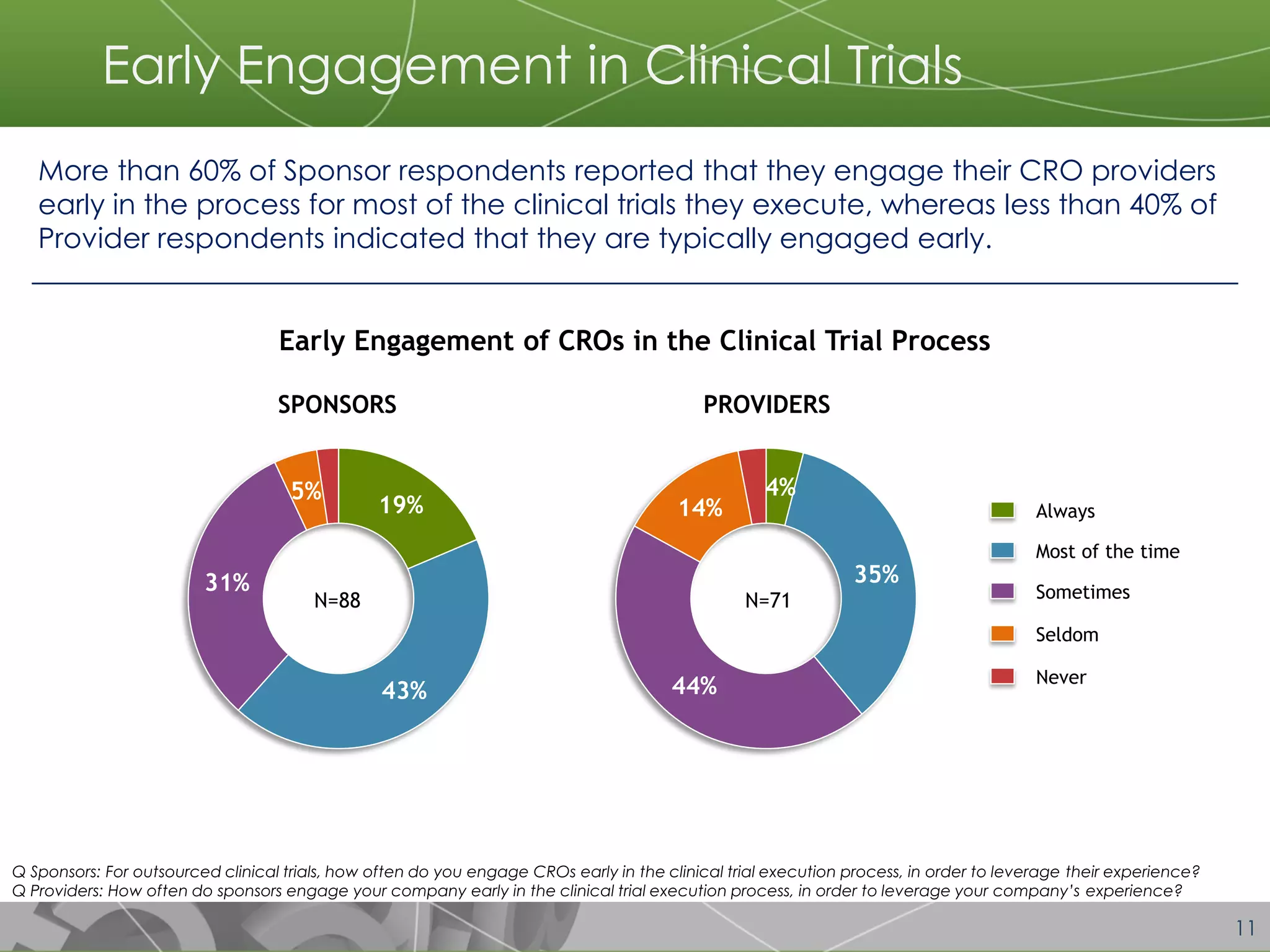
Early Engagement in Clinical Trials 
Q Sponsors: For outsourced clinical trials, how often do you engage CROs early in the clinical trial execution process, in order to leverage their experience? 
Q Providers: How often do sponsors engage your company early in the clinical trial execution process, in order to leverage your company’s experience? 
More than 60% of Sponsor respondents reported that they engage their CRO providers early in the process for most of the clinical trials they execute, whereas less than 40% of Provider respondents indicated that they are typically engaged early. 
Early Engagement of CROs in the Clinical Trial Process 
N=88 
19% 
43% 
31% 
5% 
4% 
35% 
44% 
14% 
Most of the time 
Always 
Sometimes 
Seldom 
Never 
SPONSORS 
PROVIDERS 
N=71
12 
Q Sponsors: For outsourced clinical trials, how often do you collaborate with your CROs on protocol design? Q Providers: How often do sponsors collaborate with your company on protocol design? Q Sponsors: To what extent do you feel that collaboration with CROs on protocol design improves quality? Q Providers: To what extent do you feel that your company’s collaboration with sponsors on protocol design improves quality? 
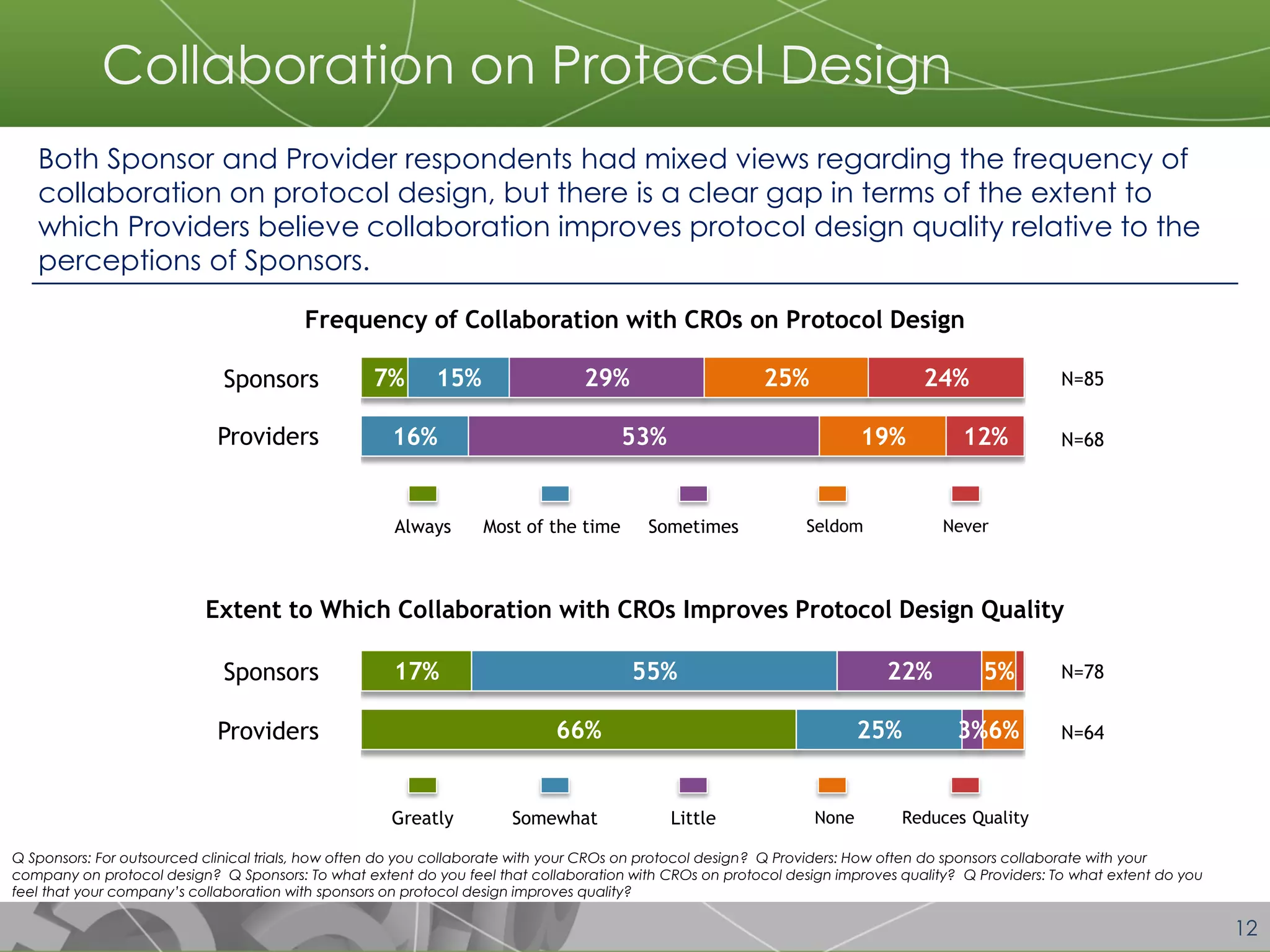
Collaboration on Protocol Design 
Both Sponsor and Provider respondents had mixed views regarding the frequency of collaboration on protocol design, but there is a clear gap in terms of the extent to which Providers believe collaboration improves protocol design quality relative to the perceptions of Sponsors. 
7% 
17% 
66% 
15% 
16% 
55% 
25% 
29% 
53% 
22% 
3% 
25% 
19% 
5% 
6% 
24% 
12% 
N=85 
Always 
Most of the time 
Sometimes 
Seldom 
Sponsors 
Providers 
Sponsors 
Providers 
N=68 
N=78 
N=64 
Frequency of Collaboration with CROs on Protocol Design 
Never 
Extent to Which Collaboration with CROs Improves Protocol Design Quality 
Greatly 
Somewhat 
Little 
None 
Reduces Quality
Application of “Intelligent” Approaches to Clinical Development
14 
0% 
10% 
20% 
30% 
40% 
50% 
60% 
70% 
80% 
Region selection 
Site selection 
Cost benchmarking/management 
Provider selection 
Project management/oversight 
Protocol procedures/eligibility criteria 
Data collection tools 
Overall protocol designs 
Patient/volunteer recruitment 
Monitoring 
Sponsors 
Providers 
Q Sponsors: Approximately what percentage of clinical trials [conducted in-house] have employed “intelligent” (data-driven) approaches to each of the below activities? Q Providers: For approximately what percentage of clinical trials has your company employed “intelligent” (data- driven) approaches to each of the below activities? 
Most respondents from both Sponsor and Provider companies reported using “intelligent” approaches to region selection and site selection for a majority of trials they conduct. Usage of these approaches for other clinical trial activities varied. 
Utilization of “Intelligent” Approaches by Clinical Trial Activity 
% reporting that a majority of trials conducted by their organization employ “intelligent” approaches 
Use of “Intelligent” Approaches 
Sponsor N (range) = 60-87 
Provider N (range) = 49-62
15 
0% 
10% 
20% 
30% 
40% 
50% 
60% 
70% 
80% 
Region selection 
Site selection 
Data collection tools 
Monitoring 
Provider selection 
Protocol procedures/eligibility criteria 
Project management/oversight 
Cost benchmarking/management 
Overall protocol designs 
Patient/volunteer recruitment 
Sponsors 
Providers 
Q: Overall, how would you rate your company’s advancement in the use of “intelligent” approaches to each of the below areas over the last 2 years? 
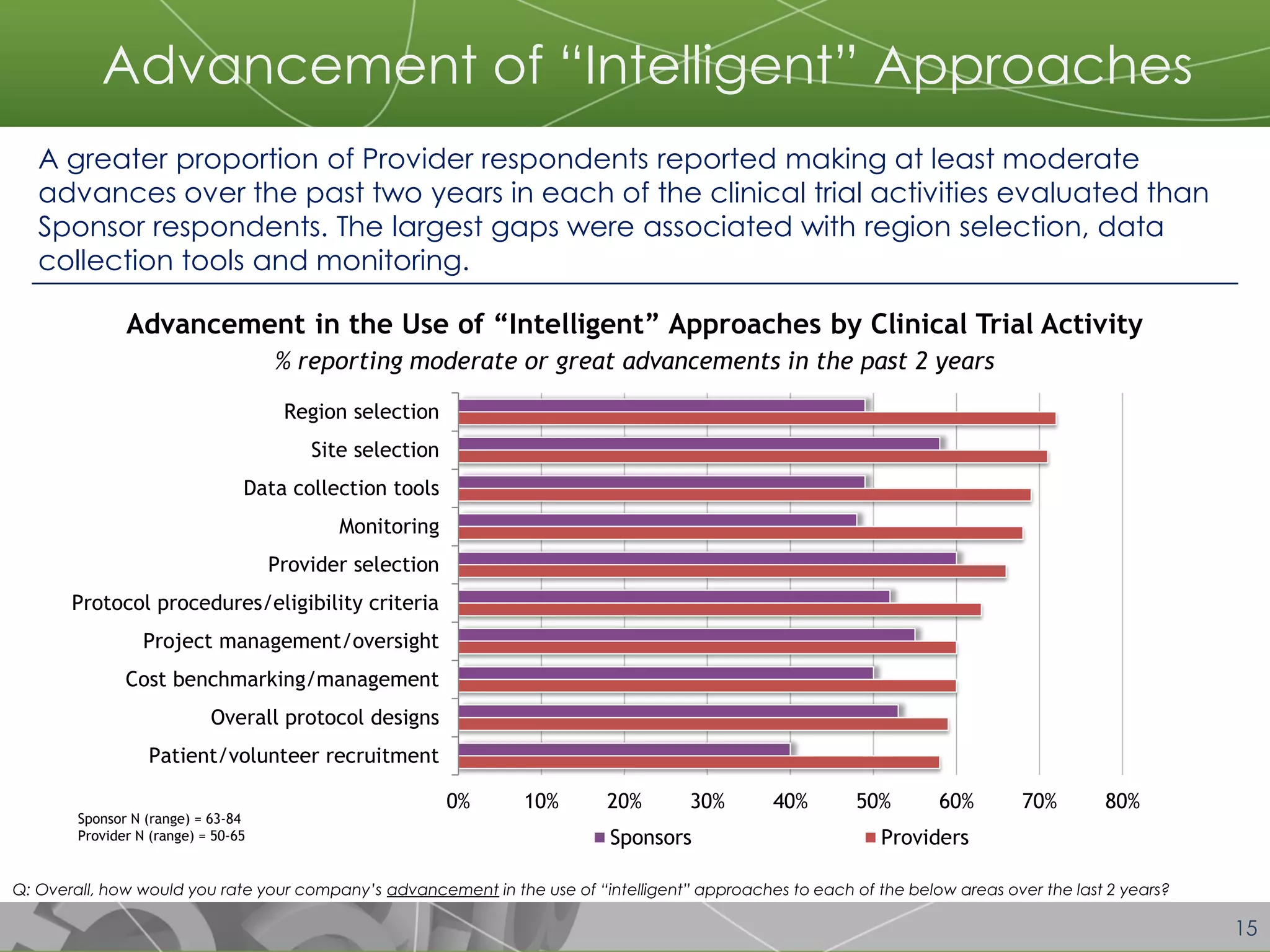
A greater proportion of Provider respondents reported making at least moderate advances over the past two years in each of the clinical trial activities evaluated than Sponsor respondents. The largest gaps were associated with region selection, data collection tools and monitoring. 
Advancement in the Use of “Intelligent” Approaches by Clinical Trial Activity 
% reporting moderate or great advancements in the past 2 years 
Advancement of “Intelligent” Approaches 
Sponsor N (range) = 63-84 
Provider N (range) = 50-65
16 
19% 
14% 
21% 
22% 
7% 
15% 
7% 
7% 
50% 
43% 
37% 
35% 
37% 
29% 
31% 
26% 
21% 
26% 
27% 
35% 
32% 
36% 
36% 
41% 
40% 
52% 
46% 
39% 
6% 
7% 
6% 
13% 
15% 
20% 
20% 
26% 
26% 
4% 
6% 
9% 
Site selection 
Region selection 
Monitoring 
Patient/volunteer recruitment 
Project management/oversight 
Data collection tools 
Provider selection 
Protocol procedures/eligibility criteria 
Overall protocol designs 
Cost benchmarking/management 
Essential contribution 
Significant contribution 
Little contribution 
No contribution 
Negative contribution 
N 
70 
69 
73 
72 
67 
68 
55 
66 
57 
57 
Q Sponsors: In your opinion, to what extent do your company's clinical service providers either contribute to, or detract from, your company's use of "intelligent" (data-driven) clinical development approaches for each area listed below? 
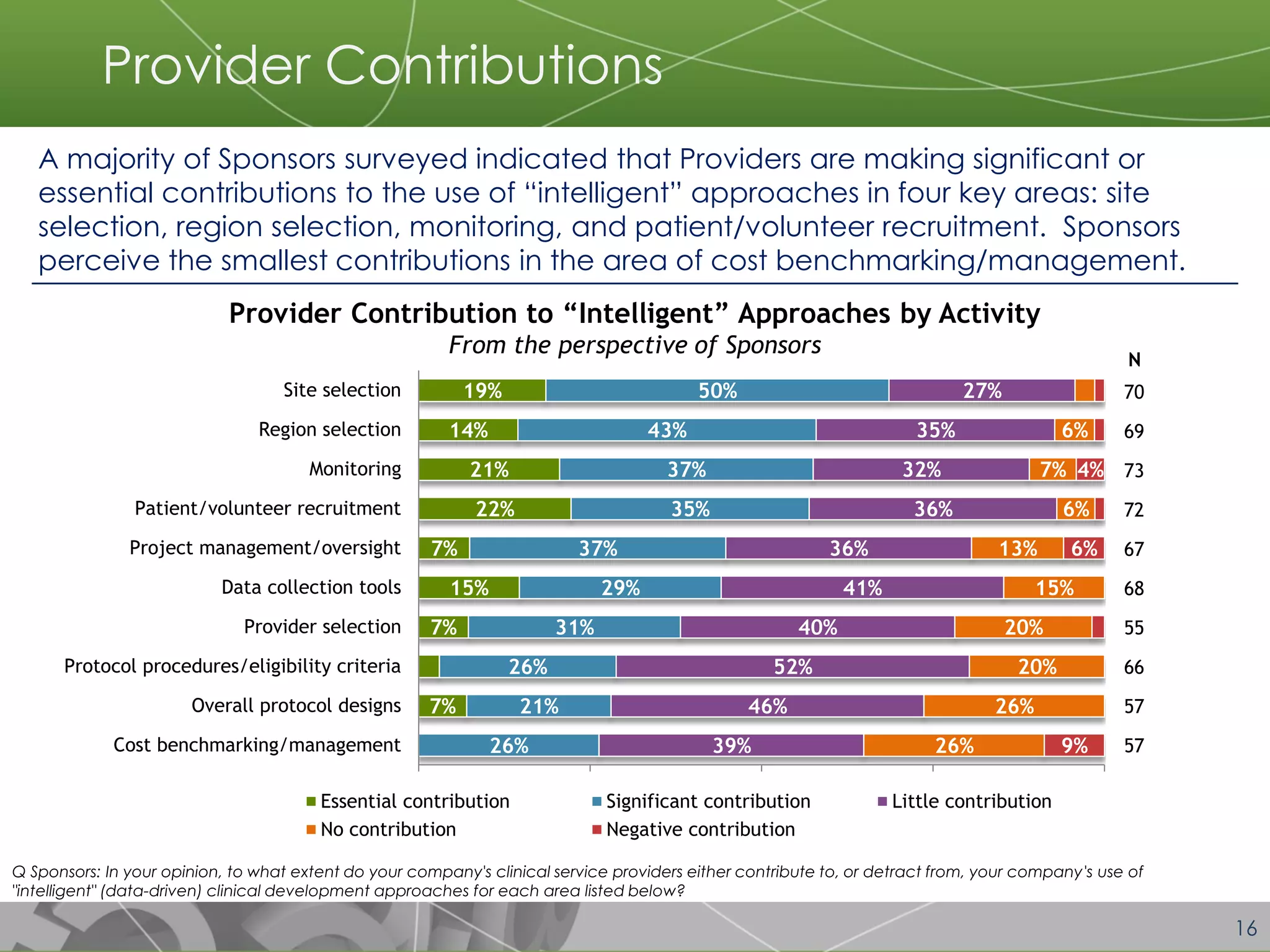
Provider Contribution to “Intelligent” Approaches by Activity From the perspective of Sponsors 
A majority of Sponsors surveyed indicated that Providers are making significant or essential contributions to the use of “intelligent” approaches in four key areas: site selection, region selection, monitoring, and patient/volunteer recruitment. Sponsors perceive the smallest contributions in the area of cost benchmarking/management. 
Provider Contributions
17 
N 
48 
47 
42 
50 
43 
53 
39 
46 
39 
Sponsor Contributions 
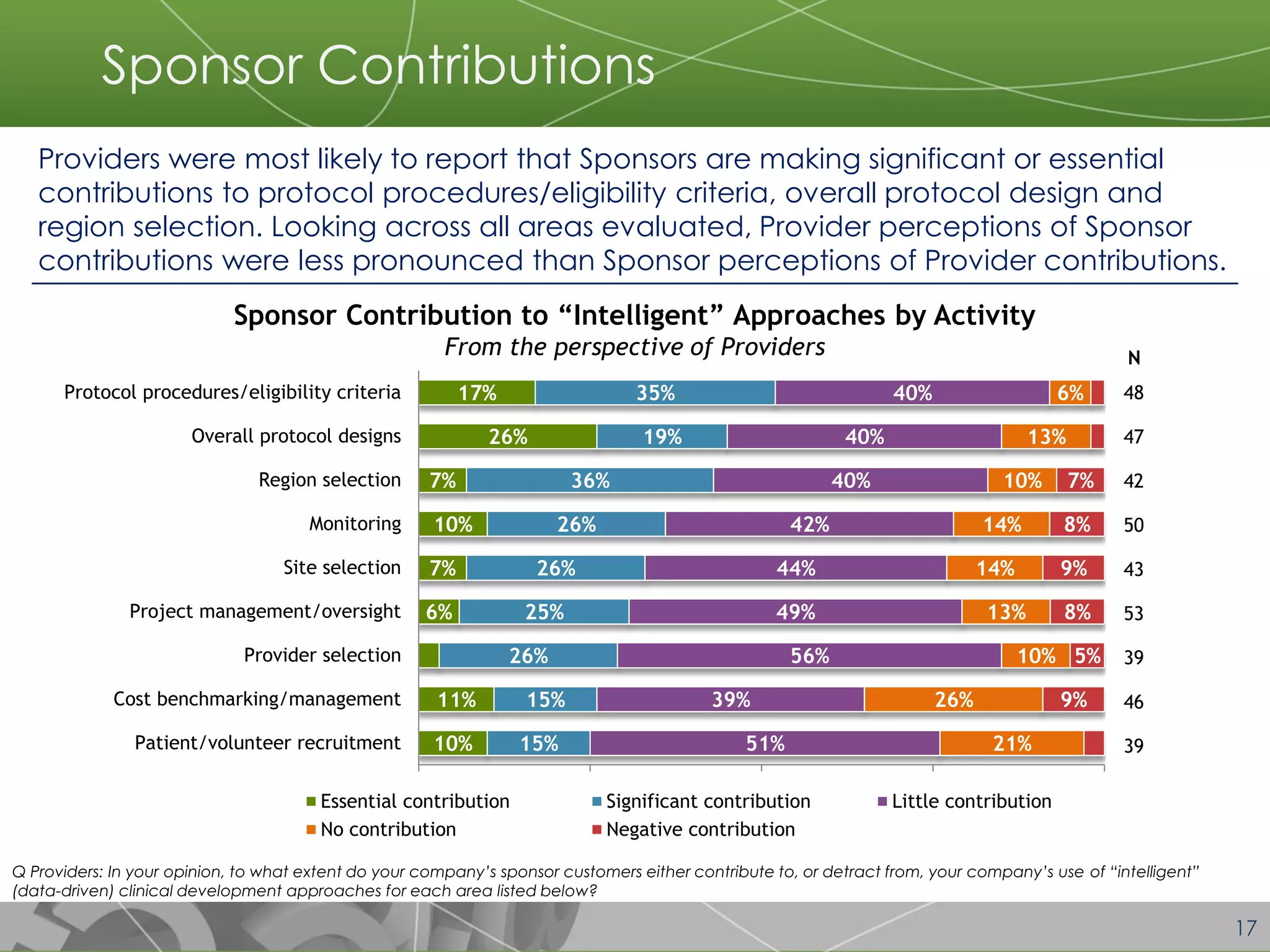
Q Providers: In your opinion, to what extent do your company’s sponsor customers either contribute to, or detract from, your company’s use of “intelligent” (data-driven) clinical development approaches for each area listed below? 
Sponsor Contribution to “Intelligent” Approaches by Activity From the perspective of Providers 
Providers were most likely to report that Sponsors are making significant or essential contributions to protocol procedures/eligibility criteria, overall protocol design and region selection. Looking across all areas evaluated, Provider perceptions of Sponsor contributions were less pronounced than Sponsor perceptions of Provider contributions. 
17% 
26% 
7% 
10% 
7% 
6% 
11% 
10% 
35% 
19% 
36% 
26% 
26% 
25% 
26% 
15% 
15% 
40% 
40% 
40% 
42% 
44% 
49% 
56% 
39% 
51% 
6% 
13% 
10% 
14% 
14% 
13% 
10% 
26% 
21% 
7% 
8% 
9% 
8% 
5% 
9% 
Protocol procedures/eligibility criteria 
Overall protocol designs 
Region selection 
Monitoring 
Site selection 
Project management/oversight 
Provider selection 
Cost benchmarking/management 
Patient/volunteer recruitment 
Essential contribution 
Significant contribution 
Little contribution 
No contribution 
Negative contribution
18 
0% 
10% 
20% 
30% 
40% 
50% 
60% 
Relationships with patient organizations 
Relationships with other providers 
Relationships with regulatory authorities 
Ability to analyze data/create models 
Relationships with sites 
Understanding of relevant regulations 
Understanding of general approaches 
Availability of data 
Technology tools 
Sponsors 
Providers 
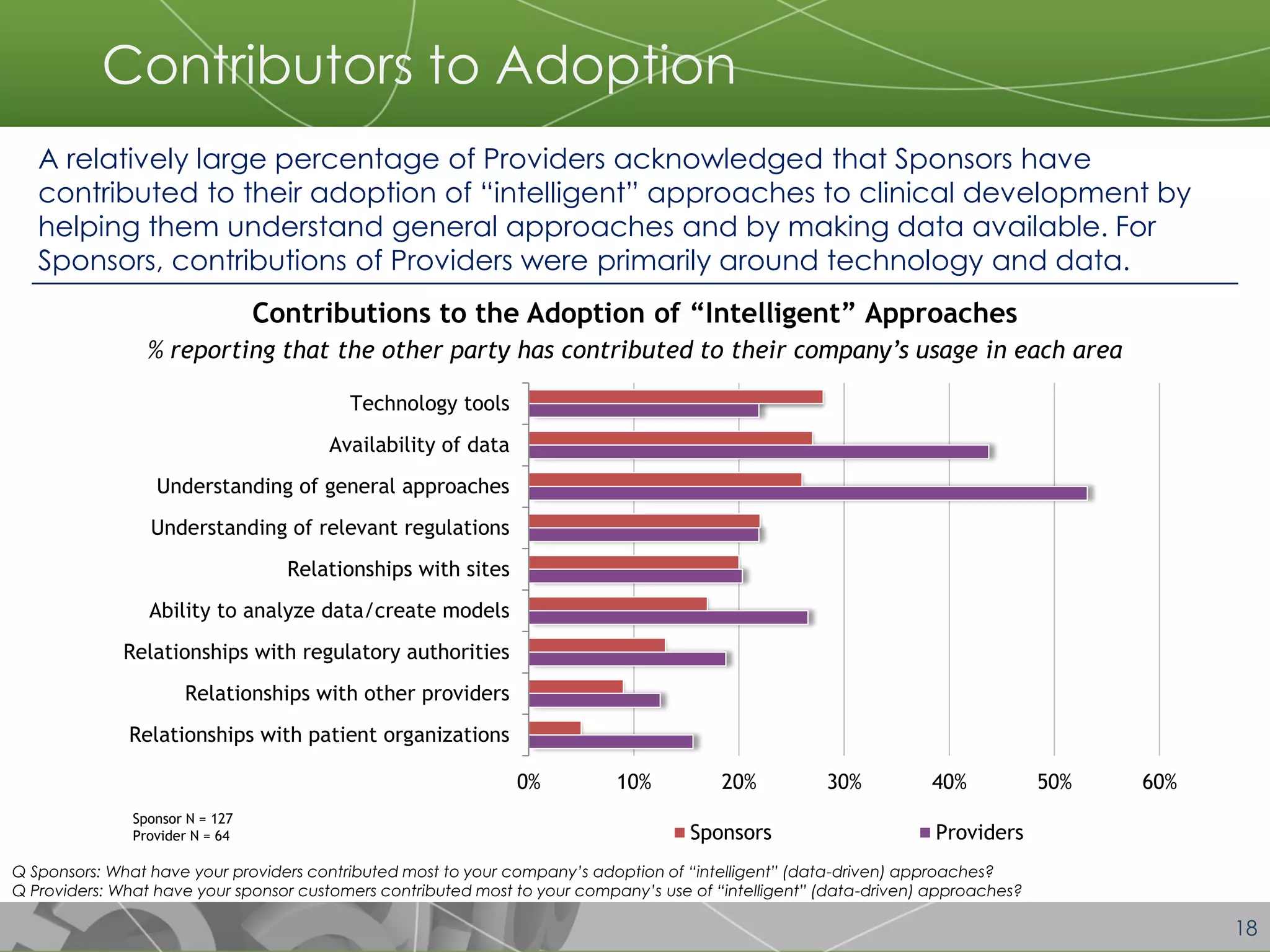
Q Sponsors: What have your providers contributed most to your company’s adoption of “intelligent” (data-driven) approaches? Q Providers: What have your sponsor customers contributed most to your company’s use of “intelligent” (data-driven) approaches? 
A relatively large percentage of Providers acknowledged that Sponsors have contributed to their adoption of “intelligent” approaches to clinical development by helping them understand general approaches and by making data available. For Sponsors, contributions of Providers were primarily around technology and data. 
Contributions to the Adoption of “Intelligent” Approaches 
% reporting that the other party has contributed to their company’s usage in each area 
Contributors to Adoption 
Sponsor N = 127 
Provider N = 64
19 
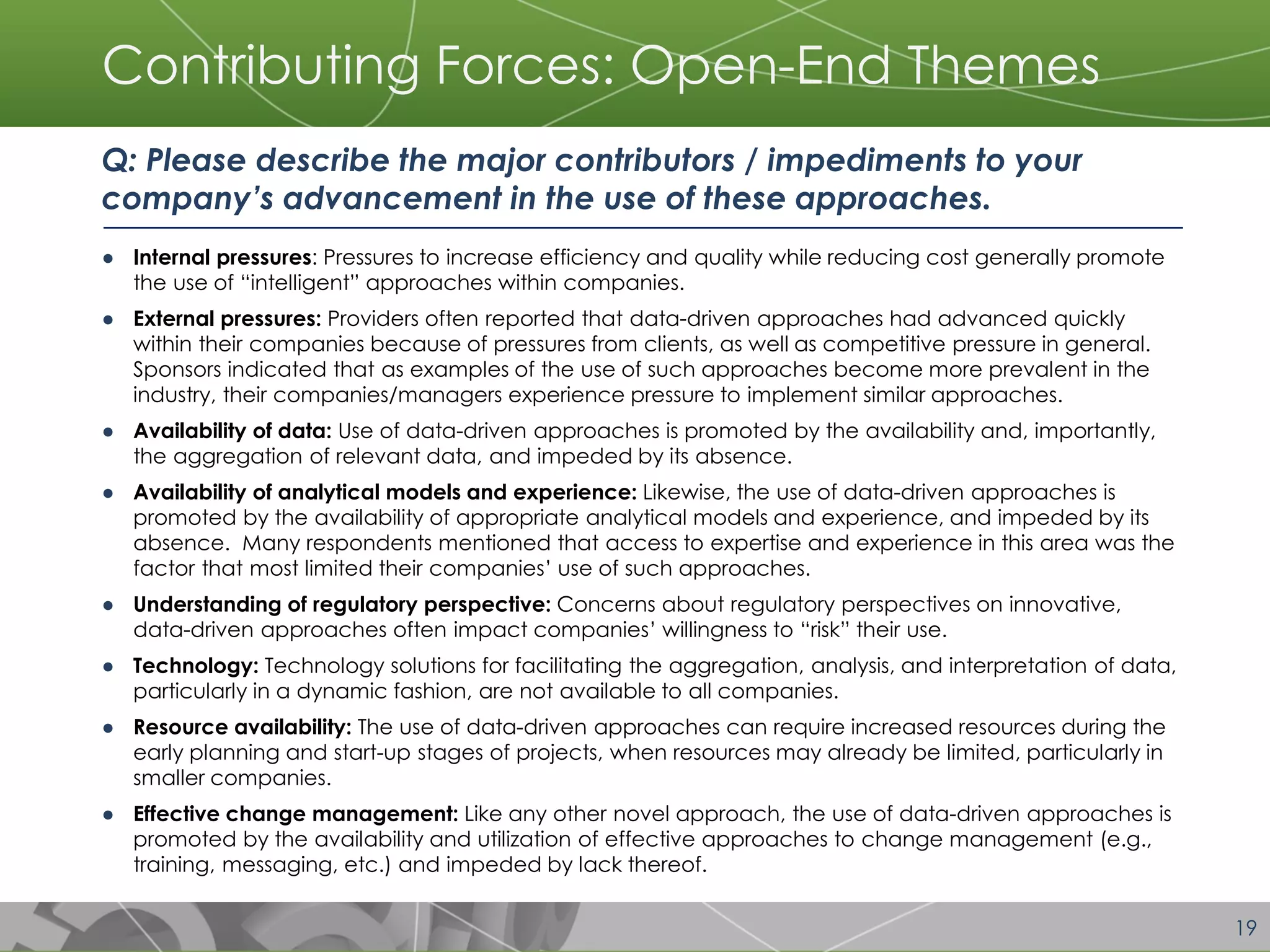
Contributing Forces: Open-End Themes 
Q: Please describe the major contributors / impediments to your company’s advancement in the use of these approaches. 
●Internal pressures: Pressures to increase efficiency and quality while reducing cost generally promote the use of “intelligent” approaches within companies. 
●External pressures: Providers often reported that data-driven approaches had advanced quickly within their companies because of pressures from clients, as well as competitive pressure in general. Sponsors indicated that as examples of the use of such approaches become more prevalent in the industry, their companies/managers experience pressure to implement similar approaches. 
●Availability of data: Use of data-driven approaches is promoted by the availability and, importantly, the aggregation of relevant data, and impeded by its absence. 
●Availability of analytical models and experience: Likewise, the use of data-driven approaches is promoted by the availability of appropriate analytical models and experience, and impeded by its absence. Many respondents mentioned that access to expertise and experience in this area was the factor that most limited their companies’ use of such approaches. 
●Understanding of regulatory perspective: Concerns about regulatory perspectives on innovative, data-driven approaches often impact companies’ willingness to “risk” their use. 
●Technology: Technology solutions for facilitating the aggregation, analysis, and interpretation of data, particularly in a dynamic fashion, are not available to all companies. 
●Resource availability: The use of data-driven approaches can require increased resources during the early planning and start-up stages of projects, when resources may already be limited, particularly in smaller companies. 
●Effective change management: Like any other novel approach, the use of data-driven approaches is promoted by the availability and utilization of effective approaches to change management (e.g., training, messaging, etc.) and impeded by lack thereof.
20 
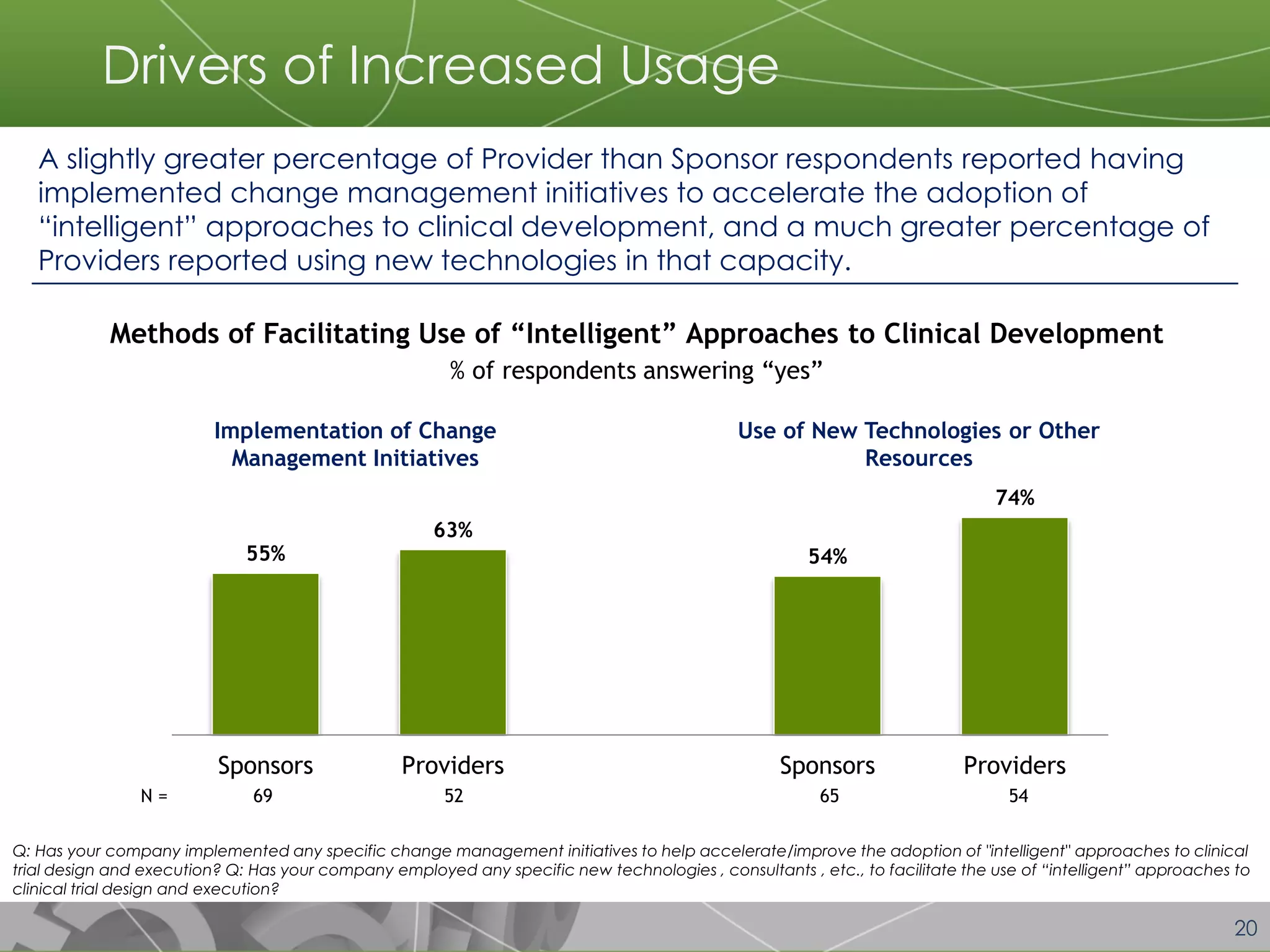
Q: Has your company implemented any specific change management initiatives to help accelerate/improve the adoption of "intelligent" approaches to clinical trial design and execution? Q: Has your company employed any specific new technologies , consultants , etc., to facilitate the use of “intelligent” approaches to clinical trial design and execution? 
Drivers of Increased Usage 
A slightly greater percentage of Provider than Sponsor respondents reported having implemented change management initiatives to accelerate the adoption of “intelligent” approaches to clinical development, and a much greater percentage of Providers reported using new technologies in that capacity. 
Implementation of Change Management Initiatives 
55% 
63% 
54% 
74% 
Sponsors 
Providers 
Sponsors 
Providers 
N = 
69 
52 
65 
54 
Use of New Technologies or Other Resources 
Methods of Facilitating Use of “Intelligent” Approaches to Clinical Development % of respondents answering “yes”
21 
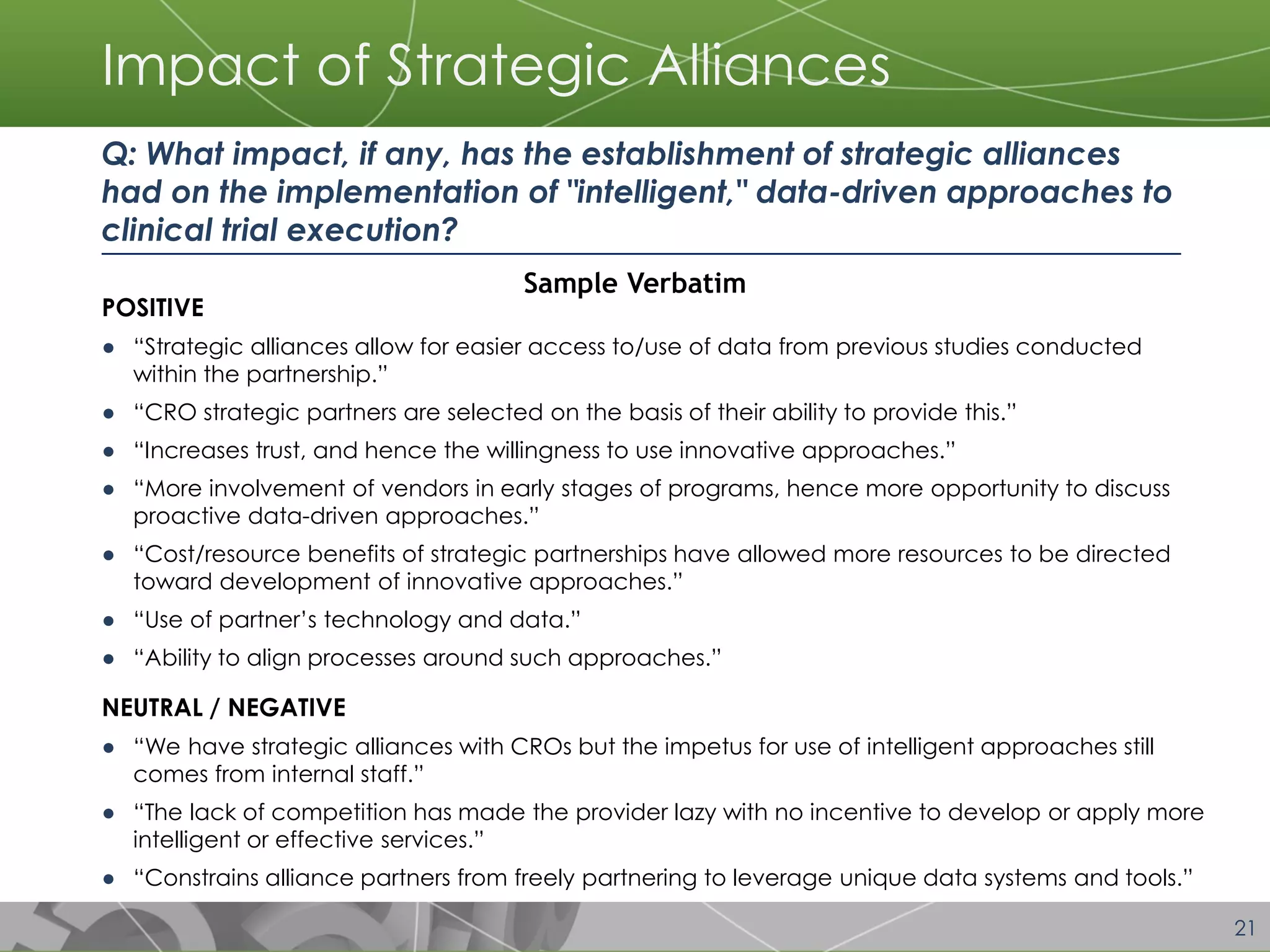
Impact of Strategic Alliances 
POSITIVE 
●“Strategic alliances allow for easier access to/use of data from previous studies conducted within the partnership.” 
●“CRO strategic partners are selected on the basis of their ability to provide this.” 
●“Increases trust, and hence the willingness to use innovative approaches.” 
●“More involvement of vendors in early stages of programs, hence more opportunity to discuss proactive data-driven approaches.” 
●“Cost/resource benefits of strategic partnerships have allowed more resources to be directed toward development of innovative approaches.” 
●“Use of partner’s technology and data.” 
●“Ability to align processes around such approaches.” 
NEUTRAL / NEGATIVE 
●“We have strategic alliances with CROs but the impetus for use of intelligent approaches still comes from internal staff.” 
●“The lack of competition has made the provider lazy with no incentive to develop or apply more intelligent or effective services.” 
●“Constrains alliance partners from freely partnering to leverage unique data systems and tools.” 
Q: What impact, if any, has the establishment of strategic alliances had on the implementation of "intelligent," data-driven approaches to clinical trial execution? 
Sample Verbatim
22 
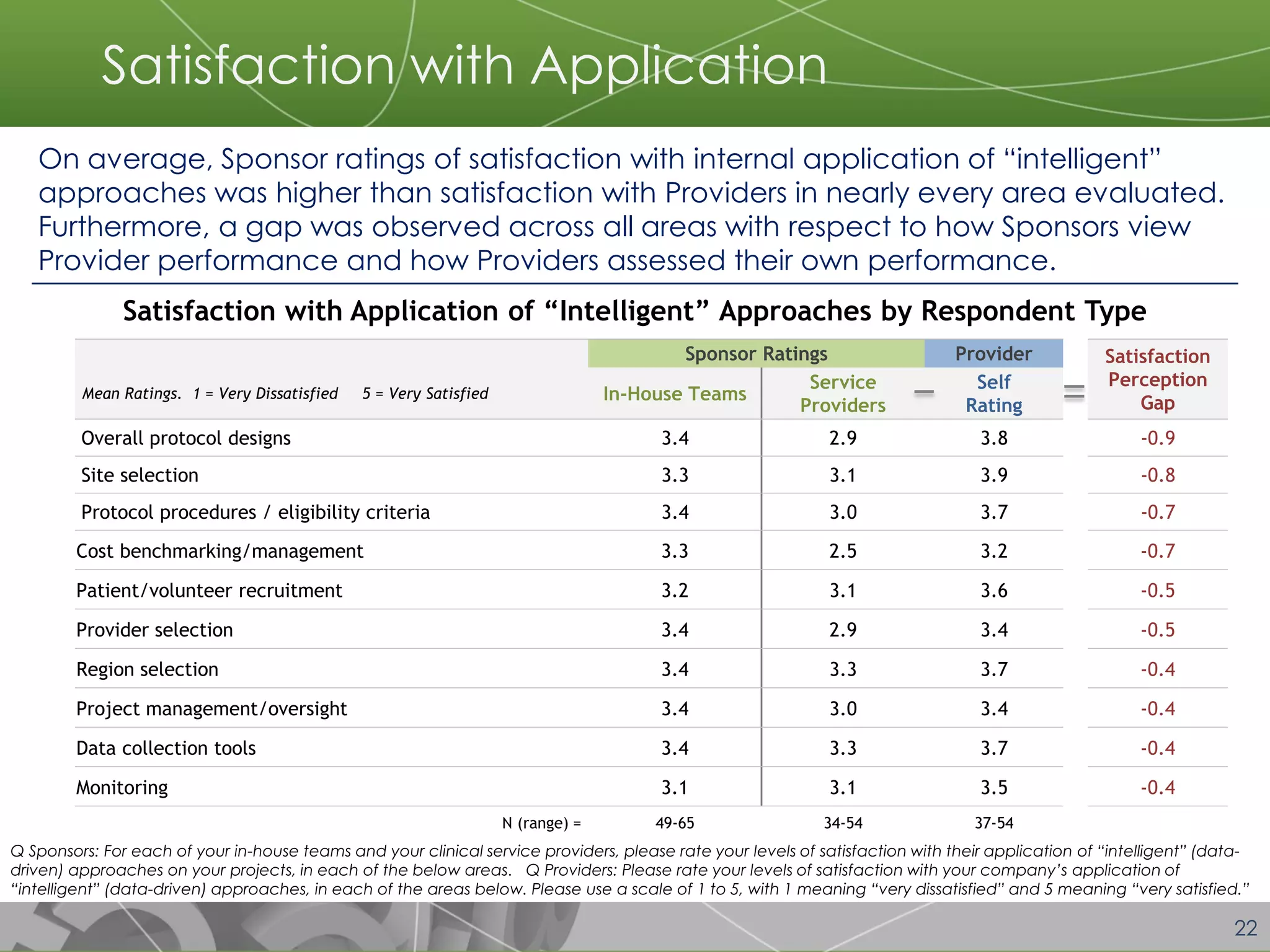
Satisfaction with Application 
Q Sponsors: For each of your in-house teams and your clinical service providers, please rate your levels of satisfaction with their application of “intelligent” (data- driven) approaches on your projects, in each of the below areas. Q Providers: Please rate your levels of satisfaction with your company’s application of “intelligent” (data-driven) approaches, in each of the areas below. Please use a scale of 1 to 5, with 1 meaning “very dissatisfied” and 5 meaning “very satisfied.” 
On average, Sponsor ratings of satisfaction with internal application of “intelligent” approaches was higher than satisfaction with Providers in nearly every area evaluated. Furthermore, a gap was observed across all areas with respect to how Sponsors view Provider performance and how Providers assessed their own performance. 
Satisfaction with Application of “Intelligent” Approaches by Respondent Type 
Sponsor Ratings 
Provider 
Satisfaction Perception Gap 
Mean Ratings. 1 = Very Dissatisfied 5 = Very Satisfied 
In-House Teams 
Service Providers 
Self Rating 
Overall protocol designs 
3.4 
2.9 
3.8 
-0.9 
Site selection 
3.3 
3.1 
3.9 
-0.8 
Protocol procedures / eligibility criteria 
3.4 
3.0 
3.7 
-0.7 
Cost benchmarking/management 
3.3 
2.5 
3.2 
-0.7 
Patient/volunteer recruitment 
3.2 
3.1 
3.6 
-0.5 
Provider selection 
3.4 
2.9 
3.4 
-0.5 
Region selection 
3.4 
3.3 
3.7 
-0.4 
Project management/oversight 
3.4 
3.0 
3.4 
-0.4 
Data collection tools 
3.4 
3.3 
3.7 
-0.4 
Monitoring 
3.1 
3.1 
3.5 
-0.4 
N (range) = 
49-65 
34-54 
37-54
Summary of Findings and Takeaways
24 
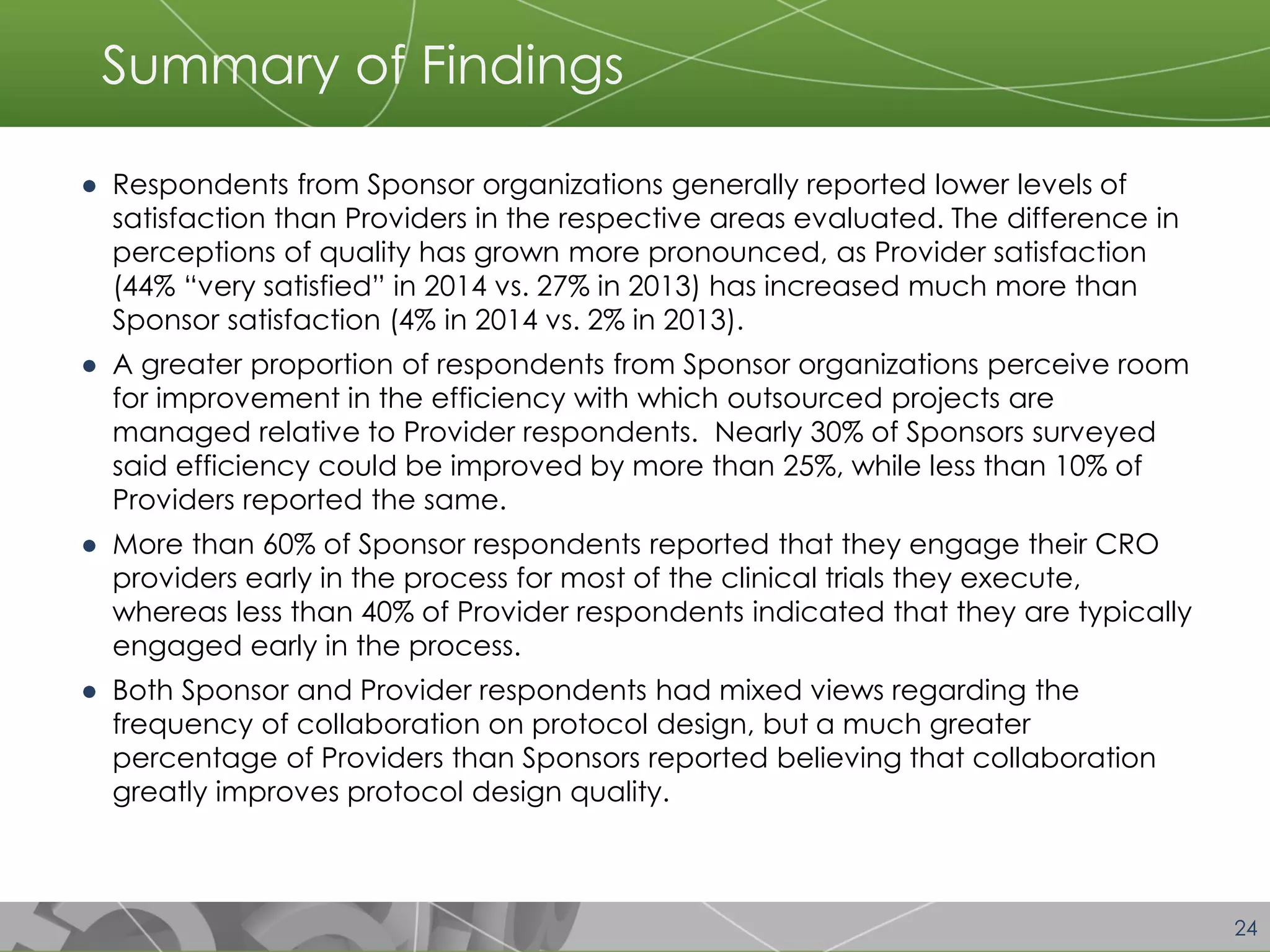
Summary of Findings 
●Respondents from Sponsor organizations generally reported lower levels of satisfaction than Providers in the respective areas evaluated. The difference in perceptions of quality has grown more pronounced, as Provider satisfaction (44% “very satisfied” in 2014 vs. 27% in 2013) has increased much more than Sponsor satisfaction (4% in 2014 vs. 2% in 2013). 
●A greater proportion of respondents from Sponsor organizations perceive room for improvement in the efficiency with which outsourced projects are managed relative to Provider respondents. Nearly 30% of Sponsors surveyed said efficiency could be improved by more than 25%, while less than 10% of Providers reported the same. 
●More than 60% of Sponsor respondents reported that they engage their CRO providers early in the process for most of the clinical trials they execute, whereas less than 40% of Provider respondents indicated that they are typically engaged early in the process. 
●Both Sponsor and Provider respondents had mixed views regarding the frequency of collaboration on protocol design, but a much greater percentage of Providers than Sponsors reported believing that collaboration greatly improves protocol design quality.
25 
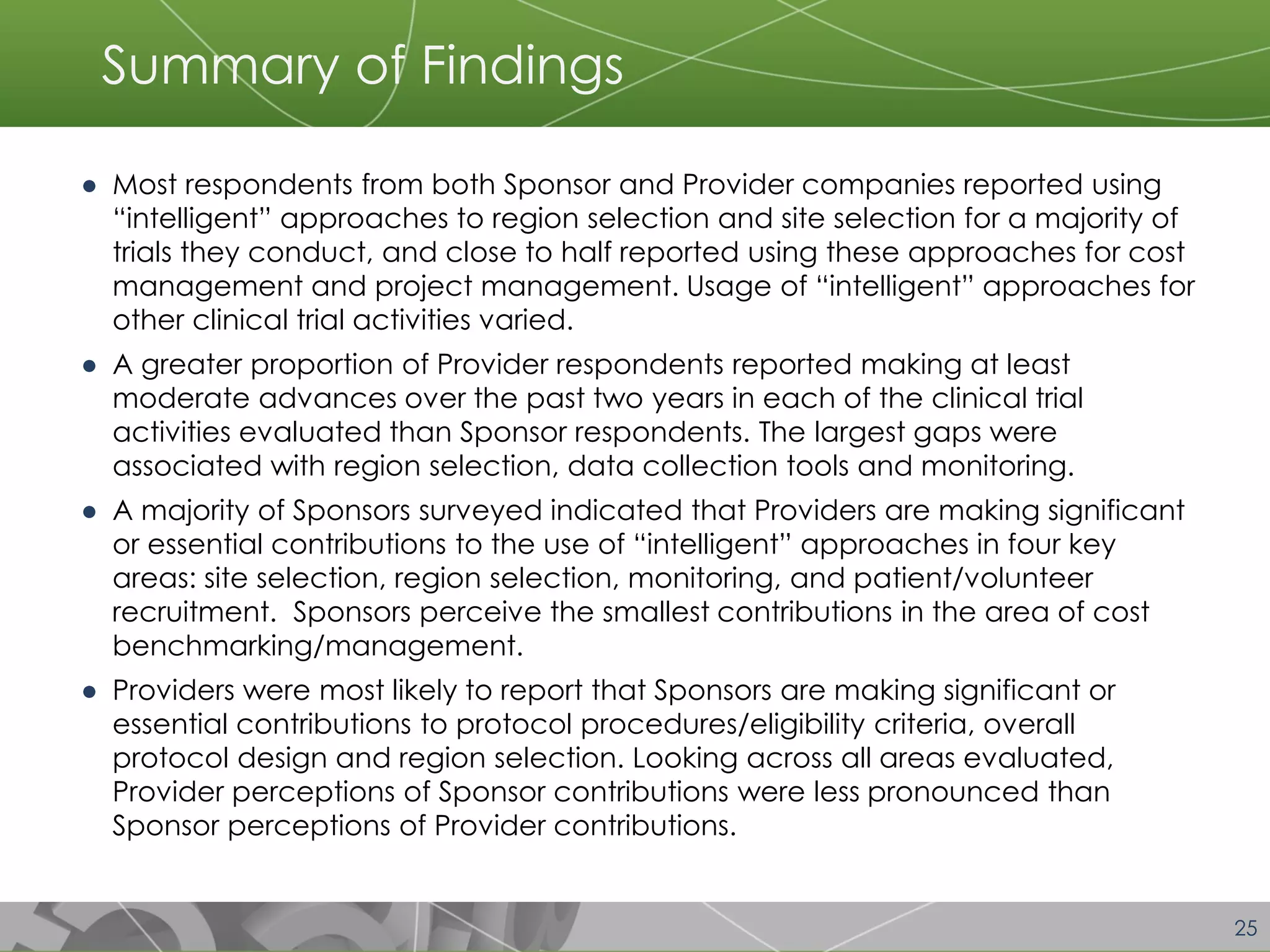
Summary of Findings 
●Most respondents from both Sponsor and Provider companies reported using “intelligent” approaches to region selection and site selection for a majority of trials they conduct, and close to half reported using these approaches for cost management and project management. Usage of “intelligent” approaches for other clinical trial activities varied. 
●A greater proportion of Provider respondents reported making at least moderate advances over the past two years in each of the clinical trial activities evaluated than Sponsor respondents. The largest gaps were associated with region selection, data collection tools and monitoring. 
●A majority of Sponsors surveyed indicated that Providers are making significant or essential contributions to the use of “intelligent” approaches in four key areas: site selection, region selection, monitoring, and patient/volunteer recruitment. Sponsors perceive the smallest contributions in the area of cost benchmarking/management. 
●Providers were most likely to report that Sponsors are making significant or essential contributions to protocol procedures/eligibility criteria, overall protocol design and region selection. Looking across all areas evaluated, Provider perceptions of Sponsor contributions were less pronounced than Sponsor perceptions of Provider contributions.
26 
Summary of Findings 
●A relatively large percentage of Providers acknowledged that Sponsors have contributed to their adoption of “intelligent” approaches to clinical development by helping them understand general approaches and by making data available. For Sponsors, contributions of Providers were primarily around technology and data availability. 
●A slightly greater percentage of Provider than Sponsor respondents reported having implemented change management initiatives to accelerate the adoption of “intelligent” approaches to clinical development, and a much greater percentage of Providers reported using new technologies in that capacity. 
●On average, Sponsor ratings of satisfaction with internal application of “intelligent” approaches was higher than satisfaction with Providers in nearly every area evaluated. Furthermore, a gap was observed across all areas with respect to how Sponsors view Provider performance and how Providers assessed their own performance.
27 
Key Takeaways 
●There remains a gap in perceptions among Sponsors and Providers in various areas, including overall quality that is being delivered, the impact of collaborating on protocol design, and satisfaction associated with the application of data-driven approaches to clinical development. Both parties could benefit from investing additional time at the beginning of a relationship (or at the program level) using a formal, structured approach to clarify roles and expectations, and document: 
╸How quality will be assessed and measured. 
╸The extent to which Providers will have input on protocol design and other early program activities. 
╸The tools and capabilities each party offers to support data-driven approaches to various program activities and how to optimize usage. 
●While significant advancements have been made in the movement towards more “intelligent” approaches to clinical development, additional progress and consistency is needed to realize the full potential of these new approaches. Both Sponsors and Providers should develop tailored strategies to guide investment in this area with very clear priorities regarding capabilities needed in-house vs. those best fulfilled via relationships with external providers. Strategies must be designed to evolve with changing marketplace dynamics (technological, economic, regulatory, etc.).
Contact Avoca at: 
(609) 252-9020 
www.theavocagroup.com 
info@theavocagroup.com 
179 Nassau Street 
Suite 3A 
Princeton, NJ 08542

2014 Avoca Industry Report Executive Summary

  • 1.
    The 2014 AvocaReport “Intelligent” Approaches to Clinical Development Executive Summary September 2014
  • 2.
    2 Contents Section Slides Background Information 3-7 General Perceptions of Outsourced Clinical Development 8-12 Application of “Intelligent” Approaches to Clinical Development 13-22 Summary of Findings and Takeaways 23-27
  • 3.
    3 2014 AvocaResearch Overview Introduction Each year The Avoca Group surveys industry executives and managers to understand trends in clinical development, with a particular focus on outsourcing dynamics and relationships between research sponsors and providers. One of the recurring themes that Avoca has heard via discussions and engagements with biopharmaceutical companies and providers over the past several years relates to the trend towards utilizing more “intelligent” approaches to clinical development to enhance R&D efficiency and effectiveness. Consequently, in this year’s industry review, Avoca chose to perform a comprehensive assessment of how “intelligent,” data-driven approaches are being utilized in outsourced clinical development today, from the perspective of both sponsor organizations as well as the service providers that support them. This report serves as an Executive Summary of key findings from the research.
  • 4.
    4 2014 AvocaResearch Overview Areas Explored ●Application of “Intelligent” Approaches: Frequency of use in key areas of interest; rate of advancement in these areas over the past two years ●Contributing Forces: Extent to which Sponsors and Providers positively or negatively contribute to the usage of “intelligent” approaches ●Satisfaction with “Intelligent” Approaches: Level of satisfaction with application in key areas of interest; variability in Provider application ●Engagement with CROs: Early engagement of partners in protocol and development planning ●Change Management Initiatives: Experience with technology, training, and other implementation and change management solutions
  • 5.
    5 2014 AvocaResearch Overview Definitions Respondents were provided with the following definition of “intelligent” clinical development at the beginning of the survey: For the purposes of this survey, “intelligent” clinical development approaches are defined as those that make use of operational (e.g. performance) and/or clinical data, along with appropriate analytical techniques, in order to optimize aspects of clinical development such as protocol design, Investigator selection, patient recruitment approaches, resource allocation (e.g. risk-based monitoring), etc. For example: –“Intelligent” approaches to overall protocol design might include adaptive study designs, i.e. those adjusted during the course of a study based on biomarker or clinical study data gathered during the study. –“Intelligent” approaches to procedural or eligibility aspects of protocols might include examination of data from previous studies to identify procedures/criteria associated with high levels of protocol violations, cost, screen failures, etc. compared to the value of the data received. –“Intelligent” approaches to selecting sites, regions, providers, or patient recruitment approaches might use performance databases to identify suitability for particular types of studies. –“Intelligent” approaches to project management/oversight might include data-based identification of areas/periods of low/high risk, in order to allocate oversight resources accordingly.
  • 6.
    6 Respondent Demographics:Sponsors 127 respondents from 83 companies; ~45% in Top 20 (by revenue) 67% 28% 3% Pharma Biotech Device Other Company Type 27% 54% 17% Executive Management Middle Management Project Management Other Role / Level Achillion Pharma Bristol-Myers Squibb Ipsen Biopharm Purdue Pharma Actelion Cambryn Biologics Italfarmaco Recordati Aeras Cangene Janssen R&D Roche Afferent Pharmaceuticals Celator Pharmaceuticals Johnson & Johnson Sanofi Alexion Pharmaceuticals Celgene Kowa Research Europe Seattle Genetics Allergan Cerexa Kythera Biopharmaceuticals Shire Almirall Collegium Pharmaceutical Life Science Leader Soricimed Biopharma Amgen Covidien Lundbeck Stallergenes Arges Pharma Cubist Merck Sunovion Array BioPharma Dompé Mitsubishi Pharma Europe Synta Astellas Eli Lilly MSD Tekmira Astex Pharmaceuticals Endo NanoScan Imaging Teva Pharmaceuticals AstraZeneca EnVivo Pharmaceuticals Novartis Vaccines and Diagnostics UCB Biosciences Bavarian Nordic Exco InTouch Noven Pharmaceuticals VentiRx Pharmaceuticals Baxter Exelixis Ono Pharma Vernalis Bayer Genentech (member of Roche Group) Orexigen Vertex Pharmaceuticals Biogen Idec Genzyme (a Sanofi company) Orion Vifor Pharma Biological E. Grünenthal Otsuka (OPDC) Wockhardt Bioniche Animal Health Haemonetics Pearl Therapeutics Xenon Boehringer Ingelheim Helsinn Therapeutics PF Lab Zymogenetics (a BMS company) Boston Scientific HPC Pfizer Companies Represented
  • 7.
    7 Respondent Demographics:Providers 105 respondents from 64 companies; ~64% in Top 20 (by revenue) 67% 33% CRO Other/Niche 62% 29% 7% Executive Management Middle Management Project Management Other Acurian ERT NHS RH Bouchard & Associates Advanced Clinical ExecuPharm Novella Clinical Schulman Associates IRB Almac Experis OBiS Sciformix BMS (Imaging Company) Fisher Clinical Services OmniComm Systems Spaulding Clinical Services CBIO/NUDFAC-UFPE Higginbotham Group ORION Clinical Services SynteractHCR Cerafor Limited Hugin Mugin Research PAREXEL Telerx CFS Clinical ICON PICR TFS Trial Form Support Chilten IMS Health PlanetConnect Theorem Clinical Research ClinAudits INC Research Popsi Cube Therapeutics, Inc. ConcepTrial inSeption Group PPD TKL Research Consumer Product Testing Company Interlab PRA TranScrip Partners Covance Intrinsic Imaging ProTrials Research UL EduNeering CRF Health inVentiv Health PSI Vantage BioTrials Cromsource IRB Services QPS Holdings Veeva Datatrial Micron Quanticate Viracor-IBT Eperis Clinical Moffitt Cancer Center Quintiles Virtuoso Companies Represented Company Type Role / Level
  • 8.
    General Perceptions ofOutsourced Clinical Development
  • 9.
    9 4% 44% 12% 67% 41% 55% 52% 71% 21% 35% 23% 4% 15% 10% 20% 17% The work that has been done for you by Clinical Service Providers (including but not limited to CROs)? The value that you have received for the money spent on your Clinical Service Providers (including but not limited to CROs)? The quality delivered by your Clinical Service Providers (including but not limited to CROs)? The quality that your company has delivered for its sponsors in the last 3 years? Your relationships with the sponsors with which you work? SPONSORS PROVIDERS N 126 123 126 102 101 Very Satisfied Generally Satisfied Neither Satisfied Nor Dissatisfied Generally Dissatisfied Very Dissatisfied Respondents from Sponsor organizations generally reported lower levels of satisfaction than Providers in the respective areas evaluated. The difference in perceptions of quality has grown more pronounced, as Provider satisfaction (44% “very satisfied” in 2014 vs. 27% in 2013) has increased much more than Sponsor satisfaction (4% vs. 2%).* Quality Q: Overall, how satisfied are you with… Satisfaction Levels * Refer to Avoca’s 2013 Industry Report for data comparisons.
  • 10.
    10 9% 9% 19% 32% 43% 51% 25% 5% 4% 4% Sponsors Providers We are optimally efficient We could theoretically improve our efficiency by 1-10% We could theoretically improve our efficiency by 11-25% We could theoretically improve our efficiency by 26-50% We could theoretically improve our efficiency by >50% Q Sponsors: In terms of the internal resources required to manage outsourced projects effectively, how much room for improvement do you think your company currently has? Q Providers: In terms of the resources required to manage clinical trial effectively , how much room for improvement do you think your company currently has? Potential Improvement in Managing Outsourced Projects N 126 104 A greater proportion of respondents from Sponsor organizations perceive room for improvement in the efficiency with which outsourced projects are managed relative to Provider respondents. Nearly 30% of Sponsors surveyed said efficiency could be improved by more than 25%, while less than 10% of Providers reported the same. Project Management Efficiency
  • 11.
    11 Early Engagementin Clinical Trials Q Sponsors: For outsourced clinical trials, how often do you engage CROs early in the clinical trial execution process, in order to leverage their experience? Q Providers: How often do sponsors engage your company early in the clinical trial execution process, in order to leverage your company’s experience? More than 60% of Sponsor respondents reported that they engage their CRO providers early in the process for most of the clinical trials they execute, whereas less than 40% of Provider respondents indicated that they are typically engaged early. Early Engagement of CROs in the Clinical Trial Process N=88 19% 43% 31% 5% 4% 35% 44% 14% Most of the time Always Sometimes Seldom Never SPONSORS PROVIDERS N=71
  • 12.
    12 Q Sponsors:For outsourced clinical trials, how often do you collaborate with your CROs on protocol design? Q Providers: How often do sponsors collaborate with your company on protocol design? Q Sponsors: To what extent do you feel that collaboration with CROs on protocol design improves quality? Q Providers: To what extent do you feel that your company’s collaboration with sponsors on protocol design improves quality? Collaboration on Protocol Design Both Sponsor and Provider respondents had mixed views regarding the frequency of collaboration on protocol design, but there is a clear gap in terms of the extent to which Providers believe collaboration improves protocol design quality relative to the perceptions of Sponsors. 7% 17% 66% 15% 16% 55% 25% 29% 53% 22% 3% 25% 19% 5% 6% 24% 12% N=85 Always Most of the time Sometimes Seldom Sponsors Providers Sponsors Providers N=68 N=78 N=64 Frequency of Collaboration with CROs on Protocol Design Never Extent to Which Collaboration with CROs Improves Protocol Design Quality Greatly Somewhat Little None Reduces Quality
  • 13.
    Application of “Intelligent”Approaches to Clinical Development
  • 14.
    14 0% 10% 20% 30% 40% 50% 60% 70% 80% Region selection Site selection Cost benchmarking/management Provider selection Project management/oversight Protocol procedures/eligibility criteria Data collection tools Overall protocol designs Patient/volunteer recruitment Monitoring Sponsors Providers Q Sponsors: Approximately what percentage of clinical trials [conducted in-house] have employed “intelligent” (data-driven) approaches to each of the below activities? Q Providers: For approximately what percentage of clinical trials has your company employed “intelligent” (data- driven) approaches to each of the below activities? Most respondents from both Sponsor and Provider companies reported using “intelligent” approaches to region selection and site selection for a majority of trials they conduct. Usage of these approaches for other clinical trial activities varied. Utilization of “Intelligent” Approaches by Clinical Trial Activity % reporting that a majority of trials conducted by their organization employ “intelligent” approaches Use of “Intelligent” Approaches Sponsor N (range) = 60-87 Provider N (range) = 49-62
  • 15.
    15 0% 10% 20% 30% 40% 50% 60% 70% 80% Region selection Site selection Data collection tools Monitoring Provider selection Protocol procedures/eligibility criteria Project management/oversight Cost benchmarking/management Overall protocol designs Patient/volunteer recruitment Sponsors Providers Q: Overall, how would you rate your company’s advancement in the use of “intelligent” approaches to each of the below areas over the last 2 years? A greater proportion of Provider respondents reported making at least moderate advances over the past two years in each of the clinical trial activities evaluated than Sponsor respondents. The largest gaps were associated with region selection, data collection tools and monitoring. Advancement in the Use of “Intelligent” Approaches by Clinical Trial Activity % reporting moderate or great advancements in the past 2 years Advancement of “Intelligent” Approaches Sponsor N (range) = 63-84 Provider N (range) = 50-65
  • 16.
    16 19% 14% 21% 22% 7% 15% 7% 7% 50% 43% 37% 35% 37% 29% 31% 26% 21% 26% 27% 35% 32% 36% 36% 41% 40% 52% 46% 39% 6% 7% 6% 13% 15% 20% 20% 26% 26% 4% 6% 9% Site selection Region selection Monitoring Patient/volunteer recruitment Project management/oversight Data collection tools Provider selection Protocol procedures/eligibility criteria Overall protocol designs Cost benchmarking/management Essential contribution Significant contribution Little contribution No contribution Negative contribution N 70 69 73 72 67 68 55 66 57 57 Q Sponsors: In your opinion, to what extent do your company's clinical service providers either contribute to, or detract from, your company's use of "intelligent" (data-driven) clinical development approaches for each area listed below? Provider Contribution to “Intelligent” Approaches by Activity From the perspective of Sponsors A majority of Sponsors surveyed indicated that Providers are making significant or essential contributions to the use of “intelligent” approaches in four key areas: site selection, region selection, monitoring, and patient/volunteer recruitment. Sponsors perceive the smallest contributions in the area of cost benchmarking/management. Provider Contributions
  • 17.
    17 N 48 47 42 50 43 53 39 46 39 Sponsor Contributions Q Providers: In your opinion, to what extent do your company’s sponsor customers either contribute to, or detract from, your company’s use of “intelligent” (data-driven) clinical development approaches for each area listed below? Sponsor Contribution to “Intelligent” Approaches by Activity From the perspective of Providers Providers were most likely to report that Sponsors are making significant or essential contributions to protocol procedures/eligibility criteria, overall protocol design and region selection. Looking across all areas evaluated, Provider perceptions of Sponsor contributions were less pronounced than Sponsor perceptions of Provider contributions. 17% 26% 7% 10% 7% 6% 11% 10% 35% 19% 36% 26% 26% 25% 26% 15% 15% 40% 40% 40% 42% 44% 49% 56% 39% 51% 6% 13% 10% 14% 14% 13% 10% 26% 21% 7% 8% 9% 8% 5% 9% Protocol procedures/eligibility criteria Overall protocol designs Region selection Monitoring Site selection Project management/oversight Provider selection Cost benchmarking/management Patient/volunteer recruitment Essential contribution Significant contribution Little contribution No contribution Negative contribution
  • 18.
    18 0% 10% 20% 30% 40% 50% 60% Relationships with patient organizations Relationships with other providers Relationships with regulatory authorities Ability to analyze data/create models Relationships with sites Understanding of relevant regulations Understanding of general approaches Availability of data Technology tools Sponsors Providers Q Sponsors: What have your providers contributed most to your company’s adoption of “intelligent” (data-driven) approaches? Q Providers: What have your sponsor customers contributed most to your company’s use of “intelligent” (data-driven) approaches? A relatively large percentage of Providers acknowledged that Sponsors have contributed to their adoption of “intelligent” approaches to clinical development by helping them understand general approaches and by making data available. For Sponsors, contributions of Providers were primarily around technology and data. Contributions to the Adoption of “Intelligent” Approaches % reporting that the other party has contributed to their company’s usage in each area Contributors to Adoption Sponsor N = 127 Provider N = 64
  • 19.
    19 Contributing Forces:Open-End Themes Q: Please describe the major contributors / impediments to your company’s advancement in the use of these approaches. ●Internal pressures: Pressures to increase efficiency and quality while reducing cost generally promote the use of “intelligent” approaches within companies. ●External pressures: Providers often reported that data-driven approaches had advanced quickly within their companies because of pressures from clients, as well as competitive pressure in general. Sponsors indicated that as examples of the use of such approaches become more prevalent in the industry, their companies/managers experience pressure to implement similar approaches. ●Availability of data: Use of data-driven approaches is promoted by the availability and, importantly, the aggregation of relevant data, and impeded by its absence. ●Availability of analytical models and experience: Likewise, the use of data-driven approaches is promoted by the availability of appropriate analytical models and experience, and impeded by its absence. Many respondents mentioned that access to expertise and experience in this area was the factor that most limited their companies’ use of such approaches. ●Understanding of regulatory perspective: Concerns about regulatory perspectives on innovative, data-driven approaches often impact companies’ willingness to “risk” their use. ●Technology: Technology solutions for facilitating the aggregation, analysis, and interpretation of data, particularly in a dynamic fashion, are not available to all companies. ●Resource availability: The use of data-driven approaches can require increased resources during the early planning and start-up stages of projects, when resources may already be limited, particularly in smaller companies. ●Effective change management: Like any other novel approach, the use of data-driven approaches is promoted by the availability and utilization of effective approaches to change management (e.g., training, messaging, etc.) and impeded by lack thereof.
  • 20.
    20 Q: Hasyour company implemented any specific change management initiatives to help accelerate/improve the adoption of "intelligent" approaches to clinical trial design and execution? Q: Has your company employed any specific new technologies , consultants , etc., to facilitate the use of “intelligent” approaches to clinical trial design and execution? Drivers of Increased Usage A slightly greater percentage of Provider than Sponsor respondents reported having implemented change management initiatives to accelerate the adoption of “intelligent” approaches to clinical development, and a much greater percentage of Providers reported using new technologies in that capacity. Implementation of Change Management Initiatives 55% 63% 54% 74% Sponsors Providers Sponsors Providers N = 69 52 65 54 Use of New Technologies or Other Resources Methods of Facilitating Use of “Intelligent” Approaches to Clinical Development % of respondents answering “yes”
  • 21.
    21 Impact ofStrategic Alliances POSITIVE ●“Strategic alliances allow for easier access to/use of data from previous studies conducted within the partnership.” ●“CRO strategic partners are selected on the basis of their ability to provide this.” ●“Increases trust, and hence the willingness to use innovative approaches.” ●“More involvement of vendors in early stages of programs, hence more opportunity to discuss proactive data-driven approaches.” ●“Cost/resource benefits of strategic partnerships have allowed more resources to be directed toward development of innovative approaches.” ●“Use of partner’s technology and data.” ●“Ability to align processes around such approaches.” NEUTRAL / NEGATIVE ●“We have strategic alliances with CROs but the impetus for use of intelligent approaches still comes from internal staff.” ●“The lack of competition has made the provider lazy with no incentive to develop or apply more intelligent or effective services.” ●“Constrains alliance partners from freely partnering to leverage unique data systems and tools.” Q: What impact, if any, has the establishment of strategic alliances had on the implementation of "intelligent," data-driven approaches to clinical trial execution? Sample Verbatim
  • 22.
    22 Satisfaction withApplication Q Sponsors: For each of your in-house teams and your clinical service providers, please rate your levels of satisfaction with their application of “intelligent” (data- driven) approaches on your projects, in each of the below areas. Q Providers: Please rate your levels of satisfaction with your company’s application of “intelligent” (data-driven) approaches, in each of the areas below. Please use a scale of 1 to 5, with 1 meaning “very dissatisfied” and 5 meaning “very satisfied.” On average, Sponsor ratings of satisfaction with internal application of “intelligent” approaches was higher than satisfaction with Providers in nearly every area evaluated. Furthermore, a gap was observed across all areas with respect to how Sponsors view Provider performance and how Providers assessed their own performance. Satisfaction with Application of “Intelligent” Approaches by Respondent Type Sponsor Ratings Provider Satisfaction Perception Gap Mean Ratings. 1 = Very Dissatisfied 5 = Very Satisfied In-House Teams Service Providers Self Rating Overall protocol designs 3.4 2.9 3.8 -0.9 Site selection 3.3 3.1 3.9 -0.8 Protocol procedures / eligibility criteria 3.4 3.0 3.7 -0.7 Cost benchmarking/management 3.3 2.5 3.2 -0.7 Patient/volunteer recruitment 3.2 3.1 3.6 -0.5 Provider selection 3.4 2.9 3.4 -0.5 Region selection 3.4 3.3 3.7 -0.4 Project management/oversight 3.4 3.0 3.4 -0.4 Data collection tools 3.4 3.3 3.7 -0.4 Monitoring 3.1 3.1 3.5 -0.4 N (range) = 49-65 34-54 37-54
  • 23.
    Summary of Findingsand Takeaways
  • 24.
    24 Summary ofFindings ●Respondents from Sponsor organizations generally reported lower levels of satisfaction than Providers in the respective areas evaluated. The difference in perceptions of quality has grown more pronounced, as Provider satisfaction (44% “very satisfied” in 2014 vs. 27% in 2013) has increased much more than Sponsor satisfaction (4% in 2014 vs. 2% in 2013). ●A greater proportion of respondents from Sponsor organizations perceive room for improvement in the efficiency with which outsourced projects are managed relative to Provider respondents. Nearly 30% of Sponsors surveyed said efficiency could be improved by more than 25%, while less than 10% of Providers reported the same. ●More than 60% of Sponsor respondents reported that they engage their CRO providers early in the process for most of the clinical trials they execute, whereas less than 40% of Provider respondents indicated that they are typically engaged early in the process. ●Both Sponsor and Provider respondents had mixed views regarding the frequency of collaboration on protocol design, but a much greater percentage of Providers than Sponsors reported believing that collaboration greatly improves protocol design quality.
  • 25.
    25 Summary ofFindings ●Most respondents from both Sponsor and Provider companies reported using “intelligent” approaches to region selection and site selection for a majority of trials they conduct, and close to half reported using these approaches for cost management and project management. Usage of “intelligent” approaches for other clinical trial activities varied. ●A greater proportion of Provider respondents reported making at least moderate advances over the past two years in each of the clinical trial activities evaluated than Sponsor respondents. The largest gaps were associated with region selection, data collection tools and monitoring. ●A majority of Sponsors surveyed indicated that Providers are making significant or essential contributions to the use of “intelligent” approaches in four key areas: site selection, region selection, monitoring, and patient/volunteer recruitment. Sponsors perceive the smallest contributions in the area of cost benchmarking/management. ●Providers were most likely to report that Sponsors are making significant or essential contributions to protocol procedures/eligibility criteria, overall protocol design and region selection. Looking across all areas evaluated, Provider perceptions of Sponsor contributions were less pronounced than Sponsor perceptions of Provider contributions.
  • 26.
    26 Summary ofFindings ●A relatively large percentage of Providers acknowledged that Sponsors have contributed to their adoption of “intelligent” approaches to clinical development by helping them understand general approaches and by making data available. For Sponsors, contributions of Providers were primarily around technology and data availability. ●A slightly greater percentage of Provider than Sponsor respondents reported having implemented change management initiatives to accelerate the adoption of “intelligent” approaches to clinical development, and a much greater percentage of Providers reported using new technologies in that capacity. ●On average, Sponsor ratings of satisfaction with internal application of “intelligent” approaches was higher than satisfaction with Providers in nearly every area evaluated. Furthermore, a gap was observed across all areas with respect to how Sponsors view Provider performance and how Providers assessed their own performance.
  • 27.
    27 Key Takeaways ●There remains a gap in perceptions among Sponsors and Providers in various areas, including overall quality that is being delivered, the impact of collaborating on protocol design, and satisfaction associated with the application of data-driven approaches to clinical development. Both parties could benefit from investing additional time at the beginning of a relationship (or at the program level) using a formal, structured approach to clarify roles and expectations, and document: ╸How quality will be assessed and measured. ╸The extent to which Providers will have input on protocol design and other early program activities. ╸The tools and capabilities each party offers to support data-driven approaches to various program activities and how to optimize usage. ●While significant advancements have been made in the movement towards more “intelligent” approaches to clinical development, additional progress and consistency is needed to realize the full potential of these new approaches. Both Sponsors and Providers should develop tailored strategies to guide investment in this area with very clear priorities regarding capabilities needed in-house vs. those best fulfilled via relationships with external providers. Strategies must be designed to evolve with changing marketplace dynamics (technological, economic, regulatory, etc.).
  • 28.
    Contact Avoca at: (609) 252-9020 www.theavocagroup.com info@theavocagroup.com 179 Nassau Street Suite 3A Princeton, NJ 08542