Download to read offline
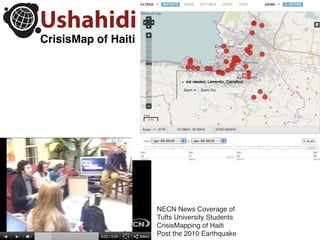
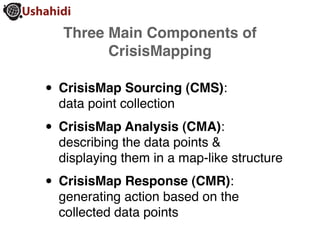
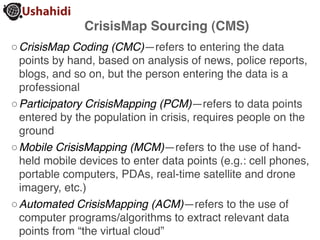
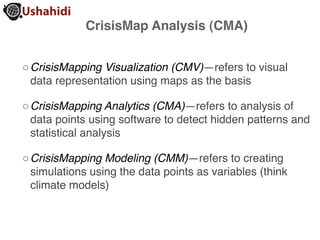
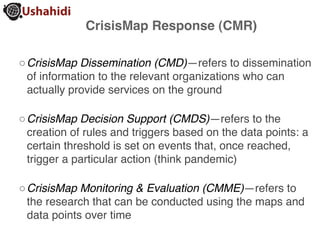
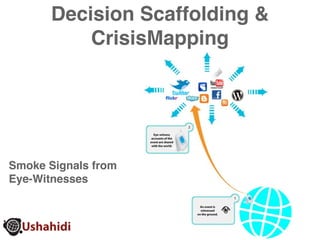
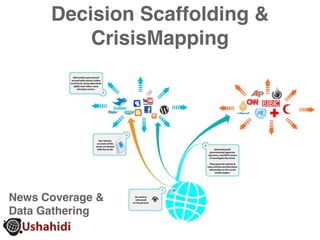
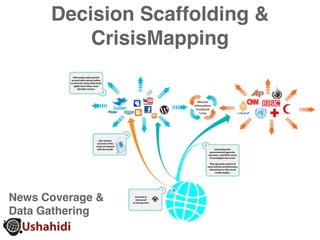
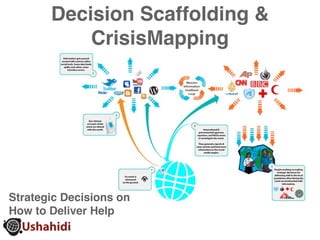
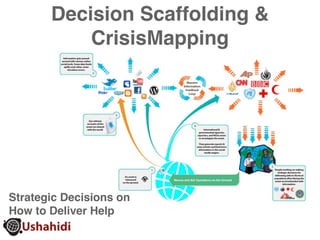
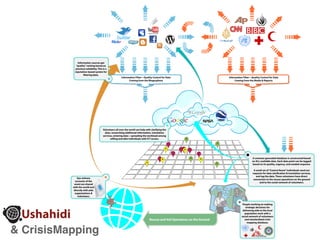
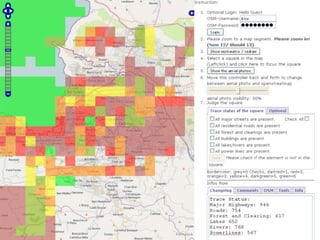
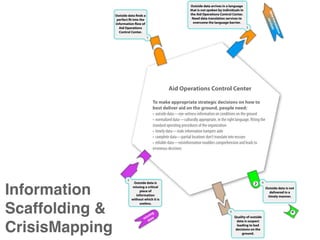
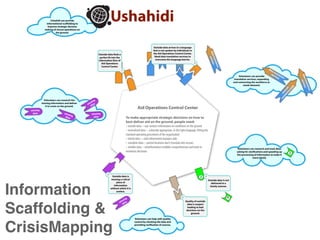
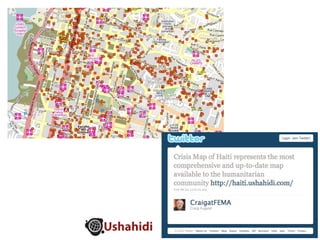
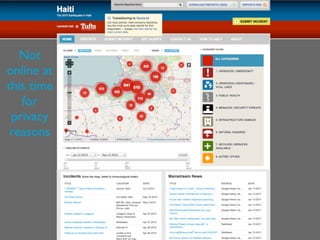
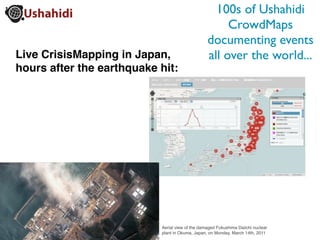


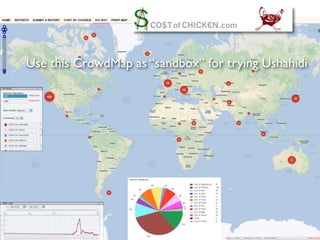


The document discusses crisis mapping, which involves collecting data from sources like social media and eyewitnesses during a crisis, analyzing and displaying the data on a map, and using the information to help direct emergency response efforts. It provides details on the different components of crisis mapping including data collection, analysis, and response, and how volunteers can help by providing translation, research, and quality control of the crowdsourced information. Crisis mapping tools like Ushahidi allow organizations to quickly set up systems to coordinate aid efforts during disasters using data from online reports.


