Winter 2009 Landowner Workshop 50 Million Tree Program
Agenda Introductions Trees Ontario – Planting Tomorrow’s Forests Who we are Landowner Funding Available The challenge in southern Ontario Tree planting – what you need to know 3. The Managed Forest Tax Incentive Program 4. Partner Agencies 5. Questions and Answers
Trees Ontario  Planting Tomorrow’s  Forests
About Trees Ontario Founded in 1994, Trees Ontario is the largest  not-for-profit tree-planting partnership in North America With our partners, Trees Ontario is planting roughly  3 million trees each year in Ontario We are the leading partner in the Ontario Ministry of Natural Resources’ 50 Million Tree Program We provide coordinated access to an extensive network of community-based partners Our goal is to increase planting levels to 10 million trees/year by 2015
About Trees Ontario Trees Ontario provides: Tree planting funding and support to lower the cost of trees for landowners Planning tools and on-line databases for our tree planting partners Regular planning, forecasting, capacity building and communications support for our partners Seed forecasting workshops with our partners Public education programs
Our Planting Partners We work with over 2,000 partners, program participants and natural resource professionals Our partners include: 36 Conservation Authorities  40+ local Ontario Stewardship councils other Environmental non-profit organizations municipalities tree nurseries private landowners Ontario’s Ministry of Natural Resources First Nations Forestry Consultants
Trees Ontario’s Work 2008 With our partners, we planted 2.3 million trees with 580 participating landowners and 54 planting agencies We collected enough seed for more than 12 million seedlings We held 26 landowner workshops, and attended 80+ community and educational events  to educate and engage the public about the importance of tree planting 2009 Projections 2.5 million trees to be planted 50+ workshops and community events planned across Ontario
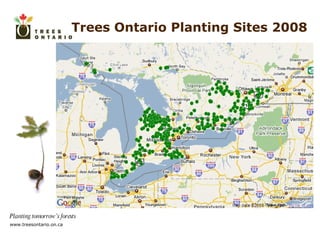
Trees Ontario Planting Sites 2008
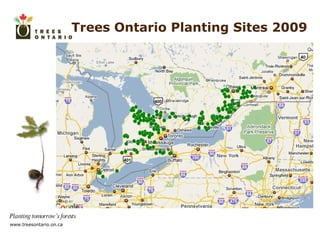
Trees Ontario Planting Sites 2009
Why Plant Trees? Restores Ontario’s forest canopy Increases native species numbers Fights climate change Cleans the air Protects and filters watersheds Supports wildlife with habitat and food Beautifies our landscapes Moderates temperature Protects crops and farmland Produces oxygen, purifies our water, cools our cities, and provides homes for plants and wildlife
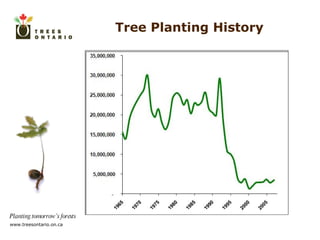
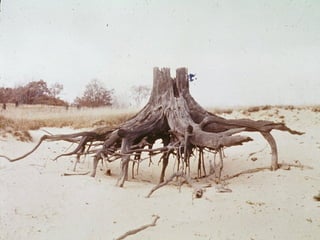
Tree Planting History 1980’s – average of 20-30 million trees planted each year in Ontario 1992 – provincial government refocused its mandate and limited its tree planting funding substantially Annual planting levels dropped to as low as 2 million/year With our partners, we are currently planting close to 3 million trees/year, but there is still a need to plant more trees Urban sprawl continues to reduce tree stocks An estimated 10,000 hectares of forest cover has been lost over the past 15 years
Tree Planting History
Significant Tree Planting Subsidies Available for Eligible Landowners Access these by taking part in a Trees Ontario administered program through your local planting agency
Trees Ontario Subsidy Programs  for Landowners  Ontario Ministry of Natural Resources’  50 Million Tree Program Full Service - 50 Cent Program Landowner Incentive Program – 10 Cent Program  (not available with all planting partners) Special Projects
Trees Ontario Subsidy Programs  for Landowners  Ontario Ministry of Natural Resources’ 50 Million Tree Program Announced by provincial government August ’07 MNR partnering with Trees Ontario to implement the program Contributes to UN 1 Billion tree target Minimum area 2 ha. (5 ac.) Landowner contributes 15 cents/tree Landowner agrees to protect forest for 15 years Assistance up to $1.25/tree
Trees Ontario Subsidy Programs  for Landowners  Full Service Program Plant a min. of 1,500 trees Agency does the planning and planting Your participation encouraged  15 year agreement to protect trees is required by landowner As the landowner you save 50 cents/tree Landowner Incentive Program Program is not available with all planting partners Place orders of 100-3,000 native stock to be planted locally Your local planting agency will sell you the trees Do work yourself As the landowner   you save 10 cents/tree Special Projects Trees Ontario supports select special projects, which are dealt with on a case-by-case basis. Planting agency partners are asked to submit a project proposal, which will then be reviewed by a technical advisory committee. Please contact Trees Ontario directly to discuss your special project proposal.
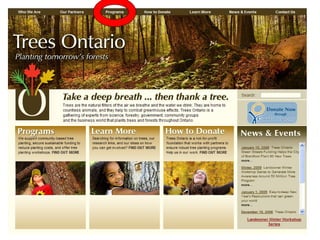
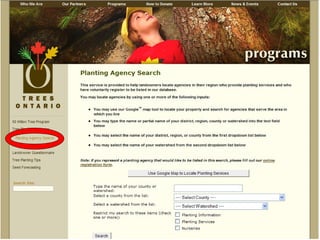
How to Apply for Funding Talk to your local delivery agent tonight to discuss your eligibility Pick up a contact sheet and map of Ontario’s Conservation Authorities and Stewardship Councils  Visit the Trees Ontario website for more program information: www.treesontario.on.ca
 
 
Tree Planting: What You Need to Know
Tree Planting:  What you Need to Know A Short History of Tree Planting in Southern Ontario Tree Seed and Nursery Stock Tree Planting
A Short History of Tree Planting  in Southern Ontario
 
 
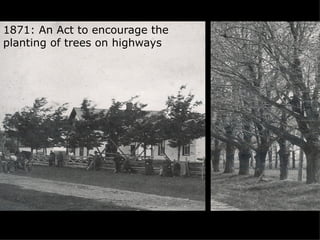
1871: An Act to encourage the  planting of trees on highways
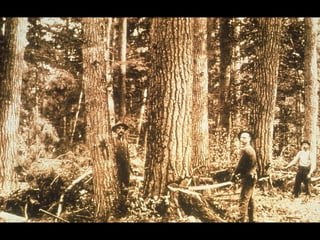
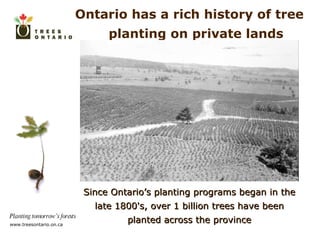
Ontario has a rich history of tree planting on private lands Since Ontario’s planting programs began in the late 1800's, over 1 billion trees have been planted across the province
Tree Seed and  Nursery Stock
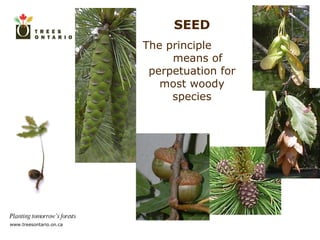
SEED The principle  means of perpetuation for most woody species
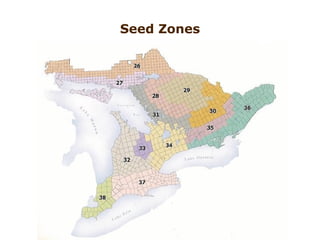
Seed Zones
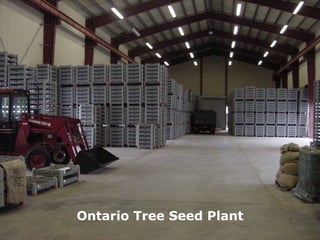
Ontario Tree Seed Plant
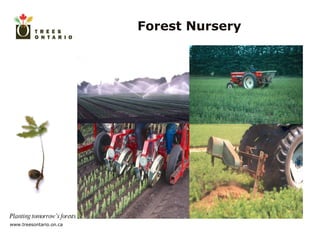
Forest Nursery
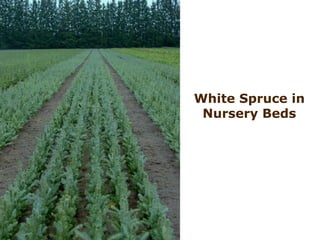
White Spruce in Nursery Beds
Tree Planting
What’s Involved in Participating in a Tree Planting Program Site assessments are conducted A planting plan is developed The site is prepared Trees are planted Trees are tended as required Activities are recorded
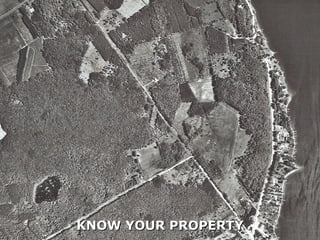
Know Your Property What information your Planting Delivery Agent will work with you to collect Access Topography Soils Drainage Existing vegetation Boundaries
KNOW YOUR PROPERTY
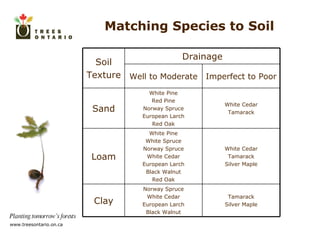
Matching Species to Soil Soil Texture Drainage Well to Moderate Imperfect to Poor Sand White Pine Red Pine Norway Spruce European Larch Red Oak White Cedar Tamarack Loam White Pine White Spruce Norway Spruce White Cedar European Larch Black Walnut Red Oak White Cedar Tamarack Silver Maple Clay Norway Spruce White Cedar European Larch Black Walnut Tamarack Silver Maple
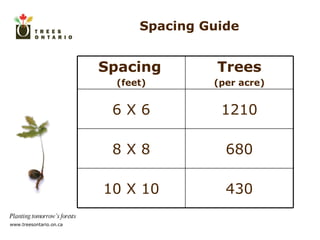
Spacing Guide Spacing   (feet) Trees (per acre) 6 X 6 1210 8 X 8 680 10 X 10 430
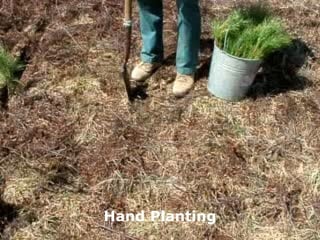
Hand Planting
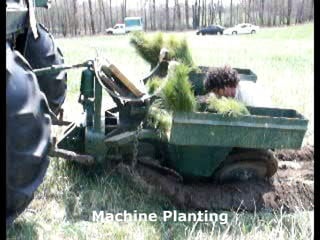
Machine Planting
Thank You www.treesontario.on.ca
The Managed Forest Tax Incentive Program Ontario Forestry Association www.oforest.on.ca
MFTIP Basics voluntary program Provincial program of the Ministry of Natural Resources eligible areas taxed at 25% residential rate MFTIP participants submit a 10 yr management plan, commit to good forestry practices & that area remains as forest Managed Forest Tax  Incentive Program
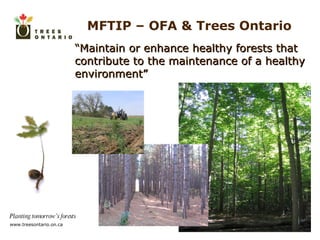
Overall Program Objectives Maintain or enhance healthy forests that contribute to the maintenance of a healthy environment To bring greater  fairness to the  property tax system by valuing forest land according to its  current use Managed Forest Tax  Incentive Program
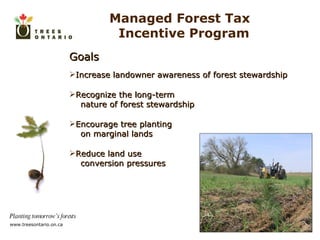
Goals Increase landowner awareness of forest stewardship Recognize the long-term nature of forest stewardship Encourage tree planting on marginal lands Reduce land use  conversion pressures Managed Forest Tax  Incentive Program
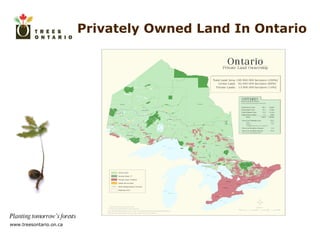
Privately Owned Land In Ontario
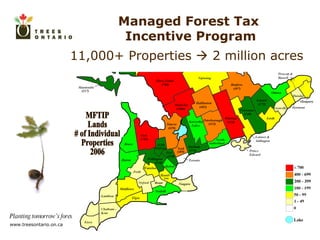
11,000+ Properties    2 million acres Managed Forest Tax  Incentive Program MFTIP  Lands # of Individual Properties 2006
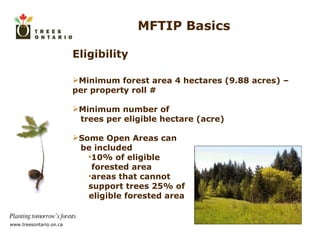
MFTIP Basics Eligibility Minimum forest area 4 hectares (9.88 acres) – per property roll # Minimum number of trees per eligible hectare (acre) Some Open Areas can be included 10% of eligible  forested area areas that cannot  support trees 25% of  eligible forested area
MFTIP Basics Non Eligible Acres Residences and landscaped areas (minimum 1 acre deducted)  Lands subject to a Registered Plan of Subdivision  Lands licensed under the Aggregates Act Portions of property   receiving Conservation  Land Tax Incentive
MFTIP Basics Requirements Approved Managed Forest Plan ($) Plan must be submitted by June 30th Forest Stewardship & Good Forestry  No High-Grading or Diameter Limit Cutting No removal of soil from the forest No pasturing of Livestock No continued inactivity  that degrades forest health
MFTIP Basics Ongoing Participation Follow Management Plan (general intent) 5 yr Landowner Report    10 Yr plan renewal Severances – amendment to reflect new property (min acres) Sales – purchaser chooses whether to participate
MFTIP Basics Management Activities  –  those activities that help landowner meet their objectives Plantation tending Competition & rodent control Pruning Inspections for insects & disease Thinning & Harvests Trail creation & maintenance Wildlife habitat & monitoring Forest Products – timber, syrup etc Environmental protection & restoration
Direct economic value: > 40% of hard maple  Around 15% of wood processed in Ontario comes from private land (8% of conifers and 24% of deciduous species) Wildlife Habitat 82% of vulnerable threatened or endangered species (southern Ontario) Tourism Ecological value and  source water protection Privately Owned Forests
“ Maintain or enhance healthy forests that contribute to the maintenance of a healthy environment” MFTIP – OFA & Trees Ontario
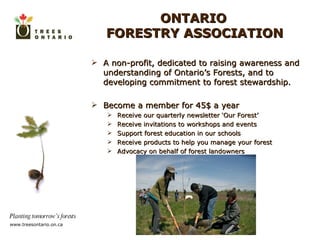
ONTARIO   FORESTRY ASSOCIATION A non-profit, dedicated to raising awareness and understanding of Ontario’s Forests, and to developing commitment to forest stewardship. Become a member for 45$ a year Receive our quarterly newsletter ‘Our Forest’ Receive invitations to workshops and events Support forest education in our schools Receive products to help you manage your forest Advocacy on behalf of forest landowners
Ontario Forestry Association Awareness  Stewardship  Education 701-200 Consumers Road North York, ON  M2J 4R4 (416) 493-4565 (800) 387-0790 www.oforest.on.ca [email_address]

2009 Landowner Workshop Series Ppt

  • 1.
    Winter 2009 LandownerWorkshop 50 Million Tree Program
  • 2.
    Agenda Introductions TreesOntario – Planting Tomorrow’s Forests Who we are Landowner Funding Available The challenge in southern Ontario Tree planting – what you need to know 3. The Managed Forest Tax Incentive Program 4. Partner Agencies 5. Questions and Answers
  • 3.
    Trees Ontario Planting Tomorrow’s Forests
  • 4.
    About Trees OntarioFounded in 1994, Trees Ontario is the largest not-for-profit tree-planting partnership in North America With our partners, Trees Ontario is planting roughly 3 million trees each year in Ontario We are the leading partner in the Ontario Ministry of Natural Resources’ 50 Million Tree Program We provide coordinated access to an extensive network of community-based partners Our goal is to increase planting levels to 10 million trees/year by 2015
  • 5.
    About Trees OntarioTrees Ontario provides: Tree planting funding and support to lower the cost of trees for landowners Planning tools and on-line databases for our tree planting partners Regular planning, forecasting, capacity building and communications support for our partners Seed forecasting workshops with our partners Public education programs
  • 6.
    Our Planting PartnersWe work with over 2,000 partners, program participants and natural resource professionals Our partners include: 36 Conservation Authorities 40+ local Ontario Stewardship councils other Environmental non-profit organizations municipalities tree nurseries private landowners Ontario’s Ministry of Natural Resources First Nations Forestry Consultants
  • 7.
    Trees Ontario’s Work2008 With our partners, we planted 2.3 million trees with 580 participating landowners and 54 planting agencies We collected enough seed for more than 12 million seedlings We held 26 landowner workshops, and attended 80+ community and educational events to educate and engage the public about the importance of tree planting 2009 Projections 2.5 million trees to be planted 50+ workshops and community events planned across Ontario
  • 8.
  • 9.
  • 10.
    Why Plant Trees?Restores Ontario’s forest canopy Increases native species numbers Fights climate change Cleans the air Protects and filters watersheds Supports wildlife with habitat and food Beautifies our landscapes Moderates temperature Protects crops and farmland Produces oxygen, purifies our water, cools our cities, and provides homes for plants and wildlife
  • 11.
    Tree Planting History1980’s – average of 20-30 million trees planted each year in Ontario 1992 – provincial government refocused its mandate and limited its tree planting funding substantially Annual planting levels dropped to as low as 2 million/year With our partners, we are currently planting close to 3 million trees/year, but there is still a need to plant more trees Urban sprawl continues to reduce tree stocks An estimated 10,000 hectares of forest cover has been lost over the past 15 years
  • 12.
  • 13.
    Significant Tree PlantingSubsidies Available for Eligible Landowners Access these by taking part in a Trees Ontario administered program through your local planting agency
  • 14.
    Trees Ontario SubsidyPrograms for Landowners Ontario Ministry of Natural Resources’ 50 Million Tree Program Full Service - 50 Cent Program Landowner Incentive Program – 10 Cent Program (not available with all planting partners) Special Projects
  • 15.
    Trees Ontario SubsidyPrograms for Landowners Ontario Ministry of Natural Resources’ 50 Million Tree Program Announced by provincial government August ’07 MNR partnering with Trees Ontario to implement the program Contributes to UN 1 Billion tree target Minimum area 2 ha. (5 ac.) Landowner contributes 15 cents/tree Landowner agrees to protect forest for 15 years Assistance up to $1.25/tree
  • 16.
    Trees Ontario SubsidyPrograms for Landowners Full Service Program Plant a min. of 1,500 trees Agency does the planning and planting Your participation encouraged 15 year agreement to protect trees is required by landowner As the landowner you save 50 cents/tree Landowner Incentive Program Program is not available with all planting partners Place orders of 100-3,000 native stock to be planted locally Your local planting agency will sell you the trees Do work yourself As the landowner you save 10 cents/tree Special Projects Trees Ontario supports select special projects, which are dealt with on a case-by-case basis. Planting agency partners are asked to submit a project proposal, which will then be reviewed by a technical advisory committee. Please contact Trees Ontario directly to discuss your special project proposal.
  • 17.
    How to Applyfor Funding Talk to your local delivery agent tonight to discuss your eligibility Pick up a contact sheet and map of Ontario’s Conservation Authorities and Stewardship Councils Visit the Trees Ontario website for more program information: www.treesontario.on.ca
  • 18.
  • 19.
  • 20.
    Tree Planting: WhatYou Need to Know
  • 21.
    Tree Planting: What you Need to Know A Short History of Tree Planting in Southern Ontario Tree Seed and Nursery Stock Tree Planting
  • 22.
    A Short Historyof Tree Planting in Southern Ontario
  • 23.
  • 24.
  • 25.
    1871: An Actto encourage the planting of trees on highways
  • 26.
    Ontario has arich history of tree planting on private lands Since Ontario’s planting programs began in the late 1800's, over 1 billion trees have been planted across the province
  • 27.
    Tree Seed and Nursery Stock
  • 28.
    SEED The principle means of perpetuation for most woody species
  • 29.
  • 30.
  • 31.
  • 32.
    White Spruce inNursery Beds
  • 33.
  • 34.
    What’s Involved inParticipating in a Tree Planting Program Site assessments are conducted A planting plan is developed The site is prepared Trees are planted Trees are tended as required Activities are recorded
  • 35.
    Know Your PropertyWhat information your Planting Delivery Agent will work with you to collect Access Topography Soils Drainage Existing vegetation Boundaries
  • 36.
  • 37.
    Matching Species toSoil Soil Texture Drainage Well to Moderate Imperfect to Poor Sand White Pine Red Pine Norway Spruce European Larch Red Oak White Cedar Tamarack Loam White Pine White Spruce Norway Spruce White Cedar European Larch Black Walnut Red Oak White Cedar Tamarack Silver Maple Clay Norway Spruce White Cedar European Larch Black Walnut Tamarack Silver Maple
  • 38.
    Spacing Guide Spacing (feet) Trees (per acre) 6 X 6 1210 8 X 8 680 10 X 10 430
  • 39.
  • 40.
  • 41.
  • 42.
    The Managed ForestTax Incentive Program Ontario Forestry Association www.oforest.on.ca
  • 43.
    MFTIP Basics voluntaryprogram Provincial program of the Ministry of Natural Resources eligible areas taxed at 25% residential rate MFTIP participants submit a 10 yr management plan, commit to good forestry practices & that area remains as forest Managed Forest Tax Incentive Program
  • 44.
    Overall Program ObjectivesMaintain or enhance healthy forests that contribute to the maintenance of a healthy environment To bring greater fairness to the property tax system by valuing forest land according to its current use Managed Forest Tax Incentive Program
  • 45.
    Goals Increase landownerawareness of forest stewardship Recognize the long-term nature of forest stewardship Encourage tree planting on marginal lands Reduce land use conversion pressures Managed Forest Tax Incentive Program
  • 46.
  • 47.
    11,000+ Properties  2 million acres Managed Forest Tax Incentive Program MFTIP Lands # of Individual Properties 2006
  • 48.
    MFTIP Basics EligibilityMinimum forest area 4 hectares (9.88 acres) – per property roll # Minimum number of trees per eligible hectare (acre) Some Open Areas can be included 10% of eligible forested area areas that cannot support trees 25% of eligible forested area
  • 49.
    MFTIP Basics NonEligible Acres Residences and landscaped areas (minimum 1 acre deducted) Lands subject to a Registered Plan of Subdivision Lands licensed under the Aggregates Act Portions of property receiving Conservation Land Tax Incentive
  • 50.
    MFTIP Basics RequirementsApproved Managed Forest Plan ($) Plan must be submitted by June 30th Forest Stewardship & Good Forestry No High-Grading or Diameter Limit Cutting No removal of soil from the forest No pasturing of Livestock No continued inactivity that degrades forest health
  • 51.
    MFTIP Basics OngoingParticipation Follow Management Plan (general intent) 5 yr Landowner Report  10 Yr plan renewal Severances – amendment to reflect new property (min acres) Sales – purchaser chooses whether to participate
  • 52.
    MFTIP Basics ManagementActivities – those activities that help landowner meet their objectives Plantation tending Competition & rodent control Pruning Inspections for insects & disease Thinning & Harvests Trail creation & maintenance Wildlife habitat & monitoring Forest Products – timber, syrup etc Environmental protection & restoration
  • 53.
    Direct economic value:> 40% of hard maple Around 15% of wood processed in Ontario comes from private land (8% of conifers and 24% of deciduous species) Wildlife Habitat 82% of vulnerable threatened or endangered species (southern Ontario) Tourism Ecological value and source water protection Privately Owned Forests
  • 54.
    “ Maintain orenhance healthy forests that contribute to the maintenance of a healthy environment” MFTIP – OFA & Trees Ontario
  • 55.
    ONTARIO FORESTRY ASSOCIATION A non-profit, dedicated to raising awareness and understanding of Ontario’s Forests, and to developing commitment to forest stewardship. Become a member for 45$ a year Receive our quarterly newsletter ‘Our Forest’ Receive invitations to workshops and events Support forest education in our schools Receive products to help you manage your forest Advocacy on behalf of forest landowners
  • 56.
    Ontario Forestry AssociationAwareness Stewardship Education 701-200 Consumers Road North York, ON M2J 4R4 (416) 493-4565 (800) 387-0790 www.oforest.on.ca [email_address]