ISSN 1830-754X


                                Statistical books


Science, technology and innovation in Europe


2009 edition
Statistical books


Science, technology and innovation in Europe


2009 edition
Europe Direct is a service to help you find answers
 to your questions about the European Union
 Freephone number (*):

 00 800 6 7 8 9 10 11
 (*) Certain mobile telephone operators do not allow access
 to 00 800 numbers or these calls may be billed.


More information on the European Union is available on the Internet (http://europa.eu).

Luxembourg: Office for Official Publications of the European Communities, 2009

ISBN 978-92-79-12348-1
ISSN 1830-754X
DOI 10.2785/20620
Cat. No. KS-EM-09-001-EN-C

Theme: Science and technology
Collection: Statistical books

© European Communities, 2009
© Cover photo: Phovoir
Copyrights:
© Phovoir.com; the chapters: Human resources in science and technology High-tech industries and knowledge-based services
© The audiovisual service of the European Commission; the chapters GBAORD, R&D expenditure, R&D Personnel, Innovation,
Patents, 2007 EU industrial R&D investment scoreboard


For reproduction or use of these photos, permission must be sought directly from the copyright holder.
Preface

 The statistics and indicators presented in this 2009 edition of ‘Science, Technology and Innovation in Europe’ are line with
 the strategic goals set by the European Council in Lisbon in 2000 — the ‘Lisbon strategy’ — and Barcelona in 2002 aiming
 respectively to turn the European Union, by 2010, into most competitive and dynamic knowledge-based economy in the
 world, capable of sustainable economic growth with more and better jobs and greater social cohesion.

 The Lisbon and Barcelona European Councils both signaled the important role of R&D and innovation in the European
 Union. Against this background, the 2005 initiative on ‘Working together for growth and jobs’ has re-launched the Lisbon
 strategy. Knowledge and innovation for growth became one of the three main areas for action in the new Lisbon partnership
 for growth and jobs, which places science, technology and innovation at the heart of European Union policies.

 A knowledge-based society is one where research, education, training and innovation are fully mobilised to fulfil the
 economic, social and environmental ambitions of the European Union and the expectations of its citizens. Five new
 European Research Area initiatives launched in 2008 address researchers' careers and mobility, research infrastructures,
 knowledge sharing, joint programming and international science and technology cooperation. They aim at establishing
 durable partnerships with Member States and stakeholders — including businesses, universities and research organisations
 — to develop the European Research Area jointly in their specific areas of focus.

 In this context, relevant and meaningful indicators on science, technology and innovation are paramount for informing
 where Europe stands on the path towards more knowledge and growth. Although several challenges remain, in particular
 concerning the measurement of the internationalisation of research, this publication presents, with the aid of the relevant
 statistics, the progress made in recent years on research, development and innovation activities in Europe and in comparison
 with the selected other economies.


 Michel GLAUDE

 Director for Social Statistics and Information Society


eurostat ■                                                                                                                      I
Acknowledgements

     This publication was prepared by Eurostat:

            -   Directorate F: Social statistics and information society — Michel Glaude, Director;
            -   Unit F-4: Education, science and culture statistics — Jean-Louis Mercy, Head of Unit.

     This edition of the statistical book was coordinated and managed by Bernard Félix, Tomas Meri, Sergiu-Valentin
     Parvan, Reni Petkova, Veijo Ritola and Håkan Wilén.

     The technical work was carried out by SOGETI Luxembourg S.A.:
     texts and analyses: Verónica Benéitez Pinero, Gesina Dierickx, Sébastien Evans, Céline Lagrost and Sammy Sioen;
     layout and desktop publishing: Emmanuelle Berthe and Raphaëlle Méot;
     data processing: Gaëtan Châteaugiron.


     DISCLAIMER

     The opinions expressed in this publication are those of the individual authors alone and do not necessarily
     reflect the position of the European Commission.
     Data source

     Eurostat is the data source for all tables and figures in this publication unless specified otherwise.

     Maps

     GISCO, Eurostat.
     © EuroGeographics Association 2001 for the administrative boundaries, on behalf of the national organisations
     responsible for official mapping in the countries concerned.


II                                                                                                            ■ eurostat
Table of Contents

 List of tables, figures and maps                                             V
 Overview and executive summary                                               XI
 Stastistical symbols and abbreviations                                      XVI

 Part 1 - Investing in R&D                                                    1

   Chapter 1 - Government budget appropriations or outlays on R&D — GBAORD    3
      1.1    Introduction                                                      5
      1.2    Total GBAORD                                                      6
      1.3    GBAORD by socio-economic objective                               11

   Chapter 2 - R&D expenditure                                               17
      2.1    Introduction                                                     19
      2.2    R&D at national level                                            22
      2.3    R&D at regional level                                            31


 Part 2 - Monitoring the knowledge workers                                   39

   Chapter 3 - R&D personnel                                                 41
      3.1    Introduction                                                     43
      3.2    R&D personnel at national level                                  45
      3.3    R&D personnel at regional level                                  58

   Chapter 4 - Human resources in science and technology                     63
      4.1    Introduction                                                     65
      4.2    Education inflows                                                68
      4.3    Stocks of human resources in science and technology              77
      4.4    Mobility                                                         88
      4.5    International mobility                                           90


 Part 3 - Productivity and competitiveness                                   93

   Chapter 5 - Innovation                                                    95
      5.1    Introduction                                                     97
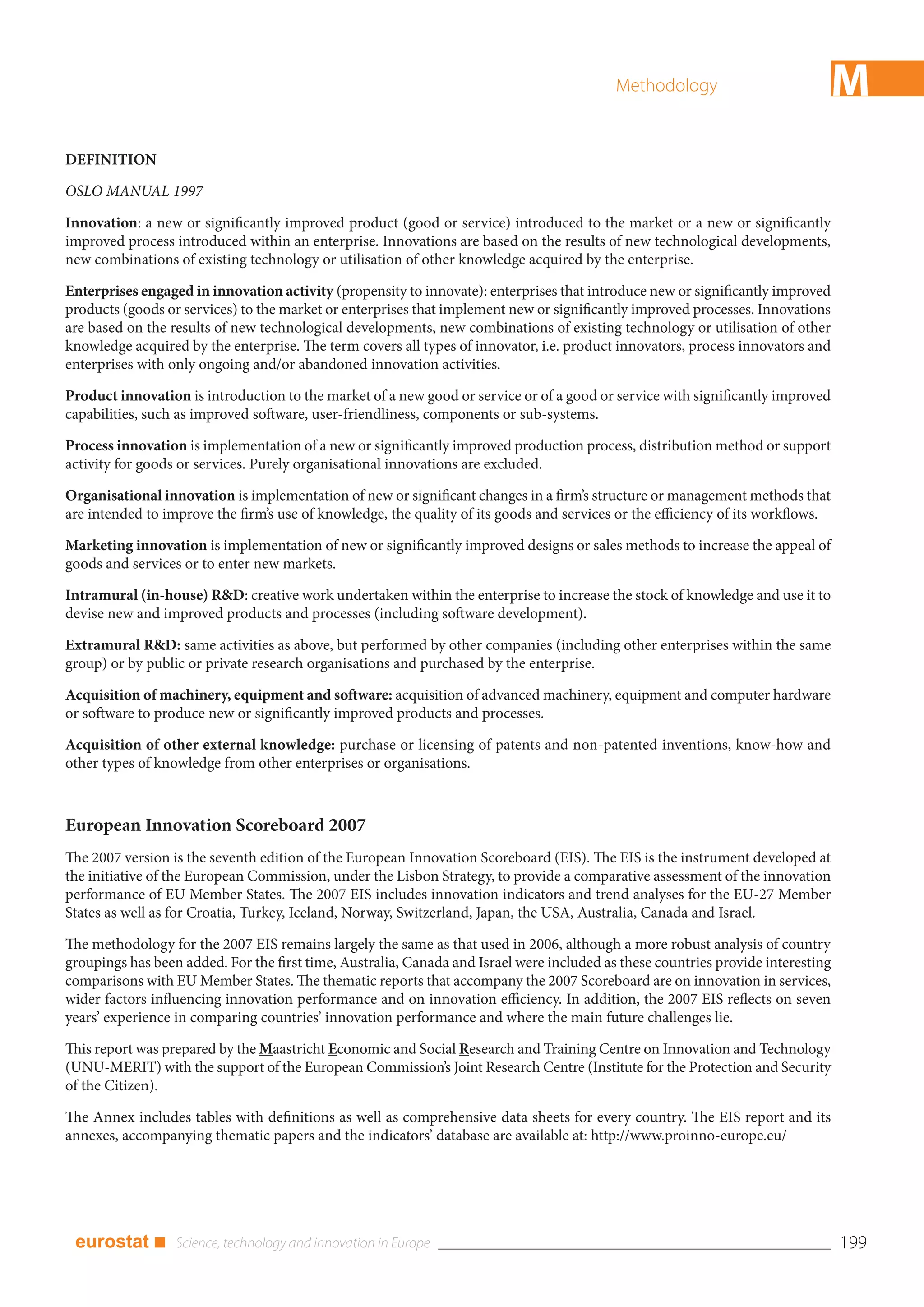
      5.2    European Innovation Scoreboard 2007                             100
      5.3    Outlook: CIS 2006 and CIS 2008                                  120


eurostat ■                                                                         III
Chapter 6 - Patents                                                               121
         6.1   Introduction                                                              123
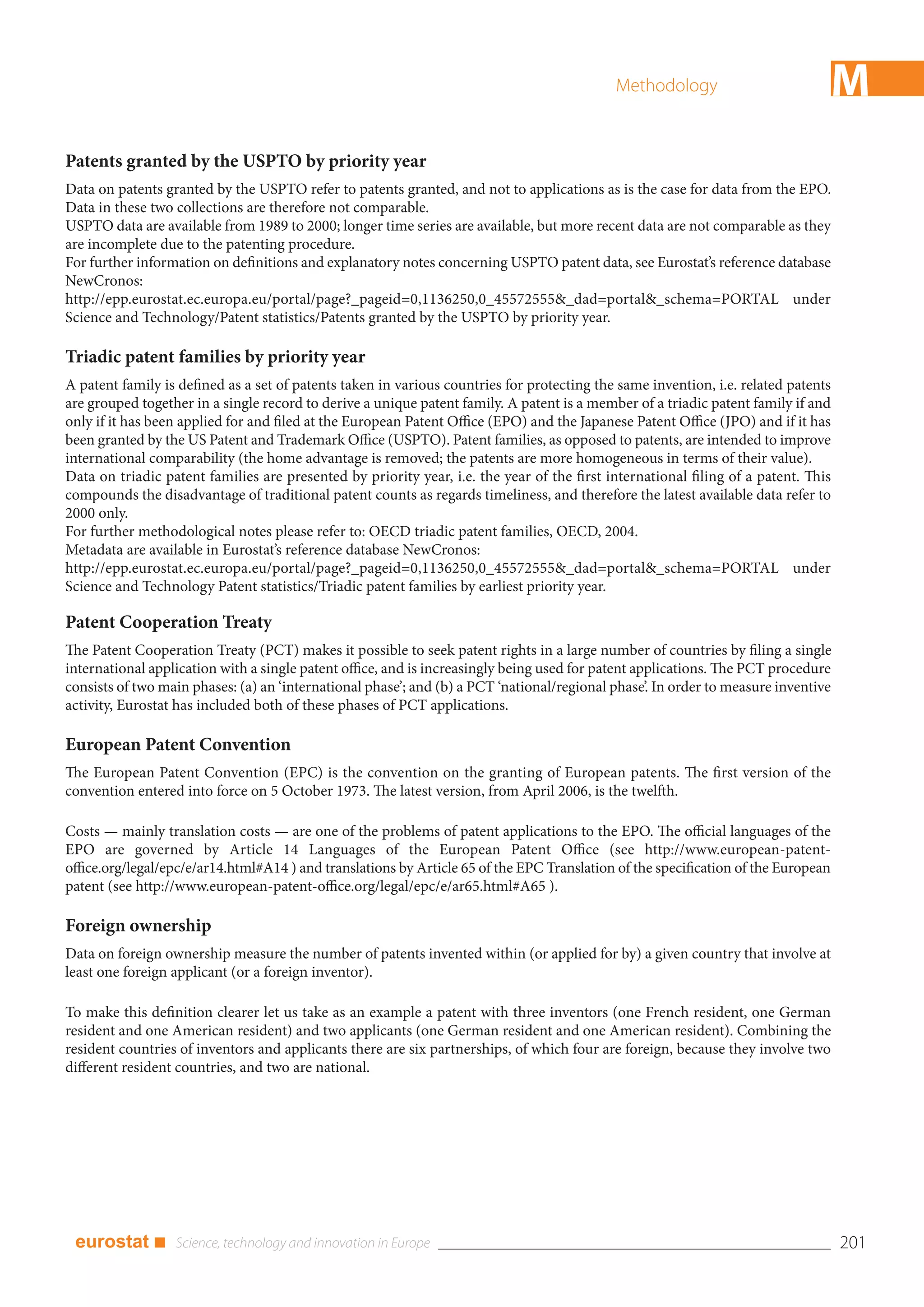
         6.2   Triadic patent families                                                   125
         6.3   Total patent applications to the EPO and patents granted by the USPTO     126
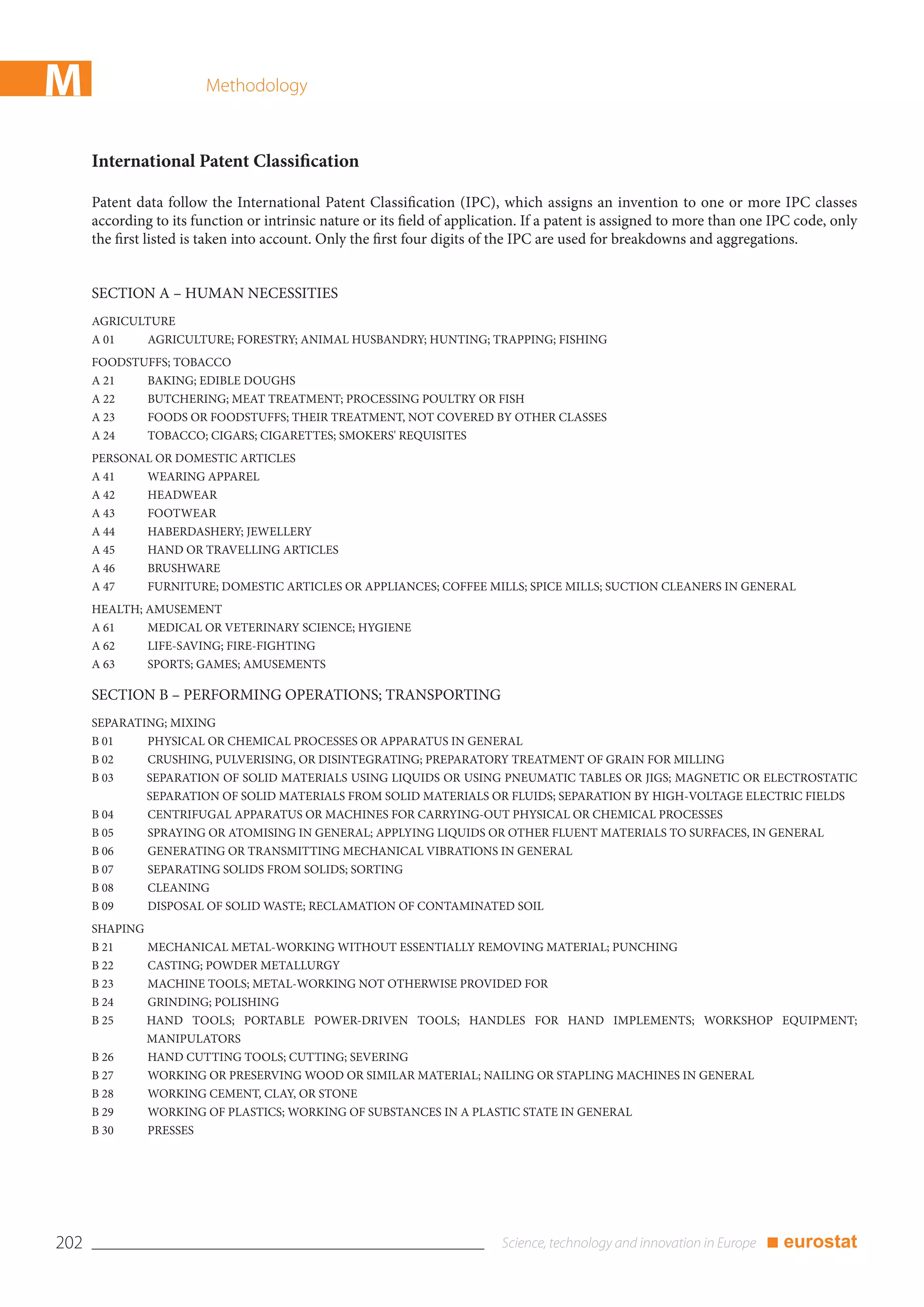
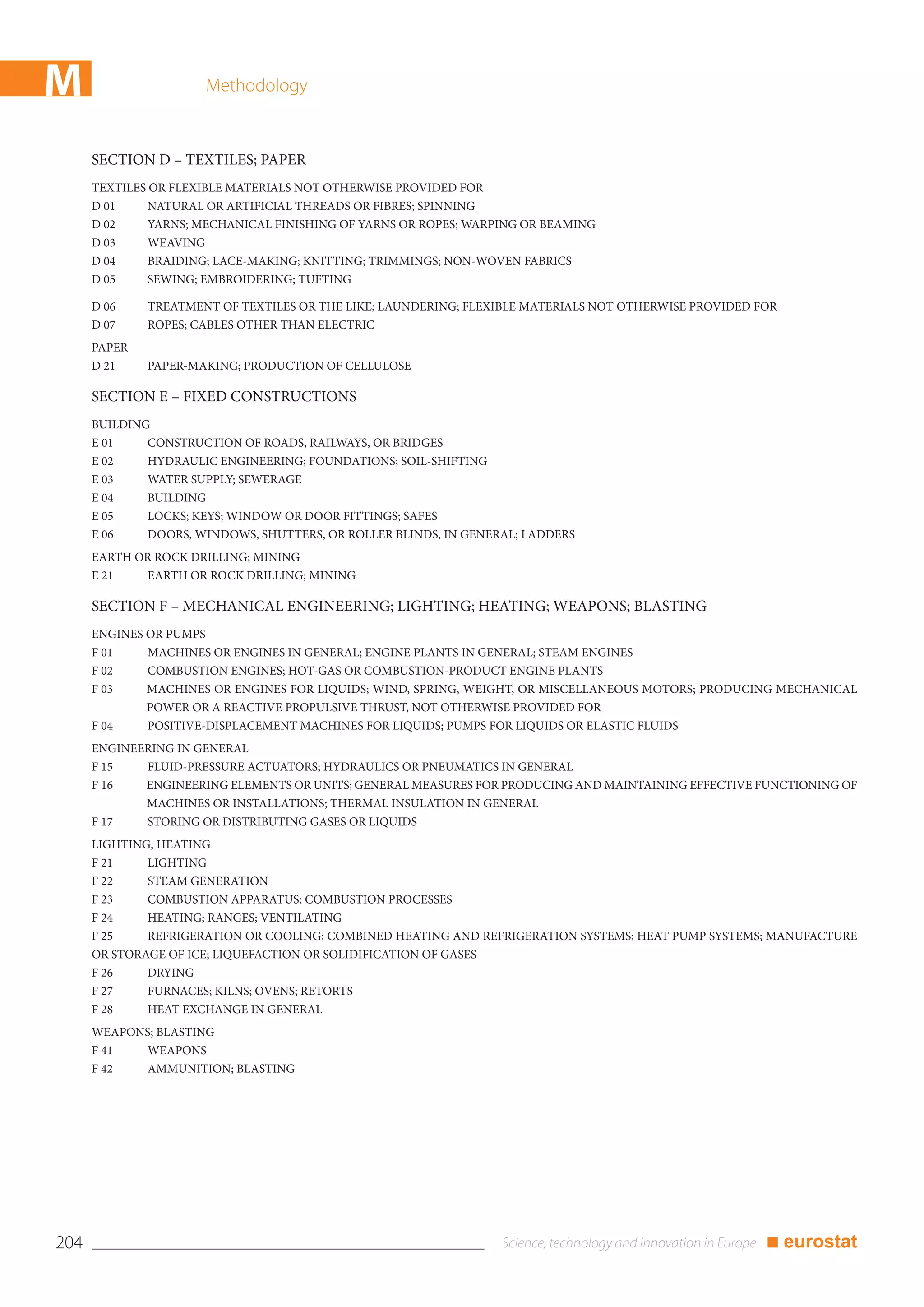
         6.4   Patent applications in technological fields                               135
         6.5   Performance at regional level                                             140

      Chapter 7 - High-tech industries and knowledge-based services                     149
         7.1   Introduction                                                              151
         7.2   Enterprises in high-tech industries and knowledge-intensive services      152
         7.3   Venture capital investments                                               154
         7.4   Trade in high-tech products                                               156
         7.5   Employment in high-tech industries and in knowledge-intensive services    160

      Chapter 8 - 2007 EU industrial R&D investment scoreboard                          169
         8.1   Introduction                                                              171
         8.2   Key indicators                                                            174
         8.3   Other key findings                                                        180


     Methodology                                                                        181
      M1 - General information                                                          183

      M2 - Methodological notes by domain                                               189


IV                                                                                      ■ eurostat
List of tables, figures and maps
Part 1        Investing in R&D

Chapter 1     Government budget appropriations or outlays on R&D — GBAORD
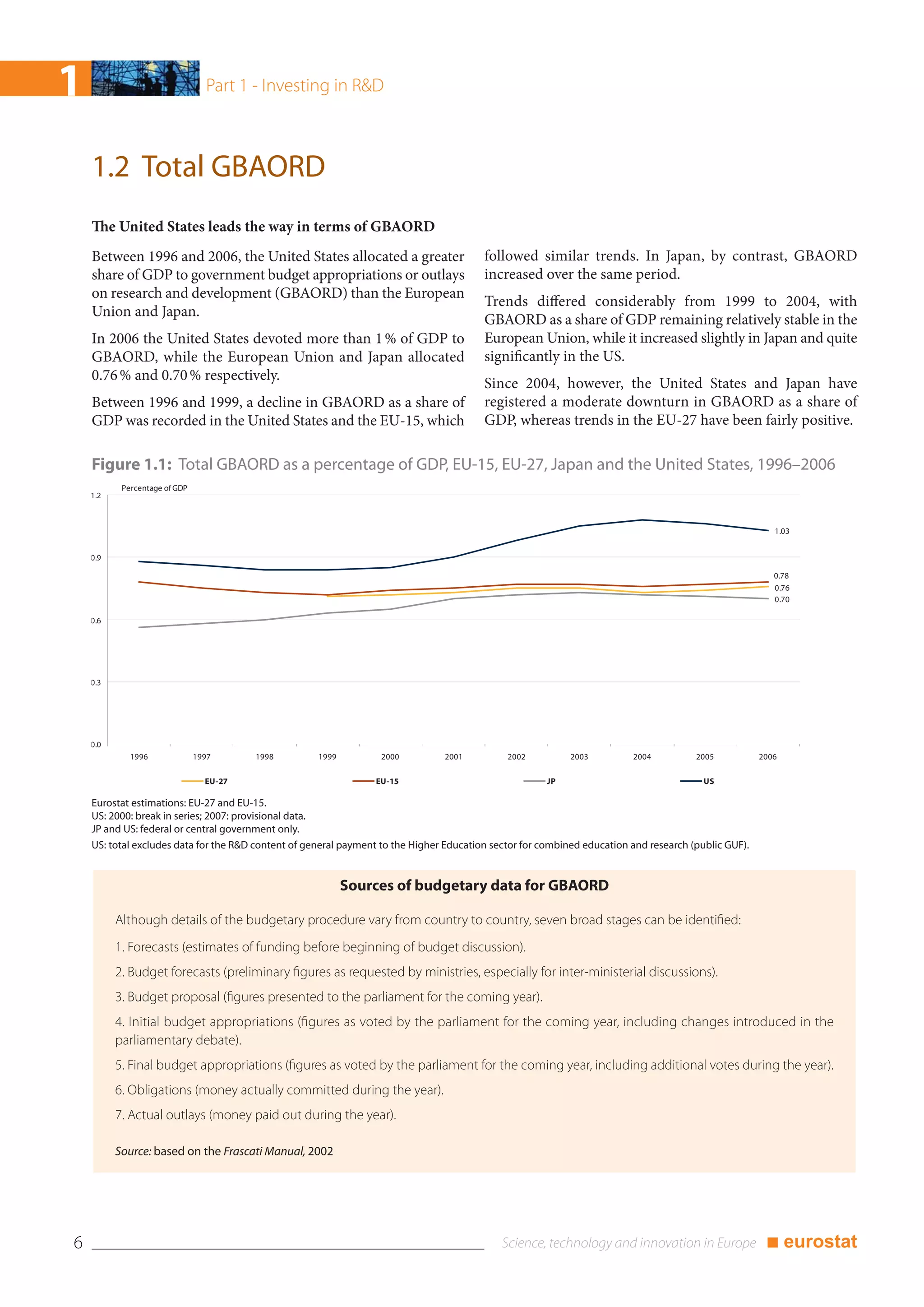
Figure 1.1    Total GBAORD as a percentage of GDP, EU-15, EU-27, Japan and United States, 1996–2006....................................6
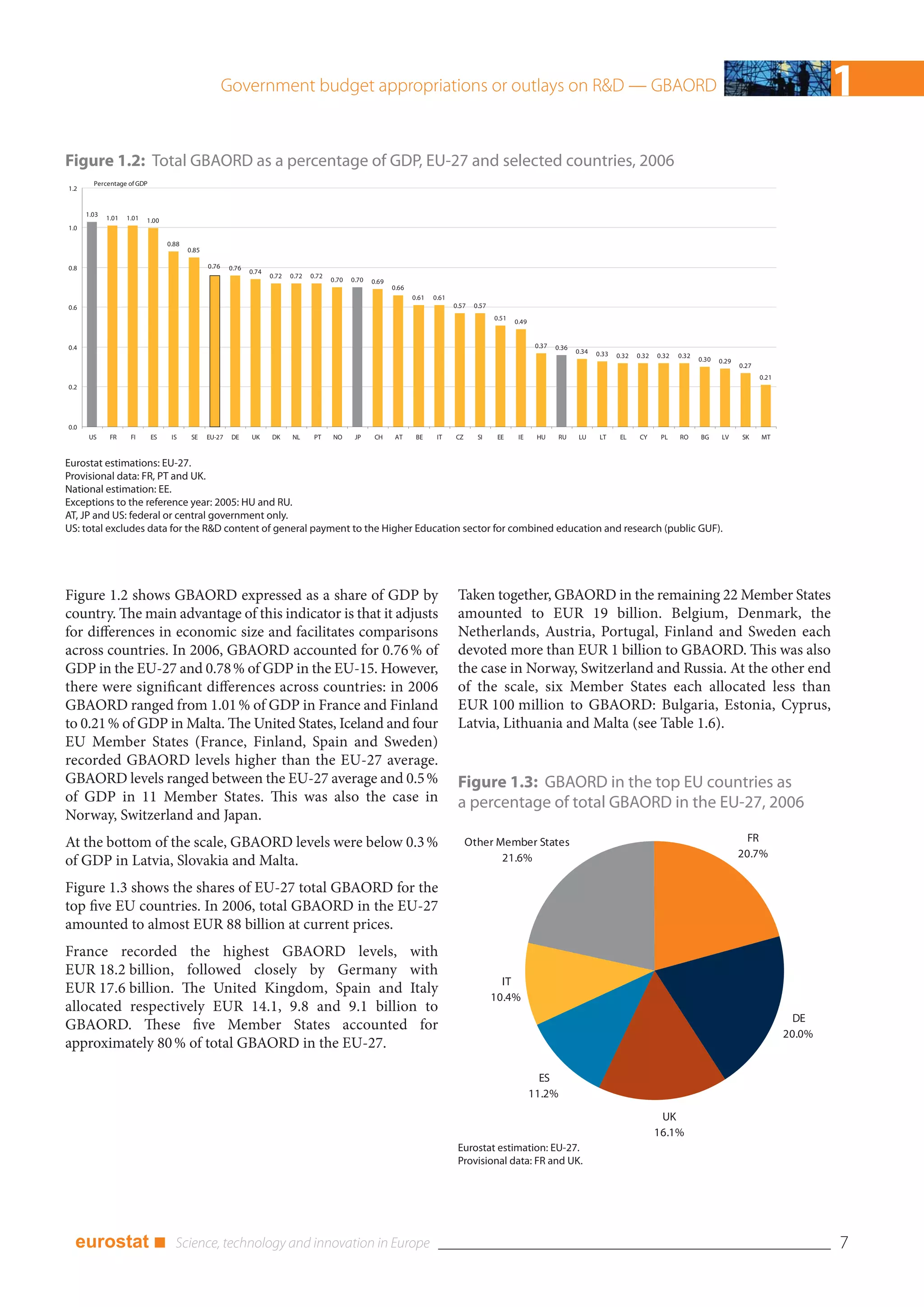
Figure 1.2    Total GBAORD as a percentage of GDP, EU-27 and selected countries, 2006......................................................................7
Figure 1.3    GBAORD in the top EU countries as a percentage of total EU-27 GBAORD, 2006............................................................7
Figure 1.4    Total GBAORD in EUR per inhabitant, EU-27 and selected countries, 2006..........................................................................8
Figure 1.5    AAGR of GBAORD and GDP, EU-27 and selected countries, 2001–2006................................................................................9
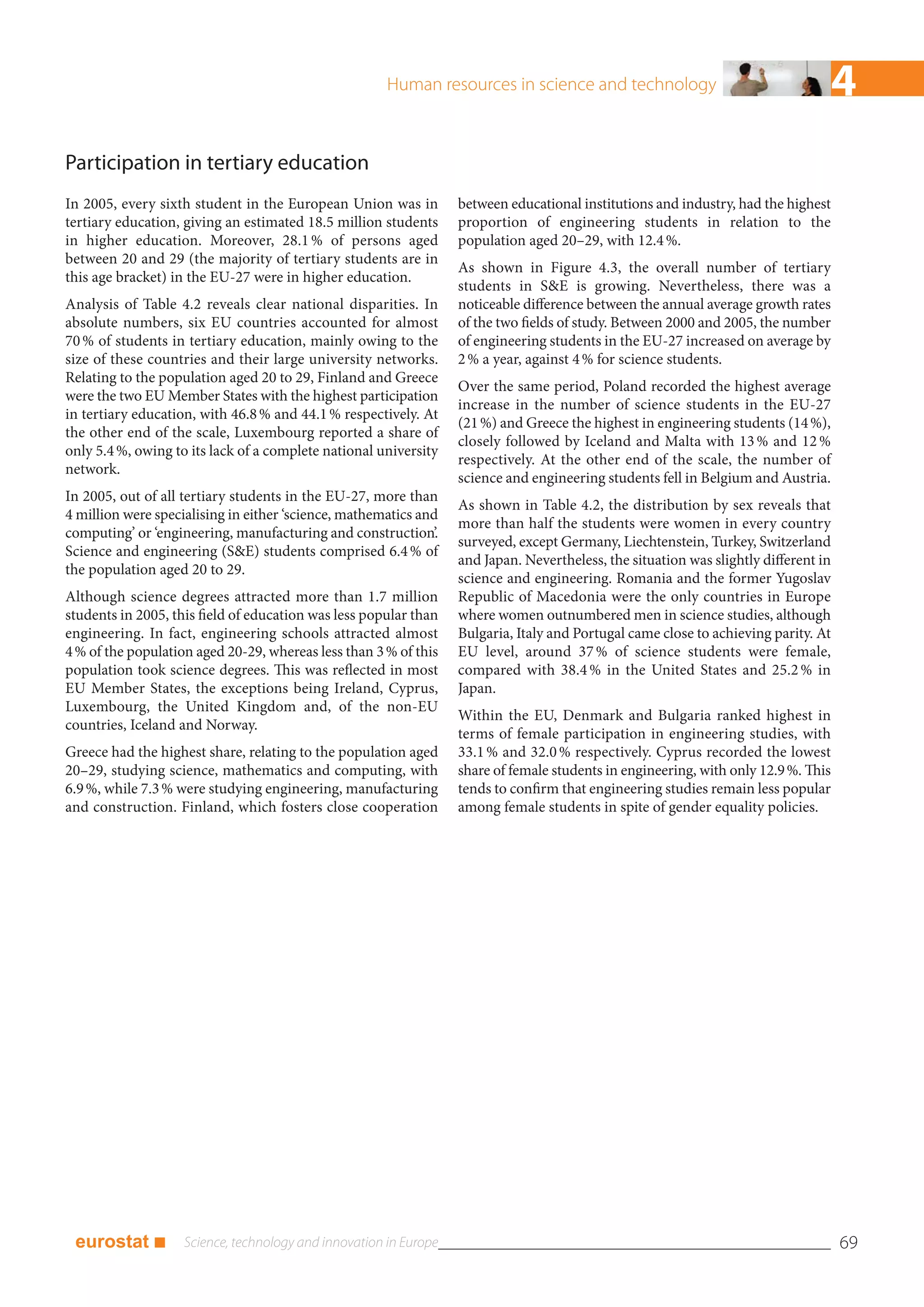
Table 1.6     Total GBAORD in EUR million and by socio-economic objectives as a percentage of total GBAORD,
              EU-27 and selected countries, 2006............................................................................................................................................................12
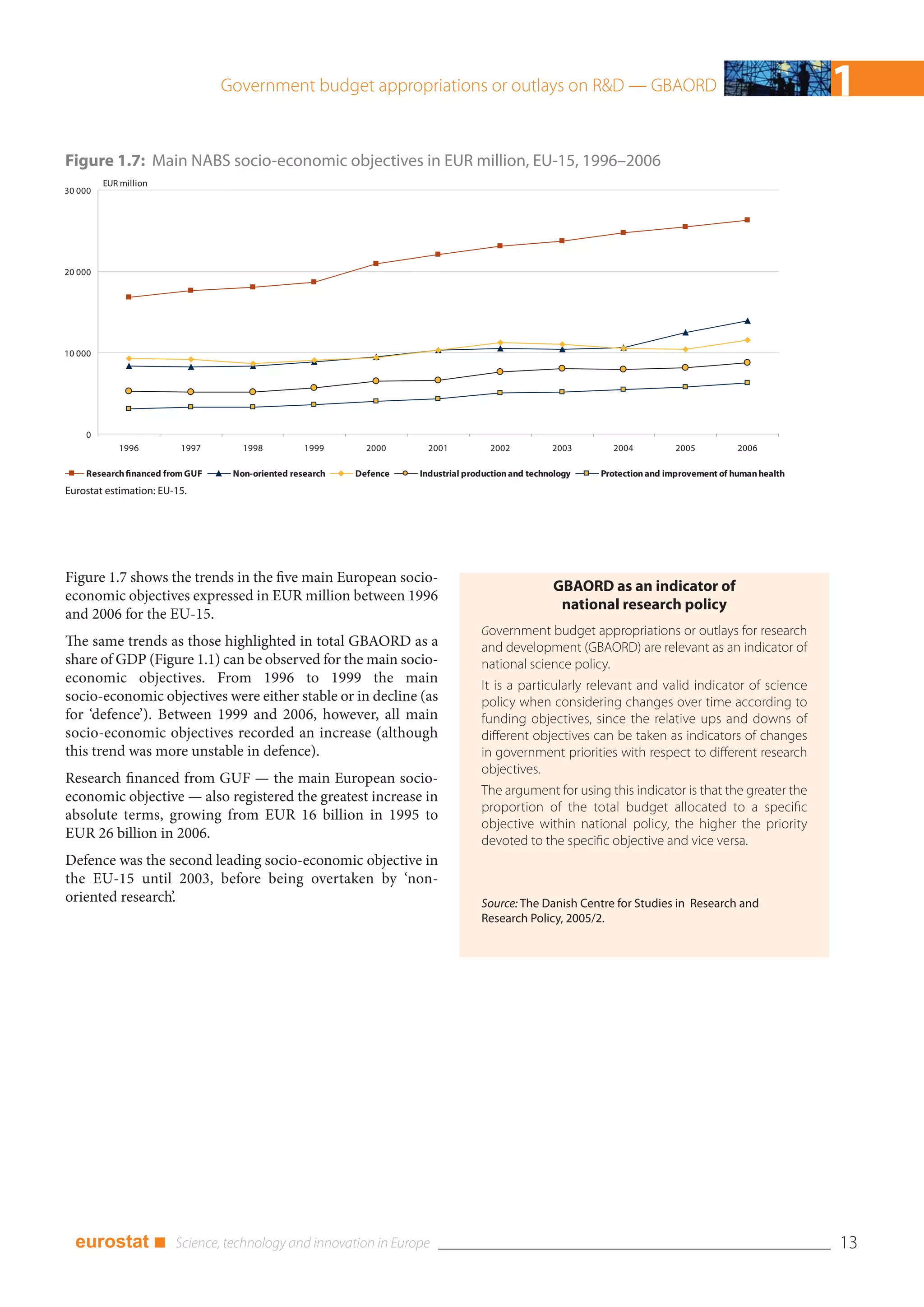
Figure 1.7    Main NABS socio-economic objectives in EUR million, EU-15, 1996–2006 .......................................................................13
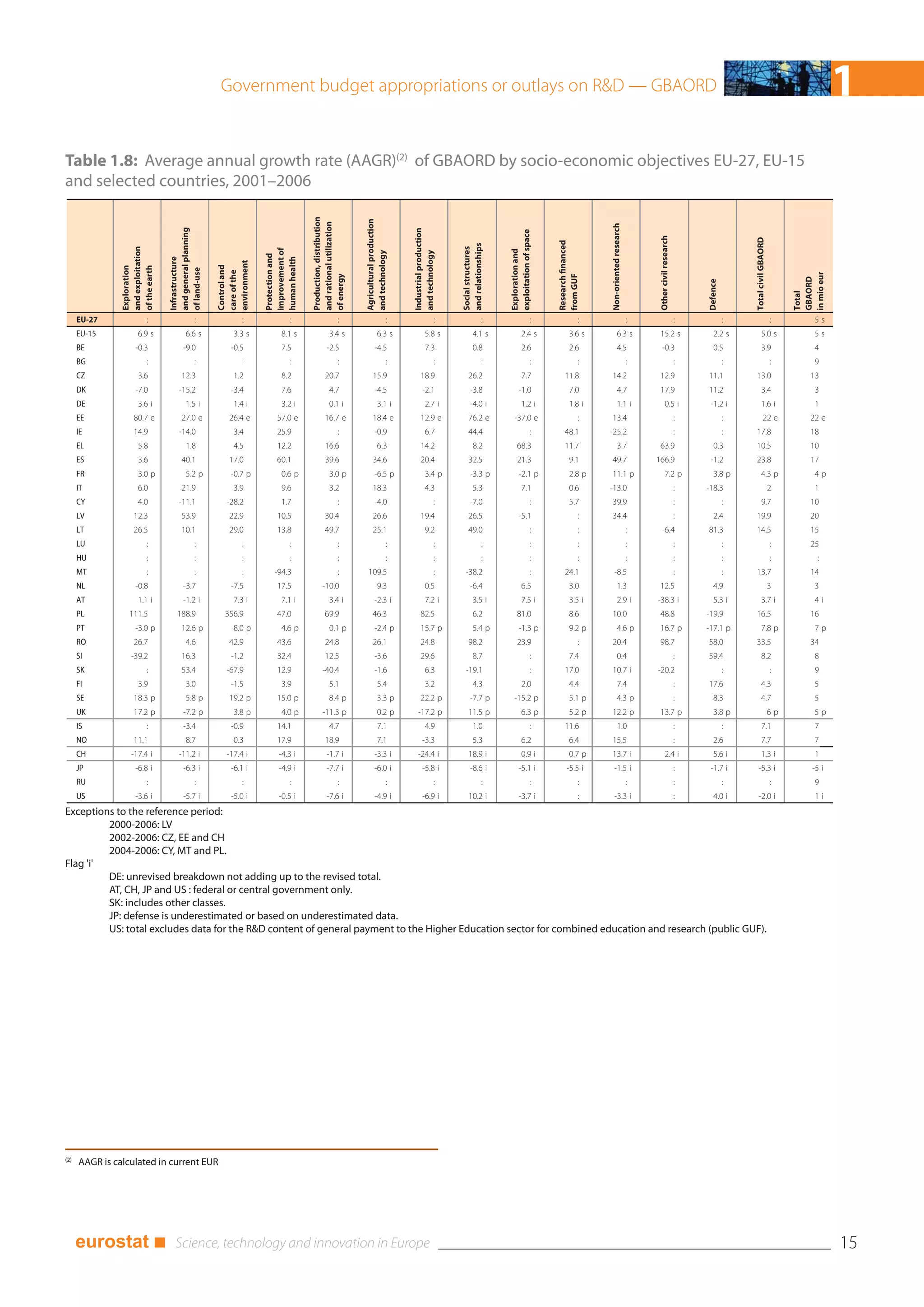
Table 1.8     Average annual growth rate (AAGR) of GBAORD by socio-economic objectives, EU-27, EU-15 and
              selected countries, 2001–2006 ......................................................................................................................................................................15

Chapter 2     R&D expenditure
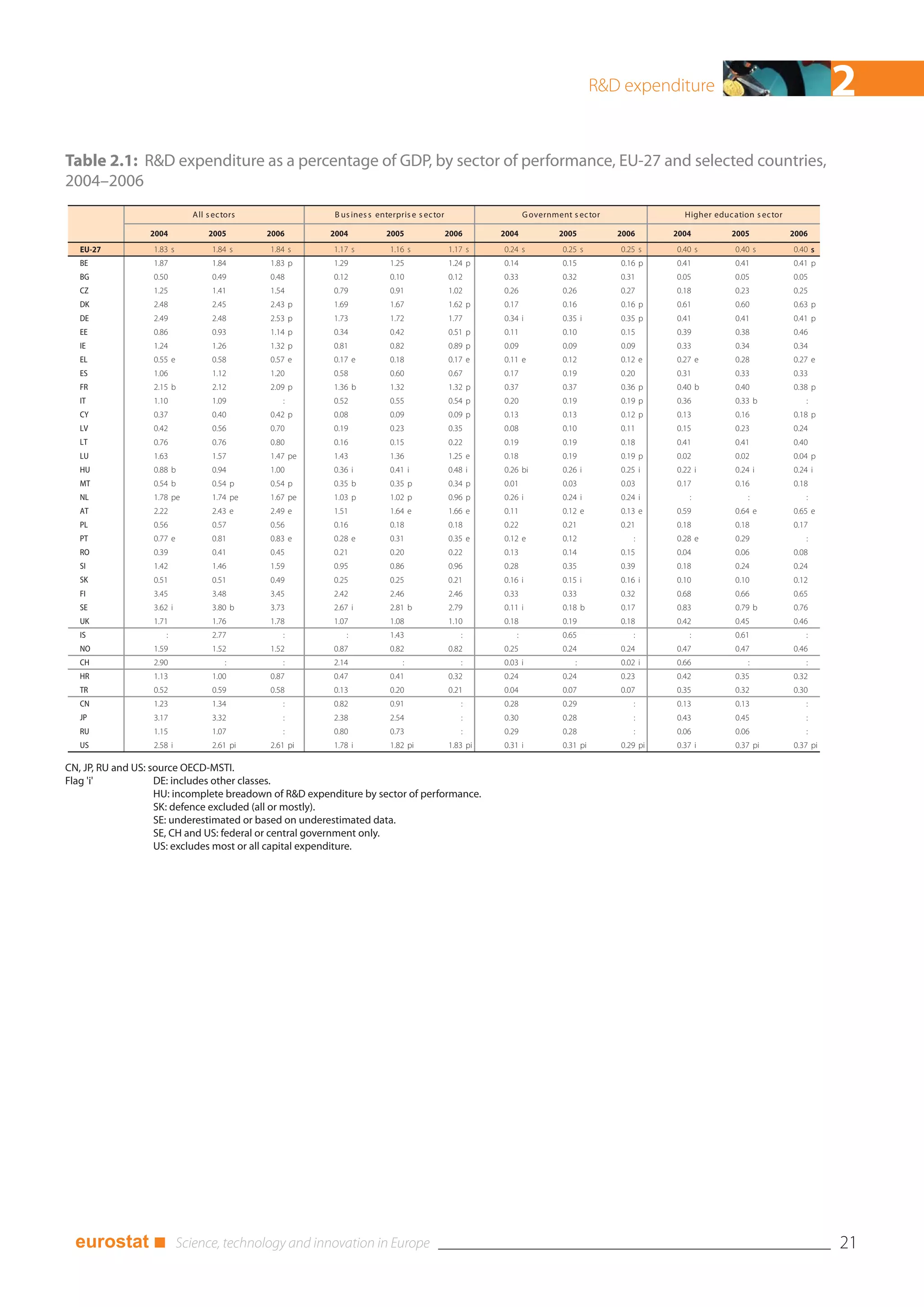
Table 2.1     R&D expenditure as a percentage of GDP by sector of performance, EU-27 and selected
              countries, 2004–2006..........................................................................................................................................................................................21
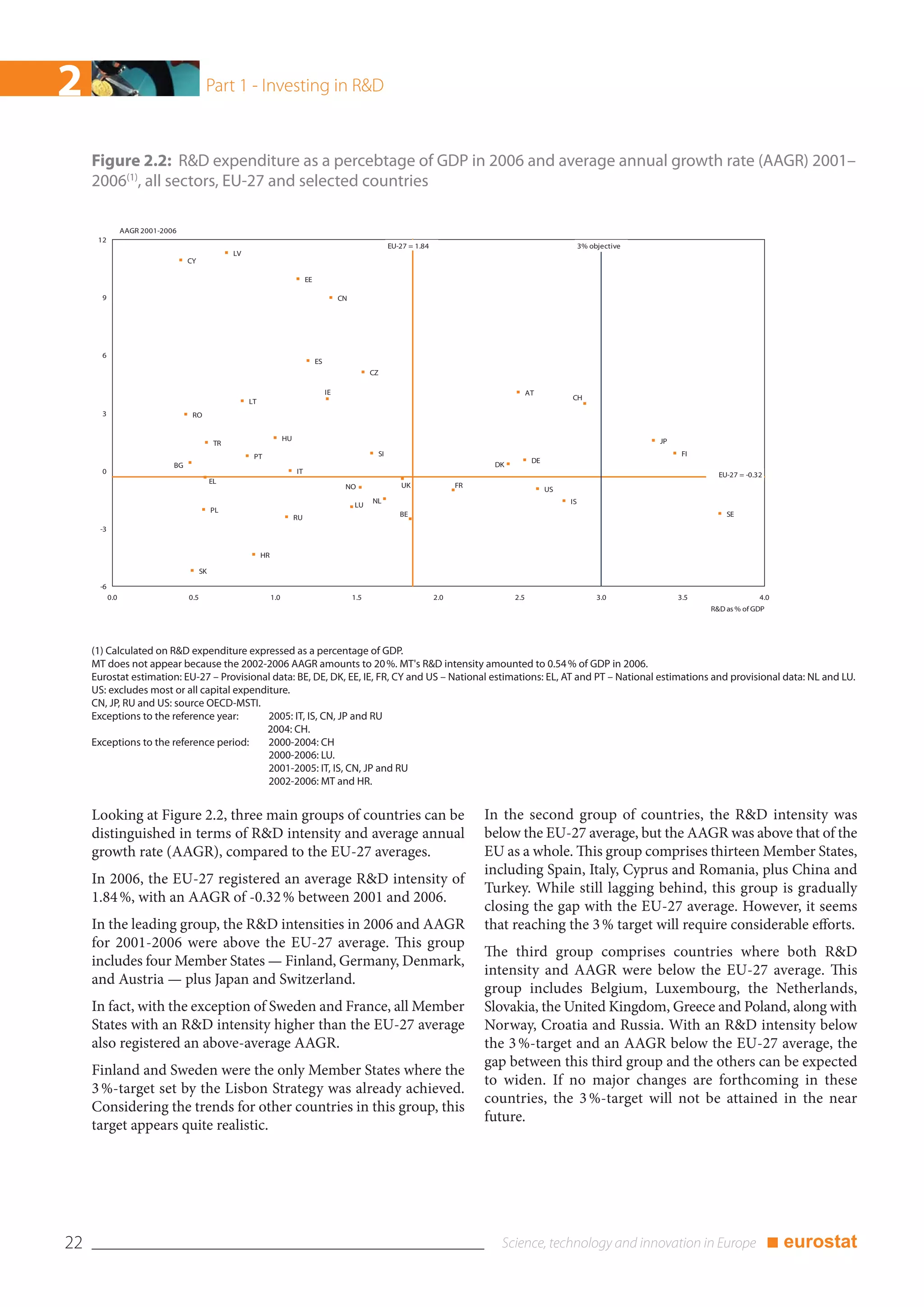
Figure 2.2    R&D expenditure as a percentage of GDP in 2006 and average annual growth rate (AAGR) 2001–2006,
              all sectors, EU-27 and selected countries ................................................................................................................................................22
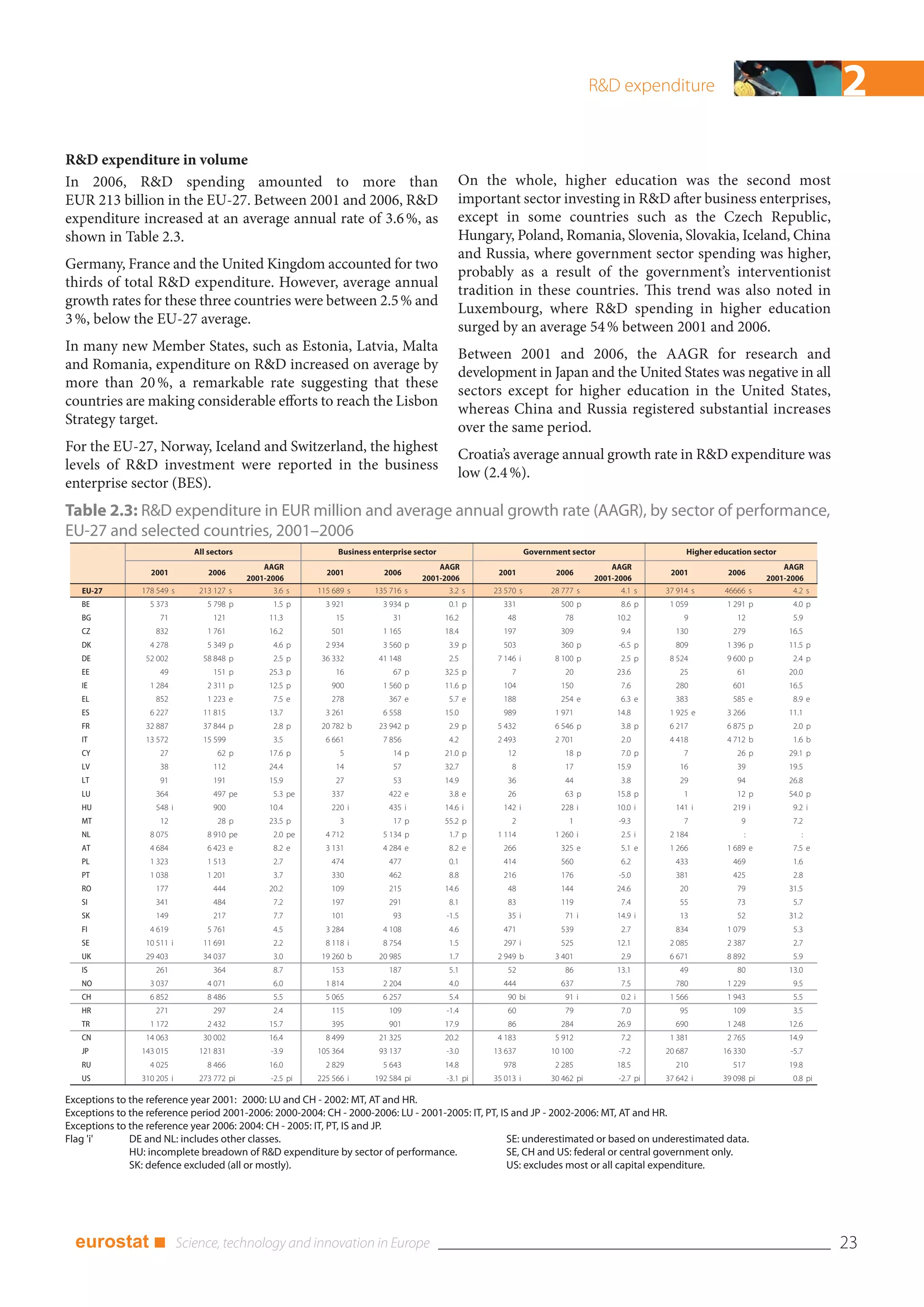
Table 2.3     R&D expenditure in EUR million and average annual growth rate (AAGR), by sector of performance,
              EU-27 and selected countries, 2001–2006 .............................................................................................................................................23
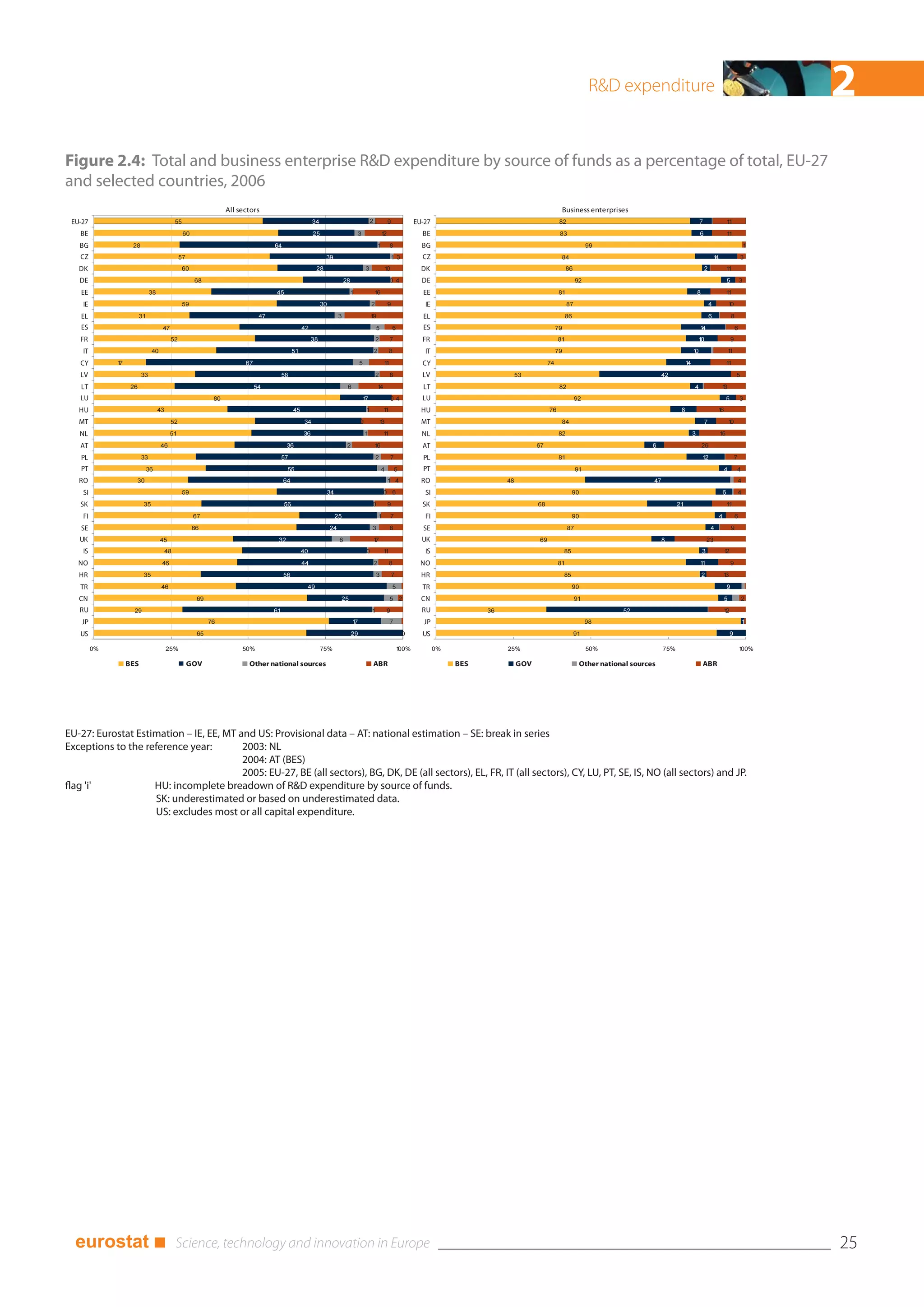
Figure 2.4    Total and business enterprise R&D expenditure by source of funds as a percentage of total,
              EU-27 and selected countries, 2006............................................................................................................................................................25
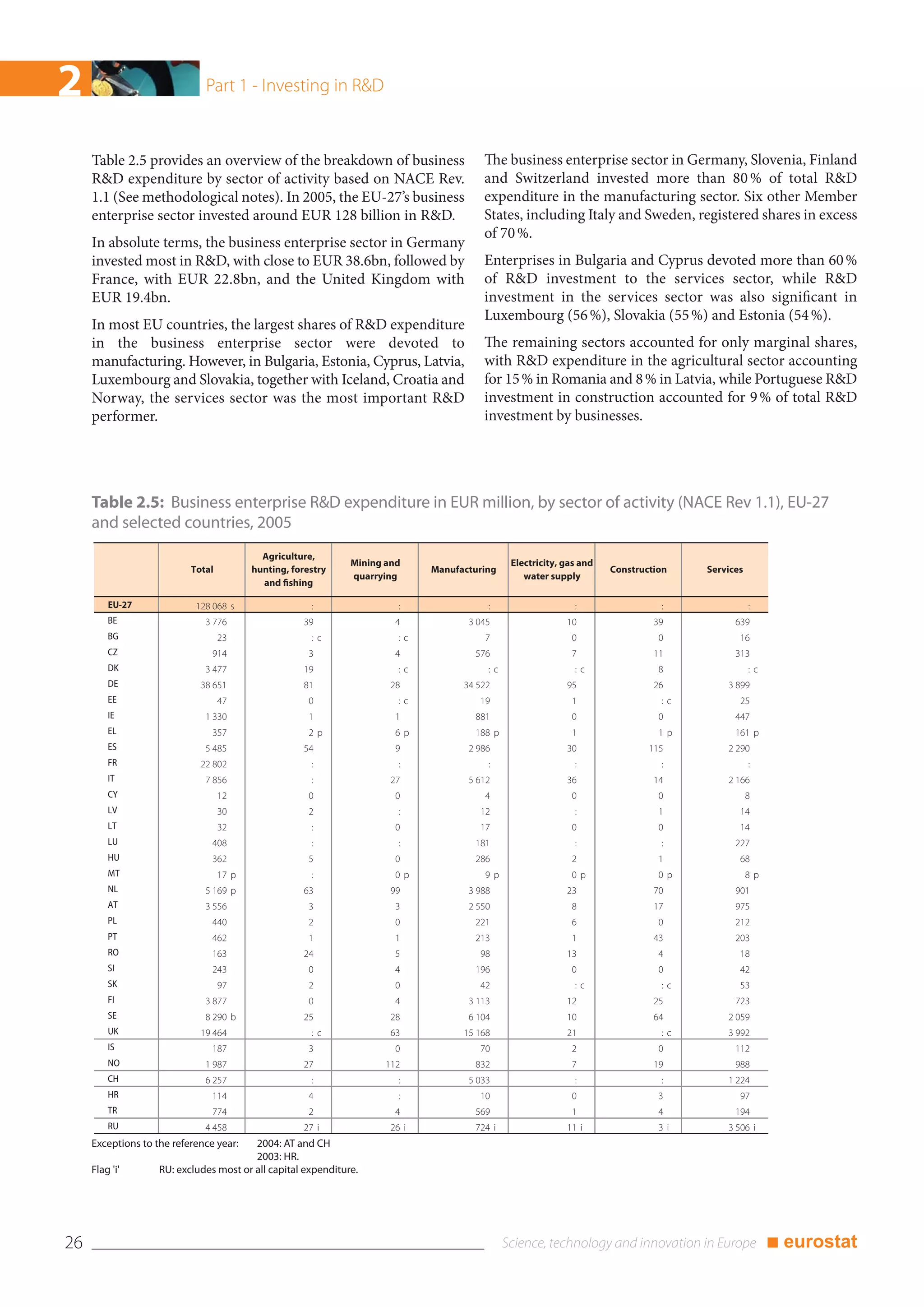
Table 2.5     Business enterprise R&D expenditure in EUR million, by sector of activity (NACE Rev 1.1),
              EU-27 and selected countries, 2005............................................................................................................................................................26
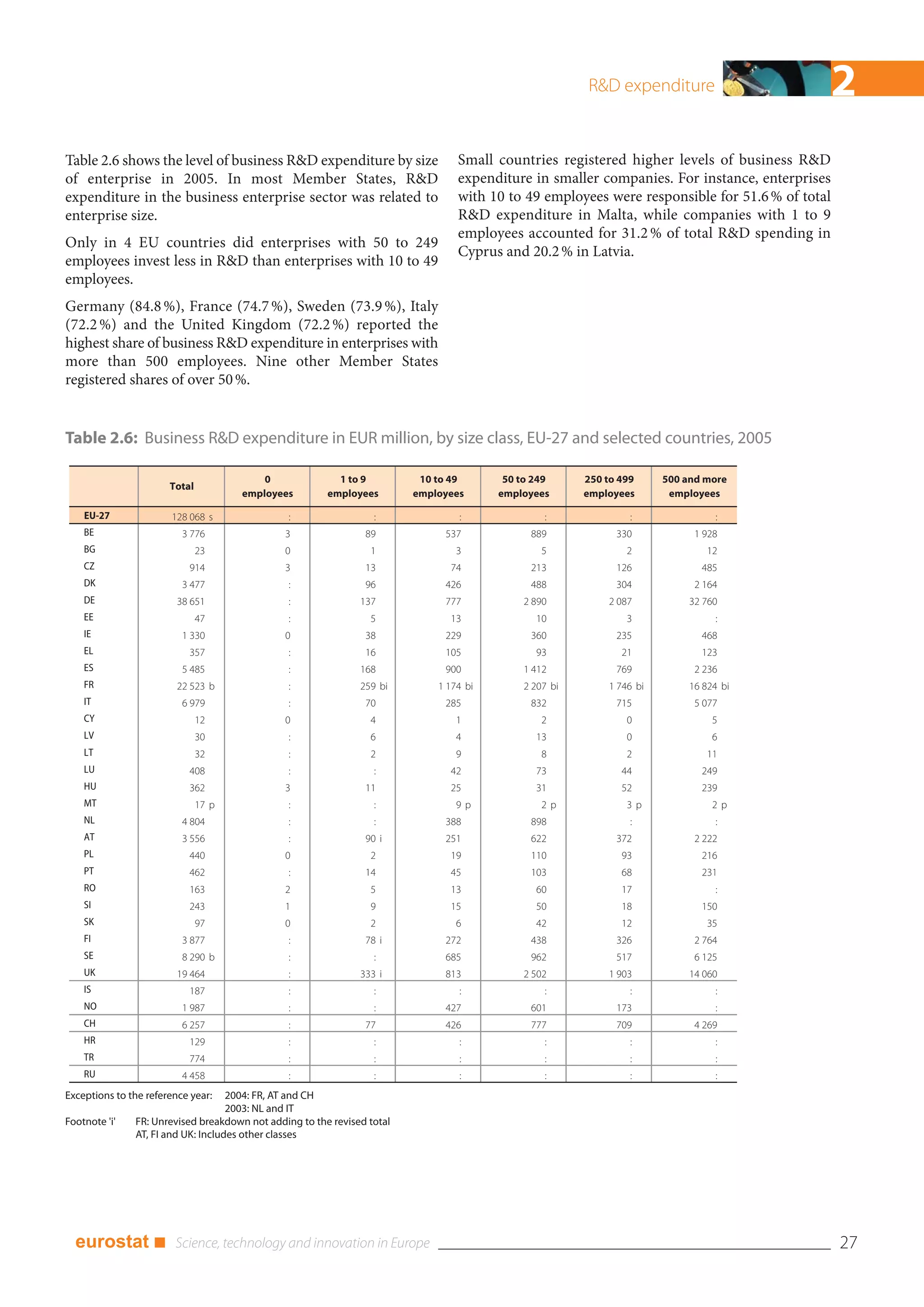
Table 2.6     Business R&D expenditure in EUR million by size class, EU-27 and selected countries, 2005 ................................27
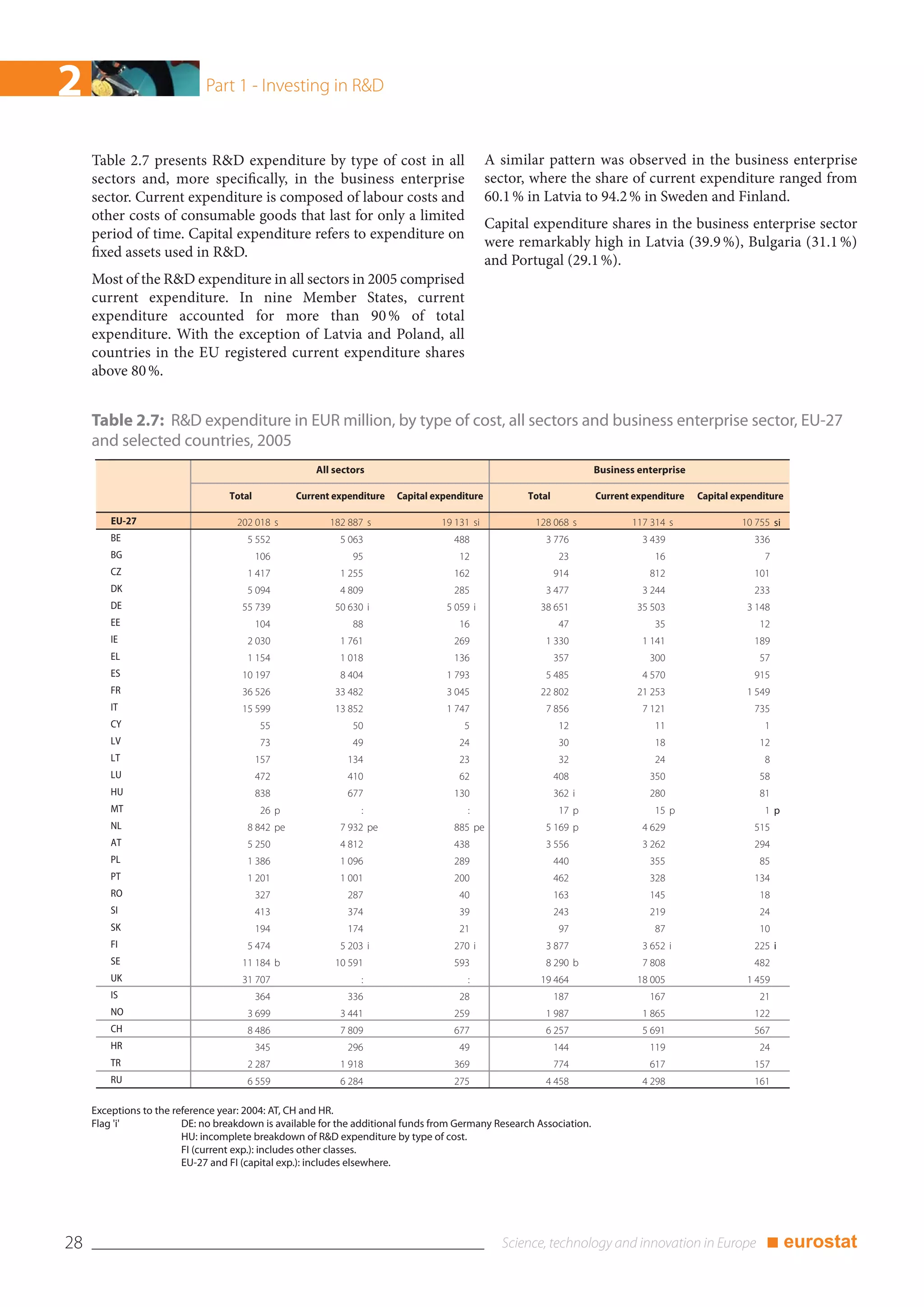
Table 2.7     R&D expenditure in EUR million by type of cost, all sectors and business enterprise sector,
              EU-27 and selected countries, 2005............................................................................................................................................................28
Table 2.8     R&D expenditure in EUR million by field of science, government sector,
              EU-27 and selected countries, 2005............................................................................................................................................................29
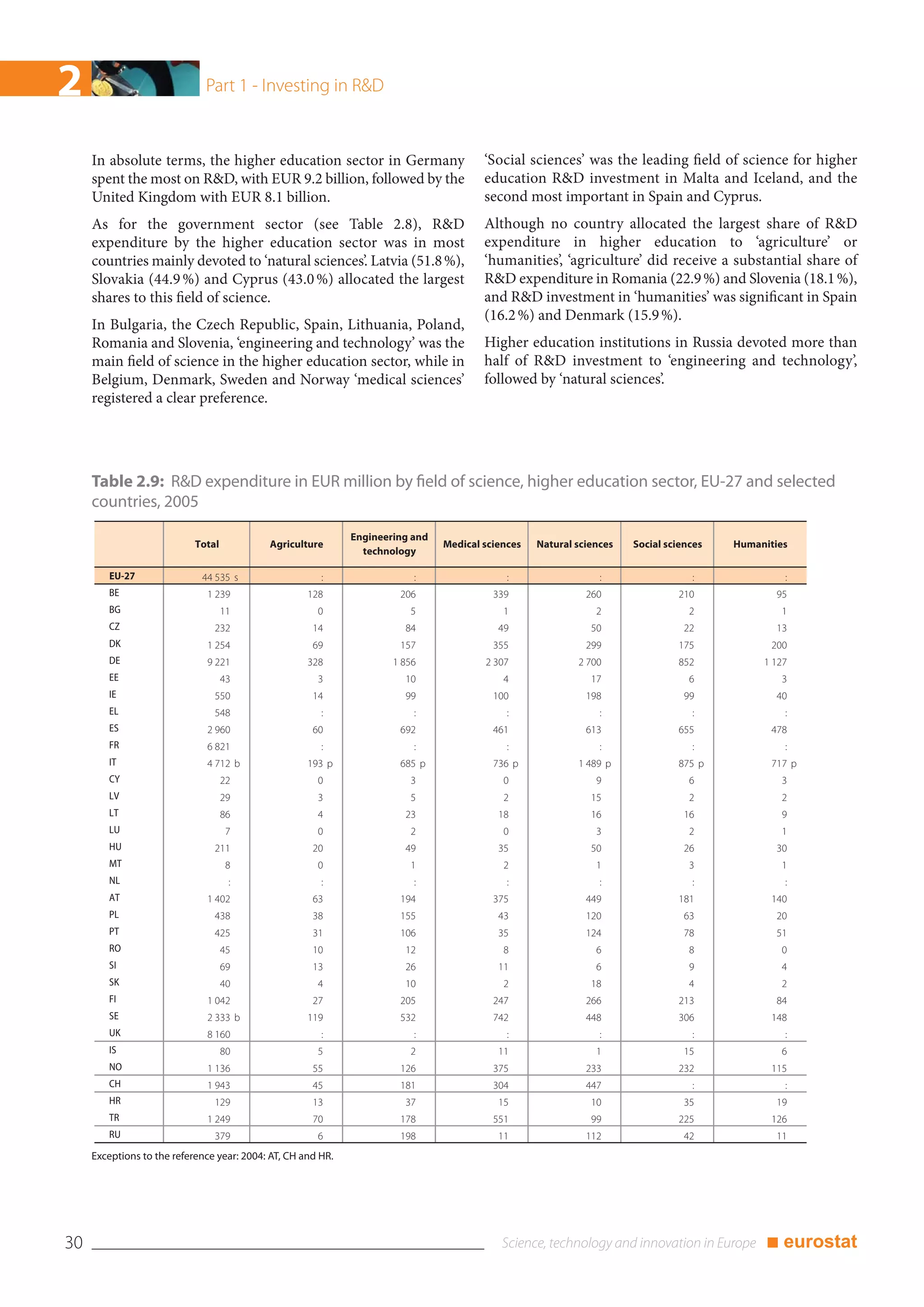
Table 2.9     R&D expenditure in EUR million by field of science, higher education sector,
              EU-27 and selected countries, 2005............................................................................................................................................................30
Figure 2.10   R&D expenditure in the top 10 EU regions as a percentage of EU-27 expenditure, all sectors, 2005...............31
Figure 2.11   Top 15 EU regions in terms of R&D expenditure as a percentage of GDP, all sectors, 2005 ....................................31
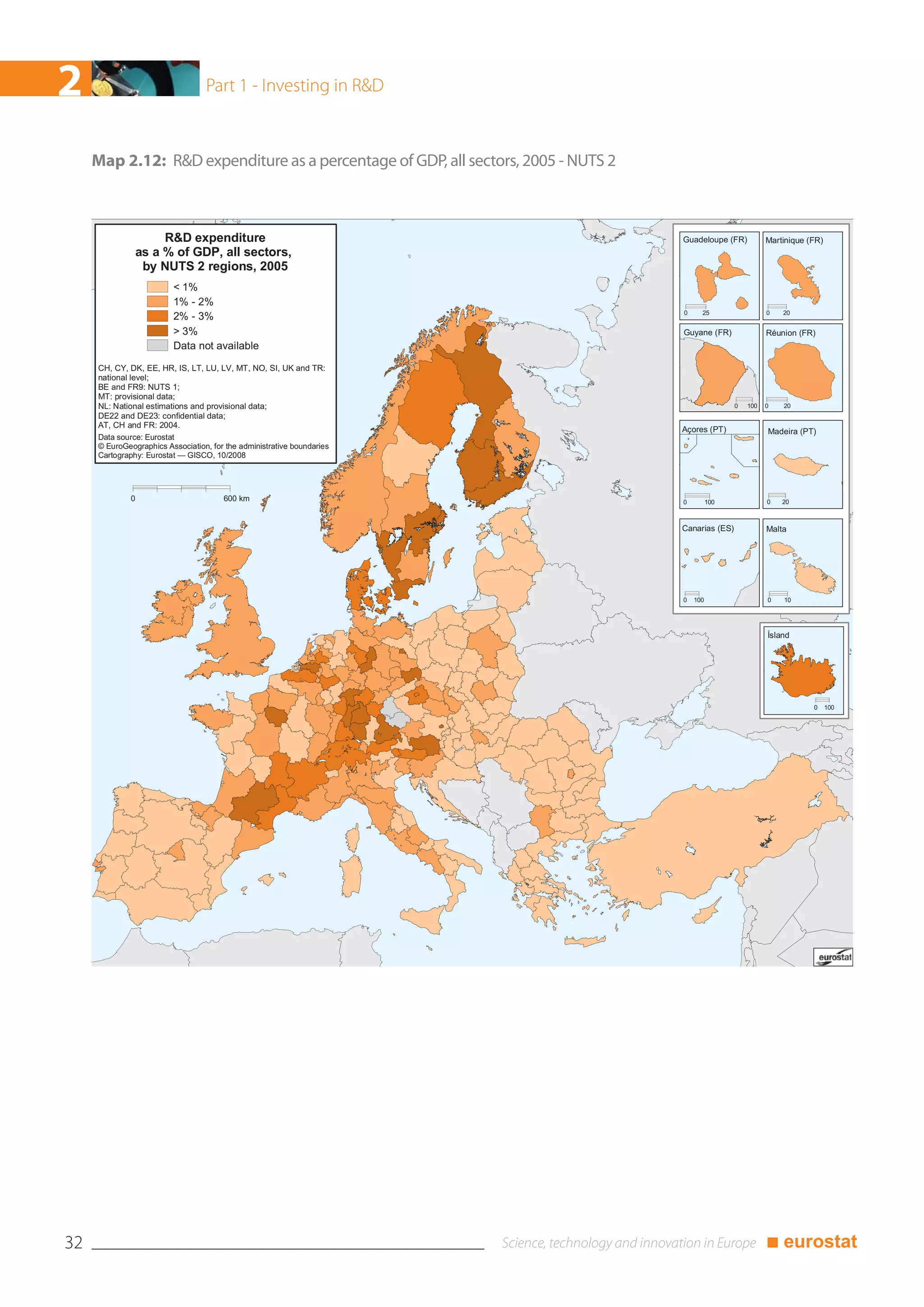
Map 2.12      R&D expenditure as a percentage of GDP, all sectors, NUTS 2, 2005 .....................................................................................32
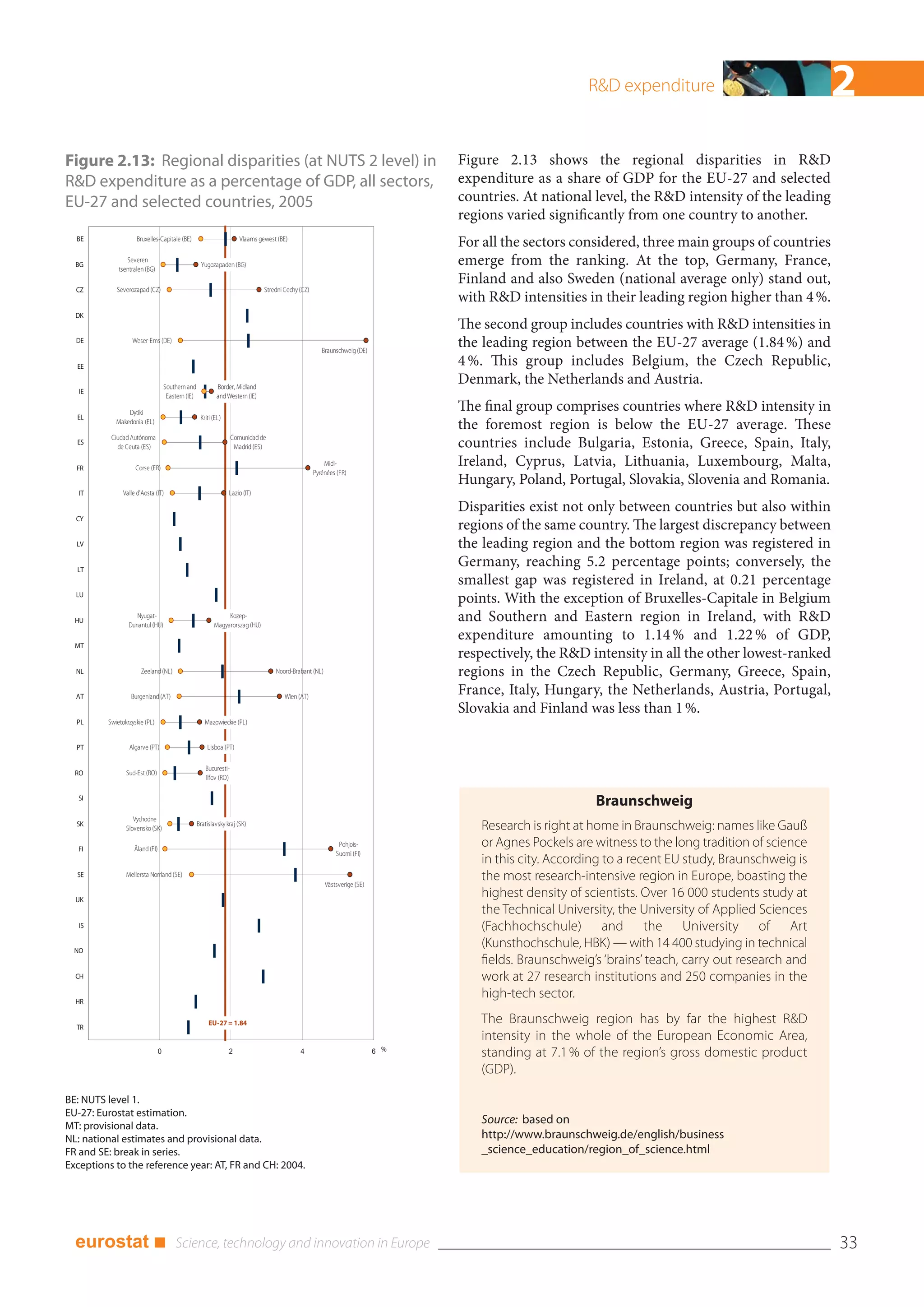
Figure 2.13   Regional disparities (at NUTS 2 level) in R&D expenditure as a percentage of GDP, all sectors, EU-27 and
              selected countries, 2005....................................................................................................................................................................................33
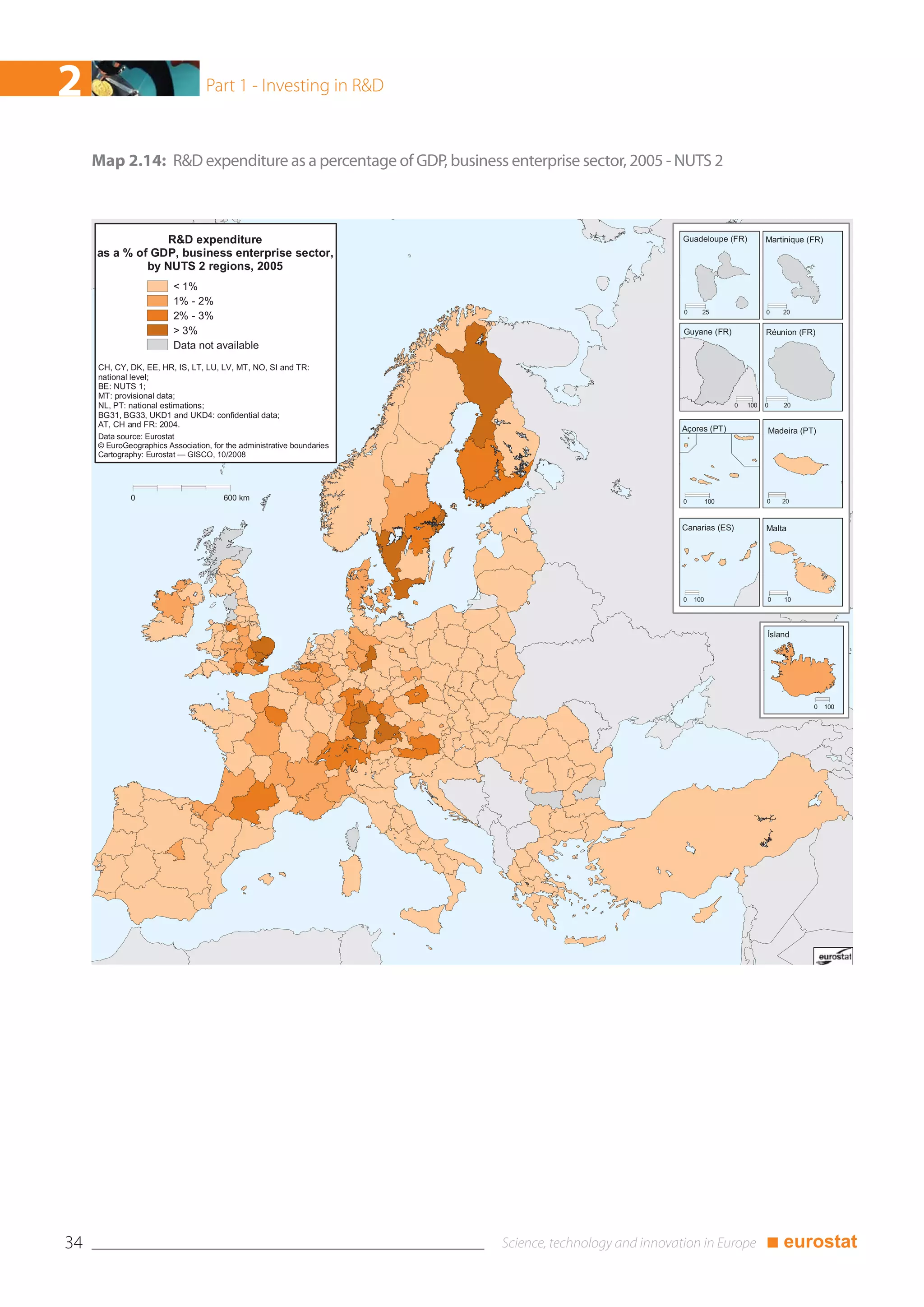
Map 2.14      R&D expenditure as a percentage of GDP, business enterprise sector, NUTS 2, 2005 ................................................34


 eurostat ■                                                                                                                                                                                                                      V
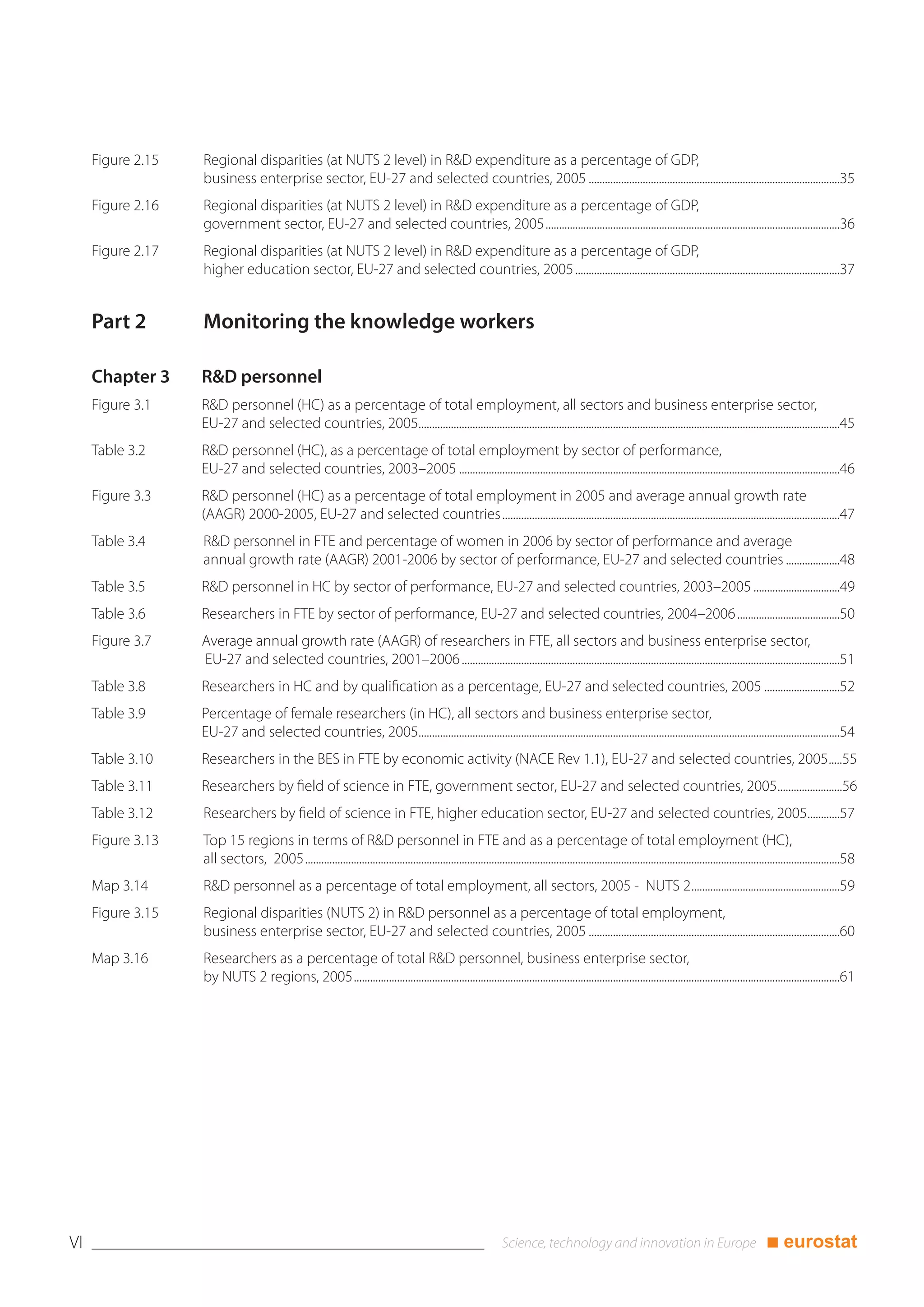
Figure 2.15   Regional disparities (at NUTS 2 level) in R&D expenditure as a percentage of GDP,
                   business enterprise sector, EU-27 and selected countries, 2005 .............................................................................................35
     Figure 2.16   Regional disparities (at NUTS 2 level) in R&D expenditure as a percentage of GDP,
                   government sector, EU-27 and selected countries, 2005.............................................................................................................36
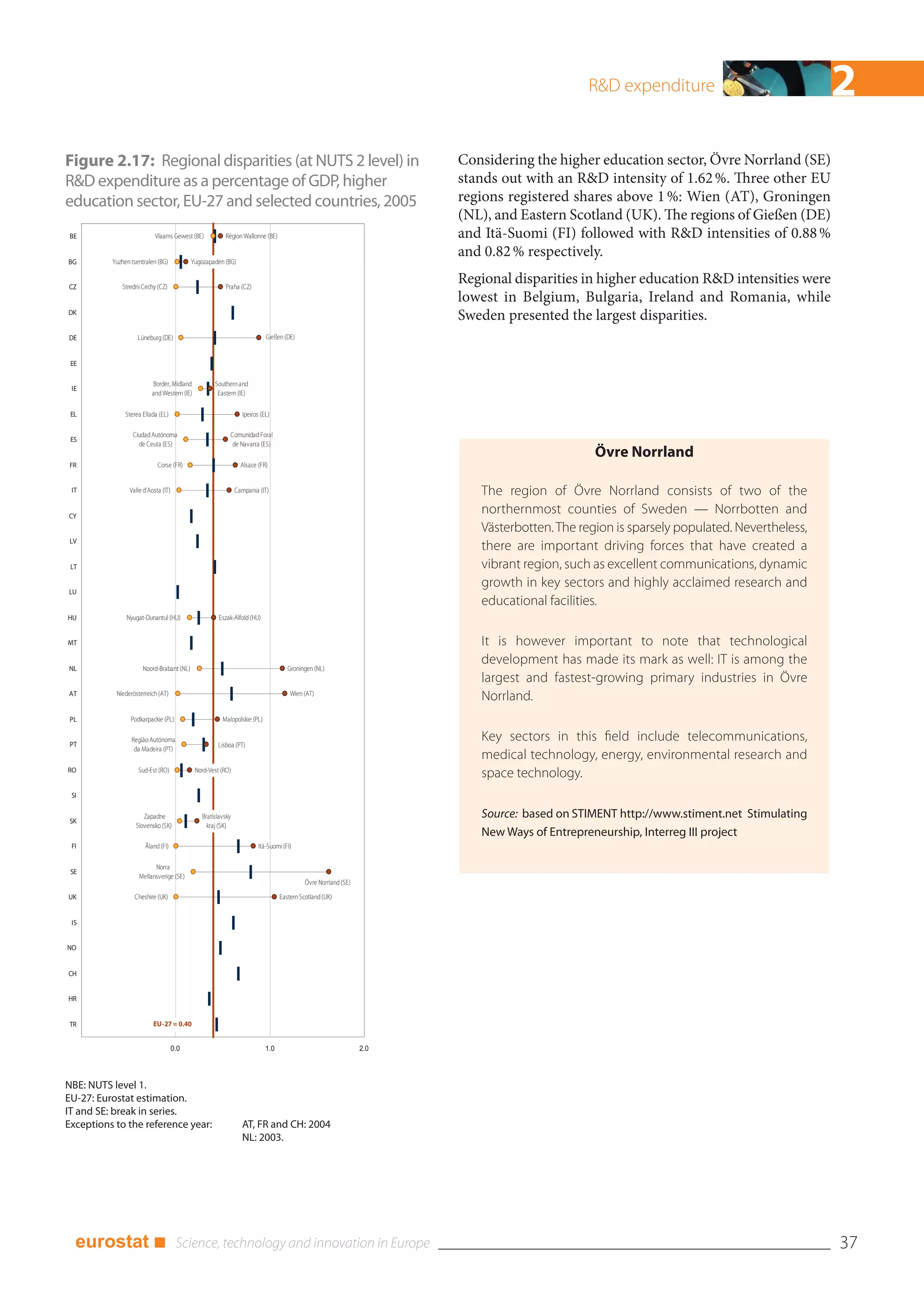
     Figure 2.17   Regional disparities (at NUTS 2 level) in R&D expenditure as a percentage of GDP,
                   higher education sector, EU-27 and selected countries, 2005 ..................................................................................................37


     Part 2        Monitoring the knowledge workers

     Chapter 3     R&D personnel
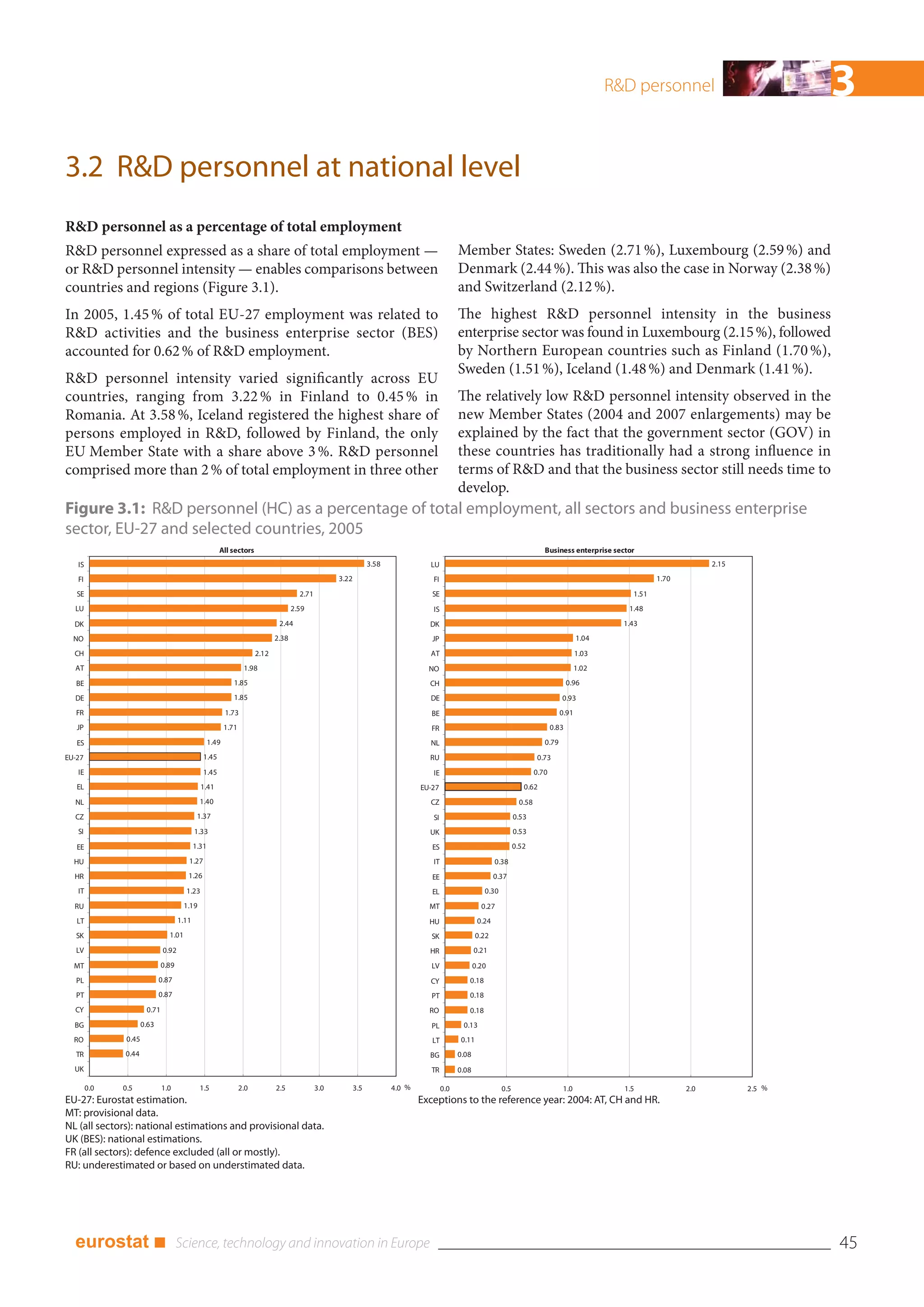
     Figure 3.1    R&D personnel (HC) as a percentage of total employment, all sectors and business enterprise sector,
                   EU-27 and selected countries, 2005............................................................................................................................................................45
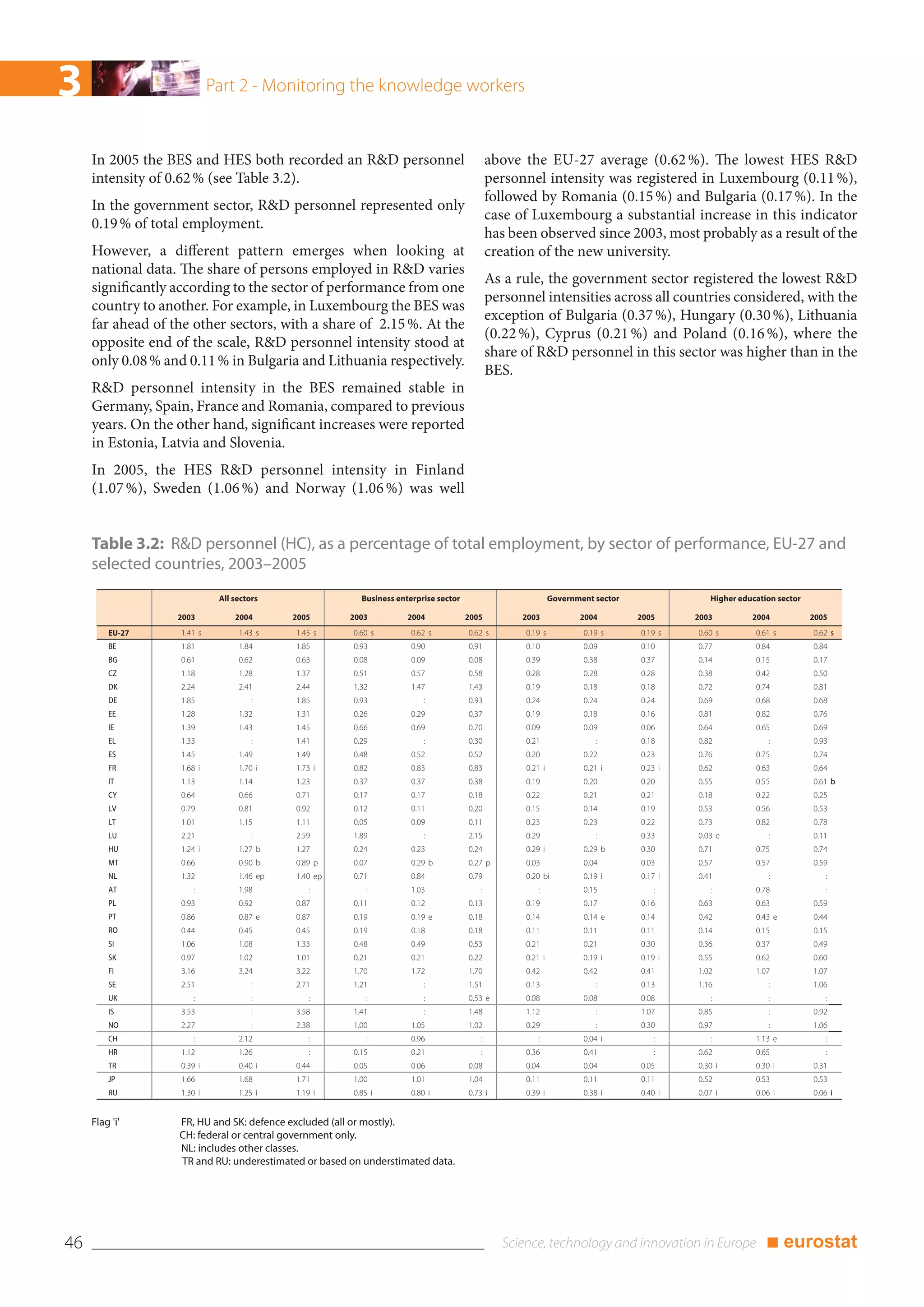
     Table 3.2     R&D personnel (HC), as a percentage of total employment by sector of performance,
                   EU-27 and selected countries, 2003–2005 .............................................................................................................................................46
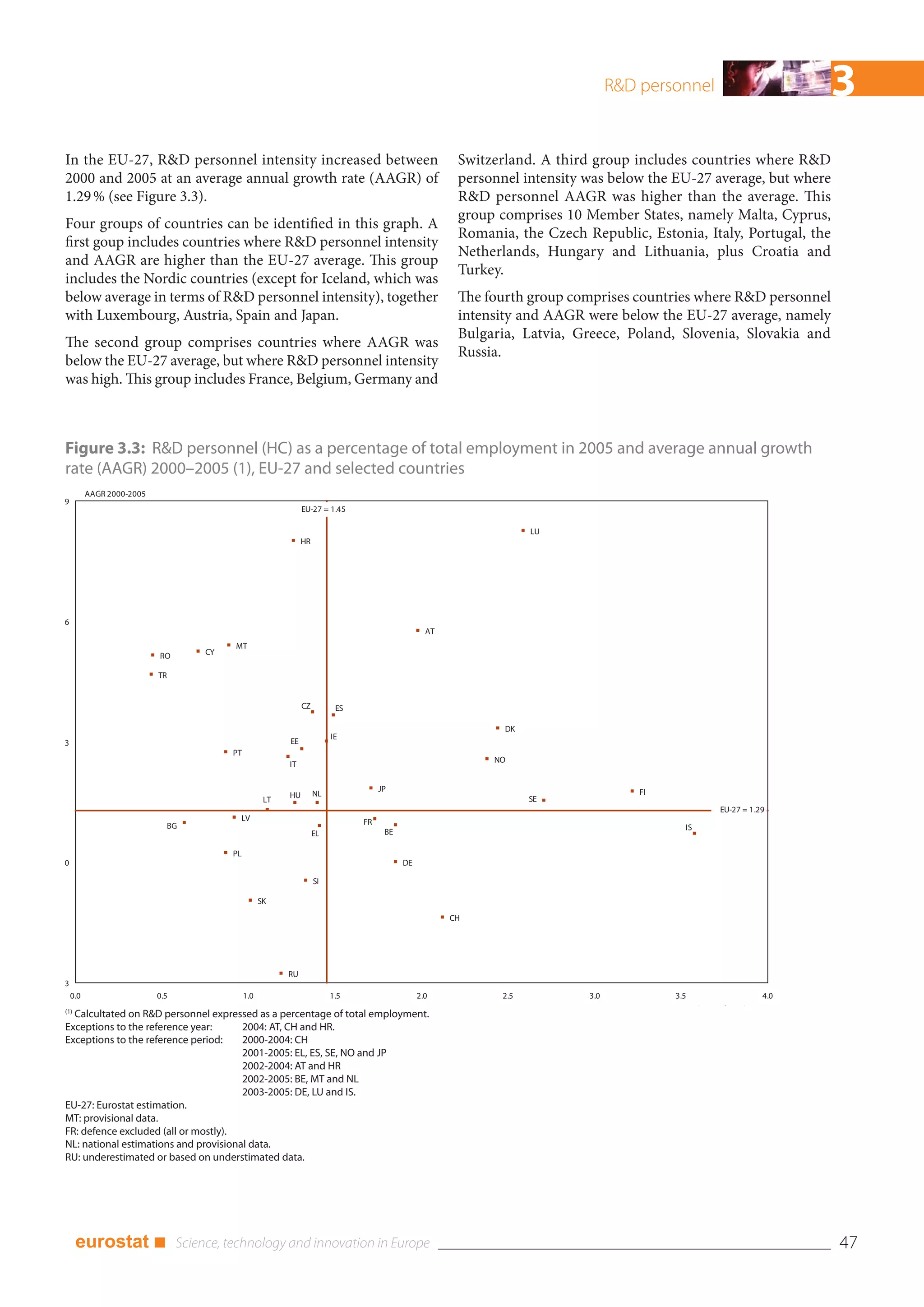
     Figure 3.3    R&D personnel (HC) as a percentage of total employment in 2005 and average annual growth rate
                   (AAGR) 2000-2005, EU-27 and selected countries .............................................................................................................................47
     Table 3.4     R&D personnel in FTE and percentage of women in 2006 by sector of performance and average
                   annual growth rate (AAGR) 2001-2006 by sector of performance, EU-27 and selected countries ....................48
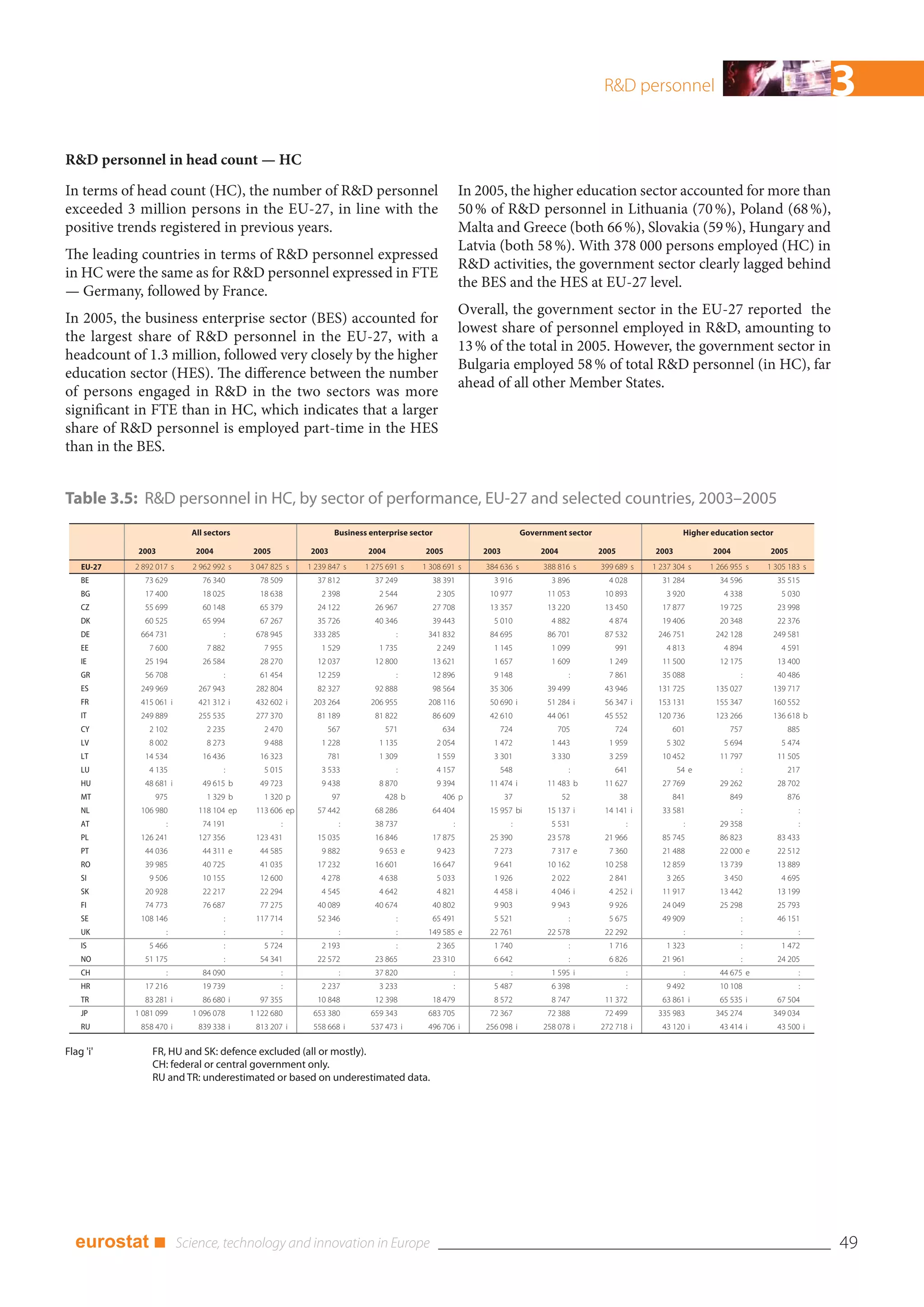
     Table 3.5     R&D personnel in HC by sector of performance, EU-27 and selected countries, 2003–2005 ................................49
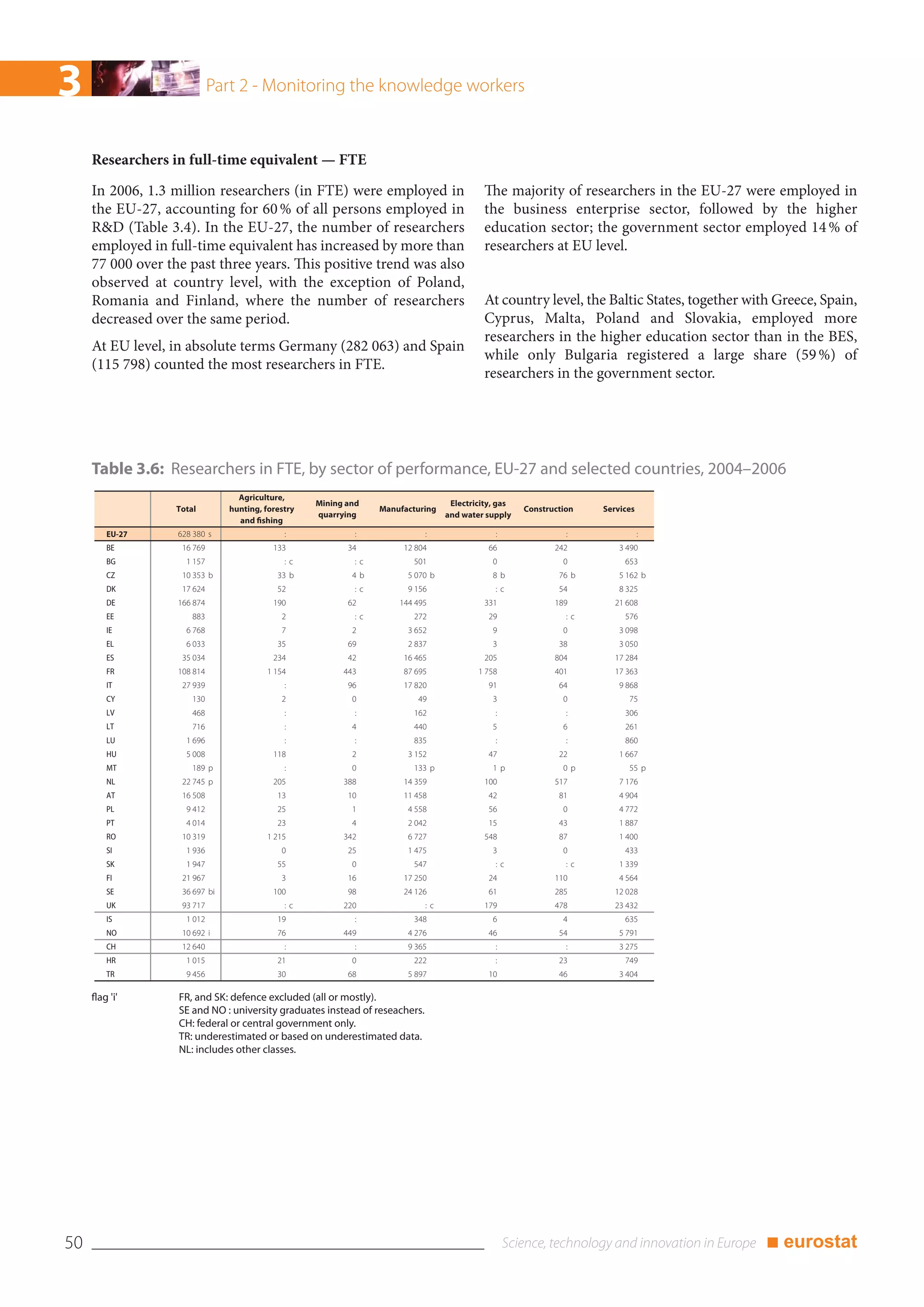
     Table 3.6     Researchers in FTE by sector of performance, EU-27 and selected countries, 2004–2006 ......................................50
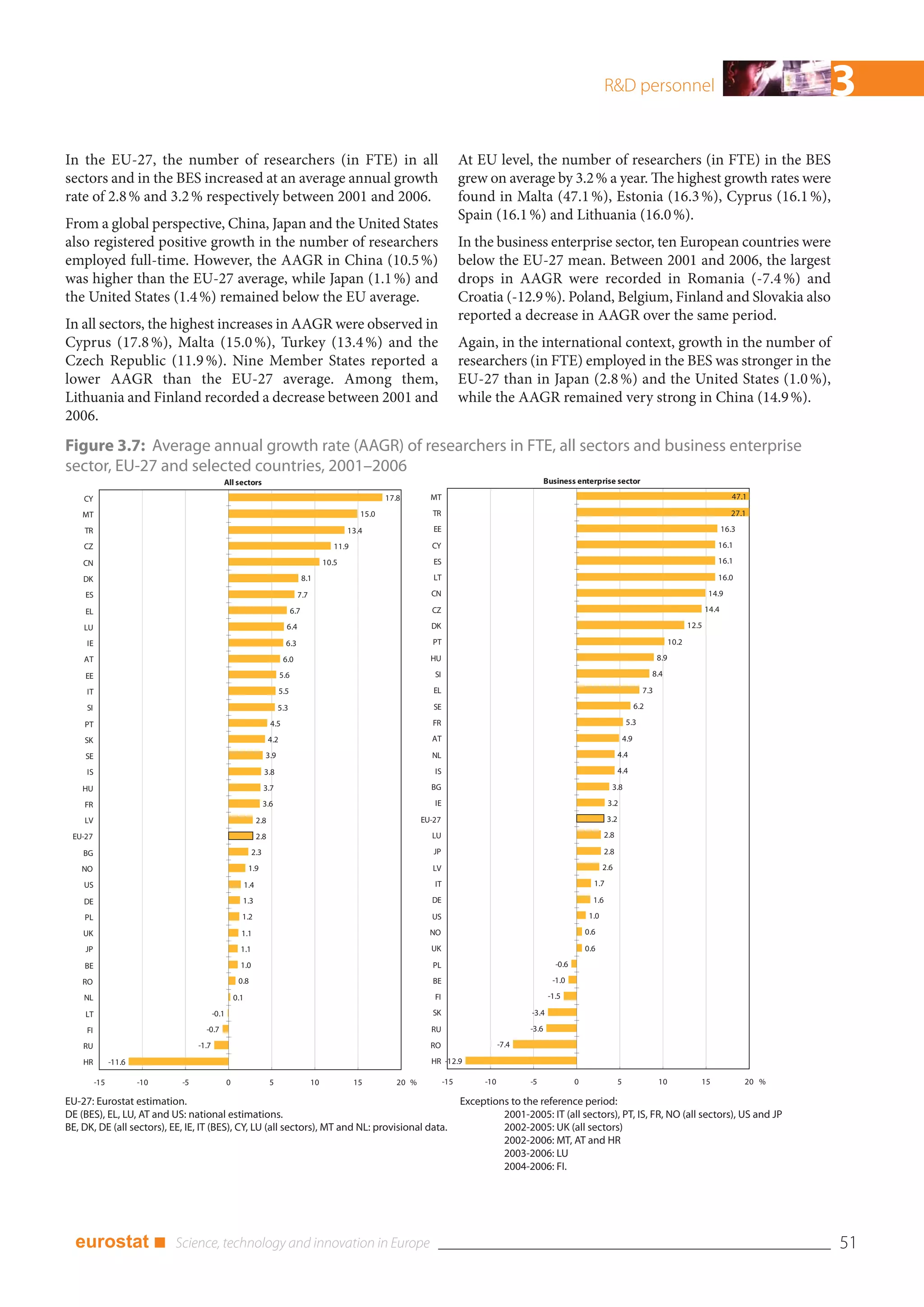
     Figure 3.7    Average annual growth rate (AAGR) of researchers in FTE, all sectors and business enterprise sector,
                   EU-27 and selected countries, 2001–2006 ............................................................................................................................................51
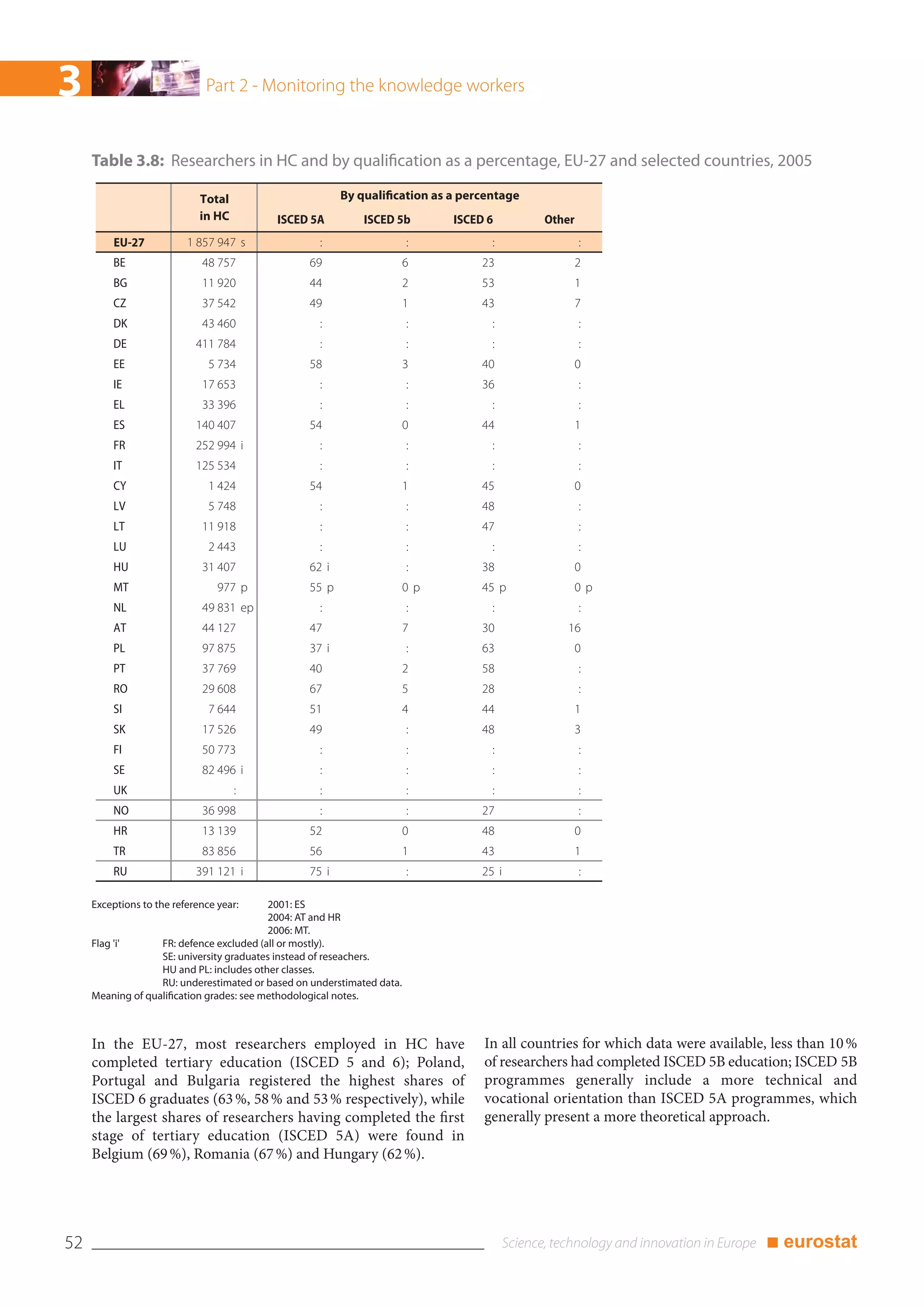
     Table 3.8     Researchers in HC and by qualification as a percentage, EU-27 and selected countries, 2005 ............................52
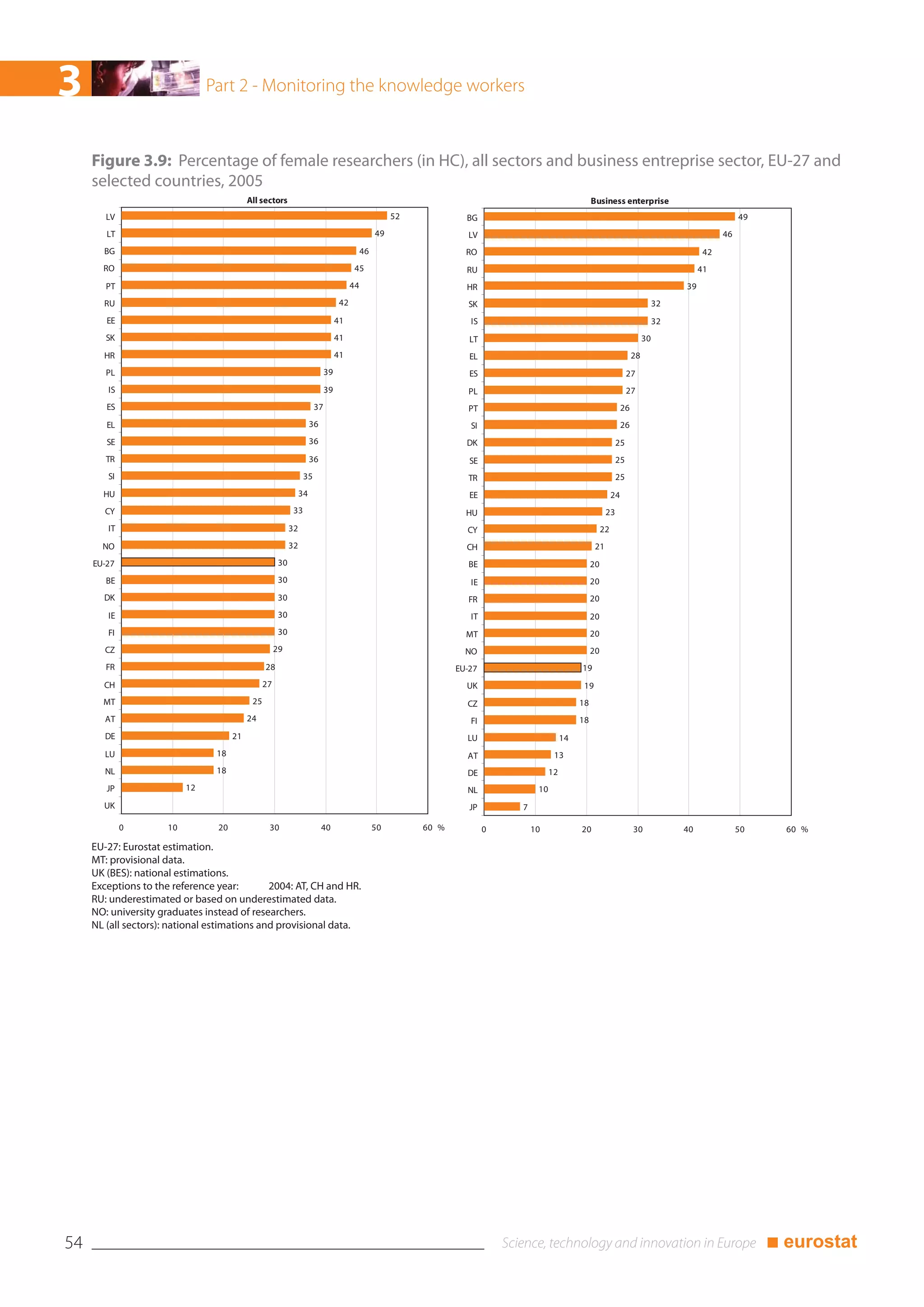
     Table 3.9     Percentage of female researchers (in HC), all sectors and business enterprise sector,
                   EU-27 and selected countries, 2005............................................................................................................................................................54
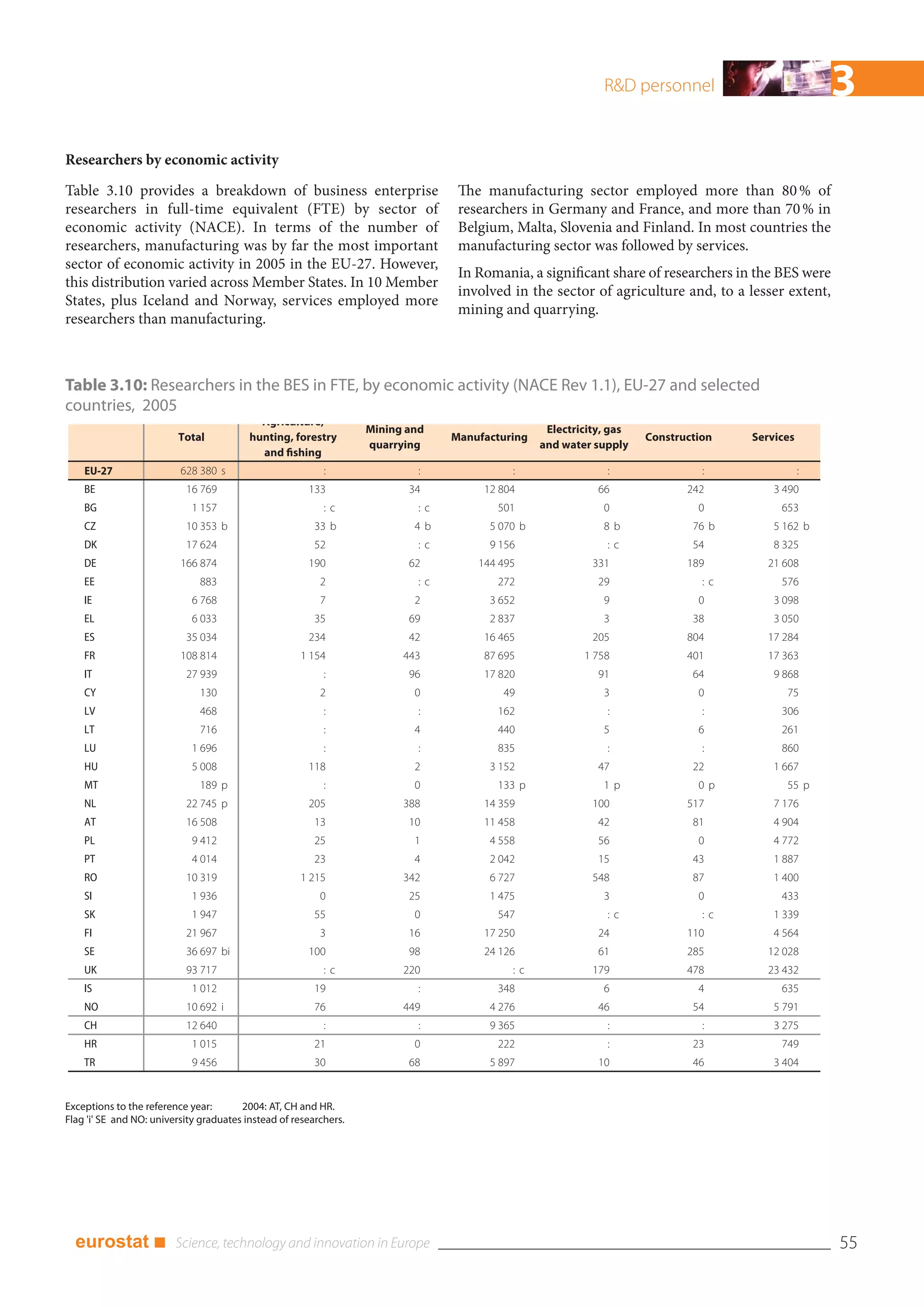
     Table 3.10    Researchers in the BES in FTE by economic activity (NACE Rev 1.1), EU-27 and selected countries, 2005.....55
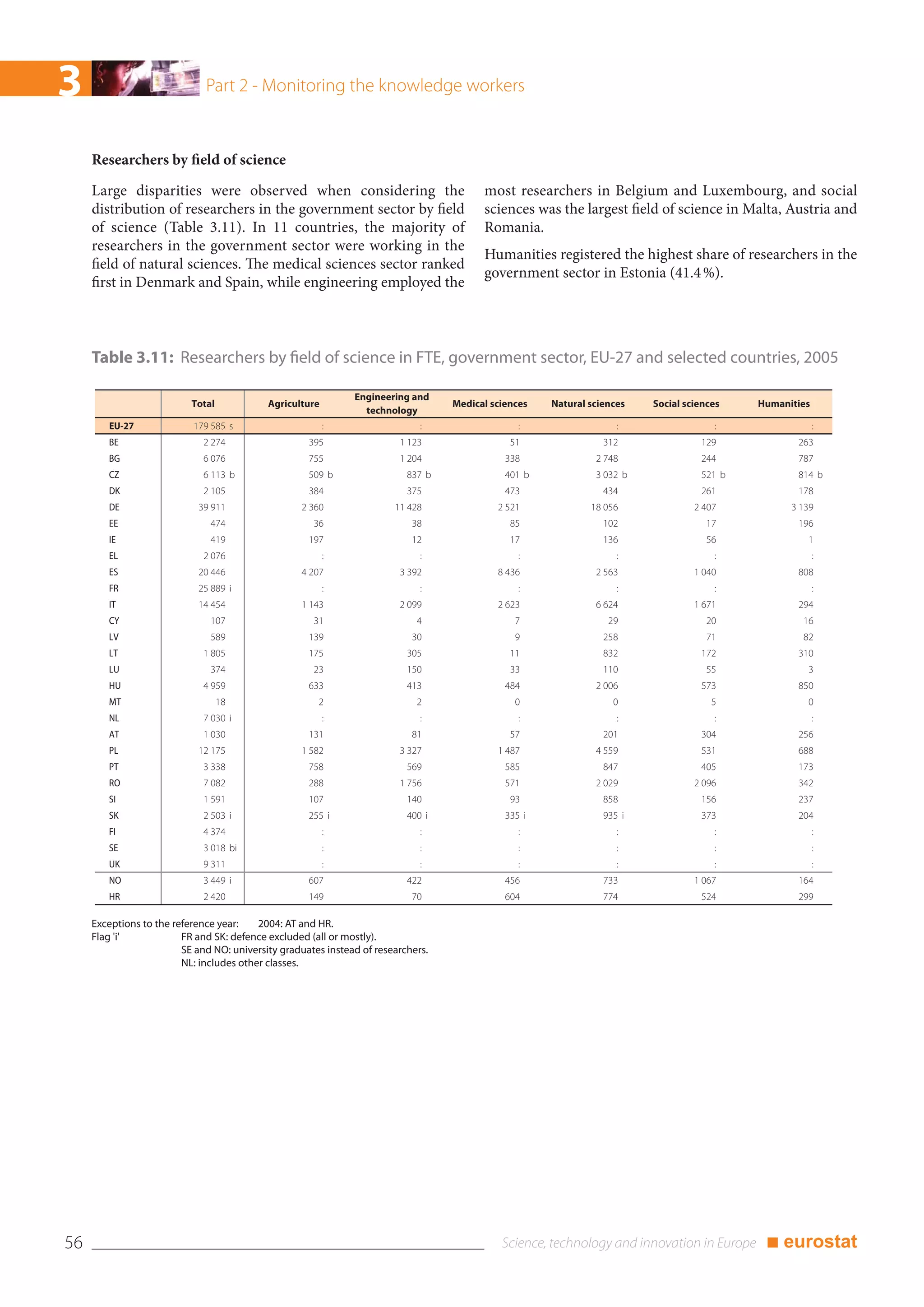
     Table 3.11    Researchers by field of science in FTE, government sector, EU-27 and selected countries, 2005........................56
     Table 3.12    Researchers by field of science in FTE, higher education sector, EU-27 and selected countries, 2005............57
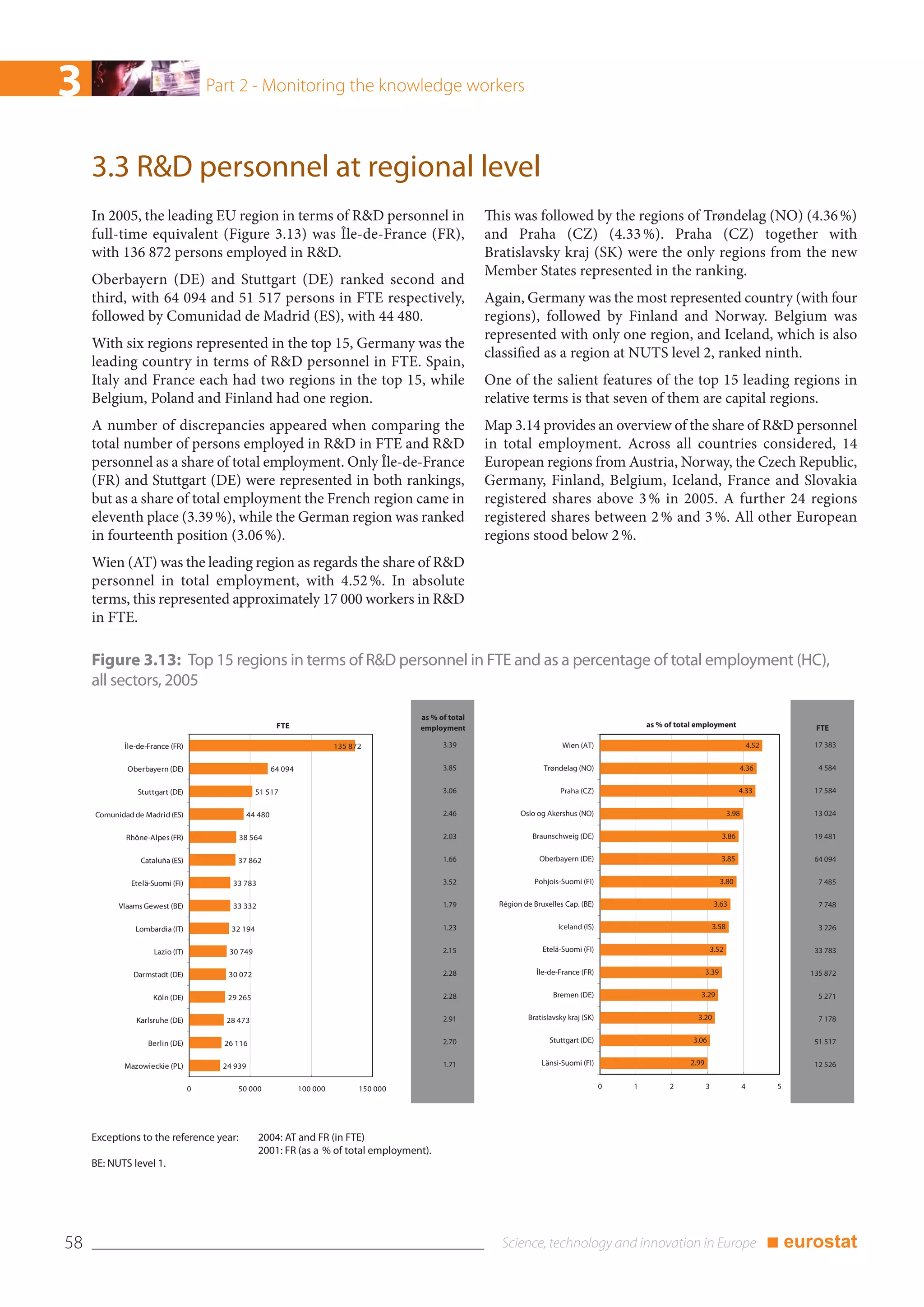
     Figure 3.13   Top 15 regions in terms of R&D personnel in FTE and as a percentage of total employment (HC),
                   all sectors, 2005......................................................................................................................................................................................................58
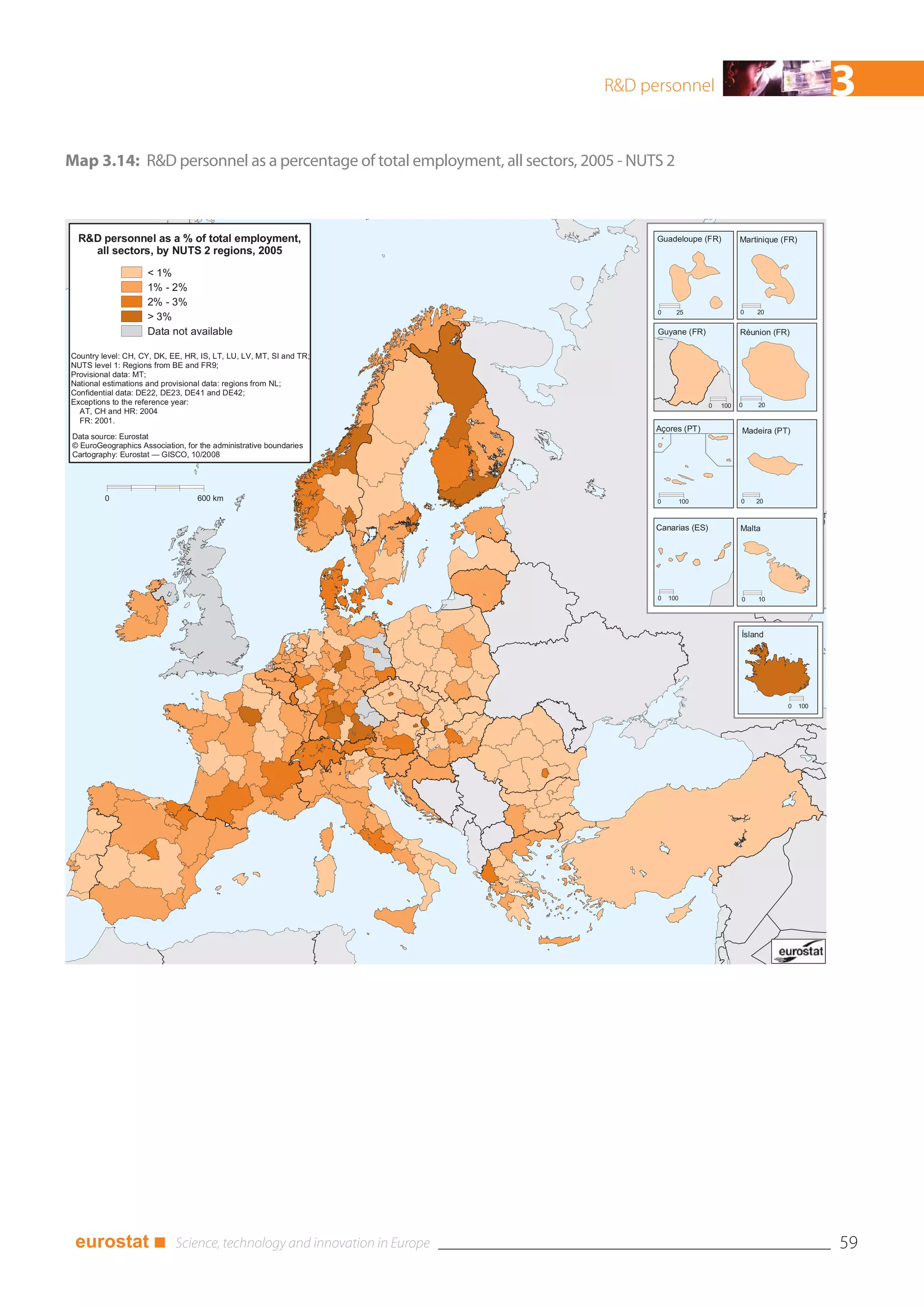
     Map 3.14      R&D personnel as a percentage of total employment, all sectors, 2005 - NUTS 2.......................................................59
     Figure 3.15   Regional disparities (NUTS 2) in R&D personnel as a percentage of total employment,
                   business enterprise sector, EU-27 and selected countries, 2005 .............................................................................................60
     Map 3.16      Researchers as a percentage of total R&D personnel, business enterprise sector,
                   by NUTS 2 regions, 2005....................................................................................................................................................................................61


VI                                                                                                                                                                                                            ■ eurostat
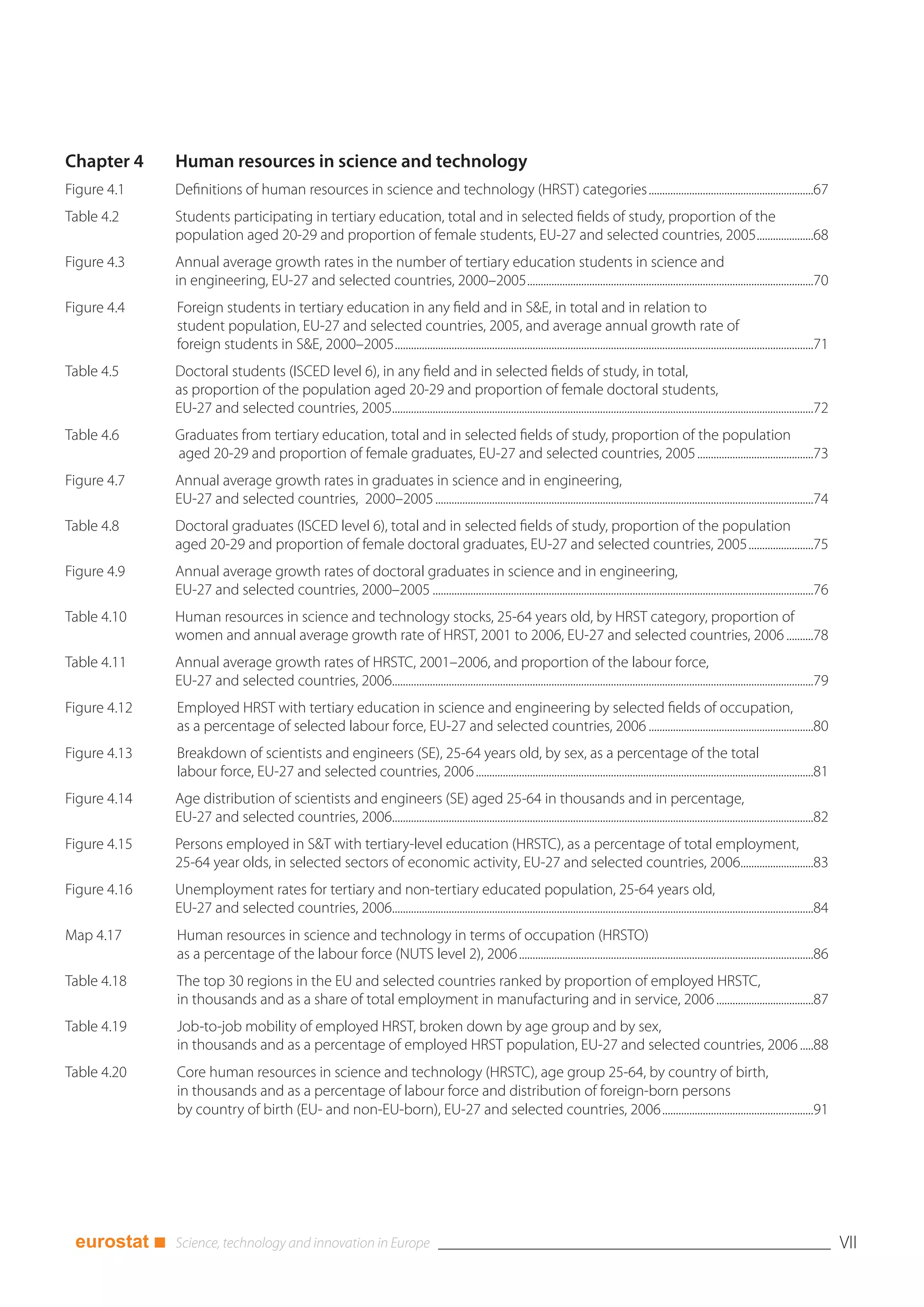
Chapter 4     Human resources in science and technology
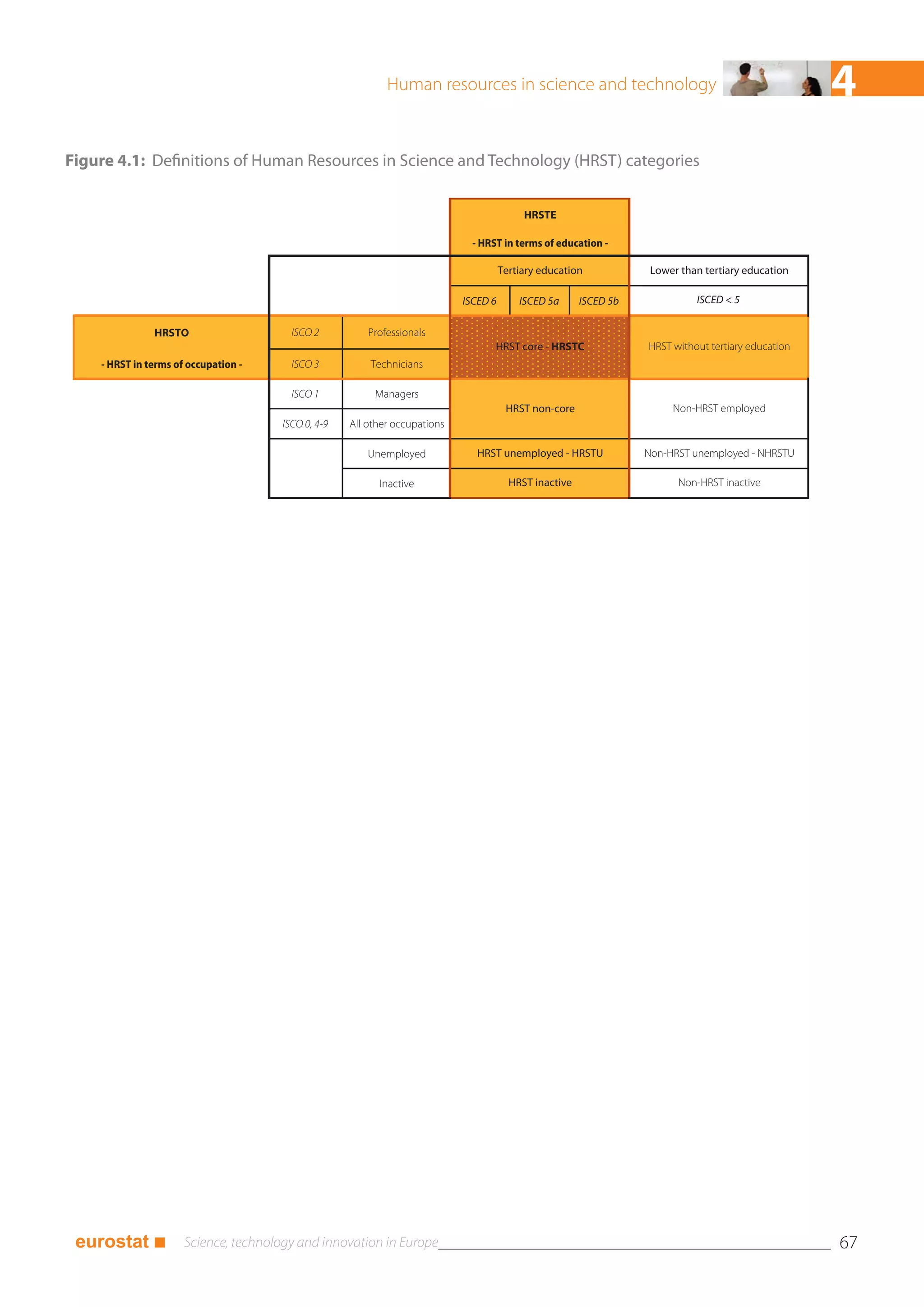
Figure 4.1    Definitions of human resources in science and technology (HRST) categories .............................................................67
Table 4.2     Students participating in tertiary education, total and in selected fields of study, proportion of the
              population aged 20-29 and proportion of female students, EU-27 and selected countries, 2005.....................68
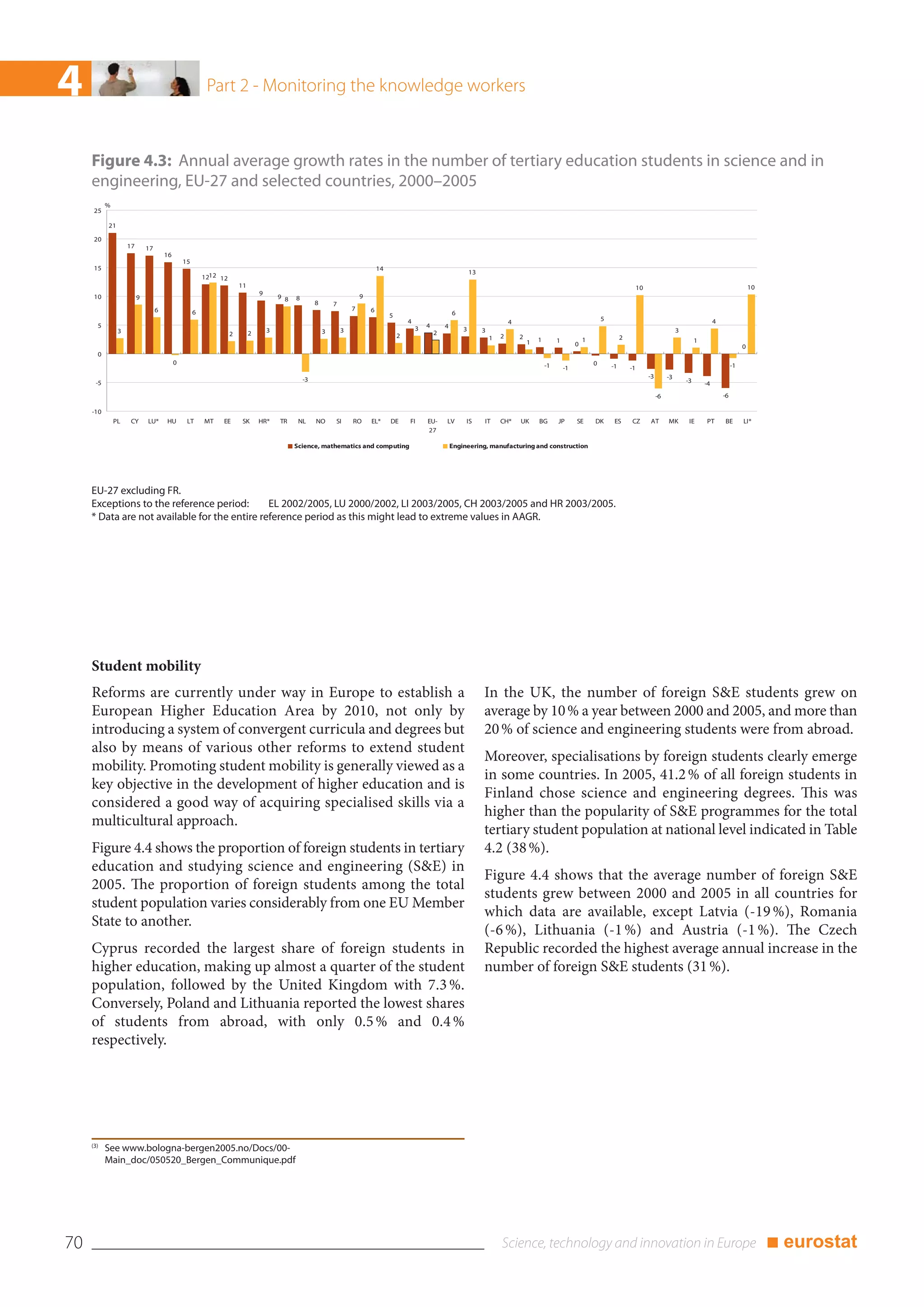
Figure 4.3    Annual average growth rates in the number of tertiary education students in science and
              in engineering, EU-27 and selected countries, 2000–2005..........................................................................................................70
Figure 4.4    Foreign students in tertiary education in any field and in S&E, in total and in relation to
              student population, EU-27 and selected countries, 2005, and average annual growth rate of
              foreign students in S&E, 2000–2005...........................................................................................................................................................71
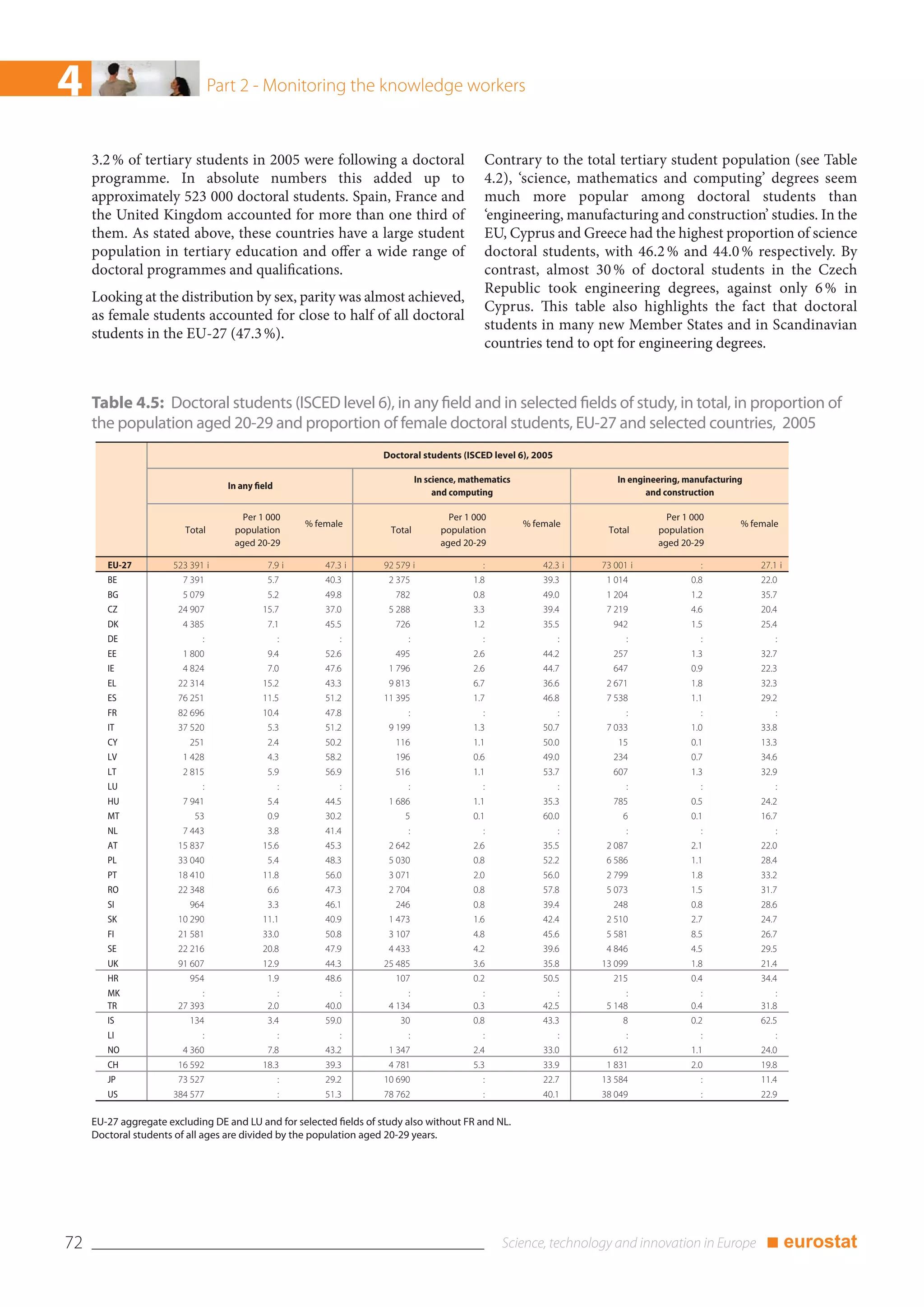
Table 4.5     Doctoral students (ISCED level 6), in any field and in selected fields of study, in total,
              as proportion of the population aged 20-29 and proportion of female doctoral students,
              EU-27 and selected countries, 2005............................................................................................................................................................72
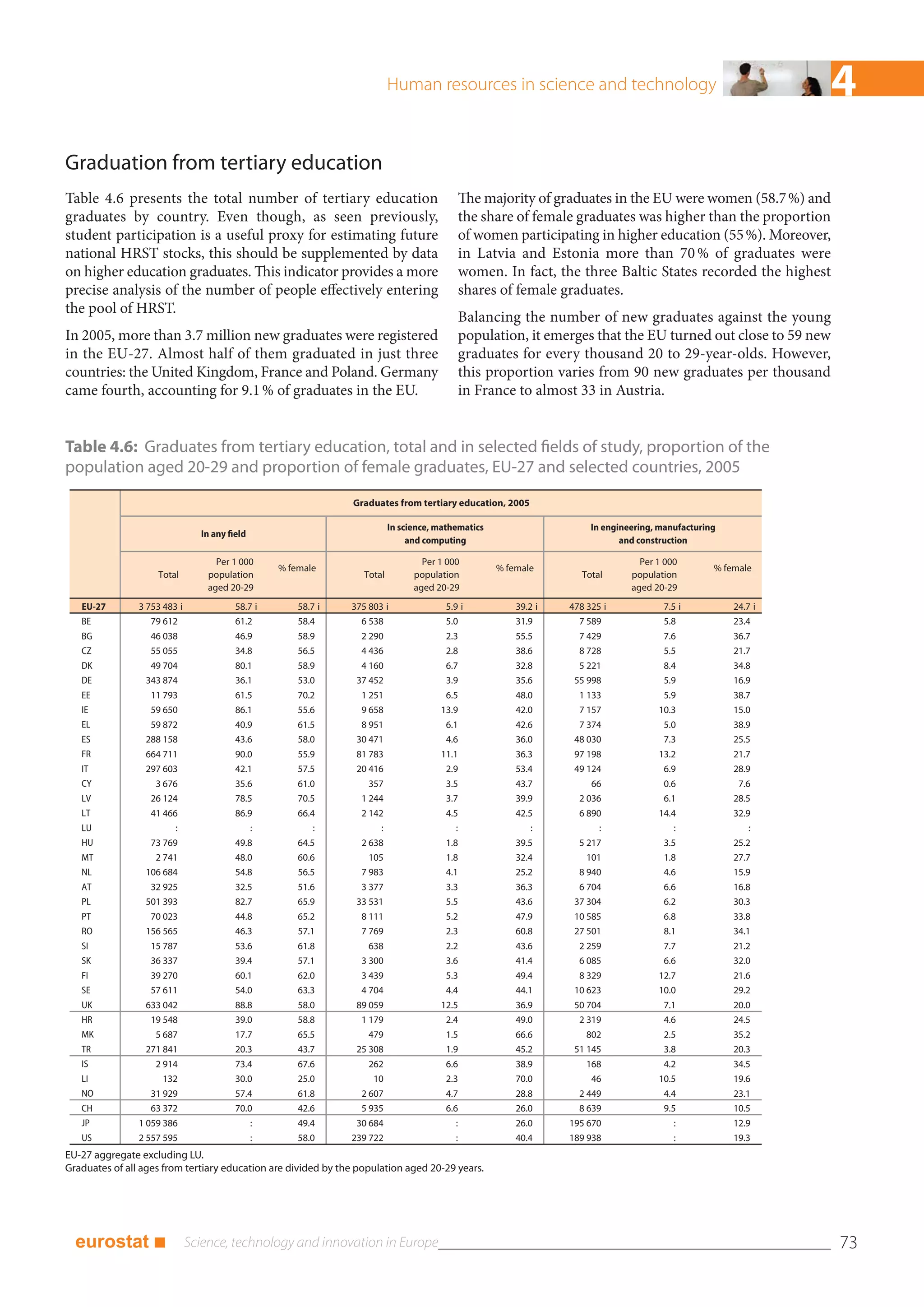
Table 4.6     Graduates from tertiary education, total and in selected fields of study, proportion of the population
              aged 20-29 and proportion of female graduates, EU-27 and selected countries, 2005 ...........................................73
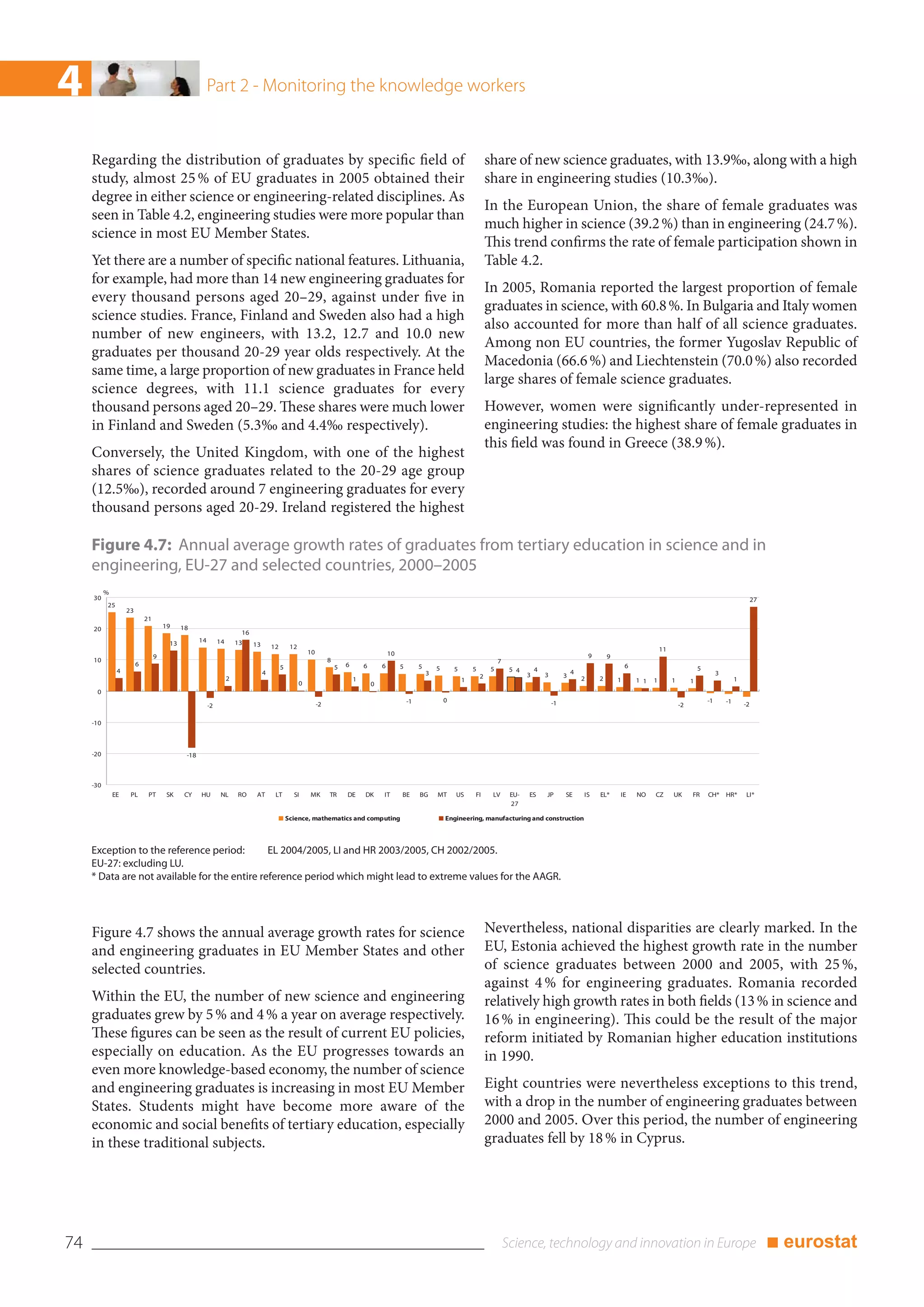
Figure 4.7    Annual average growth rates in graduates in science and in engineering,
              EU-27 and selected countries, 2000–2005 ............................................................................................................................................74
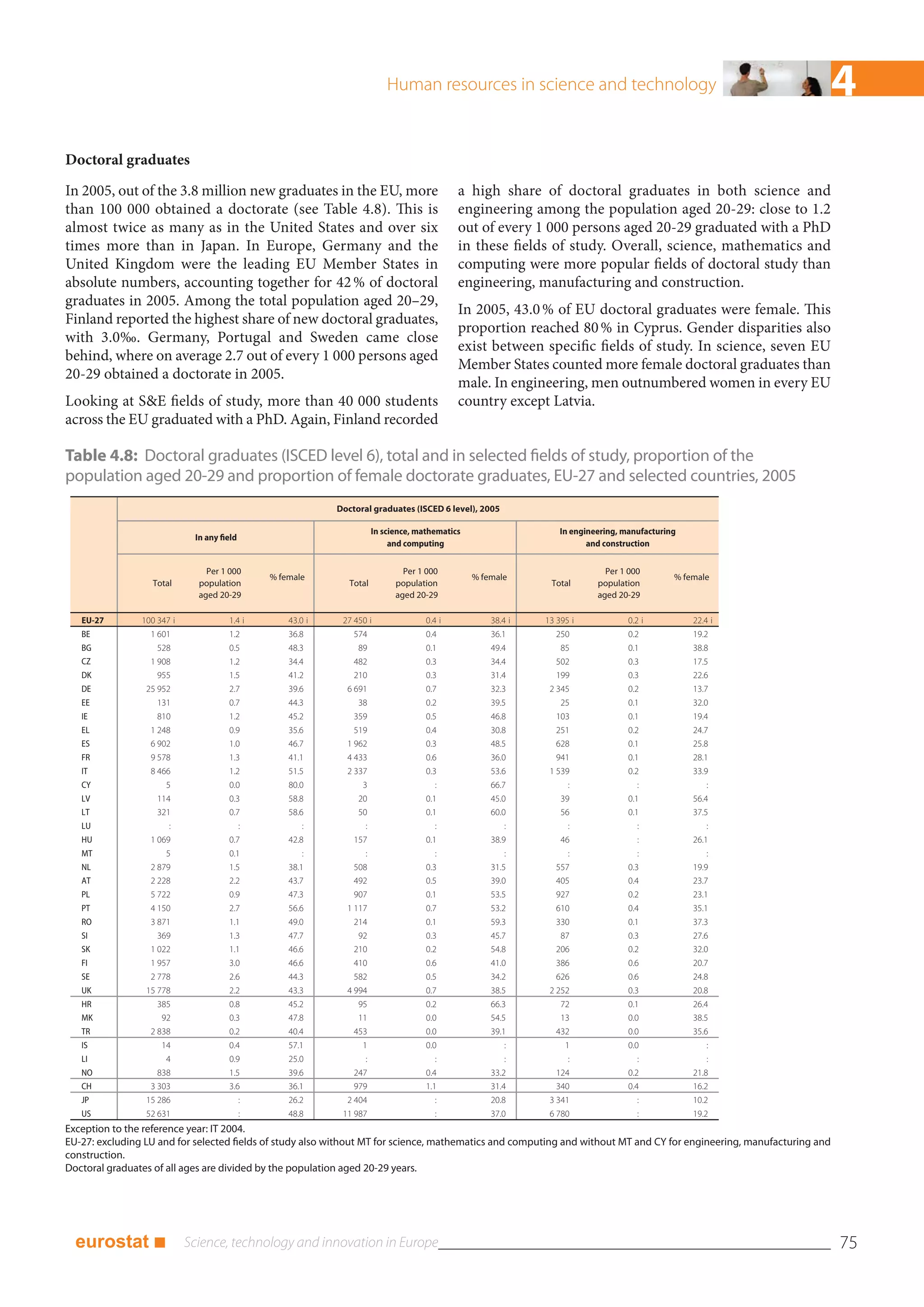
Table 4.8     Doctoral graduates (ISCED level 6), total and in selected fields of study, proportion of the population
              aged 20-29 and proportion of female doctoral graduates, EU-27 and selected countries, 2005........................75
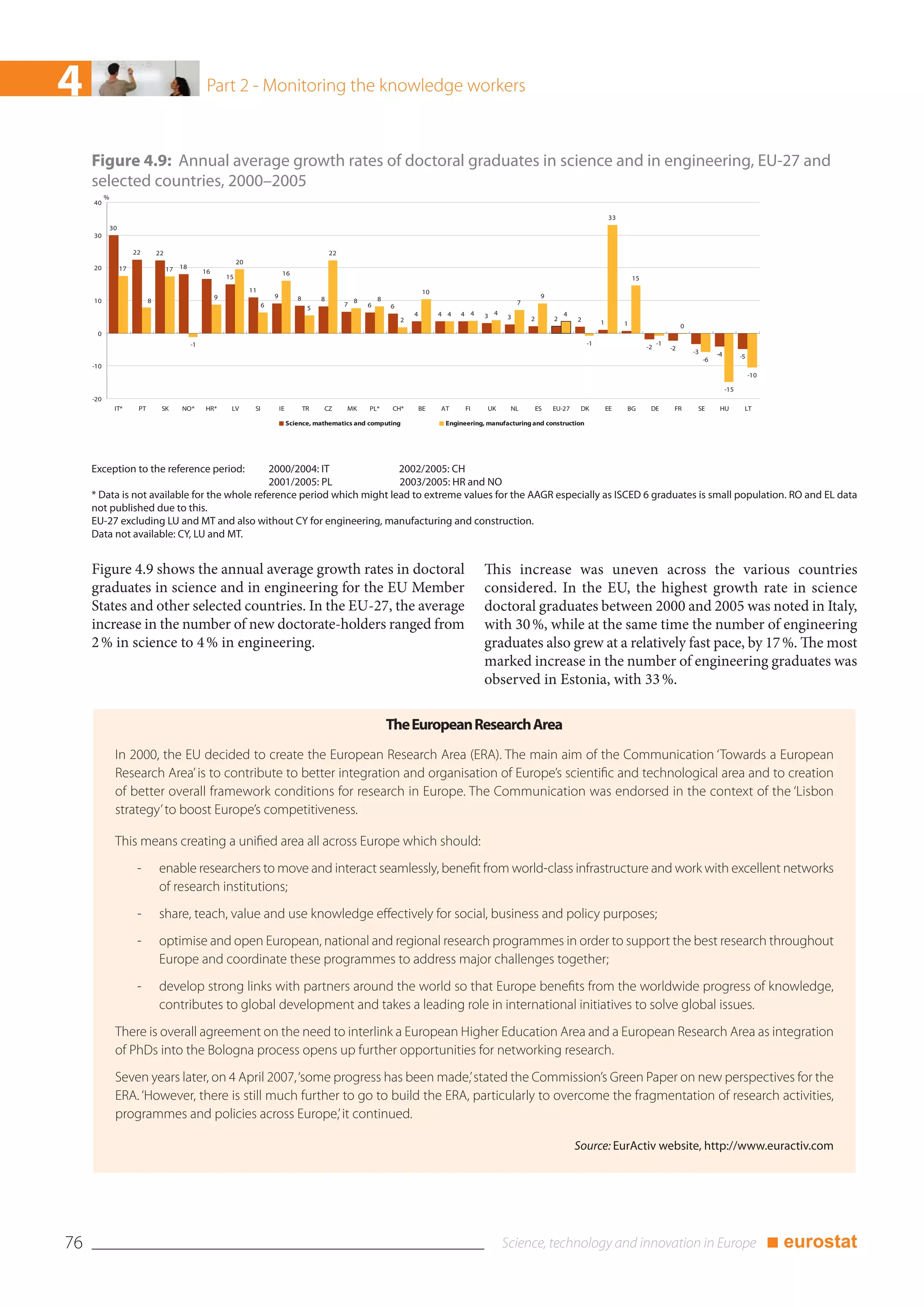
Figure 4.9    Annual average growth rates of doctoral graduates in science and in engineering,
              EU-27 and selected countries, 2000–2005 .............................................................................................................................................76
Table 4.10    Human resources in science and technology stocks, 25-64 years old, by HRST category, proportion of
              women and annual average growth rate of HRST, 2001 to 2006, EU-27 and selected countries, 2006 ..........78
Table 4.11    Annual average growth rates of HRSTC, 2001–2006, and proportion of the labour force,
              EU-27 and selected countries, 2006............................................................................................................................................................79
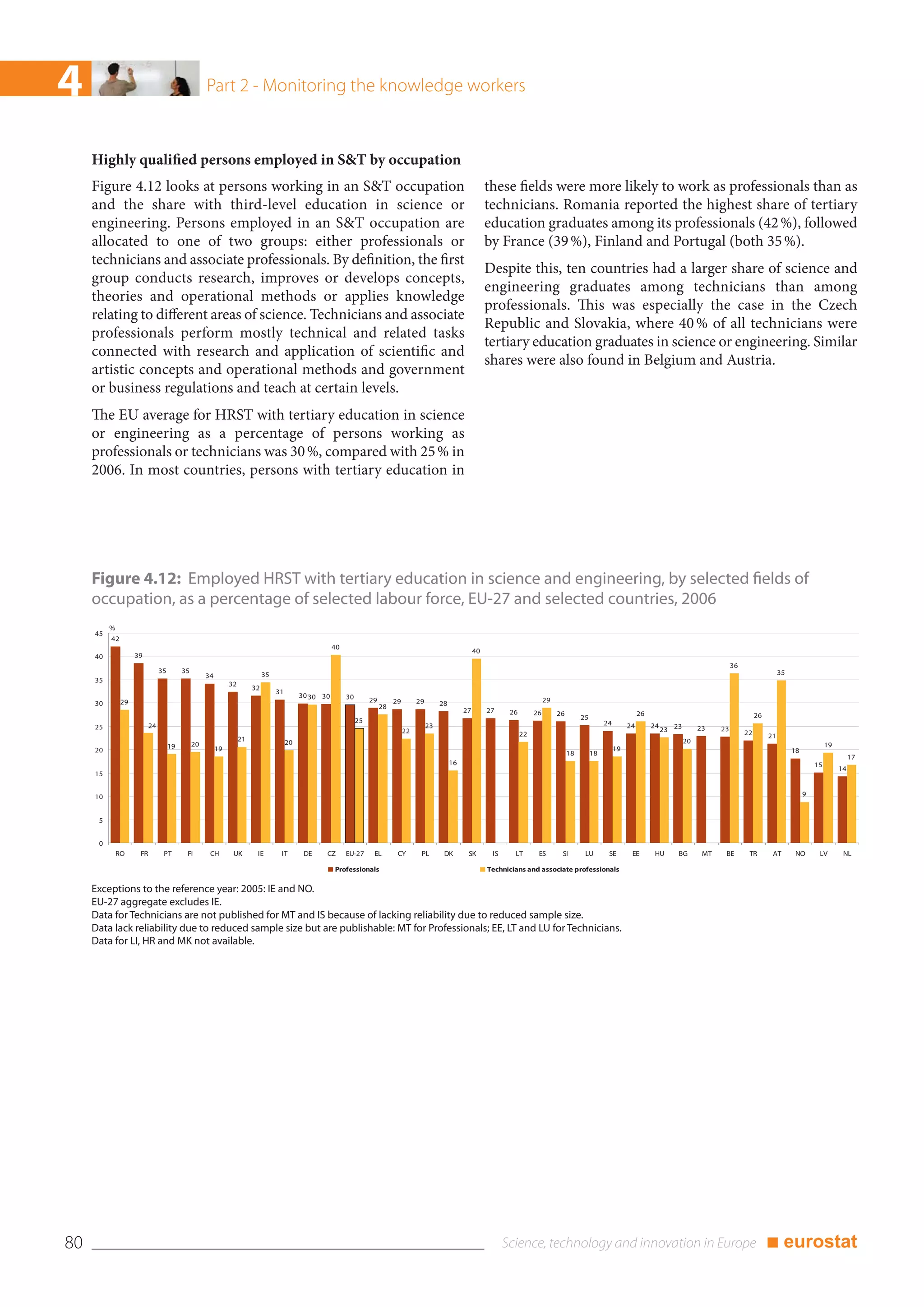
Figure 4.12   Employed HRST with tertiary education in science and engineering by selected fields of occupation,
              as a percentage of selected labour force, EU-27 and selected countries, 2006 .............................................................80
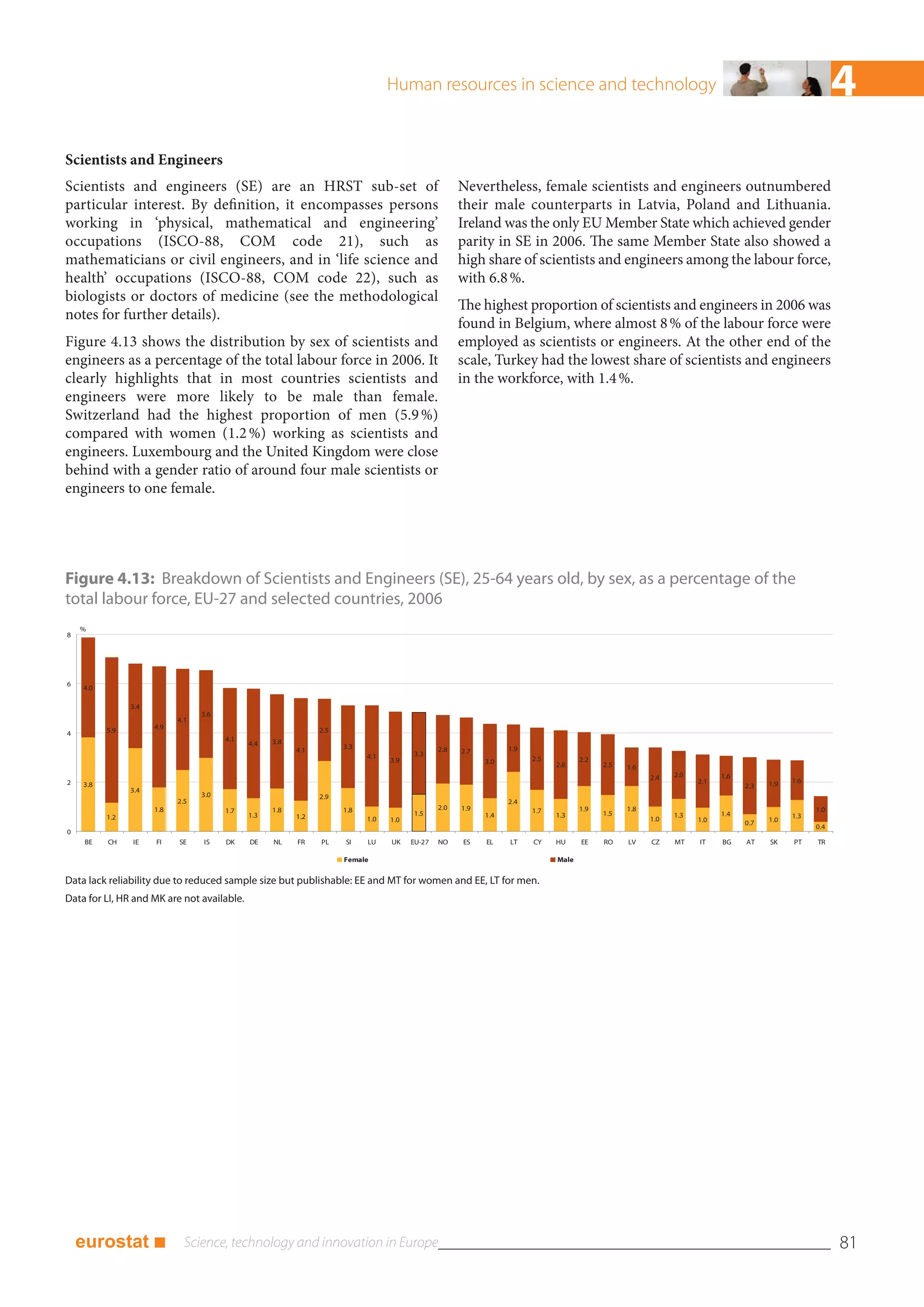
Figure 4.13   Breakdown of scientists and engineers (SE), 25-64 years old, by sex, as a percentage of the total
              labour force, EU-27 and selected countries, 2006 .............................................................................................................................81
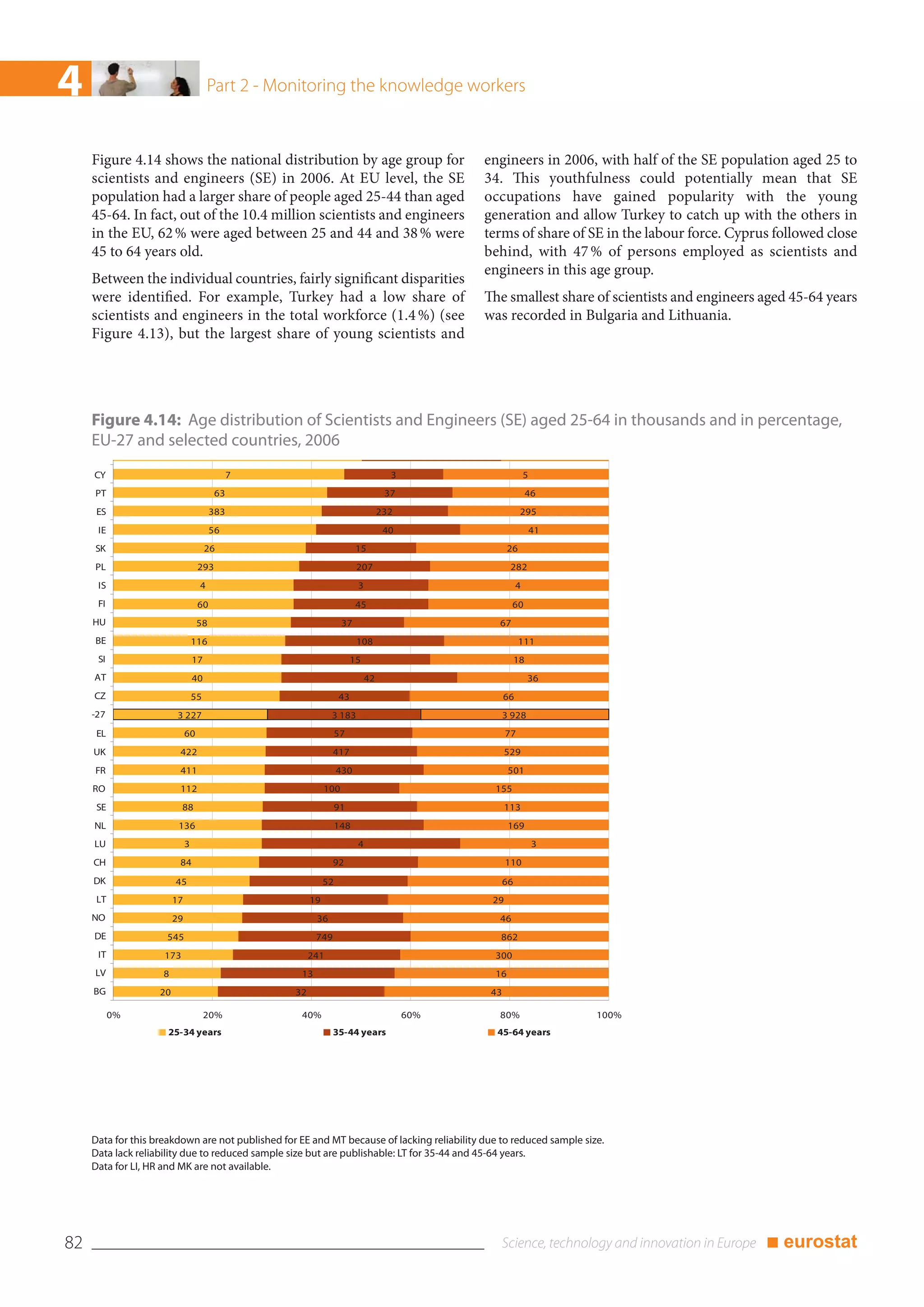
Figure 4.14   Age distribution of scientists and engineers (SE) aged 25-64 in thousands and in percentage,
              EU-27 and selected countries, 2006............................................................................................................................................................82
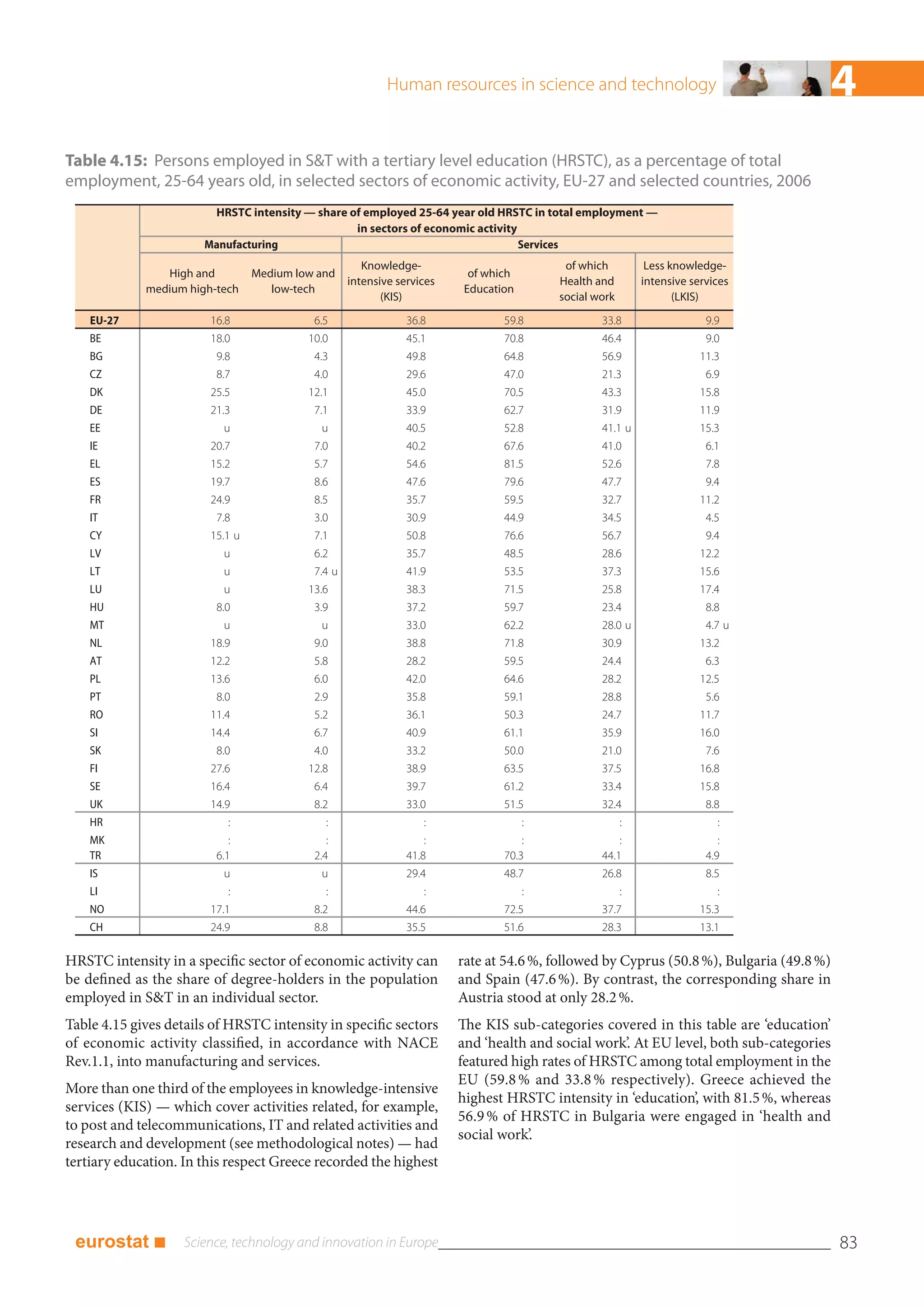
Figure 4.15   Persons employed in S&T with tertiary-level education (HRSTC), as a percentage of total employment,
              25-64 year olds, in selected sectors of economic activity, EU-27 and selected countries, 2006...........................83
Figure 4.16   Unemployment rates for tertiary and non-tertiary educated population, 25-64 years old,
              EU-27 and selected countries, 2006............................................................................................................................................................84
Map 4.17      Human resources in science and technology in terms of occupation (HRSTO)
              as a percentage of the labour force (NUTS level 2), 2006 .............................................................................................................86
Table 4.18    The top 30 regions in the EU and selected countries ranked by proportion of employed HRSTC,
              in thousands and as a share of total employment in manufacturing and in service, 2006 ....................................87
Table 4.19    Job-to-job mobility of employed HRST, broken down by age group and by sex,
              in thousands and as a percentage of employed HRST population, EU-27 and selected countries, 2006 .....88
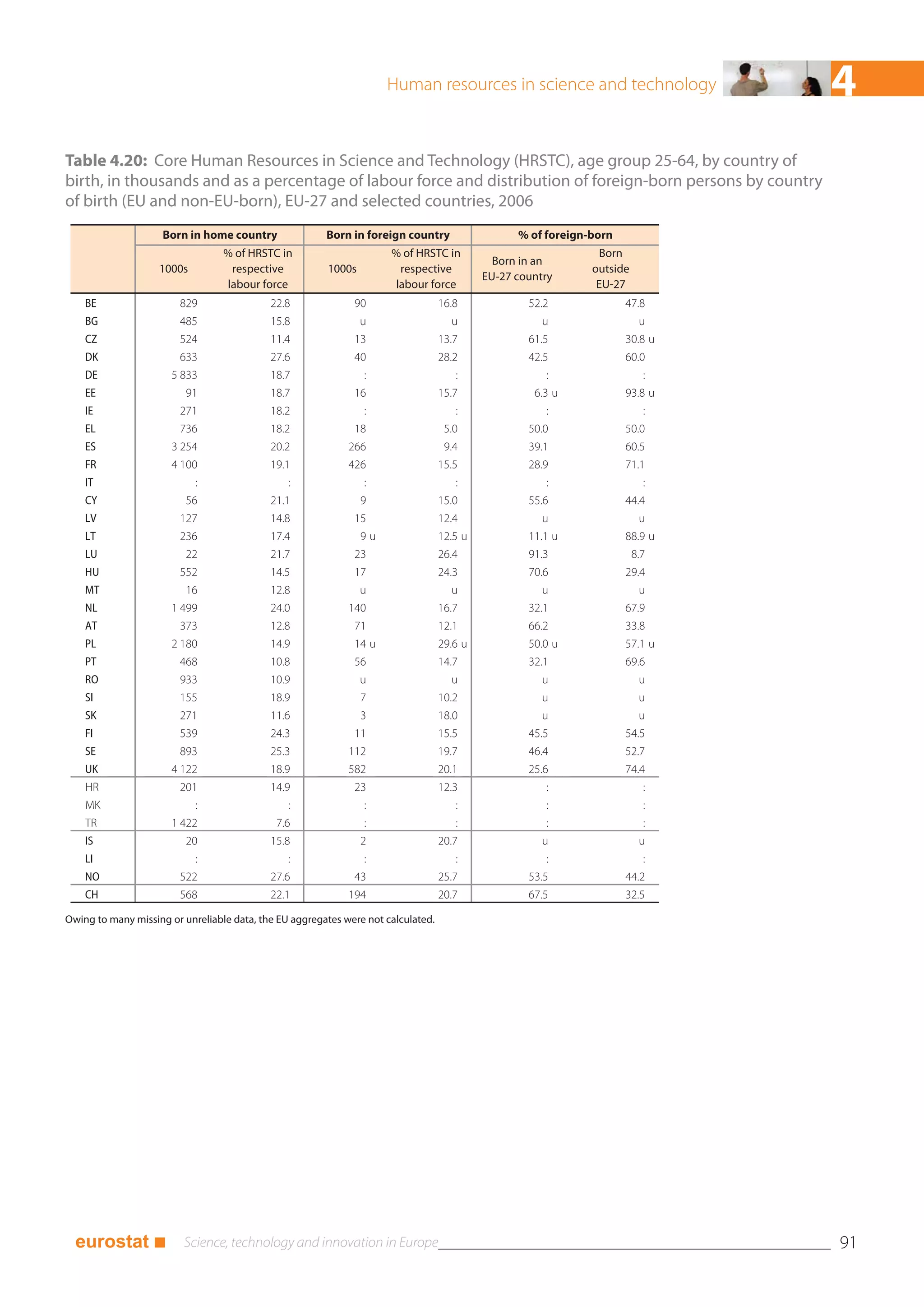
Table 4.20    Core human resources in science and technology (HRSTC), age group 25-64, by country of birth,
              in thousands and as a percentage of labour force and distribution of foreign-born persons
              by country of birth (EU- and non-EU-born), EU-27 and selected countries, 2006........................................................91


 eurostat ■                                                                                                                                                                                                      VII
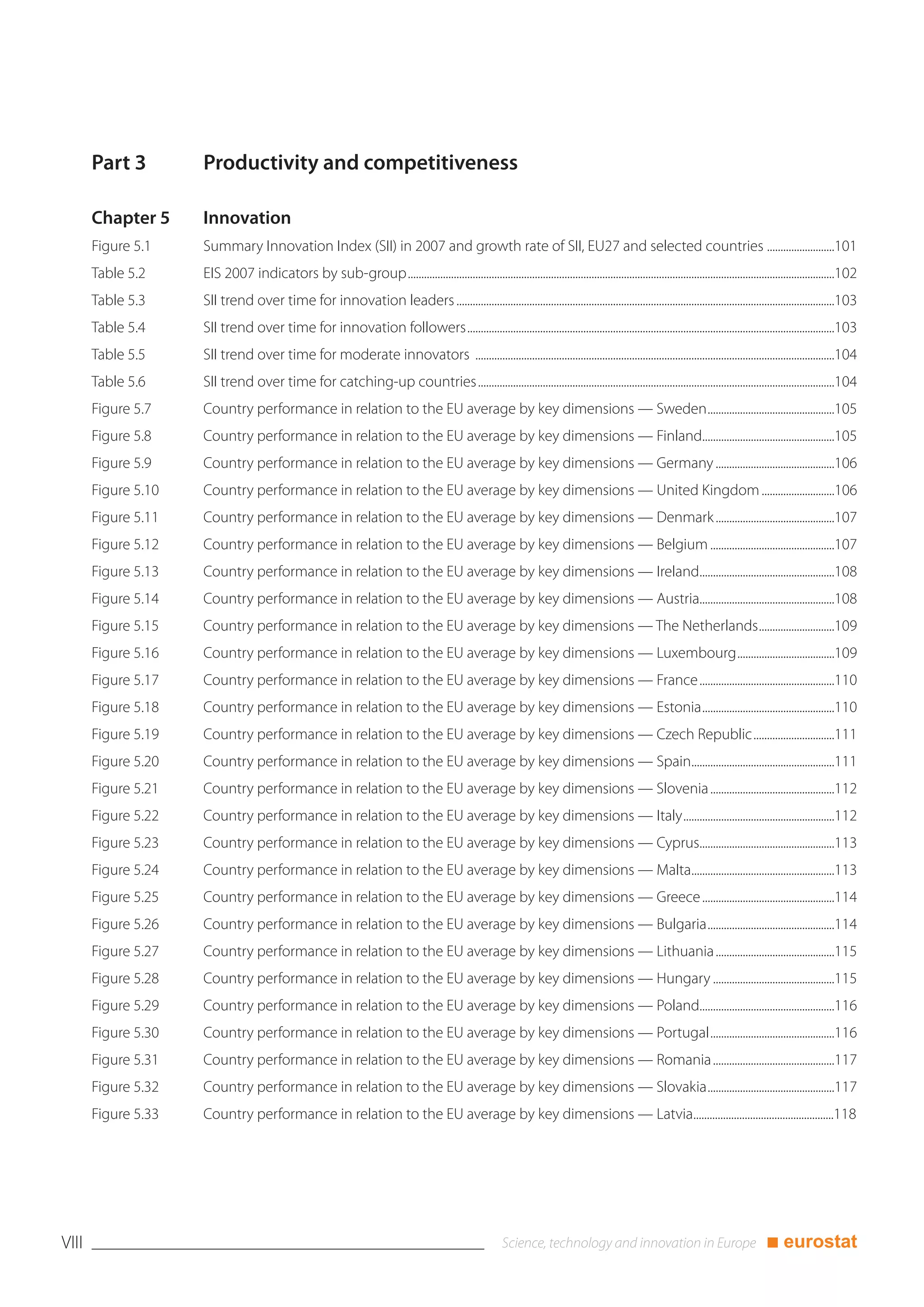
Part 3        Productivity and competitiveness

       Chapter 5     Innovation
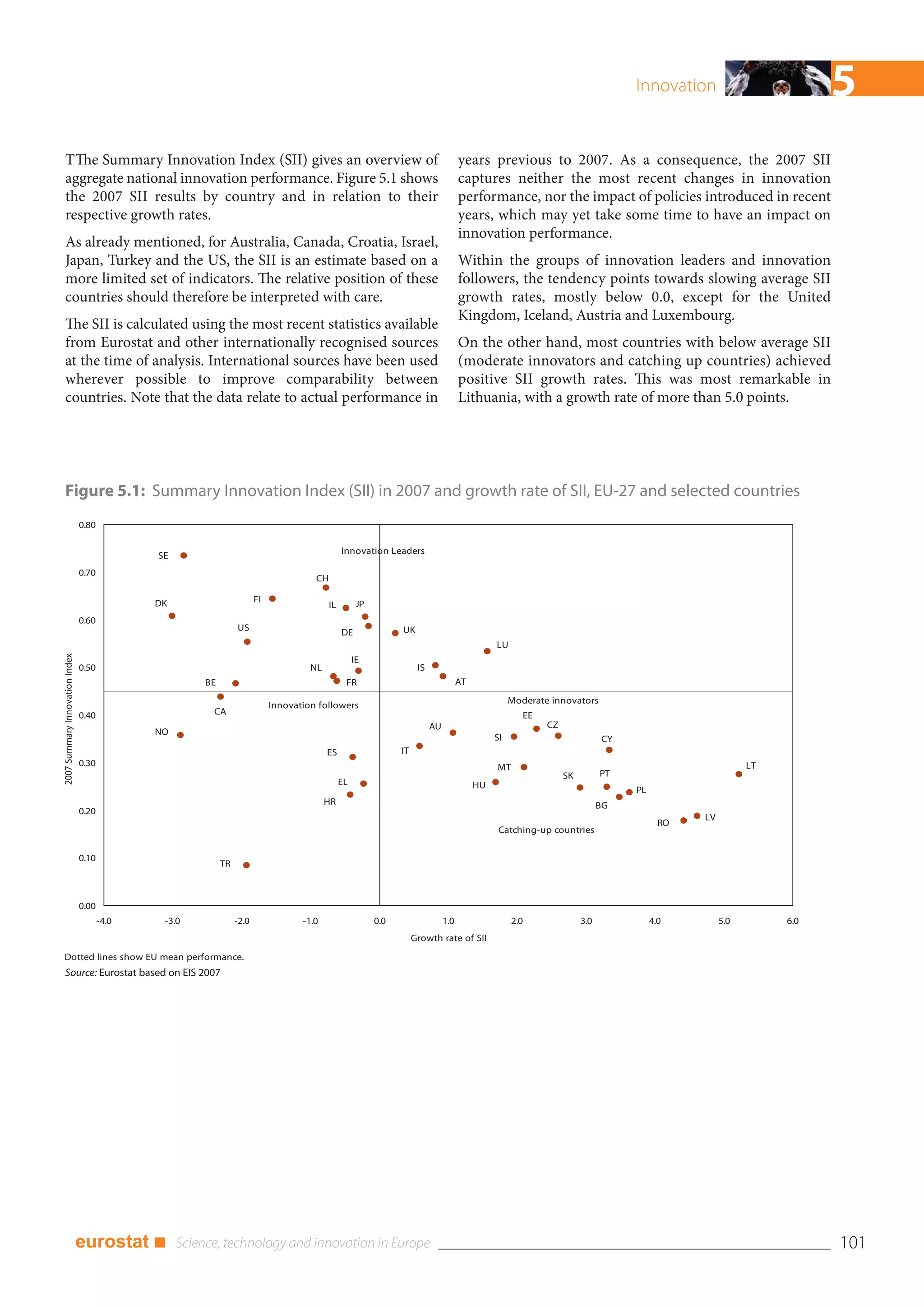
       Figure 5.1    Summary Innovation Index (SII) in 2007 and growth rate of SII, EU27 and selected countries .........................101
       Table 5.2     EIS 2007 indicators by sub-group..............................................................................................................................................................102
       Table 5.3     SII trend over time for innovation leaders ............................................................................................................................................103
       Table 5.4     SII trend over time for innovation followers........................................................................................................................................103
       Table 5.5     SII trend over time for moderate innovators .....................................................................................................................................104
       Table 5.6     SII trend over time for catching-up countries....................................................................................................................................104
       Figure 5.7    Country performance in relation to the EU average by key dimensions — Sweden...............................................105
       Figure 5.8    Country performance in relation to the EU average by key dimensions — Finland.................................................105
       Figure 5.9    Country performance in relation to the EU average by key dimensions — Germany ............................................106
       Figure 5.10   Country performance in relation to the EU average by key dimensions — United Kingdom ...........................106
       Figure 5.11   Country performance in relation to the EU average by key dimensions — Denmark ............................................107
       Figure 5.12   Country performance in relation to the EU average by key dimensions — Belgium ..............................................107
       Figure 5.13   Country performance in relation to the EU average by key dimensions — Ireland..................................................108
       Figure 5.14   Country performance in relation to the EU average by key dimensions — Austria..................................................108
       Figure 5.15   Country performance in relation to the EU average by key dimensions — The Netherlands............................109
       Figure 5.16   Country performance in relation to the EU average by key dimensions — Luxembourg....................................109
       Figure 5.17   Country performance in relation to the EU average by key dimensions — France ..................................................110
       Figure 5.18   Country performance in relation to the EU average by key dimensions — Estonia.................................................110
       Figure 5.19   Country performance in relation to the EU average by key dimensions — Czech Republic..............................111
       Figure 5.20   Country performance in relation to the EU average by key dimensions — Spain.....................................................111
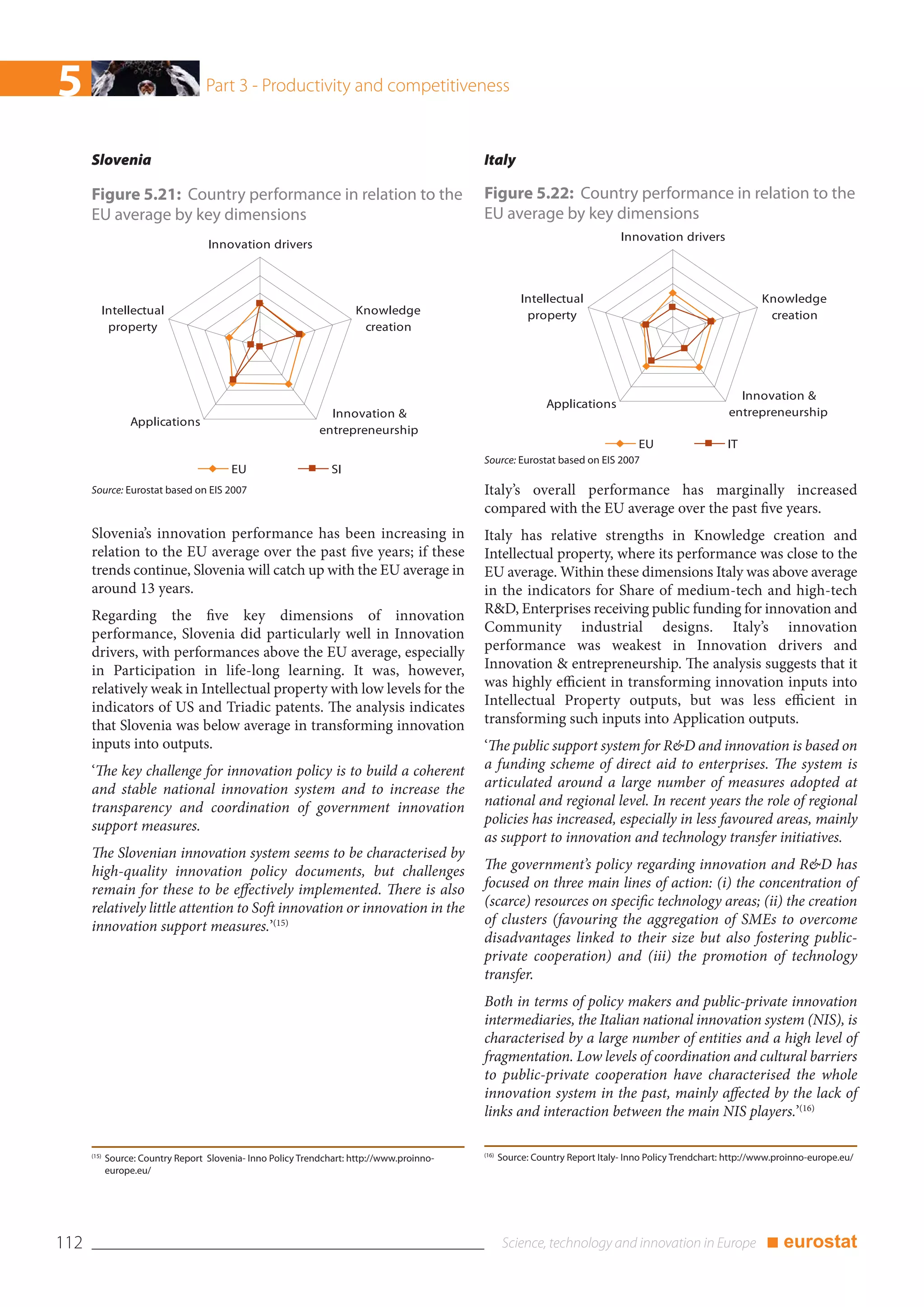
       Figure 5.21   Country performance in relation to the EU average by key dimensions — Slovenia ..............................................112
       Figure 5.22   Country performance in relation to the EU average by key dimensions — Italy........................................................112
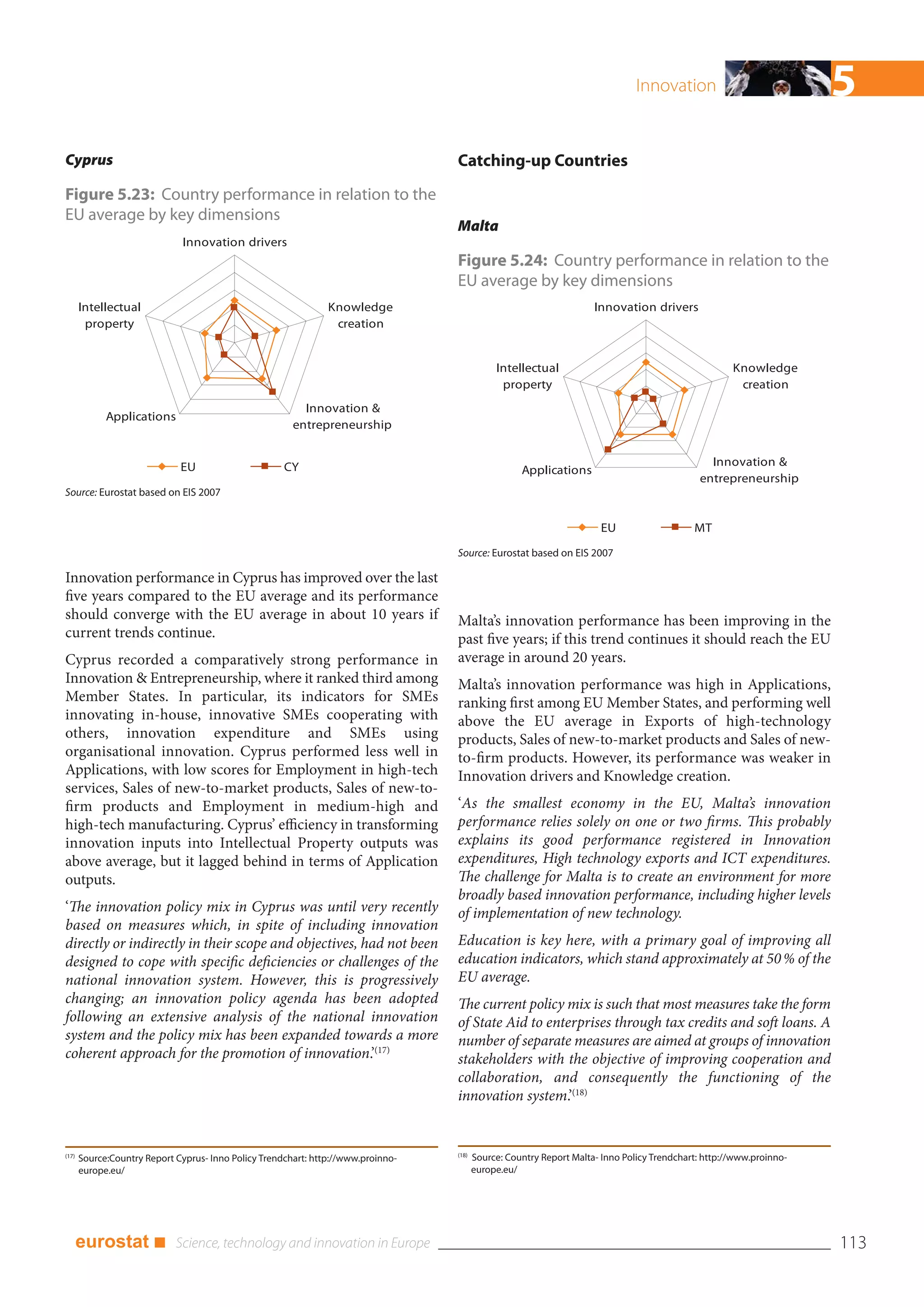
       Figure 5.23   Country performance in relation to the EU average by key dimensions — Cyprus..................................................113
       Figure 5.24   Country performance in relation to the EU average by key dimensions — Malta.....................................................113
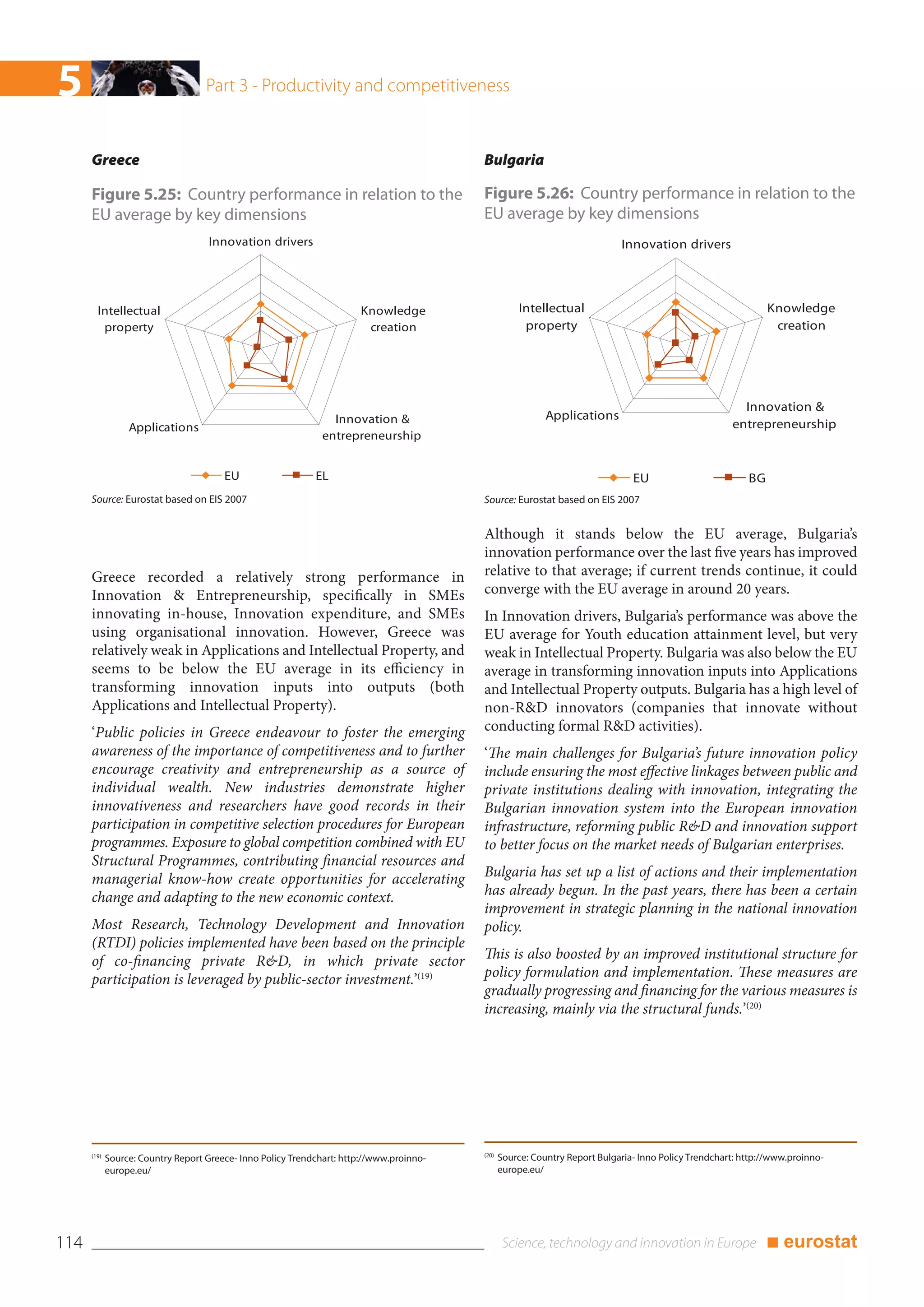
       Figure 5.25   Country performance in relation to the EU average by key dimensions — Greece .................................................114
       Figure 5.26   Country performance in relation to the EU average by key dimensions — Bulgaria...............................................114
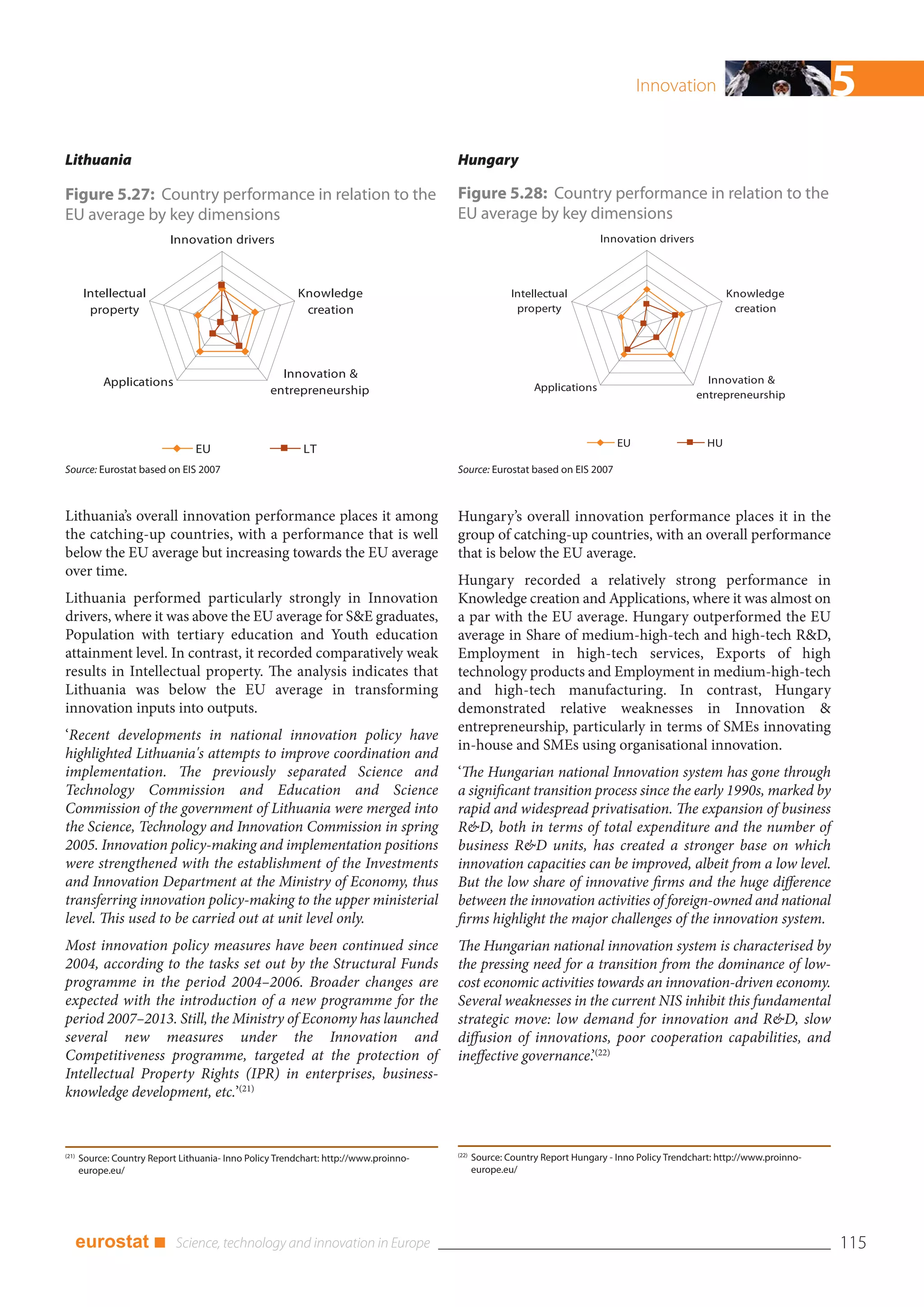
       Figure 5.27   Country performance in relation to the EU average by key dimensions — Lithuania ............................................115
       Figure 5.28   Country performance in relation to the EU average by key dimensions — Hungary .............................................115
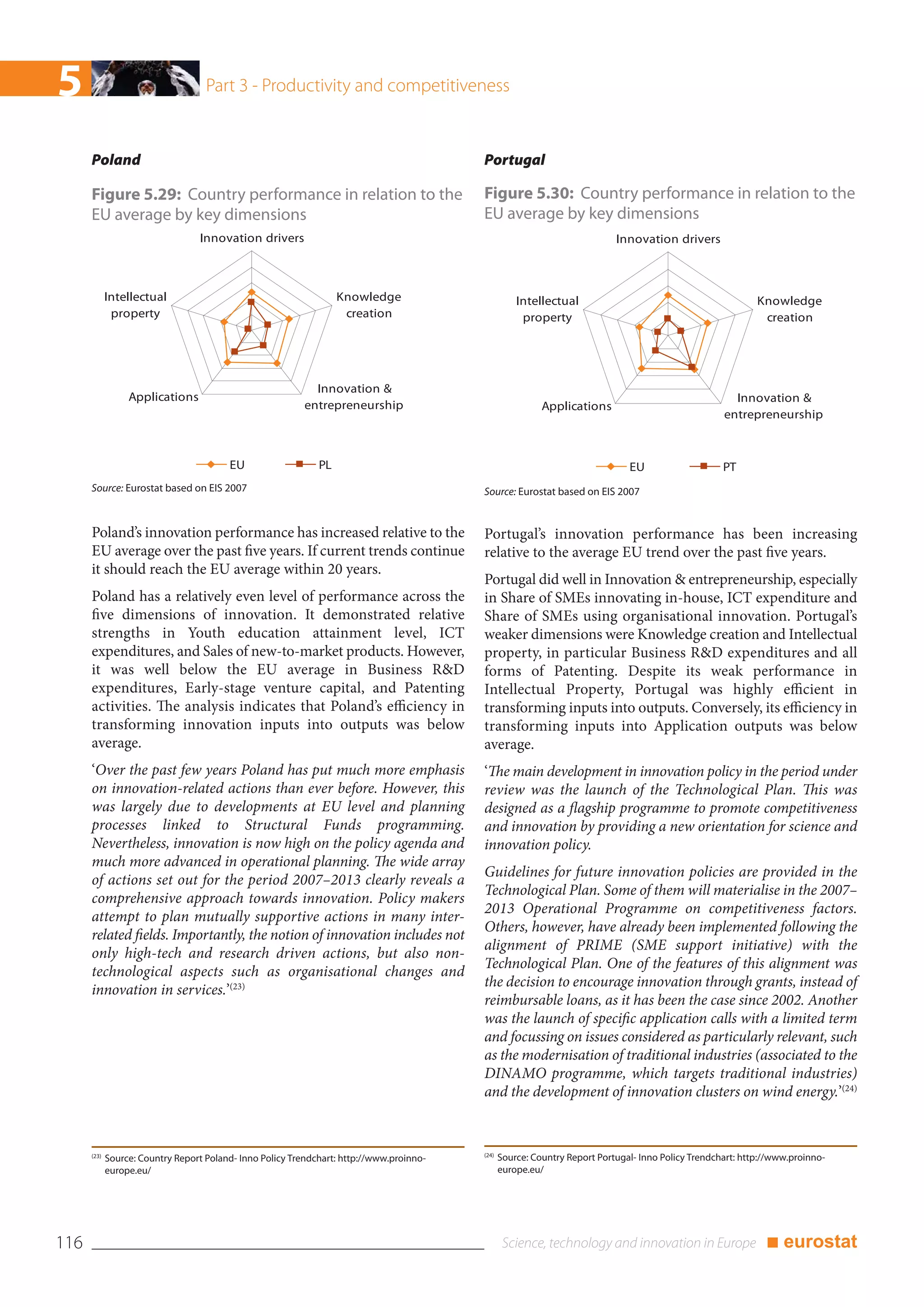
       Figure 5.29   Country performance in relation to the EU average by key dimensions — Poland..................................................116
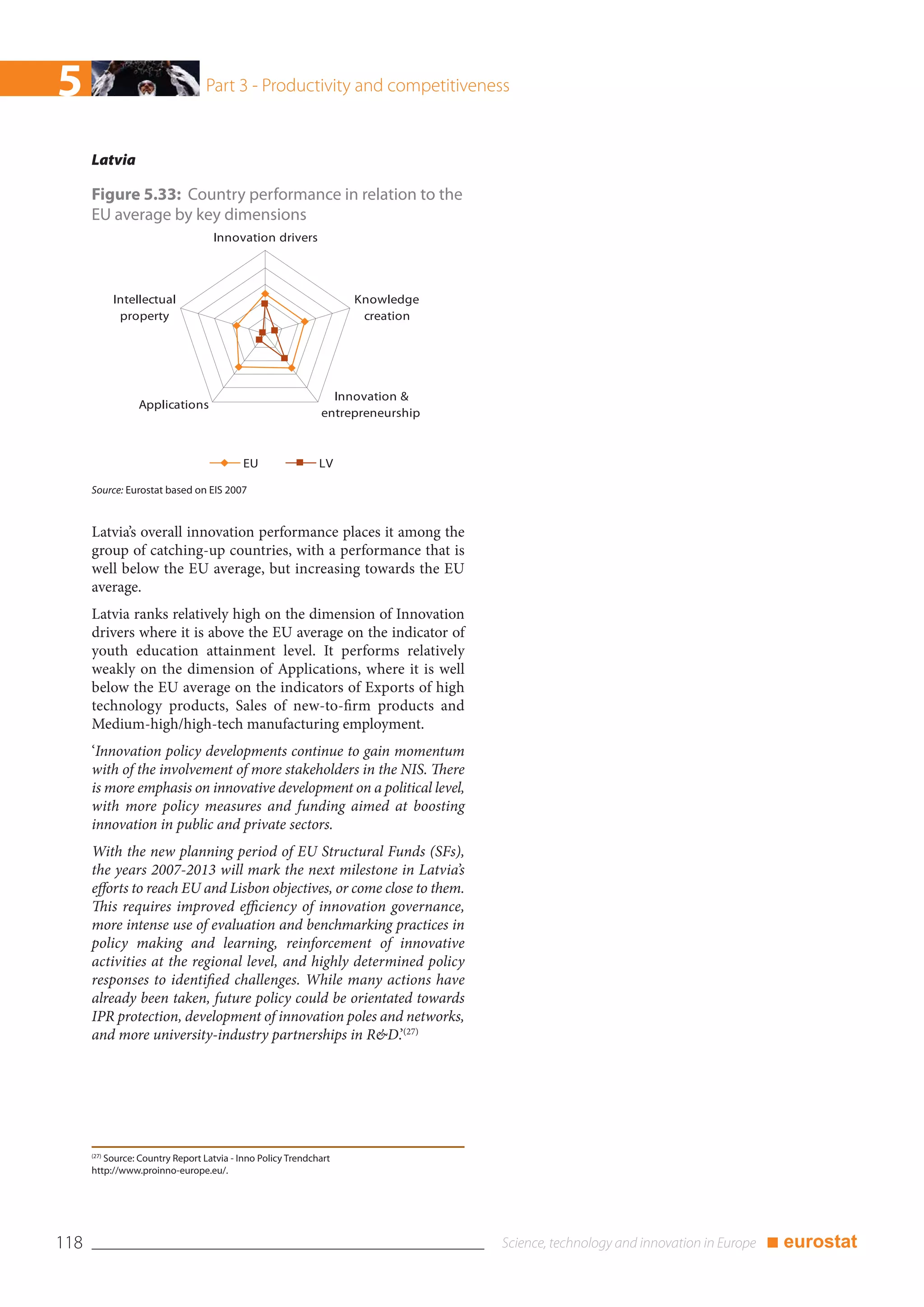
       Figure 5.30   Country performance in relation to the EU average by key dimensions — Portugal..............................................116
       Figure 5.31   Country performance in relation to the EU average by key dimensions — Romania .............................................117
       Figure 5.32   Country performance in relation to the EU average by key dimensions — Slovakia...............................................117
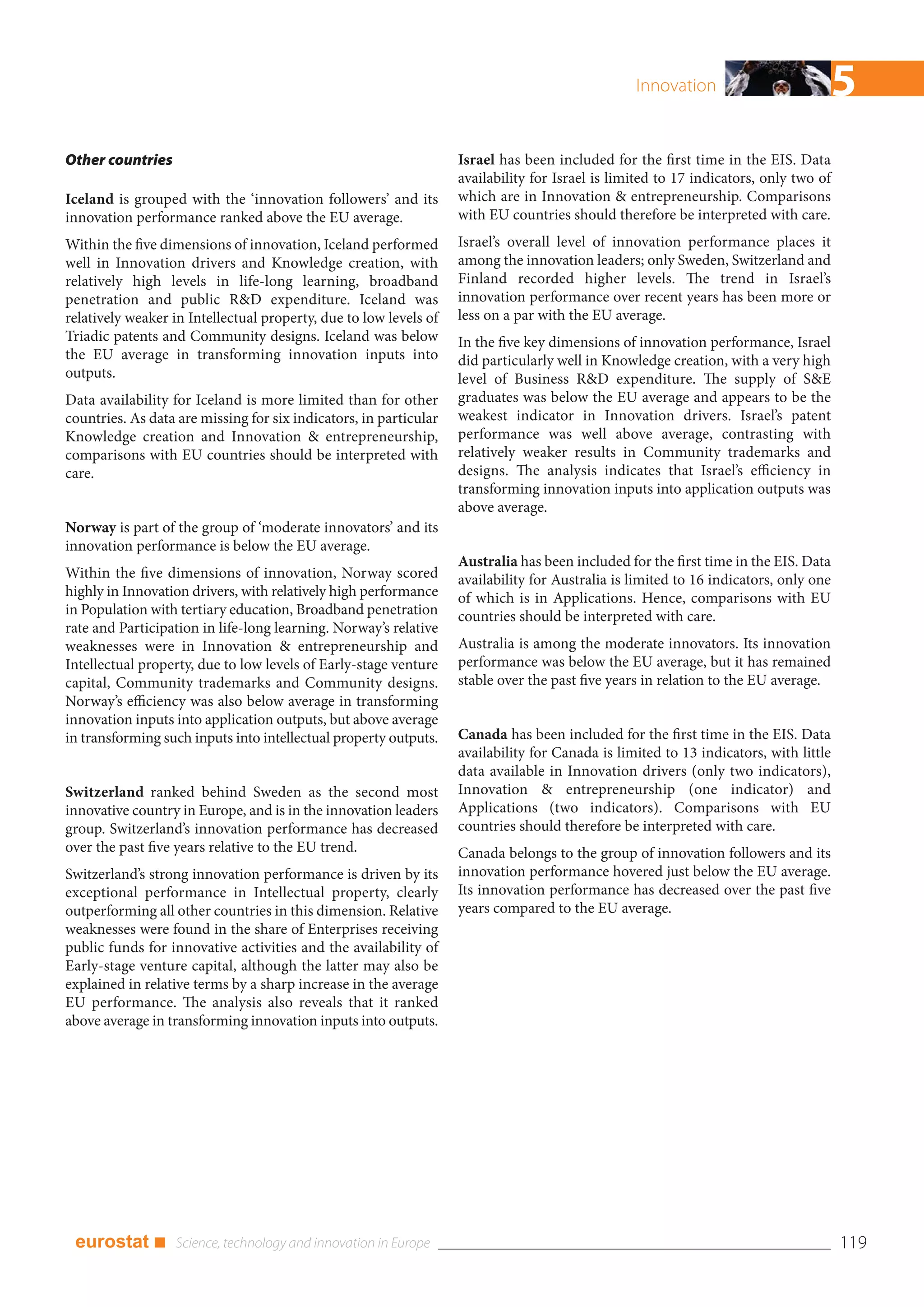
       Figure 5.33   Country performance in relation to the EU average by key dimensions — Latvia....................................................118


VIII                                                                                                                                                                                       ■ eurostat
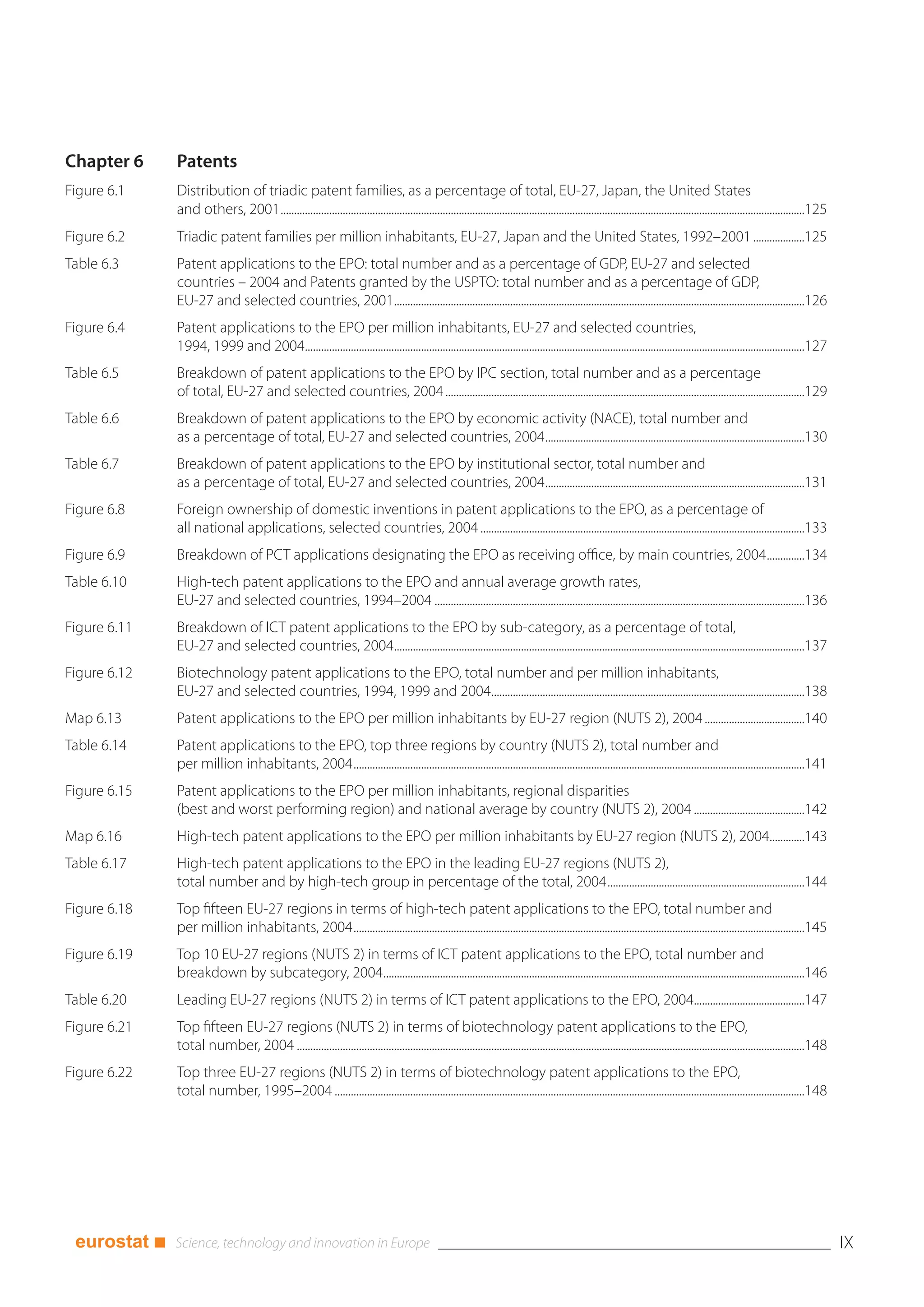
Chapter 6     Patents
Figure 6.1    Distribution of triadic patent families, as a percentage of total, EU-27, Japan, the United States
              and others, 2001..................................................................................................................................................................................................125
Figure 6.2    Triadic patent families per million inhabitants, EU-27, Japan and the United States, 1992–2001 ...................125
Table 6.3     Patent applications to the EPO: total number and as a percentage of GDP, EU-27 and selected
              countries – 2004 and Patents granted by the USPTO: total number and as a percentage of GDP,
              EU-27 and selected countries, 2001........................................................................................................................................................126
Figure 6.4    Patent applications to the EPO per million inhabitants, EU-27 and selected countries,
              1994, 1999 and 2004.........................................................................................................................................................................................127
Table 6.5     Breakdown of patent applications to the EPO by IPC section, total number and as a percentage
              of total, EU-27 and selected countries, 2004 .....................................................................................................................................129
Table 6.6     Breakdown of patent applications to the EPO by economic activity (NACE), total number and
              as a percentage of total, EU-27 and selected countries, 2004................................................................................................130
Table 6.7     Breakdown of patent applications to the EPO by institutional sector, total number and
              as a percentage of total, EU-27 and selected countries, 2004................................................................................................131
Figure 6.8    Foreign ownership of domestic inventions in patent applications to the EPO, as a percentage of
              all national applications, selected countries, 2004 ........................................................................................................................133
Figure 6.9    Breakdown of PCT applications designating the EPO as receiving office, by main countries, 2004..............134
Table 6.10    High-tech patent applications to the EPO and annual average growth rates,
              EU-27 and selected countries, 1994–2004 .........................................................................................................................................136
Figure 6.11   Breakdown of ICT patent applications to the EPO by sub-category, as a percentage of total,
              EU-27 and selected countries, 2004........................................................................................................................................................137
Figure 6.12   Biotechnology patent applications to the EPO, total number and per million inhabitants,
              EU-27 and selected countries, 1994, 1999 and 2004....................................................................................................................138
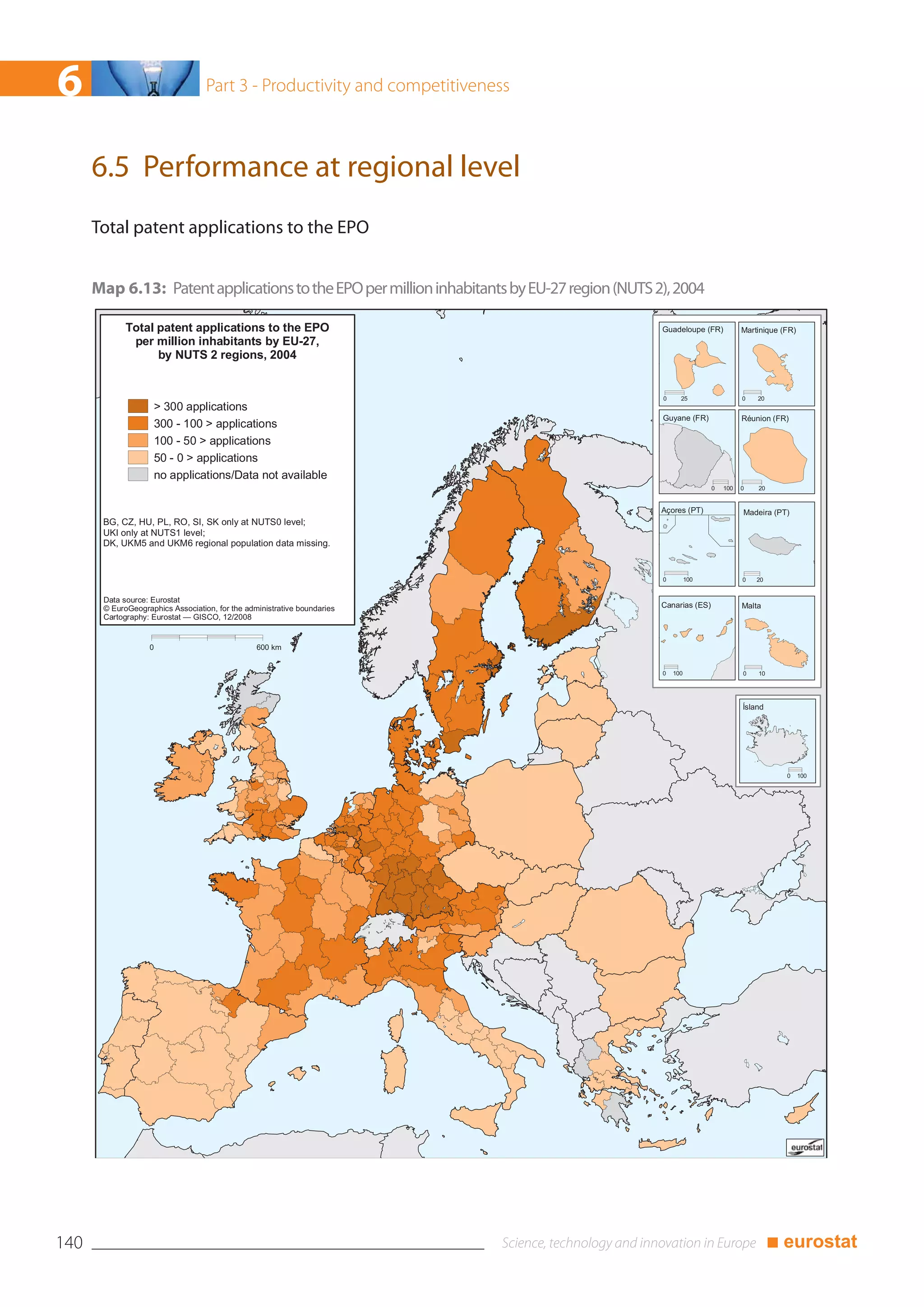
Map 6.13      Patent applications to the EPO per million inhabitants by EU-27 region (NUTS 2), 2004 .....................................140
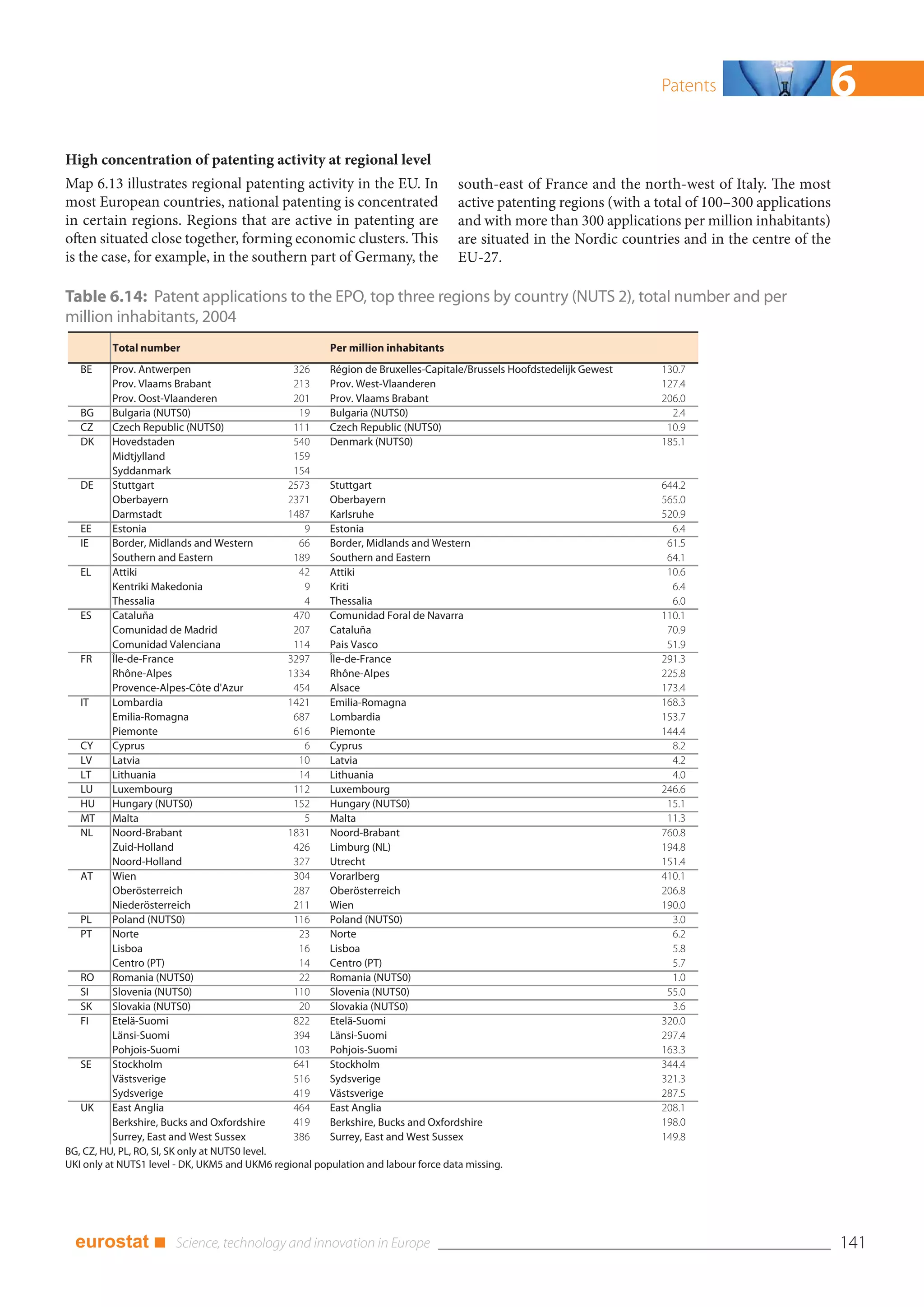
Table 6.14    Patent applications to the EPO, top three regions by country (NUTS 2), total number and
              per million inhabitants, 2004.......................................................................................................................................................................141
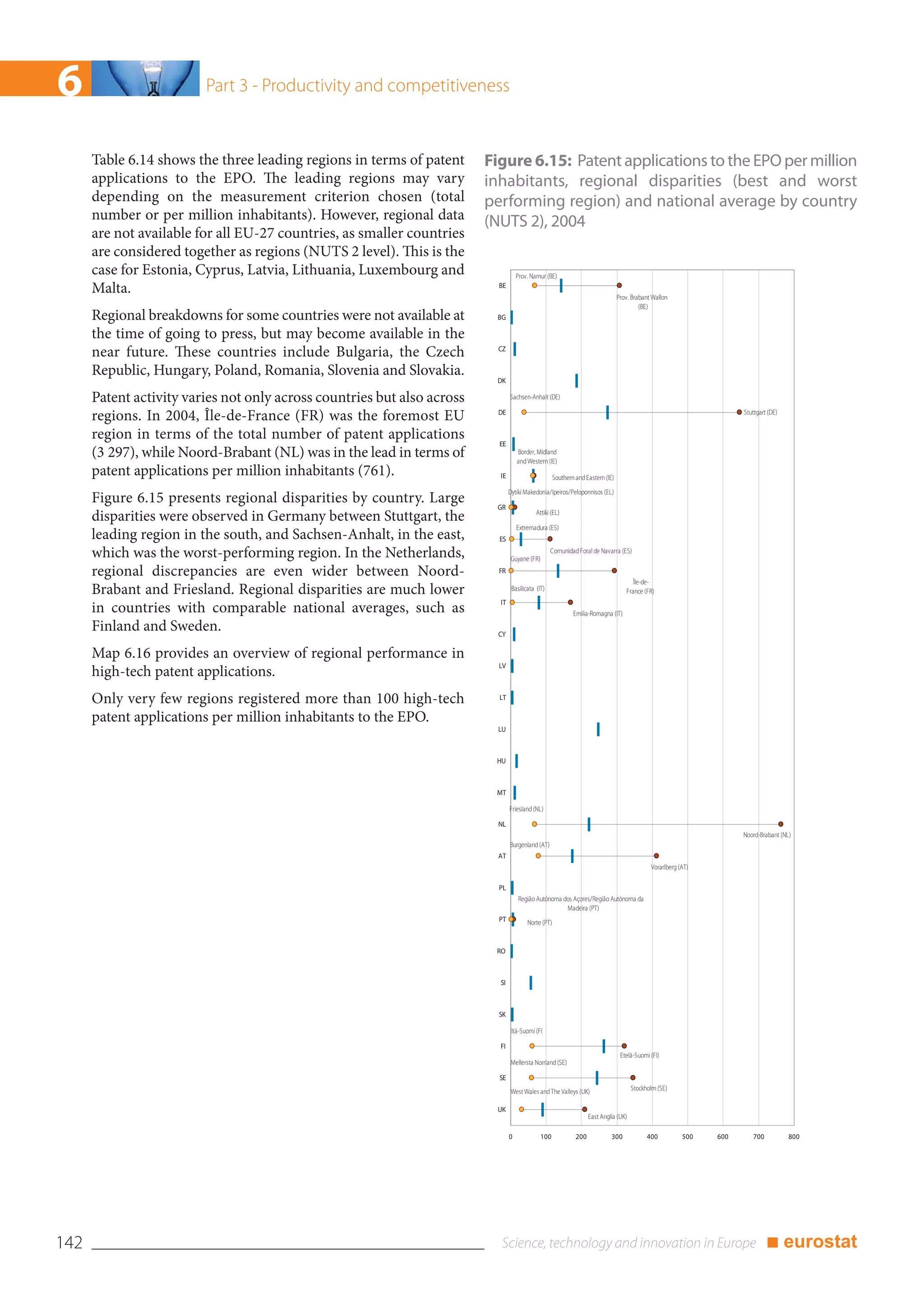
Figure 6.15   Patent applications to the EPO per million inhabitants, regional disparities
              (best and worst performing region) and national average by country (NUTS 2), 2004 .........................................142
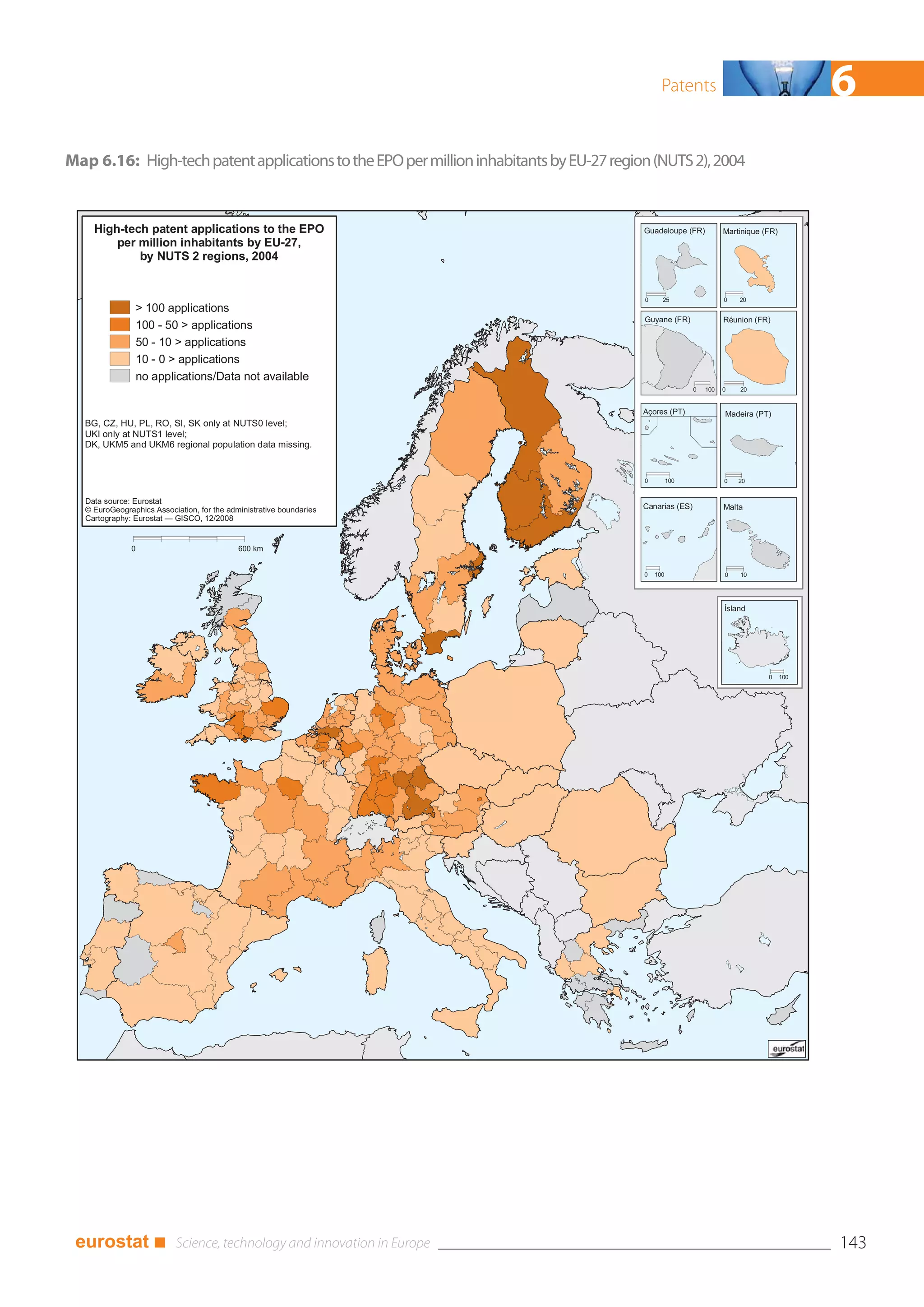
Map 6.16      High-tech patent applications to the EPO per million inhabitants by EU-27 region (NUTS 2), 2004.............143
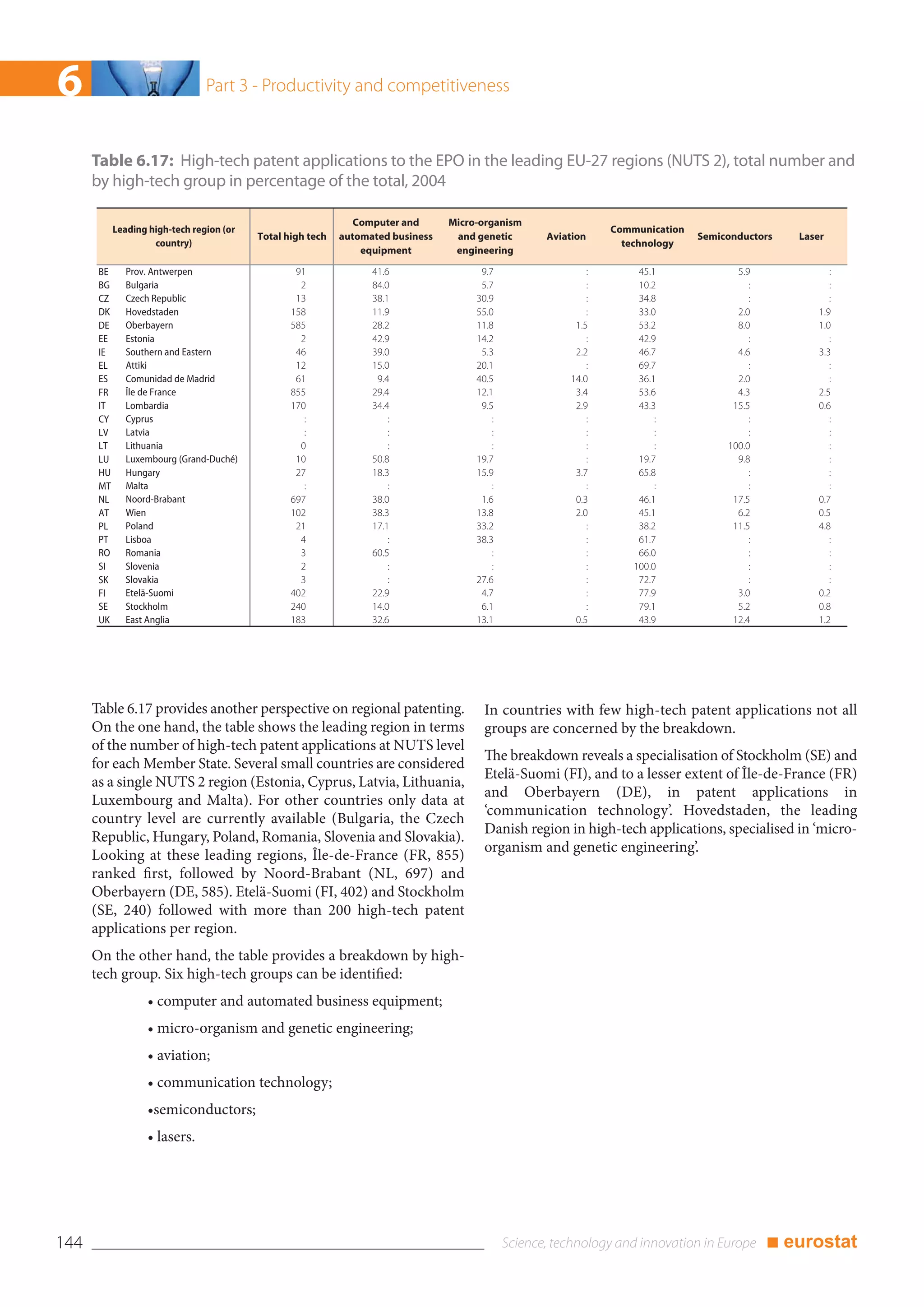
Table 6.17    High-tech patent applications to the EPO in the leading EU-27 regions (NUTS 2),
              total number and by high-tech group in percentage of the total, 2004.........................................................................144
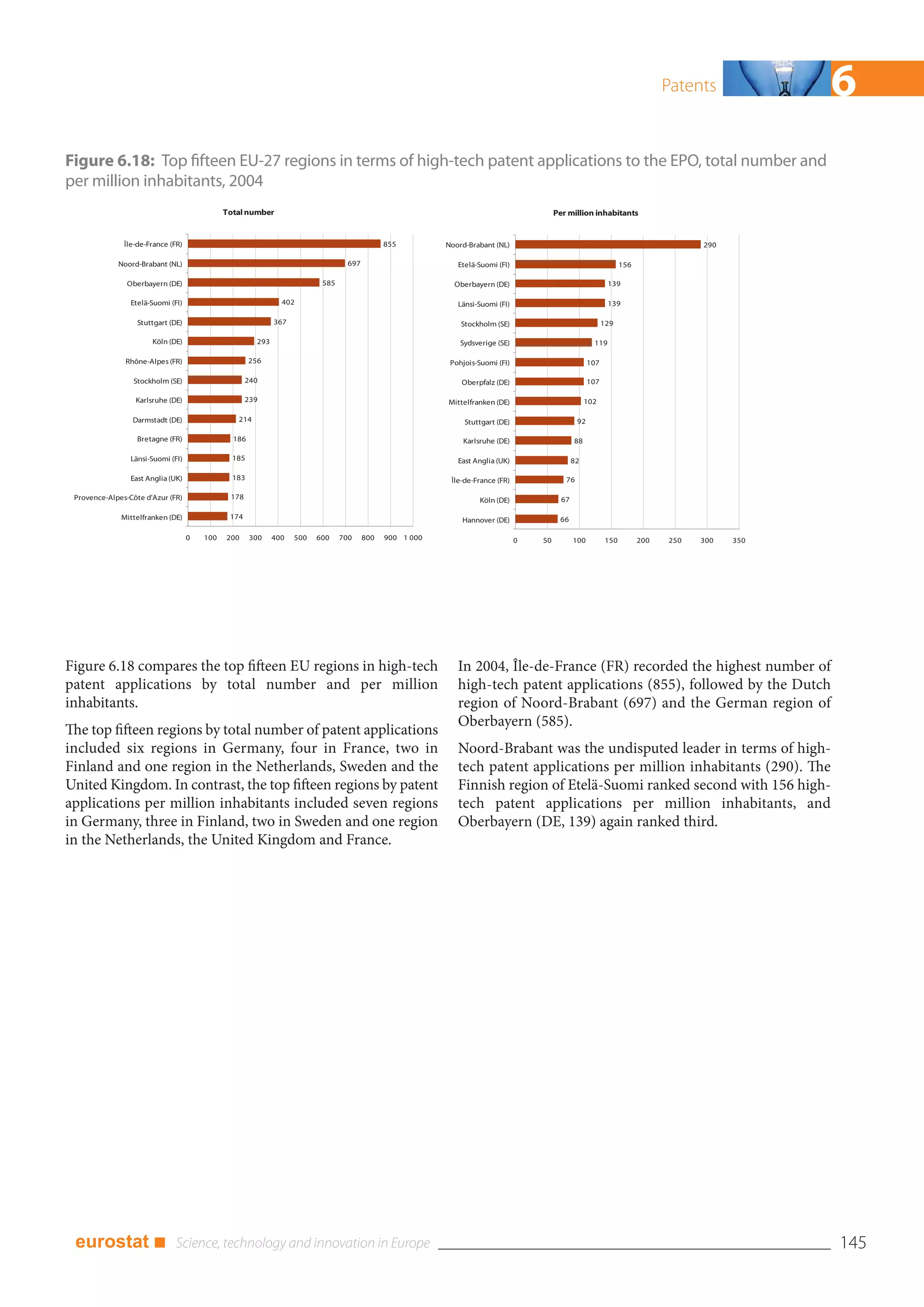
Figure 6.18   Top fifteen EU-27 regions in terms of high-tech patent applications to the EPO, total number and
              per million inhabitants, 2004.......................................................................................................................................................................145
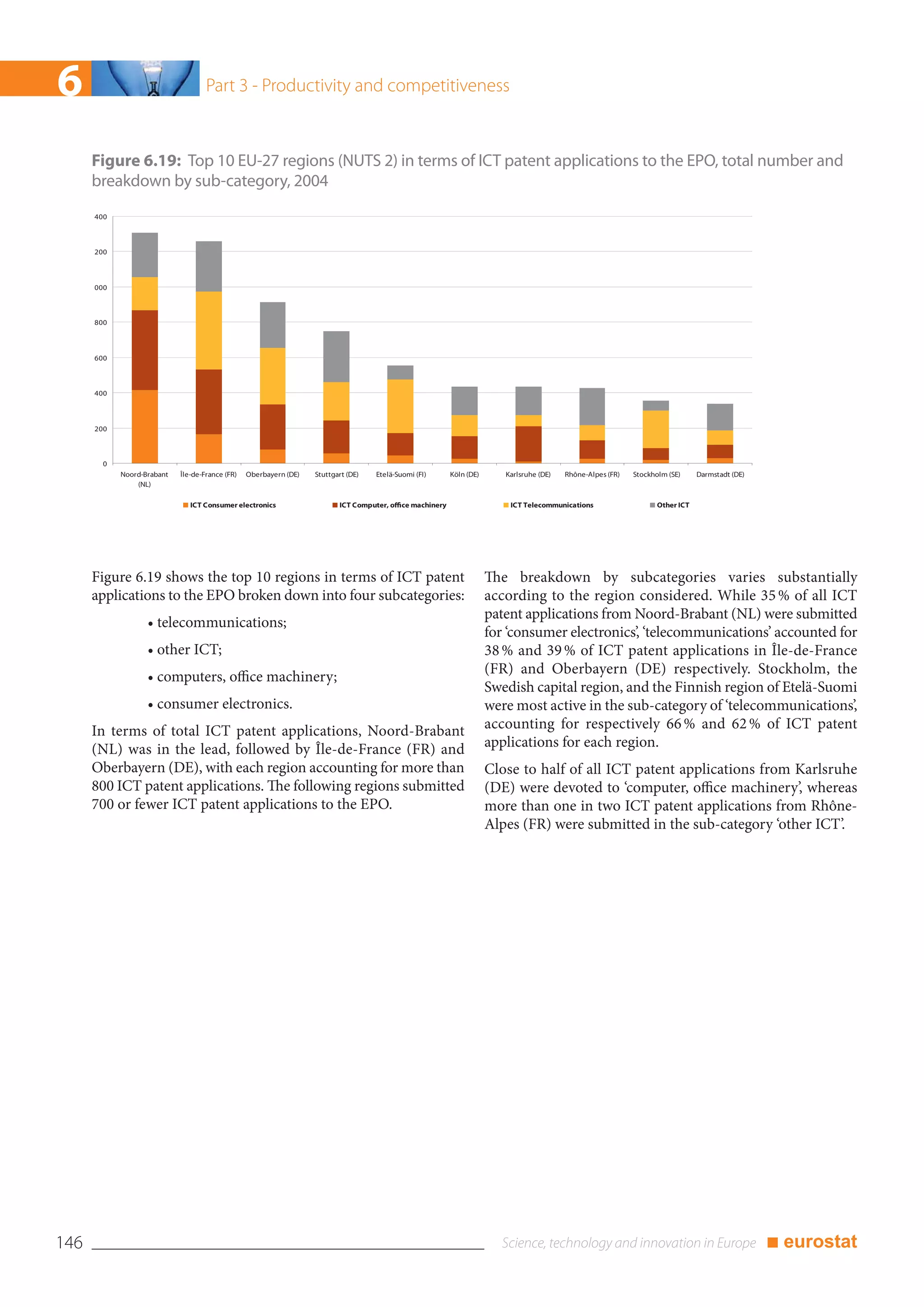
Figure 6.19   Top 10 EU-27 regions (NUTS 2) in terms of ICT patent applications to the EPO, total number and
              breakdown by subcategory, 2004............................................................................................................................................................146
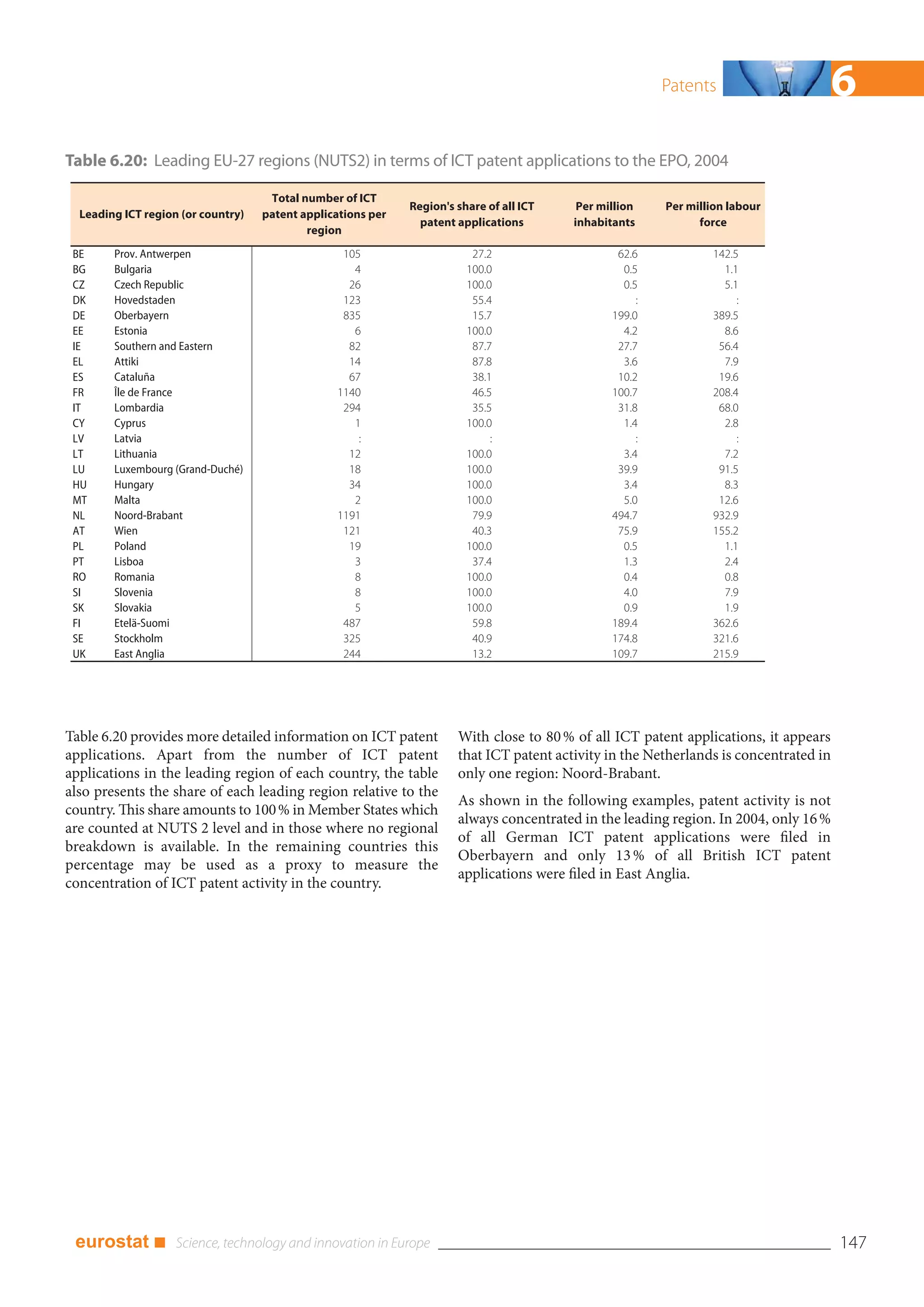
Table 6.20    Leading EU-27 regions (NUTS 2) in terms of ICT patent applications to the EPO, 2004.........................................147
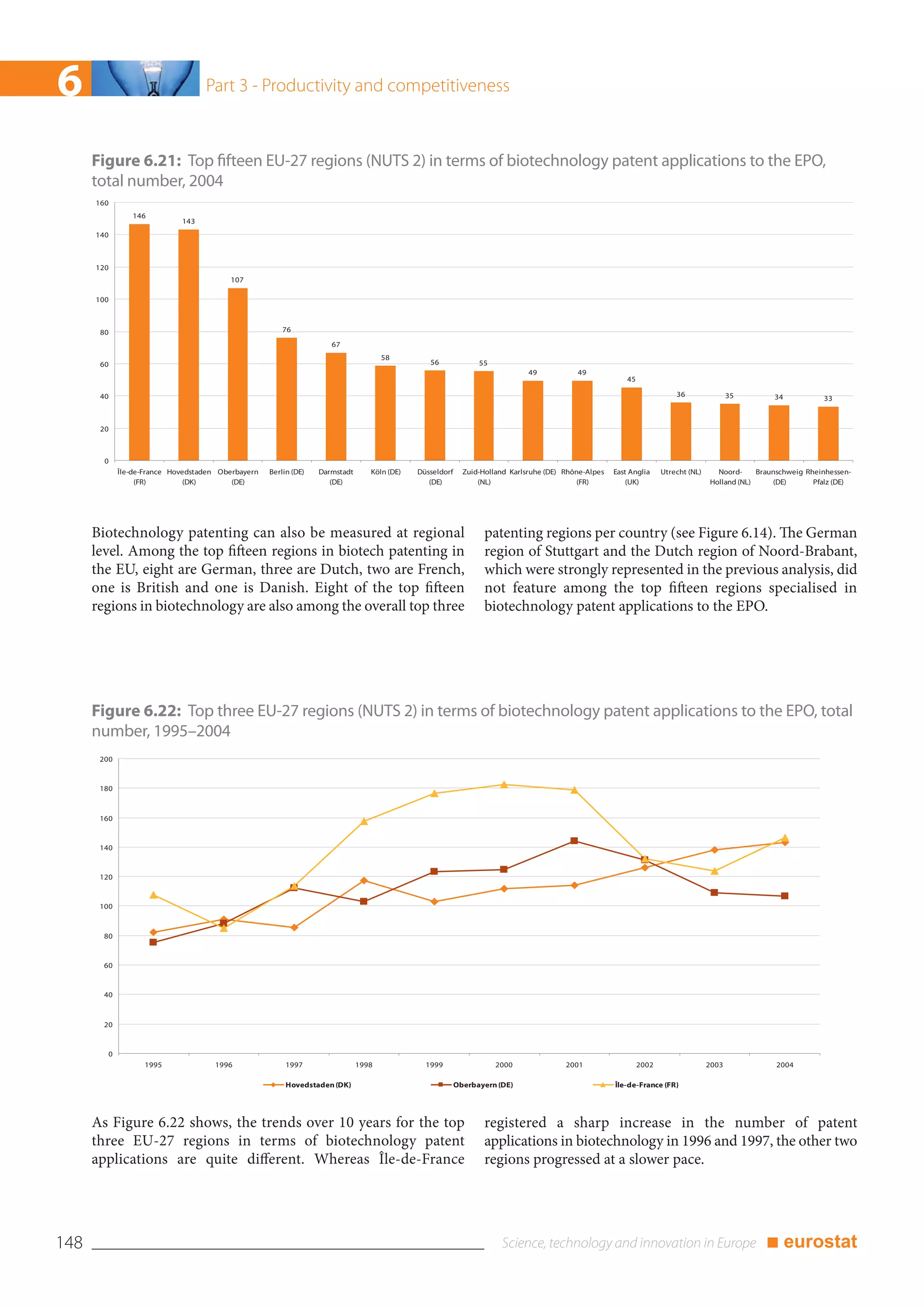
Figure 6.21   Top fifteen EU-27 regions (NUTS 2) in terms of biotechnology patent applications to the EPO,
              total number, 2004 ............................................................................................................................................................................................148
Figure 6.22   Top three EU-27 regions (NUTS 2) in terms of biotechnology patent applications to the EPO,
              total number, 1995–2004 ..............................................................................................................................................................................148


 eurostat ■                                                                                                                                                                                                                           IX
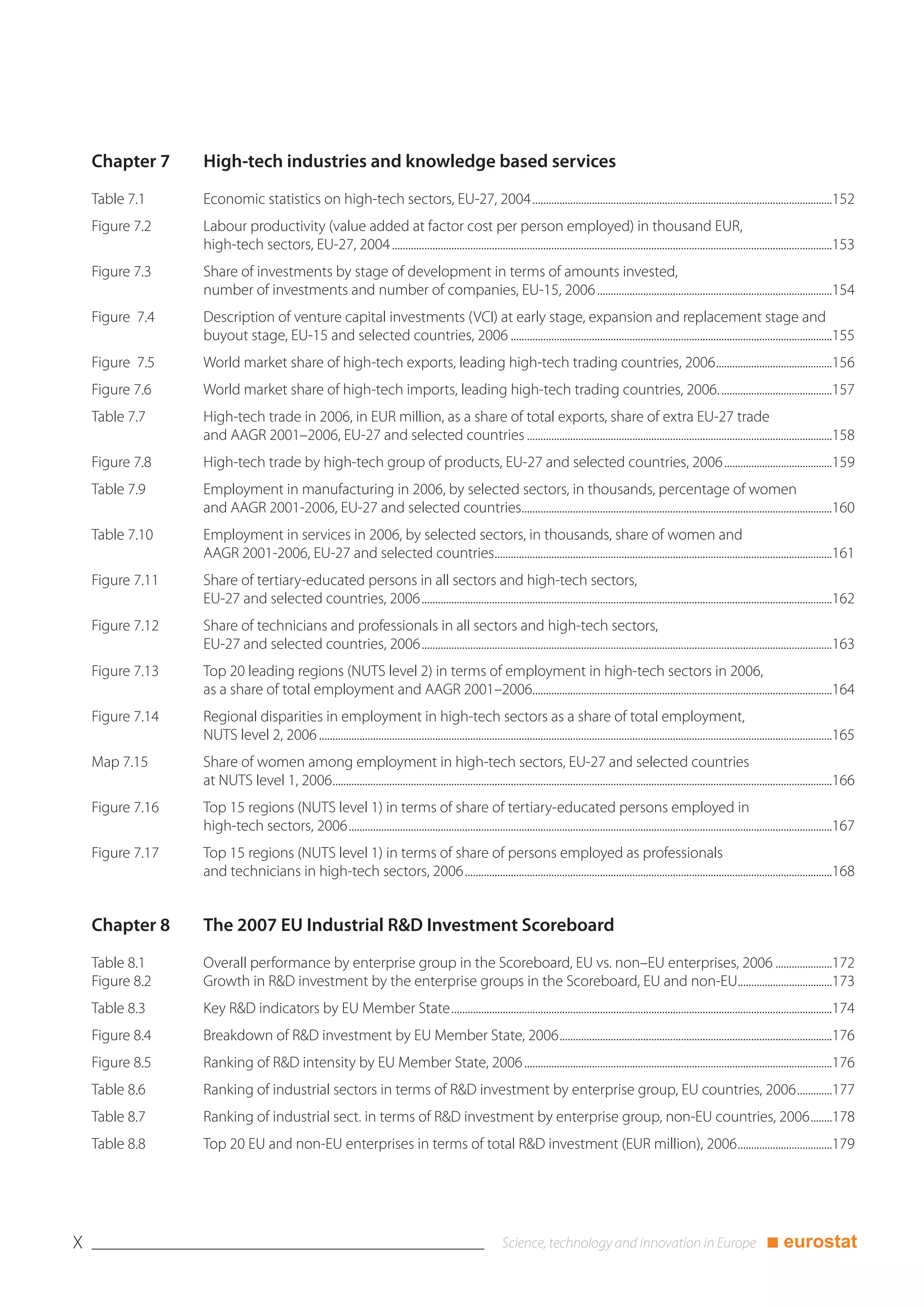
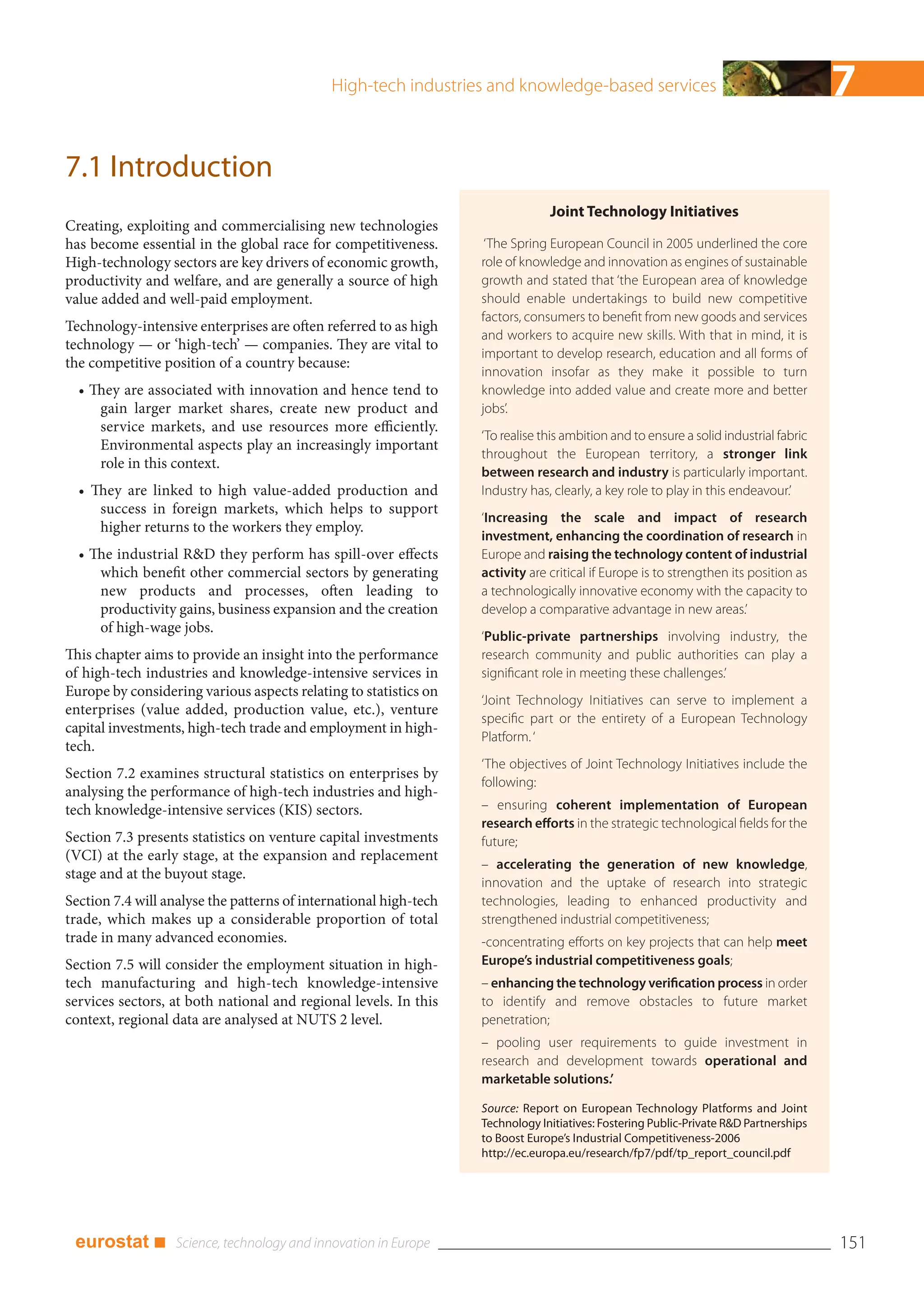
Chapter 7     High-tech industries and knowledge based services
    Table 7.1     Economic statistics on high-tech sectors, EU-27, 2004...............................................................................................................152
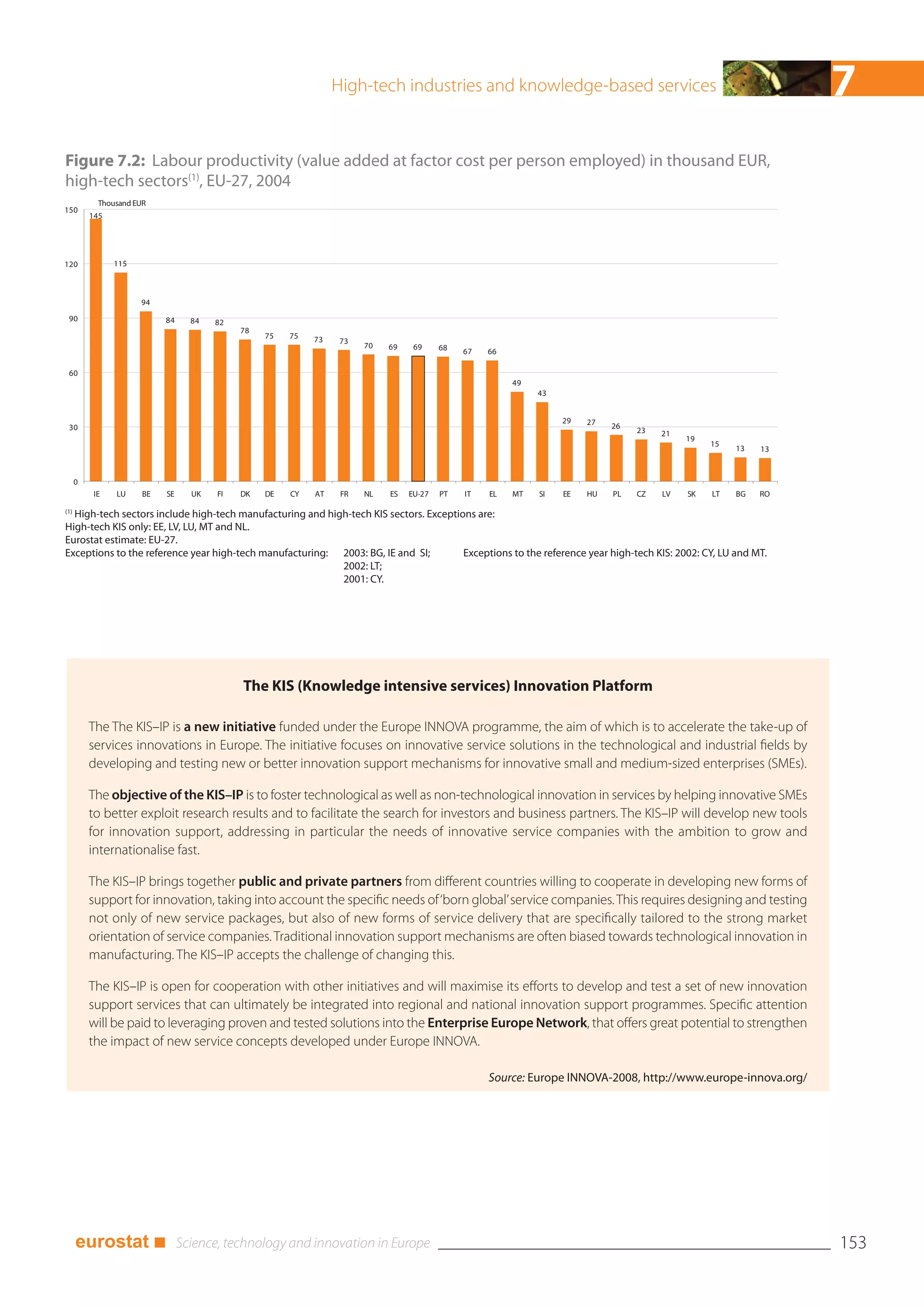
    Figure 7.2    Labour productivity (value added at factor cost per person employed) in thousand EUR,
                  high-tech sectors, EU-27, 2004 ...................................................................................................................................................................153
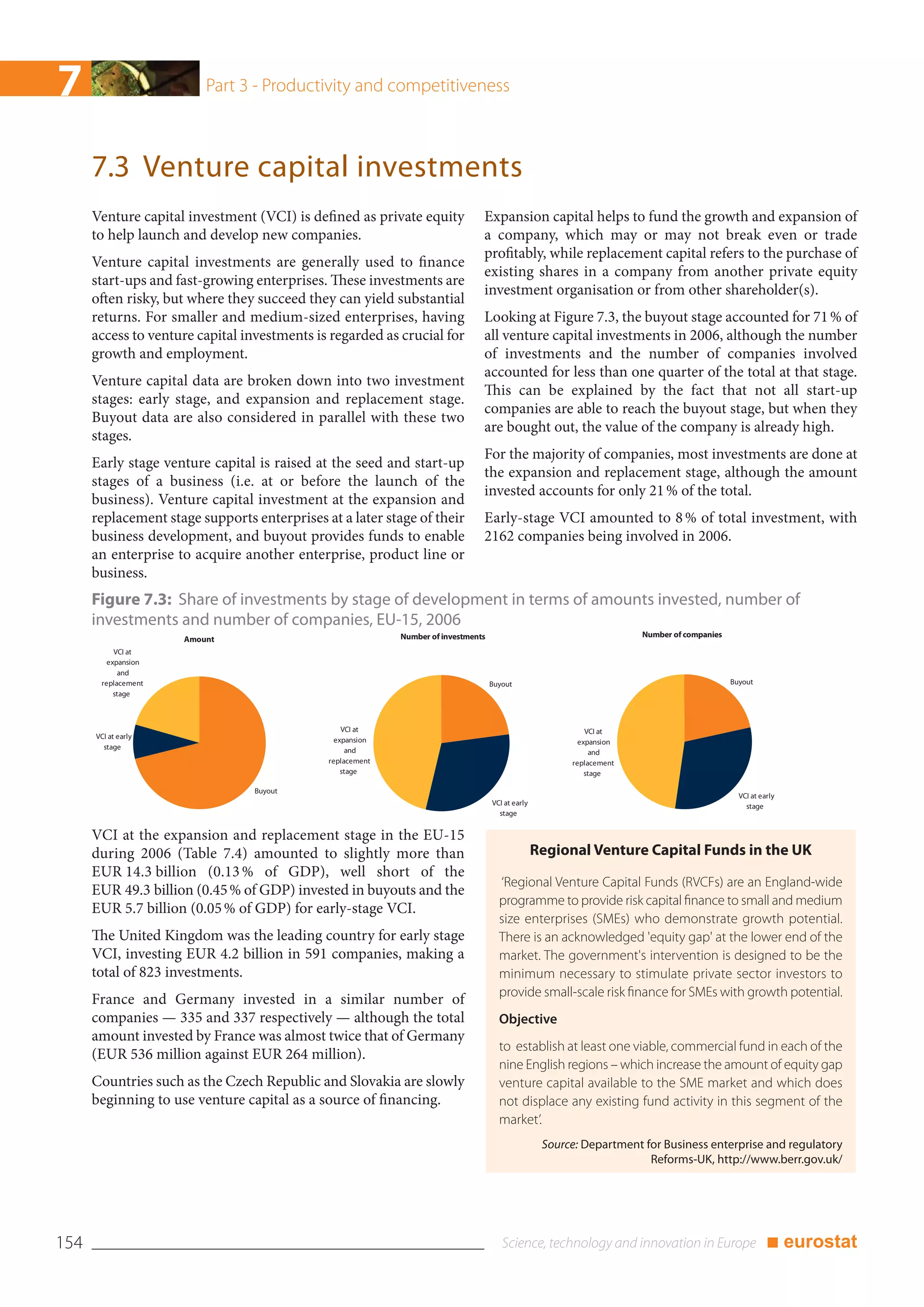
    Figure 7.3    Share of investments by stage of development in terms of amounts invested,
                  number of investments and number of companies, EU-15, 2006 .......................................................................................154
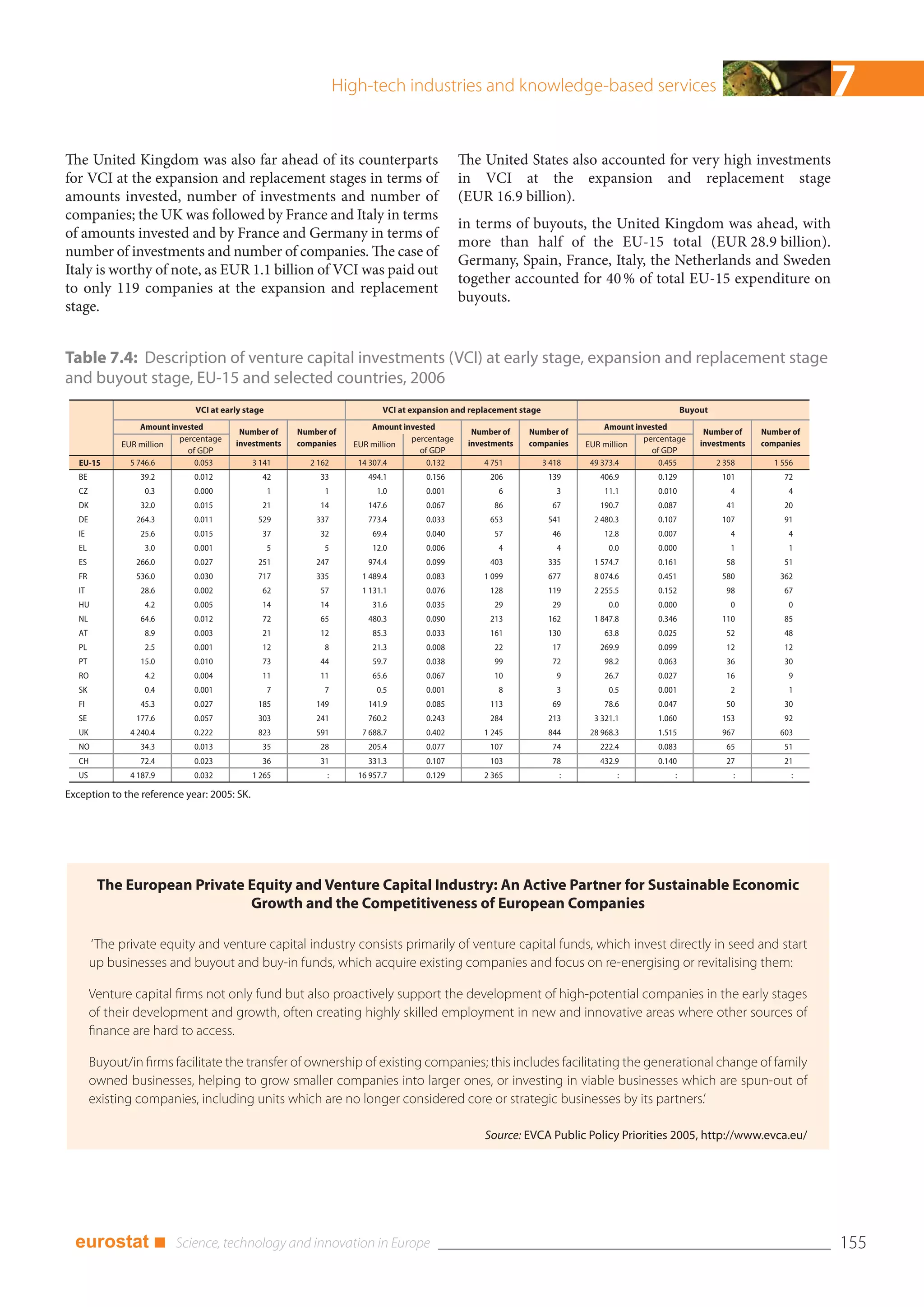
    Figure 7.4    Description of venture capital investments (VCI) at early stage, expansion and replacement stage and
                  buyout stage, EU-15 and selected countries, 2006 .......................................................................................................................155
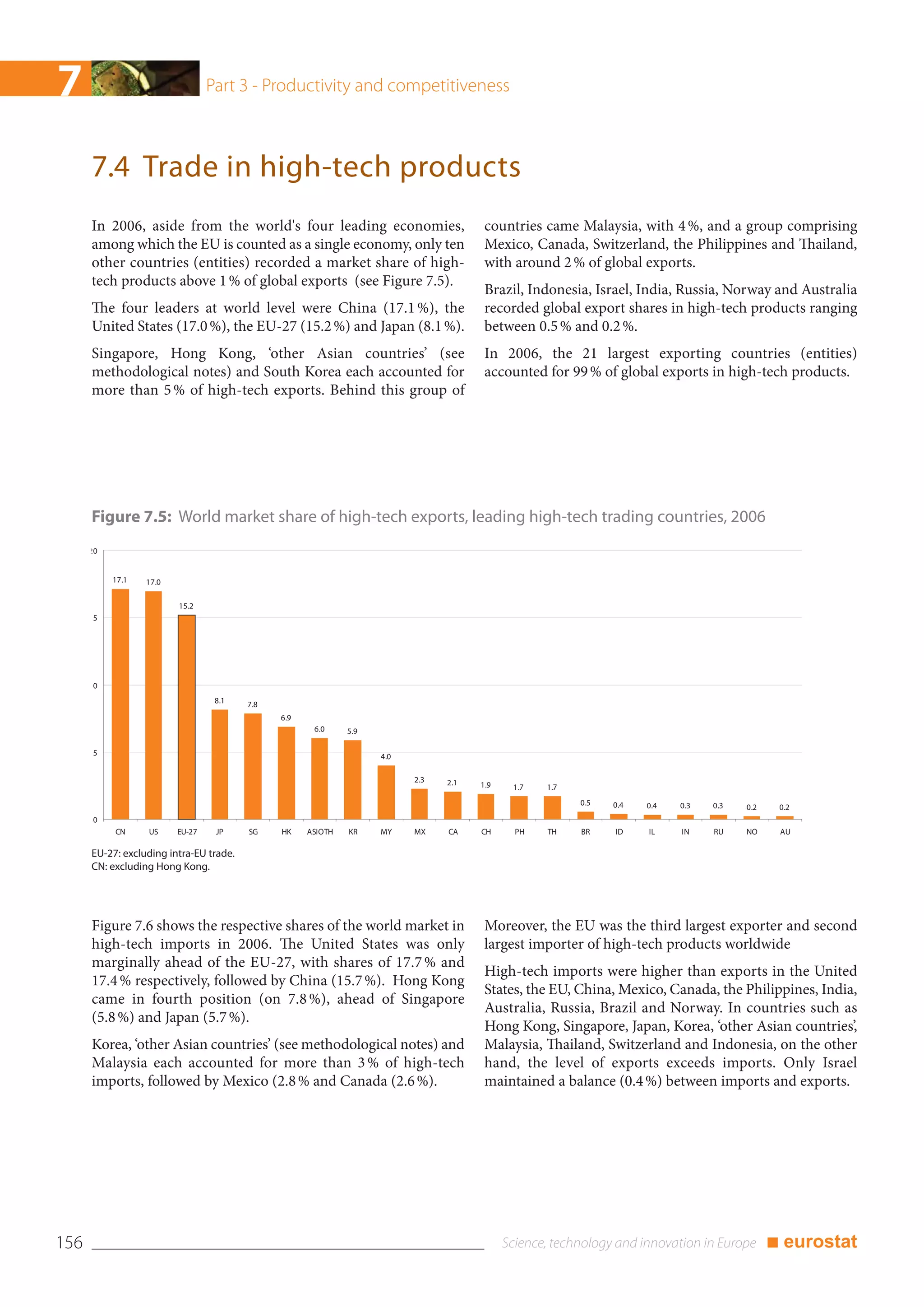
    Figure 7.5    World market share of high-tech exports, leading high-tech trading countries, 2006...........................................156
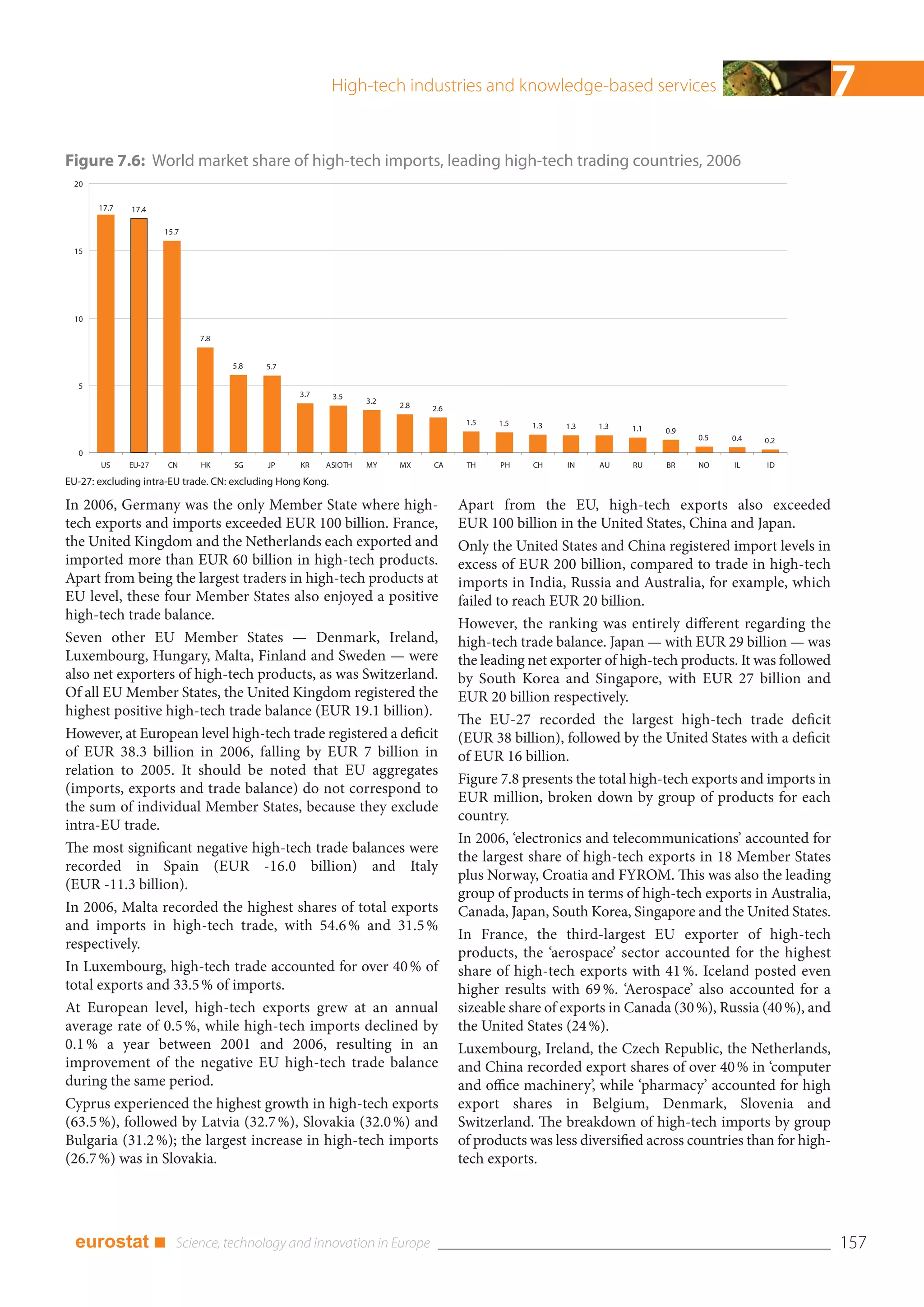
    Figure 7.6    World market share of high-tech imports, leading high-tech trading countries, 2006. .........................................157
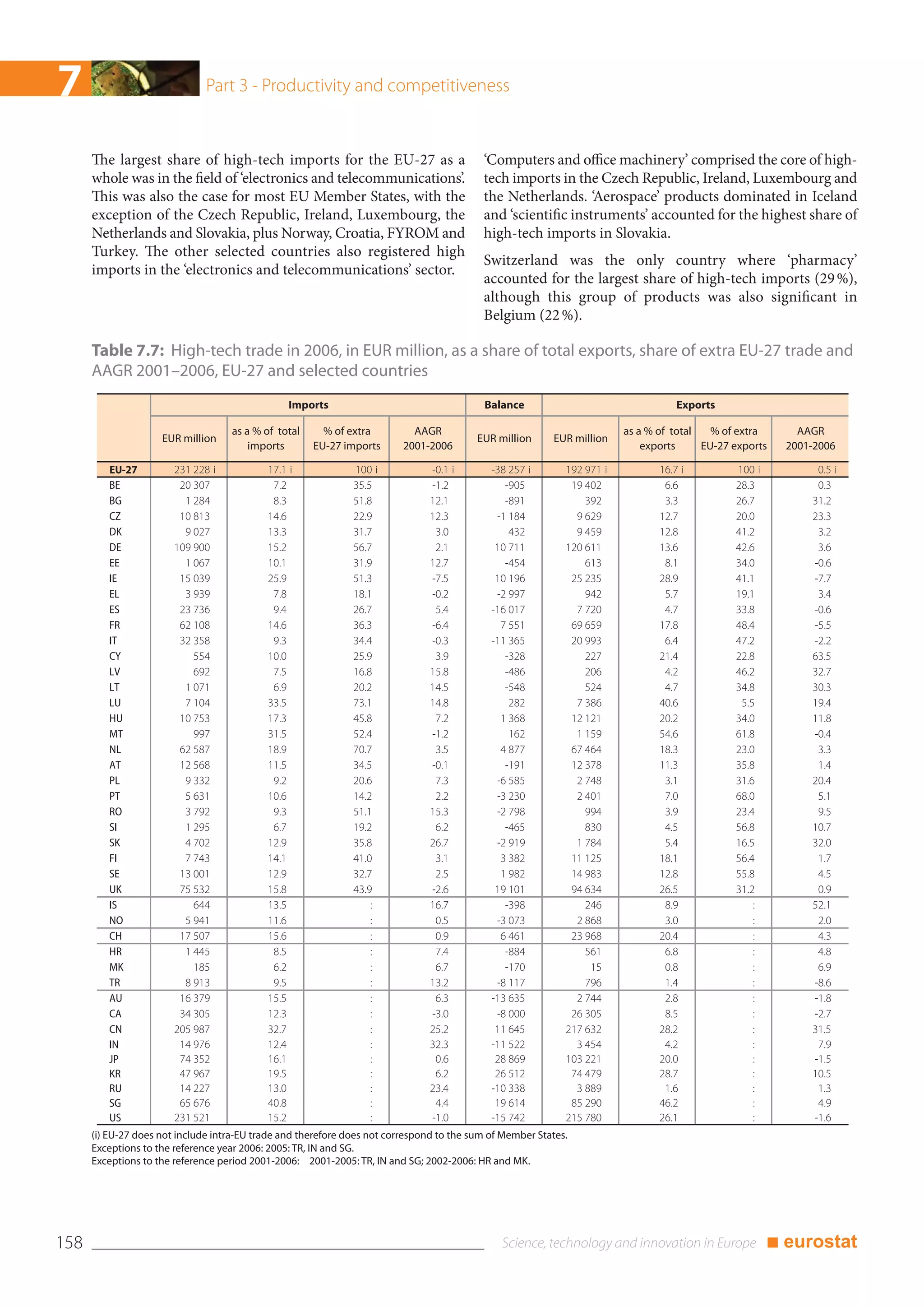
    Table 7.7     High-tech trade in 2006, in EUR million, as a share of total exports, share of extra EU-27 trade
                  and AAGR 2001–2006, EU-27 and selected countries .................................................................................................................158
    Figure 7.8    High-tech trade by high-tech group of products, EU-27 and selected countries, 2006........................................159
    Table 7.9     Employment in manufacturing in 2006, by selected sectors, in thousands, percentage of women
                  and AAGR 2001-2006, EU-27 and selected countries...................................................................................................................160
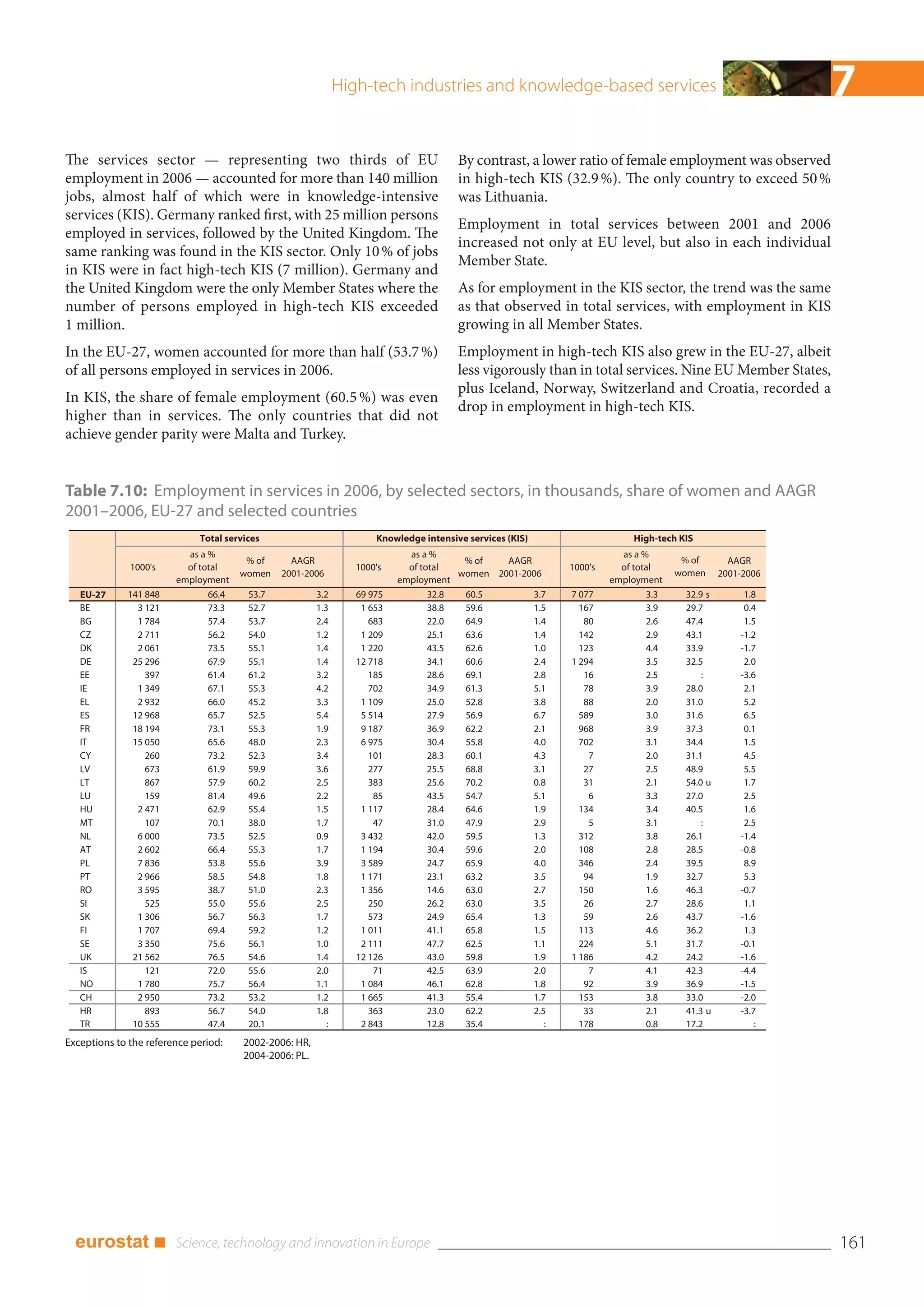
    Table 7.10    Employment in services in 2006, by selected sectors, in thousands, share of women and
                  AAGR 2001-2006, EU-27 and selected countries.............................................................................................................................161
    Figure 7.11   Share of tertiary-educated persons in all sectors and high-tech sectors,
                  EU-27 and selected countries, 2006........................................................................................................................................................162
    Figure 7.12   Share of technicians and professionals in all sectors and high-tech sectors,
                  EU-27 and selected countries, 2006........................................................................................................................................................163
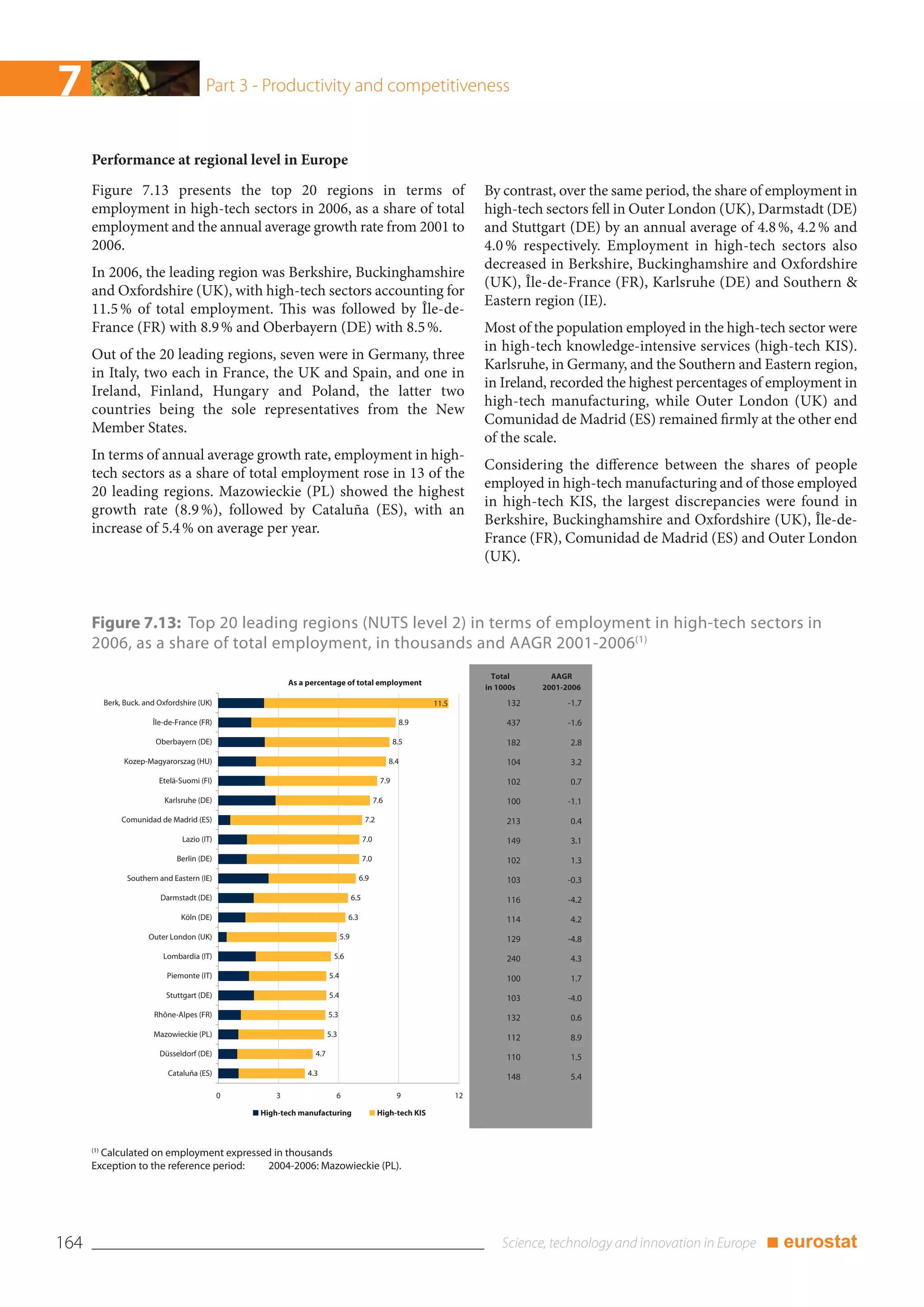
    Figure 7.13   Top 20 leading regions (NUTS level 2) in terms of employment in high-tech sectors in 2006,
                  as a share of total employment and AAGR 2001–2006...............................................................................................................164
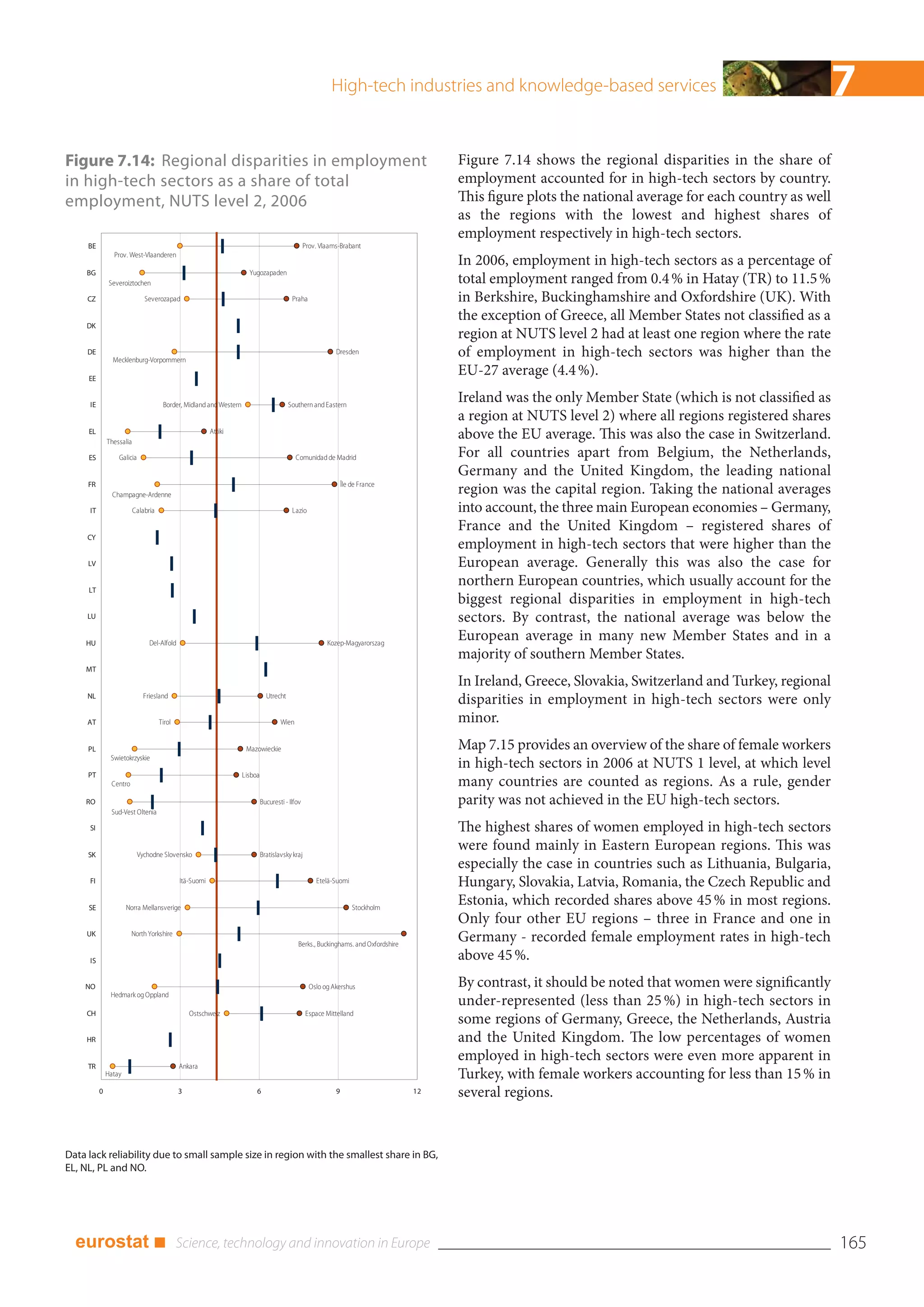
    Figure 7.14   Regional disparities in employment in high-tech sectors as a share of total employment,
                  NUTS level 2, 2006 ..............................................................................................................................................................................................165
    Map 7.15      Share of women among employment in high-tech sectors, EU-27 and selected countries
                  at NUTS level 1, 2006.........................................................................................................................................................................................166
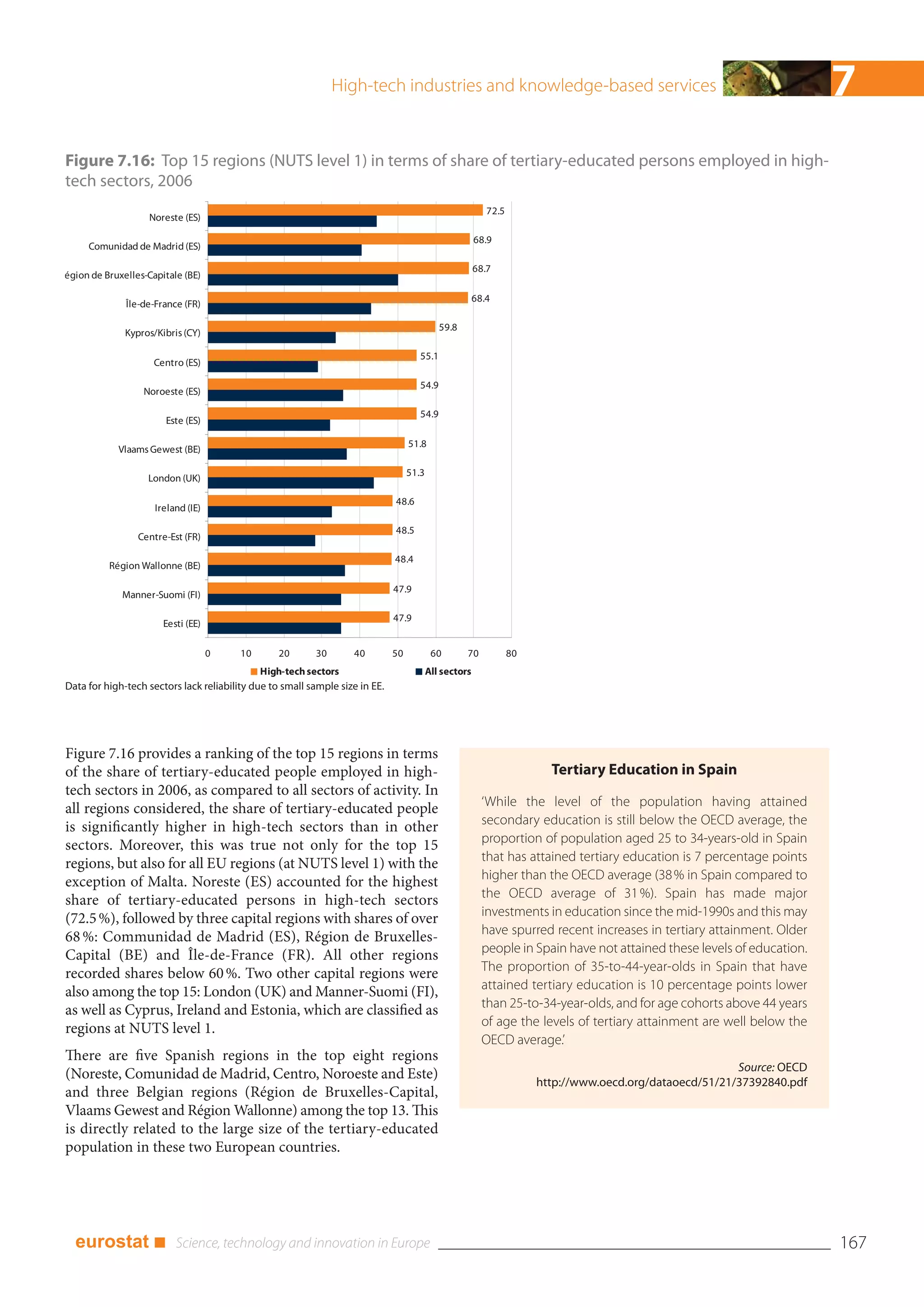
    Figure 7.16   Top 15 regions (NUTS level 1) in terms of share of tertiary-educated persons employed in
                  high-tech sectors, 2006...................................................................................................................................................................................167
    Figure 7.17   Top 15 regions (NUTS level 1) in terms of share of persons employed as professionals
                  and technicians in high-tech sectors, 2006........................................................................................................................................168


    Chapter 8     The 2007 EU Industrial R&D Investment Scoreboard
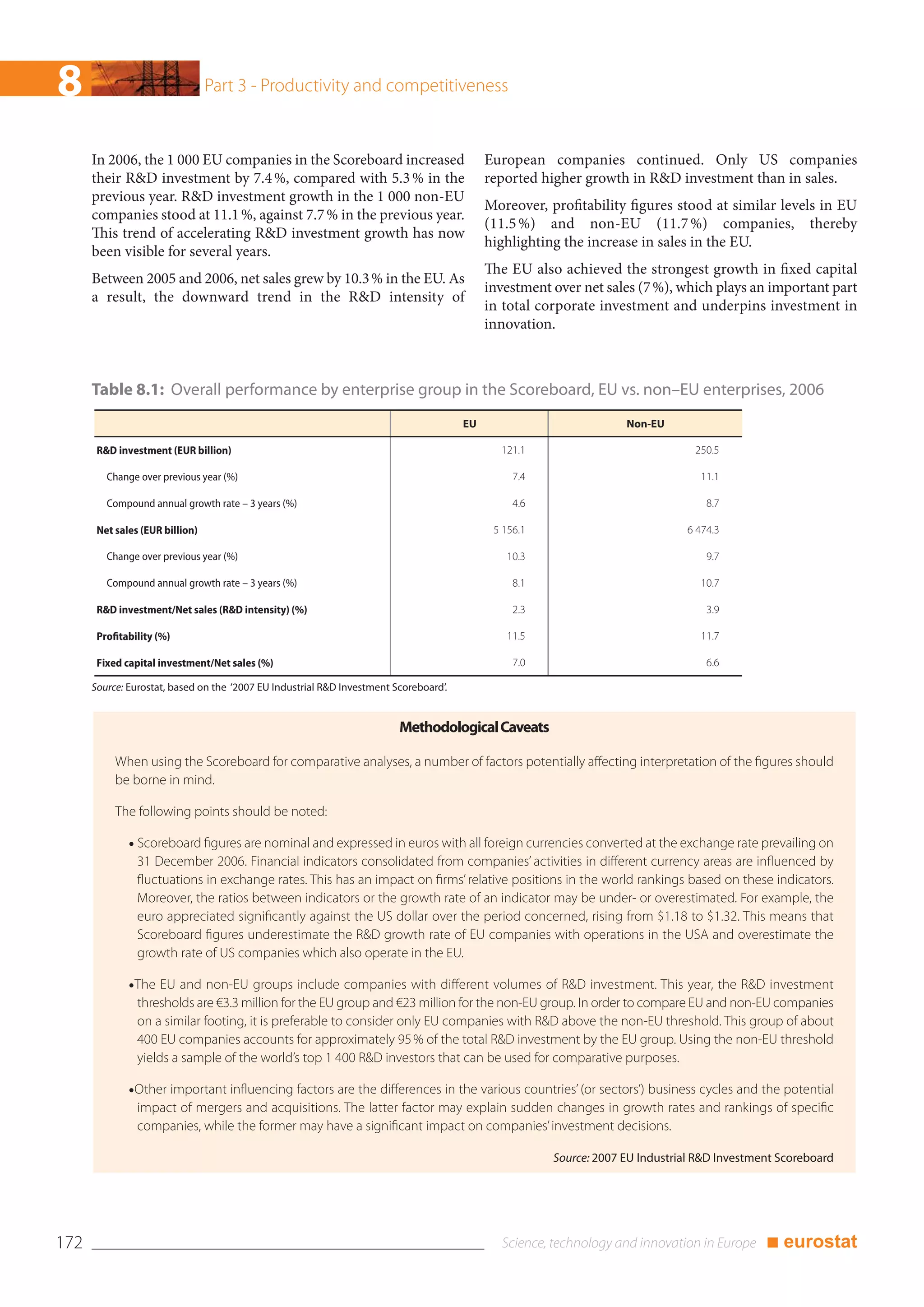
    Table 8.1     Overall performance by enterprise group in the Scoreboard, EU vs. non–EU enterprises, 2006 .....................172
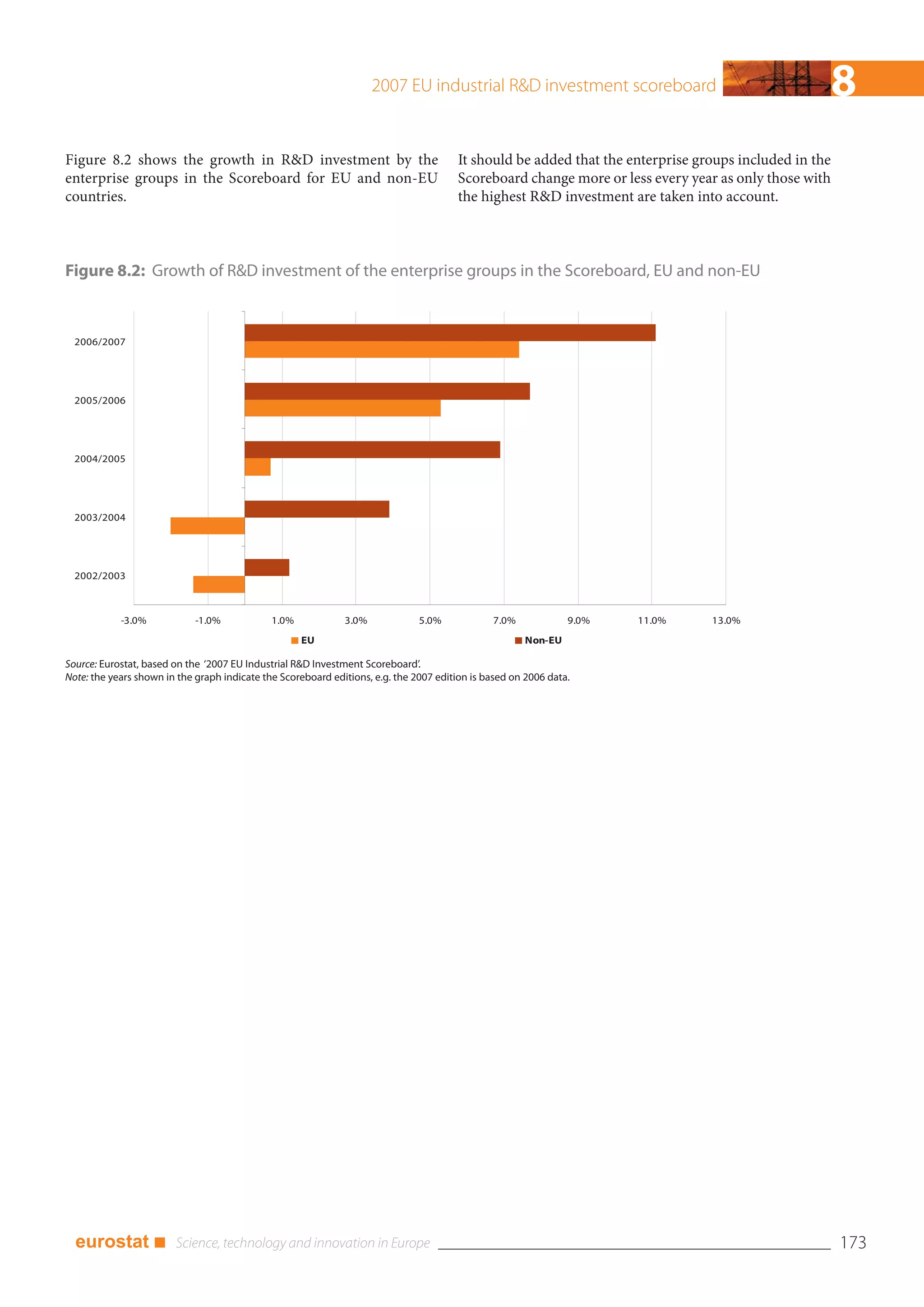
    Figure 8.2    Growth in R&D investment by the enterprise groups in the Scoreboard, EU and non-EU...................................173
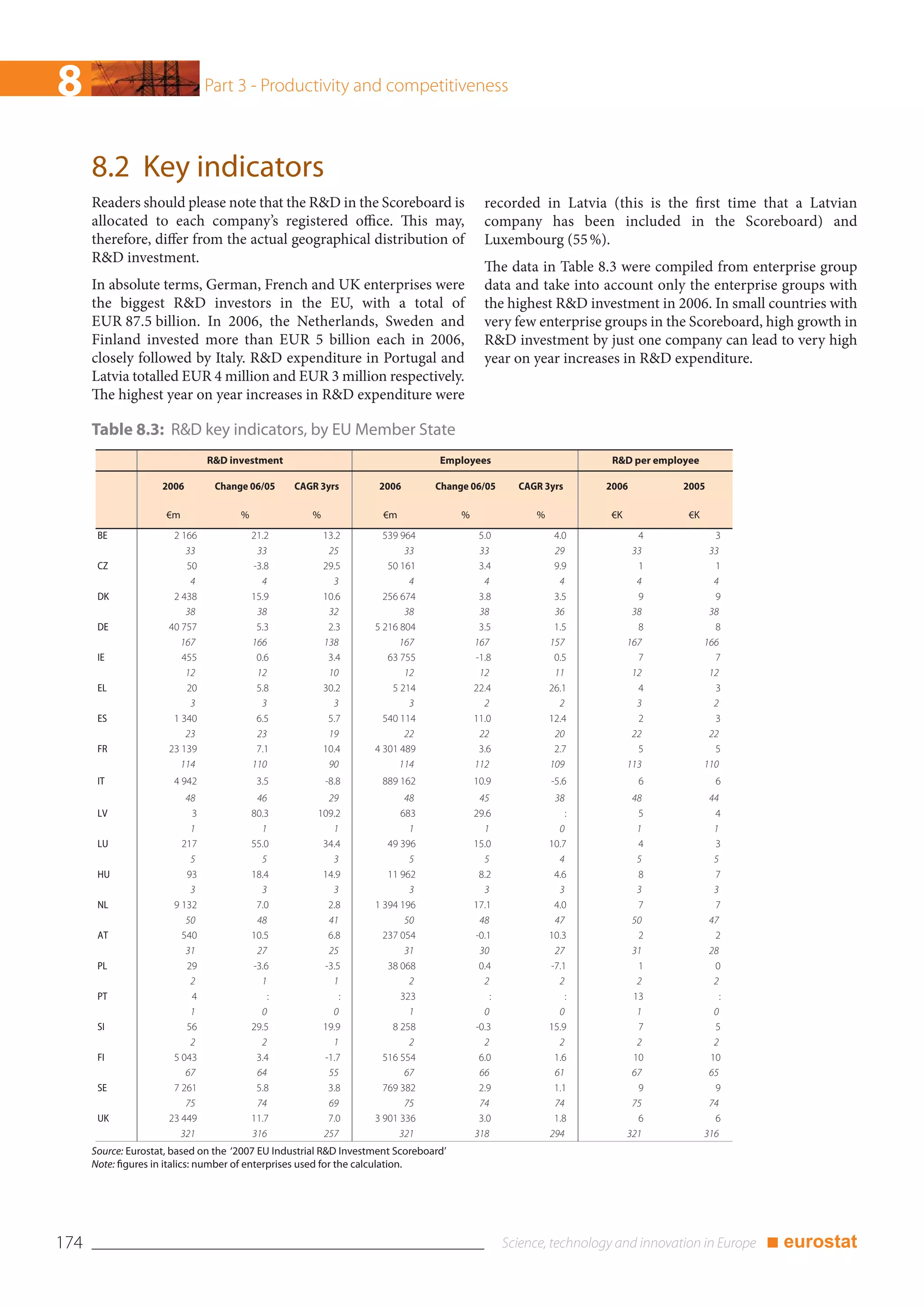
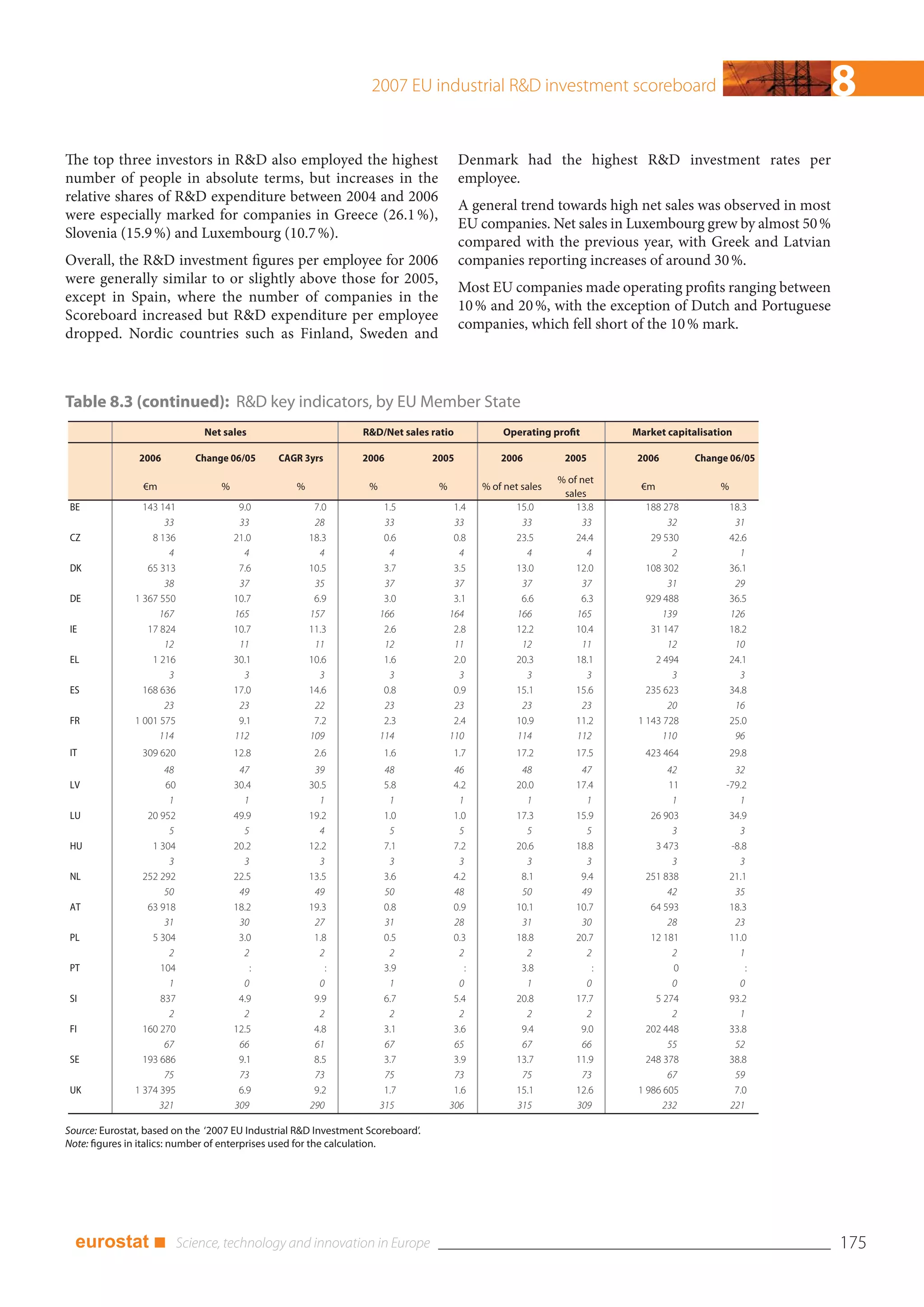
    Table 8.3     Key R&D indicators by EU Member State.............................................................................................................................................174
    Figure 8.4    Breakdown of R&D investment by EU Member State, 2006.....................................................................................................176
    Figure 8.5    Ranking of R&D intensity by EU Member State, 2006 ..................................................................................................................176
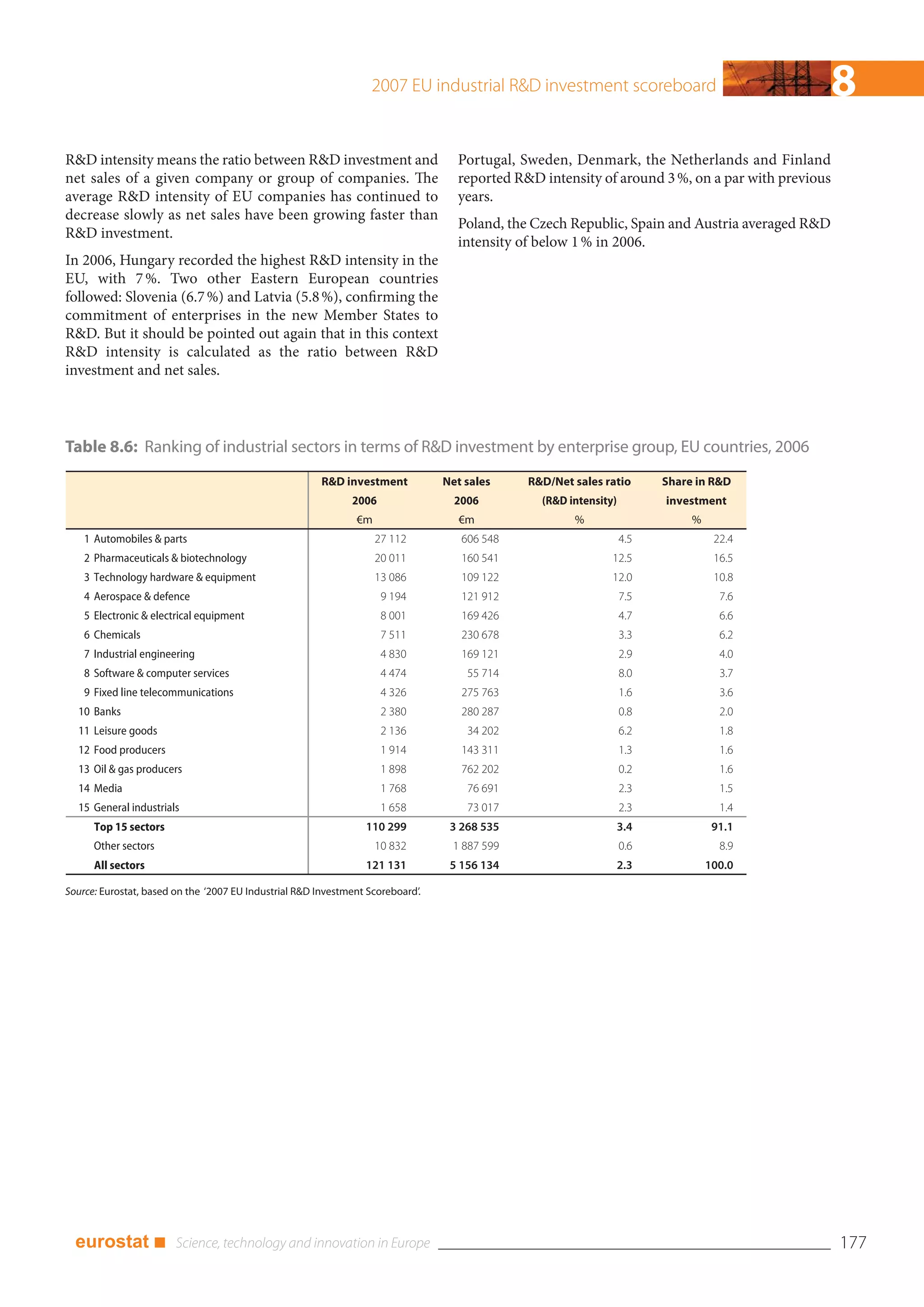
    Table 8.6     Ranking of industrial sectors in terms of R&D investment by enterprise group, EU countries, 2006.............177
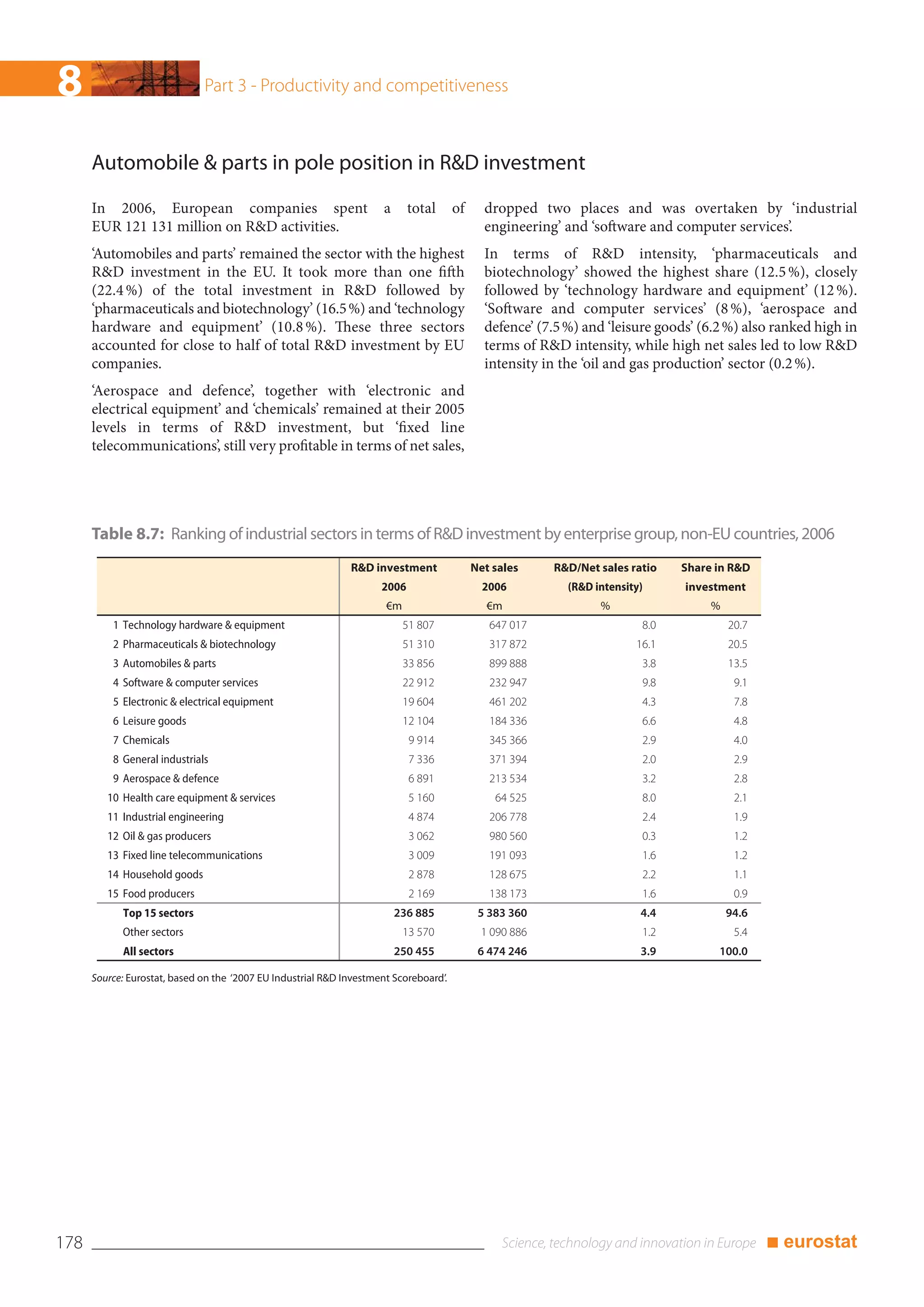
    Table 8.7     Ranking of industrial sect. in terms of R&D investment by enterprise group, non-EU countries, 2006........178
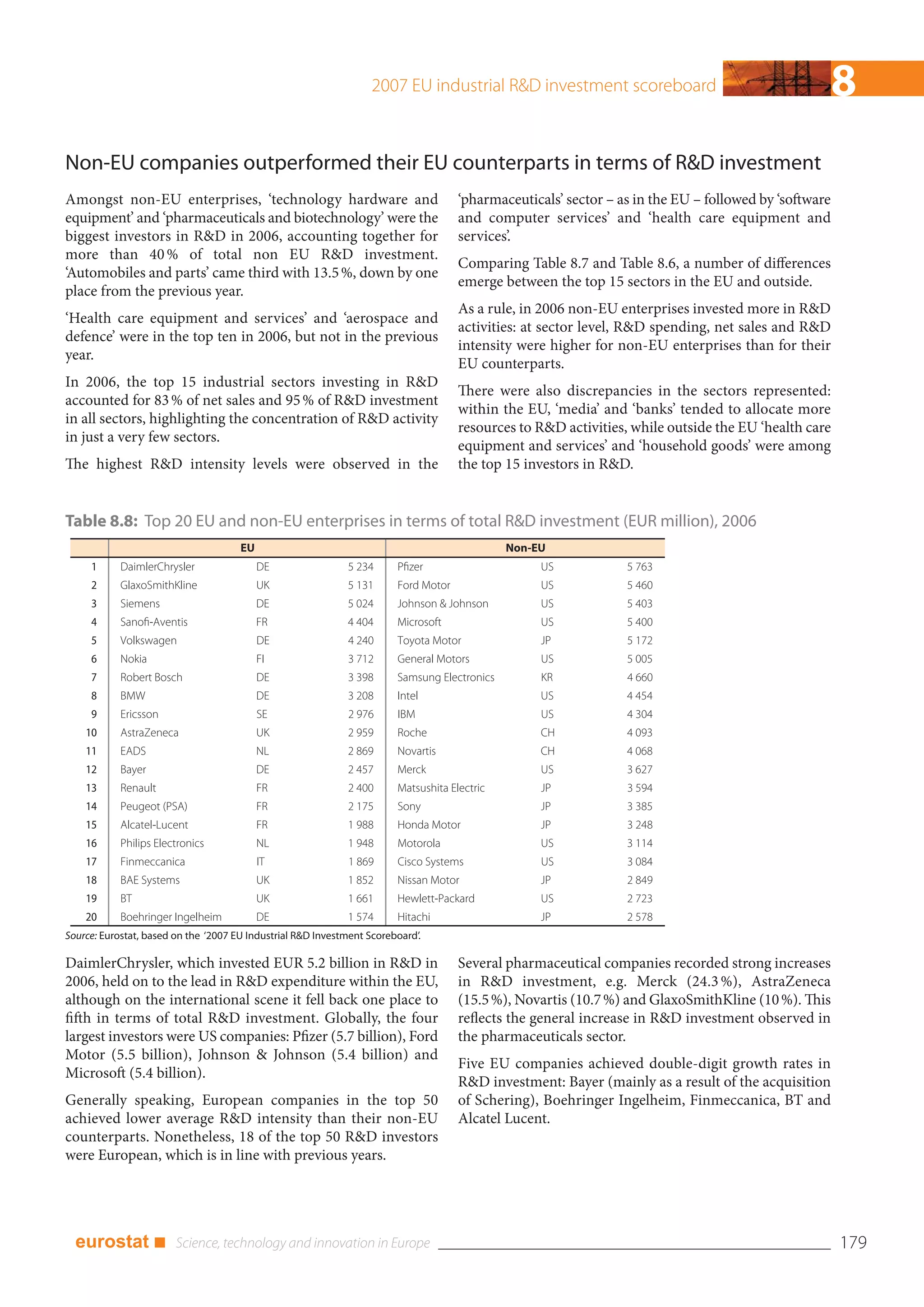
    Table 8.8     Top 20 EU and non-EU enterprises in terms of total R&D investment (EUR million), 2006...................................179


X                                                                                                                                                                                                        ■ eurostat
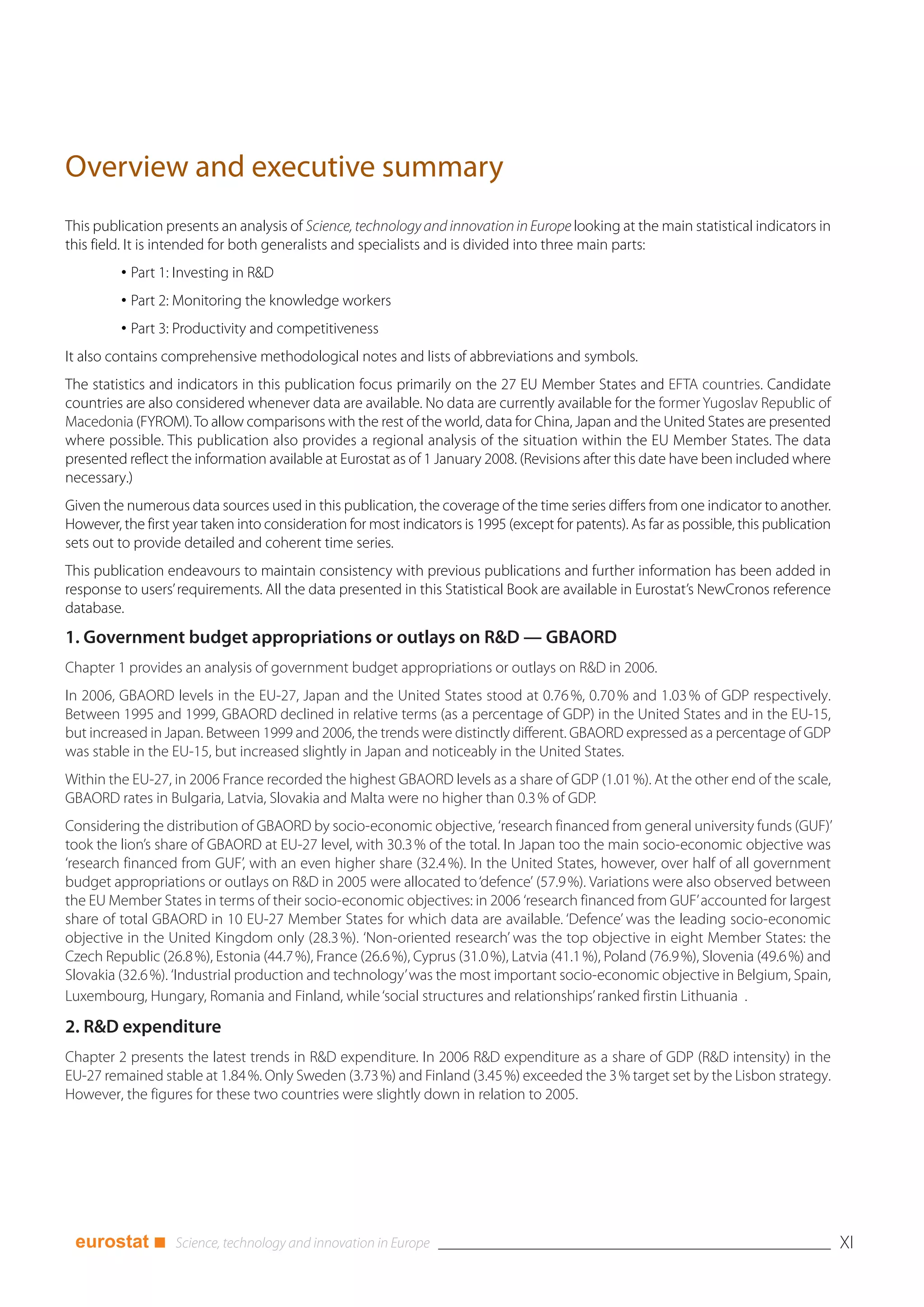
Overview and executive summary
This publication presents an analysis of Science, technology and innovation in Europe looking at the main statistical indicators in
this field. It is intended for both generalists and specialists and is divided into three main parts:
         • Part 1: Investing in R&D
         • Part 2: Monitoring the knowledge workers
         • Part 3: Productivity and competitiveness
It also contains comprehensive methodological notes and lists of abbreviations and symbols.
The statistics and indicators in this publication focus primarily on the 27 EU Member States and EFTA countries. Candidate
countries are also considered whenever data are available. No data are currently available for the former Yugoslav Republic of
Macedonia (FYROM). To allow comparisons with the rest of the world, data for China, Japan and the United States are presented
where possible. This publication also provides a regional analysis of the situation within the EU Member States. The data
presented reflect the information available at Eurostat as of 1 January 2008. (Revisions after this date have been included where
necessary.)
Given the numerous data sources used in this publication, the coverage of the time series differs from one indicator to another.
However, the first year taken into consideration for most indicators is 1995 (except for patents). As far as possible, this publication
sets out to provide detailed and coherent time series.
This publication endeavours to maintain consistency with previous publications and further information has been added in
response to users’ requirements. All the data presented in this Statistical Book are available in Eurostat’s NewCronos reference
database.
1. Government budget appropriations or outlays on R&D — GBAORD
Chapter 1 provides an analysis of government budget appropriations or outlays on R&D in 2006.
In 2006, GBAORD levels in the EU-27, Japan and the United States stood at 0.76 %, 0.70 % and 1.03 % of GDP respectively.
Between 1995 and 1999, GBAORD declined in relative terms (as a percentage of GDP) in the United States and in the EU-15,
but increased in Japan. Between 1999 and 2006, the trends were distinctly different. GBAORD expressed as a percentage of GDP
was stable in the EU-15, but increased slightly in Japan and noticeably in the United States.
Within the EU-27, in 2006 France recorded the highest GBAORD levels as a share of GDP (1.01 %). At the other end of the scale,
GBAORD rates in Bulgaria, Latvia, Slovakia and Malta were no higher than 0.3 % of GDP.
Considering the distribution of GBAORD by socio-economic objective, ‘research financed from general university funds (GUF)’
took the lion’s share of GBAORD at EU-27 level, with 30.3 % of the total. In Japan too the main socio-economic objective was
‘research financed from GUF’, with an even higher share (32.4 %). In the United States, however, over half of all government
budget appropriations or outlays on R&D in 2005 were allocated to ‘defence’ (57.9 %). Variations were also observed between
the EU Member States in terms of their socio-economic objectives: in 2006 ‘research financed from GUF’ accounted for largest
share of total GBAORD in 10 EU-27 Member States for which data are available. ‘Defence’ was the leading socio-economic
objective in the United Kingdom only (28.3 %). ‘Non-oriented research’ was the top objective in eight Member States: the
Czech Republic (26.8 %), Estonia (44.7 %), France (26.6 %), Cyprus (31.0 %), Latvia (41.1 %), Poland (76.9 %), Slovenia (49.6 %) and
Slovakia (32.6 %). ‘Industrial production and technology’ was the most important socio-economic objective in Belgium, Spain,
Luxembourg, Hungary, Romania and Finland, while ‘social structures and relationships’ ranked firstin Lithuania .

2. R&D expenditure
Chapter 2 presents the latest trends in R&D expenditure. In 2006 R&D expenditure as a share of GDP (R&D intensity) in the
EU-27 remained stable at 1.84 %. Only Sweden (3.73 %) and Finland (3.45 %) exceeded the 3 % target set by the Lisbon strategy.
However, the figures for these two countries were slightly down in relation to 2005.


 eurostat ■                                                                                                                               XI
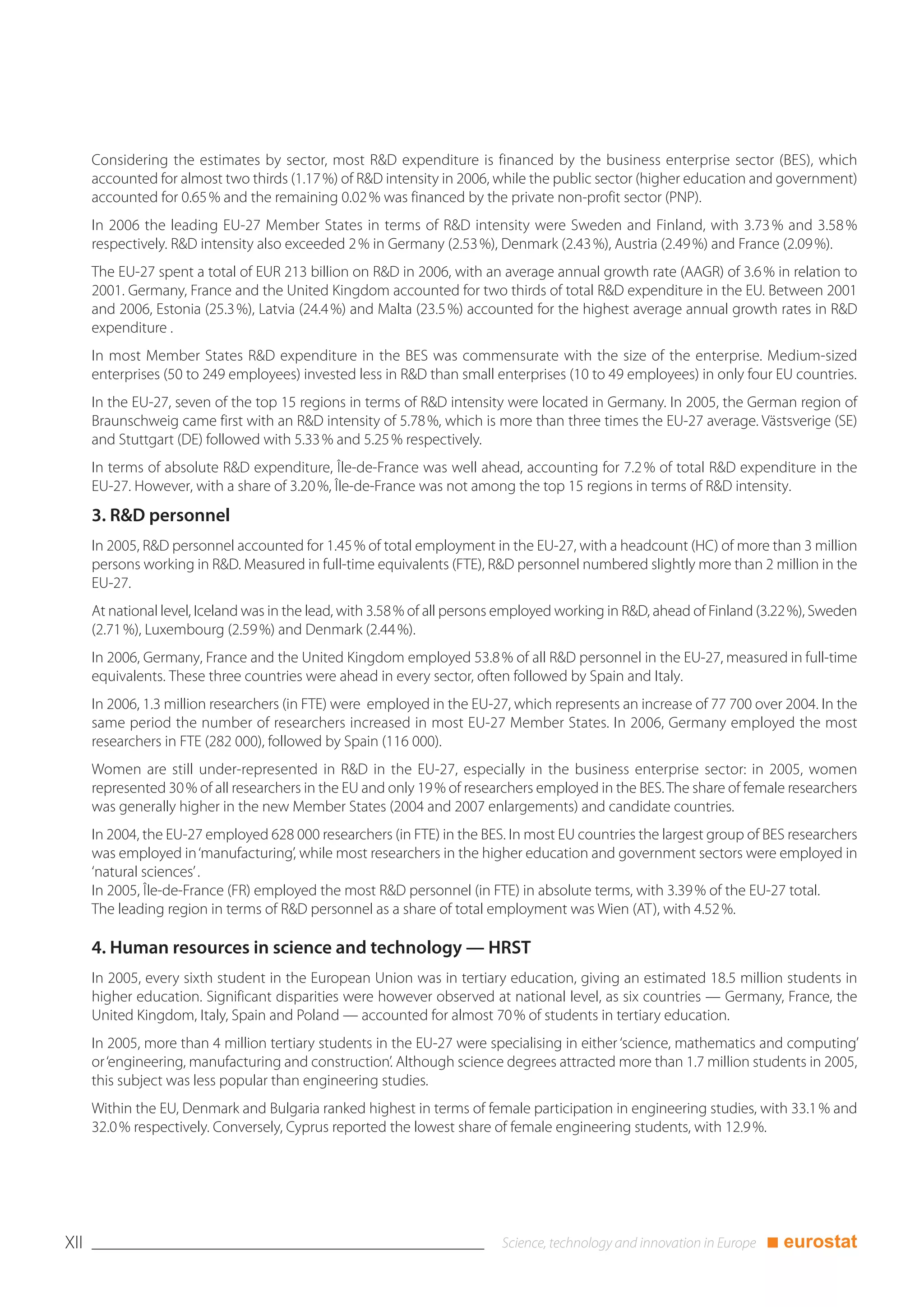
Considering the estimates by sector, most R&D expenditure is financed by the business enterprise sector (BES), which
      accounted for almost two thirds (1.17 %) of R&D intensity in 2006, while the public sector (higher education and government)
      accounted for 0.65 % and the remaining 0.02 % was financed by the private non-profit sector (PNP).
      In 2006 the leading EU-27 Member States in terms of R&D intensity were Sweden and Finland, with 3.73 % and 3.58 %
      respectively. R&D intensity also exceeded 2 % in Germany (2.53 %), Denmark (2.43 %), Austria (2.49 %) and France (2.09 %).
      The EU-27 spent a total of EUR 213 billion on R&D in 2006, with an average annual growth rate (AAGR) of 3.6 % in relation to
      2001. Germany, France and the United Kingdom accounted for two thirds of total R&D expenditure in the EU. Between 2001
      and 2006, Estonia (25.3 %), Latvia (24.4 %) and Malta (23.5 %) accounted for the highest average annual growth rates in R&D
      expenditure .
      In most Member States R&D expenditure in the BES was commensurate with the size of the enterprise. Medium-sized
      enterprises (50 to 249 employees) invested less in R&D than small enterprises (10 to 49 employees) in only four EU countries.
      In the EU-27, seven of the top 15 regions in terms of R&D intensity were located in Germany. In 2005, the German region of
      Braunschweig came first with an R&D intensity of 5.78 %, which is more than three times the EU-27 average. Västsverige (SE)
      and Stuttgart (DE) followed with 5.33 % and 5.25 % respectively.
      In terms of absolute R&D expenditure, Île-de-France was well ahead, accounting for 7.2 % of total R&D expenditure in the
      EU-27. However, with a share of 3.20 %, Île-de-France was not among the top 15 regions in terms of R&D intensity.
      3. R&D personnel
      In 2005, R&D personnel accounted for 1.45 % of total employment in the EU-27, with a headcount (HC) of more than 3 million
      persons working in R&D. Measured in full-time equivalents (FTE), R&D personnel numbered slightly more than 2 million in the
      EU-27.
      At national level, Iceland was in the lead, with 3.58 % of all persons employed working in R&D, ahead of Finland (3.22 %), Sweden
      (2.71 %), Luxembourg (2.59 %) and Denmark (2.44 %).
      In 2006, Germany, France and the United Kingdom employed 53.8 % of all R&D personnel in the EU-27, measured in full-time
      equivalents. These three countries were ahead in every sector, often followed by Spain and Italy.
      In 2006, 1.3 million researchers (in FTE) were employed in the EU-27, which represents an increase of 77 700 over 2004. In the
      same period the number of researchers increased in most EU-27 Member States. In 2006, Germany employed the most
      researchers in FTE (282 000), followed by Spain (116 000).
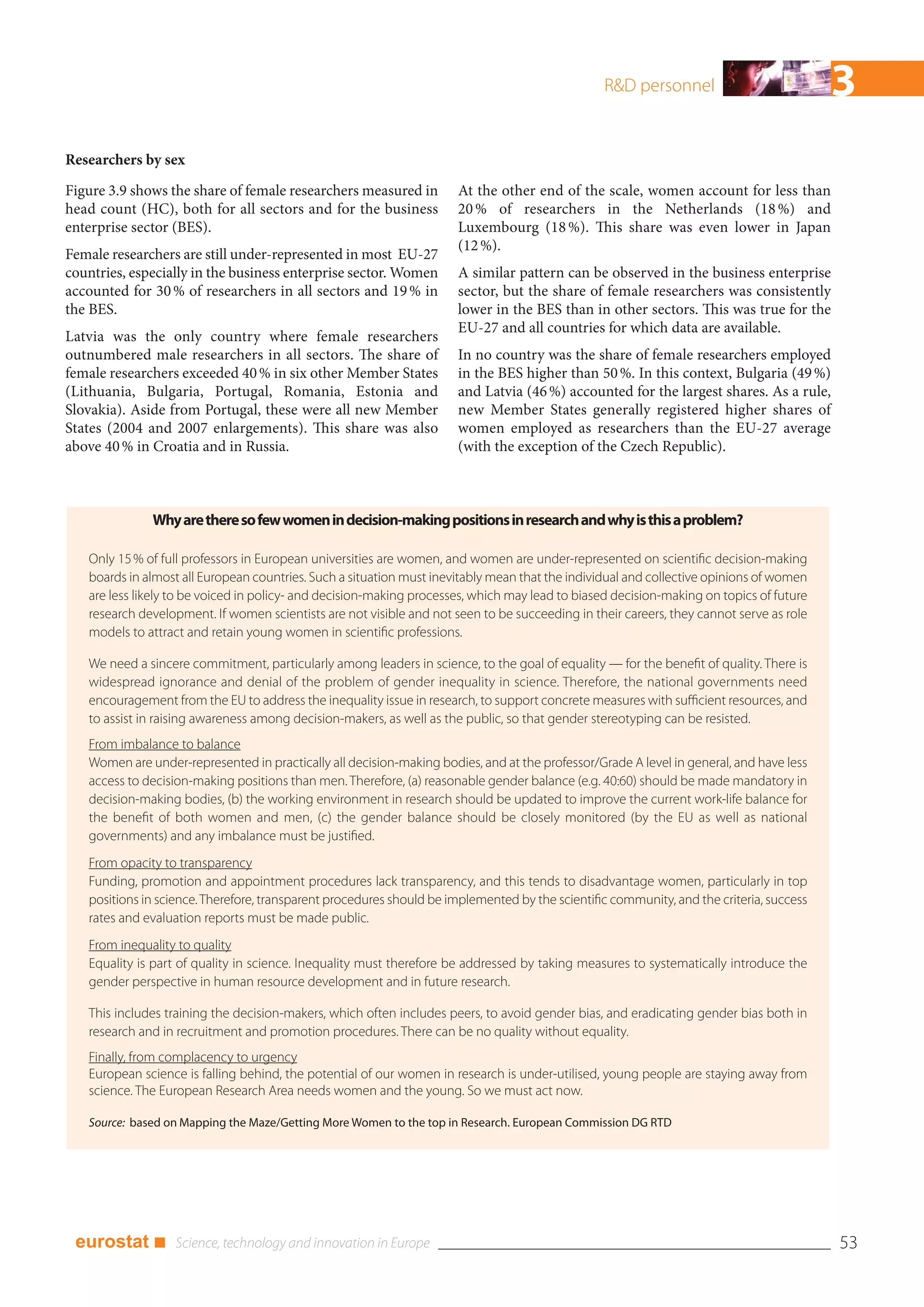
      Women are still under-represented in R&D in the EU-27, especially in the business enterprise sector: in 2005, women
      represented 30 % of all researchers in the EU and only 19 % of researchers employed in the BES. The share of female researchers
      was generally higher in the new Member States (2004 and 2007 enlargements) and candidate countries.
      In 2004, the EU-27 employed 628 000 researchers (in FTE) in the BES. In most EU countries the largest group of BES researchers
      was employed in ‘manufacturing’, while most researchers in the higher education and government sectors were employed in
      ‘natural sciences’ .
      In 2005, Île-de-France (FR) employed the most R&D personnel (in FTE) in absolute terms, with 3.39 % of the EU-27 total.
      The leading region in terms of R&D personnel as a share of total employment was Wien (AT), with 4.52 %.

      4. Human resources in science and technology — HRST
      In 2005, every sixth student in the European Union was in tertiary education, giving an estimated 18.5 million students in
      higher education. Significant disparities were however observed at national level, as six countries — Germany, France, the
      United Kingdom, Italy, Spain and Poland — accounted for almost 70 % of students in tertiary education.
      In 2005, more than 4 million tertiary students in the EU-27 were specialising in either ‘science, mathematics and computing’
      or ‘engineering, manufacturing and construction’. Although science degrees attracted more than 1.7 million students in 2005,
      this subject was less popular than engineering studies.
      Within the EU, Denmark and Bulgaria ranked highest in terms of female participation in engineering studies, with 33.1 % and
      32.0 % respectively. Conversely, Cyprus reported the lowest share of female engineering students, with 12.9 %.


XII                                                                                                                    ■ eurostat
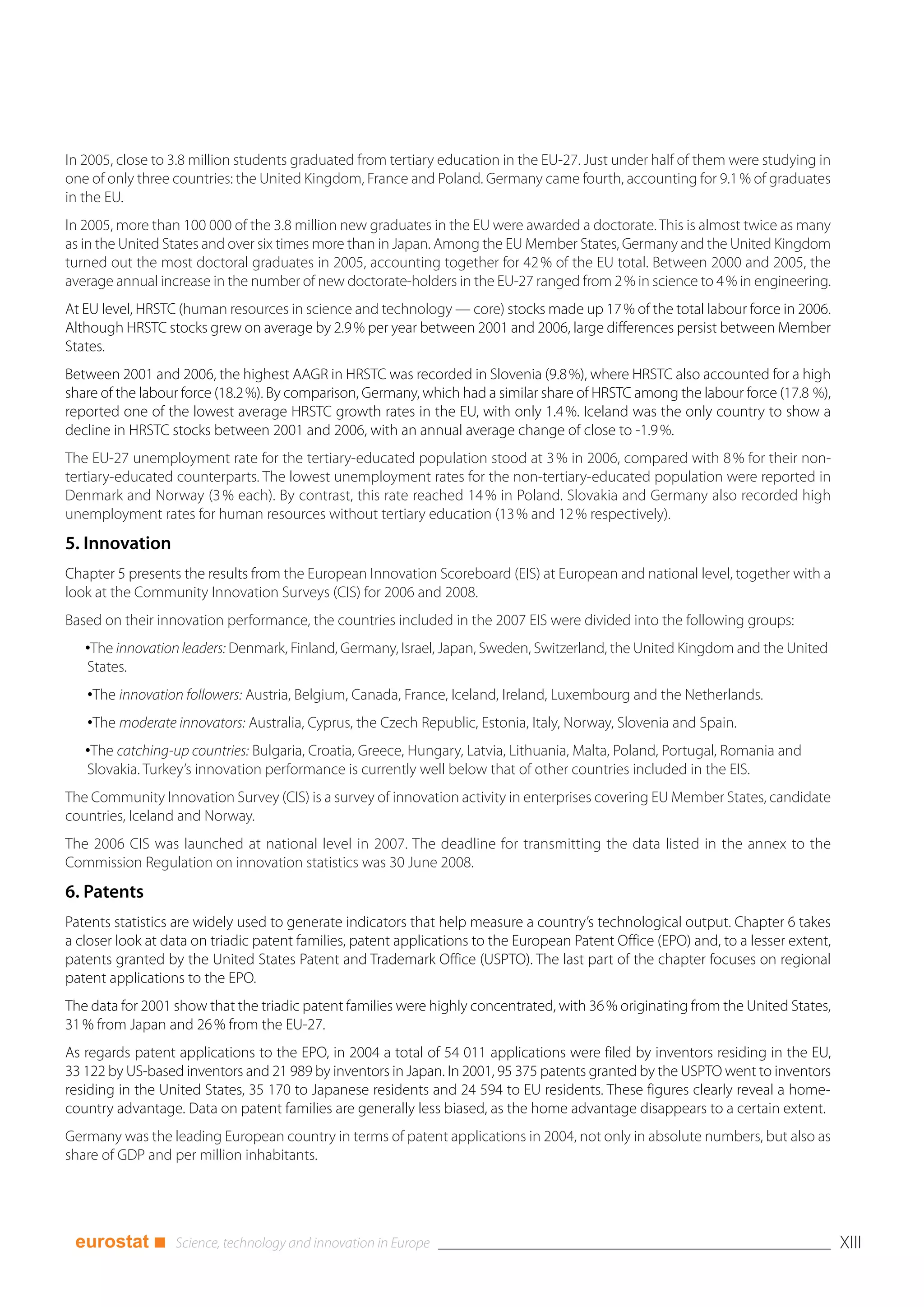
In 2005, close to 3.8 million students graduated from tertiary education in the EU-27. Just under half of them were studying in
one of only three countries: the United Kingdom, France and Poland. Germany came fourth, accounting for 9.1 % of graduates
in the EU.
In 2005, more than 100 000 of the 3.8 million new graduates in the EU were awarded a doctorate. This is almost twice as many
as in the United States and over six times more than in Japan. Among the EU Member States, Germany and the United Kingdom
turned out the most doctoral graduates in 2005, accounting together for 42 % of the EU total. Between 2000 and 2005, the
average annual increase in the number of new doctorate-holders in the EU-27 ranged from 2 % in science to 4 % in engineering.
At EU level, HRSTC (human resources in science and technology — core) stocks made up 17 % of the total labour force in 2006.
Although HRSTC stocks grew on average by 2.9 % per year between 2001 and 2006, large differences persist between Member
States.
Between 2001 and 2006, the highest AAGR in HRSTC was recorded in Slovenia (9.8 %), where HRSTC also accounted for a high
share of the labour force (18.2 %). By comparison, Germany, which had a similar share of HRSTC among the labour force (17.8 %),
reported one of the lowest average HRSTC growth rates in the EU, with only 1.4 %. Iceland was the only country to show a
decline in HRSTC stocks between 2001 and 2006, with an annual average change of close to -1.9 %.
The EU-27 unemployment rate for the tertiary-educated population stood at 3 % in 2006, compared with 8 % for their non-
tertiary-educated counterparts. The lowest unemployment rates for the non-tertiary-educated population were reported in
Denmark and Norway (3 % each). By contrast, this rate reached 14 % in Poland. Slovakia and Germany also recorded high
unemployment rates for human resources without tertiary education (13 % and 12 % respectively).
5. Innovation
Chapter 5 presents the results from the European Innovation Scoreboard (EIS) at European and national level, together with a
look at the Community Innovation Surveys (CIS) for 2006 and 2008.
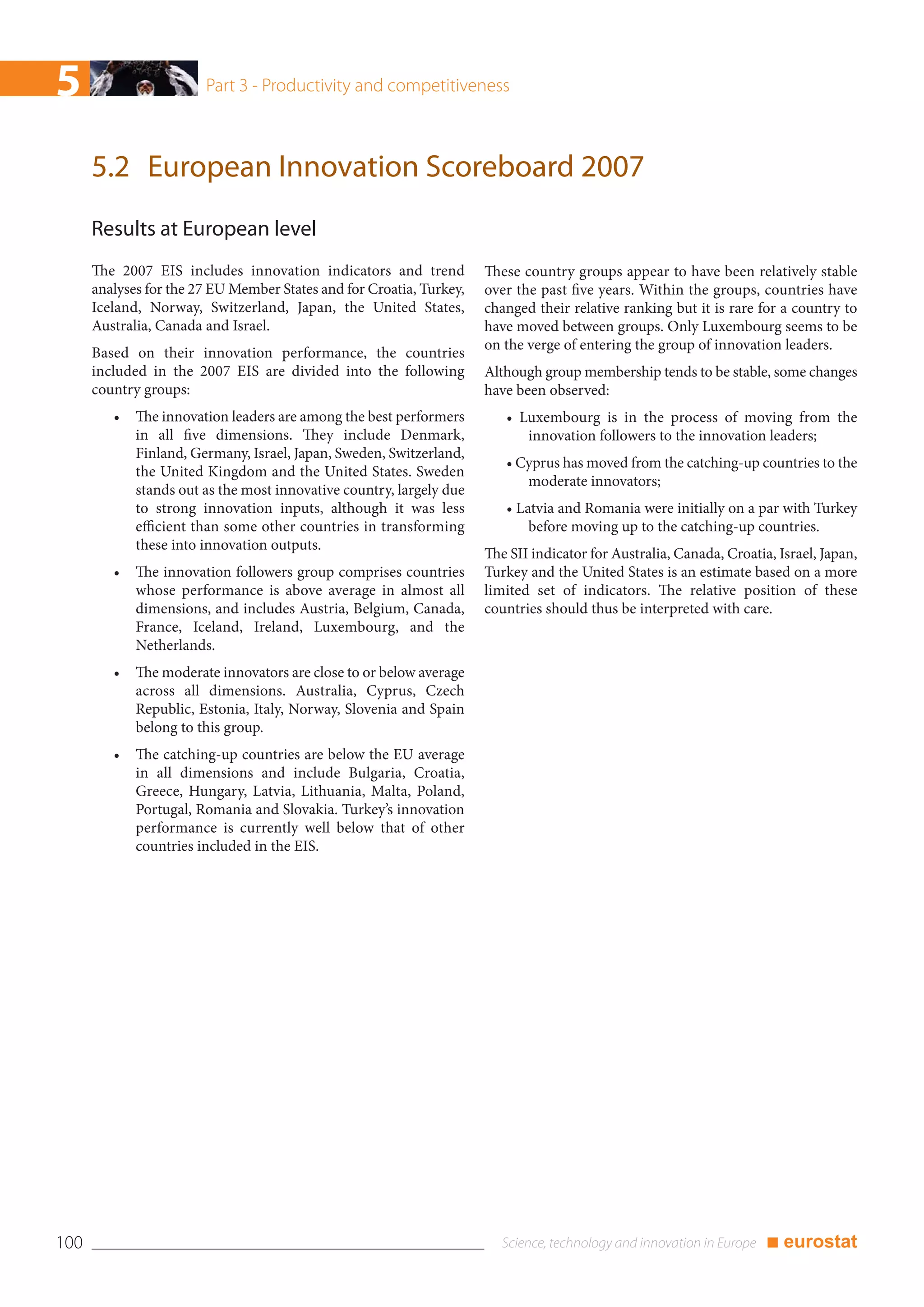
Based on their innovation performance, the countries included in the 2007 EIS were divided into the following groups:
   •The innovation leaders: Denmark, Finland, Germany, Israel, Japan, Sweden, Switzerland, the United Kingdom and the United
   States.
   •The innovation followers: Austria, Belgium, Canada, France, Iceland, Ireland, Luxembourg and the Netherlands.
   •The moderate innovators: Australia, Cyprus, the Czech Republic, Estonia, Italy, Norway, Slovenia and Spain.
   •The catching-up countries: Bulgaria, Croatia, Greece, Hungary, Latvia, Lithuania, Malta, Poland, Portugal, Romania and
   Slovakia. Turkey’s innovation performance is currently well below that of other countries included in the EIS.
The Community Innovation Survey (CIS) is a survey of innovation activity in enterprises covering EU Member States, candidate
countries, Iceland and Norway.
The 2006 CIS was launched at national level in 2007. The deadline for transmitting the data listed in the annex to the
Commission Regulation on innovation statistics was 30 June 2008.
6. Patents
Patents statistics are widely used to generate indicators that help measure a country’s technological output. Chapter 6 takes
a closer look at data on triadic patent families, patent applications to the European Patent Office (EPO) and, to a lesser extent,
patents granted by the United States Patent and Trademark Office (USPTO). The last part of the chapter focuses on regional
patent applications to the EPO.
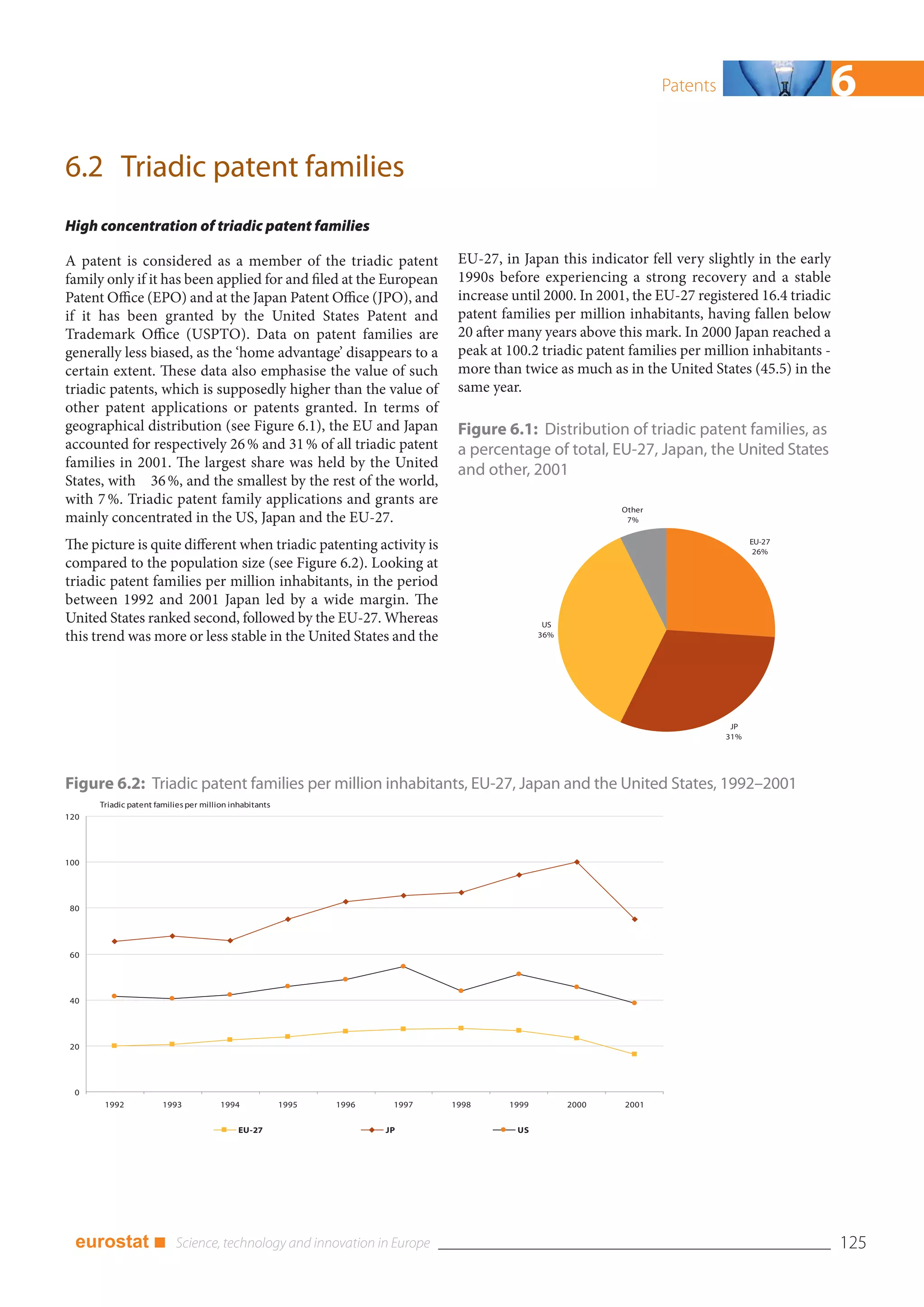
The data for 2001 show that the triadic patent families were highly concentrated, with 36 % originating from the United States,
31 % from Japan and 26 % from the EU-27.
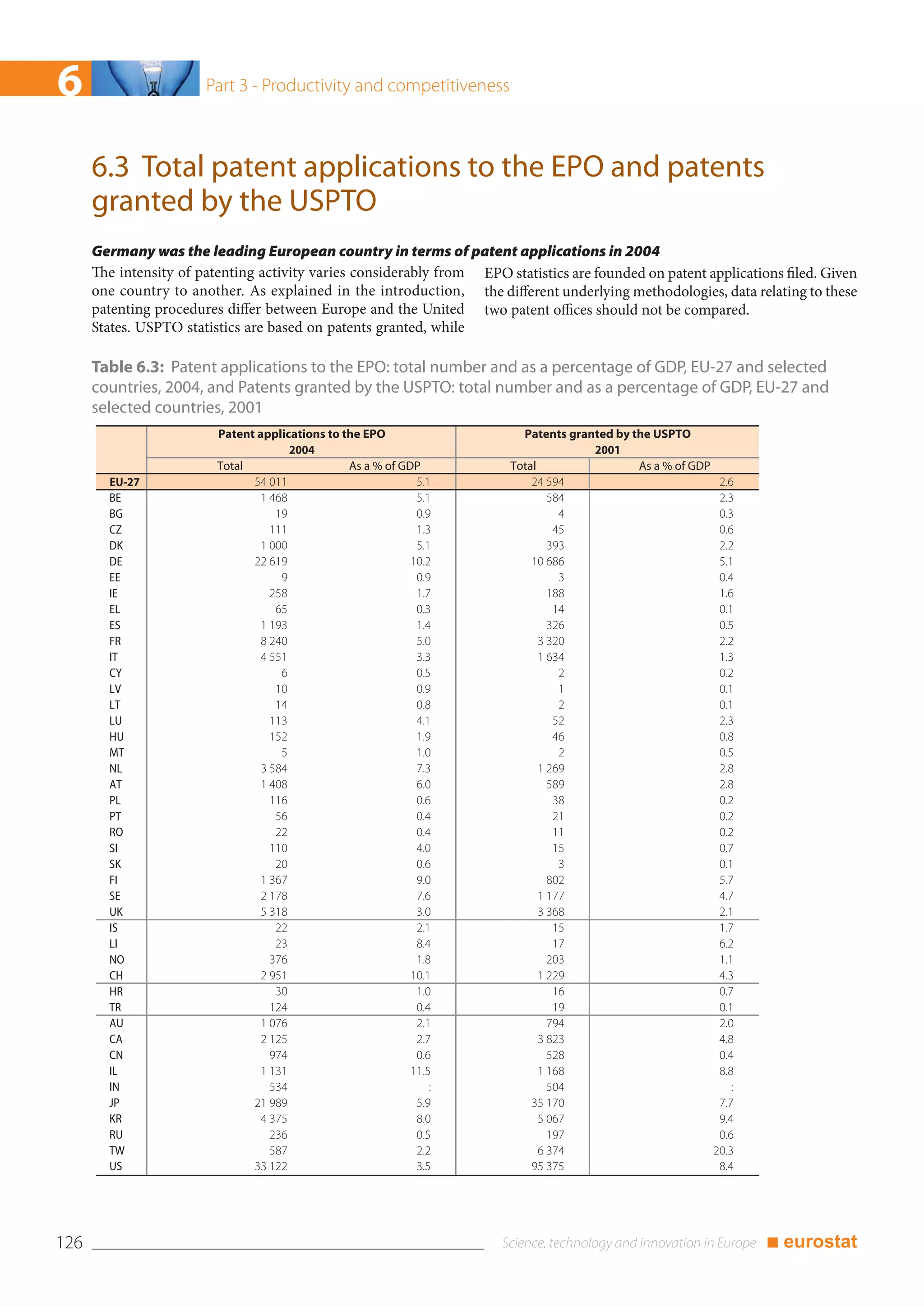
As regards patent applications to the EPO, in 2004 a total of 54 011 applications were filed by inventors residing in the EU,
33 122 by US-based inventors and 21 989 by inventors in Japan. In 2001, 95 375 patents granted by the USPTO went to inventors
residing in the United States, 35 170 to Japanese residents and 24 594 to EU residents. These figures clearly reveal a home-
country advantage. Data on patent families are generally less biased, as the home advantage disappears to a certain extent.
Germany was the leading European country in terms of patent applications in 2004, not only in absolute numbers, but also as
share of GDP and per million inhabitants.


 eurostat ■                                                                                                                          XIII
Patent statistics include breakdowns by IPC section, economic activity (NACE) and institutional sector. Indicators on Patent
      Cooperation Treaty (PCT) applications and foreign ownership are also available.
      In 2004, 10 398 high-tech patents were filed at the EPO by inventors residing in the EU-27, 9 981 patents were submitted by
      inventors in the US and 6 898 by inventors in Japan.
      Germany was again well ahead in terms of the number of patent applications filed at the EPO, but in relation to population
      size Finland, the Netherlands and Sweden were the best performers in high-tech patenting.
      Regarding ICT (information and communication technology) patent applications to the EPO, EU-27 inventors were in the lead
      in 2004 with 14 929 applications, compared with 12 344 patent applications from US inventors and 9 998 from Japan-based
      inventors.
      In terms of biotechnology patent applications, the United States was in the lead, with 2 586, followed by the EU-27 (2 314) and
      Japan (840).
      In 2004, the five leading EU-27 regions in terms of number of patent applications to the EPO were Île-de-France (FR), Stuttgart
      (DE), Oberbayern (DE), Noord-Brabant (NL) and Darmstadt (DE). Chapter 6 also provides an overview of regional performance
      in fields such as high technology, ICT and biotechnology.
      7. High-tech industries and knowledge-based services
      Chapter 7 analyses Europe’s performance in high-technology and knowledge-intensive services, looking at statistics on
      enterprises (value added, labour productivity, etc.), venture capital investment, high-tech trade, employment and R&D
      personnel and expenditure.
               Enterprises in high-tech industries and knowledge-intensive services
      In 2004, the EU-27 counted almost 140 000 enterprises in high-tech manufacturing and four times as many in high-tech
      knowledge-intensive services (600 000), with a total turnover of EUR 658 000 million.
               Venture capital investment — VCI
      In 2006 the United Kingdom was the leading country in terms of early-stage VCI, investing EUR 4.2 billion in 591 companies,
      with a total of 823 investments.
               High-tech trade
      Considering the four leading economies in terms of high-tech trade (EU-27, China, Japan and the United States), in 2006 the
      EU-27 was no longer the top importer and exporter of high-tech products. China and the US took the lead in high-tech exports
      in 2006, accounting for 17.1 % and 17.0 % of global exports respectively; the US was marginally ahead of the EU-27 in terms of
      high-tech imports.
      At EU level, high-tech exports grew on average by 0.5 % per year between 2001 and 2006, while high-tech imports declined
      by 0.1 % per year. At country level, Cyprus recorded the highest average annual growth rate in high-tech exports (63.5 %),
      followed by Latvia (32.7 %), Slovakia (32.0 %) and Bulgaria (31.2 %). Over the same period Slovakia recorded the highest AAGR
      in terms of high-tech imports (26.7 %).
               Employment in high-tech industries and knowledge-intensive services
      In 2006, 39 million people were employed in manufacturing in the EU-27, accounting for 18.2 % of total employment in the
      EU. Germany was the largest employer in manufacturing, with more than 8 million persons employed, followed by Italy and
      the United Kingdom.
      Almost 12 million of these 39 million workers were employed in medium-high-tech manufacturing, against only 2.3 million in
      high-tech manufacturing.
      In 2006, the services sector accounted for two thirds of EU employment, generating more than 140 million jobs, almost half
      of which were in knowledge-intensive services (KIS). In the EU-27, more than half (53.7 %) of all employees in services were
      women. In KIS, the share of female employment was even higher (60.5 %).
      Between 2001 and 2006, employment in the services sector increased not only at EU level, but also in all the individual Member
      States.


XIV                                                                                                                  ■ eurostat
In 2006, on average, 47.9 % of employees in high-tech sectors were technicians and professionals. Technicians and professionals
made up more than half of the workforce in high-tech sectors in five Member States plus Norway.
Looking at regional statistics, in 2006, the leading region in terms of high-tech employment was Berkshire, Buckinghamshire
and Oxfordshire (UK), where high-tech sectors provided 11.5 % of total employment. It was followed by Île-de-France (FR),
with 8.9 %, and Oberbayern (DE), with 8.5 %.
8. EU Industrial R&D Investment Scoreboard
Chapter 8 presents the main results from the 2007 EU Industrial R&D Investment Scoreboard (produced by the European
Commission’s Directorate-General for Research). The Scoreboard provides information on the top 1 000 EU and non-EU
companies investing in R&D. It includes R&D data along with other relevant economic and financial data from the last four
financial years.
In 2006, the 1 000 EU companies on the Scoreboard increased their R&D investment by 7.4 %, compared with 5.3 % in the
previous year. R&D investment growth in the 1 000 non-EU companies stood at 11.1 %, against 7.7 % in the previous year.
At company level, German firms accounted for more than one third of total R&D investment in the EU. Adding France and the
United Kingdom, these three countries generated three quarters of total R&D investment in the EU. These figures were similar
to those for the previous year (34 % for Germany and 19 % for both the United Kingdom and France).
In the EU, ‘automobiles and parts’ remained the first beneficiary sector of R&D investment, accounting for more than one fifth
(22.4 %) of total investment in R&D, followed by ‘pharmaceuticals and biotechnology’ (16.5 %) and ‘technology hardware and
equipment’ (10.8 %). These three sectors accounted for close to half of all R&D investment by EU companies.
In the case of non-EU enterprises, ‘technology hardware and equipment’ and ‘pharmaceuticals and biotechnology’ were the
largest investors in R&D in 2006, accounting together for more than 40 % of total non-EU R&D investment. ‘Automobiles and
parts’ came third with 13.5 %, down by one place in relation to the previous year.


 eurostat ■                                                                                                                       XV
Statistical symbols and abbreviations

      © ................................................................................................................................................................................................................................................................Copyright
          ...............................................................................................................................................................................................................................................................Registered
      ®
      % ... ................................................................................................................................................................................................................................................................ Per cent
      -....................................................................................................................................................................................Not applicable or real zero or zero by default
      :............................................................................................................................................................................................................................................................Not available
      0 ...................................................................................................................................................................................................................Less than half of the unit used
      1000s ...................................................................................................................................................................................................................................................Thousands
      200x-200x .............................................................................................................Period of several calendar years (e.g. from 1.1.2000 to 31.12.2005)
      b........................................................................................................................................................................................................................................................Break in series
      :c...........................................................................................................................................................................................................................................................Confidential
      e ....
         ................................................................................................................................................................................................................................................................ Estimate
      f ......
        ................................................................................................................................................................................................................................................................ Forecast
      i.............................................................................................................................................................................................Further information in explanatory notes
      p...............................................................................................................................................................................................................................................................Provisional
      r .......
        ................................................................................................................................................................................................................................................................ Revised
      s.................................................................................................................................................................................................................................................Eurostat estimate
      u ................................................................................................................................................................................................................................................................Unreliable
      :u........................................................................................................................................................................................................................................Extremely unreliable

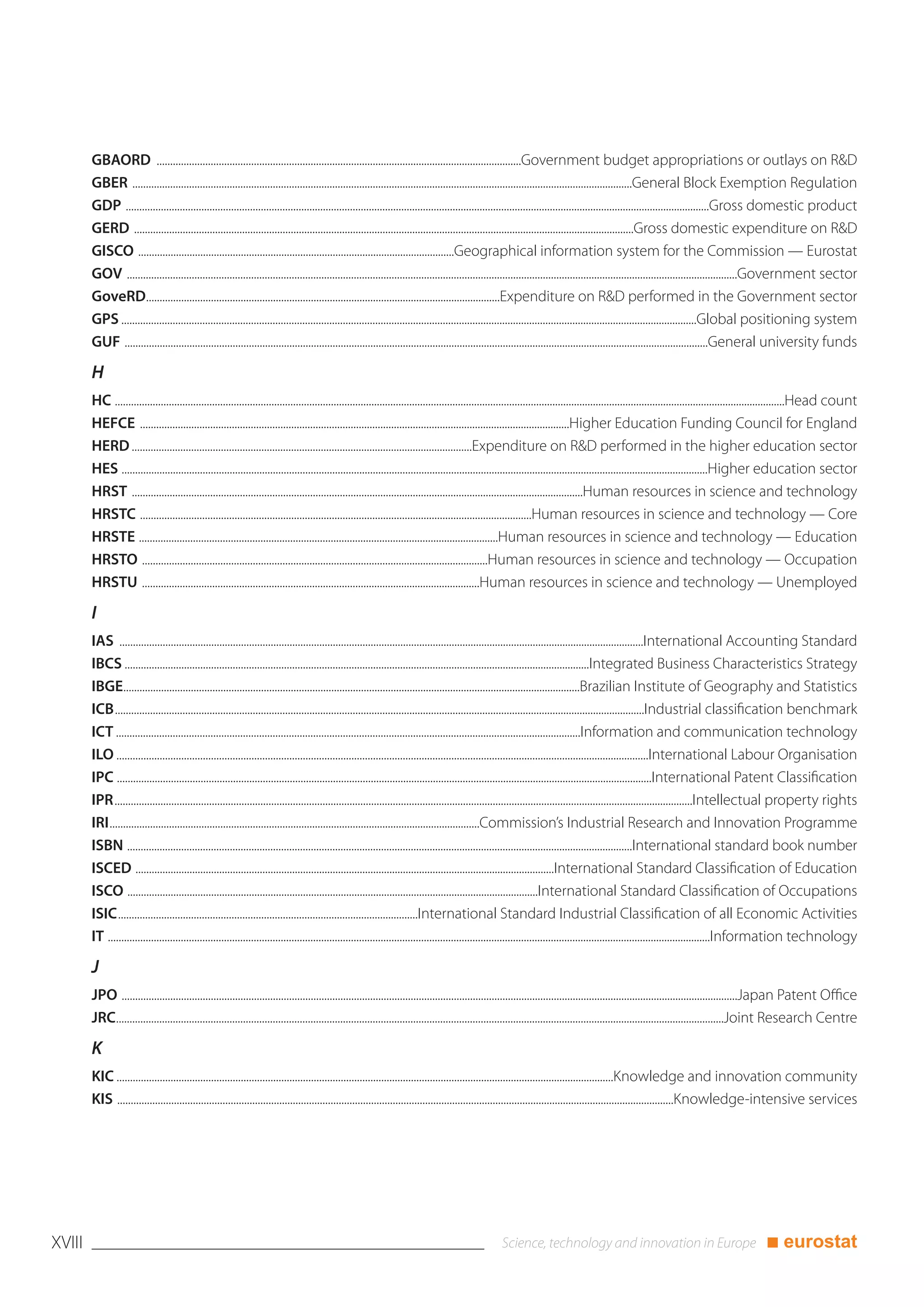
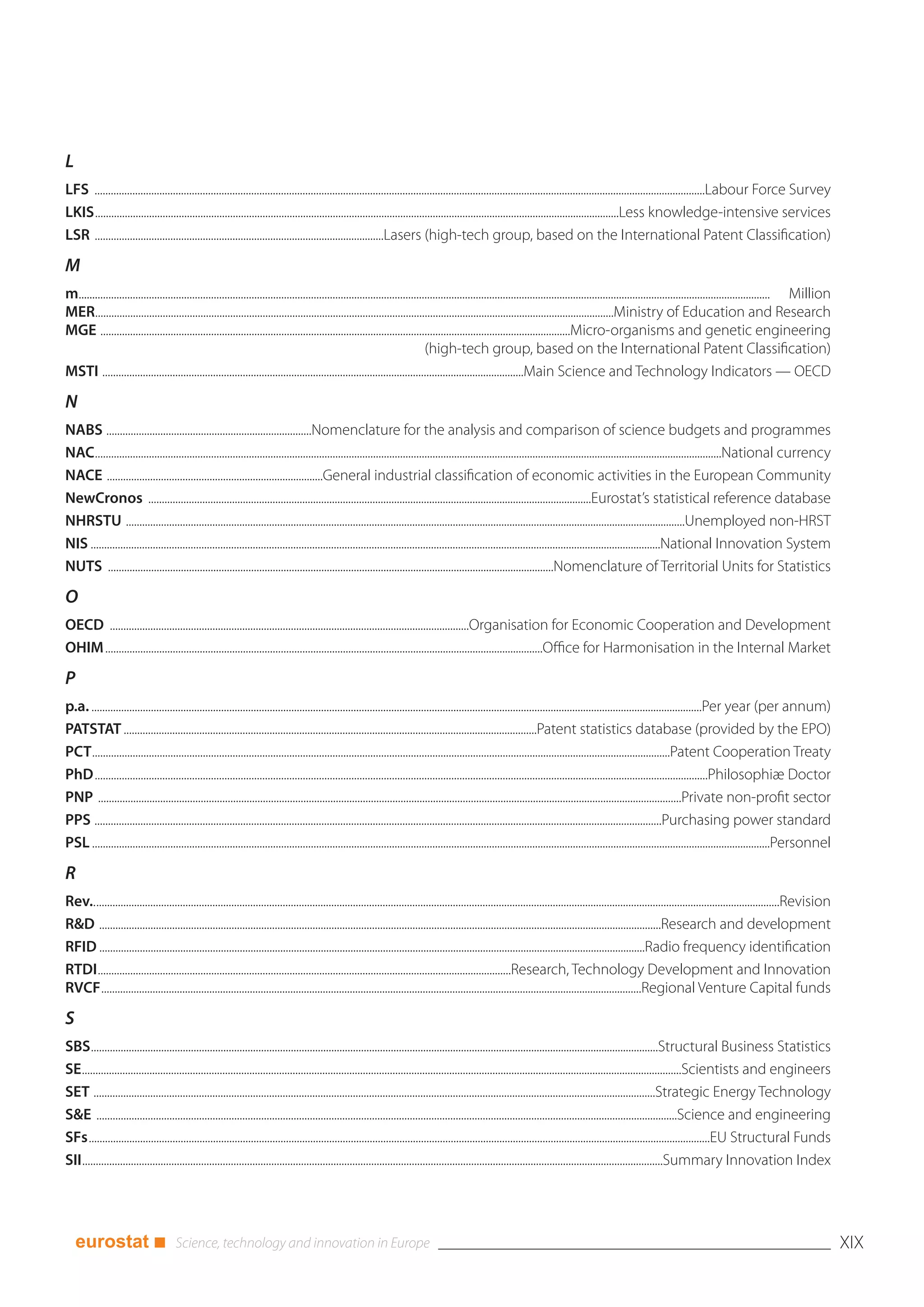
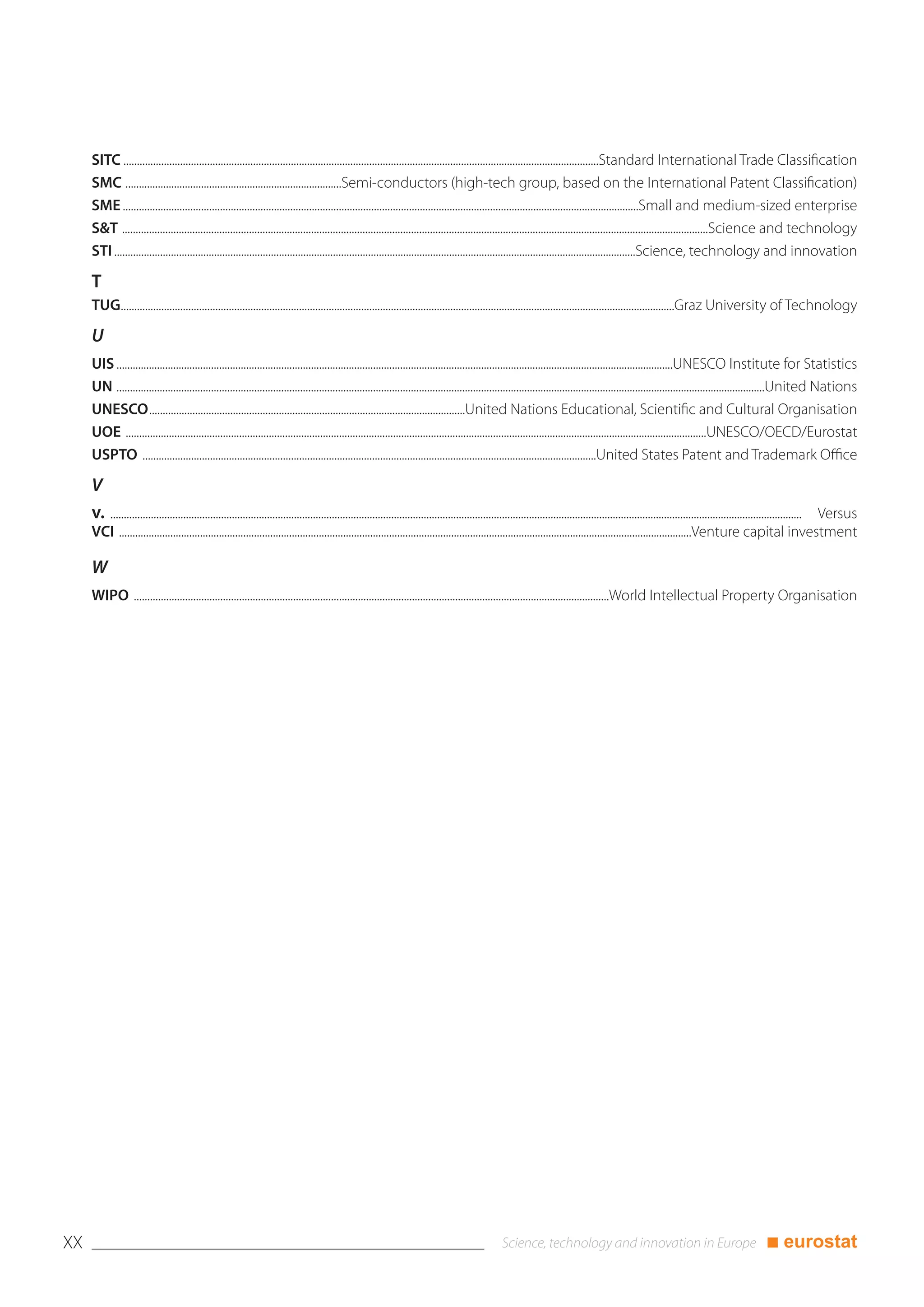
      Acronyms and abbreviations
      A
      AAGR.............................................................................................................................................................................................................Average annual growth rate
      AGR ...................................................................................................................................................................................................................................Annual growth rate
      AVI .......................................................................................................Aviation (high-tech group, based on the International Patent Classification)

      B
      BERD ...................................................................................................................................................Expenditure on R&D in the business enterprise sector
      BES .....................................................................................................................................................................................................................Business enterprise sector
      bn ......
         ................................................................................................................................................................................................................................................................ billion

      C
      CAB ...................................................................................................................................................................Computer and automated business equipment
                                                                                                                                       (high-tech group, based on the International Patent Classification)
      CBSTII ......................................................................................................................Common basis for science, technology and innovation indicators
      CC ......................................................................................................................................................................................................................................Candidate countries
      CDH ..............................................................................................................................................................................................................Careers of doctorate-holders
      CD-ROM .........................................................................................................................................................................................Compact disc read-only memory
      CEC .............................................................................................................................................................................Commission of the European Communities
      CeSTII .........................................................................................................................................Centre for Science, Technology and Innovation Indicators
      CIP .................................................................................................................................................Competitiveness and Innovation Framework Programme
      CIS.............................................................................................................................................................................................................Community Innovation Survey
      COMEXT ......................................................................................................................Eurostat reference database containing external trade statistics


XVI                                                                                                                                                                                                                                                 ■ eurostat
CTE ........................................................Communication technology (high-tech group, based on the International Patent Classification)
CV ..............................................................................................................................................................................................................................................Curriculum vitae

D
DETE ........................................................................................................................................Department of Enterprise, trade and employment (Ireland)
DG .....................................................................................................................................................................................................................................Directorate-General
DG-RTD ...........................................................................................................................................................................................Directorate-General for Research
DVD.........................................................................................................................................................................................................................................Digital video disc

E
EC ................................................................................................................................................................................................European Community/Communities
ECU/EUR........................................................................................................................................................................Ecu up to 31.12.1998/euro since 1.1.1999
EEA30 .....................................................................................................................................................European Economic Area (EU-27 plus IS, LI and NO)
EFTA.....................................................................................................................................................................................................European Free Trade Association
EIS........................................................................................................................................................................................................European Innovation Scoreboard
EIT........................................................................................................................................................................................................European Institute of Technology
EP.....................................................................................................................................................................................................................................European Parliament
EPC ...............................................................................................................................................................................................................European Patent Convention
EPO ...........................................................................................................................................................................................................................European Patent Office
ERA..........................................................................................................................................................................................................................European Research Area
ERA-MORE................................................................................................................................................................................................Network of Mobility Centers
ERDF.....................................................................................................................................................................................European Regional Development Fund
ESF.................................................................................................................................................................................................................................European Social Fund
EU LFS ....................................................................................................................................................................................European Union Labour Force Survey
EU-15 .....................................................................................................................................................................................................European Union (15 countries)
EU-25 .....................................................................................................................................................................................................European Union (25 countries)
EU/EU-27..............................................................................................................................................................................................European Union (27 countries)
EU-CC .............................................................................................................................................................................................................................Candidate countries
EUR .....
       ................................................................................................................................................................................................................................................................ Euro
Eurostat ..........................................................................................................................................................Statistical Office of the European Communities
EVCA........................................................................................................................................................................................European Venture Capital Association

F
FAPESP .......................................................................................................................................Fundacão de Amparo à Pesquisa do Estado de São Paulo
                                                                                                                                                                                      — State of São Paulo Research Foundation
FOS..............................................................................................................................................................................................................................................Field of science
FP ..............................................................................................................................................................................................................................Framework Programme
FP6.........................................................................................................................................................Sixth EU Research Framework Programme 2002-2006
FP7.................................................................................................................................................Seventh EU Research Framework Programme 2007-2013
FSI .............................................................................................................................................................................................................................Frank Stronach Institute
FTE ...................................................................................................................................................................................................................................Full-time equivalent
FTSE .......................................................................................................................................................................................................Financial Times Stock Exchange

G
G7 .....................................................................Group of Seven (Canada, France, Germany, Italy, Japan, United Kingdom and United States)
G8...................................................... Group of Eight (Canada, France, Germany, Italy, Japan, Russia, United Kingdom and United States)


    eurostat ■                                                                                                                                                                                                                                                                 XVII
GBAORD .......................................................................................................................................Government budget appropriations or outlays on R&D
        GBER .........................................................................................................................................................................................General Block Exemption Regulation
        GDP ........................................................................................................................................................................................................................Gross domestic product
        GERD .........................................................................................................................................................................................Gross domestic expenditure on R&D
        GISCO .....................................................................................................................Geographical information system for the Commission — Eurostat
        GOV ..................................................................................................................................................................................................................................Government sector
        GoveRD...................................................................................................................................Expenditure on R&D performed in the Government sector
        GPS .....................................................................................................................................................................................................................Global positioning system
        GUF ........................................................................................................................................................................................................................General university funds

        H
        HC ........................................................................................................................................................................................................................................................Head count
        HEFCE ...............................................................................................................................................................Higher Education Funding Council for England
        HERD ..............................................................................................................................Expenditure on R&D performed in the higher education sector
        HES .........................................................................................................................................................................................................................Higher education sector
        HRST .......................................................................................................................................................................Human resources in science and technology
        HRSTC .................................................................................................................................................Human resources in science and technology — Core
        HRSTE .....................................................................................................................................Human resources in science and technology — Education
        HRSTO ................................................................................................................................Human resources in science and technology — Occupation
        HRSTU .............................................................................................................................Human resources in science and technology — Unemployed

        I
        IAS ..................................................................................................................................................................................................International Accounting Standard
        IBCS ............................................................................................................................................................................Integrated Business Characteristics Strategy
        IBGE.........................................................................................................................................................................Brazilian Institute of Geography and Statistics
        ICB....................................................................................................................................................................................................Industrial classification benchmark
        ICT ............................................................................................................................................................................Information and communication technology
        ILO .....................................................................................................................................................................................................International Labour Organisation
        IPC ......................................................................................................................................................................................................International Patent Classification
        IPR......................................................................................................................................................................................................................Intellectual property rights
        IRI.........................................................................................................................................Commission’s Industrial Research and Innovation Programme
        ISBN ...........................................................................................................................................................................................International standard book number
        ISCED ...........................................................................................................................................................International Standard Classification of Education
        ISCO ........................................................................................................................................................International Standard Classification of Occupations
        ISIC...............................................................................................................International Standard Industrial Classification of all Economic Activities
        IT ...............................................................................................................................................................................................................................Information technology

        J
        JPO ....................................................................................................................................................................................................................................Japan Patent Office
        JRC.................................................................................................................................................................................................................................Joint Research Centre

        K
        KIC ........................................................................................................................................................................................Knowledge and innovation community
        KIS ..............................................................................................................................................................................................................Knowledge-intensive services


XVIII                                                                                                                                                                                                                                        ■ eurostat
L
LFS ..................................................................................................................................................................................................................................Labour Force Survey
LKIS..................................................................................................................................................................................................Less knowledge-intensive services
LSR ...........................................................................................................Lasers (high-tech group, based on the International Patent Classification)

M
m................................................................................................................................................................................................................................................................ Million
 .......
MER................................................................................................................................................................................................Ministry of Education and Research
MGE ..............................................................................................................................................................................Micro-organisms and genetic engineering
                                                                                                                                 (high-tech group, based on the International Patent Classification)
MSTI ............................................................................................................................................................Main Science and Technology Indicators — OECD

N
NABS ............................................................................Nomenclature for the analysis and comparison of science budgets and programmes
NAC........................................................................................................................................................................................................................................National currency
NACE ................................................................................General industrial classification of economic activities in the European Community
NewCronos ....................................................................................................................................................................Eurostat’s statistical reference database
NHRSTU ...............................................................................................................................................................................................................Unemployed non-HRST
NIS ...................................................................................................................................................................................................................National Innovation System
NUTS .....................................................................................................................................................................Nomenclature of Territorial Units for Statistics

O
OECD .....................................................................................................................................Organisation for Economic Cooperation and Development
OHIM..................................................................................................................................................................Office for Harmonisation in the Internal Market

P
p.a. ..................................................................................................................................................................................................................................Per year (per annum)
PATSTAT .........................................................................................................................................................Patent statistics database (provided by the EPO)
PCT......................................................................................................................................................................................................................Patent Cooperation Treaty
PhD...................................................................................................................................................................................................................................Philosophiæ Doctor
PNP ........................................................................................................................................................................................................................Private non-profit sector
PPS ..................................................................................................................................................................................................................Purchasing power standard
PSL ...........................................................................................................................................................................................................................................................Personnel

R
Rev...............................................................................................................................................................................................................................................................Revision
R&D ................................................................................................................................................................................................................Research and development
RFID ..........................................................................................................................................................................................................Radio frequency identification
RTDI.........................................................................................................................................................Research, Technology Development and Innovation
RVCF........................................................................................................................................................................................................Regional Venture Capital funds

S
SBS..................................................................................................................................................................................................................Structural Business Statistics
SE..............................................................................................................................................................................................................................Scientists and engineers
SET ................................................................................................................................................................................................................Strategic Energy Technology
S&E .......................................................................................................................................................................................................................Science and engineering
SFs......................................................................................................................................................................................................................................EU Structural Funds
SII.......................................................................................................................................................................................................................Summary Innovation Index


    eurostat ■                                                                                                                                                                                                                                                               XIX
SITC ................................................................................................................................................................................Standard International Trade Classification
     SMC ................................................................................Semi-conductors (high-tech group, based on the International Patent Classification)
     SME ...............................................................................................................................................................................................Small and medium-sized enterprise
     S&T .........................................................................................................................................................................................................................Science and technology
     STI .................................................................................................................................................................................................Science, technology and innovation

     T
     TUG.............................................................................................................................................................................................................Graz University of Technology

     U
     UIS ..............................................................................................................................................................................................................UNESCO Institute for Statistics
     UN ................................................................................................................................................................................................................................................United Nations
     UNESCO.....................................................................................................................United Nations Educational, Scientific and Cultural Organisation
     UOE .......................................................................................................................................................................................................................UNESCO/OECD/Eurostat
     USPTO ........................................................................................................................................................................United States Patent and Trademark Office

     V
     v. ......
        ................................................................................................................................................................................................................................................................ Versus
     VCI ....................................................................................................................................................................................................................Venture capital investment

     W
     WIPO ................................................................................................................................................................................World Intellectual Property Organisation


XX                                                                                                                                                                                                                                             ■ eurostat
Countries
EU-27
BE ...............................................................................................................Belgium            LU ....................................................................................................Luxembourg
BG ...............................................................................................................Bulgaria           HU .............................................................................................................Hungary
CZ ..............................................................................................Czech Republic                      MT ....................................................................................................................Malta
DK ............................................................................................................Denmark               NL ......................................................................................................Netherlands
DE ............................................................................................................Germany               AT ..................................................................................................................Austria
EE ..................................................................................................................Estonia         PL ...................................................................................................................Poland
IE ....................................................................................................................Ireland       PT ...............................................................................................................Portugal
EL ..................................................................................................................Greece          RO .............................................................................................................Romania
ES ......................................................................................................................Spain       SI .................................................................................................................Slovenia
FR ...................................................................................................................France         SK ...............................................................................................................Slovakia
IT ..........................................................................................................................Italy   FI ...................................................................................................................Finland
CY ..................................................................................................................Cyprus          SE ................................................................................................................Sweden
LV .....................................................................................................................Latvia       UK ...........................................................................................United Kingdom
LT ..............................................................................................................Lithuania


Candidate countries
MK1 ...................................Former Yugoslav Republic of Macedonia
HR .................................................................................................................Croatia
TR ...................................................................................................................Turkey


Other countries
ASIOTH.....................................................................Other Asian countries                                     KR............................................................................Republic of South Korea
AU...............................................................................................................Australia           LI .....................................................................................................Liechtenstein
BR.......................................................................................................................Brazil      MX.................................................................................................................Mexico
CA ................................................................................................................Canada            MY ..............................................................................................................Malaysia
CH .......................................................................................................Switzerland                NO ...............................................................................................................Norway
CN ....................................................................................................................China         PH .........................................................................................................Philippines
HK........................................................................................................Hong Kong                  RU ....................................................................................................................Russia
ID..............................................................................................................Indonesia            SG ...........................................................................................................Singapour
IL..........................................................................................................................Israel   TH ...............................................................................................................Thailand
IN.........................................................................................................................India     TW .................................................................................................................Taiwan
IS ...................................................................................................................Iceland        US ...................................................................................................United States
JP .....................................................................................................................Japan

(1)
      ‘Provisional code which does not prejudge in any way the definitive nomenclature for
      this country, which will be agreed following the conclusion of negotiations currently
      taking place on this subject at the United Nations’.


      eurostat ■                                                                                                                                                                                                                                                     XXI
Part 1
Investing in R&D
Government budget
appropriations or outlays on
R&D — GBAORD
Government budget appropriations or outlays on R&D — GBAORD                                                      1
1.1 Introduction
Data on government budget appropriations or outlays on                              The data are assembled by national authorities using figures
research and development (GBAORD) refer to budget                                   from public budgets. As data are not obtained through
provisions, not to actual expenditure. This means that                              surveys, they are more difficult to compile because, in most
GBAORD measures government support for R&D using data                               countries, national budget data have their own terminology
collected from budgets. GBAORD is a way of measuring how                            and methodology, and therefore often do not match the
much governments spend on R&D.                                                      OECD/Eurostat methodology set out in the Frascati Manual.
The advantage of GBAORD data is their timeliness, but there                         Government R&D appropriations or outlays on R&D are
are some drawbacks, such as data sources and harmonisation,                         broken down into 13 main socio-economic objectives
which should be taken into account when using these data.                           according to the purpose of the R&D programme or project
                                                                                    on the basis of NABS — the Nomenclature for the analysis
GBAORD includes all appropriations allocated to R&D in
                                                                                    and comparison of scientific programmes and budgets,
central government or federal budgets; provincial or state
                                                                                    Eurostat 1994.
government data should be included when their input is
significant. Unless stated otherwise, data include both current                     The analysis of GBAORD data in the present publication
and capital expenditure. They cover government-financed                             covers the period 1996-2006 (provisional). This chapter is
R&D carried out in government establishments and in the                             divided into two main parts:
business enterprise, higher education and private non-profit
                                                                                        •    Total GBAORD,
sectors. However, some countries do not survey the private
non-profit sector, as shown in the box below.                                           •    GBAORD by socio-economic objective.
Data on actual R&D expenditure, which are not available in                          Please note that the data presented in this publication reflect
their final form until some time after the end of the budget                        data availability in Eurostat’s reference database as of July
year concerned, may well differ from the original budget                            2008.
provisions. This and further methodological information can
                                                                                    For more details on the methodologies applied, please refer
be found in the ‘Proposed standard practice for surveys on
                                                                                    to the methodological notes.
research and experimental development’ (Frascati Manual,
OECD, 2002).


Source: State Expenditure on Science & Technology and Research & Development, Forfás Ireland, 2006


  eurostat ■                                                                                                                                          5
1                                Part 1 - Investing in R&D


    1.2 Total GBAORD
    The United States leads the way in terms of GBAORD
    Between 1996 and 2006, the United States allocated a greater                         followed similar trends. In Japan, by contrast, GBAORD
    share of GDP to government budget appropriations or outlays                          increased over the same period.
    on research and development (GBAORD) than the European
                                                                                         Trends differed considerably from 1999 to 2004, with
    Union and Japan.
                                                                                         GBAORD as a share of GDP remaining relatively stable in the
    In 2006 the United States devoted more than 1 % of GDP to                            European Union, while it increased slightly in Japan and quite
    GBAORD, while the European Union and Japan allocated                                 significantly in the US.
    0.76 % and 0.70 % respectively.
                                                                                         Since 2004, however, the United States and Japan have
    Between 1996 and 1999, a decline in GBAORD as a share of                             registered a moderate downturn in GBAORD as a share of
    GDP was recorded in the United States and the EU-15, which                           GDP, whereas trends in the EU-27 have been fairly positive.

    Figure 1.1: Total GBAORD as a percentage of GDP, EU-15, EU-27, Japan and the United States, 1996–2006
           Percentage of GDP
    1.2


                                                                                                                                                         1.03


    0.9

                                                                                                                                                         0.78
                                                                                                                                                         0.76
                                                                                                                                                         0.70

    0.6


    0.3


    0.0
             1996              1997      1998        1999         2000          2001          2002          2003         2004          2005           2006

                                 EU-27                           EU-15                                 JP                                US

    Eurostat estimations: EU-27 and EU-15.
    US: 2000: break in series; 2007: provisional data.
    JP and US: federal or central government only.
    US: total excludes data for the R&D content of general payment to the Higher Education sector for combined education and research (public GUF).


                                                            Sources of budgetary data for GBAORD

          Although details of the budgetary procedure vary from country to country, seven broad stages can be identified:
          1. Forecasts (estimates of funding before beginning of budget discussion).
          2. Budget forecasts (preliminary figures as requested by ministries, especially for inter-ministerial discussions).
          3. Budget proposal (figures presented to the parliament for the coming year).
          4. Initial budget appropriations (figures as voted by the parliament for the coming year, including changes introduced in the
          parliamentary debate).
          5. Final budget appropriations (figures as voted by the parliament for the coming year, including additional votes during the year).
          6. Obligations (money actually committed during the year).
          7. Actual outlays (money paid out during the year).

          Source: based on the Frascati Manual, 2002


6                                                                                                                                                      ■ eurostat
Government budget appropriations or outlays on R&D — GBAORD                                                                                                                                            1
Figure 1.2: Total GBAORD as a percentage of GDP, EU-27 and selected countries, 2006
        Percentage of GDP
1.2


      1.03
             1.01   1.01   1.00
1.0

                                  0.88
                                         0.85

0.8                                             0.76    0.76
                                                               0.74
                                                                      0.72   0.72   0.72
                                                                                           0.70   0.70   0.69
                                                                                                                0.66
                                                                                                                       0.61   0.61
0.6                                                                                                                                  0.57   0.57
                                                                                                                                                   0.51
                                                                                                                                                          0.49


0.4                                                                                                                                                               0.37   0.36
                                                                                                                                                                                0.34   0.33   0.32   0.32   0.32   0.32
                                                                                                                                                                                                                          0.30   0.29
                                                                                                                                                                                                                                        0.27
                                                                                                                                                                                                                                               0.21
0.2


0.0
       US     FR     FI     ES     IS     SE    EU-27   DE     UK     DK     NL      PT    NO      JP     CH     AT     BE     IT    CZ      SI     EE     IE     HU      RU     LU     LT     EL     CY     PL    RO     BG      LV     SK    MT


Eurostat estimations: EU-27.
Provisional data: FR, PT and UK.
National estimation: EE.
Exceptions to the reference year: 2005: HU and RU.
AT, JP and US: federal or central government only.
US: total excludes data for the R&D content of general payment to the Higher Education sector for combined education and research (public GUF).


Figure 1.2 shows GBAORD expressed as a share of GDP by                                                                                Taken together, GBAORD in the remaining 22 Member States
country. The main advantage of this indicator is that it adjusts                                                                      amounted to EUR 19 billion. Belgium, Denmark, the
for differences in economic size and facilitates comparisons                                                                          Netherlands, Austria, Portugal, Finland and Sweden each
across countries. In 2006, GBAORD accounted for 0.76 % of                                                                             devoted more than EUR 1 billion to GBAORD. This was also
GDP in the EU-27 and 0.78 % of GDP in the EU-15. However,                                                                             the case in Norway, Switzerland and Russia. At the other end
there were significant differences across countries: in 2006                                                                          of the scale, six Member States each allocated less than
GBAORD ranged from 1.01 % of GDP in France and Finland                                                                                EUR 100 million to GBAORD: Bulgaria, Estonia, Cyprus,
to 0.21 % of GDP in Malta. The United States, Iceland and four                                                                        Latvia, Lithuania and Malta (see Table 1.6).
EU Member States (France, Finland, Spain and Sweden)
recorded GBAORD levels higher than the EU-27 average.
GBAORD levels ranged between the EU-27 average and 0.5 %                                                                              Figure 1.3: GBAORD in the top EU countries as
of GDP in 11 Member States. This was also the case in                                                                                 a percentage of total GBAORD in the EU-27, 2006
Norway, Switzerland and Japan.
At the bottom of the scale, GBAORD levels were below 0.3 %                                                                                Other Member States                                                                             FR
                                                                                                                                                 21.6%                                                                                  20.7%
of GDP in Latvia, Slovakia and Malta.
Figure 1.3 shows the shares of EU-27 total GBAORD for the
top five EU countries. In 2006, total GBAORD in the EU-27
amounted to almost EUR 88 billion at current prices.
France recorded the highest GBAORD levels, with
EUR 18.2 billion, followed closely by Germany with
                                                                                                                                                     IT
EUR 17.6 billion. The United Kingdom, Spain and Italy
                                                                                                                                                   10.4%
allocated respectively EUR 14.1, 9.8 and 9.1 billion to
                                                                                                                                                                                                                                                        DE
GBAORD. These five Member States accounted for
                                                                                                                                                                                                                                                      20.0%
approximately 80 % of total GBAORD in the EU-27.

                                                                                                                                                                   ES
                                                                                                                                                                 11.2%

                                                                                                                                                                                                             UK
                                                                                                                                                                                                            16.1%
                                                                                                                                      Eurostat estimation: EU-27.
                                                                                                                                      Provisional data: FR and UK.


  eurostat ■                                                                                                                                                                                                                                                  7
1                                             Part 1 - Investing in R&D


    Figure 1.4: Total GBAORD in EUR per inhabitant, EU-27 and selected countries, 2006
            Euro per inhabitant
     450

           403
                 392
     400

                        355
     350
                                  322

                                        296   292   289
     300                                                   285


                                                                 242
     250                                                               236   234
                                                                                   224
                                                                                         214
                                                                                               205   205   204
     200                                                                                                         185
                                                                                                                       178
                                                                                                                               155
     150

                                                                                                                                     106
     100                                                                                                                                   87
                                                                                                                                                63   62   62
                                                                                                                                                               50
      50                                                                                                                                                            33   26   23   23   22   20   20   14   10

       0
           NO     IS     US        FI   SE     DK    FR    CH    LU    NL    UK    ES    DE    AT    JP     IE   BE    EU-27    IT   PT    SI   CZ   EL   CY   EE   HU   MT   LT   PL   SK   LV   RU   RO   BG


    Eurostat estimation: EU-27.
    Provisional data: FR, PT and UK.
    National estimation: EE.
    Exceptions to the reference year: 2005: HU, US and JP.
    AT, JP and US: federal and central government only.
    US: total excludes data for the R&D content of general payment to the Higher Education sector for combined education and research (public GUF).


    It would also be interesting to consider GBAORD in terms of                                                                       other country where GBAORD per inhabitant was more than
    EUR per inhabitant, as shown in Figure 1.4. This ratio allows                                                                     EUR 300. Twelve countries registered GBAORD levels per
    national values to be compared independently of the                                                                               inhabitant between EUR 200 and EUR 300. These also
    population size of each country. This ranking reveals                                                                             included smaller countries such as Luxembourg.
    substantially different results compared with the figures as a
                                                                                                                                      At the lower end of the scale, GBAORD levels per inhabitant
    share of GDP (see Figure 1.2).
                                                                                                                                      were below EUR 50 in Hungary, Malta, Lithuania, Poland,
    Norway ranked first in terms of GBAORD per inhabitant,                                                                            Slovakia, Latvia, Russia, Romania and Bulgaria.
    with EUR 403, followed by Iceland (EUR 392) and the United
    States (EUR 355). Finland, which ranked fourth, was the only


                                                          State aid: a new framework for research, development and innovation
       The European Commission has adopted a new General block exemption Regulation giving automatic approval for a
       range of aid measures and so allowing Member States to grant such aid without first notifying the Commission. The
       Regulation authorises aid for SMEs, research, innovation, regional development, training, employment and risk capital.
       It also authorises support for environmental protection, measures to promote entrepreneurship, such as aid for young
       innovative businesses, aid for newly created small businesses in assisted regions, and measures to tackle problems
       faced by female entrepreneurs, such as difficulties in access to finance. As well as encouraging Member States to focus
       their state resources on aid that will genuinely benefit job creation and Europe’s competitiveness, the Regulation
       reduces the administrative burden for public authorities, beneficiaries and the Commission. It also consolidates into
       one text and harmonises the rules previously set out in five separate Regulations, and expands the categories of state
       aid covered by the exemption.
       The new Regulation also constitutes an important and immediately effective contribution to the Small Business Act
       adopted by the Commission in June 2008 (see IP/08/1003). It will allow Member States to support small and medium-
       sized enterprises (SMEs) at different stages of their development.


       Source: European Commission, http://ec.europa.eu/comm/competition/state_aid/reform/reform.cfm


8                                                                                                                                                                                                                ■ eurostat
Government budget appropriations or outlays on R&D — GBAORD                                                          1
Figure 1.5: Average annual growth rate (AAGR)(1) of GBAORD and of GDP, EU-27 and selected countries,
2001–2006
      AAGR 2001-2006
                                                     4.0
                                                        4.7
                                                      4.1
                                                     3.9
                                                                                       10.6
                                                                               8.5
                                                                                       10.6
                                                                                                  13.0
                                                     4.2
                                                   3.4
                                            1.9
                                          1.4
                                                                                                    13.9
                                                                                                                                     25.7
                                                                            8.4
                                                                                                                  17.8
                                                                          7.9
                                                                                       10.5
                                                                         7.6
                                                                                                                16.8
                                                    3.8
                                                     4.2
                                                   3.5
                                           1.5
                                                                   6.3
                                                                                     9.7
                                                                                           11.5
                                                                                                                         19.6
                                                                                            11.8
                                                                                                         14.7
                                                                            8.4
                                                                                                                                 24.8
                                                                               8.6
                                                   3.4
                                                                                                    13.7
                                                    3.6
                                                 2.7
                                                    3.6
                                                     3.7
                                                             5.1
                                      0.9
                                                    3.7
                                                                         7.5
                                                                                                                16.8
                                                                                                                                                 34.0
                                                                   6.3
                                                                               8.5
                                                                                                   13.6
                                                                               8.7
                                                    3.6
                                                         4.6
                                                         4.5
                                                            5.3
                                                   3.5
                                                             5.3
                                                                               8.5
                                                                     7.1
                                                                     7.1
                                                                      7.3
                                           1.6
                                          1.3
             -5.3
              -5.2

                                                                               8.7
                          -1.5
                                          1.2

-10                  -5           0                      5                       10                  15                  20     25          30   35     40 %

                                                                                GDP                                    GBAORD

Eurostat estimations: EU-27.
Provisional data: FR, PT and UK.
National estimation: EE.
Exceptions to the reference period: 2002-2006: CZ and CH
                                      2004-2006: CY and MT.
AT, JP and US: federal and central government only.


(1)
      AAGR is calculated in current EUR


      eurostat ■                                                                                                                                               9
1                      Part 1 - Investing in R&D


     Figure 1.5 provides a breakdown by country of the nominal      On the other hand, this trend was reversed in countries such
     average annual growth rate (AAGR) of GBAORD and GDP            as Belgium, Bulgaria, Denmark, Germany, Italy, the
     between 2001 and 2006.                                         Netherlands, Poland, Slovakia, Iceland and Switzerland, with
                                                                    higher growth rates recorded in GDP than GBAORD.
     Over the period under review, the average annual growth rate
     of GBAORD and GDP in the EU-27 stood at 4.7 % and 4.0 %        GBAORD growth rates were below the EU-27 average (4.7 %)
     respectively, meaning that government budgets allocated to     in Belgium, Denmark, Germany, France, Italy, the
     R&D grew faster than GDP. In general, GBAORD increased         Netherlands, Austria and Finland. Poland’s growth was also
     in all the European countries, but this was not the case in    below the EU average.
     Japan, which recorded a decrease.
                                                                    From a global perspective, GBAORD growth rates in
     However, a number of differences were noted between EU         Switzerland (1.3 %) and the United States (1.2 %) were also
     countries. Eighteen Member States, together with Norway,       below the EU-27 average.
     registered stronger growth in GBAORD than in GDP during
     the period under review. Average annual growth rates for
     GBAORD reached 34.0 % in Romania and 25.7 % in Estonia.


10                                                                                                               ■ eurostat
Government budget appropriations or outlays on R&D — GBAORD                                                    1
1.3 GBAORD by socio-economic objective
Table 1.6 shows, by country, total GBAORD in EUR million           ‘Social structures and relationships’ and ‘agricultural
and its distribution by NABS socio-economic objective              protection and technology’ accounted for slightly more than
(NABS: Nomenclature for the analysis and comparison of             3 % of total GBAORD in the EU-27, followed by ‘production,
scientific programmes and budgets).                                distribution and rational utilisation of energy’ (2.6 %) and
                                                                   ‘control and care of the environment’ (2.5 %).
The three leading Member States in terms of GBAORD —
Germany, France and the United Kingdom — accounted for
more than half of total GBAORD in the EU-27.
In 2006, the main socio-economic objective in the EU-27 was
‘research financed from general university funds (GUF)’,
accounting for 30.3 % of total GBAORD, followed by ‘non-
oriented research’ (17.1 %) and ‘defence’ (13.2 %). In contrast,
‘exploration and exploitation of the earth’ (1.6 %),
‘infrastructure and general planning of land use’ (1.8 %) and                                Defence R&D
‘other civil research’ (1.8 %) received least support in the          Defence includes all R&D programmes undertaken primarily
EU-27.                                                                for defence reasons, regardless of their content or whether
                                                                      they have secondary civil applications. Thus, the criterion is
At country level, ‘research financed from general university
                                                                      not the nature of the product or subject (or who funds the
funds (GUF)’ also accounted for the largest share of total
                                                                      programme) but the objective. The object of defence R&D
GBAORD in the ten Member States for which data by NABS
                                                                      is the creation or enhancement of techniques or equipment
socio-economic objective are available. It was also the most
                                                                      for use by the armed forces. For example, defence R&D
significant objective in Iceland, Norway, Switzerland and
                                                                      includes nuclear and space R&D undertaken for defence
Japan. This covers R&D in various fields of science, such as
                                                                      purposes. It does not, however, include civil R&D financed
natural sciences, engineering, medical sciences or social
                                                                      by ministries of defence, for instance in meteorology or
sciences.
                                                                      telecommunications. It also includes enterprise-financed
‘Non-oriented research’ was the second most important                 R&D where the main applications are in the defence area.
socio-economic objective within the EU-27 overall. It was
                                                                      At first sight, the definition of R&D as defence according to
also the leading objective for eight Member States: Czech
                                                                      objective appears relatively straightforward. However,
Republic (26.8 %), Estonia (44.7 %), France (26.6 %), Cyprus
                                                                      exactly the same R&D programme could have either a civil
(31 %), Latvia (41.1 %), Poland (76.9 %), Slovenia (49.6 %) and
                                                                      or a defence objective. An example is the Canadian research
Slovakia (32.6 %).
                                                                      on cold-weather clothing intended for military use; because
In Belgium, Spain, Luxembourg, Hungary, Romania and                   of its potential for civil applications, this programme could
Finland, ‘industry production and technology’ was the most            have been, or could become, civil.
important socio-economic objective, while in Lithuania
                                                                      Where there is pressure to ‘spin off’ defence R&D to civil uses,
‘social structures and relationships’ ranked first.
                                                                      or vice versa, the blurring of the objective may become
‘Defence’, ranking in third place at EU level, was the leading        significant. In such cases, only the entity funding the R&D
socio-economic objective only in the United Kingdom, with             may be able to define its objective, and thus its classification
28.3 % of total GBAORD, and in the United States (57.9 %).            as either defence or civil R&D.
However, this objective also accounted for large shares in            The financing of defence R&D is increasingly becoming
France, Sweden and Spain, with 22.4 % 16.8 % and 16.2 %,              internationalised and privatised, and all sources of funds
respectively. Hence, the substantial share of ‘defence’ in total      should be included. For countries with major defence R&D
European GBAORD (13.2 %) is mainly due to these three                 efforts, a breakdown by source of funds can be informative.
countries and the United Kingdom.
‘Protection and improvement of human health’ also received
                                                                      Source: Frascati Manual, 2002
a significant share of government funding for R&D in the
EU-27, amounting to more than 7 %. Spain (10.5 %), Italy
(10.3 %), Hungary (13.1 %) and the United Kingdom (14.1 %)
each allocated more than 10 % of GBAORD to this objective.


 eurostat ■                                                                                                                              11
1                                         Part 1 - Investing in R&D


     Table 1.6: Total GBAORD in EUR million and by socio-economic objectives as a percentage of total
     GBAORD, EU-27 and selected countries, 2006


                                                                                          Production, distribution


                                                                                                                     Agricultural production
                                                                                          and rational utilization


                                                                                                                                                                                                                                       Non-oriented research
                                    and general planning


                                                                                                                                               Industrial production


                                                                                                                                                                                           exploitation of space


                                                                                                                                                                                                                                                                   Other civil research


                                                                                                                                                                                                                                                                                                             Total civil GBAORD
                                                                                                                                                                                                                   Research financed
                                                                                                                                                                       and relationships
                 and exploitation


                                                                                                                                                                       Social structures
                                                                         improvement of


                                                                                                                                                                                           Exploration and
                                                                                                                     and technology


                                                                                                                                               and technology
                                                                         Protection and

                                                                         human health
                                    Infrastructure


                                                           environment
                                                           Control and
                 Exploration

                 of the earth


                                    of land-use


                                                           care of the


                                                                                                                                                                                                                                                                                                                                      in mio eur
                                                                                          of energy


                                                                                                                                                                                                                   from GUF


                                                                                                                                                                                                                                                                                                                                      GBAORD
                                                                                                                                                                                                                                                                                              Defence


                                                                                                                                                                                                                                                                                                                                      Total
       EU-27            1.6 s                1.8 s              2.5 s          7.4 s                 2.6 s                      3.3 s               10.4 s                     3.5 s                 4.6 s             30.3 s          17.1 s                              1.8 s              13.2 s         86.8 s                     87 840 s
       BE               0.6                  0.8                2.2            1.9                   1.9                        1.3                 33.3                       4.1              10.1                   17.1            23.9                                2.6                   0.3         99.7                        1 946
       BG                    :                     :               :               :                        :                             :                       :                   :                       :                   :                            :                          :             :                                    75
       CZ               2.1                  3.8                2.6            6.8                   2.4                        4.9                 11.8                       2.5                   0.7               26.4            26.8                                6.0                   3.1         96.9                          646
       DK               0.7                  0.7                1.7            8.5                   2.1                        5.9                      6.4                   6.5                   1.9               44.3            19.2                                1.5                   0.7         99.3                        1 587
       DE               1.8 i                1.8 i              3.1 i          4.5 i                 2.9 i                      2.3 i               12.6 i                     3.5 i                 4.9 i             39.2 i          16.9 i                              0.6 i                 6.5 i       93.5 i                     17 608
       EE               1.5 e                7.0 e              5.8 e          9.3 e                 3.1 e                 10.3 e                        5.2 e                 7.6 e                 0.0 e                 0.0 e       44.7 e                              4.4 e                 1.0 e       99.0 e                          67 e
       IE               2.6                  0.5                0.8            5.5                   0.0                        9.8                      9.3               11.1                      0.0               57.4                      2.9                       0.0                   0.0           100                         858
       EL               3.4                  2.0                3.1            7.1                   2.1                        6.0                 10.3                       4.7                   2.0               47.9                      9.3                       1.7                   0.5         99.5                          685
       ES               1.2                  4.3                3.7           10.5                   2.7                        6.2                 19.5                       3.1                   2.9               18.4                      7.3                       4.0                16.2           83.8                        9 799
       FR               0.7 p                0.7 p              2.2 p          4.8 p                 3.6 p                      1.2 p                    5.9 p                 0.5 p                 7.1 p             21.7 p          26.6 p                              2.6 p              22.4 p         77.6 p                     18 225 p
       IT               2.3                  1.0                2.6           10.3                   4.0                        4.0                 11.7                       5.2                   9.5               41.8                      6.2                       0.0                   1.4         98.6                        9 099
       CY               1.6                  1.3                1.1            6.1                   0.4                   21.0                          2.7                   7.9                   0.0               27.0            31.0                                0.0                   0.0           100                           47
       LV               0.6                  1.6                2.8            6.9                   3.4                   18.7                     16.2                       8.1                   0.3                          :    41.1                                               :      0.3         99.7                            46
       LT               2.6                  4.2                9.3            9.9                   3.2                        8.4                 12.2                   32.3                               :                   :                            :   17.0                          0.9         99.1                            78
       LU               0.4                  3.2                4.0            8.4                   0.6                        2.6                 22.1                   15.8                      0.4               18.8            20.4                                3.1                   0.0        100.0                          114
       HU               2.9                  2.1                9.7           13.1                10.4                     16.4                     19.6                      9.1                    2.3                   9.1                   5.0                       0.3                   0.1         99.9                          329
       MT               0.0                  0.8                0.0            0.0                   0.0                        6.3                      0.0                   4.2                   0.0               86.1                      1.3                       1.3                   0.0           100                         10.5
       NL               0.3                  3.8                1.9            4.5                   2.1                        5.3                 10.9                       1.8                   3.1               47.1            10.0                                7.1                   2.1         97.9                        3 858
       AT               2.0 i                1.4 i              1.6 i          3.8 i                 0.7 i                      1.9 i               12.6 i                     1.9 i                 0.2 i             60.7 i          13.2 i                              0.0 i                 0.0 i         100 i                     1 692 i
       PL               0.9                  0.7                1.3            1.5                   0.7                        0.7                 10.8                       0.5                   0.1                   4.8         76.9                                0.2                   0.9         99.1                          858
       PT               1.2 p                6.6 p              3.8 p          7.0 p                 0.9 p                      8.1 p               16.9 p                     3.7 p                 0.3 p             38.5 p                    9.2 p                     3.2 p                 0.6 p       99.4 p                      1 116 p
       RO               2.3                  3.0                5.1            5.7                   2.3                        9.4                 22.1                   11.9                      1.4                          :    13.8                        19.8                          3.2         96.8                          309
       SI               0.0                  1.6                1.6            3.7                   0.9                        2.3                 22.8                       2.3                   0.0                   4.5         49.6                                9.2                   1.6         98.4                          173
       SK               1.0                  7.3                0.0            5.0                   0.1                        8.1                      8.9                   2.5                            :        26.0            32.6 i                              1.7                   6.6 i       93.4 i                        120
       FI               1.2                  2.0                1.6            6.2                   4.4                        5.8                 27.2                       5.5                   1.7               25.6            16.2                                               :      2.8         97.2                        1 694
       SE               0.7 p                4.0 p              1.8 p          1.2 p                 3.6 p                      2.2 p                    5.7 p                 4.5 p                 0.9 p             45.1 p          13.6 p                                             :   16.8           83.2                        2 675
       UK               2.7 p                0.8 p              1.8 p         14.1 p                 0.2 p                      3.1 p                    1.1 p                 5.3 p                 2.2 p             21.6 p          18.6 p                              0.4 p              28.3 p         71.7 p                     14 124 p
       IS                    :               4.7                0.4           10.9                   1.5                   21.1                          0.9                   7.6                            :        40.4            12.5                                0.0                   0.0           100                         117
       NO               2.5                  2.4                1.9           11.3                   3.3                        8.5                      7.9                   6.3                   2.1               34.9            12.9                                               :      5.9         94.1                        1 869
       CH               0.1 i                0.3 i              0.1 i          1.3 i                 1.0 i                      2.2 i                    1.0 i                 2.2 i                 4.5 i             59.6 p                    9.1 i             17.7 i                        0.6 i       99.4 i                      2 123
       JP               1.8 i                4.1 i              0.8 i          3.9 i              15.2 i                        3.4 i                    7.3 i                 0.7 i                 6.8 i             34.2 i          16.7 i                                             :      5.1 i       94.9 i                     24 478 i
       RU                    :                     :               :               :                        :                             :                       :                   :                       :                   :                            :                          :             :                         :      2 854
       US               0.8 i                1.3 i              0.5 i         21.8 i                 0.9 i                      2.0 i                    0.3 i                 1.3 i                 7.6 i                        :              5.5 i                     0.0                57.9 i         42.1 i                    108 330 i

     Exception to the reference year: 2005: HU
     Flag 'i'
              DE: unrevised breakdown not adding up to the revised total.
              AT, CH, JP and US : federal or central government only.
              SK: includes other classes.
              JP: defense is underestimated or based on underestimated data.
              US: total excludes data for the R&D content of general payment to the Higher Education sector for combined education and research (public GUF).


12                                                                                                                                                                                                                                                                                                                ■ eurostat
Government budget appropriations or outlays on R&D — GBAORD                                                            1
Figure 1.7: Main NABS socio-economic objectives in EUR million, EU-15, 1996–2006
         EUR million
30 000


20 000


10 000


    0
            1996         1997       1998          1999      2000      2001          2002           2003      2004           2005          2006

    Research financed from GUF    Non-oriented research   Defence   Industrial production and technology   Protection and improvement of human health
Eurostat estimation: EU-15.


Figure 1.7 shows the trends in the five main European socio-
                                                                                                   GBAORD as an indicator of
economic objectives expressed in EUR million between 1996
                                                                                                    national research policy
and 2006 for the EU-15.
                                                                                  Government budget appropriations or outlays for research
The same trends as those highlighted in total GBAORD as a                         and development (GBAORD) are relevant as an indicator of
share of GDP (Figure 1.1) can be observed for the main socio-                     national science policy.
economic objectives. From 1996 to 1999 the main                                   It is a particularly relevant and valid indicator of science
socio-economic objectives were either stable or in decline (as                    policy when considering changes over time according to
for ‘defence’). Between 1999 and 2006, however, all main                          funding objectives, since the relative ups and downs of
socio-economic objectives recorded an increase (although                          different objectives can be taken as indicators of changes
this trend was more unstable in defence).                                         in government priorities with respect to different research
                                                                                  objectives.
Research financed from GUF — the main European socio-
economic objective — also registered the greatest increase in                     The argument for using this indicator is that the greater the
                                                                                  proportion of the total budget allocated to a specific
absolute terms, growing from EUR 16 billion in 1995 to
                                                                                  objective within national policy, the higher the priority
EUR 26 billion in 2006.                                                           devoted to the specific objective and vice versa.
Defence was the second leading socio-economic objective in
the EU-15 until 2003, before being overtaken by ‘non-
oriented research’.                                                               Source: The Danish Centre for Studies in Research and
                                                                                  Research Policy, 2005/2.


  eurostat ■                                                                                                                                            13
1                       Part 1 - Investing in R&D


     Table 1.8 shows that the main increases in GBAORD between         Overall, the ‘defence’ objective grew on average by 2.2 % at
     2001 and 2006 at EU-15 level were in ‘other civil research’       EU-15 level, although this increase was lower than growth in
     (15.2 %), ‘protection and improvement of human health’            total GBAORD (4.6 %). In other words, the relative
     (8.1%) and ‘exploration and exploitation of the earth’ (6.9 %).   importance of ‘defence’ in total GBAORD at EU level
                                                                       decreased between 2001 and 2006.
     Government budget allocations to ‘research financed from
     GUF’ — the leading socio-economic objective in the                Trends in the government R&D budget devoted to ‘other civil
     European Union — grew in all countries between 2001 and           research’, which registered an overall increase at EU-15 level,
     2006, reaching an AAGR of 48.1 % in Ireland.                      also varied significantly from one country to another.
     ‘Defence’, the third main objective at European level, saw        ‘Infrastructure and general planning of land use’, ‘agricultural
     considerable variation across individual Member States, both      production and technology’ and ‘non-oriented research’
     in terms of trend and volume. Indeed, it increased sharply in     recorded increases of more than 6 %.
     some countries, such as Lithuania (81.3 %), Slovenia (59.4 %)
                                                                       Large variations in AAGR in individual countries can be
     and Romania (58.0 %), whereas it decreased slightly in
                                                                       partly explained by relatively low GBAORD levels in absolute
     Germany and Spain (both -1.2 %), and sharply in Italy
                                                                       terms, as is the case in Poland for ‘agricultural production and
     (-18.3 %), Poland (-19.9 %) and Portugal (-17.1 %).
                                                                       technology’.


14                                                                                                                     ■ eurostat
Government budget appropriations or outlays on R&D — GBAORD                                                                                                                                                                                                                             1
Table 1.8: Average annual growth rate (AAGR)(2) of GBAORD by socio-economic objectives EU-27, EU-15
and selected countries, 2001–2006


                                                                                         Production, distribution


                                                                                                                    Agricultural production
                                                                                         and rational utilization


                                                                                                                                                                                                                                      Non-oriented research
                                   and general planning


                                                                                                                                              Industrial production


                                                                                                                                                                                          exploitation of space


                                                                                                                                                                                                                                                                   Other civil research


                                                                                                                                                                                                                                                                                                            Total civil GBAORD
                                                                                                                                                                                                                  Research financed
                                                                                                                                                                      and relationships
                and exploitation


                                                                                                                                                                      Social structures
                                                                        improvement of


                                                                                                                                                                                          Exploration and
                                                                                                                    and technology


                                                                                                                                              and technology
                                                                        Protection and

                                                                        human health
                                   Infrastructure


                                                          environment
                                                          Control and
                Exploration

                of the earth


                                   of land-use


                                                          care of the


                                                                                                                                                                                                                                                                                                                                      in mio eur
                                                                                         of energy


                                                                                                                                                                                                                  from GUF


                                                                                                                                                                                                                                                                                                                                      GBAORD
                                                                                                                                                                                                                                                                                              Defence


                                                                                                                                                                                                                                                                                                                                      Total
      EU-27                 :                     :               :               :                        :                             :                       :                   :                       :                   :                            :                           :             :                        :          5s
      EU-15            6.9 s                6.6 s              3.3 s          8.1 s                 3.4 s                      6.3 s                    5.8 s                4.1 s                  2.4 s                 3.6 s                 6.3 s              15.2 s                        2.2 s              5.0 s                   5s
      BE              -0.3                 -9.0               -0.5            7.5                 -2.5                      -4.5                        7.3                   0.8                   2.6                   2.6                   4.5                  -0.3                        0.5                3.9                     4
      BG                    :                     :               :               :                        :                             :                       :                   :                       :                   :                            :                           :             :                        :          9
      CZ               3.6                12.3                 1.2            8.2                20.7                     15.9                     18.9                   26.2                      7.7               11.8            14.2                         12.9                       11.1          13.0                           13
      DK              -7.0              -15.2                 -3.4            7.6                   4.7                     -4.5                     -2.1                  -3.8                  -1.0                     7.0                   4.7                17.9                       11.2                  3.4                     3
      DE               3.6 i                1.5 i              1.4 i          3.2 i                 0.1 i                      3.1 i                    2.7 i              -4.0 i                   1.2 i                 1.8 i                 1.1 i                      0.5 i               -1.2 i               1.6 i                   1
      EE             80.7 e               27.0 e             26.4 e          57.0 e              16.7 e                   18.4 e                   12.9 e                 76.2 e             -37.0 e                             :    13.4                                                :             :              22 e                22 e
      IE             14.9               -14.0                  3.4           25.9                          :                -0.9                        6.7               44.4                               :        48.1            -25.2                                               :             :   17.8                           18
      EL               5.8                  1.8                4.5           12.2                16.6                          6.3                 14.2                       8.2              68.3                   11.7                      3.7                63.9                          0.3        10.5                           10
      ES               3.6                40.1               17.0            60.1                39.6                     34.6                     20.4                   32.5                 21.3                       9.1         49.7                        166.9                        -1.2         23.8                           17
      FR               3.0 p                5.2 p             -0.7 p          0.6 p                 3.0 p                   -6.5 p                      3.4 p              -3.3 p                -2.1 p                   2.8 p       11.1 p                               7.2 p                 3.8 p              4.3 p                   4p
      IT               6.0                21.9                 3.9            9.6                   3.2                   18.3                          4.3                  5.3                    7.1                   0.6         -13.0                                               :   -18.3                              2          1
      CY               4.0              -11.1                -28.2            1.7                          :                -4.0                                 :         -7.0                              :            5.7         39.9                                                :             :           9.7                    10
      LV             12.3                 53.9               22.9            10.5                30.4                     26.6                     19.4                   26.5                   -5.1                            :    34.4                                                :      2.4        19.9                           20
      LT             26.5                 10.1               29.0            13.8                49.7                     25.1                          9.2               49.0                               :                   :                            :      -6.4                     81.3          14.5                           15
      LU                    :                     :               :               :                        :                             :                       :                   :                       :                   :                            :                           :             :                        :         25
      HU                    :                     :               :               :                        :                             :                       :                   :                       :                   :                            :                           :             :                        :           :
      MT                    :                     :               :        -94.3                           :         109.5                                       :      -38.2                                :        24.1               -8.5                                             :             :   13.7                           14
      NL              -0.8                 -3.7               -7.5           17.5              -10.0                           9.3                      0.5                -6.4                     6.5                   3.0                  1.3                 12.5                          4.9                             3          3
      AT               1.1 i               -1.2 i              7.3 i          7.1 i                 3.4 i                   -2.3 i                      7.2 i                 3.5 i                 7.5 i                 3.5 i                 2.9 i             -38.3 i                        5.3 i              3.7 i                   4i
      PL           111.5               188.9                356.9            47.0                69.9                     46.3                     82.5                      6.2               81.0                       8.6         10.0                         48.8                       -19.9         16.5                           16
      PT              -3.0 p              12.6 p               8.0 p          4.6 p                 0.1 p                   -2.4 p                 15.7 p                     5.4 p              -1.3 p                   9.2 p                 4.6 p              16.7 p                     -17.1 p               7.8 p                   7p
      RO             26.7                   4.6              42.9            43.6                24.8                     26.1                     24.8                   98.2                 23.9                              :    20.4                         98.7                       58.0          33.5                           34
      SI            -39.2                 16.3                -1.2           32.4                12.5                       -3.6                   29.6                      8.7                             :            7.4                  0.4                                        :   59.4                  8.2                     8
      SK                    :             53.4               -67.9           12.9              -40.4                        -1.6                        6.3             -19.1                                :        17.0            10.7 i                      -20.2                                 :                        :          9
      FI               3.9                  3.0               -1.5            3.9                   5.1                        5.4                      3.2                  4.3                    2.0                   4.4                   7.4                                       :   17.6                  4.3                     5
      SE             18.3 p                 5.8 p            19.2 p          15.0 p                 8.4 p                      3.3 p               22.2 p                  -7.7 p            -15.2 p                      5.1 p                4.3 p                                      :      8.3                4.7                     5
      UK             17.2 p                -7.2 p              3.8 p          4.0 p            -11.3 p                         0.2 p             -17.2 p                  11.5 p                    6.3 p                 5.2 p       12.2 p                       13.7 p                        3.8 p                           6p         5p
      IS                    :              -3.4               -0.9           14.1                   4.7                        7.1                      4.9                   1.0                            :        11.6                      1.0                                       :             :           7.1                     7
      NO             11.1                   8.7                0.3           17.9                18.9                          7.1                   -3.3                    5.3                    6.2                   6.4         15.5                                                :      2.6                7.7                     7
      CH            -17.4 i             -11.2 i              -17.4 i         -4.3 i               -1.7 i                    -3.3 i               -24.4 i                  18.9 i                    0.9 i                 0.7 p       13.7 i                               2.4 i                 5.6 i              1.3 i                   1
      JP              -6.8 i               -6.3 i             -6.1 i         -4.9 i               -7.7 i                    -6.0 i                   -5.8 i                -8.6 i                -5.1 i                 -5.5 i           -1.5 i                                           :    -1.7 i          -5.3 i                      -5 i
      RU                    :                     :               :               :                        :                             :                       :                   :                       :                   :                            :                           :             :                        :          9
      US              -3.6 i               -5.7 i             -5.0 i         -0.5 i               -7.6 i                    -4.9 i                   -6.9 i               10.2 i                 -3.7 i                          :       -3.3 i                                           :      4.0 i         -2.0 i                       1i
Exceptions to the reference period:
         2000-2006: LV
         2002-2006: CZ, EE and CH
         2004-2006: CY, MT and PL.
Flag 'i'
         DE: unrevised breakdown not adding up to the revised total.
         AT, CH, JP and US : federal or central government only.
         SK: includes other classes.
         JP: defense is underestimated or based on underestimated data.
         US: total excludes data for the R&D content of general payment to the Higher Education sector for combined education and research (public GUF).


(2)
      AAGR is calculated in current EUR


      eurostat ■                                                                                                                                                                                                                                                                                                                                   15
1                    Part 1 - Investing in R&D


                                        EU nations urged to pool public research budgets

     The European Commission wants Member States to pool together their money and brains to conduct joint research on major social
     challenges such as ageing and energy security, arguing that individual efforts on such vast topics waste resources.

     In his Communication of 15 July 2008 on joint programming, Research Commissioner Janez Potočnik listed fighting climate change,
     securing energy supply, preventing major disease pandemics, preserving marine ecosystems and biodiversity, ensuring food quality
     and securing food supply as ‘the most shared challenges of our societies’.

     These are challenges that ‘can be addressed through research and technological development’ and require a response at European
     — if not global — level, he added.

     The aim of the Commission’s communication is to allow cross-border research on these strategic areas by setting common research
     agendas, he explained.

     ‘Obviously, national programming of research has a place when it addresses national needs and priorities, but for major societal
     challenges, national-level action is a waste of time, money and resources’, the Commissioner argued.

     He explained that joint programming is about public cooperation in strategic research areas where Member States voluntarily
     decide to pool financial and human resources. It will also be up to these stakeholders to identify common objectives and develop
     and implement the research agenda.

     Joint programming ‘does not require all Member States to be involved. It can be à la carte, but such partnerships will be open to
     any Member State or associated country to join whenever they want’, Mr Potočnik added.

     According to the optimistic Commissioner, joint programming ‘has the potential to become a mechanism at least as important as
     the Framework Programmes in the European research landscape and change the very way in which Europeans think about research’.

     Background
     According to the Commission, some 85 % of public sector research in Europe is programmed, financed, monitored and evaluated
     at national level. Only 15 % of European publicly financed civil R&D is funded in a cross-border collaborative manner (10 % by
     intergovernmental organisations and schemes and 5 % by the EU Framework Programme).
     The Commission has repeatedly voiced concern over this situation, saying fragmentation and duplication of research efforts are a
     major obstacle to the EU’s chances of delivering on the Lisbon Strategy for growth and jobs.
     In its review of the European Research Area (ERA) in spring 2007, the Commission called for the optimisation of research
     programmes. This, it suggested, should be done by making national and regional research more coherent through joint priority
     setting.
     Under the European Union’s Strategic Energy Technology (SET) plan, the Commission has already proposed more coordinated
     national research on low-carbon technologies.
     Source: http://www.euractiv.com/en/science/eu-nations-urged-pool-public-research-budgets/article-174305, 17 July 2008


16                                                                                                                           ■ eurostat
R&D expenditure
R&D expenditure                          2
2.1 Introduction
R&D is often considered to be a key element in the European                             The indicators are then broken down by sectors of
Union’s bid to be the most dynamic and competitive economy                              performance:
in the world. It is defined as creative work undertaken
                                                                                           •   business enterprise sector (BES);
systematically with a view to increasing the stock of
knowledge, including knowledge of man, culture and society,                                •   government sector (GOV);
and the use of this stock of knowledge to devise new
                                                                                           •   higher education sector (HES);
applications.
                                                                                           •   private non-profit sector (PNP);
The European target for R&D, as set out in the relaunched
Lisbon Strategy, is to achieve an R&D intensity of at least 3 %                            •   all sectors, corresponding to the sum of the previous
of GDP for the EU by 2010, two thirds of which are to be                                       four sectors.
financed by the business sector.
                                                                                        In addition, other breakdowns are used to present R&D data,
R&D expenditure refers here to ‘intramural’ expenditure,                                such as:
comprising all expenditure on R&D within a statistical unit or
sector of the economy during a specific period, regardless of                              • source of funds;
the source of funds. It is broken down by institutional sector,
i.e. by sector of performance.                                                             •   sector of activity;

Two manuals are used as methodological references for R&D                                  •   size class;
surveys:                                                                                   •   field of science.
                                         (1)
        •    the Frascati Manual ;                                                      The regional analysis has been carried out at NUTS 2 level.
        •    the Regional Manual .         (2)                                          Footnotes specify when other levels of NUTS are used.
                                                                                        Readers should also note that under the NUTS classification,
They provide a model for obtaining comparable statistics                                the entire national territories of Estonia, Cyprus, Latvia,
between countries.                                                                      Lithuania, Luxembourg, Malta and Iceland are considered to
                                                                                        be NUTS 0, 1 or 2 regions, which means that these countries
This chapter presents the key indicators for R&D expenditure                            may appear in rankings at NUTS 2 level.
and outlines the main trends over the past five years. It is
divided into two sections:                                                              The analysis refers to the period 2001-2006, but the length of
                                                                                        time series is not identical across all countries. As a rule, if
        •    Firstly, main trends at national level are highlighted by                  data for 2006 are not available for a particular country, the
             analysing the performance of the EU-27 Member                              latest available year is presented.
             States, Iceland, Norway and Candidate Countries. This
             part also considers the international level by taking a                    The complete time series for R&D expenditure are available in
             look at data for China, Japan and the United States.                       NewCronos, Eurostat’s reference database. Data for China,
                                                                                        Japan and the United States are based on the OECD’s Main
        •    Secondly, R&D expenditure at the regional level is                         Science and Technology Indicators (MSTI).
             analysed, focusing on the EU-27 Member States,
             Iceland and Norway.

Two main indicators are used to present R&D in the various
sections of this chapter:
        •    R&D intensity (measured as R&D expenditure as a
             percentage of GDP);
        •    R&D expenditure in volume (in euros).


(1)
      Proposed Standard Practice for Surveys on Research and Experimental Development
      — Frascati Manual, OECD 2002.
(2)
      The regional dimension of R&D statistics and of innovation — Regional Manual,
      Eurostat, 1996.


      eurostat ■                                                                                                                                           19
2                      Part 1 - Investing in R&D


     2.2 R&D at national level
     R&D intensity

     Table 2.1 presents R&D expenditure expressed as a percentage    The breakdown of R&D intensity within the EU-27 was as
     of GDP, or R&D intensity, by country and by sector of           follows: almost two thirds (1.17 %) came from the business
     performance. An advantage of this indicator is that it is not   enterprise sector, while the public sector (higher education
     affected by the size of countries or regions and thus allows    and government) accounted for the remaining third (0.65 %).
     comparisons between them.                                       The rest, 0.02 %, was contributed by the private non-profit
                                                                     sector (PNP).
     In 2006, R&D intensity in the EU-27 amounted to 1.84 % of
     GDP, the same as in 2005, still below the 3 % target set for    The business enterprise sector generally accounted for the
     2010 by the Lisbon Strategy.                                    highest share of R&D intensity in most Member States and
                                                                     other selected countries. Exceptions were Bulgaria and
     In 2006, only two Member States exceeded the 3 % objective:
                                                                     Poland, where the government was the main sector, and
     Sweden (3.73 %) and Finland (3.45 %), although these figures
                                                                     Cyprus, Greece and Lithuania, where the higher education
     were slightly down on 2005.
                                                                     sector (HES) accounted for the largest share.
     Four other Member States achieved R&D intensities above
     2 %: Germany (2.53 %), Denmark (2.43 %), Austria (2.49 %)
     and France (2.09 %), although only Germany and Austria
     registered a notable increase compared to 2005. All other
     Member States were below this threshold, and R&D intensity
     was below 1 % in ten Member States.
     At global level, the EU share of GDP devoted to R&D in 2005
     was significantly lower than that of Japan (3.32 %),
     Switzerland (2.90 %) and the United States (2.61 %).


20                                                                                                                ■ eurostat
R&D expenditure                                       2
Table 2.1: R&D expenditure as a percentage of GDP, by sector of performance, EU-27 and selected countries,
2004–2006
                            All s ec tors                B us ines s enterpris e s ec tor                    G overnment s ec tor               Higher educ ation s ec tor

                 2004           2005        2006        2004            2005                2006      2004            2005          2006      2004          2005             2006
   EU-27          1.83 s          1.84 s    1.84 s      1.17 s           1.16 s             1.17 s    0.24 s           0.25 s       0.25 s    0.40 s         0.40 s          0.40 s
   BE             1.87            1.84      1.83 p      1.29             1.25               1.24 p    0.14             0.15         0.16 p    0.41           0.41            0.41 p
   BG             0.50            0.49      0.48        0.12             0.10               0.12      0.33             0.32         0.31      0.05           0.05            0.05
   CZ             1.25            1.41      1.54        0.79             0.91               1.02      0.26             0.26         0.27      0.18           0.23            0.25
   DK             2.48            2.45      2.43 p      1.69             1.67               1.62 p    0.17             0.16         0.16 p    0.61           0.60            0.63 p
   DE             2.49            2.48      2.53 p      1.73             1.72               1.77      0.34 i           0.35 i       0.35 p    0.41           0.41            0.41 p
   EE             0.86            0.93      1.14 p      0.34             0.42               0.51 p    0.11             0.10         0.15      0.39           0.38            0.46
   IE             1.24            1.26      1.32 p      0.81             0.82               0.89 p    0.09             0.09         0.09      0.33           0.34            0.34
   EL             0.55 e          0.58      0.57 e      0.17 e           0.18               0.17 e    0.11 e           0.12         0.12 e    0.27 e         0.28            0.27 e
   ES             1.06            1.12      1.20        0.58             0.60               0.67      0.17             0.19         0.20      0.31           0.33            0.33
   FR             2.15 b          2.12      2.09 p      1.36 b           1.32               1.32 p    0.37             0.37         0.36 p    0.40 b         0.40            0.38 p
   IT             1.10            1.09         :        0.52             0.55               0.54 p    0.20             0.19         0.19 p    0.36           0.33 b             :
   CY             0.37            0.40      0.42 p      0.08             0.09               0.09 p    0.13             0.13         0.12 p    0.13           0.16            0.18 p
   LV             0.42            0.56      0.70        0.19             0.23               0.35      0.08             0.10         0.11      0.15           0.23            0.24
   LT             0.76            0.76      0.80        0.16             0.15               0.22      0.19             0.19         0.18      0.41           0.41            0.40
   LU             1.63            1.57      1.47 pe     1.43             1.36               1.25 e    0.18             0.19         0.19 p    0.02           0.02            0.04 p
   HU             0.88 b          0.94      1.00        0.36 i           0.41 i             0.48 i    0.26 bi          0.26 i       0.25 i    0.22 i         0.24 i          0.24 i
   MT             0.54 b          0.54 p    0.54 p      0.35 b           0.35 p             0.34 p    0.01             0.03         0.03      0.17           0.16            0.18
   NL             1.78 pe         1.74 pe   1.67 pe     1.03 p           1.02 p             0.96 p    0.26 i           0.24 i       0.24 i       :              :               :
   AT             2.22            2.43 e    2.49 e      1.51             1.64 e             1.66 e    0.11             0.12 e       0.13 e    0.59           0.64 e          0.65 e
   PL             0.56            0.57      0.56        0.16             0.18               0.18      0.22             0.21         0.21      0.18           0.18            0.17
   PT             0.77 e          0.81      0.83 e      0.28 e           0.31               0.35 e    0.12 e           0.12            :      0.28 e         0.29               :
   RO             0.39            0.41      0.45        0.21             0.20               0.22      0.13             0.14         0.15      0.04           0.06            0.08
   SI             1.42            1.46      1.59        0.95             0.86               0.96      0.28             0.35         0.39      0.18           0.24            0.24
   SK             0.51            0.51      0.49        0.25             0.25               0.21      0.16 i           0.15 i       0.16 i    0.10           0.10            0.12
   FI             3.45            3.48      3.45        2.42             2.46               2.46      0.33             0.33         0.32      0.68           0.66            0.65
   SE             3.62 i          3.80 b    3.73        2.67 i           2.81 b             2.79      0.11 i           0.18 b       0.17      0.83           0.79 b          0.76
   UK             1.71            1.76      1.78        1.07             1.08               1.10      0.18             0.19         0.18      0.42           0.45            0.46
   IS                :            2.77         :            :            1.43                  :         :             0.65            :         :           0.61               :
   NO             1.59            1.52      1.52        0.87             0.82               0.82      0.25             0.24         0.24      0.47           0.47            0.46
   CH             2.90               :         :        2.14                :                  :      0.03 i              :         0.02 i    0.66              :               :
   HR             1.13            1.00      0.87        0.47             0.41               0.32      0.24             0.24         0.23      0.42           0.35            0.32
   TR             0.52            0.59      0.58        0.13             0.20               0.21      0.04             0.07         0.07      0.35           0.32            0.30
   CN             1.23            1.34         :        0.82             0.91                  :      0.28             0.29            :      0.13           0.13               :
   JP             3.17            3.32         :        2.38             2.54                  :      0.30             0.28            :      0.43           0.45               :
   RU             1.15            1.07         :        0.80             0.73                  :      0.29             0.28            :      0.06           0.06               :
   US             2.58 i          2.61 pi   2.61 pi     1.78 i           1.82 pi            1.83 pi   0.31 i           0.31 pi      0.29 pi   0.37 i         0.37 pi         0.37 pi

CN, JP, RU and US: source OECD-MSTI.
Flag 'i'            DE: includes other classes.
                    HU: incomplete breadown of R&D expenditure by sector of performance.
                    SK: defence excluded (all or mostly).
                    SE: underestimated or based on underestimated data.
                    SE, CH and US: federal or central government only.
                    US: excludes most or all capital expenditure.


  eurostat ■                                                                                                                                                                           21
2                                         Part 1 - Investing in R&D


     Figure 2.2: R&D expenditure as a percebtage of GDP in 2006 and average annual growth rate (AAGR) 2001–
     2006(1), all sectors, EU-27 and selected countries

                 AAGR 2001-2006
      12
                                                                                                                   EU-27 = 1.84                                          3% objective
                                                    LV
                                   CY

                                                                                   EE

       9                                                                                          CN


       6
                                                                                        ES
                                                                                                             CZ

                                                                                             IE                                                          AT
                                                                                                                                                                    CH
                                                         LT
       3                            RO


                                                                         HU                                                                                                             JP
                                               TR
                                                          PT                                                  SI                                                                              FI
                                                                                                                                                          DE
                              BG                                                                                                              DK
       0                                                                      IT                                                                                                                     EU-27 = -0.32
                                              EL
                                                                                                   NO                 UK                FR
                                                                                                                                                               US
                                                                                                             NL                                                     IS
                                                                                                       LU
                                              PL
                                                                              RU                                      BE                                                                               SE

      -3


                                                              HR

                                         SK

      -6
           0.0                     0.5                             1.0                                 1.5                        2.0              2.5                        3.0            3.5                 4.0
                                                                                                                                                                                                   R&D as % of GDP


     (1) Calculated on R&D expenditure expressed as a percentage of GDP.
     MT does not appear because the 2002-2006 AAGR amounts to 20 %. MT's R&D intensity amounted to 0.54 % of GDP in 2006.
     Eurostat estimation: EU-27 – Provisional data: BE, DE, DK, EE, IE, FR, CY and US – National estimations: EL, AT and PT – National estimations and provisional data: NL and LU.
     US: excludes most or all capital expenditure.
     CN, JP, RU and US: source OECD-MSTI.
     Exceptions to the reference year:       2005: IT, IS, CN, JP and RU
                                            2004: CH.
     Exceptions to the reference period:     2000-2004: CH
                                             2000-2006: LU.
                                             2001-2005: IT, IS, CN, JP and RU
                                             2002-2006: MT and HR.


     Looking at Figure 2.2, three main groups of countries can be                                                                            In the second group of countries, the R&D intensity was
     distinguished in terms of R&D intensity and average annual                                                                              below the EU-27 average, but the AAGR was above that of the
     growth rate (AAGR), compared to the EU-27 averages.                                                                                     EU as a whole. This group comprises thirteen Member States,
                                                                                                                                             including Spain, Italy, Cyprus and Romania, plus China and
     In 2006, the EU-27 registered an average R&D intensity of
                                                                                                                                             Turkey. While still lagging behind, this group is gradually
     1.84 %, with an AAGR of -0.32 % between 2001 and 2006.
                                                                                                                                             closing the gap with the EU-27 average. However, it seems
     In the leading group, the R&D intensities in 2006 and AAGR                                                                              that reaching the 3 % target will require considerable efforts.
     for 2001-2006 were above the EU-27 average. This group
                                                                                                                                             The third group comprises countries where both R&D
     includes four Member States — Finland, Germany, Denmark,
                                                                                                                                             intensity and AAGR were below the EU-27 average. This
     and Austria — plus Japan and Switzerland.
                                                                                                                                             group includes Belgium, Luxembourg, the Netherlands,
     In fact, with the exception of Sweden and France, all Member                                                                            Slovakia, the United Kingdom, Greece and Poland, along with
     States with an R&D intensity higher than the EU-27 average                                                                              Norway, Croatia and Russia. With an R&D intensity below
     also registered an above-average AAGR.                                                                                                  the 3 %-target and an AAGR below the EU-27 average, the
                                                                                                                                             gap between this third group and the others can be expected
     Finland and Sweden were the only Member States where the
                                                                                                                                             to widen. If no major changes are forthcoming in these
     3 %-target set by the Lisbon Strategy was already achieved.
                                                                                                                                             countries, the 3 %-target will not be attained in the near
     Considering the trends for other countries in this group, this
                                                                                                                                             future.
     target appears quite realistic.


22                                                                                                                                                                                                                   ■ eurostat
R&D expenditure                                            2
R&D expenditure in volume
In 2006, R&D spending amounted to more than                                                     On the whole, higher education was the second most
EUR 213 billion in the EU-27. Between 2001 and 2006, R&D                                        important sector investing in R&D after business enterprises,
expenditure increased at an average annual rate of 3.6 %, as                                    except in some countries such as the Czech Republic,
shown in Table 2.3.                                                                             Hungary, Poland, Romania, Slovenia, Slovakia, Iceland, China
                                                                                                and Russia, where government sector spending was higher,
Germany, France and the United Kingdom accounted for two
                                                                                                probably as a result of the government’s interventionist
thirds of total R&D expenditure. However, average annual
                                                                                                tradition in these countries. This trend was also noted in
growth rates for these three countries were between 2.5 % and
                                                                                                Luxembourg, where R&D spending in higher education
3 %, below the EU-27 average.
                                                                                                surged by an average 54 % between 2001 and 2006.
In many new Member States, such as Estonia, Latvia, Malta
                                                                                                Between 2001 and 2006, the AAGR for research and
and Romania, expenditure on R&D increased on average by
                                                                                                development in Japan and the United States was negative in all
more than 20 %, a remarkable rate suggesting that these
                                                                                                sectors except for higher education in the United States,
countries are making considerable efforts to reach the Lisbon
                                                                                                whereas China and Russia registered substantial increases
Strategy target.
                                                                                                over the same period.
For the EU-27, Norway, Iceland and Switzerland, the highest
                                                                                                Croatia’s average annual growth rate in R&D expenditure was
levels of R&D investment were reported in the business
                                                                                                low (2.4 %).
enterprise sector (BES).
Table 2.3: R&D expenditure in EUR million and average annual growth rate (AAGR), by sector of performance,
EU-27 and selected countries, 2001–2006
                            All sectors                        Business enterprise sector                        Government sector                       Higher education sector
                                              AAGR                                       AAGR                                          AAGR                                       AAGR
                  2001          2006                        2001           2006                        2001             2006                        2001           2006
                                          2001-2006                                  2001-2006                                     2001-2006                                  2001-2006
   EU-27        178 549 s    213 127 s           3.6 s    115 689 s     135 716 s           3.2 s     23 570 s         28 777 s           4.1 s    37 914 s       46666 s            4.2 s
   BE             5 373        5 798 p           1.5 p      3 921         3 934 p            0.1 p      331              500 p            8.6 p     1 059          1 291 p           4.0 p
   BG                71          121            11.3           15            31             16.2          48               78            10.2           9             12             5.9
   CZ               832        1 761            16.2          501         1 165             18.4        197              309              9.4        130            279             16.5
   DK             4 278        5 349 p           4.6 p      2 934         3 560 p            3.9 p      503              360 p           -6.5 p      809           1 396 p          11.5 p
   DE            52 002       58 848 p           2.5 p     36 332        41 148              2.5       7 146 i          8 100 p           2.5 p     8 524          9 600 p           2.4 p
   EE                49          151 p          25.3 p         16            67 p           32.5 p         7               20            23.6          25             61            20.0
   IE             1 284        2 311 p          12.5 p        900         1 560 p           11.6 p      104              150              7.6        280            601             16.5
   EL               852        1 223 e           7.5 e        278           367 e            5.7 e      188              254 e            6.3 e      383            585 e            8.9 e
   ES             6 227       11 815            13.7        3 261         6 558             15.0        989             1 971            14.8       1 925 e        3 266            11.1
   FR            32 887       37 844 p           2.8 p     20 782 b      23 942 p            2.9 p     5 432            6 546 p           3.8 p     6 217          6 875 p           2.0 p
   IT            13 572       15 599             3.5        6 661         7 856              4.2       2 493            2 701             2.0       4 418          4 712 b           1.6 b
   CY                27           62 p          17.6 p          5            14 p           21.0 p        12               18 p           7.0 p         7             26 p          29.1 p
   LV                38          112            24.4           14            57             32.7           8               17            15.9          16             39            19.5
   LT                91          191            15.9           27            53             14.9          36               44             3.8          29             94            26.8
   LU               364          497 pe          5.3 pe       337           422 e            3.8 e        26               63 p          15.8 p         1             12 p          54.0 p
   HU               548 i        900            10.4          220 i         435 i           14.6 i      142 i            228 i           10.0 i      141 i          219 i            9.2 i
   MT                12           28 p          23.5 p          3            17 p           55.2 p         2                1            -9.3           7              9             7.2
   NL             8 075        8 910 pe          2.0 pe     4 712         5 134 p            1.7 p     1 114            1 260 i           2.5 i     2 184              :               :
   AT             4 684        6 423 e           8.2 e      3 131         4 284 e            8.2 e      266              325 e            5.1 e     1 266          1 689 e           7.5 e
   PL             1 323        1 513             2.7          474           477              0.1        414              560              6.2        433            469              1.6
   PT             1 038        1 201             3.7          330           462              8.8        216              176             -5.0        381            425              2.8
   RO               177          444            20.2          109           215             14.6          48             144             24.6          20             79            31.5
   SI               341          484             7.2          197           291              8.1          83             119              7.4          55             73             5.7
   SK               149          217             7.7          101            93             -1.5          35 i             71 i          14.9 i        13             52            31.2
   FI             4 619        5 761             4.5        3 284         4 108              4.6        471              539              2.7        834           1 079             5.3
   SE            10 511 i     11 691             2.2        8 118 i       8 754              1.5        297 i            525             12.1       2 085          2 387             2.7
   UK            29 403       34 037             3.0       19 260 b      20 985              1.7       2 949 b          3 401             2.9       6 671          8 892             5.9
   IS               261          364             8.7          153           187              5.1          52               86            13.1          49             80            13.0
   NO             3 037        4 071             6.0        1 814         2 204              4.0        444              637              7.5        780           1 229             9.5
   CH             6 852        8 486             5.5        5 065         6 257              5.4          90 bi            91 i           0.2 i     1 566          1 943             5.5
   HR               271          297             2.4          115           109             -1.4          60               79             7.0          95           109              3.5
   TR             1 172        2 432            15.7          395           901             17.9          86             284             26.9        690           1 248            12.6
   CN            14 063       30 002            16.4        8 499        21 325             20.2       4 183            5 912             7.2       1 381          2 765            14.9
   JP           143 015      121 831            -3.9      105 364        93 137             -3.0      13 637           10 100            -7.2      20 687         16 330            -5.7
   RU             4 025        8 466            16.0        2 829         5 643             14.8        978             2 285            18.5        210            517             19.8
   US           310 205 i    273 772 pi         -2.5 pi   225 566 i     192 584 pi          -3.1 pi   35 013 i         30 462 pi         -2.7 pi   37 642 i       39 098 pi          0.8 pi

Exceptions to the reference year 2001: 2000: LU and CH - 2002: MT, AT and HR.
Exceptions to the reference period 2001-2006: 2000-2004: CH - 2000-2006: LU - 2001-2005: IT, PT, IS and JP - 2002-2006: MT, AT and HR.
Exceptions to the reference year 2006: 2004: CH - 2005: IT, PT, IS and JP.
Flag 'i'      DE and NL: includes other classes.                                                   SE: underestimated or based on underestimated data.
              HU: incomplete breadown of R&D expenditure by sector of performance.                 SE, CH and US: federal or central government only.
              SK: defence excluded (all or mostly).                                                US: excludes most or all capital expenditure.


  eurostat ■                                                                                                                                                                                  23
2                        Part 1 - Investing in R&D


                                                                  ‘Think Small First’

        Managing the transition towards a knowledge-based economy is the key challenge for the EU today. Success will ensure a
        competitive and dynamic economy with more and better jobs and a higher level of social cohesion.

        Dynamic entrepreneurs are particularly well-placed to reap opportunities from globalisation and from the acceleration of
        technological change. Our capacity to build on the growth and innovation potential of small and medium-sized enterprises (SMEs)
        will therefore be decisive for the future prosperity of the EU. In a globally changing landscape characterised by continuous structural
        changes and enhanced competitive pressures, the role of SMEs in our society has become even more important as providers of
        employment opportunities and key players for the wellbeing of local and regional communities. Vibrant SMEs will make Europe more
        robust to stand against the uncertainty thrown up in the globalised world of today.

        The EU has thus firmly placed the needs of SMEs at the heart of the Lisbon Growth and Jobs Strategy, notably since 2005 with the
        use of the partnership approach, which has achieved tangible results. Now it is time once and for all to cement the needs of SMEs
        in the forefront of the EU’s policy and to translate the vision of the EU Heads of State and Government of 2000 into reality — making
        the EU a world-class environment for SMEs.

        The national and local environments in which SMEs operate are very different and so is the nature of SMEs themselves (including
        crafts, micro-enterprises, family-owned or social economy enterprises). Policies addressing the needs of SMEs therefore need to
        fully recognise this diversity and fully respect the principle of subsidiarity.

        Source: ‘Small Business Act’- European Commission- 2008


     Figure 2.4 (all sectors) shows that in 2006, the business               Taken together, the business enterprise sector and the
     enterprise sector remained the primary source of R&D                    government sector accounted for more than 75 % of R&D
     financing, accounting for 55 % of total R&D expenditure in              expenditure across all countries under scrutiny. The
     the EU-27. However, more business investment will be                    remaining sources, ‘abroad’ and ‘other national sources’, were
     required in order to reach the ‘two thirds’ target set by the           of minor importance for the majority of countries. R&D
     relaunched Lisbon strategy.                                             funding from ‘abroad’ was only significant in Estonia (16 %),
                                                                             Greece (19 %), Austria (16 %) and the UK (17 %).
     Germany (68 %), Luxembourg (80 %), Finland (67 %) and
     Sweden (66 %) have already achieved this target. This was also          The distribution of business R&D expenditure by source of
     the case in China (69 %). Belgium and Denmark registered                funds clearly shows that the business enterprise sector played
     shares of 60 %, followed by Ireland and Slovenia, with shares           the major role in R&D financing. Indeed, close to 82 % of
     of 59 %.                                                                business R&D expenditure in the EU-27 was self-financed.
                                                                             With the exception of Russia, this sector was the main source
     A closer look at country level reveals some remarkable
                                                                             of R&D funding for all Member States and most of the
     differences in the sources of R&D financing.
                                                                             selected countries.
     With the exceptions of the Czech Republic, Malta and
                                                                             The business enterprise sector in Latvia (42 %) and Romania
     Slovenia, the share of the government sector in the new
                                                                             (47 %) registered high shares of government financing, while
     Member States and Greece was far greater than that of the
                                                                             R&D funding from ‘abroad’ was comparatively high in the
     business enterprise sector. In the case of the new Member
                                                                             Netherlands (15 %), Hungary (16 %), Austria (26 %) and the
     States this may be explained by the fact that the government
                                                                             United Kingdom (23 %).
     sector was traditionally very strong in these countries and the
     business sector still needs time to develop further in order to
     be able to invest more in R&D.


24                                                                                                                                ■ eurostat
R&D expenditure                                                                     2
Figure 2.4: Total and business enterprise R&D expenditure by source of funds as a percentage of total, EU-27
and selected countries, 2006
                                                                All sectors                                                                                                                                          Business enterprises
 EU-27                                    55                                                         43                                   2             9              EU-27                                         28                                                        7                     11
   BE                                          06                                                    52                       3                    21                    BE                                          38                                                        6                     11
   BG               82                                                           46                                                            1           8             BG                                                         99                                                                               1
   CZ                                         75                                                           93                                              31            CZ                                          48                                                                    41                    3
   DK                                         06                                                      82                              3               01                 DK                                              68                                                        2                 11
   DE                                               86                                                                  82                                 4 0           DE                                                    29                                                                    5           3
   EE                         83                                                 54                                      1                    61                         EE                                         18                                                        8                      11
    IE                                        95                                                          03                              2             9                 IE                                             78                                                            4             01
   EL                    13                                                 74                                      3                     91                             EL                                              68                                                            6                 8
   ES                               74                                                          24                                            5             6            ES                                         97                                                         41                            6
   FR                                    25                                                          83                                       2            7             FR                                         18                                                        01                         9
    IT                         04                                                          15                                                 2         8                 IT                                        97                                                    01                         11
   CY         71                                                      76                                                          5                   11                 CY                                    47                                                    41                              11
   LV                    33                                                       85                                                          2            8             LV                     35                                                       24                                                  5
   LT               62                                                     45                                            6                     41                        LT                                          28                                                   4                     31
   LU                                                      08                                                                     71                       40            LU                                                   29                                                                     5           3
   HU                              34                                                      54                                         1               11                 HU                                    67                                                8                          61
   MT                                    25                                                     43                                0               31                     MT                                          48                                                            7                 01
   NL                                    15                                                     63                                    1               11                 NL                                         28                                                    3                     51
   AT                               64                                                 63                                2                    61                         AT                               76                                         6                            62
   PL                    33                                                       75                                                          2            7             PL                                         18                                                            21                      7
   PT                     63                                                           55                                                          4           5         PT                                                    19                                                                4           4
   RO                03                                                               46                                                                4 1              RO                    84                                                    74                                                       4
    SI                                        95                                                           43                                         6 0                 SI                                                  09                                                                6             4
   SK                     53                                                          65                                                  0             9                SK                               86                                                    12                                   11
    FI                                              76                                                          52                                1        7              FI                                                  09                                                            4                6
   SE                                               66                                                         42                         3                8             SE                                               78                                                           4                 9
   UK                               54                                            23                                6                     71                             UK                               96                                             8                            32
    IS                               84                                                         04                                    0               11                  IS                                             58                                                       3              21
   NO                               64                                                          44                                            2         8                NO                                         18                                                         11                        9
   HR                     53                                                          65                                                      3            7             HR                                              58                                                       2              31
   TR                               64                                                           94                                                         5            TR                                                   09                                                                     9
   CN                                                96                                                             52                                     2 5           CN                                                   19                                                                 5               2
   RU                92                                                          16                                                       1            9                 RU               63                                                25                                                   21
    JP                                                    67                                                                 71                            7              JP                                                        89                                                                           1
   US                                                56                                                                      92                                    0     US                                                   19                                                                      9

         %0                             %52                          %05                                  %57                                                  %001            %0              %52                                  %05                   %57                                                    %001

                   BES                             GOV                 Other national sources                                             ABR                                       BES             GOV                         Other national sources                            ABR


EU-27: Eurostat Estimation – IE, EE, MT and US: Provisional data – AT: national estimation – SE: break in series
Exceptions to the reference year:        2003: NL
                                         2004: AT (BES)
                                         2005: EU-27, BE (all sectors), BG, DK, DE (all sectors), EL, FR, IT (all sectors), CY, LU, PT, SE, IS, NO (all sectors) and JP.
flag 'i'            HU: incomplete breadown of R&D expenditure by source of funds.
                    SK: underestimated or based on underestimated data.
                    US: excludes most or all capital expenditure.


  eurostat ■                                                                                                                                                                                                                                                                                                             25
2                             Part 1 - Investing in R&D


     Table 2.5 provides an overview of the breakdown of business                        The business enterprise sector in Germany, Slovenia, Finland
     R&D expenditure by sector of activity based on NACE Rev.                           and Switzerland invested more than 80 % of total R&D
     1.1 (See methodological notes). In 2005, the EU-27’s business                      expenditure in the manufacturing sector. Six other Member
     enterprise sector invested around EUR 128 billion in R&D.                          States, including Italy and Sweden, registered shares in excess
                                                                                        of 70 %.
     In absolute terms, the business enterprise sector in Germany
     invested most in R&D, with close to EUR 38.6bn, followed by                        Enterprises in Bulgaria and Cyprus devoted more than 60 %
     France, with EUR 22.8bn, and the United Kingdom with                               of R&D investment to the services sector, while R&D
     EUR 19.4bn.                                                                        investment in the services sector was also significant in
                                                                                        Luxembourg (56 %), Slovakia (55 %) and Estonia (54 %).
     In most EU countries, the largest shares of R&D expenditure
     in the business enterprise sector were devoted to                                  The remaining sectors accounted for only marginal shares,
     manufacturing. However, in Bulgaria, Estonia, Cyprus, Latvia,                      with R&D expenditure in the agricultural sector accounting
     Luxembourg and Slovakia, together with Iceland, Croatia and                        for 15 % in Romania and 8 % in Latvia, while Portuguese R&D
     Norway, the services sector was the most important R&D                             investment in construction accounted for 9 % of total R&D
     performer.                                                                         investment by businesses.


     Table 2.5: Business enterprise R&D expenditure in EUR million, by sector of activity (NACE Rev 1.1), EU-27
     and selected countries, 2005
                                            Agriculture,
                                                               Mining and                     Electricity, gas and
                           Total          hunting, forestry                   Manufacturing                          Construction   Services
                                                               quarrying                         water supply
                                            and fishing

         EU-27              128 068 s                  :                 :               :                   :                 :               :
         BE                   3 776                  39                 4            3 045                 10                 39          639
         BG                        23                  :c                :c             7                   0                  0           16
         CZ                     914                    3                4             576                   7                 11          313
         DK                   3 477                  19                  :c              :c                  :c                8               :c
         DE                  38 651                  81                28           34 522                 95                 26        3 899
         EE                        47                  0                 :c            19                   1                  :c          25
         IE                   1 330                    1                1             881                   0                  0          447
         EL                     357                    2p               6p            188 p                 1                  1p         161 p
         ES                   5 485                  54                 9            2 986                 30                115        2 290
         FR                  22 802                    :                 :               :                   :                 :               :
         IT                   7 856                    :               27            5 612                 36                 14        2 166
         CY                        12                  0                0               4                   0                  0               8
         LV                        30                  2                 :             12                    :                 1           14
         LT                        32                  :                0              17                   0                  0           14
         LU                     408                    :                 :            181                    :                 :          227
         HU                     362                    5                0             286                   2                  1           68
         MT                        17 p                :                0p              9p                  0p                 0p              8p
         NL                   5 169 p                63                99            3 988                 23                 70          901
         AT                   3 556                    3                3            2 550                  8                 17          975
         PL                     440                    2                0             221                   6                  0          212
         PT                     462                    1                1             213                   1                 43          203
         RO                     163                  24                 5              98                  13                  4           18
         SI                     243                    0                4             196                   0                  0           42
         SK                        97                  2                0              42                    :c                :c          53
         FI                   3 877                    0                4            3 113                 12                 25          723
         SE                   8 290 b                25                28            6 104                 10                 64        2 059
         UK                  19 464                    :c              63           15 168                 21                  :c       3 992
         IS                     187                    3                0              70                   2                  0          112
         NO                   1 987                  27               112             832                   7                 19          988
         CH                   6 257                    :                 :           5 033                   :                 :        1 224
         HR                     114                    4                 :             10                   0                  3           97
         TR                     774                    2                4             569                   1                  4          194
         RU                   4 458                  27 i              26 i           724 i                11 i                3i       3 506 i
     Exceptions to the reference year:   2004: AT and CH
                                         2003: HR.
     Flag 'i'       RU: excludes most or all capital expenditure.


26                                                                                                                                                  ■ eurostat
R&D expenditure                      2
Table 2.6 shows the level of business R&D expenditure by size                    Small countries registered higher levels of business R&D
of enterprise in 2005. In most Member States, R&D                                expenditure in smaller companies. For instance, enterprises
expenditure in the business enterprise sector was related to                     with 10 to 49 employees were responsible for 51.6 % of total
enterprise size.                                                                 R&D expenditure in Malta, while companies with 1 to 9
                                                                                 employees accounted for 31.2 % of total R&D spending in
Only in 4 EU countries did enterprises with 50 to 249
                                                                                 Cyprus and 20.2 % in Latvia.
employees invest less in R&D than enterprises with 10 to 49
employees.
Germany (84.8 %), France (74.7 %), Sweden (73.9 %), Italy
(72.2 %) and the United Kingdom (72.2 %) reported the
highest share of business R&D expenditure in enterprises with
more than 500 employees. Nine other Member States
registered shares of over 50 %.


Table 2.6: Business R&D expenditure in EUR million, by size class, EU-27 and selected countries, 2005

                                          0               1 to 9          10 to 49       50 to 249     250 to 499     500 and more
                       Total
                                      employees         employees        employees      employees      employees       employees

    EU-27              128 068 s                :                 :              :               :              :               :
    BE                    3 776                3                89            537             889            330            1 928
    BG                         23              0                 1               3              5              2              12
    CZ                     914                 3                13             74             213            126             485
    DK                    3 477                 :               96            426             488            304            2 164
    DE                   38 651                 :              137            777           2 890          2 087           32 760
    EE                         47               :                5             13              10              3                :
    IE                    1 330                0                38            229             360            235             468
    EL                     357                  :               16            105              93             21             123
    ES                    5 485                 :              168            900           1 412            769            2 236
    FR                   22 523 b               :              259 bi        1 174 bi       2 207 bi       1 746 bi        16 824 bi
    IT                    6 979                 :               70            285             832            715            5 077
    CY                         12              0                 4               1              2              0                5
    LV                         30               :                6               4             13              0                6
    LT                         32               :                2               9              8              2              11
    LU                     408                  :                 :            42              73             44             249
    HU                     362                 3                11             25              31             52             239
    MT                         17 p             :                 :              9p             2p             3p               2p
    NL                    4 804                 :                 :           388             898               :               :
    AT                    3 556                 :               90 i          251             622            372            2 222
    PL                     440                 0                 2             19             110             93             216
    PT                     462                  :               14             45             103             68             231
    RO                     163                 2                 5             13              60             17                :
    SI                     243                 1                 9             15              50             18             150
    SK                         97              0                 2               6             42             12              35
    FI                    3 877                 :               78 i          272             438            326            2 764
    SE                    8 290 b               :                 :           685             962            517            6 125
    UK                   19 464                 :              333 i          813           2 502          1 903           14 060
    IS                     187                  :                 :              :               :              :               :
    NO                    1 987                 :                 :           427             601            173                :
    CH                    6 257                 :               77            426             777            709            4 269
    HR                     129                  :                 :              :               :              :               :
    TR                     774                  :                 :              :               :              :               :
    RU                    4 458                 :                 :              :               :              :               :
Exceptions to the reference year:   2004: FR, AT and CH
                                    2003: NL and IT
Footnote 'i'   FR: Unrevised breakdown not adding to the revised total
               AT, FI and UK: Includes other classes


  eurostat ■                                                                                                                                    27
2                            Part 1 - Investing in R&D


     Table 2.7 presents R&D expenditure by type of cost in all                                 A similar pattern was observed in the business enterprise
     sectors and, more specifically, in the business enterprise                                sector, where the share of current expenditure ranged from
     sector. Current expenditure is composed of labour costs and                               60.1 % in Latvia to 94.2 % in Sweden and Finland.
     other costs of consumable goods that last for only a limited
                                                                                               Capital expenditure shares in the business enterprise sector
     period of time. Capital expenditure refers to expenditure on
                                                                                               were remarkably high in Latvia (39.9 %), Bulgaria (31.1 %)
     fixed assets used in R&D.
                                                                                               and Portugal (29.1 %).
     Most of the R&D expenditure in all sectors in 2005 comprised
     current expenditure. In nine Member States, current
     expenditure accounted for more than 90 % of total
     expenditure. With the exception of Latvia and Poland, all
     countries in the EU registered current expenditure shares
     above 80 %.


     Table 2.7: R&D expenditure in EUR million, by type of cost, all sectors and business enterprise sector, EU-27
     and selected countries, 2005
                                                       All sectors                                                    Business enterprise

                                   Total           Current expenditure   Capital expenditure          Total           Current expenditure   Capital expenditure

         EU-27                      202 018 s             182 887 s               19 131 si            128 068 s             117 314 s               10 755 si
         BE                            5 552                5 063                    488                  3 776                 3 439                   336
         BG                                106                 95                     12                       23                  16                     7
         CZ                            1 417                1 255                    162                      914                812                    101
         DK                            5 094                4 809                    285                  3 477                 3 244                   233
         DE                          55 739                50 630 i                5 059 i              38 651                 35 503                 3 148
         EE                                104                 88                     16                       47                  35                    12
         IE                            2 030                1 761                    269                  1 330                 1 141                   189
         EL                            1 154                1 018                    136                      357                300                     57
         ES                          10 197                 8 404                  1 793                  5 485                 4 570                   915
         FR                          36 526                33 482                  3 045                22 802                 21 253                 1 549
         IT                          15 599                13 852                  1 747                  7 856                 7 121                   735
         CY                                 55                 50                      5                       12                  11                     1
         LV                                 73                 49                     24                       30                  18                    12
         LT                                157                134                     23                       32                  24                     8
         LU                                472                410                     62                      408                350                     58
         HU                                838                677                    130                      362 i              280                     81
         MT                                 26 p                 :                      :                      17 p                15 p                   1p
         NL                            8 842 pe             7 932 pe                 885 pe               5 169 p               4 629                   515
         AT                            5 250                4 812                    438                  3 556                 3 262                   294
         PL                            1 386                1 096                    289                      440                355                     85
         PT                            1 201                1 001                    200                      462                328                    134
         RO                                327                287                     40                      163                145                     18
         SI                                413                374                     39                      243                219                     24
         SK                                194                174                     21                       97                  87                    10
         FI                            5 474                5 203 i                  270 i                3 877                 3 652 i                 225 i
         SE                          11 184 b              10 591                    593                  8 290 b               7 808                   482
         UK                          31 707                      :                      :               19 464                 18 005                 1 459
         IS                                364                336                     28                      187                167                     21
         NO                            3 699                3 441                    259                  1 987                 1 865                   122
         CH                            8 486                7 809                    677                  6 257                 5 691                   567
         HR                                345                296                     49                      144                119                     24
         TR                            2 287                1 918                    369                      774                617                    157
         RU                            6 559                6 284                    275                  4 458                 4 298                   161

     Exceptions to the reference year: 2004: AT, CH and HR.
     Flag 'i'            DE: no breakdown is available for the additional funds from Germany Research Association.
                         HU: incomplete breakdown of R&D expenditure by type of cost.
                         FI (current exp.): includes other classes.
                         EU-27 and FI (capital exp.): includes elsewhere.


28                                                                                                                                                         ■ eurostat
R&D expenditure                   2
Tables 2.8 and 2.9 provide a breakdown of R&D expenditure                           The largest shares of government expenditure in ‘social
in the government and higher education sectors by fields of                         sciences’ were registered in Malta and Norway. ‘Social
science.                                                                            sciences’ also accounted for a substantial share of government
                                                                                    R&D spending in Luxembourg (17.4 %) and Croatia (17.0 %).
In 2005, ‘natural sciences’ accounted for the largest share of
R&D expenditure in the government sector in most Member                             Estonia (32.4 %) devoted the most government R&D
States for which data are available. The government sector in                       expenditure to ‘humanities’. Austria also allocated a
Germany gave the highest priority to natural sciences, with                         substantial share of government expenditure to this field
investment totalling EUR 3.6bn, followed by Italy with                              (21.8 %), while, in contrast, Ireland, Malta and Iceland did not
EUR 1.2bn.                                                                          even manage 1 %.
‘Engineering and technology’ was the leading field of science                       The government sector in Russia, like some EU countries,
in Belgium, Luxembourg, Romania and Finland, while                                  devoted the highest shares of R&D expenditure to
‘medical sciences’ received the most government R&D                                 ‘engineering and technology’, with 44.3 %, followed by ‘natural
funding in Denmark, Spain and Austria. In Ireland, Cyprus,                          sciences’ with 37.7 %.
Portugal and Iceland, government sector expenditure on
R&D was highest in ‘agriculture’.

Table 2.8: R&D expenditure in EUR million by field of science, government sector, EU-27 and selected
countries, 2005
                                                         Engineering and
                      Total           Agriculture                          Medical sciences   Natural sciences    Social sciences   Humanities
                                                           technology

   EU-27                27 516 s                 :                   :                  :                  :                   :             :
   BE                     464                  48                 329                  6                 43                  11             27
   BG                         71               18                  11                  2                 32                   2              6
   CZ                     265                  29                  36                 18                143                  17             22
   DK                     329                  73                  55                 80                 66                  37             18
   DE                    7 867 i              428                2 320               483              3 636                369             631
   EE                         12                 2                  1                  2                  3                   0              4
   IE                     150                  70                   1                 30                 30                  19              0
   EL                     234                    :                   :                  :                  :                   :             :
   ES                    1 738                406                 349                591                248                  89             55
   FR                    6 437                   :                   :                  :                  :                   :             :
   IT                    2 701                177                 414                449              1 260                355              45
   CY                         18               10                   0                  1                  4                   1              2
   LV                         14                 4                  1                  0                  7                   2              0
   LT                         39                 5                  8                  0                 16                   5              5
   LU                         57                 4                 21                  9                 13                  10              1
   HU                     235 i                40                  27                 23                 83                  27             35
   MT                          1                 0                  0                  0                  0                   1              0
   NL                    1 216                   :                   :                  :                  :                   :             :
   AT                     270                  29                  14                104                 27                  38             59
   PL                     504                  68                 132                 58                204                  19             22
   PT                     176                  54                  45                 27                 26                  17              6
   RO                     112                    3                 43                 19                 35                   9              3
   SI                     100                    4                  9                  3                 61                  10             13
   SK                         58 i               7i                11 i                7i                22 i                 7              3
   FI                     523                  95 i               221 i               82 i               84 i                63 i            9i
   SE                     528 b                  :                   :                  :                  :                   :             :
   UK                    3 348                   :                   :                  :                  :                   :             :
   IS                         86               30                   8                  9                 14                  11              1
   NO                     577                 130                  95                 65                129                136              22
   CH                         91 i               :                   :                  :                  :                   :             :
   HR                         72                 6                  7                  7                 32                  12              8
   TR                     264                    :                   :                  :                  :                   :             :
   RU                    1 710                 89                 758                112                644                  57             49
Exceptions to the reference year: 2004: AT and HR.
Flag 'i'       DE, FI and NL: include other classes.
               SK: defence excluded (all or mostly).
               CH: federal or central government only.


  eurostat ■                                                                                                                                           29
2                             Part 1 - Investing in R&D


     In absolute terms, the higher education sector in Germany                          ‘Social sciences’ was the leading field of science for higher
     spent the most on R&D, with EUR 9.2 billion, followed by the                       education R&D investment in Malta and Iceland, and the
     United Kingdom with EUR 8.1 billion.                                               second most important in Spain and Cyprus.
     As for the government sector (see Table 2.8), R&D                                  Although no country allocated the largest share of R&D
     expenditure by the higher education sector was in most                             expenditure in higher education to ‘agriculture’ or
     countries mainly devoted to ‘natural sciences’. Latvia (51.8 %),                   ‘humanities’, ‘agriculture’ did receive a substantial share of
     Slovakia (44.9 %) and Cyprus (43.0 %) allocated the largest                        R&D expenditure in Romania (22.9 %) and Slovenia (18.1 %),
     shares to this field of science.                                                   and R&D investment in ‘humanities’ was significant in Spain
                                                                                        (16.2 %) and Denmark (15.9 %).
     In Bulgaria, the Czech Republic, Spain, Lithuania, Poland,
     Romania and Slovenia, ‘engineering and technology’ was the                         Higher education institutions in Russia devoted more than
     main field of science in the higher education sector, while in                     half of R&D investment to ‘engineering and technology’,
     Belgium, Denmark, Sweden and Norway ‘medical sciences’                             followed by ‘natural sciences’.
     registered a clear preference.


     Table 2.9: R&D expenditure in EUR million by field of science, higher education sector, EU-27 and selected
     countries, 2005
                                                              Engineering and
                            Total           Agriculture                         Medical sciences   Natural sciences   Social sciences   Humanities
                                                                technology

        EU-27                44 535 s                   :                 :                  :                  :                 :              :
        BE                    1 239                  128               206                339                260               210              95
        BG                          11                 0                 5                  1                  2                  2              1
        CZ                      232                   14                84                 49                 50                 22             13
        DK                    1 254                   69               157                355                299               175             200
        DE                    9 221                  328              1 856             2 307              2 700               852           1 127
        EE                          43                 3                10                  4                 17                  6              3
        IE                      550                   14                99                100                198                 99             40
        EL                      548                     :                 :                  :                  :                 :              :
        ES                    2 960                   60               692                461                613               655             478
        FR                    6 821                     :                 :                  :                  :                 :              :
        IT                    4 712 b                193 p             685 p              736 p            1 489 p             875 p           717 p
        CY                          22                 0                 3                  0                  9                  6              3
        LV                          29                 3                 5                  2                 15                  2              2
        LT                          86                 4                23                 18                 16                 16              9
        LU                           7                 0                 2                  0                  3                  2              1
        HU                      211                   20                49                 35                 50                 26             30
        MT                           8                 0                 1                  2                  1                  3              1
        NL                           :                  :                 :                  :                  :                 :              :
        AT                    1 402                   63               194                375                449               181             140
        PL                      438                   38               155                 43                120                 63             20
        PT                      425                   31               106                 35                124                 78             51
        RO                          45                10                12                  8                  6                  8              0
        SI                          69                13                26                 11                  6                  9              4
        SK                          40                 4                10                  2                 18                  4              2
        FI                    1 042                   27               205                247                266               213              84
        SE                    2 333 b                119               532                742                448               306             148
        UK                    8 160                     :                 :                  :                  :                 :              :
        IS                          80                 5                 2                 11                  1                 15              6
        NO                    1 136                   55               126                375                233               232             115
        CH                    1 943                   45               181                304                447                  :              :
        HR                      129                   13                37                 15                 10                 35             19
        TR                    1 249                   70               178                551                 99               225             126
        RU                      379                    6               198                 11                112                 42             11
     Exceptions to the reference year: 2004: AT, CH and HR.


30                                                                                                                                            ■ eurostat
R&D expenditure                           2
2.3 R&D at regional level
Figure 2.10 presents the top ten regions in terms of relative                                       Table 2.11: Top 15 EU regions in terms of R&D
R&D expenditure (expressed as a percentage of the EU-27                                             expenditure as a percentage of GDP, all sectors, 2005
total), and Table 2.11 shows the leading 15 regions in terms of
                                                                                                                                              % of            EUR      % of
R&D intensity.                                                                                         Regions
                                                                                                                                              GDP          million    EU-27
In 2005, Île-de-France (FR) ranked first, accounting for 7.2 %                                           EU-27                                 1.84 s     202 018 s     100
of total R&D expenditure in the EU-27. This was followed by                                              Braunschweig (DE)                     5.78          2 467      1.2
nine other regions, together accounting for close to 30 % of                                             Västsverige (SE)                      5.33          3 020      1.5
total R&D expenditure in the EU-27.
                                                                                                         Stuttgart (DE)                        5.25          6 896      3.4
In absolute terms, five German regions (Oberbayern,                                                      Pohjois-Suomi (FI)                    4.79           782       0.4
Stuttgart, Darmstadt, Köln and Karlsruhe) featured among                                                 Oberbayern (DE)                       4.75          7 854      3.9
the top ten in R&D expenditure, together with the French
                                                                                                         Sydsverige (SE)                       4.41          1 680      0.8
Rhône-Alpes, the Stockholm region in Sweden, Lombardia
in Italy and Etelä-Suomi in Finland.                                                                     Stockholm (SE)                        4.24          3 621      1.8

                                                                                                         Midi-Pyrénées (FR)                    4.15          2 680      1.3

Figure 2.10: R&D expenditure in the top 10 EU regions                                                    Östra Mellansverige (SE)              3.95          1 667      0.8

as a percentage of EU-27, all sectors, 2005                                                              Tübingen (DE)                         3.94          2 041      1.0

                                                                                                         Karlsruhe (DE)                        3.89          3 303      1.6
                                 Île-de-France (FR)
                                                                                                         Berlin (DE)                           3.82          3 018      1.5
                                        7.2%        Oberbayern (DE)   Stuttgart (DE)
                                                         3.9%             3.4%
                                                                                                         Länsi-Suomi (FI)                      3.60          1 273      0.6
                                                                           Darmstadt (DE)
                                                                               2.1%
                                                                                                         Dresden (DE)                          3.59          1 231      0.6
                                                                              Rhône-Alpes (FR)
                                                                                   1.9%                  Etelä-Suomi (FI)                      3.53          3 164      1.6
                                                                                 Stockholm (SE)
                                                                                     1.8%           Exceptions to the reference year: 2004: Midi-Pyrénées (FR).
                                                                                  Lombardia (IT)
                                                                                     1.7%

                                                                                   Köln (DE)
                                                                                    1.7%

                                                                                   Karlsruhe (DE)
                                                                                        1.6%

                                                                                 Etelä-Suomi (FI)
                                                                                      1.6%
                                                                                                    Map 2.12 shows that twenty EU regions registered R&D
                       Other EU-27 regions                                                          intensities above the 3 % Lisbon Strategy target: eight were
                              73.2%
                                                                                                    German, four Swedish, three Finnish, two Austrian, two
                                                                                                    French and one Dutch. East of England (UK), which is
                                                                                                    classified as NUTS 1, also recorded an R&D intensity higher
                                                                                                    than 3 %.
                                                                                                    As shown on Map 2.12, not many countries counted one or
Exceptions to the reference year: 2004: Île-de-France (FR) and Rhône-Alpes (FR).                    more regions with an R&D expenditure higher than 2 % of
                                                                                                    GDP. In addition to Germany, Sweden, France and the United
                                                                                                    Kingdom, mentioned above, Austria, the Czech Republic,
With an R&D intensity of 5.78 % of GDP, Braunschweig (DE)                                           Denmark and the Netherlands, along with Iceland, also
led the way in terms of R&D expenditure as a share of GDP.                                          recorded R&D intensities of over 2 %.
This was followed by Västsverige (SE) with 5.33 % and
Stuttgart with 5.25 %. All other EU regions were below 5 %.
However, the 15 leading regions were above the 3 % target set
by the Lisbon strategy. Oberbayern (DE) reported the highest
share of R&D expenditure in the EU-27.
Five regions in the top 15 were comparatively small in terms
of volume of R&D expenditure (accounting for less than 1 %
of the EU-27 total): Pohjois-Suomi (FI) ranked fourth,
Sydsverige (SE) sixth, Östra Mellansverige (SE) ninth, Länsi-
Suomi (FI) thirteenth and Dresden (DE) fourteenth.


  eurostat ■                                                                                                                                                                  31
2                                 Part 1 - Investing in R&D


     Map 2.12: R&D expenditure as a percentage of GDP, all sectors, 2005 - NUTS 2


                       R&D expenditure                                              Guadeloupe (FR)           Martinique (FR)
                  as a % of GDP, all sectors,
                   by NUTS 2 regions, 2005
                         < 1%
                         1% - 2%
                                                                                    0     25                  0   20
                         2% - 3%
                         > 3%                                                       Guyane (FR)               Réunion (FR)
                         Data not available

     CH, CY, DK, EE, HR, IS, LT, LU, LV, MT, NO, SI, UK and TR:
     national level;
     BE and FR9: NUTS 1;
     MT: provisional data;
     NL: National estimations and provisional data;                                                 0   100   0   20
     DE22 and DE23: confidential data;
     AT, CH and FR: 2004.
                                                                                    Açores (PT)               Madeira (PT)
     Data source: Eurostat
     © EuroGeographics Association, for the administrative boundaries
     Cartography: Eurostat — GISCO, 10/2008


              0                        600 km                                       0         100             0   20


                                                                                    Canarias (ES)             Malta


                                                                                    0   100                   0   10


                                                                                                              Ísland


                                                                                                                          0     100


32                                                                                                            ■ eurostat
R&D expenditure                             2
Figure 2.13: Regional disparities (at NUTS 2 level) in                                                                                Figure 2.13 shows the regional disparities in R&D
R&D expenditure as a percentage of GDP, all sectors,                                                                                  expenditure as a share of GDP for the EU-27 and selected
EU-27 and selected countries, 2005                                                                                                    countries. At national level, the R&D intensity of the leading
                                                                                                                                      regions varied significantly from one country to another.
  BE                     Bruxelles-Capitale (BE)                           Vlaams gewest (BE)
                                                                                                                                      For all the sectors considered, three main groups of countries
  BG
                    Severen
                 tsentralen (BG)
                                                         Yugozapaden (BG)                                                             emerge from the ranking. At the top, Germany, France,
                                                                                                                                      Finland and also Sweden (national average only) stand out,
  CZ            Severozapad (CZ)                                                    Stredni Cechy (CZ)
                                                                                                                                      with R&D intensities in their leading region higher than 4 %.
  DK
                                                                                                                                      The second group includes countries with R&D intensities in
  DE                   Weser-Ems (DE)
                                                                                                            Braunschweig (DE)
                                                                                                                                      the leading region between the EU-27 average (1.84 %) and
  EE                                                                                                                                  4 %. This group includes Belgium, the Czech Republic,
                                        Southern and            Border, Midland
                                                                                                                                      Denmark, the Netherlands and Austria.
   IE
                                         Eastern (IE)           and Western (IE)

                    Dytiki
                                                                                                                                      The final group comprises countries where R&D intensity in
  EL                                                     Kriti (EL)
                Makedonia (EL)
                                                                                                                                      the foremost region is below the EU-27 average. These
              Ciudad Autónoma                                           Comunidad de
  ES
                de Ceuta (ES)                                            Madrid (ES)                                                  countries include Bulgaria, Estonia, Greece, Spain, Italy,
  FR                    Corse (FR)
                                                                                                             Midi-                    Ireland, Cyprus, Latvia, Lithuania, Luxembourg, Malta,
                                                                                                         Pyrénées (FR)
                                                                                                                                      Hungary, Poland, Portugal, Slovakia, Slovenia and Romania.
   IT              Valle d'Aosta (IT)                                 Lazio (IT)

                                                                                                                                      Disparities exist not only between countries but also within
  CY
                                                                                                                                      regions of the same country. The largest discrepancy between
  LV                                                                                                                                  the leading region and the bottom region was registered in
  LT
                                                                                                                                      Germany, reaching 5.2 percentage points; conversely, the
                                                                                                                                      smallest gap was registered in Ireland, at 0.21 percentage
  LU
                                                                                                                                      points. With the exception of Bruxelles-Capitale in Belgium
  HU
                        Nyugat-
                     Dunantul (HU)
                                                                    Kozep-
                                                               Magyarorszag (HU)
                                                                                                                                      and Southern and Eastern region in Ireland, with R&D
                                                                                                                                      expenditure amounting to 1.14 % and 1.22 % of GDP,
  MT
                                                                                                                                      respectively, the R&D intensity in all the other lowest-ranked
  NL                      Zeeland (NL)                                                  Noord-Brabant (NL)                            regions in the Czech Republic, Germany, Greece, Spain,
  AT                  Burgenland (AT)                                                       Wien (AT)
                                                                                                                                      France, Italy, Hungary, the Netherlands, Austria, Portugal,
                                                                                                                                      Slovakia and Finland was less than 1 %.
  PL         Swietokrzyskie (PL)                           Mazowieckie (PL)


  PT                 Algarve (PT)                           Lisboa (PT)

                                                           Bucuresti-
  RO                Sud-Est (RO)
                                                           Ilfov (RO)

   SI
                                                                                                                                                              Braunschweig
                       Vychodne
  SK                                                    Bratislavsky kraj (SK)
                                                                                                                                         Research is right at home in Braunschweig: names like Gauß
                    Slovensko (SK)

   FI                  Åland (FI)
                                                                                                                  Pohjois-               or Agnes Pockels are witness to the long tradition of science
                                                                                                                 Suomi (FI)
                                                                                                                                         in this city. According to a recent EU study, Braunschweig is
  SE                Mellersta Norrland (SE)
                                                                                                             Västsverige (SE)
                                                                                                                                         the most research-intensive region in Europe, boasting the
  UK
                                                                                                                                         highest density of scientists. Over 16 000 students study at
                                                                                                                                         the Technical University, the University of Applied Sciences
   IS                                                                                                                                    (Fachhochschule) and the University of Art
  NO
                                                                                                                                         (Kunsthochschule, HBK) — with 14 400 studying in technical
                                                                                                                                         fields. Braunschweig’s ‘brains’ teach, carry out research and
  CH                                                                                                                                     work at 27 research institutions and 250 companies in the
  HR
                                                                                                                                         high-tech sector.

  TR
                                                             EU-27 = 1.84                                                                The Braunschweig region has by far the highest R&D
                                                                                                                                         intensity in the whole of the European Economic Area,
        -2                          0                                 2                           4                             6 %      standing at 7.1 % of the region’s gross domestic product
                                                                                                                                         (GDP).

BE: NUTS level 1.
EU-27: Eurostat estimation.
MT: provisional data.
                                                                                                                                         Source: based on
NL: national estimates and provisional data.                                                                                             http://www.braunschweig.de/english/business
FR and SE: break in series.                                                                                                              _science_education/region_of_science.html
Exceptions to the reference year: AT, FR and CH: 2004.


  eurostat ■                                                                                                                                                                                             33
2                                 Part 1 - Investing in R&D


     Map 2.14: R&D expenditure as a percentage of GDP, business enterprise sector, 2005 - NUTS 2


                 R&D expenditure                                                          Guadeloupe (FR)           Martinique (FR)
     as a % of GDP, business enterprise sector,
              by NUTS 2 regions, 2005
                         < 1%
                         1% - 2%
                                                                                          0     25                  0   20
                         2% - 3%
                         > 3%                                                             Guyane (FR)               Réunion (FR)
                         Data not available

     CH, CY, DK, EE, HR, IS, LT, LU, LV, MT, NO, SI and TR:
     national level;
     BE: NUTS 1;
     MT: provisional data;
     NL, PT: national estimations;                                                                        0   100   0   20
     BG31, BG33, UKD1 and UKD4: confidential data;
     AT, CH and FR: 2004.
                                                                                          Açores (PT)               Madeira (PT)
     Data source: Eurostat
     © EuroGeographics Association, for the administrative boundaries
     Cartography: Eurostat — GISCO, 10/2008


              0                        600 km                                             0         100             0   20


                                                                                          Canarias (ES)             Malta


                                                                                          0   100                   0   10


                                                                                                                    Ísland


                                                                                                                                0     100


34                                                                                                                  ■ eurostat
R&D expenditure                                2
Figure 2.15: Regional disparities (at NUTS 2 level) in                                                                          Regional disparities also exist in terms of sector of
R&D expenditure as a percentage of GDP, business                                                                                performance. The situation in the business enterprise sector is
enterprise sector, EU-27 and selected countries, 2005                                                                           similar to that described for all sectors, with the top region in
                                                                                                                                ten countries remaining unchanged.
    BE             Bruxelles-Capitale (BE)                          Vlaams Gewest (BE)                                          Stuttgart in Germany was at the top of the ranking, where
   BG
                      Severen
                                             Yugozapaden (BG)
                                                                                                                                R&D expenditure in the BES accounted for 4.79 % of GDP.
                   tsentralen (BG)
                                                                                                                                The leading Swedish region of Västsverige followed with an
    CZ             Severozapad (CZ)                                                   Stredni Cechy (CZ)
                                                                                                                                R&D intensity higher than 4.51 %.
   DK
                                                                                                                                Germany registered the most pronounced regional
    DE                      Trier (DE)
                                                                                                           Stuttgart (DE)
                                                                                                                                disparities, followed by Sweden, Finland and the United
    EE
                                                                                                                                Kingdom. By contrast, regional disparities were lowest in
                                                                                                                                Bulgaria, Poland, Greece and Slovakia.
                                  Southern and                 Border, Midland
    IE
                                   Eastern (IE)                and Western (IE)

    EL             Ionia Nisia (EL)           Attiki (EL)

                Ciudad Autónoma
    ES                                                          País Vasco (ES)
                  de Melilla (ES)
                                                                                                                                                        Stuttgart Region
                          Nord -
    FR                                                                                  Midi-Pyrénées (FR)
                    Pas-de-Calais (FR)
                                                                                                                                    The Stuttgart Region comprises the City of Stuttgart (capital
    IT                Calabria (IT)                                 Piemonte (IT)
                                                                                                                                    of the state of Baden-Württemberg) and the surrounding
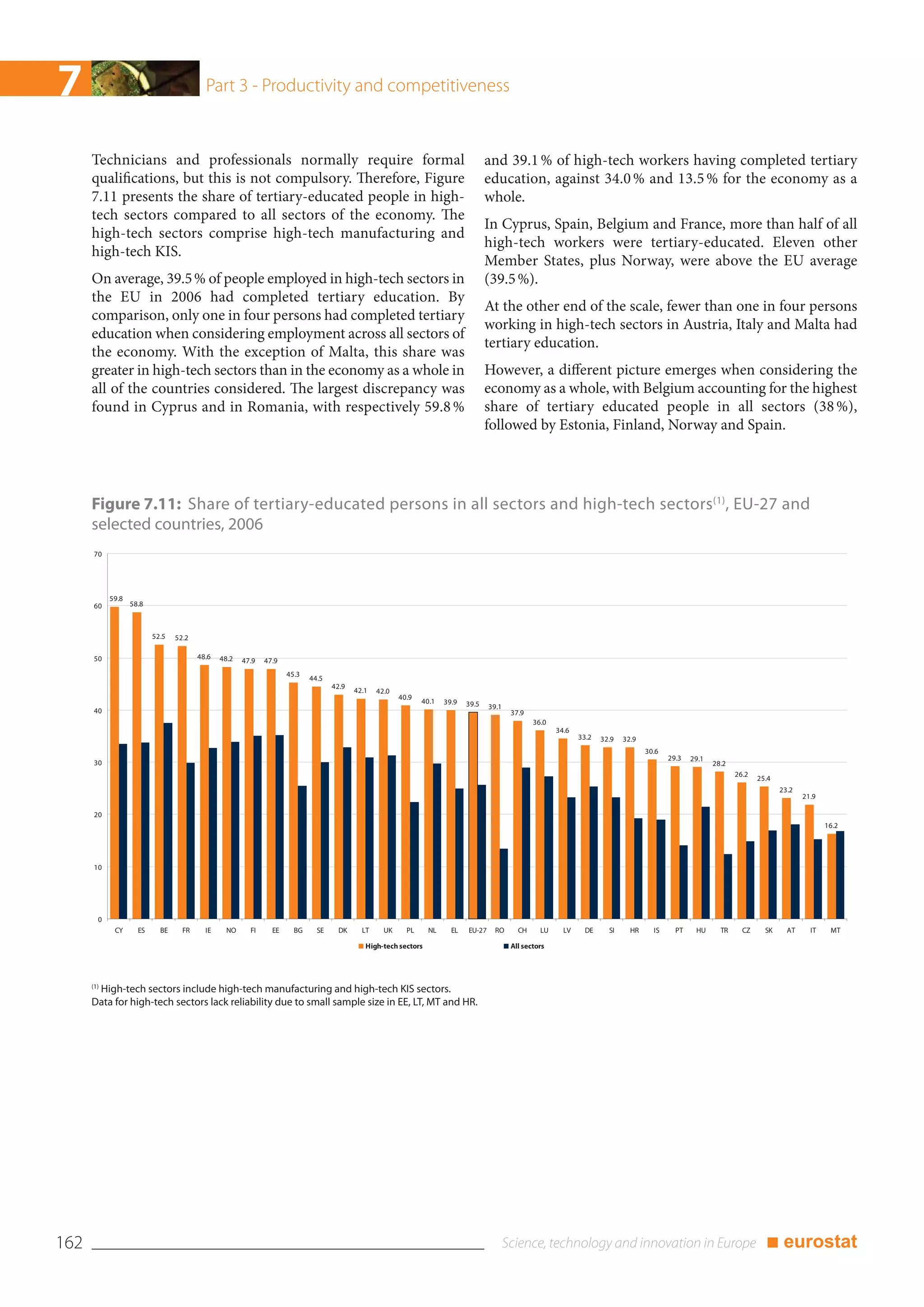
    CY                                                                                                                              five districts, with a total of 179 local authorities covering an
                                                                                                                                    area of 3 650 square kilometres. It is the hub of economic,
    LV
                                                                                                                                    scientific, and political life in south-west Germany and the
    LT                                                                                                                              centre of a flourishing economy with its own elected
    LU
                                                                                                                                    assembly and administrative structure (Verband Region
                                                                                                                                    Stuttgart). The main economic activities are services (43.3
                                                          Kozep-
   HU           Del-Dunantul (HU)
                                                     Magyarorszag (HU)                                                              %), commerce (13.2 %), industry (37.7 %), construction (5.2
   MT                                                                                                                               %) and agriculture (0.6 %).
    NL                Groningen (NL)                                                        Noord-Brabant (NL)                      The Stuttgart Region is home to many major global
    AT                   Burgenland (AT)                                          Steiermark (AT)
                                                                                                                                    companies, including: DaimlerChrysler, Porsche, Robert
                                                                                                                                    Bosch, IBM, HP and many highly successful medium-sized
                    Warminsko-
    PL                                        Malopolskie (PL)
                   Mazurskie (PL)                                                                                                   companies (‘hidden champions’), e.g. Kärcher, Dürr, Schuler,
    PT               Algarve (PT)                 Lisboa (PT)                                                                       Eberspächer and Beru. In 2003 the regional economy
                                                  Bucuresti-
                                                                                                                                    generated a GDP of EUR 88bn.
   RO                Nord-Est (RO)
                                                  Ilfov (RO)
                                                                                                                                    R&D expenditure by high-tech companies has encouraged
    SI
                                                                                                                                    the establishment of numerous research institutes. Start-ups
                        Vychodne                  Zapadne
    SK                                                                                                                              and young technology-led businesses are to be found in
                     Slovensko (SK)            Slovensko (SK)

    FI                   Åland (FI)                                                                                                 close proximity at a number of technology parks and
                                                                                                Pohjois-Suomi (FI)
                               Mellersta
                                                                                                                                    business incubation centres.
    SE
                              Norrland (SE)                                                           Västsverige (SE)
                                                                                                                                    Source: based on http://www.ricarda-project.org/regions/
   UK             Inner London (UK)                                                                  Essex (UK)


    IS


   NO


   CH


   HR


    TR
                                                  EU-27 = 1.17

         -2                   0                                     2                                 4                     %


BE: NUTS level 1.
EU-27: Eurostat estimation.
MT: provisional data.
NL and PT: national estimates.
FR and SE: break in series.
Exceptions to the reference year: AT, FR and CH: 2004.


  eurostat ■                                                                                                                                                                                            35
2                                               Part 1 - Investing in R&D


     Figure 2.16: Regional disparities (at NUTS 2 level) in                                                                            In the government sector, discrepancies in R&D intensity
     R&D expenditure as a percentage of GDP, government                                                                                were less significant between countries, with the exception of
     sector, EU-27 and selected countries, 2005                                                                                        Berlin (DE), which ranked ahead of a group of leading regions
                                                                                                                                       including Midi-Pyrénées (FR), Flevoland (NL) and Lazio
       BE      Région Wallonne (BE)                  Vlaams Gewest (BE)
                                                                                                                                       (IT).

      BG
                          Severen
                                                                                   Yugozapaden (BG)
                                                                                                                                       In contrast with total and BES R&D expenditure, in the
                       tsentralen (BG)
                                                                                                                                       government sector few countries registered R&D intensities
                          Stredni
      CZ
                        Morava (CZ)
                                                                                  Praha (CZ)
                                                                                                                                       below the European average (0.25 %) across all regions.
      DK


      DE                Detmold (DE)                                                                             Berlin (DE)


       EE

                         Border, Midland       Southern and
       IE
                         and Western (IE)       Eastern (IE)

       EL             Ionia Nisia (EL)                            Kriti (EL)
                                                                                                                                                                     Berlin
                  Ciudad Autónoma                                    Comunidad de
       ES
                    de Melilla (ES)                                   Madrid (ES)                                                         Berlin is the German Land with the lowest rate of economic
       FR
                        Champagne-
                        Ardenne (FR)
                                                                                                         Midi-Pyrénées (FR)               growth, although there are positive signs as well. The share
                                                                                                                                          of the eastern districts in GDP has been growing in recent
       IT            Valle d'Aosta (IT)                                                        Lazio (IT)
                                                                                                                                          years and the investment transfers of the past are triggering
      CY                                                                                                                                  sustainable growth.
       LV

                                                                                                                                          The services sector, which employs about 50 % of the
       LT
                                                                                                                                          workforce, is seeing dynamic growth in consulting, financial
      LU
                                                                                                                                          services, software development, marketing, advertising and
      HU
                       Eszak-                                             Kozep-                                                          engineering services. The building sector has received an
                  Magyarorszag (HU)                                  Magyarorszag (HU)
                                                                                                                                          enormous boost from the decision to move the German
      MT
                                                                                                                                          government and parliament to the capital. Major
      NL                Limburg (NL)                                                            Flevoland (NL)                            international companies have decided to open large
      AT        Niederösterreich (AT)                 Wien (AT)
                                                                                                                                          branches in Berlin, and some have moved their
                                                                                                                                          headquarters to the capital.
       PL          Podkarpackie (PL)                                           Mazowieckie (PL)


       PT                Algarve (PT)                  Lisboa (PT)                                                                        The goal of Berlin’s economic policies is to promote the city
      RO                 Centru (RO
                                                                         Bucuresti-                                                       as an international centre for services with a strong industrial
                                                                         Ilfov (RO)
                                                                                                                                          core. Key sectors will be transport technology,
       SI
                                                                                                                                          environmental and energy technologies, research in
       SK
                            Stredne
                        Slovensko (SK)
                                                               Bratislavsky
                                                                 kraj (SK)
                                                                                                                                          medical and biological technology and new media. The 250
                                                                                                                                          R&D institutions that exist today provide an excellent
       FI                       Åland (FI)                           Etelä-Suomi (FI)
                                                                                                                                          infrastructure for future developments. Recently, centres for
                       Småland med
       SE
                        öarna (SE)
                                                        Stockholm (SE)                                                                    innovation and new small and medium-sized enterprises
      UK
                       Greater
                                                                                      East Anglia (UK)                                    have been established in the districts of Wedding and
                    Manchester (UK)
                                                                                                                                          Köpenick, which aim to facilitate the transfer of knowledge
       IS
                                                                                                                                          and the establishment of new companies in the high-tech
      NO                                                                                                                                  sector.
      CH

                                                                                                                                          Source: based on http://www.innovating-regions.org
      HR


       TR


        -0.5                             0.0                      0.5                             1.0                          1.5 %


     BE: NUTS level 1.
     EU-27: Eurostat estimation.
     SE: break in series.
     Exceptions to the reference year: AT, FR and CH: 2004.


36                                                                                                                                                                                          ■ eurostat
R&D expenditure                             2
Figure 2.17: Regional disparities (at NUTS 2 level) in                                                                Considering the higher education sector, Övre Norrland (SE)
R&D expenditure as a percentage of GDP, higher                                                                        stands out with an R&D intensity of 1.62 %. Three other EU
education sector, EU-27 and selected countries, 2005                                                                  regions registered shares above 1 %: Wien (AT), Groningen
                                                                                                                      (NL), and Eastern Scotland (UK). The regions of Gießen (DE)
 BE                        Vlaams Gewest (BE)            Région Wallonne (BE)                                         and Itä-Suomi (FI) followed with R&D intensities of 0.88 %
                                                                                                                      and 0.82 % respectively.
BG        Yuzhen tsentralen (BG)           Yugozapaden (BG)


CZ           Stredni Cechy (CZ)                          Praha (CZ)
                                                                                                                      Regional disparities in higher education R&D intensities were
                                                                                                                      lowest in Belgium, Bulgaria, Ireland and Romania, while
DK
                                                                                                                      Sweden presented the largest disparities.
DE                  Lüneburg (DE)                                          Gießen (DE)


 EE

                          Border, Midland           Southern and
 IE
                          and Western (IE)           Eastern (IE)

 EL            Sterea Ellada (EL)                                Ipeiros (EL)

                  Ciudad Autónoma                          Comunidad Foral
 ES
                    de Ceuta (ES)                          de Navarra (ES)
                                                                                                                                              Övre Norrland
 FR                         Corse (FR)                          Alsace (FR)


 IT             Valle d'Aosta (IT)                            Campania (IT)                                              The region of Övre Norrland consists of two of the
CY
                                                                                                                         northernmost counties of Sweden — Norrbotten and
                                                                                                                         Västerbotten. The region is sparsely populated. Nevertheless,
 LV
                                                                                                                         there are important driving forces that have created a
 LT                                                                                                                      vibrant region, such as excellent communications, dynamic
                                                                                                                         growth in key sectors and highly acclaimed research and
LU
                                                                                                                         educational facilities.
HU             Nyugat-Dunantul (HU)                   Eszak-Alfold (HU)


MT                                                                                                                       It is however important to note that technological
                                                                                                                         development has made its mark as well: IT is among the
NL                    Noord-Brabant (NL)                                            Groningen (NL)
                                                                                                                         largest and fastest-growing primary industries in Övre
AT         Niederösterreich (AT)                                                     Wien (AT)
                                                                                                                         Norrland.
 PL              Podkarpackie (PL)                     Malopolskie (PL)


 PT
                 Região Autónoma
                                                      Lisboa (PT)
                                                                                                                         Key sectors in this field include telecommunications,
                  da Madeira (PT)
                                                                                                                         medical technology, energy, environmental research and
RO                  Sud-Est (RO)             Nord-Vest (RO)
                                                                                                                         space technology.
 SI


 SK
                      Zapadne                  Bratislavsky                                                              Source: based on STIMENT http://www.stiment.net Stimulating
                   Slovensko (SK)                kraj (SK)
                                                                                                                         New Ways of Entrepreneurship, Interreg III project
 FI                    Åland (FI)                                       Itä-Suomi (FI)

                          Norra
 SE
                    Mellansverige (SE)
                                                                                           Övre Norrland (SE)

UK                Cheshire (UK)                                                  Eastern Scotland (UK)


 IS


NO


CH


HR


 TR                       EU-27 = 0.40


  -1.0                               0.0                                   1.0                                  2.0


NBE: NUTS level 1.
EU-27: Eurostat estimation.
IT and SE: break in series.
Exceptions to the reference year:                               AT, FR and CH: 2004
                                                                NL: 2003.


  eurostat ■                                                                                                                                                                             37
Part 2
Monitoring the knowledge workers
R&D personnel
R&D personnel                            3
3.1 Introduction
As seen in Chapter 2, Research and Development (R&D)                  • The FTE unit corresponds to one year’s work by one
activities are often regarded as a catalyst for economic growth,        person employed full time.
as they comprise creative work undertaken on a systematic
                                                                      •   The HC unit corresponds to the number of individuals
basis in order to increase the stock of knowledge, including
                                                                          who are employed mainly or partly on R&D.
knowledge of man, culture and society, and the use of this
stock of knowledge to devise new applications.                     For the purposes of comparison between different regions and
                                                                   periods, the derived unit based on HC ‘as a percentage of total
R&D personnel is one of the two basic R&D input indicators,
                                                                   employment’ is frequently used in this chapter.
the other being R&D expenditure.
                                                                   Data concerning R&D personnel are broken down by the
As it is a key element of knowledge, S&T dissemination and
                                                                   following institutional sectors:
development, the R&D personnel indicator has become
increasingly appreciated by policy makers. R&D personnel              • business enterprise sector (BES),
data measure the human resources going directly into R&D
                                                                      •   government sector (GOV),
activities. R&D personnel includes all persons employed
directly in R&D, as well as those providing direct services,          •   higher education sector (HES),
such as R&D managers, administrators and clerical staff.              •   private non-profit sector (PNP), and
Two manuals are used as methodological references for R&D             •   all sectors, which is equivalent to the sum of the four
surveys:                                                                  above sectors.

   •   Proposed Standard Practice for Surveys on Research          In addition to sectors of performance, other breakdowns can
       and Experimental Development — Frascati Manual,             be used, such as:
       OECD, 2002.                                                    •   sector of economic activity,
   •   The Regional Dimension of R&D and Innovation                   •   field of science.
       Statistics — Regional Manual, Eurostat, 1996.
                                                                   The regional analysis is carried out at the NUTS 2 level. Other
This chapter presents the key R&D personnel indicators as          levels of NUTS are used in certain instances for particular
well as the main trends during the period 2001-2006. It is         countries, and this is specified in each case by means of a
divided into two sections:                                         footnote. Readers should also note that, according to the
   •   First, the main trends are highlighted at national level,   NUTS classification, the entire national territory of Denmark,
       by examining the performance of the EU-27 Member            Estonia, Cyprus, Latvia, Lithuania, Luxembourg, Malta,
       States, Iceland, Norway and the candidate countries.        Slovenia and Iceland is considered as a NUTS 0, 1 or 2 region,
       This part also looks at the global level by making          which means that those countries as a whole may appear in
       comparisons with China, Japan and Russia.                   rankings at the NUTS 2 level.
   •   Second, R&D personnel is analysed at regional level,        The analysis refers to the period 2001-2006 (or 2005). The
       by focusing on the regions of the EU-27 Member              same length of time series does not cover all countries. In
       States, Iceland and Norway.                                 general, therefore, when data for the reference year are not
                                                                   available for a particular country, the latest year available is
Two populations are measured in every section of this
                                                                   presented.
chapter:
                                                                   The complete R&D personnel time series are available on
   •   Total R&D personnel, and its sub-population
                                                                   Eurostat’s NewCronos reference database. Data for China and
   •   Researchers.                                                Japan are taken from OECD — Main Science and Technology
‘Researchers’ are defined as professionals engaged in the          Indicators (MSTI).
conception or creation of new knowledge, products,
processes, methods and systems, and in the management of
the projects concerned (Frascati Manual, paragraph 301), and
are possibly the most important population in terms of R&D
activities.
As recommended by the Frascati Manual, R&D personnel
data are expressed in two units: full-time equivalent (FTE)
and head count (HC).


 eurostat ■                                                                                                                           43
3                      Part 2 - Monitoring the knowledge workers


     Headcount (HC) data are the most appropriate measure for collecting additional information about R&D personnel.
     However, depending on the type of work, R&D may be either the principal activity of a worker or a subsidiary task. R&D may also be
     a significant part-time activity. Counting only persons whose primary function is R&D would underestimate the actual amount of
     labour devoted to R&D. Conversely, including every person who invests at least some time in R&D activities would lead to an
     overestimation of results. The number of persons engaged in R&D must therefore also be expressed in full-time equivalents (FTE).
     For more information see:
     http://www.uis.unesco.org/TEMPLATE/pdf/S&T/Workshops/CAsia/Almaty_7.pdf
     Source: UNESCO Institute for Statistics (UIS), 2006


44                                                                                                                        ■ eurostat
R&D personnel                          3
3.2 R&D personnel at national level
R&D personnel as a percentage of total employment
R&D personnel expressed as a share of total employment —                                                                                      Member States: Sweden (2.71 %), Luxembourg (2.59 %) and
or R&D personnel intensity — enables comparisons between                                                                                      Denmark (2.44 %). This was also the case in Norway (2.38 %)
countries and regions (Figure 3.1).                                                                                                           and Switzerland (2.12 %).
In 2005, 1.45 % of total EU-27 employment was related to                                                                                      The highest R&D personnel intensity in the business
R&D activities and the business enterprise sector (BES)                                                                                       enterprise sector was found in Luxembourg (2.15 %), followed
accounted for 0.62 % of R&D employment.                                                                                                       by Northern European countries such as Finland (1.70 %),
                                                                                                                                              Sweden (1.51 %), Iceland (1.48 %) and Denmark (1.41 %).
R&D personnel intensity varied significantly across EU
countries, ranging from 3.22 % in Finland to 0.45 % in                                                                                        The relatively low R&D personnel intensity observed in the
Romania. At 3.58 %, Iceland registered the highest share of                                                                                   new Member States (2004 and 2007 enlargements) may be
persons employed in R&D, followed by Finland, the only                                                                                        explained by the fact that the government sector (GOV) in
EU Member State with a share above 3 %. R&D personnel                                                                                         these countries has traditionally had a strong influence in
comprised more than 2 % of total employment in three other                                                                                    terms of R&D and that the business sector still needs time to
                                                                                                                                              develop.
Figure 3.1: R&D personnel (HC) as a percentage of total employment, all sectors and business enterprise
sector, EU-27 and selected countries, 2005
                                                      All sectors                                                                                                                Business enterprise sector
   IS                                                                                                            3.58             LU                                                                                          2.15

   FI                                                                                               3.22                           FI                                                                            1.70

   SE                                                                                  2.71                                        SE                                                                     1.51
  LU                                                                                 2.59                                          IS                                                                    1.48

  DK                                                                           2.44                                               DK                                                                    1.43
  NO                                                                          2.38                                                 JP                                                          1.04
  CH                                                                   2.12                                                       AT                                                           1.03
  AT                                                              1.98                                                            NO                                                           1.02
   BE                                                        1.85                                                                 CH                                                        0.96

  DE                                                         1.85                                                                 DE                                                    0.93
   FR                                                     1.73                                                                     BE                                                   0.91
   JP                                                     1.71                                                                     FR                                                0.83
   ES                                              1.49                                                                           NL                                             0.79
EU-27                                          1.45                                                                               RU                                           0.73
   IE                                          1.45                                                                                IE                                         0.70
   EL                                         1.41                                                                              EU-27                                   0.62
  NL                                          1.40                                                                                CZ                                   0.58
  CZ                                         1.37                                                                                  SI                                0.53
   SI                                       1.33                                                                                  UK                                 0.53
   EE                                       1.31                                                                                   ES                                0.52
  HU                                    1.27                                                                                       IT                        0.38
  HR                                    1.26                                                                                       EE                        0.37
   IT                                  1.23                                                                                        EL                   0.30
  RU                                   1.19                                                                                       MT                   0.27
   LT                                1.11                                                                                         HU                  0.24
   SK                           1.01                                                                                               SK                 0.22
   LV                         0.92                                                                                                HR                 0.21
  MT                          0.89                                                                                                 LV                0.20
   PL                        0.87                                                                                                 CY             0.18
   PT                        0.87                                                                                                  PT            0.18
  CY                   0.71                                                                                                       RO             0.18
  BG                  0.63                                                                                                         PL          0.13
  RO           0.45                                                                                                                LT          0.11
   TR         0.44                                                                                                                BG          0.08
  UK                                                                                                                               TR         0.08

        0.0   0.5             1.0             1.5                2.0          2.5             3.0          3.5          4.0 %           0.0                    0.5                       1.0            1.5             2.0          2.5 %
EU-27: Eurostat estimation.                                                                                                     Exceptions to the reference year: 2004: AT, CH and HR.
MT: provisional data.
NL (all sectors): national estimations and provisional data.
UK (BES): national estimations.
FR (all sectors): defence excluded (all or mostly).
RU: underestimated or based on understimated data.


  eurostat ■                                                                                                                                                                                                                                 45
3                           Part 2 - Monitoring the knowledge workers


     In 2005 the BES and HES both recorded an R&D personnel                                  above the EU-27 average (0.62 %). The lowest HES R&D
     intensity of 0.62 % (see Table 3.2).                                                    personnel intensity was registered in Luxembourg (0.11 %),
                                                                                             followed by Romania (0.15 %) and Bulgaria (0.17 %). In the
     In the government sector, R&D personnel represented only
                                                                                             case of Luxembourg a substantial increase in this indicator
     0.19 % of total employment.
                                                                                             has been observed since 2003, most probably as a result of the
     However, a different pattern emerges when looking at                                    creation of the new university.
     national data. The share of persons employed in R&D varies
                                                                                             As a rule, the government sector registered the lowest R&D
     significantly according to the sector of performance from one
                                                                                             personnel intensities across all countries considered, with the
     country to another. For example, in Luxembourg the BES was
                                                                                             exception of Bulgaria (0.37 %), Hungary (0.30 %), Lithuania
     far ahead of the other sectors, with a share of 2.15 %. At the
                                                                                             (0.22 %), Cyprus (0.21 %) and Poland (0.16 %), where the
     opposite end of the scale, R&D personnel intensity stood at
                                                                                             share of R&D personnel in this sector was higher than in the
     only 0.08 % and 0.11 % in Bulgaria and Lithuania respectively.
                                                                                             BES.
     R&D personnel intensity in the BES remained stable in
     Germany, Spain, France and Romania, compared to previous
     years. On the other hand, significant increases were reported
     in Estonia, Latvia and Slovenia.
     In 2005, the HES R&D personnel intensity in Finland
     (1.07 %), Sweden (1.06 %) and Norway (1.06 %) was well


     Table 3.2: R&D personnel (HC), as a percentage of total employment, by sector of performance, EU-27 and
     selected countries, 2003–2005
                             All sectors                 Business enterprise sector                          Government sector               Higher education sector

                   2003          2004       2005      2003           2004             2005         2003             2004         2005     2003         2004            2005
         EU-27     1.41 s         1.43 s    1.45 s     0.60 s         0.62 s          0.62 s        0.19 s           0.19 s      0.19 s   0.60 s        0.61 s         0.62 s
         BE        1.81           1.84      1.85       0.93           0.90            0.91          0.10             0.09        0.10     0.77          0.84           0.84
         BG        0.61           0.62      0.63       0.08           0.09            0.08          0.39             0.38        0.37     0.14          0.15           0.17
         CZ        1.18           1.28      1.37       0.51           0.57            0.58          0.28             0.28        0.28     0.38          0.42           0.50
         DK        2.24           2.41      2.44       1.32           1.47            1.43          0.19             0.18        0.18     0.72          0.74           0.81
         DE        1.85               :     1.85       0.93              :            0.93          0.24             0.24        0.24     0.69          0.68           0.68
         EE        1.28           1.32      1.31       0.26           0.29            0.37          0.19             0.18        0.16     0.81          0.82           0.76
         IE        1.39           1.43      1.45       0.66           0.69            0.70          0.09             0.09        0.06     0.64          0.65           0.69
         EL        1.33               :     1.41       0.29              :            0.30          0.21                :        0.18     0.82             :           0.93
         ES        1.45           1.49      1.49       0.48           0.52            0.52          0.20             0.22        0.23     0.76          0.75           0.74
         FR        1.68 i         1.70 i    1.73 i     0.82           0.83            0.83          0.21 i           0.21 i      0.23 i   0.62          0.63           0.64
         IT        1.13           1.14      1.23       0.37           0.37            0.38          0.19             0.20        0.20     0.55          0.55           0.61 b
         CY        0.64           0.66      0.71       0.17           0.17            0.18          0.22             0.21        0.21     0.18          0.22           0.25
         LV        0.79           0.81      0.92       0.12           0.11            0.20          0.15             0.14        0.19     0.53          0.56           0.53
         LT        1.01           1.15      1.11       0.05           0.09            0.11          0.23             0.23        0.22     0.73          0.82           0.78
         LU        2.21               :     2.59       1.89              :            2.15          0.29                :        0.33     0.03 e           :           0.11
         HU        1.24 i         1.27 b    1.27       0.24           0.23            0.24          0.29 i           0.29 b      0.30     0.71          0.75           0.74
         MT        0.66           0.90 b    0.89 p     0.07           0.29 b          0.27 p        0.03             0.04        0.03     0.57          0.57           0.59
         NL        1.32           1.46 ep   1.40 ep    0.71           0.84            0.79          0.20 bi          0.19 i      0.17 i   0.41             :              :
         AT           :           1.98         :          :           1.03               :             :             0.15           :        :          0.78              :
         PL        0.93           0.92      0.87       0.11           0.12            0.13          0.19             0.17        0.16     0.63          0.63           0.59
         PT        0.86           0.87 e    0.87       0.19           0.19 e          0.18          0.14             0.14 e      0.14     0.42          0.43 e         0.44
         RO        0.44           0.45      0.45       0.19           0.18            0.18          0.11             0.11        0.11     0.14          0.15           0.15
         SI        1.06           1.08      1.33       0.48           0.49            0.53          0.21             0.21        0.30     0.36          0.37           0.49
         SK        0.97           1.02      1.01       0.21           0.21            0.22          0.21 i           0.19 i      0.19 i   0.55          0.62           0.60
         FI        3.16           3.24      3.22       1.70           1.72            1.70          0.42             0.42        0.41     1.02          1.07           1.07
         SE        2.51               :     2.71       1.21              :            1.51          0.13                :        0.13     1.16             :           1.06
         UK           :               :        :          :              :            0.53 e        0.08             0.08        0.08        :             :              :
         IS        3.53               :     3.58       1.41              :            1.48          1.12                :        1.07     0.85             :           0.92
         NO        2.27               :     2.38       1.00           1.05            1.02          0.29                :        0.30     0.97             :           1.06
         CH           :           2.12         :          :           0.96               :             :             0.04 i         :        :          1.13 e            :
         HR        1.12           1.26         :       0.15           0.21               :          0.36             0.41           :     0.62          0.65              :
         TR        0.39 i         0.40 i    0.44       0.05           0.06            0.08          0.04             0.04        0.05     0.30 i        0.30 i         0.31
         JP        1.66           1.68      1.71       1.00           1.01            1.04          0.11             0.11        0.11     0.52          0.53           0.53
         RU        1.30 i         1.25 i    1.19 i     0.85 i         0.80 i          0.73 i        0.39 i           0.38 i      0.40 i   0.07 i        0.06 i         0.06 i


     Flag 'i'      FR, HU and SK: defence excluded (all or mostly).
                   CH: federal or central government only.
                   NL: includes other classes.
                   TR and RU: underestimated or based on understimated data.


46                                                                                                                                                         ■ eurostat
R&D personnel                        3
In the EU-27, R&D personnel intensity increased between                                                 Switzerland. A third group includes countries where R&D
2000 and 2005 at an average annual growth rate (AAGR) of                                                personnel intensity was below the EU-27 average, but where
1.29 % (see Figure 3.3).                                                                                R&D personnel AAGR was higher than the average. This
                                                                                                        group comprises 10 Member States, namely Malta, Cyprus,
Four groups of countries can be identified in this graph. A
                                                                                                        Romania, the Czech Republic, Estonia, Italy, Portugal, the
first goup includes countries where R&D personnel intensity
                                                                                                        Netherlands, Hungary and Lithuania, plus Croatia and
and AAGR are higher than the EU-27 average. This group
                                                                                                        Turkey.
includes the Nordic countries (except for Iceland, which was
below average in terms of R&D personnel intensity), together                                            The fourth group comprises countries where R&D personnel
with Luxembourg, Austria, Spain and Japan.                                                              intensity and AAGR were below the EU-27 average, namely
                                                                                                        Bulgaria, Latvia, Greece, Poland, Slovenia, Slovakia and
The second group comprises countries where AAGR was
                                                                                                        Russia.
below the EU-27 average, but where R&D personnel intensity
was high. This group includes France, Belgium, Germany and


Figure 3.3: R&D personnel (HC) as a percentage of total employment in 2005 and average annual growth
rate (AAGR) 2000–2005 (1), EU-27 and selected countries
          AAGR 2000-2005
9
                                                                EU-27 = 1.45

                                                                                                                    LU
                                                                HR


6
                                                                                                  AT
                                          MT
                           RO        CY

                           TR


                                                                CZ         ES

                                                                                                               DK
                                                                          IE
3                                                          EE
                                          PT
                                                                                                             NO
                                                           IT

                                                                                     JP                                               FI
                                                           HU        NL
                                                      LT                                                            SE
                                                                                                                                                      EU-27 = 1.29
                                           LV                                   FR
                                BG                                                                                                           IS
                                                                     EL               BE

                                          PL
0                                                                                          DE

                                                                     SI

                                                     SK

                                                                                                       CH


                                                           RU
3
    0.0                    0.5                 1.0                        1.5                   2.0           2.5           3.0            3.5                   4.0
(1)                                                                                                                                               l   f     l
  Calcultated on R&D personnel expressed as a percentage of total employment.
Exceptions to the reference year:      2004: AT, CH and HR.
Exceptions to the reference period:    2000-2004: CH
                                       2001-2005: EL, ES, SE, NO and JP
                                       2002-2004: AT and HR
                                       2002-2005: BE, MT and NL
                                       2003-2005: DE, LU and IS.
EU-27: Eurostat estimation.
MT: provisional data.
FR: defence excluded (all or mostly).
NL: national estimations and provisional data.
RU: underestimated or based on understimated data.


      eurostat ■                                                                                                                                                       47
3                                Part 2 - Monitoring the knowledge workers


     R&D personnel in full-time equivalent — FTE
     In 2006, more than 2 million persons (expressed in full-time                                       sector (81.7 %). Bulgaria led the way in terms of R&D
     equivalent — FTE) were engaged in R&D activities in the                                            personnel in the government sector (62.8 %), and Lithuania
     EU-27. Of these, 54 % were employed in Germany, France and                                         registered the highest share of R&D personnel working in the
     the United Kingdom.                                                                                higher education sector (63.2 %).
     In the EU-27, the business enterprise sector employed around                                       Overall, the AAGR of R&D personnel employed full-time was
     1.15 million persons in FTE, representing 53 % of the total                                        positive in all sectors, although at country level some
     R&D personnel. The higher education sector (HES) counted                                           countries such as Belgium ( 0.3 %), Lithuania (-0.9 %), Poland
     655 000 persons employed (in FTE) in R&D, and the                                                  (-1.0 %) and Romania (-1.2 %) registered a decrease.
     government sector (GOV) employed 330 000 persons (in
                                                                                                        On average, women accounted for only 32.9 % of R&D
     FTE) in R&D. The remaining 21 000 were employed in the
                                                                                                        personnel in 2006. This share tended to be higher in the
     private non-profit sector.
                                                                                                        higher education (44.9 %) and government sectors (43.3 %)
     In absolute terms, Germany and France registered the most                                          than in the business enterprise sector (22.8 %). More than half
     R&D personnel (in FTE) in all sectors. In relative terms,                                          of all R&D personnel employed in the goverment sector in
     Luxembourg accounted for the highest share of R&D                                                  Bulgaria, Estonia, Latvia, Lithuania, Portugal, Romania and
     personnel employed full-time in the business enterprise                                            Slovakia were women.
     Table 3.4: R&D personnel in FTE and percentage of women in 2006 by sector of performance and average
     annual growth rate (AAGR) 2001-2006 (1), by sector of performance, EU-27 and selected countries
                                  All sectors                       Business enterprise sector                           Government sector                        Higher education sector
                     R&D PSL        % of          AAGR        R&D PSL         % of          AAGR             R&D PSL           % of        AAGR             R&D PSL        % of         AAGR
                      in FTE       women        2001-2006      in FTE        women        2001-2006           in FTE          women      2001-2006           in FTE       women       2001-2006
           EU-27   2 167 381 s        32.9 s        1.8 s    1 155 669 s        22.8 s            1.5 s      330 452 s          43.3 s         1.3 s       654 955 s        44.9 s            2.3 s
           BE        55 161 p             :         -0.3 p     32 206 p         24.5 p           -1.9 p        3 861 p             :           1.0 p         18 540 p          :              2.7 p
           BG        16 321               :         1.8          2 463             :              5.5         10 255               :          -0.3            3 464            :              6.2
           CZ        47 729           31.5         12.8        24 101           21.4             14.9         10 698            45.8           6.6           12 776         38.6            16.1
           DK        45 182 p             :         2.5 p      29 268 p            :              2.5 p        3 305 p             :          -9.6 p         12 322 p          :              8.3 p
           DE       489 145 p             :         0.4 p     312 145              :              0.3         77 000 p             :           1.4 p       100 000 p           :             -0.3 p
           EE          4 740 p        42.5 e        4.8 p        1 630 p        30.2 e           21.1 p          714            62.6          -1.0            2 290         44.2             -0.3
           IE        17 647 p             :         5.8 p      10 800 p            :              3.4 p        1 248            38.3          -0.8            5 599         42.1            14.1
           EL        35 140 e             :         3.1 e      11 402 e            :              0.4 e        4 578 e             :          -0.6 e         18 952 e          :              5.9 e
           ES       188 978           38.2          8.5        82 870           29.2             12.3         34 588            49.3           8.1           70 950         43.2              5.4
           FR       353 554 i             :         1.5 i     198 864              :              1.8         49 645 i             :           0.1 i         98 743            :              1.8
           IT       175 248           34.8          3.3        70 725           19.7              2.0         32 684            42.7           2.4           66 976 b       45.5 b            3.3 b
           CY          1 220 p            :        12.1 p         310 p            :             16.6 p          355 p             :           0.1 p           465 p           :            26.4 p
           LV          6 520          49.1          3.6          1 873          38.3              6.7          1 164            63.4           1.3            3 482         50.2              2.8
           LT        11 443               :         -0.9         1 276             :             14.6          2 930               :          -9.0            7 237            :              1.8
           LU          4 586 ep           :         4.6 ep       3 746 e           :              2.3 e          592 p             :           7.5 p           248 p           :            93.9 p
           HU        25 971           41.6          2.5          9 279          32.7              6.5          8 169            47.3           1.0            8 523         45.7              0.3
           MT           752 p         19.9 p       12.2 p         402 p         18.7 p           52.2 p           43            18.6         -24.9             307          22.1              3.7
           NL        94 689 ep            :         1.2 ep     52 796 p            :              1.8 p       12 765               :          -0.1                :            :                :
           AT        50 322 e             :         6.7 e      34 192 e            :              6.4 e        2 388 e             :           3.8 e         13 494 e          :              8.1 e
           PL        73 554               :         -1.0       14 166              :             -3.9         17 668               :           0.2           41 535            :             -0.4
           PT        25 728           45.3          2.9          6 133          28.2             12.2          4 533            58.0          -6.7           11 680         49.1              3.5
           RO        30 802           46.5          -1.2       13 761           44.4             -7.1          8 381            52.8          -0.1            8 563         43.5            14.8
           SI          9 765          37.0          2.6          4 807          30.8              2.5          2 842            44.5           3.5            2 088         41.2              3.2
           SK        15 028           45.1          0.8          3 144          33.7             -7.9          3 732 i          52.6          -1.3 i          8 138         46.2              7.5
           FI        58 257               :         1.7        32 993              :              1.9          7 408               :           0.3           17 362            :              2.2
           SE        78 715               :         1.7        57 641              :              3.1          3 618               :           5.1           17 137            :             -2.9
           UK       323 358 e             :         0.2 e     145 401              :             -2.8         20 415            37.0          -1.4                :            :                :
           IS          3 226          39.2          2.7          1 530          33.8              3.5            849            41.2           4.0             742          44.7              0.0
           NO        31 745 p             :         3.2 p      16 545              :              2.2          5 330               :           2.3            9 870            :              5.7
           CH        52 250               :            :       33 085              :                :            810 i             :           0.3 i         18 355 e          :              4.2 e
           HR          8 543              :         -9.9         2 228             :             -2.7          2 722               :          -2.6            3 579            :            -16.7
           TR        54 444           30.8         14.5        18 029           22.4             26.3          9 702            23.4         12.9            26 713         39.1              9.7
           CN      1 502 472 i            :         9.5 i     987 834 i            :             13.2 i      272 133 i             :           1.4 i       242 505 i           :              7.2 i
           JP       921 173               :         0.8       609 808              :              2.1         62 975               :           0.1         234 052             :             -1.7
           RU       916 509               :         -1.9      515 319              :             -3.7        297 880               :           1.4         100 990             :             -0.4
     (1)
       Calcultated on R&D personnel expressed in FTE.
     Exceptions to the refernce year:        2005: FR, IT, PT, UK, IS and JP                            Exceptions to the reference period:            2001-2005: FR, IT, PT, IS and JP
                                             2004: CH.                                                                                                 2002-2004: CH
     Flag 'i'      FR and SK: defence excluded (all or mostly).                                                                                        2002-2005: UK
                   CH: federal or central government only.                                                                                             2002-2006: MT, AT and HR
                   CN: data do not comply with Frascati Manual recommendations.                                                                        2003-2006: LU.


48                                                                                                                                                                             ■ eurostat
R&D personnel                                           3
R&D personnel in head count — HC
In terms of head count (HC), the number of R&D personnel                                          In 2005, the higher education sector accounted for more than
exceeded 3 million persons in the EU-27, in line with the                                         50 % of R&D personnel in Lithuania (70 %), Poland (68 %),
positive trends registered in previous years.                                                     Malta and Greece (both 66 %), Slovakia (59 %), Hungary and
                                                                                                  Latvia (both 58 %). With 378 000 persons employed (HC) in
The leading countries in terms of R&D personnel expressed
                                                                                                  R&D activities, the government sector clearly lagged behind
in HC were the same as for R&D personnel expressed in FTE
                                                                                                  the BES and the HES at EU-27 level.
— Germany, followed by France.
                                                                                                  Overall, the government sector in the EU-27 reported the
In 2005, the business enterprise sector (BES) accounted for
                                                                                                  lowest share of personnel employed in R&D, amounting to
the largest share of R&D personnel in the EU-27, with a
                                                                                                  13 % of the total in 2005. However, the government sector in
headcount of 1.3 million, followed very closely by the higher
                                                                                                  Bulgaria employed 58 % of total R&D personnel (in HC), far
education sector (HES). The difference between the number
                                                                                                  ahead of all other Member States.
of persons engaged in R&D in the two sectors was more
significant in FTE than in HC, which indicates that a larger
share of R&D personnel is employed part-time in the HES
than in the BES.


Table 3.5: R&D personnel in HC, by sector of performance, EU-27 and selected countries, 2003–2005
                          All sectors                        Business enterprise sector                           Government sector                       Higher education sector

            2003           2004         2005          2003            2004           2005             2003            2004            2005        2003           2004           2005
    EU-27   2 892 017 s   2 962 992 s   3 047 825 s   1 239 847 s    1 275 691 s    1 308 691 s       384 636 s        388 816 s      399 689 s   1 237 304 s   1 266 955 s    1 305 183 s
    BE        73 629         76 340       78 509        37 812         37 249         38 391            3 916            3 896          4 028       31 284         34 596           35 515
    BG        17 400         18 025       18 638          2 398          2 544            2 305        10 977           11 053         10 893         3 920         4 338            5 030
    CZ        55 699         60 148       65 379        24 122         26 967         27 708           13 357           13 220         13 450       17 877         19 725           23 998
    DK        60 525         65 994       67 267        35 726         40 346         39 443            5 010            4 882          4 874       19 406         20 348           22 376
    DE       664 731               :     678 945       333 285               :       341 832           84 695           86 701         87 532      246 751        242 128       249 581
    EE          7 600         7 882         7 955         1 529          1 735            2 249         1 145            1 099            991         4 813         4 894            4 591
    IE        25 194         26 584       28 270        12 037         12 800         13 621            1 657            1 609          1 249       11 500         12 175           13 400
    GR        56 708               :      61 454        12 259               :        12 896            9 148                 :         7 861       35 088               :          40 486
    ES       249 969       267 943       282 804        82 327         92 888         98 564           35 306           39 499         43 946      131 725        135 027       139 717
    FR       415 061 i     421 312 i     432 602 i     203 264        206 955        208 116           50 690 i         51 284 i       56 347 i    153 131        155 347       160 552
    IT       249 889       255 535       277 370        81 189         81 822         86 609           42 610           44 061         45 552      120 736        123 266       136 618 b
    CY          2 102         2 235         2 470          567            571              634            724              705            724          601           757              885
    LV          8 002         8 273         9 488         1 228          1 135            2 054         1 472            1 443          1 959         5 302         5 694            5 474
    LT        14 534         16 436       16 323           781           1 309            1 559         3 301            3 330          3 259       10 452         11 797           11 505
    LU          4 135              :        5 015         3 533              :            4 157           548                 :           641            54 e            :            217
    HU        48 681 i       49 615 b     49 723          9 438          8 870            9 394        11 474 i         11 483 b       11 627       27 769         29 262           28 702
    MT           975          1 329 b       1 320 p          97           428 b            406 p             37              52              38        841           849              876
    NL       106 980       118 104 ep    113 606 ep     57 442         68 286         64 404           15 957 bi        15 137 i       14 141 i     33 581               :                :
    AT              :        74 191             :             :        38 737                 :               :          5 531                :           :        29 358                 :
    PL       126 241       127 356       123 431        15 035         16 846         17 875           25 390           23 578         21 966       85 745         86 823           83 433
    PT        44 036         44 311 e     44 585          9 882          9 653 e          9 423         7 273            7 317 e        7 360       21 488         22 000 e         22 512
    RO        39 985         40 725       41 035        17 232         16 601         16 647            9 641           10 162         10 258       12 859         13 739           13 889
    SI          9 506        10 155       12 600          4 278          4 638            5 033         1 926            2 022          2 841         3 265         3 450            4 695
    SK        20 928         22 217       22 294          4 545          4 642            4 821         4 458 i          4 046 i        4 252 i     11 917         13 442           13 199
    FI        74 773         76 687       77 275        40 089         40 674         40 802            9 903            9 943          9 926       24 049         25 298           25 793
    SE       108 146               :     117 714        52 346               :        65 491            5 521                 :         5 675       49 909               :          46 151
    UK              :              :            :             :              :       149 585 e         22 761           22 578         22 292             :              :                :
    IS          5 466              :        5 724         2 193              :            2 365         1 740                 :         1 716         1 323              :           1 472
    NO        51 175               :      54 341        22 572         23 865         23 310            6 642                 :         6 826       21 961               :          24 205
    CH              :        84 090             :             :        37 820                 :               :          1 595 i              :           :        44 675 e               :
    HR        17 216         19 739             :         2 237          3 233                :         5 487            6 398                :       9 492        10 108                 :
    TR        83 281 i       86 680 i     97 355        10 848         12 398         18 479            8 572            8 747         11 372       63 861 i       65 535 i         67 504
    JP      1 081 099     1 096 078     1 122 680      653 380        659 343        683 705           72 367           72 388         72 499      335 983        345 274       349 034
    RU       858 470 i     839 338 i     813 207 i     558 668 i      537 473 i      496 706 i        256 098 i        258 078 i      272 718 i     43 120 i       43 414 i         43 500 i


Flag 'i'        FR, HU and SK: defence excluded (all or mostly).
                CH: federal or central government only.
                RU and TR: underestimated or based on underestimated data.


  eurostat ■                                                                                                                                                                                   49
3                            Part 2 - Monitoring the knowledge workers


     Researchers in full-time equivalent — FTE
     In 2006, 1.3 million researchers (in FTE) were employed in                             The majority of researchers in the EU-27 were employed in
     the EU-27, accounting for 60 % of all persons employed in                              the business enterprise sector, followed by the higher
     R&D (Table 3.4). In the EU-27, the number of researchers                               education sector; the government sector employed 14 % of
     employed in full-time equivalent has increased by more than                            researchers at EU level.
     77 000 over the past three years. This positive trend was also
     observed at country level, with the exception of Poland,
     Romania and Finland, where the number of researchers                                   At country level, the Baltic States, together with Greece, Spain,
     decreased over the same period.                                                        Cyprus, Malta, Poland and Slovakia, employed more
                                                                                            researchers in the higher education sector than in the BES,
     At EU level, in absolute terms Germany (282 063) and Spain
                                                                                            while only Bulgaria registered a large share (59 %) of
     (115 798) counted the most researchers in FTE.
                                                                                            researchers in the government sector.


     Table 3.6: Researchers in FTE, by sector of performance, EU-27 and selected countries, 2004–2006
                                  Agriculture,
                                                    Mining and                     Electricity, gas
                   Total        hunting, forestry                 Manufacturing                       Construction   Services
                                                    quarrying                     and water supply
                                  and fishing
         EU-27     628 380 s                  :              :               :                 :                :               :
         BE         16 769                 133             34          12 804                66              242         3 490
         BG          1 157                    :c             :c          501                  0                0          653
         CZ         10 353 b                33 b            4b          5 070 b               8b              76 b       5 162 b
         DK         17 624                  52               :c         9 156                  :c             54         8 325
         DE        166 874                 190             62         144 495               331              189        21 608
         EE            883                   2               :c          272                 29                 :c        576
         IE          6 768                   7              2           3 652                 9                0         3 098
         EL          6 033                  35             69           2 837                 3               38         3 050
         ES         35 034                 234             42          16 465               205              804        17 284
         FR        108 814               1 154            443          87 695             1 758              401        17 363
         IT         27 939                    :            96          17 820                91               64         9 868
         CY            130                   2              0             49                  3                0           75
         LV            468                    :              :           162                   :                :         306
         LT            716                    :             4            440                  5                6          261
         LU          1 696                    :              :           835                   :                :         860
         HU          5 008                 118              2           3 152                47               22         1 667
         MT            189 p                  :             0            133 p                1p               0p          55 p
         NL         22 745 p               205            388          14 359               100              517         7 176
         AT         16 508                  13             10          11 458                42               81         4 904
         PL          9 412                  25              1           4 558                56                0         4 772
         PT          4 014                  23              4           2 042                15               43         1 887
         RO         10 319               1 215            342           6 727               548               87         1 400
         SI          1 936                   0             25           1 475                 3                0          433
         SK          1 947                  55              0            547                   :c               :c       1 339
         FI         21 967                   3             16          17 250                24              110         4 564
         SE         36 697 bi              100             98          24 126                61              285        12 028
         UK         93 717                    :c          220                :c             179              478        23 432
         IS          1 012                  19               :           348                  6                4          635
         NO         10 692 i                76            449           4 276                46               54         5 791
         CH         12 640                    :              :          9 365                  :                :        3 275
         HR          1 015                  21              0            222                   :              23          749
         TR          9 456                  30             68           5 897                10               46         3 404

     flag 'i'      FR, and SK: defence excluded (all or mostly).
                   SE and NO : university graduates instead of reseachers.
                   CH: federal or central government only.
                   TR: underestimated or based on underestimated data.
                   NL: includes other classes.


50                                                                                                                                           ■ eurostat
R&D personnel                                                    3
In the EU-27, the number of researchers (in FTE) in all                                                                                   At EU level, the number of researchers (in FTE) in the BES
sectors and in the BES increased at an average annual growth                                                                              grew on average by 3.2 % a year. The highest growth rates were
rate of 2.8 % and 3.2 % respectively between 2001 and 2006.                                                                               found in Malta (47.1 %), Estonia (16.3 %), Cyprus (16.1 %),
                                                                                                                                          Spain (16.1 %) and Lithuania (16.0 %).
From a global perspective, China, Japan and the United States
also registered positive growth in the number of researchers                                                                              In the business enterprise sector, ten European countries were
employed full-time. However, the AAGR in China (10.5 %)                                                                                   below the EU-27 mean. Between 2001 and 2006, the largest
was higher than the EU-27 average, while Japan (1.1 %) and                                                                                drops in AAGR were recorded in Romania (-7.4 %) and
the United States (1.4 %) remained below the EU average.                                                                                  Croatia (-12.9 %). Poland, Belgium, Finland and Slovakia also
                                                                                                                                          reported a decrease in AAGR over the same period.
In all sectors, the highest increases in AAGR were observed in
Cyprus (17.8 %), Malta (15.0 %), Turkey (13.4 %) and the                                                                                  Again, in the international context, growth in the number of
Czech Republic (11.9 %). Nine Member States reported a                                                                                    researchers (in FTE) employed in the BES was stronger in the
lower AAGR than the EU-27 average. Among them,                                                                                            EU-27 than in Japan (2.8 %) and the United States (1.0 %),
Lithuania and Finland recorded a decrease between 2001 and                                                                                while the AAGR remained very strong in China (14.9 %).
2006.
Figure 3.7: Average annual growth rate (AAGR) of researchers in FTE, all sectors and business enterprise
sector, EU-27 and selected countries, 2001–2006
                                             All sectors                                                                                                            Business enterprise sector

    CY                                                                                                            17.8        MT                                                                                                                47.1

    MT                                                                                                     15.0                TR                                                                                                              27.1

    TR                                                                                                 13.4                    EE                                                                                                            16.3

    CZ                                                                                             11.9                       CY                                                                                                         16.1

    CN                                                                                          10.5                           ES                                                                                                        16.1

    DK                                                                                   8.1                                   LT                                                                                                        16.0

     ES                                                                              7.7                                      CN                                                                                                       14.9

     EL                                                                            6.7                                        CZ                                                                                                      14.4

    LU                                                                         6.4                                            DK                                                                                               12.5

     IE                                                                        6.3                                             PT                                                                                       10.2

    AT                                                                        6.0                                             HU                                                                                  8.9

     EE                                                                      5.6                                               SI                                                                               8.4

     IT                                                                      5.5                                               EL                                                                           7.3

     SI                                                                    5.3                                                 SE                                                                         6.2

    PT                                                                 4.5                                                     FR                                                                    5.3

    SK                                                                 4.2                                                    AT                                                                    4.9

     SE                                                            3.9                                                        NL                                                                4.4

     IS                                                            3.8                                                         IS                                                               4.4

    HU                                                             3.7                                                        BG                                                            3.8

    FR                                                             3.6                                                         IE                                                          3.2

    LV                                                           2.8                                                        EU-27                                                         3.2

 EU-27                                                           2.8                                                          LU                                                          2.8

    BG                                                       2.3                                                               JP                                                         2.8

    NO                                                      1.9                                                                LV                                                        2.6

    US                                                     1.4                                                                 IT                                                   1.7

    DE                                                 1.3                                                                    DE                                                    1.6

    PL                                                 1.2                                                                    US                                                   1.0

    UK                                                 1.1                                                                    NO                                                  0.6

     JP                                                1.1                                                                    UK                                                  0.6

    BE                                                 1.0                                                                     PL                                      -0.6

    RO                                                0.8                                                                      BE                                     -1.0

    NL                                               0.1                                                                       FI                                    -1.5

     LT                                   -0.1                                                                                 SK                            -3.4

     FI                              -0.7                                                                                     RU                             -3.6

    RU                             -1.7                                                                                       RO                      -7.4

    HR          -11.6                                                                                                         HR -12.9

          -15           -10   -5                 0                     5                   10             15         20 %           -15         -10          -5               0                 5                 10              15                20 %

EU-27: Eurostat estimation.                                                                                                               Exceptions to the reference period:
DE (BES), EL, LU, AT and US: national estimations.                                                                                                 2001-2005: IT (all sectors), PT, IS, FR, NO (all sectors), US and JP
BE, DK, DE (all sectors), EE, IE, IT (BES), CY, LU (all sectors), MT and NL: provisional data.                                                     2002-2005: UK (all sectors)
                                                                                                                                                   2002-2006: MT, AT and HR
                                                                                                                                                   2003-2006: LU
                                                                                                                                                   2004-2006: FI.


  eurostat ■                                                                                                                                                                                                                                               51
3                             Part 2 - Monitoring the knowledge workers


     Table 3.8: Researchers in HC and by qualification as a percentage, EU-27 and selected countries, 2005

                             Total                      By qualification as a percentage
                             in HC         ISCED 5A          ISCED 5b        ISCED 6        Other
         EU-27            1 857 947 s               :                   :           :               :
         BE                  48 757              69                     6         23                2
         BG                  11 920              44                     2         53                1
         CZ                  37 542              49                     1         43                7
         DK                  43 460                 :                   :           :               :
         DE                 411 784                 :                   :           :               :
         EE                    5 734             58                     3         40                0
         IE                  17 653                 :                   :         36                :
         EL                  33 396                 :                   :           :               :
         ES                 140 407              54                     0         44                1
         FR                 252 994 i               :                   :           :               :
         IT                 125 534                 :                   :           :               :
         CY                    1 424             54                     1         45                0
         LV                    5 748                :                   :         48                :
         LT                  11 918                 :                   :         47                :
         LU                    2 443                :                   :           :               :
         HU                  31 407              62 i                   :         38                0
         MT                      977 p           55 p                   0p        45 p              0p
         NL                  49 831 ep              :                   :           :               :
         AT                  44 127              47                     7         30           16
         PL                  97 875              37 i                   :         63                0
         PT                  37 769              40                     2         58                :
         RO                  29 608              67                     5         28                :
         SI                    7 644             51                     4         44                1
         SK                  17 526              49                     :         48                3
         FI                  50 773                 :                   :           :               :
         SE                  82 496 i               :                   :           :               :
         UK                          :              :                   :           :               :
         NO                  36 998                 :                   :         27                :
         HR                  13 139              52                     0         48                0
         TR                  83 856              56                     1         43                1
         RU                 391 121 i            75 i                   :         25 i              :

     Exceptions to the reference year:     2001: ES
                                           2004: AT and HR
                                           2006: MT.
     Flag 'i'      FR: defence excluded (all or mostly).
                   SE: university graduates instead of reseachers.
                   HU and PL: includes other classes.
                   RU: underestimated or based on understimated data.
     Meaning of qualification grades: see methodological notes.


     In the EU-27, most researchers employed in HC have                           In all countries for which data were available, less than 10 %
     completed tertiary education (ISCED 5 and 6); Poland,                        of researchers had completed ISCED 5B education; ISCED 5B
     Portugal and Bulgaria registered the highest shares of                       programmes generally include a more technical and
     ISCED 6 graduates (63 %, 58 % and 53 % respectively), while                  vocational orientation than ISCED 5A programmes, which
     the largest shares of researchers having completed the first                 generally present a more theoretical approach.
     stage of tertiary education (ISCED 5A) were found in
     Belgium (69 %), Romania (67 %) and Hungary (62 %).


52                                                                                                                              ■ eurostat
R&D personnel                            3
Researchers by sex
Figure 3.9 shows the share of female researchers measured in          At the other end of the scale, women account for less than
head count (HC), both for all sectors and for the business            20 % of researchers in the Netherlands (18 %) and
enterprise sector (BES).                                              Luxembourg (18 %). This share was even lower in Japan
                                                                      (12 %).
Female researchers are still under-represented in most EU-27
countries, especially in the business enterprise sector. Women        A similar pattern can be observed in the business enterprise
accounted for 30 % of researchers in all sectors and 19 % in          sector, but the share of female researchers was consistently
the BES.                                                              lower in the BES than in other sectors. This was true for the
                                                                      EU-27 and all countries for which data are available.
Latvia was the only country where female researchers
outnumbered male researchers in all sectors. The share of             In no country was the share of female researchers employed
female researchers exceeded 40 % in six other Member States           in the BES higher than 50 %. In this context, Bulgaria (49 %)
(Lithuania, Bulgaria, Portugal, Romania, Estonia and                  and Latvia (46 %) accounted for the largest shares. As a rule,
Slovakia). Aside from Portugal, these were all new Member             new Member States generally registered higher shares of
States (2004 and 2007 enlargements). This share was also              women employed as researchers than the EU-27 average
above 40 % in Croatia and in Russia.                                  (with the exception of the Czech Republic).


              Why are there so few women in decision-making positions in research and why is this a problem?

   Only 15 % of full professors in European universities are women, and women are under-represented on scientific decision-making
   boards in almost all European countries. Such a situation must inevitably mean that the individual and collective opinions of women
   are less likely to be voiced in policy- and decision-making processes, which may lead to biased decision-making on topics of future
   research development. If women scientists are not visible and not seen to be succeeding in their careers, they cannot serve as role
   models to attract and retain young women in scientific professions.

   We need a sincere commitment, particularly among leaders in science, to the goal of equality — for the benefit of quality. There is
   widespread ignorance and denial of the problem of gender inequality in science. Therefore, the national governments need
   encouragement from the EU to address the inequality issue in research, to support concrete measures with sufficient resources, and
   to assist in raising awareness among decision-makers, as well as the public, so that gender stereotyping can be resisted.
   From imbalance to balance
   Women are under-represented in practically all decision-making bodies, and at the professor/Grade A level in general, and have less
   access to decision-making positions than men. Therefore, (a) reasonable gender balance (e.g. 40:60) should be made mandatory in
   decision-making bodies, (b) the working environment in research should be updated to improve the current work-life balance for
   the benefit of both women and men, (c) the gender balance should be closely monitored (by the EU as well as national
   governments) and any imbalance must be justified.
   From opacity to transparency
   Funding, promotion and appointment procedures lack transparency, and this tends to disadvantage women, particularly in top
   positions in science. Therefore, transparent procedures should be implemented by the scientific community, and the criteria, success
   rates and evaluation reports must be made public.
   From inequality to quality
   Equality is part of quality in science. Inequality must therefore be addressed by taking measures to systematically introduce the
   gender perspective in human resource development and in future research.

   This includes training the decision-makers, which often includes peers, to avoid gender bias, and eradicating gender bias both in
   research and in recruitment and promotion procedures. There can be no quality without equality.
   Finally, from complacency to urgency
   European science is falling behind, the potential of our women in research is under-utilised, young people are staying away from
   science. The European Research Area needs women and the young. So we must act now.

   Source: based on Mapping the Maze/Getting More Women to the top in Research. European Commission DG RTD


 eurostat ■                                                                                                                               53
3                               Part 2 - Monitoring the knowledge workers


     Figure 3.9: Percentage of female researchers (in HC), all sectors and business entreprise sector, EU-27 and
     selected countries, 2005
                                           All sectors                                                                                                 Business enterprise
        LV                                                                                            52            BG                                                                                    49
        LT                                                                                       49                  LV                                                                              46
       BG                                                                                   46                      RO                                                                          42
       RO                                                                               45                          RU                                                                         41
        PT                                                                             44                           HR                                                                    39
       RU                                                                         42                                 SK                                                              32
        EE                                                                       41                                  IS                                                              32
        SK                                                                       41                                  LT                                                         30
       HR                                                                        41                                  EL                                                    28
        PL                                                                  39                                       ES                                                27
        IS                                                                  39                                       PL                                                27
        ES                                                             37                                            PT                                               26
        EL                                                            36                                             SI                                               26
        SE                                                            36                                            DK                                            25
        TR                                                            36                                             SE                                           25
        SI                                                        35                                                 TR                                           25
       HU                                                        34                                                  EE                                          24
        CY                                                   33                                                     HU                                       23
        IT                                                  32                                                      CY                                      22
       NO                                                   32                                                      CH                                  21
     EU-27                                             30                                                            BE                                20
        BE                                             30                                                            IE                                20
       DK                                              30                                                            FR                                20
        IE                                             30                                                            IT                                20
        FI                                             30                                                           MT                                 20
        CZ                                            29                                                            NO                                 20
        FR                                       28                                                               EU-27                           19
       CH                                        27                                                                 UK                             19
       MT                                   25                                                                      CZ                            18
        AT                                 24                                                                        FI                           18
        DE                            21                                                                            LU                       14
        LU                       18                                                                                 AT                   13
        NL                       18                                                                                 DE                  12
        JP                 12                                                                                       NL             10
       UK                                                                                                            JP       7

             0        10         20               30                       40                    50        60 %           0       10              20                       30             40              50     60 %

     EU-27: Eurostat estimation.
     MT: provisional data.
     UK (BES): national estimations.
     Exceptions to the reference year:        2004: AT, CH and HR.
     RU: underestimated or based on underestimated data.
     NO: university graduates instead of researchers.
     NL (all sectors): national estimations and provisional data.


54                                                                                                                                                                                                             ■ eurostat
R&D personnel                         3
Researchers by economic activity
Table 3.10 provides a breakdown of business enterprise                            The manufacturing sector employed more than 80 % of
researchers in full-time equivalent (FTE) by sector of                            researchers in Germany and France, and more than 70 % in
economic activity (NACE). In terms of the number of                               Belgium, Malta, Slovenia and Finland. In most countries the
researchers, manufacturing was by far the most important                          manufacturing sector was followed by services.
sector of economic activity in 2005 in the EU-27. However,
                                                                                  In Romania, a significant share of researchers in the BES were
this distribution varied across Member States. In 10 Member
                                                                                  involved in the sector of agriculture and, to a lesser extent,
States, plus Iceland and Norway, services employed more
                                                                                  mining and quarrying.
researchers than manufacturing.


Table 3.10: Researchers in the BES in FTE, by economic activity (NACE Rev 1.1), EU-27 and selected
countries, 2005
                                            Agriculture,
                                                                   Mining and                     Electricity, gas
                         Total            hunting, forestry                      Manufacturing                       Construction   Services
                                                                   quarrying                     and water supply
                                            and fishing
    EU-27                 628 380 s                        :                :              :                  :                :               :
    BE                     16 769                      133                34          12 804                66              242         3 490
    BG                       1 157                         :c               :c          501                  0                0          653
    CZ                     10 353 b                      33 b              4b          5 070 b               8b              76 b       5 162 b
    DK                     17 624                        52                 :c         9 156                  :c             54         8 325
    DE                    166 874                      190                62         144 495               331              189        21 608
    EE                        883                         2                 :c          272                 29                 :c        576
    IE                       6 768                        7                2           3 652                 9                0         3 098
    EL                       6 033                       35               69           2 837                 3               38         3 050
    ES                     35 034                      234                42          16 465               205              804        17 284
    FR                    108 814                    1 154               443          87 695             1 758              401        17 363
    IT                     27 939                          :              96          17 820                91               64         9 868
    CY                        130                         2                0             49                  3                0           75
    LV                        468                          :                :           162                   :                :         306
    LT                        716                          :               4            440                  5                6          261
    LU                       1 696                         :                :           835                   :                :         860
    HU                       5 008                     118                 2           3 152                47               22         1 667
    MT                        189 p                        :               0            133 p                1p               0p          55 p
    NL                     22 745 p                    205               388          14 359               100              517         7 176
    AT                     16 508                        13               10          11 458                42               81         4 904
    PL                       9 412                       25                1           4 558                56                0         4 772
    PT                       4 014                       23                4           2 042                15               43         1 887
    RO                     10 319                    1 215               342           6 727               548               87         1 400
    SI                       1 936                        0               25           1 475                 3                0          433
    SK                       1 947                       55                0            547                   :c               :c       1 339
    FI                     21 967                         3               16          17 250                24              110         4 564
    SE                     36 697 bi                   100                98          24 126                61              285        12 028
    UK                     93 717                          :c            220               :c              179              478        23 432
    IS                       1 012                       19                 :           348                  6                4          635
    NO                     10 692 i                      76              449           4 276                46               54         5 791
    CH                     12 640                          :                :          9 365                  :                :        3 275
    HR                       1 015                       21                0            222                   :              23          749
    TR                       9 456                       30               68           5 897                10               46         3 404


Exceptions to the reference year:       2004: AT, CH and HR.
Flag 'i' SE and NO: university graduates instead of researchers.


  eurostat ■                                                                                                                                       55
3                             Part 2 - Monitoring the knowledge workers


     Researchers by field of science
     Large disparities were observed when considering the                                most researchers in Belgium and Luxembourg, and social
     distribution of researchers in the government sector by field                       sciences was the largest field of science in Malta, Austria and
     of science (Table 3.11). In 11 countries, the majority of                           Romania.
     researchers in the government sector were working in the
                                                                                         Humanities registered the highest share of researchers in the
     field of natural sciences. The medical sciences sector ranked
                                                                                         government sector in Estonia (41.4 %).
     first in Denmark and Spain, while engineering employed the


     Table 3.11: Researchers by field of science in FTE, government sector, EU-27 and selected countries, 2005

                                                               Engineering and
                           Total            Agriculture                            Medical sciences   Natural sciences   Social sciences   Humanities
                                                                 technology
        EU-27              179 585 s                      :                   :                  :                  :                 :                 :
        BE                   2 274                   395                 1 123                 51                312               129            263
        BG                   6 076                   755                 1 204                338              2 748               244            787
        CZ                   6 113 b                 509 b                 837 b              401 b            3 032 b             521 b          814 b
        DK                   2 105                   384                   375                473                434               261            178
        DE                  39 911                 2 360                11 428              2 521             18 056              2 407          3 139
        EE                     474                    36                    38                 85                102                 17           196
        IE                     419                   197                    12                 17                136                 56             1
        EL                   2 076                        :                   :                  :                  :                 :                 :
        ES                  20 446                 4 207                 3 392              8 436              2 563              1 040           808
        FR                  25 889 i                      :                   :                  :                  :                 :                 :
        IT                  14 454                 1 143                 2 099              2 623              6 624              1 671           294
        CY                     107                    31                     4                  7                 29                 20            16
        LV                     589                   139                    30                  9                258                 71            82
        LT                   1 805                   175                   305                 11                832               172            310
        LU                     374                    23                   150                 33                110                 55             3
        HU                   4 959                   633                   413                484              2 006               573            850
        MT                         18                  2                     2                  0                  0                  5             0
        NL                   7 030 i                      :                   :                  :                  :                 :                 :
        AT                   1 030                   131                    81                 57                201               304            256
        PL                  12 175                 1 582                 3 327              1 487              4 559               531            688
        PT                   3 338                   758                   569                585                847               405            173
        RO                   7 082                   288                 1 756                571              2 029              2 096           342
        SI                   1 591                   107                   140                 93                858               156            237
        SK                   2 503 i                 255 i                 400 i              335 i              935 i             373            204
        FI                   4 374                        :                   :                  :                  :                 :                 :
        SE                   3 018 bi                     :                   :                  :                  :                 :                 :
        UK                   9 311                        :                   :                  :                  :                 :                 :
        NO                   3 449 i                 607                   422                456                733              1 067           164
        HR                   2 420                   149                    70                604                774               524            299

     Exceptions to the reference year:    2004: AT and HR.
     Flag 'i'            FR and SK: defence excluded (all or mostly).
                         SE and NO: university graduates instead of researchers.
                         NL: includes other classes.


56                                                                                                                                          ■ eurostat
R&D personnel                         3
As for the government sector, researchers in the higher                                 Overall, social sciences and humanities were not the most
education sector were for the most part employed in the field                           important fields of science; in this context only Hungary
of natural sciences. This was notably the case in Cyprus                                registered a non-negligible share of higher education
(47.1 %), followed by Estonia (38.3 %) and Portugal (33.7 %).                           researchers employed in humanities (24.8 %); Cyprus also
A number of discrepancies were nevertheless registered                                  registered 29.2 % of HES researchers employed in social
between countries, such as in Romania and Slovenia, where                               sciences.
natural sciences employed only 8.5 % and 8.6 % of HES
researchers respectively, while engineering and technology
accounted for more than 40 % in both countries.


Table 3.12: Researchers by field of science in FTE, higher education sector, EU-27 and selected countries, 2005
                                                          Engineering and
                      Total            Agriculture                                Medical sciences   Natural sciences     Social sciences    Humanities
                                                            technology
      EU-27            455 630 s                     :                   :                      :                  :                    :                 :
     BE                 13 853                 1 243                2 428                  2 995              3 253                2 600           1 335
     BG                  2 607                  134                 1 211                    222                236                 659             145
     CZ                  7 575 b                578 b               2 514 b                1 487 b            1 109 b              1 274 b          614 b
     DK                  8 242                  406                   935                  2 389              1 863                1 123           1 527
     DE                 70 843                 2 345               14 519                 11 469             22 101                8 365          12 045
     EE                  1 905                  105                   464                     82                730                 295             229
     IE                  4 400                   90                   910                    750              1 400                 770             470
     EL                 11 356                       :                   :                      :                  :                    :                 :
     ES                 54 028                 1 165               11 004                  9 181             11 048               12 479           9 151
     FR                 66 290                       :                   :                      :                  :                    :                 :
     IT                 37 073 b               1 499                5 300                  5 696             11 629                7 048           5 749
     CY                    414                    0                    45                      1                195                 121              52
     LV                  2 224                  165                   332                    135                724                 450             418
     LT                  5 116                  176                   991                    803              1 012                1 098           1 036
     LU                    157                    0                    64                      0                 30                   40             23
     HU                  5 911                  380                   943                    950              1 031                1 141           1 466
     MT                    225                    2                    28                     74                 26                   64             31
     NL                       :                      :                   :                      :                  :                    :                 :
     AT                  8 281                  245                 1 341                  1 834              2 711                1 220            930
     PL                 40 449                 2 999                8 771                  7 124              7 632                9 618           4 306
     PT                 10 956                  592                 2 609                    771              3 695                1 971           1 318
     RO                  5 386                  160                 2 823                  1 330                459                 573              41
     SI                  1 695                  203                   689                    268                145                 265             125
     SK                  6 458                  371                 1 712                    787              1 881                1 123            584
     FI                 12 879                       :                   :                      :                  :                    :                 :
     SE                 15 851                 1 008                3 528                  3 341              2 611                2 343           1 296
     UK                       :                      :                   :                      :                  :                    :                 :
     IS                    515                   41 i                 115 i                   90 i              119 i                 90 i           64 i
     NO                  7 512                  281                   846                  2 160              1 611                1 722            892
     HR                  3 705                  331                 1 090                    899                334                 701             350
     TR                 25 434                 1 866                4 964                  6 734              2 977                5 707           3 186


Exceptions to the reference year:    2004: AT and HR
                                     2001: SE and IS.
flag 'i'            IS: unrevised breakdown not adding up to the revised total.


   eurostat ■                                                                                                                                                 57
3                                     Part 2 - Monitoring the knowledge workers


     3.3 R&D personnel at regional level
     In 2005, the leading EU region in terms of R&D personnel in                                             This was followed by the regions of Trøndelag (NO) (4.36 %)
     full-time equivalent (Figure 3.13) was Île-de-France (FR),                                              and Praha (CZ) (4.33 %). Praha (CZ) together with
     with 136 872 persons employed in R&D.                                                                   Bratislavsky kraj (SK) were the only regions from the new
                                                                                                             Member States represented in the ranking.
     Oberbayern (DE) and Stuttgart (DE) ranked second and
     third, with 64 094 and 51 517 persons in FTE respectively,                                              Again, Germany was the most represented country (with four
     followed by Comunidad de Madrid (ES), with 44 480.                                                      regions), followed by Finland and Norway. Belgium was
                                                                                                             represented with only one region, and Iceland, which is also
     With six regions represented in the top 15, Germany was the
                                                                                                             classified as a region at NUTS level 2, ranked ninth.
     leading country in terms of R&D personnel in FTE. Spain,
     Italy and France each had two regions in the top 15, while                                              One of the salient features of the top 15 leading regions in
     Belgium, Poland and Finland had one region.                                                             relative terms is that seven of them are capital regions.
     A number of discrepancies appeared when comparing the                                                   Map 3.14 provides an overview of the share of R&D personnel
     total number of persons employed in R&D in FTE and R&D                                                  in total employment. Across all countries considered, 14
     personnel as a share of total employment. Only Île-de-France                                            European regions from Austria, Norway, the Czech Republic,
     (FR) and Stuttgart (DE) were represented in both rankings,                                              Germany, Finland, Belgium, Iceland, France and Slovakia
     but as a share of total employment the French region came in                                            registered shares above 3 % in 2005. A further 24 regions
     eleventh place (3.39 %), while the German region was ranked                                             registered shares between 2 % and 3 %. All other European
     in fourteenth position (3.06 %).                                                                        regions stood below 2 %.
     Wien (AT) was the leading region as regards the share of R&D
     personnel in total employment, with 4.52 %. In absolute
     terms, this represented approximately 17 000 workers in R&D
     in FTE.

     Figure 3.13: Top 15 regions in terms of R&D personnel in FTE and as a percentage of total employment (HC),
     all sectors, 2005

                                                                                             as % of total
                                                           FTE                               employment                                                 as % of total employment                             FTE

            Île-de-France (FR)                                               135 872               3.39                           Wien (AT)                                                     4.52         17 383


             Oberbayern (DE)                              64 094                                   3.85                     Trøndelag (NO)                                              4.36                  4 584


                Stuttgart (DE)                     51 517                                          3.06                          Praha (CZ)                                             4.33                 17 584


     Comunidad de Madrid (ES)                    44 480                                            2.46              Oslo og Akershus (NO)                                           3.98                    13 024


             Rhône-Alpes (FR)               38 564                                                 2.03                  Braunschweig (DE)                                       3.86                        19 481


                 Cataluña (ES)             37 862                                                  1.66                    Oberbayern (DE)                                       3.85                        64 094


              Etelä-Suomi (FI)            33 783                                                   3.52                  Pohjois-Suomi (FI)                                      3.80                         7 485


           Vlaams Gewest (BE)             33 332                                                   1.79        Région de Bruxelles Cap. (BE)                                   3.63                           7 748


               Lombardia (IT)             32 194                                                   1.23                          Iceland (IS)                                 3.58                            3 226


                     Lazio (IT)          30 749                                                    2.15                     Etelä-Suomi (FI)                                  3.52                           33 783


               Darmstadt (DE)            30 072                                                    2.28                   Île-de-France (FR)                              3.39                              135 872


                     Köln (DE)           29 265                                                    2.28                        Bremen (DE)                            3.29                                    5 271


                Karlsruhe (DE)          28 473                                                     2.91                Bratislavsky kraj (SK)                        3.20                                     7 178


                   Berlin (DE)          26 116                                                     2.70                       Stuttgart (DE)                        3.06                                     51 517


            Mazowieckie (PL)            24 939                                                     1.71                     Länsi-Suomi (FI)                       2.99                                      12 526


                                  0        50 000                  100 000         150 000                                                      0   1         2           3                 4           5


     Exceptions to the reference year:              2004: AT and FR (in FTE)
                                                    2001: FR (as a % of total employment).
     BE: NUTS level 1.


58                                                                                                                                                                                                     ■ eurostat
R&D personnel                                             3
Map 3.14: R&D personnel as a percentage of total employment, all sectors, 2005 - NUTS 2


  R&D personnel as a % of total employment,                                         Guadeloupe (FR)           Martinique (FR)
    all sectors, by NUTS 2 regions, 2005

                     < 1%
                     1% - 2%
                     2% - 3%
                                                                                    0     25                  0   20
                     > 3%
                     Data not available                                             Guyane (FR)               Réunion (FR)

Country level: CH, CY, DK, EE, HR, IS, LT, LU, LV, MT, SI and TR;
NUTS level 1: Regions from BE and FR9;
Provisional data: MT;
National estimations and provisional data: regions from NL;
Confidential data: DE22, DE23, DE41 and DE42;
Exceptions to the reference year:                                                                   0   100   0   20
  AT, CH and HR: 2004
  FR: 2001.
                                                                                    Açores (PT)               Madeira (PT)
 Data source: Eurostat
 © EuroGeographics Association, for the administrative boundaries
 Cartography: Eurostat — GISCO, 10/2008


          0                        600 km                                           0         100             0   20


                                                                                    Canarias (ES)             Malta


                                                                                    0   100                   0   10


                                                                                                              Ísland


                                                                                                                          0     100


 eurostat ■                                                                                                                           59
3                      Part 2 - Monitoring the knowledge workers


     Regional disparities in R&D personnel                                         Figure 3.15: Regional disparities (NUTS 2) in R&D
                                                                                   personnel as a percentage of total employment, business
     Figure 3.15 shows the regional disparities in business                        enterprise sector, EU-27 and selected countries, 2005
     enterprise R&D personnel as a share of total employment.
                                                                                    BE                              Région Wallonne (BE)              Région de Bruxelles Cap. (BE)
     More than 2.35 percentage points separate the top region of
     Germany, Stuttgart, from the top region of Bulgaria,                          BG         Yugoiztochen (BG)            Yugozapaden (BG)

     Yugozapaden. The top region in Germany, Finland and                           CZ             Severozapad (CZ)                                             Praha (CZ)
     Sweden registered more than 2 % of BES R&D personnel in
     total employment. The highest contrasts between regions in                    DK

     the same country were found in Germany, Sweden, Finland                       DE                    Trier (DE)
     and France, while the smallest discrepancies were                                                                                                                                         Stuttgart (DE)

     encountered in Ireland (0.03 percentage points) and Bulgaria                   EE

     (0.13 percentage points).                                                      IE                    Southern and Eastern (IE)          Border, Midland and Western (IE)

     Map 3.16 presents the share of researchers in total R&D                       GR         Peloponnisos (EL)                       Attiki (EL)
     personnel employed in the business enterprise sector. In 23
                                                                                              Ciudad Autónoma
     European regions, more than 70 % of persons employed in the                    ES
                                                                                                de Melilla (ES)
                                                                                                                                                               País Vasco (ES)

     BES were researchers. France, Bulgaria, Greece and Italy each                  FR
                                                                                                         Nord -
                                                                                                                                                                                 Île-de-France (FR)
                                                                                                    Pas-de-Calais (FR)
     counted one region where this share stood below 30 %.
                                                                                    IT              Calabria (IT)                              Piemonte (IT)


                                                                                   CY


                                                                                    LV


                                                                                    LT


                                                                                   LU


                                                                                   HU          Del-Dunantul (HU)                     Kozep-Magyarorszag (HU)


                                                                                   MT


                                                                                   NL                      Drenthe (NL)                                                  Noord-Brabant (NL)


                                                                                   AT                   Burgenland (AT)                                                     Wien (AT)


                                                                                    PL            Podlaskie (PL)               Mazowieckie (PL)

                                                                                              Região Autónoma
                                                                                    PT                                         Lisboa (PT)
                                                                                               dos Açores (PT)


                                                                                   RO              Nord-Est (RO)                                Bucuresti - Ilfov (RO)


                                                                                    SI

                                                                                                       Vychodne
                                                                                    SK                                            Bratislavsky kraj (SK)
                                                                                                    Slovensko (SK)


                                                                                    FI                   Åland (FI)                                                                      Pohjois-Suomi (FI)


                                                                                    SE                    Övre Norrland (SE)                                                                Stockholm (SE)

                                                                                                  West Wales and
                                                                                   UK                                                                           Hampshire and Isle of Wight (UK)
                                                                                                  The Valleys (UK)


                                                                                    IS


                                                                                   NO                  Nord-Norge (NO)                                                      Trøndelag (NO)


                                                                                   CH


                        NUTS level 1: regions from BE.                             HR

                        Provisional data: MT.
                        National estimations: regions from NL, PT and UK.           TR
                                                                                                                              EU-27 = 0.62
                        Exceptions to the reference year: AT, CH and HR: 2004
                                                          2001: regions from FR.         -1                         0                            1                                2                             3 %


60                                                                                                                                                                                            ■ eurostat
R&D personnel                                              3
Map 3.16: Researchers as a percentage of total R&D personnel(1), business enterprise sector, by NUTS 2 regions, 2005


 Researchers as a % of total R&D personnel (1),
                                                                                             Guadeloupe (FR)           Martinique (FR)
         business enterprise sector,
           by NUTS 2 regions, 2005
                     < 40%
                     40% - 50%
                     50% - 60%
                                                                                             0     25                  0   20
                     > 60%
                     Data not available                                                      Guyane (FR)               Réunion (FR)
 (1) calculated on FTE;
 Country level: CH, CY, DK, EE, HR, IS, LT, LU, LV, MT, SE,
 SI and TR;
 NUTS level 1: Regions from BE;
 Provisional data: MT;
 National estimations: Regions from NL and PT;
 Confidential data: BG31 and BG33;                                                                           0   100   0   20
 Break in series: SE;
 Exceptions to the reference year: FR, AT and CH: 2004.
                                                                                             Açores (PT)               Madeira (PT)
 Data source: Eurostat
 © EuroGeographics Association, for the administrative boundaries
 Cartography: Eurostat — GISCO, 10/2008


          0                        600 km                                                    0         100             0   20


                                                                                             Canarias (ES)             Malta


                                                                                             0   100                   0   10


                                                                                                                       Ísland


                                                                                                                                   0     100


 eurostat ■                                                                                                                                    61
Human resources
in science and technology
Human resources in science and technology                                                               4
4.1 Introduction
Investment in research, development, education and skills is                          natural sciences, engineering and technology, medical
one of the European Union’s central objectives, as these are                          sciences, agricultural sciences, social sciences, humanities and
essential to economic growth and to development of a                                  other fields. Furthermore, even though the official definition
knowledge-based economy.                                                              of HRST in the Canberra Manual contains the letters ‘S&T’,
In 2005, the Relaunch of the Lisbon Strategy established new                          the definition is not restricted to science and technology.
EU policies aiming to strengthen growth and employment.                               HRSTE covers all fields of study, while HRSTO refers to two
This was to be achieved by a strong partnership for jobs and                          specific major ISCO classes:
growth, based on the concept of ‘knowledge for growth’,
                                                                                      ISCO 2 ‘Professionals’ and ISCO 3 ‘Technicians and associate
between the EU, Member States and stakeholders.
                                                                                      professionals’ (see methodological notes).
Statistics on human resources in science and technology
                                                                                      One HRST sub-population of particular interest is ‘Scientists
(HRST) are a key indicator for measuring the knowledge-
                                                                                      and engineers’ (SE). The categories more likely to be involved
based economy and how it is evolving. They show the supply
                                                                                      in leading-edge technology professions are ‘Physical,
of, and demand for, people highly qualified in science and
                                                                                      mathematical and engineering’ occupations (ISCO-88, COM
technology. This chapter aims to examine three aspects in
                                                                                      code 21) and ‘Life science and health’ occupations (ISCO-88,
detail: education inflows, HRST stocks and HRST mobility.
                                                                                      COM code 22) .
To facilitate the analysis of HRST, a number of sub-categories,
                                                                                      Data are calculated from two main sources:
listed in Figure 4.1, have been defined in line with the
recommendations made in the Manual on the Measurement                                         -    The inflows, which use data from Eurostat’s education
of Human Resources devoted to Science and Technology                                               database,       collected      via    the       joint
(S&T) — the Canberra Manual(1) — on the basis of the                                               Unesco/OECD/Eurostat — UOE — questionnaire on
following internationally harmonised standards:                                                    education statistics;
       -    The International Standard Classification of Education                            -    The European Union Labour Force Survey — EU LFS
            (ISCED), giving the level of formal education                                          — which is used for compiling data on stocks and
            achievement;                                                                           mobility for HRST.
       -    The International Standard Classification of                              The education inflows described in Chapter 4.2 are a useful
            Occupations (ISCO), giving the type of occupation.                        measure of the current and future supply of HRST, as
                                                                                      individuals who have completed tertiary-level education are
Human resources in science and technology — HRST — are
                                                                                      included in HRST stocks. Inflows can be sub-divided into
defined as persons fulfilling at least one of the following
                                                                                      various groups, each providing a different focus.
conditions:
                                                                                      Measurements are divided into participation in tertiary
       -    Human resources in terms of education — HRSTE:                            education (used to estimate potential future inflow rates into
            individuals having successfully completed tertiary                        the labour market) and graduation from tertiary education
            level education — ISCED 97 version levels 5a, 5b or 6,                    (actual inflows).
and/or                                                                                The information on participation in higher education also
                                                                                      includes data on foreign students. These data give an idea of
       -    Human resources in terms of occupation — HRSTO:
                                                                                      the proportion of internationally mobile students in Europe.
            individuals working in an S&T occupation as
                                                                                      Lastly, the analysis will focus more closely on doctoral
            professionals or technicians — ISCO-88 COM codes 2
                                                                                      students and graduates, the most highly educated section of
            or 3.
                                                                                      the population.
To define HRSTE more precisely, based on the Canberra
Manual (section 71), seven broad fields of S&T study are used:


(1)
      Manual on the Measurement of Human Resources devoted to S&T, Canberra Manual,   (2)
                                                                                            Scientists and engineers differ, however, from the Frascati Manual definition of
      OECD, Paris, 1995.                                                                    researchers, which includes persons in ISCO-88 Major Group 2 ‘Professional
                                                                                            occupations, research and development department managers’ (ISCO-88 1237) and
                                                                                            members of the armed forces with similar skills who perform R&D; Proposed Standard
                                                                                            Practice for Surveys on Research and Experimental Development — Frascati Manual,
                                                                                            OECD, 2002, paragraph 302.


      eurostat ■                                                                                                                                                                 65
4                       Part 2 - Monitoring the knowledge workers


     Meanwhile, the data on HRST stocks in Chapter 4.3 provide            the ability of HRST to move between different jobs and is
     an indication of the number of HRST at a particular point in         based on the length of stay with the same employer. The
     time. These can then be broken down to provide information           indicator shows the number of employed HRST who have
     on socioeconomic categories of interest, such as the gender          changed jobs in the last 12 months. A high intensity of HRST
     ratio, age distribution, type of occupation or the sector of         job-to-job mobility is considered a good stimulus for the
     economic activity in which people are working.                       economy of a country. The international mobility of HRSTC
                                                                          is based on whether or not the persons concerned were born
     Finally, the analysis of HRST mobility casts light on two
                                                                          in their country of residence.
     different aspects: the job-to-job mobility of employed HRST
     (Chapter 4.4) and the international mobility of HRSTC in and
     outside the EU (Chapter 4.5). Job-to-job mobility illustrates


                                Differences and similarities between R&D Personnel and HRST indicators

        HRST and R&D personnel statistics both focus on the stock of qualified personnel, considered the main input for a knowledge
        economy.

        The R&D personnel population is clearly much smaller than the HRST population. It excludes everyone not currently employed in
        R&D activities, which is the most common approach when investigating R&D personnel. On the other hand, the HRST population
        takes into account a much larger share of knowledge workers and also includes, for example, qualified persons working in non-R&D
        activities and suitably qualified former R&D personnel who are unemployed, retired or otherwise out of the labour force.

        HRSTO is the sub-group of HRST most suitable for comparing HRST with R&D personnel. However, the key conclusion is that HRST
        statistics and R&D personnel statistics serve different purposes and do not provide answers to the same questions. Therefore, the
        methods, populations and sources are also different.

                                                            HRST Stock                                   R&D Personnel
         Indicators – Breakdowns available Gender                                          Gender
                                             Age                                           Age
                                             Region                                        Region
                                             NACE                                          NACE
                                             Occupation (ISCO2, ISCO3, OTHER)              Occupation (RSE, TEC, OTH)
                                             Highest Field of Education (EF4, EF5, OTHER) Field of Science
                                             Nationality                                   Citizenship
                                             Country of Birth                              R&D performing sector (BES, GOV, PNP, HES)
                                                                                           Qualification (ISCED level 6, 5a, 5b, 4, 3 and
                                                                                           Other)
                                                                                           Size class


66                                                                                                                          ■ eurostat
Human resources in science and technology                                                4
Figure 4.1: Definitions of Human Resources in Science and Technology (HRST) categories


                                                                                           HRSTE

                                                                              - HRST in terms of education -

                                                                                      Tertiary education            Lower than tertiary education

                                                                            ISCED 6       ISCED 5a      ISCED 5b             ISCED < 5

               HRSTO                    ISCO 2          Professionals
                                                                                   HRST core - HRSTC               HRST without tertiary education
    - HRST in terms of occupation -     ISCO 3          Technicians

                                        ISCO 1           Managers
                                                                                       HRST non-core                    Non-HRST employed
                                      ISCO 0, 4-9   All other occupations

                                                        Unemployed             HRST unemployed - HRSTU             Non-HRST unemployed - NHRSTU

                                                          Inactive                      HRST inactive                    Non-HRST inactive


 eurostat ■                                                                                                                                          67
4                             Part 2 - Monitoring the knowledge workers


     4.2 Education inflows
     As stated in the new Lisbon Strategy, education and training                              As science and technology have been recognised as key fields
     are crucial in the development of a knowledge-based                                       for European development, policymakers need to be able to
     economy. It is acknowledged that an adequate supply of                                    assess the potential supply of human resources in science and
     qualified human resources is required to support growth and                               technology (HRST). The tertiary education inflows described
     employment.                                                                               in this chapter provide a useful measure of the current and
                                                                                               future supply of HRST on the labour market.


     Table 4.2: Students participating in tertiary education, total and in selected fields of study, proportion of
     the population aged 20-29 and proportion of female students, EU-27 and selected countries, 2005

                                                                         Students participating in tertiary education, 2005

                                                                                       In science, mathematics                       In engineering, manufacturing
                                        In any field
                                                                                            and computing                                   and construction
                                      % of population                                     % of population                                   % of population
                           Total                          % female             Total                             % female        Total                         % female
                                        aged 20-29                                          aged 20-29                                        aged 20-29
          EU-27          18 532 655            28.1             55.0 s        1 715 582 i           2.7 i             36.9 i    2 357 666 i           3.7 i          24.3 i
          BE               389 547             29.9             54.4             24 016              1.9              33.6        40 451              3.1            21.0
          BG               237 909             24.2             52.1             12 835              1.3              48.9        50 504              5.1            32.0
          CZ               336 307             21.2             52.6             31 859              2.0              36.0        66 248              4.2            21.2
          DK               232 255             37.4             57.4             18 955              3.1              31.7        24 005              3.9            33.1
          DE              2 268 741            23.8             49.7            340 299              3.6              34.4       356 636              3.8            18.4
          EE                 67 760            35.4             61.5              7 025              3.7              38.8         8 269              4.3            27.5
          IE               186 084             26.9             54.7             22 851              3.3              40.9        19 233              2.8            16.3
          EL               646 587             44.1             51.1            101 504              6.9              38.6       106 528              7.3            27.7
          ES              1 809 353            27.4             53.7            220 659              3.3              34.5       319 340              4.8            27.8
          FR              2 187 383            27.5             55.2                   :               :                    :            :              :                 :
          IT              2 014 998            28.5             56.6            155 720              2.2              48.9       320 343              4.5            27.7
          CY                 20 078            19.4             52.0              2 575              2.5              34.8         1 009              1.0            12.9
          LV               130 706             39.3             63.2              6 853              2.1              30.0        12 352              3.7            21.4
          LT               195 405             40.9             60.1             12 197              2.6              34.9        36 376              7.6            26.0
          LU                  2 965              5.4                 :             311               0.6                    :        224              0.4                 :
          HU               436 012             29.5             58.4             23 771              1.6              32.5        53 965              3.7            19.1
          MT                  9 441            16.5             56.3               561               1.0              34.8           737              1.3            28.4
          NL               564 983             29.0             51.0             42 844              2.2              19.9        44 475              2.3            13.5
          AT               244 410             24.1             53.7             29 304              2.9              33.9        29 674              2.9            20.7
          PL              2 118 081            34.9             57.5            174 751              2.9              32.7       248 542              4.1            25.6
          PT               380 937             24.4             55.7             28 982              1.9              48.8        83 079              5.3            26.0
          RO               738 806             21.9             54.6             34 713              1.0              56.2       150 203              4.4            29.3
          SI               112 228             38.1             57.8              6 029              2.1              31.9        17 753              6.0            24.1
          SK               181 419             19.7             55.3             16 419              1.8              33.4        31 521              3.4            28.0
          FI               305 996             46.8             53.6             35 468              5.4              40.6        80 827             12.4            18.7
          SE               426 723             40.0             59.6             40 520              3.8              42.0        70 089              6.6            28.0
          UK              2 287 541            32.1             57.2            324 561              4.6              36.2       185 283              2.6            19.1
          HR               134 658             26.9             53.8             10 285              2.1              41.7        21 891              4.4            24.7
          MK                 49 364            15.3             56.7              3 661              1.1              55.4         8 936              2.8            31.7
          TR              2 106 351            15.7             41.9            157 930              1.2              40.3       292 623              2.2            18.2
          IS                 15 169            38.2             64.9              1 318              3.3              36.6         1 022              2.6            31.3
          LI                   527             12.0             28.8                   :               :                    :        135              3.1            31.1
          NO               213 940             38.4             59.6             20 149              3.6              32.4        14 726              2.7            24.1
          CH               199 696             22.1             46.0             22 230              2.5              28.3        26 376              2.9            14.2
          JP              4 038 302                :            45.9            118 704                :              25.2       668 526                :            11.9
          US             17 272 044                :            57.2          1 537 243                :              38.4      1 154 971               :            16.2

     Flag ‘i’ EU-27 aggregate excluding FR for selected fields of study.
     Exception to the reference year: 2002: LU.
     %Tertiary students of all ages are divided by the population aged 20-29 years.


68                                                                                                                                                            ■ eurostat
Human resources in science and technology                                  4
Participation in tertiary education
In 2005, every sixth student in the European Union was in         between educational institutions and industry, had the highest
tertiary education, giving an estimated 18.5 million students     proportion of engineering students in relation to the
in higher education. Moreover, 28.1 % of persons aged             population aged 20–29, with 12.4 %.
between 20 and 29 (the majority of tertiary students are in
                                                                  As shown in Figure 4.3, the overall number of tertiary
this age bracket) in the EU-27 were in higher education.
                                                                  students in S&E is growing. Nevertheless, there was a
Analysis of Table 4.2 reveals clear national disparities. In      noticeable difference between the annual average growth rates
absolute numbers, six EU countries accounted for almost           of the two fields of study. Between 2000 and 2005, the number
70 % of students in tertiary education, mainly owing to the       of engineering students in the EU-27 increased on average by
size of these countries and their large university networks.      2 % a year, against 4 % for science students.
Relating to the population aged 20 to 29, Finland and Greece
                                                                  Over the same period, Poland recorded the highest average
were the two EU Member States with the highest participation
                                                                  increase in the number of science students in the EU-27
in tertiary education, with 46.8 % and 44.1 % respectively. At
                                                                  (21 %) and Greece the highest in engineering students (14 %),
the other end of the scale, Luxembourg reported a share of
                                                                  closely followed by Iceland and Malta with 13 % and 12 %
only 5.4 %, owing to its lack of a complete national university
                                                                  respectively. At the other end of the scale, the number of
network.
                                                                  science and engineering students fell in Belgium and Austria.
In 2005, out of all tertiary students in the EU-27, more than
                                                                  As shown in Table 4.2, the distribution by sex reveals that
4 million were specialising in either ‘science, mathematics and
                                                                  more than half the students were women in every country
computing’ or ‘engineering, manufacturing and construction’.
                                                                  surveyed, except Germany, Liechtenstein, Turkey, Switzerland
Science and engineering (S&E) students comprised 6.4 % of
                                                                  and Japan. Nevertheless, the situation was slightly different in
the population aged 20 to 29.
                                                                  science and engineering. Romania and the former Yugoslav
Although science degrees attracted more than 1.7 million          Republic of Macedonia were the only countries in Europe
students in 2005, this field of education was less popular than   where women outnumbered men in science studies, although
engineering. In fact, engineering schools attracted almost        Bulgaria, Italy and Portugal came close to achieving parity. At
4 % of the population aged 20-29, whereas less than 3 % of this   EU level, around 37 % of science students were female,
population took science degrees. This was reflected in most       compared with 38.4 % in the United States and 25.2 % in
EU Member States, the exceptions being Ireland, Cyprus,           Japan.
Luxembourg, the United Kingdom and, of the non-EU
                                                                  Within the EU, Denmark and Bulgaria ranked highest in
countries, Iceland and Norway.
                                                                  terms of female participation in engineering studies, with
Greece had the highest share, relating to the population aged     33.1 % and 32.0 % respectively. Cyprus recorded the lowest
20–29, studying science, mathematics and computing, with          share of female students in engineering, with only 12.9 %. This
6.9 %, while 7.3 % were studying engineering, manufacturing       tends to confirm that engineering studies remain less popular
and construction. Finland, which fosters close cooperation        among female students in spite of gender equality policies.


 eurostat ■                                                                                                                          69
4                                                        Part 2 - Monitoring the knowledge workers


     Figure 4.3: Annual average growth rates in the number of tertiary education students in science and in
     engineering, EU-27 and selected countries, 2000–2005
           %
      25

           21

      20
                    17       17
                                      16
                                               15
      15                                                                                                                          14
                                                                                                                                                                           13
                                                        1212 12
                                                                      11                                                                                                                                                                                10                                                      10
                                                                               9                                          9
      10                 9                                                             9 8   8
                                                                                                      8       7
                                  6                                                                                   7       6
                                                    6                                                                                  5                           6
                                                                                                                                               4                                            4                                         5                                                       4
       5                                                                                                                                           3   4       4
                3                                                                  3                      3       3                                                    3        3                                                                                           3
                                                                  2        2                                                               2               2
                                                                                                                                                                                    1   2       2                                              2
                                                                                                                                                                                                    1   1        1            1                                                      1
                                                                                                                                                                                                                          0                                                                                 0
       0
                                           0                                                                                                                                                                -1                    0                                                                    -1
                                                                                                                                                                                                                     -1                   -1       -1
                                                                                                 -3                                                                                                                                                          -3        -3
      -5                                                                                                                                                                                                                                                                        -3       -4
                                                                                                                                                                                                                                                                  -6                              -6

     -10
               PL    CY      LU*      HU        LT      MT    EE       SK      HR*     TR     NL      NO      SI      RO      EL*      DE      FI      EU-     LV       IS      IT      CH*     UK      BG       JP       SE      DK       ES      CZ        AT        MK        IE      PT       BE        LI*
                                                                                                                                                       27

                                                                                             Science, mathematics and computing                                    Engineering, manufacturing and construction


     EU-27 excluding FR.
     Exceptions to the reference period:       EL 2002/2005, LU 2000/2002, LI 2003/2005, CH 2003/2005 and HR 2003/2005.
     * Data are not available for the entire reference period as this might lead to extreme values in AAGR.


     Student mobility
     Reforms are currently under way in Europe to establish a                                                                                                                   In the UK, the number of foreign S&E students grew on
     European Higher Education Area by 2010, not only by                                                                                                                        average by 10 % a year between 2000 and 2005, and more than
     introducing a system of convergent curricula and degrees but                                                                                                               20 % of science and engineering students were from abroad.
     also by means of various other reforms to extend student
                                                                                                                                                                                Moreover, specialisations by foreign students clearly emerge
     mobility. Promoting student mobility is generally viewed as a
                                                                                                                                                                                in some countries. In 2005, 41.2 % of all foreign students in
     key objective in the development of higher education and is
                                                                                                                                                                                Finland chose science and engineering degrees. This was
     considered a good way of acquiring specialised skills via a
                                                                                                                                                                                higher than the popularity of S&E programmes for the total
     multicultural approach.
                                                                                                                                                                                tertiary student population at national level indicated in Table
     Figure 4.4 shows the proportion of foreign students in tertiary                                                                                                            4.2 (38 %).
     education and studying science and engineering (S&E) in
                                                                                                                                                                                Figure 4.4 shows that the average number of foreign S&E
     2005. The proportion of foreign students among the total
                                                                                                                                                                                students grew between 2000 and 2005 in all countries for
     student population varies considerably from one EU Member
                                                                                                                                                                                which data are available, except Latvia (-19 %), Romania
     State to another.
                                                                                                                                                                                (-6 %), Lithuania (-1 %) and Austria (-1 %). The Czech
     Cyprus recorded the largest share of foreign students in                                                                                                                   Republic recorded the highest average annual increase in the
     higher education, making up almost a quarter of the student                                                                                                                number of foreign S&E students (31 %).
     population, followed by the United Kingdom with 7.3 %.
     Conversely, Poland and Lithuania reported the lowest shares
     of students from abroad, with only 0.5 % and 0.4 %
     respectively.


     (3)
           See www.bologna-bergen2005.no/Docs/00-
           Main_doc/050520_Bergen_Communique.pdf


70                                                                                                                                                                                                                                                                                                                   ■ eurostat
Human resources in science and technology                                                                                   4
Figure 4.4: Foreign students in tertiary education in any field and in S&E, in total and in relation to student
population, EU-27 and selected countries — 2005 and average annual growth rate of foreign students in S&E,
2000–2005
                                     Foreign students                                                         AAGR of foreign students
                                                                                                                       in S&E
                         In any field                       In S&E
                                                                                                                   2000-2005
                             As % of the                       As % of the
                             respective                        respective
                Total                           Total
                             student                           student
                             population                        population
                                                                                       -30       -20          -10             0                       10                 20        30        40 %
    BE              38 242               9.8          6 489            10.1
    BG               8 680                3.7        1 878              3.0                                                           3
    CZ              18 522                5.5        4 931              5.0                                                                               10

    DK              17 430                7.5        5 387             12.5                                                                                                             31

    DE            246 159                10.9       90 513             13.0                                                                                     13
                                                                                                                                                          10
    EE               1 090                1.7             :               :
                                                                                                                                  :
    IE              10 201                5.6             :               :
                                                                                                                                  :
    EL              14 361                2.4             :               :
                                                                                                                                  :
    ES              23 508                1.3        4 273              0.8
                                                                                                                                  :
    FR            237 587                   :             :               :
                                                                                                                                  :
    IT              44 921                2.2        9 146              1.9
                                                                                                                                                               13
    CY               4 901               24.4          510             14.2
                                                                                                                                                           11
    LV               2 390                2.0          131              0.7
                                                                                                -19
    LT                 857                0.4           92              0.2                                              -1
    LU                    :                 :             :               :                                                       :
    HU              13 601                3.1        2 748              3.5                                                                                          17
    MT                 605                6.4           39              3.0                                                                                                   21
    NL              31 584                5.6        5 175              5.9                                                                                    13
    AT              34 484               14.1        8 421             14.3                                              -1
    PL              10 185                0.5          995              0.2                                                                                    12
    PT              17 010                4.5        4 544              4.1                                                                            10
    RO               9 730                1.5          923              0.5                                         -6
    SI               1 230                1.1          290              1.2                                                                   5
    SK               1 678                0.9          307              0.6                                                                       6
    FI               8 442                2.8        3 476              3.0                                                                                11
    SE              39 298                9.2       13 669             12.4                                                                                11

    UK            394 624                17.3      108 171             21.2                                                                               10

    HR                 748                0.6             :               :                                                       :
                                                                                                                                                  6
    MK                 281                0.6           78              0.6
                                                                                                                                          4
    TR              18 166                0.9        4 189              0.9
                                                                                                                                                                    16
    IS                 484                3.2           99              4.2
                                                                                                                                      2
    LI                 470               89.2          128             94.8
                                                                                                                                                                         19
    NO              13 400                6.3        2 848              8.2
                                                                                                                                                      8
    CH              36 827               18.4       11 239             23.1
                                                                                                                                                          10
    JP            125 917                 3.1       17 769              2.3
                                                                                                                                  :
    US            586 316                 3.5      217 223                :


Exceptions to the reference year:       EL 2004, FR 2004, EE 2003, IE 2003, LV 2003, RO 2003 and US 2003.
Exceptions to the reference period 2000/2005: 2000/2003: RO                               2001/2005: BE, CY                                           2003/2005: LI
                                                   2000/2004: LV                          2002/2005: CH                                               2004/2005: ES.
Data for ES are not published for the entire reference period as this might lead to extreme values in AAGR.


Doctoral students
By definition (1), doctoral students are at a second stage of                           Table 4.5 shows the number of doctoral students by selected
higher education (ISCED level 6) which should lead to an                                fields of study. These indicators paint an interesting picture of
advanced research qualification such as a doctorate in biology,                         the potential stock of researchers at the highest level of
in geography or in physics. These programmes focus on                                   education in each country. In the EU, with the exception of
advanced study and original research and are not based only                             Germany and Luxembourg for which no data were available,
on course work.


  eurostat ■                                                                                                                                                                                        71
4                                Part 2 - Monitoring the knowledge workers


     3.2 % of tertiary students in 2005 were following a doctoral                               Contrary to the total tertiary student population (see Table
     programme. In absolute numbers this added up to                                            4.2), ‘science, mathematics and computing’ degrees seem
     approximately 523 000 doctoral students. Spain, France and                                 much more popular among doctoral students than
     the United Kingdom accounted for more than one third of                                    ‘engineering, manufacturing and construction’ studies. In the
     them. As stated above, these countries have a large student                                EU, Cyprus and Greece had the highest proportion of science
     population in tertiary education and offer a wide range of                                 doctoral students, with 46.2 % and 44.0 % respectively. By
     doctoral programmes and qualifications.                                                    contrast, almost 30 % of doctoral students in the Czech
                                                                                                Republic took engineering degrees, against only 6 % in
     Looking at the distribution by sex, parity was almost achieved,
                                                                                                Cyprus. This table also highlights the fact that doctoral
     as female students accounted for close to half of all doctoral
                                                                                                students in many new Member States and in Scandinavian
     students in the EU-27 (47.3 %).
                                                                                                countries tend to opt for engineering degrees.


     Table 4.5: Doctoral students (ISCED level 6), in any field and in selected fields of study, in total, in proportion of
     the population aged 20-29 and proportion of female doctoral students, EU-27 and selected countries, 2005
                                                                     Doctoral students (ISCED level 6), 2005

                                                                               In science, mathematics                    In engineering, manufacturing
                                   In any field
                                                                                    and computing                                and construction

                                      Per 1 000                                        Per 1 000                                     Per 1 000
                                                      % female                                           % female                                     % female
                         Total      population                        Total          population                        Total       population
                                    aged 20-29                                       aged 20-29                                    aged 20-29

        EU-27         523 391 i              7.9 i        47.3 i     92 579 i                   :            42.3 i   73 001 i                :           27.1 i
        BE               7 391               5.7          40.3        2 375                  1.8             39.3      1 014               0.8            22.0
        BG               5 079               5.2          49.8          782                  0.8             49.0      1 204               1.2            35.7
        CZ             24 907               15.7          37.0        5 288                  3.3             39.4      7 219               4.6            20.4
        DK               4 385               7.1          45.5          726                  1.2             35.5        942               1.5            25.4
        DE                   :                    :           :            :                    :                :          :                 :               :
        EE               1 800               9.4          52.6          495                  2.6             44.2        257               1.3            32.7
        IE               4 824               7.0          47.6        1 796                  2.6             44.7        647               0.9            22.3
        EL             22 314               15.2          43.3        9 813                  6.7             36.6      2 671               1.8            32.3
        ES             76 251               11.5          51.2       11 395                  1.7             46.8      7 538               1.1            29.2
        FR             82 696               10.4          47.8             :                    :                :          :                 :               :
        IT             37 520                5.3          51.2        9 199                  1.3             50.7      7 033               1.0            33.8
        CY                251                2.4          50.2          116                  1.1             50.0         15               0.1            13.3
        LV               1 428               4.3          58.2          196                  0.6             49.0        234               0.7            34.6
        LT               2 815               5.9          56.9          516                  1.1             53.7        607               1.3            32.9
        LU                   :                    :           :            :                    :                :          :                 :               :
        HU               7 941               5.4          44.5        1 686                  1.1             35.3        785               0.5            24.2
        MT                 53                0.9          30.2            5                  0.1             60.0          6               0.1            16.7
        NL               7 443               3.8          41.4             :                    :                :          :                 :               :
        AT             15 837               15.6          45.3        2 642                  2.6             35.5      2 087               2.1            22.0
        PL             33 040                5.4          48.3        5 030                  0.8             52.2      6 586               1.1            28.4
        PT             18 410               11.8          56.0        3 071                  2.0             56.0      2 799               1.8            33.2
        RO             22 348                6.6          47.3        2 704                  0.8             57.8      5 073               1.5            31.7
        SI                964                3.3          46.1          246                  0.8             39.4        248               0.8            28.6
        SK             10 290               11.1          40.9        1 473                  1.6             42.4      2 510               2.7            24.7
        FI             21 581               33.0          50.8        3 107                  4.8             45.6      5 581               8.5            26.7
        SE             22 216               20.8          47.9        4 433                  4.2             39.6      4 846               4.5            29.5
        UK             91 607               12.9          44.3       25 485                  3.6             35.8     13 099               1.8            21.4
        HR                954                1.9          48.6          107                  0.2             50.5        215               0.4            34.4
        MK                   :                  :             :            :                    :                :          :                 :               :
        TR             27 393                2.0          40.0        4 134                  0.3             42.5      5 148               0.4            31.8
        IS                134                3.4          59.0           30                  0.8             43.3          8               0.2            62.5
        LI                   :                    :           :            :                    :                :          :                 :               :
        NO               4 360               7.8          43.2        1 347                  2.4             33.0        612               1.1            24.0
        CH             16 592               18.3          39.3        4 781                  5.3             33.9      1 831               2.0            19.8
        JP             73 527                     :       29.2       10 690                     :            22.7     13 584                  :           11.4
        US            384 577                     :       51.3       78 762                     :            40.1     38 049                  :           22.9

     EU-27 aggregate excluding DE and LU and for selected fields of study also without FR and NL.
     Doctoral students of all ages are divided by the population aged 20-29 years.


72                                                                                                                                                         ■ eurostat
Human resources in science and technology                                            4
Graduation from tertiary education
Table 4.6 presents the total number of tertiary education                                  The majority of graduates in the EU were women (58.7 %) and
graduates by country. Even though, as seen previously,                                     the share of female graduates was higher than the proportion
student participation is a useful proxy for estimating future                              of women participating in higher education (55 %). Moreover,
national HRST stocks, this should be supplemented by data                                  in Latvia and Estonia more than 70 % of graduates were
on higher education graduates. This indicator provides a more                              women. In fact, the three Baltic States recorded the highest
precise analysis of the number of people effectively entering                              shares of female graduates.
the pool of HRST.
                                                                                           Balancing the number of new graduates against the young
In 2005, more than 3.7 million new graduates were registered                               population, it emerges that the EU turned out close to 59 new
in the EU-27. Almost half of them graduated in just three                                  graduates for every thousand 20 to 29-year-olds. However,
countries: the United Kingdom, France and Poland. Germany                                  this proportion varies from 90 new graduates per thousand
came fourth, accounting for 9.1 % of graduates in the EU.                                  in France to almost 33 in Austria.


Table 4.6: Graduates from tertiary education, total and in selected fields of study, proportion of the
population aged 20-29 and proportion of female graduates, EU-27 and selected countries, 2005
                                                               Graduates from tertiary education, 2005

                                                                          In science, mathematics                     In engineering, manufacturing
                              In any field
                                                                               and computing                                 and construction

                                 Per 1 000                                        Per 1 000                                      Per 1 000
                                                 % female                                           % female                                      % female
                    Total      population                         Total         population                          Total      population
                               aged 20-29                                       aged 20-29                                     aged 20-29
   EU-27        3 753 483 i            58.7 i        58.7 i    375 803 i                5.9 i           39.2 i   478 325 i            7.5 i           24.7 i
   BE              79 612              61.2          58.4        6 538                  5.0             31.9       7 589              5.8             23.4
   BG              46 038              46.9          58.9        2 290                  2.3             55.5       7 429              7.6             36.7
   CZ              55 055              34.8          56.5        4 436                  2.8             38.6       8 728              5.5             21.7
   DK              49 704              80.1          58.9        4 160                  6.7             32.8       5 221              8.4             34.8
   DE            343 874               36.1          53.0       37 452                  3.9             35.6      55 998              5.9             16.9
   EE              11 793              61.5          70.2        1 251                  6.5             48.0       1 133              5.9             38.7
   IE              59 650              86.1          55.6        9 658                13.9              42.0       7 157             10.3             15.0
   EL              59 872              40.9          61.5        8 951                  6.1             42.6       7 374              5.0             38.9
   ES            288 158               43.6          58.0       30 471                  4.6             36.0      48 030              7.3             25.5
   FR            664 711               90.0          55.9       81 783                11.1              36.3      97 198             13.2             21.7
   IT            297 603               42.1          57.5       20 416                  2.9             53.4      49 124              6.9             28.9
   CY               3 676              35.6          61.0          357                  3.5             43.7          66              0.6              7.6
   LV              26 124              78.5          70.5        1 244                  3.7             39.9       2 036              6.1             28.5
   LT              41 466              86.9          66.4        2 142                  4.5             42.5       6 890             14.4             32.9
   LU                    :                   :           :            :                   :                 :           :                :                :
   HU              73 769              49.8          64.5        2 638                  1.8             39.5       5 217              3.5             25.2
   MT               2 741              48.0          60.6          105                  1.8             32.4         101              1.8             27.7
   NL            106 684               54.8          56.5        7 983                  4.1             25.2       8 940              4.6             15.9
   AT              32 925              32.5          51.6        3 377                  3.3             36.3       6 704              6.6             16.8
   PL            501 393               82.7          65.9       33 531                  5.5             43.6      37 304              6.2             30.3
   PT              70 023              44.8          65.2        8 111                  5.2             47.9      10 585              6.8             33.8
   RO            156 565               46.3          57.1        7 769                  2.3             60.8      27 501              8.1             34.1
   SI              15 787              53.6          61.8          638                  2.2             43.6       2 259              7.7             21.2
   SK              36 337              39.4          57.1        3 300                  3.6             41.4       6 085              6.6             32.0
   FI              39 270              60.1          62.0        3 439                  5.3             49.4       8 329             12.7             21.6
   SE              57 611              54.0          63.3        4 704                  4.4             44.1      10 623             10.0             29.2
   UK            633 042               88.8          58.0       89 059                12.5              36.9      50 704              7.1             20.0
   HR              19 548              39.0          58.8        1 179                  2.4             49.0       2 319              4.6             24.5
   MK               5 687              17.7          65.5          479                  1.5             66.6         802              2.5             35.2
   TR            271 841               20.3          43.7       25 308                  1.9             45.2      51 145              3.8             20.3
   IS               2 914              73.4          67.6          262                  6.6             38.9         168              4.2             34.5
   LI                 132              30.0          25.0           10                  2.3             70.0          46             10.5             19.6
   NO              31 929              57.4          61.8        2 607                  4.7             28.8       2 449              4.4             23.1
   CH              63 372              70.0          42.6        5 935                  6.6             26.0       8 639              9.5             10.5
   JP           1 059 386                    :       49.4       30 684                    :             26.0     195 670                 :            12.9
   US           2 557 595                    :       58.0      239 722                    :             40.4     189 938                 :            19.3
EU-27 aggregate excluding LU.
Graduates of all ages from tertiary education are divided by the population aged 20-29 years.


  eurostat ■                                                                                                                                                   73
4                                                       Part 2 - Monitoring the knowledge workers


     Regarding the distribution of graduates by specific field of                                                                                                                           share of new science graduates, with 13.9‰, along with a high
     study, almost 25 % of EU graduates in 2005 obtained their                                                                                                                              share in engineering studies (10.3‰).
     degree in either science or engineering-related disciplines. As
                                                                                                                                                                                            In the European Union, the share of female graduates was
     seen in Table 4.2, engineering studies were more popular than
                                                                                                                                                                                            much higher in science (39.2 %) than in engineering (24.7 %).
     science in most EU Member States.
                                                                                                                                                                                            This trend confirms the rate of female participation shown in
     Yet there are a number of specific national features. Lithuania,                                                                                                                       Table 4.2.
     for example, had more than 14 new engineering graduates for
                                                                                                                                                                                            In 2005, Romania reported the largest proportion of female
     every thousand persons aged 20–29, against under five in
                                                                                                                                                                                            graduates in science, with 60.8 %. In Bulgaria and Italy women
     science studies. France, Finland and Sweden also had a high
                                                                                                                                                                                            also accounted for more than half of all science graduates.
     number of new engineers, with 13.2, 12.7 and 10.0 new
                                                                                                                                                                                            Among non EU countries, the former Yugoslav Republic of
     graduates per thousand 20-29 year olds respectively. At the
                                                                                                                                                                                            Macedonia (66.6 %) and Liechtenstein (70.0 %) also recorded
     same time, a large proportion of new graduates in France held
                                                                                                                                                                                            large shares of female science graduates.
     science degrees, with 11.1 science graduates for every
     thousand persons aged 20–29. These shares were much lower                                                                                                                              However, women were significantly under-represented in
     in Finland and Sweden (5.3‰ and 4.4‰ respectively).                                                                                                                                    engineering studies: the highest share of female graduates in
                                                                                                                                                                                            this field was found in Greece (38.9 %).
     Conversely, the United Kingdom, with one of the highest
     shares of science graduates related to the 20-29 age group
     (12.5‰), recorded around 7 engineering graduates for every
     thousand persons aged 20-29. Ireland registered the highest

     Figure 4.7: Annual average growth rates of graduates from tertiary education in science and in
     engineering, EU-27 and selected countries, 2000–2005
           %
     30                                                                                                                                                                                                                                                                                                            27
           25
                    23
                             21
     20                               19    18
                                                                       16
                                       13          14        14       13    13       12        12
                                                                                                        10                                                                                                                                                            11
                                  9                                                                                                           10                                                                                        9       9
     10                                                                                                           8                                                                              7
                         6                                                                5                           5   6       6       6        5        5                                                                                           6
                4                                                                                                                                                   5       5       5        5       5 4       4                                                                        5
                                                                                 4                                                                              3                                          3       3            4                                                                3
                                                                  2                                                                                                                     2                                   3       2       2
                                                                                                                              1                                                 1                                                                   1       1 1   1        1        1                     1
                                                                                                    0                                 0
      0
                                                                                                                                                       -1               0                                              -1                                                                   -1       -1
                                                        -2                                                   -2                                                                                                                                                                -2                             -2

     -10


     -20                                     -18


     -30
               EE    PL       PT       SK    CY    HU         NL      RO     AT       LT        SI      MK        TR      DE      DK      IT       BE       BG      MT      US      FI       LV      EU-   ES      JP       SE      IS      EL*     IE      NO    CZ       UK       FR      CH*      HR*      LI*
                                                                                                                                                                                                     27

                                                                                              Science, mathematics and computing                                        Engineering, manufacturing and construction


     Exception to the reference period:        EL 2004/2005, LI and HR 2003/2005, CH 2002/2005.
     EU-27: excluding LU.
     * Data are not available for the entire reference period which might lead to extreme values for the AAGR.


     Figure 4.7 shows the annual average growth rates for science                                                                                                                           Nevertheless, national disparities are clearly marked. In the
     and engineering graduates in EU Member States and other                                                                                                                                EU, Estonia achieved the highest growth rate in the number
     selected countries.                                                                                                                                                                    of science graduates between 2000 and 2005, with 25 %,
                                                                                                                                                                                            against 4 % for engineering graduates. Romania recorded
     Within the EU, the number of new science and engineering                                                                                                                               relatively high growth rates in both fields (13 % in science and
     graduates grew by 5 % and 4 % a year on average respectively.                                                                                                                          16 % in engineering). This could be the result of the major
     These figures can be seen as the result of current EU policies,                                                                                                                        reform initiated by Romanian higher education institutions
     especially on education. As the EU progresses towards an                                                                                                                               in 1990.
     even more knowledge-based economy, the number of science
     and engineering graduates is increasing in most EU Member                                                                                                                              Eight countries were nevertheless exceptions to this trend,
     States. Students might have become more aware of the                                                                                                                                   with a drop in the number of engineering graduates between
     economic and social benefits of tertiary education, especially                                                                                                                         2000 and 2005. Over this period, the number of engineering
     in these traditional subjects.                                                                                                                                                         graduates fell by 18 % in Cyprus.


74                                                                                                                                                                                                                                                                                                                      ■ eurostat
Human resources in science and technology                                                   4
Doctoral graduates
In 2005, out of the 3.8 million new graduates in the EU, more                                a high share of doctoral graduates in both science and
than 100 000 obtained a doctorate (see Table 4.8). This is                                   engineering among the population aged 20-29: close to 1.2
almost twice as many as in the United States and over six                                    out of every 1 000 persons aged 20-29 graduated with a PhD
times more than in Japan. In Europe, Germany and the                                         in these fields of study. Overall, science, mathematics and
United Kingdom were the leading EU Member States in                                          computing were more popular fields of doctoral study than
absolute numbers, accounting together for 42 % of doctoral                                   engineering, manufacturing and construction.
graduates in 2005. Among the total population aged 20–29,
                                                                                             In 2005, 43.0 % of EU doctoral graduates were female. This
Finland reported the highest share of new doctoral graduates,
                                                                                             proportion reached 80 % in Cyprus. Gender disparities also
with 3.0‰. Germany, Portugal and Sweden came close
                                                                                             exist between specific fields of study. In science, seven EU
behind, where on average 2.7 out of every 1 000 persons aged
                                                                                             Member States counted more female doctoral graduates than
20-29 obtained a doctorate in 2005.
                                                                                             male. In engineering, men outnumbered women in every EU
Looking at S&E fields of study, more than 40 000 students                                    country except Latvia.
across the EU graduated with a PhD. Again, Finland recorded

Table 4.8: Doctoral graduates (ISCED level 6), total and in selected fields of study, proportion of the
population aged 20-29 and proportion of female doctorate graduates, EU-27 and selected countries, 2005
                                                            Doctoral graduates (ISCED 6 level), 2005

                                                                       In science, mathematics                    In engineering, manufacturing
                            In any field
                                                                            and computing                                and construction


                               Per 1 000                                       Per 1 000                                     Per 1 000
                                               % female                                          % female                                     % female
                  Total      population                        Total         population                        Total       population
                             aged 20-29                                      aged 20-29                                    aged 20-29

   EU-27        100 347 i            1.4 i         43.0 i    27 450 i                0.4 i           38.4 i   13 395 i             0.2 i          22.4 i
   BE             1 601              1.2           36.8         574                  0.4             36.1        250               0.2            19.2
   BG               528              0.5           48.3          89                  0.1             49.4         85               0.1            38.8
   CZ             1 908              1.2           34.4         482                  0.3             34.4        502               0.3            17.5
   DK               955              1.5           41.2         210                  0.3             31.4        199               0.3            22.6
   DE            25 952              2.7           39.6       6 691                  0.7             32.3      2 345               0.2            13.7
   EE               131              0.7           44.3          38                  0.2             39.5         25               0.1            32.0
   IE               810              1.2           45.2         359                  0.5             46.8        103               0.1            19.4
   EL             1 248              0.9           35.6         519                  0.4             30.8        251               0.2            24.7
   ES             6 902              1.0           46.7       1 962                  0.3             48.5        628               0.1            25.8
   FR             9 578              1.3           41.1       4 433                  0.6             36.0        941               0.1            28.1
   IT             8 466              1.2           51.5       2 337                  0.3             53.6      1 539               0.2            33.9
   CY                 5              0.0           80.0           3                     :            66.7           :                 :               :
   LV               114              0.3           58.8          20                  0.1             45.0         39               0.1            56.4
   LT               321              0.7           58.6          50                  0.1             60.0         56               0.1            37.5
   LU                  :                   :           :           :                    :                :          :                 :               :
   HU             1 069              0.7           42.8         157                  0.1             38.9         46                  :           26.1
   MT                 5              0.1               :           :                    :                :          :                 :               :
   NL             2 879              1.5           38.1         508                  0.3             31.5        557               0.3            19.9
   AT             2 228              2.2           43.7         492                  0.5             39.0        405               0.4            23.7
   PL             5 722              0.9           47.3         907                  0.1             53.5        927               0.2            23.1
   PT             4 150              2.7           56.6       1 117                  0.7             53.2        610               0.4            35.1
   RO             3 871              1.1           49.0         214                  0.1             59.3        330               0.1            37.3
   SI               369              1.3           47.7          92                  0.3             45.7         87               0.3            27.6
   SK             1 022              1.1           46.6         210                  0.2             54.8        206               0.2            32.0
   FI             1 957              3.0           46.6         410                  0.6             41.0        386               0.6            20.7
   SE             2 778              2.6           44.3         582                  0.5             34.2        626               0.6            24.8
   UK            15 778              2.2           43.3       4 994                  0.7             38.5      2 252               0.3            20.8
   HR               385              0.8           45.2          95                  0.2             66.3         72               0.1            26.4
   MK                92              0.3           47.8          11                  0.0             54.5         13               0.0            38.5
   TR             2 838              0.2           40.4         453                  0.0             39.1        432               0.0            35.6
   IS                14              0.4           57.1           1                  0.0                 :         1               0.0                :
   LI                 4              0.9           25.0            :                    :                :          :                 :               :
   NO               838              1.5           39.6         247                  0.4             33.2        124               0.2            21.8
   CH             3 303              3.6           36.1         979                  1.1             31.4        340               0.4            16.2
   JP            15 286                    :       26.2       2 404                    :             20.8      3 341                 :            10.2
   US            52 631                    :       48.8      11 987                    :             37.0      6 780                  :           19.2
Exception to the reference year: IT 2004.
EU-27: excluding LU and for selected fields of study also without MT for science, mathematics and computing and without MT and CY for engineering, manufacturing and
construction.
Doctoral graduates of all ages are divided by the population aged 20-29 years.


  eurostat ■                                                                                                                                                           75
4                                                       Part 2 - Monitoring the knowledge workers


     Figure 4.9: Annual average growth rates of doctoral graduates in science and in engineering, EU-27 and
     selected countries, 2000–2005
           %
     40

                                                                                                                                                                                                              33
               30
     30

                         22        22                                                                        22
                                                                     20
     20             17                  17   18
                                                       16                                16
                                                                15                                                                                                                                                     15
                                                                          11                                                                   10
                                                            9                       9           8        8                    8                                                      9
     10                        8                                                                                      8                                                     7
                                                                                6                                 7       6       6
                                                                                                     5
                                                                                                                                          4         4 4   4 4    3 4    3       2        2
                                                                                                                                                                                             4
                                                                                                                                      2                                                          2        1        1                       0
      0
                                                  -1                                                                                                                                                 -1                          -1
                                                                                                                                                                                                                            -2        -2
                                                                                                                                                                                                                                               -3        -4
                                                                                                                                                                                                                                                    -6              -5
     -10
                                                                                                                                                                                                                                                                         -10

                                                                                                                                                                                                                                                              -15
     -20
                IT*       PT        SK       NO*       HR*       LV        SI           IE          TR   CZ       MK      PL*      CH*        BE    AT     FI     UK     NL         ES   EU-27    DK          EE   BG        DE        FR       SE        HU         LT

                                                                                             Science, mathematics and computing                      Engineering, manufacturing and construction


     Exception to the reference period:       2000/2004: IT               2002/2005: CH
                                              2001/2005: PL               2003/2005: HR and NO
     * Data is not available for the whole reference period which might lead to extreme values for the AAGR especially as ISCED 6 graduates is small population. RO and EL data
     not published due to this.
     EU-27 excluding LU and MT and also without CY for engineering, manufacturing and construction.
     Data not available: CY, LU and MT.


     Figure 4.9 shows the annual average growth rates in doctoral                                                                                               This increase was uneven across the various countries
     graduates in science and in engineering for the EU Member                                                                                                  considered. In the EU, the highest growth rate in science
     States and other selected countries. In the EU-27, the average                                                                                             doctoral graduates between 2000 and 2005 was noted in Italy,
     increase in the number of new doctorate-holders ranged from                                                                                                with 30 %, while at the same time the number of engineering
     2 % in science to 4 % in engineering.                                                                                                                      graduates also grew at a relatively fast pace, by 17 %. The most
                                                                                                                                                                marked increase in the number of engineering graduates was
                                                                                                                                                                observed in Estonia, with 33 %.

                                                                                                                                  The European Research Area
                In 2000, the EU decided to create the European Research Area (ERA). The main aim of the Communication ‘Towards a European
                Research Area’ is to contribute to better integration and organisation of Europe’s scientific and technological area and to creation
                of better overall framework conditions for research in Europe. The Communication was endorsed in the context of the ‘Lisbon
                strategy’ to boost Europe’s competitiveness.

                This means creating a unified area all across Europe which should:
                          -        enable researchers to move and interact seamlessly, benefit from world-class infrastructure and work with excellent networks
                                   of research institutions;
                          -        share, teach, value and use knowledge effectively for social, business and policy purposes;
                          -        optimise and open European, national and regional research programmes in order to support the best research throughout
                                   Europe and coordinate these programmes to address major challenges together;
                          -        develop strong links with partners around the world so that Europe benefits from the worldwide progress of knowledge,
                                   contributes to global development and takes a leading role in international initiatives to solve global issues.
                There is overall agreement on the need to interlink a European Higher Education Area and a European Research Area as integration
                of PhDs into the Bologna process opens up further opportunities for networking research.
                Seven years later, on 4 April 2007, ‘some progress has been made,’ stated the Commission’s Green Paper on new perspectives for the
                ERA. ‘However, there is still much further to go to build the ERA, particularly to overcome the fragmentation of research activities,
                programmes and policies across Europe,’ it continued.

                                                                                                                                                                                                 Source: EurActiv website, http://www.euractiv.com


76                                                                                                                                                                                                                                                                             ■ eurostat
Human resources in science and technology                                        4
4.3 Stocks of human resources in science and technology
Human resources, especially in science and technology, are a           requires the evaluation of existing HRST stocks, notably for
key ingredient of competitiveness and economic                         labour market analyses in the EU Member States.
development. Potential users of HRST data include
                                                                       The measurement of HRST stocks and of the various sub-
policymakers and analysts in government departments and
                                                                       categories — ‘HRST in terms of occupation’ (HRSTO), ‘HRST
related agencies, the private sector and academics.
                                                                       in terms of education’ (HRSTE), ‘HRST core’ (HRSTC) and
Building on the analysis of the supply of human resources in           ‘scientists and engineers’ (SE) — provides broad indicators on
science and technology in the form of tertiary education               the stock of knowledge workers in European countries.
inflows, this section takes a closer look at demand for HRST.
Forecasting demand is recognised as a difficult exercise which

HRST stocks at national level
HRST stocks can be measured at many levels. Policymakers,              with 62.8 %. The two other Baltic countries, Estonia and
for instance, are usually interested in national stocks.               Latvia, followed close behind, each with shares over 60 %.
                                                                       Conversely, this figure was only 40.9 % in Malta.
Table 4.10 shows the various sub-categories of HRST stocks in
2006 and the average growth in HRST over time. In the EU,              Considering trends in HRST stocks in the EU, most EU
more than 85.4 million people were considered HRST in                  Member States saw their HRST population grow between
2006, of which half were concentrated in only three countries.         2001 and 2006. Ireland together with Portugal achieved the
Germany, with more than 16 million HRST, and the United                highest growth rates in male HRST stocks and the strongest
Kingdom and France, with more than 11 million each,                    growth in female HRST (6.5 % and 8.6 % respectively). At EU
accounted for the largest HRST populations in 2006.                    level, the average growth rate for human resources in S&T was
                                                                       2.7 % for men and 4.1 % for women. Bulgaria was a notable
A more detailed analysis of HRST sub-categories reveals that
                                                                       exception as it saw a decrease in HRST both for men (-1.4 %)
in the EU-27 more than 40 % of HRST were both educated to
                                                                       and women (-0.7 %). Outside the EU, a decrease in the
tertiary level and employed in S&T (HRSTC). The rest of the
                                                                       number of male HRST was also observed in Norway over the
HRST population was split between persons possessing a
                                                                       same period.
tertiary qualification but not working in S&T (31.1 %) and
those employed in S&T without having a higher education                Growth in HRST stocks was stronger among women in more
degree (28.6 %).                                                       than three quarters of the EU Member States. This could be
                                                                       due to the efforts made by many EU Member States to
On the gender issue, the number of women in HRST in 2006
                                                                       introduce positive action and measures to support women in
was generally in balance with their male counterparts in most
                                                                       science and engineering and promote gender equality.
EU Member States plus Iceland and Norway. Within the EU,
Lithuania reported the highest proportion of female HRST,


                                                           Mind the gap
                                       Pay discrimination between male and female scientists
   […] Discrimination against female scientists has cropped up elsewhere. One study — conducted in Sweden, of all places — showed
   that female medical-research scientists had to be twice as good as men to win research grants. These pieces of work, though, were
   relatively small-scale. Now, a much larger study has found that discrimination plays a role in the pay gap between male and female
   scientists at British universities.
   Sara Connolly, a researcher at the University of East Anglia’s School of Economics, […] has been analysing the results of a survey of
   over 7 000 scientists and she has just presented her findings at this year’s meeting of the British Association for the Advancement
   of Science in Norwich. She found that the average pay gap between male and female academics working in science, engineering
   and technology is around £1 500 ($2 850) a year.
   That is not, of course, irrefutable proof of discrimination. An alternative hypothesis is that the courses of men’s and women’s lives
   mean the gap is caused by something else; women taking ‘career breaks’ to have children, for example, and thus rising more slowly
   through the hierarchy. Unfortunately for that idea, Dr Connolly found that men are also likely to earn more within any given grade
   of the hierarchy. Male professors, for example, earn over £4 000 a year more than female ones. […]
                         Source: The Economist, 7 September 2006 - http://www.economist.com/science/displaystory.cfm?story_id=7880036


 eurostat ■                                                                                                                                77
4                             Part 2 - Monitoring the knowledge workers


     Table 4.10: Human resources in Science and Technology stocks, 25-64 years old, by HRST category, proportion
     of women and annual average growth rate of HRST, 2001 to 2006, EU-27 and selected countries, 2006

                                                    HRSTC                   HRSTE                   HRSTO
                              HRST                                                                                 Annual average growth
                                             Human resources in S&T Human resources in S&T Human resources in S&T
                      Human resources in S&T                                                                           rate of HRST
                                                     core            in terms of education  in terms of occupation
                                                                                                                        2001-2006
                                                                       excluding HRSTC         excluding HRSTC

                          1 000s      % female           1 000s      % female           1 000s      % female          1 000s      % female   % male     % female

         EU-27            85 423            50.1         34 453            51.5        26 567            48.5         24 403          49.9      2.7          4.1
         BE                2 183            49.6            919            52.6           880            50.9            384          39.3      2.9          4.1
         BG                1 069            59.2            488            67.6           434            54.4            147          44.9     -1.4         -0.7
         CZ                1 736            51.6            537            45.6           269            45.0            930          56.9      2.9          3.3
         DK                1 333            51.7            676            55.9           350            46.9            307          47.9      2.7          3.9
         DE               16 708            47.1          6 416            43.5         4 233            38.6          6 058          56.8      0.3          2.0
         EE                  281            61.9            106            71.7           129            52.7             46          65.2      3.1          1.4
         IE                  772            52.7            324            54.0           353            53.3             95          45.3      6.5          8.6
         EL                1 496            48.3            754            48.9           525            48.0            216          47.2      4.9          6.5
         ES                8 442            48.7          3 519            51.2         4 007            49.0            916          37.3      6.4          7.9
         FR               11 122            50.4          4 567            51.9         3 823            54.8          2 732          41.6      3.0          4.7
         IT                8 359            49.1          2 633            51.2         1 573            57.1          4 152          44.8      3.4          5.9
         CY                  143            48.3             65            49.2             59           52.5             20          30.0      3.5          5.8
         LV                  365            62.7            142            68.3           115            58.3            108          60.2      2.5          2.1
         LT                  588            62.8            245            71.4           234            48.7            108          73.1      2.9          3.1
         LU                   89            47.2             45            46.7             16           50.0             29          48.3      3.8          8.4
         HU                1 402            58.3            569            56.9           415            53.3            418          65.3      3.9          3.9
         MT                   44            40.9             17            47.1              9           55.6             18          33.3      3.4          6.7
         NL                3 716            48.4          1 640            47.7           998            45.0          1 079          52.5      1.1          3.5
         AT                1 432            45.0            443            46.7           357            37.0            632          48.1      4.2          5.2
         PL                5 051            58.4          2 194            60.4         1 475            51.9          1 383          62.3      4.8          4.9
         PT                1 105            52.9            524            60.5           263            55.9            318          37.7      6.5          7.3
         RO                2 095            53.9            935            52.4           443            41.1            717          63.7      1.4          2.1
         SI                  368            54.3            162            60.5             83           49.4            124          49.2      5.4          6.6
         SK                  797            55.7            274            50.4           163            45.4            360          64.4      4.8          3.0
         FI                1 234            54.5            550            58.9           445            54.6            239          44.4      1.2          0.1
         SE                2 098            51.6          1 005            59.2           456            51.5            636          39.6      1.5          3.2
         UK               11 395            47.9          4 704            51.8         4 460            46.9          2 231          42.0      2.5          4.1
         HR                      :              :              :              :               :              :                :          :        :            :
         MK                      :              :              :              :               :              :                :          :        :            :
         TR                4 216            33.4          1 488            37.2         1 794            36.7            934          21.1        :            :
         IS                   61            55.7             22            54.5             11           54.5             28          57.1      2.4          4.7
         LI                      :              :              :              :               :              :                :          :        :            :
         NO                1 079            51.0            565            55.9           271            49.8            244          40.2     -0.1          2.0
         CH                1 883            42.4            763            35.8           487            35.1            633          56.1      1.7          3.7


     Break in series 2006 for all Member States, with the exception of BE and LU that might affect the values for the AAGR.


78                                                                                                                                                    ■ eurostat
Human resources in science and technology                           4
Highly qualified human resources employed in S&T
HRSTC is a core group which is both qualified to tertiary level                     force (17.8 %), recorded one of the lowest average HRSTC
and working in science and technology. Figure 4.11 shows the                        growth rates in the EU, at only 1.4 %. Iceland was the only
trend in HRSTC stocks between 2001 and 2006 along with                              country to record a drop in HRSTC stocks between 2001 and
their share in the total labour force. At EU level, HRSTC                           2006, with an annual average downturn of close to 1.9 %.
stocks accounted for 17 % of the total labour force in 2006.
                                                                                    More than a quarter of the total labour force in Denmark and
Although HRSTC stocks grew on average by 2.9 % per year
                                                                                    Norway consisted of HRSTC, accounting for the largest shares
between 2001 and 2006, big differences persist between
                                                                                    in Europe. At the other end of the scale, the share of HRSTC
Member States.
                                                                                    in the workforce was only around 11 % in Romania, Portugal
The highest annual average growth rate in HRSTC was                                 and the Czech Republic. However, HRSTC stocks in Norway
recorded in Slovenia (9.8 %), where HRSTC also accounted                            grew on average by less than 1.3 % a year between 2001 and
for a high share of the labour force (18.2 %). By comparison,                       2006.
Germany, with a similar share of HRSTC among the labour

Figure 4.11: Annual average growth rates of HRSTC, 2001–2006, and their proportion of the labour force,
EU-27 and selected countries — 2006
         AAGR 2001-2006 (%)
12


10                                                                    SI

                                                      PL
 8


                              RO      SK
 6
                                                                                              LU

                                    PT           LV
 4                                          AT                                           NL
                                      IT          HU            EL     IE
                                                                 LT EE
                                    CZ      MT                        ES          CH                          DK
                                                              EU-27                      SE
                                                                        UK
 2                                                                         CY
                                                                      FR
                                                           BG    DE                BE                        NO
                                                                                              FI

 0
     5                    10                     15                        20                  25                    30

-2                                                         IS


-4                                                                                      HRSTC as % of the labour force


Data for LI, HR and MK are not available.


     eurostat ■                                                                                                                                    79
4                                                  Part 2 - Monitoring the knowledge workers


     Highly qualified persons employed in S&T by occupation
     Figure 4.12 looks at persons working in an S&T occupation                                                                                                         these fields were more likely to work as professionals than as
     and the share with third-level education in science or                                                                                                            technicians. Romania reported the highest share of tertiary
     engineering. Persons employed in an S&T occupation are                                                                                                            education graduates among its professionals (42 %), followed
     allocated to one of two groups: either professionals or                                                                                                           by France (39 %), Finland and Portugal (both 35 %).
     technicians and associate professionals. By definition, the first
                                                                                                                                                                       Despite this, ten countries had a larger share of science and
     group conducts research, improves or develops concepts,
                                                                                                                                                                       engineering graduates among technicians than among
     theories and operational methods or applies knowledge
                                                                                                                                                                       professionals. This was especially the case in the Czech
     relating to different areas of science. Technicians and associate
                                                                                                                                                                       Republic and Slovakia, where 40 % of all technicians were
     professionals perform mostly technical and related tasks
                                                                                                                                                                       tertiary education graduates in science or engineering. Similar
     connected with research and application of scientific and
                                                                                                                                                                       shares were also found in Belgium and Austria.
     artistic concepts and operational methods and government
     or business regulations and teach at certain levels.
     The EU average for HRST with tertiary education in science
     or engineering as a percentage of persons working as
     professionals or technicians was 30 %, compared with 25 % in
     2006. In most countries, persons with tertiary education in


     Figure 4.12: Employed HRST with tertiary education in science and engineering, by selected fields of
     occupation, as a percentage of selected labour force, EU-27 and selected countries, 2006
          %
     45
          42
                                                                                                      40
                                                                                                                                                                  40
     40             39
                                                                                                                                                                                                                                                                      36
                               35        35                                                                                                                                                                                                                                               35
                                                   34                       35
     35
                                                             32
                                                                       32
                                                                                 31
                                                                                           30 30 30        30
     30        29                                                                                                    29        29        29        28                                       29
                                                                                                                          28
                                                                                                                                                             27        27    26        26        26                                 26
                                                                                                                                                                                                           25                                                                   26
                                                                                                                25                                                                                                   24
                          24                                                                                                                  23                                                                               24        24
     25
                                                                                                                                    22                                                                                                        23 23        23    23
                                                                                                                                                                                                                                                                           22
                                                                                                                                                                                  22                                                                                                 21
                                                                  21                  20                                                                                                                                                              20
                                    19        20                                                                                                                                                                                                                                                             19
     20                                                 19                                                                                                                                                                19                                                                   18
                                                                                                                                                                                                      18        18
                                                                                                                                                                                                                                                                                                                       17
                                                                                                                                                        16                                                                                                                                              15
                                                                                                                                                                                                                                                                                                                  14
     15


     10                                                                                                                                                                                                                                                                                             9


      5


      0
              RO     FR         PT        FI        CH        UK        IE        IT        DE    CZ       EU-27      EL        CY        PL        DK        SK        IS     LT       ES        SI        LU        SE        EE        HU      BG        MT    BE        TR        AT        NO       LV        NL

                                                                                                      Professionals                                                    Technicians and associate professionals

     Exceptions to the reference year: 2005: IE and NO.
     EU-27 aggregate excludes IE.
     Data for Technicians are not published for MT and IS because of lacking reliability due to reduced sample size.
     Data lack reliability due to reduced sample size but are publishable: MT for Professionals; EE, LT and LU for Technicians.
     Data for LI, HR and MK not available.


80                                                                                                                                                                                                                                                                                   ■ eurostat
Human resources in science and technology                                                                            4
Scientists and Engineers
Scientists and engineers (SE) are an HRST sub-set of                                                  Nevertheless, female scientists and engineers outnumbered
particular interest. By definition, it encompasses persons                                            their male counterparts in Latvia, Poland and Lithuania.
working in ‘physical, mathematical and engineering’                                                   Ireland was the only EU Member State which achieved gender
occupations (ISCO-88, COM code 21), such as                                                           parity in SE in 2006. The same Member State also showed a
mathematicians or civil engineers, and in ‘life science and                                           high share of scientists and engineers among the labour force,
health’ occupations (ISCO-88, COM code 22), such as                                                   with 6.8 %.
biologists or doctors of medicine (see the methodological
                                                                                                      The highest proportion of scientists and engineers in 2006 was
notes for further details).
                                                                                                      found in Belgium, where almost 8 % of the labour force were
Figure 4.13 shows the distribution by sex of scientists and                                           employed as scientists or engineers. At the other end of the
engineers as a percentage of the total labour force in 2006. It                                       scale, Turkey had the lowest share of scientists and engineers
clearly highlights that in most countries scientists and                                              in the workforce, with 1.4 %.
engineers were more likely to be male than female.
Switzerland had the highest proportion of men (5.9 %)
compared with women (1.2 %) working as scientists and
engineers. Luxembourg and the United Kingdom were close
behind with a gender ratio of around four male scientists or
engineers to one female.


Figure 4.13: Breakdown of Scientists and Engineers (SE), 25-64 years old, by sex, as a percentage of the
total labour force, EU-27 and selected countries, 2006
    %
8


6
    4.0

                3.4
                                  3.6
                            4.1
          5.9         4.9                                       2.5
4
                                        4.1         3.8
                                              4.4                     3.3
                                                          4.1                                   2.8   2.7         1.9
                                                                            4.1         3.3
                                                                                  3.9                       3.0         2.5          2.2
                                                                                                                              2.8          2.5   1.6
                                                                                                                                                       2.4   2.0         1.6
2                                                                                                                                                                  2.1               1.9   1.6
    3.8                                                                                                                                                                        2.3
                3.4
                                  3.0                           2.9
                            2.5                                                                                   2.4
                      1.8               1.7         1.8               1.8                       2.0   1.9               1.7          1.9         1.8                                             1.0
                                              1.3         1.2                           1.5                 1.4               1.3          1.5               1.3         1.4               1.3
          1.2                                                               1.0   1.0                                                                  1.0         1.0               1.0
                                                                                                                                                                               0.7
                                                                                                                                                                                                 0.4
0
     BE   CH    IE    FI    SE    IS    DK    DE    NL    FR    PL    SI    LU    UK    EU-27   NO    ES    EL    LT    CY    HU     EE    RO    LV    CZ    MT    IT    BG    AT    SK    PT    TR

                                                                      Female                                                  Male


Data lack reliability due to reduced sample size but publishable: EE and MT for women and EE, LT for men.
Data for LI, HR and MK are not available.


    eurostat ■                                                                                                                                                                                         81
4                                      Part 2 - Monitoring the knowledge workers


     Figure 4.14 shows the national distribution by age group for                           engineers in 2006, with half of the SE population aged 25 to
     scientists and engineers (SE) in 2006. At EU level, the SE                             34. This youthfulness could potentially mean that SE
     population had a larger share of people aged 25-44 than aged                           occupations have gained popularity with the young
     45-64. In fact, out of the 10.4 million scientists and engineers                       generation and allow Turkey to catch up with the others in
     in the EU, 62 % were aged between 25 and 44 and 38 % were                              terms of share of SE in the labour force. Cyprus followed close
     45 to 64 years old.                                                                    behind, with 47 % of persons employed as scientists and
                                                                                            engineers in this age group.
     Between the individual countries, fairly significant disparities
     were identified. For example, Turkey had a low share of                                The smallest share of scientists and engineers aged 45-64 years
     scientists and engineers in the total workforce (1.4 %) (see                           was recorded in Bulgaria and Lithuania.
     Figure 4.13), but the largest share of young scientists and


     Figure 4.14: Age distribution of Scientists and Engineers (SE) aged 25-64 in thousands and in percentage,
     EU-27 and selected countries, 2006
     CY                                       7                                   3                        5
     PT                                  63                                      37                         46
      ES                                383                                     232                     295
      IE                                56                                       40                            41
     SK                                26                              15                          26
     PL                            293                                 207                          282
      IS                           4                                   3                               4
      FI                           60                                  45                           60
     HU                            58                             37                           67
     BE                           116                                  108                              111
      SI                          17                                  15                               18
     AT                           40                                       42                               36
     CZ                           55                             43                               66
     -27                  3 227                              3 183                                3 928
      EL                      60                                 57                                77
     UK                   422                                 417                                  529
     FR                   411                                    430                               501
     RO                   112                               100                               155
      SE                   88                                    91                                113
     NL                   136                                    148                               169
     LU                       3                                        4                                       3
     CH                   84                                  92                                   110
     DK                  45                                 52                                    66
      LT                 17                            19                                     29
     NO                  29                             36                                     46
     DE              545                                749                                     862
      IT             173                               241                                    300
     LV              8                             13                                         16
     BG             20                            32                                         43

           0%                          20%         40%                                60%      80%                   100%
                      25-34 years                             35-44 years                      45-64 years


     Data for this breakdown are not published for EE and MT because of lacking reliability due to reduced sample size.
     Data lack reliability due to reduced sample size but are publishable: LT for 35-44 and 45-64 years.
     Data for LI, HR and MK are not available.


82                                                                                                                                         ■ eurostat
Human resources in science and technology                                 4
Table 4.15: Persons employed in S&T with a tertiary level education (HRSTC), as a percentage of total
employment, 25-64 years old, in selected sectors of economic activity, EU-27 and selected countries, 2006
                        HRSTC intensity — share of employed 25-64 year old HRSTC in total employment —
                                                 in sectors of economic activity
                       Manufacturing                                             Services
                                                      Knowledge-                          of which          Less knowledge-
                High and         Medium low and                           of which
                                                   intensive services                    Health and        intensive services
             medium high-tech       low-tech                             Education
                                                          (KIS)                          social work              (LKIS)
    EU-27               16.8               6.5                 36.8             59.8             33.8                   9.9
    BE                  18.0              10.0                 45.1             70.8             46.4                   9.0
    BG                   9.8               4.3                 49.8             64.8             56.9                  11.3
    CZ                   8.7               4.0                 29.6             47.0             21.3                   6.9
    DK                  25.5              12.1                 45.0             70.5             43.3                  15.8
    DE                  21.3               7.1                 33.9             62.7             31.9                  11.9
    EE                     u                 u                 40.5             52.8             41.1 u                15.3
    IE                  20.7               7.0                 40.2             67.6             41.0                   6.1
    EL                  15.2               5.7                 54.6             81.5             52.6                   7.8
    ES                  19.7               8.6                 47.6             79.6             47.7                   9.4
    FR                  24.9               8.5                 35.7             59.5             32.7                  11.2
    IT                   7.8               3.0                 30.9             44.9             34.5                   4.5
    CY                  15.1 u             7.1                 50.8             76.6             56.7                   9.4
    LV                     u               6.2                 35.7             48.5             28.6                  12.2
    LT                     u               7.4 u               41.9             53.5             37.3                  15.6
    LU                     u              13.6                 38.3             71.5             25.8                  17.4
    HU                   8.0               3.9                 37.2             59.7             23.4                   8.8
    MT                     u                 u                 33.0             62.2             28.0 u                 4.7 u
    NL                  18.9               9.0                 38.8             71.8             30.9                  13.2
    AT                  12.2               5.8                 28.2             59.5             24.4                   6.3
    PL                  13.6               6.0                 42.0             64.6             28.2                  12.5
    PT                   8.0               2.9                 35.8             59.1             28.8                   5.6
    RO                  11.4               5.2                 36.1             50.3             24.7                  11.7
    SI                  14.4               6.7                 40.9             61.1             35.9                  16.0
    SK                   8.0               4.0                 33.2             50.0             21.0                   7.6
    FI                  27.6              12.8                 38.9             63.5             37.5                  16.8
    SE                  16.4               6.4                 39.7             61.2             33.4                  15.8
    UK                  14.9               8.2                 33.0             51.5             32.4                   8.8
    HR                      :                 :                    :                 :                 :                   :
    MK                      :                 :                    :                :                :                     :
    TR                   6.1               2.4                 41.8             70.3             44.1                   4.9
    IS                     u                 u                 29.4             48.7             26.8                   8.5
    LI                      :                 :                    :                 :                 :                   :
    NO                  17.1               8.2                 44.6             72.5             37.7                  15.3
    CH                  24.9               8.8                 35.5             51.6             28.3                  13.1

HRSTC intensity in a specific sector of economic activity can           rate at 54.6 %, followed by Cyprus (50.8 %), Bulgaria (49.8 %)
be defined as the share of degree-holders in the population             and Spain (47.6 %). By contrast, the corresponding share in
employed in S&T in an individual sector.                                Austria stood at only 28.2 %.
Table 4.15 gives details of HRSTC intensity in specific sectors         The KIS sub-categories covered in this table are ‘education’
of economic activity classified, in accordance with NACE                and ‘health and social work’. At EU level, both sub-categories
Rev.1.1, into manufacturing and services.                               featured high rates of HRSTC among total employment in the
                                                                        EU (59.8 % and 33.8 % respectively). Greece achieved the
More than one third of the employees in knowledge-intensive
                                                                        highest HRSTC intensity in ‘education’, with 81.5 %, whereas
services (KIS) — which cover activities related, for example,
                                                                        56.9 % of HRSTC in Bulgaria were engaged in ‘health and
to post and telecommunications, IT and related activities and
                                                                        social work’.
research and development (see methodological notes) — had
tertiary education. In this respect Greece recorded the highest


 eurostat ■                                                                                                                              83
4                                             Part 2 - Monitoring the knowledge workers


     At the same time, ‘high and medium high-tech                                                                                                       high-tech manufacturing’ was observed in Italy, with only
     manufacturing’, with an EU average of 16.8 %, employed more                                                                                        7.8 %. Italy also reported relatively low HRSTC shares overall.
     HRSTC than LKIS, but fewer than KIS. In Finland, 27.6 % of                                                                                         One of the reasons for this could be the comparatively low
     employees in this sector had tertiary education. Denmark and                                                                                       number of graduates in this country.
     France followed with 25.5 % and 24.9 % respectively. By
     contrast, the lowest HRST intensity in ‘high and medium


     Unemployment
     Figure 4.16 provides information on unemployment rates for                                                                                         respectively). It is notable that the unemployment rate for
     human resources in S&T with and without tertiary education                                                                                         Slovakians with a higher education degree is much lower
     (HRSTU and NON_HRSTU respectively).                                                                                                                (1 %) than for Slovakians without higher education.
     The EU-27 unemployment rate for the tertiary-educated                                                                                              Across all Member States, the unemployment rate for highly
     population stood at only 3 % in 2006, compared with 8 % for                                                                                        qualified HRST was much lower. The highest unemployment
     the non-tertiary-educated. Consequently, finding a job                                                                                             rate for HRSTU was found in Greece, with 5 %, against 1 % in
     without a tertiary-level education seems to be more difficult.                                                                                     the Czech Republic. This could be due to the reforms
                                                                                                                                                        introduced in the Czech Republic to develop the market
     The lowest unemployment rates for the non-tertiary-educated
                                                                                                                                                        economy and to encourage high education levels(4).
     population were found in Denmark and in Norway (both
     3 %). But in Poland, this rate was as high as 14 %. Slovakia and
     Germany also had high unemployment rates for human
     resources in S&T without tertiary education (13 % and 12 %
                                                                                                                                                        (4)
                                                                                                                                                              eua.uni-graz.at/trends2-FULL.pdf


     Figure 4.16: Unemployment rates for tertiary and non-tertiary educated population, 25-64 years old, EU-27
     and selected countries, 2006
          %
     15
                                                            14
                                                                                                                                                                                                                                                                13


                                                                                                                    12


     10                                                               10
                                 9                                                9
                        8                                                                 8
               8                                                                                                                  8
                                                   8                                                                                                                                                                                                   8
                                          7                                                                                                7                                                                                                                                                        7
                                                                                                                                                                                                                     7       7
                                                                                                                                                                       6                                    6
          5                                                                                                6
                   5
      5                     4                                                                                                                                                         4                                               5        5                                   5
                                     4                                                            4                                                                                            4                                                                          4
                                              4        4
                                                                 3                                                                                  3
                                                                             3        3       3                                                                                                                                                                                            3
                                                                                                      3        3         3            3        2              2
                                                                                                                                                                             2            2        2            2        2       2        2        2       1         1        1        1
                                                                                                                                                                                                                                                                                               1

      0
              EL       ES       FR       TR       PT       PL        BG          BE   EU-27   CY          SE       DE        FI           LV       DK             IT             IE           LU       SI           LT   RO          NL       UK   HU          SK        CH       AT   NO          CZ

                                                                          Unemployment rate for tertiary educated - HRSTU                                                  Unemployment rate for non-tertiary educated - NHRSTU


     Data lack reliability due to reduced sample size but are publishable: LT.
     Data for this breakdown are not published for EE and MT because of lacking reliability due to reduced sample size.
     Data for LI, HR and MK are not available.


84                                                                                                                                                                                                                                                                        ■ eurostat
Human resources in science and technology                                         4
HRST stocks at regional level
This section describes the stocks of human resources in S&T             In any case, the guidelines set by the European Union Labour
(HRST) at regional level. It reveals that regional dynamism             Force Survey on the minimum levels at which data can be
varies considerably across Europe.                                      considered reliable were strictly applied. In most cases, the
                                                                        sample size was well above the minimum set by the European
Particular attention needs to be paid to the quality of regional        Union Labour Force Survey. Data are flagged as unreliable
results. Samples, which are intended to provide a                       when this was not the case.
representative estimate of the population of the region, can
become too small. This is especially true when data are
disaggregated by sector of economic activity. This is why data
by sector of economic activity are presented only at NUTS 1
regional level in Table 4.18.

Regional picture of HRST among the labour force in the European Union
Map 4.17 illustrates the regional distribution of human        In Turkey, this percentage ranged from 6.8 % to 17.6 % in
resources employed in S&T (HRSTO), as a percentage of the Ankara, with a national average of 10.1 %. In Romania, the
total labour force, at NUTS 2 level in 2006. European regions regional shares ranged from 13.5 % to 18.9 %, except in the
are not equally endowed with HRST stocks.                     capital region, where it rose to 34.9 %.
Map 4.17 reveals marked differences, with certain regions               Portugal and Greece also returned similar results, with
concentrating larger shares of HRSTO among the workforce.               HRSTO shares under 20 %, except in the capital regions,
The Prague region in the Czech Republic recorded the highest            where the figure rose to 26.1 % and 26.5 % respectively.
proportion of HRSTO among the labour force, on 50.2 % in                Comparing the proportions of HRST and HRSTO in 2006
2006. The highest concentrations of HRSTO were found in                 over the continent, the Inner London region ranked first in
capital regions, in south-western Germany, Switzerland and in           terms of HRST share (with 57.2 %) (see Science, technology
the Benelux (ranging from 29.0 % to 41.9 %) and Nordic                  and innovation in Europe, European Commission, 2008
countries (from 28.1 % to 47.5 %). In the Netherlands and               edition) but ranked only 23rd here, with 35.7 % of the labour
Norway too, the percentage of persons employed in S&T was               force employed in S&T.
higher than 30 %.
By contrast, the lowest shares of HRSTO were found in
Turkey, Greece, Portugal and Romania.


                                                Regional Innovation Strategy Projects
    ‘Since 1994, more than 120 European regions have received support from the European Commission for carrying out Regional
    Innovation Strategy (RIS) projects. These projects aim to support regions in developing regional innovation strategies that enhance
    regional innovation and competitiveness by optimising innovation policies and infrastructure.

    The RIS projects were funded by the Directorate-General for Regional Policy. 32 regions have been supported to formulate regional
    innovation strategies with RIS projects.

    The projects used a common method based on three main elements: consensus-building among key players in the regional
    innovation system, analysis of the regional innovation system and development of widely endorsed policies and strategic frameworks
    on innovation support. They enabled regions to implement new initiatives and services that meet regional needs, in particular
    those of SMEs.’

    Current Regional Innovation Strategy projects:

    ‘Several generations of RIS projects have been implemented. In 2005, 33 new RIS projects were launched in regions in the new
    Member States and associated countries. The projects, which are funded by the Directorate-General for Enterprise and Industry,
    cover regions in Bulgaria, the Czech Republic, Estonia, Hungary, Israel, Lithuania, Malta, Norway, Poland, Romania, Slovakia,
    Switzerland and Turkey. Each region is partnered by at least one other region that has already undertaken a RIS project, which allows
    them to take full advantage of previous experience.’

                                                           Source: Innovating Regions in Europe website, http://www.innovating-regions.org


 eurostat ■                                                                                                                                  85
4                                   Part 2 - Monitoring the knowledge workers


     Map 4.17: Human resources in Science and Technology in terms of occupation (HRSTO) as a percentage of
     the labour force (NUTS level 2), 2006
      Human resources in Science and Technology                                                          Guadeloupe (FR)           Martinique (FR)
           in terms of occupation (HRSTO)
         as a percentage of the labour force,
                by NUTS 2 regions, 2006


                                                                                                         0     25                  0    20
                          <= 15
                          15 - <=25                                                                      Guyane (FR)               Réunion (FR)
                          25 - <= 35
                          > 35
                          Data not available

                                                                                                                         0   100   0    20


                                                                                                         Açores (PT)               Madeira (PT)
      Data source: Eurostat
      © EuroGeographics Association, for the administrative boundaries
      Cartography: Eurostat — GISCO, 01/2009


               0                        600 km                                                           0         100             0    20


                                                                                                         Canarias (ES)             Malta


                                                                                                         0   100                   0    10


                                                                                                                                   Ísland


                                                                                                                                               0 100


     Regional differences by sector of economic activity
     Table 4.18 gives a ranking of the top 30 regions in the EU,         Bruxelles-Capital (BE) reported the highest proportion of
     Iceland, Norway, Switzerland and Turkey in order of the             HRSTC employed in the services sector (30.8 %). Île-de-
     proportion of persons with tertiary education and employed          France (FR) recorded the highest proportion of HRSTC
     in S&T (HRSTC) in total employment in the manufacturing             employed in manufacturing industry as a whole, with 30.9 %.
     and services sectors. Results are given at NUTS 1 regional          In the services sector, this region ranked seventh in terms of
     level for 2006. The share of HRSTC working in the services          HRSTC share among total employment (29.0 %).
     sector was much higher than in manufacturing. The EU
     average for HRSTC among total employment in the services
     sector was 35.1 %, against 9.6 % in manufacturing.


86                                                                                                                                     ■ eurostat
Human resources in science and technology                                                          4
Six of the top 10 regions with the highest proportion of                                     not seem to be as dependent on highly educated and skilled
HRSTC in the population working in total manufacturing                                       persons. The region is also influenced by several large
were also among the top 10 regions in services: Île-de-France                                branches of industry, especially aeronautics, chemicals and
(FR), Berlin (DE), Comunidad de Madrid (ES), Bruxelles-                                      microelectronics (for instance, the Sophia Antipolis
Capitale (BE), Sachsen (DE) and Östra Sverige (SE).                                          Foundation). A similar situation was also observed in Hessen
                                                                                             (DE).
Méditerranée (FR) ranked sixth for total employment in
manufacturing, with a high share of HRSTC, but did not                                       Conversely, Centralny (PL) came ninth in services, but was
feature in the top 30 in services. This may be an indication                                 not among the top 30 in manufacturing. This region
that the manufacturing industry in the Méditerranée region                                   specialises in trade, telecommunications, financial services
relies on a highly educated and skilled workforce. The services                              and insurance(5).
sector may also play a crucial role, as in all regions, but does
                                                                                             (5)
                                                                                                   circa.europa.eu/irc/dsis/regportraits/info/data/en/pl0c_eco.htm


Table 4.18: The top 30 regions in the EU and selected countries ranked according to the proportion of
employed HRSTC, in thousands and as a share of total employment in manufacturing and in services, 2006

                                                      Total manufacturing                                                                              Total services

               Region — NUTS 1                                     As % of total                               Region — NUTS 1                                 As % of total
                                                       1 000s    employment in                                                                     1 000s    employment in
                                                                 manufacturing                                                                                     services
                        EU-27                        3 731                   9.6                                  EU-27                         24 567                  35.1
                                                                                                            Région de Bruxelles-Capitale
   1    FR Île-de-France                               156                 30.9                     1    BE                                          99                 30.8
                                                                                                            / Brussels Hoofdstedelijk
   2    DE Berlin                                       46                 27.8                     2    SE Östra Sverige                          419                  30.4
   3    UK London                                       57                 24.9                     3     ES Noreste                               379                  30.3
   4    ES Comunidad de Madrid                          71                 23.1                     4    NO Norge                                  537                  30.1
           Région de Bruxelles-Capitale /
   5    BE                                                6                22.4                     5    DE Berlin                                 361                  29.7
           Brussels Hoofdstedelijk Gewest
   6    FR Méditerranée                                 47                 20.7                     6    DK Danmark                                602                  29.2
   7     FI   Manner-Suomi                              74                 16.8                     7    FR Île-de-France                        1 197                  29.0
   8    DE Sachsen                                      66                 16.5                     8    DE Sachsen                                347                  28.6
   9    SE Östra Sverige                                31                 16.1                     9    PL Centralny                              543                  28.6
  10    DE Hessen                                       86                 16.0                     10    ES Comunidad de Madrid                   637                  28.2
  11    DK Danmark                                      68                 15.8                     11   BE Région Wallonne                        266                  28.1
  12    FR Centre-Est                                   81                 15.4                     12   LU Luxembourg (Grand-Duché)                 44                 27.6
  13    DE Baden-Württemberg                           242                 15.3                     13    SE Södra Sverige                         382                  27.4
  14    CH Schweiz/Suisses/Svizzera                     87                 14.5                     14   UK London                                 815                  27.2
  15    DE Thüringen                                    32                 14.3                     15   BE Vlaams Gewest                          503                  27.1
  16    ES Noreste                                      65                 14.1                     16   ES Noroeste                               311                  27.1
                                                                                                            Yugozapadna I Yuzhna
  17    DE Bayern                                      215                 13.7                     17   BG                                        253                  27.0
                                                                                                            Tsentralna Bulgaria
  18    BE Région Wallonne                              24                 13.5                     18   FI Manner-Suomi                           458                  27.0
  19    UK South East                                   66                 13.5                     19    LT Lietuva                               233                  26.9
  20    LU Luxembourg (Grand-Duché)                       2                13.3                     20   NL West-Nederland                         809                  26.8
  21    FR Sud-Ouest                                    46                 12.9                     21   HU Kozep-Magyarorszag                     247                  26.6
  22     IE   Ireland                                   33                 12.4                     22    EL   Voreia Ellada                       218                  26.3
  23    NL West-Nederland                               45                 12.4                     23    SE Norra Sverige                         150                  26.1
  24    UK East of England                              42                 12.2                     24    SI   Slovenija                           137                  26.1
  25    BE Vlaams Gewest                                60                 11.7                     25    EE Eesti                                 102                  25.6
  26    NL Zuid-Nederland                               35                 11.3                     26   GR Attiki                                 326                  25.6
  27    FR Nord - Pas-de-Calais                         31                 11.2                     27   DE Thüringen                              171                  25.2
  28    NO Norge                                        30                 11.0                     28   PL Wschodni                               298                  25.1
  29    FR Est                                          57                 11.0                     29   PL Poludniowy                             407                  25.0
  30    EL    Attiki                                    26                 11.0                     30   DE Brandenburg                            201                  24.9
At NUTS level 1 the following countries are classified as regions CZ, DK, EE, IE, CY, LV, LT, LU, MT, SI, SK, IS, NO and CH.
Data for LI, HR and MK not available.


  eurostat ■                                                                                                                                                                   87
4                                 Part 2 - Monitoring the knowledge workers


     4.4 Mobility
     This section analyses the mobility of highly qualified                                             -   persons who are not formally qualified as stated above
     individuals. Job-to-job mobility can be defined as the                                                 but are employed in an S&T occupation.
     movement of employed HRST from one job to another within
                                                                                              Table 4.17 shows the number of employed HRST aged 25-64
     a one-year period. These criteria do not include inflows into
                                                                                              years who changed jobs in 2006, broken down by age group
     the labour market from unemployment or inactivity.
                                                                                              and sex, both in absolute numbers and as a share of the total
     Employed HRST include:                                                                   HRST population.
         -    persons who have successfully completed tertiary
              education and are employed in any type of occupation;


     Table 4.19: Job-to-job mobility of employed HRST, broken down by age group and by sex, in thousands
     and as a percentage of employed HRST population, EU-27 and selected countries, 2006
                                                                            Job-to-job mobile HRST
                        25 to 34 years old         35 to 44 years old          45 to 64 years old               Female                       Male
                                     As % of                    As % of                    As % of                      As % of                 As % of
                        1000s                     1000s                        1000s                        1000s                   1000s
                                    HRST total                 HRST total                 HRST total                   HRST total              HRST total

         EU-27                : i       10.6             : i        6.0             : i        2.9               : i        5.9          : i           6.5
         BE                 61          10.1          32            5.2           16           2.4             50           5.6        59              6.0
         BG                  u            u             u            u             u            u               u            u          u               u
         CZ                 32           6.5          17            3.6           17           2.6             31           3.8        35              4.4
         DK                 51          16.1          49           13.3           41           7.9             67          11.0        74           12.5
         DE               370           10.8         300            5.8          154           2.3            371           5.3       452              5.5
         EE                  u            u             u            u             u            u              10           6.6         7              7.3
         IE                  u            u             u            u             u            u               u            u          u               u
         EL                 27           6.3          12            2.8            7           1.7             24           4.2        22              3.1
         ES               447           15.9         176            7.7           62           3.0            291           8.8       394           10.2
         FR               385           11.7         179            6.2           77           2.3            285           6.1       357              7.2
         IT               187            9.0         132            5.1           56           1.9            198           5.6       176              4.4
         CY                  5          10.2            3           7.0            2           3.8              5           7.9         5              6.7
         LV                  9           8.5            8           8.5            6u          4.7 u           15           7.3         8              6.5
         LT                 16 u         8.8 u          7u          4.7 u          u            u              17           5.0        13              6.5
         LU                  2           8.4            1u          5.5 u          u            u               2           4.9         2              5.3
         HU                 26           6.4          12            3.6            8           1.7             22           3.2        24              4.5
         MT                  u            u             u            u             u            u               u            u          u               u
         NL               119           12.8          67            6.2           45           3.3             99           6.2       132              7.5
         AT                 39          10.2          31            6.5           15           3.1             36           6.1        48              6.6
         PL               155            8.9          40            3.5           36           2.3            114           4.5       117              6.2
         PT                 33           8.5          11            3.6            u            u              24           4.7        25              5.2
         RO                 40           5.9          17            3.3           18           2.5             40           3.9        35              4.0
         SI                  6           5.8            3u          2.6 u          2u          1.8 u            6           3.0         6              3.6
         SK                 13           5.2            7           3.2            6           2.3             13           3.3        12              3.7
         FI                 41          14.5          30            9.4           21           4.3             50           8.7        42              8.3
         SE                 23           4.9          17            3.4           10           1.2             23           2.5        27              3.0
         UK               378           12.4         293            9.3          241           5.9            415           8.6       497              9.1
         HR                   :              :           :              :           :               :            :            :          :               :
         MK                   :              :           :              :           :               :            :            :          :               :
         TR               173           10.0          44            4.2           25           4.0             63           6.5       179              7.3
         IS                  3          17.8            2          13.6            2           7.4              4          11.1         4           13.6
         LI                   :              :           :              :           :               :            :            :          :               :
         NO                 42          15.4          24            7.9           15           3.6             36           7.2        45              9.1
         CH                  u            u             u            u             u            u               u            u          u               u

     flag i: EU-27 aggregate in thousands is not published as data for too many countries are unavailable. It is therefore only shown in percentage.


88                                                                                                                                                           ■ eurostat
Human resources in science and technology                                 4
As expected, young HRST seem more mobile in terms of           The reason why HRST in Denmark are the most mobile
employment than HRST who are reaching the end of their         probably lies in the national labour market conditions and
career. As shown in Table 4.19, in 2006 people in the 25-34    policies in force, which play a major role in job-to-job
age group were most likely to move from one job to another.    mobility. This result could be explained by the flexicurity
At EU level, 10.6 % of the total HRST population aged 25-34    concept implemented in Denmark, which fosters mobility by
were mobile, against only 2.9 % of HRST aged 45-64.            combining loose legislation on employment protection with
                                                               a generous social safety net for the unemployed and high
In absolute numbers, Spain, France and the United Kingdom
                                                               spending on labour market policies.
reported the highest number of mobile HRST aged 25-34,
with a combined total of more than 1.2 million. Furthermore,   Turning to the gender distribution, there was little difference
counting these three countries together, 54 % of the HRST      between male and female job-to-job mobility. At EU level,
who changed jobs in 2006 were aged 25-34, whereas only         female HRST were slightly less mobile than their male
17 % were aged between 45 and 64. Germany also counted a       counterparts (5.9 % against 6.5 %). However, in five countries
large number of mobile HRST, but only 45 % were aged 25-34.    female HRST were more mobile than male HRST. Among
                                                               them the most notable discrepancies were found in Greece,
Looking at HRST mobility in relation to the total HRST
                                                               Italy and Cyprus.
population in the EU, Denmark had the most mobile 25-34
year old HRST population, with 16.1 %. Denmark also
reported the highest shares of mobile HRST for the 35-44 and
45-64 age groups, with 13.3 % and 7.9 % respectively.
However, the non-EU country Iceland showed higher shares
for the 25-34 and 35-44 age groups with 17.8 % and 13.6 %.


 eurostat ■                                                                                                                      89
4                        Part 2 - Monitoring the knowledge workers


     4.5 International mobility

                                                               Science for Export
                                              Brain-drain of highly qualified individuals in Poland

        ‘The post-accession wave of emigration from Poland has included scientific researchers, yet a lack of statistics makes it hard to tell
        just how many of them have left, or ultimately for how long. However, the scale of the phenomenon can be gauged via qualitative
        studies focusing on the nature of researchers’ mobility.

        As one of the central planks of the European Research Area concept, greater mobility was intended to boost the scientific potential
        of the EU – which according to the European Commission requires ‘more abundant and more mobile human resources in science.’
        The Commission has on the one hand concentrated on overcoming administrative and legal obstacles to researchers’ mobility
        (such as by issuing the European Researchers’ Charter) and on the other launched large-scale programmes directly assisting mobility
        (such as the Marie Curie programme, mobility portals and the ERA-MORE network of mobility centres).’

        ‘International researcher mobility is a phenomenon that starts with short, one-day or even several-hour visits paid to foreign research
        establishments, and scaling up through […] several-month grants, it can lead to several-year stays and even contracts to stay abroad
        permanently.’

        ‘The issue that concerns the general public most is whether researchers will return to their home country. According to a
        questionnaire-based study, 26 % of Polish researchers currently residing in Germany and 34 % in the United Kingdom reported that
        they desired or strongly desired to return and obtain research positions in Poland. A desire to remain abroad, in turn, was reported
        by 27 % of Polish researchers in Germany and 14 % in the United Kingdom. It is noteworthy that the largest segment of both groups
        remains undecided, responding ‘I don’t know’ when asked about their plans to return to Poland. Only a small group of those who
        have gone abroad are specifically planning never to return, and so there is great potential for policies to encourage researchers to
        return to Poland.

        Polish researchers vary somewhat in terms of their overall plans for further mobility: 60 % of those abroad v. 54 % of those working
        in Poland plan future moves for research purposes, with the most frequently mentioned target countries being the UK, the USA and
        Germany. On the other hand, it is interesting that as many as one in four Polish researchers who have already worked abroad state
        that they were definitely not planning any more such moves. Such mobility plans were are also correlated to researchers’ type of
        employment, age and degree of professional advancement.’

            Source: A. Kicinger, Academia, Research in Progress Demography, Researchers’ mobility in the enlarging EU, Central European Forum for
                                                                                           Migration Research, Warsaw, www.cefmr.pan.pl, 2007


     The international mobility of core human resources in science            Conversely, in Estonia, 93.8 % of the foreign-born HRSTC
     and technology (HRSTC) is presented in Table 4.20, which                 were born outside the EU. The same can be said of Latvia.
     compares the HRSTC labour force born in the country of                   Indeed, the majority of the foreign-born populations in these
     residence with the HRSTC born abroad (for more details see               countries are thought to be of ethnic Russian origin. They
     methodological notes).                                                   settled as internal migrants during the Soviet era and became
                                                                              international migrants with the fall of the Soviet Union.
     In Poland, around 30 % of the foreign-born labour force were
     HRSTC, against around 15 % of the labour force born in
     Poland. Denmark recorded high and evenly distributed shares
     of HRSTC born in Denmark and abroad, at 27.6 % and
     28.2 % respectively.
     In Luxembourg, the vast majority of foreign-born HRSTC
     were born within the EU-27 (91.3 %). This can partly be
     explained by Luxembourg’s relatively small size, its
     geographical location and the presence of EU institutions
     requiring qualified human resources from the various
     Member States.


90                                                                                                                                  ■ eurostat
Human resources in science and technology                 4
Table 4.20: Core Human Resources in Science and Technology (HRSTC), age group 25-64, by country of
birth, in thousands and as a percentage of labour force and distribution of foreign-born persons by country
of birth (EU and non-EU-born), EU-27 and selected countries, 2006
                     Born in home country               Born in foreign country                   % of foreign-born
                                  % of HRSTC in                       % of HRSTC in                             Born
                                                                                              Born in an
                    1000s          respective           1000s          respective                              outside
                                                                                            EU-27 country
                                  labour force                        labour force                              EU-27
    BE                  829                 22.8              90                   16.8             52.2              47.8
    BG                  485                 15.8                u                    u                 u                  u
    CZ                  524                 11.4              13                   13.7             61.5              30.8 u
    DK                  633                 27.6              40                   28.2             42.5              60.0
    DE                 5 833                18.7                :                     :                :                   :
    EE                    91                18.7              16                   15.7              6.3 u            93.8 u
    IE                  271                 18.2                :                     :                :                   :
    EL                  736                 18.2              18                    5.0             50.0              50.0
    ES                 3 254                20.2             266                    9.4             39.1              60.5
    FR                 4 100                19.1             426                   15.5             28.9              71.1
    IT                      :                   :               :                     :                :                   :
    CY                    56                21.1                9                  15.0             55.6              44.4
    LV                  127                 14.8              15                   12.4                u                  u
    LT                  236                 17.4                9u                 12.5 u           11.1 u            88.9 u
    LU                    22                21.7              23                   26.4             91.3                 8.7
    HU                  552                 14.5              17                   24.3             70.6              29.4
    MT                    16                12.8                u                    u                 u                  u
    NL                 1 499                24.0             140                   16.7             32.1              67.9
    AT                  373                 12.8              71                   12.1             66.2              33.8
    PL                 2 180                14.9              14 u                 29.6 u           50.0 u            57.1 u
    PT                  468                 10.8              56                   14.7             32.1              69.6
    RO                  933                 10.9                u                    u                 u                  u
    SI                  155                 18.9                7                  10.2                u                  u
    SK                  271                 11.6                3                  18.0                u                  u
    FI                  539                 24.3              11                   15.5             45.5              54.5
    SE                  893                 25.3             112                   19.7             46.4              52.7
    UK                 4 122                18.9             582                   20.1             25.6              74.4
    HR                  201                 14.9              23                   12.3                :                   :
    MK                      :                   :               :                     :                :                   :
    TR                 1 422                 7.6                :                     :                :                   :
    IS                    20                15.8                2                  20.7                u                  u
    LI                      :                   :               :                     :                :                   :
    NO                  522                 27.6              43                   25.7             53.5              44.2
    CH                  568                 22.1             194                   20.7             67.5              32.5

Owing to many missing or unreliable data, the EU aggregates were not calculated.


  eurostat ■                                                                                                                   91
Part 3
Productivity and competitiveness
Innovation
Innovation                          5
5.1 Introduction
The European Innovation Scoreboard (EIS) is a statistical           Taking a closer look at the available data, it can be concluded
instrument developed at the initiative of the European              that:
Commission in the framework of the Lisbon Strategy to
                                                                       •   The European economy is increasingly based on
provide a comparative assessment of the innovation
                                                                           services, which are major contributors to GDP and
performance of EU Member States. To provide a broader
                                                                           employment. The sector requires better-adapted
picture of the status of innovation, the assessment also
                                                                           policies to improve the innovative capabilities of
includes the United States, Japan and other European
                                                                           service firms.
countries.
                                                                       •   In spite of the overall trend of convergence in
Overall innovation performance is calculated on the basis of
                                                                           innovation performance, discrepancies still clearly
25 indicators covering five dimensions of innovation, the first
                                                                           remain between EU countries. Beyond GDP, differing
three relating to innovation inputs, the last two relating to the
                                                                           levels of innovation performance are chiefly explained
output and effects of innovation:
                                                                           by differences in human resources and technology
   1) Innovation drivers: the structural conditions required               flows.
      for innovation potential;
                                                                       •   Transforming innovation inputs into outputs would
   2) Knowledge creation: investment in R&D activities;                    improve results in most Member States. Innovation
                                                                           performance in the EIS is measured as the average
   3) Innovation & entrepreneurship: innovation efforts at
                                                                           performance on both innovation inputs and
      firm level;
                                                                           innovation outputs. Innovation efficiency could be
   4) Applications: performance expressed in terms of                      stepped up in all Member States by taking both
      labour and business activities and their value added in              indicators into account.
      innovative sectors;
                                                                       •   Non-R&D-based innovation is also essential.
   5) Intellectual property: the results achieved in terms of              Innovation does not always go hand-in-hand with
      successful know-how.                                                 R&D. Half of European firms labelled as innovative do
                                                                           not actually carry out any R&D; but have nevertheless
The Summary Innovation Index (SII) gives an overview of
                                                                           succeeded in introducing new products or services.
aggregate national innovation performance by presenting 25
                                                                           This is especially true for the least innovative
indicators for each country studied.
                                                                           countries, which have the highest shares of non-R&D
Alongside this instrument, the Community Innovation                        innovators.
Survey (CIS) of innovation activities in enterprises covering
                                                                       •   The EU is gradually catching up with the United States
EU Member States, candidate countries, Iceland and Norway,
                                                                           and Japan in terms of innovation performance;
is carried out by each country every second year.
                                                                           however, the gap still remains significant. Although
Overall, the EIS has revealed a general process of convergence             the EU is increasing its lead over the United States in
of EU countries towards the EU average.                                    some indicators such as S&E graduates, employment
It appears that the gap between the best and poorest EU                    in medium-high-tech and high-tech manufacturing
performers will not be closed in the next 30 years. No major               companies and community trademarks, the United
changes were observed in the country grouping distribution,                States was ahead in 11 out of 15 indicators and Japan
with only Cyprus moving up from the catching–up group to                   in 12 out of 14. Generally speaking, innovation
the moderate innovators. There was a general upward trend in               imbalances are decreasing, but the gap with the US is
countries below the EU-27 average, e.g. Cyprus, the Czech                  increasing in public R&D expenditure and high-tech
Republic, Estonia, Lithuania and Slovenia, which are in a                  exports.
position to close the innovation gap in a shorter period of
time.


 eurostat ■                                                                                                                           97
5                      Part 3 - Productivity and competitiveness


                             European Institute of Innovation and Technology (EIT) begins its work

     The European Institute of Innovation and Technology (EIT), the EU's flagship initiative for boosting innovation in Europe, has marked
     the launch of its activities with the first meeting of its recently appointed Governing Board on 15 September 2008. The meeting took
     place in the Institute's host city of Budapest […]
     At the meeting, the Governing Board members unanimously elected Prof. Dr. Martin Schuurmans, a Professor of Physics and former
     Executive Vice President of Philips Research, as Chairman of the EIT's independent decision making body.

     EIT: Mission and main features
     Innovation is the key to growth, competitiveness and thus social well-being in the 21st century.
     The European Institute of Innovation and Technology (EIT) is a new initiative which aims to become a flagship for excellence in
     European innovation in order to face the challenges of globalisation.
     Although Europe already has excellent education and research institutions, their representatives are often isolated from the business
     world and do not obtain together the ‘critical mass’ necessary for innovation.
     The EIT is the first European initiative to integrate fully the three sides of the ‘Knowledge Triangle’ (Higher Education, Research,
     Business-Innovation) and will seek to stand out as a world-class innovation-orientated reference model, inspiring and driving change
     in existing education and research institutions.
     By boosting the EU's capacity to transform education and research results into tangible commercial innovation opportunities, the
     EIT will further bridge the innovation gap between the EU and its major international competitors.
     The EIT will favour sustainable economic growth and job creation throughout the Union by generating new products, services and
     markets responding both to public demand and to the needs of the knowledge economy.
     Based on partnerships known as ‘Knowledge and Innovation Communities’ (KICs) – highly integrated public-private networks of
     universities, research organisations and businesses – the EIT's activities will be coordinated by a Governing Board ensuring its
     strategic management. Direct involvement of business stakeholders, including SMEs, in all strategic, operational and financial aspects
     of the Institute is the cornerstone of the initiative.

     The EIT: transforming innovative ideas into reality.
     Serving the EU’s strategic priorities
     Operating across Europe, the KICs will be selected by the EIT Governing Board on a strategic basis as responses to the foremost
     challenges currently facing the Union. The first areas covered by the Institute are likely to include -amongst others - climate change,
     renewable energies and the next generation of information and communication technologies. […]
     Connecting European business and research
     Businesses stand to gain as they will be given fresh opportunities to commercialise the most up-to-date and relevant research
     findings, potentially giving Europe first-mover advantage in the latest technological fields. In return, research organisations will
     benefit from additional resources, an enhanced networking capacity and new research perspectives stressing interdisciplinary
     approaches in areas with strong societal and economic importance.
     Higher education and the EIT: a new approach to learning
     Until now, higher education has notoriously been the absent member of innovation partnerships. However, new skills and talents
     will be crucial to the concrete exploitation of Europe's innovation potential and the EIT will advocate the change of mindset required
     to make this possible. […]
     An incremental development path
     The EIT represents a novel approach to innovation at the EU level. For this reason it needs to be set up gradually, based on a phased
     implementation in view of its long-term development perspectives. During the first phase, two or three KICs will be established.
     Subsequent partnerships will follow after the adoption of the first Strategic Innovation Agenda.


98                                                                                                                             ■ eurostat
Innovation                           5
 Leverage for businesses
 An initial Community budget contribution of over EUR 300 million will help to launch the EIT during the 2008-2013 period and will
 provide the support structure and the conditions necessary for integrated knowledge transfer and networking. In turn, in order to
 profit from the considerable returns which the initiative is likely to generate, businesses will be expected to buy into the EIT and be
 willing to lead the way in the unleashing of Europe's innovation potential.

                                                                                                         Source: http://ec.europa.eu/eit/


eurostat ■                                                                                                                                  99
5                       Part 3 - Productivity and competitiveness


      5.2 European Innovation Scoreboard 2007
      Results at European level
      The 2007 EIS includes innovation indicators and trend           These country groups appear to have been relatively stable
      analyses for the 27 EU Member States and for Croatia, Turkey,   over the past five years. Within the groups, countries have
      Iceland, Norway, Switzerland, Japan, the United States,         changed their relative ranking but it is rare for a country to
      Australia, Canada and Israel.                                   have moved between groups. Only Luxembourg seems to be
                                                                      on the verge of entering the group of innovation leaders.
      Based on their innovation performance, the countries
      included in the 2007 EIS are divided into the following         Although group membership tends to be stable, some changes
      country groups:                                                 have been observed:
         •   The innovation leaders are among the best performers        • Luxembourg is in the process of moving from the
             in all five dimensions. They include Denmark,                  innovation followers to the innovation leaders;
             Finland, Germany, Israel, Japan, Sweden, Switzerland,
                                                                         • Cyprus has moved from the catching-up countries to the
             the United Kingdom and the United States. Sweden
                                                                            moderate innovators;
             stands out as the most innovative country, largely due
             to strong innovation inputs, although it was less           • Latvia and Romania were initially on a par with Turkey
             efficient than some other countries in transforming             before moving up to the catching-up countries.
             these into innovation outputs.
                                                                      The SII indicator for Australia, Canada, Croatia, Israel, Japan,
         •   The innovation followers group comprises countries       Turkey and the United States is an estimate based on a more
             whose performance is above average in almost all         limited set of indicators. The relative position of these
             dimensions, and includes Austria, Belgium, Canada,       countries should thus be interpreted with care.
             France, Iceland, Ireland, Luxembourg, and the
             Netherlands.
         •   The moderate innovators are close to or below average
             across all dimensions. Australia, Cyprus, Czech
             Republic, Estonia, Italy, Norway, Slovenia and Spain
             belong to this group.
         •   The catching-up countries are below the EU average
             in all dimensions and include Bulgaria, Croatia,
             Greece, Hungary, Latvia, Lithuania, Malta, Poland,
             Portugal, Romania and Slovakia. Turkey’s innovation
             performance is currently well below that of other
             countries included in the EIS.


100                                                                                                                   ■ eurostat
Innovation                        5
       TThe Summary Innovation Index (SII) gives an overview of                                                                        years previous to 2007. As a consequence, the 2007 SII
       aggregate national innovation performance. Figure 5.1 shows                                                                     captures neither the most recent changes in innovation
       the 2007 SII results by country and in relation to their                                                                        performance, nor the impact of policies introduced in recent
       respective growth rates.                                                                                                        years, which may yet take some time to have an impact on
                                                                                                                                       innovation performance.
       As already mentioned, for Australia, Canada, Croatia, Israel,
       Japan, Turkey and the US, the SII is an estimate based on a                                                                     Within the groups of innovation leaders and innovation
       more limited set of indicators. The relative position of these                                                                  followers, the tendency points towards slowing average SII
       countries should therefore be interpreted with care.                                                                            growth rates, mostly below 0.0, except for the United
                                                                                                                                       Kingdom, Iceland, Austria and Luxembourg.
       The SII is calculated using the most recent statistics available
       from Eurostat and other internationally recognised sources                                                                      On the other hand, most countries with below average SII
       at the time of analysis. International sources have been used                                                                   (moderate innovators and catching up countries) achieved
       wherever possible to improve comparability between                                                                              positive SII growth rates. This was most remarkable in
       countries. Note that the data relate to actual performance in                                                                   Lithuania, with a growth rate of more than 5.0 points.


       Figure 5.1: Summary Innovation Index (SII) in 2007 and growth rate of SII, EU-27 and selected countries
                                0.80


                                              SE                                                Innovation Leaders

                                0.70
                                                                                      CH

                                              DK                       FI                             JP
                                                                                           IL
                                0.60
                                                                US                              DE               UK
                                                                                                                                                 LU
2007 Summary Innovation Index


                                                                                                     IE
                                0.50                                                 NL                                IS
                                                      BE                                         FR                                    AT

                                                                            Innovation followers                                                      Moderate innovators
                                0.40                   CA                                                                                                EE
                                                                                                                            AU                                CZ
                                              NO
                                                                                                                                                 SI                           CY
                                                                                          ES                     IT
                                0.30                                                                                                             MT                                                       LT
                                                                                                                                                                   SK         PT
                                                                                                EL                                          HU                                     PL
                                                                                          HR                                                                                  BG
                                0.20
                                                                                                                                                                                               LV
                                                                                                                                                                                          RO
                                                                                                                                                  Catching-up countries


                                0.10
                                                           TR


                                0.00
                                       -4.0    -3.0             -2.0               -1.0                    0.0                   1.0                  2.0               3.0             4.0         5.0        6.0
                                                                                                                      Growth rate of SII
      Dotted lines show EU mean performance.
       Source: Eurostat based on EIS 2007


                                eurostat ■                                                                                                                                                                           101
5                              Part 3 - Productivity and competitiveness


      Table 5.2: EIS 2007 indicators by sub-group
                                                          INPUT – Innovation drivers
       1.1   S&E graduates per 1000 population aged 20-29                                             Eurostat
       1.2   Population with tertiary education per 100 population aged 25-64                         Eurostat, OECD
       1.3   Broadband penetration rate (number of broadband lines per 100 population)                Eurostat, OECD
       1.4   Participation in life-long learning per 100 population aged 25-64                        Eurostat
       1.5   Youth education attainment level (% of population aged 20-24 having completed at least   Eurostat
             upper secondary education)
                                                         INPUT – Knowledge creation
       2.1   Public R&D expenditures (% of GDP)                                                       Eurostat, OECD
       2.2   Business R&D expenditures (% of GDP)                                                     Eurostat, OECD
       2.3   Share of medium-high-tech and high-tech R&D (% of manufacturing R&D expenditures)        Eurostat, OECD
       2.4   Share of enterprises receiving public funding for innovation                             Eurostat (CIS 4)
                                                   INPUT – Innovation & entrepreneurship
       3.1   SMEs innovating in-house (% of all SMEs)                                                 Eurostat (CIS 4)
       3.2   Innovative SMEs co-operating with others (% of all SMEs)                                 Eurostat (CIS 4)
       3.3   Innovation expenditures (% of total turnover)                                            Eurostat (CIS 4)
       3.4   Early-stage venture capital (% of GDP)                                                   Eurostat
       3.5   ICT expenditures (% of GDP)                                                              Eurostat, World Bank
       3.6   SMEs using organisational innovation (% of all SMEs)                                     Eurostat (CIS 4)
                                                            OUTPUT – Applications
       4.1   Employment in high-tech services (% of total workforce)                                  Eurostat
       4.2   Exports of high technology products as a share of total exports                          Eurostat
       4.3   Sales of new-to-market products (% of total turnover)                                    Eurostat (CIS 4)
       4.4   Sales of new-to-firm products (% of total turnover)                                      Eurostat (CIS 4)
       4.5   Employment in medium-high and high-tech manufacturing (% of total workforce)             Eurostat, OECD
                                                       OUTPUT – Intellectual property
       5.1   EPO patents per million population                                                       Eurostat, OECD
       5.2   USPTO patents per million population                                                     Eurostat, OECD
       5.3   Triadic patent families per million population                                           Eurostat, OECD
       5.4   New community trademarks per million population                                          OHIM, Eurostat, OECD
       5.5   New community designs per million population                                             OHIM, Eurostat, OECD

      Source: Eurostat based on EIS 2007


      The 25 innovation indicators in the 2007 EIS have been split
      into five dimensions to better capture the various aspects of
      the innovation process. Innovation drivers are the structural
      conditions required for innovation potential, knowledge
      creation is investment in R&D activities, innovation &
      entrepreneurship represents innovation efforts at firm level,
      applications represents performance expressed in terms of
      labour and business activities and their value added in
      innovative sectors, and intellectual property represents the
      results achieved in terms of successful know-how.


102                                                                                                                          ■ eurostat
Innovation                       5
Table 5.3: SII trend over time for innovation leaders
 Innovation leaders                       2003            2004              2005             2006             2007
 Denmark                                   0.68            0.66              0.65             0.64             0.61
 Germany                                   0.59            0.59              0.59             0.59             0.59
 Sweden                                    0.82            0.80              0.78             0.76             0.73
 Finland                                   0.69            0.68              0.65             0.67             0.64
 United Kingdom                            0.57            0.57              0.56             0.55             0.57
 Switzerland                               0.68            0.69              0.68             0.67             0.67
 Israel                                    0.63            0.63              0.64             0.63             0.62
 Japan                                     0.60            0.61              0.61             0.60             0.60
 United States                             0.60            0.59              0.57             0.55             0.55
Source: Eurostat based on EIS 2007


Except for the United Kingdom, a decreasing trend can be          In the 2007 SII, Japan and Denmark recorded similar
generally observed in the group of ‘innovation leaders’ over      innovation scores, although the latter has experienced a
the period considered.                                            strong decline from last year’s SII.
Nordic countries (Sweden, Finland and Denmark) came out           Germany’s innovation index was relatively stable over the past
as the leading innovators in Europe.                              five years. Thanks to positive SII growth rates, the United
                                                                  Kingdom moved up one place compared with 2006
Sweden stands out as the most innovative country, and
                                                                  particularly due to strong performance on indicators of
recorded the highest SII of all countries, although its growth
                                                                  innovation and entrepreneurship. The United States came in
performance was below that of the EU average, mainly due to
                                                                  last position among the innovation leaders, as a result of a
its weaknesses in terms of innovation outputs. Switzerland
                                                                  declining SII trend in recent years on the basis of the available
came in second place followed by Finland, which has lost
                                                                  indicators (but note that some indicators, particularly those
potential in innovation and entrepreneurship.
                                                                  from the CIS, are not available for the US). Innovation
Israel, which was recently included in the European               capacity in the US is growing more slowly than in the EU,
Innovation Scoreboard, ranked high in the innovation leaders      leading to a reduction in the innovation gap between the EU
group, displaying strong capacity for innovation.                 and the US.


Table 5.4: SII trend over time for innovation followers
Innovation followers                      2003            2004             2005             2006             2007
Belgium                                    0.51            0.49             0.49             0.48             0.47
Ireland                                    0.50            0.49             0.50             0.49             0.49
France                                     0.48            0.48             0.48             0.48             0.47
Luxembourg                                 0.50            0.50             0.53             0.57             0.53
Netherlands                                0.50            0.49             0.49             0.48             0.48
Austria                                    0.47            0.46             0.48             0.48             0.48
Iceland                                    0.49            0.50             0.49             0.49             0.50
Canada                                     0.48            0.48             0.45             0.44             0.44
Source: Eurostat based on EIS 2007


Luxembourg, Iceland, Ireland, Austria, the Netherlands,           Austria and the Netherlands achieved similar levels of
France, Belgium and Canada comprise the group of                  innovation performance in 2007, but while innovation rose
innovation followers, with innovation performance levels          by more than the average in Austria, the trend in the
below those of the innovation leaders but equal to or above       Netherlands was below the EU average.
that of the EU-27.                                                France’s innovation performance is in line with the general
Luxembourg’s innovation performance has been rising in            trend, but has slightly decreased between 2006 and 2007.
recent years compared with the EU average, and it is close to     In the past five years, Belgium’s innovation performance has
joining the group of innovation leaders, although its SII for     declined relative to the average EU growth rate, dropping
2007 was lower than in the previous year.                         from 0.51 in 2003 to 0.47 in 2007.
In recent years, a positive overall trend was also observed in    Belgium, France and the Netherlands are in danger of falling
Iceland, which ranks second in the list.                          back to the EU average within a relatively short period of
The trend in Ireland’s innovation performance over the past       time.
five years has somewhat slowed, but has kept up with the EU
average.


  eurostat ■                                                                                                                          103
5                              Part 3 - Productivity and competitiveness


      Table 5.5: SII trend over time for moderate innovators
       Moderate innovators                        2003             2004             2005             2006            2007
       Czech Republic                              0.32             0.33             0.33             0.34            0.36
       Estonia                                     0.35             0.34             0.35             0.37            0.37
       Spain                                       0.32             0.31             0.32             0.32            0.31
       Italy                                       0.32             0.33             0.33             0.33            0.33
       Cyprus                                      0.29             0.29             0.30             0.32            0.33
       Slovenia                                    0.32             0.34             0.34             0.36            0.35
       Norway                                      0.40             0.39             0.38             0.37            0.36
       Australia                                   0.35             0.35             0.35             0.35            0.36
      Source: Eurostat based on EIS 2007

      In the short run, Estonia, the Czech Republic, Slovenia and          Slovenia’s innovation performance was higher than in some
      Cyprus are likely candidates to complete their catching-up           EU-15 Member States. It has been growing relative to the EU
      process in the short term.                                           average over the past four years but fell back in 2007.
      Estonia’s innovation performance has been increasing over            Innovation performance was stable in Italy and grew only
      the past five years in relation to the EU average, taking the        slightly over the last five years relative to the EU average.
      lead of the moderate innovators’ group in 2007. If this trend        Italy’s weaknesses should be taken into account to achieve
      continues into the next decade, Estonia will be in a position        higher innovation performance.
      to catch up with the EU average.
                                                                           Cyprus, which recently joined the group of moderate
      The same applies to innovation performance in the Czech              innovators, ranked higher than Spain in the 2007 SII.
      Republic, which has been growing steadily in recent years and
                                                                           The trend in Spain’s innovation performance generally
      is drawing closer to EU average levels.
                                                                           matched the EU average trend over the past five years.
      Australia’s innovation performance has been stable in recent
      years and registered an increase from 2006 to 2007.


      Table 5.6: SII trend over time for catching-up countries
       Catching-up countries                      2003             2004             2005             2006            2007
       Bulgaria                                    0.20             0.21             0.20             0.22            0.23
       Greece                                      0.26             0.26             0.26             0.25            0.26
       Latvia                                      0.16             0.16             0.17             0.18            0.19
       Lithuania                                   0.23             0.24             0.24             0.26            0.27
       Malta                                       0.27             0.27             0.28             0.29            0.29
       Hungary                                     0.24             0.25             0.25             0.25            0.26
       Poland                                      0.21             0.21             0.22             0.23            0.24
       Portugal                                    0.21             0.24             0.23             0.25            0.25
       Slovakia                                    0.23             0.22             0.23             0.24            0.25
       Romania                                     0.16             0.15             0.16             0.17            0.18
       Croatia                                     0.24             0.23             0.23             0.23            0.23
      Source: Eurostat based on EIS 2007

      Although innovation performance in catching-up countries             Hungary and Greece achieved similar levels of innovation
      was significantly below the EU average, SII in catching-up           performance in 2007, followed by Portugal and Slovakia. Over
      countries has been increasing in the past five years faster than     the period considered, innovation performance in Greece has
      the EU average, with the exception of Croatia and Greece.            remained stable in relation to the EU average, while that of
                                                                           Hungary has increased.
      Malta remained ahead of the catching-up group and has made
      efforts in the past five years to maintain this position. If this    Innovation performance in Slovakia and Portugal has
      trend continues, it could soon move up to the group of               increased in relation to other Member States. If current trends
      moderate innovators.                                                 continue, the EU average could be reached within 20 years.
      Lithuania maintained its 2006 position in terms of innovation        The remaining five countries (Poland, Croatia, Bulgaria,
      performance and could close the innovation gap in a relatively       Latvia and Romania), although still at the bottom of the
      short period of time.                                                league, have registered an increase in relation to previous
                                                                           years, which will help in improving their position.


104                                                                                                                          ■ eurostat
Innovation                              5
Results at national level
Innovation Leaders

Sweden                                                             Finland
Figure 5.7: Country performance in relation to the                 Figure 5.8: Country performance in relation to the
EU average by key dimensions                                       EU average by key dimensions
                                                                                                    Innovation drivers


Intellectual                                      Knowledge
 property                                          creation              Intellectual                                                    Knowledge
                                                                          property                                                        creation


                                           Innovation &
       Applications
                                         entrepreneurship                                                                         Innovation &
                                                                                Applications
                                                                                                                                entrepreneurship
                                 EU          SE
                                                                                                      EU                      FI
Source: Eurostat based on EIS 2007                                 Source: Eurostat based on EIS 2007

Sweden recorded the highest overall level of innovation            Finland ranks behind Sweden as the second most innovative
performance of all countries included in the European              country in the EU, and is among the group of innovation
Innovation Scoreboard. Other EU countries with comparable          leaders. Besides Sweden, other EU countries with comparable
levels of performance include Finland, Denmark, Germany            performance in innovation include Denmark, Germany and
and the UK. However, in recent years the growth rate of            the UK. Finland’s innovation performance has decreased over
innovation performance in Sweden has been below the                the last five years relative to the average EU trend.
average EU trend.
                                                                   ‘Finland counts among the top three EU countries in the
Among the five dimensions under scrutiny, Sweden                   dimensions of Innovation Drivers, Knowledge Creation and
performed particularly strongly on Knowledge creation and          Applications; it also ranks among the top three European
on Innovation & entrepreneurship: in both cases it was the         countries when considering Tertiary education, Public and
best performing country. Its performance was poorer,               business R&D expenditures, Early-stage venture capital, and
although still above the EU average, in Applications. The          Patenting. Its weakest performance was registered in the key
analysis of innovation efficiency indicates that Sweden was        dimension of Intellectual property, owing to the fact that
relatively inefficient in transforming innovation inputs into      Finland was below the EU average in terms of Community
outputs.                                                           industrial designs. However, the analysis reveals that Finland
‘Sweden has a model of innovation governance based on a thin       ranked above average when it comes to transforming innovation
ministerial layer in charge of drawing up policies.                inputs into outputs.
Powers of implementation are transferred to a complex array        The Government Resolution on the development of the public
of agencies, which are also responsible for the design of policy   research structure (7 April 2005) defines the framework for the
instruments. In recent years, there has been a growing policy      renewal of its innovation system. According to the Resolution,
debate about the status of the innovation system, which has        the public research system will be mainly developed on the
stimulated a change in the policy mix in favour of innovation.     existing basis. It also includes a clear action plan for
Key measures can be divided into research-oriented instruments     strengthening decision making and guidance in science,
on the one hand, and market-oriented instruments on the other.     technology and innovation policy. The Science and Technology
The former include measures to create international competitive    Policy Council will be developed as the principal expert body
research environments, more funding for strategic research (life   in all major questions of science, technology and innovation
sciences, engineering and sustainable development) as well as      policy.’(2)
improving graduate schools. Market-oriented measures include       (1)
                                                                         Source: Country Report Sweden- Inno Policy Trendchart: http://www.proinno-
improved transfer of technology and structures for the                   europe.eu/
commercialisation of research, as well as an improved supply of    (2)
                                                                         Source: Country Report Finland- Inno Policy Trendchart: http://www.proinno-
seed financing through the Innovation Bridge.’ (1)                       europe.eu/


  eurostat ■                                                                                                                                           105
5                                 Part 3 - Productivity and competitiveness


      Germany                                                                             United Kingdom
      Figure 5.9: Country performance in relation to the                                  Figure 5.10: Country performance in relation to the
      EU average by key dimensions                                                        EU average by key dimensions
                                 Innovation drivers                                                                   Innovation drivers


        Intellectual                                              Knowledge                     Intellectual                                         Knowledge
         property                                                  creation                      property                                             creation


                                                            Innovation &                                                                        Innovation &
                Applications                                                                         Applications
                                                          entrepreneurship                                                                    entrepreneurship


                                                                                                                         EU                         UK
                                EU                     DE
                                                                                          Source: Eurostat based on EIS 2007
      Source: Eurostat based on EIS 2007


      Germany’s strengths reside in Applications and Intellectual                         The trend in the UK’s innovation performance over recent
      property, where it recorded high performances in Sales of new                       years has been more or less consistent with the EU average
      to market products and Employment in medium-high-tech                               growth rate.
      and high-tech manufacturing as well as strong performances
                                                                                          Regarding the five key dimensions of innovation
      in Patenting. However, it ranked below the EU average in
                                                                                          performance, the UK performed particularly strongly in
      Innovation drivers, most notably for S&E graduates,
                                                                                          Innovation & entrepreneurship, with relatively high shares in
      Participation in life-long learning and Youth education
                                                                                          Early-stage venture capital. Its performance was below the EU
      attainment level. Germany recorded one of the highest
                                                                                          average in Intellectual property, with relatively low levels for
      efficiencies in the EU in terms of transforming innovation
                                                                                          the indicators of Triadic patents and Community designs. An
      inputs into outputs.
                                                                                          analysis of innovation efficiency suggests that the UK was
      ‘Innovation governance in Germany is characterised by a                             above the EU average in transforming innovation inputs into
      federal system involving stakeholders at federal government                         Applications, but below average in transforming such inputs
      level and at the level of the federal states (Länder).                              into Intellectual property outputs.
      The federal government follows three main policy lines in                           ‘One major challenge in the governance system is that business-
      innovation policy:                                                                  university engagement remains inconsistent across industries
                                                                                          and regions. The government, together with the Higher
      - Improving framework conditions for innovation, notably by
                                                                                          Education Funding Council for England (HEFCE), is taking
      simplifying the tax system and reducing the tax burden on
                                                                                          steps to promote best practice in business-university interaction.
      firms, and by cutting administrative procedures that may
                                                                                          Another two challenges highlighted in this report are that the
      hamper innovation and the creation of new enterprises.
                                                                                          UK has not always been effective in translating the products of
      - Improving the education and science system in order to                            excellent research into economic gain; and public and private
      tackle shortages in the supply of qualified labour, to improve                      investment in R&D remains lower than that of many leading
      companies’ access to highly qualified personnel, including                          competitors. In order to help effectively translate excellent
      vocational and on the job training, and to provide a public                         research into economic gain, there appear to be a number of
      research base as a partner in innovation projects.                                  opportunities to create a more favourable environment for
                                                                                          science and innovation, ensuring that the UK maintains its
      - Promoting innovation activities in firms by means of
                                                                                          position among the innovation leaders’.(4)
      financial aid (subsidies, R&D grants for research in high-tech
      areas, R&D grants for cooperative research by SMEs, financial
      support for innovation projects in technology-oriented SMEs,
      provided either as loans or as venture capital).’(3)


                                                                                          (4)
      (3)
            Source: Country Report Germany- Inno Policy Trendchart: http://www.proinno-         Source: UK tresury- http://www.hm-
            europe.eu/                                                                          treasury.gov.uk/media/7/8/bud06_science_332v1.pdf


106                                                                                                                                                      ■ eurostat
Innovation                               5
Denmark                                                                             Innovation Followers
Figure 5.11: Country performance in relation to the
EU average by key dimensions
                                                                                    Belgium
                                 Innovation drivers
                                                                                    Figure 5.12: Country performance in relation to the
                                                                                    EU average by key dimensions
           Intellectual                                         Knowledge
                                                                                                                      Innovation drivers
            property                                             creation


                                                                                               Intellectual                                            Knowledge
                                                                                                property                                                creation
                                                           Innovation &
                Applications
                                                         entrepreneurship


                                  EU                       DK                                                                                    Innovation &
                                                                                                     Applications
Source: Eurostat based on EIS 2007                                                                                                             entrepreneurship


Denmark’s innovation performance declined over the past
                                                                                                                     EU                       BE
five years compared with the EU average.
                                                                                    Source: Eurostat based on EIS 2007
Denmark ranked first in Innovation drivers, with particularly
high shares for Population with tertiary education, Broadband
penetration rate and Participation in life-long learning.                           Within the five key dimensions of innovation, Belgium
However, its performance in Applications was below the EU                           performed below EU average in ‘Knowledge creation’, with
average, particularly in Exports of high technology products,                       discrepancies between skill requirements and needs. Belgium
Sales of new-to market products, Sales of new-to-firm                               remained close to the EU average in Innovation drivers,
products and Employment in medium-high-tech and high-                               Innovation and entrepreneurship, and Intellectual property.
tech manufacturing. Denmark did better than the EU average                          Belgium was, however, above average in transforming
in its efficiency in transforming innovation inputs into                            innovation inputs into Applications, but below average in
outputs (both Applications and Intellectual Property).                              transforming inputs into Intellectual Property.
                                                                                    ‘Belgian authorities are fully aware of the need for boosting
‘Denmark does not have a specific innovation policy. Innovation                     innovation and entrepreneurship in order to improve the
is rather seen as a cross disciplinary theme influencing a                          flagging competitiveness of the economy. As a highly
number of policy areas. Danish innovation policy is                                 decentralised country, Belgium offers an interesting insight into
characterised by strong stakeholder involvement in policy                           how regionalisation of competences for innovation and
formulation and a strong tradition of consensus. There is                           economic development can lead to divergent paths in the policy
interaction with all key stakeholders and consultation and                          mix adopted by each authority. Equally, synergies between the
partnerships increasingly feature on the agenda. Coordination                       interventions of the Federal Government (in terms of
among the different organisations involved in policymaking                          innovation policy on fiscal measures, reducing administrative
related to innovation plays an important role. Inter-ministerial                    and legislative barriers to entrepreneurship and intellectual
committees were recently established to further improve this                        property policies) and the regional governments have been
coordination.                                                                       sought.’(6)
The Globalisation Strategy was presented in March 2006,
aiming to ensure that ‘Denmark is to be among the countries
where it is best to live and work – also in ten to twenty years’
time.’(5)


                                                                                    (6)
(5)
      Source: Country Report Denmark- Inno Policy Trendchart: http://www.proinno-         Source: Country Report Belgium - Inno Policy Trendchart: http://www.proinno-
      europe.eu/                                                                          europe.eu/


      eurostat ■                                                                                                                                                         107
5                                  Part 3 - Productivity and competitiveness


      Ireland                                                                             Austria

      Figure 5.13: Country performance in relation to the                                 Figure 5.14: Country performance in relation to the
      EU average by key dimensions                                                        EU average by key dimensions
                                   Innovation drivers                                                                      Innovation drivers


            Intellectual                                             Knowledge                      Intellectual                                            Knowledge
             property                                                 creation                       property                                                creation


                                                               Innovation &                                                                            Innovation &
                 Applications                                                                             Applications
                                                             entrepreneurship                                                                        entrepreneurship


                                        EU           IE                                                                      EU                      AT

      Source: Eurostat based on EIS 2007                                                  Source: Eurostat based on EIS 2007


      Among the five dimensions of innovation, Ireland registered                         Within the five key dimensions of innovation, Austria
      strong performance in Innovation drivers, performing well                           performed well above the EU average in Knowledge creation
      above the EU average in terms of S&E graduates. However, it                         and Intellectual Property, with relatively high levels in terms
      was relatively weak on Intellectual property, where it scored                       of R&D expenditure, Patenting and the number of
      below the EU average for the indicators of patent applications                      Community trademarks and industrial designs. However,
      and Community industrial designs. The analysis reveals that                         Austria recorded relative weaknesses in Innovation drivers,
      Ireland registered above average efficiency in transforming                         owing to relatively low levels of Participation in tertiary
      innovation inputs into Applications, but was below average                          education and life-long learning. This was also the case in
      in transforming such inputs into Intellectual Property.                             Applications, stemming from low employment in high-tech
                                                                                          services and low sales shares in new to firm and new to
      ‘A new National Development Plan entitled ‘Transforming
                                                                                          market products. Austria’s performance in transforming
      Ireland – A Better Quality of Life for All’ has been drawn up for
                                                                                          innovation inputs into outputs was above the EU average.
      the period 2007-2013. This corresponds with the stated aim of
      the Irish Government of achieving a transformation of Ireland                       ‘Austria counts among the group of innovation followers, with
      to deliver a better quality of life for all its citizens. This plan,                innovation performance above the EU average, but below that
      which was launched on 26 January 2007, sets out the roadmap                         of the innovation leaders. Other EU countries in this group with
      to Ireland’s future.                                                                therefore similar levels of performance include Belgium, France,
                                                                                          Ireland, Luxembourg and the Netherlands. Austria’s innovation
      Within the next seven years, Ireland’s economy and society will
                                                                                          performance has improved over the past five years in relation to
      undergo a transformation almost as radical as the changes it
                                                                                          the EU average.
      has experienced in the past decade of record levels of growth
      and development. In the course of the next seven years, the new                     In order to strengthen the quality of the innovation system, most
      National Development Plan will provide for some EUR 184                             measures in Austrian innovation policy concentrated on the
      billion in investments – including over EUR 13.6 billion                            following areas:
      provided by the Department of Enterprise, Trade and
                                                                                          • strengthening cooperation between science and the economy,
      Employment (DETE) – in securing the next step in Ireland’s
      economic and social transformation.’ (7)                                            • investing in highly qualified human resources,
                                                                                          • creating an investment-friendly environment,
                                                                                          • increasing financial incentives for R&D.’(8)


                                                                                          (8)
      (7)
            Source: Country Report Ireland- Inno Policy Trendchart: http://www.proinno-         Source: Country Report Austria- Inno Policy Trendchart: http://www.proinno-
            europe.eu/                                                                          europe.eu/


108                                                                                                                                                           ■ eurostat
Innovation                                  5
The Netherlands                                                                Luxembourg

Figure 5.15: Country performance in relation to the                            Figure 5.16: Country performance in relation to the
EU average by key dimensions                                                   EU average by key dimensions
                                  Innovation drivers                                                              Innovation drivers


           Intellectual                                            Knowledge                Intellectual                                          Knowledge
            property                                                creation                 property                                              creation


                                                             Innovation &                                                                    Innovation &
                 Applications                                                                    Applications
                                                           entrepreneurship                                                                entrepreneurship


                                    EU                    NL                                                        EU                    LU
Source: Eurostat based on EIS 2007                                             Source: Eurostat based on EIS 2007


Innovation performance in the Netherlands has been on a par                    Luxembourg ranks among the innovation followers, with an
with the EU average over the past five years.                                  overall performance above the EU average but below that of
                                                                               the innovation leaders.
Among the five key dimensions of innovation performance,
the Netherlands performed relatively strongly in Intellectual                  Luxembourg has relative strengths in Innovation &
property, where it scored well above the EU average in terms                   entrepreneurship, Applications, and Intellectual property and
of Triadic patents. In contrast, it performed relatively poorly                it recorded particularly high levels for the indicators of
in Innovation & entrepreneurship and Applications. Analysis                    Enterprises receiving public funding, Exports of high-
indicates that the Netherlands was above the EU average in                     technology products, Triadic patents and Community
its efficiency in transforming innovation inputs into outputs.                 trademarks. It appears from the analysis that Luxembourg is
                                                                               among the most efficient EU countries in terms of
‘The administrative structure for regional innovation systems is
                                                                               transforming innovation inputs into outputs.
divided into three levels: the national level, the provincial
(regional) level and the municipal (local) level.                              ‘The innovation system in Luxembourg does not comprise many
                                                                               levels. Policy is made at the national level, with three Ministries
In order to better address the challenges of the Dutch innovation
                                                                               involved.
system, the Ministry of Economic Affairs has renewed and
restructured its instruments and their implementation. The aim                 Luxembourg has initiated strong measures to increase
of the proposed reform of the policy mix is to achieve greater                 innovation financing. Currently, the paramount need is for
flexibility and tailor made solutions to meet the needs of                     Luxembourg to integrate the set of existing measures in a broad
businesses. The accessibility of the instruments is improved by                plan fixing objectives and orientations for a future innovation
reducing the number of access points and by means of a                         policy in order to increase the efficiency of each measure and to
substantial reduction in the preparation costs and                             create a coherent set of measures.
administrative burden. Financial and non-financial measures
                                                                               Its strategic goals are to create international excellence in a few
should motivate entrepreneurs to deliver ‘top performances.’(9)
                                                                               selected fields, while maintaining and leveraging its position in
                                                                               the Greater Region, so as to compensate for its small size and
                                                                               resource base.
                                                                               Current policies are more project-like than programme-like, and
                                                                               without a policy framework they will remain less effective than
                                                                               they could be if they were part of a coherent programme within
                                                                               a broader national strategy.’(10)


                                                                               (10)
(9)
      Source: Country Report The Netherlands- Inno Policy Trendchart                  Source: Country Report Luxembourg- Inno Policy Trendchart: http://www.proinno-
      http://www.proinno-europe.eu/                                                   europe.eu/


      eurostat ■                                                                                                                                                       109
5                                   Part 3 - Productivity and competitiveness


      France                                                                              Moderate Innovators
      Figure 5.17 Country performance in relation to the                                  Estonia
      EU average by key dimensions
                                                                                          Figure 5.18: Country performance in relation to the
                                   Innovation drivers
                                                                                          EU average by key dimensions
                                                                                                                          Innovation drivers

             Intellectual                                          Knowledge
              property                                              creation
                                                                                                  Intellectual                                             Knowledge
                                                                                                   property                                                 creation


                                                             Innovation &
                  Applications
                                                           entrepreneurship
                                                                                                                                                     Innovation &
                                                                                                        Applications
                                                                                                                                                   entrepreneurship
                                         EU                 FR
      Source: Eurostat based on EIS 2007
                                                                                                                             EU               EE

      France’s overall innovation performance places it among the                         Source: Eurostat based on EIS 2007
      innovation followers, with a performance that is above the EU
      average but below that of the innovation leaders. The trend in                      Estonia’s innovation performance is on track to reach the EU
      France’s innovation performance over the last five years has                        average within 10 years if current trends continue.
      remained close to the EU average.                                                   Estonia ranked fourth among EU countries in Innovation &
      In the five key dimensions of innovation performance, France                        Entrepreneurship, with performance well above the EU
      ranked above the EU average for Innovation drivers and                              average for SMEs innovating in-house, ICT expenditure and
      Knowledge creation, but was marginally below average on                             SMEs using organisational innovation. Estonia also
      Innovation & Entrepreneurship, Applications and Intellectual                        demonstrated relative strengths in Innovation drivers, where
      property. The analysis suggests that France was efficient in                        it was above the EU average for Population with tertiary
      transforming innovation inputs into Application outputs, but                        education, Broadband penetration rate and Youth education
      below average in transforming such inputs into Intellectual                         attainment level.
      Property outputs.                                                                   However, Estonia’s performance in Knowledge creation was
      ‘In the course of the past years, the French innovation and                         relatively weak, with indicators of Business R&D expenditure
      research institutional framework has changed radically.                             and Share of enterprises receiving public funding for
                                                                                          innovation well below average. Estonia was also relatively
      In order to distinguish policy orientation strategies as regards                    weak in Intellectual property and its efficiency in
      research and innovation from the implementation and effective                       transforming innovation inputs into outputs was below the
      support, two major new agencies were added to the French                            EU average (both in Applications and in Intellectual
      national research and innovation system: the National Agency                        Property).
      for Research and the Agency for Industrial Innovation. These
      two bodies are responsible for financing innovation and                             ‘Knowledge-based Estonia’, the Estonian Research and
      research.                                                                           Development and Innovation Strategy for the period 2007–
                                                                                          2013, focuses on sustainable development of the society by
      The recent developments in the French research and innovation                       means of research, development and innovation. This
      system have been carried out to address crucial challenges                          contributes to Estonia’s long-term strategy for development,
      identified at national level. Strong emphasis is placed on                          entitled ‘Sustainable Estonia 21’, and to the Lisbon strategy for
      reinforcing public and private linkages and the relationships                       growth and jobs.
      between producers and users of knowledge.’(11)
                                                                                          As for general innovation strategy indicators, total expenditure
                                                                                          on research and development is planned to be increased to
                                                                                          1.5 % of GDP by 2008, 1.9 % by 2010, and 3 % of GDP by
                                                                                          2014.’(12)


                                                                                          (12)
      (11)
             Source: Country Report France- Inno Policy Trendchart: http://www.proinno-          Source: Country Report Estonia- Inno Policy Trendchart: http://www.proinno-
             europe.eu/                                                                          europe.eu/


110                                                                                                                                                            ■ eurostat
Innovation                            5
Czech Republic                                                           Spain

Figure 5.19: Country performance in relation to the                      Figure 5.20: Country performance in relation to the
EU average by key dimensions                                             EU average by key dimensions
                             Innovation drivers                                                                Innovation drivers


        Intellectual                                         Knowledge                   Intellectual                                          Knowledge
         property                                             creation                    property                                              creation


                                                       Innovation &                                                                       Innovation &
             Applications                                                                     Applications
                                                     entrepreneurship                                                                   entrepreneurship


                              EU                        CZ
                                                                                                              EU                          ES
Source: Eurostat based on EIS 2007                                       Source: Eurostat based on EIS 2007


The Czech Republic’s innovation performance has improved                 Spain’s overall innovation performance places it in the group
over the last five years against the EU average; if current              of moderate innovators. Over the past five years, the trend in
trends continue, its performance will converge with the EU               Spain’s innovation performance has remained close to the EU
average in about 10 years.                                               average.
The Czech Republic performed relatively well in Applications,            Within the five dimensions of innovation performance, Spain
with high scores in Sales of new-to-market products, Sales of            performed relatively well in Innovation drivers, most notably
new-to-firm products and Employment in medium-high and                   for the indicators Population with tertiary education and
high-tech manufacturing. However it recorded poorer scores               Participation in life-long learning. It was relatively weak in
in Innovation drivers and Intellectual Property. The Czech               Innovation & entrepreneurship, with low scores recorded for
Republic’s efficiency in transforming innovation inputs into             Innovation expenditures. The analysis of innovation efficiency
Application outputs was above the EU average, but was below              reveals that Spain was above average in transforming
average in transforming such inputs into Intellectual Property           innovation inputs into Intellectual Property outputs, but
outputs.                                                                 below average in transforming such inputs into Applications.
‘The first National Innovation Policy (2005–2010) was adopted            ‘The Spanish innovation policy-making and delivery structures
by the Czech government in July 2005. Its strategic objectives           cannot be understood without considering the regional
include:                                                                 governments of Spain’s Autonomous Communities and Cities.
                                                                         The decision of when and how to launch R&D and innovation
• strengthened research and development as a source of
                                                                         policies lies entirely with the regional governments themselves,
innovation,
                                                                         who are free to design their strategies in line with their
• working cooperation between the public and private sector,             preferences and available financial resources.
• sufficient human resources for innovation,                             The Spanish regulatory framework for R&D and innovation is
• better performance of government and the public sector in              undergoing important changes which also affect governance
research, development and innovation.                                    models for universities and public research centres. At least six
                                                                         new laws (or revisions of existing laws) affecting the Spanish
In total, 48 concrete measures have been defined to achieve these        national innovation system (NIS) have been tabled since 2004
objectives, including the allocation of responsibilities, deadlines      and are either already being debated or soon to be put before
and performance indicators.’(13)                                         Parliament. They include the forthcoming reform of the Organic
                                                                         Law on Universities, the proposed Biomedical Research Law
                                                                         and Public Contracts Law, as well as the recently approved
                                                                         Public Agencies Law, Venture Capital Law and the tax
                                                                         reform.’(14)


(13)                                                                     (14)
       Source: Country Report Czech Republic- Inno Policy Trendchart            Source: Country Report Spain- Inno Policy Trendchart: http://www.proinno-
       http://www.proinno-europe.eu/                                            europe.eu/


       eurostat ■                                                                                                                                           111
5                                   Part 3 - Productivity and competitiveness


      Slovenia                                                                              Italy

      Figure 5.21: Country performance in relation to the                                   Figure 5.22: Country performance in relation to the
      EU average by key dimensions                                                          EU average by key dimensions
                                                                                                                               Innovation drivers
                                    Innovation drivers


                                                                                                        Intellectual                                            Knowledge
             Intellectual                                             Knowledge                          property                                                creation
              property                                                 creation


                                                                                                                                                          Innovation &
                                                                                                              Applications
                                                                Innovation &                                                                            entrepreneurship
                  Applications
                                                              entrepreneurship
                                                                                                                                   EU                   IT
                                                                                            Source: Eurostat based on EIS 2007
                                          EU                     SI
      Source: Eurostat based on EIS 2007                                                    Italy’s overall performance has marginally increased
                                                                                            compared with the EU average over the past five years.
      Slovenia’s innovation performance has been increasing in                              Italy has relative strengths in Knowledge creation and
      relation to the EU average over the past five years; if these                         Intellectual property, where its performance was close to the
      trends continue, Slovenia will catch up with the EU average in                        EU average. Within these dimensions Italy was above average
      around 13 years.                                                                      in the indicators for Share of medium-tech and high-tech
      Regarding the five key dimensions of innovation                                       R&D, Enterprises receiving public funding for innovation and
      performance, Slovenia did particularly well in Innovation                             Community industrial designs. Italy’s innovation
      drivers, with performances above the EU average, especially                           performance was weakest in Innovation drivers and
      in Participation in life-long learning. It was, however,                              Innovation & entrepreneurship. The analysis suggests that it
      relatively weak in Intellectual property with low levels for the                      was highly efficient in transforming innovation inputs into
      indicators of US and Triadic patents. The analysis indicates                          Intellectual Property outputs, but was less efficient in
      that Slovenia was below average in transforming innovation                            transforming such inputs into Application outputs.
      inputs into outputs.                                                                  ‘The public support system for R&D and innovation is based on
      ‘The key challenge for innovation policy is to build a coherent                       a funding scheme of direct aid to enterprises. The system is
      and stable national innovation system and to increase the                             articulated around a large number of measures adopted at
      transparency and coordination of government innovation                                national and regional level. In recent years the role of regional
      support measures.                                                                     policies has increased, especially in less favoured areas, mainly
                                                                                            as support to innovation and technology transfer initiatives.
      The Slovenian innovation system seems to be characterised by
      high-quality innovation policy documents, but challenges                              The government’s policy regarding innovation and R&D has
      remain for these to be effectively implemented. There is also                         focused on three main lines of action: (i) the concentration of
      relatively little attention to Soft innovation or innovation in the                   (scarce) resources on specific technology areas; (ii) the creation
      innovation support measures.’(15)                                                     of clusters (favouring the aggregation of SMEs to overcome
                                                                                            disadvantages linked to their size but also fostering public-
                                                                                            private cooperation) and (iii) the promotion of technology
                                                                                            transfer.
                                                                                            Both in terms of policy makers and public-private innovation
                                                                                            intermediaries, the Italian national innovation system (NIS), is
                                                                                            characterised by a large number of entities and a high level of
                                                                                            fragmentation. Low levels of coordination and cultural barriers
                                                                                            to public-private cooperation have characterised the whole
                                                                                            innovation system in the past, mainly affected by the lack of
                                                                                            links and interaction between the main NIS players.’(16)

                                                                                            (16)
      (15)
             Source: Country Report Slovenia- Inno Policy Trendchart: http://www.proinno-          Source: Country Report Italy- Inno Policy Trendchart: http://www.proinno-europe.eu/
             europe.eu/


112                                                                                                                                                              ■ eurostat
Innovation                            5
Cyprus                                                                             Catching-up Countries
Figure 5.23: Country performance in relation to the
EU average by key dimensions
                                                                                   Malta
                              Innovation drivers
                                                                                   Figure 5.24: Country performance in relation to the
                                                                                   EU average by key dimensions
       Intellectual                                             Knowledge                                             Innovation drivers
        property                                                 creation


                                                                                               Intellectual                                           Knowledge
                                                                                                property                                               creation
                                                          Innovation &
             Applications
                                                        entrepreneurship


                              EU                      CY                                                                                        Innovation &
                                                                                                     Applications
                                                                                                                                              entrepreneurship
Source: Eurostat based on EIS 2007


                                                                                                                       EU                    MT
                                                                                   Source: Eurostat based on EIS 2007

Innovation performance in Cyprus has improved over the last
five years compared to the EU average and its performance
should converge with the EU average in about 10 years if                           Malta’s innovation performance has been improving in the
current trends continue.                                                           past five years; if this trend continues it should reach the EU
Cyprus recorded a comparatively strong performance in                              average in around 20 years.
Innovation & Entrepreneurship, where it ranked third among                         Malta’s innovation performance was high in Applications,
Member States. In particular, its indicators for SMEs                              ranking first among EU Member States, and performing well
innovating in-house, innovative SMEs cooperating with                              above the EU average in Exports of high-technology
others, innovation expenditure and SMEs using                                      products, Sales of new-to-market products and Sales of new-
organisational innovation. Cyprus performed less well in                           to-firm products. However, its performance was weaker in
Applications, with low scores for Employment in high-tech                          Innovation drivers and Knowledge creation.
services, Sales of new-to-market products, Sales of new-to-
firm products and Employment in medium-high and                                    ‘As the smallest economy in the EU, Malta’s innovation
high-tech manufacturing. Cyprus’ efficiency in transforming                        performance relies solely on one or two firms. This probably
innovation inputs into Intellectual Property outputs was                           explains its good performance registered in Innovation
above average, but it lagged behind in terms of Application                        expenditures, High technology exports and ICT expenditures.
outputs.                                                                           The challenge for Malta is to create an environment for more
                                                                                   broadly based innovation performance, including higher levels
‘The innovation policy mix in Cyprus was until very recently                       of implementation of new technology.
based on measures which, in spite of including innovation
directly or indirectly in their scope and objectives, had not been                 Education is key here, with a primary goal of improving all
designed to cope with specific deficiencies or challenges of the                   education indicators, which stand approximately at 50 % of the
national innovation system. However, this is progressively                         EU average.
changing; an innovation policy agenda has been adopted                             The current policy mix is such that most measures take the form
following an extensive analysis of the national innovation                         of State Aid to enterprises through tax credits and soft loans. A
system and the policy mix has been expanded towards a more                         number of separate measures are aimed at groups of innovation
coherent approach for the promotion of innovation.’(17)                            stakeholders with the objective of improving cooperation and
                                                                                   collaboration, and consequently the functioning of the
                                                                                   innovation system.’(18)


                                                                                   (18)
(17)
       Source:Country Report Cyprus- Inno Policy Trendchart: http://www.proinno-          Source: Country Report Malta- Inno Policy Trendchart: http://www.proinno-
       europe.eu/                                                                         europe.eu/


       eurostat ■                                                                                                                                                     113
5                                   Part 3 - Productivity and competitiveness


      Greece                                                                              Bulgaria

      Figure 5.25: Country performance in relation to the                                 Figure 5.26: Country performance in relation to the
      EU average by key dimensions                                                        EU average by key dimensions
                                    Innovation drivers                                                                       Innovation drivers


        Intellectual                                                   Knowledge                     Intellectual                                               Knowledge
         property                                                       creation                      property                                                   creation


                                                                                                                                                         Innovation &
                                                                 Innovation &                               Applications
                  Applications                                                                                                                         entrepreneurship
                                                               entrepreneurship


                                        EU                   EL                                                                 EU                         BG
      Source: Eurostat based on EIS 2007                                                  Source: Eurostat based on EIS 2007


                                                                                          Although it stands below the EU average, Bulgaria’s
                                                                                          innovation performance over the last five years has improved
      Greece recorded a relatively strong performance in                                  relative to that average; if current trends continue, it could
      Innovation & Entrepreneurship, specifically in SMEs                                 converge with the EU average in around 20 years.
      innovating in-house, Innovation expenditure, and SMEs                               In Innovation drivers, Bulgaria’s performance was above the
      using organisational innovation. However, Greece was                                EU average for Youth education attainment level, but very
      relatively weak in Applications and Intellectual Property, and                      weak in Intellectual Property. Bulgaria was also below the EU
      seems to be below the EU average in its efficiency in                               average in transforming innovation inputs into Applications
      transforming innovation inputs into outputs (both                                   and Intellectual Property outputs. Bulgaria has a high level of
      Applications and Intellectual Property).                                            non-R&D innovators (companies that innovate without
      ‘Public policies in Greece endeavour to foster the emerging                         conducting formal R&D activities).
      awareness of the importance of competitiveness and to further                       ‘The main challenges for Bulgaria’s future innovation policy
      encourage creativity and entrepreneurship as a source of                            include ensuring the most effective linkages between public and
      individual wealth. New industries demonstrate higher                                private institutions dealing with innovation, integrating the
      innovativeness and researchers have good records in their                           Bulgarian innovation system into the European innovation
      participation in competitive selection procedures for European                      infrastructure, reforming public R&D and innovation support
      programmes. Exposure to global competition combined with EU                         to better focus on the market needs of Bulgarian enterprises.
      Structural Programmes, contributing financial resources and
      managerial know-how create opportunities for accelerating                           Bulgaria has set up a list of actions and their implementation
      change and adapting to the new economic context.                                    has already begun. In the past years, there has been a certain
                                                                                          improvement in strategic planning in the national innovation
      Most Research, Technology Development and Innovation                                policy.
      (RTDI) policies implemented have been based on the principle
      of co-financing private R&D, in which private sector                                This is also boosted by an improved institutional structure for
      participation is leveraged by public-sector investment.’(19)                        policy formulation and implementation. These measures are
                                                                                          gradually progressing and financing for the various measures is
                                                                                          increasing, mainly via the structural funds.’(20)


                                                                                          (20)
      (19)
             Source: Country Report Greece- Inno Policy Trendchart: http://www.proinno-          Source: Country Report Bulgaria- Inno Policy Trendchart: http://www.proinno-
             europe.eu/                                                                          europe.eu/


114                                                                                                                                                             ■ eurostat
Innovation                               5
Lithuania                                                                              Hungary

Figure 5.27: Country performance in relation to the                                    Figure 5.28: Country performance in relation to the
EU average by key dimensions                                                           EU average by key dimensions
                            Innovation drivers                                                                             Innovation drivers


        Intellectual                                      Knowledge                                    Intellectual                                      Knowledge
         property                                          creation                                     property                                          creation


                                                     Innovation &                                                                                  Innovation &
            Applications                                                                                    Applications
                                                   entrepreneurship                                                                              entrepreneurship


                                                                                                                               EU                   HU
                                  EU                       LT
Source: Eurostat based on EIS 2007                                                     Source: Eurostat based on EIS 2007


Lithuania’s overall innovation performance places it among                             Hungary’s overall innovation performance places it in the
the catching-up countries, with a performance that is well                             group of catching-up countries, with an overall performance
below the EU average but increasing towards the EU average                             that is below the EU average.
over time.
                                                                                       Hungary recorded a relatively strong performance in
Lithuania performed particularly strongly in Innovation                                Knowledge creation and Applications, where it was almost on
drivers, where it was above the EU average for S&E graduates,                          a par with the EU average. Hungary outperformed the EU
Population with tertiary education and Youth education                                 average in Share of medium-high-tech and high-tech R&D,
attainment level. In contrast, it recorded comparatively weak                          Employment in high-tech services, Exports of high
results in Intellectual property. The analysis indicates that                          technology products and Employment in medium-high-tech
Lithuania was below the EU average in transforming                                     and high-tech manufacturing. In contrast, Hungary
innovation inputs into outputs.                                                        demonstrated relative weaknesses in Innovation &
                                                                                       entrepreneurship, particularly in terms of SMEs innovating
‘Recent developments in national innovation policy have
                                                                                       in-house and SMEs using organisational innovation.
highlighted Lithuania's attempts to improve coordination and
implementation. The previously separated Science and                                   ‘The Hungarian national Innovation system has gone through
Technology Commission and Education and Science                                        a significant transition process since the early 1990s, marked by
Commission of the government of Lithuania were merged into                             rapid and widespread privatisation. The expansion of business
the Science, Technology and Innovation Commission in spring                            R&D, both in terms of total expenditure and the number of
2005. Innovation policy-making and implementation positions                            business R&D units, has created a stronger base on which
were strengthened with the establishment of the Investments                            innovation capacities can be improved, albeit from a low level.
and Innovation Department at the Ministry of Economy, thus                             But the low share of innovative firms and the huge difference
transferring innovation policy-making to the upper ministerial                         between the innovation activities of foreign-owned and national
level. This used to be carried out at unit level only.                                 firms highlight the major challenges of the innovation system.
Most innovation policy measures have been continued since                              The Hungarian national innovation system is characterised by
2004, according to the tasks set out by the Structural Funds                           the pressing need for a transition from the dominance of low-
programme in the period 2004–2006. Broader changes are                                 cost economic activities towards an innovation-driven economy.
expected with the introduction of a new programme for the                              Several weaknesses in the current NIS inhibit this fundamental
period 2007–2013. Still, the Ministry of Economy has launched                          strategic move: low demand for innovation and R&D, slow
several new measures under the Innovation and                                          diffusion of innovations, poor cooperation capabilities, and
Competitiveness programme, targeted at the protection of                               ineffective governance.’(22)
Intellectual Property Rights (IPR) in enterprises, business-
knowledge development, etc.’(21)


                                                                                       (22)
(21)
       Source: Country Report Lithuania- Inno Policy Trendchart: http://www.proinno-          Source: Country Report Hungary - Inno Policy Trendchart: http://www.proinno-
       europe.eu/                                                                             europe.eu/


       eurostat ■                                                                                                                                                            115
5                                   Part 3 - Productivity and competitiveness


      Poland                                                                              Portugal

      Figure 5.29: Country performance in relation to the                                 Figure 5.30: Country performance in relation to the
      EU average by key dimensions                                                        EU average by key dimensions
                                  Innovation drivers                                                                        Innovation drivers


             Intellectual                                          Knowledge                         Intellectual                                            Knowledge
              property                                              creation                          property                                                creation


                                                             Innovation &
                  Applications                                                                                                                         Innovation &
                                                           entrepreneurship                                Applications
                                                                                                                                                     entrepreneurship


                                         EU                   PL                                                               EU                    PT
      Source: Eurostat based on EIS 2007                                                  Source: Eurostat based on EIS 2007


      Poland’s innovation performance has increased relative to the                       Portugal’s innovation performance has been increasing
      EU average over the past five years. If current trends continue                     relative to the average EU trend over the past five years.
      it should reach the EU average within 20 years.
                                                                                          Portugal did well in Innovation & entrepreneurship, especially
      Poland has a relatively even level of performance across the                        in Share of SMEs innovating in-house, ICT expenditure and
      five dimensions of innovation. It demonstrated relative                             Share of SMEs using organisational innovation. Portugal’s
      strengths in Youth education attainment level, ICT                                  weaker dimensions were Knowledge creation and Intellectual
      expenditures, and Sales of new-to-market products. However,                         property, in particular Business R&D expenditures and all
      it was well below the EU average in Business R&D                                    forms of Patenting. Despite its weak performance in
      expenditures, Early-stage venture capital, and Patenting                            Intellectual Property, Portugal was highly efficient in
      activities. The analysis indicates that Poland’s efficiency in                      transforming inputs into outputs. Conversely, its efficiency in
      transforming innovation inputs into outputs was below                               transforming inputs into Application outputs was below
      average.                                                                            average.
      ‘Over the past few years Poland has put much more emphasis                          ‘The main development in innovation policy in the period under
      on innovation-related actions than ever before. However, this                       review was the launch of the Technological Plan. This was
      was largely due to developments at EU level and planning                            designed as a flagship programme to promote competitiveness
      processes linked to Structural Funds programming.                                   and innovation by providing a new orientation for science and
      Nevertheless, innovation is now high on the policy agenda and                       innovation policy.
      much more advanced in operational planning. The wide array
                                                                                          Guidelines for future innovation policies are provided in the
      of actions set out for the period 2007–2013 clearly reveals a
                                                                                          Technological Plan. Some of them will materialise in the 2007–
      comprehensive approach towards innovation. Policy makers
                                                                                          2013 Operational Programme on competitiveness factors.
      attempt to plan mutually supportive actions in many inter-
                                                                                          Others, however, have already been implemented following the
      related fields. Importantly, the notion of innovation includes not
                                                                                          alignment of PRIME (SME support initiative) with the
      only high-tech and research driven actions, but also non-
                                                                                          Technological Plan. One of the features of this alignment was
      technological aspects such as organisational changes and
                                                                                          the decision to encourage innovation through grants, instead of
      innovation in services.’(23)
                                                                                          reimbursable loans, as it has been the case since 2002. Another
                                                                                          was the launch of specific application calls with a limited term
                                                                                          and focussing on issues considered as particularly relevant, such
                                                                                          as the modernisation of traditional industries (associated to the
                                                                                          DINAMO programme, which targets traditional industries)
                                                                                          and the development of innovation clusters on wind energy.’(24)


                                                                                          (24)
      (23)
             Source: Country Report Poland- Inno Policy Trendchart: http://www.proinno-          Source: Country Report Portugal- Inno Policy Trendchart: http://www.proinno-
             europe.eu/                                                                          europe.eu/


116                                                                                                                                                            ■ eurostat
Innovation                               5
Romania                                                                              Slovakia

Figure 5.31: Country performance in relation to the                                  Figure 5.32: Country performance in relation to the
EU average by key dimensions                                                         EU average by key dimensions
                               Innovation drivers                                                                      Innovation drivers


       Intellectual                                             Knowledge                        Intellectual                                          Knowledge
        property                                                 creation                         property                                              creation


                                                                                                                                                  Innovation &
                                                          Innovation &                                Applications
             Applications                                                                                                                       entrepreneurship
                                                        entrepreneurship


                                 EU                           RO
                                                                                                                            EU                        SK
Source: Eurostat based on EIS 2007
                                                                                     Source: Eurostat based on EIS 2007


Romania’s innovation performance has been increasing                                 Slovakia’s innovation performance has been increasing over
significantly faster than the EU average over the past five                          the past five years in relation to the EU average; if these trends
years.                                                                               continue it should reach the EU average in around 20 years.
Romania performed relatively well in Applications, where it                          Among the five key dimensions of innovation performance,
was above the EU average in terms of Sales of new-to-firm                            Slovakia did well in Applications, particularly in Sales of new
products. It performed less well in Knowledge creation and                           to market products and Employment in medium-high and
Intellectual Property. The analysis reveals that Romania is                          high-tech manufacturing. It was less impressive in Knowledge
relatively efficient in transforming innovation inputs into                          creation, notably due to low results in Business R&D
Application outputs, but inefficient at transforming such                            expenditure. The analysis shows that Slovakia was relatively
inputs into Intellectual Property outputs.                                           efficient in transforming innovation input into application
                                                                                     outputs, but below average in transforming such inputs into
‘Innovation policy has only recently become a priority, after
                                                                                     intellectual property outputs.
sustained efforts to restructure research organisations and the
productive sector.                                                                   ‘The Slovak government has very recently approved the Slovak
                                                                                     innovation policy for the period 2008–2010. It implements parts
The Ministry of Education and Research (MER) plays a crucial
                                                                                     of the broader 2008–2013 Innovation Strategy and makes
role in terms of innovation policy; its mission is to implement
                                                                                     reference to the National Reform Programme, and the National
the Government Programme in the area of R&D and
                                                                                     Strategic Reference Framework.
Innovation (according to Chapter 6 of the 2005–2008
Governing Programme) by designing, implementing,                                     The main priority set by the Innovation Policy is to ‘create a
monitoring and evaluating research, development and                                  support framework for the development of regional innovation
innovation policies.                                                                 structures, innovative enterprises and partnerships between
                                                                                     industry and academia’. The new framework is intended to
One recent development in the Research, Development and
                                                                                     raise the competitiveness of the business sector, improve the
Innovation system is the increased orientation of policies and
                                                                                     flexibility of the labour market and support regional
funding instruments towards the consolidation of human
                                                                                     development.’(26)
resources and infrastructures for R&D and innovation,
strengthening links between university, industry and R&D
institutions and the participation of the private sector in R&D
activities, as well as the international visibility of Romanian
researchers.’(25)


                                                                                     (26)
(25)
       Source: Country Report Romania- Inno Policy Trendchart: http://www.proinno-          Source: Country Report Slovakia- Inno Policy Trendchart: http://www.proinno-
       europe.eu/                                                                           europe.eu/


       eurostat ■                                                                                                                                                          117
5                                Part 3 - Productivity and competitiveness


      Latvia

      Figure 5.33: Country performance in relation to the
      EU average by key dimensions
                                   Innovation drivers


             Intellectual                                         Knowledge
              property                                             creation


                                                              Innovation &
                 Applications
                                                            entrepreneurship


                                          EU                LV

      Source: Eurostat based on EIS 2007


      Latvia’s overall innovation performance places it among the
      group of catching-up countries, with a performance that is
      well below the EU average, but increasing towards the EU
      average.
      Latvia ranks relatively high on the dimension of Innovation
      drivers where it is above the EU average on the indicator of
      youth education attainment level. It performs relatively
      weakly on the dimension of Applications, where it is well
      below the EU average on the indicators of Exports of high
      technology products, Sales of new-to-firm products and
      Medium-high/high-tech manufacturing employment.
      ‘Innovation policy developments continue to gain momentum
      with of the involvement of more stakeholders in the NIS. There
      is more emphasis on innovative development on a political level,
      with more policy measures and funding aimed at boosting
      innovation in public and private sectors.
      With the new planning period of EU Structural Funds (SFs),
      the years 2007-2013 will mark the next milestone in Latvia’s
      efforts to reach EU and Lisbon objectives, or come close to them.
      This requires improved efficiency of innovation governance,
      more intense use of evaluation and benchmarking practices in
      policy making and learning, reinforcement of innovative
      activities at the regional level, and highly determined policy
      responses to identified challenges. While many actions have
      already been taken, future policy could be orientated towards
      IPR protection, development of innovation poles and networks,
      and more university-industry partnerships in R&D.’(27)


      (27)
         Source: Country Report Latvia - Inno Policy Trendchart
      http://www.proinno-europe.eu/.


118                                                                            ■ eurostat
Innovation                       5
Other countries                                                    Israel has been included for the first time in the EIS. Data
                                                                   availability for Israel is limited to 17 indicators, only two of
Iceland is grouped with the ‘innovation followers’ and its         which are in Innovation & entrepreneurship. Comparisons
innovation performance ranked above the EU average.                with EU countries should therefore be interpreted with care.
Within the five dimensions of innovation, Iceland performed        Israel’s overall level of innovation performance places it
well in Innovation drivers and Knowledge creation, with            among the innovation leaders; only Sweden, Switzerland and
relatively high levels in life-long learning, broadband            Finland recorded higher levels. The trend in Israel’s
penetration and public R&D expenditure. Iceland was                innovation performance over recent years has been more or
relatively weaker in Intellectual property, due to low levels of   less on a par with the EU average.
Triadic patents and Community designs. Iceland was below           In the five key dimensions of innovation performance, Israel
the EU average in transforming innovation inputs into              did particularly well in Knowledge creation, with a very high
outputs.                                                           level of Business R&D expenditure. The supply of S&E
Data availability for Iceland is more limited than for other       graduates was below the EU average and appears to be the
countries. As data are missing for six indicators, in particular   weakest indicator in Innovation drivers. Israel’s patent
Knowledge creation and Innovation & entrepreneurship,              performance was well above average, contrasting with
comparisons with EU countries should be interpreted with           relatively weaker results in Community trademarks and
care.                                                              designs. The analysis indicates that Israel’s efficiency in
                                                                   transforming innovation inputs into application outputs was
                                                                   above average.
Norway is part of the group of ‘moderate innovators’ and its
innovation performance is below the EU average.
                                                                   Australia has been included for the first time in the EIS. Data
Within the five dimensions of innovation, Norway scored            availability for Australia is limited to 16 indicators, only one
highly in Innovation drivers, with relatively high performance     of which is in Applications. Hence, comparisons with EU
in Population with tertiary education, Broadband penetration       countries should be interpreted with care.
rate and Participation in life-long learning. Norway’s relative
weaknesses were in Innovation & entrepreneurship and               Australia is among the moderate innovators. Its innovation
Intellectual property, due to low levels of Early-stage venture    performance was below the EU average, but it has remained
capital, Community trademarks and Community designs.               stable over the past five years in relation to the EU average.
Norway’s efficiency was also below average in transforming
innovation inputs into application outputs, but above average
in transforming such inputs into intellectual property outputs.    Canada has been included for the first time in the EIS. Data
                                                                   availability for Canada is limited to 13 indicators, with little
                                                                   data available in Innovation drivers (only two indicators),
Switzerland ranked behind Sweden as the second most                Innovation & entrepreneurship (one indicator) and
innovative country in Europe, and is in the innovation leaders     Applications (two indicators). Comparisons with EU
group. Switzerland’s innovation performance has decreased          countries should therefore be interpreted with care.
over the past five years relative to the EU trend.                 Canada belongs to the group of innovation followers and its
Switzerland’s strong innovation performance is driven by its       innovation performance hovered just below the EU average.
exceptional performance in Intellectual property, clearly          Its innovation performance has decreased over the past five
outperforming all other countries in this dimension. Relative      years compared to the EU average.
weaknesses were found in the share of Enterprises receiving
public funds for innovative activities and the availability of
Early-stage venture capital, although the latter may also be
explained in relative terms by a sharp increase in the average
EU performance. The analysis also reveals that it ranked
above average in transforming innovation inputs into outputs.


 eurostat ■                                                                                                                           119
5                        Part 3 - Productivity and competitiveness


      5.3 Outlook: CIS 2006 and CIS 2008


      The Community Innovation Survey (CIS) is a survey of            CIS 2006 was launched at national level in 2007. The deadline
      innovation activity in enterprises covering EU Member States,   for data transmission listed in the annex to the Commission
      candidate countries, Iceland and Norway.                        Regulation on innovation statistics was 30 June 2008.
      Community legislation on innovation statistics has increased    As the questionnaire and methodology have been left
      the frequency for compiling Community Innovation Statistics     unchanged from CIS 4 (2004) to CIS 2006, it will be possible
      from four years to two years. In 2006, Eurostat — in close      to compare data and analyse trends by looking at the results
      cooperation with the Member States — therefore continued        from CIS 3, CIS 4 and CIS 2006.
      preparatory work on the next CIS based on the reference year
                                                                      The pilot modules on marketing and organisational
      2006 (‘CIS 2006’). It was decided that CIS 2006 should take a
                                                                      innovations include questions on whether these new types are
      fairly conservative approach, keeping the harmonised survey
                                                                      integrated or linked with product or process innovations. This
      questionnaire and the harmonised survey methodology used
                                                                      type of data can potentially provide a number of insights on
      for CIS 4 (2004).
                                                                      how innovation activities (and thus also knowledge transfer)
      The main features of CIS 2006 are that it:                      are linked across firms and to what extent innovation projects
                                                                      span more than one ‘area’.
         • keeps the main features of CIS 4 (the survey
            questionnaire and the survey methodology);                In addition to CIS 2006, Eurostat — in close cooperation with
                                                                      Member States — has started to prepare for CIS 2008, which
         • faces to be implemented on a wider scale at national
                                                                      will include the following points:
             level, often on a voluntary basis;
                                                                         -   the new Oslo Manual 2005 needs to be implemented
         • adds pilot modules on organisational and marketing
                                                                             in CIS 2008, to better record organisational and
            innovation and on knowledge flows, with a view to
                                                                             marketing innovation;
            preparing for CIS 2008;
                                                                         -   there is also a high level of interest in the eco-
         • faces broader implementation of these pilot modules in
                                                                             innovation topic which will be part of the CIS 2008
             many countries;
                                                                             data collection.
         • will be disseminated from mid-2008 onwards.


120                                                                                                                 ■ eurostat
Patents
Patents                      6
6.1 Introduction
Converting technological knowledge into economic growth             inventions are patented and that not all patents have the same
and welfare is one of the keys to boosting the competitiveness      value. It is widely recognised that the value distribution of
of modern economies. This is a complex process, and                 patents is skewed: a few patents have a high value, whereas
evaluating how countries perform in developing and                  the majority have lower values. However, as there are no
commercialising technology is no easy task.                         generally recognised, easily applicable methods for measuring
                                                                    the value of patents, this chapter does no more than
Patent statistics have made rapid progress in recent years.
                                                                    enumerate the number of patents that meet the various
They are being used increasingly by decision-makers in
                                                                    criteria. Another drawback is that only some of the patents
innovation policy or in patent offices in order to monitor
                                                                    granted have commercial applications and/or lead to major
trends. The Worldwide Patent Statistics Database (PATSTAT),
                                                                    technological improvements.
produced by the European Patent Office (EPO), offers a
unique tool for analysts and producers of patent data and           This chapter analyses the structure and development of
indicators. PATSTAT is published twice a year, in March and         patenting in the EU-27, Iceland, Liechtenstein, Norway,
October.                                                            Switzerland, the candidate countries (Croatia and Turkey),
                                                                    Japan and the United States. Several tables and graphs also
An invention has to fulfil several conditions if it is to be
                                                                    present data for Australia, Canada, China, India, Israel, South
patentable. It must be new, involve an inventive step, be
                                                                    Korea, Russia, and Taiwan. The countries were selected on the
capable of industrial application and not be ‘excluded’.
                                                                    basis of their economic size and/or their high patent activity.
‘Excluded’ inventions comprise the following: discoveries,
                                                                    For some tables and graphs, the low number of patent
scientific theories or mathematical methods, aesthetic
                                                                    applications per country explains why it was impossible to
creations such as literary, dramatic or artistic works, schemes
                                                                    show the data, as the analysis would not have been
or methods for performing a mental act, playing a game or
                                                                    representative. In these cases a cut-off number is given
doing business, presentations of information or computer
                                                                    underneath the table or graph.
programs.
                                                                    Priority is given to data on patent applications to the EPO.
However, creations that cannot be protected by a patent may
                                                                    Nearly all indicators for patents granted by the United States
be protected by other intellectual property rights (IPR), such
                                                                    Patent and Trademark Office (USPTO) are also available from
as copyright, trademark or industrial design.
                                                                    Eurostat. In this edition, few USPTO data are shown due to a
A patent is an intellectual property right for inventions of a      lack of space. On the other hand, providing the entire dataset
technical nature. A patent is valid in a country if it is granted   for USPTO data would not provide the user with much more
by that country’s national patent office; the validity period is    information.
usually 20 years. A patent application to the EPO can be valid
                                                                    The chapter starts with a look at the ‘triadic patent families’
in more than one country and at most in all of the
                                                                    and then focuses on performance at national level, using EPO
Contracting States of the European Patent Convention. In
                                                                    and some USPTO data. The analysis covers the period from
January 2008, the Convention was in force in 34 countries (all
                                                                    1994 to 2004 for the EPO data, whereas the USPTO and
EU Member States plus Switzerland, Iceland, Liechtenstein,
                                                                    triadic patent family time-series cover the period from 1992
Norway, Monaco, Croatia and Turkey). In addition to the
                                                                    to 2001. Patent statistics are very sensitive to the type of data
Contracting States, four other countries (Albania, the former
                                                                    collected and to the methods used in counting the patents.
Yugoslav Republic of Macedonia, Serbia and Bosnia and
                                                                    Data from the period following the reference years are not
Herzegovina) have concluded an ‘extension agreement’ with
                                                                    comparable because they are incomplete. Data are revised in
the EPO, by which these states can also be designated in a
                                                                    the months following the publication of an update of
European patent application.
                                                                    PATSTAT. As revisions involve changes in many years — and
Although patents do not cover every kind of innovation, they        not only recent years — Eurostat replaces the entire time
do include many of them. Patents have become one of the             series at every update.
most widely used sources of data in the construction of
                                                                    The EPO data refer to patent applications by priority year,
indicators on inventive output, as they are closely linked to
                                                                    whereas the USPTO data refer to patents granted. The
invention and they provide detailed information in relatively
                                                                    ‘priority year’ is the year in which the first application was
long time-series.
                                                                    submitted. In general, inventors first apply for a patent at their
Nevertheless, patent indicators also have several                   national patent office. Thereafter, they also have 12 months to
shortcomings and therefore need to be combined with other           apply to another patent office, such as the EPO or the USPTO.
Science & Technology (S&T) output indicators in order to
obtain a full picture of innovation activities in individual
countries and regions. Two major drawbacks are that not all


 eurostat ■                                                                                                                              123
6                         Part 3 - Productivity and competitiveness


      Although patents are not systematically granted, each
      application nevertheless represents the inventor’s technical                   Industrial Property Rights:
      efforts. Patent applications can therefore be considered as an       Commission launches strategy to drive innovation
      appropriate indicator of inventive activities. It takes, on             from the laboratory to the marketplace
      average, just over four years for a patent to be granted by the
      EPO. In an effort to provide data promptly, Eurostat has             On 16 July 2008 the European Commission adopted a Communication
      therefore chosen to refer to patent applications in preference       on a new industrial property rights strategy for Europe. Together with
      to patents granted. In the United States, until recently, only       the creation of a Community patent and integrated patent jurisdiction,
      information on patents granted was published and therefore           the Communication outlines a number of actions as the keystone to
      no data on applications are presented in this chapter. It takes      maintaining a high quality industrial property rights system for the EU
      between two and five years for a patent to be granted at the         in the 21st century. It sets out to support inventors in making informed
      USPTO. Triadic patent families are counted on the basis of           choices on the protection of their industrial property rights and calls for
      the earliest priority year, i.e. the year in which a patent was      robust enforcement against counterfeiting and piracy. The
      first applied for at any patent office. They refer to applications   Communication also aims to ensure that industrial property rights in
      filed at the European Patent Office (EPO), the Japan Patent          Europe are of high quality and that they are accessible to all innovators,
      Office (JPO), and granted by the United States Patent and            particularly small- and medium-sized enterprises (SMEs). […]
      Trademark Office (USPTO).
                                                                           A strong industrial property rights system is a driving force for
      Regarding data at international level, readers should bear in        innovation, stimulating R&D investment and facilitating the transfer of
      mind that thanks to ‘home advantage’ European countries are          knowledge from the laboratory to the marketplace. Along with the
      leaders in the European patent system, whereas the United            urgent adoption of the Community patent proposal and creation of an
      States has the advantage in the US patent system. Figures may        integrated EU-wide jurisdiction for patents, the actions proposed will
      also be influenced by the countries’ industrial structures, since    ensure Europe has a high-quality industrial property rights system in
      different industries have a different propensity to patent.          the years to come:
      Some of these problems are less visible in the triadic patent
                                                                           • Effective enforcement on the ground against counterfeiting and
      family indicators, as they only take into account patent
                                                                           piracy. This phenomenon is reaching alarming levels with damaging
      applications that have been filed at the EPO and the JPO, and
                                                                           effects on job creation in Europe and the heath and safety of
      those granted by the USPTO. Besides improving the
                                                                           consumers. In addition to improving coordination between key
      international comparability of patent indicators, triadic patent
                                                                           enforcement actors at a national level, the Commission will work
      family data also balance the differences in the value of the
                                                                           towards effective cooperation between Member States in intelligence
      patents associated with the other indicators. This is because
                                                                           gathering and rapid information exchange on counterfeit and pirated
      patenting in all three offices is very costly, owing not only to
                                                                           goods. Furthermore, the Commission will help facilitate agreements
      administrative fees but also to translation costs. Under these
                                                                           involving both the public and private sectors to crack down on blatant
      circumstances, patentees will proceed with such applications
                                                                           violations of intellectual property rights.
      only if they deem it worthwhile, i.e. if the expectation of
      having the patent granted and the expected return from               • Ensuring high-quality industrial property rights in Europe that are
      protection through sales or licences in the designated               accessible to all innovators, including SMEs. To achieve this, the
      countries are high enough. Because of differences in data            Commission will undertake studies on the quality of the patent system
      processing methods, direct comparisons between the EPO,              and on the overall functioning of the trademark systems in the EU. This
      the USPTO and triadic patent family data are not advisable.          would also include the Community trademark, which the Office for
                                                                           Harmonisation of the Internal Market has been successfully registering
      For further explanations on the methodology used, please
                                                                           for over 10 years.
      refer to the methodological notes or to the section on patent
      statistics on Eurostat’s website.                                    • Facilitating exploitation by SMEs of industrial property rights. The
                                                                           Communication outlines measures to facilitate access to industrial
                                                                           property rights and dispute resolution procedures, and to improve
                                                                           awareness among SMEs of the management of industrial property as
                                                                           an integral element within an overall business plan.

                                                                           More information on Industrial Property is available at:

                                                                           http://ec.europa.eu/internal_market/indprop/rights/index_en.htm


124                                                                                                                                   ■ eurostat
Patents                   6
6.2 Triadic patent families
High concentration of triadic patent families

A patent is considered as a member of the triadic patent                       EU-27, in Japan this indicator fell very slightly in the early
family only if it has been applied for and filed at the European               1990s before experiencing a strong recovery and a stable
Patent Office (EPO) and at the Japan Patent Office (JPO), and                  increase until 2000. In 2001, the EU-27 registered 16.4 triadic
if it has been granted by the United States Patent and                         patent families per million inhabitants, having fallen below
Trademark Office (USPTO). Data on patent families are                          20 after many years above this mark. In 2000 Japan reached a
generally less biased, as the ‘home advantage’ disappears to a                 peak at 100.2 triadic patent families per million inhabitants -
certain extent. These data also emphasise the value of such                    more than twice as much as in the United States (45.5) in the
triadic patents, which is supposedly higher than the value of                  same year.
other patent applications or patents granted. In terms of
geographical distribution (see Figure 6.1), the EU and Japan                   Figure 6.1: Distribution of triadic patent families, as
accounted for respectively 26 % and 31 % of all triadic patent                 a percentage of total, EU-27, Japan, the United States
families in 2001. The largest share was held by the United                     and other, 2001
States, with 36 %, and the smallest by the rest of the world,
with 7 %. Triadic patent family applications and grants are
                                                                                                           Other
mainly concentrated in the US, Japan and the EU-27.                                                         7%


The picture is quite different when triadic patenting activity is                                                                  EU-27
                                                                                                                                    26%
compared to the population size (see Figure 6.2). Looking at
triadic patent families per million inhabitants, in the period
between 1992 and 2001 Japan led by a wide margin. The
United States ranked second, followed by the EU-27. Whereas                                    US
this trend was more or less stable in the United States and the                               36%


                                                                                                                              JP
                                                                                                                             31%


Figure 6.2: Triadic patent families per million inhabitants, EU-27, Japan and the United States, 1992–2001
      Triadic patent families per million inhabitants
120


100


 80


 60


 40


 20


  0
       1992            1993            1994             1995   1996    1997   1998     1999         2000   2001


                                            EU-27                     JP                 US


  eurostat ■                                                                                                                                     125
6                       Part 3 - Productivity and competitiveness


      6.3 Total patent applications to the EPO and patents
      granted by the USPTO
      Germany was the leading European country in terms of patent applications in 2004
      The intensity of patenting activity varies considerably from EPO statistics are founded on patent applications filed. Given
      one country to another. As explained in the introduction, the different underlying methodologies, data relating to these
      patenting procedures differ between Europe and the United two patent offices should not be compared.
      States. USPTO statistics are based on patents granted, while

      Table 6.3: Patent applications to the EPO: total number and as a percentage of GDP, EU-27 and selected
      countries, 2004, and Patents granted by the USPTO: total number and as a percentage of GDP, EU-27 and
      selected countries, 2001
                          Patent applications to the EPO                   Patents granted by the USPTO
                                        2004                                           2001
                          Total                   As a % of GDP          Total                 As a % of GDP
        EU-27                   54 011                         5.1           24 594                           2.6
        BE                        1 468                        5.1               584                          2.3
        BG                           19                        0.9                 4                          0.3
        CZ                          111                        1.3                45                          0.6
        DK                        1 000                        5.1               393                          2.2
        DE                      22 619                        10.2           10 686                           5.1
        EE                            9                        0.9                 3                          0.4
        IE                          258                        1.7               188                          1.6
        EL                           65                        0.3                14                          0.1
        ES                        1 193                        1.4               326                          0.5
        FR                        8 240                        5.0             3 320                          2.2
        IT                        4 551                        3.3             1 634                          1.3
        CY                            6                        0.5                 2                          0.2
        LV                           10                        0.9                 1                          0.1
        LT                           14                        0.8                 2                          0.1
        LU                          113                        4.1                52                          2.3
        HU                          152                        1.9                46                          0.8
        MT                            5                        1.0                 2                          0.5
        NL                        3 584                        7.3             1 269                          2.8
        AT                        1 408                        6.0               589                          2.8
        PL                          116                        0.6                38                          0.2
        PT                           56                        0.4                21                          0.2
        RO                           22                        0.4                11                          0.2
        SI                          110                        4.0                15                          0.7
        SK                           20                        0.6                 3                          0.1
        FI                        1 367                        9.0               802                          5.7
        SE                        2 178                        7.6             1 177                          4.7
        UK                        5 318                        3.0             3 368                          2.1
        IS                           22                        2.1                15                          1.7
        LI                           23                        8.4                17                          6.2
        NO                          376                        1.8               203                          1.1
        CH                        2 951                       10.1             1 229                          4.3
        HR                           30                        1.0                16                          0.7
        TR                          124                        0.4                19                          0.1
        AU                        1 076                        2.1               794                          2.0
        CA                        2 125                        2.7             3 823                          4.8
        CN                          974                        0.6               528                          0.4
        IL                        1 131                       11.5             1 168                          8.8
        IN                          534                           :              504                             :
        JP                      21 989                         5.9           35 170                           7.7
        KR                        4 375                        8.0             5 067                          9.4
        RU                          236                        0.5               197                          0.6
        TW                          587                        2.2             6 374                         20.3
        US                      33 122                         3.5           95 375                           8.4


126                                                                                                                  ■ eurostat
Patents                6
With 54 011 patent applications to the EPO in 2004, the                                   Looking at the data for 1994, 1999 and 2004, patenting
EU-27 was the most active world economy in patents taken at                               activity per million inhabitants increased significantly in
the EPO. Among EU Member States, Germany was the                                          almost all European countries over the period under review.
undeniable leader, with 22 619 patent applications filed,                                 The only exceptions were the Nordic countries (Finland,
followed by France (8 240) and the United Kingdom (5 318).                                Sweden, Norway, and Iceland) and the United Kingdom,
Germany also led in relative terms, with patent applications                              where the number of patent applications per million
accounting for 10.2 % of GDP, followed by Finland and                                     inhabitants rose strongly from 1994 to 1999, but then fell back
Sweden, with respectively 9.0 % and 7.6 % of GDP. None of                                 slightly in 2004. Compared with 1999, Finland lost its first
the new Member States (2004 and 2007 enlargements)                                        place at EU level in 2004. Among the EU-27 countries,
reached the average EU-27 ratio of 5.1 % of GDP.                                          Germany ranked first in 2004, with 274 patent applications
                                                                                          per million inhabitants to the EPO, followed by Finland (261)
The leading non-EU countries in patent applications to the
                                                                                          and Luxembourg (249). This number was even higher in
EPO were Israel (11.5 % of GDP), Switzerland (10.1 %),
                                                                                          Switzerland, with 401 patent applications per million
Liechtenstein (8.4 %) and South Korea (8.0 %).
                                                                                          inhabitants to the EPO (see Figure 6.4). Most new Member
The lower numbers of patents granted by the USPTO to EU                                   States registered low levels of patenting activity in terms of
Member States can be explained by the ‘home advantage’ of                                 EPO patent applications per million inhabitants. Slovenia was
the United States. Besides the United States (95 375 patents                              an exception to the rule, with 55 patent applications per
granted in 2001), other countries were also very active in                                million inhabitants in 2004.
patenting, as shown by the number of patents granted by the
USPTO: Japan (35 170), Taiwan (5 067) and Canada (3 823).


Figure 6.4: Patent applications to the EPO per million inhabitants, EU-27 and selected countries, 1994, 1999 and 2004
   CH
   DE                                                                                                                      401
                                                                                             274
    FI                                                                                     262
   LU                                                                                249
    SE                                                                              243
   NL                                                                         220
   DK                                                                  185
   AT                                                            173
    JP                                                           172
    IL                                                          166
   BE                                                     141
   FR                                                   132
   US                                             113
EU27                                              111
   KR                                       91
   UK                                      89
  NO                                   82
    IT                                79
    IS                                76
   CA                            66
    IE                           64
    SI                      55
   AU                       53
    ES                 28
   TW                  26
   HU             15
   MT            11
   CZ            11
   CY        8
   HR        7
    EE       6
    EL       6
   PT        5
         0                                  100                         200                         300                    400
                                                                                                                  per million
                                           1994                       1999                       2004             inhabitants
Cut-off: at least 5 patent applications per million inhabitants in 2004


  eurostat ■                                                                                                                                                127
6                      Part 3 - Productivity and competitiveness


                                                                        Patent applications to the EPO by IPC section
      An Industrial Property Rights Strategy for Europe
                           Patents                                      Patents are classified in accordance with the International
                                                                        Patent Classification (IPC). The IPC is based on a multilateral
      The quality of patents in Europe is generally perceived to be     treaty administered by the World Intellectual Property
      high. Nevertheless, stakeholders are concerned about              Organisation (WIPO), i.e. the Strasbourg Agreement
      maintaining and improving patent quality in Europe and            concerning the International Patent Classification. In the IPC,
      avoiding shortcomings of some other patent offices. This          each invention is assigned to an IPC class, depending on its
      concern is also shared in the European Parliament. For            function, intrinsic nature or field of application. The IPC is
      example, large numbers of overlapping patent rights can           therefore a combined function/application classification
      create additional barriers to commercialise new                   system in which function takes precedence. A patent may
      technologies that already exist in ‘patent thickets’. Poor        cover several technical aspects and may therefore be assigned
      quality rights can also contribute to problems with ‘patent       to several IPC classes. If a patent spans several technological
      trolls’ that have arisen in the US judicial system.               fields, it is assigned to the first IPC code indicated on the
                                                                        patent. The IPC is divided into sections, classes, sub-classes,
      Europe is no exception to the worldwide trend of
                                                                        groups and sub-groups. The eighth edition of the IPC, which
      continually rising numbers of patent applications. In 2006,
                                                                        entered into force on 1 January 2006, divides technology into
      the number of patent applications filed at the European
                                                                        eight sections with approximately 70 000 sub-divisions. In this
      Patent Office (EPO) in a year exceeded 200 000 for the first
                                                                        publication, only the eight IPC sections are shown. Further
      time and grew by 5.6 %. Applications are also becoming
                                                                        details on the contents of the various sections are available in
      more voluminous, with both the number of claims and
                                                                        the methodological notes.
      pages of applications to the EPO doubling over the past 20
      years. The increase in numbers and complexity of patent           Table 6.5 presents patent applications by IPC section. The
      applications worldwide has resulted in rising backlogs of         following analysis only considers countries with more than
      pending applications, increasing market uncertainty caused        100 patent applications to the EPO. The focus is on relative
      by other factors such as unused patents. In addition, a           specialisation at national level in one IPC section. In many
      greater proportion of prior art is published in non-European      countries, 25 % or more of all national applications were
      languages such as Chinese and Korean. Along with                  registered in one IPC section. Denmark, Ireland, Slovenia,
      applications in new fields of technology, these trends pose       Israel and Australia specialised in patenting linked to ‘human
      particular challenges to patent offices. There is also a need     necessities’ (IPC section A). ‘Performing operations;
      for improved access to patent information for companies           transporting’ (section B) accounted for the highest shares in
      and innovators.                                                   Germany, Spain, Italy, Austria and Luxembourg; and 25 % or
                                                                        more of national patent applications from Belgium, the Czech
      It is vital that patents are awarded only where a true
                                                                        Republic, Hungary, Poland and India were filed in ‘chemistry;
      inventive contribution is made. The granting of poor quality
                                                                        metallurgy’ (section C). In contrast, patenting activity was
      patent rights has a negative effect, contributing to
                                                                        lower in ‘textiles; paper’ (section D) and ‘fixed constructions’
      economic and legal uncertainty. The EPO is ‘raising the bar’
                                                                        (section E). More than one in three Turkish patent
      concerning its future workload, and patent offices in Europe
                                                                        applications concerned ‘mechanical engineering; lighting;
      should work together, e.g. by mutual exploitation of work
                                                                        heating; weapons; blasting’ (section F). In the Netherlands,
      to maintain high quality rights and avoid patents being
                                                                        the most patent applications were filed in the field of ‘physics’
      granted in fields which are not patentable, such as software
                                                                        (section G). In Finland, a majority of patent applications were
      and business methods. Examiners also need to be kept
                                                                        taken out in the field of ‘electricity’ (section H). ‘Electricity’
      abreast with the latest developments in their field through
                                                                        was also the most important IPC section in Sweden, Canada,
      continuing professional development. Furthermore, the role
                                                                        China and South Korea.
      of patent offices includes refusing applications which
      should be accounted for properly when measuring their             The absolute figures are not shown here, but they are
      performance. In addition, stakeholders have an important          noteworthy as they provide the basis for Table 6.5. At EU-27
      role to play to prevent patent offices receiving too many         level, Germany registered the highest number of patent
      applications with no inventive step. Initiatives such as patent   applications overall, followed by France, the United Kingdom
      peer review schemes by fellow experts and voluntary codes         and Italy. IPC section D ‘textiles; paper’ was the exception,
      of best practice to improve the standard of incoming              with Italy taking second place after Finland.
      applications are encouraging ways of improving patent
                                                                        Germany recorded more patent applications than the United
      quality against the background of increasing demand.
                                                                        Stated in four IPC sections (B, D, E and F).
                              Source: 16.7.2008, COM(2008) 465 final


128                                                                                                                      ■ eurostat
Patents                  6
Table 6.5: Breakdown of patent applications to the EPO by IPC section, total number and as a percentage of
total, EU-27 and selected countries, 2004
                                                                          IPC section


                                                                                                    Mechanical
                                          Performing                               Fixed
                  Total     Human                       Chemistry;   Textiles;                     engineering;
                                          operations;                            construc-                           Physics    Electricity
                           necessities                  metallurgy    paper                     lighting; heating;
                                         transporting                              tions
                                                                                                weapons; blasting


   EU-27          54 011         14.9           21.4        13.5          1.9            4.8               11.1         16.2         16.2
   BE              1 468         14.7           19.9        26.5          3.0            4.6                4.2         13.1         14.1
   BG                 19         16.0           16.0        12.4             :          10.6               16.0         13.5         15.5
   CZ                111         12.4           16.4        28.5          2.7            5.9                8.1         19.0          7.0
   DK              1 000         25.9           14.5        19.0          0.9            5.9               10.2         10.4         12.9
   DE             22 619         12.3           24.0        13.3          2.0            4.9               14.1         15.0         14.5
   EE                  9         23.0               :       23.0             :              :               0.0         30.9         11.5
   IE                258         25.1           13.8        11.9             :           4.0                6.8         18.0         19.3
   EL                 65         10.1           34.7         7.0          1.5            9.2               13.1         11.0         13.2
   ES              1 193         20.5           23.1        17.9          1.6            9.4                9.7          9.4          8.4
   FR              8 240         16.5           20.3        12.2          1.1            3.8               11.2         16.7         18.2
   IT              4 551         18.9           26.4        11.1          3.5            5.9               12.4         10.8         10.9
   CY                  6         16.7           16.7        16.7             :          16.7                0.0         16.7          0.0
   LV                 10         27.5           10.2        42.0             :              :                  :            :            :
   LT                 14          7.3            9.6         5.6             :              :               0.0         68.5          1.8
   LU                113          4.9           39.4        14.7          1.0            3.1               15.6         11.3         10.0
   HU                152         12.1           14.3        35.4          0.0            2.0                5.0         10.7         20.6
   MT                  5             :           5.6            :         0.0               :                  :        44.4             :
   NL              3 584         14.8           14.9        12.8          1.4            3.6                4.1         28.4         19.8
   AT              1 408         12.9           24.8        10.3          3.2           10.1               11.5         13.5         13.7
   PL                116         19.3           11.7        27.0          1.1            3.0               14.9          9.0         14.0
   PT                 56         21.5           19.4        19.7          0.0           17.8                3.6         11.1          6.8
   RO                 22         18.4            9.2         7.8             :          18.4                6.1         27.4         12.7
   SI                110         28.8           10.0        24.1             :          10.6                8.1          7.3          9.3
   SK                 20         11.5            5.1        20.1          0.0            5.1               30.6         11.9         15.7
   FI              1 367          6.9           13.9         6.2          4.8            2.0                3.7         21.4         41.1
   SE              2 178         15.9           20.2         9.2          1.9            4.6               10.0         13.3         24.9
   UK              5 318         18.5           15.5        16.5          1.0            3.8                7.0         21.1         16.4
   IS                 22         67.9            4.5        16.3             :           0.0                0.0         11.3          0.0
   LI                 23         24.2           23.4        15.5             :           4.3               12.8         14.6          5.3
   NO                376         19.6           17.1        16.4          0.4            8.1                9.8         16.2         12.5
   CH              2 951         19.4           20.8        15.2          2.3            3.9                7.1         19.1         12.1
   HR                 30         33.3            3.3        22.1             :          11.1               10.0         11.1          9.1
   TR                124         19.2            6.3         4.7          9.7            6.4               36.5          9.5          7.7
   AU              1 076         26.0           15.3        16.4          0.6            6.1                6.8         20.2          8.6
   CA              2 125         14.9           10.8        14.9          0.4            2.2                5.8         22.3         28.7
   CN                974         12.0            8.2        11.5          1.6            1.1                4.5         12.0         49.1
   IL              1 131         34.0            7.7        13.8          0.2            1.0                4.2         23.7         15.2
   IN                534         23.7            3.9        43.1          1.6            0.2                1.5         14.2         11.5
   JP             21 989          9.0           16.9        14.6          1.0            0.7                9.0         24.4         24.5
   KR              4 375          6.1            5.9         7.7          3.8            1.1                7.8         25.0         42.5
   RU                236         20.9           18.3        21.5          0.0            1.8                7.3         15.9         14.3
   TW                587         16.5           16.5         7.0          2.4            4.3                8.3         22.2         22.8
   US             33 122         22.5           12.4        16.7          1.0            1.4                5.4         22.2         18.3


Patenting in the European Union is highly concentrated in a             France followed in second place, with about 15 %, and the
few Member States. In 2004, Germany generated the most                  United Kingdom ranked third, with 10 %. These three
patent applications (see also Table 6.3), accounting for more           countries accounted for two thirds of all patent applications to
than 40 % of overall patent activity in the EU-27.                      the EPO from the EU-27. The EU-27 aggregate is to a large
                                                                        extent influenced by the German figures.


 eurostat ■                                                                                                                                   129
6                         Part 3 - Productivity and competitiveness


      Patent applications to the EPO by economic activity (NACE)
      Patent applications to the EPO can also be broken down by                            In 2004, at EU-27 level, the two main manufacturing activities
      economic activity, using the NACE classification. This                               involved in patenting were ‘manufacture of electrical and
      breakdown is based on the concordance tables between the                             optical equipment’ (34.1 %), followed by ‘manufacture of
      IPC and the NACE created by the Fraunhofer Institute for                             chemicals, chemical products and man-made fibres’ (21.9 %).
      Systems and Innovation Research in Karlsruhe (Germany).                              Two other sections (‘manufacture of transport equipment’
      As one criterion for patents is usability for industrial                             and ‘manufacture of machinery and equipment n.e.c.’
      application, all NACE codes allocated to patent applications                         accounted for similar shares of patent applications, with
      are exclusively those of manufacturing industries.                                   around 13 %. Patenting activity in all other branches of
                                                                                           manufacturing was less significant (see Table 6.6).


      Table 6.6: Breakdown of patent applications to the EPO by economic activity (NACE), total number and as a
      percentage of total, EU-27 and selected countries, 2004
                                                                                            Manufacturing of

                                                                                 Coke,
                            Food                                Pulp, paper              Chemicals,                          Basic
                                   Textiles Leather                             refined                        Other non-            Machinery
                         products;                   Wood and    and paper                chemical   Rubber               metals and           Electrical and                not
                                     and       and                            petroleum                         metallic                and                    Transport
                Total    beverages                    wood       products;                products and plastic            fabricated              optical                elsewhere
                                    textile  leather                           products                         mineral              equipment                equipment
                             and                     products    publishing               and man- products                 metal               equipment                classified
                                   products products                         and nuclear                        products               n.e.c.
                          tobacco                               and printing             made fibres                       products
                                                                                  fuel

       EU-27    54 011       2.3      0.5      0.2      0.1           1.2         1.5        21.9       2.2        1.8        5.2        12.8         34.1        13.8         1.6
       BE        1 468       3.4      0.5      0.1      0.1           1.5         2.2        32.8       2.6        2.3        4.4        10.3         30.0         7.9         1.6
       BG           19       2.2      0.4      0.1      0.1           1.0         1.3        25.0       2.4        1.0        6.3        17.1         30.7        11.7         0.8
       CZ          111       2.4      0.4      0.1      0.3           1.3         1.4        32.2       2.0        2.6        5.5        11.7         26.2        11.0         2.0
       DK        1 000       4.3      0.5      0.1      0.1           1.4         1.2        33.0       1.8        1.7        4.3        10.8         29.6         8.7         1.7
       DE       22 619       2.0      0.5      0.2      0.1           1.2         1.5        20.4       2.3        1.8        5.7        14.2         31.4        16.6         1.4
       EE            9       1.1      0.3      0.2      0.0           0.8         5.6        19.0       0.7        0.9        2.0         4.3         54.7         3.9         6.7
       IE          258       1.9      0.5      0.1      0.1           1.4         1.2        22.4       1.8        1.4        3.7         9.8         45.6         6.9         1.5
       EL           65       2.4      0.4      0.1      0.2           1.4         1.3        18.5       3.3        3.7       11.0        12.0         29.2        14.3         0.7
       ES        1 193       3.5      0.6      0.2      0.3           1.3         1.2        29.3       2.6        1.9        6.2        12.5         23.6        13.4         3.0
       FR        8 240       2.2      0.5      0.2      0.1           1.1         1.5        21.9       2.3        1.7        4.8        11.0         35.3        14.8         1.6
       IT        4 551       2.7      0.6      0.4      0.1           1.4         1.7        20.9       2.9        2.0        6.2        16.5         28.5        13.2         2.7
       CY            6       2.4      1.5      0.1      0.2           2.5         2.5        29.1       6.1        1.5        8.6        11.7         10.4         6.2         0.7
       LV           10       3.3      0.4      0.1      0.1           1.6         0.8        44.4       3.3        3.2        3.3        11.3         12.0        14.9         1.2
       LT           14       0.7      0.3      0.0      0.0           3.7         1.1        13.0       0.5        0.8        1.2         7.0         68.5         2.7         0.5
       LU          113       1.4      0.6      0.2      0.1           1.7         1.4        16.1       6.1        4.0        8.4        12.4         25.3        21.6         0.7
       HU          152       3.4      0.3      0.1      0.0           0.9         1.2        39.9       1.8        1.0        3.8         6.6         31.7         8.3         1.0
       MT            5       1.9      0.3      0.2      0.0           0.5         1.0        17.1       0.8        2.0        3.3        16.5         38.8        16.9         0.7
       NL        3 584       3.9      0.4      0.1      0.1           1.1         1.6        20.7       1.7        1.6        3.8        10.1         45.5         7.6         1.4
       AT        1 408       1.8      0.6      0.2      0.2           1.5         1.3        18.9       2.6        2.5        7.0        15.3         30.7        14.1         2.9
       PL          116       4.1      0.5      0.1      0.0           1.1         2.7        31.7       1.7        1.5        3.6         9.7         30.5        12.0         1.0
       PT           56       2.1      0.5      0.2      0.5           1.2         1.5        26.5       2.2        2.3        8.7        17.7         21.7        10.8         3.8
       RO           22       1.3      0.4      0.1      0.1           1.3         4.1        17.8       1.6        1.1        4.9        15.0         40.1        11.8         0.6
       SI          110       3.0      0.3      0.1      0.3           0.9         1.0        40.4       1.2        1.4        6.3        12.3         20.0         8.8         2.2
       SK           20       1.9      0.4      0.2      0.1           0.6         1.4        31.6       1.7        3.5        3.5        10.2         26.5        18.0         0.3
       FI        1 367       1.3      0.4      0.1      0.1           1.4         1.0        12.6       1.1        1.5        3.2         9.9         57.1         7.8         1.1
       SE        2 178       1.6      0.4      0.1      0.1           1.3         0.9        17.8       1.7        1.5        5.2        12.1         41.7        13.9         1.4
       UK        5 318       2.6      0.4      0.1      0.1           1.3         1.6        26.2       2.1        1.4        4.0         9.9         37.7         9.8         1.7
       IS           22       3.0      0.5      0.0      0.0           1.8         1.4        45.0       0.6        0.7        2.2        17.7         22.2         3.4         1.4
       LI           23       1.8      0.5      0.9      0.1           1.2         1.7        28.8       2.6        1.4        6.8        14.7         23.4        13.4         2.9
       NO          376       2.7      0.5      0.2      0.2           1.0         3.7        26.0       2.1        1.7        5.1        14.3         28.7        10.0         3.4
       CH        2 951       2.4      0.5      0.1      0.1           1.5         1.5        25.2       2.1        1.9        5.0        12.6         35.1         9.3         1.8
       HR           30       2.8      0.4      0.2      0.1           0.8         2.8        37.2       1.0        1.7        4.2         9.6         21.9        11.1         6.3
       TR          124       3.9      0.3      0.2      0.1           0.8         0.8        13.5       2.2        2.3        5.9        24.1         30.2        14.2         1.6
       AU        1 076       3.1      0.5      0.2      0.2           1.3         1.5        26.7       2.0        1.7        5.4        10.3         33.8         8.9         2.6
       CA        2 125       2.1      0.3      0.1      0.1           0.9         1.2        23.6       1.4        1.2        3.2         7.6         47.9         8.3         1.3
       CN          974       1.6      0.4      0.2      0.0           0.7         1.1        17.6       0.9        0.9        2.7         6.8         57.6         6.9         2.0
       IL        1 131       2.5      0.3      0.1      0.0           1.3         0.9        30.0       0.9        1.1        2.8         6.3         44.7         6.0         1.3
       IN          534       4.4      0.3      0.0      0.0           0.9         1.8        54.6       0.9        0.8        1.6         3.4         26.5         3.5         0.2
       JP       21 989       1.5      0.4      0.1      0.1           1.0         1.3        18.8       1.6        1.5        4.0         9.3         46.5        12.1         1.2
       KR        4 375       1.2      0.3      0.1      0.0           0.6         0.8        12.1       0.7        1.2        2.5         9.6         63.0         6.6         0.9
       RU          236       3.7      0.4      0.1      0.1           1.4         2.5        30.8       1.5        2.0        5.6        10.6         29.6         9.0         2.0
       TW          587       1.2      0.6      0.4      0.1           1.2         0.8        15.1       1.7        1.3        5.8        10.4         45.8        11.0         4.1
       US       33 122       2.3      0.4      0.1      0.1           1.3         1.5        27.7       1.4        1.4        3.2         7.8         42.0         7.8         1.3


130                                                                                                                                                             ■ eurostat
Patents                         6
In 19 Member States, ‘manufacture of electrical and optical        In most Member States the shares at national level are close to
equipment’ was the main manufacturing activity in terms of         the European average. Significantly higher shares were found
patent applications, followed by ‘manufacture of chemicals,        almost exclusively in countries with low patent activity.
chemical products and man-made fibres’. In eight other
Member States the above order was reversed.


Patent applications to the EPO by institutional sector

Table 6.7: Breakdown of patent applications to the EPO by institutional sector, total number and as a
percentage of total, EU-27 and selected countries, 2004

                          Business        Government                  Individual   Private non profit Higher education
            Total                                      Hospitals                                                       Sector unknown
                      enterprise sector     sector                    applicants         sector            sector
  EU-27      54 011            86.0             1.1          0.1             6.9             1.7              1.5              2.6
  BE          1 468            81.6             0.4          0.0             6.2             1.8              6.9              3.0
  BG             19            50.0             1.4          0.0            47.9             0.0              0.7              0.0
  CZ            111            75.4             0.1          0.0            19.6             0.9              0.4              3.6
  DK          1 000            80.5             0.5          0.2             6.0             0.6              1.7             10.4
  DE         22 619            90.3             0.1          0.1             6.1             2.1              0.9              0.4
  EE              9            30.0             0.0          0.0            11.5             0.0             23.0             35.5
  IE            258            73.3             1.6          0.0            15.9             0.4              7.9              1.1
  EL             65            55.0             1.2          2.1            36.5             0.4              1.3              3.6
  ES          1 193            69.9             1.1          0.1            16.9             1.8              3.6              6.5
  FR          8 240            76.5             5.0          0.1             5.4             1.7              1.4              9.9
  IT          4 551            84.8             0.6          0.1            10.7             0.5              1.6              1.6
  CY              6            83.3             0.0          0.0            16.7             0.0              0.0              0.0
  LV             10            36.8             0.0          0.0            50.9             0.0             10.2              2.0
  LT             14            79.9             0.0          0.0            12.1             0.0              0.7              7.3
  LU            113            89.8             0.0          0.0             5.7             0.0              0.0              4.5
  HU            152            59.4             0.1          0.7            19.5             0.5              1.8             18.0
  MT              5            77.8             0.0          0.0            22.2             0.0              0.0              0.0
  NL          3 584            88.8             0.3          0.2             3.4             4.5              1.4              1.4
  AT          1 408            82.8             0.1          0.0            14.8             0.4              0.8              1.1
  PL            116            48.5             0.1          0.0            21.6             9.6              7.0             13.2
  PT             56            56.1             0.0          0.3             7.6             6.4             18.6             11.0
  RO             22            56.7             2.5          0.0            31.2             4.1              0.4              5.0
  SI            110            63.4             0.0          0.0            22.5             0.9              0.0             13.2
  SK             20            81.7             0.0          0.0            18.3             0.0              0.0              0.0
  FI          1 367            95.7             0.0          0.0             2.8             1.2              0.1              0.3
  SE          2 178            93.1             0.1          0.0             5.9             0.2              0.1              0.6
  UK          5 318            86.5             2.1          0.2             7.2             0.3              3.1              0.6
  IS             22            74.3             0.0          0.0            13.5             0.0              0.9             11.3
  LI             23            83.0             0.0          0.0            17.0             0.0              0.0              0.0
  NO            376            84.3             0.0          0.5            11.0             0.5              1.5              2.1
  CH          2 951            89.0             0.1          0.0             7.1             1.1              1.8              0.9
  HR             30            55.5             0.0          0.0            32.1            11.3              0.0              1.1
  TR            124            32.0             0.0          0.0            12.1             1.1              0.2             54.6
  AU          1 076            77.6             1.9          0.3            12.4             2.1              4.8              0.8
  CA          2 125            87.3             2.0          0.3             6.0             0.8              3.0              0.6
  CN            974            79.4             0.4          0.0            13.3             2.3              3.7              0.9
  IL          1 131            82.4             1.6          0.2             8.4             0.5              6.0              0.9
  IN            534            81.8             6.3          0.0             8.6             1.5              1.3              0.5
  JP         21 989            96.5             0.6          0.0             1.4             0.5              0.9              0.1
  KR          4 375            90.7             0.8          0.0             4.2             2.5              1.3              0.4
  RU            236            53.9             0.6          0.0            23.3             4.7              1.0             16.5
  TW            587            65.9             1.1          0.1            29.5             1.8              1.3              0.4
  US         33 122            89.6             1.2          0.5             4.3             0.7              3.4              0.3


 eurostat ■                                                                                                                             131
6                                  Part 3 - Productivity and competitiveness


      Data in Table 6.7 are based on a study conducted in                                           The sector allocation method is applied to the patent data
      collaboration with the Faculty of Economics & Applied                                         after their quality has been improved by means of a name
      Economics, K.U. Leuven (Steunpunt O&O Statistieken and                                        harmonisation method(3). The main steps in the
      Research Division Incentim) in order to define a method for                                   harmonisation of applicants’ names involve cleaning and
      the allocation of patents to institutional sectors(1). In terms of                            standardising characters, removing the indication of the
      sector allocation, a dual method combining a rule-based and                                   company’s legal form, removing non-significant characters,
      case-based logic is applied to the names of the applicants.                                   approximate string searching, keyword searching, etc. The
      Patent applications can thus be broken down into seven                                        name harmonisation method enables a considerable
      groups. Four of these groups correspond to the sector                                         reduction in the diversity of names, but leaves out a number
      classification mainly used by Eurostat and the OECD for                                       of applicants which cannot be allocated to a specific sector.
      surveys on research and experimental development outlined                                     This explains the existence of the last group ‘sector unknown’.
      in the Frascati Manual (2002)(2). These include the ‘business
                                                                                                    Table 6.7 shows that a large majority of patent applications
      enterprise sector (BES)’, ‘government sector (GOV)’, ‘higher
                                                                                                    are filed by the business enterprise sector. However, it should
      education sector (HES)’ and ‘private non-profit sector (PNP)’.
                                                                                                    also be noted that the decision to classify an applicant in an
      As it is not possible to infer from the applicant’s name if a
                                                                                                    institutional sector is not always straightforward. Many patent
      hospital is part of the private or public sector, and as a some
                                                                                                    applications are the result of cooperation between institutions
      hospitals have a mixed status, these applicants are kept as a
                                                                                                    in two or more sectors. For instance, a scientific project may
      separate group entitled ‘hospitals (HOS)’. In many patent
                                                                                                    be financed by the business enterprise sector but executed by
      applications the applicant and the inventor are the same
                                                                                                    a state-owned university.
      person, which means that it is difficult to assign the individual
      to an economic sector.                                                                        The shares of individual applicants vary considerably across
                                                                                                    countries. It seems that, in general, countries with highly
                                                                                                    institutionalised patenting activity have lower shares of
                                                                                                    individual applicants.
      (1)
            Data Production Methods for harmonised Patent Statistics: Assignee Sector
            Allocation, Working papers and studies, Eurostat, 2006,
            http://epp.eurostat.ec.europa.eu/cache/ITY_OFFPUB/KS-AV-06-001/EN/KS-AV-06-001-EN.PDF
                                                                                                    (3)
      (2)
            Standard method proposed for research and experimental development surveys —                  Data Production Methods for Harmonised Patent Statistics: Patentee Name
            Frascati Manual, OECD, 2002                                                                   Harmonisation, Working papers and studies, Eurostat, 2006,
                                                                                                          http://epp.eurostat.ec.europa.eu/cache/ITY_OFFPUB/KS-AV-06-002/EN/KS-AV-06-002-
                                                                                                          EN.PDF


      Foreign ownership
      Foreign ownership of domestic inventions in patent                                            Data on foreign ownership measure the number of patents
      applications is one of three indicators of international                                      invented within (or applied for by) a given country that
      cooperation in patenting. The other two are domestic                                          involve at least one foreign applicant (or foreign inventor).
      ownership of foreign inventions in patent applications and                                    Figure 6.8 shows foreign ownership of domestic inventions
      patent applications with foreign co-inventors.                                                in patent applications to the EPO as a percentage of all
                                                                                                    applications to the EPO from countries that submitted more
      These indicators simply count each patent application from
                                                                                                    than 50 patent applications in 2004.
      both the inventor country or countries and the applicant
      country or countries. It should be noted that it is not the                                   At EU level, Luxembourg registered by far the highest rate
      nationality of the inventor or applicant that is taken into                                   (55 %), followed by Hungary (51 %), Poland and the Czech
      account, but the place of residence. The total number of patent                               Republic (both 45 %). Outside Europe, Russia (59 %) and
      applications from each country therefore comprises all                                        China (44 %) registered the highest rates of foreign ownership
      applications in which the country is involved, whether as an                                  of domestic inventions in patent applications to the EPO. The
      applicant or as an inventor. Therefore, the total number of                                   rate for the EU-12 is relatively low because those patent
      cases of international cooperation is not equal to the sum of                                 applications are counted as having one or more inventors
      the number of cases per partner country, since several partner                                living in the EU and one or more applicants residing in a non-
      countries can be involved in any particular case of                                           EU country. For example, a patent application with a German
      cooperation. Also, these patent indicators should not be                                      inventor and a French applicant is not counted at EU level,
      compared with previous ones, where fractional counting                                        but only recorded in the data for Germany.
      rather than simple counting was applied. Furthermore, these
                                                                                                    Finland recorded the lowest rate at EU level, in with only 8 %.
      indicators should not be aggregated across countries, as this
                                                                                                    South Korea and Japan were also at the low end of the scale,
      would mean counting the same patent more than once.
                                                                                                    both with 4 %.


132                                                                                                                                                                  ■ eurostat
Patents             6
Figure 6.8: Foreign ownership of domestic inventions in patent applications to the EPO, as a percentage of all national
applications, selected countries, 2004

  RU                                                                                                                           59
  LU                                                                                                                      55
  HU                                                                                                             51
   PL                                                                                                    45
  CZ                                                                                                   45
  CN                                                                                               44
   BE                                                                                             44
   IN                                                                                             43
  UK                                                                                         42
   IE                                                                                       41
  AT                                                                                   39
   EL                                                                                  39
  CA                                                                              35
   PT                                                                        32
   IL                                                                        31
  NO                                                                    30
  AU                                                               28
   ES                                                              28
   FR                                                         25
  CH                                                         24
   TR                                                        24
   SI                                                   23
  NL                                                    23
   SE                                              21
  DK                                               21
   IT                                        18
  DE                                    17
  US                               14
  TW                               14
EU-27                         12
   FI                 8
   JP         4
  KR         4

        0                                     20                                       40                                           60 %


Cut-off: at least 50 patent applications in 2004


PCT applications
The Patent Cooperation Treaty (PCT) was signed in                                                  In the cases where the EPO is designated, the patent is known
Washington on 19 June 1970 and came into force on 1 June                                           as a Euro-PCT patent. The PCT system is superimposed on
1978. It was amended on 28 September 1979, 3 February 1984                                         the national and European systems, but patents are always
and 3 October 2001.                                                                                granted nationally and/or regionally.
The PCT enables an international patent application to have                                        All PCT applications are centralised through the World
the same effect as a national application in each of the                                           Intellectual Property Organisation (WIPO)(4) . In October
contracting states (of which there were 139 in October 2008)                                       2008, 184 States were members of the WIPO.
designated in the application.
                                                                                                   (4)
                                                                                                         http://www.wipo.int


   eurostat ■                                                                                                                                                      133
6                            Part 3 - Productivity and competitiveness


      For a patent application filed as Euro-PCT, two phases are         application. If the application enters the regional or national
      identified: the international phase and the national or regional   phase, a formal search and substantive examination are
      (European) phase. During the international phase, a search is      undertaken, ending with the application being either granted,
      carried out and, eighteen months after the priority date (the      refused, or withdrawn by the applicant.
      date of the first application at any patent office), the
                                                                         Owing to the methodological differences explained above, the
      application is published. When the international search report
                                                                         data shown in Figure 6.9 cannot be compared with the data
      is finalised, the applicant has to choose between three options:
                                                                         on patent applications to the EPO.
      transferring the application to a national or regional patent
      office among those designated in the application (in which         In 2004, more than a quarter of all PCT applications
      case it will enter the national or regional phase); choosing an    designated the EPO as the receiving office. More than one
      international preliminary examination; or withdrawing the          third of these applications came from Germany.


      Figure 6.9: Breakdown of PCT applications designating the EPO as receiving office, by main countries, 2004

                     Rest of the world
                           45%


                                                                                   IT   NL
                                                                                  2%    2%
                                                                             FR              UK
                                                                             4%              2%

                                                          EU-27
                                                           27%                               Other EU Member States
                                                                            DE                         5%
                                                                           10%
           KR
           2%


                CH
                2%
                        JP
                       10%                 US
                                          14%


134                                                                                                                     ■ eurostat
Patents                                   6
6.4 Patent applications in technological fields
The IPC makes it possible to aggregate patents allocated to                             linked to several domains, and as more than one IPC code is
certain IPC classes into technological fields. In 2008, Eurostat                        often used to describe the application, the concept of
slightly modified the methodology for the allocation of patent                          designing one main IPC code became a contentious issue. On
applications in these fields. Previously, only the ‘main IPC’                           the basis of this discussion, Eurostat decided that the
code was taken into account in the allocation of a patent                               allocation to technical fields should take into account all IPC
application to a technical field. As a patent application can be                        codes listed in a patent application.


High-tech patent applications

One of these technical fields is ‘high technology’(5).                                  (24.4 %). Between 1999 and 2004, the EU-27 AAGR in high-
                                                                                        tech patent applications was slightly negative. The
In 2004, most high-tech patent applications to the EPO came
                                                                                        comparatively good performance of Italy (7.1 %) and Austria
from Germany (3 465), followed by France (1 832) and the
                                                                                        (4.8 %) in the second observation period should also be
United Kingdom (1 333). In terms of high-tech patent
                                                                                        highlighted here.
applications per million inhabitants, Finland led by a wide
margin, with 128 applications. Sweden and the Netherlands                               Between 1994 and 1999, average annual growth rates in terms
both ranked second with 62 applications. Countries with                                 of total patent applications to the EPO were were significantly
fewer than 100 high-tech patent applications are not taken                              higher than the EU-27 average (10.4 %) in Spain (13.3 %), the
into consideration in the analysis below. High technology                               Netherlands (13.9 %) and Finland (15.5 %). Between 1999
accounted for 19.3 % of all patent applications filed by the                            and 2004 only Spain (10.3 %) and Austria (5.6 %) performed
EU-27. The leading countries in this respect were Finland                               well above the EU-27 average (2.0 %), which also slipped back
(49.0 %) and the Netherlands (28.1 %).                                                  considerably.
Whereas in the first observation period (1994 to 1999) the                              The ‘high-tech patent applications’ aggregate can be broken
average annual growth rates were often higher for high-tech                             down into six groups(6):
patent applications than for total patent applications, this was
                                                                                                - AVI — Aviation;
no longer the case during the second observation period
(1999 to 2004). Countries with only very few high-tech patent                                   - CAB — Computer and automated business equipment;
applications cannot be taken into consideration due to                                          - CTE — Communications technology;
excessive fluctuations in growth rates.
                                                                                                - LSR — Lasers;
A number of countries performed better than the EU-27
average (18.8 %) in the first observation period. Between 1994                                  - MGE — Micro-organisms and genetic engineering;
and 1999, growth rates in high-tech patent applications were                                    - SMC — Semi-conductors.
particularly high in Finland (26.3 %) and in the Netherlands


(5)                                                                                     (6)
      The definition and the IPC codes used can be found in the methodological notes.         Data broken down by high-tech group are available in Eurostat’s reference database.


      eurostat ■                                                                                                                                                                    135
6                     Part 3 - Productivity and competitiveness


      Table 6.10: High-tech patent applications to the EPO and annual average growth rates, EU-27 and selected
      countries, 1994–2004

                  High-tech patent applications in 2004                Annual average growth rates in %
                                Per million     As % of       High-tech patents                 All patents
                   Total
                               inhabitants    all patents   1994-99        1999-2004      1994-99         1999-2004
        EU-27       10 398             21            19.3       18.6             -0.4         10.4               2.0
        BE             319             31            21.7       19.5              1.0         11.3               2.0
        BG               2              0            13.0          :             36.8         21.7              18.6
        CZ              13              1            11.7       49.2             21.1         19.4              13.1
        DK             227             42            22.7       22.9              0.3         11.8               3.6
        DE            3 465            42            15.3       21.5              -0.6        10.9               1.5
        EE               2              2            26.8       68.2              5.9         45.1               3.6
        IE              53             13            20.5       29.9              -1.9        20.5               4.0
        EL              15              1            23.0       20.9              9.0         10.4               4.7
        ES             139              3            11.7       21.9              2.9         13.3              10.3
        FR            1 832            29            22.2       13.9              0.4          7.6               2.8
        IT             506              9            11.1        6.3              7.1          9.8               4.1
        CY                :              :              :          :                 :         0.9               7.4
        LV                :              :              :          :                 :            :             42.0
        LT               0              0             1.8       71.9            -30.1         22.2              35.7
        LU              10             22             9.0       24.6             27.7         22.3              12.4
        HU              27              3            17.9       28.0              -0.1        21.2               5.6
        MT                                              :          :                 :            :             -2.1
        NL            1 006            62            28.1       24.4              0.8         13.9               4.1
        AT             184             23            13.1       14.2              4.8          9.5               5.6
        PL              21              1            18.0       -4.3             57.1         12.5              27.3
        PT               6              1            10.9       65.3              -0.2        21.1               9.2
        RO               3              0            11.6      -19.6             30.4          -2.2             24.9
        SI               2              1             1.8      -20.4             11.3         10.4              28.5
        SK               3              1            17.0       24.5              -6.2        17.0               4.9
        FI             669            128            49.0       26.3              -1.3        15.5              -0.6
        SE             559             62            25.7       21.1              -2.6        10.4              -0.1
        UK            1 333            22            25.1       15.0              -4.5         9.4              -1.5
        IS               3             12            15.4       39.7            -29.7         30.8              -9.0
        LI               1             15             2.1          :            -24.2          -3.5              3.3
        NO              75             16            19.8       36.7              5.9         15.1               0.2
        CH             407             55            13.8       14.4              1.9          7.4               3.6
        HR               1              0             4.7       -6.2              1.0          8.3              10.4
        TR                5             0             4.3       37.1             17.1         44.4              41.4
        AU              267            13            24.8       26.5             -5.0         15.6               2.8
        CA              876            27            41.2       23.4             10.7         17.2               6.0
        CN              496             0            50.9       62.9             63.2         36.3              39.5
        IL              355            52            31.4       25.8             -0.2         17.6               7.1
        IN              132                          24.8       43.9             42.7         49.1              30.1
        JP            6 898            54            31.4       12.1              3.0         11.0               3.5
        KR            2 014            42            46.0       26.8             36.9         23.2              33.4
        RU               47             0            19.7       21.0              0.1          8.8               2.0
        TW              183             8            31.2       17.6             26.3         16.4              20.9
        US            9 981            34            30.1       12.8             -1.8          9.1               1.9


136                                                                                                                    ■ eurostat
Patents                    6
ICT patent applications

The technological field of Information and Communication                                       In the EU-27, patenting in ‘consumer electronics’ played a
Technology (ICT)(7) can be divided into four sub-categories:                                   minor role, but the shares of patent applications in the other
                                                                                               three groups were very similar, at around 30 % each. However,
- consumer electronics;
                                                                                               this overall picture masks discrepancies at national level. In
- computers, office machinery;                                                                 the Netherlands, the second-largest ICT group in terms of
                                                                                               patenting was ‘consumer electronics’.
- other ICT;
                                                                                               Finland and Sweden filed respectively 61 % and 57 % of all
- telecommunications.
                                                                                               ICT patent applications in ICT group ‘telecommunications’,
In 2004, the three major economies — the US, Japan and the                                     denoting a clear specialisation in this field. China and Canada
EU-27 — led in terms of their total number of ICT patent                                       also specialised in this group, whereas close to half of all the
applications to the EPO.                                                                       ICT patent applications submitted by Australia, India and
                                                                                               Taiwan dealt with ‘computers, office machinery’.

(7)
      The definition and the IPC codes used can be found in the methodological notes.


Figure 6.11: Breakdown of ICT patent applications to the EPO by sub-category, as a percentage of total, EU-27 and
selected countries, 2004


-27
US
 JP
DE
KR
FR
UK
NL
CA
 IT
 FI
 SE
CH
CN
 IL
BE
AU
AT
TW
DK
 ES
 IN
NO
 IE
RU
HU
CZ
PL
LU
 EL
 LT

      0%                      20%                      40%                      60%                   80%                   100%
              Consumer electronics            Computers, office machinery               Other ICT      Telecommunications


Cut-off: at least 10 ICT patent applications in 2004


      eurostat ■                                                                                                                                                  137
6                                              Part 3 - Productivity and competitiveness


      Biotechnology patent applications

      ‘Biotechnology’(8) is another interesting field in terms of                                     A closer look at the results for 1994, 1999 and 2004 reveals a
      patent applications. Looking at the number of biotechnology                                     mixed picture. Whereas increases were observed across the
      patent applications to the EPO in 2004, the United States was                                   board between 1994 and 1999, the comparison of data for
      in the lead, followed by the EU-27 and Japan.                                                   1999 and 2004 brings no common trend to light. In some
                                                                                                      countries this ratio increased, while in others it stagnated.
      However, the ratio per million inhabitants reveals a very
      different ranking, with Denmark far ahead of other countries,
      followed by Israel and Switzerland.


      (8)
            The definition and the IPC codes used can be found in the methodological notes.


      Figure 6.12: Biotechnology patent applications to the EPO, total number and per million inhabitants, EU-27 and
      selected countries, 1994, 1999 and 2004


                                                     8.8
             US
                                    4.7
        EU-27
                                               6.6
             JP
                                                       9.4
             DE
                                        5.3
             FR
                                        5.0
            UK
                                                                  12.9
             NL
                                        5.3
            CA
                                                                                               29.9
            DK
                              2.4
             IT
                              2.6
             KR

            CH                                                            15.9

                                         5.5
            AU
                                                                           16.3
             IL
                                                           10.0
             BE
                                                           9.8
             SE
                            1.6
             ES
                                              6.5
             AT
                                                     8.5
             FI

            CN        0.0

                                          5.9
            NO
                      0.2
            RU
                        1.0
            TW

                  0                 5                 10             15           20   25     30          35


                                        1994                                 1999             2004


      Cut-off: at least 20 biotech patent applications in 2004


138                                                                                                                                                 ■ eurostat
Patents                        6
                                                       Eco-Patent Commons

                                              Objectives of the Eco-Patent Commons
 •   To provide an avenue by which innovations and solutions may be easily shared to accelerate and facilitate implementations to
     protect the environment and perhaps lead to further innovation.
 •   To promote and encourage cooperation and collaboration between businesses that pledge patents and potential users to
     foster further joint innovations and the advancement and development of solutions that benefit the environment.
 The Eco-Patent Commons provides a unique leadership opportunity for global business to make a difference – sharing their
    innovations in support of sustainable development.

                                              How the Eco-Patent Commons will work
 The patents will be identified in a searchable Web site hosted by the World Business Council for Sustainable Development (WBCSD).
 The Commons will be open to all – with global participation by businesses in various industry sectors. It will be supplied with initial
 and subsequent patent pledges by companies that become members of the Commons. Through the Commons, the patents will
 be made available for free use by all, subject to defensive termination.

                                                   Which patents may be pledged
 •   Which patents a business wishes to offer the Commons is left to the discretion of each business.
 •   The patents must be for innovations that provide ‘environmental benefits.’ These ‘environmental benefits’ may be a direct purpose
     of the patents, such as a technology to accelerate groundwater remediation, but can also be less direct as in manufacturing or
     business processes that lead to a reduction in hazardous waste generation or energy consumption.
 •   Businesses can pledge any number of patents in order to participate in the Commons. To join the Commons, only one patent
     needs to be pledged by a business. While the Commons is intended to grow over time and include a large number of patents,
     businesses which hold only one or a small number of relevant patents are welcome to participate and support this global
     initiative.

                             Examples of environmental benefits patented inventions may provide
 •   Energy conservation or efficiency
 •   Pollution prevention (source reduction, waste reduction)
 •   Use of environmentally preferable materials or substances
 •   Materials reduction
 •   Increased recycling ability

                                              Benefits for patent users and our planet
 •   The Eco-Patent Commons will provide free access to patents that can be leveraged by others to improve the environmental
     aspects of their operations.
 •   The information will be readily available in one easily accessible place.
 •   The Commons will constitute a forum which can be used by those who are facing an environmental challenge to liaise with
     those who have already successfully overcome such a challenge.

                                                                                                                 Source: epc@wbcsd.org


eurostat ■                                                                                                                                 139
6                                  Part 3 - Productivity and competitiveness


      6.5 Performance at regional level
      Total patent applications to the EPO


      Map 6.13: Patent applications to the EPO per million inhabitants by EU-27 region (NUTS 2), 2004

             Total patent applications to the EPO                                             Guadeloupe (FR)           Martinique (FR)
              per million inhabitants by EU-27,
                   by NUTS 2 regions, 2004


                                                                                              0     25                  0   20
                       > 300 applications
                                                                                              Guyane (FR)               Réunion (FR)
                       300 - 100 > applications
                       100 - 50 > applications
                       50 - 0 > applications
                       no applications/Data not available
                                                                                                              0   100   0   20


                                                                                              Açores (PT)               Madeira (PT)
       BG, CZ, HU, PL, RO, SI, SK only at NUTS0 level;
       UKI only at NUTS1 level;
       DK, UKM5 and UKM6 regional population data missing.


                                                                                              0         100             0   20


       Data source: Eurostat
       © EuroGeographics Association, for the administrative boundaries                       Canarias (ES)             Malta
       Cartography: Eurostat — GISCO, 12/2008


                   0                             600 km


                                                                                              0   100                   0   10


                                                                                                                        Ísland


                                                                                                                                    0     100


140                                                                                                                              ■ eurostat
Patents                  6
High concentration of patenting activity at regional level
Map 6.13 illustrates regional patenting activity in the EU. In                    south-east of France and the north-west of Italy. The most
most European countries, national patenting is concentrated                       active patenting regions (with a total of 100–300 applications
in certain regions. Regions that are active in patenting are                      and with more than 300 applications per million inhabitants)
often situated close together, forming economic clusters. This                    are situated in the Nordic countries and in the centre of the
is the case, for example, in the southern part of Germany, the                    EU-27.

Table 6.14: Patent applications to the EPO, top three regions by country (NUTS 2), total number and per
million inhabitants, 2004
         Total number                                  Per million inhabitants
   BE      Prov. Antwerpen                       326    Région de Bruxelles-Capitale/Brussels Hoofdstedelijk Gewest   130.7
           Prov. Vlaams Brabant                  213    Prov. West-Vlaanderen                                         127.4
           Prov. Oost-Vlaanderen                 201    Prov. Vlaams Brabant                                          206.0
   BG      Bulgaria (NUTS0)                       19    Bulgaria (NUTS0)                                                2.4
   CZ      Czech Republic (NUTS0)                111    Czech Republic (NUTS0)                                         10.9
   DK      Hovedstaden                           540    Denmark (NUTS0)                                               185.1
           Midtjylland                           159
           Syddanmark                            154
   DE      Stuttgart                            2573    Stuttgart                                                     644.2
           Oberbayern                           2371    Oberbayern                                                    565.0
           Darmstadt                            1487    Karlsruhe                                                     520.9
   EE      Estonia                                 9    Estonia                                                         6.4
   IE      Border, Midlands and Western           66    Border, Midlands and Western                                   61.5
           Southern and Eastern                  189    Southern and Eastern                                           64.1
   EL      Attiki                                 42    Attiki                                                         10.6
           Kentriki Makedonia                      9    Kriti                                                           6.4
           Thessalia                               4    Thessalia                                                       6.0
   ES      Cataluña                              470    Comunidad Foral de Navarra                                    110.1
           Comunidad de Madrid                   207    Cataluña                                                       70.9
           Comunidad Valenciana                  114    Pais Vasco                                                     51.9
   FR      Île-de-France                        3297    Île-de-France                                                 291.3
           Rhône-Alpes                          1334    Rhône-Alpes                                                   225.8
           Provence-Alpes-Côte d'Azur            454    Alsace                                                        173.4
   IT      Lombardia                            1421    Emilia-Romagna                                                168.3
           Emilia-Romagna                        687    Lombardia                                                     153.7
           Piemonte                              616    Piemonte                                                      144.4
   CY      Cyprus                                  6    Cyprus                                                          8.2
   LV      Latvia                                 10    Latvia                                                          4.2
   LT      Lithuania                              14    Lithuania                                                       4.0
   LU      Luxembourg                            112    Luxembourg                                                    246.6
   HU      Hungary (NUTS0)                       152    Hungary (NUTS0)                                                15.1
   MT      Malta                                   5    Malta                                                          11.3
   NL      Noord-Brabant                        1831    Noord-Brabant                                                 760.8
           Zuid-Holland                          426    Limburg (NL)                                                  194.8
           Noord-Holland                         327    Utrecht                                                       151.4
   AT      Wien                                  304    Vorarlberg                                                    410.1
           Oberösterreich                        287    Oberösterreich                                                206.8
           Niederösterreich                      211    Wien                                                          190.0
   PL      Poland (NUTS0)                        116    Poland (NUTS0)                                                  3.0
   PT      Norte                                  23    Norte                                                           6.2
           Lisboa                                 16    Lisboa                                                          5.8
           Centro (PT)                            14    Centro (PT)                                                     5.7
   RO      Romania (NUTS0)                        22    Romania (NUTS0)                                                 1.0
   SI      Slovenia (NUTS0)                      110    Slovenia (NUTS0)                                               55.0
   SK      Slovakia (NUTS0)                       20    Slovakia (NUTS0)                                                3.6
   FI      Etelä-Suomi                           822    Etelä-Suomi                                                   320.0
           Länsi-Suomi                           394    Länsi-Suomi                                                   297.4
           Pohjois-Suomi                         103    Pohjois-Suomi                                                 163.3
   SE      Stockholm                             641    Stockholm                                                     344.4
           Västsverige                           516    Sydsverige                                                    321.3
           Sydsverige                            419    Västsverige                                                   287.5
   UK      East Anglia                           464    East Anglia                                                   208.1
           Berkshire, Bucks and Oxfordshire      419    Berkshire, Bucks and Oxfordshire                              198.0
           Surrey, East and West Sussex          386    Surrey, East and West Sussex                                  149.8
BG, CZ, HU, PL, RO, SI, SK only at NUTS0 level.
UKI only at NUTS1 level - DK, UKM5 and UKM6 regional population and labour force data missing.


  eurostat ■                                                                                                                                       141
6                        Part 3 - Productivity and competitiveness


      Table 6.14 shows the three leading regions in terms of patent      Figure 6.15: Patent applications to the EPO per million
      applications to the EPO. The leading regions may vary              inhabitants, regional disparities (best and worst
      depending on the measurement criterion chosen (total               performing region) and national average by country
      number or per million inhabitants). However, regional data         (NUTS 2), 2004
      are not available for all EU-27 countries, as smaller countries
      are considered together as regions (NUTS 2 level). This is the
      case for Estonia, Cyprus, Latvia, Lithuania, Luxembourg and                   Prov. Namur (BE)
                                                                           BE
      Malta.                                                                                                                     Prov. Brabant Wallon
                                                                                                                                          (BE)
      Regional breakdowns for some countries were not available at        BG

      the time of going to press, but may become available in the
                                                                           CZ
      near future. These countries include Bulgaria, the Czech
      Republic, Hungary, Poland, Romania, Slovenia and Slovakia.
                                                                          DK

      Patent activity varies not only across countries but also across          Sachsen-Anhalt (DE)

                                                                           DE
      regions. In 2004, Île-de-France (FR) was the foremost EU                                                                                                        Stuttgart (DE)


      region in terms of the total number of patent applications
                                                                           EE
      (3 297), while Noord-Brabant (NL) was in the lead in terms of                 Border, Midland
                                                                                    and Western (IE)
      patent applications per million inhabitants (761).                   IE                        Southern and Eastern (IE)
                                                                                Dytiki Makedonia/Ipeiros/Peloponnisos (EL)
      Figure 6.15 presents regional disparities by country. Large         GR
      disparities were observed in Germany between Stuttgart, the                           Attiki (EL)

                                                                                    Extremadura (ES)
      leading region in the south, and Sachsen-Anhalt, in the east,        ES

      which was the worst-performing region. In the Netherlands,                Guyane (FR)
                                                                                                   Comunidad Foral de Navarra (ES)


      regional discrepancies are even wider between Noord-                 FR
                                                                                                                                       Île-de-
      Brabant and Friesland. Regional disparities are much lower                 Basilicata (IT)                                    France (FR)
                                                                           IT
      in countries with comparable national averages, such as                                                Emilia-Romagna (IT)

      Finland and Sweden.                                                  CY

      Map 6.16 provides an overview of regional performance in
                                                                           LV
      high-tech patent applications.
      Only very few regions registered more than 100 high-tech             LT

      patent applications per million inhabitants to the EPO.
                                                                           LU


                                                                          HU


                                                                          MT

                                                                                Friesland (NL)

                                                                           NL
                                                                                                                                                                      Noord-Brabant (NL)
                                                                                Burgenland (AT)
                                                                           AT
                                                                                                                                              Vorarlberg (AT)

                                                                           PL
                                                                                    Região Autónoma dos Açores/Região Autónoma da
                                                                                                     Madeira (PT)
                                                                           PT           Norte (PT)


                                                                          RO


                                                                           SI


                                                                           SK

                                                                                 Itä-Suomi (FI

                                                                           FI
                                                                                                                                  Etelä-Suomi (FI)
                                                                                Mellersta Norrland (SE)

                                                                           SE
                                                                                West Wales and The Valleys (UK)                        Stockholm (SE)

                                                                          UK
                                                                                                                    East Anglia (UK)

                                                                                0             100             200            300             400          500   600      700           800


142                                                                                                                                                                            ■ eurostat
Patents                                     6
Map 6.16: High-tech patent applications to the EPO per million inhabitants by EU-27 region (NUTS 2), 2004


     High-tech patent applications to the EPO                                            Guadeloupe (FR)           Martinique (FR)
         per million inhabitants by EU-27,
             by NUTS 2 regions, 2004


                                                                                         0     25                  0   20
                   > 100 applications
                                                                                         Guyane (FR)               Réunion (FR)
                   100 - 50 > applications
                   50 - 10 > applications
                   10 - 0 > applications
                   no applications/Data not available
                                                                                                         0   100   0   20


                                                                                         Açores (PT)               Madeira (PT)
   BG, CZ, HU, PL, RO, SI, SK only at NUTS0 level;
   UKI only at NUTS1 level;
   DK, UKM5 and UKM6 regional population data missing.


                                                                                         0         100             0   20


   Data source: Eurostat
   © EuroGeographics Association, for the administrative boundaries                      Canarias (ES)             Malta
   Cartography: Eurostat — GISCO, 12/2008


               0                             600 km


                                                                                         0   100                   0   10


                                                                                                                   Ísland


                                                                                                                               0     100


 eurostat ■                                                                                                                                143
6                                Part 3 - Productivity and competitiveness


      Table 6.17: High-tech patent applications to the EPO in the leading EU-27 regions (NUTS 2), total number and
      by high-tech group in percentage of the total, 2004

                                                                Computer and      Micro-organism
            Leading high-tech region (or                                                                       Communication
                                           Total high tech   automated business    and genetic     Aviation                    Semiconductors   Laser
                     country)                                                                                    technology
                                                                 equipment         engineering

       BE     Prov. Antwerpen                      91              41.6                 9.7                :        45.1              5.9             :
       BG     Bulgaria                              2              84.0                 5.7                :        10.2                 :            :
       CZ     Czech Republic                       13              38.1                30.9                :        34.8                 :            :
       DK     Hovedstaden                         158              11.9                55.0                :        33.0              2.0          1.9
       DE     Oberbayern                          585              28.2                11.8             1.5         53.2              8.0          1.0
       EE     Estonia                               2              42.9                14.2                :        42.9                 :            :
       IE     Southern and Eastern                 46              39.0                 5.3             2.2         46.7              4.6          3.3
       EL     Attiki                               12              15.0                20.1                :        69.7                 :            :
       ES     Comunidad de Madrid                  61               9.4                40.5            14.0         36.1              2.0             :
       FR     Île de France                       855              29.4                12.1             3.4         53.6              4.3          2.5
       IT     Lombardia                           170              34.4                 9.5             2.9         43.3             15.5          0.6
       CY     Cyprus                                 :                 :                   :               :            :                :            :
       LV     Latvia                                 :                 :                   :               :            :                :            :
       LT     Lithuania                             0                  :                   :               :            :           100.0             :
       LU     Luxembourg (Grand-Duché)             10              50.8                19.7                :        19.7              9.8             :
       HU     Hungary                              27              18.3                15.9             3.7         65.8                 :            :
       MT     Malta                                  :                 :                   :               :            :                :            :
       NL     Noord-Brabant                       697              38.0                 1.6             0.3         46.1             17.5          0.7
       AT     Wien                                102              38.3                13.8             2.0         45.1              6.2          0.5
       PL     Poland                               21              17.1                33.2                :        38.2             11.5          4.8
       PT     Lisboa                                4                  :               38.3                :        61.7                 :            :
       RO     Romania                               3              60.5                    :               :        66.0                 :            :
       SI     Slovenia                              2                  :                   :               :       100.0                 :            :
       SK     Slovakia                              3                  :               27.6                :        72.7                 :            :
       FI     Etelä-Suomi                         402              22.9                 4.7                :        77.9              3.0          0.2
       SE     Stockholm                           240              14.0                 6.1                :        79.1              5.2          0.8
       UK     East Anglia                         183              32.6                13.1             0.5         43.9             12.4          1.2


      Table 6.17 provides another perspective on regional patenting.                     In countries with few high-tech patent applications not all
      On the one hand, the table shows the leading region in terms                       groups are concerned by the breakdown.
      of the number of high-tech patent applications at NUTS level
                                                                                         The breakdown reveals a specialisation of Stockholm (SE) and
      for each Member State. Several small countries are considered
                                                                                         Etelä-Suomi (FI), and to a lesser extent of Île-de-France (FR)
      as a single NUTS 2 region (Estonia, Cyprus, Latvia, Lithuania,
                                                                                         and Oberbayern (DE), in patent applications in
      Luxembourg and Malta). For other countries only data at
                                                                                         ‘communication technology’. Hovedstaden, the leading
      country level are currently available (Bulgaria, the Czech
                                                                                         Danish region in high-tech applications, specialised in ‘micro-
      Republic, Hungary, Poland, Romania, Slovenia and Slovakia).
                                                                                         organism and genetic engineering’.
      Looking at these leading regions, Île-de-France (FR, 855)
      ranked first, followed by Noord-Brabant (NL, 697) and
      Oberbayern (DE, 585). Etelä-Suomi (FI, 402) and Stockholm
      (SE, 240) followed with more than 200 high-tech patent
      applications per region.
      On the other hand, the table provides a breakdown by high-
      tech group. Six high-tech groups can be identified:
                   • computer and automated business equipment;
                   • micro-organism and genetic engineering;
                   • aviation;
                   • communication technology;
                   •semiconductors;
                   • lasers.


144                                                                                                                                          ■ eurostat
Patents           6
Figure 6.18: Top fifteen EU-27 regions in terms of high-tech patent applications to the EPO, total number and
per million inhabitants, 2004
                                              Total number                                                                                Per million inhabitants


               Île-de-France (FR)                                                              855         Noord-Brabant (NL)                                                         290

             Noord-Brabant (NL)                                                    697                        Etelä-Suomi (FI)                                      156

                Oberbayern (DE)                                            585                               Oberbayern (DE)                                  139

                 Etelä-Suomi (FI)                               402                                           Länsi-Suomi (FI)                                139

                   Stuttgart (DE)                             367                                              Stockholm (SE)                                129

                       Köln (DE)                        293                                                    Sydsverige (SE)                          119

               Rhône-Alpes (FR)                       256                                                   Pohjois-Suomi (FI)                         107

                  Stockholm (SE)                     240                                                       Oberpfalz (DE)                          107

                  Karlsruhe (DE)                     239                                                   Mittelfranken (DE)                         102

                 Darmstadt (DE)                  214                                                            Stuttgart (DE)                    92

                   Bretagne (FR)                186                                                            Karlsruhe (DE)                    88

                 Länsi-Suomi (FI)               185                                                           East Anglia (UK)                   82

                 East Anglia (UK)               183                                                         Île-de-France (FR)               76

 Provence-Alpes-Côte d'Azur (FR)               178                                                                  Köln (DE)               67

              Mittelfranken (DE)               174                                                             Hannover (DE)               66

                                    0   100   200     300     400   500   600    700     800   900 1 000                         0   50          100          150         200   250   300   350


Figure 6.18 compares the top fifteen EU regions in high-tech                                                  In 2004, Île-de-France (FR) recorded the highest number of
patent applications by total number and per million                                                           high-tech patent applications (855), followed by the Dutch
inhabitants.                                                                                                  region of Noord-Brabant (697) and the German region of
                                                                                                              Oberbayern (585).
The top fifteen regions by total number of patent applications
included six regions in Germany, four in France, two in                                                       Noord-Brabant was the undisputed leader in terms of high-
Finland and one region in the Netherlands, Sweden and the                                                     tech patent applications per million inhabitants (290). The
United Kingdom. In contrast, the top fifteen regions by patent                                                Finnish region of Etelä-Suomi ranked second with 156 high-
applications per million inhabitants included seven regions                                                   tech patent applications per million inhabitants, and
in Germany, three in Finland, two in Sweden and one region                                                    Oberbayern (DE, 139) again ranked third.
in the Netherlands, the United Kingdom and France.


 eurostat ■                                                                                                                                                                                       145
6                                   Part 3 - Productivity and competitiveness


      Figure 6.19: Top 10 EU-27 regions (NUTS 2) in terms of ICT patent applications to the EPO, total number and
      breakdown by sub-category, 2004
      400


      200


      000


      800


      600


      400


      200


        0
            Noord-Brabant   Île-de-France (FR)   Oberbayern (DE)   Stuttgart (DE)   Etelä-Suomi (FI)       Köln (DE)      Karlsruhe (DE)   Rhône-Alpes (FR)   Stockholm (SE)     Darmstadt (DE)
                (NL)

                               ICT Consumer electronics                   ICT Computer, office machinery                   ICT Telecommunications                    Other ICT


      Figure 6.19 shows the top 10 regions in terms of ICT patent                                                      The breakdown by subcategories varies substantially
      applications to the EPO broken down into four subcategories:                                                     according to the region considered. While 35 % of all ICT
                                                                                                                       patent applications from Noord-Brabant (NL) were submitted
                   • telecommunications;
                                                                                                                       for ‘consumer electronics’, ‘telecommunications’ accounted for
                   • other ICT;                                                                                        38 % and 39 % of ICT patent applications in Île-de-France
                                                                                                                       (FR) and Oberbayern (DE) respectively. Stockholm, the
                   • computers, office machinery;
                                                                                                                       Swedish capital region, and the Finnish region of Etelä-Suomi
                   • consumer electronics.                                                                             were most active in the sub-category of ‘telecommunications’,
      In terms of total ICT patent applications, Noord-Brabant                                                         accounting for respectively 66 % and 62 % of ICT patent
      (NL) was in the lead, followed by Île-de-France (FR) and                                                         applications for each region.
      Oberbayern (DE), with each region accounting for more than                                                       Close to half of all ICT patent applications from Karlsruhe
      800 ICT patent applications. The following regions submitted                                                     (DE) were devoted to ‘computer, office machinery’, whereas
      700 or fewer ICT patent applications to the EPO.                                                                 more than one in two ICT patent applications from Rhône-
                                                                                                                       Alpes (FR) were submitted in the sub-category ‘other ICT’.


146                                                                                                                                                                                               ■ eurostat
Patents                   6
Table 6.20: Leading EU-27 regions (NUTS2) in terms of ICT patent applications to the EPO, 2004

                                     Total number of ICT
                                                              Region's share of all ICT    Per million    Per million labour
  Leading ICT region (or country)   patent applications per
                                                                patent applications       inhabitants           force
                                            region
 BE     Prov. Antwerpen                           105                     27.2                    62.6            142.5
 BG     Bulgaria                                    4                    100.0                     0.5              1.1
 CZ     Czech Republic                             26                    100.0                     0.5              5.1
 DK     Hovedstaden                               123                     55.4                        :                :
 DE     Oberbayern                                835                     15.7                   199.0            389.5
 EE     Estonia                                     6                    100.0                     4.2              8.6
 IE     Southern and Eastern                       82                     87.7                    27.7             56.4
 EL     Attiki                                     14                     87.8                     3.6              7.9
 ES     Cataluña                                   67                     38.1                    10.2             19.6
 FR     Île de France                            1140                     46.5                   100.7            208.4
 IT     Lombardia                                 294                     35.5                    31.8             68.0
 CY     Cyprus                                      1                    100.0                     1.4              2.8
 LV     Latvia                                       :                        :                       :                :
 LT     Lithuania                                  12                    100.0                     3.4              7.2
 LU     Luxembourg (Grand-Duché)                   18                    100.0                    39.9             91.5
 HU     Hungary                                    34                    100.0                     3.4              8.3
 MT     Malta                                       2                    100.0                     5.0             12.6
 NL     Noord-Brabant                            1191                     79.9                   494.7            932.9
 AT     Wien                                      121                     40.3                    75.9            155.2
 PL     Poland                                     19                    100.0                     0.5              1.1
 PT     Lisboa                                      3                     37.4                     1.3              2.4
 RO     Romania                                     8                    100.0                     0.4              0.8
 SI     Slovenia                                    8                    100.0                     4.0              7.9
 SK     Slovakia                                    5                    100.0                     0.9              1.9
 FI     Etelä-Suomi                               487                     59.8                   189.4            362.6
 SE     Stockholm                                 325                     40.9                   174.8            321.6
 UK     East Anglia                               244                     13.2                   109.7            215.9


Table 6.20 provides more detailed information on ICT patent            With close to 80 % of all ICT patent applications, it appears
applications. Apart from the number of ICT patent                      that ICT patent activity in the Netherlands is concentrated in
applications in the leading region of each country, the table          only one region: Noord-Brabant.
also presents the share of each leading region relative to the
                                                                       As shown in the following examples, patent activity is not
country. This share amounts to 100 % in Member States which
                                                                       always concentrated in the leading region. In 2004, only 16 %
are counted at NUTS 2 level and in those where no regional
                                                                       of all German ICT patent applications were filed in
breakdown is available. In the remaining countries this
                                                                       Oberbayern and only 13 % of all British ICT patent
percentage may be used as a proxy to measure the
                                                                       applications were filed in East Anglia.
concentration of ICT patent activity in the country.


 eurostat ■                                                                                                                             147
6                                  Part 3 - Productivity and competitiveness


      Figure 6.21: Top fifteen EU-27 regions (NUTS 2) in terms of biotechnology patent applications to the EPO,
      total number, 2004
      160
                146
                             143
      140


      120
                                         107

      100


       80                                               76

                                                                     67
                                                                                     58
       60                                                                                       56              55
                                                                                                                              49           49
                                                                                                                                                          45

       40                                                                                                                                                                 36                35        34           33


       20


        0
             Île-de-France Hovedstaden Oberbayern   Berlin (DE)   Darmstadt      Köln (DE)   Düsseldorf     Zuid-Holland Karlsruhe (DE) Rhône-Alpes   East Anglia     Utrecht (NL)     Noord-     Braunschweig Rheinhessen-
                  (FR)         (DK)       (DE)                       (DE)                       (DE)            (NL)                       (FR)           (UK)                       Holland (NL)     (DE)       Pfalz (DE)


      Biotechnology patenting can also be measured at regional                                                    patenting regions per country (see Figure 6.14). The German
      level. Among the top fifteen regions in biotech patenting in                                                region of Stuttgart and the Dutch region of Noord-Brabant,
      the EU, eight are German, three are Dutch, two are French,                                                  which were strongly represented in the previous analysis, did
      one is British and one is Danish. Eight of the top fifteen                                                  not feature among the top fifteen regions specialised in
      regions in biotechnology are also among the overall top three                                               biotechnology patent applications to the EPO.


      Figure 6.22: Top three EU-27 regions (NUTS 2) in terms of biotechnology patent applications to the EPO, total
      number, 1995–2004
       200


       180


       160


       140


       120


       100


        80


        60


        40


        20


         0
                   1995              1996                1997                 1998             1999                  2000               2001                   2002                  2003             2004

                                                         Hovedstaden (DK)                                 Oberbayern (DE)                             Île-de-France (FR)


      As Figure 6.22 shows, the trends over 10 years for the top                                                  registered a sharp increase in the number of patent
      three EU-27 regions in terms of biotechnology patent                                                        applications in biotechnology in 1996 and 1997, the other two
      applications are quite different. Whereas Île-de-France                                                     regions progressed at a slower pace.


148                                                                                                                                                                                                 ■ eurostat
High-tech industries and
knowledge-based services
High-tech industries and knowledge-based services                                         7
7.1 Introduction
                                                                                Joint Technology Initiatives
Creating, exploiting and commercialising new technologies
has become essential in the global race for competitiveness.        ‘The Spring European Council in 2005 underlined the core
High-technology sectors are key drivers of economic growth,        role of knowledge and innovation as engines of sustainable
productivity and welfare, and are generally a source of high       growth and stated that ‘the European area of knowledge
value added and well-paid employment.                              should enable undertakings to build new competitive
                                                                   factors, consumers to benefit from new goods and services
Technology-intensive enterprises are often referred to as high
                                                                   and workers to acquire new skills. With that in mind, it is
technology — or ‘high-tech’ — companies. They are vital to
                                                                   important to develop research, education and all forms of
the competitive position of a country because:
                                                                   innovation insofar as they make it possible to turn
  • They are associated with innovation and hence tend to          knowledge into added value and create more and better
     gain larger market shares, create new product and             jobs’.
     service markets, and use resources more efficiently.
                                                                   ‘To realise this ambition and to ensure a solid industrial fabric
     Environmental aspects play an increasingly important
                                                                   throughout the European territory, a stronger link
     role in this context.
                                                                   between research and industry is particularly important.
  • They are linked to high value-added production and             Industry has, clearly, a key role to play in this endeavour.’
     success in foreign markets, which helps to support
                                                                   ‘Increasing the scale and impact of research
     higher returns to the workers they employ.
                                                                   investment, enhancing the coordination of research in
  • The industrial R&D they perform has spill-over effects         Europe and raising the technology content of industrial
     which benefit other commercial sectors by generating          activity are critical if Europe is to strengthen its position as
     new products and processes, often leading to                  a technologically innovative economy with the capacity to
     productivity gains, business expansion and the creation       develop a comparative advantage in new areas.’
     of high-wage jobs.
                                                                   ‘Public-private partnerships involving industry, the
This chapter aims to provide an insight into the performance       research community and public authorities can play a
of high-tech industries and knowledge-intensive services in        significant role in meeting these challenges.’
Europe by considering various aspects relating to statistics on
                                                                   ‘Joint Technology Initiatives can serve to implement a
enterprises (value added, production value, etc.), venture
                                                                   specific part or the entirety of a European Technology
capital investments, high-tech trade and employment in high-
                                                                   Platform. ‘
tech.
                                                                   ‘The objectives of Joint Technology Initiatives include the
Section 7.2 examines structural statistics on enterprises by
                                                                   following:
analysing the performance of high-tech industries and high-
tech knowledge-intensive services (KIS) sectors.                   – ensuring coherent implementation of European
                                                                   research efforts in the strategic technological fields for the
Section 7.3 presents statistics on venture capital investments     future;
(VCI) at the early stage, at the expansion and replacement
                                                                   – accelerating the generation of new knowledge,
stage and at the buyout stage.
                                                                   innovation and the uptake of research into strategic
Section 7.4 will analyse the patterns of international high-tech   technologies, leading to enhanced productivity and
trade, which makes up a considerable proportion of total           strengthened industrial competitiveness;
trade in many advanced economies.                                  -concentrating efforts on key projects that can help meet
Section 7.5 will consider the employment situation in high-        Europe’s industrial competitiveness goals;
tech manufacturing and high-tech knowledge-intensive               – enhancing the technology verification process in order
services sectors, at both national and regional levels. In this    to identify and remove obstacles to future market
context, regional data are analysed at NUTS 2 level.               penetration;
                                                                   – pooling user requirements to guide investment in
                                                                   research and development towards operational and
                                                                   marketable solutions.’

                                                                   Source: Report on European Technology Platforms and Joint
                                                                   Technology Initiatives: Fostering Public-Private R&D Partnerships
                                                                   to Boost Europe’s Industrial Competitiveness-2006
                                                                   http://ec.europa.eu/research/fp7/pdf/tp_report_council.pdf


 eurostat ■                                                                                                                            151
7                               Part 3 - Productivity and competitiveness


      7.2 Enterprises in high-tech industries and
          knowledge-intensive services
      Table 7.1: Economic statistics on high-tech sectors(1), EU-27, 2004
                                               High-tech manufacturing                                                   High-tech knowledge-intensive services (KIS)
                                                                                        Gross invest. in                                                                    Gross invest. in
                      Number of        Turnover      Prod. value in   Value added in                       Number of        Turnover      Prod. value in   Value added in
                                                                                        tangible goods                                                                      tangible goods
                      enterprises   in EUR million    EUR million      EUR million                         enterprises   in EUR million    EUR million      EUR million
                                                                                         in EUR million                                                                      in EUR million
         EU-27          139 453 s      658 427 s        596 534 s        199 339    s         23 313 s      600 312         845 954          783 489          419 315             59 481 s
         BE               1 958         15 173           16 589            6 459                 395         14 648          23 426           23 448           11 426              1 197
         BG               1 265            514              466                 :   c                :c       3 790           1 775            1 685            1 004                340
         CZ               8 682          9 013            8 689            1 556                 320         24 868           7 344            6 746            3 561                629
         DK               1 112          8 914            8 976            3 917                 723          8 481          15 227           13 967            7 264              1 414
         DE              19 992        150 823          129 355           49 671               5 707         57 527         158 784          139 123           84 122             10 275
         EE                 256               :c               :c               :   c                :c         955             772              742              352                 54
         IE                 309         30 458           30 036            8 714                 810          6 045          16 348           11 205            8 077                763
         EL               2 074          1 890            1 815              806                  92         10 859           9 943           12 579            5 058              1 325
         ES               7 922         22 890           21 366            6 375               1 045         34 787          56 007           44 536           27 388              4 212
         FR              16 391        141 886          132 319           31 747               3 755         56 943         123 425          120 051           61 666              6 632
         IT              32 098         60 621           58 873           18 887               2 534        101 056          98 236           97 580           45 823              6 510
         CY                  85             90               89               37                   6            231             538              525              429                 97
         LV                 242               :                :                :                    :        1 216             832              770              463                100
         LT                 363            379              384              125                  49          1 325             998              876              420                 99
         LU                  62               :c               :c               :   c                :c       1 095           2 210            1 964            1 211                    :c
         HU               6 029         15 887           14 818            2 899                 922         27 224           8 032            5 316            3 163                792
         MT                    :              :                :                :                    :          684             314              312              230                 67
         NL               3 040               :                :                :                    :       24 075          39 598           38 738           19 678              2 157
         AT               1 829         11 344           10 031            4 192                 528         13 908          15 570           11 164            7 179              1 180
         PL              14 874          7 266            6 701            2 226                 375         31 541          14 106           12 629            7 350              1 226
         PT               1 302          5 042            4 890            1 214                 262          3 665          10 292            9 603            4 513                909
         RO               1 784          1 121            1 005              359                 159         12 132           3 933            3 581            1 965                827
         SI                 913          2 022            1 882              908                 202          3 061           1 980            1 690              873                239
         SK                 401          1 658            1 579              179                  86          1 373           2 257            2 050            1 085                360
         FI               1 253         29 588           17 787            6 469                 334          5 297          12 909           12 530            4 832                640
         SE               3 625         24 299           25 831           10 591                 742         32 588          28 659           26 945           12 550              2 162
         UK              11 552         90 228           81 435           35 073               3 287        120 938         192 438          183 135           97 636             14 819
      (1)
          High-tech sectors include high-tech manufacturing and high-tech KIS sectors.
      Exceptions to the reference year high-tech manufacturing: 2003: IE and SI; 2002: LT; 2001: CY.
      Exceptions to the reference year high-tech KIS: 2002: CY, LU and MT.

      In 2004, the EU-27 counted almost 140 000 enterprises in                                      Considering the high-tech KIS sector, it is striking that
      high-tech manufacturing and over 600 000 enterprises in                                       turnover, production value and value added in the United
      high-tech knowledge-intensive services.                                                       Kingdom were all nearly twice as high as in Italy.
      High-tech manufacturers were most numerous in Italy,                                          Germany, with almost EUR 50 billion, was well ahead in
      Germany, France and Poland, accounting together for around                                    terms of the value added generated by high-tech
      two thirds of the high-tech sector in the EU-27.                                              manufacturing, while the UK, with just under
                                                                                                    EUR 100 billion, was ahead in KIS.
      The United Kingdom recorded the most enterprises in the
      high-tech KIS sector (120 938), representing almost one fifth                                 In 2004, the average labour productivity in high tech sectors
      of the EU-27 total, followed by Italy, Germany and France.                                    in the EU-27 stood at EUR 69 000. However, labour
                                                                                                    productivity in individual Member States varied considerably
      However, a different picture emerges when considering
                                                                                                    from this average.
      turnover: Germany led the way in 2004, with a total turnover
      of EUR 150 billion in high-tech manufacturing, ahead of                                       As in the previous year Ireland remained in first position, with
      France (EUR 141 billion), which led the field in 2003.                                        an average labour productivity of EUR 145 000, followed by
                                                                                                    Luxembourg with EUR 115 000. Of the new Member States,
      The United Kingdom ranked third (EUR 90 billion), although
                                                                                                    only Cyprus was above the EU-27 average, with EUR 75 000,
      its turnover was down from the 2003 level. One of the main
                                                                                                    while labour productivity in Portugal, Italy and Greece
      reasons for this is that the high-tech manufacturing sector in
                                                                                                    hovered just below the EU average.
      the UK was smaller than that of its main EU counterparts.
      This is particularly relevant when compared to Italy, which
      had almost three times as many enterprises as the UK in high-
      tech manufacturing.


152                                                                                                                                                                     ■ eurostat
High-tech industries and knowledge-based services                                              7
Figure 7.2: Labour productivity (value added at factor cost per person employed) in thousand EUR,
high-tech sectors(1), EU-27, 2004
            Thousand EUR
150
          145


120             115


                      94
 90                         84   84   82
                                           78
                                                75   75   73    73
                                                                     70   69    69     68   67   66

 60
                                                                                                      49
                                                                                                           43


                                                                                                                29   27
 30                                                                                                                       26
                                                                                                                               23   21
                                                                                                                                         19
                                                                                                                                              15
                                                                                                                                                    13   13


      0
           IE   LU     BE   SE   UK   FI   DK   DE   CY   AT    FR   NL   ES   EU-27   PT   IT   EL   MT   SI   EE   HU   PL   CZ   LV   SK   LT    BG   RO

(1)
  High-tech sectors include high-tech manufacturing and high-tech KIS sectors. Exceptions are:
High-tech KIS only: EE, LV, LU, MT and NL.
Eurostat estimate: EU-27.
Exceptions to the reference year high-tech manufacturing: 2003: BG, IE and SI;         Exceptions to the reference year high-tech KIS: 2002: CY, LU and MT.
                                                           2002: LT;
                                                           2001: CY.


                                           The KIS (Knowledge intensive services) Innovation Platform

          The The KIS–IP is a new initiative funded under the Europe INNOVA programme, the aim of which is to accelerate the take-up of
          services innovations in Europe. The initiative focuses on innovative service solutions in the technological and industrial fields by
          developing and testing new or better innovation support mechanisms for innovative small and medium-sized enterprises (SMEs).

          The objective of the KIS–IP is to foster technological as well as non-technological innovation in services by helping innovative SMEs
          to better exploit research results and to facilitate the search for investors and business partners. The KIS–IP will develop new tools
          for innovation support, addressing in particular the needs of innovative service companies with the ambition to grow and
          internationalise fast.

          The KIS–IP brings together public and private partners from different countries willing to cooperate in developing new forms of
          support for innovation, taking into account the specific needs of ‘born global’ service companies. This requires designing and testing
          not only of new service packages, but also of new forms of service delivery that are specifically tailored to the strong market
          orientation of service companies. Traditional innovation support mechanisms are often biased towards technological innovation in
          manufacturing. The KIS–IP accepts the challenge of changing this.

          The KIS–IP is open for cooperation with other initiatives and will maximise its efforts to develop and test a set of new innovation
          support services that can ultimately be integrated into regional and national innovation support programmes. Specific attention
          will be paid to leveraging proven and tested solutions into the Enterprise Europe Network, that offers great potential to strengthen
          the impact of new service concepts developed under Europe INNOVA.

                                                                                                 Source: Europe INNOVA-2008, http://www.europe-innova.org/


      eurostat ■                                                                                                                                              153
7                        Part 3 - Productivity and competitiveness


      7.3 Venture capital investments
      Venture capital investment (VCI) is defined as private equity             Expansion capital helps to fund the growth and expansion of
      to help launch and develop new companies.                                 a company, which may or may not break even or trade
                                                                                profitably, while replacement capital refers to the purchase of
      Venture capital investments are generally used to finance
                                                                                existing shares in a company from another private equity
      start-ups and fast-growing enterprises. These investments are
                                                                                investment organisation or from other shareholder(s).
      often risky, but where they succeed they can yield substantial
      returns. For smaller and medium-sized enterprises, having                 Looking at Figure 7.3, the buyout stage accounted for 71 % of
      access to venture capital investments is regarded as crucial for          all venture capital investments in 2006, although the number
      growth and employment.                                                    of investments and the number of companies involved
                                                                                accounted for less than one quarter of the total at that stage.
      Venture capital data are broken down into two investment
                                                                                This can be explained by the fact that not all start-up
      stages: early stage, and expansion and replacement stage.
                                                                                companies are able to reach the buyout stage, but when they
      Buyout data are also considered in parallel with these two
                                                                                are bought out, the value of the company is already high.
      stages.
                                                                                For the majority of companies, most investments are done at
      Early stage venture capital is raised at the seed and start-up
                                                                                the expansion and replacement stage, although the amount
      stages of a business (i.e. at or before the launch of the
                                                                                invested accounts for only 21 % of the total.
      business). Venture capital investment at the expansion and
      replacement stage supports enterprises at a later stage of their          Early-stage VCI amounted to 8 % of total investment, with
      business development, and buyout provides funds to enable                 2162 companies being involved in 2006.
      an enterprise to acquire another enterprise, product line or
      business.
      Figure 7.3: Share of investments by stage of development in terms of amounts invested, number of
      investments and number of companies, EU-15, 2006
                                                            Number of investments                                      Number of companies
                     Amount
           VCI at
         expansion
            and
       replacement                                                                  Buyout                                                   Buyout
           stage


                                                  VCI at                                                     VCI at
      VCI at early                              expansion                                                  expansion
        stage                                      and                                                        and
                                              replacement                                                replacement
                                                  stage                                                      stage

                                 Buyout
                                                                                                                                               VCI at early
                                                                                    VCI at early                                                 stage
                                                                                      stage


      VCI at the expansion and replacement stage in the EU-15
      during 2006 (Table 7.4) amounted to slightly more than                                       Regional Venture Capital Funds in the UK
      EUR 14.3 billion (0.13 % of GDP), well short of the
                                                                                      ‘Regional Venture Capital Funds (RVCFs) are an England-wide
      EUR 49.3 billion (0.45 % of GDP) invested in buyouts and the
                                                                                      programme to provide risk capital finance to small and medium
      EUR 5.7 billion (0.05 % of GDP) for early-stage VCI.
                                                                                      size enterprises (SMEs) who demonstrate growth potential.
      The United Kingdom was the leading country for early stage                      There is an acknowledged 'equity gap' at the lower end of the
      VCI, investing EUR 4.2 billion in 591 companies, making a                       market. The government's intervention is designed to be the
      total of 823 investments.                                                       minimum necessary to stimulate private sector investors to
                                                                                      provide small-scale risk finance for SMEs with growth potential.
      France and Germany invested in a similar number of
      companies — 335 and 337 respectively — although the total                       Objective
      amount invested by France was almost twice that of Germany
                                                                                      to establish at least one viable, commercial fund in each of the
      (EUR 536 million against EUR 264 million).
                                                                                      nine English regions – which increase the amount of equity gap
      Countries such as the Czech Republic and Slovakia are slowly                    venture capital available to the SME market and which does
      beginning to use venture capital as a source of financing.                      not displace any existing fund activity in this segment of the
                                                                                      market’.
                                                                                                    Source: Department for Business enterprise and regulatory
                                                                                                                        Reforms-UK, http://www.berr.gov.uk/


154                                                                                                                                                     ■ eurostat
High-tech industries and knowledge-based services                                                                7
The United Kingdom was also far ahead of its counterparts                                       The United States also accounted for very high investments
for VCI at the expansion and replacement stages in terms of                                     in VCI at the expansion and replacement stage
amounts invested, number of investments and number of                                           (EUR 16.9 billion).
companies; the UK was followed by France and Italy in terms
                                                                                                in terms of buyouts, the United Kingdom was ahead, with
of amounts invested and by France and Germany in terms of
                                                                                                more than half of the EU-15 total (EUR 28.9 billion).
number of investments and number of companies. The case of
                                                                                                Germany, Spain, France, Italy, the Netherlands and Sweden
Italy is worthy of note, as EUR 1.1 billion of VCI was paid out
                                                                                                together accounted for 40 % of total EU-15 expenditure on
to only 119 companies at the expansion and replacement
                                                                                                buyouts.
stage.


Table 7.4: Description of venture capital investments (VCI) at early stage, expansion and replacement stage
and buyout stage, EU-15 and selected countries, 2006
                               VCI at early stage                           VCI at expansion and replacement stage                                    Buyout
                   Amount invested                                        Amount invested                                         Amount invested
                                          Number of     Number of                                 Number of    Number of                                   Number of    Number of
                            percentage                                             percentage                                              percentage
              EUR million                investments    companies    EUR million                 investments   companies     EUR million                  investments   companies
                              of GDP                                                 of GDP                                                  of GDP
   EU-15        5 746.6         0.053        3 141         2 162      14 307.4         0.132        4 751            3 418    49 373.4         0.455           2 358       1 556
   BE             39.2         0.012            42           33         494.1         0.156           206             139       406.9         0.129             101          72
   CZ               0.3        0.000                1         1            1.0        0.001             6               3         11.1        0.010               4           4
   DK             32.0         0.015            21           14         147.6         0.067            86              67       190.7         0.087              41          20
   DE            264.3         0.011           529          337         773.4         0.033           653             541      2 480.3        0.107             107          91
   IE             25.6         0.015            37           32           69.4        0.040            57              46         12.8        0.007               4           4
   EL               3.0        0.001                5         5           12.0        0.006             4               4          0.0        0.000               1           1
   ES            266.0         0.027           251          247         974.4         0.099           403             335      1 574.7        0.161              58          51
   FR            536.0         0.030           717          335        1 489.4        0.083         1 099             677      8 074.6        0.451             580         362
   IT             28.6         0.002            62           57        1 131.1        0.076           128             119      2 255.5        0.152              98          67
   HU               4.2        0.005            14           14           31.6        0.035            29              29          0.0        0.000               0           0
   NL             64.6         0.012            72           65         480.3         0.090           213             162      1 847.8        0.346             110          85
   AT               8.9        0.003            21           12           85.3        0.033           161             130         63.8        0.025              52          48
   PL               2.5        0.001            12            8           21.3        0.008            22              17       269.9         0.099              12          12
   PT             15.0         0.010            73           44           59.7        0.038            99              72         98.2        0.063              36          30
   RO               4.2        0.004            11           11           65.6        0.067            10               9         26.7        0.027              16           9
   SK               0.4        0.001                7         7            0.5        0.001             8               3          0.5        0.001               2           1
   FI             45.3         0.027           185          149         141.9         0.085           113              69         78.6        0.047              50          30
   SE            177.6         0.057           303          241         760.2         0.243           284             213      3 321.1        1.060             153          92
   UK           4 240.4        0.222           823          591        7 688.7        0.402         1 245             844     28 968.3        1.515             967         603
   NO             34.3         0.013            35           28         205.4         0.077           107              74       222.4         0.083              65          51
   CH             72.4         0.023            36           31         331.3         0.107           103              78       432.9         0.140              27          21
   US           4 187.9        0.032         1 265             :      16 957.7        0.129         2 365                :           :            :                :           :

Exception to the reference year: 2005: SK.


         The European Private Equity and Venture Capital Industry: An Active Partner for Sustainable Economic
                              Growth and the Competitiveness of European Companies

        ‘The private equity and venture capital industry consists primarily of venture capital funds, which invest directly in seed and start
        up businesses and buyout and buy-in funds, which acquire existing companies and focus on re-energising or revitalising them:

        Venture capital firms not only fund but also proactively support the development of high-potential companies in the early stages
        of their development and growth, often creating highly skilled employment in new and innovative areas where other sources of
        finance are hard to access.

        Buyout/in firms facilitate the transfer of ownership of existing companies; this includes facilitating the generational change of family
        owned businesses, helping to grow smaller companies into larger ones, or investing in viable businesses which are spun-out of
        existing companies, including units which are no longer considered core or strategic businesses by its partners.’

                                                                                                     Source: EVCA Public Policy Priorities 2005, http://www.evca.eu/


  eurostat ■                                                                                                                                                                        155
7                                Part 3 - Productivity and competitiveness


      7.4 Trade in high-tech products
      In 2006, aside from the world's four leading economies,                          countries came Malaysia, with 4 %, and a group comprising
      among which the EU is counted as a single economy, only ten                      Mexico, Canada, Switzerland, the Philippines and Thailand,
      other countries (entities) recorded a market share of high-                      with around 2 % of global exports.
      tech products above 1 % of global exports (see Figure 7.5).
                                                                                       Brazil, Indonesia, Israel, India, Russia, Norway and Australia
      The four leaders at world level were China (17.1 %), the                         recorded global export shares in high-tech products ranging
      United States (17.0 %), the EU-27 (15.2 %) and Japan (8.1 %).                    between 0.5 % and 0.2 %.
      Singapore, Hong Kong, ‘other Asian countries’ (see                               In 2006, the 21 largest exporting countries (entities)
      methodological notes) and South Korea each accounted for                         accounted for 99 % of global exports in high-tech products.
      more than 5 % of high-tech exports. Behind this group of


      Figure 7.5: World market share of high-tech exports, leading high-tech trading countries, 2006
      20


           17.1   17.0

                         15.2
       5


       0
                                  8.1    7.8
                                               6.9
                                                      6.0     5.9

       5                                                            4.0

                                                                          2.3   2.1   1.9   1.7   1.7
                                                                                                        0.5   0.4   0.4   0.3   0.3   0.2    0.2
       0
           CN     US     EU-27    JP     SG    HK    ASIOTH   KR    MY    MX    CA    CH    PH    TH    BR    ID    IL    IN    RU    NO     AU

      EU-27: excluding intra-EU trade.
      CN: excluding Hong Kong.


      Figure 7.6 shows the respective shares of the world market in                    Moreover, the EU was the third largest exporter and second
      high-tech imports in 2006. The United States was only                            largest importer of high-tech products worldwide
      marginally ahead of the EU-27, with shares of 17.7 % and
                                                                                       High-tech imports were higher than exports in the United
      17.4 % respectively, followed by China (15.7 %). Hong Kong
                                                                                       States, the EU, China, Mexico, Canada, the Philippines, India,
      came in fourth position (on 7.8 %), ahead of Singapore
                                                                                       Australia, Russia, Brazil and Norway. In countries such as
      (5.8 %) and Japan (5.7 %).
                                                                                       Hong Kong, Singapore, Japan, Korea, ‘other Asian countries’,
      Korea, ‘other Asian countries’ (see methodological notes) and                    Malaysia, Thailand, Switzerland and Indonesia, on the other
      Malaysia each accounted for more than 3 % of high-tech                           hand, the level of exports exceeds imports. Only Israel
      imports, followed by Mexico (2.8 % and Canada (2.6 %).                           maintained a balance (0.4 %) between imports and exports.


156                                                                                                                                         ■ eurostat
High-tech industries and knowledge-based services                                      7
Figure 7.6: World market share of high-tech imports, leading high-tech trading countries, 2006
 20

       17.7   17.4

                      15.7

 15


 10

                             7.8


                                    5.8    5.7

  5
                                                  3.7       3.5
                                                                  3.2
                                                                        2.8   2.6
                                                                                     1.5   1.5   1.3   1.3   1.3   1.1   0.9
                                                                                                                               0.5   0.4   0.2
  0
       US     EU-27    CN    HK     SG     JP     KR    ASIOTH    MY    MX    CA     TH    PH    CH    IN    AU    RU    BR    NO    IL    ID

EU-27: excluding intra-EU trade. CN: excluding Hong Kong.

In 2006, Germany was the only Member State where high-                              Apart from the EU, high-tech exports also exceeded
tech exports and imports exceeded EUR 100 billion. France,                          EUR 100 billion in the United States, China and Japan.
the United Kingdom and the Netherlands each exported and                            Only the United States and China registered import levels in
imported more than EUR 60 billion in high-tech products.                            excess of EUR 200 billion, compared to trade in high-tech
Apart from being the largest traders in high-tech products at                       imports in India, Russia and Australia, for example, which
EU level, these four Member States also enjoyed a positive                          failed to reach EUR 20 billion.
high-tech trade balance.
                                                                                    However, the ranking was entirely different regarding the
Seven other EU Member States — Denmark, Ireland,                                    high-tech trade balance. Japan — with EUR 29 billion — was
Luxembourg, Hungary, Malta, Finland and Sweden — were                               the leading net exporter of high-tech products. It was followed
also net exporters of high-tech products, as was Switzerland.                       by South Korea and Singapore, with EUR 27 billion and
Of all EU Member States, the United Kingdom registered the                          EUR 20 billion respectively.
highest positive high-tech trade balance (EUR 19.1 billion).
                                                                                    The EU-27 recorded the largest high-tech trade deficit
However, at European level high-tech trade registered a deficit                     (EUR 38 billion), followed by the United States with a deficit
of EUR 38.3 billion in 2006, falling by EUR 7 billion in                            of EUR 16 billion.
relation to 2005. It should be noted that EU aggregates
                                                                                    Figure 7.8 presents the total high-tech exports and imports in
(imports, exports and trade balance) do not correspond to
                                                                                    EUR million, broken down by group of products for each
the sum of individual Member States, because they exclude
                                                                                    country.
intra-EU trade.
                                                                                    In 2006, ‘electronics and telecommunications’ accounted for
The most significant negative high-tech trade balances were
                                                                                    the largest share of high-tech exports in 18 Member States
recorded in Spain (EUR -16.0 billion) and Italy
                                                                                    plus Norway, Croatia and FYROM. This was also the leading
(EUR -11.3 billion).
                                                                                    group of products in terms of high-tech exports in Australia,
In 2006, Malta recorded the highest shares of total exports                         Canada, Japan, South Korea, Singapore and the United States.
and imports in high-tech trade, with 54.6 % and 31.5 %
                                                                                    In France, the third-largest EU exporter of high-tech
respectively.
                                                                                    products, the ‘aerospace’ sector accounted for the highest
In Luxembourg, high-tech trade accounted for over 40 % of                           share of high-tech exports with 41 %. Iceland posted even
total exports and 33.5 % of imports.                                                higher results with 69 %. ‘Aerospace’ also accounted for a
At European level, high-tech exports grew at an annual                              sizeable share of exports in Canada (30 %), Russia (40 %), and
average rate of 0.5 %, while high-tech imports declined by                          the United States (24 %).
0.1 % a year between 2001 and 2006, resulting in an                                 Luxembourg, Ireland, the Czech Republic, the Netherlands,
improvement of the negative EU high-tech trade balance                              and China recorded export shares of over 40 % in ‘computer
during the same period.                                                             and office machinery’, while ‘pharmacy’ accounted for high
Cyprus experienced the highest growth in high-tech exports                          export shares in Belgium, Denmark, Slovenia and
(63.5 %), followed by Latvia (32.7 %), Slovakia (32.0 %) and                        Switzerland. The breakdown of high-tech imports by group
Bulgaria (31.2 %); the largest increase in high-tech imports                        of products was less diversified across countries than for high-
(26.7 %) was in Slovakia.                                                           tech exports.


  eurostat ■                                                                                                                                           157
7                              Part 3 - Productivity and competitiveness


      The largest share of high-tech imports for the EU-27 as a                            ‘Computers and office machinery’ comprised the core of high-
      whole was in the field of ‘electronics and telecommunications’.                      tech imports in the Czech Republic, Ireland, Luxembourg and
      This was also the case for most EU Member States, with the                           the Netherlands. ‘Aerospace’ products dominated in Iceland
      exception of the Czech Republic, Ireland, Luxembourg, the                            and ‘scientific instruments’ accounted for the highest share of
      Netherlands and Slovakia, plus Norway, Croatia, FYROM and                            high-tech imports in Slovakia.
      Turkey. The other selected countries also registered high
                                                                                           Switzerland was the only country where ‘pharmacy’
      imports in the ‘electronics and telecommunications’ sector.
                                                                                           accounted for the largest share of high-tech imports (29 %),
                                                                                           although this group of products was also significant in
                                                                                           Belgium (22 %).

      Table 7.7: High-tech trade in 2006, in EUR million, as a share of total exports, share of extra EU-27 trade and
      AAGR 2001–2006, EU-27 and selected countries
                                                 Imports                                   Balance                                  Exports

                                    as a % of total     % of extra          AAGR                                         as a % of total   % of extra      AAGR
                     EUR million                                                          EUR million     EUR million
                                        imports       EU-27 imports       2001-2006                                          exports     EU-27 exports   2001-2006

         EU-27          231 228 i           17.1 i             100 i           -0.1 i        -38 257 i       192 971 i          16.7 i         100 i          0.5 i
         BE              20 307              7.2               35.5            -1.2             -905          19 402             6.6           28.3           0.3
         BG               1 284              8.3               51.8            12.1             -891             392             3.3           26.7          31.2
         CZ              10 813             14.6               22.9            12.3           -1 184           9 629            12.7           20.0          23.3
         DK               9 027             13.3               31.7             3.0              432           9 459            12.8           41.2           3.2
         DE             109 900             15.2               56.7             2.1           10 711         120 611            13.6           42.6           3.6
         EE               1 067             10.1               31.9            12.7             -454             613             8.1           34.0          -0.6
         IE              15 039             25.9               51.3            -7.5           10 196          25 235            28.9           41.1          -7.7
         EL               3 939              7.8               18.1            -0.2           -2 997             942             5.7           19.1           3.4
         ES              23 736              9.4               26.7             5.4          -16 017           7 720             4.7           33.8          -0.6
         FR              62 108             14.6               36.3            -6.4            7 551          69 659            17.8           48.4          -5.5
         IT              32 358              9.3               34.4            -0.3          -11 365          20 993             6.4           47.2          -2.2
         CY                 554             10.0               25.9             3.9             -328             227            21.4           22.8          63.5
         LV                 692              7.5               16.8            15.8             -486             206             4.2           46.2          32.7
         LT               1 071              6.9               20.2            14.5             -548             524             4.7           34.8          30.3
         LU               7 104             33.5               73.1            14.8              282           7 386            40.6            5.5          19.4
         HU              10 753             17.3               45.8             7.2            1 368          12 121            20.2           34.0          11.8
         MT                 997             31.5               52.4            -1.2              162           1 159            54.6           61.8          -0.4
         NL              62 587             18.9               70.7             3.5            4 877          67 464            18.3           23.0           3.3
         AT              12 568             11.5               34.5            -0.1             -191          12 378            11.3           35.8           1.4
         PL               9 332              9.2               20.6             7.3           -6 585           2 748             3.1           31.6          20.4
         PT               5 631             10.6               14.2             2.2           -3 230           2 401             7.0           68.0           5.1
         RO               3 792              9.3               51.1            15.3           -2 798             994             3.9           23.4           9.5
         SI               1 295              6.7               19.2             6.2             -465             830             4.5           56.8          10.7
         SK               4 702             12.9               35.8            26.7           -2 919           1 784             5.4           16.5          32.0
         FI               7 743             14.1               41.0             3.1            3 382          11 125            18.1           56.4           1.7
         SE              13 001             12.9               32.7             2.5            1 982          14 983            12.8           55.8           4.5
         UK              75 532             15.8               43.9            -2.6           19 101          94 634            26.5           31.2           0.9
         IS                 644             13.5                   :           16.7             -398             246             8.9               :         52.1
         NO               5 941             11.6                   :            0.5           -3 073           2 868             3.0               :          2.0
         CH              17 507             15.6                   :            0.9            6 461          23 968            20.4               :          4.3
         HR               1 445              8.5                   :            7.4             -884             561             6.8               :          4.8
         MK                 185              6.2                   :            6.7             -170              15             0.8               :          6.9
         TR               8 913              9.5                   :           13.2           -8 117             796             1.4               :         -8.6
         AU              16 379             15.5                   :            6.3          -13 635           2 744             2.8               :         -1.8
         CA              34 305             12.3                   :           -3.0           -8 000          26 305             8.5               :         -2.7
         CN             205 987             32.7                   :           25.2           11 645         217 632            28.2               :         31.5
         IN              14 976             12.4                   :           32.3          -11 522           3 454             4.2               :          7.9
         JP              74 352             16.1                   :            0.6           28 869         103 221            20.0               :         -1.5
         KR              47 967             19.5                   :            6.2           26 512          74 479            28.7               :         10.5
         RU              14 227             13.0                   :           23.4          -10 338           3 889             1.6               :          1.3
         SG              65 676             40.8                   :            4.4           19 614          85 290            46.2               :          4.9
         US             231 521             15.2                   :           -1.0          -15 742         215 780            26.1               :         -1.6
      (i) EU-27 does not include intra-EU trade and therefore does not correspond to the sum of Member States.
      Exceptions to the reference year 2006: 2005: TR, IN and SG.
      Exceptions to the reference period 2001-2006: 2001-2005: TR, IN and SG; 2002-2006: HR and MK.


158                                                                                                                                                    ■ eurostat
High-tech industries and knowledge-based services                                                                                                     7
Figure 7.8: High-tech trade by high-tech group of products, EU-27 and selected countries, 2006
                                                               High-tech exports                                                                                                  High-tech imports

        Total in EUR                                      by high-tech group of products
                                                                                                                            Total in EUR
                                                                                                                                                                            by high-tech group of products
          million                                                                                                             million

EU-27     192 971                                                                                                             231 228

BE          19 402                                                                                                              20 307

BG             392                                                                                                               1 284

CZ           9 629                                                                                                              10 813

DK           9 459                                                                                                               9 027

DE         120 611                                                                                                             109 900

EE             613                                                                                                               1 067

IE          25 235                                                                                                              15 039

EL             942                                                                                                               3 939

ES           7 720                                                                                                              23 736

FR          69 659                                                                                                              62 108

IT          20 993                                                                                                              32 358

CY             227                                                                                                                 554

LV             206                                                                                                                 692

LT             524                                                                                                               1 071

LU           7 386                                                                                                               7 104

HU          12 121                                                                                                              10 753

MT           1 159                                                                                                                 997

NL          67 464                                                                                                              62 587

AT          12 378                                                                                                              12 568

PL           2 748                                                                                                               9 332

PT           2 401                                                                                                               5 631

RO             994                                                                                                               3 792

SI             830                                                                                                               1 295

SK           1 784                                                                                                               4 702

FI          11 125                                                                                                               7 743

SE          14 983                                                                                                              13 001

UK          94 634                                                                                                              75 532

IS             246                                                                                                                 644

NO           2 868                                                                                                               5 941

CH          23 968                                                                                                              17 507

HR             561                                                                                                               1 445

MK              15                                                                                                                 185

TR             796                                                                                                               8 913

AU           2 744                                                                                                              16 379

CA          26 305                                                                                                              34 305

CN         217 632                                                                                                             205 987

IN           3 454                                                                                                              14 976

JP         103 221                                                                                                              74 352

KR          74 479                                                                                                              47 967

RU           3 889                                                                                                              14 227

SG          85 290                                                                                                              65 676

US         215 780                                                                                                             231 521
                       0%   10%      20%        30%      40%         50%       60%         70%        80%      90%   100%                  0%       20%                     40%                    60%                   80%          100%

                             Electronics-telecom.        Aerospace                    Scientific instruments                                    Electronics-telecom.           Aerospace                     Scientific instruments
                             Computers-office machines   Pharmacy                     Other                                                     Computers-office machines      Pharmacy                      Other


EU-27 does not include intra-EU trade and therefore does not correspond to the sum of Member States.
(1)
    ‘Other’ includes ‘electrical machinery’, ‘chemistry’, ‘non-electrical machinery’ and ‘armament’.
Exceptions to the reference year:          2005: TR, IN and SG.


     eurostat ■                                                                                                                                                                                                                              159
7                              Part 3 - Productivity and competitiveness


      7.5 Employment in high-tech industries and in knowledge-
      intensive services
      Performance at national level in Europe
      In 2006, 39 million people were employed in the                                                sector outnumbered their male counterparts in Bulgaria,
      manufacturing sector in the EU-27, representing 18.2 % of                                      Hungary and Slovakia.
      total employment in the EU. Germany employed the most
                                                                                                     European employment in total manufacturing increased
      workers in manufacturing, with more than 8 million, followed
                                                                                                     slightly between 2001 and 2006. This was also true for the
      by Italy and the United Kingdom.
                                                                                                     medium high-tech manufacturing sector. However, the
      Of these 39 million workers, almost 12 million were employed                                   number of jobs in high-tech manufacturing decreased on
      in medium high-tech manufacturing and only 2.3 million in                                      average by 1.7 % a year during the same period. At Member
      high-tech manufacturing.                                                                       State level, employment in this sector rose in nine Member
                                                                                                     States, with the largest increases being recorded in Slovakia
      In the EU-27, women accounted for 30.8 % of employment in
                                                                                                     and Poland. In general, the new Member States (2004 and
      manufacturing. Across all EU Member States, the share of
                                                                                                     2007 enlargements) recorded increases in employment in
      women employed in the manufacturing sector was below
                                                                                                     high-tech manufacturing. This was also the case in Spain and
      50 %, although Bulgaria and Romania came close to achieving
                                                                                                     Turkey.
      gender parity (49.6 % and 48.0 % respectively); this ratio often
      tended to be higher in the new Member States.                                                  Conversely, in Sweden and the Netherlands, employment in
                                                                                                     high-tech manufacturing between 2001 and 2006 fell by more
      The share of female employment in medium high-tech
                                                                                                     than 10 % over the same period.
      manufacturing was lower than in high-tech manufacturing
      (23.8 % and 34.8 % respectively), and women in the latter

      Table 7.9: Employment in manufacturing in 2006, by selected sectors, in thousands, percentage of women
      and AAGR 2001-2006, EU-27 and selected countries
                             Total manufacturing                        Medium high-tech manufacturing                          High-tech manufacturing
                              as a %                                         as a %                                               as a %
                                          % of       AAGR                                   % of         AAGR                                   % of        AAGR
                   1000's     of total                         1000's        of total                                1000's       of total
                                         women     2001-2006                               women       2001-2006                               women      2001-2006
                            employment                                     employment                                           employment
         EU-27    38 866         18.2       30.8        0.5    11 795              5.5      23.8             0.6      2 295 s          1.1 s     34.8 s        -1.7 s
         BE          715         16.8       24.0       -1.1       241              5.7      22.1            -0.1         28            0.7       33.2          -5.6
         BG          745         24.0       49.6        2.4       136              4.4      32.5            -0.1         16            0.5       52.8 u         1.5
         CZ        1 361         28.2       37.2        0.7       420              8.7      33.9             3.4         81            1.7       49.1           1.9
         DK          429         15.3       30.7       -2.7       146              5.2      27.3            -2.1         22            0.8       42.4          -4.0
         DE        8 188         22.0       28.5       -1.0     3 358              9.0      21.9            -0.2        635            1.7       31.8          -2.1
         EE          136         21.1       45.6       -0.3        17              2.7          :           -4.9          7u           1.1 u         :          3.7 u
         IE          266         13.3       30.3       -2.3        61              3.0      33.7            -1.1         53            2.7       40.9          -2.7
         EL          561         12.6       27.5       -0.6        90              2.0      21.0             2.4         11            0.2       24.9 u         2.8
         ES        3 130         15.9       24.6        0.7       796              4.0      21.3             0.2         88            0.4       32.5          -1.4
         FR        3 790         15.2       28.9       -2.9     1 200              4.8      23.4            -2.5        277            1.1       34.0          -3.7
         IT        4 820         21.0       28.8       -0.2     1 447              6.3      22.8             1.4        294            1.3       31.6           4.8
         CY           37         10.5       32.7       -1.1         3              0.9      37.8 u           1.0          1u           0.1 u         :             :
         LV          161         14.8       44.2       -0.7        17              1.6      36.7 u           2.5           :              :          :             :
         LT          265         17.7       47.9        1.3        28 u            1.9 u    29.2 u          -4.2 u        9u           0.6 u         :          3.1 u
         LU           16          8.2       16.9       -5.1         2              1.0          :            2.2           :              :          :             :
         HU          868         22.1       38.5       -1.9       235              6.0      30.4             0.0         98            2.5       51.2          -0.8
         MT           27         17.4       25.4       -3.3         5              3.4          :           -5.8          5            3.1       44.0 u        -0.1
         NL        1 043         12.8       22.0       -1.0       205              2.5      17.1            -4.2         51            0.6       21.1         -11.0
         AT          741         18.9       26.3        0.1       219              5.6      20.2             4.8         53            1.4       30.5          -4.2
         PL        2 971         20.4       33.5        3.5       661              4.5      25.3             5.0         84            0.6       43.7          10.6
         PT          978         19.3       42.3       -2.1       147              2.9      29.2            -1.1         22            0.4       43.6          -3.4
         RO        1 978         21.3       48.0       -0.1       478              5.1      34.2            -0.7         29            0.3       37.7 u        -3.7
         SI          268         28.0       35.7       -0.7        72              7.6      34.6             0.1         10            1.1       47.3           5.4
         SK          609         26.5       37.5        2.4       179              7.8      33.5             7.9         41            1.8       59.9          15.2
         FI          444         18.0       28.7       -1.4       116              4.7      19.8            -1.6         51            2.1       29.1          -0.5
         SE          660         14.9       25.3       -2.7       240              5.4      23.4            -1.6         40            0.9       32.0         -11.8
         UK        3 660         13.0       25.7       -3.8     1 272              4.5      20.7            -3.6        288            1.0       29.8          -7.0
         IS           20         11.9       30.3       -3.2         2              1.3          :           -2.9           :              :          :             :
         NO          275         11.7       24.3       -0.9        94              4.0      15.6             3.6         12            0.5       41.7 u        -6.3
         CH          601         14.9       28.2       -2.0       202              5.0      22.9            -1.3         92            2.3       35.7          -2.2
         HR          302         19.2       36.2       -0.7        66              4.2      20.0 u           0.8          8u           0.5 u     44.4 u         5.6 u
         TR        4 189         18.8       19.8           :      750              3.4      11.2                :        58            0.3       18.8              :
      Exceptions to the reference period:      2002-2006: HR, 2004-2006: PL.


160                                                                                                                                                                     ■ eurostat
High-tech industries and knowledge-based services                                         7
The services sector — representing two thirds of EU                                     By contrast, a lower ratio of female employment was observed
employment in 2006 — accounted for more than 140 million                                in high-tech KIS (32.9 %). The only country to exceed 50 %
jobs, almost half of which were in knowledge-intensive                                  was Lithuania.
services (KIS). Germany ranked first, with 25 million persons
                                                                                        Employment in total services between 2001 and 2006
employed in services, followed by the United Kingdom. The
                                                                                        increased not only at EU level, but also in each individual
same ranking was found in the KIS sector. Only 10 % of jobs
                                                                                        Member State.
in KIS were in fact high-tech KIS (7 million). Germany and
the United Kingdom were the only Member States where the                                As for employment in the KIS sector, the trend was the same
number of persons employed in high-tech KIS exceeded                                    as that observed in total services, with employment in KIS
1 million.                                                                              growing in all Member States.
In the EU-27, women accounted for more than half (53.7 %)                               Employment in high-tech KIS also grew in the EU-27, albeit
of all persons employed in services in 2006.                                            less vigorously than in total services. Nine EU Member States,
                                                                                        plus Iceland, Norway, Switzerland and Croatia, recorded a
In KIS, the share of female employment (60.5 %) was even
                                                                                        drop in employment in high-tech KIS.
higher than in services. The only countries that did not
achieve gender parity were Malta and Turkey.


Table 7.10: Employment in services in 2006, by selected sectors, in thousands, share of women and AAGR
2001–2006, EU-27 and selected countries
                             Total services                           Knowledge intensive services (KIS)                 High-tech KIS
                          as a %                                             as a %                                   as a %
                                       % of      AAGR                                   % of   AAGR                                % of        AAGR
              1000's      of total                                1000's     of total                      1000's     of total
                                      women    2001-2006                               women 2001-2006                            women      2001-2006
                        employment                                         employment                               employment
   EU-27     141 848           66.4     53.7            3.2       69 975          32.8  60.5        3.7    7 077            3.3     32.9 s        1.8
   BE          3 121           73.3     52.7            1.3        1 653          38.8  59.6        1.5      167            3.9     29.7          0.4
   BG          1 784           57.4     53.7            2.4          683          22.0  64.9        1.4       80            2.6     47.4          1.5
   CZ          2 711           56.2     54.0            1.2        1 209          25.1  63.6        1.4      142            2.9     43.1         -1.2
   DK          2 061           73.5     55.1            1.4        1 220          43.5  62.6        1.0      123            4.4     33.9         -1.7
   DE         25 296           67.9     55.1            1.4       12 718          34.1  60.6        2.4    1 294            3.5     32.5          2.0
   EE            397           61.4     61.2            3.2          185          28.6  69.1        2.8       16            2.5         :        -3.6
   IE          1 349           67.1     55.3            4.2          702          34.9  61.3        5.1       78            3.9     28.0          2.1
   EL          2 932           66.0     45.2            3.3        1 109          25.0  52.8        3.8       88            2.0     31.0          5.2
   ES         12 968           65.7     52.5            5.4        5 514          27.9  56.9        6.7      589            3.0     31.6          6.5
   FR         18 194           73.1     55.3            1.9        9 187          36.9  62.2        2.1      968            3.9     37.3          0.1
   IT         15 050           65.6     48.0            2.3        6 975          30.4  55.8        4.0      702            3.1     34.4          1.5
   CY            260           73.2     52.3            3.4          101          28.3  60.1        4.3        7            2.0     31.1          4.5
   LV            673           61.9     59.9            3.6          277          25.5  68.8        3.1       27            2.5     48.9          5.5
   LT            867           57.9     60.2            2.5          383          25.6  70.2        0.8       31            2.1     54.0 u        1.7
   LU            159           81.4     49.6            2.2           85          43.5  54.7        5.1        6            3.3     27.0          2.5
   HU          2 471           62.9     55.4            1.5        1 117          28.4  64.6        1.9      134            3.4     40.5          1.6
   MT            107           70.1     38.0            1.7           47          31.0  47.9        2.9        5            3.1         :         2.5
   NL          6 000           73.5     52.5            0.9        3 432          42.0  59.5        1.3      312            3.8     26.1         -1.4
   AT          2 602           66.4     55.3            1.7        1 194          30.4  59.6        2.0      108            2.8     28.5         -0.8
   PL          7 836           53.8     55.6            3.9        3 589          24.7  65.9        4.0      346            2.4     39.5          8.9
   PT          2 966           58.5     54.8            1.8        1 171          23.1  63.2        3.5       94            1.9     32.7          5.3
   RO          3 595           38.7     51.0            2.3        1 356          14.6  63.0        2.7      150            1.6     46.3         -0.7
   SI            525           55.0     55.6            2.5          250          26.2  63.0        3.5       26            2.7     28.6          1.1
   SK          1 306           56.7     56.3            1.7          573          24.9  65.4        1.3       59            2.6     43.7         -1.6
   FI          1 707           69.4     59.2            1.2        1 011          41.1  65.8        1.5      113            4.6     36.2          1.3
   SE          3 350           75.6     56.1            1.0        2 111          47.7  62.5        1.1      224            5.1     31.7         -0.1
   UK         21 562           76.5     54.6            1.4       12 126          43.0  59.8        1.9    1 186            4.2     24.2         -1.6
   IS            121           72.0     55.6            2.0           71          42.5  63.9        2.0        7            4.1     42.3         -4.4
   NO          1 780           75.7     56.4            1.1        1 084          46.1  62.8        1.8       92            3.9     36.9         -1.5
   CH          2 950           73.2     53.2            1.2        1 665          41.3  55.4        1.7      153            3.8     33.0         -2.0
   HR            893           56.7     54.0            1.8          363          23.0  62.2        2.5       33            2.1     41.3 u       -3.7
   TR         10 555           47.4     20.1               :       2 843          12.8  35.4           :     178            0.8     17.2             :
Exceptions to the reference period:    2002-2006: HR,
                                       2004-2006: PL.


  eurostat ■                                                                                                                                             161
7                                        Part 3 - Productivity and competitiveness


      Technicians and professionals normally require formal                                                                       and 39.1 % of high-tech workers having completed tertiary
      qualifications, but this is not compulsory. Therefore, Figure                                                               education, against 34.0 % and 13.5 % for the economy as a
      7.11 presents the share of tertiary-educated people in high-                                                                whole.
      tech sectors compared to all sectors of the economy. The
                                                                                                                                  In Cyprus, Spain, Belgium and France, more than half of all
      high-tech sectors comprise high-tech manufacturing and
                                                                                                                                  high-tech workers were tertiary-educated. Eleven other
      high-tech KIS.
                                                                                                                                  Member States, plus Norway, were above the EU average
      On average, 39.5 % of people employed in high-tech sectors in                                                               (39.5 %).
      the EU in 2006 had completed tertiary education. By
                                                                                                                                  At the other end of the scale, fewer than one in four persons
      comparison, only one in four persons had completed tertiary
                                                                                                                                  working in high-tech sectors in Austria, Italy and Malta had
      education when considering employment across all sectors of
                                                                                                                                  tertiary education.
      the economy. With the exception of Malta, this share was
      greater in high-tech sectors than in the economy as a whole in                                                              However, a different picture emerges when considering the
      all of the countries considered. The largest discrepancy was                                                                economy as a whole, with Belgium accounting for the highest
      found in Cyprus and in Romania, with respectively 59.8 %                                                                    share of tertiary educated people in all sectors (38 %),
                                                                                                                                  followed by Estonia, Finland, Norway and Spain.


      Figure 7.11: Share of tertiary-educated persons in all sectors and high-tech sectors(1), EU-27 and
      selected countries, 2006
      70


           59.8
      60          58.8


                         52.5   52.2

      50                               48.6   48.2   47.9   47.9
                                                                   45.3
                                                                          44.5
                                                                                 42.9
                                                                                        42.1   42.0
                                                                                                      40.9
                                                                                                             40.1   39.9   39.5    39.1
      40                                                                                                                                  37.9
                                                                                                                                                 36.0
                                                                                                                                                        34.6
                                                                                                                                                               33.2   32.9   32.9
                                                                                                                                                                                    30.6
                                                                                                                                                                                           29.3   29.1
      30                                                                                                                                                                                                 28.2
                                                                                                                                                                                                                26.2
                                                                                                                                                                                                                       25.4
                                                                                                                                                                                                                              23.2
                                                                                                                                                                                                                                     21.9

      20
                                                                                                                                                                                                                                            16.2


      10


       0
            CY      ES     BE     FR     IE     NO     FI     EE     BG     SE     DK     LT     UK     PL     NL     EL   EU-27     RO     CH     LU     LV     DE     SI     HR     IS     PT    HU      TR     CZ     SK     AT     IT    MT

                                                                                           High-tech sectors                              All sectors


      (1)
          High-tech sectors include high-tech manufacturing and high-tech KIS sectors.
      Data for high-tech sectors lack reliability due to small sample size in EE, LT, MT and HR.


162                                                                                                                                                                                                                      ■ eurostat
High-tech industries and knowledge-based services                                                                                                            7
Figure 7.12 shows the share of technicians and professionals                                                                    France, Sweden and Portugal recorded the largest
in high-tech sectors compared to all sectors of the economy.                                                                    discrepancies between the share of technicians and
                                                                                                                                professionals employed in high-tech sectors and the share of
In 2006, an average 47.9 % of persons employed in high-tech
                                                                                                                                those in total employment. These discrepancies were also
sectors were technicians and professionals.
                                                                                                                                visible in Spain and in the two newest Member States,
Technicians and professionals accounted for more than half of                                                                   Bulgaria and Romania, albeit to a slightly lesser extent.
the workforce in high-tech sectors in five Member States and
                                                                                                                                The share of technicians and professionals working in high-
in Norway.
                                                                                                                                tech sectors was below 40 % in the United Kingdom, Greece,
Technicians and professionals made up at least 60 % of the                                                                      Hungary, Lithuania and Ireland, but relatively close to the
workforce in high-tech sectors in Sweden and France; the                                                                        share for total employment, compared to other countries.
share in France was almost twice as high as the overall share
of technicians and professionals in total employment. Spain,
Iceland, Germany, Cyprus and Slovakia were also above the
EU-27 average.


Figure 7.12: Share of technicians and professionals in all sectors and high-tech sectors(1), EU-27 and
selected countries, 2006
70

     66.6


            60.0
60                 58.3

                          54.7
                                 52.7
                                        50.7
                                               49.8
50                                                    48.9   48.3   48.2   48.0   47.9     47.9     47.7   47.1
                                                                                                                  46.3   45.8   45.8   45.5   45.4   45.0   44.5   44.0   44.0   43.7   43.0
                                                                                                                                                                                               41.9
                                                                                                                                                                                                      40.1
40
                                                                                                                                                                                                             36.1   36.0   35.8

                                                                                                                                                                                                                                  32.4   32.1

30


20


10


 0
      SE      FR     NO     DK     IT     FI     ES     IS     DE     SK    EEA     CY      EU-27     CZ     AT     PL     BG     LU     NL     SI     CH     BE     LV     PT     EE    RO     MT      HR     UK     EL     HU     LT     IE

                                                                                         High-tech sectors                             All sectors


(1)
    High-tech sectors include high-tech manufacturing and high-tech KIS sectors.
Data for high-tech sectors lack reliability due to small sample size in EE and LT.


  eurostat ■                                                                                                                                                                                                                                    163
7                                     Part 3 - Productivity and competitiveness


      Performance at regional level in Europe
      Figure 7.13 presents the top 20 regions in terms of                                                                 By contrast, over the same period, the share of employment in
      employment in high-tech sectors in 2006, as a share of total                                                        high-tech sectors fell in Outer London (UK), Darmstadt (DE)
      employment and the annual average growth rate from 2001 to                                                          and Stuttgart (DE) by an annual average of 4.8 %, 4.2 % and
      2006.                                                                                                               4.0 % respectively. Employment in high-tech sectors also
                                                                                                                          decreased in Berkshire, Buckinghamshire and Oxfordshire
      In 2006, the leading region was Berkshire, Buckinghamshire
                                                                                                                          (UK), Île-de-France (FR), Karlsruhe (DE) and Southern &
      and Oxfordshire (UK), with high-tech sectors accounting for
                                                                                                                          Eastern region (IE).
      11.5 % of total employment. This was followed by Île-de-
      France (FR) with 8.9 % and Oberbayern (DE) with 8.5 %.                                                              Most of the population employed in the high-tech sector were
                                                                                                                          in high-tech knowledge-intensive services (high-tech KIS).
      Out of the 20 leading regions, seven were in Germany, three
                                                                                                                          Karlsruhe, in Germany, and the Southern and Eastern region,
      in Italy, two each in France, the UK and Spain, and one in
                                                                                                                          in Ireland, recorded the highest percentages of employment in
      Ireland, Finland, Hungary and Poland, the latter two
                                                                                                                          high-tech manufacturing, while Outer London (UK) and
      countries being the sole representatives from the New
                                                                                                                          Comunidad de Madrid (ES) remained firmly at the other end
      Member States.
                                                                                                                          of the scale.
      In terms of annual average growth rate, employment in high-
                                                                                                                          Considering the difference between the shares of people
      tech sectors as a share of total employment rose in 13 of the
                                                                                                                          employed in high-tech manufacturing and of those employed
      20 leading regions. Mazowieckie (PL) showed the highest
                                                                                                                          in high-tech KIS, the largest discrepancies were found in
      growth rate (8.9 %), followed by Cataluña (ES), with an
                                                                                                                          Berkshire, Buckinghamshire and Oxfordshire (UK), Île-de-
      increase of 5.4 % on average per year.
                                                                                                                          France (FR), Comunidad de Madrid (ES) and Outer London
                                                                                                                          (UK).


      Figure 7.13: Top 20 leading regions (NUTS level 2) in terms of employment in high-tech sectors in
      2006, as a share of total employment, in thousands and AAGR 2001-2006(1)
                                                                                                                            Total      AAGR
                                                        As a percentage of total employment
                                                                                                                          in 1000s   2001-2006
        Berk, Buck. and Oxfordshire (UK)                                                                      11.5             132        -1.7

                      Île-de-France (FR)                                                              8.9                      437        -1.6

                       Oberbayern (DE)                                                               8.5                       182         2.8

              Kozep-Magyarorszag (HU)                                                              8.4                         104         3.2

                        Etelä-Suomi (FI)                                                       7.9                             102         0.7
                         Karlsruhe (DE)                                                      7.6                               100        -1.1
             Comunidad de Madrid (ES)                                                  7.2                                     213         0.4
                               Lazio (IT)                                              7.0                                     149         3.1
                             Berlin (DE)                                               7.0                                     102         1.3
              Southern and Eastern (IE)                                            6.9                                         103        -0.3
                        Darmstadt (DE)                                           6.5                                           116        -4.2
                              Köln (DE)                                      6.3                                               114         4.2
                     Outer London (UK)                                     5.9                                                 129        -4.8
                         Lombardia (IT)                                5.6                                                     240         4.3
                          Piemonte (IT)                              5.4                                                       100         1.7
                          Stuttgart (DE)                             5.4                                                       103        -4.0
                      Rhône-Alpes (FR)                               5.3                                                       132         0.6
                      Mazowieckie (PL)                               5.3                                                       112         8.9
                        Düsseldorf (DE)                        4.7                                                             110         1.5
                          Cataluña (ES)                      4.3                                                               148         5.4

                                            0       3                  6                              9              12

                                                High-tech manufacturing                       High-tech KIS


      (1)
          Calculated on employment expressed in thousands
      Exception to the reference period:   2004-2006: Mazowieckie (PL).


164                                                                                                                                                                     ■ eurostat
High-tech industries and knowledge-based services                                           7
Figure 7.14: Regional disparities in employment                                                                                         Figure 7.14 shows the regional disparities in the share of
in high-tech sectors as a share of total                                                                                                employment accounted for in high-tech sectors by country.
employment, NUTS level 2, 2006                                                                                                          This figure plots the national average for each country as well
                                                                                                                                        as the regions with the lowest and highest shares of
                                                                                                                                        employment respectively in high-tech sectors.
     BE                                                                                          Prov. Vlaams-Brabant
                Prov. West-Vlaanderen
                                                                                                                                        In 2006, employment in high-tech sectors as a percentage of
     BG                                                               Yugozapaden
               Severoiztochen                                                                                                           total employment ranged from 0.4 % in Hatay (TR) to 11.5 %
     CZ                       Severozapad                                                 Praha                                         in Berkshire, Buckinghamshire and Oxfordshire (UK). With
                                                                                                                                        the exception of Greece, all Member States not classified as a
     DK
                                                                                                                                        region at NUTS level 2 had at least one region where the rate
     DE
                Mecklenburg-Vorpommern
                                                                                                            Dresden                     of employment in high-tech sectors was higher than the
     EE
                                                                                                                                        EU-27 average (4.4 %).

     IE                               Border, Midland and Western                        Southern and Eastern
                                                                                                                                        Ireland was the only Member State (which is not classified as
                                                                                                                                        a region at NUTS level 2) where all regions registered shares
     EL
              Thessalia
                                                         Attiki
                                                                                                                                        above the EU average. This was also the case in Switzerland.
     ES           Galicia                                                                   Comunidad de Madrid                         For all countries apart from Belgium, the Netherlands,
                                                                                                                                        Germany and the United Kingdom, the leading national
     FR                                                                                                         Île de France
                Champagne-Ardenne                                                                                                       region was the capital region. Taking the national averages
     IT                   Calabria                                                        Lazio                                         into account, the three main European economies – Germany,
                                                                                                                                        France and the United Kingdom – registered shares of
     CY
                                                                                                                                        employment in high-tech sectors that were higher than the
     LV                                                                                                                                 European average. Generally this was also the case for
     LT
                                                                                                                                        northern European countries, which usually account for the
                                                                                                                                        biggest regional disparities in employment in high-tech
     LU                                                                                                                                 sectors. By contrast, the national average was below the
    HU                          Del-Alfold                                                               Kozep-Magyarorszag
                                                                                                                                        European average in many new Member States and in a
                                                                                                                                        majority of southern Member States.
    MT
                                                                                                                                        In Ireland, Greece, Slovakia, Switzerland and Turkey, regional
     NL                       Friesland                                        Utrecht
                                                                                                                                        disparities in employment in high-tech sectors were only
     AT                              Tirol                                           Wien                                               minor.
     PL                                                              Mazowieckie                                                        Map 7.15 provides an overview of the share of female workers
               Swietokrzyskie
                                                                                                                                        in high-tech sectors in 2006 at NUTS 1 level, at which level
     PT                                                             Lisboa
               Centro                                                                                                                   many countries are counted as regions. As a rule, gender
    RO                                                                       Bucuresti - Ilfov                                          parity was not achieved in the EU high-tech sectors.
               Sud-Vest Oltenia

     SI                                                                                                                                 The highest shares of women employed in high-tech sectors
     SK                     Vychodne Slovensko                               Bratislavsky kraj
                                                                                                                                        were found mainly in Eastern European regions. This was
                                                                                                                                        especially the case in countries such as Lithuania, Bulgaria,
     FI                                      Itä-Suomi                                               Etelä-Suomi                        Hungary, Slovakia, Latvia, Romania, the Czech Republic and
     SE               Norra Mellansverige                                                                           Stockholm
                                                                                                                                        Estonia, which recorded shares above 45 % in most regions.
                                                                                                                                        Only four other EU regions – three in France and one in
     UK                 North Yorkshire
                                                                                            Berks., Buckinghams. and Oxfordshire
                                                                                                                                        Germany - recorded female employment rates in high-tech
     IS                                                                                                                                 above 45 %.
    NO                                                                                             Oslo og Akershus                     By contrast, it should be noted that women were significantly
               Hedmark og Oppland
                                                                                                                                        under-represented (less than 25 %) in high-tech sectors in
     CH                                          Ostschweiz                                      Espace Mittelland
                                                                                                                                        some regions of Germany, Greece, the Netherlands, Austria
     HR                                                                                                                                 and the United Kingdom. The low percentages of women
                                                                                                                                        employed in high-tech sectors were even more apparent in
     TR                                      Ankara
              Hatay                                                                                                                     Turkey, with female workers accounting for less than 15 % in
          0                                  3                           6                                  9                      12   several regions.


Data lack reliability due to small sample size in region with the smallest share in BG,
EL, NL, PL and NO.


  eurostat ■                                                                                                                                                                                              165
7                                   Part 3 - Productivity and competitiveness


      Map 7.15: Share of women among employment in high-tech sectors, EU-27 and selected countries at
      NUTS level 1, 2006


        Share of women among employment                                         Guadeloupe (FR)           Martinique (FR)
                in high-tech sectors,
             by NUTS 1 regions, 2006


                                                                                0     25                  0    20
                          <= 15%
                          15% <= 30%                                            Guyane (FR)               Réunion (FR)
                          30% <= 45%
                          > 45%
                          Data not available

                                                                                                0   100   0    20


                                                                                Açores (PT)               Madeira (PT)
      Data source: Eurostat
      © EuroGeographics Association, for the administrative boundaries
      Cartography: Eurostat — GISCO, 01/2009


               0                        600 km                                  0         100             0   20


                                                                                Canarias (ES)             Malta


                                                                                0   100                   0    10


                                                                                                          Ísland


                                                                                                                      0 100


166                                                                                                           ■ eurostat
High-tech industries and knowledge-based services                                                         7
Figure 7.16: Top 15 regions (NUTS level 1) in terms of share of tertiary-educated persons employed in high-
tech sectors, 2006
                                                                                                           72.5
                   Noreste (ES)

                                                                                                        68.9
     Comunidad de Madrid (ES)

                                                                                                        68.7
égion de Bruxelles-Capitale (BE)

                                                                                                        68.4
              Île-de-France (FR)

                                                                                             59.8
              Kypros/Kibris (CY)

                                                                                      55.1
                     Centro (ES)

                                                                                      54.9
                  Noroeste (ES)

                                                                                      54.9
                       Este (ES)

                                                                                   51.8
            Vlaams Gewest (BE)

                                                                                   51.3
                   London (UK)

                                                                              48.6
                     Ireland (IE)

                                                                              48.5
                 Centre-Est (FR)

                                                                              48.4
          Région Wallonne (BE)

                                                                              47.9
             Manner-Suomi (FI)

                                                                              47.9
                       Eesti (EE)

                                    0    10       20      30       40         50           60       70            80
                                              High-tech sectors                           All sectors
Data for high-tech sectors lack reliability due to small sample size in EE.


Figure 7.16 provides a ranking of the top 15 regions in terms
of the share of tertiary-educated people employed in high-                                                               Tertiary Education in Spain
tech sectors in 2006, as compared to all sectors of activity. In
                                                                                                          ‘While the level of the population having attained
all regions considered, the share of tertiary-educated people
                                                                                                          secondary education is still below the OECD average, the
is significantly higher in high-tech sectors than in other
                                                                                                          proportion of population aged 25 to 34-years-old in Spain
sectors. Moreover, this was true not only for the top 15
                                                                                                          that has attained tertiary education is 7 percentage points
regions, but also for all EU regions (at NUTS level 1) with the
                                                                                                          higher than the OECD average (38 % in Spain compared to
exception of Malta. Noreste (ES) accounted for the highest
                                                                                                          the OECD average of 31 %). Spain has made major
share of tertiary-educated persons in high-tech sectors
                                                                                                          investments in education since the mid-1990s and this may
(72.5 %), followed by three capital regions with shares of over
                                                                                                          have spurred recent increases in tertiary attainment. Older
68 %: Communidad de Madrid (ES), Région de Bruxelles-
                                                                                                          people in Spain have not attained these levels of education.
Capital (BE) and Île-de-France (FR). All other regions
                                                                                                          The proportion of 35-to-44-year-olds in Spain that have
recorded shares below 60 %. Two other capital regions were
                                                                                                          attained tertiary education is 10 percentage points lower
also among the top 15: London (UK) and Manner-Suomi (FI),
                                                                                                          than 25-to-34-year-olds, and for age cohorts above 44 years
as well as Cyprus, Ireland and Estonia, which are classified as
                                                                                                          of age the levels of tertiary attainment are well below the
regions at NUTS level 1.
                                                                                                          OECD average.’
There are five Spanish regions in the top eight regions
                                                                                                                                                          Source: OECD
(Noreste, Comunidad de Madrid, Centro, Noroeste and Este)                                                              http://www.oecd.org/dataoecd/51/21/37392840.pdf
and three Belgian regions (Région de Bruxelles-Capital,
Vlaams Gewest and Région Wallonne) among the top 13. This
is directly related to the large size of the tertiary-educated
population in these two European countries.


  eurostat ■                                                                                                                                                             167
7                          Part 3 - Productivity and competitiveness


      In terms of the percentage of professionals or technicians        For all regions in the top 15, the share of professionals or
      employed in high-tech sectors (Figure 7.17), six regions out of   technicians was significantly higher in the high-tech sectors
      the top 15 were in France. Moreover, Île-de-France (FR), with     than in other sectors. However, the same was not true for all
      68.0 %, ranked second behind Östra Sverige (SE), which was        EU regions. For instance, this share was higher in the
      followed by two more French regions: Sud-Ouest and Nord-          economy as a whole than in high-tech sectors in several
      Pas-de-Calais.                                                    regions of Germany and Portugal.
      Once again, capital regions featured prominently among the        Considering both Figures 7.16 and 7.17, it appears that
      top 15: Östra Sverige (SE), Île-de-France (FR), Berlin (DE),      employment in high-tech sectors is mainly concentrated
      Comunidad de Madrid (ES), Centro (IT) and Centralny (PL),         around capitals and other urban centres. There is also a
      and Denmark.                                                      significant concentration of knowledge and persons with
                                                                        tertiary education in the high-tech sectors of these regions.


      Figure 7.17: Top 15 regions (NUTS level 1) in terms of share of persons employed as professionals and
      technicians in high-tech sectors, 2006

                                                                                                        71.3
                Östra Sverige (SE)

                                                                                                  68.0
                Île-de-France (FR)

                                                                                                 67.2
                   Sud-Ouest (FR)

                                                                                                 66.8
          Nord - Pas-de-Calais (FR)

                                                                                                65.3
                Södra Sverige (SE)

                                                                                           63.0
                       Berlin (DE)

                                                                                         60.9
               Méditerranée (FR)

                                                                                        59.9
       Comunidad de Madrid (ES)

                                                                                    57.8
                   Centre-Est (FR)

                                                                                   57.7
                       Centro (IT)

                                                                                   57.5
                        Ouest (FR)

                                                                                   57.4
          Schleswig-Holstein (DE)

                                                                                  56.3
                   Nord-Ovest (IT)

                                                                                 54.7
                    Danmark (DK)

                                                                                53.9
                    Centralny (PL)

                                      0   10       20       30     40      50       60            70           80
                                               High-tech sectors                  All sectors


168                                                                                                                   ■ eurostat
2007 EU industrial R&D
investment scoreboard
2007 EU industrial R&D investment scoreboard                                       8
8.1 Introduction
The European Union places strong emphasis on the need to                                        International Accounting Standard definition of ‘intangible
invest more in R&D and human capital in the form of better                                      assets’ (IAS 38) is based on the OECD Frascati Manual.
education and skills. This is considered to be a key                                            ‘Research’ is defined as original and planned investigation
determinant of economic growth in a knowledge-based                                             undertaken with the prospect of gaining new scientific or
economy.                                                                                        technical knowledge and understanding. ‘Expenditure on
                                                                                                research’ is recognised as an expense when it is incurred.
The 2007 EU Industrial R&D Investment Scoreboard (‘the
                                                                                                ‘Development’ means application of research findings or other
Scoreboard’) provides information on the top 1 000 EU and
                                                                                                knowledge to a plan or design for the production of new or
non-EU companies in terms of investment in R&D. The
                                                                                                substantially improved materials, devices, products,
Scoreboard includes not only R&D figures but also other
                                                                                                processes, systems or services before the start of commercial
economic and financial data from the last four financial years.
                                                                                                production or use.
The data for the Scoreboard are taken from companies’
                                                                                                Development costs are capitalised when they meet certain
publicly available audited accounts. In most cases, these
                                                                                                criteria and when it can be demonstrated that the asset will
accounts give no information on where the R&D is actually
                                                                                                generate probable future economic benefits. Where part or all
carried out. Therefore the approach taken in the Scoreboard
                                                                                                of the R&D costs have been capitalised, the additions to the
is to attribute each company’s total R&D investment to the
                                                                                                appropriate intangible assets are included to calculate the cash
country in which the company has its registered office .
                                                                                                investment and any amortisation eliminated.
The EU and non-EU groups include companies with different
                                                                                                Data in the 2007 Scoreboard are neither collected nor
volumes of R&D investment. In 2007, the R&D investment
                                                                                                monitored by Eurostat, but by the Commission’s Industrial
thresholds for inclusion in the Scoreboard were
                                                                                                Research and Innovation initiative, run jointly by the
EUR 3.3 millionfor the EU group and EUR 23 million for the
                                                                                                Directorate-General for Research (DG RTD) and the Joint
non-EU group. In order to compare EU and non-EU
                                                                                                Research Centre (JRC) . Unlike the R&D data collected
companies on a similar footing, this analysis will consider
                                                                                                officially by Eurostat on all industrial sectors, the data in the
only EU companies investing more than the non-EU
                                                                                                2007 Scoreboard cover only the business enterprise sector
threshold in R&D. This group of about 400 EU companies
                                                                                                (BES).
accounts for approximately 95 % of the total R&D investment
by the EU group. Using the non-EU threshold yields a sample                                     For the sectoral breakdown of R&D statistics, however,
of the world’s top 1 400 R&D investors that can be used for                                     Eurostat uses the Statistical Classification of Economic
comparative purposes. However, Tables 8.1, 8.6 and 8.7 and                                      Activities in the European Community (NACE Rev. 1.1). This
Figure 8.2 are all based on 2 000 firms.                                                        very detailed four-digit classification is subdivided into 17
                                                                                                sections, 31 sub-sections, 62 divisions, 224 groups and 514
The branches of industry featured in the Scoreboard are based
                                                                                                classes. The tables in the 2007 Scoreboard show not only the
on the ICB (Industry Classification Benchmark) system. Data
                                                                                                ICB codes, but also the corresponding NACE codes. The
are generally disaggregated to three-digit level unless
                                                                                                industrial sectors mentioned in this chapter are, however,
indicated otherwise.
                                                                                                based on the ICB.
In the Scoreboard, research and development investment
                                                                                                By contrast, Eurostat R&D statistics are based on Commission
means the investment funded by the companies themselves.
                                                                                                Regulation (EC) No 753/2004 of 22 April 2004 implementing
It excludes R&D undertaken under contract for customers
                                                                                                Decision No 1608/2003/EC of the European Parliament and
such as government departments or other companies. It also
                                                                                                of the Council. The requirements for the R&D statistics are
excludes the companies’ participation in R&D investment in
                                                                                                also consistent with those of the OECD and are based on the
any associated company or joint venture. As R&D investment
                                                                                                Frascati Manual.
is included in the annual report and accounts, international
accounting definitions of R&D apply. For example, the                                           Altogether, the 2 000 companies featured in the Scoreboard
                                                                                                invested EUR 372 billion in R&D activities in 2006. One third
                                                                                                of global R&D investment was made by European companies
(1)
      The EU Industrial R&D Investment Scoreboard is published annually by the European         (EUR 121.1m).
      Commission (JRC-IPTS/DG RTD) as part of its Industrial Research Investment
      Monitoring (IRIM) activity. Company data were collected by Company Reporting Ltd.
(2)
      ‘EU company’ concerns companies whose ultimate parent has its registered office in a
      Member State of the EU. Likewise, ‘non-EU company’ applies when the ultimate
      parent company is located outside the EU (see also the glossary and definitions in
      Annex 1 as well as the handling of parent companies and subsidiaries).
(3)
      The registered office is the company address notified to the official company registry.   (4)
      It is normally the place where a company's books are kept.                                      See: http://iri.jrc.ec.europa.eu/.


      eurostat ■                                                                                                                                                    171
8                                Part 3 - Productivity and competitiveness


      In 2006, the 1 000 EU companies in the Scoreboard increased                           European companies continued. Only US companies
      their R&D investment by 7.4 %, compared with 5.3 % in the                             reported higher growth in R&D investment than in sales.
      previous year. R&D investment growth in the 1 000 non-EU
                                                                                            Moreover, profitability figures stood at similar levels in EU
      companies stood at 11.1 %, against 7.7 % in the previous year.
                                                                                            (11.5 %) and non-EU (11.7 %) companies, thereby
      This trend of accelerating R&D investment growth has now
                                                                                            highlighting the increase in sales in the EU.
      been visible for several years.
                                                                                            The EU also achieved the strongest growth in fixed capital
      Between 2005 and 2006, net sales grew by 10.3 % in the EU. As
                                                                                            investment over net sales (7 %), which plays an important part
      a result, the downward trend in the R&D intensity of
                                                                                            in total corporate investment and underpins investment in
                                                                                            innovation.


      Table 8.1: Overall performance by enterprise group in the Scoreboard, EU vs. non–EU enterprises, 2006
                                                                                       EU                           Non-EU

       R&D investment (EUR billion)                                                           121.1                              250.5

         Change over previous year (%)                                                           7.4                              11.1

         Compound annual growth rate – 3 years (%)                                               4.6                               8.7

       Net sales (EUR billion)                                                               5 156.1                           6 474.3

         Change over previous year (%)                                                         10.3                                9.7

         Compound annual growth rate – 3 years (%)                                               8.1                              10.7

       R&D investment/Net sales (R&D intensity) (%)                                              2.3                               3.9

       Profitability (%)                                                                       11.5                               11.7

       Fixed capital investment/Net sales (%)                                                    7.0                               6.6

      Source: Eurostat, based on the ‘2007 EU Industrial R&D Investment Scoreboard’.


                                                                         Methodological Caveats

           When using the Scoreboard for comparative analyses, a number of factors potentially affecting interpretation of the figures should
           be borne in mind.

           The following points should be noted:

              • Scoreboard figures are nominal and expressed in euros with all foreign currencies converted at the exchange rate prevailing on
                31 December 2006. Financial indicators consolidated from companies’ activities in different currency areas are influenced by
                fluctuations in exchange rates. This has an impact on firms’ relative positions in the world rankings based on these indicators.
                Moreover, the ratios between indicators or the growth rate of an indicator may be under- or overestimated. For example, the
                euro appreciated significantly against the US dollar over the period concerned, rising from $1.18 to $1.32. This means that
                Scoreboard figures underestimate the R&D growth rate of EU companies with operations in the USA and overestimate the
                growth rate of US companies which also operate in the EU.

              •The EU and non-EU groups include companies with different volumes of R&D investment. This year, the R&D investment
                thresholds are €3.3 million for the EU group and €23 million for the non-EU group. In order to compare EU and non-EU companies
                on a similar footing, it is preferable to consider only EU companies with R&D above the non-EU threshold. This group of about
                400 EU companies accounts for approximately 95 % of the total R&D investment by the EU group. Using the non-EU threshold
                yields a sample of the world’s top 1 400 R&D investors that can be used for comparative purposes.

              •Other important influencing factors are the differences in the various countries’ (or sectors’) business cycles and the potential
                impact of mergers and acquisitions. The latter factor may explain sudden changes in growth rates and rankings of specific
                companies, while the former may have a significant impact on companies’ investment decisions.

                                                                                                       Source: 2007 EU Industrial R&D Investment Scoreboard


172                                                                                                                                           ■ eurostat
2007 EU industrial R&D investment scoreboard                                  8
Figure 8.2 shows the growth in R&D investment by the                                   It should be added that the enterprise groups included in the
enterprise groups in the Scoreboard for EU and non-EU                                  Scoreboard change more or less every year as only those with
countries.                                                                             the highest R&D investment are taken into account.


Figure 8.2: Growth of R&D investment of the enterprise groups in the Scoreboard, EU and non-EU


  2006/2007


  2005/2006


  2004/2005


  2003/2004


  2002/2003


            -3.0%            -1.0%            1.0%            3.0%             5.0%            7.0%             9.0%   11.0%    13.0%
                                                     EU                                               Non-EU

Source: Eurostat, based on the ‘2007 EU Industrial R&D Investment Scoreboard’.
Note: the years shown in the graph indicate the Scoreboard editions, e.g. the 2007 edition is based on 2006 data.


  eurostat ■                                                                                                                                           173
8                              Part 3 - Productivity and competitiveness


      8.2 Key indicators
      Readers should please note that the R&D in the Scoreboard is                           recorded in Latvia (this is the first time that a Latvian
      allocated to each company’s registered office. This may,                               company has been included in the Scoreboard) and
      therefore, differ from the actual geographical distribution of                         Luxembourg (55 %).
      R&D investment.
                                                                                             The data in Table 8.3 were compiled from enterprise group
      In absolute terms, German, French and UK enterprises were                              data and take into account only the enterprise groups with
      the biggest R&D investors in the EU, with a total of                                   the highest R&D investment in 2006. In small countries with
      EUR 87.5 billion. In 2006, the Netherlands, Sweden and                                 very few enterprise groups in the Scoreboard, high growth in
      Finland invested more than EUR 5 billion each in 2006,                                 R&D investment by just one company can lead to very high
      closely followed by Italy. R&D expenditure in Portugal and                             year on year increases in R&D expenditure.
      Latvia totalled EUR 4 million and EUR 3 million respectively.
      The highest year on year increases in R&D expenditure were

      Table 8.3: R&D key indicators, by EU Member State
                               R&D investment                                    Employees                        R&D per employee

                     2006       Change 06/05      CAGR 3yrs         2006        Change 06/05      CAGR 3yrs      2006          2005

                      €m              %              %               €m               %              %           €K             €K
       BE              2 166              21.2           13.2        539 964               5.0            4.0           4              3
                          33               33             25              33               33             29           33             33
       CZ                 50              -3.8           29.5         50 161               3.4            9.9           1              1
                           4                4              3               4                4              4            4              4
       DK              2 438              15.9           10.6        256 674               3.8            3.5           9              9
                          38               38             32              38               38             36           38             38
       DE             40 757               5.3            2.3      5 216 804               3.5            1.5           8              8
                         167              166            138             167              167            157          167            166
       IE                455               0.6            3.4         63 755              -1.8            0.5           7              7
                          12               12             10              12               12             11           12             12
       EL                 20               5.8           30.2          5 214              22.4           26.1           4              3
                           3                3              3               3                2              2            3              2
       ES              1 340               6.5            5.7        540 114              11.0           12.4           2              3
                          23               23             19              22               22             20           22             22
       FR             23 139               7.1           10.4      4 301 489               3.6            2.7           5              5
                         114              110             90             114              112            109          113            110
       IT              4 942               3.5           -8.8        889 162              10.9           -5.6           6               6
                          48               46            29               48               45             38           48             44
       LV                  3              80.3         109.2             683              29.6               :          5              4
                           1                1             1                1                1              0            1              1
       LU                217              55.0          34.4          49 396              15.0           10.7           4              3
                           5                5             3                5                5              4            5              5
       HU                 93              18.4          14.9          11 962               8.2            4.6           8              7
                           3                3             3                3                3              3            3              3
       NL              9 132               7.0           2.8       1 394 196              17.1            4.0           7              7
                          50               48            41               50               48             47           50             47
       AT                540              10.5           6.8         237 054              -0.1           10.3           2              2
                          31               27            25               31               30             27           31             28
       PL                 29              -3.6          -3.5          38 068               0.4           -7.1           1              0
                           2                1             1                2                2              2            2              2
       PT                  4                  :             :            323                  :              :         13                :
                           1                0             0                1                0              0            1              0
       SI                 56              29.5          19.9           8 258              -0.3           15.9           7              5
                           2                2             1                2                2              2            2              2
       FI              5 043               3.4          -1.7         516 554               6.0            1.6          10             10
                          67               64            55               67               66             61           67             65
       SE              7 261               5.8           3.8         769 382               2.9            1.1           9              9
                          75               74            69               75               74             74           75             74
       UK             23 449              11.7           7.0       3 901 336               3.0            1.8           6              6
                         321              316           257              321              318            294          321            316
      Source: Eurostat, based on the ‘2007 EU Industrial R&D Investment Scoreboard’
      Note: figures in italics: number of enterprises used for the calculation.


174                                                                                                                                          ■ eurostat
2007 EU industrial R&D investment scoreboard                                         8
The top three investors in R&D also employed the highest                                Denmark had the highest R&D investment rates per
number of people in absolute terms, but increases in the                                employee.
relative shares of R&D expenditure between 2004 and 2006
                                                                                        A general trend towards high net sales was observed in most
were especially marked for companies in Greece (26.1 %),
                                                                                        EU companies. Net sales in Luxembourg grew by almost 50 %
Slovenia (15.9 %) and Luxembourg (10.7 %).
                                                                                        compared with the previous year, with Greek and Latvian
Overall, the R&D investment figures per employee for 2006                               companies reporting increases of around 30 %.
were generally similar to or slightly above those for 2005,
                                                                                        Most EU companies made operating profits ranging between
except in Spain, where the number of companies in the
                                                                                        10 % and 20 %, with the exception of Dutch and Portuguese
Scoreboard increased but R&D expenditure per employee
                                                                                        companies, which fell short of the 10 % mark.
dropped. Nordic countries such as Finland, Sweden and


Table 8.3 (continued): R&D key indicators, by EU Member State
                              Net sales                          R&D/Net sales ratio              Operating profit         Market capitalisation

                2006        Change 06/05      CAGR 3yrs          2006            2005             2006          2005        2006        Change 06/05

                                                                                                               % of net
                 €m               %               %               %               %           % of net sales                €m               %
                                                                                                                sales
 BE              143 141               9.0             7.0             1.5             1.4            15.0         13.8       188 278            18.3
                      33               33              28              33              33              33           33             32             31
 CZ                8 136              21.0            18.3             0.6             0.8            23.5         24.4        29 530            42.6
                       4                4               4               4               4               4             4             2              1
 DK               65 313               7.6            10.5             3.7             3.5            13.0         12.0       108 302            36.1
                      38               37              35              37              37              37           37             31             29
 DE            1 367 550              10.7             6.9             3.0             3.1             6.6          6.3       929 488            36.5
                     167              165             157             166             164             166          165            139            126
 IE               17 824              10.7            11.3             2.6             2.8            12.2         10.4        31 147            18.2
                      12               11              11              12              11              12           11             12             10
 EL                1 216              30.1            10.6             1.6             2.0            20.3         18.1         2 494            24.1
                       3                3               3               3               3               3             3             3              3
 ES              168 636              17.0            14.6             0.8             0.9            15.1         15.6       235 623            34.8
                      23               23              22              23              23              23           23             20             16
 FR            1 001 575               9.1             7.2             2.3             2.4            10.9         11.2     1 143 728            25.0
                     114              112             109             114             110             114          112            110             96
 IT             309 620               12.8             2.6             1.6             1.7            17.2         17.5      423 464             29.8
                      48               47              39              48              46              48           47             42           32
 LV                   60              30.4            30.5             5.8             4.2            20.0         17.4            11         -79.2
                       1                1               1               1               1               1            1              1            1
 LU               20 952              49.9            19.2             1.0             1.0            17.3         15.9        26 903          34.9
                       5                5               4               5               5               5            5              3            3
 HU                1 304              20.2            12.2             7.1             7.2            20.6         18.8         3 473          -8.8
                       3                3               3               3               3               3            3              3            3
 NL              252 292              22.5            13.5             3.6             4.2             8.1          9.4       251 838          21.1
                      50               49              49              50              48              50           49             42           35
 AT               63 918              18.2            19.3             0.8             0.9            10.1         10.7        64 593          18.3
                      31               30              27              31              28              31           30             28           23
 PL                5 304               3.0             1.8             0.5             0.3            18.8         20.7        12 181          11.0
                       2                2               2               2               2               2            2              2            1
 PT                  104                  :               :            3.9                :            3.8             :            0              :
                       1                0               0               1               0               1            0              0            0
 SI                  837               4.9             9.9             6.7             5.4            20.8         17.7         5 274          93.2
                       2                2               2               2               2               2            2              2            1
 FI              160 270              12.5             4.8             3.1             3.6             9.4          9.0       202 448          33.8
                      67               66              61              67              65              67           66             55           52
 SE              193 686               9.1             8.5             3.7             3.9            13.7         11.9       248 378          38.8
                      75               73              73              75              73              75           73             67           59
 UK            1 374 395               6.9             9.2             1.7             1.6            15.1         12.6     1 986 605           7.0
                     321              309             290             315             306             315          309            232          221

Source: Eurostat, based on the ‘2007 EU Industrial R&D Investment Scoreboard’.
Note: figures in italics: number of enterprises used for the calculation.


  eurostat ■                                                                                                                                            175
8                                Part 3 - Productivity and competitiveness


      Three quarters of total R&D investment in the EU can be ascribed to only three Member States
      In 2006, as in previous years, German companies accounted                             Figure 8.4: Breakdown of R&D investment, by EU
      for more than one third of total R&D investment in the EU.                            Member State, 2006
      Together with France and the United Kingdom, these three                                                  Other EU Member
      countries generated three quarters of the total R&D                                                            States BE        DK
                                                                                                                       1%   2%
      investment. These figures were similar to those for the                                                                         2%
                                                                                                         UK
      previous year (34 % for Germany and 19 % for both the                                             19%
      United Kingdom and France).
      R&D investment shares in the Netherlands, Sweden, Finland
      and Italy remained very close to those in the previous year,                                                                                          DE
      the Netherlands being the only country to achieve a slight                                                                                           34%

      increase. Belgian and Danish enterprises accounted for 2 % of                          SE
                                                                                            6%
      total EU R&D investment, which confirms the sustained
      increase observed in these two countries since 2004.                                    FI
                                                                                             4%
      The number of enterprises from the new Member States in
      the Scoreboard rose from 10 in 2005 to 11 in 2006. In 2007 the
                                                                                                   NL
      Scoreboard included four enterprises from the Czech                                          8%
      Republic, two from both Poland and Slovenia, two from                                                                                        ES
                                                                                                           IT                                     1%
      Hungary — one less than in 2005 — and one from Latvia.                                              4%
                                                                                                                                 FR
      Slovakia was represented in the Scoreboard in 2006, but not                                                               19%
      in 2007.
      Currently, R&D investment in the EU tends to be
      concentrated in a small number of Member States.                                      Source: Eurostat, based on the ‘2007 EU Industrial R&D Investment Scoreboard’.


      Figure 8.5: Ranking of R&D intensity by EU Member State — 2006

       8.0


       7.0


       6.0


       5.0


       4.0


       3.0


       2.0


       1.0


       0.0
             HU      SI     LV     PT     SE     DK     NL     FI     DE     IE        FR   UK     EL     IT     BE     LU    AT      ES     CZ     PL


      Source: Eurostat, based on the ‘2007 EU Industrial R&D Investment Scoreboard’.


176                                                                                                                                                      ■ eurostat
2007 EU industrial R&D investment scoreboard                                 8
R&D intensity means the ratio between R&D investment and                           Portugal, Sweden, Denmark, the Netherlands and Finland
net sales of a given company or group of companies. The                            reported R&D intensity of around 3 %, on a par with previous
average R&D intensity of EU companies has continued to                             years.
decrease slowly as net sales have been growing faster than
                                                                                   Poland, the Czech Republic, Spain and Austria averaged R&D
R&D investment.
                                                                                   intensity of below 1 % in 2006.
In 2006, Hungary recorded the highest R&D intensity in the
EU, with 7 %. Two other Eastern European countries
followed: Slovenia (6.7 %) and Latvia (5.8 %), confirming the
commitment of enterprises in the new Member States to
R&D. But it should be pointed out again that in this context
R&D intensity is calculated as the ratio between R&D
investment and net sales.


Table 8.6: Ranking of industrial sectors in terms of R&D investment by enterprise group, EU countries, 2006
                                                        R&D investment           Net sales    R&D/Net sales ratio       Share in R&D
                                                              2006                 2006         (R&D intensity)         investment
                                                               €m                   €m                %                      %
    1 Automobiles & parts                                           27 112          606 548                       4.5             22.4
    2 Pharmaceuticals & biotechnology                               20 011          160 541                   12.5                16.5
    3 Technology hardware & equipment                               13 086          109 122                   12.0                10.8
    4 Aerospace & defence                                            9 194          121 912                       7.5              7.6
    5 Electronic & electrical equipment                              8 001          169 426                       4.7              6.6
    6 Chemicals                                                      7 511          230 678                       3.3              6.2
    7 Industrial engineering                                         4 830          169 121                       2.9              4.0
    8 Software & computer services                                   4 474           55 714                       8.0              3.7
    9 Fixed line telecommunications                                  4 326          275 763                       1.6              3.6
  10 Banks                                                           2 380          280 287                       0.8              2.0
  11 Leisure goods                                                   2 136           34 202                       6.2              1.8
  12 Food producers                                                  1 914          143 311                       1.3              1.6
  13 Oil & gas producers                                             1 898          762 202                       0.2              1.6
  14 Media                                                           1 768           76 691                       2.3              1.5
  15 General industrials                                             1 658           73 017                       2.3              1.4
      Top 15 sectors                                              110 299         3 268 535                       3.4             91.1
      Other sectors                                                 10 832        1 887 599                       0.6              8.9
      All sectors                                                 121 131         5 156 134                       2.3            100.0

Source: Eurostat, based on the ‘2007 EU Industrial R&D Investment Scoreboard’.


  eurostat ■                                                                                                                                      177
8                             Part 3 - Productivity and competitiveness


      Automobile & parts in pole position in R&D investment
      In 2006, European companies spent                               a     total      of     dropped two places and was overtaken by ‘industrial
      EUR 121 131 million on R&D activities.                                                  engineering’ and ‘software and computer services’.
      ‘Automobiles and parts’ remained the sector with the highest                            In terms of R&D intensity, ‘pharmaceuticals and
      R&D investment in the EU. It took more than one fifth                                   biotechnology’ showed the highest share (12.5 %), closely
      (22.4 %) of the total investment in R&D followed by                                     followed by ‘technology hardware and equipment’ (12 %).
      ‘pharmaceuticals and biotechnology’ (16.5 %) and ‘technology                            ‘Software and computer services’ (8 %), ‘aerospace and
      hardware and equipment’ (10.8 %). These three sectors                                   defence’ (7.5 %) and ‘leisure goods’ (6.2 %) also ranked high in
      accounted for close to half of total R&D investment by EU                               terms of R&D intensity, while high net sales led to low R&D
      companies.                                                                              intensity in the ‘oil and gas production’ sector (0.2 %).
      ‘Aerospace and defence’, together with ‘electronic and
      electrical equipment’ and ‘chemicals’ remained at their 2005
      levels in terms of R&D investment, but ‘fixed line
      telecommunications’, still very profitable in terms of net sales,


      Table 8.7: Ranking of industrial sectors in terms of R&D investment by enterprise group, non-EU countries, 2006
                                                              R&D investment                Net sales    R&D/Net sales ratio    Share in R&D
                                                                     2006                     2006          (R&D intensity)     investment
                                                                      €m                       €m                 %                  %
          1 Technology hardware & equipment                                51 807              647 017                    8.0            20.7
          2 Pharmaceuticals & biotechnology                                51 310              317 872                   16.1            20.5
          3 Automobiles & parts                                            33 856              899 888                    3.8            13.5
          4 Software & computer services                                   22 912              232 947                    9.8             9.1
          5 Electronic & electrical equipment                              19 604              461 202                    4.3             7.8
          6 Leisure goods                                                  12 104              184 336                    6.6             4.8
          7 Chemicals                                                       9 914              345 366                    2.9             4.0
          8 General industrials                                             7 336              371 394                    2.0             2.9
          9 Aerospace & defence                                             6 891              213 534                    3.2             2.8
         10 Health care equipment & services                                5 160               64 525                    8.0             2.1
         11 Industrial engineering                                          4 874              206 778                    2.4             1.9
         12 Oil & gas producers                                             3 062              980 560                    0.3             1.2
         13 Fixed line telecommunications                                   3 009              191 093                    1.6             1.2
         14 Household goods                                                 2 878              128 675                    2.2             1.1
         15 Food producers                                                  2 169              138 173                    1.6             0.9
            Top 15 sectors                                                236 885            5 383 360                    4.4            94.6
            Other sectors                                                  13 570            1 090 886                    1.2             5.4
            All sectors                                                   250 455            6 474 246                    3.9         100.0

      Source: Eurostat, based on the ‘2007 EU Industrial R&D Investment Scoreboard’.


178                                                                                                                                             ■ eurostat
2007 EU industrial R&D investment scoreboard                                    8
Non-EU companies outperformed their EU counterparts in terms of R&D investment
Amongst non-EU enterprises, ‘technology hardware and                                 ‘pharmaceuticals’ sector – as in the EU – followed by ‘software
equipment’ and ‘pharmaceuticals and biotechnology’ were the                          and computer services’ and ‘health care equipment and
biggest investors in R&D in 2006, accounting together for                            services’.
more than 40 % of total non EU R&D investment.
                                                                                     Comparing Table 8.7 and Table 8.6, a number of differences
‘Automobiles and parts’ came third with 13.5 %, down by one
                                                                                     emerge between the top 15 sectors in the EU and outside.
place from the previous year.
                                                                                     As a rule, in 2006 non-EU enterprises invested more in R&D
‘Health care equipment and services’ and ‘aerospace and
                                                                                     activities: at sector level, R&D spending, net sales and R&D
defence’ were in the top ten in 2006, but not in the previous
                                                                                     intensity were higher for non-EU enterprises than for their
year.
                                                                                     EU counterparts.
In 2006, the top 15 industrial sectors investing in R&D
                                                                                     There were also discrepancies in the sectors represented:
accounted for 83 % of net sales and 95 % of R&D investment
                                                                                     within the EU, ‘media’ and ‘banks’ tended to allocate more
in all sectors, highlighting the concentration of R&D activity
                                                                                     resources to R&D activities, while outside the EU ‘health care
in just a very few sectors.
                                                                                     equipment and services’ and ‘household goods’ were among
The highest R&D intensity levels were observed in the                                the top 15 investors in R&D.


Table 8.8: Top 20 EU and non-EU enterprises in terms of total R&D investment (EUR million), 2006
                                      EU                                                      Non-EU
     1      DaimlerChrysler                DE                 5 234     Pfizer                     US            5 763
     2      GlaxoSmithKline                UK                 5 131     Ford Motor                 US            5 460
     3      Siemens                        DE                 5 024     Johnson & Johnson          US            5 403
     4      Sanofi-Aventis                 FR                 4 404     Microsoft                  US            5 400
     5      Volkswagen                     DE                 4 240     Toyota Motor               JP            5 172
     6      Nokia                          FI                 3 712     General Motors             US            5 005
     7      Robert Bosch                   DE                 3 398     Samsung Electronics        KR            4 660
     8      BMW                            DE                 3 208     Intel                      US            4 454
     9      Ericsson                       SE                 2 976     IBM                        US            4 304
    10      AstraZeneca                    UK                 2 959     Roche                      CH            4 093
    11      EADS                           NL                 2 869     Novartis                   CH            4 068
    12      Bayer                          DE                 2 457     Merck                      US            3 627
    13      Renault                        FR                 2 400     Matsushita Electric        JP            3 594
    14      Peugeot (PSA)                  FR                 2 175     Sony                       JP            3 385
    15      Alcatel-Lucent                 FR                 1 988     Honda Motor                JP            3 248
    16      Philips Electronics            NL                 1 948     Motorola                   US            3 114
    17      Finmeccanica                   IT                 1 869     Cisco Systems              US            3 084
    18      BAE Systems                    UK                 1 852     Nissan Motor               JP            2 849
    19      BT                             UK                 1 661     Hewlett-Packard            US            2 723
    20      Boehringer Ingelheim           DE                 1 574     Hitachi                    JP            2 578
Source: Eurostat, based on the ‘2007 EU Industrial R&D Investment Scoreboard’.

DaimlerChrysler, which invested EUR 5.2 billion in R&D in                            Several pharmaceutical companies recorded strong increases
2006, held on to the lead in R&D expenditure within the EU,                          in R&D investment, e.g. Merck (24.3 %), AstraZeneca
although on the international scene it fell back one place to                        (15.5 %), Novartis (10.7 %) and GlaxoSmithKline (10 %). This
fifth in terms of total R&D investment. Globally, the four                           reflects the general increase in R&D investment observed in
largest investors were US companies: Pfizer (5.7 billion), Ford                      the pharmaceuticals sector.
Motor (5.5 billion), Johnson & Johnson (5.4 billion) and
                                                                                     Five EU companies achieved double-digit growth rates in
Microsoft (5.4 billion).
                                                                                     R&D investment: Bayer (mainly as a result of the acquisition
Generally speaking, European companies in the top 50                                 of Schering), Boehringer Ingelheim, Finmeccanica, BT and
achieved lower average R&D intensity than their non-EU                               Alcatel Lucent.
counterparts. Nonetheless, 18 of the top 50 R&D investors
were European, which is in line with previous years.


  eurostat ■                                                                                                                                           179
8                       Part 3 - Productivity and competitiveness


      8.3 Other key findings
      Sectoral differences and persistently lower growth rates in R&D-intensive sectors
      have led to lower R&D growth rates in the EU
      One reason for the slower R&D growth of EU companies is          in the non-EU group. Nevertheless, EU enterprises showed
      that growth rates in R&D-intensive sectors have been much        the highest growth in fixed capital investment, which plays an
      higher in non-EU enterprises than in their EU counterparts.      important part in total corporate investment and underpins
      The share of R&D investment in these sectors was also higher     investment in innovation.


      Effervescence in the chemicals sector; slowdown in car manufacturing
      R&D investment in the chemicals sector recovered strongly        However, other companies such as Toyota Motor and
      (up by 9.8 %) after the negative growth observed in the          Volkswagen recorded high R&D growth rates (7.6 % and 4 %
      previous year. This was especially pronounced for EU             respectively). Among the top companies in this sector, R&D
      companies (17 %), with large chemical enterprises reporting      investment was strongest at Robert Bosch, with an average
      impressive R&D growth rates, e.g. Bayer (30.3 %), Solvay         growth rate of 15.9 % from 2005 to 2006.
      (20.3 %) and BASF (19.8 %). However, the financial results of
      several large chemical companies were strongly affected by
      merger and acquisition activities.
      On the other hand, the pace of R&D investments in the
      automobiles and parts sector slackened significantly, with the
      two largest companies, Ford and DaimlerChrysler, cutting
      their R&D investment.


      Scoreboard webpage

      The electronic version of the 2007 EU Industrial R&D             Most of the data are also available in Eurostat’s NewCronos
      Investment Scoreboard is available on the Scoreboard             reference database.
      webpage at:
      http://iri.jrc.ec.europa.eu/research/scoreboard_2007.htm.


180                                                                                                                  ■ eurostat
Methodology
Methodology                         M
This part presents, in some detail, the methodology used for the data set out in this publication. After some general information,
specific details are given for the following domains:
   •   Government budget appropriations or outlays on R&D — GBAORD,
   •   R&D expenditure and personnel,
   •   Human Resources in Science and Technology — HRST,
   •   Innovation,
   •   Patents,
   •   High-tech industries and knowledge based services and
   •   2007 EU industrial R&D investment scoreboard.


1 General information
1.1      Currency
Series in current euro have been calculated by using the annual average euro-national currency exchange rate.


1.2      GDP
Gross domestic product (GDP) at market prices is the final result of the production activity of resident producer units (ESA
95, 8.89). It can be defined in three ways:
   -   Output approach:
       GDP is the sum of gross value added of the various institutional sectors or the various industries plus taxes and less
       subsidies on products (which are not allocated to sectors and industries). It is also the balancing item in the total
       economy production account.
   -   Expenditure approach
       GDP is the sum of final uses of goods and services by resident institutional units (final consumption expenditure and
       gross capital formation), plus exports and minus imports of goods and services.
   -   Income approach
       GDP is the sum of uses in the total economy generation of income account: compensation of employees, taxes on
       production and imports less subsidies, gross operating surplus and mixed income of the total economy.


1.3      Population
The population on 1 January is the number of inhabitants of a given area on 1 January of the year in question (or, in some
cases, on 31 December of the previous year). The population figures are based on data from the most recent census adjusted
by the components of population change produced since the last census, or based on population registers.
For HRST indicators, population totals are calculated from the Labour Force Survey (LFS) data, thus using the same source
for numerators and denominators. Population totals derived from LFS may differ from the population totals from demographic
statistics used in other chapters, mainly because of a different reference date and the non-inclusion of some institutionalised
persons.


 eurostat ■                                                                                                                          183
M                        Methodology


      1.4      Employment
      Employed persons are persons aged 15 and over who performed work during the reference week — even for just one hour
      per week — for pay, profit or family gain or were not at work but had a job or business from which they were temporarily absent
      because of e.g. illness, holidays, industrial dispute and education or training.


      1.5      Labour force
      The labour force is the active population; this is the sum of employed and unemployed persons as defined by the EU Labour
      Force Survey. Persons in employment are those who during the reference week did any work for pay or profit, or were not
      working but had jobs from which they were temporarily absent, including family workers. Unemployed persons comprise
      persons aged 15 to 74 who were:
         -   without work during the reference week, i.e. neither had a job nor were at work (for one hour or more) in paid
             employment or self-employment;
         -   currently available for work, i.e. were available for paid employment or self-employment before the end of the two
             weeks following the reference week;
         -   actively seeking work, i.e. had taken specific steps in the four-week period ending with the reference week to seek paid
             employment or self-employment or who found a job to start later, i.e. within a period of at most three months.


      1.6      Average annual growth rate
      Average annual growth rates (AAGR) in this publication are calculated according to the following formula:

                    AAGRT, T-n = [(XT/XT-n)1/n -1] x 100

                    Where X = value,
                          T = final year,
                          n = period in years for which the annual growth rate is calculated


      1.7      Institutional classification by sectors
      • The business enterprise sector - BES
      With regard to R&D, the business enterprise sector includes: all firms, organisations and institutions whose primary activity
      is the market production of goods or services (other than higher education) for sale to the general public at an economically
      significant price and the private non-profit institutions mainly serving them - Frascati Manual, § 163.

      • The government sector - GOV
      In the field of R&D, the government sector includes: all departments, offices and other bodies which furnish but normally do
      not sell to the community those common services, other than higher education, which cannot otherwise be conveniently and
      economically provided, and administer the state and the economic and social policy of the community (public enterprises are
      included in the business enterprise sector) as well as PNPs controlled and mainly financed by government - Frascati Manual,
      § 184.

      • The higher education sector - HES
      This sector comprises: all universities, colleges of technology and other institutes of post-secondary education, whatever their
      source of finance or legal status. It also includes all research institutes, experimental stations and clinics operating under the
      direct control of or administered by or associated with higher education establishments - Frascati Manual, § 206.

      • The private non-profit sector - PNP
      This sector covers: non-market, private non-profit institutions serving households (i.e. the general public) and private
      individuals or households - Frascati Manual, § 194.


184                                                                                                                     ■ eurostat
Methodology                                      M
1.8             Nomenclature — NACE Rev. 1.1
NACE(1) is the statistical classification of economic activities; it is designed to categorise data relating to "statistical units", in
this case a unit of activity, for example an individual plant or group of plants constituting an economic entity such as an
enterprise.


                                                                                                                                               NACE Rev. 1.1
                   Section/sub-section                                              Description
                                                                                                                                                  codes
                       A                          Agriculture, hunting, forestry                                                          01 to 02
                       B                          Fishing                                                                                 05
                       C                          Mining and quarrying                                                                    10 to 14
                           CA                     Mining and quarrying of energy producing materials                                      10 to 12
                           CB                     Mining and quarrying, except of energy producing materials                              13 to 14
                       D                          Manufacturing                                                                           15 to
                           DA                     Manufacture of food products, beverages and tobacco                                     15 to 16
                           DB                     Manufacture of textiles and textile products                                            17 to 18
                           DC                     Manufacture of leather and leather products                                             19
                           DD                     Manufacture of wood and wood products                                                   20
                           DE                     Manufacture of pulp, paper and paper products; publishing and printing                  21 to 22
                           DF                     Manufacture of coke, refined petroleum products and nuclear fuel                        23
                           DG                     Manufacture of chemicals, chemical products and man-made fibres                         24
                           DH                     Manufacture of rubber and plastic products                                              25
                           DI                     Manufacture of other non-metallic mineral products                                      26
                           DJ                     Manufacture of basic metals and fabricated metal products                               27 to 28
                           DK                     Manufacture of machinery and equipment n.e.c.                                           29
                           DL                     Manufacture of electrical and optical equipment                                         30 to 33
                           DM                     Manufacture of transport equipment                                                      34 to 35
                           DN                     Manufacturing n.e.c.                                                                    36 to 37
                   E                              Electricity, gas and water supply                                                       40 to 41
                   F                              Construction                                                                            45

                                                  Wholesale and retail trade; repair of motor vehicles, motorcycles and
                   G                                                                                                                      50 to 52
                                                  personal and household goods

                   H                              Hotels and restaurants                                                                  55
                   I                              Transport, storage and communication                                                    60 to 64
                   J                              Financial intermediation                                                                65 to 67
                   K                              Real estate, renting and business activities                                            70 to 74
                   L                              Public administration and defence; compulsory social security                           75
                   M                              Education                                                                               80
                   N                              Health and social work                                                                  85
                   O                              Other community, social and personal service activities                                 90 to 93
                   P                              Activities of households                                                                95 to 97
                   Q                              Extra-territorial organizations and bodies                                              99


(1)
      NACE is derived from the French "Nomenclature statistique des Activités économiques dans la Communauté Européenne" (Statistical classification of economic activities in the
      European Community)


      eurostat ■                                                                                                                                                                     185
M                         Methodology


      Aggregations of manufacturing based on NACE Rev. 1.1
      Eurostat uses the following aggregation of the manufacturing industry according to technological intensity and based on
      NACE Rev. 1.1 at 3-digit level for compiling aggregates related to high technology, medium–high technology, medium–low
      technology and low technology.
      Please note that in a few cases (R&D, employment in high tech and HRST), due to restrictions of the data sources used, the
      aggregations are only made on a NACE 2-digit level. This means that high technology includes the NACE codes 30, 32 and
      33, medium–high technology 24, 29, 31, 34 and 35, medium–low technology 23 and 25 to 28 and low technology 15 to 22 and
      36 to 37.


        Manufacturing industries            NACE Rev. 1.1 codes

                                           24.4 Manufacture of pharmaceuticals, medicinal chemicals and botanical products;
                                           30 Manufacture of office machinery and computers;
        High-technology                    32 Manufacture of radio, television and communication equipment and apparatus;
                                           33 Manufacture of medical, precision and optical instruments, watches and clocks;
                                           35.3 Manufacture of aircraft and spacecraft


                                           24 Manufacture of chemicals and chemical product, excluding 24.4 Manufacture of
                                           pharmaceuticals, medicinal chemicals and botanical products;
                                           29 Manufacture of machinery and equipment n.e.c.;
        Medium-high-technology             31 Manufacture of electrical machinery and apparatus n.e.c.;
                                           34 Manufacture of motor vehicles, trailers and semi-trailers;
                                           35 Manufacture of other transport equipment, excluding 35.1 Building and repairing of ships
                                           and boats and excluding 35.3 Manufacture of aircraft and spacecraft.


                                           23 Manufacture of coke, refined petroleum products and nuclear fuel;
                                           25 to 28 Manufacture of rubber and plastic products; basic metals and fabricated metal
        Medium-low-technology
                                           products; other non-metallic mineral products;
                                           35.1 Building and repairing of ships and boats.

                                           15 to 22 Manufacture of food products, beverages and tobacco; textiles and textile products;
                                           leather and leather products; wood and wood products; pulp, paper and paper products,
        Low-technology
                                           publishing and printing;
                                           36 to 37 Manufacturing n.e.c.


186                                                                                                                       ■ eurostat
Methodology                      M
Aggregations of services based on NACE Rev. 1.1
Following a similar approach as for manufacturing, Eurostat defines the following sector as knowledge-intensive services
(KIS) or as less knowledge-intensive services (LKIS):

  Knowledge based services            NACE Rev. 1.1 codes
                                      61 Water transport;
                                      62 Air transport;
                                      64 Post and telecommunications;
                                      65 to 67 Financial intermediation;
 Knowledge-intensive services (KIS)
                                      70 to 74 Real estate, renting and business activities;
                                      80 Education;
                                      85 Health and social work;
                                      92 Recreational, cultural and sporting activities

                                      64 Post and telecommunications;
 High-tech KIS                        72 Computer and related activities;
                                      73 Research and development.

                                      61 Water transport;
                                      62 Air transport;
 Market KIS (excl. financial
                                      70 Real estate activities;
 intermediation and high-tech
                                      71 Renting of machinery and equipment without operator and of personal and household
 services)
                                      goods;
                                      74 Other business activities.

                                      50 to 52 Motor trade;
                                      55 Hotels and restaurants;
                                      60 Land transport; transport via pipelines;
                                      63 Supporting and auxiliary transport activities; activities of travel agencies;
 Less Knowledge-intensive Services    75 Public administration and defence; compulsory social security;
 (LKIS)                               90 Sewage and refuse disposal, sanitation and similar activities;
                                      91 Activities of membership organization n.e.c.;
                                      93 Other service activities;
                                      95 to 97 Activities of households;
                                      99 Extra-territorial organizations and bodies

                                      50 to 52 Wholesale and retail trade; repair of motor vehicles, motorcycles and personal and
                                      household goods;
 Market services less KIS             55 Hotels and restaurants;
                                      60 Land transport; transport via pipelines;
                                      63 Supporting and auxiliary transport activities; activities of travel agencies.


 eurostat ■                                                                                                                         187
M                        Methodology


      1.9      Nomenclature of territorial units for statistics - NUTS
      The regional data presented in this publication are broken down according to the Nomenclature of Territorial Units for Statistics
      — NUTS — classification, 2006 version. The NUTS was established by the Statistical Office of the European Communities
      (Eurostat), in cooperation with the Commission’s other departments, to provide a single, uniform breakdown of territorial units
      for the production of regional statistics for the European Union.

      The NUTS is a five-level hierarchical classification comprising three regional and two local levels. In this way, NUTS subdivides
      each Member State into a number of NUTS 1 regions, each of which is in turn subdivided into a number of NUTS 2 regions,
      and so on. In the present publication most data are presented at NUTS 2 level on the basis of the NUTS 2006 version. The
      exceptions have been indicated in the tables or figures.

      For six countries (Estonia, Cyprus, Latvia, Lithuania, Luxembourg and Malta) the national level coincides with the NUTS 2
      level, which explains their potential presence amongst the regional rankings in this publication.

      Iceland and Norway are not included in the NUTS classification but do have similar statistical regions. Iceland is also classified
      at the statistical region level 2.

      Some data are presented at NUTS 1 level. For eleven countries (Czech Republic, Denmark, Estonia, Ireland, Cyprus, Latvia,
      Lithuania, Luxembourg, Malta, Slovenia and Slovakia) the national level coincides with the NUTS 1 level, which explains
      their potential presence amongst the regional rankings in this publication.

      For Bulgaria, Romania and Croatia, the NUTS level 2 has been revised and no one-to-one correspondence is possible between
      the previous and the new NUTS level 2. This could explain the lack of data at NUTS level 2 for these countries in some figures
      in this Statistical Book.


188                                                                                                                     ■ eurostat
Methodology                            M
2        Methodological notes by domain
2.1      Government Budget Appropriations or Outlays on R&D — GBAORD
Definition
Government budget appropriations or outlays on R&D (GBAORD) are all appropriations allocated to R&D in central
government or federal budgets and therefore refer to budget provisions, not to actual expenditure. Provincial or state
government should be included where the contribution is significant. Unless otherwise stated, data include both current and
capital expenditure and cover not only government-financed R&D performed in government establishments, but also
government-financed R&D in the business enterprise, private non-profit and higher education sectors, as well as abroad
(Frascati Manual, § 496). Data on actual R&D expenditure, which are not available in their final form until some time after
the end of the budget year concerned, may well differ from the original budget provisions. This and further methodological
information can be found in the Frascati Manual, OECD, 2002.
GBAORD data are assembled by national authorities using data for public budgets. These measure government support for
R&D activities, or, in other words, how much priority governments place on the public funding of R&D.

Eurostat collects aggregated data which are checked and processed, and compared with other data sources such as OECD. Then,
all the necessary aggregates are calculated (or estimated).

Sources
The basic data are forwarded to Eurostat by the national administrations of Member States and other countries. Data for Japan
and the United States come from the OECD — Main Science and Technology Indicators (MSTI).


Statistical data compilation
Until 2003, data on GBAORD were collected under a gentlemen’s agreement. From the reference year 2004 on, data collection
is based on Commission Regulation (EC) No 753/2004 regarding statistics on science and technology, (OJ L 118, 23.4.2004,
p. 23).

Breakdown by socio-economic objective
Government R&D appropriations or outlays on R&D are broken down by socio-economic objectives on the basis of NABS —
Nomenclature for the analysis and comparison of scientific programmes and budgets, Eurostat 1994. The 1993 version of
NABS applies from the 1993 final and the 1994 provisional budgets onwards.
The NABS socio-economic objectives are:
      – 01: Exploration and exploitation of the earth
      – 02: Infrastructure and general planning of land use
      – 03: Control and care of the environment
      – 04: Protection and improvement of human health
      – 05: Production, distribution and rational utilisation of energy
      – 06: Agricultural production and technology
      – 07: Industrial production and technology
      – 08: Social structures and relationships
      – 09: Exploration and exploitation of space
      – 10: Research financed from GUF
      – 11: Non-oriented research
      – 12: Other civil research
      – 13: Defence
      – Total civil GBAORD (sum of socio-economic objectives 01 to 12)
      – Total GBAORD (sum of socio-economic objectives 01 to 13)
Not all countries collect the data directly by NABS. Some follow other compatible classifications (OECD, Nordforsk), which
are then converted into data compiled according to the NABS classification (see Table 8.2 of the Frascati Manual).


 eurostat ■                                                                                                                     189
M                        Methodology


      Exceptions

      No GBAORD data exist for Bulgaria and Luxembourg before 2000, and therefore EU aggregates exclude them before that
      year.
      No GBAORD data exist for Cyprus and Malta before 2004, and therefore EU aggregates exclude Cyprus and Malta before that
      year.
      No GBAORD data exist for Hungary before 2005, and therefore EU aggregates exclude Hungary before that year.

      Time series

      The analysis in this Statistical Book covers the period 1996 to 2006.


190                                                                                                           ■ eurostat
Methodology                        M
2.2      R&D expenditure and personnel
Concepts and definitions
The basic concepts, guidelines for collecting data and the classifications used in compiling statistics on research and
experimental development are given in the Frascati Manual — OECD, 2002. R&D expenditure and personnel are particularly
detailed in chapters 5 and 6 respectively. Regional data are collected according to the standards defined by the Regional Manual
— Eurostat 1996.
Research and experimental development (R&D) activities comprise creative work undertaken on a systematic basis in order
to increase the stock of knowledge, including knowledge of man, culture and society and the use of this stock of knowledge
to devise new applications. There are two basic statistical variables in this domain, namely R&D expenditure and personnel.
Sources
The basic data are forwarded to Eurostat by the national administrations of Member States and other countries. Data for
China, Japan and the United States come from the OECD — Main Science and Technology Indicators (MSTI).

Statistical data compilation
Until 2003, data on R&D were collected under a gentlemen’s agreement. From the reference year 2003 on, data collection is
based on Commission Regulation (EC) No 753/2004 regarding statistics on science and technology, (OJ L 118, 23.4.2004, p.
23).
R&D expenditure
Intramural expenditures are all expenditures for R&D performed within a statistical unit or sector of the economy during a
specific period, whatever the source of funds (Frascati Manual, § 358).
R&D intensity
R&D intensity is R&D expenditure expressed as a percentage of GDP.
For the computation of R&D intensity at national level (EEA countries), GDP from national accounts is used as reference
data. At regional level, GDP data are taken from the regional accounts. Both data series were extracted from NewCronos.


R&D personnel
Data on R&D personnel measure the resources going directly to R&D activities. The total R&D personnel is defined as follows:
All persons employed directly on R&D should be counted, as well as those providing direct services such as R&D managers,
administrators and clerical staff. Those providing indirect services, such as canteen and security staff, should be excluded
(Frascati Manual, § 294–296).
Full-time equivalent — FTE
Full-time equivalent corresponds to one year’s work by one person. Thus, someone who normally devotes 40% of his/her time
to R&D and the rest to other activities (e.g. teaching, university administration or counselling) should be counted as only 0.4
FTE.
Personnel in head count — HC
Head count corresponds to the number of individuals who are employed mainly or partly on R&D. For purposes of comparison
between different regions and periods, this indicator is often used in conjunction with employment or population variables.


 eurostat ■                                                                                                                        191
M                        Methodology


      Classifications
      Institutional classification
      Intramural expenditure and R&D personnel are broken down by institutional sector, i.e. the sector in which the R&D is
      performed. There are four main sectors:
           – The business enterprise sector — BES
           – The government sector — GOV
           – The higher education sector — HES
           – The private non-profit sector — PNP

      For definition of institutional sectors, please refer to the General Information.
      Source of funds
      R&D expenditure is subdivided into five sources of funds: Business Enterprise, Government, Higher Education, PNP and
      Abroad — Frascati Manual, § 389 et seq. Since the amounts from the Higher Education and PNP sectors are small, they have
      been combined as ‘other national sources’.
      Field of science
      Data on R&D expenditure and personnel may be broken down by six fields of science. The classification of field of science is
      based on the nomenclature suggested by UNESCO: Recommendation concerning the International Standardisation of Statistics
      on Science and Technology.
      These fields are: natural sciences, engineering and technology, medical sciences, agricultural sciences, social sciences and
      humanities.
      Sector of economic activity
      Data on R&D expenditure and personnel in the BES may be broken down by sector of economic activity on the basis of the
      NACE Rev. 1.1 (see General information).
      Size class of enterprise
      Data on R&D personnel in the BES may be broken down by size class of enterprises. The size classes of enterprises are:
      – 0 employees
      – 1 to 9 employees
      – 10 to 49 employees
      – 50 to 249 employees
      – 250 to 499 employees
      – 500 and more employees

      Type of cost
      R&D expenditures include both current and capital expenditures.
       – Current costs are composed of labour costs and other current costs. The current costs comprise annual wages and salaries
         and all associated costs or fringe benefits, such as bonus payments, holiday pay, contributions to pension funds and other
         social security payments, payroll taxes, etc. The other current costs comprise non-capital purchases of materials, supplies
         and equipment to support R&D performed by the statistical unit in a given year.
       – Capital expenditures are the annual gross expenditures on fixed assets used in the R&D programmes of statistical units.
         They should be reported in full for the period when they took place and should not be registered as an element of
         depreciation.


192                                                                                                                 ■ eurostat
Methodology                          M
Occupation
 – Researchers: they are professionals engaged in the conception or creation of new knowledge, products, processes, methods
   and systems, and in the management of the projects concerned (Frascati Manual, § 301).
 – Technicians and equivalent staff: they are persons whose main tasks require technical knowledge and experience in one or
   more fields of engineering, physical and life sciences or social sciences and humanities (Frascati Manual, § 306).
 – Other supporting staff: this includes skilled and unskilled craftsmen, secretarial and clerical staff participating in R&D
   projects or directly associated with such projects (Frascati Manual, § 309).
Qualification
ISCED provides the basis for classifying R&D personnel by formal qualification. Six classes are recommended for the purposes
of R&D statistics, but only four are usually collected:
 – ISCED level 6: holders of university degrees at Doctorate level
 – ISCED level 5A: holders of basic university degrees below Doctorate level
 – ISCED level 5B: holders of other tertiary-level diplomas
 – Others: this includes holders of other post-secondary non-tertiary diplomas (ISCED level 4), holders of diplomas of
   secondary education (ISCED level 3) and all those with secondary diplomas at less than ISCED level 3 or with incomplete
   secondary qualifications or education not falling under any of the other classes


Geographical coverage
These data are available for EU-27 Member States, candidate countries, Iceland, Norway, Switzerland, China, Japan, Russia and
the United States at the national level and for European countries at the regional level NUTS level 2 (see General information).


Aggregates
For both R&D expenditure and personnel, EU totals are calculated as the sum of the national data by sector. Where data are
missing, estimates are first made for the country in question, reference period, institutional sector or relevant R&D variable,
as appropriate. This method is not applied identically to the calculation of R&D personnel in head count (HC). The estimates
for R&D personnel in full-time equivalents (FTE) serve as a basis for the HC calculation. An FTE/HC ratio based on available
FTE and HC personnel data at national level is estimated for the EU aggregates, by institutional sector and by year. This ratio
is then applied to the FTE data to calculate the EU totals in HC.
 – EU and EEA aggregates are estimated values.
 – EEA: Liechtenstein is not included.


Time series
Data are presented for the period 2001–2006. However, data series in NewCronos are available from 1981 onwards with
differences in terms of availability according to variables and institutional sectors. Not all years are complete, and therefore the
latest year available for each country is presented in the analysis.


Additional information on the methodology used may be found in Eurostat’s reference database — NewCronos.


 eurostat ■                                                                                                                            193
M                                 Methodology


      2.3            Human resources in science and technology
      Statistics on human resources in science and technology — HRST — can improve our understanding of both the demand for
      and supply of highly qualified personnel. The data presented in this publication focus on two main aspects: stocks and flows.
      The former serves to show the needs and the current situation of the labour force, and the latter indicates to what degree this
      demand is likely to be met in the future by looking at the current participation and graduation output of educational systems.
      The general recommendations for the collection of HRST data are laid down in the Canberra Manual(2) , where HRST is
      defined as a person fulfilling one of the following conditions:
             •    successfully completed education at the third level in an S&T field of study (ISCED ’97 version levels 5a, 5b or 6) or;
             •    not formally qualified as above but employed in an S&T occupation where the above qualifications are normally
                  required (ISCO ’88 COM codes 2 or 3).
      The conditions of the above educational or occupational requirements are considered according to internationally harmonised
      standards:
             •    the International Standard Classification of Education — ISCED — giving the level of formal education achievement;
             •    the International Standard Classification of Occupation — ISCO — detailing the type of occupation.

      Stocks
      Stocks provide information on the number of HRST at a particular point in time. In this publication, stock data relate to the
      employment status as well as the occupational and educational profiles of individuals in quarter 2 of any given year.
      HRST stock data and their derived indicators are extracted and built up using data from the EU Labour Force Survey, which
      is based on a sample of the population. All results conform to Eurostat guidelines on sample-size limitations and are therefore
      not published if the degree of sampling error is likely to be high and flagged as unreliable if the degree of reliability is too
      small.
      The basic categories of HRST are as follows:


            Category                                                                   People that have/are

            HRST:                                                                      • successfully completed education at the third level (ISCED '97
                                                                                       version levels 5a, 5b or 6); or
            Human Resources in Science and Technology
                                                                                       • not formally qualified as above but employed in an S&T
                                                                                       occupation where the above qualifications are normally required
                                                                                       (ISCO '88 COM codes 2 or 3).


      (2)
            Manual on the Measurement of Human Resources devoted to S&T — Canberra Manual, OECD, Paris, 1994.


194                                                                                                                                       ■ eurostat
Methodology                           M
 Sub-categories of HRST                                  People belonging to HRST that have/are

 HRSTO: Human Resources in Science and                   • employed in an S&T occupation (ISCO '88 COM codes 2 or 3).
 Technology — Occupation

 HRSTE: Human Resources in Science and                   • successfully completed education at the third level (ISCED '97
 Technology — Education                                  version levels 5a, 5b or 6).

 HRSTC: Human Resources in Science and                   • successfully completed education at the third level (ISCED '97
 Technology — Core                                       version levels 5a, 5b or 6) and

                                                         • employed in an S&T occupation (ISCO '88 COM codes 2 or 3).

 SE: Scientists and Engineers                            • employed in “Physical, mathematical and engineering”
                                                         occupations or “life science and health” occupations (ISCO '88
                                                         COM codes 21 and 22).

 HRSTU: Human Resources in Science and                   • successfully completed education at the third level (ISCED '97
 Technology — Unemployed                                 version levels 5a, 5b or 6) and are unemployed.

 NHRSTU: Unemployed non-HRST                             • no education at the third level and are unemployed.


Note that according to the Canberra Manual, § 71, the seven broad fields of study in S&T are: natural sciences, engineering
and technology, medical sciences, agricultural sciences, social sciences, humanities and other fields.

Inflows

HRST inflows are the number of people who do not fulfil any of the conditions for inclusion in HRST at the beginning of a
time period but then fulfil at least one of them during the period.
The number of graduates from a country’s higher education system represents the main inflow into the national stock of HRST.
HRST education inflow data are extracted from the Eurostat Education database building on the UNESCO/OECD/Eurostat
questionnaire on education, which is based on the International Standard Classification of Education — ISCED. The user
should note that European education systems differ between countries and that duplications of degrees might exist for some
countries.
The International Standard Classification of Education — ISCED 97

 Levels of tertiary education
 ISCED level 5A                                          • programmes that are largely theoretically based and are
                                                         intended to provide sufficient qualifications for gaining entry into
                                                         advanced research programmes and professions with high skill
                                                         requirements.
 ISCED level 5B                                          • programmes that are generally more practical/technical
                                                         /occupationally specific than ISCED 5A programmes.
 ISCED level 6                                           • this level is reserved for tertiary programmes that lead to the
                                                         award of an advanced research qualification. The programmes
                                                         are devoted to advanced study and original research.


 eurostat ■                                                                                                                     195
M                         Methodology


      This publication includes the following totals and sub-totals (for ISCED 1997 version):

        Title                         Short name         Description                                      ISCED ‘97 subject codes

        Total                         Total              Sum of all fields of study

        Science and                   S&E                Life sciences, Physical sciences,                42, 44, 46, 48, 52, 54, 58.
        Engineering                                      Mathematics and statistics, Computing,
                                                         Engineering and engineering trades,
                                                         Manufacturing and processing, Architecture
                                                         and building.


      The International Standard Classification of Occupations — ISCO (S&T occupations)

        Title                         ISCO                     Description
                                      subject codes

        Professionals                 ISCO 2                   • occupations whose main tasks require a high level of professional
                                                               knowledge and experience in the fields of physical and life sciences,
                                                               or social sciences and humanities.

        Technicians and               ISCO 3                   • occupations whose main tasks require technical knowledge and
        Associate professionals                                experience in one or more fields of physical and life sciences, or
                                                               social sciences and humanities.


      The user should note that the definition of S&T occupations deviates to a certain extent from the recommendations laid down
      in the Canberra Manual. In addition to ISCO major groups 2 and 3, the Canberra Manual proposes also considering the
      following as HRST: production and operations managers, other specialist managers, managers of small enterprises (ISCO
      122, 123 and 131) who may work in the S&T field. However, they are not included in the term HRST as used here (but they
      are included in HRSTE if they have successfully completed third-level education).
      The limitation applied here is justified, as a pilot survey conducted in 1995 tested the validity of the original definitions for
      HRST and the results indicated that, for the EU, the inclusion of these particular managerial occupations distorted the results
      significantly, due to variations between countries in the treatment and classification of managers.


      Doctorate students
      The term ‘doctorate’ defines, in general, tertiary education programmes which lead to the award of an advanced research
      degree (ISCED level 6), e.g. a doctorate in economics.
      For the definition of this level, the following criteria are relevant:
       • Main criterion: it typically requires the submission of a thesis or dissertation of publishable quality which is the product of
         original research and represents a significant contribution to knowledge.
       • Subsidiary criterion: it prepares graduates for faculty posts in institutions offering ISCED 5A programmes, as well as
         research posts in government, industry, etc.
      The programmes are therefore devoted to advanced study and original research and are not based on coursework only. They
      usually require 3–5 years of research and coursework, generally after a Master’s degree. Indicators of the number of doctorate
      students therefore provide an idea of the degree to which countries will have researchers at the highest level of education.


196                                                                                                                     ■ eurostat
Methodology                            M
Foreign students
A foreign student is defined as someone not having the citizenship of the country in which he/she is educated. Overestimation
of non-national students may occur in some countries where permanently resident second-generation migrants with foreign
nationalities constitute an important group of students.


Mobility
Data on job-to-job mobility can be defined as the movement of employed HRST from one job to another during the past 12-
month period. They do not include inflows into the labour market from unemployment or inactivity.


Employed HRST are those who have:
   • successfully completed tertiary-level education in an S&T field of study and are employed in any type of occupation
   or
   • are not formally qualified as above but are employed in an S&T occupation.


Breakdown by sector of activity
HRST data by sector of activity are collected according to the statistical classification of economic activities in the European
Community — NACE Rev. 1.1. For further information on the sector groups, please refer to the General Information part.


Breakdown by nationality
HRST data by nationality are based on the citizenship of the person. This is defined as the particular legal bond between an
individual and his/her state acquired by birth or naturalisation whether by declaration, option, marriage or other means in
accordance with national legislation. The following aggregates are distinguished in this publication:
   – Nationals: persons having citizenship of the country of residence.
   – Non-nationals: persons having a citizenship different from the country of residence.


Time series
Data are available in many countries from 1994 onwards, but differences exist and certain years are missing. Users should
note that the existence of data in this NewCronos domain also depends on their reliability. The guidelines on the sample size
reliability of the data established by the EU LFS are applied to the HRST database. Therefore, breakdowns for which quality
levels are considered insufficient are either flagged as not available or unreliable.
Readers should note that, in mid-2007, HRST results were updated in Eurostat’s reference database by using a slightly different
methodology. This new methodology takes into account the changes in the EU LFS data collection process. In addition, the
reference population is based on the age group 15–74 years old and not the entire population as was the case before.


Sources
Additional information on the methodology used may be found in Eurostat’s reference database
(http://epp.eurostat.ec.europa.eu/portal/page?_pageid=0,1136250,0_45572555&_dad=portal&_schema=PORTAL ) under
Science and Technology/Human Resources in Science & Technology.


 eurostat ■                                                                                                                        197
M                        Methodology


      2.4      Innovation

      Community Innovation Survey
      At European level, the Community Innovation Survey (CIS) data are the main source of information for studying innovation
      drivers and company behaviour towards innovation.

      The CIS is a survey on innovation activity in enterprises covering EU Member States, candidate countries, Iceland and Norway.

      The data are collected on a two-yearly basis (from 2004 onwards). The latest survey (CIS 4) was carried out in 25 Member States,
      candidate countries, Iceland and Norway in 2005, based on the reference year 2004.

      In order to ensure comparability across countries, Eurostat, in close cooperation with the EU Member States, developed
      standard core questionnaires for CIS 4, accompanied by a set of definitions and methodological recommendations.

      CIS 4 is based on the Oslo Manual (2nd edition, 1997), which gives methodological guidelines and defines the concept of
      innovation, and on Commission Regulation (EC) No 1450/2004. As the questionnaires for the two surveys are not fully
      identical, the results are sometimes not fully comparable.

      STATISTICAL UNITS

      The main statistical unit for CIS 4 was the enterprise.

      The target population for CIS 4 was the total population of enterprises (with 10 or more employees) engaged primarily in the
      following market activities: mining and quarrying (NACE 10–14), manufacturing (NACE 15–37), electricity, gas and water
      supply (NACE 40–41), wholesale trade (NACE 51), transport, storage and communication (NACE 60–64), financial
      intermediation (NACE 65–67), computer and related activities (NACE 72), architectural and engineering activities (NACE
      74.2) and technical testing and analysis (NACE 74.3).

      TYPE OF SURVEY

      Most Member States and other countries carried out CIS 4 by means of a stratified sample survey, while a number used a
      census or a combination of the two.

      The enterprise size classes referred to in this publication are:

         • small: 10–49 employees
         • medium-sized: 50–249 employees
         • large: 250+ employees

      The economic activities covered by this publication are based on the NACE Rev. 1.1 classification. The two sectors used are:

         • industry, which includes mining and quarrying (NACE C), manufacturing (NACE D) and electricity, gas and water
            supply (NACE E); and
         • services, which includes NACE I and J plus NACE divisions 51, 72, 74.2 and 74.3.

      The CIS 4 data are organised in the Eurostat reference database following broadly the same structure as the questionnaire.

      REFERENCE PERIOD

      CIS 4 covered the observation period 2002–2004 inclusive, i.e. the three-year period from the beginning of 2002 to the end
      of 2004. The reference period for CIS 4 was 2004.

      All the countries covered collected data for this observation period; only the Czech Republic took 2003–2005 as the observation
      period.


198                                                                                                                   ■ eurostat
Methodology                           M
DEFINITION

OSLO MANUAL 1997

Innovation: a new or significantly improved product (good or service) introduced to the market or a new or significantly
improved process introduced within an enterprise. Innovations are based on the results of new technological developments,
new combinations of existing technology or utilisation of other knowledge acquired by the enterprise.

Enterprises engaged in innovation activity (propensity to innovate): enterprises that introduce new or significantly improved
products (goods or services) to the market or enterprises that implement new or significantly improved processes. Innovations
are based on the results of new technological developments, new combinations of existing technology or utilisation of other
knowledge acquired by the enterprise. The term covers all types of innovator, i.e. product innovators, process innovators and
enterprises with only ongoing and/or abandoned innovation activities.

Product innovation is introduction to the market of a new good or service or of a good or service with significantly improved
capabilities, such as improved software, user-friendliness, components or sub-systems.

Process innovation is implementation of a new or significantly improved production process, distribution method or support
activity for goods or services. Purely organisational innovations are excluded.

Organisational innovation is implementation of new or significant changes in a firm’s structure or management methods that
are intended to improve the firm’s use of knowledge, the quality of its goods and services or the efficiency of its workflows.

Marketing innovation is implementation of new or significantly improved designs or sales methods to increase the appeal of
goods and services or to enter new markets.

Intramural (in-house) R&D: creative work undertaken within the enterprise to increase the stock of knowledge and use it to
devise new and improved products and processes (including software development).

Extramural R&D: same activities as above, but performed by other companies (including other enterprises within the same
group) or by public or private research organisations and purchased by the enterprise.

Acquisition of machinery, equipment and software: acquisition of advanced machinery, equipment and computer hardware
or software to produce new or significantly improved products and processes.

Acquisition of other external knowledge: purchase or licensing of patents and non-patented inventions, know-how and
other types of knowledge from other enterprises or organisations.


European Innovation Scoreboard 2007
The 2007 version is the seventh edition of the European Innovation Scoreboard (EIS). The EIS is the instrument developed at
the initiative of the European Commission, under the Lisbon Strategy, to provide a comparative assessment of the innovation
performance of EU Member States. The 2007 EIS includes innovation indicators and trend analyses for the EU-27 Member
States as well as for Croatia, Turkey, Iceland, Norway, Switzerland, Japan, the USA, Australia, Canada and Israel.

The methodology for the 2007 EIS remains largely the same as that used in 2006, although a more robust analysis of country
groupings has been added. For the first time, Australia, Canada and Israel were included as these countries provide interesting
comparisons with EU Member States. The thematic reports that accompany the 2007 Scoreboard are on innovation in services,
wider factors influencing innovation performance and on innovation efficiency. In addition, the 2007 EIS reflects on seven
years’ experience in comparing countries’ innovation performance and where the main future challenges lie.

This report was prepared by the Maastricht Economic and Social Research and Training Centre on Innovation and Technology
(UNU-MERIT) with the support of the European Commission’s Joint Research Centre (Institute for the Protection and Security
of the Citizen).

The Annex includes tables with definitions as well as comprehensive data sheets for every country. The EIS report and its
annexes, accompanying thematic papers and the indicators’ database are available at: http://www.proinno-europe.eu/


 eurostat ■                                                                                                                       199
M                        Methodology


      2.5      Patents
      Patents reflect part of a country’s inventive activity. Patents also show the country’s capacity to exploit knowledge and translate
      it into potential economic gains. In this context, indicators based on patent statistics are widely used to assess the inventive
      performance of a country or regions.
      The grounds for the assumption that a patent represents a codification of inventive activity rely on the novelty, utility and
      inventiveness that an invention requires in order to be patented. On the basis of this assumption, Eurostat collects patent
      statistics to build up indicators of R&D output.
      In 2005, just one single raw database — mainly compiled on the basis of input from the European Patent Office (EPO), the
      US Patent and Trademark Office (USPTO) and the Japanese Patent Office (JPO) — was used to produce an extended set of
      tables and indicators on Eurostat’s webpage. The same will also be done in the years to come. The aggregated patent statistics
      are produced using a raw data set delivered by the OECD. This raw data set will be replaced by PATSTAT (see below) for the
      next data productions.
      Since 2005 Eurostat has produced patent statistics using the priority year of the application and not, as previously, the year of
      filing. However, the data values are similar. These data are in general less extensive than the data released by Eurostat before
      2005. This is because Eurostat takes into consideration all PCT applications filed with the EPO (i.e. applications made in
      accordance with the procedure under the Patent Cooperation Treaty), whereas the OECD data sets do so only in part. The data
      produced provide a better indication of the innovation and R&D performance of an economy.
      Since 2004 the interinstitutional Patent Statistics Task Force has developed the concept of a worldwide patent statistics database
      (PATSTAT). PATSTAT has to be understood as a single patent statistics raw database, held by the European Patent Office
      (EPO) and developed in cooperation with the World Intellectual Property Organisation (WIPO), the OECD and Eurostat.
      PATSTAT should fulfil the user needs of the various international organisations which will use this raw database for production.
      Designed to be sustainable over time, PATSTAT — which has been operational since 2006 — concentrates on raw data, leaving
      the ‘production’ of indicators mainly to PATSTAT users, such as the OECD, Eurostat and others.
      At the end of 2007 the patent data will be updated in Eurostat’s reference database, with data entirely based on PATSTAT but
      following a slightly different methodology compared to the data shown in this Statistical Book. This new methodology, which
      is also used by the OECD, includes only EPO patent applications to the EPO (EPO direct) and PCT patent applications
      designating the EPO as the receiving office that was involved in the regional phase. The PCT patent applications which are in
      the international phase are no longer taken into account at this stage. This is because they were already included in the
      calculations of the indicators in the previous years, and so the new figures are lower than the data shown before. For all further
      details, please see the Eurostat metadata on patent statistics posted on the webpage.
      Eurostat’s patents database contains data on patent applications to the European Patent Office (EPO) and patents granted by
      the United States Patent and Trademark Office (USPTO). In addition, Chapter 6 of this publication looks at data on triadic
      patent families. Owing to methodological differences in the manner of processing the data, no cross-comparisons are advisable
      between the EPO, USPTO and patent family data. Methodological issues specific to each type of data are explained below.


      Patent applications to the EPO by priority year
      Data in Eurostat’s EPO database refer to patent applications to the EPO by priority year, which include both applications filed
      directly under the European Patent Convention (EPC) and applications filed under the Patent Cooperation Treaty (PCT) and
      designating the EPO (Euro-PCT) for protection. The regional (national) distribution of patent applications is based on the
      inventor’s place of residence. If an application has more than one inventor, the application is divided equally among all of
      them and subsequently among their regions, thus avoiding double counting.
      EPO data are shown from 1993 to 2003; longer time series are available, but more recent data are not comparable, as they are
      incomplete due to the patenting procedure.
      For further information on definitions and explanatory notes concerning EPO patent data see Eurostat’s reference database
      NewCronos:
      http://epp.eurostat.ec.europa.eu/portal/page?_pageid=0,1136250,0_45572555&_dad=portal&_schema=PORTAL under
      Science and Technology/Patent statistics/Patent applications to EPO by priority year.


200                                                                                                                      ■ eurostat
Methodology                             M
Patents granted by the USPTO by priority year
Data on patents granted by the USPTO refer to patents granted, and not to applications as is the case for data from the EPO.
Data in these two collections are therefore not comparable.
USPTO data are available from 1989 to 2000; longer time series are available, but more recent data are not comparable as they
are incomplete due to the patenting procedure.
For further information on definitions and explanatory notes concerning USPTO patent data, see Eurostat’s reference database
NewCronos:
http://epp.eurostat.ec.europa.eu/portal/page?_pageid=0,1136250,0_45572555&_dad=portal&_schema=PORTAL under
Science and Technology/Patent statistics/Patents granted by the USPTO by priority year.

Triadic patent families by priority year
A patent family is defined as a set of patents taken in various countries for protecting the same invention, i.e. related patents
are grouped together in a single record to derive a unique patent family. A patent is a member of a triadic patent family if and
only if it has been applied for and filed at the European Patent Office (EPO) and the Japanese Patent Office (JPO) and if it has
been granted by the US Patent and Trademark Office (USPTO). Patent families, as opposed to patents, are intended to improve
international comparability (the home advantage is removed; the patents are more homogeneous in terms of their value).
Data on triadic patent families are presented by priority year, i.e. the year of the first international filing of a patent. This
compounds the disadvantage of traditional patent counts as regards timeliness, and therefore the latest available data refer to
2000 only.
For further methodological notes please refer to: OECD triadic patent families, OECD, 2004.
Metadata are available in Eurostat’s reference database NewCronos:
http://epp.eurostat.ec.europa.eu/portal/page?_pageid=0,1136250,0_45572555&_dad=portal&_schema=PORTAL under
Science and Technology Patent statistics/Triadic patent families by earliest priority year.

Patent Cooperation Treaty
The Patent Cooperation Treaty (PCT) makes it possible to seek patent rights in a large number of countries by filing a single
international application with a single patent office, and is increasingly being used for patent applications. The PCT procedure
consists of two main phases: (a) an ‘international phase’; and (b) a PCT ‘national/regional phase’. In order to measure inventive
activity, Eurostat has included both of these phases of PCT applications.

European Patent Convention
The European Patent Convention (EPC) is the convention on the granting of European patents. The first version of the
convention entered into force on 5 October 1973. The latest version, from April 2006, is the twelfth.

Costs — mainly translation costs — are one of the problems of patent applications to the EPO. The official languages of the
EPO are governed by Article 14 Languages of the European Patent Office (see http://www.european-patent-
office.org/legal/epc/e/ar14.html#A14 ) and translations by Article 65 of the EPC Translation of the specification of the European
patent (see http://www.european-patent-office.org/legal/epc/e/ar65.html#A65 ).

Foreign ownership
Data on foreign ownership measure the number of patents invented within (or applied for by) a given country that involve at
least one foreign applicant (or a foreign inventor).

To make this definition clearer let us take as an example a patent with three inventors (one French resident, one German
resident and one American resident) and two applicants (one German resident and one American resident). Combining the
resident countries of inventors and applicants there are six partnerships, of which four are foreign, because they involve two
different resident countries, and two are national.


 eurostat ■                                                                                                                         201
M                        Methodology


      International Patent Classification

      Patent data follow the International Patent Classification (IPC), which assigns an invention to one or more IPC classes
      according to its function or intrinsic nature or its field of application. If a patent is assigned to more than one IPC code, only
      the first listed is taken into account. Only the first four digits of the IPC are used for breakdowns and aggregations.


      SECTION A – HUMAN NECESSITIES
      AGRICULTURE
      A 01   AGRICULTURE; FORESTRY; ANIMAL HUSBANDRY; HUNTING; TRAPPING; FISHING
      FOODSTUFFS; TOBACCO
      A 21   BAKING; EDIBLE DOUGHS
      A 22   BUTCHERING; MEAT TREATMENT; PROCESSING POULTRY OR FISH
      A 23   FOODS OR FOODSTUFFS; THEIR TREATMENT, NOT COVERED BY OTHER CLASSES
      A 24   TOBACCO; CIGARS; CIGARETTES; SMOKERS' REQUISITES
      PERSONAL OR DOMESTIC ARTICLES
      A 41   WEARING APPAREL
      A 42   HEADWEAR
      A 43   FOOTWEAR
      A 44   HABERDASHERY; JEWELLERY
      A 45   HAND OR TRAVELLING ARTICLES
      A 46   BRUSHWARE
      A 47   FURNITURE; DOMESTIC ARTICLES OR APPLIANCES; COFFEE MILLS; SPICE MILLS; SUCTION CLEANERS IN GENERAL
      HEALTH; AMUSEMENT
      A 61    MEDICAL OR VETERINARY SCIENCE; HYGIENE
      A 62    LIFE-SAVING; FIRE-FIGHTING
      A 63    SPORTS; GAMES; AMUSEMENTS

      SECTION B – PERFORMING OPERATIONS; TRANSPORTING
      SEPARATING; MIXING
      B 01    PHYSICAL OR CHEMICAL PROCESSES OR APPARATUS IN GENERAL
      B 02    CRUSHING, PULVERISING, OR DISINTEGRATING; PREPARATORY TREATMENT OF GRAIN FOR MILLING
      B 03    SEPARATION OF SOLID MATERIALS USING LIQUIDS OR USING PNEUMATIC TABLES OR JIGS; MAGNETIC OR ELECTROSTATIC
              SEPARATION OF SOLID MATERIALS FROM SOLID MATERIALS OR FLUIDS; SEPARATION BY HIGH-VOLTAGE ELECTRIC FIELDS
      B 04    CENTRIFUGAL APPARATUS OR MACHINES FOR CARRYING-OUT PHYSICAL OR CHEMICAL PROCESSES
      B 05    SPRAYING OR ATOMISING IN GENERAL; APPLYING LIQUIDS OR OTHER FLUENT MATERIALS TO SURFACES, IN GENERAL
      B 06    GENERATING OR TRANSMITTING MECHANICAL VIBRATIONS IN GENERAL
      B 07    SEPARATING SOLIDS FROM SOLIDS; SORTING
      B 08    CLEANING
      B 09    DISPOSAL OF SOLID WASTE; RECLAMATION OF CONTAMINATED SOIL
      SHAPING
      B 21    MECHANICAL METAL-WORKING WITHOUT ESSENTIALLY REMOVING MATERIAL; PUNCHING
      B 22    CASTING; POWDER METALLURGY
      B 23    MACHINE TOOLS; METAL-WORKING NOT OTHERWISE PROVIDED FOR
      B 24    GRINDING; POLISHING
      B 25    HAND TOOLS; PORTABLE POWER-DRIVEN TOOLS; HANDLES FOR HAND IMPLEMENTS; WORKSHOP EQUIPMENT;
              MANIPULATORS
      B 26    HAND CUTTING TOOLS; CUTTING; SEVERING
      B 27    WORKING OR PRESERVING WOOD OR SIMILAR MATERIAL; NAILING OR STAPLING MACHINES IN GENERAL
      B 28    WORKING CEMENT, CLAY, OR STONE
      B 29    WORKING OF PLASTICS; WORKING OF SUBSTANCES IN A PLASTIC STATE IN GENERAL
      B 30    PRESSES


202                                                                                                                     ■ eurostat
Methodology                     M
B 31    MAKING PAPER ARTICLES; WORKING
B 32    LAYERED PRODUCTS
PRINTING
B 41    PRINTING; LINING MACHINES; TYPEWRITERS; STAMPS
B 42    BOOKBINDING; ALBUMS; FILES; SPECIAL PRINTED MATTER
B 43    WRITING OR DRAWING IMPLEMENTS; BUREAU ACCESSORIES
B 44    DECORATIVE ARTS
TRANSPORTING
B 60   VEHICLES IN GENERAL
B 61   RAILWAYS
B 62   LAND VEHICLES FOR TRAVELLING OTHERWISE THAN ON RAILS
B 63   SHIPS OR OTHER WATERBORNE VESSELS; RELATED EQUIPMENT
B 64   AIRCRAFT; AVIATION; COSMONAUTICS
B 65   CONVEYING; PACKING; STORING; HANDLING THIN OR FILAMENTARY MATERIAL
B 66   HOISTING; LIFTING; HAULING
B 67   OPENING OR CLOSING BOTTLES, JARS OR SIMILAR CONTAINERS; LIQUID HANDLING
B 68   SADDLERY; UPHOLSTERY
MICRO-STRUCTURAL TECHNOLOGY; NANO-TECHNOLOGY
B 81    MICRO-STRUCTURAL TECHNOLOGY
B 82    NANO-TECHNOLOGY

SECTION C – CHEMISTRY; METALLURGY
CHEMISTRY
C 01   INORGANIC CHEMISTRY
C 02   TREATMENT OF WATER, WASTE WATER, SEWAGE, OR SLUDGE
C 03   GLASS; MINERAL OR SLAG WOOL
C 04   CEMENTS; CONCRETE; ARTIFICIAL STONE; CERAMICS; REFRACTORIES
C 05   FERTILISERS; MANUFACTURE THEREOF
C 06   EXPLOSIVES; MATCHES
C 07   ORGANIC CHEMISTRY
C 08   ORGANIC MACROMOLECULAR COMPOUNDS; THEIR PREPARATION OR CHEMICAL WORKING-UP; COMPOSITIONS BASED
       THEREON
C 09   DYES; PAINTS; POLISHES; NATURAL RESINS; ADHESIVES; MISCELLANEOUS COMPOSITIONS; MISCELLANEOUS APPLICATIONS OF
MATERIALS
C 10   PETROLEUM, GAS OR COKE INDUSTRIES; TECHNICAL GASES CONTAINING CARBON MONOXIDE; FUELS; LUBRICANTS; PEAT
C 11   ANIMAL OR VEGETABLE OILS, FATS, FATTY SUBSTANCES OR WAXES; FATTY ACIDS THEREFROM; DETERGENTS; CANDLES
C 12   BIOCHEMISTRY; BEER; SPIRITS; WINE; VINEGAR; MICROBIOLOGY; ENZYMOLOGY; MUTATION OR GENETIC ENGINEERING
C 13   SUGAR INDUSTRY
C 14   SKINS; HIDES; PELTS; LEATHER
METALLURGY
C 21   METALLURGY OF IRON
C 22   METALLURGY; FERROUS OR NON-FERROUS ALLOYS; TREATMENT OF ALLOYS OR NON-FERROUS METALS
C 23   COATING METALLIC MATERIAL; COATING MATERIAL WITH METALLIC MATERIAL ; CHEMICAL SURFACE TREATMENT;
       DIFFUSION TREATMENT OF METALLIC MATERIAL; COATING BY VACUUM EVAPORATION, BY SPUTTERING, BY ION
       IMPLANTATION OR BY CHEMICAL VAPOUR DEPOSITION, IN GENERAL ; INHIBITING CORROSION OF METALLIC MATERIAL OR
       INCRUSTATION IN GENERAL
C 25   ELECTROLYTIC OR ELECTROPHORETIC PROCESSES; APPARATUS THEREFOR
C 30   CRYSTAL GROWTH


 eurostat ■                                                                                                           203
M                     Methodology


      SECTION D – TEXTILES; PAPER
      TEXTILES OR FLEXIBLE MATERIALS NOT OTHERWISE PROVIDED FOR
      D 01     NATURAL OR ARTIFICIAL THREADS OR FIBRES; SPINNING
      D 02     YARNS; MECHANICAL FINISHING OF YARNS OR ROPES; WARPING OR BEAMING
      D 03     WEAVING
      D 04     BRAIDING; LACE-MAKING; KNITTING; TRIMMINGS; NON-WOVEN FABRICS
      D 05     SEWING; EMBROIDERING; TUFTING

      D 06    TREATMENT OF TEXTILES OR THE LIKE; LAUNDERING; FLEXIBLE MATERIALS NOT OTHERWISE PROVIDED FOR
      D 07    ROPES; CABLES OTHER THAN ELECTRIC
      PAPER
      D 21    PAPER-MAKING; PRODUCTION OF CELLULOSE

      SECTION E – FIXED CONSTRUCTIONS
      BUILDING
      E 01    CONSTRUCTION OF ROADS, RAILWAYS, OR BRIDGES
      E 02    HYDRAULIC ENGINEERING; FOUNDATIONS; SOIL-SHIFTING
      E 03    WATER SUPPLY; SEWERAGE
      E 04    BUILDING
      E 05    LOCKS; KEYS; WINDOW OR DOOR FITTINGS; SAFES
      E 06    DOORS, WINDOWS, SHUTTERS, OR ROLLER BLINDS, IN GENERAL; LADDERS
      EARTH OR ROCK DRILLING; MINING
      E 21   EARTH OR ROCK DRILLING; MINING

      SECTION F – MECHANICAL ENGINEERING; LIGHTING; HEATING; WEAPONS; BLASTING
      ENGINES OR PUMPS
      F 01    MACHINES OR ENGINES IN GENERAL; ENGINE PLANTS IN GENERAL; STEAM ENGINES
      F 02    COMBUSTION ENGINES; HOT-GAS OR COMBUSTION-PRODUCT ENGINE PLANTS
      F 03    MACHINES OR ENGINES FOR LIQUIDS; WIND, SPRING, WEIGHT, OR MISCELLANEOUS MOTORS; PRODUCING MECHANICAL
              POWER OR A REACTIVE PROPULSIVE THRUST, NOT OTHERWISE PROVIDED FOR
      F 04    POSITIVE-DISPLACEMENT MACHINES FOR LIQUIDS; PUMPS FOR LIQUIDS OR ELASTIC FLUIDS
      ENGINEERING IN GENERAL
      F 15   FLUID-PRESSURE ACTUATORS; HYDRAULICS OR PNEUMATICS IN GENERAL
      F 16   ENGINEERING ELEMENTS OR UNITS; GENERAL MEASURES FOR PRODUCING AND MAINTAINING EFFECTIVE FUNCTIONING OF
             MACHINES OR INSTALLATIONS; THERMAL INSULATION IN GENERAL
      F 17   STORING OR DISTRIBUTING GASES OR LIQUIDS
      LIGHTING; HEATING
      F 21    LIGHTING
      F 22    STEAM GENERATION
      F 23    COMBUSTION APPARATUS; COMBUSTION PROCESSES
      F 24    HEATING; RANGES; VENTILATING
      F 25    REFRIGERATION OR COOLING; COMBINED HEATING AND REFRIGERATION SYSTEMS; HEAT PUMP SYSTEMS; MANUFACTURE
      OR STORAGE OF ICE; LIQUEFACTION OR SOLIDIFICATION OF GASES
      F 26    DRYING
      F 27    FURNACES; KILNS; OVENS; RETORTS
      F 28    HEAT EXCHANGE IN GENERAL
      WEAPONS; BLASTING
      F 41  WEAPONS
      F 42  AMMUNITION; BLASTING


204                                                                                                     ■ eurostat
Methodology                        M
SECTION G – PHYSICS
INSTRUMENTS
G 01   MEASURING; TESTING
G 02   OPTICS
G 03   PHOTOGRAPHY; CINEMATOGRAPHY; ANALOGOUS TECHNIQUES USING WAVES OTHER THAN OPTICAL WAVES;
       ELECTROGRAPHY; HOLOGRAPHY
G 04   HOROLOGY
G 05   CONTROLLING; REGULATING
G 06   COMPUTING; CALCULATING; COUNTING
G 07   CHECKING-DEVICES
G 08   SIGNALLING
G 09   EDUCATING; CRYPTOGRAPHY; DISPLAY; ADVERTISING; SEALS

G 10     MUSICAL INSTRUMENTS; ACOUSTICS
G 11     INFORMATION STORAGE
G 12     INSTRUMENT DETAILS
NUCLEONICS
G 21   NUCLEAR PHYSICS; NUCLEAR ENGINEERING

SECTION H – ELECTRICITY
H 01     BASIC ELECTRIC ELEMENTS
H 02     GENERATION, CONVERSION, OR DISTRIBUTION OF ELECTRIC POWER
H 03     BASIC ELECTRONIC CIRCUITRY
H 04     ELECTRIC COMMUNICATION TECHNIQUES
H 05     ELECTRIC TECHNIQUES NOT OTHERWISE PROVIDED FOR


IPC-NACE correspondence
The breakdown by NACE sector codes is based on the IPC-NACE concordance tables created by the Fraunhofer Institute for
Systems and Innovation Research in Karlsruhe (Germany). For further information on the methodology used see Eurostat’s
reference database NewCronos:
(http://epp.eurostat.ec.europa.eu/portal/page?_pageid=0,1136250,0_45572555&_dad=portal&_schema=PORTAL ) under
Science and Technology/Patent statistics.
The easiest way to explain the link between the two classifications is to give an example. Let us take two patents from the IPC
sector A — Human necessities. The first patent has the code IPC A24B (Manufacture or preparation of tobacco for smoking,
chewing; tobacco; snuff). With the help of the concordance tables this patent is converted to NACE code DA (Manufacture
of food products, beverages and tobacco). The second patent has the code A24C (Machines for making cigars or cigarettes).
The NACE code for the second patent is, after conversion, DK (Manufacture of machinery and equipment n.e.c.).


NACE-ISIC correspondence

Table 6.6 in Chapter 6 of this publication shows patents by NACE sectors. The table below gives the correspondence between
these NACE sectors and the divisions of the International Standard Industrial Classification (ISIC). ISIC codes are currently
used at world-wide level, whereas the NACE codes are used at EU level.


 eurostat ■                                                                                                                       205
M                        Methodology


                             NACE Rev. 1.1                                                   ISIC Rev. 3.1


                  Manufacture of food products, beverages and       D 15     Manufacture of food products and beverages
         DA
                  tobacco                                           D 16     Manufacture of tobacco products

                                                                    D 17     Manufacture of textiles
         DB       Manufacture of textiles and textile products
                                                                    D 18     Manufacture of wearing apparel; dressing and dyeing of fur

                                                                             Tanning and dressing of leather; manufacture of luggage,
         DC       Manufacture of leather and leather products       D 19
                                                                             handbags, saddlery, harness and footwear
                                                                             Manufacture of wood and of products of wood and cork,
         DD       Manufacture of wood and wood products             D 20     except furniture; manufacture of articles of straw and
                                                                             plaiting materials
                  Manufacture of pulp, paper and paper products;    D 21     Manufacture of paper and paper products
         DE
                  publishing and printing                           D 22     Publishing, printing and reproduction of recorded media

                  Manufacture of coke, refined petroleum                     Manufacture of coke, refined petroleum products and
         DF                                                         D 23
                  products and nuclear fuel                                  nuclear fuel

                  Manufacture of chemicals, chemical products
         DG                                                         D 24     Manufacture of chemicals and chemical products
                  and man-made fibres

         DH       Manufacture of rubber and plastic products        D 25     Manufacture of rubber and plastics products

                  Manufacture of other non-metallic mineral
         DI                                                         D 26     Manufacture of other non-metallic mineral products
                  products
                                                                             Manufacture of basic metals
                  Manufacture of basic metals and fabricated        D 27
         DJ                                                                  Manufacture of fabricated metal products, except
                  metal products                                    D 28
                                                                             machinery and equipment

         DK       Manufacture of machinery and equipment n.e.c.     D 29     Manufacture of machinery and equipment n.e.c.

                                                                             Manufacture of office, accounting and computing machinery
                                                                    D 30
                                                                             Manufacture of electrical machinery and apparatus n.e.c.
         DL       Manufacture of electrical and optical equipment   D 31
                                                                             Manufacture of radio, television and communication
                                                                    D 32
                                                                             equipment and apparatus

                                                                    D 34     Manufacture of motor vehicles, trailers and semi-trailers
         DM       Manufacture of transport equipment
                                                                    D 35     Manufacture of other transport equipment


                                                                    D 36     Manufacture of furniture; manufacturing n.e.c.
         DN       Manufacturing n.e.c.
                                                                    D 37     Recycling


      Technological fields
      1. Biotechnology: The OECD definition is the application of Science & Technology to living organisms as well as parts,
      products and models thereof, to alter living or non-living materials for the production of knowledge, goods and services. An
      indicative list of technologies is DNA, Proteins and molecules (the functional blocks), cell and tissue culture and engineering,
      process biotechnologies, sub-cellular organisms (gene therapy, viral vectors).
      Patent applications/patents granted with the IPC codes (7th edition, 2000) listed below are aggregated to calculate the indicator
      ‘biotechnology patent applications/patents granted’:
         A01H1/00, A01H4/00, A61K38/00, A61K39/00, A61K48/00,
         C02F3/34, C07G(11/00, 13/00, 15/00), C07K(4/00, 14/00, 16/00, 17/00, 19/00), C12M, C12N, C12P, C12Q, C12S,
         G01N27/327, G01N33/(53*, 54*, 55*, 57*, 68, 74, 76, 78, 88, 92).


206                                                                                                                        ■ eurostat
Methodology                            M
2. High tech: Based on the data on patent applications/patents granted by IPC codes (7th edition, 2000), Eurostat has calculated
data on patent applications/patents granted in high-technology fields.
The aggregation “high-tech patents” is made up as follows in the IPC. For each of the six high-tech groups the patents with
the IPC codes in brackets are used.
   1. Aviation – AVI [B64B, B64C, B64D, B64F, B64G];
   2. Computer and automated business equipment – CAB [B41J, G06C, G06D, G06E, G06F, G06G, G06J, G06K, G06M,
       G06N, G06T, G11C];
   3. Communication technology – CTE [H04B, H04H, H04J, H04K, H04L, H04M, H04N, H04Q, H04R, H04S];
   4. Lasers – LSR [H01S];
   5. Micro-organism and genetic engineering - MGE [C12M, C12N, C12P, C12Q];
   6. Semi-conductors – SMC [H01L].

3. Information and Communication Technologies (ICT): The IPC codes (7th edition, 2000) listed behind each ICT sub-
category are added up for the aggregation of each ICT-sub-category.
   1. Telecommunications [G01S, G08C, G09C, H01P, H01Q, H01S3/(025, 043, 063, 067, 085, 0933, 0941, 103, 133, 18, 19,
       25), H1S5, H03B, H03C, H03D, H03H, H03M, H04B, H04J, H04K, H04L, H04M, H04Q];
   2. Consumer electronics [G11B, H03F, H03G, H03J, H04H, H04N, H04R, H04S];
   3. Computers, office machinery [B07C, B41J, B41K, G02F, G03G, G05F, G06, G07, G09G, G10L, G11C, H03K, H03L];
   4. Other ICT [G01B, G01C, G01D, G01F, G01G, G01H, G01J, G01K, G01L, G01M, G01N, G01P, G01R, G01V, G01W,
       G02B6, G05B, G08G, G09B, H01B11, H01J(11/, 13/, 15/, 17/, 19/, 21/, 23/, 25/, 27/, 29/, 31/, 33/, 40/, 41/, 43/, 45/),
       H01L].


 eurostat ■                                                                                                                        207
M                        Methodology


      2.6      High-tech industries and knowledge based services

      Enterprises in high-tech industries and knowledge-intensive services
      Indicators on enterprises in high-tech industries and knowledge-intensive services are extracted and aggregated on the basis
      of the NACE (see General information) using data from the Structural business statistics — SBS.
      These data are available for EU-27 Member States, candidate countries, Norway and Switzerland at national level. The data
      are aggregated using the definition of high-tech industries and knowledge-intensive services based on NACE Rev. 1.1 at 3-
      digit level (see General information).
      Definition of indicators
      Value added at factor cost is the gross income from operating activities after adjusting for operating subsidies and indirect taxes.
      It can be calculated from turnover, plus capitalised production, plus other operating income, plus or minus the changes in
      stocks, minus the purchases of goods and services, minus other taxes on products which are linked to turnover but not
      deductible, minus the duties and taxes linked to production. Value added at factor cost is calculated ‘gross’, as value adjustments
      (such as depreciation) are not subtracted.
      Labour productivity refers to the value added at factor cost per person employed.
      Production value measures the amount actually produced by the unit, based on sales, including changes in stocks and the resale
      of goods and services. The production value is defined as turnover, plus or minus the changes in stocks of finished products,
      work in progress and goods and services purchased for resale, minus the purchase of goods and services for resale, plus
      capitalised production, plus other operating income (excluding subsidies). Income and expenditure classified as financial or
      extra-ordinary in company accounts is excluded from production value. Included in purchases of goods and services for resale
      are services purchased in order to be rendered to third parties in the same condition.
      Gross investment in tangible goods is defined as investment in all tangible goods during the reference period. Included are
      new and existing tangible capital goods, whether bought from third parties or produced for own use (i.e. Capitalised production
      of tangible capital goods), having a useful life of more than one year including non-produced tangible goods such as land.
      Investment in intangible and financial assets is excluded.
      Gross investment in machinery and equipment covers machinery (office machines etc.), special vehicles used on the premises,
      other machinery and equipment, all vehicles and boats used off the premises, i.e. motor cars, commercial vehicles and lorries
      as well as special vehicles of all types, boats, railway wagons, etc. acquired new or second hand during the reference period.
      Machinery and equipment acquired through restructuring (such as mergers, take-overs, break-ups, split-offs) are excluded. Also
      included are all additions, alterations, improvements and renovations which prolong the service life or increase the productive
      capacity of these capital goods. Current maintenance costs are excluded.

      Venture capital investment
      Venture Capital Investment (VCI) is defined as private equity raised for investment in companies. Management buy-outs,
      management buy-ins and venture purchase of quoted shares are excluded.
      Data are broken down into two investment stages:
         – Early stage (seed + start-up) and
         – Expansion and replacement (expansion and replacement capital).

      Venture capital is expressed as a percentage of GDP (Gross domestic product at market prices), which is defined in accordance
      with the European System of National and Regional Accounts in the Community (ESA 95).
      The data cover EU-15, EU-27 Member States (except for Bulgaria, Estonia, Cyprus, Latvia, Lithuania, Luxembourg, Malta
      and Romania), Norway and Switzerland.
      The basic data are provided by the European Private Equity and Venture Capital Association (EVCA). For more information
      on venture capital, please refer to: http://www.evca.com .
      Definition of indicators
      Seed is defined as financing provided to research, assess and develop an initial concept before a business has reached the start-
      up phase.


208                                                                                                                       ■ eurostat
Methodology                             M
Start-up is defined as financing provided for product development and initial marketing, manufacturing, and sales. Companies
may be in the process of being set up or may have been in business for a short time, but have not sold their product
commercially.
Expansion is defined as financing provided for the growth and expansion of a company which is breaking even or trading
profitably. Capital may be used to finance increased production capacity, market or product development, and/or provide
additional working capital. It includes bridge financing for the transition from private to public quoted company, and
rescue/turnaround financing.
Replacement capital is defined as purchase of existing shares in a company from another private equity investment organisation
or from another shareholder or shareholders. It includes refinancing of bank debt.

High-tech trade
Indicators on high-tech trade are extracted and aggregated on the basis of the Standard International Trade Classification
(SITC Rev. 3) using data from COMEXT and from COMTRADE databases.
These data are available for EU-27 Member States, candidate countries, Iceland, Norway, Switzerland, China, Japan and the
United States. There are no data for Luxembourg and Belgium separately before 1999. Hence, both countries are treated
together previous to that year. EU aggregates exclude intra-EU trade.
High-technology groups of products are defined according to the R&D intensity of products. Nine SITC Rev. 3 groups of
products are considered as high-tech. These are:
   – Aerospace
   – Computers-Office machinery
   – Electronics-Telecommunications
   – Pharmacy
   – Scientific instruments
   – Electrical machinery
   – Chemistry
   – Non-electrical machinery, and
   – Armament

The EU totals reported include only extra-EU trade (i.e. they exclude intra-EU trade). This makes it possible to consider the
EU as an entity and compare it with other countries. Nevertheless, figures for the individual EU Member States include
intra-EU trade.
It should also be noted that these high-tech exports include re-exported imports. That means some countries might show large
figures because a large number of goods pass through the country and are counted as both imports and exports.
The indicator ‘exports/imports of high-tech products as a percentage of total’ is calculated as share of exports/imports of high-
technology products from a country (entity) in total exports/imports from such country (entity).
The world market share is a ratio in which the nominator is the sum of the total exports/imports of high-tech products from
countries (entities). The denominator is calculated as the sum of high-tech exports from all countries/entities in the world.
This means that the denominator for world market shares when counting the EU as an entity is lower as it excludes intra-
EU trade. As data originate from two different sources with partly different methodologies, analysis should be done with
caution.
Employment in high-tech industries and knowledge-intensive services
Data on employment in high-tech industries and knowledge-intensive services are extracted and aggregated on the basis of
the NACE (see General Information) using data from the Community Labour Force Survey — CLFS.
These data are available for EU-27 Member States, candidate countries, Iceland, Norway and Switzerland both at national
level and at regional NUTS level 2 (see General Information). These are aggregated using the definition of high-tech industries
and knowledge-intensive services based on NACE Rev. 1.1 at 2-digit level (see General Information).
Employed people are defined as persons aged 15 years and over who performed work during the reference week, even for just
one hour a week, for pay, profit or family gain or were not at work but had a job or business from which they were temporarily
absent because of e.g. illness, holidays, industrial dispute and education and training. In the present case and for data quality
reasons, the population excludes anyone below the age of 15 or over the age of 74 from the figures.


 eurostat ■                                                                                                                         209
M                        Methodology


      2.7      The 2007 EU industrial R&D investment scoreboard
      The 2007 EU industrial R&D investment scoreboard was jointly prepared by the Directorate-General for Research (DG RTD)
      and the Joint Research Centre (JRC). It reports on the worldwide research and development of 2 000 top companies. The
      Scoreboard was compiled from companies’ annual reports and accounts with the reference date being 1st August of each year.
      In order to maximise completeness and avoid double counting, the consolidated group accounts of the ultimate parent
      company are used. Companies which are subsidiaries of another company are not listed separately. Where consolidated group
      accounts of the ultimate parent company are not available, however, subsidiaries are included.
      Definitions of indicators
      1. Research and Development (R&D) investment in the Scoreboard is the cash investment funded by the companies
      themselves. It excludes R&D undertaken under contract for customers such as governments or other companies. It also
      excludes the companies’ share of any associated company or joint venture R&D investment. Being that disclosed in the annual
      report and accounts, it is subject to the accounting definitions of R&D. For example, a definition is set out in International
      Accounting Standard (IAS) 38 ‘Intangible assets’ and is based on the OECD Frascati Manual.
      Research is defined as original and planned investigation undertaken with the prospect of gaining new scientific or technical
      knowledge and understanding. Expenditure on research is recognised as an expense when it is incurred.
      Development is the application of research findings or other knowledge to a plan or design for the production of new or
      substantially improved materials, devices, products, processes, systems or services before the start of commercial production
      or use. Development costs are capitalised when they meet certain criteria and when it can be demonstrated that the asset will
      generate probable future economic benefits. Where part or all of R&D costs have been capitalised, the additions to the
      appropriate intangible assets are included to calculate the cash investment and any amortisation eliminated.
      2. Sales follow the usual accounting definition of sales, excluding sales taxes and shares of sales of joint ventures & associates.
      For banks, sales are defined as the “Total (operating) income’ plus any insurance income. For insurance companies, sales are
      defined as ‘Gross premiums written’ plus any banking income.
      3. R&D intensity is the ratio between R&D investment and net sales of a given company or group of companies. At the
      aggregate level, R&D intensity is calculated only by those companies for which data exist for both R&D and net sales in the
      specified year. The calculation of R&D intensity in the Scoreboard is different from that in official statistics, e.g. BERD, where
      R&D intensity is based on value added instead of net sales.
      4. Operating profit is calculated as profit (or loss) before taxation, plus net interest cost (or minus net interest income) and
      government grants, less gains (or plus losses) arising from the sale/disposal of businesses or fixed assets.
      5. One-year growth is simple growth over the previous year, expressed as a percentage: 1yr growth = 100*((C/B)-1); where C
      = current year amount, and B = previous year amount. 1yr growth is calculated only if data exist for both the current and
      previous year. At the aggregate level, 1yr growth is calculated by aggregating only those companies for which data exist for both
      the current and previous year.
      6. Three-year growth is the compound annual growth over the previous three years, expressed as a percentage: 3yr growth =
      100*(((C/B)^(1/t))-1); where C = current year amount, B = base year amount (where base year = current year – 3), and t =
      number of time periods (= 3). 3yr growth is calculated only if data exist for the current and base years. At the aggregate level,
      3yr growth is calculated by aggregating only those companies for which data exist for the current and base years.
      7. Capital expenditure (Capex) is expenditure used by a company to acquire or upgrade physical assets such as equipment,
      property, industrial buildings. In accounts, capital expenditure is added to an asset account (i.e. capitalised), thus increasing
      the asset’s base. It is disclosed in accounts as additions to tangible fixed assets.
      8. Number of employees is the total consolidated average of employees or year-end employees if the average is not stated.
      9. R&D per employee is the simple ratio of R&D investment over employees. At the aggregate level, R&D per employee and
      the other non-growth statistics are calculated by aggregating only those companies for which data exist for both the numerator
      and the denominator.
      10. R&D employees is the number of employees engaged in R&D activities as stated in the annual report.


210                                                                                                                      ■ eurostat
Methodology                         M
11. Market capitalisation is the share price multiplied by the number of shares issued at a given date. Market capitalisation
data have been extracted from both the Financial Times London Share Service and Reuters. These reflect the market
capitalisation of each company at the close of trading on 4 August 2006. The gross market capitalisation amount is used to take
account of those companies for which not all the equity is available on the market. Companies not listed on a recognised stock
exchange have been distinguished separately by the use of italics.
12. Market Spread details sales by destination, distinguishing between Europe, North America (USA and Canada) and the
Rest of the World. The definition of Europe is subject to the definitions adopted by the individual companies. In cases in which
companies have defined a market spread area as EMEA (Europe, Middle East, Africa), this has been allocated to Europe.
When a company has not clearly disclosed the turnover region North America but Americas, this has been allocated to North
America.
13. Industry sectors are based on the ICB Industry Classification System. The level of disaggregation is generally the three-
digit level unless indicated otherwise.
More information is available at http://iri.jrc.es/research/scoreboard_2007.htm .


 eurostat ■                                                                                                                        211
European Commission


Science, technology and innovation in Europe


Luxembourg: Office for Official Publications of the European Communities


2009 — XXI, 211 pp. — 21 x 29.7 cm


ISBN 978-92-79-12348-1
ISSN 1830-754X


Price (excluding VAT) in Luxembourg: EUR 25
How to obtain EU publications
Publications for sale:
•   via EU Bookshop (http://bookshop.europa.eu);
•   from your bookseller by quoting the title, publisher and/or ISBN number;
•   by contacting one of our sales agents directly. You can obtain their contact
    details on the Internet (http://bookshop.europa.eu) or by sending a fax
    to +352 2929-42758.
Free publications:
•   via EU Bookshop (http://bookshop.europa.eu);
•   at the European Commission’s representations or delegations. You can obtain
    their contact details on the Internet (http://ec.europa.eu) or by sending a fax
    to +352 2929-42758.
KS-EM-09-001-EN-C
  Science, technology and
  innovation in Europe
  It is widely recognised that knowledge and innovation
  are the key determinants of jobs and growth. With a
  wide set of data tables, graphs and written analysis,
  this publication draws a comprehensive picture of
  the Science, Technology and Innovation activities
  in the European Union as carried out by its people,
  enterprises and governments . It reveals in particular
  the contributions and expenditures on research
  and development; de nes the characteristics of the
  highskilled people participating. It further widely
  describes the innovation activities of enterprises as well
  as patenting which is one of the channels leading to
  commercialising newly developed technology.

  http://ec.europa.eu/eurostat


                                                               ISBN 978-92-79-12348-1

Price (excluding VAT) in Luxembourg: EUR 25


                                                               9   789279 123481

2009 09 E U R O S T A T I+ D 27 E M 09 09 E N

  • 1.
    ISSN 1830-754X Statistical books Science, technology and innovation in Europe 2009 edition
  • 2.
    Statistical books Science, technologyand innovation in Europe 2009 edition
  • 3.
    Europe Direct isa service to help you find answers to your questions about the European Union Freephone number (*): 00 800 6 7 8 9 10 11 (*) Certain mobile telephone operators do not allow access to 00 800 numbers or these calls may be billed. More information on the European Union is available on the Internet (http://europa.eu). Luxembourg: Office for Official Publications of the European Communities, 2009 ISBN 978-92-79-12348-1 ISSN 1830-754X DOI 10.2785/20620 Cat. No. KS-EM-09-001-EN-C Theme: Science and technology Collection: Statistical books © European Communities, 2009 © Cover photo: Phovoir
  • 5.
    Copyrights: © Phovoir.com; thechapters: Human resources in science and technology High-tech industries and knowledge-based services © The audiovisual service of the European Commission; the chapters GBAORD, R&D expenditure, R&D Personnel, Innovation, Patents, 2007 EU industrial R&D investment scoreboard For reproduction or use of these photos, permission must be sought directly from the copyright holder.
  • 6.
    Preface The statisticsand indicators presented in this 2009 edition of ‘Science, Technology and Innovation in Europe’ are line with the strategic goals set by the European Council in Lisbon in 2000 — the ‘Lisbon strategy’ — and Barcelona in 2002 aiming respectively to turn the European Union, by 2010, into most competitive and dynamic knowledge-based economy in the world, capable of sustainable economic growth with more and better jobs and greater social cohesion. The Lisbon and Barcelona European Councils both signaled the important role of R&D and innovation in the European Union. Against this background, the 2005 initiative on ‘Working together for growth and jobs’ has re-launched the Lisbon strategy. Knowledge and innovation for growth became one of the three main areas for action in the new Lisbon partnership for growth and jobs, which places science, technology and innovation at the heart of European Union policies. A knowledge-based society is one where research, education, training and innovation are fully mobilised to fulfil the economic, social and environmental ambitions of the European Union and the expectations of its citizens. Five new European Research Area initiatives launched in 2008 address researchers' careers and mobility, research infrastructures, knowledge sharing, joint programming and international science and technology cooperation. They aim at establishing durable partnerships with Member States and stakeholders — including businesses, universities and research organisations — to develop the European Research Area jointly in their specific areas of focus. In this context, relevant and meaningful indicators on science, technology and innovation are paramount for informing where Europe stands on the path towards more knowledge and growth. Although several challenges remain, in particular concerning the measurement of the internationalisation of research, this publication presents, with the aid of the relevant statistics, the progress made in recent years on research, development and innovation activities in Europe and in comparison with the selected other economies. Michel GLAUDE Director for Social Statistics and Information Society eurostat ■ I
  • 7.
    Acknowledgements This publication was prepared by Eurostat: - Directorate F: Social statistics and information society — Michel Glaude, Director; - Unit F-4: Education, science and culture statistics — Jean-Louis Mercy, Head of Unit. This edition of the statistical book was coordinated and managed by Bernard Félix, Tomas Meri, Sergiu-Valentin Parvan, Reni Petkova, Veijo Ritola and Håkan Wilén. The technical work was carried out by SOGETI Luxembourg S.A.: texts and analyses: Verónica Benéitez Pinero, Gesina Dierickx, Sébastien Evans, Céline Lagrost and Sammy Sioen; layout and desktop publishing: Emmanuelle Berthe and Raphaëlle Méot; data processing: Gaëtan Châteaugiron. DISCLAIMER The opinions expressed in this publication are those of the individual authors alone and do not necessarily reflect the position of the European Commission. Data source Eurostat is the data source for all tables and figures in this publication unless specified otherwise. Maps GISCO, Eurostat. © EuroGeographics Association 2001 for the administrative boundaries, on behalf of the national organisations responsible for official mapping in the countries concerned. II ■ eurostat
  • 8.
    Table of Contents List of tables, figures and maps V Overview and executive summary XI Stastistical symbols and abbreviations XVI Part 1 - Investing in R&D 1 Chapter 1 - Government budget appropriations or outlays on R&D — GBAORD 3 1.1 Introduction 5 1.2 Total GBAORD 6 1.3 GBAORD by socio-economic objective 11 Chapter 2 - R&D expenditure 17 2.1 Introduction 19 2.2 R&D at national level 22 2.3 R&D at regional level 31 Part 2 - Monitoring the knowledge workers 39 Chapter 3 - R&D personnel 41 3.1 Introduction 43 3.2 R&D personnel at national level 45 3.3 R&D personnel at regional level 58 Chapter 4 - Human resources in science and technology 63 4.1 Introduction 65 4.2 Education inflows 68 4.3 Stocks of human resources in science and technology 77 4.4 Mobility 88 4.5 International mobility 90 Part 3 - Productivity and competitiveness 93 Chapter 5 - Innovation 95 5.1 Introduction 97 5.2 European Innovation Scoreboard 2007 100 5.3 Outlook: CIS 2006 and CIS 2008 120 eurostat ■ III
  • 9.
    Chapter 6 -Patents 121 6.1 Introduction 123 6.2 Triadic patent families 125 6.3 Total patent applications to the EPO and patents granted by the USPTO 126 6.4 Patent applications in technological fields 135 6.5 Performance at regional level 140 Chapter 7 - High-tech industries and knowledge-based services 149 7.1 Introduction 151 7.2 Enterprises in high-tech industries and knowledge-intensive services 152 7.3 Venture capital investments 154 7.4 Trade in high-tech products 156 7.5 Employment in high-tech industries and in knowledge-intensive services 160 Chapter 8 - 2007 EU industrial R&D investment scoreboard 169 8.1 Introduction 171 8.2 Key indicators 174 8.3 Other key findings 180 Methodology 181 M1 - General information 183 M2 - Methodological notes by domain 189 IV ■ eurostat
  • 10.
    List of tables,figures and maps Part 1 Investing in R&D Chapter 1 Government budget appropriations or outlays on R&D — GBAORD Figure 1.1 Total GBAORD as a percentage of GDP, EU-15, EU-27, Japan and United States, 1996–2006....................................6 Figure 1.2 Total GBAORD as a percentage of GDP, EU-27 and selected countries, 2006......................................................................7 Figure 1.3 GBAORD in the top EU countries as a percentage of total EU-27 GBAORD, 2006............................................................7 Figure 1.4 Total GBAORD in EUR per inhabitant, EU-27 and selected countries, 2006..........................................................................8 Figure 1.5 AAGR of GBAORD and GDP, EU-27 and selected countries, 2001–2006................................................................................9 Table 1.6 Total GBAORD in EUR million and by socio-economic objectives as a percentage of total GBAORD, EU-27 and selected countries, 2006............................................................................................................................................................12 Figure 1.7 Main NABS socio-economic objectives in EUR million, EU-15, 1996–2006 .......................................................................13 Table 1.8 Average annual growth rate (AAGR) of GBAORD by socio-economic objectives, EU-27, EU-15 and selected countries, 2001–2006 ......................................................................................................................................................................15 Chapter 2 R&D expenditure Table 2.1 R&D expenditure as a percentage of GDP by sector of performance, EU-27 and selected countries, 2004–2006..........................................................................................................................................................................................21 Figure 2.2 R&D expenditure as a percentage of GDP in 2006 and average annual growth rate (AAGR) 2001–2006, all sectors, EU-27 and selected countries ................................................................................................................................................22 Table 2.3 R&D expenditure in EUR million and average annual growth rate (AAGR), by sector of performance, EU-27 and selected countries, 2001–2006 .............................................................................................................................................23 Figure 2.4 Total and business enterprise R&D expenditure by source of funds as a percentage of total, EU-27 and selected countries, 2006............................................................................................................................................................25 Table 2.5 Business enterprise R&D expenditure in EUR million, by sector of activity (NACE Rev 1.1), EU-27 and selected countries, 2005............................................................................................................................................................26 Table 2.6 Business R&D expenditure in EUR million by size class, EU-27 and selected countries, 2005 ................................27 Table 2.7 R&D expenditure in EUR million by type of cost, all sectors and business enterprise sector, EU-27 and selected countries, 2005............................................................................................................................................................28 Table 2.8 R&D expenditure in EUR million by field of science, government sector, EU-27 and selected countries, 2005............................................................................................................................................................29 Table 2.9 R&D expenditure in EUR million by field of science, higher education sector, EU-27 and selected countries, 2005............................................................................................................................................................30 Figure 2.10 R&D expenditure in the top 10 EU regions as a percentage of EU-27 expenditure, all sectors, 2005...............31 Figure 2.11 Top 15 EU regions in terms of R&D expenditure as a percentage of GDP, all sectors, 2005 ....................................31 Map 2.12 R&D expenditure as a percentage of GDP, all sectors, NUTS 2, 2005 .....................................................................................32 Figure 2.13 Regional disparities (at NUTS 2 level) in R&D expenditure as a percentage of GDP, all sectors, EU-27 and selected countries, 2005....................................................................................................................................................................................33 Map 2.14 R&D expenditure as a percentage of GDP, business enterprise sector, NUTS 2, 2005 ................................................34 eurostat ■ V
  • 11.
    Figure 2.15 Regional disparities (at NUTS 2 level) in R&D expenditure as a percentage of GDP, business enterprise sector, EU-27 and selected countries, 2005 .............................................................................................35 Figure 2.16 Regional disparities (at NUTS 2 level) in R&D expenditure as a percentage of GDP, government sector, EU-27 and selected countries, 2005.............................................................................................................36 Figure 2.17 Regional disparities (at NUTS 2 level) in R&D expenditure as a percentage of GDP, higher education sector, EU-27 and selected countries, 2005 ..................................................................................................37 Part 2 Monitoring the knowledge workers Chapter 3 R&D personnel Figure 3.1 R&D personnel (HC) as a percentage of total employment, all sectors and business enterprise sector, EU-27 and selected countries, 2005............................................................................................................................................................45 Table 3.2 R&D personnel (HC), as a percentage of total employment by sector of performance, EU-27 and selected countries, 2003–2005 .............................................................................................................................................46 Figure 3.3 R&D personnel (HC) as a percentage of total employment in 2005 and average annual growth rate (AAGR) 2000-2005, EU-27 and selected countries .............................................................................................................................47 Table 3.4 R&D personnel in FTE and percentage of women in 2006 by sector of performance and average annual growth rate (AAGR) 2001-2006 by sector of performance, EU-27 and selected countries ....................48 Table 3.5 R&D personnel in HC by sector of performance, EU-27 and selected countries, 2003–2005 ................................49 Table 3.6 Researchers in FTE by sector of performance, EU-27 and selected countries, 2004–2006 ......................................50 Figure 3.7 Average annual growth rate (AAGR) of researchers in FTE, all sectors and business enterprise sector, EU-27 and selected countries, 2001–2006 ............................................................................................................................................51 Table 3.8 Researchers in HC and by qualification as a percentage, EU-27 and selected countries, 2005 ............................52 Table 3.9 Percentage of female researchers (in HC), all sectors and business enterprise sector, EU-27 and selected countries, 2005............................................................................................................................................................54 Table 3.10 Researchers in the BES in FTE by economic activity (NACE Rev 1.1), EU-27 and selected countries, 2005.....55 Table 3.11 Researchers by field of science in FTE, government sector, EU-27 and selected countries, 2005........................56 Table 3.12 Researchers by field of science in FTE, higher education sector, EU-27 and selected countries, 2005............57 Figure 3.13 Top 15 regions in terms of R&D personnel in FTE and as a percentage of total employment (HC), all sectors, 2005......................................................................................................................................................................................................58 Map 3.14 R&D personnel as a percentage of total employment, all sectors, 2005 - NUTS 2.......................................................59 Figure 3.15 Regional disparities (NUTS 2) in R&D personnel as a percentage of total employment, business enterprise sector, EU-27 and selected countries, 2005 .............................................................................................60 Map 3.16 Researchers as a percentage of total R&D personnel, business enterprise sector, by NUTS 2 regions, 2005....................................................................................................................................................................................61 VI ■ eurostat
  • 12.
    Chapter 4 Human resources in science and technology Figure 4.1 Definitions of human resources in science and technology (HRST) categories .............................................................67 Table 4.2 Students participating in tertiary education, total and in selected fields of study, proportion of the population aged 20-29 and proportion of female students, EU-27 and selected countries, 2005.....................68 Figure 4.3 Annual average growth rates in the number of tertiary education students in science and in engineering, EU-27 and selected countries, 2000–2005..........................................................................................................70 Figure 4.4 Foreign students in tertiary education in any field and in S&E, in total and in relation to student population, EU-27 and selected countries, 2005, and average annual growth rate of foreign students in S&E, 2000–2005...........................................................................................................................................................71 Table 4.5 Doctoral students (ISCED level 6), in any field and in selected fields of study, in total, as proportion of the population aged 20-29 and proportion of female doctoral students, EU-27 and selected countries, 2005............................................................................................................................................................72 Table 4.6 Graduates from tertiary education, total and in selected fields of study, proportion of the population aged 20-29 and proportion of female graduates, EU-27 and selected countries, 2005 ...........................................73 Figure 4.7 Annual average growth rates in graduates in science and in engineering, EU-27 and selected countries, 2000–2005 ............................................................................................................................................74 Table 4.8 Doctoral graduates (ISCED level 6), total and in selected fields of study, proportion of the population aged 20-29 and proportion of female doctoral graduates, EU-27 and selected countries, 2005........................75 Figure 4.9 Annual average growth rates of doctoral graduates in science and in engineering, EU-27 and selected countries, 2000–2005 .............................................................................................................................................76 Table 4.10 Human resources in science and technology stocks, 25-64 years old, by HRST category, proportion of women and annual average growth rate of HRST, 2001 to 2006, EU-27 and selected countries, 2006 ..........78 Table 4.11 Annual average growth rates of HRSTC, 2001–2006, and proportion of the labour force, EU-27 and selected countries, 2006............................................................................................................................................................79 Figure 4.12 Employed HRST with tertiary education in science and engineering by selected fields of occupation, as a percentage of selected labour force, EU-27 and selected countries, 2006 .............................................................80 Figure 4.13 Breakdown of scientists and engineers (SE), 25-64 years old, by sex, as a percentage of the total labour force, EU-27 and selected countries, 2006 .............................................................................................................................81 Figure 4.14 Age distribution of scientists and engineers (SE) aged 25-64 in thousands and in percentage, EU-27 and selected countries, 2006............................................................................................................................................................82 Figure 4.15 Persons employed in S&T with tertiary-level education (HRSTC), as a percentage of total employment, 25-64 year olds, in selected sectors of economic activity, EU-27 and selected countries, 2006...........................83 Figure 4.16 Unemployment rates for tertiary and non-tertiary educated population, 25-64 years old, EU-27 and selected countries, 2006............................................................................................................................................................84 Map 4.17 Human resources in science and technology in terms of occupation (HRSTO) as a percentage of the labour force (NUTS level 2), 2006 .............................................................................................................86 Table 4.18 The top 30 regions in the EU and selected countries ranked by proportion of employed HRSTC, in thousands and as a share of total employment in manufacturing and in service, 2006 ....................................87 Table 4.19 Job-to-job mobility of employed HRST, broken down by age group and by sex, in thousands and as a percentage of employed HRST population, EU-27 and selected countries, 2006 .....88 Table 4.20 Core human resources in science and technology (HRSTC), age group 25-64, by country of birth, in thousands and as a percentage of labour force and distribution of foreign-born persons by country of birth (EU- and non-EU-born), EU-27 and selected countries, 2006........................................................91 eurostat ■ VII
  • 13.
    Part 3 Productivity and competitiveness Chapter 5 Innovation Figure 5.1 Summary Innovation Index (SII) in 2007 and growth rate of SII, EU27 and selected countries .........................101 Table 5.2 EIS 2007 indicators by sub-group..............................................................................................................................................................102 Table 5.3 SII trend over time for innovation leaders ............................................................................................................................................103 Table 5.4 SII trend over time for innovation followers........................................................................................................................................103 Table 5.5 SII trend over time for moderate innovators .....................................................................................................................................104 Table 5.6 SII trend over time for catching-up countries....................................................................................................................................104 Figure 5.7 Country performance in relation to the EU average by key dimensions — Sweden...............................................105 Figure 5.8 Country performance in relation to the EU average by key dimensions — Finland.................................................105 Figure 5.9 Country performance in relation to the EU average by key dimensions — Germany ............................................106 Figure 5.10 Country performance in relation to the EU average by key dimensions — United Kingdom ...........................106 Figure 5.11 Country performance in relation to the EU average by key dimensions — Denmark ............................................107 Figure 5.12 Country performance in relation to the EU average by key dimensions — Belgium ..............................................107 Figure 5.13 Country performance in relation to the EU average by key dimensions — Ireland..................................................108 Figure 5.14 Country performance in relation to the EU average by key dimensions — Austria..................................................108 Figure 5.15 Country performance in relation to the EU average by key dimensions — The Netherlands............................109 Figure 5.16 Country performance in relation to the EU average by key dimensions — Luxembourg....................................109 Figure 5.17 Country performance in relation to the EU average by key dimensions — France ..................................................110 Figure 5.18 Country performance in relation to the EU average by key dimensions — Estonia.................................................110 Figure 5.19 Country performance in relation to the EU average by key dimensions — Czech Republic..............................111 Figure 5.20 Country performance in relation to the EU average by key dimensions — Spain.....................................................111 Figure 5.21 Country performance in relation to the EU average by key dimensions — Slovenia ..............................................112 Figure 5.22 Country performance in relation to the EU average by key dimensions — Italy........................................................112 Figure 5.23 Country performance in relation to the EU average by key dimensions — Cyprus..................................................113 Figure 5.24 Country performance in relation to the EU average by key dimensions — Malta.....................................................113 Figure 5.25 Country performance in relation to the EU average by key dimensions — Greece .................................................114 Figure 5.26 Country performance in relation to the EU average by key dimensions — Bulgaria...............................................114 Figure 5.27 Country performance in relation to the EU average by key dimensions — Lithuania ............................................115 Figure 5.28 Country performance in relation to the EU average by key dimensions — Hungary .............................................115 Figure 5.29 Country performance in relation to the EU average by key dimensions — Poland..................................................116 Figure 5.30 Country performance in relation to the EU average by key dimensions — Portugal..............................................116 Figure 5.31 Country performance in relation to the EU average by key dimensions — Romania .............................................117 Figure 5.32 Country performance in relation to the EU average by key dimensions — Slovakia...............................................117 Figure 5.33 Country performance in relation to the EU average by key dimensions — Latvia....................................................118 VIII ■ eurostat
  • 14.
    Chapter 6 Patents Figure 6.1 Distribution of triadic patent families, as a percentage of total, EU-27, Japan, the United States and others, 2001..................................................................................................................................................................................................125 Figure 6.2 Triadic patent families per million inhabitants, EU-27, Japan and the United States, 1992–2001 ...................125 Table 6.3 Patent applications to the EPO: total number and as a percentage of GDP, EU-27 and selected countries – 2004 and Patents granted by the USPTO: total number and as a percentage of GDP, EU-27 and selected countries, 2001........................................................................................................................................................126 Figure 6.4 Patent applications to the EPO per million inhabitants, EU-27 and selected countries, 1994, 1999 and 2004.........................................................................................................................................................................................127 Table 6.5 Breakdown of patent applications to the EPO by IPC section, total number and as a percentage of total, EU-27 and selected countries, 2004 .....................................................................................................................................129 Table 6.6 Breakdown of patent applications to the EPO by economic activity (NACE), total number and as a percentage of total, EU-27 and selected countries, 2004................................................................................................130 Table 6.7 Breakdown of patent applications to the EPO by institutional sector, total number and as a percentage of total, EU-27 and selected countries, 2004................................................................................................131 Figure 6.8 Foreign ownership of domestic inventions in patent applications to the EPO, as a percentage of all national applications, selected countries, 2004 ........................................................................................................................133 Figure 6.9 Breakdown of PCT applications designating the EPO as receiving office, by main countries, 2004..............134 Table 6.10 High-tech patent applications to the EPO and annual average growth rates, EU-27 and selected countries, 1994–2004 .........................................................................................................................................136 Figure 6.11 Breakdown of ICT patent applications to the EPO by sub-category, as a percentage of total, EU-27 and selected countries, 2004........................................................................................................................................................137 Figure 6.12 Biotechnology patent applications to the EPO, total number and per million inhabitants, EU-27 and selected countries, 1994, 1999 and 2004....................................................................................................................138 Map 6.13 Patent applications to the EPO per million inhabitants by EU-27 region (NUTS 2), 2004 .....................................140 Table 6.14 Patent applications to the EPO, top three regions by country (NUTS 2), total number and per million inhabitants, 2004.......................................................................................................................................................................141 Figure 6.15 Patent applications to the EPO per million inhabitants, regional disparities (best and worst performing region) and national average by country (NUTS 2), 2004 .........................................142 Map 6.16 High-tech patent applications to the EPO per million inhabitants by EU-27 region (NUTS 2), 2004.............143 Table 6.17 High-tech patent applications to the EPO in the leading EU-27 regions (NUTS 2), total number and by high-tech group in percentage of the total, 2004.........................................................................144 Figure 6.18 Top fifteen EU-27 regions in terms of high-tech patent applications to the EPO, total number and per million inhabitants, 2004.......................................................................................................................................................................145 Figure 6.19 Top 10 EU-27 regions (NUTS 2) in terms of ICT patent applications to the EPO, total number and breakdown by subcategory, 2004............................................................................................................................................................146 Table 6.20 Leading EU-27 regions (NUTS 2) in terms of ICT patent applications to the EPO, 2004.........................................147 Figure 6.21 Top fifteen EU-27 regions (NUTS 2) in terms of biotechnology patent applications to the EPO, total number, 2004 ............................................................................................................................................................................................148 Figure 6.22 Top three EU-27 regions (NUTS 2) in terms of biotechnology patent applications to the EPO, total number, 1995–2004 ..............................................................................................................................................................................148 eurostat ■ IX
  • 15.
    Chapter 7 High-tech industries and knowledge based services Table 7.1 Economic statistics on high-tech sectors, EU-27, 2004...............................................................................................................152 Figure 7.2 Labour productivity (value added at factor cost per person employed) in thousand EUR, high-tech sectors, EU-27, 2004 ...................................................................................................................................................................153 Figure 7.3 Share of investments by stage of development in terms of amounts invested, number of investments and number of companies, EU-15, 2006 .......................................................................................154 Figure 7.4 Description of venture capital investments (VCI) at early stage, expansion and replacement stage and buyout stage, EU-15 and selected countries, 2006 .......................................................................................................................155 Figure 7.5 World market share of high-tech exports, leading high-tech trading countries, 2006...........................................156 Figure 7.6 World market share of high-tech imports, leading high-tech trading countries, 2006. .........................................157 Table 7.7 High-tech trade in 2006, in EUR million, as a share of total exports, share of extra EU-27 trade and AAGR 2001–2006, EU-27 and selected countries .................................................................................................................158 Figure 7.8 High-tech trade by high-tech group of products, EU-27 and selected countries, 2006........................................159 Table 7.9 Employment in manufacturing in 2006, by selected sectors, in thousands, percentage of women and AAGR 2001-2006, EU-27 and selected countries...................................................................................................................160 Table 7.10 Employment in services in 2006, by selected sectors, in thousands, share of women and AAGR 2001-2006, EU-27 and selected countries.............................................................................................................................161 Figure 7.11 Share of tertiary-educated persons in all sectors and high-tech sectors, EU-27 and selected countries, 2006........................................................................................................................................................162 Figure 7.12 Share of technicians and professionals in all sectors and high-tech sectors, EU-27 and selected countries, 2006........................................................................................................................................................163 Figure 7.13 Top 20 leading regions (NUTS level 2) in terms of employment in high-tech sectors in 2006, as a share of total employment and AAGR 2001–2006...............................................................................................................164 Figure 7.14 Regional disparities in employment in high-tech sectors as a share of total employment, NUTS level 2, 2006 ..............................................................................................................................................................................................165 Map 7.15 Share of women among employment in high-tech sectors, EU-27 and selected countries at NUTS level 1, 2006.........................................................................................................................................................................................166 Figure 7.16 Top 15 regions (NUTS level 1) in terms of share of tertiary-educated persons employed in high-tech sectors, 2006...................................................................................................................................................................................167 Figure 7.17 Top 15 regions (NUTS level 1) in terms of share of persons employed as professionals and technicians in high-tech sectors, 2006........................................................................................................................................168 Chapter 8 The 2007 EU Industrial R&D Investment Scoreboard Table 8.1 Overall performance by enterprise group in the Scoreboard, EU vs. non–EU enterprises, 2006 .....................172 Figure 8.2 Growth in R&D investment by the enterprise groups in the Scoreboard, EU and non-EU...................................173 Table 8.3 Key R&D indicators by EU Member State.............................................................................................................................................174 Figure 8.4 Breakdown of R&D investment by EU Member State, 2006.....................................................................................................176 Figure 8.5 Ranking of R&D intensity by EU Member State, 2006 ..................................................................................................................176 Table 8.6 Ranking of industrial sectors in terms of R&D investment by enterprise group, EU countries, 2006.............177 Table 8.7 Ranking of industrial sect. in terms of R&D investment by enterprise group, non-EU countries, 2006........178 Table 8.8 Top 20 EU and non-EU enterprises in terms of total R&D investment (EUR million), 2006...................................179 X ■ eurostat
  • 16.
    Overview and executivesummary This publication presents an analysis of Science, technology and innovation in Europe looking at the main statistical indicators in this field. It is intended for both generalists and specialists and is divided into three main parts: • Part 1: Investing in R&D • Part 2: Monitoring the knowledge workers • Part 3: Productivity and competitiveness It also contains comprehensive methodological notes and lists of abbreviations and symbols. The statistics and indicators in this publication focus primarily on the 27 EU Member States and EFTA countries. Candidate countries are also considered whenever data are available. No data are currently available for the former Yugoslav Republic of Macedonia (FYROM). To allow comparisons with the rest of the world, data for China, Japan and the United States are presented where possible. This publication also provides a regional analysis of the situation within the EU Member States. The data presented reflect the information available at Eurostat as of 1 January 2008. (Revisions after this date have been included where necessary.) Given the numerous data sources used in this publication, the coverage of the time series differs from one indicator to another. However, the first year taken into consideration for most indicators is 1995 (except for patents). As far as possible, this publication sets out to provide detailed and coherent time series. This publication endeavours to maintain consistency with previous publications and further information has been added in response to users’ requirements. All the data presented in this Statistical Book are available in Eurostat’s NewCronos reference database. 1. Government budget appropriations or outlays on R&D — GBAORD Chapter 1 provides an analysis of government budget appropriations or outlays on R&D in 2006. In 2006, GBAORD levels in the EU-27, Japan and the United States stood at 0.76 %, 0.70 % and 1.03 % of GDP respectively. Between 1995 and 1999, GBAORD declined in relative terms (as a percentage of GDP) in the United States and in the EU-15, but increased in Japan. Between 1999 and 2006, the trends were distinctly different. GBAORD expressed as a percentage of GDP was stable in the EU-15, but increased slightly in Japan and noticeably in the United States. Within the EU-27, in 2006 France recorded the highest GBAORD levels as a share of GDP (1.01 %). At the other end of the scale, GBAORD rates in Bulgaria, Latvia, Slovakia and Malta were no higher than 0.3 % of GDP. Considering the distribution of GBAORD by socio-economic objective, ‘research financed from general university funds (GUF)’ took the lion’s share of GBAORD at EU-27 level, with 30.3 % of the total. In Japan too the main socio-economic objective was ‘research financed from GUF’, with an even higher share (32.4 %). In the United States, however, over half of all government budget appropriations or outlays on R&D in 2005 were allocated to ‘defence’ (57.9 %). Variations were also observed between the EU Member States in terms of their socio-economic objectives: in 2006 ‘research financed from GUF’ accounted for largest share of total GBAORD in 10 EU-27 Member States for which data are available. ‘Defence’ was the leading socio-economic objective in the United Kingdom only (28.3 %). ‘Non-oriented research’ was the top objective in eight Member States: the Czech Republic (26.8 %), Estonia (44.7 %), France (26.6 %), Cyprus (31.0 %), Latvia (41.1 %), Poland (76.9 %), Slovenia (49.6 %) and Slovakia (32.6 %). ‘Industrial production and technology’ was the most important socio-economic objective in Belgium, Spain, Luxembourg, Hungary, Romania and Finland, while ‘social structures and relationships’ ranked firstin Lithuania . 2. R&D expenditure Chapter 2 presents the latest trends in R&D expenditure. In 2006 R&D expenditure as a share of GDP (R&D intensity) in the EU-27 remained stable at 1.84 %. Only Sweden (3.73 %) and Finland (3.45 %) exceeded the 3 % target set by the Lisbon strategy. However, the figures for these two countries were slightly down in relation to 2005. eurostat ■ XI
  • 17.
    Considering the estimatesby sector, most R&D expenditure is financed by the business enterprise sector (BES), which accounted for almost two thirds (1.17 %) of R&D intensity in 2006, while the public sector (higher education and government) accounted for 0.65 % and the remaining 0.02 % was financed by the private non-profit sector (PNP). In 2006 the leading EU-27 Member States in terms of R&D intensity were Sweden and Finland, with 3.73 % and 3.58 % respectively. R&D intensity also exceeded 2 % in Germany (2.53 %), Denmark (2.43 %), Austria (2.49 %) and France (2.09 %). The EU-27 spent a total of EUR 213 billion on R&D in 2006, with an average annual growth rate (AAGR) of 3.6 % in relation to 2001. Germany, France and the United Kingdom accounted for two thirds of total R&D expenditure in the EU. Between 2001 and 2006, Estonia (25.3 %), Latvia (24.4 %) and Malta (23.5 %) accounted for the highest average annual growth rates in R&D expenditure . In most Member States R&D expenditure in the BES was commensurate with the size of the enterprise. Medium-sized enterprises (50 to 249 employees) invested less in R&D than small enterprises (10 to 49 employees) in only four EU countries. In the EU-27, seven of the top 15 regions in terms of R&D intensity were located in Germany. In 2005, the German region of Braunschweig came first with an R&D intensity of 5.78 %, which is more than three times the EU-27 average. Västsverige (SE) and Stuttgart (DE) followed with 5.33 % and 5.25 % respectively. In terms of absolute R&D expenditure, Île-de-France was well ahead, accounting for 7.2 % of total R&D expenditure in the EU-27. However, with a share of 3.20 %, Île-de-France was not among the top 15 regions in terms of R&D intensity. 3. R&D personnel In 2005, R&D personnel accounted for 1.45 % of total employment in the EU-27, with a headcount (HC) of more than 3 million persons working in R&D. Measured in full-time equivalents (FTE), R&D personnel numbered slightly more than 2 million in the EU-27. At national level, Iceland was in the lead, with 3.58 % of all persons employed working in R&D, ahead of Finland (3.22 %), Sweden (2.71 %), Luxembourg (2.59 %) and Denmark (2.44 %). In 2006, Germany, France and the United Kingdom employed 53.8 % of all R&D personnel in the EU-27, measured in full-time equivalents. These three countries were ahead in every sector, often followed by Spain and Italy. In 2006, 1.3 million researchers (in FTE) were employed in the EU-27, which represents an increase of 77 700 over 2004. In the same period the number of researchers increased in most EU-27 Member States. In 2006, Germany employed the most researchers in FTE (282 000), followed by Spain (116 000). Women are still under-represented in R&D in the EU-27, especially in the business enterprise sector: in 2005, women represented 30 % of all researchers in the EU and only 19 % of researchers employed in the BES. The share of female researchers was generally higher in the new Member States (2004 and 2007 enlargements) and candidate countries. In 2004, the EU-27 employed 628 000 researchers (in FTE) in the BES. In most EU countries the largest group of BES researchers was employed in ‘manufacturing’, while most researchers in the higher education and government sectors were employed in ‘natural sciences’ . In 2005, Île-de-France (FR) employed the most R&D personnel (in FTE) in absolute terms, with 3.39 % of the EU-27 total. The leading region in terms of R&D personnel as a share of total employment was Wien (AT), with 4.52 %. 4. Human resources in science and technology — HRST In 2005, every sixth student in the European Union was in tertiary education, giving an estimated 18.5 million students in higher education. Significant disparities were however observed at national level, as six countries — Germany, France, the United Kingdom, Italy, Spain and Poland — accounted for almost 70 % of students in tertiary education. In 2005, more than 4 million tertiary students in the EU-27 were specialising in either ‘science, mathematics and computing’ or ‘engineering, manufacturing and construction’. Although science degrees attracted more than 1.7 million students in 2005, this subject was less popular than engineering studies. Within the EU, Denmark and Bulgaria ranked highest in terms of female participation in engineering studies, with 33.1 % and 32.0 % respectively. Conversely, Cyprus reported the lowest share of female engineering students, with 12.9 %. XII ■ eurostat
  • 18.
    In 2005, closeto 3.8 million students graduated from tertiary education in the EU-27. Just under half of them were studying in one of only three countries: the United Kingdom, France and Poland. Germany came fourth, accounting for 9.1 % of graduates in the EU. In 2005, more than 100 000 of the 3.8 million new graduates in the EU were awarded a doctorate. This is almost twice as many as in the United States and over six times more than in Japan. Among the EU Member States, Germany and the United Kingdom turned out the most doctoral graduates in 2005, accounting together for 42 % of the EU total. Between 2000 and 2005, the average annual increase in the number of new doctorate-holders in the EU-27 ranged from 2 % in science to 4 % in engineering. At EU level, HRSTC (human resources in science and technology — core) stocks made up 17 % of the total labour force in 2006. Although HRSTC stocks grew on average by 2.9 % per year between 2001 and 2006, large differences persist between Member States. Between 2001 and 2006, the highest AAGR in HRSTC was recorded in Slovenia (9.8 %), where HRSTC also accounted for a high share of the labour force (18.2 %). By comparison, Germany, which had a similar share of HRSTC among the labour force (17.8 %), reported one of the lowest average HRSTC growth rates in the EU, with only 1.4 %. Iceland was the only country to show a decline in HRSTC stocks between 2001 and 2006, with an annual average change of close to -1.9 %. The EU-27 unemployment rate for the tertiary-educated population stood at 3 % in 2006, compared with 8 % for their non- tertiary-educated counterparts. The lowest unemployment rates for the non-tertiary-educated population were reported in Denmark and Norway (3 % each). By contrast, this rate reached 14 % in Poland. Slovakia and Germany also recorded high unemployment rates for human resources without tertiary education (13 % and 12 % respectively). 5. Innovation Chapter 5 presents the results from the European Innovation Scoreboard (EIS) at European and national level, together with a look at the Community Innovation Surveys (CIS) for 2006 and 2008. Based on their innovation performance, the countries included in the 2007 EIS were divided into the following groups: •The innovation leaders: Denmark, Finland, Germany, Israel, Japan, Sweden, Switzerland, the United Kingdom and the United States. •The innovation followers: Austria, Belgium, Canada, France, Iceland, Ireland, Luxembourg and the Netherlands. •The moderate innovators: Australia, Cyprus, the Czech Republic, Estonia, Italy, Norway, Slovenia and Spain. •The catching-up countries: Bulgaria, Croatia, Greece, Hungary, Latvia, Lithuania, Malta, Poland, Portugal, Romania and Slovakia. Turkey’s innovation performance is currently well below that of other countries included in the EIS. The Community Innovation Survey (CIS) is a survey of innovation activity in enterprises covering EU Member States, candidate countries, Iceland and Norway. The 2006 CIS was launched at national level in 2007. The deadline for transmitting the data listed in the annex to the Commission Regulation on innovation statistics was 30 June 2008. 6. Patents Patents statistics are widely used to generate indicators that help measure a country’s technological output. Chapter 6 takes a closer look at data on triadic patent families, patent applications to the European Patent Office (EPO) and, to a lesser extent, patents granted by the United States Patent and Trademark Office (USPTO). The last part of the chapter focuses on regional patent applications to the EPO. The data for 2001 show that the triadic patent families were highly concentrated, with 36 % originating from the United States, 31 % from Japan and 26 % from the EU-27. As regards patent applications to the EPO, in 2004 a total of 54 011 applications were filed by inventors residing in the EU, 33 122 by US-based inventors and 21 989 by inventors in Japan. In 2001, 95 375 patents granted by the USPTO went to inventors residing in the United States, 35 170 to Japanese residents and 24 594 to EU residents. These figures clearly reveal a home- country advantage. Data on patent families are generally less biased, as the home advantage disappears to a certain extent. Germany was the leading European country in terms of patent applications in 2004, not only in absolute numbers, but also as share of GDP and per million inhabitants. eurostat ■ XIII
  • 19.
    Patent statistics includebreakdowns by IPC section, economic activity (NACE) and institutional sector. Indicators on Patent Cooperation Treaty (PCT) applications and foreign ownership are also available. In 2004, 10 398 high-tech patents were filed at the EPO by inventors residing in the EU-27, 9 981 patents were submitted by inventors in the US and 6 898 by inventors in Japan. Germany was again well ahead in terms of the number of patent applications filed at the EPO, but in relation to population size Finland, the Netherlands and Sweden were the best performers in high-tech patenting. Regarding ICT (information and communication technology) patent applications to the EPO, EU-27 inventors were in the lead in 2004 with 14 929 applications, compared with 12 344 patent applications from US inventors and 9 998 from Japan-based inventors. In terms of biotechnology patent applications, the United States was in the lead, with 2 586, followed by the EU-27 (2 314) and Japan (840). In 2004, the five leading EU-27 regions in terms of number of patent applications to the EPO were Île-de-France (FR), Stuttgart (DE), Oberbayern (DE), Noord-Brabant (NL) and Darmstadt (DE). Chapter 6 also provides an overview of regional performance in fields such as high technology, ICT and biotechnology. 7. High-tech industries and knowledge-based services Chapter 7 analyses Europe’s performance in high-technology and knowledge-intensive services, looking at statistics on enterprises (value added, labour productivity, etc.), venture capital investment, high-tech trade, employment and R&D personnel and expenditure. Enterprises in high-tech industries and knowledge-intensive services In 2004, the EU-27 counted almost 140 000 enterprises in high-tech manufacturing and four times as many in high-tech knowledge-intensive services (600 000), with a total turnover of EUR 658 000 million. Venture capital investment — VCI In 2006 the United Kingdom was the leading country in terms of early-stage VCI, investing EUR 4.2 billion in 591 companies, with a total of 823 investments. High-tech trade Considering the four leading economies in terms of high-tech trade (EU-27, China, Japan and the United States), in 2006 the EU-27 was no longer the top importer and exporter of high-tech products. China and the US took the lead in high-tech exports in 2006, accounting for 17.1 % and 17.0 % of global exports respectively; the US was marginally ahead of the EU-27 in terms of high-tech imports. At EU level, high-tech exports grew on average by 0.5 % per year between 2001 and 2006, while high-tech imports declined by 0.1 % per year. At country level, Cyprus recorded the highest average annual growth rate in high-tech exports (63.5 %), followed by Latvia (32.7 %), Slovakia (32.0 %) and Bulgaria (31.2 %). Over the same period Slovakia recorded the highest AAGR in terms of high-tech imports (26.7 %). Employment in high-tech industries and knowledge-intensive services In 2006, 39 million people were employed in manufacturing in the EU-27, accounting for 18.2 % of total employment in the EU. Germany was the largest employer in manufacturing, with more than 8 million persons employed, followed by Italy and the United Kingdom. Almost 12 million of these 39 million workers were employed in medium-high-tech manufacturing, against only 2.3 million in high-tech manufacturing. In 2006, the services sector accounted for two thirds of EU employment, generating more than 140 million jobs, almost half of which were in knowledge-intensive services (KIS). In the EU-27, more than half (53.7 %) of all employees in services were women. In KIS, the share of female employment was even higher (60.5 %). Between 2001 and 2006, employment in the services sector increased not only at EU level, but also in all the individual Member States. XIV ■ eurostat
  • 20.
    In 2006, onaverage, 47.9 % of employees in high-tech sectors were technicians and professionals. Technicians and professionals made up more than half of the workforce in high-tech sectors in five Member States plus Norway. Looking at regional statistics, in 2006, the leading region in terms of high-tech employment was Berkshire, Buckinghamshire and Oxfordshire (UK), where high-tech sectors provided 11.5 % of total employment. It was followed by Île-de-France (FR), with 8.9 %, and Oberbayern (DE), with 8.5 %. 8. EU Industrial R&D Investment Scoreboard Chapter 8 presents the main results from the 2007 EU Industrial R&D Investment Scoreboard (produced by the European Commission’s Directorate-General for Research). The Scoreboard provides information on the top 1 000 EU and non-EU companies investing in R&D. It includes R&D data along with other relevant economic and financial data from the last four financial years. In 2006, the 1 000 EU companies on the Scoreboard increased their R&D investment by 7.4 %, compared with 5.3 % in the previous year. R&D investment growth in the 1 000 non-EU companies stood at 11.1 %, against 7.7 % in the previous year. At company level, German firms accounted for more than one third of total R&D investment in the EU. Adding France and the United Kingdom, these three countries generated three quarters of total R&D investment in the EU. These figures were similar to those for the previous year (34 % for Germany and 19 % for both the United Kingdom and France). In the EU, ‘automobiles and parts’ remained the first beneficiary sector of R&D investment, accounting for more than one fifth (22.4 %) of total investment in R&D, followed by ‘pharmaceuticals and biotechnology’ (16.5 %) and ‘technology hardware and equipment’ (10.8 %). These three sectors accounted for close to half of all R&D investment by EU companies. In the case of non-EU enterprises, ‘technology hardware and equipment’ and ‘pharmaceuticals and biotechnology’ were the largest investors in R&D in 2006, accounting together for more than 40 % of total non-EU R&D investment. ‘Automobiles and parts’ came third with 13.5 %, down by one place in relation to the previous year. eurostat ■ XV
  • 21.
    Statistical symbols andabbreviations © ................................................................................................................................................................................................................................................................Copyright ...............................................................................................................................................................................................................................................................Registered ® % ... ................................................................................................................................................................................................................................................................ Per cent -....................................................................................................................................................................................Not applicable or real zero or zero by default :............................................................................................................................................................................................................................................................Not available 0 ...................................................................................................................................................................................................................Less than half of the unit used 1000s ...................................................................................................................................................................................................................................................Thousands 200x-200x .............................................................................................................Period of several calendar years (e.g. from 1.1.2000 to 31.12.2005) b........................................................................................................................................................................................................................................................Break in series :c...........................................................................................................................................................................................................................................................Confidential e .... ................................................................................................................................................................................................................................................................ Estimate f ...... ................................................................................................................................................................................................................................................................ Forecast i.............................................................................................................................................................................................Further information in explanatory notes p...............................................................................................................................................................................................................................................................Provisional r ....... ................................................................................................................................................................................................................................................................ Revised s.................................................................................................................................................................................................................................................Eurostat estimate u ................................................................................................................................................................................................................................................................Unreliable :u........................................................................................................................................................................................................................................Extremely unreliable Acronyms and abbreviations A AAGR.............................................................................................................................................................................................................Average annual growth rate AGR ...................................................................................................................................................................................................................................Annual growth rate AVI .......................................................................................................Aviation (high-tech group, based on the International Patent Classification) B BERD ...................................................................................................................................................Expenditure on R&D in the business enterprise sector BES .....................................................................................................................................................................................................................Business enterprise sector bn ...... ................................................................................................................................................................................................................................................................ billion C CAB ...................................................................................................................................................................Computer and automated business equipment (high-tech group, based on the International Patent Classification) CBSTII ......................................................................................................................Common basis for science, technology and innovation indicators CC ......................................................................................................................................................................................................................................Candidate countries CDH ..............................................................................................................................................................................................................Careers of doctorate-holders CD-ROM .........................................................................................................................................................................................Compact disc read-only memory CEC .............................................................................................................................................................................Commission of the European Communities CeSTII .........................................................................................................................................Centre for Science, Technology and Innovation Indicators CIP .................................................................................................................................................Competitiveness and Innovation Framework Programme CIS.............................................................................................................................................................................................................Community Innovation Survey COMEXT ......................................................................................................................Eurostat reference database containing external trade statistics XVI ■ eurostat
  • 22.
    CTE ........................................................Communication technology(high-tech group, based on the International Patent Classification) CV ..............................................................................................................................................................................................................................................Curriculum vitae D DETE ........................................................................................................................................Department of Enterprise, trade and employment (Ireland) DG .....................................................................................................................................................................................................................................Directorate-General DG-RTD ...........................................................................................................................................................................................Directorate-General for Research DVD.........................................................................................................................................................................................................................................Digital video disc E EC ................................................................................................................................................................................................European Community/Communities ECU/EUR........................................................................................................................................................................Ecu up to 31.12.1998/euro since 1.1.1999 EEA30 .....................................................................................................................................................European Economic Area (EU-27 plus IS, LI and NO) EFTA.....................................................................................................................................................................................................European Free Trade Association EIS........................................................................................................................................................................................................European Innovation Scoreboard EIT........................................................................................................................................................................................................European Institute of Technology EP.....................................................................................................................................................................................................................................European Parliament EPC ...............................................................................................................................................................................................................European Patent Convention EPO ...........................................................................................................................................................................................................................European Patent Office ERA..........................................................................................................................................................................................................................European Research Area ERA-MORE................................................................................................................................................................................................Network of Mobility Centers ERDF.....................................................................................................................................................................................European Regional Development Fund ESF.................................................................................................................................................................................................................................European Social Fund EU LFS ....................................................................................................................................................................................European Union Labour Force Survey EU-15 .....................................................................................................................................................................................................European Union (15 countries) EU-25 .....................................................................................................................................................................................................European Union (25 countries) EU/EU-27..............................................................................................................................................................................................European Union (27 countries) EU-CC .............................................................................................................................................................................................................................Candidate countries EUR ..... ................................................................................................................................................................................................................................................................ Euro Eurostat ..........................................................................................................................................................Statistical Office of the European Communities EVCA........................................................................................................................................................................................European Venture Capital Association F FAPESP .......................................................................................................................................Fundacão de Amparo à Pesquisa do Estado de São Paulo — State of São Paulo Research Foundation FOS..............................................................................................................................................................................................................................................Field of science FP ..............................................................................................................................................................................................................................Framework Programme FP6.........................................................................................................................................................Sixth EU Research Framework Programme 2002-2006 FP7.................................................................................................................................................Seventh EU Research Framework Programme 2007-2013 FSI .............................................................................................................................................................................................................................Frank Stronach Institute FTE ...................................................................................................................................................................................................................................Full-time equivalent FTSE .......................................................................................................................................................................................................Financial Times Stock Exchange G G7 .....................................................................Group of Seven (Canada, France, Germany, Italy, Japan, United Kingdom and United States) G8...................................................... Group of Eight (Canada, France, Germany, Italy, Japan, Russia, United Kingdom and United States) eurostat ■ XVII
  • 23.
    GBAORD .......................................................................................................................................Government budgetappropriations or outlays on R&D GBER .........................................................................................................................................................................................General Block Exemption Regulation GDP ........................................................................................................................................................................................................................Gross domestic product GERD .........................................................................................................................................................................................Gross domestic expenditure on R&D GISCO .....................................................................................................................Geographical information system for the Commission — Eurostat GOV ..................................................................................................................................................................................................................................Government sector GoveRD...................................................................................................................................Expenditure on R&D performed in the Government sector GPS .....................................................................................................................................................................................................................Global positioning system GUF ........................................................................................................................................................................................................................General university funds H HC ........................................................................................................................................................................................................................................................Head count HEFCE ...............................................................................................................................................................Higher Education Funding Council for England HERD ..............................................................................................................................Expenditure on R&D performed in the higher education sector HES .........................................................................................................................................................................................................................Higher education sector HRST .......................................................................................................................................................................Human resources in science and technology HRSTC .................................................................................................................................................Human resources in science and technology — Core HRSTE .....................................................................................................................................Human resources in science and technology — Education HRSTO ................................................................................................................................Human resources in science and technology — Occupation HRSTU .............................................................................................................................Human resources in science and technology — Unemployed I IAS ..................................................................................................................................................................................................International Accounting Standard IBCS ............................................................................................................................................................................Integrated Business Characteristics Strategy IBGE.........................................................................................................................................................................Brazilian Institute of Geography and Statistics ICB....................................................................................................................................................................................................Industrial classification benchmark ICT ............................................................................................................................................................................Information and communication technology ILO .....................................................................................................................................................................................................International Labour Organisation IPC ......................................................................................................................................................................................................International Patent Classification IPR......................................................................................................................................................................................................................Intellectual property rights IRI.........................................................................................................................................Commission’s Industrial Research and Innovation Programme ISBN ...........................................................................................................................................................................................International standard book number ISCED ...........................................................................................................................................................International Standard Classification of Education ISCO ........................................................................................................................................................International Standard Classification of Occupations ISIC...............................................................................................................International Standard Industrial Classification of all Economic Activities IT ...............................................................................................................................................................................................................................Information technology J JPO ....................................................................................................................................................................................................................................Japan Patent Office JRC.................................................................................................................................................................................................................................Joint Research Centre K KIC ........................................................................................................................................................................................Knowledge and innovation community KIS ..............................................................................................................................................................................................................Knowledge-intensive services XVIII ■ eurostat
  • 24.
    L LFS ..................................................................................................................................................................................................................................Labour ForceSurvey LKIS..................................................................................................................................................................................................Less knowledge-intensive services LSR ...........................................................................................................Lasers (high-tech group, based on the International Patent Classification) M m................................................................................................................................................................................................................................................................ Million ....... MER................................................................................................................................................................................................Ministry of Education and Research MGE ..............................................................................................................................................................................Micro-organisms and genetic engineering (high-tech group, based on the International Patent Classification) MSTI ............................................................................................................................................................Main Science and Technology Indicators — OECD N NABS ............................................................................Nomenclature for the analysis and comparison of science budgets and programmes NAC........................................................................................................................................................................................................................................National currency NACE ................................................................................General industrial classification of economic activities in the European Community NewCronos ....................................................................................................................................................................Eurostat’s statistical reference database NHRSTU ...............................................................................................................................................................................................................Unemployed non-HRST NIS ...................................................................................................................................................................................................................National Innovation System NUTS .....................................................................................................................................................................Nomenclature of Territorial Units for Statistics O OECD .....................................................................................................................................Organisation for Economic Cooperation and Development OHIM..................................................................................................................................................................Office for Harmonisation in the Internal Market P p.a. ..................................................................................................................................................................................................................................Per year (per annum) PATSTAT .........................................................................................................................................................Patent statistics database (provided by the EPO) PCT......................................................................................................................................................................................................................Patent Cooperation Treaty PhD...................................................................................................................................................................................................................................Philosophiæ Doctor PNP ........................................................................................................................................................................................................................Private non-profit sector PPS ..................................................................................................................................................................................................................Purchasing power standard PSL ...........................................................................................................................................................................................................................................................Personnel R Rev...............................................................................................................................................................................................................................................................Revision R&D ................................................................................................................................................................................................................Research and development RFID ..........................................................................................................................................................................................................Radio frequency identification RTDI.........................................................................................................................................................Research, Technology Development and Innovation RVCF........................................................................................................................................................................................................Regional Venture Capital funds S SBS..................................................................................................................................................................................................................Structural Business Statistics SE..............................................................................................................................................................................................................................Scientists and engineers SET ................................................................................................................................................................................................................Strategic Energy Technology S&E .......................................................................................................................................................................................................................Science and engineering SFs......................................................................................................................................................................................................................................EU Structural Funds SII.......................................................................................................................................................................................................................Summary Innovation Index eurostat ■ XIX
  • 25.
    SITC ................................................................................................................................................................................Standard InternationalTrade Classification SMC ................................................................................Semi-conductors (high-tech group, based on the International Patent Classification) SME ...............................................................................................................................................................................................Small and medium-sized enterprise S&T .........................................................................................................................................................................................................................Science and technology STI .................................................................................................................................................................................................Science, technology and innovation T TUG.............................................................................................................................................................................................................Graz University of Technology U UIS ..............................................................................................................................................................................................................UNESCO Institute for Statistics UN ................................................................................................................................................................................................................................................United Nations UNESCO.....................................................................................................................United Nations Educational, Scientific and Cultural Organisation UOE .......................................................................................................................................................................................................................UNESCO/OECD/Eurostat USPTO ........................................................................................................................................................................United States Patent and Trademark Office V v. ...... ................................................................................................................................................................................................................................................................ Versus VCI ....................................................................................................................................................................................................................Venture capital investment W WIPO ................................................................................................................................................................................World Intellectual Property Organisation XX ■ eurostat
  • 26.
    Countries EU-27 BE ...............................................................................................................Belgium LU ....................................................................................................Luxembourg BG ...............................................................................................................Bulgaria HU .............................................................................................................Hungary CZ ..............................................................................................Czech Republic MT ....................................................................................................................Malta DK ............................................................................................................Denmark NL ......................................................................................................Netherlands DE ............................................................................................................Germany AT ..................................................................................................................Austria EE ..................................................................................................................Estonia PL ...................................................................................................................Poland IE ....................................................................................................................Ireland PT ...............................................................................................................Portugal EL ..................................................................................................................Greece RO .............................................................................................................Romania ES ......................................................................................................................Spain SI .................................................................................................................Slovenia FR ...................................................................................................................France SK ...............................................................................................................Slovakia IT ..........................................................................................................................Italy FI ...................................................................................................................Finland CY ..................................................................................................................Cyprus SE ................................................................................................................Sweden LV .....................................................................................................................Latvia UK ...........................................................................................United Kingdom LT ..............................................................................................................Lithuania Candidate countries MK1 ...................................Former Yugoslav Republic of Macedonia HR .................................................................................................................Croatia TR ...................................................................................................................Turkey Other countries ASIOTH.....................................................................Other Asian countries KR............................................................................Republic of South Korea AU...............................................................................................................Australia LI .....................................................................................................Liechtenstein BR.......................................................................................................................Brazil MX.................................................................................................................Mexico CA ................................................................................................................Canada MY ..............................................................................................................Malaysia CH .......................................................................................................Switzerland NO ...............................................................................................................Norway CN ....................................................................................................................China PH .........................................................................................................Philippines HK........................................................................................................Hong Kong RU ....................................................................................................................Russia ID..............................................................................................................Indonesia SG ...........................................................................................................Singapour IL..........................................................................................................................Israel TH ...............................................................................................................Thailand IN.........................................................................................................................India TW .................................................................................................................Taiwan IS ...................................................................................................................Iceland US ...................................................................................................United States JP .....................................................................................................................Japan (1) ‘Provisional code which does not prejudge in any way the definitive nomenclature for this country, which will be agreed following the conclusion of negotiations currently taking place on this subject at the United Nations’. eurostat ■ XXI
  • 28.
  • 30.
    Government budget appropriations oroutlays on R&D — GBAORD
  • 32.
    Government budget appropriationsor outlays on R&D — GBAORD 1 1.1 Introduction Data on government budget appropriations or outlays on The data are assembled by national authorities using figures research and development (GBAORD) refer to budget from public budgets. As data are not obtained through provisions, not to actual expenditure. This means that surveys, they are more difficult to compile because, in most GBAORD measures government support for R&D using data countries, national budget data have their own terminology collected from budgets. GBAORD is a way of measuring how and methodology, and therefore often do not match the much governments spend on R&D. OECD/Eurostat methodology set out in the Frascati Manual. The advantage of GBAORD data is their timeliness, but there Government R&D appropriations or outlays on R&D are are some drawbacks, such as data sources and harmonisation, broken down into 13 main socio-economic objectives which should be taken into account when using these data. according to the purpose of the R&D programme or project on the basis of NABS — the Nomenclature for the analysis GBAORD includes all appropriations allocated to R&D in and comparison of scientific programmes and budgets, central government or federal budgets; provincial or state Eurostat 1994. government data should be included when their input is significant. Unless stated otherwise, data include both current The analysis of GBAORD data in the present publication and capital expenditure. They cover government-financed covers the period 1996-2006 (provisional). This chapter is R&D carried out in government establishments and in the divided into two main parts: business enterprise, higher education and private non-profit • Total GBAORD, sectors. However, some countries do not survey the private non-profit sector, as shown in the box below. • GBAORD by socio-economic objective. Data on actual R&D expenditure, which are not available in Please note that the data presented in this publication reflect their final form until some time after the end of the budget data availability in Eurostat’s reference database as of July year concerned, may well differ from the original budget 2008. provisions. This and further methodological information can For more details on the methodologies applied, please refer be found in the ‘Proposed standard practice for surveys on to the methodological notes. research and experimental development’ (Frascati Manual, OECD, 2002). Source: State Expenditure on Science & Technology and Research & Development, Forfás Ireland, 2006 eurostat ■ 5
  • 33.
    1 Part 1 - Investing in R&D 1.2 Total GBAORD The United States leads the way in terms of GBAORD Between 1996 and 2006, the United States allocated a greater followed similar trends. In Japan, by contrast, GBAORD share of GDP to government budget appropriations or outlays increased over the same period. on research and development (GBAORD) than the European Trends differed considerably from 1999 to 2004, with Union and Japan. GBAORD as a share of GDP remaining relatively stable in the In 2006 the United States devoted more than 1 % of GDP to European Union, while it increased slightly in Japan and quite GBAORD, while the European Union and Japan allocated significantly in the US. 0.76 % and 0.70 % respectively. Since 2004, however, the United States and Japan have Between 1996 and 1999, a decline in GBAORD as a share of registered a moderate downturn in GBAORD as a share of GDP was recorded in the United States and the EU-15, which GDP, whereas trends in the EU-27 have been fairly positive. Figure 1.1: Total GBAORD as a percentage of GDP, EU-15, EU-27, Japan and the United States, 1996–2006 Percentage of GDP 1.2 1.03 0.9 0.78 0.76 0.70 0.6 0.3 0.0 1996 1997 1998 1999 2000 2001 2002 2003 2004 2005 2006 EU-27 EU-15 JP US Eurostat estimations: EU-27 and EU-15. US: 2000: break in series; 2007: provisional data. JP and US: federal or central government only. US: total excludes data for the R&D content of general payment to the Higher Education sector for combined education and research (public GUF). Sources of budgetary data for GBAORD Although details of the budgetary procedure vary from country to country, seven broad stages can be identified: 1. Forecasts (estimates of funding before beginning of budget discussion). 2. Budget forecasts (preliminary figures as requested by ministries, especially for inter-ministerial discussions). 3. Budget proposal (figures presented to the parliament for the coming year). 4. Initial budget appropriations (figures as voted by the parliament for the coming year, including changes introduced in the parliamentary debate). 5. Final budget appropriations (figures as voted by the parliament for the coming year, including additional votes during the year). 6. Obligations (money actually committed during the year). 7. Actual outlays (money paid out during the year). Source: based on the Frascati Manual, 2002 6 ■ eurostat
  • 34.
    Government budget appropriationsor outlays on R&D — GBAORD 1 Figure 1.2: Total GBAORD as a percentage of GDP, EU-27 and selected countries, 2006 Percentage of GDP 1.2 1.03 1.01 1.01 1.00 1.0 0.88 0.85 0.8 0.76 0.76 0.74 0.72 0.72 0.72 0.70 0.70 0.69 0.66 0.61 0.61 0.6 0.57 0.57 0.51 0.49 0.4 0.37 0.36 0.34 0.33 0.32 0.32 0.32 0.32 0.30 0.29 0.27 0.21 0.2 0.0 US FR FI ES IS SE EU-27 DE UK DK NL PT NO JP CH AT BE IT CZ SI EE IE HU RU LU LT EL CY PL RO BG LV SK MT Eurostat estimations: EU-27. Provisional data: FR, PT and UK. National estimation: EE. Exceptions to the reference year: 2005: HU and RU. AT, JP and US: federal or central government only. US: total excludes data for the R&D content of general payment to the Higher Education sector for combined education and research (public GUF). Figure 1.2 shows GBAORD expressed as a share of GDP by Taken together, GBAORD in the remaining 22 Member States country. The main advantage of this indicator is that it adjusts amounted to EUR 19 billion. Belgium, Denmark, the for differences in economic size and facilitates comparisons Netherlands, Austria, Portugal, Finland and Sweden each across countries. In 2006, GBAORD accounted for 0.76 % of devoted more than EUR 1 billion to GBAORD. This was also GDP in the EU-27 and 0.78 % of GDP in the EU-15. However, the case in Norway, Switzerland and Russia. At the other end there were significant differences across countries: in 2006 of the scale, six Member States each allocated less than GBAORD ranged from 1.01 % of GDP in France and Finland EUR 100 million to GBAORD: Bulgaria, Estonia, Cyprus, to 0.21 % of GDP in Malta. The United States, Iceland and four Latvia, Lithuania and Malta (see Table 1.6). EU Member States (France, Finland, Spain and Sweden) recorded GBAORD levels higher than the EU-27 average. GBAORD levels ranged between the EU-27 average and 0.5 % Figure 1.3: GBAORD in the top EU countries as of GDP in 11 Member States. This was also the case in a percentage of total GBAORD in the EU-27, 2006 Norway, Switzerland and Japan. At the bottom of the scale, GBAORD levels were below 0.3 % Other Member States FR 21.6% 20.7% of GDP in Latvia, Slovakia and Malta. Figure 1.3 shows the shares of EU-27 total GBAORD for the top five EU countries. In 2006, total GBAORD in the EU-27 amounted to almost EUR 88 billion at current prices. France recorded the highest GBAORD levels, with EUR 18.2 billion, followed closely by Germany with IT EUR 17.6 billion. The United Kingdom, Spain and Italy 10.4% allocated respectively EUR 14.1, 9.8 and 9.1 billion to DE GBAORD. These five Member States accounted for 20.0% approximately 80 % of total GBAORD in the EU-27. ES 11.2% UK 16.1% Eurostat estimation: EU-27. Provisional data: FR and UK. eurostat ■ 7
  • 35.
    1 Part 1 - Investing in R&D Figure 1.4: Total GBAORD in EUR per inhabitant, EU-27 and selected countries, 2006 Euro per inhabitant 450 403 392 400 355 350 322 296 292 289 300 285 242 250 236 234 224 214 205 205 204 200 185 178 155 150 106 100 87 63 62 62 50 50 33 26 23 23 22 20 20 14 10 0 NO IS US FI SE DK FR CH LU NL UK ES DE AT JP IE BE EU-27 IT PT SI CZ EL CY EE HU MT LT PL SK LV RU RO BG Eurostat estimation: EU-27. Provisional data: FR, PT and UK. National estimation: EE. Exceptions to the reference year: 2005: HU, US and JP. AT, JP and US: federal and central government only. US: total excludes data for the R&D content of general payment to the Higher Education sector for combined education and research (public GUF). It would also be interesting to consider GBAORD in terms of other country where GBAORD per inhabitant was more than EUR per inhabitant, as shown in Figure 1.4. This ratio allows EUR 300. Twelve countries registered GBAORD levels per national values to be compared independently of the inhabitant between EUR 200 and EUR 300. These also population size of each country. This ranking reveals included smaller countries such as Luxembourg. substantially different results compared with the figures as a At the lower end of the scale, GBAORD levels per inhabitant share of GDP (see Figure 1.2). were below EUR 50 in Hungary, Malta, Lithuania, Poland, Norway ranked first in terms of GBAORD per inhabitant, Slovakia, Latvia, Russia, Romania and Bulgaria. with EUR 403, followed by Iceland (EUR 392) and the United States (EUR 355). Finland, which ranked fourth, was the only State aid: a new framework for research, development and innovation The European Commission has adopted a new General block exemption Regulation giving automatic approval for a range of aid measures and so allowing Member States to grant such aid without first notifying the Commission. The Regulation authorises aid for SMEs, research, innovation, regional development, training, employment and risk capital. It also authorises support for environmental protection, measures to promote entrepreneurship, such as aid for young innovative businesses, aid for newly created small businesses in assisted regions, and measures to tackle problems faced by female entrepreneurs, such as difficulties in access to finance. As well as encouraging Member States to focus their state resources on aid that will genuinely benefit job creation and Europe’s competitiveness, the Regulation reduces the administrative burden for public authorities, beneficiaries and the Commission. It also consolidates into one text and harmonises the rules previously set out in five separate Regulations, and expands the categories of state aid covered by the exemption. The new Regulation also constitutes an important and immediately effective contribution to the Small Business Act adopted by the Commission in June 2008 (see IP/08/1003). It will allow Member States to support small and medium- sized enterprises (SMEs) at different stages of their development. Source: European Commission, http://ec.europa.eu/comm/competition/state_aid/reform/reform.cfm 8 ■ eurostat
  • 36.
    Government budget appropriationsor outlays on R&D — GBAORD 1 Figure 1.5: Average annual growth rate (AAGR)(1) of GBAORD and of GDP, EU-27 and selected countries, 2001–2006 AAGR 2001-2006 4.0 4.7 4.1 3.9 10.6 8.5 10.6 13.0 4.2 3.4 1.9 1.4 13.9 25.7 8.4 17.8 7.9 10.5 7.6 16.8 3.8 4.2 3.5 1.5 6.3 9.7 11.5 19.6 11.8 14.7 8.4 24.8 8.6 3.4 13.7 3.6 2.7 3.6 3.7 5.1 0.9 3.7 7.5 16.8 34.0 6.3 8.5 13.6 8.7 3.6 4.6 4.5 5.3 3.5 5.3 8.5 7.1 7.1 7.3 1.6 1.3 -5.3 -5.2 8.7 -1.5 1.2 -10 -5 0 5 10 15 20 25 30 35 40 % GDP GBAORD Eurostat estimations: EU-27. Provisional data: FR, PT and UK. National estimation: EE. Exceptions to the reference period: 2002-2006: CZ and CH 2004-2006: CY and MT. AT, JP and US: federal and central government only. (1) AAGR is calculated in current EUR eurostat ■ 9
  • 37.
    1 Part 1 - Investing in R&D Figure 1.5 provides a breakdown by country of the nominal On the other hand, this trend was reversed in countries such average annual growth rate (AAGR) of GBAORD and GDP as Belgium, Bulgaria, Denmark, Germany, Italy, the between 2001 and 2006. Netherlands, Poland, Slovakia, Iceland and Switzerland, with higher growth rates recorded in GDP than GBAORD. Over the period under review, the average annual growth rate of GBAORD and GDP in the EU-27 stood at 4.7 % and 4.0 % GBAORD growth rates were below the EU-27 average (4.7 %) respectively, meaning that government budgets allocated to in Belgium, Denmark, Germany, France, Italy, the R&D grew faster than GDP. In general, GBAORD increased Netherlands, Austria and Finland. Poland’s growth was also in all the European countries, but this was not the case in below the EU average. Japan, which recorded a decrease. From a global perspective, GBAORD growth rates in However, a number of differences were noted between EU Switzerland (1.3 %) and the United States (1.2 %) were also countries. Eighteen Member States, together with Norway, below the EU-27 average. registered stronger growth in GBAORD than in GDP during the period under review. Average annual growth rates for GBAORD reached 34.0 % in Romania and 25.7 % in Estonia. 10 ■ eurostat
  • 38.
    Government budget appropriationsor outlays on R&D — GBAORD 1 1.3 GBAORD by socio-economic objective Table 1.6 shows, by country, total GBAORD in EUR million ‘Social structures and relationships’ and ‘agricultural and its distribution by NABS socio-economic objective protection and technology’ accounted for slightly more than (NABS: Nomenclature for the analysis and comparison of 3 % of total GBAORD in the EU-27, followed by ‘production, scientific programmes and budgets). distribution and rational utilisation of energy’ (2.6 %) and ‘control and care of the environment’ (2.5 %). The three leading Member States in terms of GBAORD — Germany, France and the United Kingdom — accounted for more than half of total GBAORD in the EU-27. In 2006, the main socio-economic objective in the EU-27 was ‘research financed from general university funds (GUF)’, accounting for 30.3 % of total GBAORD, followed by ‘non- oriented research’ (17.1 %) and ‘defence’ (13.2 %). In contrast, ‘exploration and exploitation of the earth’ (1.6 %), ‘infrastructure and general planning of land use’ (1.8 %) and Defence R&D ‘other civil research’ (1.8 %) received least support in the Defence includes all R&D programmes undertaken primarily EU-27. for defence reasons, regardless of their content or whether they have secondary civil applications. Thus, the criterion is At country level, ‘research financed from general university not the nature of the product or subject (or who funds the funds (GUF)’ also accounted for the largest share of total programme) but the objective. The object of defence R&D GBAORD in the ten Member States for which data by NABS is the creation or enhancement of techniques or equipment socio-economic objective are available. It was also the most for use by the armed forces. For example, defence R&D significant objective in Iceland, Norway, Switzerland and includes nuclear and space R&D undertaken for defence Japan. This covers R&D in various fields of science, such as purposes. It does not, however, include civil R&D financed natural sciences, engineering, medical sciences or social by ministries of defence, for instance in meteorology or sciences. telecommunications. It also includes enterprise-financed ‘Non-oriented research’ was the second most important R&D where the main applications are in the defence area. socio-economic objective within the EU-27 overall. It was At first sight, the definition of R&D as defence according to also the leading objective for eight Member States: Czech objective appears relatively straightforward. However, Republic (26.8 %), Estonia (44.7 %), France (26.6 %), Cyprus exactly the same R&D programme could have either a civil (31 %), Latvia (41.1 %), Poland (76.9 %), Slovenia (49.6 %) and or a defence objective. An example is the Canadian research Slovakia (32.6 %). on cold-weather clothing intended for military use; because In Belgium, Spain, Luxembourg, Hungary, Romania and of its potential for civil applications, this programme could Finland, ‘industry production and technology’ was the most have been, or could become, civil. important socio-economic objective, while in Lithuania Where there is pressure to ‘spin off’ defence R&D to civil uses, ‘social structures and relationships’ ranked first. or vice versa, the blurring of the objective may become ‘Defence’, ranking in third place at EU level, was the leading significant. In such cases, only the entity funding the R&D socio-economic objective only in the United Kingdom, with may be able to define its objective, and thus its classification 28.3 % of total GBAORD, and in the United States (57.9 %). as either defence or civil R&D. However, this objective also accounted for large shares in The financing of defence R&D is increasingly becoming France, Sweden and Spain, with 22.4 % 16.8 % and 16.2 %, internationalised and privatised, and all sources of funds respectively. Hence, the substantial share of ‘defence’ in total should be included. For countries with major defence R&D European GBAORD (13.2 %) is mainly due to these three efforts, a breakdown by source of funds can be informative. countries and the United Kingdom. ‘Protection and improvement of human health’ also received Source: Frascati Manual, 2002 a significant share of government funding for R&D in the EU-27, amounting to more than 7 %. Spain (10.5 %), Italy (10.3 %), Hungary (13.1 %) and the United Kingdom (14.1 %) each allocated more than 10 % of GBAORD to this objective. eurostat ■ 11
  • 39.
    1 Part 1 - Investing in R&D Table 1.6: Total GBAORD in EUR million and by socio-economic objectives as a percentage of total GBAORD, EU-27 and selected countries, 2006 Production, distribution Agricultural production and rational utilization Non-oriented research and general planning Industrial production exploitation of space Other civil research Total civil GBAORD Research financed and relationships and exploitation Social structures improvement of Exploration and and technology and technology Protection and human health Infrastructure environment Control and Exploration of the earth of land-use care of the in mio eur of energy from GUF GBAORD Defence Total EU-27 1.6 s 1.8 s 2.5 s 7.4 s 2.6 s 3.3 s 10.4 s 3.5 s 4.6 s 30.3 s 17.1 s 1.8 s 13.2 s 86.8 s 87 840 s BE 0.6 0.8 2.2 1.9 1.9 1.3 33.3 4.1 10.1 17.1 23.9 2.6 0.3 99.7 1 946 BG : : : : : : : : : : : : : 75 CZ 2.1 3.8 2.6 6.8 2.4 4.9 11.8 2.5 0.7 26.4 26.8 6.0 3.1 96.9 646 DK 0.7 0.7 1.7 8.5 2.1 5.9 6.4 6.5 1.9 44.3 19.2 1.5 0.7 99.3 1 587 DE 1.8 i 1.8 i 3.1 i 4.5 i 2.9 i 2.3 i 12.6 i 3.5 i 4.9 i 39.2 i 16.9 i 0.6 i 6.5 i 93.5 i 17 608 EE 1.5 e 7.0 e 5.8 e 9.3 e 3.1 e 10.3 e 5.2 e 7.6 e 0.0 e 0.0 e 44.7 e 4.4 e 1.0 e 99.0 e 67 e IE 2.6 0.5 0.8 5.5 0.0 9.8 9.3 11.1 0.0 57.4 2.9 0.0 0.0 100 858 EL 3.4 2.0 3.1 7.1 2.1 6.0 10.3 4.7 2.0 47.9 9.3 1.7 0.5 99.5 685 ES 1.2 4.3 3.7 10.5 2.7 6.2 19.5 3.1 2.9 18.4 7.3 4.0 16.2 83.8 9 799 FR 0.7 p 0.7 p 2.2 p 4.8 p 3.6 p 1.2 p 5.9 p 0.5 p 7.1 p 21.7 p 26.6 p 2.6 p 22.4 p 77.6 p 18 225 p IT 2.3 1.0 2.6 10.3 4.0 4.0 11.7 5.2 9.5 41.8 6.2 0.0 1.4 98.6 9 099 CY 1.6 1.3 1.1 6.1 0.4 21.0 2.7 7.9 0.0 27.0 31.0 0.0 0.0 100 47 LV 0.6 1.6 2.8 6.9 3.4 18.7 16.2 8.1 0.3 : 41.1 : 0.3 99.7 46 LT 2.6 4.2 9.3 9.9 3.2 8.4 12.2 32.3 : : : 17.0 0.9 99.1 78 LU 0.4 3.2 4.0 8.4 0.6 2.6 22.1 15.8 0.4 18.8 20.4 3.1 0.0 100.0 114 HU 2.9 2.1 9.7 13.1 10.4 16.4 19.6 9.1 2.3 9.1 5.0 0.3 0.1 99.9 329 MT 0.0 0.8 0.0 0.0 0.0 6.3 0.0 4.2 0.0 86.1 1.3 1.3 0.0 100 10.5 NL 0.3 3.8 1.9 4.5 2.1 5.3 10.9 1.8 3.1 47.1 10.0 7.1 2.1 97.9 3 858 AT 2.0 i 1.4 i 1.6 i 3.8 i 0.7 i 1.9 i 12.6 i 1.9 i 0.2 i 60.7 i 13.2 i 0.0 i 0.0 i 100 i 1 692 i PL 0.9 0.7 1.3 1.5 0.7 0.7 10.8 0.5 0.1 4.8 76.9 0.2 0.9 99.1 858 PT 1.2 p 6.6 p 3.8 p 7.0 p 0.9 p 8.1 p 16.9 p 3.7 p 0.3 p 38.5 p 9.2 p 3.2 p 0.6 p 99.4 p 1 116 p RO 2.3 3.0 5.1 5.7 2.3 9.4 22.1 11.9 1.4 : 13.8 19.8 3.2 96.8 309 SI 0.0 1.6 1.6 3.7 0.9 2.3 22.8 2.3 0.0 4.5 49.6 9.2 1.6 98.4 173 SK 1.0 7.3 0.0 5.0 0.1 8.1 8.9 2.5 : 26.0 32.6 i 1.7 6.6 i 93.4 i 120 FI 1.2 2.0 1.6 6.2 4.4 5.8 27.2 5.5 1.7 25.6 16.2 : 2.8 97.2 1 694 SE 0.7 p 4.0 p 1.8 p 1.2 p 3.6 p 2.2 p 5.7 p 4.5 p 0.9 p 45.1 p 13.6 p : 16.8 83.2 2 675 UK 2.7 p 0.8 p 1.8 p 14.1 p 0.2 p 3.1 p 1.1 p 5.3 p 2.2 p 21.6 p 18.6 p 0.4 p 28.3 p 71.7 p 14 124 p IS : 4.7 0.4 10.9 1.5 21.1 0.9 7.6 : 40.4 12.5 0.0 0.0 100 117 NO 2.5 2.4 1.9 11.3 3.3 8.5 7.9 6.3 2.1 34.9 12.9 : 5.9 94.1 1 869 CH 0.1 i 0.3 i 0.1 i 1.3 i 1.0 i 2.2 i 1.0 i 2.2 i 4.5 i 59.6 p 9.1 i 17.7 i 0.6 i 99.4 i 2 123 JP 1.8 i 4.1 i 0.8 i 3.9 i 15.2 i 3.4 i 7.3 i 0.7 i 6.8 i 34.2 i 16.7 i : 5.1 i 94.9 i 24 478 i RU : : : : : : : : : : : : : : 2 854 US 0.8 i 1.3 i 0.5 i 21.8 i 0.9 i 2.0 i 0.3 i 1.3 i 7.6 i : 5.5 i 0.0 57.9 i 42.1 i 108 330 i Exception to the reference year: 2005: HU Flag 'i' DE: unrevised breakdown not adding up to the revised total. AT, CH, JP and US : federal or central government only. SK: includes other classes. JP: defense is underestimated or based on underestimated data. US: total excludes data for the R&D content of general payment to the Higher Education sector for combined education and research (public GUF). 12 ■ eurostat
  • 40.
    Government budget appropriationsor outlays on R&D — GBAORD 1 Figure 1.7: Main NABS socio-economic objectives in EUR million, EU-15, 1996–2006 EUR million 30 000 20 000 10 000 0 1996 1997 1998 1999 2000 2001 2002 2003 2004 2005 2006 Research financed from GUF Non-oriented research Defence Industrial production and technology Protection and improvement of human health Eurostat estimation: EU-15. Figure 1.7 shows the trends in the five main European socio- GBAORD as an indicator of economic objectives expressed in EUR million between 1996 national research policy and 2006 for the EU-15. Government budget appropriations or outlays for research The same trends as those highlighted in total GBAORD as a and development (GBAORD) are relevant as an indicator of share of GDP (Figure 1.1) can be observed for the main socio- national science policy. economic objectives. From 1996 to 1999 the main It is a particularly relevant and valid indicator of science socio-economic objectives were either stable or in decline (as policy when considering changes over time according to for ‘defence’). Between 1999 and 2006, however, all main funding objectives, since the relative ups and downs of socio-economic objectives recorded an increase (although different objectives can be taken as indicators of changes this trend was more unstable in defence). in government priorities with respect to different research objectives. Research financed from GUF — the main European socio- economic objective — also registered the greatest increase in The argument for using this indicator is that the greater the proportion of the total budget allocated to a specific absolute terms, growing from EUR 16 billion in 1995 to objective within national policy, the higher the priority EUR 26 billion in 2006. devoted to the specific objective and vice versa. Defence was the second leading socio-economic objective in the EU-15 until 2003, before being overtaken by ‘non- oriented research’. Source: The Danish Centre for Studies in Research and Research Policy, 2005/2. eurostat ■ 13
  • 41.
    1 Part 1 - Investing in R&D Table 1.8 shows that the main increases in GBAORD between Overall, the ‘defence’ objective grew on average by 2.2 % at 2001 and 2006 at EU-15 level were in ‘other civil research’ EU-15 level, although this increase was lower than growth in (15.2 %), ‘protection and improvement of human health’ total GBAORD (4.6 %). In other words, the relative (8.1%) and ‘exploration and exploitation of the earth’ (6.9 %). importance of ‘defence’ in total GBAORD at EU level decreased between 2001 and 2006. Government budget allocations to ‘research financed from GUF’ — the leading socio-economic objective in the Trends in the government R&D budget devoted to ‘other civil European Union — grew in all countries between 2001 and research’, which registered an overall increase at EU-15 level, 2006, reaching an AAGR of 48.1 % in Ireland. also varied significantly from one country to another. ‘Defence’, the third main objective at European level, saw ‘Infrastructure and general planning of land use’, ‘agricultural considerable variation across individual Member States, both production and technology’ and ‘non-oriented research’ in terms of trend and volume. Indeed, it increased sharply in recorded increases of more than 6 %. some countries, such as Lithuania (81.3 %), Slovenia (59.4 %) Large variations in AAGR in individual countries can be and Romania (58.0 %), whereas it decreased slightly in partly explained by relatively low GBAORD levels in absolute Germany and Spain (both -1.2 %), and sharply in Italy terms, as is the case in Poland for ‘agricultural production and (-18.3 %), Poland (-19.9 %) and Portugal (-17.1 %). technology’. 14 ■ eurostat
  • 42.
    Government budget appropriationsor outlays on R&D — GBAORD 1 Table 1.8: Average annual growth rate (AAGR)(2) of GBAORD by socio-economic objectives EU-27, EU-15 and selected countries, 2001–2006 Production, distribution Agricultural production and rational utilization Non-oriented research and general planning Industrial production exploitation of space Other civil research Total civil GBAORD Research financed and relationships and exploitation Social structures improvement of Exploration and and technology and technology Protection and human health Infrastructure environment Control and Exploration of the earth of land-use care of the in mio eur of energy from GUF GBAORD Defence Total EU-27 : : : : : : : : : : : : : : 5s EU-15 6.9 s 6.6 s 3.3 s 8.1 s 3.4 s 6.3 s 5.8 s 4.1 s 2.4 s 3.6 s 6.3 s 15.2 s 2.2 s 5.0 s 5s BE -0.3 -9.0 -0.5 7.5 -2.5 -4.5 7.3 0.8 2.6 2.6 4.5 -0.3 0.5 3.9 4 BG : : : : : : : : : : : : : : 9 CZ 3.6 12.3 1.2 8.2 20.7 15.9 18.9 26.2 7.7 11.8 14.2 12.9 11.1 13.0 13 DK -7.0 -15.2 -3.4 7.6 4.7 -4.5 -2.1 -3.8 -1.0 7.0 4.7 17.9 11.2 3.4 3 DE 3.6 i 1.5 i 1.4 i 3.2 i 0.1 i 3.1 i 2.7 i -4.0 i 1.2 i 1.8 i 1.1 i 0.5 i -1.2 i 1.6 i 1 EE 80.7 e 27.0 e 26.4 e 57.0 e 16.7 e 18.4 e 12.9 e 76.2 e -37.0 e : 13.4 : : 22 e 22 e IE 14.9 -14.0 3.4 25.9 : -0.9 6.7 44.4 : 48.1 -25.2 : : 17.8 18 EL 5.8 1.8 4.5 12.2 16.6 6.3 14.2 8.2 68.3 11.7 3.7 63.9 0.3 10.5 10 ES 3.6 40.1 17.0 60.1 39.6 34.6 20.4 32.5 21.3 9.1 49.7 166.9 -1.2 23.8 17 FR 3.0 p 5.2 p -0.7 p 0.6 p 3.0 p -6.5 p 3.4 p -3.3 p -2.1 p 2.8 p 11.1 p 7.2 p 3.8 p 4.3 p 4p IT 6.0 21.9 3.9 9.6 3.2 18.3 4.3 5.3 7.1 0.6 -13.0 : -18.3 2 1 CY 4.0 -11.1 -28.2 1.7 : -4.0 : -7.0 : 5.7 39.9 : : 9.7 10 LV 12.3 53.9 22.9 10.5 30.4 26.6 19.4 26.5 -5.1 : 34.4 : 2.4 19.9 20 LT 26.5 10.1 29.0 13.8 49.7 25.1 9.2 49.0 : : : -6.4 81.3 14.5 15 LU : : : : : : : : : : : : : : 25 HU : : : : : : : : : : : : : : : MT : : : -94.3 : 109.5 : -38.2 : 24.1 -8.5 : : 13.7 14 NL -0.8 -3.7 -7.5 17.5 -10.0 9.3 0.5 -6.4 6.5 3.0 1.3 12.5 4.9 3 3 AT 1.1 i -1.2 i 7.3 i 7.1 i 3.4 i -2.3 i 7.2 i 3.5 i 7.5 i 3.5 i 2.9 i -38.3 i 5.3 i 3.7 i 4i PL 111.5 188.9 356.9 47.0 69.9 46.3 82.5 6.2 81.0 8.6 10.0 48.8 -19.9 16.5 16 PT -3.0 p 12.6 p 8.0 p 4.6 p 0.1 p -2.4 p 15.7 p 5.4 p -1.3 p 9.2 p 4.6 p 16.7 p -17.1 p 7.8 p 7p RO 26.7 4.6 42.9 43.6 24.8 26.1 24.8 98.2 23.9 : 20.4 98.7 58.0 33.5 34 SI -39.2 16.3 -1.2 32.4 12.5 -3.6 29.6 8.7 : 7.4 0.4 : 59.4 8.2 8 SK : 53.4 -67.9 12.9 -40.4 -1.6 6.3 -19.1 : 17.0 10.7 i -20.2 : : 9 FI 3.9 3.0 -1.5 3.9 5.1 5.4 3.2 4.3 2.0 4.4 7.4 : 17.6 4.3 5 SE 18.3 p 5.8 p 19.2 p 15.0 p 8.4 p 3.3 p 22.2 p -7.7 p -15.2 p 5.1 p 4.3 p : 8.3 4.7 5 UK 17.2 p -7.2 p 3.8 p 4.0 p -11.3 p 0.2 p -17.2 p 11.5 p 6.3 p 5.2 p 12.2 p 13.7 p 3.8 p 6p 5p IS : -3.4 -0.9 14.1 4.7 7.1 4.9 1.0 : 11.6 1.0 : : 7.1 7 NO 11.1 8.7 0.3 17.9 18.9 7.1 -3.3 5.3 6.2 6.4 15.5 : 2.6 7.7 7 CH -17.4 i -11.2 i -17.4 i -4.3 i -1.7 i -3.3 i -24.4 i 18.9 i 0.9 i 0.7 p 13.7 i 2.4 i 5.6 i 1.3 i 1 JP -6.8 i -6.3 i -6.1 i -4.9 i -7.7 i -6.0 i -5.8 i -8.6 i -5.1 i -5.5 i -1.5 i : -1.7 i -5.3 i -5 i RU : : : : : : : : : : : : : : 9 US -3.6 i -5.7 i -5.0 i -0.5 i -7.6 i -4.9 i -6.9 i 10.2 i -3.7 i : -3.3 i : 4.0 i -2.0 i 1i Exceptions to the reference period: 2000-2006: LV 2002-2006: CZ, EE and CH 2004-2006: CY, MT and PL. Flag 'i' DE: unrevised breakdown not adding up to the revised total. AT, CH, JP and US : federal or central government only. SK: includes other classes. JP: defense is underestimated or based on underestimated data. US: total excludes data for the R&D content of general payment to the Higher Education sector for combined education and research (public GUF). (2) AAGR is calculated in current EUR eurostat ■ 15
  • 43.
    1 Part 1 - Investing in R&D EU nations urged to pool public research budgets The European Commission wants Member States to pool together their money and brains to conduct joint research on major social challenges such as ageing and energy security, arguing that individual efforts on such vast topics waste resources. In his Communication of 15 July 2008 on joint programming, Research Commissioner Janez Potočnik listed fighting climate change, securing energy supply, preventing major disease pandemics, preserving marine ecosystems and biodiversity, ensuring food quality and securing food supply as ‘the most shared challenges of our societies’. These are challenges that ‘can be addressed through research and technological development’ and require a response at European — if not global — level, he added. The aim of the Commission’s communication is to allow cross-border research on these strategic areas by setting common research agendas, he explained. ‘Obviously, national programming of research has a place when it addresses national needs and priorities, but for major societal challenges, national-level action is a waste of time, money and resources’, the Commissioner argued. He explained that joint programming is about public cooperation in strategic research areas where Member States voluntarily decide to pool financial and human resources. It will also be up to these stakeholders to identify common objectives and develop and implement the research agenda. Joint programming ‘does not require all Member States to be involved. It can be à la carte, but such partnerships will be open to any Member State or associated country to join whenever they want’, Mr Potočnik added. According to the optimistic Commissioner, joint programming ‘has the potential to become a mechanism at least as important as the Framework Programmes in the European research landscape and change the very way in which Europeans think about research’. Background According to the Commission, some 85 % of public sector research in Europe is programmed, financed, monitored and evaluated at national level. Only 15 % of European publicly financed civil R&D is funded in a cross-border collaborative manner (10 % by intergovernmental organisations and schemes and 5 % by the EU Framework Programme). The Commission has repeatedly voiced concern over this situation, saying fragmentation and duplication of research efforts are a major obstacle to the EU’s chances of delivering on the Lisbon Strategy for growth and jobs. In its review of the European Research Area (ERA) in spring 2007, the Commission called for the optimisation of research programmes. This, it suggested, should be done by making national and regional research more coherent through joint priority setting. Under the European Union’s Strategic Energy Technology (SET) plan, the Commission has already proposed more coordinated national research on low-carbon technologies. Source: http://www.euractiv.com/en/science/eu-nations-urged-pool-public-research-budgets/article-174305, 17 July 2008 16 ■ eurostat
  • 44.
  • 46.
    R&D expenditure 2 2.1 Introduction R&D is often considered to be a key element in the European The indicators are then broken down by sectors of Union’s bid to be the most dynamic and competitive economy performance: in the world. It is defined as creative work undertaken • business enterprise sector (BES); systematically with a view to increasing the stock of knowledge, including knowledge of man, culture and society, • government sector (GOV); and the use of this stock of knowledge to devise new • higher education sector (HES); applications. • private non-profit sector (PNP); The European target for R&D, as set out in the relaunched Lisbon Strategy, is to achieve an R&D intensity of at least 3 % • all sectors, corresponding to the sum of the previous of GDP for the EU by 2010, two thirds of which are to be four sectors. financed by the business sector. In addition, other breakdowns are used to present R&D data, R&D expenditure refers here to ‘intramural’ expenditure, such as: comprising all expenditure on R&D within a statistical unit or sector of the economy during a specific period, regardless of • source of funds; the source of funds. It is broken down by institutional sector, i.e. by sector of performance. • sector of activity; Two manuals are used as methodological references for R&D • size class; surveys: • field of science. (1) • the Frascati Manual ; The regional analysis has been carried out at NUTS 2 level. • the Regional Manual . (2) Footnotes specify when other levels of NUTS are used. Readers should also note that under the NUTS classification, They provide a model for obtaining comparable statistics the entire national territories of Estonia, Cyprus, Latvia, between countries. Lithuania, Luxembourg, Malta and Iceland are considered to be NUTS 0, 1 or 2 regions, which means that these countries This chapter presents the key indicators for R&D expenditure may appear in rankings at NUTS 2 level. and outlines the main trends over the past five years. It is divided into two sections: The analysis refers to the period 2001-2006, but the length of time series is not identical across all countries. As a rule, if • Firstly, main trends at national level are highlighted by data for 2006 are not available for a particular country, the analysing the performance of the EU-27 Member latest available year is presented. States, Iceland, Norway and Candidate Countries. This part also considers the international level by taking a The complete time series for R&D expenditure are available in look at data for China, Japan and the United States. NewCronos, Eurostat’s reference database. Data for China, Japan and the United States are based on the OECD’s Main • Secondly, R&D expenditure at the regional level is Science and Technology Indicators (MSTI). analysed, focusing on the EU-27 Member States, Iceland and Norway. Two main indicators are used to present R&D in the various sections of this chapter: • R&D intensity (measured as R&D expenditure as a percentage of GDP); • R&D expenditure in volume (in euros). (1) Proposed Standard Practice for Surveys on Research and Experimental Development — Frascati Manual, OECD 2002. (2) The regional dimension of R&D statistics and of innovation — Regional Manual, Eurostat, 1996. eurostat ■ 19
  • 47.
    2 Part 1 - Investing in R&D 2.2 R&D at national level R&D intensity Table 2.1 presents R&D expenditure expressed as a percentage The breakdown of R&D intensity within the EU-27 was as of GDP, or R&D intensity, by country and by sector of follows: almost two thirds (1.17 %) came from the business performance. An advantage of this indicator is that it is not enterprise sector, while the public sector (higher education affected by the size of countries or regions and thus allows and government) accounted for the remaining third (0.65 %). comparisons between them. The rest, 0.02 %, was contributed by the private non-profit sector (PNP). In 2006, R&D intensity in the EU-27 amounted to 1.84 % of GDP, the same as in 2005, still below the 3 % target set for The business enterprise sector generally accounted for the 2010 by the Lisbon Strategy. highest share of R&D intensity in most Member States and other selected countries. Exceptions were Bulgaria and In 2006, only two Member States exceeded the 3 % objective: Poland, where the government was the main sector, and Sweden (3.73 %) and Finland (3.45 %), although these figures Cyprus, Greece and Lithuania, where the higher education were slightly down on 2005. sector (HES) accounted for the largest share. Four other Member States achieved R&D intensities above 2 %: Germany (2.53 %), Denmark (2.43 %), Austria (2.49 %) and France (2.09 %), although only Germany and Austria registered a notable increase compared to 2005. All other Member States were below this threshold, and R&D intensity was below 1 % in ten Member States. At global level, the EU share of GDP devoted to R&D in 2005 was significantly lower than that of Japan (3.32 %), Switzerland (2.90 %) and the United States (2.61 %). 20 ■ eurostat
  • 48.
    R&D expenditure 2 Table 2.1: R&D expenditure as a percentage of GDP, by sector of performance, EU-27 and selected countries, 2004–2006 All s ec tors B us ines s enterpris e s ec tor G overnment s ec tor Higher educ ation s ec tor 2004 2005 2006 2004 2005 2006 2004 2005 2006 2004 2005 2006 EU-27 1.83 s 1.84 s 1.84 s 1.17 s 1.16 s 1.17 s 0.24 s 0.25 s 0.25 s 0.40 s 0.40 s 0.40 s BE 1.87 1.84 1.83 p 1.29 1.25 1.24 p 0.14 0.15 0.16 p 0.41 0.41 0.41 p BG 0.50 0.49 0.48 0.12 0.10 0.12 0.33 0.32 0.31 0.05 0.05 0.05 CZ 1.25 1.41 1.54 0.79 0.91 1.02 0.26 0.26 0.27 0.18 0.23 0.25 DK 2.48 2.45 2.43 p 1.69 1.67 1.62 p 0.17 0.16 0.16 p 0.61 0.60 0.63 p DE 2.49 2.48 2.53 p 1.73 1.72 1.77 0.34 i 0.35 i 0.35 p 0.41 0.41 0.41 p EE 0.86 0.93 1.14 p 0.34 0.42 0.51 p 0.11 0.10 0.15 0.39 0.38 0.46 IE 1.24 1.26 1.32 p 0.81 0.82 0.89 p 0.09 0.09 0.09 0.33 0.34 0.34 EL 0.55 e 0.58 0.57 e 0.17 e 0.18 0.17 e 0.11 e 0.12 0.12 e 0.27 e 0.28 0.27 e ES 1.06 1.12 1.20 0.58 0.60 0.67 0.17 0.19 0.20 0.31 0.33 0.33 FR 2.15 b 2.12 2.09 p 1.36 b 1.32 1.32 p 0.37 0.37 0.36 p 0.40 b 0.40 0.38 p IT 1.10 1.09 : 0.52 0.55 0.54 p 0.20 0.19 0.19 p 0.36 0.33 b : CY 0.37 0.40 0.42 p 0.08 0.09 0.09 p 0.13 0.13 0.12 p 0.13 0.16 0.18 p LV 0.42 0.56 0.70 0.19 0.23 0.35 0.08 0.10 0.11 0.15 0.23 0.24 LT 0.76 0.76 0.80 0.16 0.15 0.22 0.19 0.19 0.18 0.41 0.41 0.40 LU 1.63 1.57 1.47 pe 1.43 1.36 1.25 e 0.18 0.19 0.19 p 0.02 0.02 0.04 p HU 0.88 b 0.94 1.00 0.36 i 0.41 i 0.48 i 0.26 bi 0.26 i 0.25 i 0.22 i 0.24 i 0.24 i MT 0.54 b 0.54 p 0.54 p 0.35 b 0.35 p 0.34 p 0.01 0.03 0.03 0.17 0.16 0.18 NL 1.78 pe 1.74 pe 1.67 pe 1.03 p 1.02 p 0.96 p 0.26 i 0.24 i 0.24 i : : : AT 2.22 2.43 e 2.49 e 1.51 1.64 e 1.66 e 0.11 0.12 e 0.13 e 0.59 0.64 e 0.65 e PL 0.56 0.57 0.56 0.16 0.18 0.18 0.22 0.21 0.21 0.18 0.18 0.17 PT 0.77 e 0.81 0.83 e 0.28 e 0.31 0.35 e 0.12 e 0.12 : 0.28 e 0.29 : RO 0.39 0.41 0.45 0.21 0.20 0.22 0.13 0.14 0.15 0.04 0.06 0.08 SI 1.42 1.46 1.59 0.95 0.86 0.96 0.28 0.35 0.39 0.18 0.24 0.24 SK 0.51 0.51 0.49 0.25 0.25 0.21 0.16 i 0.15 i 0.16 i 0.10 0.10 0.12 FI 3.45 3.48 3.45 2.42 2.46 2.46 0.33 0.33 0.32 0.68 0.66 0.65 SE 3.62 i 3.80 b 3.73 2.67 i 2.81 b 2.79 0.11 i 0.18 b 0.17 0.83 0.79 b 0.76 UK 1.71 1.76 1.78 1.07 1.08 1.10 0.18 0.19 0.18 0.42 0.45 0.46 IS : 2.77 : : 1.43 : : 0.65 : : 0.61 : NO 1.59 1.52 1.52 0.87 0.82 0.82 0.25 0.24 0.24 0.47 0.47 0.46 CH 2.90 : : 2.14 : : 0.03 i : 0.02 i 0.66 : : HR 1.13 1.00 0.87 0.47 0.41 0.32 0.24 0.24 0.23 0.42 0.35 0.32 TR 0.52 0.59 0.58 0.13 0.20 0.21 0.04 0.07 0.07 0.35 0.32 0.30 CN 1.23 1.34 : 0.82 0.91 : 0.28 0.29 : 0.13 0.13 : JP 3.17 3.32 : 2.38 2.54 : 0.30 0.28 : 0.43 0.45 : RU 1.15 1.07 : 0.80 0.73 : 0.29 0.28 : 0.06 0.06 : US 2.58 i 2.61 pi 2.61 pi 1.78 i 1.82 pi 1.83 pi 0.31 i 0.31 pi 0.29 pi 0.37 i 0.37 pi 0.37 pi CN, JP, RU and US: source OECD-MSTI. Flag 'i' DE: includes other classes. HU: incomplete breadown of R&D expenditure by sector of performance. SK: defence excluded (all or mostly). SE: underestimated or based on underestimated data. SE, CH and US: federal or central government only. US: excludes most or all capital expenditure. eurostat ■ 21
  • 49.
    2 Part 1 - Investing in R&D Figure 2.2: R&D expenditure as a percebtage of GDP in 2006 and average annual growth rate (AAGR) 2001– 2006(1), all sectors, EU-27 and selected countries AAGR 2001-2006 12 EU-27 = 1.84 3% objective LV CY EE 9 CN 6 ES CZ IE AT CH LT 3 RO HU JP TR PT SI FI DE BG DK 0 IT EU-27 = -0.32 EL NO UK FR US NL IS LU PL RU BE SE -3 HR SK -6 0.0 0.5 1.0 1.5 2.0 2.5 3.0 3.5 4.0 R&D as % of GDP (1) Calculated on R&D expenditure expressed as a percentage of GDP. MT does not appear because the 2002-2006 AAGR amounts to 20 %. MT's R&D intensity amounted to 0.54 % of GDP in 2006. Eurostat estimation: EU-27 – Provisional data: BE, DE, DK, EE, IE, FR, CY and US – National estimations: EL, AT and PT – National estimations and provisional data: NL and LU. US: excludes most or all capital expenditure. CN, JP, RU and US: source OECD-MSTI. Exceptions to the reference year: 2005: IT, IS, CN, JP and RU 2004: CH. Exceptions to the reference period: 2000-2004: CH 2000-2006: LU. 2001-2005: IT, IS, CN, JP and RU 2002-2006: MT and HR. Looking at Figure 2.2, three main groups of countries can be In the second group of countries, the R&D intensity was distinguished in terms of R&D intensity and average annual below the EU-27 average, but the AAGR was above that of the growth rate (AAGR), compared to the EU-27 averages. EU as a whole. This group comprises thirteen Member States, including Spain, Italy, Cyprus and Romania, plus China and In 2006, the EU-27 registered an average R&D intensity of Turkey. While still lagging behind, this group is gradually 1.84 %, with an AAGR of -0.32 % between 2001 and 2006. closing the gap with the EU-27 average. However, it seems In the leading group, the R&D intensities in 2006 and AAGR that reaching the 3 % target will require considerable efforts. for 2001-2006 were above the EU-27 average. This group The third group comprises countries where both R&D includes four Member States — Finland, Germany, Denmark, intensity and AAGR were below the EU-27 average. This and Austria — plus Japan and Switzerland. group includes Belgium, Luxembourg, the Netherlands, In fact, with the exception of Sweden and France, all Member Slovakia, the United Kingdom, Greece and Poland, along with States with an R&D intensity higher than the EU-27 average Norway, Croatia and Russia. With an R&D intensity below also registered an above-average AAGR. the 3 %-target and an AAGR below the EU-27 average, the gap between this third group and the others can be expected Finland and Sweden were the only Member States where the to widen. If no major changes are forthcoming in these 3 %-target set by the Lisbon Strategy was already achieved. countries, the 3 %-target will not be attained in the near Considering the trends for other countries in this group, this future. target appears quite realistic. 22 ■ eurostat
  • 50.
    R&D expenditure 2 R&D expenditure in volume In 2006, R&D spending amounted to more than On the whole, higher education was the second most EUR 213 billion in the EU-27. Between 2001 and 2006, R&D important sector investing in R&D after business enterprises, expenditure increased at an average annual rate of 3.6 %, as except in some countries such as the Czech Republic, shown in Table 2.3. Hungary, Poland, Romania, Slovenia, Slovakia, Iceland, China and Russia, where government sector spending was higher, Germany, France and the United Kingdom accounted for two probably as a result of the government’s interventionist thirds of total R&D expenditure. However, average annual tradition in these countries. This trend was also noted in growth rates for these three countries were between 2.5 % and Luxembourg, where R&D spending in higher education 3 %, below the EU-27 average. surged by an average 54 % between 2001 and 2006. In many new Member States, such as Estonia, Latvia, Malta Between 2001 and 2006, the AAGR for research and and Romania, expenditure on R&D increased on average by development in Japan and the United States was negative in all more than 20 %, a remarkable rate suggesting that these sectors except for higher education in the United States, countries are making considerable efforts to reach the Lisbon whereas China and Russia registered substantial increases Strategy target. over the same period. For the EU-27, Norway, Iceland and Switzerland, the highest Croatia’s average annual growth rate in R&D expenditure was levels of R&D investment were reported in the business low (2.4 %). enterprise sector (BES). Table 2.3: R&D expenditure in EUR million and average annual growth rate (AAGR), by sector of performance, EU-27 and selected countries, 2001–2006 All sectors Business enterprise sector Government sector Higher education sector AAGR AAGR AAGR AAGR 2001 2006 2001 2006 2001 2006 2001 2006 2001-2006 2001-2006 2001-2006 2001-2006 EU-27 178 549 s 213 127 s 3.6 s 115 689 s 135 716 s 3.2 s 23 570 s 28 777 s 4.1 s 37 914 s 46666 s 4.2 s BE 5 373 5 798 p 1.5 p 3 921 3 934 p 0.1 p 331 500 p 8.6 p 1 059 1 291 p 4.0 p BG 71 121 11.3 15 31 16.2 48 78 10.2 9 12 5.9 CZ 832 1 761 16.2 501 1 165 18.4 197 309 9.4 130 279 16.5 DK 4 278 5 349 p 4.6 p 2 934 3 560 p 3.9 p 503 360 p -6.5 p 809 1 396 p 11.5 p DE 52 002 58 848 p 2.5 p 36 332 41 148 2.5 7 146 i 8 100 p 2.5 p 8 524 9 600 p 2.4 p EE 49 151 p 25.3 p 16 67 p 32.5 p 7 20 23.6 25 61 20.0 IE 1 284 2 311 p 12.5 p 900 1 560 p 11.6 p 104 150 7.6 280 601 16.5 EL 852 1 223 e 7.5 e 278 367 e 5.7 e 188 254 e 6.3 e 383 585 e 8.9 e ES 6 227 11 815 13.7 3 261 6 558 15.0 989 1 971 14.8 1 925 e 3 266 11.1 FR 32 887 37 844 p 2.8 p 20 782 b 23 942 p 2.9 p 5 432 6 546 p 3.8 p 6 217 6 875 p 2.0 p IT 13 572 15 599 3.5 6 661 7 856 4.2 2 493 2 701 2.0 4 418 4 712 b 1.6 b CY 27 62 p 17.6 p 5 14 p 21.0 p 12 18 p 7.0 p 7 26 p 29.1 p LV 38 112 24.4 14 57 32.7 8 17 15.9 16 39 19.5 LT 91 191 15.9 27 53 14.9 36 44 3.8 29 94 26.8 LU 364 497 pe 5.3 pe 337 422 e 3.8 e 26 63 p 15.8 p 1 12 p 54.0 p HU 548 i 900 10.4 220 i 435 i 14.6 i 142 i 228 i 10.0 i 141 i 219 i 9.2 i MT 12 28 p 23.5 p 3 17 p 55.2 p 2 1 -9.3 7 9 7.2 NL 8 075 8 910 pe 2.0 pe 4 712 5 134 p 1.7 p 1 114 1 260 i 2.5 i 2 184 : : AT 4 684 6 423 e 8.2 e 3 131 4 284 e 8.2 e 266 325 e 5.1 e 1 266 1 689 e 7.5 e PL 1 323 1 513 2.7 474 477 0.1 414 560 6.2 433 469 1.6 PT 1 038 1 201 3.7 330 462 8.8 216 176 -5.0 381 425 2.8 RO 177 444 20.2 109 215 14.6 48 144 24.6 20 79 31.5 SI 341 484 7.2 197 291 8.1 83 119 7.4 55 73 5.7 SK 149 217 7.7 101 93 -1.5 35 i 71 i 14.9 i 13 52 31.2 FI 4 619 5 761 4.5 3 284 4 108 4.6 471 539 2.7 834 1 079 5.3 SE 10 511 i 11 691 2.2 8 118 i 8 754 1.5 297 i 525 12.1 2 085 2 387 2.7 UK 29 403 34 037 3.0 19 260 b 20 985 1.7 2 949 b 3 401 2.9 6 671 8 892 5.9 IS 261 364 8.7 153 187 5.1 52 86 13.1 49 80 13.0 NO 3 037 4 071 6.0 1 814 2 204 4.0 444 637 7.5 780 1 229 9.5 CH 6 852 8 486 5.5 5 065 6 257 5.4 90 bi 91 i 0.2 i 1 566 1 943 5.5 HR 271 297 2.4 115 109 -1.4 60 79 7.0 95 109 3.5 TR 1 172 2 432 15.7 395 901 17.9 86 284 26.9 690 1 248 12.6 CN 14 063 30 002 16.4 8 499 21 325 20.2 4 183 5 912 7.2 1 381 2 765 14.9 JP 143 015 121 831 -3.9 105 364 93 137 -3.0 13 637 10 100 -7.2 20 687 16 330 -5.7 RU 4 025 8 466 16.0 2 829 5 643 14.8 978 2 285 18.5 210 517 19.8 US 310 205 i 273 772 pi -2.5 pi 225 566 i 192 584 pi -3.1 pi 35 013 i 30 462 pi -2.7 pi 37 642 i 39 098 pi 0.8 pi Exceptions to the reference year 2001: 2000: LU and CH - 2002: MT, AT and HR. Exceptions to the reference period 2001-2006: 2000-2004: CH - 2000-2006: LU - 2001-2005: IT, PT, IS and JP - 2002-2006: MT, AT and HR. Exceptions to the reference year 2006: 2004: CH - 2005: IT, PT, IS and JP. Flag 'i' DE and NL: includes other classes. SE: underestimated or based on underestimated data. HU: incomplete breadown of R&D expenditure by sector of performance. SE, CH and US: federal or central government only. SK: defence excluded (all or mostly). US: excludes most or all capital expenditure. eurostat ■ 23
  • 51.
    2 Part 1 - Investing in R&D ‘Think Small First’ Managing the transition towards a knowledge-based economy is the key challenge for the EU today. Success will ensure a competitive and dynamic economy with more and better jobs and a higher level of social cohesion. Dynamic entrepreneurs are particularly well-placed to reap opportunities from globalisation and from the acceleration of technological change. Our capacity to build on the growth and innovation potential of small and medium-sized enterprises (SMEs) will therefore be decisive for the future prosperity of the EU. In a globally changing landscape characterised by continuous structural changes and enhanced competitive pressures, the role of SMEs in our society has become even more important as providers of employment opportunities and key players for the wellbeing of local and regional communities. Vibrant SMEs will make Europe more robust to stand against the uncertainty thrown up in the globalised world of today. The EU has thus firmly placed the needs of SMEs at the heart of the Lisbon Growth and Jobs Strategy, notably since 2005 with the use of the partnership approach, which has achieved tangible results. Now it is time once and for all to cement the needs of SMEs in the forefront of the EU’s policy and to translate the vision of the EU Heads of State and Government of 2000 into reality — making the EU a world-class environment for SMEs. The national and local environments in which SMEs operate are very different and so is the nature of SMEs themselves (including crafts, micro-enterprises, family-owned or social economy enterprises). Policies addressing the needs of SMEs therefore need to fully recognise this diversity and fully respect the principle of subsidiarity. Source: ‘Small Business Act’- European Commission- 2008 Figure 2.4 (all sectors) shows that in 2006, the business Taken together, the business enterprise sector and the enterprise sector remained the primary source of R&D government sector accounted for more than 75 % of R&D financing, accounting for 55 % of total R&D expenditure in expenditure across all countries under scrutiny. The the EU-27. However, more business investment will be remaining sources, ‘abroad’ and ‘other national sources’, were required in order to reach the ‘two thirds’ target set by the of minor importance for the majority of countries. R&D relaunched Lisbon strategy. funding from ‘abroad’ was only significant in Estonia (16 %), Greece (19 %), Austria (16 %) and the UK (17 %). Germany (68 %), Luxembourg (80 %), Finland (67 %) and Sweden (66 %) have already achieved this target. This was also The distribution of business R&D expenditure by source of the case in China (69 %). Belgium and Denmark registered funds clearly shows that the business enterprise sector played shares of 60 %, followed by Ireland and Slovenia, with shares the major role in R&D financing. Indeed, close to 82 % of of 59 %. business R&D expenditure in the EU-27 was self-financed. With the exception of Russia, this sector was the main source A closer look at country level reveals some remarkable of R&D funding for all Member States and most of the differences in the sources of R&D financing. selected countries. With the exceptions of the Czech Republic, Malta and The business enterprise sector in Latvia (42 %) and Romania Slovenia, the share of the government sector in the new (47 %) registered high shares of government financing, while Member States and Greece was far greater than that of the R&D funding from ‘abroad’ was comparatively high in the business enterprise sector. In the case of the new Member Netherlands (15 %), Hungary (16 %), Austria (26 %) and the States this may be explained by the fact that the government United Kingdom (23 %). sector was traditionally very strong in these countries and the business sector still needs time to develop further in order to be able to invest more in R&D. 24 ■ eurostat
  • 52.
    R&D expenditure 2 Figure 2.4: Total and business enterprise R&D expenditure by source of funds as a percentage of total, EU-27 and selected countries, 2006 All sectors Business enterprises EU-27 55 43 2 9 EU-27 28 7 11 BE 06 52 3 21 BE 38 6 11 BG 82 46 1 8 BG 99 1 CZ 75 93 31 CZ 48 41 3 DK 06 82 3 01 DK 68 2 11 DE 86 82 4 0 DE 29 5 3 EE 83 54 1 61 EE 18 8 11 IE 95 03 2 9 IE 78 4 01 EL 13 74 3 91 EL 68 6 8 ES 74 24 5 6 ES 97 41 6 FR 25 83 2 7 FR 18 01 9 IT 04 15 2 8 IT 97 01 11 CY 71 76 5 11 CY 47 41 11 LV 33 85 2 8 LV 35 24 5 LT 62 45 6 41 LT 28 4 31 LU 08 71 40 LU 29 5 3 HU 34 54 1 11 HU 67 8 61 MT 25 43 0 31 MT 48 7 01 NL 15 63 1 11 NL 28 3 51 AT 64 63 2 61 AT 76 6 62 PL 33 75 2 7 PL 18 21 7 PT 63 55 4 5 PT 19 4 4 RO 03 46 4 1 RO 84 74 4 SI 95 43 6 0 SI 09 6 4 SK 53 65 0 9 SK 86 12 11 FI 76 52 1 7 FI 09 4 6 SE 66 42 3 8 SE 78 4 9 UK 54 23 6 71 UK 96 8 32 IS 84 04 0 11 IS 58 3 21 NO 64 44 2 8 NO 18 11 9 HR 53 65 3 7 HR 58 2 31 TR 64 94 5 TR 09 9 CN 96 52 2 5 CN 19 5 2 RU 92 16 1 9 RU 63 25 21 JP 67 71 7 JP 89 1 US 56 92 0 US 19 9 %0 %52 %05 %57 %001 %0 %52 %05 %57 %001 BES GOV Other national sources ABR BES GOV Other national sources ABR EU-27: Eurostat Estimation – IE, EE, MT and US: Provisional data – AT: national estimation – SE: break in series Exceptions to the reference year: 2003: NL 2004: AT (BES) 2005: EU-27, BE (all sectors), BG, DK, DE (all sectors), EL, FR, IT (all sectors), CY, LU, PT, SE, IS, NO (all sectors) and JP. flag 'i' HU: incomplete breadown of R&D expenditure by source of funds. SK: underestimated or based on underestimated data. US: excludes most or all capital expenditure. eurostat ■ 25
  • 53.
    2 Part 1 - Investing in R&D Table 2.5 provides an overview of the breakdown of business The business enterprise sector in Germany, Slovenia, Finland R&D expenditure by sector of activity based on NACE Rev. and Switzerland invested more than 80 % of total R&D 1.1 (See methodological notes). In 2005, the EU-27’s business expenditure in the manufacturing sector. Six other Member enterprise sector invested around EUR 128 billion in R&D. States, including Italy and Sweden, registered shares in excess of 70 %. In absolute terms, the business enterprise sector in Germany invested most in R&D, with close to EUR 38.6bn, followed by Enterprises in Bulgaria and Cyprus devoted more than 60 % France, with EUR 22.8bn, and the United Kingdom with of R&D investment to the services sector, while R&D EUR 19.4bn. investment in the services sector was also significant in Luxembourg (56 %), Slovakia (55 %) and Estonia (54 %). In most EU countries, the largest shares of R&D expenditure in the business enterprise sector were devoted to The remaining sectors accounted for only marginal shares, manufacturing. However, in Bulgaria, Estonia, Cyprus, Latvia, with R&D expenditure in the agricultural sector accounting Luxembourg and Slovakia, together with Iceland, Croatia and for 15 % in Romania and 8 % in Latvia, while Portuguese R&D Norway, the services sector was the most important R&D investment in construction accounted for 9 % of total R&D performer. investment by businesses. Table 2.5: Business enterprise R&D expenditure in EUR million, by sector of activity (NACE Rev 1.1), EU-27 and selected countries, 2005 Agriculture, Mining and Electricity, gas and Total hunting, forestry Manufacturing Construction Services quarrying water supply and fishing EU-27 128 068 s : : : : : : BE 3 776 39 4 3 045 10 39 639 BG 23 :c :c 7 0 0 16 CZ 914 3 4 576 7 11 313 DK 3 477 19 :c :c :c 8 :c DE 38 651 81 28 34 522 95 26 3 899 EE 47 0 :c 19 1 :c 25 IE 1 330 1 1 881 0 0 447 EL 357 2p 6p 188 p 1 1p 161 p ES 5 485 54 9 2 986 30 115 2 290 FR 22 802 : : : : : : IT 7 856 : 27 5 612 36 14 2 166 CY 12 0 0 4 0 0 8 LV 30 2 : 12 : 1 14 LT 32 : 0 17 0 0 14 LU 408 : : 181 : : 227 HU 362 5 0 286 2 1 68 MT 17 p : 0p 9p 0p 0p 8p NL 5 169 p 63 99 3 988 23 70 901 AT 3 556 3 3 2 550 8 17 975 PL 440 2 0 221 6 0 212 PT 462 1 1 213 1 43 203 RO 163 24 5 98 13 4 18 SI 243 0 4 196 0 0 42 SK 97 2 0 42 :c :c 53 FI 3 877 0 4 3 113 12 25 723 SE 8 290 b 25 28 6 104 10 64 2 059 UK 19 464 :c 63 15 168 21 :c 3 992 IS 187 3 0 70 2 0 112 NO 1 987 27 112 832 7 19 988 CH 6 257 : : 5 033 : : 1 224 HR 114 4 : 10 0 3 97 TR 774 2 4 569 1 4 194 RU 4 458 27 i 26 i 724 i 11 i 3i 3 506 i Exceptions to the reference year: 2004: AT and CH 2003: HR. Flag 'i' RU: excludes most or all capital expenditure. 26 ■ eurostat
  • 54.
    R&D expenditure 2 Table 2.6 shows the level of business R&D expenditure by size Small countries registered higher levels of business R&D of enterprise in 2005. In most Member States, R&D expenditure in smaller companies. For instance, enterprises expenditure in the business enterprise sector was related to with 10 to 49 employees were responsible for 51.6 % of total enterprise size. R&D expenditure in Malta, while companies with 1 to 9 employees accounted for 31.2 % of total R&D spending in Only in 4 EU countries did enterprises with 50 to 249 Cyprus and 20.2 % in Latvia. employees invest less in R&D than enterprises with 10 to 49 employees. Germany (84.8 %), France (74.7 %), Sweden (73.9 %), Italy (72.2 %) and the United Kingdom (72.2 %) reported the highest share of business R&D expenditure in enterprises with more than 500 employees. Nine other Member States registered shares of over 50 %. Table 2.6: Business R&D expenditure in EUR million, by size class, EU-27 and selected countries, 2005 0 1 to 9 10 to 49 50 to 249 250 to 499 500 and more Total employees employees employees employees employees employees EU-27 128 068 s : : : : : : BE 3 776 3 89 537 889 330 1 928 BG 23 0 1 3 5 2 12 CZ 914 3 13 74 213 126 485 DK 3 477 : 96 426 488 304 2 164 DE 38 651 : 137 777 2 890 2 087 32 760 EE 47 : 5 13 10 3 : IE 1 330 0 38 229 360 235 468 EL 357 : 16 105 93 21 123 ES 5 485 : 168 900 1 412 769 2 236 FR 22 523 b : 259 bi 1 174 bi 2 207 bi 1 746 bi 16 824 bi IT 6 979 : 70 285 832 715 5 077 CY 12 0 4 1 2 0 5 LV 30 : 6 4 13 0 6 LT 32 : 2 9 8 2 11 LU 408 : : 42 73 44 249 HU 362 3 11 25 31 52 239 MT 17 p : : 9p 2p 3p 2p NL 4 804 : : 388 898 : : AT 3 556 : 90 i 251 622 372 2 222 PL 440 0 2 19 110 93 216 PT 462 : 14 45 103 68 231 RO 163 2 5 13 60 17 : SI 243 1 9 15 50 18 150 SK 97 0 2 6 42 12 35 FI 3 877 : 78 i 272 438 326 2 764 SE 8 290 b : : 685 962 517 6 125 UK 19 464 : 333 i 813 2 502 1 903 14 060 IS 187 : : : : : : NO 1 987 : : 427 601 173 : CH 6 257 : 77 426 777 709 4 269 HR 129 : : : : : : TR 774 : : : : : : RU 4 458 : : : : : : Exceptions to the reference year: 2004: FR, AT and CH 2003: NL and IT Footnote 'i' FR: Unrevised breakdown not adding to the revised total AT, FI and UK: Includes other classes eurostat ■ 27
  • 55.
    2 Part 1 - Investing in R&D Table 2.7 presents R&D expenditure by type of cost in all A similar pattern was observed in the business enterprise sectors and, more specifically, in the business enterprise sector, where the share of current expenditure ranged from sector. Current expenditure is composed of labour costs and 60.1 % in Latvia to 94.2 % in Sweden and Finland. other costs of consumable goods that last for only a limited Capital expenditure shares in the business enterprise sector period of time. Capital expenditure refers to expenditure on were remarkably high in Latvia (39.9 %), Bulgaria (31.1 %) fixed assets used in R&D. and Portugal (29.1 %). Most of the R&D expenditure in all sectors in 2005 comprised current expenditure. In nine Member States, current expenditure accounted for more than 90 % of total expenditure. With the exception of Latvia and Poland, all countries in the EU registered current expenditure shares above 80 %. Table 2.7: R&D expenditure in EUR million, by type of cost, all sectors and business enterprise sector, EU-27 and selected countries, 2005 All sectors Business enterprise Total Current expenditure Capital expenditure Total Current expenditure Capital expenditure EU-27 202 018 s 182 887 s 19 131 si 128 068 s 117 314 s 10 755 si BE 5 552 5 063 488 3 776 3 439 336 BG 106 95 12 23 16 7 CZ 1 417 1 255 162 914 812 101 DK 5 094 4 809 285 3 477 3 244 233 DE 55 739 50 630 i 5 059 i 38 651 35 503 3 148 EE 104 88 16 47 35 12 IE 2 030 1 761 269 1 330 1 141 189 EL 1 154 1 018 136 357 300 57 ES 10 197 8 404 1 793 5 485 4 570 915 FR 36 526 33 482 3 045 22 802 21 253 1 549 IT 15 599 13 852 1 747 7 856 7 121 735 CY 55 50 5 12 11 1 LV 73 49 24 30 18 12 LT 157 134 23 32 24 8 LU 472 410 62 408 350 58 HU 838 677 130 362 i 280 81 MT 26 p : : 17 p 15 p 1p NL 8 842 pe 7 932 pe 885 pe 5 169 p 4 629 515 AT 5 250 4 812 438 3 556 3 262 294 PL 1 386 1 096 289 440 355 85 PT 1 201 1 001 200 462 328 134 RO 327 287 40 163 145 18 SI 413 374 39 243 219 24 SK 194 174 21 97 87 10 FI 5 474 5 203 i 270 i 3 877 3 652 i 225 i SE 11 184 b 10 591 593 8 290 b 7 808 482 UK 31 707 : : 19 464 18 005 1 459 IS 364 336 28 187 167 21 NO 3 699 3 441 259 1 987 1 865 122 CH 8 486 7 809 677 6 257 5 691 567 HR 345 296 49 144 119 24 TR 2 287 1 918 369 774 617 157 RU 6 559 6 284 275 4 458 4 298 161 Exceptions to the reference year: 2004: AT, CH and HR. Flag 'i' DE: no breakdown is available for the additional funds from Germany Research Association. HU: incomplete breakdown of R&D expenditure by type of cost. FI (current exp.): includes other classes. EU-27 and FI (capital exp.): includes elsewhere. 28 ■ eurostat
  • 56.
    R&D expenditure 2 Tables 2.8 and 2.9 provide a breakdown of R&D expenditure The largest shares of government expenditure in ‘social in the government and higher education sectors by fields of sciences’ were registered in Malta and Norway. ‘Social science. sciences’ also accounted for a substantial share of government R&D spending in Luxembourg (17.4 %) and Croatia (17.0 %). In 2005, ‘natural sciences’ accounted for the largest share of R&D expenditure in the government sector in most Member Estonia (32.4 %) devoted the most government R&D States for which data are available. The government sector in expenditure to ‘humanities’. Austria also allocated a Germany gave the highest priority to natural sciences, with substantial share of government expenditure to this field investment totalling EUR 3.6bn, followed by Italy with (21.8 %), while, in contrast, Ireland, Malta and Iceland did not EUR 1.2bn. even manage 1 %. ‘Engineering and technology’ was the leading field of science The government sector in Russia, like some EU countries, in Belgium, Luxembourg, Romania and Finland, while devoted the highest shares of R&D expenditure to ‘medical sciences’ received the most government R&D ‘engineering and technology’, with 44.3 %, followed by ‘natural funding in Denmark, Spain and Austria. In Ireland, Cyprus, sciences’ with 37.7 %. Portugal and Iceland, government sector expenditure on R&D was highest in ‘agriculture’. Table 2.8: R&D expenditure in EUR million by field of science, government sector, EU-27 and selected countries, 2005 Engineering and Total Agriculture Medical sciences Natural sciences Social sciences Humanities technology EU-27 27 516 s : : : : : : BE 464 48 329 6 43 11 27 BG 71 18 11 2 32 2 6 CZ 265 29 36 18 143 17 22 DK 329 73 55 80 66 37 18 DE 7 867 i 428 2 320 483 3 636 369 631 EE 12 2 1 2 3 0 4 IE 150 70 1 30 30 19 0 EL 234 : : : : : : ES 1 738 406 349 591 248 89 55 FR 6 437 : : : : : : IT 2 701 177 414 449 1 260 355 45 CY 18 10 0 1 4 1 2 LV 14 4 1 0 7 2 0 LT 39 5 8 0 16 5 5 LU 57 4 21 9 13 10 1 HU 235 i 40 27 23 83 27 35 MT 1 0 0 0 0 1 0 NL 1 216 : : : : : : AT 270 29 14 104 27 38 59 PL 504 68 132 58 204 19 22 PT 176 54 45 27 26 17 6 RO 112 3 43 19 35 9 3 SI 100 4 9 3 61 10 13 SK 58 i 7i 11 i 7i 22 i 7 3 FI 523 95 i 221 i 82 i 84 i 63 i 9i SE 528 b : : : : : : UK 3 348 : : : : : : IS 86 30 8 9 14 11 1 NO 577 130 95 65 129 136 22 CH 91 i : : : : : : HR 72 6 7 7 32 12 8 TR 264 : : : : : : RU 1 710 89 758 112 644 57 49 Exceptions to the reference year: 2004: AT and HR. Flag 'i' DE, FI and NL: include other classes. SK: defence excluded (all or mostly). CH: federal or central government only. eurostat ■ 29
  • 57.
    2 Part 1 - Investing in R&D In absolute terms, the higher education sector in Germany ‘Social sciences’ was the leading field of science for higher spent the most on R&D, with EUR 9.2 billion, followed by the education R&D investment in Malta and Iceland, and the United Kingdom with EUR 8.1 billion. second most important in Spain and Cyprus. As for the government sector (see Table 2.8), R&D Although no country allocated the largest share of R&D expenditure by the higher education sector was in most expenditure in higher education to ‘agriculture’ or countries mainly devoted to ‘natural sciences’. Latvia (51.8 %), ‘humanities’, ‘agriculture’ did receive a substantial share of Slovakia (44.9 %) and Cyprus (43.0 %) allocated the largest R&D expenditure in Romania (22.9 %) and Slovenia (18.1 %), shares to this field of science. and R&D investment in ‘humanities’ was significant in Spain (16.2 %) and Denmark (15.9 %). In Bulgaria, the Czech Republic, Spain, Lithuania, Poland, Romania and Slovenia, ‘engineering and technology’ was the Higher education institutions in Russia devoted more than main field of science in the higher education sector, while in half of R&D investment to ‘engineering and technology’, Belgium, Denmark, Sweden and Norway ‘medical sciences’ followed by ‘natural sciences’. registered a clear preference. Table 2.9: R&D expenditure in EUR million by field of science, higher education sector, EU-27 and selected countries, 2005 Engineering and Total Agriculture Medical sciences Natural sciences Social sciences Humanities technology EU-27 44 535 s : : : : : : BE 1 239 128 206 339 260 210 95 BG 11 0 5 1 2 2 1 CZ 232 14 84 49 50 22 13 DK 1 254 69 157 355 299 175 200 DE 9 221 328 1 856 2 307 2 700 852 1 127 EE 43 3 10 4 17 6 3 IE 550 14 99 100 198 99 40 EL 548 : : : : : : ES 2 960 60 692 461 613 655 478 FR 6 821 : : : : : : IT 4 712 b 193 p 685 p 736 p 1 489 p 875 p 717 p CY 22 0 3 0 9 6 3 LV 29 3 5 2 15 2 2 LT 86 4 23 18 16 16 9 LU 7 0 2 0 3 2 1 HU 211 20 49 35 50 26 30 MT 8 0 1 2 1 3 1 NL : : : : : : : AT 1 402 63 194 375 449 181 140 PL 438 38 155 43 120 63 20 PT 425 31 106 35 124 78 51 RO 45 10 12 8 6 8 0 SI 69 13 26 11 6 9 4 SK 40 4 10 2 18 4 2 FI 1 042 27 205 247 266 213 84 SE 2 333 b 119 532 742 448 306 148 UK 8 160 : : : : : : IS 80 5 2 11 1 15 6 NO 1 136 55 126 375 233 232 115 CH 1 943 45 181 304 447 : : HR 129 13 37 15 10 35 19 TR 1 249 70 178 551 99 225 126 RU 379 6 198 11 112 42 11 Exceptions to the reference year: 2004: AT, CH and HR. 30 ■ eurostat
  • 58.
    R&D expenditure 2 2.3 R&D at regional level Figure 2.10 presents the top ten regions in terms of relative Table 2.11: Top 15 EU regions in terms of R&D R&D expenditure (expressed as a percentage of the EU-27 expenditure as a percentage of GDP, all sectors, 2005 total), and Table 2.11 shows the leading 15 regions in terms of % of EUR % of R&D intensity. Regions GDP million EU-27 In 2005, Île-de-France (FR) ranked first, accounting for 7.2 % EU-27 1.84 s 202 018 s 100 of total R&D expenditure in the EU-27. This was followed by Braunschweig (DE) 5.78 2 467 1.2 nine other regions, together accounting for close to 30 % of Västsverige (SE) 5.33 3 020 1.5 total R&D expenditure in the EU-27. Stuttgart (DE) 5.25 6 896 3.4 In absolute terms, five German regions (Oberbayern, Pohjois-Suomi (FI) 4.79 782 0.4 Stuttgart, Darmstadt, Köln and Karlsruhe) featured among Oberbayern (DE) 4.75 7 854 3.9 the top ten in R&D expenditure, together with the French Sydsverige (SE) 4.41 1 680 0.8 Rhône-Alpes, the Stockholm region in Sweden, Lombardia in Italy and Etelä-Suomi in Finland. Stockholm (SE) 4.24 3 621 1.8 Midi-Pyrénées (FR) 4.15 2 680 1.3 Figure 2.10: R&D expenditure in the top 10 EU regions Östra Mellansverige (SE) 3.95 1 667 0.8 as a percentage of EU-27, all sectors, 2005 Tübingen (DE) 3.94 2 041 1.0 Karlsruhe (DE) 3.89 3 303 1.6 Île-de-France (FR) Berlin (DE) 3.82 3 018 1.5 7.2% Oberbayern (DE) Stuttgart (DE) 3.9% 3.4% Länsi-Suomi (FI) 3.60 1 273 0.6 Darmstadt (DE) 2.1% Dresden (DE) 3.59 1 231 0.6 Rhône-Alpes (FR) 1.9% Etelä-Suomi (FI) 3.53 3 164 1.6 Stockholm (SE) 1.8% Exceptions to the reference year: 2004: Midi-Pyrénées (FR). Lombardia (IT) 1.7% Köln (DE) 1.7% Karlsruhe (DE) 1.6% Etelä-Suomi (FI) 1.6% Map 2.12 shows that twenty EU regions registered R&D Other EU-27 regions intensities above the 3 % Lisbon Strategy target: eight were 73.2% German, four Swedish, three Finnish, two Austrian, two French and one Dutch. East of England (UK), which is classified as NUTS 1, also recorded an R&D intensity higher than 3 %. As shown on Map 2.12, not many countries counted one or Exceptions to the reference year: 2004: Île-de-France (FR) and Rhône-Alpes (FR). more regions with an R&D expenditure higher than 2 % of GDP. In addition to Germany, Sweden, France and the United Kingdom, mentioned above, Austria, the Czech Republic, With an R&D intensity of 5.78 % of GDP, Braunschweig (DE) Denmark and the Netherlands, along with Iceland, also led the way in terms of R&D expenditure as a share of GDP. recorded R&D intensities of over 2 %. This was followed by Västsverige (SE) with 5.33 % and Stuttgart with 5.25 %. All other EU regions were below 5 %. However, the 15 leading regions were above the 3 % target set by the Lisbon strategy. Oberbayern (DE) reported the highest share of R&D expenditure in the EU-27. Five regions in the top 15 were comparatively small in terms of volume of R&D expenditure (accounting for less than 1 % of the EU-27 total): Pohjois-Suomi (FI) ranked fourth, Sydsverige (SE) sixth, Östra Mellansverige (SE) ninth, Länsi- Suomi (FI) thirteenth and Dresden (DE) fourteenth. eurostat ■ 31
  • 59.
    2 Part 1 - Investing in R&D Map 2.12: R&D expenditure as a percentage of GDP, all sectors, 2005 - NUTS 2 R&D expenditure Guadeloupe (FR) Martinique (FR) as a % of GDP, all sectors, by NUTS 2 regions, 2005 < 1% 1% - 2% 0 25 0 20 2% - 3% > 3% Guyane (FR) Réunion (FR) Data not available CH, CY, DK, EE, HR, IS, LT, LU, LV, MT, NO, SI, UK and TR: national level; BE and FR9: NUTS 1; MT: provisional data; NL: National estimations and provisional data; 0 100 0 20 DE22 and DE23: confidential data; AT, CH and FR: 2004. Açores (PT) Madeira (PT) Data source: Eurostat © EuroGeographics Association, for the administrative boundaries Cartography: Eurostat — GISCO, 10/2008 0 600 km 0 100 0 20 Canarias (ES) Malta 0 100 0 10 Ísland 0 100 32 ■ eurostat
  • 60.
    R&D expenditure 2 Figure 2.13: Regional disparities (at NUTS 2 level) in Figure 2.13 shows the regional disparities in R&D R&D expenditure as a percentage of GDP, all sectors, expenditure as a share of GDP for the EU-27 and selected EU-27 and selected countries, 2005 countries. At national level, the R&D intensity of the leading regions varied significantly from one country to another. BE Bruxelles-Capitale (BE) Vlaams gewest (BE) For all the sectors considered, three main groups of countries BG Severen tsentralen (BG) Yugozapaden (BG) emerge from the ranking. At the top, Germany, France, Finland and also Sweden (national average only) stand out, CZ Severozapad (CZ) Stredni Cechy (CZ) with R&D intensities in their leading region higher than 4 %. DK The second group includes countries with R&D intensities in DE Weser-Ems (DE) Braunschweig (DE) the leading region between the EU-27 average (1.84 %) and EE 4 %. This group includes Belgium, the Czech Republic, Southern and Border, Midland Denmark, the Netherlands and Austria. IE Eastern (IE) and Western (IE) Dytiki The final group comprises countries where R&D intensity in EL Kriti (EL) Makedonia (EL) the foremost region is below the EU-27 average. These Ciudad Autónoma Comunidad de ES de Ceuta (ES) Madrid (ES) countries include Bulgaria, Estonia, Greece, Spain, Italy, FR Corse (FR) Midi- Ireland, Cyprus, Latvia, Lithuania, Luxembourg, Malta, Pyrénées (FR) Hungary, Poland, Portugal, Slovakia, Slovenia and Romania. IT Valle d'Aosta (IT) Lazio (IT) Disparities exist not only between countries but also within CY regions of the same country. The largest discrepancy between LV the leading region and the bottom region was registered in LT Germany, reaching 5.2 percentage points; conversely, the smallest gap was registered in Ireland, at 0.21 percentage LU points. With the exception of Bruxelles-Capitale in Belgium HU Nyugat- Dunantul (HU) Kozep- Magyarorszag (HU) and Southern and Eastern region in Ireland, with R&D expenditure amounting to 1.14 % and 1.22 % of GDP, MT respectively, the R&D intensity in all the other lowest-ranked NL Zeeland (NL) Noord-Brabant (NL) regions in the Czech Republic, Germany, Greece, Spain, AT Burgenland (AT) Wien (AT) France, Italy, Hungary, the Netherlands, Austria, Portugal, Slovakia and Finland was less than 1 %. PL Swietokrzyskie (PL) Mazowieckie (PL) PT Algarve (PT) Lisboa (PT) Bucuresti- RO Sud-Est (RO) Ilfov (RO) SI Braunschweig Vychodne SK Bratislavsky kraj (SK) Research is right at home in Braunschweig: names like Gauß Slovensko (SK) FI Åland (FI) Pohjois- or Agnes Pockels are witness to the long tradition of science Suomi (FI) in this city. According to a recent EU study, Braunschweig is SE Mellersta Norrland (SE) Västsverige (SE) the most research-intensive region in Europe, boasting the UK highest density of scientists. Over 16 000 students study at the Technical University, the University of Applied Sciences IS (Fachhochschule) and the University of Art NO (Kunsthochschule, HBK) — with 14 400 studying in technical fields. Braunschweig’s ‘brains’ teach, carry out research and CH work at 27 research institutions and 250 companies in the HR high-tech sector. TR EU-27 = 1.84 The Braunschweig region has by far the highest R&D intensity in the whole of the European Economic Area, -2 0 2 4 6 % standing at 7.1 % of the region’s gross domestic product (GDP). BE: NUTS level 1. EU-27: Eurostat estimation. MT: provisional data. Source: based on NL: national estimates and provisional data. http://www.braunschweig.de/english/business FR and SE: break in series. _science_education/region_of_science.html Exceptions to the reference year: AT, FR and CH: 2004. eurostat ■ 33
  • 61.
    2 Part 1 - Investing in R&D Map 2.14: R&D expenditure as a percentage of GDP, business enterprise sector, 2005 - NUTS 2 R&D expenditure Guadeloupe (FR) Martinique (FR) as a % of GDP, business enterprise sector, by NUTS 2 regions, 2005 < 1% 1% - 2% 0 25 0 20 2% - 3% > 3% Guyane (FR) Réunion (FR) Data not available CH, CY, DK, EE, HR, IS, LT, LU, LV, MT, NO, SI and TR: national level; BE: NUTS 1; MT: provisional data; NL, PT: national estimations; 0 100 0 20 BG31, BG33, UKD1 and UKD4: confidential data; AT, CH and FR: 2004. Açores (PT) Madeira (PT) Data source: Eurostat © EuroGeographics Association, for the administrative boundaries Cartography: Eurostat — GISCO, 10/2008 0 600 km 0 100 0 20 Canarias (ES) Malta 0 100 0 10 Ísland 0 100 34 ■ eurostat
  • 62.
    R&D expenditure 2 Figure 2.15: Regional disparities (at NUTS 2 level) in Regional disparities also exist in terms of sector of R&D expenditure as a percentage of GDP, business performance. The situation in the business enterprise sector is enterprise sector, EU-27 and selected countries, 2005 similar to that described for all sectors, with the top region in ten countries remaining unchanged. BE Bruxelles-Capitale (BE) Vlaams Gewest (BE) Stuttgart in Germany was at the top of the ranking, where BG Severen Yugozapaden (BG) R&D expenditure in the BES accounted for 4.79 % of GDP. tsentralen (BG) The leading Swedish region of Västsverige followed with an CZ Severozapad (CZ) Stredni Cechy (CZ) R&D intensity higher than 4.51 %. DK Germany registered the most pronounced regional DE Trier (DE) Stuttgart (DE) disparities, followed by Sweden, Finland and the United EE Kingdom. By contrast, regional disparities were lowest in Bulgaria, Poland, Greece and Slovakia. Southern and Border, Midland IE Eastern (IE) and Western (IE) EL Ionia Nisia (EL) Attiki (EL) Ciudad Autónoma ES País Vasco (ES) de Melilla (ES) Stuttgart Region Nord - FR Midi-Pyrénées (FR) Pas-de-Calais (FR) The Stuttgart Region comprises the City of Stuttgart (capital IT Calabria (IT) Piemonte (IT) of the state of Baden-Württemberg) and the surrounding CY five districts, with a total of 179 local authorities covering an area of 3 650 square kilometres. It is the hub of economic, LV scientific, and political life in south-west Germany and the LT centre of a flourishing economy with its own elected LU assembly and administrative structure (Verband Region Stuttgart). The main economic activities are services (43.3 Kozep- HU Del-Dunantul (HU) Magyarorszag (HU) %), commerce (13.2 %), industry (37.7 %), construction (5.2 MT %) and agriculture (0.6 %). NL Groningen (NL) Noord-Brabant (NL) The Stuttgart Region is home to many major global AT Burgenland (AT) Steiermark (AT) companies, including: DaimlerChrysler, Porsche, Robert Bosch, IBM, HP and many highly successful medium-sized Warminsko- PL Malopolskie (PL) Mazurskie (PL) companies (‘hidden champions’), e.g. Kärcher, Dürr, Schuler, PT Algarve (PT) Lisboa (PT) Eberspächer and Beru. In 2003 the regional economy Bucuresti- generated a GDP of EUR 88bn. RO Nord-Est (RO) Ilfov (RO) R&D expenditure by high-tech companies has encouraged SI the establishment of numerous research institutes. Start-ups Vychodne Zapadne SK and young technology-led businesses are to be found in Slovensko (SK) Slovensko (SK) FI Åland (FI) close proximity at a number of technology parks and Pohjois-Suomi (FI) Mellersta business incubation centres. SE Norrland (SE) Västsverige (SE) Source: based on http://www.ricarda-project.org/regions/ UK Inner London (UK) Essex (UK) IS NO CH HR TR EU-27 = 1.17 -2 0 2 4 % BE: NUTS level 1. EU-27: Eurostat estimation. MT: provisional data. NL and PT: national estimates. FR and SE: break in series. Exceptions to the reference year: AT, FR and CH: 2004. eurostat ■ 35
  • 63.
    2 Part 1 - Investing in R&D Figure 2.16: Regional disparities (at NUTS 2 level) in In the government sector, discrepancies in R&D intensity R&D expenditure as a percentage of GDP, government were less significant between countries, with the exception of sector, EU-27 and selected countries, 2005 Berlin (DE), which ranked ahead of a group of leading regions including Midi-Pyrénées (FR), Flevoland (NL) and Lazio BE Région Wallonne (BE) Vlaams Gewest (BE) (IT). BG Severen Yugozapaden (BG) In contrast with total and BES R&D expenditure, in the tsentralen (BG) government sector few countries registered R&D intensities Stredni CZ Morava (CZ) Praha (CZ) below the European average (0.25 %) across all regions. DK DE Detmold (DE) Berlin (DE) EE Border, Midland Southern and IE and Western (IE) Eastern (IE) EL Ionia Nisia (EL) Kriti (EL) Berlin Ciudad Autónoma Comunidad de ES de Melilla (ES) Madrid (ES) Berlin is the German Land with the lowest rate of economic FR Champagne- Ardenne (FR) Midi-Pyrénées (FR) growth, although there are positive signs as well. The share of the eastern districts in GDP has been growing in recent IT Valle d'Aosta (IT) Lazio (IT) years and the investment transfers of the past are triggering CY sustainable growth. LV The services sector, which employs about 50 % of the LT workforce, is seeing dynamic growth in consulting, financial LU services, software development, marketing, advertising and HU Eszak- Kozep- engineering services. The building sector has received an Magyarorszag (HU) Magyarorszag (HU) enormous boost from the decision to move the German MT government and parliament to the capital. Major NL Limburg (NL) Flevoland (NL) international companies have decided to open large AT Niederösterreich (AT) Wien (AT) branches in Berlin, and some have moved their headquarters to the capital. PL Podkarpackie (PL) Mazowieckie (PL) PT Algarve (PT) Lisboa (PT) The goal of Berlin’s economic policies is to promote the city RO Centru (RO Bucuresti- as an international centre for services with a strong industrial Ilfov (RO) core. Key sectors will be transport technology, SI environmental and energy technologies, research in SK Stredne Slovensko (SK) Bratislavsky kraj (SK) medical and biological technology and new media. The 250 R&D institutions that exist today provide an excellent FI Åland (FI) Etelä-Suomi (FI) infrastructure for future developments. Recently, centres for Småland med SE öarna (SE) Stockholm (SE) innovation and new small and medium-sized enterprises UK Greater East Anglia (UK) have been established in the districts of Wedding and Manchester (UK) Köpenick, which aim to facilitate the transfer of knowledge IS and the establishment of new companies in the high-tech NO sector. CH Source: based on http://www.innovating-regions.org HR TR -0.5 0.0 0.5 1.0 1.5 % BE: NUTS level 1. EU-27: Eurostat estimation. SE: break in series. Exceptions to the reference year: AT, FR and CH: 2004. 36 ■ eurostat
  • 64.
    R&D expenditure 2 Figure 2.17: Regional disparities (at NUTS 2 level) in Considering the higher education sector, Övre Norrland (SE) R&D expenditure as a percentage of GDP, higher stands out with an R&D intensity of 1.62 %. Three other EU education sector, EU-27 and selected countries, 2005 regions registered shares above 1 %: Wien (AT), Groningen (NL), and Eastern Scotland (UK). The regions of Gießen (DE) BE Vlaams Gewest (BE) Région Wallonne (BE) and Itä-Suomi (FI) followed with R&D intensities of 0.88 % and 0.82 % respectively. BG Yuzhen tsentralen (BG) Yugozapaden (BG) CZ Stredni Cechy (CZ) Praha (CZ) Regional disparities in higher education R&D intensities were lowest in Belgium, Bulgaria, Ireland and Romania, while DK Sweden presented the largest disparities. DE Lüneburg (DE) Gießen (DE) EE Border, Midland Southern and IE and Western (IE) Eastern (IE) EL Sterea Ellada (EL) Ipeiros (EL) Ciudad Autónoma Comunidad Foral ES de Ceuta (ES) de Navarra (ES) Övre Norrland FR Corse (FR) Alsace (FR) IT Valle d'Aosta (IT) Campania (IT) The region of Övre Norrland consists of two of the CY northernmost counties of Sweden — Norrbotten and Västerbotten. The region is sparsely populated. Nevertheless, LV there are important driving forces that have created a LT vibrant region, such as excellent communications, dynamic growth in key sectors and highly acclaimed research and LU educational facilities. HU Nyugat-Dunantul (HU) Eszak-Alfold (HU) MT It is however important to note that technological development has made its mark as well: IT is among the NL Noord-Brabant (NL) Groningen (NL) largest and fastest-growing primary industries in Övre AT Niederösterreich (AT) Wien (AT) Norrland. PL Podkarpackie (PL) Malopolskie (PL) PT Região Autónoma Lisboa (PT) Key sectors in this field include telecommunications, da Madeira (PT) medical technology, energy, environmental research and RO Sud-Est (RO) Nord-Vest (RO) space technology. SI SK Zapadne Bratislavsky Source: based on STIMENT http://www.stiment.net Stimulating Slovensko (SK) kraj (SK) New Ways of Entrepreneurship, Interreg III project FI Åland (FI) Itä-Suomi (FI) Norra SE Mellansverige (SE) Övre Norrland (SE) UK Cheshire (UK) Eastern Scotland (UK) IS NO CH HR TR EU-27 = 0.40 -1.0 0.0 1.0 2.0 NBE: NUTS level 1. EU-27: Eurostat estimation. IT and SE: break in series. Exceptions to the reference year: AT, FR and CH: 2004 NL: 2003. eurostat ■ 37
  • 66.
    Part 2 Monitoring theknowledge workers
  • 68.
  • 70.
    R&D personnel 3 3.1 Introduction As seen in Chapter 2, Research and Development (R&D) • The FTE unit corresponds to one year’s work by one activities are often regarded as a catalyst for economic growth, person employed full time. as they comprise creative work undertaken on a systematic • The HC unit corresponds to the number of individuals basis in order to increase the stock of knowledge, including who are employed mainly or partly on R&D. knowledge of man, culture and society, and the use of this stock of knowledge to devise new applications. For the purposes of comparison between different regions and periods, the derived unit based on HC ‘as a percentage of total R&D personnel is one of the two basic R&D input indicators, employment’ is frequently used in this chapter. the other being R&D expenditure. Data concerning R&D personnel are broken down by the As it is a key element of knowledge, S&T dissemination and following institutional sectors: development, the R&D personnel indicator has become increasingly appreciated by policy makers. R&D personnel • business enterprise sector (BES), data measure the human resources going directly into R&D • government sector (GOV), activities. R&D personnel includes all persons employed directly in R&D, as well as those providing direct services, • higher education sector (HES), such as R&D managers, administrators and clerical staff. • private non-profit sector (PNP), and Two manuals are used as methodological references for R&D • all sectors, which is equivalent to the sum of the four surveys: above sectors. • Proposed Standard Practice for Surveys on Research In addition to sectors of performance, other breakdowns can and Experimental Development — Frascati Manual, be used, such as: OECD, 2002. • sector of economic activity, • The Regional Dimension of R&D and Innovation • field of science. Statistics — Regional Manual, Eurostat, 1996. The regional analysis is carried out at the NUTS 2 level. Other This chapter presents the key R&D personnel indicators as levels of NUTS are used in certain instances for particular well as the main trends during the period 2001-2006. It is countries, and this is specified in each case by means of a divided into two sections: footnote. Readers should also note that, according to the • First, the main trends are highlighted at national level, NUTS classification, the entire national territory of Denmark, by examining the performance of the EU-27 Member Estonia, Cyprus, Latvia, Lithuania, Luxembourg, Malta, States, Iceland, Norway and the candidate countries. Slovenia and Iceland is considered as a NUTS 0, 1 or 2 region, This part also looks at the global level by making which means that those countries as a whole may appear in comparisons with China, Japan and Russia. rankings at the NUTS 2 level. • Second, R&D personnel is analysed at regional level, The analysis refers to the period 2001-2006 (or 2005). The by focusing on the regions of the EU-27 Member same length of time series does not cover all countries. In States, Iceland and Norway. general, therefore, when data for the reference year are not available for a particular country, the latest year available is Two populations are measured in every section of this presented. chapter: The complete R&D personnel time series are available on • Total R&D personnel, and its sub-population Eurostat’s NewCronos reference database. Data for China and • Researchers. Japan are taken from OECD — Main Science and Technology ‘Researchers’ are defined as professionals engaged in the Indicators (MSTI). conception or creation of new knowledge, products, processes, methods and systems, and in the management of the projects concerned (Frascati Manual, paragraph 301), and are possibly the most important population in terms of R&D activities. As recommended by the Frascati Manual, R&D personnel data are expressed in two units: full-time equivalent (FTE) and head count (HC). eurostat ■ 43
  • 71.
    3 Part 2 - Monitoring the knowledge workers Headcount (HC) data are the most appropriate measure for collecting additional information about R&D personnel. However, depending on the type of work, R&D may be either the principal activity of a worker or a subsidiary task. R&D may also be a significant part-time activity. Counting only persons whose primary function is R&D would underestimate the actual amount of labour devoted to R&D. Conversely, including every person who invests at least some time in R&D activities would lead to an overestimation of results. The number of persons engaged in R&D must therefore also be expressed in full-time equivalents (FTE). For more information see: http://www.uis.unesco.org/TEMPLATE/pdf/S&T/Workshops/CAsia/Almaty_7.pdf Source: UNESCO Institute for Statistics (UIS), 2006 44 ■ eurostat
  • 72.
    R&D personnel 3 3.2 R&D personnel at national level R&D personnel as a percentage of total employment R&D personnel expressed as a share of total employment — Member States: Sweden (2.71 %), Luxembourg (2.59 %) and or R&D personnel intensity — enables comparisons between Denmark (2.44 %). This was also the case in Norway (2.38 %) countries and regions (Figure 3.1). and Switzerland (2.12 %). In 2005, 1.45 % of total EU-27 employment was related to The highest R&D personnel intensity in the business R&D activities and the business enterprise sector (BES) enterprise sector was found in Luxembourg (2.15 %), followed accounted for 0.62 % of R&D employment. by Northern European countries such as Finland (1.70 %), Sweden (1.51 %), Iceland (1.48 %) and Denmark (1.41 %). R&D personnel intensity varied significantly across EU countries, ranging from 3.22 % in Finland to 0.45 % in The relatively low R&D personnel intensity observed in the Romania. At 3.58 %, Iceland registered the highest share of new Member States (2004 and 2007 enlargements) may be persons employed in R&D, followed by Finland, the only explained by the fact that the government sector (GOV) in EU Member State with a share above 3 %. R&D personnel these countries has traditionally had a strong influence in comprised more than 2 % of total employment in three other terms of R&D and that the business sector still needs time to develop. Figure 3.1: R&D personnel (HC) as a percentage of total employment, all sectors and business enterprise sector, EU-27 and selected countries, 2005 All sectors Business enterprise sector IS 3.58 LU 2.15 FI 3.22 FI 1.70 SE 2.71 SE 1.51 LU 2.59 IS 1.48 DK 2.44 DK 1.43 NO 2.38 JP 1.04 CH 2.12 AT 1.03 AT 1.98 NO 1.02 BE 1.85 CH 0.96 DE 1.85 DE 0.93 FR 1.73 BE 0.91 JP 1.71 FR 0.83 ES 1.49 NL 0.79 EU-27 1.45 RU 0.73 IE 1.45 IE 0.70 EL 1.41 EU-27 0.62 NL 1.40 CZ 0.58 CZ 1.37 SI 0.53 SI 1.33 UK 0.53 EE 1.31 ES 0.52 HU 1.27 IT 0.38 HR 1.26 EE 0.37 IT 1.23 EL 0.30 RU 1.19 MT 0.27 LT 1.11 HU 0.24 SK 1.01 SK 0.22 LV 0.92 HR 0.21 MT 0.89 LV 0.20 PL 0.87 CY 0.18 PT 0.87 PT 0.18 CY 0.71 RO 0.18 BG 0.63 PL 0.13 RO 0.45 LT 0.11 TR 0.44 BG 0.08 UK TR 0.08 0.0 0.5 1.0 1.5 2.0 2.5 3.0 3.5 4.0 % 0.0 0.5 1.0 1.5 2.0 2.5 % EU-27: Eurostat estimation. Exceptions to the reference year: 2004: AT, CH and HR. MT: provisional data. NL (all sectors): national estimations and provisional data. UK (BES): national estimations. FR (all sectors): defence excluded (all or mostly). RU: underestimated or based on understimated data. eurostat ■ 45
  • 73.
    3 Part 2 - Monitoring the knowledge workers In 2005 the BES and HES both recorded an R&D personnel above the EU-27 average (0.62 %). The lowest HES R&D intensity of 0.62 % (see Table 3.2). personnel intensity was registered in Luxembourg (0.11 %), followed by Romania (0.15 %) and Bulgaria (0.17 %). In the In the government sector, R&D personnel represented only case of Luxembourg a substantial increase in this indicator 0.19 % of total employment. has been observed since 2003, most probably as a result of the However, a different pattern emerges when looking at creation of the new university. national data. The share of persons employed in R&D varies As a rule, the government sector registered the lowest R&D significantly according to the sector of performance from one personnel intensities across all countries considered, with the country to another. For example, in Luxembourg the BES was exception of Bulgaria (0.37 %), Hungary (0.30 %), Lithuania far ahead of the other sectors, with a share of 2.15 %. At the (0.22 %), Cyprus (0.21 %) and Poland (0.16 %), where the opposite end of the scale, R&D personnel intensity stood at share of R&D personnel in this sector was higher than in the only 0.08 % and 0.11 % in Bulgaria and Lithuania respectively. BES. R&D personnel intensity in the BES remained stable in Germany, Spain, France and Romania, compared to previous years. On the other hand, significant increases were reported in Estonia, Latvia and Slovenia. In 2005, the HES R&D personnel intensity in Finland (1.07 %), Sweden (1.06 %) and Norway (1.06 %) was well Table 3.2: R&D personnel (HC), as a percentage of total employment, by sector of performance, EU-27 and selected countries, 2003–2005 All sectors Business enterprise sector Government sector Higher education sector 2003 2004 2005 2003 2004 2005 2003 2004 2005 2003 2004 2005 EU-27 1.41 s 1.43 s 1.45 s 0.60 s 0.62 s 0.62 s 0.19 s 0.19 s 0.19 s 0.60 s 0.61 s 0.62 s BE 1.81 1.84 1.85 0.93 0.90 0.91 0.10 0.09 0.10 0.77 0.84 0.84 BG 0.61 0.62 0.63 0.08 0.09 0.08 0.39 0.38 0.37 0.14 0.15 0.17 CZ 1.18 1.28 1.37 0.51 0.57 0.58 0.28 0.28 0.28 0.38 0.42 0.50 DK 2.24 2.41 2.44 1.32 1.47 1.43 0.19 0.18 0.18 0.72 0.74 0.81 DE 1.85 : 1.85 0.93 : 0.93 0.24 0.24 0.24 0.69 0.68 0.68 EE 1.28 1.32 1.31 0.26 0.29 0.37 0.19 0.18 0.16 0.81 0.82 0.76 IE 1.39 1.43 1.45 0.66 0.69 0.70 0.09 0.09 0.06 0.64 0.65 0.69 EL 1.33 : 1.41 0.29 : 0.30 0.21 : 0.18 0.82 : 0.93 ES 1.45 1.49 1.49 0.48 0.52 0.52 0.20 0.22 0.23 0.76 0.75 0.74 FR 1.68 i 1.70 i 1.73 i 0.82 0.83 0.83 0.21 i 0.21 i 0.23 i 0.62 0.63 0.64 IT 1.13 1.14 1.23 0.37 0.37 0.38 0.19 0.20 0.20 0.55 0.55 0.61 b CY 0.64 0.66 0.71 0.17 0.17 0.18 0.22 0.21 0.21 0.18 0.22 0.25 LV 0.79 0.81 0.92 0.12 0.11 0.20 0.15 0.14 0.19 0.53 0.56 0.53 LT 1.01 1.15 1.11 0.05 0.09 0.11 0.23 0.23 0.22 0.73 0.82 0.78 LU 2.21 : 2.59 1.89 : 2.15 0.29 : 0.33 0.03 e : 0.11 HU 1.24 i 1.27 b 1.27 0.24 0.23 0.24 0.29 i 0.29 b 0.30 0.71 0.75 0.74 MT 0.66 0.90 b 0.89 p 0.07 0.29 b 0.27 p 0.03 0.04 0.03 0.57 0.57 0.59 NL 1.32 1.46 ep 1.40 ep 0.71 0.84 0.79 0.20 bi 0.19 i 0.17 i 0.41 : : AT : 1.98 : : 1.03 : : 0.15 : : 0.78 : PL 0.93 0.92 0.87 0.11 0.12 0.13 0.19 0.17 0.16 0.63 0.63 0.59 PT 0.86 0.87 e 0.87 0.19 0.19 e 0.18 0.14 0.14 e 0.14 0.42 0.43 e 0.44 RO 0.44 0.45 0.45 0.19 0.18 0.18 0.11 0.11 0.11 0.14 0.15 0.15 SI 1.06 1.08 1.33 0.48 0.49 0.53 0.21 0.21 0.30 0.36 0.37 0.49 SK 0.97 1.02 1.01 0.21 0.21 0.22 0.21 i 0.19 i 0.19 i 0.55 0.62 0.60 FI 3.16 3.24 3.22 1.70 1.72 1.70 0.42 0.42 0.41 1.02 1.07 1.07 SE 2.51 : 2.71 1.21 : 1.51 0.13 : 0.13 1.16 : 1.06 UK : : : : : 0.53 e 0.08 0.08 0.08 : : : IS 3.53 : 3.58 1.41 : 1.48 1.12 : 1.07 0.85 : 0.92 NO 2.27 : 2.38 1.00 1.05 1.02 0.29 : 0.30 0.97 : 1.06 CH : 2.12 : : 0.96 : : 0.04 i : : 1.13 e : HR 1.12 1.26 : 0.15 0.21 : 0.36 0.41 : 0.62 0.65 : TR 0.39 i 0.40 i 0.44 0.05 0.06 0.08 0.04 0.04 0.05 0.30 i 0.30 i 0.31 JP 1.66 1.68 1.71 1.00 1.01 1.04 0.11 0.11 0.11 0.52 0.53 0.53 RU 1.30 i 1.25 i 1.19 i 0.85 i 0.80 i 0.73 i 0.39 i 0.38 i 0.40 i 0.07 i 0.06 i 0.06 i Flag 'i' FR, HU and SK: defence excluded (all or mostly). CH: federal or central government only. NL: includes other classes. TR and RU: underestimated or based on understimated data. 46 ■ eurostat
  • 74.
    R&D personnel 3 In the EU-27, R&D personnel intensity increased between Switzerland. A third group includes countries where R&D 2000 and 2005 at an average annual growth rate (AAGR) of personnel intensity was below the EU-27 average, but where 1.29 % (see Figure 3.3). R&D personnel AAGR was higher than the average. This group comprises 10 Member States, namely Malta, Cyprus, Four groups of countries can be identified in this graph. A Romania, the Czech Republic, Estonia, Italy, Portugal, the first goup includes countries where R&D personnel intensity Netherlands, Hungary and Lithuania, plus Croatia and and AAGR are higher than the EU-27 average. This group Turkey. includes the Nordic countries (except for Iceland, which was below average in terms of R&D personnel intensity), together The fourth group comprises countries where R&D personnel with Luxembourg, Austria, Spain and Japan. intensity and AAGR were below the EU-27 average, namely Bulgaria, Latvia, Greece, Poland, Slovenia, Slovakia and The second group comprises countries where AAGR was Russia. below the EU-27 average, but where R&D personnel intensity was high. This group includes France, Belgium, Germany and Figure 3.3: R&D personnel (HC) as a percentage of total employment in 2005 and average annual growth rate (AAGR) 2000–2005 (1), EU-27 and selected countries AAGR 2000-2005 9 EU-27 = 1.45 LU HR 6 AT MT RO CY TR CZ ES DK IE 3 EE PT NO IT JP FI HU NL LT SE EU-27 = 1.29 LV FR BG IS EL BE PL 0 DE SI SK CH RU 3 0.0 0.5 1.0 1.5 2.0 2.5 3.0 3.5 4.0 (1) l f l Calcultated on R&D personnel expressed as a percentage of total employment. Exceptions to the reference year: 2004: AT, CH and HR. Exceptions to the reference period: 2000-2004: CH 2001-2005: EL, ES, SE, NO and JP 2002-2004: AT and HR 2002-2005: BE, MT and NL 2003-2005: DE, LU and IS. EU-27: Eurostat estimation. MT: provisional data. FR: defence excluded (all or mostly). NL: national estimations and provisional data. RU: underestimated or based on understimated data. eurostat ■ 47
  • 75.
    3 Part 2 - Monitoring the knowledge workers R&D personnel in full-time equivalent — FTE In 2006, more than 2 million persons (expressed in full-time sector (81.7 %). Bulgaria led the way in terms of R&D equivalent — FTE) were engaged in R&D activities in the personnel in the government sector (62.8 %), and Lithuania EU-27. Of these, 54 % were employed in Germany, France and registered the highest share of R&D personnel working in the the United Kingdom. higher education sector (63.2 %). In the EU-27, the business enterprise sector employed around Overall, the AAGR of R&D personnel employed full-time was 1.15 million persons in FTE, representing 53 % of the total positive in all sectors, although at country level some R&D personnel. The higher education sector (HES) counted countries such as Belgium ( 0.3 %), Lithuania (-0.9 %), Poland 655 000 persons employed (in FTE) in R&D, and the (-1.0 %) and Romania (-1.2 %) registered a decrease. government sector (GOV) employed 330 000 persons (in On average, women accounted for only 32.9 % of R&D FTE) in R&D. The remaining 21 000 were employed in the personnel in 2006. This share tended to be higher in the private non-profit sector. higher education (44.9 %) and government sectors (43.3 %) In absolute terms, Germany and France registered the most than in the business enterprise sector (22.8 %). More than half R&D personnel (in FTE) in all sectors. In relative terms, of all R&D personnel employed in the goverment sector in Luxembourg accounted for the highest share of R&D Bulgaria, Estonia, Latvia, Lithuania, Portugal, Romania and personnel employed full-time in the business enterprise Slovakia were women. Table 3.4: R&D personnel in FTE and percentage of women in 2006 by sector of performance and average annual growth rate (AAGR) 2001-2006 (1), by sector of performance, EU-27 and selected countries All sectors Business enterprise sector Government sector Higher education sector R&D PSL % of AAGR R&D PSL % of AAGR R&D PSL % of AAGR R&D PSL % of AAGR in FTE women 2001-2006 in FTE women 2001-2006 in FTE women 2001-2006 in FTE women 2001-2006 EU-27 2 167 381 s 32.9 s 1.8 s 1 155 669 s 22.8 s 1.5 s 330 452 s 43.3 s 1.3 s 654 955 s 44.9 s 2.3 s BE 55 161 p : -0.3 p 32 206 p 24.5 p -1.9 p 3 861 p : 1.0 p 18 540 p : 2.7 p BG 16 321 : 1.8 2 463 : 5.5 10 255 : -0.3 3 464 : 6.2 CZ 47 729 31.5 12.8 24 101 21.4 14.9 10 698 45.8 6.6 12 776 38.6 16.1 DK 45 182 p : 2.5 p 29 268 p : 2.5 p 3 305 p : -9.6 p 12 322 p : 8.3 p DE 489 145 p : 0.4 p 312 145 : 0.3 77 000 p : 1.4 p 100 000 p : -0.3 p EE 4 740 p 42.5 e 4.8 p 1 630 p 30.2 e 21.1 p 714 62.6 -1.0 2 290 44.2 -0.3 IE 17 647 p : 5.8 p 10 800 p : 3.4 p 1 248 38.3 -0.8 5 599 42.1 14.1 EL 35 140 e : 3.1 e 11 402 e : 0.4 e 4 578 e : -0.6 e 18 952 e : 5.9 e ES 188 978 38.2 8.5 82 870 29.2 12.3 34 588 49.3 8.1 70 950 43.2 5.4 FR 353 554 i : 1.5 i 198 864 : 1.8 49 645 i : 0.1 i 98 743 : 1.8 IT 175 248 34.8 3.3 70 725 19.7 2.0 32 684 42.7 2.4 66 976 b 45.5 b 3.3 b CY 1 220 p : 12.1 p 310 p : 16.6 p 355 p : 0.1 p 465 p : 26.4 p LV 6 520 49.1 3.6 1 873 38.3 6.7 1 164 63.4 1.3 3 482 50.2 2.8 LT 11 443 : -0.9 1 276 : 14.6 2 930 : -9.0 7 237 : 1.8 LU 4 586 ep : 4.6 ep 3 746 e : 2.3 e 592 p : 7.5 p 248 p : 93.9 p HU 25 971 41.6 2.5 9 279 32.7 6.5 8 169 47.3 1.0 8 523 45.7 0.3 MT 752 p 19.9 p 12.2 p 402 p 18.7 p 52.2 p 43 18.6 -24.9 307 22.1 3.7 NL 94 689 ep : 1.2 ep 52 796 p : 1.8 p 12 765 : -0.1 : : : AT 50 322 e : 6.7 e 34 192 e : 6.4 e 2 388 e : 3.8 e 13 494 e : 8.1 e PL 73 554 : -1.0 14 166 : -3.9 17 668 : 0.2 41 535 : -0.4 PT 25 728 45.3 2.9 6 133 28.2 12.2 4 533 58.0 -6.7 11 680 49.1 3.5 RO 30 802 46.5 -1.2 13 761 44.4 -7.1 8 381 52.8 -0.1 8 563 43.5 14.8 SI 9 765 37.0 2.6 4 807 30.8 2.5 2 842 44.5 3.5 2 088 41.2 3.2 SK 15 028 45.1 0.8 3 144 33.7 -7.9 3 732 i 52.6 -1.3 i 8 138 46.2 7.5 FI 58 257 : 1.7 32 993 : 1.9 7 408 : 0.3 17 362 : 2.2 SE 78 715 : 1.7 57 641 : 3.1 3 618 : 5.1 17 137 : -2.9 UK 323 358 e : 0.2 e 145 401 : -2.8 20 415 37.0 -1.4 : : : IS 3 226 39.2 2.7 1 530 33.8 3.5 849 41.2 4.0 742 44.7 0.0 NO 31 745 p : 3.2 p 16 545 : 2.2 5 330 : 2.3 9 870 : 5.7 CH 52 250 : : 33 085 : : 810 i : 0.3 i 18 355 e : 4.2 e HR 8 543 : -9.9 2 228 : -2.7 2 722 : -2.6 3 579 : -16.7 TR 54 444 30.8 14.5 18 029 22.4 26.3 9 702 23.4 12.9 26 713 39.1 9.7 CN 1 502 472 i : 9.5 i 987 834 i : 13.2 i 272 133 i : 1.4 i 242 505 i : 7.2 i JP 921 173 : 0.8 609 808 : 2.1 62 975 : 0.1 234 052 : -1.7 RU 916 509 : -1.9 515 319 : -3.7 297 880 : 1.4 100 990 : -0.4 (1) Calcultated on R&D personnel expressed in FTE. Exceptions to the refernce year: 2005: FR, IT, PT, UK, IS and JP Exceptions to the reference period: 2001-2005: FR, IT, PT, IS and JP 2004: CH. 2002-2004: CH Flag 'i' FR and SK: defence excluded (all or mostly). 2002-2005: UK CH: federal or central government only. 2002-2006: MT, AT and HR CN: data do not comply with Frascati Manual recommendations. 2003-2006: LU. 48 ■ eurostat
  • 76.
    R&D personnel 3 R&D personnel in head count — HC In terms of head count (HC), the number of R&D personnel In 2005, the higher education sector accounted for more than exceeded 3 million persons in the EU-27, in line with the 50 % of R&D personnel in Lithuania (70 %), Poland (68 %), positive trends registered in previous years. Malta and Greece (both 66 %), Slovakia (59 %), Hungary and Latvia (both 58 %). With 378 000 persons employed (HC) in The leading countries in terms of R&D personnel expressed R&D activities, the government sector clearly lagged behind in HC were the same as for R&D personnel expressed in FTE the BES and the HES at EU-27 level. — Germany, followed by France. Overall, the government sector in the EU-27 reported the In 2005, the business enterprise sector (BES) accounted for lowest share of personnel employed in R&D, amounting to the largest share of R&D personnel in the EU-27, with a 13 % of the total in 2005. However, the government sector in headcount of 1.3 million, followed very closely by the higher Bulgaria employed 58 % of total R&D personnel (in HC), far education sector (HES). The difference between the number ahead of all other Member States. of persons engaged in R&D in the two sectors was more significant in FTE than in HC, which indicates that a larger share of R&D personnel is employed part-time in the HES than in the BES. Table 3.5: R&D personnel in HC, by sector of performance, EU-27 and selected countries, 2003–2005 All sectors Business enterprise sector Government sector Higher education sector 2003 2004 2005 2003 2004 2005 2003 2004 2005 2003 2004 2005 EU-27 2 892 017 s 2 962 992 s 3 047 825 s 1 239 847 s 1 275 691 s 1 308 691 s 384 636 s 388 816 s 399 689 s 1 237 304 s 1 266 955 s 1 305 183 s BE 73 629 76 340 78 509 37 812 37 249 38 391 3 916 3 896 4 028 31 284 34 596 35 515 BG 17 400 18 025 18 638 2 398 2 544 2 305 10 977 11 053 10 893 3 920 4 338 5 030 CZ 55 699 60 148 65 379 24 122 26 967 27 708 13 357 13 220 13 450 17 877 19 725 23 998 DK 60 525 65 994 67 267 35 726 40 346 39 443 5 010 4 882 4 874 19 406 20 348 22 376 DE 664 731 : 678 945 333 285 : 341 832 84 695 86 701 87 532 246 751 242 128 249 581 EE 7 600 7 882 7 955 1 529 1 735 2 249 1 145 1 099 991 4 813 4 894 4 591 IE 25 194 26 584 28 270 12 037 12 800 13 621 1 657 1 609 1 249 11 500 12 175 13 400 GR 56 708 : 61 454 12 259 : 12 896 9 148 : 7 861 35 088 : 40 486 ES 249 969 267 943 282 804 82 327 92 888 98 564 35 306 39 499 43 946 131 725 135 027 139 717 FR 415 061 i 421 312 i 432 602 i 203 264 206 955 208 116 50 690 i 51 284 i 56 347 i 153 131 155 347 160 552 IT 249 889 255 535 277 370 81 189 81 822 86 609 42 610 44 061 45 552 120 736 123 266 136 618 b CY 2 102 2 235 2 470 567 571 634 724 705 724 601 757 885 LV 8 002 8 273 9 488 1 228 1 135 2 054 1 472 1 443 1 959 5 302 5 694 5 474 LT 14 534 16 436 16 323 781 1 309 1 559 3 301 3 330 3 259 10 452 11 797 11 505 LU 4 135 : 5 015 3 533 : 4 157 548 : 641 54 e : 217 HU 48 681 i 49 615 b 49 723 9 438 8 870 9 394 11 474 i 11 483 b 11 627 27 769 29 262 28 702 MT 975 1 329 b 1 320 p 97 428 b 406 p 37 52 38 841 849 876 NL 106 980 118 104 ep 113 606 ep 57 442 68 286 64 404 15 957 bi 15 137 i 14 141 i 33 581 : : AT : 74 191 : : 38 737 : : 5 531 : : 29 358 : PL 126 241 127 356 123 431 15 035 16 846 17 875 25 390 23 578 21 966 85 745 86 823 83 433 PT 44 036 44 311 e 44 585 9 882 9 653 e 9 423 7 273 7 317 e 7 360 21 488 22 000 e 22 512 RO 39 985 40 725 41 035 17 232 16 601 16 647 9 641 10 162 10 258 12 859 13 739 13 889 SI 9 506 10 155 12 600 4 278 4 638 5 033 1 926 2 022 2 841 3 265 3 450 4 695 SK 20 928 22 217 22 294 4 545 4 642 4 821 4 458 i 4 046 i 4 252 i 11 917 13 442 13 199 FI 74 773 76 687 77 275 40 089 40 674 40 802 9 903 9 943 9 926 24 049 25 298 25 793 SE 108 146 : 117 714 52 346 : 65 491 5 521 : 5 675 49 909 : 46 151 UK : : : : : 149 585 e 22 761 22 578 22 292 : : : IS 5 466 : 5 724 2 193 : 2 365 1 740 : 1 716 1 323 : 1 472 NO 51 175 : 54 341 22 572 23 865 23 310 6 642 : 6 826 21 961 : 24 205 CH : 84 090 : : 37 820 : : 1 595 i : : 44 675 e : HR 17 216 19 739 : 2 237 3 233 : 5 487 6 398 : 9 492 10 108 : TR 83 281 i 86 680 i 97 355 10 848 12 398 18 479 8 572 8 747 11 372 63 861 i 65 535 i 67 504 JP 1 081 099 1 096 078 1 122 680 653 380 659 343 683 705 72 367 72 388 72 499 335 983 345 274 349 034 RU 858 470 i 839 338 i 813 207 i 558 668 i 537 473 i 496 706 i 256 098 i 258 078 i 272 718 i 43 120 i 43 414 i 43 500 i Flag 'i' FR, HU and SK: defence excluded (all or mostly). CH: federal or central government only. RU and TR: underestimated or based on underestimated data. eurostat ■ 49
  • 77.
    3 Part 2 - Monitoring the knowledge workers Researchers in full-time equivalent — FTE In 2006, 1.3 million researchers (in FTE) were employed in The majority of researchers in the EU-27 were employed in the EU-27, accounting for 60 % of all persons employed in the business enterprise sector, followed by the higher R&D (Table 3.4). In the EU-27, the number of researchers education sector; the government sector employed 14 % of employed in full-time equivalent has increased by more than researchers at EU level. 77 000 over the past three years. This positive trend was also observed at country level, with the exception of Poland, Romania and Finland, where the number of researchers At country level, the Baltic States, together with Greece, Spain, decreased over the same period. Cyprus, Malta, Poland and Slovakia, employed more researchers in the higher education sector than in the BES, At EU level, in absolute terms Germany (282 063) and Spain while only Bulgaria registered a large share (59 %) of (115 798) counted the most researchers in FTE. researchers in the government sector. Table 3.6: Researchers in FTE, by sector of performance, EU-27 and selected countries, 2004–2006 Agriculture, Mining and Electricity, gas Total hunting, forestry Manufacturing Construction Services quarrying and water supply and fishing EU-27 628 380 s : : : : : : BE 16 769 133 34 12 804 66 242 3 490 BG 1 157 :c :c 501 0 0 653 CZ 10 353 b 33 b 4b 5 070 b 8b 76 b 5 162 b DK 17 624 52 :c 9 156 :c 54 8 325 DE 166 874 190 62 144 495 331 189 21 608 EE 883 2 :c 272 29 :c 576 IE 6 768 7 2 3 652 9 0 3 098 EL 6 033 35 69 2 837 3 38 3 050 ES 35 034 234 42 16 465 205 804 17 284 FR 108 814 1 154 443 87 695 1 758 401 17 363 IT 27 939 : 96 17 820 91 64 9 868 CY 130 2 0 49 3 0 75 LV 468 : : 162 : : 306 LT 716 : 4 440 5 6 261 LU 1 696 : : 835 : : 860 HU 5 008 118 2 3 152 47 22 1 667 MT 189 p : 0 133 p 1p 0p 55 p NL 22 745 p 205 388 14 359 100 517 7 176 AT 16 508 13 10 11 458 42 81 4 904 PL 9 412 25 1 4 558 56 0 4 772 PT 4 014 23 4 2 042 15 43 1 887 RO 10 319 1 215 342 6 727 548 87 1 400 SI 1 936 0 25 1 475 3 0 433 SK 1 947 55 0 547 :c :c 1 339 FI 21 967 3 16 17 250 24 110 4 564 SE 36 697 bi 100 98 24 126 61 285 12 028 UK 93 717 :c 220 :c 179 478 23 432 IS 1 012 19 : 348 6 4 635 NO 10 692 i 76 449 4 276 46 54 5 791 CH 12 640 : : 9 365 : : 3 275 HR 1 015 21 0 222 : 23 749 TR 9 456 30 68 5 897 10 46 3 404 flag 'i' FR, and SK: defence excluded (all or mostly). SE and NO : university graduates instead of reseachers. CH: federal or central government only. TR: underestimated or based on underestimated data. NL: includes other classes. 50 ■ eurostat
  • 78.
    R&D personnel 3 In the EU-27, the number of researchers (in FTE) in all At EU level, the number of researchers (in FTE) in the BES sectors and in the BES increased at an average annual growth grew on average by 3.2 % a year. The highest growth rates were rate of 2.8 % and 3.2 % respectively between 2001 and 2006. found in Malta (47.1 %), Estonia (16.3 %), Cyprus (16.1 %), Spain (16.1 %) and Lithuania (16.0 %). From a global perspective, China, Japan and the United States also registered positive growth in the number of researchers In the business enterprise sector, ten European countries were employed full-time. However, the AAGR in China (10.5 %) below the EU-27 mean. Between 2001 and 2006, the largest was higher than the EU-27 average, while Japan (1.1 %) and drops in AAGR were recorded in Romania (-7.4 %) and the United States (1.4 %) remained below the EU average. Croatia (-12.9 %). Poland, Belgium, Finland and Slovakia also reported a decrease in AAGR over the same period. In all sectors, the highest increases in AAGR were observed in Cyprus (17.8 %), Malta (15.0 %), Turkey (13.4 %) and the Again, in the international context, growth in the number of Czech Republic (11.9 %). Nine Member States reported a researchers (in FTE) employed in the BES was stronger in the lower AAGR than the EU-27 average. Among them, EU-27 than in Japan (2.8 %) and the United States (1.0 %), Lithuania and Finland recorded a decrease between 2001 and while the AAGR remained very strong in China (14.9 %). 2006. Figure 3.7: Average annual growth rate (AAGR) of researchers in FTE, all sectors and business enterprise sector, EU-27 and selected countries, 2001–2006 All sectors Business enterprise sector CY 17.8 MT 47.1 MT 15.0 TR 27.1 TR 13.4 EE 16.3 CZ 11.9 CY 16.1 CN 10.5 ES 16.1 DK 8.1 LT 16.0 ES 7.7 CN 14.9 EL 6.7 CZ 14.4 LU 6.4 DK 12.5 IE 6.3 PT 10.2 AT 6.0 HU 8.9 EE 5.6 SI 8.4 IT 5.5 EL 7.3 SI 5.3 SE 6.2 PT 4.5 FR 5.3 SK 4.2 AT 4.9 SE 3.9 NL 4.4 IS 3.8 IS 4.4 HU 3.7 BG 3.8 FR 3.6 IE 3.2 LV 2.8 EU-27 3.2 EU-27 2.8 LU 2.8 BG 2.3 JP 2.8 NO 1.9 LV 2.6 US 1.4 IT 1.7 DE 1.3 DE 1.6 PL 1.2 US 1.0 UK 1.1 NO 0.6 JP 1.1 UK 0.6 BE 1.0 PL -0.6 RO 0.8 BE -1.0 NL 0.1 FI -1.5 LT -0.1 SK -3.4 FI -0.7 RU -3.6 RU -1.7 RO -7.4 HR -11.6 HR -12.9 -15 -10 -5 0 5 10 15 20 % -15 -10 -5 0 5 10 15 20 % EU-27: Eurostat estimation. Exceptions to the reference period: DE (BES), EL, LU, AT and US: national estimations. 2001-2005: IT (all sectors), PT, IS, FR, NO (all sectors), US and JP BE, DK, DE (all sectors), EE, IE, IT (BES), CY, LU (all sectors), MT and NL: provisional data. 2002-2005: UK (all sectors) 2002-2006: MT, AT and HR 2003-2006: LU 2004-2006: FI. eurostat ■ 51
  • 79.
    3 Part 2 - Monitoring the knowledge workers Table 3.8: Researchers in HC and by qualification as a percentage, EU-27 and selected countries, 2005 Total By qualification as a percentage in HC ISCED 5A ISCED 5b ISCED 6 Other EU-27 1 857 947 s : : : : BE 48 757 69 6 23 2 BG 11 920 44 2 53 1 CZ 37 542 49 1 43 7 DK 43 460 : : : : DE 411 784 : : : : EE 5 734 58 3 40 0 IE 17 653 : : 36 : EL 33 396 : : : : ES 140 407 54 0 44 1 FR 252 994 i : : : : IT 125 534 : : : : CY 1 424 54 1 45 0 LV 5 748 : : 48 : LT 11 918 : : 47 : LU 2 443 : : : : HU 31 407 62 i : 38 0 MT 977 p 55 p 0p 45 p 0p NL 49 831 ep : : : : AT 44 127 47 7 30 16 PL 97 875 37 i : 63 0 PT 37 769 40 2 58 : RO 29 608 67 5 28 : SI 7 644 51 4 44 1 SK 17 526 49 : 48 3 FI 50 773 : : : : SE 82 496 i : : : : UK : : : : : NO 36 998 : : 27 : HR 13 139 52 0 48 0 TR 83 856 56 1 43 1 RU 391 121 i 75 i : 25 i : Exceptions to the reference year: 2001: ES 2004: AT and HR 2006: MT. Flag 'i' FR: defence excluded (all or mostly). SE: university graduates instead of reseachers. HU and PL: includes other classes. RU: underestimated or based on understimated data. Meaning of qualification grades: see methodological notes. In the EU-27, most researchers employed in HC have In all countries for which data were available, less than 10 % completed tertiary education (ISCED 5 and 6); Poland, of researchers had completed ISCED 5B education; ISCED 5B Portugal and Bulgaria registered the highest shares of programmes generally include a more technical and ISCED 6 graduates (63 %, 58 % and 53 % respectively), while vocational orientation than ISCED 5A programmes, which the largest shares of researchers having completed the first generally present a more theoretical approach. stage of tertiary education (ISCED 5A) were found in Belgium (69 %), Romania (67 %) and Hungary (62 %). 52 ■ eurostat
  • 80.
    R&D personnel 3 Researchers by sex Figure 3.9 shows the share of female researchers measured in At the other end of the scale, women account for less than head count (HC), both for all sectors and for the business 20 % of researchers in the Netherlands (18 %) and enterprise sector (BES). Luxembourg (18 %). This share was even lower in Japan (12 %). Female researchers are still under-represented in most EU-27 countries, especially in the business enterprise sector. Women A similar pattern can be observed in the business enterprise accounted for 30 % of researchers in all sectors and 19 % in sector, but the share of female researchers was consistently the BES. lower in the BES than in other sectors. This was true for the EU-27 and all countries for which data are available. Latvia was the only country where female researchers outnumbered male researchers in all sectors. The share of In no country was the share of female researchers employed female researchers exceeded 40 % in six other Member States in the BES higher than 50 %. In this context, Bulgaria (49 %) (Lithuania, Bulgaria, Portugal, Romania, Estonia and and Latvia (46 %) accounted for the largest shares. As a rule, Slovakia). Aside from Portugal, these were all new Member new Member States generally registered higher shares of States (2004 and 2007 enlargements). This share was also women employed as researchers than the EU-27 average above 40 % in Croatia and in Russia. (with the exception of the Czech Republic). Why are there so few women in decision-making positions in research and why is this a problem? Only 15 % of full professors in European universities are women, and women are under-represented on scientific decision-making boards in almost all European countries. Such a situation must inevitably mean that the individual and collective opinions of women are less likely to be voiced in policy- and decision-making processes, which may lead to biased decision-making on topics of future research development. If women scientists are not visible and not seen to be succeeding in their careers, they cannot serve as role models to attract and retain young women in scientific professions. We need a sincere commitment, particularly among leaders in science, to the goal of equality — for the benefit of quality. There is widespread ignorance and denial of the problem of gender inequality in science. Therefore, the national governments need encouragement from the EU to address the inequality issue in research, to support concrete measures with sufficient resources, and to assist in raising awareness among decision-makers, as well as the public, so that gender stereotyping can be resisted. From imbalance to balance Women are under-represented in practically all decision-making bodies, and at the professor/Grade A level in general, and have less access to decision-making positions than men. Therefore, (a) reasonable gender balance (e.g. 40:60) should be made mandatory in decision-making bodies, (b) the working environment in research should be updated to improve the current work-life balance for the benefit of both women and men, (c) the gender balance should be closely monitored (by the EU as well as national governments) and any imbalance must be justified. From opacity to transparency Funding, promotion and appointment procedures lack transparency, and this tends to disadvantage women, particularly in top positions in science. Therefore, transparent procedures should be implemented by the scientific community, and the criteria, success rates and evaluation reports must be made public. From inequality to quality Equality is part of quality in science. Inequality must therefore be addressed by taking measures to systematically introduce the gender perspective in human resource development and in future research. This includes training the decision-makers, which often includes peers, to avoid gender bias, and eradicating gender bias both in research and in recruitment and promotion procedures. There can be no quality without equality. Finally, from complacency to urgency European science is falling behind, the potential of our women in research is under-utilised, young people are staying away from science. The European Research Area needs women and the young. So we must act now. Source: based on Mapping the Maze/Getting More Women to the top in Research. European Commission DG RTD eurostat ■ 53
  • 81.
    3 Part 2 - Monitoring the knowledge workers Figure 3.9: Percentage of female researchers (in HC), all sectors and business entreprise sector, EU-27 and selected countries, 2005 All sectors Business enterprise LV 52 BG 49 LT 49 LV 46 BG 46 RO 42 RO 45 RU 41 PT 44 HR 39 RU 42 SK 32 EE 41 IS 32 SK 41 LT 30 HR 41 EL 28 PL 39 ES 27 IS 39 PL 27 ES 37 PT 26 EL 36 SI 26 SE 36 DK 25 TR 36 SE 25 SI 35 TR 25 HU 34 EE 24 CY 33 HU 23 IT 32 CY 22 NO 32 CH 21 EU-27 30 BE 20 BE 30 IE 20 DK 30 FR 20 IE 30 IT 20 FI 30 MT 20 CZ 29 NO 20 FR 28 EU-27 19 CH 27 UK 19 MT 25 CZ 18 AT 24 FI 18 DE 21 LU 14 LU 18 AT 13 NL 18 DE 12 JP 12 NL 10 UK JP 7 0 10 20 30 40 50 60 % 0 10 20 30 40 50 60 % EU-27: Eurostat estimation. MT: provisional data. UK (BES): national estimations. Exceptions to the reference year: 2004: AT, CH and HR. RU: underestimated or based on underestimated data. NO: university graduates instead of researchers. NL (all sectors): national estimations and provisional data. 54 ■ eurostat
  • 82.
    R&D personnel 3 Researchers by economic activity Table 3.10 provides a breakdown of business enterprise The manufacturing sector employed more than 80 % of researchers in full-time equivalent (FTE) by sector of researchers in Germany and France, and more than 70 % in economic activity (NACE). In terms of the number of Belgium, Malta, Slovenia and Finland. In most countries the researchers, manufacturing was by far the most important manufacturing sector was followed by services. sector of economic activity in 2005 in the EU-27. However, In Romania, a significant share of researchers in the BES were this distribution varied across Member States. In 10 Member involved in the sector of agriculture and, to a lesser extent, States, plus Iceland and Norway, services employed more mining and quarrying. researchers than manufacturing. Table 3.10: Researchers in the BES in FTE, by economic activity (NACE Rev 1.1), EU-27 and selected countries, 2005 Agriculture, Mining and Electricity, gas Total hunting, forestry Manufacturing Construction Services quarrying and water supply and fishing EU-27 628 380 s : : : : : : BE 16 769 133 34 12 804 66 242 3 490 BG 1 157 :c :c 501 0 0 653 CZ 10 353 b 33 b 4b 5 070 b 8b 76 b 5 162 b DK 17 624 52 :c 9 156 :c 54 8 325 DE 166 874 190 62 144 495 331 189 21 608 EE 883 2 :c 272 29 :c 576 IE 6 768 7 2 3 652 9 0 3 098 EL 6 033 35 69 2 837 3 38 3 050 ES 35 034 234 42 16 465 205 804 17 284 FR 108 814 1 154 443 87 695 1 758 401 17 363 IT 27 939 : 96 17 820 91 64 9 868 CY 130 2 0 49 3 0 75 LV 468 : : 162 : : 306 LT 716 : 4 440 5 6 261 LU 1 696 : : 835 : : 860 HU 5 008 118 2 3 152 47 22 1 667 MT 189 p : 0 133 p 1p 0p 55 p NL 22 745 p 205 388 14 359 100 517 7 176 AT 16 508 13 10 11 458 42 81 4 904 PL 9 412 25 1 4 558 56 0 4 772 PT 4 014 23 4 2 042 15 43 1 887 RO 10 319 1 215 342 6 727 548 87 1 400 SI 1 936 0 25 1 475 3 0 433 SK 1 947 55 0 547 :c :c 1 339 FI 21 967 3 16 17 250 24 110 4 564 SE 36 697 bi 100 98 24 126 61 285 12 028 UK 93 717 :c 220 :c 179 478 23 432 IS 1 012 19 : 348 6 4 635 NO 10 692 i 76 449 4 276 46 54 5 791 CH 12 640 : : 9 365 : : 3 275 HR 1 015 21 0 222 : 23 749 TR 9 456 30 68 5 897 10 46 3 404 Exceptions to the reference year: 2004: AT, CH and HR. Flag 'i' SE and NO: university graduates instead of researchers. eurostat ■ 55
  • 83.
    3 Part 2 - Monitoring the knowledge workers Researchers by field of science Large disparities were observed when considering the most researchers in Belgium and Luxembourg, and social distribution of researchers in the government sector by field sciences was the largest field of science in Malta, Austria and of science (Table 3.11). In 11 countries, the majority of Romania. researchers in the government sector were working in the Humanities registered the highest share of researchers in the field of natural sciences. The medical sciences sector ranked government sector in Estonia (41.4 %). first in Denmark and Spain, while engineering employed the Table 3.11: Researchers by field of science in FTE, government sector, EU-27 and selected countries, 2005 Engineering and Total Agriculture Medical sciences Natural sciences Social sciences Humanities technology EU-27 179 585 s : : : : : : BE 2 274 395 1 123 51 312 129 263 BG 6 076 755 1 204 338 2 748 244 787 CZ 6 113 b 509 b 837 b 401 b 3 032 b 521 b 814 b DK 2 105 384 375 473 434 261 178 DE 39 911 2 360 11 428 2 521 18 056 2 407 3 139 EE 474 36 38 85 102 17 196 IE 419 197 12 17 136 56 1 EL 2 076 : : : : : : ES 20 446 4 207 3 392 8 436 2 563 1 040 808 FR 25 889 i : : : : : : IT 14 454 1 143 2 099 2 623 6 624 1 671 294 CY 107 31 4 7 29 20 16 LV 589 139 30 9 258 71 82 LT 1 805 175 305 11 832 172 310 LU 374 23 150 33 110 55 3 HU 4 959 633 413 484 2 006 573 850 MT 18 2 2 0 0 5 0 NL 7 030 i : : : : : : AT 1 030 131 81 57 201 304 256 PL 12 175 1 582 3 327 1 487 4 559 531 688 PT 3 338 758 569 585 847 405 173 RO 7 082 288 1 756 571 2 029 2 096 342 SI 1 591 107 140 93 858 156 237 SK 2 503 i 255 i 400 i 335 i 935 i 373 204 FI 4 374 : : : : : : SE 3 018 bi : : : : : : UK 9 311 : : : : : : NO 3 449 i 607 422 456 733 1 067 164 HR 2 420 149 70 604 774 524 299 Exceptions to the reference year: 2004: AT and HR. Flag 'i' FR and SK: defence excluded (all or mostly). SE and NO: university graduates instead of researchers. NL: includes other classes. 56 ■ eurostat
  • 84.
    R&D personnel 3 As for the government sector, researchers in the higher Overall, social sciences and humanities were not the most education sector were for the most part employed in the field important fields of science; in this context only Hungary of natural sciences. This was notably the case in Cyprus registered a non-negligible share of higher education (47.1 %), followed by Estonia (38.3 %) and Portugal (33.7 %). researchers employed in humanities (24.8 %); Cyprus also A number of discrepancies were nevertheless registered registered 29.2 % of HES researchers employed in social between countries, such as in Romania and Slovenia, where sciences. natural sciences employed only 8.5 % and 8.6 % of HES researchers respectively, while engineering and technology accounted for more than 40 % in both countries. Table 3.12: Researchers by field of science in FTE, higher education sector, EU-27 and selected countries, 2005 Engineering and Total Agriculture Medical sciences Natural sciences Social sciences Humanities technology EU-27 455 630 s : : : : : : BE 13 853 1 243 2 428 2 995 3 253 2 600 1 335 BG 2 607 134 1 211 222 236 659 145 CZ 7 575 b 578 b 2 514 b 1 487 b 1 109 b 1 274 b 614 b DK 8 242 406 935 2 389 1 863 1 123 1 527 DE 70 843 2 345 14 519 11 469 22 101 8 365 12 045 EE 1 905 105 464 82 730 295 229 IE 4 400 90 910 750 1 400 770 470 EL 11 356 : : : : : : ES 54 028 1 165 11 004 9 181 11 048 12 479 9 151 FR 66 290 : : : : : : IT 37 073 b 1 499 5 300 5 696 11 629 7 048 5 749 CY 414 0 45 1 195 121 52 LV 2 224 165 332 135 724 450 418 LT 5 116 176 991 803 1 012 1 098 1 036 LU 157 0 64 0 30 40 23 HU 5 911 380 943 950 1 031 1 141 1 466 MT 225 2 28 74 26 64 31 NL : : : : : : : AT 8 281 245 1 341 1 834 2 711 1 220 930 PL 40 449 2 999 8 771 7 124 7 632 9 618 4 306 PT 10 956 592 2 609 771 3 695 1 971 1 318 RO 5 386 160 2 823 1 330 459 573 41 SI 1 695 203 689 268 145 265 125 SK 6 458 371 1 712 787 1 881 1 123 584 FI 12 879 : : : : : : SE 15 851 1 008 3 528 3 341 2 611 2 343 1 296 UK : : : : : : : IS 515 41 i 115 i 90 i 119 i 90 i 64 i NO 7 512 281 846 2 160 1 611 1 722 892 HR 3 705 331 1 090 899 334 701 350 TR 25 434 1 866 4 964 6 734 2 977 5 707 3 186 Exceptions to the reference year: 2004: AT and HR 2001: SE and IS. flag 'i' IS: unrevised breakdown not adding up to the revised total. eurostat ■ 57
  • 85.
    3 Part 2 - Monitoring the knowledge workers 3.3 R&D personnel at regional level In 2005, the leading EU region in terms of R&D personnel in This was followed by the regions of Trøndelag (NO) (4.36 %) full-time equivalent (Figure 3.13) was Île-de-France (FR), and Praha (CZ) (4.33 %). Praha (CZ) together with with 136 872 persons employed in R&D. Bratislavsky kraj (SK) were the only regions from the new Member States represented in the ranking. Oberbayern (DE) and Stuttgart (DE) ranked second and third, with 64 094 and 51 517 persons in FTE respectively, Again, Germany was the most represented country (with four followed by Comunidad de Madrid (ES), with 44 480. regions), followed by Finland and Norway. Belgium was represented with only one region, and Iceland, which is also With six regions represented in the top 15, Germany was the classified as a region at NUTS level 2, ranked ninth. leading country in terms of R&D personnel in FTE. Spain, Italy and France each had two regions in the top 15, while One of the salient features of the top 15 leading regions in Belgium, Poland and Finland had one region. relative terms is that seven of them are capital regions. A number of discrepancies appeared when comparing the Map 3.14 provides an overview of the share of R&D personnel total number of persons employed in R&D in FTE and R&D in total employment. Across all countries considered, 14 personnel as a share of total employment. Only Île-de-France European regions from Austria, Norway, the Czech Republic, (FR) and Stuttgart (DE) were represented in both rankings, Germany, Finland, Belgium, Iceland, France and Slovakia but as a share of total employment the French region came in registered shares above 3 % in 2005. A further 24 regions eleventh place (3.39 %), while the German region was ranked registered shares between 2 % and 3 %. All other European in fourteenth position (3.06 %). regions stood below 2 %. Wien (AT) was the leading region as regards the share of R&D personnel in total employment, with 4.52 %. In absolute terms, this represented approximately 17 000 workers in R&D in FTE. Figure 3.13: Top 15 regions in terms of R&D personnel in FTE and as a percentage of total employment (HC), all sectors, 2005 as % of total FTE employment as % of total employment FTE Île-de-France (FR) 135 872 3.39 Wien (AT) 4.52 17 383 Oberbayern (DE) 64 094 3.85 Trøndelag (NO) 4.36 4 584 Stuttgart (DE) 51 517 3.06 Praha (CZ) 4.33 17 584 Comunidad de Madrid (ES) 44 480 2.46 Oslo og Akershus (NO) 3.98 13 024 Rhône-Alpes (FR) 38 564 2.03 Braunschweig (DE) 3.86 19 481 Cataluña (ES) 37 862 1.66 Oberbayern (DE) 3.85 64 094 Etelä-Suomi (FI) 33 783 3.52 Pohjois-Suomi (FI) 3.80 7 485 Vlaams Gewest (BE) 33 332 1.79 Région de Bruxelles Cap. (BE) 3.63 7 748 Lombardia (IT) 32 194 1.23 Iceland (IS) 3.58 3 226 Lazio (IT) 30 749 2.15 Etelä-Suomi (FI) 3.52 33 783 Darmstadt (DE) 30 072 2.28 Île-de-France (FR) 3.39 135 872 Köln (DE) 29 265 2.28 Bremen (DE) 3.29 5 271 Karlsruhe (DE) 28 473 2.91 Bratislavsky kraj (SK) 3.20 7 178 Berlin (DE) 26 116 2.70 Stuttgart (DE) 3.06 51 517 Mazowieckie (PL) 24 939 1.71 Länsi-Suomi (FI) 2.99 12 526 0 50 000 100 000 150 000 0 1 2 3 4 5 Exceptions to the reference year: 2004: AT and FR (in FTE) 2001: FR (as a % of total employment). BE: NUTS level 1. 58 ■ eurostat
  • 86.
    R&D personnel 3 Map 3.14: R&D personnel as a percentage of total employment, all sectors, 2005 - NUTS 2 R&D personnel as a % of total employment, Guadeloupe (FR) Martinique (FR) all sectors, by NUTS 2 regions, 2005 < 1% 1% - 2% 2% - 3% 0 25 0 20 > 3% Data not available Guyane (FR) Réunion (FR) Country level: CH, CY, DK, EE, HR, IS, LT, LU, LV, MT, SI and TR; NUTS level 1: Regions from BE and FR9; Provisional data: MT; National estimations and provisional data: regions from NL; Confidential data: DE22, DE23, DE41 and DE42; Exceptions to the reference year: 0 100 0 20 AT, CH and HR: 2004 FR: 2001. Açores (PT) Madeira (PT) Data source: Eurostat © EuroGeographics Association, for the administrative boundaries Cartography: Eurostat — GISCO, 10/2008 0 600 km 0 100 0 20 Canarias (ES) Malta 0 100 0 10 Ísland 0 100 eurostat ■ 59
  • 87.
    3 Part 2 - Monitoring the knowledge workers Regional disparities in R&D personnel Figure 3.15: Regional disparities (NUTS 2) in R&D personnel as a percentage of total employment, business Figure 3.15 shows the regional disparities in business enterprise sector, EU-27 and selected countries, 2005 enterprise R&D personnel as a share of total employment. BE Région Wallonne (BE) Région de Bruxelles Cap. (BE) More than 2.35 percentage points separate the top region of Germany, Stuttgart, from the top region of Bulgaria, BG Yugoiztochen (BG) Yugozapaden (BG) Yugozapaden. The top region in Germany, Finland and CZ Severozapad (CZ) Praha (CZ) Sweden registered more than 2 % of BES R&D personnel in total employment. The highest contrasts between regions in DK the same country were found in Germany, Sweden, Finland DE Trier (DE) and France, while the smallest discrepancies were Stuttgart (DE) encountered in Ireland (0.03 percentage points) and Bulgaria EE (0.13 percentage points). IE Southern and Eastern (IE) Border, Midland and Western (IE) Map 3.16 presents the share of researchers in total R&D GR Peloponnisos (EL) Attiki (EL) personnel employed in the business enterprise sector. In 23 Ciudad Autónoma European regions, more than 70 % of persons employed in the ES de Melilla (ES) País Vasco (ES) BES were researchers. France, Bulgaria, Greece and Italy each FR Nord - Île-de-France (FR) Pas-de-Calais (FR) counted one region where this share stood below 30 %. IT Calabria (IT) Piemonte (IT) CY LV LT LU HU Del-Dunantul (HU) Kozep-Magyarorszag (HU) MT NL Drenthe (NL) Noord-Brabant (NL) AT Burgenland (AT) Wien (AT) PL Podlaskie (PL) Mazowieckie (PL) Região Autónoma PT Lisboa (PT) dos Açores (PT) RO Nord-Est (RO) Bucuresti - Ilfov (RO) SI Vychodne SK Bratislavsky kraj (SK) Slovensko (SK) FI Åland (FI) Pohjois-Suomi (FI) SE Övre Norrland (SE) Stockholm (SE) West Wales and UK Hampshire and Isle of Wight (UK) The Valleys (UK) IS NO Nord-Norge (NO) Trøndelag (NO) CH NUTS level 1: regions from BE. HR Provisional data: MT. National estimations: regions from NL, PT and UK. TR EU-27 = 0.62 Exceptions to the reference year: AT, CH and HR: 2004 2001: regions from FR. -1 0 1 2 3 % 60 ■ eurostat
  • 88.
    R&D personnel 3 Map 3.16: Researchers as a percentage of total R&D personnel(1), business enterprise sector, by NUTS 2 regions, 2005 Researchers as a % of total R&D personnel (1), Guadeloupe (FR) Martinique (FR) business enterprise sector, by NUTS 2 regions, 2005 < 40% 40% - 50% 50% - 60% 0 25 0 20 > 60% Data not available Guyane (FR) Réunion (FR) (1) calculated on FTE; Country level: CH, CY, DK, EE, HR, IS, LT, LU, LV, MT, SE, SI and TR; NUTS level 1: Regions from BE; Provisional data: MT; National estimations: Regions from NL and PT; Confidential data: BG31 and BG33; 0 100 0 20 Break in series: SE; Exceptions to the reference year: FR, AT and CH: 2004. Açores (PT) Madeira (PT) Data source: Eurostat © EuroGeographics Association, for the administrative boundaries Cartography: Eurostat — GISCO, 10/2008 0 600 km 0 100 0 20 Canarias (ES) Malta 0 100 0 10 Ísland 0 100 eurostat ■ 61
  • 90.
  • 92.
    Human resources inscience and technology 4 4.1 Introduction Investment in research, development, education and skills is natural sciences, engineering and technology, medical one of the European Union’s central objectives, as these are sciences, agricultural sciences, social sciences, humanities and essential to economic growth and to development of a other fields. Furthermore, even though the official definition knowledge-based economy. of HRST in the Canberra Manual contains the letters ‘S&T’, In 2005, the Relaunch of the Lisbon Strategy established new the definition is not restricted to science and technology. EU policies aiming to strengthen growth and employment. HRSTE covers all fields of study, while HRSTO refers to two This was to be achieved by a strong partnership for jobs and specific major ISCO classes: growth, based on the concept of ‘knowledge for growth’, ISCO 2 ‘Professionals’ and ISCO 3 ‘Technicians and associate between the EU, Member States and stakeholders. professionals’ (see methodological notes). Statistics on human resources in science and technology One HRST sub-population of particular interest is ‘Scientists (HRST) are a key indicator for measuring the knowledge- and engineers’ (SE). The categories more likely to be involved based economy and how it is evolving. They show the supply in leading-edge technology professions are ‘Physical, of, and demand for, people highly qualified in science and mathematical and engineering’ occupations (ISCO-88, COM technology. This chapter aims to examine three aspects in code 21) and ‘Life science and health’ occupations (ISCO-88, detail: education inflows, HRST stocks and HRST mobility. COM code 22) . To facilitate the analysis of HRST, a number of sub-categories, Data are calculated from two main sources: listed in Figure 4.1, have been defined in line with the recommendations made in the Manual on the Measurement - The inflows, which use data from Eurostat’s education of Human Resources devoted to Science and Technology database, collected via the joint (S&T) — the Canberra Manual(1) — on the basis of the Unesco/OECD/Eurostat — UOE — questionnaire on following internationally harmonised standards: education statistics; - The International Standard Classification of Education - The European Union Labour Force Survey — EU LFS (ISCED), giving the level of formal education — which is used for compiling data on stocks and achievement; mobility for HRST. - The International Standard Classification of The education inflows described in Chapter 4.2 are a useful Occupations (ISCO), giving the type of occupation. measure of the current and future supply of HRST, as individuals who have completed tertiary-level education are Human resources in science and technology — HRST — are included in HRST stocks. Inflows can be sub-divided into defined as persons fulfilling at least one of the following various groups, each providing a different focus. conditions: Measurements are divided into participation in tertiary - Human resources in terms of education — HRSTE: education (used to estimate potential future inflow rates into individuals having successfully completed tertiary the labour market) and graduation from tertiary education level education — ISCED 97 version levels 5a, 5b or 6, (actual inflows). and/or The information on participation in higher education also includes data on foreign students. These data give an idea of - Human resources in terms of occupation — HRSTO: the proportion of internationally mobile students in Europe. individuals working in an S&T occupation as Lastly, the analysis will focus more closely on doctoral professionals or technicians — ISCO-88 COM codes 2 students and graduates, the most highly educated section of or 3. the population. To define HRSTE more precisely, based on the Canberra Manual (section 71), seven broad fields of S&T study are used: (1) Manual on the Measurement of Human Resources devoted to S&T, Canberra Manual, (2) Scientists and engineers differ, however, from the Frascati Manual definition of OECD, Paris, 1995. researchers, which includes persons in ISCO-88 Major Group 2 ‘Professional occupations, research and development department managers’ (ISCO-88 1237) and members of the armed forces with similar skills who perform R&D; Proposed Standard Practice for Surveys on Research and Experimental Development — Frascati Manual, OECD, 2002, paragraph 302. eurostat ■ 65
  • 93.
    4 Part 2 - Monitoring the knowledge workers Meanwhile, the data on HRST stocks in Chapter 4.3 provide the ability of HRST to move between different jobs and is an indication of the number of HRST at a particular point in based on the length of stay with the same employer. The time. These can then be broken down to provide information indicator shows the number of employed HRST who have on socioeconomic categories of interest, such as the gender changed jobs in the last 12 months. A high intensity of HRST ratio, age distribution, type of occupation or the sector of job-to-job mobility is considered a good stimulus for the economic activity in which people are working. economy of a country. The international mobility of HRSTC is based on whether or not the persons concerned were born Finally, the analysis of HRST mobility casts light on two in their country of residence. different aspects: the job-to-job mobility of employed HRST (Chapter 4.4) and the international mobility of HRSTC in and outside the EU (Chapter 4.5). Job-to-job mobility illustrates Differences and similarities between R&D Personnel and HRST indicators HRST and R&D personnel statistics both focus on the stock of qualified personnel, considered the main input for a knowledge economy. The R&D personnel population is clearly much smaller than the HRST population. It excludes everyone not currently employed in R&D activities, which is the most common approach when investigating R&D personnel. On the other hand, the HRST population takes into account a much larger share of knowledge workers and also includes, for example, qualified persons working in non-R&D activities and suitably qualified former R&D personnel who are unemployed, retired or otherwise out of the labour force. HRSTO is the sub-group of HRST most suitable for comparing HRST with R&D personnel. However, the key conclusion is that HRST statistics and R&D personnel statistics serve different purposes and do not provide answers to the same questions. Therefore, the methods, populations and sources are also different. HRST Stock R&D Personnel Indicators – Breakdowns available Gender Gender Age Age Region Region NACE NACE Occupation (ISCO2, ISCO3, OTHER) Occupation (RSE, TEC, OTH) Highest Field of Education (EF4, EF5, OTHER) Field of Science Nationality Citizenship Country of Birth R&D performing sector (BES, GOV, PNP, HES) Qualification (ISCED level 6, 5a, 5b, 4, 3 and Other) Size class 66 ■ eurostat
  • 94.
    Human resources inscience and technology 4 Figure 4.1: Definitions of Human Resources in Science and Technology (HRST) categories HRSTE - HRST in terms of education - Tertiary education Lower than tertiary education ISCED 6 ISCED 5a ISCED 5b ISCED < 5 HRSTO ISCO 2 Professionals HRST core - HRSTC HRST without tertiary education - HRST in terms of occupation - ISCO 3 Technicians ISCO 1 Managers HRST non-core Non-HRST employed ISCO 0, 4-9 All other occupations Unemployed HRST unemployed - HRSTU Non-HRST unemployed - NHRSTU Inactive HRST inactive Non-HRST inactive eurostat ■ 67
  • 95.
    4 Part 2 - Monitoring the knowledge workers 4.2 Education inflows As stated in the new Lisbon Strategy, education and training As science and technology have been recognised as key fields are crucial in the development of a knowledge-based for European development, policymakers need to be able to economy. It is acknowledged that an adequate supply of assess the potential supply of human resources in science and qualified human resources is required to support growth and technology (HRST). The tertiary education inflows described employment. in this chapter provide a useful measure of the current and future supply of HRST on the labour market. Table 4.2: Students participating in tertiary education, total and in selected fields of study, proportion of the population aged 20-29 and proportion of female students, EU-27 and selected countries, 2005 Students participating in tertiary education, 2005 In science, mathematics In engineering, manufacturing In any field and computing and construction % of population % of population % of population Total % female Total % female Total % female aged 20-29 aged 20-29 aged 20-29 EU-27 18 532 655 28.1 55.0 s 1 715 582 i 2.7 i 36.9 i 2 357 666 i 3.7 i 24.3 i BE 389 547 29.9 54.4 24 016 1.9 33.6 40 451 3.1 21.0 BG 237 909 24.2 52.1 12 835 1.3 48.9 50 504 5.1 32.0 CZ 336 307 21.2 52.6 31 859 2.0 36.0 66 248 4.2 21.2 DK 232 255 37.4 57.4 18 955 3.1 31.7 24 005 3.9 33.1 DE 2 268 741 23.8 49.7 340 299 3.6 34.4 356 636 3.8 18.4 EE 67 760 35.4 61.5 7 025 3.7 38.8 8 269 4.3 27.5 IE 186 084 26.9 54.7 22 851 3.3 40.9 19 233 2.8 16.3 EL 646 587 44.1 51.1 101 504 6.9 38.6 106 528 7.3 27.7 ES 1 809 353 27.4 53.7 220 659 3.3 34.5 319 340 4.8 27.8 FR 2 187 383 27.5 55.2 : : : : : : IT 2 014 998 28.5 56.6 155 720 2.2 48.9 320 343 4.5 27.7 CY 20 078 19.4 52.0 2 575 2.5 34.8 1 009 1.0 12.9 LV 130 706 39.3 63.2 6 853 2.1 30.0 12 352 3.7 21.4 LT 195 405 40.9 60.1 12 197 2.6 34.9 36 376 7.6 26.0 LU 2 965 5.4 : 311 0.6 : 224 0.4 : HU 436 012 29.5 58.4 23 771 1.6 32.5 53 965 3.7 19.1 MT 9 441 16.5 56.3 561 1.0 34.8 737 1.3 28.4 NL 564 983 29.0 51.0 42 844 2.2 19.9 44 475 2.3 13.5 AT 244 410 24.1 53.7 29 304 2.9 33.9 29 674 2.9 20.7 PL 2 118 081 34.9 57.5 174 751 2.9 32.7 248 542 4.1 25.6 PT 380 937 24.4 55.7 28 982 1.9 48.8 83 079 5.3 26.0 RO 738 806 21.9 54.6 34 713 1.0 56.2 150 203 4.4 29.3 SI 112 228 38.1 57.8 6 029 2.1 31.9 17 753 6.0 24.1 SK 181 419 19.7 55.3 16 419 1.8 33.4 31 521 3.4 28.0 FI 305 996 46.8 53.6 35 468 5.4 40.6 80 827 12.4 18.7 SE 426 723 40.0 59.6 40 520 3.8 42.0 70 089 6.6 28.0 UK 2 287 541 32.1 57.2 324 561 4.6 36.2 185 283 2.6 19.1 HR 134 658 26.9 53.8 10 285 2.1 41.7 21 891 4.4 24.7 MK 49 364 15.3 56.7 3 661 1.1 55.4 8 936 2.8 31.7 TR 2 106 351 15.7 41.9 157 930 1.2 40.3 292 623 2.2 18.2 IS 15 169 38.2 64.9 1 318 3.3 36.6 1 022 2.6 31.3 LI 527 12.0 28.8 : : : 135 3.1 31.1 NO 213 940 38.4 59.6 20 149 3.6 32.4 14 726 2.7 24.1 CH 199 696 22.1 46.0 22 230 2.5 28.3 26 376 2.9 14.2 JP 4 038 302 : 45.9 118 704 : 25.2 668 526 : 11.9 US 17 272 044 : 57.2 1 537 243 : 38.4 1 154 971 : 16.2 Flag ‘i’ EU-27 aggregate excluding FR for selected fields of study. Exception to the reference year: 2002: LU. %Tertiary students of all ages are divided by the population aged 20-29 years. 68 ■ eurostat
  • 96.
    Human resources inscience and technology 4 Participation in tertiary education In 2005, every sixth student in the European Union was in between educational institutions and industry, had the highest tertiary education, giving an estimated 18.5 million students proportion of engineering students in relation to the in higher education. Moreover, 28.1 % of persons aged population aged 20–29, with 12.4 %. between 20 and 29 (the majority of tertiary students are in As shown in Figure 4.3, the overall number of tertiary this age bracket) in the EU-27 were in higher education. students in S&E is growing. Nevertheless, there was a Analysis of Table 4.2 reveals clear national disparities. In noticeable difference between the annual average growth rates absolute numbers, six EU countries accounted for almost of the two fields of study. Between 2000 and 2005, the number 70 % of students in tertiary education, mainly owing to the of engineering students in the EU-27 increased on average by size of these countries and their large university networks. 2 % a year, against 4 % for science students. Relating to the population aged 20 to 29, Finland and Greece Over the same period, Poland recorded the highest average were the two EU Member States with the highest participation increase in the number of science students in the EU-27 in tertiary education, with 46.8 % and 44.1 % respectively. At (21 %) and Greece the highest in engineering students (14 %), the other end of the scale, Luxembourg reported a share of closely followed by Iceland and Malta with 13 % and 12 % only 5.4 %, owing to its lack of a complete national university respectively. At the other end of the scale, the number of network. science and engineering students fell in Belgium and Austria. In 2005, out of all tertiary students in the EU-27, more than As shown in Table 4.2, the distribution by sex reveals that 4 million were specialising in either ‘science, mathematics and more than half the students were women in every country computing’ or ‘engineering, manufacturing and construction’. surveyed, except Germany, Liechtenstein, Turkey, Switzerland Science and engineering (S&E) students comprised 6.4 % of and Japan. Nevertheless, the situation was slightly different in the population aged 20 to 29. science and engineering. Romania and the former Yugoslav Although science degrees attracted more than 1.7 million Republic of Macedonia were the only countries in Europe students in 2005, this field of education was less popular than where women outnumbered men in science studies, although engineering. In fact, engineering schools attracted almost Bulgaria, Italy and Portugal came close to achieving parity. At 4 % of the population aged 20-29, whereas less than 3 % of this EU level, around 37 % of science students were female, population took science degrees. This was reflected in most compared with 38.4 % in the United States and 25.2 % in EU Member States, the exceptions being Ireland, Cyprus, Japan. Luxembourg, the United Kingdom and, of the non-EU Within the EU, Denmark and Bulgaria ranked highest in countries, Iceland and Norway. terms of female participation in engineering studies, with Greece had the highest share, relating to the population aged 33.1 % and 32.0 % respectively. Cyprus recorded the lowest 20–29, studying science, mathematics and computing, with share of female students in engineering, with only 12.9 %. This 6.9 %, while 7.3 % were studying engineering, manufacturing tends to confirm that engineering studies remain less popular and construction. Finland, which fosters close cooperation among female students in spite of gender equality policies. eurostat ■ 69
  • 97.
    4 Part 2 - Monitoring the knowledge workers Figure 4.3: Annual average growth rates in the number of tertiary education students in science and in engineering, EU-27 and selected countries, 2000–2005 % 25 21 20 17 17 16 15 15 14 13 1212 12 11 10 10 9 9 10 9 9 8 8 8 7 6 7 6 6 5 6 4 4 5 4 5 3 4 4 3 3 3 3 3 3 3 2 2 2 2 1 2 2 2 1 1 1 1 1 0 0 0 0 -1 0 -1 -1 -1 -1 -3 -3 -3 -5 -3 -4 -6 -6 -10 PL CY LU* HU LT MT EE SK HR* TR NL NO SI RO EL* DE FI EU- LV IS IT CH* UK BG JP SE DK ES CZ AT MK IE PT BE LI* 27 Science, mathematics and computing Engineering, manufacturing and construction EU-27 excluding FR. Exceptions to the reference period: EL 2002/2005, LU 2000/2002, LI 2003/2005, CH 2003/2005 and HR 2003/2005. * Data are not available for the entire reference period as this might lead to extreme values in AAGR. Student mobility Reforms are currently under way in Europe to establish a In the UK, the number of foreign S&E students grew on European Higher Education Area by 2010, not only by average by 10 % a year between 2000 and 2005, and more than introducing a system of convergent curricula and degrees but 20 % of science and engineering students were from abroad. also by means of various other reforms to extend student Moreover, specialisations by foreign students clearly emerge mobility. Promoting student mobility is generally viewed as a in some countries. In 2005, 41.2 % of all foreign students in key objective in the development of higher education and is Finland chose science and engineering degrees. This was considered a good way of acquiring specialised skills via a higher than the popularity of S&E programmes for the total multicultural approach. tertiary student population at national level indicated in Table Figure 4.4 shows the proportion of foreign students in tertiary 4.2 (38 %). education and studying science and engineering (S&E) in Figure 4.4 shows that the average number of foreign S&E 2005. The proportion of foreign students among the total students grew between 2000 and 2005 in all countries for student population varies considerably from one EU Member which data are available, except Latvia (-19 %), Romania State to another. (-6 %), Lithuania (-1 %) and Austria (-1 %). The Czech Cyprus recorded the largest share of foreign students in Republic recorded the highest average annual increase in the higher education, making up almost a quarter of the student number of foreign S&E students (31 %). population, followed by the United Kingdom with 7.3 %. Conversely, Poland and Lithuania reported the lowest shares of students from abroad, with only 0.5 % and 0.4 % respectively. (3) See www.bologna-bergen2005.no/Docs/00- Main_doc/050520_Bergen_Communique.pdf 70 ■ eurostat
  • 98.
    Human resources inscience and technology 4 Figure 4.4: Foreign students in tertiary education in any field and in S&E, in total and in relation to student population, EU-27 and selected countries — 2005 and average annual growth rate of foreign students in S&E, 2000–2005 Foreign students AAGR of foreign students in S&E In any field In S&E 2000-2005 As % of the As % of the respective respective Total Total student student population population -30 -20 -10 0 10 20 30 40 % BE 38 242 9.8 6 489 10.1 BG 8 680 3.7 1 878 3.0 3 CZ 18 522 5.5 4 931 5.0 10 DK 17 430 7.5 5 387 12.5 31 DE 246 159 10.9 90 513 13.0 13 10 EE 1 090 1.7 : : : IE 10 201 5.6 : : : EL 14 361 2.4 : : : ES 23 508 1.3 4 273 0.8 : FR 237 587 : : : : IT 44 921 2.2 9 146 1.9 13 CY 4 901 24.4 510 14.2 11 LV 2 390 2.0 131 0.7 -19 LT 857 0.4 92 0.2 -1 LU : : : : : HU 13 601 3.1 2 748 3.5 17 MT 605 6.4 39 3.0 21 NL 31 584 5.6 5 175 5.9 13 AT 34 484 14.1 8 421 14.3 -1 PL 10 185 0.5 995 0.2 12 PT 17 010 4.5 4 544 4.1 10 RO 9 730 1.5 923 0.5 -6 SI 1 230 1.1 290 1.2 5 SK 1 678 0.9 307 0.6 6 FI 8 442 2.8 3 476 3.0 11 SE 39 298 9.2 13 669 12.4 11 UK 394 624 17.3 108 171 21.2 10 HR 748 0.6 : : : 6 MK 281 0.6 78 0.6 4 TR 18 166 0.9 4 189 0.9 16 IS 484 3.2 99 4.2 2 LI 470 89.2 128 94.8 19 NO 13 400 6.3 2 848 8.2 8 CH 36 827 18.4 11 239 23.1 10 JP 125 917 3.1 17 769 2.3 : US 586 316 3.5 217 223 : Exceptions to the reference year: EL 2004, FR 2004, EE 2003, IE 2003, LV 2003, RO 2003 and US 2003. Exceptions to the reference period 2000/2005: 2000/2003: RO 2001/2005: BE, CY 2003/2005: LI 2000/2004: LV 2002/2005: CH 2004/2005: ES. Data for ES are not published for the entire reference period as this might lead to extreme values in AAGR. Doctoral students By definition (1), doctoral students are at a second stage of Table 4.5 shows the number of doctoral students by selected higher education (ISCED level 6) which should lead to an fields of study. These indicators paint an interesting picture of advanced research qualification such as a doctorate in biology, the potential stock of researchers at the highest level of in geography or in physics. These programmes focus on education in each country. In the EU, with the exception of advanced study and original research and are not based only Germany and Luxembourg for which no data were available, on course work. eurostat ■ 71
  • 99.
    4 Part 2 - Monitoring the knowledge workers 3.2 % of tertiary students in 2005 were following a doctoral Contrary to the total tertiary student population (see Table programme. In absolute numbers this added up to 4.2), ‘science, mathematics and computing’ degrees seem approximately 523 000 doctoral students. Spain, France and much more popular among doctoral students than the United Kingdom accounted for more than one third of ‘engineering, manufacturing and construction’ studies. In the them. As stated above, these countries have a large student EU, Cyprus and Greece had the highest proportion of science population in tertiary education and offer a wide range of doctoral students, with 46.2 % and 44.0 % respectively. By doctoral programmes and qualifications. contrast, almost 30 % of doctoral students in the Czech Republic took engineering degrees, against only 6 % in Looking at the distribution by sex, parity was almost achieved, Cyprus. This table also highlights the fact that doctoral as female students accounted for close to half of all doctoral students in many new Member States and in Scandinavian students in the EU-27 (47.3 %). countries tend to opt for engineering degrees. Table 4.5: Doctoral students (ISCED level 6), in any field and in selected fields of study, in total, in proportion of the population aged 20-29 and proportion of female doctoral students, EU-27 and selected countries, 2005 Doctoral students (ISCED level 6), 2005 In science, mathematics In engineering, manufacturing In any field and computing and construction Per 1 000 Per 1 000 Per 1 000 % female % female % female Total population Total population Total population aged 20-29 aged 20-29 aged 20-29 EU-27 523 391 i 7.9 i 47.3 i 92 579 i : 42.3 i 73 001 i : 27.1 i BE 7 391 5.7 40.3 2 375 1.8 39.3 1 014 0.8 22.0 BG 5 079 5.2 49.8 782 0.8 49.0 1 204 1.2 35.7 CZ 24 907 15.7 37.0 5 288 3.3 39.4 7 219 4.6 20.4 DK 4 385 7.1 45.5 726 1.2 35.5 942 1.5 25.4 DE : : : : : : : : : EE 1 800 9.4 52.6 495 2.6 44.2 257 1.3 32.7 IE 4 824 7.0 47.6 1 796 2.6 44.7 647 0.9 22.3 EL 22 314 15.2 43.3 9 813 6.7 36.6 2 671 1.8 32.3 ES 76 251 11.5 51.2 11 395 1.7 46.8 7 538 1.1 29.2 FR 82 696 10.4 47.8 : : : : : : IT 37 520 5.3 51.2 9 199 1.3 50.7 7 033 1.0 33.8 CY 251 2.4 50.2 116 1.1 50.0 15 0.1 13.3 LV 1 428 4.3 58.2 196 0.6 49.0 234 0.7 34.6 LT 2 815 5.9 56.9 516 1.1 53.7 607 1.3 32.9 LU : : : : : : : : : HU 7 941 5.4 44.5 1 686 1.1 35.3 785 0.5 24.2 MT 53 0.9 30.2 5 0.1 60.0 6 0.1 16.7 NL 7 443 3.8 41.4 : : : : : : AT 15 837 15.6 45.3 2 642 2.6 35.5 2 087 2.1 22.0 PL 33 040 5.4 48.3 5 030 0.8 52.2 6 586 1.1 28.4 PT 18 410 11.8 56.0 3 071 2.0 56.0 2 799 1.8 33.2 RO 22 348 6.6 47.3 2 704 0.8 57.8 5 073 1.5 31.7 SI 964 3.3 46.1 246 0.8 39.4 248 0.8 28.6 SK 10 290 11.1 40.9 1 473 1.6 42.4 2 510 2.7 24.7 FI 21 581 33.0 50.8 3 107 4.8 45.6 5 581 8.5 26.7 SE 22 216 20.8 47.9 4 433 4.2 39.6 4 846 4.5 29.5 UK 91 607 12.9 44.3 25 485 3.6 35.8 13 099 1.8 21.4 HR 954 1.9 48.6 107 0.2 50.5 215 0.4 34.4 MK : : : : : : : : : TR 27 393 2.0 40.0 4 134 0.3 42.5 5 148 0.4 31.8 IS 134 3.4 59.0 30 0.8 43.3 8 0.2 62.5 LI : : : : : : : : : NO 4 360 7.8 43.2 1 347 2.4 33.0 612 1.1 24.0 CH 16 592 18.3 39.3 4 781 5.3 33.9 1 831 2.0 19.8 JP 73 527 : 29.2 10 690 : 22.7 13 584 : 11.4 US 384 577 : 51.3 78 762 : 40.1 38 049 : 22.9 EU-27 aggregate excluding DE and LU and for selected fields of study also without FR and NL. Doctoral students of all ages are divided by the population aged 20-29 years. 72 ■ eurostat
  • 100.
    Human resources inscience and technology 4 Graduation from tertiary education Table 4.6 presents the total number of tertiary education The majority of graduates in the EU were women (58.7 %) and graduates by country. Even though, as seen previously, the share of female graduates was higher than the proportion student participation is a useful proxy for estimating future of women participating in higher education (55 %). Moreover, national HRST stocks, this should be supplemented by data in Latvia and Estonia more than 70 % of graduates were on higher education graduates. This indicator provides a more women. In fact, the three Baltic States recorded the highest precise analysis of the number of people effectively entering shares of female graduates. the pool of HRST. Balancing the number of new graduates against the young In 2005, more than 3.7 million new graduates were registered population, it emerges that the EU turned out close to 59 new in the EU-27. Almost half of them graduated in just three graduates for every thousand 20 to 29-year-olds. However, countries: the United Kingdom, France and Poland. Germany this proportion varies from 90 new graduates per thousand came fourth, accounting for 9.1 % of graduates in the EU. in France to almost 33 in Austria. Table 4.6: Graduates from tertiary education, total and in selected fields of study, proportion of the population aged 20-29 and proportion of female graduates, EU-27 and selected countries, 2005 Graduates from tertiary education, 2005 In science, mathematics In engineering, manufacturing In any field and computing and construction Per 1 000 Per 1 000 Per 1 000 % female % female % female Total population Total population Total population aged 20-29 aged 20-29 aged 20-29 EU-27 3 753 483 i 58.7 i 58.7 i 375 803 i 5.9 i 39.2 i 478 325 i 7.5 i 24.7 i BE 79 612 61.2 58.4 6 538 5.0 31.9 7 589 5.8 23.4 BG 46 038 46.9 58.9 2 290 2.3 55.5 7 429 7.6 36.7 CZ 55 055 34.8 56.5 4 436 2.8 38.6 8 728 5.5 21.7 DK 49 704 80.1 58.9 4 160 6.7 32.8 5 221 8.4 34.8 DE 343 874 36.1 53.0 37 452 3.9 35.6 55 998 5.9 16.9 EE 11 793 61.5 70.2 1 251 6.5 48.0 1 133 5.9 38.7 IE 59 650 86.1 55.6 9 658 13.9 42.0 7 157 10.3 15.0 EL 59 872 40.9 61.5 8 951 6.1 42.6 7 374 5.0 38.9 ES 288 158 43.6 58.0 30 471 4.6 36.0 48 030 7.3 25.5 FR 664 711 90.0 55.9 81 783 11.1 36.3 97 198 13.2 21.7 IT 297 603 42.1 57.5 20 416 2.9 53.4 49 124 6.9 28.9 CY 3 676 35.6 61.0 357 3.5 43.7 66 0.6 7.6 LV 26 124 78.5 70.5 1 244 3.7 39.9 2 036 6.1 28.5 LT 41 466 86.9 66.4 2 142 4.5 42.5 6 890 14.4 32.9 LU : : : : : : : : : HU 73 769 49.8 64.5 2 638 1.8 39.5 5 217 3.5 25.2 MT 2 741 48.0 60.6 105 1.8 32.4 101 1.8 27.7 NL 106 684 54.8 56.5 7 983 4.1 25.2 8 940 4.6 15.9 AT 32 925 32.5 51.6 3 377 3.3 36.3 6 704 6.6 16.8 PL 501 393 82.7 65.9 33 531 5.5 43.6 37 304 6.2 30.3 PT 70 023 44.8 65.2 8 111 5.2 47.9 10 585 6.8 33.8 RO 156 565 46.3 57.1 7 769 2.3 60.8 27 501 8.1 34.1 SI 15 787 53.6 61.8 638 2.2 43.6 2 259 7.7 21.2 SK 36 337 39.4 57.1 3 300 3.6 41.4 6 085 6.6 32.0 FI 39 270 60.1 62.0 3 439 5.3 49.4 8 329 12.7 21.6 SE 57 611 54.0 63.3 4 704 4.4 44.1 10 623 10.0 29.2 UK 633 042 88.8 58.0 89 059 12.5 36.9 50 704 7.1 20.0 HR 19 548 39.0 58.8 1 179 2.4 49.0 2 319 4.6 24.5 MK 5 687 17.7 65.5 479 1.5 66.6 802 2.5 35.2 TR 271 841 20.3 43.7 25 308 1.9 45.2 51 145 3.8 20.3 IS 2 914 73.4 67.6 262 6.6 38.9 168 4.2 34.5 LI 132 30.0 25.0 10 2.3 70.0 46 10.5 19.6 NO 31 929 57.4 61.8 2 607 4.7 28.8 2 449 4.4 23.1 CH 63 372 70.0 42.6 5 935 6.6 26.0 8 639 9.5 10.5 JP 1 059 386 : 49.4 30 684 : 26.0 195 670 : 12.9 US 2 557 595 : 58.0 239 722 : 40.4 189 938 : 19.3 EU-27 aggregate excluding LU. Graduates of all ages from tertiary education are divided by the population aged 20-29 years. eurostat ■ 73
  • 101.
    4 Part 2 - Monitoring the knowledge workers Regarding the distribution of graduates by specific field of share of new science graduates, with 13.9‰, along with a high study, almost 25 % of EU graduates in 2005 obtained their share in engineering studies (10.3‰). degree in either science or engineering-related disciplines. As In the European Union, the share of female graduates was seen in Table 4.2, engineering studies were more popular than much higher in science (39.2 %) than in engineering (24.7 %). science in most EU Member States. This trend confirms the rate of female participation shown in Yet there are a number of specific national features. Lithuania, Table 4.2. for example, had more than 14 new engineering graduates for In 2005, Romania reported the largest proportion of female every thousand persons aged 20–29, against under five in graduates in science, with 60.8 %. In Bulgaria and Italy women science studies. France, Finland and Sweden also had a high also accounted for more than half of all science graduates. number of new engineers, with 13.2, 12.7 and 10.0 new Among non EU countries, the former Yugoslav Republic of graduates per thousand 20-29 year olds respectively. At the Macedonia (66.6 %) and Liechtenstein (70.0 %) also recorded same time, a large proportion of new graduates in France held large shares of female science graduates. science degrees, with 11.1 science graduates for every thousand persons aged 20–29. These shares were much lower However, women were significantly under-represented in in Finland and Sweden (5.3‰ and 4.4‰ respectively). engineering studies: the highest share of female graduates in this field was found in Greece (38.9 %). Conversely, the United Kingdom, with one of the highest shares of science graduates related to the 20-29 age group (12.5‰), recorded around 7 engineering graduates for every thousand persons aged 20-29. Ireland registered the highest Figure 4.7: Annual average growth rates of graduates from tertiary education in science and in engineering, EU-27 and selected countries, 2000–2005 % 30 27 25 23 21 20 19 18 16 13 14 14 13 13 12 12 10 11 9 10 9 9 10 8 7 6 5 5 6 6 6 5 5 6 4 5 5 5 5 5 4 4 5 4 3 3 3 4 3 2 2 3 2 2 1 1 1 1 1 1 1 1 1 0 0 0 -1 0 -1 -1 -1 -2 -2 -2 -2 -10 -20 -18 -30 EE PL PT SK CY HU NL RO AT LT SI MK TR DE DK IT BE BG MT US FI LV EU- ES JP SE IS EL* IE NO CZ UK FR CH* HR* LI* 27 Science, mathematics and computing Engineering, manufacturing and construction Exception to the reference period: EL 2004/2005, LI and HR 2003/2005, CH 2002/2005. EU-27: excluding LU. * Data are not available for the entire reference period which might lead to extreme values for the AAGR. Figure 4.7 shows the annual average growth rates for science Nevertheless, national disparities are clearly marked. In the and engineering graduates in EU Member States and other EU, Estonia achieved the highest growth rate in the number selected countries. of science graduates between 2000 and 2005, with 25 %, against 4 % for engineering graduates. Romania recorded Within the EU, the number of new science and engineering relatively high growth rates in both fields (13 % in science and graduates grew by 5 % and 4 % a year on average respectively. 16 % in engineering). This could be the result of the major These figures can be seen as the result of current EU policies, reform initiated by Romanian higher education institutions especially on education. As the EU progresses towards an in 1990. even more knowledge-based economy, the number of science and engineering graduates is increasing in most EU Member Eight countries were nevertheless exceptions to this trend, States. Students might have become more aware of the with a drop in the number of engineering graduates between economic and social benefits of tertiary education, especially 2000 and 2005. Over this period, the number of engineering in these traditional subjects. graduates fell by 18 % in Cyprus. 74 ■ eurostat
  • 102.
    Human resources inscience and technology 4 Doctoral graduates In 2005, out of the 3.8 million new graduates in the EU, more a high share of doctoral graduates in both science and than 100 000 obtained a doctorate (see Table 4.8). This is engineering among the population aged 20-29: close to 1.2 almost twice as many as in the United States and over six out of every 1 000 persons aged 20-29 graduated with a PhD times more than in Japan. In Europe, Germany and the in these fields of study. Overall, science, mathematics and United Kingdom were the leading EU Member States in computing were more popular fields of doctoral study than absolute numbers, accounting together for 42 % of doctoral engineering, manufacturing and construction. graduates in 2005. Among the total population aged 20–29, In 2005, 43.0 % of EU doctoral graduates were female. This Finland reported the highest share of new doctoral graduates, proportion reached 80 % in Cyprus. Gender disparities also with 3.0‰. Germany, Portugal and Sweden came close exist between specific fields of study. In science, seven EU behind, where on average 2.7 out of every 1 000 persons aged Member States counted more female doctoral graduates than 20-29 obtained a doctorate in 2005. male. In engineering, men outnumbered women in every EU Looking at S&E fields of study, more than 40 000 students country except Latvia. across the EU graduated with a PhD. Again, Finland recorded Table 4.8: Doctoral graduates (ISCED level 6), total and in selected fields of study, proportion of the population aged 20-29 and proportion of female doctorate graduates, EU-27 and selected countries, 2005 Doctoral graduates (ISCED 6 level), 2005 In science, mathematics In engineering, manufacturing In any field and computing and construction Per 1 000 Per 1 000 Per 1 000 % female % female % female Total population Total population Total population aged 20-29 aged 20-29 aged 20-29 EU-27 100 347 i 1.4 i 43.0 i 27 450 i 0.4 i 38.4 i 13 395 i 0.2 i 22.4 i BE 1 601 1.2 36.8 574 0.4 36.1 250 0.2 19.2 BG 528 0.5 48.3 89 0.1 49.4 85 0.1 38.8 CZ 1 908 1.2 34.4 482 0.3 34.4 502 0.3 17.5 DK 955 1.5 41.2 210 0.3 31.4 199 0.3 22.6 DE 25 952 2.7 39.6 6 691 0.7 32.3 2 345 0.2 13.7 EE 131 0.7 44.3 38 0.2 39.5 25 0.1 32.0 IE 810 1.2 45.2 359 0.5 46.8 103 0.1 19.4 EL 1 248 0.9 35.6 519 0.4 30.8 251 0.2 24.7 ES 6 902 1.0 46.7 1 962 0.3 48.5 628 0.1 25.8 FR 9 578 1.3 41.1 4 433 0.6 36.0 941 0.1 28.1 IT 8 466 1.2 51.5 2 337 0.3 53.6 1 539 0.2 33.9 CY 5 0.0 80.0 3 : 66.7 : : : LV 114 0.3 58.8 20 0.1 45.0 39 0.1 56.4 LT 321 0.7 58.6 50 0.1 60.0 56 0.1 37.5 LU : : : : : : : : : HU 1 069 0.7 42.8 157 0.1 38.9 46 : 26.1 MT 5 0.1 : : : : : : : NL 2 879 1.5 38.1 508 0.3 31.5 557 0.3 19.9 AT 2 228 2.2 43.7 492 0.5 39.0 405 0.4 23.7 PL 5 722 0.9 47.3 907 0.1 53.5 927 0.2 23.1 PT 4 150 2.7 56.6 1 117 0.7 53.2 610 0.4 35.1 RO 3 871 1.1 49.0 214 0.1 59.3 330 0.1 37.3 SI 369 1.3 47.7 92 0.3 45.7 87 0.3 27.6 SK 1 022 1.1 46.6 210 0.2 54.8 206 0.2 32.0 FI 1 957 3.0 46.6 410 0.6 41.0 386 0.6 20.7 SE 2 778 2.6 44.3 582 0.5 34.2 626 0.6 24.8 UK 15 778 2.2 43.3 4 994 0.7 38.5 2 252 0.3 20.8 HR 385 0.8 45.2 95 0.2 66.3 72 0.1 26.4 MK 92 0.3 47.8 11 0.0 54.5 13 0.0 38.5 TR 2 838 0.2 40.4 453 0.0 39.1 432 0.0 35.6 IS 14 0.4 57.1 1 0.0 : 1 0.0 : LI 4 0.9 25.0 : : : : : : NO 838 1.5 39.6 247 0.4 33.2 124 0.2 21.8 CH 3 303 3.6 36.1 979 1.1 31.4 340 0.4 16.2 JP 15 286 : 26.2 2 404 : 20.8 3 341 : 10.2 US 52 631 : 48.8 11 987 : 37.0 6 780 : 19.2 Exception to the reference year: IT 2004. EU-27: excluding LU and for selected fields of study also without MT for science, mathematics and computing and without MT and CY for engineering, manufacturing and construction. Doctoral graduates of all ages are divided by the population aged 20-29 years. eurostat ■ 75
  • 103.
    4 Part 2 - Monitoring the knowledge workers Figure 4.9: Annual average growth rates of doctoral graduates in science and in engineering, EU-27 and selected countries, 2000–2005 % 40 33 30 30 22 22 22 20 20 17 17 18 16 16 15 15 11 10 9 9 8 8 8 9 10 8 8 7 6 7 6 6 5 4 4 4 4 4 3 4 3 2 2 4 2 2 1 1 0 0 -1 -1 -1 -2 -2 -3 -4 -6 -5 -10 -10 -15 -20 IT* PT SK NO* HR* LV SI IE TR CZ MK PL* CH* BE AT FI UK NL ES EU-27 DK EE BG DE FR SE HU LT Science, mathematics and computing Engineering, manufacturing and construction Exception to the reference period: 2000/2004: IT 2002/2005: CH 2001/2005: PL 2003/2005: HR and NO * Data is not available for the whole reference period which might lead to extreme values for the AAGR especially as ISCED 6 graduates is small population. RO and EL data not published due to this. EU-27 excluding LU and MT and also without CY for engineering, manufacturing and construction. Data not available: CY, LU and MT. Figure 4.9 shows the annual average growth rates in doctoral This increase was uneven across the various countries graduates in science and in engineering for the EU Member considered. In the EU, the highest growth rate in science States and other selected countries. In the EU-27, the average doctoral graduates between 2000 and 2005 was noted in Italy, increase in the number of new doctorate-holders ranged from with 30 %, while at the same time the number of engineering 2 % in science to 4 % in engineering. graduates also grew at a relatively fast pace, by 17 %. The most marked increase in the number of engineering graduates was observed in Estonia, with 33 %. The European Research Area In 2000, the EU decided to create the European Research Area (ERA). The main aim of the Communication ‘Towards a European Research Area’ is to contribute to better integration and organisation of Europe’s scientific and technological area and to creation of better overall framework conditions for research in Europe. The Communication was endorsed in the context of the ‘Lisbon strategy’ to boost Europe’s competitiveness. This means creating a unified area all across Europe which should: - enable researchers to move and interact seamlessly, benefit from world-class infrastructure and work with excellent networks of research institutions; - share, teach, value and use knowledge effectively for social, business and policy purposes; - optimise and open European, national and regional research programmes in order to support the best research throughout Europe and coordinate these programmes to address major challenges together; - develop strong links with partners around the world so that Europe benefits from the worldwide progress of knowledge, contributes to global development and takes a leading role in international initiatives to solve global issues. There is overall agreement on the need to interlink a European Higher Education Area and a European Research Area as integration of PhDs into the Bologna process opens up further opportunities for networking research. Seven years later, on 4 April 2007, ‘some progress has been made,’ stated the Commission’s Green Paper on new perspectives for the ERA. ‘However, there is still much further to go to build the ERA, particularly to overcome the fragmentation of research activities, programmes and policies across Europe,’ it continued. Source: EurActiv website, http://www.euractiv.com 76 ■ eurostat
  • 104.
    Human resources inscience and technology 4 4.3 Stocks of human resources in science and technology Human resources, especially in science and technology, are a requires the evaluation of existing HRST stocks, notably for key ingredient of competitiveness and economic labour market analyses in the EU Member States. development. Potential users of HRST data include The measurement of HRST stocks and of the various sub- policymakers and analysts in government departments and categories — ‘HRST in terms of occupation’ (HRSTO), ‘HRST related agencies, the private sector and academics. in terms of education’ (HRSTE), ‘HRST core’ (HRSTC) and Building on the analysis of the supply of human resources in ‘scientists and engineers’ (SE) — provides broad indicators on science and technology in the form of tertiary education the stock of knowledge workers in European countries. inflows, this section takes a closer look at demand for HRST. Forecasting demand is recognised as a difficult exercise which HRST stocks at national level HRST stocks can be measured at many levels. Policymakers, with 62.8 %. The two other Baltic countries, Estonia and for instance, are usually interested in national stocks. Latvia, followed close behind, each with shares over 60 %. Conversely, this figure was only 40.9 % in Malta. Table 4.10 shows the various sub-categories of HRST stocks in 2006 and the average growth in HRST over time. In the EU, Considering trends in HRST stocks in the EU, most EU more than 85.4 million people were considered HRST in Member States saw their HRST population grow between 2006, of which half were concentrated in only three countries. 2001 and 2006. Ireland together with Portugal achieved the Germany, with more than 16 million HRST, and the United highest growth rates in male HRST stocks and the strongest Kingdom and France, with more than 11 million each, growth in female HRST (6.5 % and 8.6 % respectively). At EU accounted for the largest HRST populations in 2006. level, the average growth rate for human resources in S&T was 2.7 % for men and 4.1 % for women. Bulgaria was a notable A more detailed analysis of HRST sub-categories reveals that exception as it saw a decrease in HRST both for men (-1.4 %) in the EU-27 more than 40 % of HRST were both educated to and women (-0.7 %). Outside the EU, a decrease in the tertiary level and employed in S&T (HRSTC). The rest of the number of male HRST was also observed in Norway over the HRST population was split between persons possessing a same period. tertiary qualification but not working in S&T (31.1 %) and those employed in S&T without having a higher education Growth in HRST stocks was stronger among women in more degree (28.6 %). than three quarters of the EU Member States. This could be due to the efforts made by many EU Member States to On the gender issue, the number of women in HRST in 2006 introduce positive action and measures to support women in was generally in balance with their male counterparts in most science and engineering and promote gender equality. EU Member States plus Iceland and Norway. Within the EU, Lithuania reported the highest proportion of female HRST, Mind the gap Pay discrimination between male and female scientists […] Discrimination against female scientists has cropped up elsewhere. One study — conducted in Sweden, of all places — showed that female medical-research scientists had to be twice as good as men to win research grants. These pieces of work, though, were relatively small-scale. Now, a much larger study has found that discrimination plays a role in the pay gap between male and female scientists at British universities. Sara Connolly, a researcher at the University of East Anglia’s School of Economics, […] has been analysing the results of a survey of over 7 000 scientists and she has just presented her findings at this year’s meeting of the British Association for the Advancement of Science in Norwich. She found that the average pay gap between male and female academics working in science, engineering and technology is around £1 500 ($2 850) a year. That is not, of course, irrefutable proof of discrimination. An alternative hypothesis is that the courses of men’s and women’s lives mean the gap is caused by something else; women taking ‘career breaks’ to have children, for example, and thus rising more slowly through the hierarchy. Unfortunately for that idea, Dr Connolly found that men are also likely to earn more within any given grade of the hierarchy. Male professors, for example, earn over £4 000 a year more than female ones. […] Source: The Economist, 7 September 2006 - http://www.economist.com/science/displaystory.cfm?story_id=7880036 eurostat ■ 77
  • 105.
    4 Part 2 - Monitoring the knowledge workers Table 4.10: Human resources in Science and Technology stocks, 25-64 years old, by HRST category, proportion of women and annual average growth rate of HRST, 2001 to 2006, EU-27 and selected countries, 2006 HRSTC HRSTE HRSTO HRST Annual average growth Human resources in S&T Human resources in S&T Human resources in S&T Human resources in S&T rate of HRST core in terms of education in terms of occupation 2001-2006 excluding HRSTC excluding HRSTC 1 000s % female 1 000s % female 1 000s % female 1 000s % female % male % female EU-27 85 423 50.1 34 453 51.5 26 567 48.5 24 403 49.9 2.7 4.1 BE 2 183 49.6 919 52.6 880 50.9 384 39.3 2.9 4.1 BG 1 069 59.2 488 67.6 434 54.4 147 44.9 -1.4 -0.7 CZ 1 736 51.6 537 45.6 269 45.0 930 56.9 2.9 3.3 DK 1 333 51.7 676 55.9 350 46.9 307 47.9 2.7 3.9 DE 16 708 47.1 6 416 43.5 4 233 38.6 6 058 56.8 0.3 2.0 EE 281 61.9 106 71.7 129 52.7 46 65.2 3.1 1.4 IE 772 52.7 324 54.0 353 53.3 95 45.3 6.5 8.6 EL 1 496 48.3 754 48.9 525 48.0 216 47.2 4.9 6.5 ES 8 442 48.7 3 519 51.2 4 007 49.0 916 37.3 6.4 7.9 FR 11 122 50.4 4 567 51.9 3 823 54.8 2 732 41.6 3.0 4.7 IT 8 359 49.1 2 633 51.2 1 573 57.1 4 152 44.8 3.4 5.9 CY 143 48.3 65 49.2 59 52.5 20 30.0 3.5 5.8 LV 365 62.7 142 68.3 115 58.3 108 60.2 2.5 2.1 LT 588 62.8 245 71.4 234 48.7 108 73.1 2.9 3.1 LU 89 47.2 45 46.7 16 50.0 29 48.3 3.8 8.4 HU 1 402 58.3 569 56.9 415 53.3 418 65.3 3.9 3.9 MT 44 40.9 17 47.1 9 55.6 18 33.3 3.4 6.7 NL 3 716 48.4 1 640 47.7 998 45.0 1 079 52.5 1.1 3.5 AT 1 432 45.0 443 46.7 357 37.0 632 48.1 4.2 5.2 PL 5 051 58.4 2 194 60.4 1 475 51.9 1 383 62.3 4.8 4.9 PT 1 105 52.9 524 60.5 263 55.9 318 37.7 6.5 7.3 RO 2 095 53.9 935 52.4 443 41.1 717 63.7 1.4 2.1 SI 368 54.3 162 60.5 83 49.4 124 49.2 5.4 6.6 SK 797 55.7 274 50.4 163 45.4 360 64.4 4.8 3.0 FI 1 234 54.5 550 58.9 445 54.6 239 44.4 1.2 0.1 SE 2 098 51.6 1 005 59.2 456 51.5 636 39.6 1.5 3.2 UK 11 395 47.9 4 704 51.8 4 460 46.9 2 231 42.0 2.5 4.1 HR : : : : : : : : : : MK : : : : : : : : : : TR 4 216 33.4 1 488 37.2 1 794 36.7 934 21.1 : : IS 61 55.7 22 54.5 11 54.5 28 57.1 2.4 4.7 LI : : : : : : : : : : NO 1 079 51.0 565 55.9 271 49.8 244 40.2 -0.1 2.0 CH 1 883 42.4 763 35.8 487 35.1 633 56.1 1.7 3.7 Break in series 2006 for all Member States, with the exception of BE and LU that might affect the values for the AAGR. 78 ■ eurostat
  • 106.
    Human resources inscience and technology 4 Highly qualified human resources employed in S&T HRSTC is a core group which is both qualified to tertiary level force (17.8 %), recorded one of the lowest average HRSTC and working in science and technology. Figure 4.11 shows the growth rates in the EU, at only 1.4 %. Iceland was the only trend in HRSTC stocks between 2001 and 2006 along with country to record a drop in HRSTC stocks between 2001 and their share in the total labour force. At EU level, HRSTC 2006, with an annual average downturn of close to 1.9 %. stocks accounted for 17 % of the total labour force in 2006. More than a quarter of the total labour force in Denmark and Although HRSTC stocks grew on average by 2.9 % per year Norway consisted of HRSTC, accounting for the largest shares between 2001 and 2006, big differences persist between in Europe. At the other end of the scale, the share of HRSTC Member States. in the workforce was only around 11 % in Romania, Portugal The highest annual average growth rate in HRSTC was and the Czech Republic. However, HRSTC stocks in Norway recorded in Slovenia (9.8 %), where HRSTC also accounted grew on average by less than 1.3 % a year between 2001 and for a high share of the labour force (18.2 %). By comparison, 2006. Germany, with a similar share of HRSTC among the labour Figure 4.11: Annual average growth rates of HRSTC, 2001–2006, and their proportion of the labour force, EU-27 and selected countries — 2006 AAGR 2001-2006 (%) 12 10 SI PL 8 RO SK 6 LU PT LV 4 AT NL IT HU EL IE LT EE CZ MT ES CH DK EU-27 SE UK 2 CY FR BG DE BE NO FI 0 5 10 15 20 25 30 -2 IS -4 HRSTC as % of the labour force Data for LI, HR and MK are not available. eurostat ■ 79
  • 107.
    4 Part 2 - Monitoring the knowledge workers Highly qualified persons employed in S&T by occupation Figure 4.12 looks at persons working in an S&T occupation these fields were more likely to work as professionals than as and the share with third-level education in science or technicians. Romania reported the highest share of tertiary engineering. Persons employed in an S&T occupation are education graduates among its professionals (42 %), followed allocated to one of two groups: either professionals or by France (39 %), Finland and Portugal (both 35 %). technicians and associate professionals. By definition, the first Despite this, ten countries had a larger share of science and group conducts research, improves or develops concepts, engineering graduates among technicians than among theories and operational methods or applies knowledge professionals. This was especially the case in the Czech relating to different areas of science. Technicians and associate Republic and Slovakia, where 40 % of all technicians were professionals perform mostly technical and related tasks tertiary education graduates in science or engineering. Similar connected with research and application of scientific and shares were also found in Belgium and Austria. artistic concepts and operational methods and government or business regulations and teach at certain levels. The EU average for HRST with tertiary education in science or engineering as a percentage of persons working as professionals or technicians was 30 %, compared with 25 % in 2006. In most countries, persons with tertiary education in Figure 4.12: Employed HRST with tertiary education in science and engineering, by selected fields of occupation, as a percentage of selected labour force, EU-27 and selected countries, 2006 % 45 42 40 40 40 39 36 35 35 35 34 35 35 32 32 31 30 30 30 30 30 29 29 29 29 28 29 28 27 27 26 26 26 26 25 26 25 24 24 23 24 24 25 22 23 23 23 23 22 22 21 21 20 20 19 20 19 20 19 19 18 18 18 17 16 15 14 15 10 9 5 0 RO FR PT FI CH UK IE IT DE CZ EU-27 EL CY PL DK SK IS LT ES SI LU SE EE HU BG MT BE TR AT NO LV NL Professionals Technicians and associate professionals Exceptions to the reference year: 2005: IE and NO. EU-27 aggregate excludes IE. Data for Technicians are not published for MT and IS because of lacking reliability due to reduced sample size. Data lack reliability due to reduced sample size but are publishable: MT for Professionals; EE, LT and LU for Technicians. Data for LI, HR and MK not available. 80 ■ eurostat
  • 108.
    Human resources inscience and technology 4 Scientists and Engineers Scientists and engineers (SE) are an HRST sub-set of Nevertheless, female scientists and engineers outnumbered particular interest. By definition, it encompasses persons their male counterparts in Latvia, Poland and Lithuania. working in ‘physical, mathematical and engineering’ Ireland was the only EU Member State which achieved gender occupations (ISCO-88, COM code 21), such as parity in SE in 2006. The same Member State also showed a mathematicians or civil engineers, and in ‘life science and high share of scientists and engineers among the labour force, health’ occupations (ISCO-88, COM code 22), such as with 6.8 %. biologists or doctors of medicine (see the methodological The highest proportion of scientists and engineers in 2006 was notes for further details). found in Belgium, where almost 8 % of the labour force were Figure 4.13 shows the distribution by sex of scientists and employed as scientists or engineers. At the other end of the engineers as a percentage of the total labour force in 2006. It scale, Turkey had the lowest share of scientists and engineers clearly highlights that in most countries scientists and in the workforce, with 1.4 %. engineers were more likely to be male than female. Switzerland had the highest proportion of men (5.9 %) compared with women (1.2 %) working as scientists and engineers. Luxembourg and the United Kingdom were close behind with a gender ratio of around four male scientists or engineers to one female. Figure 4.13: Breakdown of Scientists and Engineers (SE), 25-64 years old, by sex, as a percentage of the total labour force, EU-27 and selected countries, 2006 % 8 6 4.0 3.4 3.6 4.1 5.9 4.9 2.5 4 4.1 3.8 4.4 3.3 4.1 2.8 2.7 1.9 4.1 3.3 3.9 3.0 2.5 2.2 2.8 2.5 1.6 2.4 2.0 1.6 2 2.1 1.9 1.6 3.8 2.3 3.4 3.0 2.9 2.5 2.4 1.8 1.7 1.8 1.8 2.0 1.9 1.7 1.9 1.8 1.0 1.3 1.2 1.5 1.4 1.3 1.5 1.3 1.4 1.3 1.2 1.0 1.0 1.0 1.0 1.0 0.7 0.4 0 BE CH IE FI SE IS DK DE NL FR PL SI LU UK EU-27 NO ES EL LT CY HU EE RO LV CZ MT IT BG AT SK PT TR Female Male Data lack reliability due to reduced sample size but publishable: EE and MT for women and EE, LT for men. Data for LI, HR and MK are not available. eurostat ■ 81
  • 109.
    4 Part 2 - Monitoring the knowledge workers Figure 4.14 shows the national distribution by age group for engineers in 2006, with half of the SE population aged 25 to scientists and engineers (SE) in 2006. At EU level, the SE 34. This youthfulness could potentially mean that SE population had a larger share of people aged 25-44 than aged occupations have gained popularity with the young 45-64. In fact, out of the 10.4 million scientists and engineers generation and allow Turkey to catch up with the others in in the EU, 62 % were aged between 25 and 44 and 38 % were terms of share of SE in the labour force. Cyprus followed close 45 to 64 years old. behind, with 47 % of persons employed as scientists and engineers in this age group. Between the individual countries, fairly significant disparities were identified. For example, Turkey had a low share of The smallest share of scientists and engineers aged 45-64 years scientists and engineers in the total workforce (1.4 %) (see was recorded in Bulgaria and Lithuania. Figure 4.13), but the largest share of young scientists and Figure 4.14: Age distribution of Scientists and Engineers (SE) aged 25-64 in thousands and in percentage, EU-27 and selected countries, 2006 CY 7 3 5 PT 63 37 46 ES 383 232 295 IE 56 40 41 SK 26 15 26 PL 293 207 282 IS 4 3 4 FI 60 45 60 HU 58 37 67 BE 116 108 111 SI 17 15 18 AT 40 42 36 CZ 55 43 66 -27 3 227 3 183 3 928 EL 60 57 77 UK 422 417 529 FR 411 430 501 RO 112 100 155 SE 88 91 113 NL 136 148 169 LU 3 4 3 CH 84 92 110 DK 45 52 66 LT 17 19 29 NO 29 36 46 DE 545 749 862 IT 173 241 300 LV 8 13 16 BG 20 32 43 0% 20% 40% 60% 80% 100% 25-34 years 35-44 years 45-64 years Data for this breakdown are not published for EE and MT because of lacking reliability due to reduced sample size. Data lack reliability due to reduced sample size but are publishable: LT for 35-44 and 45-64 years. Data for LI, HR and MK are not available. 82 ■ eurostat
  • 110.
    Human resources inscience and technology 4 Table 4.15: Persons employed in S&T with a tertiary level education (HRSTC), as a percentage of total employment, 25-64 years old, in selected sectors of economic activity, EU-27 and selected countries, 2006 HRSTC intensity — share of employed 25-64 year old HRSTC in total employment — in sectors of economic activity Manufacturing Services Knowledge- of which Less knowledge- High and Medium low and of which intensive services Health and intensive services medium high-tech low-tech Education (KIS) social work (LKIS) EU-27 16.8 6.5 36.8 59.8 33.8 9.9 BE 18.0 10.0 45.1 70.8 46.4 9.0 BG 9.8 4.3 49.8 64.8 56.9 11.3 CZ 8.7 4.0 29.6 47.0 21.3 6.9 DK 25.5 12.1 45.0 70.5 43.3 15.8 DE 21.3 7.1 33.9 62.7 31.9 11.9 EE u u 40.5 52.8 41.1 u 15.3 IE 20.7 7.0 40.2 67.6 41.0 6.1 EL 15.2 5.7 54.6 81.5 52.6 7.8 ES 19.7 8.6 47.6 79.6 47.7 9.4 FR 24.9 8.5 35.7 59.5 32.7 11.2 IT 7.8 3.0 30.9 44.9 34.5 4.5 CY 15.1 u 7.1 50.8 76.6 56.7 9.4 LV u 6.2 35.7 48.5 28.6 12.2 LT u 7.4 u 41.9 53.5 37.3 15.6 LU u 13.6 38.3 71.5 25.8 17.4 HU 8.0 3.9 37.2 59.7 23.4 8.8 MT u u 33.0 62.2 28.0 u 4.7 u NL 18.9 9.0 38.8 71.8 30.9 13.2 AT 12.2 5.8 28.2 59.5 24.4 6.3 PL 13.6 6.0 42.0 64.6 28.2 12.5 PT 8.0 2.9 35.8 59.1 28.8 5.6 RO 11.4 5.2 36.1 50.3 24.7 11.7 SI 14.4 6.7 40.9 61.1 35.9 16.0 SK 8.0 4.0 33.2 50.0 21.0 7.6 FI 27.6 12.8 38.9 63.5 37.5 16.8 SE 16.4 6.4 39.7 61.2 33.4 15.8 UK 14.9 8.2 33.0 51.5 32.4 8.8 HR : : : : : : MK : : : : : : TR 6.1 2.4 41.8 70.3 44.1 4.9 IS u u 29.4 48.7 26.8 8.5 LI : : : : : : NO 17.1 8.2 44.6 72.5 37.7 15.3 CH 24.9 8.8 35.5 51.6 28.3 13.1 HRSTC intensity in a specific sector of economic activity can rate at 54.6 %, followed by Cyprus (50.8 %), Bulgaria (49.8 %) be defined as the share of degree-holders in the population and Spain (47.6 %). By contrast, the corresponding share in employed in S&T in an individual sector. Austria stood at only 28.2 %. Table 4.15 gives details of HRSTC intensity in specific sectors The KIS sub-categories covered in this table are ‘education’ of economic activity classified, in accordance with NACE and ‘health and social work’. At EU level, both sub-categories Rev.1.1, into manufacturing and services. featured high rates of HRSTC among total employment in the EU (59.8 % and 33.8 % respectively). Greece achieved the More than one third of the employees in knowledge-intensive highest HRSTC intensity in ‘education’, with 81.5 %, whereas services (KIS) — which cover activities related, for example, 56.9 % of HRSTC in Bulgaria were engaged in ‘health and to post and telecommunications, IT and related activities and social work’. research and development (see methodological notes) — had tertiary education. In this respect Greece recorded the highest eurostat ■ 83
  • 111.
    4 Part 2 - Monitoring the knowledge workers At the same time, ‘high and medium high-tech high-tech manufacturing’ was observed in Italy, with only manufacturing’, with an EU average of 16.8 %, employed more 7.8 %. Italy also reported relatively low HRSTC shares overall. HRSTC than LKIS, but fewer than KIS. In Finland, 27.6 % of One of the reasons for this could be the comparatively low employees in this sector had tertiary education. Denmark and number of graduates in this country. France followed with 25.5 % and 24.9 % respectively. By contrast, the lowest HRST intensity in ‘high and medium Unemployment Figure 4.16 provides information on unemployment rates for respectively). It is notable that the unemployment rate for human resources in S&T with and without tertiary education Slovakians with a higher education degree is much lower (HRSTU and NON_HRSTU respectively). (1 %) than for Slovakians without higher education. The EU-27 unemployment rate for the tertiary-educated Across all Member States, the unemployment rate for highly population stood at only 3 % in 2006, compared with 8 % for qualified HRST was much lower. The highest unemployment the non-tertiary-educated. Consequently, finding a job rate for HRSTU was found in Greece, with 5 %, against 1 % in without a tertiary-level education seems to be more difficult. the Czech Republic. This could be due to the reforms introduced in the Czech Republic to develop the market The lowest unemployment rates for the non-tertiary-educated economy and to encourage high education levels(4). population were found in Denmark and in Norway (both 3 %). But in Poland, this rate was as high as 14 %. Slovakia and Germany also had high unemployment rates for human resources in S&T without tertiary education (13 % and 12 % (4) eua.uni-graz.at/trends2-FULL.pdf Figure 4.16: Unemployment rates for tertiary and non-tertiary educated population, 25-64 years old, EU-27 and selected countries, 2006 % 15 14 13 12 10 10 9 9 8 8 8 8 8 8 7 7 7 7 7 6 6 5 6 5 5 4 4 5 5 5 4 4 4 4 4 4 3 3 3 3 3 3 3 3 3 3 2 2 2 2 2 2 2 2 2 2 1 1 1 1 1 0 EL ES FR TR PT PL BG BE EU-27 CY SE DE FI LV DK IT IE LU SI LT RO NL UK HU SK CH AT NO CZ Unemployment rate for tertiary educated - HRSTU Unemployment rate for non-tertiary educated - NHRSTU Data lack reliability due to reduced sample size but are publishable: LT. Data for this breakdown are not published for EE and MT because of lacking reliability due to reduced sample size. Data for LI, HR and MK are not available. 84 ■ eurostat
  • 112.
    Human resources inscience and technology 4 HRST stocks at regional level This section describes the stocks of human resources in S&T In any case, the guidelines set by the European Union Labour (HRST) at regional level. It reveals that regional dynamism Force Survey on the minimum levels at which data can be varies considerably across Europe. considered reliable were strictly applied. In most cases, the sample size was well above the minimum set by the European Particular attention needs to be paid to the quality of regional Union Labour Force Survey. Data are flagged as unreliable results. Samples, which are intended to provide a when this was not the case. representative estimate of the population of the region, can become too small. This is especially true when data are disaggregated by sector of economic activity. This is why data by sector of economic activity are presented only at NUTS 1 regional level in Table 4.18. Regional picture of HRST among the labour force in the European Union Map 4.17 illustrates the regional distribution of human In Turkey, this percentage ranged from 6.8 % to 17.6 % in resources employed in S&T (HRSTO), as a percentage of the Ankara, with a national average of 10.1 %. In Romania, the total labour force, at NUTS 2 level in 2006. European regions regional shares ranged from 13.5 % to 18.9 %, except in the are not equally endowed with HRST stocks. capital region, where it rose to 34.9 %. Map 4.17 reveals marked differences, with certain regions Portugal and Greece also returned similar results, with concentrating larger shares of HRSTO among the workforce. HRSTO shares under 20 %, except in the capital regions, The Prague region in the Czech Republic recorded the highest where the figure rose to 26.1 % and 26.5 % respectively. proportion of HRSTO among the labour force, on 50.2 % in Comparing the proportions of HRST and HRSTO in 2006 2006. The highest concentrations of HRSTO were found in over the continent, the Inner London region ranked first in capital regions, in south-western Germany, Switzerland and in terms of HRST share (with 57.2 %) (see Science, technology the Benelux (ranging from 29.0 % to 41.9 %) and Nordic and innovation in Europe, European Commission, 2008 countries (from 28.1 % to 47.5 %). In the Netherlands and edition) but ranked only 23rd here, with 35.7 % of the labour Norway too, the percentage of persons employed in S&T was force employed in S&T. higher than 30 %. By contrast, the lowest shares of HRSTO were found in Turkey, Greece, Portugal and Romania. Regional Innovation Strategy Projects ‘Since 1994, more than 120 European regions have received support from the European Commission for carrying out Regional Innovation Strategy (RIS) projects. These projects aim to support regions in developing regional innovation strategies that enhance regional innovation and competitiveness by optimising innovation policies and infrastructure. The RIS projects were funded by the Directorate-General for Regional Policy. 32 regions have been supported to formulate regional innovation strategies with RIS projects. The projects used a common method based on three main elements: consensus-building among key players in the regional innovation system, analysis of the regional innovation system and development of widely endorsed policies and strategic frameworks on innovation support. They enabled regions to implement new initiatives and services that meet regional needs, in particular those of SMEs.’ Current Regional Innovation Strategy projects: ‘Several generations of RIS projects have been implemented. In 2005, 33 new RIS projects were launched in regions in the new Member States and associated countries. The projects, which are funded by the Directorate-General for Enterprise and Industry, cover regions in Bulgaria, the Czech Republic, Estonia, Hungary, Israel, Lithuania, Malta, Norway, Poland, Romania, Slovakia, Switzerland and Turkey. Each region is partnered by at least one other region that has already undertaken a RIS project, which allows them to take full advantage of previous experience.’ Source: Innovating Regions in Europe website, http://www.innovating-regions.org eurostat ■ 85
  • 113.
    4 Part 2 - Monitoring the knowledge workers Map 4.17: Human resources in Science and Technology in terms of occupation (HRSTO) as a percentage of the labour force (NUTS level 2), 2006 Human resources in Science and Technology Guadeloupe (FR) Martinique (FR) in terms of occupation (HRSTO) as a percentage of the labour force, by NUTS 2 regions, 2006 0 25 0 20 <= 15 15 - <=25 Guyane (FR) Réunion (FR) 25 - <= 35 > 35 Data not available 0 100 0 20 Açores (PT) Madeira (PT) Data source: Eurostat © EuroGeographics Association, for the administrative boundaries Cartography: Eurostat — GISCO, 01/2009 0 600 km 0 100 0 20 Canarias (ES) Malta 0 100 0 10 Ísland 0 100 Regional differences by sector of economic activity Table 4.18 gives a ranking of the top 30 regions in the EU, Bruxelles-Capital (BE) reported the highest proportion of Iceland, Norway, Switzerland and Turkey in order of the HRSTC employed in the services sector (30.8 %). Île-de- proportion of persons with tertiary education and employed France (FR) recorded the highest proportion of HRSTC in S&T (HRSTC) in total employment in the manufacturing employed in manufacturing industry as a whole, with 30.9 %. and services sectors. Results are given at NUTS 1 regional In the services sector, this region ranked seventh in terms of level for 2006. The share of HRSTC working in the services HRSTC share among total employment (29.0 %). sector was much higher than in manufacturing. The EU average for HRSTC among total employment in the services sector was 35.1 %, against 9.6 % in manufacturing. 86 ■ eurostat
  • 114.
    Human resources inscience and technology 4 Six of the top 10 regions with the highest proportion of not seem to be as dependent on highly educated and skilled HRSTC in the population working in total manufacturing persons. The region is also influenced by several large were also among the top 10 regions in services: Île-de-France branches of industry, especially aeronautics, chemicals and (FR), Berlin (DE), Comunidad de Madrid (ES), Bruxelles- microelectronics (for instance, the Sophia Antipolis Capitale (BE), Sachsen (DE) and Östra Sverige (SE). Foundation). A similar situation was also observed in Hessen (DE). Méditerranée (FR) ranked sixth for total employment in manufacturing, with a high share of HRSTC, but did not Conversely, Centralny (PL) came ninth in services, but was feature in the top 30 in services. This may be an indication not among the top 30 in manufacturing. This region that the manufacturing industry in the Méditerranée region specialises in trade, telecommunications, financial services relies on a highly educated and skilled workforce. The services and insurance(5). sector may also play a crucial role, as in all regions, but does (5) circa.europa.eu/irc/dsis/regportraits/info/data/en/pl0c_eco.htm Table 4.18: The top 30 regions in the EU and selected countries ranked according to the proportion of employed HRSTC, in thousands and as a share of total employment in manufacturing and in services, 2006 Total manufacturing Total services Region — NUTS 1 As % of total Region — NUTS 1 As % of total 1 000s employment in 1 000s employment in manufacturing services EU-27 3 731 9.6 EU-27 24 567 35.1 Région de Bruxelles-Capitale 1 FR Île-de-France 156 30.9 1 BE 99 30.8 / Brussels Hoofdstedelijk 2 DE Berlin 46 27.8 2 SE Östra Sverige 419 30.4 3 UK London 57 24.9 3 ES Noreste 379 30.3 4 ES Comunidad de Madrid 71 23.1 4 NO Norge 537 30.1 Région de Bruxelles-Capitale / 5 BE 6 22.4 5 DE Berlin 361 29.7 Brussels Hoofdstedelijk Gewest 6 FR Méditerranée 47 20.7 6 DK Danmark 602 29.2 7 FI Manner-Suomi 74 16.8 7 FR Île-de-France 1 197 29.0 8 DE Sachsen 66 16.5 8 DE Sachsen 347 28.6 9 SE Östra Sverige 31 16.1 9 PL Centralny 543 28.6 10 DE Hessen 86 16.0 10 ES Comunidad de Madrid 637 28.2 11 DK Danmark 68 15.8 11 BE Région Wallonne 266 28.1 12 FR Centre-Est 81 15.4 12 LU Luxembourg (Grand-Duché) 44 27.6 13 DE Baden-Württemberg 242 15.3 13 SE Södra Sverige 382 27.4 14 CH Schweiz/Suisses/Svizzera 87 14.5 14 UK London 815 27.2 15 DE Thüringen 32 14.3 15 BE Vlaams Gewest 503 27.1 16 ES Noreste 65 14.1 16 ES Noroeste 311 27.1 Yugozapadna I Yuzhna 17 DE Bayern 215 13.7 17 BG 253 27.0 Tsentralna Bulgaria 18 BE Région Wallonne 24 13.5 18 FI Manner-Suomi 458 27.0 19 UK South East 66 13.5 19 LT Lietuva 233 26.9 20 LU Luxembourg (Grand-Duché) 2 13.3 20 NL West-Nederland 809 26.8 21 FR Sud-Ouest 46 12.9 21 HU Kozep-Magyarorszag 247 26.6 22 IE Ireland 33 12.4 22 EL Voreia Ellada 218 26.3 23 NL West-Nederland 45 12.4 23 SE Norra Sverige 150 26.1 24 UK East of England 42 12.2 24 SI Slovenija 137 26.1 25 BE Vlaams Gewest 60 11.7 25 EE Eesti 102 25.6 26 NL Zuid-Nederland 35 11.3 26 GR Attiki 326 25.6 27 FR Nord - Pas-de-Calais 31 11.2 27 DE Thüringen 171 25.2 28 NO Norge 30 11.0 28 PL Wschodni 298 25.1 29 FR Est 57 11.0 29 PL Poludniowy 407 25.0 30 EL Attiki 26 11.0 30 DE Brandenburg 201 24.9 At NUTS level 1 the following countries are classified as regions CZ, DK, EE, IE, CY, LV, LT, LU, MT, SI, SK, IS, NO and CH. Data for LI, HR and MK not available. eurostat ■ 87
  • 115.
    4 Part 2 - Monitoring the knowledge workers 4.4 Mobility This section analyses the mobility of highly qualified - persons who are not formally qualified as stated above individuals. Job-to-job mobility can be defined as the but are employed in an S&T occupation. movement of employed HRST from one job to another within Table 4.17 shows the number of employed HRST aged 25-64 a one-year period. These criteria do not include inflows into years who changed jobs in 2006, broken down by age group the labour market from unemployment or inactivity. and sex, both in absolute numbers and as a share of the total Employed HRST include: HRST population. - persons who have successfully completed tertiary education and are employed in any type of occupation; Table 4.19: Job-to-job mobility of employed HRST, broken down by age group and by sex, in thousands and as a percentage of employed HRST population, EU-27 and selected countries, 2006 Job-to-job mobile HRST 25 to 34 years old 35 to 44 years old 45 to 64 years old Female Male As % of As % of As % of As % of As % of 1000s 1000s 1000s 1000s 1000s HRST total HRST total HRST total HRST total HRST total EU-27 : i 10.6 : i 6.0 : i 2.9 : i 5.9 : i 6.5 BE 61 10.1 32 5.2 16 2.4 50 5.6 59 6.0 BG u u u u u u u u u u CZ 32 6.5 17 3.6 17 2.6 31 3.8 35 4.4 DK 51 16.1 49 13.3 41 7.9 67 11.0 74 12.5 DE 370 10.8 300 5.8 154 2.3 371 5.3 452 5.5 EE u u u u u u 10 6.6 7 7.3 IE u u u u u u u u u u EL 27 6.3 12 2.8 7 1.7 24 4.2 22 3.1 ES 447 15.9 176 7.7 62 3.0 291 8.8 394 10.2 FR 385 11.7 179 6.2 77 2.3 285 6.1 357 7.2 IT 187 9.0 132 5.1 56 1.9 198 5.6 176 4.4 CY 5 10.2 3 7.0 2 3.8 5 7.9 5 6.7 LV 9 8.5 8 8.5 6u 4.7 u 15 7.3 8 6.5 LT 16 u 8.8 u 7u 4.7 u u u 17 5.0 13 6.5 LU 2 8.4 1u 5.5 u u u 2 4.9 2 5.3 HU 26 6.4 12 3.6 8 1.7 22 3.2 24 4.5 MT u u u u u u u u u u NL 119 12.8 67 6.2 45 3.3 99 6.2 132 7.5 AT 39 10.2 31 6.5 15 3.1 36 6.1 48 6.6 PL 155 8.9 40 3.5 36 2.3 114 4.5 117 6.2 PT 33 8.5 11 3.6 u u 24 4.7 25 5.2 RO 40 5.9 17 3.3 18 2.5 40 3.9 35 4.0 SI 6 5.8 3u 2.6 u 2u 1.8 u 6 3.0 6 3.6 SK 13 5.2 7 3.2 6 2.3 13 3.3 12 3.7 FI 41 14.5 30 9.4 21 4.3 50 8.7 42 8.3 SE 23 4.9 17 3.4 10 1.2 23 2.5 27 3.0 UK 378 12.4 293 9.3 241 5.9 415 8.6 497 9.1 HR : : : : : : : : : : MK : : : : : : : : : : TR 173 10.0 44 4.2 25 4.0 63 6.5 179 7.3 IS 3 17.8 2 13.6 2 7.4 4 11.1 4 13.6 LI : : : : : : : : : : NO 42 15.4 24 7.9 15 3.6 36 7.2 45 9.1 CH u u u u u u u u u u flag i: EU-27 aggregate in thousands is not published as data for too many countries are unavailable. It is therefore only shown in percentage. 88 ■ eurostat
  • 116.
    Human resources inscience and technology 4 As expected, young HRST seem more mobile in terms of The reason why HRST in Denmark are the most mobile employment than HRST who are reaching the end of their probably lies in the national labour market conditions and career. As shown in Table 4.19, in 2006 people in the 25-34 policies in force, which play a major role in job-to-job age group were most likely to move from one job to another. mobility. This result could be explained by the flexicurity At EU level, 10.6 % of the total HRST population aged 25-34 concept implemented in Denmark, which fosters mobility by were mobile, against only 2.9 % of HRST aged 45-64. combining loose legislation on employment protection with a generous social safety net for the unemployed and high In absolute numbers, Spain, France and the United Kingdom spending on labour market policies. reported the highest number of mobile HRST aged 25-34, with a combined total of more than 1.2 million. Furthermore, Turning to the gender distribution, there was little difference counting these three countries together, 54 % of the HRST between male and female job-to-job mobility. At EU level, who changed jobs in 2006 were aged 25-34, whereas only female HRST were slightly less mobile than their male 17 % were aged between 45 and 64. Germany also counted a counterparts (5.9 % against 6.5 %). However, in five countries large number of mobile HRST, but only 45 % were aged 25-34. female HRST were more mobile than male HRST. Among them the most notable discrepancies were found in Greece, Looking at HRST mobility in relation to the total HRST Italy and Cyprus. population in the EU, Denmark had the most mobile 25-34 year old HRST population, with 16.1 %. Denmark also reported the highest shares of mobile HRST for the 35-44 and 45-64 age groups, with 13.3 % and 7.9 % respectively. However, the non-EU country Iceland showed higher shares for the 25-34 and 35-44 age groups with 17.8 % and 13.6 %. eurostat ■ 89
  • 117.
    4 Part 2 - Monitoring the knowledge workers 4.5 International mobility Science for Export Brain-drain of highly qualified individuals in Poland ‘The post-accession wave of emigration from Poland has included scientific researchers, yet a lack of statistics makes it hard to tell just how many of them have left, or ultimately for how long. However, the scale of the phenomenon can be gauged via qualitative studies focusing on the nature of researchers’ mobility. As one of the central planks of the European Research Area concept, greater mobility was intended to boost the scientific potential of the EU – which according to the European Commission requires ‘more abundant and more mobile human resources in science.’ The Commission has on the one hand concentrated on overcoming administrative and legal obstacles to researchers’ mobility (such as by issuing the European Researchers’ Charter) and on the other launched large-scale programmes directly assisting mobility (such as the Marie Curie programme, mobility portals and the ERA-MORE network of mobility centres).’ ‘International researcher mobility is a phenomenon that starts with short, one-day or even several-hour visits paid to foreign research establishments, and scaling up through […] several-month grants, it can lead to several-year stays and even contracts to stay abroad permanently.’ ‘The issue that concerns the general public most is whether researchers will return to their home country. According to a questionnaire-based study, 26 % of Polish researchers currently residing in Germany and 34 % in the United Kingdom reported that they desired or strongly desired to return and obtain research positions in Poland. A desire to remain abroad, in turn, was reported by 27 % of Polish researchers in Germany and 14 % in the United Kingdom. It is noteworthy that the largest segment of both groups remains undecided, responding ‘I don’t know’ when asked about their plans to return to Poland. Only a small group of those who have gone abroad are specifically planning never to return, and so there is great potential for policies to encourage researchers to return to Poland. Polish researchers vary somewhat in terms of their overall plans for further mobility: 60 % of those abroad v. 54 % of those working in Poland plan future moves for research purposes, with the most frequently mentioned target countries being the UK, the USA and Germany. On the other hand, it is interesting that as many as one in four Polish researchers who have already worked abroad state that they were definitely not planning any more such moves. Such mobility plans were are also correlated to researchers’ type of employment, age and degree of professional advancement.’ Source: A. Kicinger, Academia, Research in Progress Demography, Researchers’ mobility in the enlarging EU, Central European Forum for Migration Research, Warsaw, www.cefmr.pan.pl, 2007 The international mobility of core human resources in science Conversely, in Estonia, 93.8 % of the foreign-born HRSTC and technology (HRSTC) is presented in Table 4.20, which were born outside the EU. The same can be said of Latvia. compares the HRSTC labour force born in the country of Indeed, the majority of the foreign-born populations in these residence with the HRSTC born abroad (for more details see countries are thought to be of ethnic Russian origin. They methodological notes). settled as internal migrants during the Soviet era and became international migrants with the fall of the Soviet Union. In Poland, around 30 % of the foreign-born labour force were HRSTC, against around 15 % of the labour force born in Poland. Denmark recorded high and evenly distributed shares of HRSTC born in Denmark and abroad, at 27.6 % and 28.2 % respectively. In Luxembourg, the vast majority of foreign-born HRSTC were born within the EU-27 (91.3 %). This can partly be explained by Luxembourg’s relatively small size, its geographical location and the presence of EU institutions requiring qualified human resources from the various Member States. 90 ■ eurostat
  • 118.
    Human resources inscience and technology 4 Table 4.20: Core Human Resources in Science and Technology (HRSTC), age group 25-64, by country of birth, in thousands and as a percentage of labour force and distribution of foreign-born persons by country of birth (EU and non-EU-born), EU-27 and selected countries, 2006 Born in home country Born in foreign country % of foreign-born % of HRSTC in % of HRSTC in Born Born in an 1000s respective 1000s respective outside EU-27 country labour force labour force EU-27 BE 829 22.8 90 16.8 52.2 47.8 BG 485 15.8 u u u u CZ 524 11.4 13 13.7 61.5 30.8 u DK 633 27.6 40 28.2 42.5 60.0 DE 5 833 18.7 : : : : EE 91 18.7 16 15.7 6.3 u 93.8 u IE 271 18.2 : : : : EL 736 18.2 18 5.0 50.0 50.0 ES 3 254 20.2 266 9.4 39.1 60.5 FR 4 100 19.1 426 15.5 28.9 71.1 IT : : : : : : CY 56 21.1 9 15.0 55.6 44.4 LV 127 14.8 15 12.4 u u LT 236 17.4 9u 12.5 u 11.1 u 88.9 u LU 22 21.7 23 26.4 91.3 8.7 HU 552 14.5 17 24.3 70.6 29.4 MT 16 12.8 u u u u NL 1 499 24.0 140 16.7 32.1 67.9 AT 373 12.8 71 12.1 66.2 33.8 PL 2 180 14.9 14 u 29.6 u 50.0 u 57.1 u PT 468 10.8 56 14.7 32.1 69.6 RO 933 10.9 u u u u SI 155 18.9 7 10.2 u u SK 271 11.6 3 18.0 u u FI 539 24.3 11 15.5 45.5 54.5 SE 893 25.3 112 19.7 46.4 52.7 UK 4 122 18.9 582 20.1 25.6 74.4 HR 201 14.9 23 12.3 : : MK : : : : : : TR 1 422 7.6 : : : : IS 20 15.8 2 20.7 u u LI : : : : : : NO 522 27.6 43 25.7 53.5 44.2 CH 568 22.1 194 20.7 67.5 32.5 Owing to many missing or unreliable data, the EU aggregates were not calculated. eurostat ■ 91
  • 120.
    Part 3 Productivity andcompetitiveness
  • 122.
  • 124.
    Innovation 5 5.1 Introduction The European Innovation Scoreboard (EIS) is a statistical Taking a closer look at the available data, it can be concluded instrument developed at the initiative of the European that: Commission in the framework of the Lisbon Strategy to • The European economy is increasingly based on provide a comparative assessment of the innovation services, which are major contributors to GDP and performance of EU Member States. To provide a broader employment. The sector requires better-adapted picture of the status of innovation, the assessment also policies to improve the innovative capabilities of includes the United States, Japan and other European service firms. countries. • In spite of the overall trend of convergence in Overall innovation performance is calculated on the basis of innovation performance, discrepancies still clearly 25 indicators covering five dimensions of innovation, the first remain between EU countries. Beyond GDP, differing three relating to innovation inputs, the last two relating to the levels of innovation performance are chiefly explained output and effects of innovation: by differences in human resources and technology 1) Innovation drivers: the structural conditions required flows. for innovation potential; • Transforming innovation inputs into outputs would 2) Knowledge creation: investment in R&D activities; improve results in most Member States. Innovation performance in the EIS is measured as the average 3) Innovation & entrepreneurship: innovation efforts at performance on both innovation inputs and firm level; innovation outputs. Innovation efficiency could be 4) Applications: performance expressed in terms of stepped up in all Member States by taking both labour and business activities and their value added in indicators into account. innovative sectors; • Non-R&D-based innovation is also essential. 5) Intellectual property: the results achieved in terms of Innovation does not always go hand-in-hand with successful know-how. R&D. Half of European firms labelled as innovative do not actually carry out any R&D; but have nevertheless The Summary Innovation Index (SII) gives an overview of succeeded in introducing new products or services. aggregate national innovation performance by presenting 25 This is especially true for the least innovative indicators for each country studied. countries, which have the highest shares of non-R&D Alongside this instrument, the Community Innovation innovators. Survey (CIS) of innovation activities in enterprises covering • The EU is gradually catching up with the United States EU Member States, candidate countries, Iceland and Norway, and Japan in terms of innovation performance; is carried out by each country every second year. however, the gap still remains significant. Although Overall, the EIS has revealed a general process of convergence the EU is increasing its lead over the United States in of EU countries towards the EU average. some indicators such as S&E graduates, employment It appears that the gap between the best and poorest EU in medium-high-tech and high-tech manufacturing performers will not be closed in the next 30 years. No major companies and community trademarks, the United changes were observed in the country grouping distribution, States was ahead in 11 out of 15 indicators and Japan with only Cyprus moving up from the catching–up group to in 12 out of 14. Generally speaking, innovation the moderate innovators. There was a general upward trend in imbalances are decreasing, but the gap with the US is countries below the EU-27 average, e.g. Cyprus, the Czech increasing in public R&D expenditure and high-tech Republic, Estonia, Lithuania and Slovenia, which are in a exports. position to close the innovation gap in a shorter period of time. eurostat ■ 97
  • 125.
    5 Part 3 - Productivity and competitiveness European Institute of Innovation and Technology (EIT) begins its work The European Institute of Innovation and Technology (EIT), the EU's flagship initiative for boosting innovation in Europe, has marked the launch of its activities with the first meeting of its recently appointed Governing Board on 15 September 2008. The meeting took place in the Institute's host city of Budapest […] At the meeting, the Governing Board members unanimously elected Prof. Dr. Martin Schuurmans, a Professor of Physics and former Executive Vice President of Philips Research, as Chairman of the EIT's independent decision making body. EIT: Mission and main features Innovation is the key to growth, competitiveness and thus social well-being in the 21st century. The European Institute of Innovation and Technology (EIT) is a new initiative which aims to become a flagship for excellence in European innovation in order to face the challenges of globalisation. Although Europe already has excellent education and research institutions, their representatives are often isolated from the business world and do not obtain together the ‘critical mass’ necessary for innovation. The EIT is the first European initiative to integrate fully the three sides of the ‘Knowledge Triangle’ (Higher Education, Research, Business-Innovation) and will seek to stand out as a world-class innovation-orientated reference model, inspiring and driving change in existing education and research institutions. By boosting the EU's capacity to transform education and research results into tangible commercial innovation opportunities, the EIT will further bridge the innovation gap between the EU and its major international competitors. The EIT will favour sustainable economic growth and job creation throughout the Union by generating new products, services and markets responding both to public demand and to the needs of the knowledge economy. Based on partnerships known as ‘Knowledge and Innovation Communities’ (KICs) – highly integrated public-private networks of universities, research organisations and businesses – the EIT's activities will be coordinated by a Governing Board ensuring its strategic management. Direct involvement of business stakeholders, including SMEs, in all strategic, operational and financial aspects of the Institute is the cornerstone of the initiative. The EIT: transforming innovative ideas into reality. Serving the EU’s strategic priorities Operating across Europe, the KICs will be selected by the EIT Governing Board on a strategic basis as responses to the foremost challenges currently facing the Union. The first areas covered by the Institute are likely to include -amongst others - climate change, renewable energies and the next generation of information and communication technologies. […] Connecting European business and research Businesses stand to gain as they will be given fresh opportunities to commercialise the most up-to-date and relevant research findings, potentially giving Europe first-mover advantage in the latest technological fields. In return, research organisations will benefit from additional resources, an enhanced networking capacity and new research perspectives stressing interdisciplinary approaches in areas with strong societal and economic importance. Higher education and the EIT: a new approach to learning Until now, higher education has notoriously been the absent member of innovation partnerships. However, new skills and talents will be crucial to the concrete exploitation of Europe's innovation potential and the EIT will advocate the change of mindset required to make this possible. […] An incremental development path The EIT represents a novel approach to innovation at the EU level. For this reason it needs to be set up gradually, based on a phased implementation in view of its long-term development perspectives. During the first phase, two or three KICs will be established. Subsequent partnerships will follow after the adoption of the first Strategic Innovation Agenda. 98 ■ eurostat
  • 126.
    Innovation 5 Leverage for businesses An initial Community budget contribution of over EUR 300 million will help to launch the EIT during the 2008-2013 period and will provide the support structure and the conditions necessary for integrated knowledge transfer and networking. In turn, in order to profit from the considerable returns which the initiative is likely to generate, businesses will be expected to buy into the EIT and be willing to lead the way in the unleashing of Europe's innovation potential. Source: http://ec.europa.eu/eit/ eurostat ■ 99
  • 127.
    5 Part 3 - Productivity and competitiveness 5.2 European Innovation Scoreboard 2007 Results at European level The 2007 EIS includes innovation indicators and trend These country groups appear to have been relatively stable analyses for the 27 EU Member States and for Croatia, Turkey, over the past five years. Within the groups, countries have Iceland, Norway, Switzerland, Japan, the United States, changed their relative ranking but it is rare for a country to Australia, Canada and Israel. have moved between groups. Only Luxembourg seems to be on the verge of entering the group of innovation leaders. Based on their innovation performance, the countries included in the 2007 EIS are divided into the following Although group membership tends to be stable, some changes country groups: have been observed: • The innovation leaders are among the best performers • Luxembourg is in the process of moving from the in all five dimensions. They include Denmark, innovation followers to the innovation leaders; Finland, Germany, Israel, Japan, Sweden, Switzerland, • Cyprus has moved from the catching-up countries to the the United Kingdom and the United States. Sweden moderate innovators; stands out as the most innovative country, largely due to strong innovation inputs, although it was less • Latvia and Romania were initially on a par with Turkey efficient than some other countries in transforming before moving up to the catching-up countries. these into innovation outputs. The SII indicator for Australia, Canada, Croatia, Israel, Japan, • The innovation followers group comprises countries Turkey and the United States is an estimate based on a more whose performance is above average in almost all limited set of indicators. The relative position of these dimensions, and includes Austria, Belgium, Canada, countries should thus be interpreted with care. France, Iceland, Ireland, Luxembourg, and the Netherlands. • The moderate innovators are close to or below average across all dimensions. Australia, Cyprus, Czech Republic, Estonia, Italy, Norway, Slovenia and Spain belong to this group. • The catching-up countries are below the EU average in all dimensions and include Bulgaria, Croatia, Greece, Hungary, Latvia, Lithuania, Malta, Poland, Portugal, Romania and Slovakia. Turkey’s innovation performance is currently well below that of other countries included in the EIS. 100 ■ eurostat
  • 128.
    Innovation 5 TThe Summary Innovation Index (SII) gives an overview of years previous to 2007. As a consequence, the 2007 SII aggregate national innovation performance. Figure 5.1 shows captures neither the most recent changes in innovation the 2007 SII results by country and in relation to their performance, nor the impact of policies introduced in recent respective growth rates. years, which may yet take some time to have an impact on innovation performance. As already mentioned, for Australia, Canada, Croatia, Israel, Japan, Turkey and the US, the SII is an estimate based on a Within the groups of innovation leaders and innovation more limited set of indicators. The relative position of these followers, the tendency points towards slowing average SII countries should therefore be interpreted with care. growth rates, mostly below 0.0, except for the United Kingdom, Iceland, Austria and Luxembourg. The SII is calculated using the most recent statistics available from Eurostat and other internationally recognised sources On the other hand, most countries with below average SII at the time of analysis. International sources have been used (moderate innovators and catching up countries) achieved wherever possible to improve comparability between positive SII growth rates. This was most remarkable in countries. Note that the data relate to actual performance in Lithuania, with a growth rate of more than 5.0 points. Figure 5.1: Summary Innovation Index (SII) in 2007 and growth rate of SII, EU-27 and selected countries 0.80 SE Innovation Leaders 0.70 CH DK FI JP IL 0.60 US DE UK LU 2007 Summary Innovation Index IE 0.50 NL IS BE FR AT Innovation followers Moderate innovators 0.40 CA EE AU CZ NO SI CY ES IT 0.30 MT LT SK PT EL HU PL HR BG 0.20 LV RO Catching-up countries 0.10 TR 0.00 -4.0 -3.0 -2.0 -1.0 0.0 1.0 2.0 3.0 4.0 5.0 6.0 Growth rate of SII Dotted lines show EU mean performance. Source: Eurostat based on EIS 2007 eurostat ■ 101
  • 129.
    5 Part 3 - Productivity and competitiveness Table 5.2: EIS 2007 indicators by sub-group INPUT – Innovation drivers 1.1 S&E graduates per 1000 population aged 20-29 Eurostat 1.2 Population with tertiary education per 100 population aged 25-64 Eurostat, OECD 1.3 Broadband penetration rate (number of broadband lines per 100 population) Eurostat, OECD 1.4 Participation in life-long learning per 100 population aged 25-64 Eurostat 1.5 Youth education attainment level (% of population aged 20-24 having completed at least Eurostat upper secondary education) INPUT – Knowledge creation 2.1 Public R&D expenditures (% of GDP) Eurostat, OECD 2.2 Business R&D expenditures (% of GDP) Eurostat, OECD 2.3 Share of medium-high-tech and high-tech R&D (% of manufacturing R&D expenditures) Eurostat, OECD 2.4 Share of enterprises receiving public funding for innovation Eurostat (CIS 4) INPUT – Innovation & entrepreneurship 3.1 SMEs innovating in-house (% of all SMEs) Eurostat (CIS 4) 3.2 Innovative SMEs co-operating with others (% of all SMEs) Eurostat (CIS 4) 3.3 Innovation expenditures (% of total turnover) Eurostat (CIS 4) 3.4 Early-stage venture capital (% of GDP) Eurostat 3.5 ICT expenditures (% of GDP) Eurostat, World Bank 3.6 SMEs using organisational innovation (% of all SMEs) Eurostat (CIS 4) OUTPUT – Applications 4.1 Employment in high-tech services (% of total workforce) Eurostat 4.2 Exports of high technology products as a share of total exports Eurostat 4.3 Sales of new-to-market products (% of total turnover) Eurostat (CIS 4) 4.4 Sales of new-to-firm products (% of total turnover) Eurostat (CIS 4) 4.5 Employment in medium-high and high-tech manufacturing (% of total workforce) Eurostat, OECD OUTPUT – Intellectual property 5.1 EPO patents per million population Eurostat, OECD 5.2 USPTO patents per million population Eurostat, OECD 5.3 Triadic patent families per million population Eurostat, OECD 5.4 New community trademarks per million population OHIM, Eurostat, OECD 5.5 New community designs per million population OHIM, Eurostat, OECD Source: Eurostat based on EIS 2007 The 25 innovation indicators in the 2007 EIS have been split into five dimensions to better capture the various aspects of the innovation process. Innovation drivers are the structural conditions required for innovation potential, knowledge creation is investment in R&D activities, innovation & entrepreneurship represents innovation efforts at firm level, applications represents performance expressed in terms of labour and business activities and their value added in innovative sectors, and intellectual property represents the results achieved in terms of successful know-how. 102 ■ eurostat
  • 130.
    Innovation 5 Table 5.3: SII trend over time for innovation leaders Innovation leaders 2003 2004 2005 2006 2007 Denmark 0.68 0.66 0.65 0.64 0.61 Germany 0.59 0.59 0.59 0.59 0.59 Sweden 0.82 0.80 0.78 0.76 0.73 Finland 0.69 0.68 0.65 0.67 0.64 United Kingdom 0.57 0.57 0.56 0.55 0.57 Switzerland 0.68 0.69 0.68 0.67 0.67 Israel 0.63 0.63 0.64 0.63 0.62 Japan 0.60 0.61 0.61 0.60 0.60 United States 0.60 0.59 0.57 0.55 0.55 Source: Eurostat based on EIS 2007 Except for the United Kingdom, a decreasing trend can be In the 2007 SII, Japan and Denmark recorded similar generally observed in the group of ‘innovation leaders’ over innovation scores, although the latter has experienced a the period considered. strong decline from last year’s SII. Nordic countries (Sweden, Finland and Denmark) came out Germany’s innovation index was relatively stable over the past as the leading innovators in Europe. five years. Thanks to positive SII growth rates, the United Kingdom moved up one place compared with 2006 Sweden stands out as the most innovative country, and particularly due to strong performance on indicators of recorded the highest SII of all countries, although its growth innovation and entrepreneurship. The United States came in performance was below that of the EU average, mainly due to last position among the innovation leaders, as a result of a its weaknesses in terms of innovation outputs. Switzerland declining SII trend in recent years on the basis of the available came in second place followed by Finland, which has lost indicators (but note that some indicators, particularly those potential in innovation and entrepreneurship. from the CIS, are not available for the US). Innovation Israel, which was recently included in the European capacity in the US is growing more slowly than in the EU, Innovation Scoreboard, ranked high in the innovation leaders leading to a reduction in the innovation gap between the EU group, displaying strong capacity for innovation. and the US. Table 5.4: SII trend over time for innovation followers Innovation followers 2003 2004 2005 2006 2007 Belgium 0.51 0.49 0.49 0.48 0.47 Ireland 0.50 0.49 0.50 0.49 0.49 France 0.48 0.48 0.48 0.48 0.47 Luxembourg 0.50 0.50 0.53 0.57 0.53 Netherlands 0.50 0.49 0.49 0.48 0.48 Austria 0.47 0.46 0.48 0.48 0.48 Iceland 0.49 0.50 0.49 0.49 0.50 Canada 0.48 0.48 0.45 0.44 0.44 Source: Eurostat based on EIS 2007 Luxembourg, Iceland, Ireland, Austria, the Netherlands, Austria and the Netherlands achieved similar levels of France, Belgium and Canada comprise the group of innovation performance in 2007, but while innovation rose innovation followers, with innovation performance levels by more than the average in Austria, the trend in the below those of the innovation leaders but equal to or above Netherlands was below the EU average. that of the EU-27. France’s innovation performance is in line with the general Luxembourg’s innovation performance has been rising in trend, but has slightly decreased between 2006 and 2007. recent years compared with the EU average, and it is close to In the past five years, Belgium’s innovation performance has joining the group of innovation leaders, although its SII for declined relative to the average EU growth rate, dropping 2007 was lower than in the previous year. from 0.51 in 2003 to 0.47 in 2007. In recent years, a positive overall trend was also observed in Belgium, France and the Netherlands are in danger of falling Iceland, which ranks second in the list. back to the EU average within a relatively short period of The trend in Ireland’s innovation performance over the past time. five years has somewhat slowed, but has kept up with the EU average. eurostat ■ 103
  • 131.
    5 Part 3 - Productivity and competitiveness Table 5.5: SII trend over time for moderate innovators Moderate innovators 2003 2004 2005 2006 2007 Czech Republic 0.32 0.33 0.33 0.34 0.36 Estonia 0.35 0.34 0.35 0.37 0.37 Spain 0.32 0.31 0.32 0.32 0.31 Italy 0.32 0.33 0.33 0.33 0.33 Cyprus 0.29 0.29 0.30 0.32 0.33 Slovenia 0.32 0.34 0.34 0.36 0.35 Norway 0.40 0.39 0.38 0.37 0.36 Australia 0.35 0.35 0.35 0.35 0.36 Source: Eurostat based on EIS 2007 In the short run, Estonia, the Czech Republic, Slovenia and Slovenia’s innovation performance was higher than in some Cyprus are likely candidates to complete their catching-up EU-15 Member States. It has been growing relative to the EU process in the short term. average over the past four years but fell back in 2007. Estonia’s innovation performance has been increasing over Innovation performance was stable in Italy and grew only the past five years in relation to the EU average, taking the slightly over the last five years relative to the EU average. lead of the moderate innovators’ group in 2007. If this trend Italy’s weaknesses should be taken into account to achieve continues into the next decade, Estonia will be in a position higher innovation performance. to catch up with the EU average. Cyprus, which recently joined the group of moderate The same applies to innovation performance in the Czech innovators, ranked higher than Spain in the 2007 SII. Republic, which has been growing steadily in recent years and The trend in Spain’s innovation performance generally is drawing closer to EU average levels. matched the EU average trend over the past five years. Australia’s innovation performance has been stable in recent years and registered an increase from 2006 to 2007. Table 5.6: SII trend over time for catching-up countries Catching-up countries 2003 2004 2005 2006 2007 Bulgaria 0.20 0.21 0.20 0.22 0.23 Greece 0.26 0.26 0.26 0.25 0.26 Latvia 0.16 0.16 0.17 0.18 0.19 Lithuania 0.23 0.24 0.24 0.26 0.27 Malta 0.27 0.27 0.28 0.29 0.29 Hungary 0.24 0.25 0.25 0.25 0.26 Poland 0.21 0.21 0.22 0.23 0.24 Portugal 0.21 0.24 0.23 0.25 0.25 Slovakia 0.23 0.22 0.23 0.24 0.25 Romania 0.16 0.15 0.16 0.17 0.18 Croatia 0.24 0.23 0.23 0.23 0.23 Source: Eurostat based on EIS 2007 Although innovation performance in catching-up countries Hungary and Greece achieved similar levels of innovation was significantly below the EU average, SII in catching-up performance in 2007, followed by Portugal and Slovakia. Over countries has been increasing in the past five years faster than the period considered, innovation performance in Greece has the EU average, with the exception of Croatia and Greece. remained stable in relation to the EU average, while that of Hungary has increased. Malta remained ahead of the catching-up group and has made efforts in the past five years to maintain this position. If this Innovation performance in Slovakia and Portugal has trend continues, it could soon move up to the group of increased in relation to other Member States. If current trends moderate innovators. continue, the EU average could be reached within 20 years. Lithuania maintained its 2006 position in terms of innovation The remaining five countries (Poland, Croatia, Bulgaria, performance and could close the innovation gap in a relatively Latvia and Romania), although still at the bottom of the short period of time. league, have registered an increase in relation to previous years, which will help in improving their position. 104 ■ eurostat
  • 132.
    Innovation 5 Results at national level Innovation Leaders Sweden Finland Figure 5.7: Country performance in relation to the Figure 5.8: Country performance in relation to the EU average by key dimensions EU average by key dimensions Innovation drivers Intellectual Knowledge property creation Intellectual Knowledge property creation Innovation & Applications entrepreneurship Innovation & Applications entrepreneurship EU SE EU FI Source: Eurostat based on EIS 2007 Source: Eurostat based on EIS 2007 Sweden recorded the highest overall level of innovation Finland ranks behind Sweden as the second most innovative performance of all countries included in the European country in the EU, and is among the group of innovation Innovation Scoreboard. Other EU countries with comparable leaders. Besides Sweden, other EU countries with comparable levels of performance include Finland, Denmark, Germany performance in innovation include Denmark, Germany and and the UK. However, in recent years the growth rate of the UK. Finland’s innovation performance has decreased over innovation performance in Sweden has been below the the last five years relative to the average EU trend. average EU trend. ‘Finland counts among the top three EU countries in the Among the five dimensions under scrutiny, Sweden dimensions of Innovation Drivers, Knowledge Creation and performed particularly strongly on Knowledge creation and Applications; it also ranks among the top three European on Innovation & entrepreneurship: in both cases it was the countries when considering Tertiary education, Public and best performing country. Its performance was poorer, business R&D expenditures, Early-stage venture capital, and although still above the EU average, in Applications. The Patenting. Its weakest performance was registered in the key analysis of innovation efficiency indicates that Sweden was dimension of Intellectual property, owing to the fact that relatively inefficient in transforming innovation inputs into Finland was below the EU average in terms of Community outputs. industrial designs. However, the analysis reveals that Finland ‘Sweden has a model of innovation governance based on a thin ranked above average when it comes to transforming innovation ministerial layer in charge of drawing up policies. inputs into outputs. Powers of implementation are transferred to a complex array The Government Resolution on the development of the public of agencies, which are also responsible for the design of policy research structure (7 April 2005) defines the framework for the instruments. In recent years, there has been a growing policy renewal of its innovation system. According to the Resolution, debate about the status of the innovation system, which has the public research system will be mainly developed on the stimulated a change in the policy mix in favour of innovation. existing basis. It also includes a clear action plan for Key measures can be divided into research-oriented instruments strengthening decision making and guidance in science, on the one hand, and market-oriented instruments on the other. technology and innovation policy. The Science and Technology The former include measures to create international competitive Policy Council will be developed as the principal expert body research environments, more funding for strategic research (life in all major questions of science, technology and innovation sciences, engineering and sustainable development) as well as policy.’(2) improving graduate schools. Market-oriented measures include (1) Source: Country Report Sweden- Inno Policy Trendchart: http://www.proinno- improved transfer of technology and structures for the europe.eu/ commercialisation of research, as well as an improved supply of (2) Source: Country Report Finland- Inno Policy Trendchart: http://www.proinno- seed financing through the Innovation Bridge.’ (1) europe.eu/ eurostat ■ 105
  • 133.
    5 Part 3 - Productivity and competitiveness Germany United Kingdom Figure 5.9: Country performance in relation to the Figure 5.10: Country performance in relation to the EU average by key dimensions EU average by key dimensions Innovation drivers Innovation drivers Intellectual Knowledge Intellectual Knowledge property creation property creation Innovation & Innovation & Applications Applications entrepreneurship entrepreneurship EU UK EU DE Source: Eurostat based on EIS 2007 Source: Eurostat based on EIS 2007 Germany’s strengths reside in Applications and Intellectual The trend in the UK’s innovation performance over recent property, where it recorded high performances in Sales of new years has been more or less consistent with the EU average to market products and Employment in medium-high-tech growth rate. and high-tech manufacturing as well as strong performances Regarding the five key dimensions of innovation in Patenting. However, it ranked below the EU average in performance, the UK performed particularly strongly in Innovation drivers, most notably for S&E graduates, Innovation & entrepreneurship, with relatively high shares in Participation in life-long learning and Youth education Early-stage venture capital. Its performance was below the EU attainment level. Germany recorded one of the highest average in Intellectual property, with relatively low levels for efficiencies in the EU in terms of transforming innovation the indicators of Triadic patents and Community designs. An inputs into outputs. analysis of innovation efficiency suggests that the UK was ‘Innovation governance in Germany is characterised by a above the EU average in transforming innovation inputs into federal system involving stakeholders at federal government Applications, but below average in transforming such inputs level and at the level of the federal states (Länder). into Intellectual property outputs. The federal government follows three main policy lines in ‘One major challenge in the governance system is that business- innovation policy: university engagement remains inconsistent across industries and regions. The government, together with the Higher - Improving framework conditions for innovation, notably by Education Funding Council for England (HEFCE), is taking simplifying the tax system and reducing the tax burden on steps to promote best practice in business-university interaction. firms, and by cutting administrative procedures that may Another two challenges highlighted in this report are that the hamper innovation and the creation of new enterprises. UK has not always been effective in translating the products of - Improving the education and science system in order to excellent research into economic gain; and public and private tackle shortages in the supply of qualified labour, to improve investment in R&D remains lower than that of many leading companies’ access to highly qualified personnel, including competitors. In order to help effectively translate excellent vocational and on the job training, and to provide a public research into economic gain, there appear to be a number of research base as a partner in innovation projects. opportunities to create a more favourable environment for science and innovation, ensuring that the UK maintains its - Promoting innovation activities in firms by means of position among the innovation leaders’.(4) financial aid (subsidies, R&D grants for research in high-tech areas, R&D grants for cooperative research by SMEs, financial support for innovation projects in technology-oriented SMEs, provided either as loans or as venture capital).’(3) (4) (3) Source: Country Report Germany- Inno Policy Trendchart: http://www.proinno- Source: UK tresury- http://www.hm- europe.eu/ treasury.gov.uk/media/7/8/bud06_science_332v1.pdf 106 ■ eurostat
  • 134.
    Innovation 5 Denmark Innovation Followers Figure 5.11: Country performance in relation to the EU average by key dimensions Belgium Innovation drivers Figure 5.12: Country performance in relation to the EU average by key dimensions Intellectual Knowledge Innovation drivers property creation Intellectual Knowledge property creation Innovation & Applications entrepreneurship EU DK Innovation & Applications Source: Eurostat based on EIS 2007 entrepreneurship Denmark’s innovation performance declined over the past EU BE five years compared with the EU average. Source: Eurostat based on EIS 2007 Denmark ranked first in Innovation drivers, with particularly high shares for Population with tertiary education, Broadband penetration rate and Participation in life-long learning. Within the five key dimensions of innovation, Belgium However, its performance in Applications was below the EU performed below EU average in ‘Knowledge creation’, with average, particularly in Exports of high technology products, discrepancies between skill requirements and needs. Belgium Sales of new-to market products, Sales of new-to-firm remained close to the EU average in Innovation drivers, products and Employment in medium-high-tech and high- Innovation and entrepreneurship, and Intellectual property. tech manufacturing. Denmark did better than the EU average Belgium was, however, above average in transforming in its efficiency in transforming innovation inputs into innovation inputs into Applications, but below average in outputs (both Applications and Intellectual Property). transforming inputs into Intellectual Property. ‘Belgian authorities are fully aware of the need for boosting ‘Denmark does not have a specific innovation policy. Innovation innovation and entrepreneurship in order to improve the is rather seen as a cross disciplinary theme influencing a flagging competitiveness of the economy. As a highly number of policy areas. Danish innovation policy is decentralised country, Belgium offers an interesting insight into characterised by strong stakeholder involvement in policy how regionalisation of competences for innovation and formulation and a strong tradition of consensus. There is economic development can lead to divergent paths in the policy interaction with all key stakeholders and consultation and mix adopted by each authority. Equally, synergies between the partnerships increasingly feature on the agenda. Coordination interventions of the Federal Government (in terms of among the different organisations involved in policymaking innovation policy on fiscal measures, reducing administrative related to innovation plays an important role. Inter-ministerial and legislative barriers to entrepreneurship and intellectual committees were recently established to further improve this property policies) and the regional governments have been coordination. sought.’(6) The Globalisation Strategy was presented in March 2006, aiming to ensure that ‘Denmark is to be among the countries where it is best to live and work – also in ten to twenty years’ time.’(5) (6) (5) Source: Country Report Denmark- Inno Policy Trendchart: http://www.proinno- Source: Country Report Belgium - Inno Policy Trendchart: http://www.proinno- europe.eu/ europe.eu/ eurostat ■ 107
  • 135.
    5 Part 3 - Productivity and competitiveness Ireland Austria Figure 5.13: Country performance in relation to the Figure 5.14: Country performance in relation to the EU average by key dimensions EU average by key dimensions Innovation drivers Innovation drivers Intellectual Knowledge Intellectual Knowledge property creation property creation Innovation & Innovation & Applications Applications entrepreneurship entrepreneurship EU IE EU AT Source: Eurostat based on EIS 2007 Source: Eurostat based on EIS 2007 Among the five dimensions of innovation, Ireland registered Within the five key dimensions of innovation, Austria strong performance in Innovation drivers, performing well performed well above the EU average in Knowledge creation above the EU average in terms of S&E graduates. However, it and Intellectual Property, with relatively high levels in terms was relatively weak on Intellectual property, where it scored of R&D expenditure, Patenting and the number of below the EU average for the indicators of patent applications Community trademarks and industrial designs. However, and Community industrial designs. The analysis reveals that Austria recorded relative weaknesses in Innovation drivers, Ireland registered above average efficiency in transforming owing to relatively low levels of Participation in tertiary innovation inputs into Applications, but was below average education and life-long learning. This was also the case in in transforming such inputs into Intellectual Property. Applications, stemming from low employment in high-tech services and low sales shares in new to firm and new to ‘A new National Development Plan entitled ‘Transforming market products. Austria’s performance in transforming Ireland – A Better Quality of Life for All’ has been drawn up for innovation inputs into outputs was above the EU average. the period 2007-2013. This corresponds with the stated aim of the Irish Government of achieving a transformation of Ireland ‘Austria counts among the group of innovation followers, with to deliver a better quality of life for all its citizens. This plan, innovation performance above the EU average, but below that which was launched on 26 January 2007, sets out the roadmap of the innovation leaders. Other EU countries in this group with to Ireland’s future. therefore similar levels of performance include Belgium, France, Ireland, Luxembourg and the Netherlands. Austria’s innovation Within the next seven years, Ireland’s economy and society will performance has improved over the past five years in relation to undergo a transformation almost as radical as the changes it the EU average. has experienced in the past decade of record levels of growth and development. In the course of the next seven years, the new In order to strengthen the quality of the innovation system, most National Development Plan will provide for some EUR 184 measures in Austrian innovation policy concentrated on the billion in investments – including over EUR 13.6 billion following areas: provided by the Department of Enterprise, Trade and • strengthening cooperation between science and the economy, Employment (DETE) – in securing the next step in Ireland’s economic and social transformation.’ (7) • investing in highly qualified human resources, • creating an investment-friendly environment, • increasing financial incentives for R&D.’(8) (8) (7) Source: Country Report Ireland- Inno Policy Trendchart: http://www.proinno- Source: Country Report Austria- Inno Policy Trendchart: http://www.proinno- europe.eu/ europe.eu/ 108 ■ eurostat
  • 136.
    Innovation 5 The Netherlands Luxembourg Figure 5.15: Country performance in relation to the Figure 5.16: Country performance in relation to the EU average by key dimensions EU average by key dimensions Innovation drivers Innovation drivers Intellectual Knowledge Intellectual Knowledge property creation property creation Innovation & Innovation & Applications Applications entrepreneurship entrepreneurship EU NL EU LU Source: Eurostat based on EIS 2007 Source: Eurostat based on EIS 2007 Innovation performance in the Netherlands has been on a par Luxembourg ranks among the innovation followers, with an with the EU average over the past five years. overall performance above the EU average but below that of the innovation leaders. Among the five key dimensions of innovation performance, the Netherlands performed relatively strongly in Intellectual Luxembourg has relative strengths in Innovation & property, where it scored well above the EU average in terms entrepreneurship, Applications, and Intellectual property and of Triadic patents. In contrast, it performed relatively poorly it recorded particularly high levels for the indicators of in Innovation & entrepreneurship and Applications. Analysis Enterprises receiving public funding, Exports of high- indicates that the Netherlands was above the EU average in technology products, Triadic patents and Community its efficiency in transforming innovation inputs into outputs. trademarks. It appears from the analysis that Luxembourg is among the most efficient EU countries in terms of ‘The administrative structure for regional innovation systems is transforming innovation inputs into outputs. divided into three levels: the national level, the provincial (regional) level and the municipal (local) level. ‘The innovation system in Luxembourg does not comprise many levels. Policy is made at the national level, with three Ministries In order to better address the challenges of the Dutch innovation involved. system, the Ministry of Economic Affairs has renewed and restructured its instruments and their implementation. The aim Luxembourg has initiated strong measures to increase of the proposed reform of the policy mix is to achieve greater innovation financing. Currently, the paramount need is for flexibility and tailor made solutions to meet the needs of Luxembourg to integrate the set of existing measures in a broad businesses. The accessibility of the instruments is improved by plan fixing objectives and orientations for a future innovation reducing the number of access points and by means of a policy in order to increase the efficiency of each measure and to substantial reduction in the preparation costs and create a coherent set of measures. administrative burden. Financial and non-financial measures Its strategic goals are to create international excellence in a few should motivate entrepreneurs to deliver ‘top performances.’(9) selected fields, while maintaining and leveraging its position in the Greater Region, so as to compensate for its small size and resource base. Current policies are more project-like than programme-like, and without a policy framework they will remain less effective than they could be if they were part of a coherent programme within a broader national strategy.’(10) (10) (9) Source: Country Report The Netherlands- Inno Policy Trendchart Source: Country Report Luxembourg- Inno Policy Trendchart: http://www.proinno- http://www.proinno-europe.eu/ europe.eu/ eurostat ■ 109
  • 137.
    5 Part 3 - Productivity and competitiveness France Moderate Innovators Figure 5.17 Country performance in relation to the Estonia EU average by key dimensions Figure 5.18: Country performance in relation to the Innovation drivers EU average by key dimensions Innovation drivers Intellectual Knowledge property creation Intellectual Knowledge property creation Innovation & Applications entrepreneurship Innovation & Applications entrepreneurship EU FR Source: Eurostat based on EIS 2007 EU EE France’s overall innovation performance places it among the Source: Eurostat based on EIS 2007 innovation followers, with a performance that is above the EU average but below that of the innovation leaders. The trend in Estonia’s innovation performance is on track to reach the EU France’s innovation performance over the last five years has average within 10 years if current trends continue. remained close to the EU average. Estonia ranked fourth among EU countries in Innovation & In the five key dimensions of innovation performance, France Entrepreneurship, with performance well above the EU ranked above the EU average for Innovation drivers and average for SMEs innovating in-house, ICT expenditure and Knowledge creation, but was marginally below average on SMEs using organisational innovation. Estonia also Innovation & Entrepreneurship, Applications and Intellectual demonstrated relative strengths in Innovation drivers, where property. The analysis suggests that France was efficient in it was above the EU average for Population with tertiary transforming innovation inputs into Application outputs, but education, Broadband penetration rate and Youth education below average in transforming such inputs into Intellectual attainment level. Property outputs. However, Estonia’s performance in Knowledge creation was ‘In the course of the past years, the French innovation and relatively weak, with indicators of Business R&D expenditure research institutional framework has changed radically. and Share of enterprises receiving public funding for innovation well below average. Estonia was also relatively In order to distinguish policy orientation strategies as regards weak in Intellectual property and its efficiency in research and innovation from the implementation and effective transforming innovation inputs into outputs was below the support, two major new agencies were added to the French EU average (both in Applications and in Intellectual national research and innovation system: the National Agency Property). for Research and the Agency for Industrial Innovation. These two bodies are responsible for financing innovation and ‘Knowledge-based Estonia’, the Estonian Research and research. Development and Innovation Strategy for the period 2007– 2013, focuses on sustainable development of the society by The recent developments in the French research and innovation means of research, development and innovation. This system have been carried out to address crucial challenges contributes to Estonia’s long-term strategy for development, identified at national level. Strong emphasis is placed on entitled ‘Sustainable Estonia 21’, and to the Lisbon strategy for reinforcing public and private linkages and the relationships growth and jobs. between producers and users of knowledge.’(11) As for general innovation strategy indicators, total expenditure on research and development is planned to be increased to 1.5 % of GDP by 2008, 1.9 % by 2010, and 3 % of GDP by 2014.’(12) (12) (11) Source: Country Report France- Inno Policy Trendchart: http://www.proinno- Source: Country Report Estonia- Inno Policy Trendchart: http://www.proinno- europe.eu/ europe.eu/ 110 ■ eurostat
  • 138.
    Innovation 5 Czech Republic Spain Figure 5.19: Country performance in relation to the Figure 5.20: Country performance in relation to the EU average by key dimensions EU average by key dimensions Innovation drivers Innovation drivers Intellectual Knowledge Intellectual Knowledge property creation property creation Innovation & Innovation & Applications Applications entrepreneurship entrepreneurship EU CZ EU ES Source: Eurostat based on EIS 2007 Source: Eurostat based on EIS 2007 The Czech Republic’s innovation performance has improved Spain’s overall innovation performance places it in the group over the last five years against the EU average; if current of moderate innovators. Over the past five years, the trend in trends continue, its performance will converge with the EU Spain’s innovation performance has remained close to the EU average in about 10 years. average. The Czech Republic performed relatively well in Applications, Within the five dimensions of innovation performance, Spain with high scores in Sales of new-to-market products, Sales of performed relatively well in Innovation drivers, most notably new-to-firm products and Employment in medium-high and for the indicators Population with tertiary education and high-tech manufacturing. However it recorded poorer scores Participation in life-long learning. It was relatively weak in in Innovation drivers and Intellectual Property. The Czech Innovation & entrepreneurship, with low scores recorded for Republic’s efficiency in transforming innovation inputs into Innovation expenditures. The analysis of innovation efficiency Application outputs was above the EU average, but was below reveals that Spain was above average in transforming average in transforming such inputs into Intellectual Property innovation inputs into Intellectual Property outputs, but outputs. below average in transforming such inputs into Applications. ‘The first National Innovation Policy (2005–2010) was adopted ‘The Spanish innovation policy-making and delivery structures by the Czech government in July 2005. Its strategic objectives cannot be understood without considering the regional include: governments of Spain’s Autonomous Communities and Cities. The decision of when and how to launch R&D and innovation • strengthened research and development as a source of policies lies entirely with the regional governments themselves, innovation, who are free to design their strategies in line with their • working cooperation between the public and private sector, preferences and available financial resources. • sufficient human resources for innovation, The Spanish regulatory framework for R&D and innovation is • better performance of government and the public sector in undergoing important changes which also affect governance research, development and innovation. models for universities and public research centres. At least six new laws (or revisions of existing laws) affecting the Spanish In total, 48 concrete measures have been defined to achieve these national innovation system (NIS) have been tabled since 2004 objectives, including the allocation of responsibilities, deadlines and are either already being debated or soon to be put before and performance indicators.’(13) Parliament. They include the forthcoming reform of the Organic Law on Universities, the proposed Biomedical Research Law and Public Contracts Law, as well as the recently approved Public Agencies Law, Venture Capital Law and the tax reform.’(14) (13) (14) Source: Country Report Czech Republic- Inno Policy Trendchart Source: Country Report Spain- Inno Policy Trendchart: http://www.proinno- http://www.proinno-europe.eu/ europe.eu/ eurostat ■ 111
  • 139.
    5 Part 3 - Productivity and competitiveness Slovenia Italy Figure 5.21: Country performance in relation to the Figure 5.22: Country performance in relation to the EU average by key dimensions EU average by key dimensions Innovation drivers Innovation drivers Intellectual Knowledge Intellectual Knowledge property creation property creation Innovation & Applications Innovation & entrepreneurship Applications entrepreneurship EU IT Source: Eurostat based on EIS 2007 EU SI Source: Eurostat based on EIS 2007 Italy’s overall performance has marginally increased compared with the EU average over the past five years. Slovenia’s innovation performance has been increasing in Italy has relative strengths in Knowledge creation and relation to the EU average over the past five years; if these Intellectual property, where its performance was close to the trends continue, Slovenia will catch up with the EU average in EU average. Within these dimensions Italy was above average around 13 years. in the indicators for Share of medium-tech and high-tech Regarding the five key dimensions of innovation R&D, Enterprises receiving public funding for innovation and performance, Slovenia did particularly well in Innovation Community industrial designs. Italy’s innovation drivers, with performances above the EU average, especially performance was weakest in Innovation drivers and in Participation in life-long learning. It was, however, Innovation & entrepreneurship. The analysis suggests that it relatively weak in Intellectual property with low levels for the was highly efficient in transforming innovation inputs into indicators of US and Triadic patents. The analysis indicates Intellectual Property outputs, but was less efficient in that Slovenia was below average in transforming innovation transforming such inputs into Application outputs. inputs into outputs. ‘The public support system for R&D and innovation is based on ‘The key challenge for innovation policy is to build a coherent a funding scheme of direct aid to enterprises. The system is and stable national innovation system and to increase the articulated around a large number of measures adopted at transparency and coordination of government innovation national and regional level. In recent years the role of regional support measures. policies has increased, especially in less favoured areas, mainly as support to innovation and technology transfer initiatives. The Slovenian innovation system seems to be characterised by high-quality innovation policy documents, but challenges The government’s policy regarding innovation and R&D has remain for these to be effectively implemented. There is also focused on three main lines of action: (i) the concentration of relatively little attention to Soft innovation or innovation in the (scarce) resources on specific technology areas; (ii) the creation innovation support measures.’(15) of clusters (favouring the aggregation of SMEs to overcome disadvantages linked to their size but also fostering public- private cooperation) and (iii) the promotion of technology transfer. Both in terms of policy makers and public-private innovation intermediaries, the Italian national innovation system (NIS), is characterised by a large number of entities and a high level of fragmentation. Low levels of coordination and cultural barriers to public-private cooperation have characterised the whole innovation system in the past, mainly affected by the lack of links and interaction between the main NIS players.’(16) (16) (15) Source: Country Report Slovenia- Inno Policy Trendchart: http://www.proinno- Source: Country Report Italy- Inno Policy Trendchart: http://www.proinno-europe.eu/ europe.eu/ 112 ■ eurostat
  • 140.
    Innovation 5 Cyprus Catching-up Countries Figure 5.23: Country performance in relation to the EU average by key dimensions Malta Innovation drivers Figure 5.24: Country performance in relation to the EU average by key dimensions Intellectual Knowledge Innovation drivers property creation Intellectual Knowledge property creation Innovation & Applications entrepreneurship EU CY Innovation & Applications entrepreneurship Source: Eurostat based on EIS 2007 EU MT Source: Eurostat based on EIS 2007 Innovation performance in Cyprus has improved over the last five years compared to the EU average and its performance should converge with the EU average in about 10 years if Malta’s innovation performance has been improving in the current trends continue. past five years; if this trend continues it should reach the EU Cyprus recorded a comparatively strong performance in average in around 20 years. Innovation & Entrepreneurship, where it ranked third among Malta’s innovation performance was high in Applications, Member States. In particular, its indicators for SMEs ranking first among EU Member States, and performing well innovating in-house, innovative SMEs cooperating with above the EU average in Exports of high-technology others, innovation expenditure and SMEs using products, Sales of new-to-market products and Sales of new- organisational innovation. Cyprus performed less well in to-firm products. However, its performance was weaker in Applications, with low scores for Employment in high-tech Innovation drivers and Knowledge creation. services, Sales of new-to-market products, Sales of new-to- firm products and Employment in medium-high and ‘As the smallest economy in the EU, Malta’s innovation high-tech manufacturing. Cyprus’ efficiency in transforming performance relies solely on one or two firms. This probably innovation inputs into Intellectual Property outputs was explains its good performance registered in Innovation above average, but it lagged behind in terms of Application expenditures, High technology exports and ICT expenditures. outputs. The challenge for Malta is to create an environment for more broadly based innovation performance, including higher levels ‘The innovation policy mix in Cyprus was until very recently of implementation of new technology. based on measures which, in spite of including innovation directly or indirectly in their scope and objectives, had not been Education is key here, with a primary goal of improving all designed to cope with specific deficiencies or challenges of the education indicators, which stand approximately at 50 % of the national innovation system. However, this is progressively EU average. changing; an innovation policy agenda has been adopted The current policy mix is such that most measures take the form following an extensive analysis of the national innovation of State Aid to enterprises through tax credits and soft loans. A system and the policy mix has been expanded towards a more number of separate measures are aimed at groups of innovation coherent approach for the promotion of innovation.’(17) stakeholders with the objective of improving cooperation and collaboration, and consequently the functioning of the innovation system.’(18) (18) (17) Source:Country Report Cyprus- Inno Policy Trendchart: http://www.proinno- Source: Country Report Malta- Inno Policy Trendchart: http://www.proinno- europe.eu/ europe.eu/ eurostat ■ 113
  • 141.
    5 Part 3 - Productivity and competitiveness Greece Bulgaria Figure 5.25: Country performance in relation to the Figure 5.26: Country performance in relation to the EU average by key dimensions EU average by key dimensions Innovation drivers Innovation drivers Intellectual Knowledge Intellectual Knowledge property creation property creation Innovation & Innovation & Applications Applications entrepreneurship entrepreneurship EU EL EU BG Source: Eurostat based on EIS 2007 Source: Eurostat based on EIS 2007 Although it stands below the EU average, Bulgaria’s innovation performance over the last five years has improved Greece recorded a relatively strong performance in relative to that average; if current trends continue, it could Innovation & Entrepreneurship, specifically in SMEs converge with the EU average in around 20 years. innovating in-house, Innovation expenditure, and SMEs In Innovation drivers, Bulgaria’s performance was above the using organisational innovation. However, Greece was EU average for Youth education attainment level, but very relatively weak in Applications and Intellectual Property, and weak in Intellectual Property. Bulgaria was also below the EU seems to be below the EU average in its efficiency in average in transforming innovation inputs into Applications transforming innovation inputs into outputs (both and Intellectual Property outputs. Bulgaria has a high level of Applications and Intellectual Property). non-R&D innovators (companies that innovate without ‘Public policies in Greece endeavour to foster the emerging conducting formal R&D activities). awareness of the importance of competitiveness and to further ‘The main challenges for Bulgaria’s future innovation policy encourage creativity and entrepreneurship as a source of include ensuring the most effective linkages between public and individual wealth. New industries demonstrate higher private institutions dealing with innovation, integrating the innovativeness and researchers have good records in their Bulgarian innovation system into the European innovation participation in competitive selection procedures for European infrastructure, reforming public R&D and innovation support programmes. Exposure to global competition combined with EU to better focus on the market needs of Bulgarian enterprises. Structural Programmes, contributing financial resources and managerial know-how create opportunities for accelerating Bulgaria has set up a list of actions and their implementation change and adapting to the new economic context. has already begun. In the past years, there has been a certain improvement in strategic planning in the national innovation Most Research, Technology Development and Innovation policy. (RTDI) policies implemented have been based on the principle of co-financing private R&D, in which private sector This is also boosted by an improved institutional structure for participation is leveraged by public-sector investment.’(19) policy formulation and implementation. These measures are gradually progressing and financing for the various measures is increasing, mainly via the structural funds.’(20) (20) (19) Source: Country Report Greece- Inno Policy Trendchart: http://www.proinno- Source: Country Report Bulgaria- Inno Policy Trendchart: http://www.proinno- europe.eu/ europe.eu/ 114 ■ eurostat
  • 142.
    Innovation 5 Lithuania Hungary Figure 5.27: Country performance in relation to the Figure 5.28: Country performance in relation to the EU average by key dimensions EU average by key dimensions Innovation drivers Innovation drivers Intellectual Knowledge Intellectual Knowledge property creation property creation Innovation & Innovation & Applications Applications entrepreneurship entrepreneurship EU HU EU LT Source: Eurostat based on EIS 2007 Source: Eurostat based on EIS 2007 Lithuania’s overall innovation performance places it among Hungary’s overall innovation performance places it in the the catching-up countries, with a performance that is well group of catching-up countries, with an overall performance below the EU average but increasing towards the EU average that is below the EU average. over time. Hungary recorded a relatively strong performance in Lithuania performed particularly strongly in Innovation Knowledge creation and Applications, where it was almost on drivers, where it was above the EU average for S&E graduates, a par with the EU average. Hungary outperformed the EU Population with tertiary education and Youth education average in Share of medium-high-tech and high-tech R&D, attainment level. In contrast, it recorded comparatively weak Employment in high-tech services, Exports of high results in Intellectual property. The analysis indicates that technology products and Employment in medium-high-tech Lithuania was below the EU average in transforming and high-tech manufacturing. In contrast, Hungary innovation inputs into outputs. demonstrated relative weaknesses in Innovation & entrepreneurship, particularly in terms of SMEs innovating ‘Recent developments in national innovation policy have in-house and SMEs using organisational innovation. highlighted Lithuania's attempts to improve coordination and implementation. The previously separated Science and ‘The Hungarian national Innovation system has gone through Technology Commission and Education and Science a significant transition process since the early 1990s, marked by Commission of the government of Lithuania were merged into rapid and widespread privatisation. The expansion of business the Science, Technology and Innovation Commission in spring R&D, both in terms of total expenditure and the number of 2005. Innovation policy-making and implementation positions business R&D units, has created a stronger base on which were strengthened with the establishment of the Investments innovation capacities can be improved, albeit from a low level. and Innovation Department at the Ministry of Economy, thus But the low share of innovative firms and the huge difference transferring innovation policy-making to the upper ministerial between the innovation activities of foreign-owned and national level. This used to be carried out at unit level only. firms highlight the major challenges of the innovation system. Most innovation policy measures have been continued since The Hungarian national innovation system is characterised by 2004, according to the tasks set out by the Structural Funds the pressing need for a transition from the dominance of low- programme in the period 2004–2006. Broader changes are cost economic activities towards an innovation-driven economy. expected with the introduction of a new programme for the Several weaknesses in the current NIS inhibit this fundamental period 2007–2013. Still, the Ministry of Economy has launched strategic move: low demand for innovation and R&D, slow several new measures under the Innovation and diffusion of innovations, poor cooperation capabilities, and Competitiveness programme, targeted at the protection of ineffective governance.’(22) Intellectual Property Rights (IPR) in enterprises, business- knowledge development, etc.’(21) (22) (21) Source: Country Report Lithuania- Inno Policy Trendchart: http://www.proinno- Source: Country Report Hungary - Inno Policy Trendchart: http://www.proinno- europe.eu/ europe.eu/ eurostat ■ 115
  • 143.
    5 Part 3 - Productivity and competitiveness Poland Portugal Figure 5.29: Country performance in relation to the Figure 5.30: Country performance in relation to the EU average by key dimensions EU average by key dimensions Innovation drivers Innovation drivers Intellectual Knowledge Intellectual Knowledge property creation property creation Innovation & Applications Innovation & entrepreneurship Applications entrepreneurship EU PL EU PT Source: Eurostat based on EIS 2007 Source: Eurostat based on EIS 2007 Poland’s innovation performance has increased relative to the Portugal’s innovation performance has been increasing EU average over the past five years. If current trends continue relative to the average EU trend over the past five years. it should reach the EU average within 20 years. Portugal did well in Innovation & entrepreneurship, especially Poland has a relatively even level of performance across the in Share of SMEs innovating in-house, ICT expenditure and five dimensions of innovation. It demonstrated relative Share of SMEs using organisational innovation. Portugal’s strengths in Youth education attainment level, ICT weaker dimensions were Knowledge creation and Intellectual expenditures, and Sales of new-to-market products. However, property, in particular Business R&D expenditures and all it was well below the EU average in Business R&D forms of Patenting. Despite its weak performance in expenditures, Early-stage venture capital, and Patenting Intellectual Property, Portugal was highly efficient in activities. The analysis indicates that Poland’s efficiency in transforming inputs into outputs. Conversely, its efficiency in transforming innovation inputs into outputs was below transforming inputs into Application outputs was below average. average. ‘Over the past few years Poland has put much more emphasis ‘The main development in innovation policy in the period under on innovation-related actions than ever before. However, this review was the launch of the Technological Plan. This was was largely due to developments at EU level and planning designed as a flagship programme to promote competitiveness processes linked to Structural Funds programming. and innovation by providing a new orientation for science and Nevertheless, innovation is now high on the policy agenda and innovation policy. much more advanced in operational planning. The wide array Guidelines for future innovation policies are provided in the of actions set out for the period 2007–2013 clearly reveals a Technological Plan. Some of them will materialise in the 2007– comprehensive approach towards innovation. Policy makers 2013 Operational Programme on competitiveness factors. attempt to plan mutually supportive actions in many inter- Others, however, have already been implemented following the related fields. Importantly, the notion of innovation includes not alignment of PRIME (SME support initiative) with the only high-tech and research driven actions, but also non- Technological Plan. One of the features of this alignment was technological aspects such as organisational changes and the decision to encourage innovation through grants, instead of innovation in services.’(23) reimbursable loans, as it has been the case since 2002. Another was the launch of specific application calls with a limited term and focussing on issues considered as particularly relevant, such as the modernisation of traditional industries (associated to the DINAMO programme, which targets traditional industries) and the development of innovation clusters on wind energy.’(24) (24) (23) Source: Country Report Poland- Inno Policy Trendchart: http://www.proinno- Source: Country Report Portugal- Inno Policy Trendchart: http://www.proinno- europe.eu/ europe.eu/ 116 ■ eurostat
  • 144.
    Innovation 5 Romania Slovakia Figure 5.31: Country performance in relation to the Figure 5.32: Country performance in relation to the EU average by key dimensions EU average by key dimensions Innovation drivers Innovation drivers Intellectual Knowledge Intellectual Knowledge property creation property creation Innovation & Innovation & Applications Applications entrepreneurship entrepreneurship EU RO EU SK Source: Eurostat based on EIS 2007 Source: Eurostat based on EIS 2007 Romania’s innovation performance has been increasing Slovakia’s innovation performance has been increasing over significantly faster than the EU average over the past five the past five years in relation to the EU average; if these trends years. continue it should reach the EU average in around 20 years. Romania performed relatively well in Applications, where it Among the five key dimensions of innovation performance, was above the EU average in terms of Sales of new-to-firm Slovakia did well in Applications, particularly in Sales of new products. It performed less well in Knowledge creation and to market products and Employment in medium-high and Intellectual Property. The analysis reveals that Romania is high-tech manufacturing. It was less impressive in Knowledge relatively efficient in transforming innovation inputs into creation, notably due to low results in Business R&D Application outputs, but inefficient at transforming such expenditure. The analysis shows that Slovakia was relatively inputs into Intellectual Property outputs. efficient in transforming innovation input into application outputs, but below average in transforming such inputs into ‘Innovation policy has only recently become a priority, after intellectual property outputs. sustained efforts to restructure research organisations and the productive sector. ‘The Slovak government has very recently approved the Slovak innovation policy for the period 2008–2010. It implements parts The Ministry of Education and Research (MER) plays a crucial of the broader 2008–2013 Innovation Strategy and makes role in terms of innovation policy; its mission is to implement reference to the National Reform Programme, and the National the Government Programme in the area of R&D and Strategic Reference Framework. Innovation (according to Chapter 6 of the 2005–2008 Governing Programme) by designing, implementing, The main priority set by the Innovation Policy is to ‘create a monitoring and evaluating research, development and support framework for the development of regional innovation innovation policies. structures, innovative enterprises and partnerships between industry and academia’. The new framework is intended to One recent development in the Research, Development and raise the competitiveness of the business sector, improve the Innovation system is the increased orientation of policies and flexibility of the labour market and support regional funding instruments towards the consolidation of human development.’(26) resources and infrastructures for R&D and innovation, strengthening links between university, industry and R&D institutions and the participation of the private sector in R&D activities, as well as the international visibility of Romanian researchers.’(25) (26) (25) Source: Country Report Romania- Inno Policy Trendchart: http://www.proinno- Source: Country Report Slovakia- Inno Policy Trendchart: http://www.proinno- europe.eu/ europe.eu/ eurostat ■ 117
  • 145.
    5 Part 3 - Productivity and competitiveness Latvia Figure 5.33: Country performance in relation to the EU average by key dimensions Innovation drivers Intellectual Knowledge property creation Innovation & Applications entrepreneurship EU LV Source: Eurostat based on EIS 2007 Latvia’s overall innovation performance places it among the group of catching-up countries, with a performance that is well below the EU average, but increasing towards the EU average. Latvia ranks relatively high on the dimension of Innovation drivers where it is above the EU average on the indicator of youth education attainment level. It performs relatively weakly on the dimension of Applications, where it is well below the EU average on the indicators of Exports of high technology products, Sales of new-to-firm products and Medium-high/high-tech manufacturing employment. ‘Innovation policy developments continue to gain momentum with of the involvement of more stakeholders in the NIS. There is more emphasis on innovative development on a political level, with more policy measures and funding aimed at boosting innovation in public and private sectors. With the new planning period of EU Structural Funds (SFs), the years 2007-2013 will mark the next milestone in Latvia’s efforts to reach EU and Lisbon objectives, or come close to them. This requires improved efficiency of innovation governance, more intense use of evaluation and benchmarking practices in policy making and learning, reinforcement of innovative activities at the regional level, and highly determined policy responses to identified challenges. While many actions have already been taken, future policy could be orientated towards IPR protection, development of innovation poles and networks, and more university-industry partnerships in R&D.’(27) (27) Source: Country Report Latvia - Inno Policy Trendchart http://www.proinno-europe.eu/. 118 ■ eurostat
  • 146.
    Innovation 5 Other countries Israel has been included for the first time in the EIS. Data availability for Israel is limited to 17 indicators, only two of Iceland is grouped with the ‘innovation followers’ and its which are in Innovation & entrepreneurship. Comparisons innovation performance ranked above the EU average. with EU countries should therefore be interpreted with care. Within the five dimensions of innovation, Iceland performed Israel’s overall level of innovation performance places it well in Innovation drivers and Knowledge creation, with among the innovation leaders; only Sweden, Switzerland and relatively high levels in life-long learning, broadband Finland recorded higher levels. The trend in Israel’s penetration and public R&D expenditure. Iceland was innovation performance over recent years has been more or relatively weaker in Intellectual property, due to low levels of less on a par with the EU average. Triadic patents and Community designs. Iceland was below In the five key dimensions of innovation performance, Israel the EU average in transforming innovation inputs into did particularly well in Knowledge creation, with a very high outputs. level of Business R&D expenditure. The supply of S&E Data availability for Iceland is more limited than for other graduates was below the EU average and appears to be the countries. As data are missing for six indicators, in particular weakest indicator in Innovation drivers. Israel’s patent Knowledge creation and Innovation & entrepreneurship, performance was well above average, contrasting with comparisons with EU countries should be interpreted with relatively weaker results in Community trademarks and care. designs. The analysis indicates that Israel’s efficiency in transforming innovation inputs into application outputs was above average. Norway is part of the group of ‘moderate innovators’ and its innovation performance is below the EU average. Australia has been included for the first time in the EIS. Data Within the five dimensions of innovation, Norway scored availability for Australia is limited to 16 indicators, only one highly in Innovation drivers, with relatively high performance of which is in Applications. Hence, comparisons with EU in Population with tertiary education, Broadband penetration countries should be interpreted with care. rate and Participation in life-long learning. Norway’s relative weaknesses were in Innovation & entrepreneurship and Australia is among the moderate innovators. Its innovation Intellectual property, due to low levels of Early-stage venture performance was below the EU average, but it has remained capital, Community trademarks and Community designs. stable over the past five years in relation to the EU average. Norway’s efficiency was also below average in transforming innovation inputs into application outputs, but above average in transforming such inputs into intellectual property outputs. Canada has been included for the first time in the EIS. Data availability for Canada is limited to 13 indicators, with little data available in Innovation drivers (only two indicators), Switzerland ranked behind Sweden as the second most Innovation & entrepreneurship (one indicator) and innovative country in Europe, and is in the innovation leaders Applications (two indicators). Comparisons with EU group. Switzerland’s innovation performance has decreased countries should therefore be interpreted with care. over the past five years relative to the EU trend. Canada belongs to the group of innovation followers and its Switzerland’s strong innovation performance is driven by its innovation performance hovered just below the EU average. exceptional performance in Intellectual property, clearly Its innovation performance has decreased over the past five outperforming all other countries in this dimension. Relative years compared to the EU average. weaknesses were found in the share of Enterprises receiving public funds for innovative activities and the availability of Early-stage venture capital, although the latter may also be explained in relative terms by a sharp increase in the average EU performance. The analysis also reveals that it ranked above average in transforming innovation inputs into outputs. eurostat ■ 119
  • 147.
    5 Part 3 - Productivity and competitiveness 5.3 Outlook: CIS 2006 and CIS 2008 The Community Innovation Survey (CIS) is a survey of CIS 2006 was launched at national level in 2007. The deadline innovation activity in enterprises covering EU Member States, for data transmission listed in the annex to the Commission candidate countries, Iceland and Norway. Regulation on innovation statistics was 30 June 2008. Community legislation on innovation statistics has increased As the questionnaire and methodology have been left the frequency for compiling Community Innovation Statistics unchanged from CIS 4 (2004) to CIS 2006, it will be possible from four years to two years. In 2006, Eurostat — in close to compare data and analyse trends by looking at the results cooperation with the Member States — therefore continued from CIS 3, CIS 4 and CIS 2006. preparatory work on the next CIS based on the reference year The pilot modules on marketing and organisational 2006 (‘CIS 2006’). It was decided that CIS 2006 should take a innovations include questions on whether these new types are fairly conservative approach, keeping the harmonised survey integrated or linked with product or process innovations. This questionnaire and the harmonised survey methodology used type of data can potentially provide a number of insights on for CIS 4 (2004). how innovation activities (and thus also knowledge transfer) The main features of CIS 2006 are that it: are linked across firms and to what extent innovation projects span more than one ‘area’. • keeps the main features of CIS 4 (the survey questionnaire and the survey methodology); In addition to CIS 2006, Eurostat — in close cooperation with Member States — has started to prepare for CIS 2008, which • faces to be implemented on a wider scale at national will include the following points: level, often on a voluntary basis; - the new Oslo Manual 2005 needs to be implemented • adds pilot modules on organisational and marketing in CIS 2008, to better record organisational and innovation and on knowledge flows, with a view to marketing innovation; preparing for CIS 2008; - there is also a high level of interest in the eco- • faces broader implementation of these pilot modules in innovation topic which will be part of the CIS 2008 many countries; data collection. • will be disseminated from mid-2008 onwards. 120 ■ eurostat
  • 148.
  • 150.
    Patents 6 6.1 Introduction Converting technological knowledge into economic growth inventions are patented and that not all patents have the same and welfare is one of the keys to boosting the competitiveness value. It is widely recognised that the value distribution of of modern economies. This is a complex process, and patents is skewed: a few patents have a high value, whereas evaluating how countries perform in developing and the majority have lower values. However, as there are no commercialising technology is no easy task. generally recognised, easily applicable methods for measuring the value of patents, this chapter does no more than Patent statistics have made rapid progress in recent years. enumerate the number of patents that meet the various They are being used increasingly by decision-makers in criteria. Another drawback is that only some of the patents innovation policy or in patent offices in order to monitor granted have commercial applications and/or lead to major trends. The Worldwide Patent Statistics Database (PATSTAT), technological improvements. produced by the European Patent Office (EPO), offers a unique tool for analysts and producers of patent data and This chapter analyses the structure and development of indicators. PATSTAT is published twice a year, in March and patenting in the EU-27, Iceland, Liechtenstein, Norway, October. Switzerland, the candidate countries (Croatia and Turkey), Japan and the United States. Several tables and graphs also An invention has to fulfil several conditions if it is to be present data for Australia, Canada, China, India, Israel, South patentable. It must be new, involve an inventive step, be Korea, Russia, and Taiwan. The countries were selected on the capable of industrial application and not be ‘excluded’. basis of their economic size and/or their high patent activity. ‘Excluded’ inventions comprise the following: discoveries, For some tables and graphs, the low number of patent scientific theories or mathematical methods, aesthetic applications per country explains why it was impossible to creations such as literary, dramatic or artistic works, schemes show the data, as the analysis would not have been or methods for performing a mental act, playing a game or representative. In these cases a cut-off number is given doing business, presentations of information or computer underneath the table or graph. programs. Priority is given to data on patent applications to the EPO. However, creations that cannot be protected by a patent may Nearly all indicators for patents granted by the United States be protected by other intellectual property rights (IPR), such Patent and Trademark Office (USPTO) are also available from as copyright, trademark or industrial design. Eurostat. In this edition, few USPTO data are shown due to a A patent is an intellectual property right for inventions of a lack of space. On the other hand, providing the entire dataset technical nature. A patent is valid in a country if it is granted for USPTO data would not provide the user with much more by that country’s national patent office; the validity period is information. usually 20 years. A patent application to the EPO can be valid The chapter starts with a look at the ‘triadic patent families’ in more than one country and at most in all of the and then focuses on performance at national level, using EPO Contracting States of the European Patent Convention. In and some USPTO data. The analysis covers the period from January 2008, the Convention was in force in 34 countries (all 1994 to 2004 for the EPO data, whereas the USPTO and EU Member States plus Switzerland, Iceland, Liechtenstein, triadic patent family time-series cover the period from 1992 Norway, Monaco, Croatia and Turkey). In addition to the to 2001. Patent statistics are very sensitive to the type of data Contracting States, four other countries (Albania, the former collected and to the methods used in counting the patents. Yugoslav Republic of Macedonia, Serbia and Bosnia and Data from the period following the reference years are not Herzegovina) have concluded an ‘extension agreement’ with comparable because they are incomplete. Data are revised in the EPO, by which these states can also be designated in a the months following the publication of an update of European patent application. PATSTAT. As revisions involve changes in many years — and Although patents do not cover every kind of innovation, they not only recent years — Eurostat replaces the entire time do include many of them. Patents have become one of the series at every update. most widely used sources of data in the construction of The EPO data refer to patent applications by priority year, indicators on inventive output, as they are closely linked to whereas the USPTO data refer to patents granted. The invention and they provide detailed information in relatively ‘priority year’ is the year in which the first application was long time-series. submitted. In general, inventors first apply for a patent at their Nevertheless, patent indicators also have several national patent office. Thereafter, they also have 12 months to shortcomings and therefore need to be combined with other apply to another patent office, such as the EPO or the USPTO. Science & Technology (S&T) output indicators in order to obtain a full picture of innovation activities in individual countries and regions. Two major drawbacks are that not all eurostat ■ 123
  • 151.
    6 Part 3 - Productivity and competitiveness Although patents are not systematically granted, each application nevertheless represents the inventor’s technical Industrial Property Rights: efforts. Patent applications can therefore be considered as an Commission launches strategy to drive innovation appropriate indicator of inventive activities. It takes, on from the laboratory to the marketplace average, just over four years for a patent to be granted by the EPO. In an effort to provide data promptly, Eurostat has On 16 July 2008 the European Commission adopted a Communication therefore chosen to refer to patent applications in preference on a new industrial property rights strategy for Europe. Together with to patents granted. In the United States, until recently, only the creation of a Community patent and integrated patent jurisdiction, information on patents granted was published and therefore the Communication outlines a number of actions as the keystone to no data on applications are presented in this chapter. It takes maintaining a high quality industrial property rights system for the EU between two and five years for a patent to be granted at the in the 21st century. It sets out to support inventors in making informed USPTO. Triadic patent families are counted on the basis of choices on the protection of their industrial property rights and calls for the earliest priority year, i.e. the year in which a patent was robust enforcement against counterfeiting and piracy. The first applied for at any patent office. They refer to applications Communication also aims to ensure that industrial property rights in filed at the European Patent Office (EPO), the Japan Patent Europe are of high quality and that they are accessible to all innovators, Office (JPO), and granted by the United States Patent and particularly small- and medium-sized enterprises (SMEs). […] Trademark Office (USPTO). A strong industrial property rights system is a driving force for Regarding data at international level, readers should bear in innovation, stimulating R&D investment and facilitating the transfer of mind that thanks to ‘home advantage’ European countries are knowledge from the laboratory to the marketplace. Along with the leaders in the European patent system, whereas the United urgent adoption of the Community patent proposal and creation of an States has the advantage in the US patent system. Figures may integrated EU-wide jurisdiction for patents, the actions proposed will also be influenced by the countries’ industrial structures, since ensure Europe has a high-quality industrial property rights system in different industries have a different propensity to patent. the years to come: Some of these problems are less visible in the triadic patent • Effective enforcement on the ground against counterfeiting and family indicators, as they only take into account patent piracy. This phenomenon is reaching alarming levels with damaging applications that have been filed at the EPO and the JPO, and effects on job creation in Europe and the heath and safety of those granted by the USPTO. Besides improving the consumers. In addition to improving coordination between key international comparability of patent indicators, triadic patent enforcement actors at a national level, the Commission will work family data also balance the differences in the value of the towards effective cooperation between Member States in intelligence patents associated with the other indicators. This is because gathering and rapid information exchange on counterfeit and pirated patenting in all three offices is very costly, owing not only to goods. Furthermore, the Commission will help facilitate agreements administrative fees but also to translation costs. Under these involving both the public and private sectors to crack down on blatant circumstances, patentees will proceed with such applications violations of intellectual property rights. only if they deem it worthwhile, i.e. if the expectation of having the patent granted and the expected return from • Ensuring high-quality industrial property rights in Europe that are protection through sales or licences in the designated accessible to all innovators, including SMEs. To achieve this, the countries are high enough. Because of differences in data Commission will undertake studies on the quality of the patent system processing methods, direct comparisons between the EPO, and on the overall functioning of the trademark systems in the EU. This the USPTO and triadic patent family data are not advisable. would also include the Community trademark, which the Office for Harmonisation of the Internal Market has been successfully registering For further explanations on the methodology used, please for over 10 years. refer to the methodological notes or to the section on patent statistics on Eurostat’s website. • Facilitating exploitation by SMEs of industrial property rights. The Communication outlines measures to facilitate access to industrial property rights and dispute resolution procedures, and to improve awareness among SMEs of the management of industrial property as an integral element within an overall business plan. More information on Industrial Property is available at: http://ec.europa.eu/internal_market/indprop/rights/index_en.htm 124 ■ eurostat
  • 152.
    Patents 6 6.2 Triadic patent families High concentration of triadic patent families A patent is considered as a member of the triadic patent EU-27, in Japan this indicator fell very slightly in the early family only if it has been applied for and filed at the European 1990s before experiencing a strong recovery and a stable Patent Office (EPO) and at the Japan Patent Office (JPO), and increase until 2000. In 2001, the EU-27 registered 16.4 triadic if it has been granted by the United States Patent and patent families per million inhabitants, having fallen below Trademark Office (USPTO). Data on patent families are 20 after many years above this mark. In 2000 Japan reached a generally less biased, as the ‘home advantage’ disappears to a peak at 100.2 triadic patent families per million inhabitants - certain extent. These data also emphasise the value of such more than twice as much as in the United States (45.5) in the triadic patents, which is supposedly higher than the value of same year. other patent applications or patents granted. In terms of geographical distribution (see Figure 6.1), the EU and Japan Figure 6.1: Distribution of triadic patent families, as accounted for respectively 26 % and 31 % of all triadic patent a percentage of total, EU-27, Japan, the United States families in 2001. The largest share was held by the United and other, 2001 States, with 36 %, and the smallest by the rest of the world, with 7 %. Triadic patent family applications and grants are Other mainly concentrated in the US, Japan and the EU-27. 7% The picture is quite different when triadic patenting activity is EU-27 26% compared to the population size (see Figure 6.2). Looking at triadic patent families per million inhabitants, in the period between 1992 and 2001 Japan led by a wide margin. The United States ranked second, followed by the EU-27. Whereas US this trend was more or less stable in the United States and the 36% JP 31% Figure 6.2: Triadic patent families per million inhabitants, EU-27, Japan and the United States, 1992–2001 Triadic patent families per million inhabitants 120 100 80 60 40 20 0 1992 1993 1994 1995 1996 1997 1998 1999 2000 2001 EU-27 JP US eurostat ■ 125
  • 153.
    6 Part 3 - Productivity and competitiveness 6.3 Total patent applications to the EPO and patents granted by the USPTO Germany was the leading European country in terms of patent applications in 2004 The intensity of patenting activity varies considerably from EPO statistics are founded on patent applications filed. Given one country to another. As explained in the introduction, the different underlying methodologies, data relating to these patenting procedures differ between Europe and the United two patent offices should not be compared. States. USPTO statistics are based on patents granted, while Table 6.3: Patent applications to the EPO: total number and as a percentage of GDP, EU-27 and selected countries, 2004, and Patents granted by the USPTO: total number and as a percentage of GDP, EU-27 and selected countries, 2001 Patent applications to the EPO Patents granted by the USPTO 2004 2001 Total As a % of GDP Total As a % of GDP EU-27 54 011 5.1 24 594 2.6 BE 1 468 5.1 584 2.3 BG 19 0.9 4 0.3 CZ 111 1.3 45 0.6 DK 1 000 5.1 393 2.2 DE 22 619 10.2 10 686 5.1 EE 9 0.9 3 0.4 IE 258 1.7 188 1.6 EL 65 0.3 14 0.1 ES 1 193 1.4 326 0.5 FR 8 240 5.0 3 320 2.2 IT 4 551 3.3 1 634 1.3 CY 6 0.5 2 0.2 LV 10 0.9 1 0.1 LT 14 0.8 2 0.1 LU 113 4.1 52 2.3 HU 152 1.9 46 0.8 MT 5 1.0 2 0.5 NL 3 584 7.3 1 269 2.8 AT 1 408 6.0 589 2.8 PL 116 0.6 38 0.2 PT 56 0.4 21 0.2 RO 22 0.4 11 0.2 SI 110 4.0 15 0.7 SK 20 0.6 3 0.1 FI 1 367 9.0 802 5.7 SE 2 178 7.6 1 177 4.7 UK 5 318 3.0 3 368 2.1 IS 22 2.1 15 1.7 LI 23 8.4 17 6.2 NO 376 1.8 203 1.1 CH 2 951 10.1 1 229 4.3 HR 30 1.0 16 0.7 TR 124 0.4 19 0.1 AU 1 076 2.1 794 2.0 CA 2 125 2.7 3 823 4.8 CN 974 0.6 528 0.4 IL 1 131 11.5 1 168 8.8 IN 534 : 504 : JP 21 989 5.9 35 170 7.7 KR 4 375 8.0 5 067 9.4 RU 236 0.5 197 0.6 TW 587 2.2 6 374 20.3 US 33 122 3.5 95 375 8.4 126 ■ eurostat
  • 154.
    Patents 6 With 54 011 patent applications to the EPO in 2004, the Looking at the data for 1994, 1999 and 2004, patenting EU-27 was the most active world economy in patents taken at activity per million inhabitants increased significantly in the EPO. Among EU Member States, Germany was the almost all European countries over the period under review. undeniable leader, with 22 619 patent applications filed, The only exceptions were the Nordic countries (Finland, followed by France (8 240) and the United Kingdom (5 318). Sweden, Norway, and Iceland) and the United Kingdom, Germany also led in relative terms, with patent applications where the number of patent applications per million accounting for 10.2 % of GDP, followed by Finland and inhabitants rose strongly from 1994 to 1999, but then fell back Sweden, with respectively 9.0 % and 7.6 % of GDP. None of slightly in 2004. Compared with 1999, Finland lost its first the new Member States (2004 and 2007 enlargements) place at EU level in 2004. Among the EU-27 countries, reached the average EU-27 ratio of 5.1 % of GDP. Germany ranked first in 2004, with 274 patent applications per million inhabitants to the EPO, followed by Finland (261) The leading non-EU countries in patent applications to the and Luxembourg (249). This number was even higher in EPO were Israel (11.5 % of GDP), Switzerland (10.1 %), Switzerland, with 401 patent applications per million Liechtenstein (8.4 %) and South Korea (8.0 %). inhabitants to the EPO (see Figure 6.4). Most new Member The lower numbers of patents granted by the USPTO to EU States registered low levels of patenting activity in terms of Member States can be explained by the ‘home advantage’ of EPO patent applications per million inhabitants. Slovenia was the United States. Besides the United States (95 375 patents an exception to the rule, with 55 patent applications per granted in 2001), other countries were also very active in million inhabitants in 2004. patenting, as shown by the number of patents granted by the USPTO: Japan (35 170), Taiwan (5 067) and Canada (3 823). Figure 6.4: Patent applications to the EPO per million inhabitants, EU-27 and selected countries, 1994, 1999 and 2004 CH DE 401 274 FI 262 LU 249 SE 243 NL 220 DK 185 AT 173 JP 172 IL 166 BE 141 FR 132 US 113 EU27 111 KR 91 UK 89 NO 82 IT 79 IS 76 CA 66 IE 64 SI 55 AU 53 ES 28 TW 26 HU 15 MT 11 CZ 11 CY 8 HR 7 EE 6 EL 6 PT 5 0 100 200 300 400 per million 1994 1999 2004 inhabitants Cut-off: at least 5 patent applications per million inhabitants in 2004 eurostat ■ 127
  • 155.
    6 Part 3 - Productivity and competitiveness Patent applications to the EPO by IPC section An Industrial Property Rights Strategy for Europe Patents Patents are classified in accordance with the International Patent Classification (IPC). The IPC is based on a multilateral The quality of patents in Europe is generally perceived to be treaty administered by the World Intellectual Property high. Nevertheless, stakeholders are concerned about Organisation (WIPO), i.e. the Strasbourg Agreement maintaining and improving patent quality in Europe and concerning the International Patent Classification. In the IPC, avoiding shortcomings of some other patent offices. This each invention is assigned to an IPC class, depending on its concern is also shared in the European Parliament. For function, intrinsic nature or field of application. The IPC is example, large numbers of overlapping patent rights can therefore a combined function/application classification create additional barriers to commercialise new system in which function takes precedence. A patent may technologies that already exist in ‘patent thickets’. Poor cover several technical aspects and may therefore be assigned quality rights can also contribute to problems with ‘patent to several IPC classes. If a patent spans several technological trolls’ that have arisen in the US judicial system. fields, it is assigned to the first IPC code indicated on the patent. The IPC is divided into sections, classes, sub-classes, Europe is no exception to the worldwide trend of groups and sub-groups. The eighth edition of the IPC, which continually rising numbers of patent applications. In 2006, entered into force on 1 January 2006, divides technology into the number of patent applications filed at the European eight sections with approximately 70 000 sub-divisions. In this Patent Office (EPO) in a year exceeded 200 000 for the first publication, only the eight IPC sections are shown. Further time and grew by 5.6 %. Applications are also becoming details on the contents of the various sections are available in more voluminous, with both the number of claims and the methodological notes. pages of applications to the EPO doubling over the past 20 years. The increase in numbers and complexity of patent Table 6.5 presents patent applications by IPC section. The applications worldwide has resulted in rising backlogs of following analysis only considers countries with more than pending applications, increasing market uncertainty caused 100 patent applications to the EPO. The focus is on relative by other factors such as unused patents. In addition, a specialisation at national level in one IPC section. In many greater proportion of prior art is published in non-European countries, 25 % or more of all national applications were languages such as Chinese and Korean. Along with registered in one IPC section. Denmark, Ireland, Slovenia, applications in new fields of technology, these trends pose Israel and Australia specialised in patenting linked to ‘human particular challenges to patent offices. There is also a need necessities’ (IPC section A). ‘Performing operations; for improved access to patent information for companies transporting’ (section B) accounted for the highest shares in and innovators. Germany, Spain, Italy, Austria and Luxembourg; and 25 % or more of national patent applications from Belgium, the Czech It is vital that patents are awarded only where a true Republic, Hungary, Poland and India were filed in ‘chemistry; inventive contribution is made. The granting of poor quality metallurgy’ (section C). In contrast, patenting activity was patent rights has a negative effect, contributing to lower in ‘textiles; paper’ (section D) and ‘fixed constructions’ economic and legal uncertainty. The EPO is ‘raising the bar’ (section E). More than one in three Turkish patent concerning its future workload, and patent offices in Europe applications concerned ‘mechanical engineering; lighting; should work together, e.g. by mutual exploitation of work heating; weapons; blasting’ (section F). In the Netherlands, to maintain high quality rights and avoid patents being the most patent applications were filed in the field of ‘physics’ granted in fields which are not patentable, such as software (section G). In Finland, a majority of patent applications were and business methods. Examiners also need to be kept taken out in the field of ‘electricity’ (section H). ‘Electricity’ abreast with the latest developments in their field through was also the most important IPC section in Sweden, Canada, continuing professional development. Furthermore, the role China and South Korea. of patent offices includes refusing applications which should be accounted for properly when measuring their The absolute figures are not shown here, but they are performance. In addition, stakeholders have an important noteworthy as they provide the basis for Table 6.5. At EU-27 role to play to prevent patent offices receiving too many level, Germany registered the highest number of patent applications with no inventive step. Initiatives such as patent applications overall, followed by France, the United Kingdom peer review schemes by fellow experts and voluntary codes and Italy. IPC section D ‘textiles; paper’ was the exception, of best practice to improve the standard of incoming with Italy taking second place after Finland. applications are encouraging ways of improving patent Germany recorded more patent applications than the United quality against the background of increasing demand. Stated in four IPC sections (B, D, E and F). Source: 16.7.2008, COM(2008) 465 final 128 ■ eurostat
  • 156.
    Patents 6 Table 6.5: Breakdown of patent applications to the EPO by IPC section, total number and as a percentage of total, EU-27 and selected countries, 2004 IPC section Mechanical Performing Fixed Total Human Chemistry; Textiles; engineering; operations; construc- Physics Electricity necessities metallurgy paper lighting; heating; transporting tions weapons; blasting EU-27 54 011 14.9 21.4 13.5 1.9 4.8 11.1 16.2 16.2 BE 1 468 14.7 19.9 26.5 3.0 4.6 4.2 13.1 14.1 BG 19 16.0 16.0 12.4 : 10.6 16.0 13.5 15.5 CZ 111 12.4 16.4 28.5 2.7 5.9 8.1 19.0 7.0 DK 1 000 25.9 14.5 19.0 0.9 5.9 10.2 10.4 12.9 DE 22 619 12.3 24.0 13.3 2.0 4.9 14.1 15.0 14.5 EE 9 23.0 : 23.0 : : 0.0 30.9 11.5 IE 258 25.1 13.8 11.9 : 4.0 6.8 18.0 19.3 EL 65 10.1 34.7 7.0 1.5 9.2 13.1 11.0 13.2 ES 1 193 20.5 23.1 17.9 1.6 9.4 9.7 9.4 8.4 FR 8 240 16.5 20.3 12.2 1.1 3.8 11.2 16.7 18.2 IT 4 551 18.9 26.4 11.1 3.5 5.9 12.4 10.8 10.9 CY 6 16.7 16.7 16.7 : 16.7 0.0 16.7 0.0 LV 10 27.5 10.2 42.0 : : : : : LT 14 7.3 9.6 5.6 : : 0.0 68.5 1.8 LU 113 4.9 39.4 14.7 1.0 3.1 15.6 11.3 10.0 HU 152 12.1 14.3 35.4 0.0 2.0 5.0 10.7 20.6 MT 5 : 5.6 : 0.0 : : 44.4 : NL 3 584 14.8 14.9 12.8 1.4 3.6 4.1 28.4 19.8 AT 1 408 12.9 24.8 10.3 3.2 10.1 11.5 13.5 13.7 PL 116 19.3 11.7 27.0 1.1 3.0 14.9 9.0 14.0 PT 56 21.5 19.4 19.7 0.0 17.8 3.6 11.1 6.8 RO 22 18.4 9.2 7.8 : 18.4 6.1 27.4 12.7 SI 110 28.8 10.0 24.1 : 10.6 8.1 7.3 9.3 SK 20 11.5 5.1 20.1 0.0 5.1 30.6 11.9 15.7 FI 1 367 6.9 13.9 6.2 4.8 2.0 3.7 21.4 41.1 SE 2 178 15.9 20.2 9.2 1.9 4.6 10.0 13.3 24.9 UK 5 318 18.5 15.5 16.5 1.0 3.8 7.0 21.1 16.4 IS 22 67.9 4.5 16.3 : 0.0 0.0 11.3 0.0 LI 23 24.2 23.4 15.5 : 4.3 12.8 14.6 5.3 NO 376 19.6 17.1 16.4 0.4 8.1 9.8 16.2 12.5 CH 2 951 19.4 20.8 15.2 2.3 3.9 7.1 19.1 12.1 HR 30 33.3 3.3 22.1 : 11.1 10.0 11.1 9.1 TR 124 19.2 6.3 4.7 9.7 6.4 36.5 9.5 7.7 AU 1 076 26.0 15.3 16.4 0.6 6.1 6.8 20.2 8.6 CA 2 125 14.9 10.8 14.9 0.4 2.2 5.8 22.3 28.7 CN 974 12.0 8.2 11.5 1.6 1.1 4.5 12.0 49.1 IL 1 131 34.0 7.7 13.8 0.2 1.0 4.2 23.7 15.2 IN 534 23.7 3.9 43.1 1.6 0.2 1.5 14.2 11.5 JP 21 989 9.0 16.9 14.6 1.0 0.7 9.0 24.4 24.5 KR 4 375 6.1 5.9 7.7 3.8 1.1 7.8 25.0 42.5 RU 236 20.9 18.3 21.5 0.0 1.8 7.3 15.9 14.3 TW 587 16.5 16.5 7.0 2.4 4.3 8.3 22.2 22.8 US 33 122 22.5 12.4 16.7 1.0 1.4 5.4 22.2 18.3 Patenting in the European Union is highly concentrated in a France followed in second place, with about 15 %, and the few Member States. In 2004, Germany generated the most United Kingdom ranked third, with 10 %. These three patent applications (see also Table 6.3), accounting for more countries accounted for two thirds of all patent applications to than 40 % of overall patent activity in the EU-27. the EPO from the EU-27. The EU-27 aggregate is to a large extent influenced by the German figures. eurostat ■ 129
  • 157.
    6 Part 3 - Productivity and competitiveness Patent applications to the EPO by economic activity (NACE) Patent applications to the EPO can also be broken down by In 2004, at EU-27 level, the two main manufacturing activities economic activity, using the NACE classification. This involved in patenting were ‘manufacture of electrical and breakdown is based on the concordance tables between the optical equipment’ (34.1 %), followed by ‘manufacture of IPC and the NACE created by the Fraunhofer Institute for chemicals, chemical products and man-made fibres’ (21.9 %). Systems and Innovation Research in Karlsruhe (Germany). Two other sections (‘manufacture of transport equipment’ As one criterion for patents is usability for industrial and ‘manufacture of machinery and equipment n.e.c.’ application, all NACE codes allocated to patent applications accounted for similar shares of patent applications, with are exclusively those of manufacturing industries. around 13 %. Patenting activity in all other branches of manufacturing was less significant (see Table 6.6). Table 6.6: Breakdown of patent applications to the EPO by economic activity (NACE), total number and as a percentage of total, EU-27 and selected countries, 2004 Manufacturing of Coke, Food Pulp, paper Chemicals, Basic Textiles Leather refined Other non- Machinery products; Wood and and paper chemical Rubber metals and Electrical and not and and petroleum metallic and Transport Total beverages wood products; products and plastic fabricated optical elsewhere textile leather products mineral equipment equipment and products publishing and man- products metal equipment classified products products and nuclear products n.e.c. tobacco and printing made fibres products fuel EU-27 54 011 2.3 0.5 0.2 0.1 1.2 1.5 21.9 2.2 1.8 5.2 12.8 34.1 13.8 1.6 BE 1 468 3.4 0.5 0.1 0.1 1.5 2.2 32.8 2.6 2.3 4.4 10.3 30.0 7.9 1.6 BG 19 2.2 0.4 0.1 0.1 1.0 1.3 25.0 2.4 1.0 6.3 17.1 30.7 11.7 0.8 CZ 111 2.4 0.4 0.1 0.3 1.3 1.4 32.2 2.0 2.6 5.5 11.7 26.2 11.0 2.0 DK 1 000 4.3 0.5 0.1 0.1 1.4 1.2 33.0 1.8 1.7 4.3 10.8 29.6 8.7 1.7 DE 22 619 2.0 0.5 0.2 0.1 1.2 1.5 20.4 2.3 1.8 5.7 14.2 31.4 16.6 1.4 EE 9 1.1 0.3 0.2 0.0 0.8 5.6 19.0 0.7 0.9 2.0 4.3 54.7 3.9 6.7 IE 258 1.9 0.5 0.1 0.1 1.4 1.2 22.4 1.8 1.4 3.7 9.8 45.6 6.9 1.5 EL 65 2.4 0.4 0.1 0.2 1.4 1.3 18.5 3.3 3.7 11.0 12.0 29.2 14.3 0.7 ES 1 193 3.5 0.6 0.2 0.3 1.3 1.2 29.3 2.6 1.9 6.2 12.5 23.6 13.4 3.0 FR 8 240 2.2 0.5 0.2 0.1 1.1 1.5 21.9 2.3 1.7 4.8 11.0 35.3 14.8 1.6 IT 4 551 2.7 0.6 0.4 0.1 1.4 1.7 20.9 2.9 2.0 6.2 16.5 28.5 13.2 2.7 CY 6 2.4 1.5 0.1 0.2 2.5 2.5 29.1 6.1 1.5 8.6 11.7 10.4 6.2 0.7 LV 10 3.3 0.4 0.1 0.1 1.6 0.8 44.4 3.3 3.2 3.3 11.3 12.0 14.9 1.2 LT 14 0.7 0.3 0.0 0.0 3.7 1.1 13.0 0.5 0.8 1.2 7.0 68.5 2.7 0.5 LU 113 1.4 0.6 0.2 0.1 1.7 1.4 16.1 6.1 4.0 8.4 12.4 25.3 21.6 0.7 HU 152 3.4 0.3 0.1 0.0 0.9 1.2 39.9 1.8 1.0 3.8 6.6 31.7 8.3 1.0 MT 5 1.9 0.3 0.2 0.0 0.5 1.0 17.1 0.8 2.0 3.3 16.5 38.8 16.9 0.7 NL 3 584 3.9 0.4 0.1 0.1 1.1 1.6 20.7 1.7 1.6 3.8 10.1 45.5 7.6 1.4 AT 1 408 1.8 0.6 0.2 0.2 1.5 1.3 18.9 2.6 2.5 7.0 15.3 30.7 14.1 2.9 PL 116 4.1 0.5 0.1 0.0 1.1 2.7 31.7 1.7 1.5 3.6 9.7 30.5 12.0 1.0 PT 56 2.1 0.5 0.2 0.5 1.2 1.5 26.5 2.2 2.3 8.7 17.7 21.7 10.8 3.8 RO 22 1.3 0.4 0.1 0.1 1.3 4.1 17.8 1.6 1.1 4.9 15.0 40.1 11.8 0.6 SI 110 3.0 0.3 0.1 0.3 0.9 1.0 40.4 1.2 1.4 6.3 12.3 20.0 8.8 2.2 SK 20 1.9 0.4 0.2 0.1 0.6 1.4 31.6 1.7 3.5 3.5 10.2 26.5 18.0 0.3 FI 1 367 1.3 0.4 0.1 0.1 1.4 1.0 12.6 1.1 1.5 3.2 9.9 57.1 7.8 1.1 SE 2 178 1.6 0.4 0.1 0.1 1.3 0.9 17.8 1.7 1.5 5.2 12.1 41.7 13.9 1.4 UK 5 318 2.6 0.4 0.1 0.1 1.3 1.6 26.2 2.1 1.4 4.0 9.9 37.7 9.8 1.7 IS 22 3.0 0.5 0.0 0.0 1.8 1.4 45.0 0.6 0.7 2.2 17.7 22.2 3.4 1.4 LI 23 1.8 0.5 0.9 0.1 1.2 1.7 28.8 2.6 1.4 6.8 14.7 23.4 13.4 2.9 NO 376 2.7 0.5 0.2 0.2 1.0 3.7 26.0 2.1 1.7 5.1 14.3 28.7 10.0 3.4 CH 2 951 2.4 0.5 0.1 0.1 1.5 1.5 25.2 2.1 1.9 5.0 12.6 35.1 9.3 1.8 HR 30 2.8 0.4 0.2 0.1 0.8 2.8 37.2 1.0 1.7 4.2 9.6 21.9 11.1 6.3 TR 124 3.9 0.3 0.2 0.1 0.8 0.8 13.5 2.2 2.3 5.9 24.1 30.2 14.2 1.6 AU 1 076 3.1 0.5 0.2 0.2 1.3 1.5 26.7 2.0 1.7 5.4 10.3 33.8 8.9 2.6 CA 2 125 2.1 0.3 0.1 0.1 0.9 1.2 23.6 1.4 1.2 3.2 7.6 47.9 8.3 1.3 CN 974 1.6 0.4 0.2 0.0 0.7 1.1 17.6 0.9 0.9 2.7 6.8 57.6 6.9 2.0 IL 1 131 2.5 0.3 0.1 0.0 1.3 0.9 30.0 0.9 1.1 2.8 6.3 44.7 6.0 1.3 IN 534 4.4 0.3 0.0 0.0 0.9 1.8 54.6 0.9 0.8 1.6 3.4 26.5 3.5 0.2 JP 21 989 1.5 0.4 0.1 0.1 1.0 1.3 18.8 1.6 1.5 4.0 9.3 46.5 12.1 1.2 KR 4 375 1.2 0.3 0.1 0.0 0.6 0.8 12.1 0.7 1.2 2.5 9.6 63.0 6.6 0.9 RU 236 3.7 0.4 0.1 0.1 1.4 2.5 30.8 1.5 2.0 5.6 10.6 29.6 9.0 2.0 TW 587 1.2 0.6 0.4 0.1 1.2 0.8 15.1 1.7 1.3 5.8 10.4 45.8 11.0 4.1 US 33 122 2.3 0.4 0.1 0.1 1.3 1.5 27.7 1.4 1.4 3.2 7.8 42.0 7.8 1.3 130 ■ eurostat
  • 158.
    Patents 6 In 19 Member States, ‘manufacture of electrical and optical In most Member States the shares at national level are close to equipment’ was the main manufacturing activity in terms of the European average. Significantly higher shares were found patent applications, followed by ‘manufacture of chemicals, almost exclusively in countries with low patent activity. chemical products and man-made fibres’. In eight other Member States the above order was reversed. Patent applications to the EPO by institutional sector Table 6.7: Breakdown of patent applications to the EPO by institutional sector, total number and as a percentage of total, EU-27 and selected countries, 2004 Business Government Individual Private non profit Higher education Total Hospitals Sector unknown enterprise sector sector applicants sector sector EU-27 54 011 86.0 1.1 0.1 6.9 1.7 1.5 2.6 BE 1 468 81.6 0.4 0.0 6.2 1.8 6.9 3.0 BG 19 50.0 1.4 0.0 47.9 0.0 0.7 0.0 CZ 111 75.4 0.1 0.0 19.6 0.9 0.4 3.6 DK 1 000 80.5 0.5 0.2 6.0 0.6 1.7 10.4 DE 22 619 90.3 0.1 0.1 6.1 2.1 0.9 0.4 EE 9 30.0 0.0 0.0 11.5 0.0 23.0 35.5 IE 258 73.3 1.6 0.0 15.9 0.4 7.9 1.1 EL 65 55.0 1.2 2.1 36.5 0.4 1.3 3.6 ES 1 193 69.9 1.1 0.1 16.9 1.8 3.6 6.5 FR 8 240 76.5 5.0 0.1 5.4 1.7 1.4 9.9 IT 4 551 84.8 0.6 0.1 10.7 0.5 1.6 1.6 CY 6 83.3 0.0 0.0 16.7 0.0 0.0 0.0 LV 10 36.8 0.0 0.0 50.9 0.0 10.2 2.0 LT 14 79.9 0.0 0.0 12.1 0.0 0.7 7.3 LU 113 89.8 0.0 0.0 5.7 0.0 0.0 4.5 HU 152 59.4 0.1 0.7 19.5 0.5 1.8 18.0 MT 5 77.8 0.0 0.0 22.2 0.0 0.0 0.0 NL 3 584 88.8 0.3 0.2 3.4 4.5 1.4 1.4 AT 1 408 82.8 0.1 0.0 14.8 0.4 0.8 1.1 PL 116 48.5 0.1 0.0 21.6 9.6 7.0 13.2 PT 56 56.1 0.0 0.3 7.6 6.4 18.6 11.0 RO 22 56.7 2.5 0.0 31.2 4.1 0.4 5.0 SI 110 63.4 0.0 0.0 22.5 0.9 0.0 13.2 SK 20 81.7 0.0 0.0 18.3 0.0 0.0 0.0 FI 1 367 95.7 0.0 0.0 2.8 1.2 0.1 0.3 SE 2 178 93.1 0.1 0.0 5.9 0.2 0.1 0.6 UK 5 318 86.5 2.1 0.2 7.2 0.3 3.1 0.6 IS 22 74.3 0.0 0.0 13.5 0.0 0.9 11.3 LI 23 83.0 0.0 0.0 17.0 0.0 0.0 0.0 NO 376 84.3 0.0 0.5 11.0 0.5 1.5 2.1 CH 2 951 89.0 0.1 0.0 7.1 1.1 1.8 0.9 HR 30 55.5 0.0 0.0 32.1 11.3 0.0 1.1 TR 124 32.0 0.0 0.0 12.1 1.1 0.2 54.6 AU 1 076 77.6 1.9 0.3 12.4 2.1 4.8 0.8 CA 2 125 87.3 2.0 0.3 6.0 0.8 3.0 0.6 CN 974 79.4 0.4 0.0 13.3 2.3 3.7 0.9 IL 1 131 82.4 1.6 0.2 8.4 0.5 6.0 0.9 IN 534 81.8 6.3 0.0 8.6 1.5 1.3 0.5 JP 21 989 96.5 0.6 0.0 1.4 0.5 0.9 0.1 KR 4 375 90.7 0.8 0.0 4.2 2.5 1.3 0.4 RU 236 53.9 0.6 0.0 23.3 4.7 1.0 16.5 TW 587 65.9 1.1 0.1 29.5 1.8 1.3 0.4 US 33 122 89.6 1.2 0.5 4.3 0.7 3.4 0.3 eurostat ■ 131
  • 159.
    6 Part 3 - Productivity and competitiveness Data in Table 6.7 are based on a study conducted in The sector allocation method is applied to the patent data collaboration with the Faculty of Economics & Applied after their quality has been improved by means of a name Economics, K.U. Leuven (Steunpunt O&O Statistieken and harmonisation method(3). The main steps in the Research Division Incentim) in order to define a method for harmonisation of applicants’ names involve cleaning and the allocation of patents to institutional sectors(1). In terms of standardising characters, removing the indication of the sector allocation, a dual method combining a rule-based and company’s legal form, removing non-significant characters, case-based logic is applied to the names of the applicants. approximate string searching, keyword searching, etc. The Patent applications can thus be broken down into seven name harmonisation method enables a considerable groups. Four of these groups correspond to the sector reduction in the diversity of names, but leaves out a number classification mainly used by Eurostat and the OECD for of applicants which cannot be allocated to a specific sector. surveys on research and experimental development outlined This explains the existence of the last group ‘sector unknown’. in the Frascati Manual (2002)(2). These include the ‘business Table 6.7 shows that a large majority of patent applications enterprise sector (BES)’, ‘government sector (GOV)’, ‘higher are filed by the business enterprise sector. However, it should education sector (HES)’ and ‘private non-profit sector (PNP)’. also be noted that the decision to classify an applicant in an As it is not possible to infer from the applicant’s name if a institutional sector is not always straightforward. Many patent hospital is part of the private or public sector, and as a some applications are the result of cooperation between institutions hospitals have a mixed status, these applicants are kept as a in two or more sectors. For instance, a scientific project may separate group entitled ‘hospitals (HOS)’. In many patent be financed by the business enterprise sector but executed by applications the applicant and the inventor are the same a state-owned university. person, which means that it is difficult to assign the individual to an economic sector. The shares of individual applicants vary considerably across countries. It seems that, in general, countries with highly institutionalised patenting activity have lower shares of individual applicants. (1) Data Production Methods for harmonised Patent Statistics: Assignee Sector Allocation, Working papers and studies, Eurostat, 2006, http://epp.eurostat.ec.europa.eu/cache/ITY_OFFPUB/KS-AV-06-001/EN/KS-AV-06-001-EN.PDF (3) (2) Standard method proposed for research and experimental development surveys — Data Production Methods for Harmonised Patent Statistics: Patentee Name Frascati Manual, OECD, 2002 Harmonisation, Working papers and studies, Eurostat, 2006, http://epp.eurostat.ec.europa.eu/cache/ITY_OFFPUB/KS-AV-06-002/EN/KS-AV-06-002- EN.PDF Foreign ownership Foreign ownership of domestic inventions in patent Data on foreign ownership measure the number of patents applications is one of three indicators of international invented within (or applied for by) a given country that cooperation in patenting. The other two are domestic involve at least one foreign applicant (or foreign inventor). ownership of foreign inventions in patent applications and Figure 6.8 shows foreign ownership of domestic inventions patent applications with foreign co-inventors. in patent applications to the EPO as a percentage of all applications to the EPO from countries that submitted more These indicators simply count each patent application from than 50 patent applications in 2004. both the inventor country or countries and the applicant country or countries. It should be noted that it is not the At EU level, Luxembourg registered by far the highest rate nationality of the inventor or applicant that is taken into (55 %), followed by Hungary (51 %), Poland and the Czech account, but the place of residence. The total number of patent Republic (both 45 %). Outside Europe, Russia (59 %) and applications from each country therefore comprises all China (44 %) registered the highest rates of foreign ownership applications in which the country is involved, whether as an of domestic inventions in patent applications to the EPO. The applicant or as an inventor. Therefore, the total number of rate for the EU-12 is relatively low because those patent cases of international cooperation is not equal to the sum of applications are counted as having one or more inventors the number of cases per partner country, since several partner living in the EU and one or more applicants residing in a non- countries can be involved in any particular case of EU country. For example, a patent application with a German cooperation. Also, these patent indicators should not be inventor and a French applicant is not counted at EU level, compared with previous ones, where fractional counting but only recorded in the data for Germany. rather than simple counting was applied. Furthermore, these Finland recorded the lowest rate at EU level, in with only 8 %. indicators should not be aggregated across countries, as this South Korea and Japan were also at the low end of the scale, would mean counting the same patent more than once. both with 4 %. 132 ■ eurostat
  • 160.
    Patents 6 Figure 6.8: Foreign ownership of domestic inventions in patent applications to the EPO, as a percentage of all national applications, selected countries, 2004 RU 59 LU 55 HU 51 PL 45 CZ 45 CN 44 BE 44 IN 43 UK 42 IE 41 AT 39 EL 39 CA 35 PT 32 IL 31 NO 30 AU 28 ES 28 FR 25 CH 24 TR 24 SI 23 NL 23 SE 21 DK 21 IT 18 DE 17 US 14 TW 14 EU-27 12 FI 8 JP 4 KR 4 0 20 40 60 % Cut-off: at least 50 patent applications in 2004 PCT applications The Patent Cooperation Treaty (PCT) was signed in In the cases where the EPO is designated, the patent is known Washington on 19 June 1970 and came into force on 1 June as a Euro-PCT patent. The PCT system is superimposed on 1978. It was amended on 28 September 1979, 3 February 1984 the national and European systems, but patents are always and 3 October 2001. granted nationally and/or regionally. The PCT enables an international patent application to have All PCT applications are centralised through the World the same effect as a national application in each of the Intellectual Property Organisation (WIPO)(4) . In October contracting states (of which there were 139 in October 2008) 2008, 184 States were members of the WIPO. designated in the application. (4) http://www.wipo.int eurostat ■ 133
  • 161.
    6 Part 3 - Productivity and competitiveness For a patent application filed as Euro-PCT, two phases are application. If the application enters the regional or national identified: the international phase and the national or regional phase, a formal search and substantive examination are (European) phase. During the international phase, a search is undertaken, ending with the application being either granted, carried out and, eighteen months after the priority date (the refused, or withdrawn by the applicant. date of the first application at any patent office), the Owing to the methodological differences explained above, the application is published. When the international search report data shown in Figure 6.9 cannot be compared with the data is finalised, the applicant has to choose between three options: on patent applications to the EPO. transferring the application to a national or regional patent office among those designated in the application (in which In 2004, more than a quarter of all PCT applications case it will enter the national or regional phase); choosing an designated the EPO as the receiving office. More than one international preliminary examination; or withdrawing the third of these applications came from Germany. Figure 6.9: Breakdown of PCT applications designating the EPO as receiving office, by main countries, 2004 Rest of the world 45% IT NL 2% 2% FR UK 4% 2% EU-27 27% Other EU Member States DE 5% 10% KR 2% CH 2% JP 10% US 14% 134 ■ eurostat
  • 162.
    Patents 6 6.4 Patent applications in technological fields The IPC makes it possible to aggregate patents allocated to linked to several domains, and as more than one IPC code is certain IPC classes into technological fields. In 2008, Eurostat often used to describe the application, the concept of slightly modified the methodology for the allocation of patent designing one main IPC code became a contentious issue. On applications in these fields. Previously, only the ‘main IPC’ the basis of this discussion, Eurostat decided that the code was taken into account in the allocation of a patent allocation to technical fields should take into account all IPC application to a technical field. As a patent application can be codes listed in a patent application. High-tech patent applications One of these technical fields is ‘high technology’(5). (24.4 %). Between 1999 and 2004, the EU-27 AAGR in high- tech patent applications was slightly negative. The In 2004, most high-tech patent applications to the EPO came comparatively good performance of Italy (7.1 %) and Austria from Germany (3 465), followed by France (1 832) and the (4.8 %) in the second observation period should also be United Kingdom (1 333). In terms of high-tech patent highlighted here. applications per million inhabitants, Finland led by a wide margin, with 128 applications. Sweden and the Netherlands Between 1994 and 1999, average annual growth rates in terms both ranked second with 62 applications. Countries with of total patent applications to the EPO were were significantly fewer than 100 high-tech patent applications are not taken higher than the EU-27 average (10.4 %) in Spain (13.3 %), the into consideration in the analysis below. High technology Netherlands (13.9 %) and Finland (15.5 %). Between 1999 accounted for 19.3 % of all patent applications filed by the and 2004 only Spain (10.3 %) and Austria (5.6 %) performed EU-27. The leading countries in this respect were Finland well above the EU-27 average (2.0 %), which also slipped back (49.0 %) and the Netherlands (28.1 %). considerably. Whereas in the first observation period (1994 to 1999) the The ‘high-tech patent applications’ aggregate can be broken average annual growth rates were often higher for high-tech down into six groups(6): patent applications than for total patent applications, this was - AVI — Aviation; no longer the case during the second observation period (1999 to 2004). Countries with only very few high-tech patent - CAB — Computer and automated business equipment; applications cannot be taken into consideration due to - CTE — Communications technology; excessive fluctuations in growth rates. - LSR — Lasers; A number of countries performed better than the EU-27 average (18.8 %) in the first observation period. Between 1994 - MGE — Micro-organisms and genetic engineering; and 1999, growth rates in high-tech patent applications were - SMC — Semi-conductors. particularly high in Finland (26.3 %) and in the Netherlands (5) (6) The definition and the IPC codes used can be found in the methodological notes. Data broken down by high-tech group are available in Eurostat’s reference database. eurostat ■ 135
  • 163.
    6 Part 3 - Productivity and competitiveness Table 6.10: High-tech patent applications to the EPO and annual average growth rates, EU-27 and selected countries, 1994–2004 High-tech patent applications in 2004 Annual average growth rates in % Per million As % of High-tech patents All patents Total inhabitants all patents 1994-99 1999-2004 1994-99 1999-2004 EU-27 10 398 21 19.3 18.6 -0.4 10.4 2.0 BE 319 31 21.7 19.5 1.0 11.3 2.0 BG 2 0 13.0 : 36.8 21.7 18.6 CZ 13 1 11.7 49.2 21.1 19.4 13.1 DK 227 42 22.7 22.9 0.3 11.8 3.6 DE 3 465 42 15.3 21.5 -0.6 10.9 1.5 EE 2 2 26.8 68.2 5.9 45.1 3.6 IE 53 13 20.5 29.9 -1.9 20.5 4.0 EL 15 1 23.0 20.9 9.0 10.4 4.7 ES 139 3 11.7 21.9 2.9 13.3 10.3 FR 1 832 29 22.2 13.9 0.4 7.6 2.8 IT 506 9 11.1 6.3 7.1 9.8 4.1 CY : : : : : 0.9 7.4 LV : : : : : : 42.0 LT 0 0 1.8 71.9 -30.1 22.2 35.7 LU 10 22 9.0 24.6 27.7 22.3 12.4 HU 27 3 17.9 28.0 -0.1 21.2 5.6 MT : : : : -2.1 NL 1 006 62 28.1 24.4 0.8 13.9 4.1 AT 184 23 13.1 14.2 4.8 9.5 5.6 PL 21 1 18.0 -4.3 57.1 12.5 27.3 PT 6 1 10.9 65.3 -0.2 21.1 9.2 RO 3 0 11.6 -19.6 30.4 -2.2 24.9 SI 2 1 1.8 -20.4 11.3 10.4 28.5 SK 3 1 17.0 24.5 -6.2 17.0 4.9 FI 669 128 49.0 26.3 -1.3 15.5 -0.6 SE 559 62 25.7 21.1 -2.6 10.4 -0.1 UK 1 333 22 25.1 15.0 -4.5 9.4 -1.5 IS 3 12 15.4 39.7 -29.7 30.8 -9.0 LI 1 15 2.1 : -24.2 -3.5 3.3 NO 75 16 19.8 36.7 5.9 15.1 0.2 CH 407 55 13.8 14.4 1.9 7.4 3.6 HR 1 0 4.7 -6.2 1.0 8.3 10.4 TR 5 0 4.3 37.1 17.1 44.4 41.4 AU 267 13 24.8 26.5 -5.0 15.6 2.8 CA 876 27 41.2 23.4 10.7 17.2 6.0 CN 496 0 50.9 62.9 63.2 36.3 39.5 IL 355 52 31.4 25.8 -0.2 17.6 7.1 IN 132 24.8 43.9 42.7 49.1 30.1 JP 6 898 54 31.4 12.1 3.0 11.0 3.5 KR 2 014 42 46.0 26.8 36.9 23.2 33.4 RU 47 0 19.7 21.0 0.1 8.8 2.0 TW 183 8 31.2 17.6 26.3 16.4 20.9 US 9 981 34 30.1 12.8 -1.8 9.1 1.9 136 ■ eurostat
  • 164.
    Patents 6 ICT patent applications The technological field of Information and Communication In the EU-27, patenting in ‘consumer electronics’ played a Technology (ICT)(7) can be divided into four sub-categories: minor role, but the shares of patent applications in the other three groups were very similar, at around 30 % each. However, - consumer electronics; this overall picture masks discrepancies at national level. In - computers, office machinery; the Netherlands, the second-largest ICT group in terms of patenting was ‘consumer electronics’. - other ICT; Finland and Sweden filed respectively 61 % and 57 % of all - telecommunications. ICT patent applications in ICT group ‘telecommunications’, In 2004, the three major economies — the US, Japan and the denoting a clear specialisation in this field. China and Canada EU-27 — led in terms of their total number of ICT patent also specialised in this group, whereas close to half of all the applications to the EPO. ICT patent applications submitted by Australia, India and Taiwan dealt with ‘computers, office machinery’. (7) The definition and the IPC codes used can be found in the methodological notes. Figure 6.11: Breakdown of ICT patent applications to the EPO by sub-category, as a percentage of total, EU-27 and selected countries, 2004 -27 US JP DE KR FR UK NL CA IT FI SE CH CN IL BE AU AT TW DK ES IN NO IE RU HU CZ PL LU EL LT 0% 20% 40% 60% 80% 100% Consumer electronics Computers, office machinery Other ICT Telecommunications Cut-off: at least 10 ICT patent applications in 2004 eurostat ■ 137
  • 165.
    6 Part 3 - Productivity and competitiveness Biotechnology patent applications ‘Biotechnology’(8) is another interesting field in terms of A closer look at the results for 1994, 1999 and 2004 reveals a patent applications. Looking at the number of biotechnology mixed picture. Whereas increases were observed across the patent applications to the EPO in 2004, the United States was board between 1994 and 1999, the comparison of data for in the lead, followed by the EU-27 and Japan. 1999 and 2004 brings no common trend to light. In some countries this ratio increased, while in others it stagnated. However, the ratio per million inhabitants reveals a very different ranking, with Denmark far ahead of other countries, followed by Israel and Switzerland. (8) The definition and the IPC codes used can be found in the methodological notes. Figure 6.12: Biotechnology patent applications to the EPO, total number and per million inhabitants, EU-27 and selected countries, 1994, 1999 and 2004 8.8 US 4.7 EU-27 6.6 JP 9.4 DE 5.3 FR 5.0 UK 12.9 NL 5.3 CA 29.9 DK 2.4 IT 2.6 KR CH 15.9 5.5 AU 16.3 IL 10.0 BE 9.8 SE 1.6 ES 6.5 AT 8.5 FI CN 0.0 5.9 NO 0.2 RU 1.0 TW 0 5 10 15 20 25 30 35 1994 1999 2004 Cut-off: at least 20 biotech patent applications in 2004 138 ■ eurostat
  • 166.
    Patents 6 Eco-Patent Commons Objectives of the Eco-Patent Commons • To provide an avenue by which innovations and solutions may be easily shared to accelerate and facilitate implementations to protect the environment and perhaps lead to further innovation. • To promote and encourage cooperation and collaboration between businesses that pledge patents and potential users to foster further joint innovations and the advancement and development of solutions that benefit the environment. The Eco-Patent Commons provides a unique leadership opportunity for global business to make a difference – sharing their innovations in support of sustainable development. How the Eco-Patent Commons will work The patents will be identified in a searchable Web site hosted by the World Business Council for Sustainable Development (WBCSD). The Commons will be open to all – with global participation by businesses in various industry sectors. It will be supplied with initial and subsequent patent pledges by companies that become members of the Commons. Through the Commons, the patents will be made available for free use by all, subject to defensive termination. Which patents may be pledged • Which patents a business wishes to offer the Commons is left to the discretion of each business. • The patents must be for innovations that provide ‘environmental benefits.’ These ‘environmental benefits’ may be a direct purpose of the patents, such as a technology to accelerate groundwater remediation, but can also be less direct as in manufacturing or business processes that lead to a reduction in hazardous waste generation or energy consumption. • Businesses can pledge any number of patents in order to participate in the Commons. To join the Commons, only one patent needs to be pledged by a business. While the Commons is intended to grow over time and include a large number of patents, businesses which hold only one or a small number of relevant patents are welcome to participate and support this global initiative. Examples of environmental benefits patented inventions may provide • Energy conservation or efficiency • Pollution prevention (source reduction, waste reduction) • Use of environmentally preferable materials or substances • Materials reduction • Increased recycling ability Benefits for patent users and our planet • The Eco-Patent Commons will provide free access to patents that can be leveraged by others to improve the environmental aspects of their operations. • The information will be readily available in one easily accessible place. • The Commons will constitute a forum which can be used by those who are facing an environmental challenge to liaise with those who have already successfully overcome such a challenge. Source: epc@wbcsd.org eurostat ■ 139
  • 167.
    6 Part 3 - Productivity and competitiveness 6.5 Performance at regional level Total patent applications to the EPO Map 6.13: Patent applications to the EPO per million inhabitants by EU-27 region (NUTS 2), 2004 Total patent applications to the EPO Guadeloupe (FR) Martinique (FR) per million inhabitants by EU-27, by NUTS 2 regions, 2004 0 25 0 20 > 300 applications Guyane (FR) Réunion (FR) 300 - 100 > applications 100 - 50 > applications 50 - 0 > applications no applications/Data not available 0 100 0 20 Açores (PT) Madeira (PT) BG, CZ, HU, PL, RO, SI, SK only at NUTS0 level; UKI only at NUTS1 level; DK, UKM5 and UKM6 regional population data missing. 0 100 0 20 Data source: Eurostat © EuroGeographics Association, for the administrative boundaries Canarias (ES) Malta Cartography: Eurostat — GISCO, 12/2008 0 600 km 0 100 0 10 Ísland 0 100 140 ■ eurostat
  • 168.
    Patents 6 High concentration of patenting activity at regional level Map 6.13 illustrates regional patenting activity in the EU. In south-east of France and the north-west of Italy. The most most European countries, national patenting is concentrated active patenting regions (with a total of 100–300 applications in certain regions. Regions that are active in patenting are and with more than 300 applications per million inhabitants) often situated close together, forming economic clusters. This are situated in the Nordic countries and in the centre of the is the case, for example, in the southern part of Germany, the EU-27. Table 6.14: Patent applications to the EPO, top three regions by country (NUTS 2), total number and per million inhabitants, 2004 Total number Per million inhabitants BE Prov. Antwerpen 326 Région de Bruxelles-Capitale/Brussels Hoofdstedelijk Gewest 130.7 Prov. Vlaams Brabant 213 Prov. West-Vlaanderen 127.4 Prov. Oost-Vlaanderen 201 Prov. Vlaams Brabant 206.0 BG Bulgaria (NUTS0) 19 Bulgaria (NUTS0) 2.4 CZ Czech Republic (NUTS0) 111 Czech Republic (NUTS0) 10.9 DK Hovedstaden 540 Denmark (NUTS0) 185.1 Midtjylland 159 Syddanmark 154 DE Stuttgart 2573 Stuttgart 644.2 Oberbayern 2371 Oberbayern 565.0 Darmstadt 1487 Karlsruhe 520.9 EE Estonia 9 Estonia 6.4 IE Border, Midlands and Western 66 Border, Midlands and Western 61.5 Southern and Eastern 189 Southern and Eastern 64.1 EL Attiki 42 Attiki 10.6 Kentriki Makedonia 9 Kriti 6.4 Thessalia 4 Thessalia 6.0 ES Cataluña 470 Comunidad Foral de Navarra 110.1 Comunidad de Madrid 207 Cataluña 70.9 Comunidad Valenciana 114 Pais Vasco 51.9 FR Île-de-France 3297 Île-de-France 291.3 Rhône-Alpes 1334 Rhône-Alpes 225.8 Provence-Alpes-Côte d'Azur 454 Alsace 173.4 IT Lombardia 1421 Emilia-Romagna 168.3 Emilia-Romagna 687 Lombardia 153.7 Piemonte 616 Piemonte 144.4 CY Cyprus 6 Cyprus 8.2 LV Latvia 10 Latvia 4.2 LT Lithuania 14 Lithuania 4.0 LU Luxembourg 112 Luxembourg 246.6 HU Hungary (NUTS0) 152 Hungary (NUTS0) 15.1 MT Malta 5 Malta 11.3 NL Noord-Brabant 1831 Noord-Brabant 760.8 Zuid-Holland 426 Limburg (NL) 194.8 Noord-Holland 327 Utrecht 151.4 AT Wien 304 Vorarlberg 410.1 Oberösterreich 287 Oberösterreich 206.8 Niederösterreich 211 Wien 190.0 PL Poland (NUTS0) 116 Poland (NUTS0) 3.0 PT Norte 23 Norte 6.2 Lisboa 16 Lisboa 5.8 Centro (PT) 14 Centro (PT) 5.7 RO Romania (NUTS0) 22 Romania (NUTS0) 1.0 SI Slovenia (NUTS0) 110 Slovenia (NUTS0) 55.0 SK Slovakia (NUTS0) 20 Slovakia (NUTS0) 3.6 FI Etelä-Suomi 822 Etelä-Suomi 320.0 Länsi-Suomi 394 Länsi-Suomi 297.4 Pohjois-Suomi 103 Pohjois-Suomi 163.3 SE Stockholm 641 Stockholm 344.4 Västsverige 516 Sydsverige 321.3 Sydsverige 419 Västsverige 287.5 UK East Anglia 464 East Anglia 208.1 Berkshire, Bucks and Oxfordshire 419 Berkshire, Bucks and Oxfordshire 198.0 Surrey, East and West Sussex 386 Surrey, East and West Sussex 149.8 BG, CZ, HU, PL, RO, SI, SK only at NUTS0 level. UKI only at NUTS1 level - DK, UKM5 and UKM6 regional population and labour force data missing. eurostat ■ 141
  • 169.
    6 Part 3 - Productivity and competitiveness Table 6.14 shows the three leading regions in terms of patent Figure 6.15: Patent applications to the EPO per million applications to the EPO. The leading regions may vary inhabitants, regional disparities (best and worst depending on the measurement criterion chosen (total performing region) and national average by country number or per million inhabitants). However, regional data (NUTS 2), 2004 are not available for all EU-27 countries, as smaller countries are considered together as regions (NUTS 2 level). This is the case for Estonia, Cyprus, Latvia, Lithuania, Luxembourg and Prov. Namur (BE) BE Malta. Prov. Brabant Wallon (BE) Regional breakdowns for some countries were not available at BG the time of going to press, but may become available in the CZ near future. These countries include Bulgaria, the Czech Republic, Hungary, Poland, Romania, Slovenia and Slovakia. DK Patent activity varies not only across countries but also across Sachsen-Anhalt (DE) DE regions. In 2004, Île-de-France (FR) was the foremost EU Stuttgart (DE) region in terms of the total number of patent applications EE (3 297), while Noord-Brabant (NL) was in the lead in terms of Border, Midland and Western (IE) patent applications per million inhabitants (761). IE Southern and Eastern (IE) Dytiki Makedonia/Ipeiros/Peloponnisos (EL) Figure 6.15 presents regional disparities by country. Large GR disparities were observed in Germany between Stuttgart, the Attiki (EL) Extremadura (ES) leading region in the south, and Sachsen-Anhalt, in the east, ES which was the worst-performing region. In the Netherlands, Guyane (FR) Comunidad Foral de Navarra (ES) regional discrepancies are even wider between Noord- FR Île-de- Brabant and Friesland. Regional disparities are much lower Basilicata (IT) France (FR) IT in countries with comparable national averages, such as Emilia-Romagna (IT) Finland and Sweden. CY Map 6.16 provides an overview of regional performance in LV high-tech patent applications. Only very few regions registered more than 100 high-tech LT patent applications per million inhabitants to the EPO. LU HU MT Friesland (NL) NL Noord-Brabant (NL) Burgenland (AT) AT Vorarlberg (AT) PL Região Autónoma dos Açores/Região Autónoma da Madeira (PT) PT Norte (PT) RO SI SK Itä-Suomi (FI FI Etelä-Suomi (FI) Mellersta Norrland (SE) SE West Wales and The Valleys (UK) Stockholm (SE) UK East Anglia (UK) 0 100 200 300 400 500 600 700 800 142 ■ eurostat
  • 170.
    Patents 6 Map 6.16: High-tech patent applications to the EPO per million inhabitants by EU-27 region (NUTS 2), 2004 High-tech patent applications to the EPO Guadeloupe (FR) Martinique (FR) per million inhabitants by EU-27, by NUTS 2 regions, 2004 0 25 0 20 > 100 applications Guyane (FR) Réunion (FR) 100 - 50 > applications 50 - 10 > applications 10 - 0 > applications no applications/Data not available 0 100 0 20 Açores (PT) Madeira (PT) BG, CZ, HU, PL, RO, SI, SK only at NUTS0 level; UKI only at NUTS1 level; DK, UKM5 and UKM6 regional population data missing. 0 100 0 20 Data source: Eurostat © EuroGeographics Association, for the administrative boundaries Canarias (ES) Malta Cartography: Eurostat — GISCO, 12/2008 0 600 km 0 100 0 10 Ísland 0 100 eurostat ■ 143
  • 171.
    6 Part 3 - Productivity and competitiveness Table 6.17: High-tech patent applications to the EPO in the leading EU-27 regions (NUTS 2), total number and by high-tech group in percentage of the total, 2004 Computer and Micro-organism Leading high-tech region (or Communication Total high tech automated business and genetic Aviation Semiconductors Laser country) technology equipment engineering BE Prov. Antwerpen 91 41.6 9.7 : 45.1 5.9 : BG Bulgaria 2 84.0 5.7 : 10.2 : : CZ Czech Republic 13 38.1 30.9 : 34.8 : : DK Hovedstaden 158 11.9 55.0 : 33.0 2.0 1.9 DE Oberbayern 585 28.2 11.8 1.5 53.2 8.0 1.0 EE Estonia 2 42.9 14.2 : 42.9 : : IE Southern and Eastern 46 39.0 5.3 2.2 46.7 4.6 3.3 EL Attiki 12 15.0 20.1 : 69.7 : : ES Comunidad de Madrid 61 9.4 40.5 14.0 36.1 2.0 : FR Île de France 855 29.4 12.1 3.4 53.6 4.3 2.5 IT Lombardia 170 34.4 9.5 2.9 43.3 15.5 0.6 CY Cyprus : : : : : : : LV Latvia : : : : : : : LT Lithuania 0 : : : : 100.0 : LU Luxembourg (Grand-Duché) 10 50.8 19.7 : 19.7 9.8 : HU Hungary 27 18.3 15.9 3.7 65.8 : : MT Malta : : : : : : : NL Noord-Brabant 697 38.0 1.6 0.3 46.1 17.5 0.7 AT Wien 102 38.3 13.8 2.0 45.1 6.2 0.5 PL Poland 21 17.1 33.2 : 38.2 11.5 4.8 PT Lisboa 4 : 38.3 : 61.7 : : RO Romania 3 60.5 : : 66.0 : : SI Slovenia 2 : : : 100.0 : : SK Slovakia 3 : 27.6 : 72.7 : : FI Etelä-Suomi 402 22.9 4.7 : 77.9 3.0 0.2 SE Stockholm 240 14.0 6.1 : 79.1 5.2 0.8 UK East Anglia 183 32.6 13.1 0.5 43.9 12.4 1.2 Table 6.17 provides another perspective on regional patenting. In countries with few high-tech patent applications not all On the one hand, the table shows the leading region in terms groups are concerned by the breakdown. of the number of high-tech patent applications at NUTS level The breakdown reveals a specialisation of Stockholm (SE) and for each Member State. Several small countries are considered Etelä-Suomi (FI), and to a lesser extent of Île-de-France (FR) as a single NUTS 2 region (Estonia, Cyprus, Latvia, Lithuania, and Oberbayern (DE), in patent applications in Luxembourg and Malta). For other countries only data at ‘communication technology’. Hovedstaden, the leading country level are currently available (Bulgaria, the Czech Danish region in high-tech applications, specialised in ‘micro- Republic, Hungary, Poland, Romania, Slovenia and Slovakia). organism and genetic engineering’. Looking at these leading regions, Île-de-France (FR, 855) ranked first, followed by Noord-Brabant (NL, 697) and Oberbayern (DE, 585). Etelä-Suomi (FI, 402) and Stockholm (SE, 240) followed with more than 200 high-tech patent applications per region. On the other hand, the table provides a breakdown by high- tech group. Six high-tech groups can be identified: • computer and automated business equipment; • micro-organism and genetic engineering; • aviation; • communication technology; •semiconductors; • lasers. 144 ■ eurostat
  • 172.
    Patents 6 Figure 6.18: Top fifteen EU-27 regions in terms of high-tech patent applications to the EPO, total number and per million inhabitants, 2004 Total number Per million inhabitants Île-de-France (FR) 855 Noord-Brabant (NL) 290 Noord-Brabant (NL) 697 Etelä-Suomi (FI) 156 Oberbayern (DE) 585 Oberbayern (DE) 139 Etelä-Suomi (FI) 402 Länsi-Suomi (FI) 139 Stuttgart (DE) 367 Stockholm (SE) 129 Köln (DE) 293 Sydsverige (SE) 119 Rhône-Alpes (FR) 256 Pohjois-Suomi (FI) 107 Stockholm (SE) 240 Oberpfalz (DE) 107 Karlsruhe (DE) 239 Mittelfranken (DE) 102 Darmstadt (DE) 214 Stuttgart (DE) 92 Bretagne (FR) 186 Karlsruhe (DE) 88 Länsi-Suomi (FI) 185 East Anglia (UK) 82 East Anglia (UK) 183 Île-de-France (FR) 76 Provence-Alpes-Côte d'Azur (FR) 178 Köln (DE) 67 Mittelfranken (DE) 174 Hannover (DE) 66 0 100 200 300 400 500 600 700 800 900 1 000 0 50 100 150 200 250 300 350 Figure 6.18 compares the top fifteen EU regions in high-tech In 2004, Île-de-France (FR) recorded the highest number of patent applications by total number and per million high-tech patent applications (855), followed by the Dutch inhabitants. region of Noord-Brabant (697) and the German region of Oberbayern (585). The top fifteen regions by total number of patent applications included six regions in Germany, four in France, two in Noord-Brabant was the undisputed leader in terms of high- Finland and one region in the Netherlands, Sweden and the tech patent applications per million inhabitants (290). The United Kingdom. In contrast, the top fifteen regions by patent Finnish region of Etelä-Suomi ranked second with 156 high- applications per million inhabitants included seven regions tech patent applications per million inhabitants, and in Germany, three in Finland, two in Sweden and one region Oberbayern (DE, 139) again ranked third. in the Netherlands, the United Kingdom and France. eurostat ■ 145
  • 173.
    6 Part 3 - Productivity and competitiveness Figure 6.19: Top 10 EU-27 regions (NUTS 2) in terms of ICT patent applications to the EPO, total number and breakdown by sub-category, 2004 400 200 000 800 600 400 200 0 Noord-Brabant Île-de-France (FR) Oberbayern (DE) Stuttgart (DE) Etelä-Suomi (FI) Köln (DE) Karlsruhe (DE) Rhône-Alpes (FR) Stockholm (SE) Darmstadt (DE) (NL) ICT Consumer electronics ICT Computer, office machinery ICT Telecommunications Other ICT Figure 6.19 shows the top 10 regions in terms of ICT patent The breakdown by subcategories varies substantially applications to the EPO broken down into four subcategories: according to the region considered. While 35 % of all ICT patent applications from Noord-Brabant (NL) were submitted • telecommunications; for ‘consumer electronics’, ‘telecommunications’ accounted for • other ICT; 38 % and 39 % of ICT patent applications in Île-de-France (FR) and Oberbayern (DE) respectively. Stockholm, the • computers, office machinery; Swedish capital region, and the Finnish region of Etelä-Suomi • consumer electronics. were most active in the sub-category of ‘telecommunications’, In terms of total ICT patent applications, Noord-Brabant accounting for respectively 66 % and 62 % of ICT patent (NL) was in the lead, followed by Île-de-France (FR) and applications for each region. Oberbayern (DE), with each region accounting for more than Close to half of all ICT patent applications from Karlsruhe 800 ICT patent applications. The following regions submitted (DE) were devoted to ‘computer, office machinery’, whereas 700 or fewer ICT patent applications to the EPO. more than one in two ICT patent applications from Rhône- Alpes (FR) were submitted in the sub-category ‘other ICT’. 146 ■ eurostat
  • 174.
    Patents 6 Table 6.20: Leading EU-27 regions (NUTS2) in terms of ICT patent applications to the EPO, 2004 Total number of ICT Region's share of all ICT Per million Per million labour Leading ICT region (or country) patent applications per patent applications inhabitants force region BE Prov. Antwerpen 105 27.2 62.6 142.5 BG Bulgaria 4 100.0 0.5 1.1 CZ Czech Republic 26 100.0 0.5 5.1 DK Hovedstaden 123 55.4 : : DE Oberbayern 835 15.7 199.0 389.5 EE Estonia 6 100.0 4.2 8.6 IE Southern and Eastern 82 87.7 27.7 56.4 EL Attiki 14 87.8 3.6 7.9 ES Cataluña 67 38.1 10.2 19.6 FR Île de France 1140 46.5 100.7 208.4 IT Lombardia 294 35.5 31.8 68.0 CY Cyprus 1 100.0 1.4 2.8 LV Latvia : : : : LT Lithuania 12 100.0 3.4 7.2 LU Luxembourg (Grand-Duché) 18 100.0 39.9 91.5 HU Hungary 34 100.0 3.4 8.3 MT Malta 2 100.0 5.0 12.6 NL Noord-Brabant 1191 79.9 494.7 932.9 AT Wien 121 40.3 75.9 155.2 PL Poland 19 100.0 0.5 1.1 PT Lisboa 3 37.4 1.3 2.4 RO Romania 8 100.0 0.4 0.8 SI Slovenia 8 100.0 4.0 7.9 SK Slovakia 5 100.0 0.9 1.9 FI Etelä-Suomi 487 59.8 189.4 362.6 SE Stockholm 325 40.9 174.8 321.6 UK East Anglia 244 13.2 109.7 215.9 Table 6.20 provides more detailed information on ICT patent With close to 80 % of all ICT patent applications, it appears applications. Apart from the number of ICT patent that ICT patent activity in the Netherlands is concentrated in applications in the leading region of each country, the table only one region: Noord-Brabant. also presents the share of each leading region relative to the As shown in the following examples, patent activity is not country. This share amounts to 100 % in Member States which always concentrated in the leading region. In 2004, only 16 % are counted at NUTS 2 level and in those where no regional of all German ICT patent applications were filed in breakdown is available. In the remaining countries this Oberbayern and only 13 % of all British ICT patent percentage may be used as a proxy to measure the applications were filed in East Anglia. concentration of ICT patent activity in the country. eurostat ■ 147
  • 175.
    6 Part 3 - Productivity and competitiveness Figure 6.21: Top fifteen EU-27 regions (NUTS 2) in terms of biotechnology patent applications to the EPO, total number, 2004 160 146 143 140 120 107 100 80 76 67 58 60 56 55 49 49 45 40 36 35 34 33 20 0 Île-de-France Hovedstaden Oberbayern Berlin (DE) Darmstadt Köln (DE) Düsseldorf Zuid-Holland Karlsruhe (DE) Rhône-Alpes East Anglia Utrecht (NL) Noord- Braunschweig Rheinhessen- (FR) (DK) (DE) (DE) (DE) (NL) (FR) (UK) Holland (NL) (DE) Pfalz (DE) Biotechnology patenting can also be measured at regional patenting regions per country (see Figure 6.14). The German level. Among the top fifteen regions in biotech patenting in region of Stuttgart and the Dutch region of Noord-Brabant, the EU, eight are German, three are Dutch, two are French, which were strongly represented in the previous analysis, did one is British and one is Danish. Eight of the top fifteen not feature among the top fifteen regions specialised in regions in biotechnology are also among the overall top three biotechnology patent applications to the EPO. Figure 6.22: Top three EU-27 regions (NUTS 2) in terms of biotechnology patent applications to the EPO, total number, 1995–2004 200 180 160 140 120 100 80 60 40 20 0 1995 1996 1997 1998 1999 2000 2001 2002 2003 2004 Hovedstaden (DK) Oberbayern (DE) Île-de-France (FR) As Figure 6.22 shows, the trends over 10 years for the top registered a sharp increase in the number of patent three EU-27 regions in terms of biotechnology patent applications in biotechnology in 1996 and 1997, the other two applications are quite different. Whereas Île-de-France regions progressed at a slower pace. 148 ■ eurostat
  • 176.
  • 178.
    High-tech industries andknowledge-based services 7 7.1 Introduction Joint Technology Initiatives Creating, exploiting and commercialising new technologies has become essential in the global race for competitiveness. ‘The Spring European Council in 2005 underlined the core High-technology sectors are key drivers of economic growth, role of knowledge and innovation as engines of sustainable productivity and welfare, and are generally a source of high growth and stated that ‘the European area of knowledge value added and well-paid employment. should enable undertakings to build new competitive factors, consumers to benefit from new goods and services Technology-intensive enterprises are often referred to as high and workers to acquire new skills. With that in mind, it is technology — or ‘high-tech’ — companies. They are vital to important to develop research, education and all forms of the competitive position of a country because: innovation insofar as they make it possible to turn • They are associated with innovation and hence tend to knowledge into added value and create more and better gain larger market shares, create new product and jobs’. service markets, and use resources more efficiently. ‘To realise this ambition and to ensure a solid industrial fabric Environmental aspects play an increasingly important throughout the European territory, a stronger link role in this context. between research and industry is particularly important. • They are linked to high value-added production and Industry has, clearly, a key role to play in this endeavour.’ success in foreign markets, which helps to support ‘Increasing the scale and impact of research higher returns to the workers they employ. investment, enhancing the coordination of research in • The industrial R&D they perform has spill-over effects Europe and raising the technology content of industrial which benefit other commercial sectors by generating activity are critical if Europe is to strengthen its position as new products and processes, often leading to a technologically innovative economy with the capacity to productivity gains, business expansion and the creation develop a comparative advantage in new areas.’ of high-wage jobs. ‘Public-private partnerships involving industry, the This chapter aims to provide an insight into the performance research community and public authorities can play a of high-tech industries and knowledge-intensive services in significant role in meeting these challenges.’ Europe by considering various aspects relating to statistics on ‘Joint Technology Initiatives can serve to implement a enterprises (value added, production value, etc.), venture specific part or the entirety of a European Technology capital investments, high-tech trade and employment in high- Platform. ‘ tech. ‘The objectives of Joint Technology Initiatives include the Section 7.2 examines structural statistics on enterprises by following: analysing the performance of high-tech industries and high- tech knowledge-intensive services (KIS) sectors. – ensuring coherent implementation of European research efforts in the strategic technological fields for the Section 7.3 presents statistics on venture capital investments future; (VCI) at the early stage, at the expansion and replacement – accelerating the generation of new knowledge, stage and at the buyout stage. innovation and the uptake of research into strategic Section 7.4 will analyse the patterns of international high-tech technologies, leading to enhanced productivity and trade, which makes up a considerable proportion of total strengthened industrial competitiveness; trade in many advanced economies. -concentrating efforts on key projects that can help meet Section 7.5 will consider the employment situation in high- Europe’s industrial competitiveness goals; tech manufacturing and high-tech knowledge-intensive – enhancing the technology verification process in order services sectors, at both national and regional levels. In this to identify and remove obstacles to future market context, regional data are analysed at NUTS 2 level. penetration; – pooling user requirements to guide investment in research and development towards operational and marketable solutions.’ Source: Report on European Technology Platforms and Joint Technology Initiatives: Fostering Public-Private R&D Partnerships to Boost Europe’s Industrial Competitiveness-2006 http://ec.europa.eu/research/fp7/pdf/tp_report_council.pdf eurostat ■ 151
  • 179.
    7 Part 3 - Productivity and competitiveness 7.2 Enterprises in high-tech industries and knowledge-intensive services Table 7.1: Economic statistics on high-tech sectors(1), EU-27, 2004 High-tech manufacturing High-tech knowledge-intensive services (KIS) Gross invest. in Gross invest. in Number of Turnover Prod. value in Value added in Number of Turnover Prod. value in Value added in tangible goods tangible goods enterprises in EUR million EUR million EUR million enterprises in EUR million EUR million EUR million in EUR million in EUR million EU-27 139 453 s 658 427 s 596 534 s 199 339 s 23 313 s 600 312 845 954 783 489 419 315 59 481 s BE 1 958 15 173 16 589 6 459 395 14 648 23 426 23 448 11 426 1 197 BG 1 265 514 466 : c :c 3 790 1 775 1 685 1 004 340 CZ 8 682 9 013 8 689 1 556 320 24 868 7 344 6 746 3 561 629 DK 1 112 8 914 8 976 3 917 723 8 481 15 227 13 967 7 264 1 414 DE 19 992 150 823 129 355 49 671 5 707 57 527 158 784 139 123 84 122 10 275 EE 256 :c :c : c :c 955 772 742 352 54 IE 309 30 458 30 036 8 714 810 6 045 16 348 11 205 8 077 763 EL 2 074 1 890 1 815 806 92 10 859 9 943 12 579 5 058 1 325 ES 7 922 22 890 21 366 6 375 1 045 34 787 56 007 44 536 27 388 4 212 FR 16 391 141 886 132 319 31 747 3 755 56 943 123 425 120 051 61 666 6 632 IT 32 098 60 621 58 873 18 887 2 534 101 056 98 236 97 580 45 823 6 510 CY 85 90 89 37 6 231 538 525 429 97 LV 242 : : : : 1 216 832 770 463 100 LT 363 379 384 125 49 1 325 998 876 420 99 LU 62 :c :c : c :c 1 095 2 210 1 964 1 211 :c HU 6 029 15 887 14 818 2 899 922 27 224 8 032 5 316 3 163 792 MT : : : : : 684 314 312 230 67 NL 3 040 : : : : 24 075 39 598 38 738 19 678 2 157 AT 1 829 11 344 10 031 4 192 528 13 908 15 570 11 164 7 179 1 180 PL 14 874 7 266 6 701 2 226 375 31 541 14 106 12 629 7 350 1 226 PT 1 302 5 042 4 890 1 214 262 3 665 10 292 9 603 4 513 909 RO 1 784 1 121 1 005 359 159 12 132 3 933 3 581 1 965 827 SI 913 2 022 1 882 908 202 3 061 1 980 1 690 873 239 SK 401 1 658 1 579 179 86 1 373 2 257 2 050 1 085 360 FI 1 253 29 588 17 787 6 469 334 5 297 12 909 12 530 4 832 640 SE 3 625 24 299 25 831 10 591 742 32 588 28 659 26 945 12 550 2 162 UK 11 552 90 228 81 435 35 073 3 287 120 938 192 438 183 135 97 636 14 819 (1) High-tech sectors include high-tech manufacturing and high-tech KIS sectors. Exceptions to the reference year high-tech manufacturing: 2003: IE and SI; 2002: LT; 2001: CY. Exceptions to the reference year high-tech KIS: 2002: CY, LU and MT. In 2004, the EU-27 counted almost 140 000 enterprises in Considering the high-tech KIS sector, it is striking that high-tech manufacturing and over 600 000 enterprises in turnover, production value and value added in the United high-tech knowledge-intensive services. Kingdom were all nearly twice as high as in Italy. High-tech manufacturers were most numerous in Italy, Germany, with almost EUR 50 billion, was well ahead in Germany, France and Poland, accounting together for around terms of the value added generated by high-tech two thirds of the high-tech sector in the EU-27. manufacturing, while the UK, with just under EUR 100 billion, was ahead in KIS. The United Kingdom recorded the most enterprises in the high-tech KIS sector (120 938), representing almost one fifth In 2004, the average labour productivity in high tech sectors of the EU-27 total, followed by Italy, Germany and France. in the EU-27 stood at EUR 69 000. However, labour productivity in individual Member States varied considerably However, a different picture emerges when considering from this average. turnover: Germany led the way in 2004, with a total turnover of EUR 150 billion in high-tech manufacturing, ahead of As in the previous year Ireland remained in first position, with France (EUR 141 billion), which led the field in 2003. an average labour productivity of EUR 145 000, followed by Luxembourg with EUR 115 000. Of the new Member States, The United Kingdom ranked third (EUR 90 billion), although only Cyprus was above the EU-27 average, with EUR 75 000, its turnover was down from the 2003 level. One of the main while labour productivity in Portugal, Italy and Greece reasons for this is that the high-tech manufacturing sector in hovered just below the EU average. the UK was smaller than that of its main EU counterparts. This is particularly relevant when compared to Italy, which had almost three times as many enterprises as the UK in high- tech manufacturing. 152 ■ eurostat
  • 180.
    High-tech industries andknowledge-based services 7 Figure 7.2: Labour productivity (value added at factor cost per person employed) in thousand EUR, high-tech sectors(1), EU-27, 2004 Thousand EUR 150 145 120 115 94 90 84 84 82 78 75 75 73 73 70 69 69 68 67 66 60 49 43 29 27 30 26 23 21 19 15 13 13 0 IE LU BE SE UK FI DK DE CY AT FR NL ES EU-27 PT IT EL MT SI EE HU PL CZ LV SK LT BG RO (1) High-tech sectors include high-tech manufacturing and high-tech KIS sectors. Exceptions are: High-tech KIS only: EE, LV, LU, MT and NL. Eurostat estimate: EU-27. Exceptions to the reference year high-tech manufacturing: 2003: BG, IE and SI; Exceptions to the reference year high-tech KIS: 2002: CY, LU and MT. 2002: LT; 2001: CY. The KIS (Knowledge intensive services) Innovation Platform The The KIS–IP is a new initiative funded under the Europe INNOVA programme, the aim of which is to accelerate the take-up of services innovations in Europe. The initiative focuses on innovative service solutions in the technological and industrial fields by developing and testing new or better innovation support mechanisms for innovative small and medium-sized enterprises (SMEs). The objective of the KIS–IP is to foster technological as well as non-technological innovation in services by helping innovative SMEs to better exploit research results and to facilitate the search for investors and business partners. The KIS–IP will develop new tools for innovation support, addressing in particular the needs of innovative service companies with the ambition to grow and internationalise fast. The KIS–IP brings together public and private partners from different countries willing to cooperate in developing new forms of support for innovation, taking into account the specific needs of ‘born global’ service companies. This requires designing and testing not only of new service packages, but also of new forms of service delivery that are specifically tailored to the strong market orientation of service companies. Traditional innovation support mechanisms are often biased towards technological innovation in manufacturing. The KIS–IP accepts the challenge of changing this. The KIS–IP is open for cooperation with other initiatives and will maximise its efforts to develop and test a set of new innovation support services that can ultimately be integrated into regional and national innovation support programmes. Specific attention will be paid to leveraging proven and tested solutions into the Enterprise Europe Network, that offers great potential to strengthen the impact of new service concepts developed under Europe INNOVA. Source: Europe INNOVA-2008, http://www.europe-innova.org/ eurostat ■ 153
  • 181.
    7 Part 3 - Productivity and competitiveness 7.3 Venture capital investments Venture capital investment (VCI) is defined as private equity Expansion capital helps to fund the growth and expansion of to help launch and develop new companies. a company, which may or may not break even or trade profitably, while replacement capital refers to the purchase of Venture capital investments are generally used to finance existing shares in a company from another private equity start-ups and fast-growing enterprises. These investments are investment organisation or from other shareholder(s). often risky, but where they succeed they can yield substantial returns. For smaller and medium-sized enterprises, having Looking at Figure 7.3, the buyout stage accounted for 71 % of access to venture capital investments is regarded as crucial for all venture capital investments in 2006, although the number growth and employment. of investments and the number of companies involved accounted for less than one quarter of the total at that stage. Venture capital data are broken down into two investment This can be explained by the fact that not all start-up stages: early stage, and expansion and replacement stage. companies are able to reach the buyout stage, but when they Buyout data are also considered in parallel with these two are bought out, the value of the company is already high. stages. For the majority of companies, most investments are done at Early stage venture capital is raised at the seed and start-up the expansion and replacement stage, although the amount stages of a business (i.e. at or before the launch of the invested accounts for only 21 % of the total. business). Venture capital investment at the expansion and replacement stage supports enterprises at a later stage of their Early-stage VCI amounted to 8 % of total investment, with business development, and buyout provides funds to enable 2162 companies being involved in 2006. an enterprise to acquire another enterprise, product line or business. Figure 7.3: Share of investments by stage of development in terms of amounts invested, number of investments and number of companies, EU-15, 2006 Number of investments Number of companies Amount VCI at expansion and replacement Buyout Buyout stage VCI at VCI at VCI at early expansion expansion stage and and replacement replacement stage stage Buyout VCI at early VCI at early stage stage VCI at the expansion and replacement stage in the EU-15 during 2006 (Table 7.4) amounted to slightly more than Regional Venture Capital Funds in the UK EUR 14.3 billion (0.13 % of GDP), well short of the ‘Regional Venture Capital Funds (RVCFs) are an England-wide EUR 49.3 billion (0.45 % of GDP) invested in buyouts and the programme to provide risk capital finance to small and medium EUR 5.7 billion (0.05 % of GDP) for early-stage VCI. size enterprises (SMEs) who demonstrate growth potential. The United Kingdom was the leading country for early stage There is an acknowledged 'equity gap' at the lower end of the VCI, investing EUR 4.2 billion in 591 companies, making a market. The government's intervention is designed to be the total of 823 investments. minimum necessary to stimulate private sector investors to provide small-scale risk finance for SMEs with growth potential. France and Germany invested in a similar number of companies — 335 and 337 respectively — although the total Objective amount invested by France was almost twice that of Germany to establish at least one viable, commercial fund in each of the (EUR 536 million against EUR 264 million). nine English regions – which increase the amount of equity gap Countries such as the Czech Republic and Slovakia are slowly venture capital available to the SME market and which does beginning to use venture capital as a source of financing. not displace any existing fund activity in this segment of the market’. Source: Department for Business enterprise and regulatory Reforms-UK, http://www.berr.gov.uk/ 154 ■ eurostat
  • 182.
    High-tech industries andknowledge-based services 7 The United Kingdom was also far ahead of its counterparts The United States also accounted for very high investments for VCI at the expansion and replacement stages in terms of in VCI at the expansion and replacement stage amounts invested, number of investments and number of (EUR 16.9 billion). companies; the UK was followed by France and Italy in terms in terms of buyouts, the United Kingdom was ahead, with of amounts invested and by France and Germany in terms of more than half of the EU-15 total (EUR 28.9 billion). number of investments and number of companies. The case of Germany, Spain, France, Italy, the Netherlands and Sweden Italy is worthy of note, as EUR 1.1 billion of VCI was paid out together accounted for 40 % of total EU-15 expenditure on to only 119 companies at the expansion and replacement buyouts. stage. Table 7.4: Description of venture capital investments (VCI) at early stage, expansion and replacement stage and buyout stage, EU-15 and selected countries, 2006 VCI at early stage VCI at expansion and replacement stage Buyout Amount invested Amount invested Amount invested Number of Number of Number of Number of Number of Number of percentage percentage percentage EUR million investments companies EUR million investments companies EUR million investments companies of GDP of GDP of GDP EU-15 5 746.6 0.053 3 141 2 162 14 307.4 0.132 4 751 3 418 49 373.4 0.455 2 358 1 556 BE 39.2 0.012 42 33 494.1 0.156 206 139 406.9 0.129 101 72 CZ 0.3 0.000 1 1 1.0 0.001 6 3 11.1 0.010 4 4 DK 32.0 0.015 21 14 147.6 0.067 86 67 190.7 0.087 41 20 DE 264.3 0.011 529 337 773.4 0.033 653 541 2 480.3 0.107 107 91 IE 25.6 0.015 37 32 69.4 0.040 57 46 12.8 0.007 4 4 EL 3.0 0.001 5 5 12.0 0.006 4 4 0.0 0.000 1 1 ES 266.0 0.027 251 247 974.4 0.099 403 335 1 574.7 0.161 58 51 FR 536.0 0.030 717 335 1 489.4 0.083 1 099 677 8 074.6 0.451 580 362 IT 28.6 0.002 62 57 1 131.1 0.076 128 119 2 255.5 0.152 98 67 HU 4.2 0.005 14 14 31.6 0.035 29 29 0.0 0.000 0 0 NL 64.6 0.012 72 65 480.3 0.090 213 162 1 847.8 0.346 110 85 AT 8.9 0.003 21 12 85.3 0.033 161 130 63.8 0.025 52 48 PL 2.5 0.001 12 8 21.3 0.008 22 17 269.9 0.099 12 12 PT 15.0 0.010 73 44 59.7 0.038 99 72 98.2 0.063 36 30 RO 4.2 0.004 11 11 65.6 0.067 10 9 26.7 0.027 16 9 SK 0.4 0.001 7 7 0.5 0.001 8 3 0.5 0.001 2 1 FI 45.3 0.027 185 149 141.9 0.085 113 69 78.6 0.047 50 30 SE 177.6 0.057 303 241 760.2 0.243 284 213 3 321.1 1.060 153 92 UK 4 240.4 0.222 823 591 7 688.7 0.402 1 245 844 28 968.3 1.515 967 603 NO 34.3 0.013 35 28 205.4 0.077 107 74 222.4 0.083 65 51 CH 72.4 0.023 36 31 331.3 0.107 103 78 432.9 0.140 27 21 US 4 187.9 0.032 1 265 : 16 957.7 0.129 2 365 : : : : : Exception to the reference year: 2005: SK. The European Private Equity and Venture Capital Industry: An Active Partner for Sustainable Economic Growth and the Competitiveness of European Companies ‘The private equity and venture capital industry consists primarily of venture capital funds, which invest directly in seed and start up businesses and buyout and buy-in funds, which acquire existing companies and focus on re-energising or revitalising them: Venture capital firms not only fund but also proactively support the development of high-potential companies in the early stages of their development and growth, often creating highly skilled employment in new and innovative areas where other sources of finance are hard to access. Buyout/in firms facilitate the transfer of ownership of existing companies; this includes facilitating the generational change of family owned businesses, helping to grow smaller companies into larger ones, or investing in viable businesses which are spun-out of existing companies, including units which are no longer considered core or strategic businesses by its partners.’ Source: EVCA Public Policy Priorities 2005, http://www.evca.eu/ eurostat ■ 155
  • 183.
    7 Part 3 - Productivity and competitiveness 7.4 Trade in high-tech products In 2006, aside from the world's four leading economies, countries came Malaysia, with 4 %, and a group comprising among which the EU is counted as a single economy, only ten Mexico, Canada, Switzerland, the Philippines and Thailand, other countries (entities) recorded a market share of high- with around 2 % of global exports. tech products above 1 % of global exports (see Figure 7.5). Brazil, Indonesia, Israel, India, Russia, Norway and Australia The four leaders at world level were China (17.1 %), the recorded global export shares in high-tech products ranging United States (17.0 %), the EU-27 (15.2 %) and Japan (8.1 %). between 0.5 % and 0.2 %. Singapore, Hong Kong, ‘other Asian countries’ (see In 2006, the 21 largest exporting countries (entities) methodological notes) and South Korea each accounted for accounted for 99 % of global exports in high-tech products. more than 5 % of high-tech exports. Behind this group of Figure 7.5: World market share of high-tech exports, leading high-tech trading countries, 2006 20 17.1 17.0 15.2 5 0 8.1 7.8 6.9 6.0 5.9 5 4.0 2.3 2.1 1.9 1.7 1.7 0.5 0.4 0.4 0.3 0.3 0.2 0.2 0 CN US EU-27 JP SG HK ASIOTH KR MY MX CA CH PH TH BR ID IL IN RU NO AU EU-27: excluding intra-EU trade. CN: excluding Hong Kong. Figure 7.6 shows the respective shares of the world market in Moreover, the EU was the third largest exporter and second high-tech imports in 2006. The United States was only largest importer of high-tech products worldwide marginally ahead of the EU-27, with shares of 17.7 % and High-tech imports were higher than exports in the United 17.4 % respectively, followed by China (15.7 %). Hong Kong States, the EU, China, Mexico, Canada, the Philippines, India, came in fourth position (on 7.8 %), ahead of Singapore Australia, Russia, Brazil and Norway. In countries such as (5.8 %) and Japan (5.7 %). Hong Kong, Singapore, Japan, Korea, ‘other Asian countries’, Korea, ‘other Asian countries’ (see methodological notes) and Malaysia, Thailand, Switzerland and Indonesia, on the other Malaysia each accounted for more than 3 % of high-tech hand, the level of exports exceeds imports. Only Israel imports, followed by Mexico (2.8 % and Canada (2.6 %). maintained a balance (0.4 %) between imports and exports. 156 ■ eurostat
  • 184.
    High-tech industries andknowledge-based services 7 Figure 7.6: World market share of high-tech imports, leading high-tech trading countries, 2006 20 17.7 17.4 15.7 15 10 7.8 5.8 5.7 5 3.7 3.5 3.2 2.8 2.6 1.5 1.5 1.3 1.3 1.3 1.1 0.9 0.5 0.4 0.2 0 US EU-27 CN HK SG JP KR ASIOTH MY MX CA TH PH CH IN AU RU BR NO IL ID EU-27: excluding intra-EU trade. CN: excluding Hong Kong. In 2006, Germany was the only Member State where high- Apart from the EU, high-tech exports also exceeded tech exports and imports exceeded EUR 100 billion. France, EUR 100 billion in the United States, China and Japan. the United Kingdom and the Netherlands each exported and Only the United States and China registered import levels in imported more than EUR 60 billion in high-tech products. excess of EUR 200 billion, compared to trade in high-tech Apart from being the largest traders in high-tech products at imports in India, Russia and Australia, for example, which EU level, these four Member States also enjoyed a positive failed to reach EUR 20 billion. high-tech trade balance. However, the ranking was entirely different regarding the Seven other EU Member States — Denmark, Ireland, high-tech trade balance. Japan — with EUR 29 billion — was Luxembourg, Hungary, Malta, Finland and Sweden — were the leading net exporter of high-tech products. It was followed also net exporters of high-tech products, as was Switzerland. by South Korea and Singapore, with EUR 27 billion and Of all EU Member States, the United Kingdom registered the EUR 20 billion respectively. highest positive high-tech trade balance (EUR 19.1 billion). The EU-27 recorded the largest high-tech trade deficit However, at European level high-tech trade registered a deficit (EUR 38 billion), followed by the United States with a deficit of EUR 38.3 billion in 2006, falling by EUR 7 billion in of EUR 16 billion. relation to 2005. It should be noted that EU aggregates Figure 7.8 presents the total high-tech exports and imports in (imports, exports and trade balance) do not correspond to EUR million, broken down by group of products for each the sum of individual Member States, because they exclude country. intra-EU trade. In 2006, ‘electronics and telecommunications’ accounted for The most significant negative high-tech trade balances were the largest share of high-tech exports in 18 Member States recorded in Spain (EUR -16.0 billion) and Italy plus Norway, Croatia and FYROM. This was also the leading (EUR -11.3 billion). group of products in terms of high-tech exports in Australia, In 2006, Malta recorded the highest shares of total exports Canada, Japan, South Korea, Singapore and the United States. and imports in high-tech trade, with 54.6 % and 31.5 % In France, the third-largest EU exporter of high-tech respectively. products, the ‘aerospace’ sector accounted for the highest In Luxembourg, high-tech trade accounted for over 40 % of share of high-tech exports with 41 %. Iceland posted even total exports and 33.5 % of imports. higher results with 69 %. ‘Aerospace’ also accounted for a At European level, high-tech exports grew at an annual sizeable share of exports in Canada (30 %), Russia (40 %), and average rate of 0.5 %, while high-tech imports declined by the United States (24 %). 0.1 % a year between 2001 and 2006, resulting in an Luxembourg, Ireland, the Czech Republic, the Netherlands, improvement of the negative EU high-tech trade balance and China recorded export shares of over 40 % in ‘computer during the same period. and office machinery’, while ‘pharmacy’ accounted for high Cyprus experienced the highest growth in high-tech exports export shares in Belgium, Denmark, Slovenia and (63.5 %), followed by Latvia (32.7 %), Slovakia (32.0 %) and Switzerland. The breakdown of high-tech imports by group Bulgaria (31.2 %); the largest increase in high-tech imports of products was less diversified across countries than for high- (26.7 %) was in Slovakia. tech exports. eurostat ■ 157
  • 185.
    7 Part 3 - Productivity and competitiveness The largest share of high-tech imports for the EU-27 as a ‘Computers and office machinery’ comprised the core of high- whole was in the field of ‘electronics and telecommunications’. tech imports in the Czech Republic, Ireland, Luxembourg and This was also the case for most EU Member States, with the the Netherlands. ‘Aerospace’ products dominated in Iceland exception of the Czech Republic, Ireland, Luxembourg, the and ‘scientific instruments’ accounted for the highest share of Netherlands and Slovakia, plus Norway, Croatia, FYROM and high-tech imports in Slovakia. Turkey. The other selected countries also registered high Switzerland was the only country where ‘pharmacy’ imports in the ‘electronics and telecommunications’ sector. accounted for the largest share of high-tech imports (29 %), although this group of products was also significant in Belgium (22 %). Table 7.7: High-tech trade in 2006, in EUR million, as a share of total exports, share of extra EU-27 trade and AAGR 2001–2006, EU-27 and selected countries Imports Balance Exports as a % of total % of extra AAGR as a % of total % of extra AAGR EUR million EUR million EUR million imports EU-27 imports 2001-2006 exports EU-27 exports 2001-2006 EU-27 231 228 i 17.1 i 100 i -0.1 i -38 257 i 192 971 i 16.7 i 100 i 0.5 i BE 20 307 7.2 35.5 -1.2 -905 19 402 6.6 28.3 0.3 BG 1 284 8.3 51.8 12.1 -891 392 3.3 26.7 31.2 CZ 10 813 14.6 22.9 12.3 -1 184 9 629 12.7 20.0 23.3 DK 9 027 13.3 31.7 3.0 432 9 459 12.8 41.2 3.2 DE 109 900 15.2 56.7 2.1 10 711 120 611 13.6 42.6 3.6 EE 1 067 10.1 31.9 12.7 -454 613 8.1 34.0 -0.6 IE 15 039 25.9 51.3 -7.5 10 196 25 235 28.9 41.1 -7.7 EL 3 939 7.8 18.1 -0.2 -2 997 942 5.7 19.1 3.4 ES 23 736 9.4 26.7 5.4 -16 017 7 720 4.7 33.8 -0.6 FR 62 108 14.6 36.3 -6.4 7 551 69 659 17.8 48.4 -5.5 IT 32 358 9.3 34.4 -0.3 -11 365 20 993 6.4 47.2 -2.2 CY 554 10.0 25.9 3.9 -328 227 21.4 22.8 63.5 LV 692 7.5 16.8 15.8 -486 206 4.2 46.2 32.7 LT 1 071 6.9 20.2 14.5 -548 524 4.7 34.8 30.3 LU 7 104 33.5 73.1 14.8 282 7 386 40.6 5.5 19.4 HU 10 753 17.3 45.8 7.2 1 368 12 121 20.2 34.0 11.8 MT 997 31.5 52.4 -1.2 162 1 159 54.6 61.8 -0.4 NL 62 587 18.9 70.7 3.5 4 877 67 464 18.3 23.0 3.3 AT 12 568 11.5 34.5 -0.1 -191 12 378 11.3 35.8 1.4 PL 9 332 9.2 20.6 7.3 -6 585 2 748 3.1 31.6 20.4 PT 5 631 10.6 14.2 2.2 -3 230 2 401 7.0 68.0 5.1 RO 3 792 9.3 51.1 15.3 -2 798 994 3.9 23.4 9.5 SI 1 295 6.7 19.2 6.2 -465 830 4.5 56.8 10.7 SK 4 702 12.9 35.8 26.7 -2 919 1 784 5.4 16.5 32.0 FI 7 743 14.1 41.0 3.1 3 382 11 125 18.1 56.4 1.7 SE 13 001 12.9 32.7 2.5 1 982 14 983 12.8 55.8 4.5 UK 75 532 15.8 43.9 -2.6 19 101 94 634 26.5 31.2 0.9 IS 644 13.5 : 16.7 -398 246 8.9 : 52.1 NO 5 941 11.6 : 0.5 -3 073 2 868 3.0 : 2.0 CH 17 507 15.6 : 0.9 6 461 23 968 20.4 : 4.3 HR 1 445 8.5 : 7.4 -884 561 6.8 : 4.8 MK 185 6.2 : 6.7 -170 15 0.8 : 6.9 TR 8 913 9.5 : 13.2 -8 117 796 1.4 : -8.6 AU 16 379 15.5 : 6.3 -13 635 2 744 2.8 : -1.8 CA 34 305 12.3 : -3.0 -8 000 26 305 8.5 : -2.7 CN 205 987 32.7 : 25.2 11 645 217 632 28.2 : 31.5 IN 14 976 12.4 : 32.3 -11 522 3 454 4.2 : 7.9 JP 74 352 16.1 : 0.6 28 869 103 221 20.0 : -1.5 KR 47 967 19.5 : 6.2 26 512 74 479 28.7 : 10.5 RU 14 227 13.0 : 23.4 -10 338 3 889 1.6 : 1.3 SG 65 676 40.8 : 4.4 19 614 85 290 46.2 : 4.9 US 231 521 15.2 : -1.0 -15 742 215 780 26.1 : -1.6 (i) EU-27 does not include intra-EU trade and therefore does not correspond to the sum of Member States. Exceptions to the reference year 2006: 2005: TR, IN and SG. Exceptions to the reference period 2001-2006: 2001-2005: TR, IN and SG; 2002-2006: HR and MK. 158 ■ eurostat
  • 186.
    High-tech industries andknowledge-based services 7 Figure 7.8: High-tech trade by high-tech group of products, EU-27 and selected countries, 2006 High-tech exports High-tech imports Total in EUR by high-tech group of products Total in EUR by high-tech group of products million million EU-27 192 971 231 228 BE 19 402 20 307 BG 392 1 284 CZ 9 629 10 813 DK 9 459 9 027 DE 120 611 109 900 EE 613 1 067 IE 25 235 15 039 EL 942 3 939 ES 7 720 23 736 FR 69 659 62 108 IT 20 993 32 358 CY 227 554 LV 206 692 LT 524 1 071 LU 7 386 7 104 HU 12 121 10 753 MT 1 159 997 NL 67 464 62 587 AT 12 378 12 568 PL 2 748 9 332 PT 2 401 5 631 RO 994 3 792 SI 830 1 295 SK 1 784 4 702 FI 11 125 7 743 SE 14 983 13 001 UK 94 634 75 532 IS 246 644 NO 2 868 5 941 CH 23 968 17 507 HR 561 1 445 MK 15 185 TR 796 8 913 AU 2 744 16 379 CA 26 305 34 305 CN 217 632 205 987 IN 3 454 14 976 JP 103 221 74 352 KR 74 479 47 967 RU 3 889 14 227 SG 85 290 65 676 US 215 780 231 521 0% 10% 20% 30% 40% 50% 60% 70% 80% 90% 100% 0% 20% 40% 60% 80% 100% Electronics-telecom. Aerospace Scientific instruments Electronics-telecom. Aerospace Scientific instruments Computers-office machines Pharmacy Other Computers-office machines Pharmacy Other EU-27 does not include intra-EU trade and therefore does not correspond to the sum of Member States. (1) ‘Other’ includes ‘electrical machinery’, ‘chemistry’, ‘non-electrical machinery’ and ‘armament’. Exceptions to the reference year: 2005: TR, IN and SG. eurostat ■ 159
  • 187.
    7 Part 3 - Productivity and competitiveness 7.5 Employment in high-tech industries and in knowledge- intensive services Performance at national level in Europe In 2006, 39 million people were employed in the sector outnumbered their male counterparts in Bulgaria, manufacturing sector in the EU-27, representing 18.2 % of Hungary and Slovakia. total employment in the EU. Germany employed the most European employment in total manufacturing increased workers in manufacturing, with more than 8 million, followed slightly between 2001 and 2006. This was also true for the by Italy and the United Kingdom. medium high-tech manufacturing sector. However, the Of these 39 million workers, almost 12 million were employed number of jobs in high-tech manufacturing decreased on in medium high-tech manufacturing and only 2.3 million in average by 1.7 % a year during the same period. At Member high-tech manufacturing. State level, employment in this sector rose in nine Member States, with the largest increases being recorded in Slovakia In the EU-27, women accounted for 30.8 % of employment in and Poland. In general, the new Member States (2004 and manufacturing. Across all EU Member States, the share of 2007 enlargements) recorded increases in employment in women employed in the manufacturing sector was below high-tech manufacturing. This was also the case in Spain and 50 %, although Bulgaria and Romania came close to achieving Turkey. gender parity (49.6 % and 48.0 % respectively); this ratio often tended to be higher in the new Member States. Conversely, in Sweden and the Netherlands, employment in high-tech manufacturing between 2001 and 2006 fell by more The share of female employment in medium high-tech than 10 % over the same period. manufacturing was lower than in high-tech manufacturing (23.8 % and 34.8 % respectively), and women in the latter Table 7.9: Employment in manufacturing in 2006, by selected sectors, in thousands, percentage of women and AAGR 2001-2006, EU-27 and selected countries Total manufacturing Medium high-tech manufacturing High-tech manufacturing as a % as a % as a % % of AAGR % of AAGR % of AAGR 1000's of total 1000's of total 1000's of total women 2001-2006 women 2001-2006 women 2001-2006 employment employment employment EU-27 38 866 18.2 30.8 0.5 11 795 5.5 23.8 0.6 2 295 s 1.1 s 34.8 s -1.7 s BE 715 16.8 24.0 -1.1 241 5.7 22.1 -0.1 28 0.7 33.2 -5.6 BG 745 24.0 49.6 2.4 136 4.4 32.5 -0.1 16 0.5 52.8 u 1.5 CZ 1 361 28.2 37.2 0.7 420 8.7 33.9 3.4 81 1.7 49.1 1.9 DK 429 15.3 30.7 -2.7 146 5.2 27.3 -2.1 22 0.8 42.4 -4.0 DE 8 188 22.0 28.5 -1.0 3 358 9.0 21.9 -0.2 635 1.7 31.8 -2.1 EE 136 21.1 45.6 -0.3 17 2.7 : -4.9 7u 1.1 u : 3.7 u IE 266 13.3 30.3 -2.3 61 3.0 33.7 -1.1 53 2.7 40.9 -2.7 EL 561 12.6 27.5 -0.6 90 2.0 21.0 2.4 11 0.2 24.9 u 2.8 ES 3 130 15.9 24.6 0.7 796 4.0 21.3 0.2 88 0.4 32.5 -1.4 FR 3 790 15.2 28.9 -2.9 1 200 4.8 23.4 -2.5 277 1.1 34.0 -3.7 IT 4 820 21.0 28.8 -0.2 1 447 6.3 22.8 1.4 294 1.3 31.6 4.8 CY 37 10.5 32.7 -1.1 3 0.9 37.8 u 1.0 1u 0.1 u : : LV 161 14.8 44.2 -0.7 17 1.6 36.7 u 2.5 : : : : LT 265 17.7 47.9 1.3 28 u 1.9 u 29.2 u -4.2 u 9u 0.6 u : 3.1 u LU 16 8.2 16.9 -5.1 2 1.0 : 2.2 : : : : HU 868 22.1 38.5 -1.9 235 6.0 30.4 0.0 98 2.5 51.2 -0.8 MT 27 17.4 25.4 -3.3 5 3.4 : -5.8 5 3.1 44.0 u -0.1 NL 1 043 12.8 22.0 -1.0 205 2.5 17.1 -4.2 51 0.6 21.1 -11.0 AT 741 18.9 26.3 0.1 219 5.6 20.2 4.8 53 1.4 30.5 -4.2 PL 2 971 20.4 33.5 3.5 661 4.5 25.3 5.0 84 0.6 43.7 10.6 PT 978 19.3 42.3 -2.1 147 2.9 29.2 -1.1 22 0.4 43.6 -3.4 RO 1 978 21.3 48.0 -0.1 478 5.1 34.2 -0.7 29 0.3 37.7 u -3.7 SI 268 28.0 35.7 -0.7 72 7.6 34.6 0.1 10 1.1 47.3 5.4 SK 609 26.5 37.5 2.4 179 7.8 33.5 7.9 41 1.8 59.9 15.2 FI 444 18.0 28.7 -1.4 116 4.7 19.8 -1.6 51 2.1 29.1 -0.5 SE 660 14.9 25.3 -2.7 240 5.4 23.4 -1.6 40 0.9 32.0 -11.8 UK 3 660 13.0 25.7 -3.8 1 272 4.5 20.7 -3.6 288 1.0 29.8 -7.0 IS 20 11.9 30.3 -3.2 2 1.3 : -2.9 : : : : NO 275 11.7 24.3 -0.9 94 4.0 15.6 3.6 12 0.5 41.7 u -6.3 CH 601 14.9 28.2 -2.0 202 5.0 22.9 -1.3 92 2.3 35.7 -2.2 HR 302 19.2 36.2 -0.7 66 4.2 20.0 u 0.8 8u 0.5 u 44.4 u 5.6 u TR 4 189 18.8 19.8 : 750 3.4 11.2 : 58 0.3 18.8 : Exceptions to the reference period: 2002-2006: HR, 2004-2006: PL. 160 ■ eurostat
  • 188.
    High-tech industries andknowledge-based services 7 The services sector — representing two thirds of EU By contrast, a lower ratio of female employment was observed employment in 2006 — accounted for more than 140 million in high-tech KIS (32.9 %). The only country to exceed 50 % jobs, almost half of which were in knowledge-intensive was Lithuania. services (KIS). Germany ranked first, with 25 million persons Employment in total services between 2001 and 2006 employed in services, followed by the United Kingdom. The increased not only at EU level, but also in each individual same ranking was found in the KIS sector. Only 10 % of jobs Member State. in KIS were in fact high-tech KIS (7 million). Germany and the United Kingdom were the only Member States where the As for employment in the KIS sector, the trend was the same number of persons employed in high-tech KIS exceeded as that observed in total services, with employment in KIS 1 million. growing in all Member States. In the EU-27, women accounted for more than half (53.7 %) Employment in high-tech KIS also grew in the EU-27, albeit of all persons employed in services in 2006. less vigorously than in total services. Nine EU Member States, plus Iceland, Norway, Switzerland and Croatia, recorded a In KIS, the share of female employment (60.5 %) was even drop in employment in high-tech KIS. higher than in services. The only countries that did not achieve gender parity were Malta and Turkey. Table 7.10: Employment in services in 2006, by selected sectors, in thousands, share of women and AAGR 2001–2006, EU-27 and selected countries Total services Knowledge intensive services (KIS) High-tech KIS as a % as a % as a % % of AAGR % of AAGR % of AAGR 1000's of total 1000's of total 1000's of total women 2001-2006 women 2001-2006 women 2001-2006 employment employment employment EU-27 141 848 66.4 53.7 3.2 69 975 32.8 60.5 3.7 7 077 3.3 32.9 s 1.8 BE 3 121 73.3 52.7 1.3 1 653 38.8 59.6 1.5 167 3.9 29.7 0.4 BG 1 784 57.4 53.7 2.4 683 22.0 64.9 1.4 80 2.6 47.4 1.5 CZ 2 711 56.2 54.0 1.2 1 209 25.1 63.6 1.4 142 2.9 43.1 -1.2 DK 2 061 73.5 55.1 1.4 1 220 43.5 62.6 1.0 123 4.4 33.9 -1.7 DE 25 296 67.9 55.1 1.4 12 718 34.1 60.6 2.4 1 294 3.5 32.5 2.0 EE 397 61.4 61.2 3.2 185 28.6 69.1 2.8 16 2.5 : -3.6 IE 1 349 67.1 55.3 4.2 702 34.9 61.3 5.1 78 3.9 28.0 2.1 EL 2 932 66.0 45.2 3.3 1 109 25.0 52.8 3.8 88 2.0 31.0 5.2 ES 12 968 65.7 52.5 5.4 5 514 27.9 56.9 6.7 589 3.0 31.6 6.5 FR 18 194 73.1 55.3 1.9 9 187 36.9 62.2 2.1 968 3.9 37.3 0.1 IT 15 050 65.6 48.0 2.3 6 975 30.4 55.8 4.0 702 3.1 34.4 1.5 CY 260 73.2 52.3 3.4 101 28.3 60.1 4.3 7 2.0 31.1 4.5 LV 673 61.9 59.9 3.6 277 25.5 68.8 3.1 27 2.5 48.9 5.5 LT 867 57.9 60.2 2.5 383 25.6 70.2 0.8 31 2.1 54.0 u 1.7 LU 159 81.4 49.6 2.2 85 43.5 54.7 5.1 6 3.3 27.0 2.5 HU 2 471 62.9 55.4 1.5 1 117 28.4 64.6 1.9 134 3.4 40.5 1.6 MT 107 70.1 38.0 1.7 47 31.0 47.9 2.9 5 3.1 : 2.5 NL 6 000 73.5 52.5 0.9 3 432 42.0 59.5 1.3 312 3.8 26.1 -1.4 AT 2 602 66.4 55.3 1.7 1 194 30.4 59.6 2.0 108 2.8 28.5 -0.8 PL 7 836 53.8 55.6 3.9 3 589 24.7 65.9 4.0 346 2.4 39.5 8.9 PT 2 966 58.5 54.8 1.8 1 171 23.1 63.2 3.5 94 1.9 32.7 5.3 RO 3 595 38.7 51.0 2.3 1 356 14.6 63.0 2.7 150 1.6 46.3 -0.7 SI 525 55.0 55.6 2.5 250 26.2 63.0 3.5 26 2.7 28.6 1.1 SK 1 306 56.7 56.3 1.7 573 24.9 65.4 1.3 59 2.6 43.7 -1.6 FI 1 707 69.4 59.2 1.2 1 011 41.1 65.8 1.5 113 4.6 36.2 1.3 SE 3 350 75.6 56.1 1.0 2 111 47.7 62.5 1.1 224 5.1 31.7 -0.1 UK 21 562 76.5 54.6 1.4 12 126 43.0 59.8 1.9 1 186 4.2 24.2 -1.6 IS 121 72.0 55.6 2.0 71 42.5 63.9 2.0 7 4.1 42.3 -4.4 NO 1 780 75.7 56.4 1.1 1 084 46.1 62.8 1.8 92 3.9 36.9 -1.5 CH 2 950 73.2 53.2 1.2 1 665 41.3 55.4 1.7 153 3.8 33.0 -2.0 HR 893 56.7 54.0 1.8 363 23.0 62.2 2.5 33 2.1 41.3 u -3.7 TR 10 555 47.4 20.1 : 2 843 12.8 35.4 : 178 0.8 17.2 : Exceptions to the reference period: 2002-2006: HR, 2004-2006: PL. eurostat ■ 161
  • 189.
    7 Part 3 - Productivity and competitiveness Technicians and professionals normally require formal and 39.1 % of high-tech workers having completed tertiary qualifications, but this is not compulsory. Therefore, Figure education, against 34.0 % and 13.5 % for the economy as a 7.11 presents the share of tertiary-educated people in high- whole. tech sectors compared to all sectors of the economy. The In Cyprus, Spain, Belgium and France, more than half of all high-tech sectors comprise high-tech manufacturing and high-tech workers were tertiary-educated. Eleven other high-tech KIS. Member States, plus Norway, were above the EU average On average, 39.5 % of people employed in high-tech sectors in (39.5 %). the EU in 2006 had completed tertiary education. By At the other end of the scale, fewer than one in four persons comparison, only one in four persons had completed tertiary working in high-tech sectors in Austria, Italy and Malta had education when considering employment across all sectors of tertiary education. the economy. With the exception of Malta, this share was greater in high-tech sectors than in the economy as a whole in However, a different picture emerges when considering the all of the countries considered. The largest discrepancy was economy as a whole, with Belgium accounting for the highest found in Cyprus and in Romania, with respectively 59.8 % share of tertiary educated people in all sectors (38 %), followed by Estonia, Finland, Norway and Spain. Figure 7.11: Share of tertiary-educated persons in all sectors and high-tech sectors(1), EU-27 and selected countries, 2006 70 59.8 60 58.8 52.5 52.2 50 48.6 48.2 47.9 47.9 45.3 44.5 42.9 42.1 42.0 40.9 40.1 39.9 39.5 39.1 40 37.9 36.0 34.6 33.2 32.9 32.9 30.6 29.3 29.1 30 28.2 26.2 25.4 23.2 21.9 20 16.2 10 0 CY ES BE FR IE NO FI EE BG SE DK LT UK PL NL EL EU-27 RO CH LU LV DE SI HR IS PT HU TR CZ SK AT IT MT High-tech sectors All sectors (1) High-tech sectors include high-tech manufacturing and high-tech KIS sectors. Data for high-tech sectors lack reliability due to small sample size in EE, LT, MT and HR. 162 ■ eurostat
  • 190.
    High-tech industries andknowledge-based services 7 Figure 7.12 shows the share of technicians and professionals France, Sweden and Portugal recorded the largest in high-tech sectors compared to all sectors of the economy. discrepancies between the share of technicians and professionals employed in high-tech sectors and the share of In 2006, an average 47.9 % of persons employed in high-tech those in total employment. These discrepancies were also sectors were technicians and professionals. visible in Spain and in the two newest Member States, Technicians and professionals accounted for more than half of Bulgaria and Romania, albeit to a slightly lesser extent. the workforce in high-tech sectors in five Member States and The share of technicians and professionals working in high- in Norway. tech sectors was below 40 % in the United Kingdom, Greece, Technicians and professionals made up at least 60 % of the Hungary, Lithuania and Ireland, but relatively close to the workforce in high-tech sectors in Sweden and France; the share for total employment, compared to other countries. share in France was almost twice as high as the overall share of technicians and professionals in total employment. Spain, Iceland, Germany, Cyprus and Slovakia were also above the EU-27 average. Figure 7.12: Share of technicians and professionals in all sectors and high-tech sectors(1), EU-27 and selected countries, 2006 70 66.6 60.0 60 58.3 54.7 52.7 50.7 49.8 50 48.9 48.3 48.2 48.0 47.9 47.9 47.7 47.1 46.3 45.8 45.8 45.5 45.4 45.0 44.5 44.0 44.0 43.7 43.0 41.9 40.1 40 36.1 36.0 35.8 32.4 32.1 30 20 10 0 SE FR NO DK IT FI ES IS DE SK EEA CY EU-27 CZ AT PL BG LU NL SI CH BE LV PT EE RO MT HR UK EL HU LT IE High-tech sectors All sectors (1) High-tech sectors include high-tech manufacturing and high-tech KIS sectors. Data for high-tech sectors lack reliability due to small sample size in EE and LT. eurostat ■ 163
  • 191.
    7 Part 3 - Productivity and competitiveness Performance at regional level in Europe Figure 7.13 presents the top 20 regions in terms of By contrast, over the same period, the share of employment in employment in high-tech sectors in 2006, as a share of total high-tech sectors fell in Outer London (UK), Darmstadt (DE) employment and the annual average growth rate from 2001 to and Stuttgart (DE) by an annual average of 4.8 %, 4.2 % and 2006. 4.0 % respectively. Employment in high-tech sectors also decreased in Berkshire, Buckinghamshire and Oxfordshire In 2006, the leading region was Berkshire, Buckinghamshire (UK), Île-de-France (FR), Karlsruhe (DE) and Southern & and Oxfordshire (UK), with high-tech sectors accounting for Eastern region (IE). 11.5 % of total employment. This was followed by Île-de- France (FR) with 8.9 % and Oberbayern (DE) with 8.5 %. Most of the population employed in the high-tech sector were in high-tech knowledge-intensive services (high-tech KIS). Out of the 20 leading regions, seven were in Germany, three Karlsruhe, in Germany, and the Southern and Eastern region, in Italy, two each in France, the UK and Spain, and one in in Ireland, recorded the highest percentages of employment in Ireland, Finland, Hungary and Poland, the latter two high-tech manufacturing, while Outer London (UK) and countries being the sole representatives from the New Comunidad de Madrid (ES) remained firmly at the other end Member States. of the scale. In terms of annual average growth rate, employment in high- Considering the difference between the shares of people tech sectors as a share of total employment rose in 13 of the employed in high-tech manufacturing and of those employed 20 leading regions. Mazowieckie (PL) showed the highest in high-tech KIS, the largest discrepancies were found in growth rate (8.9 %), followed by Cataluña (ES), with an Berkshire, Buckinghamshire and Oxfordshire (UK), Île-de- increase of 5.4 % on average per year. France (FR), Comunidad de Madrid (ES) and Outer London (UK). Figure 7.13: Top 20 leading regions (NUTS level 2) in terms of employment in high-tech sectors in 2006, as a share of total employment, in thousands and AAGR 2001-2006(1) Total AAGR As a percentage of total employment in 1000s 2001-2006 Berk, Buck. and Oxfordshire (UK) 11.5 132 -1.7 Île-de-France (FR) 8.9 437 -1.6 Oberbayern (DE) 8.5 182 2.8 Kozep-Magyarorszag (HU) 8.4 104 3.2 Etelä-Suomi (FI) 7.9 102 0.7 Karlsruhe (DE) 7.6 100 -1.1 Comunidad de Madrid (ES) 7.2 213 0.4 Lazio (IT) 7.0 149 3.1 Berlin (DE) 7.0 102 1.3 Southern and Eastern (IE) 6.9 103 -0.3 Darmstadt (DE) 6.5 116 -4.2 Köln (DE) 6.3 114 4.2 Outer London (UK) 5.9 129 -4.8 Lombardia (IT) 5.6 240 4.3 Piemonte (IT) 5.4 100 1.7 Stuttgart (DE) 5.4 103 -4.0 Rhône-Alpes (FR) 5.3 132 0.6 Mazowieckie (PL) 5.3 112 8.9 Düsseldorf (DE) 4.7 110 1.5 Cataluña (ES) 4.3 148 5.4 0 3 6 9 12 High-tech manufacturing High-tech KIS (1) Calculated on employment expressed in thousands Exception to the reference period: 2004-2006: Mazowieckie (PL). 164 ■ eurostat
  • 192.
    High-tech industries andknowledge-based services 7 Figure 7.14: Regional disparities in employment Figure 7.14 shows the regional disparities in the share of in high-tech sectors as a share of total employment accounted for in high-tech sectors by country. employment, NUTS level 2, 2006 This figure plots the national average for each country as well as the regions with the lowest and highest shares of employment respectively in high-tech sectors. BE Prov. Vlaams-Brabant Prov. West-Vlaanderen In 2006, employment in high-tech sectors as a percentage of BG Yugozapaden Severoiztochen total employment ranged from 0.4 % in Hatay (TR) to 11.5 % CZ Severozapad Praha in Berkshire, Buckinghamshire and Oxfordshire (UK). With the exception of Greece, all Member States not classified as a DK region at NUTS level 2 had at least one region where the rate DE Mecklenburg-Vorpommern Dresden of employment in high-tech sectors was higher than the EE EU-27 average (4.4 %). IE Border, Midland and Western Southern and Eastern Ireland was the only Member State (which is not classified as a region at NUTS level 2) where all regions registered shares EL Thessalia Attiki above the EU average. This was also the case in Switzerland. ES Galicia Comunidad de Madrid For all countries apart from Belgium, the Netherlands, Germany and the United Kingdom, the leading national FR Île de France Champagne-Ardenne region was the capital region. Taking the national averages IT Calabria Lazio into account, the three main European economies – Germany, France and the United Kingdom – registered shares of CY employment in high-tech sectors that were higher than the LV European average. Generally this was also the case for LT northern European countries, which usually account for the biggest regional disparities in employment in high-tech LU sectors. By contrast, the national average was below the HU Del-Alfold Kozep-Magyarorszag European average in many new Member States and in a majority of southern Member States. MT In Ireland, Greece, Slovakia, Switzerland and Turkey, regional NL Friesland Utrecht disparities in employment in high-tech sectors were only AT Tirol Wien minor. PL Mazowieckie Map 7.15 provides an overview of the share of female workers Swietokrzyskie in high-tech sectors in 2006 at NUTS 1 level, at which level PT Lisboa Centro many countries are counted as regions. As a rule, gender RO Bucuresti - Ilfov parity was not achieved in the EU high-tech sectors. Sud-Vest Oltenia SI The highest shares of women employed in high-tech sectors SK Vychodne Slovensko Bratislavsky kraj were found mainly in Eastern European regions. This was especially the case in countries such as Lithuania, Bulgaria, FI Itä-Suomi Etelä-Suomi Hungary, Slovakia, Latvia, Romania, the Czech Republic and SE Norra Mellansverige Stockholm Estonia, which recorded shares above 45 % in most regions. Only four other EU regions – three in France and one in UK North Yorkshire Berks., Buckinghams. and Oxfordshire Germany - recorded female employment rates in high-tech IS above 45 %. NO Oslo og Akershus By contrast, it should be noted that women were significantly Hedmark og Oppland under-represented (less than 25 %) in high-tech sectors in CH Ostschweiz Espace Mittelland some regions of Germany, Greece, the Netherlands, Austria HR and the United Kingdom. The low percentages of women employed in high-tech sectors were even more apparent in TR Ankara Hatay Turkey, with female workers accounting for less than 15 % in 0 3 6 9 12 several regions. Data lack reliability due to small sample size in region with the smallest share in BG, EL, NL, PL and NO. eurostat ■ 165
  • 193.
    7 Part 3 - Productivity and competitiveness Map 7.15: Share of women among employment in high-tech sectors, EU-27 and selected countries at NUTS level 1, 2006 Share of women among employment Guadeloupe (FR) Martinique (FR) in high-tech sectors, by NUTS 1 regions, 2006 0 25 0 20 <= 15% 15% <= 30% Guyane (FR) Réunion (FR) 30% <= 45% > 45% Data not available 0 100 0 20 Açores (PT) Madeira (PT) Data source: Eurostat © EuroGeographics Association, for the administrative boundaries Cartography: Eurostat — GISCO, 01/2009 0 600 km 0 100 0 20 Canarias (ES) Malta 0 100 0 10 Ísland 0 100 166 ■ eurostat
  • 194.
    High-tech industries andknowledge-based services 7 Figure 7.16: Top 15 regions (NUTS level 1) in terms of share of tertiary-educated persons employed in high- tech sectors, 2006 72.5 Noreste (ES) 68.9 Comunidad de Madrid (ES) 68.7 égion de Bruxelles-Capitale (BE) 68.4 Île-de-France (FR) 59.8 Kypros/Kibris (CY) 55.1 Centro (ES) 54.9 Noroeste (ES) 54.9 Este (ES) 51.8 Vlaams Gewest (BE) 51.3 London (UK) 48.6 Ireland (IE) 48.5 Centre-Est (FR) 48.4 Région Wallonne (BE) 47.9 Manner-Suomi (FI) 47.9 Eesti (EE) 0 10 20 30 40 50 60 70 80 High-tech sectors All sectors Data for high-tech sectors lack reliability due to small sample size in EE. Figure 7.16 provides a ranking of the top 15 regions in terms of the share of tertiary-educated people employed in high- Tertiary Education in Spain tech sectors in 2006, as compared to all sectors of activity. In ‘While the level of the population having attained all regions considered, the share of tertiary-educated people secondary education is still below the OECD average, the is significantly higher in high-tech sectors than in other proportion of population aged 25 to 34-years-old in Spain sectors. Moreover, this was true not only for the top 15 that has attained tertiary education is 7 percentage points regions, but also for all EU regions (at NUTS level 1) with the higher than the OECD average (38 % in Spain compared to exception of Malta. Noreste (ES) accounted for the highest the OECD average of 31 %). Spain has made major share of tertiary-educated persons in high-tech sectors investments in education since the mid-1990s and this may (72.5 %), followed by three capital regions with shares of over have spurred recent increases in tertiary attainment. Older 68 %: Communidad de Madrid (ES), Région de Bruxelles- people in Spain have not attained these levels of education. Capital (BE) and Île-de-France (FR). All other regions The proportion of 35-to-44-year-olds in Spain that have recorded shares below 60 %. Two other capital regions were attained tertiary education is 10 percentage points lower also among the top 15: London (UK) and Manner-Suomi (FI), than 25-to-34-year-olds, and for age cohorts above 44 years as well as Cyprus, Ireland and Estonia, which are classified as of age the levels of tertiary attainment are well below the regions at NUTS level 1. OECD average.’ There are five Spanish regions in the top eight regions Source: OECD (Noreste, Comunidad de Madrid, Centro, Noroeste and Este) http://www.oecd.org/dataoecd/51/21/37392840.pdf and three Belgian regions (Région de Bruxelles-Capital, Vlaams Gewest and Région Wallonne) among the top 13. This is directly related to the large size of the tertiary-educated population in these two European countries. eurostat ■ 167
  • 195.
    7 Part 3 - Productivity and competitiveness In terms of the percentage of professionals or technicians For all regions in the top 15, the share of professionals or employed in high-tech sectors (Figure 7.17), six regions out of technicians was significantly higher in the high-tech sectors the top 15 were in France. Moreover, Île-de-France (FR), with than in other sectors. However, the same was not true for all 68.0 %, ranked second behind Östra Sverige (SE), which was EU regions. For instance, this share was higher in the followed by two more French regions: Sud-Ouest and Nord- economy as a whole than in high-tech sectors in several Pas-de-Calais. regions of Germany and Portugal. Once again, capital regions featured prominently among the Considering both Figures 7.16 and 7.17, it appears that top 15: Östra Sverige (SE), Île-de-France (FR), Berlin (DE), employment in high-tech sectors is mainly concentrated Comunidad de Madrid (ES), Centro (IT) and Centralny (PL), around capitals and other urban centres. There is also a and Denmark. significant concentration of knowledge and persons with tertiary education in the high-tech sectors of these regions. Figure 7.17: Top 15 regions (NUTS level 1) in terms of share of persons employed as professionals and technicians in high-tech sectors, 2006 71.3 Östra Sverige (SE) 68.0 Île-de-France (FR) 67.2 Sud-Ouest (FR) 66.8 Nord - Pas-de-Calais (FR) 65.3 Södra Sverige (SE) 63.0 Berlin (DE) 60.9 Méditerranée (FR) 59.9 Comunidad de Madrid (ES) 57.8 Centre-Est (FR) 57.7 Centro (IT) 57.5 Ouest (FR) 57.4 Schleswig-Holstein (DE) 56.3 Nord-Ovest (IT) 54.7 Danmark (DK) 53.9 Centralny (PL) 0 10 20 30 40 50 60 70 80 High-tech sectors All sectors 168 ■ eurostat
  • 196.
    2007 EU industrialR&D investment scoreboard
  • 198.
    2007 EU industrialR&D investment scoreboard 8 8.1 Introduction The European Union places strong emphasis on the need to International Accounting Standard definition of ‘intangible invest more in R&D and human capital in the form of better assets’ (IAS 38) is based on the OECD Frascati Manual. education and skills. This is considered to be a key ‘Research’ is defined as original and planned investigation determinant of economic growth in a knowledge-based undertaken with the prospect of gaining new scientific or economy. technical knowledge and understanding. ‘Expenditure on research’ is recognised as an expense when it is incurred. The 2007 EU Industrial R&D Investment Scoreboard (‘the ‘Development’ means application of research findings or other Scoreboard’) provides information on the top 1 000 EU and knowledge to a plan or design for the production of new or non-EU companies in terms of investment in R&D. The substantially improved materials, devices, products, Scoreboard includes not only R&D figures but also other processes, systems or services before the start of commercial economic and financial data from the last four financial years. production or use. The data for the Scoreboard are taken from companies’ Development costs are capitalised when they meet certain publicly available audited accounts. In most cases, these criteria and when it can be demonstrated that the asset will accounts give no information on where the R&D is actually generate probable future economic benefits. Where part or all carried out. Therefore the approach taken in the Scoreboard of the R&D costs have been capitalised, the additions to the is to attribute each company’s total R&D investment to the appropriate intangible assets are included to calculate the cash country in which the company has its registered office . investment and any amortisation eliminated. The EU and non-EU groups include companies with different Data in the 2007 Scoreboard are neither collected nor volumes of R&D investment. In 2007, the R&D investment monitored by Eurostat, but by the Commission’s Industrial thresholds for inclusion in the Scoreboard were Research and Innovation initiative, run jointly by the EUR 3.3 millionfor the EU group and EUR 23 million for the Directorate-General for Research (DG RTD) and the Joint non-EU group. In order to compare EU and non-EU Research Centre (JRC) . Unlike the R&D data collected companies on a similar footing, this analysis will consider officially by Eurostat on all industrial sectors, the data in the only EU companies investing more than the non-EU 2007 Scoreboard cover only the business enterprise sector threshold in R&D. This group of about 400 EU companies (BES). accounts for approximately 95 % of the total R&D investment by the EU group. Using the non-EU threshold yields a sample For the sectoral breakdown of R&D statistics, however, of the world’s top 1 400 R&D investors that can be used for Eurostat uses the Statistical Classification of Economic comparative purposes. However, Tables 8.1, 8.6 and 8.7 and Activities in the European Community (NACE Rev. 1.1). This Figure 8.2 are all based on 2 000 firms. very detailed four-digit classification is subdivided into 17 sections, 31 sub-sections, 62 divisions, 224 groups and 514 The branches of industry featured in the Scoreboard are based classes. The tables in the 2007 Scoreboard show not only the on the ICB (Industry Classification Benchmark) system. Data ICB codes, but also the corresponding NACE codes. The are generally disaggregated to three-digit level unless industrial sectors mentioned in this chapter are, however, indicated otherwise. based on the ICB. In the Scoreboard, research and development investment By contrast, Eurostat R&D statistics are based on Commission means the investment funded by the companies themselves. Regulation (EC) No 753/2004 of 22 April 2004 implementing It excludes R&D undertaken under contract for customers Decision No 1608/2003/EC of the European Parliament and such as government departments or other companies. It also of the Council. The requirements for the R&D statistics are excludes the companies’ participation in R&D investment in also consistent with those of the OECD and are based on the any associated company or joint venture. As R&D investment Frascati Manual. is included in the annual report and accounts, international accounting definitions of R&D apply. For example, the Altogether, the 2 000 companies featured in the Scoreboard invested EUR 372 billion in R&D activities in 2006. One third of global R&D investment was made by European companies (1) The EU Industrial R&D Investment Scoreboard is published annually by the European (EUR 121.1m). Commission (JRC-IPTS/DG RTD) as part of its Industrial Research Investment Monitoring (IRIM) activity. Company data were collected by Company Reporting Ltd. (2) ‘EU company’ concerns companies whose ultimate parent has its registered office in a Member State of the EU. Likewise, ‘non-EU company’ applies when the ultimate parent company is located outside the EU (see also the glossary and definitions in Annex 1 as well as the handling of parent companies and subsidiaries). (3) The registered office is the company address notified to the official company registry. (4) It is normally the place where a company's books are kept. See: http://iri.jrc.ec.europa.eu/. eurostat ■ 171
  • 199.
    8 Part 3 - Productivity and competitiveness In 2006, the 1 000 EU companies in the Scoreboard increased European companies continued. Only US companies their R&D investment by 7.4 %, compared with 5.3 % in the reported higher growth in R&D investment than in sales. previous year. R&D investment growth in the 1 000 non-EU Moreover, profitability figures stood at similar levels in EU companies stood at 11.1 %, against 7.7 % in the previous year. (11.5 %) and non-EU (11.7 %) companies, thereby This trend of accelerating R&D investment growth has now highlighting the increase in sales in the EU. been visible for several years. The EU also achieved the strongest growth in fixed capital Between 2005 and 2006, net sales grew by 10.3 % in the EU. As investment over net sales (7 %), which plays an important part a result, the downward trend in the R&D intensity of in total corporate investment and underpins investment in innovation. Table 8.1: Overall performance by enterprise group in the Scoreboard, EU vs. non–EU enterprises, 2006 EU Non-EU R&D investment (EUR billion) 121.1 250.5 Change over previous year (%) 7.4 11.1 Compound annual growth rate – 3 years (%) 4.6 8.7 Net sales (EUR billion) 5 156.1 6 474.3 Change over previous year (%) 10.3 9.7 Compound annual growth rate – 3 years (%) 8.1 10.7 R&D investment/Net sales (R&D intensity) (%) 2.3 3.9 Profitability (%) 11.5 11.7 Fixed capital investment/Net sales (%) 7.0 6.6 Source: Eurostat, based on the ‘2007 EU Industrial R&D Investment Scoreboard’. Methodological Caveats When using the Scoreboard for comparative analyses, a number of factors potentially affecting interpretation of the figures should be borne in mind. The following points should be noted: • Scoreboard figures are nominal and expressed in euros with all foreign currencies converted at the exchange rate prevailing on 31 December 2006. Financial indicators consolidated from companies’ activities in different currency areas are influenced by fluctuations in exchange rates. This has an impact on firms’ relative positions in the world rankings based on these indicators. Moreover, the ratios between indicators or the growth rate of an indicator may be under- or overestimated. For example, the euro appreciated significantly against the US dollar over the period concerned, rising from $1.18 to $1.32. This means that Scoreboard figures underestimate the R&D growth rate of EU companies with operations in the USA and overestimate the growth rate of US companies which also operate in the EU. •The EU and non-EU groups include companies with different volumes of R&D investment. This year, the R&D investment thresholds are €3.3 million for the EU group and €23 million for the non-EU group. In order to compare EU and non-EU companies on a similar footing, it is preferable to consider only EU companies with R&D above the non-EU threshold. This group of about 400 EU companies accounts for approximately 95 % of the total R&D investment by the EU group. Using the non-EU threshold yields a sample of the world’s top 1 400 R&D investors that can be used for comparative purposes. •Other important influencing factors are the differences in the various countries’ (or sectors’) business cycles and the potential impact of mergers and acquisitions. The latter factor may explain sudden changes in growth rates and rankings of specific companies, while the former may have a significant impact on companies’ investment decisions. Source: 2007 EU Industrial R&D Investment Scoreboard 172 ■ eurostat
  • 200.
    2007 EU industrialR&D investment scoreboard 8 Figure 8.2 shows the growth in R&D investment by the It should be added that the enterprise groups included in the enterprise groups in the Scoreboard for EU and non-EU Scoreboard change more or less every year as only those with countries. the highest R&D investment are taken into account. Figure 8.2: Growth of R&D investment of the enterprise groups in the Scoreboard, EU and non-EU 2006/2007 2005/2006 2004/2005 2003/2004 2002/2003 -3.0% -1.0% 1.0% 3.0% 5.0% 7.0% 9.0% 11.0% 13.0% EU Non-EU Source: Eurostat, based on the ‘2007 EU Industrial R&D Investment Scoreboard’. Note: the years shown in the graph indicate the Scoreboard editions, e.g. the 2007 edition is based on 2006 data. eurostat ■ 173
  • 201.
    8 Part 3 - Productivity and competitiveness 8.2 Key indicators Readers should please note that the R&D in the Scoreboard is recorded in Latvia (this is the first time that a Latvian allocated to each company’s registered office. This may, company has been included in the Scoreboard) and therefore, differ from the actual geographical distribution of Luxembourg (55 %). R&D investment. The data in Table 8.3 were compiled from enterprise group In absolute terms, German, French and UK enterprises were data and take into account only the enterprise groups with the biggest R&D investors in the EU, with a total of the highest R&D investment in 2006. In small countries with EUR 87.5 billion. In 2006, the Netherlands, Sweden and very few enterprise groups in the Scoreboard, high growth in Finland invested more than EUR 5 billion each in 2006, R&D investment by just one company can lead to very high closely followed by Italy. R&D expenditure in Portugal and year on year increases in R&D expenditure. Latvia totalled EUR 4 million and EUR 3 million respectively. The highest year on year increases in R&D expenditure were Table 8.3: R&D key indicators, by EU Member State R&D investment Employees R&D per employee 2006 Change 06/05 CAGR 3yrs 2006 Change 06/05 CAGR 3yrs 2006 2005 €m % % €m % % €K €K BE 2 166 21.2 13.2 539 964 5.0 4.0 4 3 33 33 25 33 33 29 33 33 CZ 50 -3.8 29.5 50 161 3.4 9.9 1 1 4 4 3 4 4 4 4 4 DK 2 438 15.9 10.6 256 674 3.8 3.5 9 9 38 38 32 38 38 36 38 38 DE 40 757 5.3 2.3 5 216 804 3.5 1.5 8 8 167 166 138 167 167 157 167 166 IE 455 0.6 3.4 63 755 -1.8 0.5 7 7 12 12 10 12 12 11 12 12 EL 20 5.8 30.2 5 214 22.4 26.1 4 3 3 3 3 3 2 2 3 2 ES 1 340 6.5 5.7 540 114 11.0 12.4 2 3 23 23 19 22 22 20 22 22 FR 23 139 7.1 10.4 4 301 489 3.6 2.7 5 5 114 110 90 114 112 109 113 110 IT 4 942 3.5 -8.8 889 162 10.9 -5.6 6 6 48 46 29 48 45 38 48 44 LV 3 80.3 109.2 683 29.6 : 5 4 1 1 1 1 1 0 1 1 LU 217 55.0 34.4 49 396 15.0 10.7 4 3 5 5 3 5 5 4 5 5 HU 93 18.4 14.9 11 962 8.2 4.6 8 7 3 3 3 3 3 3 3 3 NL 9 132 7.0 2.8 1 394 196 17.1 4.0 7 7 50 48 41 50 48 47 50 47 AT 540 10.5 6.8 237 054 -0.1 10.3 2 2 31 27 25 31 30 27 31 28 PL 29 -3.6 -3.5 38 068 0.4 -7.1 1 0 2 1 1 2 2 2 2 2 PT 4 : : 323 : : 13 : 1 0 0 1 0 0 1 0 SI 56 29.5 19.9 8 258 -0.3 15.9 7 5 2 2 1 2 2 2 2 2 FI 5 043 3.4 -1.7 516 554 6.0 1.6 10 10 67 64 55 67 66 61 67 65 SE 7 261 5.8 3.8 769 382 2.9 1.1 9 9 75 74 69 75 74 74 75 74 UK 23 449 11.7 7.0 3 901 336 3.0 1.8 6 6 321 316 257 321 318 294 321 316 Source: Eurostat, based on the ‘2007 EU Industrial R&D Investment Scoreboard’ Note: figures in italics: number of enterprises used for the calculation. 174 ■ eurostat
  • 202.
    2007 EU industrialR&D investment scoreboard 8 The top three investors in R&D also employed the highest Denmark had the highest R&D investment rates per number of people in absolute terms, but increases in the employee. relative shares of R&D expenditure between 2004 and 2006 A general trend towards high net sales was observed in most were especially marked for companies in Greece (26.1 %), EU companies. Net sales in Luxembourg grew by almost 50 % Slovenia (15.9 %) and Luxembourg (10.7 %). compared with the previous year, with Greek and Latvian Overall, the R&D investment figures per employee for 2006 companies reporting increases of around 30 %. were generally similar to or slightly above those for 2005, Most EU companies made operating profits ranging between except in Spain, where the number of companies in the 10 % and 20 %, with the exception of Dutch and Portuguese Scoreboard increased but R&D expenditure per employee companies, which fell short of the 10 % mark. dropped. Nordic countries such as Finland, Sweden and Table 8.3 (continued): R&D key indicators, by EU Member State Net sales R&D/Net sales ratio Operating profit Market capitalisation 2006 Change 06/05 CAGR 3yrs 2006 2005 2006 2005 2006 Change 06/05 % of net €m % % % % % of net sales €m % sales BE 143 141 9.0 7.0 1.5 1.4 15.0 13.8 188 278 18.3 33 33 28 33 33 33 33 32 31 CZ 8 136 21.0 18.3 0.6 0.8 23.5 24.4 29 530 42.6 4 4 4 4 4 4 4 2 1 DK 65 313 7.6 10.5 3.7 3.5 13.0 12.0 108 302 36.1 38 37 35 37 37 37 37 31 29 DE 1 367 550 10.7 6.9 3.0 3.1 6.6 6.3 929 488 36.5 167 165 157 166 164 166 165 139 126 IE 17 824 10.7 11.3 2.6 2.8 12.2 10.4 31 147 18.2 12 11 11 12 11 12 11 12 10 EL 1 216 30.1 10.6 1.6 2.0 20.3 18.1 2 494 24.1 3 3 3 3 3 3 3 3 3 ES 168 636 17.0 14.6 0.8 0.9 15.1 15.6 235 623 34.8 23 23 22 23 23 23 23 20 16 FR 1 001 575 9.1 7.2 2.3 2.4 10.9 11.2 1 143 728 25.0 114 112 109 114 110 114 112 110 96 IT 309 620 12.8 2.6 1.6 1.7 17.2 17.5 423 464 29.8 48 47 39 48 46 48 47 42 32 LV 60 30.4 30.5 5.8 4.2 20.0 17.4 11 -79.2 1 1 1 1 1 1 1 1 1 LU 20 952 49.9 19.2 1.0 1.0 17.3 15.9 26 903 34.9 5 5 4 5 5 5 5 3 3 HU 1 304 20.2 12.2 7.1 7.2 20.6 18.8 3 473 -8.8 3 3 3 3 3 3 3 3 3 NL 252 292 22.5 13.5 3.6 4.2 8.1 9.4 251 838 21.1 50 49 49 50 48 50 49 42 35 AT 63 918 18.2 19.3 0.8 0.9 10.1 10.7 64 593 18.3 31 30 27 31 28 31 30 28 23 PL 5 304 3.0 1.8 0.5 0.3 18.8 20.7 12 181 11.0 2 2 2 2 2 2 2 2 1 PT 104 : : 3.9 : 3.8 : 0 : 1 0 0 1 0 1 0 0 0 SI 837 4.9 9.9 6.7 5.4 20.8 17.7 5 274 93.2 2 2 2 2 2 2 2 2 1 FI 160 270 12.5 4.8 3.1 3.6 9.4 9.0 202 448 33.8 67 66 61 67 65 67 66 55 52 SE 193 686 9.1 8.5 3.7 3.9 13.7 11.9 248 378 38.8 75 73 73 75 73 75 73 67 59 UK 1 374 395 6.9 9.2 1.7 1.6 15.1 12.6 1 986 605 7.0 321 309 290 315 306 315 309 232 221 Source: Eurostat, based on the ‘2007 EU Industrial R&D Investment Scoreboard’. Note: figures in italics: number of enterprises used for the calculation. eurostat ■ 175
  • 203.
    8 Part 3 - Productivity and competitiveness Three quarters of total R&D investment in the EU can be ascribed to only three Member States In 2006, as in previous years, German companies accounted Figure 8.4: Breakdown of R&D investment, by EU for more than one third of total R&D investment in the EU. Member State, 2006 Together with France and the United Kingdom, these three Other EU Member countries generated three quarters of the total R&D States BE DK 1% 2% investment. These figures were similar to those for the 2% UK previous year (34 % for Germany and 19 % for both the 19% United Kingdom and France). R&D investment shares in the Netherlands, Sweden, Finland and Italy remained very close to those in the previous year, DE the Netherlands being the only country to achieve a slight 34% increase. Belgian and Danish enterprises accounted for 2 % of SE 6% total EU R&D investment, which confirms the sustained increase observed in these two countries since 2004. FI 4% The number of enterprises from the new Member States in the Scoreboard rose from 10 in 2005 to 11 in 2006. In 2007 the NL Scoreboard included four enterprises from the Czech 8% Republic, two from both Poland and Slovenia, two from ES IT 1% Hungary — one less than in 2005 — and one from Latvia. 4% FR Slovakia was represented in the Scoreboard in 2006, but not 19% in 2007. Currently, R&D investment in the EU tends to be concentrated in a small number of Member States. Source: Eurostat, based on the ‘2007 EU Industrial R&D Investment Scoreboard’. Figure 8.5: Ranking of R&D intensity by EU Member State — 2006 8.0 7.0 6.0 5.0 4.0 3.0 2.0 1.0 0.0 HU SI LV PT SE DK NL FI DE IE FR UK EL IT BE LU AT ES CZ PL Source: Eurostat, based on the ‘2007 EU Industrial R&D Investment Scoreboard’. 176 ■ eurostat
  • 204.
    2007 EU industrialR&D investment scoreboard 8 R&D intensity means the ratio between R&D investment and Portugal, Sweden, Denmark, the Netherlands and Finland net sales of a given company or group of companies. The reported R&D intensity of around 3 %, on a par with previous average R&D intensity of EU companies has continued to years. decrease slowly as net sales have been growing faster than Poland, the Czech Republic, Spain and Austria averaged R&D R&D investment. intensity of below 1 % in 2006. In 2006, Hungary recorded the highest R&D intensity in the EU, with 7 %. Two other Eastern European countries followed: Slovenia (6.7 %) and Latvia (5.8 %), confirming the commitment of enterprises in the new Member States to R&D. But it should be pointed out again that in this context R&D intensity is calculated as the ratio between R&D investment and net sales. Table 8.6: Ranking of industrial sectors in terms of R&D investment by enterprise group, EU countries, 2006 R&D investment Net sales R&D/Net sales ratio Share in R&D 2006 2006 (R&D intensity) investment €m €m % % 1 Automobiles & parts 27 112 606 548 4.5 22.4 2 Pharmaceuticals & biotechnology 20 011 160 541 12.5 16.5 3 Technology hardware & equipment 13 086 109 122 12.0 10.8 4 Aerospace & defence 9 194 121 912 7.5 7.6 5 Electronic & electrical equipment 8 001 169 426 4.7 6.6 6 Chemicals 7 511 230 678 3.3 6.2 7 Industrial engineering 4 830 169 121 2.9 4.0 8 Software & computer services 4 474 55 714 8.0 3.7 9 Fixed line telecommunications 4 326 275 763 1.6 3.6 10 Banks 2 380 280 287 0.8 2.0 11 Leisure goods 2 136 34 202 6.2 1.8 12 Food producers 1 914 143 311 1.3 1.6 13 Oil & gas producers 1 898 762 202 0.2 1.6 14 Media 1 768 76 691 2.3 1.5 15 General industrials 1 658 73 017 2.3 1.4 Top 15 sectors 110 299 3 268 535 3.4 91.1 Other sectors 10 832 1 887 599 0.6 8.9 All sectors 121 131 5 156 134 2.3 100.0 Source: Eurostat, based on the ‘2007 EU Industrial R&D Investment Scoreboard’. eurostat ■ 177
  • 205.
    8 Part 3 - Productivity and competitiveness Automobile & parts in pole position in R&D investment In 2006, European companies spent a total of dropped two places and was overtaken by ‘industrial EUR 121 131 million on R&D activities. engineering’ and ‘software and computer services’. ‘Automobiles and parts’ remained the sector with the highest In terms of R&D intensity, ‘pharmaceuticals and R&D investment in the EU. It took more than one fifth biotechnology’ showed the highest share (12.5 %), closely (22.4 %) of the total investment in R&D followed by followed by ‘technology hardware and equipment’ (12 %). ‘pharmaceuticals and biotechnology’ (16.5 %) and ‘technology ‘Software and computer services’ (8 %), ‘aerospace and hardware and equipment’ (10.8 %). These three sectors defence’ (7.5 %) and ‘leisure goods’ (6.2 %) also ranked high in accounted for close to half of total R&D investment by EU terms of R&D intensity, while high net sales led to low R&D companies. intensity in the ‘oil and gas production’ sector (0.2 %). ‘Aerospace and defence’, together with ‘electronic and electrical equipment’ and ‘chemicals’ remained at their 2005 levels in terms of R&D investment, but ‘fixed line telecommunications’, still very profitable in terms of net sales, Table 8.7: Ranking of industrial sectors in terms of R&D investment by enterprise group, non-EU countries, 2006 R&D investment Net sales R&D/Net sales ratio Share in R&D 2006 2006 (R&D intensity) investment €m €m % % 1 Technology hardware & equipment 51 807 647 017 8.0 20.7 2 Pharmaceuticals & biotechnology 51 310 317 872 16.1 20.5 3 Automobiles & parts 33 856 899 888 3.8 13.5 4 Software & computer services 22 912 232 947 9.8 9.1 5 Electronic & electrical equipment 19 604 461 202 4.3 7.8 6 Leisure goods 12 104 184 336 6.6 4.8 7 Chemicals 9 914 345 366 2.9 4.0 8 General industrials 7 336 371 394 2.0 2.9 9 Aerospace & defence 6 891 213 534 3.2 2.8 10 Health care equipment & services 5 160 64 525 8.0 2.1 11 Industrial engineering 4 874 206 778 2.4 1.9 12 Oil & gas producers 3 062 980 560 0.3 1.2 13 Fixed line telecommunications 3 009 191 093 1.6 1.2 14 Household goods 2 878 128 675 2.2 1.1 15 Food producers 2 169 138 173 1.6 0.9 Top 15 sectors 236 885 5 383 360 4.4 94.6 Other sectors 13 570 1 090 886 1.2 5.4 All sectors 250 455 6 474 246 3.9 100.0 Source: Eurostat, based on the ‘2007 EU Industrial R&D Investment Scoreboard’. 178 ■ eurostat
  • 206.
    2007 EU industrialR&D investment scoreboard 8 Non-EU companies outperformed their EU counterparts in terms of R&D investment Amongst non-EU enterprises, ‘technology hardware and ‘pharmaceuticals’ sector – as in the EU – followed by ‘software equipment’ and ‘pharmaceuticals and biotechnology’ were the and computer services’ and ‘health care equipment and biggest investors in R&D in 2006, accounting together for services’. more than 40 % of total non EU R&D investment. Comparing Table 8.7 and Table 8.6, a number of differences ‘Automobiles and parts’ came third with 13.5 %, down by one emerge between the top 15 sectors in the EU and outside. place from the previous year. As a rule, in 2006 non-EU enterprises invested more in R&D ‘Health care equipment and services’ and ‘aerospace and activities: at sector level, R&D spending, net sales and R&D defence’ were in the top ten in 2006, but not in the previous intensity were higher for non-EU enterprises than for their year. EU counterparts. In 2006, the top 15 industrial sectors investing in R&D There were also discrepancies in the sectors represented: accounted for 83 % of net sales and 95 % of R&D investment within the EU, ‘media’ and ‘banks’ tended to allocate more in all sectors, highlighting the concentration of R&D activity resources to R&D activities, while outside the EU ‘health care in just a very few sectors. equipment and services’ and ‘household goods’ were among The highest R&D intensity levels were observed in the the top 15 investors in R&D. Table 8.8: Top 20 EU and non-EU enterprises in terms of total R&D investment (EUR million), 2006 EU Non-EU 1 DaimlerChrysler DE 5 234 Pfizer US 5 763 2 GlaxoSmithKline UK 5 131 Ford Motor US 5 460 3 Siemens DE 5 024 Johnson & Johnson US 5 403 4 Sanofi-Aventis FR 4 404 Microsoft US 5 400 5 Volkswagen DE 4 240 Toyota Motor JP 5 172 6 Nokia FI 3 712 General Motors US 5 005 7 Robert Bosch DE 3 398 Samsung Electronics KR 4 660 8 BMW DE 3 208 Intel US 4 454 9 Ericsson SE 2 976 IBM US 4 304 10 AstraZeneca UK 2 959 Roche CH 4 093 11 EADS NL 2 869 Novartis CH 4 068 12 Bayer DE 2 457 Merck US 3 627 13 Renault FR 2 400 Matsushita Electric JP 3 594 14 Peugeot (PSA) FR 2 175 Sony JP 3 385 15 Alcatel-Lucent FR 1 988 Honda Motor JP 3 248 16 Philips Electronics NL 1 948 Motorola US 3 114 17 Finmeccanica IT 1 869 Cisco Systems US 3 084 18 BAE Systems UK 1 852 Nissan Motor JP 2 849 19 BT UK 1 661 Hewlett-Packard US 2 723 20 Boehringer Ingelheim DE 1 574 Hitachi JP 2 578 Source: Eurostat, based on the ‘2007 EU Industrial R&D Investment Scoreboard’. DaimlerChrysler, which invested EUR 5.2 billion in R&D in Several pharmaceutical companies recorded strong increases 2006, held on to the lead in R&D expenditure within the EU, in R&D investment, e.g. Merck (24.3 %), AstraZeneca although on the international scene it fell back one place to (15.5 %), Novartis (10.7 %) and GlaxoSmithKline (10 %). This fifth in terms of total R&D investment. Globally, the four reflects the general increase in R&D investment observed in largest investors were US companies: Pfizer (5.7 billion), Ford the pharmaceuticals sector. Motor (5.5 billion), Johnson & Johnson (5.4 billion) and Five EU companies achieved double-digit growth rates in Microsoft (5.4 billion). R&D investment: Bayer (mainly as a result of the acquisition Generally speaking, European companies in the top 50 of Schering), Boehringer Ingelheim, Finmeccanica, BT and achieved lower average R&D intensity than their non-EU Alcatel Lucent. counterparts. Nonetheless, 18 of the top 50 R&D investors were European, which is in line with previous years. eurostat ■ 179
  • 207.
    8 Part 3 - Productivity and competitiveness 8.3 Other key findings Sectoral differences and persistently lower growth rates in R&D-intensive sectors have led to lower R&D growth rates in the EU One reason for the slower R&D growth of EU companies is in the non-EU group. Nevertheless, EU enterprises showed that growth rates in R&D-intensive sectors have been much the highest growth in fixed capital investment, which plays an higher in non-EU enterprises than in their EU counterparts. important part in total corporate investment and underpins The share of R&D investment in these sectors was also higher investment in innovation. Effervescence in the chemicals sector; slowdown in car manufacturing R&D investment in the chemicals sector recovered strongly However, other companies such as Toyota Motor and (up by 9.8 %) after the negative growth observed in the Volkswagen recorded high R&D growth rates (7.6 % and 4 % previous year. This was especially pronounced for EU respectively). Among the top companies in this sector, R&D companies (17 %), with large chemical enterprises reporting investment was strongest at Robert Bosch, with an average impressive R&D growth rates, e.g. Bayer (30.3 %), Solvay growth rate of 15.9 % from 2005 to 2006. (20.3 %) and BASF (19.8 %). However, the financial results of several large chemical companies were strongly affected by merger and acquisition activities. On the other hand, the pace of R&D investments in the automobiles and parts sector slackened significantly, with the two largest companies, Ford and DaimlerChrysler, cutting their R&D investment. Scoreboard webpage The electronic version of the 2007 EU Industrial R&D Most of the data are also available in Eurostat’s NewCronos Investment Scoreboard is available on the Scoreboard reference database. webpage at: http://iri.jrc.ec.europa.eu/research/scoreboard_2007.htm. 180 ■ eurostat
  • 208.
  • 210.
    Methodology M This part presents, in some detail, the methodology used for the data set out in this publication. After some general information, specific details are given for the following domains: • Government budget appropriations or outlays on R&D — GBAORD, • R&D expenditure and personnel, • Human Resources in Science and Technology — HRST, • Innovation, • Patents, • High-tech industries and knowledge based services and • 2007 EU industrial R&D investment scoreboard. 1 General information 1.1 Currency Series in current euro have been calculated by using the annual average euro-national currency exchange rate. 1.2 GDP Gross domestic product (GDP) at market prices is the final result of the production activity of resident producer units (ESA 95, 8.89). It can be defined in three ways: - Output approach: GDP is the sum of gross value added of the various institutional sectors or the various industries plus taxes and less subsidies on products (which are not allocated to sectors and industries). It is also the balancing item in the total economy production account. - Expenditure approach GDP is the sum of final uses of goods and services by resident institutional units (final consumption expenditure and gross capital formation), plus exports and minus imports of goods and services. - Income approach GDP is the sum of uses in the total economy generation of income account: compensation of employees, taxes on production and imports less subsidies, gross operating surplus and mixed income of the total economy. 1.3 Population The population on 1 January is the number of inhabitants of a given area on 1 January of the year in question (or, in some cases, on 31 December of the previous year). The population figures are based on data from the most recent census adjusted by the components of population change produced since the last census, or based on population registers. For HRST indicators, population totals are calculated from the Labour Force Survey (LFS) data, thus using the same source for numerators and denominators. Population totals derived from LFS may differ from the population totals from demographic statistics used in other chapters, mainly because of a different reference date and the non-inclusion of some institutionalised persons. eurostat ■ 183
  • 211.
    M Methodology 1.4 Employment Employed persons are persons aged 15 and over who performed work during the reference week — even for just one hour per week — for pay, profit or family gain or were not at work but had a job or business from which they were temporarily absent because of e.g. illness, holidays, industrial dispute and education or training. 1.5 Labour force The labour force is the active population; this is the sum of employed and unemployed persons as defined by the EU Labour Force Survey. Persons in employment are those who during the reference week did any work for pay or profit, or were not working but had jobs from which they were temporarily absent, including family workers. Unemployed persons comprise persons aged 15 to 74 who were: - without work during the reference week, i.e. neither had a job nor were at work (for one hour or more) in paid employment or self-employment; - currently available for work, i.e. were available for paid employment or self-employment before the end of the two weeks following the reference week; - actively seeking work, i.e. had taken specific steps in the four-week period ending with the reference week to seek paid employment or self-employment or who found a job to start later, i.e. within a period of at most three months. 1.6 Average annual growth rate Average annual growth rates (AAGR) in this publication are calculated according to the following formula: AAGRT, T-n = [(XT/XT-n)1/n -1] x 100 Where X = value, T = final year, n = period in years for which the annual growth rate is calculated 1.7 Institutional classification by sectors • The business enterprise sector - BES With regard to R&D, the business enterprise sector includes: all firms, organisations and institutions whose primary activity is the market production of goods or services (other than higher education) for sale to the general public at an economically significant price and the private non-profit institutions mainly serving them - Frascati Manual, § 163. • The government sector - GOV In the field of R&D, the government sector includes: all departments, offices and other bodies which furnish but normally do not sell to the community those common services, other than higher education, which cannot otherwise be conveniently and economically provided, and administer the state and the economic and social policy of the community (public enterprises are included in the business enterprise sector) as well as PNPs controlled and mainly financed by government - Frascati Manual, § 184. • The higher education sector - HES This sector comprises: all universities, colleges of technology and other institutes of post-secondary education, whatever their source of finance or legal status. It also includes all research institutes, experimental stations and clinics operating under the direct control of or administered by or associated with higher education establishments - Frascati Manual, § 206. • The private non-profit sector - PNP This sector covers: non-market, private non-profit institutions serving households (i.e. the general public) and private individuals or households - Frascati Manual, § 194. 184 ■ eurostat
  • 212.
    Methodology M 1.8 Nomenclature — NACE Rev. 1.1 NACE(1) is the statistical classification of economic activities; it is designed to categorise data relating to "statistical units", in this case a unit of activity, for example an individual plant or group of plants constituting an economic entity such as an enterprise. NACE Rev. 1.1 Section/sub-section Description codes A Agriculture, hunting, forestry 01 to 02 B Fishing 05 C Mining and quarrying 10 to 14 CA Mining and quarrying of energy producing materials 10 to 12 CB Mining and quarrying, except of energy producing materials 13 to 14 D Manufacturing 15 to DA Manufacture of food products, beverages and tobacco 15 to 16 DB Manufacture of textiles and textile products 17 to 18 DC Manufacture of leather and leather products 19 DD Manufacture of wood and wood products 20 DE Manufacture of pulp, paper and paper products; publishing and printing 21 to 22 DF Manufacture of coke, refined petroleum products and nuclear fuel 23 DG Manufacture of chemicals, chemical products and man-made fibres 24 DH Manufacture of rubber and plastic products 25 DI Manufacture of other non-metallic mineral products 26 DJ Manufacture of basic metals and fabricated metal products 27 to 28 DK Manufacture of machinery and equipment n.e.c. 29 DL Manufacture of electrical and optical equipment 30 to 33 DM Manufacture of transport equipment 34 to 35 DN Manufacturing n.e.c. 36 to 37 E Electricity, gas and water supply 40 to 41 F Construction 45 Wholesale and retail trade; repair of motor vehicles, motorcycles and G 50 to 52 personal and household goods H Hotels and restaurants 55 I Transport, storage and communication 60 to 64 J Financial intermediation 65 to 67 K Real estate, renting and business activities 70 to 74 L Public administration and defence; compulsory social security 75 M Education 80 N Health and social work 85 O Other community, social and personal service activities 90 to 93 P Activities of households 95 to 97 Q Extra-territorial organizations and bodies 99 (1) NACE is derived from the French "Nomenclature statistique des Activités économiques dans la Communauté Européenne" (Statistical classification of economic activities in the European Community) eurostat ■ 185
  • 213.
    M Methodology Aggregations of manufacturing based on NACE Rev. 1.1 Eurostat uses the following aggregation of the manufacturing industry according to technological intensity and based on NACE Rev. 1.1 at 3-digit level for compiling aggregates related to high technology, medium–high technology, medium–low technology and low technology. Please note that in a few cases (R&D, employment in high tech and HRST), due to restrictions of the data sources used, the aggregations are only made on a NACE 2-digit level. This means that high technology includes the NACE codes 30, 32 and 33, medium–high technology 24, 29, 31, 34 and 35, medium–low technology 23 and 25 to 28 and low technology 15 to 22 and 36 to 37. Manufacturing industries NACE Rev. 1.1 codes 24.4 Manufacture of pharmaceuticals, medicinal chemicals and botanical products; 30 Manufacture of office machinery and computers; High-technology 32 Manufacture of radio, television and communication equipment and apparatus; 33 Manufacture of medical, precision and optical instruments, watches and clocks; 35.3 Manufacture of aircraft and spacecraft 24 Manufacture of chemicals and chemical product, excluding 24.4 Manufacture of pharmaceuticals, medicinal chemicals and botanical products; 29 Manufacture of machinery and equipment n.e.c.; Medium-high-technology 31 Manufacture of electrical machinery and apparatus n.e.c.; 34 Manufacture of motor vehicles, trailers and semi-trailers; 35 Manufacture of other transport equipment, excluding 35.1 Building and repairing of ships and boats and excluding 35.3 Manufacture of aircraft and spacecraft. 23 Manufacture of coke, refined petroleum products and nuclear fuel; 25 to 28 Manufacture of rubber and plastic products; basic metals and fabricated metal Medium-low-technology products; other non-metallic mineral products; 35.1 Building and repairing of ships and boats. 15 to 22 Manufacture of food products, beverages and tobacco; textiles and textile products; leather and leather products; wood and wood products; pulp, paper and paper products, Low-technology publishing and printing; 36 to 37 Manufacturing n.e.c. 186 ■ eurostat
  • 214.
    Methodology M Aggregations of services based on NACE Rev. 1.1 Following a similar approach as for manufacturing, Eurostat defines the following sector as knowledge-intensive services (KIS) or as less knowledge-intensive services (LKIS): Knowledge based services NACE Rev. 1.1 codes 61 Water transport; 62 Air transport; 64 Post and telecommunications; 65 to 67 Financial intermediation; Knowledge-intensive services (KIS) 70 to 74 Real estate, renting and business activities; 80 Education; 85 Health and social work; 92 Recreational, cultural and sporting activities 64 Post and telecommunications; High-tech KIS 72 Computer and related activities; 73 Research and development. 61 Water transport; 62 Air transport; Market KIS (excl. financial 70 Real estate activities; intermediation and high-tech 71 Renting of machinery and equipment without operator and of personal and household services) goods; 74 Other business activities. 50 to 52 Motor trade; 55 Hotels and restaurants; 60 Land transport; transport via pipelines; 63 Supporting and auxiliary transport activities; activities of travel agencies; Less Knowledge-intensive Services 75 Public administration and defence; compulsory social security; (LKIS) 90 Sewage and refuse disposal, sanitation and similar activities; 91 Activities of membership organization n.e.c.; 93 Other service activities; 95 to 97 Activities of households; 99 Extra-territorial organizations and bodies 50 to 52 Wholesale and retail trade; repair of motor vehicles, motorcycles and personal and household goods; Market services less KIS 55 Hotels and restaurants; 60 Land transport; transport via pipelines; 63 Supporting and auxiliary transport activities; activities of travel agencies. eurostat ■ 187
  • 215.
    M Methodology 1.9 Nomenclature of territorial units for statistics - NUTS The regional data presented in this publication are broken down according to the Nomenclature of Territorial Units for Statistics — NUTS — classification, 2006 version. The NUTS was established by the Statistical Office of the European Communities (Eurostat), in cooperation with the Commission’s other departments, to provide a single, uniform breakdown of territorial units for the production of regional statistics for the European Union. The NUTS is a five-level hierarchical classification comprising three regional and two local levels. In this way, NUTS subdivides each Member State into a number of NUTS 1 regions, each of which is in turn subdivided into a number of NUTS 2 regions, and so on. In the present publication most data are presented at NUTS 2 level on the basis of the NUTS 2006 version. The exceptions have been indicated in the tables or figures. For six countries (Estonia, Cyprus, Latvia, Lithuania, Luxembourg and Malta) the national level coincides with the NUTS 2 level, which explains their potential presence amongst the regional rankings in this publication. Iceland and Norway are not included in the NUTS classification but do have similar statistical regions. Iceland is also classified at the statistical region level 2. Some data are presented at NUTS 1 level. For eleven countries (Czech Republic, Denmark, Estonia, Ireland, Cyprus, Latvia, Lithuania, Luxembourg, Malta, Slovenia and Slovakia) the national level coincides with the NUTS 1 level, which explains their potential presence amongst the regional rankings in this publication. For Bulgaria, Romania and Croatia, the NUTS level 2 has been revised and no one-to-one correspondence is possible between the previous and the new NUTS level 2. This could explain the lack of data at NUTS level 2 for these countries in some figures in this Statistical Book. 188 ■ eurostat
  • 216.
    Methodology M 2 Methodological notes by domain 2.1 Government Budget Appropriations or Outlays on R&D — GBAORD Definition Government budget appropriations or outlays on R&D (GBAORD) are all appropriations allocated to R&D in central government or federal budgets and therefore refer to budget provisions, not to actual expenditure. Provincial or state government should be included where the contribution is significant. Unless otherwise stated, data include both current and capital expenditure and cover not only government-financed R&D performed in government establishments, but also government-financed R&D in the business enterprise, private non-profit and higher education sectors, as well as abroad (Frascati Manual, § 496). Data on actual R&D expenditure, which are not available in their final form until some time after the end of the budget year concerned, may well differ from the original budget provisions. This and further methodological information can be found in the Frascati Manual, OECD, 2002. GBAORD data are assembled by national authorities using data for public budgets. These measure government support for R&D activities, or, in other words, how much priority governments place on the public funding of R&D. Eurostat collects aggregated data which are checked and processed, and compared with other data sources such as OECD. Then, all the necessary aggregates are calculated (or estimated). Sources The basic data are forwarded to Eurostat by the national administrations of Member States and other countries. Data for Japan and the United States come from the OECD — Main Science and Technology Indicators (MSTI). Statistical data compilation Until 2003, data on GBAORD were collected under a gentlemen’s agreement. From the reference year 2004 on, data collection is based on Commission Regulation (EC) No 753/2004 regarding statistics on science and technology, (OJ L 118, 23.4.2004, p. 23). Breakdown by socio-economic objective Government R&D appropriations or outlays on R&D are broken down by socio-economic objectives on the basis of NABS — Nomenclature for the analysis and comparison of scientific programmes and budgets, Eurostat 1994. The 1993 version of NABS applies from the 1993 final and the 1994 provisional budgets onwards. The NABS socio-economic objectives are: – 01: Exploration and exploitation of the earth – 02: Infrastructure and general planning of land use – 03: Control and care of the environment – 04: Protection and improvement of human health – 05: Production, distribution and rational utilisation of energy – 06: Agricultural production and technology – 07: Industrial production and technology – 08: Social structures and relationships – 09: Exploration and exploitation of space – 10: Research financed from GUF – 11: Non-oriented research – 12: Other civil research – 13: Defence – Total civil GBAORD (sum of socio-economic objectives 01 to 12) – Total GBAORD (sum of socio-economic objectives 01 to 13) Not all countries collect the data directly by NABS. Some follow other compatible classifications (OECD, Nordforsk), which are then converted into data compiled according to the NABS classification (see Table 8.2 of the Frascati Manual). eurostat ■ 189
  • 217.
    M Methodology Exceptions No GBAORD data exist for Bulgaria and Luxembourg before 2000, and therefore EU aggregates exclude them before that year. No GBAORD data exist for Cyprus and Malta before 2004, and therefore EU aggregates exclude Cyprus and Malta before that year. No GBAORD data exist for Hungary before 2005, and therefore EU aggregates exclude Hungary before that year. Time series The analysis in this Statistical Book covers the period 1996 to 2006. 190 ■ eurostat
  • 218.
    Methodology M 2.2 R&D expenditure and personnel Concepts and definitions The basic concepts, guidelines for collecting data and the classifications used in compiling statistics on research and experimental development are given in the Frascati Manual — OECD, 2002. R&D expenditure and personnel are particularly detailed in chapters 5 and 6 respectively. Regional data are collected according to the standards defined by the Regional Manual — Eurostat 1996. Research and experimental development (R&D) activities comprise creative work undertaken on a systematic basis in order to increase the stock of knowledge, including knowledge of man, culture and society and the use of this stock of knowledge to devise new applications. There are two basic statistical variables in this domain, namely R&D expenditure and personnel. Sources The basic data are forwarded to Eurostat by the national administrations of Member States and other countries. Data for China, Japan and the United States come from the OECD — Main Science and Technology Indicators (MSTI). Statistical data compilation Until 2003, data on R&D were collected under a gentlemen’s agreement. From the reference year 2003 on, data collection is based on Commission Regulation (EC) No 753/2004 regarding statistics on science and technology, (OJ L 118, 23.4.2004, p. 23). R&D expenditure Intramural expenditures are all expenditures for R&D performed within a statistical unit or sector of the economy during a specific period, whatever the source of funds (Frascati Manual, § 358). R&D intensity R&D intensity is R&D expenditure expressed as a percentage of GDP. For the computation of R&D intensity at national level (EEA countries), GDP from national accounts is used as reference data. At regional level, GDP data are taken from the regional accounts. Both data series were extracted from NewCronos. R&D personnel Data on R&D personnel measure the resources going directly to R&D activities. The total R&D personnel is defined as follows: All persons employed directly on R&D should be counted, as well as those providing direct services such as R&D managers, administrators and clerical staff. Those providing indirect services, such as canteen and security staff, should be excluded (Frascati Manual, § 294–296). Full-time equivalent — FTE Full-time equivalent corresponds to one year’s work by one person. Thus, someone who normally devotes 40% of his/her time to R&D and the rest to other activities (e.g. teaching, university administration or counselling) should be counted as only 0.4 FTE. Personnel in head count — HC Head count corresponds to the number of individuals who are employed mainly or partly on R&D. For purposes of comparison between different regions and periods, this indicator is often used in conjunction with employment or population variables. eurostat ■ 191
  • 219.
    M Methodology Classifications Institutional classification Intramural expenditure and R&D personnel are broken down by institutional sector, i.e. the sector in which the R&D is performed. There are four main sectors: – The business enterprise sector — BES – The government sector — GOV – The higher education sector — HES – The private non-profit sector — PNP For definition of institutional sectors, please refer to the General Information. Source of funds R&D expenditure is subdivided into five sources of funds: Business Enterprise, Government, Higher Education, PNP and Abroad — Frascati Manual, § 389 et seq. Since the amounts from the Higher Education and PNP sectors are small, they have been combined as ‘other national sources’. Field of science Data on R&D expenditure and personnel may be broken down by six fields of science. The classification of field of science is based on the nomenclature suggested by UNESCO: Recommendation concerning the International Standardisation of Statistics on Science and Technology. These fields are: natural sciences, engineering and technology, medical sciences, agricultural sciences, social sciences and humanities. Sector of economic activity Data on R&D expenditure and personnel in the BES may be broken down by sector of economic activity on the basis of the NACE Rev. 1.1 (see General information). Size class of enterprise Data on R&D personnel in the BES may be broken down by size class of enterprises. The size classes of enterprises are: – 0 employees – 1 to 9 employees – 10 to 49 employees – 50 to 249 employees – 250 to 499 employees – 500 and more employees Type of cost R&D expenditures include both current and capital expenditures. – Current costs are composed of labour costs and other current costs. The current costs comprise annual wages and salaries and all associated costs or fringe benefits, such as bonus payments, holiday pay, contributions to pension funds and other social security payments, payroll taxes, etc. The other current costs comprise non-capital purchases of materials, supplies and equipment to support R&D performed by the statistical unit in a given year. – Capital expenditures are the annual gross expenditures on fixed assets used in the R&D programmes of statistical units. They should be reported in full for the period when they took place and should not be registered as an element of depreciation. 192 ■ eurostat
  • 220.
    Methodology M Occupation – Researchers: they are professionals engaged in the conception or creation of new knowledge, products, processes, methods and systems, and in the management of the projects concerned (Frascati Manual, § 301). – Technicians and equivalent staff: they are persons whose main tasks require technical knowledge and experience in one or more fields of engineering, physical and life sciences or social sciences and humanities (Frascati Manual, § 306). – Other supporting staff: this includes skilled and unskilled craftsmen, secretarial and clerical staff participating in R&D projects or directly associated with such projects (Frascati Manual, § 309). Qualification ISCED provides the basis for classifying R&D personnel by formal qualification. Six classes are recommended for the purposes of R&D statistics, but only four are usually collected: – ISCED level 6: holders of university degrees at Doctorate level – ISCED level 5A: holders of basic university degrees below Doctorate level – ISCED level 5B: holders of other tertiary-level diplomas – Others: this includes holders of other post-secondary non-tertiary diplomas (ISCED level 4), holders of diplomas of secondary education (ISCED level 3) and all those with secondary diplomas at less than ISCED level 3 or with incomplete secondary qualifications or education not falling under any of the other classes Geographical coverage These data are available for EU-27 Member States, candidate countries, Iceland, Norway, Switzerland, China, Japan, Russia and the United States at the national level and for European countries at the regional level NUTS level 2 (see General information). Aggregates For both R&D expenditure and personnel, EU totals are calculated as the sum of the national data by sector. Where data are missing, estimates are first made for the country in question, reference period, institutional sector or relevant R&D variable, as appropriate. This method is not applied identically to the calculation of R&D personnel in head count (HC). The estimates for R&D personnel in full-time equivalents (FTE) serve as a basis for the HC calculation. An FTE/HC ratio based on available FTE and HC personnel data at national level is estimated for the EU aggregates, by institutional sector and by year. This ratio is then applied to the FTE data to calculate the EU totals in HC. – EU and EEA aggregates are estimated values. – EEA: Liechtenstein is not included. Time series Data are presented for the period 2001–2006. However, data series in NewCronos are available from 1981 onwards with differences in terms of availability according to variables and institutional sectors. Not all years are complete, and therefore the latest year available for each country is presented in the analysis. Additional information on the methodology used may be found in Eurostat’s reference database — NewCronos. eurostat ■ 193
  • 221.
    M Methodology 2.3 Human resources in science and technology Statistics on human resources in science and technology — HRST — can improve our understanding of both the demand for and supply of highly qualified personnel. The data presented in this publication focus on two main aspects: stocks and flows. The former serves to show the needs and the current situation of the labour force, and the latter indicates to what degree this demand is likely to be met in the future by looking at the current participation and graduation output of educational systems. The general recommendations for the collection of HRST data are laid down in the Canberra Manual(2) , where HRST is defined as a person fulfilling one of the following conditions: • successfully completed education at the third level in an S&T field of study (ISCED ’97 version levels 5a, 5b or 6) or; • not formally qualified as above but employed in an S&T occupation where the above qualifications are normally required (ISCO ’88 COM codes 2 or 3). The conditions of the above educational or occupational requirements are considered according to internationally harmonised standards: • the International Standard Classification of Education — ISCED — giving the level of formal education achievement; • the International Standard Classification of Occupation — ISCO — detailing the type of occupation. Stocks Stocks provide information on the number of HRST at a particular point in time. In this publication, stock data relate to the employment status as well as the occupational and educational profiles of individuals in quarter 2 of any given year. HRST stock data and their derived indicators are extracted and built up using data from the EU Labour Force Survey, which is based on a sample of the population. All results conform to Eurostat guidelines on sample-size limitations and are therefore not published if the degree of sampling error is likely to be high and flagged as unreliable if the degree of reliability is too small. The basic categories of HRST are as follows: Category People that have/are HRST: • successfully completed education at the third level (ISCED '97 version levels 5a, 5b or 6); or Human Resources in Science and Technology • not formally qualified as above but employed in an S&T occupation where the above qualifications are normally required (ISCO '88 COM codes 2 or 3). (2) Manual on the Measurement of Human Resources devoted to S&T — Canberra Manual, OECD, Paris, 1994. 194 ■ eurostat
  • 222.
    Methodology M Sub-categories of HRST People belonging to HRST that have/are HRSTO: Human Resources in Science and • employed in an S&T occupation (ISCO '88 COM codes 2 or 3). Technology — Occupation HRSTE: Human Resources in Science and • successfully completed education at the third level (ISCED '97 Technology — Education version levels 5a, 5b or 6). HRSTC: Human Resources in Science and • successfully completed education at the third level (ISCED '97 Technology — Core version levels 5a, 5b or 6) and • employed in an S&T occupation (ISCO '88 COM codes 2 or 3). SE: Scientists and Engineers • employed in “Physical, mathematical and engineering” occupations or “life science and health” occupations (ISCO '88 COM codes 21 and 22). HRSTU: Human Resources in Science and • successfully completed education at the third level (ISCED '97 Technology — Unemployed version levels 5a, 5b or 6) and are unemployed. NHRSTU: Unemployed non-HRST • no education at the third level and are unemployed. Note that according to the Canberra Manual, § 71, the seven broad fields of study in S&T are: natural sciences, engineering and technology, medical sciences, agricultural sciences, social sciences, humanities and other fields. Inflows HRST inflows are the number of people who do not fulfil any of the conditions for inclusion in HRST at the beginning of a time period but then fulfil at least one of them during the period. The number of graduates from a country’s higher education system represents the main inflow into the national stock of HRST. HRST education inflow data are extracted from the Eurostat Education database building on the UNESCO/OECD/Eurostat questionnaire on education, which is based on the International Standard Classification of Education — ISCED. The user should note that European education systems differ between countries and that duplications of degrees might exist for some countries. The International Standard Classification of Education — ISCED 97 Levels of tertiary education ISCED level 5A • programmes that are largely theoretically based and are intended to provide sufficient qualifications for gaining entry into advanced research programmes and professions with high skill requirements. ISCED level 5B • programmes that are generally more practical/technical /occupationally specific than ISCED 5A programmes. ISCED level 6 • this level is reserved for tertiary programmes that lead to the award of an advanced research qualification. The programmes are devoted to advanced study and original research. eurostat ■ 195
  • 223.
    M Methodology This publication includes the following totals and sub-totals (for ISCED 1997 version): Title Short name Description ISCED ‘97 subject codes Total Total Sum of all fields of study Science and S&E Life sciences, Physical sciences, 42, 44, 46, 48, 52, 54, 58. Engineering Mathematics and statistics, Computing, Engineering and engineering trades, Manufacturing and processing, Architecture and building. The International Standard Classification of Occupations — ISCO (S&T occupations) Title ISCO Description subject codes Professionals ISCO 2 • occupations whose main tasks require a high level of professional knowledge and experience in the fields of physical and life sciences, or social sciences and humanities. Technicians and ISCO 3 • occupations whose main tasks require technical knowledge and Associate professionals experience in one or more fields of physical and life sciences, or social sciences and humanities. The user should note that the definition of S&T occupations deviates to a certain extent from the recommendations laid down in the Canberra Manual. In addition to ISCO major groups 2 and 3, the Canberra Manual proposes also considering the following as HRST: production and operations managers, other specialist managers, managers of small enterprises (ISCO 122, 123 and 131) who may work in the S&T field. However, they are not included in the term HRST as used here (but they are included in HRSTE if they have successfully completed third-level education). The limitation applied here is justified, as a pilot survey conducted in 1995 tested the validity of the original definitions for HRST and the results indicated that, for the EU, the inclusion of these particular managerial occupations distorted the results significantly, due to variations between countries in the treatment and classification of managers. Doctorate students The term ‘doctorate’ defines, in general, tertiary education programmes which lead to the award of an advanced research degree (ISCED level 6), e.g. a doctorate in economics. For the definition of this level, the following criteria are relevant: • Main criterion: it typically requires the submission of a thesis or dissertation of publishable quality which is the product of original research and represents a significant contribution to knowledge. • Subsidiary criterion: it prepares graduates for faculty posts in institutions offering ISCED 5A programmes, as well as research posts in government, industry, etc. The programmes are therefore devoted to advanced study and original research and are not based on coursework only. They usually require 3–5 years of research and coursework, generally after a Master’s degree. Indicators of the number of doctorate students therefore provide an idea of the degree to which countries will have researchers at the highest level of education. 196 ■ eurostat
  • 224.
    Methodology M Foreign students A foreign student is defined as someone not having the citizenship of the country in which he/she is educated. Overestimation of non-national students may occur in some countries where permanently resident second-generation migrants with foreign nationalities constitute an important group of students. Mobility Data on job-to-job mobility can be defined as the movement of employed HRST from one job to another during the past 12- month period. They do not include inflows into the labour market from unemployment or inactivity. Employed HRST are those who have: • successfully completed tertiary-level education in an S&T field of study and are employed in any type of occupation or • are not formally qualified as above but are employed in an S&T occupation. Breakdown by sector of activity HRST data by sector of activity are collected according to the statistical classification of economic activities in the European Community — NACE Rev. 1.1. For further information on the sector groups, please refer to the General Information part. Breakdown by nationality HRST data by nationality are based on the citizenship of the person. This is defined as the particular legal bond between an individual and his/her state acquired by birth or naturalisation whether by declaration, option, marriage or other means in accordance with national legislation. The following aggregates are distinguished in this publication: – Nationals: persons having citizenship of the country of residence. – Non-nationals: persons having a citizenship different from the country of residence. Time series Data are available in many countries from 1994 onwards, but differences exist and certain years are missing. Users should note that the existence of data in this NewCronos domain also depends on their reliability. The guidelines on the sample size reliability of the data established by the EU LFS are applied to the HRST database. Therefore, breakdowns for which quality levels are considered insufficient are either flagged as not available or unreliable. Readers should note that, in mid-2007, HRST results were updated in Eurostat’s reference database by using a slightly different methodology. This new methodology takes into account the changes in the EU LFS data collection process. In addition, the reference population is based on the age group 15–74 years old and not the entire population as was the case before. Sources Additional information on the methodology used may be found in Eurostat’s reference database (http://epp.eurostat.ec.europa.eu/portal/page?_pageid=0,1136250,0_45572555&_dad=portal&_schema=PORTAL ) under Science and Technology/Human Resources in Science & Technology. eurostat ■ 197
  • 225.
    M Methodology 2.4 Innovation Community Innovation Survey At European level, the Community Innovation Survey (CIS) data are the main source of information for studying innovation drivers and company behaviour towards innovation. The CIS is a survey on innovation activity in enterprises covering EU Member States, candidate countries, Iceland and Norway. The data are collected on a two-yearly basis (from 2004 onwards). The latest survey (CIS 4) was carried out in 25 Member States, candidate countries, Iceland and Norway in 2005, based on the reference year 2004. In order to ensure comparability across countries, Eurostat, in close cooperation with the EU Member States, developed standard core questionnaires for CIS 4, accompanied by a set of definitions and methodological recommendations. CIS 4 is based on the Oslo Manual (2nd edition, 1997), which gives methodological guidelines and defines the concept of innovation, and on Commission Regulation (EC) No 1450/2004. As the questionnaires for the two surveys are not fully identical, the results are sometimes not fully comparable. STATISTICAL UNITS The main statistical unit for CIS 4 was the enterprise. The target population for CIS 4 was the total population of enterprises (with 10 or more employees) engaged primarily in the following market activities: mining and quarrying (NACE 10–14), manufacturing (NACE 15–37), electricity, gas and water supply (NACE 40–41), wholesale trade (NACE 51), transport, storage and communication (NACE 60–64), financial intermediation (NACE 65–67), computer and related activities (NACE 72), architectural and engineering activities (NACE 74.2) and technical testing and analysis (NACE 74.3). TYPE OF SURVEY Most Member States and other countries carried out CIS 4 by means of a stratified sample survey, while a number used a census or a combination of the two. The enterprise size classes referred to in this publication are: • small: 10–49 employees • medium-sized: 50–249 employees • large: 250+ employees The economic activities covered by this publication are based on the NACE Rev. 1.1 classification. The two sectors used are: • industry, which includes mining and quarrying (NACE C), manufacturing (NACE D) and electricity, gas and water supply (NACE E); and • services, which includes NACE I and J plus NACE divisions 51, 72, 74.2 and 74.3. The CIS 4 data are organised in the Eurostat reference database following broadly the same structure as the questionnaire. REFERENCE PERIOD CIS 4 covered the observation period 2002–2004 inclusive, i.e. the three-year period from the beginning of 2002 to the end of 2004. The reference period for CIS 4 was 2004. All the countries covered collected data for this observation period; only the Czech Republic took 2003–2005 as the observation period. 198 ■ eurostat
  • 226.
    Methodology M DEFINITION OSLO MANUAL 1997 Innovation: a new or significantly improved product (good or service) introduced to the market or a new or significantly improved process introduced within an enterprise. Innovations are based on the results of new technological developments, new combinations of existing technology or utilisation of other knowledge acquired by the enterprise. Enterprises engaged in innovation activity (propensity to innovate): enterprises that introduce new or significantly improved products (goods or services) to the market or enterprises that implement new or significantly improved processes. Innovations are based on the results of new technological developments, new combinations of existing technology or utilisation of other knowledge acquired by the enterprise. The term covers all types of innovator, i.e. product innovators, process innovators and enterprises with only ongoing and/or abandoned innovation activities. Product innovation is introduction to the market of a new good or service or of a good or service with significantly improved capabilities, such as improved software, user-friendliness, components or sub-systems. Process innovation is implementation of a new or significantly improved production process, distribution method or support activity for goods or services. Purely organisational innovations are excluded. Organisational innovation is implementation of new or significant changes in a firm’s structure or management methods that are intended to improve the firm’s use of knowledge, the quality of its goods and services or the efficiency of its workflows. Marketing innovation is implementation of new or significantly improved designs or sales methods to increase the appeal of goods and services or to enter new markets. Intramural (in-house) R&D: creative work undertaken within the enterprise to increase the stock of knowledge and use it to devise new and improved products and processes (including software development). Extramural R&D: same activities as above, but performed by other companies (including other enterprises within the same group) or by public or private research organisations and purchased by the enterprise. Acquisition of machinery, equipment and software: acquisition of advanced machinery, equipment and computer hardware or software to produce new or significantly improved products and processes. Acquisition of other external knowledge: purchase or licensing of patents and non-patented inventions, know-how and other types of knowledge from other enterprises or organisations. European Innovation Scoreboard 2007 The 2007 version is the seventh edition of the European Innovation Scoreboard (EIS). The EIS is the instrument developed at the initiative of the European Commission, under the Lisbon Strategy, to provide a comparative assessment of the innovation performance of EU Member States. The 2007 EIS includes innovation indicators and trend analyses for the EU-27 Member States as well as for Croatia, Turkey, Iceland, Norway, Switzerland, Japan, the USA, Australia, Canada and Israel. The methodology for the 2007 EIS remains largely the same as that used in 2006, although a more robust analysis of country groupings has been added. For the first time, Australia, Canada and Israel were included as these countries provide interesting comparisons with EU Member States. The thematic reports that accompany the 2007 Scoreboard are on innovation in services, wider factors influencing innovation performance and on innovation efficiency. In addition, the 2007 EIS reflects on seven years’ experience in comparing countries’ innovation performance and where the main future challenges lie. This report was prepared by the Maastricht Economic and Social Research and Training Centre on Innovation and Technology (UNU-MERIT) with the support of the European Commission’s Joint Research Centre (Institute for the Protection and Security of the Citizen). The Annex includes tables with definitions as well as comprehensive data sheets for every country. The EIS report and its annexes, accompanying thematic papers and the indicators’ database are available at: http://www.proinno-europe.eu/ eurostat ■ 199
  • 227.
    M Methodology 2.5 Patents Patents reflect part of a country’s inventive activity. Patents also show the country’s capacity to exploit knowledge and translate it into potential economic gains. In this context, indicators based on patent statistics are widely used to assess the inventive performance of a country or regions. The grounds for the assumption that a patent represents a codification of inventive activity rely on the novelty, utility and inventiveness that an invention requires in order to be patented. On the basis of this assumption, Eurostat collects patent statistics to build up indicators of R&D output. In 2005, just one single raw database — mainly compiled on the basis of input from the European Patent Office (EPO), the US Patent and Trademark Office (USPTO) and the Japanese Patent Office (JPO) — was used to produce an extended set of tables and indicators on Eurostat’s webpage. The same will also be done in the years to come. The aggregated patent statistics are produced using a raw data set delivered by the OECD. This raw data set will be replaced by PATSTAT (see below) for the next data productions. Since 2005 Eurostat has produced patent statistics using the priority year of the application and not, as previously, the year of filing. However, the data values are similar. These data are in general less extensive than the data released by Eurostat before 2005. This is because Eurostat takes into consideration all PCT applications filed with the EPO (i.e. applications made in accordance with the procedure under the Patent Cooperation Treaty), whereas the OECD data sets do so only in part. The data produced provide a better indication of the innovation and R&D performance of an economy. Since 2004 the interinstitutional Patent Statistics Task Force has developed the concept of a worldwide patent statistics database (PATSTAT). PATSTAT has to be understood as a single patent statistics raw database, held by the European Patent Office (EPO) and developed in cooperation with the World Intellectual Property Organisation (WIPO), the OECD and Eurostat. PATSTAT should fulfil the user needs of the various international organisations which will use this raw database for production. Designed to be sustainable over time, PATSTAT — which has been operational since 2006 — concentrates on raw data, leaving the ‘production’ of indicators mainly to PATSTAT users, such as the OECD, Eurostat and others. At the end of 2007 the patent data will be updated in Eurostat’s reference database, with data entirely based on PATSTAT but following a slightly different methodology compared to the data shown in this Statistical Book. This new methodology, which is also used by the OECD, includes only EPO patent applications to the EPO (EPO direct) and PCT patent applications designating the EPO as the receiving office that was involved in the regional phase. The PCT patent applications which are in the international phase are no longer taken into account at this stage. This is because they were already included in the calculations of the indicators in the previous years, and so the new figures are lower than the data shown before. For all further details, please see the Eurostat metadata on patent statistics posted on the webpage. Eurostat’s patents database contains data on patent applications to the European Patent Office (EPO) and patents granted by the United States Patent and Trademark Office (USPTO). In addition, Chapter 6 of this publication looks at data on triadic patent families. Owing to methodological differences in the manner of processing the data, no cross-comparisons are advisable between the EPO, USPTO and patent family data. Methodological issues specific to each type of data are explained below. Patent applications to the EPO by priority year Data in Eurostat’s EPO database refer to patent applications to the EPO by priority year, which include both applications filed directly under the European Patent Convention (EPC) and applications filed under the Patent Cooperation Treaty (PCT) and designating the EPO (Euro-PCT) for protection. The regional (national) distribution of patent applications is based on the inventor’s place of residence. If an application has more than one inventor, the application is divided equally among all of them and subsequently among their regions, thus avoiding double counting. EPO data are shown from 1993 to 2003; longer time series are available, but more recent data are not comparable, as they are incomplete due to the patenting procedure. For further information on definitions and explanatory notes concerning EPO patent data see Eurostat’s reference database NewCronos: http://epp.eurostat.ec.europa.eu/portal/page?_pageid=0,1136250,0_45572555&_dad=portal&_schema=PORTAL under Science and Technology/Patent statistics/Patent applications to EPO by priority year. 200 ■ eurostat
  • 228.
    Methodology M Patents granted by the USPTO by priority year Data on patents granted by the USPTO refer to patents granted, and not to applications as is the case for data from the EPO. Data in these two collections are therefore not comparable. USPTO data are available from 1989 to 2000; longer time series are available, but more recent data are not comparable as they are incomplete due to the patenting procedure. For further information on definitions and explanatory notes concerning USPTO patent data, see Eurostat’s reference database NewCronos: http://epp.eurostat.ec.europa.eu/portal/page?_pageid=0,1136250,0_45572555&_dad=portal&_schema=PORTAL under Science and Technology/Patent statistics/Patents granted by the USPTO by priority year. Triadic patent families by priority year A patent family is defined as a set of patents taken in various countries for protecting the same invention, i.e. related patents are grouped together in a single record to derive a unique patent family. A patent is a member of a triadic patent family if and only if it has been applied for and filed at the European Patent Office (EPO) and the Japanese Patent Office (JPO) and if it has been granted by the US Patent and Trademark Office (USPTO). Patent families, as opposed to patents, are intended to improve international comparability (the home advantage is removed; the patents are more homogeneous in terms of their value). Data on triadic patent families are presented by priority year, i.e. the year of the first international filing of a patent. This compounds the disadvantage of traditional patent counts as regards timeliness, and therefore the latest available data refer to 2000 only. For further methodological notes please refer to: OECD triadic patent families, OECD, 2004. Metadata are available in Eurostat’s reference database NewCronos: http://epp.eurostat.ec.europa.eu/portal/page?_pageid=0,1136250,0_45572555&_dad=portal&_schema=PORTAL under Science and Technology Patent statistics/Triadic patent families by earliest priority year. Patent Cooperation Treaty The Patent Cooperation Treaty (PCT) makes it possible to seek patent rights in a large number of countries by filing a single international application with a single patent office, and is increasingly being used for patent applications. The PCT procedure consists of two main phases: (a) an ‘international phase’; and (b) a PCT ‘national/regional phase’. In order to measure inventive activity, Eurostat has included both of these phases of PCT applications. European Patent Convention The European Patent Convention (EPC) is the convention on the granting of European patents. The first version of the convention entered into force on 5 October 1973. The latest version, from April 2006, is the twelfth. Costs — mainly translation costs — are one of the problems of patent applications to the EPO. The official languages of the EPO are governed by Article 14 Languages of the European Patent Office (see http://www.european-patent- office.org/legal/epc/e/ar14.html#A14 ) and translations by Article 65 of the EPC Translation of the specification of the European patent (see http://www.european-patent-office.org/legal/epc/e/ar65.html#A65 ). Foreign ownership Data on foreign ownership measure the number of patents invented within (or applied for by) a given country that involve at least one foreign applicant (or a foreign inventor). To make this definition clearer let us take as an example a patent with three inventors (one French resident, one German resident and one American resident) and two applicants (one German resident and one American resident). Combining the resident countries of inventors and applicants there are six partnerships, of which four are foreign, because they involve two different resident countries, and two are national. eurostat ■ 201
  • 229.
    M Methodology International Patent Classification Patent data follow the International Patent Classification (IPC), which assigns an invention to one or more IPC classes according to its function or intrinsic nature or its field of application. If a patent is assigned to more than one IPC code, only the first listed is taken into account. Only the first four digits of the IPC are used for breakdowns and aggregations. SECTION A – HUMAN NECESSITIES AGRICULTURE A 01 AGRICULTURE; FORESTRY; ANIMAL HUSBANDRY; HUNTING; TRAPPING; FISHING FOODSTUFFS; TOBACCO A 21 BAKING; EDIBLE DOUGHS A 22 BUTCHERING; MEAT TREATMENT; PROCESSING POULTRY OR FISH A 23 FOODS OR FOODSTUFFS; THEIR TREATMENT, NOT COVERED BY OTHER CLASSES A 24 TOBACCO; CIGARS; CIGARETTES; SMOKERS' REQUISITES PERSONAL OR DOMESTIC ARTICLES A 41 WEARING APPAREL A 42 HEADWEAR A 43 FOOTWEAR A 44 HABERDASHERY; JEWELLERY A 45 HAND OR TRAVELLING ARTICLES A 46 BRUSHWARE A 47 FURNITURE; DOMESTIC ARTICLES OR APPLIANCES; COFFEE MILLS; SPICE MILLS; SUCTION CLEANERS IN GENERAL HEALTH; AMUSEMENT A 61 MEDICAL OR VETERINARY SCIENCE; HYGIENE A 62 LIFE-SAVING; FIRE-FIGHTING A 63 SPORTS; GAMES; AMUSEMENTS SECTION B – PERFORMING OPERATIONS; TRANSPORTING SEPARATING; MIXING B 01 PHYSICAL OR CHEMICAL PROCESSES OR APPARATUS IN GENERAL B 02 CRUSHING, PULVERISING, OR DISINTEGRATING; PREPARATORY TREATMENT OF GRAIN FOR MILLING B 03 SEPARATION OF SOLID MATERIALS USING LIQUIDS OR USING PNEUMATIC TABLES OR JIGS; MAGNETIC OR ELECTROSTATIC SEPARATION OF SOLID MATERIALS FROM SOLID MATERIALS OR FLUIDS; SEPARATION BY HIGH-VOLTAGE ELECTRIC FIELDS B 04 CENTRIFUGAL APPARATUS OR MACHINES FOR CARRYING-OUT PHYSICAL OR CHEMICAL PROCESSES B 05 SPRAYING OR ATOMISING IN GENERAL; APPLYING LIQUIDS OR OTHER FLUENT MATERIALS TO SURFACES, IN GENERAL B 06 GENERATING OR TRANSMITTING MECHANICAL VIBRATIONS IN GENERAL B 07 SEPARATING SOLIDS FROM SOLIDS; SORTING B 08 CLEANING B 09 DISPOSAL OF SOLID WASTE; RECLAMATION OF CONTAMINATED SOIL SHAPING B 21 MECHANICAL METAL-WORKING WITHOUT ESSENTIALLY REMOVING MATERIAL; PUNCHING B 22 CASTING; POWDER METALLURGY B 23 MACHINE TOOLS; METAL-WORKING NOT OTHERWISE PROVIDED FOR B 24 GRINDING; POLISHING B 25 HAND TOOLS; PORTABLE POWER-DRIVEN TOOLS; HANDLES FOR HAND IMPLEMENTS; WORKSHOP EQUIPMENT; MANIPULATORS B 26 HAND CUTTING TOOLS; CUTTING; SEVERING B 27 WORKING OR PRESERVING WOOD OR SIMILAR MATERIAL; NAILING OR STAPLING MACHINES IN GENERAL B 28 WORKING CEMENT, CLAY, OR STONE B 29 WORKING OF PLASTICS; WORKING OF SUBSTANCES IN A PLASTIC STATE IN GENERAL B 30 PRESSES 202 ■ eurostat
  • 230.
    Methodology M B 31 MAKING PAPER ARTICLES; WORKING B 32 LAYERED PRODUCTS PRINTING B 41 PRINTING; LINING MACHINES; TYPEWRITERS; STAMPS B 42 BOOKBINDING; ALBUMS; FILES; SPECIAL PRINTED MATTER B 43 WRITING OR DRAWING IMPLEMENTS; BUREAU ACCESSORIES B 44 DECORATIVE ARTS TRANSPORTING B 60 VEHICLES IN GENERAL B 61 RAILWAYS B 62 LAND VEHICLES FOR TRAVELLING OTHERWISE THAN ON RAILS B 63 SHIPS OR OTHER WATERBORNE VESSELS; RELATED EQUIPMENT B 64 AIRCRAFT; AVIATION; COSMONAUTICS B 65 CONVEYING; PACKING; STORING; HANDLING THIN OR FILAMENTARY MATERIAL B 66 HOISTING; LIFTING; HAULING B 67 OPENING OR CLOSING BOTTLES, JARS OR SIMILAR CONTAINERS; LIQUID HANDLING B 68 SADDLERY; UPHOLSTERY MICRO-STRUCTURAL TECHNOLOGY; NANO-TECHNOLOGY B 81 MICRO-STRUCTURAL TECHNOLOGY B 82 NANO-TECHNOLOGY SECTION C – CHEMISTRY; METALLURGY CHEMISTRY C 01 INORGANIC CHEMISTRY C 02 TREATMENT OF WATER, WASTE WATER, SEWAGE, OR SLUDGE C 03 GLASS; MINERAL OR SLAG WOOL C 04 CEMENTS; CONCRETE; ARTIFICIAL STONE; CERAMICS; REFRACTORIES C 05 FERTILISERS; MANUFACTURE THEREOF C 06 EXPLOSIVES; MATCHES C 07 ORGANIC CHEMISTRY C 08 ORGANIC MACROMOLECULAR COMPOUNDS; THEIR PREPARATION OR CHEMICAL WORKING-UP; COMPOSITIONS BASED THEREON C 09 DYES; PAINTS; POLISHES; NATURAL RESINS; ADHESIVES; MISCELLANEOUS COMPOSITIONS; MISCELLANEOUS APPLICATIONS OF MATERIALS C 10 PETROLEUM, GAS OR COKE INDUSTRIES; TECHNICAL GASES CONTAINING CARBON MONOXIDE; FUELS; LUBRICANTS; PEAT C 11 ANIMAL OR VEGETABLE OILS, FATS, FATTY SUBSTANCES OR WAXES; FATTY ACIDS THEREFROM; DETERGENTS; CANDLES C 12 BIOCHEMISTRY; BEER; SPIRITS; WINE; VINEGAR; MICROBIOLOGY; ENZYMOLOGY; MUTATION OR GENETIC ENGINEERING C 13 SUGAR INDUSTRY C 14 SKINS; HIDES; PELTS; LEATHER METALLURGY C 21 METALLURGY OF IRON C 22 METALLURGY; FERROUS OR NON-FERROUS ALLOYS; TREATMENT OF ALLOYS OR NON-FERROUS METALS C 23 COATING METALLIC MATERIAL; COATING MATERIAL WITH METALLIC MATERIAL ; CHEMICAL SURFACE TREATMENT; DIFFUSION TREATMENT OF METALLIC MATERIAL; COATING BY VACUUM EVAPORATION, BY SPUTTERING, BY ION IMPLANTATION OR BY CHEMICAL VAPOUR DEPOSITION, IN GENERAL ; INHIBITING CORROSION OF METALLIC MATERIAL OR INCRUSTATION IN GENERAL C 25 ELECTROLYTIC OR ELECTROPHORETIC PROCESSES; APPARATUS THEREFOR C 30 CRYSTAL GROWTH eurostat ■ 203
  • 231.
    M Methodology SECTION D – TEXTILES; PAPER TEXTILES OR FLEXIBLE MATERIALS NOT OTHERWISE PROVIDED FOR D 01 NATURAL OR ARTIFICIAL THREADS OR FIBRES; SPINNING D 02 YARNS; MECHANICAL FINISHING OF YARNS OR ROPES; WARPING OR BEAMING D 03 WEAVING D 04 BRAIDING; LACE-MAKING; KNITTING; TRIMMINGS; NON-WOVEN FABRICS D 05 SEWING; EMBROIDERING; TUFTING D 06 TREATMENT OF TEXTILES OR THE LIKE; LAUNDERING; FLEXIBLE MATERIALS NOT OTHERWISE PROVIDED FOR D 07 ROPES; CABLES OTHER THAN ELECTRIC PAPER D 21 PAPER-MAKING; PRODUCTION OF CELLULOSE SECTION E – FIXED CONSTRUCTIONS BUILDING E 01 CONSTRUCTION OF ROADS, RAILWAYS, OR BRIDGES E 02 HYDRAULIC ENGINEERING; FOUNDATIONS; SOIL-SHIFTING E 03 WATER SUPPLY; SEWERAGE E 04 BUILDING E 05 LOCKS; KEYS; WINDOW OR DOOR FITTINGS; SAFES E 06 DOORS, WINDOWS, SHUTTERS, OR ROLLER BLINDS, IN GENERAL; LADDERS EARTH OR ROCK DRILLING; MINING E 21 EARTH OR ROCK DRILLING; MINING SECTION F – MECHANICAL ENGINEERING; LIGHTING; HEATING; WEAPONS; BLASTING ENGINES OR PUMPS F 01 MACHINES OR ENGINES IN GENERAL; ENGINE PLANTS IN GENERAL; STEAM ENGINES F 02 COMBUSTION ENGINES; HOT-GAS OR COMBUSTION-PRODUCT ENGINE PLANTS F 03 MACHINES OR ENGINES FOR LIQUIDS; WIND, SPRING, WEIGHT, OR MISCELLANEOUS MOTORS; PRODUCING MECHANICAL POWER OR A REACTIVE PROPULSIVE THRUST, NOT OTHERWISE PROVIDED FOR F 04 POSITIVE-DISPLACEMENT MACHINES FOR LIQUIDS; PUMPS FOR LIQUIDS OR ELASTIC FLUIDS ENGINEERING IN GENERAL F 15 FLUID-PRESSURE ACTUATORS; HYDRAULICS OR PNEUMATICS IN GENERAL F 16 ENGINEERING ELEMENTS OR UNITS; GENERAL MEASURES FOR PRODUCING AND MAINTAINING EFFECTIVE FUNCTIONING OF MACHINES OR INSTALLATIONS; THERMAL INSULATION IN GENERAL F 17 STORING OR DISTRIBUTING GASES OR LIQUIDS LIGHTING; HEATING F 21 LIGHTING F 22 STEAM GENERATION F 23 COMBUSTION APPARATUS; COMBUSTION PROCESSES F 24 HEATING; RANGES; VENTILATING F 25 REFRIGERATION OR COOLING; COMBINED HEATING AND REFRIGERATION SYSTEMS; HEAT PUMP SYSTEMS; MANUFACTURE OR STORAGE OF ICE; LIQUEFACTION OR SOLIDIFICATION OF GASES F 26 DRYING F 27 FURNACES; KILNS; OVENS; RETORTS F 28 HEAT EXCHANGE IN GENERAL WEAPONS; BLASTING F 41 WEAPONS F 42 AMMUNITION; BLASTING 204 ■ eurostat
  • 232.
    Methodology M SECTION G – PHYSICS INSTRUMENTS G 01 MEASURING; TESTING G 02 OPTICS G 03 PHOTOGRAPHY; CINEMATOGRAPHY; ANALOGOUS TECHNIQUES USING WAVES OTHER THAN OPTICAL WAVES; ELECTROGRAPHY; HOLOGRAPHY G 04 HOROLOGY G 05 CONTROLLING; REGULATING G 06 COMPUTING; CALCULATING; COUNTING G 07 CHECKING-DEVICES G 08 SIGNALLING G 09 EDUCATING; CRYPTOGRAPHY; DISPLAY; ADVERTISING; SEALS G 10 MUSICAL INSTRUMENTS; ACOUSTICS G 11 INFORMATION STORAGE G 12 INSTRUMENT DETAILS NUCLEONICS G 21 NUCLEAR PHYSICS; NUCLEAR ENGINEERING SECTION H – ELECTRICITY H 01 BASIC ELECTRIC ELEMENTS H 02 GENERATION, CONVERSION, OR DISTRIBUTION OF ELECTRIC POWER H 03 BASIC ELECTRONIC CIRCUITRY H 04 ELECTRIC COMMUNICATION TECHNIQUES H 05 ELECTRIC TECHNIQUES NOT OTHERWISE PROVIDED FOR IPC-NACE correspondence The breakdown by NACE sector codes is based on the IPC-NACE concordance tables created by the Fraunhofer Institute for Systems and Innovation Research in Karlsruhe (Germany). For further information on the methodology used see Eurostat’s reference database NewCronos: (http://epp.eurostat.ec.europa.eu/portal/page?_pageid=0,1136250,0_45572555&_dad=portal&_schema=PORTAL ) under Science and Technology/Patent statistics. The easiest way to explain the link between the two classifications is to give an example. Let us take two patents from the IPC sector A — Human necessities. The first patent has the code IPC A24B (Manufacture or preparation of tobacco for smoking, chewing; tobacco; snuff). With the help of the concordance tables this patent is converted to NACE code DA (Manufacture of food products, beverages and tobacco). The second patent has the code A24C (Machines for making cigars or cigarettes). The NACE code for the second patent is, after conversion, DK (Manufacture of machinery and equipment n.e.c.). NACE-ISIC correspondence Table 6.6 in Chapter 6 of this publication shows patents by NACE sectors. The table below gives the correspondence between these NACE sectors and the divisions of the International Standard Industrial Classification (ISIC). ISIC codes are currently used at world-wide level, whereas the NACE codes are used at EU level. eurostat ■ 205
  • 233.
    M Methodology NACE Rev. 1.1 ISIC Rev. 3.1 Manufacture of food products, beverages and D 15 Manufacture of food products and beverages DA tobacco D 16 Manufacture of tobacco products D 17 Manufacture of textiles DB Manufacture of textiles and textile products D 18 Manufacture of wearing apparel; dressing and dyeing of fur Tanning and dressing of leather; manufacture of luggage, DC Manufacture of leather and leather products D 19 handbags, saddlery, harness and footwear Manufacture of wood and of products of wood and cork, DD Manufacture of wood and wood products D 20 except furniture; manufacture of articles of straw and plaiting materials Manufacture of pulp, paper and paper products; D 21 Manufacture of paper and paper products DE publishing and printing D 22 Publishing, printing and reproduction of recorded media Manufacture of coke, refined petroleum Manufacture of coke, refined petroleum products and DF D 23 products and nuclear fuel nuclear fuel Manufacture of chemicals, chemical products DG D 24 Manufacture of chemicals and chemical products and man-made fibres DH Manufacture of rubber and plastic products D 25 Manufacture of rubber and plastics products Manufacture of other non-metallic mineral DI D 26 Manufacture of other non-metallic mineral products products Manufacture of basic metals Manufacture of basic metals and fabricated D 27 DJ Manufacture of fabricated metal products, except metal products D 28 machinery and equipment DK Manufacture of machinery and equipment n.e.c. D 29 Manufacture of machinery and equipment n.e.c. Manufacture of office, accounting and computing machinery D 30 Manufacture of electrical machinery and apparatus n.e.c. DL Manufacture of electrical and optical equipment D 31 Manufacture of radio, television and communication D 32 equipment and apparatus D 34 Manufacture of motor vehicles, trailers and semi-trailers DM Manufacture of transport equipment D 35 Manufacture of other transport equipment D 36 Manufacture of furniture; manufacturing n.e.c. DN Manufacturing n.e.c. D 37 Recycling Technological fields 1. Biotechnology: The OECD definition is the application of Science & Technology to living organisms as well as parts, products and models thereof, to alter living or non-living materials for the production of knowledge, goods and services. An indicative list of technologies is DNA, Proteins and molecules (the functional blocks), cell and tissue culture and engineering, process biotechnologies, sub-cellular organisms (gene therapy, viral vectors). Patent applications/patents granted with the IPC codes (7th edition, 2000) listed below are aggregated to calculate the indicator ‘biotechnology patent applications/patents granted’: A01H1/00, A01H4/00, A61K38/00, A61K39/00, A61K48/00, C02F3/34, C07G(11/00, 13/00, 15/00), C07K(4/00, 14/00, 16/00, 17/00, 19/00), C12M, C12N, C12P, C12Q, C12S, G01N27/327, G01N33/(53*, 54*, 55*, 57*, 68, 74, 76, 78, 88, 92). 206 ■ eurostat
  • 234.
    Methodology M 2. High tech: Based on the data on patent applications/patents granted by IPC codes (7th edition, 2000), Eurostat has calculated data on patent applications/patents granted in high-technology fields. The aggregation “high-tech patents” is made up as follows in the IPC. For each of the six high-tech groups the patents with the IPC codes in brackets are used. 1. Aviation – AVI [B64B, B64C, B64D, B64F, B64G]; 2. Computer and automated business equipment – CAB [B41J, G06C, G06D, G06E, G06F, G06G, G06J, G06K, G06M, G06N, G06T, G11C]; 3. Communication technology – CTE [H04B, H04H, H04J, H04K, H04L, H04M, H04N, H04Q, H04R, H04S]; 4. Lasers – LSR [H01S]; 5. Micro-organism and genetic engineering - MGE [C12M, C12N, C12P, C12Q]; 6. Semi-conductors – SMC [H01L]. 3. Information and Communication Technologies (ICT): The IPC codes (7th edition, 2000) listed behind each ICT sub- category are added up for the aggregation of each ICT-sub-category. 1. Telecommunications [G01S, G08C, G09C, H01P, H01Q, H01S3/(025, 043, 063, 067, 085, 0933, 0941, 103, 133, 18, 19, 25), H1S5, H03B, H03C, H03D, H03H, H03M, H04B, H04J, H04K, H04L, H04M, H04Q]; 2. Consumer electronics [G11B, H03F, H03G, H03J, H04H, H04N, H04R, H04S]; 3. Computers, office machinery [B07C, B41J, B41K, G02F, G03G, G05F, G06, G07, G09G, G10L, G11C, H03K, H03L]; 4. Other ICT [G01B, G01C, G01D, G01F, G01G, G01H, G01J, G01K, G01L, G01M, G01N, G01P, G01R, G01V, G01W, G02B6, G05B, G08G, G09B, H01B11, H01J(11/, 13/, 15/, 17/, 19/, 21/, 23/, 25/, 27/, 29/, 31/, 33/, 40/, 41/, 43/, 45/), H01L]. eurostat ■ 207
  • 235.
    M Methodology 2.6 High-tech industries and knowledge based services Enterprises in high-tech industries and knowledge-intensive services Indicators on enterprises in high-tech industries and knowledge-intensive services are extracted and aggregated on the basis of the NACE (see General information) using data from the Structural business statistics — SBS. These data are available for EU-27 Member States, candidate countries, Norway and Switzerland at national level. The data are aggregated using the definition of high-tech industries and knowledge-intensive services based on NACE Rev. 1.1 at 3- digit level (see General information). Definition of indicators Value added at factor cost is the gross income from operating activities after adjusting for operating subsidies and indirect taxes. It can be calculated from turnover, plus capitalised production, plus other operating income, plus or minus the changes in stocks, minus the purchases of goods and services, minus other taxes on products which are linked to turnover but not deductible, minus the duties and taxes linked to production. Value added at factor cost is calculated ‘gross’, as value adjustments (such as depreciation) are not subtracted. Labour productivity refers to the value added at factor cost per person employed. Production value measures the amount actually produced by the unit, based on sales, including changes in stocks and the resale of goods and services. The production value is defined as turnover, plus or minus the changes in stocks of finished products, work in progress and goods and services purchased for resale, minus the purchase of goods and services for resale, plus capitalised production, plus other operating income (excluding subsidies). Income and expenditure classified as financial or extra-ordinary in company accounts is excluded from production value. Included in purchases of goods and services for resale are services purchased in order to be rendered to third parties in the same condition. Gross investment in tangible goods is defined as investment in all tangible goods during the reference period. Included are new and existing tangible capital goods, whether bought from third parties or produced for own use (i.e. Capitalised production of tangible capital goods), having a useful life of more than one year including non-produced tangible goods such as land. Investment in intangible and financial assets is excluded. Gross investment in machinery and equipment covers machinery (office machines etc.), special vehicles used on the premises, other machinery and equipment, all vehicles and boats used off the premises, i.e. motor cars, commercial vehicles and lorries as well as special vehicles of all types, boats, railway wagons, etc. acquired new or second hand during the reference period. Machinery and equipment acquired through restructuring (such as mergers, take-overs, break-ups, split-offs) are excluded. Also included are all additions, alterations, improvements and renovations which prolong the service life or increase the productive capacity of these capital goods. Current maintenance costs are excluded. Venture capital investment Venture Capital Investment (VCI) is defined as private equity raised for investment in companies. Management buy-outs, management buy-ins and venture purchase of quoted shares are excluded. Data are broken down into two investment stages: – Early stage (seed + start-up) and – Expansion and replacement (expansion and replacement capital). Venture capital is expressed as a percentage of GDP (Gross domestic product at market prices), which is defined in accordance with the European System of National and Regional Accounts in the Community (ESA 95). The data cover EU-15, EU-27 Member States (except for Bulgaria, Estonia, Cyprus, Latvia, Lithuania, Luxembourg, Malta and Romania), Norway and Switzerland. The basic data are provided by the European Private Equity and Venture Capital Association (EVCA). For more information on venture capital, please refer to: http://www.evca.com . Definition of indicators Seed is defined as financing provided to research, assess and develop an initial concept before a business has reached the start- up phase. 208 ■ eurostat
  • 236.
    Methodology M Start-up is defined as financing provided for product development and initial marketing, manufacturing, and sales. Companies may be in the process of being set up or may have been in business for a short time, but have not sold their product commercially. Expansion is defined as financing provided for the growth and expansion of a company which is breaking even or trading profitably. Capital may be used to finance increased production capacity, market or product development, and/or provide additional working capital. It includes bridge financing for the transition from private to public quoted company, and rescue/turnaround financing. Replacement capital is defined as purchase of existing shares in a company from another private equity investment organisation or from another shareholder or shareholders. It includes refinancing of bank debt. High-tech trade Indicators on high-tech trade are extracted and aggregated on the basis of the Standard International Trade Classification (SITC Rev. 3) using data from COMEXT and from COMTRADE databases. These data are available for EU-27 Member States, candidate countries, Iceland, Norway, Switzerland, China, Japan and the United States. There are no data for Luxembourg and Belgium separately before 1999. Hence, both countries are treated together previous to that year. EU aggregates exclude intra-EU trade. High-technology groups of products are defined according to the R&D intensity of products. Nine SITC Rev. 3 groups of products are considered as high-tech. These are: – Aerospace – Computers-Office machinery – Electronics-Telecommunications – Pharmacy – Scientific instruments – Electrical machinery – Chemistry – Non-electrical machinery, and – Armament The EU totals reported include only extra-EU trade (i.e. they exclude intra-EU trade). This makes it possible to consider the EU as an entity and compare it with other countries. Nevertheless, figures for the individual EU Member States include intra-EU trade. It should also be noted that these high-tech exports include re-exported imports. That means some countries might show large figures because a large number of goods pass through the country and are counted as both imports and exports. The indicator ‘exports/imports of high-tech products as a percentage of total’ is calculated as share of exports/imports of high- technology products from a country (entity) in total exports/imports from such country (entity). The world market share is a ratio in which the nominator is the sum of the total exports/imports of high-tech products from countries (entities). The denominator is calculated as the sum of high-tech exports from all countries/entities in the world. This means that the denominator for world market shares when counting the EU as an entity is lower as it excludes intra- EU trade. As data originate from two different sources with partly different methodologies, analysis should be done with caution. Employment in high-tech industries and knowledge-intensive services Data on employment in high-tech industries and knowledge-intensive services are extracted and aggregated on the basis of the NACE (see General Information) using data from the Community Labour Force Survey — CLFS. These data are available for EU-27 Member States, candidate countries, Iceland, Norway and Switzerland both at national level and at regional NUTS level 2 (see General Information). These are aggregated using the definition of high-tech industries and knowledge-intensive services based on NACE Rev. 1.1 at 2-digit level (see General Information). Employed people are defined as persons aged 15 years and over who performed work during the reference week, even for just one hour a week, for pay, profit or family gain or were not at work but had a job or business from which they were temporarily absent because of e.g. illness, holidays, industrial dispute and education and training. In the present case and for data quality reasons, the population excludes anyone below the age of 15 or over the age of 74 from the figures. eurostat ■ 209
  • 237.
    M Methodology 2.7 The 2007 EU industrial R&D investment scoreboard The 2007 EU industrial R&D investment scoreboard was jointly prepared by the Directorate-General for Research (DG RTD) and the Joint Research Centre (JRC). It reports on the worldwide research and development of 2 000 top companies. The Scoreboard was compiled from companies’ annual reports and accounts with the reference date being 1st August of each year. In order to maximise completeness and avoid double counting, the consolidated group accounts of the ultimate parent company are used. Companies which are subsidiaries of another company are not listed separately. Where consolidated group accounts of the ultimate parent company are not available, however, subsidiaries are included. Definitions of indicators 1. Research and Development (R&D) investment in the Scoreboard is the cash investment funded by the companies themselves. It excludes R&D undertaken under contract for customers such as governments or other companies. It also excludes the companies’ share of any associated company or joint venture R&D investment. Being that disclosed in the annual report and accounts, it is subject to the accounting definitions of R&D. For example, a definition is set out in International Accounting Standard (IAS) 38 ‘Intangible assets’ and is based on the OECD Frascati Manual. Research is defined as original and planned investigation undertaken with the prospect of gaining new scientific or technical knowledge and understanding. Expenditure on research is recognised as an expense when it is incurred. Development is the application of research findings or other knowledge to a plan or design for the production of new or substantially improved materials, devices, products, processes, systems or services before the start of commercial production or use. Development costs are capitalised when they meet certain criteria and when it can be demonstrated that the asset will generate probable future economic benefits. Where part or all of R&D costs have been capitalised, the additions to the appropriate intangible assets are included to calculate the cash investment and any amortisation eliminated. 2. Sales follow the usual accounting definition of sales, excluding sales taxes and shares of sales of joint ventures & associates. For banks, sales are defined as the “Total (operating) income’ plus any insurance income. For insurance companies, sales are defined as ‘Gross premiums written’ plus any banking income. 3. R&D intensity is the ratio between R&D investment and net sales of a given company or group of companies. At the aggregate level, R&D intensity is calculated only by those companies for which data exist for both R&D and net sales in the specified year. The calculation of R&D intensity in the Scoreboard is different from that in official statistics, e.g. BERD, where R&D intensity is based on value added instead of net sales. 4. Operating profit is calculated as profit (or loss) before taxation, plus net interest cost (or minus net interest income) and government grants, less gains (or plus losses) arising from the sale/disposal of businesses or fixed assets. 5. One-year growth is simple growth over the previous year, expressed as a percentage: 1yr growth = 100*((C/B)-1); where C = current year amount, and B = previous year amount. 1yr growth is calculated only if data exist for both the current and previous year. At the aggregate level, 1yr growth is calculated by aggregating only those companies for which data exist for both the current and previous year. 6. Three-year growth is the compound annual growth over the previous three years, expressed as a percentage: 3yr growth = 100*(((C/B)^(1/t))-1); where C = current year amount, B = base year amount (where base year = current year – 3), and t = number of time periods (= 3). 3yr growth is calculated only if data exist for the current and base years. At the aggregate level, 3yr growth is calculated by aggregating only those companies for which data exist for the current and base years. 7. Capital expenditure (Capex) is expenditure used by a company to acquire or upgrade physical assets such as equipment, property, industrial buildings. In accounts, capital expenditure is added to an asset account (i.e. capitalised), thus increasing the asset’s base. It is disclosed in accounts as additions to tangible fixed assets. 8. Number of employees is the total consolidated average of employees or year-end employees if the average is not stated. 9. R&D per employee is the simple ratio of R&D investment over employees. At the aggregate level, R&D per employee and the other non-growth statistics are calculated by aggregating only those companies for which data exist for both the numerator and the denominator. 10. R&D employees is the number of employees engaged in R&D activities as stated in the annual report. 210 ■ eurostat
  • 238.
    Methodology M 11. Market capitalisation is the share price multiplied by the number of shares issued at a given date. Market capitalisation data have been extracted from both the Financial Times London Share Service and Reuters. These reflect the market capitalisation of each company at the close of trading on 4 August 2006. The gross market capitalisation amount is used to take account of those companies for which not all the equity is available on the market. Companies not listed on a recognised stock exchange have been distinguished separately by the use of italics. 12. Market Spread details sales by destination, distinguishing between Europe, North America (USA and Canada) and the Rest of the World. The definition of Europe is subject to the definitions adopted by the individual companies. In cases in which companies have defined a market spread area as EMEA (Europe, Middle East, Africa), this has been allocated to Europe. When a company has not clearly disclosed the turnover region North America but Americas, this has been allocated to North America. 13. Industry sectors are based on the ICB Industry Classification System. The level of disaggregation is generally the three- digit level unless indicated otherwise. More information is available at http://iri.jrc.es/research/scoreboard_2007.htm . eurostat ■ 211
  • 240.
    European Commission Science, technologyand innovation in Europe Luxembourg: Office for Official Publications of the European Communities 2009 — XXI, 211 pp. — 21 x 29.7 cm ISBN 978-92-79-12348-1 ISSN 1830-754X Price (excluding VAT) in Luxembourg: EUR 25
  • 242.
    How to obtainEU publications Publications for sale: • via EU Bookshop (http://bookshop.europa.eu); • from your bookseller by quoting the title, publisher and/or ISBN number; • by contacting one of our sales agents directly. You can obtain their contact details on the Internet (http://bookshop.europa.eu) or by sending a fax to +352 2929-42758. Free publications: • via EU Bookshop (http://bookshop.europa.eu); • at the European Commission’s representations or delegations. You can obtain their contact details on the Internet (http://ec.europa.eu) or by sending a fax to +352 2929-42758.
  • 243.
    KS-EM-09-001-EN-C Science,technology and innovation in Europe It is widely recognised that knowledge and innovation are the key determinants of jobs and growth. With a wide set of data tables, graphs and written analysis, this publication draws a comprehensive picture of the Science, Technology and Innovation activities in the European Union as carried out by its people, enterprises and governments . It reveals in particular the contributions and expenditures on research and development; de nes the characteristics of the highskilled people participating. It further widely describes the innovation activities of enterprises as well as patenting which is one of the channels leading to commercialising newly developed technology. http://ec.europa.eu/eurostat ISBN 978-92-79-12348-1 Price (excluding VAT) in Luxembourg: EUR 25 9 789279 123481