History of greek Theater
Objectives:
1) To develop an understanding of the history of Western Theater.
2) To identify the individual parts of the ancient Greek theater.
3) Evaluate the cultural and historical context of Greek drama and its
role in Greek society.
THEATER
 The theatre is a great semi-circle on the slope
of the Acropolis, with rows of stone seats on
which about eighteen thousand spectators
can sit.
The history of Greek Theater
THEATER
 The front row of the theater
consists of marble chairs, the
only seats in the theatre which
have backs, and these are
reserved for the priests of
Dionysus and the chief
magistrates.
 Dionysus was the Greek god
of fertility and wine.
The history of Greek Theater
history
 Drama formed part of religious
festivals.
 It was considered a religious
event to attend the theatre.
 The Greek theatre was held
outside, first in the market
place, then in large open-air
stadiums or theatres.
The history of Greek Theater
 Important people had stone seats reserved
for them at the front of the theatre.
 It was one of the few public events to be
attended by both men and women.
 There was a small entrance fee, but anyone
who could not afford it was allowed in for free.
The history of Greek Theater
THEATER
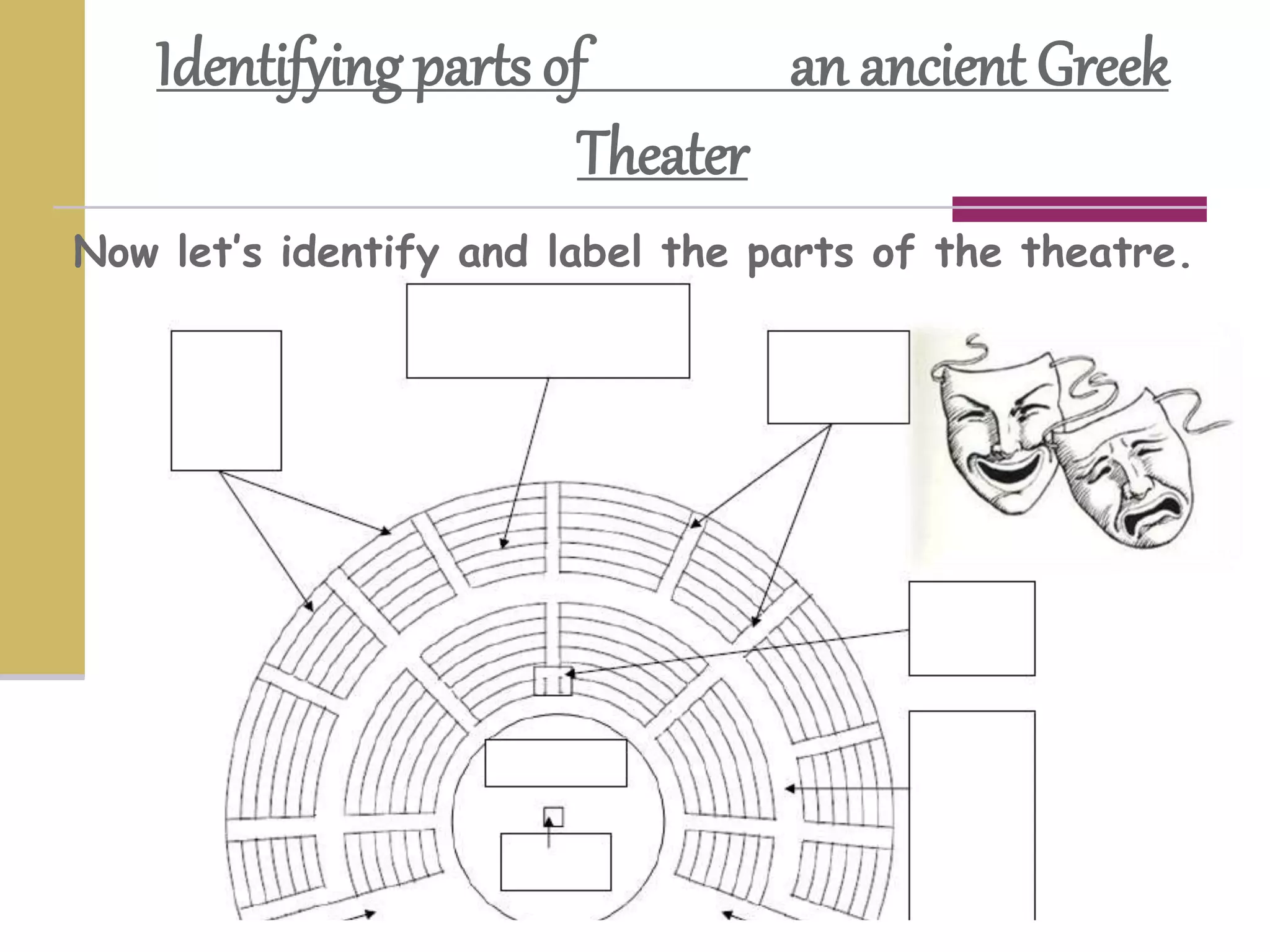
 Beyond the front row, is a circular space
called the orchestra, where the Chorus sings.
This was knowns as the “dancing place.” In the
center of the orchestra area stands the altar
(Thymele) of Dionysus (where sacrifices were
made).
 Behind the orchestra, is the stage on which
the actors will act, at the back of which is a
building painted to look like the front of a
temple or a palace, to which the actors retire
when they are not wanted on the stage or
have to change their costumes.
The history of Greek Theater
 There was very little scenery on stage.
 The theater was open to the sky.
 Much would have been left up to the
imagination
 The simplicity of the outward surroundings
would have made the audience give all their
attention to the play and the acting. (This is
known as scripting).
The history of Greek Theater
 Plays were put on once a month and lasted a
day.
 The plays were often about well-known
stories, like myths, and legends.
 The members of the audience showed their
enjoyment by whistling and stamping their
feet.
 If an actor made a mistake, or if the members
of the audience did not like him, they would
boo and sometimes throw stones at him.
The history of Greek Theater
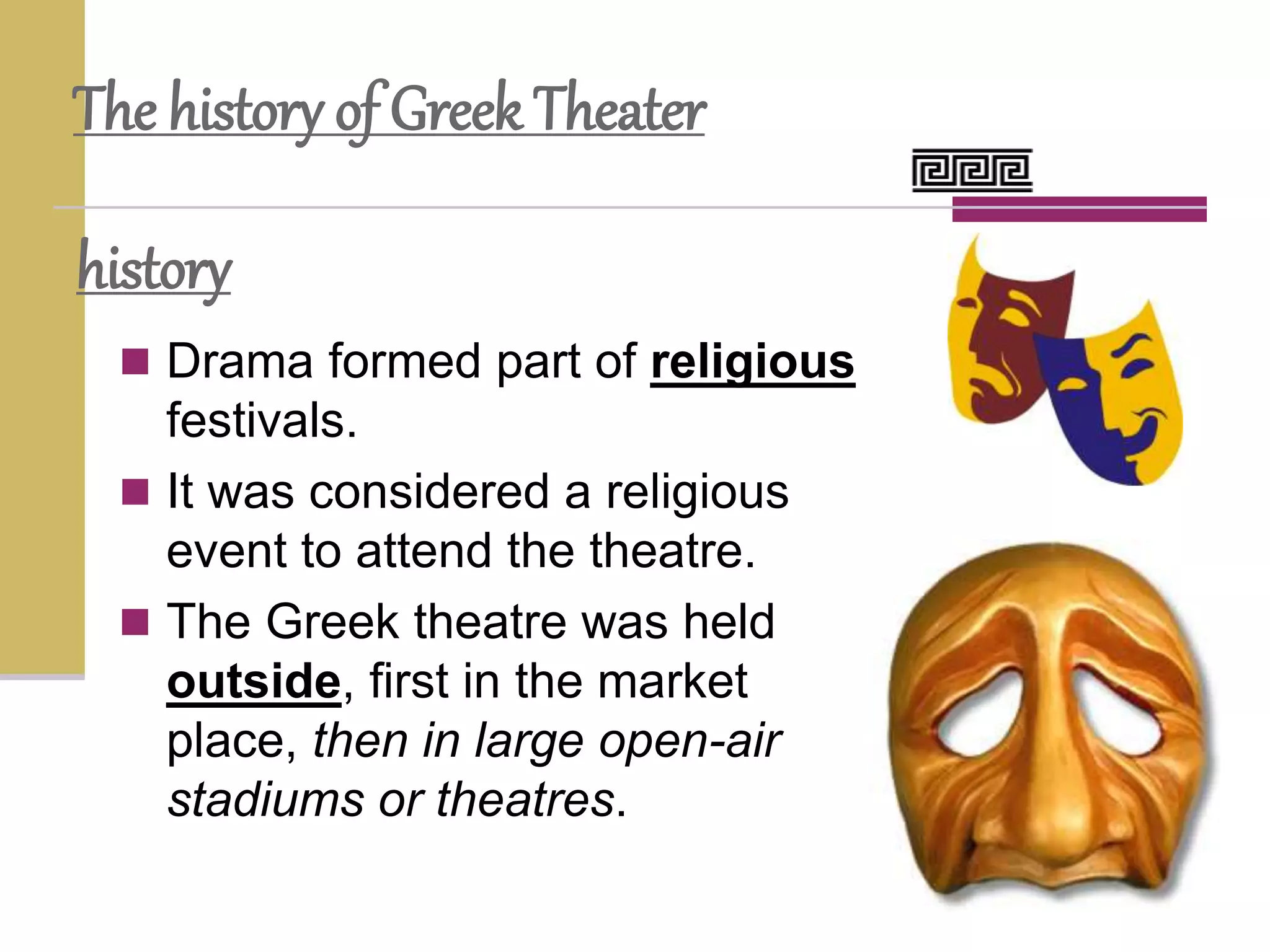
 All the actors were men.
 They wore masks to show the audience
whether their characters were young or old,
ugly or beautiful and male or female.
 The masks were simple and the faces very
exaggerated, so that they could be seen right
at the back of the theatre. They had large
open mouths to make the voices of the actors
seem louder.
The history of Greek Theater
 The chorus was an important part of a Greek
play.
 It was made up of a group of actors who,
throughout the play, moved and spoke
together and were dressed the same way.
 They talked to the audience and explained
what was going on in the play and how they
felt about it.
The history of Greek Theater
Identifying parts of an ancient Greek
Theater
Now let’s identify and label the parts of the theatre.

13278555.ppt

  • 1.
    History of greekTheater Objectives: 1) To develop an understanding of the history of Western Theater. 2) To identify the individual parts of the ancient Greek theater. 3) Evaluate the cultural and historical context of Greek drama and its role in Greek society.
  • 2.
    THEATER  The theatreis a great semi-circle on the slope of the Acropolis, with rows of stone seats on which about eighteen thousand spectators can sit. The history of Greek Theater
  • 3.
    THEATER  The frontrow of the theater consists of marble chairs, the only seats in the theatre which have backs, and these are reserved for the priests of Dionysus and the chief magistrates.  Dionysus was the Greek god of fertility and wine. The history of Greek Theater
  • 4.
    history  Drama formedpart of religious festivals.  It was considered a religious event to attend the theatre.  The Greek theatre was held outside, first in the market place, then in large open-air stadiums or theatres. The history of Greek Theater
  • 5.
     Important peoplehad stone seats reserved for them at the front of the theatre.  It was one of the few public events to be attended by both men and women.  There was a small entrance fee, but anyone who could not afford it was allowed in for free. The history of Greek Theater THEATER
  • 6.
     Beyond thefront row, is a circular space called the orchestra, where the Chorus sings. This was knowns as the “dancing place.” In the center of the orchestra area stands the altar (Thymele) of Dionysus (where sacrifices were made).  Behind the orchestra, is the stage on which the actors will act, at the back of which is a building painted to look like the front of a temple or a palace, to which the actors retire when they are not wanted on the stage or have to change their costumes. The history of Greek Theater
  • 7.
     There wasvery little scenery on stage.  The theater was open to the sky.  Much would have been left up to the imagination  The simplicity of the outward surroundings would have made the audience give all their attention to the play and the acting. (This is known as scripting). The history of Greek Theater
  • 8.
     Plays wereput on once a month and lasted a day.  The plays were often about well-known stories, like myths, and legends.  The members of the audience showed their enjoyment by whistling and stamping their feet.  If an actor made a mistake, or if the members of the audience did not like him, they would boo and sometimes throw stones at him. The history of Greek Theater
  • 9.
     All theactors were men.  They wore masks to show the audience whether their characters were young or old, ugly or beautiful and male or female.  The masks were simple and the faces very exaggerated, so that they could be seen right at the back of the theatre. They had large open mouths to make the voices of the actors seem louder. The history of Greek Theater
  • 10.
     The choruswas an important part of a Greek play.  It was made up of a group of actors who, throughout the play, moved and spoke together and were dressed the same way.  They talked to the audience and explained what was going on in the play and how they felt about it. The history of Greek Theater
  • 11.
    Identifying parts ofan ancient Greek Theater Now let’s identify and label the parts of the theatre.