INFERTILITY
PRESENTED BY DR CLOTILDA CHUMA
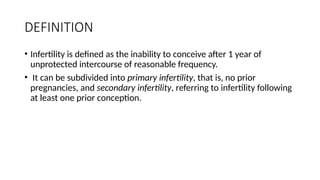
DEFINITION
‱ Infertility is defined as the inability to conceive after 1 year of
unprotected intercourse of reasonable frequency.
‱ It can be subdivided into primary infertility, that is, no prior
pregnancies, and secondary infertility, referring to infertility following
at least one prior conception.
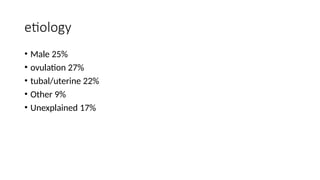
etiology
‱ Male 25%
‱ ovulation 27%
‱ tubal/uterine 22%
‱ Other 9%
‱ Unexplained 17%
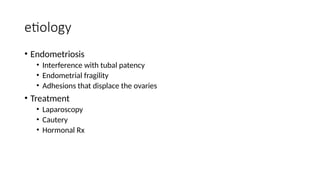
etiology
‱ Endometriosis
‱ Interference with tubal patency
‱ Endometrial fragility
‱ Adhesions that displace the ovaries
‱ Treatment
‱ Laparoscopy
‱ Cautery
‱ Hormonal Rx
‱ Tubal Blockage
‱ Scarring (PID)
‱ Fibroids
‱ Uterine Problems
‱ Tumors
‱ Congenital Anomalies
‱ Anovulation
‱ Genetic – Turners Syndrome, Hypogonadism
‱ Problems with the Hypothalamus
‱ Pituitary-ovarian hormonal feedback mechanisms
‱ Hypothyroidism
‱ Stress
‱ Decreased body weight
‱ Anovulation
‱ Treatment
‱ Menotropins – Pergonal, Repronex (medications made up of gonadotropins
extracted from the urine of postmenopausal women)
‱ GnRH Agonist – Lupron, Synarel (synthetic versions of GnRH’s)
‱ Cervical Mucus Problems
‱ Vaginal Infections
‱ Hormone Deficiencies
‱ Treatment
‱ HRT
‱ Cryosurgery
‱ Guaifenesin
Etiology
‱ Varicocele – varicose of swollen vein in the testicle
‱ Cryptorchidism – undescended testicle at birth
‱ Restrictive undergarments
‱ Occupational exposure to heat
‱ Working in a seated position
assesment
‱ Current or past reproductive tract problems
‱ Endocrine problems
‱ Abdominal or pelvic surgeries
‱ Use of vaginal douches or medications (interfere with pH)
‱ Occupational exposure to x-ray or toxic substances
‱ Menstrual History
‱ Age of menarche
‱ Length, regularity, & frequency of menstrual periods
‱ Amount of flow
‱ Dysmenorhea / PMS
‱ Contraceptive use
‱ Hx. Previous pregnancies or abortions
‱ Basal Body Temperature (BBT)
‱ Oral temp taken each day prior to arising
‱ Results are graphed
‱ Sudden dip occurs the day prior to ovulation & is followed by a rise of 0.5 –1.0
degrees F, which indicates ovulation
‱ Serum Hormone Testing
‱ Venous blood is drawn to assess levels of FSH and LH
‱ These are indicators of ovarian function
‱ Endometrial Biopsy
‱ Paracervical Block to decrease cramping / pain
‱ Pinch of endometrium obtained to check for a luteal phase defect (lack of
progesterone)
‱ Pre-procedure Care
‱ Instruct the client to undress below the waist
‱ Assist on exam table
‱ Current or past reproductive tract problems
‱ Endocrine problems
‱ Abdominal or pelvic surgeries
‱ Use of vaginal douches or medications (interfere with pH)
‱ Occupational exposure to x-ray or toxic substances
‱ Hysterosalpingogram (HSG)
‱ Detects uterine anomalies (septate, unicornate, bicornate)
‱ Detects Tubal anomalies or blockage
‱ laparascopy
‱ Semen analysis
‱ Ejaculates into a specimen container
‱ Ejaculate examined for:
‱ Number
‱ Morphology
‱ Motility
‱ Volume >2.0 mL
‱ pH 7.0 – 8.0
‱ Total sperm count >20 million per mL
‱ Motility 50% or greater
‱ Normal forms 50% or greater
Treatment
‱ Medications
‱ Clomiphene citrate (Clomid, Serophene) – used to increase FSH and LH
secretion, thereby stimulating ovulation
‱ One IM dose of HCG may be administered to stimulate release of the ova
from the follicles
‱ Intrauterine Insemination (a form of artificial insemination)
‱ Sperm are collected within 3 hours of colitus and are inserted via a catheter
into the uterus
‱ Donor sperm may be used
‱ Identify of the sperm donor is kept confidential
‱ THANKS

13. INFERTILITY.pptx good notes very good

  • 1.
  • 2.
    DEFINITION ‱ Infertility isdefined as the inability to conceive after 1 year of unprotected intercourse of reasonable frequency. ‱ It can be subdivided into primary infertility, that is, no prior pregnancies, and secondary infertility, referring to infertility following at least one prior conception.
  • 3.
    etiology ‱ Male 25% ‱ovulation 27% ‱ tubal/uterine 22% ‱ Other 9% ‱ Unexplained 17%
  • 4.
    etiology ‱ Endometriosis ‱ Interferencewith tubal patency ‱ Endometrial fragility ‱ Adhesions that displace the ovaries ‱ Treatment ‱ Laparoscopy ‱ Cautery ‱ Hormonal Rx
  • 5.
    ‱ Tubal Blockage ‱Scarring (PID) ‱ Fibroids ‱ Uterine Problems ‱ Tumors ‱ Congenital Anomalies
  • 6.
    ‱ Anovulation ‱ Genetic– Turners Syndrome, Hypogonadism ‱ Problems with the Hypothalamus ‱ Pituitary-ovarian hormonal feedback mechanisms ‱ Hypothyroidism ‱ Stress ‱ Decreased body weight
  • 7.
    ‱ Anovulation ‱ Treatment ‱Menotropins – Pergonal, Repronex (medications made up of gonadotropins extracted from the urine of postmenopausal women) ‱ GnRH Agonist – Lupron, Synarel (synthetic versions of GnRH’s)
  • 8.
    ‱ Cervical MucusProblems ‱ Vaginal Infections ‱ Hormone Deficiencies ‱ Treatment ‱ HRT ‱ Cryosurgery ‱ Guaifenesin
  • 9.
    Etiology ‱ Varicocele –varicose of swollen vein in the testicle ‱ Cryptorchidism – undescended testicle at birth ‱ Restrictive undergarments ‱ Occupational exposure to heat ‱ Working in a seated position
  • 10.
    assesment ‱ Current orpast reproductive tract problems ‱ Endocrine problems ‱ Abdominal or pelvic surgeries ‱ Use of vaginal douches or medications (interfere with pH) ‱ Occupational exposure to x-ray or toxic substances
  • 11.
    ‱ Menstrual History ‱Age of menarche ‱ Length, regularity, & frequency of menstrual periods ‱ Amount of flow ‱ Dysmenorhea / PMS ‱ Contraceptive use ‱ Hx. Previous pregnancies or abortions
  • 12.
    ‱ Basal BodyTemperature (BBT) ‱ Oral temp taken each day prior to arising ‱ Results are graphed ‱ Sudden dip occurs the day prior to ovulation & is followed by a rise of 0.5 –1.0 degrees F, which indicates ovulation
  • 13.
    ‱ Serum HormoneTesting ‱ Venous blood is drawn to assess levels of FSH and LH ‱ These are indicators of ovarian function
  • 14.
    ‱ Endometrial Biopsy ‱Paracervical Block to decrease cramping / pain ‱ Pinch of endometrium obtained to check for a luteal phase defect (lack of progesterone) ‱ Pre-procedure Care ‱ Instruct the client to undress below the waist ‱ Assist on exam table
  • 15.
    ‱ Current orpast reproductive tract problems ‱ Endocrine problems ‱ Abdominal or pelvic surgeries ‱ Use of vaginal douches or medications (interfere with pH) ‱ Occupational exposure to x-ray or toxic substances
  • 16.
    ‱ Hysterosalpingogram (HSG) ‱Detects uterine anomalies (septate, unicornate, bicornate) ‱ Detects Tubal anomalies or blockage ‱ laparascopy
  • 17.
    ‱ Semen analysis ‱Ejaculates into a specimen container ‱ Ejaculate examined for: ‱ Number ‱ Morphology ‱ Motility
  • 18.
    ‱ Volume >2.0mL ‱ pH 7.0 – 8.0 ‱ Total sperm count >20 million per mL ‱ Motility 50% or greater ‱ Normal forms 50% or greater
  • 19.
    Treatment ‱ Medications ‱ Clomiphenecitrate (Clomid, Serophene) – used to increase FSH and LH secretion, thereby stimulating ovulation ‱ One IM dose of HCG may be administered to stimulate release of the ova from the follicles
  • 20.
    ‱ Intrauterine Insemination(a form of artificial insemination) ‱ Sperm are collected within 3 hours of colitus and are inserted via a catheter into the uterus ‱ Donor sperm may be used ‱ Identify of the sperm donor is kept confidential
  • 21.