Teratology – genetic and
environmental factors
Teratology
•the study of malformations or serious deviations from the
normal type in organisms
• the branch of science concerned with the production,
development, anatomy, and classification of malformed
fetuses.
•Teratogens
–A teratogen is a substance, organism, or physical agent
capable of causing abnormal development.
–Teratogens can cause abnormal structure, abnormal
function, growth retardation, or death.
Introduction
Time of exposure is a major determinant of toxicological
consequences
• range from no effect to death
• may affect one organ system at one exposure time
and a different organ system at a different time
• may affect one part of a structure (or function) at one
exposure time and a different part (or function) at a
different time
• may require continued exposure throughout
development
• possible that a single acute exposure at the wrong
time could affect development
Critical (Sensitive) Periods
Human Development -
Sensitive Periods During Pregnancy
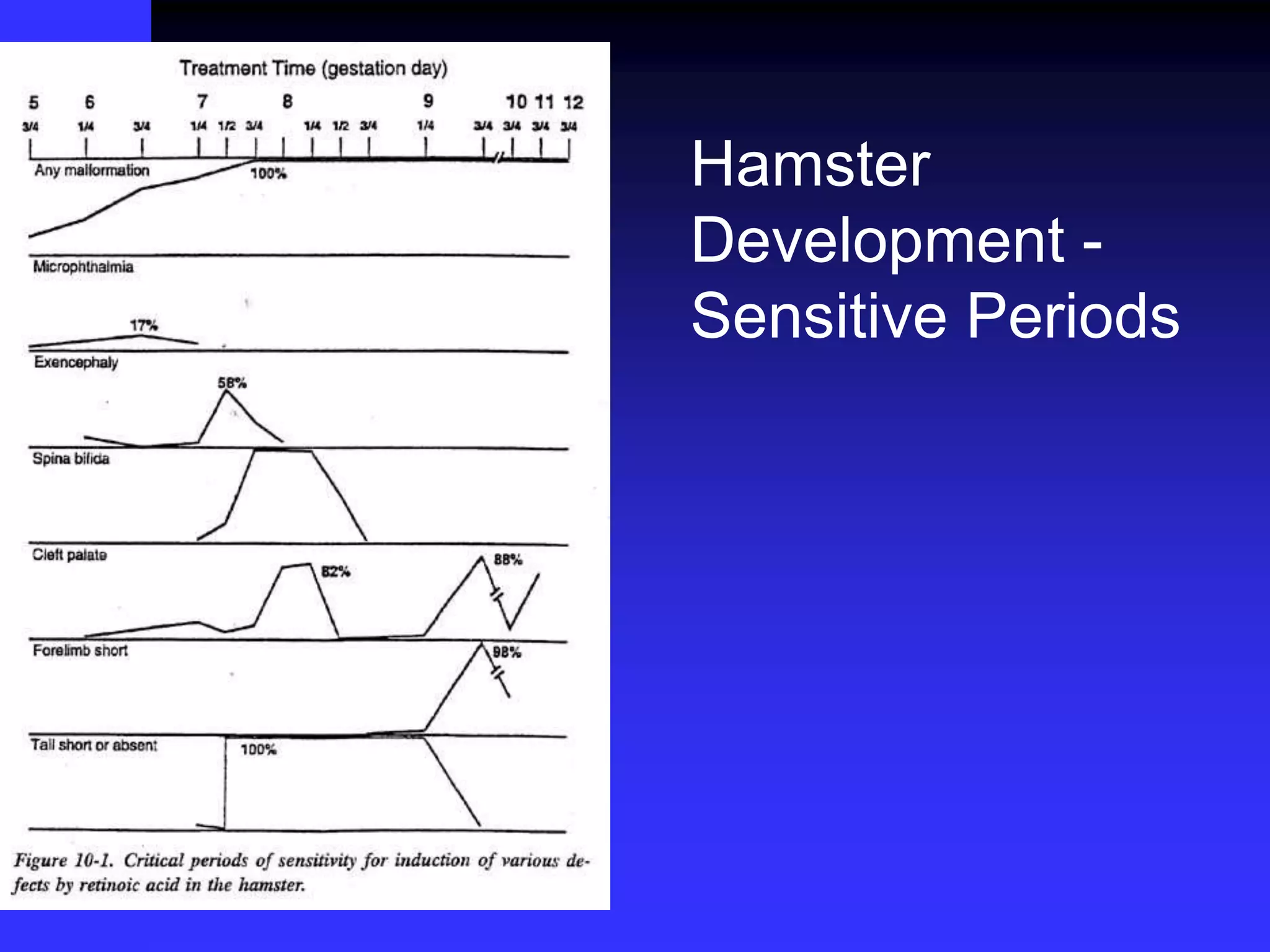
Hamster
Development -
Sensitive Periods
Early development: ovulation to implantation
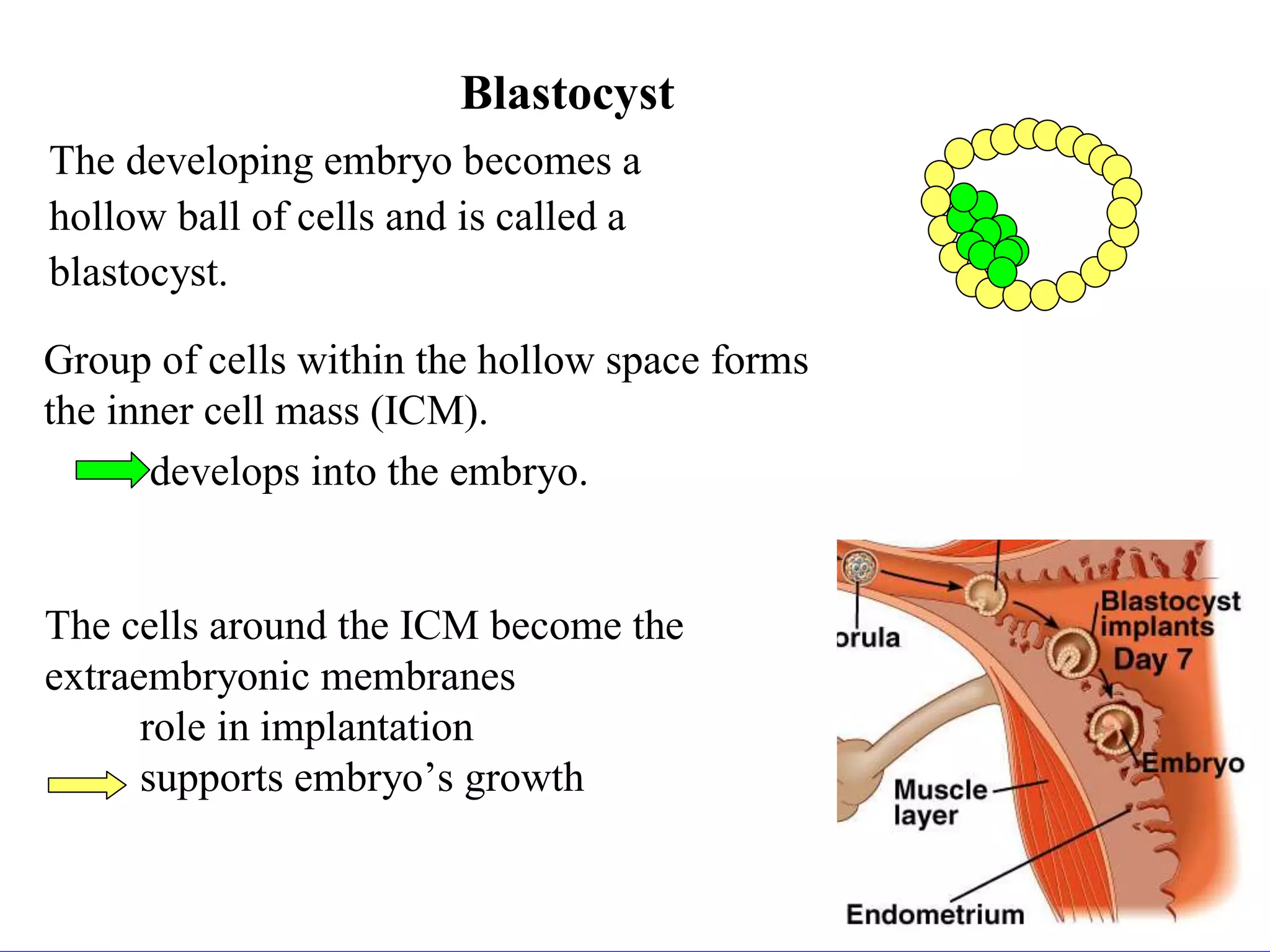
Blastocyst
The developing embryo becomes a
hollow ball of cells and is called a
blastocyst.
The cells around the ICM become the
extraembryonic membranes
role in implantation
supports embryo’s growth
Group of cells within the hollow space forms
the inner cell mass (ICM).
develops into the embryo.
Anotia, facial nerve paralysis 35-38
Ear malformations 38-46
Absence of arms 38-45
Phocomelia of arms 39-46
Cardiac malformations 39-45
Absence of legs 41-44
Malformation* Timing of Exposure
(Days Since Last Menstrual Period)
Phocomelia of legs 41-47
The type of malformation could be related, approximately, to the time when the pregnant
woman took the drug. This illustrates the concept of critical or sensitive periods during
development. Most of the severe malformations could be attributed to thalidomide ingestion
during a critical period between 35 and 50 days after the last menses.
Mechanisms and pathologenesis of developmental toxicology
1. mutation
somatic mutation in the early embryo, ex.mutagen
2. chromosomal abnormalities
ex. advanced maternal age, viral infection, irradiation, and
chemical agents
3. mitotic interference
slow or arrest DNA synthesis (hydroxyurea or irradiation),
interfere with spindle formation (colchicine, vincristine)
4. interference with nucleic acid function
including replication , transcription, translation ex. antibiotics
and antineoplastic drugs
5. nutritional deficiencies
ex. vitamins , minerals
Thalidomide
Retinoic acid
Retinoic acid is teratogenic in humans at very low doses.
Exposure to retinoic acid during pregnancy between 3-5 weeks
of pregnancy may result in malformations of the fetus:
craniofacial alterations, cleft palate, neural tube defects,
cardiovascular malformations, thymic aplasia, psychological
impairments, absent or defective ears, small jaw, kidney
alterations. Fifty percent of affected children have an IQ below
85.
Retinoic Acid
Alcohol (Ethanol)
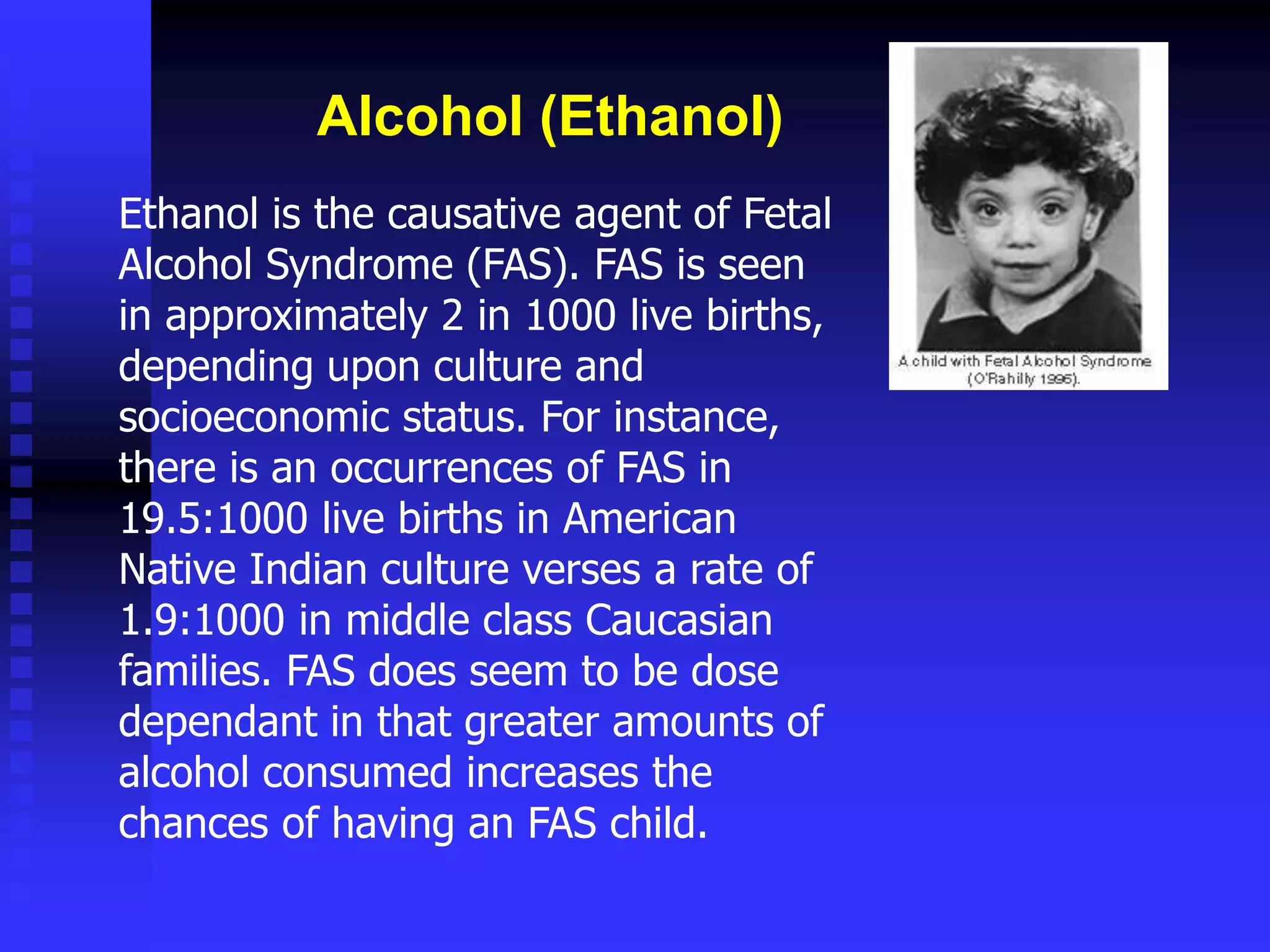
Ethanol is the causative agent of Fetal
Alcohol Syndrome (FAS). FAS is seen
in approximately 2 in 1000 live births,
depending upon culture and
socioeconomic status. For instance,
there is an occurrences of FAS in
19.5:1000 live births in American
Native Indian culture verses a rate of
1.9:1000 in middle class Caucasian
families. FAS does seem to be dose
dependant in that greater amounts of
alcohol consumed increases the
chances of having an FAS child.
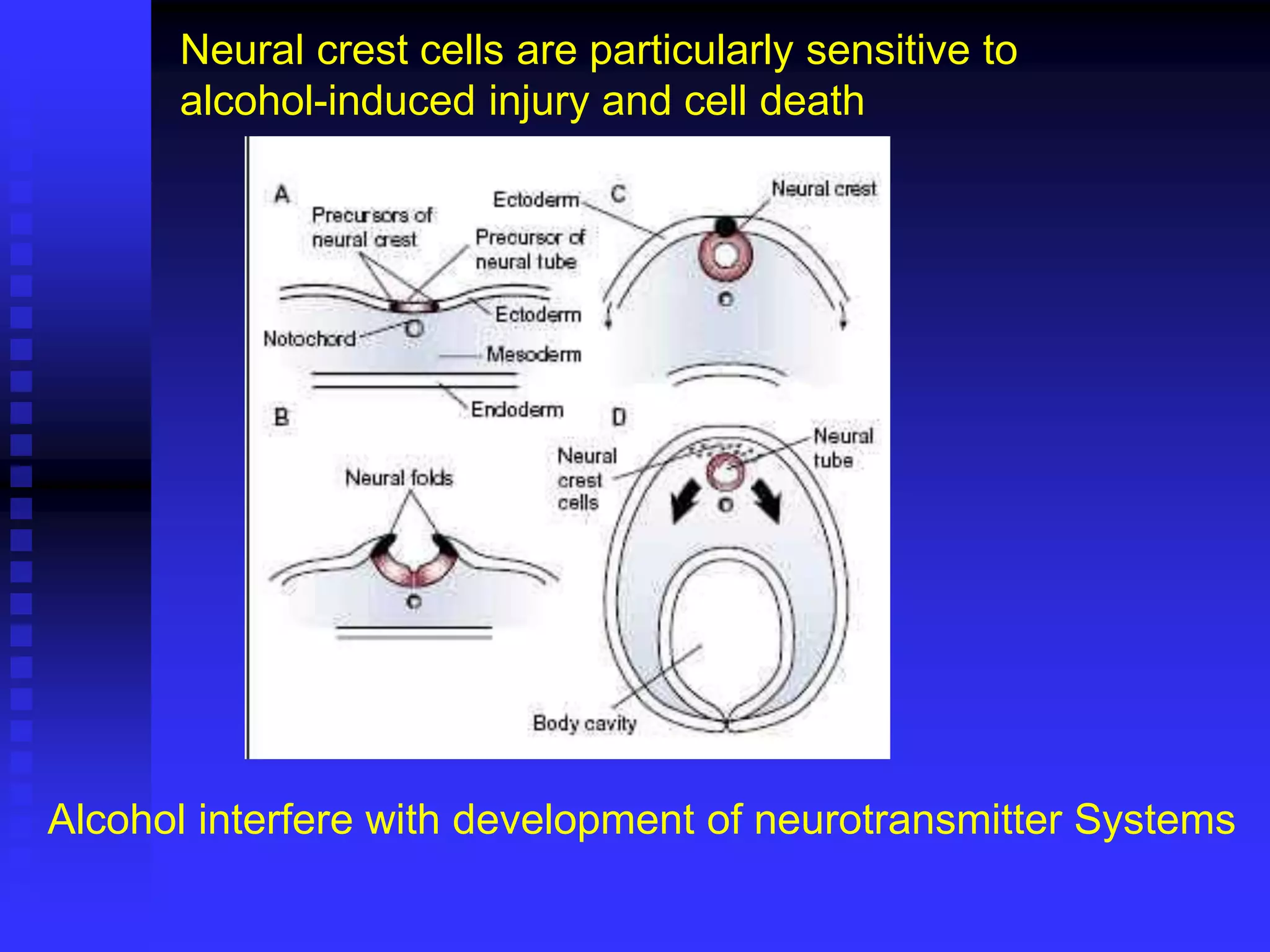
Neural crest cells are particularly sensitive to
alcohol-induced injury and cell death
Alcohol interfere with development of neurotransmitter Systems
Tobacco
Nicotine restricts uterine blood vessels and restricts blood
flow to the fetus resulting in chronic hypoxia and malnutrition
leading to birth defects. Possible outcomes of smoking during
preganancy include:
spontaneous abortion
perinatal deaths
increase risk of sudden infant death syndrome
increased risk of learning, behavioral, and attention
disorders.
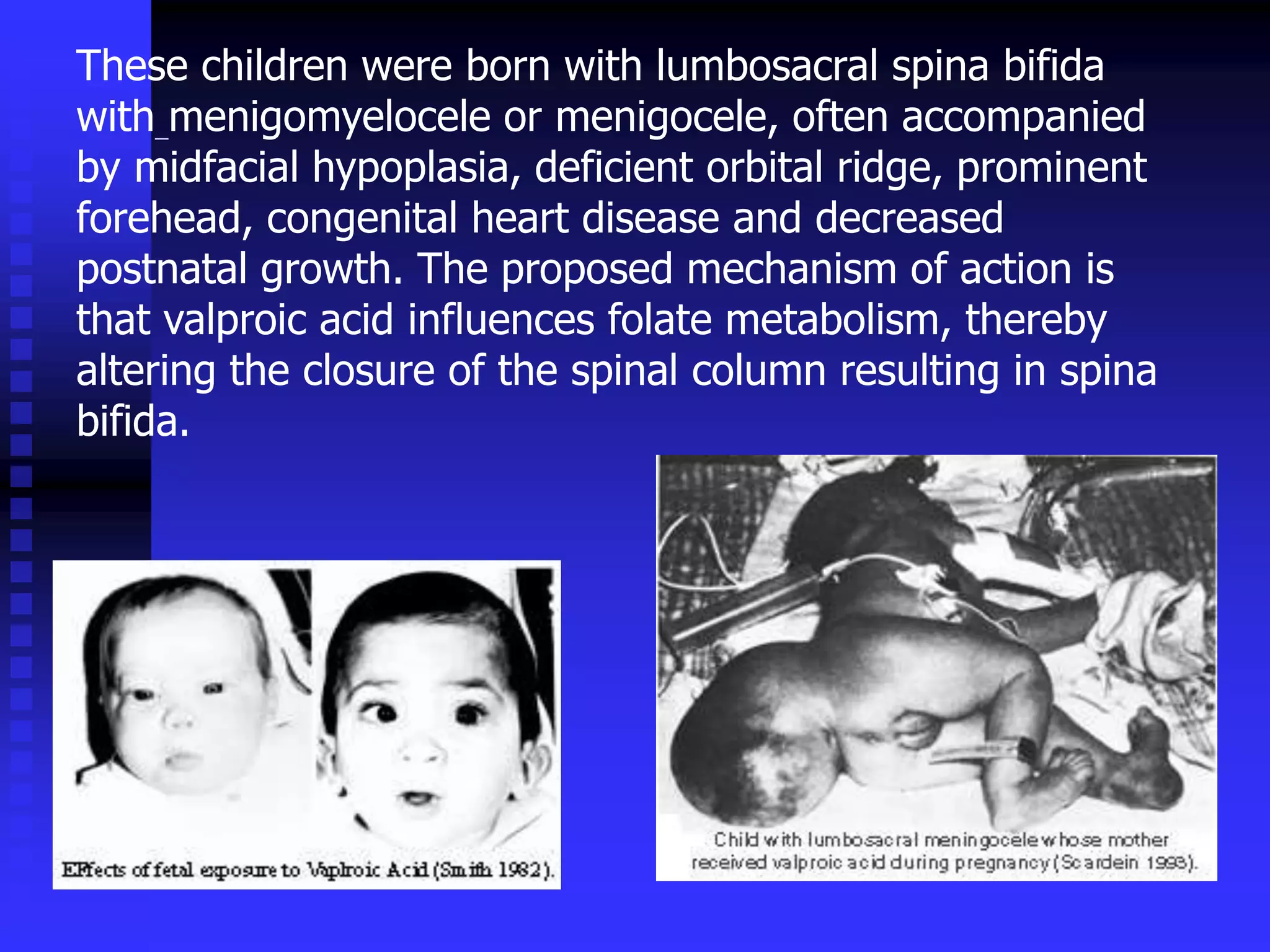
These children were born with lumbosacral spina bifida
with menigomyelocele or menigocele, often accompanied
by midfacial hypoplasia, deficient orbital ridge, prominent
forehead, congenital heart disease and decreased
postnatal growth. The proposed mechanism of action is
that valproic acid influences folate metabolism, thereby
altering the closure of the spinal column resulting in spina
bifida.
Mercury
Effects of Higher Dose Prenatal Exposure
• Mental retardation
• Seizures
• Cerebral palsy
• Disturbances of vision, hearing, sensation
• Abnormal gait
• Abnormal speech
• Disturbances of swallowing and sucking
• Abnormal reflexes
Mercury
10.Teratology.ppt

10.Teratology.ppt

  • 1.
    Teratology – geneticand environmental factors
  • 2.
    Teratology •the study ofmalformations or serious deviations from the normal type in organisms • the branch of science concerned with the production, development, anatomy, and classification of malformed fetuses. •Teratogens –A teratogen is a substance, organism, or physical agent capable of causing abnormal development. –Teratogens can cause abnormal structure, abnormal function, growth retardation, or death. Introduction
  • 4.
    Time of exposureis a major determinant of toxicological consequences • range from no effect to death • may affect one organ system at one exposure time and a different organ system at a different time • may affect one part of a structure (or function) at one exposure time and a different part (or function) at a different time • may require continued exposure throughout development • possible that a single acute exposure at the wrong time could affect development Critical (Sensitive) Periods
  • 5.
    Human Development - SensitivePeriods During Pregnancy
  • 6.
  • 7.
  • 8.
    Blastocyst The developing embryobecomes a hollow ball of cells and is called a blastocyst. The cells around the ICM become the extraembryonic membranes role in implantation supports embryo’s growth Group of cells within the hollow space forms the inner cell mass (ICM). develops into the embryo.
  • 9.
    Anotia, facial nerveparalysis 35-38 Ear malformations 38-46 Absence of arms 38-45 Phocomelia of arms 39-46 Cardiac malformations 39-45 Absence of legs 41-44 Malformation* Timing of Exposure (Days Since Last Menstrual Period) Phocomelia of legs 41-47 The type of malformation could be related, approximately, to the time when the pregnant woman took the drug. This illustrates the concept of critical or sensitive periods during development. Most of the severe malformations could be attributed to thalidomide ingestion during a critical period between 35 and 50 days after the last menses.
  • 10.
    Mechanisms and pathologenesisof developmental toxicology 1. mutation somatic mutation in the early embryo, ex.mutagen 2. chromosomal abnormalities ex. advanced maternal age, viral infection, irradiation, and chemical agents 3. mitotic interference slow or arrest DNA synthesis (hydroxyurea or irradiation), interfere with spindle formation (colchicine, vincristine) 4. interference with nucleic acid function including replication , transcription, translation ex. antibiotics and antineoplastic drugs 5. nutritional deficiencies ex. vitamins , minerals
  • 11.
  • 12.
    Retinoic acid Retinoic acidis teratogenic in humans at very low doses. Exposure to retinoic acid during pregnancy between 3-5 weeks of pregnancy may result in malformations of the fetus: craniofacial alterations, cleft palate, neural tube defects, cardiovascular malformations, thymic aplasia, psychological impairments, absent or defective ears, small jaw, kidney alterations. Fifty percent of affected children have an IQ below 85.
  • 13.
  • 16.
    Alcohol (Ethanol) Ethanol isthe causative agent of Fetal Alcohol Syndrome (FAS). FAS is seen in approximately 2 in 1000 live births, depending upon culture and socioeconomic status. For instance, there is an occurrences of FAS in 19.5:1000 live births in American Native Indian culture verses a rate of 1.9:1000 in middle class Caucasian families. FAS does seem to be dose dependant in that greater amounts of alcohol consumed increases the chances of having an FAS child.
  • 17.
    Neural crest cellsare particularly sensitive to alcohol-induced injury and cell death Alcohol interfere with development of neurotransmitter Systems
  • 18.
    Tobacco Nicotine restricts uterineblood vessels and restricts blood flow to the fetus resulting in chronic hypoxia and malnutrition leading to birth defects. Possible outcomes of smoking during preganancy include: spontaneous abortion perinatal deaths increase risk of sudden infant death syndrome increased risk of learning, behavioral, and attention disorders.
  • 19.
    These children wereborn with lumbosacral spina bifida with menigomyelocele or menigocele, often accompanied by midfacial hypoplasia, deficient orbital ridge, prominent forehead, congenital heart disease and decreased postnatal growth. The proposed mechanism of action is that valproic acid influences folate metabolism, thereby altering the closure of the spinal column resulting in spina bifida.
  • 20.
    Mercury Effects of HigherDose Prenatal Exposure • Mental retardation • Seizures • Cerebral palsy • Disturbances of vision, hearing, sensation • Abnormal gait • Abnormal speech • Disturbances of swallowing and sucking • Abnormal reflexes Mercury