Allergic eye disease
Presented by: khoy sothearith
2nd
year resident
Outline
• Acute allergic conjunctivitis
• Seasonal and perennial allergic conjunctivitis
• Vernal keratoconjunctivitis
• Atopic keratoconjunctivitis
Acute allergic conjunctivitis –
presentation
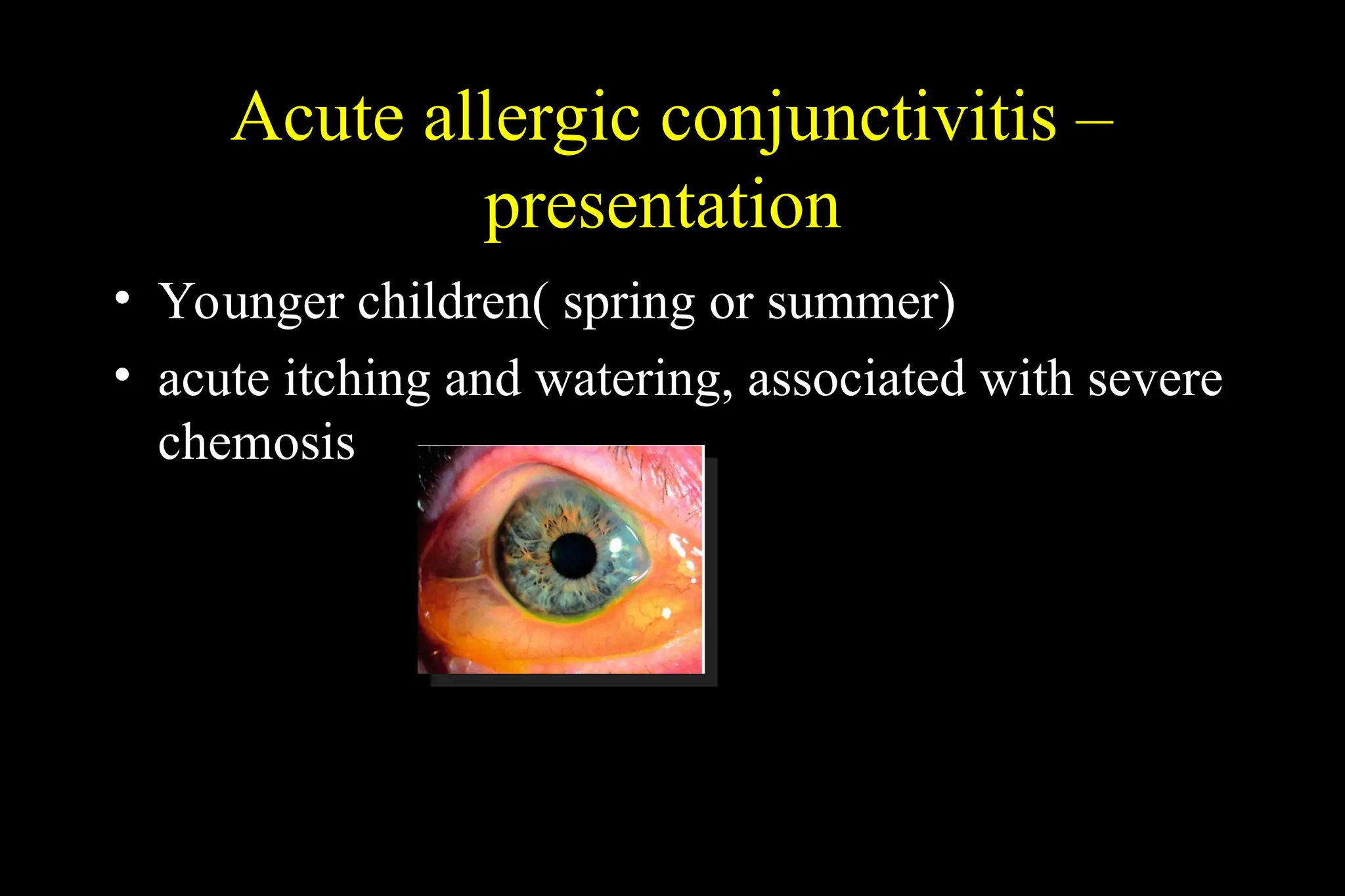
• Younger children( spring or summer)
• acute itching and watering, associated with severe
chemosis
Acute allergic conjunctivitis –
treatment
• Usually not require
– Chemosis settle within hours
• Cool compress
• Single drop of adrenaline 1%
Seasonal and perennial allergic
conjunctivitis
Seasonal”hay fever eye “
• Spring and summer
• Allergen: tree and grass
polen
• Specific allergen varies
with geographic location
• Common
Perennial
• Through the year, worst in
automm
• Allegen: house dust mite,
animal dander, fungal
allergen
• Less common
Diagnosis
• Presentation: transient acute or subacute redness, watering and itching,
associated with sneezing or nasal discharge
• Signs:
– completely resolve within episode
– Conjunctival hyperemia
– Mild papillary reaction
– Chemosis and eyelid edema
• Investigation
– Not require
– Conjunctival scrapping -> eosinophilia
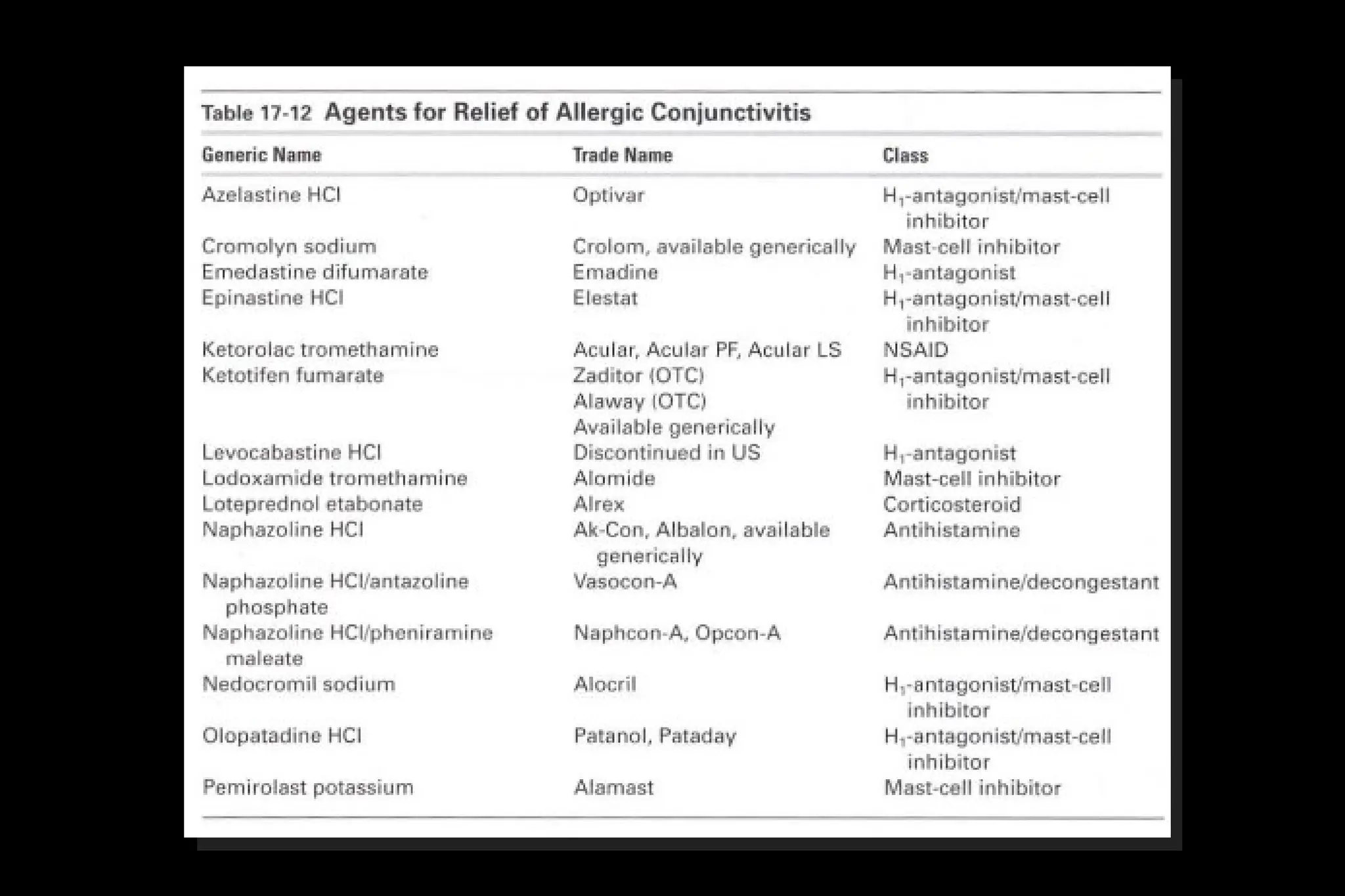
Treatment
• Artificial tear
• Mast cell stabilizer( sodium cromoglycate, nedocromil
sodium, lodoxamide)
• Antihistamines( emedastine, epinastine, levocabastine,
bepotastine)
• Combined preparation( antihistamine + vasoconstrictor):
Otrivin-Antistin®
• Dual action of antihistamine + mast cell
stabilizer(azelastine, ketotifen, olopatadine)
• Topical steroid
• Oral antihistamine
– Severe case
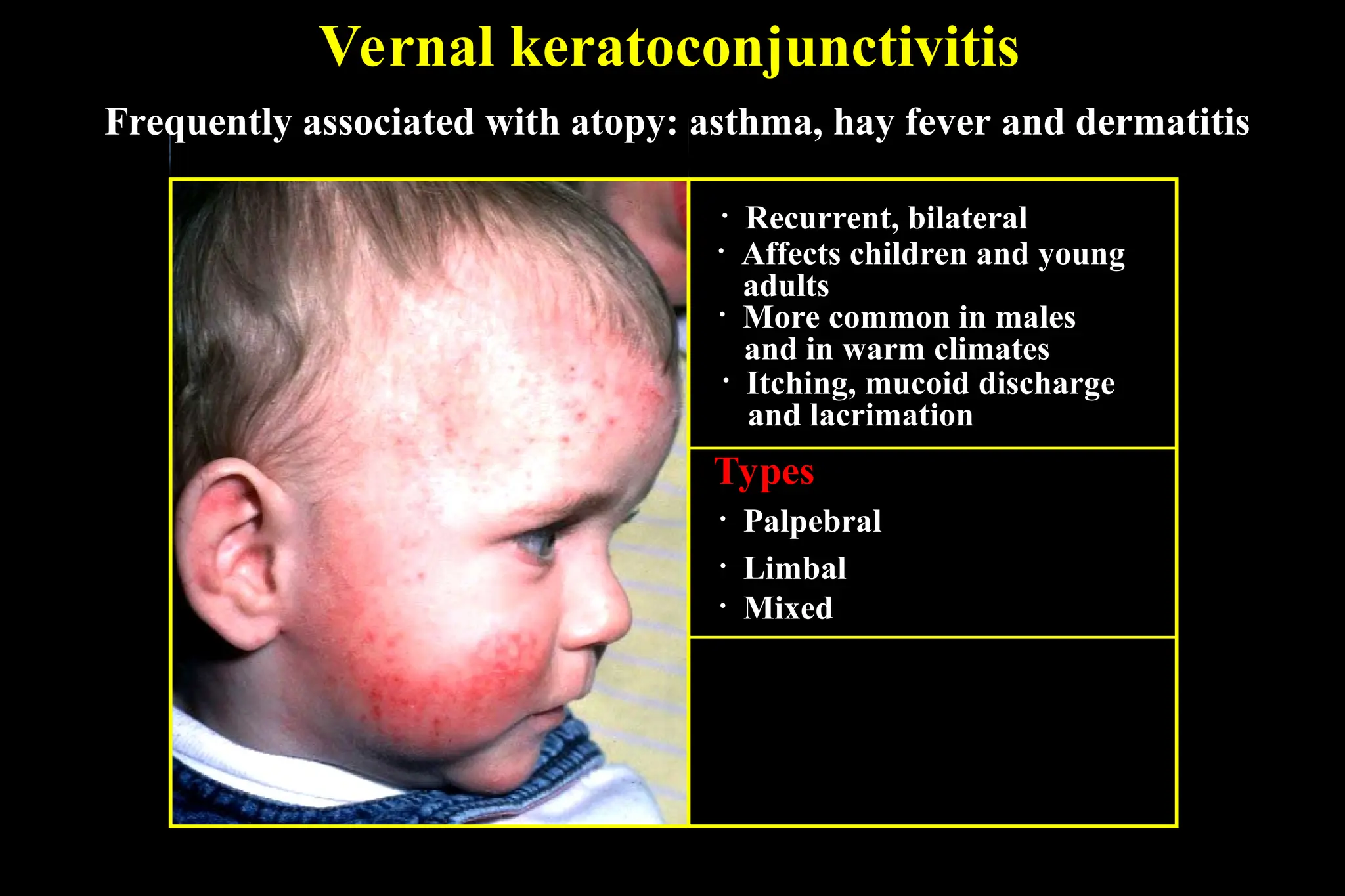
Vernal keratoconjunctivitis
• Affects children and young
adults
• More common in males
and in warm climates
• Itching, mucoid discharge
and lacrimation
• Palpebral
Types
• Limbal
• Mixed
• Recurrent, bilateral
Frequently associated with atopy: asthma, hay fever and dermatitis
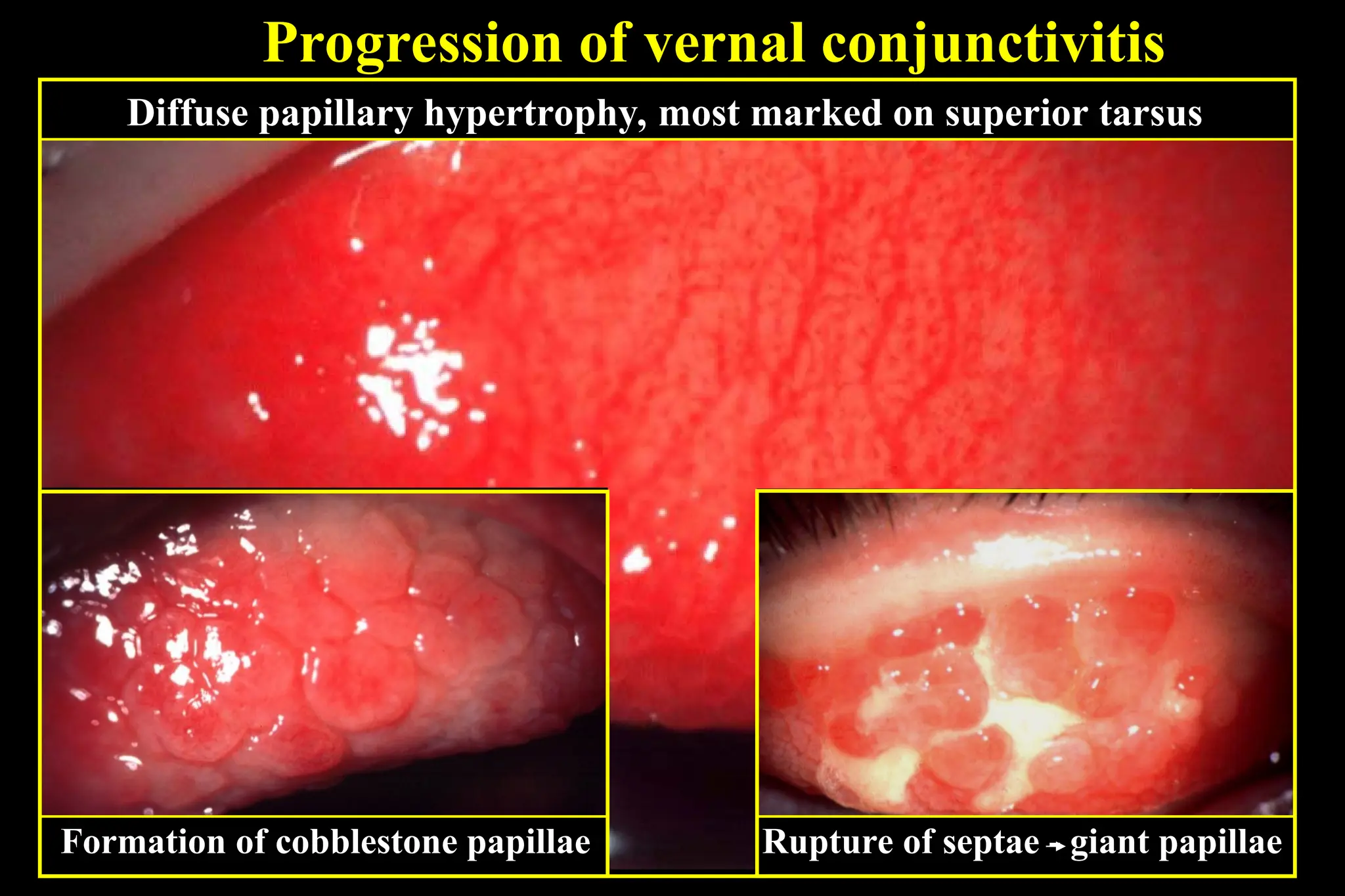
Progression of vernal conjunctivitis
Diffuse papillary hypertrophy, most marked on superior tarsus
Formation of cobblestone papillae Rupture of septae - giant papillae
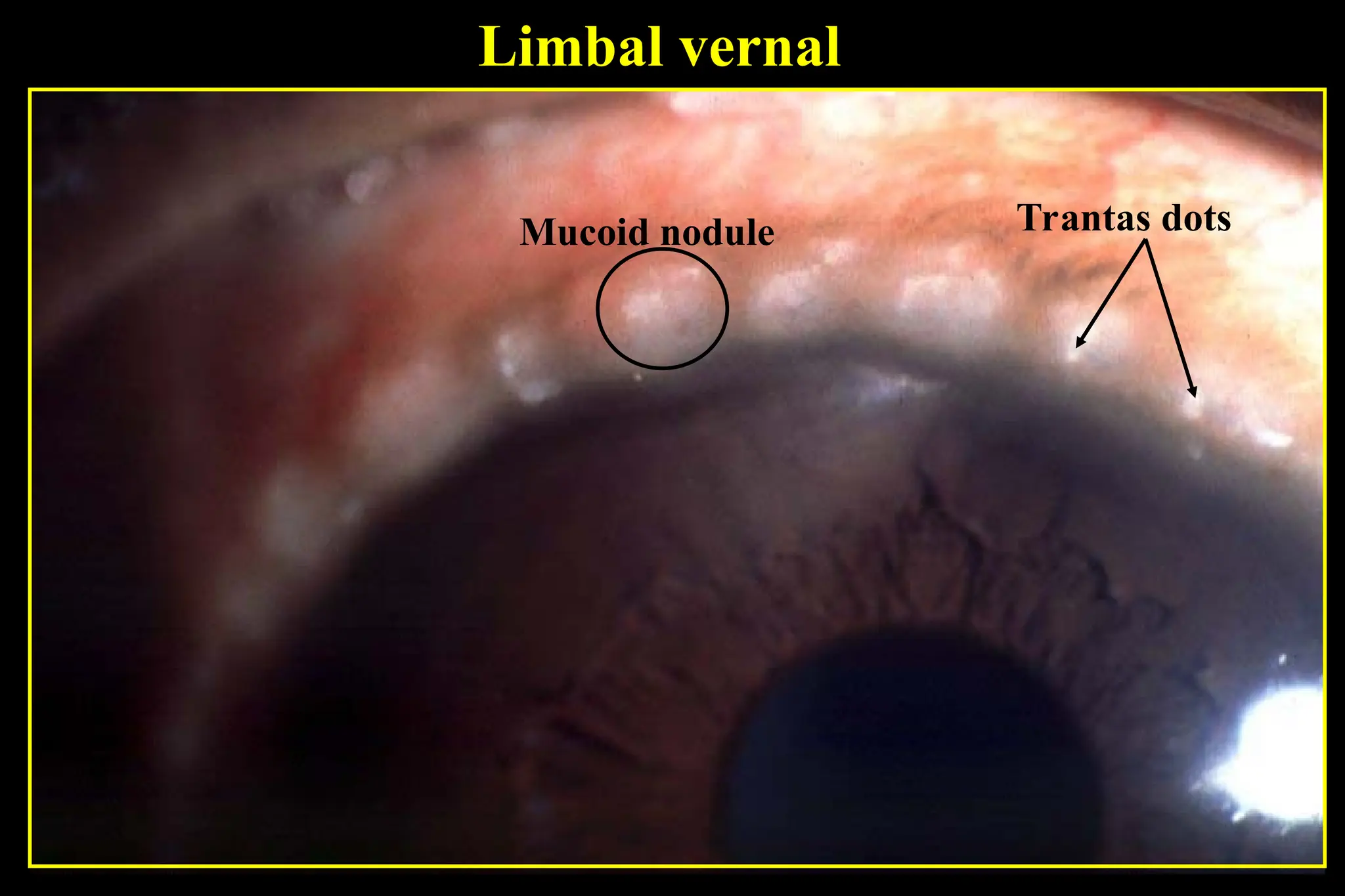
Limbal vernal
Trantas dots
Mucoid nodule
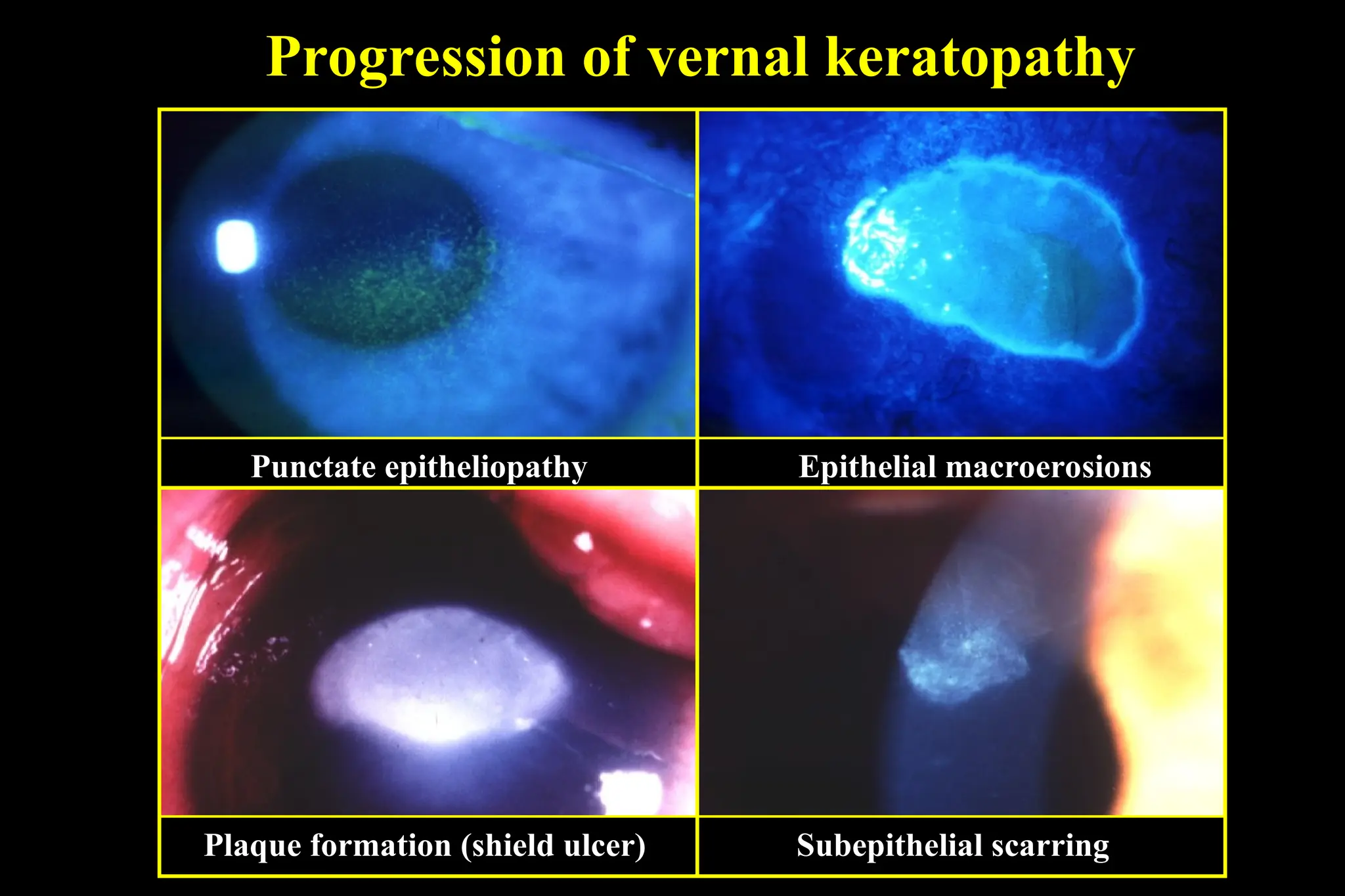
Progression of vernal keratopathy
Punctate epitheliopathy Epithelial macroerosions
Plaque formation (shield ulcer) Subepithelial scarring
Atopic kertoconjunctivitis
similar to VKC, more severe and unremitting
Rare bilateral
Typically develop in adulthood
No gender preponderance
Tend to be perennial, worst in winter
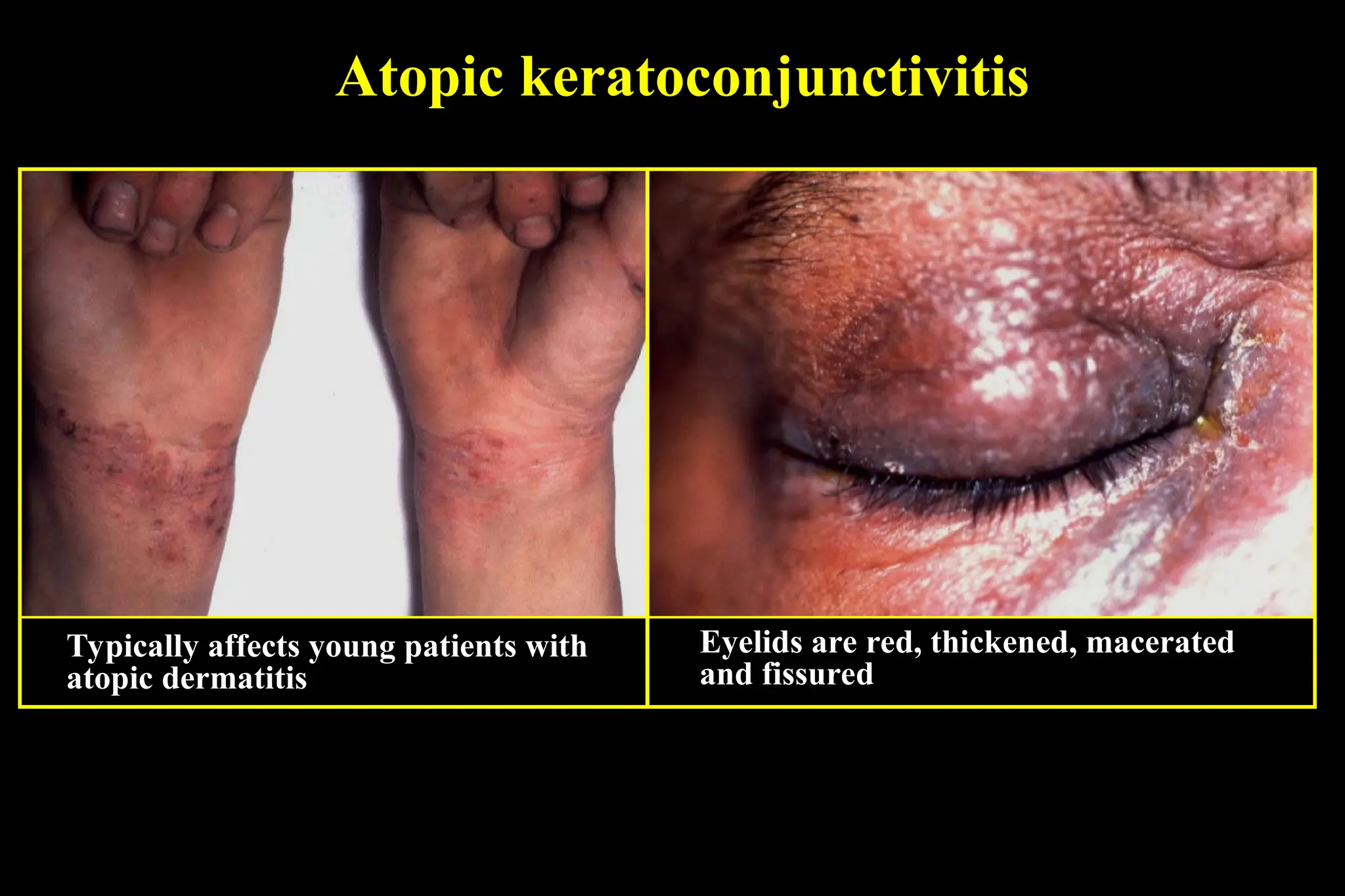
Atopic keratoconjunctivitis
Typically affects young patients with
atopic dermatitis
Eyelids are red, thickened, macerated
and fissured
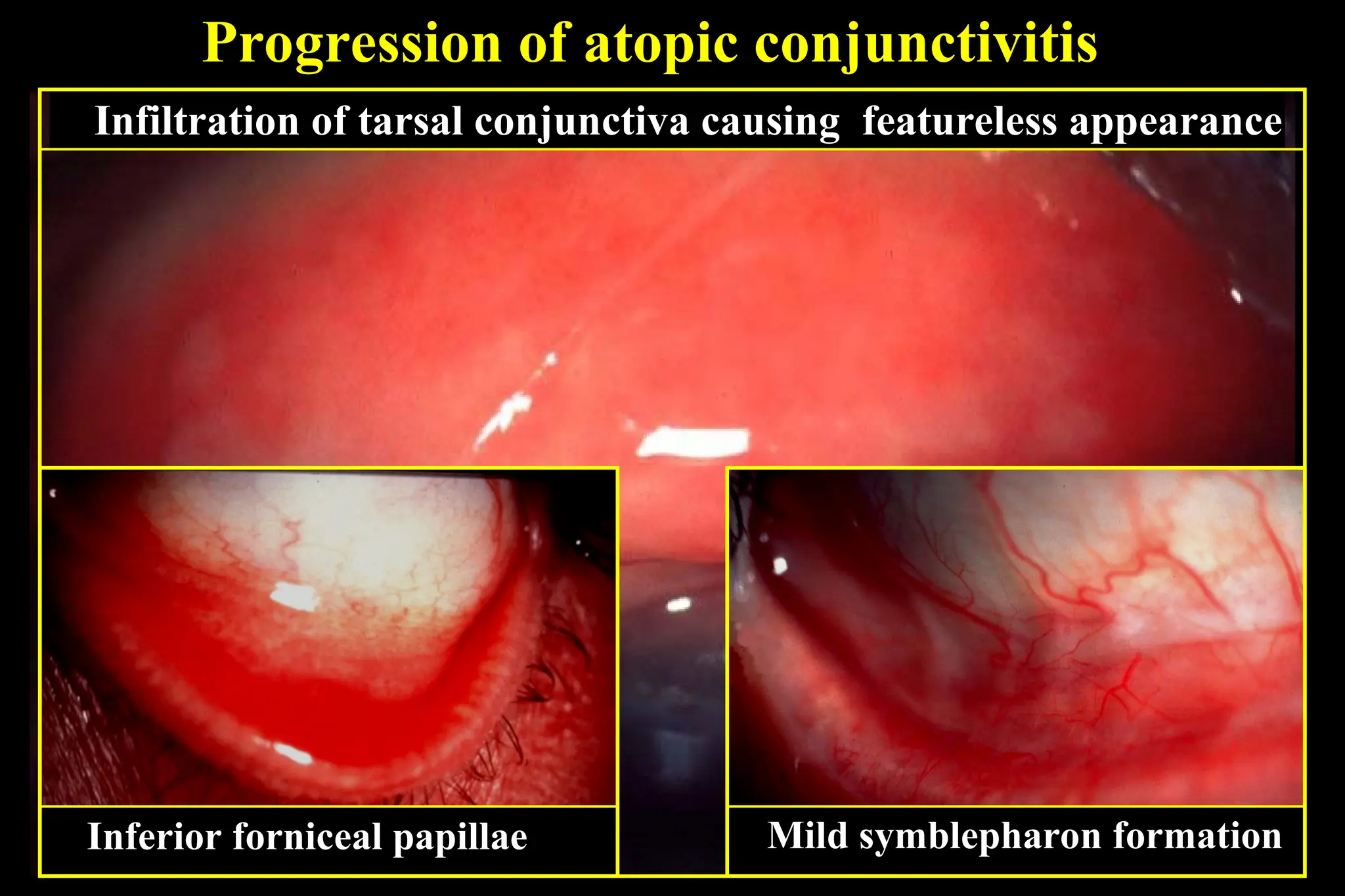
Progression of atopic conjunctivitis
Infiltration of tarsal conjunctiva causing featureless appearance
Inferior forniceal papillae Mild symblepharon formation
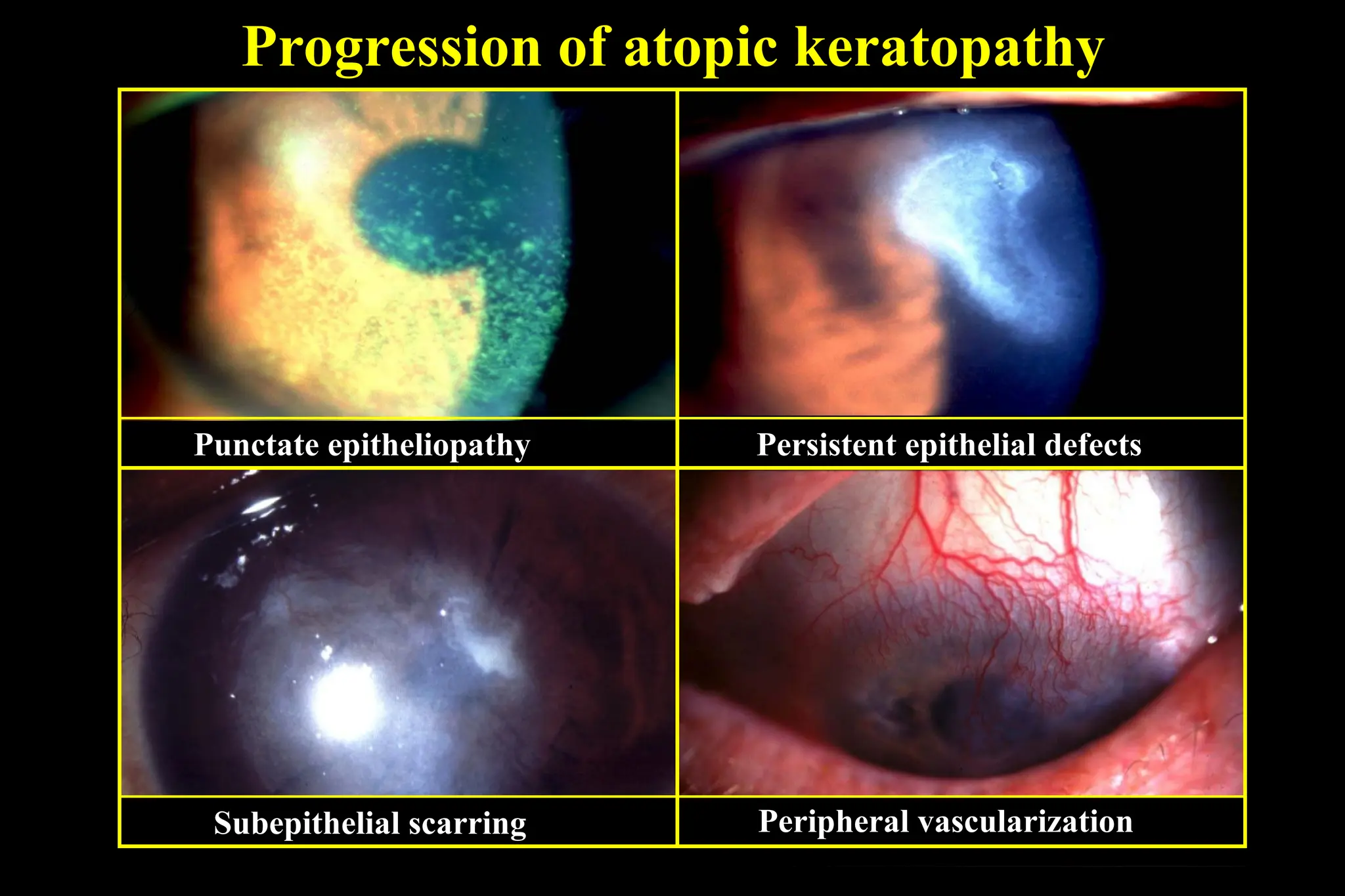
Progression of atopic keratopathy
Punctate epitheliopathy Persistent epithelial defects
Subepithelial scarring Peripheral vascularization
Treatment of VKC and AKC
management of VKC does not differ substantially
from that of AKC
• less responsive and requires more intensive and
prolonged treatment
General measure
• Allergens avoidance
• Cool compress
• Lid hygiene
Local treatment
• Mast cell stabilizer
• Antihistamine
• Combine preparation
• Steroid
• Immune modulator
– Cyclosporine 0.05%: if steroid ineffective
– Tacrolimus 0.03%
Systemic treatment
• Antihistamine
• Antibiotic(doxycycline 50–100 mg daily for 6 weeks or
azithromycin 500 mg once daily for 3 days) – to reduce blepharitis
• Immunosuppressive agents(e.g. steroids, ciclosporin,
tacrolimus, azathioprine)
• Aspirin

10allergicconjunctivitis-140722074306-phpapp02 2 (1).ppt

  • 1.
    Allergic eye disease Presentedby: khoy sothearith 2nd year resident
  • 2.
    Outline • Acute allergicconjunctivitis • Seasonal and perennial allergic conjunctivitis • Vernal keratoconjunctivitis • Atopic keratoconjunctivitis
  • 3.
    Acute allergic conjunctivitis– presentation • Younger children( spring or summer) • acute itching and watering, associated with severe chemosis
  • 4.
    Acute allergic conjunctivitis– treatment • Usually not require – Chemosis settle within hours • Cool compress • Single drop of adrenaline 1%
  • 5.
    Seasonal and perennialallergic conjunctivitis Seasonal”hay fever eye “ • Spring and summer • Allergen: tree and grass polen • Specific allergen varies with geographic location • Common Perennial • Through the year, worst in automm • Allegen: house dust mite, animal dander, fungal allergen • Less common
  • 6.
    Diagnosis • Presentation: transientacute or subacute redness, watering and itching, associated with sneezing or nasal discharge • Signs: – completely resolve within episode – Conjunctival hyperemia – Mild papillary reaction – Chemosis and eyelid edema • Investigation – Not require – Conjunctival scrapping -> eosinophilia
  • 7.
    Treatment • Artificial tear •Mast cell stabilizer( sodium cromoglycate, nedocromil sodium, lodoxamide) • Antihistamines( emedastine, epinastine, levocabastine, bepotastine) • Combined preparation( antihistamine + vasoconstrictor): Otrivin-Antistin® • Dual action of antihistamine + mast cell stabilizer(azelastine, ketotifen, olopatadine) • Topical steroid • Oral antihistamine – Severe case
  • 8.
    Vernal keratoconjunctivitis • Affectschildren and young adults • More common in males and in warm climates • Itching, mucoid discharge and lacrimation • Palpebral Types • Limbal • Mixed • Recurrent, bilateral Frequently associated with atopy: asthma, hay fever and dermatitis
  • 9.
    Progression of vernalconjunctivitis Diffuse papillary hypertrophy, most marked on superior tarsus Formation of cobblestone papillae Rupture of septae - giant papillae
  • 10.
  • 11.
    Progression of vernalkeratopathy Punctate epitheliopathy Epithelial macroerosions Plaque formation (shield ulcer) Subepithelial scarring
  • 12.
    Atopic kertoconjunctivitis similar toVKC, more severe and unremitting Rare bilateral Typically develop in adulthood No gender preponderance Tend to be perennial, worst in winter
  • 13.
    Atopic keratoconjunctivitis Typically affectsyoung patients with atopic dermatitis Eyelids are red, thickened, macerated and fissured
  • 14.
    Progression of atopicconjunctivitis Infiltration of tarsal conjunctiva causing featureless appearance Inferior forniceal papillae Mild symblepharon formation
  • 15.
    Progression of atopickeratopathy Punctate epitheliopathy Persistent epithelial defects Subepithelial scarring Peripheral vascularization
  • 16.
    Treatment of VKCand AKC management of VKC does not differ substantially from that of AKC • less responsive and requires more intensive and prolonged treatment
  • 17.
    General measure • Allergensavoidance • Cool compress • Lid hygiene
  • 18.
    Local treatment • Mastcell stabilizer • Antihistamine • Combine preparation • Steroid • Immune modulator – Cyclosporine 0.05%: if steroid ineffective – Tacrolimus 0.03%
  • 20.
    Systemic treatment • Antihistamine •Antibiotic(doxycycline 50–100 mg daily for 6 weeks or azithromycin 500 mg once daily for 3 days) – to reduce blepharitis • Immunosuppressive agents(e.g. steroids, ciclosporin, tacrolimus, azathioprine) • Aspirin

Editor's Notes

  • #8 Ig E 5 years onward 95% remit by the late teen, remainder -> AKC Rare in temperated regions
  • #9 Cobblestone- macropapillae <1mm Giant papillae- septate rupture >1mm
  • #10 Trantas dots- gelatinous limbal conjunctival papillae Mucoid nodule- white cellular collection
  • #11 SPK- sheet of mucus on the superior cornea Epith macroerosion- epithelial toxicity from inflame mediator + direct effect from papillae Sheild ulcer- exposed Bowman membrane become coat with mucus and calcium phosphate -> inadequate wetting and delayed re-epitheliazation Scar- grey and oval
  • #15 SPK- inf 1/3 of cornea Peripheral Vx- more common than VKC