Temporal Decay and Resource Sharing
 in Working Memory Span Measures:
          A New Paradigm


              Pierre Barrouillet
               Valérie Camos
              Sophie Bernardin

           Université de Bourgogne
       Université René Descartes - Paris V
Working Memory Span Tasks


They involve:

• Maintenance of some information
• Simultaneous treatment
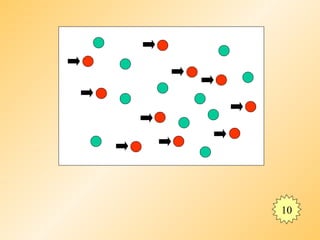
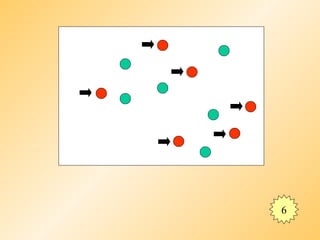
The Counting Span Task
                 (Case et al. 1982)
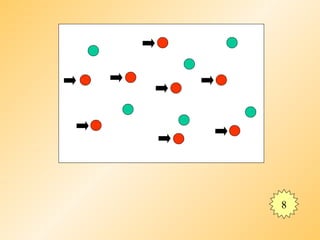
Participants are asked to:
• Count arrays of dots
• Maintain the results


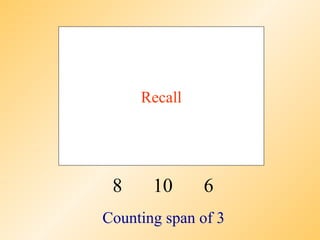
The number of arrays increases until failure to recall
8
10
6
Recall


 8     10     6
Counting span of 3
Working Memory Span Measures


• They predict performances on complex activities

• They strongly increase with age
Developmental increase:
          Alternative hypotheses


• Resource sharing - Case et al (1982)


• Temporal decay - Towse et al (1995, 1998)
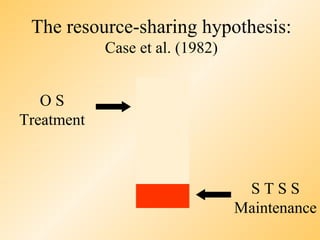
The resource-sharing hypothesis:
            Case et al. (1982)


   OS
Treatment           T
                    P
                    S
                                  STSS
                                 Maintenance
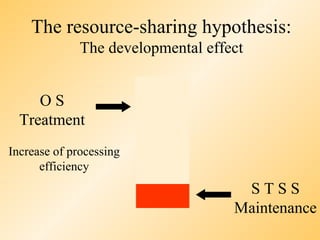
The resource-sharing hypothesis:
              The developmental effect


     OS
  Treatment
Increase of processing
      efficiency
                                     STSS
                                    Maintenance
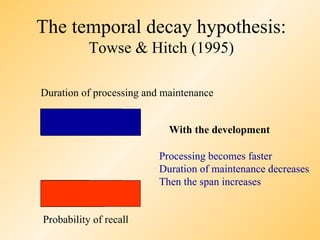
The temporal decay hypothesis:
           Towse & Hitch (1995)

Duration of processing and maintenance


                            With the development

                          Processing becomes faster
                          Duration of maintenance decreases
                          Then the span increases


Probability of recall
The temporal decay hypothesis:
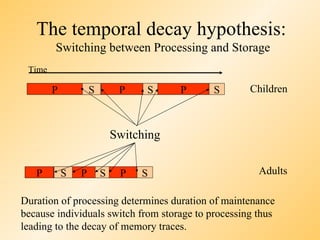
        Switching between Processing and Storage
 Time

        P           S        P    S     P   S       Children


                            Switching


   P        S   P       S    P   S                    Adults

Duration of processing determines duration of maintenance
because individuals switch from storage to processing thus
leading to the decay of memory traces.
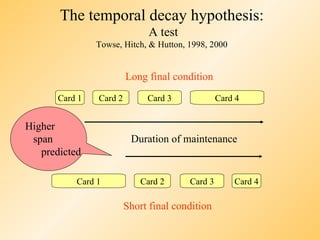
The temporal decay hypothesis:
                               A test
                Towse, Hitch, & Hutton, 1998, 2000


                         Long final condition
       Card 1   Card 2        Card 3             Card 4


Higher
 span                     Duration of maintenance
   predicted

           Card 1            Card 2     Card 3       Card 4

                         Short final condition
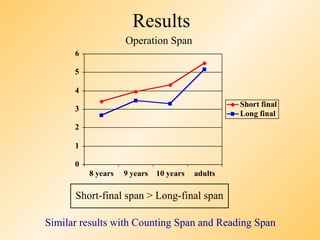
Results
                    Operation Span
      6

      5

      4
                                                  Short final
      3
                                                  Long final
      2

      1

      0
          8 years   9 years   10 years   adults

      Short-final span > Long-final span

Similar results with Counting Span and Reading Span
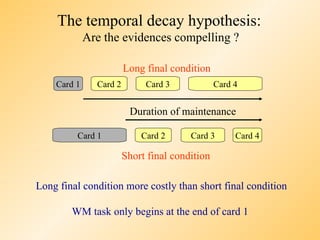
The temporal decay hypothesis:
             Are the evidences compelling ?

                        Long final condition
    Card 1     Card 2        Card 3             Card 4


                         Duration of maintenance

         Card 1             Card 2      Card 3       Card 4

                        Short final condition

Long final condition more costly than short final condition

        WM task only begins at the end of card 1
A new paradigm:
                 Barrouillet & Camos (2001)


Towse & Hitch:
      equated the cost while manipulating the duration


Barrouillet & Camos:
       equated the duration while manipulating the cost
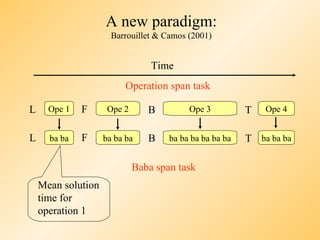
A new paradigm:
                      Barrouillet & Camos (2001)


                                 Time
                          Operation span task

L     Ope 1   F      Ope 2      B         Ope 3          T   Ope 4


L     ba ba   F     ba ba ba    B    ba ba ba ba ba ba   T ba ba ba

                             Baba span task
    Mean solution
    time for
    operation 1
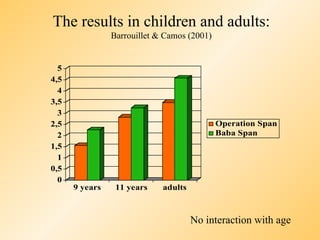
The results in children and adults:
                Barrouillet & Camos (2001)


  5
4,5
  4
3,5
  3
2,5                                          Operation Span
  2                                          Baba Span
1,5
  1
0,5
  0
      9 years    11 years    adults


                                      No interaction with age
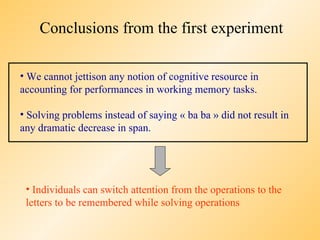
Conclusions from the first experiment

• We cannot jettison any notion of cognitive resource in
accounting for performances in working memory tasks.

• Solving problems instead of saying « ba ba » did not result in
any dramatic decrease in span.


 • Individuals can switch attention from the operations to the
 letters to be remembered while solving operations
Prediction

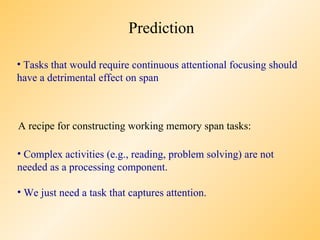
• Tasks that would require continuous attentional focusing should
have a detrimental effect on span


A recipe for constructing working memory span tasks:

• Complex activities (e.g., reading, problem solving) are not
needed as a processing component.

• We just need a task that captures attention.
A new task :
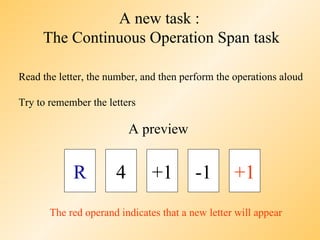
     The Continuous Operation Span task

Read the letter, the number, and then perform the operations aloud

Try to remember the letters

                          A preview


            R         4        +1        -1       +1
       The red operand indicates that a new letter will appear
R
4
+1
-1
+1
H
9
-2
-1
Recall
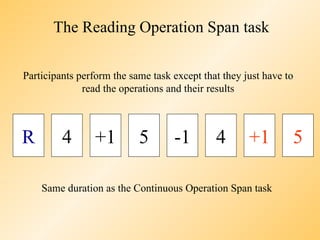
The Reading Operation Span task

Participants perform the same task except that they just have to
              read the operations and their results


R        4       +1        5       -1        4       +1        5

    Same duration as the Continuous Operation Span task
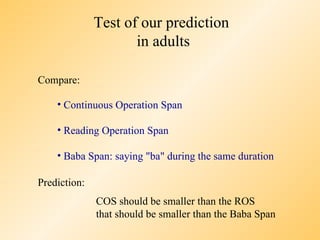
Test of our prediction
                     in adults

Compare:

    • Continuous Operation Span

    • Reading Operation Span

    • Baba Span: saying "ba" during the same duration

Prediction:
              COS should be smaller than the ROS
              that should be smaller than the Baba Span
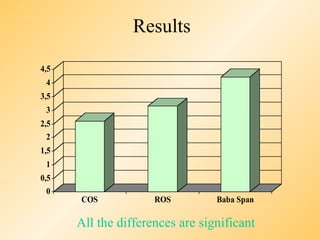
Results

4,5
 4
3,5
 3
2,5
 2
1,5
 1
0,5
  0
      COS            ROS         Baba Span

      All the differences are significant
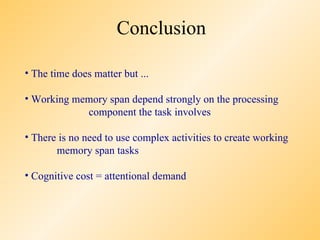
Conclusion

• The time does matter but ...

• Working memory span depend strongly on the processing
            component the task involves

• There is no need to use complex activities to create working
       memory span tasks

• Cognitive cost = attentional demand
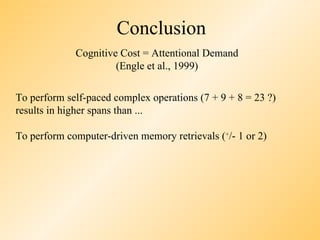
Conclusion
             Cognitive Cost = Attentional Demand
                      (Engle et al., 1999)

To perform self-paced complex operations (7 + 9 + 8 = 23 ?)
results in higher spans than ...

To perform computer-driven memory retrievals (+/- 1 or 2)
Conclusion
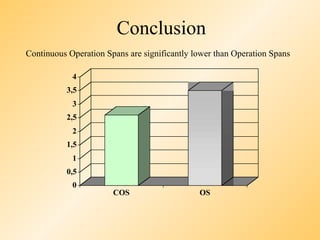
Continuous Operation Spans are significantly lower than Operation Spans

            4
          3,5
            3
          2,5
            2
          1,5
            1
          0,5
            0
                       COS                    OS
Take Home Message

WM Spans strongly depend on Cognitive Cost


   Cognitive Cost is Attentional Demand

1 icom 2001

  • 1.
    Temporal Decay andResource Sharing in Working Memory Span Measures: A New Paradigm Pierre Barrouillet Valérie Camos Sophie Bernardin Université de Bourgogne Université René Descartes - Paris V
  • 2.
    Working Memory SpanTasks They involve: • Maintenance of some information • Simultaneous treatment
  • 3.
    The Counting SpanTask (Case et al. 1982) Participants are asked to: • Count arrays of dots • Maintain the results The number of arrays increases until failure to recall
  • 4.
  • 5.
  • 6.
  • 7.
    Recall 8 10 6 Counting span of 3
  • 8.
    Working Memory SpanMeasures • They predict performances on complex activities • They strongly increase with age
  • 9.
    Developmental increase: Alternative hypotheses • Resource sharing - Case et al (1982) • Temporal decay - Towse et al (1995, 1998)
  • 10.
    The resource-sharing hypothesis: Case et al. (1982) OS Treatment T P S STSS Maintenance
  • 11.
    The resource-sharing hypothesis: The developmental effect OS Treatment Increase of processing efficiency STSS Maintenance
  • 12.
    The temporal decayhypothesis: Towse & Hitch (1995) Duration of processing and maintenance With the development Processing becomes faster Duration of maintenance decreases Then the span increases Probability of recall
  • 13.
    The temporal decayhypothesis: Switching between Processing and Storage Time P S P S P S Children Switching P S P S P S Adults Duration of processing determines duration of maintenance because individuals switch from storage to processing thus leading to the decay of memory traces.
  • 14.
    The temporal decayhypothesis: A test Towse, Hitch, & Hutton, 1998, 2000 Long final condition Card 1 Card 2 Card 3 Card 4 Higher span Duration of maintenance predicted Card 1 Card 2 Card 3 Card 4 Short final condition
  • 15.
    Results Operation Span 6 5 4 Short final 3 Long final 2 1 0 8 years 9 years 10 years adults Short-final span > Long-final span Similar results with Counting Span and Reading Span
  • 16.
    The temporal decayhypothesis: Are the evidences compelling ? Long final condition Card 1 Card 2 Card 3 Card 4 Duration of maintenance Card 1 Card 2 Card 3 Card 4 Short final condition Long final condition more costly than short final condition WM task only begins at the end of card 1
  • 17.
    A new paradigm: Barrouillet & Camos (2001) Towse & Hitch: equated the cost while manipulating the duration Barrouillet & Camos: equated the duration while manipulating the cost
  • 18.
    A new paradigm: Barrouillet & Camos (2001) Time Operation span task L Ope 1 F Ope 2 B Ope 3 T Ope 4 L ba ba F ba ba ba B ba ba ba ba ba ba T ba ba ba Baba span task Mean solution time for operation 1
  • 19.
    The results inchildren and adults: Barrouillet & Camos (2001) 5 4,5 4 3,5 3 2,5 Operation Span 2 Baba Span 1,5 1 0,5 0 9 years 11 years adults No interaction with age
  • 20.
    Conclusions from thefirst experiment • We cannot jettison any notion of cognitive resource in accounting for performances in working memory tasks. • Solving problems instead of saying « ba ba » did not result in any dramatic decrease in span. • Individuals can switch attention from the operations to the letters to be remembered while solving operations
  • 21.
    Prediction • Tasks thatwould require continuous attentional focusing should have a detrimental effect on span A recipe for constructing working memory span tasks: • Complex activities (e.g., reading, problem solving) are not needed as a processing component. • We just need a task that captures attention.
  • 22.
    A new task: The Continuous Operation Span task Read the letter, the number, and then perform the operations aloud Try to remember the letters A preview R 4 +1 -1 +1 The red operand indicates that a new letter will appear
  • 23.
  • 24.
  • 25.
  • 26.
  • 27.
  • 28.
  • 29.
  • 30.
  • 31.
  • 32.
  • 33.
    The Reading OperationSpan task Participants perform the same task except that they just have to read the operations and their results R 4 +1 5 -1 4 +1 5 Same duration as the Continuous Operation Span task
  • 34.
    Test of ourprediction in adults Compare: • Continuous Operation Span • Reading Operation Span • Baba Span: saying "ba" during the same duration Prediction: COS should be smaller than the ROS that should be smaller than the Baba Span
  • 35.
    Results 4,5 4 3,5 3 2,5 2 1,5 1 0,5 0 COS ROS Baba Span All the differences are significant
  • 36.
    Conclusion • The timedoes matter but ... • Working memory span depend strongly on the processing component the task involves • There is no need to use complex activities to create working memory span tasks • Cognitive cost = attentional demand
  • 37.
    Conclusion Cognitive Cost = Attentional Demand (Engle et al., 1999) To perform self-paced complex operations (7 + 9 + 8 = 23 ?) results in higher spans than ... To perform computer-driven memory retrievals (+/- 1 or 2)
  • 38.
    Conclusion Continuous Operation Spansare significantly lower than Operation Spans 4 3,5 3 2,5 2 1,5 1 0,5 0 COS OS
  • 39.
    Take Home Message WMSpans strongly depend on Cognitive Cost Cognitive Cost is Attentional Demand