Calendula
Officinalis
Calendula
Officinalis
Calendula, yellow
marigold, is another member of
Compositae family, like our
friends Arnica
Montana & Bellis Perennis &
is remedy that has as many
wonderful uses.
COMMON NAME
Pot marigold
Ruddles
Common marigold
Garden marigold
English marigold
Scottish marigold
• Kingdom: Plantae
• Order: Asterales
• Family: Asteraceae
• Tribe: Calenduleae
• Genus: Calendula
• Species: C. officinalis
PHARMACOLOGY
• Common deep-orange flowered variety is considered to be of medicinal value.
• Anti-viral, Anti-genotoxic & Anti-inflammatory properties in vitro.
• Methanol extract of C. officinalis exhibited antibacterial activity.
• Both Methanol & Ethanol extracts showed antifungal activities.
• Along with horsetails (Equisetum arvense), pot marigold is one of few plants
which is considered astringent despite not being high in tannins.
Most remarkable healing agent,
applied locally. Useful for open
wounds, parts that won’t heal,
ulcers, etc. Promotes healthy
granulations & rapid healing by 1st
intention. Has remarkable power to
produce local exudation & helps to
make acrid discharge healthy & free.
• Remedy for skin problems & is applied externally to bites & stings, sprains,
wounds, sore eyes, varicose veins etc.
• Cleansing & detoxifying herb & is taken internally in treating fevers & chronic
infections.
• Used internally in order to speed healing of wounds.
• Tea of petals tones up circulation &, taken regularly, can ease varicose veins.
• Application of crushed stems to corns & warts will soon render them easily
removable.
• Antiphlogistic (Anti—Inflammatory), Antiseptic, Antispasmodic, Aperient
(Laxative), Astringent, Cholagogue (Bile Enhancer), Diaphoretic,
Emmenagogue (Menses Stimulator), Skin, Stimulant & Anti cancerous.
• Appeared to interfere with replication of HIV cells.
• Flowers - skin lotions & when added to hair shampoos will lighten hair
colour.
• Protect skin from premature aging & thinning of skin.
• Safe enough to be used on delicate skin under eyes to prevent crow's feet.
• INTRODUCED INTO HOMOEOPATHY IN
1836.
• PROVER : FRANS, ARCHIEVE FUR HOM,
HEILK., DR.PRICE
• PARTS USED – TINCTURE OF LEAVES &
FLOWERS
SPHERE OF ACTION
• SOFT PARTS
• SPINE
• LIVER
CHARACTERISTICS
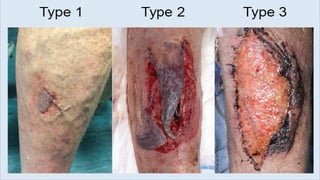
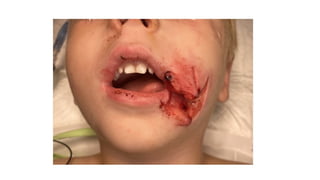
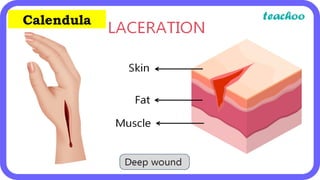
• Indicated in lacerated and suppurating wounds
• Homoeopathic antiseptic
• Restores vitality of an injured part making it impregnable against the forces of
putrefaction
• Prevents suppuration and pyemia
• Hot calendula lotions are preferred over cold ones as they conserve the vitality of the
injured parts
• Hot calendula lotion after delivery gives the greatest comfort to the patient
Calendula
Clinical hallmarks for homeopathic use
of Calendula Officinalis include following:
--Wounds that don’t heal properly (e.g. take too long to
heal or heal with excessive scar formation).
--Wounds or injuries to skin or gums that bleed
excessively or become infected.
--Injuries that seem to be overly sensitive or painful
compared to extent of injury. Pain may be sharp.
--Burns of skin.
--Chapped skin of hands or lips.
--Skin irritation of nipples during nursing.
--Problems are often associated with restlessness or
nervousness of individual.
1) For falls, lacerated wounds & septic wounds. Calendula
Officinalis is great homeopathic antiseptic. Germs can’t thrive in
presence of Calendula. Calendula will draw out dirt that is embedded
deep in wound. Apply Calendula topically to all wounds where skin is
broken. If even with application of Calendula topically, wound
begins to look infected, take Calendula 30C internally & it will heal
that wound up promptly. Painful wounds, wounds that don’t heal,
chronic effects from wounds, wounds that tend to break open & heal
again, dissecting wounds, festering wounds, gangrenous wounds,
gaping wounds, inflammation of wounds, neglected wounds,
suppurating wounds & lacerated, torn or ragged wounds.
Calendula prevents too early scab formation at wound site, and
stimulates growth of epithelial cells. It keeps healing agents actively
working on site until wound is healed. This helps to inhibit scars &
infections. Avoid frequent changing of bandage, because this interferes
with healing process & causes too early scab formation, which can
2) Gunshot wounds. Calendula prevents
suppuration & infection of gunshot wounds.
3) Diaper rashes. Calendula is very helpful to heal
up diaper rashes of babies. If rashes are severe,
please see professional homeopath, as child may
need constitutional remedy.
4) Promotes healthy granulation of tissues &
prevents peritonitis after surgery to help complete
healing of wound & prevent
infection. Calendula helps prevent keloid formation.
I can’t imagine going through surgery without having
this remedy as insurance.
5) Promotes healing after dental work. Apply compress of
few drops of Calendula tincture dissolved in warm water to
socket of tooth that has been removed in dental extractions
or to sight where dental work has been done to promote
healing, prevent infection & bring soothing relief. It also
helps to stop bleeding.
6) Soothing relief during & after delivery. Compress
of Calendula tincture dissolved in warm water & applied to
perineum during & after labor can be very soothing &
healing to laboring mother.
7) Calendula helps with maturation & healing of
abscesses.
8) Calendula helps to relieve pain & fever of
carbuncles.
• Great disposition to take cold, especially in
damp weather.
• In cancer as intercurrent remedy.
• Power to produce local exudations & help to
make acrid discharges healthy & free.
Mind
• Great irritability
• Consciousness returns, but drowsiness
remains.
• Easily frightened.
HEAD
• Heaviness of head in morning as after long illness.
• Headache & feeling of heat in forehead in evening & after
meals.
• Pain in right side of neck.
• Lacerated scalp wounds.
EYES
• Injuries to eyes which tend to suppurate; after
surgery.
• Blenorrhoea of lachrymal sac.
• Dryness & biting in margins of lids, as from
smoke.
EARS
• Acuteness of hearing.
• Deafness worse in damp surroundings & with
eczematous conditions.
• Hears best on train & distant sounds.
THROAT
• Submaxillary glands are painful to touch
with sensation as if swollen.
• Pressure in oesophagus during
deglutition.
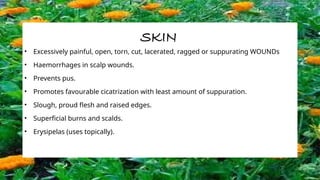
SKIN
• Excessively painful, open, torn, cut, lacerated, ragged or suppurating WOUNDs
• Haemorrhages in scalp wounds.
• Prevents pus.
• Promotes favourable cicatrization with least amount of suppuration.
• Slough, proud flesh and raised edges.
• Superficial burns and scalds.
• Erysipelas (uses topically).
MODALITIES
WORSE
• Damp weather
• Heavy cloudy weather
• During chill

1.5-Calendula=1st Term-------------------------1st.pptx

  • 1.
  • 2.
  • 3.
    Calendula, yellow marigold, isanother member of Compositae family, like our friends Arnica Montana & Bellis Perennis & is remedy that has as many wonderful uses.
  • 4.
    COMMON NAME Pot marigold Ruddles Commonmarigold Garden marigold English marigold Scottish marigold
  • 5.
    • Kingdom: Plantae •Order: Asterales • Family: Asteraceae • Tribe: Calenduleae • Genus: Calendula • Species: C. officinalis
  • 6.
    PHARMACOLOGY • Common deep-orangeflowered variety is considered to be of medicinal value. • Anti-viral, Anti-genotoxic & Anti-inflammatory properties in vitro. • Methanol extract of C. officinalis exhibited antibacterial activity. • Both Methanol & Ethanol extracts showed antifungal activities. • Along with horsetails (Equisetum arvense), pot marigold is one of few plants which is considered astringent despite not being high in tannins.
  • 7.
    Most remarkable healingagent, applied locally. Useful for open wounds, parts that won’t heal, ulcers, etc. Promotes healthy granulations & rapid healing by 1st intention. Has remarkable power to produce local exudation & helps to make acrid discharge healthy & free.
  • 8.
    • Remedy forskin problems & is applied externally to bites & stings, sprains, wounds, sore eyes, varicose veins etc. • Cleansing & detoxifying herb & is taken internally in treating fevers & chronic infections. • Used internally in order to speed healing of wounds. • Tea of petals tones up circulation &, taken regularly, can ease varicose veins. • Application of crushed stems to corns & warts will soon render them easily removable.
  • 9.
    • Antiphlogistic (Anti—Inflammatory),Antiseptic, Antispasmodic, Aperient (Laxative), Astringent, Cholagogue (Bile Enhancer), Diaphoretic, Emmenagogue (Menses Stimulator), Skin, Stimulant & Anti cancerous. • Appeared to interfere with replication of HIV cells. • Flowers - skin lotions & when added to hair shampoos will lighten hair colour. • Protect skin from premature aging & thinning of skin. • Safe enough to be used on delicate skin under eyes to prevent crow's feet.
  • 10.
    • INTRODUCED INTOHOMOEOPATHY IN 1836. • PROVER : FRANS, ARCHIEVE FUR HOM, HEILK., DR.PRICE • PARTS USED – TINCTURE OF LEAVES & FLOWERS
  • 11.
    SPHERE OF ACTION •SOFT PARTS • SPINE • LIVER
  • 12.
    CHARACTERISTICS • Indicated inlacerated and suppurating wounds • Homoeopathic antiseptic • Restores vitality of an injured part making it impregnable against the forces of putrefaction • Prevents suppuration and pyemia • Hot calendula lotions are preferred over cold ones as they conserve the vitality of the injured parts • Hot calendula lotion after delivery gives the greatest comfort to the patient
  • 19.
  • 21.
    Clinical hallmarks forhomeopathic use of Calendula Officinalis include following: --Wounds that don’t heal properly (e.g. take too long to heal or heal with excessive scar formation). --Wounds or injuries to skin or gums that bleed excessively or become infected. --Injuries that seem to be overly sensitive or painful compared to extent of injury. Pain may be sharp. --Burns of skin. --Chapped skin of hands or lips. --Skin irritation of nipples during nursing. --Problems are often associated with restlessness or nervousness of individual.
  • 22.
    1) For falls,lacerated wounds & septic wounds. Calendula Officinalis is great homeopathic antiseptic. Germs can’t thrive in presence of Calendula. Calendula will draw out dirt that is embedded deep in wound. Apply Calendula topically to all wounds where skin is broken. If even with application of Calendula topically, wound begins to look infected, take Calendula 30C internally & it will heal that wound up promptly. Painful wounds, wounds that don’t heal, chronic effects from wounds, wounds that tend to break open & heal again, dissecting wounds, festering wounds, gangrenous wounds, gaping wounds, inflammation of wounds, neglected wounds, suppurating wounds & lacerated, torn or ragged wounds. Calendula prevents too early scab formation at wound site, and stimulates growth of epithelial cells. It keeps healing agents actively working on site until wound is healed. This helps to inhibit scars & infections. Avoid frequent changing of bandage, because this interferes with healing process & causes too early scab formation, which can
  • 23.
    2) Gunshot wounds.Calendula prevents suppuration & infection of gunshot wounds. 3) Diaper rashes. Calendula is very helpful to heal up diaper rashes of babies. If rashes are severe, please see professional homeopath, as child may need constitutional remedy. 4) Promotes healthy granulation of tissues & prevents peritonitis after surgery to help complete healing of wound & prevent infection. Calendula helps prevent keloid formation. I can’t imagine going through surgery without having this remedy as insurance.
  • 24.
    5) Promotes healingafter dental work. Apply compress of few drops of Calendula tincture dissolved in warm water to socket of tooth that has been removed in dental extractions or to sight where dental work has been done to promote healing, prevent infection & bring soothing relief. It also helps to stop bleeding. 6) Soothing relief during & after delivery. Compress of Calendula tincture dissolved in warm water & applied to perineum during & after labor can be very soothing & healing to laboring mother. 7) Calendula helps with maturation & healing of abscesses. 8) Calendula helps to relieve pain & fever of carbuncles.
  • 25.
    • Great dispositionto take cold, especially in damp weather. • In cancer as intercurrent remedy. • Power to produce local exudations & help to make acrid discharges healthy & free.
  • 26.
    Mind • Great irritability •Consciousness returns, but drowsiness remains. • Easily frightened.
  • 27.
    HEAD • Heaviness ofhead in morning as after long illness. • Headache & feeling of heat in forehead in evening & after meals. • Pain in right side of neck. • Lacerated scalp wounds.
  • 28.
    EYES • Injuries toeyes which tend to suppurate; after surgery. • Blenorrhoea of lachrymal sac. • Dryness & biting in margins of lids, as from smoke.
  • 29.
    EARS • Acuteness ofhearing. • Deafness worse in damp surroundings & with eczematous conditions. • Hears best on train & distant sounds.
  • 30.
    THROAT • Submaxillary glandsare painful to touch with sensation as if swollen. • Pressure in oesophagus during deglutition.
  • 31.
    SKIN • Excessively painful,open, torn, cut, lacerated, ragged or suppurating WOUNDs • Haemorrhages in scalp wounds. • Prevents pus. • Promotes favourable cicatrization with least amount of suppuration. • Slough, proud flesh and raised edges. • Superficial burns and scalds. • Erysipelas (uses topically).
  • 32.
    MODALITIES WORSE • Damp weather •Heavy cloudy weather • During chill