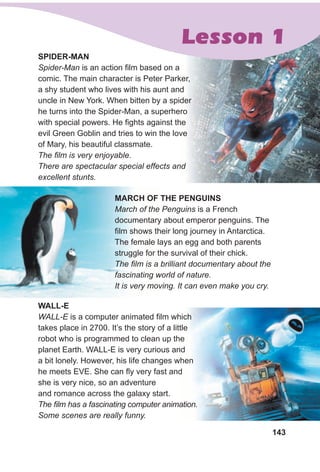
© О. Д. Карпюк, 2015, 2020
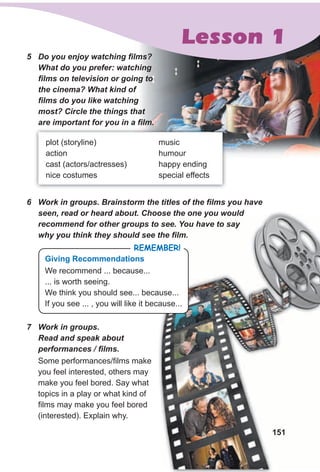
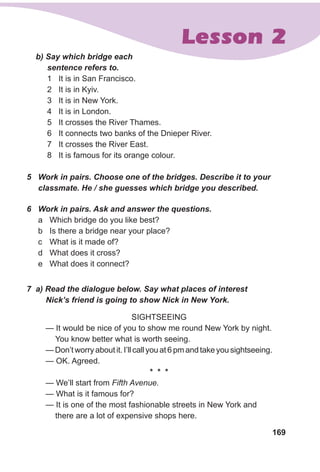
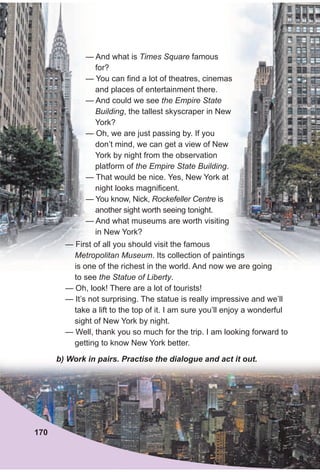
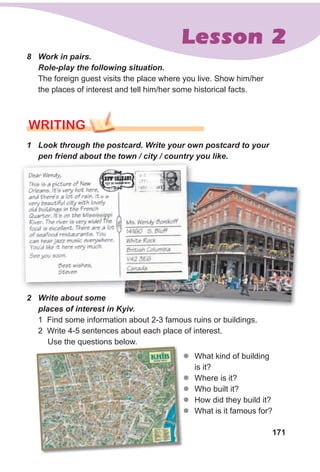
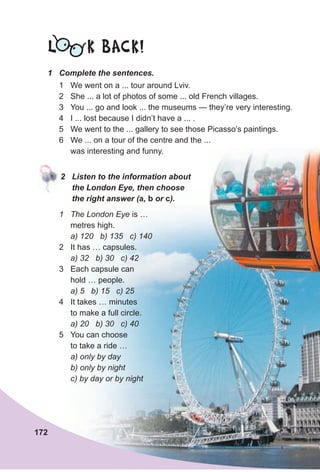
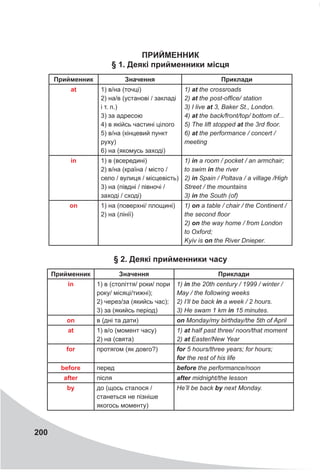
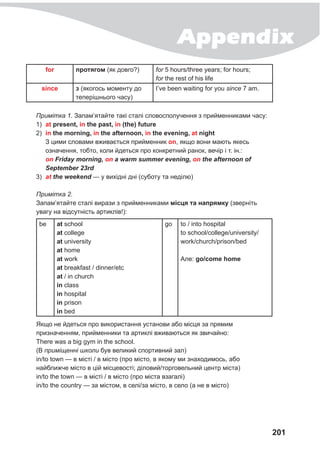
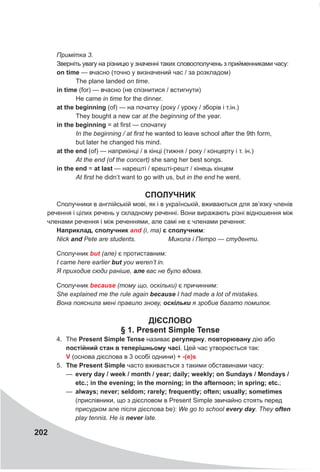
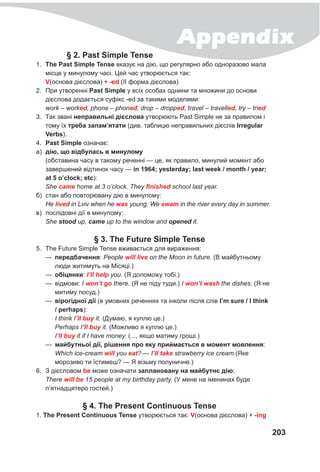
© ТОВ “Видавництво Астон”, 2015, 2020
ББК 81.43.21-922
К 26
Підручник створено на основі авторської концепції формування
учнівської здатності до міжкультурного спілкування і взаємодії. Книга
продовжує серію для основної школи і містить навчальний матеріал,
передбачений чинною програмою Міністерства освіти і науки України з
предмета “Англійська мова” (7-й рік навчання) для 7 класу закладів
загальної середньої освіти.
Карпюк О. Д.
Англійська мова: Підручник для 7-го класу закладів загальної середньої
освіти (7-й рік навчання). — 2-ге вид., перероблене. —Тернопіль :
“Видавництво Астон”, 2020. — 224 с. : іл.
ISBN 978-966-308-786-3
К 26
ISBN 978-966-308-786-3
Рекомендовано Міністерством освіти і науки України
(лист Міністерства освіти і науки України № 1/11-3636 від 02.06.2020)
Видано за рахунок державних коштів.
Продаж заборонено.
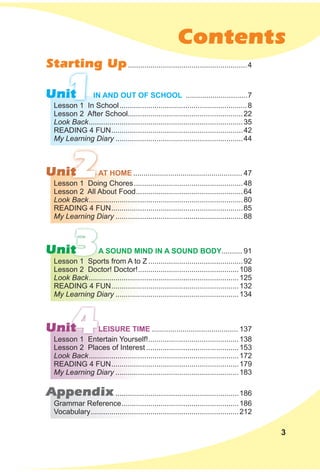
Contents
1
2
3
4
Unit
Unit
Unit
Unit
Appendix............................................................186
Starting Up..........................................................4
Lesson 1 In School..............................................................8
Lesson 2 After School........................................................22
Look Back...........................................................................35
READING 4 FUN................................................................42
My Learning Diary ..............................................................44
Lesson 1 Doing Chores.....................................................48
Lesson 2 All About Food....................................................64
Look Back...........................................................................80
READING 4 FUN................................................................85
My Learning Diary ..............................................................88
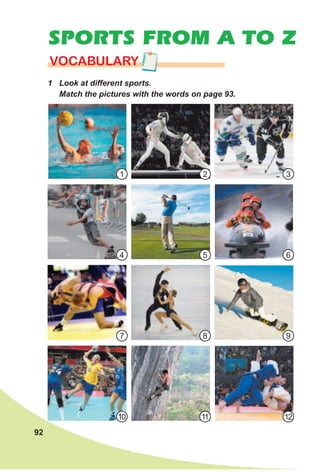
Lesson 1 Sports from A to Z ..............................................92
Lesson 2 Doctor! Doctor!.................................................108
Look Back.........................................................................125
READING 4 FUN..............................................................132
My Learning Diary ............................................................134
Lesson 1 Entertain Yourself!............................................138
Lesson 2 Places of Interest .............................................153
Look Back.........................................................................172
READING 4 FUN..............................................................179
My Learning Diary ............................................................183
grammar Reference.........................................................186
Vocabulary........................................................................212
IN ANd OuT OF sCHOOl ..............................7
AT HOMe ..................................................... 47
A sOuNd MINd IN A sOuNd BOdY.......... 91
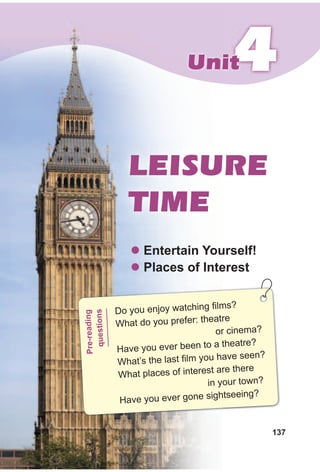
leIsuRe TIMe .......................................... 137
3
4
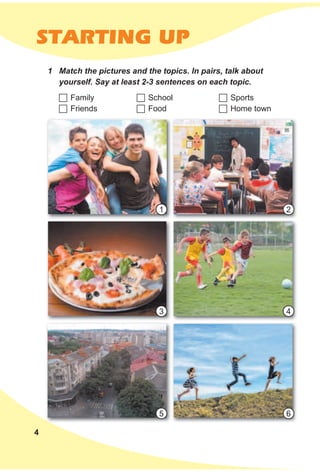
STARTING UP
1 Match the pictures and the topics. In pairs, talk about
yourself. Say at least 2-3 sentences on each topic.
	Family
	Friends
	School
	Food
	Sports
	Home town
1
4
2
5
3
6
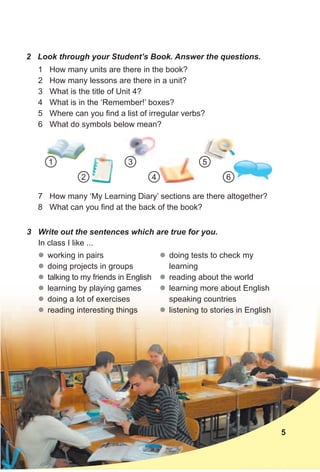
2 Look through your Student’s Book. Answer the questions.
3 Write out the sentences which are true for you.
In class I like ...
1 How many units are there in the book?
2 How many lessons are there in a unit?
3 What is the title of Unit 4?
4 What is in the ‘Remember!’ boxes?
5 Where can you find a list of irregular verbs?
6 What do symbols below mean?
zz working in pairs
zz doing projects in groups
zz talking to my friends in English
zz learning by playing games
zz doing a lot of exercises
zz reading interesting things
5
7 How many ‘My Learning Diary’ sections are there altogether?
8 What can you find at the back of the book?
zz doing tests to check my
learning
zz reading about the world
zz learning more about English
speaking countries
zz listening to stories in English
1
42
531 5
6
6
4 Complete the sentences and share your thoughts with
a classmate. (More than one item is possible.)
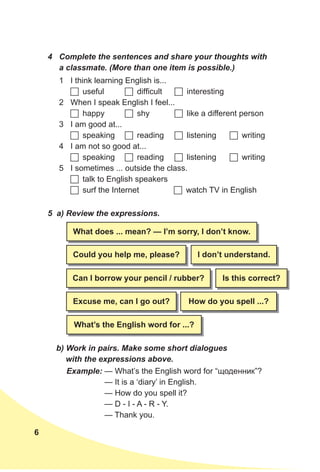
5 a) Review the expressions.
b) Work in pairs. Make some short dialogues
with the expressions above.
1 I think learning English is...
	useful 	difficult 	interesting
2 When I speak English I feel...
	happy 	shy 	like a different person
3 I am good at...
	speaking 	reading 	listening 	writing
4 I am not so good at...
	speaking 	reading 	listening 	writing
5 I sometimes ... outside the class.
	talk to English speakers
	surf the Internet 	watch TV in English
What does ... mean? — I’m sorry, I don’t know.
How do you spell ...?
Can I borrow your pencil / rubber?
excuse me, can I go out?
What’s the english word for ...?
I don’t understand.
Is this correct?
Could you help me, please?
Example: — What’s the English word for “щоденник”?
— It is a ‘diary’ in English.
— How do you spell it?
— D - I - A - R - Y.
— Thank you.
111UnitUnit
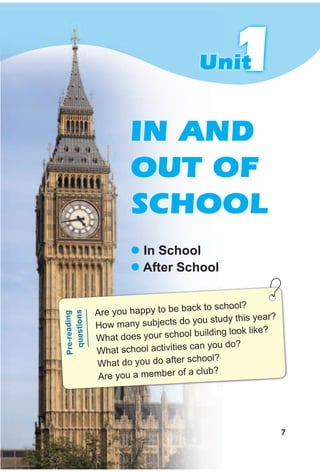
IN AND
OUT OF
SCHOOL
z In school
z After school
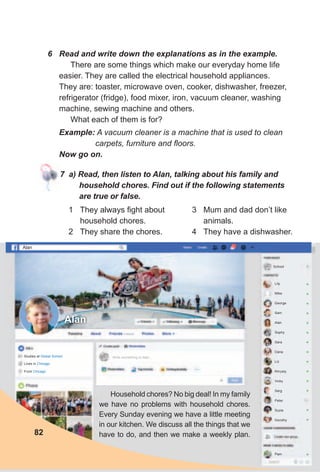
Are you happy to be back to school?
How many subjects do you study this year?
What does your school building look like?
What school activities can you do?
What do you do after school?
Are you a member of a club?
Pre-reading
questions
7
88
gym
Science lab Library
ground floor
First floor
Boys,
changing
room
Computer
room1
Classroom
Cathy’s
classroom
Art classroom
English
classroom
Mike’s
classroom
Music
classroom
Classroom
LockersToiletsComputer
room2
Computer
room3
Stairs
Staffroom
Headmaster’s
office
Toilets
School kitchen
Canteen
Lockers
StairsEntrance
Girls,
changing
room
IN SCHOOL
VOCABULARY
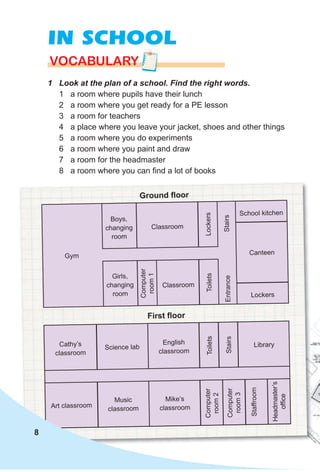
1 Look at the plan of a school. Find the right words.
1 a room where pupils have their lunch
2 a room where you get ready for a PE lesson
3 a room for teachers
4 a place where you leave your jacket, shoes and other things
5 a room where you do experiments
6 a room where you paint and draw
7 a room for the headmaster
8 a room where you can find a lot of books
8
9
Lesson 1
2 Look at the plan of the school.
Choose the correct word.
3 Work with a friend. Ask and answer.
4 Draw a plan of your school. Present it in class.
1 The lockers are (next to/between) the canteen.
2 The science lab is (next to/opposite) the music classroom.
3 The staff room is (between/opposite) the computer room and
the headmaster’s office.
4 Mike’s classroom is (between/opposite) the English classroom.
5 The art classroom is (opposite/next to) Cathy’s classroom.
6 The computer room 1 is (opposite/next to) the girls’ changing room.
a canteen [k2n9tI:n]
a gym [dzim]
a headmaster [0hed9m4:st3]
a library [9laibr3rI]
a locker [9lAk3]
a science lab [9sai3ns l2b]
VocabuLaRy box
A: Where is the science lab?
B: Opposite the music
classroom.
A: Correct!
A: Is the science lab
next to the toilets?
B: Yes, it is.
A: Wrong answer!
OR
between next to opposite
LISTENING
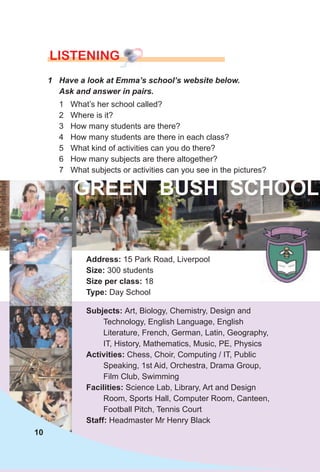
1 Have a look at Emma’s school’s website below.
Ask and answer in pairs.
Address: 15 Park Road, Liverpool
size: 300 students
size per class: 18
Type: Day School
subjects: Art, Biology, Chemistry, Design and
Technology, English Language, English
Literature, French, German, Latin, Geography,
IT, History, Mathematics, Music, PE, Physics
Activities: Chess, Choir, Computing / IT, Public
Speaking, 1st Aid, Orchestra, Drama Group,
Film Club, Swimming
Facilities: Science Lab, Library, Art and Design
Room, Sports Hall, Computer Room, Canteen,
Football Pitch, Tennis Court
staff: Headmaster Mr Henry Black
1 What’s her school called?
2 Where is it?
3 How many students are there?
4 How many students are there in each class?
5 What kind of activities can you do there?
6 How many subjects are there altogether?
7 What subjects or activities can you see in the pictures?
gReeN BusH sCHOOl
10
11
3 Answer the questions about your own school.
1 Are there more than 200 pupils
in your school?
2 Is there a sports hall in your
school?
3 Is there a playground next to the
school?
4 Are there any posters on the
wall in your English classroom?
5 Do you like Literature? Why?
6 Is there a very strict teacher in
your school?
1 There are a lot of photos on the ...
a) poster
b) school’s website
c) wall
2 They have different rooms
a) in different buildings
b) for different activities
c) for different subjects
3 Literature is more about ...
a) writing b) spelling c) reading
4 Three mistakes in a test and you get a(n) ...
a) E b) B c) C
a pitch
[pitS]
Lesson 1
an activity [2k9tivCtI]
aid [eid]
a facility [fC9silCti]
Biology [bai9Al3dzi]
Chemistry [9kemistri]
a choir [kwai3]
an orchestra [9c:kistr3]
Physics [9fixiks]
Technology [tek9nAl3dzi]
VocabuLaRy box
a court
[kc:t]
2 Listen and complete the sentences.
12
4 Read and answer the question below.
There is ... / There are ...
Ми розпочинаємо речення зі структур
‘There is’ / ‘There are’ тоді, коли говоримо
про речі / осіб / явища, котрі можемо знайти
у певному місці.
There is a new Computer Room.
Is there a canteen in your school?
There are 300 students in our school.
Are there any strict teachers in your school?
There is = There’s
RemembeR!
In the USA and some
other countries parents
sometimes take a role
of teachers and teach
their children at
home. Why do
parents do this?
They don’t like
regular schools.
zz Why do some parents teach their children at home?
1
to believe [bi9lI:v] — вважати
2
a case [keis] — випадок
bullying [9bUlIiN]
regular [9regjCl3]
VocabuLaRy box
Do you KnoW?
They believe1
that there are too many students in the class
or that there is too much bullying. In other cases2
, children
whose parents spend a lot of time travelling can’t go to
regular schools. There are about 2,5 million children in the
USA whose parents are also their teachers.
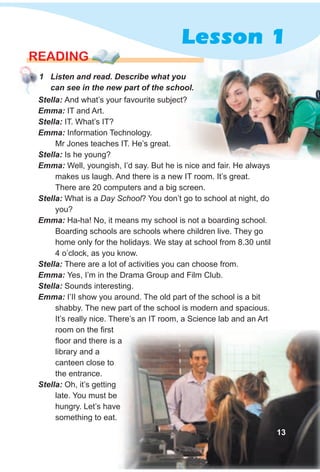
1 Listen and read. Describe what you
can see in the new part of the school.
READING
Stella: And what’s your favourite subject?
Emma: IT and Art.
Stella: IT. What’s IT?
Emma: Information Technology.
Mr Jones teaches IT. He’s great.
Stella: Is he young?
Emma: Well, youngish, I’d say. But he is nice and fair. He always
makes us laugh. And there is a new IT room. It’s great.
There are 20 computers and a big screen.
Stella: What is a Day School? You don’t go to school at night, do
you?
Emma: Ha-ha! No, it means my school is not a boarding school.
Boarding schools are schools where children live. They go
home only for the holidays. We stay at school from 8.30 until
4 o’clock, as you know.
Stella: There are a lot of activities you can choose from.
Emma: Yes, I’m in the Drama Group and Film Club.
Stella: Sounds interesting.
Emma: I’II show you around. The old part of the school is a bit
shabby. The new part of the school is modern and spacious.
It’s really nice. There’s an IT room, a Science lab and an Art
room on the first
floor and there is a
library and a
canteen close to
the entrance.
Stella: Oh, it’s getting
late. You must be
hungry. Let’s have
something to eat.
floor and there is a
hungry. Let’s have
13
Lesson 1
2 Say if the sentences are true or false.
1 IT and Art are Stella’s favourite
subjects.
2 Mr Jones teaches English.
3 Mr Jones is a very strict teacher.
4 Emma goes to a boarding school.
5 Emma doesn’t like acting.
6 The canteen and the IT room
are on the second floor.
RemembeR!
Words to describe
a school building
Words to describe
teachers
It’s
big
nice
modern
spacious
shabby
He / She is
nice
strict
fair
kind
young(ish)
Emma’s school is called ... . It’s a day school because children
stay at school from 8.30 until ... .
There ... 300 students in her school.
The school is quite big. The old part is a bit ... , but the new part
is modern and ... . There is a ... lab, a library, a (an) ... room,
and there’s a canteen close to the entrance.
Emma’s favourite subjects are ... and ... . Some of the teachers
are ... , like Mr Beard. He always says that ... and ... are very
important. Students like fair ... like Mr ... . He ... IT and he often
makes students ... .
boarding [9bc:diN]
school
fair [fe3]
shabby [9S2bi]
spacious [9speiSCs]
to mean [mI:n]
zz to be close (to)
zz to show around
VocabuLaRy box
3 Work in pairs. Practise reading the dialogue on page 13.
14
4 Fill in the missing words (see pp. 10-13).
15
Lesson 1
5 a) Read and say what is unusual
about this school.
b) In groups discuss the items below.
zz Would you like to study
at School of the Air?
zz Do you think the pupils
miss their classmates?
SCHOOL OF THE AIR
Sarah and her brother live in Australia. The nearest school is
400 km away from their home, so they learn at home. Their
school is called School of the Air. At first, it used radio. Now, it
is using satellite1
technology. The teachers teach at one of the
teaching studios. They use a video camera and an electronic
whiteboard. Students have a small web camera on their
computers. Students write e-mails to teachers and other
students. They can see them on the screen2
and talk to them
over a microphone3
. They get a chance to meet their ‘screen’
classmates once a year at a sports day or at a school camp.
b) In groups discuss the items below.b) In groups discuss the items below.
1
a satellite [9s2tClait] — n. супутник, adj. супутниковий
2
a screen [skrI:n] — екран
3
a microphone [9maikrCfCUn] — мікрофон
16
GRAMMAR
RemembeR!
zz Ми вживаємо must (або have to) для вираження
необхідності.
I must do my homework. (My teacher gets angry
when I don’t do it)
I have to do my homework.
zz Ми вживаємо mustn’t для вираження заборони,
недозволеності.
We mustn’t bring pets to school.
RemembeR!
zz Ми вживаємо needn’t для вираження
відсутності у потребі або необхідності.
You needn’t take a coat. It’s warm outside.
We needn’t study for the test because the
teacher has cancelled2
it.
1 Complete with ‘must’ or ‘mustn’t’.
Teenagers…
1 … spend long hours
at the computer.
2 … do their homework
on time.
3 … smoke or drink
alcohol.
4 … learn to be kind
to others.
5 … look neat and tidy.
6 … be rude1
.
7 … skip breakfast.
8 … use their
mobile
phones
in school.
1
rude [ru:d] — неввічливий, брутальний
2
to cancel [9k2nsl] — скасовувати
Read § 8,
pp. 206-207.
Read § 8,
p. 208.
Lesson 1
17
2 Complete with the correct
or the best answer.
1 … to go now?
a) Must we b) Do we have c) Mustn’t we
2 Pupils … eat their lunches
outside the canteen.
a) needn’t b) mustn’t c) don’t have to
3 … to help with food and drinks at the party next Friday?
a) Did you have b) Must you c) Will you have
3 Complete the sentences so they are true for you.
Use: must, mustn’t, needn’t, have to, don’t have to.
(More than one choice is possible for some sentences.)
1 I … wash the family car every week.
2 I … ask for more pocket money than my parents can give me.
3 You … take your umbrella. It won’t rain.
4 I … wear dirty or funny clothes to school.
5 I … study harder to get better marks.
6 I … go out now.
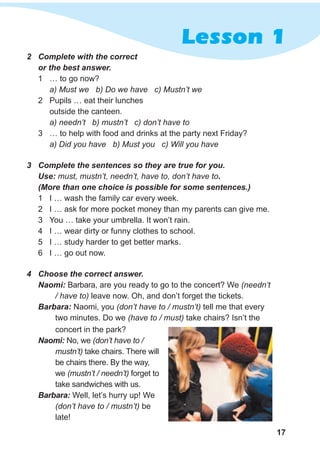
4 Choose the correct answer.
Naomi: Barbara, are you ready to go to the concert? We (needn’t
/ have to) leave now. Oh, and don’t forget the tickets.
Barbara: Naomi, you (don’t have to / mustn’t) tell me that every
two minutes. Do we (have to / must) take chairs? Isn’t the
concert in the park?
Naomi: No, we (don’t have to /
mustn’t) take chairs. There will
be chairs there. By the way,
we (mustn’t / needn’t) forget to
take sandwiches with us.
Barbara: Well, let’s hurry up! We
(don’t have to / mustn’t) be
late!
gAdgeTs
zz Switch off your
mobile phones.
zz Do not bring
iPods to school.
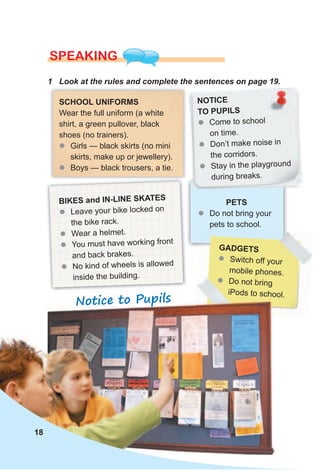
1 Look at the rules and complete the sentences on page 19.
SPEAKING
sCHOOl uNIFORMs
Wear the full uniform (a white
shirt, a green pullover, black
shoes (no trainers).
zz Girls — black skirts (no mini
skirts, make up or jewellery).
zz Boys — black trousers, a tie.
BIKes and IN-lINe sKATes
zz Leave your bike locked on
the bike rack.
zz Wear a helmet.
zz You must have working front
and back brakes.
zz No kind of wheels is allowed
inside the building.
NOTICe
TO PuPIls
zz Come to school
on time.
zz Don’t make noise in
the corridors.
zz Stay in the playground
during breaks.
PeTs
zz Do not bring your
pets to school.
Notice to Pupils
18
19
Lesson 1
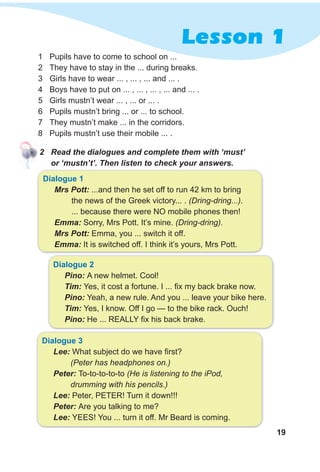
2 Read the dialogues and complete them with ‘must’
or ‘mustn’t’. Then listen to check your answers.
dialogue 1
Mrs Pott: ...and then he set off to run 42 km to bring
the news of the Greek victory... . (Dring-dring...).
... because there were NO mobile phones then!
Emma: Sorry, Mrs Pott. It’s mine. (Dring-dring).
Mrs Pott: Emma, you ... switch it off.
Emma: It is switched off. I think it’s yours, Mrs Pott.
dialogue 2
Pino: A new helmet. Cool!
Tim: Yes, it cost a fortune. I ... fix my back brake now.
Pino: Yeah, a new rule. And you ... leave your bike here.
Tim: Yes, I know. Off I go — to the bike rack. Ouch!
Pino: He ... REALLY fix his back brake.
dialogue 3
Lee: What subject do we have first?
(Peter has headphones on.)
Peter: To-to-to-to-to (He is listening to the iPod,
drumming with his pencils.)
Lee: Peter, PETER! Turn it down!!!
Peter: Are you talking to me?
Lee: YEES! You ... turn it off. Mr Beard is coming.
1 Pupils have to come to school on ...
2 They have to stay in the ... during breaks.
3 Girls have to wear ... , ... , ... and ... .
4 Boys have to put on ... , ... , ... , ... and ... .
5 Girls mustn’t wear ... , ... or ... .
6 Pupils mustn’t bring ... or ... to school.
7 They mustn’t make ... in the corridors.
8 Pupils mustn’t use their mobile ... .
20
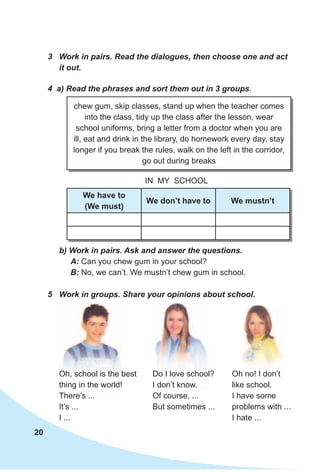
3 Work in pairs. Read the dialogues, then choose one and act
it out.
4 a) Read the phrases and sort them out in 3 groups.
IN MY SCHOOL
b) Work in pairs. Ask and answer the questions.
A: Can you chew gum in your school?
B: No, we can’t. We mustn’t chew gum in school.
chew gum, skip classes, stand up when the teacher comes
into the class, tidy up the class after the lesson, wear
school uniforms, bring a letter from a doctor when you are
ill, eat and drink in the library, do homework every day, stay
longer if you break the rules, walk on the left in the corridor,
go out during breaks
We have to
(We must)
We don’t have to We mustn’t
5 Work in groups. Share your opinions about school.
Oh, school is the best
thing in the world!
There’s ...
It’s ...
I ...
Do I love school?
I don’t know.
Of course, ...
But sometimes ...
Oh no! I don’t
like school.
I have some
problems with ...
I hate ...
Oh no! I don’t
21
Lesson 1
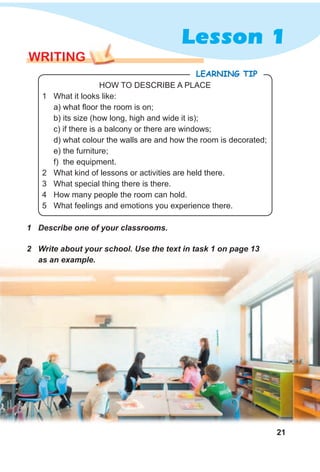
WRITING
1 Describe one of your classrooms.
2 Write about your school. Use the text in task 1 on page 13
as an example.
HOW TO DESCRIBE A PLACE
1 What it looks like:
a) what floor the room is on;
b) its size (how long, high and wide it is);
c) if there is a balcony or there are windows;
d) what colour the walls are and how the room is decorated;
e) the furniture;
f) the equipment.
2 What kind of lessons or activities are held there.
3 What special thing there is there.
4 How many people the room can hold.
5 What feelings and emotions you experience there.
LeaRning Tip
22
AFTER SCHOOL
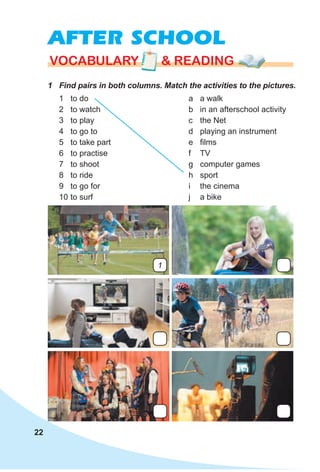
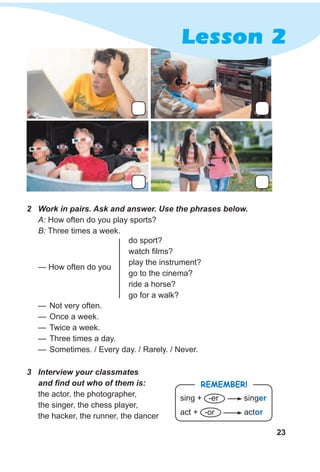
1 Find pairs in both columns. Match the activities to the pictures.
VOCABULARY & READINGVOCABULARY & READINGVOCABULARY & READING
1 to do
2 to watch
3 to play
4 to go to
5 to take part
6 to practise
7 to shoot
8 to ride
9 to go for
10 to surf
a a walk
b in an afterschool activity
c the Net
d playing an instrument
e films
f TV
g computer games
h sport
i the cinema
j a bike
1
23
Lesson 2
— Not very often.
— Once a week.
— Twice a week.
— Three times a day.
— Sometimes. / Every day. / Rarely. / Never.
2 Work in pairs. Ask and answer. Use the phrases below.
A: How often do you play sports?
B: Three times a week.
3 Interview your classmates
and find out who of them is:
the actor, the photographer,
the singer, the chess player,
the hacker, the runner, the dancer
do sport?
watch films?
play the instrument?
go to the cinema?
ride a horse?
go for a walk?
— How often do you
RemembeR!
sing + -er singer
act + -or actor
I’m crazy about gaming. But my
mum doesn’t want me to play as
much as I’d like to. Sometimes
my dad joins me and we play
against each other. Then my
mum really gets mad.
4 Read and name the afterschool activities that the children do.
I’m a member of a film club. We shoot films and
cover all the important school events. It’s a lot of
fun. We don’t get together very often, just twice
a week. I like it because I love films. I also enjoy
hanging around with friends. We love going to
the cinema together. We buy tickets online.
an event [i9vent]
a member [9membC]
to dream [drI:m]
to practise [9pr2ktis]
to try out [9traiaUt]
handy [9h2ndi]
zz to be keen on
zz to get together
[9gettC0geqC]
zz to hang around (with)
zz to join in
VocabuLaRy box
24
I go to the park or playground with
my friends. I ride my bike. We like
doing all sorts of tricks. Of course,
I wear my helmet. You have to
wear it when trying out new things.
I play the violin. I can
also play the piano but
not very well. I practise
two hours a day. I like
the violin because it’s a
very handy instrument.
The best thing is playing
in a school orchestra. I
dream of playing in the
Philharmonic orchestra
one day.
25
Lesson 2
Do you want to try judo?
Classes are great fun.
Interested?
Well, put your name down.
Last year the classes
were very popular!
Your name: __________________
JUDO CLUB
5 Complete the sentences.
6 Read and choose the club.
Explain your choice.
These are ads of some clubs that children
from Redhill School can join in.
 Art club
 Woodwork club
 Chess club
 Photography club
 Sports club
 Music club
a helmet
[9helmit]
to do a trick
John likes his film club
Vicky wears her helmet
Rosie’s mother gets mad
Liz likes playing in a school orchestra
because …
to do a trick
JOIN OUR CLUBS
Do you want to be a star?
Come to our
dRAMA CluB
on Friday, 4 pm
I can join … club.
I can take part in …
I like it because…
26
LISTENING
1 Listen and find out what you mustn’t do online.
1 Some parents are worried
about their children who spend
all day playing computer
games or surfing the Net.
2 When you spend too much
time in front of your computer,
you don’t get enough exercise.
3 The Internet helps Emma with
learning.
4 Posting a photo online is safe.
5 The Internet helps to download
music.
information [0infC9meiSn]
networking [net9wE:kiN]
safety [9seifti]
to download [9daUnlCud]
to join [dzcin]
to post [pCUst]
dangerous [9deinzCrcs]
online [9Anlain]
safe [9seif]
social [9sCUSl]
zz be/get upset (about)
zz keep repeating smth
VocabuLaRy box
2 Listen again and say if the sentences
below are true or false.
27
Lesson 2
6	 You mustn’t watch video clips online.
7	 Emma is happy to join social networking sites.
8	 Emma’s classmates mustn’t join any of the chat rooms at
school.
9	 It’s a lot of fun to meet up with people you meet online.
10	It’s dangerous to give
out any personal
information on the
Internet.
too / enough
There is not enough practice.
You should do enough exercises.
There is too much information.
There are too many computers.
Remember!
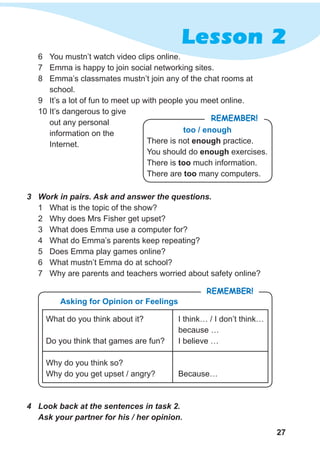
3	 Work in pairs. Ask and answer the questions.
1	 What is the topic of the show?
2	 Why does Mrs Fisher get upset?
3	 What does Emma use a computer for?
4	 What do Emma’s parents keep repeating?
5	 Does Emma play games online?
6	 What mustn’t Emma do at school?
7	 Why are parents and teachers worried about safety online?
4	 Look back at the sentences in task 2.
Ask your partner for his / her opinion.
Asking for Opinion or Feelings
What do you think about it?
Do you think that games are fun?
Why do you think so?
Why do you get upset / angry?
Remember!
I think… / I don’t think…
because …
I believe …
Because…
28
GRAMMAR
5 Listen and sing the song.
too + adjective1
/ adverb2
(занадто)
She is too young to travel alone.
(She can’t travel alone.)
He drives too fast.
(He should not drive so fast.)
Adjective / Adverb + enough (достатньо)
This camera is good enough.
(And I like it.)
She got up early enough.
(She will come to school on time.)
RemembeR!
Show Me Your Face
I’m going to search for night and day,
I’m going to contact you.
Can you help me to find the way
To make all my dreams come true?
Refrain.
I am going to send an e-mail
Although I can’t see your face.
I’m going to meet you some day
Out in time and space.
Refrain:
Show me your face.
Am I asking much?
Out in time and space
All I need is a human touch.
1
an adjective
[92djCktiv] —
прикметник
2
an adverb [92dvE:b] —
прислівник
29
Lesson 2
1 Complete each sentence with
‘too’ or ‘enough’ and one of the adjectives from the box.
1 I can’t wear this skirt. It’s ... ... .
2 Tom can’t buy this camera. It isn’t ... ... .
3 Winnie-the-Pooh couldn’t get through the hole. He was ... ... .
4 Let’s buy these jeans. They are ... ... .
5 I can’t carry this suitcase. It is ... ... .
6 Where is Mike? It is ... ... .
7 Switch on the lamp. It is not ... ... .
2 Choose ‘too’ or ‘enough’ to complete the sentences.
1 There is … much music to download.
2 There aren’t … classrooms for pupils.
3 There are … many photos on their school’s site.
4 Are there … computers in the classroom?
5 She spends … much time on the Internet.
6 It is … dangerous to meet up with people you meet online.
7 I should give … personal information to take part in this
activity.
8 There are … many social networking sites today.
9 There wasn’t … time to prepare for the exam.
10 There aren’t … teachers in the school.
RemembeR!
There is too much water.
There are too many cars.
There isn’t enough sugar.
There aren’t enough books.
enough
too much + Noun
too many
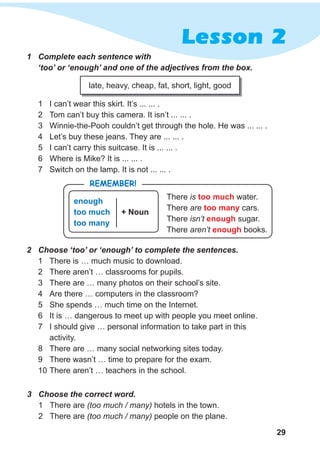
late, heavy, cheap, fat, short, light, good
3 Choose the correct word.
1 There are (too much / many) hotels in the town.
2 There are (too much / many) people on the plane.
30
5 Put the sentences into the proper word order.
Write them in your notebook.
1 enough we have just to get to the airport time
2 she much has work to do too
3 enough I do have money not for Australia a trip to
4 enough that not is paint room for this
5 sweets give don’t too her many
6 enough she tall is not to top shelf reach the
7 enough people that’s pasta for two
8 for him much too that is to carry
9 enough is baby the warm?
10 enough I think that big for us flat is
3 They haven’t got (many / enough) water in the bath tub.
4 There aren’t (much / enough) hotels at the seaside.
5 I’ve got (too much / many) work to do.
6 There wasn’t (many / enough) rain last month.
7 There is (too much / many) salt in the soup.
4 Complete the sentences.
a) Use ‘too’ or ‘enough’ and the adjectives from the box.
b) Use ‘too much’ or ‘too many’.
1 Could I have some water, please? The tea is ... ... .
2 Jane, you should get a hair cut. It’s ... ... .
3 You needn’t your coat today. It is ... ... .
4 The coffee isn’t ... ... ? Can I have some sugar, please?
1 I can’t watch the film. I’ve got ... homework.
2 I can’t find the pen! There are ... books on the desk.
3 I didn’t enjoy the holidays. There were ... people there.
4 Don’t make ... noise. I’ve got a headache.
sweet, hot, long, warm
31
Lesson 2
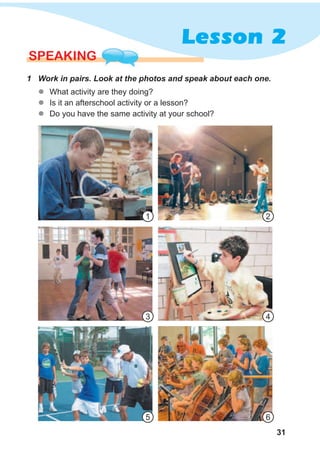
SPEAKING
1 Work in pairs. Look at the photos and speak about each one.
1
3
5
2
4
6
zz What activity are they doing?
zz Is it an afterschool activity or a lesson?
zz Do you have the same activity at your school?
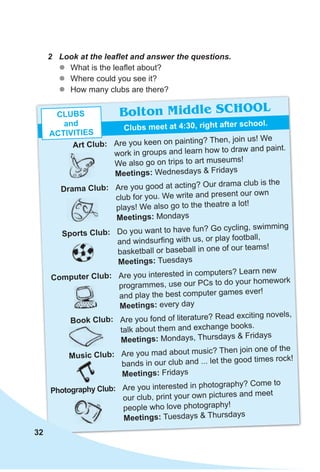
2 Look at the leaflet and answer the questions.
zz What is the leaflet about?
zz Where could you see it?
zz How many clubs are there?
Are you keen on painting? Then, join us! We
work in groups and learn how to draw and paint.
We also go on trips to art museums!
Meetings: Wednesdays & Fridays
Are you good at acting? Our drama club is the
club for you. We write and present our own
plays! We also go to the theatre a lot!
Meetings: Mondays
Do you want to have fun? Go cycling, swimming
and windsurfing with us, or play football,
basketball or baseball in one of our teams!
Meetings: Tuesdays
Are you interested in computers? Learn new
programmes, use our PCs to do your homework
and play the best computer games ever!
Meetings: every day
Are you fond of literature? Read exciting novels,
talk about them and exchange books.
Meetings: Mondays, Thursdays & Fridays
Are you mad about music? Then join one of the
bands in our club and ... let the good times rock!
Meetings: Fridays
Are you interested in photography? Come to
our club, print your own pictures and meet
people who love photography!
Meetings: Tuesdays & Thursdays
Bolton Middle SCHOOL
Clubs meet at 4:30, right after school.
Art Club:
Computer Club:
drama Club:
Book Club:
sports Club:
Music Club:
Photography Club:
CluBs
and
ACTIvITIes
32
33
Lesson 2
I’m afraid you’re wrong. In my
opinion, Sports Club is great. I like
sports activities. I’ll join the Sports
Club! But I won’t join the Photography
Club. In my opinion, it is boring.
3 Work in pairs. Talk to your partner
about the clubs in Bolton Middle School
you want / don’t want to join.
I would like to join the Art
Club because it’s fun. I don’t
want to join the Sports Club.
I think it’s tiring.
dull
tiring
awful
boring
fun
interesting
brilliant
fantastic
zz I think /
suppose…
zz In my opinion…
zz I must say
that…
zz I believe that…
zz Yes, that’s right.
zz I think so, too.
zz I (quite) agree.
zz That’s clear
now.
zz I’m afraid you
are wrong.
zz That’s not
right.
zz Absolutely not.
zz I disagree.
RemembeR!
disagreeingAgreeing
expressing
Opinions
4 Do a survey1
about your classmates’ favourite
free time activities.
Make a graph.
A: What do you like
doing most in
your free time?
B: I love going
cycling.
numberofpupils
2
4
6
8
10 cycling
reading
windsurfing
1
a survey [sC9vei] — дослідження
34
WRITING
1 Write some rules for the safe use of the Internet.
Explain them.
2 Make an announcement about any afterclass activity or
a school event you are going to have. Work in groups.
5 Look at these announcements and say what events
they inform about.
an announcement [C9naUnsmCnt]
an Assembly Hall [C9semblI hc^:l]
a performance [pC9fc:mCns]
a tournament [9tUCnCmCnt]
to announce [C9naUns]
to attend [C9tend]
to perform [pC9fc:m]
exciting [ik9saitiN]
VocabuLaRy box
is holding
a chess tournament
on Saturday at 2 pm.
All lovers of chess are
invited to take part in it.
It is hoped many will
attend it.
THE CHESS CLUB
wishes to announce it is holding a new
performance. It will be held in the
Assembly Hall tomorrow, beginning
at 4 pm. All pupils are welcome.
THE SCHOOL
THEATRE
THE SCHOOL
Don’t forget
about the new
performance
in the
Hall
tomorrow.
35
Lessons 1-2
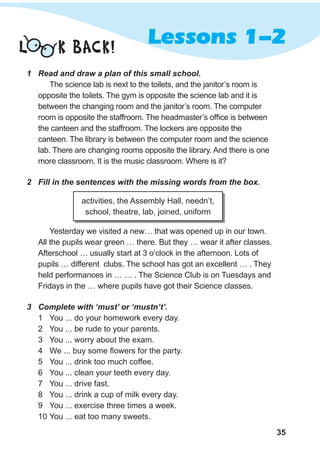
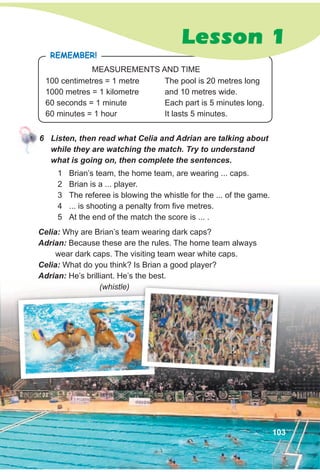
1 Read and draw a plan of this small school.
The science lab is next to the toilets, and the janitor’s room is
opposite the toilets. The gym is opposite the science lab and it is
between the changing room and the janitor’s room. The computer
room is opposite the staffroom. The headmaster’s office is between
the canteen and the staffroom. The lockers are opposite the
canteen. The library is between the computer room and the science
lab. There are changing rooms opposite the library. And there is one
more classroom. It is the music classroom. Where is it?
2 Fill in the sentences with the missing words from the box.
Yesterday we visited a new… that was opened up in our town.
All the pupils wear green … there. But they … wear it after classes.
Afterschool … usually start at 3 o’clock in the afternoon. Lots of
pupils … different clubs. The school has got an excellent … . They
held performances in … … . The Science Club is on Tuesdays and
Fridays in the … where pupils have got their Science classes.
3 Complete with ‘must’ or ‘mustn’t’.
1 You ... do your homework every day.
2 You ... be rude to your parents.
3 You ... worry about the exam.
4 We ... buy some flowers for the party.
5 You ... drink too much coffee.
6 You ... clean your teeth every day.
7 You ... drive fast.
8 You ... drink a cup of milk every day.
9 You ... exercise three times a week.
10 You ... eat too many sweets.
activities, the Assembly Hall, needn’t,
school, theatre, lab, joined, uniform
L K BACK!
36
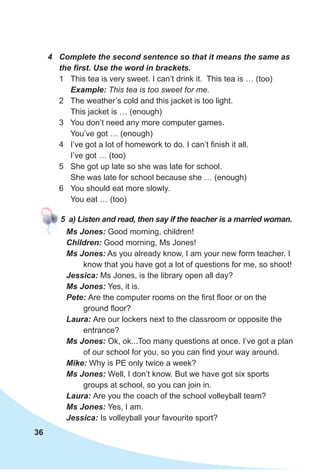
4 Complete the second sentence so that it means the same as
the first. Use the word in brackets.
1 This tea is very sweet. I can’t drink it. This tea is … (too)
Example: This tea is too sweet for me.
2 The weather’s cold and this jacket is too light.
This jacket is … (enough)
3 You don’t need any more computer games.
You’ve got … (enough)
4 I’ve got a lot of homework to do. I can’t finish it all.
I’ve got … (too)
5 She got up late so she was late for school.
She was late for school because she … (enough)
6 You should eat more slowly.
You eat … (too)
5 a) Listen and read, then say if the teacher is a married woman.
Ms Jones: Good morning, children!
Children: Good morning, Ms Jones!
Ms Jones: As you already know, I am your new form teacher. I
know that you have got a lot of questions for me, so shoot!
Jessica: Ms Jones, is the library open all day?
Ms Jones: Yes, it is.
Pete: Are the computer rooms on the first floor or on the
ground floor?
Laura: Are our lockers next to the classroom or opposite the
entrance?
Ms Jones: Ok, ok...Too many questions at once. I’ve got a plan
of our school for you, so you can find your way around.
Mike: Why is PE only twice a week?
Ms Jones: Well, I don’t know. But we have got six sports
groups at school, so you can join in.
Laura: Are you the coach of the school volleyball team?
Ms Jones: Yes, I am.
Jessica: Is volleyball your favourite sport?
37
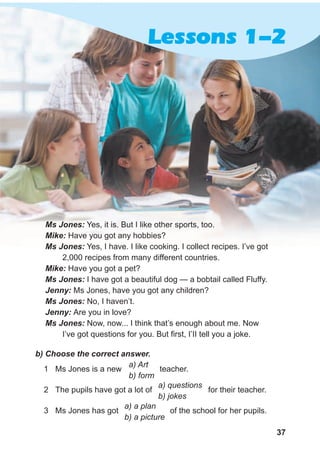
Ms Jones: Yes, it is. But I like other sports, too.
Mike: Have you got any hobbies?
Ms Jones: Yes, I have. I like cooking. I collect recipes. I’ve got
2,000 recipes from many different countries.
Mike: Have you got a pet?
Ms Jones: I have got a beautiful dog — a bobtail called Fluffy.
Jenny: Ms Jones, have you got any children?
Ms Jones: No, I haven’t.
Jenny: Are you in love?
Ms Jones: Now, now... I think that’s enough about me. Now
I’ve got questions for you. But first, I’II tell you a joke.
b) Choose the correct answer.
1 Ms Jones is a new teacher.
2 The pupils have got a lot of for their teacher.
3 Ms Jones has got of the school for her pupils.
a) questions
b) jokes
a) Art
b) form
a) a plan
b) a picture
Lessons 1-2
c) Work in a group of 5. Act out the talk in (a).
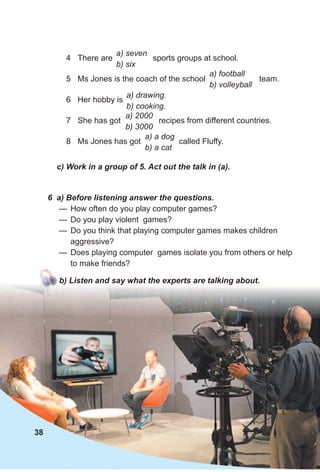
4 There are sports groups at school.
5 Ms Jones is the coach of the school team.
6 Her hobby is
7 She has got recipes from different countries.
8 Ms Jones has got called Fluffy.
a) football
b) volleyball
a) drawing.
b) cooking.
a) a dog
b) a cat
a) 2000
b) 3000
a) seven
b) six
6 a) Before listening answer the questions.
— How often do you play computer games?
— Do you play violent games?
— Do you think that playing computer games makes children
aggressive?
— Does playing computer games isolate you from others or help
to make friends?
b) Listen and say what the experts are talking about.
38
39
Lessons 1-2
7 Listen again and say
if it is true or false. Work in pairs.
1 Parents have to set a time limit for children when they play
games or surf the Net.
2 There are many good games that make children think
faster or teach them new skills.
3 Games help to solve problems children have with
others.
4 Games don’t make children aggressive.
5 Sitting alone in a room isolates you from the real world
and other people.
6 You needn’t hang out with other children if you have an
interesting computer game to play.
1
to warn [wc:n] — попереджувати
8 Work in groups. Discuss the items below. Express your opinion.
Being online can be dangerous. Parents and
teachers must warn1
their children about the
dangers in the same way they warn them when
they go swimming or riding their bike.
a
Parents have to set a
time limit for children
when they play computer
games or surf the Net.
You should spend a lot of time
with your friends and family,
having fun in different ways. The
Internet is very useful as long as
you use it in a clever way.
c
b
40
9 Read the text and say if the sentences
on page 41 are true or false.
Afterschool activities are part of school life.
Parents often go to their children’s schools to
see their work. Sometimes schools have
exhibitions of the pupils’ art or project
work. Many schools have a school
choir and an orchestra and they hold
concerts. The plays at the end of each
school year are also very popular. Some of
the parents help teachers with these activities.
Today we have been to the Newburg School in
Great Britain. The school has had its annual1
International Festival. Over 300 people
enjoyed food and activities. The pupils served food
from many different countries. Pupils’ groups
performed at the festival. We watched
African dancing. We listened to Japanese
storytelling. We saw a Chinese2
puppet
show and much more. There
was an international fashion
show. Pupils modelled
clothes from different
countries. Everyone has had
a great time at the festival.
Mr Jones, the school
headmaster said, “All of our pupils and teachers had
worked hard on the project. I can say this year’s
festival is the best we have ever had.”
AT THe NeWBuRg sCHOOl’s
INTeRNATIONAl FesTIvAl
1
annual [92njuCl] — щорічний
2
Chinese [0tSai9nI:x] — китайський
African dancing. We listened to Japanese
puppet
Afterschool activities are part of school life.
Parents often go to their children’s schools to
see their work. Sometimes schools have
exhibitions of the pupils’ art or project
concerts. The plays at the end of each
school year are also very popular. Some of
the parents help teachers with these activities.
Great Britain. The school has had its annual
school year are also very popular. Some of
41
Lessons 1-2
41
Example:
Alex Morgan, a twelve-year-old boy, is
a winner of the “Young Poets”
competition. His poem is called “My
Home”. Alex came to Bridge Street
School in October. He has
been interested in writing
for several years. He has
written many poems and
stories. This is the first time
he has won a prize.
10 Write a paragraph about a Culture Festival you have had
(or are planning to have) at your school. Use the following:
to present
to choose
to work hard
surprises
decorations
to make
prizes
presents
to give
a show
an exhibition
a game
a concert
a competition
to hold
a play
a puppet show
a storytelling
dancing
singing
to perform
LeaRning Tip
Develop your writing
skills. This is a
paragraph. The first
sentence tells you what
the paragraph is about.
The other sentences
give more information.
1 Many schools can have
a school choir or an orchestra.
2 Parents never help teachers with afterschool activities.
3 Parents can see the pupils’ art or project work at school.
4 The festival takes place in the USA.
5 Pupils displayed their hobby collections.
6 Pupils performed African dancing and a Chinese puppet show.
7 Pupils worked hard on the project.
8 The school headmaster modelled clothes.
9 It is the best festival the school has ever had.
42
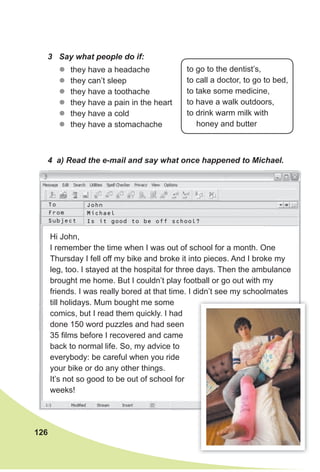
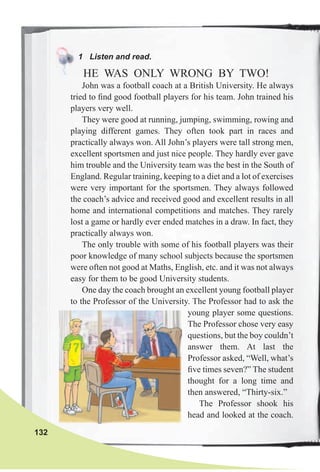
1 Listen and read.
A GIGGLE1
BOX AND A LEAKY FAUCET2
after Louis Sachar
Every day after lunch Ms Jewls read a story to the class. Dana
hated stories.
The last book was the story about a pig. It was very funny.
All the children laughed. But Dana couldn’t stop laughing. John
called her ‘a giggle box’.
When Dana broke out laughing3
at the lesson, John said,
“There goes the giggle box.” She hated John.
The other story was very sad. Dana couldn’t stop crying.
John called her ‘a leaky faucet’. “Who will fix the leaky faucet?”
he asked.
Ms Jewls rang her bell, and all the children sat quietly. The
teacher was reading a story about a little baby animal. The story
was sad because a car killed his mother.
Dana cried.
The next day Dana came up to Ms. Jewls for a talk.
“Can I go out when you read?” asked Dana.
“Why?” asked Ms. Jewls.
“I hate stories,” said Dana. “I laugh and cry too much.”
“You don’t hate stories, Dana,” Ms. Jewls told her. “You love
stories. I would like other children to be able to laugh and cry
like you.”
“Really?” asked Dana. She always thought she hated stories
when really she loved them … Hmm...
She was glad.
A GIGGLE
1
to giggle [9gigl] — гоготати, сміятись
2
a leaky faucet [9fc:sit] — несправний
кран (що протікає)
3
to break out laughing —
пирскати сміхом
when really she loved them … Hmm...
— гоготати, сміятись
— несправний
Lessons 1-2READINGREADING
4FUN!
43
“Oh ..!” She said.
“Well, what is it?” asked Ms. Jewls.
“I might love John, too?”
2 Choose the right sentence according to the story.
1 a) Ms Jewls read stories before lunch.
b) Ms Jewls read stories after lunch.
2 a) Dana couldn’t stop laughing or crying.
b) John couldn’t stop laughing or crying.
3 a) Dana didn’t like stories.
b) Dana didn’t know she loved stories very much.
4 a) Dana didn’t really hate John.
b) Dana hated John.
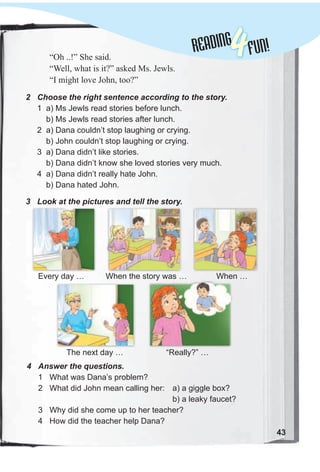
3 Look at the pictures and tell the story.
4 Answer the questions.
1 What was Dana’s problem?
2 What did John mean calling her: a) a giggle box?
b) a leaky faucet?
3 Why did she come up to her teacher?
4 How did the teacher help Dana?
“Really?” …The next day …
Every day … When …When the story was …When the story was …
My Learning Diary
Photocopy for Your Portfolio44
The topics of this unit are ……..…………..........................……………
……………………………………………………….......………………….
I find this unit very easy / quite easy / quite difficult / very difficult.
(Underline what is true for you.)
I think that the most important thing I have learnt is …………...………
…………………………………………………………………………..…...
…………………………………………………………………………...…..
The most difficult thing for me was ………………………………………
………………..………………………………………………………….…..
The things that I enjoyed most in the Unit were ....……..………………
……………………………………………………………………………….
……………………...………………………………………………………..
The things that I didn’t enjoy were …………..…………………………..
……………...………………………………………………………………..
The ways I used working with the Unit were ....…………….….……….
…………………………………………………………………………….....
……………………………………………………………………………….
My favourite activities / tasks were ……………….............…………….
……………...………………………………………………………………..
The new grammar I have learnt in the Unit are ……...…………………
……………...………………………………………………………………..
The best lesson I had in my English class was .....................…...……
……………...………………………………………………………………..
The things that are easy to read are .………...………………………….
……………...………………………………………………………………..
45
Lessons 1-2
Photocopy for Your Portfolio
The things that are easy to listen to ………….................………………
……………...………………………………………………………………..
The things that are easy to talk about ……………………......…………
……………...………………………………………………………………..
The things that are easy to write about ...………...…………………….
……………...………………………………………………………………..
The things that are difficult to read about …................………………..
……………...………………………………………………………………..
The things that are difficult to listen to .………………………………….
……………...………………………………………………………………..
The things that are difficult to talk about …………..……………………
……………...………………………………………………………………..
The things that are difficult to write about ……..……………………….
……………...………………………………………………………………..
Three things I would like to remember from this unit are …..…………
……………...………………………………………………………………..
……………...………………………………………………………………..
………………….....…………. because ……………................….……..
……………...………………………………………………………………..
I would like to improve my pronunciation / spelling / vocabulary /
grammar / fluency. (Underline what is true for you.)
The things that I would like to learn are ..............................................
……………...………………………………………………………………..
……………...………………………………………………………………..
You have finished the unit. Choose the adjectives
that best describe how you feel about it.?happy
relieved
satisfied
unhappy
frustrated
excited
motivated
sorry
good
tired
464646
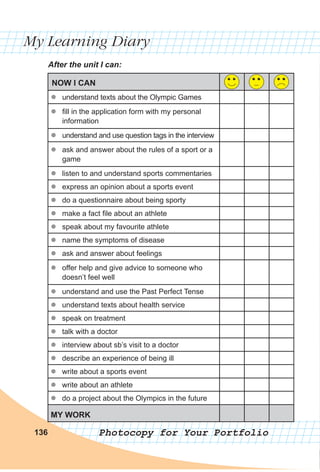
My Learning Diary
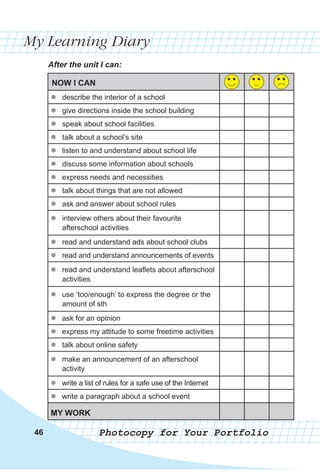
After the unit I can:
NOW I CAN
zz describe the interior of a school
zz give directions inside the school building
zz speak about school facilities
zz talk about a school’s site
zz listen to and understand about school life
zz discuss some information about schools
zz express needs and necessities
zz talk about things that are not allowed
zz ask and answer about school rules
zz interview others about their favourite
afterschool activities
zz read and understand ads about school clubs
zz read and understand announcements of events
zz read and understand leaflets about afterschool
activities
zz use ‘too/enough’ to express the degree or the
amount of sth
zz ask for an opinion
zz express my attitude to some freetime activities
zz talk about online safety
zz make an announcement of an afterschool
activity
zz write a list of rules for a safe use of the Internet
zz write a paragraph about a school event
MY WORK
Photocopy for Your Portfolio
222UnitUnit
47
AT
HOME
z doing Chores
z All About Food
Do you help about the house / flat?
What do you do to help about the house?
How often do you do it?
Do you cook meals?
Have you ever shared recipés with friends?
Can you lay the table for a special occasion?
Pre-reading
questions
48
LISTENING & VOCABULARYLISTENING & VOCABULARYLISTENING & VOCABULARY
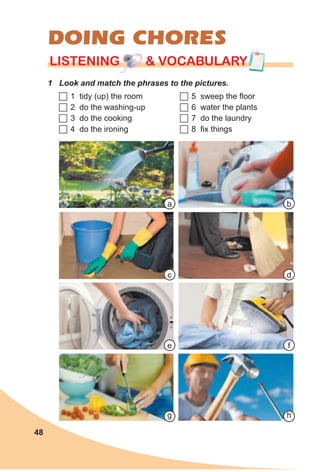
DOING CHORES
1 Look and match the phrases to the pictures.
	1 tidy (up) the room
	2 do the washing-up
	3 do the cooking
	4 do the ironing
	5 sweep the floor
	6 water the plants
	7 do the laundry
	8 fix things
c
a
g h
d
b
fe
49
Lesson 1
2 Odd one out.
1 TIdY uP a room a house a book a bathroom
2 sHARe a desk a room a daughter a sandwich
3 geT upset up in the sky a present
morning
4 CleAN the house the mess the floor the homework
5 PICK uP socks an eye toys shoes
Example:
MAKe a mess a sandwich trouble homework
Homework, because you do homework.
3 Listen to Elliot’s
description of his
room and find out why
his mum gets upset.
a mess [mes]
to pick up [9pikyp]
to tidy (up) [9taidiyp]
cozy [kCUxi]
zz to get upset
VocabuLaRy box
a broom [brUm]
a mop
[mQAp]
1 Elliot sleeps alone
in his room.
2 Elliot cleans his
room with a broom.
3 April is tidy.
4 Elliot’s mum gets
upset because she
doesn’t like mess.
4 Say if the sentences
are true or false.
a mop
[mQAp]
50
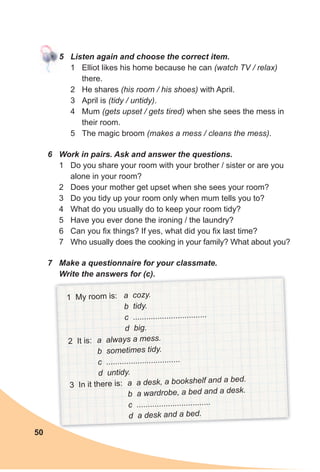
5 Listen again and choose the correct item.
1 Elliot likes his home because he can (watch TV / relax)
there.
2 He shares (his room / his shoes) with April.
3 April is (tidy / untidy).
4 Mum (gets upset / gets tired) when she sees the mess in
their room.
5 The magic broom (makes a mess / cleans the mess).
6 Work in pairs. Ask and answer the questions.
1 Do you share your room with your brother / sister or are you
alone in your room?
2 Does your mother get upset when she sees your room?
3 Do you tidy up your room only when mum tells you to?
4 What do you usually do to keep your room tidy?
5 Have you ever done the ironing / the laundry?
6 Can you fix things? If yes, what did you fix last time?
7 Who usually does the cooking in your family? What about you?
7 Make a questionnaire for your classmate.
Write the answers for (c).
1 My room is: a cozy.
b tidy.
c .................................
d big.
2 It is: a always a mess.
b sometimes tidy.
c .................................
d untidy.
3 In it there is: a a desk, a bookshelf and a bed.
b a wardrobe, a bed and a desk.
c .................................
d a desk and a bed.
When you have a job that’s not much fun,
And you wonder when you’ll get it done,
Don’t wait till later — time may not allow!
Don’t wait till later — do it now!
When you have some work that’s not much fun,
A job to do before day is done,
Don’t wait till tomorrow —
better not delay1
!
Don’t wait till tomorrow —
do it today!
4 In my room there are many things:
a books, CDs, shoes, pillows.
b clothes, books, notebooks, toys.
c .................................
d windows, chairs, lamps.
5 In my room the desk is: a opposite the bed.
b in front of the bed.
c .................................
d behind the bed.
6 In my room the posters are:
a above the bed.
b on my desk.
c .................................
d I haven’t got posters in my room.
8 Listen and sing the song.
1
to delay [di9lei] — затримувати, розтягувати в часі
DO IT NOW
51
Lesson 1
READING
1 Read and explain why a woman’s work is never done.
HOUSEHOLD CHORES
Doing work about the house is
often called ‘doing chores’. Doing
chores helps a family to keep up
their house or in other words ‘to
household’. Usually each member of
a family has got a household duty. It
means he or she has got a part of
chores to do. There are the things
like feeding a pet, cleaning the
carpets or doing shopping…
At weekends my friend’s family
members are rarely all at home at
the same time, so they write notes to
each other. They help to remember
things to do.
My mother is the busiest person
in doing household chores. And I
must admit1
my elder sister is the
greatest helping hand for her.
to boil [bcil]
to cut [kyt]
to dry [drai]
to fry [frai]
to pour [pc:]
to prefer [pri9fE]
to serve [sE:v]
zz to do chores
zz to do household
duties
VocabuLaRy box
a pot [pAt]
a frying pan
[9fraiN p2n]
52
1
to admit [Cd9mit] — визнати
53
Lesson 1
Every morning my mother cooks
breakfast. She fries some eggs in
frying pan. My sister sometimes boils
sausages in a small pot. When the
eggs are ready, mum serves them to
us with nicely-decorated salad and
boiled sausages. While my mother is
doing that, my sister is cutting some
bread and taking out a teapot, cups
and plates.
When water in a kettle boils, my
sister puts some tea into the teapot,
pours some boiling water into the pot
and the tea is ready.
Sometimes my mum prefers coffee
to tea. Then my father prepares it. He
is good at making coffee. I never drink
coffee. I prefer tea. My sister
sometimes drinks coffee with milk or
cream. After breakfast I go to my
school and my father goes to his
office. My sister puts the dishes into
dishwasher to clean and dry them. My
mum cleans the table and takes off
the tablecloth.
My sister puts clean cups and
dishes onto the cupboard and goes to
her work.
And what about mum? She stays
at home and does lots of things about
the house. There is always something
to do, a woman’s work is never
done…
a kettle [9ketl]
a teapot [9tI:pAt]
a tablecloth
[9teiblklAO]
a tablecloth
a dishwasher [9diSwASC]
54
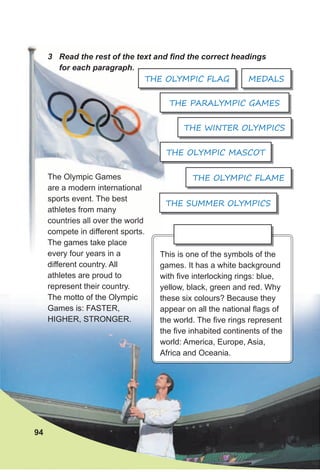
3	 Complete the sentences according to the text on pp. 52-53.
1	 Doing work about the house is called …
2	 Usually each member of a family has got a …
3	 Writing notes to each other helps family members to …
4	 Usually mother is the busiest person in …
5	 We can … or … eggs for breakfast.
Learning Tip
New Words
When you read or listen to some information in English, there
are often words that you don’t know. Here is a piece of advice
for you:
1	 Don’t worry. You can understand a lot, even if you don’t
know all the words.
2	 Try to understand the meaning of new words from the
context. Don’t stop listening or reading.
3	 After the lesson use a dictionary to look up the new words.
Write them down in your vocabulary notebook.
4	 Try to learn some new words each week.
2	 Say if it is true or false.
1	 Everyone must know that he/she has to do his or her part of chores.
2	 Doing shopping is not a household duty.
3	 The elder sister is usually the greatest helping hand for
mother.
4	 We usually boil sausages in a frying pan.
5	 We usually fry in kettles.
6	 We need a kettle and a teapot to make tea.
7	 His father is good at making coffee.
8	 His elder sister never drinks coffee.
9	 After breakfast father washes up with a dishwasher.
10	Mother cleans the table after breakfast.
11	 The elder sister stays at home and does lots of things about
the house.
55
Lesson 1
6 When the dish is ready we can …
7 To make tea we should …
8 We can wash up and dry the dishes with …
9 We should put clean dishes …
10 A woman’s work is …
4 Work in groups. Speak on the following.
1 Have you got a household duty? What is it?
2 What household duties do other members of your family
have?
3 Is your mother the busiest person in doing chores? Prove that.
4 Who is the greatest helping hand for your mother?
5 Have you got any machines to help you with household?
6 Do you write notes to each other to remember things to do?
7 What does your morning look like?
8 Can you make tea? How do you do it?
Do you KnoW?
In Great Britain, people usually work five days a week.
Many of them also work at home at the weekend. They do the
chores and gardening. They also do repairs1
and make
improvements2
to their houses. This is called DIY
(Do It Yourself). The British
love DIY because they are
very proud of their homes.
5 Read the note and answer the questions.
zz Do people in Great Britain
work at weekends?
zz What is the attitude of the
British to their homes?
zz What is called DIY?
1
a repair [ri9pe3] — ремонт 2
an improvement [im9pru:vm3nt] — покращення
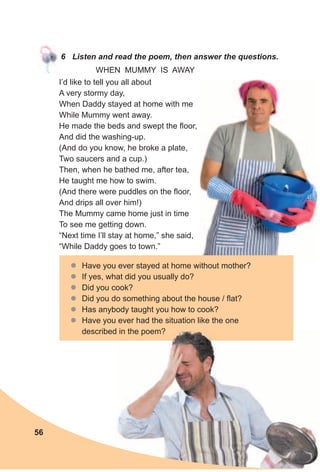
6 Listen and read the poem, then answer the questions.
I’d like to tell you all about
A very stormy day,
When Daddy stayed at home with me
While Mummy went away.
He made the beds and swept the floor,
And did the washing-up.
(And do you know, he broke a plate,
Two saucers and a cup.)
Then, when he bathed me, after tea,
He taught me how to swim.
(And there were puddles on the floor,
And drips all over him!)
The Mummy came home just in time
To see me getting down.
“Next time I’ll stay at home,” she said,
“While Daddy goes to town.”
zz Have you ever stayed at home without mother?
zz If yes, what did you usually do?
zz Did you cook?
zz Did you do something about the house / flat?
zz Has anybody taught you how to cook?
zz Have you ever had the situation like the one
described in the poem?
WHEN MUMMY IS AWAY
56
57
Lesson 1
GRAMMAR
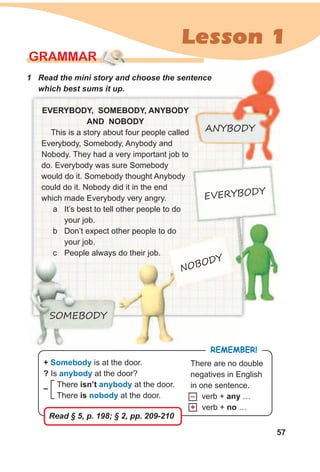
1 Read the mini story and choose the sentence
which best sums it up.
eveRYBOdY, sOMeBOdY, ANYBOdY
ANd NOBOdY
This is a story about four people called
Everybody, Somebody, Anybody and
Nobody. They had a very important job to
do. Everybody was sure Somebody
would do it. Somebody thought Anybody
could do it. Nobody did it in the end
which made Everybody very angry.
a It’s best to tell other people to do
your job.
b Don’t expect other people to do
your job.
c People always do their job.
RemembeR!
+ somebody is at the door.
? Is anybody at the door?
There isn’t anybody at the door.
There is nobody at the door.
There are no double
negatives in English
in one sentence.
– verb + any …
+ verb + no …
–
ANYBODY
EVERYBODY
SOMEBODY
NOBODY
Read § 5, p. 198; § 2, pp. 209-210
58
2	 Put in ‘somebody’ / ‘nothing’ / ‘anywhere’ etc.
1	 It’s dark. I can’t see ........................
2	 Tom lives ........................ near London.
3	 Do you know ........................ about computers?
4	 ‘Listen!’ ‘What? I can’t hear ........................’
5	 ‘What are you doing here?’ ‘I’m waiting for ........................’
6	 ‘What’s wrong?’ ‘I’ve got ........................ in my eye.’
7	 ‘Did ........................ see you?’ ‘No, ........................’
8	 They weren’t hungry, so they didn’t eat ........................
9	 ‘What is going to happen?’ ‘I don’t know. ........................ knows.’
10	‘Do you know ........................ in London?’ ‘Yes, I’ve got a few
friends there.’
11	 ‘What’s in that cupboard?’ ‘........................ It’s empty.’
12	 I’m looking for my lighter. I can’t find it ........................
4	 Choose the correct word in each sentence.
1	 It was so boring at the party that (everybody / anybody) left.
2	 I’ve looked (nowhere / everywhere) for my mobile phone but I
haven’t found it.
3	 I’m hungry. Let’s go and get (anything / something) to eat.
4	 Are you going (nowhere / anywhere) this weekend?
5	 He’s such a nice person that (somebody / everybody) likes him.
6	 There’s (nothing / anything) interesting on at the cinema at the
moment.
7	 (Somebody / Anybody) broke the mirror in the bathroom.
8	 — Where are you going tonight? — (Somewhere / Nowhere).
I’ll be at home.
3	 Complete the table with the words: places, people, things.
anything
somewhere
+ – ? –
1 .......... somebody/someone anybody/anyone nobody/no one
2 .......... something anything nothing
3 .......... somewhere anywhere nowhere
59
Lesson 1
SPEAKING
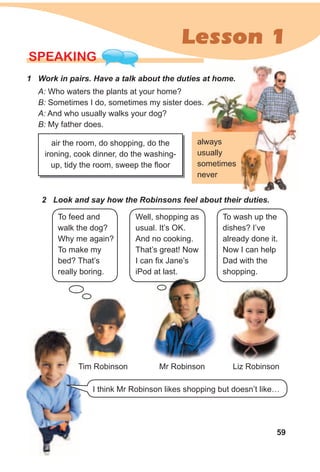
1 Work in pairs. Have a talk about the duties at home.
A: Who waters the plants at your home?
B: Sometimes I do, sometimes my sister does.
A: And who usually walks your dog?
B: My father does.
air the room, do shopping, do the
ironing, cook dinner, do the washing-
up, tidy the room, sweep the floor
2 Look and say how the Robinsons feel about their duties.
To feed and
walk the dog?
Why me again?
To make my
bed? That’s
really boring.
Well, shopping as
usual. It’s OK.
And no cooking.
That’s great! Now
I can fix Jane’s
iPod at last.
To wash up the
dishes? I’ve
already done it.
Now I can help
Dad with the
shopping.
Tim Robinson Mr Robinson Liz Robinson
I think Mr Robinson likes shopping but doesn’t like…
always
usually
sometimes
never
60
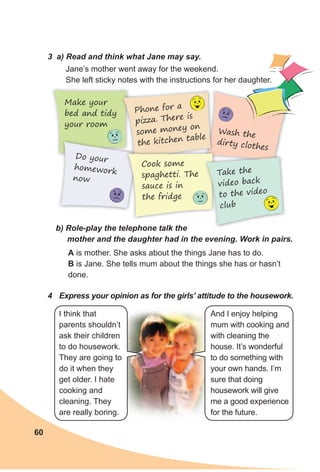
3 а) Read and think what Jane may say.
Jane’s mother went away for the weekend.
She left sticky notes with the instructions for her daughter.
b) Role-play the telephone talk the
mother and the daughter had in the evening. Work in pairs.
A is mother. She asks about the things Jane has to do.
B is Jane. She tells mum about the things she has or hasn’t
done.
Make your
bed and tidy
your room
Do your
homework
now
Phone for a
pizza. There is
some money on
the kitchen table
Wash the
dirty clothes
4 Express your opinion as for the girls’ attitude to the housework.
Cook some
spaghetti. The
sauce is in
the fridge
Take the
video back
to the video
club
I think that
parents shouldn’t
ask their children
to do housework.
They are going to
do it when they
get older. I hate
cooking and
cleaning. They
are really boring.
And I enjoy helping
mum with cooking and
with cleaning the
house. It’s wonderful
to do something with
your own hands. I’m
sure that doing
housework will give
me a good experience
for the future.
61
Lesson 1
5 Look at the electrical appliances
and say what we use
them for. an appliance [C9pla(i)Cns]
an improvement [im9pru:vmCnt]
an oven [9yvn]
electrical [i9lektrikl]
VocabuLaRy box
We use … for …
a hairdryer
[9heC0draiC]
a vacuum cleaner
[9v2kjUCm 0klI:nC]
a microwave oven
[9maikrCweiv 9yvn]
an electric saw
[i9lektrik sc:]
washing machine
[9wASiN mC0SI:n]
a toaster
[9tCUstC]
fast cooking or warming up food, cutting wood,
making toasts, drying our hair, cleaning the floor
and carpets, washing our clothes and linen
switch on / off
turn on / off
the washing machine / the microwave oven /
the dishwasher / the computer / the TV /
the vacuum cleaner / the radio / the light /
the tape recorder.
Turn off the gas.
Close the fridge /
the door.
switch off / turn off the toaster! Turn off the water!
RemembeR!
the toaster!
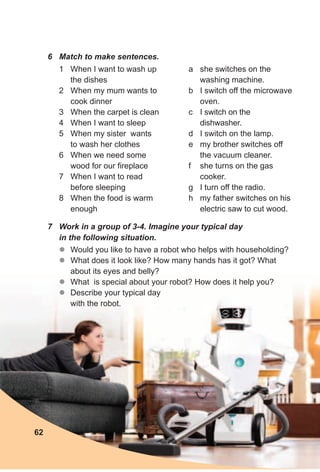
6 Match to make sentences.
1 When I want to wash up
the dishes
2 When my mum wants to
cook dinner
3 When the carpet is clean
4 When I want to sleep
5 When my sister wants
to wash her clothes
6 When we need some
wood for our fireplace
7 When I want to read
before sleeping
8 When the food is warm
enough
a she switches on the
washing machine.
b I switch off the microwave
oven.
c I switch on the
dishwasher.
d I switch on the lamp.
e my brother switches off
the vacuum cleaner.
f she turns on the gas
cooker.
g I turn off the radio.
h my father switches on his
electric saw to cut wood.
7 Work in a group of 3-4. Imagine your typical day
in the following situation.
zz Would you like to have a robot who helps with householding?
zz What does it look like? How many hands has it got? What
about its eyes and belly?
zz What is special about your robot? How does it help you?
zz Describe your typical day
with the robot.
62
63
Lesson 1
8 Speak on the following.
1 Does your family work about the house at weekends?
2 What is your family’s attitude to the home?
3 How often does your family do repairs and improvements
to the house or flat?
4 Do these days have special names?
5 What is your usual part of work on these days?
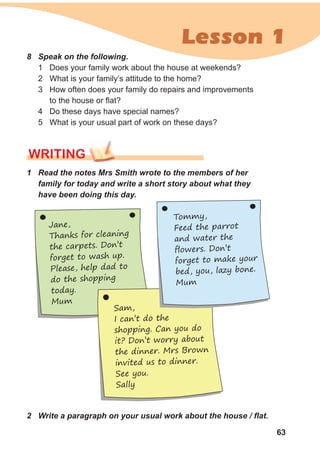
WRITING
Jane,
Thanks for cleaning
the carpets. Don’t
forget to wash up.
Please, help dad to
do the shopping
today.
Mum
2 Write a paragraph on your usual work about the house / flat.
Tommy,
Feed the parrot
and water the
flowers. Don’t
forget to make your
bed, you, lazy bone.
Mum
Sam,
I can’t do the
shopping. Can you do
it? Don’t worry about
the dinner. Mrs Brown
invited us to dinner.
See you.
Sally
1 Read the notes Mrs Smith wrote to the members of her
family for today and write a short story about what they
have been doing this day.
6464
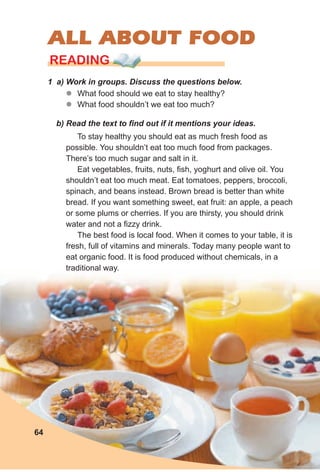
ALL ABOUT FOOD
64
READING
1 a) Work in groups. Discuss the questions below.
zz What food should we eat to stay healthy?
zz What food shouldn’t we eat too much?
b) Read the text to find out if it mentions your ideas.
To stay healthy you should eat as much fresh food as
possible. You shouldn’t eat too much food from packages.
There’s too much sugar and salt in it.
Eat vegetables, fruits, nuts, fish, yoghurt and olive oil. You
shouldn’t eat too much meat. Eat tomatoes, peppers, broccoli,
spinach, and beans instead. Brown bread is better than white
bread. If you want something sweet, eat fruit: an apple, a peach
or some plums or cherries. If you are thirsty, you should drink
water and not a fizzy drink.
The best food is local food. When it comes to your table, it is
fresh, full of vitamins and minerals. Today many people want to
eat organic food. It is food produced without chemicals, in a
traditional way.
Lesson 2
2 Work in pairs. Answer the questions.
1 Why is fresh food better than food from packages?
2 What kind of oil is the best for your health?
3 Is white bread better for you than brown bread?
4 Why do some people want to eat organic food?
3 Read the sentences 1-6 and match them with the correct
places in the text.
1 Eat them before doing sport.
2 Eat these foods before sitting down to do your schoolwork
because they are full of protein and healthy fats.
3 It’s never too early to start thinking about what you eat!
4 It is the mineral which helps our body stay healthy and fight illness.
5 You need about ten glasses every day.
6 If you have them as snacks, you will have a nicer smile and
you can even kiss somebody.
POWER FOODS
People, like all living organisms, need food
to live. Food gives us energy for every action
we do, from writing homework to running. It
helps us build and repair things in our body
and it helps our organs function well. A good
choice of food can make us healthier and,
believe it or not, more beautiful and
successful as well. You may be
surprised by the following
list but the food on it is really
great for you. ...
While watching a cooking
programme on TV why not use your kitchen and prepare some
fresh food for yourself and your friends. You can also try to grow
some food yourself. Plant a tomato or some peas, perhaps.
65
66
FOR STRONGER IMMUNITY
Did you know that eggs have many different
vitamins and also a lot of zinc. ... If you
eat them, you will be healthier.
FOR BETTER CONCENTRATION
Chicken, fish and nuts increase the production
of dopamine1
in your brain2
which helps you
concentrate. If you eat grilled (not fried)
chicken, fish and nuts you will remember more
of what you are studying. ...
FOR WHITER TEETH
Apples and raw3
carrots are similar to
small toothbrushes which polish your
teeth and after eating them your mouth
will smell sweet. ...
FOR CLEARER SKIN
Walnuts4
are rich in omega-3 fatty acids and
after eating them you will have fewer pimples.
Water is necessary for fresh and healthy-
looking skin. ... If you drink a lot of it,
your skin will be as beautiful as a baby’s.
FOR MORE ENERGY
Pasta, potatoes and breakfast cereal all have
a lot of carbohydrates and are real energy-
givers. ... If you have them before an
important football match or a swimming
competition, make sure to have a full plate.
1
dopamine [dApCmain] — дофамін (гормон)
2
brain [brein] — мозок
3
raw [rc:] — сирий
4
a walnut [9wc:lnyt] —
волоський горіх
67
Lesson 2
4 Read aloud the text from task 3
and check your answers with the whole class.
5 Read the text in task 3 again and match the words in blue
with their definitions below.
a (adj.) physically strong and not often ill .....................
b (adj.) cooked in hot fat or oil .....................
c (n.) food made from grain, such as cornflakes or muesli
.....................
d (v.) to fix something that is not working well so it is in a perfect
condition again .....................
e (v.) to make larger in number or amount .....................
f (n.) a small infected spot on the skin of the face .....................
g (adj.) cooked without fat, on open fire or in an oven
.....................
h (n.) something small, like a sandwich, chocolate or an apple
that you eat between meals .....................
an acid [92sid]
a carbohydrate
[0k4:bCU9haidreit]
an immunity
[i9mju:nCti]
zinc [xiNk]
to increase [9iNkrI:s]
to repair [ri9peC]
to smell [smel]
organic [c:9g2nik]
protein [9prCUtI:n]
successful [sCk9sesfl]
zz as much as
possible
VocabuLaRy box
grilled fish roast [rCUst]
chicken
boiled rice fried eggs
68
Do you KnoW?
6 Make a list of rules for healthy eating habits.
The four most important food plants in the world
are wheat, corn, rice and potatoes. We eat
a lot of wheat. It’s in our bread, pasta and
cakes. People in Africa eat a lot of corn.
Rice is the main food in Asia where they
eat it for breakfast, dinner and supper.
Potatoes are from South America. They
came to Europe with the Spanish and became
food for the poor because you can grow a lot
of potatoes on a small piece of land and they
fill your stomach. A tragedy happened in
Ireland in the nineteenth century. There was a
potato disease and one million people died of
hunger. Do you know that more than 800
million people in the world don’t have enough food? 16 000
children die of hunger every day. This number is unfortunately
growing. This is sad because many people have so much
food that they have problems with weight. What do you think?
LeaRning Tip
using dictionaries
Dictionaries present words in alphabetical order.
A dictionary entry can show:
zz how a word is pronounced
zz what part of speech it is
zz a simple explanation1
zz an example sentence.
Use dictionaries while you learn English.
1
an explanation [0eksplC9neiSCn] — пояснення
Do you KnoW?Do you KnoW?
69
Lesson 2
TOMATO AND CHEESE
SANDWICH
one bread roll,
some tomatoes,
some cheese
… to open the bread roll,
… the tomatoes.
… the cheese.
… tomato slices on the bread.
… some cheese on top.
… the top of the bread roll on top.
Now … your sandwich. It’s delicious!
1 Match the words with the pictures from (a) to (j).
VOCABULARY
1 peel
2 slice
3 mash
4 mix
5 oil
6 boil
7 chop
8 pour
9 cut
10 fry
2 Read and fill in the words from the box.
ca
g
db
f
h i j
e
put (3 times), cut, eat, slice (twice)
70
3 Put the sentences in the correct
order to get the recipé for pancakes.
PANCAKES
	After that put in
a spoon of sugar.
	Serve the pancakes
with jam or chocolate.
	First mix the eggs
and the milk.
	For the pancakes you
need 2 cups of flour,
1 egg, 1 cup of milk
and a spoon of sugar.
	Finally fry the
pancakes.
	Then add the flour.
4 Look at the picture and complete the text on page 71.
1 glass of grape juice
2 salt and (black)
pepper
3 bottle of mineral
water
4 oil
5 vinegar
6 glass of
orange juice
7 napkin
8 bowl
9 plate
10 fork
11 knife
12 spoon
1
2 3
4 5 6
7
8
9
1011
12
71
Lesson 2
On the table, each person has
a k_ _ _e, (1) f_ _k, and (2) s_ _ _n, and a (3) n_ _ _ _n for their
hands and face. They each have a white (4) p_ _ _e and a (5)
b_ _I. To drink, there’s a (6) b_ _ _ _e of (7) m_ _ _ _ _I w_ _ _r,
and two (8) g_ _ _ _ _s of (9) j_ _ _ e: one (10) g_ _ _e and the
other (11) o_ _ _ _e. There is also some (12) s_ _t and (13)
b_ _ _k p_ _ _ _r, and little (14) b_ _ _ _ _s of (15) o_I and
(16) v_ _ _ _ _r.
n i f
5 Complete the sentences.
1 Three meals of the day: breakfast, lunch and ____________
2 Three things you eat with: knife, ____________,
and ____________
3 Three parts in a meal: starter, ____________,
and ____________
4 Two things you find on a restaurant table:
salt and ____________
5 Two things you put in salad: oil and ____________
6 Two types of mineral water: still and ____________
dinner
LISTENING
1 Work in pairs. Speak on the following.
1 What do people do in the kitchen?
2 Who does the cooking in your house?
3 What is salad usually made of?
4 What cooking methods do you know?
5 Do you know the difference between baking and boiling?
RemembeR!
a knife — knives
2 Listen to the part of the TV show and complete
the sentences.
1 There are different
knives on the table: …
2 Englishmen usually
use different forks: …
3 In the oven Englishmen
bake …
4 Boiling means …
and frying means …
5 A cup of coffee means …
6 A coffee cup may be …
7 The difference between
‘a pot of tea’ and ‘a
teapot’ is that a …
3 Work in groups. Read and discuss the topic.
When the dishes are ready we are busy laying the
table. For a festive dinner it is important to decorate
the dishes beautifully and to set the table correctly.
My granny taught me about the ‘place settings’ and
I am ready to share my knowledge about it with you.
a dish [diS]
a method [9meOCd]
to set [set]
to spread [spred]
festive [9festiv]
zz to lay the table
VocabuLaRy box
Mister Know-All Show
72
PlACe seTTINgs
9 butter knife
10 fork for dessert
11 spoon for dessert
12 spoon for soup
1 napkin
2 plate
3 bread and butter plate
4 water glass
5 wine glasses
6 cup and saucer
7 fork and knife for fish
8 fork and knife
for meat
1
2
3
11
10
12
4 5
6
7 78 8 9
4 Work in pairs. Speak on table manners.
Use ‘must’ or ‘mustn’t’ to fill in the sentences.
Lesson 2
TABLE MANNERS
1 You ... eat and speak at the same time.
2 You ... wash your hands before eating.
3 You ... lick your knife and put it in your mouth.
4 You ... eat with your fingers.
5 You ... eat loudly.
6 You ... use a napkin to clean your mouth.
7 You ... leave the table while others are still eating.
8 You ... let an older person take food first.
9 You ... sing or whistle while eating.
10 You ... try not to make a mess around your plate.
73
74
GRAMMAR
1 Use ‘a little’ or ‘a few’ with the following nouns.
__________ food
__________ money
__________ schools
__________ days
__________ ice cream
__________ tomatoes
__________ sugar
__________ air
__________ coins
__________ cars
__________ advice
__________ luggage
2 Complete the sentences using ‘a little’ or ‘a few’.
1 I’ve got a nice cake. Would you like ...?
2 Would you like ... sandwiches?
3 Do you want ... sugar in your tea?
4 Do you need ... more information about this cell phone?
5 Let me give you ... advice.
6 Would you like ... slices of cheese?
7 Open the window! We need ... fresh air here!
8 You will get ... nice presents for your birthday, won’t you?
A lot of / lots of вживається зі злічуваними та
незлічуваними іменниками для того, щоб вказати
на велику чисельність або кількість чогось.
Jill has got a lot of / lots of clothes.
This game is a lot of / lots of fun.
A little означає малу кількість і вживається із
незлічуваними іменниками.
I need a little sugar for the cake.
Give the cat a little milk.
A few означає малу чисельність і вживається зі
злічувальними іменниками.
There are a few nice apples.
Let me give you a few instructions.
RemembeR!
75
Lesson 2
3 Complete the dialogue with
‘a lot of / lots of’, ‘a little’ or ‘a few’.
A: Have you got ... time to help me fix my bike?
B: Sorry, I haven’t. I am very busy. I’ve got ... things to do.
A: Yes, but it won’t take long! An hour, that’s all! I have to fix ...
things and I need ... help.
B: Sorry, I can’t. But Bill has got ... time! He isn’t doing anything!
1 A: How many apples do you want?
B: I’ve got one. I want ... .
2 A: How much snow are you expecting?
B: This is nothing. We are expecting ... .
Our winters are usually very snowy!
3 A: Are you still thirsty?
B: Yes, I am. I’d like ... water, please. A small glass will be enough.
4 A: How do you like your cheeseburger?
B: It’s OK. But ... cheese would be great!
5 A: The history teacher didn’t give us very much homework
last time.
B: Don’t worry. She’ll give us ... on Friday. She usually does.
6 A: What are you doing?
B: I am making ... sandwiches. We have ten already,
but we will need fifteen.
4 Complete with ‘ a lot more / lots more’, ‘ a little more’
or ‘a few more’.
9 Would you like ... coffee
to help you stay awake?
10 Shall I give you ... money to buy some souvenirs?
SPEAKING
1 Listen and act out the dialogue.
Mother: Lay the table and put the cups and saucers
on the table.
Ann: Where is the teapot?
Mother: It’s in the cupboard.
Ann: And what about the napkins?
Mother: They are over there on the shelf. Take some butter from
the fridge, too. Father likes to spread it on the scones1
.
Ann: OK. Do we need spoons and forks?
Mother: Of course, dear. And put the knives on the table, too.
2 Give instructions to your partner.
Your partner is going to have six guests. He/She wants to
have tea with them. He/She doesn’t know how to lay the table.
Mother: What’s the
time, dear?
Ann: It’s half past six.
Why?
Mother: Father comes
at 7.00. Can you
help me to lay the
table?
Ann: Sure, mum. What
can I do?
76
1
a scone [skCUn] — рогалик
Spread a tablecloth.
Take six napkins
and put them on ...
77
Lesson 2
OMELETTE FROM LUCY
zz Take some eggs and
break them into a bowl.
zz Mix the eggs with a fork.
zz Put some oil into the
frying pan. Then put the
eggs into it and cook the
omelette.
zz Put some mushrooms
and onion into the frying
pan.
zz Chop some tomatoes
and put them into the
frying pan, too. Add
some salt.
zz Put the omelette onto a
plate. Your omelette is a
wonderful dish for lunch.
1 Lucy usually cooks ... a week.
a three times
b once or twice
c once
2 She spends ... on each meal.
a an hour
b half an hour
c an hour and a half
3 Her mother ... helps her.
a usually
b always
c never
4 Lucy shares the recipé for ...
a Italian spaghetti
b a pizza
c an omelette
an experience [ik9spiCriCns]
to arrange [C9reindz]
to follow [9fAlCU]
VocabuLaRy box
3 a) Read about Lucy and choose
the correct item below.
My name’s Lucy. I’m from Kharkiv,
Ukraine. I usually cook at home once
or twice a week. Cooking’s my hobby.
I cook for my family of four people. I
always prepare a lot. They all like my
food! Especially pizza, spaghetti, and
other Italian food. I spend about an
hour on each meal. My mother
doesn’t help me! She’s very busy.
Today I can share the recipe
for an omelette.
b) Speak on your cooking
experience. Work in a group.
78
4 Read the recipé from the cookery book. Then speak in pairs.
zz Does your mother use a cookery book?
zz Have you ever followed the instructions in a recipé?
zz Share a recipé of any dish with your classmates.
Instructions
Slice all the vegetables
and combine them in a
bowl. Mix all the ingredients.
Then slice the parsley, the
fennel and add them to the
mixture3
. Add salt,
vegetable oil and vinegar.
Decorate the
salad with
cucumbers,
tomatoes and
green onions.
Ingredients:
Sweet pepper — 10 g
Onion — 100 g
Vegetable oil — 20 ml
Cucumbers — 300 g
Fennel1
— 15 g
Vinegar — 10 ml
Tomatoes — 200 g
Parsley2
— 15g
Sugar — 5 g
Salt
A BULGARIAN SALAD
5 Work in pairs. Role-play the situation.
You are throwing a party.
Pupil A is going to cook some dishes.
He / She asks pupil B to do some shopping.
A asks B for help and tells him / her what A needs.
B is ready to help and asks A questions for details.
I need some …
I am going to cook …
No, … is enough.
You may buy a …
for A
Do you need some …
Do you think it will be enough?
What about some … ?
Why don’t we buy a …?
for B
1
fennel [9fenl] — фенхель (солодкий кріп)
2
parsley [9p4:slI] — петрушка
3
a mixture [9mikstS3] — суміш
79
Lesson 2
1
dill [dil] — кріп 2
vinegar [9vinegC] — оцет
2 Write a letter to your e-mail friend sharing
a recipe for the dish you can cook.
6 Work in pairs. Role-play the situation.
You are in a restaurant. One of you doesn’t know what to do
with all those knives, spoons and other things that a waiter has
put in front of him/her. The other tells him/her what each thing is
used for.
WRITING
1 Ask your mum and write a recipe of Ukrainian Borscht to
your British friend. Use the phrases below.
UKRAINIAN BORSCHT
zz to chop / cut the vegetables
zz to boil in a pot
zz to add to other ingredients
zz to warm up in a frying pan
zz to peel some tomatoes
zz to pour into the pot
zz to put on a plate
zz to serve with some sour cream
Ingredients:
Cabbage – 200 gTomatoes – 150 gSour cream – 200 mlParsley – 5 g
Carrot – 200 g
Butter – 50 g
Beetroot – 300 g
Onion – 80 g
Dill1
– 5 g
Vinegar2
– 10 mlSalt
80
1 Look, read and say as in the example.
L K BACK!
Mrs Walker couldn’t do any
housework because of her broken
leg. She made a list and gave it to
all the members of her family at
3 o’clock in the afternoon. It is
4 o’clock now. What have they
done? What did they use to do
their work?
1 Kate / to wash / with a washing machine
2 Nelly / to iron / with an iron
3 Granny / to cook / on a cooker
4 Bill / to sweep / with a broom
5 Father / to go shopping / by car
6 Grandpa / to wash up / with a dishwasher machine
Do the cleaning,
washing,
ironing,
cooking,
sweeping,
shopping,
washing-up,
please.Example:
Mike / to clean/ a vacuum cleaner
Mike has cleaned with the vacuum cleaner.
2 Work in pairs. Ask and answer as in the example.
What shall
I do with these?
Peel them first
and then chop them.
z peel z chop
z cut z grill
z boil z mash
z slice z mix and oil
z wash z chop
z slice z frygrill
1
4
2
5
3
6
81
Lessons 1-2
3 Look, choose and read.
MAKE A POTATO SALAD!
1 Peel and (chop / slice) the potatoes
and onions.
2 (Bake / Boil) the potatoes in a pan.
3 (Add / Mix) a little butter with some
mayonnaise.
4 (Pour / Throw) the mixture onto the potatoes and onions.
4 a) Use ‘anything’, ‘anybody’, ‘anyone’ to rewrite the sentences.
1 There’s nobody at home.
2 There’s no one living in that house.
3 There’s nothing to do this weekend.
4 She said nothing about going to England.
5 I know nobody here.
b) Use ‘nothing’, ‘nobody’, ‘no one’ to rewrite the sentences.
1 I don’t know anybody who can help me.
2 Are you sure she didn’t say anything about it?
3 There isn’t anyone home.
4 I don’t have anything to wear.
5 There isn’t anything good on TV this evening.
5 Use ‘few’ or ‘little’ to complete the sentences.
1 We have a ... sweaters in your size, but not many.
2 Would you like a ... sandwiches to take with you?
3 There is a ... milk in the refrigerator.
4 We must help. They have ... water left and no food.
5 Very ... of her poems were published in her lifetime.
6 She has got a ... close friends.
7 ... is known about her life in America.
8 I like these jeans, but they are a ... too big.
9 There are very ... places where there are no cars.
10 Do you understand? Yes, a ... .
6 Read and write down the explanations as in the example.
There are some things which make our everyday home life
easier. They are called the electrical household appliances.
They are: toaster, microwave oven, cooker, dishwasher, freezer,
refrigerator (fridge), food mixer, iron, vacuum cleaner, washing
machine, sewing machine and others.
What each of them is for?
Example: A vacuum cleaner is a machine that is used to clean
carpets, furniture and floors.
Now go on.
7 a) Read, then listen to Alan, talking about his family and
household chores. Find out if the following statements
are true or false.
Household chores? No big deal! In my family
we have no problems with household chores.
Every Sunday evening we have a little meeting
in our kitchen. We discuss all the things that we
have to do, and then we make a weekly plan.
1 They always fight about
household chores.
2 They share the chores.
82
3 Mum and dad don’t like
animals.
4 They have a dishwasher.
Alan
Alan
Write something to Alan...
Lily
Mike
George
Sam
Alan
Sophy
Sara
Dana
Liz
Khrysty
Vicky
Serg
Peter
Suzie
Dorothy
Pam
School
Studies at global School
Lives in Chicago
From Chicago
83
b) Copy the grid. Listen again and tick () the right box.
Lessons 1-2
Alan Vicky Mum Dad
do the hoovering
make the bed
walk the dog
clear the table
tidy up the room
do the ironing
wash up
do the cooking
lay the table
take out the garbage
feed the dog

1
hoovering [9hUvCriN] — прибирання за допомогою пилососа
Everybody gets some tasks to
do. Nobody stays out. Mum puts
the list on the fridge door. We
check it every night before going
to bed. And that’s it. The plan
works well.
I have to make my bed every
day but I tidy up my room once a
week. I usually do it on Saturday
morning. I also have to lay the table but I don’t have to clear it. My sister
Vicky does it. We all look after our dog. His name is Rex. My sister and I
feed the dog but mum and dad have to take it for a walk, twice a day.
Mum does the cooking and ironing and dad does the hoovering1
and
takes the garbage out on Tuesdays and Fridays. You know what I really
hate? Washing up. Luckily, everybody has to do it. We take turns.
1 Work in a small group. Discuss these
questions and make some notes.
a) What food can you cook yourselves?
b) What food are you going to cook?
Don’t forget about:
zz an appetiser,
zz a soup,
zz a main course,
zz a dessert,
zz a drink.
c) What ingredients will you need?
d) Where will you do the cooking?
e) How long will it take to cook dinner?
2 Make a poster about your meal. Write
out the recipés for preparing each
course. Don’t forget to mention time.
Design the ‘Menu’ for Your Big Dinner
and do some drawings.
3 Display your poster and comment on it in class.
10 You are going to plan and cook
a Big Dinner with your friends.
PlAnning YOUR Big DinnER
8 Give a two-minute talk about yourself.
Use the questions below.
zz Do you have anything in common1
with Alan’s family?
zz Do you share the household chores in your family?
zz What does everybody do in your family? Use the table on p. 83.
zz How do you get on with your parents?
9 Listen to the story and write down the recipé
for vegetable soup.
3 Display your poster and comment on it in class.
Recipé
........................................................................................................
...........
...........
...........
...........
Recipé
........................................................................................................
...........
...........
...........
...........
Recipé
........................................................................................................
...........
...........
...........
...........
A MAIN COURSE
Recipé
........................................................................................................
...........
...
...
...
A DRINK
Recipé
........................................................................................................
...........
...........
...........
...........
A DESSERT
YOURBIGDINNER
FILE FOR
PROJECT
1
have something in common (with) — мати щось спільне (з)
84
85
READINGREADING
4FUN!1 Listen and read.
THE MAN WHO DIDN’T WASH
HIS DISHES
(after Phyllis Krasilovsky)
There once was a man who lived alone in a little house in
a small town. He always cooked his own dinner, cleaned the
house by himself and made his own bed.
One night he came home feeling very hungry, so he made a
big dinner. He ate too much and he was very tired after
finishing. He decided to leave the dishes till the next night.
But the next night he was TWICE1
as hungry, so he
cooked TWICE as big of a dinner, and it took TWICE as long
to eat it, and he was TWICE as tired as he had been the day
before. As the days passed by, he got hungrier and more tired,
and there were so MANY dirty dishes that he started to pile
them on the table.
As soon as the table was full he started to put them on his
bookshelves. As soon as THEY were full, he started piling
them on the floor for several days and soon he couldn’t get
into his house!
One night he looked in his cupboard and found out2
that
there wasn’t any clean dish there. Soon he used up all his
ashtrays3
and clean flowerpots, and his sweets dishes, and
drank water from vases. He used up EVERYTHING, even the
pots he cooked his food in, and the frying pan, and the kettle,
and he didn’t know what to do! He was SO unhappy. His whole
house was full of dirty dishes, and dirty flowerpots, and dirty
ashtrays, and dirty sweets dishes, and dirty pots, and a dirty
soap dish, and a dirty frying pan, and a dirty kettle. He couldn’t
find his books or his clock, or even his BED any more! He
1
twice [twais] — двічі, 2 рази;
тут: вдвічі
2
to find out [0faind 9aUt] — виявляти
3
an ashtray [92Strei] — попільничка
couldn’t sit down to think because even his chairs were piled with
dishes, and he couldn’t find the sink so he could wash them!
But THE RAIN STARTED! And the man got an idea. He
drove his big lorry around to the side of his house and piled all
the dishes, and all the vases, and all the ashtrays, and pots, and a
frying pan, and a kettle on it and drove the truck out into the rain.
The rain fell ON EVERYTHING and soon the dishes were
clean again. THE RAIN WASHED THEM! Then the man carried
everything back into the house again. He put the dishes into the
cupboard, the frying pan and the pots on the pot shelves, the ash
trays on the tables, the flowerpots back where he found them, the
vases where the vases go, the kettle on the gas cooker, and the soap
dish in the bathroom. He was so tired after carrying everything
back and putting it away that he decided, “I’d better always wash
my dishes just as soon as I have finished my dinner.” The next
night when he came home, he cooked his dinner, finished eating it,
then washed the dishes and put them right away. He did this every
night after that, too. HE IS VERY HAPPY NOW. He can find his
chairs, and he can find his clock, and he can find his BED. It is
easy for him to get into his house, too, because there are no more
dishes piled on the floor or anywhere!
86
87
READINGREADING
4FUN!2 Answer the questions.
1 What did the man who lived alone in the house always
do?
2 How did he feel and what did he do one day?
3 What were the next nights like?
4 Did he wash up the dishes right away after eating out of
them?
5 What did he find out one night?
6 What was his house like soon?
7 What things couldn’t he find? How did he feel?
8 What idea came to his mind?
9 Why was he very tired?
10 What did he decide?
11 Why is he happy at the end of the story?
3 Divide the story into some passages1
and tell the main
idea of each passage.
4 Tell the story as if you were the main character of it.
5 Speak on the following.
zz What will you decide to do if all the plates are used up?
zz How long does it take you to wash up the dishes after
dinner?
zz Do you always start doing washing-up right away after
your meal?
zz How do you feel after you have cleaned and put the
dishes into their places?
zz What happens when we don’t put our things in their
places and don’t clean them every day? Why?
1
a passage [9p2sidz] — уривок
My Learning Diary
Photocopy for Your Portfolio88
The topics of this unit are ……..…………..........................……………
……………………………………………………….......………………….
I find this unit very easy / quite easy / quite difficult / very difficult.
(Underline what is true for you.)
I think that the most important thing I have learnt is …………...………
…………………………………………………………………………..…...
…………………………………………………………………………...…..
The most difficult thing for me was ………………………………………
………………..………………………………………………………….…..
The things that I enjoyed most in the Unit were ....……..………………
……………………………………………………………………………….
……………………...………………………………………………………..
The things that I didn’t enjoy were …………..…………………………..
……………...………………………………………………………………..
The ways I used working with the Unit were ....…………….….……….
…………………………………………………………………………….....
……………………………………………………………………………….
My favourite activities / tasks were ……………….............…………….
……………...………………………………………………………………..
The new grammar I have learnt in the Unit are ……...…………………
……………...………………………………………………………………..
The best lesson I had in my English class was .....................…...……
……………...………………………………………………………………..
The things that are easy to read are .………...………………………….
……………...………………………………………………………………..
Photocopy for Your Portfolio
Lessons 1-2
The things that are easy to listen to ………….................………………
……………...………………………………………………………………..
The things that are easy to talk about ……………………......…………
……………...………………………………………………………………..
The things that are easy to write about ...………...…………………….
……………...………………………………………………………………..
The things that are difficult to read about …................………………..
……………...………………………………………………………………..
The things that are difficult to listen to .………………………………….
……………...………………………………………………………………..
The things that are difficult to talk about …………..……………………
……………...………………………………………………………………..
The things that are difficult to write about ……..……………………….
……………...………………………………………………………………..
Three things I would like to remember from this unit are …..…………
……………...………………………………………………………………..
……………...………………………………………………………………..
………………….....…………. because ……………................….……..
……………...………………………………………………………………..
I would like to improve my pronunciation / spelling / vocabulary /
grammar / fluency. (Underline what is true for you.)
The things that I would like to learn are ..............................................
……………...………………………………………………………………..
……………...………………………………………………………………..
You have finished the unit. Choose the adjectives
that best describe how you feel about it.?happy
relieved
satisfied
unhappy
frustrated
excited
motivated
sorry
good
tired
89
My Learning Diary
Photocopy for Your Portfolio90
After the unit I can:
NOW I CAN
zz name electrical appliances
zz name kitchen utensils
zz describe mum’s work about the house
zz understand texts about doing chores
zz ask and answer about my friends’ household
duties
zz speak on household duties
zz express my attitude to householding
zz use ‘something’, ‘anybody’, ‘nothing’ etc. in
speaking and writing
zz describe my typical day
zz talk about healthy food
zz understand texts about cooking methods
zz give instructions how to cook a dish
zz read and understand recipés
zz use ‘a lot / lots of’, ‘a little’, ‘a few’ to express a
great amount of sth
zz talk about cooking meals
zz share recipés with others
zz identify place settings when laying the table
zz speak on table manners
zz write a recipé of a dish
zz do a project on planning a dinner for a family
MY WORK
91
33Unit
A SOUND
MIND IN
A SOUND
BODY
z sports from A to Z
z doctor! doctor!
Are you a sports fan?
Do you know anything about
the Olympic Games?
Who is your favourite athlete?
How many of your classmates
are absent today? Why?
Have you ever seen a doctor?
What should you do to keep fit?
Pre-reading
questions
92
SPORTS FROM A TO Z
VOCABULARY
1 Look at different sports.
Match the pictures with the words on page 93.
1
7
4
10
2
8
5
11
3
9
6
12
93
Lesson 1
	wrestling
	climbing
	figure skating
	bobsleigh
	ice hockey
	judo
	golf
	water polo
	snowboarding
	skateboarding
	handball
	fencing
2 Name sports in each group below without looking back
at the previous task.
winter sports / water sports / team sports / outdoor sports /
sports that are played with a ball / indoor sports
3 Group up the sports into 3 columns.
Mind1
the verbs you use with each sport.
rugby, cricket, soccer, rowing, cycling, basketball, tennis, boxing,
karate, volleyball, skiing, judo, horse riding, sailing, swimming,
the high jump, running, gymnastics, athletics, wrestling
READING
1 Answer the questions.
How often do the Olympic Games take place?
Who can take part in the Olympic Games?
What is the motto2
of the Olympic Games?
2 Read the first paragraph of the text on page 94
and check your answers.
PlAY gO dO
1
to mind [maind] — мати на увазі, пам’ятати 2
a motto [9mAtCU] — девіз
3 Read the rest of the text and find the correct headings
for each paragraph.
The Olympic Games
are a modern international
sports event. The best
athletes from many
countries all over the world
compete in different sports.
The games take place
every four years in a
different country. All
athletes are proud to
represent their country.
The motto of the Olympic
Games is: FASTER,
HIGHER, STRONGER.
This is one of the symbols of the
games. It has a white background
with five interlocking rings: blue,
yellow, black, green and red. Why
these six colours? Because they
appear on all the national flags of
the world. The five rings represent
the five inhabited continents of the
world: America, Europe, Asia,
Africa and Oceania.
THE OLYMPIC FLAME
THE WINTER OLYMPICS
THE SUMMER OLYMPICS
MEDALSTHE OLYMPIC FLAG
94
3 Read the rest of the text and find the correct headings
for each paragraph.
The Olympic Games
are a modern international
sports event. The best
athletes from many
countries all over the world
compete in different sports.
The games take place
every four years in a This is one of the symbols of the
THE OLYMPIC FLAG
THE PARALYMPIC GAMES
THE OLYMPIC MASCOT
Lesson 1
This is a character that represents not only the
country where the Olympic Games are taking
place but also the Olympic spirit. It is usually
an animal: a tiger (Seoul, 1988), a dog
(Barcelona, 1992) an eagle (Los Angeles,
1984). But it can also be a creature: Fuwa
(Beijing, 2008), Wenlock and Mandeville
(London, 2012), Vinicius and Tom (Rio, 2016).
The best athletes in each sports event
get medals: gold for the first place,
silver for the second place and bronze
for the third place. However, the most
important thing about the games is
not to win, but to take part.
This tradition comes from a long time ago — from ancient
Greece. Months before each games, a torch is lit at Olympia in
Greece and athletes carry it across the world to the city where
the new Olympic Games take place. The flame travels through
many countries and it remains lit until the last day of the games.
During the closing ceremony, it is put out.
95
(London, 2012), Vinicius and Tom (Rio, 2016).
The best athletes in each sports event
get medals: gold for the first place,
Vinicius
and Tom
Figure skating, ice hockey,
skiing, snowboarding and
bobsleigh are some of the
ice and snow sports that
you can see during the
games. There aren’t so
many sports as during the
Summer Olympics, but
they are also interesting.
The first Winter Games
were organised in France
in 1924.
The Paralympic Games are the
games for athletes with a
disability1
. They are held every
four years in the same year as
the Olympic Games. They are
parallel to the Olympic Games
and that is where their name
comes from. Thousands of
athletes from many countries
compete in the events such as:
wheelchair basketball, cycling,
swimming, athletics events,
wheelchair tennis and many
other events.
During the two to three summer weeks, athletes
compete in more than 30 sports disciplines:
gymnastics, athletics, rowing, sailing,
badminton, wrestling and many others. The
modern Summer Olympics started in 1896.
96
1
disability [0disC9biliti] —
інвалідність
97
Lesson 1
a flame [fleim]
a mascot [9m2skCt]
a spirit [9spirit]
a wheelchair [9wI:ltSeC]
to compete [kCm9pI:t]
to light [lait]
to represent [0repri9xent]
zz to take place
zz to take part
zz across the world
VocabuLaRy box
5 Work in pairs. Take turns and speak on everything you
remember about the Olympic Games.
4 Correct the sentences below.
1 The Olympic Games take place
every five years.
2 There are six colours of the
Olympic flag: white, pink, yellow,
brown, grey and red.
3 The Olympic mascot is a building
that represents the country where
the games take place.
4 The Summer Olympics last for 2
to 3 months.
5 The most important thing about
the games is to win.
6 Work in groups. Make a Sports ABC.
1 Think of a sport for
every letter of the
alphabet.
2 Do some research work
in groups.
3 Design your poster.
4 Present your poster
to your classmates.
The group with a longer
list is the winner!
6 The Winter Olympics are older than the Summer Olympics.
7 The Olympic flame is lit during the opening ceremony.
8 The Paralympic Games are the games for senior athletes.
98
zz I am 14, aren’t I?
zz We are waiting for
you, aren’t we?
zz He has been here
before, hasn’t he?
zz You were watching
a film, weren’t you?
zz She has left, hasn’t
she?
zz You can swim,
can’t you?
zz We will go,
won’t we?
zz You like Coke,
don’t you?
zz We passed the test,
didn’t we?
GRAMMAR
1 Read and compare short questions at the end of the
sentences in both columns.
zz This car isn’t
expensive, is it?
zz They are not selling it,
are they?
zz It wasn’t here
yesterday, was it?
zz We were not thinking
about it, were we?
zz They haven’t given us
a price, have they?
zz You can’t afford
anything, can you?
zz They won’t stay here,
will they?
zz We don’t live alone,
do we?
zz I didn’t say this, did I?
A question tag is a short question at the end of a statement1
.
The verb that we use in the tag depends on2
the verb in the
statement.
Positive statements have negative question tags.
The boys like the bikes, don’t they?
Negative statements have positive tags.
They don’t really need the bikes, do they?
RemembeR!
1
a statement [9steitmCnt] — твердження
2
to depend (on) [di9pend] — залежати (від)
Read p. 211
(Розділові
питання)
99
Lesson 1
4	 Complete with the correct question tags.
1	 Apples aren’t expensive, ...?
2	 We won’t buy any fruit today, ...?
3	 Paris isn’t the capital of Portugal, ...?
4	 You wouldn’t like to be a dentist, ...?
5	 The Smiths don’t travel much, ...?
6	 Your parents haven’t been abroad, ...?
7	 Little Billy doesn’t go to school yet, ...?
8	 Teachers shouldn’t be too strict, ...?
9	 You didn’t arrive on time, ...?
10	Our neighbours can’t drive, ...?
A: You are from Great Britain, ...?
B: Yes, I am.
A: You have just arrived in the USA, ...?
B: No, I arrived three months ago.
A: The weather is better here, ...?
B: Yes, much better.
A: You have got a lot of rain in Great Britain, ...?
B: Oh, yes.
A: Our school system interests you, ...?
B: Yes, it does. It’s different from ours.
A: You visited my school yesterday, ...?
B: Yes, I did.
3	 Complete with the question tags.
2	 Write the negative form
that you would use in a question tag.
1	 ARE 	 __________
2	 CAN	 __________
3	 SHOULD	 __________
4	 WERE	 __________
5	 DID	 __________
6	 DOES	 __________
7	 WILL	 __________
8	 HAS	 __________
9	 DO	 __________
10	WOULD	 __________
11	 IS	 __________
12	WAS	 __________
100
b) Make negative statements with positive question tags
using the verbs in brackets.
1 You ... that film yesterday, ...? (see)
2 Most people here ... English, ...? (speak)
3 Henry ... good marks, ... ? (have got)
4 We ... out tomorrow, ...? (go)
5 There ... a shop in this street, ...? (be)
5 a) Make positive statements with negative question tags
using the verbs in brackets.
1 Paul ... a cat, ...? (have got)
2 Jerry and Tim ... football, ...? (like)
3 Mary is crazy about swimming. She ... swimming every
week, ...? (go)
4 I came home at four. You ... here at four too, ...? (be)
5 Pandora was busy last weekend. She ... her room all
weekend, ...? (paint)
LISTENING
1 Copy, then listen to the dialogue and complete the form.
Date ____________
Surname __________________ First name _________________
Address ________________________________________________________
Date of birth ______________________ Sex: male / female (circle)
Sports _________________________________________________________
Previous experience ___________________________________________
Competitions / teams _________________________________________
Do you want coaching sessions? (specify) ____________________
_______________________________________
____________________________________
Address ________________________________________________________
Date of birth ______________________ Sex: male / female (circle)
Sports _________________________________________________________
Previous experience ___________________________________________
Competitions / teams _________________________________________
Do you want coaching sessions? (specify) ____________________
_______________________________________
____________________________________
RICHMONDS SPORTS CLUB
APPLICATION F ORM
101
Lesson 1
champ [tS2mp] = champion
competition [0kAmpC9tiSn]
freestyle [9frI:stail]
membership [9membCSip]
fabulous [9f2bjUlCs]
junior [9dzu:niC]
zz coaching [9kCUtSiN] session
VocabuLaRy box
2 Listen again and match each sentence with
the correct question tag from the box.
1 Your full name is Naima
Abawickrama, .....?
2 You don’t live in Richard’s Castle, ....?
3 You aren’t sixteen yet, .....?
4 You want to play squash, ......?
5 You were in your school swimming
team last year, .....?
6 You won the school 100 m
freestyle race, .....?
7 You’ve never played squash
before, .....?
Question tags
a are you?
b didn’t you?
c isn’t it?
d do you?
e have you?
f don’t you?
g weren’t you?
3 Work in pairs. Imagine you are applying1
to a sports
club. Copy the application form from task 1 again and
complete it for yourself. Give the form to your partner.
He / she will check it like this:
A: Your name is ....., isn’t it?
B: Yes, it is.
squash
[skwAS]
1
to apply [C9plai] — звертатись з проханням, подавати заяву
4 Guess what these words mean. Check their meanings with
your friend, your teacher or the vocabulary at the end of the
book.
5 a) Before listening say what you know about water polo
and its popularity around the world.
a visiting team
an attacker
a defender
a whistle
a goal
a penalty
a referee
a goalkeeper
a home team
a foul
to score
to cheer
b) Read, listen and complete the rules.
Adrian and Celia
are preparing to
watch a water
polo match.
Celia doesn’t
know anything
about this sport,
so Adrian is
explaining the
rules to her.
102
WaTeR poLo RuLeS
1 Number of players in each team: ...
2 The game has ... parts
3 Each part lasts ... minutes
4 Size of the pool: ... metres long, ...
metres wide
5 Colour of the ball: ...
6 After a foul the referee can send
out the player for ... seconds
7 After a bad foul there can be a
penalty shot from ... metres
6 Listen, then read what Celia and Adrian are talking about
while they are watching the match. Try to understand
what is going on, then complete the sentences.
Celia: Why are Brian’s team wearing dark caps?
Adrian: Because these are the rules. The home team always
wear dark caps. The visiting team wear white caps.
Celia: What do you think? Is Brian a good player?
Adrian: He’s brilliant. He’s the best.
(whistle)
1 Brian’s team, the home team, are wearing ... caps.
2 Brian is a ... player.
3 The referee is blowing the whistle for the ... of the game.
4 ... is shooting a penalty from five metres.
5 At the end of the match the score is ... .
100 centimetres = 1 metre
1000 metres = 1 kilometre
60 seconds = 1 minute
60 minutes = 1 hour
The pool is 20 metres long
and 10 metres wide.
Each part is 5 minutes long.
It lasts 5 minutes.
RemembeR!
MEASUREMENTS AND TIME
Lesson 1
103
104
Celia: Why is the referee blowing the whistle?
Adrian: The referee always blows the whistle at the beginning on
the game.
Celia: Look at Brian! What is he doing?
Adrian: He’s trying to get the ball for his team.
Adrian and Celia: Go, Brian, go!!! You’ve got it!!!
Adrian: The score is 2-2! It’s still a draw and it’s nearly the end of
the game.
Celia: Cheer up! Brian’s team have the ball.
Adrian: Oh no! That’s a foul!!
(whistle)
Celia: What is Brian doing?
Adrian: He’s getting ready to take
a penalty.
Celia: Why is Brian taking the penalty?
Adrian: After a bad foul the other team gets a penalty from five
metres. And stop asking so many questions and watch the
match! You’re making me nervous.
Adrian and Celia: GOAL!! Way to go Brian! 3-2! We’ve won!
The score is 4-3. Read: four three
Manchester beat Leeds 4-0. Read: four nil
The score is 2-2. Read: it’s two all, it’s a draw.
She won the first set 6-0. (tennis) Read: six love
SPORTS SCORES
RemembeR!
7 a) Answer the questions.
1 Are Adrian and Celia watching a handball match?
2 Are they cheering?
3 Is Brian playing well?
4 Why is the referee blowing the whistle?
5 Who is shooting the penalty?
6 Why is Celia asking a lot of questions?
Cheer up! Brian’s team have the ball.
Lesson 1
b) Say if the sentences are true or false.
1 I watch TV every Sunday afternoon.
2 “What are you doing?” “I’m reading.”
3 Celia always asks too many questions.
4 Brian plays water polo every day.
5 James sometimes bites Brian’s finger.
6 Look! Brian is daydreaming again!
SPEAKING
1 Work in pairs. Ask and answer the questions.
zz Do you do any sport?
zz What sport can you do at school?
zz Do you like watching sports?
zz Would you like to try playing water polo?
zz What are the most popular sports in Ukraine?
zz Who/What is your favourite athlete/team?
2 Read and complete the fact file on page 106 in your copybook.
Then answer the questions below.
1 Michael Schumacher, or Schumi, a very famous retired1
racing driver. He got lots of fans around the world.
MICHAEL SCHUMACHER
1 Michael Schumacher, or Schumi, a very famous retired
racing driver. He got lots of fans around the world.
105
2 Michael comes from Germany. He was born on the 3rd
of January, 1969. He is rather tall
and thin with short dark hair.
Michael can drive very
fast cars. He can also
play football and
tennis very well.
1
retired [ri9taiCd] — у відставці
Name: Kimi
surname: Raikkonen
Nickname: Iceman
Occupation: Racing driver
Nationality: Finnish
Born: 17th October, 1979
Personal details: short blond hair
Hobbies: snowboarding, jogging, ice hockey
Current Team: Alfa Romeo Racing
snowboarding, jogging, ice hockey
Alfa Romeo RacingAlfa Romeo Racing
Full Name: ........................................
Occupation: ........................................
Team: ........................................
Born: ........................................
Personal details: ........................................
........................................
Michael Schumacher
Which
paragraph
includes:
zz the personal details and hobbies?
zz what he is famous for?
zz the company he worked for and his quote1
?
3 Look at the fact file below and present Kimi Raikkonen
to the class.
3 Michael is Ferrari’s best Formula 1 driver. “I’ll do everything I
can to bring the Number One to Ferrari”, he once said. “The
whole team and the fans deserve it.”
106
1
a quote [kwCUt] — цитата
107
Lesson 1
WRITING
1 Write an e-mail to your friend describing a recent sports event
you watched. Use the questions and the example below.
zz Where and when did it take place?
zz Did you watch it at the stadium or on TV?
zz Who did you go there with?
zz What sort of match or game was it?
zz Who won?
zz Did you enjoy it?
2 Write a paragraph about your favourite sportsman/woman.
zz What sport does he/she do?
zz Make a list of his/her achievements.
zz What traits of character does he/she have?
zz Why do you like him/her?
Hi …!
There was a … … … competition (game,
match) on (in, at) … … … yesterday.
I saw it with … … …
The competitors showed … … …
The spectators were … … …
The score was … … …
I think the competition
(game, match) … . …
108
DOCTOR! DOCTOR!
VOCABULARY
1 a) Listen and point to the right word.
2 Play ‘Health Bingo‘
b) Listen again and repeat.
cold, earache, toothache, broken leg, headache,
dentist, doctor, stomach ache, medicine
2 Make up cards of the pictures as symbols of the words like the
ones on pages 108-109.
3 Take a card and say what it shows. Take turns with a partner.
4 When the word is on your Bingo card, put a symbol on that
square.
5 The first person with three symbols in a row wins.
-ache
is pronounced [eik]
RemembeR!
hurt-hurt-hurt [hE:t]
	headache
	toothache
	stomach ache
	earache
	backache
1 Make a Bingo card like the ones on page 109. Write the words
from the box below into each square in the order you like.
109
Lesson 2
3 Look and say as in the example.
Example: John has a toothache.
stomach ache
broken leg
medicine
headache
cold
doctor
dentist
toothache
earache
George
Mark
Alec
Nick
110
5 Open the brackets and put the verbs into the correct forms.
6 Match the sentences to the pictures.
Doctor Smile had four patients yesterday. Mr Green ... (to feel)
dizzy. Mr Smith ... (to break) his leg. Mrs Jenkins ... (to cut) her
finger. Little Bill ... (to catch) a cold. The doctor ... (to help) every
patient. His nurse ... (to give) them first aid.
	He has a rash.
	He has
a toothache.
	She has a sore
throat.
	He feels dizzy.
	He has an
earache.
	He has a
headache.
	He has a
stomach ache.
	He has a bruise.
	She has the flu.
	She has a cut.
	He has a cough.
	He sneezes a
lot.
earache,
headache,
stomach ache,
toothache
4 Choose the word from the box and complete the answer.
1 Does your head hurt? Yes, I have a ...
2 Does your tooth hurt? Yes, I have ...
3 Does your ear hurt? Yes, I have ...
4 Does your tummy hurt? Yes, I have ...
1
7
4
10
2
8
5
11
3
9
6
12
111
Lesson 2
READING
1 a) Work in pairs. Ask and answer questions them.
b) Match the texts with the questions above.
(There is one extra question).
1 When does your mother call in a doctor?
2 Why should you take medicine when you are ill?
3 When do people catch the flu?
4 Is your health very good, good or poor?
5 Where do you go when you have a bad tooth?
6 What should you do to keep fit?
The doctor gives
you some medicine.
In a short time you’ll
get better and be in
good health. You’ll
be able to go back
to school.
When you have a
bad tooth, you go to
the dentist’s.
When you feel
ill, your mother
calls in a doctor.
Try to keep fit. Then you’ll
be in good health. You should
do morning exercises. You
should play sports and stay
outdoors every day. You should
eat a lot of fruit and vegetables
and other healthy food.
In cold seasons many people
catch colds. When you have a
cold, you have to drink a lot of
hot tea. A bad cold is called flu.
When you have flu, you can give
it to other people around you. So
you must stay at home.
catch colds. When you have a
cold, you have to drink a lot of
hot tea. A bad cold is called flu.
When you have flu, you can give
it to other people around you. So
you must stay at home.
112
2 Read the article and choose the sentence (A-E) that best fits
each gap (1-5).
People need to see doctors if they have a cough, a high
temperature or some other symptoms of some diseases. If you
are ill, you should see your local doctor first. (1) ... As disease is
usually characterised by a set of specific symptoms and signs,
the doctor will ask you to describe the symptoms of your illness.
Then he’ll take your pulse, look at your tongue, listen to your
heart and lungs and check your temperature. He or she will give
you some treatment or send you to see a specialist.
Specialists usually work in medical centres or in hospitals. (2) ...
If you feel too ill to go to the doctor’s, you’ll stay in bed and
send for a doctor. If you have an accident, you go to the Accident
and Emergency department2
of the nearest hospital. Sometimes
people need to stay at the hospital for several days or weeks.
Surgeons make operations, nurses take
care of patients. (3) ...
There are many private hospitals
today. So you can go to a private doctor
or a dentist. (4) ... Today many people
HeAlTH seRvICe
1
a complete physical — медогляд
2
Emergency department
[i9mDE:g3nsI di9p4:tm3nt] —
відділ екстреної допомоги
A Doctors visit their patients at hospitals regularly.
B There are two other useful things for your health: take vitamins
regularly and have a complete physical1
once a year.
C So you have to make an appointment.
d You have to pay there, but it’s usually quick.
e A specialist will examine you and prescribe some treatment,
pills, tablets or other medicine, which you can buy at the
chemist’s.
113
Lesson 2
an accident [92ksid3nt]
a dental office
[9dentCl 9Afis]
a disease [di9xI:x]
a pill [pil]
a surgeon [9sE:dz3n]
a symptom [9simpt3m]
treatment [9trI:tm3nt]
private [9praivCt]
regular [9regjCl3]
regularly [9regjCl3lI]
zz to make an
appointment
[meik 3n 39pcintm3nt]
VocabuLaRy box4 a) Get to know some more parts
of your body.
b) Play the ‘Winner’ game. In turn
name all the parts of the body.
The one who names more is
the winner.
tongue [tyN]
lungs [lyNx] heart [h4:t]
3 Say if it is true or false.
1 If you have some symptoms of any disease, you should make
an appointment with a doctor.
2 If you are ill, you should see a surgeon first.
3 Specialists usually work at the dental offices.
4 You should tell the doctor about the symptoms of your disease.
5 You can buy pills, tablets and other medicine at the hospital.
6 When somebody has an accident, they go to a specialist.
7 Surgeons make operations in hospitals.
8 Nurses take care of sick people.
9 You needn’t pay at the private dentist office.
10 A healthy lifestyle helps you keep fit.
11 To have a healthy lifestyle means to take vitamins regularly.
can get private treatment.
To be healthy a person needs to live a healthy lifestyle: do
regular physical exercises, be outdoors every day, eat only
healthy food and get enough sleep. (5) ...
114
5 Complete the sentences.
1 A disease is usually characterised by …
2 The doctor will take your pulse, …
3 Your local doctor can send you to …
4 A specialist will …
5 If you feel too ill to go to a doctor, you’ll …
6 The Accident and Emergency department will help you if
you …
7 At hospitals surgeons … …, nurses … … and doctors …
8 If you go to a private doctor, you have to …, but it’s …
9 To live a healthy lifestyle means …
10 Taking vitamins and having a complete physical once a
year are …
6 Group up the words from the box into 4 columns.
7 Work in pairs. Take turns.
a dentist, to sneeze, a sore throat, a tongue,
to cough, lungs, a surgeon, a nurse,
disease, treatment, a heart, to prescribe
symptom illness part of the body health service
A should say a word on the theme ‘Health’.
B should make a sentence with it.
Example:
A: to prescribe
B: A doctor prescribes some medicine you have to take
regularly.
115
Lesson 2
8 Say what the doctor usually does
when he/she comes to visit your family member.
Use the words below.
listens to his/her heart and lungs, checks his/her
temperature, takes his/her pulse, tells him/her to take
some medicine regularly, tells him/her how many
times a day he/she should take pills or tablets
GRAMMAR
1 Work in pairs. Ask and answer the questions.
zz Had you done your homework before you played with your
friends yesterday?
zz What had you done before mother came?
zz How much of your test had you done before the lesson was over?
zz What books had you read before you started reading this one?
RemembeR!
The Past Perfect Tense
I / you / he / we (etc) had done it before she came.
Had I / you / he / we (etc) done it before she came?
Yes, I / you / he / we (etc) had.
No, I / you / he / we (etc) had not.
had not = hadn’t
I / you / he / we (etc) hadn’t done it before she came.
PAST PRESENT FUTURE
Past Perfect Past simple
The action previous1
to the action in the past
The action
in the past
1
previous [9prI:vI3s] — попередній
Read § 6,
page 205.
116
zz How many new English words had you learnt before you
started this unit?
zz Had you written your essay by 3 o’clock yesterday?
zz Had you had your breakfast before you went to school?
zz Had you come to school before the first lesson started?
Had you done your …? Yes, I had. / No, I hadn’t.
Remember!
The Past Perfect Tense
(Минулий перфектний час)
Ця часова форма вживається для позначення:
zz дії, яка трапилась у минулому перед іншою дією в
минулому часі.
When I got home, Mike wasn’t in. He had gone to the cinema.
I didn’t go to the cinema because I had already seen that film
twice.
zz дії, яка трапилась перед зазначеним часом у минулому.
Suzan had done all the housework by seven o’clock in the
evening.
zz дії, яка є причиною наступної дії чи стану у минулому.
Порівняйте ситуації:
The room is dirty.
I haven’t cleaned it for weeks.
The room was dirty.
I hadn’t cleaned it for weeks.
Примітка:
З минулим
перфектним часом
вживаються слова:
before, after, already,
just, till / until, when,
by, by the time, etc.
zz The Past Perfect Tense
утворюється за допомогою
дієслова had + 3rd form
основного дієслова.
had finished had done
She had taken some medicine before
she checked the temperature.
PRESENT Past
117
Lesson 2
2 Read and make up
the sentences as in the example.
Max came back home from school and found out that some
things had changed.
Example: Ann / clean the flat with the vacuum cleaner
Ann had cleaned the flat with the vacuum cleaner
before Max came back home from school.
1 Little Fred / break his leg
2 Father / call in the doctor
3 Mother / give Fred some medicine
4 Granny / cook dinner
5 Nobody / read Fred a fairy tale
3 Match the column A with the column B to make correct
sentences.
A
1 By the time the doctor
came
2 Mary caught a cold
because
3 Ann had taken her
medicine
4 John had a bad
stomach ache
5 The doctor prescribed
some medicine for his
patient
B
a she hadn’t checked
her temperature.
b after he had eaten in
the café.
the man in a green
sweater had given
poor Tom first aid.
c after he had
examined him.
d before she started
her dinner.
118
4 Join the sentences using the words in brackets.
Example: The doctor took Bill’s pulse.
Then she listened to his breathing. (after)
After the doctor had taken Bill’s pulse, she listened to his breath.
1 Kate had her lunch. Then she took some medicine. (after)
2 Jim ate some ice cream. Then he had a bad toothache. (when)
3 Sally drank a glass of warm milk. Then she felt better. (after)
4 Mother went to the chemist’s. Then father arrived. (before)
5 Sam recovered from his illness. Then the day of his birthday
came. (by the time)
5 Read, then work in pairs. Ask and answer.
Use the clues below as in the example.
Jane fell ill and her mother
called a doctor.
What had mother done
before the doctor came?
Example: lay Jane / bed
A: What had mother done
before the doctor came?
B: She had laid Jane into bed.
1 put on / warm blanket
2 give / a glass of warm milk
3 check / temperature
4 clean / carpet
6 Work in pairs. Look at the
hospital timetable. Ask and
answer as in the example:
A: Had they washed
themselves before
they made beds?
B: Yes, they had.
B: She had laid Jane into bed.
give / a glass of warm milk
06:00 Morning bell
06:15 Wash
06:45 Make beds
07:15 Breakfast
08:30 Doctor’s visit
12:00 Lunch
14:00 Visitors
15:45 Visitors leave
16:00 Tea
19:00 Visitors
20:30 Visitors leave
21:30 Go to bed
119
Lesson 2
7 Put the verbs in brackets into
the Past Perfect Tense.
1 It was a feeling he (never; to feel) ... before.
2 The woman, who (to be) ... on a diet for a year looked
young for her age.
3 After he (to cut) ... his finger, he washed it
and put on a plaster.
4 I felt better after I (to take) ... a tablet of aspirin.
5 We were pleased to see Alex again. We (not; to see) ...
him for a month.
6 Rose felt very tired after she (to work) ... in the garden.
LISTENING
1 a) Listen to Dialogue 1. What’s the problem?
Put the questions in the order they come up.
	What’s wrong?
	Why don’t you go and see a doctor?
	Are you feeling OK?
Now, answer the questions.
b) Listen again. What does Fiona tell Barry to do?
2 Listen to Dialogue 2. Fill in the grid.
Name
Problem
How long?
Medicine
Next visit
3 Listen again. Answer the questions.
1 How did Danny hurt his shoulder?
2 Whose fault was it?
3 Do you like Dr Grey? Why?
4 Work in pairs. Listen and act out the dialogues.
5 a) Listen and learn the rhyme.
b) Say the rhyme in pairs.
A: Could I see a doctor, please?
B: Who is your doctor?
A: Dr Russel. Is he here this
morning?
B: I’m afraid he isn’t. You will have
to come in the afternoon.
A: What’s the matter?
B: I have a terrible cough.
A: Take this medicine
three times a day.
B: For how long?
A: For five days.
1 2
— Your cold is getting worse,
You should see the nurse.
— Oh no, I’m fine.
My cold is much better.
— Your cough is getting worse,
You should see the nurse.
— Oh no, I am fine.
My cough is much better.
— Your cough sounds bad.
It doesn’t sound good.
You should see the nurse.
You really should.
YOUR COLD IS GETTING WORSEYOUR COLD IS GETTING WORSE
120
SPEAKING
1 Work in pairs. Ask about the patients
and answer as in the example.
2 Disagree as in the example.
Example:
Anna / a sore throat / for a week
A: What happened to Anna?
B: She had a sore throat.
A: How long had she had it?
B: She had had it for a week.
1 Tim / a headache / for three days
2 Jane / a cough / for two weeks
3 Adam / a cold / for a week
4 Mick / flu / for ten days
5 Rosie / earache / for a weekend
1 When you suffer from a headache, you have a pain
in the stomach.
2 When you suffer from an earache, you have
a pain in your leg.
3 If you are on a diet, you usually
eat a lot of fried meat.
4 Your mother lets you eat
ice cream when you have
a sore throat.
5 You never stay in bed
when you are seriously ill.
Example:
— You have a sore throat when you keep to a diet of fruit.
— I’m afraid you are not right. You don’t have a sore throat
when you keep to a diet of fruit.
Lesson 2
121
122
3 Use the columns to make sentences as in the example.
Example: Jim / check / his temperature go to bed
a After he had checked his temperature, Jim went to bed.
b Jim had checked his temperature before he went to bed.
First
Mary / call / the doctor
He / feel pain / in his heart
Bob / visit / dentist
The doctor / examine / his patient
Then
come back to the patient
take some medicine
go to the cinema
change his opinion
4 Work in pairs. Complete the dialogue, then role-play it.
Take turns.
5 Work in pairs. Ask the question and act out an answer.
Patient: Oh, Doctor…
Doctor: I see. Take off your blouse. I would
like to listen to you heart and lungs.
A: What’s the matter?
B: I’ve got a …
A: I think you should …
drink some water
rest
take some medicine
see a doctor
lie down
For A
a headache
a backache
a sore throat
a temperature
a cold
For B
Patient: Yes, Doctor. And…
Doctor: Have you taken
your temperature?
Patient: …
Doctor: Don’t worry. …
Patient: What shall I take
for my cold?
Doctor: …
123
Would you like a glass of water / an aspirin / some cough medicine?
Would you like:
RemembeR!
Offering Help
zz to sit / lie down?
zz to go home / go to bed?
zz to take an aspirin?
zz to see a doctor?
6 Work in pairs.
7 Work in groups. Pretend you are a doctor.
Ask your classmates questions about their health.
A says he/she feels like he/she has got something
wrong with him/her.
B offers his/her help and gives advice.
Use phrases from tasks 4 and 5.
8 Speak on the following.
1 Do you often catch a cold?
2 Where do you go to get a treatment?
3 What does a doctor usually do to prescribe any medicine you
need?
4 Where do you go to get your medicine?
Lesson 2
5 Do you enjoy good health? What should
you do to keep on being healthy?
6 What do you do if you
have a toothache?
7 Have you ever had an
operation? If yes, speak
on the medical service
at the hospital you have
been taken to.
124
WRITING
1 Choose the word from the box and complete the story.
2 Write about the time you got ill or hurt.
zz How did you feel?
zz What did you do?
zz What treatment did you get?
cold, headache, fit, doctor, healthy, flu, felt, care, medicine
Once my friend ... ill. He was hot
and had a ... . We called in a ... . My
friend was lucky — it wasn’t ... . He
caught a ... .
The doctor gave some ... and said
my friend should stay in bed. Then
the doctor told us that we should take
special ... of our health when it is
winter. We should keep ...: do
morning exercises and eat ... food.
1
if — якщо 3
blood [blyd] — кров
2
a plaster [9pl4:st3] — лейкопластир
PLAS
TER
PLAS
TER
First aid means help.
If1
you cut your finger, wash it and put a
plaster2
on it. Every night take the plaster
off. Put a new plaster on in the morning. You should keep
your cut clean. If the cut is serious, go to see a doctor.
Sometimes people feel dizzy. It is often because of
bad weather or bad food. If you feel dizzy, bend forward
and put your head close to your legs. The blood3
will go
to your head. You’ll feel better.
Do you KnoW?
125
Lessons 1-2
checked, temperature,
prescribed, throat, sneezing,
stay in bed, recover, flu, sore
throat, took his pulse
1 Match and say.
2 Fill in the gaps with the words
from the box.
L K BACK!
to have
to catch
to ask
to cut
to break
to give
to call in
to feel
to keep
to look
to take
a doctor
sick
for help
fit
first aid
a stomach ache
a leg
a medicine
a finger
ill
a cold
The doctor was a nice woman. She visited John at his home.
She … … and listened to his breathing. Then she examined the
boy’s … . It was bright red.
Doctor … John’s … . It was rather high. She said it wasn’t …
but just a bad cold.
John was … and coughing all the time. But the doctor promised
that he would be better in several days. She … some medicine for
his headache and his … … . She asked mother to buy the medicine
and John to … … for 3 days. She told John he had to drink warm
milk with butter, honey and mineral water. Then he would … soon.
With these words the doctor left the room.
126
3 Say what people do if:
4 a) Read the e-mail and say what once happened to Michael.
zz they have a headache
zz they can’t sleep
zz they have a toothache
zz they have a pain in the heart
zz they have a cold
zz they have a stomachache
to go to the dentist’s,
to call a doctor, to go to bed,
to take some medicine,
to have a walk outdoors,
to drink warm milk with
honey and butter
Hi John,
I remember the time when I was out of school for a month. One
Thursday I fell off my bike and broke it into pieces. And I broke my
leg, too. I stayed at the hospital for three days. Then the ambulance
brought me home. But I couldn’t play football or go out with my
friends. I was really bored at that time. I didn’t see my schoolmates
till holidays. Mum bought me some
comics, but I read them quickly. I had
done 150 word puzzles and had seen
35 films before I recovered and came
back to normal life. So, my advice to
everybody: be careful when you ride
your bike or do any other things.
It’s not so good to be out of school for
weeks!
John
Michael
Is it good to be off school?
To
From
Subject
127
Lessons 1-2
127
Dear Ann,
I’d like to tell you about the time when Mum and Dad went
away on their business and left me and my sister for 3 days.
Sally was five at that time. She started to feel ill on Monday
evening. She had a temperature, a headache and a sore throat.
She wanted to watch cartoons on TV, but she couldn’t and went
to bed early. She stayed in bed on Tuesday morning and I had to
phone the doctor. The doctor arrived at 11:30. He looked at
Sally’s throat and checked her temperature.
Sally needed some medicine. The doctor wrote a prescription
and gave it to me. I bought the medicine at the chemist’s paying with
the money Mum had left for us. It was really difficult to make Sally
take the medicine. I had to do different tricks and tell her lots of fairy
tales to make her get the treatment the doctor had prescribed.
That’s why I was the happiest person on Thursday morning
when mother came back home. She said I had had a useful
experience. It’s true, but in my opinion, I was too young to be a
nurse for my sister.
Kate
b) Answer the questions.
1 How long has Michael
been off school?
2 How did he break his leg?
3 How long did he stay at
the hospital?
4 Who brought him home?
5 How did he feel being at
home?
5 a) Read the letter and say what was the most difficult thing
for Kate in her situation.
ambulance [92mbjCl3ns]
blood [blyd]
chest [tSest]
an injection [in9dzekSn]
a pain [pein]
an X-ray [9eks rei]
to bleed [blI:d]
VocabuLaRy box
6 How many word puzzles had he done?
7 What advice does Michael give us in his e-mail?
128
b) Work in pairs. Make up your questions to interview Kate.
A is Kate.
B is an interviewer.
Tell me about…
What about…?
What kind of problems did you have?
What happened after…?
What had you done before…?
6	 Work in pairs. Choose a partner and ask him/her questions
about: — his/her health;
— his/her last illness;
— his/her last visit to the doctor.
Take turns.
7	 Work in a group of three. Role-play the talk between
the doctor, John and his mother.
A, you are John. You feel ill and dizzy. Answer the doctor’s
questions.
B, you are John’s mother. You can ask some questions, as well
as say that you understand the doctor and you are ready to follow
the instructions.
C, you are the doctor. Ask John questions, answer his mother’s
questions. Give instructions.
8 a) Do the questionnaire. Choose your
answers.
	a) not any
	b) some of sports posters and books
	c) some of sports equipment
1 Have
yo
u got
any
of
sports
thin
gs
at
hom
e?
129
Lessons 1-2
1 a) 0; b) 1; c) 2;
2 a) 1; b) 0; c) 2;
3 a) 2; b) 0; c) 1;
4 a) 0; b) 1; c) 2;
5 a) 2; b) 1; c) 0;
6 a) 0; b) 2; c) 1;
7 a) 1; b) 2; c) 0;
8 a) 1; b) 0; c) 2
Points:
2 Haveyo u ever
att
ended
any
sports
c
lub?
	a) Yes, I have. But I don’t attend this year.
	b) No, I haven’t.
	c) Yes, I have. I attend a sports club twice a week.
3 ARE YOU
G
OING TO
TAKE PART IN INTER-
S
CHOOL COMPETITION?
	a) yes
	b) no
	c) possibly
4 WHAT ARE YOU
G
OING
TO
D
O THIS WEEKEND?
	a) play some new computer
games
	b) watch football on TV
	c) go out and play sports games
5 HOW MANY TIMES A WEEK
D
O YOU
D
OS PORT?
	a) every day
	b) twice a week
	c) never
6 WhAT
D
O YOU KNOW ABOUT
th
e
oL
YMPIC gAMES?
	a) nothing at all
	b) the names of gold medal winners
	
in six or more kinds of sport
	c) the history of the Olympics
7
D
O YOU
E
NJOY YOUR PE
LESS
ONS AT
S
CHOOL?
	a) not very much
	b) Yes, I do. PE is my
	
favourite subject.
	c) I hate PE
8 HAVE YOU
EVE
R
D
REAMED
Of BECOMing A
S
PORTS
S
TAR?
	a) sometimes
	b) never
	c) very often
More than 10 points:
Congratulations! Go
on and you’ll be in your
best sporty shape.
5-10 points:
You are a sports fan.
It’s not so bad.
L
ess than 5 points:
You and a sporty
person are quite
different things.
Results:
130
1
to calculate [9kBlkjuleit] sb’s points — підрахувати чиїсь бали
10 Work in groups of six. Play ‘Tag-Question Game’.
Two pairs play and one pair acts as a referee.
pair A: We’re playing tennis tomorrow ......
pair B: ..... aren’t we?
pair B: I’ve never played basketball ......
pair A: ..... have I?
For every correct tag question you get two points. If you
answer incorrectly or take more than ten seconds to think,
the other team gets two points. After five minutes stop the
game and see who the winners are.
b) Find out your score.
c) Listen to Sheila and Alan. Write their answers down
in the questionnaire and calculate their points1
.
9 Join the sentences using the words in brackets.
Example: I had a pill. Then I stopped coughing. (After)
After I had had a pill I stopped coughing.
1 I washed my hands. Then I had my lunch. (Before)
2 Steve learnt to control his bike.
Then he started practising tricks. (After)
3 The doctor examined his patient.
Then he gave him an injection. (Before)
4 Children did their homework. Then their mother came. (Before)
5 The doctor gave me treatment.
Then I went to the chemist’s. (After)
6 We came back from the Sports Show.
Then we had a big dinner at Granny’s. (After)
7 Fiona was a member of the climbing club.
Then she started swimming. (After)
8 Nick was a member of our school volleyball team.
Then he joined tennis club. (Before)
131
Lessons 1-2
FILE FOR
PROJECT
11 Have you (your friend) ever taken
part in any sports event? Describe your (your friend’s)
actions and feelings during it.
12 Work in groups of four-five
and follow the steps.
step 1. Discuss the following:
Will the Olympic Games exist in 2092?
What country will host the Olympic Games? Why?
Will the Olympic traditions change? What would you like to
change: the flag, the flame or the motto?
step 2. Design your own emblem.
step 3. Introduce your own new sport into the Olympic programme.
zz Invent your new sport.
zz Describe the basic rules.
zz List the equipment or special clothes needed.
step 4. Design sports clothes for the Ukrainian team.
step 5. Write a short script which describes the opening ceremony.
zz How many countries will take part in the Olympic Games?
zz How many competitors will be there?
zz What will happen there?
step 6. Imagine you are a journalist who visited these Olympic
OLYMPIC GAMES IN THE FUTURE
Games. Describe the
Olympics — 2092, how
long they took and
what the weather was
like, what sports
competitions you
visited, who won or lost
and what the most
exciting events were.
1 Listen and read.
HE WAS ONLY WRONG BY TWO!
John was a football coach at a British University. He always
tried to find good football players for his team. John trained his
players very well.
They were good at running, jumping, swimming, rowing and
playing different games. They often took part in races and
practically always won. All John’s players were tall strong men,
excellent sportsmen and just nice people. They hardly ever gave
him trouble and the University team was the best in the South of
England. Regular training, keeping to a diet and a lot of exercises
were very important for the sportsmen. They always followed
the coach’s advice and received good and excellent results in all
home and international competitions and matches. They rarely
lost a game or hardly ever ended matches in a draw. In fact, they
practically always won.
The only trouble with some of his football players was their
poor knowledge of many school subjects because the sportsmen
were often not good at Maths, English, etc. and it was not always
easy for them to be good University students.
One day the coach brought an excellent young football player
to the Professor of the University. The Professor had to ask the
young player some questions.
The Professor chose very easy
questions, but the boy couldn’t
answer them. At last the
Professor asked, “Well, what’s
five times seven?” The student
thought for a long time and
then answered, “Thirty-six.”
The Professor shook his
head and looked at the coach.
132
READINGREADING
4FUN!“It’s impossible!” he said. “I don’t want
to punish your team. I understand he
can throw a ball very well, but he
doesn’t know mathematics at all. He
can’t be a student.”
But the coach seriously asked, “Oh,
please, sir! Let him become a student.
He was only wrong by two.”
2 Complete the sentences according
to the text.
1 John tried to find …
2 John’s football players were good at …
3 The players were …
4 The University team was … … …
5 The important things for the sportsmen were …
6 The footballers rarely …
7 The only trouble with some footballers was …
3 Answer the questions using the words and phrases
from the ‘New Vocabulary’.
1 Who trains sportsmen for international competitions?
2 What do we call members of a football team?
3 What do sportsmen do to keep fit and be in an excellent form?
4 How does the game end if the result is 0:0?
5 What can a coach say to his sportsman who hasn’t trained
for a long time?
6 What kind of student is a boy or a girl if he/she gets very
good marks?
7 If you were a teacher, would you use any punishment?
4 Retell the story as if you were:
a the coach; b the Professor; c a new football player
a coach [k3UtS]
training [9treiniN]
excellent [9eks3l3nt]
impossible [im9pAsibl]
to punish [9pyniS]
to receive [ri9sI:v]
to train [trein]
zz to end in a draw
zz to give trouble
VocabuLaRy box
133
My Learning Diary
Photocopy for Your Portfolio134
The topics of this unit are ……..…………..........................……………
……………………………………………………….......………………….
I find this unit very easy / quite easy / quite difficult / very difficult.
(Underline what is true for you.)
I think that the most important thing I have learnt is …………...………
…………………………………………………………………………..…...
…………………………………………………………………………...…..
The most difficult thing for me was ………………………………………
………………..………………………………………………………….…..
The things that I enjoyed most in the Unit were ....……..………………
……………………………………………………………………………….
……………………...………………………………………………………..
The things that I didn’t enjoy were …………..…………………………..
……………...………………………………………………………………..
The ways I used working with the Unit were ....…………….….……….
…………………………………………………………………………….....
……………………………………………………………………………….
My favourite activities / tasks were ……………….............…………….
……………...………………………………………………………………..
The new grammar I have learnt in the Unit are ……...…………………
……………...………………………………………………………………..
The best lesson I had in my English class was .....................…...……
……………...………………………………………………………………..
The things that are easy to read are .………...………………………….
……………...………………………………………………………………..
Photocopy for Your Portfolio
You have finished the unit. Choose the adjective
that best describe how you feel about it.?happy
relieved
satisfied
unhappy
frustrated
excited
motivated
sorry
good
tired
135
Lessons 1-2
The things that are easy to listen to ………….................………………
……………...………………………………………………………………..
The things that are easy to talk about ……………………......…………
……………...………………………………………………………………..
The things that are easy to write about ...………...…………………….
……………...………………………………………………………………..
The things that are difficult to read about …................………………..
……………...………………………………………………………………..
The things that are difficult to listen to .………………………………….
……………...………………………………………………………………..
The things that are difficult to talk about …………..……………………
……………...………………………………………………………………..
The things that are difficult to write about ……..……………………….
……………...………………………………………………………………..
Three things I would like to remember from this unit are …..…………
……………...………………………………………………………………..
……………...………………………………………………………………..
………………….....…………. because ……………................….……..
……………...………………………………………………………………..
I would like to improve my pronunciation / spelling / vocabulary /
grammar / fluency. (Underline what is true for you.)
The things that I would like to learn are ..............................................
……………...………………………………………………………………..
……………...………………………………………………………………..
You have finished the unit. Choose the adjectives
that best describe how you feel about it.?happy
relieved
satisfied
unhappy
frustrated
excited
motivated
sorry
good
tired
My Learning Diary
Photocopy for Your Portfolio136
After the unit I can:
NOW I CAN
zz understand texts about the Olympic Games
zz fill in the application form with my personal
information
zz understand and use question tags in the interview
zz ask and answer about the rules of a sport or a
game
zz listen to and understand sports commentaries
zz express an opinion about a sports event
zz do a questionnaire about being sporty
zz make a fact file about an athlete
zz speak about my favourite athlete
zz name the symptoms of disease
zz ask and answer about feelings
zz offer help and give advice to someone who
doesn’t feel well
zz understand and use the Past Perfect Tense
zz understand texts about health service
zz speak on treatment
zz talk with a doctor
zz interview about sb’s visit to a doctor
zz describe an experience of being ill
zz write about a sports event
zz write about an athlete
zz do a project about the Olympics in the future
MY WORK
137
444UnitUnit
LEISURE
TIME
z entertain Yourself!
z Places of Interest
Do you enjoy watching films?
What do you prefer: theatre
or cinema?
Have you ever been to a theatre?
What’s the last film you have seen?
What places of interest are there
in your town?
Have you ever gone sightseeing?
Pre-reading
questions
138
ENTERTAIN YOURSELF!
1 Look at these types of films. Match them with the pictures.
VOCABULARY
	a a comedy
	b a science fiction film
	c a cartoon
	d a historical film
	e a horror film
	f a musical
	g an action film
	h a thriller
1
7
4
2
8
5
3
6
139
Lesson 1
2	 Match the type of film with
its definition.
	a film with a lot of singing and
dancing
	a film about people and events in
the past
	a funny, humorous film
	a film about events in the future
	a frightening film, about vampires,
for example
	an exciting film about crime and
violence
	a film with a lot of exciting events
and adventures
	a film made by photographing
some series of drawings
1	 a comedy
2	 a science fiction
film
3	 a horror film
4	 a thriller
5	 a cartoon
6	 a historical film
7	 a musical
8	 an action film
3	 Give some examples of each
type of film.
4	 Speak on the types of films you
like and dislike. Explain your
likes / dislikes.
entertainment
[0entC9teinmCnt]
leisure [9lezC]
to entertain [0entC9tein]
zz to have leisure
VocabularyB ox
5	 Make a Top 5 List of your favourite films starting with
the film that you like best.
6	 Look at the adjectives and say which of them suggest
a positive and which a negative opinion.
entertaining
depressing
gripping
fantastic
predictable
interesting
brilliant
romantic
funny
7	 Describe your favourite film using a few adjectives from task 6.
awful
exciting
boring
140
LISTENING
1 Emma is interviewing her classmates about their favourite
films. Look at their titles.
WALL-E
Spider-Man
Pirates of the Caribbean
Superman
Titanic
E.T.
High School Musical
Indiana Jones
The Lord of the Rings
Home Alone
Which of these films have several sequels (parts)?
2 Add some more titles to the list.
Choose two films you have seen and compare them.
There are some words in the box to help you.
interesting
funny
famous actors
long
romantic
good music
spectacular
convincing
fascinating
easy to make
exciting special effects
expensive to make
confusing
Pirates of the Caribbean
High School Musical
Indiana Jones
141
Lesson 1
Titanic is more romantic than Pirates of the Caribbean.
The first part of Pirates of the Caribbean is longer than
the second one.
Spider-man has more famous actors than Indiana Jones.
Look at the examples. Do you agree?
3 Look back at task 1 and listen. Then say which
of the films the children talk about.
4 Listen again and fill in the sentences.
1 Josh likes Spider-Man because it has ... special effects
than Superman.
2 Tim likes Indiana Jones films because they are ... to watch
and the ... is very exciting.
3 Sarah likes High School Musical because Zac Efron is the
... guy on earth and the ... is very catchy.
4 Trish likes Titanic because it’s ... .
5 Harry likes WALL-E because he is interested in ... and
computers and he thinks the characters are very ... .
When giving your opinion, say why you like or don’t like
something. Use ‘because’ to explain your point of view.
142
5 Say why you like or don’t like the films from task 1.
6 Listen to the conversation
and put the sentences in the
order that you hear them.
zz How about 6.30 in front of
the “Odeon” cinema?
zz Would you like to go to the
cinema this evening?
zz Shall we go and see “The
Legend of King Arthur”?
zz What about an action film?
a character [9k2rikt3]
a plot [plAt]
a title [9taitl]
catchy [9k2tSi]
confusing [k3n9fju:ziN]
convincing [kCn9vinsiN]
fascinating [9f2sineitiN]
spectacular [spek9t2kjClC]
VocabuLaRy box
7 Work in pairs. Decide where to go this evening
with your partner.
RemembeR!
about going to the cinema / theatre?
suggesting / Inviting
How
What
Shall we go to the theatre / cinema?
Would you like to go to the theatre / cinema?
READING
1 Read the text very quickly to find the answers.
1 Which film is a documentary?
2 Which film takes place in New York?
3 Which film is about teenagers?
4 Which film takes place in the future?
5 Which film has some romance?
6 Which film is an adventure movie?
143
sPIdeR-MAN
Spider-Man is an action film based on a
comic. The main character is Peter Parker,
a shy student who lives with his aunt and
uncle in New York. When bitten by a spider
he turns into the Spider-Man, a superhero
with special powers. He fights against the
evil Green Goblin and tries to win the love
of Mary, his beautiful classmate.
The film is very enjoyable.
There are spectacular special effects and
excellent stunts.
MARCH OF THe PeNguINs
March of the Penguins is a French
documentary about emperor penguins. The
film shows their long journey in Antarctica.
The female lays an egg and both parents
struggle for the survival of their chick.
The film is a brilliant documentary about the
fascinating world of nature.
It is very moving. It can even make you cry.
Lesson 1
WAll-e
WALL-E is a computer animated film which
takes place in 2700. It’s the story of a little
robot who is programmed to clean up the
planet Earth. WALL-E is very curious and
a bit lonely. However, his life changes when
he meets EVE. She can fly very fast and
she is very nice, so an adventure
and romance across the galaxy start.
The film has a fascinating computer animation.
Some scenes are really funny.
144
HIgH sCHOOl MusICAl
As its name says, it’s a musical which
tells the story of two high-school juniors
Troy Bolton and Gabriella Montez who
want to get the lead parts in their school
show. Troy is the captain of the
basketball team and Gabriella is a shy
girl and she is brilliant at Maths and
Science. However, there are some
problems ahead.
The plot is a bit weak, but the actors
are good looking. The music is catchy.
PIRATes OF THe CARIBBeAN —
deAd MAN’s CHesT
Dead Man’s Chest is an adventure movie, a
sequel to The Curse of the Black Pearl. Jack
Sparrow, captain of the Black Pearl, is back with
new adventures. This time he, Will, Elizabeth
and Commodore are looking for the chest that
belongs to the terrible Captain Davy Jones. But
Davy Jones has other plans for Jack Sparrow.
The film has fantastic special effects.
The acting is convincing but the plot is a bit
confusing. A bit too long.
2 Read the text again more carefully to justify
your answers.
3 Find in the text:
zz different film genres (kinds of films)
zz words to describe characters
zz words to describe films: The film is... It has...
Copy them in your notebook in three groups above.
145
RemembeR!
WHO, WHICH and WHERE
Peter Parker is a shy student who lives with his uncle. Spider-
Man is a film which has spectacular special effects. Tortuga is
a place where Elizabeth meets up with Jack Sparrow.
Which word do we use for people?
Which word do we use for things?
Which word do we use for places?
4 Fill the gaps in the sentences.
1 WALL-E is a film ... has got a
brilliant computer animation.
2 Antarctica is the land around
the South Pole ... penguins
live.
3 WALL-E is a little robot ...
falls in love with EVE.
4 Penguins take a long journey
from the place ... they were
born to the place ... they eat.
5 The Caribbean is a group
of islands ... the story
takes place.
6 High School Musical is
a film ... has got catchy
music.
7 Troy is the captain of the
basketball team ... wants to
get a part in a musical.
Make similar sentences about
films, places and characters
on your own, using WHO,
WHERE and WHICH.
an adventure [Cd9ventSC]
a documentary
[0dAkjC9mentCrI]
an evil [9I:vl]
a power [9paUC]
a romance [rCv9m2ns]
a teenager [9tI:neidzC]
enjoyable [in9dzciCbl]
VocabuLaRy box
Lesson 1
146
GRAMMAR
RemembeR!
Reflexive Pronouns (Зворотні займенники)
singular (однина)
Plural (множина)
I myself
you yourself
he himself
she herself
it itself
we ourselves
you yourselves
they themselves
I have to do it myself.
Did you make the table yourself?
He saw himself in the mirror.
She entertains herself with films.
The dog entertained itself with a ball.
We enjoyed ourselves very much.
Please make yourselves comfortable.
They did the work themselves.
Зворотні займенники виконують функції:
zz власне зворотніх займенників:
Did you hurt yourself?
We enjoyed ourselves at the party.
zz підсилення:
You must do it yourself.
He gave me the book himself.
1 Complete the sentences with the correct reflexive pronouns.
1 Can you translate these sentences ... ?
2 Don’t help him, he can wash his hands ... .
3 Wash ... ! You are so dirty.
4 Yesterday my mother bought a new dress for ... .
5 The children gathered all those berries ... .
6 We can’t give you these things, we need them ... .
7 Ann looked at ... in the mirror.
Read § 7,
page 199.
147
Lesson 1
8 The child hid ... behind the door.
9 She fell down and hurt ... .
10 We all enjoyed ... at the party.
2 Use the reflexive pronouns to complete the sentences.
1 She can look after ... .
2 Let him speak for ... .
3 She told ... that she would never go there again.
4 He’s old enough to dress ... .
5 She lives by ... .
6 I can ask him ... .
7 They always eat by ... .
8 Peter will speak to her ... .
9 She gave ... a holiday in Venice.
10 Just say to ... that it was bad luck.
3 Make up sentences as in the example.
Example: My mother likes shopping. She always does it herself.
1 Mary enjoys cooking.
2 She often makes cakes.
3 Billy likes repairing his car.
4 My grandparents like gardening.
5 Miranda loves sewing.
6 The children enjoy washing their dog.
7 They like to do the washing-up.
Mrs McBright: Have you ever heard about the Globe?
Chris: What is it?
Mrs McBright: It is a famous theatre where only the
Shakespeare’s plays are staged.
Chris: Can we visit the theatre?
Mrs McBright: Yes, we can. Let’s go there tomorrow.
* * *
Chris: I’ve never been to an open air wooden theatre where
the audience stand around the stage.
Mrs McBright: The Globe Theatre was opened in London in
1997. It’s a copy of William Shakespeare’s Globe
theatre. The original theatre burnt down over four
hundred years ago.
Chris: What a pity! Oh, the audience is very noisy.
Mrs McBright: The audience was very noisy in
Shakespeare’s time, too. They cheered and clapped and
often threw rotten1
fruit at bad actors.
Chris: Could I go and buy a programme?
Mrs McBright: OK. Let’s hurry up, the play is going to start
soon.
SPEAKING
1 Listen and read the talk.
Then answer the questions on page 149.
148
1
rotten [9rAt3n] —
гнилий
149
Lesson 1
1 What is the Globe?
2 What does this theatre look like?
3 When was it opened in London?
4 What happened to the original
Globe Theatre?
5 How did the audience behave1
in
Shakespeare’s times?
6 Does the audience throw rotten
fruit at bad actors nowadays?
7 What do people usually buy before
the performance at the theatre?
an action [92kSn]
an audience [9c:diCns]
a cast [k4:st]
a performance
[p39fc:mCns]
a play [plei]
a scenery [9sI:nCri]
a stage [steidz]
to act [2kt]
to perform [p39fc:m]
to stage [steidz]
VocabuLaRy box
2 Complete the sentences with
the words from the box.
William Shakespeare was born in 1564 in England. He wrote
lots of … plays. Some of them were very funny … . Shakespeare
also … in his plays. People loved Shakespeare’s plays, and there
was always a big … at the Globe Theatre. People stood around
the … . They cheered and clapped. Sometimes they threw rotten
fruit at bad … .
comedies, audience, actors, famous, acted, stage
3 Work in pairs. Ask and answer the questions.
zz Do you like going to the theatre/cinema?
zz What was the title of the last play/film you have seen at the
theatre/cinema?
zz What was it about?
zz What are the names of the characters of the play/film?
zz What are the names of the actors and actresses who played
in that play/film?
1
to behave [bi9heiv] — поводитись
4 Work in pairs. Read and act
out the dialogues.
A: How do you feel about
the film?
B: I think it is really exciting. I enjoyed it.
A: What do you think of the new film star?
B: Oh, I think he’s very handsome and talented.
a)
b) A: That was a wonderful performance! I liked the music, the
lighting and the scenery.
B: It was fantastic! We couldn’t take our eyes off the stage.
The actress played wonderfully!
A: The play is really colourful. There is so much in it that is
exciting.
B: I was impressed by the play itself. It’s very serious.
It makes you think about very important things.
Asking about Impressions
zz What do you think of …?
zz How do you find …?
zz How do you feel about …?
zz What would you say to …?
expressing
likes
zz We enjoyed the play.
zz It was really exciting.
zz I like this film.
dislikes
zz I hate opera.
zz I am not pleased with
this performance.
zz I don’t like such films.
They are boring.
RemembeR!
150
151151
5 Do you enjoy watching films?
What do you prefer: watching
films on television or going to
the cinema? What kind of
films do you like watching
most? Circle the things that
are important for you in a film.
plot (storyline)
action
cast (actors/actresses)
nice costumes
music
humour
happy ending
special effects
6 Work in groups. Brainstorm the titles of the films you have
seen, read or heard about. Choose the one you would
recommend for other groups to see. You have to say
why you think they should see the film.
Lesson 1
Some performances/films make
you feel interested, others may
make you feel bored. Say what
topics in a play or what kind of
films may make you feel bored
(interested). Explain why.
7 Work in groups.
Read and speak about
performances / films.
RemembeR!
giving Recommendations
We recommend ... because...
... is worth seeing.
We think you should see... because...
If you see ... , you will like it because...
152
WRITING
1 Read Bill’s review of the film ‘The
Matrix’ and write a short review of
a film you like. Use the questions
from the ‘Learning Tip’ below.
The Matrix is a science fiction film.
Andy and Larry Wachowski directed
it. The main actors are: Keanu
Reeves, Laurence Fishburne, Carrie-
Anne Moss and Joe Pantoliano. The
film is about a man who lives two
lives. By day he is a computer programmer and by night he is a
hacker. One day he meets Morpheus who tells him that a race of
machines really rules the world. The film is fantastic. I absolutely
love the film because everything about it is great. The actors are
very good, particularly Laurence Fishburne. He is brilliant in the
role of Morpheus. The special effects are absolutely stunning and
the soundtrack is fantastic.
LeaRning Tip
Paragraph 1
What type of film is it? What’s it called? Who directed
the film? What actors are in the film? Are they good?
Paragraph 2
What’s the film about? (e.g. It’s about two friends
who are in the same class... or It’s about a man who
lives on a farm...) Use the Present Simple Tense.
Paragraph 3
What’s the film like? (e.g. It’s really funny / interesting
because...)
Did you like the film and why? (e.g. I really liked the
film because...)
A short Film Review
Lesson 2
PLACES
OF INTEREST
1 Match the words (1-9) with their meanings (a-i).
VOCABULARY
1 guide book
2 be typical
3 go sightseeing
4 art gallery
5 visit museums
6 look round
7 go on a (guided) tour
8 get lost
9 take photos
a go as a tourist to look at
interesting buildings and places
b be in the situation when you
don’t know where you are
c walk round a place to see it
d take pictures with a camera
e be in a short visit to a town,
museum, etc. sometimes with
a guide
f a book which describes a place
for tourists
g go and see a place where you
look at old or interesting things
h a place where people can look
at paintings
i be a good example of its kind
153
9 take photos
154
look round, went sightseeing, map, got lost,
guide book, took, typical, visit, art gallery, tour
3 Fill in the gaps.
1 This … is useful.
2 Look — a … tourist, with a guide book and a camera.
3 We … yesterday.
4 I’m going to an … … this afternoon.
5 You should … the British Museum in London.
6 I want to … … the town.
7 We went on a … of the old town.
8 I … … so I asked for help.
9 I … lots of photos.
Example: You can get a map at the Information Desk.
4 Work in pairs. Ask and answer.
When you visit new towns / cities,
do you:
1 go sightseeing?
2 take a map with you?
3 buy a guide book?
4 take photos?
5 visit museums and art galleries?
6 look round the shops?
7 often get lost?
8 go on a guided tour?
2 Choose the correct word.
1 art (theatre / gallery)
2 guide (map / book)
3 (visit / go) a museum
4 (make / take) photos
5 (guide / guided) tour
6 (go on / make) a tour
155
Lesson 2
155
READING
1 Listen and read the paragraphs from
the guide book and say which of these
places you would like to visit and why.
SOME FAMOUS LANDMARKS
OF LONDON
1
St = saint [seint] — святий
2
acoustics [C9ku:stiks] — акустика
1 Listen and read the paragraphs from
the guide book and say which of these
places you would like to visit and why.
SOME FAMOUS LANDMARKS
OF LONDON
st1
Paul’s Cathedral
The Great Fire of London in 1666 burnt the
medieval cathedral to the ground, so
Londoners needed a new one. Sir Christopher
Wren started building St Paul’s in 1675. It took
him 35 years to finish it. St Paul’s Cathedral
has a 48 m high dome (a rounded roof). You
can walk around its base on the inside. This
part is called the Whispering Gallery. When
you whisper against its wall, your friend can
hear your whisper on the other side — 48 m
away. That means that the church has got very
good acoustics2
.
Do you know any
other famous
buildings with a
dome?
I’d like to
visit / see …
because …
— акустика
156
The Houses
of Parliament
This huge building is the
home of the British
parliament. Members of
Parliament are also called
MPs. People choose them
in elections1
which take
place every 4 to 5 years. The task of
Parliament is to make laws2
.
Big Ben is the name of the bell
(13.7 tonnes) inside the Clock
(Elizabeth) Tower which forms part of
the Houses of Parliament.
Who is the British Prime Minister now?
Who is the Ukrainian President?
The gherkin3
The Gherkin is one of the most
famous high-rise buildings in
London. It was designed by the
famous British architect Norman
Foster. You can see its top from
far away. Some people say it looks
like a rocket, but most people
simply call it the Gherkin. It was
built in such a way as to save
energy, so the heating and cooling
costs are not too high.
Do you know any other famous
skyscrapers in the world?
1
election [i9lekSn] — вибори
2
a law [lc:] — закон
3
a gherkin [9gE:rkin] — дрібний
огірок
Who is the British Prime Minister now?
The gherkin3
an architect [94:kitekt]
a dome [dCUm]
heating [9hI:tiN]
a skyscraper
[9skaiskreipC]
to collapse [kC9l2ps]
to destroy [di9strci]
to save [seiv]
to whisper [9wispC]
huge [hjU:dz]
medieval [0medi9I:vCl]
VocabuLaRy box
157
The Millennium Bridge
The Millennium Bridge is a
bridge over the River Thames.
People like walking over it
because there is no traffic on
it. It’s 144 m long. The bridge
has got the nickname —
‘Wobbly Bridge’. When it first
opened in 2000, thousands
of people who walked across
felt a gentle movement underfoot. The bridge was closed, the
problem fixed and it was reopened on 2 February, 2002. In the
film Harry Potter and the Half-Blood-Prince, Lord Voldemort’s
Death Eaters try to destroy the bridge and after some twisting, it
collapses into the Thames. Luckily, that was just a film!
Have you seen the film ‘Harry Potter’ and the ‘Half-Blood-Prince’?
2 Say if the statements are true or false.
Correct the false ones.
a St Paul’s is a medieval cathedral .
b St Paul’s Cathedral has got very bad acoustics.
c Sir Christmas Wren is the architect of the Millennium Bridge.
d MPs are the members of the British Parliament.
e Big Ben is the name of the Clock Tower.
f Wobbly Bridge is a bridge over the River Thames.
g On 2 February, 2002 the Millenium Bridge was destroyed.
h Norman Foster is the architect of the Millennium Bridge.
i The Gherkin is a nickname for one of the most famous high-
rise buildings in London.
j The Gherkin was built in such a way that you can see its top
from far away.
k The Gherkin has got very high heating and cooling costs.
bridge over the River Thames.
felt a gentle movement underfoot. The bridge was closed, the
Lesson 2
158
b) Read and check if you were right.
KYIv
Kyiv was the capital of ancient
Kyivan Rus. Zoloti Vorota was
the main entrance to the city.
This is often as starting point for
many tours round Kyiv.
St Sophia Cathedral was
founded by Yaroslav the Wise in
1037. The cathedral was the
centre of learning and culture in
Kyivan Rus. Prince Yaroslav
himself was buried3
here. There
are many beautiful mosaics and frescos in the cathedral.
In front of the cathedral there is the Statue of Bohdan
Khmelnytsky.
3 a) Read the following sentences and decide if they are true
or false.
1 Tourists usually start their tour round Kyiv from Zoloti Vorota.
2 St Sophia Cathedral was the centre of learning and culture
in Kyivan Rus.
3 The Statue of Bohdan Khmelnytsky is in front of St Michael’s
Golden-Domed Monastery.
4 Apostol Andriy is a Kyiv’s patron saint1
.
5 Andriyivsky Uzviz is one of the most popular places of
interest.
6 Kyiv-Pecherska Lavra has got a lot of caves2
.
7 Nebesna Sotnya Alley is in Khreshchatyk Street.
8 Volodymyr the Great built the Paton Bridge.
9 Pyrohovo is one of the open-air museums.
Kyivan Rus.
the main entrance to the city.
This is often as starting point for
many tours round Kyiv.
founded by Yaroslav the Wise in
are many beautiful mosaics and frescos in the cathedral.
Zoloti vorota
1
a patron saint [9peitrCn seint] — святий покровитель
2
a cave [keiv] — печера
3
to be buried [9berId] — бути похованим
159
st Andrew’s Church
St Michael’s Zolotoverkhyi
Monastery, named after a
Kyiv’s patron saint, shines
with its beautiful golden
domes on the other side of
Sophia square.
Andriyivsky Uzviz keeps
its charm for tourists. The
street is named after
Apostol Andriy, who climbed
the hill here. One who walks
up ‘the uzviz’ can see a wonderful St Andrew’s Church that was
built in 1754 by the Italian architect Bartolomeo Rastrelli.
Tourists and pilgrims shouldn’t ignore Kyiv-Pechersk Lavra
with its numerous caves.
Maidan Nezalezhnosti is a fountain-filled square and the city’s
most popular meeting place. It is known as the heart of Ukraine’s
Orange Revolution of 2004 and the Revolution of Dignity of
2013-2014. All the streets in the centre seem to flow into Maidan
Nezalezhnosti. One of them is the famous Nebesna Sotnya Alley
with the monument to the heroes of the Revolution of Dignity who
gave their lives for the better future of Ukraine. Maydan
Nezalezhnosti is next to Khreshchatyk, Kyiv’s main street of 1,2
km long.
On the hill of the square
there is a path that leads to
the House with Chimeras
[kai9miCrCx] with its fairy
animals. It was built at the
start of the 20th century by
the architect Vladyslav
Horodetsky.
There is a huge building
of the Presidential
159
Maidan Nezalezhnosti
Lesson 2
Administration not far from it as
well as the Verkhovna Rada
building, Mariyinsky Palace
and the National Philharmonic.
All the paths lead to the
viewpoint looking down on the
Statue of Volodymyr the Greаt,
who brought Christianity to the
eastern Slavs1
in 988.
Some of Kyiv’s attractions
are really day-trip adventures.
For example, Pyrohiv Museum of Folk Architecture that is 12 km
south of Kyiv is worth seeing. This open-air museum is one of the
best places.
Kyiv has become one of the most beautiful European cities.
Parks and gardens cover one half of its territory. Kyiv’s
monuments of the past
look good among modern
buildings, theatres,
cinemas and trading
centres. You can find
yourself face-to-face with
many other places of
interest in Kyiv.
1
a Slav [sl4:v] — слов’янин(ка)
Parks and gardens cover one half of its territory. Kyiv’s
look good among modern
— слов’янин(ка)
Pyrohiv Museum
160
Administration not far from it as
well as the
building
and the
viewpoint looking down on the
House with Chimeras
Lesson 2
4 Fill in the words from the box.
Kyiv was … 15 centuries ago. It was the … of Kyivan Rus.
Zoloti Vorota is often as a starting point for many … round Kyiv.
Saint-Sophia … is the place where Prince Yaroslav was buried.
There is the ... of Bohdan Khmelnytsky in front of St Sophia.
Andriyivsky Uzviz is another … in Kyiv. The wonderful St
Andrew’s Church was built by the Italian … Rastrelli. Maidan
Nezalezhnosti is a … historical place. There are many … to visit
in Kyiv. Pyrohovo Museum is a place … seeing. Kyiv’s … of the
past look well among modern buildings.
place of interest, famous, worth, founded, capital, architect,
tours, monuments, Cathedral, museums, Statue
5 Read the text in task 3 b) again and complete the sentences.
1 Kyiv was …
2 Zoloti Vorota was …
3 St Sophia Cathedral was …
4 St Michael’s Monastery is named after …
5 Andriyivsky Uzviz keeps its charm …
6 Tourists and pilgrims
shouldn’t ignore …
7 Maidan Nezalezhnosti is …
8 The House with Chimeras
was built …
9 Some of Kyiv’s main
attractions are …
6 Work in a group.
Speak on the following:
zz the past of the city
zz the most popular places
for sightseeing in Kyiv
zz what Kyiv looks like today
161
162
LISTENING
1 a) Listen and find
the places that
are mentioned
on the map.
1 Who’s writing the letter?
2 Where did they go shopping yesterday?
3 What can you visit in Sydney?
4 What is in the middle of Australia?
5 What are the two most popular tourist
attractions in Australia?
6 What do all tourists want to see?
7 What are they going to do today?
8 What are they going to do on Thursday?
Brisbane, Brisbane Forest
Park, Sea World, Night
Wildlife Tour, Sydney
Opera House, Ayers
Rock, Great Barrier Reef
b) Listen again
and answer the questions.
Use the words from the box.
163
2 Imagine you are in Australia now.
Write a postcard. Use the questions.
zz Who are you with?
zz Are you having a lovely time?
zz Is the weather good or bad?
zz What did you do yesterday?
zz What are you doing now?
zz What are you going to do?
3 Listen to Suzie and Peter and number the places
below in the order they mention them.
	Big Ben
	the Houses of Parliament
	Madame Tussauds
	London Eye
	Westminster Bridge
	Wax Museum
	Millennium Wheel
	London taxi
Lesson 2
164
A gIANT OF A BuIldINg
It reaches skyward like a mighty giant. It has got 110
storeys and is 1,454 feet (443 metre) high. This giant of a
building is Willies Tower, in Chicago, Illinois. It is one of
the tallest buildings in the world.
You can ride one of the lifts that zoom up to the
Skydeck on the 103rd floor. The trip takes less than a
minute. From the observation deck, you can get a
giant’s eyeview of Chicago and the surrounding area.
Do you KnoW?
A gIANT OF A BuIldINg
storeys and is 1,454 feet (443 metre) high. This giant of a
building is Willies Tower, in Chicago, Illinois. It is one of
the tallest buildings in the world.
4 Listen again and complete the sentences.
1 I bet you’d like to be in the company of some ...
2 If you go to Madame Tussauds, you’ll see ... film stars.
3 It’s a ... wax museum, opened 200 years ago.
4 At Madame Tussauds you can take a ... through the
history of London.
5 You can witness all the important ... in London’s history.
6 The London Eye is the largest ... in Europe at a height of
135 metres.
7 The Eye is ... Big Ben.
8 When you take a ride on the wheel, you’ll have a
wonderful ... over London.
165
Lesson 2
2 Put a question to each sentence starting with the word in
brackets.
Example: He had visited the Tate Gallery by that time. (What)
What had he visited by that time?
1 She had shown us the central part of the city by 5 o’clock. (By
what time)
2 She had bought all the things for dinner by 12 o’clock. (Had)
3 By that time they had seen most of the Tower of London. (Had)
4 By Saturday Martin had seen all the most popular places of
interest in London. (By what time)
5 By 8 o’clock the daughter had prepared breakfast. (Who)
b) Write the sentences using the verbs in brackets in Past
Simple or Past Perfect.
1 My granny … that she … never … to London before. (to
say, to be)
2 He … that he … his hat at the theatre. (to remember, to
leave)
3 She … that she … a good sightseeing tour around London.
(to write, to have)
4 The travellers … to the hotel, … their bags there and … for
a walk in the town. (to come, to leave, to go)
5 Yesterday I … a letter from my friend, from whom I … not …
for a long time. (to receive, to hear)
6 We … in yesterday’s newspaper that a group of doctors
from Ukraine … to London to take part in a conference. (to
read, to go)
GRAMMAR
1 a) Read and compare.
Past simple Past Continuous Past Perfect
I did it yesterday. I was doing it when
he came.
I had done it before
she came.
166
3	 Make the right choice.
1	 When we entered the hall, the music … loudly.
a) was playing b) played c) had played
2	 My elder brother … school 3 years ago.
a) finishes b) finished c) had finished
3	 Many years ago people … .
a) wore funny clothes b) wear funny clothes
c) had worn funny clothes
4	 When we got up, the sun … .
a) already rose b) had already risen c) has already risen
5	 Before she called us mother … the table.
a) set b) was setting c) had set
6	 I … home very early yesterday afternoon.
a) had come b) was coming c) came
7	 While my friend …, I was watching the birds.
a) fished b) had fished c) was fishing
8	 He said I … up the story myself.
a) made b) make c) had made
4	 Complete the sentences opening the brackets.
1	 When I opened the door, the lesson (to begin) … and the
teacher (to explain) … something to the class.
2	 I (to clean) … the carpet when the dog (to come) … and (to
shake) … itself.
3	 When the bell rang, the children (to run) … into the classroom
and (to take) … their seats.
4	 We (to have) … a good long holiday after we (to do) … all the
work.
5	 Before we (to take) … the boy to the theatre, he (never, to
see) … a play.
6	 By the time we (to arrive) …, the party (to finish) … .
7	 When I (to get) … to the playground, my friend ... already (to
leave) … so I (not to see) … him that day.
8	 What ... you (to do) … when I (to call) … you? I (to cook) … .
Lesson 2
a Where can you see the British Prime Minister?
b What building has got memorials to many famous people?
c What palace is official residence for the British Queen?
d Where would you go to see beautiful paintings?
e What London’s square is round?
f What building has got the famous clock tower?
SPEAKING
1 Work in pairs. Ask and answer the questions.
Mary and Chris went on their sightseeing tour in London.
They have done the following things:
zz they have taken photos of themselves with the Prime
Minister and Michael Jackson
zz they have seen the Queen’s Crown
zz they have seen the memorial tio Christopher Wren
zz they have seen the Statue
of Admiral Nelson.
b) What places haven’t
they visited yet?
2 a) Read and say what places Mary and Chris have visited.
a) Write ten questions
about things
you’ve learnt about
London’s places of
interest.
b) Exchange your
quiz with another
group. Answer
their questions.
an observation [0AbxC9veiSn]
to afford [C9fc:d]
to observe [Cb9xE:v]
fashionable [9f2SCnCbl]
impressive [im9presiv]
magnificent [m2g9nifisCnt]
VocabuLaRy box
3 Work in groups of four.
Make a quiz about London.
167
1 This bridge is the most famous bridge in
London. It crosses the River Thames. It
is close to the Tower of London which
gives it its name. The bridge consists of
two pieces which are lifted when a ship
passes. Every year a lot of tourists visit
this bridge.
2 This bridge is one of the bridges across
the Dnieper in Kyiv, named after its
constructor. It is the longest bridge in
Kyiv having a length of 1,543 metres.
There is traffic over the bridge. The
bridge connects two banks of the river.
The bridge is also a part of the Small
Ring Road of Kyiv.
3 This bridge is a symbol of San Francisco.
It was opened in 1937. It crosses San
Francisco Bay. It is the most
photographed bridge in the world. It is
famous for its beautiful form and orange
colour so you can see it even in the fog.
4 This bridge is one of the oldest bridges
in the USA. It is in New York and it
crosses the East River from Manhattan
to Brooklyn. You can see this bridge in
many films, for example in Godzilla and
in video games such as SimCity.
4 a) Read the texts. Match the name of each bridge
with its text, then with its photo.
	Tower Bridge
	Paton Bridge
	Golden Gate Bridge
	Brooklyn Bridge
168
169
Lesson 2
b) Say which bridge each
sentence refers to.
1	 It is in San Francisco.
2	 It is in Kyiv.
3	 It is in New York.
4	 It is in London.
5	 It crosses the River Thames.
6	 It connects two banks of the Dnieper River.
7	 It crosses the River East.
8	 It is famous for its orange colour.
5	 Work in pairs. Choose one of the bridges. Describe it to your
classmate. He / she guesses which bridge you described.
6	 Work in pairs. Ask and answer the questions.
a	 Which bridge do you like best?
b	 Is there a bridge near your place?
c	 What is it made of?
d	 What does it cross?
e	 What does it connect?
7 a) Read the dialogue below. Say what places of interest
Nick’s friend is going to show Nick in New York.
Sightseeing
— It would be nice of you to show me round New York by night.
You know better what is worth seeing.
— Don’t worry about it. I’ll call you at 6 pm and take you sightseeing.
— OK. Agreed.
* * *
— We’ll start from Fifth Avenue.
— What is it famous for?
— It is one of the most fashionable streets in New York and
there are a lot of expensive shops here.
— And what is Times Square famous
for?
— You can find a lot of theatres, cinemas
and places of entertainment there.
— And could we see the Empire State
Building, the tallest skyscraper in New
York?
— Oh, we are just passing by. If you
don’t mind, we can get a view of New
York by night from the observation
platform of the Empire State Building.
— That would be nice. Yes, New York at
night looks magnificent.
— You know, Nick, Rockefeller Centre is
another sight worth seeing tonight.
— And what museums are worth visiting
in New York?
b) Work in pairs. Practise the dialogue and act it out.
170
— First of all you should visit the famous
Metropolitan Museum. Its collection of paintings
is one of the richest in the world. And now we are going
to see the Statue of Liberty.
— Oh, look! There are a lot of tourists!
— It’s not surprising. The statue is really impressive and we’ll
take a lift to the top of it. I am sure you’ll enjoy a wonderful
sight of New York by night.
— Well, thank you so much for the trip. I am looking forward to
getting to know New York better.
171
Lesson 2
8 Work in pairs.
Role-play the following situation.
The foreign guest visits the place where you live. Show him/her
the places of interest and tell him/her some historical facts.
WRITING
1 Look through the postcard. Write your own postcard to your
pen friend about the town / city / сountry you like.
2 Write about some
places of interest in Kyiv.
1 Find some information about 2-3 famous ruins or buildings.
2 Write 4-5 sentences about each place of interest.
Use the questions below.
pen friend about the town / city / сountry you like.
Use the questions below.
zz What kind of building
is it?
zz Where is it?
zz Who built it?
zz How did they build it?
zz What is it famous for?
1 Complete the sentences.
L K BACK!
2 Listen to the information about
the London Eye, then choose
the right answer (a, b or c).
1 The London Eye is …
metres high.
a) 120 b) 135 c) 140
2 It has … capsules.
a) 32 b) 30 c) 42
3 Each capsule can
hold … people.
a) 5 b) 15 c) 25
4 It takes … minutes
to make a full circle.
a) 20 b) 30 c) 40
5 You can choose
to take a ride …
a) only by day
b) only by night
c) by day or by night
1 We went on a ... tour around Lviv.
2 She ... a lot of photos of some ... old French villages.
3 You ... go and look ... the museums — they’re very interesting.
4 I ... lost because I didn’t have a ... .
5 We went to the ... gallery to see those Picasso’s paintings.
6 We ... on a tour of the centre and the ...
was interesting and funny.
172
173
Lessons 1-2
3 Listen and fill in the gaps.
SHAKESPEARE’S GLOBE
This building is not a very … one, but it is a … of the original
Globe, a theatre where people of the … century watched
Shakespeare’s plays. William Shakespeare (1564-1616) was one
of the most famous English … and was … in Stratford-upon-Avon.
A lot of people at that time … … his plays but went to see
them at the theatre. The Globe Theatre was … and made of …
Rich people had … to sit on while poor people … in the open air
in the middle. People … and … during the performance or
laughed and shouted at the … . The actors were only … , and …
played the women’s roles.
4 Work in pairs. Make your own sightseeing tour
and visit two places in London.
a) Choose the places and find
some information about them.
b) Describe two places that you have seen, but don’t name
them. Give your information to another pair. They must
guess where you have been.
5 a) Read the text quickly and answer the questions.
Bella swan has always
been a little different from
other kids at her school. She
never really cared about fitting
in with the trendy girls at her
high school in Phoenix,
Arizona. When her mother
remarries, Bella decides to live
with her father in Forks, a little
town in Washington. She
doesn’t expect her life to
change a lot in her new school
but it does change when she
meets the mysterious and
good-looking Edward. She has
never met anyone like him.
He’s very intelligent and witty.
He’s also trying hard to hide
his secret. Very soon they fall
in love but it’s a bit like a
Romeo and Juliet story. They
shouldn’t be together. Their
family and friends will try to
separate them.
1 Is Bella a typical popular girl?
2 Is Edward different from other boys in his school?
edward Cullen is not an
ordinary boy. He has some
superhuman powers. He can
stop a car with his bare
hands and he can run faster
than any other human being.
He also hasn’t grown any
older since 1918 because
he’s immortal. Just like all
other vampires. Yes, he is a
vampire but a different sort
of vampire. He and his
family don’t drink human
blood. When he sees Bella,
he realises that he has
waited all his life for such a
creature. He has finally
found his true soul mate.
The reason why he tries to
avoid Bella at first is
because he is afraid that he
might hurt her.
174
175
Lessons 1-2
b) Are these sentences true or false?
1	 Bella has always been different from other kids at school.
2	 Her life doesn’t change in her new school.
3	 She has met boys like Edward before.
4	 Edward has got a secret that he is trying to hide.
5	 He can do things that other people can’t.
6	 He is immortal.
7	 He tries to avoid Bella at first.
8	 Their family and friends want them to be together.
6	 Work in pairs. Speak on the following.
1	 How many films about vampires have you seen so far?
2	 Why do you think films about vampires are so popular?
3	 Who is the best-known vampire?
4	 Where is he from?
5	 What do we know about vampires (although we don’t really
believe they exist)?
6	 Here are some things that are associated with vampires.
Can you explain why? (sunlight, mirror, garlic, cross, coffins)
7	 What other spooky creatures appear in horror films?
8	 Were you afraid to watch horror films when you were younger?
9	 What’s the best horror film you’ve ever seen?
10	What’s it about?
7	 Write a letter about your visit to the theatre/cinema. Share
your impressions of the play/film you were watching there.
8	 Work in pairs. Ask and answer the questions.
1	 Have you ever acted in a play?
2	 What was the performance like?
3	 Have you had stage fright1
?
4	 Were the actors excited and why (or why not)?
5	 What things did the actors have to do before the performance?
1
stage fright [frait] — страх перед виступом на сцені
176
9 Number the sentences to make up a dialogue.
10 Work in pairs. Role-play the situation. Use these posters.
You are inviting a
friend to a theatre /
cinema. Tell him / her:
zz what theatre /
cinema you will
visit;
zz what will be shown
there;
zz where and when
you will meet.
6 Who made the scenery and brought all the necessary things?
7 Did the audience like your performance?
8 How did they show that they were pleased (not pleased)?
9 Did you enjoy the performance from the beginning to the end?
— A comedy.
— Who is your companion?
— Of course, you can. We can try to get
an extra ticket at the theatre door.
— I am going out tonight. I’ve got two tickets
to the Musical Theatre.
— My elder sister is. She always enjoys a good laugh.
— OK. Let’s meet outside the theatre near the entrance door.
— Fine! I am going to join you! See you tonight at 6:30!
— Oh, is it possible to join you? I haven’t been
to the theatre for ages. But, I have a guest visiting me.
— What’s on?
— Good. Looking forward to seeing you.
177
Lessons 1-2
11 Read about some attractions
in Canada and say which one you’d like to visit.
THe ROCKY MOuNTAINs
This famous mountain range
is a favourite getaway in winter
or summer. It’s great for hiking,
mountain climbing, fishing, skiing
and contains two beautiful
National Parks — Jasper and
Banff. Many winter events were
held here during the 1988 Calgary Winter Olympics.
THe CN TOWeR
This famous tower in Toronto is one of the
largest free-standing structures in the world.
Take a lift up to the top, sightsee, eat a meal
in the restaurant and enjoy the view!
KITCHeNeR OKTOBeRFesT
Join the German celebration and drink
beer, eat lots of food, sing and dance —
almost as good as being in Germany!
THe CAlgARY sTAMPede
Yahoo! grab your cowboy boots and hat
and join the real cowboys at the world’s
second largest outdoor rodeo! Chuckwagon races, calf-roping
and other rodeo events are exciting and fun for everyone. You
can also enjoy a large fair, take
a ride on a roller coaster, try
bungee jumping, listen to live
entertainment and buy
authentic souvenirs. If you get
up early, you can hit one of the
free pancake and sausage
breakfasts every morning!
held here during the 1988 Calgary Winter Olympics.
largest free-standing structures in the world.
Take a lift up to the top, sightsee, eat a meal
second largest outdoor rodeo! Chuckwagon races, calf-roping
177
178
FILE FOR
PROJECT1 Think what you’d like to see and do.
Plan your holiday from Day 1 to Day 5.
2 Imagine the week has passed. Write the diary of your trip.
Think of what happened.
3 Pass your diary round the class, read the other groups’
diaries and choose the holiday you like best.
NIAgARA FAlls
These powerful falls are known
as the Honeymoon Capital of the
World. Tourists can actually stand
under the falls and feel the spray
on their faces. Or, maybe, if you’re
lucky, you can watch a daredevil
try to go over the falls in a barrel!
WesT edMONTON MAll
Attention Shoppers! The West Ed Mall is for you — it has got
absolutely everything you want, all under one roof! Four levels of
shopping, fair rides, a skating rink, water slides, bungee jumping,
cinemas, hotels, bars and casinos will keep you busy for days!
dRuMHelleR
dINOsAuR PARK
Dinosaur lovers will enjoy
the town, park, and museum
built in the Drumheller Canyon.
Wander around the area
where dinosaurs roamed
centuries ago or take part in
an archeological dig.
built in the Drumheller Canyon.
as the Honeymoon Capital of the
World. Tourists can actually stand
under the falls and feel the spray
on their faces. Or, maybe, if you’re
12 Work in a group. Spend your week in Canada and share
your traveller’s experience with others.
179
READINGREADING
4FUN!1 Read about William Shakespeare’s
life and answer the questions below.
W. Shakespeare was born on April 23, 1564 in Stratford-
upon-Avon. His father was a glove maker. William went to a
grammar school and had a good education. There he learnt
to love reading.
William married when he was still a teenager. His wife,
Anne Hathaway, was several years older than him. He carved
his living helping his father with the family business. William
had three children when he left for London in 1587. Some
people say that the reason he left his wife and children was
his love to poetry and theatre.
In London Shakespeare began to act and to write plays
and soon became an important member of a well-known
acting company. Most of his plays were performed in the
Globe Theatre, built on the bank of the River Thames. In
1613 he stopped writing and went back to live in Stratford
where he died in 1616.
His plays are still acted not only in England but on the
stages of many theatres of the world.
zz When was W. Shakespeare born?
zz What is his birthplace?
zz Was his father a farmer?
zz Did William have a family?
zz How long had he
lived in London?
zz Where did
he die?
zz Why did he
become
famous?
2 Listen and read.
THE ACTORS COME TO TOWN
(from the book ‘W. Shakespeare’after Jennifer Basset)
The story is told by
William Shakespeare’s friend, Toby.
William married Anne Hathaway in November and she
came to live in Henley Street. Will was only eighteen.
Susannah was born the next year. All babies look the same
to me but Will was very pleased with her.
“Look, Toby, she’s got my eyes,” he said happily. “She’s
going to be as beautiful as Queen of Egypt and as clever as
King Solomon.”
“Oh yes!” I said. “All parents talk like that about their
children.”
* * *
Soon in February 1585 I hurried round to Henley Street to
hear the news. Will came running down the stairs.
“It’s two of them!” he said. “Twins! A girl and a boy. Isn’t
that wonderful!” Will called the twins1
Hamnet and Judith
[9dzu:diO].
Will was still reading and writing but he had changed. He
was twenty-three at
that moment and he
was not happy with
his life.
“Stratford’s too
small, Toby,” he said.
“Too slow. Too quiet.
Too boring. I’ve got
to get away.”
180
1
twins [twinx] — близнюки
READINGREADING
4FUN!
181
“Yes, but how?” I asked.
“You’ve got a family — three young children, remember.”
He didn’t answer.
In the summer months companies of players often came to
small towns. Will and I always went to see the plays. Will
loved to talk to the actors and to listen to all their stories of
London.
One evening I walked into the Shakespeare’s kitchen and
saw Anne with a red, angry face, shouting at the top of her
voice.
“How can you do this to me? And what about the
children?” Then she saw me and stopped.
Will was sitting at the table and looked pleased to see me.
“I’ve told Anne,” he said quietly, “that I’m going to live in
London. I want to be an actor and to write plays if I can.”
“Plays!” screamed1
Anne. “Acting! Actors are dirty,
wicked people! They’re all thieves2
and criminals3
! They drink
all day and they never go to church…”
“Don’t be stupid, Anne. You know that’s not true. Listen.
I’ll come home when I can but I must go to London. I can’t do
anything in Stratford.” He looked at me across the room. “Are
you coming with me, Toby?”
“How soon shall we start?” I asked.
3 Find and read the following passages.
a William as a happy married man.
b Will had changed his views.
c A quarrel between Will and his wife.
d Will’s decision.
1
to scream [skrI:m] — кричати, репетувати
2
a thief [8I:f] — злодій
3
a criminal [9krimin3l] — злочинець
4 Say if it is true or false.
1 Shakespeare was born in the 15th century.
2 Shakespeare’s father was a glove maker.
3 William was badly educated.
4 Will went to work to London.
5 Shakespeare wrote plays for the Royal Opera.
6 Shakespeare never acted on the stage.
7 Shakespeare lived in Stratford during the last years of his life.
8 Plays by Shakespeare are famous all over the world.
5 Speak about Shakespeare’s married life.
Make up the story as if you were Will.
6 Read the list of the most famous plays written
by Shakespeare.
a) Say if you have heard anything about some of them.
1
a merchant [9mE:tSnt] — купець 2
a tragedy [9tr2dzidI] — трагедія
b) Guess which of the plays are comedies
and which of them are tragedies2
.
1593 “The Comedy of Errors”
1595 “Romeo and Juliet”
[9reUmi3U en 9dzu:lj3t]
1596 “A Midsummer Night’s
Dream”
1597 “The Merchant1
of
Venice”
1599 “Julius Caesar”
1600 “As You Like It”
1600 “Twelfth Night”
1601 “Hamlet”
1603 “All’s Well That Ends
Well”
1604 “Othello” [3U98el3U]
1606 “King Lear” [li3]
1606 “Macbeth” [m3k9be8]
182
Lessons 1-2
The topics of this unit are ……..…………..........................……………
……………………………………………………….......………………….
I find this unit very easy / quite easy / quite difficult / very difficult.
(Underline what is true for you.)
I think that the most important thing I have learnt is …………...………
…………………………………………………………………………..…...
…………………………………………………………………………...…..
The most difficult thing for me was ………………………………………
………………..………………………………………………………….…..
The things that I enjoyed most in the Unit were ....……..………………
……………………………………………………………………………….
……………………...………………………………………………………..
The things that I didn’t enjoy were …………..…………………………..
……………...………………………………………………………………..
The ways I used working with the Unit were ....…………….….……….
…………………………………………………………………………….....
……………………………………………………………………………….
My favourite activities / tasks were ……………….............…………….
……………...………………………………………………………………..
The new grammar I have learnt in the Unit are ……...…………………
……………...………………………………………………………………..
The best lesson I had in my English class was .....................…...……
……………...………………………………………………………………..
The things that are easy to read are .………...………………………….
……………...………………………………………………………………..
My Learning Diary Lessons 1-2
Photocopy for Your Portfolio 183
You have finished the unit. Choose the adjective
that best describe how you feel about it.?happy
relieved
satisfied
unhappy
frustrated
excited
motivated
sorry
good
tired
The things that are easy to listen to ………….................………………
……………...………………………………………………………………..
The things that are easy to talk about ……………………......…………
……………...………………………………………………………………..
The things that are easy to write about ...………...…………………….
……………...………………………………………………………………..
The things that are difficult to read about …................………………..
……………...………………………………………………………………..
The things that are difficult to listen to .………………………………….
……………...………………………………………………………………..
The things that are difficult to talk about …………..……………………
……………...………………………………………………………………..
The things that are difficult to write about ……..……………………….
……………...………………………………………………………………..
Three things I would like to remember from this unit are …..…………
……………...………………………………………………………………..
……………...………………………………………………………………..
………………….....…………. because ……………................….……..
……………...………………………………………………………………..
I would like to improve my pronunciation / spelling / vocabulary /
grammar / fluency. (Underline what is true for you.)
The things that I would like to learn are ..............................................
……………...………………………………………………………………..
……………...………………………………………………………………..
How confident do you feel now about your own English?
What areas seem to have improved a lot?
Are there any things which you don’t understand very
well and would like to study again?
?
My Learning Diary
Photocopy for Your Portfolio184
Lessons 1-2
Photocopy for Your Portfolio 185
After the unit I can:
NOW I CAN
zz name different types of films
zz understand a film review
zz understand a guide book
zz understand sb’s biography
zz understand and use the past tenses of the verbs
zz understand and use the reflexive pronouns
zz describe an atmosphere inside the theatre
zz speak about acting in a performance
zz describe a film
zz describe a landmark
zz speak on the plot of a film / play
zz share my travelling experience
zz ask and answer about sb’s impressions of a
film / play
zz ask and answer about a place of interest
zz express my opinion about a film / a performance
zz suggest going to the cinema / theatre
zz give recommendations to watch a film / see a
performance
zz conduct a sightseeing tour
zz make a quiz about a city / country
zz write a short film review
zz write a postcard about a place to stay
zz write a diary about my trip
MY WORK
186
GRAMMAR
REFERENCE
(Ãðàìàòè÷íèé äîâ³äíèê)
ІМЕННИК
§ 1. Множина
Множина іменників утворюється за допомогою закінчення -(e)s, яке додається
до основи іменника: a cat – cats; а cow – cows; a monkey – monkeys.
Запам’ятайте такі особливості утворення множини від деяких іменників:
1.	 Якщо іменник закінчується на шиплячий приголосний або -о, додаємо
закінчення -es: a box – boxes; a boss – bosses; a bush – bushes; a potato –
potatoes.
Примітка: Деякі іменники на -о потребують для утворення множини
закінчення -s (photos; pianos; kilos).
2.	 Деякі Іменники, що закінчуються на -f(e), змінюють -f(e) на -v і додають -es.
Це такі іменники: calf, half, knife, leaf, life, loaf, shelf, thief, wife, wolf:
knife – knives, wife – wives.
Leaves are yellow in autumn. Two halves of the apple.
АЛЕ: a roof – roofs; a safe – safes; a handkerchief – handkerchiefs.
Вимова закінчення -(e)s:
після глухих приголосних: cats [s]; після шиплячих приголосних: watches
[Ix]; після дзвінких приголосних та голосних: dogs; cows [x]
3.	 Іменники на -у з попереднім приголосним при утворенні множини змінюють
у на і і додають -es: a fly – flies; а story – stories.
Примітка: Запам’ятайте вимову слова houses [‘hauxix].
4.	 Запам’ятайте форми множини від таких іменників:
Child – children, man [m2n] – men [men], woman – women [wimin], foot
[fut] – feet [fI:t], tooth – teeth, goose – geese, deer – deer, fish – fish,
mouse – mice, ox – oxen, sheep – sheep.
Іменник people має два значення люди (множина) та народ (однина): а lot
of people — багато людей; all peoples of the world — всі народи світу
5.	 Запам’ятайте іменники, що вживаються лише в множині: trousers (штани),
glasses (окуляри), earrings (сережки), vegetables (овочі), stairs (сходи),
scissors (ножиці), jeans (джинси) і т.ін.
6.	 Так звані збірні іменники (a family, a crew, a choir, а team, an army, a class)
можуть сполучатися з дієсловами та заміщатися особовими займенниками
як в однині, так і в множині. Якщо ми сприймаємо дану спільноту або
колектив як єдине ціле, вживаємо дієслова або займенники в однині. Якщо
Appendix
187
ж маємо на увазі кожного члена спільноти
окремо, вживаємо множину: Our family is very big. — Наша сім’я дуже
велика. Our family have fair hair. — Всі в нашій сім’ї світловолосі.
§ 2. Відмінки іменників.
Відмінок — це форма іменника, що виражає зв’язок цього іменника з іншими
словами в реченні.
Порівняймо українські речення Я малюю олівцем і Я малюю олівець. У
першому реченні олівець є знаряддям дії (це виражено формою орудного
відмінка), а в другому — об’єктом дії (на що вказує форма знахідного відмінка).
На відміну від української мови, де є шість відмінків іменника, в англійській мові їх
лише два: загальний (the Common Case) і присвійний (the Possessive Case).
Загальний відмінок не має спеціальних відмінкових закінчень. Зв’язок іменника
в загальному відмінку з іншими словами виражається прийменниками, а також
місцем, яке іменник займає в реченні. Так, англійським відповідником першого
з наведених вище українських речень (Я малюю олівцем) є I am drawing with
a pencil, а другого (Я малюю олівець) — I am drawing a pencil. Знаряддя дії
виражено тут загальним відмінком з прийменником with, а об’єкт дії — загальним
відмінком іменника (без прийменника), що стоїть після дієслова-присудка.
Іменник у загальному відмінку з прийменником to або for може відповідати
українському іменнику в давальному відмінку:
I gave the ticket to my sister.	 Я віддав квиток сестрі.
Не bought a ball for his son.	 Він купив м’яч синові.
Сполучення іменника в загальному відмінку з прийменником of здебільшого
відповідає українському родовому відмінку:
the back of the chair	 спинка стільця
the answers of the pupils	 відповіді учнів
Загальний відмінок іменника з прийменниками by і with часто виражає такі
відношення між словами, які в українській мові передаються орудним відмінком:
America was discovered by Columbus.	Америка була відкрита Колумбом.
The letter was written with a pencil.	 Лист був написаний олівцем.
Отже, загальний відмінок іменників з різними прийменниками виражає
відношення, які в українській мові передаються непрямими відмінками з
прийменниками і без них:
Nick was a bit late for breakfast.	 Нік трохи спізнився на сніданок.
Are you fond of presents?	 Ви любите подарунки?
§ 3. Присвійний відмінок
Присвійний відмінок утворюється додаванням ’s до основи іменника. Він
означає приналежність / володіння і вживається з назвами живих істот: Tom’s
room — кімната Тома, my father’s hat — капелюх мого батька.
Якщо множина іменника закінчується на -s, то при утворенні присвійного
188
відмінка додається лише апостроф: the dogs’ houses, the boys’ parents
Якщо ж множина іменника не має закінчення -s, в присвійному додається ’s:
the children’s toys.
Примітка: вимова ’s співпадає з вимовою закінчення множини іменників -(e)s.
§ 4. Злічувані та незлічувані іменники
Злічувані іменники можна порахувати: a boy, a bird, а flower, a day.
Незлічувані іменники не можна порахувати: air, hair, water, peace, poetry,
progress. Вони мають такі відмінності:
Злічувані іменники Незлічувані іменники
1.	 Можуть вживатися з неозначеним
артиклем:
This is a table.
What a nice kitten
1.	 Не вживаються з неозначеним
артиклем:
This is snow.
What fine weather!
2.	 Утворюють множину і
вживаються з кількісними
числівниками: There are five books
on the shelf.
2.	 Не утворюють множини і
не вживаються з кількісними
числівниками.
3.	 Вживаються зі словом many,
There are many pencils in the box.
3.	 Вживаються зі словом much,
There is much water in the pond.
4.	 Запам’ятайте іменники, які в англійській мові є незлічуваними і тому
вживаються в однині: news (новина/новини), advice (порада/поради),
furniture (меблі), money (гроші), fruit (фрукти), cream (вершки).
АРТИКЛЬ
В англійській мові є два артиклі — неозначений (а/аn) та означений (the).
Артикль ніколи не вживається самостійно, він завжди стоїть перед іменником
(a / the boy) або перед його означенням (a / the little boy).
Вимова артиклів:
Артикль Під наголосом Без наголосу і
а (перед приголосною)
an (перед голосним)
the
[å³]
[2n]
[qI:]
[3]
[3n]
[q3] (перед приголосною)
[qI] (перед голосним)
§ 1. Неозначений артикль
Неозначений артикль вживається перед злічуваними іменниками в однині у
таких випадках:
1.	 Коли ми називаємо щось або когось вперше або позначаємо приналежність
об’єкту до певного класу предметів чи осіб. В цьому випадку значення
Appendix
189
артикля інколи можна передати словами
«якийсь / один»: This is an elephant. Once I saw a very big snake. There
is a plate on the table. A woman crossed the road. (Якась жінка перейшла
дорогу.)
2.	 Якщо артикль можна замінити словом any (будь-який) та перед іменниками,
що мають узагальнююче значення: Take an / any apple. A teacher is a person
who teaches.
3.	 Після слів what (в окличних реченнях): What a clever child!
4.	 Перед числівниками hundred, thousand та million та іменниками, які
означають одиниці виміру, періоди часу і т.п., неозначений артикль може
заміняти числівник one: a / one hundred — сто; a / one bottle of milk —
пляшка молока; a / one thousand — тисяча; a / one hour later — годиною
пізніше
5.	 В словосполученнях з кількісними числівниками такого типу: three times a
week — три рази на тиждень
6.	 В сталих виразах (див. також розділ «Прийменник»): to have a talk; a number
of... (цілий ряд/певна кількість)
§ 2. Означений артикль
1.	 Означений артикль може вживатися перед іменниками як в однині, так і в
множині, коли відомо, про яку саме річ або особу йдеться, тобто коли:
—
— про це вже згадували раніше: He’s got a dog and a cat. The cat is very
funny.
—
— іменник має означення, що індивідуалізує його значення (прикметник;
підрядне речення; of + іменник і т. ін.): The water in the lake is very cold.
The cake I ate for breakfast was very tasty. The winter wasn’t frosty last
year.
—
— означенням іменника є порядковий числівник, найвищий ступінь
прикметника або слова following, next, last ( в значенні «останній»): the
first floor, the best pupil, the next day, the last month, the following task
АЛЕ: last / next month (week, year) з точки зору теперішнього часу: We
had a holiday last month.
2.	 Означений артикль вживається також перед деякими категоріями іменників:
1.	 Назви унікальних предметів та явищ, які існують в однині: the Moon;
the sky; the world;
2.	 Назви, вжиті в узагальнюючому значенні:
—
— тварин та рослин: The canary is a singing bird.
—
— явищ культури та наукових винаходів: I don’t listen to the radio. I go to
the theatre.
—
— музичних інструментів: to play the piano/guitar/violin;
—
— кліматичних та природних явищ: We often go to the mountains. They
live not far from the sea.
190
—
— збірні іменники, утворені від прикметників: the young (молодь), the
rich (багаті), the English (англійці), the Ukrainians (українці).
3.	 Іменники the north/south/east/west: to the north; in the south; the Far
East; the West.
4.	 Назви держав з позначенням державного устрою: the United States of
America, the United Kingdom.
5.	 Назви кораблів, закладів культури, ресторанів та кафе, готелів: the
National Gallery, the Globe (театр)
6.	 Прізвища людей в множині, якщо вони позначають всю сім’ю або
кількох її представників: the Smiths (Сміти/сім’я Смітів).
§ 3. Відсутність артикля
Артикль не вживається:
1.	 Якщо перед іменником стоїть вказівний, присвійний, неозначений чи
заперечний займенник, а також прикметники many/much/every/each: this
street; his hat; some/many apples; no/much snow; every day
2.	 Якщо перед іменником або після нього стоїть кількісний числівник: five
interesting books; day two of the trip
3.	 Перед множиною злічуваних іменників та незлічуваними іменниками,
коли зміст потребує і неозначеного артикля (див. «Неозначений артикль»,
п. 1): There are children in the yard. Do you have sugar?
4.	 Перед такими власними назвами:
—
— імена та прізвища людей: Do you know Jack Brown?
—
— назви континентів, країн та їх складових частин (штатів, графств),
міст, сіл, вулиць: South America
§ 4. Вживання артикля з власними назвами.
1.	 Прізвища та імена людей, а також клички тварин і птахів вживаються
без артикля: Tom Brown, John Smith, Viktor Pavlenko.
Rag had the luck to escape next day. (Rag — кличка кролика)
Регу пощастило наступного дня втекти.
A minute or two later Silverspot would cry out, “A man with a gun”. (Silverspot —
прізвисько ворони)
Через хвилину чи дві Сілверспот вигукував: «Людина з рушницею».
2.	 Прізвища та імена, а також клички тварин і птахів, що мають означення,
вживаються з означеним артиклем:
the frightened Mary	 злякана Мері
the timid John	 несміливий Джон
the hungry Tom	 голодний Том
Appendix
191
ПРИМІТКА. Без артикля вживаються
імена з прикметниками: young молодий, old старий, little маленький, poor
бідний, dear дорогий, lazy ледачий, honest чесний: little Tom, poor Jane, old James.
3.	 Означений артикль вживається, коли прізвище стоїть у множині і позначає
сім’ю в цілому — всіх членів сім’ї:
We will invite the Pavlenkos.	 Ми запросимо Павленків.
ПРИКМЕТНИК
§ 1. Ступені порівняння
Звичайний Вищий * Найвищий **
1. Односкладові:
short shorter (the) shortest
hot hotter (the) hottest
fine finer (the) finest
2. Двоскладові на -у з попереднім приголосним:
happy happier (the) happiest
3. Двоскладові та багатоскладові:
famous more famous (the) most famous
interesting more interesting (the) most interesting
4. Винятки:
bad worse (the) worst
good better (the) best
far farther, further (the) farthest (відстань), (the) furthest
old older, elder (the) oldest, (the) eldest (сім'я)
little less (the) least
many/much more (the) most
* Вищий ступінь часто вживається зі сполучником than: The Nile is longer than
the Amazon.
**Найвищий ступінь часто вживається з прийменниками in (для позначення
місця) та of: The Nile is the longest river in the world. The Nile is the longest of all
rivers.
5.	 Прикметники можуть утворювати ступені порівняння, що мають
зменшувальне значення, за такою моделлю: less/(the) least + прикметник
less attractive — менш привабливий
(the) least attractive — найменш привабливий
less happy — менш щасливий
(the) least happy — найменш щасливий
192
less thick — менш густий
(the) least thick —- найменш густий
6.	 Найвищий ступінь порівняння прикметників утворює таку граматичну
конструкцію:
Gold is one of the most expensive metals. (Золото — один з найдорожчих
металів.)
You are one of my best friends. (Ти один з моїх найкращих друзів.)
§ 2. Порядок прикметників
Якщо кілька прикметників стоять перед іменником і є його означеннями, то
порядок цих прикметників залежить від їх значень.
1.	 Прикметники, які називають об’єктивні характеристики предмета
вживаються у такому порядку:
1 розмір 2 форма 3 вік 4 колір 5 матеріал 6 походження
big square oak table
old brown coat
large blue woolen lndian carpet
2.	 Прикметники, що називають суб’єктивні характеристики предмета, стоять
на першому місці:
a beautiful young girl; a nice small glass vase; a boring old black-and-white
film
ПРИСЛІВНИК
§ 1. Утворення прислівників.
Найчастіше прислівники утворюються від інших частин мови (здебільшого від
прикметників) за допомогою суфікса -lу:
quick швидкий — quickly швидко
year рік — yearly щороку
Буква ‘у’ перед суфіксом -lу змінюється на і:
happy щасливий — happily щасливо
gay веселий — gaily весело
day день — daily щодня
Деякі прислівники в англійській мові збігаються за формою з прикметниками:
fast швидкий, швидко; early ранній, рано; loud голосний, голосно. Їх легко
відрізнити від прикметників, тому що прислівник, як правило, відноситься до
дієслова, а прикметник — до іменника:
They got up early.		 Вони встали рано.
We grow early vegetables.
	
Ми вирощуємо ранні овочі.
Appendix
193
	
§ 2. Ступені порівняння
Прислівники способу дії та деякі інші прислівники мають ступені порівняння.
Вищий ступінь порівняння односкладових прислівників утворюється за допомогою
закінчення -еr, найвищий — закінчення -est:
late — later — latest
fast — faster — fastest
Ступені порівняння прислівників, що мають два і більше складів, утворюються
за допомогою слів more (у вищому ступені) і most (у найвищому ступені):
quietly — more quietly — most quietly
carefully — more carefully — most carefully
Виняток: early — earlier—earliest
Ступені порівняння прислівників well добре і badly погано утворюються від
інших коренів:
well — better — best
badly — worse — worst
§ 3. Категорії прислівників та їх місце у реченні.
Категорії Прислівники Місце в реченні
Способу дії
badly, well fast, slowly,
quickly, hard, kindly, etc
They spoke quietly. I dance badly.
Місця і
напрямку
here, there, home, upstairs,
outside, above, below,
abroad, etc
I’ll be waiting for you there.
Часу
today, tomorrow, yesterday,
this year, now, then, etc
Yesterday I received a letter.
I received a letter yesterday.
already, yet, soon, recently,
lately, now
He will soon come.
He will come soon.
just, still I have just seen him.
late, early, before I went to bed early.
Частоти
always, never, seldom,
rarely, often, sometimes,
occasionally, etc
He never writes letters. She has
never been to London.
Ступеню і
кількості
much, (a) little, very, too,
badly, almost, nearly, rather,
quite, fairly, pretty, greatly,
just, hardly, scarcely, really,
etc
Перед прикметниками,
прислівниками, іменниками:
very well; quite good; just a
child. Після допом. дієслова be:
I’m just trying to help.
enough old enough, well enough; enough
time
a lot, (very) much, (a) little I don’t like it much.
194
ЧИСЛІВНИК
§1. Кількісні та порядкові числівники
Кількісні числівники означають кількість предметів і відповідають на
запитання How many? (Скільки?)
Порядкові числівники означають порядок при лічбі і відповідають на
запитання Which? (Який по порядку?)
§ 2. Числівники в різних конструкціях
Вік I am fifteen (years old). — Мені 15 (років).
She is four (years old). — їй 4 (роки).
Час 5.00 — five (o’clock) (am / in the morning;
pm / in the afternoon)
5.10 — ten (minutes) past five / five ten
5.15 — a quarter past five / five fifteen
5.30 — half past five / five thirty
5.45 — a quarter to six / five forty-five
5.50 — ten (minutes) to six / five fifty
Роки 1889 — eighteen eighty-nine
1900 — the year nineteen hundred
2000 — the year two thousand
Дати June, 15 — the fifteenth of June / June the
fifteenth
Температура +10° — ten degrees above zero
-10° — ten degrees below zero
a hundred, three hundred, seven hundred
one thousand, four thousand, fifteen thousand
АЛЕ: hundreds of years — сотні років;
thousands of books — тисячі книжок;
millions of people — мільйони людей
Кількісні числівники Порядкові числівники
0 zero, nought, nil
1 one 1st first
2 two 2nd second
3 three 3rd third
4 four 4th fourth
5 five 5th fifth
Appendix
195
6 six 6th sixth
7 seven 7th seventh
8 eight 8th eighth
9 nine 9th ninth
10 ten 10th tenth
11 eleven 11th eleventh
12 twelve 12th twelfth
13 thirteen 13th thirteenth
14 fourteen 14th fourteenth
15 fifteen 15th fifteenth
16 sixteen 16th sixteenth
17 seventeen 17th seventeenth
18 eighteen 18th eighteenth
19 nineteen 19th nineteenth
20 twenty 20th twentieth
21 twenty-one 21st twenty-first
22 twenty-two 22nd twenty-second
23 twenty-three 23rd twenty-third
24 twenty-four 24th twenty-fourth
30 thirty 30th thirtieth
31 thirty-one 31st thirty-first
40 forty 40th fortieth
50 fifty 50th fiftieth
60 sixty 60th sixtieth
70 seventy 70th seventieth
80 eighty 80th eightieth
90 ninety 90th ninetieth
100 a/one hundred 100th hundredth
101 a/one hundred and one 101st hundred and first
152 hundred and fifty-two 152nd hundred and fifty-second
200 two hundred 200th two hundredth
1,000 a/one thousand 1,000th thousandth
1,000,000 a/one million 1,000,000th millionth
1,000,000,000 a/one billion 1,000,000,000 billionth
196
ЗАЙМЕННИК
§ 1. Вказівні займенники
1.	 Вказівні займенники this / these (цей / ці) позначають щось наближене в
просторі або часі, а that / those (той / ті) щось віддалене.
2.	 Вони можуть стояти перед іменником і бути його означенням, а також
вживатися замість іменника: Who are these people? Give me this.
§ 2. Особові займенники
Особа Число Особові
Називний відмінок Об’єктний відмінок
1 Однина І me
Множина we us
2 Множина you you
3 Однина he him
she her
it it
Множина they them
3.	 Займенник І (я) завжди пишеться з великої літери.
4.	 Займенник другої особи you вживається при звертанні до однієї особи (ти/
ви) та до багатьох осіб (ви).
5.	 Займенники третьої особи he (він) та she (вона) позначають людей та
інколи тварин, а займенник it (він/ вона/воно) — неживі предмети та тварин.
Займенник they (вони) позначає живих істот та неживі предмети:
Is Kate at home? — No, she is out.
Where is my umbrella? — It is in your bag.
Did you see my shoes? — They are under the bed.
6.	 Особові займенники в називному відмінку
вживаються в реченні в функції підмета, а в об’єктному — в функції додатка:
Не is my friend (підмет). I know him (прямий додаток). Give him a pen
(непрямий додаток). I’ll talk to him (прийменниковий додаток).
7.	 Присвійні займенники стоять перед іменником і є його означенням:
This is my book.
Your car is fast, but mine is faster (підмет).
I haven’t got a pen. Give me your pen (додаток).
8.	 Український присвійний займенник «свій» перекладається англійською
мовою присвійним займенником відповідної особи:
Вона взяла свої окуляри. — She took her glasses.
Appendix
197
	
§ 3. Присвійні займенники
В англійській мові присвійні займенники мають дві форми: залежну (conjoint) і
незалежну (absolute).
Залежна форма Незалежна форма Українські відповідники
mу mine мій, моя, моє, мої
his his його (чоловічий рід)
her hers її (жіночий рід)
its — його (середній рід), її
our ours наш, наша, наше, наші
your yours ваш, ваша, ваше, ваші
твій, твоя, твоє, твої
their theirs їхній, їхня, їхнє, їхні
Присвійні займенники в залежній формі вживаються перед іменниками в
ролі означення: my address моя адреса; his name – його ім’я; its windows – його
вікна (напр., будинку); our school – наша школа; your coat – твоє (ваше) пальто;
their house – їхній будинок.
Присвійні займенники в незалежній формі не вживаються перед
іменниками; вони замінюють їх і виконують функції підмета, іменної частини
присудка, додатка:
Where are all our toys?
	
Де всі наші іграшки? —
Mine are here.	 Мої тут.
They are mine.	 Вони мої.
У функції означення присвійний займенник у незалежній формі
вживається з прийменником ‘of’ після означуваного іменника.
It’s no business of mine.	 Це не моя справа.
§ 4. Деякі неозначені займенники
1.	 Займенник much — багато, значна частина вживається з незлічуваними
іменниками, а займенник many — багато зі злічуваними іменниками в
множині. Порівняйте: much work, many days.
—
— Займенники some і any (деяка кількість, кілька) вживаються як із
злічуваними, так і з незлічуваними іменниками в однині і множині.
—
— Займенник some вживається, головним чином, у стверджувальних
реченнях, де має значення «кілька, деяка кількість, деякі»: give me
some water, please. Some boys like playing ice hockey.
—
—
S
ome вживається також у запитаннях, які виражають прохання,
пропозицію або передбачають з’ясування чогось. Can I have some more
milk? Where can I buy some sweets?
—
— Займенник any вживається переважно у питальних реченнях, де він
означає «будь-який, скільки-небудь» або просто підсилює питання,
198
і в заперечних реченнях, де у сполученні з заперечною часткою він
виражає просте або підсилене заперечення. Is there any water in the jug?
There isn’t any milk in the bottle. Have you got any new books?—
— У стверджувальних реченнях займенник any має значення «будь-
який, всякий». You can take any book you like. Do you need a black pencil
or a red pencil? — Oh, any will do.
§ 5. Неознaчені і заперечні займенники
Неозначені займенники Заперечні займенники
some — якийсь / кілька
somebody — хтось
someone — хтось
something — щось
any — якийсь
anybody — хто-небудь
anyone — хто-небудь
anything — що-небудь
no — ніякий / жоден
nobody — ніхто
no one — ніхто
nothing — ніщо
none — ніхто / ніщо / жоден
1 В стверджувальних
реченнях:
There is somebody
there.
2 В питаннях,
які за змістом є
пропозицією чи
проханням або коли
позитивна відповідь є
очевидною:
Some tea?
Is there somebody
there? I hear some
noise.
1 В загальних
питаннях:
Do you know
anything?
2 В заперечних
реченнях (не в
функції підмета)
з дієсловом в
заперечній формі:
I don’t know anything.
3 В стверджувальних
реченнях в значенні
«будь-який / будь-
хто / будь-що»:
You can choose
anything.
В заперечних
реченнях з дієсловом в
стверджувальній формі:
I know nothing. None of us
spoke Japanese.
Неозначені та заперечні займенники, подібно до іменників, можуть вживатися в
присвійному відмінку:
It’s nobody’s house. (Це нічий дім.)
§ 6. Неозначений займенник ‘one’.
Неозначений займенник one може заміняти лише злі чувані іменники.
1 Він може позначати людей взагалі:
One should be careful crossing a busy street.
(Слід бути обережним, переходячи вулицю з пожвавленим рухом).
One should remember one’s duty. (Слід пам’ятати свій обов’язок).
Appendix
199
2 Mоже заміняти будь-який злічуваний іменник
з означенням, щоб уникнути його повторення, при цьому one вживається з
артиклями та має множину:
Which boy is your brother? – The one with red hair. (… З рудим волоссям)
What language would you like to study? – An easy one. (… – Просту)
I like these shoes, the black ones. (…, чорні)
§ 7. Зворотні займенники
Зворотні займенники утворюються від особових або присвійних займенників та
неозначеного займенника one за допомогою суфіксів -self (в однині) та -selves
(в множині):
1 особа
I myself 1 Відповідають зворотному займеннику
себе та частці -ся:
Look at yourself!
(Подивись на себе!)
2 Виконують підсилювальну функцію,
акцентуючи суб’єкт чи об’єкт дії (сам):
I don’t know this myself.
(Я й сам не знаю цього.)
we ourselves
2 особа you
yourself
(одна особа)
3 особа
he
yourselves
(більше осіб)
she himself
it itself
they themselves
Неознач.
займеник
one oneself
Запам’ятайте:
1 Дієслова behave (поводитися), feel (почуватися) та afford (дозволити собі)
вживаються без зворотних займенників.
I feel well. — Я почуваюся добре.
He behaves as usual. — Він поводиться звично.
2 В сучасній англійській мові дієслова dress, wash, shave інколи вживаються без
зворотних займенників.
3 Зворотні займенники з прийменником by мають два значення — «самостійно /
без допомоги» та «один / самотньо»:
I’m sure I’ll do it by myself. (самостійно)
Do you live by yourself? (один)
4 Help yourself / yourselves (to…). — Пригощайтесь / беріть …. .
200
ПРИЙМЕННИК
§ 1. Деякі прийменники місця
Прийменник Значення Приклади
at 1) в/на (точці)
2) на/в (установі / закладі
і т. п.)
3) за адресою
4) в якійсь частині цілого
5) в/на (кінцевий пункт
руху)
6) на (якомусь заході)
1) at the crossroads
2) at the post-office/ station
3) I live at 3, Baker St., London.
4) at the back/front/top/ bottom of...
5) The lift stopped at the 3rd floor.
6) at the performance / concert /
meeting
in 1) в (всередині)
2) в/на (країна / місто /
село / вулиця / місцевість)
3) на (півдні / півночі /
заході / сході)
1) in a room / pocket / an armchair;
to swim in the river
2) in Spain / Poltava / a village /High
Street / the mountains
3) in the South (of)
on 1) на (поверхні/ площині)
2) на (лінії)
1) on a table / chair / the Continent /
the second floor
2) on the way home / from London
to Oxford;
Kyiv is on the River Dnieper.
§ 2. Деякі прийменники часу
Прийменник Значення Приклади
in 1) в (століття/ роки/ пори
року/ місяці/тижні);
2) через/за (якийсь час);
3) за (якийсь період)
1) in the 20th century / 1999 / winter /
May / the following weeks
2) I’ll be back in a week / 2 hours.
3) He swam 1 km in 15 minutes.
on в (дні та дати) on Monday/my birthday/the 5th of April
at 1) в/о (момент часу)
2) на (свята)
1) at half past three/ noon/that moment
2) at Easter/New Year
for протягом (як довго?) for 5 hours/three years; for hours;
for the rest of his life
before перед before the performance/noon
after після after midnight/the lesson
by до (щось сталося /
станеться не пізніше
якогось моменту)
He’ll be back by next Monday.
Appendix
201
for протягом (як довго?) for 5 hours/three years; for hours;
for the rest of his life
since з (якогось моменту до
теперішнього часу)
I’ve been waiting for you since 7 am.
Примітка 1. Запам’ятайте такі сталі словосполучення з прийменниками часу:
1)	 at present, in the past, in (the) future
2)	 in the morning, in the afternoon, in the evening, at night
З цими словами вживається прийменник on, якщо вони мають якесь
означення, тобто, коли йдеться про конкретний ранок, вечір і т. ін.:
on Friday morning, on a warm summer evening, on the afternoon of
September 23rd
3)	 at the weekend — у вихідні дні (суботу та неділю)
Примітка 2.
Запам’ятайте сталі вирази з прийменниками місця та напрямку (зверніть
увагу на відсутність артиклів!):
be at school
at college
at university
at home
at work
at breakfast / dinner/etc
at / in church
in class
in hospital
in prison
in bed
go to / into hospital
to school/college/university/
work/church/prison/bed
Але: go/come home
Якщо не йдеться про використання установи або місця за прямим
призначенням, прийменники та артиклі вживаються як звичайно:
There was a big gym in the school.
(В приміщенні школи був великий спортивний зал)
in/to town — в місті / в місто (про місто, в якому ми знаходимось, або
найближче місто в цій місцевості; діловий/торговельний центр міста)
in/to the town — в місті / в місто (про міста взагалі)
in/to the country — за містом, в селі/за місто, в село (а не в місто)
202
Примітка 3.
Зверніть увагу на різницю у значенні таких словосполучень з прийменниками часу:
on time — вчасно (точно у визначений час / за розкладом)
The plane landed on time.
in time (for) — вчасно (не спізнитися / встигнути)
He came in time for the dinner.
at the beginning (of) — на початку (року / уроку / зборів і т.ін.)
They bought a new car at the beginning of the year.
in the beginning = at first — спочатку
In the beginning / at first he wanted to leave school after the 9th form,
but later he changed his mind.
at the end (of) — наприкінці / в кінці (тижня / року / концерту і т. ін.)
At the end (of the concert) she sang her best songs.
in the end = at last — нарешті / врешті-решт / кінець кінцем
At first he didn’t want to go with us, but in the end he went.
СПОЛУЧНИК
Сполучники в англійській мові, як і в українській, вживаються для зв’язку членів
речення і цілих речень у складному реченні. Вони виражають різні відношення між
членами речення і між реченнями, але самі не є членами речення:
Наприклад, сполучник and (і, та) є сполучним:
Nick and Pete are students.	 Микола і Петро — студенти.
Сполучник but (але) є протиставним:
I came here earlier but you weren’t in.
Я приходив сюди раніше, але вас не було вдома.
Сполучник because (тому що, оскільки) є причинним:
She explained me the rule again because I had made a lot of mistakes.
Вона пояснила мені правило знову, оскільки я зробив багато помилок.
ДІЄСЛОВО
§ 1. Present
S
imple Tense
4.	 The Present
S
imple Tense називає регулярну, повторювану дію або
постійний стан в теперішньому часі. Цей час утворюється так:
V
(основа дієслова в 3 особі однини) + -(e)s
5.	 The Present
S
imple часто вживається з такими обставинами часу:
—
— every day / week / month / year; daily; weekly; on
S
undays / Mondays /
etc.; in the evening; in the morning; in the afternoon; in spring; etc.;
—
— always; never; seldom; rarely; frequently; often; usually; sometimes
(прислівники, що з дієсловом в Present Simple звичайно стоять перед
присудком але після дієслова be): We gо to school every day. They often
play tennis. He is never late.
Appendix
203
§ 2. Past
S
imple Tense
1.	 The Past
S
imple Tense вказує на дію, що регулярно або одноразово мала
місце у минулому часі. Цей час утворюється так:
V
(основа дієслова) + -ed (II форма дієслова)
2.	 При утворенні Past
S
imple у всіх особах однини та множини до основи
дієслова додається суфікс -ed за такими моделями:
work – worked, phone – phoned, drop – dropped, travel – travelled, try – tried
3.	 Так звані неправильні дієслова утворюють Past Simple не за правилом і
тому їх треба запам’ятати (див. таблицю неправильних дієслів Irregular
V
erbs).
4.	 Past
S
imple означає:
а)	 дію, що відбулась в минулому
(обставина часу в такому реченні — це, як правило, минулий момент або
завершений відтинок часу — in 1964; yesterday; last week / month / year;
at 5 o’clock; etc):
She came home at 3 o’clock. They finished school last year.
б)	 стан або повторювану дію в минулому:
Не lived in Lviv when he was young. We swam in the river every day in summer.
в)	 послідовні дії в минулому:
She stood up, came up to the window and opened it.
§ 3. The Future
S
imple Tense
5.	 The Future Simple Tense вживається для вираження:
—
— передбачення: People will live on the Moon in future. (В майбутньому
люди житимуть на Місяці.)
—
— обіцянки: I’ll help you. (Я допоможу тобі.)
—
— відмови: I won’t gо there. (Я не піду туди.) I won’t wash the dishes. (Я не
митиму посуд.)
—
— вірогідної дії (в умовних реченнях та інколи після слів I’m sure / I think
/ perhaps):
I think I’ll buy it. (Думаю, я куплю це.)
Perhaps I’ll buy it. (Можливо я куплю це.)
I’ll buy it if I have money. (..., якщо матиму гроші.)
—
— майбутньої дії, рішення про яку приймається в момент мовлення:
Which ice-cream will you eat? — I’II take strawberry ice cream.(Яке
морозиво ти їстимеш? — Я візьму полуничне.)
6.	 З дієсловом be може означати заплановану на майбутнє дію:
There will be 15 people at my birthday party. (У мене на іменинах буде
п’ятнадцятеро гостей.)
§ 4. The Present Continuous Tense
1. The Present Continuous Tense утворюється так:
V
(основа дієслова) + -ing
204
2. The Present Continuous Tense позначає :
—
— безперервну дію або дію, що відбувається в даний момент:
Our planet is orbiting the Sun. (Наша планета обертається навколо
Сонця.)
We are working now / at this moment / at the moment. (Ми працюємо
зараз / в даний момент.)
—
— тимчасову дію, що відбувається в теперішньому часі:
Не is writing a new book now / nowadays.(Він пише нову книгу зараз.)
—
— дію, яка здається безперервною (здебільшого тому, що є
набридливою):
Не is always / constantly eating something. (Він завжди/постійно щось
їсть.)
They are talking all the time. (Вони весь час розмовляють.)
Примітка. Додавання суфікса -ing призводить до змін в основі дієслів, які
закінчуються на:
1)	 приголосну + наголошену голосну + приголосну: stop – stopping; begin –
beginning
2)	 голосну + I: travel - travelling
3)	 -ie: lie – lying; die – dying
4)	 голосну + приголосну + e: come – coming; take – taking
§ 5. The Present Perfect Tense
1. The Present Perfect Tense (теперішній перфектний час) утворюється за
такою формулою: have +
V
3 (Participle II)
2. The Present Perfect Tense вживається:
а)	 Якщо дія відбулась в минулому, а її результат якимось чином відчувається
зараз. В цьому випадку в стверджувальних реченнях (та інколи в
питальних) часто вживається прислівник already (вже), який стоїть після
дієслова have, а в заперечних та питальних реченнях — прислівник yet (ще
не), який стоїть в кінці речення:
We have already done the work and can go home. We have not done the
work yet. Have you done the work yet?
б)	 Коли йдеться про попередній досвід людини (до теперішнього моменту).
В цьому випадку можуть вживатися прислівники seldom / often / always /
never / ever / etc, які стоять після дієслова have:
I have never been to Spain.
This writer has written many interesting books.
Have you ever heard this song?
г)	 Коли в реченні є обставина часу, що означає незавершений проміжок
часу: (today / this week / this month / this year), а дія, про яку йдеться, вже
відбулася:
We have had three lessons today.
Appendix
205
д)	 Якщо обставиною часу є прислівник just
(щойно), який ставиться після дієслова have, або recently / lately
(нещодавно):
Не has just left.
I’ve met him recently.
Примітка: якщо обставиною є сповосполучення just now, вживається Past Simple:
I did it just now. (Я зробив це щойно.)
Запам’ятайте: Present Perfect ніколи не вживається з обставиною часу, яка
вказує на конкретний момент або проміжок часу в минулому (in 1988 / at 5
o’clock / yesterday/ a week ago / etc). Саме тому цей час ніколи не вживається в
питальних реченнях, що починаються питальним словом When?.
§ 6. The Past Perfect Tense
1. The Past Perfect Tense (минулий перфектний час) означає дію, яка
відбулась або відбувалась до певного моменту часу в минулому. Цей момент
може бути позначений обставиною часу (як правило з прийменником by) або
іншою минулою дією в Past Simple:
They had finished the project by the end of May. When I met him he had already
lived here for 10 years.
2. На відміну від Present Perfect, Past Perfect може вживатися з обставиною,
яка позначає конкретний момент або проміжок часу в минулому:
I knew that he had arrived on Monday.
3. Для дій, що відбувались послідовно або одночасно в минулому, вживається
час Past Simple. Порівняйте такі речення:
Не saw light in the window and understood that mother was at home.
He saw the dinner on the table and understood that mother had been at home.
§ 7. Позначення майбутньої дії
за допомогою be going to
1. Структура be going to + V має значення:
а)	 Заздалегідь запланованої дії або наміру, як з обставиною часу, так і без неї:
We are going to buy a new flat next year. (Ми збираємось купити нову
квартиру наступного року.)
Не is not going to look for a new job. (Він не збирається шукати нову роботу.)
What are you going to do this evening? (Що ти збираєшся робити сьогодні
ввечері?)
б)	 Майбутньої дії, яку можна передбачити, виходячи з певних ознак в
теперішній ситуації:
Look at those clouds. It’s going to rain. (Подивись на ті хмари. Схоже, буде
дощ.)
Примітка: Дієслово go в цій конструкції, як правило, пропускають, залишаючи
лише be going:
206
Не is going to Spain next week. (Він збирається їхати / їде в Іспанію наступного
тижня.)
§ 8. Modal
V
erbs (модальні дієслова)
Більшість модальних дієслів мають два значення, перше з яких можна
вважати первинним або головним. За першим значенням модальні дієслова
дуже відрізняються: вони виражають обов’язок, дозвіл, вміння і т. ін., в той час
як у другому значенні всі вони означають різні ступені ймовірності.
1. Can / could (здатність / вміння)
Головне значення дієслова can — фізична або розумова здатність до дії,
вміння:
She can swim. — Вона вміє плавати.
Не can speak English. — Він може говорити англійською.
В цьому значенні дієслово can може відноситись тільки до теперішнього
часу, could — тільки до минулого, а еквівалент to be able / unable to
V
— може
утворювати всі часи, крім часів Continuous:
She could swim when she was a little girl.
She is able to swim.
She will be able to swim soon.
Заперечна форма: I cannot / can’t dance. I could not / couldn’t dance.
I am not able to dance. / I am unable to dance.
Питальна форма: Can you dance? — Yes, I саn. / No, I can’t.
Could you dance? — Yes, I could. / No, I couldn’t.
2. May (дозвіл)
Значення «дозвіл/прохання» можуть передаватись модальним дієсловом may
May I come in?
3. Must (обов’язок)
Модальне дієслово must означає «необхідність / обов’язок / наказ». Воно має
лише форму теперішнього часу, яка може відноситись як до теперішнього так і
до майбутнього часу:
I must go now. (Зараз я маю йти.)
I must be in Lviv tomorrow. (Завтра я повинен бути у Львові.)
Дієслово must має два еквіваленти:
— to have to (вживається в усіх часах, в тому числі і в теперішньому; утворює
заперечну та питальну форми за допомогою допоміжного дієслова do) —
вимушеність дії:
Не fell ill and had to stay at home. (Він захворів і був змушений залишитись
вдома.)
Do you have to stay at home today? I don’t have to stay at home.
—
— to be to (вживається в Present Simple та Past Simple, причому
Present Simple відноситься до теперішнього або майбутнього часу) —
спланованість дії / наказ:
Appendix
207
We are to write a dictation tomorrow.
(Завтра ми повинні писати диктант.)
You are not to do it. (Ти не повинен цього робити.)
Запитання Відповідь Заперечна форма
Must we come?
Need we come?
Yes, you must.
No, you needn’t.
You must not/mustn’t
come (заборона). You don’t need
to/ needn’t come (відсутність
необхідності / не обов’язково).
4. Have to / Had to
Дієслово have, вжите як модальне, виражає необхідність чи обов’язковість
дії, зумовленої обставинами.
На відміну від інших модальних дієслів, дієслово have має форми інфінітива,
дієприкметника і герундія і може вживатися в часових формах, яких не мають
інші модальні дієслова, зокрема в майбутньому часі. Дієслово have, вжите в
модальному значенні, має після себе частку ‘to’:
I have to get up the next morning at seven.
Завтра вранці я маю встати о сьомій годині.
I had to sell my house.
Я змушений був продати свій будинок.
You’ll have to go home now.
Вам доведеться зараз піти додому.
Питальна й заперечна форми модального дієслова have у Present Simple і
Past Simple утворюються з допоміжним дієсловом do:
Do we have to sleep with him in here?
Ми мусимо спати з ним тут?
You don’t have to go in.
Вам не обов’язково заходити.
You did not have to think about it.
Вам не треба було думати про це.
5. will – would / won’t – wouldn’t
У питальних реченнях will і would вживаються у другій особі для вираження
ввічливого прохання, запрошення, причому would надає проханню особливо
ввічливого відтінку:
208
Will you have a cup of tea?	 Випийте чашку чаю.
Won’t you sit down?	 Сідайте, будь ласка.
Would you help me?	 Допоможіть мені, будь ласка.
Would you like some coffee?	 Вип’єте кави?
Will і would у заперечних реченнях вказують на те, що предмет не виконує дії,
позначеної інфінітивом основного дієслова:
The knife won’t cut.	 Ніж не ріже.
The window wouldn’t open.	 Вікно не відчинялося.
— You ought to lock your door.	 Тобі слід би замкнути двері.
— I have tried. It won’t lock.	 Я пробувала. Вони не замикаються.
6. Ought to /
S
hould
Модальні дієслова ought to/should мають значення «(моральний) обов’язок/
порада». Вони мають лише одну форму, яка може відноситись до теперішнього
або майбутнього часу:
You ought to/should work harder. (Вам слід працювати наполегливіше.)
You ought not/oughtn’t to be late. (Вам не слід спізнюватись.)
You should not/shouldn’t be late.
Should we help them? (Нам слід допомогти їм?)
Ought we to help them?
ought to/should + перфектний інфінітив (have
V
3) — бажаність/
небажаність дії, що (не) відбулась в минулому:
You ought to/should have helped her. Why didn’t you? (Вам слід було б допомогти
їй. Чому ви цього не зробили?)
I shouldn’t have eaten so much. (Мені не слід було так багато їсти.)
7. Need
Дієслово need вживається як модальне дієслово в значенні «чи треба?/
чи повинен?/ не треба/ нема потреби/ не повинен». В цьому випадку воно
вживається здебільшого в заперечних та питальних реченнях:
Need you gо now? — Yes, I must./No, I needn’t. You needn’t go now.
Якщо дієслово need означає «потребувати (чогось)», воно вживається як
звичайне дієслово:
She needs our help. — Does she need our help? — She doesn’t need our help. He
needed to see a doctor. You will need an umbrella.
Примітка. Need як звичайне дієслово не вживається в часах Continuous.
Appendix
209
СИНТАКСИС
§ 1. Розповідні речення
Просте розповідне речення має фіксований порядок членів речення. В поданій
нижче таблиці жирним шрифтом наведені ті члени речення, місце яких в реченні
є незмінним, а курсивом — ті члени речення, місце яких може змінюватись (див.
примітки):
Підмет Присудок Додаток Обставина
непрямий прямий способу
дії
місця часу
Father
Mother
She
He
I
They
told
bought
smiled
went
saw
have worked
us
me
him
a story
a dress
happily
hard
to work
in town
yesterday.
at a m. 8
on Friday.
for years.
Примітки:
1. Функцію обставин можуть виконувати прислівники. Про місце прислівників в
реченні див. розділ “Прислівник”.
2. Обставина може стояти на початку речення, якщо необхідно зробити на ній акцент:
After breakfast, he went to work.
At home, she wears slippers.
3. Означення стоїть перед означуваним словом або після нього:
Не showed me some book written by an unknown author.
4. Непрямий додаток може стояти після прямого додатка, але з прийменниками to
(після дієслів bring, give, lend, pay, show, write) та for (після дієслів buy, cook,
do, fetch, find, get, make, order):
Give me the apple. = Give the apple to me.
Buy her one/some. = Buy one/some for her.
Але: Якщо прямий додаток є особовим займенником, а непрямий — іменником,
то непрямий додаток з наведеними вище прийменниками завжди стоїть після
прямого додатка:
Give them to the boy. Buy it for the girl.
5. Є дієслова, після яких завжди стоїть прямий додаток, а після нього може стояти
непрямий додаток з прийменником to. Ось деякі з них — explain, announce,
demonstrate, describe, introduce, mention, propose, prove, repeat, say:
He explained everything to us.
§ 2. Заперечні речення
1. На відміну від української мови, в англійській мові заперечне речення може
мати лише один заперечний елемент. Порівняйте:
Ніхто не хоче нічого робити. — Nobody wants to do anything.
210
2. Заперечне речення можна утворити за допомогою
а) заперечної форми дієслова:
Не doesn’t speak Polish.
б) заперечних займенників:
Nobody speaks Polish here. I’ve got no time. He knows nothing.
в) заперечних прислівників:
I’ve never been to New York.
3. В заперечних реченнях, утворених за допомогою заперечної форми дієслова
або заперечних прислівників, вживаються неозначений займенник any та його
похідні (див. § 5. «Неозначені та заперечні займенники», стор. 198):
She didn’t hear anything.
We won’t go anywhere.
Але в функції підмета вживаються заперечні займенники:
Nobody came. Nothing was done.
Примітка: He завжди заперечні речення, утворені різними способами, мають
однакове значення. Порівняйте:
Не doesn’t play tennis.
Не never plays tennis.
§ 3. Питальні речення
Про вживання неозначених займенників в питальних реченнях див. § 5.
«Неозначені та заперечні займенники» на стор. 198.
1. Загальні питання
Це питання до присудка. Вони потребують відповіді «так» або «ні». Про
утворення питальних форм дієслова в різних часах див. «Дієслово стор. 202-
208». Узагальнююче правило можна сформулювати так:
Щоб утворити загальне питання, необхідно перше дієслово присудка
поставити перед підметом. В Present та Past Simple цю роль виконує
дієслово do у відповідній формі.
В короткій відповіді на загальне питання використовується особовий
займенник, що відповідає підмету, та стверджувальна або скорочена
заперечна форма дієслова, яке стоїть перед підметом:
Paul is a student. — Is Paul a student? — Yes, he is. / No, he isn’t.
You can help me. — Can you help me? — Yes, I can. / No, I can’t.
Ruth has done it. — Has Ruth done it? — Yes, she has. I No, she hasn’t.
People know him. — Do people know him? — Yes, they do. / No, they don’t.
2. Спеціальні питання
Це питання до всіх членів речення, крім присудка.
Щоб утворити спеціальне питання, необхідно перед і загальним
питанням поставити відповідне питальне слово — Who(m)?, What?, When?,
Appendix
211
Where?, Why?, How?, Whose?, Which?, etc:
Where did you buy this book? — In the bookshop.
How do you like this performance? — I think it’s good.
When were you born? — In 1980.
Who(m) did you meet at the station? — My brother.
Питання до підмета або його означення мають прямий порядок слів, тому
що функцію підмета або його j означення виконує відповідне питальне слово —
Who?, What?, Whose?, Which?:
Who wrote the letter? — Pete did.
What mountain is the highest in the world? — Everest.
Whose book is on the desk? — Mine.
Which coat is yours? — The red one
Якщо питання ставиться до члена речення, перед яким є прийменник, то цей
прийменник, як правило, стоїть в кінці питання (в українській мові такі питання
починаються з прийменника):
Для чого ти це зробив? — What did you do it for?
3. Альтернативні питання
Це питання, які містять в собі вибір, що передається сполучником or:
Is it autumn or spring in the picture? — It’s autumn.
Have you got a bad or a good mark today?
4. Розділові питання (Tag questions)
Ці питання складаються з двох частин — розповідного речення та короткого
питання, що відокремлюється комою. Друга частина (коротке питання)
складається з допоміжного дієслова, що відповідає часу присудка першої
частини, та особового займенника, що відповідає її підмету. Причому, якщо
перша частина речення є стверджувальною, то друга — заперечною, і навпаки:
You speak English, don’t you? — Yes, I do. / No, I don’t.
Ви розмовляєте англійською, чи не так?
Не isn’t your brother, is he? — Yes, he is. / No, he isn’t.
Він не ваш брат, чи не так?
Заперечна форма допоміжного дієслова, що утворює другу частину
розділового питання, завжди має скорочену форму. Але оскільки am not не має
скороченої форми, то для першої особи однини дієслова be використовується
форма aren’t:
I’m your friend, aren’t I? — Я твій друг, хіба ні?
212
A
absolutely [ˊæbsəlu:tlɪ] абсолютно
accident [ˊæksɪdǝnt] нещасний
випадок
according (to) [əˊkɔ:dɪŋ] згідно (із),
відповідно (до)
achievement [əˊtʃi:vmənt] досягнення
acid [ˊæsɪd] кислота
across [əˊkrɒs] через
act [ækt) діяти, чинити
action [ˊækʃn] дія
action film [ˊækʃn fɪlm] бойовик
activity [ækˊtɪvəti] діяльність
add [æd] додавати
adjective [ˊædʒɪktɪv] прикметник
adventure [ədˊventʃə] пригода
adverb [ˊædvɜ:b] прислівник
advice [ədˊvaɪs] порада
give advice радити
afford [əˊfɔ:d] спромогтися
afterschool [ˏɑ:ftəˊsku:l] позакласний
against [əˊge(ɪ)nst] проти
agree [əˊgri:] погоджуватись
aid [eɪd] допомога
allow [əˊlaυ] дозволяти
alone [əˊləυn] pron. сам, один;
adv. самотньо
already [ɔ:lˊredɪ] вже
also [ˊɔ:lsəυ] також
although [ɔ:lˊðəυ] хоча, незважаючи
на
ambulance [ˊæmbjələns] “швидка
допомога”
amount [əˊmaυnt] кількість
ancient [ˊeɪnʃǝnt] древній
announce [əˊnaυns] оголошувати
announcement [əˊnaυnsmənt]
оголошення
appear [əˊpɪə] з’являтись
appetizer [ˊæpɪtaɪzə] закуска
appliance [əˊpla(ɪ] əns] прилад,
пристрій
application [ˏæplɪˊkeɪʃn] заява,
звернення, прохання
apply [əˊplaɪ] звертатись; подавати
заяву
appointment [əˊpɔɪntmənt] домовлена
зустріч
make an appointment —
записуватись на прийом
archeological [ˌɑ:rkiəˈlɒʤikəl]
археологічний
architect [ˊɑ:kɪtekt] архітектор
area [ˊeərɪə] площа, простір
arrange [əˊreɪndʒ] організовувати,
влаштовувати
arrive [əˊraɪv] прибути
Asia [ˊeɪʃǝ] Азія
Assembly Hall [əˊsemblɪ hɔ:l] актовий
зал
attacker [əˊtækə] нападник
attend [əˊtend] відвідувати
attraction [əˊtrækʃn] привабливість;
атракціон
audience [ˊɔ:dɪəns] публіка, глядачі,
аудиторія
authentic [ɔ:ˊθentɪk]
автентичний,оригінальний
avoid [əˊvɔɪd] уникати
awake [əˊweɪk] (awoke; awoken)
пробуджувати; прокидатись
VOCABULARY
(Ñëîâíèê) Прийняті позначення:
n. = noun (іменник)
v. = verb (дієслово)
adj. = adjective (прикметник)
adv. = adverb (прислівник)
prep. = preposition (прийменник)
Appendix
213
away [əˊweɪ] adj. віддалений;
adv.далеко, віддалік, здаля
awful [ˊɔ:fǝl] жахливий
B
backache [ˊbækeɪk] біль у спині
bank [bæŋk] банк; берег (річки)
barrel [ˊbærǝl] бочка
be on [bi: ɒn] йти (про кінофільм,
виставу), демонструватись (на
екрані, сцені)
become [bɪˊkʌm] ставати
believe [bɪˊli:v] вірити; вважати
belly [ˊbelɪ] живіт
belong [bɪˊlɒŋ] належати
bet [bet] n. парі; v. битись об заклад
Biology [baɪˊɒlədʒi] біологія
birthplace [ˊbɜ:θpleɪs] місце
народження
blanket [ˊblæŋkɪt] покривало
bleed [bli:d] кровоточити
blood [blʌd] кров
blow [bləυ] (blew, blown) дути
boarding school[ˊbɔ:dɪŋ sku:l] школа-
інтернат, пансіон
boil [bɔɪl] варити
boring [ˊbɔ:rɪŋ] нудний
bowl [bəυl] глибока миска
brackets [ˊbrækɪts] дужки
brainstorm [ˊbreɪnstɔ:m] обмінюватись
ідеями,проводити мозкову атаку
break [breɪk] перерва
breath [breθ] дихання
breathe [bri:ð] дихати
brilliant [ˊbrɪljənt] чудовий, блискучий
bullying[ˈbulɪŋ] цькування
bungee jumping [ˊbʌndʒɪˏ dʒʌmpɪŋ]
стрибки з висоти за допомогою
еластичного тросу
burn [bɜ:n] (burnt, burnt) горіти,
палати
C
calculate [ˊkælkjυleɪt] обчислювати,
підраховувати
calf [kɑ:f] теля
call [kɔ:l] кликати, називати;
телефонувати
canteen [kænˊti:n] їдальня
captain [ˊkæptɪn] капітан
carbohydrate [ˏkɑ:bəυˊhaɪdreɪt]
вуглевод
care[keə] n. турбота, піклування,
догляд; v. піклуватися,
турбуватися; цікавитися
take care of [teɪk keə ɒv] доглядати
(за)
carry [ˊkærɪ] нести
carve [kɑ:v] висікати, витісувати
carve out a living – будувати своє
життя
case [keɪs] випадок
cast [kɑ:st] акторський склад
catch a cold — застудитись
catchy [ˊkætʃɪ] яскравий,
привабливий; причепливий, той,
що легко запам’ятовується
cell phone [ˊsel fəυn] мобільний
телефон
century [ˊsentʃərɪ] століття
ceremony [ˊserǝmənɪ] церемонія
chance [tʃɑ:ns] шанс, можливість
character [ˊkærəktə] герой, персонаж
charm [tʃɑ:m] шарм, чари
chat room [tʃæt ru:m] чат (в
інтернеті), кімната для
переговорів
check [tʃek] перевірка; перевіряти
cheer [tʃɪə] n. схвальний вигук,
оплески; v. аплодувати,
підбадьорювати
chemical [ˊkemɪkl] хімічний
214
chemist [ˊkemɪst] аптека
Chemistry [ˊkemɪstri] хімія
chest [tʃest] грудна клітина
chimera [kaɪˊmɪərə] химера
champ [tʃæmp] чемпіон
choice [tʃɔɪs] вибір
choir [kwaɪə] хор
chop [tʃɒp] дрібно нарізати,
подрібнювати
chore [tʃɔ:] хатня робота
do chores – виконувати хатню
роботу
circle [ˊsɜ:kl] коло
close to [kləυs tu:] близько до
clue [klu:] підказка
coach [kəυtʃ] n. пасажирський вагон,
туристський автобус;
v. тренувати(ся), готувати(ся) до
змагань
coaching session [ˊkəυtʃɪŋ ˊseʃn]
заняття з тренером
collapse [kəˊlæps] n. падіння, обвал;
v. обвалюватися
come true [kʌm tru:] здійснюватись
comedy [ˊkɒmədɪ] комедія
commentary [ˊkɒməntǝrɪ] коментар
common [ˊkɒmən] спільний
in common — спільно
compare [kəmˊpeə] порівнювати
compete [kəmˊpi:t] змагатися
competition [ˏkɒmpəˊtɪʃn] змагання
concentrate [ˊkɒnsǝntreɪt]
концентрувати(ся),
зосереджувати(ся)
condition [kənˊdɪʃn] стан, умови
confusing [kənˊfju:zɪŋ] такий, що
бентежить або соромить
congratulation [kənˏgrætʃυˊleɪʃn]
привітання
connect [kəˊnekt] з’єднувати
consist (of) [kənˊsɪst] складатись (із)
contain [kənˊteɪn] містити, вміщати
conversation [ˏkɒnvəˊseɪʃn] розмова
convincing [kənˊvɪnsɪŋ] переконливий
cook [kυk] готувати їжу
cooling [ˊku:lɪŋ] охолодження
corn [kɔ:n] кукурудза
cost [kɒst] (cost, cost) коштувати
cough [kɒf] кашляти
course [kɔ:s] курс; страва
main course — головна страва
cover [ˊkʌvə] покривати, накривати
cozy [ˊkəυzɪ] затишний
creature [ˊkri:tʃə] творіння
culture [ˊkʌltʃə] культура
curious [ˊkjυərɪəs] допитливий
cut [kʌt] (cut, cut) різати, нарізати,
розрізати
Ddangerous [ˊdeɪndʒərəs] небезпечний
daydream [ˊdeɪdri:m] n. мрії, фантазії;
v. мріяти, фантазувати
decide [dɪˊsaɪd] вирішувати
deсision [dɪˊsɪʒən] рішення
deck [dek] палуба
defender [dɪˊfendə] захисник
definition [ˏdefəˊnɪʃn] визначення
degree [dɪˊgri:] градус
delicious [dɪˊlɪʃəs] смачний
dentist [ˊdentɪst] зубний лікар
dental office — кабінет зубного
лікаря
department [dɪˊpɑ:tmənt] відділ
depressing [dɪˊpresɪŋ] депресивний
deserve [dɪˊzɜ:v] заслуговувати
dessert [dɪˊzɜ:t] десерт
destroy [dɪˊstrɔɪ] руйнувати
diary [ˊdaɪərɪ] щоденник
dictionary [ˊdɪkʃǝnrɪ] словник
die [daɪ] вмирати
diet [ˊdaɪət] дієта
Appendix
215
differ [ˊdɪfə] відрізнятись
difficult [ˊdɪfɪklt] складний, важкий
dig [dɪg] копати
direction [daɪˊrekʃn] напрямок
dirty [ˊdɜ:tɪ] брудний
disagree [ˏdɪsəˊgri:] не погоджуватись
discuss [dɪˊskʌs] обговорювати
disease [dɪˊzi:z] хвороба
dish [dɪʃ] страва; тарілка
dishwasher [ˊdɪʃwɒʃə] машина для
миття посуду
dizzy [ˊdɪzɪ] такий, що відчуває
запаморочення
documentary [ˏdɒkjυˊmentǝrɪ]
документальний фільм
dome [dəυm] купол
download [ˊdaυnləud] завантажувати
(комп.)
draw [drɔ:] нічия (спорт.)
drip [drɪp] n. капання; v. капати
drum [drʌm] барабан
dry [draɪ] adj. сухий; v. висушувати
dull [dʌl] нудний
duty [ˊdju:tɪ] обов’язок
E
each [i:tʃ] кожний
each other [i:tʃ ˊʌðə] один одного
earache [ˊɪəreɪk] біль у вусі
education [ˏedjυˊkeɪʃn] освіта
electrical [ɪˊlektrɪkl] електричний
elevator [ˊelɪveɪtə] ліфт
emblem [ˊembləm] емблема
enjoy [ɪnˊdʒɔɪ] насолоджуватись
enjoyable [ɪnˊdʒɔɪəbl] такий, що дає
насолоду
enough [ɪˊnʌf] достатньо
enter [ˊentə] входити, вступати
entertain [ˏentəˊteɪn] розважати
entertainment [ˏentəˊteɪnmənt] розвага
entrance [ˊentrǝns] вхід
entry [ˊentrɪ] вхід, вступ; стаття (про
словник)
E
urope [ˏjυərəˊpe] Європа
event [ɪˊvent] подія; захід
every [ˊevrɪ] кожний
everybody [ˊevrɪbɒdɪ] кожен, усі (про
людей)
everything [ˊevrɪθɪŋ] все (про
неістоти)
evil [ˊi:vl] n. зло; adj. злий
examine [ɪgˊzæmɪn] оглядати, вивчати
excellent [ˊeksǝlənt] відмінний
excited [ɪkˊsaɪted] захоплений,
збуджений
exciting [ɪkˊsaɪtɪŋ] захоплюючий
exist [ɪgˊzɪst] існувати
expect [ɪkˊspekt] очікувати,
сподіватись
expensive [ɪkˊspensɪv] дорогий,
коштовний
experience [ɪkˊspɪərɪəns] досвід
explain [ɪkˊspleɪn] пояснювати
explanation [ˏekspləˊneɪʃn] пояснення
expression [ɪkˊspreʃn] вираз
F
fabulous [ˊfæbjələs] чарівний,
казковий
face-to-face [feɪstu:feɪs] віч-на-віч
facility [fəˊsɪləti] можливість, умови;
обладнання, пристосування
fair [feə] adj. справедливий; n. ярмарок
fairy [ˊfeərɪ] казковий
fairy tale [ˊfeəri teɪl] казка
fall [fɔ:l] водоспад
famous (for) [ˊfeɪməs] знаменитий,
відомий (завдяки)
fan [fæn] уболівальник
fascinating [ˊfæsɪneɪtɪŋ] чарівний,
захоплюючий
216
fashionable [ˊfæʃǝnəbl] модний
fat [fæt] товстий
fault [fɔ:lt] провина
feed [fi:d] годувати
fencing [ˊfensɪŋ] фехтування
festive [ˊfestɪv] святковий
finger [ˊfɪŋgə] палець
fireplace [ˊfa(ɪ] əpleɪs] камін
fit [fɪt] adj. пристосований; такий,
що відповідає; v. підходити,
відповідати (чомусь)
keep fit – підтримувати хорошу
фізичну форму
fix [fɪks] ремонтувати
flame [fleɪm] полум’я
flour [ˊflaυə] борошно
flow [fləυ] литись; плавно переходити
(в)
flowerpot [ˊflaυəpɒt] вазон
flu [flu:] грип
fluency [ˊflu:ənsɪ] вільність, плавність,
невимушеність (про мову)
folk [fəυk] n. народ; adj. народний
follow [ˊfɒləυ] йти за; слідувати
following [ˊfɒləυɪŋ] наступний
foreign [ˊfɒrǝn] закордонний
fork [fɔ:k] виделка
forward [ˊfɔ:wəd] вперед
look forward очікувати
foul [faul] фол (заборонений прийом)
(спорт.)
free time [fri:taɪm] вільний час
freestyle [ˊfri:staɪl] вільний стиль,
фристайл (спорт.)
freezer [ˊfri:zə] морозильна камера
frustrated [frʌˊstreɪtɪd] розчарований,
незадоволений
fry [fraɪ] смажити
frying pan [ˊfraɪɪŋpæn] сковорідка
full (of) [fυl] наповнений, повний
(чогось)
function [ˊfʌŋkʃǝn] функція
future [ˊfju:tʃə] n. майбутнє;
adj. майбутній
G
garbage [ˊgɑ:bɪdʒ] сміття
gather [ˊgæðə] збирати
genre [ˊʒɒnrə] жанр
gentle [ˊdʒentl] м’який, ніжний
get lost – загубитись
get to know – дізнатись про,
познайомитись із
get together – зібратись разом
get away [ˊgetəweɪ] бігти, уникати
gherkin [ˊgɜ:kɪn] корнішон, дрібний
огірок
giant [ˊdʒaɪənt] n. гігант;
adj. величезний
giggle [gıgl] хихотіти; пирскати від
сміху
go cycling – кататись на велосипеді
go sightseeing – оглядати визначні
місця
goal [gəυl] гол
goalkeeper [ˊgəυlˏki:pə] воротар
gold [gəυld] n. золото; adj. золотий
good-looking [ˏgυdˊlυkɪŋ] привабливий
government [ˊgʌvnmənt] уряд
graph [grɑ:f] графа
grill [grɪl] гриль
gripping [grɪpɪŋ] захоплюючий
grow [grəυ] (grew, grown) рости
guide [gaɪd] гід, екскурсовод
gym [dʒɪm] спортзал
H
hacker [ˊhækə] хакер
hairdryer [ˈheədrɑjə] фен для волосся
handy [ˊhændɪ] ручний; під рукою
hang around [hæŋ əˊraυnd] вештатись
навколо
Appendix
217
happen [ˊhæpǝn] траплятись
harm [hɑ:m] шкода, збиток
hate [heɪt] ненавидіти
head [hed] голова
headache [ˊhedeɪk] головний біль
heading [ˊhedɪŋ] заголовок
headmaster [ˏhedˊmɑ:stə] директор
(школи)
heart [hɑ:t] серце
heating [ˊhi:tɪŋ] опалення
helmet [ˊhelmɪt] шолом
hiking [haɪkɪŋ] пішохідна екскурсія;
туризм
horror [ˊhɒrə] жахи
household [ˊhaυshəυld] домашнє
господарство
hoovering [ˊhu:vəriŋ] прибирання за
допомогою пилососа
however [haυˊevə] проте
huge [hju:dʒ] величезний
human [ˊhju:mən] людський
hunger [ˊhʌngə] голод
hurt [hɜ:t] (hurt, hurt) завдавати болю
I
identify [aɪˊdentɪfaɪ] ідентифікувати
ignore [ɪgˊnɔ:] ігнорувати
imagination [ɪˏmædʒɪˊneɪʃn] уява
imagine [ɪˊmædʒɪn] уявляти
immortal [ɪˊmɔ:tl] вічний
immunity [ɪˊmju:nətɪ] імунітет
important [ɪmˊpɔ:tnt] важливий
impossible [ɪmˊpɒsəbl] неможливий
impression [ɪmˊpreʃn] враження
impressive [ɪmˊpresɪv] вражаючий
improve [ɪmˊpru:v] покращувати
improvement [ɪmˊpru:vmənt]
покращення
include [ɪnˊklu:d] включати
increase [ˊɪŋkri:s] збільшувати
infected [ɪnˊfektɪd] інфiкований
information [ˏɪnfəˊmeɪʃn] інформація
ingredient [ɪnˊgri:dɪənt] складник
injection [ɪnˊdʒekʃn] укол, ін’єкція
instead [ɪnˊsted] замість
intelligent [ɪnˊtelɪdʒǝnt] розумний
interlocking [ˏɪntəˊlɒkɪŋ] той, що
переплетений
international [ˏɪntəˊnæʃnǝl] міжнародний
invite [ɪnˊvaɪt] запрошувати
iron [ˊa(ɪ] ən] n. праска; v. прасувати
irregular [ɪˊregjυlə] неправильний
island [ˊaɪlənd] острів
isolate [ˊaɪsəleɪt] ізолювати
IT [aɪˊtɪ] інформаційні технології
J
jewellery [ˊdʒu:əlrɪ] коштовності
join [dʒɔɪn] приєднуватись,
вступати (до)
joke [dʒəυk] жарт; жартувати
journalist [ˊdʒɜ:nǝlɪst] журналіст
journey [ˊdʒɜ:nɪ] подорож
judo [ˊdʒu:dəυ] дзю-до
junior [ˊdʒu:nɪə] молодший (за віком);
юніор (спорт.)
just [dʒʌst] щойно
justify [ˊdʒʌstɪfaɪ] виправдовувати
K
keen on [ki:nɒn] дуже зацікавлений
keep [ki:p] (kept, kept) тримати;
зберігати
keep busy [ki:p ˊbɪzɪ] займати весь час
kettle [ˊketl] чайник
knife [naɪf] ніж
knowledge [ˊnɒlɪdʒ] знання
L
lab [læb] лабораторія
last [lɑ:st] adj. останній; v. тривати
218
laugh [lɑ:f] n. сміх; v. сміятись
laundry [ˊlɔ:ndri] прання
do the laundry – прати
lay the table – накривати стіл
lazy [ˊleɪzɪ] лінивий
lazy bone – нероба
leaflet [ˊli:flət] буклет
leave [li:v] (left, left) залишати,
покидати; від’їжджати
leisure [ˊleʒə] дозвілля
have leisure – відпочивати,
проводити дозвілля
library [ˊlaɪbrəri] бібліотека
lie down [laɪ daυn] лягати
life [laɪf] життя
lifestyle [ˊlaɪfstaɪl] спосіб життя
light [laɪt] (lit, lit) запалювати
literature [ˊlɪtǝrətʃə] література
local [ˊləυkǝl] місцевий
locker [ˊlɒkə] шафка, що закривається
на замок
look round [lυk raυnd] оглядати
look through [lυk θru:] проглядати
look good [lυk gυd] гарно виглядати
lovely [ˊlʌvlɪ] гарний
luckily [ˊlʌkɪlɪ] на щастя
lungs [lʌŋz] легені
M
mad [mæd] божевільний
magnificent [mægˊnɪfɪsǝnt] чудовий,
неймовірний
main [meɪn] головний
make friends – подружитися
mall [mɔ:l] торговельний центр
manner [ˊmænə] манера
marry [ˊmærɪ] одружуватись
mascot [ˊmæskət] талісман
mash [mæʃ] розминати
match [mætʃ] n. відповідність;
v. підбирати відповідність
mate [meɪt] друг, партнер, колега
mean [mi:n] означати; мати на увазі
medicine [ˊmedsǝn] медицина; ліки
medieval [ˏmediˊi:vǝl] середньовічний
member [ˊmembə] член
membership [ˊmembəʃɪp] членство
mention [ˊmenʃn] згадувати
mess [mes] безлад
method [ˊmeθəd] спосіб
middle [ˊmɪdl] n. середина;
adj. середній
millennium [mɪˊlenɪəm] тисячоліття
mind [maɪnd] n. розум, пам’ять;
v. мати на увазі, пам’ятати
miss [mɪs] пропускати; сумувати (за)
missing [ˊmɪsɪŋ] пропущений
mistake [mɪˊsteɪk] помилка
mix [mɪks] n. суміш; v. змішувати,
перемішувати
modern [ˊmɒdn] сучасний
mop [mɒp] швабра
movement [ˊmu:vmənt] рух
movie [ˊmu:vɪ] фільм
mysterious [mɪˊstɪərɪəs] таємничий,
містичний
N
name after – називати на честь
napkin [ˊnæpkɪn] серветка
necessary [ˊnesəsǝrɪ] необхідний
need [ni:d] n. потреба;
v. потребувати
neighbour [ˊneɪbə] сусід
networking [ˊnetwɜ:kɪŋ] соціальні
зв’язки, знайомства
news [nju:z] новини
nickname [ˊnɪkneɪm] прізвисько
noun [naυn] іменник
nowadays [ˊnaυədeɪz] наші дні,
сьогодення
numerous [ˊnju:mǝrəs] чисельний
Appendix
219
nurse [nɜ:s] медсестра; няня
nut [nʌt] горіх
O
observation [ˏɒbzəˊveɪʃn]
спостереження
observe [əbˊzɜ:v] спостерігати
occasion [əˊkeɪʒn] випадок
Oceanian [ˏəυʃɪˊɑ:nɪən] той, що
належить до островів Океанії
odd [ɒd] зайвий
odd one out – прибирати зайве
oil [ɔɪl] олія
once [wʌns] одного разу
online [ˊɒnlaɪn] в режимі онлайн
only [ˊəυnlɪ] тільки
opinion [əˊpɪnjən] думка
orchestra [ˊɔ:kɪstrə] оркестр
order [ˊɔ:də] n. порядок; v. складати по
порядку; наказувати
organize [ˊɔ:gənaɪz] організовувати
oven [ˊʌvn] піч
own [əυn] власний
P
package [ˊpækɪdʒ] упаковка
page [peɪdʒ] сторінка
pain [peɪn] біль
palace [ˊpæləs] палац
pan [pæn] каструля
pancake [ˊpænkeɪk] млинець
paragraph [ˊpærəgrɑ:f] абзац
parliament [ˊpɑ:ləmənt] парламент
part [pɑ:t] частина
(the) past [pɑ:st] минуле
pasta [ˊpɑ:stə] вермішель, спагеті
path [pɑ:θ] доріжка, шлях
patient [ˊpeɪʃnt] n. пацієнт;
adj.терплячий
patron [ˊpeɪtrǝn] покровитель
peel [pi:l] чистити; знімати шкірку
penalty [ˊpenltɪ] пенальті (спорт.);
покарання
perfect [ˊpɜ:fɪkt] досконалий, чудовий
perform [pəˊfɔ:m] виконувати; грати
(на сцені)
performance [pəˊfɔ:məns] вистава
Physics [ˊfɪzɪks] фізика
piece [pi:s] шматок, клаптик
pile [paɪl] купа
pilgrim [ˊpɪlgrɪm] пілігрим,
подорожній
pill [pɪl] пігулка
pillow [ˊpɪləυ] подушка
pimple [ˊpɪmpl] прищ
pitch [pɪtʃ] поле (спорт.)
pleased [pli:z] задоволений
plot [plɒt] сюжет
poetry [ˊpəυətrɪ] поезія
point [pɔɪnt] пункт, питання;
очко (спорт.)
poor [pυə] бідний; слабкий (про
знання)
popularity [ˏpɒpjυˊlærətɪ]
популярність
possible [ˊpɒsəbl] можливий
post [pəυst] n. пошта; v. надсилати
поштою
postcard [ˊpəυstkɑ:d] поштова
листівка
pour [pɔ:] лити, поливати, виливати
power [ˊpaυə] сила
powerful [ˊpaυəfl] сильний; могутній
practice [ˊpræktɪs] практика
practise [ˊpræktɪs] вправлятись
predictable [prɪˊdɪktəbl]
передбачуваний
prefer [prɪˊfɜ:] надавати перевагу
prescribe [prɪˊskraɪb] виписувати
(мед.)
pretend [prɪˊtend] вдавати
220
previous [ˊpri:vɪəs] попередній
private [ˊpraɪvət] приватний,
особистий
prize [praɪz] приз
produce [ˊprɒdju:s] виробляти
production [prəˊdʌkʃn] виробництво
pronoun [ˊprəυnaυn] займенник
pronunciation [prəˏnʌnsɪˊeɪʃn]
вимова
protein [ˊprəυti:n] протеїн, білок
pulse [pʌls] пульс
take pulse – міряти пульс
punish [ˊpʌnɪʃ] карати
puppet [ˊpʌpɪt] n. лялька-маріонетка;
adj. ляльковий
puzzle [ˊpʌzl] загадка, головоломка
Q
quarrel [ˊkwɒrǝl] сварка
questionnaire [ˏkwestəˊneə] анкета,
перелік питань
quietly [ˊkwaɪətlɪ] тихо
R
race [reɪs] перегони
rarely [ˊreəlɪ] рідко
rash [ræʃ] висип
have a rash – мати висипку (мед.)
reach [ri:tʃ] досягати
ready [ˊredɪ] готовий
realise [ˊrɪəlaɪz] усвідомлювати
receive [rɪˊsi:v] отримувати
recipé [ˊresəpɪ] рецепт
recommend [ˏrekəˊmend]
рекомендувати
recover [rɪˊkʌvə] одужувати
refer [rɪˊfɜ:] стосуватись (чогось)
referee [ˏrefəˊri:] суддя (спорт.)
reflexive [rɪˊfleksɪv] зворотній
refrigerator [rɪˊfrɪdʒəreɪtə]
холодильник
regular [ˊregjələ] регулярний,
постійний; нормальний,
правильний
regularly [ˊregjələlɪ] постійно
relax [rɪˊlæks] розслаблятися
relieved [rɪˊli:v] полегшений,
заспокоєний
remain [rɪˊmeɪn] залишати(сь)
represent [ˏreprɪˊzent] представляти
review [rɪˊvju:] n. огляд, рев’ю;
v. робити огляд
rich [rɪtʃ] багатий
ring [rɪŋ] кільце; дзвонити
road [rəυd] дорога
roam [rəυm] мандри; мандрувати,
тинятися
rocky [ˊrɒkɪ] скелястий
roller coaster [ˊrəυləˏkəυstə] гірки
(атракціон)
ride a roller coaster – кататись на
гірках
romance [rəʋˊmæns] романтика
roof [ru:f] дах
rope [rəυp] мотузка
row [rəυ] ряд
in a row – поспіль
rowing [ˊrəυɪŋ] гребля
ruin [ˊru:ɪn] n. руїна; v. руйнувати
S
safe [seɪf] безпечний
safety [ˊseɪftɪ] безпека
sailing [ˊseɪlɪŋ] плавання, ходіння під
парусом
satisfied[ˈsætɪsfɑid] задоволений
saucer [ˊsɔ:sə] блюдечко
save [seɪv] берегти, рятувати
scenery [ˊsi:nǝri] декорації для
сцени
science fiction [ˏsaɪəns ˊfɪkʃn] наукова
фантастика
Appendix
221
score [skɔ:] an. рахунок (спорт.)
v. забити (спорт.)
scream [skri:m] скрикувати
see a doctor [si: ə ˊdɒktə] бути на
прийомі в лікаря
sell [sel] (sold, sold) продавати
sequel [ˊsi:kwǝl] продовження фільму,
книги і т. п.
seriously [ˊsɪərɪəslɪ] серйозно
serve [sɜ:v] слугувати, обслуговувати;
подавати (їжу)
set [set] n. набір; v. накривати на стіл
setting [ˊsetɪŋ] установка
several [ˊsevrǝl] декілька
sewing machine [ˊsəυɪŋ məˏʃi:n]
швейна машинка
shabby [ˊʃæbi] поношений, давній (про
речі, місця)
share [ʃeə] ділитись
shoot [ʃu:t] стріляти
shout [ʃaυt] кричати
show around [ʃəυ əˊraυnd] показувати
щось довкола
sick [sɪk] кволий; той, якого нудить
side [saɪd] сторона, бік
sight [saɪt] вид, місце
sightseeing [ˊsaɪtˏsi:ɪŋ] огляд
визначних місць
sign [saɪn] n. знак; v. зазначати
silver [ˊsɪlvə] n. срібло; adj. срібний
similar [ˊsɪmǝlə] схожий
size [saɪz] розмір
skin [skɪn] шкіра
skyscraper [ˊskaɪskreɪpə] хмарочос
slice [slaɪs] скибка
slow [sləυ] повільний
smell [smel] n. запах; v. пахнути
sneeze [sni:z] чхати
soap [səυp] мило
social [ˊsəυʃl] соціальний, суспільний
solve [sɒlv] вирішувати, розв’язувати
soon [su:n] скоро
as soon as – як тільки
sore throat [sɔ: θrəυt] хворе горло
soul [səυl] душа
sound [saυnd] n. звук; v. звучати
soundtrack [ˊsaυndtræk] звукова
доріжка (муз.)
sparrow [ˊspærəυ] горобець
spacious [ˊspeɪʃəs] просторий
spectacular [spekˊtækjυlə]
видовищний
spectator [spekˊteɪtə] глядач
spend [spend] (spent, spent)
проводити; витрачати
spider [ˊspaɪdə] павук
spirit [ˊspɪrɪt] дух, сутність
spoon [spu:n] ложка
spot [spɒt] пляма, цятка; місце,
місцевість
spread [spred] поширювати(сь),
простягати(сь)
square [skweə] площа; квадрат
squash [skwɒʃ] сквош (спорт. гра)
stage [steɪdʒ] сцена
statement [ˊsteɪtmənt] твердження
statue [ˊstætʃu:] статуя
sticky [ˊstɪkɪ] липкий
still [stɪl] ще, досі
stomach [ˊstʌmək] шлунок
stomach ache [ˊstʌmək eɪk] біль у
шлунку
stormy [ˊstɔ:mɪ] штормовий,
бурхливий
strict [strɪkt] строгий
stuff [stʌf] речі, майно
successful [səkˊsesfl] успішний,
вдалий
suffer [ˊsʌfə] страждати
suggest [səˊdʒest] пропонувати
suppose [səˊpəυz] припускати
222
sure [ʃuə] впевнений
surf the Net [sɜ:f ðə net] блукати по
інтернету
surgeon [ˊsɜ:dʒǝn] хірург
surround [səˊraυnd] оточувати
surrounding [səˊraυndɪŋ] прилеглий
survival [səˊvaɪvl] виживання
sweep [swi:p] підмітати
switch on / off [swɪtʃ ɒn / ɒf] включати /
виключати
symptom [ˊsɪmptəm] симптом (мед.)
T
tablecloth [ˊteɪblklɒθ] скатертина
tag [tæg] кінчик хвоста; етикетка
take part [teɪk pɑ:t] брати участь
take photo [teɪk ˊfəυtəυ]
фотографувати
take place [teɪk pleɪs] мати місце,
відбуватись
take some medicine [teɪk sʌm
ˊmedsǝn] вживати ліки
take turns [teɪk ˊtɜ:ns] робити по
черзі
tape recorder [ˊteɪp rɪˏkɔ:də]
магнітофон
team [ti:m] команда
teapot [ˊti:pɒt] чайник для чаю
technology [tekˊnɒlədʒi] технологія
teenager [ˊti:neɪdʒə] підліток
terrible [ˊterəbl] жахливий
theatre [ˊθɪətə] театр
thirsty [ˊθɜ:stɪ] спраглий
thriller [ˊθrɪlə] трилер
throat [θrəυt] горло
through [θru:] крізь
throw [θrəυ] (threw, thrown) кидати
tidy up [ˊtaɪdɪ ʌp] прибирати
tip [tɪp] підказка, порада
tired [ˊtaɪəd] змучений
title [ˊtaɪtl] назва, заголовок
tongue [tʌŋ] язик
toothache [ˊtu:θeɪk] зубний біль
top [tɒp] верх, верхівка
tour [tυə] тур, подорож
tournament [ˊtυənəmənt] турнір
tower [ˊtaυə] вежа
track-and-field [ˏtrækən ˏfi:ld] n. легка
атлетика; adj. легкоатлетичний
traffic [ˊtræfɪk] дорожній рух
tragedy [ˊtrædʒədɪ] трагедія
train [treɪn] потяг
trait [treɪ] риса
tray [treɪ] піднос
treat [tri:t] лікувати; ставитись (до)
treatment [ˊtri:tmənt] лікування
trendy [ˊtrendɪ] модний
trick [trɪk] трюк
trip [trɪp] поїздка
trouble [ˊtrʌbl] проблема, турбота
try out [ˊtraɪ aυt] n. репетиція,
перевірка; змагання (спорт.);
v. проводити репетицію;
змагатись
tummy [ˊtʌmɪ] живіт
turn off [tɜ:n ɒf] вимикати
turn on[tɜ:n ɒn] вмикати
twice [twaɪs] двічі
twilight [ˊtwaɪlaɪt] сутінки
twist [twɪst] скручувати, вигинати,
викривляти
type [taɪp] тип
typical [ˊtɪpɪkl] типовий
U
unfortunately [ʌnˊfɔ:tʃǝnət] на жаль
unusual [ʌnˊju:ʒυǝl] незвичайний
upset [ʌpˊset] adj. розчарований,
засмучений; v. засмучувати
get upset — засмучуватись
useful [ˊju:sfl] корисний
utensils [jυˊtensls] приладдя
Appendix
223
V
vacuum cleaner [ˊvækjυəmˏkli:nə]
пилосос
vampire [ˊvæmpaɪə] вампір
victory [ˊvɪktǝrɪ] перемога
view [vju:] вид, вигляд; огляд
viewpoint [ˊvju:pɔɪnt] точка зору,
погляд
vinegar [ˊvɪnɪgə] оцет
violence [ˊvaɪələns] насилля
violent [ˊvaɪələnt] насильницький
violin [ˏvaɪəˊlɪn] скрипка
voice [vɔɪs] голос
W
wander [ˊwɒndə] n. мандрівка;
v. блукати, мандрувати
wash up [ˏwɒʃ ˊʌp] вмиватись
washing machine [ˊwɒʃɪŋ məˏʃi:n]
пральна машинка
water slide [ˊwɒ:tə slaɪd] водна гірка
weak [wi:k] слабкий
weight [weɪt] вага
weigh [weɪ] важити
well-known [ˏwelˊnəυn] добре
відомий
wheat [wi:t] пшениця
wheelchair [ˊwi:ltʃeə] інвалідне
крісло
whisper [ˊwɪspə] n. шепіт;
v. шепотіти
whistle [ˊwɪsl] n. свист, свисток; v.
свистіти
whiteboard [waɪtbɔ:d] біла класна
дошка
whole [həυl] весь, цілий
wildlife [ˊwaɪldlaɪf] жива природа
winner [ˊwɪnə] переможець
word [wɜ:d] слово
work hard [wɜ:k hɑ:d] наполегливо
працювати
world [ˊwɜ:ld] світ
worry [ˊwʌrɪ] хвилювати(сь)
worth [wɜ:θ ] вартий, бути достойним
(чогось)
wrestling [ˊreslɪŋ] боротьба
wrong [rɒŋ] неправильний
X
X-ray [ˏeksˊreɪ] рентген
Y
уoungish [ˊjʌŋɪʃ] молодий
Z
zinc [zɪŋk] цинк
zoom up [zu:m ʌp] збільшувати,
наближати
Навчальне видання
Карпюк Оксана Дмитрівна
Англійська мова
Підручник для 7 класу закладів загальної середньої освіти.
(7-й рік навчання)
2-ге видання, перероблене
Рекомендовано Міністерством освіти і науки України
Англійською та українською мовами
Видано за рахунок державних коштів.
Продаж заборонено.
Редактор Богдана Зіник, Ігор Миколів
Художник Олена Волошинська
Дизайн і комп’ютерна верстка Андрій Костишин, Мар’яна Тераз
Підписано до друку 26.06.2020. Формат 70х100 1/16.
Гарнітура Аріал. Папір офсетний. Друк офсетний.
Умовн. друк. арк. 18,144. Обл.-вид.арк. 12,50.
Тираж 98 319 прим.
Зам. №
ТзОВ «Видавництво Астон», 46006, м. Тернопіль, вул. Гайова, 8.
Свідоцтво про внесення до Державного реєстру суб’єктів
видавничої справи ТР № 28 від 9.06.2005 р.

1

  • 2.
    © О. Д.Карпюк, 2015, 2020 © ТОВ “Видавництво Астон”, 2015, 2020 ББК 81.43.21-922 К 26 Підручник створено на основі авторської концепції формування учнівської здатності до міжкультурного спілкування і взаємодії. Книга продовжує серію для основної школи і містить навчальний матеріал, передбачений чинною програмою Міністерства освіти і науки України з предмета “Англійська мова” (7-й рік навчання) для 7 класу закладів загальної середньої освіти. Карпюк О. Д. Англійська мова: Підручник для 7-го класу закладів загальної середньої освіти (7-й рік навчання). — 2-ге вид., перероблене. —Тернопіль : “Видавництво Астон”, 2020. — 224 с. : іл. ISBN 978-966-308-786-3 К 26 ISBN 978-966-308-786-3 Рекомендовано Міністерством освіти і науки України (лист Міністерства освіти і науки України № 1/11-3636 від 02.06.2020) Видано за рахунок державних коштів. Продаж заборонено.
  • 3.
    Contents 1 2 3 4 Unit Unit Unit Unit Appendix............................................................186 Starting Up..........................................................4 Lesson 1In School..............................................................8 Lesson 2 After School........................................................22 Look Back...........................................................................35 READING 4 FUN................................................................42 My Learning Diary ..............................................................44 Lesson 1 Doing Chores.....................................................48 Lesson 2 All About Food....................................................64 Look Back...........................................................................80 READING 4 FUN................................................................85 My Learning Diary ..............................................................88 Lesson 1 Sports from A to Z ..............................................92 Lesson 2 Doctor! Doctor!.................................................108 Look Back.........................................................................125 READING 4 FUN..............................................................132 My Learning Diary ............................................................134 Lesson 1 Entertain Yourself!............................................138 Lesson 2 Places of Interest .............................................153 Look Back.........................................................................172 READING 4 FUN..............................................................179 My Learning Diary ............................................................183 grammar Reference.........................................................186 Vocabulary........................................................................212 IN ANd OuT OF sCHOOl ..............................7 AT HOMe ..................................................... 47 A sOuNd MINd IN A sOuNd BOdY.......... 91 leIsuRe TIMe .......................................... 137 3
  • 4.
    4 STARTING UP 1 Matchthe pictures and the topics. In pairs, talk about yourself. Say at least 2-3 sentences on each topic.  Family  Friends  School  Food  Sports  Home town 1 4 2 5 3 6
  • 5.
    2 Look throughyour Student’s Book. Answer the questions. 3 Write out the sentences which are true for you. In class I like ... 1 How many units are there in the book? 2 How many lessons are there in a unit? 3 What is the title of Unit 4? 4 What is in the ‘Remember!’ boxes? 5 Where can you find a list of irregular verbs? 6 What do symbols below mean? zz working in pairs zz doing projects in groups zz talking to my friends in English zz learning by playing games zz doing a lot of exercises zz reading interesting things 5 7 How many ‘My Learning Diary’ sections are there altogether? 8 What can you find at the back of the book? zz doing tests to check my learning zz reading about the world zz learning more about English speaking countries zz listening to stories in English 1 42 531 5 6
  • 6.
    6 4 Complete thesentences and share your thoughts with a classmate. (More than one item is possible.) 5 a) Review the expressions. b) Work in pairs. Make some short dialogues with the expressions above. 1 I think learning English is...  useful  difficult  interesting 2 When I speak English I feel...  happy  shy  like a different person 3 I am good at...  speaking  reading  listening  writing 4 I am not so good at...  speaking  reading  listening  writing 5 I sometimes ... outside the class.  talk to English speakers  surf the Internet  watch TV in English What does ... mean? — I’m sorry, I don’t know. How do you spell ...? Can I borrow your pencil / rubber? excuse me, can I go out? What’s the english word for ...? I don’t understand. Is this correct? Could you help me, please? Example: — What’s the English word for “щоденник”? — It is a ‘diary’ in English. — How do you spell it? — D - I - A - R - Y. — Thank you.
  • 7.
    111UnitUnit IN AND OUT OF SCHOOL zIn school z After school Are you happy to be back to school? How many subjects do you study this year? What does your school building look like? What school activities can you do? What do you do after school? Are you a member of a club? Pre-reading questions 7
  • 8.
    88 gym Science lab Library groundfloor First floor Boys, changing room Computer room1 Classroom Cathy’s classroom Art classroom English classroom Mike’s classroom Music classroom Classroom LockersToiletsComputer room2 Computer room3 Stairs Staffroom Headmaster’s office Toilets School kitchen Canteen Lockers StairsEntrance Girls, changing room IN SCHOOL VOCABULARY 1 Look at the plan of a school. Find the right words. 1 a room where pupils have their lunch 2 a room where you get ready for a PE lesson 3 a room for teachers 4 a place where you leave your jacket, shoes and other things 5 a room where you do experiments 6 a room where you paint and draw 7 a room for the headmaster 8 a room where you can find a lot of books 8
  • 9.
    9 Lesson 1 2 Lookat the plan of the school. Choose the correct word. 3 Work with a friend. Ask and answer. 4 Draw a plan of your school. Present it in class. 1 The lockers are (next to/between) the canteen. 2 The science lab is (next to/opposite) the music classroom. 3 The staff room is (between/opposite) the computer room and the headmaster’s office. 4 Mike’s classroom is (between/opposite) the English classroom. 5 The art classroom is (opposite/next to) Cathy’s classroom. 6 The computer room 1 is (opposite/next to) the girls’ changing room. a canteen [k2n9tI:n] a gym [dzim] a headmaster [0hed9m4:st3] a library [9laibr3rI] a locker [9lAk3] a science lab [9sai3ns l2b] VocabuLaRy box A: Where is the science lab? B: Opposite the music classroom. A: Correct! A: Is the science lab next to the toilets? B: Yes, it is. A: Wrong answer! OR between next to opposite
  • 10.
    LISTENING 1 Have alook at Emma’s school’s website below. Ask and answer in pairs. Address: 15 Park Road, Liverpool size: 300 students size per class: 18 Type: Day School subjects: Art, Biology, Chemistry, Design and Technology, English Language, English Literature, French, German, Latin, Geography, IT, History, Mathematics, Music, PE, Physics Activities: Chess, Choir, Computing / IT, Public Speaking, 1st Aid, Orchestra, Drama Group, Film Club, Swimming Facilities: Science Lab, Library, Art and Design Room, Sports Hall, Computer Room, Canteen, Football Pitch, Tennis Court staff: Headmaster Mr Henry Black 1 What’s her school called? 2 Where is it? 3 How many students are there? 4 How many students are there in each class? 5 What kind of activities can you do there? 6 How many subjects are there altogether? 7 What subjects or activities can you see in the pictures? gReeN BusH sCHOOl 10
  • 11.
    11 3 Answer thequestions about your own school. 1 Are there more than 200 pupils in your school? 2 Is there a sports hall in your school? 3 Is there a playground next to the school? 4 Are there any posters on the wall in your English classroom? 5 Do you like Literature? Why? 6 Is there a very strict teacher in your school? 1 There are a lot of photos on the ... a) poster b) school’s website c) wall 2 They have different rooms a) in different buildings b) for different activities c) for different subjects 3 Literature is more about ... a) writing b) spelling c) reading 4 Three mistakes in a test and you get a(n) ... a) E b) B c) C a pitch [pitS] Lesson 1 an activity [2k9tivCtI] aid [eid] a facility [fC9silCti] Biology [bai9Al3dzi] Chemistry [9kemistri] a choir [kwai3] an orchestra [9c:kistr3] Physics [9fixiks] Technology [tek9nAl3dzi] VocabuLaRy box a court [kc:t] 2 Listen and complete the sentences.
  • 12.
    12 4 Read andanswer the question below. There is ... / There are ... Ми розпочинаємо речення зі структур ‘There is’ / ‘There are’ тоді, коли говоримо про речі / осіб / явища, котрі можемо знайти у певному місці. There is a new Computer Room. Is there a canteen in your school? There are 300 students in our school. Are there any strict teachers in your school? There is = There’s RemembeR! In the USA and some other countries parents sometimes take a role of teachers and teach their children at home. Why do parents do this? They don’t like regular schools. zz Why do some parents teach their children at home? 1 to believe [bi9lI:v] — вважати 2 a case [keis] — випадок bullying [9bUlIiN] regular [9regjCl3] VocabuLaRy box Do you KnoW? They believe1 that there are too many students in the class or that there is too much bullying. In other cases2 , children whose parents spend a lot of time travelling can’t go to regular schools. There are about 2,5 million children in the USA whose parents are also their teachers.
  • 13.
    1 Listen andread. Describe what you can see in the new part of the school. READING Stella: And what’s your favourite subject? Emma: IT and Art. Stella: IT. What’s IT? Emma: Information Technology. Mr Jones teaches IT. He’s great. Stella: Is he young? Emma: Well, youngish, I’d say. But he is nice and fair. He always makes us laugh. And there is a new IT room. It’s great. There are 20 computers and a big screen. Stella: What is a Day School? You don’t go to school at night, do you? Emma: Ha-ha! No, it means my school is not a boarding school. Boarding schools are schools where children live. They go home only for the holidays. We stay at school from 8.30 until 4 o’clock, as you know. Stella: There are a lot of activities you can choose from. Emma: Yes, I’m in the Drama Group and Film Club. Stella: Sounds interesting. Emma: I’II show you around. The old part of the school is a bit shabby. The new part of the school is modern and spacious. It’s really nice. There’s an IT room, a Science lab and an Art room on the first floor and there is a library and a canteen close to the entrance. Stella: Oh, it’s getting late. You must be hungry. Let’s have something to eat. floor and there is a hungry. Let’s have 13 Lesson 1
  • 14.
    2 Say ifthe sentences are true or false. 1 IT and Art are Stella’s favourite subjects. 2 Mr Jones teaches English. 3 Mr Jones is a very strict teacher. 4 Emma goes to a boarding school. 5 Emma doesn’t like acting. 6 The canteen and the IT room are on the second floor. RemembeR! Words to describe a school building Words to describe teachers It’s big nice modern spacious shabby He / She is nice strict fair kind young(ish) Emma’s school is called ... . It’s a day school because children stay at school from 8.30 until ... . There ... 300 students in her school. The school is quite big. The old part is a bit ... , but the new part is modern and ... . There is a ... lab, a library, a (an) ... room, and there’s a canteen close to the entrance. Emma’s favourite subjects are ... and ... . Some of the teachers are ... , like Mr Beard. He always says that ... and ... are very important. Students like fair ... like Mr ... . He ... IT and he often makes students ... . boarding [9bc:diN] school fair [fe3] shabby [9S2bi] spacious [9speiSCs] to mean [mI:n] zz to be close (to) zz to show around VocabuLaRy box 3 Work in pairs. Practise reading the dialogue on page 13. 14 4 Fill in the missing words (see pp. 10-13).
  • 15.
    15 Lesson 1 5 a)Read and say what is unusual about this school. b) In groups discuss the items below. zz Would you like to study at School of the Air? zz Do you think the pupils miss their classmates? SCHOOL OF THE AIR Sarah and her brother live in Australia. The nearest school is 400 km away from their home, so they learn at home. Their school is called School of the Air. At first, it used radio. Now, it is using satellite1 technology. The teachers teach at one of the teaching studios. They use a video camera and an electronic whiteboard. Students have a small web camera on their computers. Students write e-mails to teachers and other students. They can see them on the screen2 and talk to them over a microphone3 . They get a chance to meet their ‘screen’ classmates once a year at a sports day or at a school camp. b) In groups discuss the items below.b) In groups discuss the items below. 1 a satellite [9s2tClait] — n. супутник, adj. супутниковий 2 a screen [skrI:n] — екран 3 a microphone [9maikrCfCUn] — мікрофон
  • 16.
    16 GRAMMAR RemembeR! zz Ми вживаємоmust (або have to) для вираження необхідності. I must do my homework. (My teacher gets angry when I don’t do it) I have to do my homework. zz Ми вживаємо mustn’t для вираження заборони, недозволеності. We mustn’t bring pets to school. RemembeR! zz Ми вживаємо needn’t для вираження відсутності у потребі або необхідності. You needn’t take a coat. It’s warm outside. We needn’t study for the test because the teacher has cancelled2 it. 1 Complete with ‘must’ or ‘mustn’t’. Teenagers… 1 … spend long hours at the computer. 2 … do their homework on time. 3 … smoke or drink alcohol. 4 … learn to be kind to others. 5 … look neat and tidy. 6 … be rude1 . 7 … skip breakfast. 8 … use their mobile phones in school. 1 rude [ru:d] — неввічливий, брутальний 2 to cancel [9k2nsl] — скасовувати Read § 8, pp. 206-207. Read § 8, p. 208.
  • 17.
    Lesson 1 17 2 Completewith the correct or the best answer. 1 … to go now? a) Must we b) Do we have c) Mustn’t we 2 Pupils … eat their lunches outside the canteen. a) needn’t b) mustn’t c) don’t have to 3 … to help with food and drinks at the party next Friday? a) Did you have b) Must you c) Will you have 3 Complete the sentences so they are true for you. Use: must, mustn’t, needn’t, have to, don’t have to. (More than one choice is possible for some sentences.) 1 I … wash the family car every week. 2 I … ask for more pocket money than my parents can give me. 3 You … take your umbrella. It won’t rain. 4 I … wear dirty or funny clothes to school. 5 I … study harder to get better marks. 6 I … go out now. 4 Choose the correct answer. Naomi: Barbara, are you ready to go to the concert? We (needn’t / have to) leave now. Oh, and don’t forget the tickets. Barbara: Naomi, you (don’t have to / mustn’t) tell me that every two minutes. Do we (have to / must) take chairs? Isn’t the concert in the park? Naomi: No, we (don’t have to / mustn’t) take chairs. There will be chairs there. By the way, we (mustn’t / needn’t) forget to take sandwiches with us. Barbara: Well, let’s hurry up! We (don’t have to / mustn’t) be late!
  • 18.
    gAdgeTs zz Switch offyour mobile phones. zz Do not bring iPods to school. 1 Look at the rules and complete the sentences on page 19. SPEAKING sCHOOl uNIFORMs Wear the full uniform (a white shirt, a green pullover, black shoes (no trainers). zz Girls — black skirts (no mini skirts, make up or jewellery). zz Boys — black trousers, a tie. BIKes and IN-lINe sKATes zz Leave your bike locked on the bike rack. zz Wear a helmet. zz You must have working front and back brakes. zz No kind of wheels is allowed inside the building. NOTICe TO PuPIls zz Come to school on time. zz Don’t make noise in the corridors. zz Stay in the playground during breaks. PeTs zz Do not bring your pets to school. Notice to Pupils 18
  • 19.
    19 Lesson 1 2 Readthe dialogues and complete them with ‘must’ or ‘mustn’t’. Then listen to check your answers. dialogue 1 Mrs Pott: ...and then he set off to run 42 km to bring the news of the Greek victory... . (Dring-dring...). ... because there were NO mobile phones then! Emma: Sorry, Mrs Pott. It’s mine. (Dring-dring). Mrs Pott: Emma, you ... switch it off. Emma: It is switched off. I think it’s yours, Mrs Pott. dialogue 2 Pino: A new helmet. Cool! Tim: Yes, it cost a fortune. I ... fix my back brake now. Pino: Yeah, a new rule. And you ... leave your bike here. Tim: Yes, I know. Off I go — to the bike rack. Ouch! Pino: He ... REALLY fix his back brake. dialogue 3 Lee: What subject do we have first? (Peter has headphones on.) Peter: To-to-to-to-to (He is listening to the iPod, drumming with his pencils.) Lee: Peter, PETER! Turn it down!!! Peter: Are you talking to me? Lee: YEES! You ... turn it off. Mr Beard is coming. 1 Pupils have to come to school on ... 2 They have to stay in the ... during breaks. 3 Girls have to wear ... , ... , ... and ... . 4 Boys have to put on ... , ... , ... , ... and ... . 5 Girls mustn’t wear ... , ... or ... . 6 Pupils mustn’t bring ... or ... to school. 7 They mustn’t make ... in the corridors. 8 Pupils mustn’t use their mobile ... .
  • 20.
    20 3 Work inpairs. Read the dialogues, then choose one and act it out. 4 a) Read the phrases and sort them out in 3 groups. IN MY SCHOOL b) Work in pairs. Ask and answer the questions. A: Can you chew gum in your school? B: No, we can’t. We mustn’t chew gum in school. chew gum, skip classes, stand up when the teacher comes into the class, tidy up the class after the lesson, wear school uniforms, bring a letter from a doctor when you are ill, eat and drink in the library, do homework every day, stay longer if you break the rules, walk on the left in the corridor, go out during breaks We have to (We must) We don’t have to We mustn’t 5 Work in groups. Share your opinions about school. Oh, school is the best thing in the world! There’s ... It’s ... I ... Do I love school? I don’t know. Of course, ... But sometimes ... Oh no! I don’t like school. I have some problems with ... I hate ... Oh no! I don’t
  • 21.
    21 Lesson 1 WRITING 1 Describeone of your classrooms. 2 Write about your school. Use the text in task 1 on page 13 as an example. HOW TO DESCRIBE A PLACE 1 What it looks like: a) what floor the room is on; b) its size (how long, high and wide it is); c) if there is a balcony or there are windows; d) what colour the walls are and how the room is decorated; e) the furniture; f) the equipment. 2 What kind of lessons or activities are held there. 3 What special thing there is there. 4 How many people the room can hold. 5 What feelings and emotions you experience there. LeaRning Tip
  • 22.
    22 AFTER SCHOOL 1 Findpairs in both columns. Match the activities to the pictures. VOCABULARY & READINGVOCABULARY & READINGVOCABULARY & READING 1 to do 2 to watch 3 to play 4 to go to 5 to take part 6 to practise 7 to shoot 8 to ride 9 to go for 10 to surf a a walk b in an afterschool activity c the Net d playing an instrument e films f TV g computer games h sport i the cinema j a bike 1
  • 23.
    23 Lesson 2 — Notvery often. — Once a week. — Twice a week. — Three times a day. — Sometimes. / Every day. / Rarely. / Never. 2 Work in pairs. Ask and answer. Use the phrases below. A: How often do you play sports? B: Three times a week. 3 Interview your classmates and find out who of them is: the actor, the photographer, the singer, the chess player, the hacker, the runner, the dancer do sport? watch films? play the instrument? go to the cinema? ride a horse? go for a walk? — How often do you RemembeR! sing + -er singer act + -or actor
  • 24.
    I’m crazy aboutgaming. But my mum doesn’t want me to play as much as I’d like to. Sometimes my dad joins me and we play against each other. Then my mum really gets mad. 4 Read and name the afterschool activities that the children do. I’m a member of a film club. We shoot films and cover all the important school events. It’s a lot of fun. We don’t get together very often, just twice a week. I like it because I love films. I also enjoy hanging around with friends. We love going to the cinema together. We buy tickets online. an event [i9vent] a member [9membC] to dream [drI:m] to practise [9pr2ktis] to try out [9traiaUt] handy [9h2ndi] zz to be keen on zz to get together [9gettC0geqC] zz to hang around (with) zz to join in VocabuLaRy box 24 I go to the park or playground with my friends. I ride my bike. We like doing all sorts of tricks. Of course, I wear my helmet. You have to wear it when trying out new things. I play the violin. I can also play the piano but not very well. I practise two hours a day. I like the violin because it’s a very handy instrument. The best thing is playing in a school orchestra. I dream of playing in the Philharmonic orchestra one day.
  • 25.
    25 Lesson 2 Do youwant to try judo? Classes are great fun. Interested? Well, put your name down. Last year the classes were very popular! Your name: __________________ JUDO CLUB 5 Complete the sentences. 6 Read and choose the club. Explain your choice. These are ads of some clubs that children from Redhill School can join in.  Art club  Woodwork club  Chess club  Photography club  Sports club  Music club a helmet [9helmit] to do a trick John likes his film club Vicky wears her helmet Rosie’s mother gets mad Liz likes playing in a school orchestra because … to do a trick JOIN OUR CLUBS Do you want to be a star? Come to our dRAMA CluB on Friday, 4 pm I can join … club. I can take part in … I like it because…
  • 26.
    26 LISTENING 1 Listen andfind out what you mustn’t do online. 1 Some parents are worried about their children who spend all day playing computer games or surfing the Net. 2 When you spend too much time in front of your computer, you don’t get enough exercise. 3 The Internet helps Emma with learning. 4 Posting a photo online is safe. 5 The Internet helps to download music. information [0infC9meiSn] networking [net9wE:kiN] safety [9seifti] to download [9daUnlCud] to join [dzcin] to post [pCUst] dangerous [9deinzCrcs] online [9Anlain] safe [9seif] social [9sCUSl] zz be/get upset (about) zz keep repeating smth VocabuLaRy box 2 Listen again and say if the sentences below are true or false.
  • 27.
    27 Lesson 2 6 Youmustn’t watch video clips online. 7 Emma is happy to join social networking sites. 8 Emma’s classmates mustn’t join any of the chat rooms at school. 9 It’s a lot of fun to meet up with people you meet online. 10 It’s dangerous to give out any personal information on the Internet. too / enough There is not enough practice. You should do enough exercises. There is too much information. There are too many computers. Remember! 3 Work in pairs. Ask and answer the questions. 1 What is the topic of the show? 2 Why does Mrs Fisher get upset? 3 What does Emma use a computer for? 4 What do Emma’s parents keep repeating? 5 Does Emma play games online? 6 What mustn’t Emma do at school? 7 Why are parents and teachers worried about safety online? 4 Look back at the sentences in task 2. Ask your partner for his / her opinion. Asking for Opinion or Feelings What do you think about it? Do you think that games are fun? Why do you think so? Why do you get upset / angry? Remember! I think… / I don’t think… because … I believe … Because…
  • 28.
    28 GRAMMAR 5 Listen andsing the song. too + adjective1 / adverb2 (занадто) She is too young to travel alone. (She can’t travel alone.) He drives too fast. (He should not drive so fast.) Adjective / Adverb + enough (достатньо) This camera is good enough. (And I like it.) She got up early enough. (She will come to school on time.) RemembeR! Show Me Your Face I’m going to search for night and day, I’m going to contact you. Can you help me to find the way To make all my dreams come true? Refrain. I am going to send an e-mail Although I can’t see your face. I’m going to meet you some day Out in time and space. Refrain: Show me your face. Am I asking much? Out in time and space All I need is a human touch. 1 an adjective [92djCktiv] — прикметник 2 an adverb [92dvE:b] — прислівник
  • 29.
    29 Lesson 2 1 Completeeach sentence with ‘too’ or ‘enough’ and one of the adjectives from the box. 1 I can’t wear this skirt. It’s ... ... . 2 Tom can’t buy this camera. It isn’t ... ... . 3 Winnie-the-Pooh couldn’t get through the hole. He was ... ... . 4 Let’s buy these jeans. They are ... ... . 5 I can’t carry this suitcase. It is ... ... . 6 Where is Mike? It is ... ... . 7 Switch on the lamp. It is not ... ... . 2 Choose ‘too’ or ‘enough’ to complete the sentences. 1 There is … much music to download. 2 There aren’t … classrooms for pupils. 3 There are … many photos on their school’s site. 4 Are there … computers in the classroom? 5 She spends … much time on the Internet. 6 It is … dangerous to meet up with people you meet online. 7 I should give … personal information to take part in this activity. 8 There are … many social networking sites today. 9 There wasn’t … time to prepare for the exam. 10 There aren’t … teachers in the school. RemembeR! There is too much water. There are too many cars. There isn’t enough sugar. There aren’t enough books. enough too much + Noun too many late, heavy, cheap, fat, short, light, good 3 Choose the correct word. 1 There are (too much / many) hotels in the town. 2 There are (too much / many) people on the plane.
  • 30.
    30 5 Put thesentences into the proper word order. Write them in your notebook. 1 enough we have just to get to the airport time 2 she much has work to do too 3 enough I do have money not for Australia a trip to 4 enough that not is paint room for this 5 sweets give don’t too her many 6 enough she tall is not to top shelf reach the 7 enough people that’s pasta for two 8 for him much too that is to carry 9 enough is baby the warm? 10 enough I think that big for us flat is 3 They haven’t got (many / enough) water in the bath tub. 4 There aren’t (much / enough) hotels at the seaside. 5 I’ve got (too much / many) work to do. 6 There wasn’t (many / enough) rain last month. 7 There is (too much / many) salt in the soup. 4 Complete the sentences. a) Use ‘too’ or ‘enough’ and the adjectives from the box. b) Use ‘too much’ or ‘too many’. 1 Could I have some water, please? The tea is ... ... . 2 Jane, you should get a hair cut. It’s ... ... . 3 You needn’t your coat today. It is ... ... . 4 The coffee isn’t ... ... ? Can I have some sugar, please? 1 I can’t watch the film. I’ve got ... homework. 2 I can’t find the pen! There are ... books on the desk. 3 I didn’t enjoy the holidays. There were ... people there. 4 Don’t make ... noise. I’ve got a headache. sweet, hot, long, warm
  • 31.
    31 Lesson 2 SPEAKING 1 Workin pairs. Look at the photos and speak about each one. 1 3 5 2 4 6 zz What activity are they doing? zz Is it an afterschool activity or a lesson? zz Do you have the same activity at your school?
  • 32.
    2 Look atthe leaflet and answer the questions. zz What is the leaflet about? zz Where could you see it? zz How many clubs are there? Are you keen on painting? Then, join us! We work in groups and learn how to draw and paint. We also go on trips to art museums! Meetings: Wednesdays & Fridays Are you good at acting? Our drama club is the club for you. We write and present our own plays! We also go to the theatre a lot! Meetings: Mondays Do you want to have fun? Go cycling, swimming and windsurfing with us, or play football, basketball or baseball in one of our teams! Meetings: Tuesdays Are you interested in computers? Learn new programmes, use our PCs to do your homework and play the best computer games ever! Meetings: every day Are you fond of literature? Read exciting novels, talk about them and exchange books. Meetings: Mondays, Thursdays & Fridays Are you mad about music? Then join one of the bands in our club and ... let the good times rock! Meetings: Fridays Are you interested in photography? Come to our club, print your own pictures and meet people who love photography! Meetings: Tuesdays & Thursdays Bolton Middle SCHOOL Clubs meet at 4:30, right after school. Art Club: Computer Club: drama Club: Book Club: sports Club: Music Club: Photography Club: CluBs and ACTIvITIes 32
  • 33.
    33 Lesson 2 I’m afraidyou’re wrong. In my opinion, Sports Club is great. I like sports activities. I’ll join the Sports Club! But I won’t join the Photography Club. In my opinion, it is boring. 3 Work in pairs. Talk to your partner about the clubs in Bolton Middle School you want / don’t want to join. I would like to join the Art Club because it’s fun. I don’t want to join the Sports Club. I think it’s tiring. dull tiring awful boring fun interesting brilliant fantastic zz I think / suppose… zz In my opinion… zz I must say that… zz I believe that… zz Yes, that’s right. zz I think so, too. zz I (quite) agree. zz That’s clear now. zz I’m afraid you are wrong. zz That’s not right. zz Absolutely not. zz I disagree. RemembeR! disagreeingAgreeing expressing Opinions 4 Do a survey1 about your classmates’ favourite free time activities. Make a graph. A: What do you like doing most in your free time? B: I love going cycling. numberofpupils 2 4 6 8 10 cycling reading windsurfing 1 a survey [sC9vei] — дослідження
  • 34.
    34 WRITING 1 Write somerules for the safe use of the Internet. Explain them. 2 Make an announcement about any afterclass activity or a school event you are going to have. Work in groups. 5 Look at these announcements and say what events they inform about. an announcement [C9naUnsmCnt] an Assembly Hall [C9semblI hc^:l] a performance [pC9fc:mCns] a tournament [9tUCnCmCnt] to announce [C9naUns] to attend [C9tend] to perform [pC9fc:m] exciting [ik9saitiN] VocabuLaRy box is holding a chess tournament on Saturday at 2 pm. All lovers of chess are invited to take part in it. It is hoped many will attend it. THE CHESS CLUB wishes to announce it is holding a new performance. It will be held in the Assembly Hall tomorrow, beginning at 4 pm. All pupils are welcome. THE SCHOOL THEATRE THE SCHOOL Don’t forget about the new performance in the Hall tomorrow.
  • 35.
    35 Lessons 1-2 1 Readand draw a plan of this small school. The science lab is next to the toilets, and the janitor’s room is opposite the toilets. The gym is opposite the science lab and it is between the changing room and the janitor’s room. The computer room is opposite the staffroom. The headmaster’s office is between the canteen and the staffroom. The lockers are opposite the canteen. The library is between the computer room and the science lab. There are changing rooms opposite the library. And there is one more classroom. It is the music classroom. Where is it? 2 Fill in the sentences with the missing words from the box. Yesterday we visited a new… that was opened up in our town. All the pupils wear green … there. But they … wear it after classes. Afterschool … usually start at 3 o’clock in the afternoon. Lots of pupils … different clubs. The school has got an excellent … . They held performances in … … . The Science Club is on Tuesdays and Fridays in the … where pupils have got their Science classes. 3 Complete with ‘must’ or ‘mustn’t’. 1 You ... do your homework every day. 2 You ... be rude to your parents. 3 You ... worry about the exam. 4 We ... buy some flowers for the party. 5 You ... drink too much coffee. 6 You ... clean your teeth every day. 7 You ... drive fast. 8 You ... drink a cup of milk every day. 9 You ... exercise three times a week. 10 You ... eat too many sweets. activities, the Assembly Hall, needn’t, school, theatre, lab, joined, uniform L K BACK!
  • 36.
    36 4 Complete thesecond sentence so that it means the same as the first. Use the word in brackets. 1 This tea is very sweet. I can’t drink it. This tea is … (too) Example: This tea is too sweet for me. 2 The weather’s cold and this jacket is too light. This jacket is … (enough) 3 You don’t need any more computer games. You’ve got … (enough) 4 I’ve got a lot of homework to do. I can’t finish it all. I’ve got … (too) 5 She got up late so she was late for school. She was late for school because she … (enough) 6 You should eat more slowly. You eat … (too) 5 a) Listen and read, then say if the teacher is a married woman. Ms Jones: Good morning, children! Children: Good morning, Ms Jones! Ms Jones: As you already know, I am your new form teacher. I know that you have got a lot of questions for me, so shoot! Jessica: Ms Jones, is the library open all day? Ms Jones: Yes, it is. Pete: Are the computer rooms on the first floor or on the ground floor? Laura: Are our lockers next to the classroom or opposite the entrance? Ms Jones: Ok, ok...Too many questions at once. I’ve got a plan of our school for you, so you can find your way around. Mike: Why is PE only twice a week? Ms Jones: Well, I don’t know. But we have got six sports groups at school, so you can join in. Laura: Are you the coach of the school volleyball team? Ms Jones: Yes, I am. Jessica: Is volleyball your favourite sport?
  • 37.
    37 Ms Jones: Yes,it is. But I like other sports, too. Mike: Have you got any hobbies? Ms Jones: Yes, I have. I like cooking. I collect recipes. I’ve got 2,000 recipes from many different countries. Mike: Have you got a pet? Ms Jones: I have got a beautiful dog — a bobtail called Fluffy. Jenny: Ms Jones, have you got any children? Ms Jones: No, I haven’t. Jenny: Are you in love? Ms Jones: Now, now... I think that’s enough about me. Now I’ve got questions for you. But first, I’II tell you a joke. b) Choose the correct answer. 1 Ms Jones is a new teacher. 2 The pupils have got a lot of for their teacher. 3 Ms Jones has got of the school for her pupils. a) questions b) jokes a) Art b) form a) a plan b) a picture Lessons 1-2
  • 38.
    c) Work ina group of 5. Act out the talk in (a). 4 There are sports groups at school. 5 Ms Jones is the coach of the school team. 6 Her hobby is 7 She has got recipes from different countries. 8 Ms Jones has got called Fluffy. a) football b) volleyball a) drawing. b) cooking. a) a dog b) a cat a) 2000 b) 3000 a) seven b) six 6 a) Before listening answer the questions. — How often do you play computer games? — Do you play violent games? — Do you think that playing computer games makes children aggressive? — Does playing computer games isolate you from others or help to make friends? b) Listen and say what the experts are talking about. 38
  • 39.
    39 Lessons 1-2 7 Listenagain and say if it is true or false. Work in pairs. 1 Parents have to set a time limit for children when they play games or surf the Net. 2 There are many good games that make children think faster or teach them new skills. 3 Games help to solve problems children have with others. 4 Games don’t make children aggressive. 5 Sitting alone in a room isolates you from the real world and other people. 6 You needn’t hang out with other children if you have an interesting computer game to play. 1 to warn [wc:n] — попереджувати 8 Work in groups. Discuss the items below. Express your opinion. Being online can be dangerous. Parents and teachers must warn1 their children about the dangers in the same way they warn them when they go swimming or riding their bike. a Parents have to set a time limit for children when they play computer games or surf the Net. You should spend a lot of time with your friends and family, having fun in different ways. The Internet is very useful as long as you use it in a clever way. c b
  • 40.
    40 9 Read thetext and say if the sentences on page 41 are true or false. Afterschool activities are part of school life. Parents often go to their children’s schools to see their work. Sometimes schools have exhibitions of the pupils’ art or project work. Many schools have a school choir and an orchestra and they hold concerts. The plays at the end of each school year are also very popular. Some of the parents help teachers with these activities. Today we have been to the Newburg School in Great Britain. The school has had its annual1 International Festival. Over 300 people enjoyed food and activities. The pupils served food from many different countries. Pupils’ groups performed at the festival. We watched African dancing. We listened to Japanese storytelling. We saw a Chinese2 puppet show and much more. There was an international fashion show. Pupils modelled clothes from different countries. Everyone has had a great time at the festival. Mr Jones, the school headmaster said, “All of our pupils and teachers had worked hard on the project. I can say this year’s festival is the best we have ever had.” AT THe NeWBuRg sCHOOl’s INTeRNATIONAl FesTIvAl 1 annual [92njuCl] — щорічний 2 Chinese [0tSai9nI:x] — китайський African dancing. We listened to Japanese puppet Afterschool activities are part of school life. Parents often go to their children’s schools to see their work. Sometimes schools have exhibitions of the pupils’ art or project concerts. The plays at the end of each school year are also very popular. Some of the parents help teachers with these activities. Great Britain. The school has had its annual school year are also very popular. Some of
  • 41.
    41 Lessons 1-2 41 Example: Alex Morgan,a twelve-year-old boy, is a winner of the “Young Poets” competition. His poem is called “My Home”. Alex came to Bridge Street School in October. He has been interested in writing for several years. He has written many poems and stories. This is the first time he has won a prize. 10 Write a paragraph about a Culture Festival you have had (or are planning to have) at your school. Use the following: to present to choose to work hard surprises decorations to make prizes presents to give a show an exhibition a game a concert a competition to hold a play a puppet show a storytelling dancing singing to perform LeaRning Tip Develop your writing skills. This is a paragraph. The first sentence tells you what the paragraph is about. The other sentences give more information. 1 Many schools can have a school choir or an orchestra. 2 Parents never help teachers with afterschool activities. 3 Parents can see the pupils’ art or project work at school. 4 The festival takes place in the USA. 5 Pupils displayed their hobby collections. 6 Pupils performed African dancing and a Chinese puppet show. 7 Pupils worked hard on the project. 8 The school headmaster modelled clothes. 9 It is the best festival the school has ever had.
  • 42.
    42 1 Listen andread. A GIGGLE1 BOX AND A LEAKY FAUCET2 after Louis Sachar Every day after lunch Ms Jewls read a story to the class. Dana hated stories. The last book was the story about a pig. It was very funny. All the children laughed. But Dana couldn’t stop laughing. John called her ‘a giggle box’. When Dana broke out laughing3 at the lesson, John said, “There goes the giggle box.” She hated John. The other story was very sad. Dana couldn’t stop crying. John called her ‘a leaky faucet’. “Who will fix the leaky faucet?” he asked. Ms Jewls rang her bell, and all the children sat quietly. The teacher was reading a story about a little baby animal. The story was sad because a car killed his mother. Dana cried. The next day Dana came up to Ms. Jewls for a talk. “Can I go out when you read?” asked Dana. “Why?” asked Ms. Jewls. “I hate stories,” said Dana. “I laugh and cry too much.” “You don’t hate stories, Dana,” Ms. Jewls told her. “You love stories. I would like other children to be able to laugh and cry like you.” “Really?” asked Dana. She always thought she hated stories when really she loved them … Hmm... She was glad. A GIGGLE 1 to giggle [9gigl] — гоготати, сміятись 2 a leaky faucet [9fc:sit] — несправний кран (що протікає) 3 to break out laughing — пирскати сміхом when really she loved them … Hmm... — гоготати, сміятись — несправний
  • 43.
    Lessons 1-2READINGREADING 4FUN! 43 “Oh ..!”She said. “Well, what is it?” asked Ms. Jewls. “I might love John, too?” 2 Choose the right sentence according to the story. 1 a) Ms Jewls read stories before lunch. b) Ms Jewls read stories after lunch. 2 a) Dana couldn’t stop laughing or crying. b) John couldn’t stop laughing or crying. 3 a) Dana didn’t like stories. b) Dana didn’t know she loved stories very much. 4 a) Dana didn’t really hate John. b) Dana hated John. 3 Look at the pictures and tell the story. 4 Answer the questions. 1 What was Dana’s problem? 2 What did John mean calling her: a) a giggle box? b) a leaky faucet? 3 Why did she come up to her teacher? 4 How did the teacher help Dana? “Really?” …The next day … Every day … When …When the story was …When the story was …
  • 44.
    My Learning Diary Photocopyfor Your Portfolio44 The topics of this unit are ……..…………..........................…………… ……………………………………………………….......…………………. I find this unit very easy / quite easy / quite difficult / very difficult. (Underline what is true for you.) I think that the most important thing I have learnt is …………...……… …………………………………………………………………………..…... …………………………………………………………………………...….. The most difficult thing for me was ……………………………………… ………………..………………………………………………………….….. The things that I enjoyed most in the Unit were ....……..……………… ………………………………………………………………………………. ……………………...……………………………………………………….. The things that I didn’t enjoy were …………..………………………….. ……………...……………………………………………………………….. The ways I used working with the Unit were ....…………….….………. ……………………………………………………………………………..... ………………………………………………………………………………. My favourite activities / tasks were ……………….............……………. ……………...……………………………………………………………….. The new grammar I have learnt in the Unit are ……...………………… ……………...……………………………………………………………….. The best lesson I had in my English class was .....................…...…… ……………...……………………………………………………………….. The things that are easy to read are .………...…………………………. ……………...………………………………………………………………..
  • 45.
    45 Lessons 1-2 Photocopy forYour Portfolio The things that are easy to listen to ………….................……………… ……………...……………………………………………………………….. The things that are easy to talk about ……………………......………… ……………...……………………………………………………………….. The things that are easy to write about ...………...……………………. ……………...……………………………………………………………….. The things that are difficult to read about …................……………….. ……………...……………………………………………………………….. The things that are difficult to listen to .…………………………………. ……………...……………………………………………………………….. The things that are difficult to talk about …………..…………………… ……………...……………………………………………………………….. The things that are difficult to write about ……..………………………. ……………...……………………………………………………………….. Three things I would like to remember from this unit are …..………… ……………...……………………………………………………………….. ……………...……………………………………………………………….. ………………….....…………. because ……………................….…….. ……………...……………………………………………………………….. I would like to improve my pronunciation / spelling / vocabulary / grammar / fluency. (Underline what is true for you.) The things that I would like to learn are .............................................. ……………...……………………………………………………………….. ……………...……………………………………………………………….. You have finished the unit. Choose the adjectives that best describe how you feel about it.?happy relieved satisfied unhappy frustrated excited motivated sorry good tired
  • 46.
    464646 My Learning Diary Afterthe unit I can: NOW I CAN zz describe the interior of a school zz give directions inside the school building zz speak about school facilities zz talk about a school’s site zz listen to and understand about school life zz discuss some information about schools zz express needs and necessities zz talk about things that are not allowed zz ask and answer about school rules zz interview others about their favourite afterschool activities zz read and understand ads about school clubs zz read and understand announcements of events zz read and understand leaflets about afterschool activities zz use ‘too/enough’ to express the degree or the amount of sth zz ask for an opinion zz express my attitude to some freetime activities zz talk about online safety zz make an announcement of an afterschool activity zz write a list of rules for a safe use of the Internet zz write a paragraph about a school event MY WORK Photocopy for Your Portfolio
  • 47.
    222UnitUnit 47 AT HOME z doing Chores zAll About Food Do you help about the house / flat? What do you do to help about the house? How often do you do it? Do you cook meals? Have you ever shared recipés with friends? Can you lay the table for a special occasion? Pre-reading questions
  • 48.
    48 LISTENING & VOCABULARYLISTENING& VOCABULARYLISTENING & VOCABULARY DOING CHORES 1 Look and match the phrases to the pictures.  1 tidy (up) the room  2 do the washing-up  3 do the cooking  4 do the ironing  5 sweep the floor  6 water the plants  7 do the laundry  8 fix things c a g h d b fe
  • 49.
    49 Lesson 1 2 Oddone out. 1 TIdY uP a room a house a book a bathroom 2 sHARe a desk a room a daughter a sandwich 3 geT upset up in the sky a present morning 4 CleAN the house the mess the floor the homework 5 PICK uP socks an eye toys shoes Example: MAKe a mess a sandwich trouble homework Homework, because you do homework. 3 Listen to Elliot’s description of his room and find out why his mum gets upset. a mess [mes] to pick up [9pikyp] to tidy (up) [9taidiyp] cozy [kCUxi] zz to get upset VocabuLaRy box a broom [brUm] a mop [mQAp] 1 Elliot sleeps alone in his room. 2 Elliot cleans his room with a broom. 3 April is tidy. 4 Elliot’s mum gets upset because she doesn’t like mess. 4 Say if the sentences are true or false. a mop [mQAp]
  • 50.
    50 5 Listen againand choose the correct item. 1 Elliot likes his home because he can (watch TV / relax) there. 2 He shares (his room / his shoes) with April. 3 April is (tidy / untidy). 4 Mum (gets upset / gets tired) when she sees the mess in their room. 5 The magic broom (makes a mess / cleans the mess). 6 Work in pairs. Ask and answer the questions. 1 Do you share your room with your brother / sister or are you alone in your room? 2 Does your mother get upset when she sees your room? 3 Do you tidy up your room only when mum tells you to? 4 What do you usually do to keep your room tidy? 5 Have you ever done the ironing / the laundry? 6 Can you fix things? If yes, what did you fix last time? 7 Who usually does the cooking in your family? What about you? 7 Make a questionnaire for your classmate. Write the answers for (c). 1 My room is: a cozy. b tidy. c ................................. d big. 2 It is: a always a mess. b sometimes tidy. c ................................. d untidy. 3 In it there is: a a desk, a bookshelf and a bed. b a wardrobe, a bed and a desk. c ................................. d a desk and a bed.
  • 51.
    When you havea job that’s not much fun, And you wonder when you’ll get it done, Don’t wait till later — time may not allow! Don’t wait till later — do it now! When you have some work that’s not much fun, A job to do before day is done, Don’t wait till tomorrow — better not delay1 ! Don’t wait till tomorrow — do it today! 4 In my room there are many things: a books, CDs, shoes, pillows. b clothes, books, notebooks, toys. c ................................. d windows, chairs, lamps. 5 In my room the desk is: a opposite the bed. b in front of the bed. c ................................. d behind the bed. 6 In my room the posters are: a above the bed. b on my desk. c ................................. d I haven’t got posters in my room. 8 Listen and sing the song. 1 to delay [di9lei] — затримувати, розтягувати в часі DO IT NOW 51 Lesson 1
  • 52.
    READING 1 Read andexplain why a woman’s work is never done. HOUSEHOLD CHORES Doing work about the house is often called ‘doing chores’. Doing chores helps a family to keep up their house or in other words ‘to household’. Usually each member of a family has got a household duty. It means he or she has got a part of chores to do. There are the things like feeding a pet, cleaning the carpets or doing shopping… At weekends my friend’s family members are rarely all at home at the same time, so they write notes to each other. They help to remember things to do. My mother is the busiest person in doing household chores. And I must admit1 my elder sister is the greatest helping hand for her. to boil [bcil] to cut [kyt] to dry [drai] to fry [frai] to pour [pc:] to prefer [pri9fE] to serve [sE:v] zz to do chores zz to do household duties VocabuLaRy box a pot [pAt] a frying pan [9fraiN p2n] 52 1 to admit [Cd9mit] — визнати
  • 53.
    53 Lesson 1 Every morningmy mother cooks breakfast. She fries some eggs in frying pan. My sister sometimes boils sausages in a small pot. When the eggs are ready, mum serves them to us with nicely-decorated salad and boiled sausages. While my mother is doing that, my sister is cutting some bread and taking out a teapot, cups and plates. When water in a kettle boils, my sister puts some tea into the teapot, pours some boiling water into the pot and the tea is ready. Sometimes my mum prefers coffee to tea. Then my father prepares it. He is good at making coffee. I never drink coffee. I prefer tea. My sister sometimes drinks coffee with milk or cream. After breakfast I go to my school and my father goes to his office. My sister puts the dishes into dishwasher to clean and dry them. My mum cleans the table and takes off the tablecloth. My sister puts clean cups and dishes onto the cupboard and goes to her work. And what about mum? She stays at home and does lots of things about the house. There is always something to do, a woman’s work is never done… a kettle [9ketl] a teapot [9tI:pAt] a tablecloth [9teiblklAO] a tablecloth a dishwasher [9diSwASC]
  • 54.
    54 3 Complete thesentences according to the text on pp. 52-53. 1 Doing work about the house is called … 2 Usually each member of a family has got a … 3 Writing notes to each other helps family members to … 4 Usually mother is the busiest person in … 5 We can … or … eggs for breakfast. Learning Tip New Words When you read or listen to some information in English, there are often words that you don’t know. Here is a piece of advice for you: 1 Don’t worry. You can understand a lot, even if you don’t know all the words. 2 Try to understand the meaning of new words from the context. Don’t stop listening or reading. 3 After the lesson use a dictionary to look up the new words. Write them down in your vocabulary notebook. 4 Try to learn some new words each week. 2 Say if it is true or false. 1 Everyone must know that he/she has to do his or her part of chores. 2 Doing shopping is not a household duty. 3 The elder sister is usually the greatest helping hand for mother. 4 We usually boil sausages in a frying pan. 5 We usually fry in kettles. 6 We need a kettle and a teapot to make tea. 7 His father is good at making coffee. 8 His elder sister never drinks coffee. 9 After breakfast father washes up with a dishwasher. 10 Mother cleans the table after breakfast. 11 The elder sister stays at home and does lots of things about the house.
  • 55.
    55 Lesson 1 6 Whenthe dish is ready we can … 7 To make tea we should … 8 We can wash up and dry the dishes with … 9 We should put clean dishes … 10 A woman’s work is … 4 Work in groups. Speak on the following. 1 Have you got a household duty? What is it? 2 What household duties do other members of your family have? 3 Is your mother the busiest person in doing chores? Prove that. 4 Who is the greatest helping hand for your mother? 5 Have you got any machines to help you with household? 6 Do you write notes to each other to remember things to do? 7 What does your morning look like? 8 Can you make tea? How do you do it? Do you KnoW? In Great Britain, people usually work five days a week. Many of them also work at home at the weekend. They do the chores and gardening. They also do repairs1 and make improvements2 to their houses. This is called DIY (Do It Yourself). The British love DIY because they are very proud of their homes. 5 Read the note and answer the questions. zz Do people in Great Britain work at weekends? zz What is the attitude of the British to their homes? zz What is called DIY? 1 a repair [ri9pe3] — ремонт 2 an improvement [im9pru:vm3nt] — покращення
  • 56.
    6 Listen andread the poem, then answer the questions. I’d like to tell you all about A very stormy day, When Daddy stayed at home with me While Mummy went away. He made the beds and swept the floor, And did the washing-up. (And do you know, he broke a plate, Two saucers and a cup.) Then, when he bathed me, after tea, He taught me how to swim. (And there were puddles on the floor, And drips all over him!) The Mummy came home just in time To see me getting down. “Next time I’ll stay at home,” she said, “While Daddy goes to town.” zz Have you ever stayed at home without mother? zz If yes, what did you usually do? zz Did you cook? zz Did you do something about the house / flat? zz Has anybody taught you how to cook? zz Have you ever had the situation like the one described in the poem? WHEN MUMMY IS AWAY 56
  • 57.
    57 Lesson 1 GRAMMAR 1 Readthe mini story and choose the sentence which best sums it up. eveRYBOdY, sOMeBOdY, ANYBOdY ANd NOBOdY This is a story about four people called Everybody, Somebody, Anybody and Nobody. They had a very important job to do. Everybody was sure Somebody would do it. Somebody thought Anybody could do it. Nobody did it in the end which made Everybody very angry. a It’s best to tell other people to do your job. b Don’t expect other people to do your job. c People always do their job. RemembeR! + somebody is at the door. ? Is anybody at the door? There isn’t anybody at the door. There is nobody at the door. There are no double negatives in English in one sentence. – verb + any … + verb + no … – ANYBODY EVERYBODY SOMEBODY NOBODY Read § 5, p. 198; § 2, pp. 209-210
  • 58.
    58 2 Put in‘somebody’ / ‘nothing’ / ‘anywhere’ etc. 1 It’s dark. I can’t see ........................ 2 Tom lives ........................ near London. 3 Do you know ........................ about computers? 4 ‘Listen!’ ‘What? I can’t hear ........................’ 5 ‘What are you doing here?’ ‘I’m waiting for ........................’ 6 ‘What’s wrong?’ ‘I’ve got ........................ in my eye.’ 7 ‘Did ........................ see you?’ ‘No, ........................’ 8 They weren’t hungry, so they didn’t eat ........................ 9 ‘What is going to happen?’ ‘I don’t know. ........................ knows.’ 10 ‘Do you know ........................ in London?’ ‘Yes, I’ve got a few friends there.’ 11 ‘What’s in that cupboard?’ ‘........................ It’s empty.’ 12 I’m looking for my lighter. I can’t find it ........................ 4 Choose the correct word in each sentence. 1 It was so boring at the party that (everybody / anybody) left. 2 I’ve looked (nowhere / everywhere) for my mobile phone but I haven’t found it. 3 I’m hungry. Let’s go and get (anything / something) to eat. 4 Are you going (nowhere / anywhere) this weekend? 5 He’s such a nice person that (somebody / everybody) likes him. 6 There’s (nothing / anything) interesting on at the cinema at the moment. 7 (Somebody / Anybody) broke the mirror in the bathroom. 8 — Where are you going tonight? — (Somewhere / Nowhere). I’ll be at home. 3 Complete the table with the words: places, people, things. anything somewhere + – ? – 1 .......... somebody/someone anybody/anyone nobody/no one 2 .......... something anything nothing 3 .......... somewhere anywhere nowhere
  • 59.
    59 Lesson 1 SPEAKING 1 Workin pairs. Have a talk about the duties at home. A: Who waters the plants at your home? B: Sometimes I do, sometimes my sister does. A: And who usually walks your dog? B: My father does. air the room, do shopping, do the ironing, cook dinner, do the washing- up, tidy the room, sweep the floor 2 Look and say how the Robinsons feel about their duties. To feed and walk the dog? Why me again? To make my bed? That’s really boring. Well, shopping as usual. It’s OK. And no cooking. That’s great! Now I can fix Jane’s iPod at last. To wash up the dishes? I’ve already done it. Now I can help Dad with the shopping. Tim Robinson Mr Robinson Liz Robinson I think Mr Robinson likes shopping but doesn’t like… always usually sometimes never
  • 60.
    60 3 а) Readand think what Jane may say. Jane’s mother went away for the weekend. She left sticky notes with the instructions for her daughter. b) Role-play the telephone talk the mother and the daughter had in the evening. Work in pairs. A is mother. She asks about the things Jane has to do. B is Jane. She tells mum about the things she has or hasn’t done. Make your bed and tidy your room Do your homework now Phone for a pizza. There is some money on the kitchen table Wash the dirty clothes 4 Express your opinion as for the girls’ attitude to the housework. Cook some spaghetti. The sauce is in the fridge Take the video back to the video club I think that parents shouldn’t ask their children to do housework. They are going to do it when they get older. I hate cooking and cleaning. They are really boring. And I enjoy helping mum with cooking and with cleaning the house. It’s wonderful to do something with your own hands. I’m sure that doing housework will give me a good experience for the future.
  • 61.
    61 Lesson 1 5 Lookat the electrical appliances and say what we use them for. an appliance [C9pla(i)Cns] an improvement [im9pru:vmCnt] an oven [9yvn] electrical [i9lektrikl] VocabuLaRy box We use … for … a hairdryer [9heC0draiC] a vacuum cleaner [9v2kjUCm 0klI:nC] a microwave oven [9maikrCweiv 9yvn] an electric saw [i9lektrik sc:] washing machine [9wASiN mC0SI:n] a toaster [9tCUstC] fast cooking or warming up food, cutting wood, making toasts, drying our hair, cleaning the floor and carpets, washing our clothes and linen switch on / off turn on / off the washing machine / the microwave oven / the dishwasher / the computer / the TV / the vacuum cleaner / the radio / the light / the tape recorder. Turn off the gas. Close the fridge / the door. switch off / turn off the toaster! Turn off the water! RemembeR! the toaster!
  • 62.
    6 Match tomake sentences. 1 When I want to wash up the dishes 2 When my mum wants to cook dinner 3 When the carpet is clean 4 When I want to sleep 5 When my sister wants to wash her clothes 6 When we need some wood for our fireplace 7 When I want to read before sleeping 8 When the food is warm enough a she switches on the washing machine. b I switch off the microwave oven. c I switch on the dishwasher. d I switch on the lamp. e my brother switches off the vacuum cleaner. f she turns on the gas cooker. g I turn off the radio. h my father switches on his electric saw to cut wood. 7 Work in a group of 3-4. Imagine your typical day in the following situation. zz Would you like to have a robot who helps with householding? zz What does it look like? How many hands has it got? What about its eyes and belly? zz What is special about your robot? How does it help you? zz Describe your typical day with the robot. 62
  • 63.
    63 Lesson 1 8 Speakon the following. 1 Does your family work about the house at weekends? 2 What is your family’s attitude to the home? 3 How often does your family do repairs and improvements to the house or flat? 4 Do these days have special names? 5 What is your usual part of work on these days? WRITING Jane, Thanks for cleaning the carpets. Don’t forget to wash up. Please, help dad to do the shopping today. Mum 2 Write a paragraph on your usual work about the house / flat. Tommy, Feed the parrot and water the flowers. Don’t forget to make your bed, you, lazy bone. Mum Sam, I can’t do the shopping. Can you do it? Don’t worry about the dinner. Mrs Brown invited us to dinner. See you. Sally 1 Read the notes Mrs Smith wrote to the members of her family for today and write a short story about what they have been doing this day.
  • 64.
    6464 ALL ABOUT FOOD 64 READING 1a) Work in groups. Discuss the questions below. zz What food should we eat to stay healthy? zz What food shouldn’t we eat too much? b) Read the text to find out if it mentions your ideas. To stay healthy you should eat as much fresh food as possible. You shouldn’t eat too much food from packages. There’s too much sugar and salt in it. Eat vegetables, fruits, nuts, fish, yoghurt and olive oil. You shouldn’t eat too much meat. Eat tomatoes, peppers, broccoli, spinach, and beans instead. Brown bread is better than white bread. If you want something sweet, eat fruit: an apple, a peach or some plums or cherries. If you are thirsty, you should drink water and not a fizzy drink. The best food is local food. When it comes to your table, it is fresh, full of vitamins and minerals. Today many people want to eat organic food. It is food produced without chemicals, in a traditional way.
  • 65.
    Lesson 2 2 Workin pairs. Answer the questions. 1 Why is fresh food better than food from packages? 2 What kind of oil is the best for your health? 3 Is white bread better for you than brown bread? 4 Why do some people want to eat organic food? 3 Read the sentences 1-6 and match them with the correct places in the text. 1 Eat them before doing sport. 2 Eat these foods before sitting down to do your schoolwork because they are full of protein and healthy fats. 3 It’s never too early to start thinking about what you eat! 4 It is the mineral which helps our body stay healthy and fight illness. 5 You need about ten glasses every day. 6 If you have them as snacks, you will have a nicer smile and you can even kiss somebody. POWER FOODS People, like all living organisms, need food to live. Food gives us energy for every action we do, from writing homework to running. It helps us build and repair things in our body and it helps our organs function well. A good choice of food can make us healthier and, believe it or not, more beautiful and successful as well. You may be surprised by the following list but the food on it is really great for you. ... While watching a cooking programme on TV why not use your kitchen and prepare some fresh food for yourself and your friends. You can also try to grow some food yourself. Plant a tomato or some peas, perhaps. 65
  • 66.
    66 FOR STRONGER IMMUNITY Didyou know that eggs have many different vitamins and also a lot of zinc. ... If you eat them, you will be healthier. FOR BETTER CONCENTRATION Chicken, fish and nuts increase the production of dopamine1 in your brain2 which helps you concentrate. If you eat grilled (not fried) chicken, fish and nuts you will remember more of what you are studying. ... FOR WHITER TEETH Apples and raw3 carrots are similar to small toothbrushes which polish your teeth and after eating them your mouth will smell sweet. ... FOR CLEARER SKIN Walnuts4 are rich in omega-3 fatty acids and after eating them you will have fewer pimples. Water is necessary for fresh and healthy- looking skin. ... If you drink a lot of it, your skin will be as beautiful as a baby’s. FOR MORE ENERGY Pasta, potatoes and breakfast cereal all have a lot of carbohydrates and are real energy- givers. ... If you have them before an important football match or a swimming competition, make sure to have a full plate. 1 dopamine [dApCmain] — дофамін (гормон) 2 brain [brein] — мозок 3 raw [rc:] — сирий 4 a walnut [9wc:lnyt] — волоський горіх
  • 67.
    67 Lesson 2 4 Readaloud the text from task 3 and check your answers with the whole class. 5 Read the text in task 3 again and match the words in blue with their definitions below. a (adj.) physically strong and not often ill ..................... b (adj.) cooked in hot fat or oil ..................... c (n.) food made from grain, such as cornflakes or muesli ..................... d (v.) to fix something that is not working well so it is in a perfect condition again ..................... e (v.) to make larger in number or amount ..................... f (n.) a small infected spot on the skin of the face ..................... g (adj.) cooked without fat, on open fire or in an oven ..................... h (n.) something small, like a sandwich, chocolate or an apple that you eat between meals ..................... an acid [92sid] a carbohydrate [0k4:bCU9haidreit] an immunity [i9mju:nCti] zinc [xiNk] to increase [9iNkrI:s] to repair [ri9peC] to smell [smel] organic [c:9g2nik] protein [9prCUtI:n] successful [sCk9sesfl] zz as much as possible VocabuLaRy box grilled fish roast [rCUst] chicken boiled rice fried eggs
  • 68.
    68 Do you KnoW? 6Make a list of rules for healthy eating habits. The four most important food plants in the world are wheat, corn, rice and potatoes. We eat a lot of wheat. It’s in our bread, pasta and cakes. People in Africa eat a lot of corn. Rice is the main food in Asia where they eat it for breakfast, dinner and supper. Potatoes are from South America. They came to Europe with the Spanish and became food for the poor because you can grow a lot of potatoes on a small piece of land and they fill your stomach. A tragedy happened in Ireland in the nineteenth century. There was a potato disease and one million people died of hunger. Do you know that more than 800 million people in the world don’t have enough food? 16 000 children die of hunger every day. This number is unfortunately growing. This is sad because many people have so much food that they have problems with weight. What do you think? LeaRning Tip using dictionaries Dictionaries present words in alphabetical order. A dictionary entry can show: zz how a word is pronounced zz what part of speech it is zz a simple explanation1 zz an example sentence. Use dictionaries while you learn English. 1 an explanation [0eksplC9neiSCn] — пояснення Do you KnoW?Do you KnoW?
  • 69.
    69 Lesson 2 TOMATO ANDCHEESE SANDWICH one bread roll, some tomatoes, some cheese … to open the bread roll, … the tomatoes. … the cheese. … tomato slices on the bread. … some cheese on top. … the top of the bread roll on top. Now … your sandwich. It’s delicious! 1 Match the words with the pictures from (a) to (j). VOCABULARY 1 peel 2 slice 3 mash 4 mix 5 oil 6 boil 7 chop 8 pour 9 cut 10 fry 2 Read and fill in the words from the box. ca g db f h i j e put (3 times), cut, eat, slice (twice)
  • 70.
    70 3 Put thesentences in the correct order to get the recipé for pancakes. PANCAKES  After that put in a spoon of sugar.  Serve the pancakes with jam or chocolate.  First mix the eggs and the milk.  For the pancakes you need 2 cups of flour, 1 egg, 1 cup of milk and a spoon of sugar.  Finally fry the pancakes.  Then add the flour. 4 Look at the picture and complete the text on page 71. 1 glass of grape juice 2 salt and (black) pepper 3 bottle of mineral water 4 oil 5 vinegar 6 glass of orange juice 7 napkin 8 bowl 9 plate 10 fork 11 knife 12 spoon 1 2 3 4 5 6 7 8 9 1011 12
  • 71.
    71 Lesson 2 On thetable, each person has a k_ _ _e, (1) f_ _k, and (2) s_ _ _n, and a (3) n_ _ _ _n for their hands and face. They each have a white (4) p_ _ _e and a (5) b_ _I. To drink, there’s a (6) b_ _ _ _e of (7) m_ _ _ _ _I w_ _ _r, and two (8) g_ _ _ _ _s of (9) j_ _ _ e: one (10) g_ _ _e and the other (11) o_ _ _ _e. There is also some (12) s_ _t and (13) b_ _ _k p_ _ _ _r, and little (14) b_ _ _ _ _s of (15) o_I and (16) v_ _ _ _ _r. n i f 5 Complete the sentences. 1 Three meals of the day: breakfast, lunch and ____________ 2 Three things you eat with: knife, ____________, and ____________ 3 Three parts in a meal: starter, ____________, and ____________ 4 Two things you find on a restaurant table: salt and ____________ 5 Two things you put in salad: oil and ____________ 6 Two types of mineral water: still and ____________ dinner LISTENING 1 Work in pairs. Speak on the following. 1 What do people do in the kitchen? 2 Who does the cooking in your house? 3 What is salad usually made of? 4 What cooking methods do you know? 5 Do you know the difference between baking and boiling? RemembeR! a knife — knives
  • 72.
    2 Listen tothe part of the TV show and complete the sentences. 1 There are different knives on the table: … 2 Englishmen usually use different forks: … 3 In the oven Englishmen bake … 4 Boiling means … and frying means … 5 A cup of coffee means … 6 A coffee cup may be … 7 The difference between ‘a pot of tea’ and ‘a teapot’ is that a … 3 Work in groups. Read and discuss the topic. When the dishes are ready we are busy laying the table. For a festive dinner it is important to decorate the dishes beautifully and to set the table correctly. My granny taught me about the ‘place settings’ and I am ready to share my knowledge about it with you. a dish [diS] a method [9meOCd] to set [set] to spread [spred] festive [9festiv] zz to lay the table VocabuLaRy box Mister Know-All Show 72
  • 73.
    PlACe seTTINgs 9 butterknife 10 fork for dessert 11 spoon for dessert 12 spoon for soup 1 napkin 2 plate 3 bread and butter plate 4 water glass 5 wine glasses 6 cup and saucer 7 fork and knife for fish 8 fork and knife for meat 1 2 3 11 10 12 4 5 6 7 78 8 9 4 Work in pairs. Speak on table manners. Use ‘must’ or ‘mustn’t’ to fill in the sentences. Lesson 2 TABLE MANNERS 1 You ... eat and speak at the same time. 2 You ... wash your hands before eating. 3 You ... lick your knife and put it in your mouth. 4 You ... eat with your fingers. 5 You ... eat loudly. 6 You ... use a napkin to clean your mouth. 7 You ... leave the table while others are still eating. 8 You ... let an older person take food first. 9 You ... sing or whistle while eating. 10 You ... try not to make a mess around your plate. 73
  • 74.
    74 GRAMMAR 1 Use ‘alittle’ or ‘a few’ with the following nouns. __________ food __________ money __________ schools __________ days __________ ice cream __________ tomatoes __________ sugar __________ air __________ coins __________ cars __________ advice __________ luggage 2 Complete the sentences using ‘a little’ or ‘a few’. 1 I’ve got a nice cake. Would you like ...? 2 Would you like ... sandwiches? 3 Do you want ... sugar in your tea? 4 Do you need ... more information about this cell phone? 5 Let me give you ... advice. 6 Would you like ... slices of cheese? 7 Open the window! We need ... fresh air here! 8 You will get ... nice presents for your birthday, won’t you? A lot of / lots of вживається зі злічуваними та незлічуваними іменниками для того, щоб вказати на велику чисельність або кількість чогось. Jill has got a lot of / lots of clothes. This game is a lot of / lots of fun. A little означає малу кількість і вживається із незлічуваними іменниками. I need a little sugar for the cake. Give the cat a little milk. A few означає малу чисельність і вживається зі злічувальними іменниками. There are a few nice apples. Let me give you a few instructions. RemembeR!
  • 75.
    75 Lesson 2 3 Completethe dialogue with ‘a lot of / lots of’, ‘a little’ or ‘a few’. A: Have you got ... time to help me fix my bike? B: Sorry, I haven’t. I am very busy. I’ve got ... things to do. A: Yes, but it won’t take long! An hour, that’s all! I have to fix ... things and I need ... help. B: Sorry, I can’t. But Bill has got ... time! He isn’t doing anything! 1 A: How many apples do you want? B: I’ve got one. I want ... . 2 A: How much snow are you expecting? B: This is nothing. We are expecting ... . Our winters are usually very snowy! 3 A: Are you still thirsty? B: Yes, I am. I’d like ... water, please. A small glass will be enough. 4 A: How do you like your cheeseburger? B: It’s OK. But ... cheese would be great! 5 A: The history teacher didn’t give us very much homework last time. B: Don’t worry. She’ll give us ... on Friday. She usually does. 6 A: What are you doing? B: I am making ... sandwiches. We have ten already, but we will need fifteen. 4 Complete with ‘ a lot more / lots more’, ‘ a little more’ or ‘a few more’. 9 Would you like ... coffee to help you stay awake? 10 Shall I give you ... money to buy some souvenirs?
  • 76.
    SPEAKING 1 Listen andact out the dialogue. Mother: Lay the table and put the cups and saucers on the table. Ann: Where is the teapot? Mother: It’s in the cupboard. Ann: And what about the napkins? Mother: They are over there on the shelf. Take some butter from the fridge, too. Father likes to spread it on the scones1 . Ann: OK. Do we need spoons and forks? Mother: Of course, dear. And put the knives on the table, too. 2 Give instructions to your partner. Your partner is going to have six guests. He/She wants to have tea with them. He/She doesn’t know how to lay the table. Mother: What’s the time, dear? Ann: It’s half past six. Why? Mother: Father comes at 7.00. Can you help me to lay the table? Ann: Sure, mum. What can I do? 76 1 a scone [skCUn] — рогалик Spread a tablecloth. Take six napkins and put them on ...
  • 77.
    77 Lesson 2 OMELETTE FROMLUCY zz Take some eggs and break them into a bowl. zz Mix the eggs with a fork. zz Put some oil into the frying pan. Then put the eggs into it and cook the omelette. zz Put some mushrooms and onion into the frying pan. zz Chop some tomatoes and put them into the frying pan, too. Add some salt. zz Put the omelette onto a plate. Your omelette is a wonderful dish for lunch. 1 Lucy usually cooks ... a week. a three times b once or twice c once 2 She spends ... on each meal. a an hour b half an hour c an hour and a half 3 Her mother ... helps her. a usually b always c never 4 Lucy shares the recipé for ... a Italian spaghetti b a pizza c an omelette an experience [ik9spiCriCns] to arrange [C9reindz] to follow [9fAlCU] VocabuLaRy box 3 a) Read about Lucy and choose the correct item below. My name’s Lucy. I’m from Kharkiv, Ukraine. I usually cook at home once or twice a week. Cooking’s my hobby. I cook for my family of four people. I always prepare a lot. They all like my food! Especially pizza, spaghetti, and other Italian food. I spend about an hour on each meal. My mother doesn’t help me! She’s very busy. Today I can share the recipe for an omelette. b) Speak on your cooking experience. Work in a group.
  • 78.
    78 4 Read therecipé from the cookery book. Then speak in pairs. zz Does your mother use a cookery book? zz Have you ever followed the instructions in a recipé? zz Share a recipé of any dish with your classmates. Instructions Slice all the vegetables and combine them in a bowl. Mix all the ingredients. Then slice the parsley, the fennel and add them to the mixture3 . Add salt, vegetable oil and vinegar. Decorate the salad with cucumbers, tomatoes and green onions. Ingredients: Sweet pepper — 10 g Onion — 100 g Vegetable oil — 20 ml Cucumbers — 300 g Fennel1 — 15 g Vinegar — 10 ml Tomatoes — 200 g Parsley2 — 15g Sugar — 5 g Salt A BULGARIAN SALAD 5 Work in pairs. Role-play the situation. You are throwing a party. Pupil A is going to cook some dishes. He / She asks pupil B to do some shopping. A asks B for help and tells him / her what A needs. B is ready to help and asks A questions for details. I need some … I am going to cook … No, … is enough. You may buy a … for A Do you need some … Do you think it will be enough? What about some … ? Why don’t we buy a …? for B 1 fennel [9fenl] — фенхель (солодкий кріп) 2 parsley [9p4:slI] — петрушка 3 a mixture [9mikstS3] — суміш
  • 79.
    79 Lesson 2 1 dill [dil]— кріп 2 vinegar [9vinegC] — оцет 2 Write a letter to your e-mail friend sharing a recipe for the dish you can cook. 6 Work in pairs. Role-play the situation. You are in a restaurant. One of you doesn’t know what to do with all those knives, spoons and other things that a waiter has put in front of him/her. The other tells him/her what each thing is used for. WRITING 1 Ask your mum and write a recipe of Ukrainian Borscht to your British friend. Use the phrases below. UKRAINIAN BORSCHT zz to chop / cut the vegetables zz to boil in a pot zz to add to other ingredients zz to warm up in a frying pan zz to peel some tomatoes zz to pour into the pot zz to put on a plate zz to serve with some sour cream Ingredients: Cabbage – 200 gTomatoes – 150 gSour cream – 200 mlParsley – 5 g Carrot – 200 g Butter – 50 g Beetroot – 300 g Onion – 80 g Dill1 – 5 g Vinegar2 – 10 mlSalt
  • 80.
    80 1 Look, readand say as in the example. L K BACK! Mrs Walker couldn’t do any housework because of her broken leg. She made a list and gave it to all the members of her family at 3 o’clock in the afternoon. It is 4 o’clock now. What have they done? What did they use to do their work? 1 Kate / to wash / with a washing machine 2 Nelly / to iron / with an iron 3 Granny / to cook / on a cooker 4 Bill / to sweep / with a broom 5 Father / to go shopping / by car 6 Grandpa / to wash up / with a dishwasher machine Do the cleaning, washing, ironing, cooking, sweeping, shopping, washing-up, please.Example: Mike / to clean/ a vacuum cleaner Mike has cleaned with the vacuum cleaner. 2 Work in pairs. Ask and answer as in the example. What shall I do with these? Peel them first and then chop them. z peel z chop z cut z grill z boil z mash z slice z mix and oil z wash z chop z slice z frygrill 1 4 2 5 3 6
  • 81.
    81 Lessons 1-2 3 Look,choose and read. MAKE A POTATO SALAD! 1 Peel and (chop / slice) the potatoes and onions. 2 (Bake / Boil) the potatoes in a pan. 3 (Add / Mix) a little butter with some mayonnaise. 4 (Pour / Throw) the mixture onto the potatoes and onions. 4 a) Use ‘anything’, ‘anybody’, ‘anyone’ to rewrite the sentences. 1 There’s nobody at home. 2 There’s no one living in that house. 3 There’s nothing to do this weekend. 4 She said nothing about going to England. 5 I know nobody here. b) Use ‘nothing’, ‘nobody’, ‘no one’ to rewrite the sentences. 1 I don’t know anybody who can help me. 2 Are you sure she didn’t say anything about it? 3 There isn’t anyone home. 4 I don’t have anything to wear. 5 There isn’t anything good on TV this evening. 5 Use ‘few’ or ‘little’ to complete the sentences. 1 We have a ... sweaters in your size, but not many. 2 Would you like a ... sandwiches to take with you? 3 There is a ... milk in the refrigerator. 4 We must help. They have ... water left and no food. 5 Very ... of her poems were published in her lifetime. 6 She has got a ... close friends. 7 ... is known about her life in America. 8 I like these jeans, but they are a ... too big. 9 There are very ... places where there are no cars. 10 Do you understand? Yes, a ... .
  • 82.
    6 Read andwrite down the explanations as in the example. There are some things which make our everyday home life easier. They are called the electrical household appliances. They are: toaster, microwave oven, cooker, dishwasher, freezer, refrigerator (fridge), food mixer, iron, vacuum cleaner, washing machine, sewing machine and others. What each of them is for? Example: A vacuum cleaner is a machine that is used to clean carpets, furniture and floors. Now go on. 7 a) Read, then listen to Alan, talking about his family and household chores. Find out if the following statements are true or false. Household chores? No big deal! In my family we have no problems with household chores. Every Sunday evening we have a little meeting in our kitchen. We discuss all the things that we have to do, and then we make a weekly plan. 1 They always fight about household chores. 2 They share the chores. 82 3 Mum and dad don’t like animals. 4 They have a dishwasher. Alan Alan Write something to Alan... Lily Mike George Sam Alan Sophy Sara Dana Liz Khrysty Vicky Serg Peter Suzie Dorothy Pam School Studies at global School Lives in Chicago From Chicago
  • 83.
    83 b) Copy thegrid. Listen again and tick () the right box. Lessons 1-2 Alan Vicky Mum Dad do the hoovering make the bed walk the dog clear the table tidy up the room do the ironing wash up do the cooking lay the table take out the garbage feed the dog  1 hoovering [9hUvCriN] — прибирання за допомогою пилососа Everybody gets some tasks to do. Nobody stays out. Mum puts the list on the fridge door. We check it every night before going to bed. And that’s it. The plan works well. I have to make my bed every day but I tidy up my room once a week. I usually do it on Saturday morning. I also have to lay the table but I don’t have to clear it. My sister Vicky does it. We all look after our dog. His name is Rex. My sister and I feed the dog but mum and dad have to take it for a walk, twice a day. Mum does the cooking and ironing and dad does the hoovering1 and takes the garbage out on Tuesdays and Fridays. You know what I really hate? Washing up. Luckily, everybody has to do it. We take turns.
  • 84.
    1 Work ina small group. Discuss these questions and make some notes. a) What food can you cook yourselves? b) What food are you going to cook? Don’t forget about: zz an appetiser, zz a soup, zz a main course, zz a dessert, zz a drink. c) What ingredients will you need? d) Where will you do the cooking? e) How long will it take to cook dinner? 2 Make a poster about your meal. Write out the recipés for preparing each course. Don’t forget to mention time. Design the ‘Menu’ for Your Big Dinner and do some drawings. 3 Display your poster and comment on it in class. 10 You are going to plan and cook a Big Dinner with your friends. PlAnning YOUR Big DinnER 8 Give a two-minute talk about yourself. Use the questions below. zz Do you have anything in common1 with Alan’s family? zz Do you share the household chores in your family? zz What does everybody do in your family? Use the table on p. 83. zz How do you get on with your parents? 9 Listen to the story and write down the recipé for vegetable soup. 3 Display your poster and comment on it in class. Recipé ........................................................................................................ ........... ........... ........... ........... Recipé ........................................................................................................ ........... ........... ........... ........... Recipé ........................................................................................................ ........... ........... ........... ........... A MAIN COURSE Recipé ........................................................................................................ ........... ... ... ... A DRINK Recipé ........................................................................................................ ........... ........... ........... ........... A DESSERT YOURBIGDINNER FILE FOR PROJECT 1 have something in common (with) — мати щось спільне (з) 84
  • 85.
    85 READINGREADING 4FUN!1 Listen andread. THE MAN WHO DIDN’T WASH HIS DISHES (after Phyllis Krasilovsky) There once was a man who lived alone in a little house in a small town. He always cooked his own dinner, cleaned the house by himself and made his own bed. One night he came home feeling very hungry, so he made a big dinner. He ate too much and he was very tired after finishing. He decided to leave the dishes till the next night. But the next night he was TWICE1 as hungry, so he cooked TWICE as big of a dinner, and it took TWICE as long to eat it, and he was TWICE as tired as he had been the day before. As the days passed by, he got hungrier and more tired, and there were so MANY dirty dishes that he started to pile them on the table. As soon as the table was full he started to put them on his bookshelves. As soon as THEY were full, he started piling them on the floor for several days and soon he couldn’t get into his house! One night he looked in his cupboard and found out2 that there wasn’t any clean dish there. Soon he used up all his ashtrays3 and clean flowerpots, and his sweets dishes, and drank water from vases. He used up EVERYTHING, even the pots he cooked his food in, and the frying pan, and the kettle, and he didn’t know what to do! He was SO unhappy. His whole house was full of dirty dishes, and dirty flowerpots, and dirty ashtrays, and dirty sweets dishes, and dirty pots, and a dirty soap dish, and a dirty frying pan, and a dirty kettle. He couldn’t find his books or his clock, or even his BED any more! He 1 twice [twais] — двічі, 2 рази; тут: вдвічі 2 to find out [0faind 9aUt] — виявляти 3 an ashtray [92Strei] — попільничка
  • 86.
    couldn’t sit downto think because even his chairs were piled with dishes, and he couldn’t find the sink so he could wash them! But THE RAIN STARTED! And the man got an idea. He drove his big lorry around to the side of his house and piled all the dishes, and all the vases, and all the ashtrays, and pots, and a frying pan, and a kettle on it and drove the truck out into the rain. The rain fell ON EVERYTHING and soon the dishes were clean again. THE RAIN WASHED THEM! Then the man carried everything back into the house again. He put the dishes into the cupboard, the frying pan and the pots on the pot shelves, the ash trays on the tables, the flowerpots back where he found them, the vases where the vases go, the kettle on the gas cooker, and the soap dish in the bathroom. He was so tired after carrying everything back and putting it away that he decided, “I’d better always wash my dishes just as soon as I have finished my dinner.” The next night when he came home, he cooked his dinner, finished eating it, then washed the dishes and put them right away. He did this every night after that, too. HE IS VERY HAPPY NOW. He can find his chairs, and he can find his clock, and he can find his BED. It is easy for him to get into his house, too, because there are no more dishes piled on the floor or anywhere! 86
  • 87.
    87 READINGREADING 4FUN!2 Answer thequestions. 1 What did the man who lived alone in the house always do? 2 How did he feel and what did he do one day? 3 What were the next nights like? 4 Did he wash up the dishes right away after eating out of them? 5 What did he find out one night? 6 What was his house like soon? 7 What things couldn’t he find? How did he feel? 8 What idea came to his mind? 9 Why was he very tired? 10 What did he decide? 11 Why is he happy at the end of the story? 3 Divide the story into some passages1 and tell the main idea of each passage. 4 Tell the story as if you were the main character of it. 5 Speak on the following. zz What will you decide to do if all the plates are used up? zz How long does it take you to wash up the dishes after dinner? zz Do you always start doing washing-up right away after your meal? zz How do you feel after you have cleaned and put the dishes into their places? zz What happens when we don’t put our things in their places and don’t clean them every day? Why? 1 a passage [9p2sidz] — уривок
  • 88.
    My Learning Diary Photocopyfor Your Portfolio88 The topics of this unit are ……..…………..........................…………… ……………………………………………………….......…………………. I find this unit very easy / quite easy / quite difficult / very difficult. (Underline what is true for you.) I think that the most important thing I have learnt is …………...……… …………………………………………………………………………..…... …………………………………………………………………………...….. The most difficult thing for me was ……………………………………… ………………..………………………………………………………….….. The things that I enjoyed most in the Unit were ....……..……………… ………………………………………………………………………………. ……………………...……………………………………………………….. The things that I didn’t enjoy were …………..………………………….. ……………...……………………………………………………………….. The ways I used working with the Unit were ....…………….….………. ……………………………………………………………………………..... ………………………………………………………………………………. My favourite activities / tasks were ……………….............……………. ……………...……………………………………………………………….. The new grammar I have learnt in the Unit are ……...………………… ……………...……………………………………………………………….. The best lesson I had in my English class was .....................…...…… ……………...……………………………………………………………….. The things that are easy to read are .………...…………………………. ……………...………………………………………………………………..
  • 89.
    Photocopy for YourPortfolio Lessons 1-2 The things that are easy to listen to ………….................……………… ……………...……………………………………………………………….. The things that are easy to talk about ……………………......………… ……………...……………………………………………………………….. The things that are easy to write about ...………...……………………. ……………...……………………………………………………………….. The things that are difficult to read about …................……………….. ……………...……………………………………………………………….. The things that are difficult to listen to .…………………………………. ……………...……………………………………………………………….. The things that are difficult to talk about …………..…………………… ……………...……………………………………………………………….. The things that are difficult to write about ……..………………………. ……………...……………………………………………………………….. Three things I would like to remember from this unit are …..………… ……………...……………………………………………………………….. ……………...……………………………………………………………….. ………………….....…………. because ……………................….…….. ……………...……………………………………………………………….. I would like to improve my pronunciation / spelling / vocabulary / grammar / fluency. (Underline what is true for you.) The things that I would like to learn are .............................................. ……………...……………………………………………………………….. ……………...……………………………………………………………….. You have finished the unit. Choose the adjectives that best describe how you feel about it.?happy relieved satisfied unhappy frustrated excited motivated sorry good tired 89
  • 90.
    My Learning Diary Photocopyfor Your Portfolio90 After the unit I can: NOW I CAN zz name electrical appliances zz name kitchen utensils zz describe mum’s work about the house zz understand texts about doing chores zz ask and answer about my friends’ household duties zz speak on household duties zz express my attitude to householding zz use ‘something’, ‘anybody’, ‘nothing’ etc. in speaking and writing zz describe my typical day zz talk about healthy food zz understand texts about cooking methods zz give instructions how to cook a dish zz read and understand recipés zz use ‘a lot / lots of’, ‘a little’, ‘a few’ to express a great amount of sth zz talk about cooking meals zz share recipés with others zz identify place settings when laying the table zz speak on table manners zz write a recipé of a dish zz do a project on planning a dinner for a family MY WORK
  • 91.
    91 33Unit A SOUND MIND IN ASOUND BODY z sports from A to Z z doctor! doctor! Are you a sports fan? Do you know anything about the Olympic Games? Who is your favourite athlete? How many of your classmates are absent today? Why? Have you ever seen a doctor? What should you do to keep fit? Pre-reading questions
  • 92.
    92 SPORTS FROM ATO Z VOCABULARY 1 Look at different sports. Match the pictures with the words on page 93. 1 7 4 10 2 8 5 11 3 9 6 12
  • 93.
    93 Lesson 1  wrestling  climbing  figure skating  bobsleigh  icehockey  judo  golf  water polo  snowboarding  skateboarding  handball  fencing 2 Name sports in each group below without looking back at the previous task. winter sports / water sports / team sports / outdoor sports / sports that are played with a ball / indoor sports 3 Group up the sports into 3 columns. Mind1 the verbs you use with each sport. rugby, cricket, soccer, rowing, cycling, basketball, tennis, boxing, karate, volleyball, skiing, judo, horse riding, sailing, swimming, the high jump, running, gymnastics, athletics, wrestling READING 1 Answer the questions. How often do the Olympic Games take place? Who can take part in the Olympic Games? What is the motto2 of the Olympic Games? 2 Read the first paragraph of the text on page 94 and check your answers. PlAY gO dO 1 to mind [maind] — мати на увазі, пам’ятати 2 a motto [9mAtCU] — девіз
  • 94.
    3 Read therest of the text and find the correct headings for each paragraph. The Olympic Games are a modern international sports event. The best athletes from many countries all over the world compete in different sports. The games take place every four years in a different country. All athletes are proud to represent their country. The motto of the Olympic Games is: FASTER, HIGHER, STRONGER. This is one of the symbols of the games. It has a white background with five interlocking rings: blue, yellow, black, green and red. Why these six colours? Because they appear on all the national flags of the world. The five rings represent the five inhabited continents of the world: America, Europe, Asia, Africa and Oceania. THE OLYMPIC FLAME THE WINTER OLYMPICS THE SUMMER OLYMPICS MEDALSTHE OLYMPIC FLAG 94 3 Read the rest of the text and find the correct headings for each paragraph. The Olympic Games are a modern international sports event. The best athletes from many countries all over the world compete in different sports. The games take place every four years in a This is one of the symbols of the THE OLYMPIC FLAG THE PARALYMPIC GAMES THE OLYMPIC MASCOT
  • 95.
    Lesson 1 This isa character that represents not only the country where the Olympic Games are taking place but also the Olympic spirit. It is usually an animal: a tiger (Seoul, 1988), a dog (Barcelona, 1992) an eagle (Los Angeles, 1984). But it can also be a creature: Fuwa (Beijing, 2008), Wenlock and Mandeville (London, 2012), Vinicius and Tom (Rio, 2016). The best athletes in each sports event get medals: gold for the first place, silver for the second place and bronze for the third place. However, the most important thing about the games is not to win, but to take part. This tradition comes from a long time ago — from ancient Greece. Months before each games, a torch is lit at Olympia in Greece and athletes carry it across the world to the city where the new Olympic Games take place. The flame travels through many countries and it remains lit until the last day of the games. During the closing ceremony, it is put out. 95 (London, 2012), Vinicius and Tom (Rio, 2016). The best athletes in each sports event get medals: gold for the first place, Vinicius and Tom
  • 96.
    Figure skating, icehockey, skiing, snowboarding and bobsleigh are some of the ice and snow sports that you can see during the games. There aren’t so many sports as during the Summer Olympics, but they are also interesting. The first Winter Games were organised in France in 1924. The Paralympic Games are the games for athletes with a disability1 . They are held every four years in the same year as the Olympic Games. They are parallel to the Olympic Games and that is where their name comes from. Thousands of athletes from many countries compete in the events such as: wheelchair basketball, cycling, swimming, athletics events, wheelchair tennis and many other events. During the two to three summer weeks, athletes compete in more than 30 sports disciplines: gymnastics, athletics, rowing, sailing, badminton, wrestling and many others. The modern Summer Olympics started in 1896. 96 1 disability [0disC9biliti] — інвалідність
  • 97.
    97 Lesson 1 a flame[fleim] a mascot [9m2skCt] a spirit [9spirit] a wheelchair [9wI:ltSeC] to compete [kCm9pI:t] to light [lait] to represent [0repri9xent] zz to take place zz to take part zz across the world VocabuLaRy box 5 Work in pairs. Take turns and speak on everything you remember about the Olympic Games. 4 Correct the sentences below. 1 The Olympic Games take place every five years. 2 There are six colours of the Olympic flag: white, pink, yellow, brown, grey and red. 3 The Olympic mascot is a building that represents the country where the games take place. 4 The Summer Olympics last for 2 to 3 months. 5 The most important thing about the games is to win. 6 Work in groups. Make a Sports ABC. 1 Think of a sport for every letter of the alphabet. 2 Do some research work in groups. 3 Design your poster. 4 Present your poster to your classmates. The group with a longer list is the winner! 6 The Winter Olympics are older than the Summer Olympics. 7 The Olympic flame is lit during the opening ceremony. 8 The Paralympic Games are the games for senior athletes.
  • 98.
    98 zz I am14, aren’t I? zz We are waiting for you, aren’t we? zz He has been here before, hasn’t he? zz You were watching a film, weren’t you? zz She has left, hasn’t she? zz You can swim, can’t you? zz We will go, won’t we? zz You like Coke, don’t you? zz We passed the test, didn’t we? GRAMMAR 1 Read and compare short questions at the end of the sentences in both columns. zz This car isn’t expensive, is it? zz They are not selling it, are they? zz It wasn’t here yesterday, was it? zz We were not thinking about it, were we? zz They haven’t given us a price, have they? zz You can’t afford anything, can you? zz They won’t stay here, will they? zz We don’t live alone, do we? zz I didn’t say this, did I? A question tag is a short question at the end of a statement1 . The verb that we use in the tag depends on2 the verb in the statement. Positive statements have negative question tags. The boys like the bikes, don’t they? Negative statements have positive tags. They don’t really need the bikes, do they? RemembeR! 1 a statement [9steitmCnt] — твердження 2 to depend (on) [di9pend] — залежати (від) Read p. 211 (Розділові питання)
  • 99.
    99 Lesson 1 4 Completewith the correct question tags. 1 Apples aren’t expensive, ...? 2 We won’t buy any fruit today, ...? 3 Paris isn’t the capital of Portugal, ...? 4 You wouldn’t like to be a dentist, ...? 5 The Smiths don’t travel much, ...? 6 Your parents haven’t been abroad, ...? 7 Little Billy doesn’t go to school yet, ...? 8 Teachers shouldn’t be too strict, ...? 9 You didn’t arrive on time, ...? 10 Our neighbours can’t drive, ...? A: You are from Great Britain, ...? B: Yes, I am. A: You have just arrived in the USA, ...? B: No, I arrived three months ago. A: The weather is better here, ...? B: Yes, much better. A: You have got a lot of rain in Great Britain, ...? B: Oh, yes. A: Our school system interests you, ...? B: Yes, it does. It’s different from ours. A: You visited my school yesterday, ...? B: Yes, I did. 3 Complete with the question tags. 2 Write the negative form that you would use in a question tag. 1 ARE __________ 2 CAN __________ 3 SHOULD __________ 4 WERE __________ 5 DID __________ 6 DOES __________ 7 WILL __________ 8 HAS __________ 9 DO __________ 10 WOULD __________ 11 IS __________ 12 WAS __________
  • 100.
    100 b) Make negativestatements with positive question tags using the verbs in brackets. 1 You ... that film yesterday, ...? (see) 2 Most people here ... English, ...? (speak) 3 Henry ... good marks, ... ? (have got) 4 We ... out tomorrow, ...? (go) 5 There ... a shop in this street, ...? (be) 5 a) Make positive statements with negative question tags using the verbs in brackets. 1 Paul ... a cat, ...? (have got) 2 Jerry and Tim ... football, ...? (like) 3 Mary is crazy about swimming. She ... swimming every week, ...? (go) 4 I came home at four. You ... here at four too, ...? (be) 5 Pandora was busy last weekend. She ... her room all weekend, ...? (paint) LISTENING 1 Copy, then listen to the dialogue and complete the form. Date ____________ Surname __________________ First name _________________ Address ________________________________________________________ Date of birth ______________________ Sex: male / female (circle) Sports _________________________________________________________ Previous experience ___________________________________________ Competitions / teams _________________________________________ Do you want coaching sessions? (specify) ____________________ _______________________________________ ____________________________________ Address ________________________________________________________ Date of birth ______________________ Sex: male / female (circle) Sports _________________________________________________________ Previous experience ___________________________________________ Competitions / teams _________________________________________ Do you want coaching sessions? (specify) ____________________ _______________________________________ ____________________________________ RICHMONDS SPORTS CLUB APPLICATION F ORM
  • 101.
    101 Lesson 1 champ [tS2mp]= champion competition [0kAmpC9tiSn] freestyle [9frI:stail] membership [9membCSip] fabulous [9f2bjUlCs] junior [9dzu:niC] zz coaching [9kCUtSiN] session VocabuLaRy box 2 Listen again and match each sentence with the correct question tag from the box. 1 Your full name is Naima Abawickrama, .....? 2 You don’t live in Richard’s Castle, ....? 3 You aren’t sixteen yet, .....? 4 You want to play squash, ......? 5 You were in your school swimming team last year, .....? 6 You won the school 100 m freestyle race, .....? 7 You’ve never played squash before, .....? Question tags a are you? b didn’t you? c isn’t it? d do you? e have you? f don’t you? g weren’t you? 3 Work in pairs. Imagine you are applying1 to a sports club. Copy the application form from task 1 again and complete it for yourself. Give the form to your partner. He / she will check it like this: A: Your name is ....., isn’t it? B: Yes, it is. squash [skwAS] 1 to apply [C9plai] — звертатись з проханням, подавати заяву
  • 102.
    4 Guess whatthese words mean. Check their meanings with your friend, your teacher or the vocabulary at the end of the book. 5 a) Before listening say what you know about water polo and its popularity around the world. a visiting team an attacker a defender a whistle a goal a penalty a referee a goalkeeper a home team a foul to score to cheer b) Read, listen and complete the rules. Adrian and Celia are preparing to watch a water polo match. Celia doesn’t know anything about this sport, so Adrian is explaining the rules to her. 102 WaTeR poLo RuLeS 1 Number of players in each team: ... 2 The game has ... parts 3 Each part lasts ... minutes 4 Size of the pool: ... metres long, ... metres wide 5 Colour of the ball: ... 6 After a foul the referee can send out the player for ... seconds 7 After a bad foul there can be a penalty shot from ... metres
  • 103.
    6 Listen, thenread what Celia and Adrian are talking about while they are watching the match. Try to understand what is going on, then complete the sentences. Celia: Why are Brian’s team wearing dark caps? Adrian: Because these are the rules. The home team always wear dark caps. The visiting team wear white caps. Celia: What do you think? Is Brian a good player? Adrian: He’s brilliant. He’s the best. (whistle) 1 Brian’s team, the home team, are wearing ... caps. 2 Brian is a ... player. 3 The referee is blowing the whistle for the ... of the game. 4 ... is shooting a penalty from five metres. 5 At the end of the match the score is ... . 100 centimetres = 1 metre 1000 metres = 1 kilometre 60 seconds = 1 minute 60 minutes = 1 hour The pool is 20 metres long and 10 metres wide. Each part is 5 minutes long. It lasts 5 minutes. RemembeR! MEASUREMENTS AND TIME Lesson 1 103
  • 104.
    104 Celia: Why isthe referee blowing the whistle? Adrian: The referee always blows the whistle at the beginning on the game. Celia: Look at Brian! What is he doing? Adrian: He’s trying to get the ball for his team. Adrian and Celia: Go, Brian, go!!! You’ve got it!!! Adrian: The score is 2-2! It’s still a draw and it’s nearly the end of the game. Celia: Cheer up! Brian’s team have the ball. Adrian: Oh no! That’s a foul!! (whistle) Celia: What is Brian doing? Adrian: He’s getting ready to take a penalty. Celia: Why is Brian taking the penalty? Adrian: After a bad foul the other team gets a penalty from five metres. And stop asking so many questions and watch the match! You’re making me nervous. Adrian and Celia: GOAL!! Way to go Brian! 3-2! We’ve won! The score is 4-3. Read: four three Manchester beat Leeds 4-0. Read: four nil The score is 2-2. Read: it’s two all, it’s a draw. She won the first set 6-0. (tennis) Read: six love SPORTS SCORES RemembeR! 7 a) Answer the questions. 1 Are Adrian and Celia watching a handball match? 2 Are they cheering? 3 Is Brian playing well? 4 Why is the referee blowing the whistle? 5 Who is shooting the penalty? 6 Why is Celia asking a lot of questions? Cheer up! Brian’s team have the ball.
  • 105.
    Lesson 1 b) Sayif the sentences are true or false. 1 I watch TV every Sunday afternoon. 2 “What are you doing?” “I’m reading.” 3 Celia always asks too many questions. 4 Brian plays water polo every day. 5 James sometimes bites Brian’s finger. 6 Look! Brian is daydreaming again! SPEAKING 1 Work in pairs. Ask and answer the questions. zz Do you do any sport? zz What sport can you do at school? zz Do you like watching sports? zz Would you like to try playing water polo? zz What are the most popular sports in Ukraine? zz Who/What is your favourite athlete/team? 2 Read and complete the fact file on page 106 in your copybook. Then answer the questions below. 1 Michael Schumacher, or Schumi, a very famous retired1 racing driver. He got lots of fans around the world. MICHAEL SCHUMACHER 1 Michael Schumacher, or Schumi, a very famous retired racing driver. He got lots of fans around the world. 105 2 Michael comes from Germany. He was born on the 3rd of January, 1969. He is rather tall and thin with short dark hair. Michael can drive very fast cars. He can also play football and tennis very well. 1 retired [ri9taiCd] — у відставці
  • 106.
    Name: Kimi surname: Raikkonen Nickname:Iceman Occupation: Racing driver Nationality: Finnish Born: 17th October, 1979 Personal details: short blond hair Hobbies: snowboarding, jogging, ice hockey Current Team: Alfa Romeo Racing Current Team: Alfa Romeo Racing snowboarding, jogging, ice hockey Alfa Romeo RacingAlfa Romeo Racing Full Name: ........................................ Occupation: ........................................ Team: ........................................ Born: ........................................ Personal details: ........................................ ........................................ Michael Schumacher Which paragraph includes: zz the personal details and hobbies? zz what he is famous for? zz the company he worked for and his quote1 ? 3 Look at the fact file below and present Kimi Raikkonen to the class. 3 Michael is Ferrari’s best Formula 1 driver. “I’ll do everything I can to bring the Number One to Ferrari”, he once said. “The whole team and the fans deserve it.” 106 1 a quote [kwCUt] — цитата
  • 107.
    107 Lesson 1 WRITING 1 Writean e-mail to your friend describing a recent sports event you watched. Use the questions and the example below. zz Where and when did it take place? zz Did you watch it at the stadium or on TV? zz Who did you go there with? zz What sort of match or game was it? zz Who won? zz Did you enjoy it? 2 Write a paragraph about your favourite sportsman/woman. zz What sport does he/she do? zz Make a list of his/her achievements. zz What traits of character does he/she have? zz Why do you like him/her? Hi …! There was a … … … competition (game, match) on (in, at) … … … yesterday. I saw it with … … … The competitors showed … … … The spectators were … … … The score was … … … I think the competition (game, match) … . …
  • 108.
    108 DOCTOR! DOCTOR! VOCABULARY 1 a)Listen and point to the right word. 2 Play ‘Health Bingo‘ b) Listen again and repeat. cold, earache, toothache, broken leg, headache, dentist, doctor, stomach ache, medicine 2 Make up cards of the pictures as symbols of the words like the ones on pages 108-109. 3 Take a card and say what it shows. Take turns with a partner. 4 When the word is on your Bingo card, put a symbol on that square. 5 The first person with three symbols in a row wins. -ache is pronounced [eik] RemembeR! hurt-hurt-hurt [hE:t]  headache  toothache  stomach ache  earache  backache 1 Make a Bingo card like the ones on page 109. Write the words from the box below into each square in the order you like.
  • 109.
    109 Lesson 2 3 Lookand say as in the example. Example: John has a toothache. stomach ache broken leg medicine headache cold doctor dentist toothache earache George Mark Alec Nick
  • 110.
    110 5 Open thebrackets and put the verbs into the correct forms. 6 Match the sentences to the pictures. Doctor Smile had four patients yesterday. Mr Green ... (to feel) dizzy. Mr Smith ... (to break) his leg. Mrs Jenkins ... (to cut) her finger. Little Bill ... (to catch) a cold. The doctor ... (to help) every patient. His nurse ... (to give) them first aid.  He has a rash.  He has a toothache.  She has a sore throat.  He feels dizzy.  He has an earache.  He has a headache.  He has a stomach ache.  He has a bruise.  She has the flu.  She has a cut.  He has a cough.  He sneezes a lot. earache, headache, stomach ache, toothache 4 Choose the word from the box and complete the answer. 1 Does your head hurt? Yes, I have a ... 2 Does your tooth hurt? Yes, I have ... 3 Does your ear hurt? Yes, I have ... 4 Does your tummy hurt? Yes, I have ... 1 7 4 10 2 8 5 11 3 9 6 12
  • 111.
    111 Lesson 2 READING 1 a)Work in pairs. Ask and answer questions them. b) Match the texts with the questions above. (There is one extra question). 1 When does your mother call in a doctor? 2 Why should you take medicine when you are ill? 3 When do people catch the flu? 4 Is your health very good, good or poor? 5 Where do you go when you have a bad tooth? 6 What should you do to keep fit? The doctor gives you some medicine. In a short time you’ll get better and be in good health. You’ll be able to go back to school. When you have a bad tooth, you go to the dentist’s. When you feel ill, your mother calls in a doctor. Try to keep fit. Then you’ll be in good health. You should do morning exercises. You should play sports and stay outdoors every day. You should eat a lot of fruit and vegetables and other healthy food. In cold seasons many people catch colds. When you have a cold, you have to drink a lot of hot tea. A bad cold is called flu. When you have flu, you can give it to other people around you. So you must stay at home. catch colds. When you have a cold, you have to drink a lot of hot tea. A bad cold is called flu. When you have flu, you can give it to other people around you. So you must stay at home.
  • 112.
    112 2 Read thearticle and choose the sentence (A-E) that best fits each gap (1-5). People need to see doctors if they have a cough, a high temperature or some other symptoms of some diseases. If you are ill, you should see your local doctor first. (1) ... As disease is usually characterised by a set of specific symptoms and signs, the doctor will ask you to describe the symptoms of your illness. Then he’ll take your pulse, look at your tongue, listen to your heart and lungs and check your temperature. He or she will give you some treatment or send you to see a specialist. Specialists usually work in medical centres or in hospitals. (2) ... If you feel too ill to go to the doctor’s, you’ll stay in bed and send for a doctor. If you have an accident, you go to the Accident and Emergency department2 of the nearest hospital. Sometimes people need to stay at the hospital for several days or weeks. Surgeons make operations, nurses take care of patients. (3) ... There are many private hospitals today. So you can go to a private doctor or a dentist. (4) ... Today many people HeAlTH seRvICe 1 a complete physical — медогляд 2 Emergency department [i9mDE:g3nsI di9p4:tm3nt] — відділ екстреної допомоги A Doctors visit their patients at hospitals regularly. B There are two other useful things for your health: take vitamins regularly and have a complete physical1 once a year. C So you have to make an appointment. d You have to pay there, but it’s usually quick. e A specialist will examine you and prescribe some treatment, pills, tablets or other medicine, which you can buy at the chemist’s.
  • 113.
    113 Lesson 2 an accident[92ksid3nt] a dental office [9dentCl 9Afis] a disease [di9xI:x] a pill [pil] a surgeon [9sE:dz3n] a symptom [9simpt3m] treatment [9trI:tm3nt] private [9praivCt] regular [9regjCl3] regularly [9regjCl3lI] zz to make an appointment [meik 3n 39pcintm3nt] VocabuLaRy box4 a) Get to know some more parts of your body. b) Play the ‘Winner’ game. In turn name all the parts of the body. The one who names more is the winner. tongue [tyN] lungs [lyNx] heart [h4:t] 3 Say if it is true or false. 1 If you have some symptoms of any disease, you should make an appointment with a doctor. 2 If you are ill, you should see a surgeon first. 3 Specialists usually work at the dental offices. 4 You should tell the doctor about the symptoms of your disease. 5 You can buy pills, tablets and other medicine at the hospital. 6 When somebody has an accident, they go to a specialist. 7 Surgeons make operations in hospitals. 8 Nurses take care of sick people. 9 You needn’t pay at the private dentist office. 10 A healthy lifestyle helps you keep fit. 11 To have a healthy lifestyle means to take vitamins regularly. can get private treatment. To be healthy a person needs to live a healthy lifestyle: do regular physical exercises, be outdoors every day, eat only healthy food and get enough sleep. (5) ...
  • 114.
    114 5 Complete thesentences. 1 A disease is usually characterised by … 2 The doctor will take your pulse, … 3 Your local doctor can send you to … 4 A specialist will … 5 If you feel too ill to go to a doctor, you’ll … 6 The Accident and Emergency department will help you if you … 7 At hospitals surgeons … …, nurses … … and doctors … 8 If you go to a private doctor, you have to …, but it’s … 9 To live a healthy lifestyle means … 10 Taking vitamins and having a complete physical once a year are … 6 Group up the words from the box into 4 columns. 7 Work in pairs. Take turns. a dentist, to sneeze, a sore throat, a tongue, to cough, lungs, a surgeon, a nurse, disease, treatment, a heart, to prescribe symptom illness part of the body health service A should say a word on the theme ‘Health’. B should make a sentence with it. Example: A: to prescribe B: A doctor prescribes some medicine you have to take regularly.
  • 115.
    115 Lesson 2 8 Saywhat the doctor usually does when he/she comes to visit your family member. Use the words below. listens to his/her heart and lungs, checks his/her temperature, takes his/her pulse, tells him/her to take some medicine regularly, tells him/her how many times a day he/she should take pills or tablets GRAMMAR 1 Work in pairs. Ask and answer the questions. zz Had you done your homework before you played with your friends yesterday? zz What had you done before mother came? zz How much of your test had you done before the lesson was over? zz What books had you read before you started reading this one? RemembeR! The Past Perfect Tense I / you / he / we (etc) had done it before she came. Had I / you / he / we (etc) done it before she came? Yes, I / you / he / we (etc) had. No, I / you / he / we (etc) had not. had not = hadn’t I / you / he / we (etc) hadn’t done it before she came. PAST PRESENT FUTURE Past Perfect Past simple The action previous1 to the action in the past The action in the past 1 previous [9prI:vI3s] — попередній Read § 6, page 205.
  • 116.
    116 zz How manynew English words had you learnt before you started this unit? zz Had you written your essay by 3 o’clock yesterday? zz Had you had your breakfast before you went to school? zz Had you come to school before the first lesson started? Had you done your …? Yes, I had. / No, I hadn’t. Remember! The Past Perfect Tense (Минулий перфектний час) Ця часова форма вживається для позначення: zz дії, яка трапилась у минулому перед іншою дією в минулому часі. When I got home, Mike wasn’t in. He had gone to the cinema. I didn’t go to the cinema because I had already seen that film twice. zz дії, яка трапилась перед зазначеним часом у минулому. Suzan had done all the housework by seven o’clock in the evening. zz дії, яка є причиною наступної дії чи стану у минулому. Порівняйте ситуації: The room is dirty. I haven’t cleaned it for weeks. The room was dirty. I hadn’t cleaned it for weeks. Примітка: З минулим перфектним часом вживаються слова: before, after, already, just, till / until, when, by, by the time, etc. zz The Past Perfect Tense утворюється за допомогою дієслова had + 3rd form основного дієслова. had finished had done She had taken some medicine before she checked the temperature. PRESENT Past
  • 117.
    117 Lesson 2 2 Readand make up the sentences as in the example. Max came back home from school and found out that some things had changed. Example: Ann / clean the flat with the vacuum cleaner Ann had cleaned the flat with the vacuum cleaner before Max came back home from school. 1 Little Fred / break his leg 2 Father / call in the doctor 3 Mother / give Fred some medicine 4 Granny / cook dinner 5 Nobody / read Fred a fairy tale 3 Match the column A with the column B to make correct sentences. A 1 By the time the doctor came 2 Mary caught a cold because 3 Ann had taken her medicine 4 John had a bad stomach ache 5 The doctor prescribed some medicine for his patient B a she hadn’t checked her temperature. b after he had eaten in the café. the man in a green sweater had given poor Tom first aid. c after he had examined him. d before she started her dinner.
  • 118.
    118 4 Join thesentences using the words in brackets. Example: The doctor took Bill’s pulse. Then she listened to his breathing. (after) After the doctor had taken Bill’s pulse, she listened to his breath. 1 Kate had her lunch. Then she took some medicine. (after) 2 Jim ate some ice cream. Then he had a bad toothache. (when) 3 Sally drank a glass of warm milk. Then she felt better. (after) 4 Mother went to the chemist’s. Then father arrived. (before) 5 Sam recovered from his illness. Then the day of his birthday came. (by the time) 5 Read, then work in pairs. Ask and answer. Use the clues below as in the example. Jane fell ill and her mother called a doctor. What had mother done before the doctor came? Example: lay Jane / bed A: What had mother done before the doctor came? B: She had laid Jane into bed. 1 put on / warm blanket 2 give / a glass of warm milk 3 check / temperature 4 clean / carpet 6 Work in pairs. Look at the hospital timetable. Ask and answer as in the example: A: Had they washed themselves before they made beds? B: Yes, they had. B: She had laid Jane into bed. give / a glass of warm milk 06:00 Morning bell 06:15 Wash 06:45 Make beds 07:15 Breakfast 08:30 Doctor’s visit 12:00 Lunch 14:00 Visitors 15:45 Visitors leave 16:00 Tea 19:00 Visitors 20:30 Visitors leave 21:30 Go to bed
  • 119.
    119 Lesson 2 7 Putthe verbs in brackets into the Past Perfect Tense. 1 It was a feeling he (never; to feel) ... before. 2 The woman, who (to be) ... on a diet for a year looked young for her age. 3 After he (to cut) ... his finger, he washed it and put on a plaster. 4 I felt better after I (to take) ... a tablet of aspirin. 5 We were pleased to see Alex again. We (not; to see) ... him for a month. 6 Rose felt very tired after she (to work) ... in the garden. LISTENING 1 a) Listen to Dialogue 1. What’s the problem? Put the questions in the order they come up.  What’s wrong?  Why don’t you go and see a doctor?  Are you feeling OK? Now, answer the questions. b) Listen again. What does Fiona tell Barry to do? 2 Listen to Dialogue 2. Fill in the grid. Name Problem How long? Medicine Next visit
  • 120.
    3 Listen again.Answer the questions. 1 How did Danny hurt his shoulder? 2 Whose fault was it? 3 Do you like Dr Grey? Why? 4 Work in pairs. Listen and act out the dialogues. 5 a) Listen and learn the rhyme. b) Say the rhyme in pairs. A: Could I see a doctor, please? B: Who is your doctor? A: Dr Russel. Is he here this morning? B: I’m afraid he isn’t. You will have to come in the afternoon. A: What’s the matter? B: I have a terrible cough. A: Take this medicine three times a day. B: For how long? A: For five days. 1 2 — Your cold is getting worse, You should see the nurse. — Oh no, I’m fine. My cold is much better. — Your cough is getting worse, You should see the nurse. — Oh no, I am fine. My cough is much better. — Your cough sounds bad. It doesn’t sound good. You should see the nurse. You really should. YOUR COLD IS GETTING WORSEYOUR COLD IS GETTING WORSE 120
  • 121.
    SPEAKING 1 Work inpairs. Ask about the patients and answer as in the example. 2 Disagree as in the example. Example: Anna / a sore throat / for a week A: What happened to Anna? B: She had a sore throat. A: How long had she had it? B: She had had it for a week. 1 Tim / a headache / for three days 2 Jane / a cough / for two weeks 3 Adam / a cold / for a week 4 Mick / flu / for ten days 5 Rosie / earache / for a weekend 1 When you suffer from a headache, you have a pain in the stomach. 2 When you suffer from an earache, you have a pain in your leg. 3 If you are on a diet, you usually eat a lot of fried meat. 4 Your mother lets you eat ice cream when you have a sore throat. 5 You never stay in bed when you are seriously ill. Example: — You have a sore throat when you keep to a diet of fruit. — I’m afraid you are not right. You don’t have a sore throat when you keep to a diet of fruit. Lesson 2 121
  • 122.
    122 3 Use thecolumns to make sentences as in the example. Example: Jim / check / his temperature go to bed a After he had checked his temperature, Jim went to bed. b Jim had checked his temperature before he went to bed. First Mary / call / the doctor He / feel pain / in his heart Bob / visit / dentist The doctor / examine / his patient Then come back to the patient take some medicine go to the cinema change his opinion 4 Work in pairs. Complete the dialogue, then role-play it. Take turns. 5 Work in pairs. Ask the question and act out an answer. Patient: Oh, Doctor… Doctor: I see. Take off your blouse. I would like to listen to you heart and lungs. A: What’s the matter? B: I’ve got a … A: I think you should … drink some water rest take some medicine see a doctor lie down For A a headache a backache a sore throat a temperature a cold For B Patient: Yes, Doctor. And… Doctor: Have you taken your temperature? Patient: … Doctor: Don’t worry. … Patient: What shall I take for my cold? Doctor: …
  • 123.
    123 Would you likea glass of water / an aspirin / some cough medicine? Would you like: RemembeR! Offering Help zz to sit / lie down? zz to go home / go to bed? zz to take an aspirin? zz to see a doctor? 6 Work in pairs. 7 Work in groups. Pretend you are a doctor. Ask your classmates questions about their health. A says he/she feels like he/she has got something wrong with him/her. B offers his/her help and gives advice. Use phrases from tasks 4 and 5. 8 Speak on the following. 1 Do you often catch a cold? 2 Where do you go to get a treatment? 3 What does a doctor usually do to prescribe any medicine you need? 4 Where do you go to get your medicine? Lesson 2 5 Do you enjoy good health? What should you do to keep on being healthy? 6 What do you do if you have a toothache? 7 Have you ever had an operation? If yes, speak on the medical service at the hospital you have been taken to.
  • 124.
    124 WRITING 1 Choose theword from the box and complete the story. 2 Write about the time you got ill or hurt. zz How did you feel? zz What did you do? zz What treatment did you get? cold, headache, fit, doctor, healthy, flu, felt, care, medicine Once my friend ... ill. He was hot and had a ... . We called in a ... . My friend was lucky — it wasn’t ... . He caught a ... . The doctor gave some ... and said my friend should stay in bed. Then the doctor told us that we should take special ... of our health when it is winter. We should keep ...: do morning exercises and eat ... food. 1 if — якщо 3 blood [blyd] — кров 2 a plaster [9pl4:st3] — лейкопластир PLAS TER PLAS TER First aid means help. If1 you cut your finger, wash it and put a plaster2 on it. Every night take the plaster off. Put a new plaster on in the morning. You should keep your cut clean. If the cut is serious, go to see a doctor. Sometimes people feel dizzy. It is often because of bad weather or bad food. If you feel dizzy, bend forward and put your head close to your legs. The blood3 will go to your head. You’ll feel better. Do you KnoW?
  • 125.
    125 Lessons 1-2 checked, temperature, prescribed,throat, sneezing, stay in bed, recover, flu, sore throat, took his pulse 1 Match and say. 2 Fill in the gaps with the words from the box. L K BACK! to have to catch to ask to cut to break to give to call in to feel to keep to look to take a doctor sick for help fit first aid a stomach ache a leg a medicine a finger ill a cold The doctor was a nice woman. She visited John at his home. She … … and listened to his breathing. Then she examined the boy’s … . It was bright red. Doctor … John’s … . It was rather high. She said it wasn’t … but just a bad cold. John was … and coughing all the time. But the doctor promised that he would be better in several days. She … some medicine for his headache and his … … . She asked mother to buy the medicine and John to … … for 3 days. She told John he had to drink warm milk with butter, honey and mineral water. Then he would … soon. With these words the doctor left the room.
  • 126.
    126 3 Say whatpeople do if: 4 a) Read the e-mail and say what once happened to Michael. zz they have a headache zz they can’t sleep zz they have a toothache zz they have a pain in the heart zz they have a cold zz they have a stomachache to go to the dentist’s, to call a doctor, to go to bed, to take some medicine, to have a walk outdoors, to drink warm milk with honey and butter Hi John, I remember the time when I was out of school for a month. One Thursday I fell off my bike and broke it into pieces. And I broke my leg, too. I stayed at the hospital for three days. Then the ambulance brought me home. But I couldn’t play football or go out with my friends. I was really bored at that time. I didn’t see my schoolmates till holidays. Mum bought me some comics, but I read them quickly. I had done 150 word puzzles and had seen 35 films before I recovered and came back to normal life. So, my advice to everybody: be careful when you ride your bike or do any other things. It’s not so good to be out of school for weeks! John Michael Is it good to be off school? To From Subject
  • 127.
    127 Lessons 1-2 127 Dear Ann, I’dlike to tell you about the time when Mum and Dad went away on their business and left me and my sister for 3 days. Sally was five at that time. She started to feel ill on Monday evening. She had a temperature, a headache and a sore throat. She wanted to watch cartoons on TV, but she couldn’t and went to bed early. She stayed in bed on Tuesday morning and I had to phone the doctor. The doctor arrived at 11:30. He looked at Sally’s throat and checked her temperature. Sally needed some medicine. The doctor wrote a prescription and gave it to me. I bought the medicine at the chemist’s paying with the money Mum had left for us. It was really difficult to make Sally take the medicine. I had to do different tricks and tell her lots of fairy tales to make her get the treatment the doctor had prescribed. That’s why I was the happiest person on Thursday morning when mother came back home. She said I had had a useful experience. It’s true, but in my opinion, I was too young to be a nurse for my sister. Kate b) Answer the questions. 1 How long has Michael been off school? 2 How did he break his leg? 3 How long did he stay at the hospital? 4 Who brought him home? 5 How did he feel being at home? 5 a) Read the letter and say what was the most difficult thing for Kate in her situation. ambulance [92mbjCl3ns] blood [blyd] chest [tSest] an injection [in9dzekSn] a pain [pein] an X-ray [9eks rei] to bleed [blI:d] VocabuLaRy box 6 How many word puzzles had he done? 7 What advice does Michael give us in his e-mail?
  • 128.
    128 b) Work inpairs. Make up your questions to interview Kate. A is Kate. B is an interviewer. Tell me about… What about…? What kind of problems did you have? What happened after…? What had you done before…? 6 Work in pairs. Choose a partner and ask him/her questions about: — his/her health; — his/her last illness; — his/her last visit to the doctor. Take turns. 7 Work in a group of three. Role-play the talk between the doctor, John and his mother. A, you are John. You feel ill and dizzy. Answer the doctor’s questions. B, you are John’s mother. You can ask some questions, as well as say that you understand the doctor and you are ready to follow the instructions. C, you are the doctor. Ask John questions, answer his mother’s questions. Give instructions. 8 a) Do the questionnaire. Choose your answers.  a) not any  b) some of sports posters and books  c) some of sports equipment 1 Have yo u got any of sports thin gs at hom e?
  • 129.
    129 Lessons 1-2 1 a)0; b) 1; c) 2; 2 a) 1; b) 0; c) 2; 3 a) 2; b) 0; c) 1; 4 a) 0; b) 1; c) 2; 5 a) 2; b) 1; c) 0; 6 a) 0; b) 2; c) 1; 7 a) 1; b) 2; c) 0; 8 a) 1; b) 0; c) 2 Points: 2 Haveyo u ever att ended any sports c lub?  a) Yes, I have. But I don’t attend this year.  b) No, I haven’t.  c) Yes, I have. I attend a sports club twice a week. 3 ARE YOU G OING TO TAKE PART IN INTER- S CHOOL COMPETITION?  a) yes  b) no  c) possibly 4 WHAT ARE YOU G OING TO D O THIS WEEKEND?  a) play some new computer games  b) watch football on TV  c) go out and play sports games 5 HOW MANY TIMES A WEEK D O YOU D OS PORT?  a) every day  b) twice a week  c) never 6 WhAT D O YOU KNOW ABOUT th e oL YMPIC gAMES?  a) nothing at all  b) the names of gold medal winners in six or more kinds of sport  c) the history of the Olympics 7 D O YOU E NJOY YOUR PE LESS ONS AT S CHOOL?  a) not very much  b) Yes, I do. PE is my favourite subject.  c) I hate PE 8 HAVE YOU EVE R D REAMED Of BECOMing A S PORTS S TAR?  a) sometimes  b) never  c) very often More than 10 points: Congratulations! Go on and you’ll be in your best sporty shape. 5-10 points: You are a sports fan. It’s not so bad. L ess than 5 points: You and a sporty person are quite different things. Results:
  • 130.
    130 1 to calculate [9kBlkjuleit]sb’s points — підрахувати чиїсь бали 10 Work in groups of six. Play ‘Tag-Question Game’. Two pairs play and one pair acts as a referee. pair A: We’re playing tennis tomorrow ...... pair B: ..... aren’t we? pair B: I’ve never played basketball ...... pair A: ..... have I? For every correct tag question you get two points. If you answer incorrectly or take more than ten seconds to think, the other team gets two points. After five minutes stop the game and see who the winners are. b) Find out your score. c) Listen to Sheila and Alan. Write their answers down in the questionnaire and calculate their points1 . 9 Join the sentences using the words in brackets. Example: I had a pill. Then I stopped coughing. (After) After I had had a pill I stopped coughing. 1 I washed my hands. Then I had my lunch. (Before) 2 Steve learnt to control his bike. Then he started practising tricks. (After) 3 The doctor examined his patient. Then he gave him an injection. (Before) 4 Children did their homework. Then their mother came. (Before) 5 The doctor gave me treatment. Then I went to the chemist’s. (After) 6 We came back from the Sports Show. Then we had a big dinner at Granny’s. (After) 7 Fiona was a member of the climbing club. Then she started swimming. (After) 8 Nick was a member of our school volleyball team. Then he joined tennis club. (Before)
  • 131.
    131 Lessons 1-2 FILE FOR PROJECT 11Have you (your friend) ever taken part in any sports event? Describe your (your friend’s) actions and feelings during it. 12 Work in groups of four-five and follow the steps. step 1. Discuss the following: Will the Olympic Games exist in 2092? What country will host the Olympic Games? Why? Will the Olympic traditions change? What would you like to change: the flag, the flame or the motto? step 2. Design your own emblem. step 3. Introduce your own new sport into the Olympic programme. zz Invent your new sport. zz Describe the basic rules. zz List the equipment or special clothes needed. step 4. Design sports clothes for the Ukrainian team. step 5. Write a short script which describes the opening ceremony. zz How many countries will take part in the Olympic Games? zz How many competitors will be there? zz What will happen there? step 6. Imagine you are a journalist who visited these Olympic OLYMPIC GAMES IN THE FUTURE Games. Describe the Olympics — 2092, how long they took and what the weather was like, what sports competitions you visited, who won or lost and what the most exciting events were.
  • 132.
    1 Listen andread. HE WAS ONLY WRONG BY TWO! John was a football coach at a British University. He always tried to find good football players for his team. John trained his players very well. They were good at running, jumping, swimming, rowing and playing different games. They often took part in races and practically always won. All John’s players were tall strong men, excellent sportsmen and just nice people. They hardly ever gave him trouble and the University team was the best in the South of England. Regular training, keeping to a diet and a lot of exercises were very important for the sportsmen. They always followed the coach’s advice and received good and excellent results in all home and international competitions and matches. They rarely lost a game or hardly ever ended matches in a draw. In fact, they practically always won. The only trouble with some of his football players was their poor knowledge of many school subjects because the sportsmen were often not good at Maths, English, etc. and it was not always easy for them to be good University students. One day the coach brought an excellent young football player to the Professor of the University. The Professor had to ask the young player some questions. The Professor chose very easy questions, but the boy couldn’t answer them. At last the Professor asked, “Well, what’s five times seven?” The student thought for a long time and then answered, “Thirty-six.” The Professor shook his head and looked at the coach. 132
  • 133.
    READINGREADING 4FUN!“It’s impossible!” hesaid. “I don’t want to punish your team. I understand he can throw a ball very well, but he doesn’t know mathematics at all. He can’t be a student.” But the coach seriously asked, “Oh, please, sir! Let him become a student. He was only wrong by two.” 2 Complete the sentences according to the text. 1 John tried to find … 2 John’s football players were good at … 3 The players were … 4 The University team was … … … 5 The important things for the sportsmen were … 6 The footballers rarely … 7 The only trouble with some footballers was … 3 Answer the questions using the words and phrases from the ‘New Vocabulary’. 1 Who trains sportsmen for international competitions? 2 What do we call members of a football team? 3 What do sportsmen do to keep fit and be in an excellent form? 4 How does the game end if the result is 0:0? 5 What can a coach say to his sportsman who hasn’t trained for a long time? 6 What kind of student is a boy or a girl if he/she gets very good marks? 7 If you were a teacher, would you use any punishment? 4 Retell the story as if you were: a the coach; b the Professor; c a new football player a coach [k3UtS] training [9treiniN] excellent [9eks3l3nt] impossible [im9pAsibl] to punish [9pyniS] to receive [ri9sI:v] to train [trein] zz to end in a draw zz to give trouble VocabuLaRy box 133
  • 134.
    My Learning Diary Photocopyfor Your Portfolio134 The topics of this unit are ……..…………..........................…………… ……………………………………………………….......…………………. I find this unit very easy / quite easy / quite difficult / very difficult. (Underline what is true for you.) I think that the most important thing I have learnt is …………...……… …………………………………………………………………………..…... …………………………………………………………………………...….. The most difficult thing for me was ……………………………………… ………………..………………………………………………………….….. The things that I enjoyed most in the Unit were ....……..……………… ………………………………………………………………………………. ……………………...……………………………………………………….. The things that I didn’t enjoy were …………..………………………….. ……………...……………………………………………………………….. The ways I used working with the Unit were ....…………….….………. ……………………………………………………………………………..... ………………………………………………………………………………. My favourite activities / tasks were ……………….............……………. ……………...……………………………………………………………….. The new grammar I have learnt in the Unit are ……...………………… ……………...……………………………………………………………….. The best lesson I had in my English class was .....................…...…… ……………...……………………………………………………………….. The things that are easy to read are .………...…………………………. ……………...………………………………………………………………..
  • 135.
    Photocopy for YourPortfolio You have finished the unit. Choose the adjective that best describe how you feel about it.?happy relieved satisfied unhappy frustrated excited motivated sorry good tired 135 Lessons 1-2 The things that are easy to listen to ………….................……………… ……………...……………………………………………………………….. The things that are easy to talk about ……………………......………… ……………...……………………………………………………………….. The things that are easy to write about ...………...……………………. ……………...……………………………………………………………….. The things that are difficult to read about …................……………….. ……………...……………………………………………………………….. The things that are difficult to listen to .…………………………………. ……………...……………………………………………………………….. The things that are difficult to talk about …………..…………………… ……………...……………………………………………………………….. The things that are difficult to write about ……..………………………. ……………...……………………………………………………………….. Three things I would like to remember from this unit are …..………… ……………...……………………………………………………………….. ……………...……………………………………………………………….. ………………….....…………. because ……………................….…….. ……………...……………………………………………………………….. I would like to improve my pronunciation / spelling / vocabulary / grammar / fluency. (Underline what is true for you.) The things that I would like to learn are .............................................. ……………...……………………………………………………………….. ……………...……………………………………………………………….. You have finished the unit. Choose the adjectives that best describe how you feel about it.?happy relieved satisfied unhappy frustrated excited motivated sorry good tired
  • 136.
    My Learning Diary Photocopyfor Your Portfolio136 After the unit I can: NOW I CAN zz understand texts about the Olympic Games zz fill in the application form with my personal information zz understand and use question tags in the interview zz ask and answer about the rules of a sport or a game zz listen to and understand sports commentaries zz express an opinion about a sports event zz do a questionnaire about being sporty zz make a fact file about an athlete zz speak about my favourite athlete zz name the symptoms of disease zz ask and answer about feelings zz offer help and give advice to someone who doesn’t feel well zz understand and use the Past Perfect Tense zz understand texts about health service zz speak on treatment zz talk with a doctor zz interview about sb’s visit to a doctor zz describe an experience of being ill zz write about a sports event zz write about an athlete zz do a project about the Olympics in the future MY WORK
  • 137.
    137 444UnitUnit LEISURE TIME z entertain Yourself! zPlaces of Interest Do you enjoy watching films? What do you prefer: theatre or cinema? Have you ever been to a theatre? What’s the last film you have seen? What places of interest are there in your town? Have you ever gone sightseeing? Pre-reading questions
  • 138.
    138 ENTERTAIN YOURSELF! 1 Lookat these types of films. Match them with the pictures. VOCABULARY  a a comedy  b a science fiction film  c a cartoon  d a historical film  e a horror film  f a musical  g an action film  h a thriller 1 7 4 2 8 5 3 6
  • 139.
    139 Lesson 1 2 Matchthe type of film with its definition.  a film with a lot of singing and dancing  a film about people and events in the past  a funny, humorous film  a film about events in the future  a frightening film, about vampires, for example  an exciting film about crime and violence  a film with a lot of exciting events and adventures  a film made by photographing some series of drawings 1 a comedy 2 a science fiction film 3 a horror film 4 a thriller 5 a cartoon 6 a historical film 7 a musical 8 an action film 3 Give some examples of each type of film. 4 Speak on the types of films you like and dislike. Explain your likes / dislikes. entertainment [0entC9teinmCnt] leisure [9lezC] to entertain [0entC9tein] zz to have leisure VocabularyB ox 5 Make a Top 5 List of your favourite films starting with the film that you like best. 6 Look at the adjectives and say which of them suggest a positive and which a negative opinion. entertaining depressing gripping fantastic predictable interesting brilliant romantic funny 7 Describe your favourite film using a few adjectives from task 6. awful exciting boring
  • 140.
    140 LISTENING 1 Emma isinterviewing her classmates about their favourite films. Look at their titles. WALL-E Spider-Man Pirates of the Caribbean Superman Titanic E.T. High School Musical Indiana Jones The Lord of the Rings Home Alone Which of these films have several sequels (parts)? 2 Add some more titles to the list. Choose two films you have seen and compare them. There are some words in the box to help you. interesting funny famous actors long romantic good music spectacular convincing fascinating easy to make exciting special effects expensive to make confusing Pirates of the Caribbean High School Musical Indiana Jones
  • 141.
    141 Lesson 1 Titanic ismore romantic than Pirates of the Caribbean. The first part of Pirates of the Caribbean is longer than the second one. Spider-man has more famous actors than Indiana Jones. Look at the examples. Do you agree? 3 Look back at task 1 and listen. Then say which of the films the children talk about. 4 Listen again and fill in the sentences. 1 Josh likes Spider-Man because it has ... special effects than Superman. 2 Tim likes Indiana Jones films because they are ... to watch and the ... is very exciting. 3 Sarah likes High School Musical because Zac Efron is the ... guy on earth and the ... is very catchy. 4 Trish likes Titanic because it’s ... . 5 Harry likes WALL-E because he is interested in ... and computers and he thinks the characters are very ... . When giving your opinion, say why you like or don’t like something. Use ‘because’ to explain your point of view.
  • 142.
    142 5 Say whyyou like or don’t like the films from task 1. 6 Listen to the conversation and put the sentences in the order that you hear them. zz How about 6.30 in front of the “Odeon” cinema? zz Would you like to go to the cinema this evening? zz Shall we go and see “The Legend of King Arthur”? zz What about an action film? a character [9k2rikt3] a plot [plAt] a title [9taitl] catchy [9k2tSi] confusing [k3n9fju:ziN] convincing [kCn9vinsiN] fascinating [9f2sineitiN] spectacular [spek9t2kjClC] VocabuLaRy box 7 Work in pairs. Decide where to go this evening with your partner. RemembeR! about going to the cinema / theatre? suggesting / Inviting How What Shall we go to the theatre / cinema? Would you like to go to the theatre / cinema? READING 1 Read the text very quickly to find the answers. 1 Which film is a documentary? 2 Which film takes place in New York? 3 Which film is about teenagers? 4 Which film takes place in the future? 5 Which film has some romance? 6 Which film is an adventure movie?
  • 143.
    143 sPIdeR-MAN Spider-Man is anaction film based on a comic. The main character is Peter Parker, a shy student who lives with his aunt and uncle in New York. When bitten by a spider he turns into the Spider-Man, a superhero with special powers. He fights against the evil Green Goblin and tries to win the love of Mary, his beautiful classmate. The film is very enjoyable. There are spectacular special effects and excellent stunts. MARCH OF THe PeNguINs March of the Penguins is a French documentary about emperor penguins. The film shows their long journey in Antarctica. The female lays an egg and both parents struggle for the survival of their chick. The film is a brilliant documentary about the fascinating world of nature. It is very moving. It can even make you cry. Lesson 1 WAll-e WALL-E is a computer animated film which takes place in 2700. It’s the story of a little robot who is programmed to clean up the planet Earth. WALL-E is very curious and a bit lonely. However, his life changes when he meets EVE. She can fly very fast and she is very nice, so an adventure and romance across the galaxy start. The film has a fascinating computer animation. Some scenes are really funny.
  • 144.
    144 HIgH sCHOOl MusICAl Asits name says, it’s a musical which tells the story of two high-school juniors Troy Bolton and Gabriella Montez who want to get the lead parts in their school show. Troy is the captain of the basketball team and Gabriella is a shy girl and she is brilliant at Maths and Science. However, there are some problems ahead. The plot is a bit weak, but the actors are good looking. The music is catchy. PIRATes OF THe CARIBBeAN — deAd MAN’s CHesT Dead Man’s Chest is an adventure movie, a sequel to The Curse of the Black Pearl. Jack Sparrow, captain of the Black Pearl, is back with new adventures. This time he, Will, Elizabeth and Commodore are looking for the chest that belongs to the terrible Captain Davy Jones. But Davy Jones has other plans for Jack Sparrow. The film has fantastic special effects. The acting is convincing but the plot is a bit confusing. A bit too long. 2 Read the text again more carefully to justify your answers. 3 Find in the text: zz different film genres (kinds of films) zz words to describe characters zz words to describe films: The film is... It has... Copy them in your notebook in three groups above.
  • 145.
    145 RemembeR! WHO, WHICH andWHERE Peter Parker is a shy student who lives with his uncle. Spider- Man is a film which has spectacular special effects. Tortuga is a place where Elizabeth meets up with Jack Sparrow. Which word do we use for people? Which word do we use for things? Which word do we use for places? 4 Fill the gaps in the sentences. 1 WALL-E is a film ... has got a brilliant computer animation. 2 Antarctica is the land around the South Pole ... penguins live. 3 WALL-E is a little robot ... falls in love with EVE. 4 Penguins take a long journey from the place ... they were born to the place ... they eat. 5 The Caribbean is a group of islands ... the story takes place. 6 High School Musical is a film ... has got catchy music. 7 Troy is the captain of the basketball team ... wants to get a part in a musical. Make similar sentences about films, places and characters on your own, using WHO, WHERE and WHICH. an adventure [Cd9ventSC] a documentary [0dAkjC9mentCrI] an evil [9I:vl] a power [9paUC] a romance [rCv9m2ns] a teenager [9tI:neidzC] enjoyable [in9dzciCbl] VocabuLaRy box Lesson 1
  • 146.
    146 GRAMMAR RemembeR! Reflexive Pronouns (Зворотнізайменники) singular (однина) Plural (множина) I myself you yourself he himself she herself it itself we ourselves you yourselves they themselves I have to do it myself. Did you make the table yourself? He saw himself in the mirror. She entertains herself with films. The dog entertained itself with a ball. We enjoyed ourselves very much. Please make yourselves comfortable. They did the work themselves. Зворотні займенники виконують функції: zz власне зворотніх займенників: Did you hurt yourself? We enjoyed ourselves at the party. zz підсилення: You must do it yourself. He gave me the book himself. 1 Complete the sentences with the correct reflexive pronouns. 1 Can you translate these sentences ... ? 2 Don’t help him, he can wash his hands ... . 3 Wash ... ! You are so dirty. 4 Yesterday my mother bought a new dress for ... . 5 The children gathered all those berries ... . 6 We can’t give you these things, we need them ... . 7 Ann looked at ... in the mirror. Read § 7, page 199.
  • 147.
    147 Lesson 1 8 Thechild hid ... behind the door. 9 She fell down and hurt ... . 10 We all enjoyed ... at the party. 2 Use the reflexive pronouns to complete the sentences. 1 She can look after ... . 2 Let him speak for ... . 3 She told ... that she would never go there again. 4 He’s old enough to dress ... . 5 She lives by ... . 6 I can ask him ... . 7 They always eat by ... . 8 Peter will speak to her ... . 9 She gave ... a holiday in Venice. 10 Just say to ... that it was bad luck. 3 Make up sentences as in the example. Example: My mother likes shopping. She always does it herself. 1 Mary enjoys cooking. 2 She often makes cakes. 3 Billy likes repairing his car. 4 My grandparents like gardening. 5 Miranda loves sewing. 6 The children enjoy washing their dog. 7 They like to do the washing-up.
  • 148.
    Mrs McBright: Haveyou ever heard about the Globe? Chris: What is it? Mrs McBright: It is a famous theatre where only the Shakespeare’s plays are staged. Chris: Can we visit the theatre? Mrs McBright: Yes, we can. Let’s go there tomorrow. * * * Chris: I’ve never been to an open air wooden theatre where the audience stand around the stage. Mrs McBright: The Globe Theatre was opened in London in 1997. It’s a copy of William Shakespeare’s Globe theatre. The original theatre burnt down over four hundred years ago. Chris: What a pity! Oh, the audience is very noisy. Mrs McBright: The audience was very noisy in Shakespeare’s time, too. They cheered and clapped and often threw rotten1 fruit at bad actors. Chris: Could I go and buy a programme? Mrs McBright: OK. Let’s hurry up, the play is going to start soon. SPEAKING 1 Listen and read the talk. Then answer the questions on page 149. 148 1 rotten [9rAt3n] — гнилий
  • 149.
    149 Lesson 1 1 Whatis the Globe? 2 What does this theatre look like? 3 When was it opened in London? 4 What happened to the original Globe Theatre? 5 How did the audience behave1 in Shakespeare’s times? 6 Does the audience throw rotten fruit at bad actors nowadays? 7 What do people usually buy before the performance at the theatre? an action [92kSn] an audience [9c:diCns] a cast [k4:st] a performance [p39fc:mCns] a play [plei] a scenery [9sI:nCri] a stage [steidz] to act [2kt] to perform [p39fc:m] to stage [steidz] VocabuLaRy box 2 Complete the sentences with the words from the box. William Shakespeare was born in 1564 in England. He wrote lots of … plays. Some of them were very funny … . Shakespeare also … in his plays. People loved Shakespeare’s plays, and there was always a big … at the Globe Theatre. People stood around the … . They cheered and clapped. Sometimes they threw rotten fruit at bad … . comedies, audience, actors, famous, acted, stage 3 Work in pairs. Ask and answer the questions. zz Do you like going to the theatre/cinema? zz What was the title of the last play/film you have seen at the theatre/cinema? zz What was it about? zz What are the names of the characters of the play/film? zz What are the names of the actors and actresses who played in that play/film? 1 to behave [bi9heiv] — поводитись
  • 150.
    4 Work inpairs. Read and act out the dialogues. A: How do you feel about the film? B: I think it is really exciting. I enjoyed it. A: What do you think of the new film star? B: Oh, I think he’s very handsome and talented. a) b) A: That was a wonderful performance! I liked the music, the lighting and the scenery. B: It was fantastic! We couldn’t take our eyes off the stage. The actress played wonderfully! A: The play is really colourful. There is so much in it that is exciting. B: I was impressed by the play itself. It’s very serious. It makes you think about very important things. Asking about Impressions zz What do you think of …? zz How do you find …? zz How do you feel about …? zz What would you say to …? expressing likes zz We enjoyed the play. zz It was really exciting. zz I like this film. dislikes zz I hate opera. zz I am not pleased with this performance. zz I don’t like such films. They are boring. RemembeR! 150
  • 151.
    151151 5 Do youenjoy watching films? What do you prefer: watching films on television or going to the cinema? What kind of films do you like watching most? Circle the things that are important for you in a film. plot (storyline) action cast (actors/actresses) nice costumes music humour happy ending special effects 6 Work in groups. Brainstorm the titles of the films you have seen, read or heard about. Choose the one you would recommend for other groups to see. You have to say why you think they should see the film. Lesson 1 Some performances/films make you feel interested, others may make you feel bored. Say what topics in a play or what kind of films may make you feel bored (interested). Explain why. 7 Work in groups. Read and speak about performances / films. RemembeR! giving Recommendations We recommend ... because... ... is worth seeing. We think you should see... because... If you see ... , you will like it because...
  • 152.
    152 WRITING 1 Read Bill’sreview of the film ‘The Matrix’ and write a short review of a film you like. Use the questions from the ‘Learning Tip’ below. The Matrix is a science fiction film. Andy and Larry Wachowski directed it. The main actors are: Keanu Reeves, Laurence Fishburne, Carrie- Anne Moss and Joe Pantoliano. The film is about a man who lives two lives. By day he is a computer programmer and by night he is a hacker. One day he meets Morpheus who tells him that a race of machines really rules the world. The film is fantastic. I absolutely love the film because everything about it is great. The actors are very good, particularly Laurence Fishburne. He is brilliant in the role of Morpheus. The special effects are absolutely stunning and the soundtrack is fantastic. LeaRning Tip Paragraph 1 What type of film is it? What’s it called? Who directed the film? What actors are in the film? Are they good? Paragraph 2 What’s the film about? (e.g. It’s about two friends who are in the same class... or It’s about a man who lives on a farm...) Use the Present Simple Tense. Paragraph 3 What’s the film like? (e.g. It’s really funny / interesting because...) Did you like the film and why? (e.g. I really liked the film because...) A short Film Review
  • 153.
    Lesson 2 PLACES OF INTEREST 1Match the words (1-9) with their meanings (a-i). VOCABULARY 1 guide book 2 be typical 3 go sightseeing 4 art gallery 5 visit museums 6 look round 7 go on a (guided) tour 8 get lost 9 take photos a go as a tourist to look at interesting buildings and places b be in the situation when you don’t know where you are c walk round a place to see it d take pictures with a camera e be in a short visit to a town, museum, etc. sometimes with a guide f a book which describes a place for tourists g go and see a place where you look at old or interesting things h a place where people can look at paintings i be a good example of its kind 153 9 take photos
  • 154.
    154 look round, wentsightseeing, map, got lost, guide book, took, typical, visit, art gallery, tour 3 Fill in the gaps. 1 This … is useful. 2 Look — a … tourist, with a guide book and a camera. 3 We … yesterday. 4 I’m going to an … … this afternoon. 5 You should … the British Museum in London. 6 I want to … … the town. 7 We went on a … of the old town. 8 I … … so I asked for help. 9 I … lots of photos. Example: You can get a map at the Information Desk. 4 Work in pairs. Ask and answer. When you visit new towns / cities, do you: 1 go sightseeing? 2 take a map with you? 3 buy a guide book? 4 take photos? 5 visit museums and art galleries? 6 look round the shops? 7 often get lost? 8 go on a guided tour? 2 Choose the correct word. 1 art (theatre / gallery) 2 guide (map / book) 3 (visit / go) a museum 4 (make / take) photos 5 (guide / guided) tour 6 (go on / make) a tour
  • 155.
    155 Lesson 2 155 READING 1 Listenand read the paragraphs from the guide book and say which of these places you would like to visit and why. SOME FAMOUS LANDMARKS OF LONDON 1 St = saint [seint] — святий 2 acoustics [C9ku:stiks] — акустика 1 Listen and read the paragraphs from the guide book and say which of these places you would like to visit and why. SOME FAMOUS LANDMARKS OF LONDON st1 Paul’s Cathedral The Great Fire of London in 1666 burnt the medieval cathedral to the ground, so Londoners needed a new one. Sir Christopher Wren started building St Paul’s in 1675. It took him 35 years to finish it. St Paul’s Cathedral has a 48 m high dome (a rounded roof). You can walk around its base on the inside. This part is called the Whispering Gallery. When you whisper against its wall, your friend can hear your whisper on the other side — 48 m away. That means that the church has got very good acoustics2 . Do you know any other famous buildings with a dome? I’d like to visit / see … because … — акустика
  • 156.
    156 The Houses of Parliament Thishuge building is the home of the British parliament. Members of Parliament are also called MPs. People choose them in elections1 which take place every 4 to 5 years. The task of Parliament is to make laws2 . Big Ben is the name of the bell (13.7 tonnes) inside the Clock (Elizabeth) Tower which forms part of the Houses of Parliament. Who is the British Prime Minister now? Who is the Ukrainian President? The gherkin3 The Gherkin is one of the most famous high-rise buildings in London. It was designed by the famous British architect Norman Foster. You can see its top from far away. Some people say it looks like a rocket, but most people simply call it the Gherkin. It was built in such a way as to save energy, so the heating and cooling costs are not too high. Do you know any other famous skyscrapers in the world? 1 election [i9lekSn] — вибори 2 a law [lc:] — закон 3 a gherkin [9gE:rkin] — дрібний огірок Who is the British Prime Minister now? The gherkin3 an architect [94:kitekt] a dome [dCUm] heating [9hI:tiN] a skyscraper [9skaiskreipC] to collapse [kC9l2ps] to destroy [di9strci] to save [seiv] to whisper [9wispC] huge [hjU:dz] medieval [0medi9I:vCl] VocabuLaRy box
  • 157.
    157 The Millennium Bridge TheMillennium Bridge is a bridge over the River Thames. People like walking over it because there is no traffic on it. It’s 144 m long. The bridge has got the nickname — ‘Wobbly Bridge’. When it first opened in 2000, thousands of people who walked across felt a gentle movement underfoot. The bridge was closed, the problem fixed and it was reopened on 2 February, 2002. In the film Harry Potter and the Half-Blood-Prince, Lord Voldemort’s Death Eaters try to destroy the bridge and after some twisting, it collapses into the Thames. Luckily, that was just a film! Have you seen the film ‘Harry Potter’ and the ‘Half-Blood-Prince’? 2 Say if the statements are true or false. Correct the false ones. a St Paul’s is a medieval cathedral . b St Paul’s Cathedral has got very bad acoustics. c Sir Christmas Wren is the architect of the Millennium Bridge. d MPs are the members of the British Parliament. e Big Ben is the name of the Clock Tower. f Wobbly Bridge is a bridge over the River Thames. g On 2 February, 2002 the Millenium Bridge was destroyed. h Norman Foster is the architect of the Millennium Bridge. i The Gherkin is a nickname for one of the most famous high- rise buildings in London. j The Gherkin was built in such a way that you can see its top from far away. k The Gherkin has got very high heating and cooling costs. bridge over the River Thames. felt a gentle movement underfoot. The bridge was closed, the Lesson 2
  • 158.
    158 b) Read andcheck if you were right. KYIv Kyiv was the capital of ancient Kyivan Rus. Zoloti Vorota was the main entrance to the city. This is often as starting point for many tours round Kyiv. St Sophia Cathedral was founded by Yaroslav the Wise in 1037. The cathedral was the centre of learning and culture in Kyivan Rus. Prince Yaroslav himself was buried3 here. There are many beautiful mosaics and frescos in the cathedral. In front of the cathedral there is the Statue of Bohdan Khmelnytsky. 3 a) Read the following sentences and decide if they are true or false. 1 Tourists usually start their tour round Kyiv from Zoloti Vorota. 2 St Sophia Cathedral was the centre of learning and culture in Kyivan Rus. 3 The Statue of Bohdan Khmelnytsky is in front of St Michael’s Golden-Domed Monastery. 4 Apostol Andriy is a Kyiv’s patron saint1 . 5 Andriyivsky Uzviz is one of the most popular places of interest. 6 Kyiv-Pecherska Lavra has got a lot of caves2 . 7 Nebesna Sotnya Alley is in Khreshchatyk Street. 8 Volodymyr the Great built the Paton Bridge. 9 Pyrohovo is one of the open-air museums. Kyivan Rus. the main entrance to the city. This is often as starting point for many tours round Kyiv. founded by Yaroslav the Wise in are many beautiful mosaics and frescos in the cathedral. Zoloti vorota 1 a patron saint [9peitrCn seint] — святий покровитель 2 a cave [keiv] — печера 3 to be buried [9berId] — бути похованим
  • 159.
    159 st Andrew’s Church StMichael’s Zolotoverkhyi Monastery, named after a Kyiv’s patron saint, shines with its beautiful golden domes on the other side of Sophia square. Andriyivsky Uzviz keeps its charm for tourists. The street is named after Apostol Andriy, who climbed the hill here. One who walks up ‘the uzviz’ can see a wonderful St Andrew’s Church that was built in 1754 by the Italian architect Bartolomeo Rastrelli. Tourists and pilgrims shouldn’t ignore Kyiv-Pechersk Lavra with its numerous caves. Maidan Nezalezhnosti is a fountain-filled square and the city’s most popular meeting place. It is known as the heart of Ukraine’s Orange Revolution of 2004 and the Revolution of Dignity of 2013-2014. All the streets in the centre seem to flow into Maidan Nezalezhnosti. One of them is the famous Nebesna Sotnya Alley with the monument to the heroes of the Revolution of Dignity who gave their lives for the better future of Ukraine. Maydan Nezalezhnosti is next to Khreshchatyk, Kyiv’s main street of 1,2 km long. On the hill of the square there is a path that leads to the House with Chimeras [kai9miCrCx] with its fairy animals. It was built at the start of the 20th century by the architect Vladyslav Horodetsky. There is a huge building of the Presidential 159 Maidan Nezalezhnosti Lesson 2
  • 160.
    Administration not farfrom it as well as the Verkhovna Rada building, Mariyinsky Palace and the National Philharmonic. All the paths lead to the viewpoint looking down on the Statue of Volodymyr the Greаt, who brought Christianity to the eastern Slavs1 in 988. Some of Kyiv’s attractions are really day-trip adventures. For example, Pyrohiv Museum of Folk Architecture that is 12 km south of Kyiv is worth seeing. This open-air museum is one of the best places. Kyiv has become one of the most beautiful European cities. Parks and gardens cover one half of its territory. Kyiv’s monuments of the past look good among modern buildings, theatres, cinemas and trading centres. You can find yourself face-to-face with many other places of interest in Kyiv. 1 a Slav [sl4:v] — слов’янин(ка) Parks and gardens cover one half of its territory. Kyiv’s look good among modern — слов’янин(ка) Pyrohiv Museum 160 Administration not far from it as well as the building and the viewpoint looking down on the House with Chimeras
  • 161.
    Lesson 2 4 Fillin the words from the box. Kyiv was … 15 centuries ago. It was the … of Kyivan Rus. Zoloti Vorota is often as a starting point for many … round Kyiv. Saint-Sophia … is the place where Prince Yaroslav was buried. There is the ... of Bohdan Khmelnytsky in front of St Sophia. Andriyivsky Uzviz is another … in Kyiv. The wonderful St Andrew’s Church was built by the Italian … Rastrelli. Maidan Nezalezhnosti is a … historical place. There are many … to visit in Kyiv. Pyrohovo Museum is a place … seeing. Kyiv’s … of the past look well among modern buildings. place of interest, famous, worth, founded, capital, architect, tours, monuments, Cathedral, museums, Statue 5 Read the text in task 3 b) again and complete the sentences. 1 Kyiv was … 2 Zoloti Vorota was … 3 St Sophia Cathedral was … 4 St Michael’s Monastery is named after … 5 Andriyivsky Uzviz keeps its charm … 6 Tourists and pilgrims shouldn’t ignore … 7 Maidan Nezalezhnosti is … 8 The House with Chimeras was built … 9 Some of Kyiv’s main attractions are … 6 Work in a group. Speak on the following: zz the past of the city zz the most popular places for sightseeing in Kyiv zz what Kyiv looks like today 161
  • 162.
    162 LISTENING 1 a) Listenand find the places that are mentioned on the map. 1 Who’s writing the letter? 2 Where did they go shopping yesterday? 3 What can you visit in Sydney? 4 What is in the middle of Australia? 5 What are the two most popular tourist attractions in Australia? 6 What do all tourists want to see? 7 What are they going to do today? 8 What are they going to do on Thursday? Brisbane, Brisbane Forest Park, Sea World, Night Wildlife Tour, Sydney Opera House, Ayers Rock, Great Barrier Reef b) Listen again and answer the questions. Use the words from the box.
  • 163.
    163 2 Imagine youare in Australia now. Write a postcard. Use the questions. zz Who are you with? zz Are you having a lovely time? zz Is the weather good or bad? zz What did you do yesterday? zz What are you doing now? zz What are you going to do? 3 Listen to Suzie and Peter and number the places below in the order they mention them.  Big Ben  the Houses of Parliament  Madame Tussauds  London Eye  Westminster Bridge  Wax Museum  Millennium Wheel  London taxi Lesson 2
  • 164.
    164 A gIANT OFA BuIldINg It reaches skyward like a mighty giant. It has got 110 storeys and is 1,454 feet (443 metre) high. This giant of a building is Willies Tower, in Chicago, Illinois. It is one of the tallest buildings in the world. You can ride one of the lifts that zoom up to the Skydeck on the 103rd floor. The trip takes less than a minute. From the observation deck, you can get a giant’s eyeview of Chicago and the surrounding area. Do you KnoW? A gIANT OF A BuIldINg storeys and is 1,454 feet (443 metre) high. This giant of a building is Willies Tower, in Chicago, Illinois. It is one of the tallest buildings in the world. 4 Listen again and complete the sentences. 1 I bet you’d like to be in the company of some ... 2 If you go to Madame Tussauds, you’ll see ... film stars. 3 It’s a ... wax museum, opened 200 years ago. 4 At Madame Tussauds you can take a ... through the history of London. 5 You can witness all the important ... in London’s history. 6 The London Eye is the largest ... in Europe at a height of 135 metres. 7 The Eye is ... Big Ben. 8 When you take a ride on the wheel, you’ll have a wonderful ... over London.
  • 165.
    165 Lesson 2 2 Puta question to each sentence starting with the word in brackets. Example: He had visited the Tate Gallery by that time. (What) What had he visited by that time? 1 She had shown us the central part of the city by 5 o’clock. (By what time) 2 She had bought all the things for dinner by 12 o’clock. (Had) 3 By that time they had seen most of the Tower of London. (Had) 4 By Saturday Martin had seen all the most popular places of interest in London. (By what time) 5 By 8 o’clock the daughter had prepared breakfast. (Who) b) Write the sentences using the verbs in brackets in Past Simple or Past Perfect. 1 My granny … that she … never … to London before. (to say, to be) 2 He … that he … his hat at the theatre. (to remember, to leave) 3 She … that she … a good sightseeing tour around London. (to write, to have) 4 The travellers … to the hotel, … their bags there and … for a walk in the town. (to come, to leave, to go) 5 Yesterday I … a letter from my friend, from whom I … not … for a long time. (to receive, to hear) 6 We … in yesterday’s newspaper that a group of doctors from Ukraine … to London to take part in a conference. (to read, to go) GRAMMAR 1 a) Read and compare. Past simple Past Continuous Past Perfect I did it yesterday. I was doing it when he came. I had done it before she came.
  • 166.
    166 3 Make theright choice. 1 When we entered the hall, the music … loudly. a) was playing b) played c) had played 2 My elder brother … school 3 years ago. a) finishes b) finished c) had finished 3 Many years ago people … . a) wore funny clothes b) wear funny clothes c) had worn funny clothes 4 When we got up, the sun … . a) already rose b) had already risen c) has already risen 5 Before she called us mother … the table. a) set b) was setting c) had set 6 I … home very early yesterday afternoon. a) had come b) was coming c) came 7 While my friend …, I was watching the birds. a) fished b) had fished c) was fishing 8 He said I … up the story myself. a) made b) make c) had made 4 Complete the sentences opening the brackets. 1 When I opened the door, the lesson (to begin) … and the teacher (to explain) … something to the class. 2 I (to clean) … the carpet when the dog (to come) … and (to shake) … itself. 3 When the bell rang, the children (to run) … into the classroom and (to take) … their seats. 4 We (to have) … a good long holiday after we (to do) … all the work. 5 Before we (to take) … the boy to the theatre, he (never, to see) … a play. 6 By the time we (to arrive) …, the party (to finish) … . 7 When I (to get) … to the playground, my friend ... already (to leave) … so I (not to see) … him that day. 8 What ... you (to do) … when I (to call) … you? I (to cook) … .
  • 167.
    Lesson 2 a Wherecan you see the British Prime Minister? b What building has got memorials to many famous people? c What palace is official residence for the British Queen? d Where would you go to see beautiful paintings? e What London’s square is round? f What building has got the famous clock tower? SPEAKING 1 Work in pairs. Ask and answer the questions. Mary and Chris went on their sightseeing tour in London. They have done the following things: zz they have taken photos of themselves with the Prime Minister and Michael Jackson zz they have seen the Queen’s Crown zz they have seen the memorial tio Christopher Wren zz they have seen the Statue of Admiral Nelson. b) What places haven’t they visited yet? 2 a) Read and say what places Mary and Chris have visited. a) Write ten questions about things you’ve learnt about London’s places of interest. b) Exchange your quiz with another group. Answer their questions. an observation [0AbxC9veiSn] to afford [C9fc:d] to observe [Cb9xE:v] fashionable [9f2SCnCbl] impressive [im9presiv] magnificent [m2g9nifisCnt] VocabuLaRy box 3 Work in groups of four. Make a quiz about London. 167
  • 168.
    1 This bridgeis the most famous bridge in London. It crosses the River Thames. It is close to the Tower of London which gives it its name. The bridge consists of two pieces which are lifted when a ship passes. Every year a lot of tourists visit this bridge. 2 This bridge is one of the bridges across the Dnieper in Kyiv, named after its constructor. It is the longest bridge in Kyiv having a length of 1,543 metres. There is traffic over the bridge. The bridge connects two banks of the river. The bridge is also a part of the Small Ring Road of Kyiv. 3 This bridge is a symbol of San Francisco. It was opened in 1937. It crosses San Francisco Bay. It is the most photographed bridge in the world. It is famous for its beautiful form and orange colour so you can see it even in the fog. 4 This bridge is one of the oldest bridges in the USA. It is in New York and it crosses the East River from Manhattan to Brooklyn. You can see this bridge in many films, for example in Godzilla and in video games such as SimCity. 4 a) Read the texts. Match the name of each bridge with its text, then with its photo.  Tower Bridge  Paton Bridge  Golden Gate Bridge  Brooklyn Bridge 168
  • 169.
    169 Lesson 2 b) Saywhich bridge each sentence refers to. 1 It is in San Francisco. 2 It is in Kyiv. 3 It is in New York. 4 It is in London. 5 It crosses the River Thames. 6 It connects two banks of the Dnieper River. 7 It crosses the River East. 8 It is famous for its orange colour. 5 Work in pairs. Choose one of the bridges. Describe it to your classmate. He / she guesses which bridge you described. 6 Work in pairs. Ask and answer the questions. a Which bridge do you like best? b Is there a bridge near your place? c What is it made of? d What does it cross? e What does it connect? 7 a) Read the dialogue below. Say what places of interest Nick’s friend is going to show Nick in New York. Sightseeing — It would be nice of you to show me round New York by night. You know better what is worth seeing. — Don’t worry about it. I’ll call you at 6 pm and take you sightseeing. — OK. Agreed. * * * — We’ll start from Fifth Avenue. — What is it famous for? — It is one of the most fashionable streets in New York and there are a lot of expensive shops here.
  • 170.
    — And whatis Times Square famous for? — You can find a lot of theatres, cinemas and places of entertainment there. — And could we see the Empire State Building, the tallest skyscraper in New York? — Oh, we are just passing by. If you don’t mind, we can get a view of New York by night from the observation platform of the Empire State Building. — That would be nice. Yes, New York at night looks magnificent. — You know, Nick, Rockefeller Centre is another sight worth seeing tonight. — And what museums are worth visiting in New York? b) Work in pairs. Practise the dialogue and act it out. 170 — First of all you should visit the famous Metropolitan Museum. Its collection of paintings is one of the richest in the world. And now we are going to see the Statue of Liberty. — Oh, look! There are a lot of tourists! — It’s not surprising. The statue is really impressive and we’ll take a lift to the top of it. I am sure you’ll enjoy a wonderful sight of New York by night. — Well, thank you so much for the trip. I am looking forward to getting to know New York better.
  • 171.
    171 Lesson 2 8 Workin pairs. Role-play the following situation. The foreign guest visits the place where you live. Show him/her the places of interest and tell him/her some historical facts. WRITING 1 Look through the postcard. Write your own postcard to your pen friend about the town / city / сountry you like. 2 Write about some places of interest in Kyiv. 1 Find some information about 2-3 famous ruins or buildings. 2 Write 4-5 sentences about each place of interest. Use the questions below. pen friend about the town / city / сountry you like. Use the questions below. zz What kind of building is it? zz Where is it? zz Who built it? zz How did they build it? zz What is it famous for?
  • 172.
    1 Complete thesentences. L K BACK! 2 Listen to the information about the London Eye, then choose the right answer (a, b or c). 1 The London Eye is … metres high. a) 120 b) 135 c) 140 2 It has … capsules. a) 32 b) 30 c) 42 3 Each capsule can hold … people. a) 5 b) 15 c) 25 4 It takes … minutes to make a full circle. a) 20 b) 30 c) 40 5 You can choose to take a ride … a) only by day b) only by night c) by day or by night 1 We went on a ... tour around Lviv. 2 She ... a lot of photos of some ... old French villages. 3 You ... go and look ... the museums — they’re very interesting. 4 I ... lost because I didn’t have a ... . 5 We went to the ... gallery to see those Picasso’s paintings. 6 We ... on a tour of the centre and the ... was interesting and funny. 172
  • 173.
    173 Lessons 1-2 3 Listenand fill in the gaps. SHAKESPEARE’S GLOBE This building is not a very … one, but it is a … of the original Globe, a theatre where people of the … century watched Shakespeare’s plays. William Shakespeare (1564-1616) was one of the most famous English … and was … in Stratford-upon-Avon. A lot of people at that time … … his plays but went to see them at the theatre. The Globe Theatre was … and made of … Rich people had … to sit on while poor people … in the open air in the middle. People … and … during the performance or laughed and shouted at the … . The actors were only … , and … played the women’s roles. 4 Work in pairs. Make your own sightseeing tour and visit two places in London. a) Choose the places and find some information about them. b) Describe two places that you have seen, but don’t name them. Give your information to another pair. They must guess where you have been.
  • 174.
    5 a) Readthe text quickly and answer the questions. Bella swan has always been a little different from other kids at her school. She never really cared about fitting in with the trendy girls at her high school in Phoenix, Arizona. When her mother remarries, Bella decides to live with her father in Forks, a little town in Washington. She doesn’t expect her life to change a lot in her new school but it does change when she meets the mysterious and good-looking Edward. She has never met anyone like him. He’s very intelligent and witty. He’s also trying hard to hide his secret. Very soon they fall in love but it’s a bit like a Romeo and Juliet story. They shouldn’t be together. Their family and friends will try to separate them. 1 Is Bella a typical popular girl? 2 Is Edward different from other boys in his school? edward Cullen is not an ordinary boy. He has some superhuman powers. He can stop a car with his bare hands and he can run faster than any other human being. He also hasn’t grown any older since 1918 because he’s immortal. Just like all other vampires. Yes, he is a vampire but a different sort of vampire. He and his family don’t drink human blood. When he sees Bella, he realises that he has waited all his life for such a creature. He has finally found his true soul mate. The reason why he tries to avoid Bella at first is because he is afraid that he might hurt her. 174
  • 175.
    175 Lessons 1-2 b) Arethese sentences true or false? 1 Bella has always been different from other kids at school. 2 Her life doesn’t change in her new school. 3 She has met boys like Edward before. 4 Edward has got a secret that he is trying to hide. 5 He can do things that other people can’t. 6 He is immortal. 7 He tries to avoid Bella at first. 8 Their family and friends want them to be together. 6 Work in pairs. Speak on the following. 1 How many films about vampires have you seen so far? 2 Why do you think films about vampires are so popular? 3 Who is the best-known vampire? 4 Where is he from? 5 What do we know about vampires (although we don’t really believe they exist)? 6 Here are some things that are associated with vampires. Can you explain why? (sunlight, mirror, garlic, cross, coffins) 7 What other spooky creatures appear in horror films? 8 Were you afraid to watch horror films when you were younger? 9 What’s the best horror film you’ve ever seen? 10 What’s it about? 7 Write a letter about your visit to the theatre/cinema. Share your impressions of the play/film you were watching there. 8 Work in pairs. Ask and answer the questions. 1 Have you ever acted in a play? 2 What was the performance like? 3 Have you had stage fright1 ? 4 Were the actors excited and why (or why not)? 5 What things did the actors have to do before the performance? 1 stage fright [frait] — страх перед виступом на сцені
  • 176.
    176 9 Number thesentences to make up a dialogue. 10 Work in pairs. Role-play the situation. Use these posters. You are inviting a friend to a theatre / cinema. Tell him / her: zz what theatre / cinema you will visit; zz what will be shown there; zz where and when you will meet. 6 Who made the scenery and brought all the necessary things? 7 Did the audience like your performance? 8 How did they show that they were pleased (not pleased)? 9 Did you enjoy the performance from the beginning to the end? — A comedy. — Who is your companion? — Of course, you can. We can try to get an extra ticket at the theatre door. — I am going out tonight. I’ve got two tickets to the Musical Theatre. — My elder sister is. She always enjoys a good laugh. — OK. Let’s meet outside the theatre near the entrance door. — Fine! I am going to join you! See you tonight at 6:30! — Oh, is it possible to join you? I haven’t been to the theatre for ages. But, I have a guest visiting me. — What’s on? — Good. Looking forward to seeing you.
  • 177.
    177 Lessons 1-2 11 Readabout some attractions in Canada and say which one you’d like to visit. THe ROCKY MOuNTAINs This famous mountain range is a favourite getaway in winter or summer. It’s great for hiking, mountain climbing, fishing, skiing and contains two beautiful National Parks — Jasper and Banff. Many winter events were held here during the 1988 Calgary Winter Olympics. THe CN TOWeR This famous tower in Toronto is one of the largest free-standing structures in the world. Take a lift up to the top, sightsee, eat a meal in the restaurant and enjoy the view! KITCHeNeR OKTOBeRFesT Join the German celebration and drink beer, eat lots of food, sing and dance — almost as good as being in Germany! THe CAlgARY sTAMPede Yahoo! grab your cowboy boots and hat and join the real cowboys at the world’s second largest outdoor rodeo! Chuckwagon races, calf-roping and other rodeo events are exciting and fun for everyone. You can also enjoy a large fair, take a ride on a roller coaster, try bungee jumping, listen to live entertainment and buy authentic souvenirs. If you get up early, you can hit one of the free pancake and sausage breakfasts every morning! held here during the 1988 Calgary Winter Olympics. largest free-standing structures in the world. Take a lift up to the top, sightsee, eat a meal second largest outdoor rodeo! Chuckwagon races, calf-roping 177
  • 178.
    178 FILE FOR PROJECT1 Thinkwhat you’d like to see and do. Plan your holiday from Day 1 to Day 5. 2 Imagine the week has passed. Write the diary of your trip. Think of what happened. 3 Pass your diary round the class, read the other groups’ diaries and choose the holiday you like best. NIAgARA FAlls These powerful falls are known as the Honeymoon Capital of the World. Tourists can actually stand under the falls and feel the spray on their faces. Or, maybe, if you’re lucky, you can watch a daredevil try to go over the falls in a barrel! WesT edMONTON MAll Attention Shoppers! The West Ed Mall is for you — it has got absolutely everything you want, all under one roof! Four levels of shopping, fair rides, a skating rink, water slides, bungee jumping, cinemas, hotels, bars and casinos will keep you busy for days! dRuMHelleR dINOsAuR PARK Dinosaur lovers will enjoy the town, park, and museum built in the Drumheller Canyon. Wander around the area where dinosaurs roamed centuries ago or take part in an archeological dig. built in the Drumheller Canyon. as the Honeymoon Capital of the World. Tourists can actually stand under the falls and feel the spray on their faces. Or, maybe, if you’re 12 Work in a group. Spend your week in Canada and share your traveller’s experience with others.
  • 179.
    179 READINGREADING 4FUN!1 Read aboutWilliam Shakespeare’s life and answer the questions below. W. Shakespeare was born on April 23, 1564 in Stratford- upon-Avon. His father was a glove maker. William went to a grammar school and had a good education. There he learnt to love reading. William married when he was still a teenager. His wife, Anne Hathaway, was several years older than him. He carved his living helping his father with the family business. William had three children when he left for London in 1587. Some people say that the reason he left his wife and children was his love to poetry and theatre. In London Shakespeare began to act and to write plays and soon became an important member of a well-known acting company. Most of his plays were performed in the Globe Theatre, built on the bank of the River Thames. In 1613 he stopped writing and went back to live in Stratford where he died in 1616. His plays are still acted not only in England but on the stages of many theatres of the world. zz When was W. Shakespeare born? zz What is his birthplace? zz Was his father a farmer? zz Did William have a family? zz How long had he lived in London? zz Where did he die? zz Why did he become famous?
  • 180.
    2 Listen andread. THE ACTORS COME TO TOWN (from the book ‘W. Shakespeare’after Jennifer Basset) The story is told by William Shakespeare’s friend, Toby. William married Anne Hathaway in November and she came to live in Henley Street. Will was only eighteen. Susannah was born the next year. All babies look the same to me but Will was very pleased with her. “Look, Toby, she’s got my eyes,” he said happily. “She’s going to be as beautiful as Queen of Egypt and as clever as King Solomon.” “Oh yes!” I said. “All parents talk like that about their children.” * * * Soon in February 1585 I hurried round to Henley Street to hear the news. Will came running down the stairs. “It’s two of them!” he said. “Twins! A girl and a boy. Isn’t that wonderful!” Will called the twins1 Hamnet and Judith [9dzu:diO]. Will was still reading and writing but he had changed. He was twenty-three at that moment and he was not happy with his life. “Stratford’s too small, Toby,” he said. “Too slow. Too quiet. Too boring. I’ve got to get away.” 180 1 twins [twinx] — близнюки
  • 181.
    READINGREADING 4FUN! 181 “Yes, but how?”I asked. “You’ve got a family — three young children, remember.” He didn’t answer. In the summer months companies of players often came to small towns. Will and I always went to see the plays. Will loved to talk to the actors and to listen to all their stories of London. One evening I walked into the Shakespeare’s kitchen and saw Anne with a red, angry face, shouting at the top of her voice. “How can you do this to me? And what about the children?” Then she saw me and stopped. Will was sitting at the table and looked pleased to see me. “I’ve told Anne,” he said quietly, “that I’m going to live in London. I want to be an actor and to write plays if I can.” “Plays!” screamed1 Anne. “Acting! Actors are dirty, wicked people! They’re all thieves2 and criminals3 ! They drink all day and they never go to church…” “Don’t be stupid, Anne. You know that’s not true. Listen. I’ll come home when I can but I must go to London. I can’t do anything in Stratford.” He looked at me across the room. “Are you coming with me, Toby?” “How soon shall we start?” I asked. 3 Find and read the following passages. a William as a happy married man. b Will had changed his views. c A quarrel between Will and his wife. d Will’s decision. 1 to scream [skrI:m] — кричати, репетувати 2 a thief [8I:f] — злодій 3 a criminal [9krimin3l] — злочинець
  • 182.
    4 Say ifit is true or false. 1 Shakespeare was born in the 15th century. 2 Shakespeare’s father was a glove maker. 3 William was badly educated. 4 Will went to work to London. 5 Shakespeare wrote plays for the Royal Opera. 6 Shakespeare never acted on the stage. 7 Shakespeare lived in Stratford during the last years of his life. 8 Plays by Shakespeare are famous all over the world. 5 Speak about Shakespeare’s married life. Make up the story as if you were Will. 6 Read the list of the most famous plays written by Shakespeare. a) Say if you have heard anything about some of them. 1 a merchant [9mE:tSnt] — купець 2 a tragedy [9tr2dzidI] — трагедія b) Guess which of the plays are comedies and which of them are tragedies2 . 1593 “The Comedy of Errors” 1595 “Romeo and Juliet” [9reUmi3U en 9dzu:lj3t] 1596 “A Midsummer Night’s Dream” 1597 “The Merchant1 of Venice” 1599 “Julius Caesar” 1600 “As You Like It” 1600 “Twelfth Night” 1601 “Hamlet” 1603 “All’s Well That Ends Well” 1604 “Othello” [3U98el3U] 1606 “King Lear” [li3] 1606 “Macbeth” [m3k9be8] 182
  • 183.
    Lessons 1-2 The topicsof this unit are ……..…………..........................…………… ……………………………………………………….......…………………. I find this unit very easy / quite easy / quite difficult / very difficult. (Underline what is true for you.) I think that the most important thing I have learnt is …………...……… …………………………………………………………………………..…... …………………………………………………………………………...….. The most difficult thing for me was ……………………………………… ………………..………………………………………………………….….. The things that I enjoyed most in the Unit were ....……..……………… ………………………………………………………………………………. ……………………...……………………………………………………….. The things that I didn’t enjoy were …………..………………………….. ……………...……………………………………………………………….. The ways I used working with the Unit were ....…………….….………. ……………………………………………………………………………..... ………………………………………………………………………………. My favourite activities / tasks were ……………….............……………. ……………...……………………………………………………………….. The new grammar I have learnt in the Unit are ……...………………… ……………...……………………………………………………………….. The best lesson I had in my English class was .....................…...…… ……………...……………………………………………………………….. The things that are easy to read are .………...…………………………. ……………...……………………………………………………………….. My Learning Diary Lessons 1-2 Photocopy for Your Portfolio 183
  • 184.
    You have finishedthe unit. Choose the adjective that best describe how you feel about it.?happy relieved satisfied unhappy frustrated excited motivated sorry good tired The things that are easy to listen to ………….................……………… ……………...……………………………………………………………….. The things that are easy to talk about ……………………......………… ……………...……………………………………………………………….. The things that are easy to write about ...………...……………………. ……………...……………………………………………………………….. The things that are difficult to read about …................……………….. ……………...……………………………………………………………….. The things that are difficult to listen to .…………………………………. ……………...……………………………………………………………….. The things that are difficult to talk about …………..…………………… ……………...……………………………………………………………….. The things that are difficult to write about ……..………………………. ……………...……………………………………………………………….. Three things I would like to remember from this unit are …..………… ……………...……………………………………………………………….. ……………...……………………………………………………………….. ………………….....…………. because ……………................….…….. ……………...……………………………………………………………….. I would like to improve my pronunciation / spelling / vocabulary / grammar / fluency. (Underline what is true for you.) The things that I would like to learn are .............................................. ……………...……………………………………………………………….. ……………...……………………………………………………………….. How confident do you feel now about your own English? What areas seem to have improved a lot? Are there any things which you don’t understand very well and would like to study again? ? My Learning Diary Photocopy for Your Portfolio184
  • 185.
    Lessons 1-2 Photocopy forYour Portfolio 185 After the unit I can: NOW I CAN zz name different types of films zz understand a film review zz understand a guide book zz understand sb’s biography zz understand and use the past tenses of the verbs zz understand and use the reflexive pronouns zz describe an atmosphere inside the theatre zz speak about acting in a performance zz describe a film zz describe a landmark zz speak on the plot of a film / play zz share my travelling experience zz ask and answer about sb’s impressions of a film / play zz ask and answer about a place of interest zz express my opinion about a film / a performance zz suggest going to the cinema / theatre zz give recommendations to watch a film / see a performance zz conduct a sightseeing tour zz make a quiz about a city / country zz write a short film review zz write a postcard about a place to stay zz write a diary about my trip MY WORK
  • 186.
    186 GRAMMAR REFERENCE (Ãðàìàòè÷íèé äîâ³äíèê) ІМЕННИК § 1.Множина Множина іменників утворюється за допомогою закінчення -(e)s, яке додається до основи іменника: a cat – cats; а cow – cows; a monkey – monkeys. Запам’ятайте такі особливості утворення множини від деяких іменників: 1. Якщо іменник закінчується на шиплячий приголосний або -о, додаємо закінчення -es: a box – boxes; a boss – bosses; a bush – bushes; a potato – potatoes. Примітка: Деякі іменники на -о потребують для утворення множини закінчення -s (photos; pianos; kilos). 2. Деякі Іменники, що закінчуються на -f(e), змінюють -f(e) на -v і додають -es. Це такі іменники: calf, half, knife, leaf, life, loaf, shelf, thief, wife, wolf: knife – knives, wife – wives. Leaves are yellow in autumn. Two halves of the apple. АЛЕ: a roof – roofs; a safe – safes; a handkerchief – handkerchiefs. Вимова закінчення -(e)s: після глухих приголосних: cats [s]; після шиплячих приголосних: watches [Ix]; після дзвінких приголосних та голосних: dogs; cows [x] 3. Іменники на -у з попереднім приголосним при утворенні множини змінюють у на і і додають -es: a fly – flies; а story – stories. Примітка: Запам’ятайте вимову слова houses [‘hauxix]. 4. Запам’ятайте форми множини від таких іменників: Child – children, man [m2n] – men [men], woman – women [wimin], foot [fut] – feet [fI:t], tooth – teeth, goose – geese, deer – deer, fish – fish, mouse – mice, ox – oxen, sheep – sheep. Іменник people має два значення люди (множина) та народ (однина): а lot of people — багато людей; all peoples of the world — всі народи світу 5. Запам’ятайте іменники, що вживаються лише в множині: trousers (штани), glasses (окуляри), earrings (сережки), vegetables (овочі), stairs (сходи), scissors (ножиці), jeans (джинси) і т.ін. 6. Так звані збірні іменники (a family, a crew, a choir, а team, an army, a class) можуть сполучатися з дієсловами та заміщатися особовими займенниками як в однині, так і в множині. Якщо ми сприймаємо дану спільноту або колектив як єдине ціле, вживаємо дієслова або займенники в однині. Якщо
  • 187.
    Appendix 187 ж маємо наувазі кожного члена спільноти окремо, вживаємо множину: Our family is very big. — Наша сім’я дуже велика. Our family have fair hair. — Всі в нашій сім’ї світловолосі. § 2. Відмінки іменників. Відмінок — це форма іменника, що виражає зв’язок цього іменника з іншими словами в реченні. Порівняймо українські речення Я малюю олівцем і Я малюю олівець. У першому реченні олівець є знаряддям дії (це виражено формою орудного відмінка), а в другому — об’єктом дії (на що вказує форма знахідного відмінка). На відміну від української мови, де є шість відмінків іменника, в англійській мові їх лише два: загальний (the Common Case) і присвійний (the Possessive Case). Загальний відмінок не має спеціальних відмінкових закінчень. Зв’язок іменника в загальному відмінку з іншими словами виражається прийменниками, а також місцем, яке іменник займає в реченні. Так, англійським відповідником першого з наведених вище українських речень (Я малюю олівцем) є I am drawing with a pencil, а другого (Я малюю олівець) — I am drawing a pencil. Знаряддя дії виражено тут загальним відмінком з прийменником with, а об’єкт дії — загальним відмінком іменника (без прийменника), що стоїть після дієслова-присудка. Іменник у загальному відмінку з прийменником to або for може відповідати українському іменнику в давальному відмінку: I gave the ticket to my sister. Я віддав квиток сестрі. Не bought a ball for his son. Він купив м’яч синові. Сполучення іменника в загальному відмінку з прийменником of здебільшого відповідає українському родовому відмінку: the back of the chair спинка стільця the answers of the pupils відповіді учнів Загальний відмінок іменника з прийменниками by і with часто виражає такі відношення між словами, які в українській мові передаються орудним відмінком: America was discovered by Columbus. Америка була відкрита Колумбом. The letter was written with a pencil. Лист був написаний олівцем. Отже, загальний відмінок іменників з різними прийменниками виражає відношення, які в українській мові передаються непрямими відмінками з прийменниками і без них: Nick was a bit late for breakfast. Нік трохи спізнився на сніданок. Are you fond of presents? Ви любите подарунки? § 3. Присвійний відмінок Присвійний відмінок утворюється додаванням ’s до основи іменника. Він означає приналежність / володіння і вживається з назвами живих істот: Tom’s room — кімната Тома, my father’s hat — капелюх мого батька. Якщо множина іменника закінчується на -s, то при утворенні присвійного
  • 188.
    188 відмінка додається лишеапостроф: the dogs’ houses, the boys’ parents Якщо ж множина іменника не має закінчення -s, в присвійному додається ’s: the children’s toys. Примітка: вимова ’s співпадає з вимовою закінчення множини іменників -(e)s. § 4. Злічувані та незлічувані іменники Злічувані іменники можна порахувати: a boy, a bird, а flower, a day. Незлічувані іменники не можна порахувати: air, hair, water, peace, poetry, progress. Вони мають такі відмінності: Злічувані іменники Незлічувані іменники 1. Можуть вживатися з неозначеним артиклем: This is a table. What a nice kitten 1. Не вживаються з неозначеним артиклем: This is snow. What fine weather! 2. Утворюють множину і вживаються з кількісними числівниками: There are five books on the shelf. 2. Не утворюють множини і не вживаються з кількісними числівниками. 3. Вживаються зі словом many, There are many pencils in the box. 3. Вживаються зі словом much, There is much water in the pond. 4. Запам’ятайте іменники, які в англійській мові є незлічуваними і тому вживаються в однині: news (новина/новини), advice (порада/поради), furniture (меблі), money (гроші), fruit (фрукти), cream (вершки). АРТИКЛЬ В англійській мові є два артиклі — неозначений (а/аn) та означений (the). Артикль ніколи не вживається самостійно, він завжди стоїть перед іменником (a / the boy) або перед його означенням (a / the little boy). Вимова артиклів: Артикль Під наголосом Без наголосу і а (перед приголосною) an (перед голосним) the [å³] [2n] [qI:] [3] [3n] [q3] (перед приголосною) [qI] (перед голосним) § 1. Неозначений артикль Неозначений артикль вживається перед злічуваними іменниками в однині у таких випадках: 1. Коли ми називаємо щось або когось вперше або позначаємо приналежність об’єкту до певного класу предметів чи осіб. В цьому випадку значення
  • 189.
    Appendix 189 артикля інколи можнапередати словами «якийсь / один»: This is an elephant. Once I saw a very big snake. There is a plate on the table. A woman crossed the road. (Якась жінка перейшла дорогу.) 2. Якщо артикль можна замінити словом any (будь-який) та перед іменниками, що мають узагальнююче значення: Take an / any apple. A teacher is a person who teaches. 3. Після слів what (в окличних реченнях): What a clever child! 4. Перед числівниками hundred, thousand та million та іменниками, які означають одиниці виміру, періоди часу і т.п., неозначений артикль може заміняти числівник one: a / one hundred — сто; a / one bottle of milk — пляшка молока; a / one thousand — тисяча; a / one hour later — годиною пізніше 5. В словосполученнях з кількісними числівниками такого типу: three times a week — три рази на тиждень 6. В сталих виразах (див. також розділ «Прийменник»): to have a talk; a number of... (цілий ряд/певна кількість) § 2. Означений артикль 1. Означений артикль може вживатися перед іменниками як в однині, так і в множині, коли відомо, про яку саме річ або особу йдеться, тобто коли: — — про це вже згадували раніше: He’s got a dog and a cat. The cat is very funny. — — іменник має означення, що індивідуалізує його значення (прикметник; підрядне речення; of + іменник і т. ін.): The water in the lake is very cold. The cake I ate for breakfast was very tasty. The winter wasn’t frosty last year. — — означенням іменника є порядковий числівник, найвищий ступінь прикметника або слова following, next, last ( в значенні «останній»): the first floor, the best pupil, the next day, the last month, the following task АЛЕ: last / next month (week, year) з точки зору теперішнього часу: We had a holiday last month. 2. Означений артикль вживається також перед деякими категоріями іменників: 1. Назви унікальних предметів та явищ, які існують в однині: the Moon; the sky; the world; 2. Назви, вжиті в узагальнюючому значенні: — — тварин та рослин: The canary is a singing bird. — — явищ культури та наукових винаходів: I don’t listen to the radio. I go to the theatre. — — музичних інструментів: to play the piano/guitar/violin; — — кліматичних та природних явищ: We often go to the mountains. They live not far from the sea.
  • 190.
    190 — — збірні іменники,утворені від прикметників: the young (молодь), the rich (багаті), the English (англійці), the Ukrainians (українці). 3. Іменники the north/south/east/west: to the north; in the south; the Far East; the West. 4. Назви держав з позначенням державного устрою: the United States of America, the United Kingdom. 5. Назви кораблів, закладів культури, ресторанів та кафе, готелів: the National Gallery, the Globe (театр) 6. Прізвища людей в множині, якщо вони позначають всю сім’ю або кількох її представників: the Smiths (Сміти/сім’я Смітів). § 3. Відсутність артикля Артикль не вживається: 1. Якщо перед іменником стоїть вказівний, присвійний, неозначений чи заперечний займенник, а також прикметники many/much/every/each: this street; his hat; some/many apples; no/much snow; every day 2. Якщо перед іменником або після нього стоїть кількісний числівник: five interesting books; day two of the trip 3. Перед множиною злічуваних іменників та незлічуваними іменниками, коли зміст потребує і неозначеного артикля (див. «Неозначений артикль», п. 1): There are children in the yard. Do you have sugar? 4. Перед такими власними назвами: — — імена та прізвища людей: Do you know Jack Brown? — — назви континентів, країн та їх складових частин (штатів, графств), міст, сіл, вулиць: South America § 4. Вживання артикля з власними назвами. 1. Прізвища та імена людей, а також клички тварин і птахів вживаються без артикля: Tom Brown, John Smith, Viktor Pavlenko. Rag had the luck to escape next day. (Rag — кличка кролика) Регу пощастило наступного дня втекти. A minute or two later Silverspot would cry out, “A man with a gun”. (Silverspot — прізвисько ворони) Через хвилину чи дві Сілверспот вигукував: «Людина з рушницею». 2. Прізвища та імена, а також клички тварин і птахів, що мають означення, вживаються з означеним артиклем: the frightened Mary злякана Мері the timid John несміливий Джон the hungry Tom голодний Том
  • 191.
    Appendix 191 ПРИМІТКА. Без артиклявживаються імена з прикметниками: young молодий, old старий, little маленький, poor бідний, dear дорогий, lazy ледачий, honest чесний: little Tom, poor Jane, old James. 3. Означений артикль вживається, коли прізвище стоїть у множині і позначає сім’ю в цілому — всіх членів сім’ї: We will invite the Pavlenkos. Ми запросимо Павленків. ПРИКМЕТНИК § 1. Ступені порівняння Звичайний Вищий * Найвищий ** 1. Односкладові: short shorter (the) shortest hot hotter (the) hottest fine finer (the) finest 2. Двоскладові на -у з попереднім приголосним: happy happier (the) happiest 3. Двоскладові та багатоскладові: famous more famous (the) most famous interesting more interesting (the) most interesting 4. Винятки: bad worse (the) worst good better (the) best far farther, further (the) farthest (відстань), (the) furthest old older, elder (the) oldest, (the) eldest (сім'я) little less (the) least many/much more (the) most * Вищий ступінь часто вживається зі сполучником than: The Nile is longer than the Amazon. **Найвищий ступінь часто вживається з прийменниками in (для позначення місця) та of: The Nile is the longest river in the world. The Nile is the longest of all rivers. 5. Прикметники можуть утворювати ступені порівняння, що мають зменшувальне значення, за такою моделлю: less/(the) least + прикметник less attractive — менш привабливий (the) least attractive — найменш привабливий less happy — менш щасливий (the) least happy — найменш щасливий
  • 192.
    192 less thick —менш густий (the) least thick —- найменш густий 6. Найвищий ступінь порівняння прикметників утворює таку граматичну конструкцію: Gold is one of the most expensive metals. (Золото — один з найдорожчих металів.) You are one of my best friends. (Ти один з моїх найкращих друзів.) § 2. Порядок прикметників Якщо кілька прикметників стоять перед іменником і є його означеннями, то порядок цих прикметників залежить від їх значень. 1. Прикметники, які називають об’єктивні характеристики предмета вживаються у такому порядку: 1 розмір 2 форма 3 вік 4 колір 5 матеріал 6 походження big square oak table old brown coat large blue woolen lndian carpet 2. Прикметники, що називають суб’єктивні характеристики предмета, стоять на першому місці: a beautiful young girl; a nice small glass vase; a boring old black-and-white film ПРИСЛІВНИК § 1. Утворення прислівників. Найчастіше прислівники утворюються від інших частин мови (здебільшого від прикметників) за допомогою суфікса -lу: quick швидкий — quickly швидко year рік — yearly щороку Буква ‘у’ перед суфіксом -lу змінюється на і: happy щасливий — happily щасливо gay веселий — gaily весело day день — daily щодня Деякі прислівники в англійській мові збігаються за формою з прикметниками: fast швидкий, швидко; early ранній, рано; loud голосний, голосно. Їх легко відрізнити від прикметників, тому що прислівник, як правило, відноситься до дієслова, а прикметник — до іменника: They got up early. Вони встали рано. We grow early vegetables. Ми вирощуємо ранні овочі.
  • 193.
    Appendix 193 § 2. Ступеніпорівняння Прислівники способу дії та деякі інші прислівники мають ступені порівняння. Вищий ступінь порівняння односкладових прислівників утворюється за допомогою закінчення -еr, найвищий — закінчення -est: late — later — latest fast — faster — fastest Ступені порівняння прислівників, що мають два і більше складів, утворюються за допомогою слів more (у вищому ступені) і most (у найвищому ступені): quietly — more quietly — most quietly carefully — more carefully — most carefully Виняток: early — earlier—earliest Ступені порівняння прислівників well добре і badly погано утворюються від інших коренів: well — better — best badly — worse — worst § 3. Категорії прислівників та їх місце у реченні. Категорії Прислівники Місце в реченні Способу дії badly, well fast, slowly, quickly, hard, kindly, etc They spoke quietly. I dance badly. Місця і напрямку here, there, home, upstairs, outside, above, below, abroad, etc I’ll be waiting for you there. Часу today, tomorrow, yesterday, this year, now, then, etc Yesterday I received a letter. I received a letter yesterday. already, yet, soon, recently, lately, now He will soon come. He will come soon. just, still I have just seen him. late, early, before I went to bed early. Частоти always, never, seldom, rarely, often, sometimes, occasionally, etc He never writes letters. She has never been to London. Ступеню і кількості much, (a) little, very, too, badly, almost, nearly, rather, quite, fairly, pretty, greatly, just, hardly, scarcely, really, etc Перед прикметниками, прислівниками, іменниками: very well; quite good; just a child. Після допом. дієслова be: I’m just trying to help. enough old enough, well enough; enough time a lot, (very) much, (a) little I don’t like it much.
  • 194.
    194 ЧИСЛІВНИК §1. Кількісні тапорядкові числівники Кількісні числівники означають кількість предметів і відповідають на запитання How many? (Скільки?) Порядкові числівники означають порядок при лічбі і відповідають на запитання Which? (Який по порядку?) § 2. Числівники в різних конструкціях Вік I am fifteen (years old). — Мені 15 (років). She is four (years old). — їй 4 (роки). Час 5.00 — five (o’clock) (am / in the morning; pm / in the afternoon) 5.10 — ten (minutes) past five / five ten 5.15 — a quarter past five / five fifteen 5.30 — half past five / five thirty 5.45 — a quarter to six / five forty-five 5.50 — ten (minutes) to six / five fifty Роки 1889 — eighteen eighty-nine 1900 — the year nineteen hundred 2000 — the year two thousand Дати June, 15 — the fifteenth of June / June the fifteenth Температура +10° — ten degrees above zero -10° — ten degrees below zero a hundred, three hundred, seven hundred one thousand, four thousand, fifteen thousand АЛЕ: hundreds of years — сотні років; thousands of books — тисячі книжок; millions of people — мільйони людей Кількісні числівники Порядкові числівники 0 zero, nought, nil 1 one 1st first 2 two 2nd second 3 three 3rd third 4 four 4th fourth 5 five 5th fifth
  • 195.
    Appendix 195 6 six 6thsixth 7 seven 7th seventh 8 eight 8th eighth 9 nine 9th ninth 10 ten 10th tenth 11 eleven 11th eleventh 12 twelve 12th twelfth 13 thirteen 13th thirteenth 14 fourteen 14th fourteenth 15 fifteen 15th fifteenth 16 sixteen 16th sixteenth 17 seventeen 17th seventeenth 18 eighteen 18th eighteenth 19 nineteen 19th nineteenth 20 twenty 20th twentieth 21 twenty-one 21st twenty-first 22 twenty-two 22nd twenty-second 23 twenty-three 23rd twenty-third 24 twenty-four 24th twenty-fourth 30 thirty 30th thirtieth 31 thirty-one 31st thirty-first 40 forty 40th fortieth 50 fifty 50th fiftieth 60 sixty 60th sixtieth 70 seventy 70th seventieth 80 eighty 80th eightieth 90 ninety 90th ninetieth 100 a/one hundred 100th hundredth 101 a/one hundred and one 101st hundred and first 152 hundred and fifty-two 152nd hundred and fifty-second 200 two hundred 200th two hundredth 1,000 a/one thousand 1,000th thousandth 1,000,000 a/one million 1,000,000th millionth 1,000,000,000 a/one billion 1,000,000,000 billionth
  • 196.
    196 ЗАЙМЕННИК § 1. Вказівнізайменники 1. Вказівні займенники this / these (цей / ці) позначають щось наближене в просторі або часі, а that / those (той / ті) щось віддалене. 2. Вони можуть стояти перед іменником і бути його означенням, а також вживатися замість іменника: Who are these people? Give me this. § 2. Особові займенники Особа Число Особові Називний відмінок Об’єктний відмінок 1 Однина І me Множина we us 2 Множина you you 3 Однина he him she her it it Множина they them 3. Займенник І (я) завжди пишеться з великої літери. 4. Займенник другої особи you вживається при звертанні до однієї особи (ти/ ви) та до багатьох осіб (ви). 5. Займенники третьої особи he (він) та she (вона) позначають людей та інколи тварин, а займенник it (він/ вона/воно) — неживі предмети та тварин. Займенник they (вони) позначає живих істот та неживі предмети: Is Kate at home? — No, she is out. Where is my umbrella? — It is in your bag. Did you see my shoes? — They are under the bed. 6. Особові займенники в називному відмінку вживаються в реченні в функції підмета, а в об’єктному — в функції додатка: Не is my friend (підмет). I know him (прямий додаток). Give him a pen (непрямий додаток). I’ll talk to him (прийменниковий додаток). 7. Присвійні займенники стоять перед іменником і є його означенням: This is my book. Your car is fast, but mine is faster (підмет). I haven’t got a pen. Give me your pen (додаток). 8. Український присвійний займенник «свій» перекладається англійською мовою присвійним займенником відповідної особи: Вона взяла свої окуляри. — She took her glasses.
  • 197.
    Appendix 197 § 3. Присвійнізайменники В англійській мові присвійні займенники мають дві форми: залежну (conjoint) і незалежну (absolute). Залежна форма Незалежна форма Українські відповідники mу mine мій, моя, моє, мої his his його (чоловічий рід) her hers її (жіночий рід) its — його (середній рід), її our ours наш, наша, наше, наші your yours ваш, ваша, ваше, ваші твій, твоя, твоє, твої their theirs їхній, їхня, їхнє, їхні Присвійні займенники в залежній формі вживаються перед іменниками в ролі означення: my address моя адреса; his name – його ім’я; its windows – його вікна (напр., будинку); our school – наша школа; your coat – твоє (ваше) пальто; their house – їхній будинок. Присвійні займенники в незалежній формі не вживаються перед іменниками; вони замінюють їх і виконують функції підмета, іменної частини присудка, додатка: Where are all our toys? Де всі наші іграшки? — Mine are here. Мої тут. They are mine. Вони мої. У функції означення присвійний займенник у незалежній формі вживається з прийменником ‘of’ після означуваного іменника. It’s no business of mine. Це не моя справа. § 4. Деякі неозначені займенники 1. Займенник much — багато, значна частина вживається з незлічуваними іменниками, а займенник many — багато зі злічуваними іменниками в множині. Порівняйте: much work, many days. — — Займенники some і any (деяка кількість, кілька) вживаються як із злічуваними, так і з незлічуваними іменниками в однині і множині. — — Займенник some вживається, головним чином, у стверджувальних реченнях, де має значення «кілька, деяка кількість, деякі»: give me some water, please. Some boys like playing ice hockey. — — S ome вживається також у запитаннях, які виражають прохання, пропозицію або передбачають з’ясування чогось. Can I have some more milk? Where can I buy some sweets? — — Займенник any вживається переважно у питальних реченнях, де він означає «будь-який, скільки-небудь» або просто підсилює питання,
  • 198.
    198 і в заперечнихреченнях, де у сполученні з заперечною часткою він виражає просте або підсилене заперечення. Is there any water in the jug? There isn’t any milk in the bottle. Have you got any new books?— — У стверджувальних реченнях займенник any має значення «будь- який, всякий». You can take any book you like. Do you need a black pencil or a red pencil? — Oh, any will do. § 5. Неознaчені і заперечні займенники Неозначені займенники Заперечні займенники some — якийсь / кілька somebody — хтось someone — хтось something — щось any — якийсь anybody — хто-небудь anyone — хто-небудь anything — що-небудь no — ніякий / жоден nobody — ніхто no one — ніхто nothing — ніщо none — ніхто / ніщо / жоден 1 В стверджувальних реченнях: There is somebody there. 2 В питаннях, які за змістом є пропозицією чи проханням або коли позитивна відповідь є очевидною: Some tea? Is there somebody there? I hear some noise. 1 В загальних питаннях: Do you know anything? 2 В заперечних реченнях (не в функції підмета) з дієсловом в заперечній формі: I don’t know anything. 3 В стверджувальних реченнях в значенні «будь-який / будь- хто / будь-що»: You can choose anything. В заперечних реченнях з дієсловом в стверджувальній формі: I know nothing. None of us spoke Japanese. Неозначені та заперечні займенники, подібно до іменників, можуть вживатися в присвійному відмінку: It’s nobody’s house. (Це нічий дім.) § 6. Неозначений займенник ‘one’. Неозначений займенник one може заміняти лише злі чувані іменники. 1 Він може позначати людей взагалі: One should be careful crossing a busy street. (Слід бути обережним, переходячи вулицю з пожвавленим рухом). One should remember one’s duty. (Слід пам’ятати свій обов’язок).
  • 199.
    Appendix 199 2 Mоже замінятибудь-який злічуваний іменник з означенням, щоб уникнути його повторення, при цьому one вживається з артиклями та має множину: Which boy is your brother? – The one with red hair. (… З рудим волоссям) What language would you like to study? – An easy one. (… – Просту) I like these shoes, the black ones. (…, чорні) § 7. Зворотні займенники Зворотні займенники утворюються від особових або присвійних займенників та неозначеного займенника one за допомогою суфіксів -self (в однині) та -selves (в множині): 1 особа I myself 1 Відповідають зворотному займеннику себе та частці -ся: Look at yourself! (Подивись на себе!) 2 Виконують підсилювальну функцію, акцентуючи суб’єкт чи об’єкт дії (сам): I don’t know this myself. (Я й сам не знаю цього.) we ourselves 2 особа you yourself (одна особа) 3 особа he yourselves (більше осіб) she himself it itself they themselves Неознач. займеник one oneself Запам’ятайте: 1 Дієслова behave (поводитися), feel (почуватися) та afford (дозволити собі) вживаються без зворотних займенників. I feel well. — Я почуваюся добре. He behaves as usual. — Він поводиться звично. 2 В сучасній англійській мові дієслова dress, wash, shave інколи вживаються без зворотних займенників. 3 Зворотні займенники з прийменником by мають два значення — «самостійно / без допомоги» та «один / самотньо»: I’m sure I’ll do it by myself. (самостійно) Do you live by yourself? (один) 4 Help yourself / yourselves (to…). — Пригощайтесь / беріть …. .
  • 200.
    200 ПРИЙМЕННИК § 1. Деякіприйменники місця Прийменник Значення Приклади at 1) в/на (точці) 2) на/в (установі / закладі і т. п.) 3) за адресою 4) в якійсь частині цілого 5) в/на (кінцевий пункт руху) 6) на (якомусь заході) 1) at the crossroads 2) at the post-office/ station 3) I live at 3, Baker St., London. 4) at the back/front/top/ bottom of... 5) The lift stopped at the 3rd floor. 6) at the performance / concert / meeting in 1) в (всередині) 2) в/на (країна / місто / село / вулиця / місцевість) 3) на (півдні / півночі / заході / сході) 1) in a room / pocket / an armchair; to swim in the river 2) in Spain / Poltava / a village /High Street / the mountains 3) in the South (of) on 1) на (поверхні/ площині) 2) на (лінії) 1) on a table / chair / the Continent / the second floor 2) on the way home / from London to Oxford; Kyiv is on the River Dnieper. § 2. Деякі прийменники часу Прийменник Значення Приклади in 1) в (століття/ роки/ пори року/ місяці/тижні); 2) через/за (якийсь час); 3) за (якийсь період) 1) in the 20th century / 1999 / winter / May / the following weeks 2) I’ll be back in a week / 2 hours. 3) He swam 1 km in 15 minutes. on в (дні та дати) on Monday/my birthday/the 5th of April at 1) в/о (момент часу) 2) на (свята) 1) at half past three/ noon/that moment 2) at Easter/New Year for протягом (як довго?) for 5 hours/three years; for hours; for the rest of his life before перед before the performance/noon after після after midnight/the lesson by до (щось сталося / станеться не пізніше якогось моменту) He’ll be back by next Monday.
  • 201.
    Appendix 201 for протягом (якдовго?) for 5 hours/three years; for hours; for the rest of his life since з (якогось моменту до теперішнього часу) I’ve been waiting for you since 7 am. Примітка 1. Запам’ятайте такі сталі словосполучення з прийменниками часу: 1) at present, in the past, in (the) future 2) in the morning, in the afternoon, in the evening, at night З цими словами вживається прийменник on, якщо вони мають якесь означення, тобто, коли йдеться про конкретний ранок, вечір і т. ін.: on Friday morning, on a warm summer evening, on the afternoon of September 23rd 3) at the weekend — у вихідні дні (суботу та неділю) Примітка 2. Запам’ятайте сталі вирази з прийменниками місця та напрямку (зверніть увагу на відсутність артиклів!): be at school at college at university at home at work at breakfast / dinner/etc at / in church in class in hospital in prison in bed go to / into hospital to school/college/university/ work/church/prison/bed Але: go/come home Якщо не йдеться про використання установи або місця за прямим призначенням, прийменники та артиклі вживаються як звичайно: There was a big gym in the school. (В приміщенні школи був великий спортивний зал) in/to town — в місті / в місто (про місто, в якому ми знаходимось, або найближче місто в цій місцевості; діловий/торговельний центр міста) in/to the town — в місті / в місто (про міста взагалі) in/to the country — за містом, в селі/за місто, в село (а не в місто)
  • 202.
    202 Примітка 3. Зверніть увагуна різницю у значенні таких словосполучень з прийменниками часу: on time — вчасно (точно у визначений час / за розкладом) The plane landed on time. in time (for) — вчасно (не спізнитися / встигнути) He came in time for the dinner. at the beginning (of) — на початку (року / уроку / зборів і т.ін.) They bought a new car at the beginning of the year. in the beginning = at first — спочатку In the beginning / at first he wanted to leave school after the 9th form, but later he changed his mind. at the end (of) — наприкінці / в кінці (тижня / року / концерту і т. ін.) At the end (of the concert) she sang her best songs. in the end = at last — нарешті / врешті-решт / кінець кінцем At first he didn’t want to go with us, but in the end he went. СПОЛУЧНИК Сполучники в англійській мові, як і в українській, вживаються для зв’язку членів речення і цілих речень у складному реченні. Вони виражають різні відношення між членами речення і між реченнями, але самі не є членами речення: Наприклад, сполучник and (і, та) є сполучним: Nick and Pete are students. Микола і Петро — студенти. Сполучник but (але) є протиставним: I came here earlier but you weren’t in. Я приходив сюди раніше, але вас не було вдома. Сполучник because (тому що, оскільки) є причинним: She explained me the rule again because I had made a lot of mistakes. Вона пояснила мені правило знову, оскільки я зробив багато помилок. ДІЄСЛОВО § 1. Present S imple Tense 4. The Present S imple Tense називає регулярну, повторювану дію або постійний стан в теперішньому часі. Цей час утворюється так: V (основа дієслова в 3 особі однини) + -(e)s 5. The Present S imple часто вживається з такими обставинами часу: — — every day / week / month / year; daily; weekly; on S undays / Mondays / etc.; in the evening; in the morning; in the afternoon; in spring; etc.; — — always; never; seldom; rarely; frequently; often; usually; sometimes (прислівники, що з дієсловом в Present Simple звичайно стоять перед присудком але після дієслова be): We gо to school every day. They often play tennis. He is never late.
  • 203.
    Appendix 203 § 2. Past S impleTense 1. The Past S imple Tense вказує на дію, що регулярно або одноразово мала місце у минулому часі. Цей час утворюється так: V (основа дієслова) + -ed (II форма дієслова) 2. При утворенні Past S imple у всіх особах однини та множини до основи дієслова додається суфікс -ed за такими моделями: work – worked, phone – phoned, drop – dropped, travel – travelled, try – tried 3. Так звані неправильні дієслова утворюють Past Simple не за правилом і тому їх треба запам’ятати (див. таблицю неправильних дієслів Irregular V erbs). 4. Past S imple означає: а) дію, що відбулась в минулому (обставина часу в такому реченні — це, як правило, минулий момент або завершений відтинок часу — in 1964; yesterday; last week / month / year; at 5 o’clock; etc): She came home at 3 o’clock. They finished school last year. б) стан або повторювану дію в минулому: Не lived in Lviv when he was young. We swam in the river every day in summer. в) послідовні дії в минулому: She stood up, came up to the window and opened it. § 3. The Future S imple Tense 5. The Future Simple Tense вживається для вираження: — — передбачення: People will live on the Moon in future. (В майбутньому люди житимуть на Місяці.) — — обіцянки: I’ll help you. (Я допоможу тобі.) — — відмови: I won’t gо there. (Я не піду туди.) I won’t wash the dishes. (Я не митиму посуд.) — — вірогідної дії (в умовних реченнях та інколи після слів I’m sure / I think / perhaps): I think I’ll buy it. (Думаю, я куплю це.) Perhaps I’ll buy it. (Можливо я куплю це.) I’ll buy it if I have money. (..., якщо матиму гроші.) — — майбутньої дії, рішення про яку приймається в момент мовлення: Which ice-cream will you eat? — I’II take strawberry ice cream.(Яке морозиво ти їстимеш? — Я візьму полуничне.) 6. З дієсловом be може означати заплановану на майбутнє дію: There will be 15 people at my birthday party. (У мене на іменинах буде п’ятнадцятеро гостей.) § 4. The Present Continuous Tense 1. The Present Continuous Tense утворюється так: V (основа дієслова) + -ing
  • 204.
    204 2. The PresentContinuous Tense позначає : — — безперервну дію або дію, що відбувається в даний момент: Our planet is orbiting the Sun. (Наша планета обертається навколо Сонця.) We are working now / at this moment / at the moment. (Ми працюємо зараз / в даний момент.) — — тимчасову дію, що відбувається в теперішньому часі: Не is writing a new book now / nowadays.(Він пише нову книгу зараз.) — — дію, яка здається безперервною (здебільшого тому, що є набридливою): Не is always / constantly eating something. (Він завжди/постійно щось їсть.) They are talking all the time. (Вони весь час розмовляють.) Примітка. Додавання суфікса -ing призводить до змін в основі дієслів, які закінчуються на: 1) приголосну + наголошену голосну + приголосну: stop – stopping; begin – beginning 2) голосну + I: travel - travelling 3) -ie: lie – lying; die – dying 4) голосну + приголосну + e: come – coming; take – taking § 5. The Present Perfect Tense 1. The Present Perfect Tense (теперішній перфектний час) утворюється за такою формулою: have + V 3 (Participle II) 2. The Present Perfect Tense вживається: а) Якщо дія відбулась в минулому, а її результат якимось чином відчувається зараз. В цьому випадку в стверджувальних реченнях (та інколи в питальних) часто вживається прислівник already (вже), який стоїть після дієслова have, а в заперечних та питальних реченнях — прислівник yet (ще не), який стоїть в кінці речення: We have already done the work and can go home. We have not done the work yet. Have you done the work yet? б) Коли йдеться про попередній досвід людини (до теперішнього моменту). В цьому випадку можуть вживатися прислівники seldom / often / always / never / ever / etc, які стоять після дієслова have: I have never been to Spain. This writer has written many interesting books. Have you ever heard this song? г) Коли в реченні є обставина часу, що означає незавершений проміжок часу: (today / this week / this month / this year), а дія, про яку йдеться, вже відбулася: We have had three lessons today.
  • 205.
    Appendix 205 д) Якщо обставиноючасу є прислівник just (щойно), який ставиться після дієслова have, або recently / lately (нещодавно): Не has just left. I’ve met him recently. Примітка: якщо обставиною є сповосполучення just now, вживається Past Simple: I did it just now. (Я зробив це щойно.) Запам’ятайте: Present Perfect ніколи не вживається з обставиною часу, яка вказує на конкретний момент або проміжок часу в минулому (in 1988 / at 5 o’clock / yesterday/ a week ago / etc). Саме тому цей час ніколи не вживається в питальних реченнях, що починаються питальним словом When?. § 6. The Past Perfect Tense 1. The Past Perfect Tense (минулий перфектний час) означає дію, яка відбулась або відбувалась до певного моменту часу в минулому. Цей момент може бути позначений обставиною часу (як правило з прийменником by) або іншою минулою дією в Past Simple: They had finished the project by the end of May. When I met him he had already lived here for 10 years. 2. На відміну від Present Perfect, Past Perfect може вживатися з обставиною, яка позначає конкретний момент або проміжок часу в минулому: I knew that he had arrived on Monday. 3. Для дій, що відбувались послідовно або одночасно в минулому, вживається час Past Simple. Порівняйте такі речення: Не saw light in the window and understood that mother was at home. He saw the dinner on the table and understood that mother had been at home. § 7. Позначення майбутньої дії за допомогою be going to 1. Структура be going to + V має значення: а) Заздалегідь запланованої дії або наміру, як з обставиною часу, так і без неї: We are going to buy a new flat next year. (Ми збираємось купити нову квартиру наступного року.) Не is not going to look for a new job. (Він не збирається шукати нову роботу.) What are you going to do this evening? (Що ти збираєшся робити сьогодні ввечері?) б) Майбутньої дії, яку можна передбачити, виходячи з певних ознак в теперішній ситуації: Look at those clouds. It’s going to rain. (Подивись на ті хмари. Схоже, буде дощ.) Примітка: Дієслово go в цій конструкції, як правило, пропускають, залишаючи лише be going:
  • 206.
    206 Не is goingto Spain next week. (Він збирається їхати / їде в Іспанію наступного тижня.) § 8. Modal V erbs (модальні дієслова) Більшість модальних дієслів мають два значення, перше з яких можна вважати первинним або головним. За першим значенням модальні дієслова дуже відрізняються: вони виражають обов’язок, дозвіл, вміння і т. ін., в той час як у другому значенні всі вони означають різні ступені ймовірності. 1. Can / could (здатність / вміння) Головне значення дієслова can — фізична або розумова здатність до дії, вміння: She can swim. — Вона вміє плавати. Не can speak English. — Він може говорити англійською. В цьому значенні дієслово can може відноситись тільки до теперішнього часу, could — тільки до минулого, а еквівалент to be able / unable to V — може утворювати всі часи, крім часів Continuous: She could swim when she was a little girl. She is able to swim. She will be able to swim soon. Заперечна форма: I cannot / can’t dance. I could not / couldn’t dance. I am not able to dance. / I am unable to dance. Питальна форма: Can you dance? — Yes, I саn. / No, I can’t. Could you dance? — Yes, I could. / No, I couldn’t. 2. May (дозвіл) Значення «дозвіл/прохання» можуть передаватись модальним дієсловом may May I come in? 3. Must (обов’язок) Модальне дієслово must означає «необхідність / обов’язок / наказ». Воно має лише форму теперішнього часу, яка може відноситись як до теперішнього так і до майбутнього часу: I must go now. (Зараз я маю йти.) I must be in Lviv tomorrow. (Завтра я повинен бути у Львові.) Дієслово must має два еквіваленти: — to have to (вживається в усіх часах, в тому числі і в теперішньому; утворює заперечну та питальну форми за допомогою допоміжного дієслова do) — вимушеність дії: Не fell ill and had to stay at home. (Він захворів і був змушений залишитись вдома.) Do you have to stay at home today? I don’t have to stay at home. — — to be to (вживається в Present Simple та Past Simple, причому Present Simple відноситься до теперішнього або майбутнього часу) — спланованість дії / наказ:
  • 207.
    Appendix 207 We are towrite a dictation tomorrow. (Завтра ми повинні писати диктант.) You are not to do it. (Ти не повинен цього робити.) Запитання Відповідь Заперечна форма Must we come? Need we come? Yes, you must. No, you needn’t. You must not/mustn’t come (заборона). You don’t need to/ needn’t come (відсутність необхідності / не обов’язково). 4. Have to / Had to Дієслово have, вжите як модальне, виражає необхідність чи обов’язковість дії, зумовленої обставинами. На відміну від інших модальних дієслів, дієслово have має форми інфінітива, дієприкметника і герундія і може вживатися в часових формах, яких не мають інші модальні дієслова, зокрема в майбутньому часі. Дієслово have, вжите в модальному значенні, має після себе частку ‘to’: I have to get up the next morning at seven. Завтра вранці я маю встати о сьомій годині. I had to sell my house. Я змушений був продати свій будинок. You’ll have to go home now. Вам доведеться зараз піти додому. Питальна й заперечна форми модального дієслова have у Present Simple і Past Simple утворюються з допоміжним дієсловом do: Do we have to sleep with him in here? Ми мусимо спати з ним тут? You don’t have to go in. Вам не обов’язково заходити. You did not have to think about it. Вам не треба було думати про це. 5. will – would / won’t – wouldn’t У питальних реченнях will і would вживаються у другій особі для вираження ввічливого прохання, запрошення, причому would надає проханню особливо ввічливого відтінку:
  • 208.
    208 Will you havea cup of tea? Випийте чашку чаю. Won’t you sit down? Сідайте, будь ласка. Would you help me? Допоможіть мені, будь ласка. Would you like some coffee? Вип’єте кави? Will і would у заперечних реченнях вказують на те, що предмет не виконує дії, позначеної інфінітивом основного дієслова: The knife won’t cut. Ніж не ріже. The window wouldn’t open. Вікно не відчинялося. — You ought to lock your door. Тобі слід би замкнути двері. — I have tried. It won’t lock. Я пробувала. Вони не замикаються. 6. Ought to / S hould Модальні дієслова ought to/should мають значення «(моральний) обов’язок/ порада». Вони мають лише одну форму, яка може відноситись до теперішнього або майбутнього часу: You ought to/should work harder. (Вам слід працювати наполегливіше.) You ought not/oughtn’t to be late. (Вам не слід спізнюватись.) You should not/shouldn’t be late. Should we help them? (Нам слід допомогти їм?) Ought we to help them? ought to/should + перфектний інфінітив (have V 3) — бажаність/ небажаність дії, що (не) відбулась в минулому: You ought to/should have helped her. Why didn’t you? (Вам слід було б допомогти їй. Чому ви цього не зробили?) I shouldn’t have eaten so much. (Мені не слід було так багато їсти.) 7. Need Дієслово need вживається як модальне дієслово в значенні «чи треба?/ чи повинен?/ не треба/ нема потреби/ не повинен». В цьому випадку воно вживається здебільшого в заперечних та питальних реченнях: Need you gо now? — Yes, I must./No, I needn’t. You needn’t go now. Якщо дієслово need означає «потребувати (чогось)», воно вживається як звичайне дієслово: She needs our help. — Does she need our help? — She doesn’t need our help. He needed to see a doctor. You will need an umbrella. Примітка. Need як звичайне дієслово не вживається в часах Continuous.
  • 209.
    Appendix 209 СИНТАКСИС § 1. Розповідніречення Просте розповідне речення має фіксований порядок членів речення. В поданій нижче таблиці жирним шрифтом наведені ті члени речення, місце яких в реченні є незмінним, а курсивом — ті члени речення, місце яких може змінюватись (див. примітки): Підмет Присудок Додаток Обставина непрямий прямий способу дії місця часу Father Mother She He I They told bought smiled went saw have worked us me him a story a dress happily hard to work in town yesterday. at a m. 8 on Friday. for years. Примітки: 1. Функцію обставин можуть виконувати прислівники. Про місце прислівників в реченні див. розділ “Прислівник”. 2. Обставина може стояти на початку речення, якщо необхідно зробити на ній акцент: After breakfast, he went to work. At home, she wears slippers. 3. Означення стоїть перед означуваним словом або після нього: Не showed me some book written by an unknown author. 4. Непрямий додаток може стояти після прямого додатка, але з прийменниками to (після дієслів bring, give, lend, pay, show, write) та for (після дієслів buy, cook, do, fetch, find, get, make, order): Give me the apple. = Give the apple to me. Buy her one/some. = Buy one/some for her. Але: Якщо прямий додаток є особовим займенником, а непрямий — іменником, то непрямий додаток з наведеними вище прийменниками завжди стоїть після прямого додатка: Give them to the boy. Buy it for the girl. 5. Є дієслова, після яких завжди стоїть прямий додаток, а після нього може стояти непрямий додаток з прийменником to. Ось деякі з них — explain, announce, demonstrate, describe, introduce, mention, propose, prove, repeat, say: He explained everything to us. § 2. Заперечні речення 1. На відміну від української мови, в англійській мові заперечне речення може мати лише один заперечний елемент. Порівняйте: Ніхто не хоче нічого робити. — Nobody wants to do anything.
  • 210.
    210 2. Заперечне реченняможна утворити за допомогою а) заперечної форми дієслова: Не doesn’t speak Polish. б) заперечних займенників: Nobody speaks Polish here. I’ve got no time. He knows nothing. в) заперечних прислівників: I’ve never been to New York. 3. В заперечних реченнях, утворених за допомогою заперечної форми дієслова або заперечних прислівників, вживаються неозначений займенник any та його похідні (див. § 5. «Неозначені та заперечні займенники», стор. 198): She didn’t hear anything. We won’t go anywhere. Але в функції підмета вживаються заперечні займенники: Nobody came. Nothing was done. Примітка: He завжди заперечні речення, утворені різними способами, мають однакове значення. Порівняйте: Не doesn’t play tennis. Не never plays tennis. § 3. Питальні речення Про вживання неозначених займенників в питальних реченнях див. § 5. «Неозначені та заперечні займенники» на стор. 198. 1. Загальні питання Це питання до присудка. Вони потребують відповіді «так» або «ні». Про утворення питальних форм дієслова в різних часах див. «Дієслово стор. 202- 208». Узагальнююче правило можна сформулювати так: Щоб утворити загальне питання, необхідно перше дієслово присудка поставити перед підметом. В Present та Past Simple цю роль виконує дієслово do у відповідній формі. В короткій відповіді на загальне питання використовується особовий займенник, що відповідає підмету, та стверджувальна або скорочена заперечна форма дієслова, яке стоїть перед підметом: Paul is a student. — Is Paul a student? — Yes, he is. / No, he isn’t. You can help me. — Can you help me? — Yes, I can. / No, I can’t. Ruth has done it. — Has Ruth done it? — Yes, she has. I No, she hasn’t. People know him. — Do people know him? — Yes, they do. / No, they don’t. 2. Спеціальні питання Це питання до всіх членів речення, крім присудка. Щоб утворити спеціальне питання, необхідно перед і загальним питанням поставити відповідне питальне слово — Who(m)?, What?, When?,
  • 211.
    Appendix 211 Where?, Why?, How?,Whose?, Which?, etc: Where did you buy this book? — In the bookshop. How do you like this performance? — I think it’s good. When were you born? — In 1980. Who(m) did you meet at the station? — My brother. Питання до підмета або його означення мають прямий порядок слів, тому що функцію підмета або його j означення виконує відповідне питальне слово — Who?, What?, Whose?, Which?: Who wrote the letter? — Pete did. What mountain is the highest in the world? — Everest. Whose book is on the desk? — Mine. Which coat is yours? — The red one Якщо питання ставиться до члена речення, перед яким є прийменник, то цей прийменник, як правило, стоїть в кінці питання (в українській мові такі питання починаються з прийменника): Для чого ти це зробив? — What did you do it for? 3. Альтернативні питання Це питання, які містять в собі вибір, що передається сполучником or: Is it autumn or spring in the picture? — It’s autumn. Have you got a bad or a good mark today? 4. Розділові питання (Tag questions) Ці питання складаються з двох частин — розповідного речення та короткого питання, що відокремлюється комою. Друга частина (коротке питання) складається з допоміжного дієслова, що відповідає часу присудка першої частини, та особового займенника, що відповідає її підмету. Причому, якщо перша частина речення є стверджувальною, то друга — заперечною, і навпаки: You speak English, don’t you? — Yes, I do. / No, I don’t. Ви розмовляєте англійською, чи не так? Не isn’t your brother, is he? — Yes, he is. / No, he isn’t. Він не ваш брат, чи не так? Заперечна форма допоміжного дієслова, що утворює другу частину розділового питання, завжди має скорочену форму. Але оскільки am not не має скороченої форми, то для першої особи однини дієслова be використовується форма aren’t: I’m your friend, aren’t I? — Я твій друг, хіба ні?
  • 212.
    212 A absolutely [ˊæbsəlu:tlɪ] абсолютно accident[ˊæksɪdǝnt] нещасний випадок according (to) [əˊkɔ:dɪŋ] згідно (із), відповідно (до) achievement [əˊtʃi:vmənt] досягнення acid [ˊæsɪd] кислота across [əˊkrɒs] через act [ækt) діяти, чинити action [ˊækʃn] дія action film [ˊækʃn fɪlm] бойовик activity [ækˊtɪvəti] діяльність add [æd] додавати adjective [ˊædʒɪktɪv] прикметник adventure [ədˊventʃə] пригода adverb [ˊædvɜ:b] прислівник advice [ədˊvaɪs] порада give advice радити afford [əˊfɔ:d] спромогтися afterschool [ˏɑ:ftəˊsku:l] позакласний against [əˊge(ɪ)nst] проти agree [əˊgri:] погоджуватись aid [eɪd] допомога allow [əˊlaυ] дозволяти alone [əˊləυn] pron. сам, один; adv. самотньо already [ɔ:lˊredɪ] вже also [ˊɔ:lsəυ] також although [ɔ:lˊðəυ] хоча, незважаючи на ambulance [ˊæmbjələns] “швидка допомога” amount [əˊmaυnt] кількість ancient [ˊeɪnʃǝnt] древній announce [əˊnaυns] оголошувати announcement [əˊnaυnsmənt] оголошення appear [əˊpɪə] з’являтись appetizer [ˊæpɪtaɪzə] закуска appliance [əˊpla(ɪ] əns] прилад, пристрій application [ˏæplɪˊkeɪʃn] заява, звернення, прохання apply [əˊplaɪ] звертатись; подавати заяву appointment [əˊpɔɪntmənt] домовлена зустріч make an appointment — записуватись на прийом archeological [ˌɑ:rkiəˈlɒʤikəl] археологічний architect [ˊɑ:kɪtekt] архітектор area [ˊeərɪə] площа, простір arrange [əˊreɪndʒ] організовувати, влаштовувати arrive [əˊraɪv] прибути Asia [ˊeɪʃǝ] Азія Assembly Hall [əˊsemblɪ hɔ:l] актовий зал attacker [əˊtækə] нападник attend [əˊtend] відвідувати attraction [əˊtrækʃn] привабливість; атракціон audience [ˊɔ:dɪəns] публіка, глядачі, аудиторія authentic [ɔ:ˊθentɪk] автентичний,оригінальний avoid [əˊvɔɪd] уникати awake [əˊweɪk] (awoke; awoken) пробуджувати; прокидатись VOCABULARY (Ñëîâíèê) Прийняті позначення: n. = noun (іменник) v. = verb (дієслово) adj. = adjective (прикметник) adv. = adverb (прислівник) prep. = preposition (прийменник)
  • 213.
    Appendix 213 away [əˊweɪ] adj.віддалений; adv.далеко, віддалік, здаля awful [ˊɔ:fǝl] жахливий B backache [ˊbækeɪk] біль у спині bank [bæŋk] банк; берег (річки) barrel [ˊbærǝl] бочка be on [bi: ɒn] йти (про кінофільм, виставу), демонструватись (на екрані, сцені) become [bɪˊkʌm] ставати believe [bɪˊli:v] вірити; вважати belly [ˊbelɪ] живіт belong [bɪˊlɒŋ] належати bet [bet] n. парі; v. битись об заклад Biology [baɪˊɒlədʒi] біологія birthplace [ˊbɜ:θpleɪs] місце народження blanket [ˊblæŋkɪt] покривало bleed [bli:d] кровоточити blood [blʌd] кров blow [bləυ] (blew, blown) дути boarding school[ˊbɔ:dɪŋ sku:l] школа- інтернат, пансіон boil [bɔɪl] варити boring [ˊbɔ:rɪŋ] нудний bowl [bəυl] глибока миска brackets [ˊbrækɪts] дужки brainstorm [ˊbreɪnstɔ:m] обмінюватись ідеями,проводити мозкову атаку break [breɪk] перерва breath [breθ] дихання breathe [bri:ð] дихати brilliant [ˊbrɪljənt] чудовий, блискучий bullying[ˈbulɪŋ] цькування bungee jumping [ˊbʌndʒɪˏ dʒʌmpɪŋ] стрибки з висоти за допомогою еластичного тросу burn [bɜ:n] (burnt, burnt) горіти, палати C calculate [ˊkælkjυleɪt] обчислювати, підраховувати calf [kɑ:f] теля call [kɔ:l] кликати, називати; телефонувати canteen [kænˊti:n] їдальня captain [ˊkæptɪn] капітан carbohydrate [ˏkɑ:bəυˊhaɪdreɪt] вуглевод care[keə] n. турбота, піклування, догляд; v. піклуватися, турбуватися; цікавитися take care of [teɪk keə ɒv] доглядати (за) carry [ˊkærɪ] нести carve [kɑ:v] висікати, витісувати carve out a living – будувати своє життя case [keɪs] випадок cast [kɑ:st] акторський склад catch a cold — застудитись catchy [ˊkætʃɪ] яскравий, привабливий; причепливий, той, що легко запам’ятовується cell phone [ˊsel fəυn] мобільний телефон century [ˊsentʃərɪ] століття ceremony [ˊserǝmənɪ] церемонія chance [tʃɑ:ns] шанс, можливість character [ˊkærəktə] герой, персонаж charm [tʃɑ:m] шарм, чари chat room [tʃæt ru:m] чат (в інтернеті), кімната для переговорів check [tʃek] перевірка; перевіряти cheer [tʃɪə] n. схвальний вигук, оплески; v. аплодувати, підбадьорювати chemical [ˊkemɪkl] хімічний
  • 214.
    214 chemist [ˊkemɪst] аптека Chemistry[ˊkemɪstri] хімія chest [tʃest] грудна клітина chimera [kaɪˊmɪərə] химера champ [tʃæmp] чемпіон choice [tʃɔɪs] вибір choir [kwaɪə] хор chop [tʃɒp] дрібно нарізати, подрібнювати chore [tʃɔ:] хатня робота do chores – виконувати хатню роботу circle [ˊsɜ:kl] коло close to [kləυs tu:] близько до clue [klu:] підказка coach [kəυtʃ] n. пасажирський вагон, туристський автобус; v. тренувати(ся), готувати(ся) до змагань coaching session [ˊkəυtʃɪŋ ˊseʃn] заняття з тренером collapse [kəˊlæps] n. падіння, обвал; v. обвалюватися come true [kʌm tru:] здійснюватись comedy [ˊkɒmədɪ] комедія commentary [ˊkɒməntǝrɪ] коментар common [ˊkɒmən] спільний in common — спільно compare [kəmˊpeə] порівнювати compete [kəmˊpi:t] змагатися competition [ˏkɒmpəˊtɪʃn] змагання concentrate [ˊkɒnsǝntreɪt] концентрувати(ся), зосереджувати(ся) condition [kənˊdɪʃn] стан, умови confusing [kənˊfju:zɪŋ] такий, що бентежить або соромить congratulation [kənˏgrætʃυˊleɪʃn] привітання connect [kəˊnekt] з’єднувати consist (of) [kənˊsɪst] складатись (із) contain [kənˊteɪn] містити, вміщати conversation [ˏkɒnvəˊseɪʃn] розмова convincing [kənˊvɪnsɪŋ] переконливий cook [kυk] готувати їжу cooling [ˊku:lɪŋ] охолодження corn [kɔ:n] кукурудза cost [kɒst] (cost, cost) коштувати cough [kɒf] кашляти course [kɔ:s] курс; страва main course — головна страва cover [ˊkʌvə] покривати, накривати cozy [ˊkəυzɪ] затишний creature [ˊkri:tʃə] творіння culture [ˊkʌltʃə] культура curious [ˊkjυərɪəs] допитливий cut [kʌt] (cut, cut) різати, нарізати, розрізати Ddangerous [ˊdeɪndʒərəs] небезпечний daydream [ˊdeɪdri:m] n. мрії, фантазії; v. мріяти, фантазувати decide [dɪˊsaɪd] вирішувати deсision [dɪˊsɪʒən] рішення deck [dek] палуба defender [dɪˊfendə] захисник definition [ˏdefəˊnɪʃn] визначення degree [dɪˊgri:] градус delicious [dɪˊlɪʃəs] смачний dentist [ˊdentɪst] зубний лікар dental office — кабінет зубного лікаря department [dɪˊpɑ:tmənt] відділ depressing [dɪˊpresɪŋ] депресивний deserve [dɪˊzɜ:v] заслуговувати dessert [dɪˊzɜ:t] десерт destroy [dɪˊstrɔɪ] руйнувати diary [ˊdaɪərɪ] щоденник dictionary [ˊdɪkʃǝnrɪ] словник die [daɪ] вмирати diet [ˊdaɪət] дієта
  • 215.
    Appendix 215 differ [ˊdɪfə] відрізнятись difficult[ˊdɪfɪklt] складний, важкий dig [dɪg] копати direction [daɪˊrekʃn] напрямок dirty [ˊdɜ:tɪ] брудний disagree [ˏdɪsəˊgri:] не погоджуватись discuss [dɪˊskʌs] обговорювати disease [dɪˊzi:z] хвороба dish [dɪʃ] страва; тарілка dishwasher [ˊdɪʃwɒʃə] машина для миття посуду dizzy [ˊdɪzɪ] такий, що відчуває запаморочення documentary [ˏdɒkjυˊmentǝrɪ] документальний фільм dome [dəυm] купол download [ˊdaυnləud] завантажувати (комп.) draw [drɔ:] нічия (спорт.) drip [drɪp] n. капання; v. капати drum [drʌm] барабан dry [draɪ] adj. сухий; v. висушувати dull [dʌl] нудний duty [ˊdju:tɪ] обов’язок E each [i:tʃ] кожний each other [i:tʃ ˊʌðə] один одного earache [ˊɪəreɪk] біль у вусі education [ˏedjυˊkeɪʃn] освіта electrical [ɪˊlektrɪkl] електричний elevator [ˊelɪveɪtə] ліфт emblem [ˊembləm] емблема enjoy [ɪnˊdʒɔɪ] насолоджуватись enjoyable [ɪnˊdʒɔɪəbl] такий, що дає насолоду enough [ɪˊnʌf] достатньо enter [ˊentə] входити, вступати entertain [ˏentəˊteɪn] розважати entertainment [ˏentəˊteɪnmənt] розвага entrance [ˊentrǝns] вхід entry [ˊentrɪ] вхід, вступ; стаття (про словник) E urope [ˏjυərəˊpe] Європа event [ɪˊvent] подія; захід every [ˊevrɪ] кожний everybody [ˊevrɪbɒdɪ] кожен, усі (про людей) everything [ˊevrɪθɪŋ] все (про неістоти) evil [ˊi:vl] n. зло; adj. злий examine [ɪgˊzæmɪn] оглядати, вивчати excellent [ˊeksǝlənt] відмінний excited [ɪkˊsaɪted] захоплений, збуджений exciting [ɪkˊsaɪtɪŋ] захоплюючий exist [ɪgˊzɪst] існувати expect [ɪkˊspekt] очікувати, сподіватись expensive [ɪkˊspensɪv] дорогий, коштовний experience [ɪkˊspɪərɪəns] досвід explain [ɪkˊspleɪn] пояснювати explanation [ˏekspləˊneɪʃn] пояснення expression [ɪkˊspreʃn] вираз F fabulous [ˊfæbjələs] чарівний, казковий face-to-face [feɪstu:feɪs] віч-на-віч facility [fəˊsɪləti] можливість, умови; обладнання, пристосування fair [feə] adj. справедливий; n. ярмарок fairy [ˊfeərɪ] казковий fairy tale [ˊfeəri teɪl] казка fall [fɔ:l] водоспад famous (for) [ˊfeɪməs] знаменитий, відомий (завдяки) fan [fæn] уболівальник fascinating [ˊfæsɪneɪtɪŋ] чарівний, захоплюючий
  • 216.
    216 fashionable [ˊfæʃǝnəbl] модний fat[fæt] товстий fault [fɔ:lt] провина feed [fi:d] годувати fencing [ˊfensɪŋ] фехтування festive [ˊfestɪv] святковий finger [ˊfɪŋgə] палець fireplace [ˊfa(ɪ] əpleɪs] камін fit [fɪt] adj. пристосований; такий, що відповідає; v. підходити, відповідати (чомусь) keep fit – підтримувати хорошу фізичну форму fix [fɪks] ремонтувати flame [fleɪm] полум’я flour [ˊflaυə] борошно flow [fləυ] литись; плавно переходити (в) flowerpot [ˊflaυəpɒt] вазон flu [flu:] грип fluency [ˊflu:ənsɪ] вільність, плавність, невимушеність (про мову) folk [fəυk] n. народ; adj. народний follow [ˊfɒləυ] йти за; слідувати following [ˊfɒləυɪŋ] наступний foreign [ˊfɒrǝn] закордонний fork [fɔ:k] виделка forward [ˊfɔ:wəd] вперед look forward очікувати foul [faul] фол (заборонений прийом) (спорт.) free time [fri:taɪm] вільний час freestyle [ˊfri:staɪl] вільний стиль, фристайл (спорт.) freezer [ˊfri:zə] морозильна камера frustrated [frʌˊstreɪtɪd] розчарований, незадоволений fry [fraɪ] смажити frying pan [ˊfraɪɪŋpæn] сковорідка full (of) [fυl] наповнений, повний (чогось) function [ˊfʌŋkʃǝn] функція future [ˊfju:tʃə] n. майбутнє; adj. майбутній G garbage [ˊgɑ:bɪdʒ] сміття gather [ˊgæðə] збирати genre [ˊʒɒnrə] жанр gentle [ˊdʒentl] м’який, ніжний get lost – загубитись get to know – дізнатись про, познайомитись із get together – зібратись разом get away [ˊgetəweɪ] бігти, уникати gherkin [ˊgɜ:kɪn] корнішон, дрібний огірок giant [ˊdʒaɪənt] n. гігант; adj. величезний giggle [gıgl] хихотіти; пирскати від сміху go cycling – кататись на велосипеді go sightseeing – оглядати визначні місця goal [gəυl] гол goalkeeper [ˊgəυlˏki:pə] воротар gold [gəυld] n. золото; adj. золотий good-looking [ˏgυdˊlυkɪŋ] привабливий government [ˊgʌvnmənt] уряд graph [grɑ:f] графа grill [grɪl] гриль gripping [grɪpɪŋ] захоплюючий grow [grəυ] (grew, grown) рости guide [gaɪd] гід, екскурсовод gym [dʒɪm] спортзал H hacker [ˊhækə] хакер hairdryer [ˈheədrɑjə] фен для волосся handy [ˊhændɪ] ручний; під рукою hang around [hæŋ əˊraυnd] вештатись навколо
  • 217.
    Appendix 217 happen [ˊhæpǝn] траплятись harm[hɑ:m] шкода, збиток hate [heɪt] ненавидіти head [hed] голова headache [ˊhedeɪk] головний біль heading [ˊhedɪŋ] заголовок headmaster [ˏhedˊmɑ:stə] директор (школи) heart [hɑ:t] серце heating [ˊhi:tɪŋ] опалення helmet [ˊhelmɪt] шолом hiking [haɪkɪŋ] пішохідна екскурсія; туризм horror [ˊhɒrə] жахи household [ˊhaυshəυld] домашнє господарство hoovering [ˊhu:vəriŋ] прибирання за допомогою пилососа however [haυˊevə] проте huge [hju:dʒ] величезний human [ˊhju:mən] людський hunger [ˊhʌngə] голод hurt [hɜ:t] (hurt, hurt) завдавати болю I identify [aɪˊdentɪfaɪ] ідентифікувати ignore [ɪgˊnɔ:] ігнорувати imagination [ɪˏmædʒɪˊneɪʃn] уява imagine [ɪˊmædʒɪn] уявляти immortal [ɪˊmɔ:tl] вічний immunity [ɪˊmju:nətɪ] імунітет important [ɪmˊpɔ:tnt] важливий impossible [ɪmˊpɒsəbl] неможливий impression [ɪmˊpreʃn] враження impressive [ɪmˊpresɪv] вражаючий improve [ɪmˊpru:v] покращувати improvement [ɪmˊpru:vmənt] покращення include [ɪnˊklu:d] включати increase [ˊɪŋkri:s] збільшувати infected [ɪnˊfektɪd] інфiкований information [ˏɪnfəˊmeɪʃn] інформація ingredient [ɪnˊgri:dɪənt] складник injection [ɪnˊdʒekʃn] укол, ін’єкція instead [ɪnˊsted] замість intelligent [ɪnˊtelɪdʒǝnt] розумний interlocking [ˏɪntəˊlɒkɪŋ] той, що переплетений international [ˏɪntəˊnæʃnǝl] міжнародний invite [ɪnˊvaɪt] запрошувати iron [ˊa(ɪ] ən] n. праска; v. прасувати irregular [ɪˊregjυlə] неправильний island [ˊaɪlənd] острів isolate [ˊaɪsəleɪt] ізолювати IT [aɪˊtɪ] інформаційні технології J jewellery [ˊdʒu:əlrɪ] коштовності join [dʒɔɪn] приєднуватись, вступати (до) joke [dʒəυk] жарт; жартувати journalist [ˊdʒɜ:nǝlɪst] журналіст journey [ˊdʒɜ:nɪ] подорож judo [ˊdʒu:dəυ] дзю-до junior [ˊdʒu:nɪə] молодший (за віком); юніор (спорт.) just [dʒʌst] щойно justify [ˊdʒʌstɪfaɪ] виправдовувати K keen on [ki:nɒn] дуже зацікавлений keep [ki:p] (kept, kept) тримати; зберігати keep busy [ki:p ˊbɪzɪ] займати весь час kettle [ˊketl] чайник knife [naɪf] ніж knowledge [ˊnɒlɪdʒ] знання L lab [læb] лабораторія last [lɑ:st] adj. останній; v. тривати
  • 218.
    218 laugh [lɑ:f] n.сміх; v. сміятись laundry [ˊlɔ:ndri] прання do the laundry – прати lay the table – накривати стіл lazy [ˊleɪzɪ] лінивий lazy bone – нероба leaflet [ˊli:flət] буклет leave [li:v] (left, left) залишати, покидати; від’їжджати leisure [ˊleʒə] дозвілля have leisure – відпочивати, проводити дозвілля library [ˊlaɪbrəri] бібліотека lie down [laɪ daυn] лягати life [laɪf] життя lifestyle [ˊlaɪfstaɪl] спосіб життя light [laɪt] (lit, lit) запалювати literature [ˊlɪtǝrətʃə] література local [ˊləυkǝl] місцевий locker [ˊlɒkə] шафка, що закривається на замок look round [lυk raυnd] оглядати look through [lυk θru:] проглядати look good [lυk gυd] гарно виглядати lovely [ˊlʌvlɪ] гарний luckily [ˊlʌkɪlɪ] на щастя lungs [lʌŋz] легені M mad [mæd] божевільний magnificent [mægˊnɪfɪsǝnt] чудовий, неймовірний main [meɪn] головний make friends – подружитися mall [mɔ:l] торговельний центр manner [ˊmænə] манера marry [ˊmærɪ] одружуватись mascot [ˊmæskət] талісман mash [mæʃ] розминати match [mætʃ] n. відповідність; v. підбирати відповідність mate [meɪt] друг, партнер, колега mean [mi:n] означати; мати на увазі medicine [ˊmedsǝn] медицина; ліки medieval [ˏmediˊi:vǝl] середньовічний member [ˊmembə] член membership [ˊmembəʃɪp] членство mention [ˊmenʃn] згадувати mess [mes] безлад method [ˊmeθəd] спосіб middle [ˊmɪdl] n. середина; adj. середній millennium [mɪˊlenɪəm] тисячоліття mind [maɪnd] n. розум, пам’ять; v. мати на увазі, пам’ятати miss [mɪs] пропускати; сумувати (за) missing [ˊmɪsɪŋ] пропущений mistake [mɪˊsteɪk] помилка mix [mɪks] n. суміш; v. змішувати, перемішувати modern [ˊmɒdn] сучасний mop [mɒp] швабра movement [ˊmu:vmənt] рух movie [ˊmu:vɪ] фільм mysterious [mɪˊstɪərɪəs] таємничий, містичний N name after – називати на честь napkin [ˊnæpkɪn] серветка necessary [ˊnesəsǝrɪ] необхідний need [ni:d] n. потреба; v. потребувати neighbour [ˊneɪbə] сусід networking [ˊnetwɜ:kɪŋ] соціальні зв’язки, знайомства news [nju:z] новини nickname [ˊnɪkneɪm] прізвисько noun [naυn] іменник nowadays [ˊnaυədeɪz] наші дні, сьогодення numerous [ˊnju:mǝrəs] чисельний
  • 219.
    Appendix 219 nurse [nɜ:s] медсестра;няня nut [nʌt] горіх O observation [ˏɒbzəˊveɪʃn] спостереження observe [əbˊzɜ:v] спостерігати occasion [əˊkeɪʒn] випадок Oceanian [ˏəυʃɪˊɑ:nɪən] той, що належить до островів Океанії odd [ɒd] зайвий odd one out – прибирати зайве oil [ɔɪl] олія once [wʌns] одного разу online [ˊɒnlaɪn] в режимі онлайн only [ˊəυnlɪ] тільки opinion [əˊpɪnjən] думка orchestra [ˊɔ:kɪstrə] оркестр order [ˊɔ:də] n. порядок; v. складати по порядку; наказувати organize [ˊɔ:gənaɪz] організовувати oven [ˊʌvn] піч own [əυn] власний P package [ˊpækɪdʒ] упаковка page [peɪdʒ] сторінка pain [peɪn] біль palace [ˊpæləs] палац pan [pæn] каструля pancake [ˊpænkeɪk] млинець paragraph [ˊpærəgrɑ:f] абзац parliament [ˊpɑ:ləmənt] парламент part [pɑ:t] частина (the) past [pɑ:st] минуле pasta [ˊpɑ:stə] вермішель, спагеті path [pɑ:θ] доріжка, шлях patient [ˊpeɪʃnt] n. пацієнт; adj.терплячий patron [ˊpeɪtrǝn] покровитель peel [pi:l] чистити; знімати шкірку penalty [ˊpenltɪ] пенальті (спорт.); покарання perfect [ˊpɜ:fɪkt] досконалий, чудовий perform [pəˊfɔ:m] виконувати; грати (на сцені) performance [pəˊfɔ:məns] вистава Physics [ˊfɪzɪks] фізика piece [pi:s] шматок, клаптик pile [paɪl] купа pilgrim [ˊpɪlgrɪm] пілігрим, подорожній pill [pɪl] пігулка pillow [ˊpɪləυ] подушка pimple [ˊpɪmpl] прищ pitch [pɪtʃ] поле (спорт.) pleased [pli:z] задоволений plot [plɒt] сюжет poetry [ˊpəυətrɪ] поезія point [pɔɪnt] пункт, питання; очко (спорт.) poor [pυə] бідний; слабкий (про знання) popularity [ˏpɒpjυˊlærətɪ] популярність possible [ˊpɒsəbl] можливий post [pəυst] n. пошта; v. надсилати поштою postcard [ˊpəυstkɑ:d] поштова листівка pour [pɔ:] лити, поливати, виливати power [ˊpaυə] сила powerful [ˊpaυəfl] сильний; могутній practice [ˊpræktɪs] практика practise [ˊpræktɪs] вправлятись predictable [prɪˊdɪktəbl] передбачуваний prefer [prɪˊfɜ:] надавати перевагу prescribe [prɪˊskraɪb] виписувати (мед.) pretend [prɪˊtend] вдавати
  • 220.
    220 previous [ˊpri:vɪəs] попередній private[ˊpraɪvət] приватний, особистий prize [praɪz] приз produce [ˊprɒdju:s] виробляти production [prəˊdʌkʃn] виробництво pronoun [ˊprəυnaυn] займенник pronunciation [prəˏnʌnsɪˊeɪʃn] вимова protein [ˊprəυti:n] протеїн, білок pulse [pʌls] пульс take pulse – міряти пульс punish [ˊpʌnɪʃ] карати puppet [ˊpʌpɪt] n. лялька-маріонетка; adj. ляльковий puzzle [ˊpʌzl] загадка, головоломка Q quarrel [ˊkwɒrǝl] сварка questionnaire [ˏkwestəˊneə] анкета, перелік питань quietly [ˊkwaɪətlɪ] тихо R race [reɪs] перегони rarely [ˊreəlɪ] рідко rash [ræʃ] висип have a rash – мати висипку (мед.) reach [ri:tʃ] досягати ready [ˊredɪ] готовий realise [ˊrɪəlaɪz] усвідомлювати receive [rɪˊsi:v] отримувати recipé [ˊresəpɪ] рецепт recommend [ˏrekəˊmend] рекомендувати recover [rɪˊkʌvə] одужувати refer [rɪˊfɜ:] стосуватись (чогось) referee [ˏrefəˊri:] суддя (спорт.) reflexive [rɪˊfleksɪv] зворотній refrigerator [rɪˊfrɪdʒəreɪtə] холодильник regular [ˊregjələ] регулярний, постійний; нормальний, правильний regularly [ˊregjələlɪ] постійно relax [rɪˊlæks] розслаблятися relieved [rɪˊli:v] полегшений, заспокоєний remain [rɪˊmeɪn] залишати(сь) represent [ˏreprɪˊzent] представляти review [rɪˊvju:] n. огляд, рев’ю; v. робити огляд rich [rɪtʃ] багатий ring [rɪŋ] кільце; дзвонити road [rəυd] дорога roam [rəυm] мандри; мандрувати, тинятися rocky [ˊrɒkɪ] скелястий roller coaster [ˊrəυləˏkəυstə] гірки (атракціон) ride a roller coaster – кататись на гірках romance [rəʋˊmæns] романтика roof [ru:f] дах rope [rəυp] мотузка row [rəυ] ряд in a row – поспіль rowing [ˊrəυɪŋ] гребля ruin [ˊru:ɪn] n. руїна; v. руйнувати S safe [seɪf] безпечний safety [ˊseɪftɪ] безпека sailing [ˊseɪlɪŋ] плавання, ходіння під парусом satisfied[ˈsætɪsfɑid] задоволений saucer [ˊsɔ:sə] блюдечко save [seɪv] берегти, рятувати scenery [ˊsi:nǝri] декорації для сцени science fiction [ˏsaɪəns ˊfɪkʃn] наукова фантастика
  • 221.
    Appendix 221 score [skɔ:] an.рахунок (спорт.) v. забити (спорт.) scream [skri:m] скрикувати see a doctor [si: ə ˊdɒktə] бути на прийомі в лікаря sell [sel] (sold, sold) продавати sequel [ˊsi:kwǝl] продовження фільму, книги і т. п. seriously [ˊsɪərɪəslɪ] серйозно serve [sɜ:v] слугувати, обслуговувати; подавати (їжу) set [set] n. набір; v. накривати на стіл setting [ˊsetɪŋ] установка several [ˊsevrǝl] декілька sewing machine [ˊsəυɪŋ məˏʃi:n] швейна машинка shabby [ˊʃæbi] поношений, давній (про речі, місця) share [ʃeə] ділитись shoot [ʃu:t] стріляти shout [ʃaυt] кричати show around [ʃəυ əˊraυnd] показувати щось довкола sick [sɪk] кволий; той, якого нудить side [saɪd] сторона, бік sight [saɪt] вид, місце sightseeing [ˊsaɪtˏsi:ɪŋ] огляд визначних місць sign [saɪn] n. знак; v. зазначати silver [ˊsɪlvə] n. срібло; adj. срібний similar [ˊsɪmǝlə] схожий size [saɪz] розмір skin [skɪn] шкіра skyscraper [ˊskaɪskreɪpə] хмарочос slice [slaɪs] скибка slow [sləυ] повільний smell [smel] n. запах; v. пахнути sneeze [sni:z] чхати soap [səυp] мило social [ˊsəυʃl] соціальний, суспільний solve [sɒlv] вирішувати, розв’язувати soon [su:n] скоро as soon as – як тільки sore throat [sɔ: θrəυt] хворе горло soul [səυl] душа sound [saυnd] n. звук; v. звучати soundtrack [ˊsaυndtræk] звукова доріжка (муз.) sparrow [ˊspærəυ] горобець spacious [ˊspeɪʃəs] просторий spectacular [spekˊtækjυlə] видовищний spectator [spekˊteɪtə] глядач spend [spend] (spent, spent) проводити; витрачати spider [ˊspaɪdə] павук spirit [ˊspɪrɪt] дух, сутність spoon [spu:n] ложка spot [spɒt] пляма, цятка; місце, місцевість spread [spred] поширювати(сь), простягати(сь) square [skweə] площа; квадрат squash [skwɒʃ] сквош (спорт. гра) stage [steɪdʒ] сцена statement [ˊsteɪtmənt] твердження statue [ˊstætʃu:] статуя sticky [ˊstɪkɪ] липкий still [stɪl] ще, досі stomach [ˊstʌmək] шлунок stomach ache [ˊstʌmək eɪk] біль у шлунку stormy [ˊstɔ:mɪ] штормовий, бурхливий strict [strɪkt] строгий stuff [stʌf] речі, майно successful [səkˊsesfl] успішний, вдалий suffer [ˊsʌfə] страждати suggest [səˊdʒest] пропонувати suppose [səˊpəυz] припускати
  • 222.
    222 sure [ʃuə] впевнений surfthe Net [sɜ:f ðə net] блукати по інтернету surgeon [ˊsɜ:dʒǝn] хірург surround [səˊraυnd] оточувати surrounding [səˊraυndɪŋ] прилеглий survival [səˊvaɪvl] виживання sweep [swi:p] підмітати switch on / off [swɪtʃ ɒn / ɒf] включати / виключати symptom [ˊsɪmptəm] симптом (мед.) T tablecloth [ˊteɪblklɒθ] скатертина tag [tæg] кінчик хвоста; етикетка take part [teɪk pɑ:t] брати участь take photo [teɪk ˊfəυtəυ] фотографувати take place [teɪk pleɪs] мати місце, відбуватись take some medicine [teɪk sʌm ˊmedsǝn] вживати ліки take turns [teɪk ˊtɜ:ns] робити по черзі tape recorder [ˊteɪp rɪˏkɔ:də] магнітофон team [ti:m] команда teapot [ˊti:pɒt] чайник для чаю technology [tekˊnɒlədʒi] технологія teenager [ˊti:neɪdʒə] підліток terrible [ˊterəbl] жахливий theatre [ˊθɪətə] театр thirsty [ˊθɜ:stɪ] спраглий thriller [ˊθrɪlə] трилер throat [θrəυt] горло through [θru:] крізь throw [θrəυ] (threw, thrown) кидати tidy up [ˊtaɪdɪ ʌp] прибирати tip [tɪp] підказка, порада tired [ˊtaɪəd] змучений title [ˊtaɪtl] назва, заголовок tongue [tʌŋ] язик toothache [ˊtu:θeɪk] зубний біль top [tɒp] верх, верхівка tour [tυə] тур, подорож tournament [ˊtυənəmənt] турнір tower [ˊtaυə] вежа track-and-field [ˏtrækən ˏfi:ld] n. легка атлетика; adj. легкоатлетичний traffic [ˊtræfɪk] дорожній рух tragedy [ˊtrædʒədɪ] трагедія train [treɪn] потяг trait [treɪ] риса tray [treɪ] піднос treat [tri:t] лікувати; ставитись (до) treatment [ˊtri:tmənt] лікування trendy [ˊtrendɪ] модний trick [trɪk] трюк trip [trɪp] поїздка trouble [ˊtrʌbl] проблема, турбота try out [ˊtraɪ aυt] n. репетиція, перевірка; змагання (спорт.); v. проводити репетицію; змагатись tummy [ˊtʌmɪ] живіт turn off [tɜ:n ɒf] вимикати turn on[tɜ:n ɒn] вмикати twice [twaɪs] двічі twilight [ˊtwaɪlaɪt] сутінки twist [twɪst] скручувати, вигинати, викривляти type [taɪp] тип typical [ˊtɪpɪkl] типовий U unfortunately [ʌnˊfɔ:tʃǝnət] на жаль unusual [ʌnˊju:ʒυǝl] незвичайний upset [ʌpˊset] adj. розчарований, засмучений; v. засмучувати get upset — засмучуватись useful [ˊju:sfl] корисний utensils [jυˊtensls] приладдя
  • 223.
    Appendix 223 V vacuum cleaner [ˊvækjυəmˏkli:nə] пилосос vampire[ˊvæmpaɪə] вампір victory [ˊvɪktǝrɪ] перемога view [vju:] вид, вигляд; огляд viewpoint [ˊvju:pɔɪnt] точка зору, погляд vinegar [ˊvɪnɪgə] оцет violence [ˊvaɪələns] насилля violent [ˊvaɪələnt] насильницький violin [ˏvaɪəˊlɪn] скрипка voice [vɔɪs] голос W wander [ˊwɒndə] n. мандрівка; v. блукати, мандрувати wash up [ˏwɒʃ ˊʌp] вмиватись washing machine [ˊwɒʃɪŋ məˏʃi:n] пральна машинка water slide [ˊwɒ:tə slaɪd] водна гірка weak [wi:k] слабкий weight [weɪt] вага weigh [weɪ] важити well-known [ˏwelˊnəυn] добре відомий wheat [wi:t] пшениця wheelchair [ˊwi:ltʃeə] інвалідне крісло whisper [ˊwɪspə] n. шепіт; v. шепотіти whistle [ˊwɪsl] n. свист, свисток; v. свистіти whiteboard [waɪtbɔ:d] біла класна дошка whole [həυl] весь, цілий wildlife [ˊwaɪldlaɪf] жива природа winner [ˊwɪnə] переможець word [wɜ:d] слово work hard [wɜ:k hɑ:d] наполегливо працювати world [ˊwɜ:ld] світ worry [ˊwʌrɪ] хвилювати(сь) worth [wɜ:θ ] вартий, бути достойним (чогось) wrestling [ˊreslɪŋ] боротьба wrong [rɒŋ] неправильний X X-ray [ˏeksˊreɪ] рентген Y уoungish [ˊjʌŋɪʃ] молодий Z zinc [zɪŋk] цинк zoom up [zu:m ʌp] збільшувати, наближати
  • 224.
    Навчальне видання Карпюк ОксанаДмитрівна Англійська мова Підручник для 7 класу закладів загальної середньої освіти. (7-й рік навчання) 2-ге видання, перероблене Рекомендовано Міністерством освіти і науки України Англійською та українською мовами Видано за рахунок державних коштів. Продаж заборонено. Редактор Богдана Зіник, Ігор Миколів Художник Олена Волошинська Дизайн і комп’ютерна верстка Андрій Костишин, Мар’яна Тераз Підписано до друку 26.06.2020. Формат 70х100 1/16. Гарнітура Аріал. Папір офсетний. Друк офсетний. Умовн. друк. арк. 18,144. Обл.-вид.арк. 12,50. Тираж 98 319 прим. Зам. № ТзОВ «Видавництво Астон», 46006, м. Тернопіль, вул. Гайова, 8. Свідоцтво про внесення до Державного реєстру суб’єктів видавничої справи ТР № 28 від 9.06.2005 р.