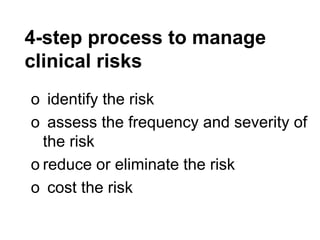
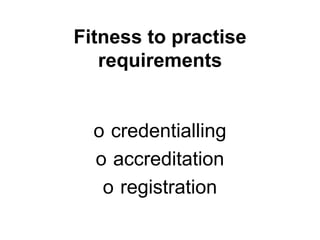
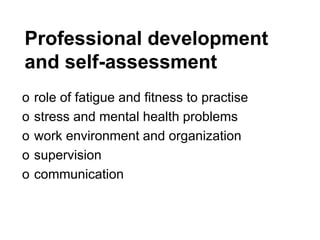
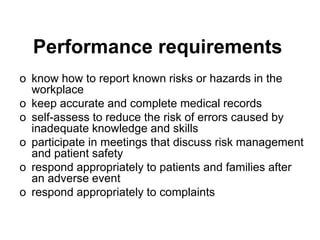
Clinical risk management aims to improve patient safety by identifying circumstances that put patients at risk of harm and preventing those risks. It involves a four-step process: identifying risks, assessing their frequency and severity, reducing or eliminating risks, and costing risks. Managing clinical risk requires gathering information about risks, meeting fitness to practice requirements, and accurately reporting risks, keeping medical records, self-assessing skills and knowledge, participating in risk management meetings, and appropriately responding to patients, families, and complaints. Sentinel events are unexpected occurrences involving death or injury, and complaints can help maintain standards and protect the public.