Data and Computer
Communications
Eighth Edition
by William Stallings
Lecture slides by Lawrie Brown
Chapter 2 – Protocol Architecture,
TCP/IP, and Internet-Based
Applications
Protocol Architecture,
TCP/IP, and Internet-Based
Applications
 To destroy communication completely, there
must be no rules in common between
transmitter and receiver—neither of alphabet
nor of syntax —On Human Communication,
Colin Cherry
Need For Protocol
Architecture
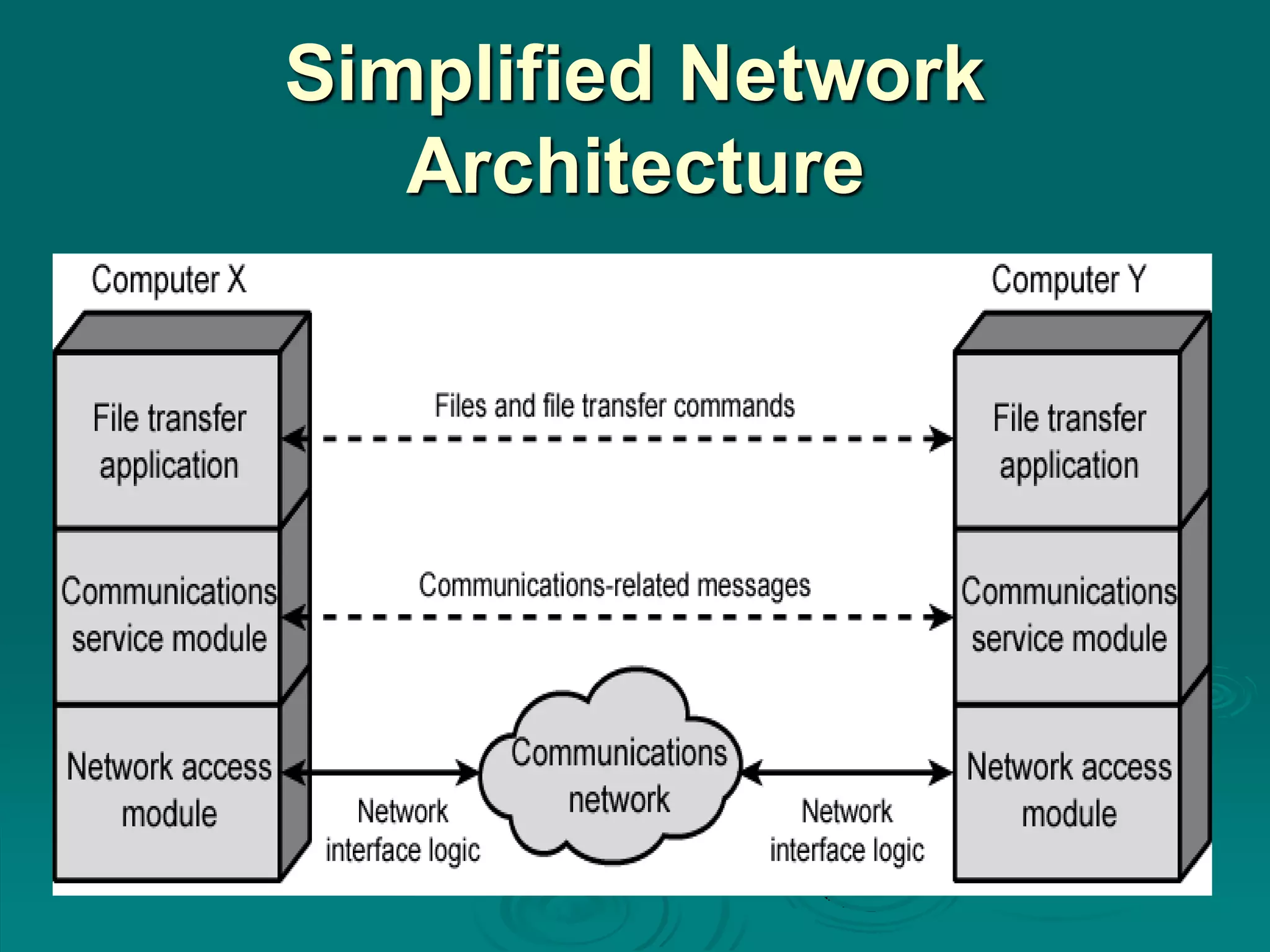
 data exchange can involve complex
procedures, cf. file transfer example
 better if task broken into subtasks
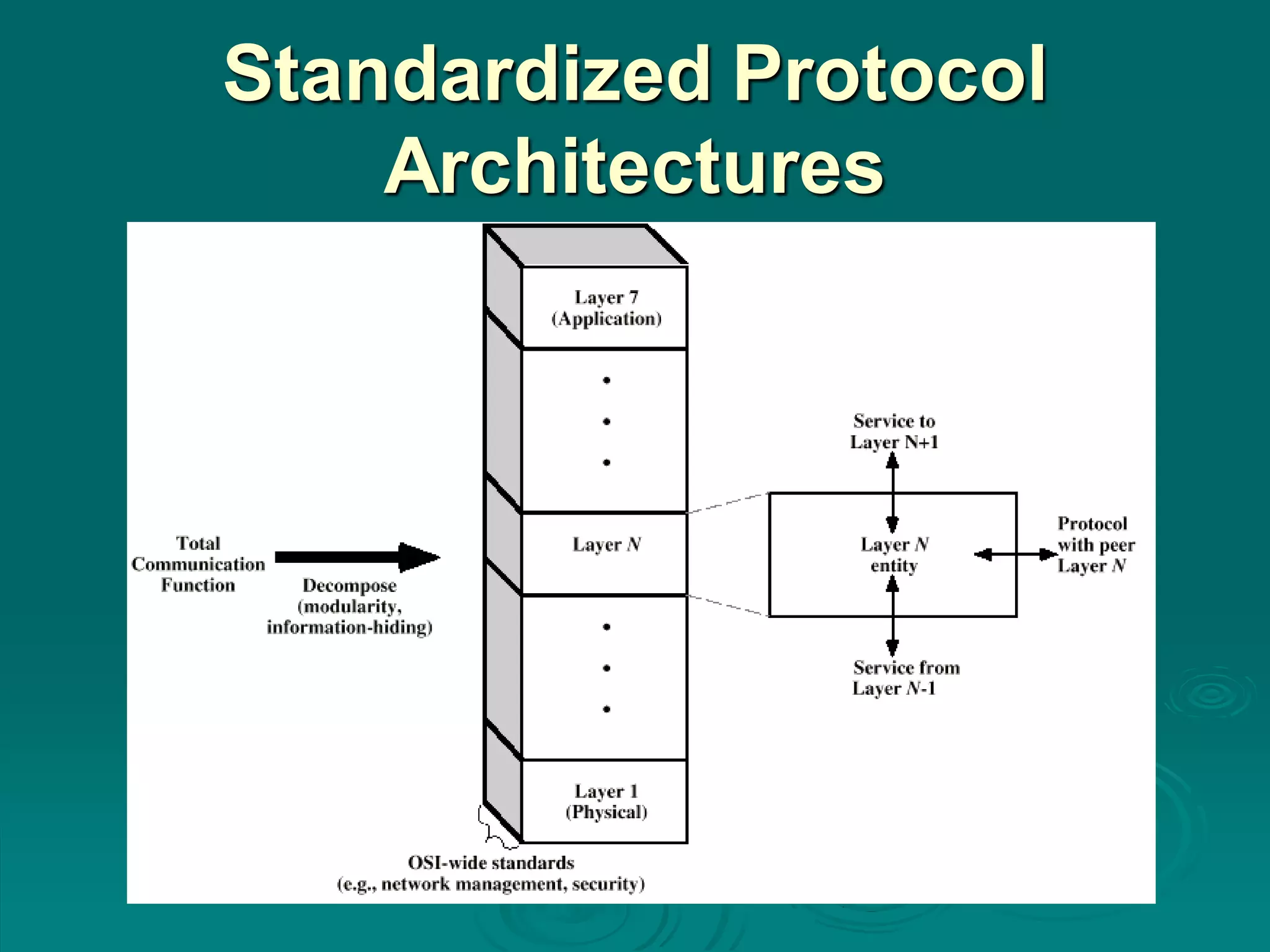
 implemented separately in layers in stack
 each layer provides functions needed to
perform comms for layers above
 using functions provided by layers below
 peer layers communicate with a protocol
Key Elements of a Protocol
 syntax - data format
 semantics - control info & error handling
 timing - speed matching & sequencing
TCP/IP Protocol Architecture
 developed by US Defense Advanced
Research Project Agency (DARPA)
 for ARPANET packet switched network
 used by the global Internet
 protocol suite comprises a large collection
of standardized protocols
Simplified Network
Architecture
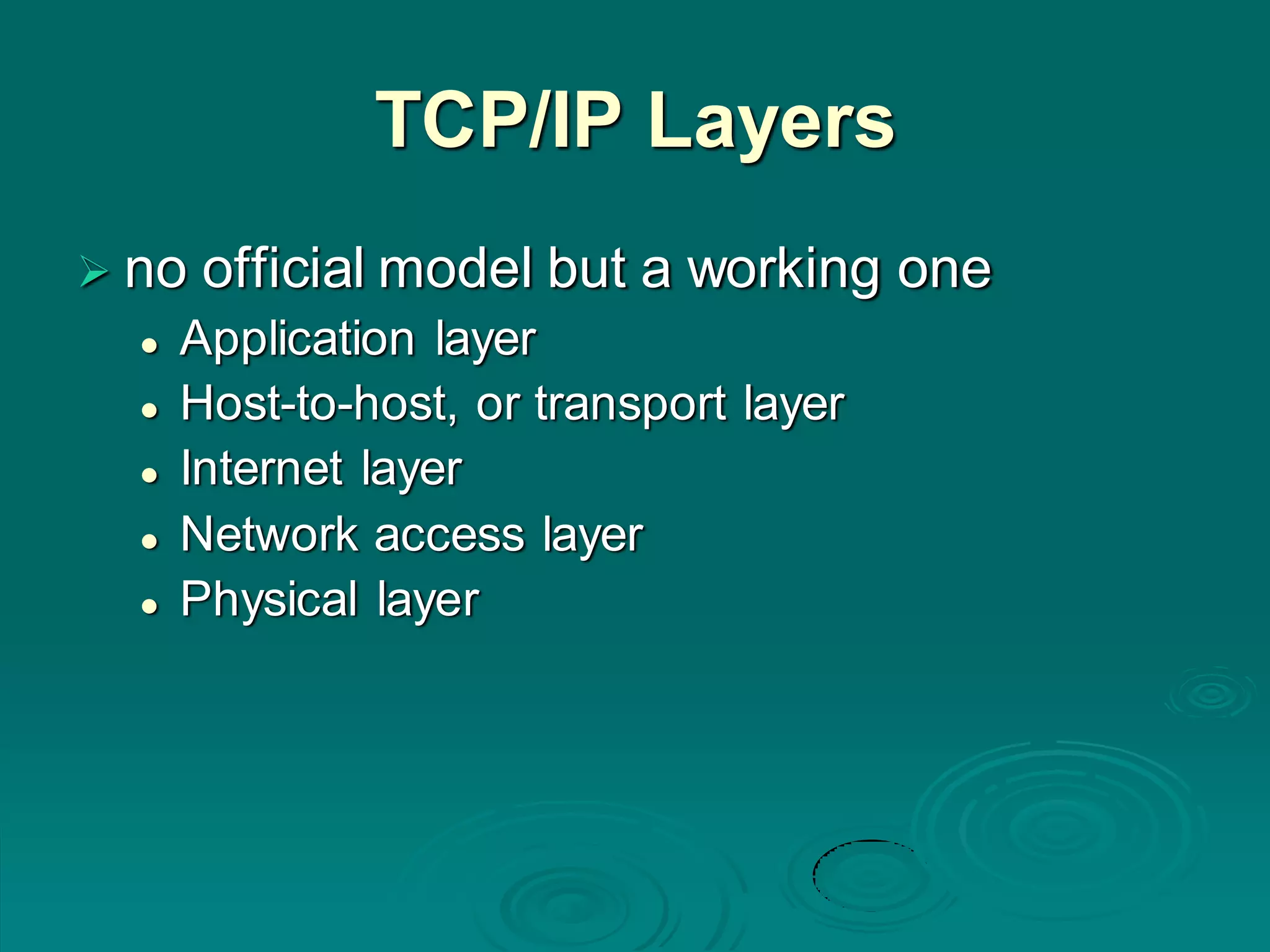
TCP/IP Layers
 no official model but a working one
 Application layer
 Host-to-host, or transport layer
 Internet layer
 Network access layer
 Physical layer
Physical Layer
 concerned with physical interface between
computer and network
 concerned with issues like:
 characteristics of transmission medium
 signal levels
 data rates
 other related matters
Network Access Layer
 exchange of data between an end system
and attached network
 concerned with issues like :
 destination address provision
 invoking specific services like priority
 access to & routing data across a network link
between two attached systems
 allows layers above to ignore link specifics
Internet Layer (IP)
 routing functions across multiple networks
 for systems attached to different networks
 using IP protocol
 implemented in end systems and routers
 routers connect two networks and relays
data between them
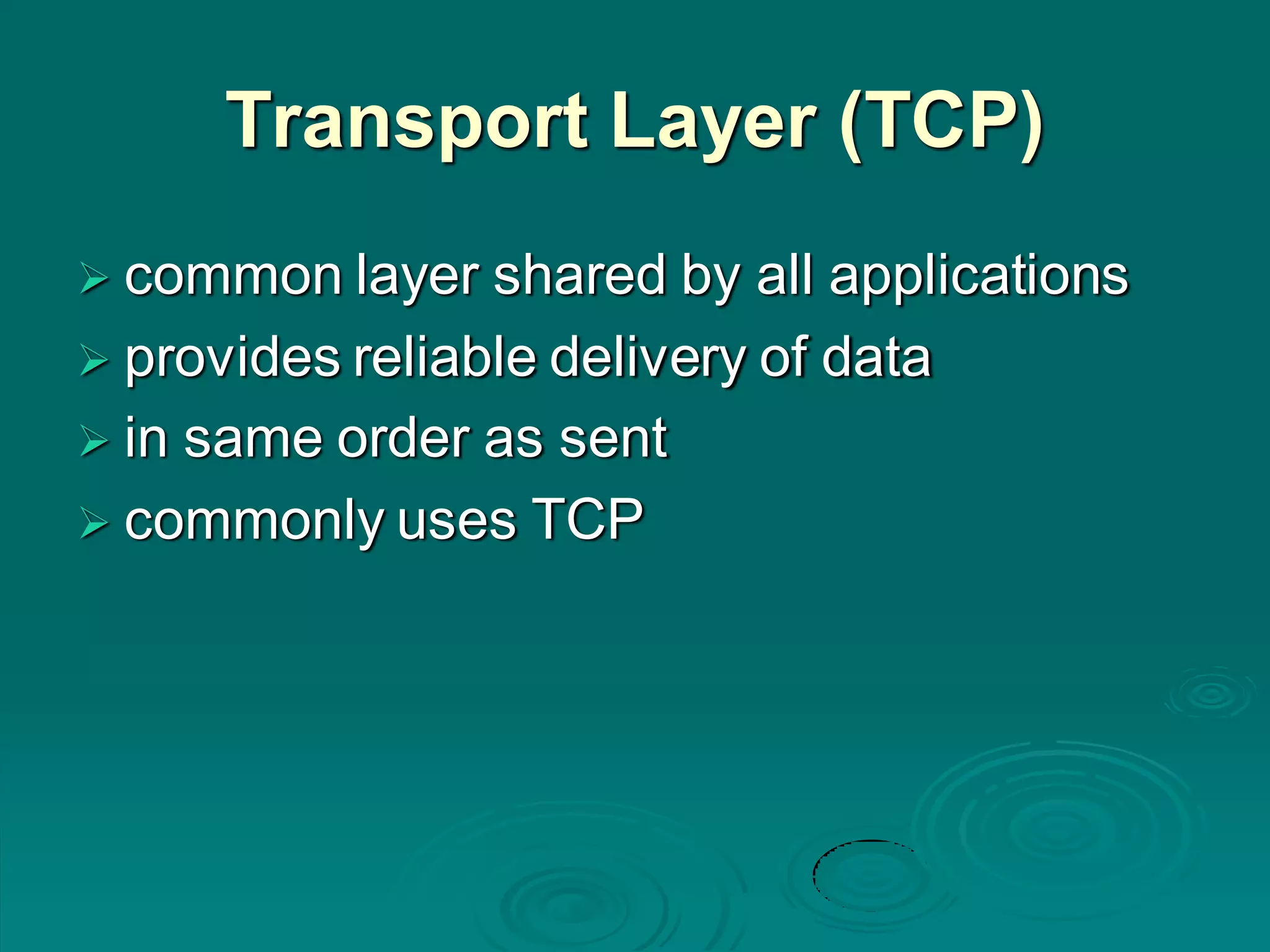
Transport Layer (TCP)
 common layer shared by all applications
 provides reliable delivery of data
 in same order as sent
 commonly uses TCP
Application Layer
 provide support for user applications
 need a separate module for each type of
application
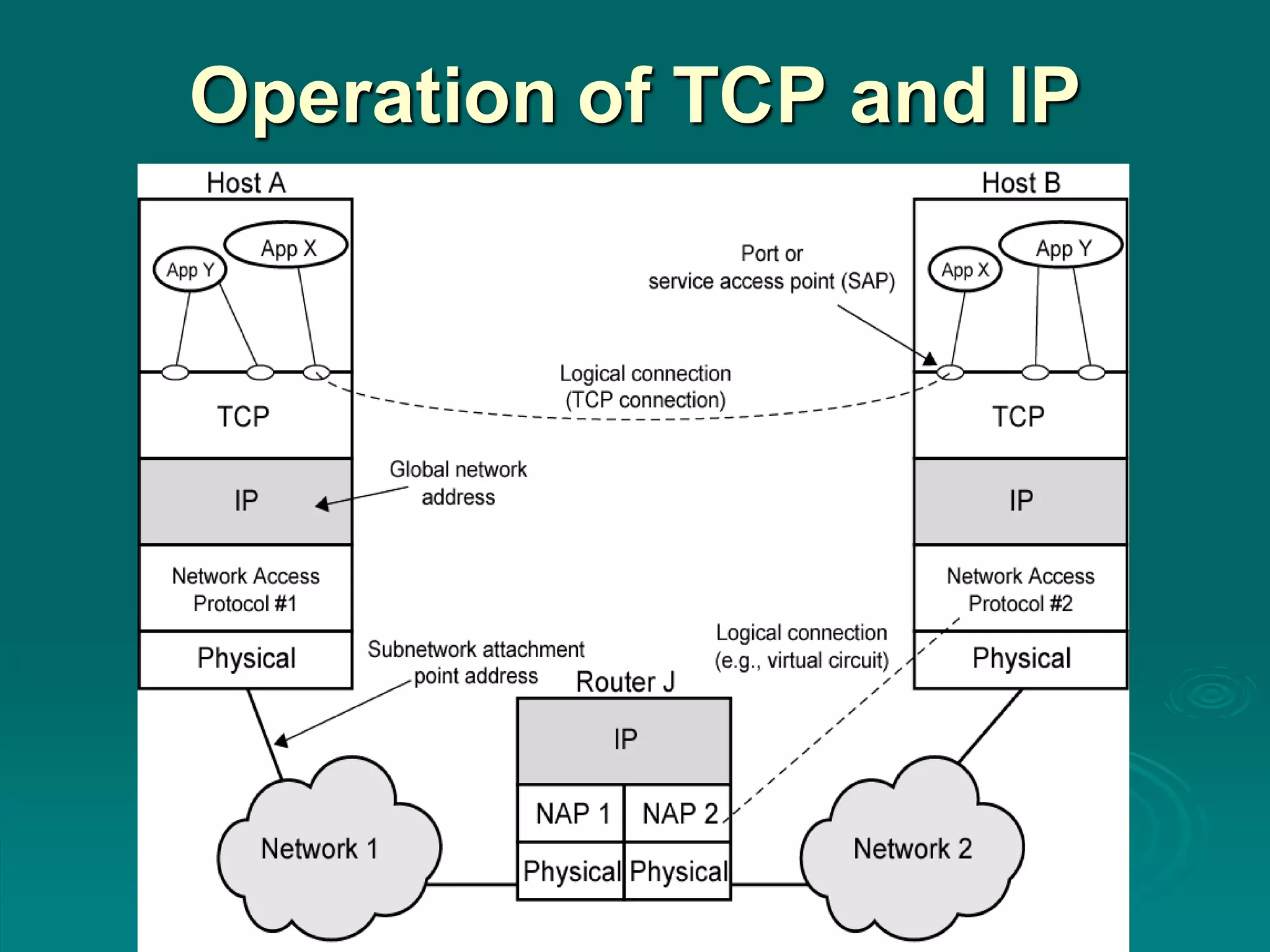
Operation of TCP and IP
Addressing Requirements
 two levels of addressing required
 each host on a subnet needs a unique
global network address
 its IP address
 each application on a (multi-tasking) host
needs a unique address within the host
 known as a port
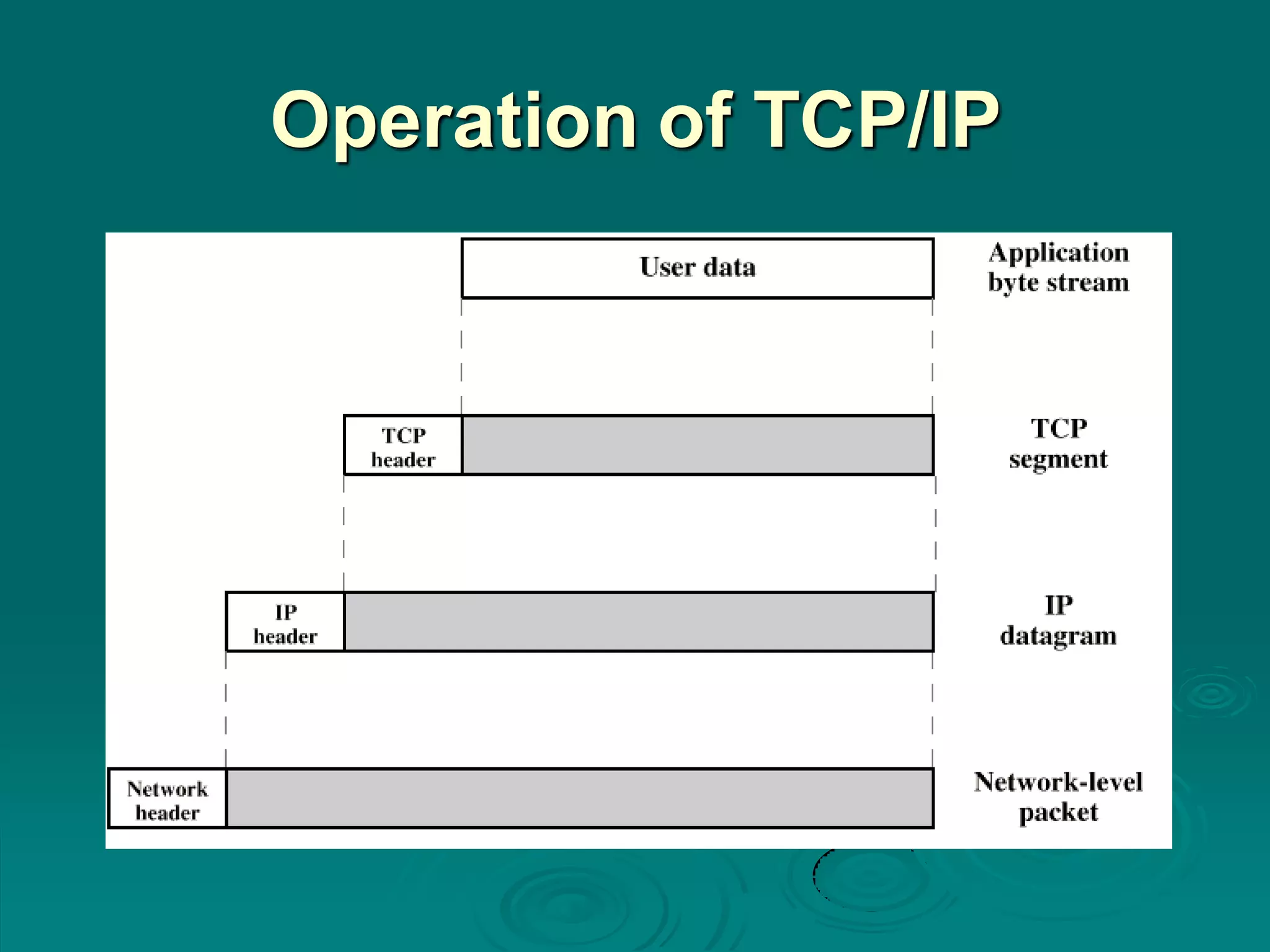
Operation of TCP/IP
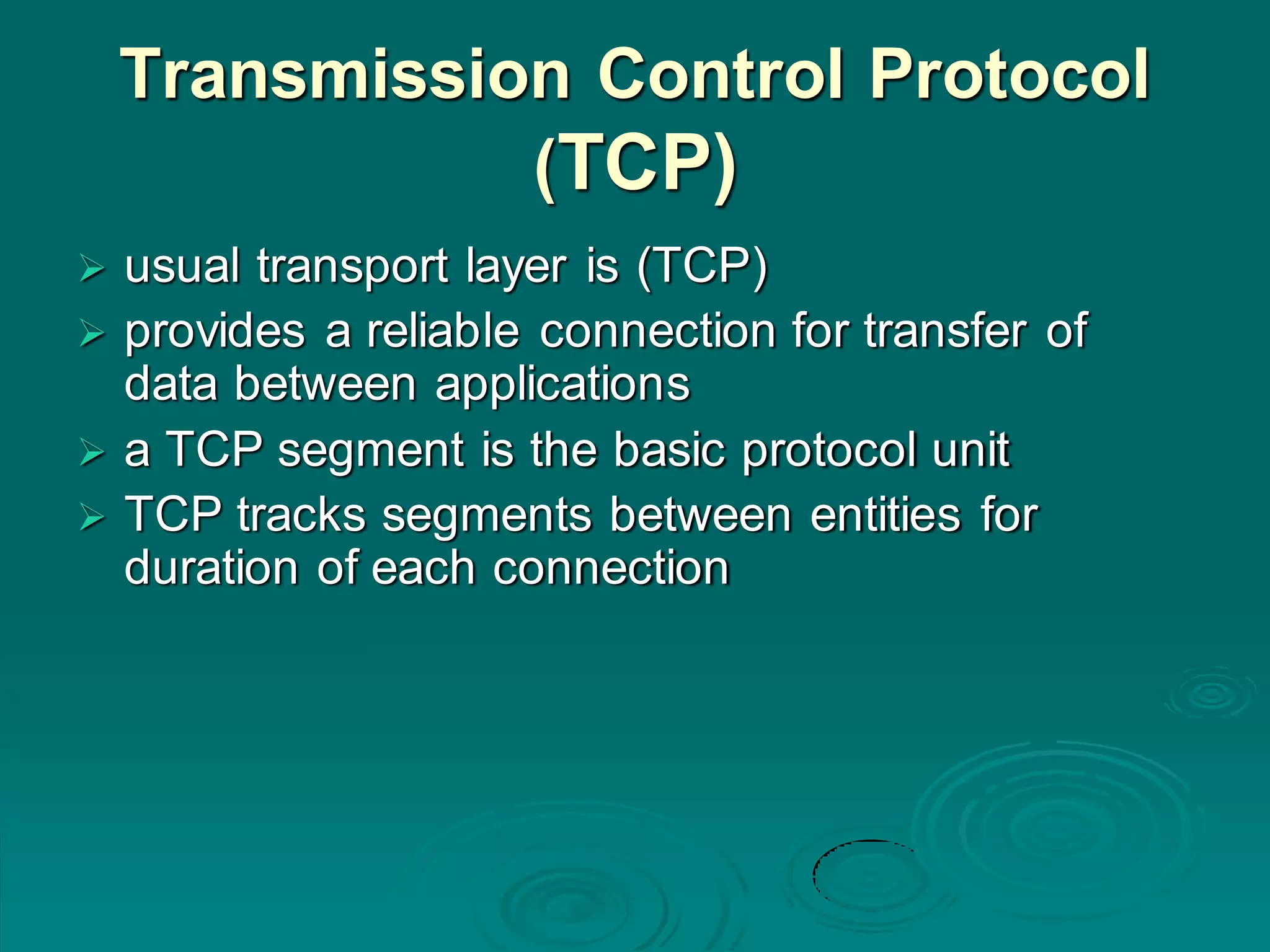
Transmission Control Protocol
(TCP)
 usual transport layer is (TCP)
 provides a reliable connection for transfer of
data between applications
 a TCP segment is the basic protocol unit
 TCP tracks segments between entities for
duration of each connection
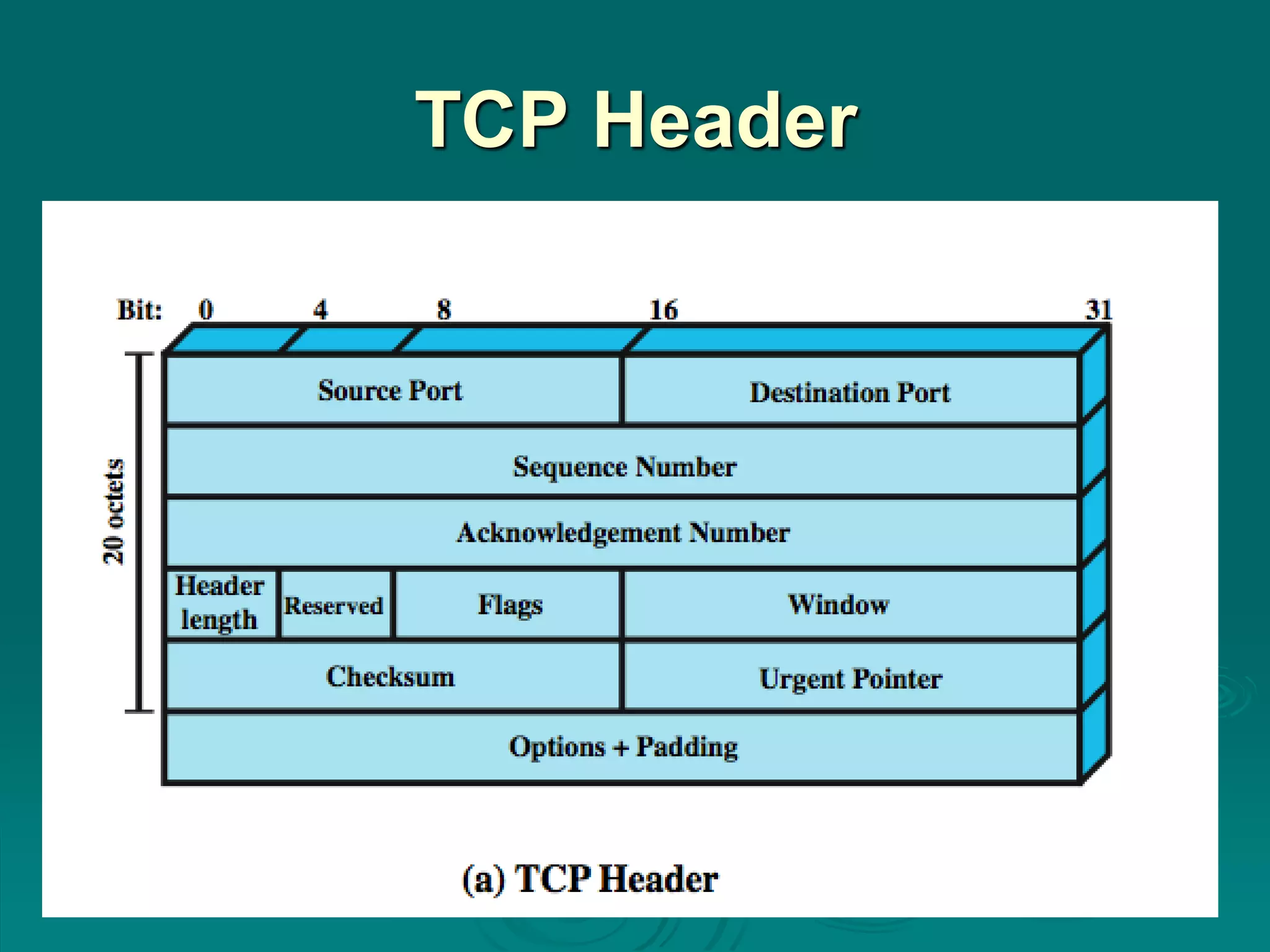
TCP Header
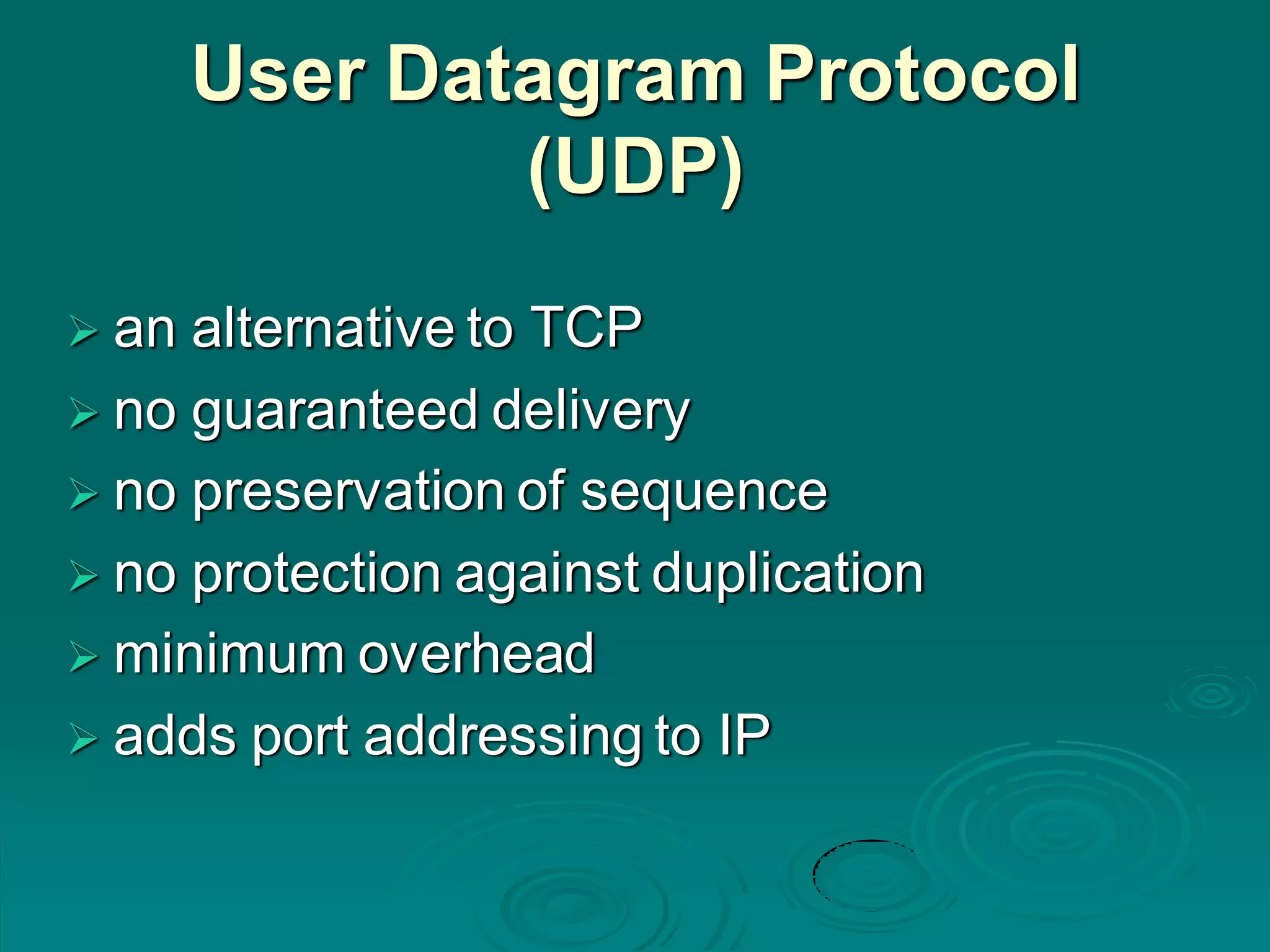
User Datagram Protocol
(UDP)
 an alternative to TCP
 no guaranteed delivery
 no preservation of sequence
 no protection against duplication
 minimum overhead
 adds port addressing to IP
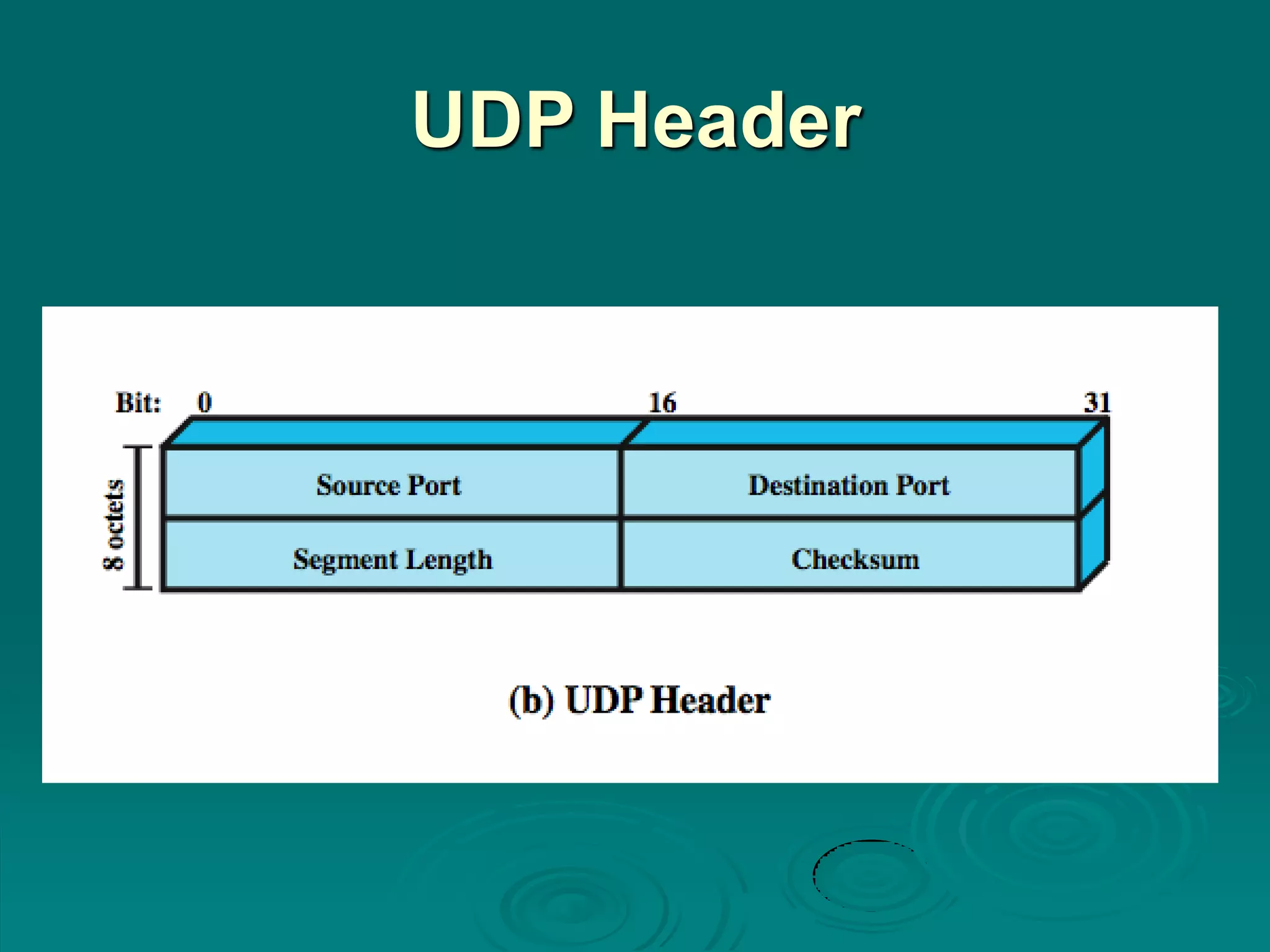
UDP Header
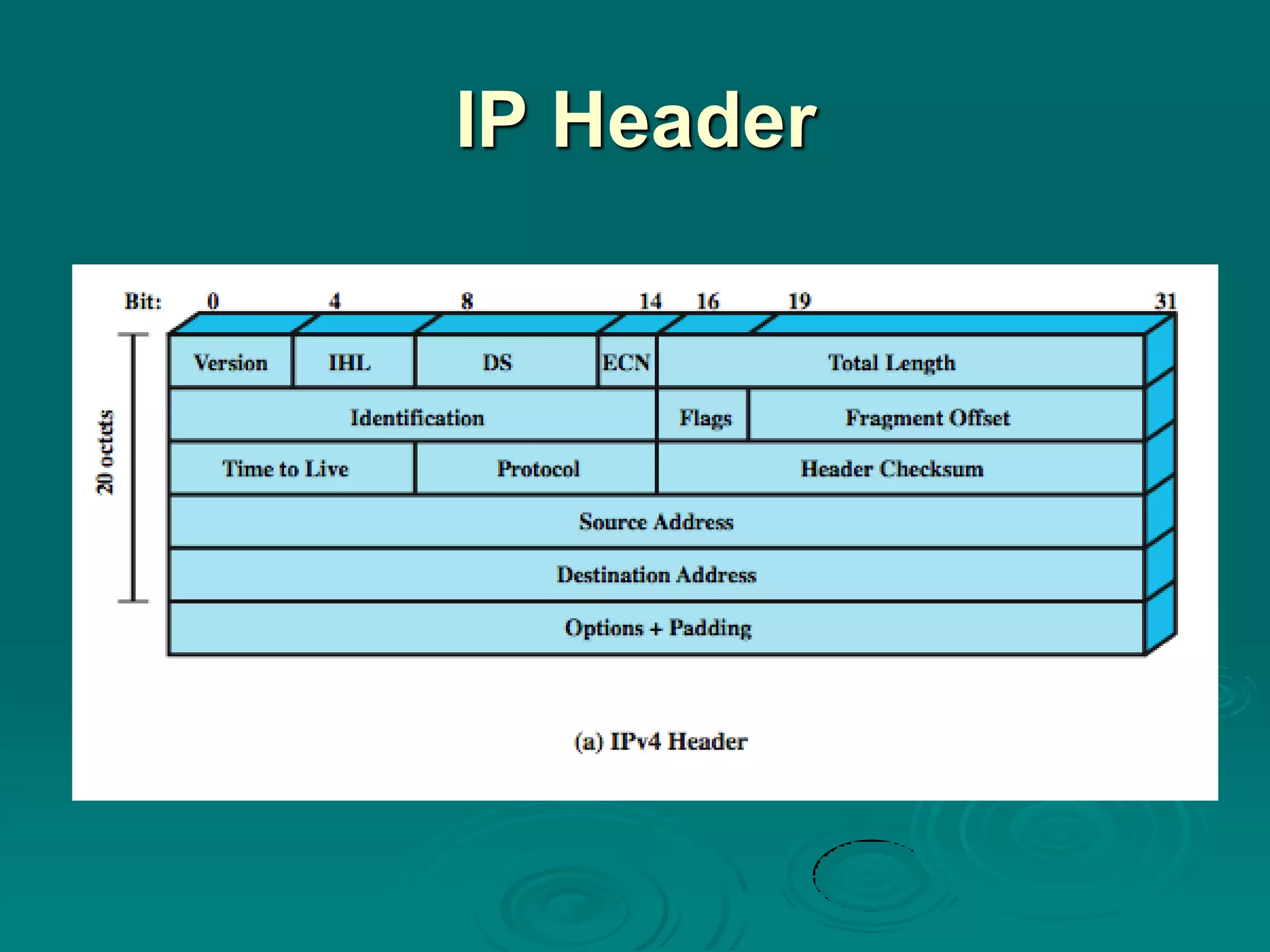
IP Header
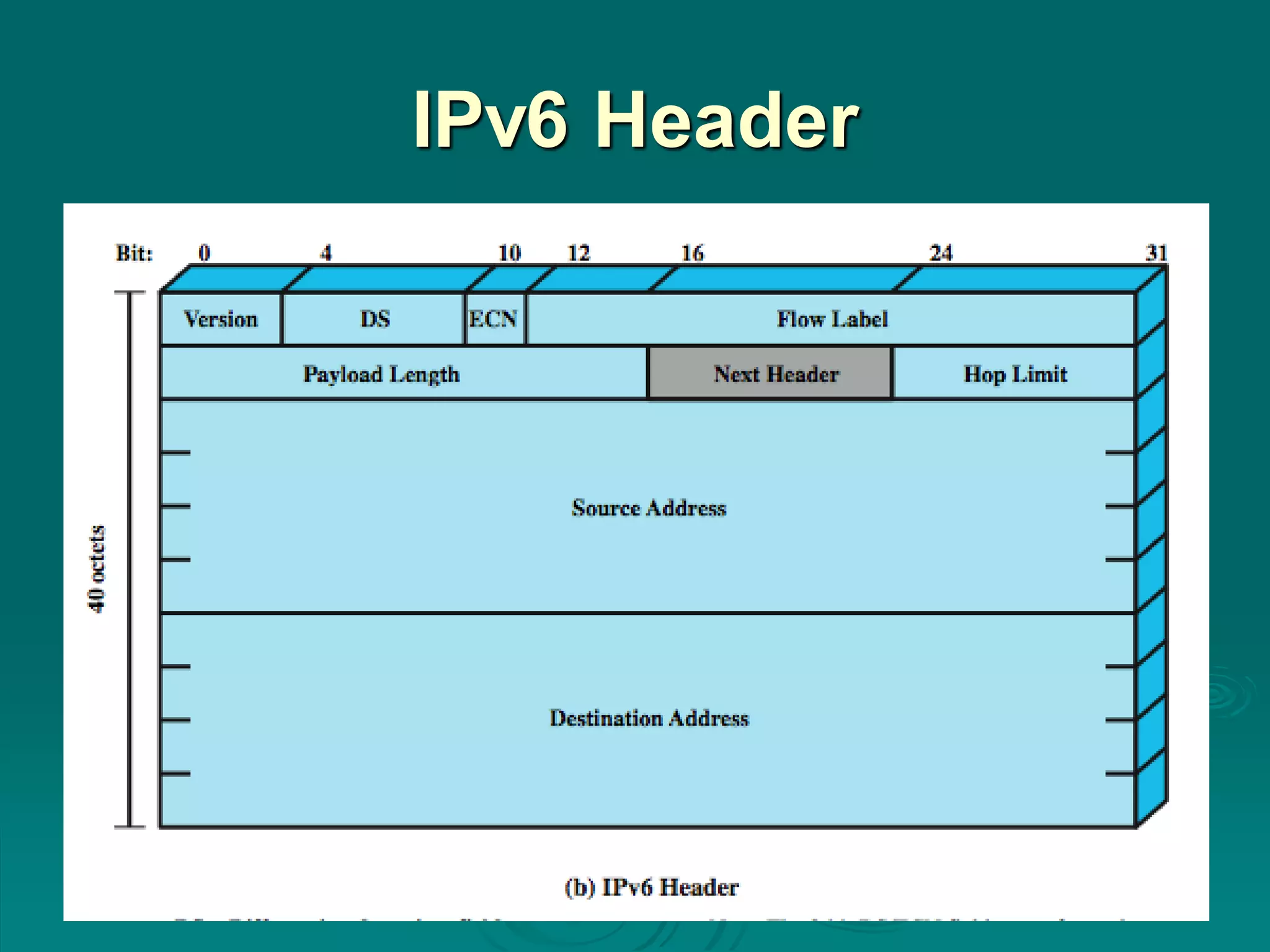
IPv6 Header
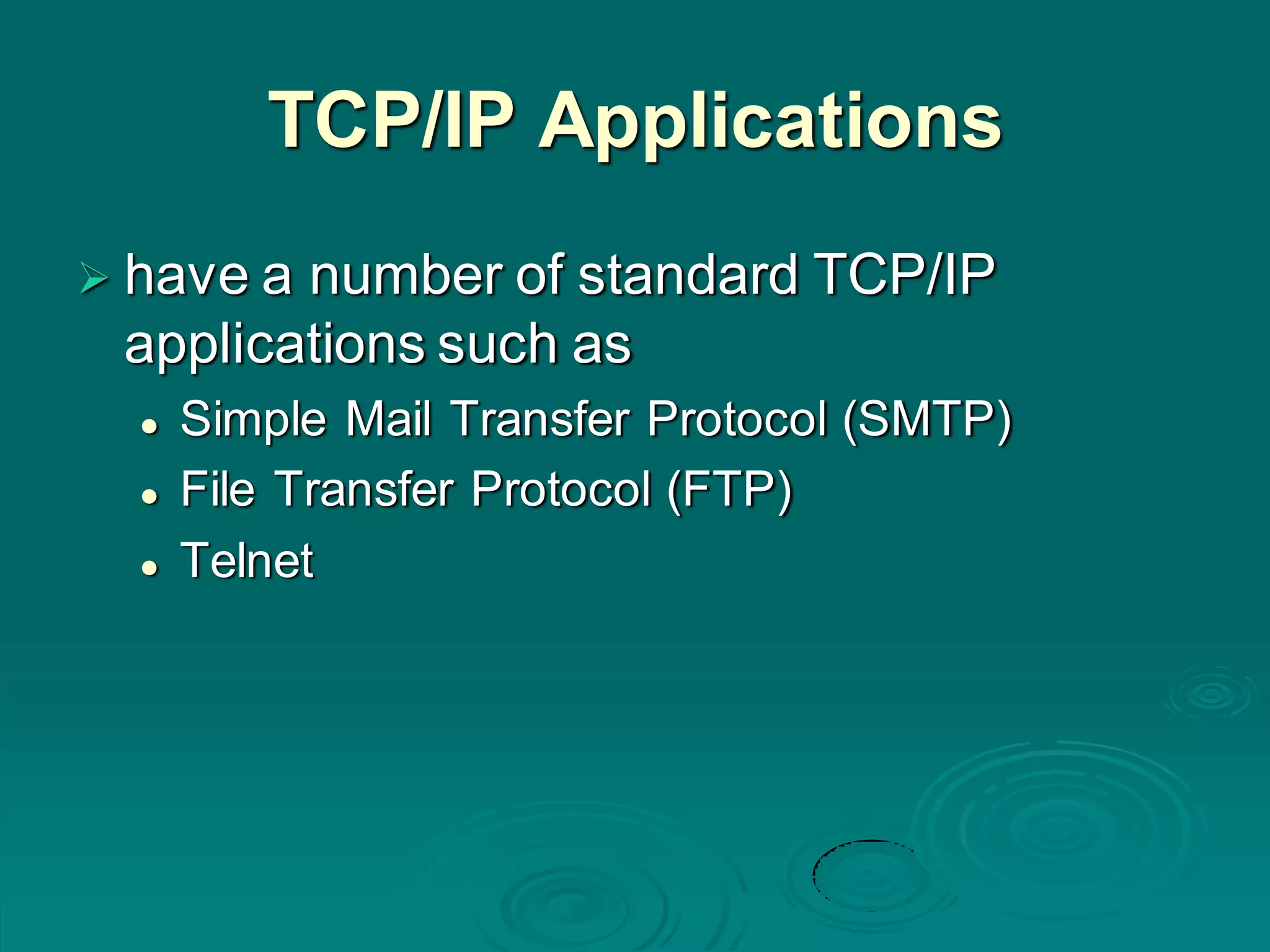
TCP/IP Applications
 have a number of standard TCP/IP
applications such as
 Simple Mail Transfer Protocol (SMTP)
 File Transfer Protocol (FTP)
 Telnet
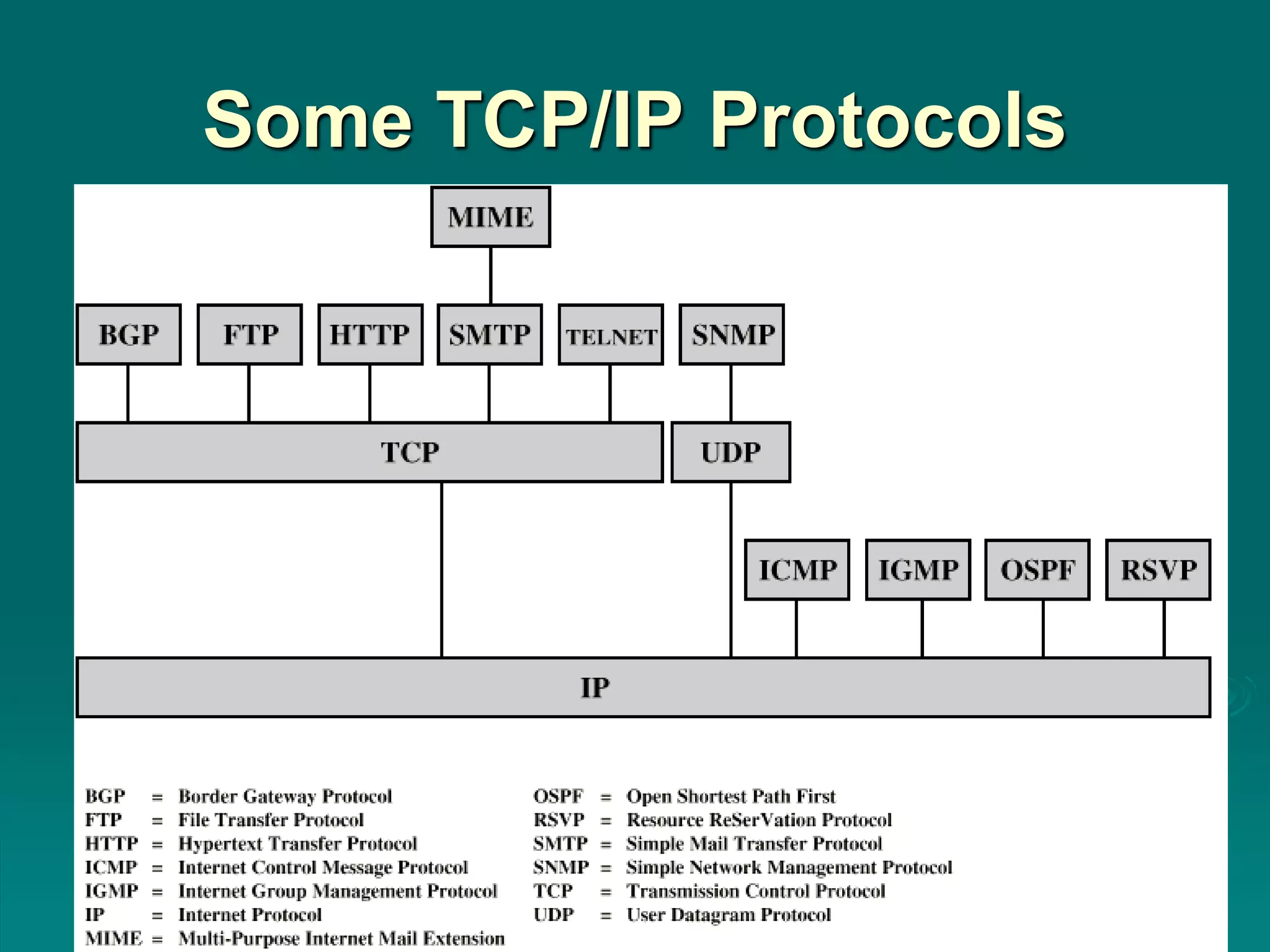
Some TCP/IP Protocols
OSI
 Open Systems Interconnection
 developed by the International
Organization for Standardization (ISO)
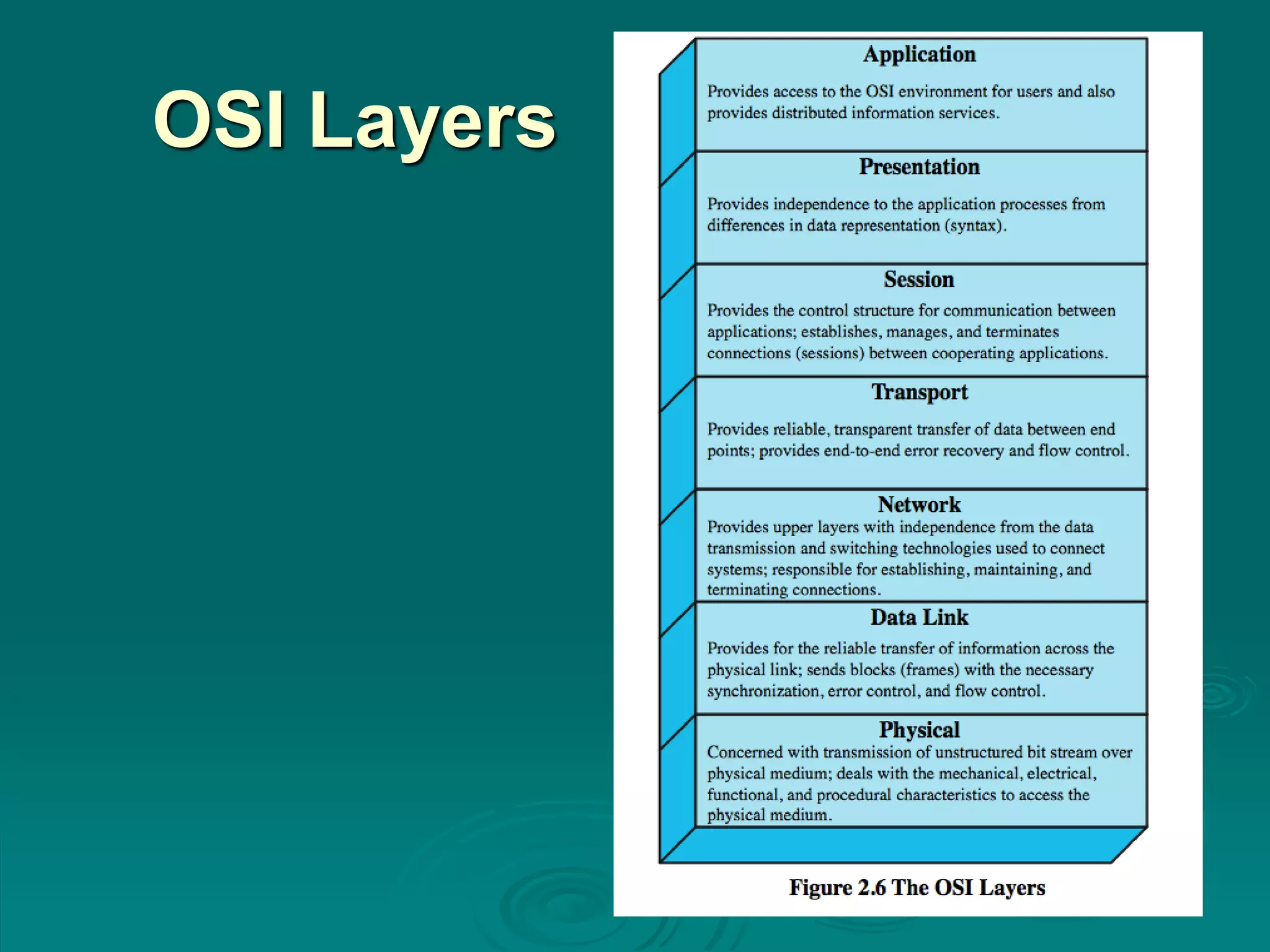
 has seven layers
 is a theoretical system delivered too late!
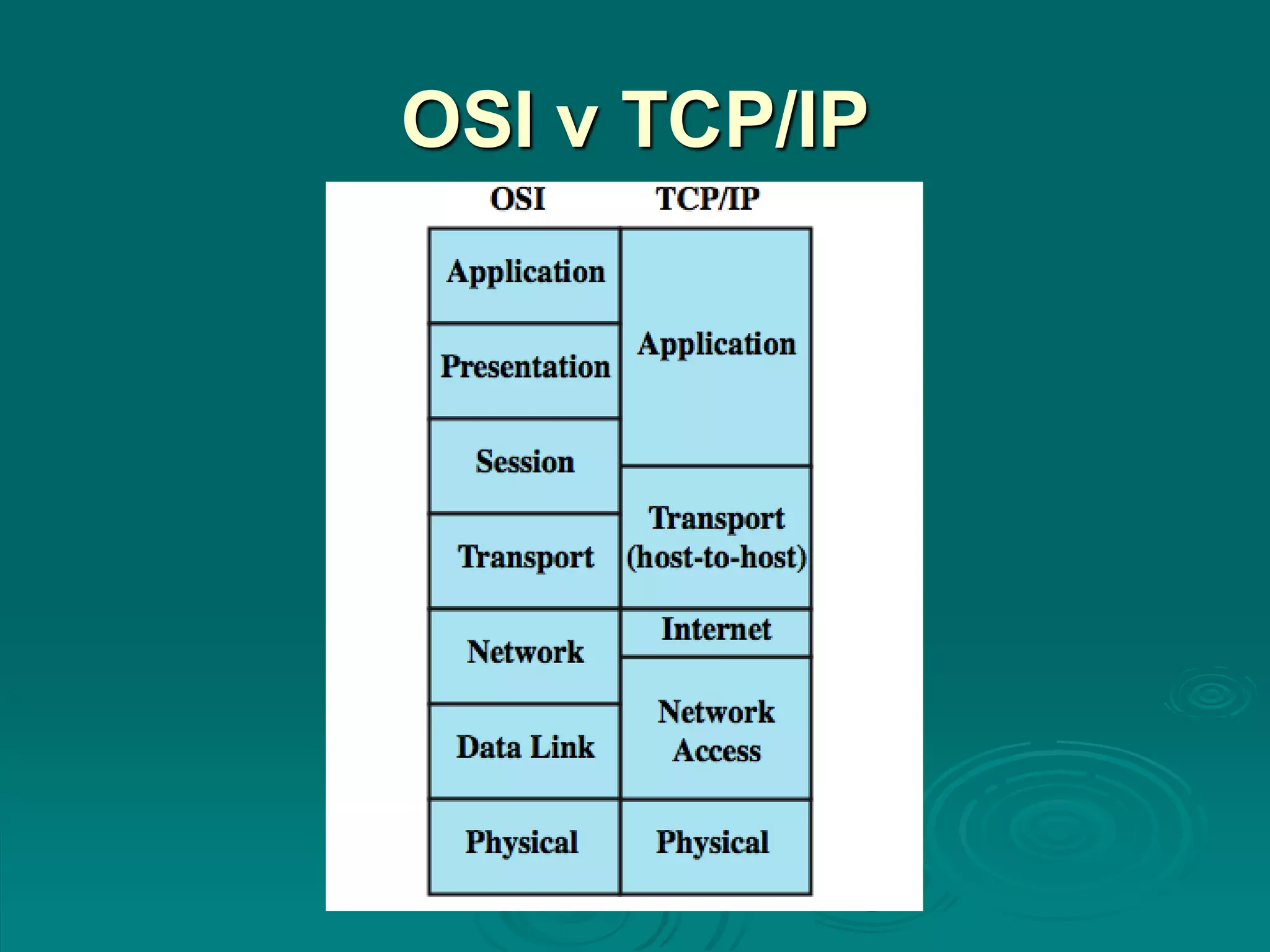
 TCP/IP is the de facto standard
OSI Layers
OSI v TCP/IP
Standardized Protocol
Architectures
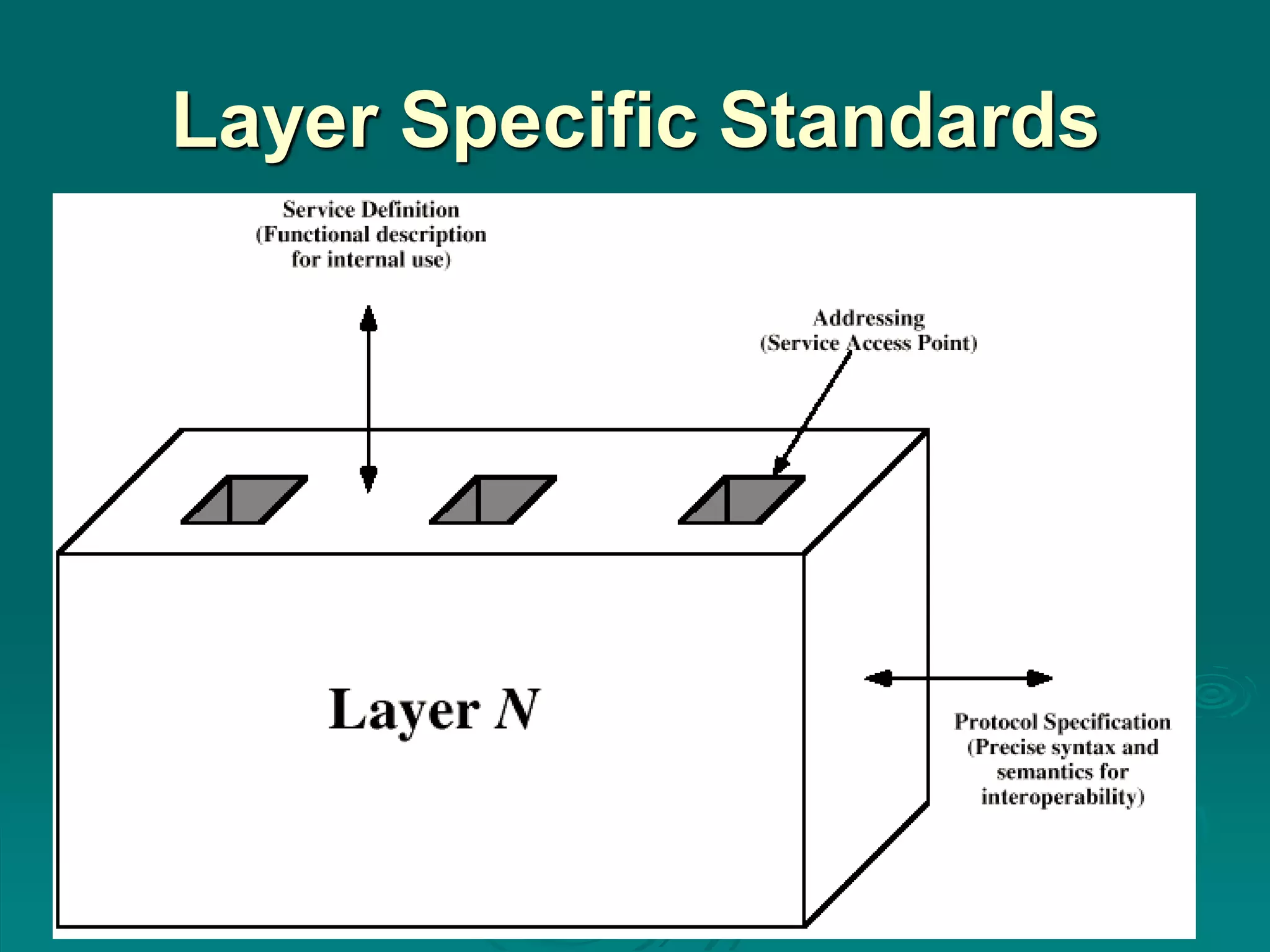
Layer Specific Standards
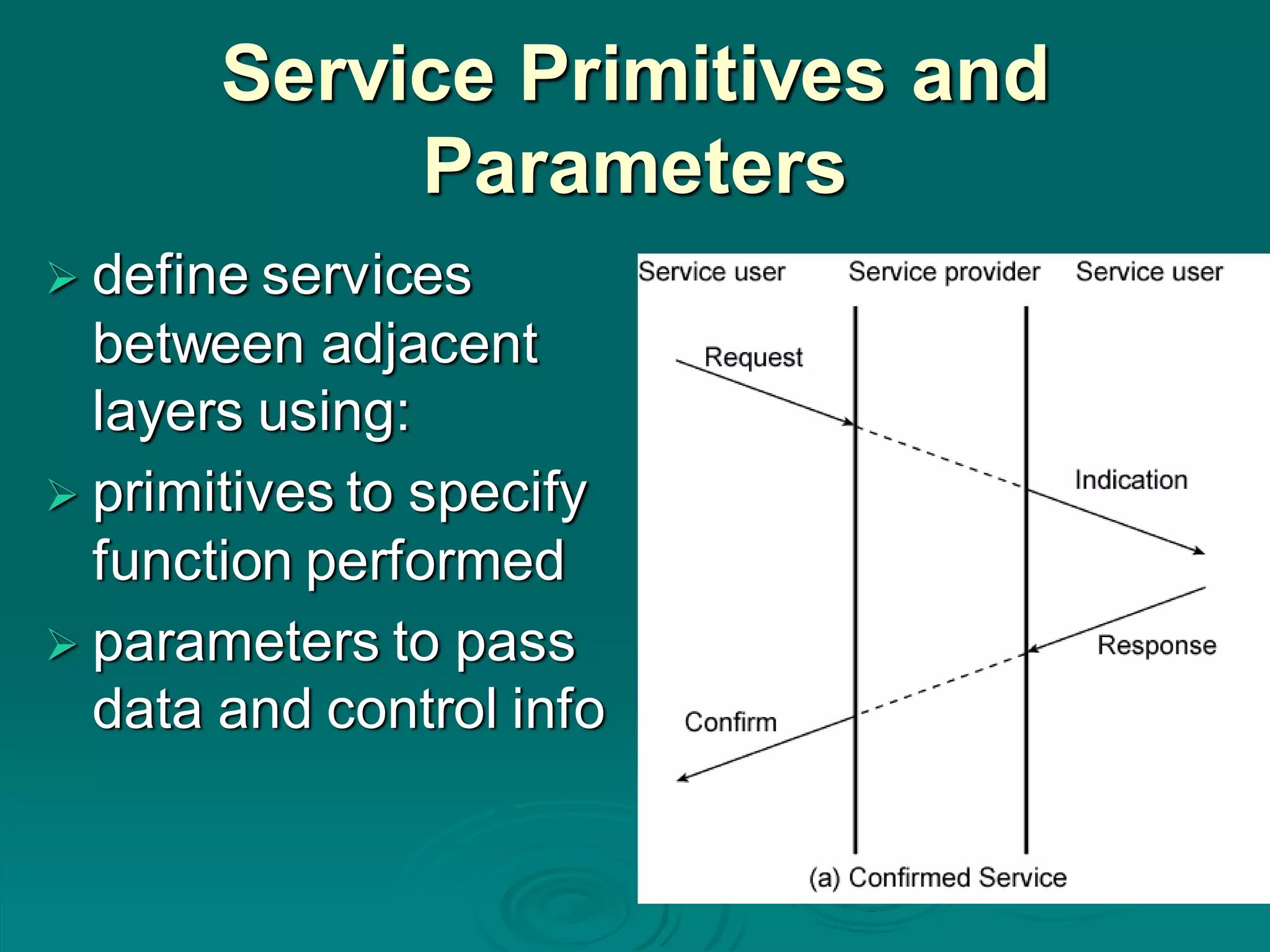
Service Primitives and
Parameters
 define services
between adjacent
layers using:
 primitives to specify
function performed
 parameters to pass
data and control info
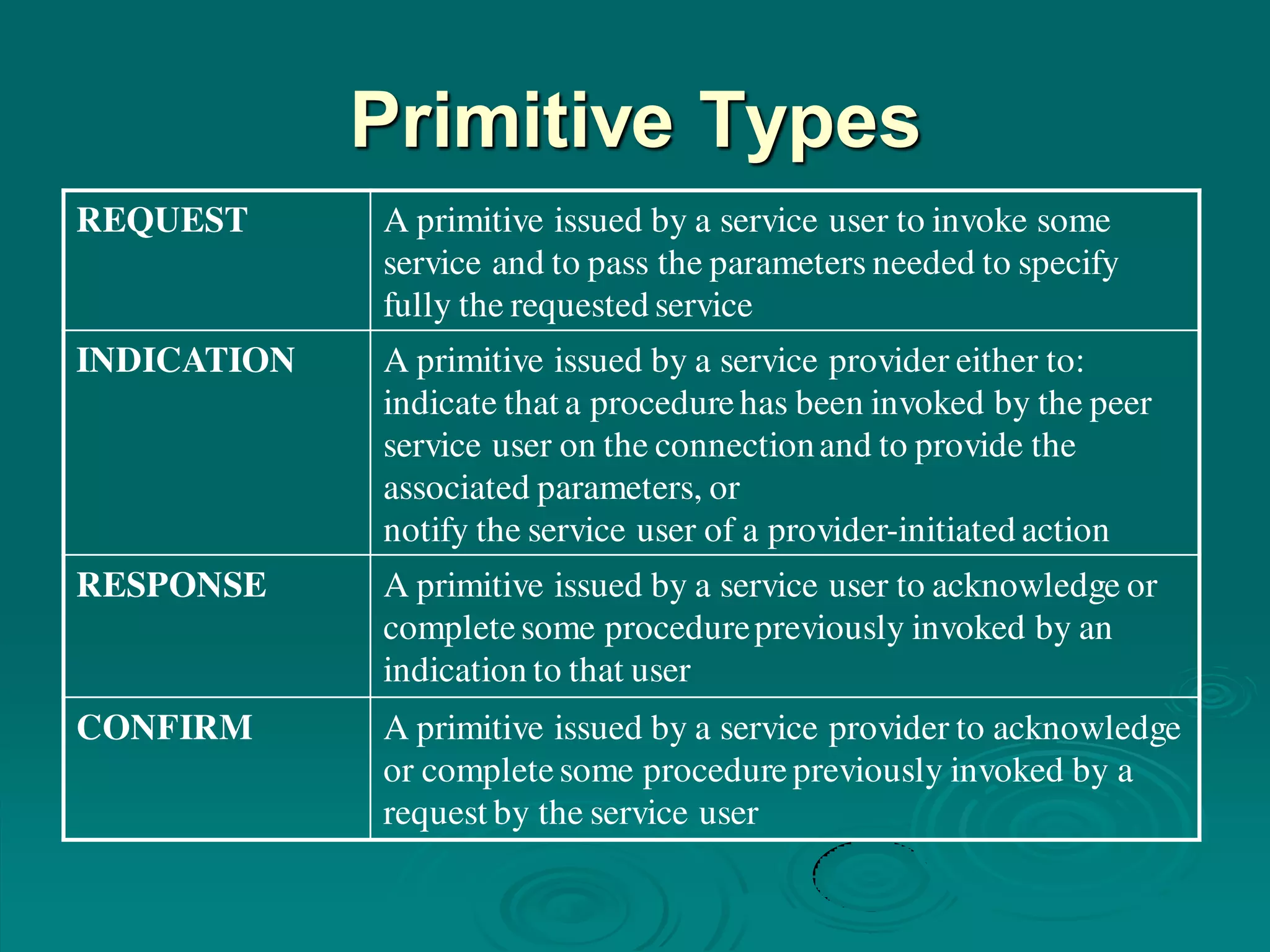
Primitive Types
REQUEST A primitive issued by a service user to invoke some
service and to pass the parameters needed to specify
fully the requested service
INDICATION A primitive issued by a service provider either to:
indicate that a procedurehas been invoked by the peer
service user on the connectionand to provide the
associated parameters, or
notify the service user of a provider-initiated action
RESPONSE A primitive issued by a service user to acknowledge or
completesome procedurepreviously invoked by an
indication to that user
CONFIRM A primitive issued by a service provider to acknowledge
or completesome procedurepreviously invoked by a
request by the service user
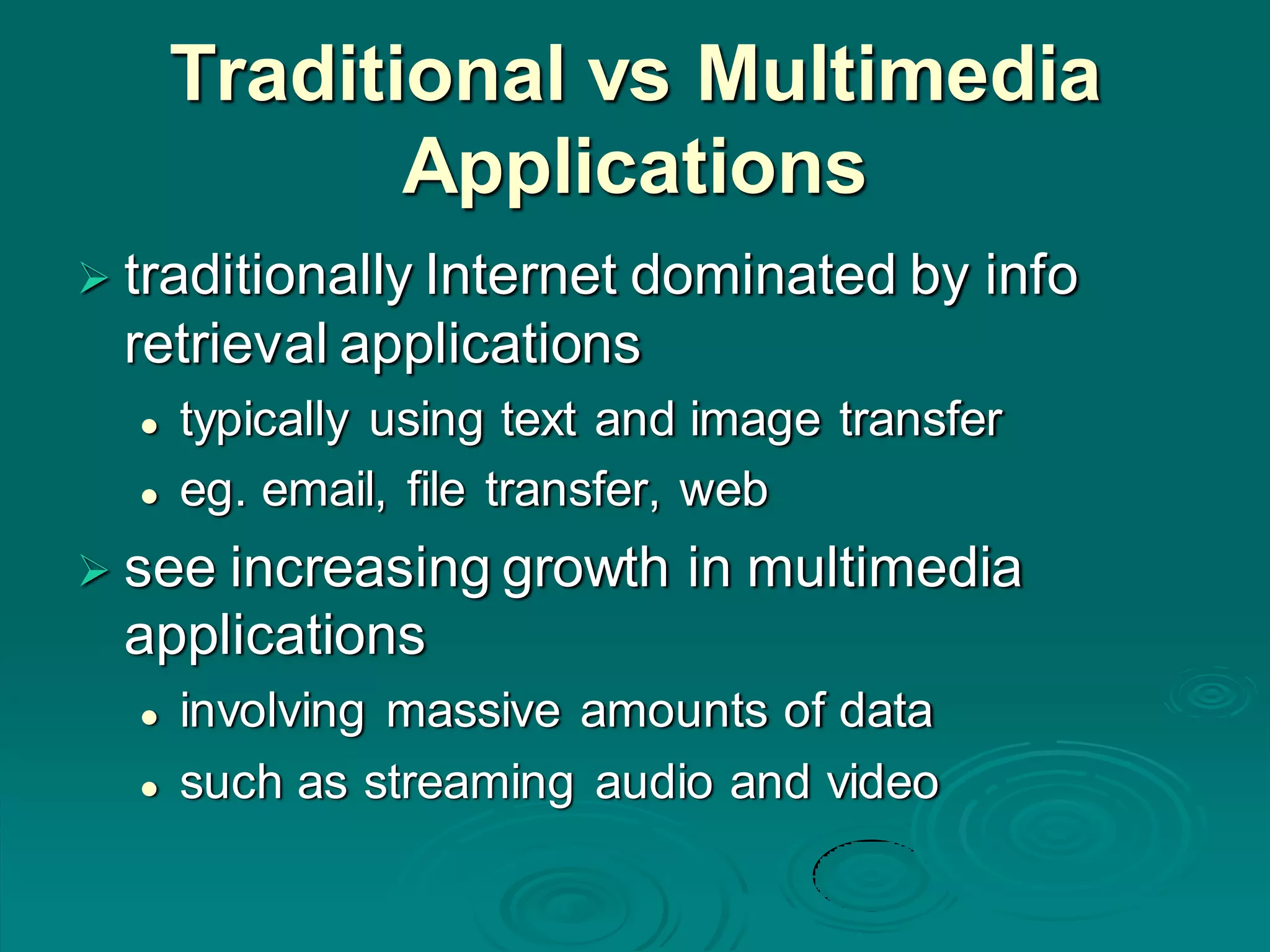
Traditional vs Multimedia
Applications
 traditionally Internet dominated by info
retrieval applications
 typically using text and image transfer
 eg. email, file transfer, web
 see increasing growth in multimedia
applications
 involving massive amounts of data
 such as streaming audio and video
Elastic and Inelastic Traffic
 elastic traffic
 can adjust to delay & throughput changes
over a wide range
 eg. traditional “data” style TCP/IP traffic
 some applications more sensitive though
 inelastic traffic
 does not adapt to such changes
 eg. “real-time” voice & video traffic
 need minimum requirements on net arch
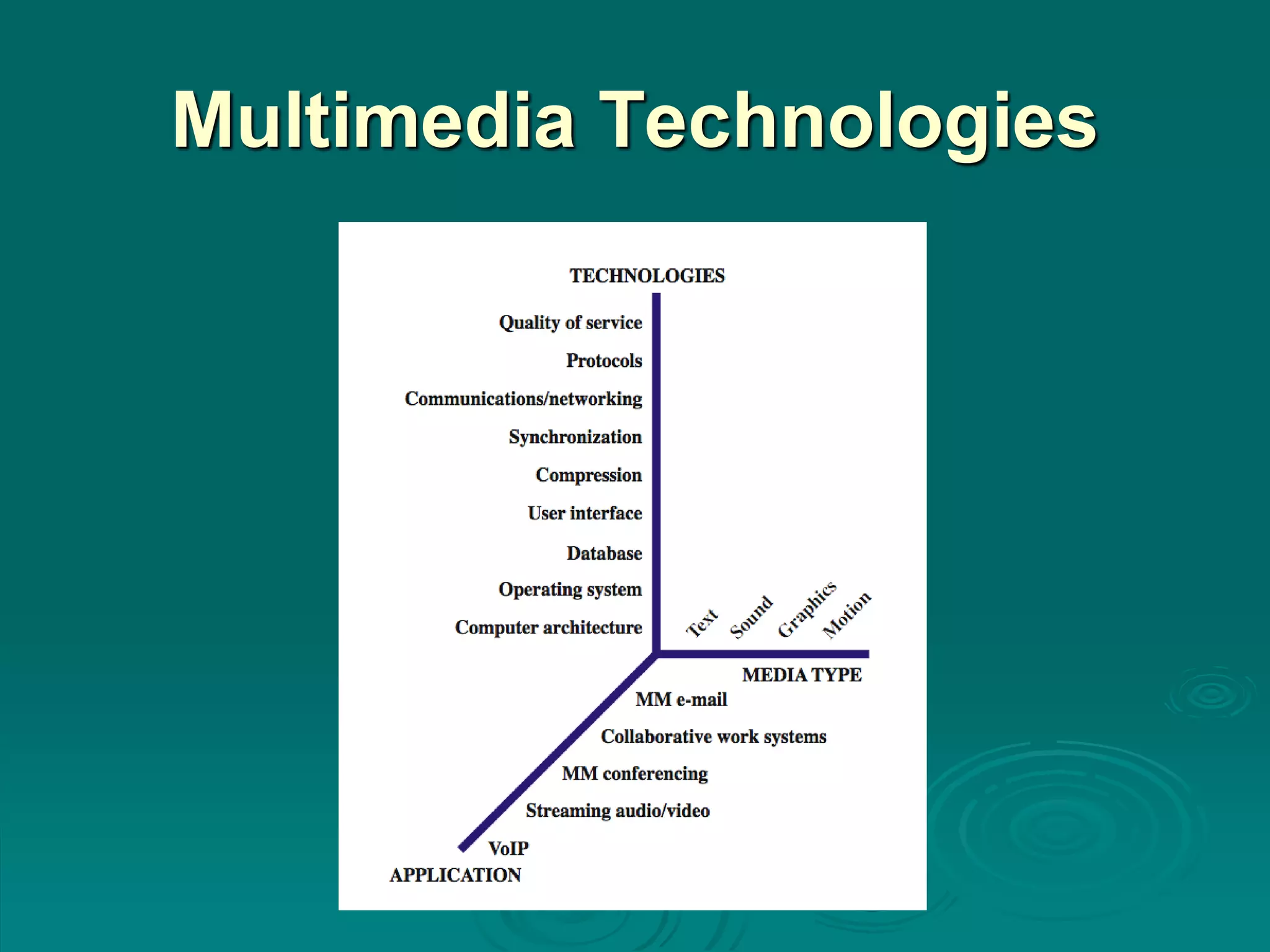
Multimedia Technologies
Summary
 introduced need for protocol architecture
 TCP/IP protocol architecture
 OSI Model & protocol architecture
standardization
 traditional vs multimedia application needs

02-ProtocolArchitecture.pdf

  • 1.
    Data and Computer Communications EighthEdition by William Stallings Lecture slides by Lawrie Brown Chapter 2 – Protocol Architecture, TCP/IP, and Internet-Based Applications
  • 2.
    Protocol Architecture, TCP/IP, andInternet-Based Applications  To destroy communication completely, there must be no rules in common between transmitter and receiver—neither of alphabet nor of syntax —On Human Communication, Colin Cherry
  • 3.
    Need For Protocol Architecture data exchange can involve complex procedures, cf. file transfer example  better if task broken into subtasks  implemented separately in layers in stack  each layer provides functions needed to perform comms for layers above  using functions provided by layers below  peer layers communicate with a protocol
  • 4.
    Key Elements ofa Protocol  syntax - data format  semantics - control info & error handling  timing - speed matching & sequencing
  • 5.
    TCP/IP Protocol Architecture developed by US Defense Advanced Research Project Agency (DARPA)  for ARPANET packet switched network  used by the global Internet  protocol suite comprises a large collection of standardized protocols
  • 6.
  • 7.
    TCP/IP Layers  noofficial model but a working one  Application layer  Host-to-host, or transport layer  Internet layer  Network access layer  Physical layer
  • 8.
    Physical Layer  concernedwith physical interface between computer and network  concerned with issues like:  characteristics of transmission medium  signal levels  data rates  other related matters
  • 9.
    Network Access Layer exchange of data between an end system and attached network  concerned with issues like :  destination address provision  invoking specific services like priority  access to & routing data across a network link between two attached systems  allows layers above to ignore link specifics
  • 10.
    Internet Layer (IP) routing functions across multiple networks  for systems attached to different networks  using IP protocol  implemented in end systems and routers  routers connect two networks and relays data between them
  • 11.
    Transport Layer (TCP) common layer shared by all applications  provides reliable delivery of data  in same order as sent  commonly uses TCP
  • 12.
    Application Layer  providesupport for user applications  need a separate module for each type of application
  • 13.
  • 14.
    Addressing Requirements  twolevels of addressing required  each host on a subnet needs a unique global network address  its IP address  each application on a (multi-tasking) host needs a unique address within the host  known as a port
  • 15.
  • 16.
    Transmission Control Protocol (TCP) usual transport layer is (TCP)  provides a reliable connection for transfer of data between applications  a TCP segment is the basic protocol unit  TCP tracks segments between entities for duration of each connection
  • 17.
  • 18.
    User Datagram Protocol (UDP) an alternative to TCP  no guaranteed delivery  no preservation of sequence  no protection against duplication  minimum overhead  adds port addressing to IP
  • 19.
  • 20.
  • 21.
  • 22.
    TCP/IP Applications  havea number of standard TCP/IP applications such as  Simple Mail Transfer Protocol (SMTP)  File Transfer Protocol (FTP)  Telnet
  • 23.
  • 24.
    OSI  Open SystemsInterconnection  developed by the International Organization for Standardization (ISO)  has seven layers  is a theoretical system delivered too late!  TCP/IP is the de facto standard
  • 25.
  • 26.
  • 27.
  • 28.
  • 29.
    Service Primitives and Parameters define services between adjacent layers using:  primitives to specify function performed  parameters to pass data and control info
  • 30.
    Primitive Types REQUEST Aprimitive issued by a service user to invoke some service and to pass the parameters needed to specify fully the requested service INDICATION A primitive issued by a service provider either to: indicate that a procedurehas been invoked by the peer service user on the connectionand to provide the associated parameters, or notify the service user of a provider-initiated action RESPONSE A primitive issued by a service user to acknowledge or completesome procedurepreviously invoked by an indication to that user CONFIRM A primitive issued by a service provider to acknowledge or completesome procedurepreviously invoked by a request by the service user
  • 31.
    Traditional vs Multimedia Applications traditionally Internet dominated by info retrieval applications  typically using text and image transfer  eg. email, file transfer, web  see increasing growth in multimedia applications  involving massive amounts of data  such as streaming audio and video
  • 32.
    Elastic and InelasticTraffic  elastic traffic  can adjust to delay & throughput changes over a wide range  eg. traditional “data” style TCP/IP traffic  some applications more sensitive though  inelastic traffic  does not adapt to such changes  eg. “real-time” voice & video traffic  need minimum requirements on net arch
  • 33.
  • 34.
    Summary  introduced needfor protocol architecture  TCP/IP protocol architecture  OSI Model & protocol architecture standardization  traditional vs multimedia application needs