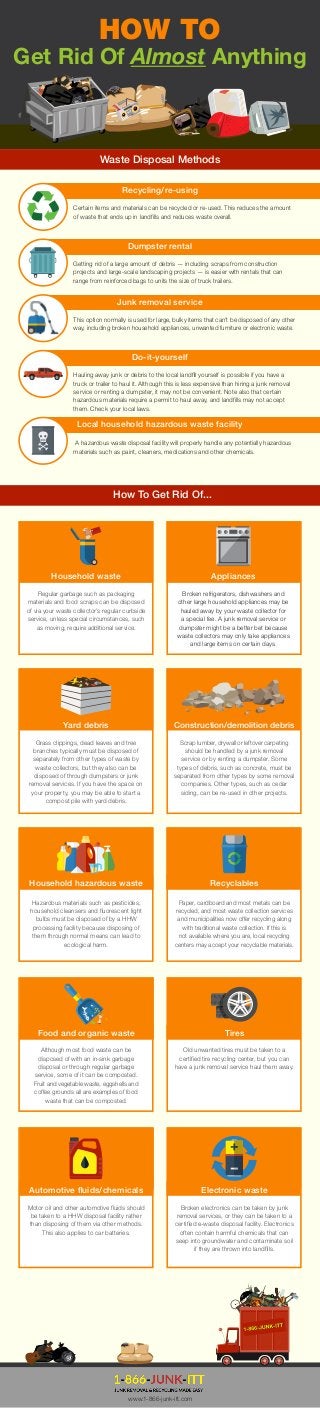


How To Get Rid Of Almost Anything
- 1. Certain items andmaterials can be recycled or re-used. This reduces the amount of waste that ends up in landfills and reduces waste overall. Getting rid of a large amount of debris — including scraps from construction projects and large-scale landscaping projects — is easier with rentals that can range from reinforced bags to units the size of truck trailers. This option normally is used for large, bulky items that can’t be disposed of any other way, including broken household appliances, unwanted furniture or electronic waste. Hauling away junk or debris to the local landfill yourself is possible if you have a truck or trailer to haul it. Although this is less expensive than hiring a junk removal service or renting a dumpster, it may not be convenient. Note also that certain hazardous materials require a permit to haul away, and landfills may not accept them. Check your local laws. A hazardous waste disposal facility will properly handle any potentially hazardous materials such as paint, cleaners, medications and other chemicals. HOW TO Get Rid Of Almost Anything Waste Disposal Methods Recycling/re-using Dumpster rental Junk removal service Do-it-yourself Local household hazardous waste facility How To Get Rid Of... Household waste Regular garbage such as packaging materials and food scraps can be disposed of via your waste collector’s regular curbside service, unless special circumstances, such as moving, require additional service. Construction/demolition debris Scrap lumber, drywall or leftover carpeting should be handled by a junk removal service or by renting a dumpster. Some types of debris, such as concrete, must be separated from other types by some removal companies. Other types, such as cedar siding, can be re-used in other projects. Yard debris Grass clippings, dead leaves and tree branches typically must be disposed of separately from other types of waste by waste collectors, but they also can be disposed of through dumpsters or junk removal services. If you have the space on your property, you may be able to start a compost pile with yard debris. Appliances Broken refrigerators, dishwashers and other large household appliances may be hauled away by your waste collector for a special fee. A junk removal service or dumpster might be a better bet because waste collectors may only take appliances and large items on certain days. Household hazardous waste (HHW) Hazardous materials such as pesticides, household cleansers and fluorescent light bulbs must be disposed of by a HHW processing facility because disposing of them through normal means can lead to ecological harm. Recyclables Paper, cardboard and most metals can be recycled, and most waste collection services and municipalities now offer recycling along with traditional waste collection. If this is not available where you are, local recycling centers may accept your recyclable materials. Food and organic waste Although most food waste can be disposed of with an in-sink garbage disposal or through regular garbage service, some of it can be composted. Fruit and vegetable waste, eggshells and coffee grounds all are examples of food waste that can be composted. Automotive fluids/chemicals Motor oil and other automotive fluids should be taken to a HHW disposal facility rather than disposing of them via other methods. This also applies to car batteries. Tires Old unwanted tires must be taken to a certified tire recycling center, but you can have a junk removal service haul them away. Electronic waste Broken electronics can be taken by junk removal services, or they can be taken to a certified e-waste disposal facility. Electronics often contain harmful chemicals that can seep into groundwater and contaminate soil if they are thrown into landfills. www.1-866-junk-itt.com