

UNDERSTANDING
BULIMIA
DR POOKY KNIGHTSMITH
WHAT IS BULIMIA?
Bulimia Nervosa
(bulimia) is an
eating disorder
characterised by a
binge-purge cycle…
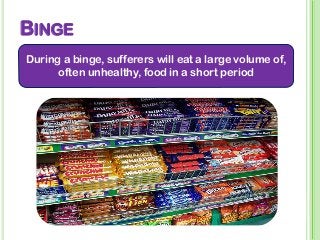
BINGE
During a binge, sufferers will eat a large volume of,
often unhealthy, food in a short period
PURGE
After eating sufferers will
try to purge their body of
the calories they’ve
consumed.
The most common forms
of purging are:
• Throwing up
• Using laxatives
• Using diuretics
• Exercising hard
• Restricting food intake
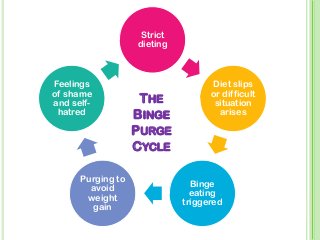
Strict
dieting
Diet slips
or difficult
situation
arises
Binge
eating
triggered
Purging to
avoid
weight
gain
Feelings
of shame
and self-
hatred
THE
BINGE
PURGE
CYCLE
HARD TO SPOT
Secretive Illness
sufferers are usually very ashamed about
their difficulties and work hard to hide them
Normal Weight
Unlike other eating disorders, bulimia does
not usually result in noticeable weight gain
or weight loss
WEIGHT FLUCTUATION
In some cases you may notice a
weight fluctuation as purging only
removes about 50% of calories – so
if a sufferer goes through a period
of extreme binging and purging
their weight may increase
compared to times when they are
managing their difficulties and
bingeing and purging less.
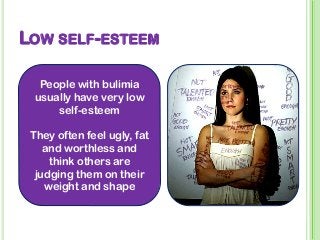
LOW SELF-ESTEEM
People with bulimia
usually have very low
self-esteem
They often feel ugly, fat
and worthless and
think others are
judging them on their
weight and shape
BULIMIA SUMMARY
I spent longer throwing up than eating. Every time I’d
promise myself I’d stick to my diet this time, but I just
couldn’t do it.
• Binge purge cycle
• Roughly normal weight
• Fluctuation in weight (some
cases)
• Low self-esteem, think they’re
fat / ugly
Need more support?
Dr Pooky Knightsmith specialises in mental health and emotional
well-being in the school setting. She can provide training sessions or
workshops for school staff, parents or students on a variety of topics.
For further information and free resources visit
www.inourhands.com
Email: pooky@inourhands.com
Twitter: @PookyH

Bulimia Nervosa Symptoms Guide

  • 1.
  • 2.
    WHAT IS BULIMIA? BulimiaNervosa (bulimia) is an eating disorder characterised by a binge-purge cycle…
  • 3.
    BINGE During a binge,sufferers will eat a large volume of, often unhealthy, food in a short period
  • 4.
    PURGE After eating suffererswill try to purge their body of the calories they’ve consumed. The most common forms of purging are: • Throwing up • Using laxatives • Using diuretics • Exercising hard • Restricting food intake
  • 5.
    Strict dieting Diet slips or difficult situation arises Binge eating triggered Purgingto avoid weight gain Feelings of shame and self- hatred THE BINGE PURGE CYCLE
  • 6.
    HARD TO SPOT SecretiveIllness sufferers are usually very ashamed about their difficulties and work hard to hide them Normal Weight Unlike other eating disorders, bulimia does not usually result in noticeable weight gain or weight loss
  • 7.
    WEIGHT FLUCTUATION In somecases you may notice a weight fluctuation as purging only removes about 50% of calories – so if a sufferer goes through a period of extreme binging and purging their weight may increase compared to times when they are managing their difficulties and bingeing and purging less.
  • 8.
    LOW SELF-ESTEEM People withbulimia usually have very low self-esteem They often feel ugly, fat and worthless and think others are judging them on their weight and shape
  • 9.
    BULIMIA SUMMARY I spentlonger throwing up than eating. Every time I’d promise myself I’d stick to my diet this time, but I just couldn’t do it. • Binge purge cycle • Roughly normal weight • Fluctuation in weight (some cases) • Low self-esteem, think they’re fat / ugly
  • 10.
    Need more support? DrPooky Knightsmith specialises in mental health and emotional well-being in the school setting. She can provide training sessions or workshops for school staff, parents or students on a variety of topics. For further information and free resources visit www.inourhands.com Email: pooky@inourhands.com Twitter: @PookyH