EVE 161:

Microbial Phylogenomics
Class #9:
rRNA Ecology
UC Davis, Winter 2018
Instructor: Jonathan Eisen
Teaching Assistant: Cassie Ettinger
!1
Presenters
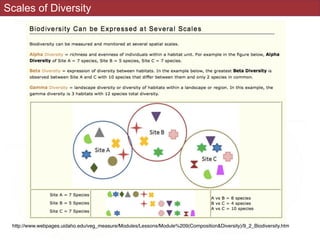
Scales of Diversity
http://www.webpages.uidaho.edu/veg_measure/Modules/Lessons/Module%209(Composition&Diversity)/9_2_Biodiversity.htm
rRNA Ecology Workflow
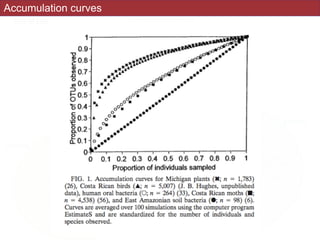
ACCUMULATION CURVE
Accumulation curves
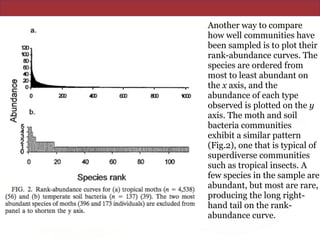
RANK ABUNDANCE CURVE
Another way to compare
how well communities have
been sampled is to plot their
rank-abundance curves. The
species are ordered from
most to least abundant on
the x axis, and the
abundance of each type
observed is plotted on the y
axis. The moth and soil
bacteria communities
exhibit a similar pattern
(Fig.2), one that is typical of
superdiverse communities
such as tropical insects. A
few species in the sample are
abundant, but most are rare,
producing the long right-
hand tail on the rank-
abundance curve.
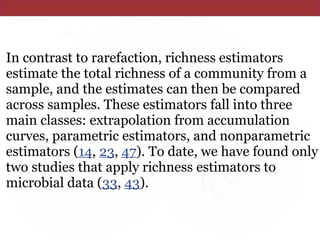
RICHNESS ESTIMATORS
In contrast to rarefaction, richness estimators
estimate the total richness of a community from a
sample, and the estimates can then be compared
across samples. These estimators fall into three
main classes: extrapolation from accumulation
curves, parametric estimators, and nonparametric
estimators (14, 23, 47). To date, we have found only
two studies that apply richness estimators to
microbial data (33, 43).
CURVE EXTRAPOLATION
w
Most curve extrapolation methods use the observed accumulation
curve to fit an assumed functional form that models the process of
observing new species as sampling effort increases. The asymptote
of this curve, or the species richness expected at infinite effort, is
then estimated. These models include the Michaelis-Menten
equation (13, 51) and the negative exponential function (61). The
benefit of estimating diversity with such extrapolation methods is
that once a species has been counted, it does not need to be
counted again. Hence, a surveyor can focus effort on identifying
new, generally rarer, species. The downside is that for diverse
communities in which only a small fraction of species is detected,
several curves often fit equally well but predict very different
asymptotes (61). This approach therefore requires data
from relatively well sampled communities, so at present
curve extrapolation methods do not seem promising for
estimating microbial diversity in most natural
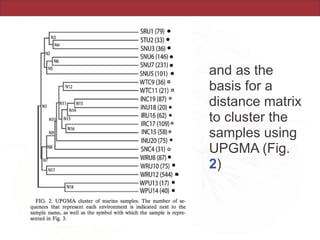
environments.
PARAMETRIC
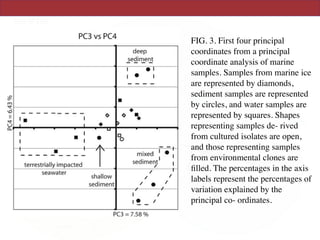
ESTIMATION
Parametric estimators are another class of estimation methods.
These methods estimate the number of unobserved species in the
community by fitting sample data to models of relative
species abundances. These models include the lognormal (49)
and Poisson lognormal (7). For instance, Pielou (48) derived an
estimator that assumes species abundances are distributed
lognormally; that is, if species are assigned to log abundance
classes, the distribution of species among these classes is normal.
By fitting sample data to the lognormal distribution, the
parameters of the curve can be evaluated. Pielou's estimator uses
these parameter values to estimate the number of species that
remain unobserved and thereby estimate the total number of
species in the community.
There are three main impediments to using parametric estimators
for any community.
There are three main impediments to using parametric estimators
for any community. First, data on relative species abundances are
needed. For macroorganisms, often only the presence or absence of
a species in a sample or quadrat is recorded. In contrast, data on
relative OTU abundances of microbes are often collected (see
discussion below about potential biases). Second, one has to make
an assumption about the true abundance distribution of a
community. Although most communities of macroorganisms seem
to display a lognormal pattern of species abundance (17, 36, 66),
there is still controversy as to which models fit best (24, 30). In the
absence of a variety of large microbial data sets, it is not clear
which, if any, of the proposed distribution models describe
microbial communities. Finally, even if one of these models is a
good approximation of relative abundances in microbial
communities, parametric estimators require large data sets to
evaluate the distribution parameters. The largest microbial data
sets currently available include only a few hundred individuals.
NON-PARAMETRIC
ESTIMATION
The final class of estimation methods, nonparametric estimators, is
the most promising for microbial studies. These estimators are
adapted from mark-release-recapture (MRR) statistics
for estimating the size of animal populations (32, 59).
Nonparametric estimators based on MRR methods consider the
proportion of species that have been observed before
(“recaptured”) to those that are observed only once. In a very
diverse community, the probability that a species will be observed
more than once will be low, and most species will only be
represented by one individual in a sample. In a depauperate
community, the probability that a species will be observed more
than once will be higher, and many species will be observed
multiple times in a sample.
CHAO vs ACE
The Chao1 and abundance-based coverage
estimators (ACE) use this MRR-like ratio to
estimate richness by adding a correction factor to
the observed number of species (9, 11). (For reviews
of these and other nonparametric estimators, see
Colwell and Coddington [14] and Chazdon et al.
[12].)
CHAO
For instance, Chao1 estimates total species richness as where Sobs
is the number of observed species, n1 is the number of singletons
(species captured once), and n2 is the number of doubletons
(species captured twice) (9). Chao (9) noted that this index is
particularly useful for data sets skewed toward the low-abundance
classes, as is likely to be the case with microbes.
ACE
The ACE (10) incorporate data from all species with fewer than 10 individuals, rather than just singletons and
doubletons. ACE estimates species richness as
where Srare is the number of rare samples (sampled abundances
≤10) and Sabund is the number of abundant species (sampled
abundances >10). Note that Srare + Sabund equals the total
number of species observed. CACE = 1 − F1/Nrare estimates the
sample coverage, where F1 is the number of species with i
individuals and Finally
• http://www.ncbi.nlm.nih.gov/pmc/articles/instance/93182/
equ/M4
which estimates the coefficient of variation of the Fi's (R. Colwell, User's Guide to EstimateS 5 [http://
viceroy.eeb.uconn.edu/estimates]).
EVALUATING
MEASURES
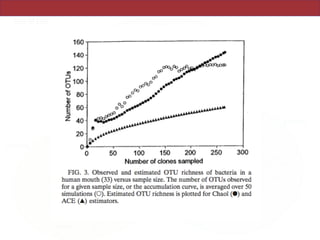
Both Chao1 and ACE underestimate true richness at low sample
sizes. For example, the maximum value of SChao1 is (S2obs + 1)/2
when one species in the sample is a doubleton and all others are
singletons. Thus, SChao1 will strongly correlate with sample size
until Sobs reaches at least the square root of twice the total
richness (14).
BIAS
Bias describes the difference between the expected value of the
estimator and the true, unknown richness of the community being
sampled (in other words, whether the estimator consistently
under- or overestimates the true richness).
To test for bias, one needs to know the true richness to compare
against the sample estimates. As yet, this comparison is impossible
for microbes, because no communities have been exhaustively
sampled. The bias of richness estimators has only been tested in a
few natural communities in which the exact abundance of every
species in an area is known (12, 14, 15, 26, 47).
PRECISION
Precision describes the variation of the estimates from all possible
samples that can be taken from the population
In contrast, precision is a relatively simple property to assess. With
multiple samples (or one large sample) from a microbial
community, the variance of microbial richness estimates can be
calculated and compared. Moreover, most ecological questions
require only comparisons of relative diversity. For these questions,
an estimator that is consistent with repeated sampling (is precise)
is often more useful than one that on average correctly predicts
true richness (has the lowest bias). Thus, if we use diversity
measures for relative comparisons, we avoid the problem of not
being able to measure bias. (This assumes that the bias of an
estimator does not differ so radically among communities that it
disrupts the relative order of the estimates. In the absence of
alternative evidence, this initial assumption seems appropriate.)
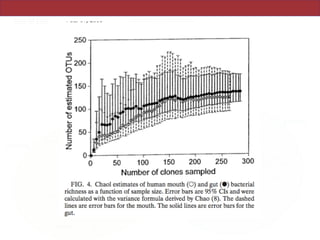
Chao (8) derives a closed-form solution for the variance of SChao1:
This formula estimates the precision of Chao1; that is, it estimates
the variance of richness estimates that one expects from multiple
samples. A closed-form solution of variance for the ACE has not yet
been derived.
FOUR DATA SETS
Human Mouth and Gut
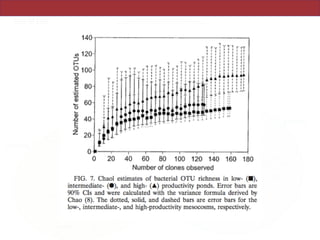
Rarefaction
compares observed
richness among sites,
treatments, or
habitats that have
been unequally
sampled. A rarefied
curve results from
averaging
randomizations of the
observed accumulation
curve (25). The variance
around the repeated
randomizations allows
one to compare the
observed richness
among samples, but it is
distinct from a measure
of confidence about the
actual richness in the
communities.
Aquatic Mesocosms
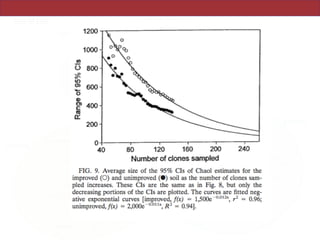
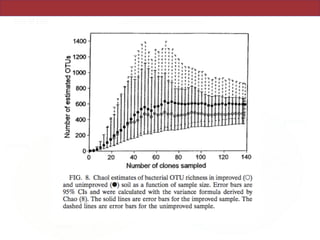
Scottish Soil
CONCLUSIONS
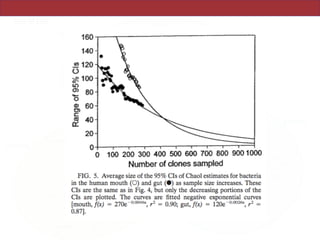
In conclusion, while microbiologists should be cautious about
sampling biases and use clear OTU definitions, our results suggest
that comparisons among estimates of microbial diversity are
possible. Nonparametric estimators show particular promise for
microbial data and in some habitats may require sample sizes of
only 200 to 1,000 clones to detect richness differences of only tens
of species. While daunting less than a decade ago, sequencing this
number of clones is reasonable with the development of high-
throughput sequencing technology. Augmenting this new
technology with statistical approaches borrowed from “macrobial”
biologists offers a powerful means to study the ecology and
evolution of microbial diversity in natural environments.
Because of inconsistencies in how diversity is
measured in individual studies, e.g., how operational
taxonomic units (OTUs) are selected or which region
of the rRNA gene is sequenced, it is only by integrating
information from these studies into a single
phylogenetic context that these important questions can
be addressed
Later - add genes and genomes
• Can do alpha, beta and gamma for taxa or genes or
genomes
Phylogenetic distance measures can provide far
more power because they exploit the degree of
divergence between different sequences.
Here we introduce a new phylogenetic method,
called UniFrac, that measures the distance between
communities based on the lineages they contain.
Here we introduce a new phylogenetic method, called UniFrac,
that measures the distance between communities based on the
lineages they contain. UniFrac can be used to compare many
samples simultaneously because it satisfies the technical
requirements for a distance metric (it is always positive, is
transitive, and satisfies the triangle inequality) and can thus be
used with standard multivariate statistics such as unweighted-
pair group method using average linkages (UPGMA) clustering
(9) and principal coordinate analysis (23). Similarly, UniFrac is
more powerful than nonphylogenetic distance measures
because it exploits the different degrees of similarity
between sequences. To demonstrate the utility of the UniFrac
metric for comparing multiple community samples and
determining the factors that explain the most variation, we
compared bacterial populations in different types of
geographically dispersed marine environments.
How is a UNIFRAC Distance Calculated?
UniFrac metric.
The unique fraction metric, or UniFrac, measures the
phylogenetic distance between sets of taxa in a
phylogenetic tree as the fraction of the branch length of the
tree that leads to descendants from either one environment
or the other, but not both (Fig. 1). This measure thus
captures the total amount of evolution that is unique to each
state, presumably reflecting adaptation to one environment
that would be deleterious in the other. rRNA is used purely
as a phylogenetic marker, indicating the relative amount of
sequence evolution that has occurred in each environment.
Sum of Length of All Unique Branches
Sum of Length of All Branches
Unifrac calculation
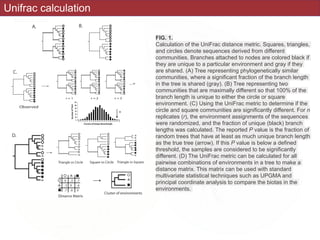
FIG. 1.
Calculation of the UniFrac distance metric. Squares, triangles,
and circles denote sequences derived from different
communities. Branches attached to nodes are colored black if
they are unique to a particular environment and gray if they
are shared. (A) Tree representing phylogenetically similar
communities, where a significant fraction of the branch length
in the tree is shared (gray). (B) Tree representing two
communities that are maximally different so that 100% of the
branch length is unique to either the circle or square
environment. (C) Using the UniFrac metric to determine if the
circle and square communities are significantly different. For n
replicates (r), the environment assignments of the sequences
were randomized, and the fraction of unique (black) branch
lengths was calculated. The reported P value is the fraction of
random trees that have at least as much unique branch length
as the true tree (arrow). If this P value is below a defined
threshold, the samples are considered to be significantly
different. (D) The UniFrac metric can be calculated for all
pairwise combinations of environments in a tree to make a
distance matrix. This matrix can be used with standard
multivariate statistical techniques such as UPGMA and
principal coordinate analysis to compare the biotas in the
environments.
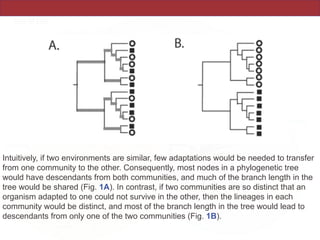
Intuitively, if two environments are similar, few adaptations would be needed to transfer
from one community to the other. Consequently, most nodes in a phylogenetic tree
would have descendants from both communities, and much of the branch length in the
tree would be shared (Fig. 1A). In contrast, if two communities are so distinct that an
organism adapted to one could not survive in the other, then the lineages in each
community would be distinct, and most of the branch length in the tree would lead to
descendants from only one of the two communities (Fig. 1B).
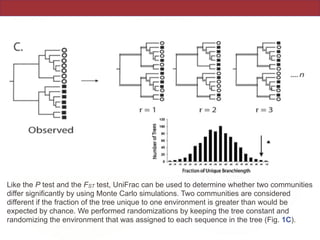
Like the P test and the FST test, UniFrac can be used to determine whether two communities
differ significantly by using Monte Carlo simulations. Two communities are considered
different if the fraction of the tree unique to one environment is greater than would be
expected by chance. We performed randomizations by keeping the tree constant and
randomizing the environment that was assigned to each sequence in the tree (Fig. 1C).
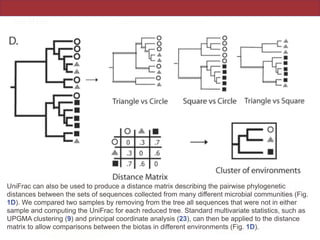
UniFrac can also be used to produce a distance matrix describing the pairwise phylogenetic
distances between the sets of sequences collected from many different microbial communities (Fig.
1D). We compared two samples by removing from the tree all sequences that were not in either
sample and computing the UniFrac for each reduced tree. Standard multivariate statistics, such as
UPGMA clustering (9) and principal coordinate analysis (23), can then be applied to the distance
matrix to allow comparisons between the biotas in different environments (Fig. 1D).
Methods
Data analysis.We implemented UniFrac and associated analyses in Python 2.3.4 and ran all
calculations on a Macintosh G4 computer running OSX 10.3.8. All code is available at http://
bayes.colorado.edu/unifrac.zip. We implemented UPGMA clustering (9) and principal
coordinate analysis (23) as described previously.
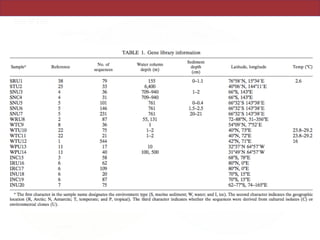
We downloaded small-subunit-rRNA sequences generated in the 12 different studies of
marine environments (Table 1) from GenBank, imported them into the Arb package (26), and
aligned them using a combination of the Arb auto-aligner and manual curation. Because
several studies used bacterium-specific primers, we excluded all nonbacterial sequences
from the analysis. We added the aligned sequences to a tree representing a range of
phylogenetic groups from the Ribosomal Database Project II (29) by Phil Hugenholtz (15).
This sequence addition used the parsimony insertion tool and a lane mask (lanemaskPH)
supplied in the same database so that only phylogenetically conserved regions were
considered. We exported the tree from Arb and annotated each sequence with 1 of 20
sample designations (Table 1). We then performed significance tests, UPGMA clustering,
and principal coordinate analysis using UniFrac.
Jackknifing.We used jackknifing to determine how the number and evenness of sequences in
the different environments affected the UPGMA clustering results. Specifically, we repeated the
UniFrac analysis with trees that contained only a subset of the sequences and measured the
number of times we recovered each node that occurred in the UPGMA tree from the full data
set. In each simulation, we evaluated 100 reduced trees in which all of the environments were
represented by the same specified number of sequences, using sample sizes of 17, 20, 31, 36,
40, and 58 sequences. These thresholds reflect the sample sizes from different environments
in our original data set. If an environment had more than the specified number of sequences,
we removed sequences at random; environments with fewer sequences were removed from
the tree entirely.
Results
Results
We used
UniFrac to
determine which
of the microbial
communities
represented by
the 20 different
samples were
significantly
different (Table
2)
and as the
basis for a
distance matrix
to cluster the
samples using
UPGMA (Fig.
2)
FIG. 3. First four principal
coordinates from a principal
coordinate analysis of marine
samples. Samples from marine ice
are represented by diamonds,
sediment samples are represented
by circles, and water samples are
represented by squares. Shapes
representing samples de- rived
from cultured isolates are open,
and those representing samples
from environmental clones are
filled. The percentages in the axis
labels represent the percentages of
variation explained by the
principal co- ordinates.
water (WTC9) and cultured and uncu
(INC15 and INU20).
Cultured and uncultured sea ice ba
other and with the other cultured iso
ciation is well supported by jackknif
node that groups the cultured and
together (Fig. 2, N10) is recovered 10
sequences per sample (note that at this
ice samples are still in the tree because
sequences). Pairwise significance tests
environments further support this obs
cultured component of the Antarctic i
not differ significantly from environm
same sample (INU18).
In contrast, bacteria cultured from
seawater (WTC11 and WTC9) cluster
ples rather than with environmental
studies (SNU3 and WTU10) in the U
vation is again supported by jackknife
31 sequences, SNC4 clusters with the o
64% of the time (Table 3, N9) but nev
exclusively with the sediment samples
FIG. 3. First four principal coordinates from a principal coordinate
nalysis of marine samples. Samples from marine ice are represented
For each node in the UPGMA tree (Fig. 2)
percentages of trials (n ϭ 100) that the node occu
was represented by only 17, 20, 31, 36, 40, or 58 s
names correspond to the node labels in Figure 2
FIG. 3. First four principal
coordinates from a principal
coordinate analysis of marine
samples. Samples from marine ice
are represented by diamonds,
sediment samples are represented
by circles, and water samples are
represented by squares. Shapes
representing samples de- rived
from cultured isolates are open,
and those representing samples
from environmental clones are
filled. The percentages in the axis
labels represent the percentages of
variation explained by the
principal co- ordinates.
We used jackknifing to assess confidence in the
nodes of the UPGMA tree (Table 3). The results
show biologically meaningful patterns that unite
many individual observations in the literature and
reveal several striking features of microbial
communities in marine environments.
Results
Conclusions
Conclusion.The utility of UniFrac for making broad
comparisons between the biotas of different environments
based on 16S rRNA sequences has enormous potential to
shed light on biological factors that structure microbial
communities. The vast wealth of 16S rRNA sequences in
GenBank and of environmental information about these
sequences in the literature, combined with powerful
phylogenetic tools, will greatly enhance our understanding of
how microbial communities adapt to unique environmental
challenges.

EVE 161 Winter 2018 Class 9

  • 1.
    EVE 161:
 Microbial Phylogenomics Class#9: rRNA Ecology UC Davis, Winter 2018 Instructor: Jonathan Eisen Teaching Assistant: Cassie Ettinger !1
  • 2.
  • 3.
  • 4.
  • 6.
  • 7.
  • 8.
  • 9.
    Another way tocompare how well communities have been sampled is to plot their rank-abundance curves. The species are ordered from most to least abundant on the x axis, and the abundance of each type observed is plotted on the y axis. The moth and soil bacteria communities exhibit a similar pattern (Fig.2), one that is typical of superdiverse communities such as tropical insects. A few species in the sample are abundant, but most are rare, producing the long right- hand tail on the rank- abundance curve.
  • 10.
  • 11.
    In contrast torarefaction, richness estimators estimate the total richness of a community from a sample, and the estimates can then be compared across samples. These estimators fall into three main classes: extrapolation from accumulation curves, parametric estimators, and nonparametric estimators (14, 23, 47). To date, we have found only two studies that apply richness estimators to microbial data (33, 43).
  • 12.
  • 13.
    w Most curve extrapolationmethods use the observed accumulation curve to fit an assumed functional form that models the process of observing new species as sampling effort increases. The asymptote of this curve, or the species richness expected at infinite effort, is then estimated. These models include the Michaelis-Menten equation (13, 51) and the negative exponential function (61). The benefit of estimating diversity with such extrapolation methods is that once a species has been counted, it does not need to be counted again. Hence, a surveyor can focus effort on identifying new, generally rarer, species. The downside is that for diverse communities in which only a small fraction of species is detected, several curves often fit equally well but predict very different asymptotes (61). This approach therefore requires data from relatively well sampled communities, so at present curve extrapolation methods do not seem promising for estimating microbial diversity in most natural environments.
  • 14.
  • 15.
    Parametric estimators areanother class of estimation methods. These methods estimate the number of unobserved species in the community by fitting sample data to models of relative species abundances. These models include the lognormal (49) and Poisson lognormal (7). For instance, Pielou (48) derived an estimator that assumes species abundances are distributed lognormally; that is, if species are assigned to log abundance classes, the distribution of species among these classes is normal. By fitting sample data to the lognormal distribution, the parameters of the curve can be evaluated. Pielou's estimator uses these parameter values to estimate the number of species that remain unobserved and thereby estimate the total number of species in the community.
  • 16.
    There are threemain impediments to using parametric estimators for any community.
  • 17.
    There are threemain impediments to using parametric estimators for any community. First, data on relative species abundances are needed. For macroorganisms, often only the presence or absence of a species in a sample or quadrat is recorded. In contrast, data on relative OTU abundances of microbes are often collected (see discussion below about potential biases). Second, one has to make an assumption about the true abundance distribution of a community. Although most communities of macroorganisms seem to display a lognormal pattern of species abundance (17, 36, 66), there is still controversy as to which models fit best (24, 30). In the absence of a variety of large microbial data sets, it is not clear which, if any, of the proposed distribution models describe microbial communities. Finally, even if one of these models is a good approximation of relative abundances in microbial communities, parametric estimators require large data sets to evaluate the distribution parameters. The largest microbial data sets currently available include only a few hundred individuals.
  • 18.
  • 19.
    The final classof estimation methods, nonparametric estimators, is the most promising for microbial studies. These estimators are adapted from mark-release-recapture (MRR) statistics for estimating the size of animal populations (32, 59). Nonparametric estimators based on MRR methods consider the proportion of species that have been observed before (“recaptured”) to those that are observed only once. In a very diverse community, the probability that a species will be observed more than once will be low, and most species will only be represented by one individual in a sample. In a depauperate community, the probability that a species will be observed more than once will be higher, and many species will be observed multiple times in a sample.
  • 20.
  • 21.
    The Chao1 andabundance-based coverage estimators (ACE) use this MRR-like ratio to estimate richness by adding a correction factor to the observed number of species (9, 11). (For reviews of these and other nonparametric estimators, see Colwell and Coddington [14] and Chazdon et al. [12].)
  • 22.
  • 23.
    For instance, Chao1estimates total species richness as where Sobs is the number of observed species, n1 is the number of singletons (species captured once), and n2 is the number of doubletons (species captured twice) (9). Chao (9) noted that this index is particularly useful for data sets skewed toward the low-abundance classes, as is likely to be the case with microbes.
  • 24.
  • 25.
    The ACE (10)incorporate data from all species with fewer than 10 individuals, rather than just singletons and doubletons. ACE estimates species richness as where Srare is the number of rare samples (sampled abundances ≤10) and Sabund is the number of abundant species (sampled abundances >10). Note that Srare + Sabund equals the total number of species observed. CACE = 1 − F1/Nrare estimates the sample coverage, where F1 is the number of species with i individuals and Finally
  • 26.
    • http://www.ncbi.nlm.nih.gov/pmc/articles/instance/93182/ equ/M4 which estimatesthe coefficient of variation of the Fi's (R. Colwell, User's Guide to EstimateS 5 [http:// viceroy.eeb.uconn.edu/estimates]).
  • 27.
  • 28.
    Both Chao1 andACE underestimate true richness at low sample sizes. For example, the maximum value of SChao1 is (S2obs + 1)/2 when one species in the sample is a doubleton and all others are singletons. Thus, SChao1 will strongly correlate with sample size until Sobs reaches at least the square root of twice the total richness (14).
  • 29.
    BIAS Bias describes thedifference between the expected value of the estimator and the true, unknown richness of the community being sampled (in other words, whether the estimator consistently under- or overestimates the true richness). To test for bias, one needs to know the true richness to compare against the sample estimates. As yet, this comparison is impossible for microbes, because no communities have been exhaustively sampled. The bias of richness estimators has only been tested in a few natural communities in which the exact abundance of every species in an area is known (12, 14, 15, 26, 47).
  • 30.
    PRECISION Precision describes thevariation of the estimates from all possible samples that can be taken from the population In contrast, precision is a relatively simple property to assess. With multiple samples (or one large sample) from a microbial community, the variance of microbial richness estimates can be calculated and compared. Moreover, most ecological questions require only comparisons of relative diversity. For these questions, an estimator that is consistent with repeated sampling (is precise) is often more useful than one that on average correctly predicts true richness (has the lowest bias). Thus, if we use diversity measures for relative comparisons, we avoid the problem of not being able to measure bias. (This assumes that the bias of an estimator does not differ so radically among communities that it disrupts the relative order of the estimates. In the absence of alternative evidence, this initial assumption seems appropriate.)
  • 31.
    Chao (8) derivesa closed-form solution for the variance of SChao1: This formula estimates the precision of Chao1; that is, it estimates the variance of richness estimates that one expects from multiple samples. A closed-form solution of variance for the ACE has not yet been derived.
  • 32.
  • 33.
  • 37.
    Rarefaction compares observed richness amongsites, treatments, or habitats that have been unequally sampled. A rarefied curve results from averaging randomizations of the observed accumulation curve (25). The variance around the repeated randomizations allows one to compare the observed richness among samples, but it is distinct from a measure of confidence about the actual richness in the communities.
  • 38.
  • 40.
  • 43.
  • 44.
    In conclusion, whilemicrobiologists should be cautious about sampling biases and use clear OTU definitions, our results suggest that comparisons among estimates of microbial diversity are possible. Nonparametric estimators show particular promise for microbial data and in some habitats may require sample sizes of only 200 to 1,000 clones to detect richness differences of only tens of species. While daunting less than a decade ago, sequencing this number of clones is reasonable with the development of high- throughput sequencing technology. Augmenting this new technology with statistical approaches borrowed from “macrobial” biologists offers a powerful means to study the ecology and evolution of microbial diversity in natural environments.
  • 45.
    Because of inconsistenciesin how diversity is measured in individual studies, e.g., how operational taxonomic units (OTUs) are selected or which region of the rRNA gene is sequenced, it is only by integrating information from these studies into a single phylogenetic context that these important questions can be addressed
  • 46.
    Later - addgenes and genomes • Can do alpha, beta and gamma for taxa or genes or genomes
  • 48.
    Phylogenetic distance measurescan provide far more power because they exploit the degree of divergence between different sequences.
  • 49.
    Here we introducea new phylogenetic method, called UniFrac, that measures the distance between communities based on the lineages they contain.
  • 50.
    Here we introducea new phylogenetic method, called UniFrac, that measures the distance between communities based on the lineages they contain. UniFrac can be used to compare many samples simultaneously because it satisfies the technical requirements for a distance metric (it is always positive, is transitive, and satisfies the triangle inequality) and can thus be used with standard multivariate statistics such as unweighted- pair group method using average linkages (UPGMA) clustering (9) and principal coordinate analysis (23). Similarly, UniFrac is more powerful than nonphylogenetic distance measures because it exploits the different degrees of similarity between sequences. To demonstrate the utility of the UniFrac metric for comparing multiple community samples and determining the factors that explain the most variation, we compared bacterial populations in different types of geographically dispersed marine environments.
  • 51.
    How is aUNIFRAC Distance Calculated?
  • 52.
    UniFrac metric. The uniquefraction metric, or UniFrac, measures the phylogenetic distance between sets of taxa in a phylogenetic tree as the fraction of the branch length of the tree that leads to descendants from either one environment or the other, but not both (Fig. 1). This measure thus captures the total amount of evolution that is unique to each state, presumably reflecting adaptation to one environment that would be deleterious in the other. rRNA is used purely as a phylogenetic marker, indicating the relative amount of sequence evolution that has occurred in each environment.
  • 53.
    Sum of Lengthof All Unique Branches Sum of Length of All Branches
  • 54.
    Unifrac calculation FIG. 1. Calculationof the UniFrac distance metric. Squares, triangles, and circles denote sequences derived from different communities. Branches attached to nodes are colored black if they are unique to a particular environment and gray if they are shared. (A) Tree representing phylogenetically similar communities, where a significant fraction of the branch length in the tree is shared (gray). (B) Tree representing two communities that are maximally different so that 100% of the branch length is unique to either the circle or square environment. (C) Using the UniFrac metric to determine if the circle and square communities are significantly different. For n replicates (r), the environment assignments of the sequences were randomized, and the fraction of unique (black) branch lengths was calculated. The reported P value is the fraction of random trees that have at least as much unique branch length as the true tree (arrow). If this P value is below a defined threshold, the samples are considered to be significantly different. (D) The UniFrac metric can be calculated for all pairwise combinations of environments in a tree to make a distance matrix. This matrix can be used with standard multivariate statistical techniques such as UPGMA and principal coordinate analysis to compare the biotas in the environments.
  • 55.
    Intuitively, if twoenvironments are similar, few adaptations would be needed to transfer from one community to the other. Consequently, most nodes in a phylogenetic tree would have descendants from both communities, and much of the branch length in the tree would be shared (Fig. 1A). In contrast, if two communities are so distinct that an organism adapted to one could not survive in the other, then the lineages in each community would be distinct, and most of the branch length in the tree would lead to descendants from only one of the two communities (Fig. 1B).
  • 56.
    Like the Ptest and the FST test, UniFrac can be used to determine whether two communities differ significantly by using Monte Carlo simulations. Two communities are considered different if the fraction of the tree unique to one environment is greater than would be expected by chance. We performed randomizations by keeping the tree constant and randomizing the environment that was assigned to each sequence in the tree (Fig. 1C).
  • 57.
    UniFrac can alsobe used to produce a distance matrix describing the pairwise phylogenetic distances between the sets of sequences collected from many different microbial communities (Fig. 1D). We compared two samples by removing from the tree all sequences that were not in either sample and computing the UniFrac for each reduced tree. Standard multivariate statistics, such as UPGMA clustering (9) and principal coordinate analysis (23), can then be applied to the distance matrix to allow comparisons between the biotas in different environments (Fig. 1D).
  • 58.
  • 60.
    Data analysis.We implementedUniFrac and associated analyses in Python 2.3.4 and ran all calculations on a Macintosh G4 computer running OSX 10.3.8. All code is available at http:// bayes.colorado.edu/unifrac.zip. We implemented UPGMA clustering (9) and principal coordinate analysis (23) as described previously. We downloaded small-subunit-rRNA sequences generated in the 12 different studies of marine environments (Table 1) from GenBank, imported them into the Arb package (26), and aligned them using a combination of the Arb auto-aligner and manual curation. Because several studies used bacterium-specific primers, we excluded all nonbacterial sequences from the analysis. We added the aligned sequences to a tree representing a range of phylogenetic groups from the Ribosomal Database Project II (29) by Phil Hugenholtz (15). This sequence addition used the parsimony insertion tool and a lane mask (lanemaskPH) supplied in the same database so that only phylogenetically conserved regions were considered. We exported the tree from Arb and annotated each sequence with 1 of 20 sample designations (Table 1). We then performed significance tests, UPGMA clustering, and principal coordinate analysis using UniFrac.
  • 61.
    Jackknifing.We used jackknifingto determine how the number and evenness of sequences in the different environments affected the UPGMA clustering results. Specifically, we repeated the UniFrac analysis with trees that contained only a subset of the sequences and measured the number of times we recovered each node that occurred in the UPGMA tree from the full data set. In each simulation, we evaluated 100 reduced trees in which all of the environments were represented by the same specified number of sequences, using sample sizes of 17, 20, 31, 36, 40, and 58 sequences. These thresholds reflect the sample sizes from different environments in our original data set. If an environment had more than the specified number of sequences, we removed sequences at random; environments with fewer sequences were removed from the tree entirely.
  • 62.
  • 63.
    We used UniFrac to determinewhich of the microbial communities represented by the 20 different samples were significantly different (Table 2)
  • 64.
    and as the basisfor a distance matrix to cluster the samples using UPGMA (Fig. 2)
  • 65.
    FIG. 3. Firstfour principal coordinates from a principal coordinate analysis of marine samples. Samples from marine ice are represented by diamonds, sediment samples are represented by circles, and water samples are represented by squares. Shapes representing samples de- rived from cultured isolates are open, and those representing samples from environmental clones are filled. The percentages in the axis labels represent the percentages of variation explained by the principal co- ordinates.
  • 66.
    water (WTC9) andcultured and uncu (INC15 and INU20). Cultured and uncultured sea ice ba other and with the other cultured iso ciation is well supported by jackknif node that groups the cultured and together (Fig. 2, N10) is recovered 10 sequences per sample (note that at this ice samples are still in the tree because sequences). Pairwise significance tests environments further support this obs cultured component of the Antarctic i not differ significantly from environm same sample (INU18). In contrast, bacteria cultured from seawater (WTC11 and WTC9) cluster ples rather than with environmental studies (SNU3 and WTU10) in the U vation is again supported by jackknife 31 sequences, SNC4 clusters with the o 64% of the time (Table 3, N9) but nev exclusively with the sediment samples FIG. 3. First four principal coordinates from a principal coordinate nalysis of marine samples. Samples from marine ice are represented For each node in the UPGMA tree (Fig. 2) percentages of trials (n ϭ 100) that the node occu was represented by only 17, 20, 31, 36, 40, or 58 s names correspond to the node labels in Figure 2 FIG. 3. First four principal coordinates from a principal coordinate analysis of marine samples. Samples from marine ice are represented by diamonds, sediment samples are represented by circles, and water samples are represented by squares. Shapes representing samples de- rived from cultured isolates are open, and those representing samples from environmental clones are filled. The percentages in the axis labels represent the percentages of variation explained by the principal co- ordinates.
  • 67.
    We used jackknifingto assess confidence in the nodes of the UPGMA tree (Table 3). The results show biologically meaningful patterns that unite many individual observations in the literature and reveal several striking features of microbial communities in marine environments.
  • 69.
  • 70.
    Conclusion.The utility ofUniFrac for making broad comparisons between the biotas of different environments based on 16S rRNA sequences has enormous potential to shed light on biological factors that structure microbial communities. The vast wealth of 16S rRNA sequences in GenBank and of environmental information about these sequences in the literature, combined with powerful phylogenetic tools, will greatly enhance our understanding of how microbial communities adapt to unique environmental challenges.