Introduction to self-claimed badges
Eric Rousselle
12.5.2020
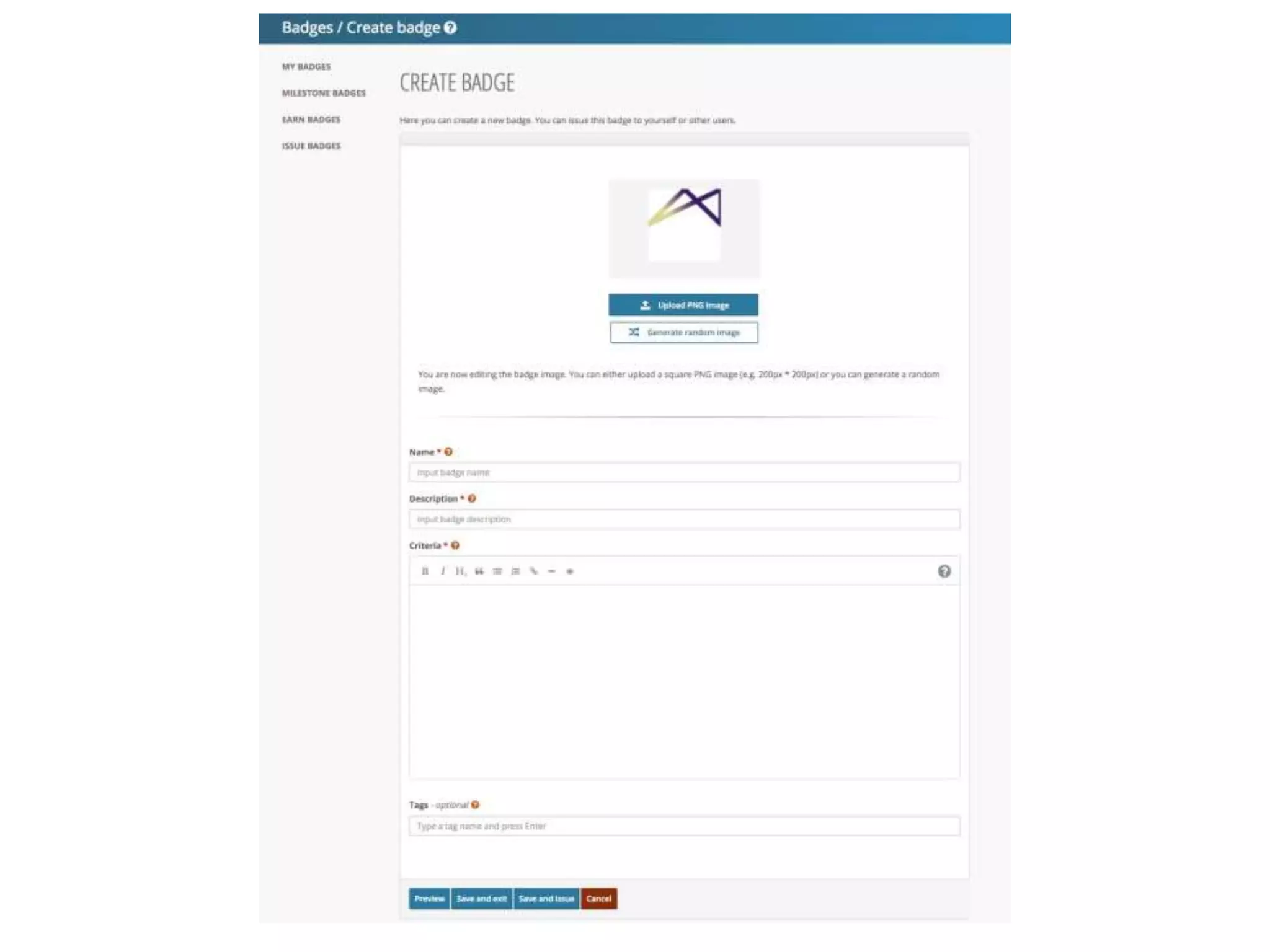
What can I do?
See my selfie
badges!
What is a self-claimed or selfie badge?
Do we need selfie badges?
● Organisations have created badges to recognise the
skills and achievement that they value, but only a
small part of individual informal learning experience
can be recognised by matching badges created by
others.
● Anyone can create a portfolio or a Linkedin profile to
showcase his skills and achievements. Why should it
be different with badges?
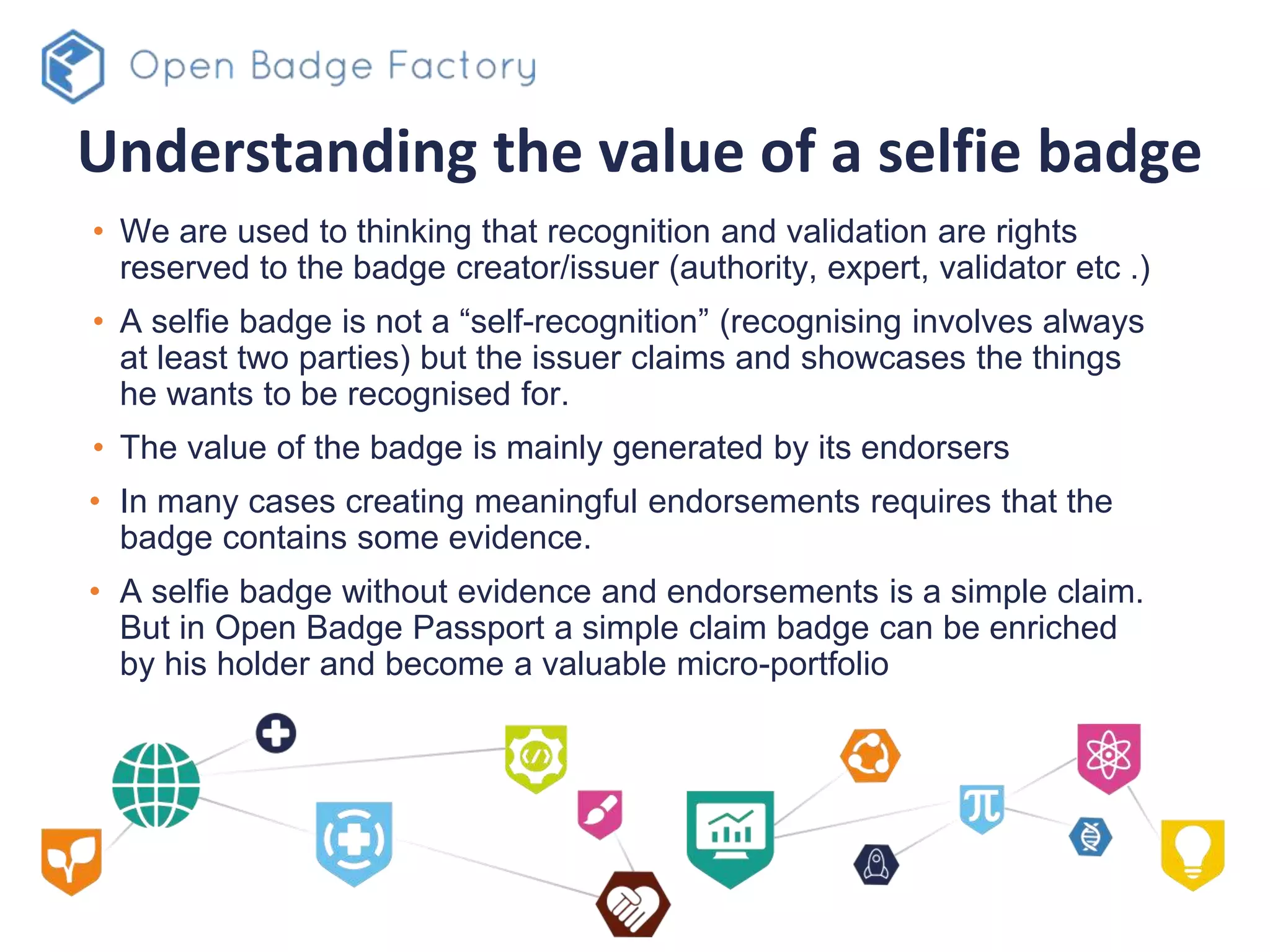
Understanding the value of a selfie badge
• We are used to thinking that recognition and validation are rights
reserved to the badge creator/issuer (authority, expert, validator etc .)
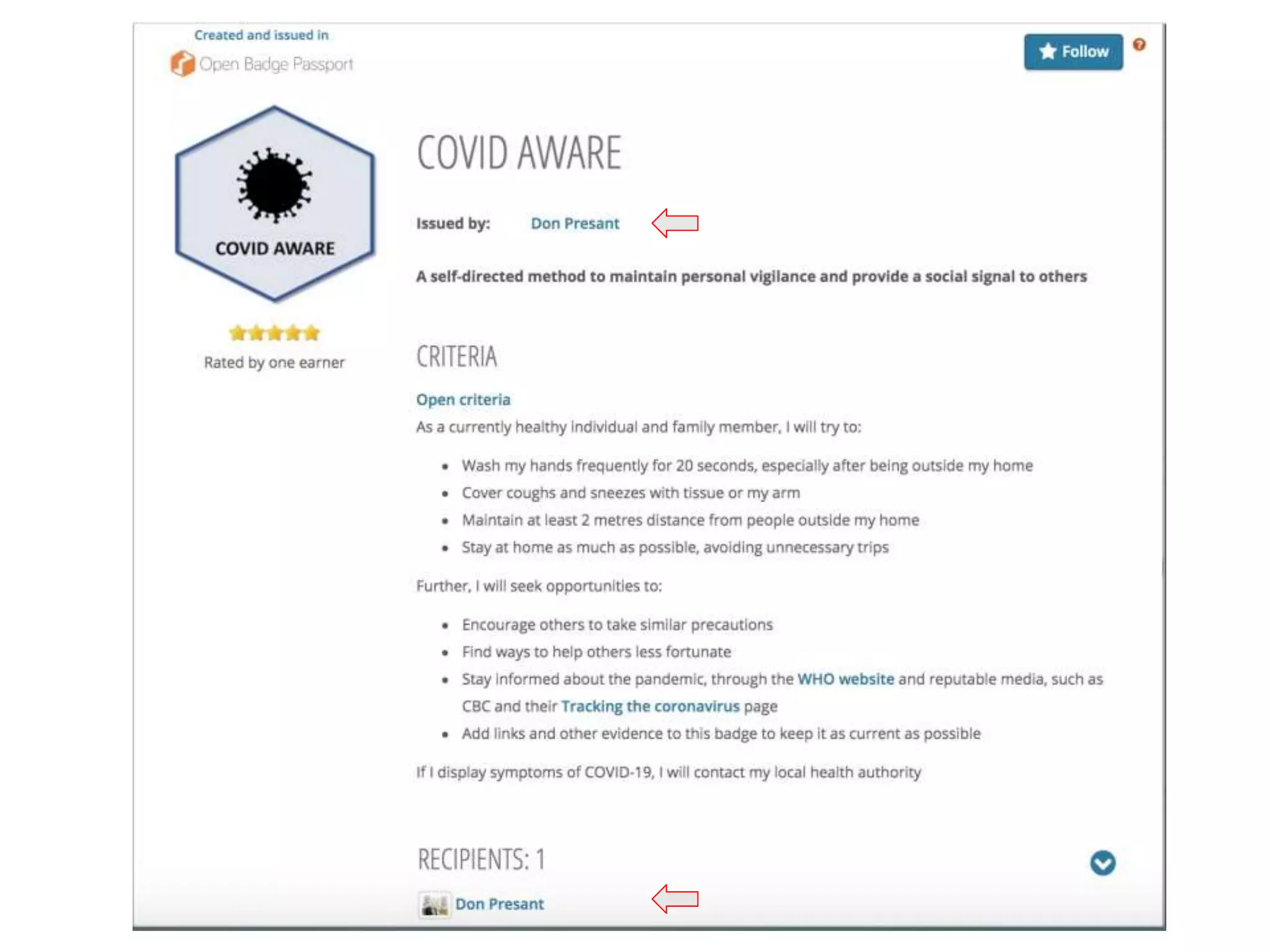
• A selfie badge is not a “self-recognition” (recognising involves always
at least two parties) but the issuer claims and showcases the things
he wants to be recognised for.
• The value of the badge is mainly generated by its endorsers
• In many cases creating meaningful endorsements requires that the
badge contains some evidence.
• A selfie badge without evidence and endorsements is a simple claim.
But in Open Badge Passport a simple claim badge can be enriched
by his holder and become a valuable micro-portfolio
Open Badge Passport and selfie
badges
How selfie badges could be used?
• To support reflexive learning and place the learner at the center of
his learning experience (engagement, motivation)
• To recognise and validate achievements and processes
(endorsement by peers, teachers, supervisor, tutors, or coaches)
• To develop rich and validated micro-portfolios (based on open
badge standard)
• To support collaborative learning: co-creation of group-claimed
badges
• To create badges matching with job opportunities
Self-claimed badges
A threat or a new “game changer” in
the landscape of Open Badging?
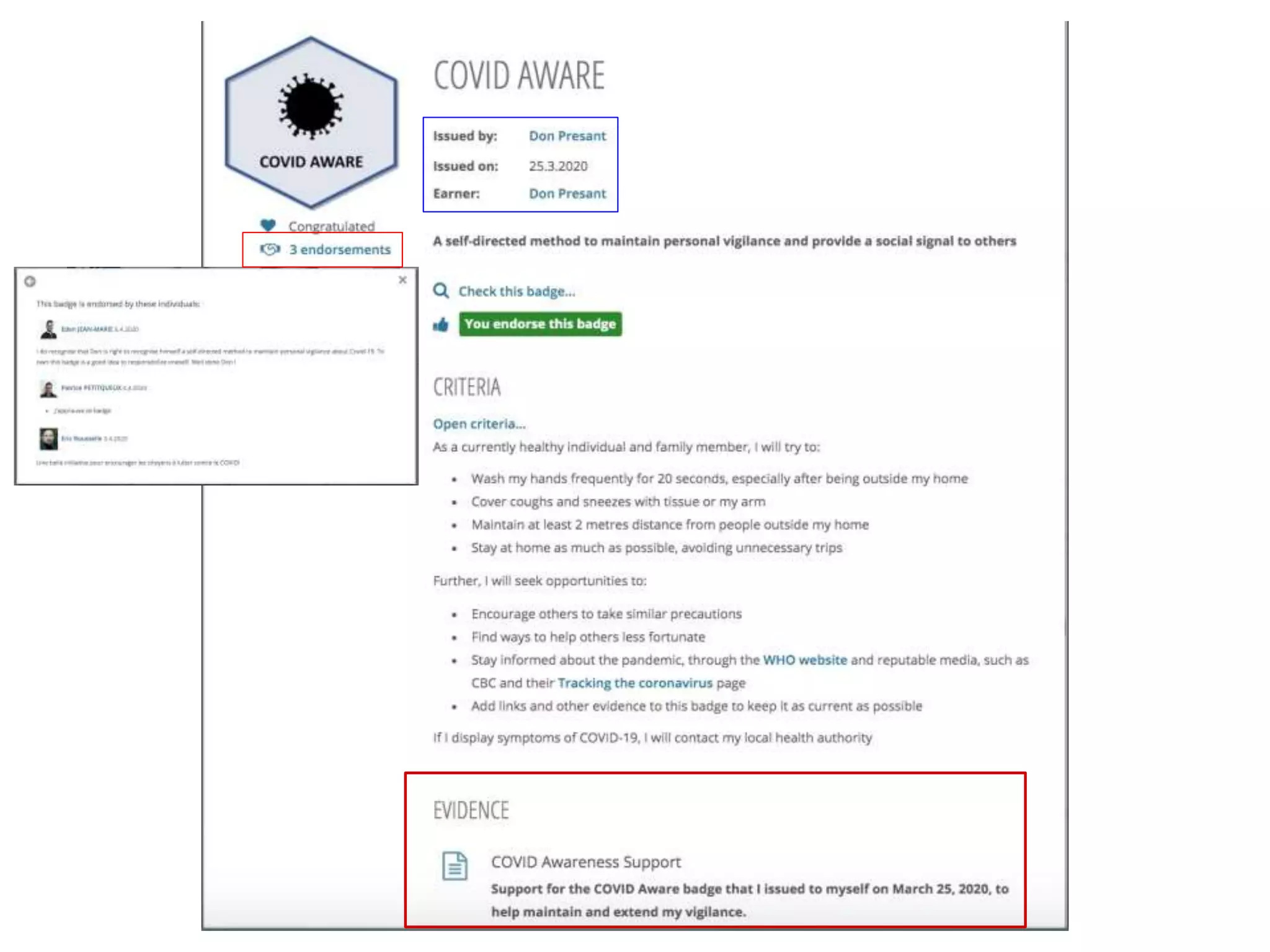
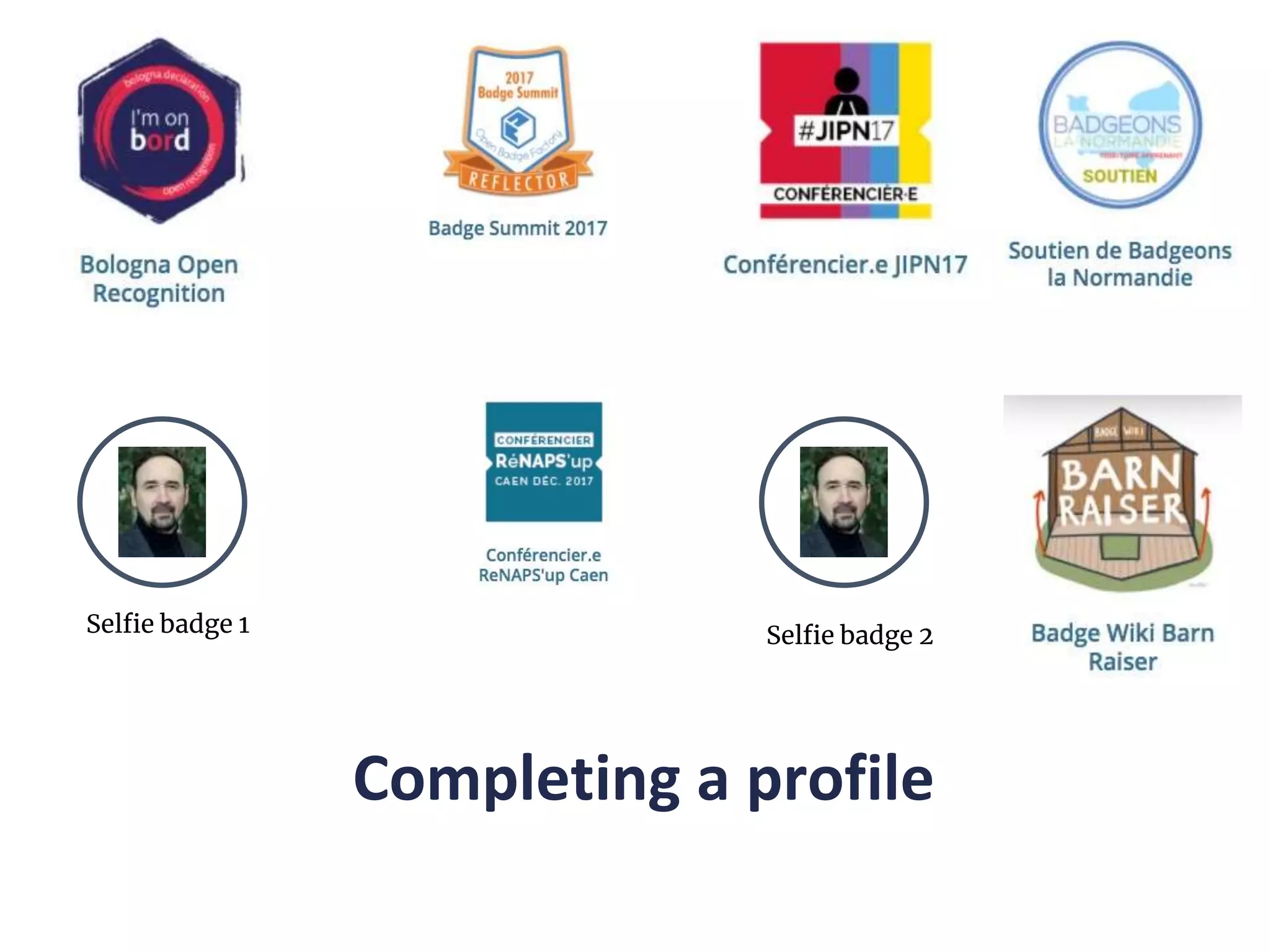
Selfie badge 1 Selfie badge 2
Completing a profile
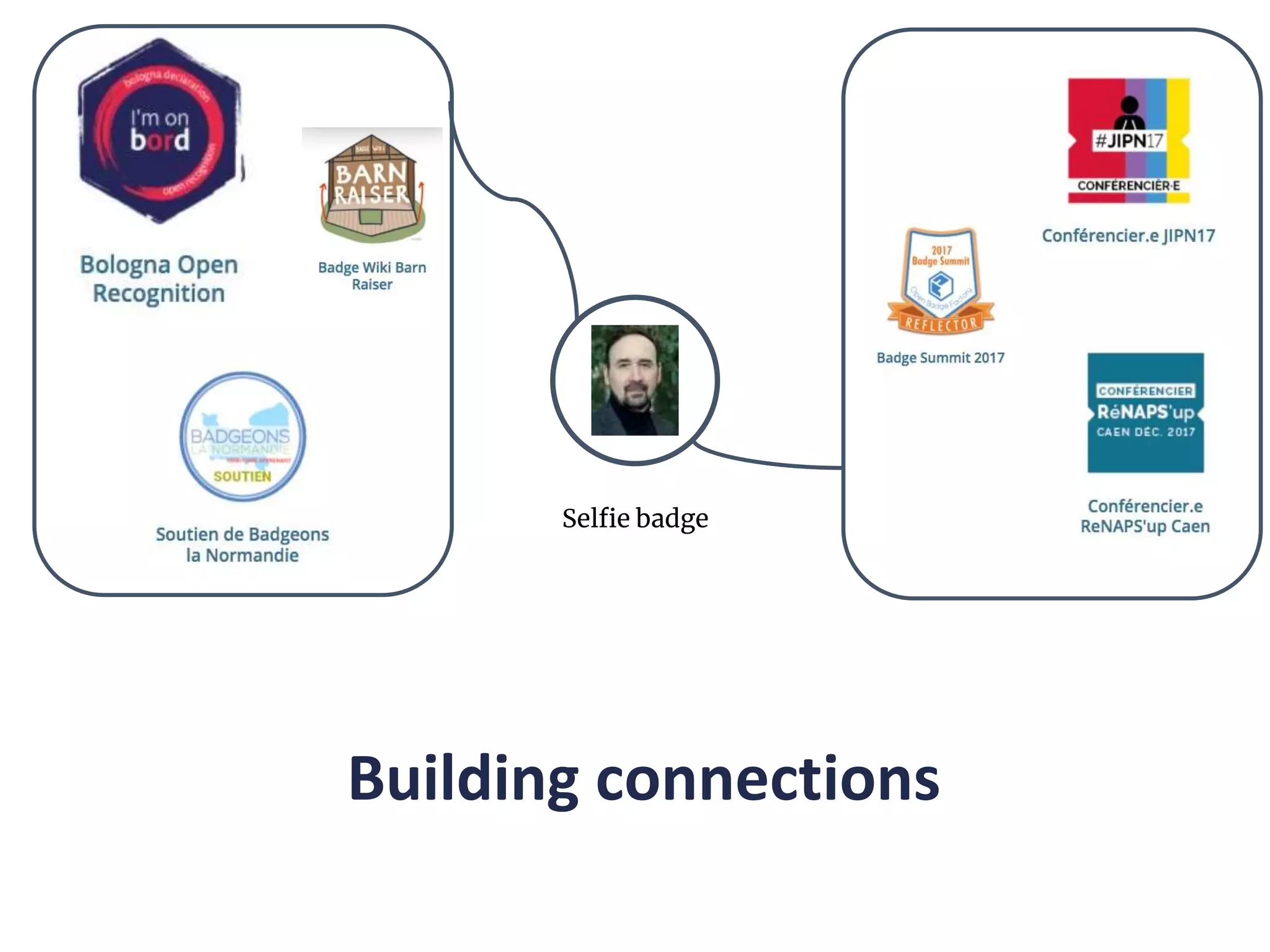
Selfie badge
Building connections
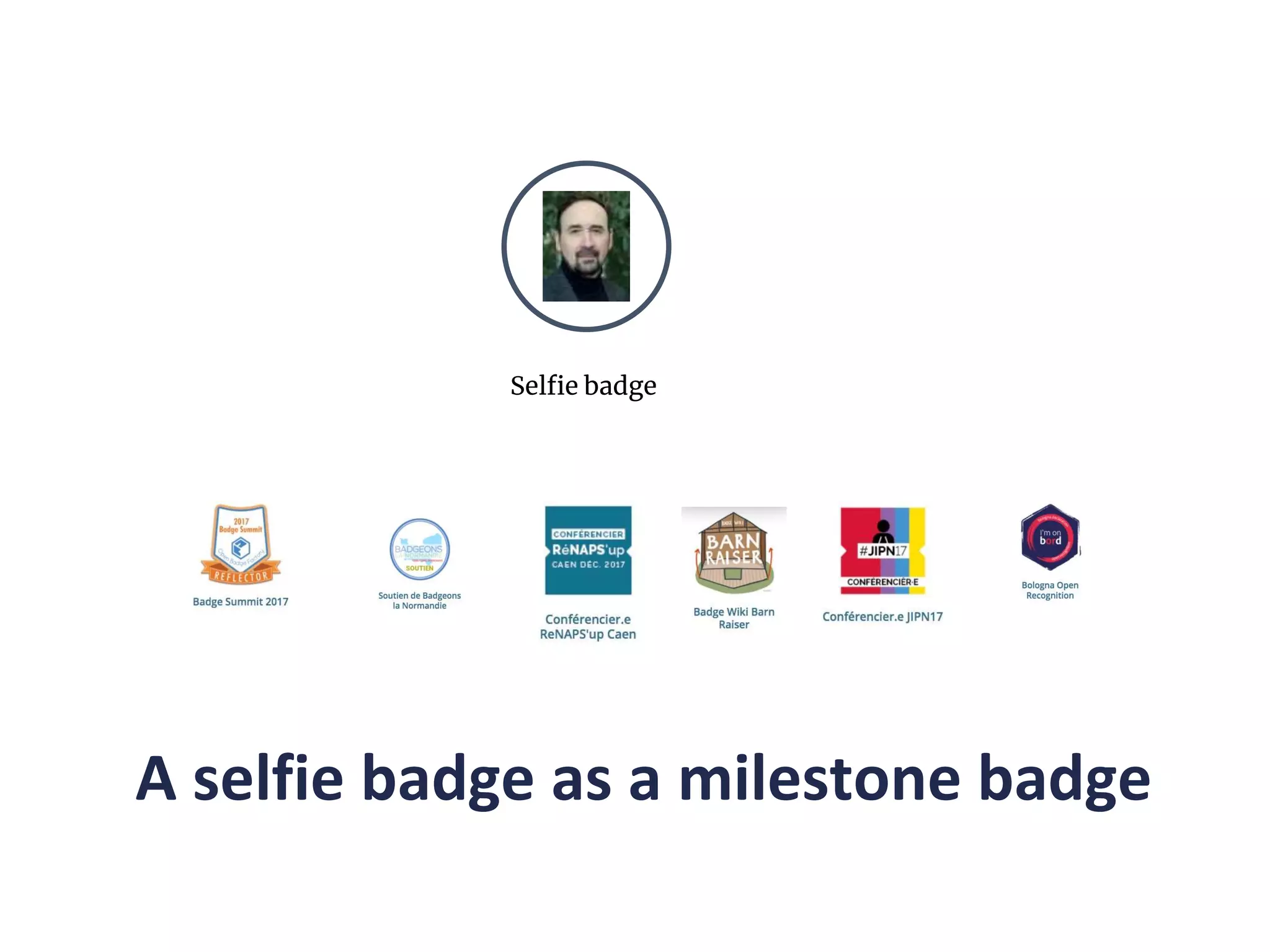
Selfie badge
A selfie badge as a milestone badge
Thank you!
eric.rousselle@obfsolutions.com
@eric_rousselle

Introduction to self-claimed badges (selfie badges)

  • 1.
    Introduction to self-claimedbadges Eric Rousselle 12.5.2020 What can I do? See my selfie badges!
  • 2.
    What is aself-claimed or selfie badge?
  • 4.
    Do we needselfie badges? ● Organisations have created badges to recognise the skills and achievement that they value, but only a small part of individual informal learning experience can be recognised by matching badges created by others. ● Anyone can create a portfolio or a Linkedin profile to showcase his skills and achievements. Why should it be different with badges?
  • 6.
    Understanding the valueof a selfie badge • We are used to thinking that recognition and validation are rights reserved to the badge creator/issuer (authority, expert, validator etc .) • A selfie badge is not a “self-recognition” (recognising involves always at least two parties) but the issuer claims and showcases the things he wants to be recognised for. • The value of the badge is mainly generated by its endorsers • In many cases creating meaningful endorsements requires that the badge contains some evidence. • A selfie badge without evidence and endorsements is a simple claim. But in Open Badge Passport a simple claim badge can be enriched by his holder and become a valuable micro-portfolio
  • 7.
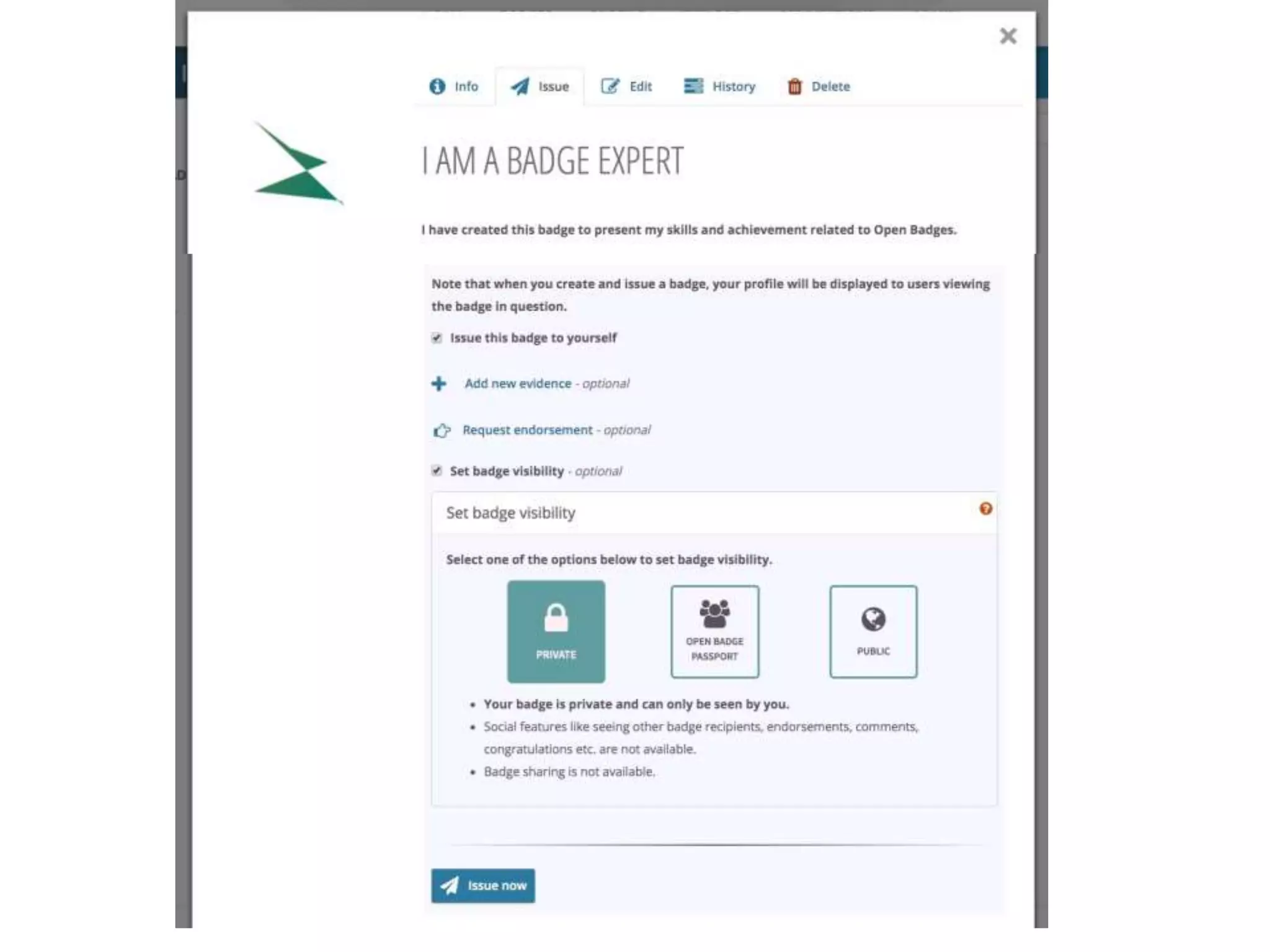
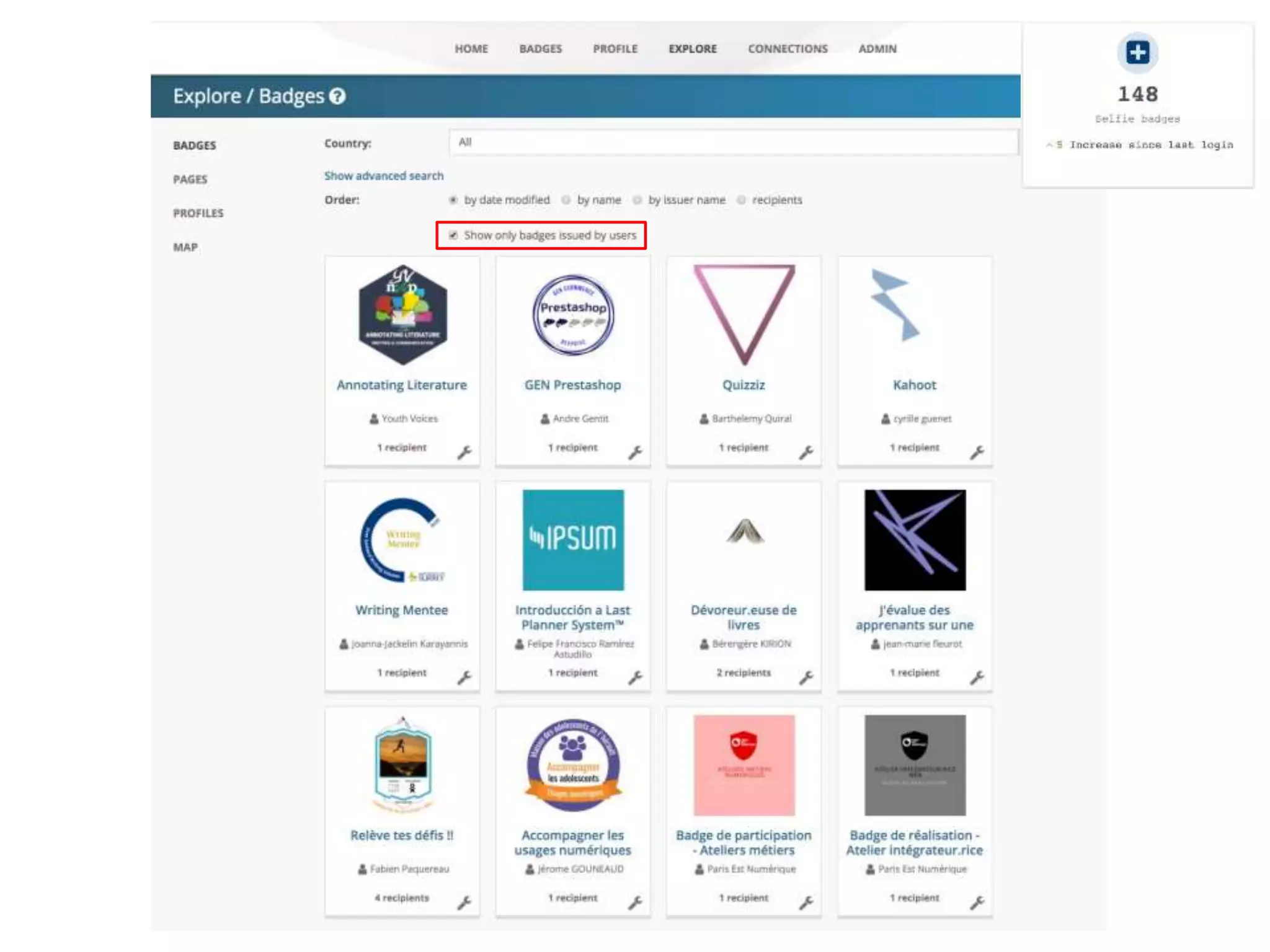
    Open Badge Passportand selfie badges
  • 11.
    How selfie badgescould be used? • To support reflexive learning and place the learner at the center of his learning experience (engagement, motivation) • To recognise and validate achievements and processes (endorsement by peers, teachers, supervisor, tutors, or coaches) • To develop rich and validated micro-portfolios (based on open badge standard) • To support collaborative learning: co-creation of group-claimed badges • To create badges matching with job opportunities
  • 12.
    Self-claimed badges A threator a new “game changer” in the landscape of Open Badging?
  • 13.
    Selfie badge 1Selfie badge 2 Completing a profile
  • 14.
  • 15.
    Selfie badge A selfiebadge as a milestone badge
  • 16.