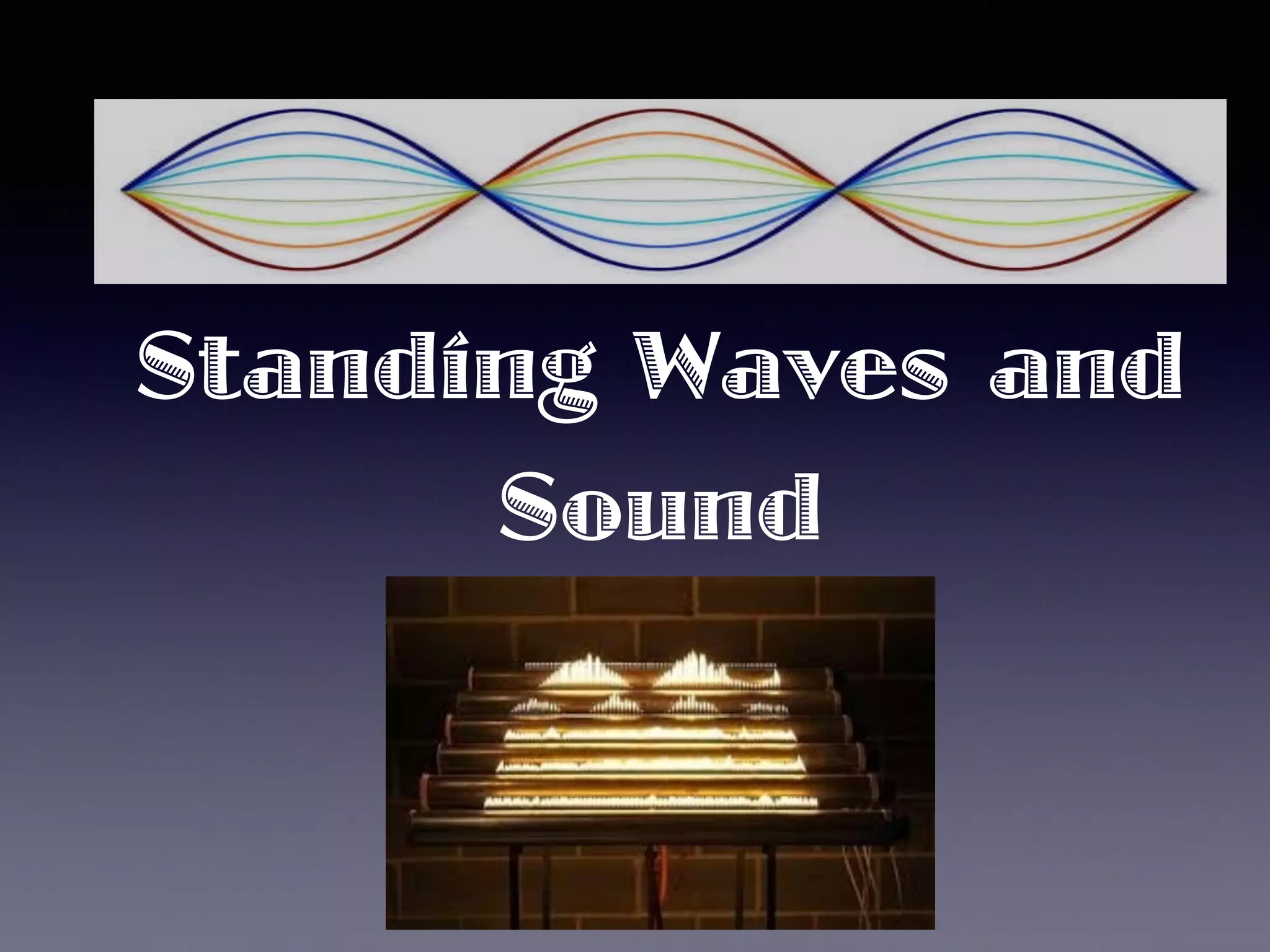
Standing Waves and
Sound
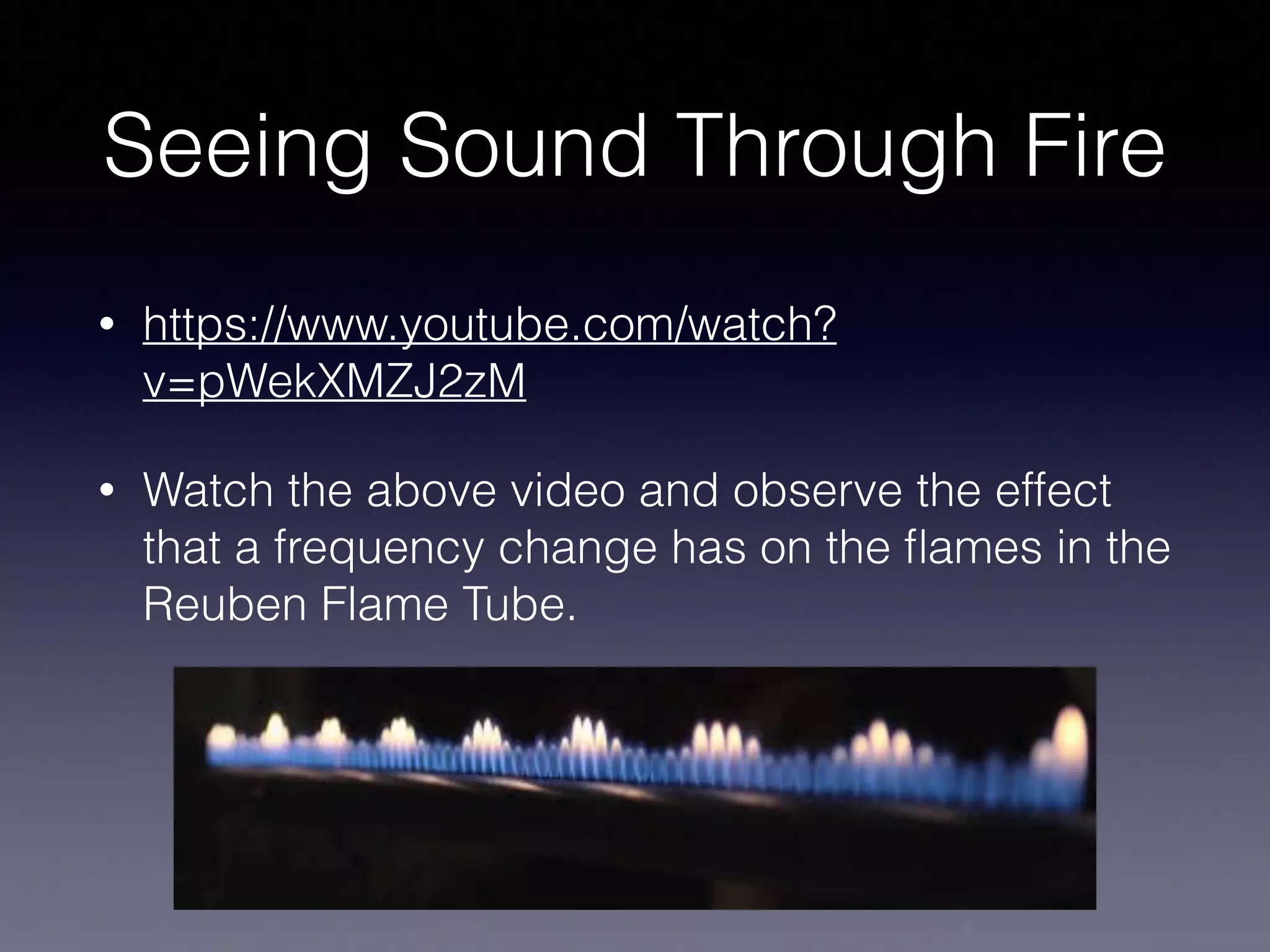
Seeing Sound Through Fire
• https://www.youtube.com/watch?
v=pWekXMZJ2zM
• Watch the above video and observe the effect
that a frequency change has on the flames in the
Reuben Flame Tube.
Question 1
• In general, as the frequency increases, the
number of nodes:
• A. Increases
• B. Decreases
• C. Stays the same
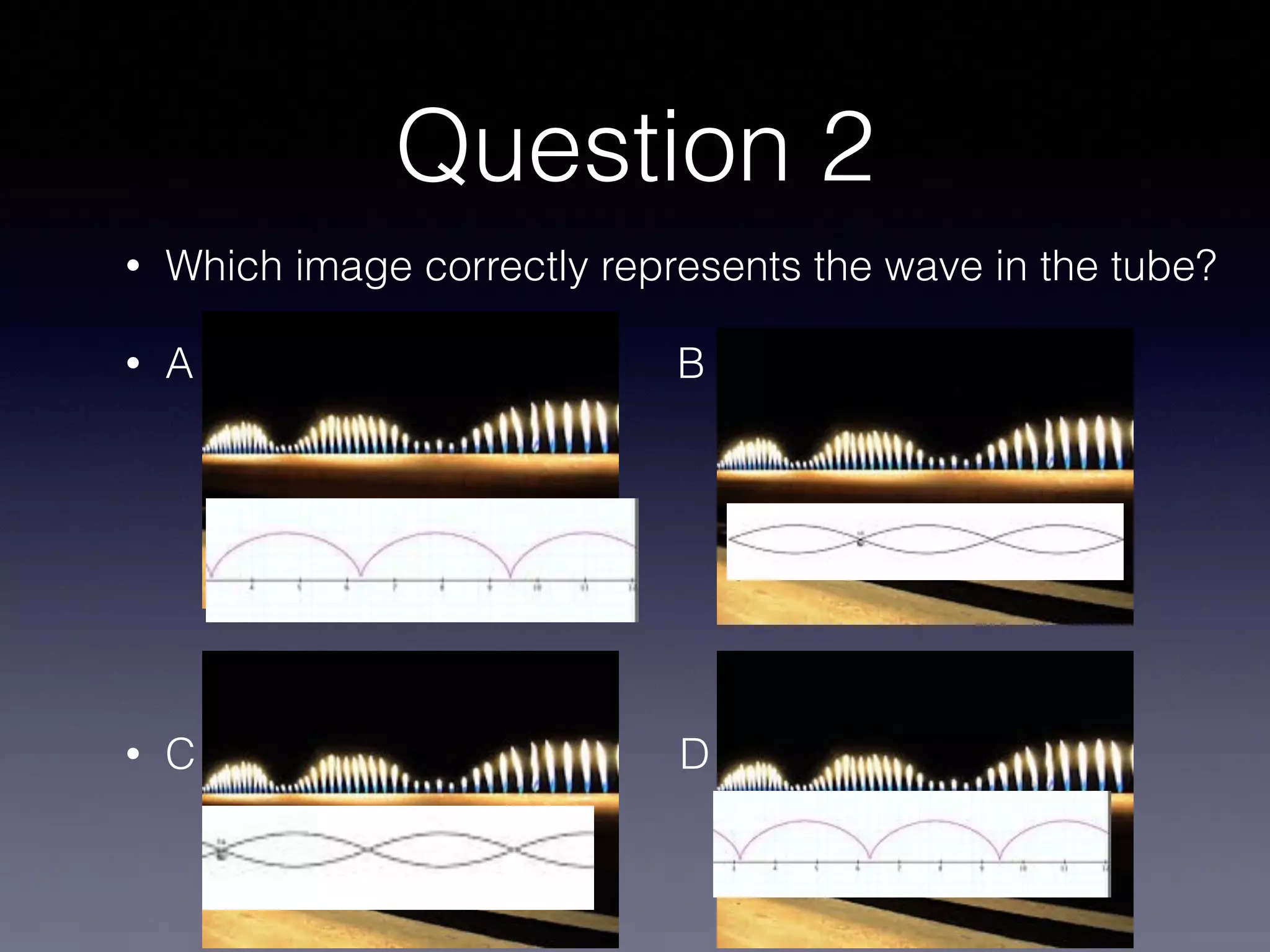
Question 2
• Which image correctly represents the wave in the tube?
• A B
• C D
Question 3
• Which frequency has the longest wavelength
and which has the largest velocity?
• A. 272 Hz, 526 Hz
• B. 526 Hz, 272 Hz
• C. 272 Hz, 272 Hz
• D. 526 Hz, 526 Hz
Concept Questions
• Why do you suppose we only see the positive
amplitudes of the standing wave?
• Some frequency changes do not follow the
pattern of always increasing in node number
seen in the flames. Why do you think this is?
Answers
• 1. A: the number of nodes generally increases with
frequency according to the fact that frequency is
proportional to ‘m’
• 2. B: though only half the wave is showing, we still must
have a picture of a standing wave with displacements on
both sides of the x-axis. The nodes must also line up with
the low flames.
• 3. A: Since frequency is inversely proportional to
wavelength, 272 Hz must have the longest wavelength,
and 526 Hz must have the highest velocity

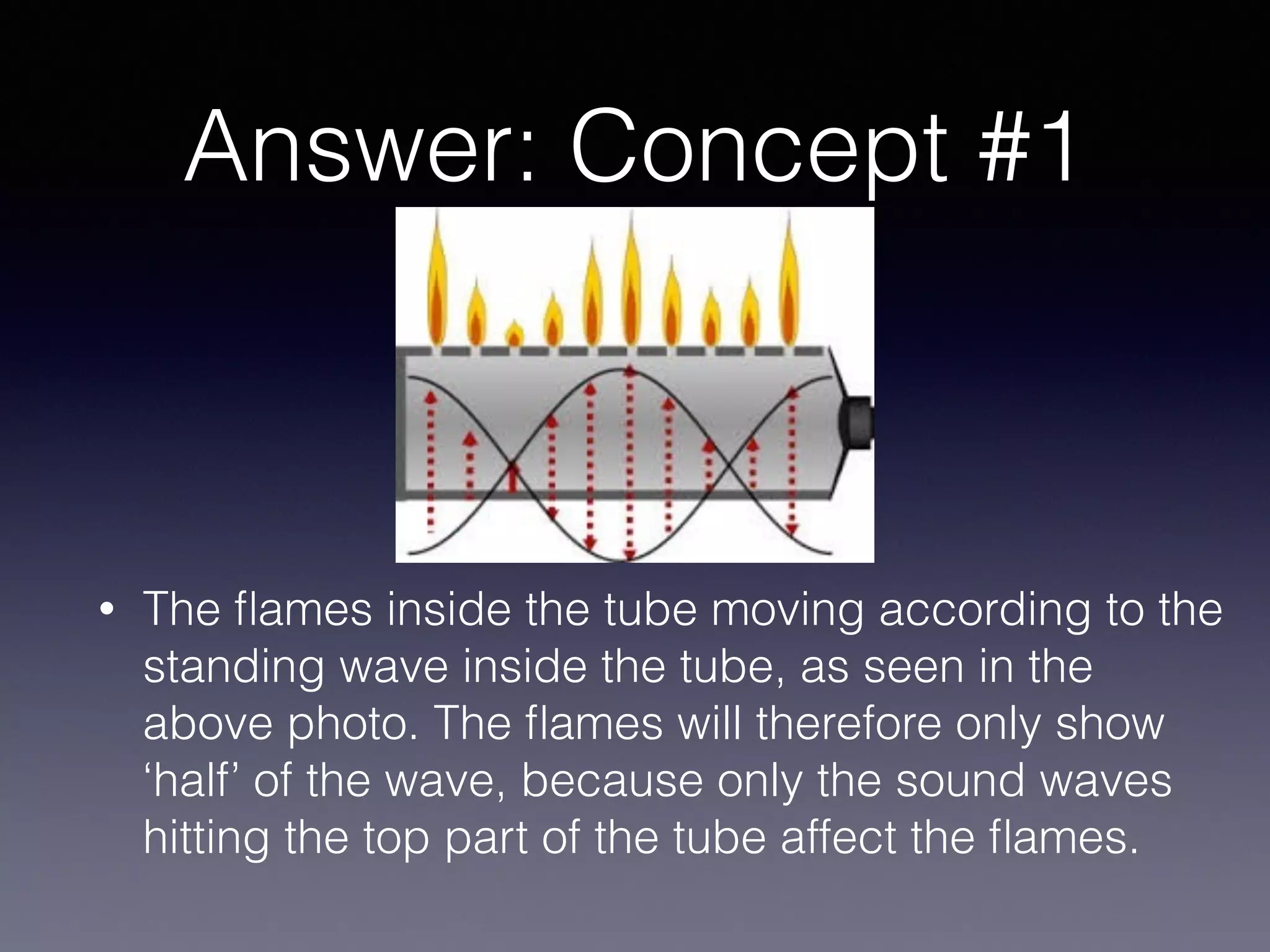
Answer: Concept #1
• The flames inside the tube moving according to the
standing wave inside the tube, as seen in the
above photo. The flames will therefore only show
‘half’ of the wave, because only the sound waves
hitting the top part of the tube affect the flames.
Answer: Concept 2
• Some frequencies do not generate standing
waves, therefore the inconsistent pattern may be
a result of ‘imperfect’ standing waves. This could
also be an experimental error seen in the flames
which do not perfectly represent the sound
waves in the tube.

Standing Waves and Sound

  • 1.
  • 2.
    Seeing Sound ThroughFire • https://www.youtube.com/watch? v=pWekXMZJ2zM • Watch the above video and observe the effect that a frequency change has on the flames in the Reuben Flame Tube.
  • 3.
    Question 1 • Ingeneral, as the frequency increases, the number of nodes: • A. Increases • B. Decreases • C. Stays the same
  • 4.
    Question 2 • Whichimage correctly represents the wave in the tube? • A B • C D
  • 5.
    Question 3 • Whichfrequency has the longest wavelength and which has the largest velocity? • A. 272 Hz, 526 Hz • B. 526 Hz, 272 Hz • C. 272 Hz, 272 Hz • D. 526 Hz, 526 Hz
  • 6.
    Concept Questions • Whydo you suppose we only see the positive amplitudes of the standing wave? • Some frequency changes do not follow the pattern of always increasing in node number seen in the flames. Why do you think this is?
  • 7.
    Answers • 1. A:the number of nodes generally increases with frequency according to the fact that frequency is proportional to ‘m’ • 2. B: though only half the wave is showing, we still must have a picture of a standing wave with displacements on both sides of the x-axis. The nodes must also line up with the low flames. • 3. A: Since frequency is inversely proportional to wavelength, 272 Hz must have the longest wavelength, and 526 Hz must have the highest velocity

  • 8.
    Answer: Concept #1 •The flames inside the tube moving according to the standing wave inside the tube, as seen in the above photo. The flames will therefore only show ‘half’ of the wave, because only the sound waves hitting the top part of the tube affect the flames.
  • 9.
    Answer: Concept 2 •Some frequencies do not generate standing waves, therefore the inconsistent pattern may be a result of ‘imperfect’ standing waves. This could also be an experimental error seen in the flames which do not perfectly represent the sound waves in the tube.