Medication
safety:
HIGH-
ALERT
MEDICATION
Contents
1. Discuss the concept of high-alert
medications
2. Identify the many drug classes
considered to be high-alert status
3. Describe various strategies for
safeguarding the use of high-alert
medications
Definition: High-Alert Medications
High-alert medications are drugs that
bear a heightened risk of causing
significant patient harm when used in
error
Although mistakes may or may not be
more common with these drugs, the
consequences of an error are clearly
more devastating to patients
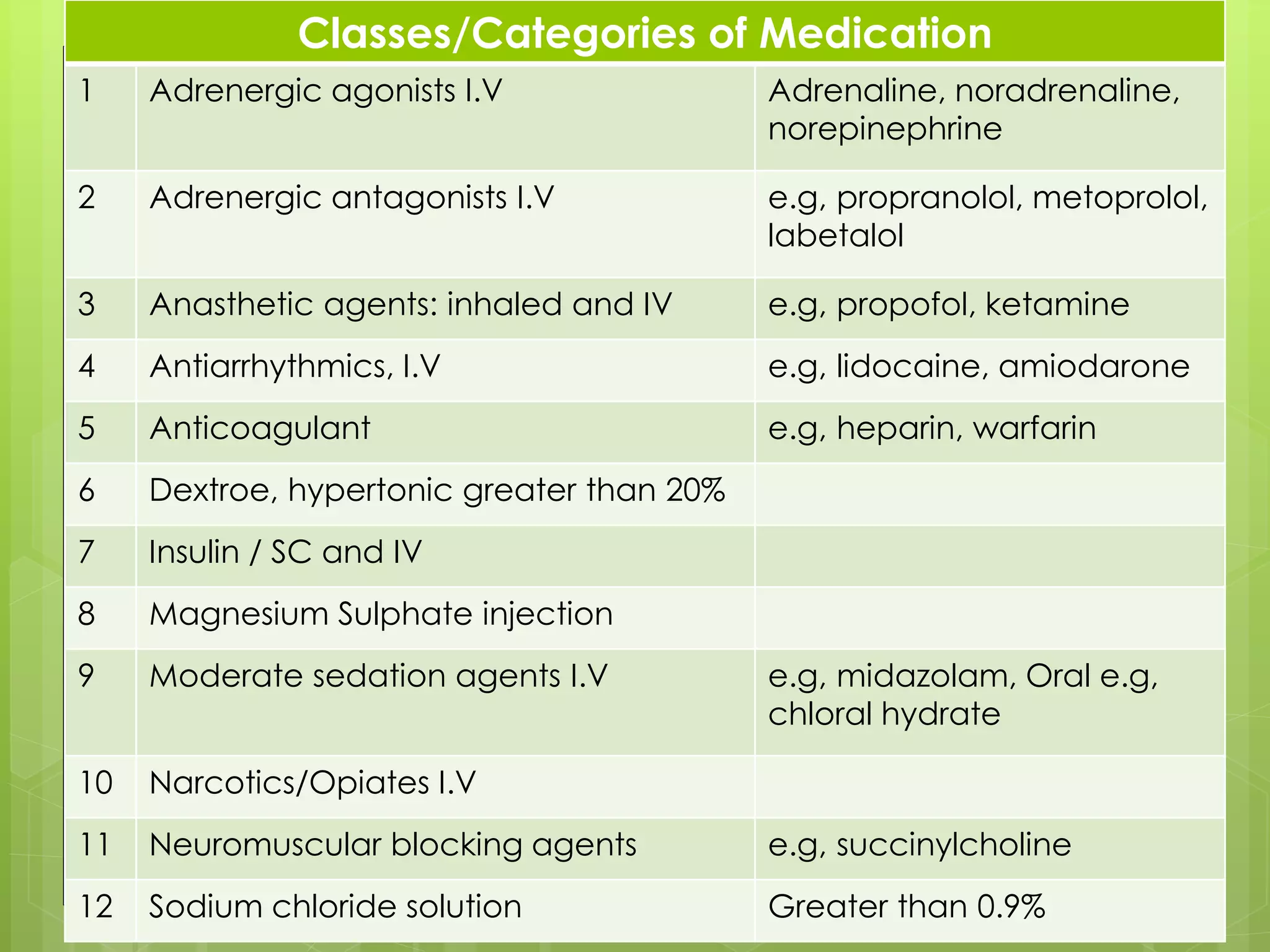
Classes/Categories of Medication
1 Adrenergic agonists I.V Adrenaline, noradrenaline,
norepinephrine
2 Adrenergic antagonists I.V e.g, propranolol, metoprolol,
labetalol
3 Anasthetic agents: inhaled and IV e.g, propofol, ketamine
4 Antiarrhythmics, I.V e.g, lidocaine, amiodarone
5 Anticoagulant e.g, heparin, warfarin
6 Dextroe, hypertonic greater than 20%
7 Insulin / SC and IV
8 Magnesium Sulphate injection
9 Moderate sedation agents I.V e.g, midazolam, Oral e.g,
chloral hydrate
10 Narcotics/Opiates I.V
11 Neuromuscular blocking agents e.g, succinylcholine
12 Sodium chloride solution Greater than 0.9%
Common risk factor
1) Poorly written medication orders
2) Incorrect dilution procedures
3) Confusion between IM, IV etc
4) Confusion between different strength of
the same medication
5) Ambiguous labelling on concentration
and total volume of medication
6) Wrong infusion rate
7) Look alike Sound Alike product
Strategies to avoid errors involving
HAM
1) Procurement
2) Storage
3) Prescribing
4) Preparation
5) Dispensing/ supply
6) Administration
7) Monitoring
8) Training
9) Information
10) Evaluation of action
PROCUREMENT
 Limit the drug strengths avalable in the
formulary of each facilities
 AVOID FREQUENT CHANGE of brand or
color. Notify to end users whenever there
are changes.
 Inform all relevent personnel of new HAM
 Encourage the purchase of equipment
and consumables with safety features fot
safe drug administration
STORAGE
 Carefully store to ensure medication are
kept at the correct place
 Kept in individual labeled containers
 Avoid look alike sound alike drugs or
different strength of the same drug being
stored side by side
 Use TALL-MAN lettering to emphasize the
differences
 Limit unit’s floor stock
 MUST labeled HIGH ALERT MEDICATION
PRESCRIBING
 Do not use abbreviations when prescribing HAM
 Specify the dose, route and rate on treatment
 Use read-back procedure for verbal orders
 Prescribed in milligrams
 Write clearly and Eliminate illegible handwriting
PREPARATION
 Establish a counterchecking system
 All dilutied medication MUST BE LABELLED with
the name and strength IMMEDIATELY upon
dilution.
Drug: ______________
Concentration:_____mg in ____NS/D5/___
Date: Time:
Patient’s name:
RN:
Prepared by: Checked by:
ADMINISTRATION
 Ensure no distraction during administration of
medication
 Return all unused or remaining specially
formulated preparation to the pharmacy when
no longer required.
 Processed done by trained personnel
 Avoid ordering HAM verbally, in case of
emergency, phone order have to be repeated
and verified
MONITORING
 Closely monitor vital sign, labolatory data
and patient’s respone before and after
administration and adverse drug
reactions
 Keep antidotes and resuscitation
equipments in units
Information
 References or dilution guide should be available
in units
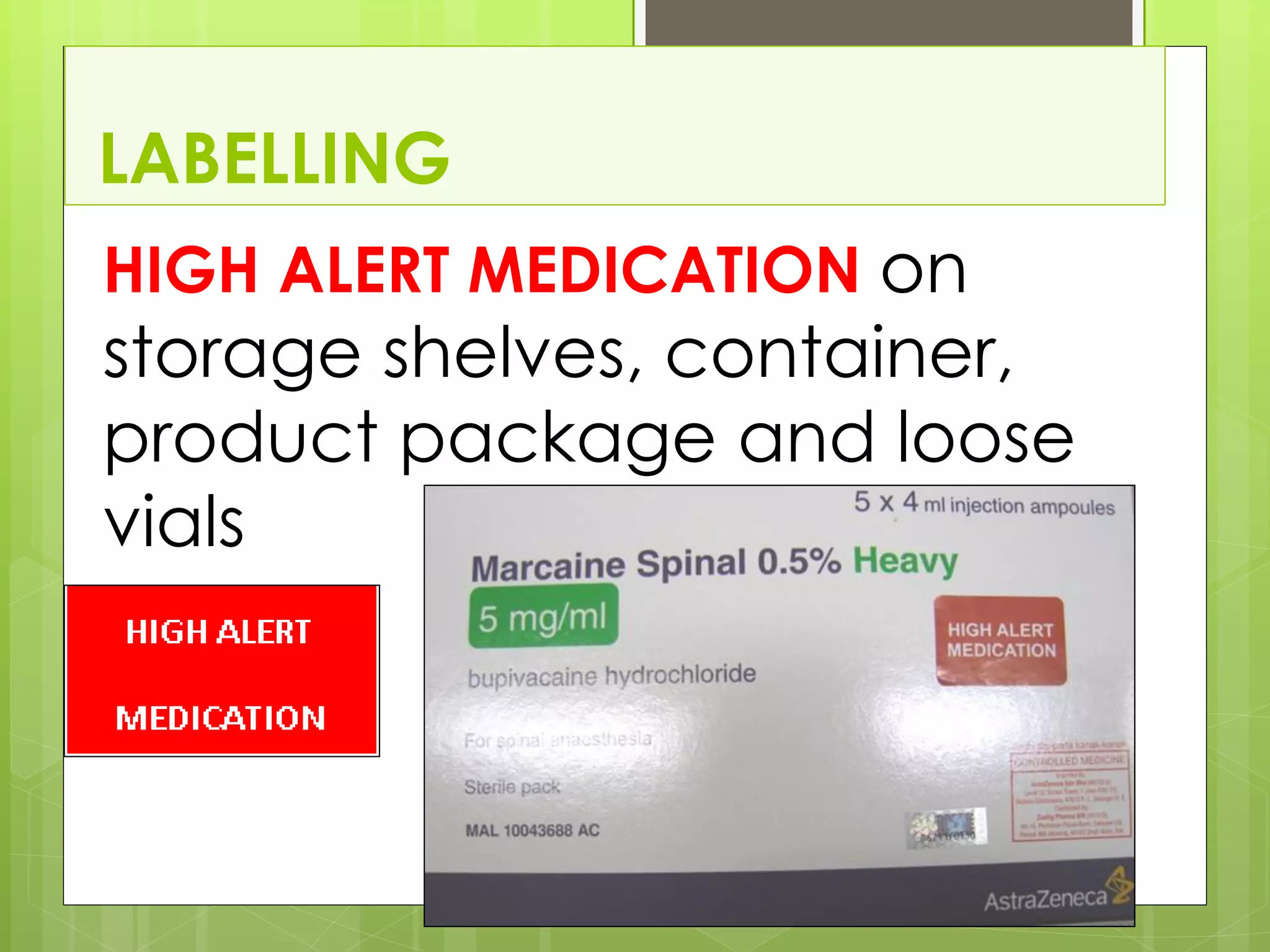
LABELLING
HIGH ALERT MEDICATION on
storage shelves, container,
product package and loose
vials
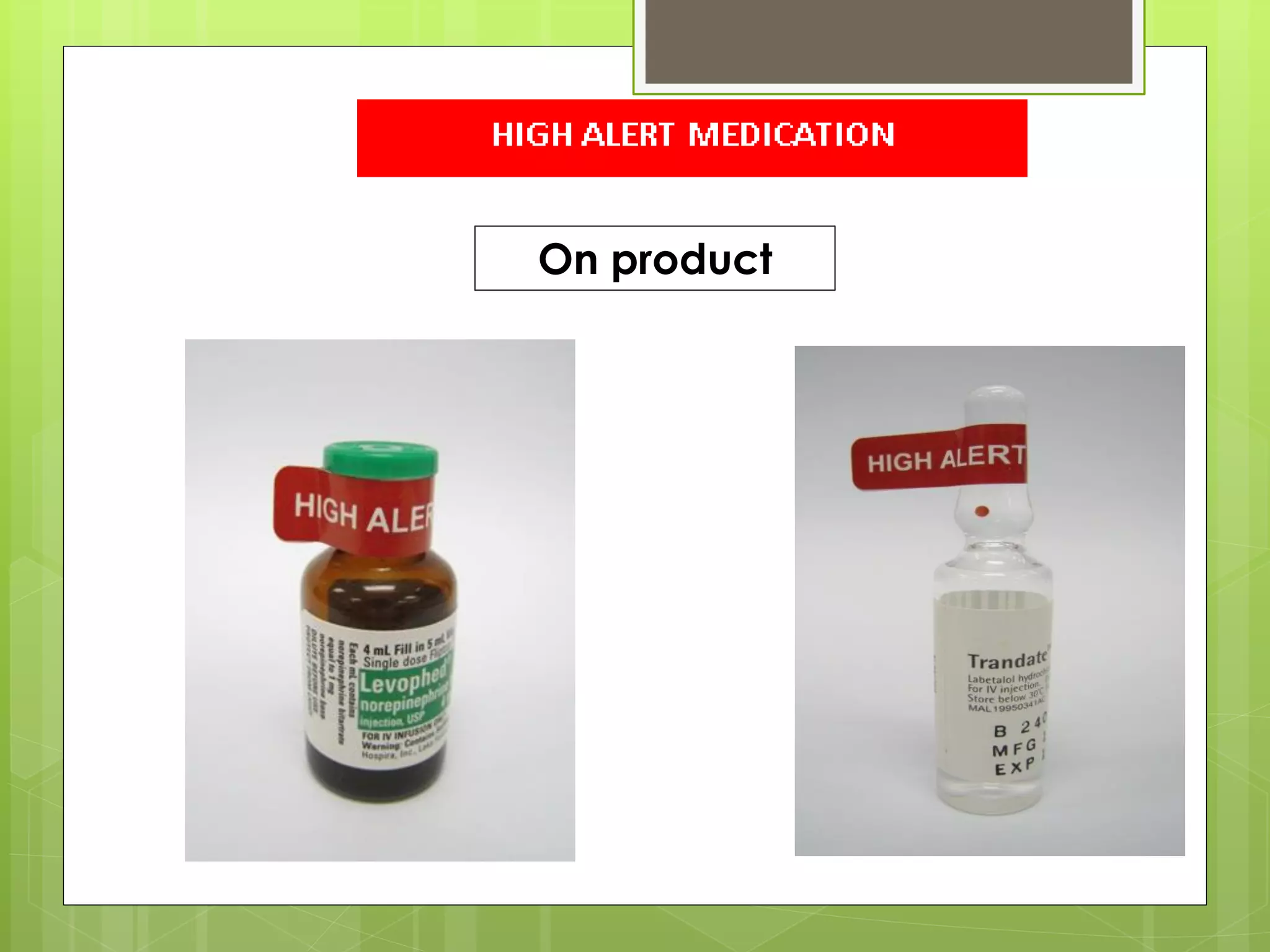
On product
On Shelves, rack or
drawer
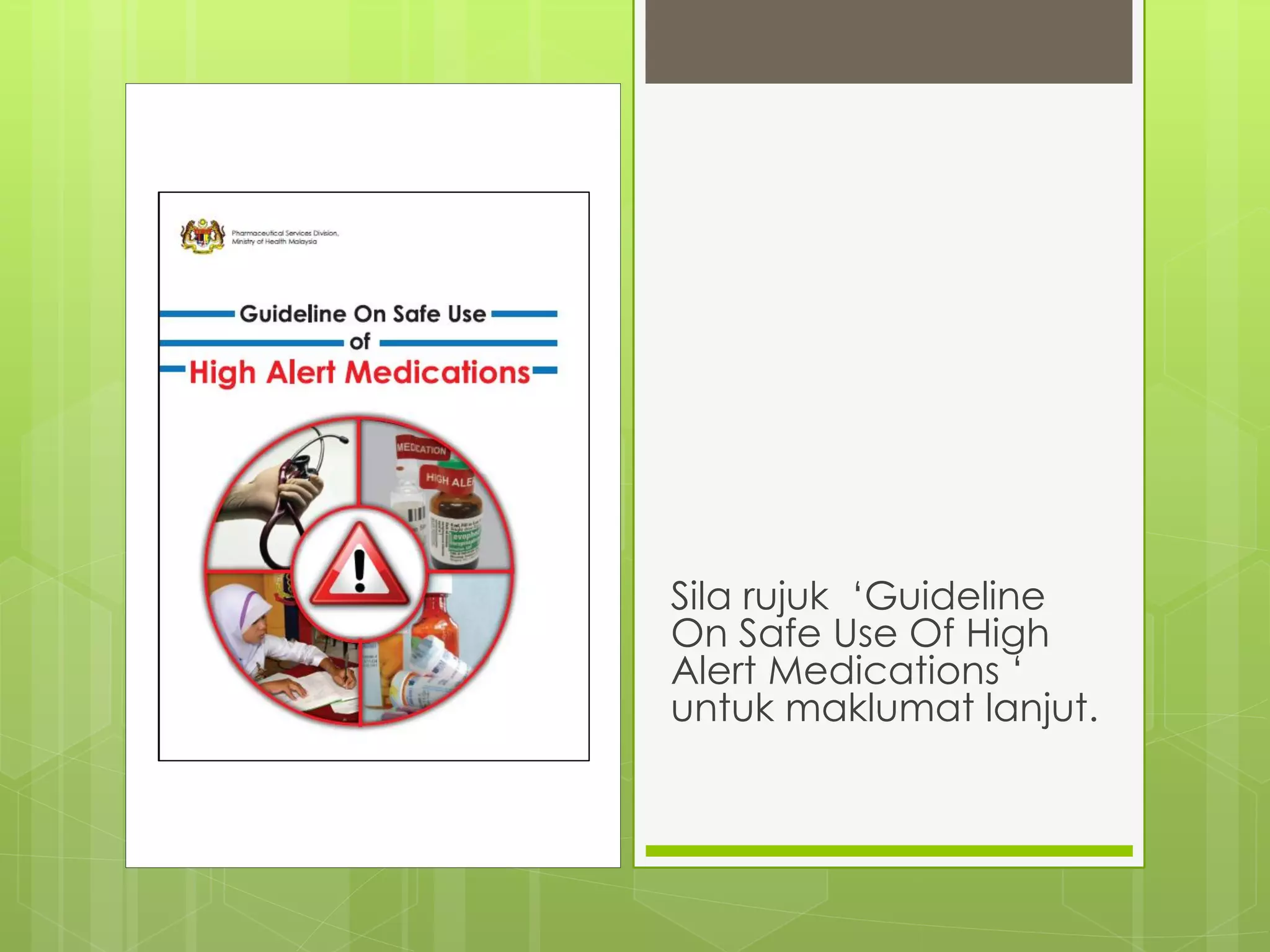
Sila rujuk ‘Guideline
On Safe Use Of High
Alert Medications ‘
untuk maklumat lanjut.

High alert medication

  • 1.
  • 2.
    Contents 1. Discuss theconcept of high-alert medications 2. Identify the many drug classes considered to be high-alert status 3. Describe various strategies for safeguarding the use of high-alert medications
  • 3.
    Definition: High-Alert Medications High-alertmedications are drugs that bear a heightened risk of causing significant patient harm when used in error Although mistakes may or may not be more common with these drugs, the consequences of an error are clearly more devastating to patients
  • 4.
    Classes/Categories of Medication 1Adrenergic agonists I.V Adrenaline, noradrenaline, norepinephrine 2 Adrenergic antagonists I.V e.g, propranolol, metoprolol, labetalol 3 Anasthetic agents: inhaled and IV e.g, propofol, ketamine 4 Antiarrhythmics, I.V e.g, lidocaine, amiodarone 5 Anticoagulant e.g, heparin, warfarin 6 Dextroe, hypertonic greater than 20% 7 Insulin / SC and IV 8 Magnesium Sulphate injection 9 Moderate sedation agents I.V e.g, midazolam, Oral e.g, chloral hydrate 10 Narcotics/Opiates I.V 11 Neuromuscular blocking agents e.g, succinylcholine 12 Sodium chloride solution Greater than 0.9%
  • 5.
    Common risk factor 1)Poorly written medication orders 2) Incorrect dilution procedures 3) Confusion between IM, IV etc 4) Confusion between different strength of the same medication 5) Ambiguous labelling on concentration and total volume of medication 6) Wrong infusion rate 7) Look alike Sound Alike product
  • 6.
    Strategies to avoiderrors involving HAM 1) Procurement 2) Storage 3) Prescribing 4) Preparation 5) Dispensing/ supply 6) Administration 7) Monitoring 8) Training 9) Information 10) Evaluation of action
  • 7.
    PROCUREMENT  Limit thedrug strengths avalable in the formulary of each facilities  AVOID FREQUENT CHANGE of brand or color. Notify to end users whenever there are changes.  Inform all relevent personnel of new HAM  Encourage the purchase of equipment and consumables with safety features fot safe drug administration
  • 8.
    STORAGE  Carefully storeto ensure medication are kept at the correct place  Kept in individual labeled containers  Avoid look alike sound alike drugs or different strength of the same drug being stored side by side  Use TALL-MAN lettering to emphasize the differences  Limit unit’s floor stock  MUST labeled HIGH ALERT MEDICATION
  • 9.
    PRESCRIBING  Do notuse abbreviations when prescribing HAM  Specify the dose, route and rate on treatment  Use read-back procedure for verbal orders  Prescribed in milligrams  Write clearly and Eliminate illegible handwriting
  • 10.
    PREPARATION  Establish acounterchecking system  All dilutied medication MUST BE LABELLED with the name and strength IMMEDIATELY upon dilution. Drug: ______________ Concentration:_____mg in ____NS/D5/___ Date: Time: Patient’s name: RN: Prepared by: Checked by:
  • 11.
    ADMINISTRATION  Ensure nodistraction during administration of medication  Return all unused or remaining specially formulated preparation to the pharmacy when no longer required.  Processed done by trained personnel  Avoid ordering HAM verbally, in case of emergency, phone order have to be repeated and verified
  • 12.
    MONITORING  Closely monitorvital sign, labolatory data and patient’s respone before and after administration and adverse drug reactions  Keep antidotes and resuscitation equipments in units
  • 13.
    Information  References ordilution guide should be available in units
  • 14.
    LABELLING HIGH ALERT MEDICATIONon storage shelves, container, product package and loose vials
  • 15.
  • 16.
  • 17.
    Sila rujuk ‘Guideline OnSafe Use Of High Alert Medications ‘ untuk maklumat lanjut.