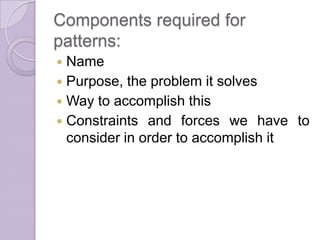
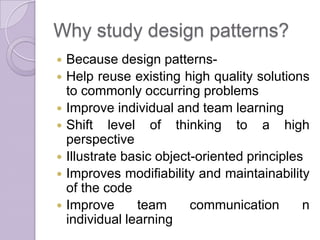
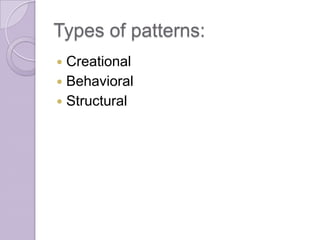
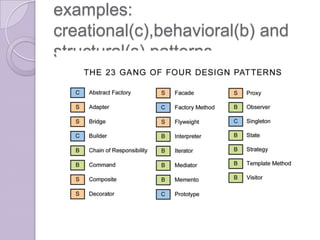
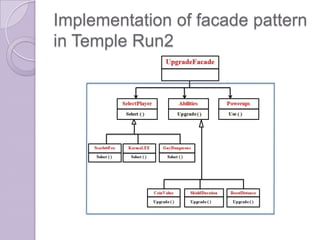
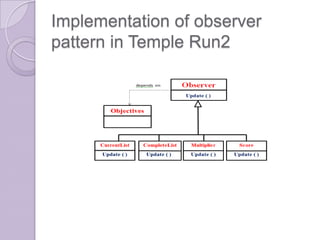
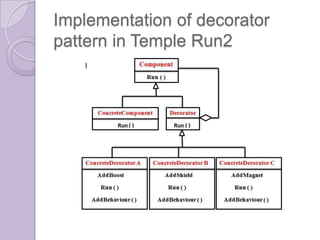
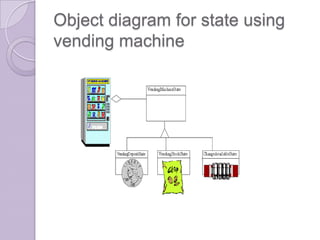
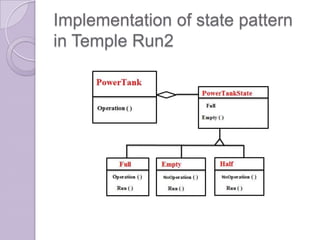
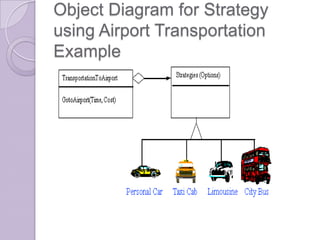
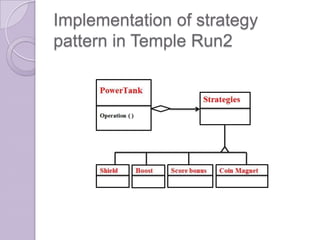
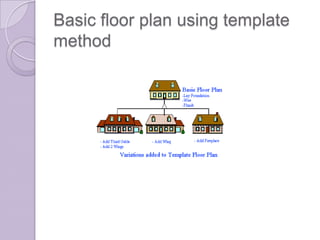
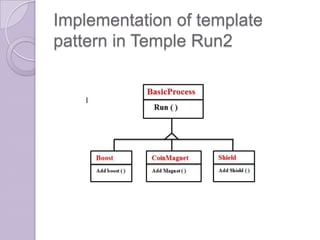
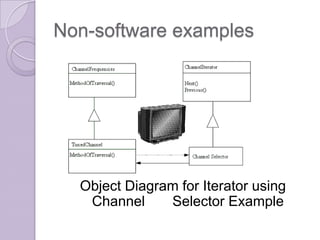
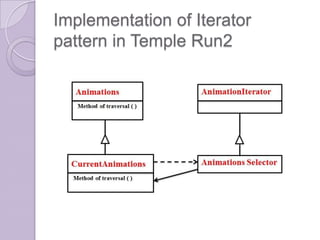
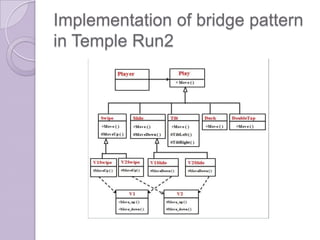
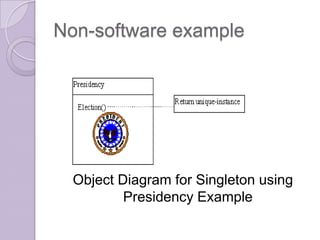
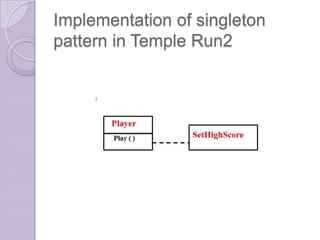
The document discusses software design patterns, including definitions, types (creational, behavioral, structural), components, benefits, and examples. It provides examples of patterns like facade, observer, decorator, state, strategy, template method, iterator, bridge, and singleton from both non-software (e.g. auction, vending machine) and software domains (Temple Run 2 game). For each pattern, it explains the concept, provides a non-software diagram, describes an implementation in Temple Run 2 through diagrams and text, and references additional resources for design patterns.