“SOFTWARE DESIGN AND
ARCHITECTURE “
SOFTWARE DESIGN
PATTERNS
SOFTWARE DESIGN PATTERN
In software engineering, a software design pattern is a general, reusable solution to a
commonly occurring problem within a given context in software design. It is not a finished
design that can be transformed directly into source or machine code. Rather, it is a
description or template for how to solve a problem that can be used in many different
situations. Design patterns are formalized best practices that the programmer can use to
solve common problems when designing an application or system.
GOF
This book was first published in 1994 and it’s one of the most popular books to learn design
patterns. The book was authored by erich gamma, richard helm, ralph johnson, and john
vlissides. It got nicknamed as gangs of Four design patterns because of the four authors.
Furthermore, it got a shorter name “gof design patterns”.
GOF DESIGN PATTERN
TYPES
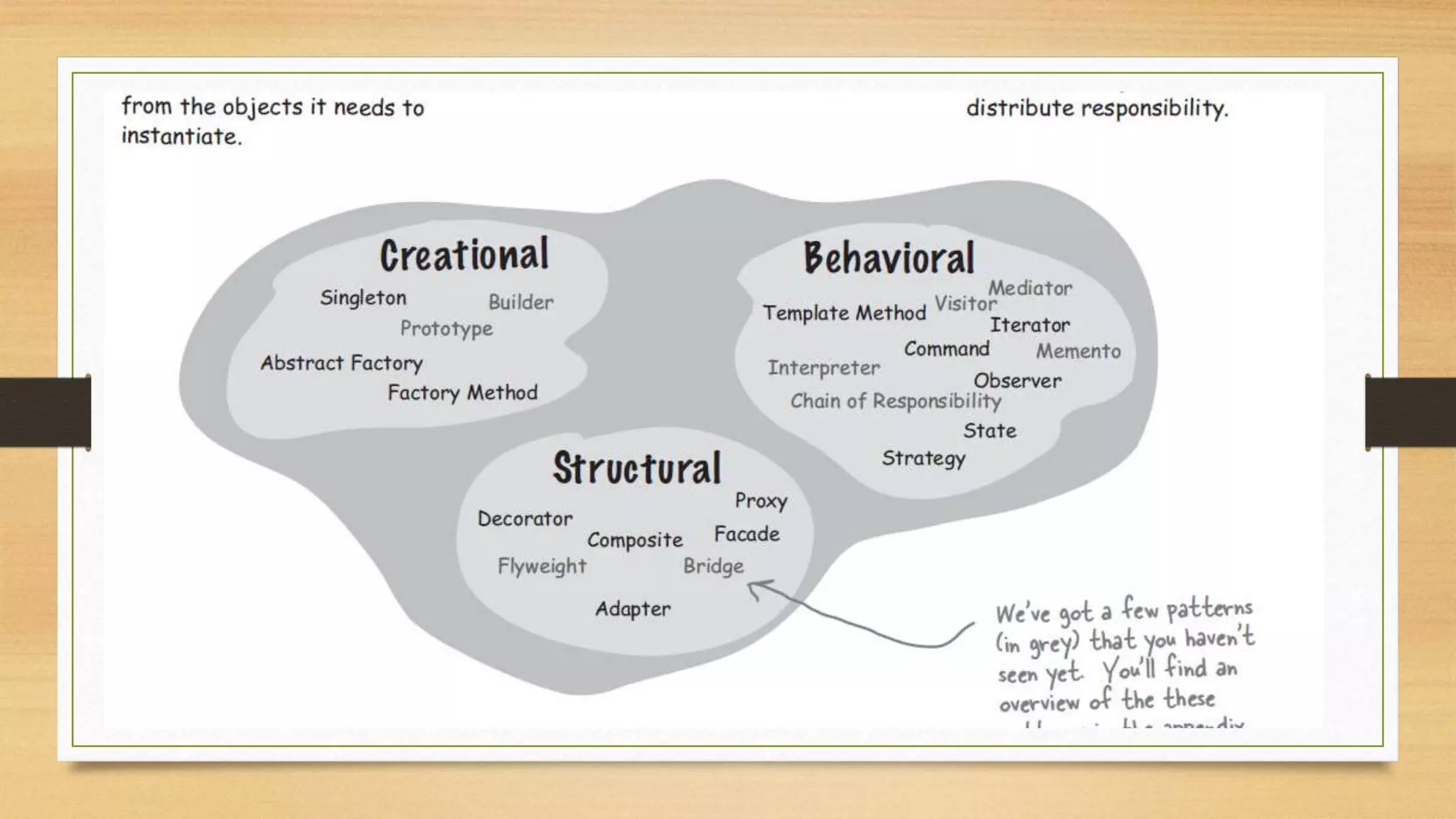
CREATIONAL
The design patterns that deal with the creation of an object
STRUCTURAL
The design patterns in this category deal with the class structure such as
inheritance and composition
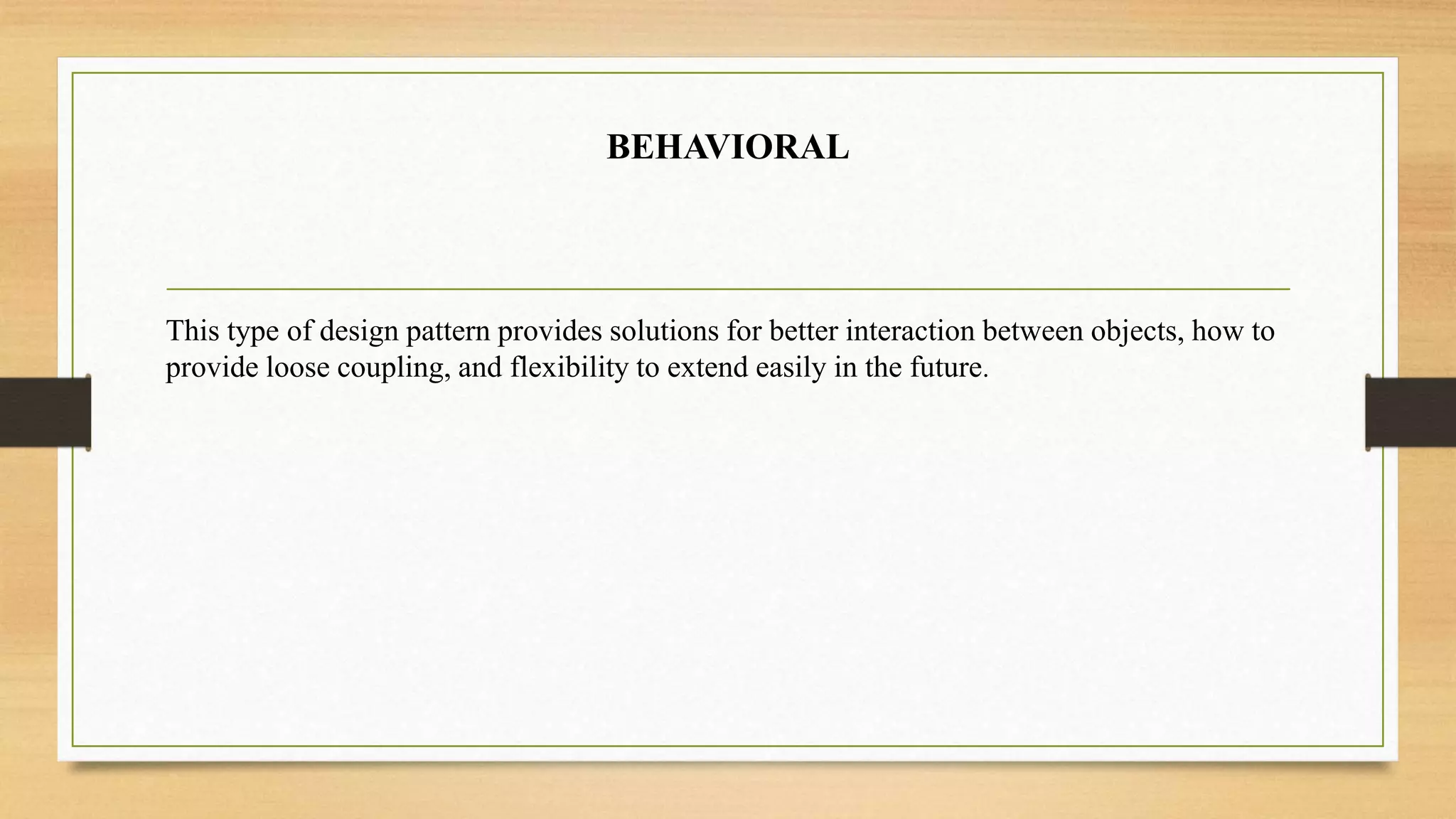
BEHAVIORAL
This type of design pattern provides solutions for better interaction between objects, how to
provide loose coupling, and flexibility to extend easily in the future.
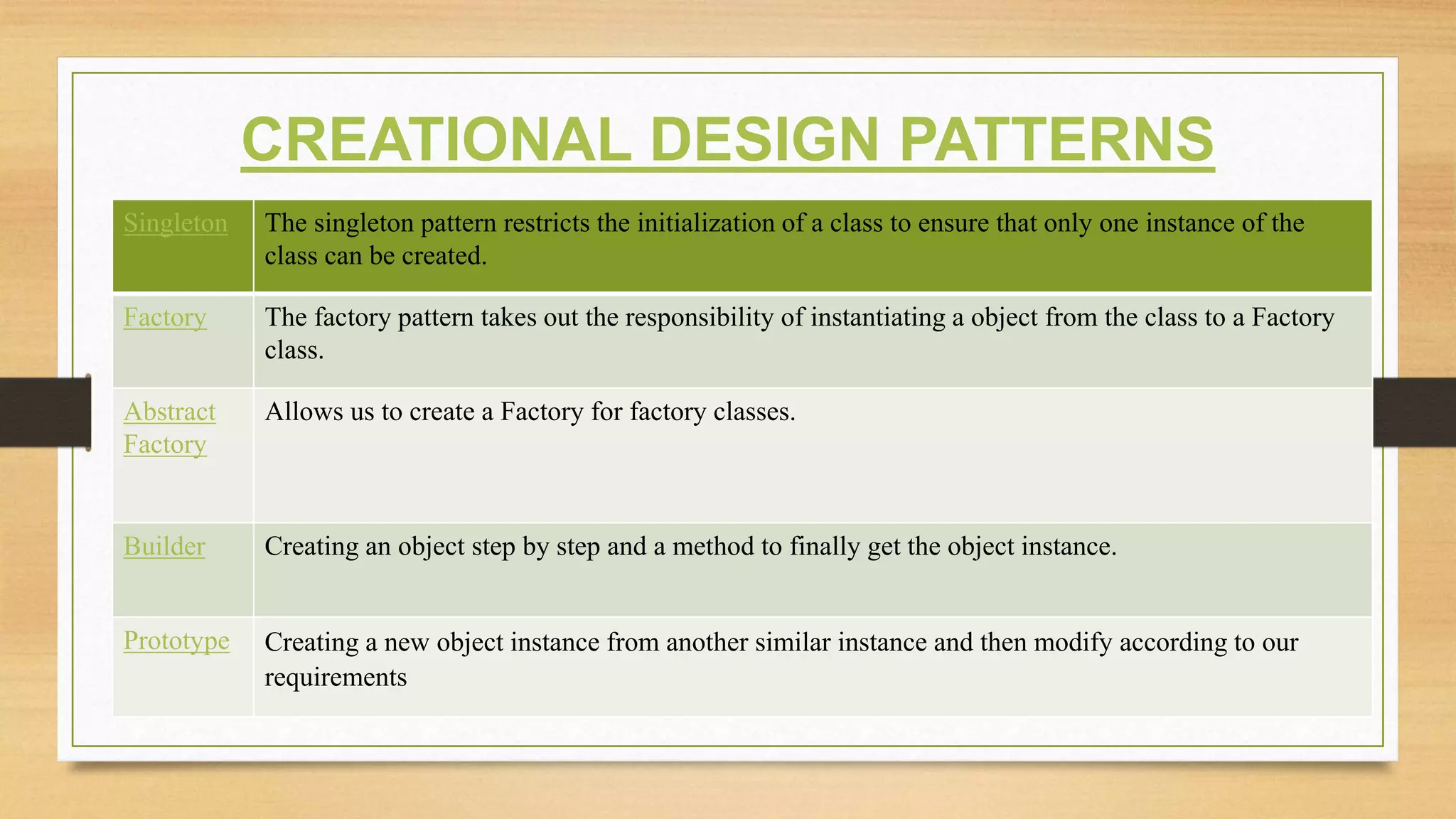
CREATIONAL DESIGN PATTERNS
Singleton The singleton pattern restricts the initialization of a class to ensure that only one instance of the
class can be created.
Factory The factory pattern takes out the responsibility of instantiating a object from the class to a Factory
class.
Abstract
Factory
Allows us to create a Factory for factory classes.
Builder Creating an object step by step and a method to finally get the object instance.
Prototype Creating a new object instance from another similar instance and then modify according to our
requirements
Structural Design Patterns
Pattern
Name Description
Adapter Provides an interface between two unrelated entities so that they can work together.
Composite
Used when we have to implement a part-whole hierarchy. For example, a diagram made of other
pieces such as circle, square, triangle, etc.
Proxy Provide a surrogate or placeholder for another object to control access to it.
Flyweight Caching and reusing object instances, used with immutable objects. For example, string pool.
Facade Creating a wrapper interfaces on top of existing interfaces to help client applications.
Bridge
The bridge design pattern is used to decouple the interfaces from implementation and hiding the
implementation details from the client program.
Decorator The decorator design pattern is used to modify the functionality of an object at runtime.
Behavioral Design Patterns
• There are 11 behavioral design patterns defined in the GoF design patterns
Template
Method
used to create a template method stub and defer some of the steps of implementation to the
subclasses.
Mediator used to provide a centralized communication medium between different objects in a system.
Chain of
Responsi
bility
used to achieve loose coupling in software design where a request from the client is passed to a chain of
objects to process them.
Observer
useful when you are interested in the state of an object and want to get notified whenever there is any
change.
Strategy
Strategy pattern is used when we have multiple algorithm for a specific task and client decides the actual
implementation to be used at runtime.
Command
Command Pattern is used to implement lose coupling in a request-response model.
State
State design pattern is used when an Object change it’s behavior based on it’s internal state.
Visitor
Visitor pattern is used when we have to perform an operation on a group of similar kind of Objects.
Interpreter
defines a grammatical representation for a language and provides an interpreter to deal with this grammar.
Iterator
used to provide a standard way to traverse through a group of Objects.
Memento
The memento design pattern is used when we want to save the state of an object so that we can restore later on.

Software design and Architecture.pptx

  • 1.
    “SOFTWARE DESIGN AND ARCHITECTURE“ SOFTWARE DESIGN PATTERNS
  • 2.
    SOFTWARE DESIGN PATTERN Insoftware engineering, a software design pattern is a general, reusable solution to a commonly occurring problem within a given context in software design. It is not a finished design that can be transformed directly into source or machine code. Rather, it is a description or template for how to solve a problem that can be used in many different situations. Design patterns are formalized best practices that the programmer can use to solve common problems when designing an application or system.
  • 3.
    GOF This book wasfirst published in 1994 and it’s one of the most popular books to learn design patterns. The book was authored by erich gamma, richard helm, ralph johnson, and john vlissides. It got nicknamed as gangs of Four design patterns because of the four authors. Furthermore, it got a shorter name “gof design patterns”.
  • 5.
  • 6.
    CREATIONAL The design patternsthat deal with the creation of an object
  • 7.
    STRUCTURAL The design patternsin this category deal with the class structure such as inheritance and composition
  • 8.
    BEHAVIORAL This type ofdesign pattern provides solutions for better interaction between objects, how to provide loose coupling, and flexibility to extend easily in the future.
  • 9.
  • 10.
    CREATIONAL DESIGN PATTERNS SingletonThe singleton pattern restricts the initialization of a class to ensure that only one instance of the class can be created. Factory The factory pattern takes out the responsibility of instantiating a object from the class to a Factory class. Abstract Factory Allows us to create a Factory for factory classes. Builder Creating an object step by step and a method to finally get the object instance. Prototype Creating a new object instance from another similar instance and then modify according to our requirements
  • 11.
  • 12.
    Pattern Name Description Adapter Providesan interface between two unrelated entities so that they can work together. Composite Used when we have to implement a part-whole hierarchy. For example, a diagram made of other pieces such as circle, square, triangle, etc. Proxy Provide a surrogate or placeholder for another object to control access to it. Flyweight Caching and reusing object instances, used with immutable objects. For example, string pool. Facade Creating a wrapper interfaces on top of existing interfaces to help client applications. Bridge The bridge design pattern is used to decouple the interfaces from implementation and hiding the implementation details from the client program. Decorator The decorator design pattern is used to modify the functionality of an object at runtime.
  • 13.
    Behavioral Design Patterns •There are 11 behavioral design patterns defined in the GoF design patterns
  • 14.
    Template Method used to createa template method stub and defer some of the steps of implementation to the subclasses. Mediator used to provide a centralized communication medium between different objects in a system. Chain of Responsi bility used to achieve loose coupling in software design where a request from the client is passed to a chain of objects to process them. Observer useful when you are interested in the state of an object and want to get notified whenever there is any change. Strategy Strategy pattern is used when we have multiple algorithm for a specific task and client decides the actual implementation to be used at runtime.
  • 15.
    Command Command Pattern isused to implement lose coupling in a request-response model. State State design pattern is used when an Object change it’s behavior based on it’s internal state. Visitor Visitor pattern is used when we have to perform an operation on a group of similar kind of Objects. Interpreter defines a grammatical representation for a language and provides an interpreter to deal with this grammar. Iterator used to provide a standard way to traverse through a group of Objects. Memento The memento design pattern is used when we want to save the state of an object so that we can restore later on.