Theories about narrative structure. 
Narrative ­The 
story of the film. 
Narrative Structure ­The 
way the story is told. 
3 ways narrative can be structured: 
Circular ­The 
film begins with the end. E.g: Titanic, the story is 
seen through a series of flashbacks 
Episodic ­Where 
the film is seen in chapters. E.g: Forrest Gump, 
the film is broken up into sections/chapters. 
Linear ­Straight. 
E.g: Fairy Tales, they have an obvious 
beginning, middle and end. 
Tzvetan Todorov 
“ All narratives follow the basic structure: 
Equilibrium 
Disequilibrium 
Equilibrium” 
Todorov proposed that all narrative includes 5 
fundamental stages: 
1. Equilibrium(everything is as it should be) 
2. Disequilibrium (something goes wrong) 
3. Acknowledgement of disruption 
4. Attempt to repair disruption 
5. Equilibrium (everything is as it should be again) 
A film that supports Todorov’s theory is Along Came a Spider (2001). 
The 5 fundamental stages for this film would be: 
1. Maggie is at school as normal. 
2. She gets kidnapped. 
3. Cross is pulled off murder case to investigate kidnap. 
4. Secret service man attempts to help Cross. 
5. Cross kills antagonist and saves girl. 
Examples of films that challenge this theory are Pulp Fiction and 
Reservoir Dogs, these follow a more circular and episodic structure.
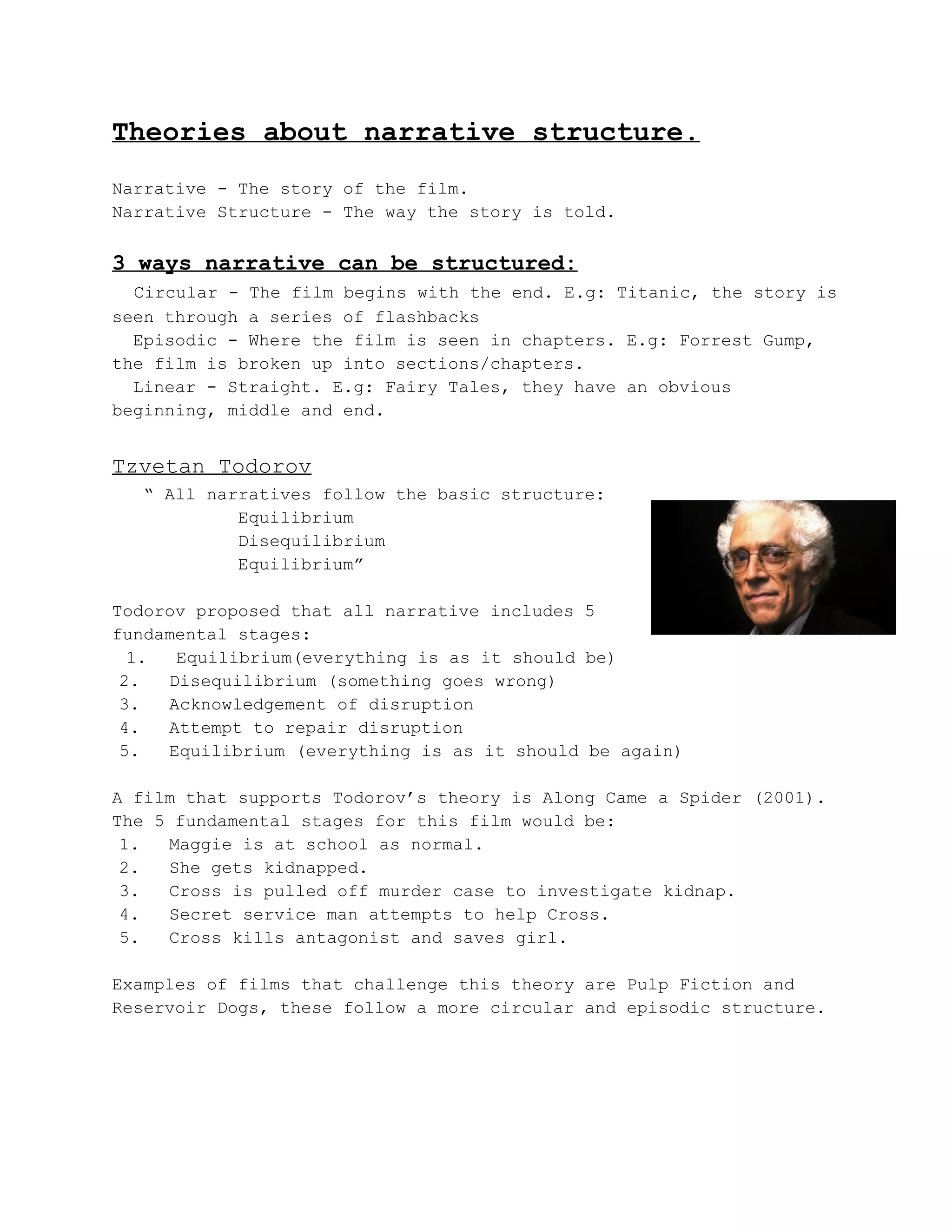
Vladimir Propp 
Propp created the theory that every narrative has 7 character types. 
Hero ­The 
person who ‘saves the day’, or 
protagonist. 
Villain ­Also 
known as antagonist 
Donor ­This 
person helps the hero by giving him/her 
a clue. 
Helper ­Like 
a sidekick, helps the hero. 
False Hero ­At 
the beginning seems like a hero, but 
in the end is ‘evil’ and not on hero’s side. 
Dispatcher ­Acts 
as a mentor. E.g: Nick Fury with the Avengers, he 
sets them their task and how to accomplish it. 
Princess ­The 
character the hero rescues. 
Another character which could also be considered is the Princess’s 
Father, who would be dominant and someone who the hero feels inferior 
to. 
In gangster films, sometimes it is hard to determine who is the 
protagonist and who is the antagonist. This is because the ‘leader’ 
if you say, is the first character we meet, and in other genres, this 
is known as the protagonist. However, in gangster films the main 
gangster takes part in violent crime, drug dealing, and many more 
extreme crimes. 
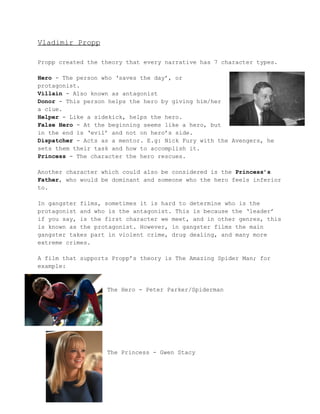
A film that supports Propp’s theory is The Amazing Spider Man; for 
example: 
The Hero ­Peter 
Parker/Spiderman 
The Princess ­Gwen 
Stacy
The Villain/Protagonist ­The 
Lizard 
The Princess’s Father ­Captain 
Stacy 
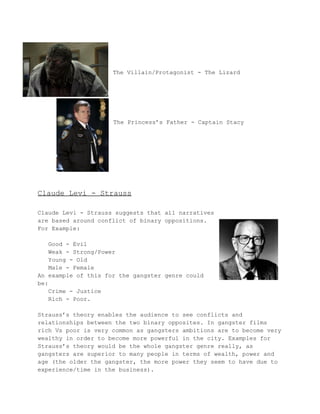
Claude Levi ­Strauss 
suggests that all narratives 
are based around conflict of binary oppositions. 
For Example: 
Good ­Evil 
Weak ­Strong/ 
Power 
Young ­Old 
Male ­Female 
An example of this for the gangster genre could 
be: 
Crime ­Justice 
Rich ­Poor. 
Strauss’s theory enables the audience to see conflicts and 
relationships between the two binary opposites. In gangster films 
rich Vs poor is very common as gangsters ambitions are to become very 
wealthy in order to become more powerful in the city. Examples for 
Strauss’s theory would be the whole gangster genre really, as 
gangsters are superior to many people in terms of wealth, power and 
age (the older the gangster, the more power they seem to have due to 
experience/time in the business).
What narrative structure will I use in my work? 
For my narrative, I think I will focus on a circular structure. This 
is because often in gangster films, such as Reservoir Dogs, circular 
narrative is shown to inform the audience what the film is truly 
about. However, this can often confuse the audience and therefore 
leads to them not truly understanding the film until the end; this 
can be seen in Pulp Fiction. I want to do this as is sets a scene 
full of action within the first 2 minutes or so, putting the audience 
on the ‘edge of their seat’. Also, I feel that as I am creating only 
a gangster film opening, I am at a disadvantage for portraying the 
narrative of my film across. Therefore I think that circular 
structure will be useful in engaging the audience and portraying the 
message of my film.

Narrative Theory

  • 1.
    Theories about narrativestructure. Narrative ­The story of the film. Narrative Structure ­The way the story is told. 3 ways narrative can be structured: Circular ­The film begins with the end. E.g: Titanic, the story is seen through a series of flashbacks Episodic ­Where the film is seen in chapters. E.g: Forrest Gump, the film is broken up into sections/chapters. Linear ­Straight. E.g: Fairy Tales, they have an obvious beginning, middle and end. Tzvetan Todorov “ All narratives follow the basic structure: Equilibrium Disequilibrium Equilibrium” Todorov proposed that all narrative includes 5 fundamental stages: 1. Equilibrium(everything is as it should be) 2. Disequilibrium (something goes wrong) 3. Acknowledgement of disruption 4. Attempt to repair disruption 5. Equilibrium (everything is as it should be again) A film that supports Todorov’s theory is Along Came a Spider (2001). The 5 fundamental stages for this film would be: 1. Maggie is at school as normal. 2. She gets kidnapped. 3. Cross is pulled off murder case to investigate kidnap. 4. Secret service man attempts to help Cross. 5. Cross kills antagonist and saves girl. Examples of films that challenge this theory are Pulp Fiction and Reservoir Dogs, these follow a more circular and episodic structure.
  • 2.
    Vladimir Propp Proppcreated the theory that every narrative has 7 character types. Hero ­The person who ‘saves the day’, or protagonist. Villain ­Also known as antagonist Donor ­This person helps the hero by giving him/her a clue. Helper ­Like a sidekick, helps the hero. False Hero ­At the beginning seems like a hero, but in the end is ‘evil’ and not on hero’s side. Dispatcher ­Acts as a mentor. E.g: Nick Fury with the Avengers, he sets them their task and how to accomplish it. Princess ­The character the hero rescues. Another character which could also be considered is the Princess’s Father, who would be dominant and someone who the hero feels inferior to. In gangster films, sometimes it is hard to determine who is the protagonist and who is the antagonist. This is because the ‘leader’ if you say, is the first character we meet, and in other genres, this is known as the protagonist. However, in gangster films the main gangster takes part in violent crime, drug dealing, and many more extreme crimes. A film that supports Propp’s theory is The Amazing Spider Man; for example: The Hero ­Peter Parker/Spiderman The Princess ­Gwen Stacy
  • 3.
    The Villain/Protagonist ­The Lizard The Princess’s Father ­Captain Stacy Claude Levi ­Strauss Claude Levi ­Strauss suggests that all narratives are based around conflict of binary oppositions. For Example: Good ­Evil Weak ­Strong/ Power Young ­Old Male ­Female An example of this for the gangster genre could be: Crime ­Justice Rich ­Poor. Strauss’s theory enables the audience to see conflicts and relationships between the two binary opposites. In gangster films rich Vs poor is very common as gangsters ambitions are to become very wealthy in order to become more powerful in the city. Examples for Strauss’s theory would be the whole gangster genre really, as gangsters are superior to many people in terms of wealth, power and age (the older the gangster, the more power they seem to have due to experience/time in the business).
  • 4.
    What narrative structurewill I use in my work? For my narrative, I think I will focus on a circular structure. This is because often in gangster films, such as Reservoir Dogs, circular narrative is shown to inform the audience what the film is truly about. However, this can often confuse the audience and therefore leads to them not truly understanding the film until the end; this can be seen in Pulp Fiction. I want to do this as is sets a scene full of action within the first 2 minutes or so, putting the audience on the ‘edge of their seat’. Also, I feel that as I am creating only a gangster film opening, I am at a disadvantage for portraying the narrative of my film across. Therefore I think that circular structure will be useful in engaging the audience and portraying the message of my film.