Chapter 7


Minor Scales and Keys
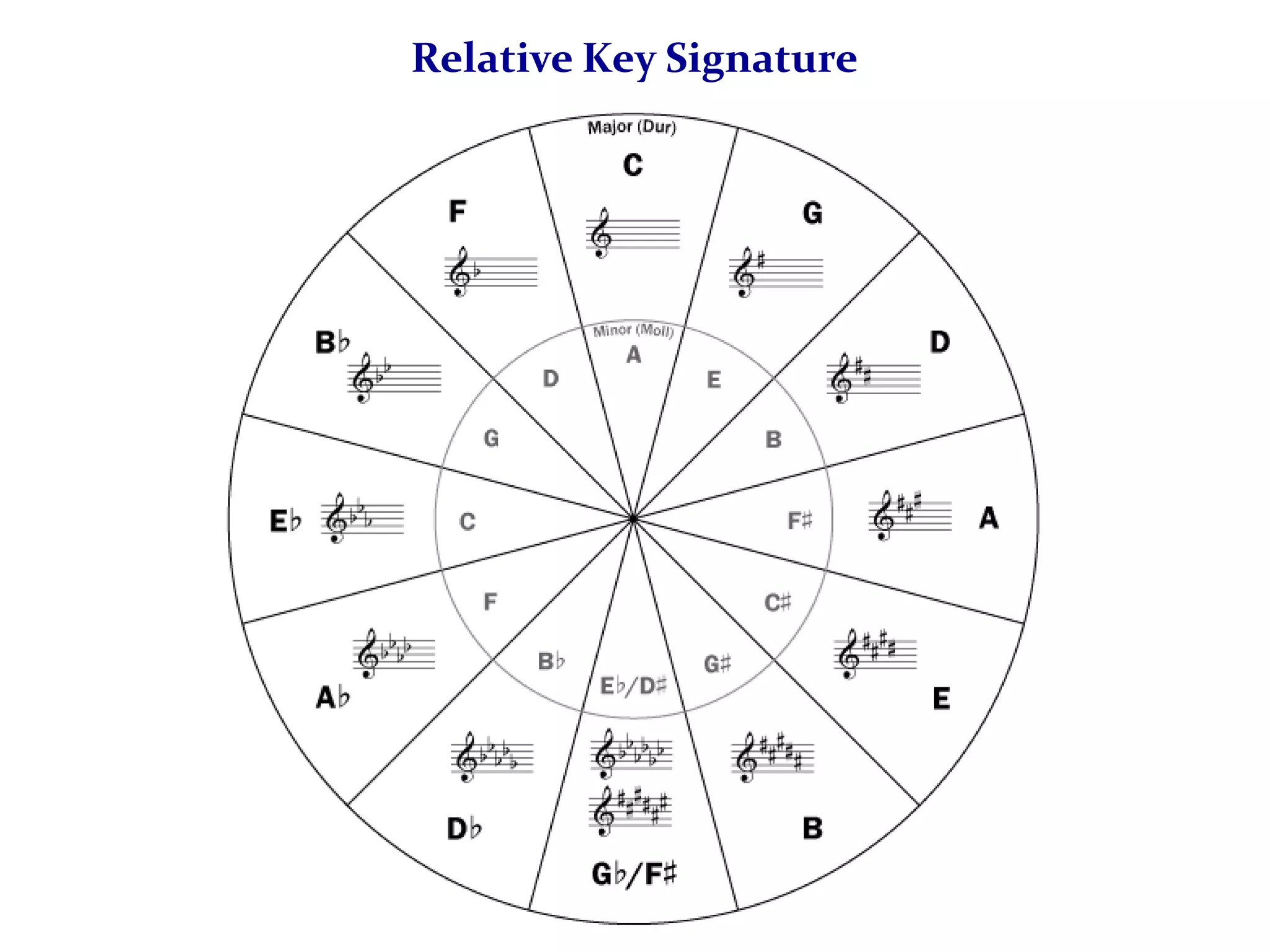
Relative key signatures
• Major/minor pairs that share the same key
  signature are said to be relative
  (Ex. “a minor is the relative key of C Major”)

• The key signature will be identical in terms
  of number and placement of accidentals
Relative Key Signature
Parallel Key Signatures
• Parallel major/minor keys share the same
  tonic but have different key signatures and a
  different arrangement of whole and half
  steps.
  (Ex. “c minor is the parallel key of C Major”.
  C minor has 3 flats and C major does not have
    any flats/sharps.)
Minor Scales
• There are three types of minor scale:
  – Natural (pure)
  – Harmonic
  – Melodic

• You will not need to know the order of
  whole and half steps IF you know the key
  signature and rules for the scale.
Natural minor
• The natural minor scale (like the major scale)
  is a diatonic scale with a minor key
  signature, with no other accidentals required


• Half-steps are re-mi (2-3)and sol-la (5-6)
• WHWWHWW
Harmonic minor
•        This scale is the most often encountered
         minor scale!
    1.       begin with the natural minor
    2.       raise the seventh scale degree(7th, ti) by one
             half-step.
         -     Be SURE to raise the seventh ONLY in the scale
               and NOT in the key signature (ALWAYS appears as
               an accidental)
         -     In flat keys a raised seventh may use a natural, not
               a sharp (and in sharp keys may need a double-
               sharp)… take care to note the key signature!
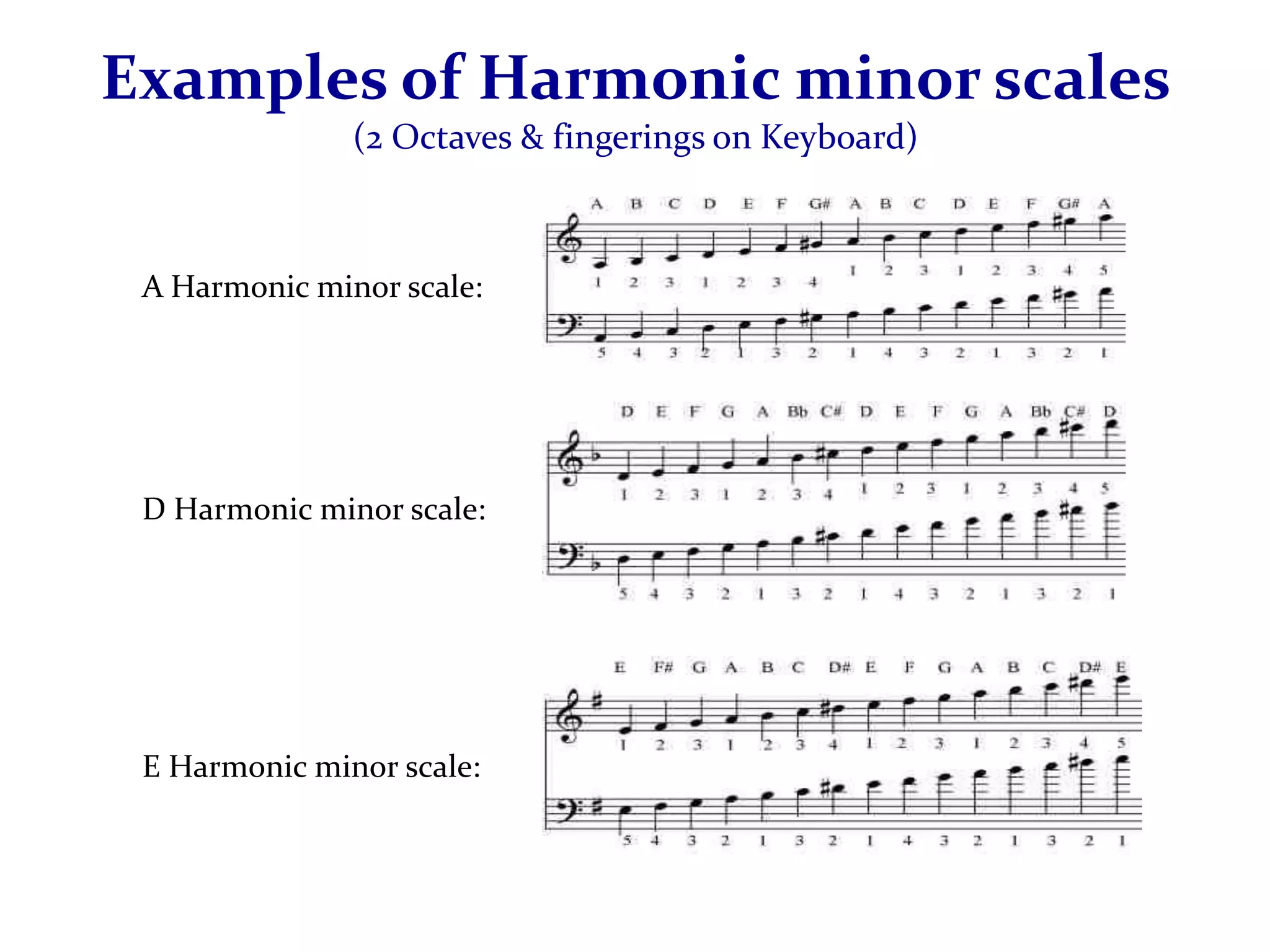
Examples of Harmonic minor scales
               (2 Octaves & fingerings on Keyboard)


 A Harmonic minor scale:


 D Harmonic minor scale:


 E Harmonic minor scale:
Melodic minor
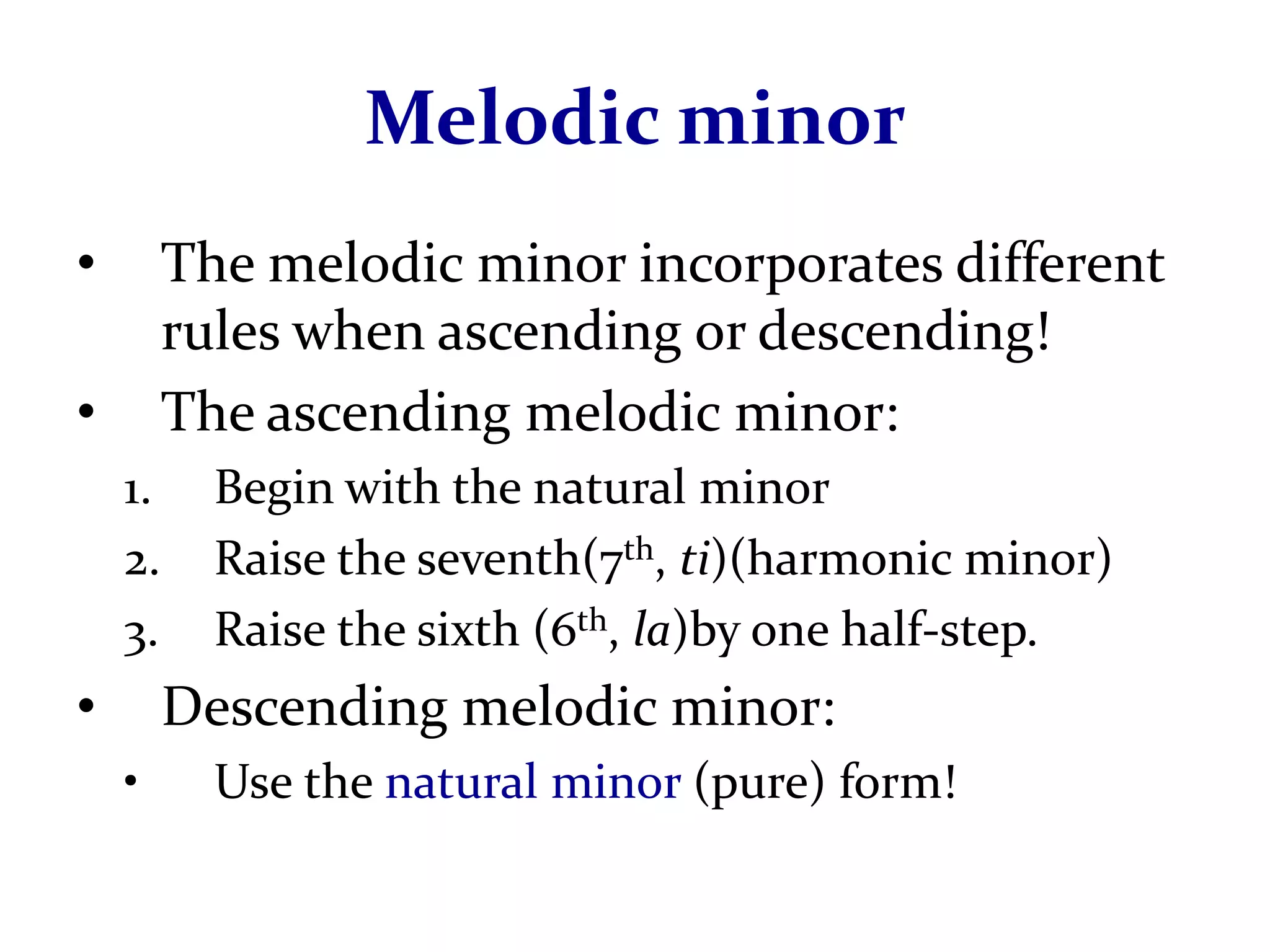
•        The melodic minor incorporates different
         rules when ascending or descending!
•        The ascending melodic minor:
    1.     Begin with the natural minor
    2.     Raise the seventh(7th, ti)(harmonic minor)
    3.     Raise the sixth (6th, la)by one half-step.
•        Descending melodic minor:
    •      Use the natural minor (pure) form!
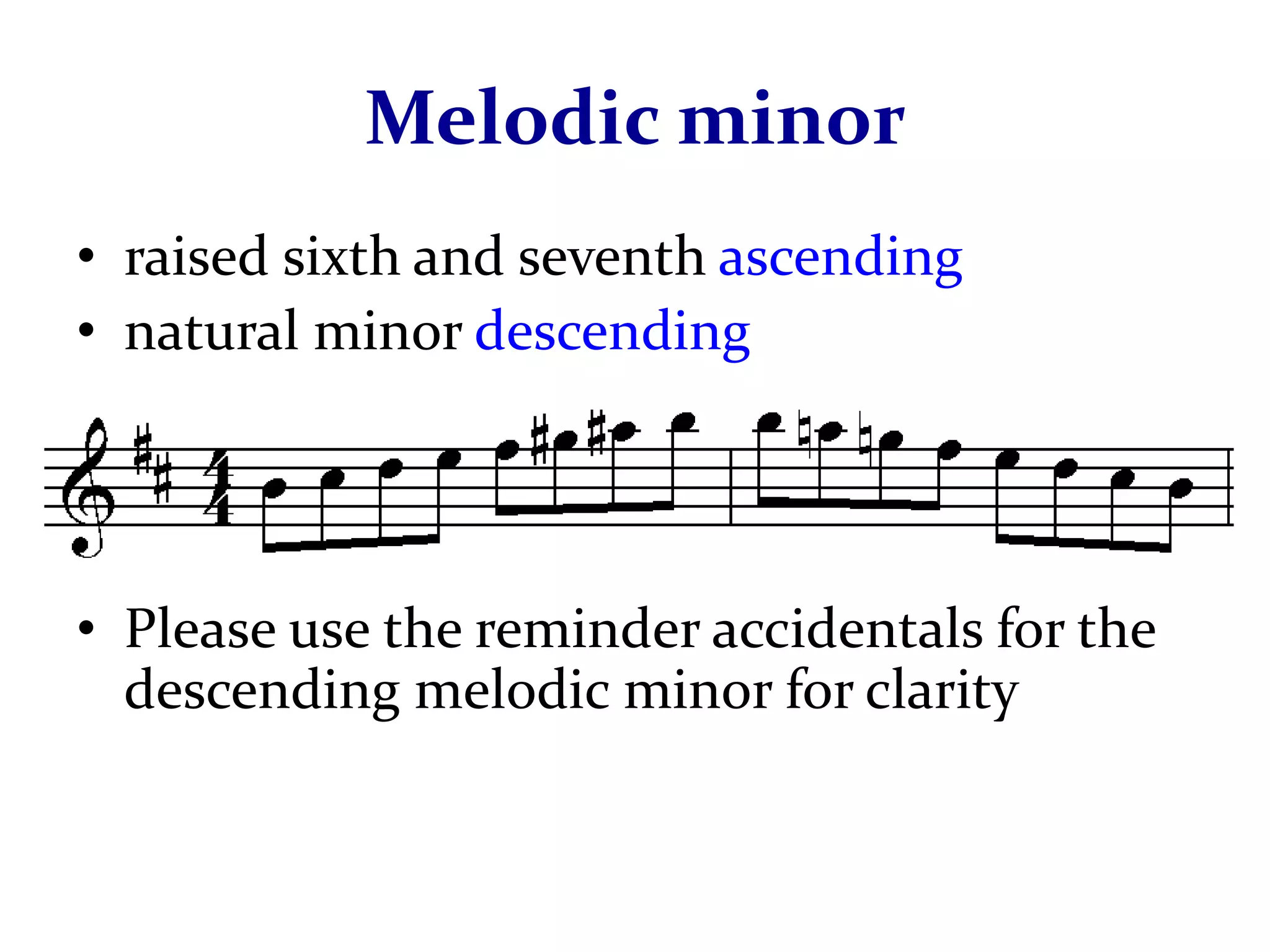
Melodic minor
• raised sixth and seventh ascending
• natural minor descending


• Please use the reminder accidentals for the
  descending melodic minor for clarity
A minor scales
                      Fingering on Keyboard


Fingering #
    1 2 3     1   2    3   4   5   4   3   2   1   3   2   1
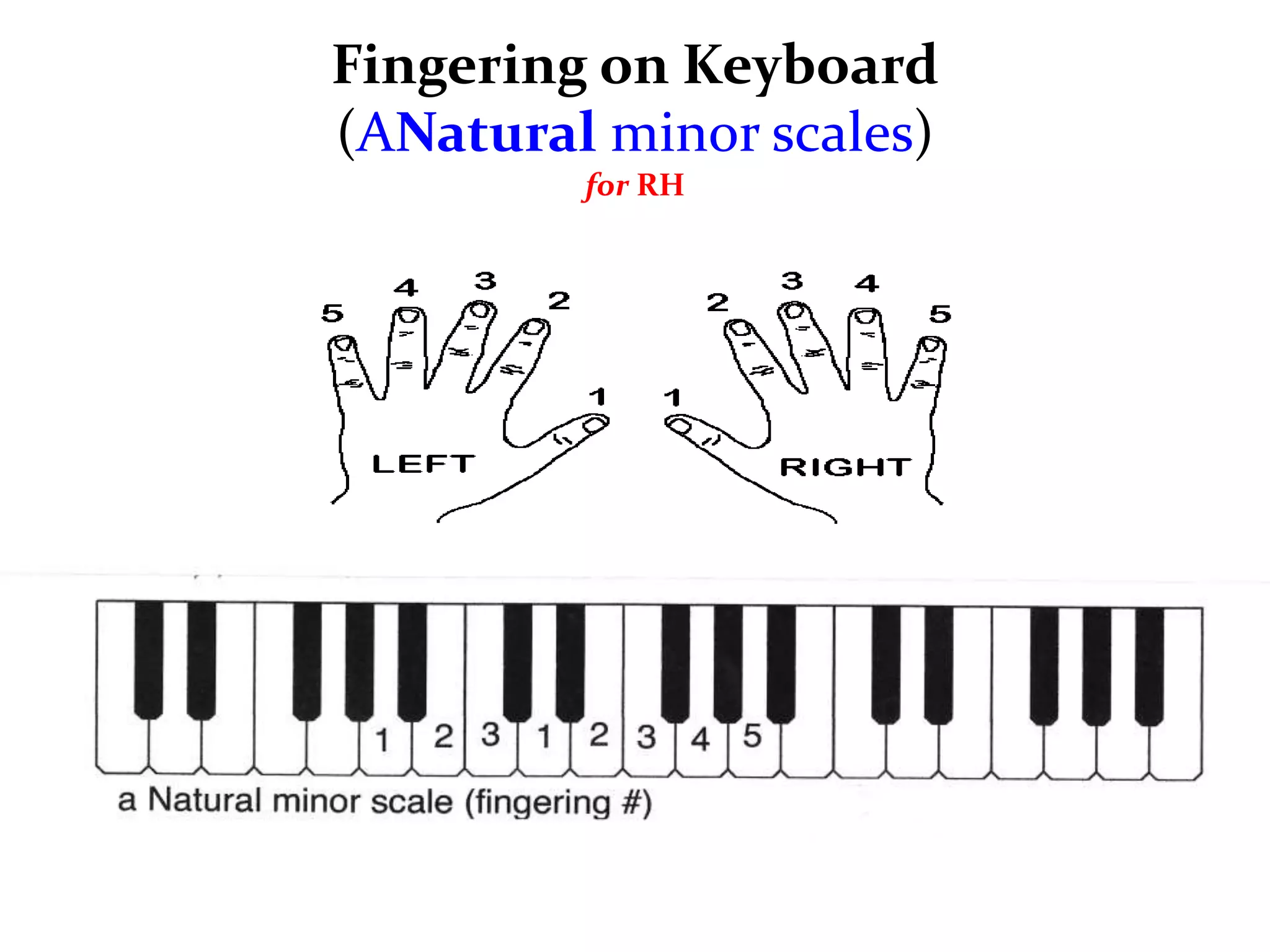
Fingering on Keyboard
(ANatural minor scales)
         for RH
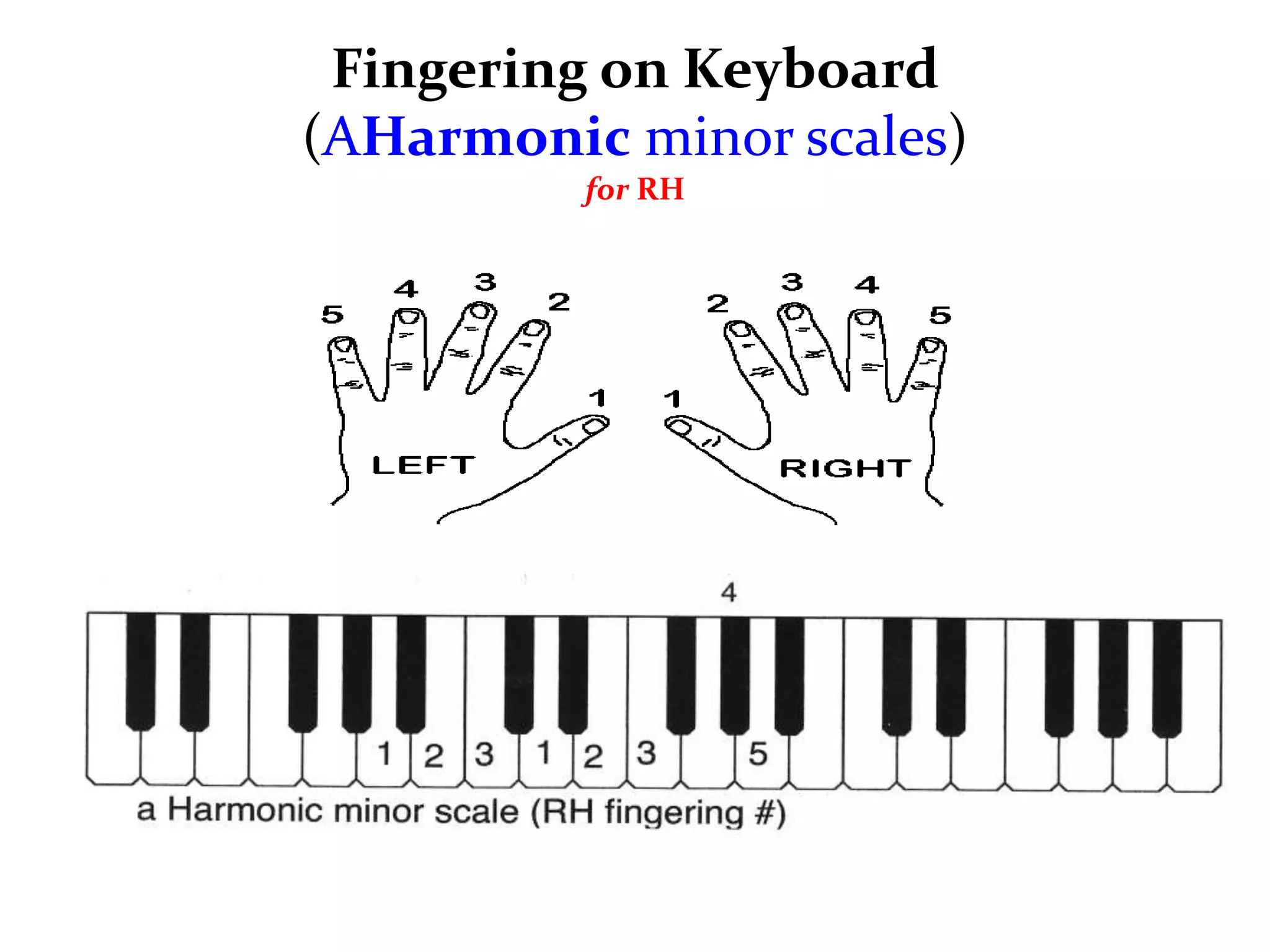
Fingering on Keyboard
(AHarmonic minor scales)
          for RH
Fingering on Keyboard
(AMelodic minor scales)
         for RH

Ch. 7 minor scales

  • 1.
  • 2.
    Relative key signatures •Major/minor pairs that share the same key signature are said to be relative (Ex. “a minor is the relative key of C Major”) • The key signature will be identical in terms of number and placement of accidentals
  • 3.
  • 4.
    Parallel Key Signatures •Parallel major/minor keys share the same tonic but have different key signatures and a different arrangement of whole and half steps. (Ex. “c minor is the parallel key of C Major”. C minor has 3 flats and C major does not have any flats/sharps.)
  • 5.
    Minor Scales • Thereare three types of minor scale: – Natural (pure) – Harmonic – Melodic • You will not need to know the order of whole and half steps IF you know the key signature and rules for the scale.
  • 6.
    Natural minor • Thenatural minor scale (like the major scale) is a diatonic scale with a minor key signature, with no other accidentals required • Half-steps are re-mi (2-3)and sol-la (5-6) • WHWWHWW
  • 7.
    Harmonic minor • This scale is the most often encountered minor scale! 1. begin with the natural minor 2. raise the seventh scale degree(7th, ti) by one half-step. - Be SURE to raise the seventh ONLY in the scale and NOT in the key signature (ALWAYS appears as an accidental) - In flat keys a raised seventh may use a natural, not a sharp (and in sharp keys may need a double- sharp)… take care to note the key signature!
  • 8.
    Examples of Harmonicminor scales (2 Octaves & fingerings on Keyboard) A Harmonic minor scale: D Harmonic minor scale: E Harmonic minor scale:
  • 9.
    Melodic minor • The melodic minor incorporates different rules when ascending or descending! • The ascending melodic minor: 1. Begin with the natural minor 2. Raise the seventh(7th, ti)(harmonic minor) 3. Raise the sixth (6th, la)by one half-step. • Descending melodic minor: • Use the natural minor (pure) form!
  • 10.
    Melodic minor • raisedsixth and seventh ascending • natural minor descending • Please use the reminder accidentals for the descending melodic minor for clarity
  • 11.
    A minor scales Fingering on Keyboard Fingering # 1 2 3 1 2 3 4 5 4 3 2 1 3 2 1
  • 12.
    Fingering on Keyboard (ANaturalminor scales) for RH
  • 13.
  • 14.
    Fingering on Keyboard (AMelodicminor scales) for RH