Frontend automation and stability
@matenadasdi
Ustream, Inc
Common sentences from the past
Writing tests is a huge overhead
Browsers are unpredictable and we are not able to test real behaviour
Let’s write this frontend task in PHP, Ruby, Python, Bash …
Selenium is unstable and complicated
“
It’s a new ERA
Let’s ride it!
Testing
!
Trendy question:
TDD is dead?
</flame>
TDD/BDD/HDD/DVD…
It doesn’t matter,
Testing is a must in large scale!
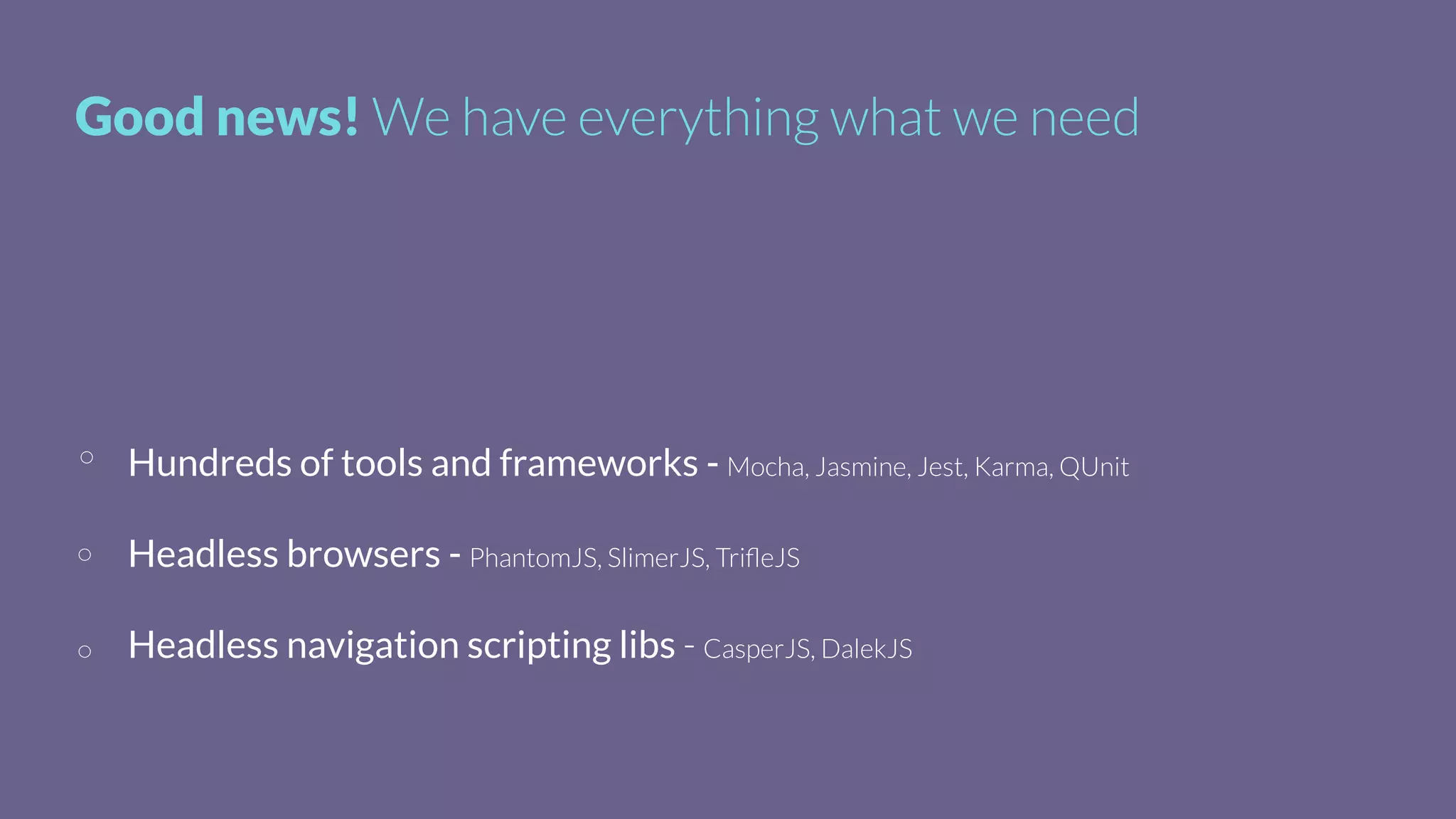
Good news! We have everything what we need
Hundreds of tools and frameworks - Mocha, Jasmine, Jest, Karma, QUnit
Headless browsers - PhantomJS, SlimerJS, TrifleJS
Headless navigation scripting libs - CasperJS, DalekJS
Our setup at
1. Unit testing
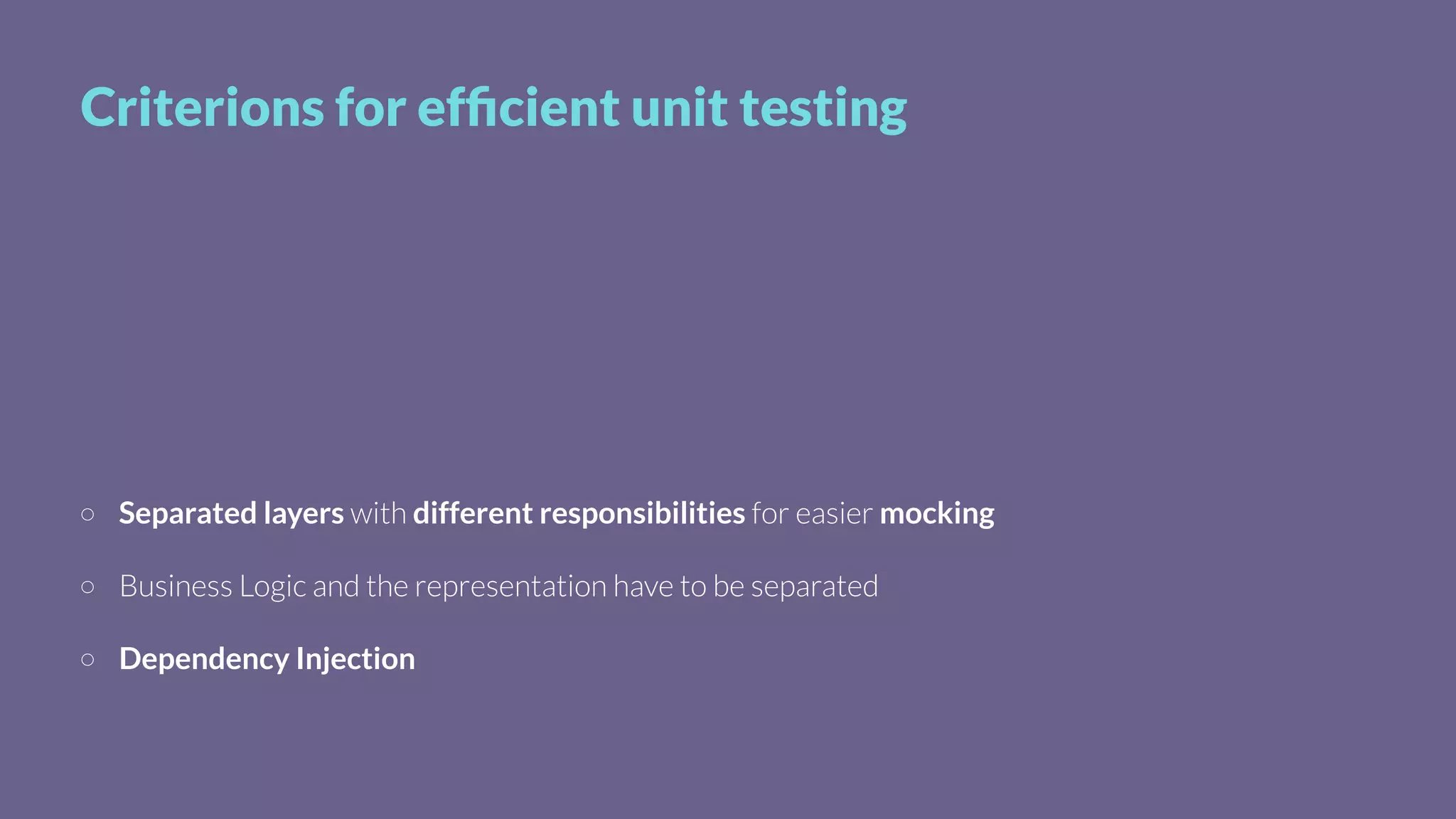
Criterions for efficient unit testing
Separated layers with different responsibilities for easier mocking
Business Logic and the representation have to be separated
Dependency Injection
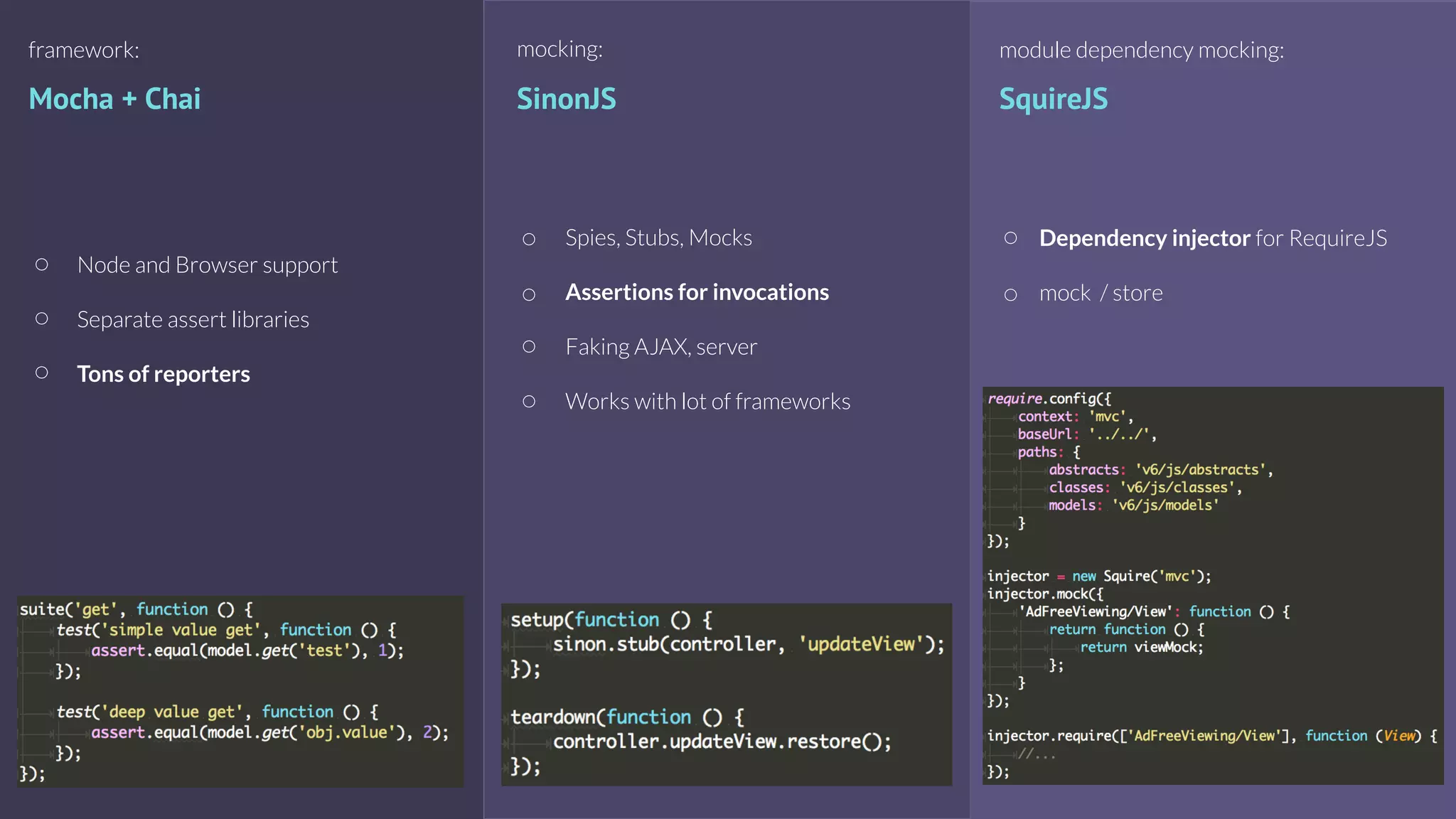
Mocha + Chai
framework:
Node and Browser support
Separate assert libraries
Tons of reporters
mocking:
SinonJS
Spies, Stubs, Mocks
Assertions for invocations
Faking AJAX, server
Works with lot of frameworks
module dependency mocking:
SquireJS
Dependency injector for RequireJS
mock / store
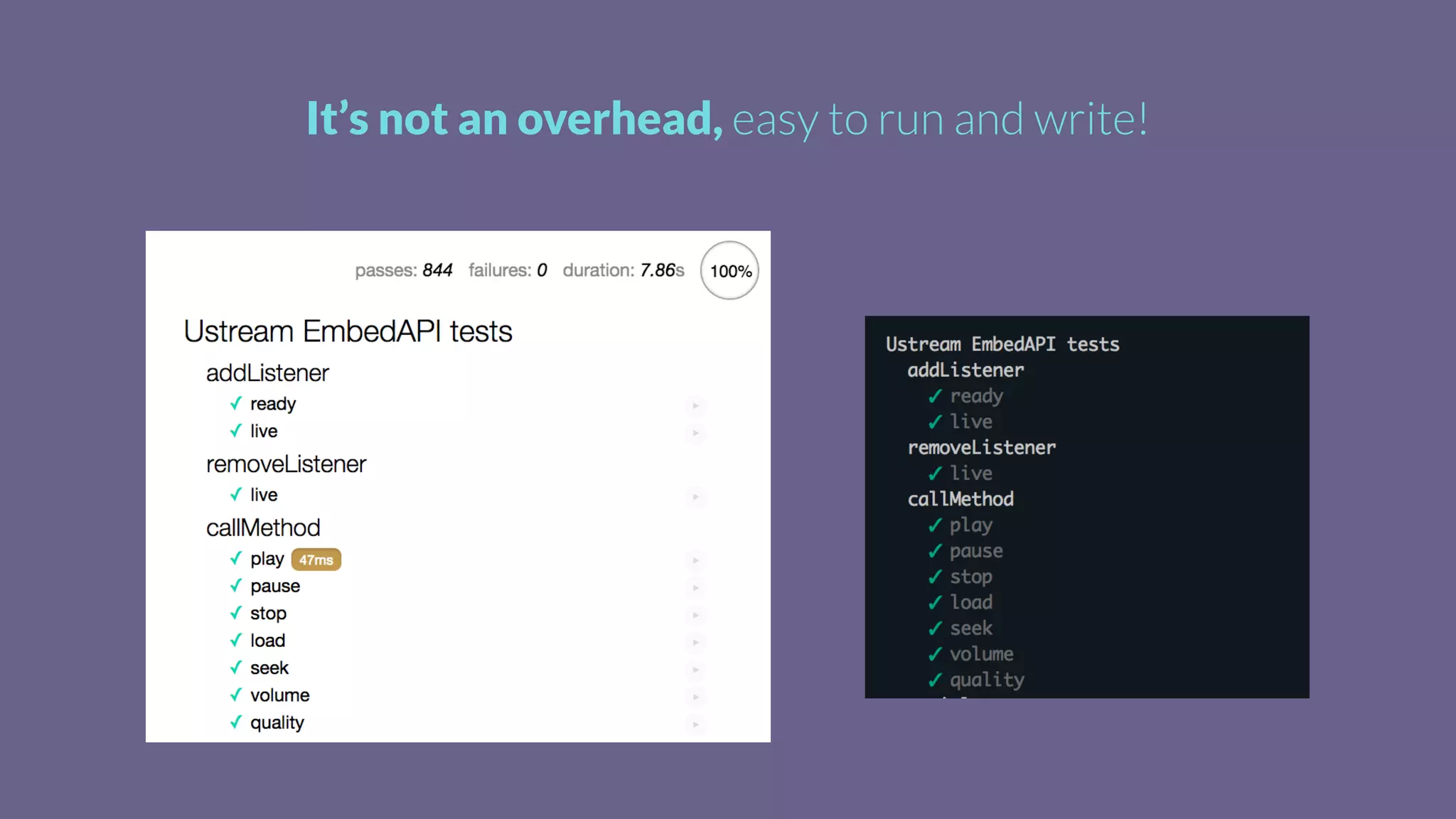
It’s not an overhead, easy to run and write!
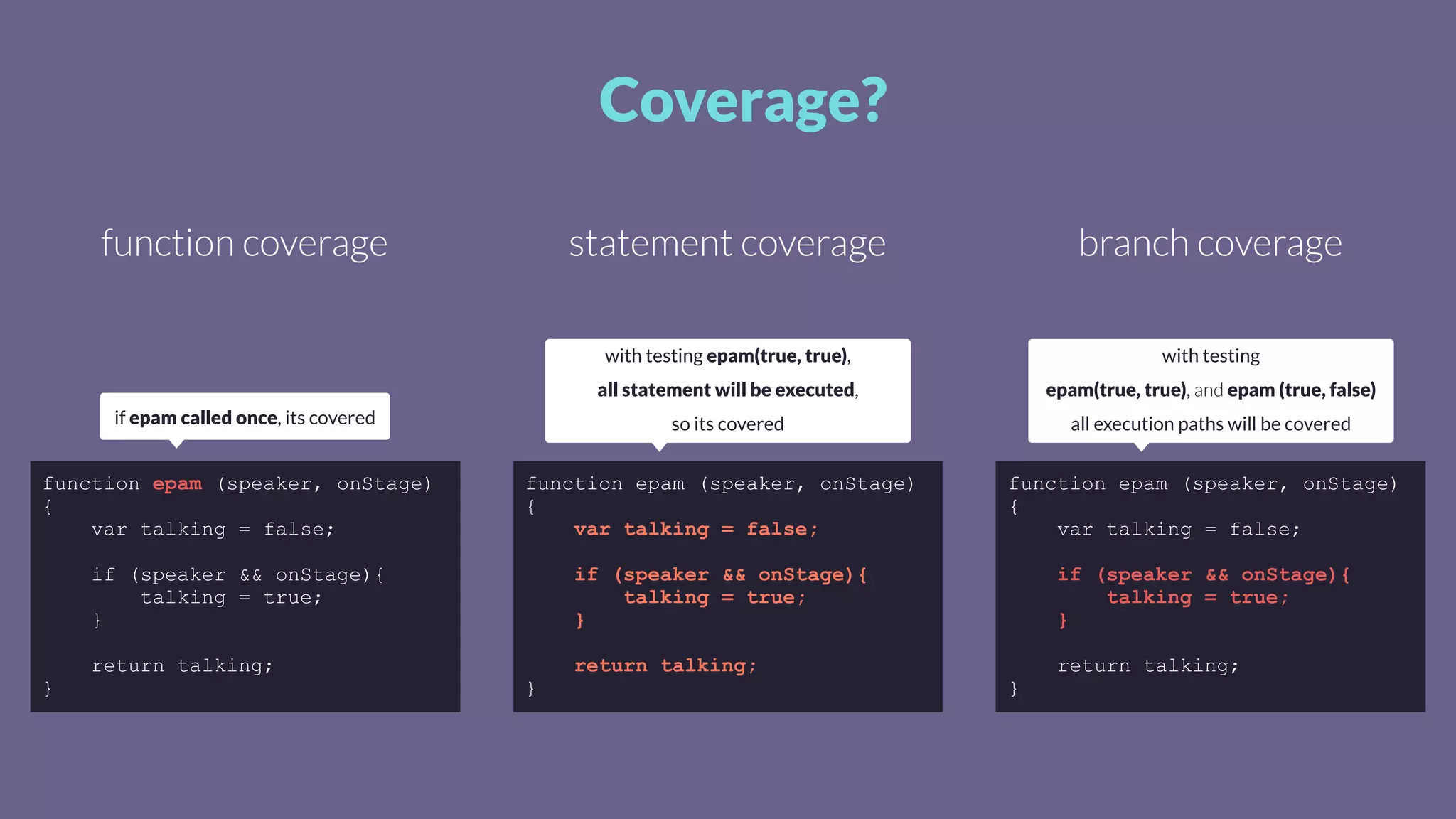
Coverage?
function coverage
function epam (speaker, onStage)
{
var talking = false;
!
if (speaker && onStage){
talking = true;
}
!
return talking;
}
if epam called once, its covered
statement coverage
function epam (speaker, onStage)
{
var talking = false;
!
if (speaker && onStage){
talking = true;
}
!
return talking;
}
with testing epam(true, true),
all statement will be executed,
so its covered
branch coverage
function epam (speaker, onStage)
{
var talking = false;
!
if (speaker && onStage){
talking = true;
}
!
return talking;
}
with testing
epam(true, true), and epam (true, false)
all execution paths will be covered
Ok it’s nice, but is it possible in JS?
;)
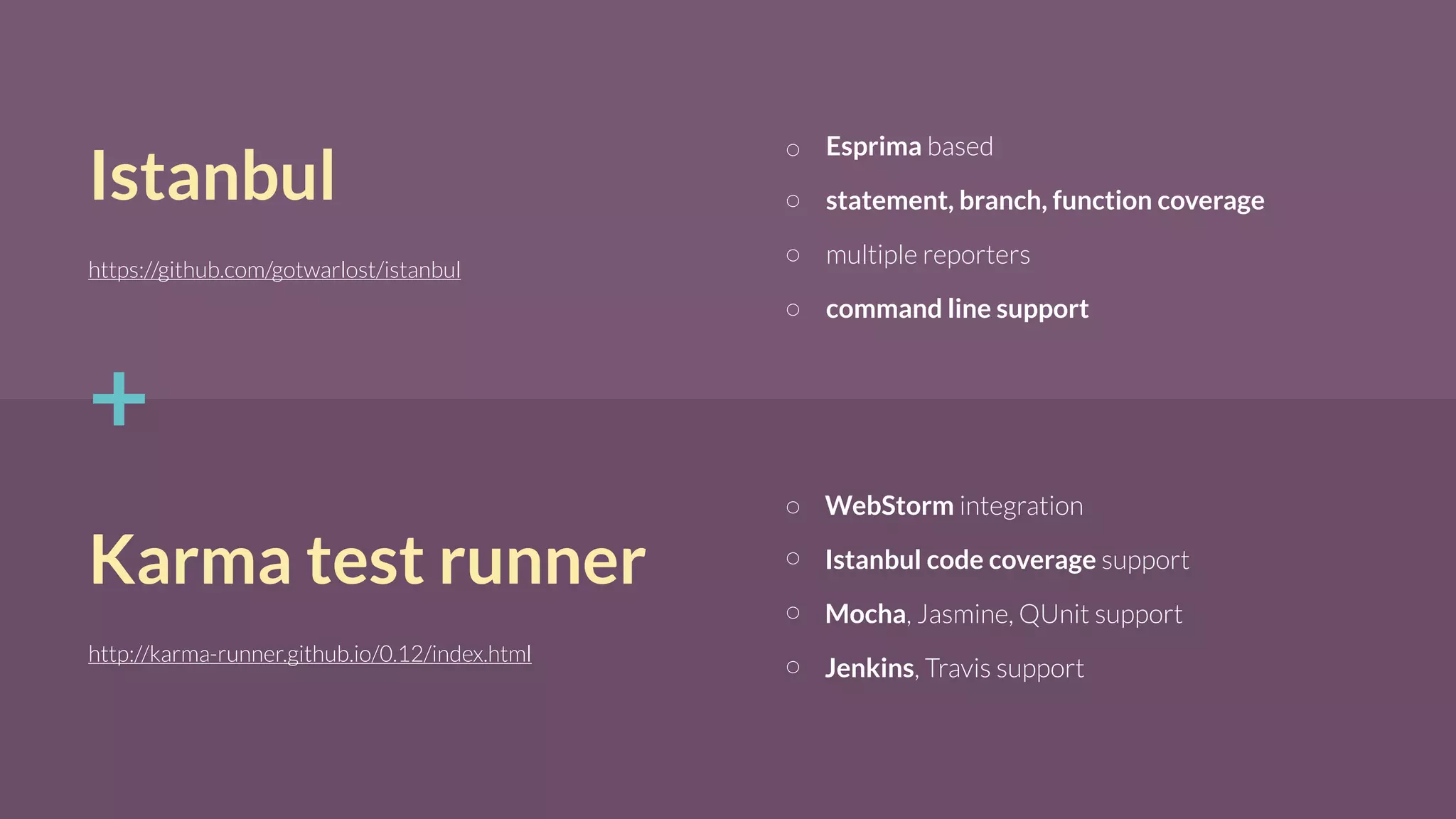
Istanbul
https://github.com/gotwarlost/istanbul
Esprima based
statement, branch, function coverage
multiple reporters
command line support
Karma test runner
http://karma-runner.github.io/0.12/index.html
+
WebStorm integration
Istanbul code coverage support
Mocha, Jasmine, QUnit support
Jenkins, Travis support
Unit tests cannot cover everything!
Browser / DOM / Interaction specific behaviour
should be tested in a different way
2. UI testing
The genie is out of the bottle
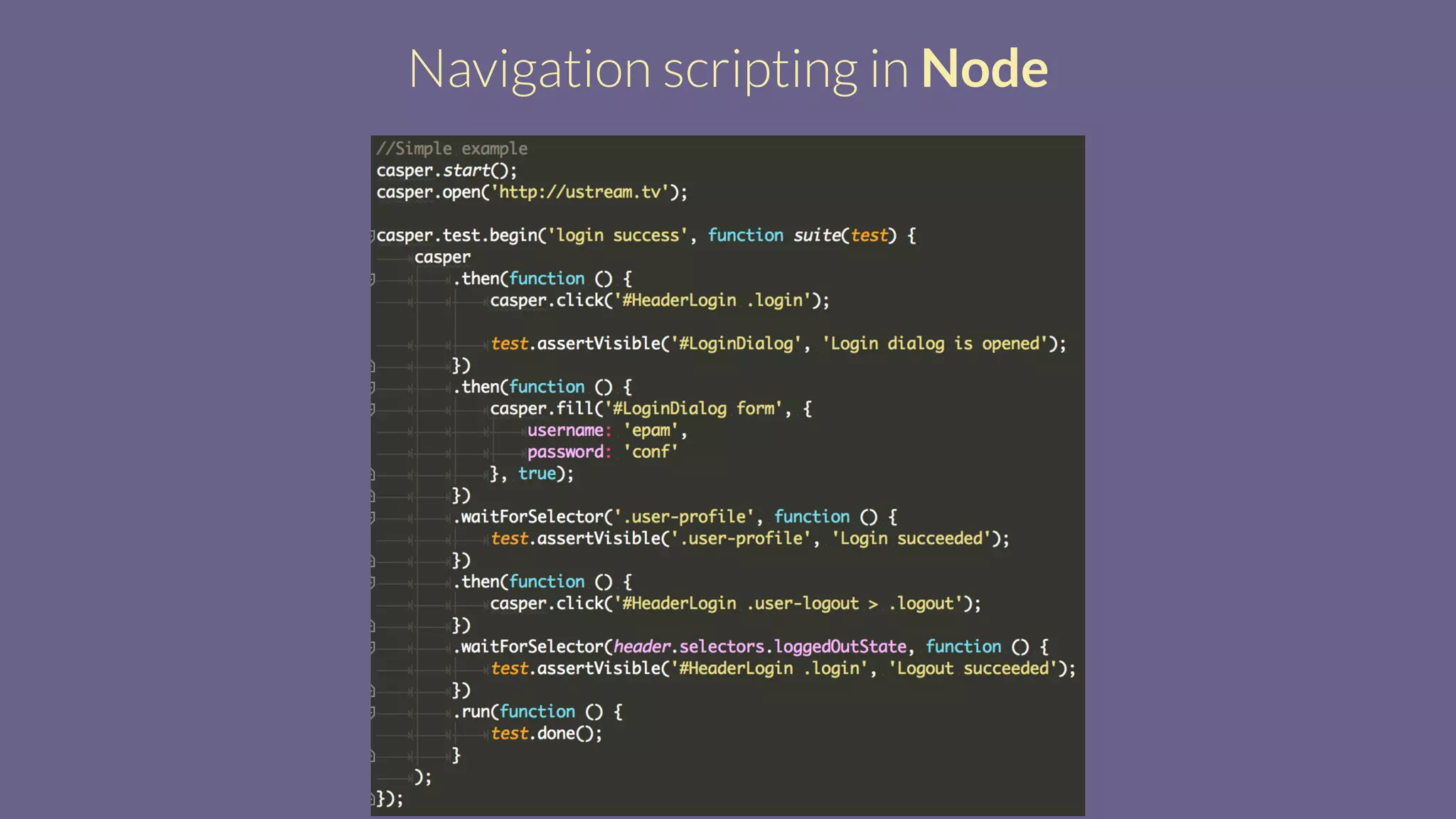
Navigation scripting in Node
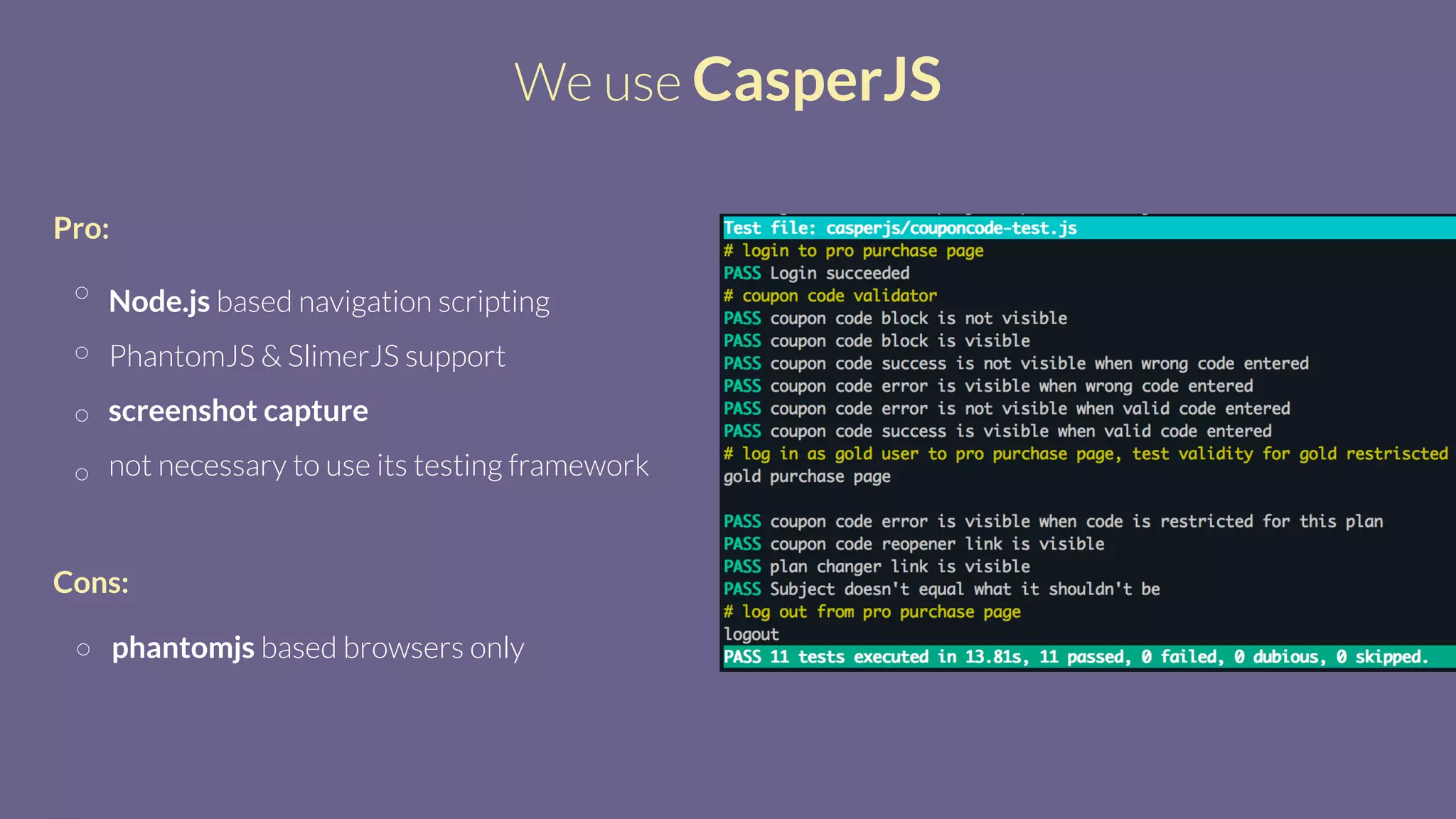
We use CasperJS
Node.js based navigation scripting
PhantomJS & SlimerJS support
screenshot capture
not necessary to use its testing framework
Pro:
phantomjs based browsers only
Cons:
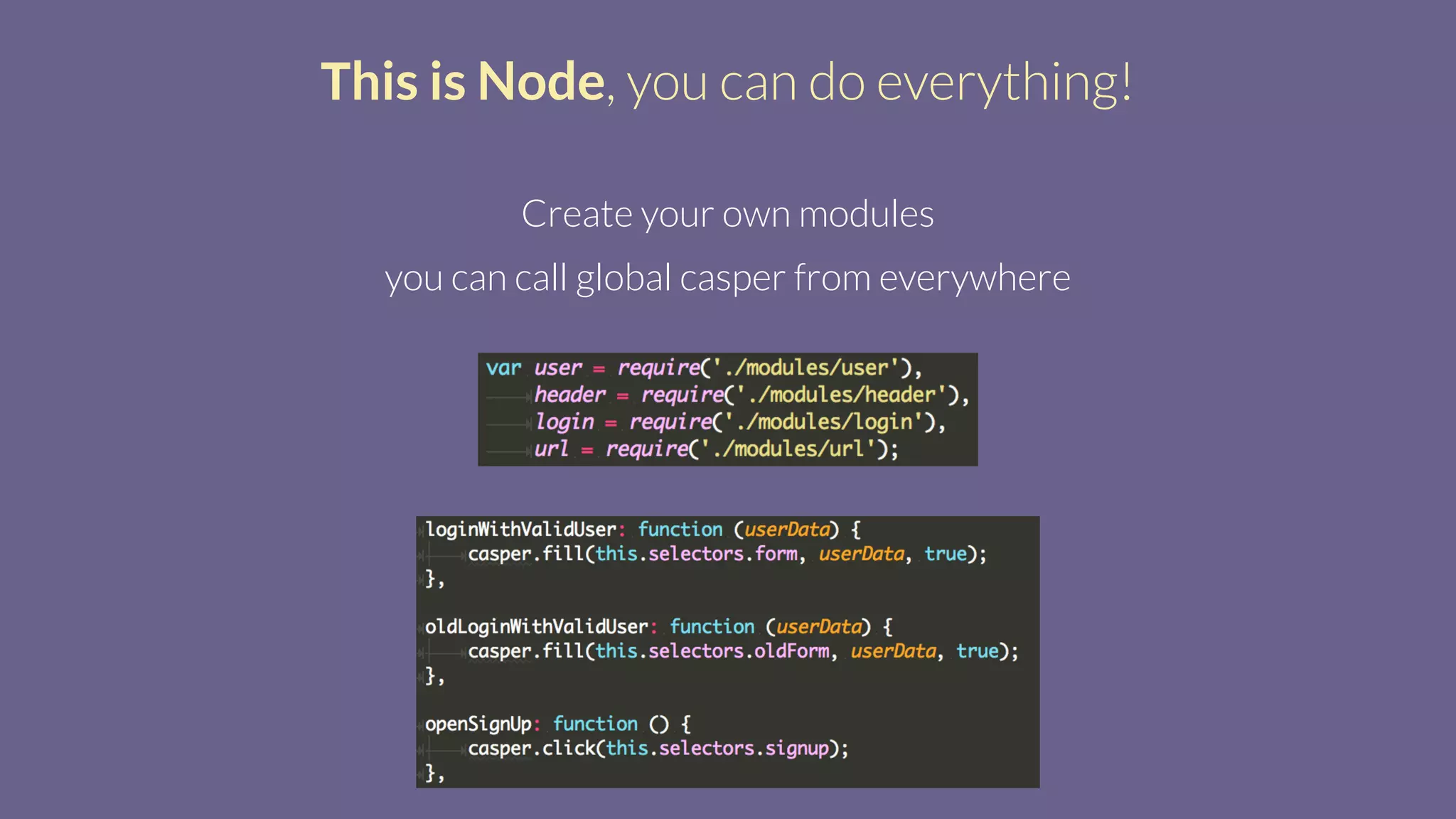
This is Node, you can do everything!
Create your own modules
you can call global casper from everywhere
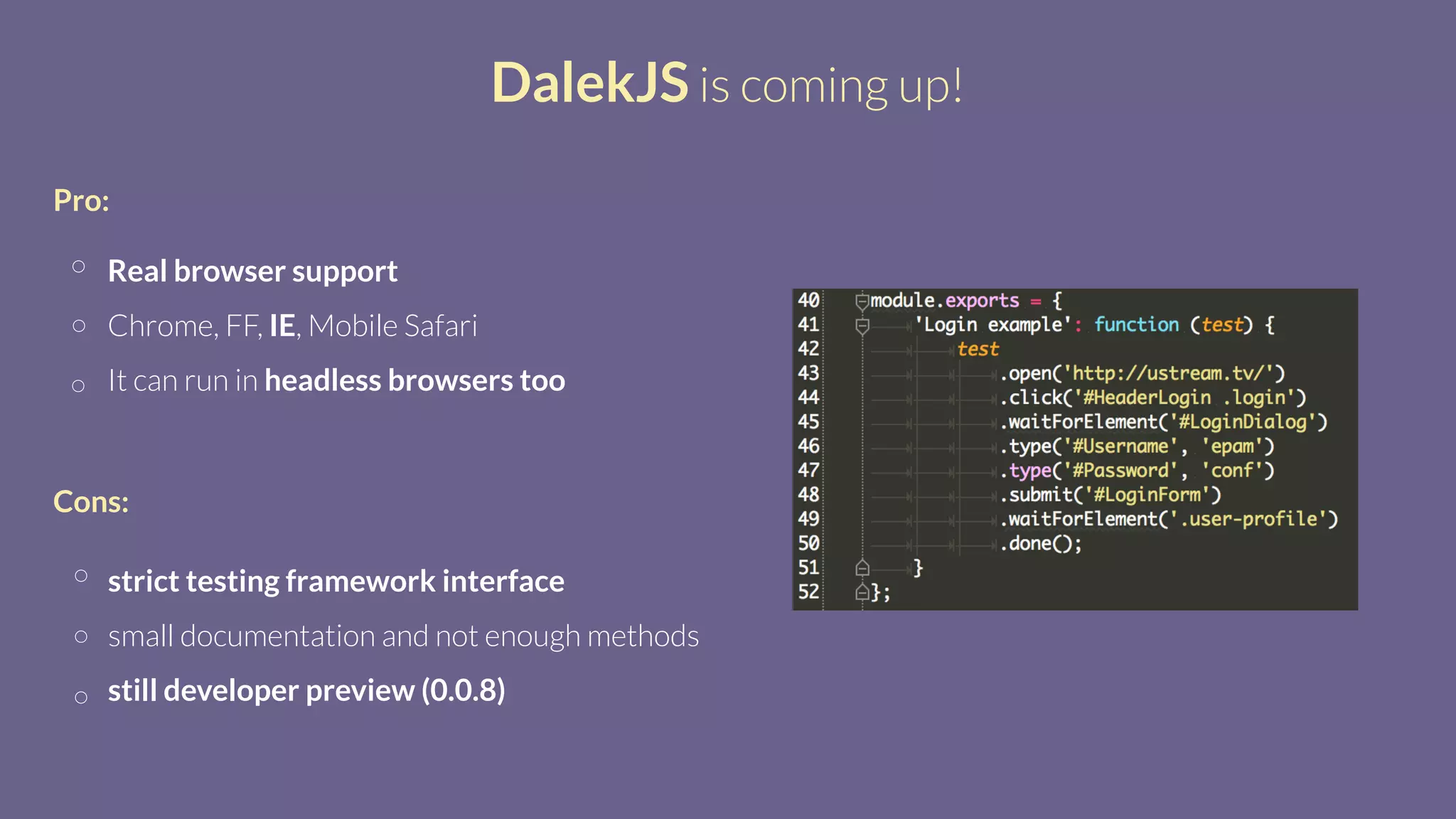
DalekJS is coming up!
Real browser support
Chrome, FF, IE, Mobile Safari
It can run in headless browsers too
Pro:
strict testing framework interface
small documentation and not enough methods
still developer preview (0.0.8)
Cons:
3. Test automation team
selenium, real browsers, complex features, mobile devices
4. Manual QA team
Smoke tests, regression tests, screenshot comparison tool, internal debug tools
Automation
We picked Grunt
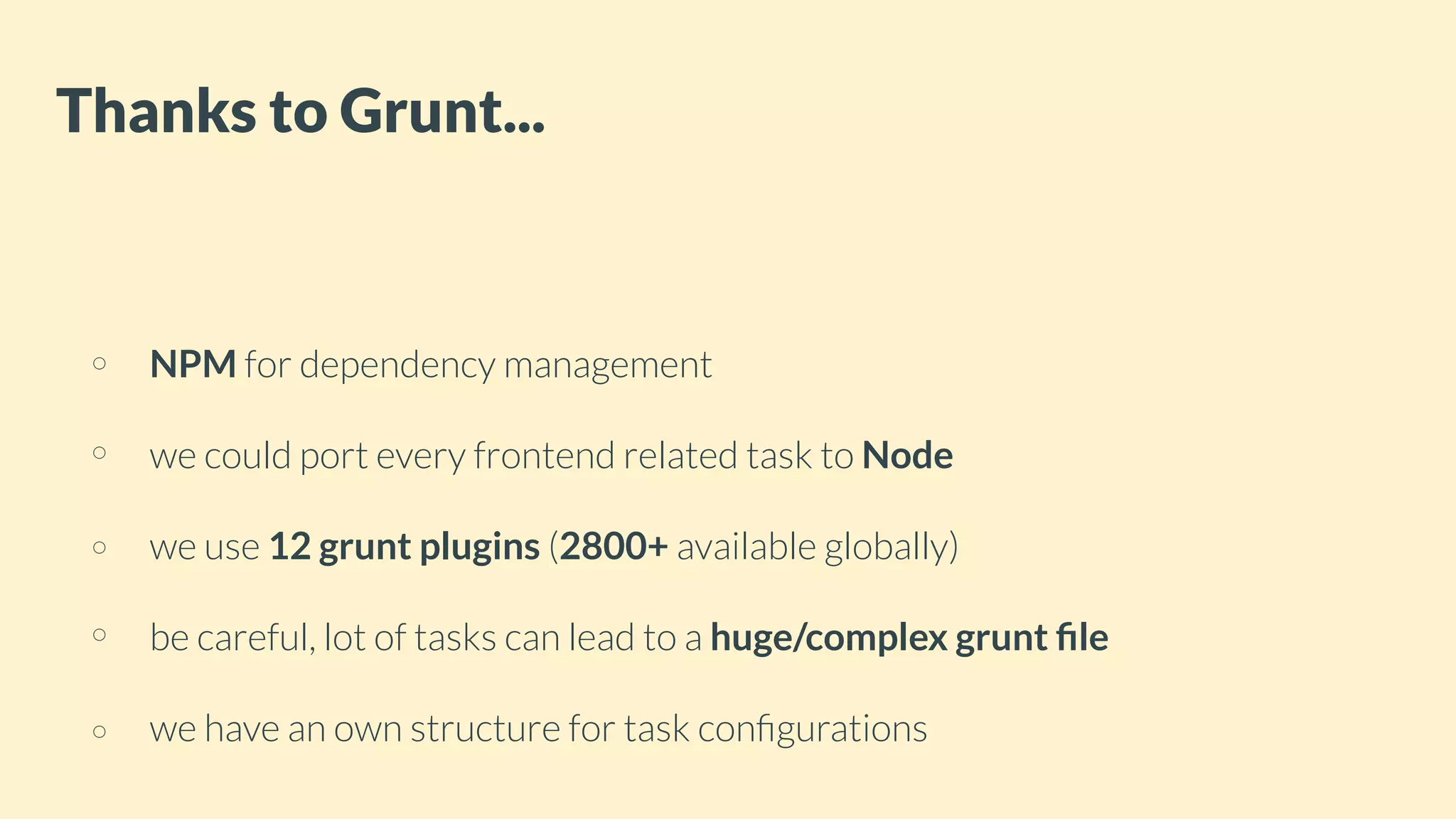
NPM for dependency management
we could port every frontend related task to Node
we use 12 grunt plugins (2800+ available globally)
be careful, lot of tasks can lead to a huge/complex grunt file
we have an own structure for task configurations
Thanks to Grunt...
Why not Gulp?
a bad question
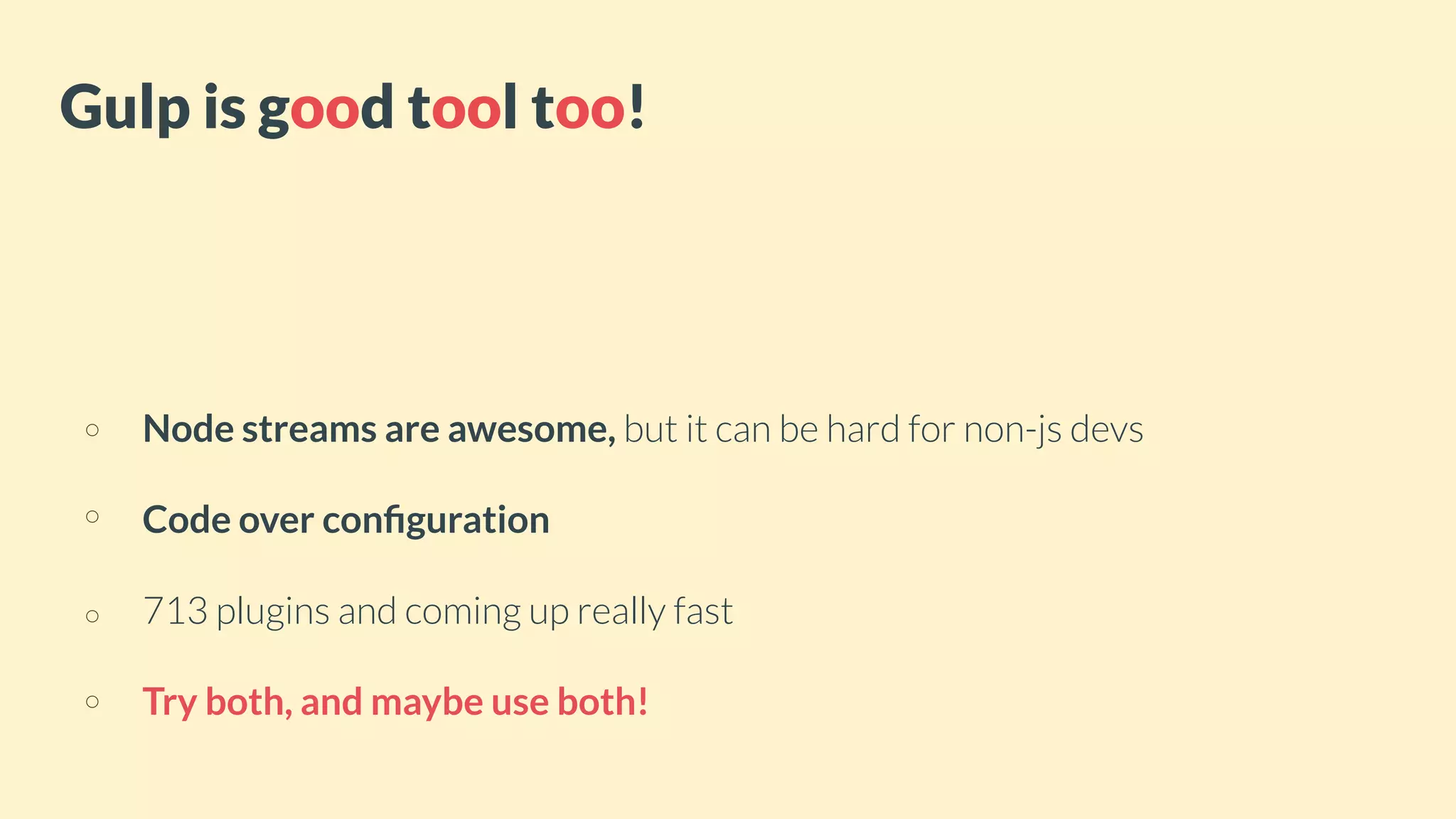
Node streams are awesome, but it can be hard for non-js devs
Code over configuration
713 plugins and coming up really fast
Try both, and maybe use both!
Gulp is good tool too!
Standards & Rules
!
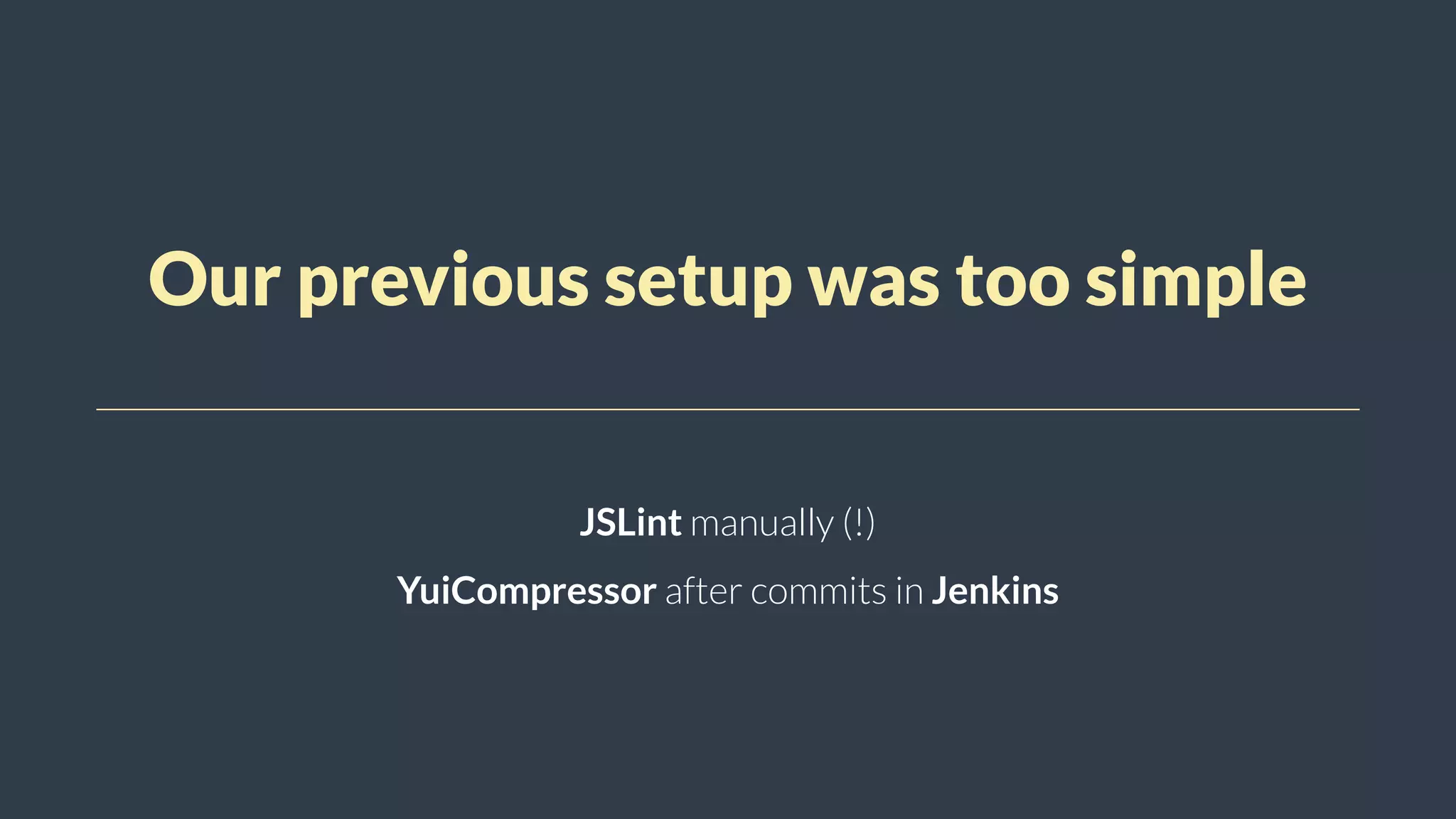
Our previous setup was too simple
JSLint manually (!)
YuiCompressor after commits in Jenkins
Rules are not rules if you break them!
Everyone writes different code
and it’s normal
Code style! Be aggressive!
a smarter JSLint
separated configuration file
everyone can run the same config
most IDEs can read it globally
Esprima!!!!!!!!!!!!!!!!!!!!!!!!!!44
https://github.com/ariya/esprima
more possibilities with
{
"type": "Program",
"body": [{
"type": "IfStatement",
"test": {
"type": "Identifier",
"name": "epam"
},
“consequent": {
"type": "BlockStatement",
"body": [{
"type": "ExpressionStatement",
"expression": {
"type": "AssignmentExpression",
"operator": "=",
"left": {
"type": "Identifier",
"name": "conf"
},
"right": {
"type": "Literal",
"value": "SEC",
"raw": "'SEC'"
}
}
}]
},
"alternate": null
}]
var epam = true;
!
if (epam) {
conf = 'SEC';
}
Semantics & your own rules
Esprima based
pluginable
thanks to the AST it can examine semantics
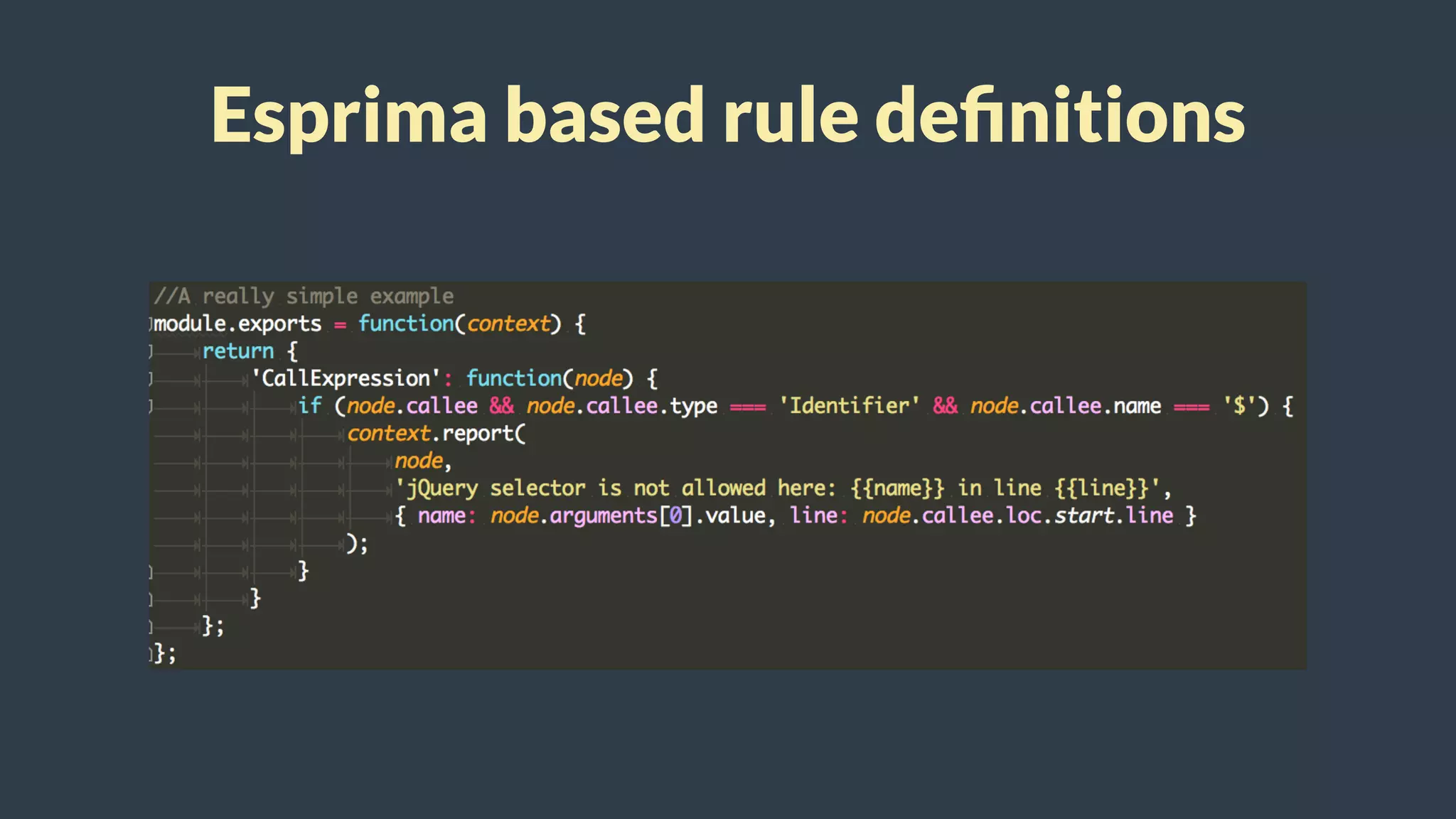
Esprima based rule definitions
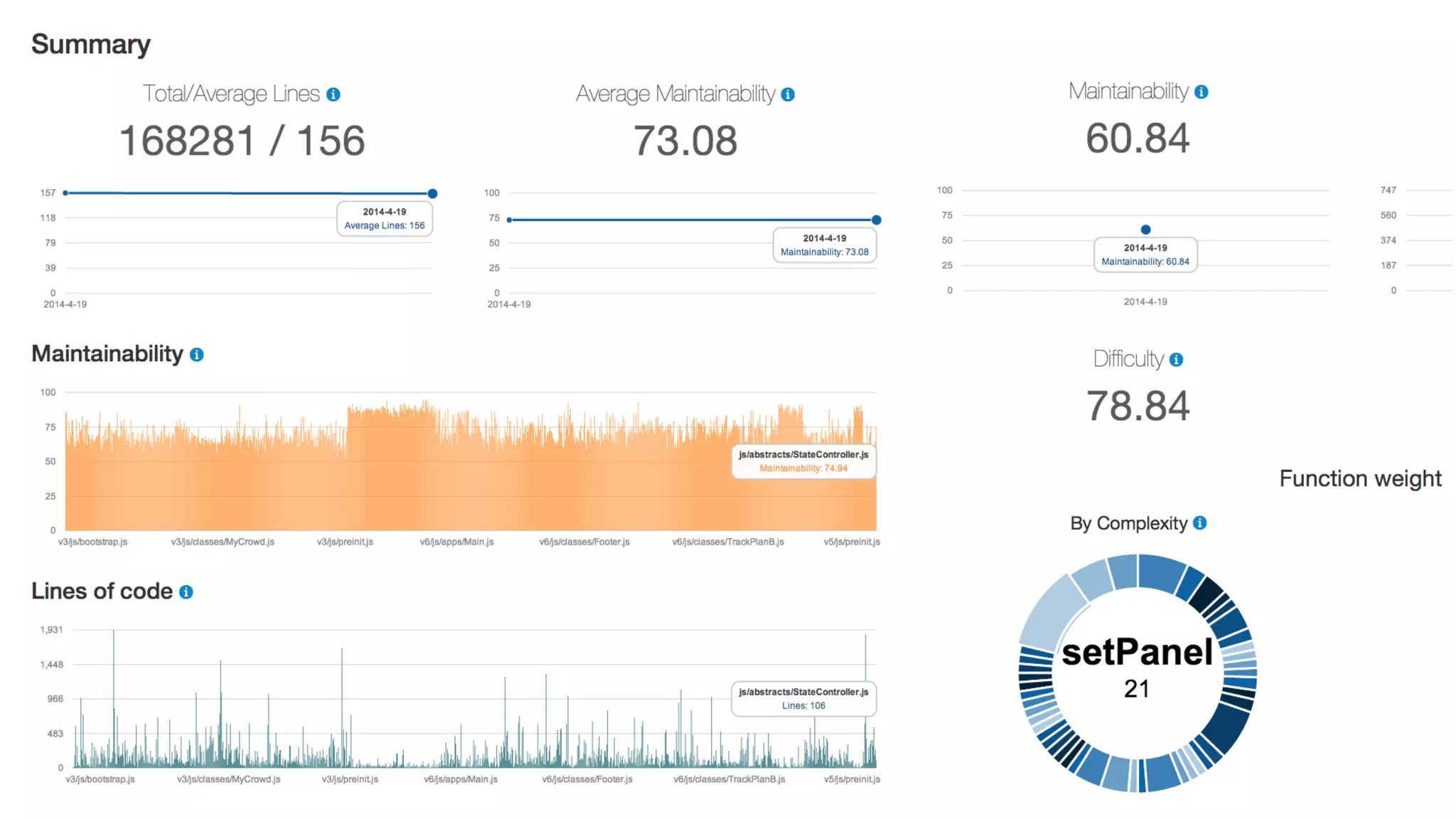
Complexity report
Does it matter?
Who wouldn’t wanna track these?
http://jscomplexity.org/complexity
Lines of code (LOC)
Halstead complexity measures
Maintainability index
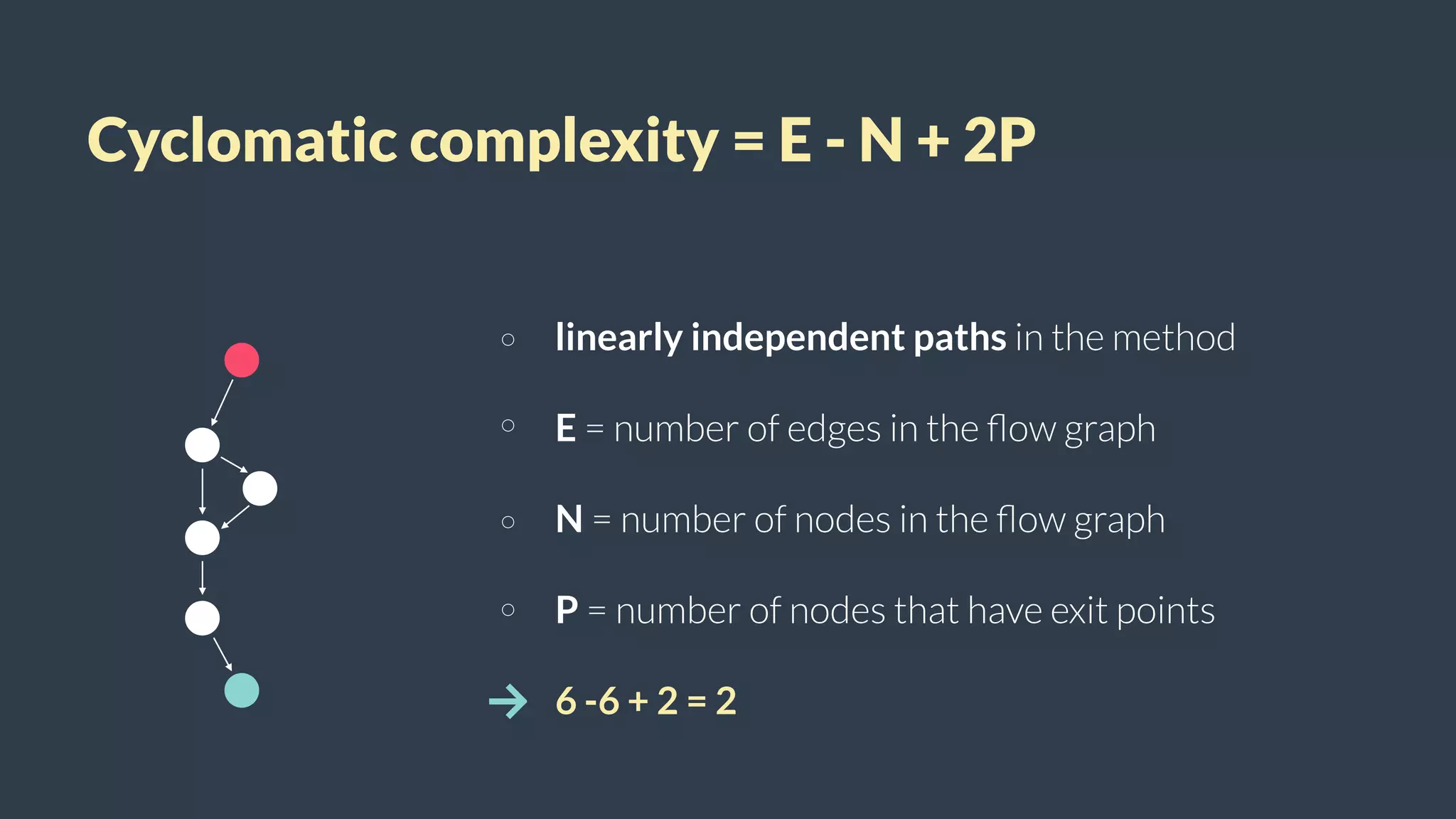
Cyclomatic complexity
Cyclomatic complexity = E - N + 2P
linearly independent paths in the method
E = number of edges in the flow graph
N = number of nodes in the flow graph
P = number of nodes that have exit points
6 -6 + 2 = 2
JSComplexity & Plato
We run complexity report in Jenkins nightly build for our whole JS codebase
https://www.npmjs.org/package/complexity-report
Plato is a great tool for manual examinations
https://github.com/es-analysis/plato
CI Integration
CI can run your tools automatically and periodically
It can catch accidental commits
Nearly every grunt plugin supports .xml reporters
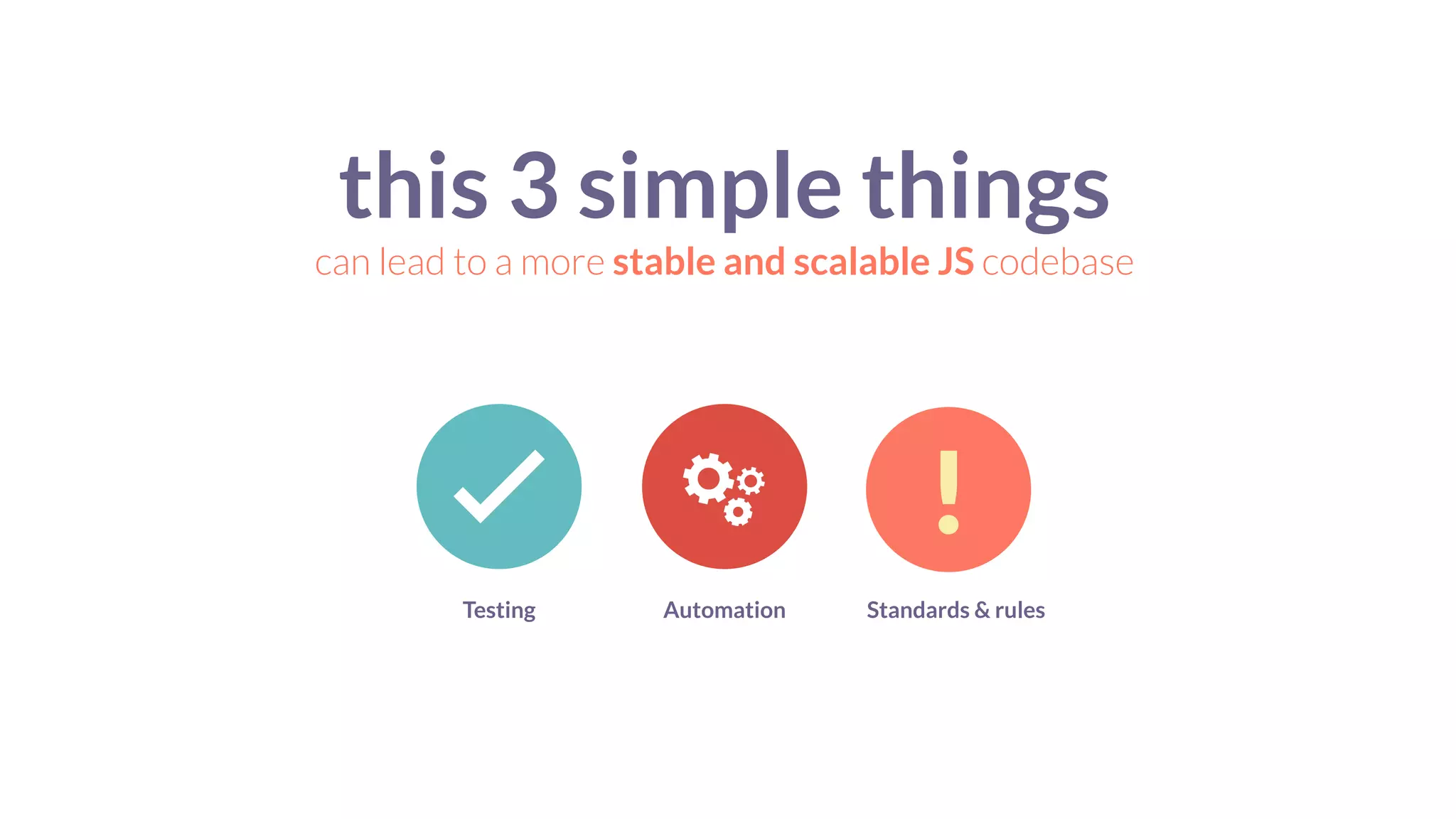
this 3 simple things
can lead to a more stable and scalable JS codebase
Testing Automation Standards & rules
!
Thank you!
Questions?
!
!
@matenadasdi

Frontend automation and stability

  • 1.
    Frontend automation andstability @matenadasdi Ustream, Inc
  • 2.
    Common sentences fromthe past Writing tests is a huge overhead Browsers are unpredictable and we are not able to test real behaviour Let’s write this frontend task in PHP, Ruby, Python, Bash … Selenium is unstable and complicated “
  • 3.
    It’s a newERA Let’s ride it!
  • 4.
  • 5.
  • 6.
  • 7.
    Good news! Wehave everything what we need Hundreds of tools and frameworks - Mocha, Jasmine, Jest, Karma, QUnit Headless browsers - PhantomJS, SlimerJS, TrifleJS Headless navigation scripting libs - CasperJS, DalekJS
  • 8.
  • 9.
  • 10.
    Criterions for efficientunit testing Separated layers with different responsibilities for easier mocking Business Logic and the representation have to be separated Dependency Injection
  • 11.
    Mocha + Chai framework: Nodeand Browser support Separate assert libraries Tons of reporters mocking: SinonJS Spies, Stubs, Mocks Assertions for invocations Faking AJAX, server Works with lot of frameworks module dependency mocking: SquireJS Dependency injector for RequireJS mock / store
  • 12.
    It’s not anoverhead, easy to run and write!
  • 13.
    Coverage? function coverage function epam(speaker, onStage) { var talking = false; ! if (speaker && onStage){ talking = true; } ! return talking; } if epam called once, its covered statement coverage function epam (speaker, onStage) { var talking = false; ! if (speaker && onStage){ talking = true; } ! return talking; } with testing epam(true, true), all statement will be executed, so its covered branch coverage function epam (speaker, onStage) { var talking = false; ! if (speaker && onStage){ talking = true; } ! return talking; } with testing epam(true, true), and epam (true, false) all execution paths will be covered
  • 14.
    Ok it’s nice,but is it possible in JS? ;)
  • 15.
    Istanbul https://github.com/gotwarlost/istanbul Esprima based statement, branch,function coverage multiple reporters command line support Karma test runner http://karma-runner.github.io/0.12/index.html + WebStorm integration Istanbul code coverage support Mocha, Jasmine, QUnit support Jenkins, Travis support
  • 16.
    Unit tests cannotcover everything! Browser / DOM / Interaction specific behaviour should be tested in a different way
  • 17.
    2. UI testing Thegenie is out of the bottle
  • 18.
  • 19.
    We use CasperJS Node.jsbased navigation scripting PhantomJS & SlimerJS support screenshot capture not necessary to use its testing framework Pro: phantomjs based browsers only Cons:
  • 20.
    This is Node,you can do everything! Create your own modules you can call global casper from everywhere
  • 21.
    DalekJS is comingup! Real browser support Chrome, FF, IE, Mobile Safari It can run in headless browsers too Pro: strict testing framework interface small documentation and not enough methods still developer preview (0.0.8) Cons:
  • 22.
    3. Test automationteam selenium, real browsers, complex features, mobile devices
  • 23.
    4. Manual QAteam Smoke tests, regression tests, screenshot comparison tool, internal debug tools
  • 24.
  • 25.
  • 26.
    NPM for dependencymanagement we could port every frontend related task to Node we use 12 grunt plugins (2800+ available globally) be careful, lot of tasks can lead to a huge/complex grunt file we have an own structure for task configurations Thanks to Grunt...
  • 27.
    Why not Gulp? abad question
  • 28.
    Node streams areawesome, but it can be hard for non-js devs Code over configuration 713 plugins and coming up really fast Try both, and maybe use both! Gulp is good tool too!
  • 29.
  • 30.
    Our previous setupwas too simple JSLint manually (!) YuiCompressor after commits in Jenkins
  • 31.
    Rules are notrules if you break them!
  • 32.
    Everyone writes differentcode and it’s normal
  • 33.
    Code style! Beaggressive! a smarter JSLint separated configuration file everyone can run the same config most IDEs can read it globally
  • 34.
  • 35.
    { "type": "Program", "body": [{ "type":"IfStatement", "test": { "type": "Identifier", "name": "epam" }, “consequent": { "type": "BlockStatement", "body": [{ "type": "ExpressionStatement", "expression": { "type": "AssignmentExpression", "operator": "=", "left": { "type": "Identifier", "name": "conf" }, "right": { "type": "Literal", "value": "SEC", "raw": "'SEC'" } } }] }, "alternate": null }] var epam = true; ! if (epam) { conf = 'SEC'; }
  • 36.
    Semantics & yourown rules Esprima based pluginable thanks to the AST it can examine semantics
  • 37.
    Esprima based ruledefinitions
  • 38.
  • 39.
    Who wouldn’t wannatrack these? http://jscomplexity.org/complexity Lines of code (LOC) Halstead complexity measures Maintainability index Cyclomatic complexity
  • 40.
    Cyclomatic complexity =E - N + 2P linearly independent paths in the method E = number of edges in the flow graph N = number of nodes in the flow graph P = number of nodes that have exit points 6 -6 + 2 = 2
  • 41.
    JSComplexity & Plato Werun complexity report in Jenkins nightly build for our whole JS codebase https://www.npmjs.org/package/complexity-report Plato is a great tool for manual examinations https://github.com/es-analysis/plato
  • 43.
    CI Integration CI canrun your tools automatically and periodically It can catch accidental commits Nearly every grunt plugin supports .xml reporters
  • 44.
    this 3 simplethings can lead to a more stable and scalable JS codebase Testing Automation Standards & rules !
  • 45.