
Maneesh Choudhary
DEFINITION 
SEM (“Search Engine Marketing”) is the process 
of gaining website traffic by purchasing ads on 
search engines. 
Below are some of the most common terms also 
used to refer to SEM activities: 
• Paid search ads 
• Paid search advertising 
• PPC (pay-per-click)
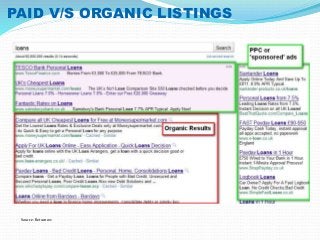
PAID V/S ORGANIC LISTINGS 
Source: Returnow
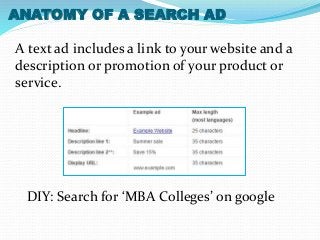
ANATOMY OF A SEARCH AD 
A text ad includes a link to your website and a 
description or promotion of your product or 
service. 
DIY: Search for ‘MBA Colleges’ on google
AD RANK 
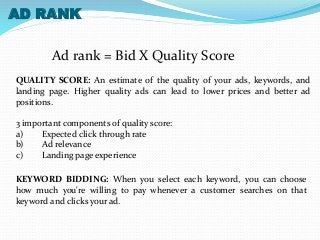
Ad rank = Bid X Quality Score 
QUALITY SCORE: An estimate of the quality of your ads, keywords, and 
landing page. Higher quality ads can lead to lower prices and better ad 
positions. 
3 important components of quality score: 
a) Expected click through rate 
b) Ad relevance 
c) Landing page experience 
KEYWORD BIDDING: When you select each keyword, you can choose 
how much you're willing to pay whenever a customer searches on that 
keyword and clicks your ad.
ADWORDS EXTENSIONS 
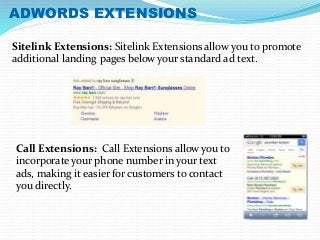
Sitelink Extensions: Sitelink Extensions allow you to promote 
additional landing pages below your standard ad text. 
Call Extensions: Call Extensions allow you to 
incorporate your phone number in your text 
ads, making it easier for customers to contact 
you directly.
ADWORDS EXTENSIONS 
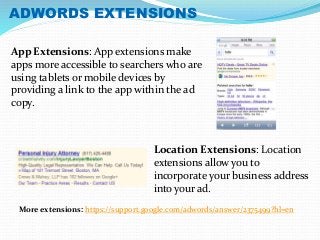
App Extensions: App extensions make 
apps more accessible to searchers who are 
using tablets or mobile devices by 
providing a link to the app within the ad 
copy. 
Location Extensions: Location 
extensions allow you to 
incorporate your business address 
into your ad. 
More extensions: https://support.google.com/adwords/answer/2375499?hl=en
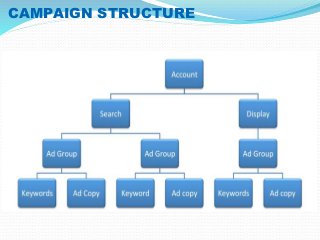
CAMPAIGN STRUCTURE
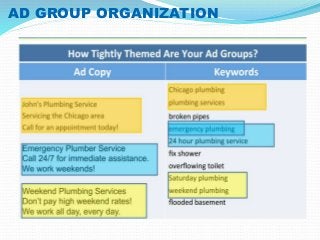
AD GROUP ORGANIZATION
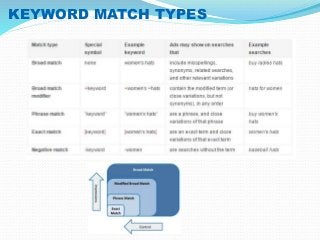
KEYWORD MATCH TYPES
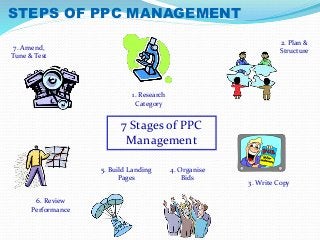
STEPS OF PPC MANAGEMENT 
1. Research 
Category 
6. Review 
Performance 
5. Build Landing 
Pages 
4. Organise 
Bids 
2. Plan & 
Structure 
3. Write Copy 
7. Amend, 
Tune & Test 
7 Stages of PPC 
Management
WHAT IS DISPLAY ADVERTISING? 
Display advertising is graphical advertising on the World Wide 
Web that appears next to content on web pages, IM applications, 
email, etc. 
These ads, often referred to as banners, come in standardized ad 
sizes, and can include text, logos, pictures, rich media etc. 
• Contextual Targeting 
• Topic Targeting 
• Interest Category Targeting 
• Placement Targeting 
• Remarketing
CONTEXTUAL TARGETING 
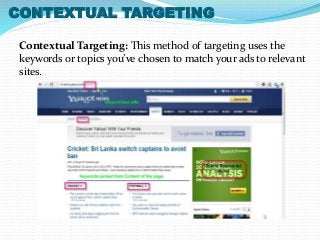
Contextual Targeting: This method of targeting uses the 
keywords or topics you’ve chosen to match your ads to relevant 
sites.
TOPIC TARGETING 
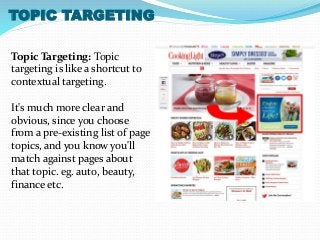
Topic Targeting: Topic 
targeting is like a shortcut to 
contextual targeting. 
It's much more clear and 
obvious, since you choose 
from a pre-existing list of page 
topics, and you know you'll 
match against pages about 
that topic. eg. auto, beauty, 
finance etc.
INTEREST CATEGORY TARGETING 
Interest Category Targeting: The list of interest categories is 
the same as for topics, but this targeting method is very 
different as here you're targeting the person not the page 
content, people might be looking at anything. Eg. foodies, 
gamers etc.
PLACEMENT TARGETING 
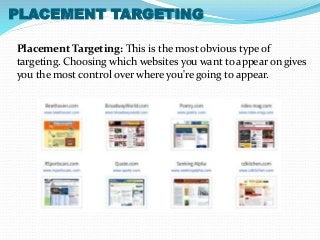
Placement Targeting: This is the most obvious type of 
targeting. Choosing which websites you want to appear on gives 
you the most control over where you're going to appear.
REMARKETING 
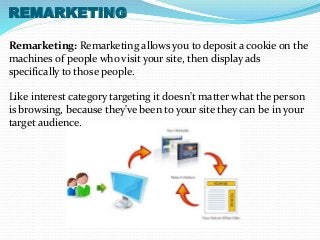
Remarketing: Remarketing allows you to deposit a cookie on the 
machines of people who visit your site, then display ads 
specifically to those people. 
Like interest category targeting it doesn't matter what the person 
is browsing, because they've been to your site they can be in your 
target audience.
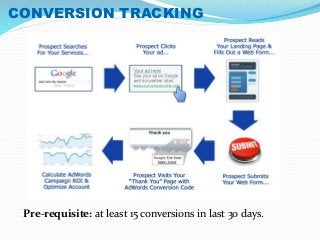
CONVERSION TRACKING 
Pre-requisite: at least 15 conversions in last 30 days.
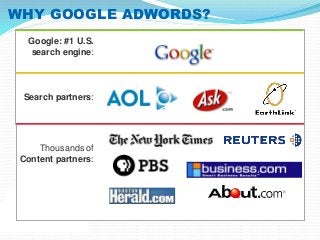
WHY GOOGLE ADWORDS? 
Google: #1 U.S. 
search engine: 
Search partners: 
Thousands of 
Content partners:
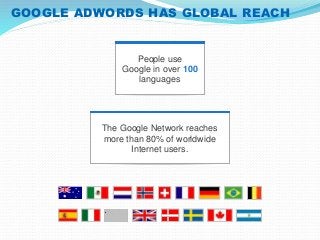
GOOGLE ADWORDS HAS GLOBAL REACH 
People use 
Google in over 100 
languages 
The Google Network reaches 
more than 80% of worldwide 
Internet users.
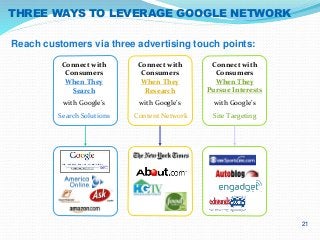
THREE WAYS TO LEVERAGE GOOGLE NETWORK 
21 
Reach customers via three advertising touch points: 
Connect with 
Consumers 
When They 
Search 
with Google’s 
Search Solutions 
Connect with 
Consumers 
When They 
Research 
with Google’s 
Content Network 
Connect with 
Consumers 
When They 
Pursue Interests 
with Google’s 
Site Targeting
YOUTUBE ADVERTISING 
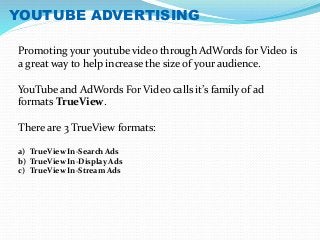
Promoting your youtube video through AdWords for Video is 
a great way to help increase the size of your audience. 
YouTube and AdWords For Video calls it’s family of ad 
formats TrueView. 
There are 3 TrueView formats: 
a) TrueView In-Search Ads 
b) TrueView In-Display Ads 
c) TrueView In-Stream Ads
TRUEVIEW IN-SEARCH ADS 
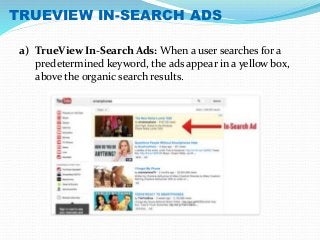
a) TrueView In-Search Ads: When a user searches for a 
predetermined keyword, the ads appear in a yellow box, 
above the organic search results.
TRUEVIEW IN-DISPLAY ADS 
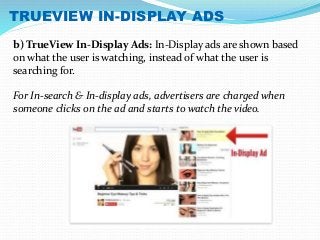
b) TrueView In-Display Ads: In-Display ads are shown based 
on what the user is watching, instead of what the user is 
searching for. 
For In-search & In-display ads, advertisers are charged when 
someone clicks on the ad and starts to watch the video.
TRUEVIEW IN-STREAM ADS 
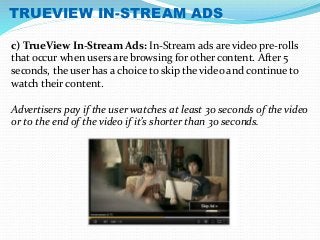
c) TrueView In-Stream Ads: In-Stream ads are video pre-rolls 
that occur when users are browsing for other content. After 5 
seconds, the user has a choice to skip the video and continue to 
watch their content. 
Advertisers pay if the user watches at least 30 seconds of the video 
or to the end of the video if it’s shorter than 30 seconds.
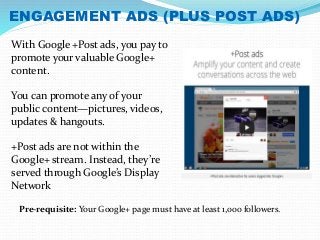
ENGAGEMENT ADS (PLUS POST ADS) 
With Google +Post ads, you pay to 
promote your valuable Google+ 
content. 
You can promote any of your 
public content—pictures, videos, 
updates & hangouts. 
+Post ads are not within the 
Google+ stream. Instead, they’re 
served through Google’s Display 
Network 
Pre-requisite: Your Google+ page must have at least 1,000 followers.
An Introduction to Search Engine Marketing

An Introduction to Search Engine Marketing

  • 1.
  • 2.
    DEFINITION SEM (“SearchEngine Marketing”) is the process of gaining website traffic by purchasing ads on search engines. Below are some of the most common terms also used to refer to SEM activities: • Paid search ads • Paid search advertising • PPC (pay-per-click)
  • 3.
    PAID V/S ORGANICLISTINGS Source: Returnow
  • 4.
    ANATOMY OF ASEARCH AD A text ad includes a link to your website and a description or promotion of your product or service. DIY: Search for ‘MBA Colleges’ on google
  • 5.
    AD RANK Adrank = Bid X Quality Score QUALITY SCORE: An estimate of the quality of your ads, keywords, and landing page. Higher quality ads can lead to lower prices and better ad positions. 3 important components of quality score: a) Expected click through rate b) Ad relevance c) Landing page experience KEYWORD BIDDING: When you select each keyword, you can choose how much you're willing to pay whenever a customer searches on that keyword and clicks your ad.
  • 6.
    ADWORDS EXTENSIONS SitelinkExtensions: Sitelink Extensions allow you to promote additional landing pages below your standard ad text. Call Extensions: Call Extensions allow you to incorporate your phone number in your text ads, making it easier for customers to contact you directly.
  • 7.
    ADWORDS EXTENSIONS AppExtensions: App extensions make apps more accessible to searchers who are using tablets or mobile devices by providing a link to the app within the ad copy. Location Extensions: Location extensions allow you to incorporate your business address into your ad. More extensions: https://support.google.com/adwords/answer/2375499?hl=en
  • 8.
  • 9.
  • 10.
  • 11.
    STEPS OF PPCMANAGEMENT 1. Research Category 6. Review Performance 5. Build Landing Pages 4. Organise Bids 2. Plan & Structure 3. Write Copy 7. Amend, Tune & Test 7 Stages of PPC Management
  • 12.
    WHAT IS DISPLAYADVERTISING? Display advertising is graphical advertising on the World Wide Web that appears next to content on web pages, IM applications, email, etc. These ads, often referred to as banners, come in standardized ad sizes, and can include text, logos, pictures, rich media etc. • Contextual Targeting • Topic Targeting • Interest Category Targeting • Placement Targeting • Remarketing
  • 13.
    CONTEXTUAL TARGETING ContextualTargeting: This method of targeting uses the keywords or topics you’ve chosen to match your ads to relevant sites.
  • 14.
    TOPIC TARGETING TopicTargeting: Topic targeting is like a shortcut to contextual targeting. It's much more clear and obvious, since you choose from a pre-existing list of page topics, and you know you'll match against pages about that topic. eg. auto, beauty, finance etc.
  • 15.
    INTEREST CATEGORY TARGETING Interest Category Targeting: The list of interest categories is the same as for topics, but this targeting method is very different as here you're targeting the person not the page content, people might be looking at anything. Eg. foodies, gamers etc.
  • 16.
    PLACEMENT TARGETING PlacementTargeting: This is the most obvious type of targeting. Choosing which websites you want to appear on gives you the most control over where you're going to appear.
  • 17.
    REMARKETING Remarketing: Remarketingallows you to deposit a cookie on the machines of people who visit your site, then display ads specifically to those people. Like interest category targeting it doesn't matter what the person is browsing, because they've been to your site they can be in your target audience.
  • 18.
    CONVERSION TRACKING Pre-requisite:at least 15 conversions in last 30 days.
  • 19.
    WHY GOOGLE ADWORDS? Google: #1 U.S. search engine: Search partners: Thousands of Content partners:
  • 20.
    GOOGLE ADWORDS HASGLOBAL REACH People use Google in over 100 languages The Google Network reaches more than 80% of worldwide Internet users.
  • 21.
    THREE WAYS TOLEVERAGE GOOGLE NETWORK 21 Reach customers via three advertising touch points: Connect with Consumers When They Search with Google’s Search Solutions Connect with Consumers When They Research with Google’s Content Network Connect with Consumers When They Pursue Interests with Google’s Site Targeting
  • 22.
    YOUTUBE ADVERTISING Promotingyour youtube video through AdWords for Video is a great way to help increase the size of your audience. YouTube and AdWords For Video calls it’s family of ad formats TrueView. There are 3 TrueView formats: a) TrueView In-Search Ads b) TrueView In-Display Ads c) TrueView In-Stream Ads
  • 23.
    TRUEVIEW IN-SEARCH ADS a) TrueView In-Search Ads: When a user searches for a predetermined keyword, the ads appear in a yellow box, above the organic search results.
  • 24.
    TRUEVIEW IN-DISPLAY ADS b) TrueView In-Display Ads: In-Display ads are shown based on what the user is watching, instead of what the user is searching for. For In-search & In-display ads, advertisers are charged when someone clicks on the ad and starts to watch the video.
  • 25.
    TRUEVIEW IN-STREAM ADS c) TrueView In-Stream Ads: In-Stream ads are video pre-rolls that occur when users are browsing for other content. After 5 seconds, the user has a choice to skip the video and continue to watch their content. Advertisers pay if the user watches at least 30 seconds of the video or to the end of the video if it’s shorter than 30 seconds.
  • 26.
    ENGAGEMENT ADS (PLUSPOST ADS) With Google +Post ads, you pay to promote your valuable Google+ content. You can promote any of your public content—pictures, videos, updates & hangouts. +Post ads are not within the Google+ stream. Instead, they’re served through Google’s Display Network Pre-requisite: Your Google+ page must have at least 1,000 followers.

Editor's Notes

  • #7 Google has shown that adding sitelinks to your ads increases your click-through rate, even if people aren’t clicking the sitelink links! Google no longer permits you to include phone numbers within ad copy, so this is the best way to ensure your phone number is visible to searchers.
  • #8 Keep in mind, Google will automatically apply some extensions, like Seller Ratings and Social Annotations, if you meet their criteria.