INDOOR AIR QUALITY IN HOSPITALS
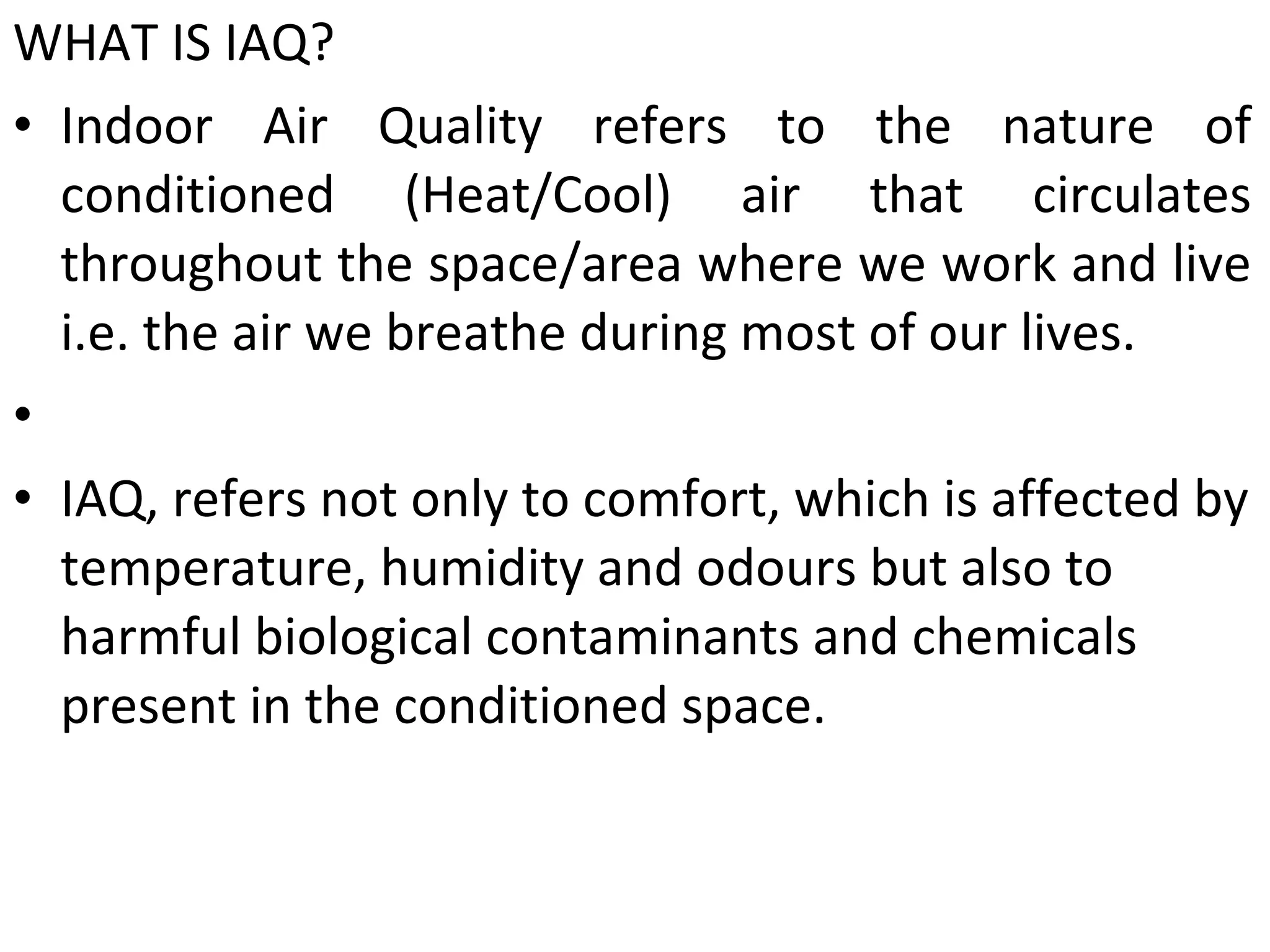
WHAT IS IAQ? Indoor Air Quality refers to the nature of conditioned (Heat/Cool) air that circulates throughout the space/area where we work and live i.e. the air we breathe during most of our lives. IAQ, refers not only to comfort, which is affected by temperature, humidity and odours but also to harmful biological contaminants and chemicals present in the conditioned space.
Why IAQ? Indoor air can be up to 10 times more polluted than outdoor air. Most people spend up to 90% of their time indoors and many spend most of their working hours in an office environment. Poor air quality in office buildings can result in loss of productivity, absenteeism and medical problems.
Effects of poor IAQ Poor indoor air quality can lead to a number of physical symptoms and complaints  Headaches,Fatigue,Shortness of breath, Sinus congestion,Coughs,Sneezing,Eye, nose, and throat irritation,Skin irritation,Dizziness,Nausea,asthma,lung cancer,Legionnaire’s Disease Categorized as  SBS BRI
Factors affecting IAQ A number of factors can affect the indoor air quality of a building or facility, including: The physical layout of the building The building’s heating, ventilation, and air conditioning (HVAC)system The outdoor climate The people who occupy the building Contaminants inside and outside the building
Indoor air pollutants,sources&health effects
 
 
Common exposers in hospitals Sensitizing and Allergenic Agents histamines glutaraldehyde, formaldehyde, latex allergen, hexachlorophene, and psyllium laxatives Irritants Methylmethacrylate
Direct Toxins, Mutagens, and Teratogens Anesthetic agents Infectious Aerosols source patients having infectious diseases such as tuberculosis, chicken pox, measles (Rubeola), and German measles (Rubella) can be spread easily in the air
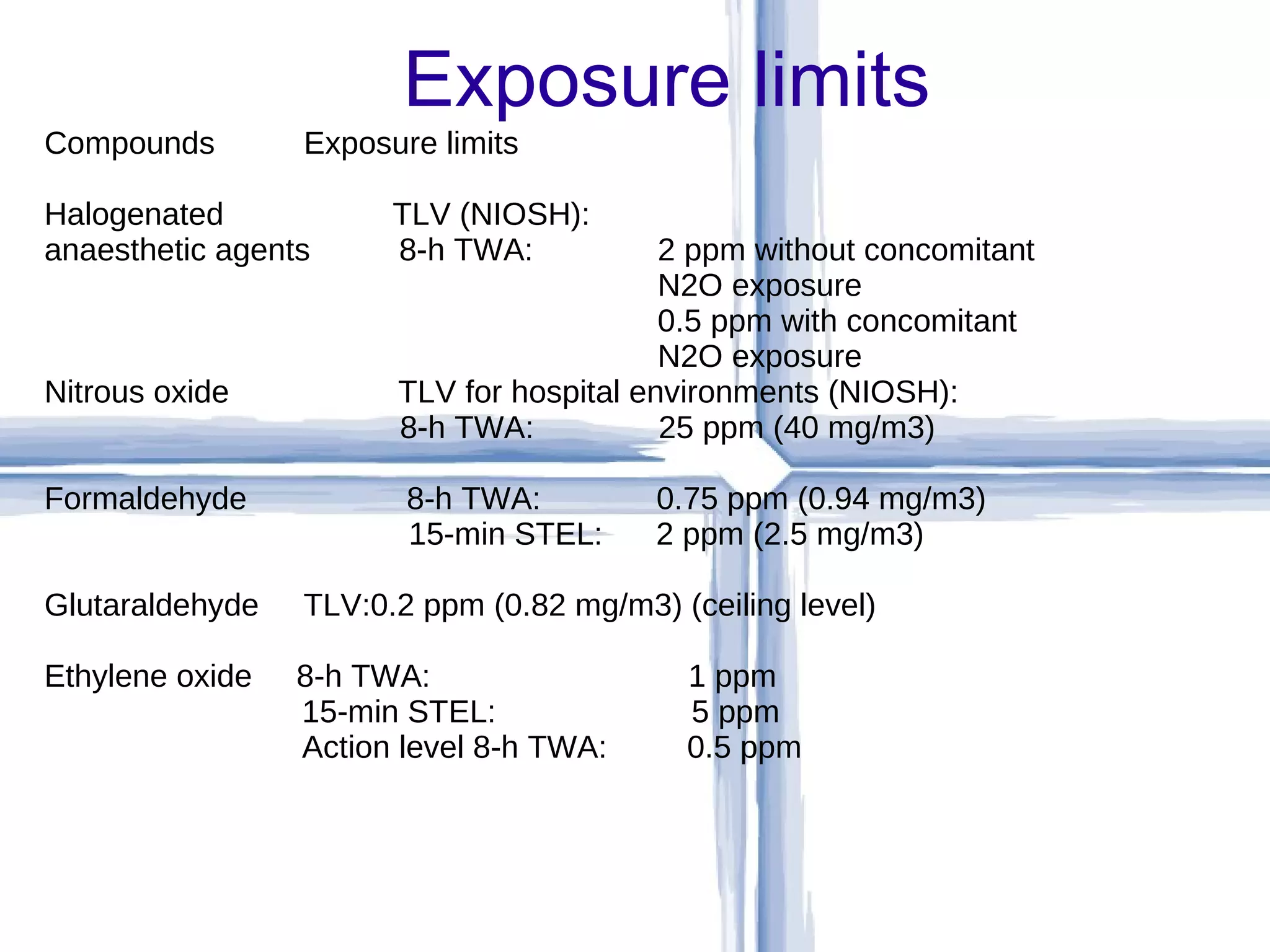
Exposure limits Compounds  Exposure limits Halogenated  TLV (NIOSH): anaesthetic agents  8-h TWA:  2 ppm without concomitant N2O exposure 0.5 ppm with concomitant N2O exposure Nitrous oxide  TLV for hospital environments (NIOSH): 8-h TWA:  25 ppm (40 mg/m3) Formaldehyde  8-h TWA:  0.75 ppm (0.94 mg/m3) 15-min STEL:  2 ppm (2.5 mg/m3) Glutaraldehyde  TLV:0.2 ppm (0.82 mg/m3) (ceiling level) Ethylene oxide  8-h TWA:  1 ppm 15-min STEL:  5 ppm Action level 8-h TWA:  0.5 ppm
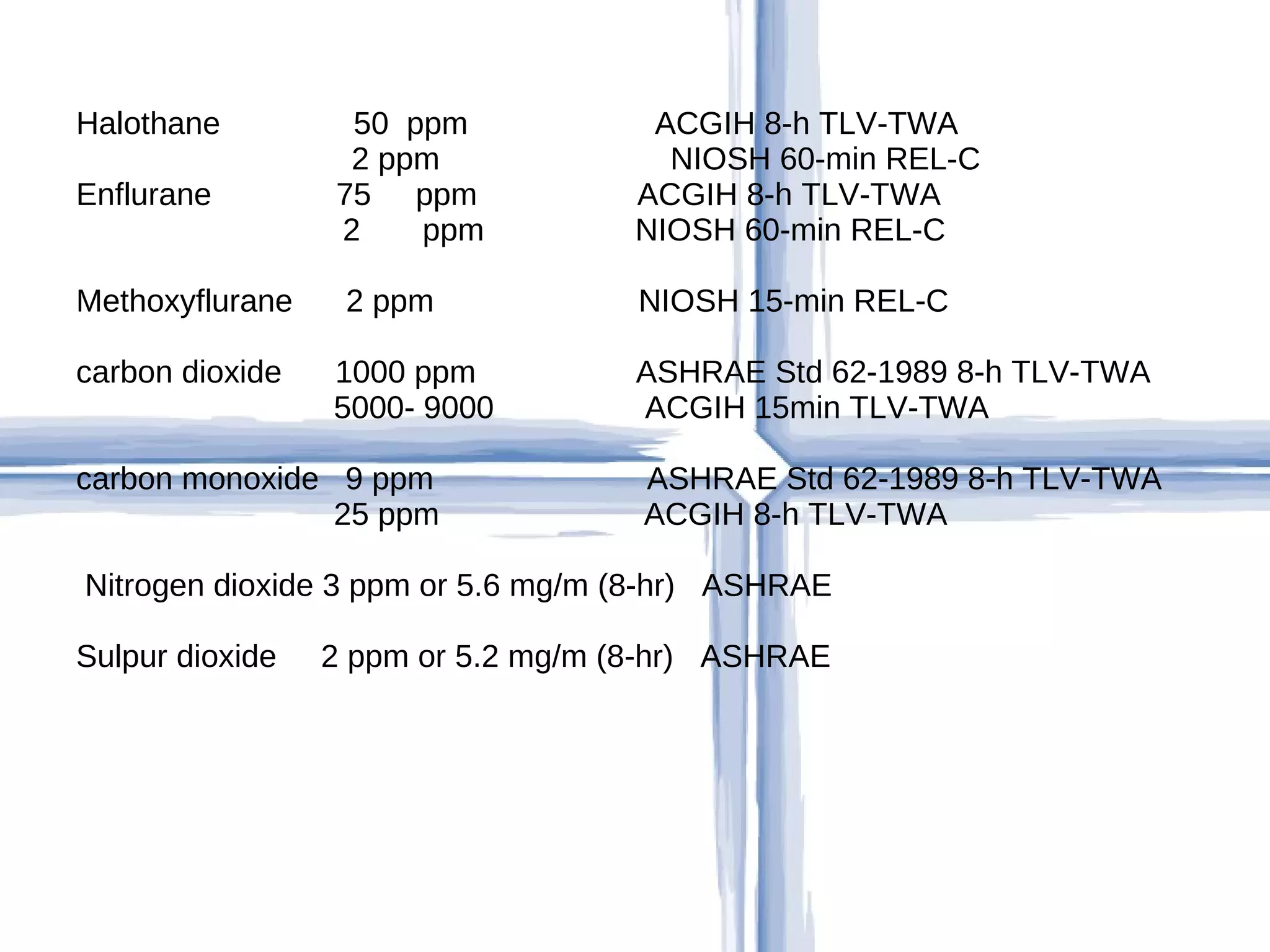
Halothane  50  ppm  ACGIH 8-h TLV-TWA 2 ppm   NIOSH 60-min REL-C Enflurane  75  ppm  ACGIH 8-h TLV-TWA 2  ppm  NIOSH 60-min REL-C Methoxyflurane  2 ppm  NIOSH 15-min REL-C carbon dioxide  1000 ppm  ASHRAE Std 62-1989 8-h TLV-TWA 5000- 9000  ACGIH 15min TLV-TWA carbon monoxide  9 ppm  ASHRAE Std 62-1989 8-h TLV-TWA 25 ppm  ACGIH 8-h TLV-TWA  Nitrogen dioxide 3 ppm or 5.6 mg/m (8-hr)  ASHRAE Sulpur dioxide  2 ppm or 5.2 mg/m (8-hr)  ASHRAE
Thermal comfort conditions
 

Indoor air quality in hospitals

  • 1.
    INDOOR AIR QUALITYIN HOSPITALS
  • 2.
    WHAT IS IAQ?Indoor Air Quality refers to the nature of conditioned (Heat/Cool) air that circulates throughout the space/area where we work and live i.e. the air we breathe during most of our lives. IAQ, refers not only to comfort, which is affected by temperature, humidity and odours but also to harmful biological contaminants and chemicals present in the conditioned space.
  • 3.
    Why IAQ? Indoorair can be up to 10 times more polluted than outdoor air. Most people spend up to 90% of their time indoors and many spend most of their working hours in an office environment. Poor air quality in office buildings can result in loss of productivity, absenteeism and medical problems.
  • 4.
    Effects of poorIAQ Poor indoor air quality can lead to a number of physical symptoms and complaints Headaches,Fatigue,Shortness of breath, Sinus congestion,Coughs,Sneezing,Eye, nose, and throat irritation,Skin irritation,Dizziness,Nausea,asthma,lung cancer,Legionnaire’s Disease Categorized as SBS BRI
  • 5.
    Factors affecting IAQA number of factors can affect the indoor air quality of a building or facility, including: The physical layout of the building The building’s heating, ventilation, and air conditioning (HVAC)system The outdoor climate The people who occupy the building Contaminants inside and outside the building
  • 6.
  • 7.
  • 8.
  • 9.
    Common exposers inhospitals Sensitizing and Allergenic Agents histamines glutaraldehyde, formaldehyde, latex allergen, hexachlorophene, and psyllium laxatives Irritants Methylmethacrylate
  • 10.
    Direct Toxins, Mutagens,and Teratogens Anesthetic agents Infectious Aerosols source patients having infectious diseases such as tuberculosis, chicken pox, measles (Rubeola), and German measles (Rubella) can be spread easily in the air
  • 11.
    Exposure limits Compounds Exposure limits Halogenated TLV (NIOSH): anaesthetic agents 8-h TWA: 2 ppm without concomitant N2O exposure 0.5 ppm with concomitant N2O exposure Nitrous oxide TLV for hospital environments (NIOSH): 8-h TWA: 25 ppm (40 mg/m3) Formaldehyde 8-h TWA: 0.75 ppm (0.94 mg/m3) 15-min STEL: 2 ppm (2.5 mg/m3) Glutaraldehyde TLV:0.2 ppm (0.82 mg/m3) (ceiling level) Ethylene oxide 8-h TWA: 1 ppm 15-min STEL: 5 ppm Action level 8-h TWA: 0.5 ppm
  • 12.
    Halothane 50 ppm ACGIH 8-h TLV-TWA 2 ppm NIOSH 60-min REL-C Enflurane 75 ppm ACGIH 8-h TLV-TWA 2 ppm NIOSH 60-min REL-C Methoxyflurane 2 ppm NIOSH 15-min REL-C carbon dioxide 1000 ppm ASHRAE Std 62-1989 8-h TLV-TWA 5000- 9000 ACGIH 15min TLV-TWA carbon monoxide 9 ppm ASHRAE Std 62-1989 8-h TLV-TWA 25 ppm ACGIH 8-h TLV-TWA Nitrogen dioxide 3 ppm or 5.6 mg/m (8-hr) ASHRAE Sulpur dioxide 2 ppm or 5.2 mg/m (8-hr) ASHRAE
  • 13.
  • 14.