Anatomy and Issues of Electronic Medical Records  Systems Lyon, Popanz     Forester May 26, 2009
This presentation provides a structure for the planning, management and continuous enhancement of electronic medical records systems in the context of an emerging nationwide health information infrastructure  It is based on our experience with development, implementation and litigation of large, complex systems  including HIPAA, Y2K, ERP and corporate mergers Lyon, Popanz & Forester is a management consulting firm. The information presented here is based on our experience and sources we consider reliable. There is no further guarantee of usability of accuracy. LP&F does not provide accounting, financial, or legal advise; see an appropriate professional for those services.
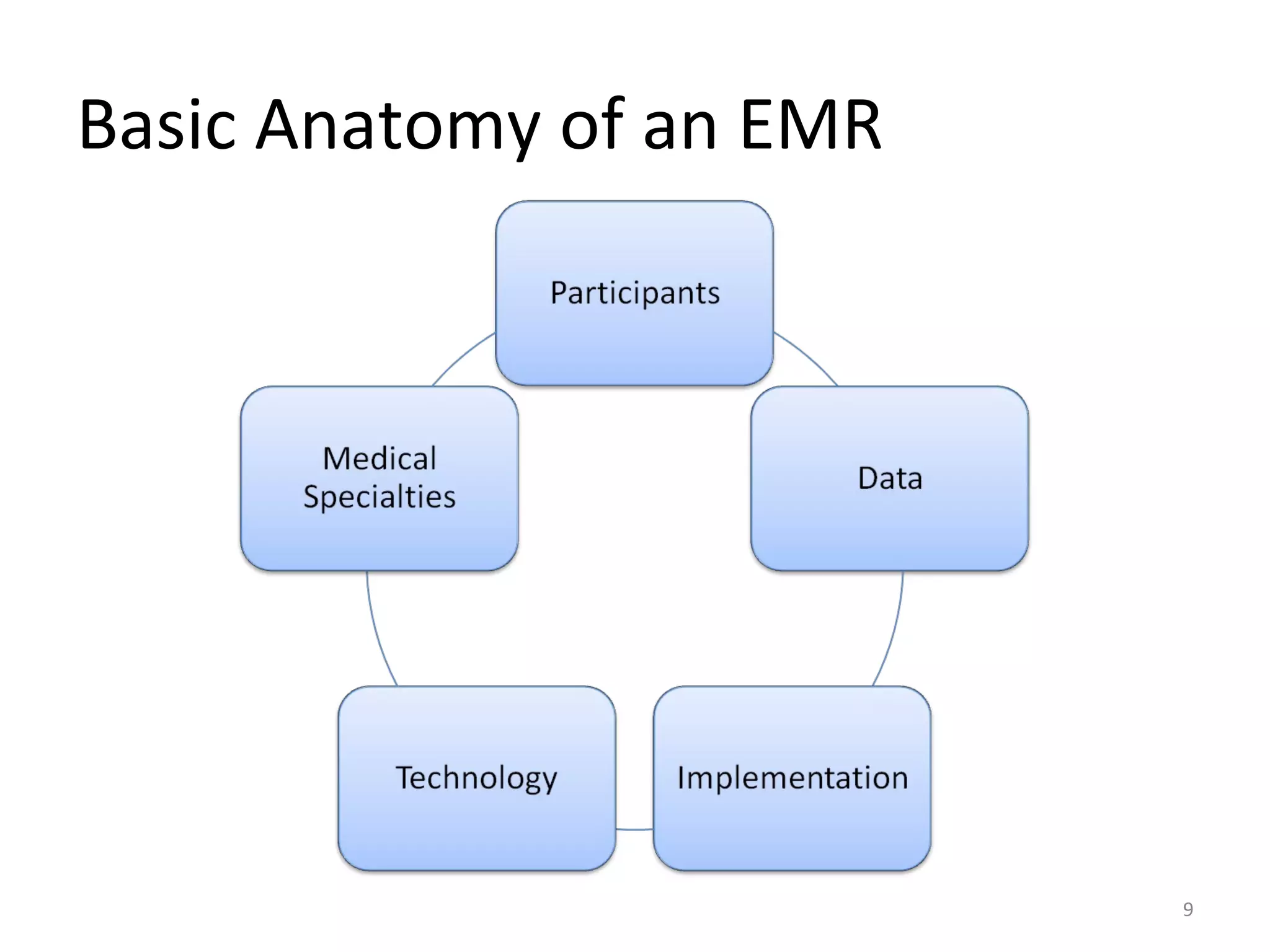
Topics Why  electronic medical records Scope Status of implementation Anatomy and Issues Participants Specialties Data Technology Implementation
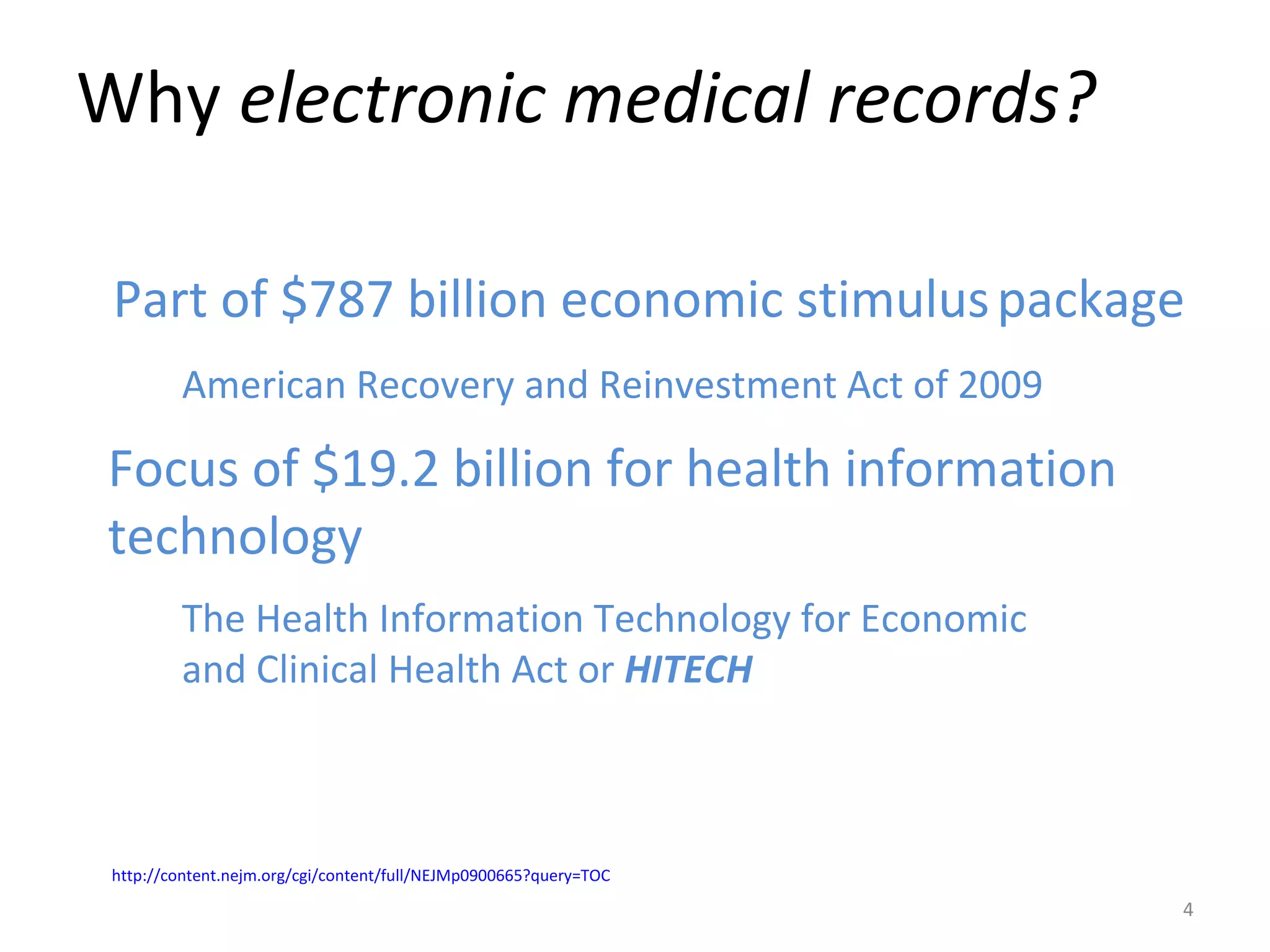
Focus of $19.2 billion for health information technology http://content.nejm.org/cgi/content/full/NEJMp0900665?query=TOC   Part of $787 billion economic stimulus   package American Recovery and Reinvestment Act of 2009 The Health Information Technology for Economic and Clinical Health Act or  HITECH Why  electronic medical records?
What does  HITECH  require? Provides incentives to hospitals and doctors’ offices to move to electronic medical records There are incentives to and penalties for failure to  Use a “certified” EMR system Demonstrate “meaningful use” of an EMR
Scope of EMR systems Part of a larger health information infrastructure that is evolving as a result of HIPAA and HITECH plus related efforts of leaders in healthcare who see the need and value Network based – scope extends to the  interfaces  with other systems and then links to the Internet The scope ranges from individual consumers to very large healthcare organizations and essentially all supporting health care organizations in between.
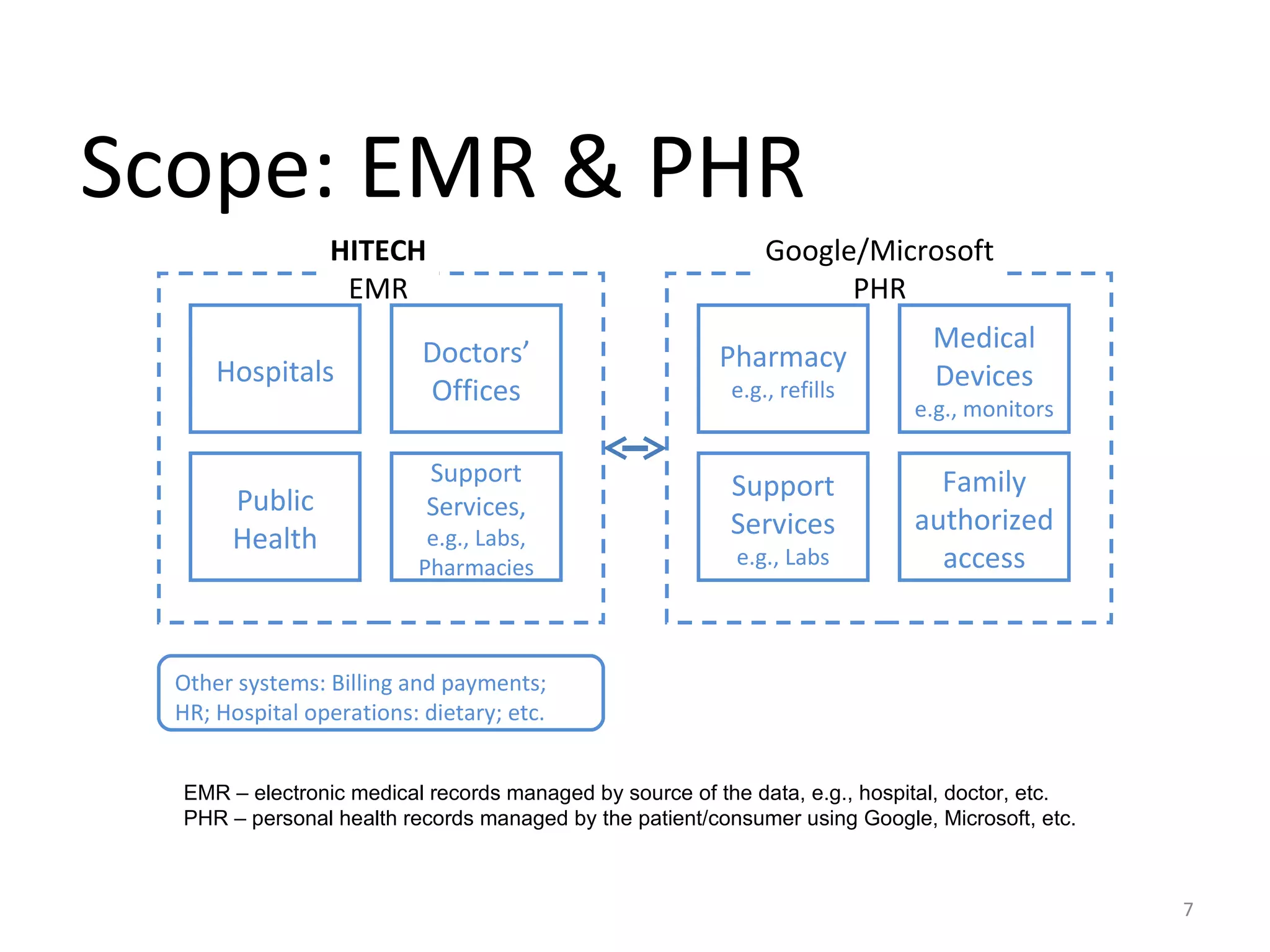
Scope: EMR & PHR EMR – electronic medical records managed by source of the data, e.g., hospital, doctor, etc. PHR – personal health records managed by the patient/consumer using Google, Microsoft, etc. Other systems: Billing and payments; HR; Hospital operations: dietary; etc. HITECH EMR Hospitals Doctors’ Offices Public Health Support Services,  e.g., Labs, Pharmacies Google/Microsoft PHR Pharmacy e.g., refills Medical Devices  e.g., monitors Support Services  e.g., Labs Family authorized access
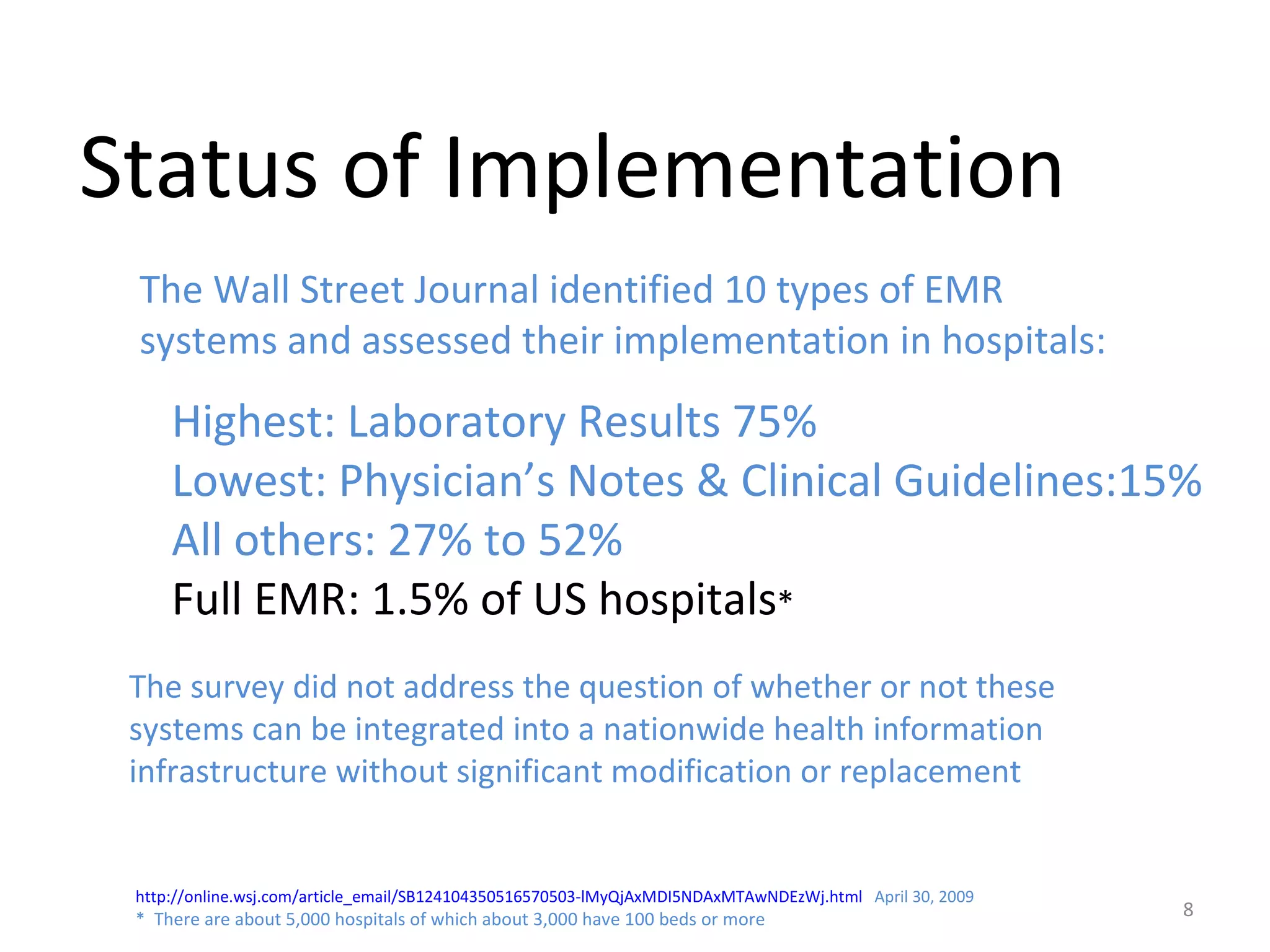
Status of Implementation The Wall Street Journal identified 10 types of EMR systems and assessed their implementation in hospitals: Highest: Laboratory Results 75% Lowest: Physician’s Notes & Clinical Guidelines:15% All others: 27% to 52% Full EMR: 1.5% of US hospitals * The survey did not address the question of whether or not these systems can be integrated into a nationwide health information infrastructure without significant modification or replacement http://online.wsj.com/article_email/SB124104350516570503-lMyQjAxMDI5NDAxMTAwNDEzWj.html   April 30, 2009 *  There are about 5,000 hospitals of which about 3,000 have 100 beds or more
Basic Anatomy of an EMR
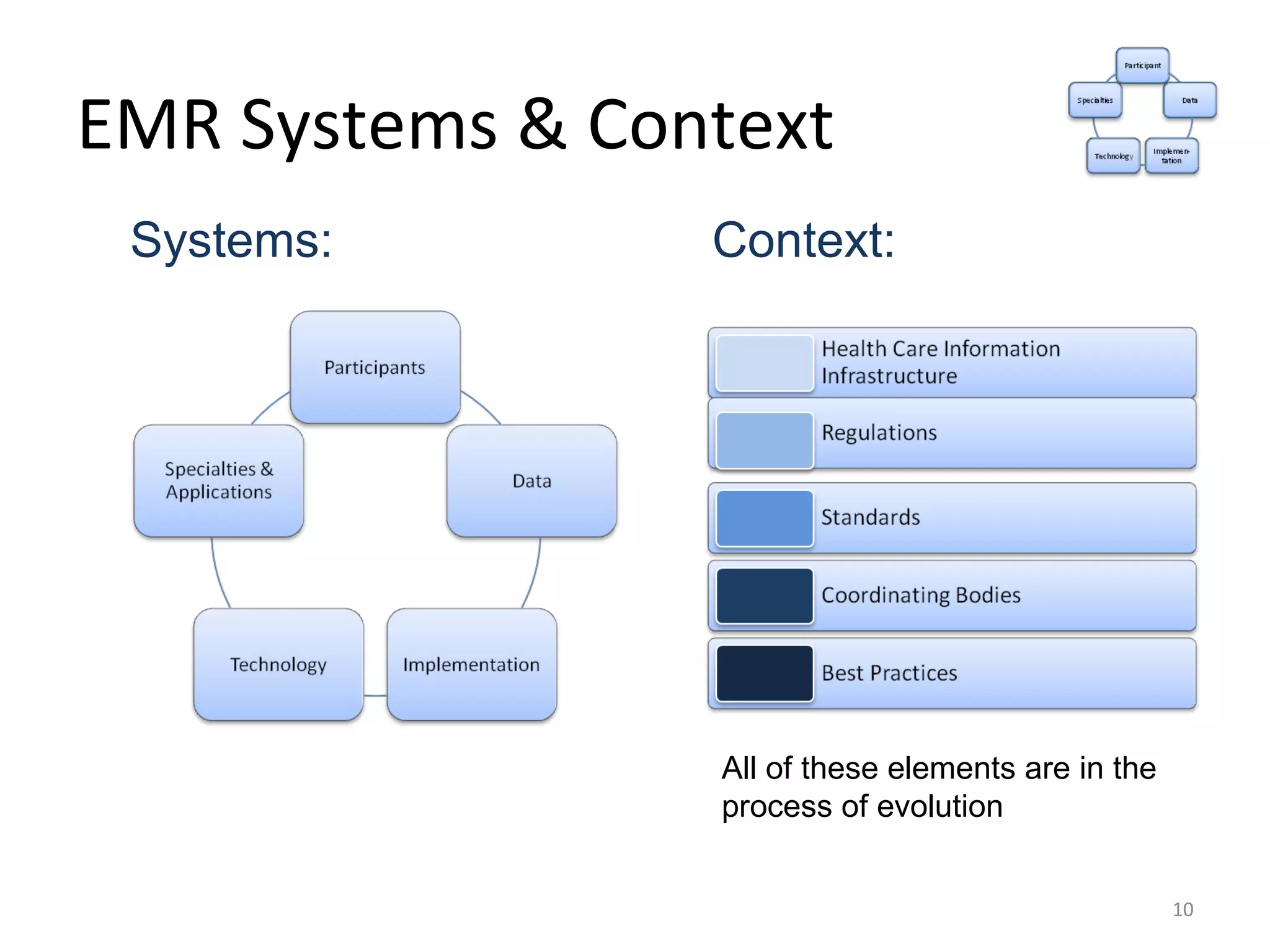
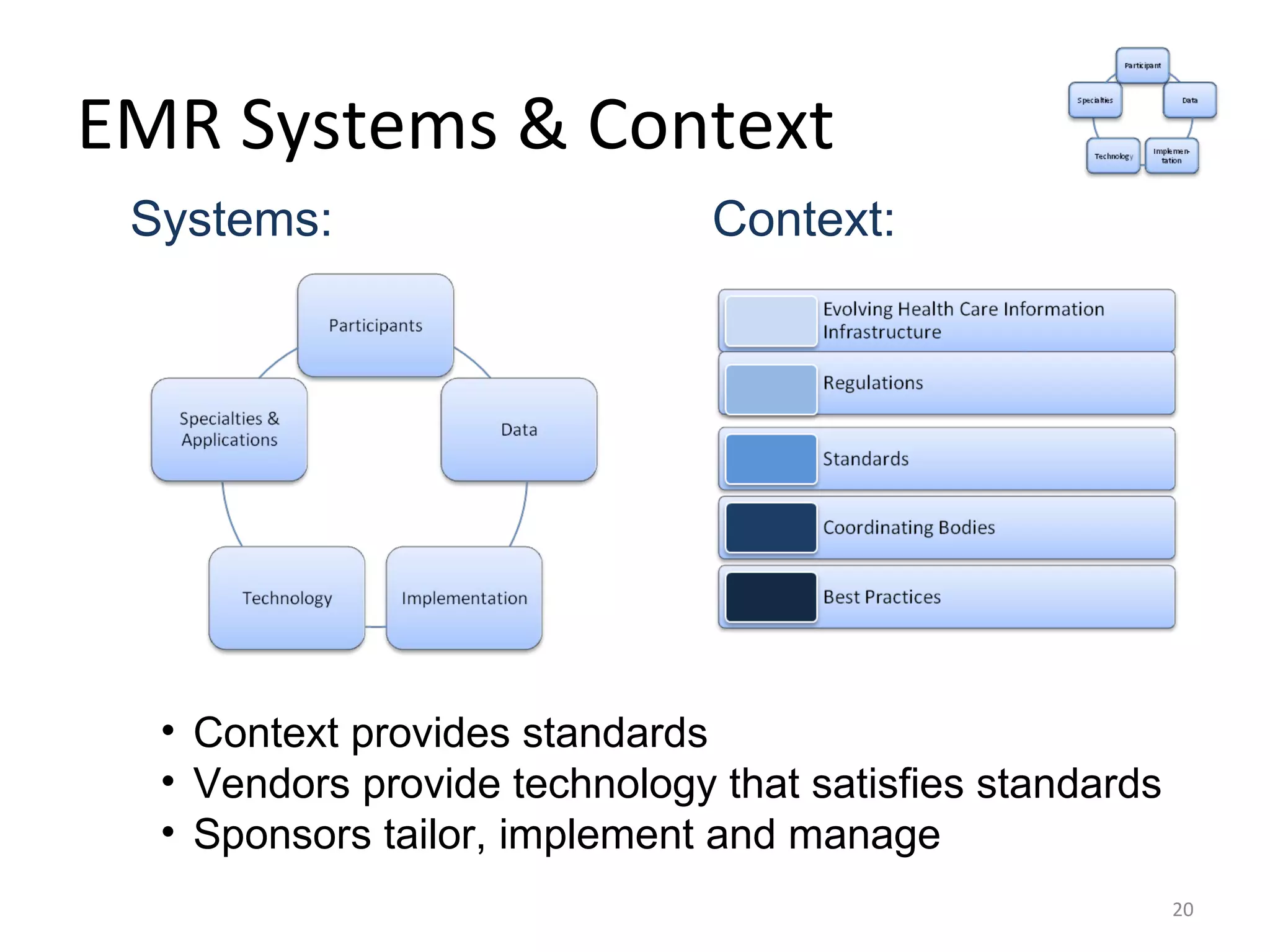
EMR Systems & Context Systems: Context: All of these elements are in the process of evolution
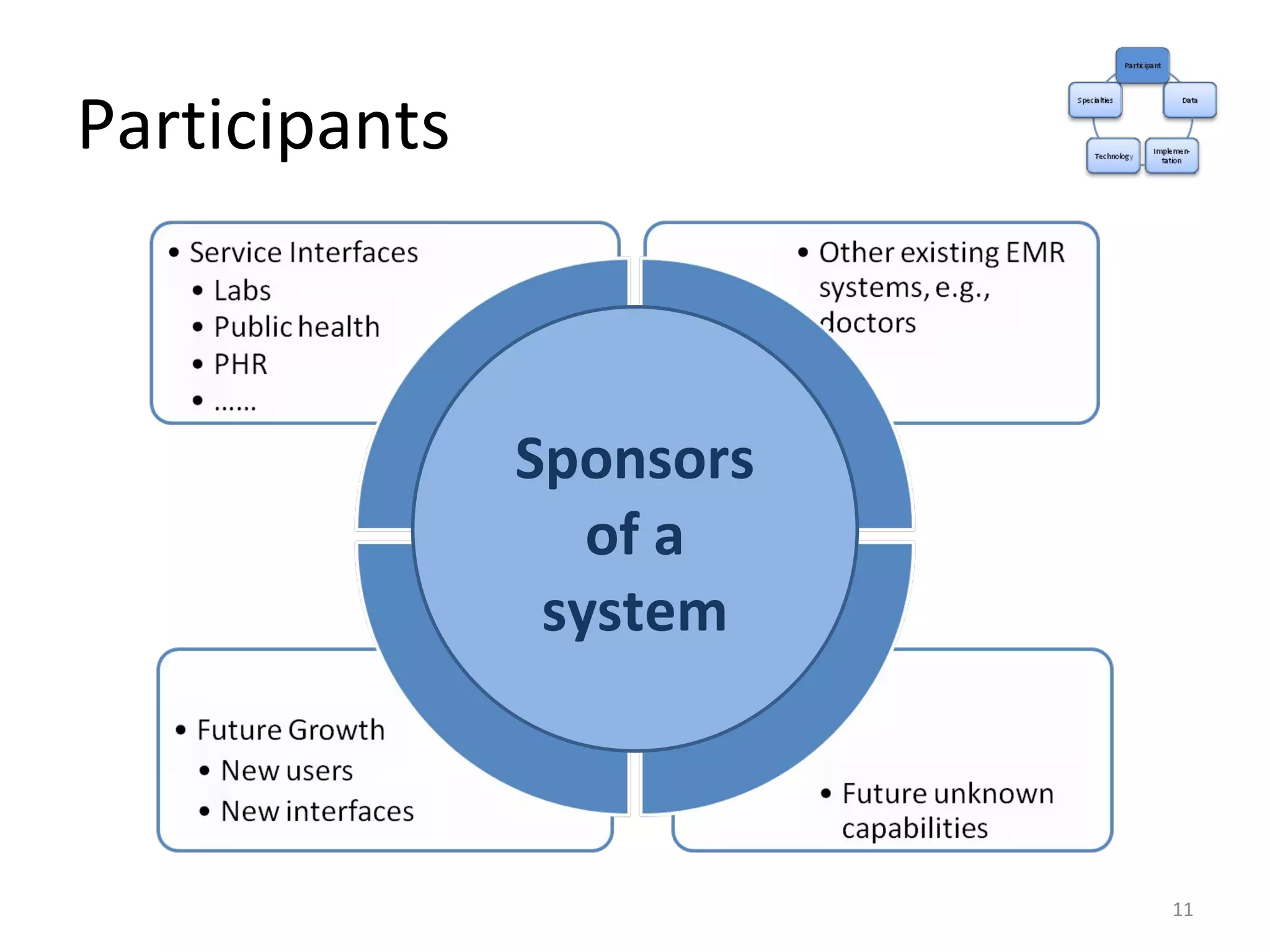
Participants Sponsors of a system
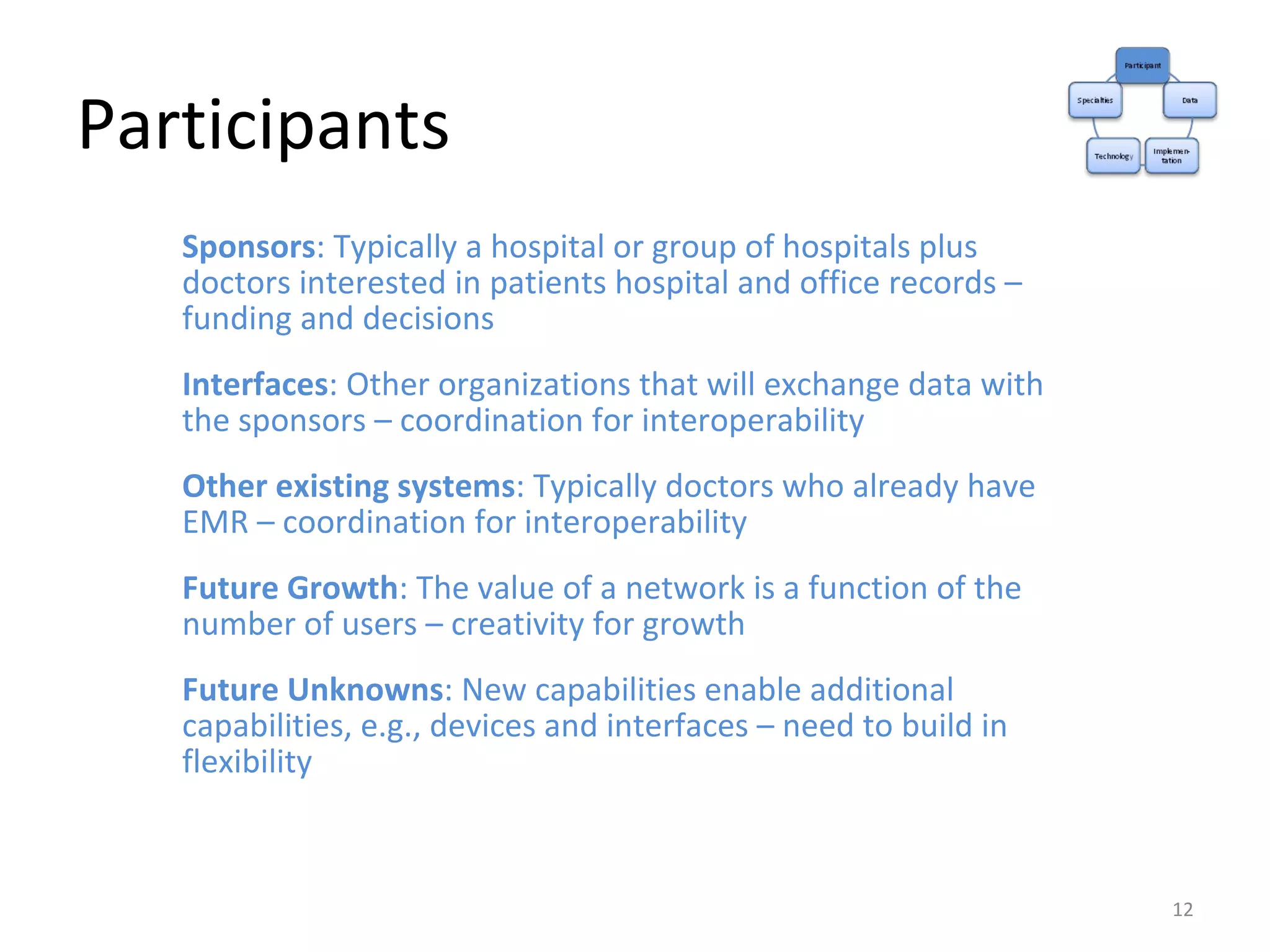
Participants Sponsors : Typically a hospital or group of hospitals plus doctors interested in patients hospital and office records – funding and decisions Interfaces : Other organizations that will exchange data with the sponsors – coordination for interoperability  Other existing systems : Typically doctors who already have EMR – coordination for interoperability Future Growth : The value of a network is a function of the number of users – creativity for growth Future Unknowns : New capabilities enable additional capabilities, e.g., devices and interfaces – need to build in flexibility
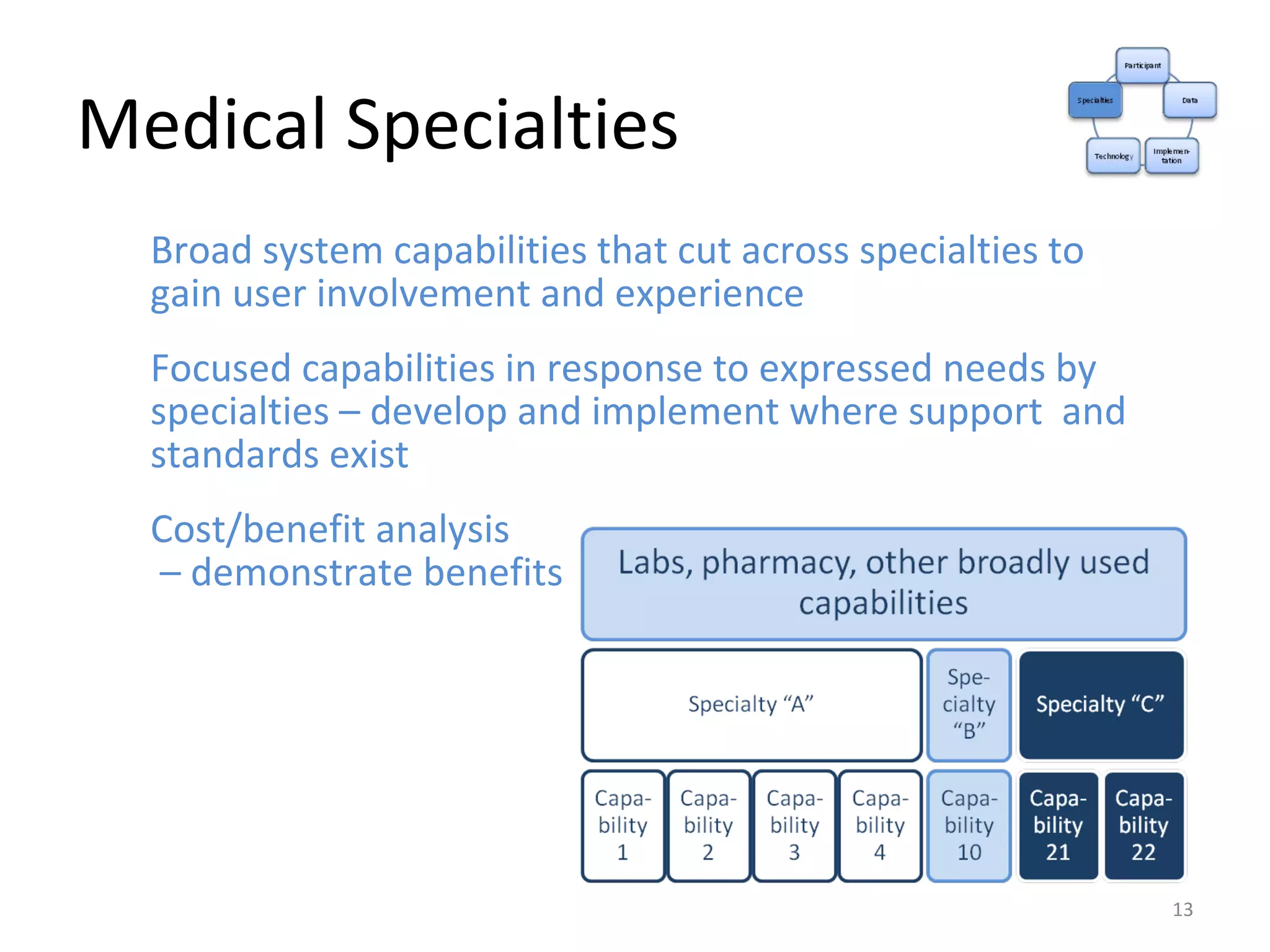
Medical Specialties Broad system capabilities that cut across specialties to gain user involvement and experience Focused capabilities in response to expressed needs by specialties – develop and implement where support  and standards exist Cost/benefit analysis  – demonstrate benefits
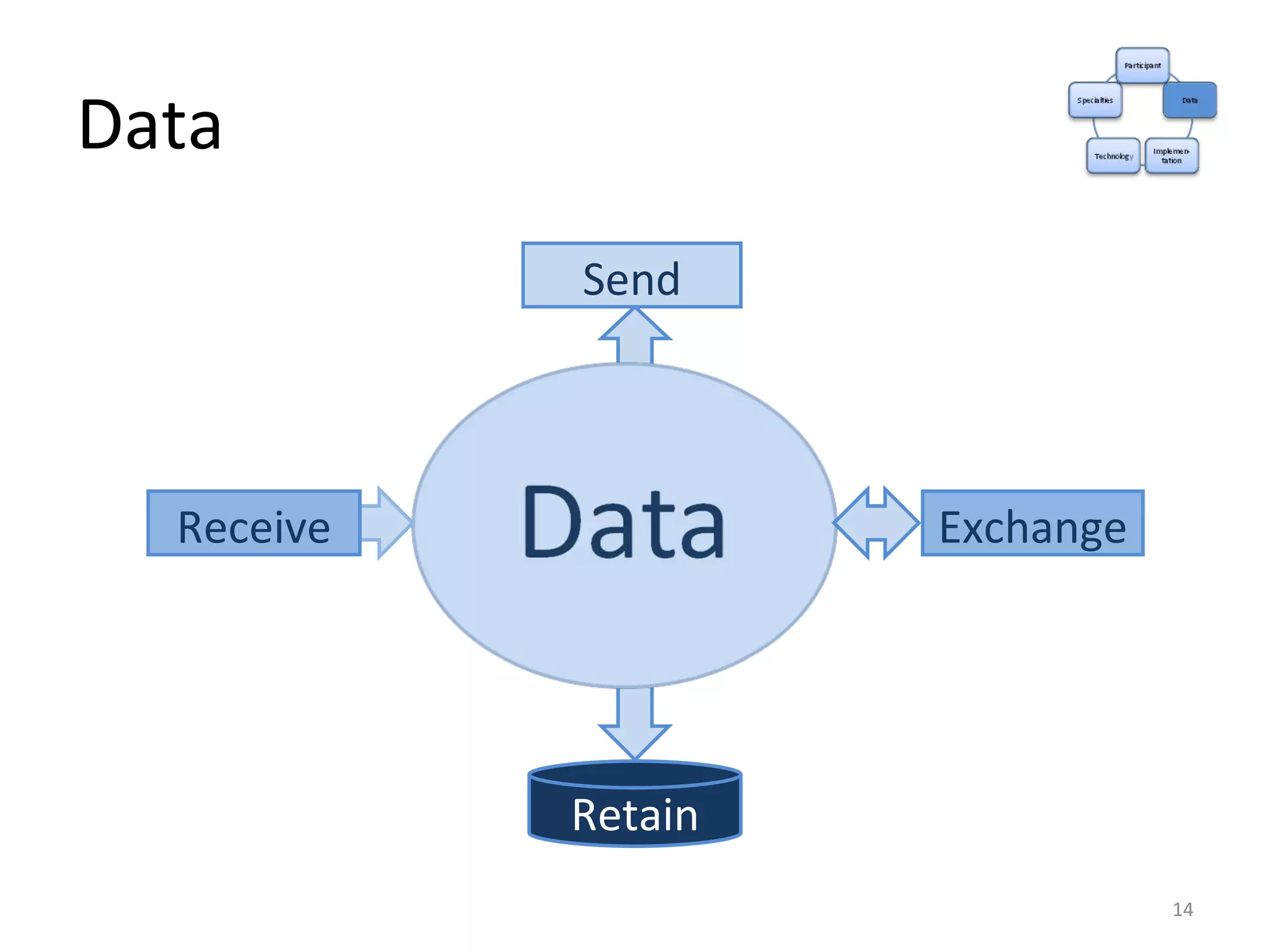
Data Retain Receive Send Exchange
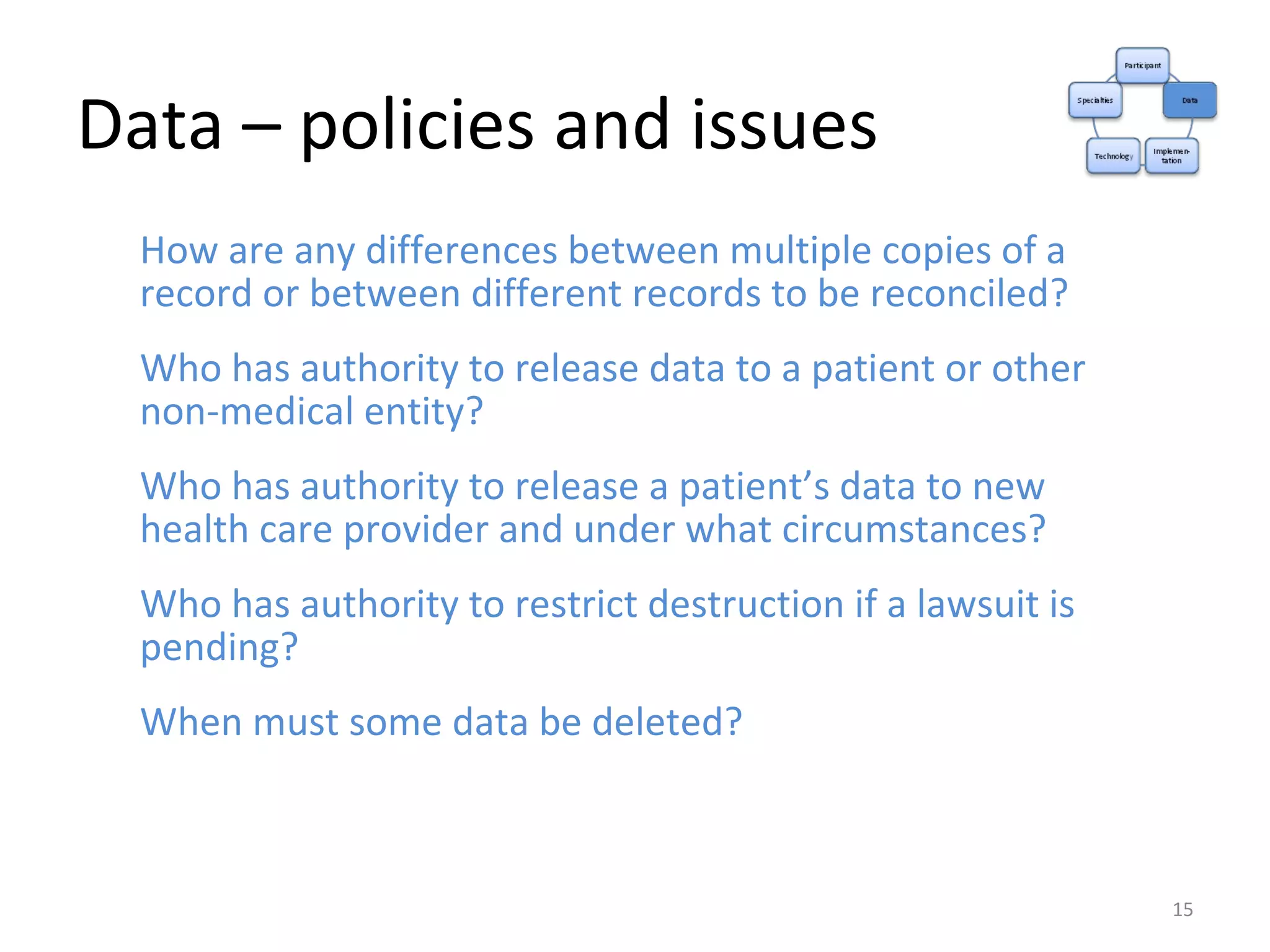
Data – policies and issues How are any differences between multiple copies of a record or between different records to be reconciled?  Who has authority to release data to a patient or other non-medical entity? Who has authority to release a patient’s data to new health care provider and under what circumstances? Who has authority to restrict destruction if a lawsuit is pending? When must some data be deleted?
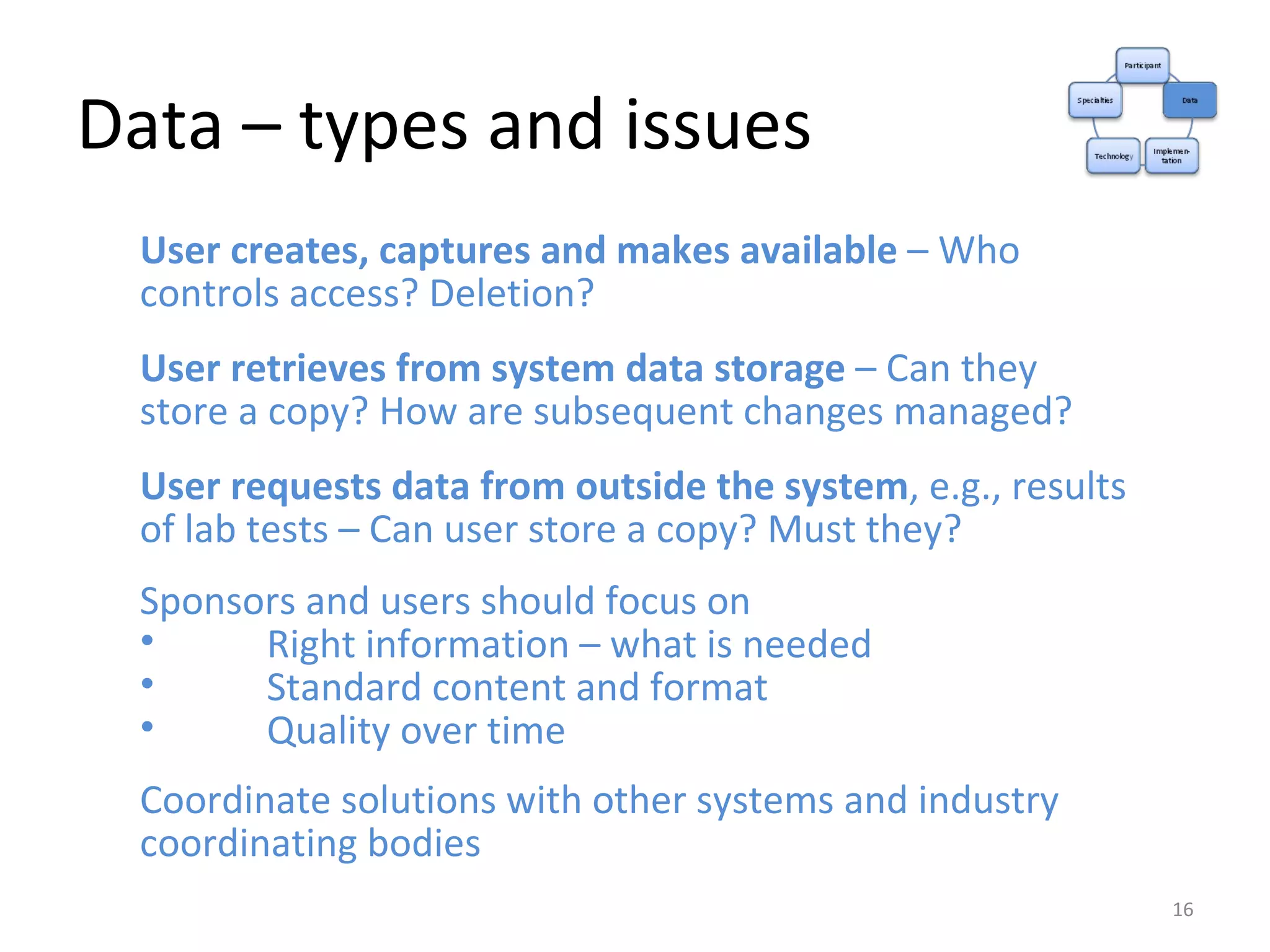
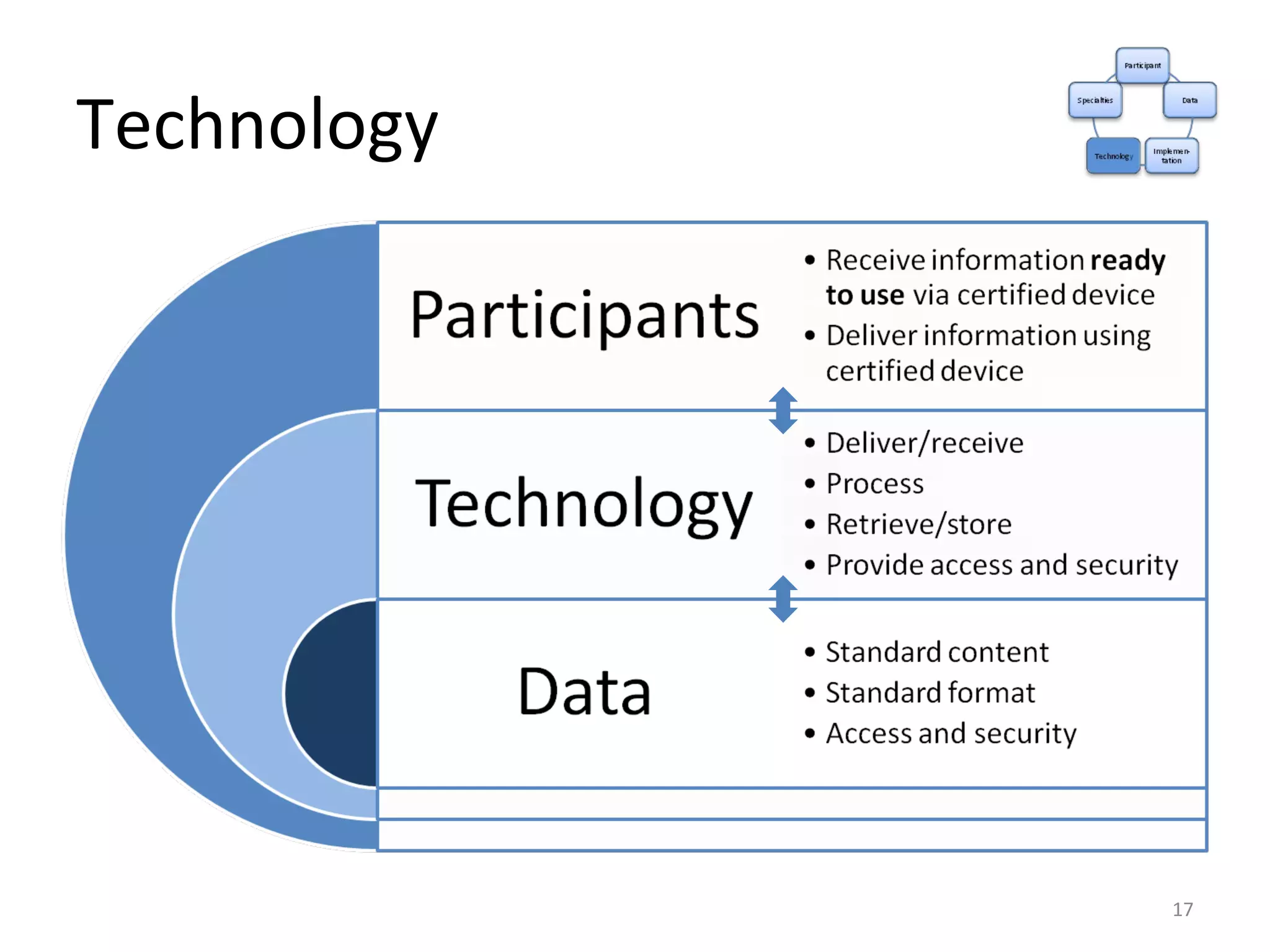
Data – types and issues User creates, captures and makes available  – Who controls access? Deletion? User retrieves from system data storage  – Can they store a copy? How are subsequent changes managed? User requests data from outside the system , e.g., results of lab tests – Can user store a copy? Must they? Sponsors and users should focus on Right information – what is needed Standard content and format Quality over time Coordinate solutions with other systems and industry coordinating bodies
Technology
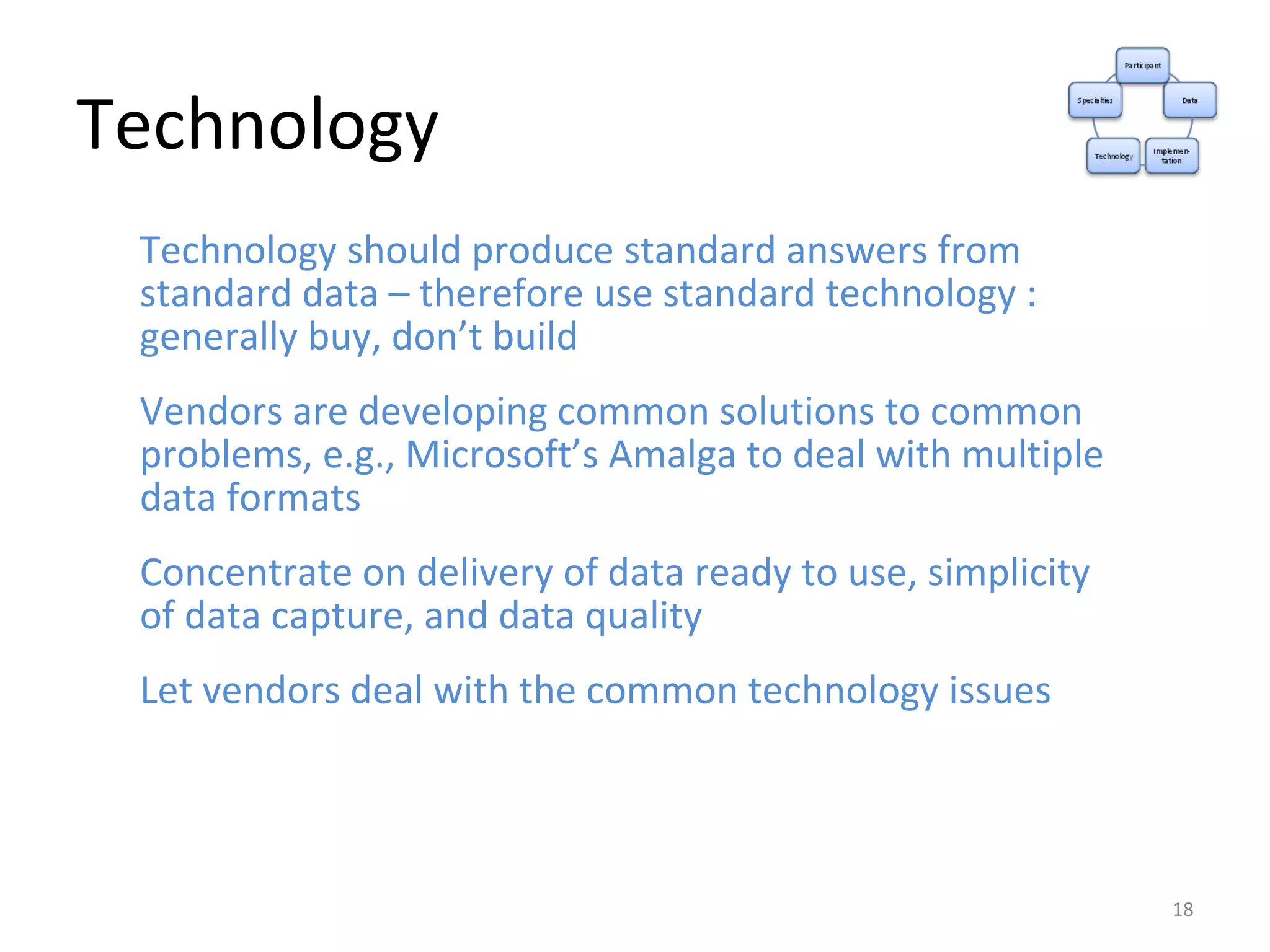
Technology Technology should produce standard answers from standard data – therefore use standard technology : generally buy, don’t build Vendors are developing common solutions to common problems, e.g., Microsoft’s Amalga to deal with multiple data formats Concentrate on delivery of data ready to use, simplicity of data capture, and data quality Let vendors deal with the common technology issues
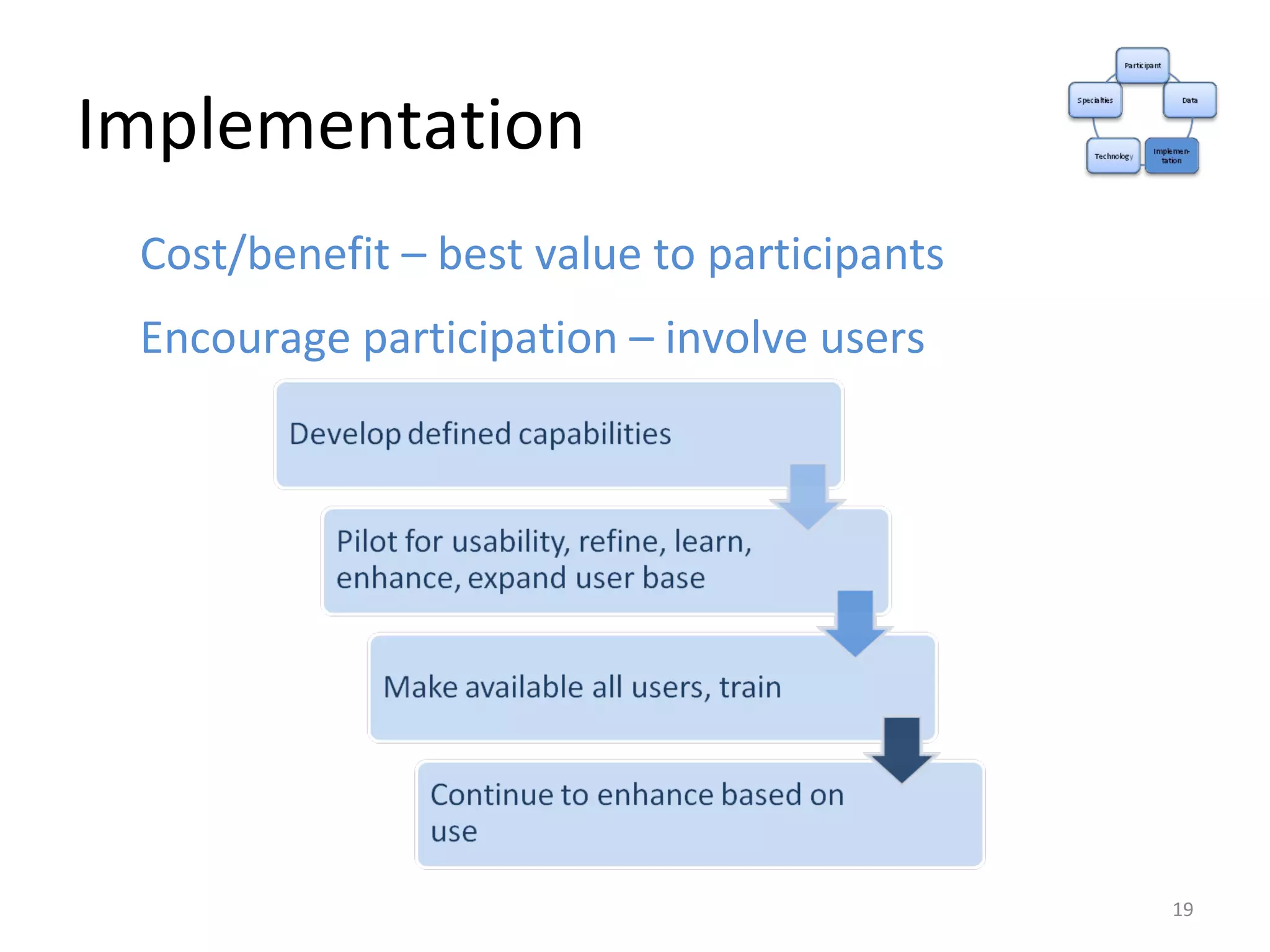
Implementation Cost/benefit – best value to participants Encourage participation – involve users
EMR Systems & Context Systems: Context: Context provides standards Vendors provide technology that satisfies standards Sponsors tailor, implement and manage
We have worked in the white space of  organizations … including HIPAA, Y2K, ERP, mergers and the implementation of evolving regulations The white spaces of organizations occur on  organization charts between internal  departments, in contractual ambiguity and regulatory complexity. They are places where functional  misunderstandings occur,  communication falters, roles change, priorities conflict, rewards are unclear,  risks are unknown, and managers  sometimes see threats to their careers  that outweigh the opportunities.  We work in those white spaces to  define problems so they can be solved,  design solutions so they can be implemented, and structure implementation so it can be managed. Hal Amens [email_address]
Additional resources: Internet research on ERM:  http://www.delicious.com/hal9007/emr Twitter links to EMR:  http://www.twitter.com/hal9007 Google Health (PHR+)  http://www.google.com/health   Microsoft Vault (PHR+)  http://healthvault.com Microsoft A malga  http://microsoft.com/amalga

Anatomy of an EMR System

  • 1.
    Anatomy and Issuesof Electronic Medical Records Systems Lyon, Popanz  Forester May 26, 2009
  • 2.
    This presentation providesa structure for the planning, management and continuous enhancement of electronic medical records systems in the context of an emerging nationwide health information infrastructure It is based on our experience with development, implementation and litigation of large, complex systems including HIPAA, Y2K, ERP and corporate mergers Lyon, Popanz & Forester is a management consulting firm. The information presented here is based on our experience and sources we consider reliable. There is no further guarantee of usability of accuracy. LP&F does not provide accounting, financial, or legal advise; see an appropriate professional for those services.
  • 3.
    Topics Why electronic medical records Scope Status of implementation Anatomy and Issues Participants Specialties Data Technology Implementation
  • 4.
    Focus of $19.2billion for health information technology http://content.nejm.org/cgi/content/full/NEJMp0900665?query=TOC Part of $787 billion economic stimulus package American Recovery and Reinvestment Act of 2009 The Health Information Technology for Economic and Clinical Health Act or HITECH Why electronic medical records?
  • 5.
    What does HITECH require? Provides incentives to hospitals and doctors’ offices to move to electronic medical records There are incentives to and penalties for failure to  Use a “certified” EMR system Demonstrate “meaningful use” of an EMR
  • 6.
    Scope of EMRsystems Part of a larger health information infrastructure that is evolving as a result of HIPAA and HITECH plus related efforts of leaders in healthcare who see the need and value Network based – scope extends to the interfaces with other systems and then links to the Internet The scope ranges from individual consumers to very large healthcare organizations and essentially all supporting health care organizations in between.
  • 7.
    Scope: EMR &PHR EMR – electronic medical records managed by source of the data, e.g., hospital, doctor, etc. PHR – personal health records managed by the patient/consumer using Google, Microsoft, etc. Other systems: Billing and payments; HR; Hospital operations: dietary; etc. HITECH EMR Hospitals Doctors’ Offices Public Health Support Services, e.g., Labs, Pharmacies Google/Microsoft PHR Pharmacy e.g., refills Medical Devices e.g., monitors Support Services e.g., Labs Family authorized access
  • 8.
    Status of ImplementationThe Wall Street Journal identified 10 types of EMR systems and assessed their implementation in hospitals: Highest: Laboratory Results 75% Lowest: Physician’s Notes & Clinical Guidelines:15% All others: 27% to 52% Full EMR: 1.5% of US hospitals * The survey did not address the question of whether or not these systems can be integrated into a nationwide health information infrastructure without significant modification or replacement http://online.wsj.com/article_email/SB124104350516570503-lMyQjAxMDI5NDAxMTAwNDEzWj.html April 30, 2009 * There are about 5,000 hospitals of which about 3,000 have 100 beds or more
  • 9.
  • 10.
    EMR Systems &Context Systems: Context: All of these elements are in the process of evolution
  • 11.
  • 12.
    Participants Sponsors :Typically a hospital or group of hospitals plus doctors interested in patients hospital and office records – funding and decisions Interfaces : Other organizations that will exchange data with the sponsors – coordination for interoperability Other existing systems : Typically doctors who already have EMR – coordination for interoperability Future Growth : The value of a network is a function of the number of users – creativity for growth Future Unknowns : New capabilities enable additional capabilities, e.g., devices and interfaces – need to build in flexibility
  • 13.
    Medical Specialties Broadsystem capabilities that cut across specialties to gain user involvement and experience Focused capabilities in response to expressed needs by specialties – develop and implement where support and standards exist Cost/benefit analysis – demonstrate benefits
  • 14.
    Data Retain ReceiveSend Exchange
  • 15.
    Data – policiesand issues How are any differences between multiple copies of a record or between different records to be reconciled? Who has authority to release data to a patient or other non-medical entity? Who has authority to release a patient’s data to new health care provider and under what circumstances? Who has authority to restrict destruction if a lawsuit is pending? When must some data be deleted?
  • 16.
    Data – typesand issues User creates, captures and makes available – Who controls access? Deletion? User retrieves from system data storage – Can they store a copy? How are subsequent changes managed? User requests data from outside the system , e.g., results of lab tests – Can user store a copy? Must they? Sponsors and users should focus on Right information – what is needed Standard content and format Quality over time Coordinate solutions with other systems and industry coordinating bodies
  • 17.
  • 18.
    Technology Technology shouldproduce standard answers from standard data – therefore use standard technology : generally buy, don’t build Vendors are developing common solutions to common problems, e.g., Microsoft’s Amalga to deal with multiple data formats Concentrate on delivery of data ready to use, simplicity of data capture, and data quality Let vendors deal with the common technology issues
  • 19.
    Implementation Cost/benefit –best value to participants Encourage participation – involve users
  • 20.
    EMR Systems &Context Systems: Context: Context provides standards Vendors provide technology that satisfies standards Sponsors tailor, implement and manage
  • 21.
    We have workedin the white space of organizations … including HIPAA, Y2K, ERP, mergers and the implementation of evolving regulations The white spaces of organizations occur on organization charts between internal departments, in contractual ambiguity and regulatory complexity. They are places where functional misunderstandings occur, communication falters, roles change, priorities conflict, rewards are unclear, risks are unknown, and managers sometimes see threats to their careers that outweigh the opportunities. We work in those white spaces to define problems so they can be solved, design solutions so they can be implemented, and structure implementation so it can be managed. Hal Amens [email_address]
  • 22.
    Additional resources: Internetresearch on ERM: http://www.delicious.com/hal9007/emr Twitter links to EMR: http://www.twitter.com/hal9007 Google Health (PHR+) http://www.google.com/health Microsoft Vault (PHR+) http://healthvault.com Microsoft A malga http://microsoft.com/amalga