KUVEMPU UNIVERSITY
Dept. of P.G. Studies and Research in Wildlife and Management
Kuvempu University, Jnana Sahyadri
Shankaraghatta
Seminar On
ANIMAL TOXINS
Submitted By
NITHIN S
Department of Wildlife and Management
M.Sc. II Semester
Kuvempu University
Shankaragatta
Guided By
Dr. RAGHAVENDRA GOWDA H T
Assistant Professor
Dept. of Wildlife and Management
Kuvempu University,
Shankaraghatta
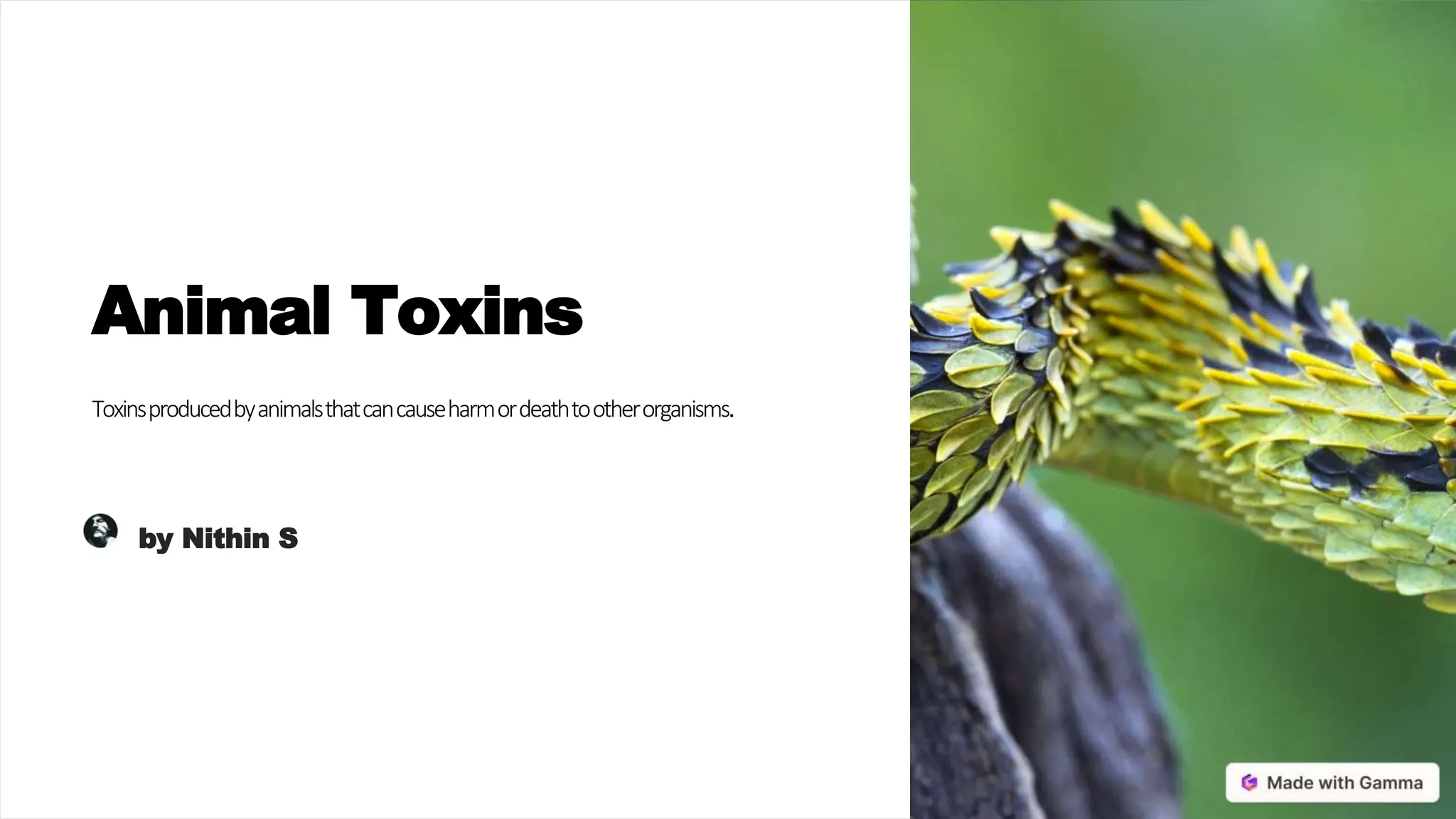
Animal Toxins
Toxinsproducedbyanimalsthatcancauseharmordeathtootherorganisms.
by Nithin S
Different Types of
Animal Toxins
1 Neurotoxins 🧠
Affect the nervous system,
causing paralysis or altering
brain activity.
2 Hemotoxins ❣️
Attack blood cells, leading
to tissue damage, clotting
issues, and bleeding.
3 Cytotoxins 🔬
Destroy or disrupt cells, resulting in tissue necrosis or organ failure.
Examples of Venomous Animals
and Their Toxins
Cobras 🐍
Produce venom containing neurotoxins to
immobilize prey.
Poison Dart Frogs 🐸
Display vibrant colors, signifying the presence of
potent alkaloid toxins.
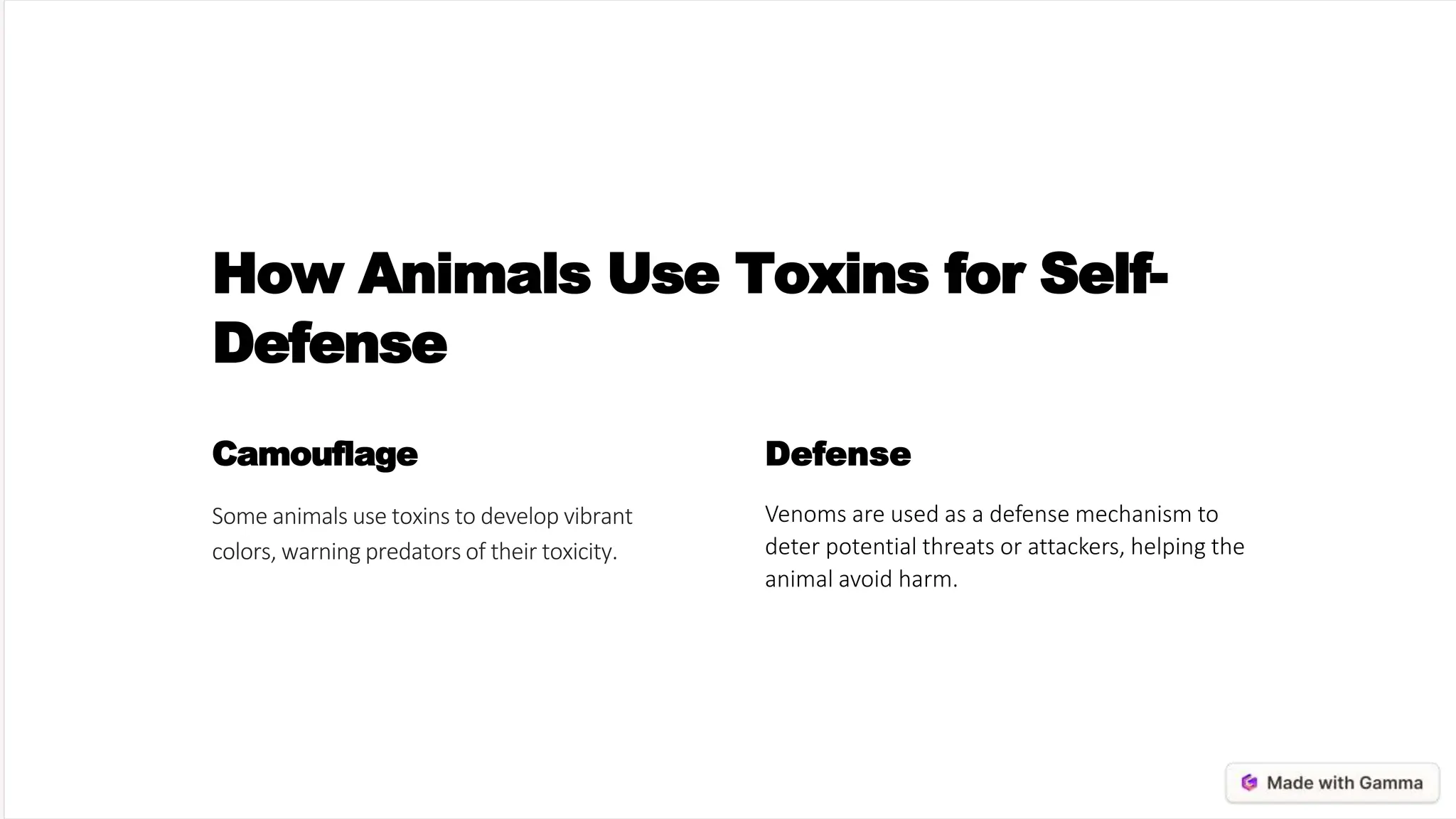
How Animals Use Toxins for Self-
Defense
Camouflage
Some animals use toxins to develop vibrant
colors, warning predators of their toxicity.
Defense
Venoms are used as a defense mechanism to
deter potential threats or attackers, helping the
animal avoid harm.
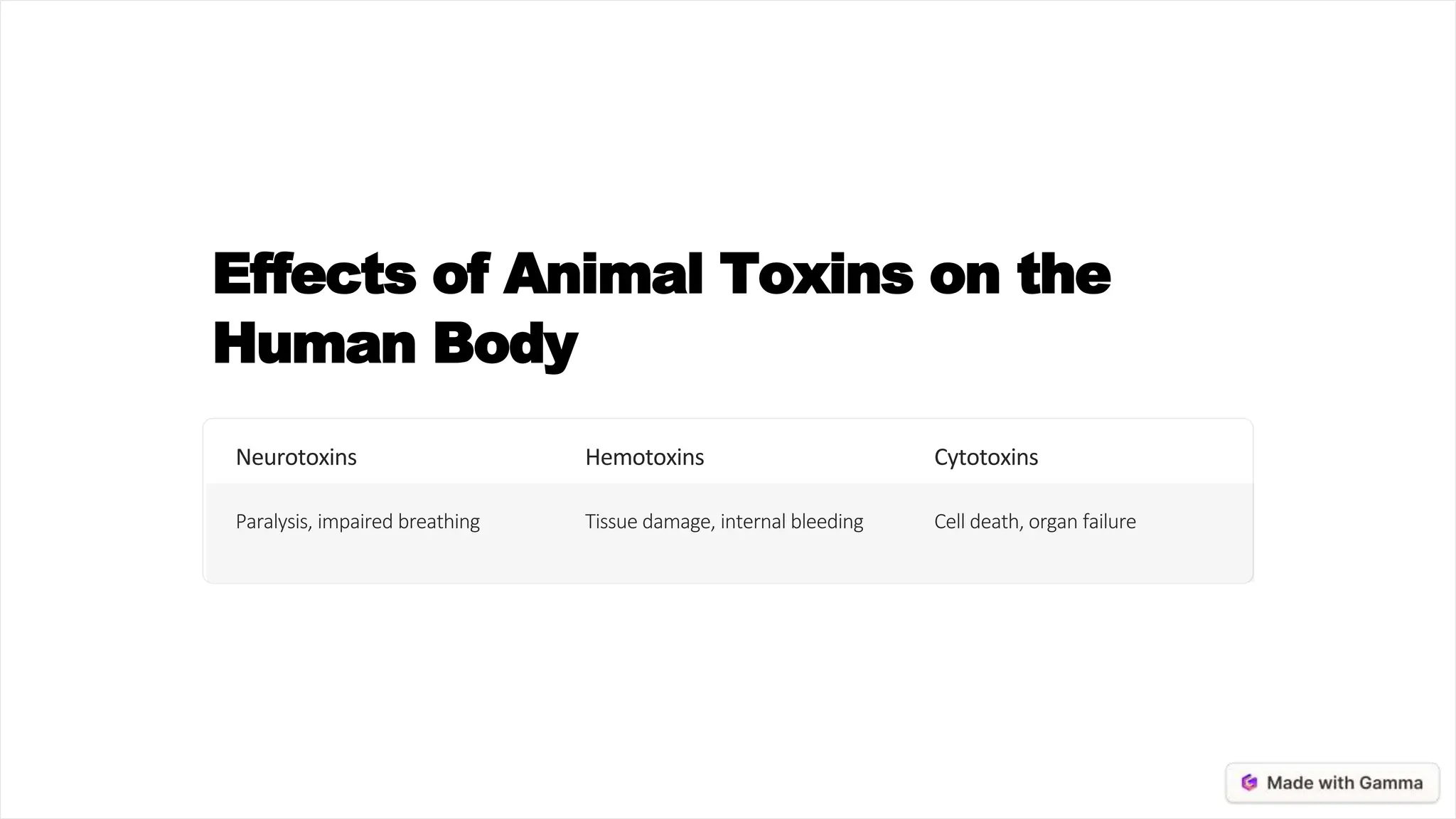
Effects of Animal Toxins on the
Human Body
Neurotoxins Hemotoxins Cytotoxins
Paralysis, impaired breathing Tissue damage, internal bleeding Cell death, organ failure
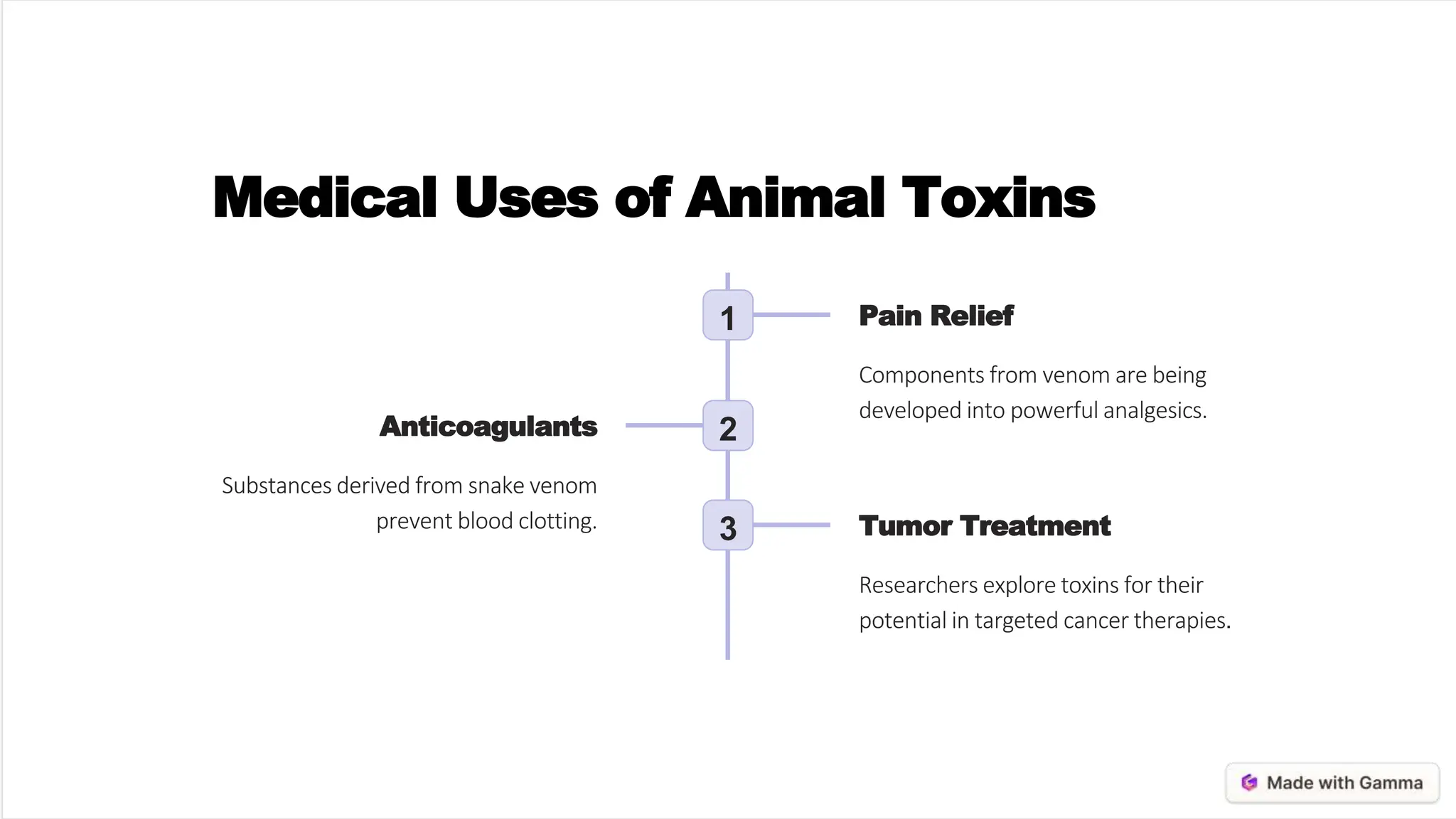
Medical Uses of Animal Toxins
1 Pain Relief
Components from venom are being
developed into powerful analgesics.
2
Anticoagulants
Substances derived from snake venom
prevent blood clotting. 3 Tumor Treatment
Researchers explore toxins for their
potential in targeted cancer therapies.
Research and Advancements in
Studying Animal Toxins
Genomic Analysis
Unraveling the genetic
makeup of venomous
creatures to understand
toxin production.
Synthetic Replication
Developing synthetic
versions of toxins for safer
research and production
purposes.
Evolutionary
Adaptations
Investigating how toxins
evolve and diversify across
different species over time.
Conclusion and Key Takeaways
1 Nature's Arsenal
Animal toxins are an
incredible example of
nature's ingenuity and
adaptation.
2 Medical Marvels
Unlocking the potential
of animal toxins has
transformative
implications for
medicine.
3 Fascinating
Research
Ongoing studies
continue to unveil the
hidden secrets of animal
toxins.

toxin produced by animals and their function or side effects on humans

  • 1.
    KUVEMPU UNIVERSITY Dept. ofP.G. Studies and Research in Wildlife and Management Kuvempu University, Jnana Sahyadri Shankaraghatta Seminar On ANIMAL TOXINS Submitted By NITHIN S Department of Wildlife and Management M.Sc. II Semester Kuvempu University Shankaragatta Guided By Dr. RAGHAVENDRA GOWDA H T Assistant Professor Dept. of Wildlife and Management Kuvempu University, Shankaraghatta
  • 2.
  • 3.
    Different Types of AnimalToxins 1 Neurotoxins 🧠 Affect the nervous system, causing paralysis or altering brain activity. 2 Hemotoxins ❣️ Attack blood cells, leading to tissue damage, clotting issues, and bleeding. 3 Cytotoxins 🔬 Destroy or disrupt cells, resulting in tissue necrosis or organ failure.
  • 4.
    Examples of VenomousAnimals and Their Toxins Cobras 🐍 Produce venom containing neurotoxins to immobilize prey. Poison Dart Frogs 🐸 Display vibrant colors, signifying the presence of potent alkaloid toxins.
  • 5.
    How Animals UseToxins for Self- Defense Camouflage Some animals use toxins to develop vibrant colors, warning predators of their toxicity. Defense Venoms are used as a defense mechanism to deter potential threats or attackers, helping the animal avoid harm.
  • 6.
    Effects of AnimalToxins on the Human Body Neurotoxins Hemotoxins Cytotoxins Paralysis, impaired breathing Tissue damage, internal bleeding Cell death, organ failure
  • 7.
    Medical Uses ofAnimal Toxins 1 Pain Relief Components from venom are being developed into powerful analgesics. 2 Anticoagulants Substances derived from snake venom prevent blood clotting. 3 Tumor Treatment Researchers explore toxins for their potential in targeted cancer therapies.
  • 8.
    Research and Advancementsin Studying Animal Toxins Genomic Analysis Unraveling the genetic makeup of venomous creatures to understand toxin production. Synthetic Replication Developing synthetic versions of toxins for safer research and production purposes. Evolutionary Adaptations Investigating how toxins evolve and diversify across different species over time.
  • 9.
    Conclusion and KeyTakeaways 1 Nature's Arsenal Animal toxins are an incredible example of nature's ingenuity and adaptation. 2 Medical Marvels Unlocking the potential of animal toxins has transformative implications for medicine. 3 Fascinating Research Ongoing studies continue to unveil the hidden secrets of animal toxins.