
THE INERRANCY of SCRIPTURE
– The GREAT WATERSHED
by Dr. Peter Hammond
Reformation500
1521 - 2021
Authority
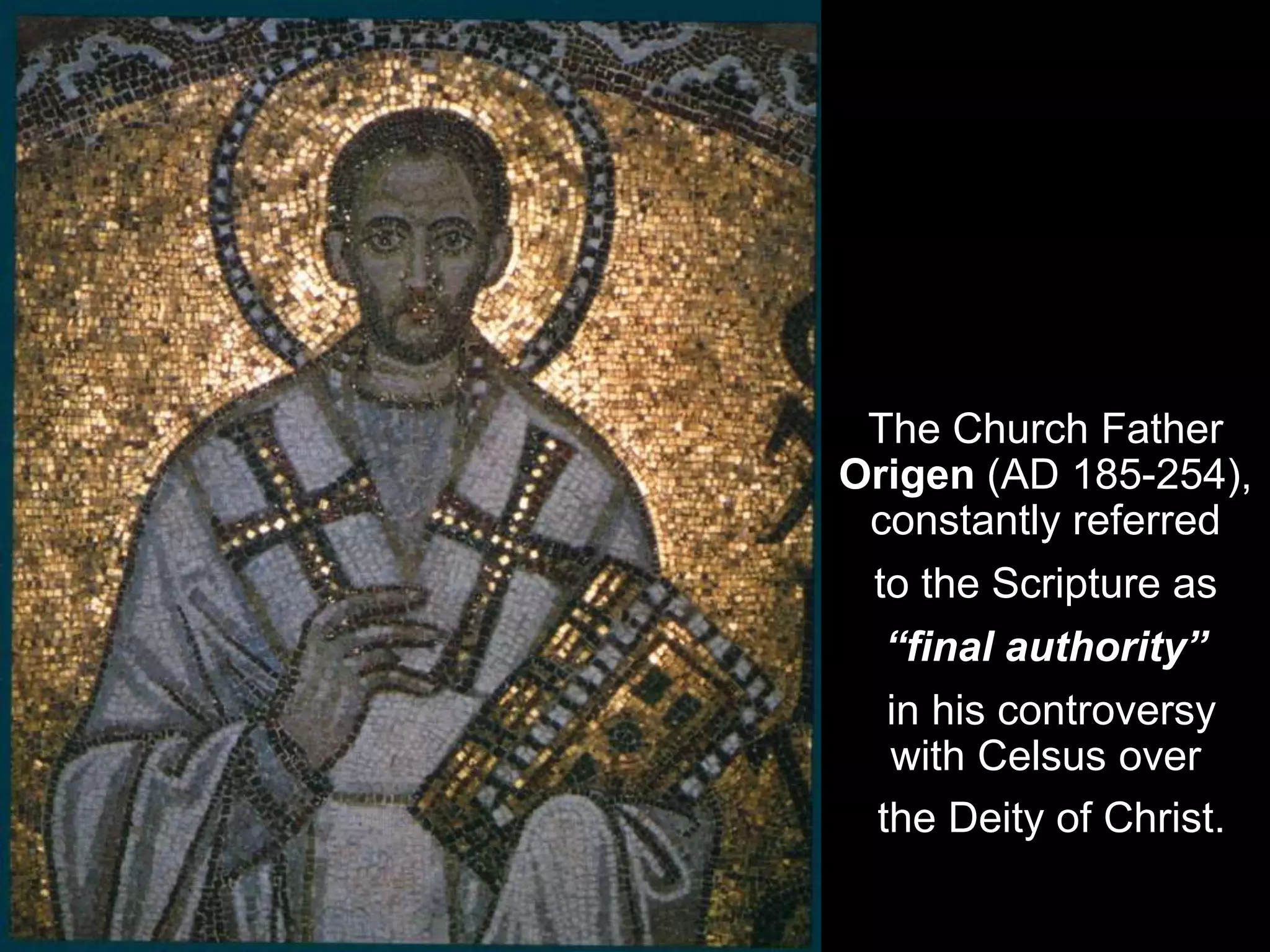
The Church Father
Origen (AD 185-254),
constantly referred
to the Scripture as
“final authority”
in his controversy
with Celsus over
the Deity of Christ.
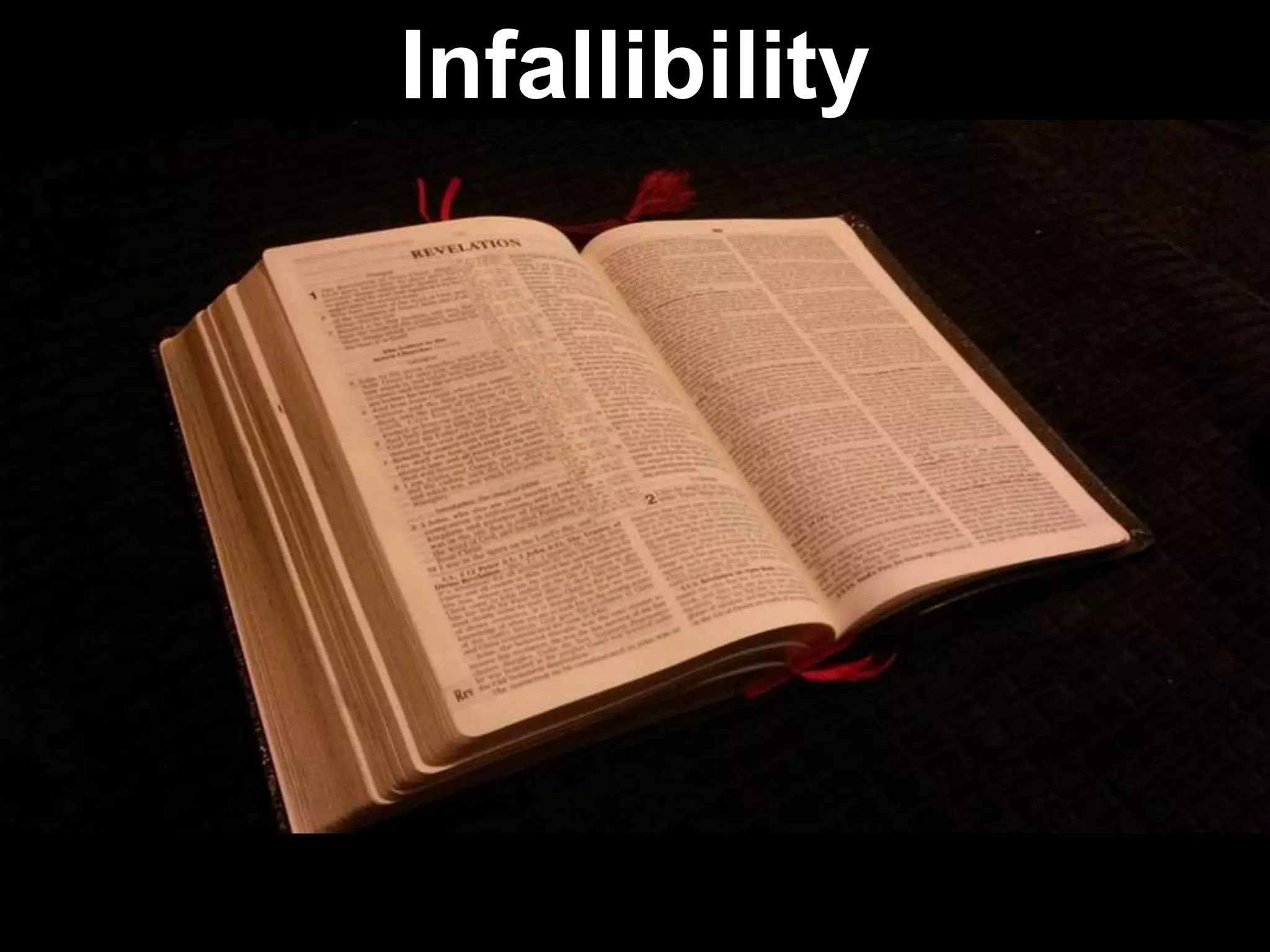
Infallibility
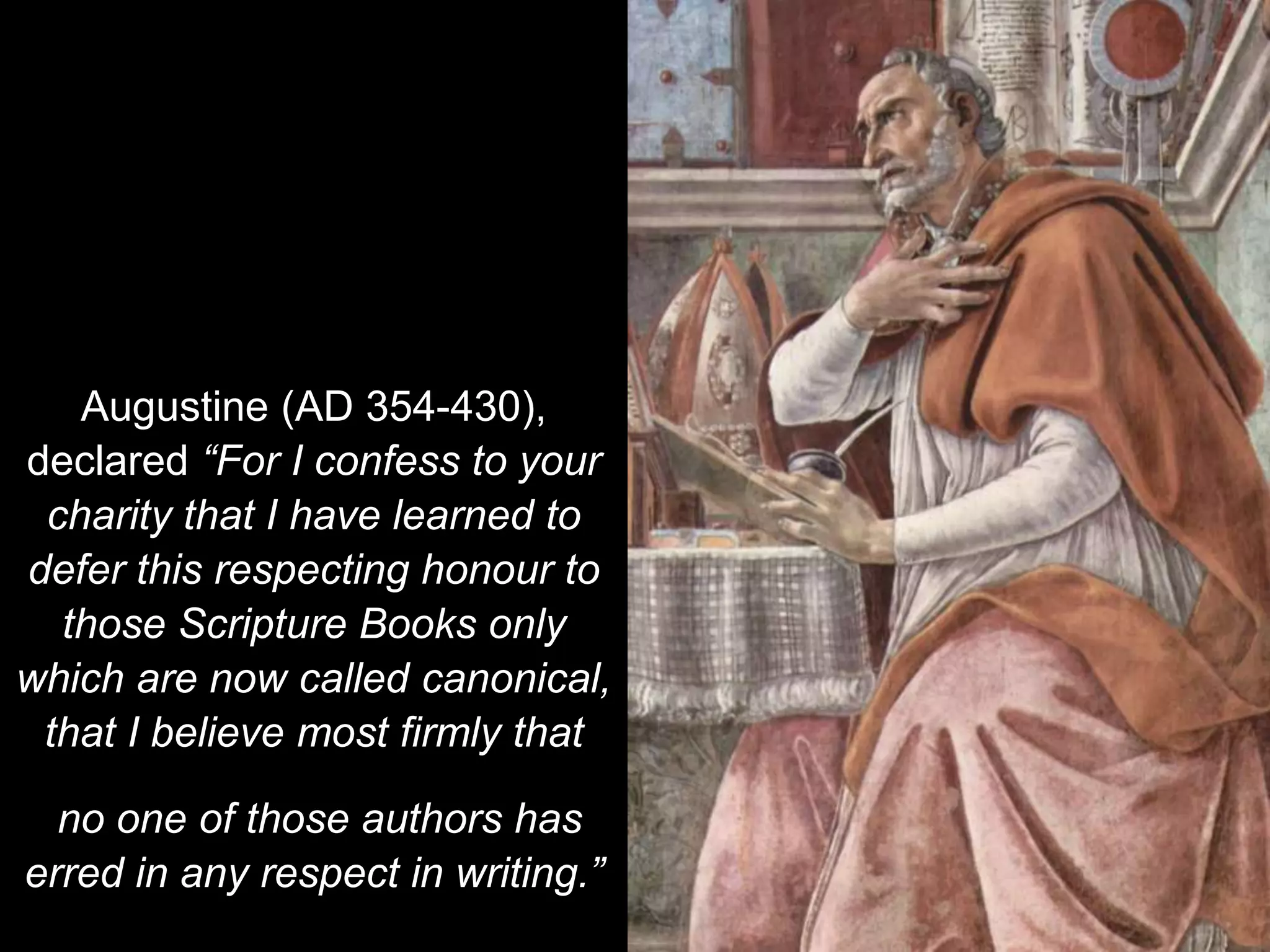
Augustine (AD 354-430),
declared “For I confess to your
charity that I have learned to
defer this respecting honour to
those Scripture Books only
which are now called canonical,
that I believe most firmly that
no one of those authors has
erred in any respect in writing.”
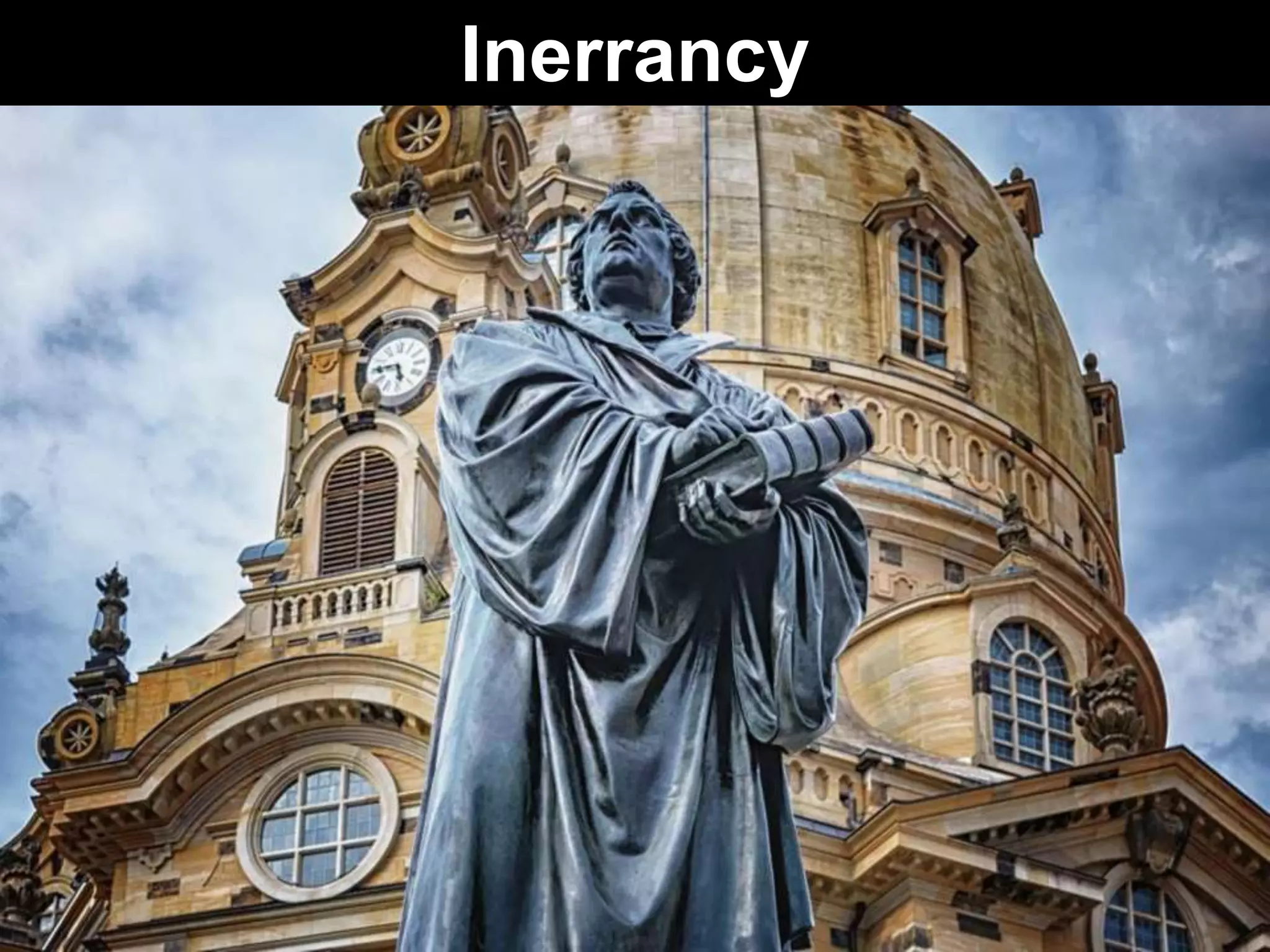
Inerrancy
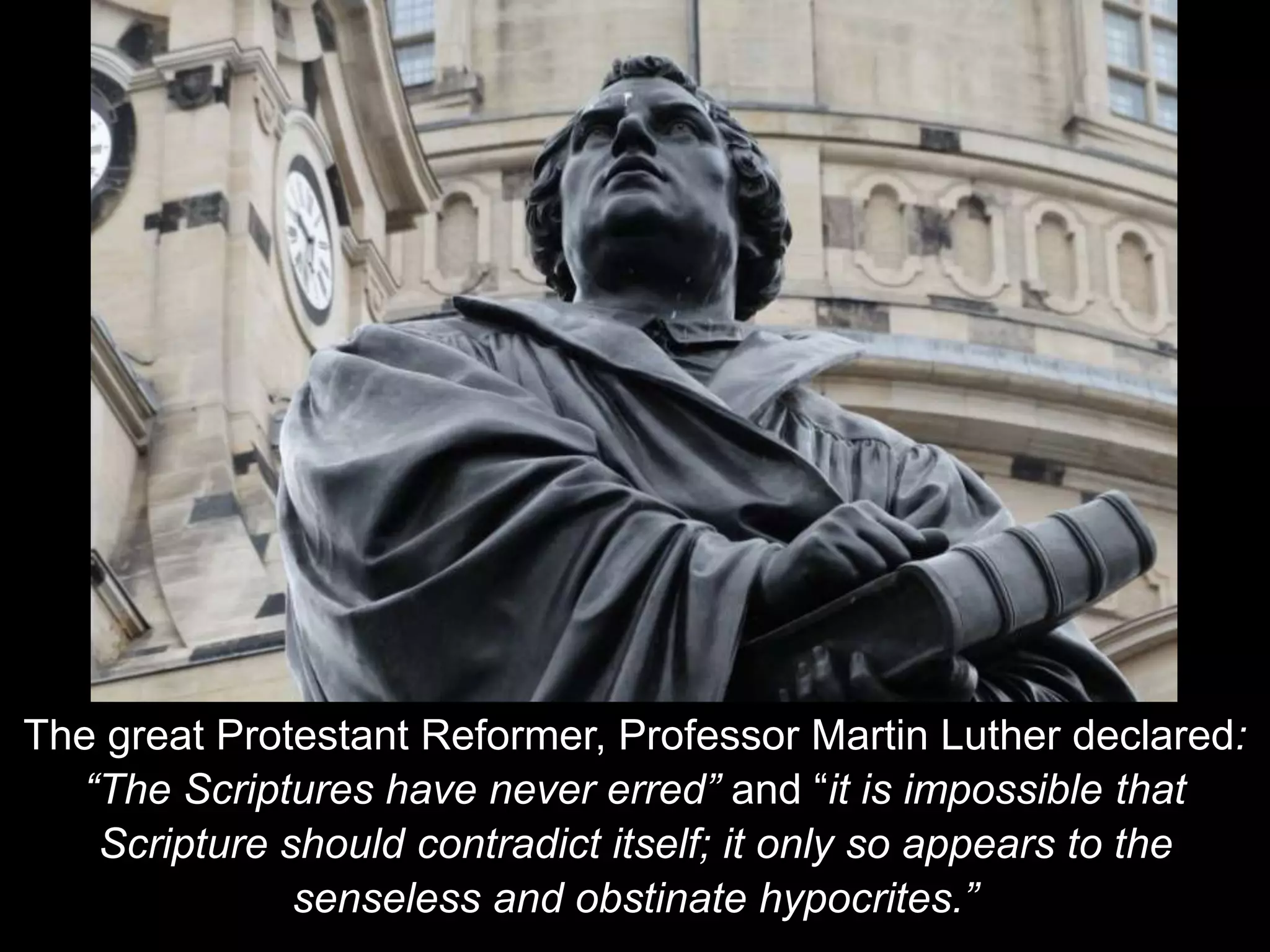
The great Protestant Reformer, Professor Martin Luther declared:
“The Scriptures have never erred” and “it is impossible that
Scripture should contradict itself; it only so appears to the
senseless and obstinate hypocrites.”
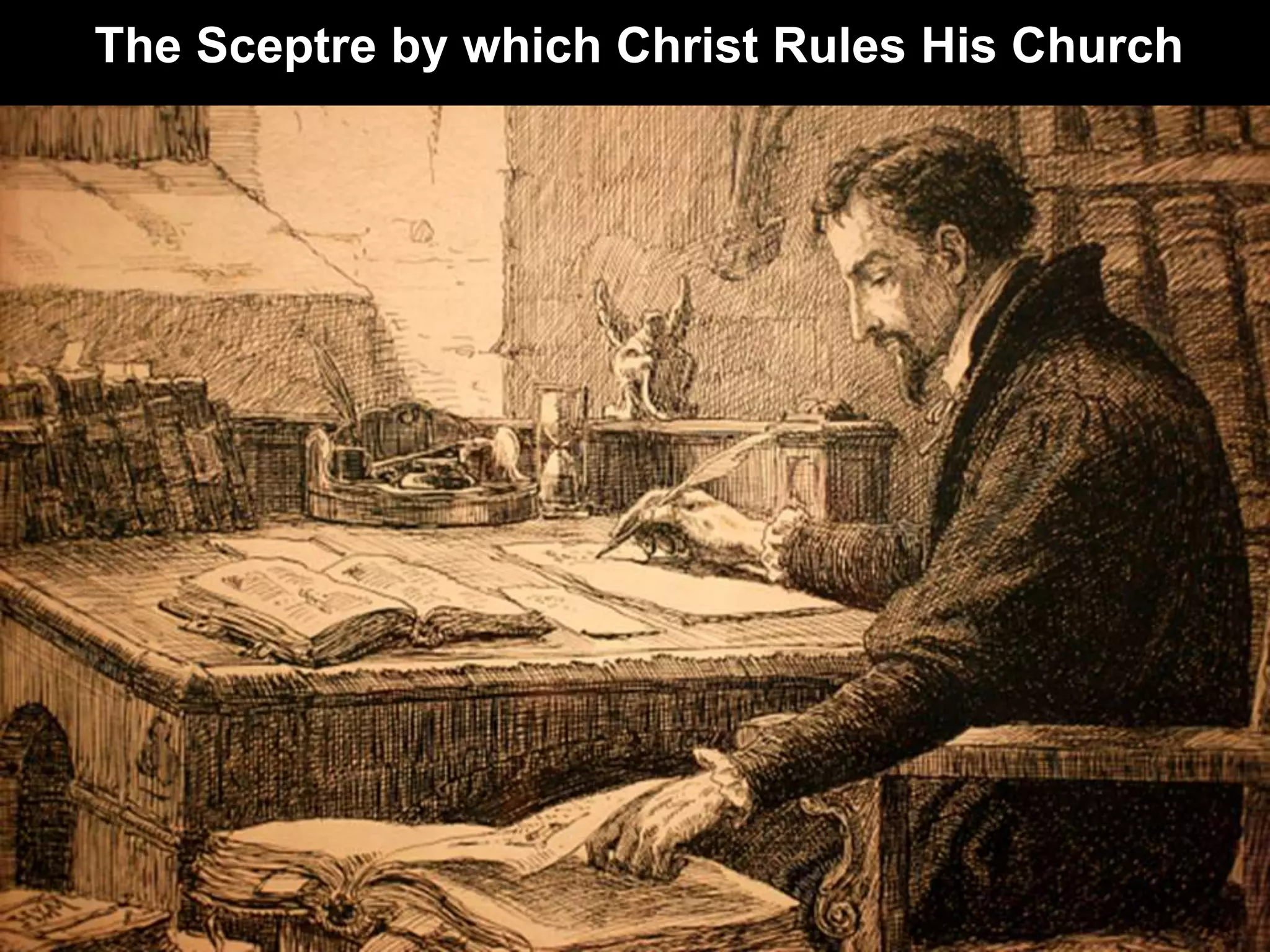
The Sceptre by which Christ Rules His Church
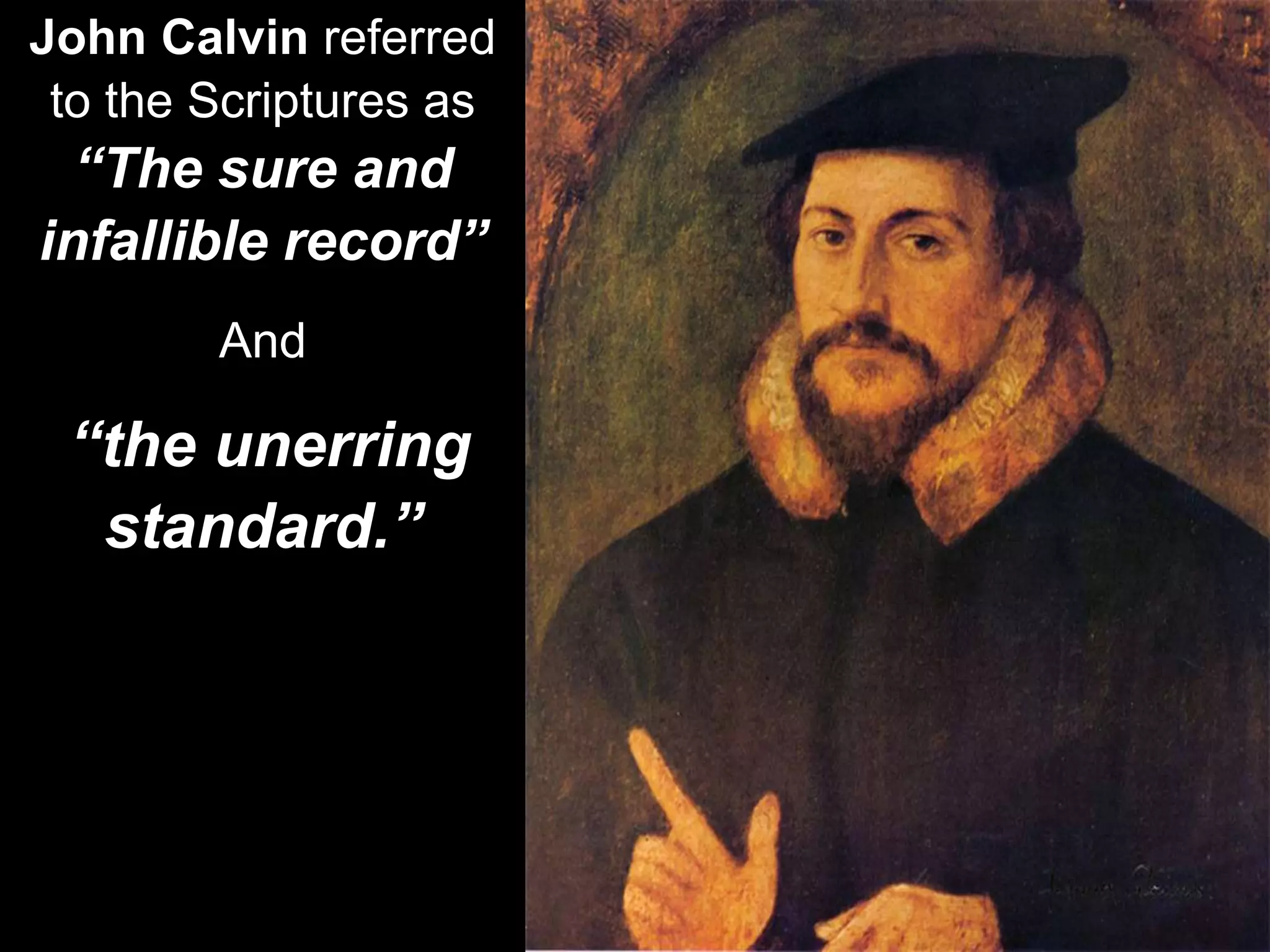
John Calvin referred
to the Scriptures as
“The sure and
infallible record”
And
“the unerring
standard.”
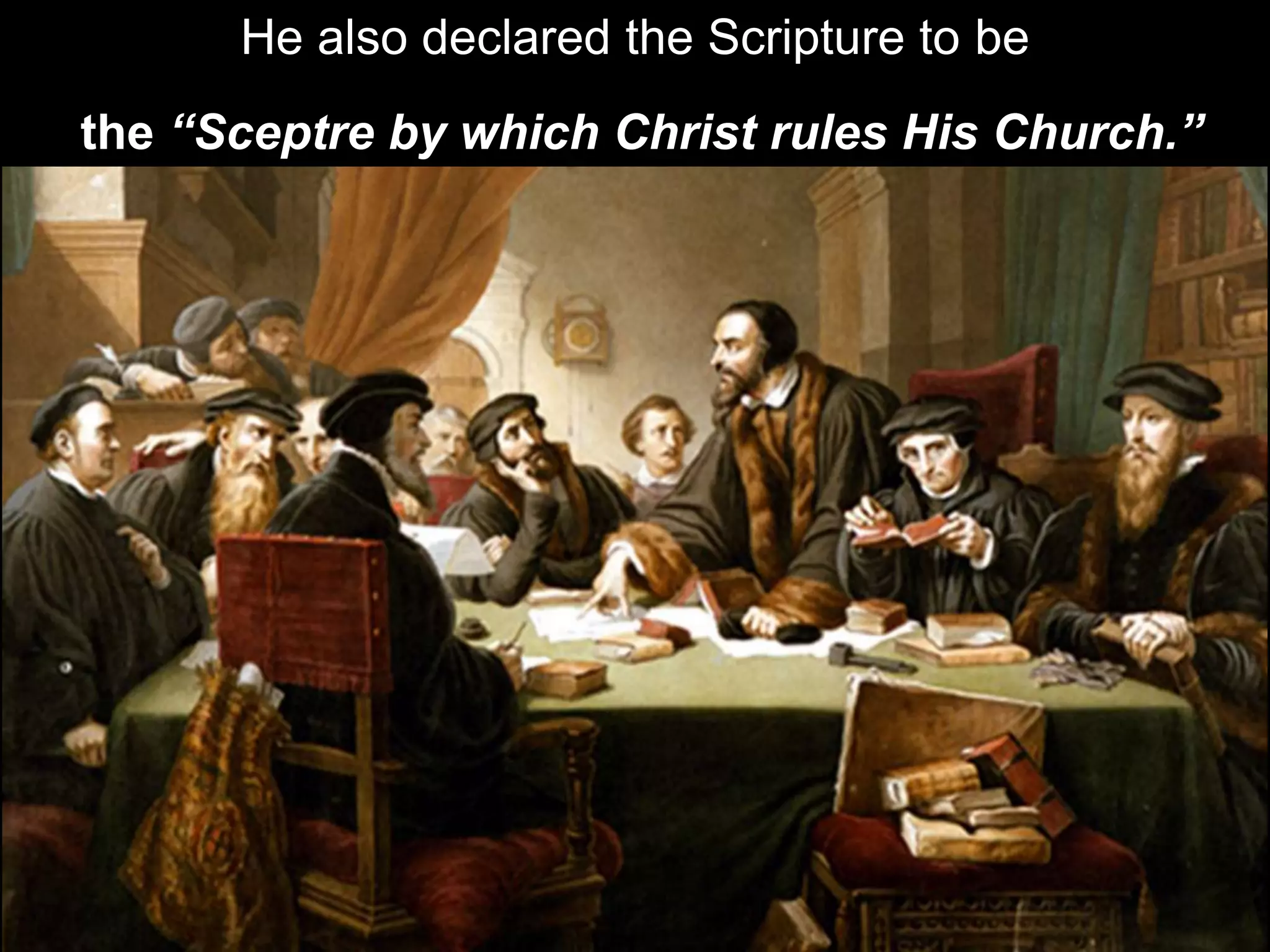
He also declared the Scripture to be
the “Sceptre by which Christ rules His Church.”
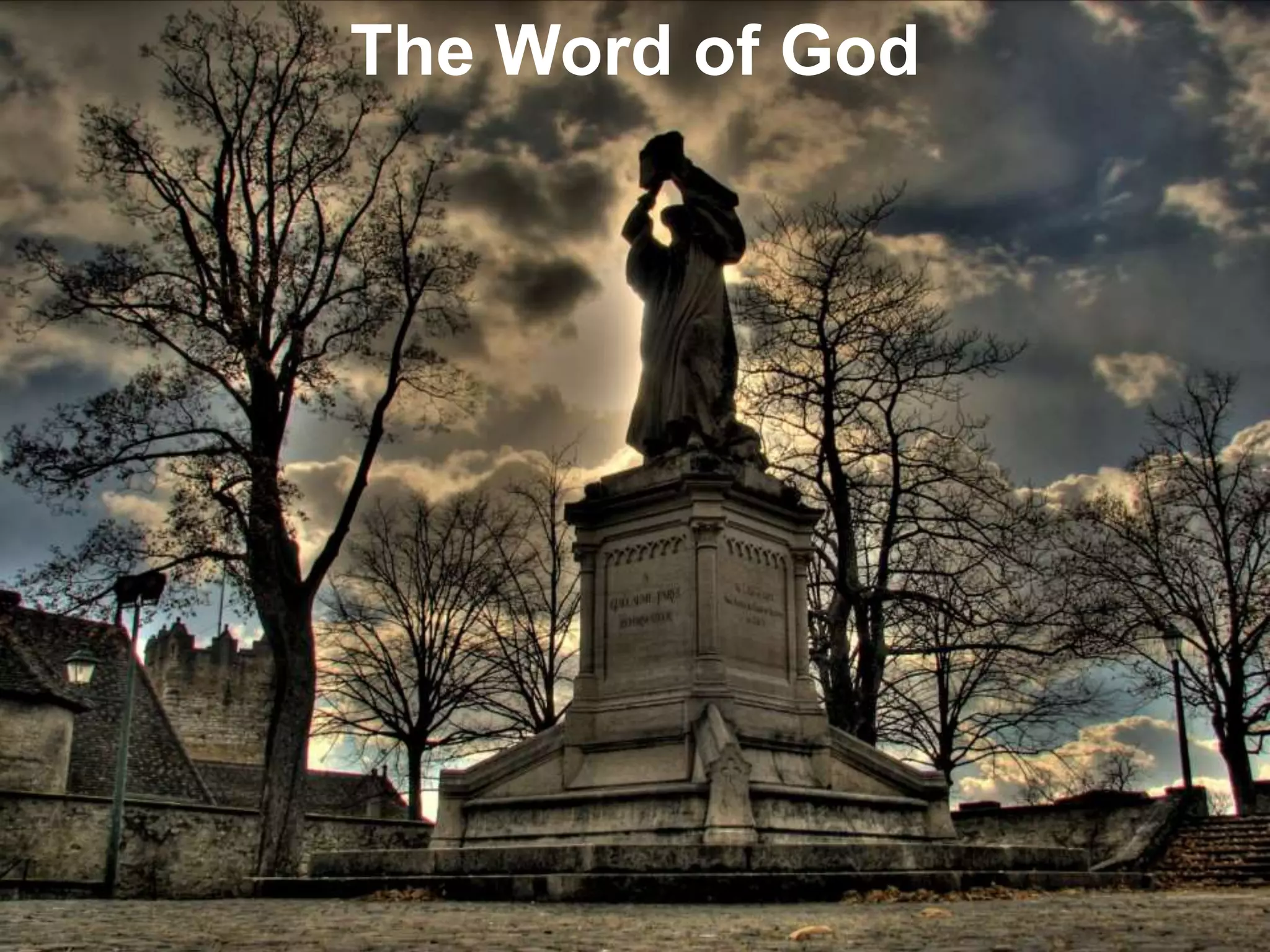
The Word of God
“Forever, O Lord,
Your Word is settled in Heaven.”
Psalm 119:89
Stands Forever
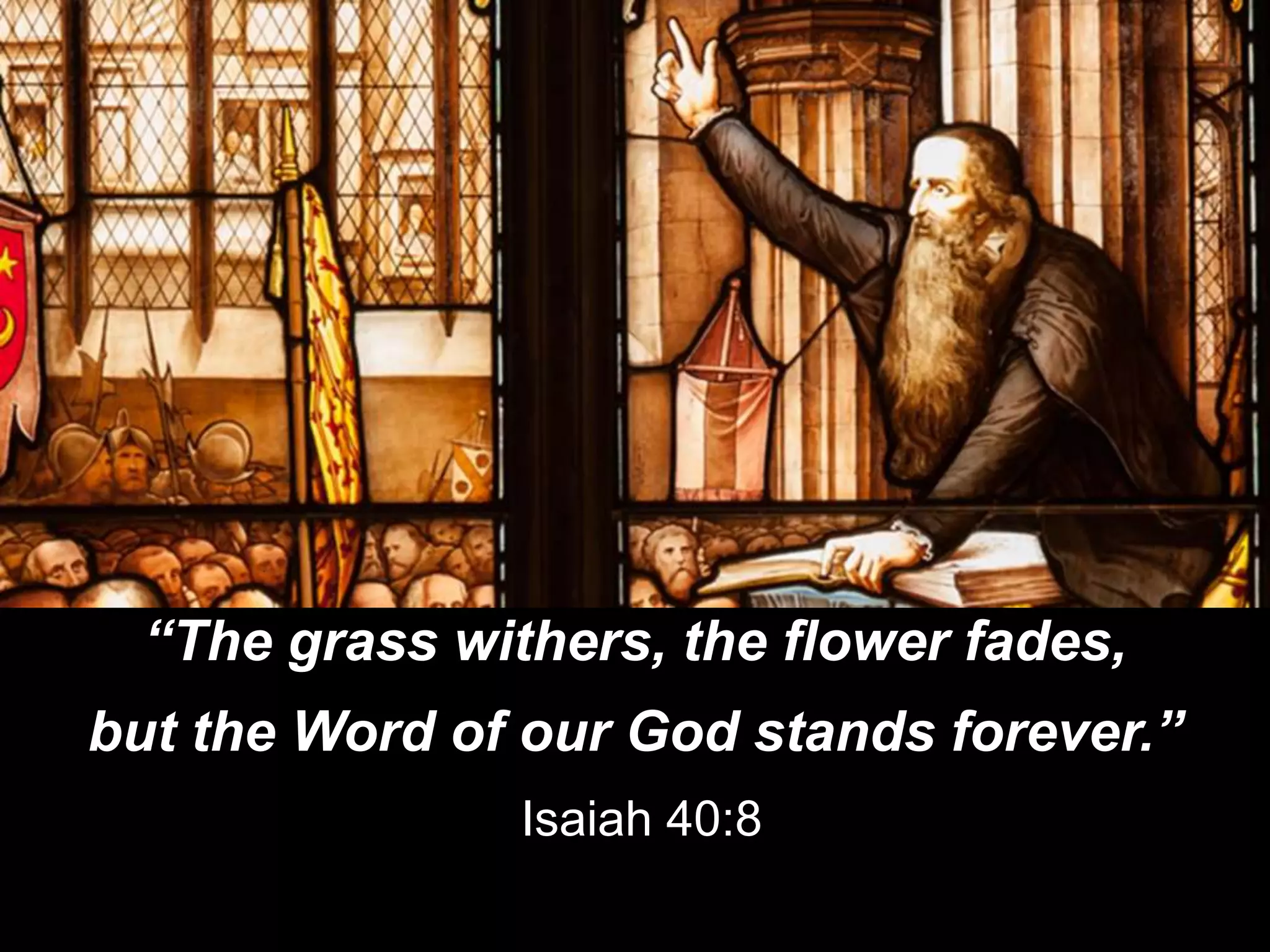
“The grass withers, the flower fades,
but the Word of our God stands forever.”
Isaiah 40:8
Everlasting
Our Lord Jesus Christ declared: “For assuredly, I say to you, till
“Heaven and earth pass away, one jot or one tittle
will by no means pass from the Law till all is
fulfilled.” Matthew 5:18
Eternal
“Heaven and earth will pass away,
but My Words will by no means pass away.”
Matthew 24:35
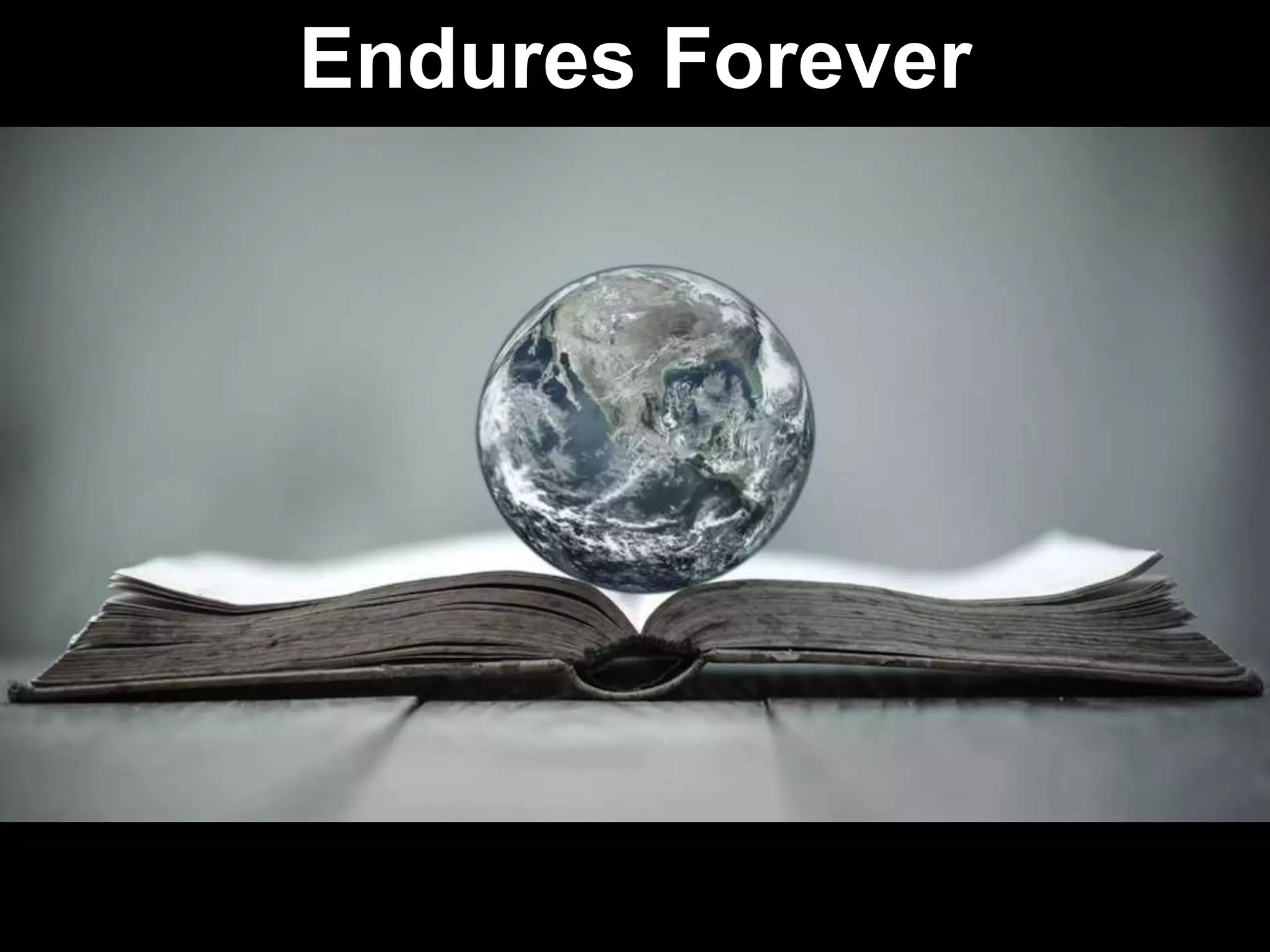
Endures Forever
“But the Word of the Lord endures forever…”
1 Peter 1:25
Inspired by God
“All Scripture is given by inspiration of God
and is profitable for doctrine,
for reproof, for correction,
for instruction in righteousness.”
2 Timothy 3:16
God Breathed
“For prophecy never came by the will of man,
but holy men of God spoke
as they were moved by the Holy Spirit.” 2 Peter 1:21
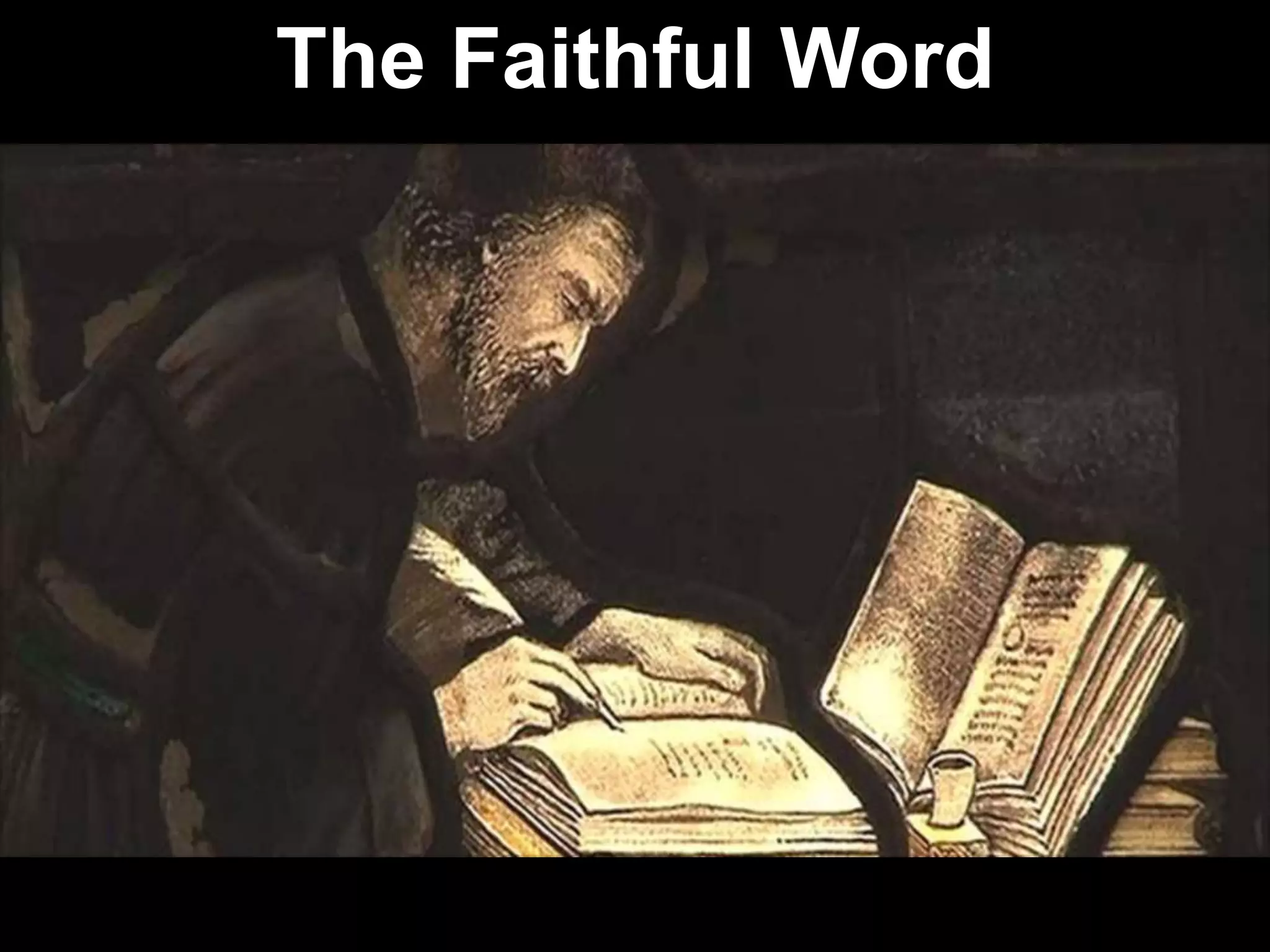
The Faithful Word
“Holding fast the faithful Word as he has
been taught, that he may be able,
by sound doctrine, both to exhort and
convict those who contradict.”
Titus 1:9
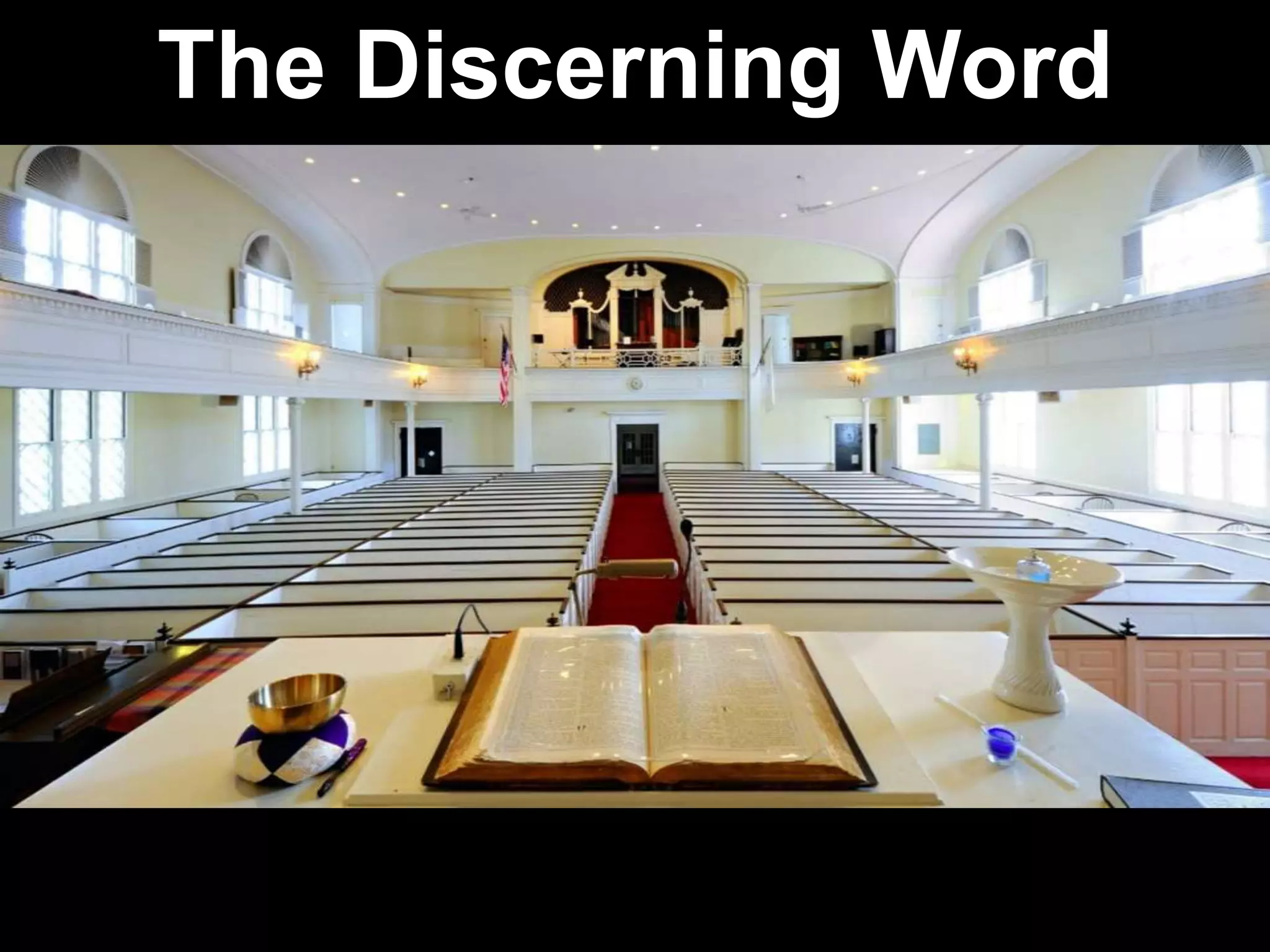
The Discerning Word
“For the Word of God is living and powerful and
sharper than any two-edged sword, piercing even to
the division of soul and spirit and of joints and
marrow and is a discerner of the thoughts and
intents of the heart.” Hebrews 4:12
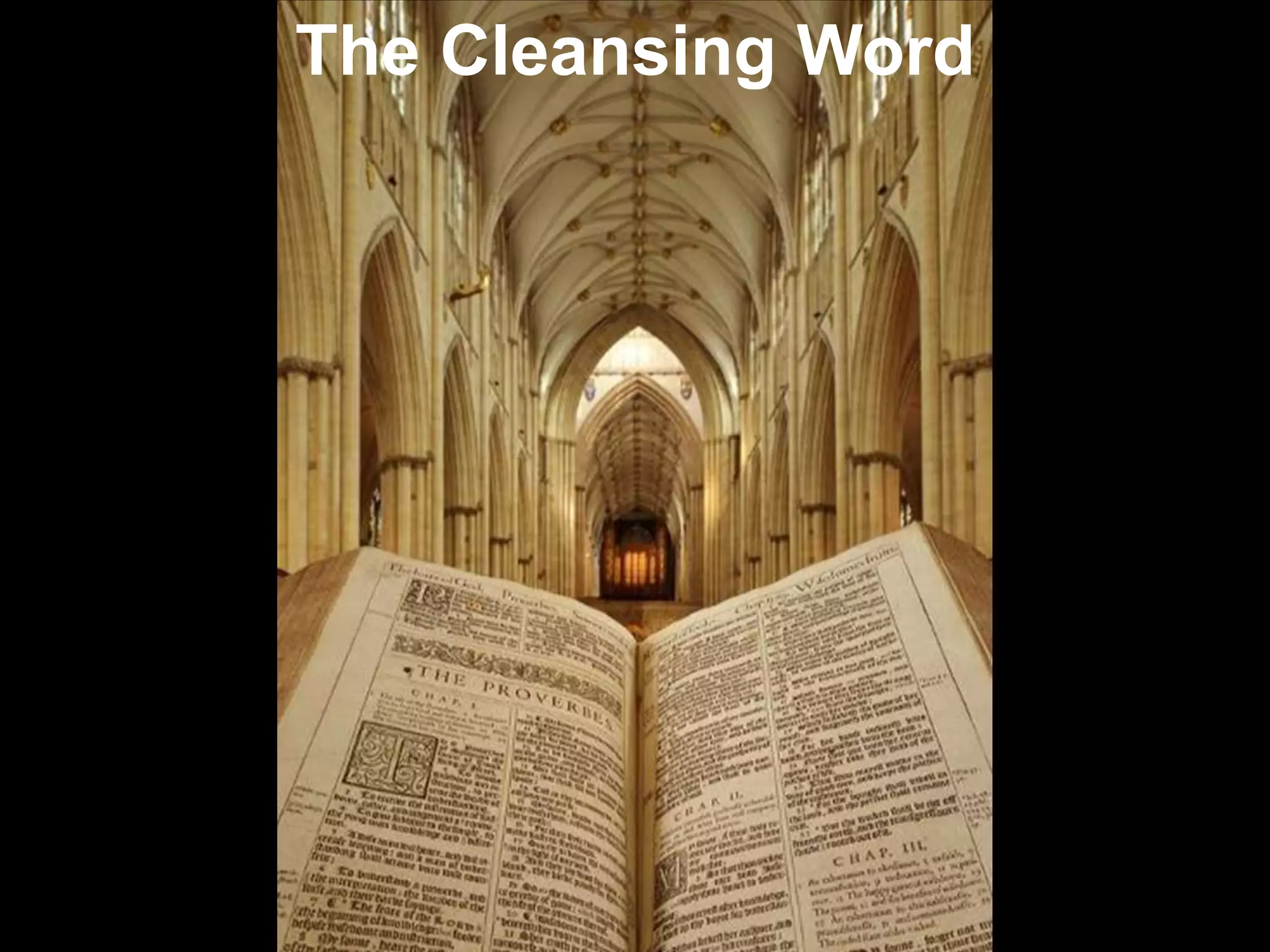
The Cleansing Word
The Psalmist asks the question:
“How can a young man cleanse his way?
By taking heed according to Your Word.”
Psalm 119:9
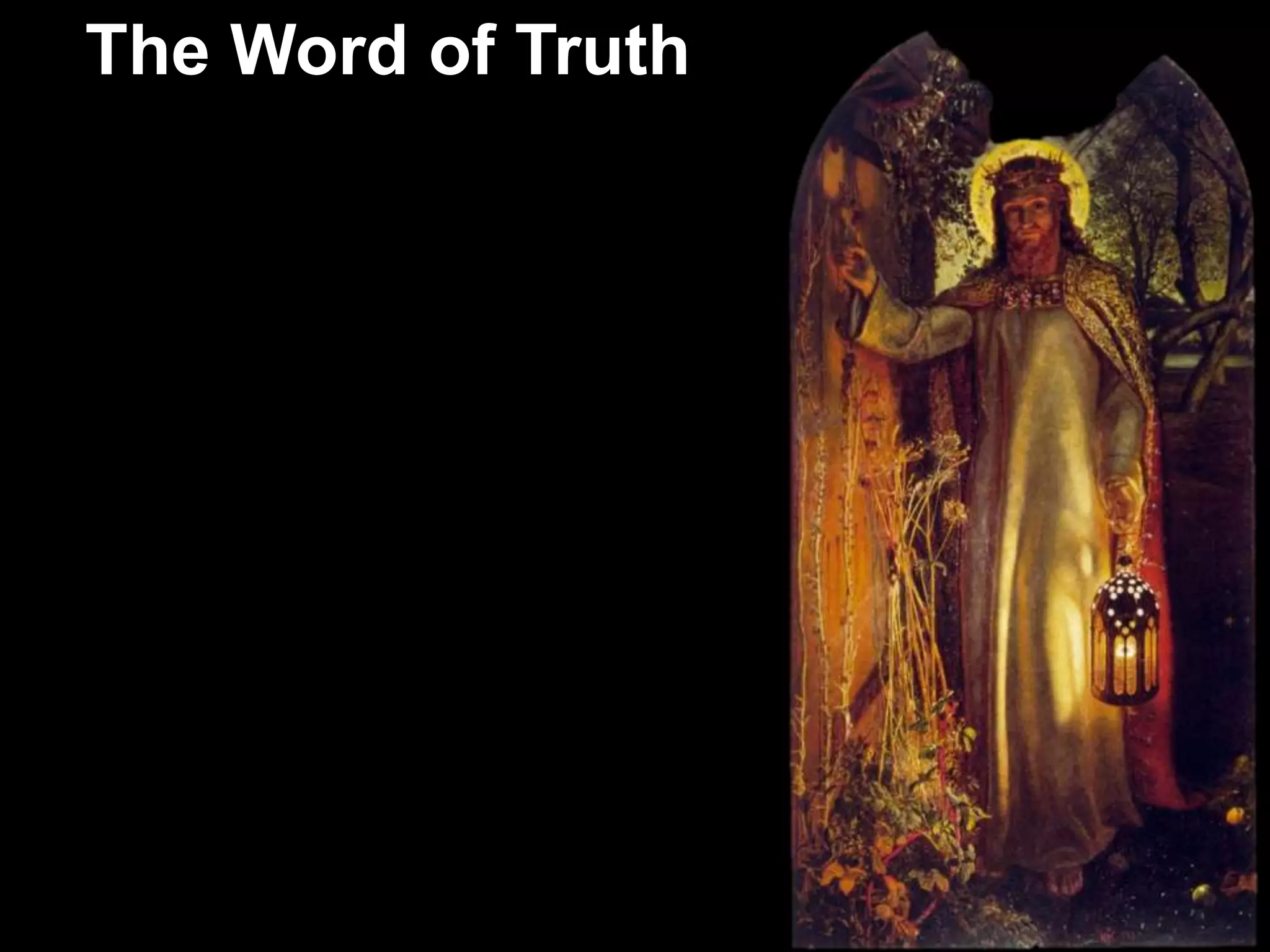
The Word of Truth
Our Lord Jesus Christ
declared in His high
priestly prayer in the
Garden of Gethsemane:
“Sanctify them
by Your truth.
Your Word
is truth.”
John 17:17
The Nature of God
We believe God’s Word to be infallible
because God Himself is infallible.
God is truth and therefore His Words are truth.
The Scriptures are God-breathed.
God is fully able to preserve the record of His revelation.
By This Standard
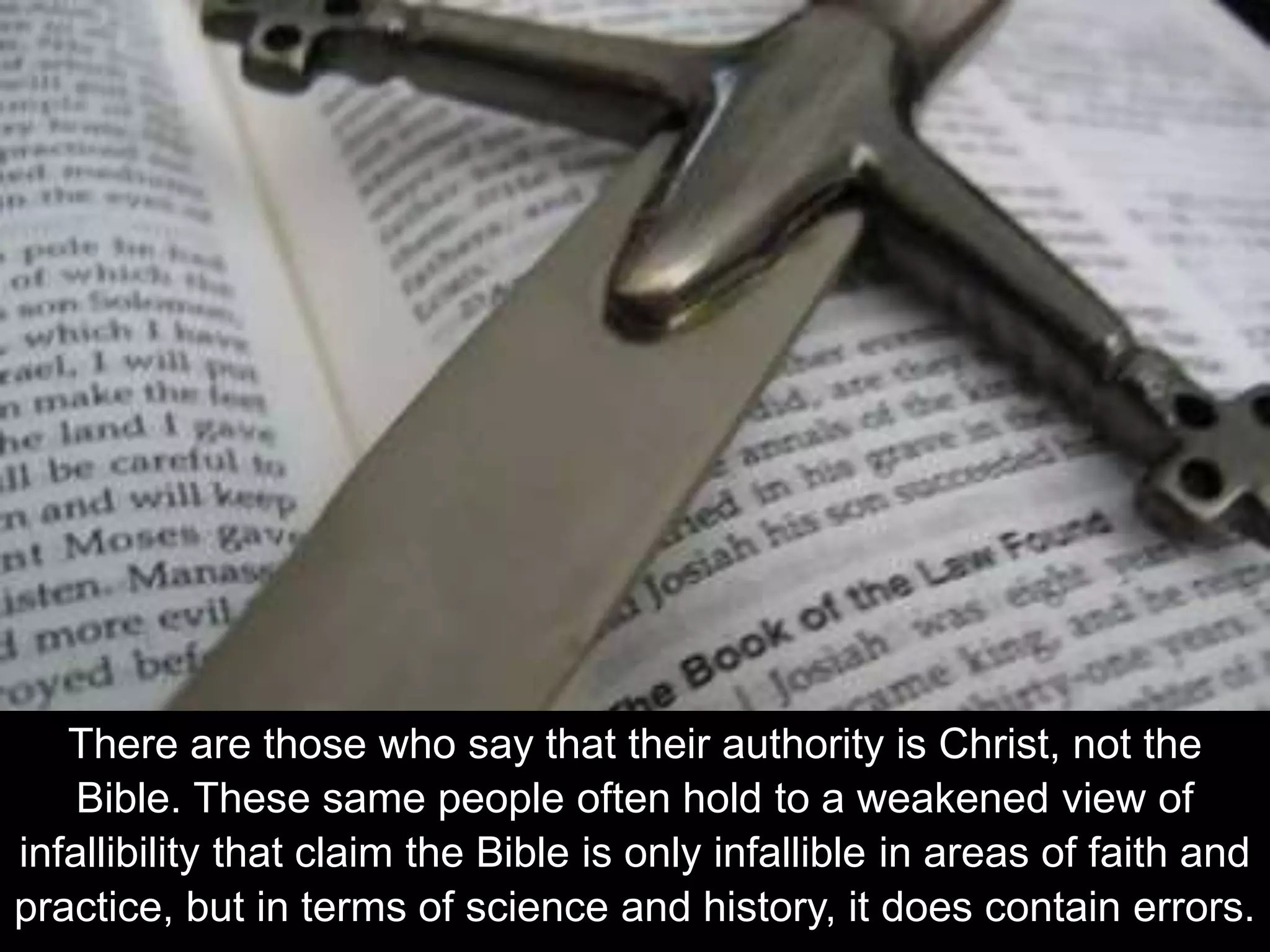
There are those who say that their authority is Christ, not the
Bible. These same people often hold to a weakened view of
infallibility that claim the Bible is only infallible in areas of faith and
practice, but in terms of science and history, it does contain errors.
But this apparently super
pious statement must be
questioned, for how can
Christ have any authority,
if the witness to Him,
the Gospels,
are not infallible?
If the Word of God is not
preserved and the Bible
is fallible, then by what
standard are we to know
Him, or His will?
The Bible is the Sceptre
by which Christ rules His
Church.
God’s Word Above All Things
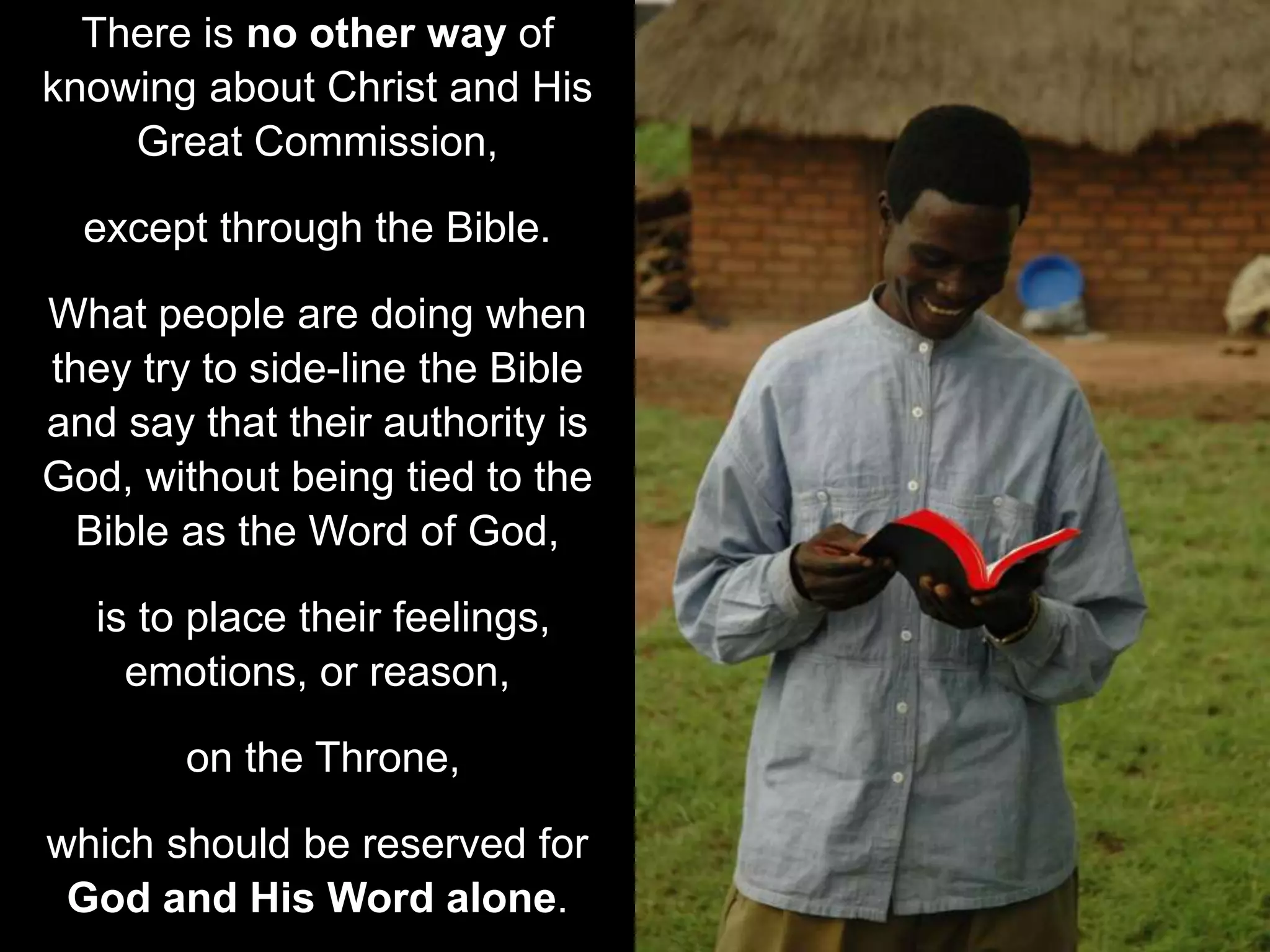
There is no other way of
knowing about Christ and His
Great Commission,
except through the Bible.
What people are doing when
they try to side-line the Bible
and say that their authority is
God, without being tied to the
Bible as the Word of God,
is to place their feelings,
emotions, or reason,
on the Throne,
which should be reserved for
God and His Word alone.
“Every Word of God is pure; He is a shield to those who put their
trust in Him. Do not add to His words, lest He rebuke you and you
be found a liar.” Proverbs 30:5-6
Shall Never Pass Away
Our Lord declared that not the smallest letter, nor even the least
stroke of a pen shall pass away. Heaven and earth may pass away,
but the Word of God cannot pass away (Matthew 5:18).
The Scripture Cannot be Broken
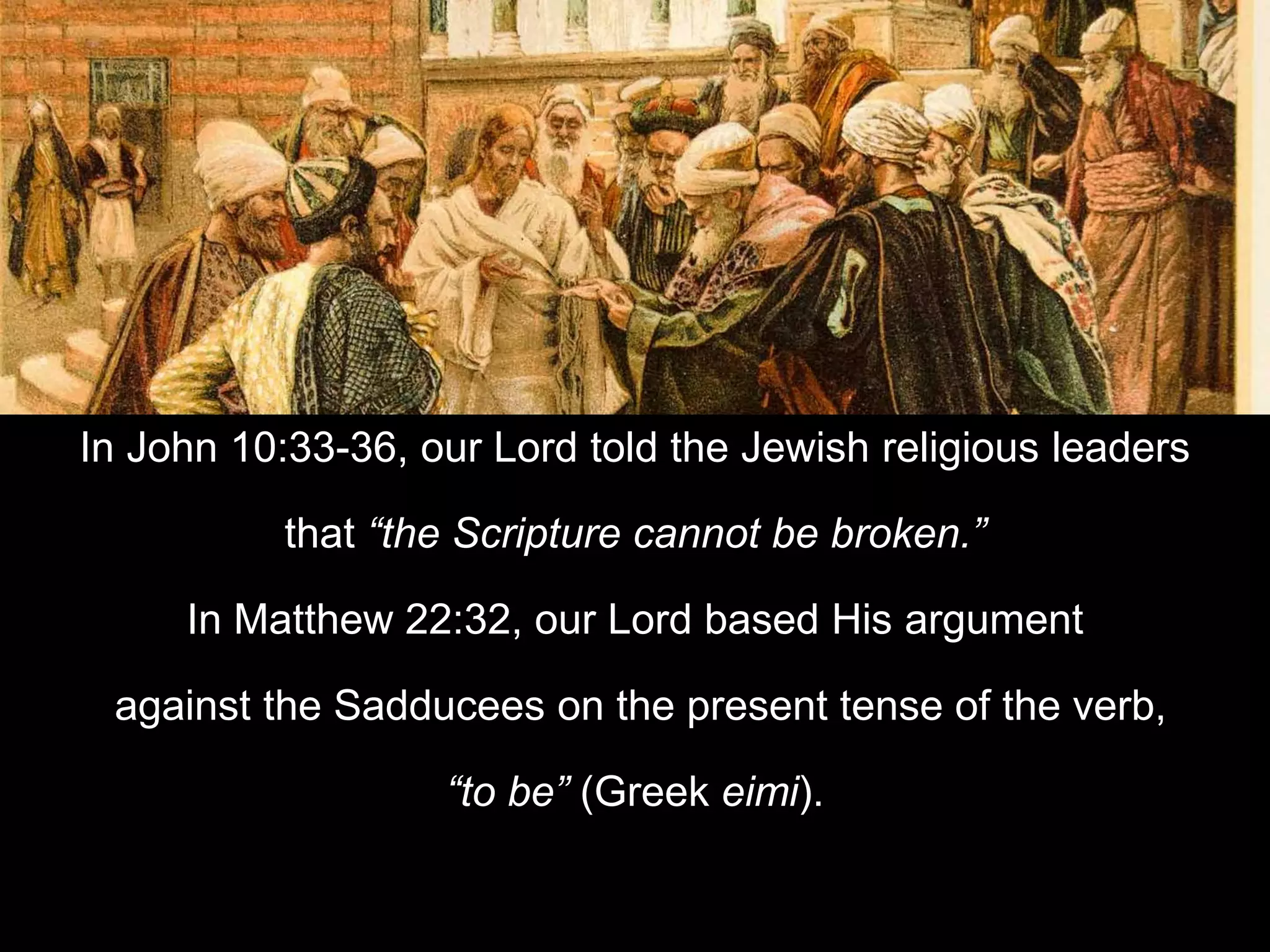
In John 10:33-36, our Lord told the Jewish religious leaders
that “the Scripture cannot be broken.”
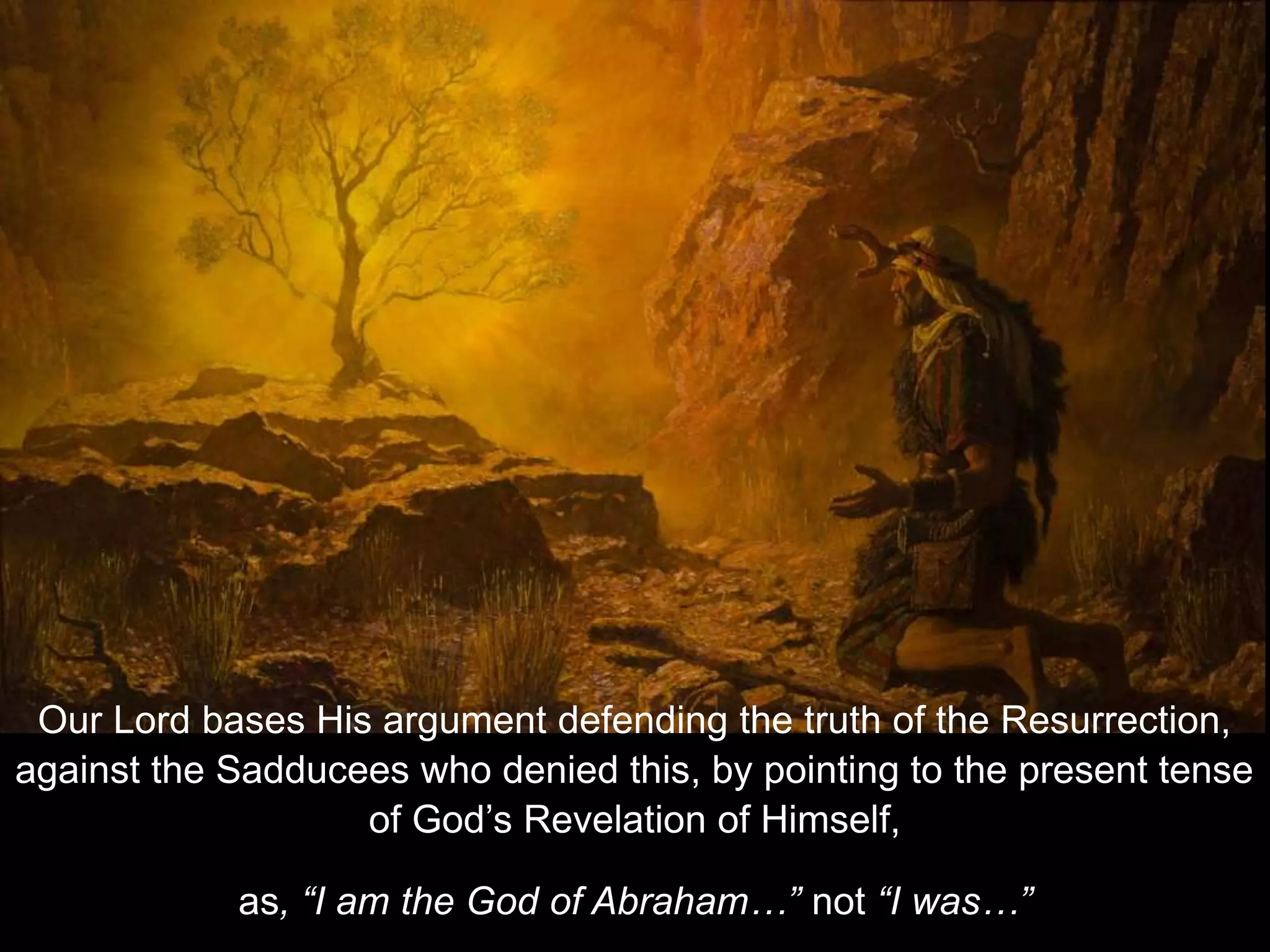
In Matthew 22:32, our Lord based His argument
against the Sadducees on the present tense of the verb,
“to be” (Greek eimi).
As God identified Himself to Moses, as saying: “I am (ego eimi)
the God of Abraham and the God of Isaac and the God of
Jacob…” it proves that He is the God of the living and not of the
dead. If the Resurrection of the body is not a fact, then God would
have said: “I was the God of Abraham….”
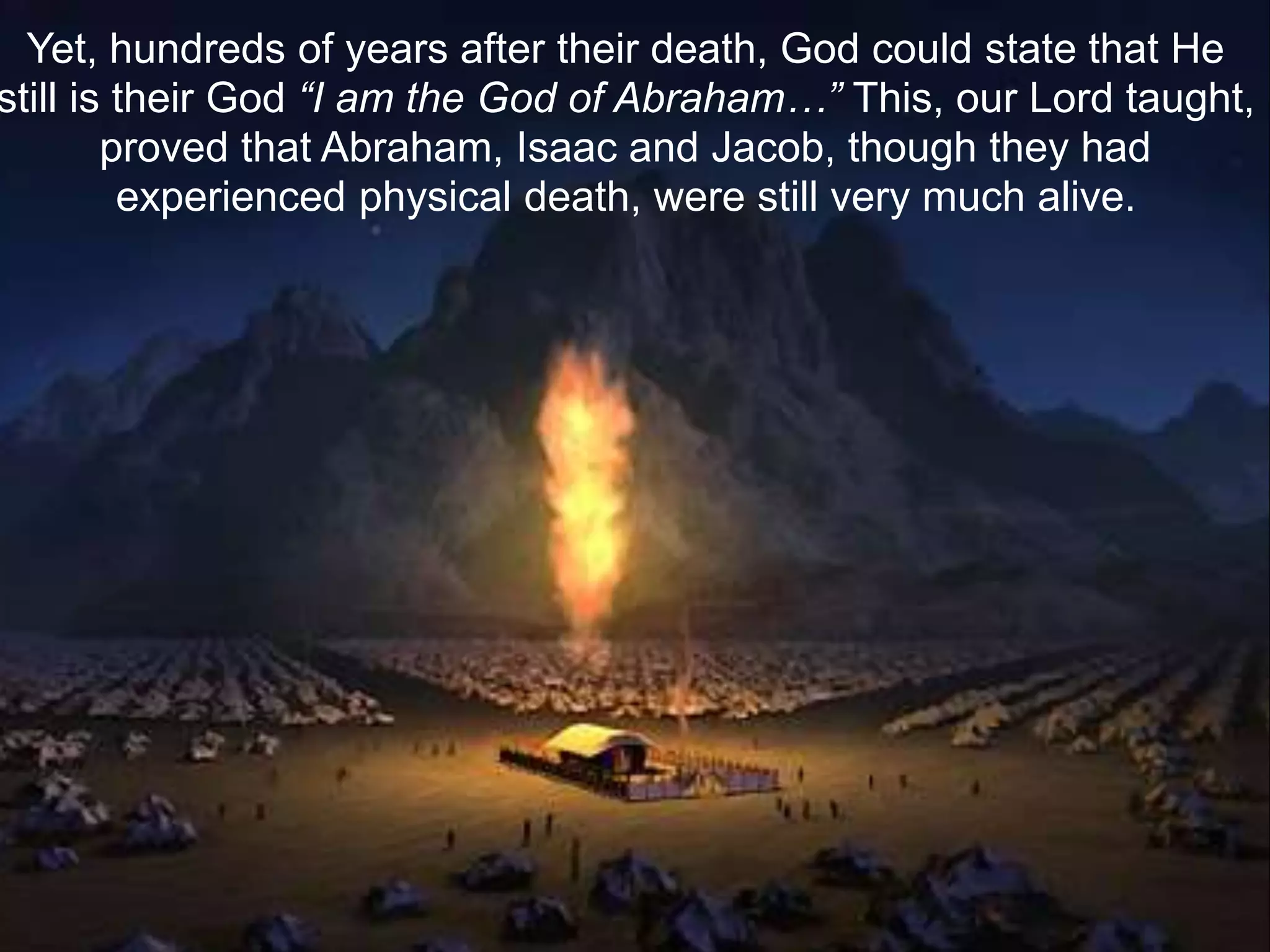
Yet, hundreds of years after their death, God could state that He
still is their God “I am the God of Abraham…” This, our Lord taught,
proved that Abraham, Isaac and Jacob, though they had
experienced physical death, were still very much alive.
Verbal Inspiration
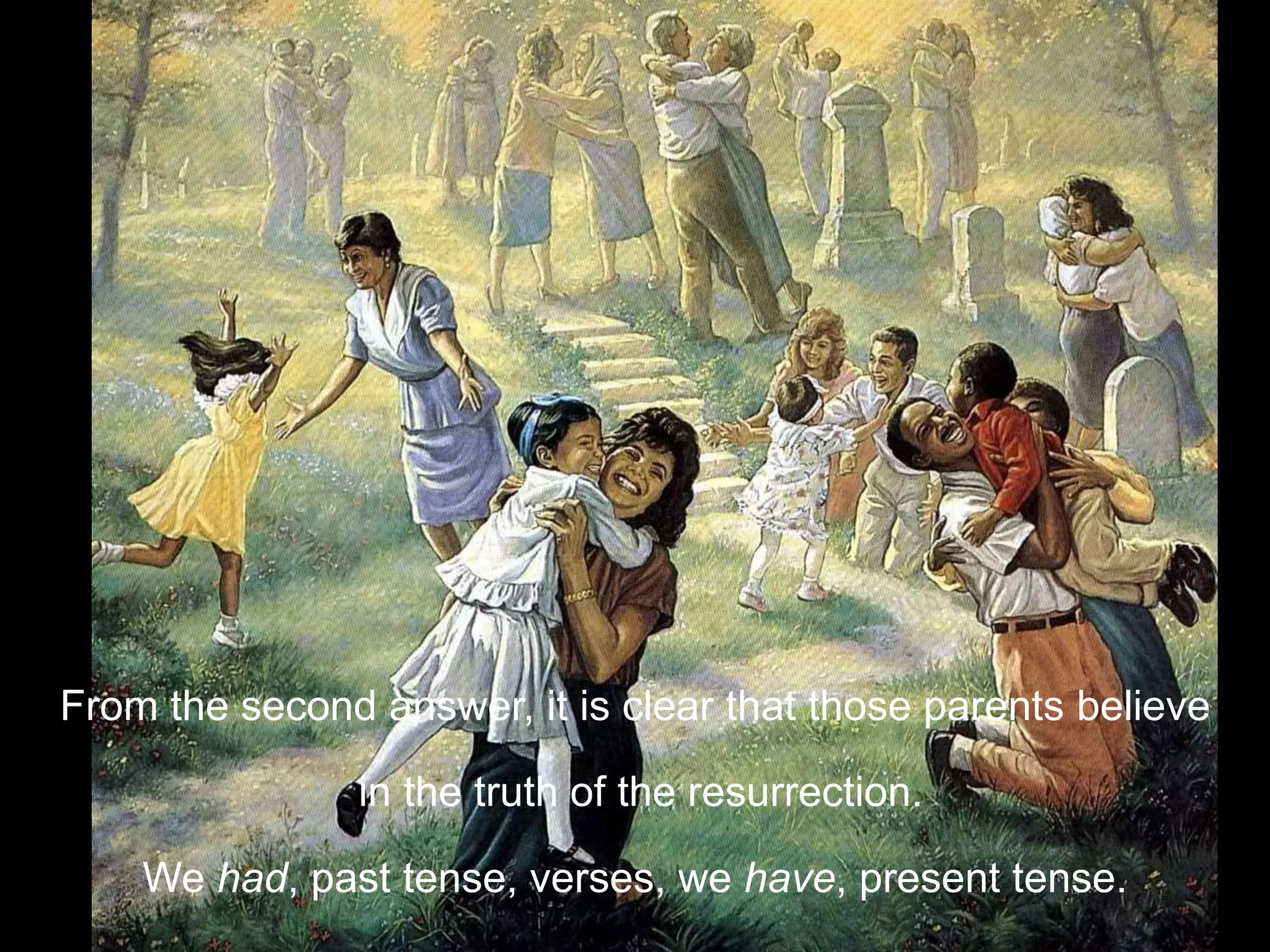
We could illustrate the point that Christ was making in this way.
If a married couple were blessed with four children, but one had
died and you asked how many children you have, they may
answer, “We had four, but only three are living.”
They may also say
“We have four children,
three on earth
and one in Heaven.”
From the second answer, it is clear that those parents believe
in the truth of the resurrection.
We had, past tense, verses, we have, present tense.
Our Lord bases His argument defending the truth of the Resurrection,
against the Sadducees who denied this, by pointing to the present tense
of God’s Revelation of Himself,
as, “I am the God of Abraham…” not “I was…”
Every Word of God is Sure
In Matthew 22:43-45,
our Lord Jesus takes
a single word
from Psalm 110:1 to prove
that the Son of David is
also the Lord of David.
Messiah was born a
descendant of King David,
yet is his Divine Lord.
The Tense of Every Word is Trustworthy
In the same way, the Apostle Paul argues, in Galatians 3:16,
that the promise is to Abraham and his Seed (singular), not
plural. “Now to Abraham and his Seed were the promises
made. He does not say, ‘And to seeds,’ as of many, but as
of one, ‘And to your Seed,’ who is Christ.”
Galatians 3:16
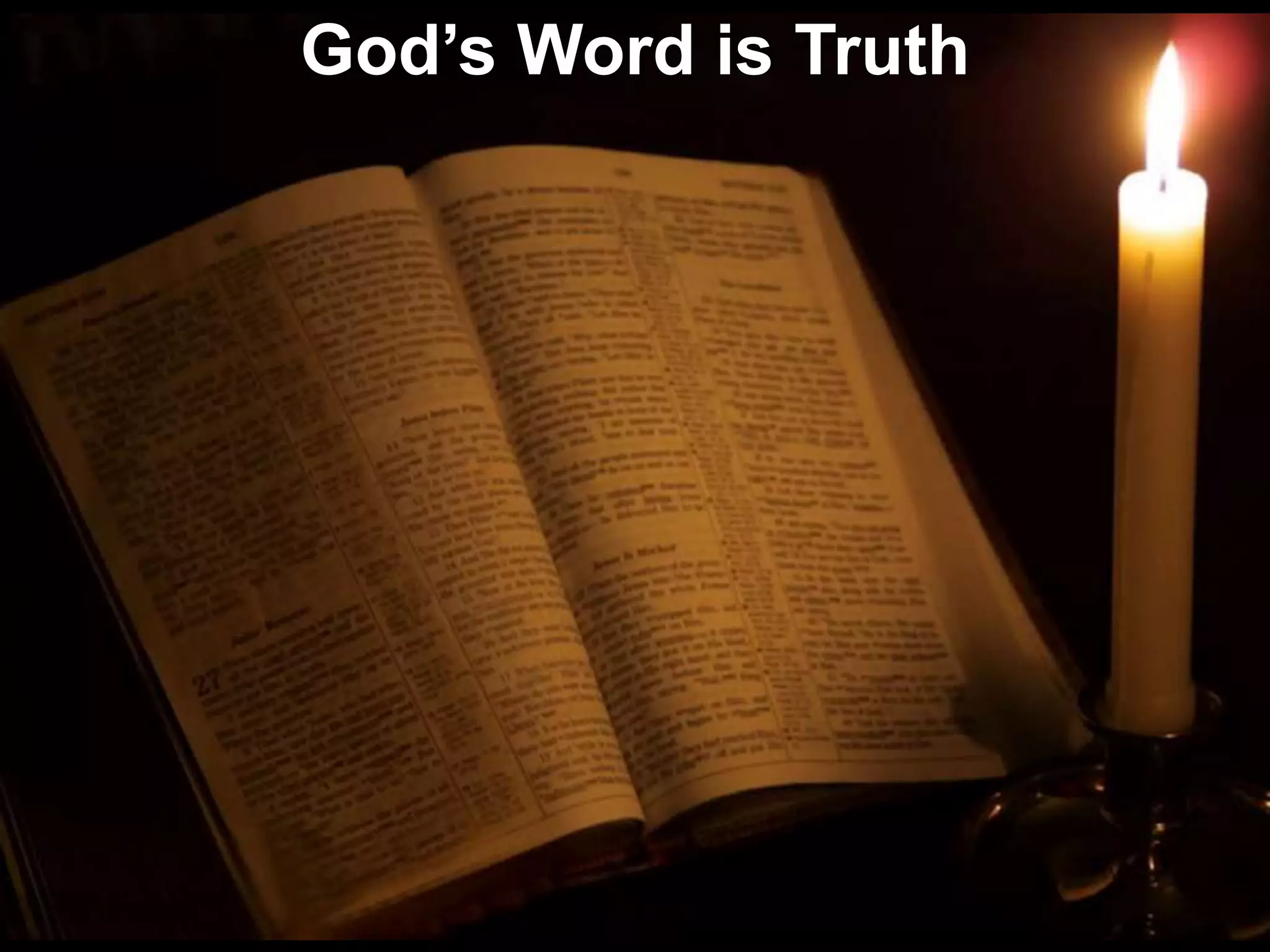
God’s Word is Truth
All of this proves the plenary verbal inspiration, inerrancy
and authority of Holy Scripture, as contained in the
Bible. It is the Word of God.
This means that every Word of Scripture was inspired by
the Holy Spirit and bear the authority of God.
All of His Words are true. God is Almighty and all of His
Words come with the full weight of the King of kings and
the Lord of lords. God is Truth.
Definite
As A.A. Hodge in Outlines of Theology writes: “Men think in words
and the more definitely they think, the more are their thoughts
immediately associated with an exactly appropriate verbal
expression. Infallibility of thought cannot be secured, or
preserved, independently of an infallible verbal rendering.”
The Infallible Standard
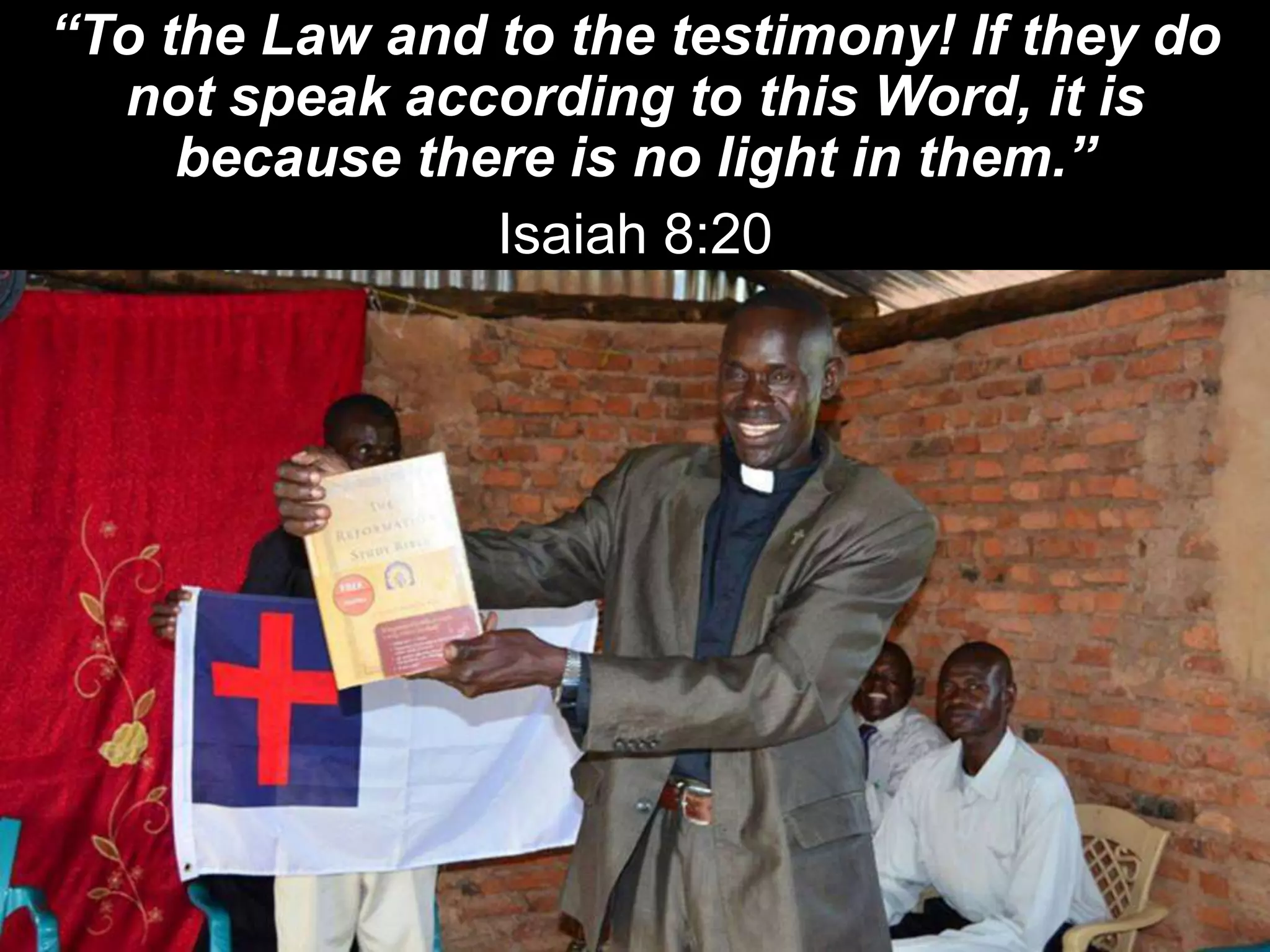
“To the Law and to the testimony! If they do
not speak according to this Word, it is
because there is no light in them.”
Isaiah 8:20
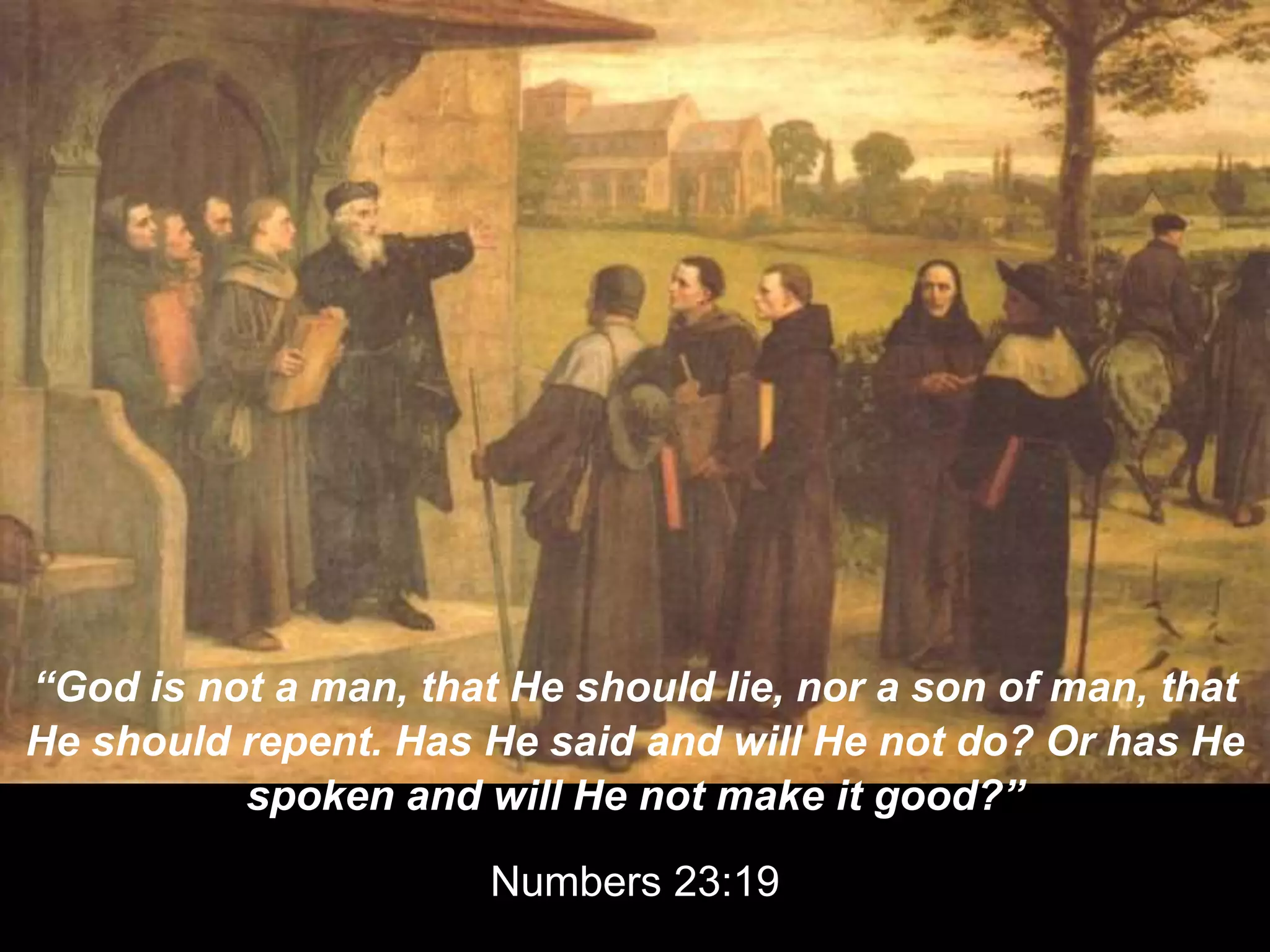
“God is not a man, that He should lie, nor a son of man, that
He should repent. Has He said and will He not do? Or has He
spoken and will He not make it good?”
Numbers 23:19
God’s Life-Giving Word
“Having been born again, not of corruptible seed but
incorruptible, through the Word of God which lives and
abides forever.” 1 Peter 1:23
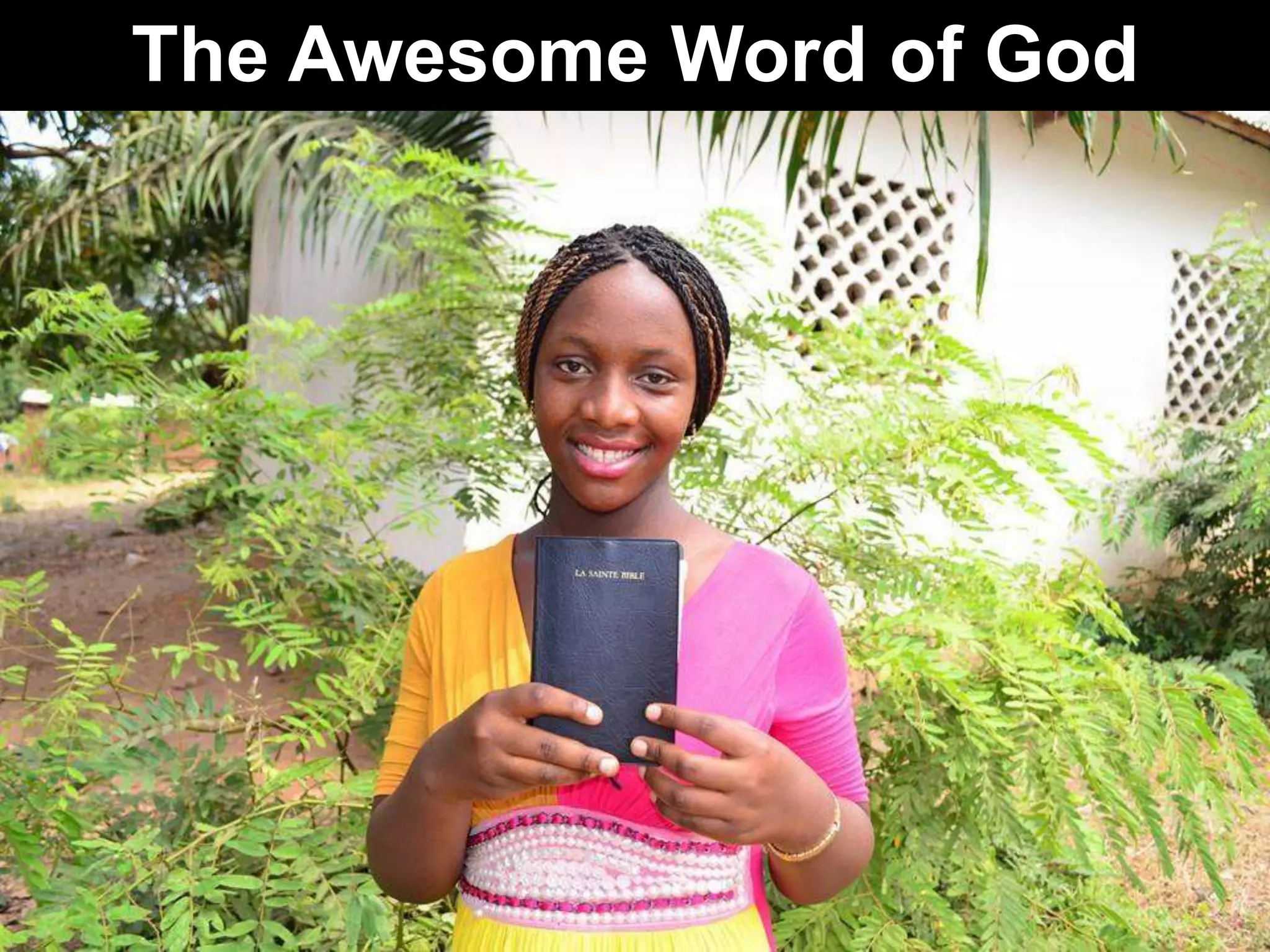
The Awesome Word of God
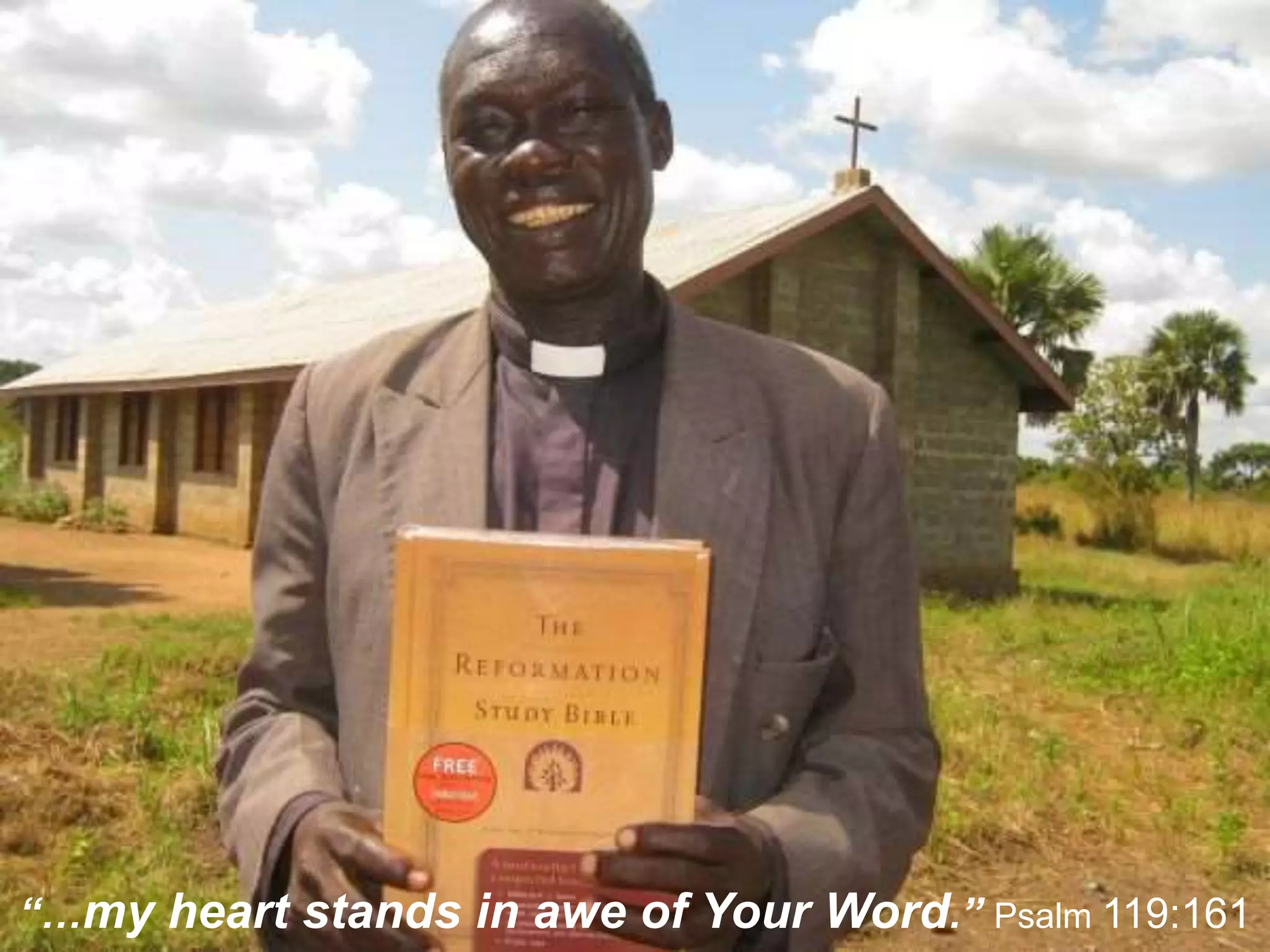
“…my heart stands in awe of Your Word.” Psalm 119:161
Invincible
"So shall My Word be that goes forth
from My mouth; it shall not return to Me
void, but it shall accomplish what I
please and it shall prosper in the thing
for which I sent it."
Isaiah 55:11
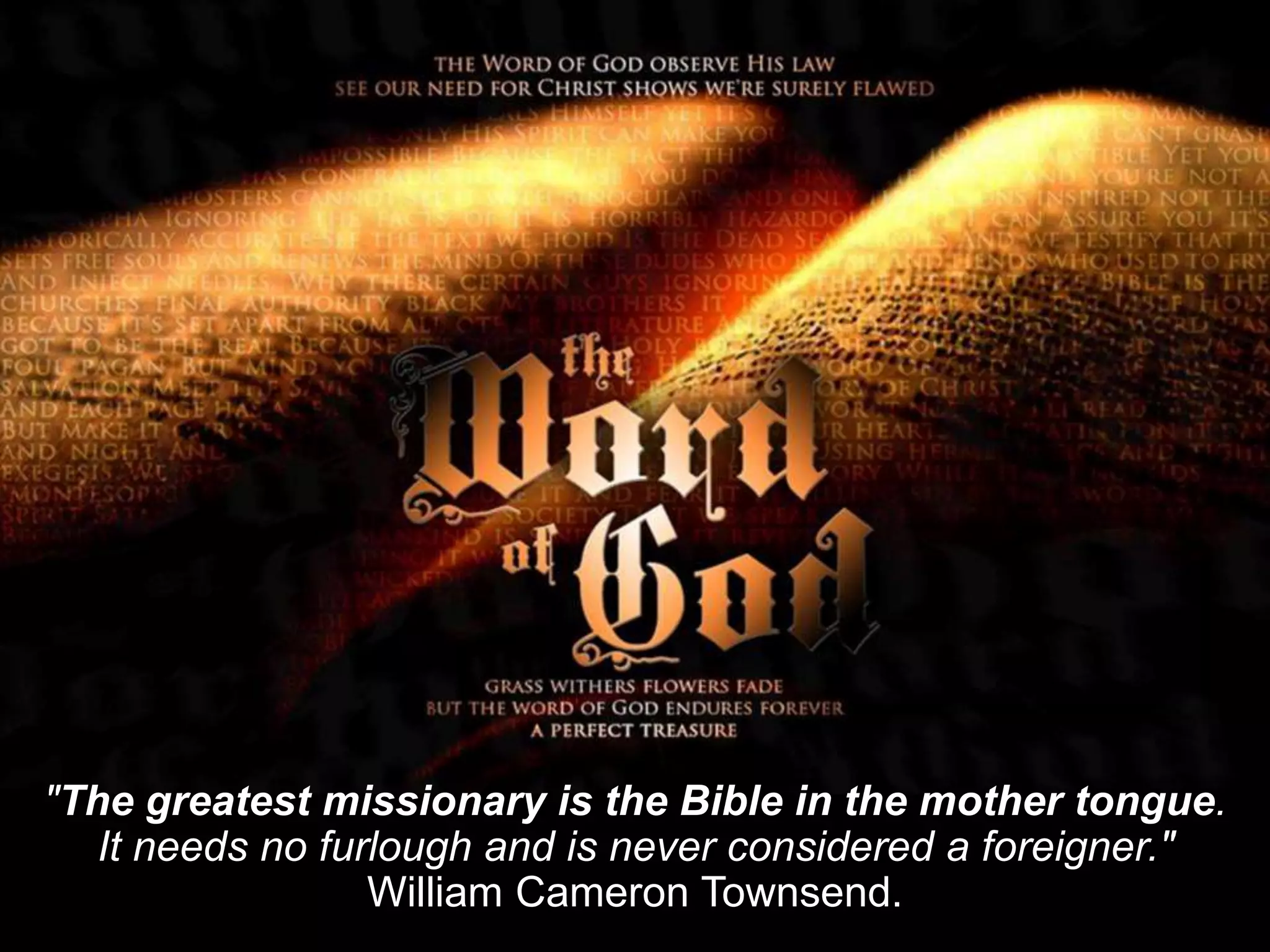
"The greatest missionary is the Bible in the mother tongue.
It needs no furlough and is never considered a foreigner."
William Cameron Townsend.
The Inerrancy of Scripture The Great Watershed

The Inerrancy of Scripture The Great Watershed

  • 1.
    THE INERRANCY ofSCRIPTURE – The GREAT WATERSHED by Dr. Peter Hammond
  • 2.
  • 3.
  • 4.
    The Church Father Origen(AD 185-254), constantly referred to the Scripture as “final authority” in his controversy with Celsus over the Deity of Christ.
  • 5.
  • 6.
    Augustine (AD 354-430), declared“For I confess to your charity that I have learned to defer this respecting honour to those Scripture Books only which are now called canonical, that I believe most firmly that no one of those authors has erred in any respect in writing.”
  • 7.
  • 8.
    The great ProtestantReformer, Professor Martin Luther declared: “The Scriptures have never erred” and “it is impossible that Scripture should contradict itself; it only so appears to the senseless and obstinate hypocrites.”
  • 9.
    The Sceptre bywhich Christ Rules His Church
  • 10.
    John Calvin referred tothe Scriptures as “The sure and infallible record” And “the unerring standard.”
  • 11.
    He also declaredthe Scripture to be the “Sceptre by which Christ rules His Church.”
  • 12.
  • 13.
    “Forever, O Lord, YourWord is settled in Heaven.” Psalm 119:89
  • 14.
  • 15.
    “The grass withers,the flower fades, but the Word of our God stands forever.” Isaiah 40:8
  • 16.
  • 17.
    Our Lord JesusChrist declared: “For assuredly, I say to you, till “Heaven and earth pass away, one jot or one tittle will by no means pass from the Law till all is fulfilled.” Matthew 5:18
  • 18.
  • 19.
    “Heaven and earthwill pass away, but My Words will by no means pass away.” Matthew 24:35
  • 20.
  • 21.
    “But the Wordof the Lord endures forever…” 1 Peter 1:25
  • 22.
  • 23.
    “All Scripture isgiven by inspiration of God and is profitable for doctrine, for reproof, for correction, for instruction in righteousness.” 2 Timothy 3:16
  • 24.
  • 25.
    “For prophecy nevercame by the will of man, but holy men of God spoke as they were moved by the Holy Spirit.” 2 Peter 1:21
  • 26.
  • 27.
    “Holding fast thefaithful Word as he has been taught, that he may be able, by sound doctrine, both to exhort and convict those who contradict.” Titus 1:9
  • 28.
  • 29.
    “For the Wordof God is living and powerful and sharper than any two-edged sword, piercing even to the division of soul and spirit and of joints and marrow and is a discerner of the thoughts and intents of the heart.” Hebrews 4:12
  • 30.
  • 31.
    The Psalmist asksthe question: “How can a young man cleanse his way? By taking heed according to Your Word.” Psalm 119:9
  • 32.
  • 33.
    Our Lord JesusChrist declared in His high priestly prayer in the Garden of Gethsemane: “Sanctify them by Your truth. Your Word is truth.” John 17:17
  • 34.
  • 35.
    We believe God’sWord to be infallible because God Himself is infallible. God is truth and therefore His Words are truth. The Scriptures are God-breathed. God is fully able to preserve the record of His revelation.
  • 36.
  • 37.
    There are thosewho say that their authority is Christ, not the Bible. These same people often hold to a weakened view of infallibility that claim the Bible is only infallible in areas of faith and practice, but in terms of science and history, it does contain errors.
  • 38.
    But this apparentlysuper pious statement must be questioned, for how can Christ have any authority, if the witness to Him, the Gospels, are not infallible? If the Word of God is not preserved and the Bible is fallible, then by what standard are we to know Him, or His will? The Bible is the Sceptre by which Christ rules His Church.
  • 39.
  • 40.
    There is noother way of knowing about Christ and His Great Commission, except through the Bible. What people are doing when they try to side-line the Bible and say that their authority is God, without being tied to the Bible as the Word of God, is to place their feelings, emotions, or reason, on the Throne, which should be reserved for God and His Word alone.
  • 41.
    “Every Word ofGod is pure; He is a shield to those who put their trust in Him. Do not add to His words, lest He rebuke you and you be found a liar.” Proverbs 30:5-6
  • 42.
  • 43.
    Our Lord declaredthat not the smallest letter, nor even the least stroke of a pen shall pass away. Heaven and earth may pass away, but the Word of God cannot pass away (Matthew 5:18).
  • 44.
  • 45.
    In John 10:33-36,our Lord told the Jewish religious leaders that “the Scripture cannot be broken.” In Matthew 22:32, our Lord based His argument against the Sadducees on the present tense of the verb, “to be” (Greek eimi).
  • 46.
    As God identifiedHimself to Moses, as saying: “I am (ego eimi) the God of Abraham and the God of Isaac and the God of Jacob…” it proves that He is the God of the living and not of the dead. If the Resurrection of the body is not a fact, then God would have said: “I was the God of Abraham….”
  • 47.
    Yet, hundreds ofyears after their death, God could state that He still is their God “I am the God of Abraham…” This, our Lord taught, proved that Abraham, Isaac and Jacob, though they had experienced physical death, were still very much alive.
  • 48.
  • 49.
    We could illustratethe point that Christ was making in this way. If a married couple were blessed with four children, but one had died and you asked how many children you have, they may answer, “We had four, but only three are living.”
  • 50.
    They may alsosay “We have four children, three on earth and one in Heaven.”
  • 51.
    From the secondanswer, it is clear that those parents believe in the truth of the resurrection. We had, past tense, verses, we have, present tense.
  • 52.
    Our Lord basesHis argument defending the truth of the Resurrection, against the Sadducees who denied this, by pointing to the present tense of God’s Revelation of Himself, as, “I am the God of Abraham…” not “I was…”
  • 53.
    Every Word ofGod is Sure
  • 54.
    In Matthew 22:43-45, ourLord Jesus takes a single word from Psalm 110:1 to prove that the Son of David is also the Lord of David. Messiah was born a descendant of King David, yet is his Divine Lord.
  • 55.
    The Tense ofEvery Word is Trustworthy
  • 56.
    In the sameway, the Apostle Paul argues, in Galatians 3:16, that the promise is to Abraham and his Seed (singular), not plural. “Now to Abraham and his Seed were the promises made. He does not say, ‘And to seeds,’ as of many, but as of one, ‘And to your Seed,’ who is Christ.” Galatians 3:16
  • 57.
  • 58.
    All of thisproves the plenary verbal inspiration, inerrancy and authority of Holy Scripture, as contained in the Bible. It is the Word of God. This means that every Word of Scripture was inspired by the Holy Spirit and bear the authority of God. All of His Words are true. God is Almighty and all of His Words come with the full weight of the King of kings and the Lord of lords. God is Truth.
  • 59.
  • 60.
    As A.A. Hodgein Outlines of Theology writes: “Men think in words and the more definitely they think, the more are their thoughts immediately associated with an exactly appropriate verbal expression. Infallibility of thought cannot be secured, or preserved, independently of an infallible verbal rendering.”
  • 61.
  • 62.
    “To the Lawand to the testimony! If they do not speak according to this Word, it is because there is no light in them.” Isaiah 8:20
  • 63.
    “God is nota man, that He should lie, nor a son of man, that He should repent. Has He said and will He not do? Or has He spoken and will He not make it good?” Numbers 23:19
  • 64.
  • 65.
    “Having been bornagain, not of corruptible seed but incorruptible, through the Word of God which lives and abides forever.” 1 Peter 1:23
  • 66.
  • 67.
    “…my heart standsin awe of Your Word.” Psalm 119:161
  • 68.
    Invincible "So shall MyWord be that goes forth from My mouth; it shall not return to Me void, but it shall accomplish what I please and it shall prosper in the thing for which I sent it." Isaiah 55:11
  • 69.
    "The greatest missionaryis the Bible in the mother tongue. It needs no furlough and is never considered a foreigner." William Cameron Townsend.