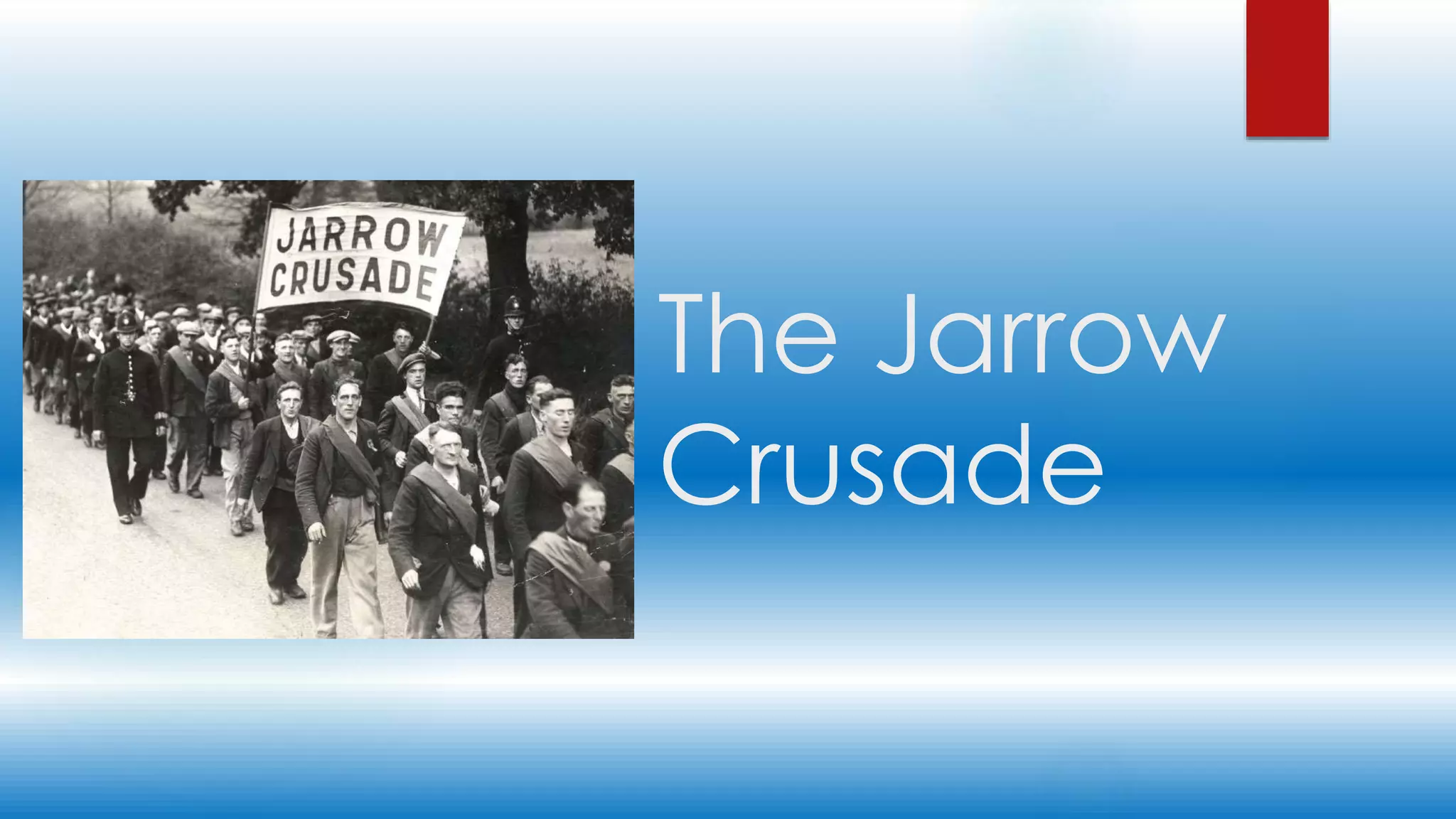
The Jarrow
Crusade
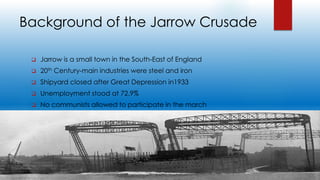
Background of the Jarrow Crusade
 Jarrow is a small town in the South-East of England
 20th Century-main industries were steel and iron
 Shipyard closed after Great Depression in1933
 Unemployment stood at 72.9%
 No communists allowed to participate in the march
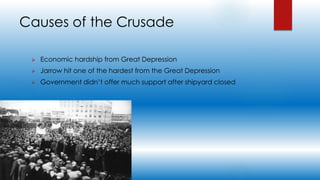
Causes of the Crusade
 Economic hardship from Great Depression
 Jarrow hit one of the hardest from the Great Depression
 Government didn’t offer much support after shipyard closed
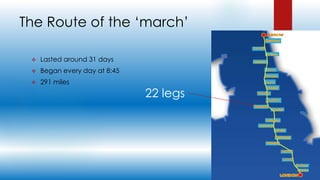
The Route of the ‘march’
 Lasted around 31 days
 Began every day at 8:45
 291 miles
22 legs
Key Events of the ‘march’ and how
it was organised
 October 1936
 Objective-Find jobs to support families in Jarrow
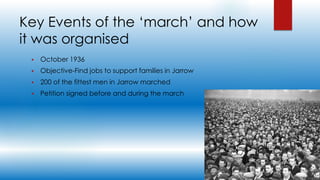
 200 of the fittest men in Jarrow marched
 Petition signed before and during the march
Impacts and Aftermath of the
‘march’
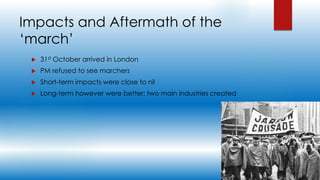
 31st October arrived in London
 PM refused to see marchers
 Short-term impacts were close to nil
 Long-term however were better; two main industries created
Reaction and the Significance of
the Jarrow Crusade
o Remembered as landmark in history of Labour Movement
o NUWM did not agree with the march
o Communists were not allowed to participate in march

The jarrow crusade

  • 1.
  • 2.
    Background of theJarrow Crusade  Jarrow is a small town in the South-East of England  20th Century-main industries were steel and iron  Shipyard closed after Great Depression in1933  Unemployment stood at 72.9%  No communists allowed to participate in the march
  • 3.
    Causes of theCrusade  Economic hardship from Great Depression  Jarrow hit one of the hardest from the Great Depression  Government didn’t offer much support after shipyard closed
  • 4.
    The Route ofthe ‘march’  Lasted around 31 days  Began every day at 8:45  291 miles 22 legs
  • 5.
    Key Events ofthe ‘march’ and how it was organised  October 1936  Objective-Find jobs to support families in Jarrow  200 of the fittest men in Jarrow marched  Petition signed before and during the march
  • 6.
    Impacts and Aftermathof the ‘march’  31st October arrived in London  PM refused to see marchers  Short-term impacts were close to nil  Long-term however were better; two main industries created
  • 7.
    Reaction and theSignificance of the Jarrow Crusade o Remembered as landmark in history of Labour Movement o NUWM did not agree with the march o Communists were not allowed to participate in march