Issues and Life Science
Unit A: Studying People
Scientifically
Mr. Forde
Scofield Magnet MS
2014 - 2015
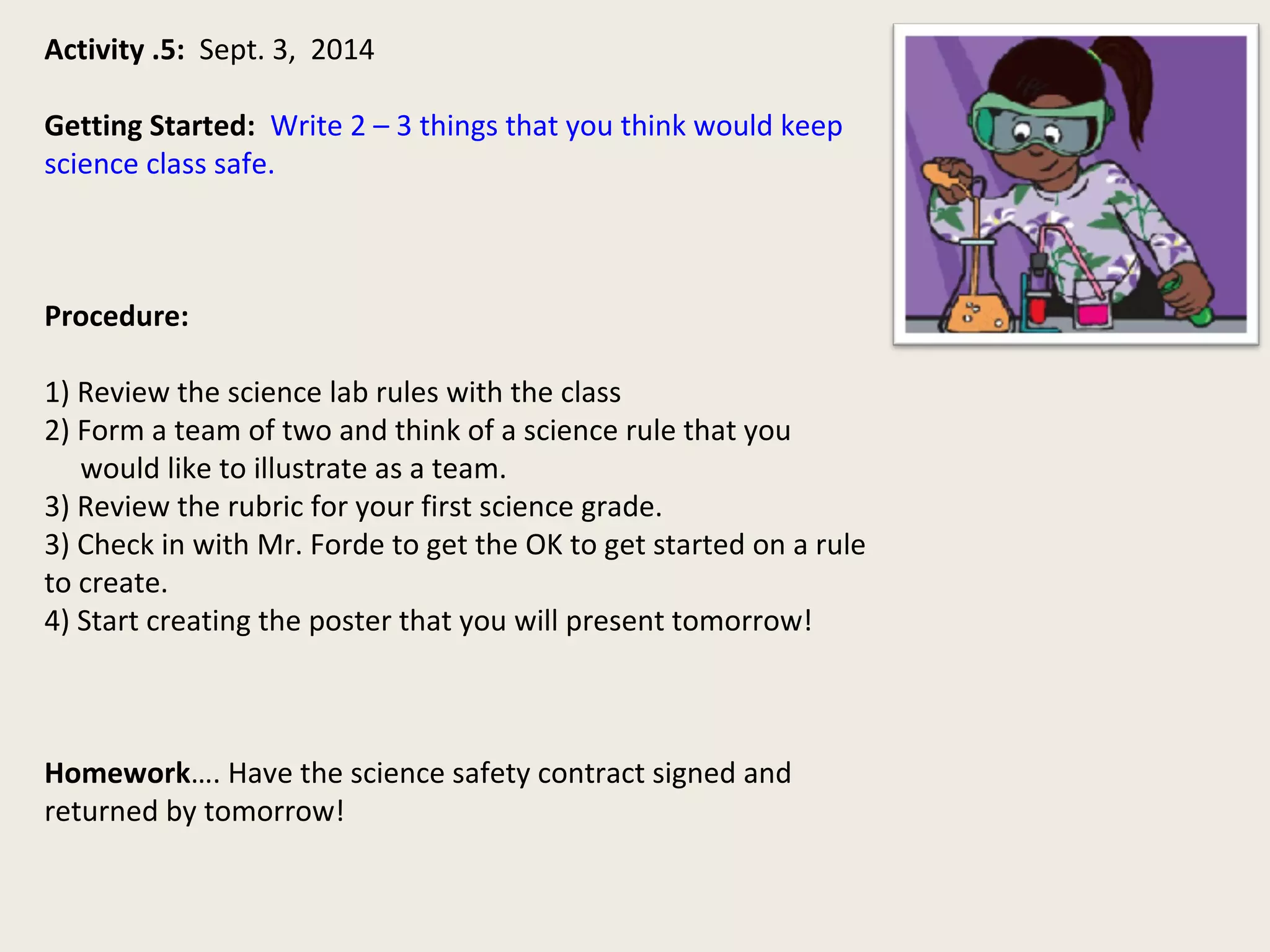
Activity .5: Sept. 3, 2014
Getting Started: Write 2 – 3 things that you think would keep
science class safe.
Procedure:
1) Review the science lab rules with the class
2) Form a team of two and think of a science rule that you
would like to illustrate as a team.
3) Review the rubric for your first science grade.
3) Check in with Mr. Forde to get the OK to get started on a rule
to create.
4) Start creating the poster that you will present tomorrow!
Homework…. Have the science safety contract signed and
returned by tomorrow!
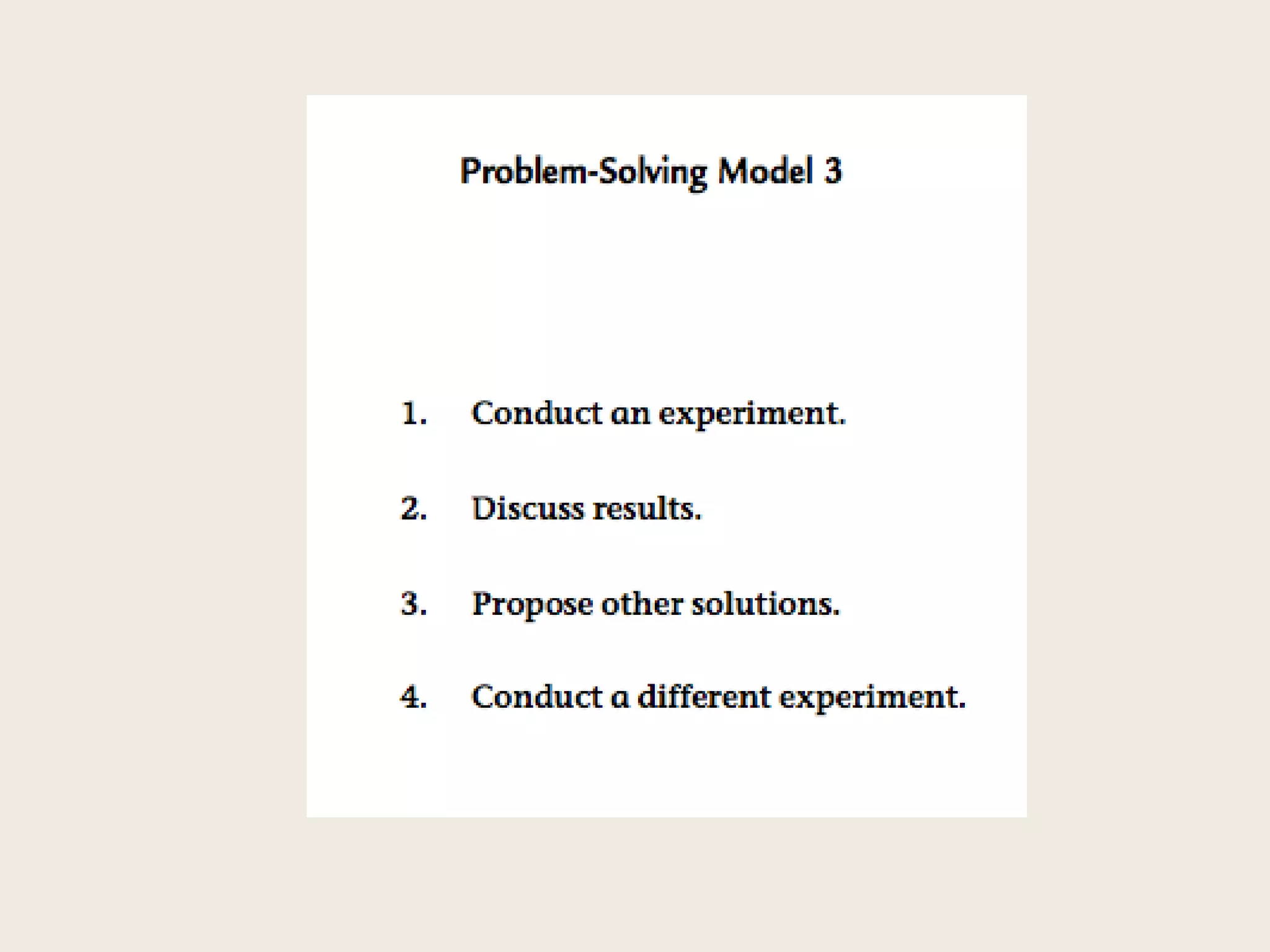
Let’s Save Poor Fred!
Activity 1: Saving Fred
Sept. 8, 2014
Getting Started: Write 2 - 3 sentences describing problem you solved revently
and how you solved it
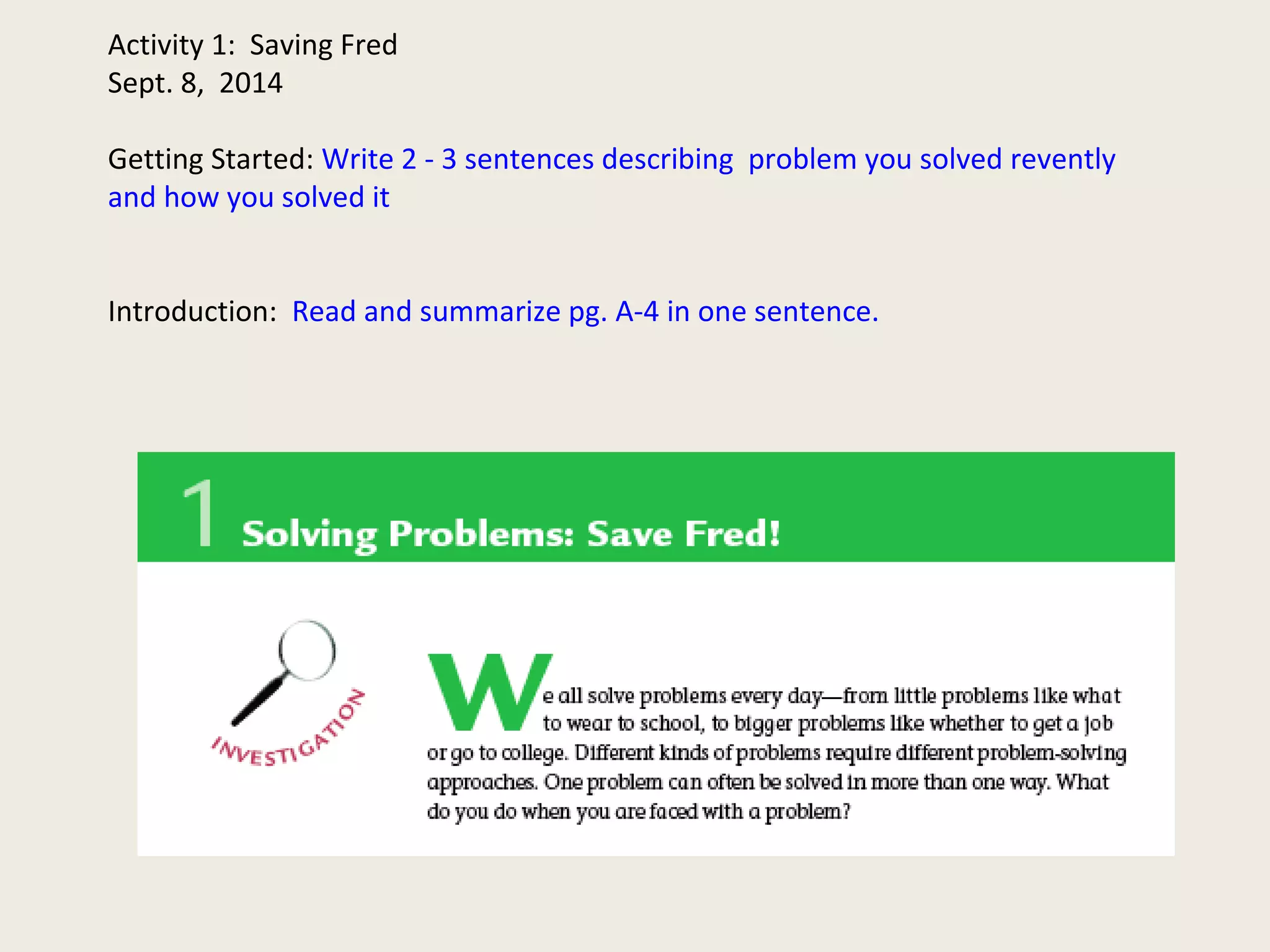
Introduction: Read and summarize pg. A-4 in one sentence.
Key Words: Hypothesis, Scientific Method
Procedure: Write a procedure for SAVING FRED with your partners and complete it for
HW on Monday 9/8.
Homework for Tuesday 9/9: Answer Analysis Questions 1 – 4 on page A6 – A7.
Reflection: People face problems in their lives every day. What did you learn from this
activity that you can use to solve other problems? How do you think this compares with
how scientists solve problems?
Activity 2: The Pellagra Story
September 9/10, 2013
Getting Started: List 2 things that scientists could do to learn more about a
disease and its cause or causes?
Introduction: We read the intro.
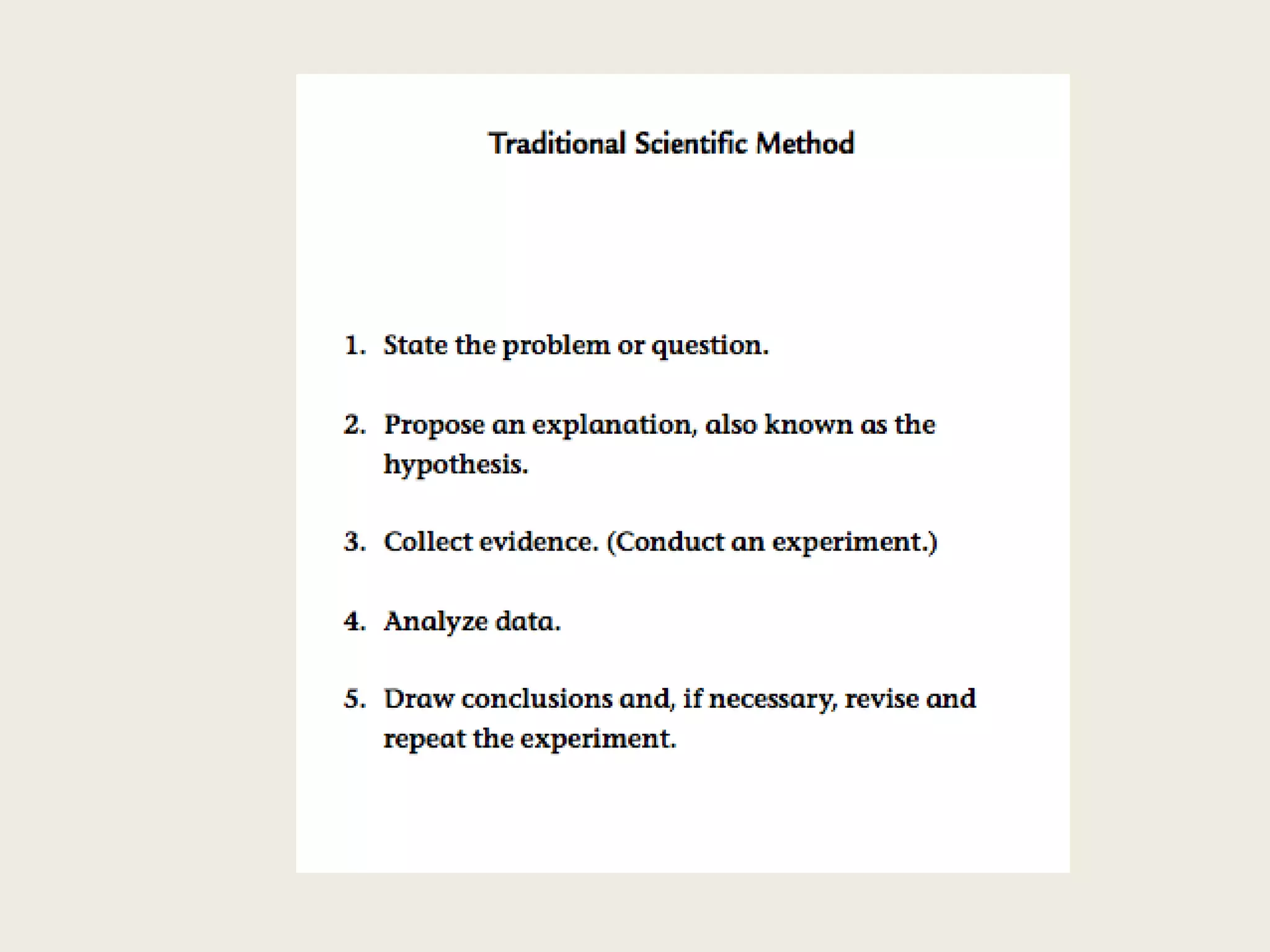
Challenge: What are the common elements of all scientific
problem-solving methods?
Key Words: ethics, evidence, inference, observation
Results: See Worksheets
Fill in “Notes on the Pellagra Story” sheet
Complete “Observation and Inference” sheet
Compare “Dr. Goldberger and the Traditional Scientific Method’
<<Video Link --
http://www.pbslearningmedia.org/resource/odys08.sci.life.gen.pellagra/pellagra/>>
Analysis: Answer Analysis Questions 1a, 1b, 2a, (homework)
Reflection: Choose two careers that interest you (police officer, nurse, teacher, scientist,
etc.) and describe the kids of problems they face in their careers and how they solve them.
Hypothesis: An educated guess
Scientific Method: Steps that scientists use to complete
their work.
Ethics: Looking at what is right and wrong
Evidence: Info that is collected to see if something is true.
Inference: A conclusion based on evidence
Observation: Looking at something carefully.
Key Words:
Should a prisoner who participated
in Dr. Goldberger’s experiment on
Pallegra be allowed to be released
from prison?
Activity 12: What’s Happening Inside?
September 14 - 16, 2014
Getting Started: List as many human organs
as you can.
Introduction: Read and summarize pg. B-10
in 2 sentences.
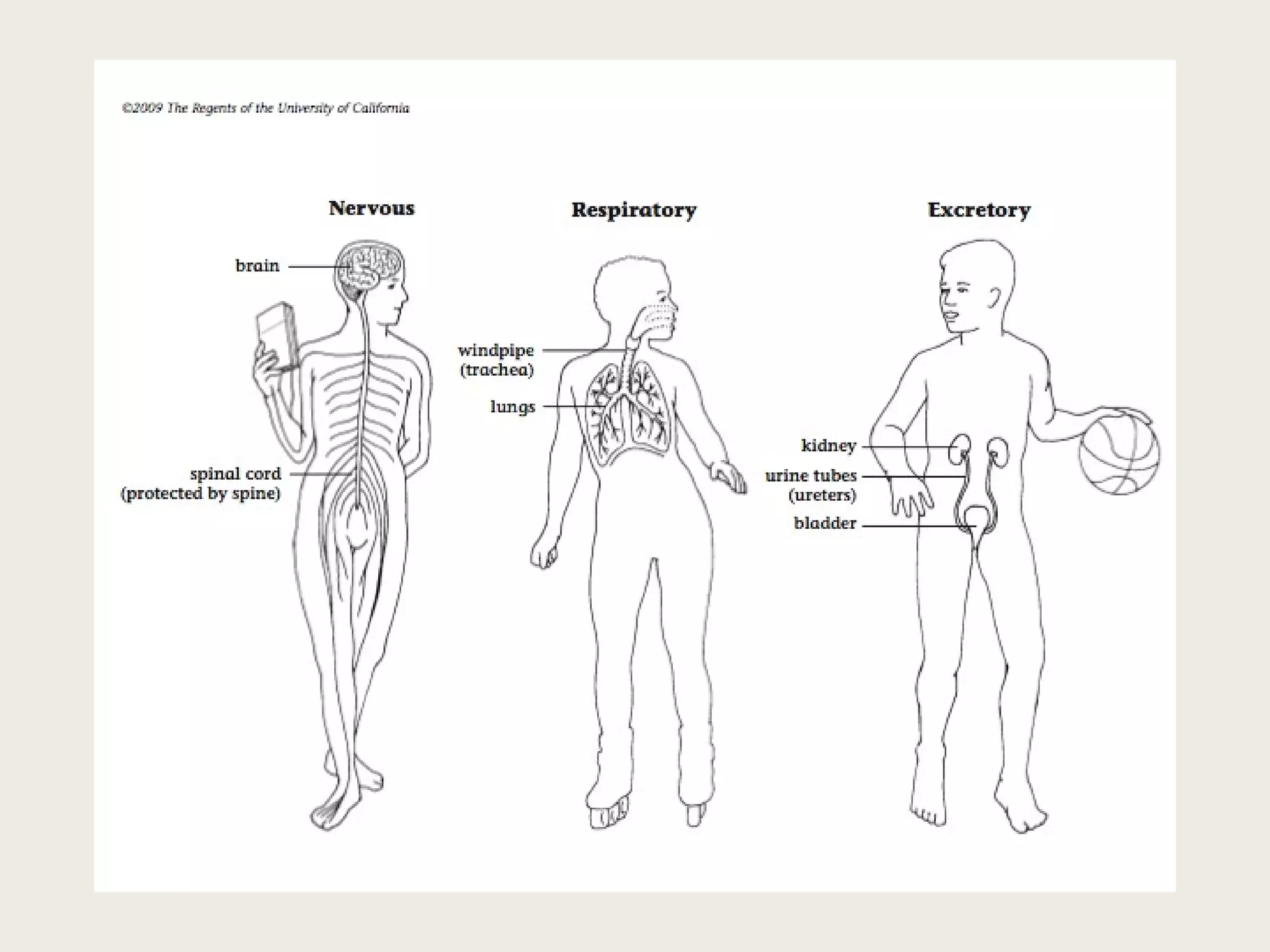
Challenge: What do you know about organs and organ
systems of the human body?
Key Words:
System- A group of related parts that work together
Organ- a structure made of tissues that perform an
important body function (job).
Organ System- a group of organs that work together to
perform an important body function (job).
RACE:
Is the Human Body
an amazing machine?
Procedure: Have you read and do you understand the procedure for
part A pg. B11-B12 together? Write two sentences that describes
what you will be doing.
Results: Part A: Copy questions from part A “laying it out”
Part B: Write your grouped organs in your notebook
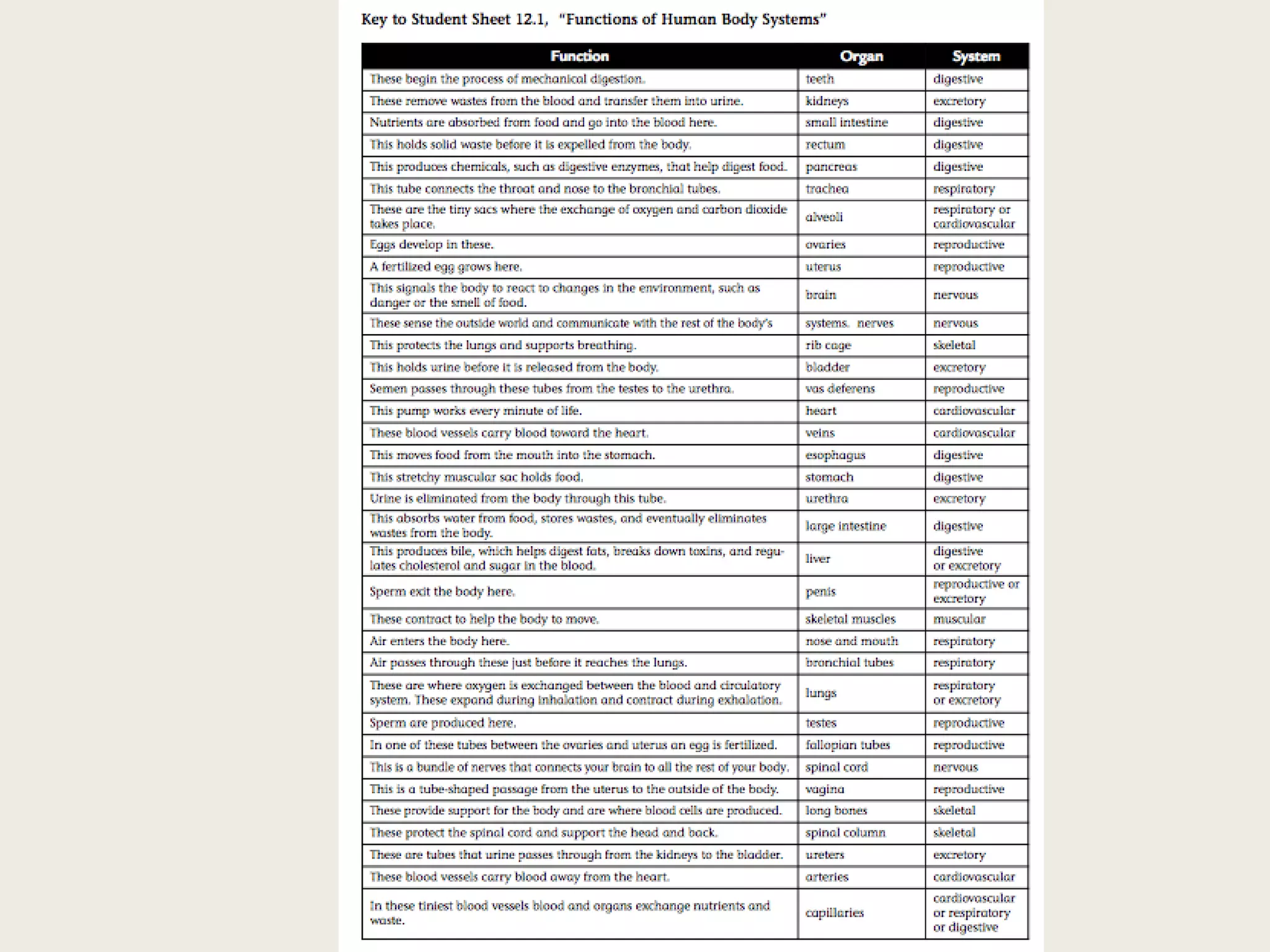
Complete student sheet 12.1 sheet
Part D: student sheet 12.2a and 12.2b
Analysis: Answer Analysis Questions 1,2, 5 and 6.
Reflection: What new things have you learned about the human body
in this activity?
cardiovascular system, cell, digestive system, excretory
system, function, muscular system, nervous system,
organ, reproductive system, respiratory system,
skeletal system, structure, system (body system)
Activity 5: Can you feel the difference?
September
Getting Started: Discuss designing an experiment. (Watch PBS Video-
http://pbskids.org/dragonflytv/show/basketball.html)
Introduction: Read and summarize pg. A-20 in one/two sentences.
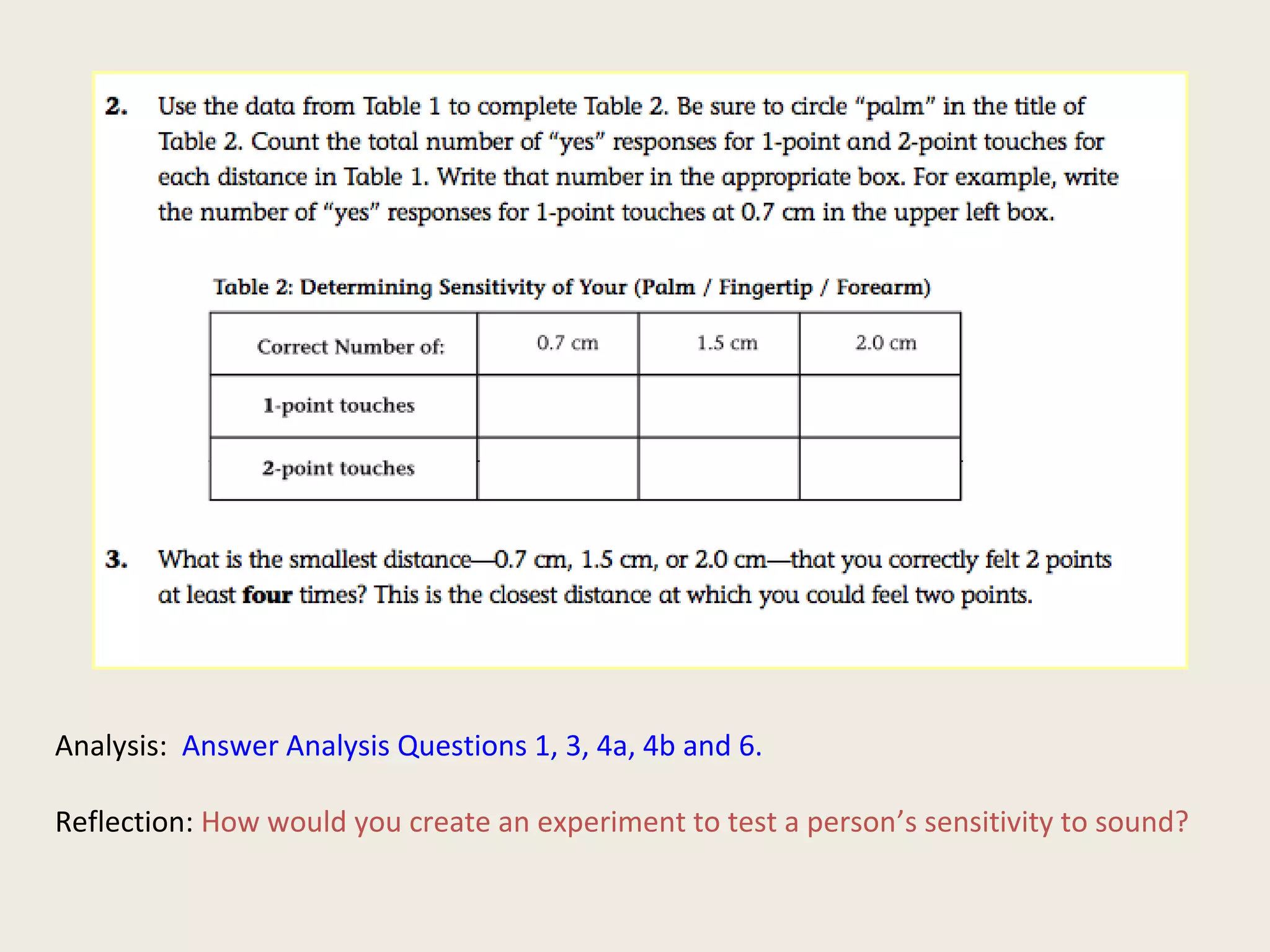
Challenge: What is the smallest distance apart at which you can still feel two points?
Key Words: variables, control variables, sample size, sensitivity
Procedure: We will read the procedures on pg. A21 - A23 together.
Results: See sheet
Analysis: Answer Analysis Questions 1, 3, 4a, 4b and 6.
Reflection: How would you create an experiment to test a person’s sensitivity to sound?
Activity 5: Paper Shots
Getting Started: Discussion “How would you set-up a
basketball shooting experiment?”
(Watch PBS Video-
http://pbskids.org/dragonflytv/show/basketball.html)
Challenge: What are the variables of a well designed
experiment?
Key Words: Control Variable, Dependent Variable,
Independent Variable
Procedure: Each student shoots a paper ball 10x at 12 tiles
to collect data.
Data Table:
Names # of shots made
Control Variable- Those things you keep the same
in an experiment.
Dependent Variable- D = data, Data you are
collecting in your experiment.
Independent Variable- The change you are making
(studying) in an experiment.
Variables-
Control Variables-
Dependent Variables
Independent Variables
Sample size:
Sensitivity:
Key Words:
Activity 6: Finding the Nerve
September 16, 2013
Getting Started: What and where are your 5 senses?
Challenge: Why do different parts of the body have different sensitivities to
touch?
Key Words: Homeostasis, Nerves, Nervous System, Neuron,
Procedure: Let’s read together. You will complete the stopping to think
questions at each section in your binder.
Analysis: Answer Analysis Questions 1 - 4
Nerves – a bundle of nerve cells
Neuron- a nerve cell
Nervous System- Your brain, spinal cord and
nerves.
Homeostasis- the ability to maintain a steady
environment.
Key Words:
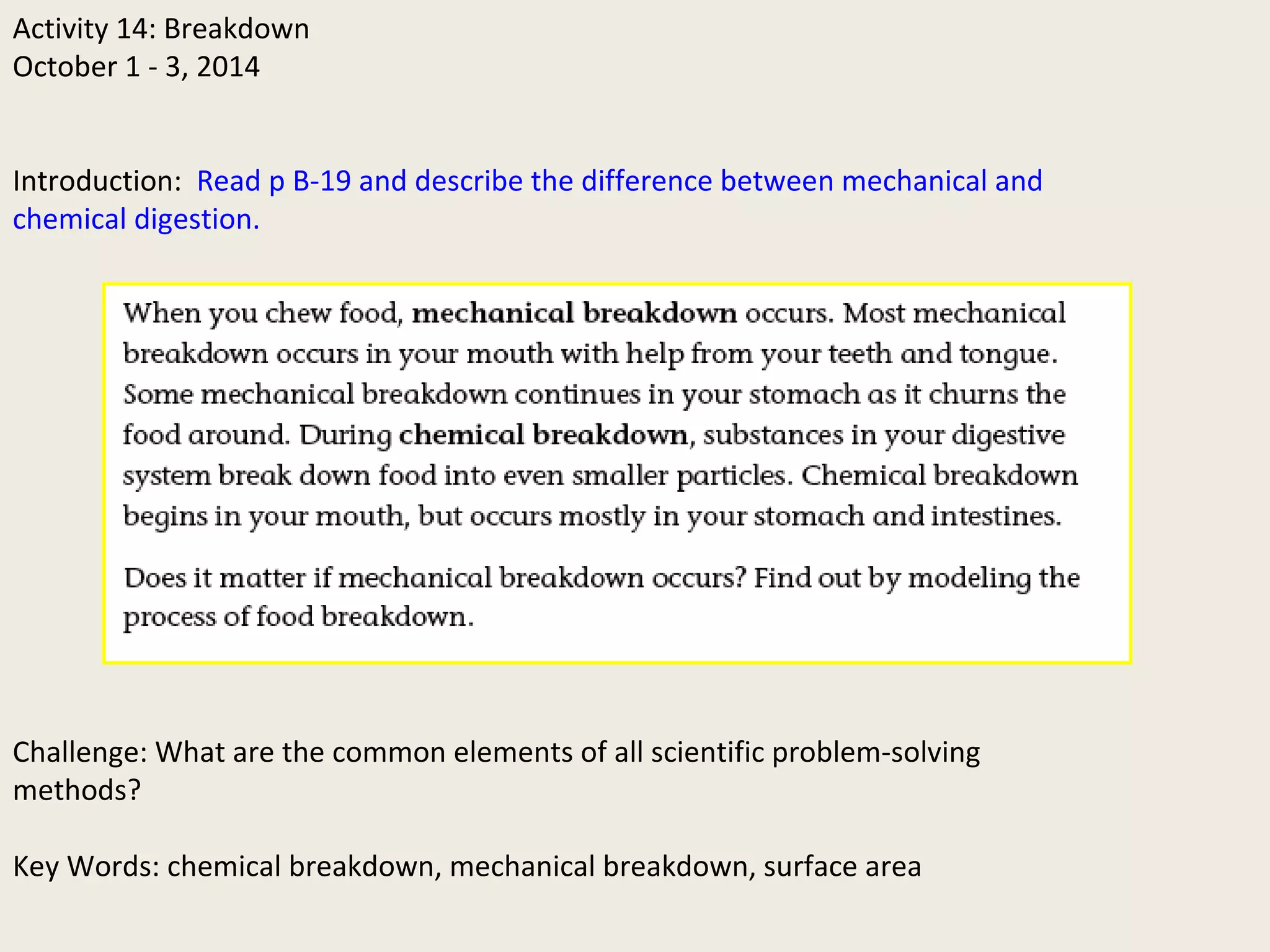
Activity 14: Breakdown
October 1 - 3, 2014
Introduction: Read p B-19 and describe the difference between mechanical and
chemical digestion.
Challenge: What are the common elements of all scientific problem-solving
methods?
Key Words: chemical breakdown, mechanical breakdown, surface area
Challenge: Why is it important to chew your food?
Procedure:
Design an experiment on digestion and have the following in your notebook:
•Title
•Purpose
•Variable being tested (Indep. Variable)
•Procedure
•Hypothesis
•Variables we are keeping the same
Results: •Data on data chart (in notebook) from your original experiment.
Analysis: Answer Analysis
Questions 1 - 3
•Title: Breakdown - Part B.
•Problem: What effect does
•Variable being tested (Indep. Variable):
•Hypothesis: If….. then….. because
•Variables we kept the same(Control Variables)
•Procedure:
Step 1-
Results: ______ sec.
Observations:
Activity 15: Digestion: An Absorbing Tale
October , 2014
Getting Started: Do question 1 on student sheet
15.1 (Burrito) on back 1/2 of page.
Challenge: How does your digestion system work?
Key Words:
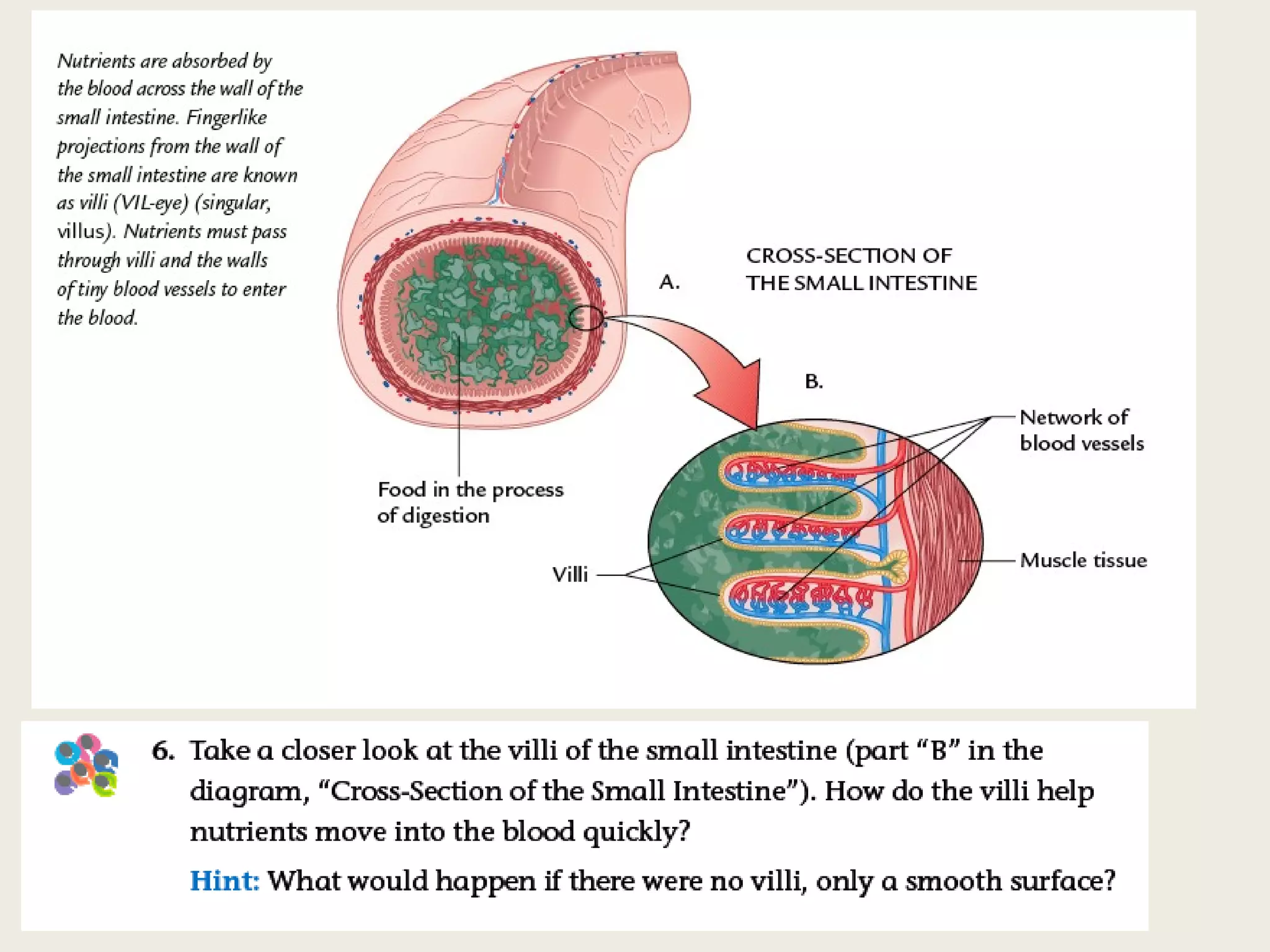
Absorb (absorption)- moving of nutrients from
the digestive system to your blood
Nutrients: completely broken down food
Analysis: Answer Analysis Questions 2 an3 for HW
(discuss 4 and 6 in class)
Reflection: Sheet 15.1
Villi
Digestive system organs:
Mouth- teeth and tongue – mechanical digestion
- saliva – chemical digestion (starches)
Esophagus- connects mouth to stomach
- wave like motion
Stomach- churns foods- mechanical digestion
- powerful acid – chemical digestion of proteins
Liver and Pancreas- sprays digestive juices onto the food
as it leaves the stomach to digest fats and reduce acidity.
Small Intestine- Site of MOST chemical digestion; Villi absorb
nutrients here
Large Intestine- Solid waste formed and water reabsorbed.
Activity 13: Living With Your Liver
October , 2014
Getting Started: What do you know about your liver?
(one sentence)
Challenge: How does your liver help to keep your
body in balance?
Keywords: (vocab section)
Structure- the way in which parts are arranged
Function- job
Regulate- to control the rate or speed of something
Toxin- a poison that is harmful to the human body
Procedure: Read, Annotate and RACE the liver article.
Activity 16: Support System: Bones, Joints and Muscles
October 2014
Introduction: Read intro on pg. B28
Challenge: How do the structures in a chicken wing or a human
arm enable it to perform its function?
Key Words:
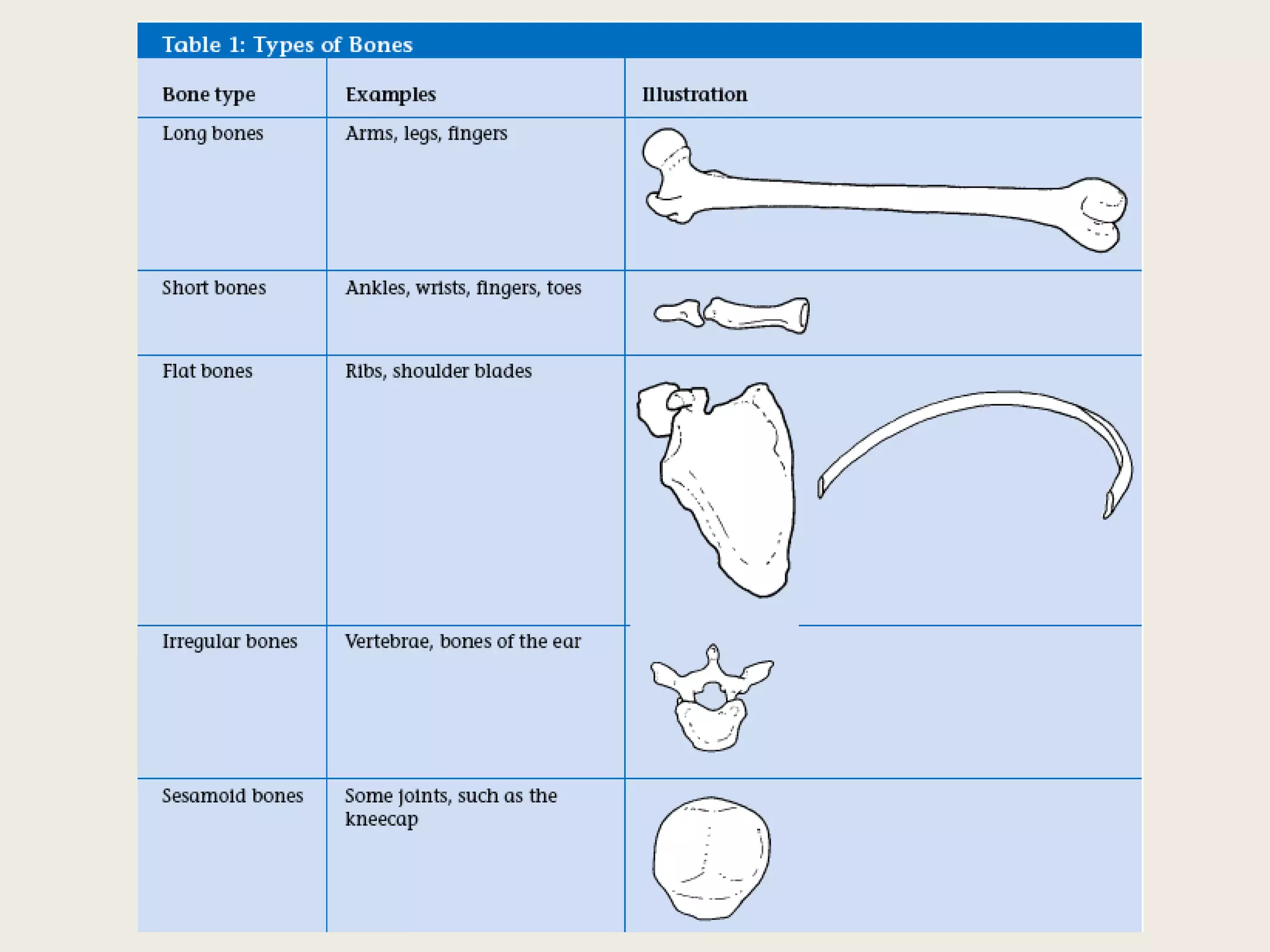
Bone- a tissue made of bone cells surrounded by calcium
phosphate.
Cartilage- a slippery tissue located at the ends of bones, your
ears and the tip of your nose.
Joint- a location where two bones meet
Ligament- tissue that connects Bone to Bone.
Tendon- Tissue that connects Muscle to Bone.
The functions (Jobs) of the bones:
1)Protection- (rib cage, skull etc.)
2)Support
3)Production of blood cells in marrow
(Center part of long/flat bones)
4)Movement (with skeletal muscles)
5)Mineral Storage (Calcium)
Activity 17: Gas Exchange
October , 2014
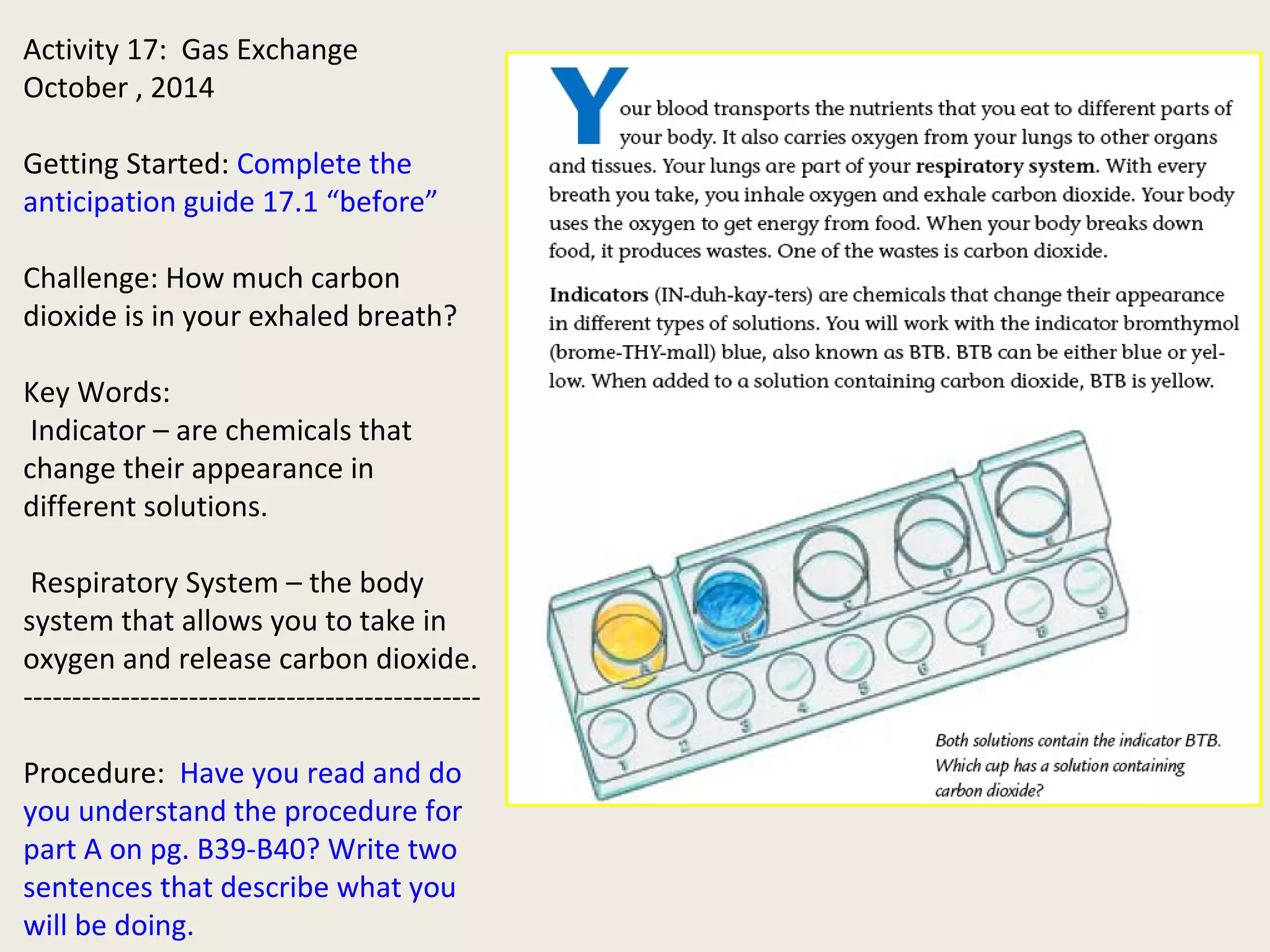
Getting Started: Complete the
anticipation guide 17.1 “before”
Challenge: How much carbon
dioxide is in your exhaled breath?
Key Words:
Indicator – are chemicals that
change their appearance in
different solutions.
Respiratory System – the body
system that allows you to take in
oxygen and release carbon dioxide.
-----------------------------------------------
Procedure: Have you read and do
you understand the procedure for
part A on pg. B39-B40? Write two
sentences that describe what you
will be doing.
Results: Part A results- create this chart.
Part B- ______ - number of drop it took to match the BTB control color.
Analysis: Part B- Answer Analysis Questions 3 - 7 pg. B43
Reflection: If you had pneumonia, which limits your ability to take exchange oxygen, how
do you think you would feel?
CUP Initial BTB
color
Final BTB
color
After Adding
Sodium hydroxide
A (control) X
B (air) X
C (sodium
hydroxide)
X
D (exhaled
breath 1)
E (exhaled
breath 2)
Studyingppl h bnb92614

Studyingppl h bnb92614

  • 1.
    Issues and LifeScience Unit A: Studying People Scientifically Mr. Forde Scofield Magnet MS 2014 - 2015
  • 2.
    Activity .5: Sept.3, 2014 Getting Started: Write 2 – 3 things that you think would keep science class safe. Procedure: 1) Review the science lab rules with the class 2) Form a team of two and think of a science rule that you would like to illustrate as a team. 3) Review the rubric for your first science grade. 3) Check in with Mr. Forde to get the OK to get started on a rule to create. 4) Start creating the poster that you will present tomorrow! Homework…. Have the science safety contract signed and returned by tomorrow!
  • 3.
  • 4.
    Activity 1: SavingFred Sept. 8, 2014 Getting Started: Write 2 - 3 sentences describing problem you solved revently and how you solved it Introduction: Read and summarize pg. A-4 in one sentence.
  • 5.
    Key Words: Hypothesis,Scientific Method Procedure: Write a procedure for SAVING FRED with your partners and complete it for HW on Monday 9/8. Homework for Tuesday 9/9: Answer Analysis Questions 1 – 4 on page A6 – A7. Reflection: People face problems in their lives every day. What did you learn from this activity that you can use to solve other problems? How do you think this compares with how scientists solve problems?
  • 11.
    Activity 2: ThePellagra Story September 9/10, 2013 Getting Started: List 2 things that scientists could do to learn more about a disease and its cause or causes? Introduction: We read the intro.
  • 12.
    Challenge: What arethe common elements of all scientific problem-solving methods? Key Words: ethics, evidence, inference, observation Results: See Worksheets Fill in “Notes on the Pellagra Story” sheet Complete “Observation and Inference” sheet Compare “Dr. Goldberger and the Traditional Scientific Method’ <<Video Link -- http://www.pbslearningmedia.org/resource/odys08.sci.life.gen.pellagra/pellagra/>> Analysis: Answer Analysis Questions 1a, 1b, 2a, (homework) Reflection: Choose two careers that interest you (police officer, nurse, teacher, scientist, etc.) and describe the kids of problems they face in their careers and how they solve them.
  • 13.
    Hypothesis: An educatedguess Scientific Method: Steps that scientists use to complete their work. Ethics: Looking at what is right and wrong Evidence: Info that is collected to see if something is true. Inference: A conclusion based on evidence Observation: Looking at something carefully. Key Words:
  • 14.
    Should a prisonerwho participated in Dr. Goldberger’s experiment on Pallegra be allowed to be released from prison?
  • 15.
    Activity 12: What’sHappening Inside? September 14 - 16, 2014 Getting Started: List as many human organs as you can. Introduction: Read and summarize pg. B-10 in 2 sentences.
  • 16.
    Challenge: What doyou know about organs and organ systems of the human body? Key Words: System- A group of related parts that work together Organ- a structure made of tissues that perform an important body function (job). Organ System- a group of organs that work together to perform an important body function (job).
  • 17.
    RACE: Is the HumanBody an amazing machine?
  • 18.
    Procedure: Have youread and do you understand the procedure for part A pg. B11-B12 together? Write two sentences that describes what you will be doing. Results: Part A: Copy questions from part A “laying it out” Part B: Write your grouped organs in your notebook Complete student sheet 12.1 sheet Part D: student sheet 12.2a and 12.2b Analysis: Answer Analysis Questions 1,2, 5 and 6. Reflection: What new things have you learned about the human body in this activity?
  • 19.
    cardiovascular system, cell,digestive system, excretory system, function, muscular system, nervous system, organ, reproductive system, respiratory system, skeletal system, structure, system (body system)
  • 26.
    Activity 5: Canyou feel the difference? September Getting Started: Discuss designing an experiment. (Watch PBS Video- http://pbskids.org/dragonflytv/show/basketball.html) Introduction: Read and summarize pg. A-20 in one/two sentences.
  • 27.
    Challenge: What isthe smallest distance apart at which you can still feel two points? Key Words: variables, control variables, sample size, sensitivity Procedure: We will read the procedures on pg. A21 - A23 together. Results: See sheet
  • 28.
    Analysis: Answer AnalysisQuestions 1, 3, 4a, 4b and 6. Reflection: How would you create an experiment to test a person’s sensitivity to sound?
  • 29.
    Activity 5: PaperShots Getting Started: Discussion “How would you set-up a basketball shooting experiment?” (Watch PBS Video- http://pbskids.org/dragonflytv/show/basketball.html) Challenge: What are the variables of a well designed experiment? Key Words: Control Variable, Dependent Variable, Independent Variable Procedure: Each student shoots a paper ball 10x at 12 tiles to collect data.
  • 30.
    Data Table: Names #of shots made
  • 32.
    Control Variable- Thosethings you keep the same in an experiment. Dependent Variable- D = data, Data you are collecting in your experiment. Independent Variable- The change you are making (studying) in an experiment.
  • 33.
    Variables- Control Variables- Dependent Variables IndependentVariables Sample size: Sensitivity: Key Words:
  • 34.
    Activity 6: Findingthe Nerve September 16, 2013 Getting Started: What and where are your 5 senses? Challenge: Why do different parts of the body have different sensitivities to touch? Key Words: Homeostasis, Nerves, Nervous System, Neuron, Procedure: Let’s read together. You will complete the stopping to think questions at each section in your binder.
  • 35.
  • 36.
    Nerves – abundle of nerve cells Neuron- a nerve cell Nervous System- Your brain, spinal cord and nerves. Homeostasis- the ability to maintain a steady environment. Key Words:
  • 37.
    Activity 14: Breakdown October1 - 3, 2014 Introduction: Read p B-19 and describe the difference between mechanical and chemical digestion. Challenge: What are the common elements of all scientific problem-solving methods? Key Words: chemical breakdown, mechanical breakdown, surface area
  • 38.
    Challenge: Why isit important to chew your food? Procedure: Design an experiment on digestion and have the following in your notebook: •Title •Purpose •Variable being tested (Indep. Variable) •Procedure •Hypothesis •Variables we are keeping the same Results: •Data on data chart (in notebook) from your original experiment. Analysis: Answer Analysis Questions 1 - 3
  • 39.
    •Title: Breakdown -Part B. •Problem: What effect does •Variable being tested (Indep. Variable): •Hypothesis: If….. then….. because •Variables we kept the same(Control Variables) •Procedure: Step 1- Results: ______ sec. Observations:
  • 40.
    Activity 15: Digestion:An Absorbing Tale October , 2014 Getting Started: Do question 1 on student sheet 15.1 (Burrito) on back 1/2 of page. Challenge: How does your digestion system work? Key Words: Absorb (absorption)- moving of nutrients from the digestive system to your blood Nutrients: completely broken down food Analysis: Answer Analysis Questions 2 an3 for HW (discuss 4 and 6 in class) Reflection: Sheet 15.1
  • 42.
  • 43.
    Digestive system organs: Mouth-teeth and tongue – mechanical digestion - saliva – chemical digestion (starches) Esophagus- connects mouth to stomach - wave like motion Stomach- churns foods- mechanical digestion - powerful acid – chemical digestion of proteins Liver and Pancreas- sprays digestive juices onto the food as it leaves the stomach to digest fats and reduce acidity. Small Intestine- Site of MOST chemical digestion; Villi absorb nutrients here Large Intestine- Solid waste formed and water reabsorbed.
  • 44.
    Activity 13: LivingWith Your Liver October , 2014 Getting Started: What do you know about your liver? (one sentence) Challenge: How does your liver help to keep your body in balance? Keywords: (vocab section) Structure- the way in which parts are arranged Function- job Regulate- to control the rate or speed of something Toxin- a poison that is harmful to the human body Procedure: Read, Annotate and RACE the liver article.
  • 45.
    Activity 16: SupportSystem: Bones, Joints and Muscles October 2014 Introduction: Read intro on pg. B28 Challenge: How do the structures in a chicken wing or a human arm enable it to perform its function? Key Words: Bone- a tissue made of bone cells surrounded by calcium phosphate. Cartilage- a slippery tissue located at the ends of bones, your ears and the tip of your nose. Joint- a location where two bones meet Ligament- tissue that connects Bone to Bone. Tendon- Tissue that connects Muscle to Bone.
  • 46.
    The functions (Jobs)of the bones: 1)Protection- (rib cage, skull etc.) 2)Support 3)Production of blood cells in marrow (Center part of long/flat bones) 4)Movement (with skeletal muscles) 5)Mineral Storage (Calcium)
  • 50.
    Activity 17: GasExchange October , 2014 Getting Started: Complete the anticipation guide 17.1 “before” Challenge: How much carbon dioxide is in your exhaled breath? Key Words: Indicator – are chemicals that change their appearance in different solutions. Respiratory System – the body system that allows you to take in oxygen and release carbon dioxide. ----------------------------------------------- Procedure: Have you read and do you understand the procedure for part A on pg. B39-B40? Write two sentences that describe what you will be doing.
  • 51.
    Results: Part Aresults- create this chart. Part B- ______ - number of drop it took to match the BTB control color. Analysis: Part B- Answer Analysis Questions 3 - 7 pg. B43 Reflection: If you had pneumonia, which limits your ability to take exchange oxygen, how do you think you would feel? CUP Initial BTB color Final BTB color After Adding Sodium hydroxide A (control) X B (air) X C (sodium hydroxide) X D (exhaled breath 1) E (exhaled breath 2)