B.E.S.T.
Consumption Levels
Havukosken koulu
Spring 2015
Summary of the works 8a, 8b, 8c, 8d,
8e and 8f
Total 110 students
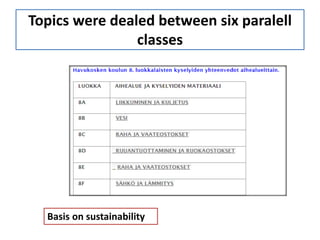
Topics were dealed between six paralell
classes
Basis on sustainability
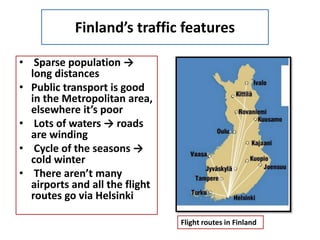
Finland’s traffic features
• Sparse population →
long distances
• Public transport is good
in the Metropolitan area,
elsewhere it’s poor
• Lots of waters → roads
are winding
• Cycle of the seasons →
cold winter
• There aren’t many
airports and all the flight
routes go via Helsinki
Flight routes in Finland
Ways to reduce traffic emission
• The state could support the reforming of the car fleet by
lowering the car taxes
• Trips that are less than three kilometers should be made on
foot or by cycling, longer ones by using public transport
• Favor ridesharing
• Favor local shops and chain the shopping trips.
The environment will thank you and you’ll save time!
From Helsinki to Jyväskylä (270 km)- a comparison
Going by car would be the cheapest option but it takes plenty of time
to get to Jyväskylä and it consumes a lot of human power.
So even though it costs more, you should take the bus or the train.
Time:
By train: 3h 18min
By car: 3h 23min
By bus: 4h 15min
By plane: 50min
Energy
consumption:
Train: about 55 kJ
Car: about 200 kJ
Bus: about 150 kJ
Plane: about 450kJ
Expenses:
Train: 32€
Car: 15€
Bus: 29€
Plane: 72€
Why doesn’t Finland have a shortage of water?
• Finland has exceptionally many lakes.
• Most of the surface water in our country is
ecologically excellent or good.
• The groundwater resources in Finland are big.
• 5,4 million cubic meters of groundwater come
every day, which consists of 6350 different
areas of groundwater, but only 10% of the
amount of groundwater is in use.
• There are so many sources of sweet water
compared to the amount of people living in
Finland, so we won’t run out of water.
• The activity of the water treatment plants
consist of cleaning the wastewater before it is
put back to the nature, it also affects the
quality of our water.
• Finland doesn’t have extremely hot summers,
which could evaporate water from our water
sources.
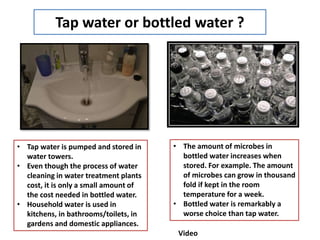
Tap water or bottled water ?
• Tap water is pumped and stored in
water towers.
• Even though the process of water
cleaning in water treatment plants
cost, it is only a small amount of
the cost needed in bottled water.
• Household water is used in
kitchens, in bathrooms/toilets, in
gardens and domestic appliances.
• The amount of microbes in
bottled water increases when
stored. For example. The amount
of microbes can grow in thousand
fold if kept in the room
temperature for a week.
• Bottled water is remarkably a
worse choice than tap water.
Video
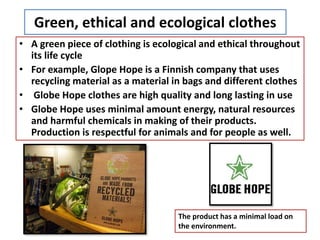
Green, ethical and ecological clothes
• A green piece of clothing is ecological and ethical throughout
its life cycle
• For example, Glope Hope is a Finnish company that uses
recycling material as a material in bags and different clothes
• Globe Hope clothes are high quality and long lasting in use
• Globe Hope uses minimal amount energy, natural resources
and harmful chemicals in making of their products.
Production is respectful for animals and for people as well.
The product has a minimal load on
the environment.
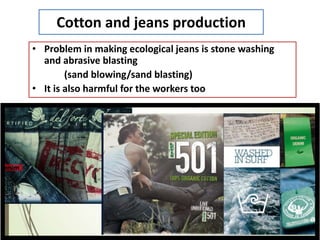
Cotton and jeans production
• Problem in making ecological jeans is stone washing
and abrasive blasting
(sand blowing/sand blasting)
• It is also harmful for the workers too
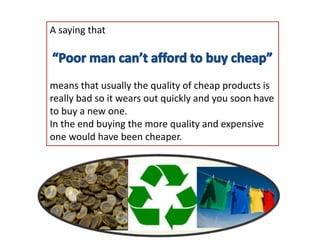
A saying that
means that usually the quality of cheap products is
really bad so it wears out quickly and you soon have
to buy a new one.
In the end buying the more quality and expensive
one would have been cheaper.
The profitability of vegetarianism
• People are recommended to have at least one day in the week when they only
eat vegetarian food. It would be useful not only for one’s health but better for
the environment.
• Producing meat takes most of the farmland at this moment. If people would eat
less meat, we wouldn’t need that much land, we wouldn’t have to use all those
fertilizers or pesticides and not as many bad nutrients would get to the waters.
• Eating vegetables would strain less of natural resources and we could feed larger
groups of people, which would obviously become cheaper.
• Buying one kilo of vegetables comes a lot cheaper than buying one kilo of meat.
• Cheese also has a large climate impact. Eating it burdens the nature almost as
much as eating beef. For the sake of not leaving a huge carbon footprint, we
should enjoy cheese too in a reasonable way.
Finnish natural fish and seasonal food
• Finnish people should prefer natural fish since it’s underutilized in many
ways. In Finland, tons of edible fish gets thrown away while they bring
new from abroad.
• Fish is healthier and more nature-friendly than meat. It’s versatile and
you can make all kinds of meals from it.
• All vegetables and fruits shouldn’t be eaten throughout the year,
because they are at their best in certain time of the year while they’re
also cheaper.
• Seasonal food, as the name says, changes depending on the seasons of
the year. In at autumn you eat everything from mushrooms to apples,
cowberries and root vegetables. In spring and summer you are able to
eat fresh berries, peas and vegetables.
perch
lingonberry
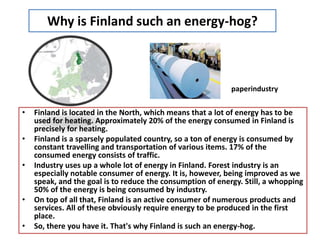
Why is Finland such an energy-hog?
• Finland is located in the North, which means that a lot of energy has to be
used for heating. Approximately 20% of the energy consumed in Finland is
precisely for heating.
• Finland is a sparsely populated country, so a ton of energy is consumed by
constant travelling and transportation of various items. 17% of the
consumed energy consists of traffic.
• Industry uses up a whole lot of energy in Finland. Forest industry is an
especially notable consumer of energy. It is, however, being improved as we
speak, and the goal is to reduce the consumption of energy. Still, a whopping
50% of the energy is being consumed by industry.
• On top of all that, Finland is an active consumer of numerous products and
services. All of these obviously require energy to be produced in the first
place.
• So, there you have it. That's why Finland is such an energy-hog.
paperindustry
Why little solar- and wind energy is used
in Finland?
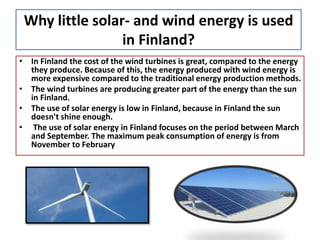
• In Finland the cost of the wind turbines is great, compared to the energy
they produce. Because of this, the energy produced with wind energy is
more expensive compared to the traditional energy production methods.
• The wind turbines are producing greater part of the energy than the sun
in Finland.
• The use of solar energy is low in Finland, because in Finland the sun
doesn't shine enough.
• The use of solar energy in Finland focuses on the period between March
and September. The maximum peak consumption of energy is from
November to February
Wood is the most important domestic source of
energy
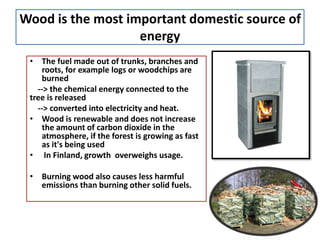
• The fuel made out of trunks, branches and
roots, for example logs or woodchips are
burned
--> the chemical energy connected to the
tree is released
--> converted into electricity and heat.
• Wood is renewable and does not increase
the amount of carbon dioxide in the
atmosphere, if the forest is growing as fast
as it's being used
• In Finland, growth overweighs usage.
• Burning wood also causes less harmful
emissions than burning other solid fuels.

Finnish results

  • 1.
    B.E.S.T. Consumption Levels Havukosken koulu Spring2015 Summary of the works 8a, 8b, 8c, 8d, 8e and 8f Total 110 students
  • 2.
    Topics were dealedbetween six paralell classes Basis on sustainability
  • 3.
    Finland’s traffic features •Sparse population → long distances • Public transport is good in the Metropolitan area, elsewhere it’s poor • Lots of waters → roads are winding • Cycle of the seasons → cold winter • There aren’t many airports and all the flight routes go via Helsinki Flight routes in Finland
  • 4.
    Ways to reducetraffic emission • The state could support the reforming of the car fleet by lowering the car taxes • Trips that are less than three kilometers should be made on foot or by cycling, longer ones by using public transport • Favor ridesharing • Favor local shops and chain the shopping trips. The environment will thank you and you’ll save time!
  • 5.
    From Helsinki toJyväskylä (270 km)- a comparison Going by car would be the cheapest option but it takes plenty of time to get to Jyväskylä and it consumes a lot of human power. So even though it costs more, you should take the bus or the train. Time: By train: 3h 18min By car: 3h 23min By bus: 4h 15min By plane: 50min Energy consumption: Train: about 55 kJ Car: about 200 kJ Bus: about 150 kJ Plane: about 450kJ Expenses: Train: 32€ Car: 15€ Bus: 29€ Plane: 72€
  • 6.
    Why doesn’t Finlandhave a shortage of water? • Finland has exceptionally many lakes. • Most of the surface water in our country is ecologically excellent or good. • The groundwater resources in Finland are big. • 5,4 million cubic meters of groundwater come every day, which consists of 6350 different areas of groundwater, but only 10% of the amount of groundwater is in use. • There are so many sources of sweet water compared to the amount of people living in Finland, so we won’t run out of water. • The activity of the water treatment plants consist of cleaning the wastewater before it is put back to the nature, it also affects the quality of our water. • Finland doesn’t have extremely hot summers, which could evaporate water from our water sources.
  • 7.
    Tap water orbottled water ? • Tap water is pumped and stored in water towers. • Even though the process of water cleaning in water treatment plants cost, it is only a small amount of the cost needed in bottled water. • Household water is used in kitchens, in bathrooms/toilets, in gardens and domestic appliances. • The amount of microbes in bottled water increases when stored. For example. The amount of microbes can grow in thousand fold if kept in the room temperature for a week. • Bottled water is remarkably a worse choice than tap water. Video
  • 9.
    Green, ethical andecological clothes • A green piece of clothing is ecological and ethical throughout its life cycle • For example, Glope Hope is a Finnish company that uses recycling material as a material in bags and different clothes • Globe Hope clothes are high quality and long lasting in use • Globe Hope uses minimal amount energy, natural resources and harmful chemicals in making of their products. Production is respectful for animals and for people as well. The product has a minimal load on the environment.
  • 10.
    Cotton and jeansproduction • Problem in making ecological jeans is stone washing and abrasive blasting (sand blowing/sand blasting) • It is also harmful for the workers too
  • 11.
    A saying that meansthat usually the quality of cheap products is really bad so it wears out quickly and you soon have to buy a new one. In the end buying the more quality and expensive one would have been cheaper.
  • 12.
    The profitability ofvegetarianism • People are recommended to have at least one day in the week when they only eat vegetarian food. It would be useful not only for one’s health but better for the environment. • Producing meat takes most of the farmland at this moment. If people would eat less meat, we wouldn’t need that much land, we wouldn’t have to use all those fertilizers or pesticides and not as many bad nutrients would get to the waters. • Eating vegetables would strain less of natural resources and we could feed larger groups of people, which would obviously become cheaper. • Buying one kilo of vegetables comes a lot cheaper than buying one kilo of meat. • Cheese also has a large climate impact. Eating it burdens the nature almost as much as eating beef. For the sake of not leaving a huge carbon footprint, we should enjoy cheese too in a reasonable way.
  • 13.
    Finnish natural fishand seasonal food • Finnish people should prefer natural fish since it’s underutilized in many ways. In Finland, tons of edible fish gets thrown away while they bring new from abroad. • Fish is healthier and more nature-friendly than meat. It’s versatile and you can make all kinds of meals from it. • All vegetables and fruits shouldn’t be eaten throughout the year, because they are at their best in certain time of the year while they’re also cheaper. • Seasonal food, as the name says, changes depending on the seasons of the year. In at autumn you eat everything from mushrooms to apples, cowberries and root vegetables. In spring and summer you are able to eat fresh berries, peas and vegetables. perch lingonberry
  • 14.
    Why is Finlandsuch an energy-hog? • Finland is located in the North, which means that a lot of energy has to be used for heating. Approximately 20% of the energy consumed in Finland is precisely for heating. • Finland is a sparsely populated country, so a ton of energy is consumed by constant travelling and transportation of various items. 17% of the consumed energy consists of traffic. • Industry uses up a whole lot of energy in Finland. Forest industry is an especially notable consumer of energy. It is, however, being improved as we speak, and the goal is to reduce the consumption of energy. Still, a whopping 50% of the energy is being consumed by industry. • On top of all that, Finland is an active consumer of numerous products and services. All of these obviously require energy to be produced in the first place. • So, there you have it. That's why Finland is such an energy-hog. paperindustry
  • 15.
    Why little solar-and wind energy is used in Finland? • In Finland the cost of the wind turbines is great, compared to the energy they produce. Because of this, the energy produced with wind energy is more expensive compared to the traditional energy production methods. • The wind turbines are producing greater part of the energy than the sun in Finland. • The use of solar energy is low in Finland, because in Finland the sun doesn't shine enough. • The use of solar energy in Finland focuses on the period between March and September. The maximum peak consumption of energy is from November to February
  • 16.
    Wood is themost important domestic source of energy • The fuel made out of trunks, branches and roots, for example logs or woodchips are burned --> the chemical energy connected to the tree is released --> converted into electricity and heat. • Wood is renewable and does not increase the amount of carbon dioxide in the atmosphere, if the forest is growing as fast as it's being used • In Finland, growth overweighs usage. • Burning wood also causes less harmful emissions than burning other solid fuels.